Frozen Glory: Inside the Eskimo-Indian Olympics

From cultural preservation to sheer athletic spectacle, the World Eskimo-Indian Olympics are a highlight of the Native Alaskan calendar.
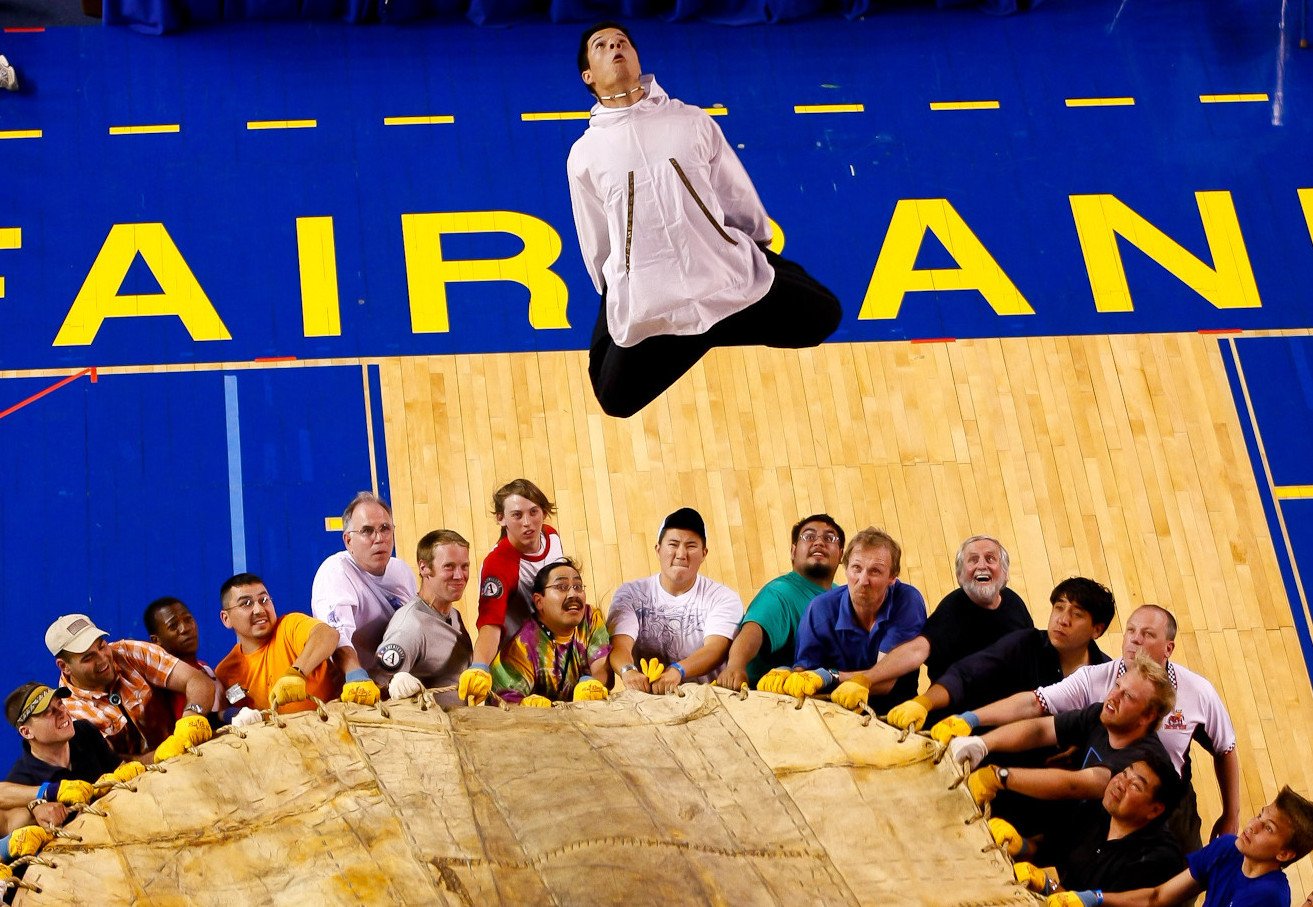
An athlete competes in the blanket toss event at the WEIO. KNOM Radio. CC BY-SA 2.0

In the early 1960s, two non-Indigenous pilots who regularly made trips over Alaska’s rural communities kept observing the celebration of an interesting cultural event. This sporting event, as they later came to realize it was, dated back far beyond living memory and honored strength, resilience and endurance through a series of events meant to test the skills necessary to live in such an unforgiving environment. Given that Alaska had just recently become an American state in 1959, the early 60s saw the gradual encroachment of mainstream American culture into its more remote outlying communities, posing a serious threat to local traditions and practices. After the pilots shared their concerns with various groups in Fairbanks, the World Eskimo-Indian Olympics (WEIO) was officially born in 1961 and drew Native participants and spectators from around the Fairbanks area to participate on the banks of the Chena River.

The WEIO has grown significantly since then, with thousands of people traveling to watch the best of Alaska’s Indigenous athletes compete in the Big Dipper Ice Arena for four days each July. Aside from a minimum age limit of 12 years, there are no age categories for any of the events, which means that several generations of the same family can be seen competing against each other. It is also common for older and more experienced competitors to coach and advise the younger athletes during the competition: rather than trying to beat one’s opponents, the larger goal is to compete against and better oneself.
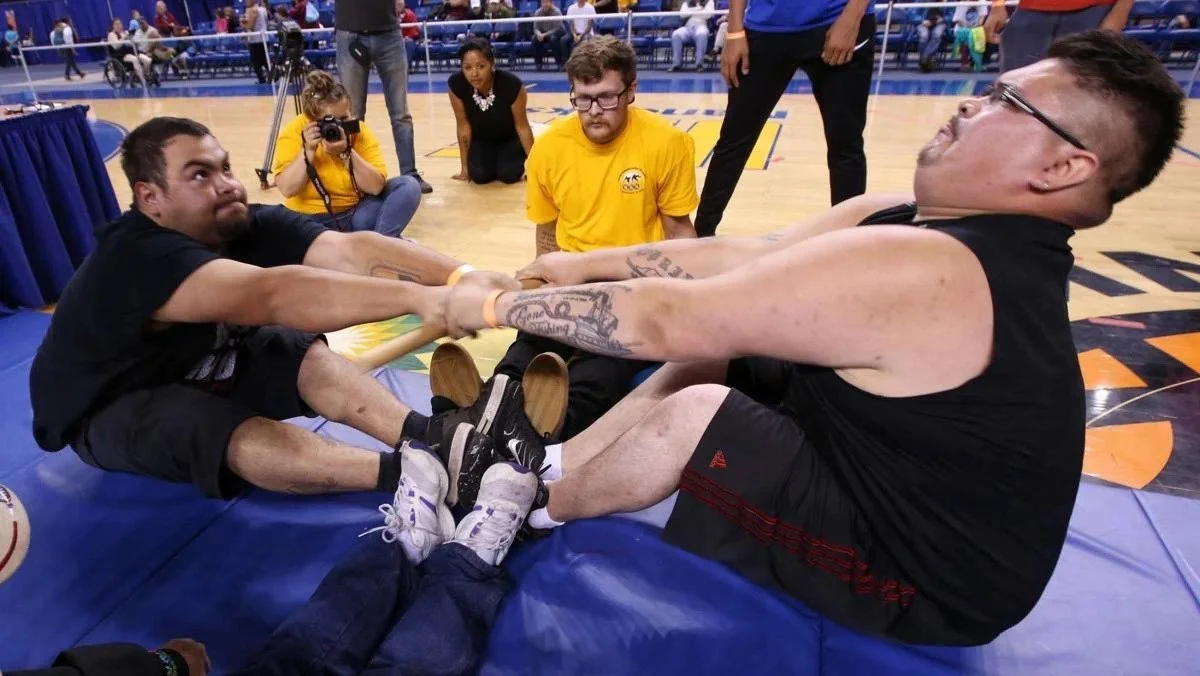
Athletes Sean O’Brien (left) and Chris Kalmakoff (right) compete in the Eskimo stick pull event. Erich Engman. CC BY-NC-ND 2.0

Many of the events, however, are still extremely competitive, and involve intimate face-offs between athletes. The Indian Stick Pull, for example, calls for athletes to wrench a short greased stick from their opponent, an event meant to replicate the grip strength necessary when trying to keep hold of a freshly caught fish by its tail. The Ear Pull is a contest of stamina to demonstrate the athletes’ ability to withstand pain, a valued trait in the often cruel conditions of the Alaskan North. In this event, string is looped around the opposite ears of two athletes as they face each other as they pull away in a tug-of-war with their ears until one cedes the match.

Other events are competed individually, but with just as much rigor and excitement. The Greased Pole Walk, as its name suggests, tests the balance needed for crossing creeks on slippery logs by having contestants walk as far as they can barefoot along a greased wooden pole. A favorite among both competitors and spectators alike, the Two-Foot High Kick requires competitors to jump vertically and kick a suspended ball with both feet before landing and maintaining their balance. Hundreds of years ago, villages along the coast would perform these kicks as a way to communicate to the village that a whale or some other game had been caught, and to prepare themselves to assist the hunters upon their return.

Athlete Ezra Elissoff competes in the Two-Foot High Kick final at the 2021 WEIO. Jeff Chen. CC BY-SA 2.0

Despite the popularity of basketball and ice hockey, the traditional sports seem to be gaining popularity among young children and teenagers, and are also contributing to the difficult task of preserving and passing on Native Alaskan culture. Miley Kakaruk, a 15-year-old athlete of the Inupiaq tribe of Northwestern Alaska, says that she imagines her ancestors competing in the same events centuries ago, vying to be chosen for their village’s next hunting party. Because each event is so heavily rooted in their history, younger competitors are able to learn the customs and stories that so heavily influence the culture and lifestyle of their people.

Equally important is the power of these games to forge a connection between athletes and society. Historically, studies have shown that Native Alaskans suffer from some of the highest rates of alcoholism and drug abuse in the US. A number of the people that the WEIO Board works with and recruits are young adults who are at risk of or actively battling addiction. According to Gina Kalloch, a board member and ex-athlete, discovering their culture through such a fondly practiced social tradition has allowed many of these people to develop a sense of pride in themselves and their culture, and helped to reorient their lives.

Native Alaskan women compete in the Miss WEIO Cultural Pageant alongside the athletic events each year. Danny Martin. CC BY-SA 2.0

While this year’s edition of the Olympics already took place between July 12 and 15, highlights of both the sporting events and the accompanying Miss WEIO Cultural Pageant are freely available on the internet.

Tanaya Vohra

Tanaya is an undergraduate student pursuing a major in Public Health at the University of Chicago. She's lived in Asia, Europe and North America and wants to share her love of travel and exploring new cultures through her writing.

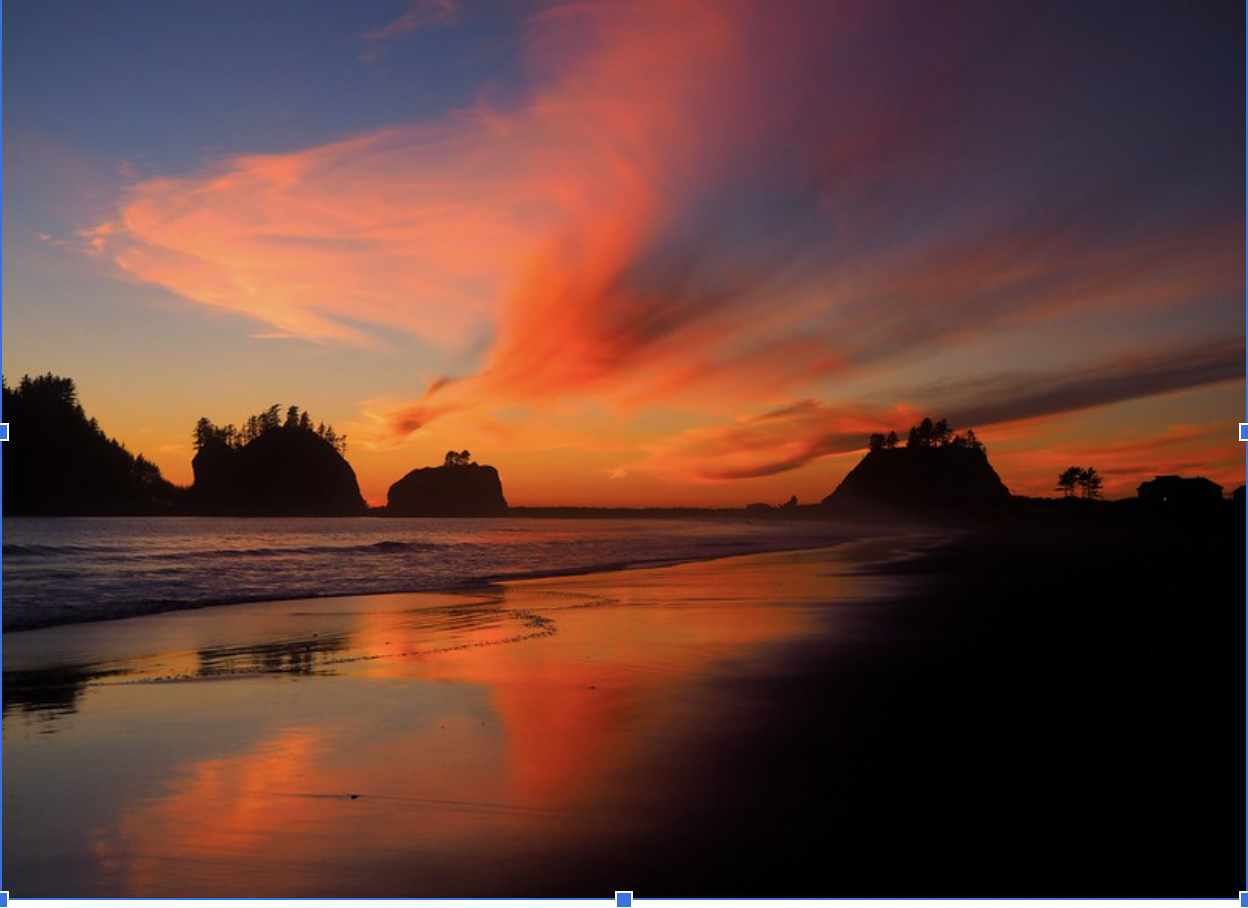
Why You Should Visit the Makah Tribe on the Coast of Washington State

Visiting this region offers a unique opportunity to immerse yourself in a rich Indigenous culture that dates back thousands of years. 

View from Cape Flattery Bluff. Manuel Bahamondez H. CC BY-NC-ND 2.0

The Makah Tribe's reservation, resting on the extreme northwest tip of Washington State, boasts an ethereal landscape and thriving cultural practices. The land and the Tribe's community inspire and nurture ongoing engagement with nature and rich family connections. Despite its remote location, accessible by a single, winding route, the rich culture and natural beauty of this community offer a magical experience for curious travelers. 

The reservation sits at the farthest point north and west in the continental United States, cradled between gentle hills covered by tall Douglas Fir, Sitka Spruce, and Western Red Cedar trees on one side and the rugged Pacific coastline on the other. In the wake of a century-long fight against colonization the Makah continue to protect their sovereignty through the teaching of their Indigenous language, the celebration of cultural rituals and artifacts in their local museum and schools, and the preservation of the tribe’s traditional and sustainable reliance on native plants and animal species. The Tribe welcomes visitors from near and far to reflect on the reservations’ deep culture and lush natural landscapes. Hiking, surfing, and other outdoor activities are easily accessible from this scenic location and cultural hub. Visiting the Makah Tribe offers a unique opportunity to immerse yourself in a rich Native American culture that dates back thousands of years. The stunning natural beauty surrounding the Makah Tribe, including picturesque beaches and rugged cliffs, provides a breathtaking backdrop for your visit.

Sunset on First Beach. Jaisril. CC-BY-NC-ND 2.0

Generation after generation, the fabric of the Tribe’s community is woven through its cultivation of the natural world and artistic endeavors. Today, a significant number of Makah individuals thrive as artists, making a living through the sale of intricately crafted goods which are sold to galleries, shops, and collectors across the globe. A major source of income comes from the exportation of these artistic goods and is a key element of the Tribe’s livelihood. Carvings and masks in particular are a distinct feature of Makah art and have garnered the attention of tourists and art sellers alike for generations. The pieces often feature animals that hold deep cultural importance to the Makah. Whales, salmon, halibut, ravens, eagles, otters, herons, and wolves are commonly depicted in these designs. Each carving tells a story, chronicling the rich narratives of the origins and struggles which are passed down through generations within the community and amongst families.

The Makah are highly skilled woodworkers, capable of fashioning a wide array of items from the trees that thrive in their surrounding forests. While western red cedar is most frequently used, you can also find artists working with alder, yew, and spruce. Carvings range in size, from intricate jewelry to grand ocean-worthy canoes and towering totems. The incorporation of nature imagery and the sourcing of natural materials reinforces and honors the Makah’s reverence for their lands and waters.

Example of Makah style art. A. Davey. CC-BY-NC-ND 2.0 

Long before the advent of written language, the tribe used dance, song, and storytelling to receive and retain intergenerational knowledge. These melodic traditions are shared and reinforced on various occasions, including weddings, naming ceremonies, memorials, and other family or community celebrations. The Makah reservation museum hosts a compelling collection of artifacts, information guides, as well as a garden with plants labeled with the native language and traditional uses. 

For instance, the tribe once maintained five, thriving and permanent villages: Waatch, Sooes, Deah, Ozette and Bahaada. Their ancient way of life began to shift in the late 1770s, when Spanish explorers first settled in and around Neah Bay in 1779. The Spanish and other European groups were eager to exploit the natural resources of the Makah's land and brought in non-Indigenous modes of technology, among the most important of which were guns. The exploitation of the land's natural resources resulted in extinction of native plants and animals (e.g., otters and whales). Not only did the Europeans bring new technologies, they brought diseases, such as smallpox and measles, which plagued the less resistant indigenous communities. The Tribe's traditional ways of life were disrupted, and its inter-generational familial and domestic structures were gravely impacted as a result of death and the loss of land ownership. In the winter of 1855, Makah leaders and the American government signed theTreaty of Neah Bay, which stipulated that the Tribe give up ownership of much of its land, with the exception of rights for certain Indigenous practices, such as whaling, seal hunting, and fishing. The Makah were forced to cope with changes and shift to a more European lifestyle. In exchange, the United States government promised to provide public education and health care. To this day much of the tribe’s coastlines and forests are still under shared jurisdiction with the National Parks Service and the United States Government. 

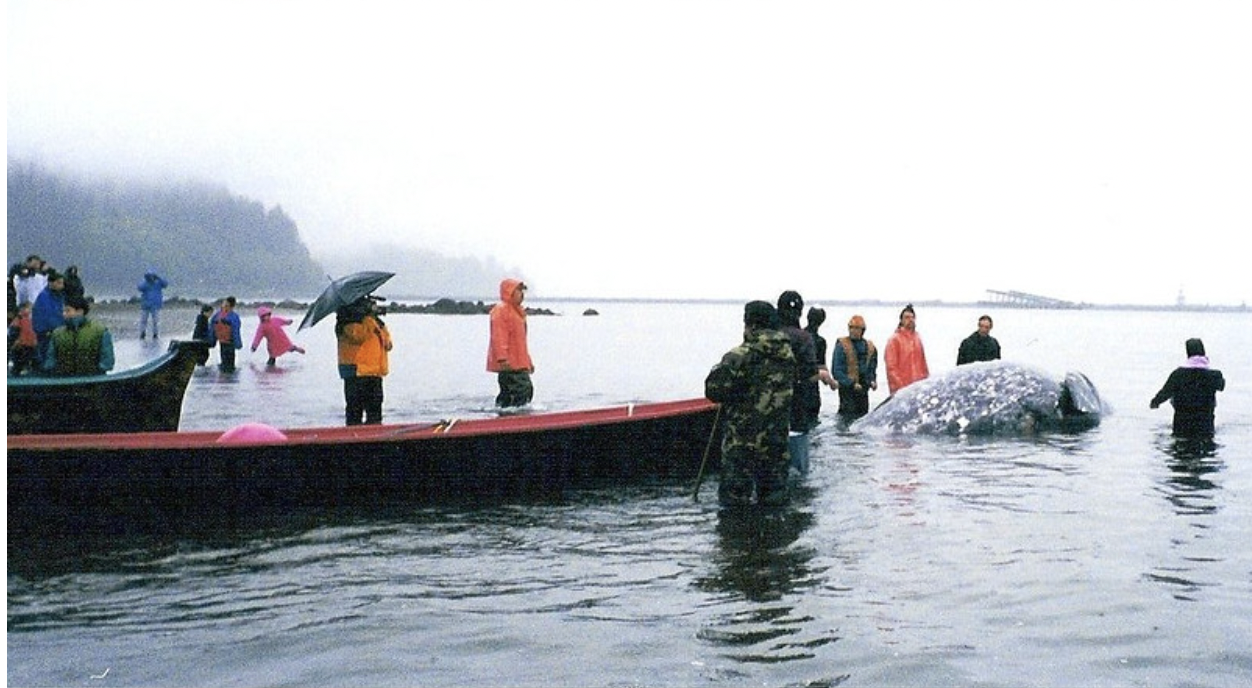
Makah Whale Hunting Ceremony. U.S. Forest Service- Pacific Northwest Region. CC0

As with so many Indigenous tribes across the country, the Makah have resisted the pull of corporate behemoths endeavoring to exploit the natural resources and cultural traditions that rightfully belong to the tribes. These tribes have fought to ensure their histories are not just archived but are alive and flourishing. One of the best ways to protect the ongoing strength of these communities is to visit these places and engage respectfully with the work and lifestyles of the Indigenous peoples, and to listen to and learn their histories. 


Avery Patterson

A rising junior at Vassar College in New York State, Avery is a Media Studies and French double major. She is an avid reader, writer, and traveler. She loves to immerse herself in new cultures and is an avid explorer who loves being in nature. She is passionate about climate and social justice and hopes to use her love of writing as a catalyst for positive change.

How Malaria Might Make a Comeback in the US

In order to prevent another pandemic so soon after the last one, US authorities need to stop this new malaria outbreak in its tracks.

The female Anopheles mosquito plays host to the disease’s parasite. CC BY-SA 2.0

Over the past two months, seven cases of locally acquired malaria have been identified in the US. These cases, six of which appeared in Florida and one in Texas, have drawn significant attention as the first time in 20 years the disease has been transmitted domestically. At present, the Center for Disease Control and Prevention (CDC) has reported that all five patients have received medical treatment and are recovering positively, and that the risk of malaria reappearing in a more widespread epidemic across the U.S. is extremely low. That being said, this is a good reminder for those in charge of American public health infrastructure to reflect on how best to shore up national defenses, especially in the wake of the recent Covid-19 pandemic.

Malaria is caused by parasites, which commonly infect Anopheles mosquitoes, and who in turn transfer the disease to humans when they inject their proboscises into our bloodstreams. There are several species of the malaria parasite, collectively known as Plasmodium, some of which cause more serious cases than others, but all of which require tropical climates to thrive. Regardless of the species, malaria is still extremely serious and symptoms such as high fevers, chills, and nausea begin to manifest in a few weeks. Most worryingly is that malaria, if left untreated, is fatal. As of 2021, the World Health Organization (WHO) believed that a grand total of 247 million cases of malaria occurred around the world, of which 619,000 were fatal. The majority of these deaths were children in various countries in Africa, where malaria is a constant present threat and contributes to a vicious cycle of social and economic poverty, taking a massive toll on countries in already precarious situations.

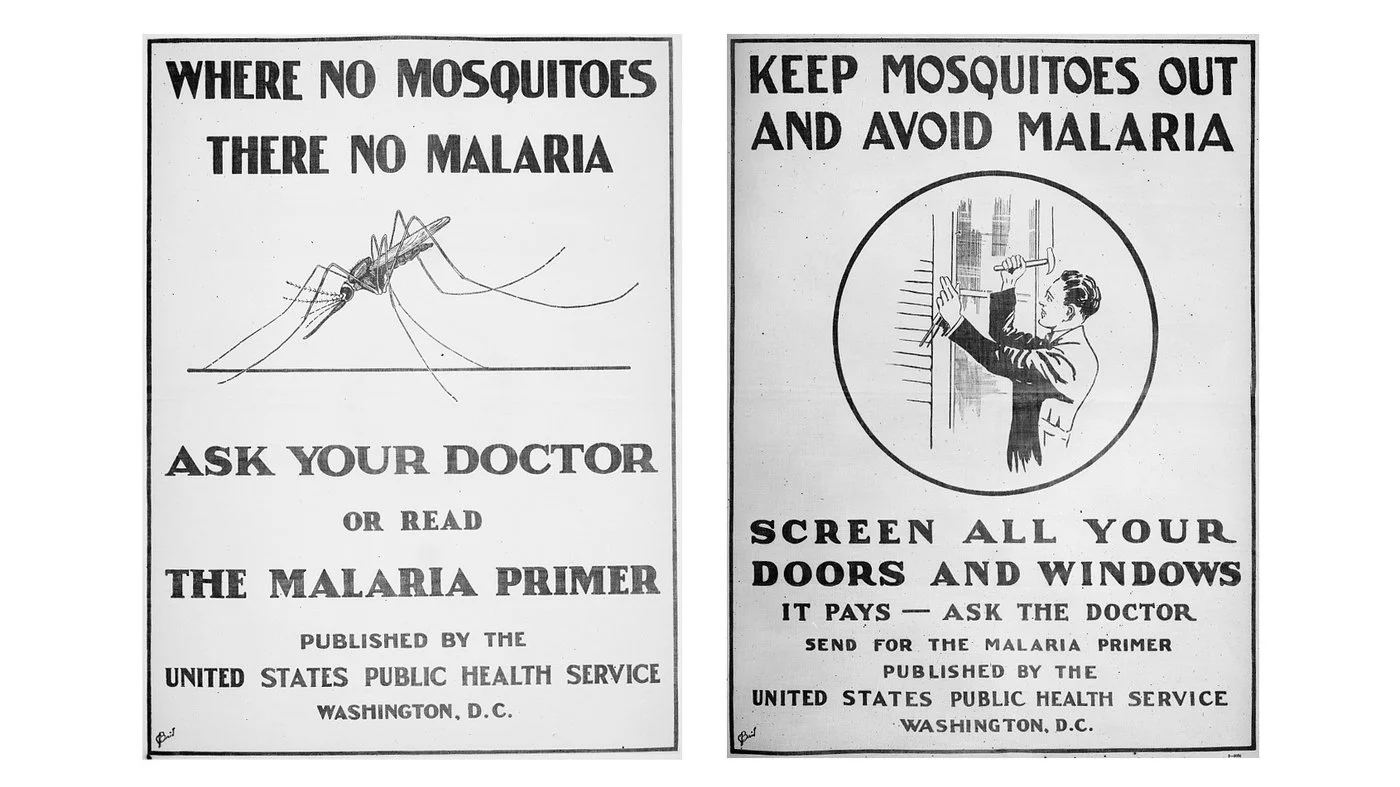
Malaria awareness in the US during the 1950s. Library of Congress. CC BY-NC-ND 2.0

At the beginning of the 20th century, malaria was considered an extremely serious issue in the US; the CDC was actually founded in 1946 to eliminate the disease. Over the next six years, various public health measures such as insecticide use and window screens were implemented to reduce the 15,000 cases reported in 1947, and in 1951, the CDC finally announced that malaria was in the US no longer. This remained the case for decades, until an incident in 2003 when eight locally acquired cases in Palm Beach, Florida were identified. Fortunately, the outbreak was quickly quashed thanks to an immediate response campaign that completely rid the area of mosquitoes to prevent transmission. Since then, malaria has remained fairly absent from the American healthcare landscape.

It is important to note, however, that malaria has never been completely extinct in the US; prior to the recent COVID-19 pandemic, roughly 2,000 cases of the disease were identified and reported annually in patients who had traveled to countries with high incidences of malaria in Southeast Asia and Africa. Additionally, once infected individuals return to the US, local mosquitos who feed on them can pick up the parasite and spread it further. Every so often, this may result in a small reintroduction of the disease and potentially even some limited transmission, but there has never been any worry of it resulting in a much widespread epidemic.

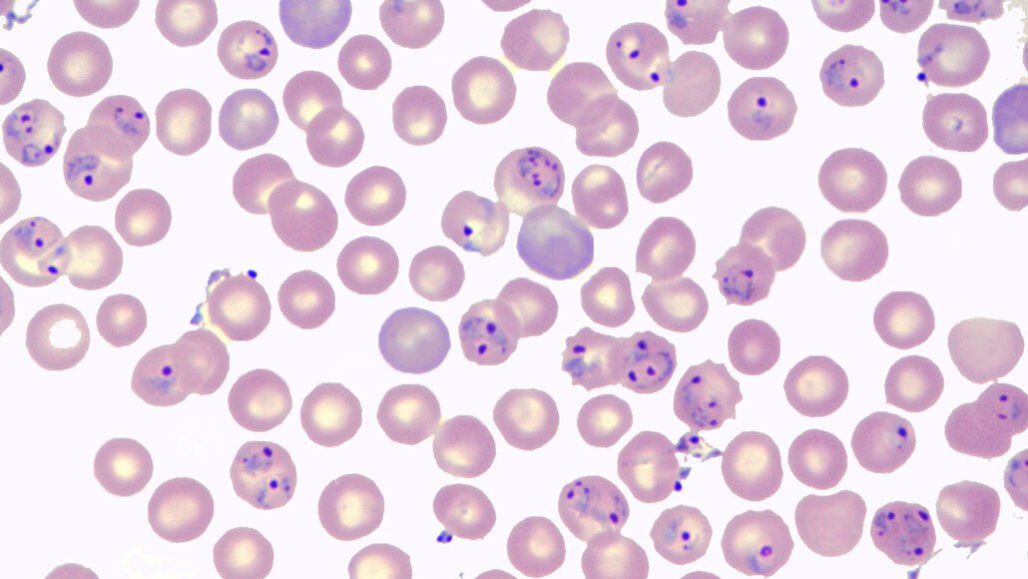
The malaria parasite pictured under a microscope. Joseph Takahashi Lab. CC BY-NC-ND 2.0

The reason these recent cases received so much attention were that all five were acquired locally within the US, which likely indicates that the parasitic mosquito population has made a resurgence as well. Thankfully, the species of parasite identified to have caused this small outbreak is known to transmit one of the milder forms of the disease, but that in no way detracts from the gravity of the situation. Matters of public health have become much more salient in regular discourse since the COVID-19 pandemic, and with it, some extreme opinions about containing and treating transmissible diseases. While America’s healthcare infrastructure continues to operate in largely the same way as it did during the 2003 outbreak, experts have agreed that public cooperation is now more important than ever if this re-appearance is to be nipped in the bud.

The RTS,S malaria vaccine. TheScientist. CC BY-SA 2.0

One particular area in which this agreement would go a long way, is that surrounding the efficacy of vaccines. In October of 2021, the WHO officially recommended the use of the RTS,S malaria vaccine developed by GlaxoSmithKline to prevent transmission in regions with high incidences of the disease. In addition to being logistically simple to store and administer, trials proved that the vaccine was beneficial to 90% of those treated, a staggering figure in the world of pharmaceutical development. Introducing the vaccine to the U.S. seems like an obvious step to take in the wake of these recent malaria cases, especially given the low price of a single dose at $9.30.

Vaccines have been a hotspot of controversy over the past few years, with many people denouncing both their safety and efficacy as a preventative treatment. Government authorities and healthcare professionals and academics around the world continue to release studies and evidence to show that vaccines are essential to build up individual and population-wide resistance  to a variety of diseases, but large groups of the public still remain unconvinced. Among the many lessons and important takeaways from the COVID-19 pandemic, the importance of vaccinations is among the most important, especially in the face of a potential re-emergence of a disease as deadly as malaria.


Tanaya Vohra

Tanaya is an undergraduate student pursuing a major in Public Health at the University of Chicago. She's lived in Asia, Europe and North America and wants to share her love of travel and exploring new cultures through her writing.
An Ethiopian’s Path to From Refugee Camp to College Campus

How a refugee survived genocide and rebuilt a life in the United States.

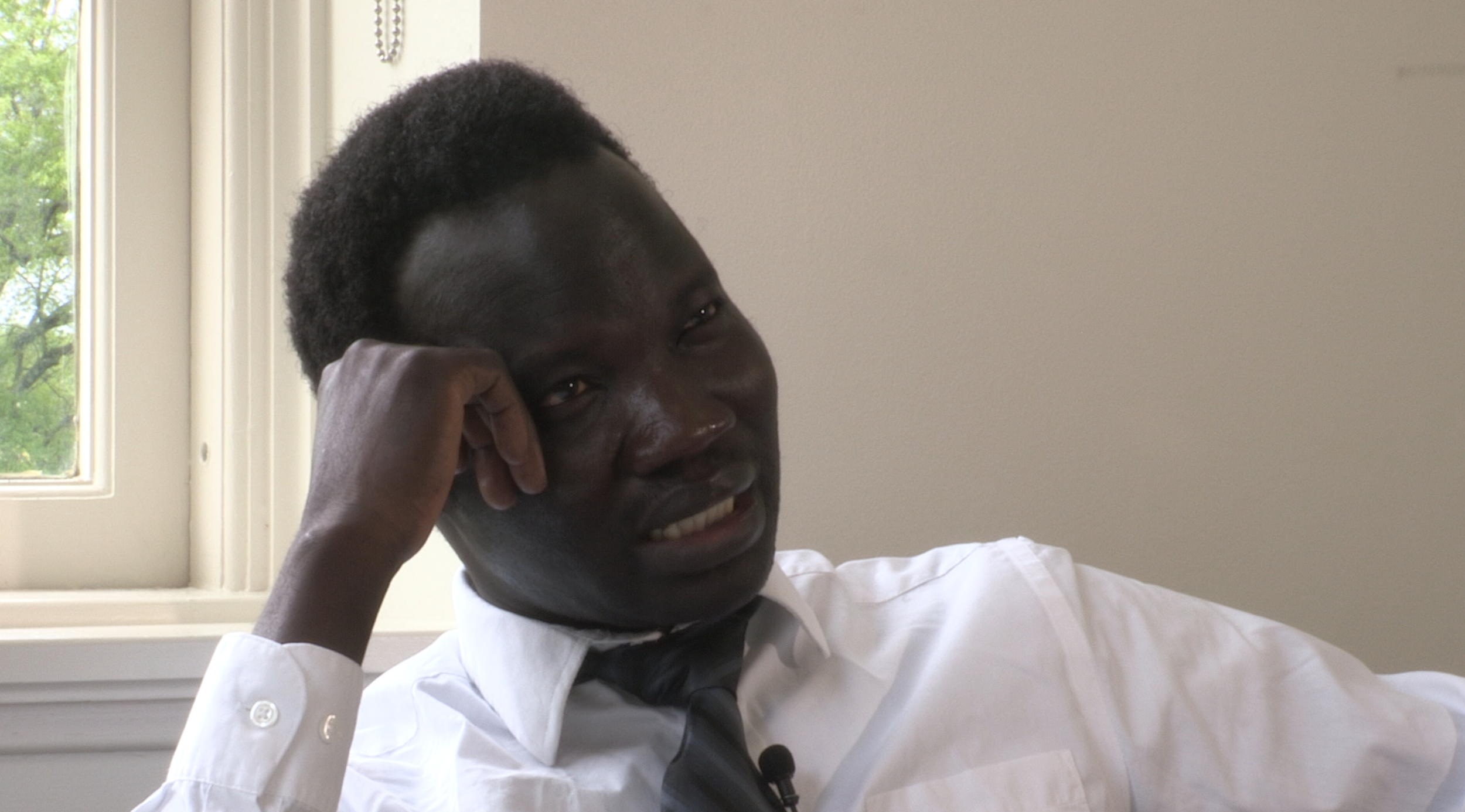
Omot retelling his journey coming to the U.S. during our interview. Image courtesy of Ojullu Omit.

This semester, I had the privilege of connecting with Ojullu Omot, whose life was forever altered by tragedy. On December 13, 2003, when he was just 14 years old, Omot experienced a massacre at his hometown in south-west Ethiopia. As part of a Wake Forest University project to raise awareness about the challenges faced by refugees, a team made up of me and my classmates produced a 10-minute advocacy film that aims to shed light on the often-overlooked struggles refugees encounter while adapting to life in the United States. Omot’s story is a testament to the blend of heartbreak and perseverance that characterizes the ongoing global refugee crisis, capturing the resilience and fortitude of those seeking haven away from home.

Omot’s story began with displacement, as he fled the 2003 massacre in the remote Gambella region of southwestern Ethiopia. From December 13-15, in a reprisal against a small ambush against Ethiopian federal government officials, ethnically Amhara, Oromo, and Tigrayan soldiers and rioters murdered hundreds of minority Anuak civilians. Human Rights Watch’s report suggests that these atrocities should be considered crimes against humanity. . The Ethiopian government claimed that only 57 were killed and that the violence resulted from ethnic tensions between rival Anuak and Nuer groups, in contrast to the claims of international human rights groups and the Anuak themselves.  Human rights NGOs have called for a thorough investigation into the incident, with concerns that others like it could occur. Despite facing deadly tragedy along with the immense challenges of settling into a new society as a refugee, Omot has found a new home in the United States, where he serves as a living witness to the egregious human rights abuses of his homeland. He remains committed to starting a new chapter in life.

By now Omot has gotten used to retelling the story of how he left his home in Ethiopia in the midst of genocidal violence, and his journey  from there to become an international politics student in the United States. The three-day-long massacre in Gambella town of southwestern Ethiopia was an outburst of ethnic conflict between the indigenous Anuak group and members of the Ethiopian military. As the situation in Ethiopia deteriorated, Omot moved to Sudan when he was a teenager, with the hope that things would get better in a year or two.

But they didn’t. The military confrontation neither started, nor ended with the massacre.  More than 10,000 Anuak people were forced to leave Ethiopia in 2004, the year after the massacre took place.

Omot left Sudan for Kenya after two years of waiting. The unrest had separated him from his family, and he lacked many colorful memories about his childhood in Ethiopia, Sudan and Kenya. What he remembered is playing football with his friends in refugee camps everyday; many of those eventually being sent to Canada, Australia and other developed nations. Omot remembers planes from the United Nation hovered above their heads in refugee camps, dropping food and supplies and people hurrying to grab them. “We were dependent on the refugee program,” Omot said, “Resettlement in the United States was not a typical solution for refugees living in the United Nations High Commissioner for Refugees(UNHCR) camp.”

Omot never dreamed about coming to the United States then. He was invested in the idea that everything will go back to normal in Ethiopia, and that he could then return home. Yet Omot’s life took a major turn in the year 2016. He was called for an interview, which he later found out was part of the application process by U.S. Citizenship and Immigration Services employees concerning whether he is eligible for resettlement in the United States as a refugee. The approval rate for a refugee status in the United States is 27%, according to World Data.  

Omot waited for roughly six months until he was called for a series of security checks, examinations and orientation. In February 2016, International Organization for Migration contacted Omot, telling him that his case is ready. He then boarded a plane to the United States on April 4th, 2016, his first ever flight. When he landed in Miami, Florida, it was like landing on a new planet- the shock of the novel language and lifestyle almost dazzled the then 28 year old. 

“There was something change, [such as] the day became longer, I was not even comfortable, and I cannot see where I come from, ” Omot recalled his initial exposure to the United States, “The first question I asked myself [was], is this the U.S. [as] I expected it?”

And the first few months continued to affirm to him that starting anew wasn’t easy. Omot often found himself alone in his house assigned by the government, since his roommates busied themselves working in the daytime, and went straight to sleep not long after walking in the door at night. Comparing the situation to the community life in Ethiopia, where everyone would sit down and share stories after a day’s work, filled Omot with homesickness at night. 

Language is also a major challenge to Omot. Going to a university was at the top of his wish list when he came to the United States, but he couldn’t even understand people’s accents when he asked for directions on his way to school. He had no idea how to open emails during his first semester at a community college. When one of his classmates finally taught him how to view the inbox, he found emails from professors flooded in there. In winter, the temperature dropped so low that Omot, who used to live near the equator, had to drop his English as Second language (ESL) classes to avoid traveling in freezing weather.

But Omot is determined to realize his dream. Instead of “wasting time” in ESL classes, he decided to push himself, taking the General Educational Development (GED) tests directly.  He works as a hospital janitor in the daytime for living; in the evening and before dawn, he dives into his study. Whenever he had free time, Omot would peruse his textbooks, went up to the library of the community college he attended everyday, asking every librarian what GED looks like, and tips and tricks to score higher. 

The global refugee population has reached crisis proportions, with more than 30 million refugees displaced in 2022, signaling a significant surge from the previous year's level. The United Nations High Commissioner for Refugees (UNHCR) has reported a staggering total of 103 million people forcibly displaced as of mid-2022. In response, President Joe Biden has committed to revamping America’s current “inhumane” immigration policy. However, the administration's effort to admit refugees has fallen significantly short of its goal, with only 25,465 individuals granted admission by the end of the previous fiscal year on September 30, 2022, a mere 20% of the objective. The number of refugees received by the United States still remains one of the lowest among all nations, and the number continues to decrease.

Refugees face a plethora of challenges when they resettle in a foreign country, with attaining secure housing among the most pressing. Asylum seekers in particular struggle to obtain temporary housing due to a lack of government support and unfamiliarity with the US housing system. Non-profit organizations and shelters provide vital assistance to these individuals. Despite this aid, refugee and asylum seekers are disproportionately at risk for health problems, both physical and mental. They are more susceptible to severe mental health conditions like PTSD and depression, while chronic illnesses like diabetes, hypertension, and cardiovascular disease exacerbate their already challenging circumstances.

In 2017, Omot took the GED for the first time. And hard work pays off — he passed the test.

“It [passing the test] gives me hope that I could continue to do all of them,” said Omot, breaking into a smile. And he did. After he finished with GED, Omot is currently pursuing a bachelor degree in international politics at University of North Carolina Greensboro. When asked why he could recall his story in astonishingly clear detail, Omot answered, “I think my story is important because if other people, other refugees heard about it, they would think, oh, this guy did that and starting his new life. Maybe I could do the same.”

To Get Involved:

While Omot is navigating through his new life in the United States, it is not without support from various refugee organizations, such as Every Campus a Refugee (ECAR), an organization aiming to mobilize colleges and universities to host refugees on campus grounds and support them in their resettlement. ECAR provided nearly 4 years free housing and accessories to Omot, and provides several other services to refugees in the North Carolina region. Learn more about ECAR here.


Hope Zhu

Hope is a Chinese international student at Wake Forest University in North Carolina studying sociology, statistics, and journalism. She dreams of traveling around the globe as a freelance reporter while touching on a wide range of social issues from education inequality to cultural diversity. Passionate about environmental issues and learning about other cultures, she is eager to explore the globe. In her free time, she enjoys cooking Asian cuisine, reading, and theater.

Eat for Under $15 at these 7 Global Cuisine Restaurants in NYC

Let your tastebuds travel without leaving the Big Apple.

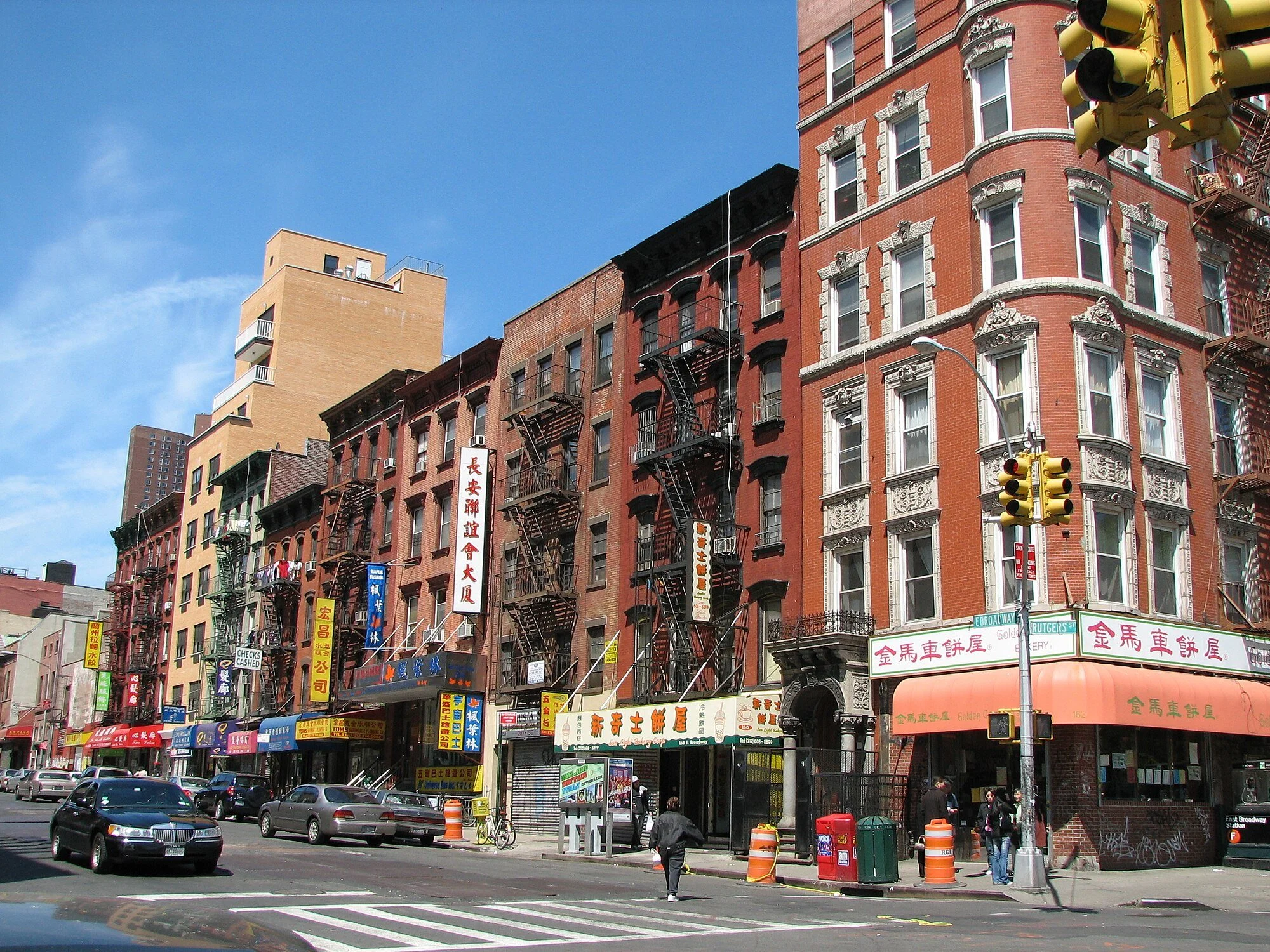
Chinatown in New York City. Norbert Nagel. CC by 3.0.

Beyond its famous museums and fashion, New York City is recognized as the food capital of the United States. Every year foodies flock to the city’s restaurants for unique menus and interpretations of global cuisine. But this top-notch culinary environment typically comes—quite literally— with a price. New York restaurants are often criticized for their exorbitant prices. But fear not, there are plenty of restaurants in the city that offer authentic international cuisine for a reasonable price. Whether you are a college student on a budget or a lifelong fan of global cuisine looking for food made with a lot of love, these restaurants will leave both your stomach and your wallet happy.  

1. Super Taste

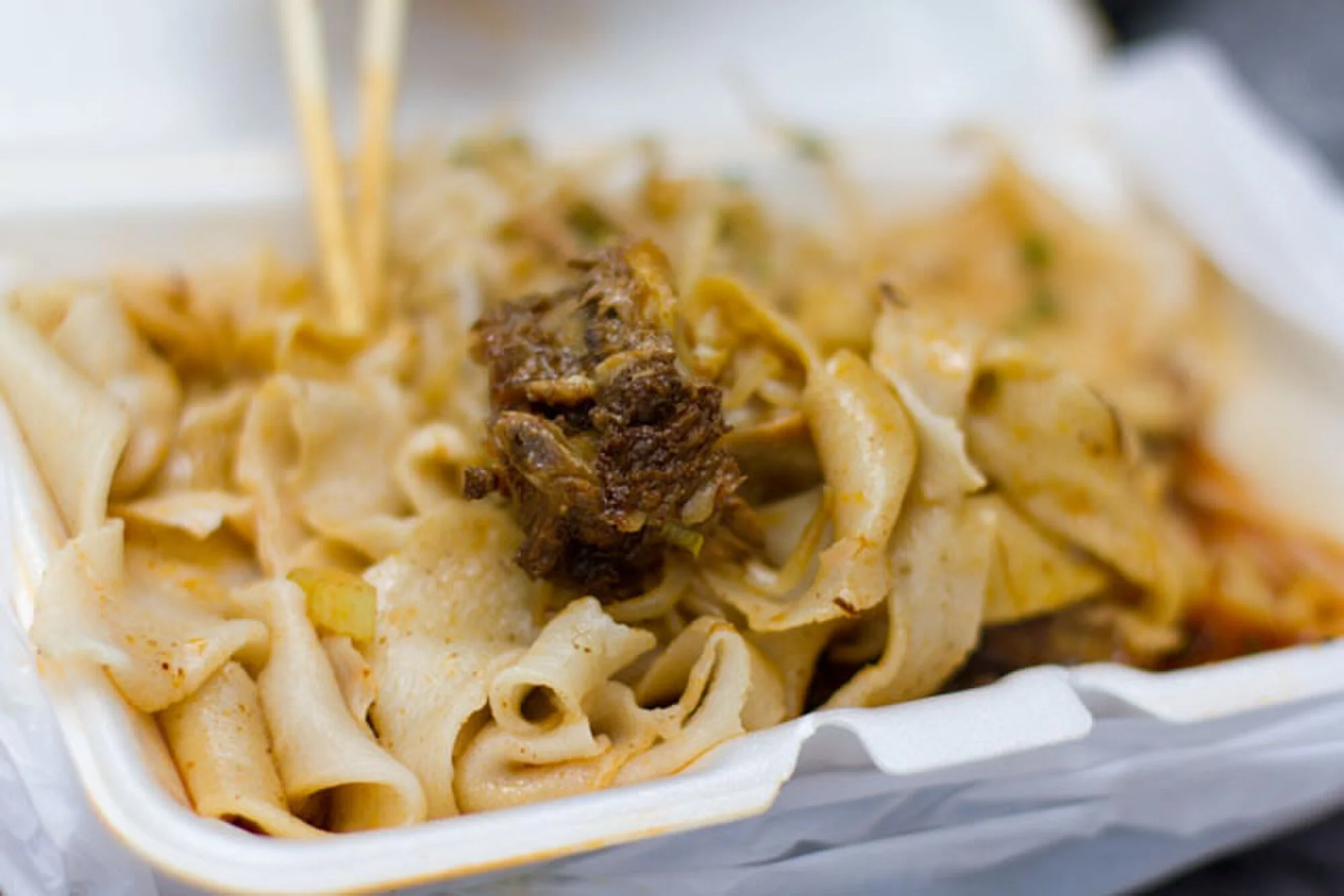
Hand-Pulled Noodles with Lamb. Jason Lam. CC by 2.0.

Located in the famous culinary neighborhood of Chinatown, Super Taste may be the most well-known restaurant on this list. If you find yourself craving Chinese food, Super Taste is a classic, must-go stop. The most notable dish on the menu is their hand-pulled noodles. These silky and addictive noodles can be paired with chicken, beef, or mutton at the customer’s request. But if you aren’t in the mood for noodles, the five for $10 pork and chive dumplings drenched in sweet-spicy chili oil are always a crowd pleaser. Although there is limited seating inside, Super Taste is perfect for on-the-go enjoying. Their menu can be found here

2. Pyza

Borscht topped with sour cream. Liz West. CC by 2.0.

Warm and delicious, Pyza serves Polish food so good it could be mistaken for a home-cooked meal. Located in Greenpoint, Brooklyn, this restaurant specializes in plates piled high with food that makes you feel like family. Its menu features traditional dishes like stuffed cabbage, tongue in horseradish sauce, and various types of pierogies. A stand-out dish is their chicken cutlet, breaded and paired with a dollop of sour cream. Their soups range from a reasonable $5-$8, so tuck in with a bowl of borscht and enjoy the homey atmosphere. Additional items and prices can be found here

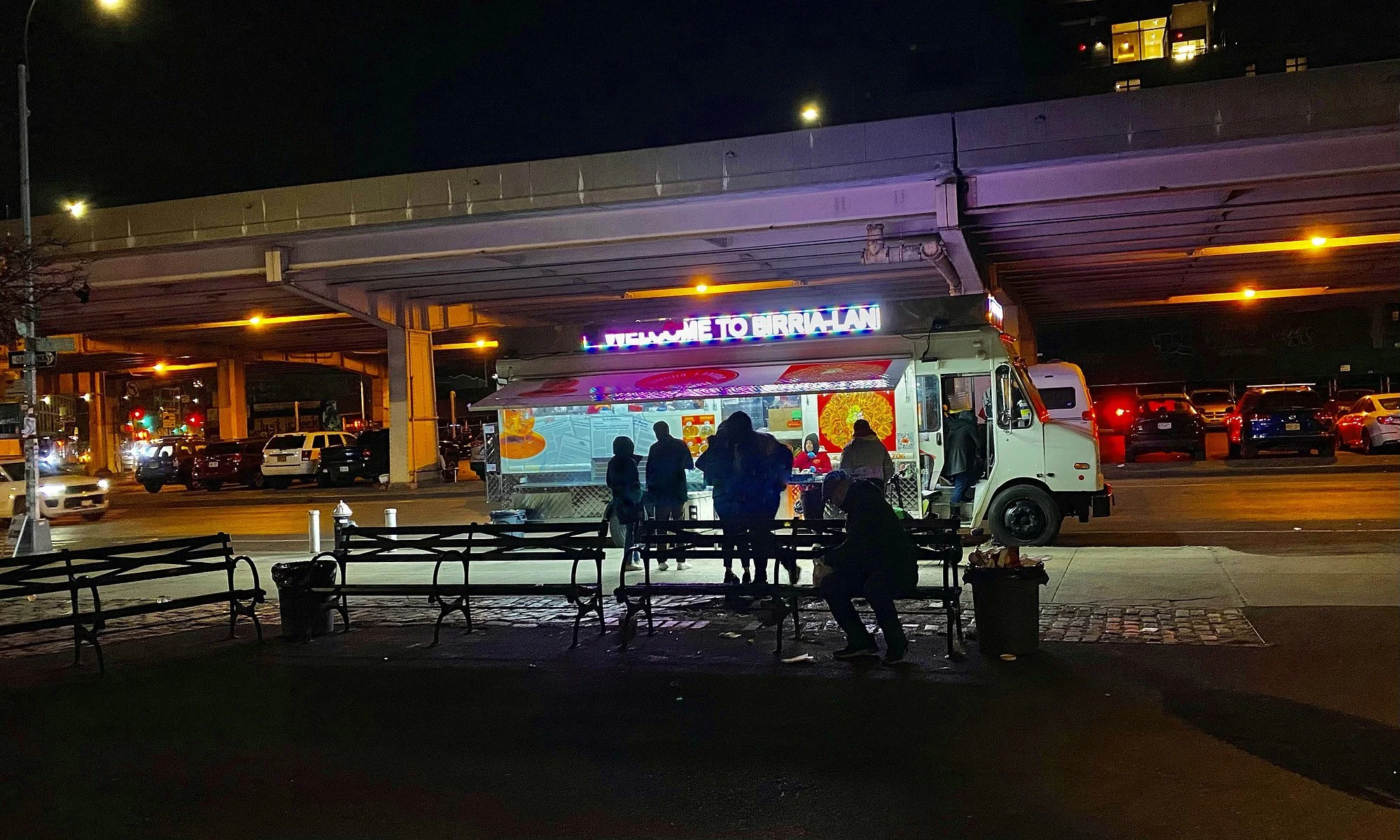
3. Birria-Landia

Brooklyn location of Birria-Landia. Andre Carrotflower. CC by 4.0.

This Mexican spot may differ from most foodies’ perceptions of a typical restaurant. Instead of a usual sit-down experience, Birria-Landia started as a single Jackson Heights food truck. The operation has since expanded to include additional trucks in the Lower East Side, the Bronx, Jackson Heights, and Williamsburg. Their specialty dish, birria, features tacos topped with fresh cilantro and salsa paired with a rich, smooth dipping broth. The meat of the tacos—often beef—is first marinated in mixtures of spices and dried chillies before being cooked low and slow in broth. This lengthy process creates mouth-watering and juicy tacos that can be enjoyed for only $4.50. In addition to their exceptional tacos, their consummé broths, tostadas, and quesadillas can be found here.

4. Kassim’s Bakery

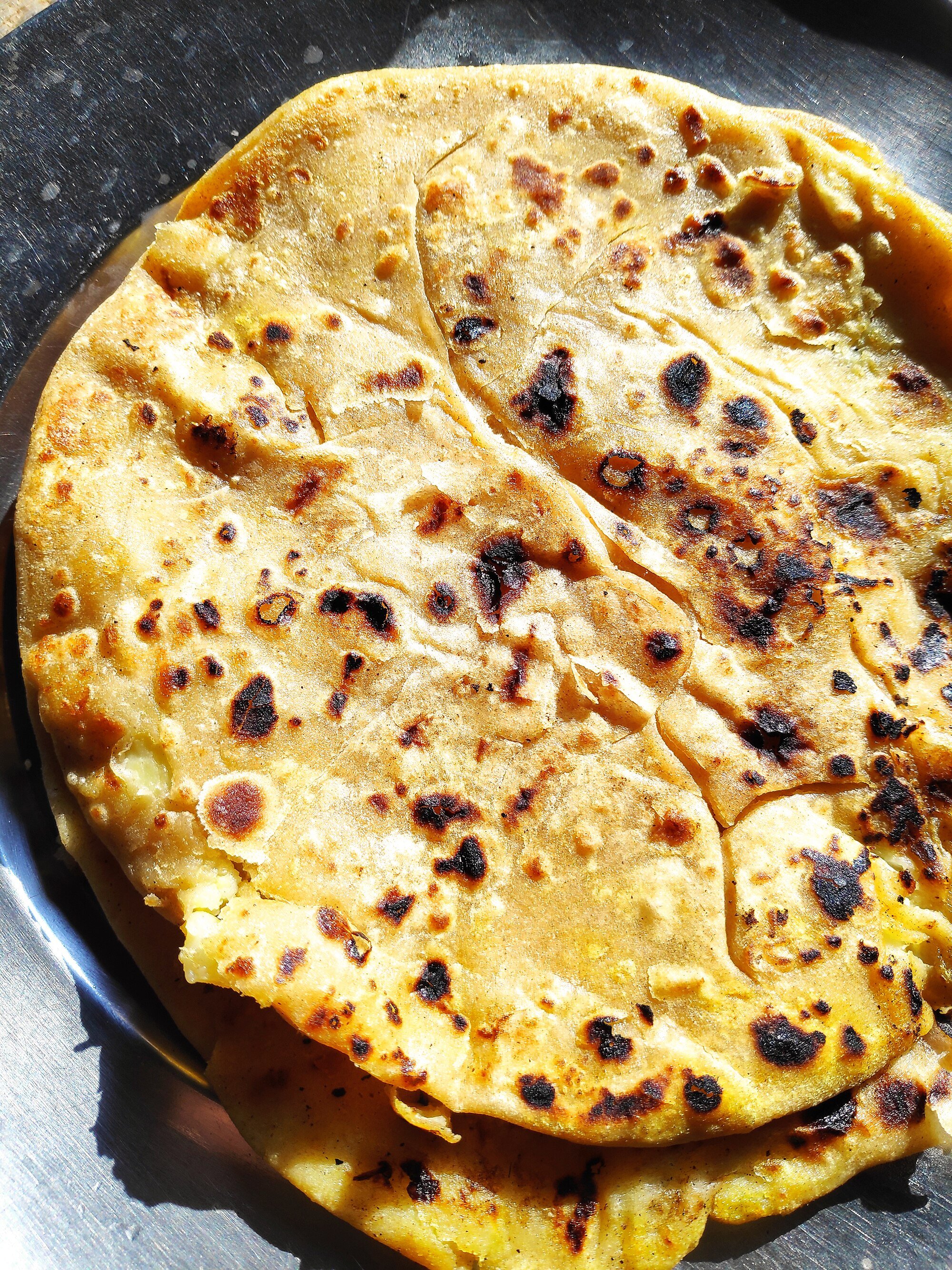
Aalu Roti. Guarav Dhwaj Khadka. CC by 4.0.

Whether you prefer your dishes savory or sweet, there is something for everyone at this Queens restaurant. Kassim’s serves a wide variety of Caribbean lunch and dinner foods, but also offers a tasty variety of pastries and baked goods. One of the menu’s highlights is the selection of roti; each variation of the dish is under $10. Roti is a wheat flatbread that at Kassim’s is paired with beef, chicken, duck, goat, and pachownie (innards of lamb). After finishing a main dish, customers can explore Kassim’s dessert menu. Their cassava pone is perfect for those with a sweet tooth; cassava, also called yuca, has an edible root often used to make starchy desserts. More of Kassim’s sweet and savory treats can be found here.

5. Punjabi Grocery & Deli

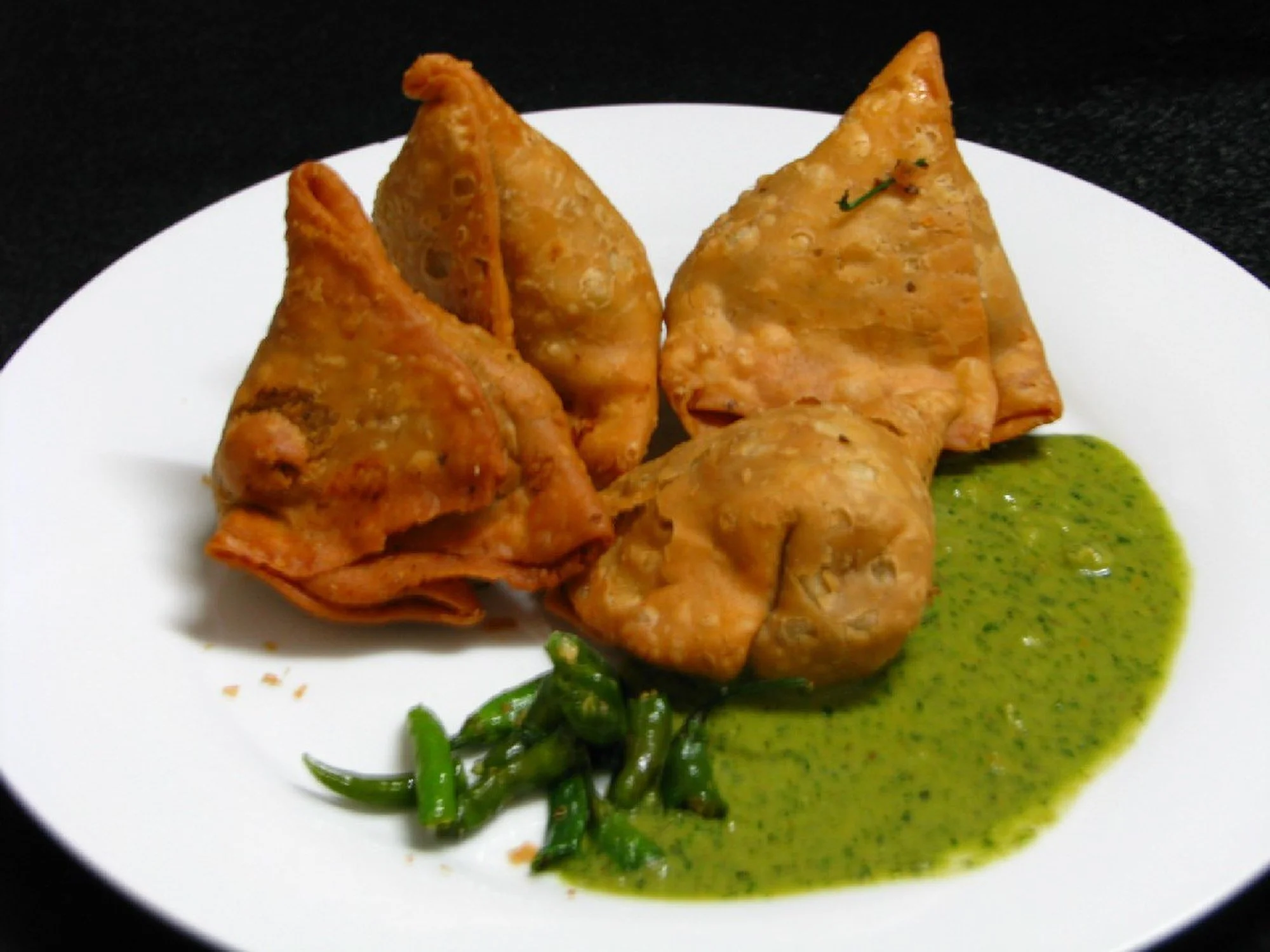
Samosas paired with chutney. K Spoddar. CC by 4.0.

Can you claim to have visited New York if you didn’t find yourself in a deli at some point during the trip? Although it also doubles as a grocery store, this Lower East Side joint’s Indian food makes it stand out. Even better, the deli only serves vegetarian food, making it the perfect spot for travelers with this dietary restriction. At only 50 cents, Punjabi Deli might have the most affordable Samosas in the city. They also offer an assortment of rice dishes where customers can mix and match different vegetable options to create the perfect bowl for only $6 or $8, depending on if you want a small or large meal. The $2 chai is a perfect way to wash everything down. More exciting dishes and beverages can be found here

6. SVL Souvlaki Bar

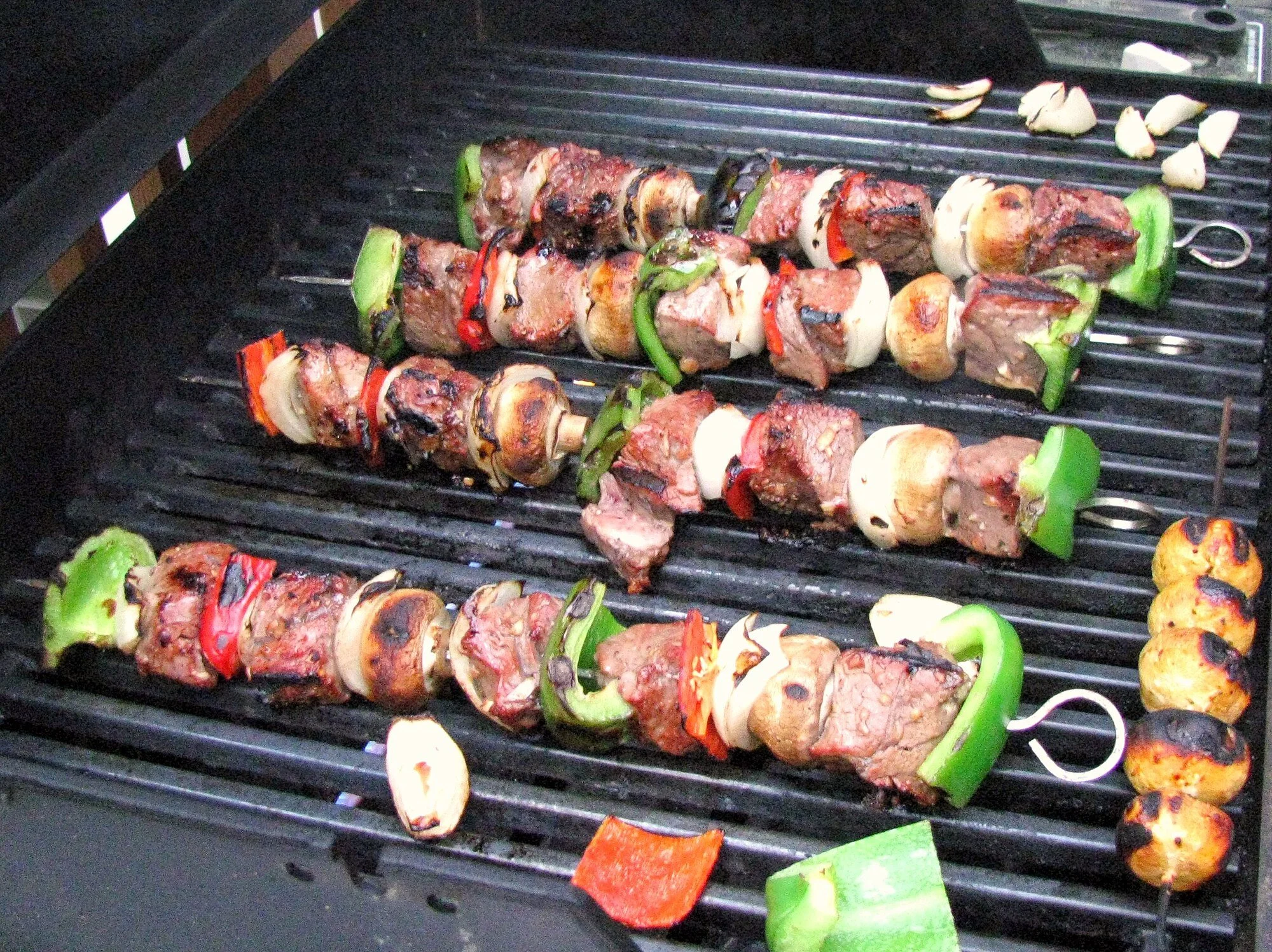
Grilled kebabs. Glen Edelson. CC by 2.0.

From spanakopita to greek fries, SVL Souvlaki Bar combines tradition with innovation to create unique Greek food. They have two Queens locations, with one on Steinway Street and the other on Astoria Boulevard. Perhaps the most exciting aspect of this quick and fresh spot is their “build your own” options. You can customize salads and bowls, or even create entire plates filled with pita, kebabs, vegetables, and sauces. Their iconic SVL sauce combines sweet, tangy, and creamy flavors— it is the perfect way to top off any customized dish. Or, if the extent of customization is intimidating, you can always enjoy classic chicken souvlaki kebab for only $4.50. Even better, the Bar’s food is made with hormone-free meat and fresh produce. Read more about their ingredients, mission, and menu here

7. Bunna Cafe

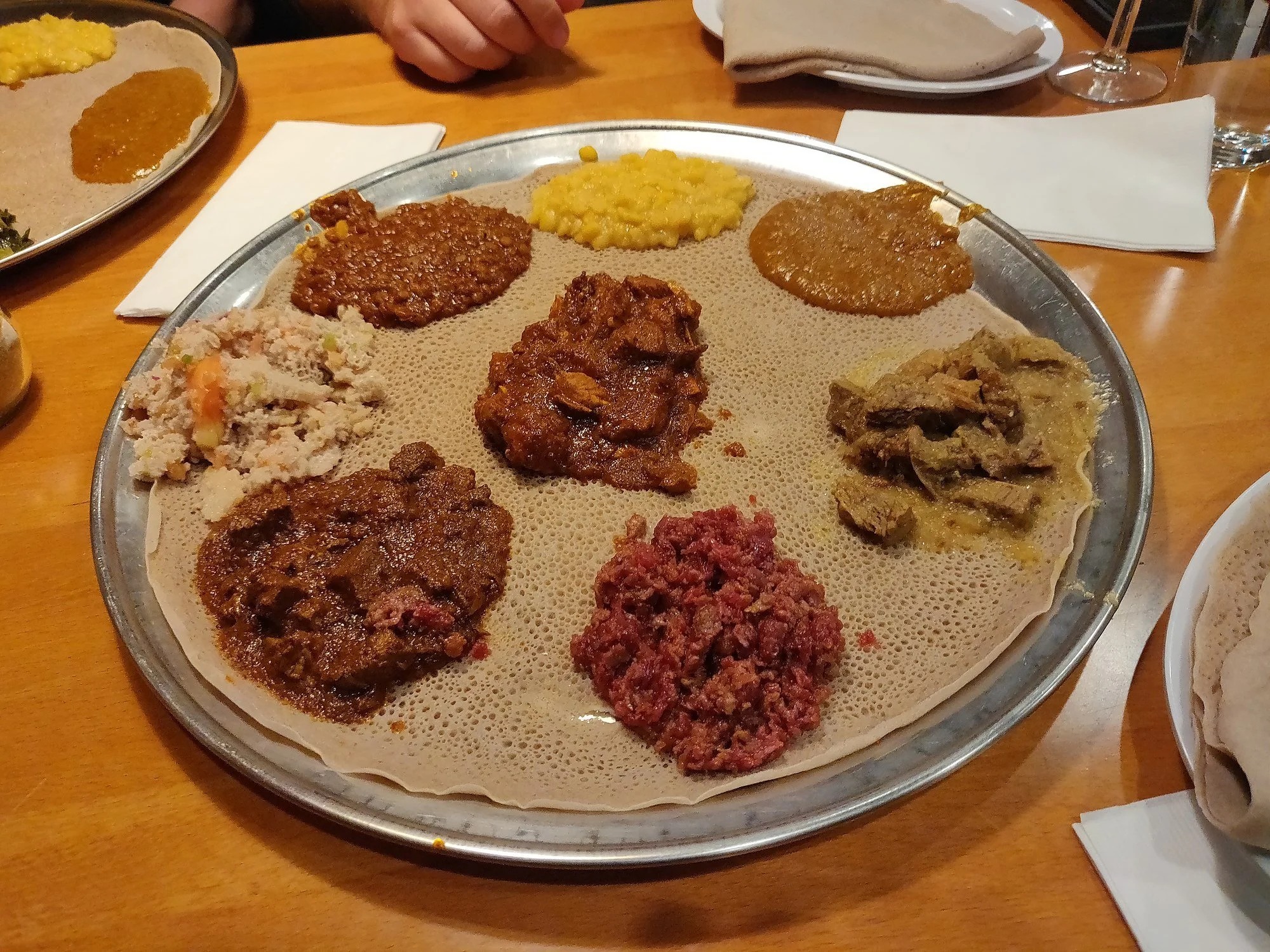
Injera topped with assorted vegetables. Kurt Kaiser. CC by 2.0.

If you’re looking for more of a sit-down experience, Bunna Cafe is the perfect destination. They are a Black-owned and vegan Ethiopian restaurant located in Bushwick, Brooklyn. The restaurant’s family-style meal environment creates the perfect atmosphere for hearty food paired with good conversation. Scoops of vegetables are served in piles on injera, a fermented sourdough flatbread. Customers can select a variety of different sides, mixing to create new flavors and combinations. Or, if you’re dining alone, the $12 lunch special comes with individual scoops of four different items. Although, with such generous portions, you may want to bring a friend to share. Further details about their menu and strong variety of sides can be found here.


Carina Cole

Carina Cole is a Media Studies student with a Correlate in Creative Writing at Vassar College. She is an avid journalist and occasional flash fiction writer. Her passion for writing overlaps with environmentalism, feminism, social justice, and a desire to travel beyond the United States. When she’s not writing, you can find her meticulously curating playlists or picking up a paintbrush. 

7 Sites of Mexico City’s Architectural Diversity, from Baroque to Brutalist

Mexico City is a flourishing metropolis with a plethora of historic and modernist architectural sites. Here are a few attractions scattered around the city.

Read More

The Decriminalization of Illicit Drugs in British Columbia

Canada has announced their plans to decriminalize small amounts of illicit drugs in British Columbia by January of 2023. They are hopeful this will lower high rates of overdoses.

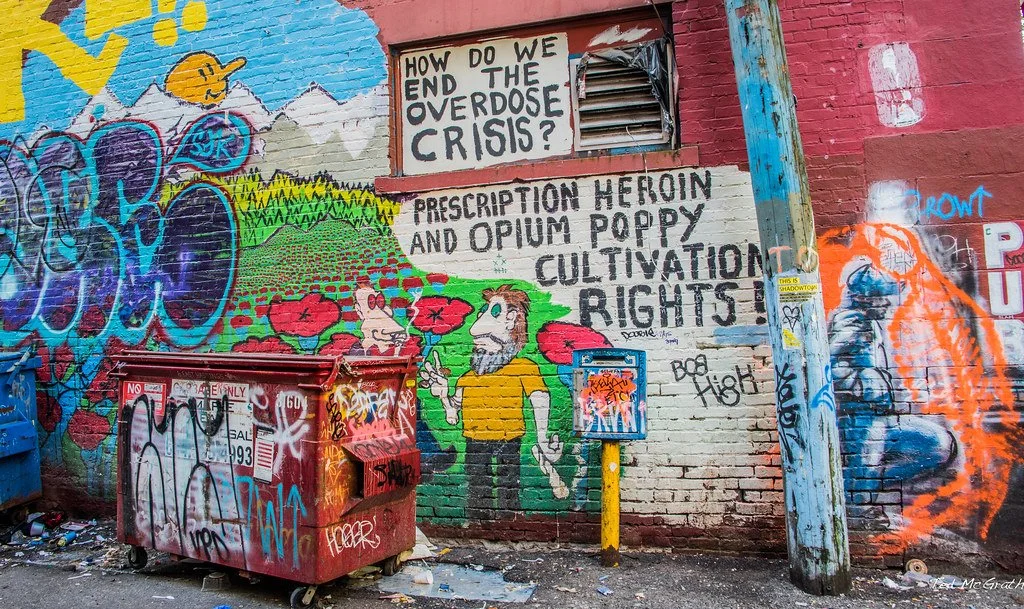
Graffiti about drug decriminalization. Ted’s Photos. CC BY-NC-SA 2.0.

In British Columbia, Canada, where thousands of overdose deaths occur each year, officials have decided to try decriminalizing small amounts of illicit drugs. The illicit drugs in question include heroin, cocaine, opioids, methamphetamine and more. Residents of British Columbia 18 years or older will be allowed to possess a maximum of 2.5 grams of these drugs without penalty, a policy that will take effect in January of 2023. This policy comes from an exemption from the Controlled Drugs and Substances Act that makes these drugs illicit, which was granted to British Columbia for a three-year trial run.

Officials hope that by decriminalizing small amounts of these drugs, dependent users will feel less afraid of prosecution and stigmatization if they do decide to seek drug-related help. Further, by tackling rates of drug deaths as a public health issue, BC Government News says “the Province will create new pathways to support those seeking treatment.”

Since the height of the pandemic in 2020, British Columbia has struggled with high rates of illicit drug abuse and overdose deaths. In 2020, drug-related death rates rose into the two-thousands, a problem that since 2016 had been declared a public health crisis. Most of these deaths occur when drug users hide their addiction from friends and family, fearing the reaction or stigmatization that will come from their loved ones learning of their addiction.

By decriminalizing these drugs, Canada hopes to reverse this effect; Dr. Theresa Tam, Canada’s chief public health officer, wrote in a tweet: “Stigma and fear of criminalization cause some people to hide their drug use, use alone, or use in ways that increase the risk of harm. This is why the Government of Canada treats substance use as a health issue, not a criminal one.”

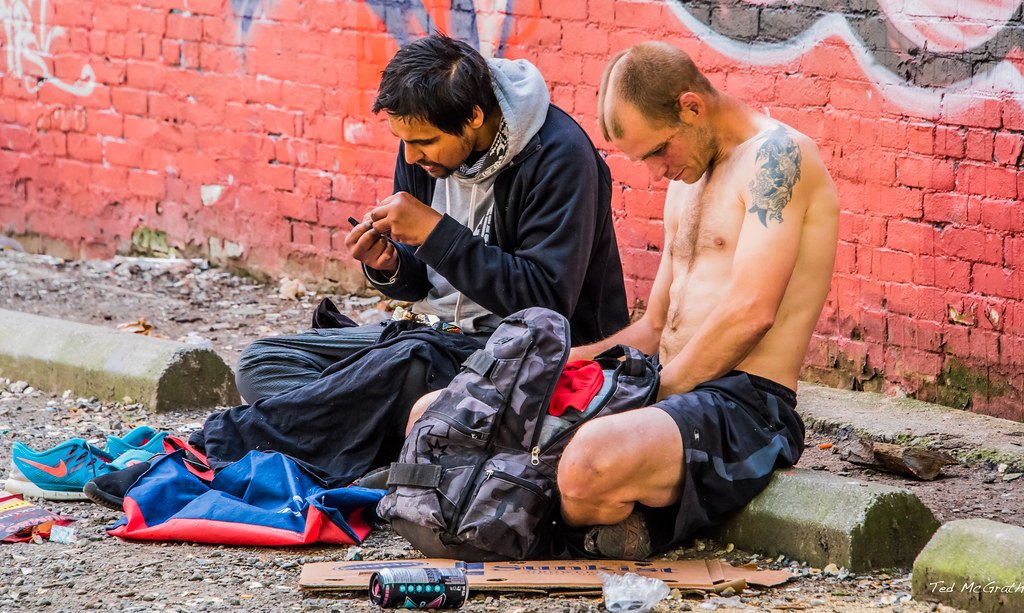
Street use in Vancouver. Ted’s Photos. CC BY-NC-SA 2.0.

The exemption to be instituted in 2023 has found support from family and friends of deceased drug users and was even supported by the police associations and chief coroner. Though some call for even further decriminalization – a policy that would expand the 2.5 gram limit to larger amounts – health officials in Canada believe 2.5 grams is a good trial starting point. Harm reduction is their main goal; British Columbia’s Provincial Health Official Dr. Bonnie Henry stated, “This is not one single thing that will reverse this crisis but it will make a difference.”

In requesting an exemption from the Controlled Drug and Substances Act, British Columbia also stated that drug-related felonies and arrests disproportionately affect already marginalized communities. In decriminalizing small amounts of drugs, the authorities will reduce  punitive actions and may help to decrease the stigmas around drug use that cause people to hide their addictions. 

Turning Point of Tampa has also stated that experts on drug incarceration have stated that imprisonment does not deter drug use, and problems such as substance abuse, mental health issues and fear of open drug use worsen when sentenced to prison time. Peer clinical adviser Guy Felicella told the New York Times, “Arresting me and incarcerating me for all those years for using drugs never stopped me once from using drugs — even when I went to prison. It didn’t do anything except create stigma and discrimination, shame,” which is the exact thing Canada is trying to end through decriminalization.

Hoping to reduce the stigma surrounding drug use that leads to deaths due to fear of judgment and sequentially more dangerous usage, Canada is waiting to see how this exemption in 2023 will reduce rates of drug-related deaths, and whether further decriminalization is needed. 

To Get Involved:

The Canadian Drug Policy Coalition (CDPC) is an advocacy organization that is fighting against the harm caused by drug prohibition laws. Campaigning with a platform centered on decriminalization, the Coalition strives to reduce the high rates of drug overdose deaths in Canada. To learn more about the CDPC’s mission and to support their work, click here.


Ava Mamary

Ava is an undergraduate student at the University of Illinois, double majoring in English and Communications. At school, she Web Writes about music for a student-run radio station. She is also an avid backpacker, which is where her passion for travel and the outdoors comes from. She is very passionate about social justice issues, specifically those involving women’s rights, and is excited to write content about social action across the globe. 

Inside the Lives of the American Amish  

The Amish are known for their conservative beliefs and rejection of modern technology. Today, more than 300,000 Amish live in the United States.

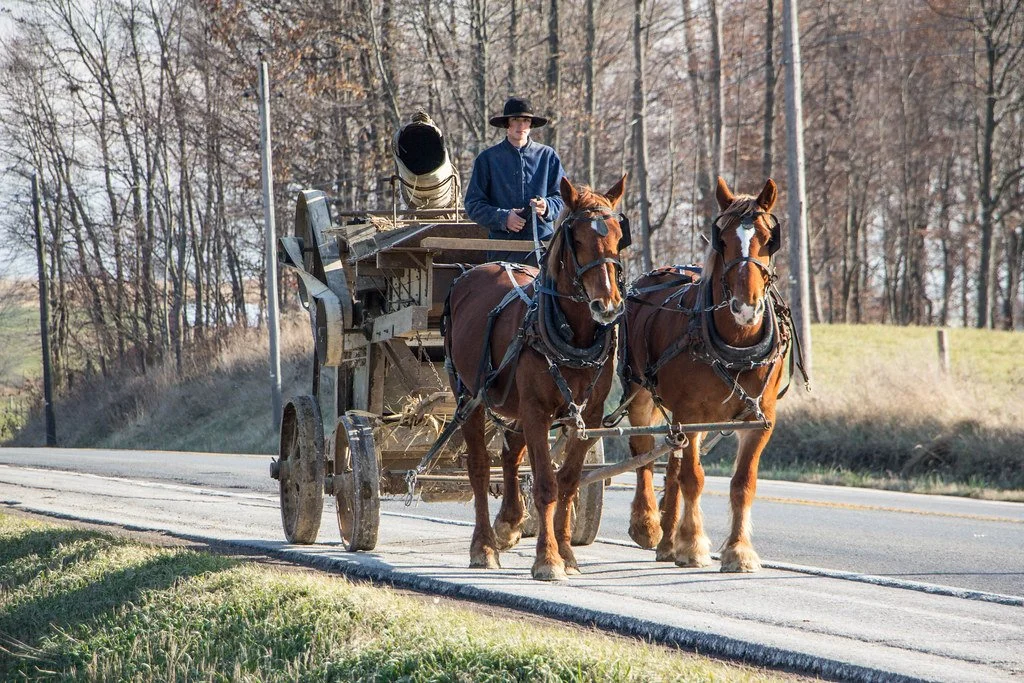
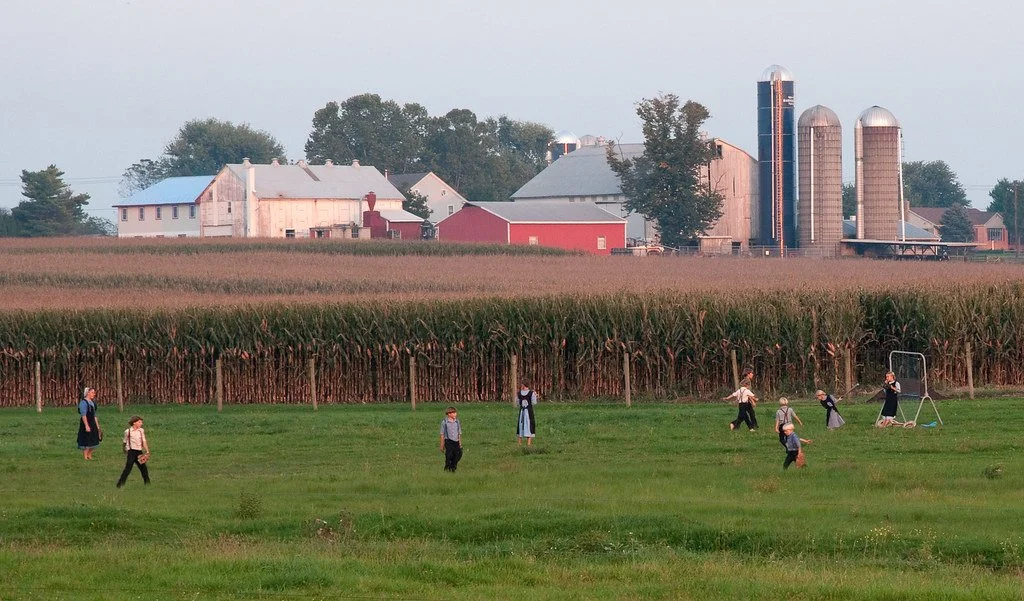
Teen Returning Home From Work. Melnee Benfield. CC BY-NC-SA 2.0

The Amish Church originated in Europe in the seventeenth century following a split from the Mennonite Swiss Brethren in 1692. This split was due to a disagreement about the treatment of members who had been found guilty in breaching the doctrine. To escape persecution, the Amish migrated to Pennsylvania in the 1730s. Today the population is an estimated 300,000 people in more than 30 states and is steadily growing due to the Amish belief that children are a blessing from God. The majority of the Amish community (62 percent) live in Pennsylvania, Ohio and Indiana. They are Christian believers who have isolated themselves from modern society and live in rural areas of the United States. They do this to keep their community from being influenced by outsiders, who they refer to as the “English.”

Family is the most important social unit in Amish culture. On average, families have seven children, although larger family units than this are common. Chores are divided traditionally by the gender binary, with girls staying and helping their mothers manage the home. If they decide to work outside the home, it is within the Amish community doing jobs like sewing, selling food in local stands or stores, waitressing, midwifing or nursing. Boys work alongside their father in farms, construction, crafting furniture, raising livestock and auctioneering. On days when they are not working, the Amish turn to sports like baseball, volleyball and basketball. Board games are also very popular among the Amish household, as well as fishing, hunting and being in community with friends and family. 

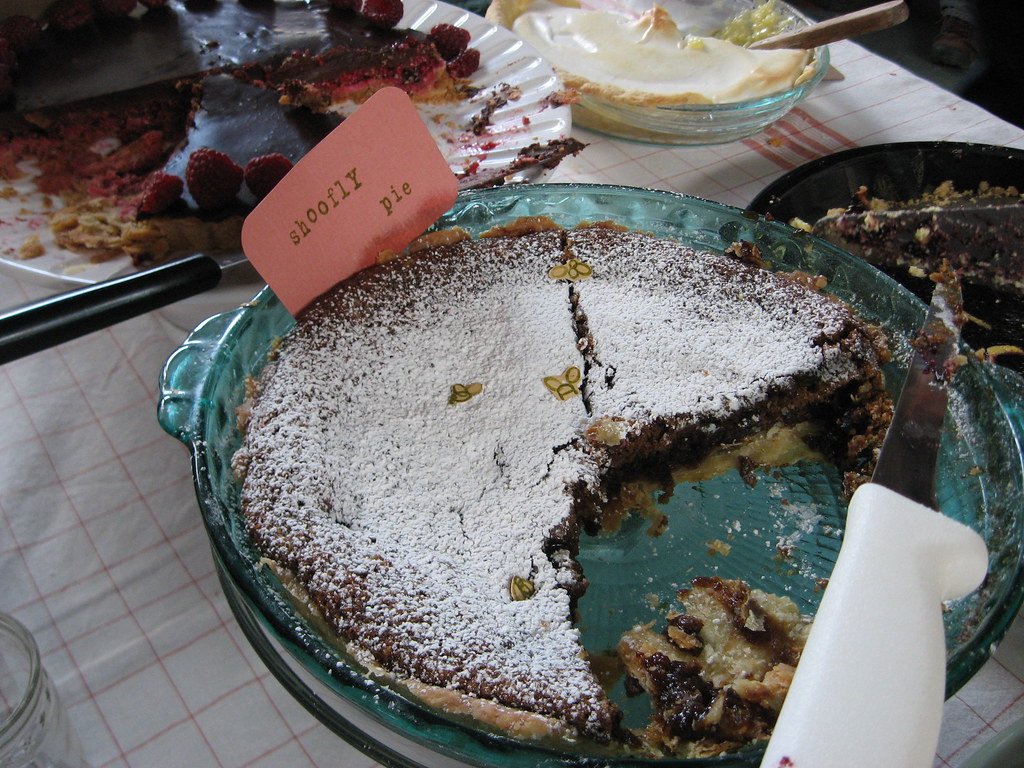
The Amish generally eat foods produced in their own gardens or on their farms. As a rule, they do not eat processed, store-bought foods. Homegrown fruits and vegetables, eaten fresh, canned or frozen, play an important part of the Amish diet. Vegetables often found in their meals include peas, corn, zucchini, beets, beans and rhubarb. Meals are designed to sustain hardworking lifestyles. The women in the community are known to bake cakes, pies, cookies and bread. An Amish dessert favored by many is Shoofly pie, typically composed of flour, brown sugar, water, spices and egg. The pie is topped with crumbs and served in a flaky pie crust. Shoofly pie is similar to coffee cake, but with a gooey molasses bottom. 

Kids of All Ages Playing Baseball. Bob Jagendorf. CC BY-NC 2.0

Education in the Amish community begins at the age of six (first grade) and culminates at 13 (eighth grade). Children are taught in a one-room schoolhouse, usually within walking distance of their home. The classroom is composed of 30-35 children, many of which are siblings or cousins. The day begins with Bible reading, hymn singing and reciting the Lord’s Prayer. At the end of the morning routine, the basics are taught: writing, math, history, arithmetic and English. The students’ first language is Amish German dialect, then English is learned at school. The teacher or teacher’s aide will circulate the room teaching individual grades while the other grades read or prepare for their time of teaching. Higher education is discouraged, as it could lead to leaving the Amish community and influencing others to do the same. Amish children are exempt from state compulsory attendance beyond the eighth grade based on religious principles.

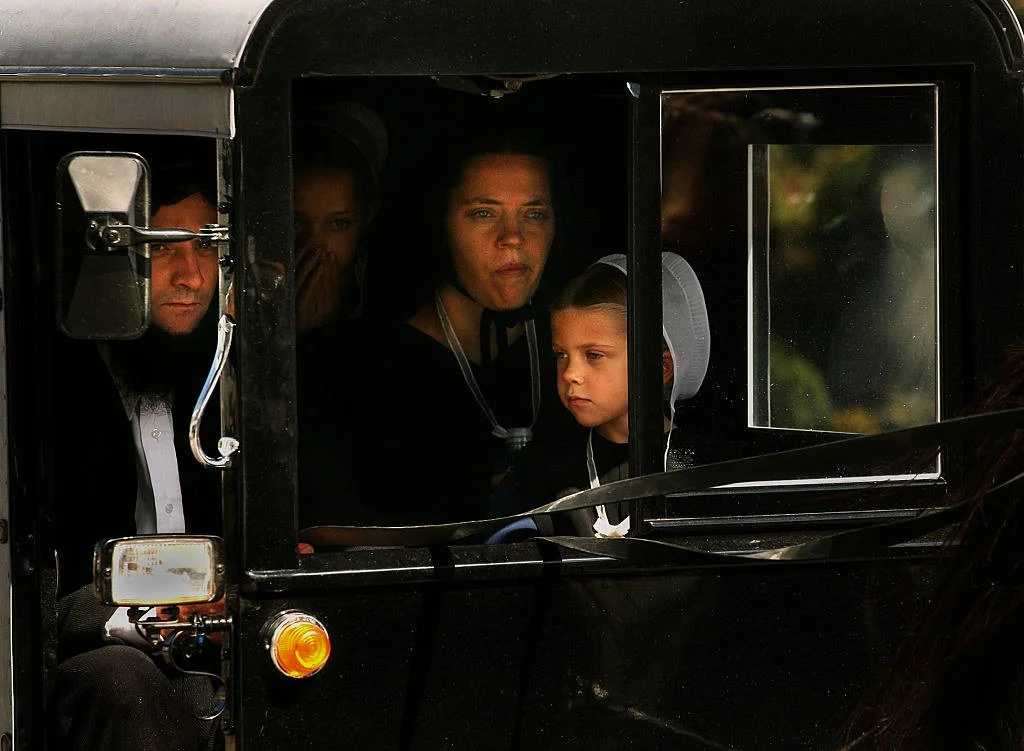
The Amish reject modern technology as it can open the door to temptations and change their traditional lifestyle. Instead, they choose to live simple lives and are self-sufficient. The Amish farm and produce everything they own and ride a horse and buggy or a bike to travel around the community. However, there is a time when Amish youth can decide whether or not they would like to continue living within the community. This is a season where rumspringa, a German term for running around, takes place. At the age of 16, parents allow the teens to fully experiment with the outside world and activities, which would otherwise be condemned and result in shunning. Due to the fact that individuals aren’t baptized, teens are not yet under the church authority. This is part of the reason why they are given a pass. This experience lasts two years and 90 percent of teens return home. 

Amish Family on a Horse and Buggy. Brucedetorres. CC BY-PDM 1.0

After arriving more than three centuries ago, the Amish have sustained a private life from the outside world. Not allowing many into their community has resulted in the preservation of their beliefs and isolation. The Amish continue to live in the US with two new recent settlements, Argentina and Bolivia.


Jennifer Sung

Jennifer is a Communications Studies graduate based in Los Angeles. She grew up traveling with her dad and that is where her love for travel stems from. You can find her serving the community at her church, Fearless LA or planning her next trip overseas. She hopes to be involved in international humanitarian work one day.

International Human Rights Court Rules in Favor of Trans Rights

The Inter-American Court of Human Rights ruled that the government of Honduras was responsible for the 2009 murder of a transgender woman. Today, Honduras is one of the largest contributors to anti-trans violence in Latin America. 

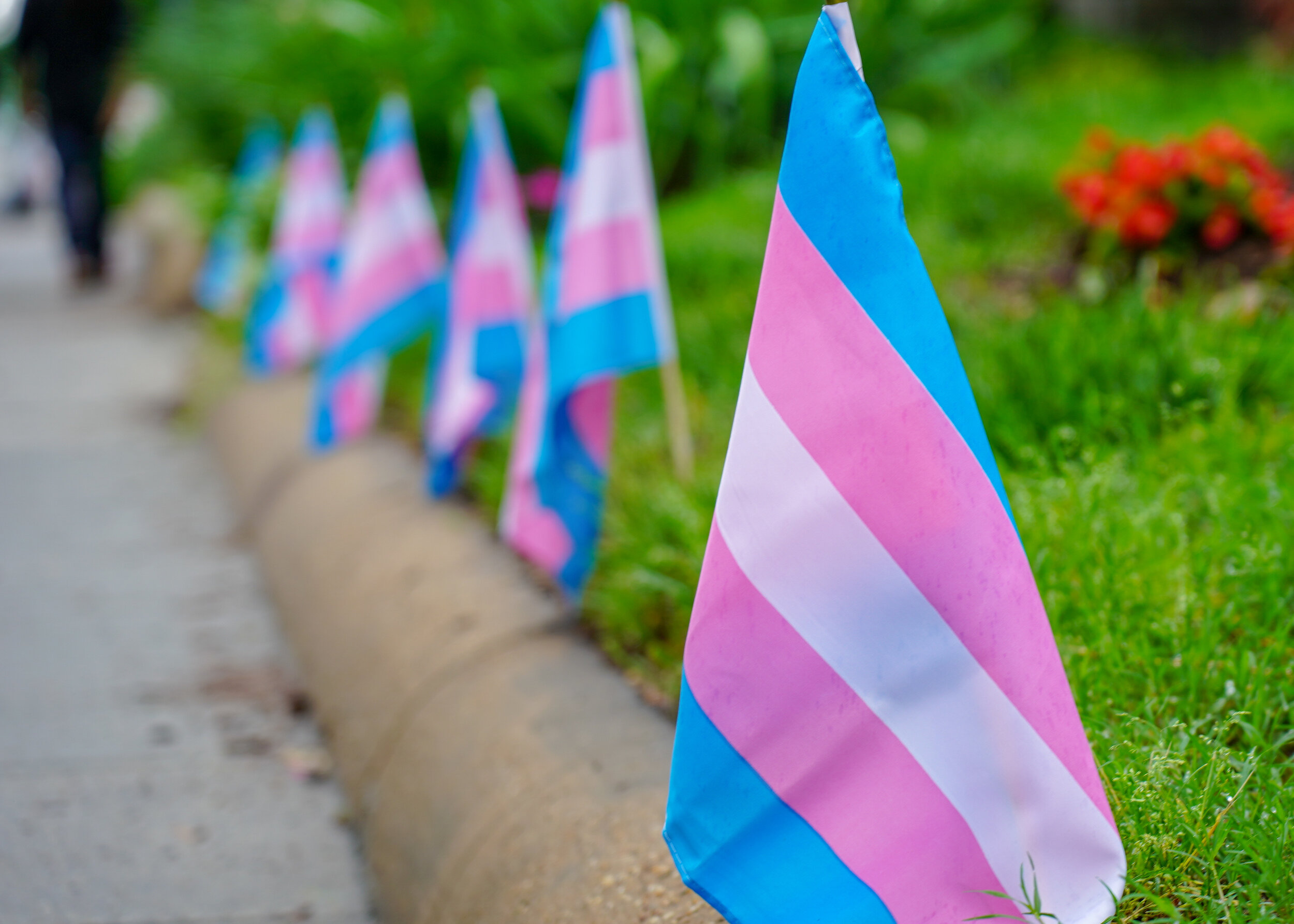
Transgender pride flags. Ted Eytan. CC BY-SA 2.0 

On June 26, the Costa Rica-based Inter-American Court of Human Rights delivered a landmark ruling in a transgender rights case. The court held that the government of Honduras was responsible for the 2009 murder of trans woman and trans rights activist Vicky Hernández, stating that the government had violated Hernández’s rights to life and fair trial. 

Hernández was 26 years old when she was killed by a single gunshot to the head. No one was ever charged for the crime. 

The Court’s ruling stated that Honduran authorities did not sufficiently investigate Hernández’s death. Her murder was dismissed quickly as a “crime of passion,” and police failed to interview anyone from the scene or examine the bullet casing. It is unclear whether a postmortem examination was performed. 

Lawyers acting on behalf of Cattrachas, the LGBTQ+ rights organization that brought forward the case, argued that this incomplete investigation was a result of Hernández’s gender identity. Robert F. Kennedy Human Rights reports that during the investigation, authorities continuously identified Hernández as male and referred to her on documents and records by her birth name, which she did not use. In 2009, shortly before Hernández’s killing, Human Rights Watch published a report which found that police in Honduras routinely failed to investigate reports filed by trans people. The report also detailed the harassment and beatings that trans people had endured at the hands of the police. 

Hernández’s murder occurred on June 28, 2009, the first night of a military coup against then-President Manuel Zelaya. Zelaya was taken into custody, and the military imposed a 48-hour curfew, leaving the streets closed to everyone but military and police forces. Hernández was a sex worker, and was still on the street after curfew arrived, along with two other trans women. The three women saw a police car approaching and scattered, fearing violence. The next morning, Hernández’s body was found in the street. 

Due to the circumstances surrounding her death, lawyers for Hernández’s case posited that she was the victim of an extrajudicial killing, meaning that state agents were responsible for her death. Robert F. Kennedy Human Rights points to the execution-style way in which Hernández was shot and the fact that the streets were closed to everyone but police and military forces, as well as the lack of effort put into the criminal investigation. 

In its ruling, the Court found evidence that state agents had participated in Hernández’s death. 

Hernández’s murder was the first in a wave of anti-trans violence that followed the 2009 coup. Cattrachas documented 20 deaths of LGBTQ+ people in the 15 years before the coup, and 31 deaths in the eight months directly afterward. 15 of these 31 people were trans women, like Hernández.

Today, Latin America is still a deadly area for LGBTQ+ people. Research released in 2019 showed that four LGBTQ+ people are murdered every day in Latin America and the Caribbean, with Honduras, Columbia and Mexico accounting for nearly 90 percent of these deaths. In 2020, Human Rights Watch published a follow-up to their 2009 report, which found that LGBTQ+ Hondurans still face rampant discrimination and violence from police and other authorities, as well as from non-state actors. 

Twelve years after Hernández’s murder, Honduras is finally being held accountable for its anti-LGBTQ+ violence and being made to implement reforms. Activists hope that the ruling will encourage other Latin American countries to address their own issues with violence against the LGBTQ+ community. 

The Court’s ruling included orders for the Honduran government to pay reparations to Hernández’s family, restart its investigation into her murder and publicly acknowledge its own role in the event, train security forces on cases involving LGBTQ+ violence, and keep a better record of cases motivated by anti-LGBTQ+ sentiment. The Court also ordered the Honduran government to allow people to change their gender identity in documents and public records, which is a major step forward. The next step is ensuring that Honduras’ new LGBTQ+ legislation is actually enforced. 


Rachel Lynch

Rachel is a student at Sarah Lawrence College in Bronxville, NY currently taking a semester off. She plans to study Writing and Child Development. Rachel loves to travel and is inspired by the places she’s been and everywhere she wants to go. She hopes to educate people on social justice issues and the history and culture of travel destinations through her writing.
10 Indigenous American Historical Sites to Visit

Ten million people lived in what is now the United States before Europeans arrived. These Indigenous Americans lived in complex cultures and completed amazing architectural feats that persevere to this day.

By the time European explorers arrived in the Americas, the Western Hemisphere was already home to more than 50 million people. Ten million of these people lived in what is now the United States. These Indigenous Americans developed intricate communities, religions and lifestyles, and made a lasting impact on American history and culture. Incredible sites built by Indigenous people can be found throughout the U.S. today, including cliff dwellings, multistory stone houses, earth lodges and effigies, and other stunning ruins. The history of Indigenous people is often overlooked or swept under the rug in favor of European colonists when looking at the larger context of American history, but preserved sites teach visitors about the complex cultures that came before Western settlers. These 10 sites showcase some of the impressive architectural triumphs of Indigenous people and pass on their histories. 

1. Knife River Indian Villages National Historic Site, North Dakota

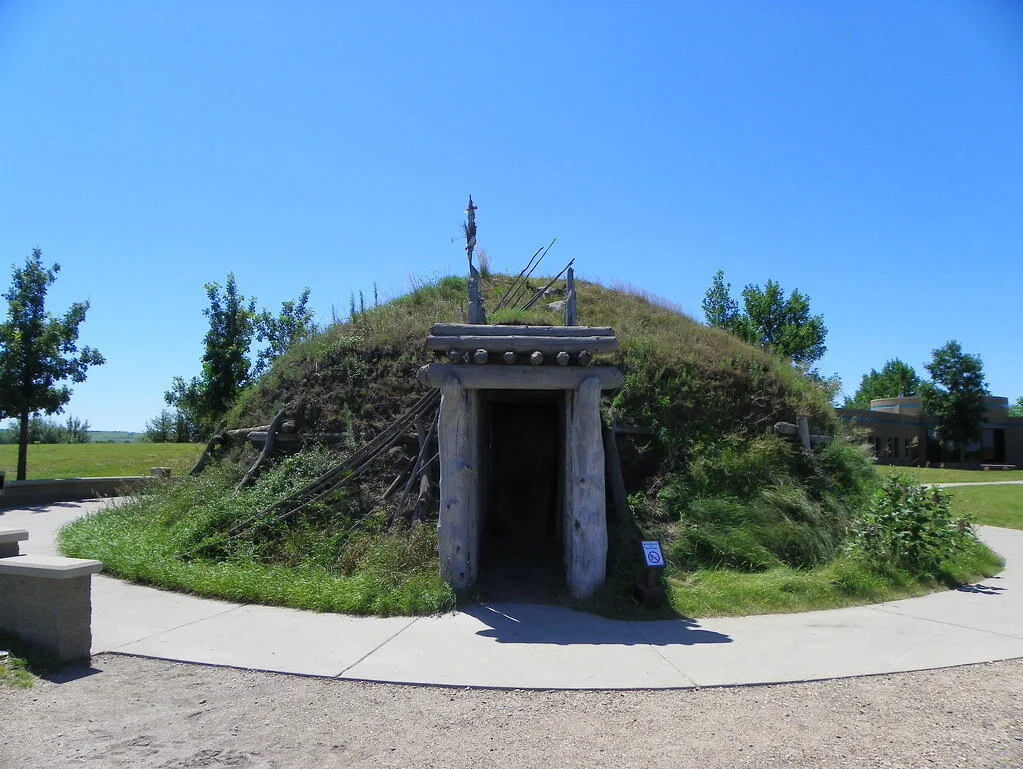
Located near Stanton, North Dakota, the Knife River Indian Villages National Historic Site preserves the history of the Knife River region. The Knife River region, an area in North Dakota centered around a tributary of the Missouri River, has been home to a number of people groups for around 11,000 years. Not much is known about the cultures that have inhabited the Knife River region because very few artifacts from the area remain, but early written records document the lives of the Hidatsa people. Like the Mississippian people, the Hidatsa resided in earth lodges. The Mandan and Arikara were also earth lodge residents who settled in the Knife River region, and all three groups pioneered agriculture in the area while still hunting and gathering. Villages were the center of earth lodge peoples’ lives, and the park features the remains of three large villages constructed by the Hidatsa: Awatixa Xi’e village, Hidatsa village and Awatixa village
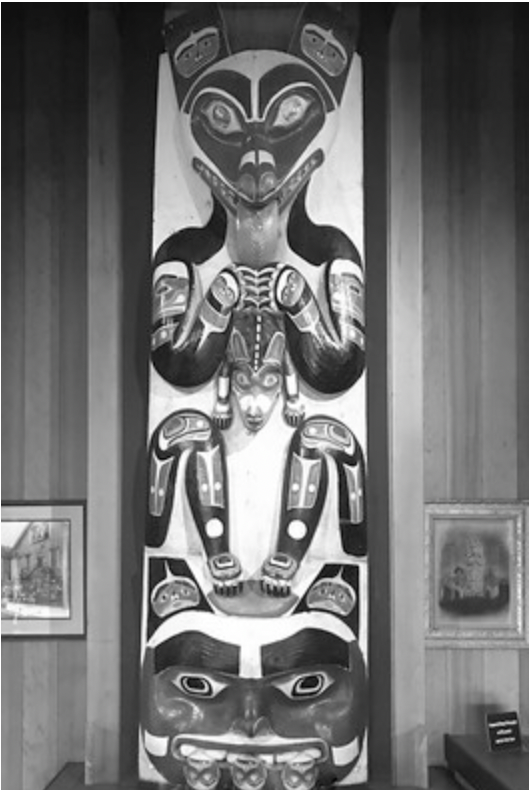
2. Puu Loa Petroglyphs, Hawaii 
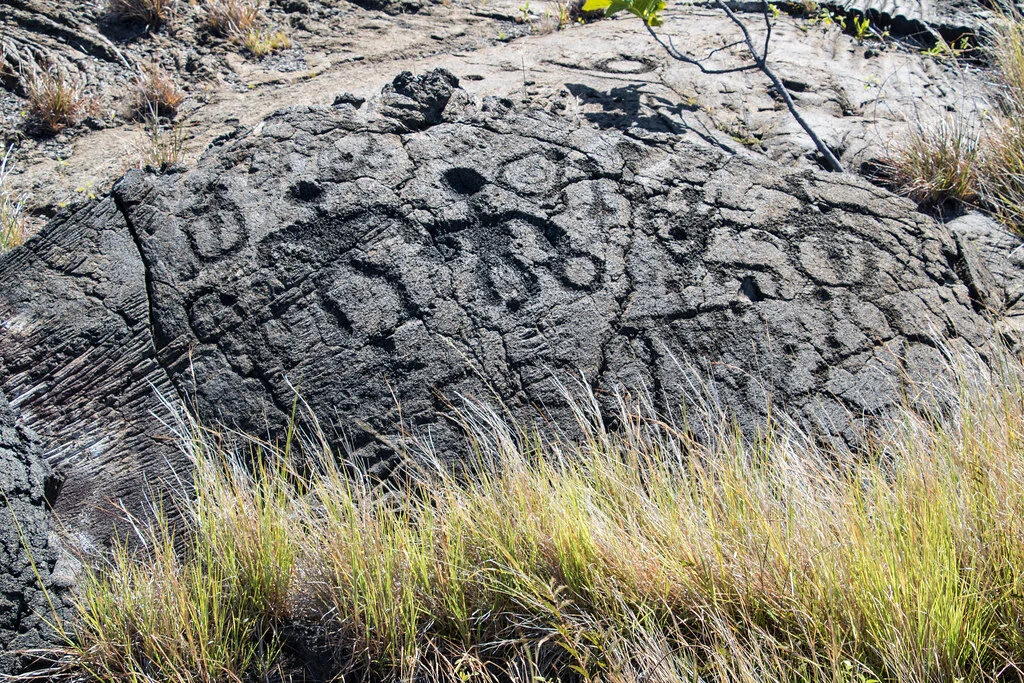
Hawaii Volcanoes National Park, on Hawaii’s Big Island, protects Mauna Loa and Kilauea, two of the world’s most active volcanoes. It is also home to the Puu Loa petroglyphs, stone etchings that document the lives and culture of the Native Hawaiian people. The petroglyphs are located in a lava field that is at least 500 years old, and the site has over 23,000 different petroglyphs. There are a variety of geometric designs, as well as depictions of people and tools, such as canoe sails. A number of the petroglyphs contain cupules, or holes where a portion of the umbilical cord was placed after the birth of a child in order to ensure long life. The first known written account of the petroglyphs is attributed to missionary Rev. William Ellis in 1823, but some petroglyphs likely date to the 1600s or even earlier. In addition to being used to ensure long life, some petroglyphs were used to record the movements of travelers on the island. Visitors to Hawaii Volcanoes National Park can take a 1.4-mile round trip day hike on a boardwalk to admire the petroglyphs up close. 

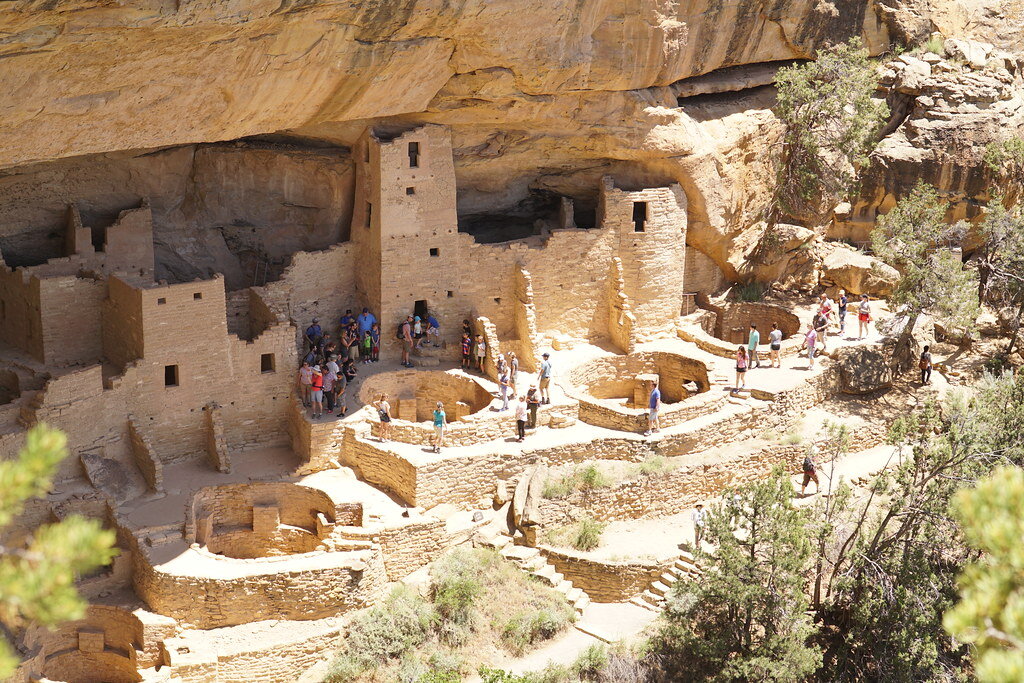
3. Mesa Verde National Park, Colorado

Probably one of the most well-known Indigenous sites in the United States, Mesa Verde National Park in Colorado preserves almost 5,000 historical sites of the ancestral Pueblo people, including 600 cliff dwellings. The ancestral Pueblo people lived at Mesa Verde for more than 700 years, from 550 to 1300 A.D. The first people settled at Mesa Verde in 550 A.D., turning from hunting and gathering to agriculture and building small villages of pithouses, sometimes sheltered in cliff alcoves. Around 750 A.D., these people began building houses above ground and became known as the Pueblo people, meaning “village dwellers.” The houses evolved from being made of poles and mud to being skillfully constructed from stone. Then, in 1200 A.D., for reasons that are unknown, the ancestral Pueblo began to move back into cliff alcoves and developed the cliff dwellings that make Mesa Verde famous. Mesa Verde’s cliff dwellings are truly incredible examples of Indigenous architecture, ranging from one- to 150-room houses. They are also some of the best-preserved cliff dwellings in North America, and visitors can tour some of the structures, like Balcony House and Cliff Palace

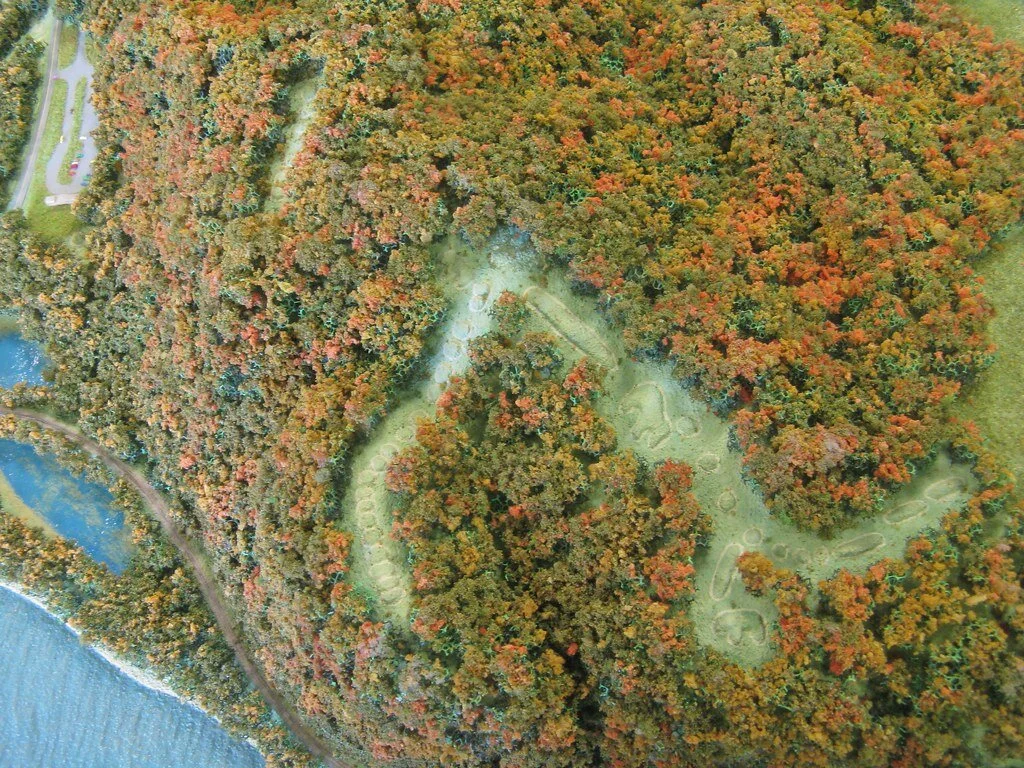
4. Effigy Mounds National Monument, Iowa

Ceremonial mounds created by Indigenous Americans can be found across the United States. Effigy Mounds National Monument preserves more than 200 distinct mounds built by people known as the Woodland Indians and gives visitors a glimpse directly into Woodland Indian culture. The mounds, found in northeastern Iowa, are unique because a large number of them are effigies in the shape of animals. Thirty-one of the mounds are bear or bird effigies. The Woodland culture consisted of hunter-gatherers who during the summer lived in large campsites along the Mississippi River, which they relied on for food and water. Archaeologists and researchers do not know precisely why the effigy mounds were built, but they guess that they may have been made for religious rituals or burial ceremonies. Guided tours are available throughout the summer at Effigy Mounds to teach visitors more about the area’s rich history, and there are also hiking trails around the site. 

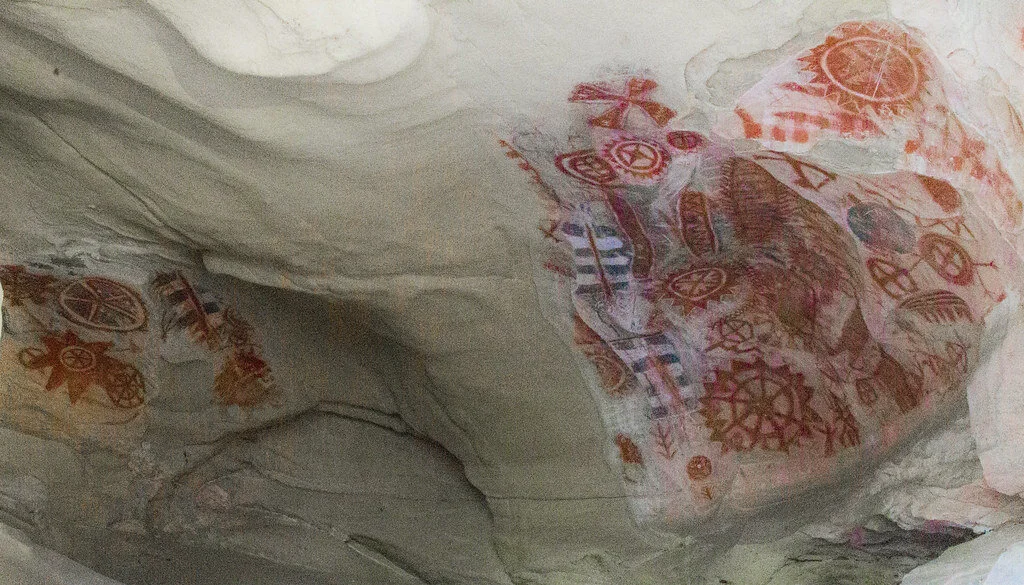
5. Chumash Painted Cave State Historic Park, California

Just outside of Santa Barbara sits the Chumash Painted Cave, a room-sized sandstone cavern filled with colorful anthropomorphic and geometric figures. The exact age of the cave paintings is unknown, but archaeologists estimate that they date to the 1600s or earlier. The paintings are attributed to the Chumash, a name referring to several groups of Indigenous people who lived along the coast of Southern California and on the nearby Channel Islands. The Chumash groups spoke a variety of what linguists refer to as the Hokan language, and they constructed canoes from pine or redwood planks, which they used to sail up and down the California coast to hunt, gather and trade with other tribes. The Chumash lived in round homes known as “aps,” organized into villages. A number of archaeological sites displaying Chumash rock art have been discovered, and the Chumash Painted Cave is one of the most well preserved. The meaning behind the figures at the painted cave is unknown, but the art may be connected to Chumash astrology and cosmology. 

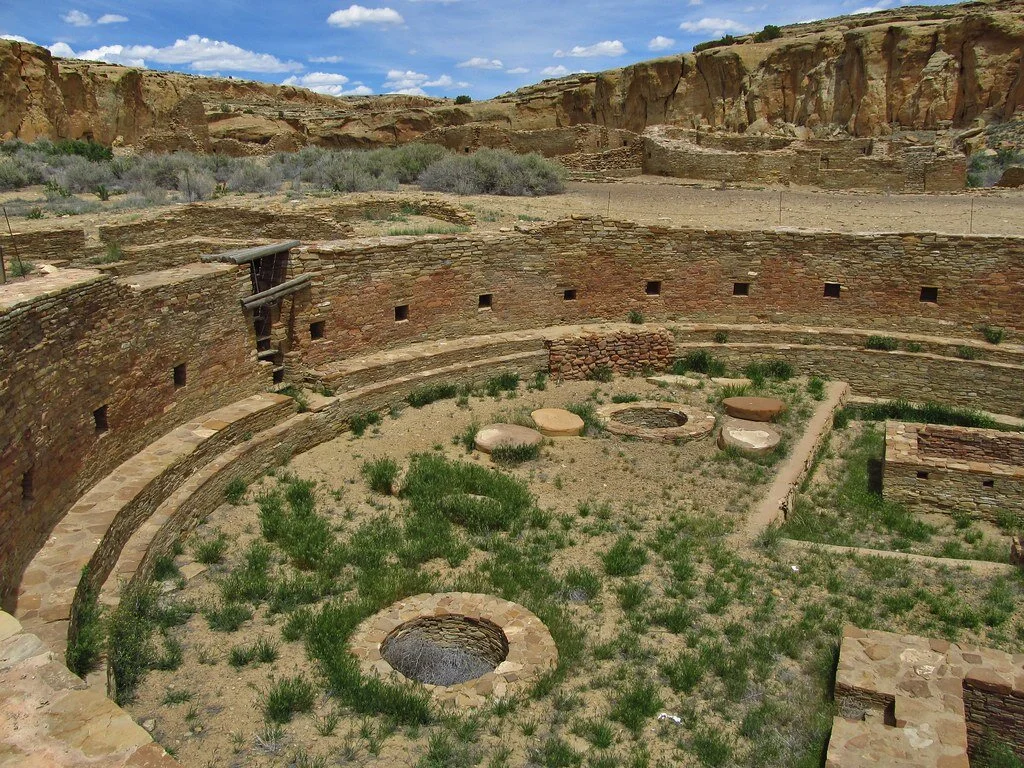
6. Chaco Culture National Historical Park, New Mexico

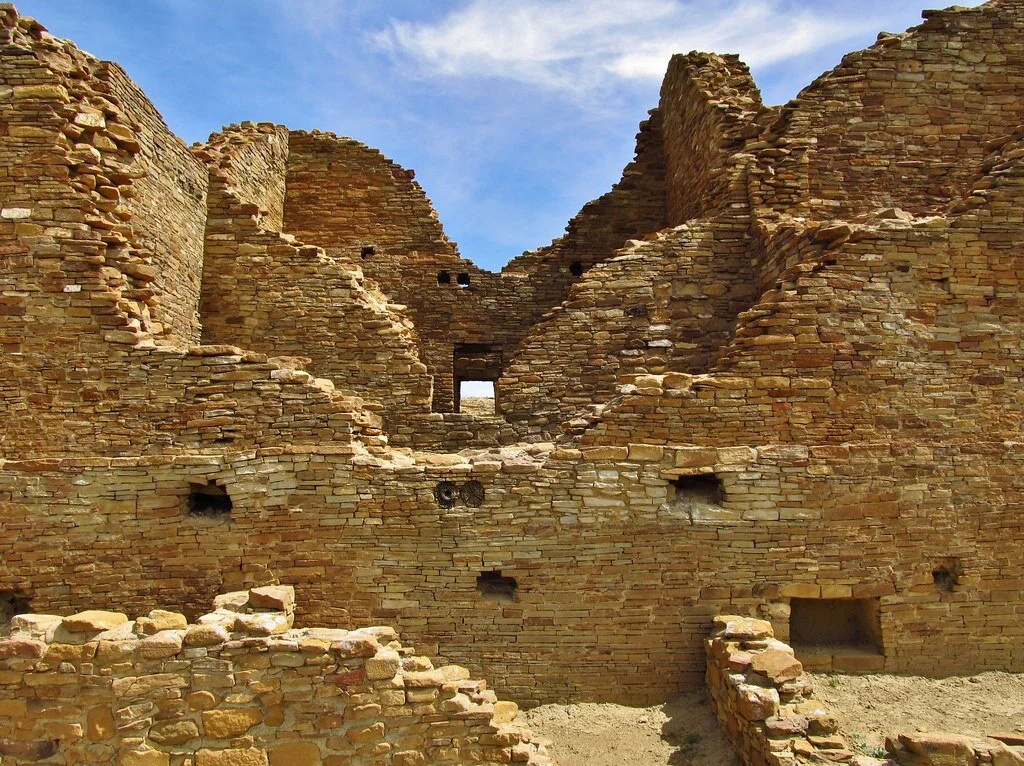
A valley in the high desert of northwestern New Mexico houses an ancient, sprawling center of ancestral Pueblo culture. Between 850 and 1250 A.D., the area that is now Chaco Culture National Historical Park was the epicenter of a widespread expansion of Chacoan culture. The Chacoan people used unique masonry techniques to construct stone houses multiple stories high, some containing hundreds of large rooms. The buildings were intricately planned out and often constructed according to solar, lunar and cardinal directions, as well as to maintain clear lines of sight between houses. By 1050, Chaco was the economic and cultural center of the San Juan Basin, with people from all over the area gathering there to share knowledge and traditions and to participate in ceremonies. A number of the great houses have been preserved and can be seen today, along with petroglyphs made by the Chacoan people. Since 2013, Chaco has also been designated an International Dark Sky Park, meaning it is one of the best places in the country to get a view of the night sky untainted by light pollution. Visitors can look at the sky the same way the Chaco people saw it a millennium ago. 

7. Ocmulgee Mounds National Historical Park, Georgia

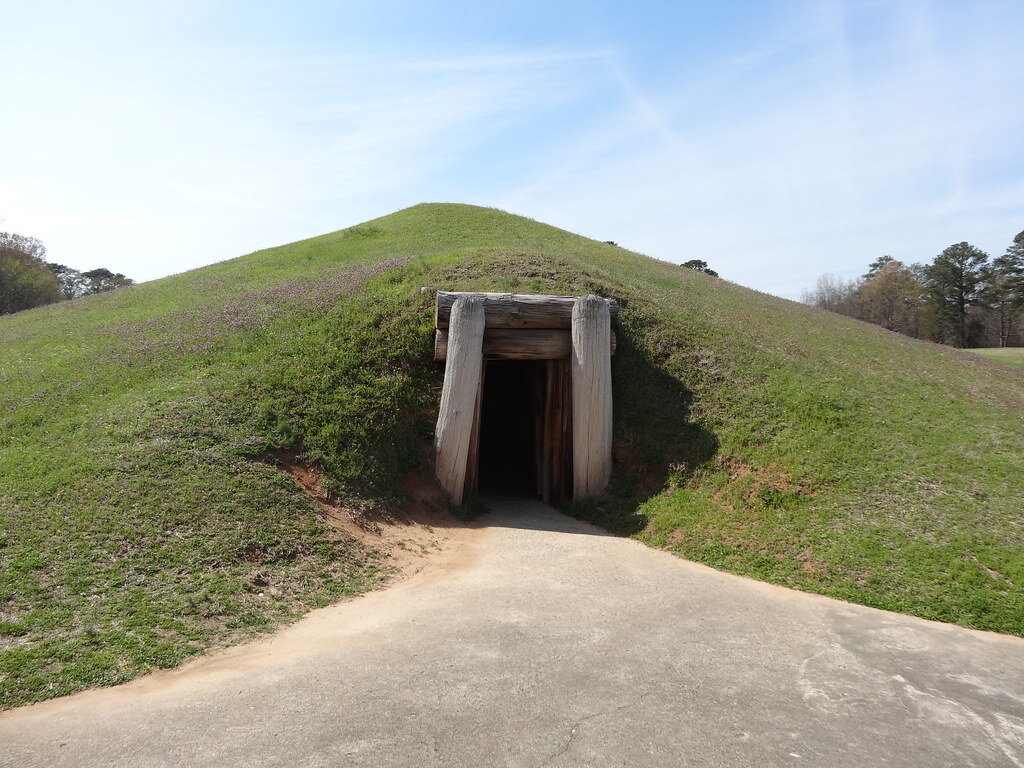
Minutes outside of downtown Macon, Georgia, lies Ocmulgee Mounds National Historical Park, a site shaped by 17 millennia of habitation, dating back to prehistoric times. The nomadic Paleo-Indian people arrived at the site in around 17,000 B.C., during the last ice age. Around 9,600 B.C. the Paleo-Indian era gave way to the Archaic era. The Early Archaic people were nomadic hunters as well, but evidence suggests that by the Middle Archaic period people began to build more permanent settlements and gather food. It wasn’t until the Mississippian people, who migrated to the area in 900 A.D., that the land was permanently changed, however. The Mississippians constructed impressive villages that literally reshaped the landscape, forming elaborate earthen lodges and temples that are still visible today. The Mississippian culture declined after the 1539 arrival of Spanish explorer Hernando de Soto, who brought with him foreign diseases that devastated the Mississippian people. Descendants of the Mississippian people, the Muscogee Creek Nation, who lived at Ocmulgee from 1600 until their forcible removal by Andrew Jackson in 1836, considered the mounds built by their ancestors to be sacred. Today, visitors to the site can see several of the mounds constructed by the Mississippian people, as well as the location of two Civil War battles. 

8. Little Bighorn Battlefield National Monument, Montana

Little Bighorn Battlefield National Monument memorializes the site of the Battle of Little Bighorn, a fight between the 7th Regiment of the U.S. Cavalry and thousands of Sioux, Cheyenne and Arapaho tribe members. It lies within the Crow Indian Reservation in southeastern Montana. On June 25, 1876, the 7th Regiment, led by Lt. Gen. George Custer, attacked a village of free Lakota and Cheyenne people. The battle was part of the U.S. campaign to force Indigenous people to comply with the 1868 Treaty of Fort Laramie, which created a large reservation in South Dakota intended to house the Lakota. Many Lakota did not want to give up their nomadic lifestyle in favor of a life controlled by the U.S. government, resulting in a number of armed conflicts. The Battle of Little Bighorn proved deadly for both sides, but the Lakota and Cheyenne ultimately triumphed, defeating Custer and his troops. Though the Lakota and Cheyenne tribe members won the battle, Custer’s defeat became a rallying cry for U.S. efforts to force Indigenous people onto reservations, and stronger military forces were sent to conquer the tribes. The monument includes the battlefield itself, as well as the Custer National Cemetery and a number of hiking trails. 

 9. Aztec Ruins National Monument, New Mexico

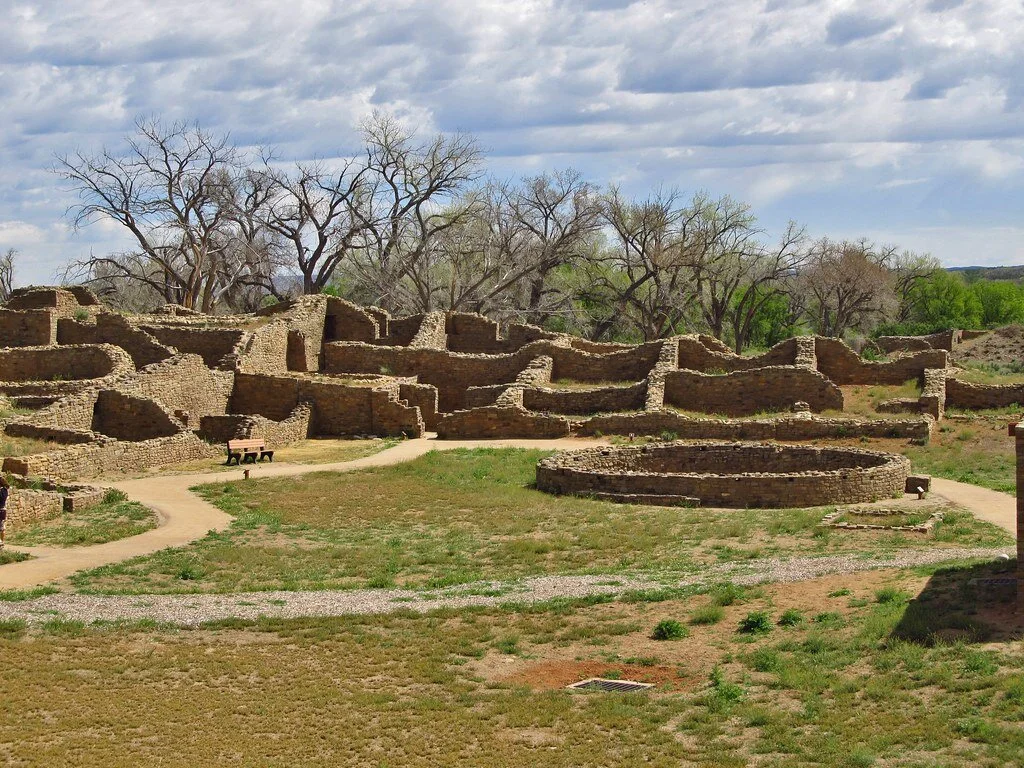
Despite its name, Aztec Ruins National Monument has no association with Mexico’s Aztec empire. These large, multistory stone buildings, located within the city limits of Aztec, New Mexico, were constructed by the ancestral Pueblo. Early Western settlers thought that the site was built by the Aztecs, so they named the area “Aztec,” and the name remained even after the true builders of the ruins were discovered. Aztec Ruins was the largest ancestral Pueblo community in the Animas River valley. The site features a number of “great houses” made of stone, including the West Ruin, which had over 400 interconnected rooms. Each great house had a “great kiva,” a large, underground circular chamber used for ceremonies. Aztec Ruins also has three above-ground kivas, each encircled by three walls forming a triangle. Aztec Ruins was likely influenced by Chacoan culture, and may have even been an outlying community of Chaco. Visitors can wander through the rooms of West Ruin on a self-guided tour, or participate in ranger-led programs. 

10. Hopewell Culture National Historical Park, Ohio

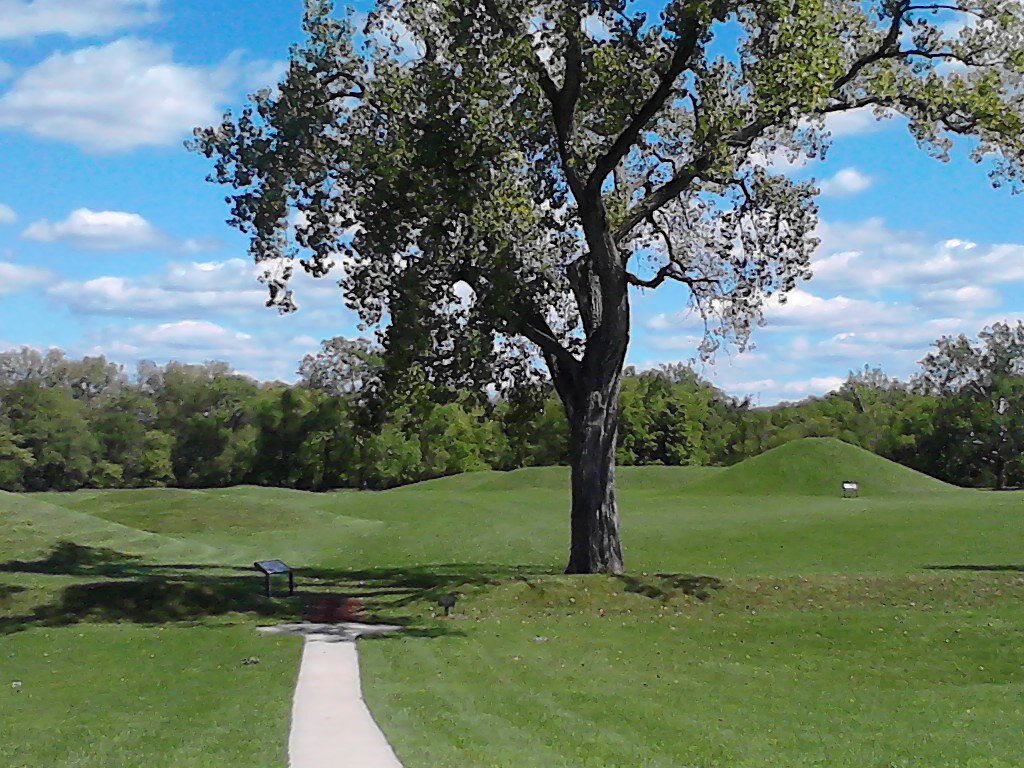
The term “Hopewell culture” refers not to a specific tribe, but to a “distinctive set of artifacts, earthworks and burial practices” common in areas of southern Ohio during the Middle Woodland period, from around 1 to 400 A.D. The Hopewell Mound Group is an 130-acre earthwork complex, which contains 29 burial mounds and was once enclosed by an enormous earthen wall that spanned over 2 miles and was up to 12 feet high. Remnants of the walls are still visible, as are several of the large, uniquely shaped mounds. Hopewell Culture National Historical Park encompasses five additional sites, all with fascinating remnants of the Hopewell culture. Settlements typically consisted of a few families living close together in rectangular houses with a shared garden nearby. In addition to growing domesticated plants, people of the Hopewell culture were hunters, fishers and gatherers. Visitors to the park will discover the commonalities between each distinct site by exploring the incredible Hopewell Mounds and looking at preserved artifacts.


Rachel Lynch

Rachel is a student at Sarah Lawrence College in Bronxville, NY currently taking a semester off. She plans to study Writing and Child Development. Rachel loves to travel and is inspired by the places she’s been and everywhere she wants to go. She hopes to educate people on social justice issues and the history and culture of travel destinations through her writing.