
Mexico City is a flourishing metropolis with a plethora of historic and modernist architectural sites. Here are a few attractions scattered around the city.
Read MoreThe Decriminalization of Illicit Drugs in British Columbia
Canada has announced their plans to decriminalize small amounts of illicit drugs in British Columbia by January of 2023. They are hopeful this will lower high rates of overdoses.
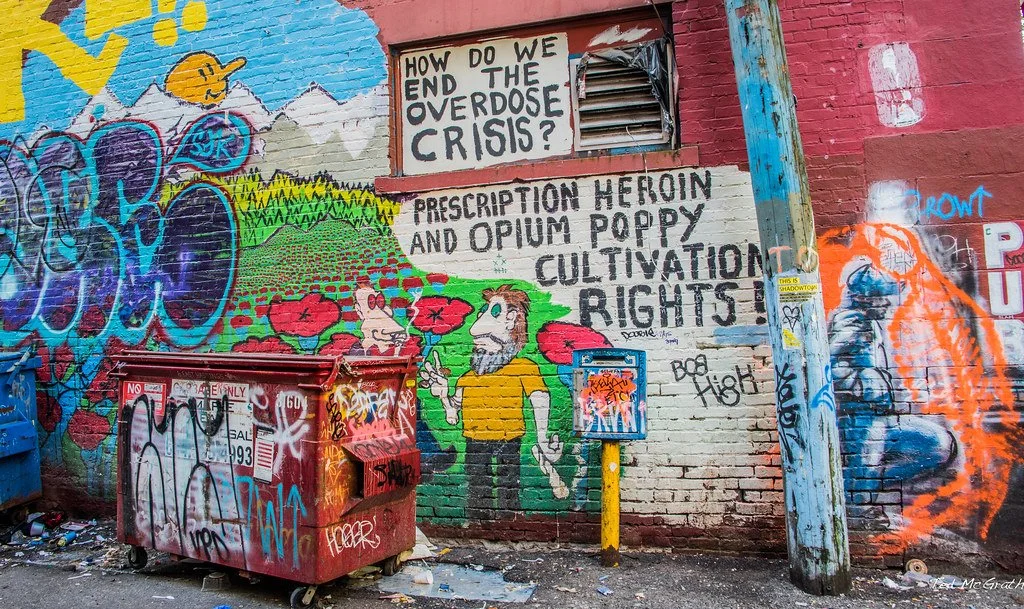
Graffiti about drug decriminalization. Ted’s Photos. CC BY-NC-SA 2.0.
In British Columbia, Canada, where thousands of overdose deaths occur each year, officials have decided to try decriminalizing small amounts of illicit drugs. The illicit drugs in question include heroin, cocaine, opioids, methamphetamine and more. Residents of British Columbia 18 years or older will be allowed to possess a maximum of 2.5 grams of these drugs without penalty, a policy that will take effect in January of 2023. This policy comes from an exemption from the Controlled Drugs and Substances Act that makes these drugs illicit, which was granted to British Columbia for a three-year trial run.
Officials hope that by decriminalizing small amounts of these drugs, dependent users will feel less afraid of prosecution and stigmatization if they do decide to seek drug-related help. Further, by tackling rates of drug deaths as a public health issue, BC Government News says “the Province will create new pathways to support those seeking treatment.”
Since the height of the pandemic in 2020, British Columbia has struggled with high rates of illicit drug abuse and overdose deaths. In 2020, drug-related death rates rose into the two-thousands, a problem that since 2016 had been declared a public health crisis. Most of these deaths occur when drug users hide their addiction from friends and family, fearing the reaction or stigmatization that will come from their loved ones learning of their addiction.
By decriminalizing these drugs, Canada hopes to reverse this effect; Dr. Theresa Tam, Canada’s chief public health officer, wrote in a tweet: “Stigma and fear of criminalization cause some people to hide their drug use, use alone, or use in ways that increase the risk of harm. This is why the Government of Canada treats substance use as a health issue, not a criminal one.”
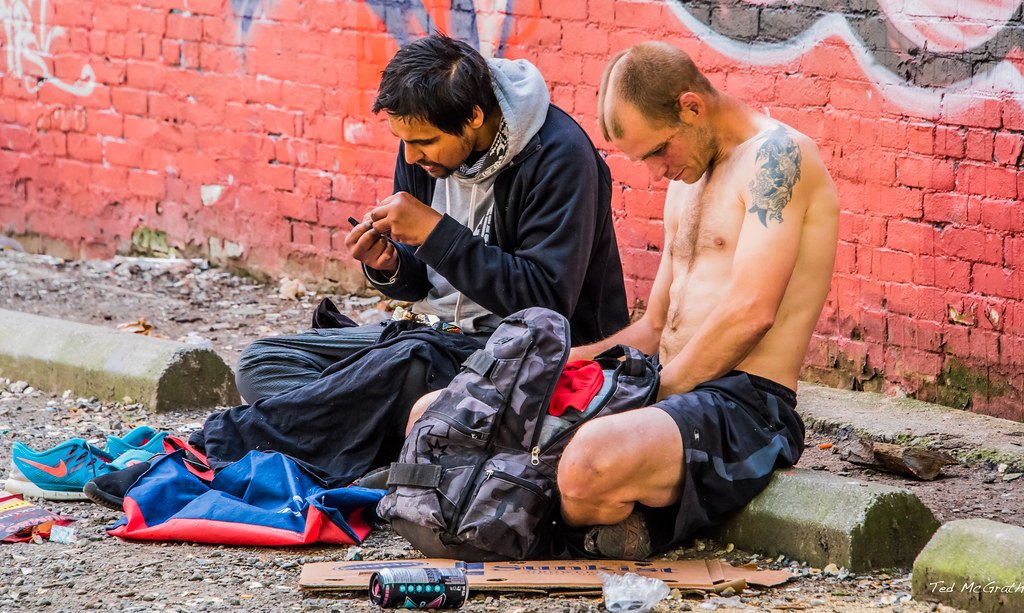
Street use in Vancouver. Ted’s Photos. CC BY-NC-SA 2.0.
The exemption to be instituted in 2023 has found support from family and friends of deceased drug users and was even supported by the police associations and chief coroner. Though some call for even further decriminalization – a policy that would expand the 2.5 gram limit to larger amounts – health officials in Canada believe 2.5 grams is a good trial starting point. Harm reduction is their main goal; British Columbia’s Provincial Health Official Dr. Bonnie Henry stated, “This is not one single thing that will reverse this crisis but it will make a difference.”
In requesting an exemption from the Controlled Drug and Substances Act, British Columbia also stated that drug-related felonies and arrests disproportionately affect already marginalized communities. In decriminalizing small amounts of drugs, the authorities will reduce punitive actions and may help to decrease the stigmas around drug use that cause people to hide their addictions.
Turning Point of Tampa has also stated that experts on drug incarceration have stated that imprisonment does not deter drug use, and problems such as substance abuse, mental health issues and fear of open drug use worsen when sentenced to prison time. Peer clinical adviser Guy Felicella told the New York Times, “Arresting me and incarcerating me for all those years for using drugs never stopped me once from using drugs — even when I went to prison. It didn’t do anything except create stigma and discrimination, shame,” which is the exact thing Canada is trying to end through decriminalization.
Hoping to reduce the stigma surrounding drug use that leads to deaths due to fear of judgment and sequentially more dangerous usage, Canada is waiting to see how this exemption in 2023 will reduce rates of drug-related deaths, and whether further decriminalization is needed.
To Get Involved:
The Canadian Drug Policy Coalition (CDPC) is an advocacy organization that is fighting against the harm caused by drug prohibition laws. Campaigning with a platform centered on decriminalization, the Coalition strives to reduce the high rates of drug overdose deaths in Canada. To learn more about the CDPC’s mission and to support their work, click here.
Ava Mamary
Ava is an undergraduate student at the University of Illinois, double majoring in English and Communications. At school, she Web Writes about music for a student-run radio station. She is also an avid backpacker, which is where her passion for travel and the outdoors comes from. She is very passionate about social justice issues, specifically those involving women’s rights, and is excited to write content about social action across the globe.
Why Creating Rock Cairns is Dangerous and Wildly Illegal
Amplified by the social media trend of making and photographing these little towers, the prevalence of man-made rock cairns has reached an all-time high. But the illegal practice poses serious dangers to the surrounding environment.
Read More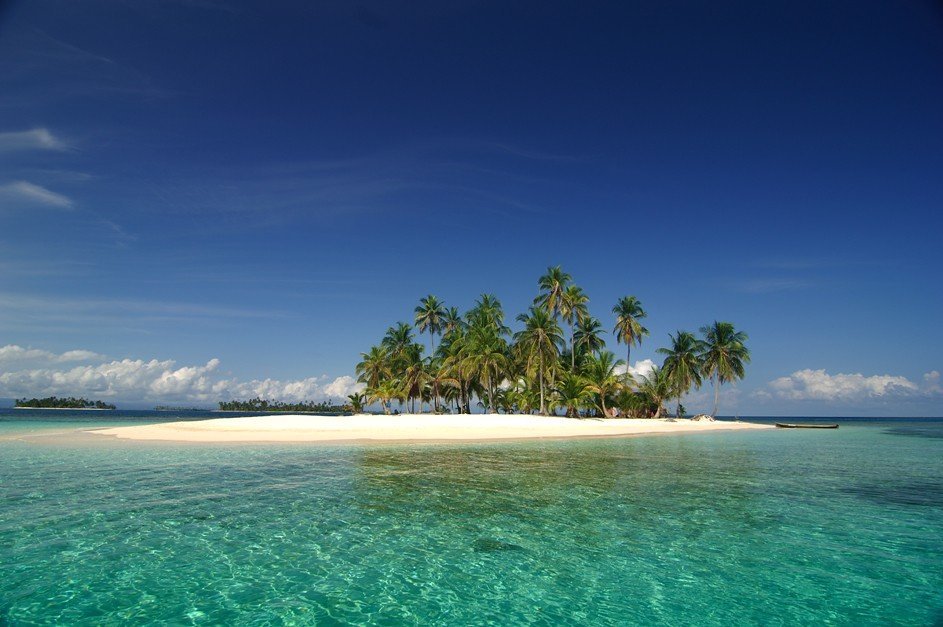
The San Blas Islands, Panama. Whl.travel. BY-NC-SA 2.0
8 Central American Islands You May Have Never Heard Of
Known mostly to locals and frequented by few travelers, these islands have an expansive amount of marine life and culture. This list includes islands in Belize, Honduras, Costa Rica, Nicaragua and Panama.
1. Glover’s Reef Atoll
Belize
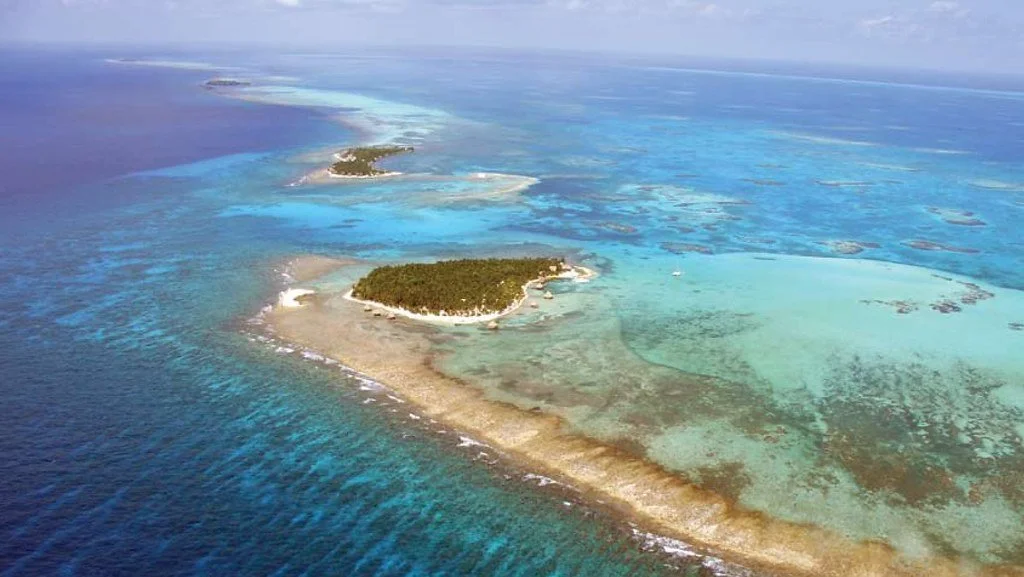
Opened to only a few visitors at a time, this 9-acre island is surrounded by Glover’s Reef—a 90 square mile stretch of reef made up of 700 individual patch reefs in a lagoon. This reef is thought to be the richest marine environment in the Caribbean Sea. There are many things to do on the island, such as kayaking, snorkeling, attending a yoga retreat or just relaxing. Once frequented by pirates, this protected marine reserve has been a designated World Heritage Site since 1996.
2. Isla del Caño
Costa Rica
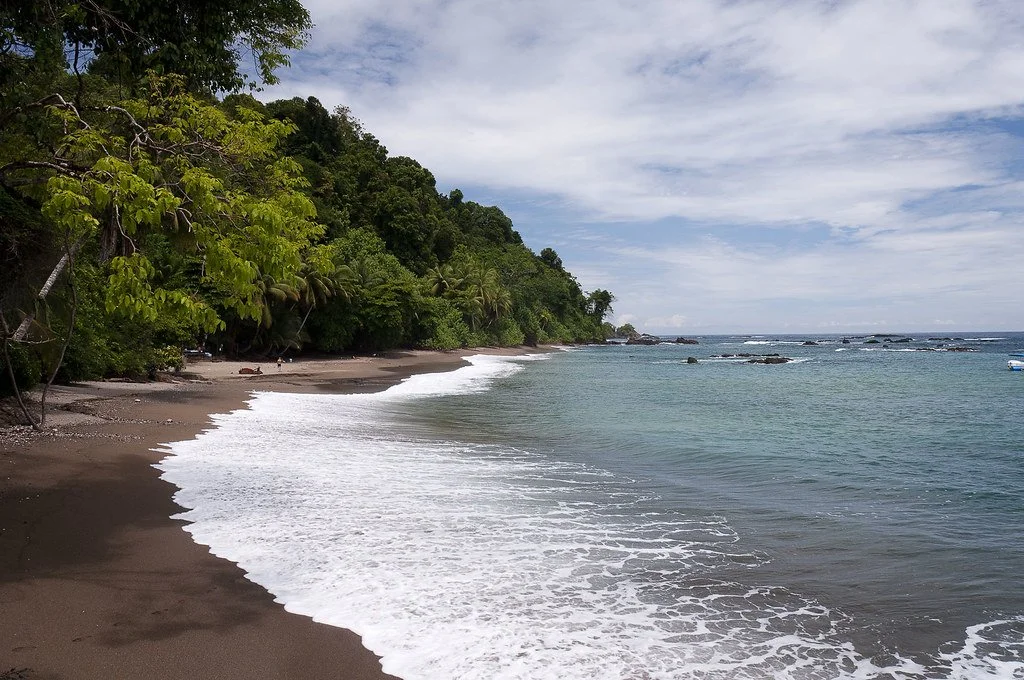
Isla del Caño, Costa Rica. Chris Varley. CC BY-NC 2.0
During pre-Columbian times, this island was a cemetery and home to Indigenous cultures. Located just 10 miles off the Osa Peninsula, it is a protected biological reserve surrounded by five platforms of low coral reefs. It is also home to an abundance of marine life, including sharks, whale sharks, dolphins, moray eels, sting rays and a variety of tropical reef fish. There are no hotels or guesthouses on the island; staying overnight is not allowed.. There are many tours available right outside of the Ballena Marine National Park. Your day trip or overnight stay can begin at the Osa Peninsula, Uvita or Sierpe.
3. Hog Islands
Honduras
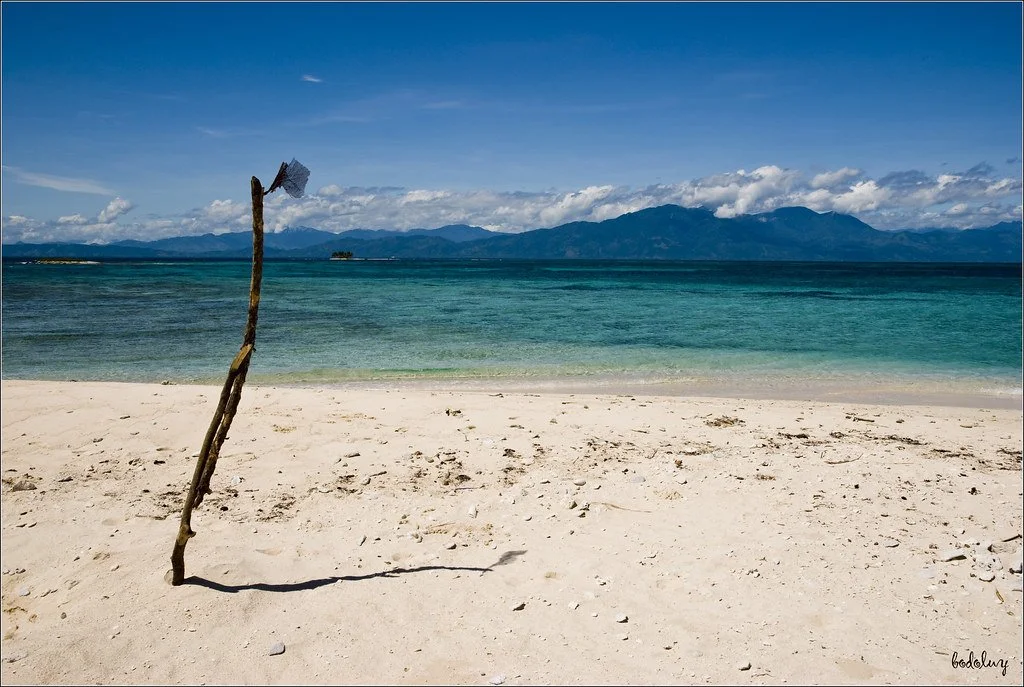
Cayos Cochinos a.k.a Hog Islands, Honduras. Bodoluy. CC BY-NC-SA 2.0
Off of the northern mainland coast of La Ceiba in Honduras lie the Hog Islands, known in Spanish as Cayos Cochinos. They consist of two small islands and 13 tiny sand cays. It’s inhabited by the Garifuna people, and they are the only ones allowed to fish the waters. The islands are managed by the Cayos Cochinos Foundation; they work in unison with the Honduran government and the Garifuna people to preserve the water’s health. The smaller of the two islands is used exclusively as a center for scientific investigation. Cayos Cochinos is a Marine Protected Area (MPA), which includes part of the world's second largest coral reef system known as the Mesoamerican Barrier Reef.
4. Isla Guadalupe
Mexico's Baja Peninsula
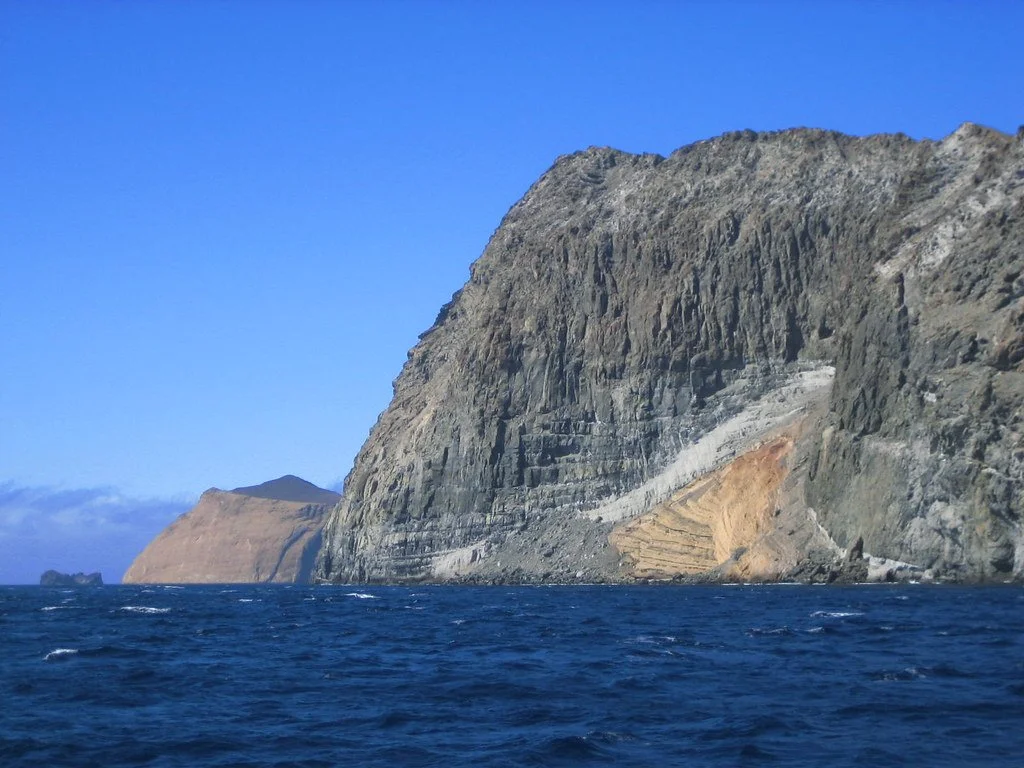
Isla Guadalupe. StJenna. CC BY-NC 2.0
The remote volcanic island of Isla Guadalupe, which is Spanish for Guadalupe Island, is located off the west coast of Mexico’s Baja Peninsula. The island is home to elephant seals and Guadalupe seals and is inhabited by scientists, military personnel operating a weather station and a small group of seasonal fishermen. The waters surrounding Isla Guadalupe drive experienced divers to take in the views of underwater life; it is known to consistently outperform South Africa and Australia with shark-seeing consistency. The diving tours leave the ports of Ensenada and San Diego and last on average five days.
5. Isla Ometepe
Nicaragua
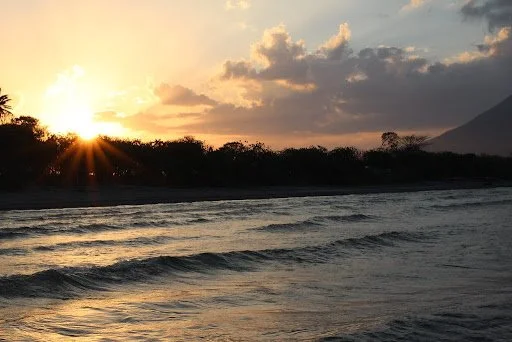
Isla Ometepe Sunset. Katie Laird. CC BY-NC-SA 2.0
Located southwest of Lake Nicaragua, Isla Ometepe is home to twin volcanoes: Concepción and Maderas. The island is inhabited with dense forests, natural springs, lake views and hiking trails. There are also diverse plant and animal species, including white-headed capuchins, yellow-naped Parrots and guayabón fruit trees. The island is visited by backpackers and nature seeking enthusiasts, with locals sharing that more eco-tourists are arriving. The best time to visit is during the dry season, which runs from November to April. In the dry season, the butterfly garden is open in Charco Verde, the ecological reserve.
6. Little Corn Island
Nicaragua
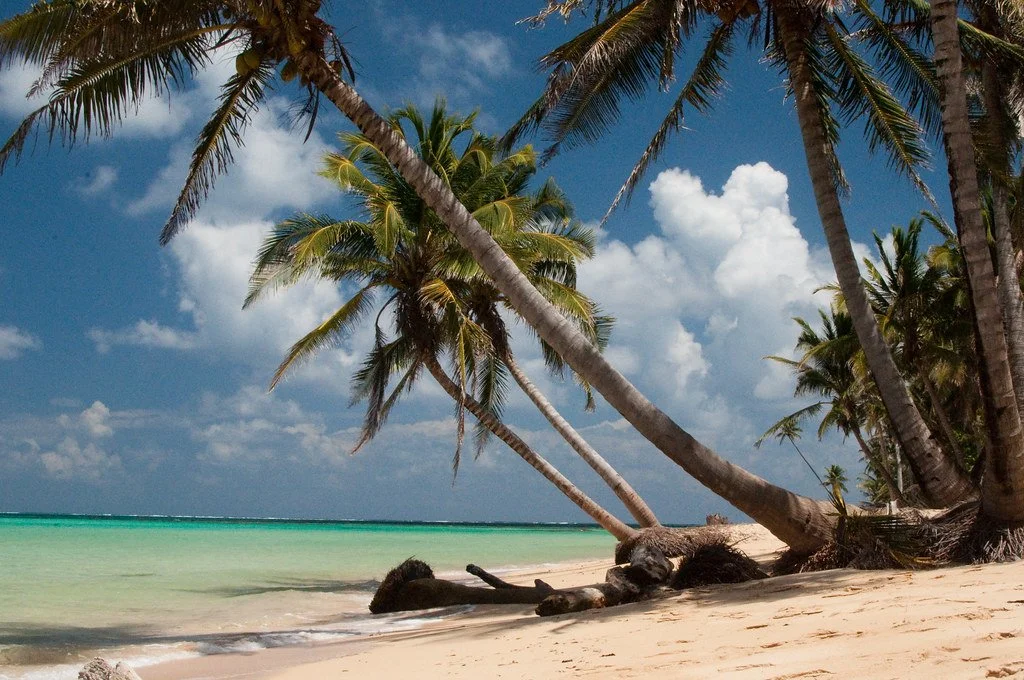
Little Corn is the smallest of the Corn Islands off Nicaragua’s Caribbean coast. Once ruled by the British, this remote island produces coconut oil, lobsters and shrimp and is inhabited by roughly 850 people. There are no cars, golf carts, motorcycles or an airport. Seeing the island is possible, but requires two or more connection flights, as well as a 30-minute boat ride from Bluefields, Nicaragua. It’s visited by many who enjoy diving due to the hundreds of dive spots that surround the island. Featuring cheap dining prices, a beer on the island is less than a dollar, and a fresh caught lobster dinner is on average $12.
7. Islas Zapatillas
Panama
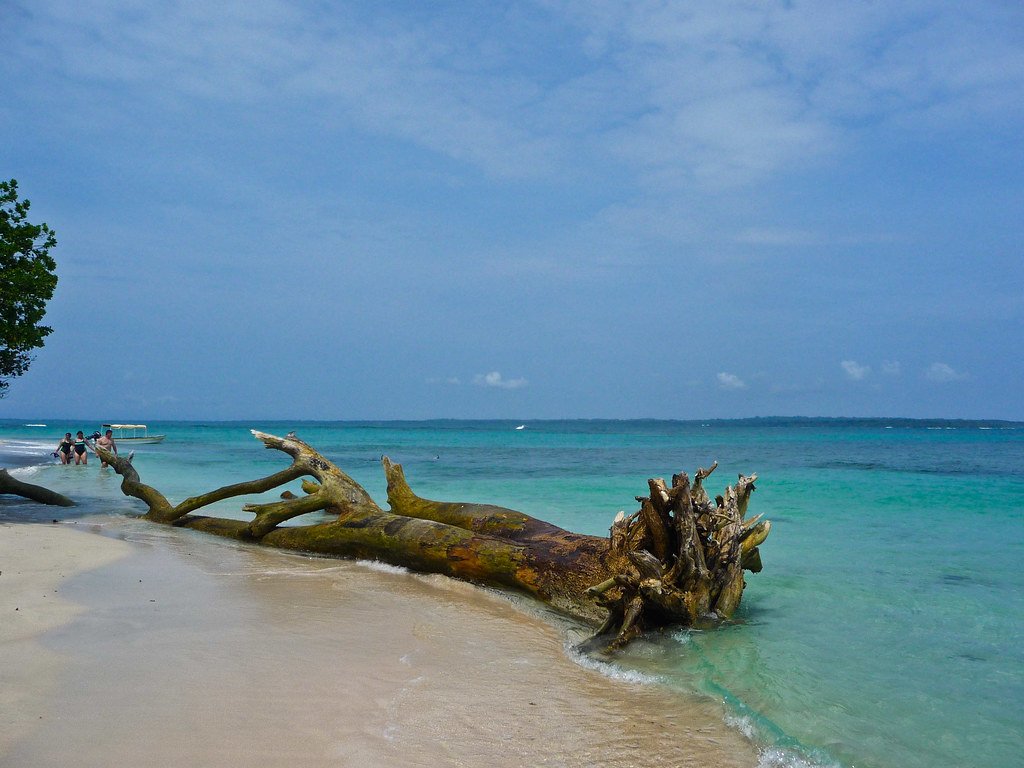
Isla Zapatilla. Michael McCullough. CC BY 2.0
Islas Zapatillas or Little Shoes Cays (named for their resemblance to footprints) are two small islands in Bocas del Toro, Panama. The islands are inhabited by sloths and protected by the Bastimentos National Marine Park. Islas Zapatillas are important ecological sites for the endangered hawksbill sea turtles that nest on their shores. You can explore the island through a tour or by charting a private boat to have a more intimate experience. The island is uninhabited, so making sure you have enough water, food, sunscreen and all other necessities is key to enjoying yourself here.
8. San Blas Islands
Panama
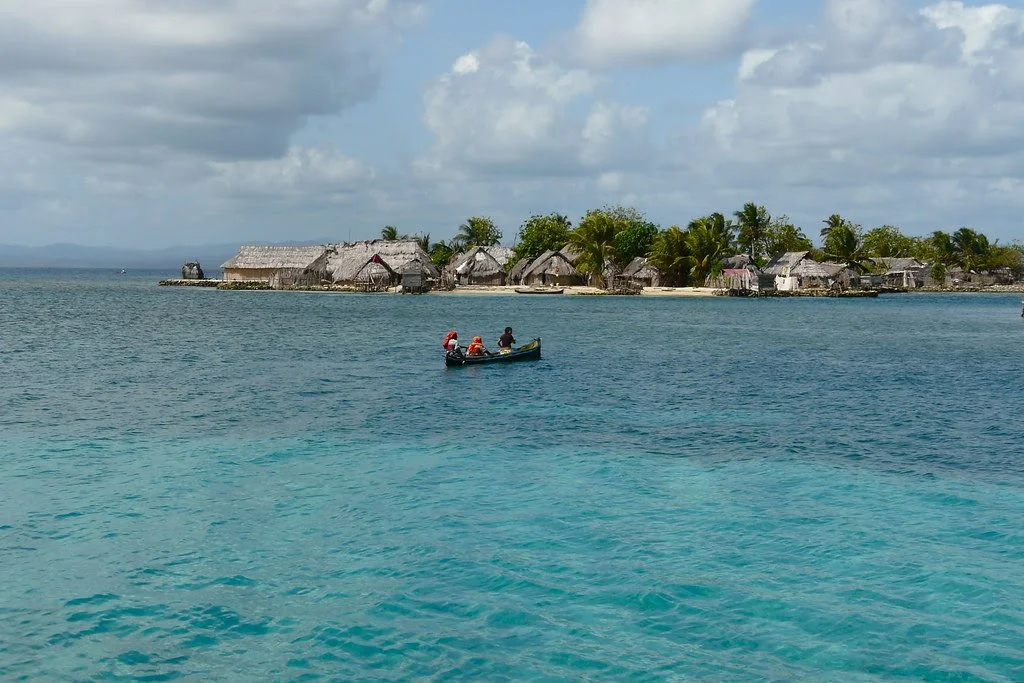
San Blas, Panama. Rita Willaert. CC BY-NC 2.0
The San Blas Islands are located in the Caribbean Sea off the coast of Panama. The Kuna Tribe of Panama inhabit the islands and have strictly controlled development and tourism here. All of the money spent on the islands falls directly into the hands of the Kuna Community. Day trips are available, but if staying overnight is an option you’d like to explore, palm-thatched cabins with a sand floor are available. They also offer overwater bungalows or even options for camping. There are visitors who decide to experience the Kuna lifestyle and culture; in those cases, they organize to stay in a dorm of a Kuna family. The island is filled with water activities and scenic views. However, researchers claim that the islands are at risk of disappearing in a matter of decades due to erosion and poor resource management.

Jennifer is a Communications Studies graduate based in Los Angeles. She grew up traveling with her dad and that is where her love for travel stems from. You can find her serving the community at her church, Fearless LA or planning her next trip overseas. She hopes to be involved in international humanitarian work one day.
Inside the Lives of the American Amish
The Amish are known for their conservative beliefs and rejection of modern technology. Today, more than 300,000 Amish live in the United States.
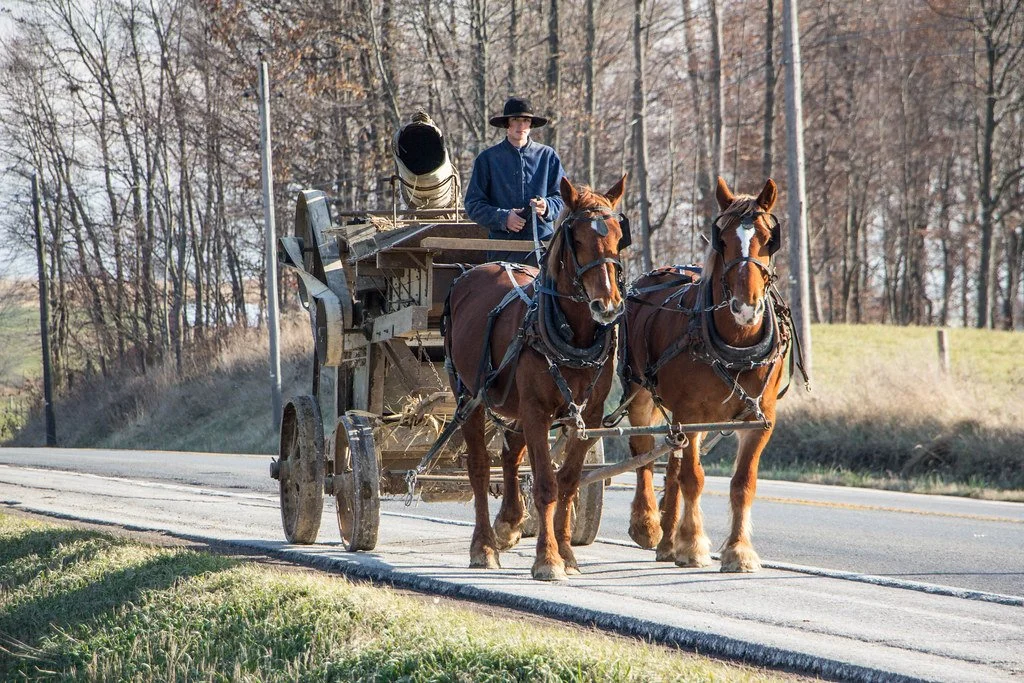
Teen Returning Home From Work. Melnee Benfield. CC BY-NC-SA 2.0
The Amish Church originated in Europe in the seventeenth century following a split from the Mennonite Swiss Brethren in 1692. This split was due to a disagreement about the treatment of members who had been found guilty in breaching the doctrine. To escape persecution, the Amish migrated to Pennsylvania in the 1730s. Today the population is an estimated 300,000 people in more than 30 states and is steadily growing due to the Amish belief that children are a blessing from God. The majority of the Amish community (62 percent) live in Pennsylvania, Ohio and Indiana. They are Christian believers who have isolated themselves from modern society and live in rural areas of the United States. They do this to keep their community from being influenced by outsiders, who they refer to as the “English.”
Family is the most important social unit in Amish culture. On average, families have seven children, although larger family units than this are common. Chores are divided traditionally by the gender binary, with girls staying and helping their mothers manage the home. If they decide to work outside the home, it is within the Amish community doing jobs like sewing, selling food in local stands or stores, waitressing, midwifing or nursing. Boys work alongside their father in farms, construction, crafting furniture, raising livestock and auctioneering. On days when they are not working, the Amish turn to sports like baseball, volleyball and basketball. Board games are also very popular among the Amish household, as well as fishing, hunting and being in community with friends and family.
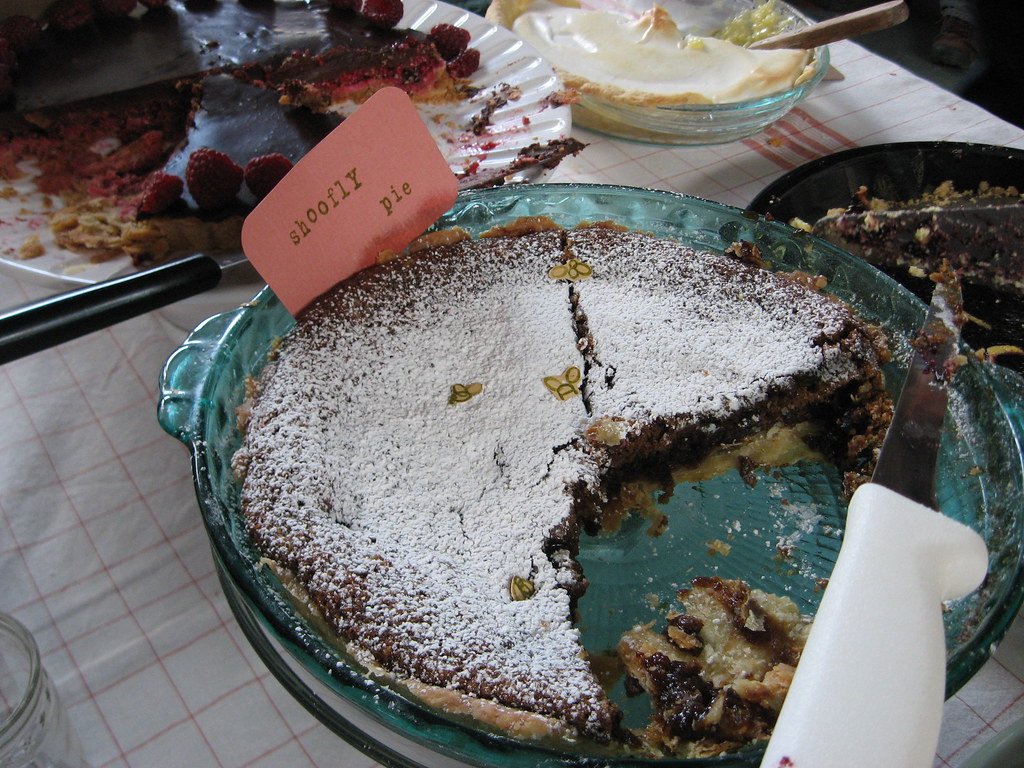
The Amish generally eat foods produced in their own gardens or on their farms. As a rule, they do not eat processed, store-bought foods. Homegrown fruits and vegetables, eaten fresh, canned or frozen, play an important part of the Amish diet. Vegetables often found in their meals include peas, corn, zucchini, beets, beans and rhubarb. Meals are designed to sustain hardworking lifestyles. The women in the community are known to bake cakes, pies, cookies and bread. An Amish dessert favored by many is Shoofly pie, typically composed of flour, brown sugar, water, spices and egg. The pie is topped with crumbs and served in a flaky pie crust. Shoofly pie is similar to coffee cake, but with a gooey molasses bottom.
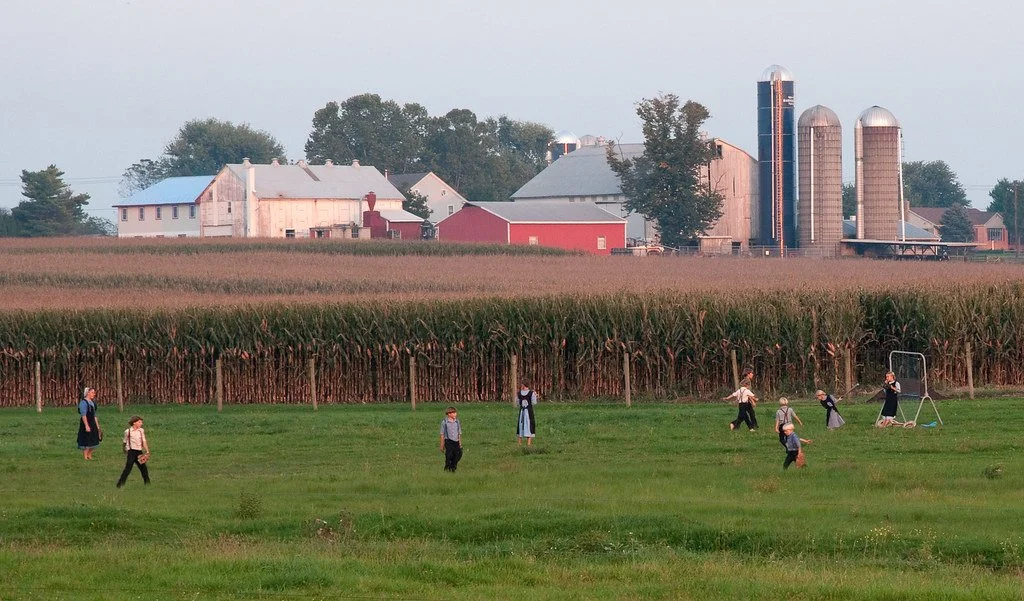
Kids of All Ages Playing Baseball. Bob Jagendorf. CC BY-NC 2.0
Education in the Amish community begins at the age of six (first grade) and culminates at 13 (eighth grade). Children are taught in a one-room schoolhouse, usually within walking distance of their home. The classroom is composed of 30-35 children, many of which are siblings or cousins. The day begins with Bible reading, hymn singing and reciting the Lord’s Prayer. At the end of the morning routine, the basics are taught: writing, math, history, arithmetic and English. The students’ first language is Amish German dialect, then English is learned at school. The teacher or teacher’s aide will circulate the room teaching individual grades while the other grades read or prepare for their time of teaching. Higher education is discouraged, as it could lead to leaving the Amish community and influencing others to do the same. Amish children are exempt from state compulsory attendance beyond the eighth grade based on religious principles.
The Amish reject modern technology as it can open the door to temptations and change their traditional lifestyle. Instead, they choose to live simple lives and are self-sufficient. The Amish farm and produce everything they own and ride a horse and buggy or a bike to travel around the community. However, there is a time when Amish youth can decide whether or not they would like to continue living within the community. This is a season where rumspringa, a German term for running around, takes place. At the age of 16, parents allow the teens to fully experiment with the outside world and activities, which would otherwise be condemned and result in shunning. Due to the fact that individuals aren’t baptized, teens are not yet under the church authority. This is part of the reason why they are given a pass. This experience lasts two years and 90 percent of teens return home.
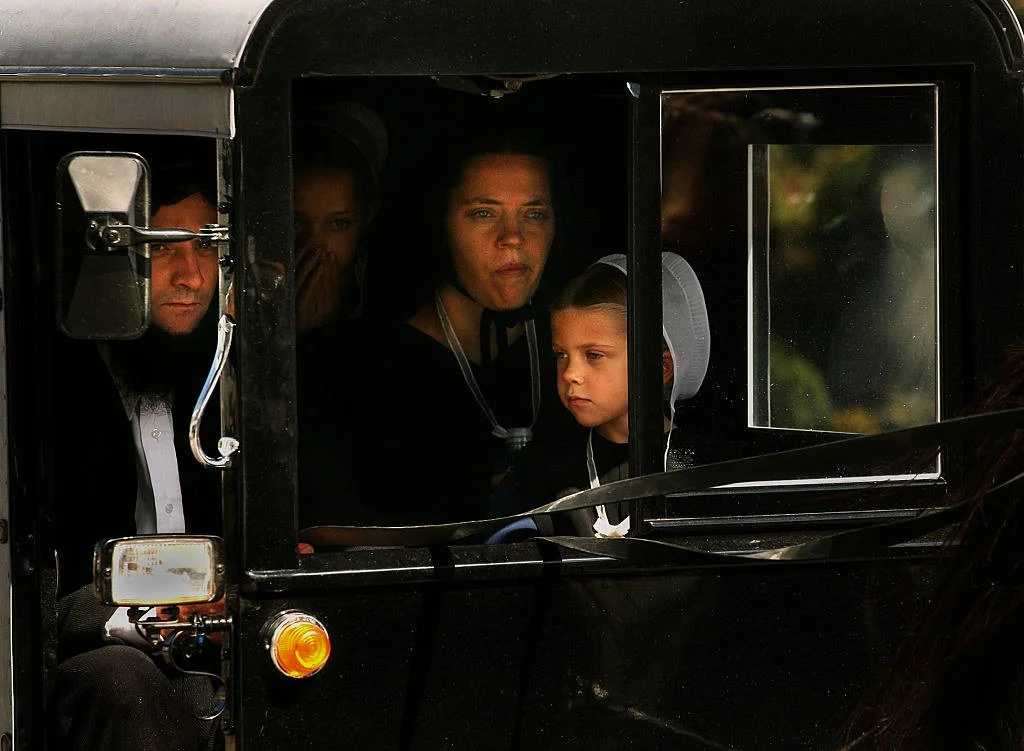
Amish Family on a Horse and Buggy. Brucedetorres. CC BY-PDM 1.0
After arriving more than three centuries ago, the Amish have sustained a private life from the outside world. Not allowing many into their community has resulted in the preservation of their beliefs and isolation. The Amish continue to live in the US with two new recent settlements, Argentina and Bolivia.

Jennifer Sung
Jennifer is a Communications Studies graduate based in Los Angeles. She grew up traveling with her dad and that is where her love for travel stems from. You can find her serving the community at her church, Fearless LA or planning her next trip overseas. She hopes to be involved in international humanitarian work one day.
Mexico Decriminalizes Abortion, Work Remains to Be Done
The Supreme Court of Mexico determined the criminalization of abortion to be unconstitutional. Yet, economic inequities pose challenging barriers to reproductive rights for many Mexican women.
Read MoreInternational Human Rights Court Rules in Favor of Trans Rights
The Inter-American Court of Human Rights ruled that the government of Honduras was responsible for the 2009 murder of a transgender woman. Today, Honduras is one of the largest contributors to anti-trans violence in Latin America.
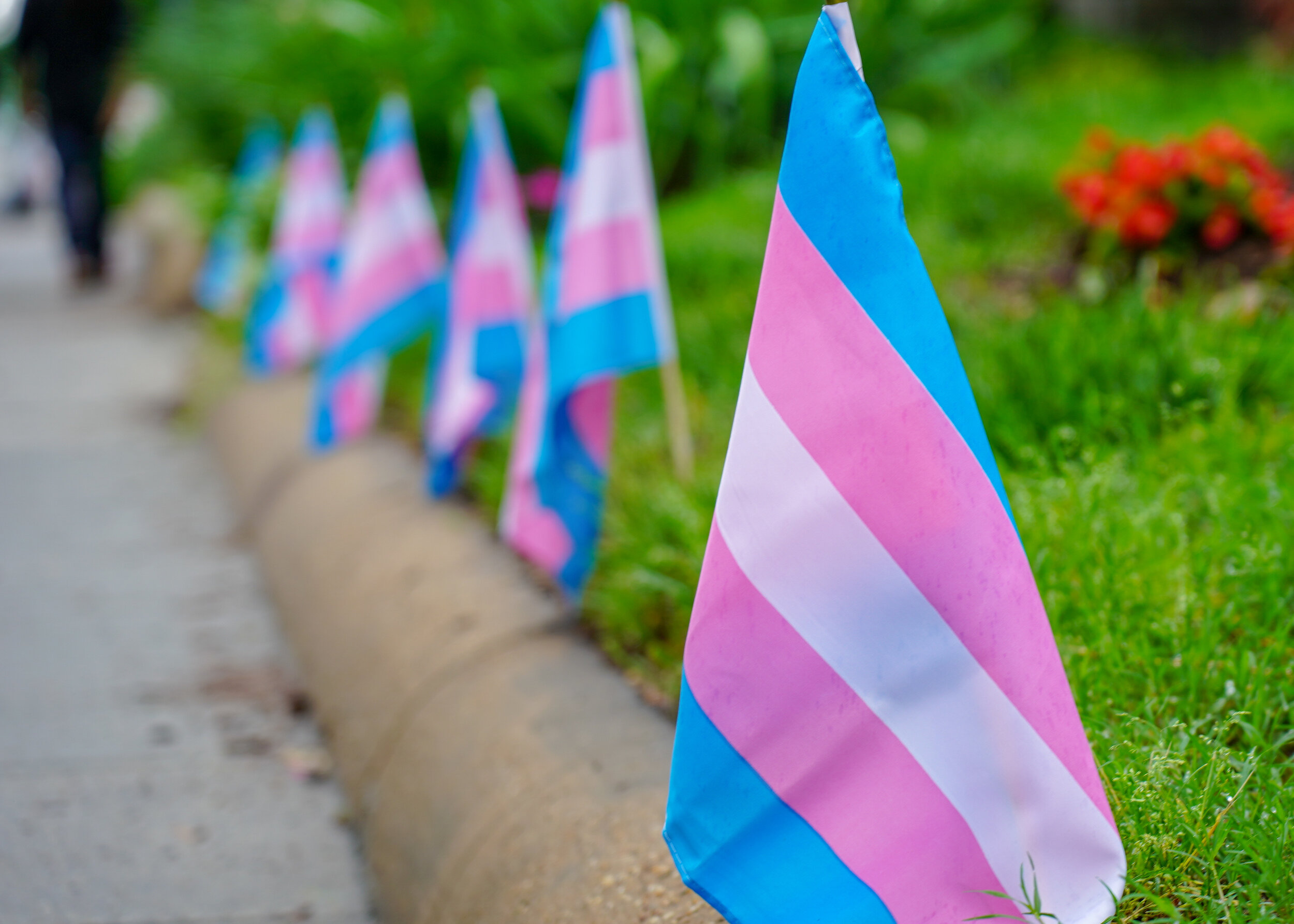
Transgender pride flags. Ted Eytan. CC BY-SA 2.0
On June 26, the Costa Rica-based Inter-American Court of Human Rights delivered a landmark ruling in a transgender rights case. The court held that the government of Honduras was responsible for the 2009 murder of trans woman and trans rights activist Vicky Hernández, stating that the government had violated Hernández’s rights to life and fair trial.
Hernández was 26 years old when she was killed by a single gunshot to the head. No one was ever charged for the crime.
The Court’s ruling stated that Honduran authorities did not sufficiently investigate Hernández’s death. Her murder was dismissed quickly as a “crime of passion,” and police failed to interview anyone from the scene or examine the bullet casing. It is unclear whether a postmortem examination was performed.
Lawyers acting on behalf of Cattrachas, the LGBTQ+ rights organization that brought forward the case, argued that this incomplete investigation was a result of Hernández’s gender identity. Robert F. Kennedy Human Rights reports that during the investigation, authorities continuously identified Hernández as male and referred to her on documents and records by her birth name, which she did not use. In 2009, shortly before Hernández’s killing, Human Rights Watch published a report which found that police in Honduras routinely failed to investigate reports filed by trans people. The report also detailed the harassment and beatings that trans people had endured at the hands of the police.
Hernández’s murder occurred on June 28, 2009, the first night of a military coup against then-President Manuel Zelaya. Zelaya was taken into custody, and the military imposed a 48-hour curfew, leaving the streets closed to everyone but military and police forces. Hernández was a sex worker, and was still on the street after curfew arrived, along with two other trans women. The three women saw a police car approaching and scattered, fearing violence. The next morning, Hernández’s body was found in the street.
Due to the circumstances surrounding her death, lawyers for Hernández’s case posited that she was the victim of an extrajudicial killing, meaning that state agents were responsible for her death. Robert F. Kennedy Human Rights points to the execution-style way in which Hernández was shot and the fact that the streets were closed to everyone but police and military forces, as well as the lack of effort put into the criminal investigation.
In its ruling, the Court found evidence that state agents had participated in Hernández’s death.
Hernández’s murder was the first in a wave of anti-trans violence that followed the 2009 coup. Cattrachas documented 20 deaths of LGBTQ+ people in the 15 years before the coup, and 31 deaths in the eight months directly afterward. 15 of these 31 people were trans women, like Hernández.
Today, Latin America is still a deadly area for LGBTQ+ people. Research released in 2019 showed that four LGBTQ+ people are murdered every day in Latin America and the Caribbean, with Honduras, Columbia and Mexico accounting for nearly 90 percent of these deaths. In 2020, Human Rights Watch published a follow-up to their 2009 report, which found that LGBTQ+ Hondurans still face rampant discrimination and violence from police and other authorities, as well as from non-state actors.
Twelve years after Hernández’s murder, Honduras is finally being held accountable for its anti-LGBTQ+ violence and being made to implement reforms. Activists hope that the ruling will encourage other Latin American countries to address their own issues with violence against the LGBTQ+ community.
The Court’s ruling included orders for the Honduran government to pay reparations to Hernández’s family, restart its investigation into her murder and publicly acknowledge its own role in the event, train security forces on cases involving LGBTQ+ violence, and keep a better record of cases motivated by anti-LGBTQ+ sentiment. The Court also ordered the Honduran government to allow people to change their gender identity in documents and public records, which is a major step forward. The next step is ensuring that Honduras’ new LGBTQ+ legislation is actually enforced.
Rachel Lynch
Rachel is a student at Sarah Lawrence College in Bronxville, NY currently taking a semester off. She plans to study Writing and Child Development. Rachel loves to travel and is inspired by the places she’s been and everywhere she wants to go. She hopes to educate people on social justice issues and the history and culture of travel destinations through her writing.
A Glimpse into Oaxaca City’s Guelaguetza Festival
The annual Guelaguetza festival is one of the largest Indigenous celebrations in Mexico, preserving Oaxaca culture and tradition.
Read More10 Indigenous American Historical Sites to Visit
Ten million people lived in what is now the United States before Europeans arrived. These Indigenous Americans lived in complex cultures and completed amazing architectural feats that persevere to this day.
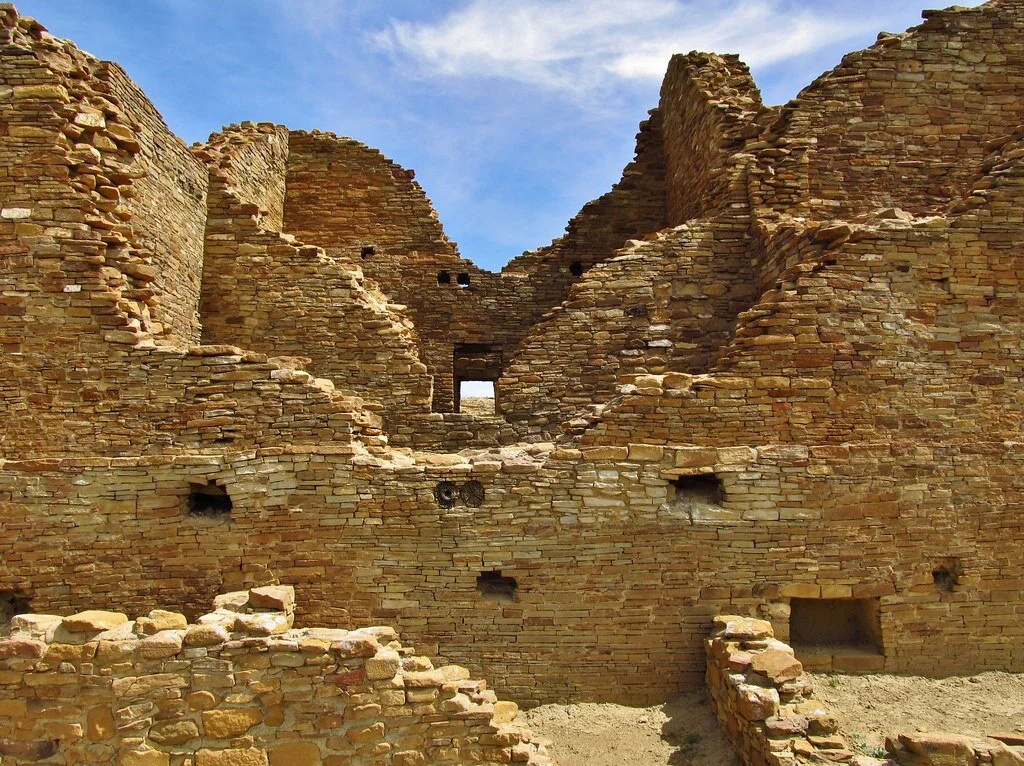
By the time European explorers arrived in the Americas, the Western Hemisphere was already home to more than 50 million people. Ten million of these people lived in what is now the United States. These Indigenous Americans developed intricate communities, religions and lifestyles, and made a lasting impact on American history and culture. Incredible sites built by Indigenous people can be found throughout the U.S. today, including cliff dwellings, multistory stone houses, earth lodges and effigies, and other stunning ruins. The history of Indigenous people is often overlooked or swept under the rug in favor of European colonists when looking at the larger context of American history, but preserved sites teach visitors about the complex cultures that came before Western settlers. These 10 sites showcase some of the impressive architectural triumphs of Indigenous people and pass on their histories.
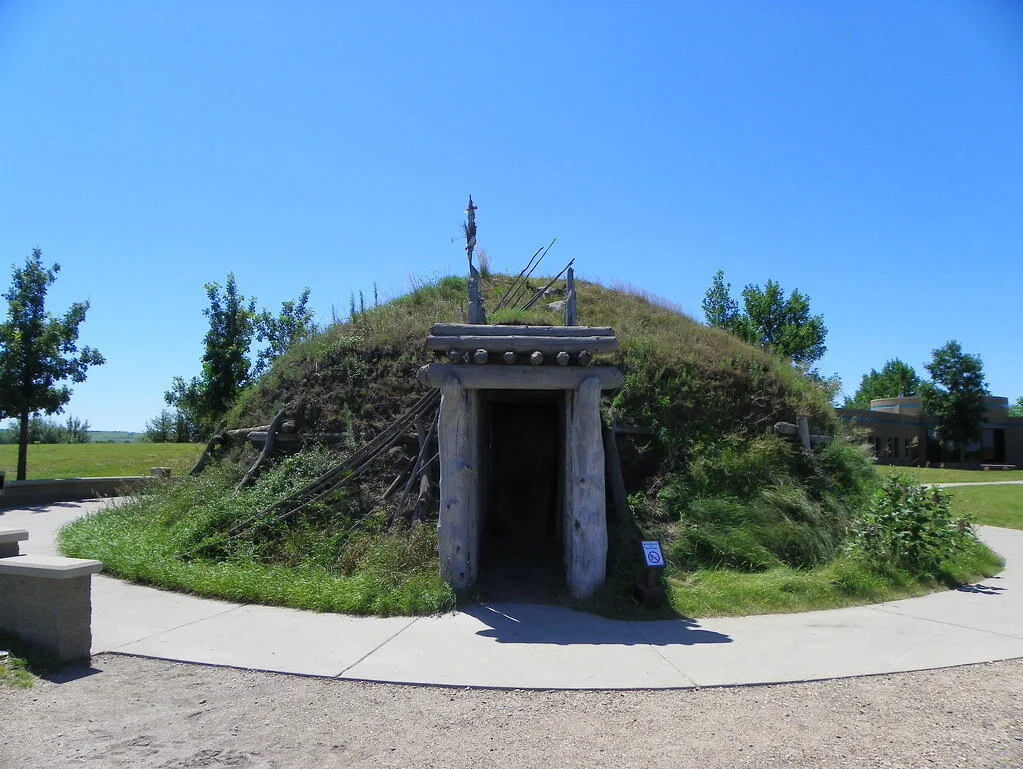
1. Knife River Indian Villages National Historic Site, North Dakota
Located near Stanton, North Dakota, the Knife River Indian Villages National Historic Site preserves the history of the Knife River region. The Knife River region, an area in North Dakota centered around a tributary of the Missouri River, has been home to a number of people groups for around 11,000 years. Not much is known about the cultures that have inhabited the Knife River region because very few artifacts from the area remain, but early written records document the lives of the Hidatsa people. Like the Mississippian people, the Hidatsa resided in earth lodges. The Mandan and Arikara were also earth lodge residents who settled in the Knife River region, and all three groups pioneered agriculture in the area while still hunting and gathering. Villages were the center of earth lodge peoples’ lives, and the park features the remains of three large villages constructed by the Hidatsa: Awatixa Xi’e village, Hidatsa village and Awatixa village.
2. Puu Loa Petroglyphs, Hawaii
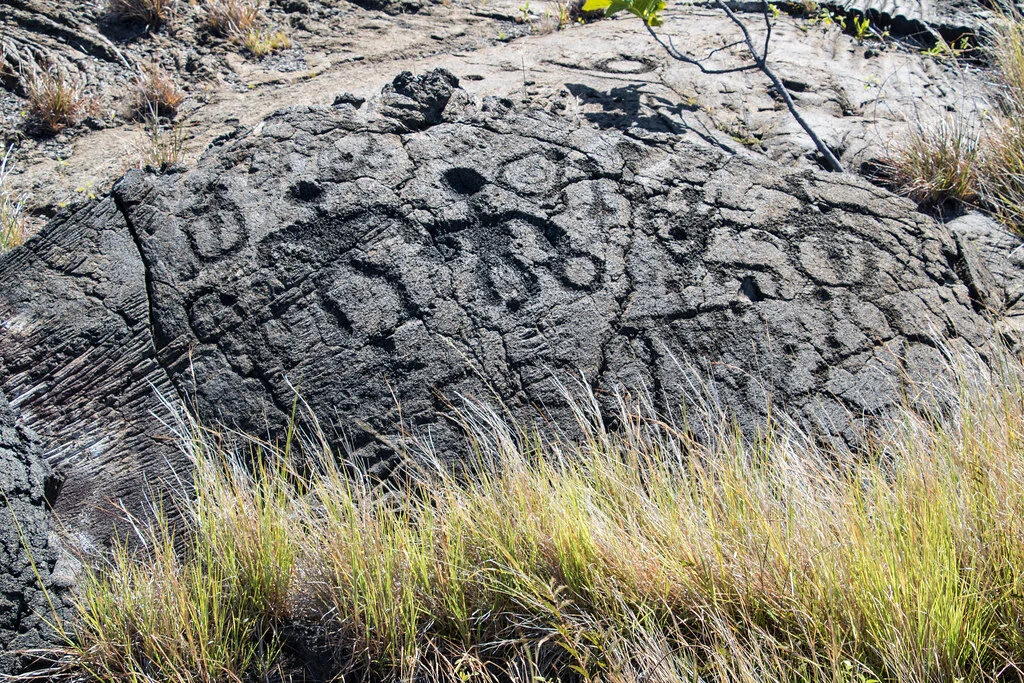
Hawaii Volcanoes National Park, on Hawaii’s Big Island, protects Mauna Loa and Kilauea, two of the world’s most active volcanoes. It is also home to the Puu Loa petroglyphs, stone etchings that document the lives and culture of the Native Hawaiian people. The petroglyphs are located in a lava field that is at least 500 years old, and the site has over 23,000 different petroglyphs. There are a variety of geometric designs, as well as depictions of people and tools, such as canoe sails. A number of the petroglyphs contain cupules, or holes where a portion of the umbilical cord was placed after the birth of a child in order to ensure long life. The first known written account of the petroglyphs is attributed to missionary Rev. William Ellis in 1823, but some petroglyphs likely date to the 1600s or even earlier. In addition to being used to ensure long life, some petroglyphs were used to record the movements of travelers on the island. Visitors to Hawaii Volcanoes National Park can take a 1.4-mile round trip day hike on a boardwalk to admire the petroglyphs up close.
3. Mesa Verde National Park, Colorado
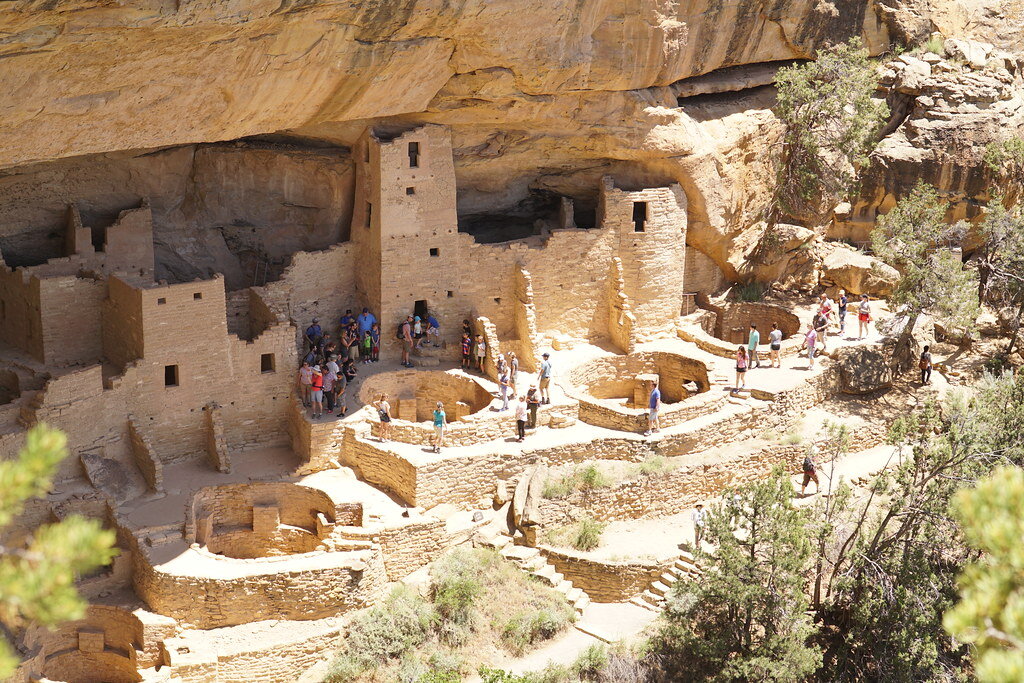
Probably one of the most well-known Indigenous sites in the United States, Mesa Verde National Park in Colorado preserves almost 5,000 historical sites of the ancestral Pueblo people, including 600 cliff dwellings. The ancestral Pueblo people lived at Mesa Verde for more than 700 years, from 550 to 1300 A.D. The first people settled at Mesa Verde in 550 A.D., turning from hunting and gathering to agriculture and building small villages of pithouses, sometimes sheltered in cliff alcoves. Around 750 A.D., these people began building houses above ground and became known as the Pueblo people, meaning “village dwellers.” The houses evolved from being made of poles and mud to being skillfully constructed from stone. Then, in 1200 A.D., for reasons that are unknown, the ancestral Pueblo began to move back into cliff alcoves and developed the cliff dwellings that make Mesa Verde famous. Mesa Verde’s cliff dwellings are truly incredible examples of Indigenous architecture, ranging from one- to 150-room houses. They are also some of the best-preserved cliff dwellings in North America, and visitors can tour some of the structures, like Balcony House and Cliff Palace.
4. Effigy Mounds National Monument, Iowa
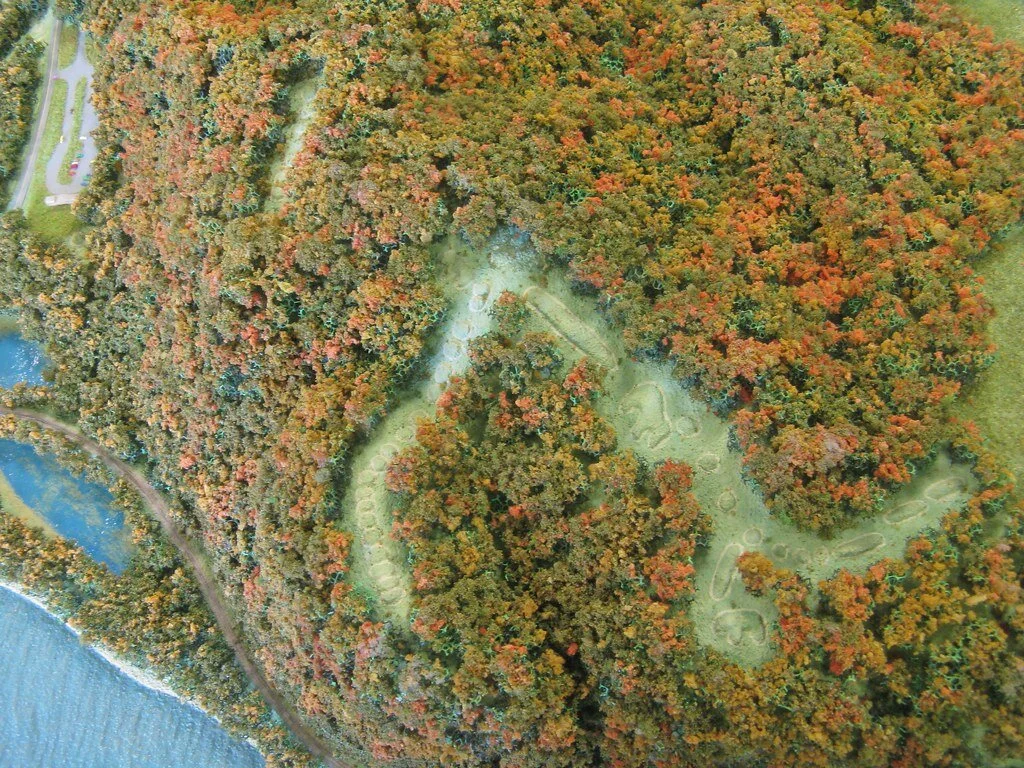
Ceremonial mounds created by Indigenous Americans can be found across the United States. Effigy Mounds National Monument preserves more than 200 distinct mounds built by people known as the Woodland Indians and gives visitors a glimpse directly into Woodland Indian culture. The mounds, found in northeastern Iowa, are unique because a large number of them are effigies in the shape of animals. Thirty-one of the mounds are bear or bird effigies. The Woodland culture consisted of hunter-gatherers who during the summer lived in large campsites along the Mississippi River, which they relied on for food and water. Archaeologists and researchers do not know precisely why the effigy mounds were built, but they guess that they may have been made for religious rituals or burial ceremonies. Guided tours are available throughout the summer at Effigy Mounds to teach visitors more about the area’s rich history, and there are also hiking trails around the site.
5. Chumash Painted Cave State Historic Park, California
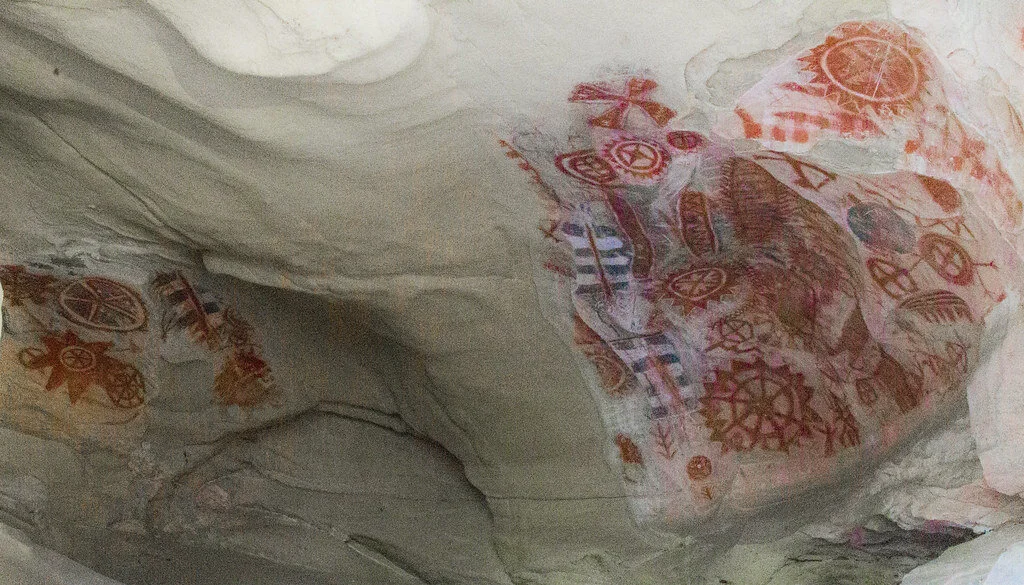
Just outside of Santa Barbara sits the Chumash Painted Cave, a room-sized sandstone cavern filled with colorful anthropomorphic and geometric figures. The exact age of the cave paintings is unknown, but archaeologists estimate that they date to the 1600s or earlier. The paintings are attributed to the Chumash, a name referring to several groups of Indigenous people who lived along the coast of Southern California and on the nearby Channel Islands. The Chumash groups spoke a variety of what linguists refer to as the Hokan language, and they constructed canoes from pine or redwood planks, which they used to sail up and down the California coast to hunt, gather and trade with other tribes. The Chumash lived in round homes known as “aps,” organized into villages. A number of archaeological sites displaying Chumash rock art have been discovered, and the Chumash Painted Cave is one of the most well preserved. The meaning behind the figures at the painted cave is unknown, but the art may be connected to Chumash astrology and cosmology.
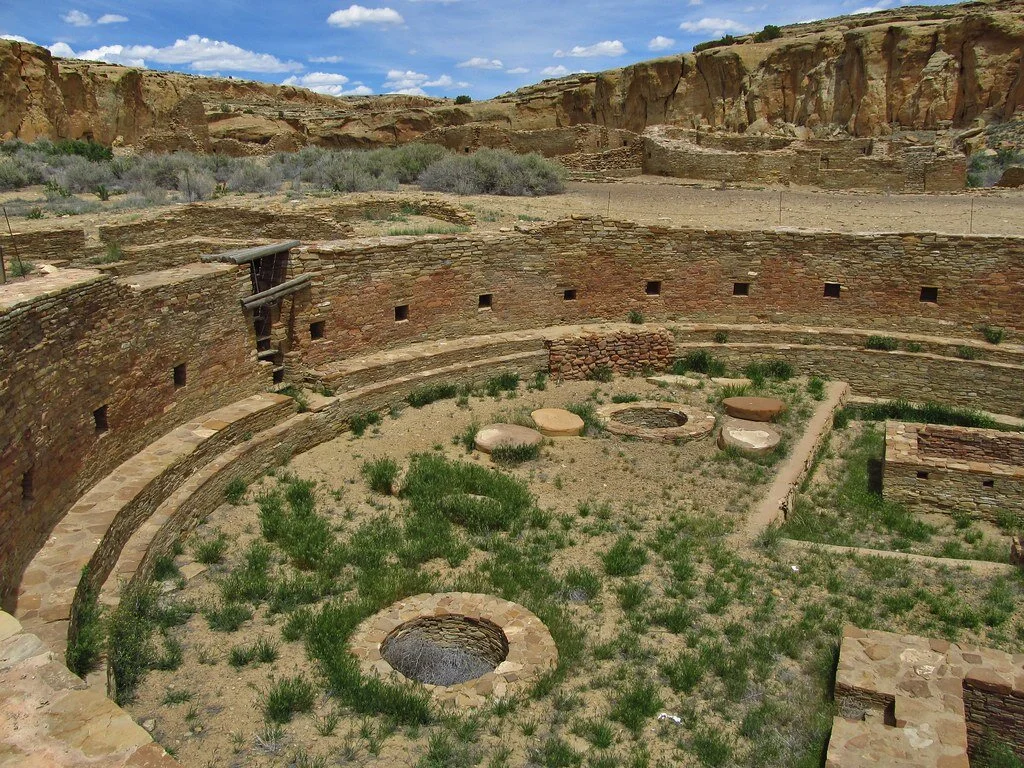
6. Chaco Culture National Historical Park, New Mexico
A valley in the high desert of northwestern New Mexico houses an ancient, sprawling center of ancestral Pueblo culture. Between 850 and 1250 A.D., the area that is now Chaco Culture National Historical Park was the epicenter of a widespread expansion of Chacoan culture. The Chacoan people used unique masonry techniques to construct stone houses multiple stories high, some containing hundreds of large rooms. The buildings were intricately planned out and often constructed according to solar, lunar and cardinal directions, as well as to maintain clear lines of sight between houses. By 1050, Chaco was the economic and cultural center of the San Juan Basin, with people from all over the area gathering there to share knowledge and traditions and to participate in ceremonies. A number of the great houses have been preserved and can be seen today, along with petroglyphs made by the Chacoan people. Since 2013, Chaco has also been designated an International Dark Sky Park, meaning it is one of the best places in the country to get a view of the night sky untainted by light pollution. Visitors can look at the sky the same way the Chaco people saw it a millennium ago.
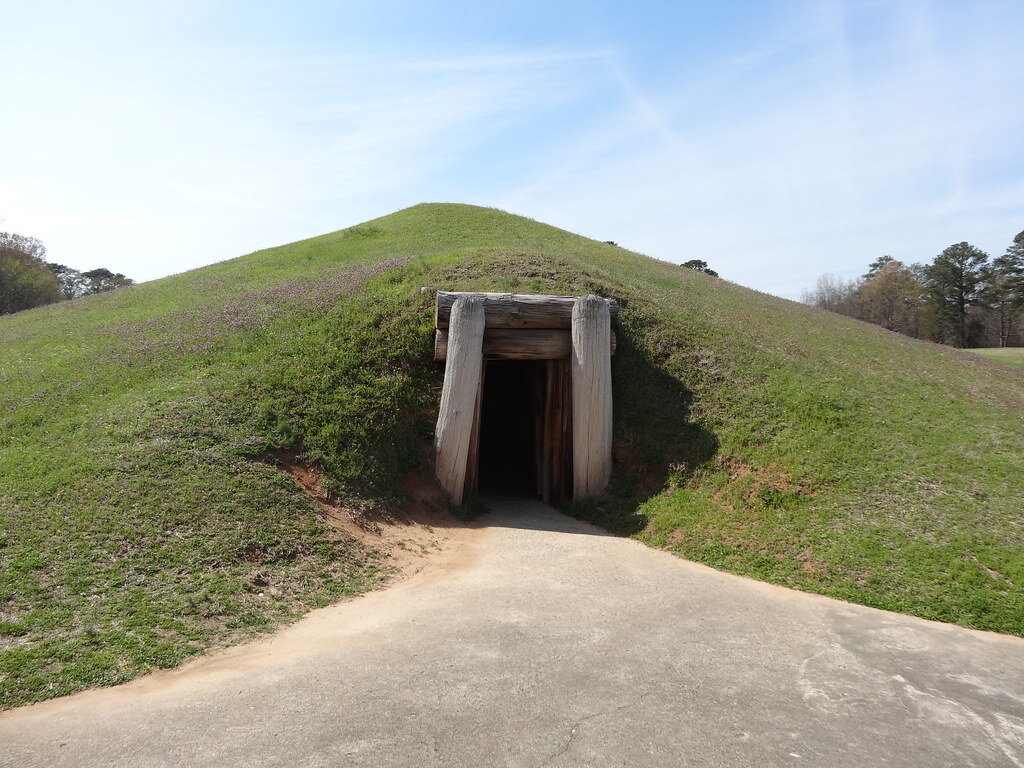
7. Ocmulgee Mounds National Historical Park, Georgia
Minutes outside of downtown Macon, Georgia, lies Ocmulgee Mounds National Historical Park, a site shaped by 17 millennia of habitation, dating back to prehistoric times. The nomadic Paleo-Indian people arrived at the site in around 17,000 B.C., during the last ice age. Around 9,600 B.C. the Paleo-Indian era gave way to the Archaic era. The Early Archaic people were nomadic hunters as well, but evidence suggests that by the Middle Archaic period people began to build more permanent settlements and gather food. It wasn’t until the Mississippian people, who migrated to the area in 900 A.D., that the land was permanently changed, however. The Mississippians constructed impressive villages that literally reshaped the landscape, forming elaborate earthen lodges and temples that are still visible today. The Mississippian culture declined after the 1539 arrival of Spanish explorer Hernando de Soto, who brought with him foreign diseases that devastated the Mississippian people. Descendants of the Mississippian people, the Muscogee Creek Nation, who lived at Ocmulgee from 1600 until their forcible removal by Andrew Jackson in 1836, considered the mounds built by their ancestors to be sacred. Today, visitors to the site can see several of the mounds constructed by the Mississippian people, as well as the location of two Civil War battles.

8. Little Bighorn Battlefield National Monument, Montana
Little Bighorn Battlefield National Monument memorializes the site of the Battle of Little Bighorn, a fight between the 7th Regiment of the U.S. Cavalry and thousands of Sioux, Cheyenne and Arapaho tribe members. It lies within the Crow Indian Reservation in southeastern Montana. On June 25, 1876, the 7th Regiment, led by Lt. Gen. George Custer, attacked a village of free Lakota and Cheyenne people. The battle was part of the U.S. campaign to force Indigenous people to comply with the 1868 Treaty of Fort Laramie, which created a large reservation in South Dakota intended to house the Lakota. Many Lakota did not want to give up their nomadic lifestyle in favor of a life controlled by the U.S. government, resulting in a number of armed conflicts. The Battle of Little Bighorn proved deadly for both sides, but the Lakota and Cheyenne ultimately triumphed, defeating Custer and his troops. Though the Lakota and Cheyenne tribe members won the battle, Custer’s defeat became a rallying cry for U.S. efforts to force Indigenous people onto reservations, and stronger military forces were sent to conquer the tribes. The monument includes the battlefield itself, as well as the Custer National Cemetery and a number of hiking trails.
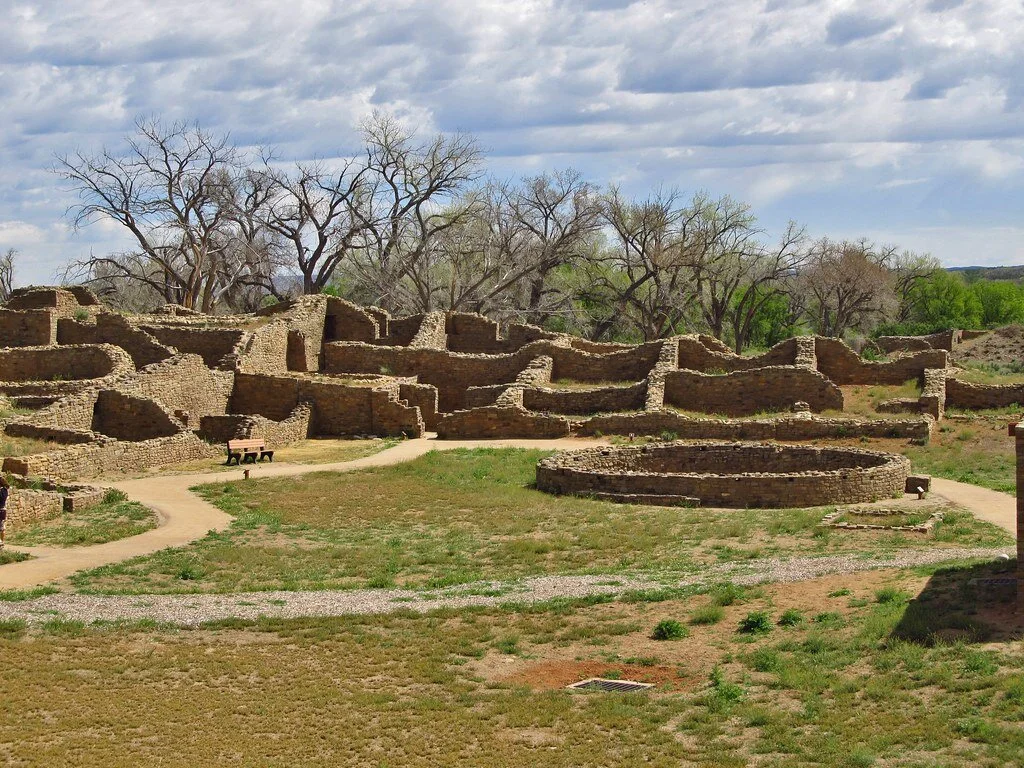
9. Aztec Ruins National Monument, New Mexico
Despite its name, Aztec Ruins National Monument has no association with Mexico’s Aztec empire. These large, multistory stone buildings, located within the city limits of Aztec, New Mexico, were constructed by the ancestral Pueblo. Early Western settlers thought that the site was built by the Aztecs, so they named the area “Aztec,” and the name remained even after the true builders of the ruins were discovered. Aztec Ruins was the largest ancestral Pueblo community in the Animas River valley. The site features a number of “great houses” made of stone, including the West Ruin, which had over 400 interconnected rooms. Each great house had a “great kiva,” a large, underground circular chamber used for ceremonies. Aztec Ruins also has three above-ground kivas, each encircled by three walls forming a triangle. Aztec Ruins was likely influenced by Chacoan culture, and may have even been an outlying community of Chaco. Visitors can wander through the rooms of West Ruin on a self-guided tour, or participate in ranger-led programs.
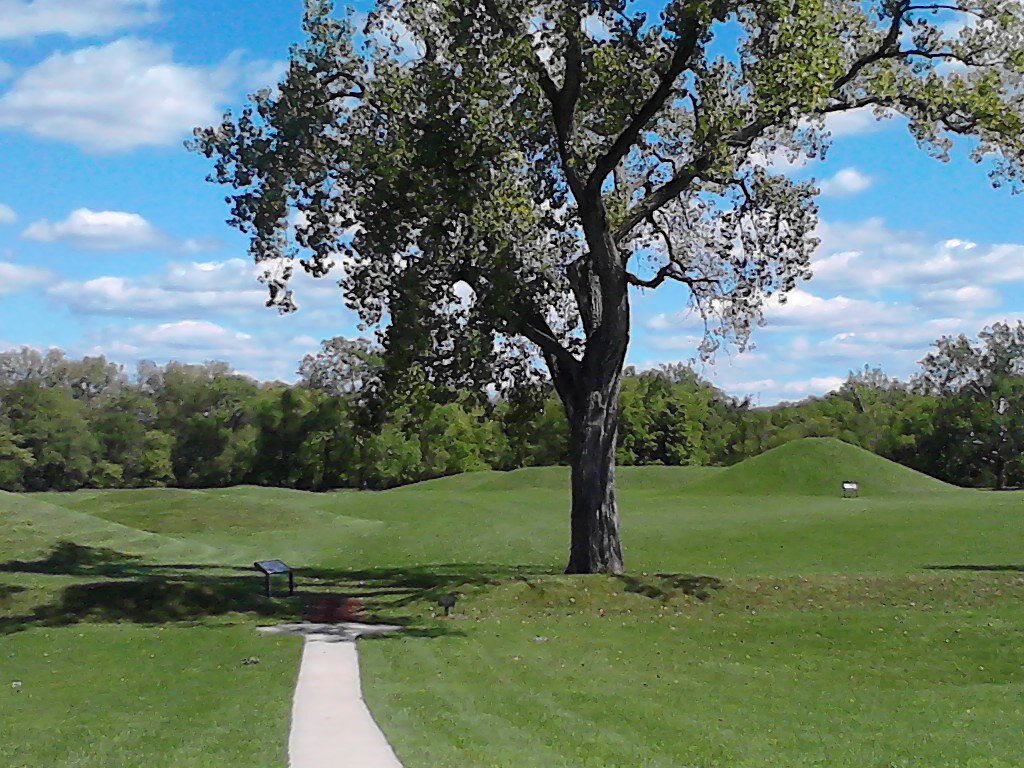
10. Hopewell Culture National Historical Park, Ohio
The term “Hopewell culture” refers not to a specific tribe, but to a “distinctive set of artifacts, earthworks and burial practices” common in areas of southern Ohio during the Middle Woodland period, from around 1 to 400 A.D. The Hopewell Mound Group is an 130-acre earthwork complex, which contains 29 burial mounds and was once enclosed by an enormous earthen wall that spanned over 2 miles and was up to 12 feet high. Remnants of the walls are still visible, as are several of the large, uniquely shaped mounds. Hopewell Culture National Historical Park encompasses five additional sites, all with fascinating remnants of the Hopewell culture. Settlements typically consisted of a few families living close together in rectangular houses with a shared garden nearby. In addition to growing domesticated plants, people of the Hopewell culture were hunters, fishers and gatherers. Visitors to the park will discover the commonalities between each distinct site by exploring the incredible Hopewell Mounds and looking at preserved artifacts.
Rachel Lynch
Rachel is a student at Sarah Lawrence College in Bronxville, NY currently taking a semester off. She plans to study Writing and Child Development. Rachel loves to travel and is inspired by the places she’s been and everywhere she wants to go. She hopes to educate people on social justice issues and the history and culture of travel destinations through her writing.
Anti-Asian Hate Spreads Across the Western World
In the past year, hate crimes against Asian Americans have risen 149%. But attacks are also growing around the world, here CATALYST reports on incidents in Spain (where 2.9% of citizens of Asian descent have experienced hate crimes), Scotland, Canada and Australia.
Read MoreOregon and Washington State Rethink the War on Drugs
A new law in Oregon decriminalized possession of small quantities of hard drugs. With Washington state possibly following its lead, the war on drugs might begin to be phased out.

Is the end in sight for the war on drugs? Thomas Martinsen. CC BY-NC-SA 3.0.
Currently, an Oregon police officer cannot arrest someone for possession of small amounts of heroin, meth, LSD or any other hard drug. Ballot Measure 110, voted into law last November, decriminalized the possession of small quantities of such substances. Instead of a felony conviction and jail time, a drug user caught red-handed will face either a $100 fine or a medical evaluation that could direct them to an Addiction Recovery Center (ARC). The new law fundamentally changes the state’s approach to epidemic rates of drug use and could revolutionize the role of Oregon’s police force.
At its core, Ballot Measure 110 diverts drug users away from the criminal justice system and toward the health care system. The bill requires that a network of 15 ARCs be built to treat drug users and pair them with case workers who can help them reach sobriety. Funding for the ARCs will come, ironically, from tax revenue from legal marijuana sales. Oregon can expect a lot of money from such sales. In 2020, tax revenue from marijuana reached $133 million, a 30% increase from the previous year. Additionally, the state anticipates that more funds will appear as police stop pursuing arrests for drug possession.
The simple demotion of drug possession from a felony to a misdemeanor will have lasting repercussions. Before, an Oregon police officer who saw a pipe in a car could justify searching the car for illegal substances, since the pipe was proof of a possible felony. Now that it would indicate only a misdemeanor, the officer cannot search the vehicle. Arrests will decrease sharply as a result. The Oregon Criminal Justice Commission estimates that there will be 3,679 fewer arrests for possession per year, a 90.7% decrease. Distributors will still face criminal sentences since they possess drugs in large quantities, but users will receive health care, not jail time.
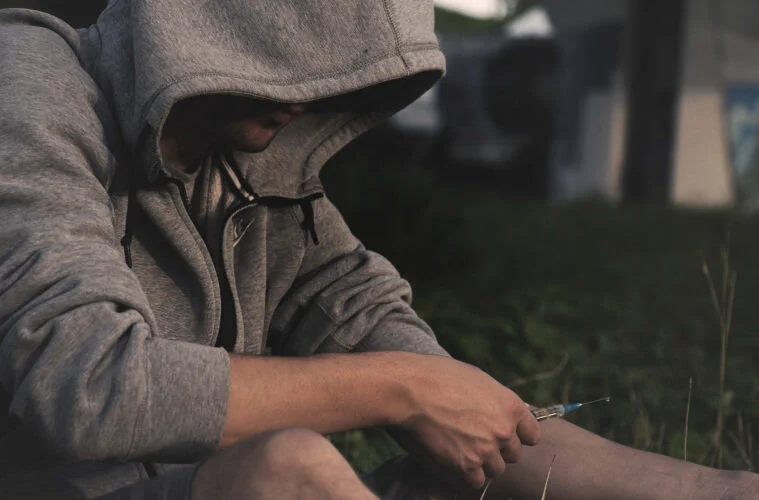
A disease, not a crime. Drugs Treatment Clinic Parus. CC BY-SA 4.0.
Building 15 ARCs by Oct. 1 will be a substantial challenge. Oregon will need to transition from addiction recovery programs focused on prisons to separate health care facilities that require supplies, staff and resources. Already, officers have made fewer arrests for possession to mitigate the risk of COVID-19 outbreaks in prisons. Thousands of drug users who would have landed in jails will now be placed into ARCs. Many who argued against the ballot measure now question whether so many facilities can be built by October.
They have other qualms, too. As crude as the criminal justice system can be, drug addicts who served time in prison often entered court-mandated treatment programs; this won’t happen now that drug possession is a misdemeanor. County sheriffs expressed concern at a potential surge in illegal drug use now that prison is not a deterrent. Since the ballot measure passed with 58.5% of the vote, it’s clear these arguments weren’t entirely persuasive.
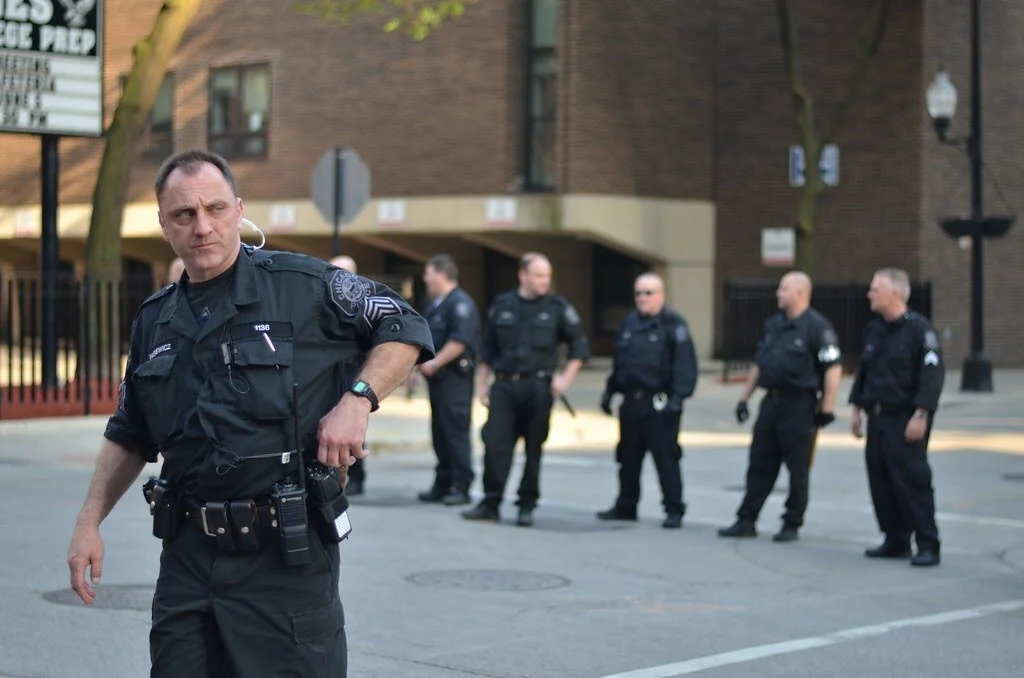
The least worst option? Michael Kappel. CC BY-NC 2.0.
For one, prison might be the worst place to overcome a drug dependency. An addict is thrust into an unfamiliar environment to undergo withdrawal, and they may cope with trauma by self-medicating when the opportunity arises. The risk for opioid overdose alone is 129 times higher than average in the first two weeks after being released from jail. As for a potential surge in drug use, multiple examples of decriminalization in other countries indicate that this will most likely not occur. After decriminalizing hard drugs in Portugal, rates of drug use remained steady, but drug deaths fell as the percentage of users treated for addiction rose 21% between 2001 and 2008.
Criticisms of Ballot Measure 110 go beyond the issue of how to treat epidemic rates of drug addiction. They speak to a concern about the ability of Oregon’s health care infrastructure to manage the flow of drug users from prisons to ARCs. This transition plays into a more ambitious, long-term agenda that many advocates of Ballot Measure 110 advocate for: defunding the police. By turning criminals into patients, ARCs would take the issue of drug addiction and mental health crises away from police; Oregon is even considering an alternative to 911 that people can call for drug-related issues or mental health crises.
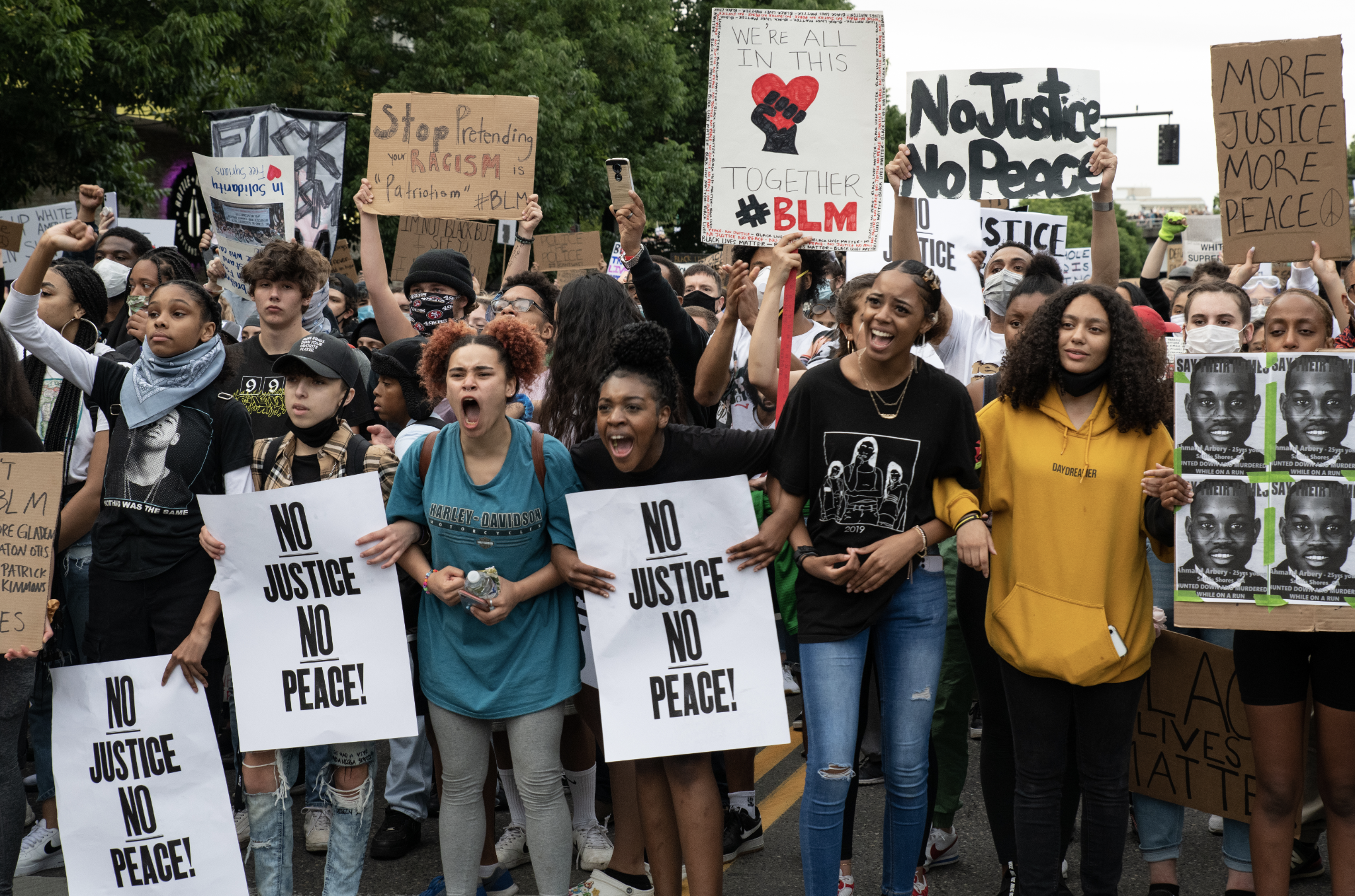
A Black Lives Matter protest in Portland, Oregon. Matthew Roth. CC BY-NC 2.0.
Washington state is considering a similar transition with House Bill 1499, which if passed would decriminalize drugs much the same way as Oregon’s Ballot Measure 110. Revenue for Washington state’s ARCs would come not from marijuA Black Lives Matter protest in Portland, Oregon. Matthew Roth. CC BY-NC 2.0.ana sales but from taxes on pharmaceutical companies, which played a large role in starting the opioid epidemic. Washington state currently has a program designed to lead drug addicts away from the criminal justice system and into treatment centers, the Law Enforcement Assisted Diversion (LEAD) program. It differs from other diversion programs in that it provides care before, not after, an arrest and takes referrals from community members, not just law enforcement. Nationwide, the program has been held up as a model diversion program.
Both states will struggle to make a seamless transition from prisoners to patients. It requires reforming two systems that often become embroiled in partisan conflicts. When the Seattle City Council cut its police department’s budget by 11%, in part to fund diversion programs, 186 police officers quit in response. Oregon will labor to build 15 ARCs by October, even with abundant funding from marijuana sales. Despite the state’s efforts, success depends largely on ever-shifting political winds.
Michael McCarthy
Michael is an undergraduate student at Haverford College, dodging the pandemic by taking a gap year. He writes in a variety of genres, and his time in high school debate renders political writing an inevitable fascination. Writing at Catalyst and the Bi-Co News, a student-run newspaper, provides an outlet for this passion. In the future, he intends to keep writing in mediums both informative and creative.
Indigenous Mexican Language isn’t Spoken– it’s Whistle
While Spanish is the official language of Mexico, its many Indigenous cultures still thrive and speak their own languages within their communities.
Read More6 Offbeat Travel Destinations in Mexico
Skip the crowded beaches of Cabo and Puerto Vallarta and discover Mexico’s rich history and diverse culture through its hidden gems
Read MoreThe Mexican Street Cart: A Culinary World on Wheels
Mexican street foods, like birria tacos and elote, have gained widespread attention on social media recently for their complex flavors and vivid colors. Some dishes have gone so viral that Americans are driving hours in search of truly authentic carts! Mexican street carts are essential to the people of Mexico, providing a convenient meal during a busy day, and more are popping up all over the United States as well.
Read MoreAmerica’s Prison Abolition Movement Fights On
The United States is home to nearly 25% of the world’s prison population. Activists are fighting to dismantle the prison system, hoping to strengthen communities instead.
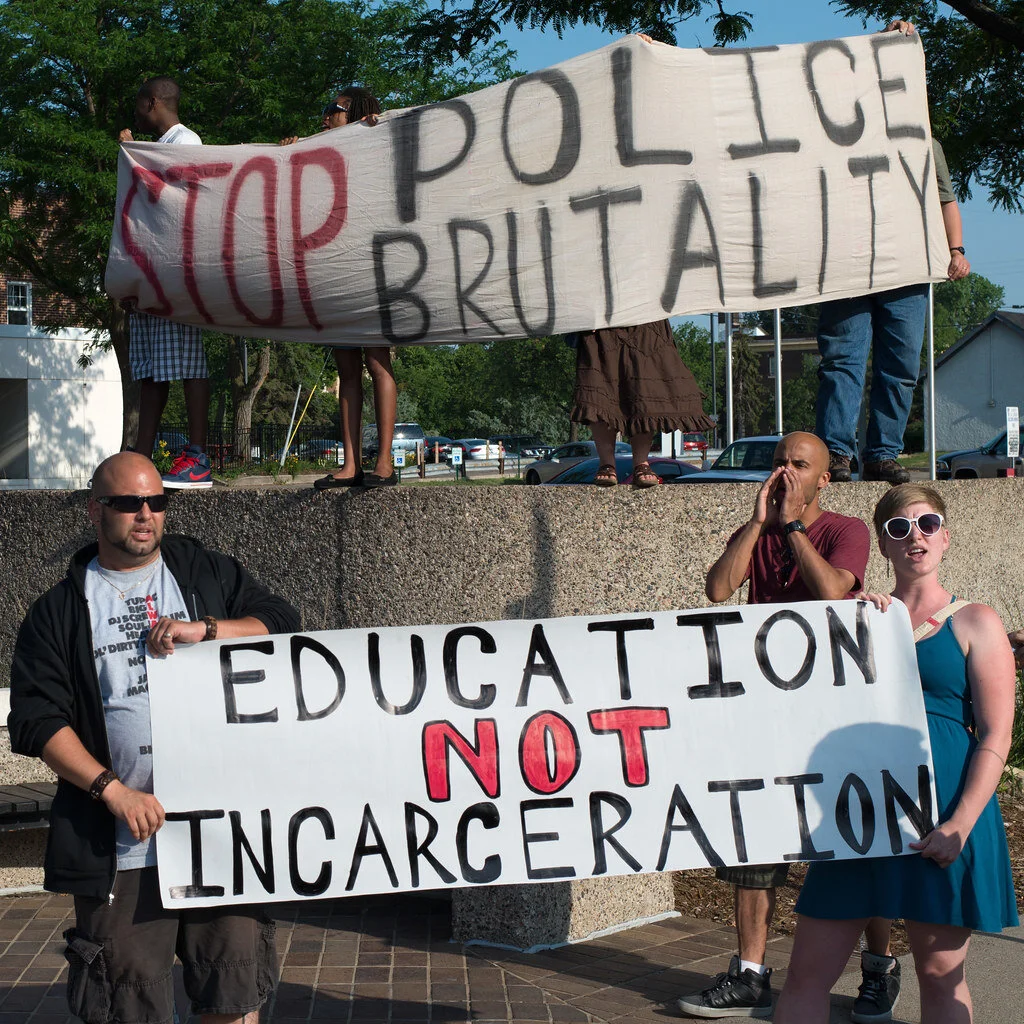
Protest against police brutality in Minnesota, 2013. Fibonacci Blue. CC BY 2.0
The United States maintains the highest prison population rate in the world. Despite making up only 5% of the world’s population, the United States is home to 25% of the world’s prisoners. There is no question that the United States has a mass incarceration problem. For decades, activists have argued that the prison system perpetuates racism, sexism and inequality, leading to what is often seen as a radical solution: prison abolition.
In the wake of the recent stream of anti-police brutality protests, discussion has turned toward prison abolition. Prison abolition is not just about getting rid of physical prisons; abolitionists aim to undo societal structures that lead to incarceration, known as the prison-industrial complex. The prison-industrial complex is a term used to describe “the overlapping interests of government and industry that use surveillance, policing and imprisonment as solutions to economic, social and political problems.” Prison abolition is really the abolition of the prison-industrial complex, with the ultimate goal being to eliminate policing, imprisonment and surveillance and to redistribute government spending from these industries to support housing, education, jobs and health care.
The concept of prison abolition has been around since the 1980s. Following the war on drugs, which increased prison sentences for both drug dealers and users and more than doubled the prison population from 1980 to 2000, activists began protesting the prison system. They argued that too many nonviolent offenders were being incarcerated, that wealth inequality was a major factor in who was locked up, and that people of color were disproportionately imprisoned. Black and Hispanic people in the U.S. are still incarcerated at higher rates than White people, data shows. The movement gained prominence in the 1990s, when Angela Davis and Ruth Wilson Gilmore co-founded Critical Resistance, a national anti-prison organization with a focus on the prison-industrial complex and abolition. In 1998, Critical Resistance hosted a three-day conference to examine and challenge the prison-industrial complex. The conference was considered a success, but made clear how much work still had to be done to undo a society that maintains mass incarceration.
“The abolition movement focuses on preventive rather than punitive measures.”
Skeptics of the abolition movement often ask what will happen to violent offenders, like murderers and rapists, if prisons are shut down. The movement’s supporters have two responses. First, abolition activists ask: is the current prison-industrial complex actually effectively addressing the issues behind rape and murder? Most activists say no. Despite the copious amounts of money funneled into supporting the prison-industrial complex annually, the threats of sexual assault and murder, among other crimes, are still sources of concern across the country. The prison-industrial complex locks criminals up, but has not actually addressed the root of the crimes in society. Plus, as prison abolition activist Woods Ervin points out, the prison-industrial complex itself perpetuates some crimes, like when prison guards sexually assault incarcerated people. Second, supporters point out that abolitionists want to help communities address underlying issues, like wealth inequality, that contribute to the rise of crime in the first place. Abolitionists want to build up infrastructures in communities in order to reduce interpersonal issues and create a world where people don’t feel driven into committing crimes. The abolition movement focuses on preventive rather than punitive measures. Ultimately, how crime is dealt with after prison abolition “is going to depend on each scenario,” Ervin says, and on the community in which it takes place.
Prisons won’t be shut down tomorrow, but activists in the abolition movement are fighting to ensure that prisons will one day be obsolete, and communities will have a stronger foundation to deal with eliminating inequality. The recent killings by police officers and subsequent anti-police brutality protests have illuminated some of the issues with the prison-industrial complex, and highlight the need for a new system.
To Get Involved:
To locate your local chapter of Critical Resistance, the national anti-prison organization, and find information on volunteer opportunities or how to become a member, click here.
Rachel Lynch
Rachel is a student at Sarah Lawrence College in Bronxville, NY currently taking a semester off. She plans to study Writing and Child Development. Rachel loves to travel and is inspired by the places she’s been and everywhere she wants to go. She hopes to educate people on social justice issues and the history and culture of travel destinations through her writing.
10 Isolated Travel Destinations in the US
Thinking about your next trip once the pandemic eases? This year, try one of these remote spots where isolation will be the theme. From Maine to Montana, explore nature free from crowds.
Read More10 Places to Honor Black History and Culture
Through artwork, literature, music and history, these institutions amplify Black voices and address race relations in America.
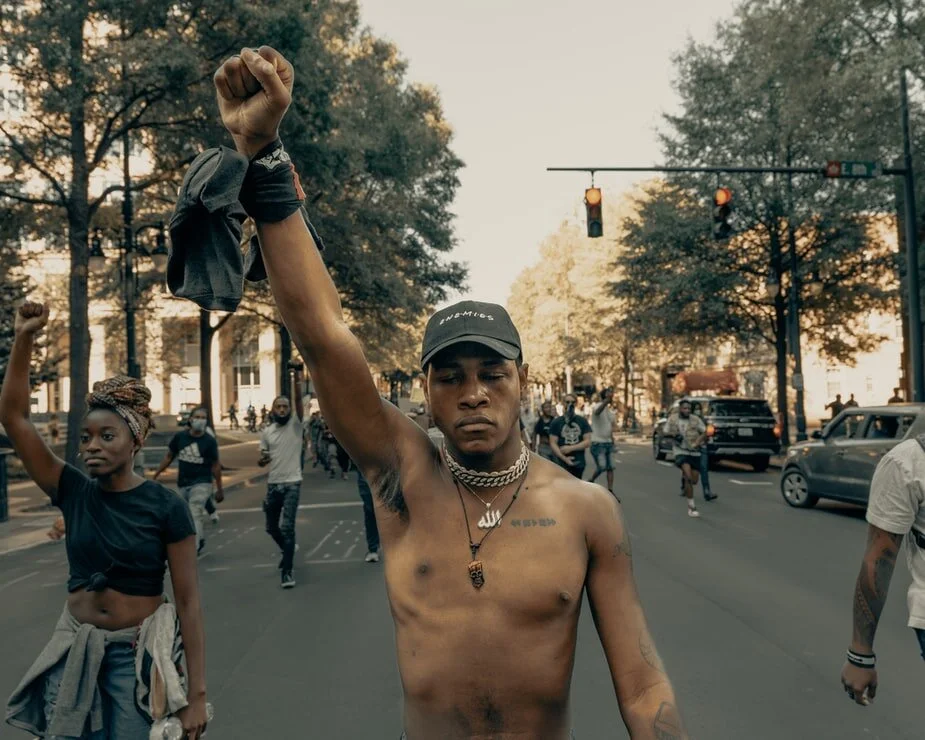
George Floyd protests in Charlotte, North Carolina. Clay Banks. Unsplash.
Amid global protests against racial injustice, a growing number of people are educating themselves on systemic racism and white privilege.
1. Martin Luther King Jr. National Historical Park - Atlanta, Georgia
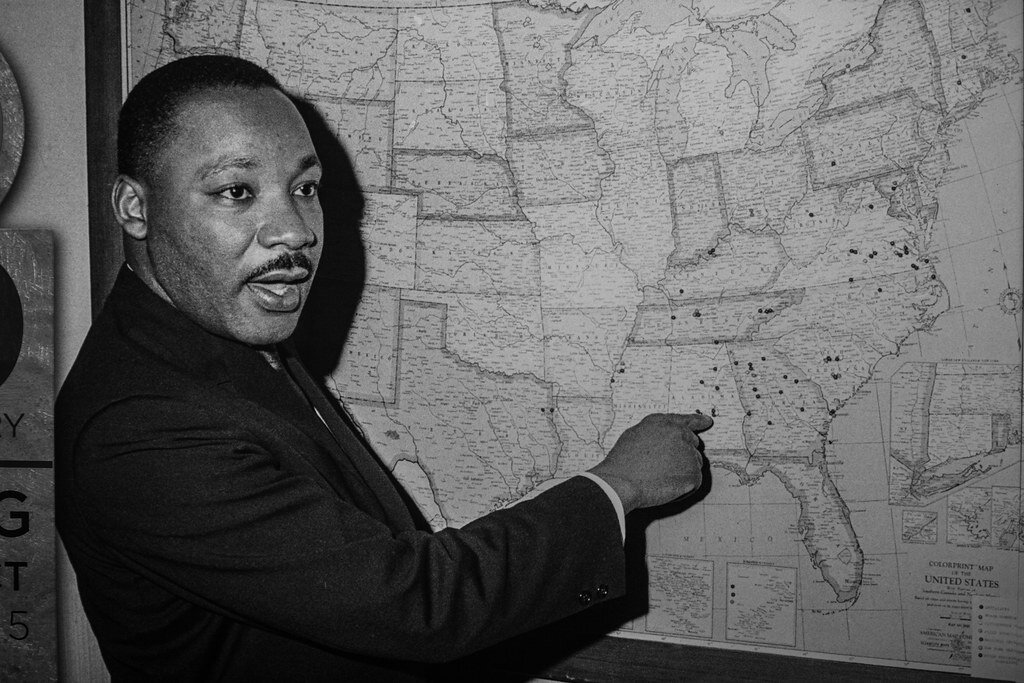
Martin Luther King Jr. locating civil rights protests. Thomas Hawk. CC BY-NC 2.0
Located in one of Atlanta’s historic districts, the Martin Luther King Jr. National Historical Park honors the activist who strove for racial equality. The site includes a museum chronicling the American civil rights movement, as well as Dr. King’s childhood home, garden and gravesite. With 185 varieties of roses, the “I Have a Dream” World Peace Rose Garden promotes peace between diverse world communities. Each year, students from the greater Atlanta area write poems that express the ideals of MLK, such as using civil disobedience to reach seemingly impossible goals. These “Inspirational Messages of Peace” are exhibited among the flowers and are read by thousands of visitors each year. Directly across the street is the final resting place of Dr. King and Coretta Scott King, his wife, surrounded by a reflection pool.
Until his assassination in 1968, King preached at Ebenezer Baptist Church, known as “America’s Freedom Church.” The church has continued to serve the Atlanta community since his death, vowing to “feed the poor, liberate the oppressed, welcome the stranger, clothe the naked and visit those who are sick or imprisoned.” While sitting in the pews, visitors hear prerecorded sermons and speeches from Martin Luther King Jr. Most recently, the funeral of Rayshard Brooks, a Black man fatally shot by police, was held at the church, with hundreds of prominent pastors, elected officials and activists in attendance.
2. National Museum of African American History and Culture - Washington, D.C.
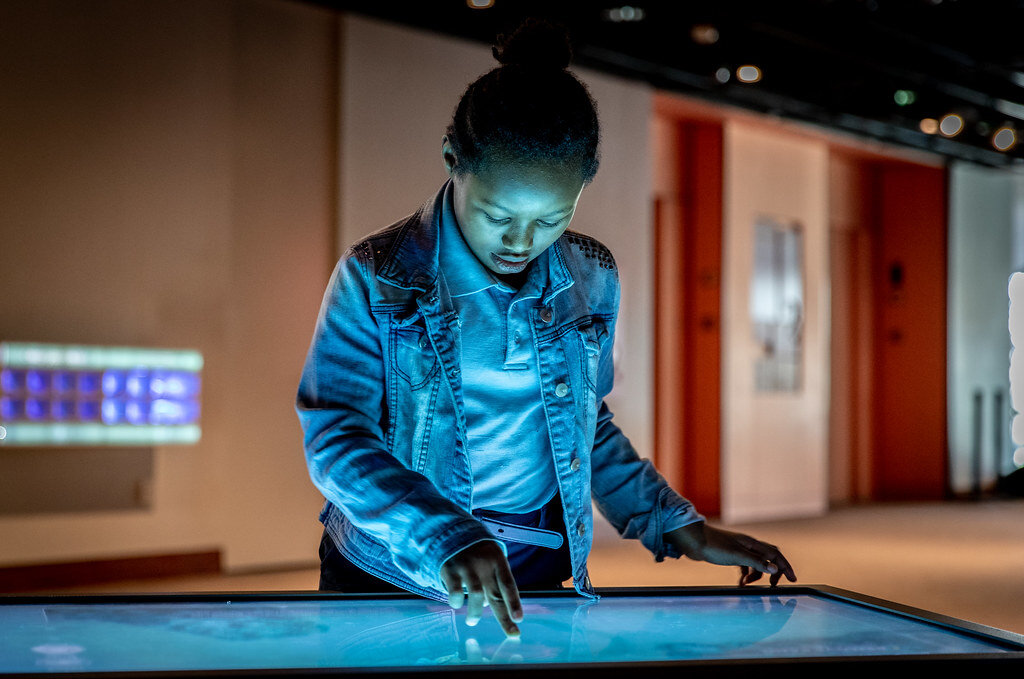
A student at the NMAAHC uses an interactive learning tool. U.S. Department of Education. CC BY 2.0
The National Museum of African American History and Culture (NMAAHC) is the only museum devoted exclusively to African American life, history and culture. In the words of Lonnie Bunch III, founding director of the NMAAHC, “The African American experience is the lens through which we understand what it is to be an American.” From slavery to the civil rights movement, the museum aims to preserve and document Black experiences in America. With the launch of the Many Lenses initiative, students will gain a greater understanding of African American history by studying museum artifacts and discussing cultural perspectives alongside scholars, curators and community educators. Through the Talking About Race program, the museum provides tools and guidance to empower people of color and inspire conversations about racial injustice.
3. Black Writers Museum - Philadelphia, Pennsylvania

Langston Hughes, a famous writer featured at the BWM, signs autographs. Washington Area Spark. CC BY-NC 2.0
Built in 1803, the historic Vernon House includes the Black Writers Museum (BWM), the first museum in the country to exhibit classic and contemporary Black literature. The BWM celebrates Black authors, like Langston Hughes and Zora Neale Hurston, who documented the resilience and resistance of African Americans throughout history. Supreme D. Dow, founder and executive director of the Black Writers Museum, noted, “There was a time in American history when Black people were denied the human right to read or write. But, because of the innate drive to satisfy the unquenchable thirst for self determination, our ancestors taught themselves how to read and write in righteous defiance of the law, and in the face of fatal repercussions.” Through books, newspapers, journals and magazines, the museum honors the Black narrators of history. The BWM also strives to inspire future African American authors with community activities like poetry readings, cultural arts festivals and book signings.
4. Tubman Museum - Macon, Georgia
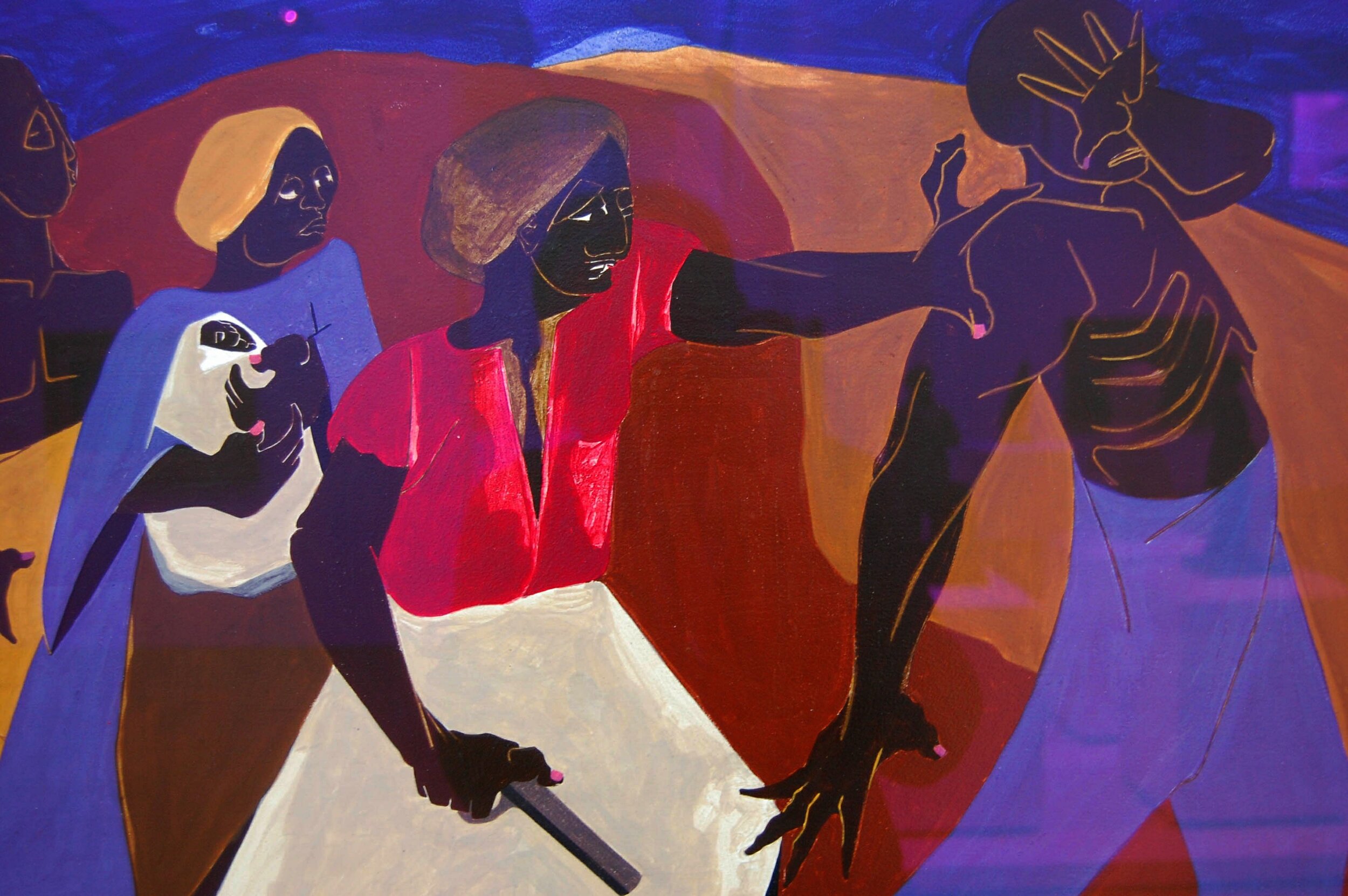
Artwork depicting Harriet Tubman on the Underground Railroad. UGArdener. CC BY-NC 2.0
Named after Harriet Tubman, the “Black Moses” who led hundreds of slaves to freedom, the Tubman Museum has become a key educational and cultural center for the entire American Southeast. Through artwork and artifacts, the main exhibits recount the struggles and triumphs of Tubman, a former slave, abolitionist and spy. The “From the Minds of African Americans” Gallery displays inventions from Black inventors, scientists and entrepreneurs, such as Madam C.J. Walker and George Washington Carver. The Tubman Museum also actively contributes to the Macon, Georgia, community. The Arts & History Outreach program takes Black history beyond museum walls. Local African American artists and teachers bring museum resources into the classroom, promoting hands-on learning. Due to COVID-19, the museum recently launched a distance learning program to provide people at home with a deeper understanding of the African American experience.
5. Museum of the African Diaspora - San Francisco, California
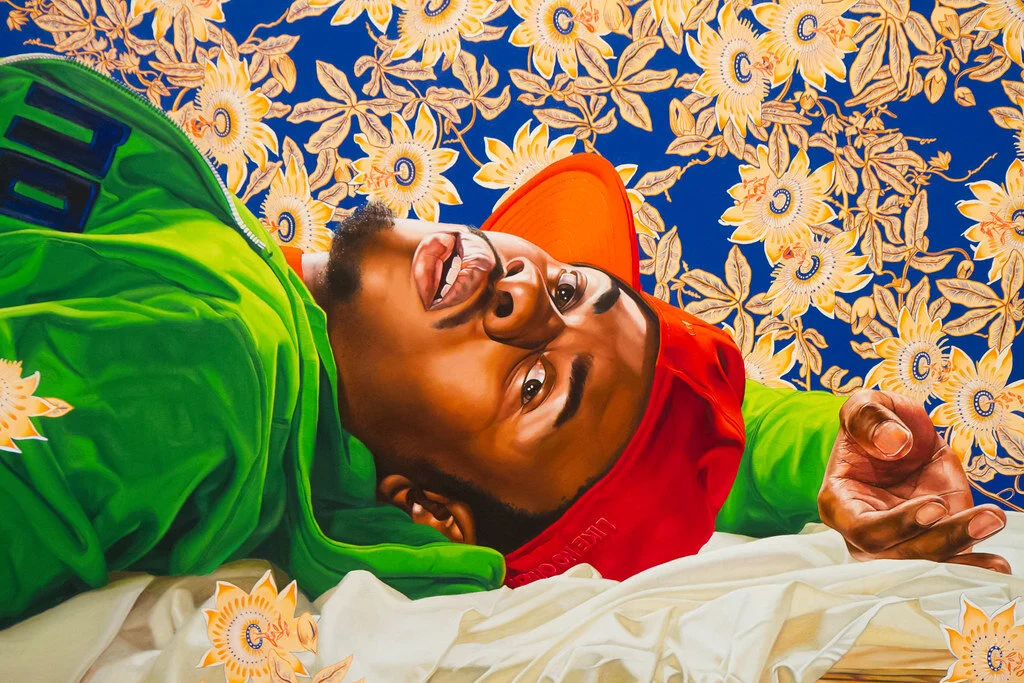
Contemporary art by Kehinde Wiley exhibited at the MoAD. Garret Ziegler. CC BY-NC-ND 2.0
The Museum of the African Diaspora (MoAD), a contemporary art museum, celebrates Black culture from the perspective of African diaspora. Focused exclusively on African migration throughout history, the museum presents artwork, photography and artifacts related to the themes of origin, movement, adaptation and transformation. Currently, MoAD is featuring various exhibitions from emerging artists that explore ancestral memory and Black visibility. As active members of the San Francisco community, museum curators offer various programs like public film screenings, artist talks and musical performances. In response to worldwide protests, the museum created a guide with resources to support Black Americans, as well as a video series that promotes community resilience. Monetta White, MoAD’s executive director, announced, “Now more than ever, we affirm that Museums are Not Neutral. As humanitarian educators and forums for conversation, museums are a space to confront some of the most uncomfortable conversations in human history.”
6. National Museum of African American Music - Nashville, Tennessee
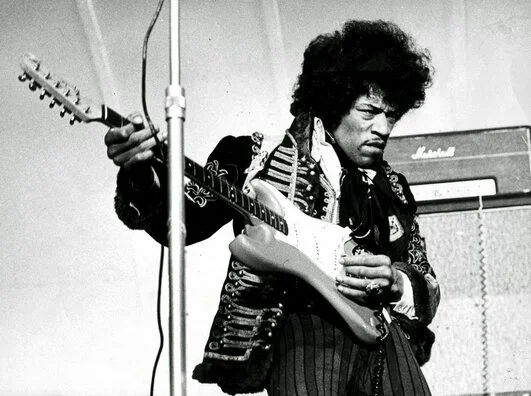
Jimi Hendrix, a featured musician at the NMAAM. Clausule. Public Domain.
Scheduled to open its doors for the first time on Sept. 5, the National Museum of African American Music (NMAAM) will be the first museum in the world to showcase African American influence on various genres of music, such as classical, country, jazz and hip-hop. NMAAM will integrate history and interactive technology to share music through the lens of Black Americans. “African American music has long been a reflection of American culture. Additionally, African American musicians often used their art as a ‘safe’ way to express the way they felt about the turbulent times our country faced,” said Kim Johnson, director of programs at the museum. NMAAM will also support the Nashville community through various outreach programs. From Nothing to Something explores the music that early African Americans created using tools like spoons, banjos, cigar box guitars and washtub basins. Children receive their own instruments, learning how simple resources influenced future music genres. Another program, Music Legends and Heroes, promotes leadership, teamwork and creativity in young adults. Students work together to produce a musical showcase in honor of Black musicians. In 2015, student guitarists paid tribute to Jimi Hendrix, the rock icon. “This opportunity gave them a real-life connection to an artist they had only seen in their textbooks or online,” said Hope Hall, librarian at the Nashville School of the Arts.
7. The Legacy Museum: From Enslavement to Mass Incarceration - Montgomery, Alabama
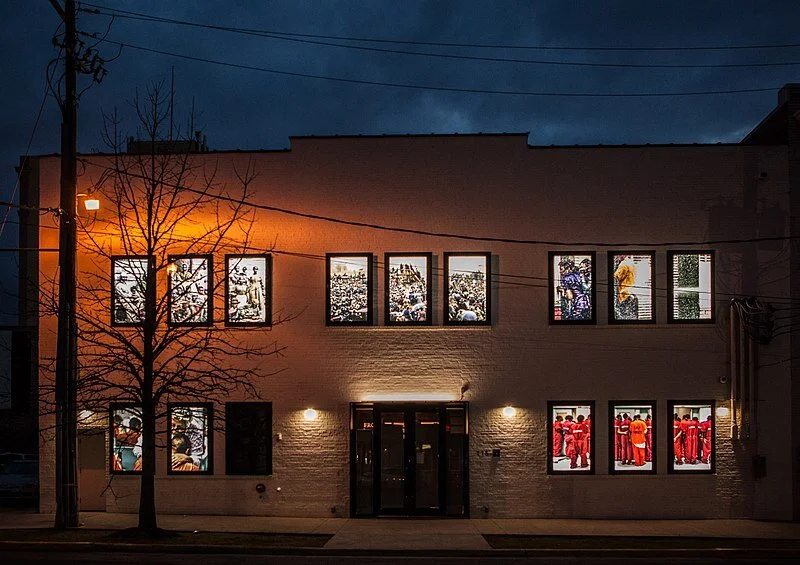
Exterior of the Legacy Museum. Sonia Kapadia. CC BY-SA 4.0
The Legacy Museum is located in a former slave auction warehouse, where thousands of Black people were trafficked during the domestic slave trade. The museum employs unique technology to portray the enslavement of African Americans, the evolution of racial terror lynchings, legalized racial segregation and racial hierarchy in America. Visitors encounter replicas of slave pens and hear first-person accounts of enslaved people, along with looking at photographs and videos from the Jim Crow laws, which segregated Black Americans until 1965. The Legacy Museum also explores contemporary issues of inequality, like mass incarceration and police violence. As part of the Equal Justice Initiative (EJI), the museum is committed to ending mass incarceration and excessive punishment in the United States, with proceeds going toward marginalized communities. “Our hope is that by telling the history of the African American experience in this country, we expose the narratives that have allowed us to tolerate suffering and injustice among people of color,” says Sia Sanneh, member of EJI.
8. African American Military History Museum - Hattiesburg, Mississippi

Circa 1942, the Tuskegee Airmen pose in front of their aircraft. Signaleer. Public Domain.
The African American Military History Museum educates the public about African American contributions to the United States’ military. During World War II, the building functioned as a segregated club for African American soldiers. Transformed in 2009, the museum now commemorates the courage and patriotism of Black soldiers, who have served in every American conflict since the Revolutionary War. Artifacts, photographs and medals tell the story of how African Americans overcame racial boundaries to serve their country. For instance, the World War II exhibit features the Tuskegee Airmen, the first African American soldiers to successfully enter the Army Air Corps.
9. National Voting Rights Museum and Institute - Selma, Alabama
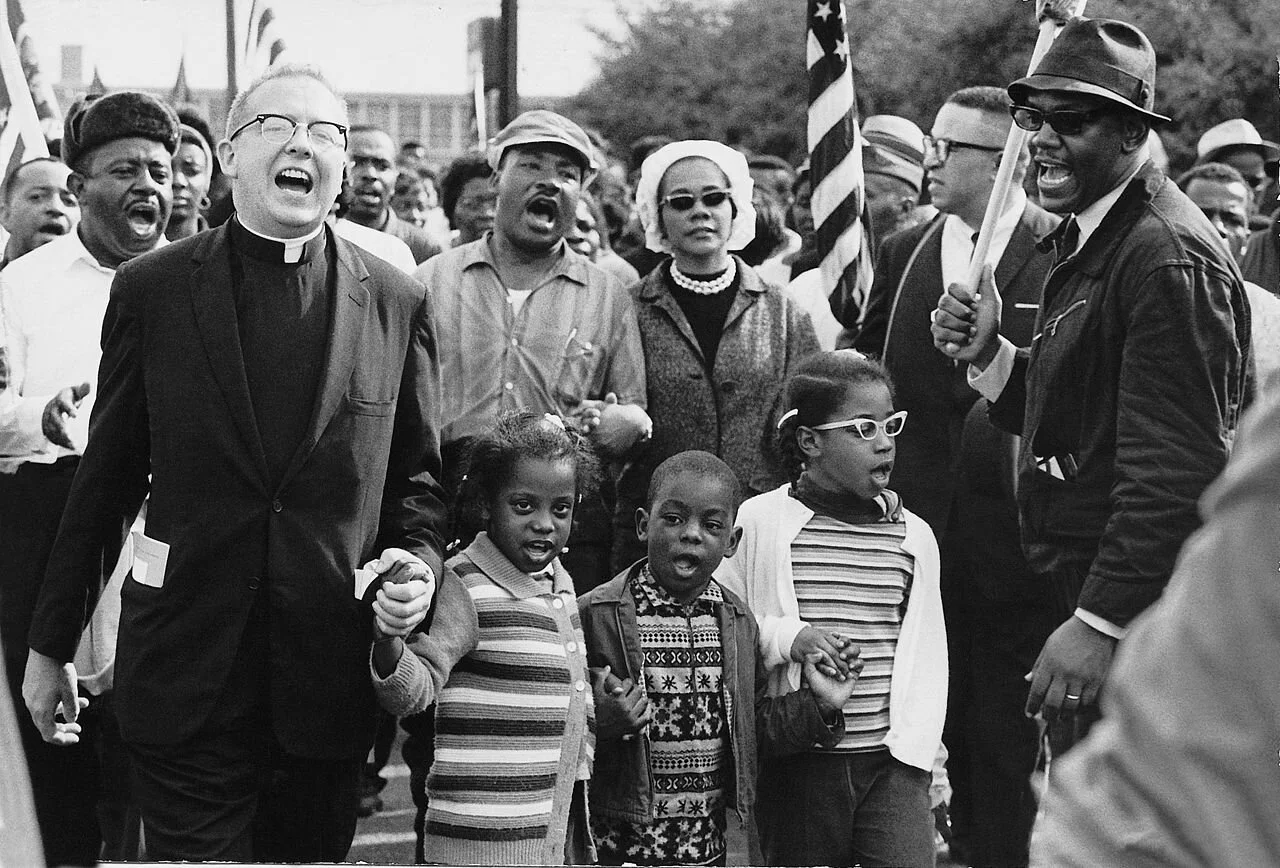
The 1965 march from Selma to Montgomery for the right to vote. Abernathy Family. Public Domain.
In the historic district of Selma, Alabama, the National Voting Rights Museum and Institute honors the movement to end voter discrimination. With memorabilia and documentation, the museum illustrates the struggle of Black Americans to obtain voting rights. In 1965, nearly 600 civil rights marchers crossed the Edmund Pettus Bridge, hoping to reach Montgomery. However, the day became known as “Bloody Sunday” as local law enforcement attacked peaceful protesters with clubs and tear gas. While the Voting Rights Act of 1965 outlawed voting practices that disenfranchised African Americans, many believe voter suppression still exists through strict photo ID laws for voters, a failure to provide bilingual ballots, and ex-felon disenfranchisement laws. By educating the public, the museum hopes to forever dismantle the barriers of voting in the United States.
10. National Underground Railroad Freedom Center - Cincinnati, Ohio
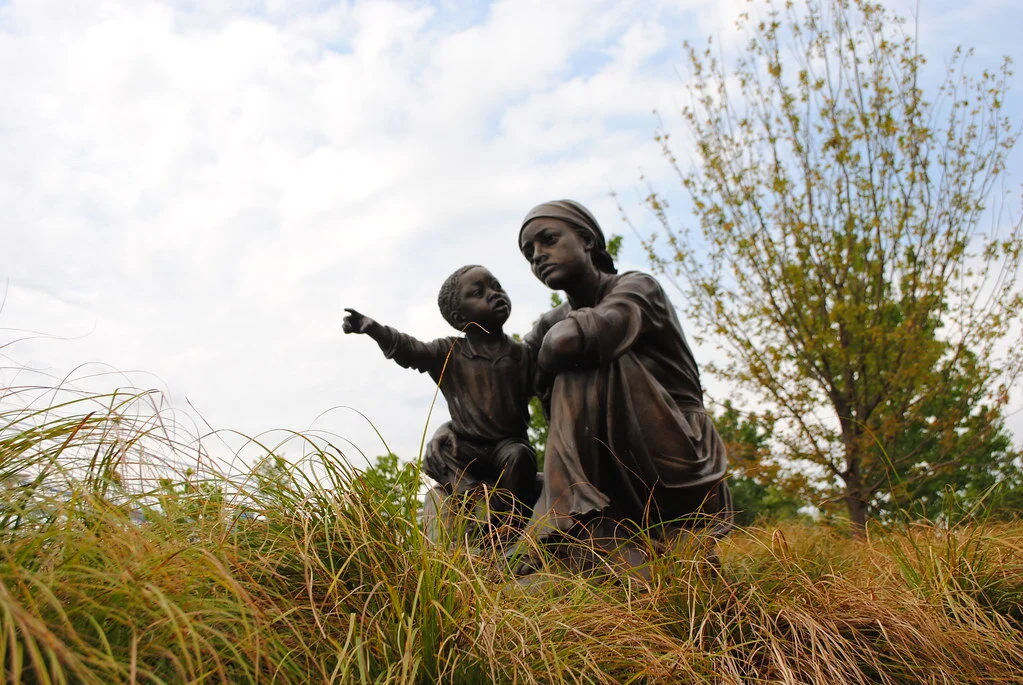
On the banks of the Ohio River, a statue depicts a mother and her child escaping slavery. Living-Learning Programs. CC BY-NC-ND 2.0
Near the Ohio River, where thousands of slaves traveled in search of freedom, the National Underground Railroad Freedom Center reveals the ongoing struggle for autonomy. From the historical vantage point of the Underground Railroad, the museum promotes the modern abolition of slavery. Due to widespread human trafficking, nearly 40 million people are currently enslaved around the world. As stated on the museum’s website, “Despite the triumphant prose of our American history books, slavery didn’t fully end 150 years ago. Today and throughout time, people around the world have struggled for their freedom. Yet, as forms of slavery evolve, so do the imaginations of those fighting for freedom.” Through artifacts, photographs and first-person accounts, the museum introduces the men and women who have resisted slavery. “Invisible: Slavery Today” is the world's first permanent exhibition on the subjects of modern-day slavery and human trafficking, challenging and inspiring visitors to promote freedom today.
Shannon Moran
is a Journalism major at the University of Georgia, minoring in English and Spanish. As a fluent Spanish speaker, she is passionate about languages, cultural immersion, and human rights activism. She has visited seven countries and thirty states and hopes to continue traveling the world in pursuit of compelling stories.
Zacatecas: a Vibrant Community in the Heart of Mexico
Travel deep enough into the Chihuahuan Desert and you’ll find yourself in Zacatecas. The Mexican state, known for its mining industry and colonial architecture, is often overlooked by travelers in favor of more popular cities such as Guadalajara, Mexico City and Acapulco.
Read More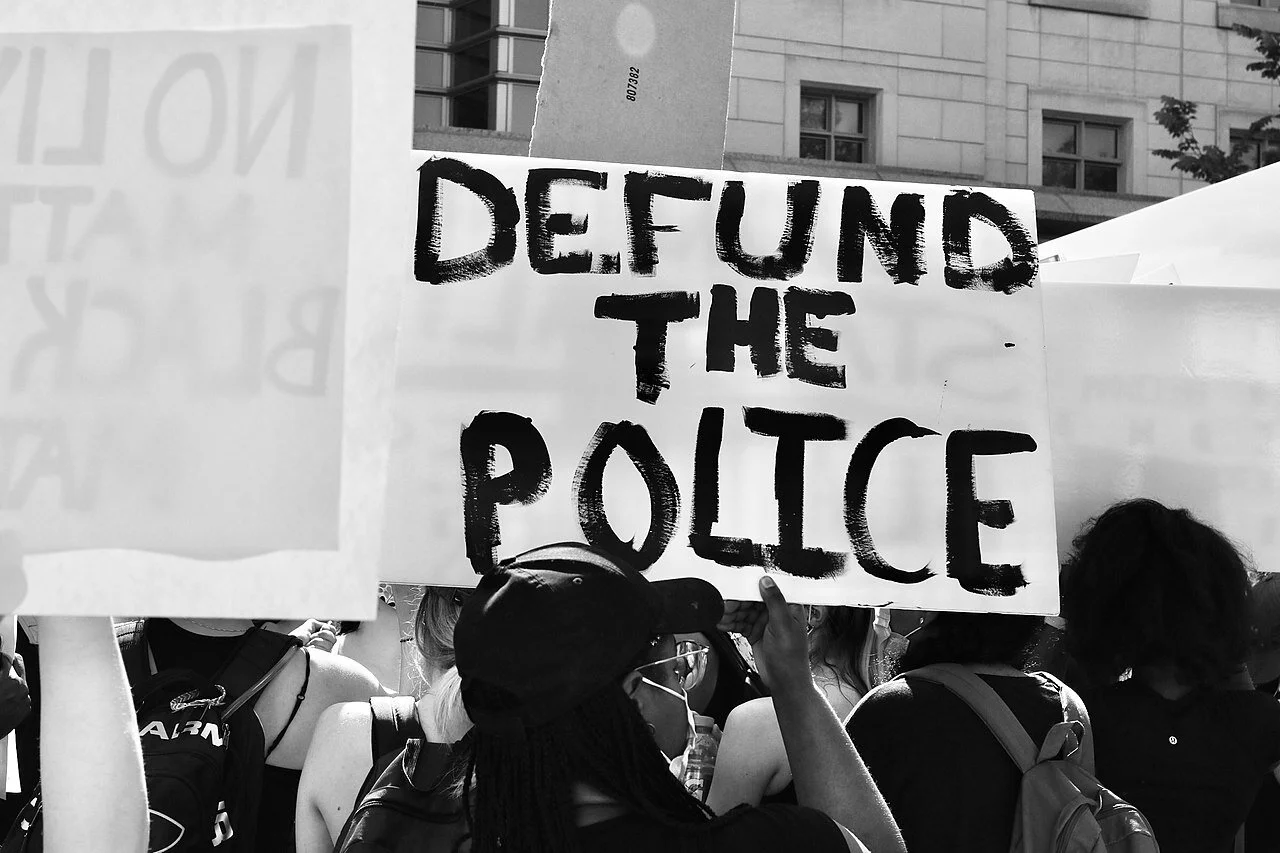
A protester holds a “Defund the Police” sign. Taymaz Valley. CC BY 2.0
Defunding the Police: What it Means and How it Works
Amid protests against racism and police brutality, Minneapolis has pledged to dismantle its police department and restructure its system of public safety. To further promote reform in the city of George Floyd’s murder, Minneapolis Mayor Jacob Frey announced, “We need a new compact with police, one that centers around compassion and accountability, one that recognizes that the way things have been done for decades and decades is not acceptable. We need change."
Cities across the United States have joined this movement to defund and downsize their police forces. Police departments currently oversee an array of services, including monitoring the homeless, resolving domestic disputes, receiving mental health calls, disciplining students, and addressing minor complaints like a counterfeit $20 bill, the accusation that led to George Floyd’s death. Many activists urge funds to be reallocated towards neglected social services, such as mental health, education and housing. By assisting underprivileged and overpoliced neighborhoods, these programs would alleviate the underlying causes of crime. Thus, defunding the police means a “divest and invest model: divesting money from local and state police budgets and reinvesting it into communities.”
According to the American Civil Liberties Union (ACLU), 14 million students attend schools with police officers but no counselors, nurses, psychologists or social workers. With few behavioral resources, teachers and principals turn to law enforcement to discipline children. This results in an increased criminalization of minors, especially marginalized students of color. Black students are three times as likely to be arrested as their white counterparts, and black students with disabilities account for 12% of school arrests. The ACLU also found that roughly 25% of school police had no prior experience working with youth. Police are trained to arrest and detain, not to oversee the social and emotional well-being of minors. Schools with health and youth professionals see improved attendance, lower rates of disciplinary incidents and higher rates of graduation.
Rather than funding police officers, Chicago Public Schools hires counselors from Alternatives, a multicultural youth development organization. Alternatives operates as a support system for more than 3,000 students in Chicago. Counselors promote “restorative justice,” teaching students leadership, responsibility, community-building and respect. Last year, in schools with Alternatives, reports of misconduct dropped by 31% and out-of-school suspensions dropped by 50%, showing that police may not be necessary in schools.

A protester in Minneapolis holds a sign that explains defunding police. Featous. CC BY 2.0
Criminalization of drugs also drives violent encounters between police and citizens, like the tragic shooting of Breonna Taylor. Since the “War on Drugs” began in the 1970s, police have targeted black neighborhoods, implementing stop-and-frisk protocols to subject thousands of “suspicious” minorities to searches. Higher arrest and incarceration rates in these communities reflect oversurveillance, not increased drug use. In the 2015 National Survey on Drug Use and Health, about 17 million white people and 4 million black people reported using an illicit drug within the last month. However, black Americans are six times more likely to be incarcerated for drugs than whites. Prosecutors are also twice as likely to issue a mandatory minimum sentence for black people than for white people charged with the same offense. Those selling small amounts of drugs to support their addiction may face decades of jail time. Since prisons rarely offer addiction treatment, released convicts often endure a cycle of drug abuse and arrests.
Oregon is at the forefront of decriminalizing drugs. In November, voters will review Initiative Petition 44, a measure to reduce possession of illegal drugs to a $100 citation. This citation could be waived if the person agrees to a health assessment at a drug recovery center. Drug trafficking and possession of large quantities of drugs would still result in criminal penalties. The initiative also includes $57 million a year for funding drug treatment programs. “We are trying to move policy towards treatment rather than prison beds,” former state senator Jackie Winters told the Washington Post in 2017 ahead of a similar bill. “We can't continue on the path of building more prisons when often the underlying root cause of the crime is substance use.”
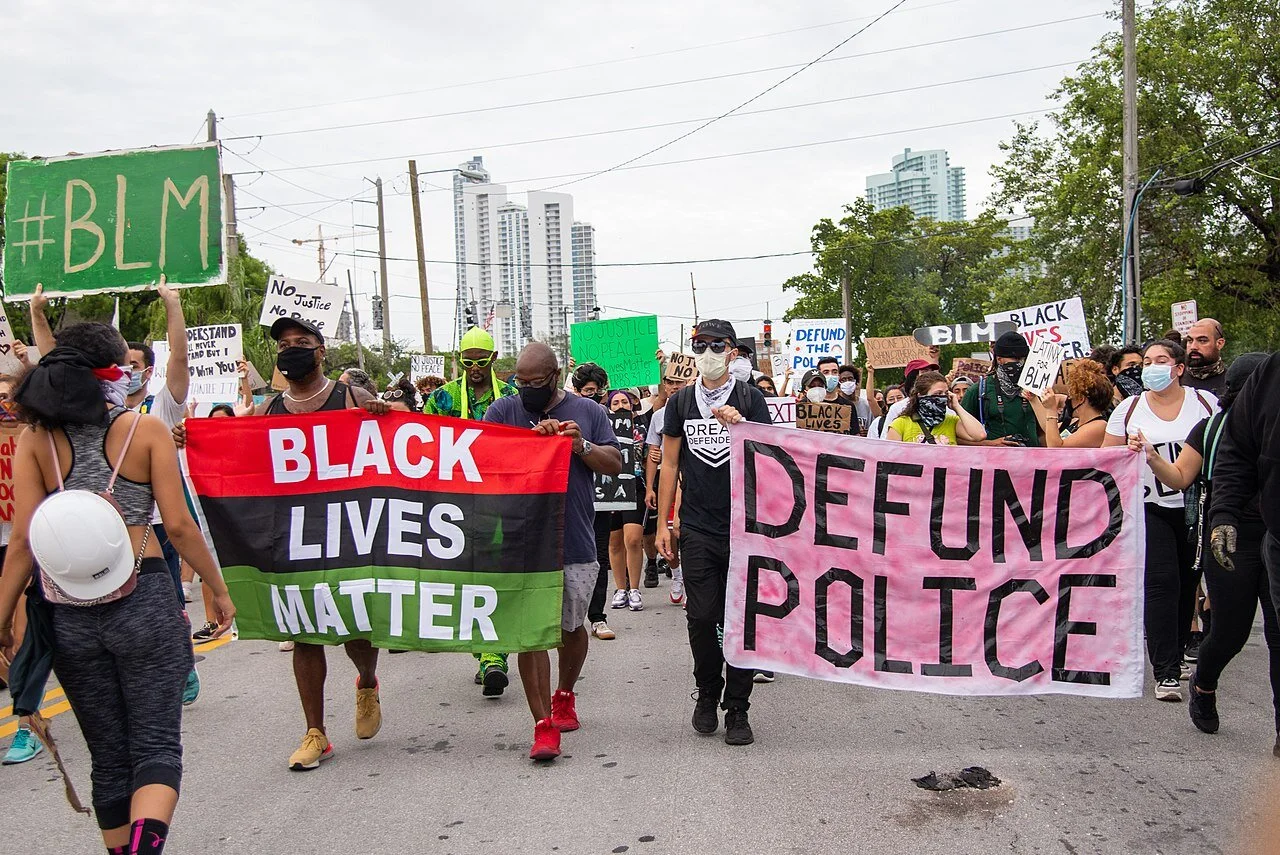
George Floyd protest in Miami. Mike Shaheen. CC BY 2.0
Every year, two million Americans with mental illnesses will be jailed. People living with mental illnesses are also 16 times more likely to die as a result of a police encounter compared to the general public. In 2017, one in four killed by police suffered from mental illness. These statistics prove that people experiencing a mental health crisis are more likely to encounter police than medical professionals. Although officers may receive crisis intervention training, police continually shoot and kill schizophrenic and mentally disabled people.
To prevent these senseless killings, cities have diverted funding to mental health programs. Austin, Texas, recently revamped its public safety department by adding millions of dollars to its mental health budget. Now, 911 operators inquire whether the caller needs police, fire or mental health services. The Crisis Intervention Team (CIT) refers to a group of law enforcement officers specifically trained in mental health crises. CIT diverts patients from the criminal justice system, instead connecting them with mental health services. Eugene, Oregon, also launched a service called CAHOOTS (Crisis Assistance Helping Out on the Streets) which deploys a medic and a mental health crisis worker to emergency calls. CAHOOTS avoids the need for law enforcement by providing immediate stabilization to urgent medical and psychological needs.
While defunding the police may seem inconceivable, programs and initiatives across the country are already similarly preventing crime. By reducing the reliance on police, community-driven solutions can de-escalate situations that result in arrests and police violence. Globally, the U.S. has the highest rate of police brutality and the largest prison population, with black people constituting 34% of the total 6.8 million inmates. One in 13 black Americans are now denied the right to vote due to laws that disenfranchise people with felony convictions. To afford such mass incarceration, the U.S. spends an estimated $100 billion on their police forces annually and $80 billion on incarceration. Yet, social services remain underfunded. It’s evident that people of color experience discrimination at every stage of the criminal justice system. With police brutality and incarceration on the rise, activists urge the United States government to finally reimagine policing in America.
Shannon Moran
Shannon is a Journalism major at the University of Georgia, minoring in English and Spanish. As a fluent Spanish speaker, she is passionate about languages, cultural immersion, and human rights activism. She has visited seven countries and thirty states and hopes to continue traveling the world in pursuit of compelling stories.
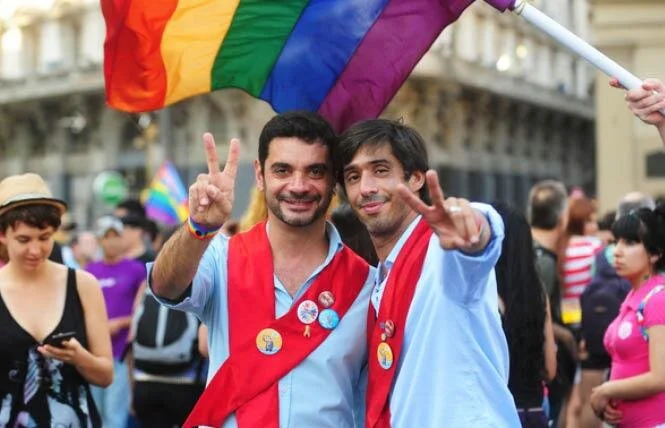
March for marriage equality in Costa Rica. Courtesy Gay Community News. CC 2.0
Costa Rica Becomes the First Central American Country to Legalize Same-Sex Marriage
On May 26, 2020, same-sex marriage was legalized in Costa Rica, ending years of discrimination and struggle to get the same rights as heterosexuals.
In 2018, Costa Rica’s Supreme Court ruled same-sex marraige to be constitutional. To enforce the ruling, the country’s Legislative Assembly had 18 months to either enact it or have the decision overturned. There was even a failed attempt by 20 politicians to get an 18-month extension to further delay marriage equality. Two years later, though, marriage equality became legalized with the first marriages officiated in May of 2020. At midnight on May 26, same-sex marriage was legalized. To celebrate, marriages were also televised across the country due to the COVID-19 pandemic postponing many in-person events.
Marriage equality was a key campaign promise by President Carlos Alvarado Quesada. According to Quesada, “Together, under the same flag, we will build a better nation.” His 2018 presidential campaign highlighted Costa Rica’s commitment to bettering human rights and social actions. Quesada’s presidency helped the nomination of the first openly-gay congressman, Enrique Sanchez, who emphasized that this has been a long battle for activists across the nation.
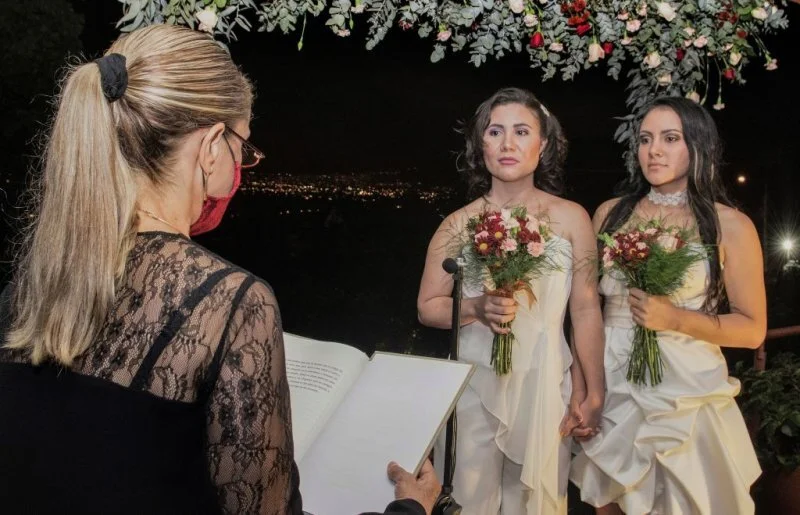
Alexandra Quirós and Dunia Araya become first homosexual couple to be married at midnight on May 26. Ezequiel Becerra. CC 2.0
Sanchez was correct in this statement. Costa Rica has pushed for equality for homosexuals since 2016. It first advocated for equal protections and rights to privacy for LGBTQ+ individuals under the American Convention on Human Rights (ACHR) with assistance from the Inter-American Court of Human Rights. Through the convention, all countries within the Americas were pushed to recognize gay marriage. It was then decided in 2017 that all rights of heterosexuals and couples must be applied to every Costa Rican.
This was not an easy feat. Many across the country protested against this decision. For instance, 20 politicians tried to get another 18 months to delay the ruling but ultimately failed. There also has been strong pushback from religious groups that deny that homosexuality has grown considerably in Costa Rica. Catholicism is recognized as the official religion of the state, so lawmakers such as Eduardo Cruickshank felt the need to “defend the family as established and pleasing our Heavenly Father.” Up until now, marriages of same-sex couples were not recognized by the state and would automatically be annulled.
A research study by Sin Violencia LGBTI shows that more than 1,300 members of the LGBTQ+ community have been killed over the past five years across Latin America and the Caribbean. This group has become the leading coalition that pushes for governments to take action to better protect the LGBTQ+ community.
This historical achievement makes Costa Rica the first country in Central America and the 28th U.N. member state to recognize same-sex marriage and to legalize marriage equality. It is the sixth Latin American country to do so, following Argentina, Ecuador, Brazil, Colombia, Uruguay and parts of Mexico. The Costa Rican government hopes this will not only encourage change in Central America but throughout the entire world.
Eva Ashbaugh
is a Political Science and Gender, Sexuality, and Women's Studies double major at the University of Pittsburgh. As a political science major concentrating on International Relations, she is passionate about human rights, foreign policy, and fighting for equality. She hopes to one day travel and help educate people to make the world a better place.