
• Travel Features
  • Global Action
  • Take A Trip
  • Travel Guides
    • Podcast
    • Courses
    • Bookshop
  • About
  • Sign Up
Menu

CATALYST PLANET

  • Travel Features
  • Global Action
  • Take A Trip
  • Travel Guides
  • Discover
    • Podcast
    • Courses
    • Bookshop
  • About
  • Sign Up

Empty hospital room. Daan Stevens. Unsplash.

Ableism in the Age of the Coronavirus Pandemic

July 16, 2020

What is Ableism?

“Ableism is the discrimination of and social prejudice against people with disabilities based on the belief that typical abilities are superior.” Ableism rears its ugly head in our society every day through large discriminatory practices such as the eugenics movement as well as minor ableism that is utilized when assuming someone’s disability must be visible for it to be a disability. On a day-to-day basis people with disabilities (or disabled people as some in the community prefer to use identity-first language) endure ableism and now during the COVID-19 pandemic they are facing ableist rationing practices.

Triage and It’s Ableist Undercurrents

Disability activists have been speaking up about how many of the guidelines and criteria for triage during the COVID-19 pandemic are proving to be ableist. As Elliot Kukla puts it, “This is not an unusual triage decision to make in wartime or pandemics; our lives are considered, quite literally, more disposable.” Various states are under fire for their ableist triaging policies, with many of them receiving federal complaints from a coalition of national disability advocates including the Center for Public Representation, The Arc of the United States, Bazelon Center for Mental Health Law, Autistic Self Advocacy Network, Disability Rights Education and Defense Fund, and University of Michigan law professor Samuel Bagenstos. In Alabama, the state’s policy (which has since been retracted following retaliation from disability advocates) conceded that “individuals may be excluded under Tier 1 with … functional domains include cognitive, neurological, and psychosocial. For example, persons with severe mental retardation, advanced dementia or severe traumatic brain injury may be poor candidates for ventilator support.” In New York, where the virus hit the hardest in the U.S., a doctor made the decision to take a non-COVID and terminally ill patient off a ventilator to save another patient with COVID. This disregards the fact that many disabled people are already living with the use of a ventilator. 

Statements and Solutions from the Disability Community

In an op-ed from The New York Times, disability rights activist and author Ari Ne’eman says that, “While many disabled people need ongoing medical care, many doctors view life with certain disabilities as unworthy of living. Disabled people who require ongoing ventilator care and other forms of expensive lifelong assistance are used to being asked by medical professionals if they would rather abandon life-sustaining treatment — often with the clear implication that ‘yes’ is the right answer.” These experiences are not an anomaly among the disabled community, as disability activist Alice Wong argues that, “Eugenics isn’t a relic from World War II; it’s alive today, embedded in our culture, policies, and practices. It is imperative that experts and decision-makers include and collaborate with communities disproportionately impacted by systemic medical racism, ageism and ableism, among other biases.” 

Others such as Joseph Stramondo, a philosophy professor at San Diego State University, are focusing on creating a paradigm shift in the way professional bioethicists respond to the coronavirus pandemic. He advises against using deeply biased quality of life judgment due to there being “a significant body of empirical evidence showing that there is a substantial gap between a disabled person’s self-assessment and how their quality of life is judged by folks that have never experienced their disability.” He furthers the discourse by highlighting Shelley Tremain, a feminist philosopher who studies disabilities and hopes to push the conversation away from just fixing triaging protocols. “The primary object of our analysis seems to sanction the idea that these hard choices are inevitabilities,” Tremain writes of triage practices. Instead, bioethicists “should be putting our energy behind efforts to reduce the need to make such choices at all.” 

Hanna Ditinsky

is a sophomore at the University of Massachusetts Amherst and is majoring in English and minoring in Economics. She was born and raised in New York City and is passionate about human rights and the future of progressivism.



Tags Coronavirus, COVID-19, prejudice, disability, disability justice, eugenics, triage, medical care, implicit bias, bias, bioethics, Human Rights, Global Health, Travel, International Affairs
Comment

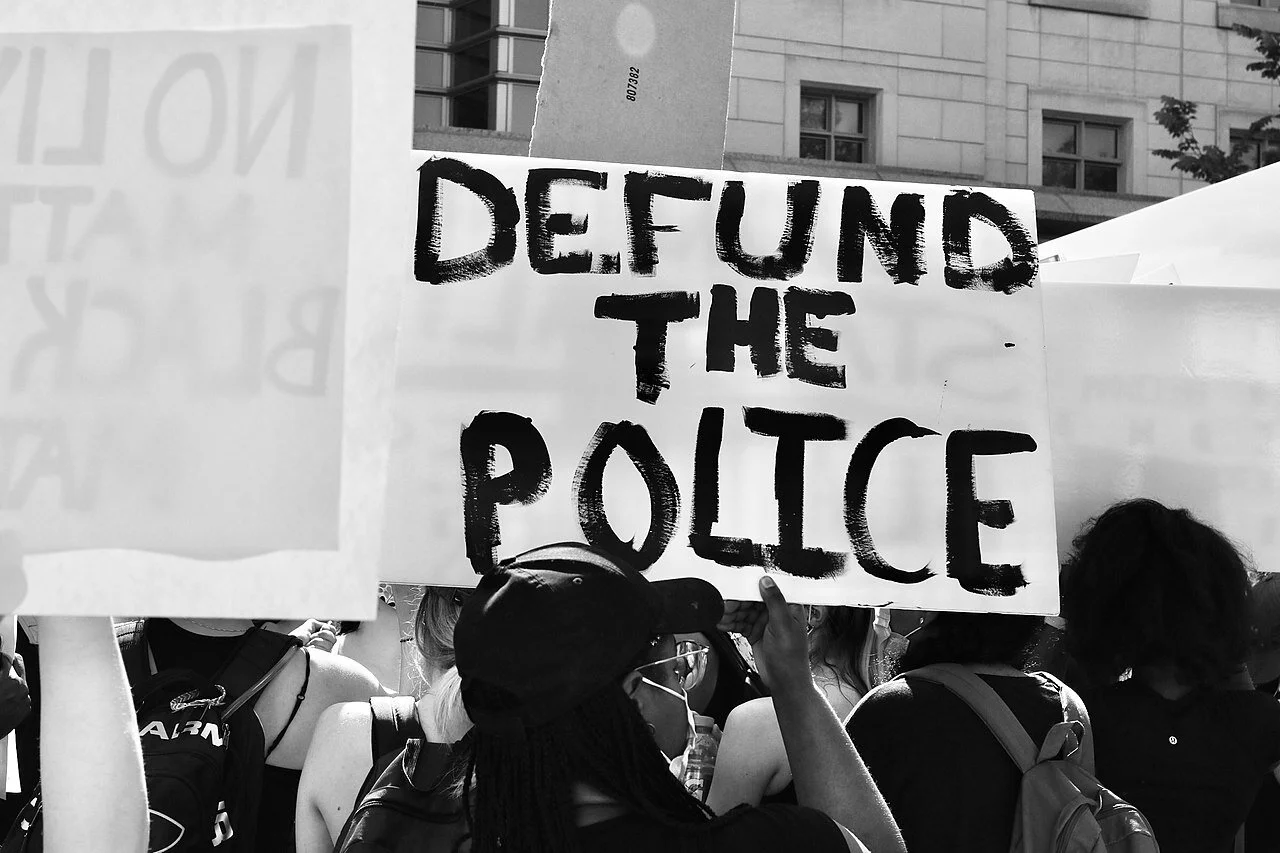
A protester holds a “Defund the Police” sign. Taymaz Valley. CC BY 2.0

Defunding the Police: What it Means and How it Works 

June 17, 2020

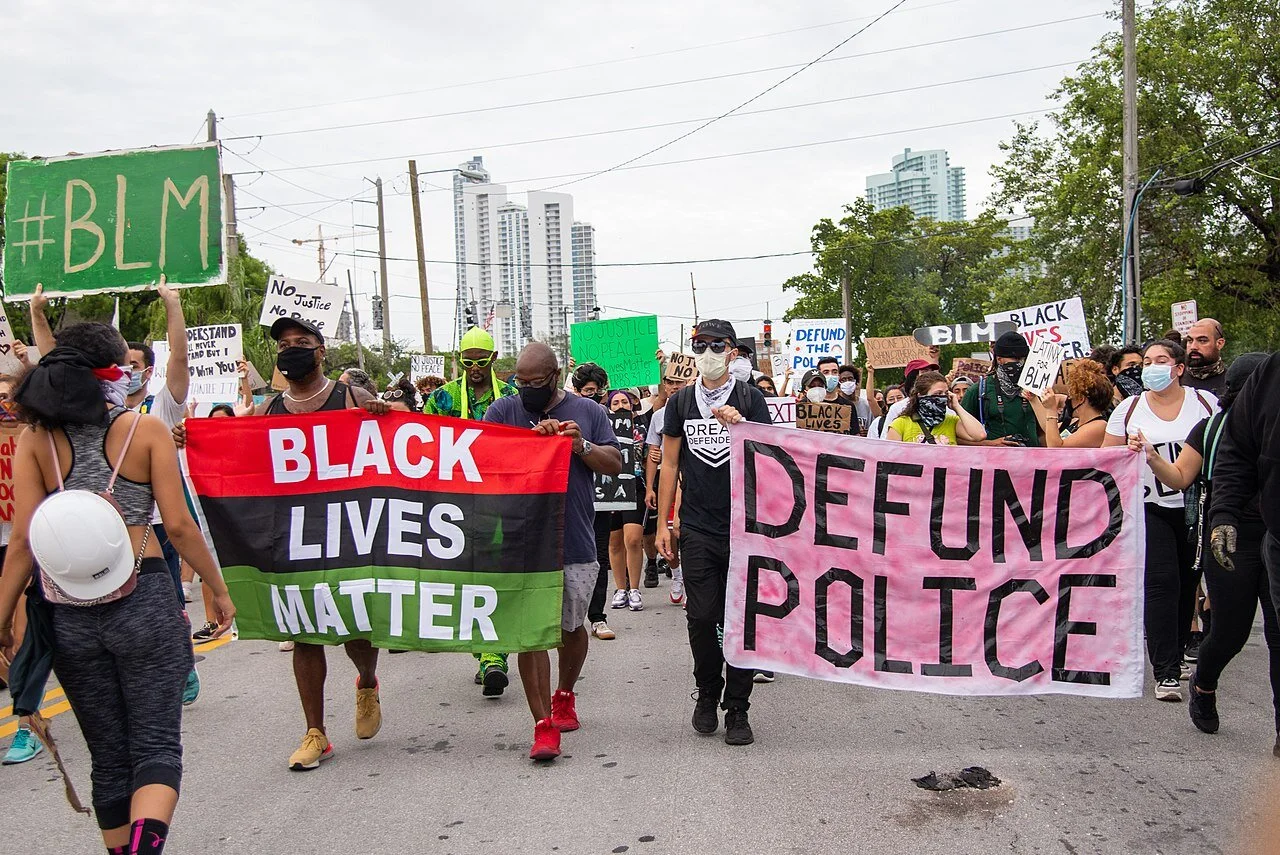
Amid protests against racism and police brutality, Minneapolis has pledged to dismantle its police department and restructure its system of public safety. To further promote reform in the city of George Floyd’s murder, Minneapolis Mayor Jacob Frey announced, “We need a new compact with police, one that centers around compassion and accountability, one that recognizes that the way things have been done for decades and decades is not acceptable. We need change." 

Cities across the United States have joined this movement to defund and downsize their police forces. Police departments currently oversee an array of services, including monitoring the homeless, resolving domestic disputes, receiving mental health calls, disciplining students, and addressing minor complaints like a counterfeit $20 bill, the accusation that led to George Floyd’s death. Many activists urge funds to be reallocated towards neglected social services, such as mental health, education and housing. By assisting underprivileged and overpoliced neighborhoods, these programs would alleviate the underlying causes of crime. Thus, defunding the police means a “divest and invest model: divesting money from local and state police budgets and reinvesting it into communities.” 

According to the American Civil Liberties Union (ACLU), 14 million students attend schools with police officers but no counselors, nurses, psychologists or social workers. With few behavioral resources, teachers and principals turn to law enforcement to discipline children. This results in an increased criminalization of minors, especially marginalized students of color. Black students are three times as likely to be arrested as their white counterparts, and black students with disabilities account for 12% of school arrests. The ACLU also found that roughly 25% of school police had no prior experience working with youth. Police are trained to arrest and detain, not to oversee the social and emotional well-being of minors. Schools with health and youth professionals see improved attendance, lower rates of disciplinary incidents and higher rates of graduation. 

Rather than funding police officers, Chicago Public Schools hires counselors from Alternatives, a multicultural youth development organization. Alternatives operates as a support system for more than 3,000 students in Chicago. Counselors promote “restorative justice,” teaching students leadership, responsibility, community-building and respect. Last year, in schools with Alternatives, reports of misconduct dropped by 31% and out-of-school suspensions dropped by 50%, showing that police may not be necessary in schools. 

A protester in Minneapolis holds a sign that explains defunding police. Featous. CC BY 2.0

Criminalization of drugs also drives violent encounters between police and citizens, like the tragic shooting of Breonna Taylor. Since the “War on Drugs” began in the 1970s, police have targeted black neighborhoods, implementing stop-and-frisk protocols to subject thousands of “suspicious” minorities to searches. Higher arrest and incarceration rates in these communities reflect oversurveillance, not increased drug use. In the 2015 National Survey on Drug Use and Health, about 17 million white people and 4 million black people reported using an illicit drug within the last month. However, black Americans are six times more likely to be incarcerated for drugs than whites. Prosecutors are also twice as likely to issue a mandatory minimum sentence for black people than for white people charged with the same offense. Those selling small amounts of drugs to support their addiction may face decades of jail time. Since prisons rarely offer addiction treatment, released convicts often endure a cycle of drug abuse and arrests. 

Oregon is at the forefront of decriminalizing drugs. In November, voters will review Initiative Petition 44, a measure to reduce possession of illegal drugs to a $100 citation. This citation could be waived if the person agrees to a health assessment at a drug recovery center. Drug trafficking and possession of large quantities of drugs would still result in criminal penalties. The initiative also includes $57 million a year for funding drug treatment programs. “We are trying to move policy towards treatment rather than prison beds,” former state senator Jackie Winters told the Washington Post in 2017 ahead of a similar bill. “We can't continue on the path of building more prisons when often the underlying root cause of the crime is substance use.”   

George Floyd protest in Miami. Mike Shaheen. CC BY 2.0

Every year, two million Americans with mental illnesses will be jailed. People living with mental illnesses are also 16 times more likely to die as a result of a police encounter compared to the general public. In 2017, one in four killed by police suffered from mental illness. These statistics prove that people experiencing a mental health crisis are more likely to encounter police than medical professionals. Although officers may receive crisis intervention training, police continually shoot and kill schizophrenic and mentally disabled people. 

To prevent these senseless killings, cities have diverted funding to mental health programs. Austin, Texas, recently revamped its public safety department by adding millions of dollars to its mental health budget. Now, 911 operators inquire whether the caller needs police, fire or mental health services. The Crisis Intervention Team (CIT) refers to a group of law enforcement officers specifically trained in mental health crises. CIT diverts patients from the criminal justice system, instead connecting them with mental health services. Eugene, Oregon, also launched a service called CAHOOTS (Crisis Assistance Helping Out on the Streets) which deploys a medic and a mental health crisis worker to emergency calls. CAHOOTS avoids the need for law enforcement by providing immediate stabilization to urgent medical and psychological needs. 

While defunding the police may seem inconceivable, programs and initiatives across the country are already similarly preventing crime. By reducing the reliance on police, community-driven solutions can de-escalate situations that result in arrests and police violence. Globally, the U.S. has the highest rate of police brutality and the largest prison population, with black people constituting 34% of the total 6.8 million inmates. One in 13 black Americans are now denied the right to vote due to laws that disenfranchise people with felony convictions. To afford such mass incarceration, the U.S. spends an estimated $100 billion on their police forces annually and $80 billion on incarceration. Yet, social services remain underfunded. It’s evident that people of color experience discrimination at every stage of the criminal justice system. With police brutality and incarceration on the rise, activists urge the United States government to finally reimagine policing in America.


Shannon Moran

Shannon is a Journalism major at the University of Georgia, minoring in English and Spanish. As a fluent Spanish speaker, she is passionate about languages, cultural immersion, and human rights activism. She has visited seven countries and thirty states and hopes to continue traveling the world in pursuit of compelling stories.

In News and Social Action, North America, USA, Human Rights Tags defund the police, institutionalized racism, George Floyd, POC, people of color, law enforcement, Chicago, decriminalized, disability justice, incarceration rates, #BLM, Global Health, USA, Community Development, North America
Comment

Also check out...

Featured
Vietnam’s Floating Markets Are Disappearing
The Supernatural Role of Masks in Nigeria’s Yoruba Tribal Culture
Opening the World to Deaf Travelers with Lily Yu

Featured trips

Featured
Offer NGO Support While Visiting Quito
Experience Life as a Mongolian Nomad
Help Grow Organic Costa Rican Coffee

Sign up for the CATALYST newsletter

Sign up for our newsletter to get the scoop on international travel, global social impact insights, our latest podcast releases, and more from around the world, all delivered right to your inbox!

We respect your privacy.

Thank you!
Newsletter Sign Up | Advertise | Careers + Internships | Privacy Policy | Submissions | Contact Us

Copyright © 2025, MISSION MEDIA LLC. All rights reserved.