
From NYC to Johannesburg to Taiwan, here are 10 Pride events — both virtual and in-person — to celebrate the LGBTQ+ community worldwide.
Read MoreAfrica Faces Higher Food Insecurity Due to COVID-19
Africa experiences food insecurity due to poverty, conflict, climate change and a lack of access to food. When COVID-19 hit, it made all of these matters much worse.

A man inspects failed corn crops in Mauritania. Oxfam International. CC BY-NC-ND 2.0.
Although made significantly more severe by COVID-19, food insecurity has been a serious concern worldwide for decades, mostly caused by economic shocks, climate change and conflict. According to the U.N. Food and Agriculture Organization, 239 million people in sub-Saharan Africa were undernourished as of 2018.
The COVID-19 pandemic has heightened food insecurity across the world by reducing incomes and disrupting food supply chains. The United Nations warns that about three dozen countries—Ethiopia, Nigeria and South Sudan included—could experience major famines this year, pushing 130 million more people to starvation. East Africa’s biggest locust invasion in 70 years combined with the impact of COVID-19 threatens to drive 25 million people into hunger. Research from a series of high-frequency phone surveys shows that over 105 million adults have been affected by some degree of food insecurity across Uganda, Nigeria, Malawi, Ethiopia and Burkina Faso following the onset of the pandemic. Devastated food sources and billions of dollars in crop damage may push residents over the edge.
In addition, preventive measures like border closures, lockdowns and curfews intended to slow the spread of COVID-19 are disrupting supply chains that struggled to keep markets well-stocked even before the pandemic. At least 60% of the African population is dependent on agriculture for their livelihoods and access to food, and disruptions to this system caused by COVID-19 are threatening this group’s food security.
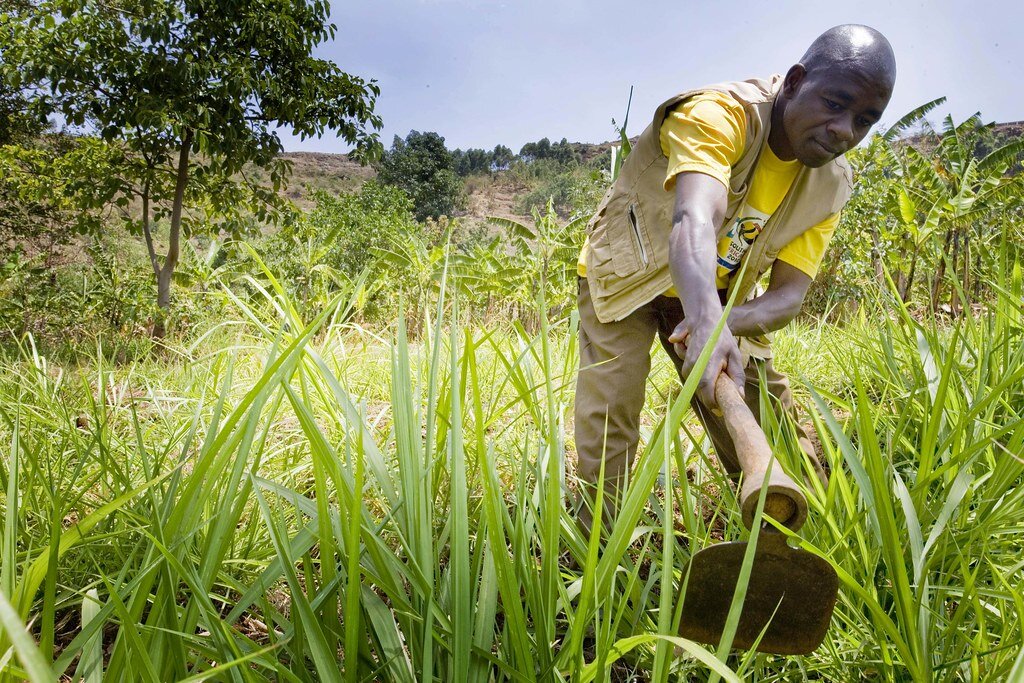
A man tending to his crops in Uganda. Department of Foreign Affairs and Trade. CC BY 2.0.
Most African countries rely heavily on food imports; between 2016 and 2018, Africa imported about 85% of its food from outside the continent. Heavy reliance on world markets is extremely detrimental to food security, and export bans imposed by major food exporters due to COVID-19 made the region even more vulnerable. If trade blockages persist, agricultural production in Africa could decrease by between 2.6% and 7%.
African countries are also reporting shortages and price spikes for some domestic food crops, such as millet, sorghum and maize. In addition, the disruption of marketing and trade activities, combined with panic-buying during the pandemic, intensified food price increases and caused both rural and urban consumers to lose purchasing power.
As a direct result of rising food prices, the availability and affordability of nutritious food has plummeted. Nutrient-rich foods like eggs, fruit and vegetables are 10 times more expensive than staple foods like rice or wheat in sub-Saharan Africa, so vulnerable families were forced to buy cheaper and less nutritious food to survive, adding to a rise in malnutrition and obesity.
In addition, school closures in South Africa have stopped a national feeding program that provides nutritious meals to 9 million poorer children.
Restrictions imposed by governments—lockdowns, travel bans and social distancing measures included—have increased the risk of food insecurity, and many low-income households have lost their livelihoods and ability to access markets.
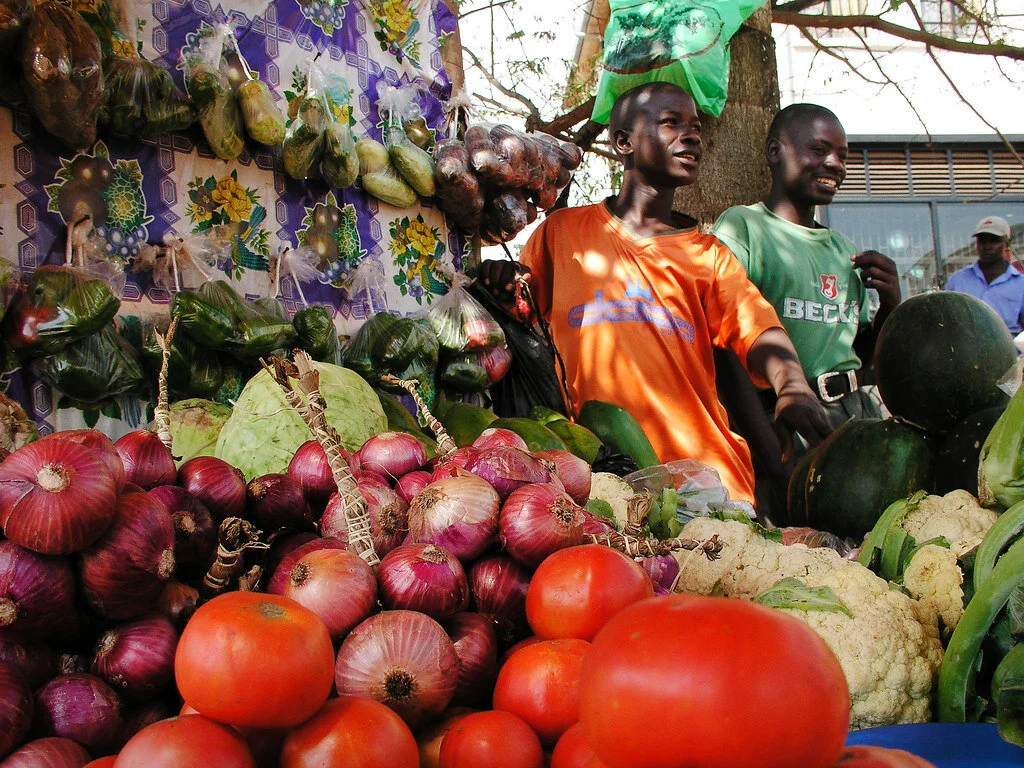
A fruit and vegetable stand in Kampala, Uganda. World Bank Photo Collection. CC BY-NC-ND 2.0.
COVID-19 has clearly had a detrimental effect on food security in Africa, with 43% of households that were not severely food insecure in 2018 estimated to be severely food insecure as of June 2020.
However, there are ways to help, and many government programs have already started to alleviate some of the hunger in Africa. In Chad, a government project is providing food kits, establishing cereal banks and distributing seeds for future harvests so that households can survive the rest of the pandemic. In East Africa, the U.S. Agency for International Development’s Feed the Future program is supporting measures to keep food and agricultural inputs moving across borders and from ports to inland countries.
Although many efforts to help Africa are already in place, it is imperative that African countries take the necessary steps to build resilient, climate-friendly and competitive food systems so that they can survive COVID-19 and any future challenges.
To Get Involved:
Donating to Oxfam South Africa or Action Against Hunger will help to provide essential care to hungry families in Africa. Additionally, the U.N. World Food Program uses donations to deliver lifesaving food to those in need, wherever they may be located.
Another great way to help is by giving to The Hunger Project, which uses donations to implement programs that mobilize rural communities to achieve sustainable progress against hunger. These are just a few of the many ways to get involved to help end the crisis. To learn more, visit the United Nations’ website on hunger in Africa.
Isabelle Durso
Isabelle is an undergraduate student at Boston University currently on campus in Boston. She is double majoring in Journalism and Film & Television, and she is interested in being a travel writer and writing human-interest stories around the world. Isabelle loves to explore and experience new cultures, and she hopes to share other people's stories through her writing. In the future, she intends to keep writing journalistic articles as well as creative screenplays.
Pakistani Women Continue to Push for Societal Change
On March 8, Pakistani women’s rights activists took to the country’s streets for the Aurat March, which celebrates International Women’s Day and advocates for better treatment. The organizers of the protest immediately experienced backlash from the Taliban.
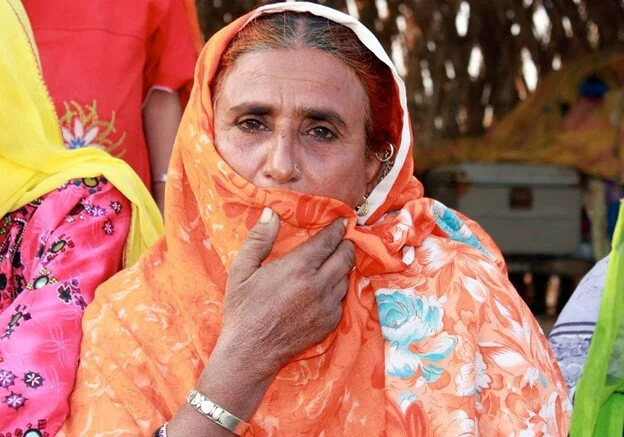
Pakistani woman sitting with friends. Vicki Francis. CC BY 2.0
Pakistani women, despite the presence of the Taliban in the country, still organized and marched on International Women’s Day. The Aurat March included pushing for accessible health care, basic economic rights and equal opportunities for women. After the marches, the Taliban posted a forbidding statement: “We want to send a message to those organizations who are actively spreading obscenity and vulgarity in our beloved Pakistan. Fix your ways.” The Taliban accused participants in the Aurat March of insulting Islam. The group falsified photos and videos, signifying that protesters held the French flag.
The social media organizer for the Aurat March in Karachi responded to the Taliban’s accusations of “obscenity and vulgarity” on Twitter: “Their attempts do not and will not deter us. We will continue to organize and speak out against the violence we are subject to. We will continue to build political power and fight back.”
Pakistan was ranked the world’s fourth worst-performing country when measuring women’s well-being and empowerment in their homes, communities and societies, according to the 2020 Women, Peace and Security Index. At least 28% of women aged 15 to 49 have experienced physical violence, according to the Pakistan Demographic and Health Survey. In the same survey, 40% of men agreed that it was acceptable to beat one’s wife under certain circumstances. With no national data for comparison, the scale of the violence against Pakistan’s women is difficult to gauge with other countries.
The fight for women’s rights in Pakistan is not new. In 1983, over 200 women marched on the Lahore High Court in protest against former Gen. Zia ul-Haq’s discriminatory laws. In 1979, Zia enacted the Hudood Ordinance, which required four male witnesses for an accusation of rape. Under this same ordinance, women who filed accusations of rape without without the proper witnesses could be sent to jail for adultery.
In December 2020, President Arif Alvi signed into law an anti-rape ordinance that approved the speedy trial of rape cases with women and children as victims. The ordinance also include the creation of a countrywide registry of sex offenders. The law came months after a rise in social outcry across Pakistan because of a motorway gang-rape incident.
Inequalities are still seen between men and women in Pakistan through lower literacy rates, lesser wages and a smaller representation in government. Pakistan ranked 151 out of 153 countries on global gender parity, according to the World Economic Forum’s Global Gender Gap Report 2020.
Despite the adversities facing women in Pakistan, they continue to organize and push for sweeping changes. In the words of Aurat March Karachi’s social media organizer, “Merely existing is a radical act of resistance.”
Kyla Denisevich
Kyla is an upcoming senior at Boston University, and is majoring in Journalism with a minor in Anthropology. She writes articles for the Daily Free Press at BU and a local paper called Urban Media Arts. Pursuing journalism is her passion, and she aims create well researched multimedia stories which emphasize under-recognized narratives to encourage productive, educated conversation.
Senegal’s Artisanal Fishing Sector Faces a Rising Tide of Troubles
As vaccine rollouts speed up and restrictions loosen, some countries are beginning to piece back together life from before the COVID-19 pandemic. Other countries, like Senegal, have seen just the opposite.
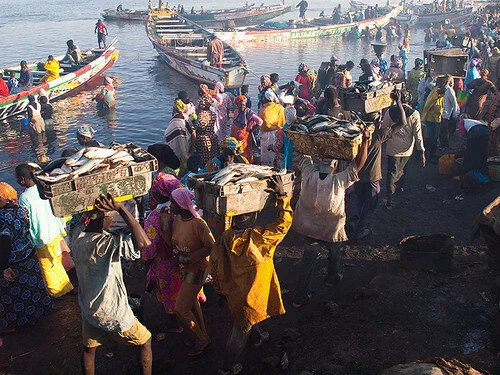
Fish market in Senegal. Evgeni Zotov. CC BY-NC-ND 2.0.
For many, a job is just a job—a way to keep food on the table and to pay the bills. For others, the wealth brought from working is deeply cultural, offering up a steady stream of personal meaning supplemented by financial gain. In the West African nation of Senegal, artisanal fishermen and women take great pride in their heritage, with the women standing center stage.
Senegal is a relatively poor nation, with 30% of households grappling with food insecurity. The fishing industry plays a substantial role in Senegalese society: over 600,000 people are employed by the fishing industry and half of the protein consumed by the country’s residents comes from fish.
The women of Senegal’s coastal fishing villages sustain a matriarchy built on the fishing industry. The women process by hand loads of fish brought in by fishermen. They sun-dry and smoke the fish before selling them in local markets and to foreign fishing companies. Their work done by these women upholds their families, with one income from a fish processor able to feed up to eight family members.
The Senegalese fishing women possess profound resilience; the COVID-19 pandemic has diminished their income to nearly nothing, which only increased their determination and creativity. By pooling money and taking hold of other resources, the Senegalese women have discovered a way to push through the pandemic.
However, Senegal’s artisanal fishing industry faces other major hurdles besides the COVID-19 pandemic. The rising sea levels brought on by climate change have ravaged many families’ coastal homes, with many unable to build new houses on their income. Additionally, rising sea levels have forced the men to venture much farther off the coast to haul in the same catch. This proved particularly difficult with Senegal’s COVID-19 curfew, which limited how far the men could travel out to sea. The women who process the fish have experienced decreased production as well, with many processing sites closed or greatly limited in capacity.
Lastly, larger industries have threatened the livelihood of this comparatively small field. Nearby construction threatens Senegal’s waters with pollution, while major fishing companies easily outproduce the women selling their catch. In addition, the government permits other countries to fish in local waters within regulation, but failure to effectively enforce these rules has greatly hurt the artisanal fishing industry.
Although there seems to be one hurdle after the next, the fishermen and women of Senegal have proven again their resilience. The country’s fishing women, in particular, stand not just as hopeful examples for their neighbors, but as a sign of strength for the entire world.
RELATED CONTENT:
VIDEO: Feel The Sounds of Senegal
Ella Nguyen
Ella is an undergraduate student at Vassar College pursuing a degree in Hispanic Studies. She wants to assist in the field of immigration law and hopes to utilize Spanish in her future projects. In her free time she enjoys cooking, writing poetry, and learning about cosmetics.
The Pandemic’s Impact On Homelessness in America
In 2020, 580,466 people in the United States experienced homelessness on any given night, 2.2% more than in 2019. COVID-19 is likely a major factor in this increase.
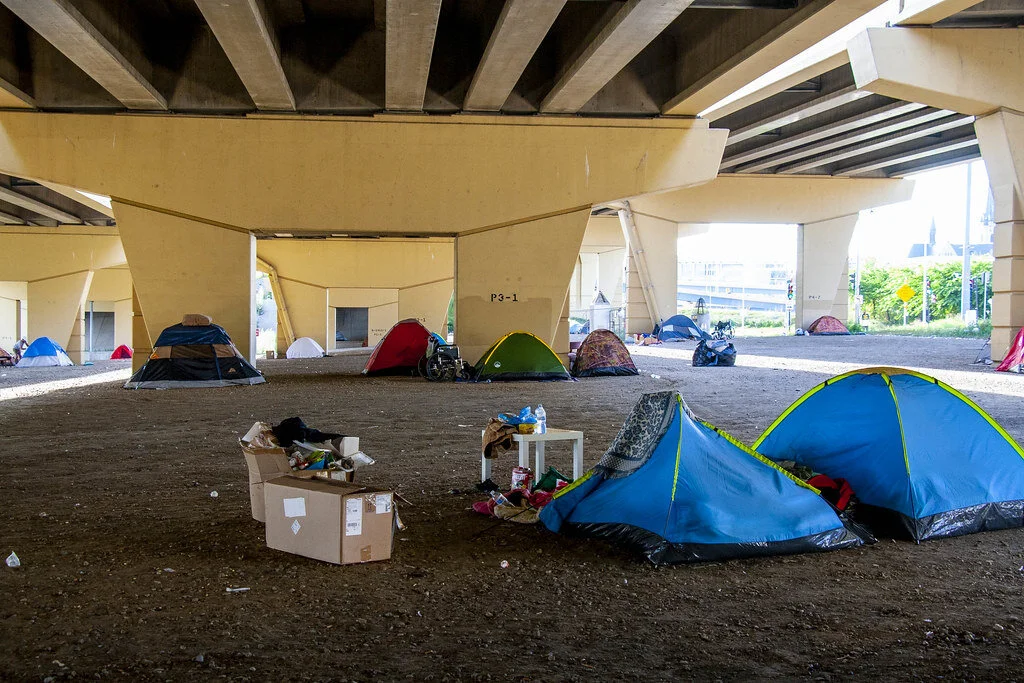
In 2019, prior to the COVID-19 pandemic, over half a million people in the United States were experiencing homelessness each night. The U.S. Department of Housing and Urban Development reports that in 2020, this number increased by 2.2%. Though 2.2% may seem like a small figure, it amounts to an additional 12,751 people experiencing homelessness on any single night.
Numerous people lost their jobs due to the COVID-19 pandemic and struggled to find new ones in the midst of a global crisis. In April 2020, the U.S. unemployment rate peaked at 14.8%, the highest percentage since unemployment data began being recorded in 1948. By December, the unemployment rate had dropped to a still-elevated 6.7%. These record unemployment rates almost certainly contributed to the rise in homelessness. Data collected by the Congressional Research Service shows that in April 2020, unemployment rates in every state and the District of Columbia had reached levels greater than their highest rates during the Great Recession.
In addition to increasing the overall number of people experiencing homelessness, the pandemic contributed to worsening living conditions for unhoused people. There is more than one type of homelessness; the four main categories are chronic, episodic, transitional and hidden. These four categories are separated by how long a person has been experiencing homelessness and by what types of resources are available to them.
People experiencing chronic homelessness are defined as having been continually homeless for a year or more or having had four or more episodes of homelessness in the last three years. Rates of people experiencing chronic homelessness increased 15% from 2019, with 2020 being the first year since 2011 that the number passed 100,000 people.
There are also two other subcategories of homelessness: sheltered and unsheltered. Sheltered refers to those who are residing in a publicly or privately owned shelter that provides temporary housing, like an emergency shelter, transitional housing or even a motel. Unsheltered refers to those residing in a place not designed for human habitation, like on the street or in cars, abandoned buildings or other makeshift shelters.
People experiencing chronic homelessness are statistically more likely to fall into the unsheltered category. Rates of unsheltered homelessness also increased from 2019, by 7%. This rise in unsheltered homelessness is likely a direct result of the COVID-19 pandemic, which led shelters around the country to limit their capacity in order to allow for social distancing in an attempt to reduce the spread of the virus. The measure, though reasonable in the context of the pandemic, left many unsheltered.
Other support systems for people experiencing homelessness were limited by the pandemic as well, especially in the early months. Amid national lockdown orders, charities that offered food and warmth to the homeless shut down, and many volunteers at places like soup kitchens were afraid to work due to the risk of contracting COVID-19. Time magazine reports on this phenomenon of a social safety net shutdown in West Virginia, but similar things happened nationwide. Most indoor spaces were shut down, and unsheltered people living under a shelter-in-place order had nowhere to go.
Cities around the country reported increasing death rates among their homeless populations. Some of the deaths resulted from COVID-19 itself, as many people experiencing homelessness have preexisting conditions that make them fall into the high-risk category for the disease. The lack of social support systems also contributed to the high death rates, as people had nowhere consistent to turn in times of freezing cold, or even when looking for basic resources like food.
The pandemic has drawn attention to the severity of the homelessness crisis in the United States and to the necessity of social support systems, as well as programs designed to get people into housing. Some such programs, like California’s Project Roomkey and Project Homekey, were developed during the pandemic. However, government funding for these programs is often limited. There is hope that in 2021, governments will finally invest the money necessary to work toward ending homelessness. President Joe Biden has signed an executive order directing that the Federal Emergency Management Agency should fully reimburse what states spend to house people in non-congregate shelters through September 2021.
To Get Involved:
To learn more about America’s homelessness crisis and how to solve it, visit the website of the National Alliance to End Homelessness here.
To find resources to support a homeless shelter in your area, visit the Homeless Shelter Directory here.
Rachel Lynch
Rachel is a student at Sarah Lawrence College in Bronxville, NY currently taking a semester off. She plans to study Writing and Child Development. Rachel loves to travel and is inspired by the places she’s been and everywhere she wants to go. She hopes to educate people on social justice issues and the history and culture of travel destinations through her writing.
How Not to Volunteer Abroad: An Interview with Author Pippa Biddle
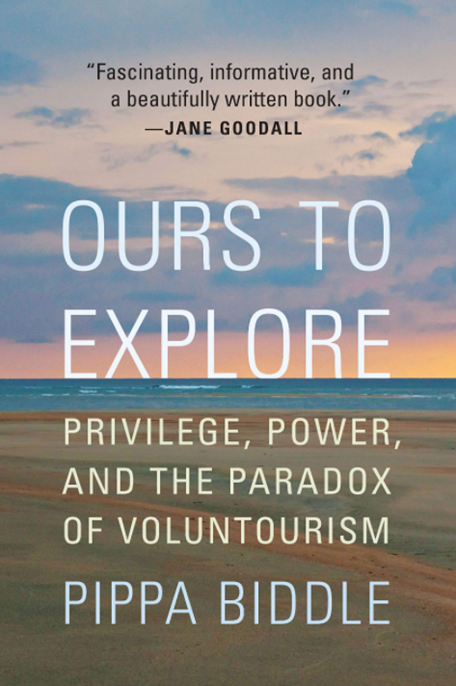
In her new book, “Ours to Explore: Privilege, Power, and the Paradox of Voluntourism,” Pippa Biddle asks travelers and volunteers to look at the ways their actions affect the global community.

Biddle sat down with CATALYST Sarah Leidich to discuss her latest book and offer her take on voluntourism.
Q: What inspired you to write this book?
A: For me, so much of working on the book was trying to call people into a conversation and call out the industry and not the individual. With voluntourism, so much of the critique has been focused on specific people.
It actually wasn’t my idea. I wrote a piece called “The Problems of the White Girls” that went viral and a literary agent reached out who suggested that there was a book in it. I spent about a year working with them on a proposal before I realized the book they wanted me to write was not the book I was interested in writing. They really wanted me to write a how-to-do-it-better, and I didn’t want anyone to do it. So why would I take an entire book to do that? But the process of working with them really showed me that there was a book in this—that there was enough material, enough research, enough interest to have a book.
Q: Before we talk about avoiding it or preventing it, can you define contemporary colonialism? How does it function today?
A: To me, contemporary colonialism is the continuation of colonial ideologies and empires into today. The reason that I use the phrase “contemporary colonialism” as opposed to neocolonialism is because oftentimes, the way we think about colonialism today is informed by and yet somehow held separate from the colonialism of the past and empire-building of the past, specifically empire-building done by Western European and North American powers. In North America, primarily the United States. To me, that differentiation between past and present is completely false.
It actually allows us to de-implicate ourselves, and by ourselves I mean people who are residents of powerful nations, beneficiaries of power dynamics, and travelers and voluntourists. Contemporary colonialism is simply a different phrase that refers to colonialism that I hope better amplifies the fact that there is that unbroken thread between past colonialism and present colonialism—it’s just modified itself for the present-day environment.
Q: Is it possible for volunteers to travel abroad without engaging in contemporary colonialism?
A: I don’t think it’s possible for anyone to travel anywhere without engaging in contemporary colonialism, but engaging with something isn’t in and of itself necessarily problematic. However, you have to recognize it to begin to address the problems with it when it is problematic. Just the fact that some people can travel for leisure and some cannot is an engagement with contemporary colonialism. The fact that I can, pre-pandemic and probably still right now, go to Tanzania and arrive and get a tourist visa for probably $100 and be in the door, but someone from Tanzania cannot reciprocate that action in the United States, is an example of contemporary colonialism, regardless of whether I’m going there to be a volunteer or go on a safari.
Q: What steps can travelers, especially privileged travelers, take to avoid acts that perpetuate the harmful side effects of travel?
A: I think that one of the biggest things we need to ask ourselves before booking a trip somewhere is “why are we going there?” I think a lot of travelers don’t take that moment to ask themselves “why do I need to go to this place?” And once they answer that question, to make decisions that fulfill their “why” in the most respectful way possible, which sometimes means not going. For example, if I were to say I really want to go to Ecuador because I’m really fascinated by Ecuadorian cuisine, then if I were to go to Ecuador, I should be focused on eating at restaurants that are owned and run and staffed by Ecuadorians. This sounds like an obvious thing, but most tourists don’t do that extra step. They go somewhere and eat at the places that are easy, that have the menu in English, that the resort has on their short list. The resort is probably foreign-owned, so the restaurants are probably owned by people associated with the resort.
The whole idea that travel should be something leisurely is really off-base. Travel is not a leisure activity. Travel is an activity that demands conscious engagement and thoughtful consideration, and as long as we treat it as something that is in the same realm as a relaxing day on the beach in your hometown—if you happen to live by the beach—we’re going to be doing it in ways that are disrespectful.
Q: You write about the tension between communities sometimes believing that voluntourists and missionaries are actually doing good work and then the harmful reality of this kind of travel, volunteering and missionary work. Is there a way to reconcile the relationship between intention, perception and outcome?
A: In the book I use the term “pathological altruism.” Pathological altruism really speaks to this tension, because it is the inability to see that something you are doing with the intention of the impact being positive is having a negative impact, and through that inability to see it, insisting on continuing to do it regardless. I think that the intention to do good is a very good core intention and stripping back to that core intention is a really positive thing, but the idea that intention should be immediately followed by action is misguided.
I used to work for the Jane Goodall Institute doing educational programming, and one of the things that we brought into classrooms a lot was a thing we called the “Knowledge-Compassion-Action Cycle.” The Knowledge-Compassion-Action Cycle is basically the idea that when we learn about something, we begin to care about it, and once we care about it, we are able to act in the best possible way, and through action you will learn more knowledge. I think a lot of people are skipping that middle part of true, deep knowledge and care. For example, with children in orphanages, if people who chose to volunteer in an orphanage cared about child welfare, and they’re jumping to the idea of volunteering at orphanage, that shows me that they haven’t gone through the knowledge procession and they haven’t gone through the compassion process, because there is no way you go from child welfare to orphanage if you’ve actually gone through that process. It’s trying to integrate more time and education and slowness into what we care about so that we have that time for knowledge and compassion to develop before we choose to take action.
Q: So if knowledge is developed and compassion is developed, and travelers are moving through the communities with intent, are there changes to the voluntourism industry you would like to see?
A: Something that makes me nervous about suggesting changes to the voluntourism industry is that it could be misconstrued as me saying that if the industry were to make those changes, it would be OK. That is not what I’m saying. However, there are things that can be done to mitigate the harm as we slowly dismantle voluntourism. The first thing, hands down, is to stop working with kids. Unfortunately, a lot of the trip providers that have stopped working with orphanages have simply pivoted and now take volunteers to work with youth groups, so the only thing that’s changed is that it’s not a residential environment, but so many of the same issues still exist. Honestly, if voluntourism stops working with kids, a fair amount of the market for voluntourism will dry up because the number one thing people want to do on these trips is work with kids. If that is not an option, the industry will shrink.
Parallel to that, I am adamant that prospective voluntourists deeply engage in the education around what they’re taking part in. One of the things I write about in the book is the “EdGE” platform by Omprakash, which is a nonprofit. EdGE is their learning platform, and EdGE is not perfect and Omprakash is not perfect, and Willy Oppenheim, the founder, is the first to admit that. But it provides trip providers and educational institutions that are facilitating voluntourism, as well as individual travelers that are going on their own, with a curriculum that attempts to educate them on some issues like White privilege and the White savior complex prior to them getting on the ground, so they go through the learning curve that I had years after going before they even go. Does that mean they will not be part of the White savior complex and White privilege? No, but it is a really important step.
Q: How would you encourage people who are looking to be philanthropic or looking to help? What would you say to them?
A: Think global, act local. Learn about global issues, engage in global conversations, learn about places, travel as a tourist who is respectful and thoughtful, but you have to remember that even the opportunity to travel is a privilege. If we have this idea that the only way to help is by going somewhere else, we are discounting billions of people on this planet who simply don’t have access to that opportunity. So think global, and then when you choose to act, look locally.
Sarah Leidich
Whatever it is, the way you tell your story online can make all the difference.
Sarah is currently an English and Film major at Barnard College of Columbia University. Sarah is inspired by global art in every form, and hopes to explore the intersection of activism, art, and storytelling through her writing.
Video: Devastating Impacts of COVID-19 in India
Although much of the world is beginning to overcome some of the impacts of COVID-19, India remains very much in need due to widespread infection and unemployment. The surge in cases means that many people are staying at home, hurting industries that depend on in-person interaction, such as hospitality. Those that can’t afford to stay home find themselves scrambling, only to make extremely low wages amidst a spike in poverty. To explain the situation, this report puts a spotlight on Netrapal Yadav, a former taxi driver trying to find work to support his family. Through Yadav’s struggles, we see the massive impact COVID-19 has had on India’s economy and the daily struggles of its lower-income citizens to survive during this unprecedented time.
Chernobyl Becomes a Symbol of Resilience, 35 Years After Disaster
Time and time again, humans have been ravaged by disaster, only to successfully prove their resilience. Thirty-five years after the Chernobyl nuclear disaster, Ukrainians appear eager to rewrite their story.
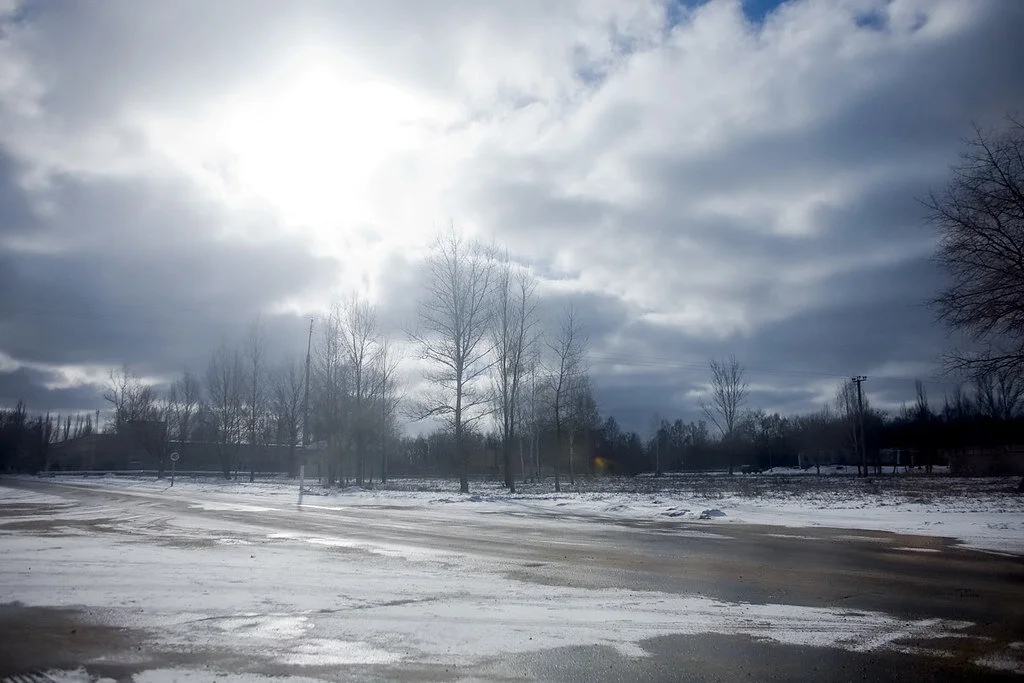
The abandoned streets of Chernobyl, Ukraine. Pedro Moura Pinheiro. CC BY-NC-SA 2.0.
The Chernobyl nuclear disaster of 1986 marked chaos for the Soviet Union and still influences modern-day Ukraine. The accident was caused by a series of technical faults, resulting in a nuclear explosion that spewed radioactive substances into the air. Chernobyl stands as the most devastating nuclear incident to have ever occurred, with 31 deaths as a direct result of the meltdown, 4,000 cancer deaths from exposure to radiation and millions affected in various other ways.
President Volodymyr Zelenskyy announced that Chernobyl will now function as a nuclear waste site.
Now, at the 35th anniversary of the Chernobyl disaster, Ukrainians are determined to move forward. Life has slowly begun to return to the area; the “exclusion zone” stands as a prime example of the resilience of nature. What was once a deadly zone, marked as a no man’s land, now abounds with life. Radiation levels in the area have decreased over the years, creating a nature preserve of sorts—elk, deer and other wildlife graze throughout the empty space.
As frightening as Chernobyl may seem, locals have moved back. Elderly residents have returned to the surrounding area despite being advised against it; for them, the comfort of home outweighs the peril of living in the region. These residents stand as a reminder of the power—and the risks—that follow one’s determination.
Officials in Ukraine hope that Chernobyl will be added as a World Heritage Site, as many residents believe that the outsize influence of the site merits its inclusion.
Once wholly abandoned, Chernobyl and the nearby town of Pripyat allow visitors today. Travelers come to the site and find an unconventional experience; the disaster has created a reflective tone, as Chernobyl’s tragic history sheds light on the lows of human struggle and the highs of human triumph.
On April 26, Ukrainian President Volodymyr Zelenskyy announced that Chernobyl will now function as a nuclear waste site. It is projected that the nuclear waste site will save Ukraine about $200 million per year.
Zelenskyy also promised to “transform the exclusion zone, as Chernobyl is referred to, into a revival zone.” While it won’t be easy, Ukraine intends to move on from the past and head toward a stronger future.
As time passes, many tragic incidents of history dissolve from the spotlight. With revival on the horizon, Ukraine hopes for a triumph at Chernobyl.
Ella Nguyen
Ella is an undergraduate student at Vassar College pursuing a degree in Hispanic Studies. She wants to assist in the field of immigration law and hopes to utilize Spanish in her future projects. In her free time she enjoys cooking, writing poetry, and learning about cosmetics.
COVID-19 Slows Africa’s Progress Against Poaching
Poaching is a last resort for villagers who lost their jobs due to COVID-19 lockdowns. Conservationists now struggle to preserve endangered species.
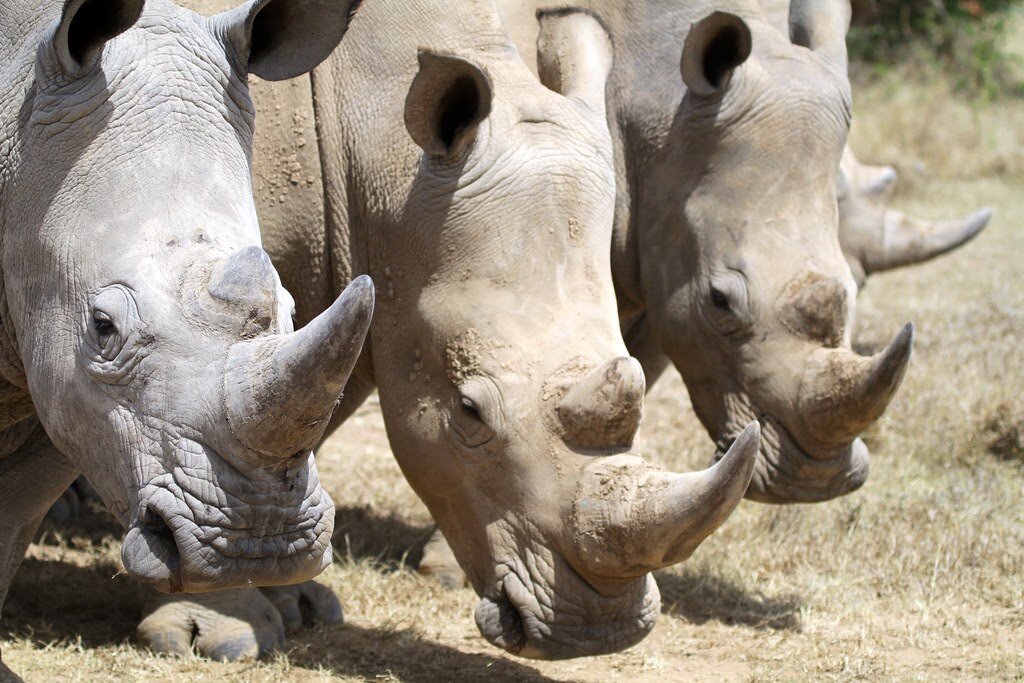
A valuable commodity. valentinastorti. CC BY-NC 2.0.
They march through the field with chainsaws, the rhinos sedated. What follows is no gruesome act of poaching. It’s the exact opposite. Workers at the Spioenkop Nature Reserve in South Africa’s KwaZulu-Natal province rev their chainsaws and go to work sawing off the rhino horns. “It has a face mask put on it to cover its vision, it has earplugs put into its ears [...] so that reduces trauma to the animal,” says Mark Gerrard of Wildlife ACT, a nonprofit that protects African wildlife. “We’ve got to remind ourselves that this [a rhino’s horn] is just keratin—this is really just fingernails.”
These rhinos’ horns will grow back in 18 to 24 months, but in the meantime, poachers won’t hunt them for the priceless commodity. Armed with only chainsaws and sedatives, the conservationists at the reserve are combating Africa’s interminable poaching problem. If a rhino has no horns, poachers have no reason to kill it. This fact doesn’t make the job any easier. “It is a traumatic experience for us,” Gerrard says, “not for the rhino.”
Spioenkop Nature Reserve has fared unusually well in its fight against poaching. Out of 15,600 rhinos in South Africa, 1,175 were killed by poachers in 2014. In 2015, the country began dehorning rhinos to considerable success. By 2019, the number of dead rhinos had fallen to 594. By 2020, it was 394. Nevertheless, Gerrard defines a truly successful dehorning effort as “zero animals poached.”
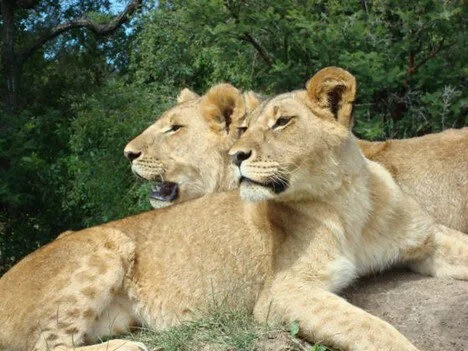
Two big cats, two big trophies. DappleRose. CC BY-NC-ND 2.0.
It will be a hard goal to reach. After COVID-19 effectively shut down international travel, tourism revenue in Africa plummeted, leaving conservationists cash-strapped in their anti-poaching campaigns. Spioenkop Nature Reserve has struggled to patrol its vast territory, but the issue goes beyond just South Africa. Wildlife tourism generates $29 billion each year and employs 3.6 million workers across Africa. The lack of sufficient funds for anti-poaching efforts is a continent-wide problem.
In Zambia’s Kafue National Park, poaching takes place at the edges of the park, where patrols have been cut back. In 2020, the park reported a 170% increase in snares, which snag wild cats. That same year, two lions were killed while none had been slain the year before. More disconcerting, patrollers increasingly find poached animals gored for “buck meat.” Poor local villagers, desperate from COVID-19 lockdowns, have joined poachers in the hunt to earn a living and put food on the table.
By and large, however, poaching is the work of international crime syndicates working in the black market. Some conservationists advocate legalizing the sale of poached items such as rhino horns and ivory to lower the market value, reducing profits for poachers. In Kenya, courts have buffed up their prosecution efforts, leading to a precipitous drop in poaching. Dedicated legal teams actively pursue convictions for poaching, and those caught red-handed face long prison sentences and fines of up to $200,000. Still, the black market provides lucrative opportunities for locals willing to break the law in hopes of amassing a fortune. A 35-pound black rhino horn can be worth up to $2 million. For poor Africans, the opportunity is often irresistible.
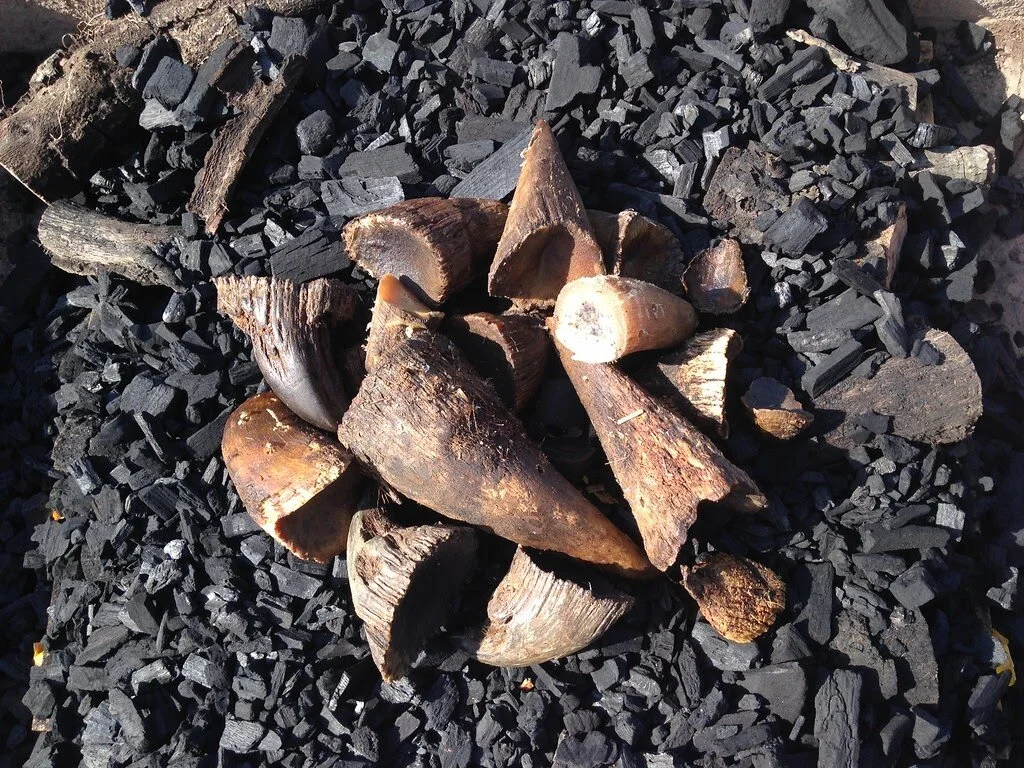
Confiscated rhino horns. USFWS Headquarters. CC BY 2.0.
At Mpala, a research center in central Kenya, patrols have adopted a digital approach to combat rampant poaching. They use the SMART app (spatial monitoring and reporting tool) to track every animal a patrol encounters—alive or dead. It also allows them to track people seen infiltrating the parks. Conservationists are attempting to make up in brainpower what they lack in manpower; less tourism revenue led to slashed budgets, which meant fewer patrols. However, park managers agree that addressing the root cause of poaching, poverty, is the best solution to the problem. In this regard, nobody seems to have an answer.
So the traumatic work of sawing off rhino horns in Spioenkop continues. “We cannot let our guard down,” says Elise Serfontein of the organization Stop Rhino Poaching. “The kingpins and illicit markets are still out there, and even losing one rhino a day means that they are chipping away at what’s left of our national herd.” With one rhino’s horn sheared to a nub, the team moves on to the next. The rhino sleeps in the field as they approach. One member revs the chainsaw and begins cutting. White flakes flutter through the air like dust.
Michael McCarthy
Michael is an undergraduate student at Haverford College, dodging the pandemic by taking a gap year. He writes in a variety of genres, and his time in high school debate renders political writing an inevitable fascination. Writing at Catalyst and the Bi-Co News, a student-run newspaper, provides an outlet for this passion. In the future, he intends to keep writing in mediums both informative and creative.
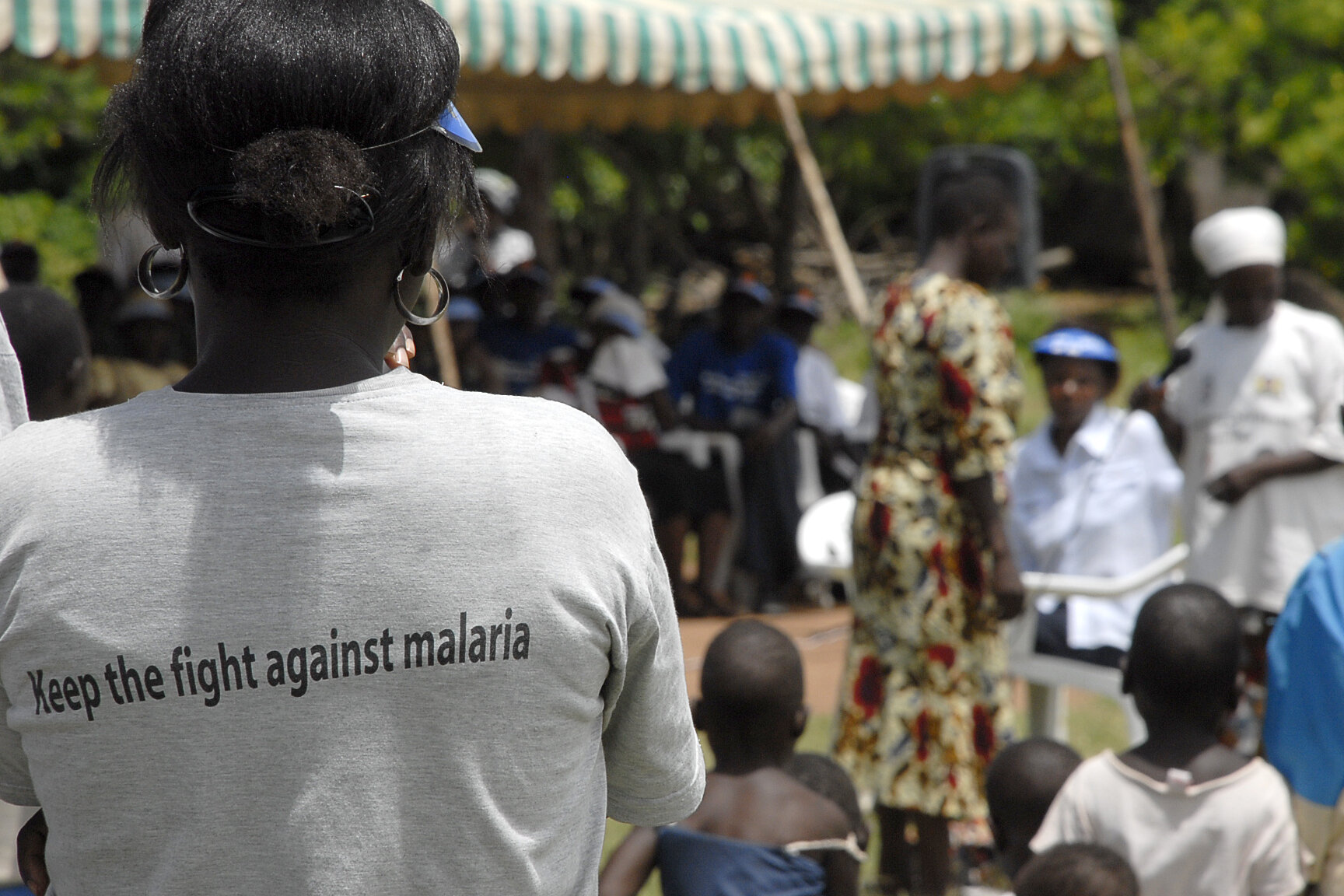
U.S. Army medical researchers taking part in World Malaria Day 2010 in Kenya. U.S. Army Southern European Task Force, Africa. CC BY 2.0.
77% Effective Malaria Vaccine Could Pave Way for Eradication of the Disease
A recently concluded clinical trial of a new malaria vaccine has shown a promising efficacy rate in the fight against the mosquito-borne disease. Conducted by researchers from Oxford University and the Clinical Research Unit of Nanoro, the new R21/MM vaccine showed an efficacy rate of 77% during a yearlong clinical trial of 450 children in Burkina Faso. The new shot boasts the highest efficacy rate of any malaria vaccine thus far.
One of the reasons why malaria remains such a prevalent disease in sub-Saharan Africa is because the nature of the disease makes it difficult to vaccinate against. Unlike smallpox, polio and COVID-19, all of which are viruses, malaria is caused by the Plasmodium parasite, which is spread through mosquitoes. Parasites are much more complex than viruses because they are living organisms, which makes them more difficult to target due to multiple life stages.
Worldwide, malaria infects over 200 million people annually
That said, R21/MM is unique in that it is a pre-erythrocytic vaccine, a type of vaccine which targets the Plasmodium parasite in its earliest stages of development. This means that R21/MM intervenes before the parasite multiplies in the liver and reaches the bloodstream, a stage in the parasite’s life cycle when no symptoms yet occur.
While R21/MM’s 77% efficacy rate is far lower than that of other vaccines—the smallpox vaccine is 95% effective, the polio vaccine is 90% effective in two doses and all three approved COVID-19 vaccines in the United States are at least 86% effective or higher in preventing severe cases of COVID-19—the new malaria vaccine retains the highest efficacy rate of any options to date.
The most widely used malaria vaccine, RTS,S, which has been used since 2016, only has an initial efficacy rate of 55% and requires booster shots. According to Vox, RTS,S requires four shots to be fully vaccinated initially, whereas the R21/MM vaccine only requires three, plus a booster shot the following year. While numerous required shots makes vaccine rollout difficult, the fact that the new malaria vaccine is significantly more effective than RTS,S and requires one less shot makes it a noteworthy breakthrough in the fight against malaria.
While malaria has been largely eradicated from much of the world, with the U.S. eliminating the disease by 1951 through the application of DDT to the interior surfaces of rural homes, the draining of wetlands and other mosquito breeding sites and the spraying of insecticides, sub-Saharan Africa has continued to be plagued by the disease. Worldwide, malaria infects over 200 million people annually and kills an average of 400,000, with 94% of global malaria cases in 2019 occurring in Africa.
While COVID-19 remains the most pressing global health issue for most countries, in Africa it is malaria which remains most serious.
A December 2020 report by The BMJ estimated that malaria deaths in Africa throughout 2020 would dwarf those caused by COVID-19. As of May 10, 2021, the entire continent of Africa has reported 124,715 deaths due to COVID-19 since the pandemic began, in comparison with the 386,000 deaths reported from malaria in 2019. As a result, malaria vaccines of any efficacy rate are desperately needed in most of sub-Saharan Africa.
According to Al-Jazeera, the researchers of the R21/MM vaccine plan to conduct final stage trials in about 4,800 children between the ages of five months and three years old in four malaria-prone African countries. Should the efficacy rate from the clinical trials remain consistent, R21/MM could finally begin the hard work of eradicating malaria.

Jacob Sutherland
Jacob is a recent graduate from the University of California San Diego where he majored in Political Science and minored in Spanish Language Studies. He previously served as the News Editor for The UCSD Guardian, and hopes to shed light on social justice issues in his work.
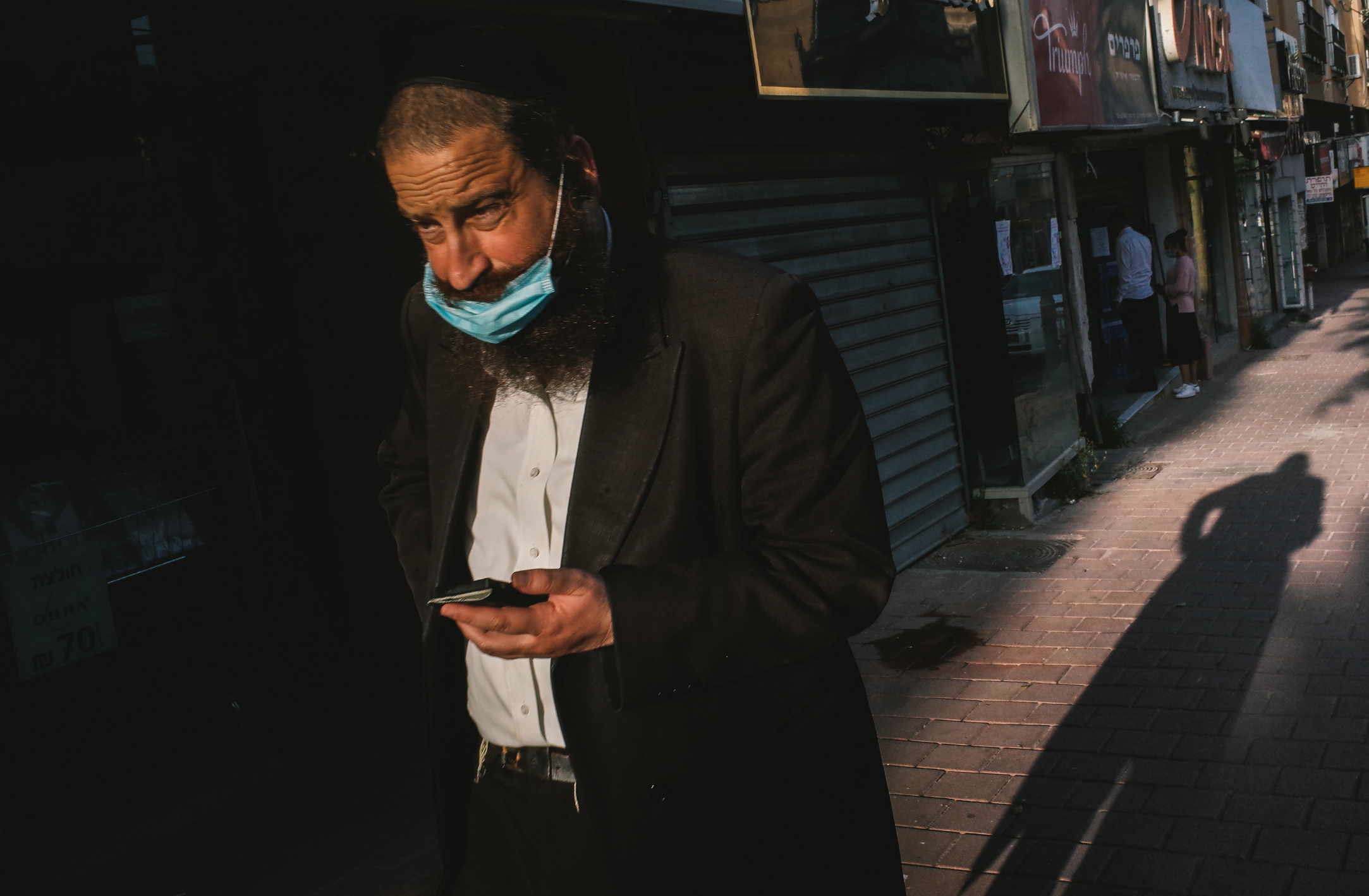
A man walks down a street during a coronavirus lockdown in Bnei Brak, just outside of Tel Aviv, Israel. Flickr. Amir Appel. CC BY 2.0
Palestinians Left Behind as Israel’s Vaccination Campaign Finds Success
As countries around the world continue to grapple with public health crises due to the coronavirus, Israel stands as a positive outlier. Israel has the second-highest proportion of people fully vaccinated against COVID-19 in the world, with 56% having received two doses. A speedy vaccination rollout is already bolstering the Israeli post-coronavirus recovery process, with economists predicting that the country may experience almost 5% growth this year. It seems that, at least for Israel, there is light at the end of the tunnel.
Yet, for the 5 million Palestinians living in the Gaza Strip and the Israeli-occupied West Bank, the fight for equal access to COVID-19 vaccines is just beginning. According to Doctors Without Borders, only 2% of Palestinians have been vaccinated against the virus as of March 24. A slow vaccination campaign couldn’t come at a worse time as the region grapples with another deadly wave of the coronavirus. The Gaza Strip is now reporting up to 1,000 new infections daily, while a positivity rate of 21% is being seen in the West Bank.
The Palestinian territories are once again grappling with a deadly surge in coronavirus cases, even as global vaccinations reached 1.18 billion worldwide as of May 4. Yet for Palestinians, as in many developing countries, vaccinations have been difficult to come by. The Palestinian health care system is dangerously underequipped to handle the weight of the pandemic. In December, public health officials declared that the Gaza Strip had run out of coronavirus testing kits.
The global vaccine rollout remains the best hope for bringing the pandemic to an end in the Israeli-occupied Palestinian territories. However, ongoing conflict with Israel continues to delay inocolulations. Palestinians living in the West Bank and Gaza Strip have yet to receive many vaccine doses from the Israeli government. Israeli citizens living in the occupied territories and Palestinians living in Jerusalem are eligible for the vaccine, though. According to Amnesty International, the failure of the Israeli government to provide coronavirus vaccine access to Palestinians living under military occupation is in direct violation of international law.
Other countries have since tried to supply Palestinians with the vaccine through international aid. In March, U.S. Ambassador to the United Nations Linda Thomas-Greenfield said the U.S. Agency for International Development will supply $15 million in aid to Palestine to support its fight against the coronavirus. Other countries are also stepping up to provide aid. China has donated 100,000 doses of its coronavirus vaccine to Palestine, joining efforts begun by Russia and the United Arab Emirates. The international vaccine sharing initiative COVAX has also supplied over 61,000 doses of the Pfizer and AstraZeneca vaccines, with the goal of inoculating about 1 million Palestinians.
Even with aid from the international community, the Palestinian territories continue to lag behind in vaccinations. The Israeli government’s discriminatory policies against Palestinians remain a key barrier against equitable vaccine access. As the world slowly inches closer to the end of the pandemic and a return to normal, the Palestinian people have once again been left behind.
RELATED CONTENT:
PODCAST: Community Development in Ecuador with Jeff Goldman

Aerex Narvasa
Aerex is a current student at Occidental College majoring in Diplomacy and World Affairs with a minor in East Asian Studies. He is passionate about sharing people’s stories through writing, and always strives to learn about new places and cultures. Aerex loves finding new music and exploring his hometown of Los Angeles in his free time.
Social Action Muralist
Social justice can take many forms, and the arts are one way to spread activism into mainstream media. This video showcases the work of one such artist, Joel Bergner, who creates street murals in low-income or at-risk areas to highlight certain social issues. Many of his projects engage local youth, exposing them to both activist and artistic worlds they can stay involved even later in life.
His most recent project was in a Jordanian Syrian refugee camp, in which he invited camp residents to take part in the murals — just one example of how Bergner aspires to give a voice to those he makes art for. Blending traditional themes of mythology with current issues, Bergner’s art has and will continue to make an impact in not just local communities, but the wider world of social action.
LGBTQ+ Intolerance in Ghana Reaches Boiling Point
Tensions within the West African country have risen following the recent restriction of LGBTQ+ rights, resurfacing the decades long discussion regarding the criminalization of same-sex conduct.
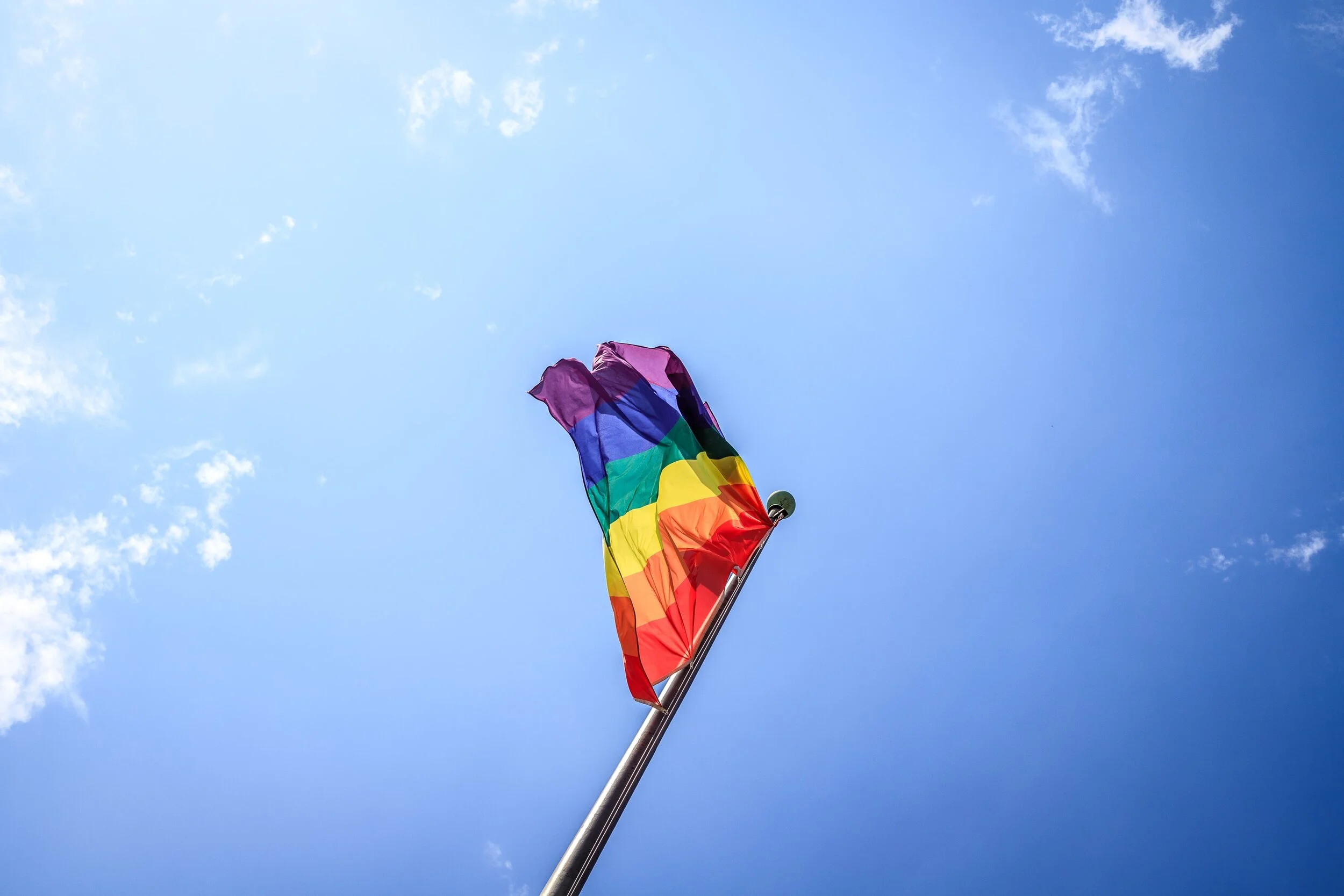
Pride flag waving in the sky. Tim Bieler. Unsplash.
The newly established office of nonprofit organization LGBT+ Rights Ghana was raided and searched by police last month, endangering one of the only safe spaces for LGBTQ+ people in the country. This raid came mere days after Ghanaian journalist Ignatius Annor came out as gay on live television, and many have speculated that the raid was in retaliation of that moment.
Given Ghana’s criminalization of same-sex conduct, it is not a stretch to say that homophobia runs rampant and unchecked, especially when considering the widespread opposition from both government officials and religious figures regarding the construction of the center for LGBT+ Rights Ghana.
The building has been under scrutiny since it first opened back in January. Only three weeks after opening its doors to the public, the organization had to temporarily close in order to protect its staff and visitors from angry protesters. The director of the organization, Alex Kofi Donkor, explained how the community “expected some homophobic organizations would use the opportunity to exploit the situation and stoke tensions against the community, but the anti-gay hateful reaction has been unprecedented.”
This unprovoked suppression of basic freedoms indicates that LGBTQ+ intolerance in Ghana has reached a boiling point and is about to bubble over.
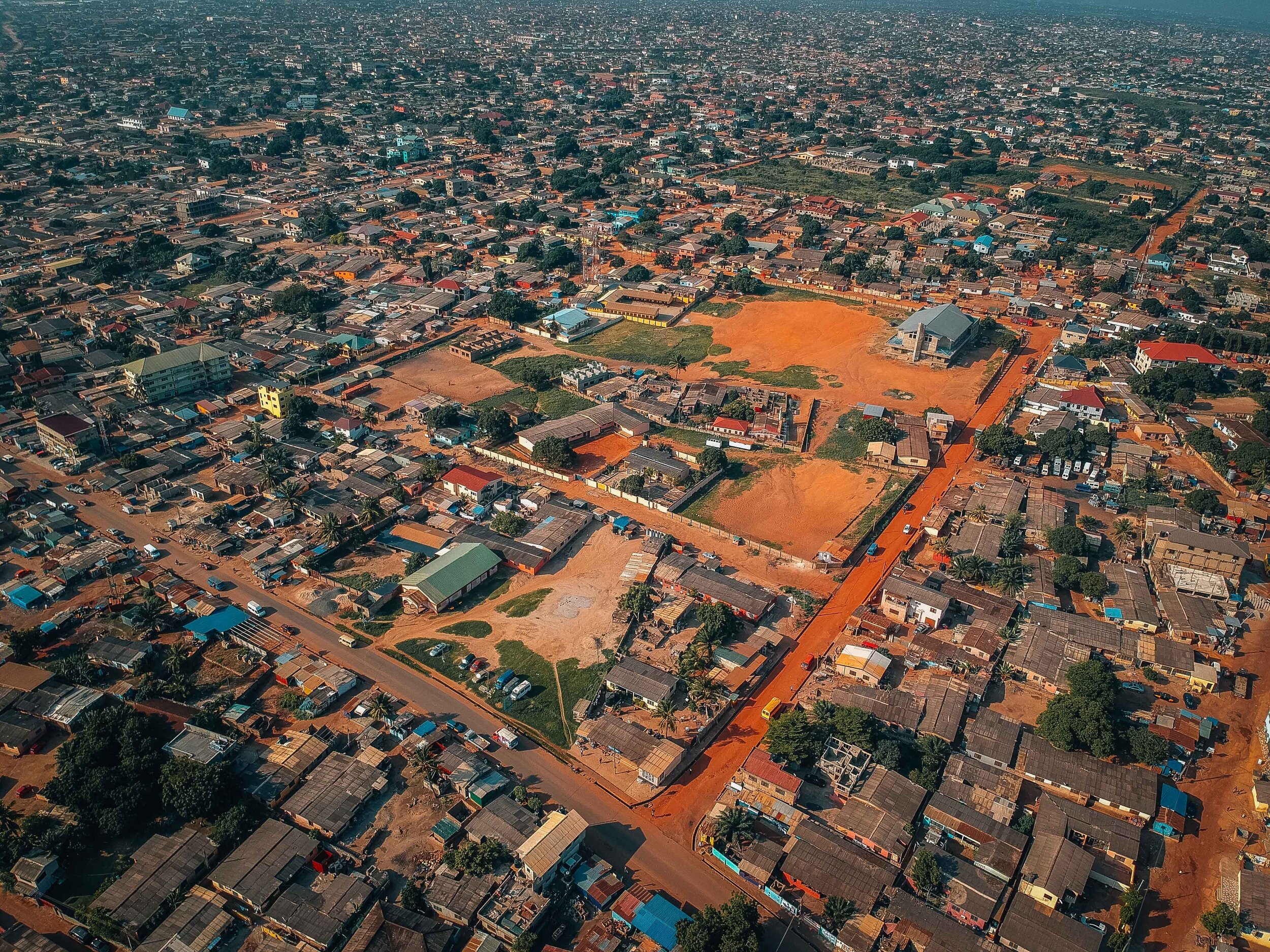
Aerial shot of Accra, Ghana. Virgyl Sowah. Unsplash.
News of the situation reached a handful of high-profile celebrities such as Idris Elba and Naomi Campbell, who joined 64 other public figures in publishing an open letter of solidarity with the Ghanaian LGBTQ+ community using #GhanaSupportsEquality. While prejudice has only recently garnered public attention due to the letter, blatant and widespread homophobia in Ghana has run rampant for years.
According to a study conducted by the Human Rights Watch in 2017, hate crimes and assault due to one's sexual identity are regular occurrences in Ghana. Dozens of people have been attacked by mobs and even family members out of mere speculation that they were gay. Furthermore, the study found that for women, much of this aggressive homophobia was happening behind closed doors through the pressures of coerced marriage.
Consider 24-year-old Khadija, who identifies as lesbian and will soon begin pursuing relationships with men due to the societal pressure for women to marry. Or 21-year-old Aisha, who was exiled by her family and sent to a “deliverance” church camp after she was outed as lesbian.
Marriage pressures and intolerances are certainly prevalent in other countries as well, even in those often deemed progressive. The big difference is that in many countries, homophobic beliefs are slowly becoming less and less common. In Ghana, it seems as though these sentiments are normalized and held by the majority of people.
The precedent for discrimination based on sexual orientation was set as early as 2011, when former Western Region minister Paul Evans Aidoo called for the immediate arrest of LGBTQ+ people in the area. The stigma that actions like this produced in Ghana have only been amplified over time when coupled with religious and cultural tensions.
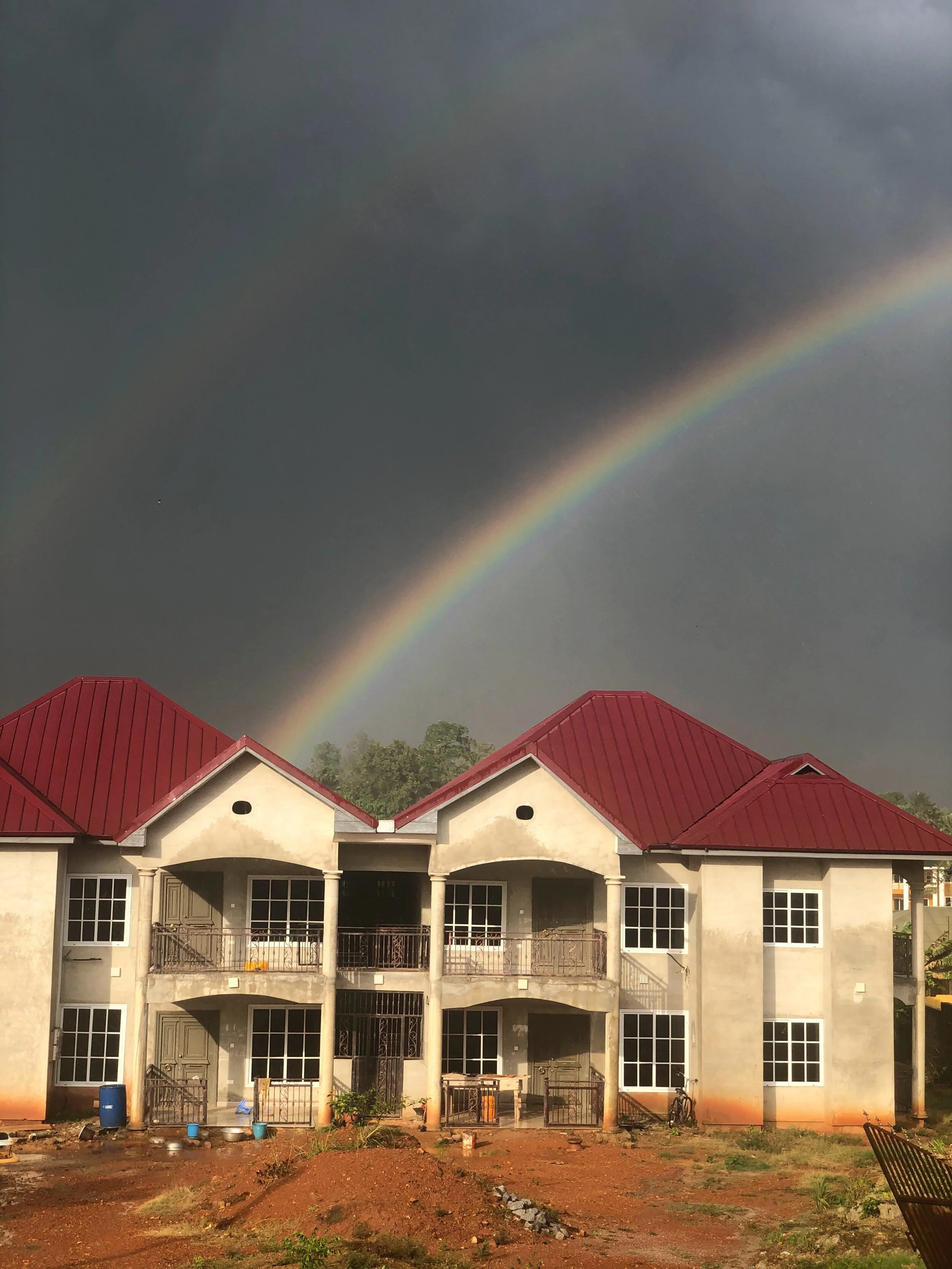
A rainbow forms above a home in Kumasi, Ghana. Ritchie. Unsplash.
Many victims of hate crimes or abuse in Ghana reported that because of the codified homophobia in the country, they are unable to report their experiences to local authorities without putting themselves in danger. As a result, LGBTQ+ Ghanaians find themselves stuck in a perpetual cycle of making slight progress just for higher authorities to snatch it away.
There have been countless opportunities for legalized discrimination to be addressed, and ever since current Ghanaian President Nana Akufo-Addo assumed office in 2017, he has been under immense pressure to announce his official position on homosexuality. Four years later, he has still not done so.
Instead of embracing the shift toward more inclusive policies supported by LGBT+ Rights Ghana, the Ghanaian government appears to be succumbing to public pressures in an attempt to keep peace. What it fails to realize is that sweeping inequalities under the carpet doesn’t make them go away. It actually does quite the opposite. It heightens inequalities until they become absolutely impossible to avoid. Celebrity involvement in dismantling Ghana’s current system has caused quite the public reaction. It may end up being the spark that causes the Ghanaian government to reconsider its policies and begin to offer LGBTQ+ people the respect and protection they deserve.
Zara Irshad
Zara is a third year Communication student at the University of California, San Diego. Her passion for journalism comes from her love of storytelling and desire to learn about others. In addition to writing at CATALYST, she is an Opinion Writer for the UCSD Guardian, which allows her to incorporate various perspectives into her work.
Angola: A Video of Culture, Diversity, and the Lasting Legacy of Civil War
Having been ravaged by civil war from 1975-2002, Angola is a country still reckoning with its complex history. This legacy of colonization means that Angola has had to rely largely on raw natural resources for economic development. However, it’s been slowly stabilizing for the past decade, recovering from its past and getting ready to face the world of today. Although there has been significant strides in modernization, Angola retains much of its cultural and geographic diversity, boasting both crowded cities and remote salt flats and sea cliffs. This video takes you through many different regions of the country, showing the diversity present in both the people and their environment while giving information about the nation’s history. Each group of people interact differently with their surroundings and cultural influences, emphasizing something westerners often forget: Angola, and Africa itself, is far from a monolith.
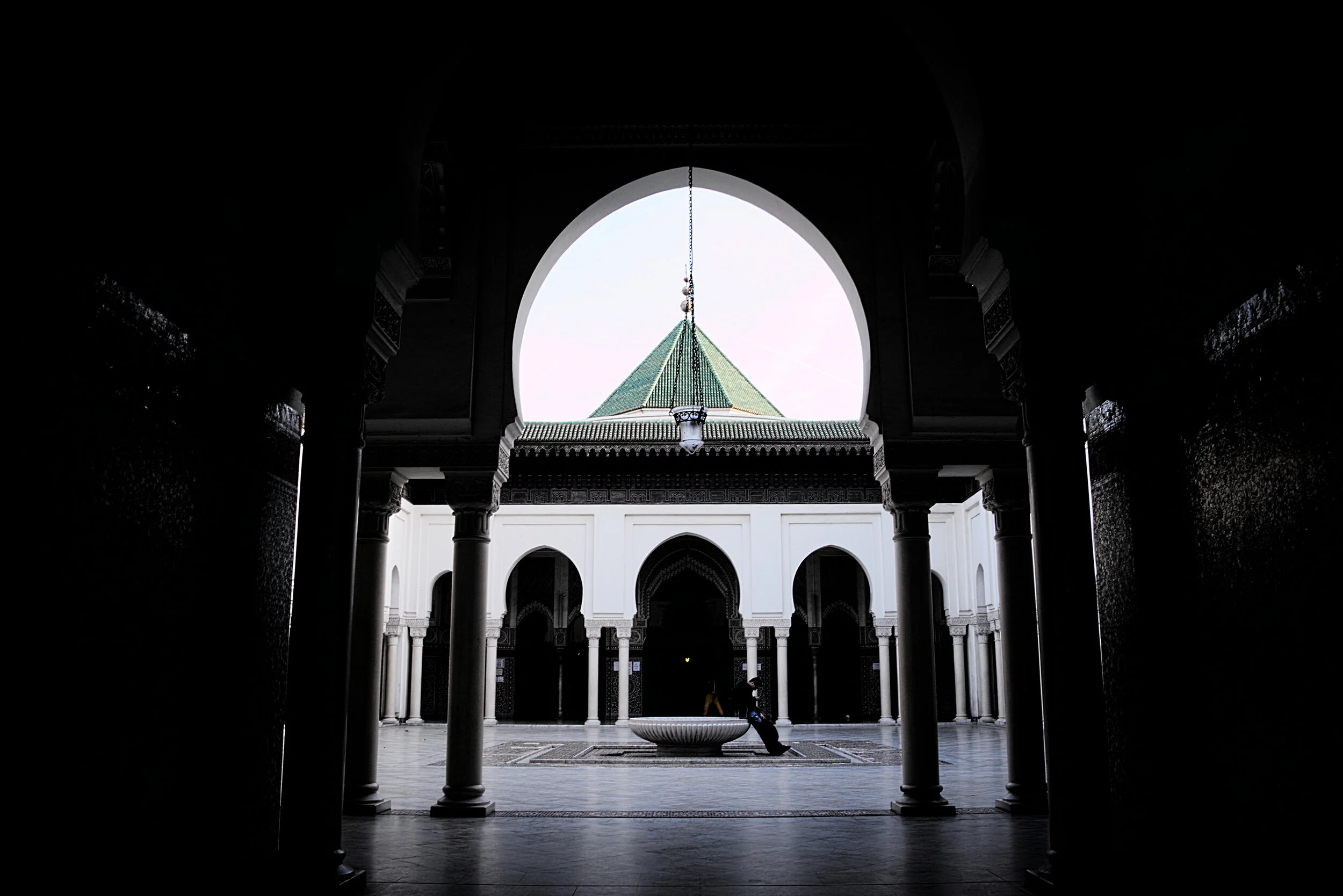
Looking out at a courtyard in the Grand Mosque of Paris. Gwenael Piaser. CC BY-NC-SA 2.0.
Countries Around the Globe Continue to Legalize Islamophobia
At the beginning of March, independent rights expert Ahmed Shaheed addressed the United Nations Human Rights Council, underscoring the rise in anti-Muslim hate globally and urging member-states to take action immediately. Shaheed noted that in 2018 and 2019, four in 10 Europeans held a negative view of Muslims, and in 2017 30% of Americans held the same negative view.
But in the following weeks, Islamophobic legislation—laws which seek to discriminate against Muslims—were proposed or enacted in countries like France and Sri Lanka, showing just how widespread the situation remains.
France has a long-standing history of Islamophobia. The country, with a Muslim community of 4.4 million, or 8.8% of the country’s population, maintains the largest Muslim community of any Western nation. Over the past decade, the country banned the wearing of niqabs, veils which cover one’s face, in public, several coastal cities banned burkinis, a form of swimwear, and more recently, the French Senate voted to ban anyone under the age of 18 from wearing a hijab.
While protests have met each of these pieces of legislation, with the recently proposed hijab ban seeing demonstrators take to the streets around the country, Islamophobia has been disturbingly commonplace. The number of Islamophobic attacks in France increased by 53% in 2020.
Sri Lanka, a South Asian country whose Muslim community constitutes 9.7% of its population, has had a more recent problem with Islamophobia. While several one-off Islamophobic attacks took place throughout the 2010s, the government only recently began to write Islamophobia into law. In March, the country banned the wearing of the burqa and closed over 1,000 Islamic schools.
The United States is also no stranger to Islamophobia. Throughout the 2010s, states ranging from Arizona to Florida to South Dakota passed 22 anti-Muslim laws. At the federal level, the Trump administration authorized several Muslim travel bans and used Twitter to perpetuate an equivalency between Islam and terrorism.
While bigotry against any religion has existed since the beginning of religion itself, Islam has increasingly been the target of xenophobia globally due to the Sept. 11 attacks, the rise of the Islamic State group in the Middle East and other terror attacks in the West carried out by Islamic extremists.
Regardless of its origins, Islamophobia remains one of the most pressing social justice issues to address in the 21st century. As U.N. Secretary-General Antonio Guterres said in a March 2021 video commemorating the International Day to Combat Islamophobia: “We must continue to push for policies that fully respect human rights and religious, cultural and unique human identity … As the Holy Quran reminds us: nations and tribes were created to know one another.”
To Get Involved:
To raise awareness about the recently proposed French hijab ban, sign “Hijab Ban France,” a petition urging the French government to revoke the ban, by clicking here.
To find out about more opportunities globally and locally to get involved in the fight against Islamophobia, check out the Council on American-Islamic Relations and the European Network Against Racism, both organizations taking intersectional approaches to combat Islamophobia through legislative and social means.

Jacob Sutherland
Jacob is a recent graduate from the University of California San Diego where he majored in Political Science and minored in Spanish Language Studies. He previously served as the News Editor for The UCSD Guardian, and hopes to shed light on social justice issues in his work.
In 2020, Femicide Rates Rose Around the Globe
Last year, the U.N. reported a significant increase in domestic violence against women and girls worldwide. Rates of femicide, the murder of women because they are women, have increased greatly since the start of the COVID-19 pandemic.

Last year, countries around the world saw protests decrying the increase of violence against women. A number of these protests were sparked by femicides that made headlines, like the murders of Vanessa Guillen in the United States, Pinar Gultekin in Turkey and Tshegofatso Pule in South Africa. Guillen, an Army private, is believed to have been killed by another service member who likely also sexually assaulted her, and Gultekin and Pule both died at the hands of a current or former boyfriend. These women were only three of a reported 50,000 women who die as a result of domestic violence each year.
In 2020, that number increased further. The U.N. reported that reports of domestic violence as a whole dramatically increased, with 243 million women around the world being subjected to sexual and/or physical violence within the year. That figure only includes women and girls aged 15 to 49, so the real total worldwide is even higher, since women outside that age range experience violence as well. 64-year-old Justina Galo Urtecho, who was raped and strangled to death in her home in Costa Rica, stands as a prominent example. The rise in violence against women, especially domestic violence, is directly related to the COVID-19 pandemic. Concerns over security, health and money, as well as the series of lockdowns in many countries, have all contributed to an increase in cases of domestic violence. Due to the pandemic, women and girls worldwide found themselves stuck at home in abusive situations.
Since France’s March 17, 2020, lockdown, cases of domestic violence have increased 30%. Emergency calls to domestic violence helplines in Argentina, Cyprus and Singapore increased 25%, 30% and 33%, respectively, after the countries instituted lockdowns.
Many women who were victims of domestic violence ended up dead. During the first two months of its lockdown, Brazil saw a 22% increase in femicides from the same time last year. In Mexico, at least 987 women and girls were murdered in the first four months of 2020 alone.
At the same time that the pandemic led to an increase in violence against women, it also compromised the care that women facing domestic violence had access to. With health care providers and governments overwhelmed by COVID-19 cases, the U.N. report suggests that support for women who experienced violence slipped through the cracks.
The United Nations has dubbed the increase of domestic violence and femicide that followed the COVID-19 pandemic “the Shadow Pandemic,” and urges that national responses to COVID-19 include services to address violence against women and girls. The U.N. Shadow Pandemic Campaign recommends that countries follow five steps to combat the increase of violence against women:
Allocate resources in COVID-19 response plans to addressing violence against women.
Strengthen support services for women who experience violence by treating them as essential services.
Increase the capacity of key support services.
Put women at the center of policy reform.
Collect data on the phenomenon to inform governments’ responses.
Violence against women is an ongoing issue around the world. It did not start when the pandemic did; it simply increased. Similarly, violence against women will not end when the pandemic does. Reports suggest that the most effective way to prevent femicide is to end intimate partner violence, which necessitates addressing global gender inequality and power imbalances as a whole.
To Get Involved:
A list of ways to take action with the U.N.’s Shadow Pandemic Campaign can be found here.

Rachel Lynch
Rachel is a student at Sarah Lawrence College in Bronxville, NY currently taking a semester off. She plans to study Writing and Child Development. Rachel loves to travel and is inspired by the places she’s been and everywhere she wants to go. She hopes to educate people on social justice issues and the history and culture of travel destinations through her writing.
Altered Photos of Cambodian Genocide Victims Spark Outrage
Too often history is viewed as an element of the past—chains of unchangeable events that can be analyzed and nothing more. However, it is important that victims of past atrocities are honored, a lesson in which modern media has fallen short.
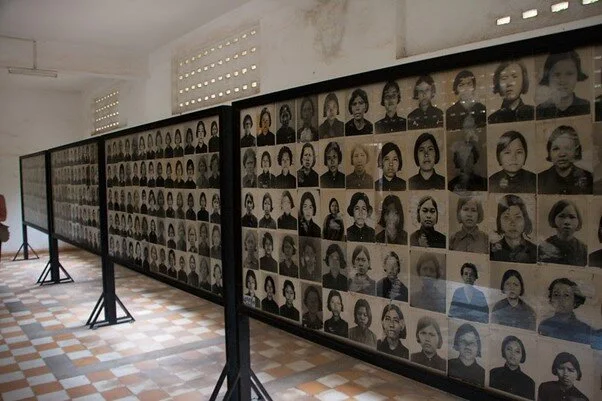
Unaltered photos of Khmer Rouge genocide victims at the Tuol Sleng Genocide Museum. Christian Haugen. CC BY 2.0.
With the advancements of the digital age, the culture of media has grown ever more rapid, often leading to negative consequences. In a recent incident, history itself took center stage as one photographer’s actions sparked massive outrage among victims of the Khmer Rouge genocide, which led to the deaths of more than 2 million Cambodians in the late 1970s.
Vice published the work of photographer Matt Loughrey, who edited photos of victims from the S-21 prison in Phnom Penh taken minutes before their executions. Loughrey has been accused of editing the photos so that they show smiling faces, creating waves of backlash for the photographer.
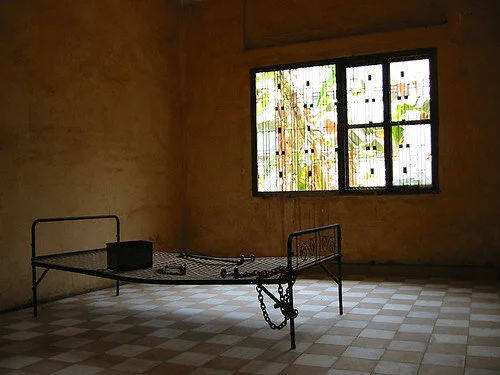
Torture room. Timoluege. CC BY-NC 2.0.
Upset relatives of the photographed victims stated that Loughrey’s work was of horrible judgment, citing his acts as degrading the dignity of the victims. Cambodian officials too were outraged upon seeing the photos; the country’s Ministry of Culture and Fine Arts threatened legal action. In addition to insensitive alterations of the photos, the Vice article misidentified one of the victims, publishing incorrect personal details.
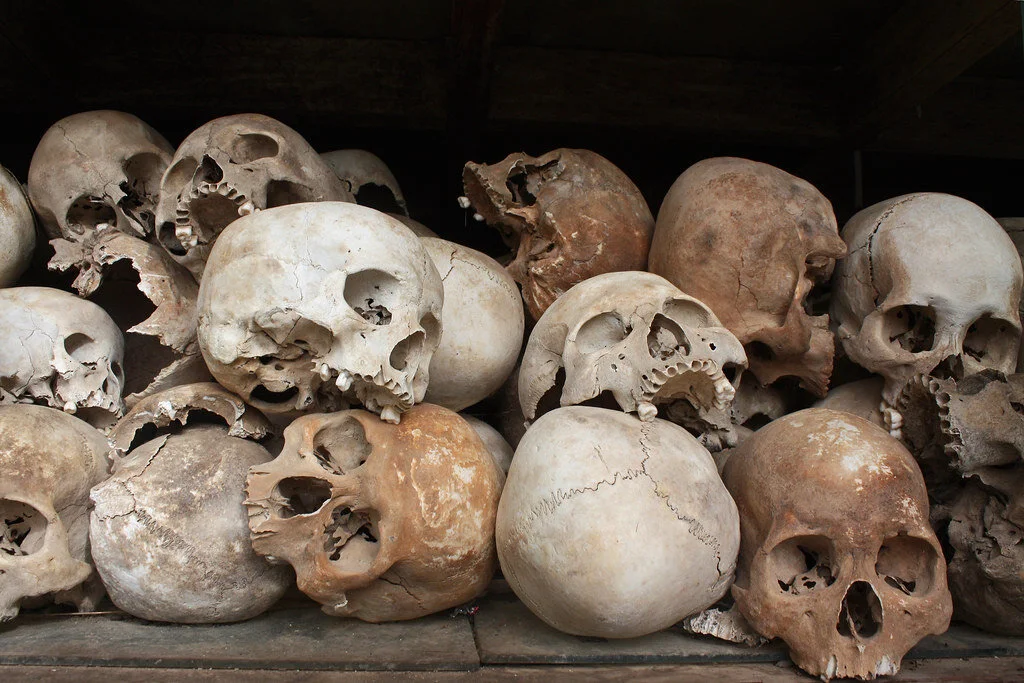
Victims’ skulls. istolethetv. CC BY 2.0.
Others have declared the actions of Loughrey to be crimes against history itself, stating the alterations to be offensive to truth.
VICE has since removed the photos, citing errors in the company’s editorial process.
The Bigger Picture
Beyond the first waves of anger resulting from this incident, larger lessons have been learned by all involved. Primarily, the incident has brought to light a flaw in the way people view history; although history is an analysis of past events, it must be equally weighted against potential consequences for the victims themselves. Second, it highlights that history is not always entirely of the past—there are still over 5 million Khmer Rouge victims living, along with millions of other descendants and close community members. Third, it brings up the question of what should be considered acceptable when it comes to altering representations of history. Is there wiggle room for subjectivity, or should all journalistic representations be as objective as possible?
Amid the turmoil and animosity between the opposing sides of this conflict, some light still remains. The incident stands as a crucial reminder for everyone that the analysis of history can be as much a weapon as a tool. It remains up to the media, and their audiences, to use the past appropriately.
Ella Nguyen
Ella is an undergraduate student at Vassar College pursuing a degree in Hispanic Studies. She wants to assist in the field of immigration law and hopes to utilize Spanish in her future projects. In her free time she enjoys cooking, writing poetry, and learning about cosmetics.
High Schools in Rome Increase Support for Transgender Students
In the Roman Catholic stronghold of Italy, Rome’s high school students have sped up the city’s journey toward acceptance of transgender individuals.
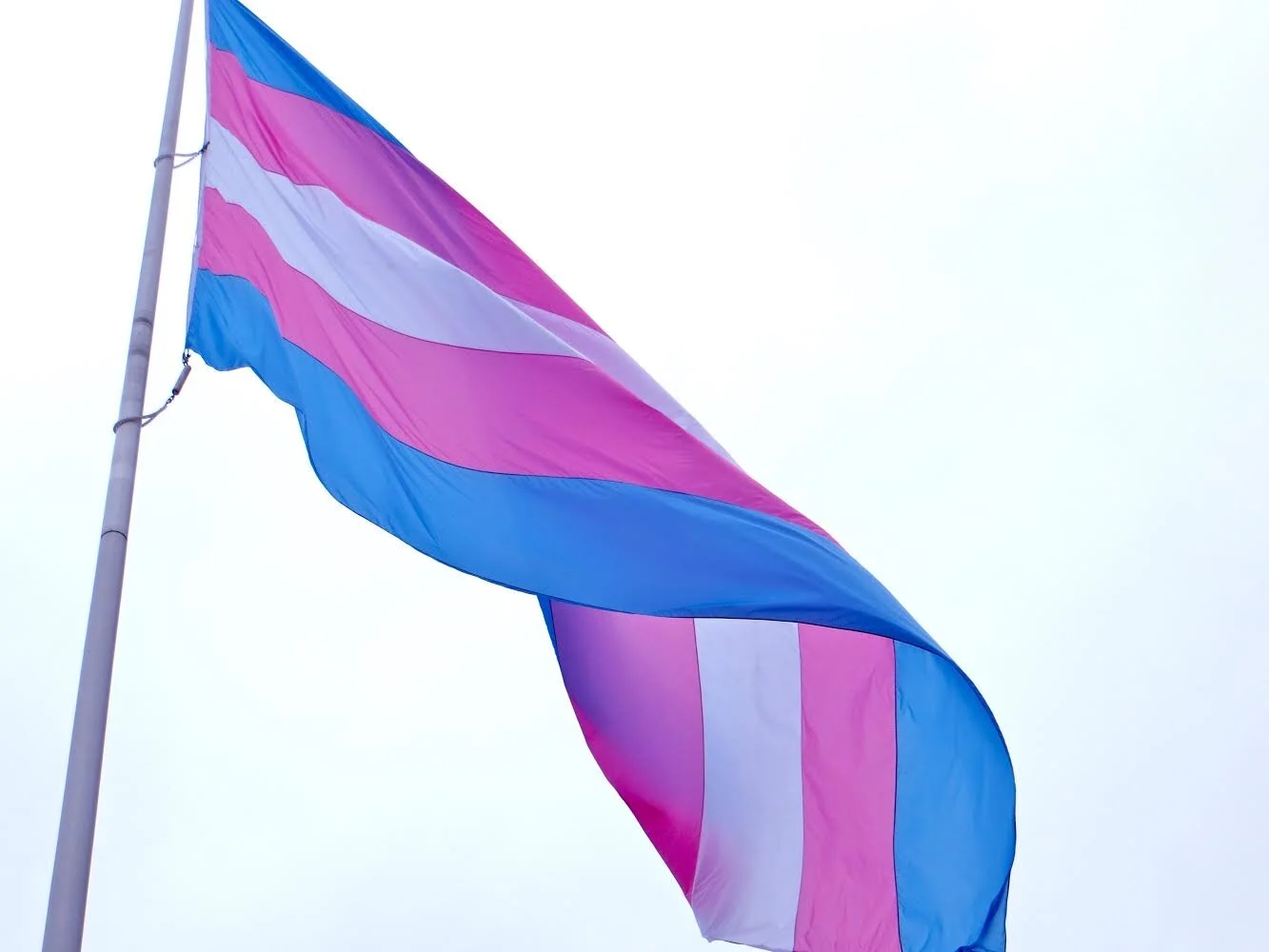
Transgender flag. User:torbakhopper. CC BY-SA 3.0.
Despite the challenges of the COVID-19 pandemic, the high school community of Rome has been making strides toward the advancement of LGBTQ+ rights. Recently, a handful of high schools in the city have decided to allow transgender students the right to go by their chosen name. This is a stark change from the previous method of using a transgender person’s name given at birth, known as their “dead” name. The high schools that have made this change lag behind the city’s universities, with some colleges already having given transgender students the right.
Although the act itself seems small, it is a substantial gesture within the context of the transgender community. Upon hearing the news, students have expressed great relief; many see this step as a beacon of hope toward full transgender visibility in Italy. The country’s LGBTQ+ community currently deals with hate crimes, some of which have been so violent that victims have required reconstructive surgery. For Italy, the flaw is in the law; there is a law prohibiting crimes based on religion and race, but none exists for acts based on gender or sexual orientation. The largest change benefiting the transgender community occurred in 1982, when the Sex Reassignment Act legalized that procedure.
School officials in Rome believe that this change will help to protect students by creating a sense of security and peace in their learning environment. The first students to experience the change in rules hope that they will pave the way for an easier education for future transgender individuals, many of whom face large-scale bullying.
In a study on LGBTQ+ tolerance conducted by the Williams Institute, Italy fell quite far behind some of its European counterparts. Italy sat at 30th place in the ranking while Iceland and the Netherlands snagged the first two slots. The prevalence of the Roman Catholic Church, which does not condone LGBTQ+ behavior, has much to do with the country’s lower score.
This step has been a significant one for Italy, but much work remains to be done. With a smoother education now in store, these students hope that they are just the group to bring about further change.
Ella Nguyen
Ella is an undergraduate student at Vassar College pursuing a degree in Hispanic Studies. She wants to assist in the field of immigration law and hopes to utilize Spanish in her future projects. In her free time she enjoys cooking, writing poetry, and learning about cosmetics.
Plastic Surgery Thrives in War-Torn Afghanistan
For the middle class in Afghanistan, the popularity of plastic surgery is growing. Botox injections, breast implants and liposuction are options for mostly women, and even families trying to beautify their daughters to marry them off more easily.
Read MoreTen Years After Nuclear Disaster, Recovery Remains Distant in Fukushima
The tsunami and ensuing meltdowns at the Fukushima Daiichi nuclear power plant forced thousands to flee their homes. A decade later, some locals have returned home, but full recovery remains remote.
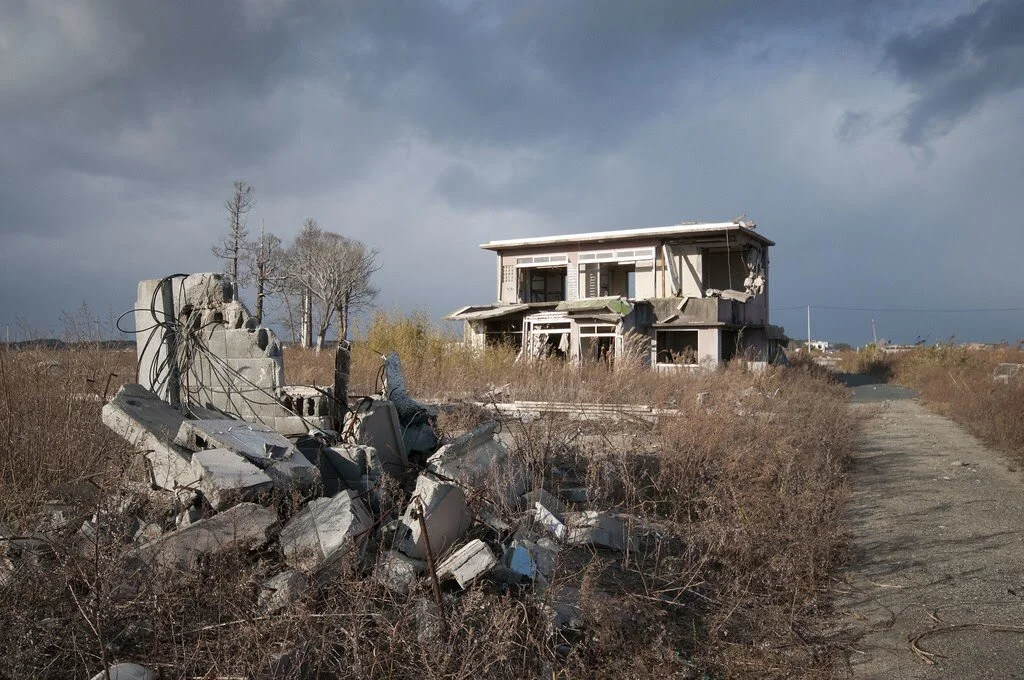
A tsunami’s wreckage. UCLAnewsroom. CC BY-NC-SA 2.0.
Upon returning home after 10 years away, Masumi Kowata found a monkey in her living room. It wasn’t a joyful homecoming. In 2011, she evacuated her home along with 160,000 locals across Japan’s Fukushima prefecture. A cloud of radiation, spewing from three simultaneous meltdowns at the Fukushima Daiichi nuclear power plant, rendered swaths of land uninhabitable. Only in 2021 did the government allow she and her husband to return. Even then, it was only safe for them to visit for the day. Clad head to toe in plastic protective gear, she tread cautiously through the wreckage of an earthquake, a tsunami and neglect: a house shaken by earthquake, food left to rot for a decade, overgrown plants vining up the walls. The monkey had helped itself to Kowata’s belongings. It pranced around the room “wearing our clothes like the king of the house.”
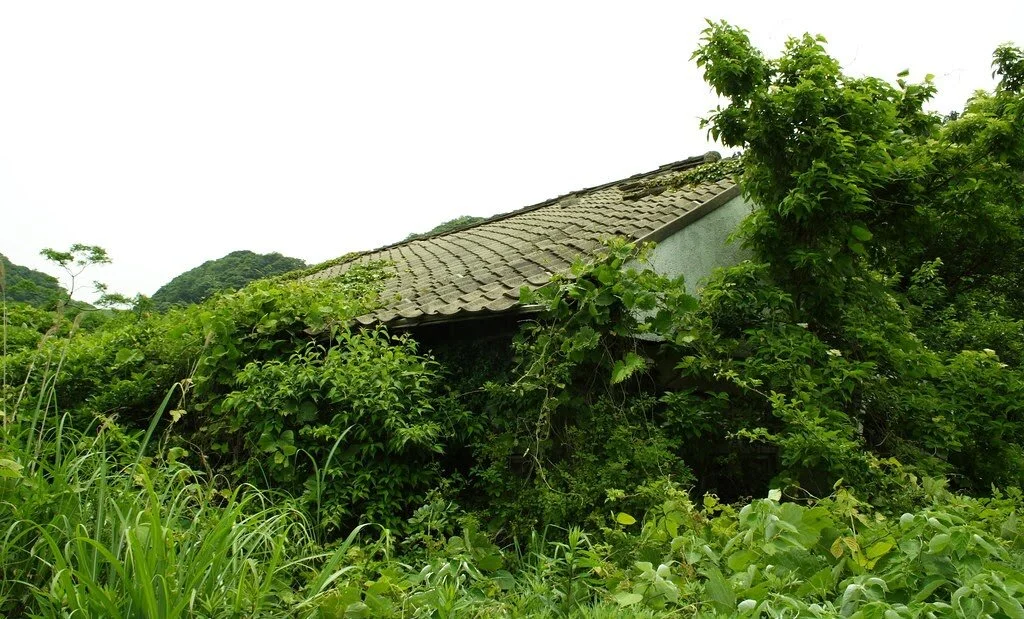
A house under nature’s dominion. colincookman. CC BY-NC-SA 2.0.
Wild animals have overtaken “difficult-to-return” zones, as the government termed them. Such areas encompass 2.4% of Fukushima prefecture and experience 50 times more radiation than what is considered safe. Boars, raccoon dogs and macaques roam the dangerously radioactive neighborhoods oblivious to the damage but unfettered by human life. They can cross streets without fear of speeding cars and feed on the produce of untended gardens, long overgrown. Human beings have returned much more slowly. Currently, the zones remain stuck in time at the moment of disaster.
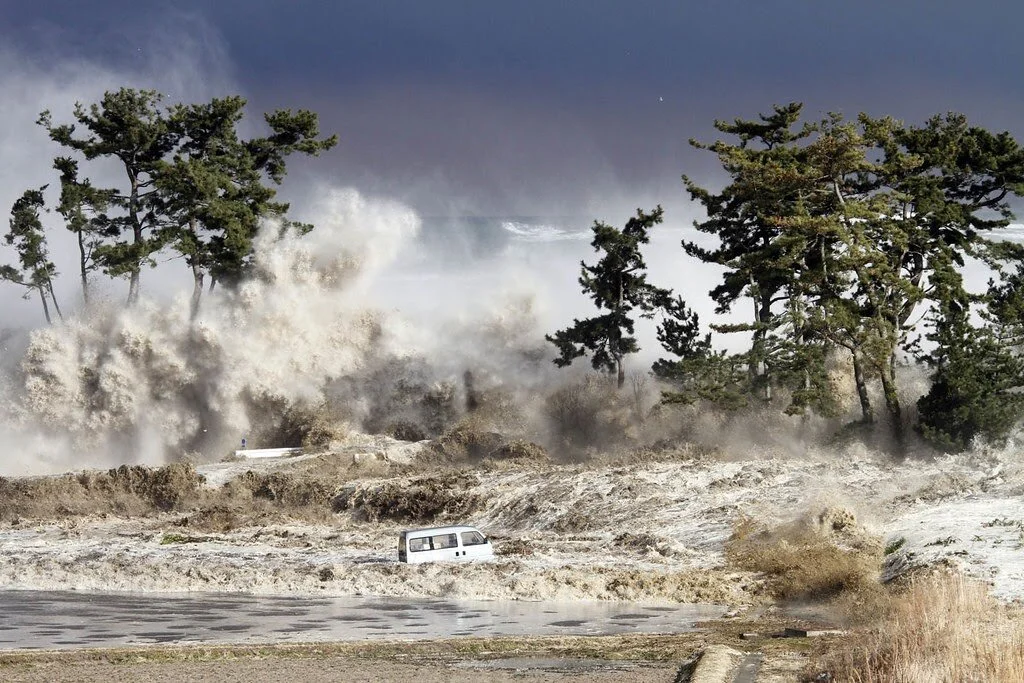
The tsunami crashing through Minamisoma, Fukushima. Warren Antiola. CC BY-NC-ND 2.0
Agriculture struggles to recover as a result. Boars descended from the nearby mountains and invaded farms and rice paddies to feast on the crops. Hunters struggle to control the wild boar population. That is to say, they shoot as many as possible. “When I got married and was about to have my first child,” said one elderly boar hunter, “my mother said to me, ‘You’re going to be a father. Stop killing. Is that really the right thing to do?’ I stopped hunting then.” Now, he ventures out each day to beat back nature’s 10-year-long advance on Fukushima’s villages. “My town is abandoned and overrun with radiated boars,” he says. “It is my duty to help.”
The tasks of hunting down boars, tending to radioactive cattle and repopulating deserted towns fall to the few who have returned. Of the 160,000 who were evacuated after the meltdowns, only one-fourth plan to return. Most of them are elderly. The majority of evacuees found it easier to settle down elsewhere than endure a yearslong wait to return home. Young people especially favored big cities filled with jobs over their provincial hometowns, a trend that predated the disaster. In the nine years before the meltdowns, Fukushima’s population declined by 100,000. In the nine years after, it fell by another 180,000.
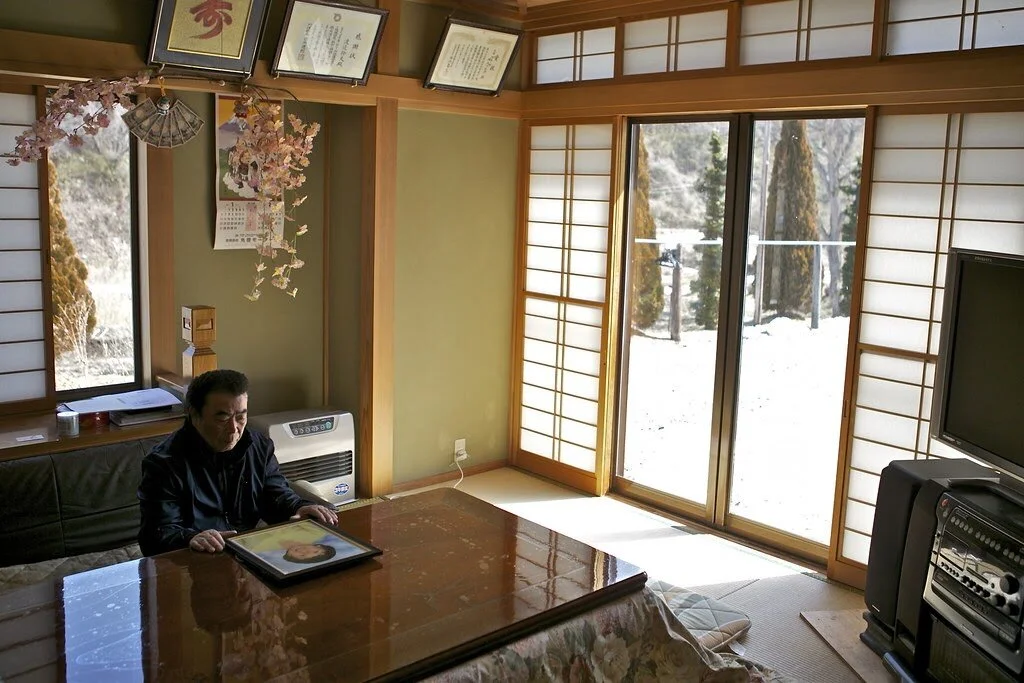
An elderly man with a picture of his late wife. Al-Jazeera English. CC BY-SA 2.0.
Local communities feel the absence of locals. As residents begin to plan for the future, they struggle to build a new community amid the ruins of an old one. Ancestral homes sit empty. Classrooms are frozen in time at the moment of the tsunami. Farmers spent generations breeding prized lines of livestock which are now useless. Radiated cattle, horses and pigs—as well as hunted boar—cannot be consumed because of radiated meat. Once famous for its produce, the prefecture’s fruits and vegetables now sell for below the national average. Though radiation tests ensure that the food is safe to eat, the stigma of nuclear disaster keeps customers away.
Hope Tourism seeks to make these ruins the foundation of the future. The group offers tours through areas that reflect both the devastation wrought by the nuclear disaster and the communal efforts toward reconstruction. Tourists see the abandoned elementary school in Ukedo, roads bent out of line by the tsunami’s rip current and black bags filled with radioactive soil. They can also tour villages trying to revive their local industries and meet community leaders who spread awareness about the dangers of nuclear fallout.
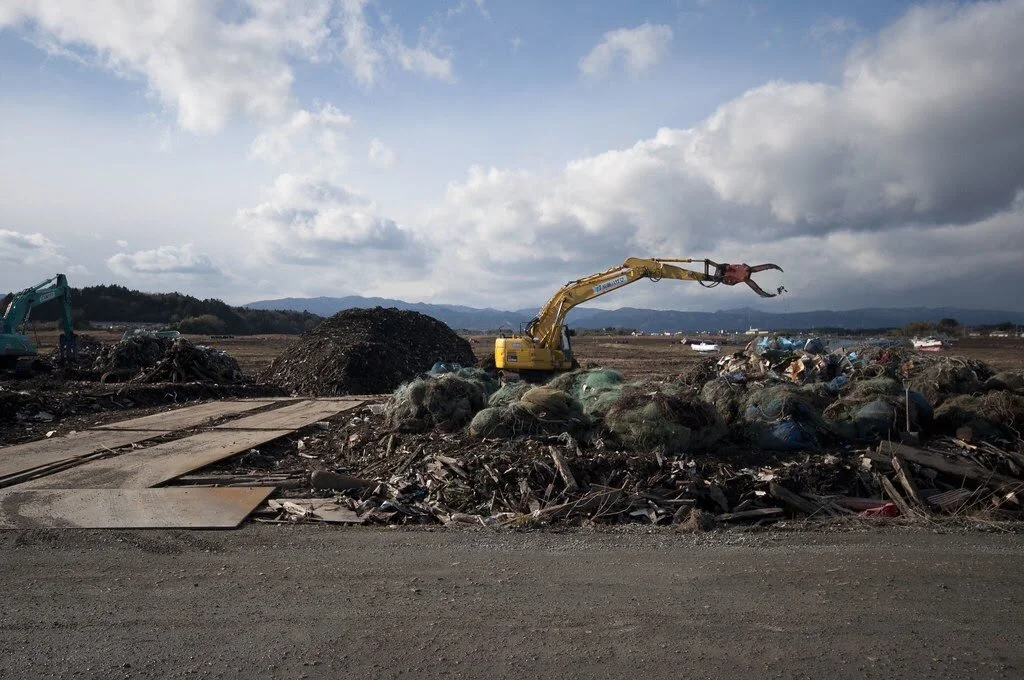
Where to put radioactive waste? UCLAnewsroom. CC BY-NC-SA 2.0.
In the face of hardship, locals still express pride in their roots. Iitate village joined the exclusive club of “most beautiful villages of Japan” in 2010, only to be wrecked by the tsunami and ensuing meltdowns. Ten years later, locals gathered to celebrate the opening of a new community center. It was built from parts of abandoned buildings: windows from old businesses, doors from run-down houses, a chalkboard from a school with no children to attend. An elderly woman in a green kimono sang folk tunes while the crowd enjoyed chestnut-filled rice balls. The Hope Tourism website states the village’s motto is a single word: madei. It means “thoughtfully” or “wholeheartedly” in the local dialect. It refers to the steady, persistent progress toward a revived community.
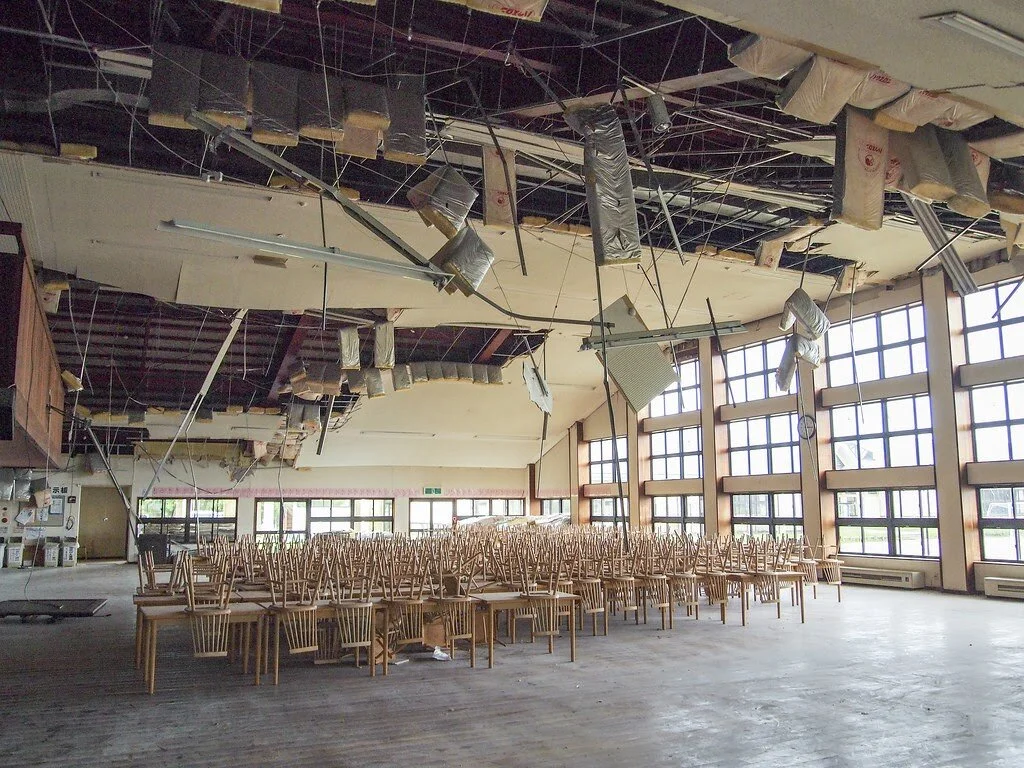
An abandoned building. Patrick Vierthaler. CC BY-NC 2.0.
The fight against nature’s invasion of Fukushima’s villages still preoccupies recently decontaminated zones. The national government branded the upcoming Olympics as the “Recovery Olympics” to highlight the region’s progress since the disaster. The Olympic torch relay will begin at Fukushima’s J-Village sports complex, which workers used as a base during the crisis in 2011. Japan will need to escape the shadow of the Fukushima disaster if the government is to accomplish key items on its agenda. Prime Minister Yoshihide Suga pledged a carbon neutral Japan by 2050, an unthinkable prospect without nuclear power.
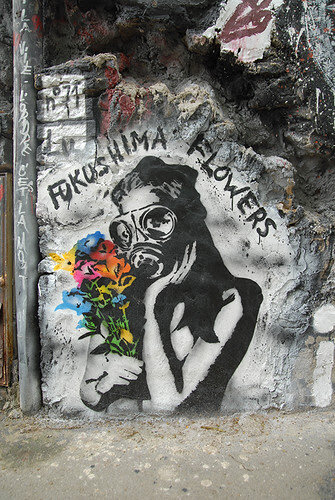
A radioactive bouquet. Abode of Chaos. CC BY 2.0.
National priorities rarely concern those repopulating Fukushima, though. They focus on the day-to-day resurrections of ghost towns. Some still search for ghosts. “I often tell people that my daughter would be a very independent and successful adult out in the world,” says one man. He lost his entire family in the tsunami, including his young daughter. “She was the type of girl other people could rely on.” With a shovel, a trowel and his gardening gloves, he digs through the soil for his daughter’s remains. “I’ve found about 20% of her, but 80% is still missing,” he says. “That means she’s definitely still here.”
Radiated livestock are marked with a white symbol that tells farmers the animal was affected by the 2011 meltdowns. There is no such symbol for the psychic wounds that Fukushima’s disaster continues to exact on its people.
Michael McCarthy
Michael is an undergraduate student at Haverford College, dodging the pandemic by taking a gap year. He writes in a variety of genres, and his time in high school debate renders political writing an inevitable fascination. Writing at Catalyst and the Bi-Co News, a student-run newspaper, provides an outlet for this passion. In the future, he intends to keep writing in mediums both informative and creative.