
This video was produced by Promotion of Women's Rights project (2002-2011), predecessor to Access to Justice for Women project. The video comprises an overall introduction to women's status in Cambodia as well as the main actions undertaken by the Ministry of Women's Affairs -with the support from GIZ- in order to tackle gender inequalities and gender-based violence in Cambodia.
VIDEO: Dirt Court Dreams in Africa
Just outside the southern wall of Kibera, the largest urban slum in Africa, is Sadili Oval Sports Academy. Meaning "well-being" in Swahili," Sadili is a social enterprise that uses sports as a means to reach out to children and young people in need - both in the slums and from across East Africa.
"Dirt Court Dreams" centers on Flo - a Kibera resident and tennis coach - and reflects how Sadili has made her life better and through her has, and is, improving the lives of many others.
VIDEO: Samuel in the Clouds of Bolivia
In Bolivia, the glaciers are melting. Samuel, an old ski lift operator, is looking out of a window on the rooftop of the world. Through generations his family lived and worked in the snowy mountains, but now snow fails. While scientists are discussing and measuring ominous changes Samuel honors the ancient mountain spirits. Clouds continue to drift by.
VIDEO: Inner Me
While following Jemima, a little curious girl who wanders through dusty roads, crowded markets, slaughterhouses, furnaces and bat hunters, we get acquainted with three women who describe the harsh realities of being born female and deaf in a society that discriminates against both women and people with disabilities. The stories of Immaculée, Sylvie and Stuka are stories of everyday struggle against marginalization, abuse, and oppression, but despite the insurmountable obstacles imposed on them by society, the protagonists show us how their strong and undefeated will allows them to take hold of their fate every single day and reveals the beautiful resilience of the human spirit.
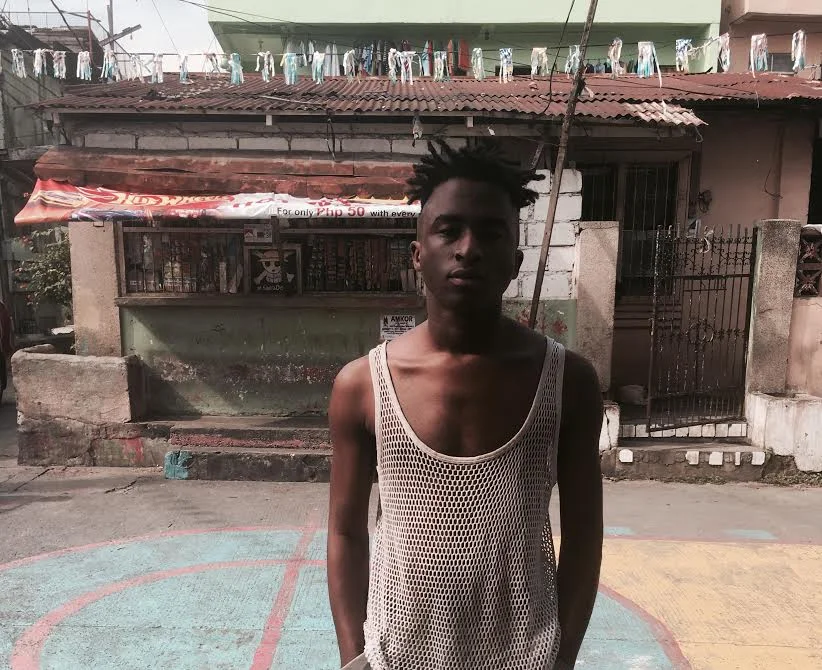
I Was Called The N Word in The Philippines
It was only my second day in the Philippines and my Couchsurfing host invited me to watch a basketball game that he was playing in. Granted, the Philippines was a completely new country to me. I never thought that 2017 would bring me to Southeast Asia, but it has. In the Philippines, the heat makes you sweat relentlessly and you have to take numerous showers a day. Stray dogs and cats search for food in the streets, and trees are a beautiful invasion in the cities I’ve visited thus far. So much of it reminds me of my childhood visits to see family in Jamaica.
I head to the game around six pm and sit with my Couchsurfing host’s friend. It is only day two, but I’ve already become accustomed to one thing here. People stare at me. A lot. I know it’s because I’m black and traveling. The questions are always the same when I meet a new person here.
Do you play basketball? Do you know Lebron James? Is your father tall, just like you? Do you have a girlfriend?
Although traveling is about leaving your comfort zone, there is something to be said about how the identities that we are given in this world will affect us when abroad. I would never wish that I were white so that I could travel and feel more comfortable in this sense. I simply wish my representation in the media wasn’t controlled by people like who me and not white CEO’s.
The game starts and I notice little children gathering near me. They stare, whisper to one another and giggle before running away. After a few minutes, one little boy comes up to me and smiles.
“What’s your name?” he shouts.
I smile and tell him, “My name is Ryant. How old are you?”
He holds up seven fingers and then runs off. His friends greet him with an explosion of laughter. I am sure he will get the award for Bravest Boy in the Neighborhood later. Soon all of the kids are surrounding me, climbing onto my lap and asking questions. I’m invigorated by all of the energy, but I can’t help, but feel like a weird toy that one of them found and can’t wait to show off. More questions are fired off, an auction of how much information I can spit out. Then it happens.
“You’re a n----!”
My Couchsurfing host’s friend is sitting nearby and doesn’t bat any eyelash. On the outside, I nod awkwardly, but on the inside, I don’t quite know what to think. Since starting and graduating college, I’ve filled my mind with the words of many famous black freedom fighters. Angela Davis, a famous black activist born in Birmingham, Alabama in 1944 and who later faced an unfair trial for crimes she didn’t commit, wrote about the children she met while in Cuba:
Despite the language barrier, the children accepted us as members of the family. They helped me with my Spanish lessons each day. I was extremely embarrassed that I had not learned a little Spanish before the trip, for it is an affront to a people to visit them before having attempted to learn their language. Because I spoke Spanish so poorly, never having studied it, I felt less inhibited with the children. They were patient, corrected me and helped me find words when no dictionary was available.
It was a sad day indeed when we had to pack up our things and board the bus, ready to move on to the next stage of our journey. All of us cried — men and women alike, in our delegation as well as on the Cuban side. The hardest part for me was saying good-bye to the children. A young boy of about nine or ten, who had always been the toughest one of his group, seemed reluctant to come up and say good-bye. I thought that it was his natural shyness. Just before I got into the bus, I went over to him and gave him a kiss on the cheek. He tore away from me and ran as fast as he could. But once in the bus, I saw him standing behind a tree, trying to conceal himself as his body shook with sobs. The tears that had been flooding my own eyes slid down my face.
I think of her often when I can’t immediately find the words to respond to an ignorant comment from an acquaintance or when I need a push to live out my ideals for social justice. I’m looking at the faces of these cute Filipino kids and wondering how I can possibly unravel to them my life, my pain, and what it takes for a twenty two year old gay, Caribbean American boy to uproot his life and buy a one way ticket to Southeast Asia.
I realize it’s impossible.
“You shouldn’t say that word,” I tell them. “In the United States, it’s very bad.”
Immediately the kids start to frown and look at each other in confusion.
“Why?” the first boy who ran up to me asks.
I tell them the basics. In the United States, black and brown people have been treated badly for a long time. That word was used by white people to make people that look like me feel bad.
“Oh… That word means gangster fighter in Tagalog.” the kid replies.
I laugh as the coach in the game blows the whistle on a foul. The serious part of me doesn’t want to laugh, but I can’t help it. One problem leads to another of a different shade I suppose. I can’t break down racial stereotypes to a group of elementary aged children just yet.
“Teach me some Tagalog.” I request.
They all giggle and teach me phrases. When the game is over, they pull me onto the court and beg me to shoot a basket. Inside I’m rolling my eyes and wishing this wasn’t happening this way, but my heart is still melting. They run around me, teach me how to dribble and all jump in excitement when I shoot a basket after a million tries.
On my walk home, they all ask to add me on Facebook and I am laughing more. I’ve accepted that these moments may be a reality wherever I go, but acceptance does not mean I won’t struggle towards a more loving way of life. Travel opens the eyelids, pumps blood into the heart and fills the body with moments of awe. I felt that awe as those kids stared at me with their curious eyes and interacted with me so openly. I knew that I could strive to do the same in return and attempt to shed light on confusing, yet present truths as well.
Yes, I was called the n-word in the Philippines, but I do not define myself by the rules that society sets for a black person, a traveler, or 22 year old who is just trying make sense of a messy world. Instead, I keep going forward with conviction, sure that I’ll speak up whenever is necessary along the way.
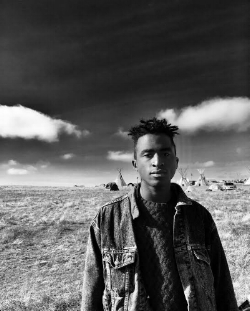
RYANT TAYLOR
Ryant Taylor is a writer and activist from Cleveland, Ohio. He has participated in protests in France, Ferguson, and Standing Rock. He is the creator of Decolonize The Mind, a travel blog, and is currently freelance writing in the Philippines.
How to Find Authenticity in a Globalized World
Why do we travel?
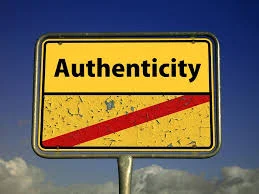
For those of us privileged enough to be able to travel voluntarily, reasons often include becoming more fully ourselves and experiencing something genuinely different. This desire for authenticity, in ourselves and in that which we perceive to be other and outside our current experiences, is widespread enough to be noticed and exploited by the tourism industry, with signs reading “experience the REAL Thailand” and “find yourself in Bali”.
Seeking authenticity in our travels comes from a good place. It highlights our desires for genuine interactions with other human beings, for learning about the experiences of those with different life paths and identities, and possibly even for utilizing our privilege to support real people instead of opportunistic corporations removed from the locations in which they operate.
However, as is the case with many good intentions, this desire for authenticity can be harmful. Much of this harm stems from a strict and arbitrary idea of what counts as authentic and the fact that the privileged traveler has the power to decide what makes the cut. For instance, while spending 3 months in Zimbabwe a few years ago, I asked several friends what their cuisine had looked like prior to British colonization. As their current main foodstuff, a labor-intensive dry porridge called sadza that holds its shape when spooned onto a plate, is made of cornmeal, it couldn’t have existed prior to the transfer of corn to Africa from the Americas. I’ve had similar questions about Italian, British and South Asian cuisines before tomatoes, potatoes, and chili peppers made a similar journey. From my perspective, sadza was a colonial by-product, as was the black tea served alongside it. When I shared this view with my friends, the effect was clear: my strict and arbitrary definition of what could be considered authentically Zimbabwean delegitimized and minimized their identity and emotional ties to the food they knew and loved.
This highlights a tendency in our search for authenticity - to regard older traditions and cultural forms and those which predate recent cultural exchange as more authentic. This viewpoint is understandable, especially as a reaction against the infiltration of Western corporations such as Coca Cola into most crannies of the world, including a remote village in eastern Zimbabwe, and the Westernization of many popular tourist destinations, from food offerings to street signs. Yet the reality is that all places and peoples are dynamic. Historical and current globalization, the movement of people, ideas and things, has fostered cultural exchange and the transformation of traditions over time. Cultures also evolve without interaction with outside forces. When we define authenticity as similarity of a particular part of a culture to its version at a particular point in history, we mistakenly regard people and places as static, freezing them in time.
Aside from our tendency to award authentic status to more longstanding traditions, we also withhold this label unless the cultural form feels “other” enough and different enough from our cultural forms to be plausibly untainted by them. But ironically and cruelly, our globally dominant culture and associated language simultaneously demand conformity for material gain and social acceptance. Without this, the inherent amount of difference between cultures would render many practically inaccessible to travelers.
When we travel in search of authenticity with these unconscious assumptions and unfair expectations lurking in our minds, we often end up unknowingly demanding that locals perform a certain version of their culture for our tourist dollars. The result is a paradox: we want specific historical versions of cultures that are different enough from our own to feel authentic but similar enough to actually understand and enjoy. We travel to search for authenticity, but by traveling we reinforce the global dominance of our culture which demeans and degrades the other cultures we seek to experience. Seeking authenticity obscures it from us.
It also shortchanges us. Traveling with a particular idea of what authentic looks, tastes, smells and sounds like creates expectations and takes our attention away from what is. When we’re less present with ourselves, where we are, and the people around us, we’re less likely to feel deeply satisfied in addition to being more likely to cause accidental harm.
So, what to do? Here are some guidelines for navigating these realities:
1. Take people and places as they are now
Don’t force them to live up to some idea conjured up by tourist companies, history books, or your own mind as the antithesis to your everyday life. Don’t expect them to be similar enough to be accessible and understandable to you. On the flip side, don’t expect them to be different enough so that you can feel like you’ve escaped your daily grind and your culture. Manage your expectations or avoid forming them. Of course, it is very hard to travel with no inkling of what you’re going to find once you arrive, but be honest with yourself. Why are you drawn to particular places? What expectations do you have? Find balance - have just enough foresight to plan yet not enough to keep you from accepting what is when you’re there. The best days often come when you're not expecting them.
2. Only do what you actually want to do
Travel guides and guidance from friends are riddled with “must sees”. What if nothing on those lists strikes your fancy? I almost always skip museums when I travel. While you could argue that I’m missing out on important historical context, I would argue that I’ve never absorbed this information from museums even when I’ve forced myself to go to them. Luckily, each place and culture and even person is unfathomably complex and contains endless dimensions. Engage in the same activities you enjoy in back home and try new ones which feel right. Do you in a new place. By living your truth while traveling, you’re more likely to find authenticity in the place you’re visiting.
3. Engage other cultures carefully
Cultural exchange can be mutually beneficial but it can also be oppressive. Acknowledge the power dynamics in your interactions with non-travelers. Be aware that you probably embody and therefore unknowingly reinforce ideals that other people must conform to in order to gain social currency and acceptance. And make sure your engagement with other cultures doesn’t cross the line into appropriation. Appropriation can take many forms, but it almost always involves travelers benefiting materially from or being praised for a particular cultural form while the people to whom that cultural form belongs are ridiculed, persecuted, or exploited for it. Engage from a place of humility to learn, not to seek validation or make money. Always respect the stated boundaries of engagement, and where appropriate, wait to be invited.
SARAH LANG
Instigated by studies in Sustainable Development at the University of Edinburgh, Sarah has spent the majority of her adult life between 20+ countries. She is intrigued by the global infrastructure that produces inequality and many interlocking revolutionary solutions to the ills of the world as we know it. As a purposeful nomad on a journey to eradicate oppression in all its forms, she has worked alongside locals from Sweden to Zimbabwe. She is a lover of compassionate critique, aligning impacts with intentions, and flipping (your view of) the world upside down.
Conscious Capitalism: Meet Gingi Medina, Founder of Equites, An Equestrian Lifestyle Brand
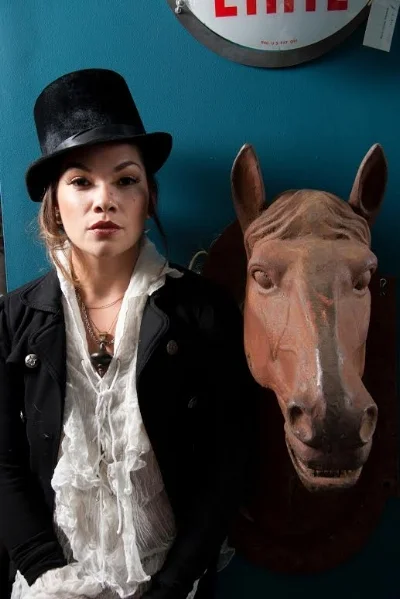
Gingi Medina
There is a duality that radiates from clothing designer Gingi Medina. She is a determined, audacious business owner, who also cares deeply about the world, and minimizing waste. She struck out on her own, in part, because of the massive overproduction she saw in her industry. After a dozen years working in fashion, Gingi became disgusted by the excessive wastefulness in the manufacturing process, and thought there must be a better way to produce beautifully made garments, without littering the planet.
She began brainstorming ways to use materials that utilized the entire plant, animal, or raw substance. After years of making clothes, bags, and goods, Medina founded the lifestyle brand, Equites. The company, which is known for its leather, uses reclaimed and raw materials that are sourced ethically, she says.
In deciding to make leather goods, Medina argues that it's an emission-less process. Leather is a "conscious material" she says, because it's sturdy, durable, and long lasting. "It's a forever piece," she says. "If I make a bag out of leather, it has a far less, if any, carbon footprint left on the planet." Leather, Medina claims, does not require much processing because it utilizes a material that is taken directly from a natural source, versus a synthetic piece or garment-- including vegan leather-- which is manufactured and produced with emissions. She says her goods can last a consumer’s lifetime, so a buyer will need only one of her bags for example, rather than multiple synthetic bags that eventually wear out and need to be replaced. "The carbon footprint from a manmade item is far more extensive," Medina says.
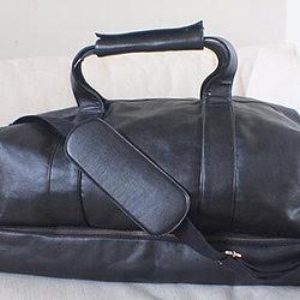
The Weekender Bag, £800 [$1006 USD]
Medina didn't always know she'd be a conscientious designer. As a child growing up in Los Angeles, she imagined she'd be "an astronaut or the next Madonna." Magician also made the list of what Gingi thought she'd do one day. By the time she was 9 years old, she began calling herself "a designer." She recalls watching her first fashion show and thinking of predicting trends, sewing, and being able to say, "I made that." Ten years later those predictions began springing to life, and she entered the fashion realm as a fit model for petites. One day a designer asked her what she wanted to do, and she replied, "your job." That not so quiet confidence, that some have called "crazy", has served her well.
During her younger years, while partying in Hollywood, she says she encountered a well-dressed guy. Upon learning he was a designer, she offered to be his apprentice, working for free. Everyday for a year, beginning at 7am, Gingi set out to learn all she could about design. She learned how to construct leather, metal and denim. She made clothes for rock musicians, and clothing for tours-- most notably Ozzfest.
Medina’s work has also included her dressing celebs, working on TV shows, and ensuring certain designers' wares were featured prominently via product placement. She's worked as a buyer, and also in private label-- offering clothing styles to retailers who then put their own label on the garments. Medina has worked and studied fashion overseas. It was during her travels abroad and also mingling with and being inspired by people who've worked abroad, that she had some of her most successful innovations. She designed the Von Dutch "No More Landmines" tee-shirt after Angelina Jolie did mission work with the Halo Trust, which deactivates land mines in war ravaged regions. It was also during this time, that Medina began to reflect on the inefficiencies within fashion production and wondered, "Am I harming or helping... in my career." She remembers seeing freight containers filled with the previous fashion season's discarded garments and the subsequent feelings of what such wastefulness does to the planet. She noted that her clothes, and other finely made garments, were items consumers could have "for a lifetime", and even be "passed down", minimizing some of the waste. The ideas for change were within her, still she said it was, "hard to keep focus when the world is crumbling around you."
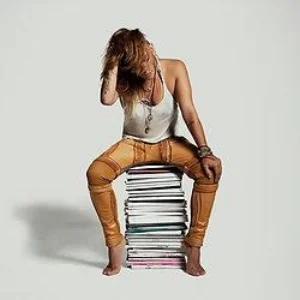
Leather Riders, £1800 [$2265 USD]
Ultimately, Median created her own brand, Equites, in 2011. She describes it as a "five tier label where performance meets fashion." Her line includes leather goods—pants, bags and jackets—but also cashmere, performance gear, and transition wear. She says her clothes serve as a "smart garment" that allows customers to segue "between worlds" and be just as comfortable and coiffed wearing riding pants, for instance, in an equestrian event as one would be at a premiere. Her line's leather pants, for example, are made of 17 panels sewed together on top of a water wicking, breathable legging, making it suitable for multi directional athletic endeavors and fitting to wear throughout the day.
When she initially showcased these designs, Gingi says her "idea was turned down by every label," so she produced them herself. Still committed to minimalism, and anti-waste, Gingi sought out hardware for use in buttons, and researched international communities that use the entire animal, and where she could also use their skins for her leather.
She found the Eid al-Adha, or the Festival/Feast of Sacrifice, in Indonesia. This global Muslim holiday commemorates Abraham's willingness to obey God, and sacrifice his son, who was ultimately spared, and a ram was sacrificed in his stead. During this multi-day festival, livestock—cows, goats, sheep, and camels, depending on the region—are sacrificed, and the meat, in part, is given to the poor. After the festival, some temples will sell the animal skins to Westerners, Medina says, which she considers ethical.
Gingi describes the “ethical use of a skin" as being "when the entire animal is used and not only sought out for its skin to make a product." Her company Equites, she says, searches "far and wide for leather or a fur that has already been used," to then "recycle or upcycle the piece into something new. [We] make sure we know where it's come from.” Medina asserts that she doesn't use slaughterhouse leathers, and does “not support, nor purchase from major manufacturing facilities,” but rather acquires her animal skins and materials in “smaller, traditional ways,” like from temples. The fabrics are naturally woven, she says, and there are no chemicals used in the dying process, which further eliminates waste.

Brass Capped Knee Height Riding Boots, £1000 [$1258 USD]
Once she gets the rawhide materials back to her factory, the leather is treated with natural ingredients like oils and rocks. Occasionally vegetable dyes are used, when a customer requests a special color. Much of her items are bespoke—made to order. Turnaround can take between 45-60 days, Gingi says. She says her method of manufacturing is less wasteful and more supportive of the planet. She claims there are no companies quite like hers. In an environment where most fashion lines are “being gluttonous and over-producing,” Gingi believes her company is “doing a better job.” Although she’s unfamiliar with any manufacturers creating clothes in the same manner and impact as she does, Medina welcomes competing brands. She wants to encourage companies to elevate their corporate responsibility.
Medina would also like to form an alliance across industries. Fashion is seen as a “status industry”, but Gingi also has a passion to “do right by the earth”, she says. Her warehouse is slated to use a Tesla Powerwall battery—which stores electricity and solar energy for later use—and she wants to partner with other companies that have a similar vision and commitment to the environment.
Medina’s company Equites is headquartered in London and the line will be available to the masses in Fall 2017. Her wares will be available in Harrods, Harvey Nichols, boutiques, country clubs, equestrian specific stores, and on her company’s website. During the company’s soft launch, Equites currently has jewelry and wearable art, bags, and boots available at equites.co.uk and on their Facebook page. The company is also offering an invitation to its show at London Fashion Week in September of 2017 to its first one hundred customers purchasing "diamond tier" levels of the selection pieces available pre-launch.
ALEXANDREA THORNTON
Alexandrea Thornton is a journalist and producer living in NY. A graduate of UC Berkeley and Columbia University, she splits her time between California and New York. She's an avid reader and is penning her first non-fiction book.
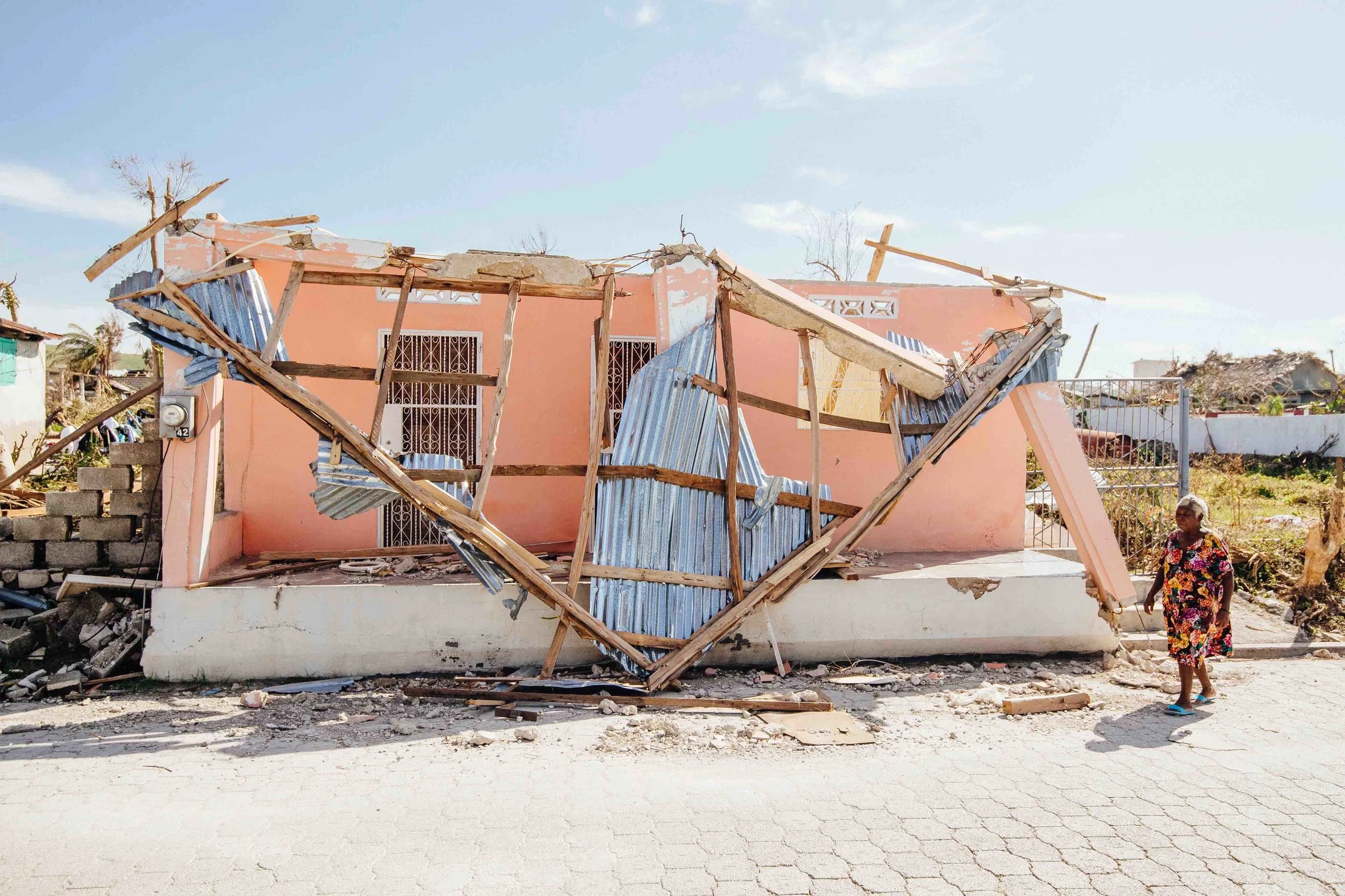
Photo credit: Waves for Water
Update from Waves for Water's Efforts Post-Hurricane Matthew in Haiti
Jon Rose, founder of the non-profit Waves for Water, sent CATALYST an update on recovery efforts in the wake of Hurricane Matthew.
It’s been just about two weeks since Hurricane Matthew made landfall on the South Western tip of Haiti. Two long, hard weeks for millions of people affected by this catastrophic event. In retrospect, I went into this one a little cocky, I think, mostly because I feel so comfortable in Haiti. It felt like no matter how bad it was going to be, it was happening in a place that feels like a second home. I thought the relief plan/action would also be easier because we have such a solid, extensive local network and team there. And I thought my own psychological capacity would be more balanced on this one because I had gone through it before, in the same country. I assumed a bunch of things…
Well, the universe sure has a way of humbling us. In other words, I was mistaken on just about everything.
By day two on the ground, our W4W country director, Fritz Pierre Louis, and I, sat shaking our heads in disbelief. We basically had to throw everything that we thought we knew or expected out the window – to start fresh, as if this was an entirely new country. It is a different beast entirely than the 2010 earthquake that leveled Port-au-Prince.
Why? Many reasons, but I’ll list a few:
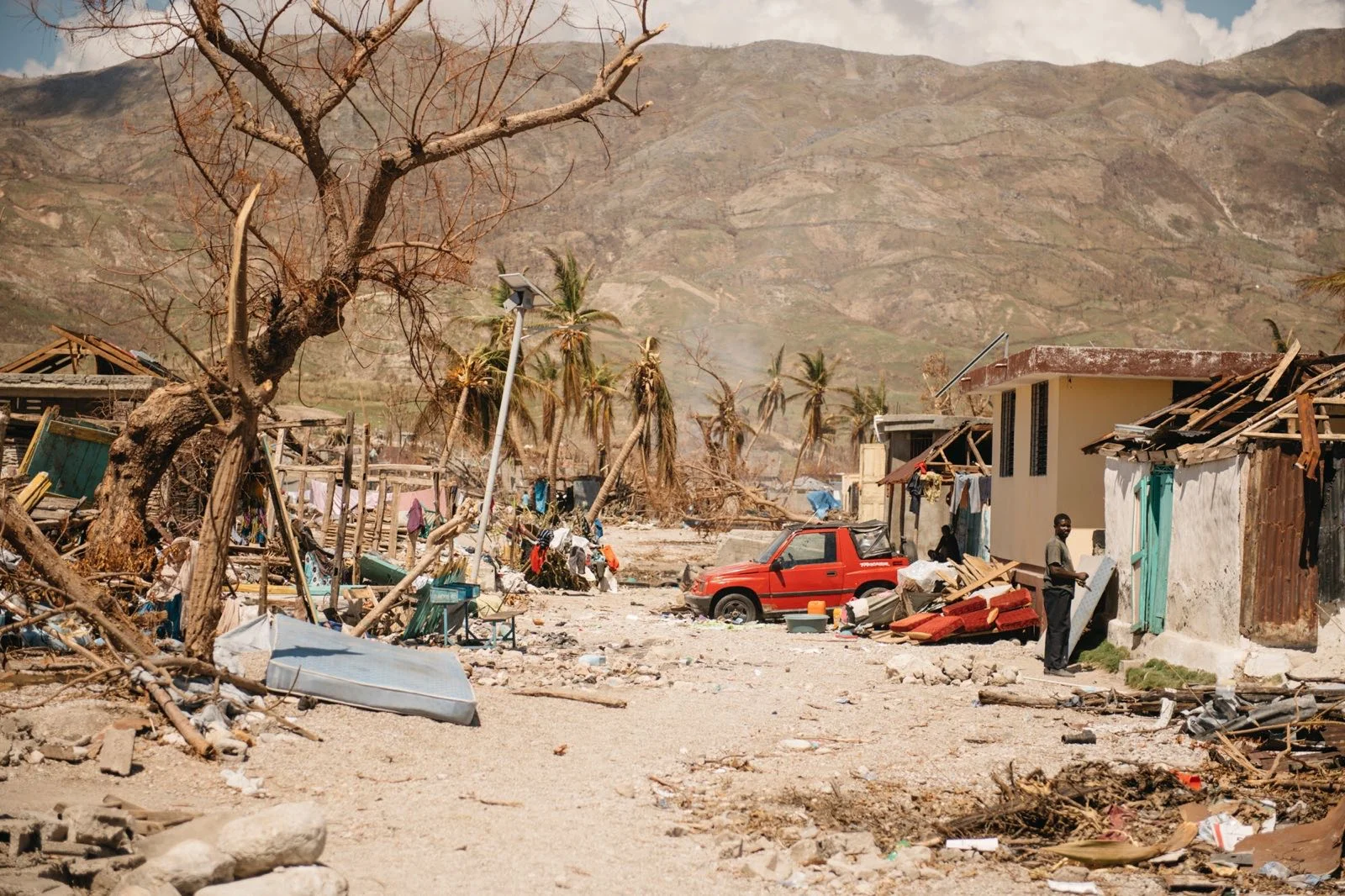
Photo credit: Waves for W
1. Scope of Destruction -
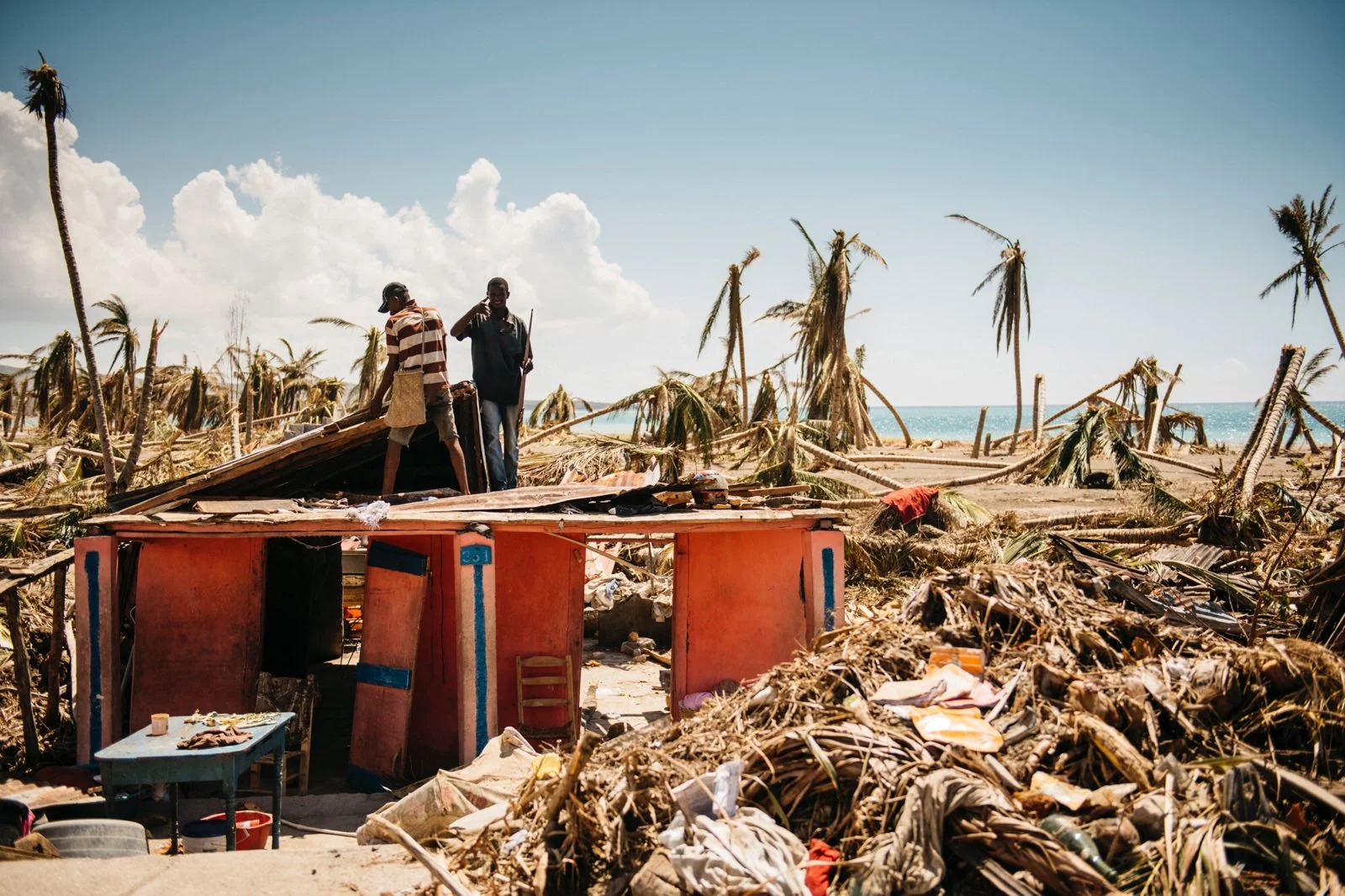
Earthquakes have an epicenter – a narrower, more pinpointed area of impact. With hurricanes of this size the swath of destruction can cover hundreds of miles in all directions, leaving town after town after town leveled. The mountain villages see tornado-force winds (140 mph) with flash flooding that turns each valley into a violent river, destroying anything in its path. The coastal towns get the worst of it with those same tornado-force winds mixed with a 15-20 ft+ storm surge (aka tsunami). Basically a storm like Hurricane Matthew is like if a tsunami and a tornado got in a fight. The sheer scale of devastation, the widespread scope, has left many very experienced relief agencies (including us) with the very hard decision of where to start first.
2. Remote Area -
The majority of the Southwestern tip of Haiti is quite rural. Which means that most of the towns that got hit hardest are small and hard to get to on a normal day – windy coastal roads or mountainous dirt roads the only way in or out. This was before the storm. Now, most of those roads have been compromised, leaving relief capabilities at a bare minimum. For many of these places, supplies can really only be dropped by sea or air, which both tend to have limited payload capacity. This limits not only the speed with which supplies can come in, but the quantity. And with the massive amount of need, quantity is everything at the moment. Normally, relief initiatives will set up a solid distribution outpost in or around all the ground zero areas and then create a regular flow of supplies to feed those outposts (almost always by convoys of large trucks). This just isn’t possible for many of these places, and it won’t be for some time – bridges and roads are washed out, making them only passable via 4x4 vehicles that can traverse the riverbeds.
3. Base of Operations -
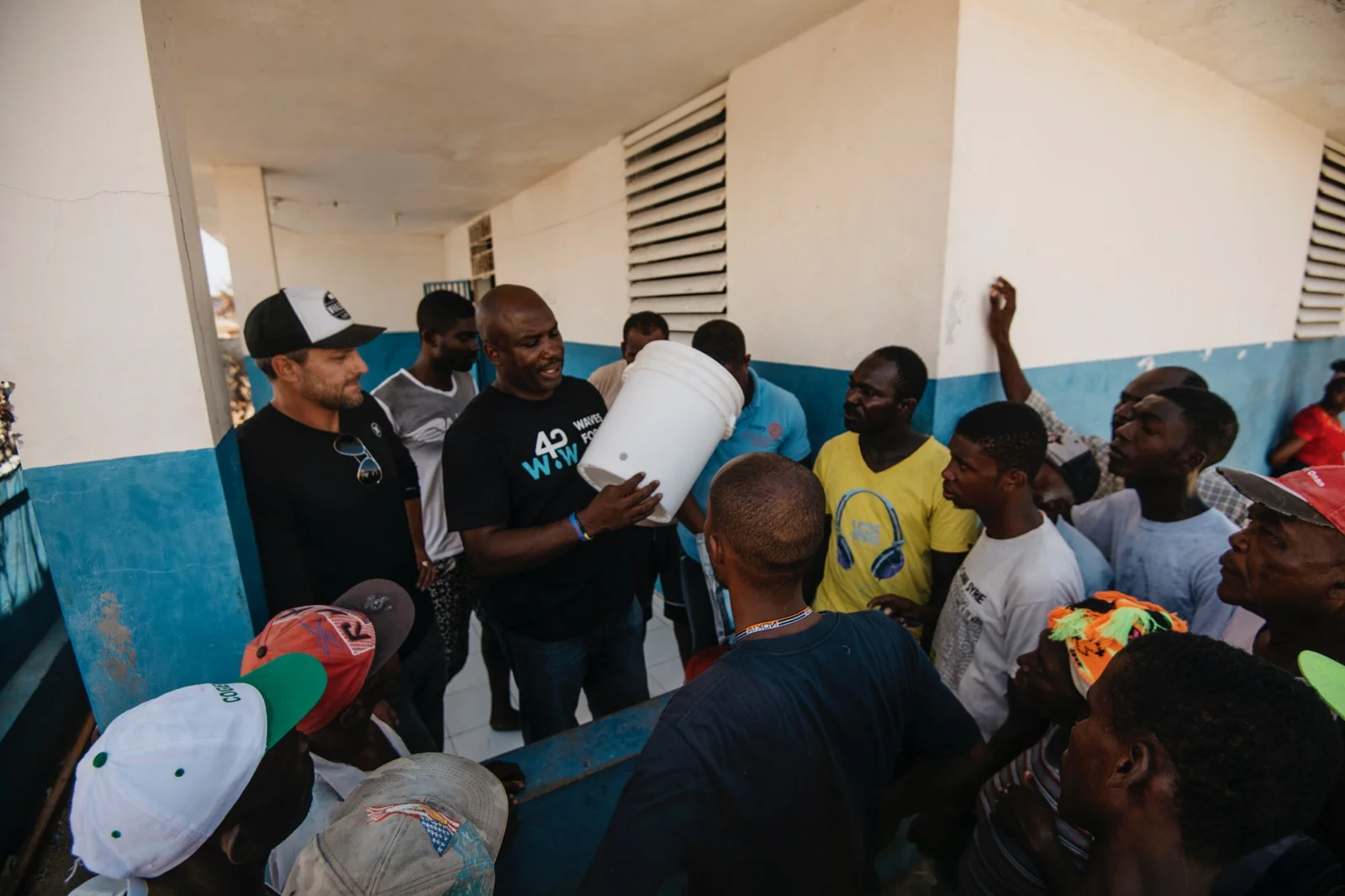
In any good, large-scale/long-term disaster relief initiative, a solid BOO (base of operations) is imperative. This is the place from which teams can do all their planning/staging. It is basically home, office, and everything in between for the duration of the initiative. It needs to be close to ground zero, but with enough breathing room to create a habitable environment. It can often be a scenario as simple/rugged as a camp with tents, or commandeering an old building, or in the best case there are hotels or private rentals available. But in all these cases, we find a way to ensure the teams are safe and have what they need to do their job – power, cell and internet service, food, water, etc. In this case, the only real option was in the city of Les Cayes, which got hit really damn hard itself. But there is an airstrip, it has some hotels still operating on generators, cell service is in and out, and there is water and food accessible. The problem is some of the hardest hit areas are 4-5 hrs drive on 4x4 roads, so the amount one team can do per day, staging from so far away, is incredibly limiting. Until some of the major infrastructural issues in that part of the country are restored (roads, power, etc), which will be months, it’s nearly impossible for relief teams to set up proper long-term operations in those hardest hit areas. The only exceptions are small, targeted teams that can travel lightly in 4x4’s because they don’t have bulky supplies, such as ours (we can carry 200 water filtration systems and 100 solar powered LED lanterns, in two 4x4 vehicles), or medical triage teams. We have seen some of the medical teams already posted up throughout the region, in whatever buildings are still standing. But those aren’t long term operations, as medical is mostly needed in this initial stage.
These are all things I’ve encountered (individually) before, over the many disasters we've worked. But it’s the combination of them all at once that is making this thing such a beast. The only other one I’ve seen with a magnitude like this was Typhoon Haiyan in the Philippines, which is still known as the largest storm ever recorded. If Haiyan is the largest, then Matthew was its equally evil twin brother, whose only difference is being a few seconds younger.
So, what does all this mean for W4W? After two weeks of traversing the whole Southwest, we now have a very accurate assessment of the hardest hit zones and a good plan to serve them. I shall note, unlike the majority of our other disaster relief initiatives, this one will include a few new categories of relief beyond our normal focus of access to clean water.
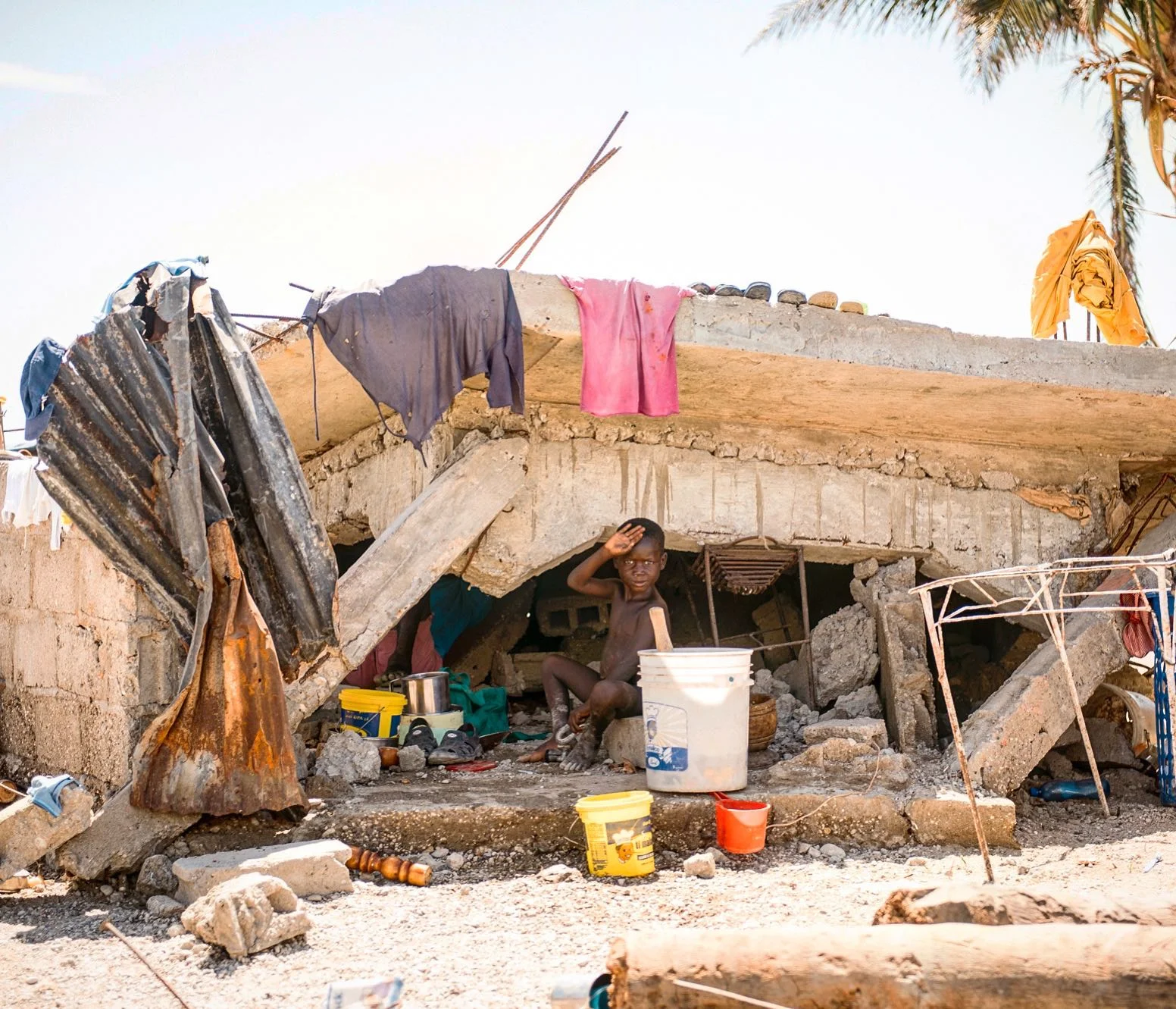
Despite all challenges, W4W has hit the ground running with an action plan that focuses on access to the following essentials:
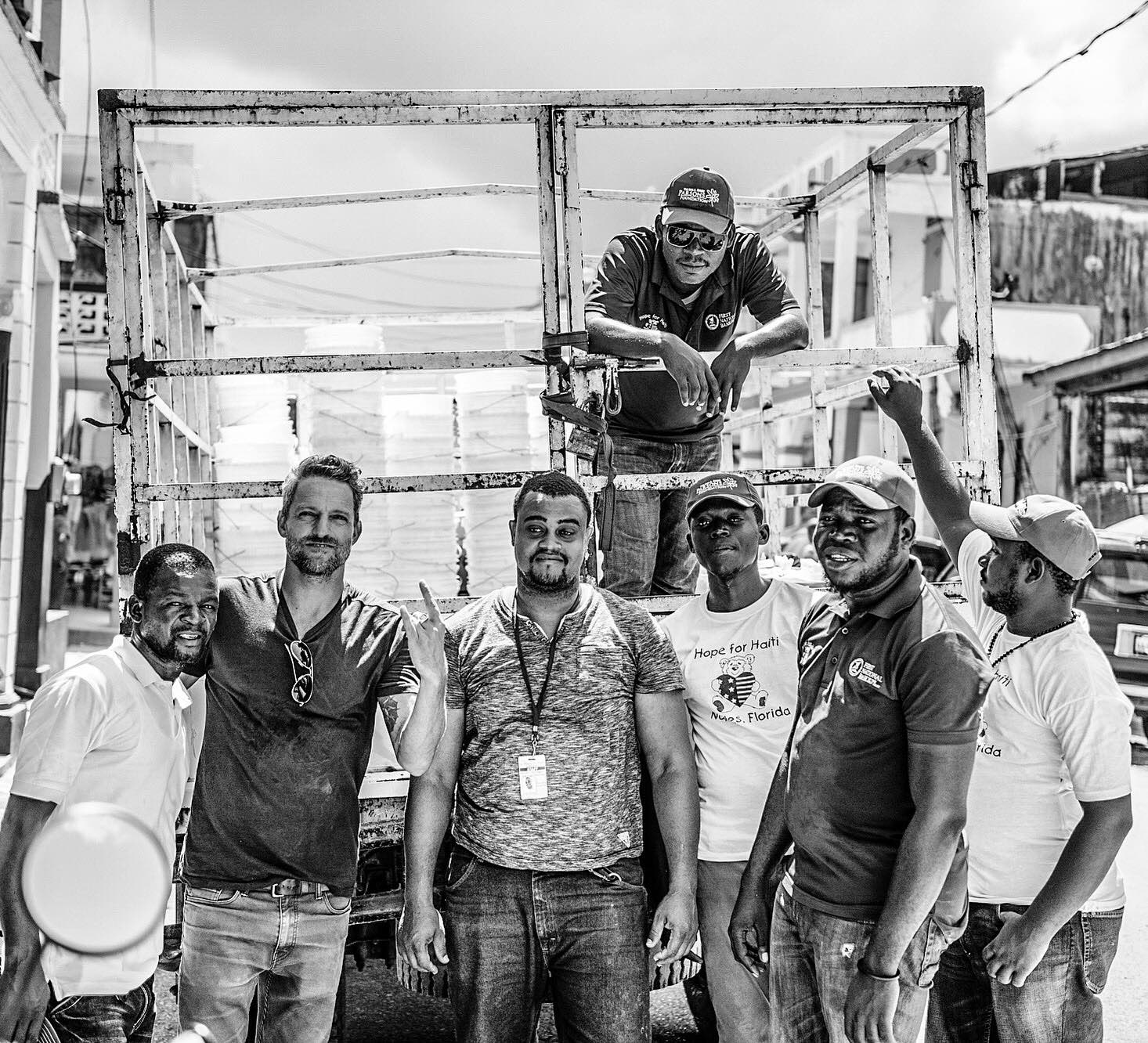
1. Water -
Access to clean water will still be our main focus, with a targeted implementation strategy aimed almost entirely on cholera hotspots. There have been over 20 new (Matthew related) cases of cholera that have popped up and these numbers are expected to rise dramatically in the coming weeks. Clean water is kryptonite for waterborne diseases such as cholera, so the more we target the areas where it is starting to spread, the better chance we have of curbing the amount of cases popping up, and prevent new ones. We did a very similar program in 2011, when the first outbreak happened in the Artibonite department of Haiti. In partnership with UN’s CVR division, we implemented 4,000 water filtration kits, with a full WASH (water, sanitation, hygiene) education protocol/training, directly in two of the epicenters of the outbreak (Mirebalais and Saint Marc). Shortly thereafter, reported cases leveled out. The implementation strategy for our program this time will be very similar – we’ve identified five areas where confirmed cases have popped-up, or ones we feel are most susceptible to developing them. We will focus the majority of our water filter supply on these areas. We realize that so many places need access to clean water (even before the storm), but since we have limited resources and can’t help everyone, we feel that the best way for us to make the biggest impact is to target our efforts, by tackling the cholera issue head on.
2. Light -
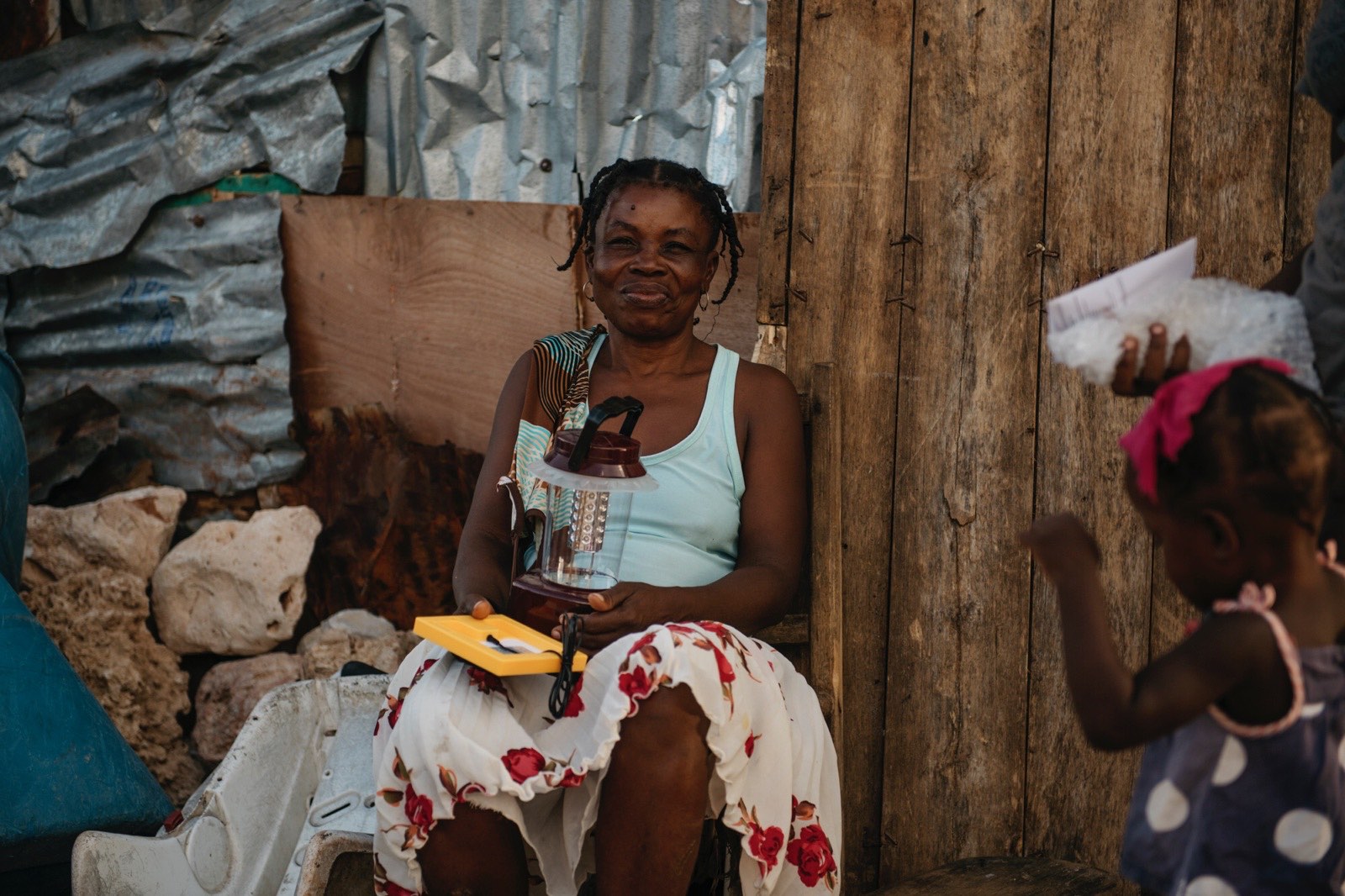
One of the main things that we feel is being overlooked is lighting. The power is out in all of these areas and will be for months. This means that once the sun goes down it is pitch black. There are obvious reasons why this is a challenge, but one of the major issues is safety. Light = community, people gather around any light source when it’s dark. To put it bluntly, a good light source dramatically cuts down the scenario of young women being alone/vulnerable in whatever dark shelter they’re staying. Right now, some families are burning small fires, inside or near their makeshift shelters. Which brings up other safety concerns in terms of breathing in smoke in a confined space, not to mention the incredible discomfort from the added heat alone. It’s already extremely hot, even at night. All of these points, we’ve witnessed personally, and has now brought this topic to the forefront for us. We feel that it is imperative to add this facet to our Matthew Relief Initiative. The lights we are implementing are solar powered LED lanterns that also have a USB port to charge a cellphone, as well as a built in radio (one of the primary ways that rural communities get their news/information). As a last little added bonus, we’ve sourced the lights in-country – so by adding them into our program, we are also contributing to the local economy.
3. Cash for Work -
We are establishing small scale CFW (cash-for-work) programs, focused primarily on rubble/debris removal from, starting with roads and community centers. These types of programs are widely used in development and disaster initiatives around the world. In a disaster situation, it’s a good way to help spark the local economy and fill some of the gaps left from the vacuum that follows a catastrophe such as this. The bottom line – everything has been stripped from these folks (including their jobs) and they need money, so rather than just give straight hand-outs, it's best to employ them, as there is so much to be done and they want/need the work. It's an honest job for services rendered, just like many of them had before. Local residents are already rallying and working for free to help their communities as best they can, but that doesn't put food on the table at the end of the day. The whole thing is overwhelming for them, so something like this helps to restore at least a little normalcy.
Given the conclusions I’ve come to from the last two weeks on the ground and our vast experience in this field, I feel like we are well equipped to not only handle this, but to create a large-scale, long lasting, impact.
I will also note that even though these first two weeks were primarily focused around assessing the situation on the ground, we also started implementing of all three facets of the program. At this point, we've already distributed 500 water filtration systems and 300 solar lanterns in eight communities — Port Salut, Chardonnieres, Port-a-Piment, Coteaux, Les Cayes, Aquin, Jeremie, and Leogane. We've done this through some of our existing local networks and in collaboration with NGO partners such as (Les Cayes based) Hope for Haiti and local Rotary Club chapters. Lastly, in terms of our CFW (cash-for-work) initiative, we kicked things off with the clearing of rubble/debris on the main road in Chardonnieres.
As our programs gain more traction in the coming weeks/months, more updates from us will follow. Thanks to all of you who have supported and believed in this initiative so far… this stuff simply doesn’t happen without you.
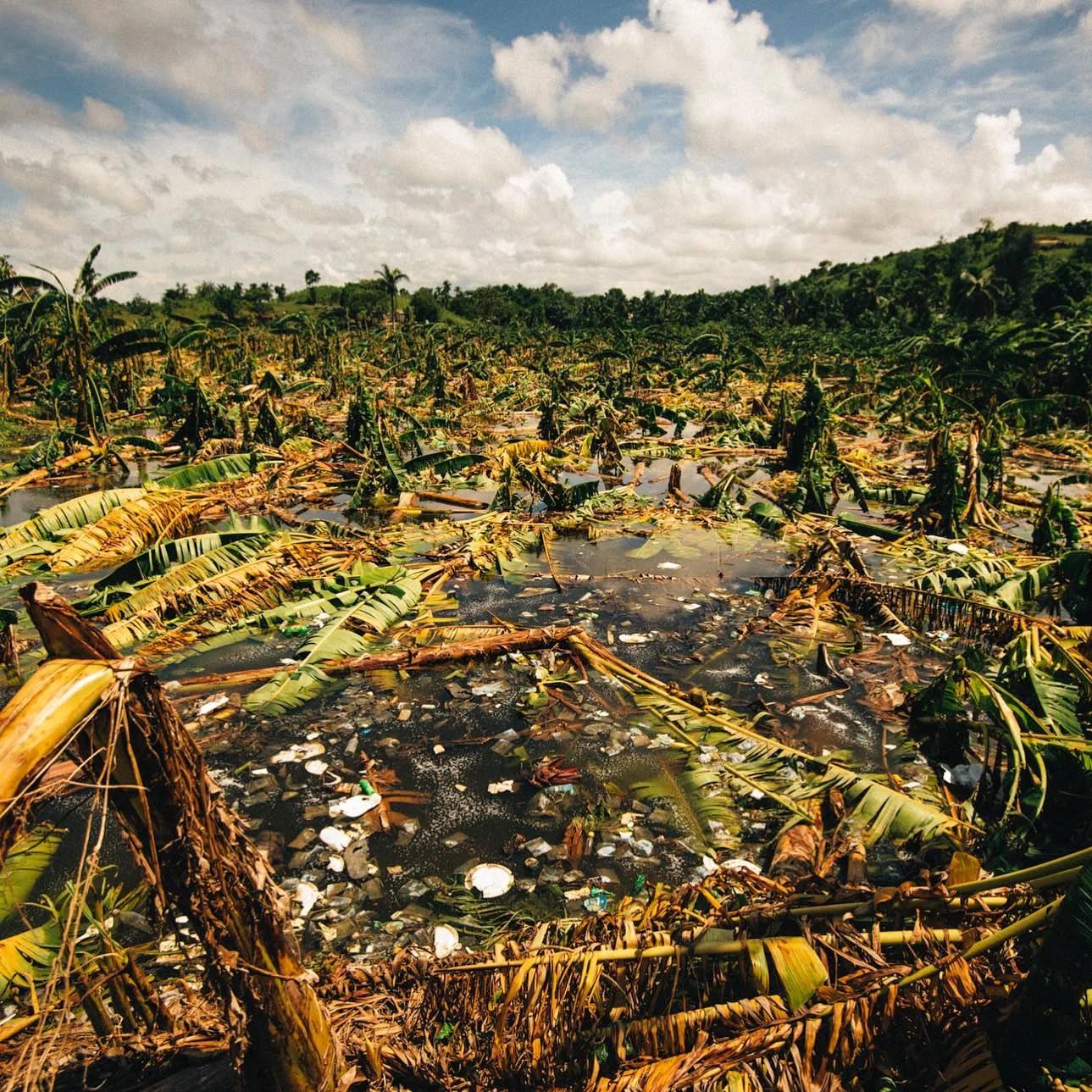
Look out for updates from W4W on their website: www.wavesforwater.org
Jon Rose
Jon Rose is the founder and CEO of Waves for Water, a non-profit organization that helps bring clean water to areas that lack consistent access to it. W4W does this through its Clean Water Courier program, which is based on a Do-It-Yourself humanitarian model.
What You Need to Know About Water and Sanitation
Water, Sanitation and Hygiene, or WASH, are issues that affect the health and wellbeing of every person in the world. Everyone needs clean water to drink. Everyone needs a safe place to pee and poop. And everyone needs to be able to clean themselves. For many people, WASH concerns are taken for granted and their combined impact on life isn’t always appreciated.
But for hundreds of millions of others, water, sanitation and hygiene are constant sources of stress and illness. The quality of water, sanitation and hygiene in a person’s life is directly correlated to poverty, as it is usually joined by lack of education, lack of opportunity and gender inequality.
What's the scope of the problem?
780 million people do not have regular access to clean water.
2.4 billion people, or 35% of the global population, do not have access to adequate sanitation.
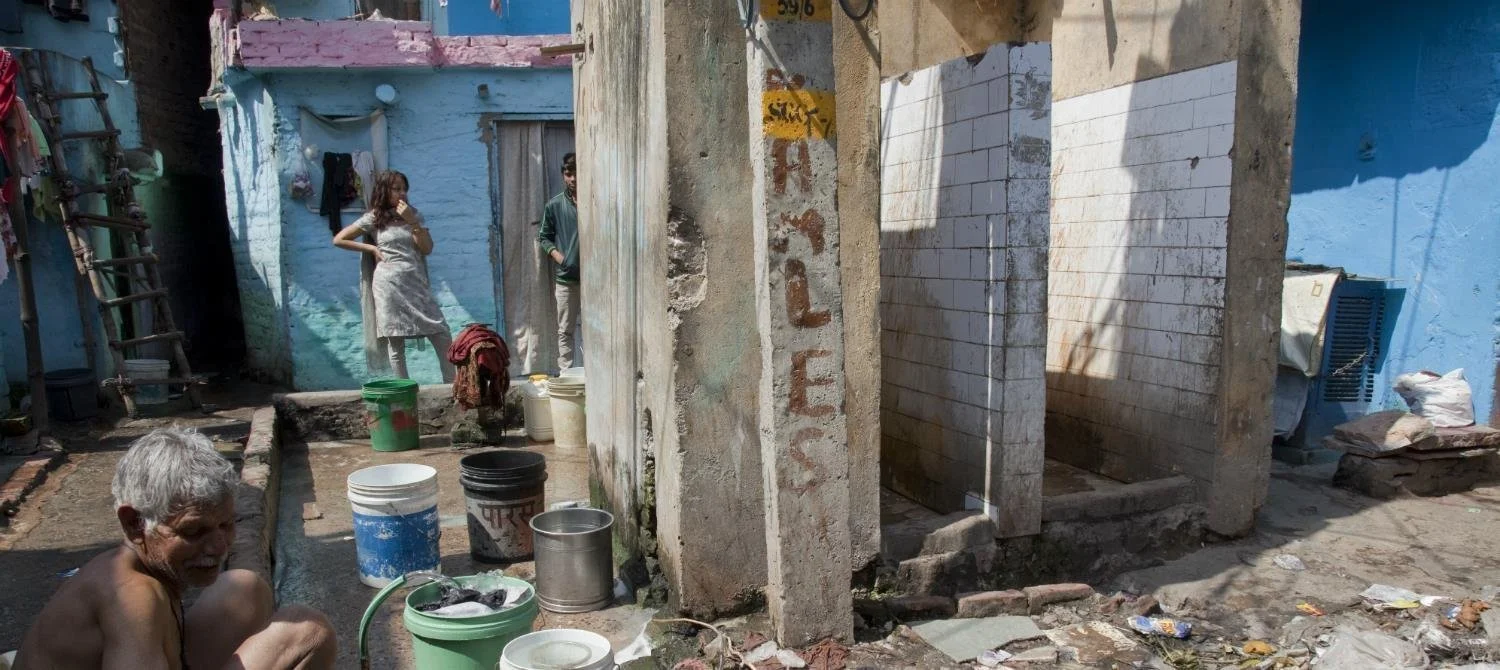
Photo credit: Flickr - Gates Foundation
Inadequate sanitation generally means open defecation. When people defecate in the open without a proper waste management system, then the feces generally seeps into and contaminates water systems. Just standing in an open defecation zone can lead to disease, if, for instance, the person is barefoot and parasites are there.
The problem is concentrated in Sub-Saharan Africa, Southern Asia and Eastern Asia. The country with the most people lacking adequate WASH is India.
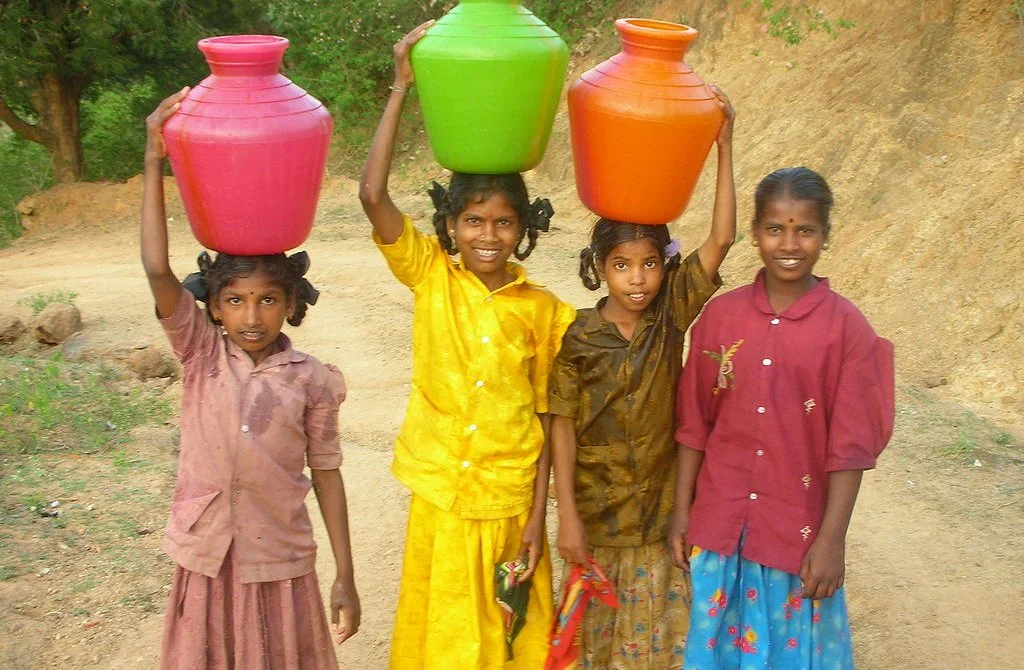
Girls are the hardest hit by lack of clean water and sanitation for a few reasons. When schools lack functional toilets or latrines, girls often drop out because of the stigma associated with periods. Also, when families don’t have enough water, girls are generally forced to travel hours to gather some, leaving little time for school. This lack of education then contributes to higher poverty rates for women.
What are the health risks?
There are a lot of health risks associated with inadequate WASH. Just imagine what it would be like if you were drinking contaminated water and everyone in your community defecated in the open.
801,000 kids under the age of 5 die each year because of diarrhea. 88% of these cases are traced to contaminated water and lack of sanitation.
More than a billion people are infected by parasites from contaminated water or open defecation. One of these parasites is called the Guinea Worm Disease, which consists of worms up to 1 meter in size that emerge from the body through blisters.
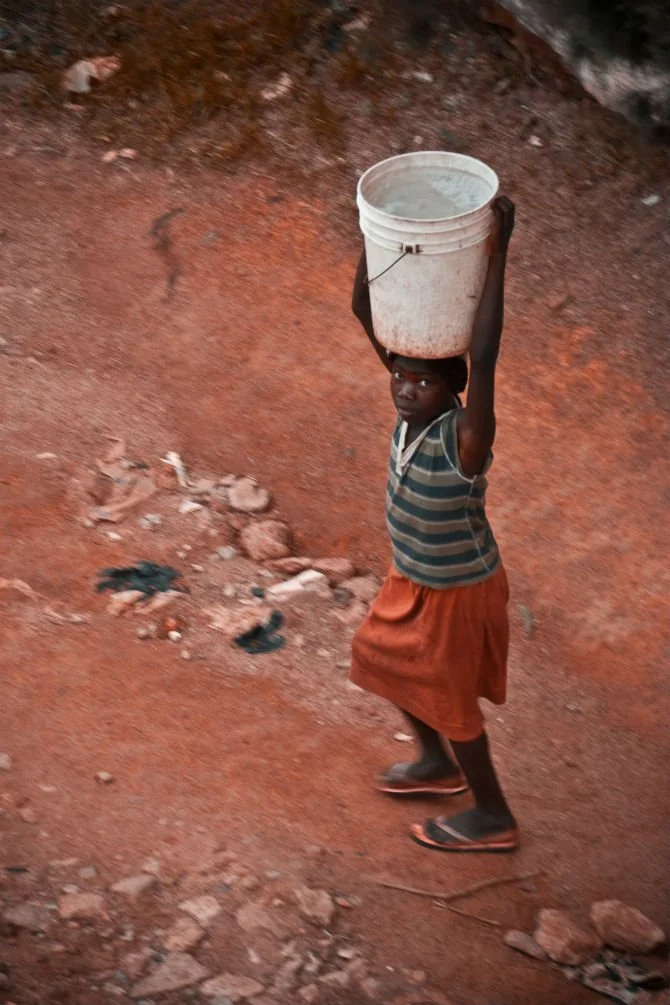
Photo credit: Flickr - Andrew Moore
The bacterial infection Trachoma generally comes from contaminated water and is a leading cause of blindness in the world.
Other common WASH-related diseases include Cholera, Typhoid and Dysentery.
And, again, step back to consider what life without clean water and adequate sanitation would be like. A lot of your time would be spent trying to get clean water and avoid sanitation problems in the first place. And the hours not revolving around these concerns would probably be reduced quality of life because of the many minor health problems associated with poor water quality. Ultimately, inadequate WASH leads to reduced quality of life all the time.
What's being done?
For every $1 USD invested in WASH programs, economies gain $5 to $46 USD. In the US, for instance, water infrastructure investments had a 23 to 1 return rate in the 20th century. When people aren’t always getting sick, they’re more productive and everyone benefits.
While the numbers are daunting, a lot is being done. And the economic benefits of WASH investments make the likelihood of future investments and future progress much higher.
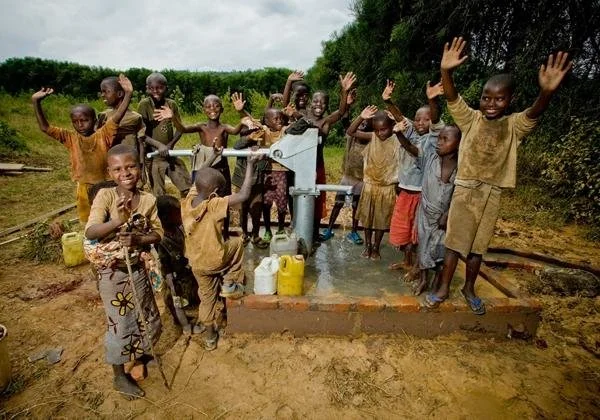
Some investments are small-scale, others are large-scale. On the smaller side of the spectrum, investments can go toward water purification methods, community wells or sources of water and the construction of community latrines.
Photo credit: Michael Sheldrick
For instance, in a slum in Nairobi, Kenya, the government recently installed ATM-style water dispensers that provide clean water to the whole community.
Larger scale investments include piped household water connections and household toilets with adequate sewage systems or septic tanks.
An often overlooked aspect of WASH involves behavioral hygiene, and, more specifically, hand washing. Simply washing your hands with soap can reduce the risk of various diseases, including the number 1 killer of the world’s poorest children: pneumonia.
What progress has been made?
In 1990, 76% of the global population had access to safe drinking water and 54% had access to adequate sanitation facilities.
In 2015, even though the population had climbed by more than 2 billion people, 91% of people had access to safe drinking water and 68% had access to improved sanitation.
That means in 25 years, 2.6 billion people gained access to safe drinking water and 2.1 billion gained access to improved sanitation.
India is currently in the process of an unprecedented WASH investment program. At the 2014 Global Citizen Festival, Prime Minister Narendra Modi committed to end open defecation in the country and has since mobilized substantial resources with the help of The World Bank.
What role does Global Citizen play in all this?
Global Citizen puts pressure on world leaders to focus on and direct money to poverty solutions around the world. When it comes to WASH, global citizens have helped raise awareness of the various associated problems and motivate politicians to invest in specific programs.
ORIGINALLY PUBLISHED ON GLOBAL CITIZEN

JOE MCCARTHY
Joe McCarthy is a Content Creator at Global Citizen. He believes apathy is the biggest threat to creating a more just world and tries his hardest to stay open-minded and curious. Living in New York keeps him aware of how interconnected our world is, how every action has ripples.

Photo credit: Lisa Forseth
Highlights from Mashable's Social Good Summit 2016
“It’s the spirit of innovation, of risk taking, of daring that we need now more than ever in the humanitarian world,” Ravi Gurumurthy of the International Rescue Committee said. Gurumurthy was one of many leaders to speak at Mashable’s Social Good Summit, where topics ranged from mental health to child marriage to social activism. The two day conference (mentioned in last week’s roundup) brought speakers from around the world to lead roughly 55 sessions.
All of the sessions can be viewed here, but let’s take a minute to look at five of the highlights:
01 | Vice President Joe Biden and His Renewed Fight Against Cancer
"Imagine, just imagine, what the world could look like in 2030 if we're smart and we work like hell." Vice President Joe Biden’s message on day two was one of optimism. His three-part plan aims to end cancer by the year 2030 and "accelerate progress toward prevention, treatment and a cure." He spoke confidently of modern technology and international cooperation finishing the fight against cancer. Watch his 45-minute session here. Source: Mashable
02 | Minister Mohammad Al Gergawi’s New Measure of Success
In the session “Future and Hope,” Kathy Calvin sat down with Mohammad Al Gergawi, United Arab Emirates Minister of Cabinet Affairs and the Future. His title might seem far fetched, but the UAE has been focused on modernizing their government positions. Al Gergawi’s position is joined by a Minister of Happiness, a Minister of Tolerance, and a Youth Minister. Together, they represent the UAE’s new defense in the fight against terrorism and extremism: happiness, technology, and hope.
03 | The Social Progress Imperative Releases the People’s Report Cards
In line with the summit’s mission, the Social Progress Imperative teamed up with Global Citizen to create a new way to “grade” world governments on their alignment with the United Nations’ 17 Sustainable Development Goals. The People’s Report Cards is a way for citizens to hold their governments accountable to the promise they made one year ago. (See last week’s roundup and Impact 2030.) Currently the world’s overall grade is only a C+: something Social Progress Imperative aims to improve with the People’s Report Cards.
04 | Memory Banda’s Courage in Standing Up Against Child Marriage
Memory Banda’s cause holds a personal importance to her: at the age of 13 she was nearly married off to a man much older than her. Now she champions the end of child marriage around the world. During her short interview “Rise Up,” Banda shared just a little bit about the Girls Empowerment Newport, which helped pass a law in Malawi banning child marriage and protecting 4 million girls. But the fight isn’t over, and Banda encourages other countries to follow Malawi’s lead. Source: Mashable
05 | An important Conversation with Ertharin Cousin
Social Good Editor Matt Petronzio welcomed the Executive Director of the World Food Programme in his “A Conversation with Ertharin Cousin.” After presenting a short video showing refugees suffering from malnourishment in South Sudan, the two launched in a discussion of what the rest of the world can do to help. While the task might be daunting, Cousin admitted, WFP uses technology to make it easier for individuals to help. Their “Share the meal” app allows people to provide food for children in Zomba—and it only costs US $0.50 to feed a child for a day. With that app and other kinds of technology being used to fight hunger, Cousin is hopeful of achieving the no hunger goal by 2030.
ORIGINALLY PUBLISHED ON CONSCIOUS MAGAZINE

MICHALAH BELL
Michalah Bell is a writer for Conscious Magazine.
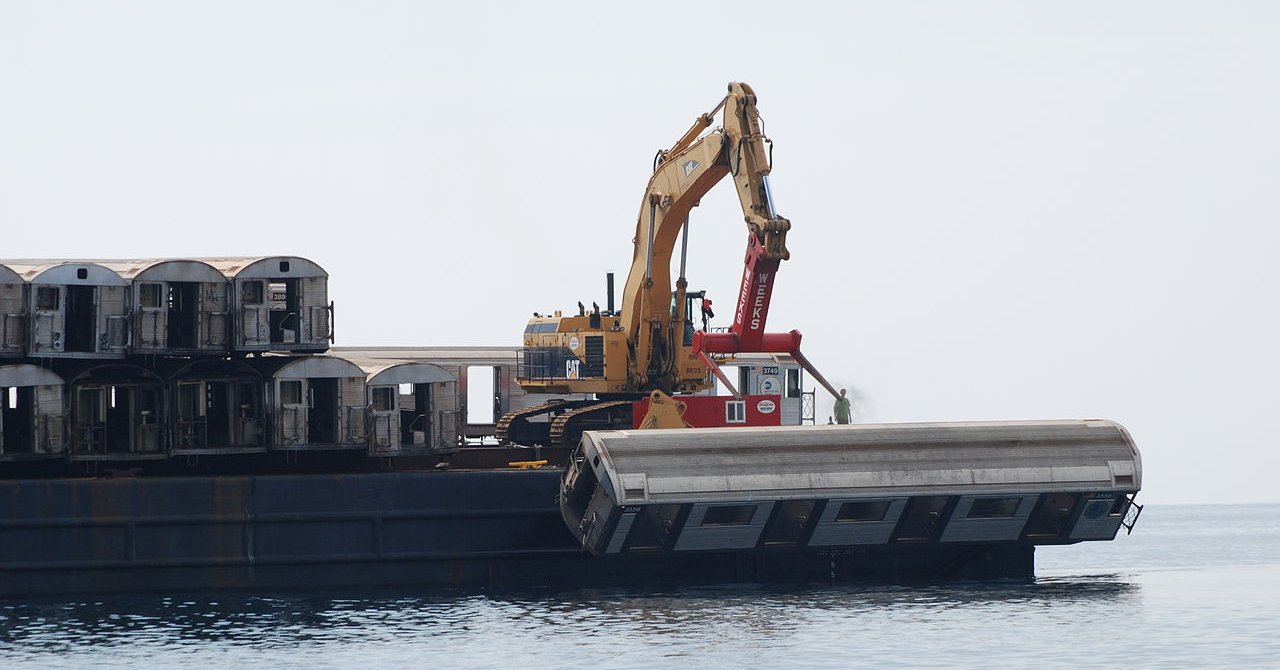
Photo credit: Wikipedia Commons - scdnr
VIDEO: Old Subway Cars and Planes Get a Second Chance Underwater as Thriving Ecosystems in the USA
We’ve have all heard the phrase, “one man’s trash is another man’s treasure,” but New York's Metropolitan Transit Authority has turned their trash into a marine treasure.
Over 2,500 retired New York City subway cars have been hauled out to the the deepest, coldest parts of the Atlantic ocean and thrown overboard one by one into the ocean using a hydraulic lift. But before you panic, it’s okay. It’s actually a good thing!
As these stripped carbon steel subway cars reach the darkest lows of the ocean floor they are warmly welcomed by their soon-to-be marine life inhabitants. Over time, the cars become part of the underwater ecosystem, creating an artificial reef system, providing surfaces for invertebrates to live on and shelter for fish playing hide and seek with their predators.
The Subway cars act as “luxury condominiums for [the] fish,” providing more surface area for food and marine life to grow and flourish.
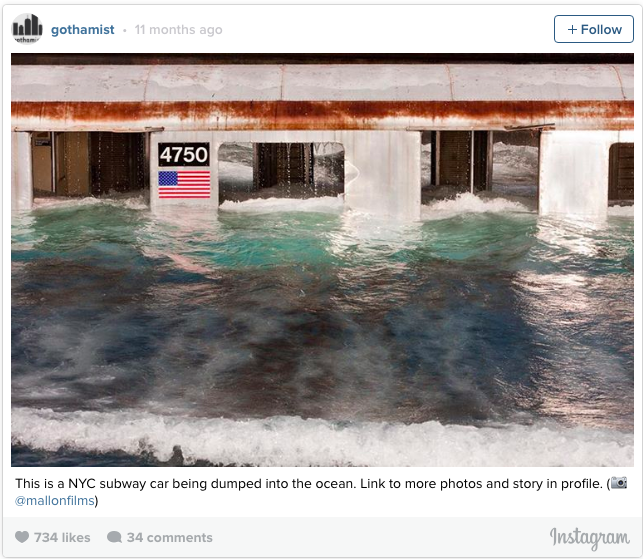
Though the project ended in 2010 and no new cars have been taken to sea, the Delaware Department of Natural Resources and Environmental Control has reported a 400% increase in the amount of marine food available per square foot. While this particular project only ran for 10 years, the changes it sparked are self-sustaining and the benefits will last much longer than that.
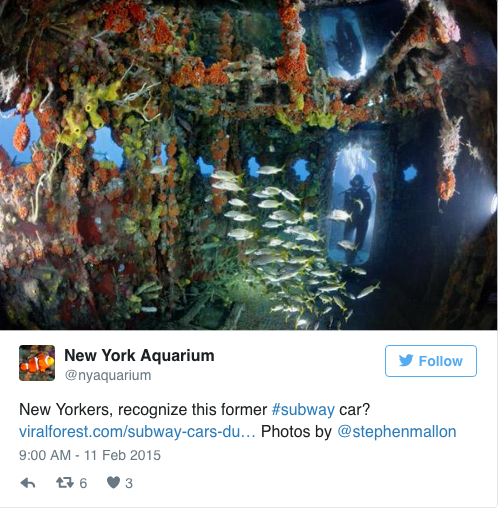
Restoring the ocean’s reefs helps to restore balance to marine ecosystems that have been damaged by pollution, coral bleaching, and overfishing which can allow algae to overtake and smother reefs.
Oceans make up 97% the world’s water, produce half of its oxygen, provide food and livelihoods, and regulate climate. But we’re damaging reefs and polluting the water. It’s important that we work towards restoring our oceans and reefs to preserve marine life and return balance to the system.
The benefits of creating artificial reefs from retired subway cars are two-fold. Sinking these cars is a great way to recycle them, without sinking the MTA’s budget, and goes a long way toward restoring reefs.
It’s worked so well that Turkey just put a plane into the water in the hopes of creating a thriving artificial reef and capturing the attention of experienced divers.
Now don’t you wish you could get a little subway car or plane for your fishbowl?
ORIGINALLY PUBLISHED ON GLOBAL CITIZEN
ZAIMAH ABBAS
Zaimah Abbas is a social media associate at Global Citizen.
DANIELE SELBY
Daniele Selby is a freelance writer for Global Citizen. She is currently a Master's of International Affairs candidate focusing on human rights and humanitarian policy at Columbia's University's School of International and Public Affairs. She believes that education and equal provision of human rights will empower change.
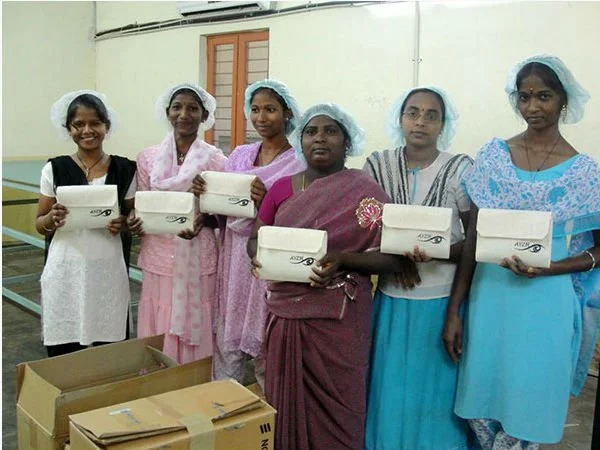
Photo credit: ayzh
These $2 Birth Kits Could Save Millions of Lives
Around 830 women die every day because of childbirths that go wrong. For every woman who dies, 20 to 30 more women incur long-term health consequences.
99% of these health problems occur in the developing world. The vast majority could be avoided if basic resources were made available and skilled health providers were more common.
Oftentimes, women acquire fatal infections from unsanitary medical supplies or environments. Other leading causes of maternal mortality include excessive bleeding and hypertensive disorders.
Reducing maternal mortality rates requires more health professionals and improved health infrastructure.
Progress also requires cheap supplies such as soap, clean towels, sterile medical equipment, gloves and rudimentary medicine.
When Zubaida Bai explored this problem she realized that the latter part was, theoretically, an easy fix.
Her background is in product engineering with a focus on social enterprise. She first started to think about maternal mortality when she contracted an infection after giving birth to her son.
Had Bai lived in a country without an adequate health care system, the infection could have become far worse. Millions of women with similar infections do not receive proper care and regularly die.
Bai created an organization to address this injustice. She named it ayzh, an acronym for the initials of her family members’ names. Ayzh is pronounced “eyes,” to convey how the organization looks at the world from a different angle.
She designed a biodegradable clean birth kit called Janma that sells for $2 to $5 USD and contains, “a soft, blood-absorbent sheet that provides a clean surface for birth; medicinal soap for the birth attendant; disposable gloves; a sterile blade to cut the umbilical cord and a sterile clamp to secure it.”
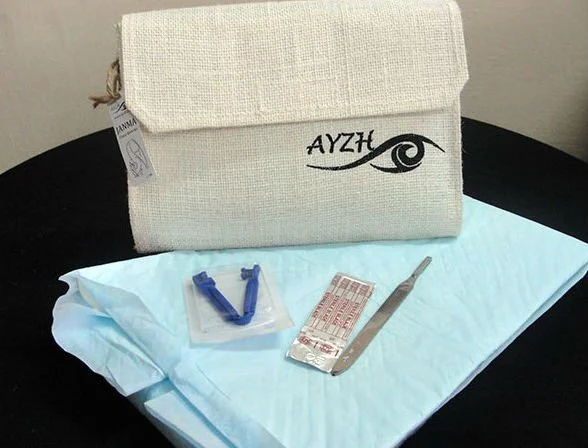
Photo credit: ayzh
The kits are sold to nonprofits that focus on improving maternal health outcomes and to hospitals and health providers around the world.
In some instances, the kits are assembled in local communities, potentially creating an opportunity for employment and enterprise.
Azyh has so far sold more than 100,000 kits in more than 11 countries. After their initial use, the kits can even be used as purses.
They’re working on a newborn kit to accompany the birth kit that will include, “a clean receiving blanket, infant hat, antibiotic eye cream, umbilical cord medication and gauze to apply it, that will retail for less than $5.”
The organization aims to distribute millions of health kits around the world, potentially saving millions of lives.
Large-scale investments in infrastructure and the training of medical professionals are obviously still needed and will have a much larger role to play in reducing maternal mortality. In the short term, with millions of women giving birth in unsafe environments every year, it may take entrepreneurs like Bai to save people through the simplest of innovations like an affordable birth kit.
ORIGINALLY PUBLISHED ON GLOBAL CITIZEN

JOE MCCARTHY
Joe McCarthy is a Content Creator at Global Citizen. He believes apathy is the biggest threat to creating a more just world and tries his hardest to stay open-minded and curious. Living in New York keeps him aware of how interconnected our world is, how every action has ripples.
VIDEO: Schoolgirls For Sale in Japan
In an effort to understand a growing underground trade of school-aged girls, Vice News interviews women who have been caught up in this sinister business.
VIDEO: E-Waste Tsunami in Delhi
Turning Tears to Power in Nepal
Young girls share their life stories with photographer Katie Orlinsky at a rescue center in Nepal that helps victims of sex trafficking regain their freedom and happiness.
Regularly described as one of the poorest and least developed countries in the world, Nepal is a ‘source’ country for traffickers, and its most marginalised people are also the most frequently targeted. While its capital Kathmandu benefits from a growing tourist economy, in general the country’s economic potential (for example, through opportunities to develop hydropower) is stunted by continued political instability, as well as very poor infrastructure.
Rural Nepalese — some 80% of its people — rely on subsistence farming, which frequently does not provide a stable or sufficient income to feed a family. It is under these already difficult circumstances that the sweet-talking and cajoling of sex traffickers infiltrate and take hold.
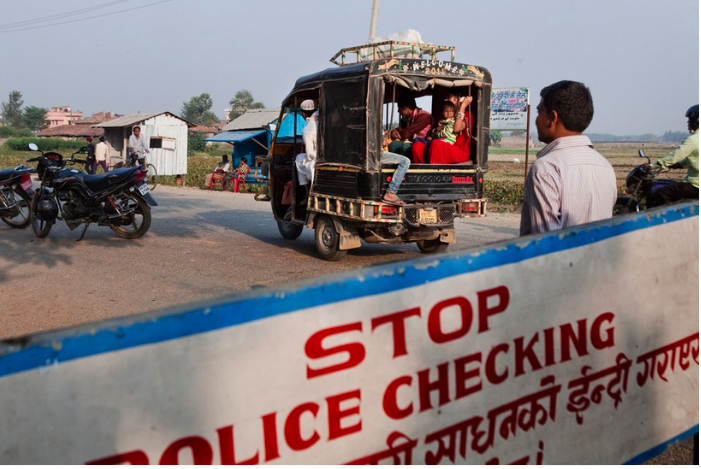
Passing through the India-Nepal border in Gaur, Nepal. Nepal’s border police have been notoriously lax in stopping suspected traffickers and are known to be susceptible to bribery. (Photograph: Katie Orlinsky) Narayani, Central Region, Nepal
Fake migration schemes are one of the most common ways girls end up trafficked. Job options are scarce in Nepal, and around 200,000 women leave to work abroad every year, mostly as domestic servants. Poor, rural women think they are going to be domestic workers in Dubai, but instead end up working as prostitutes in Delhi.
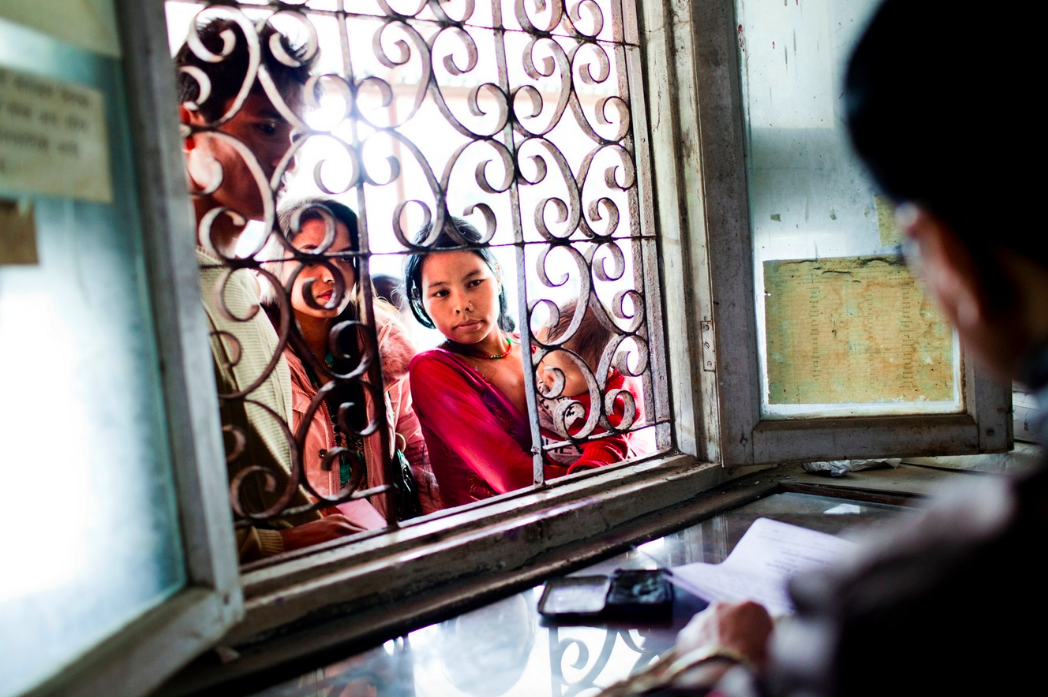
Seeking migration paperwork at the district administration office in Haidera. (Photograph: Katie Orlinsky) Narayani, Central Region, Nepal
The sex traffickers methods are varied and unpredictable, which is why so many people fall victim to trafficking in this region, despite the initiatives and interventions of extraordinary agencies on the ground.
Shakti Kendra in Kathmandu is one such shelter, managing to educate hundreds of girls. I met fifteen current residents during my stay, all survivors of trafficking to brothels in India or of rape within Nepal itself.
Founded by Charimaya Tamang — the first trafficking survivor in Nepal to press charges against her traffickers and win — all of the staff at the shelter are also formerly trafficked women, some of whom have been specially trained by Shakti Samuha in Japan on how to run workshops and look after their young charges.
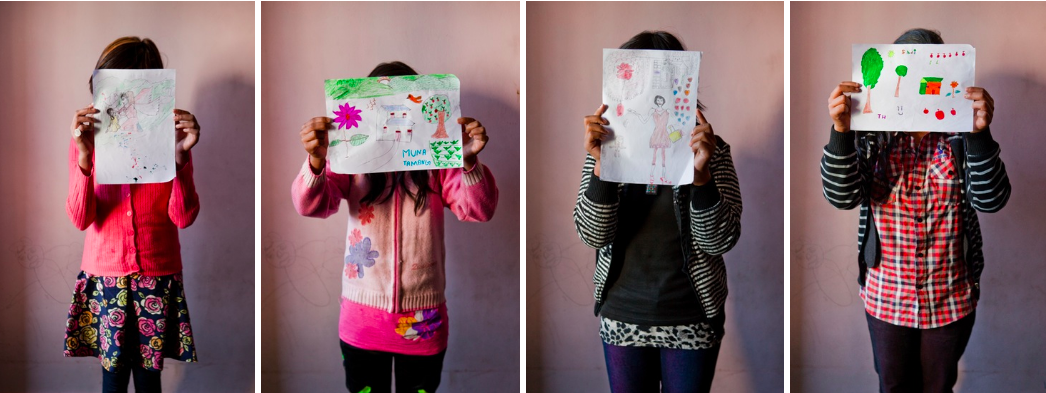
Young sex trafficking survivors at the Shakti Kendra shelter in Kathmandu, Nepal holds up their favorite drawings. From left to right, “an angel helping a girl in need”, “an imaginary house”, “going shopping”, “a house in the mountains” (Photographs: Katie Orlinsky) Kathmandu, Nepal
The children living at Shakti Kendra take classes at the centre and are also involved in drama, weaving and jewellery making programmes.
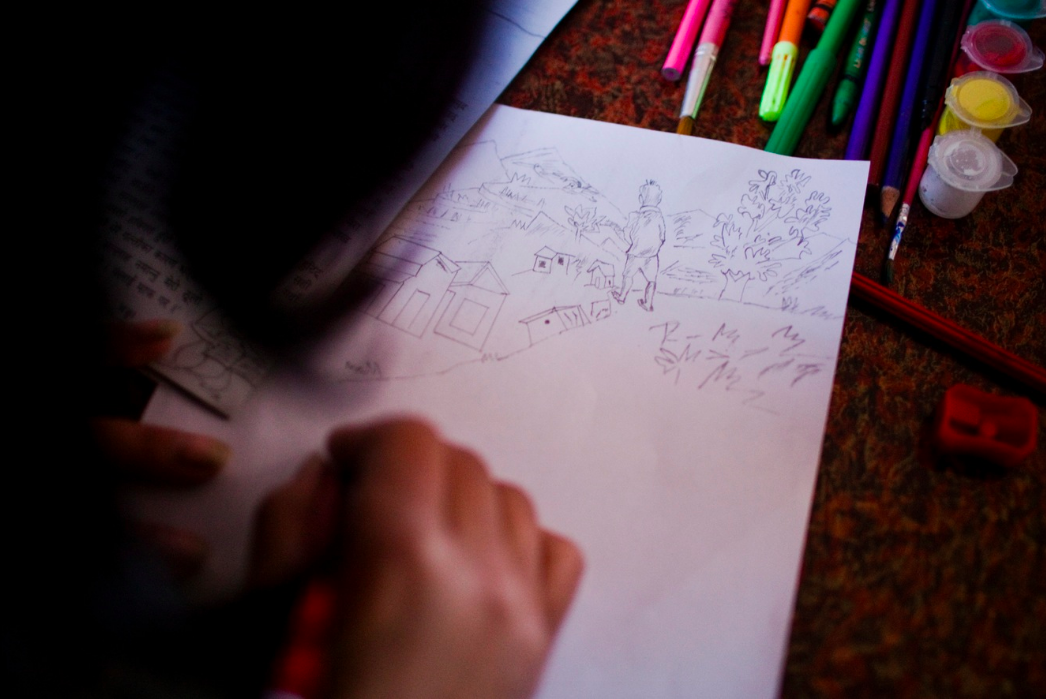
A young survivor at Shakti Kendra traces a scene from an anti-trafficking awareness cartoon. (Photograph: Katie Orlinsky) Kathmandu, Nepal
As a photographer, the Shakti Kendra shelter was an extremely challenging place to work. It has a strict media policy to protect the identities of all of its members. Still, I wanted to document the girls’ world, but it meant I had to be patient, and make a lot of images with turned backs, blurred faces and deep shadows.
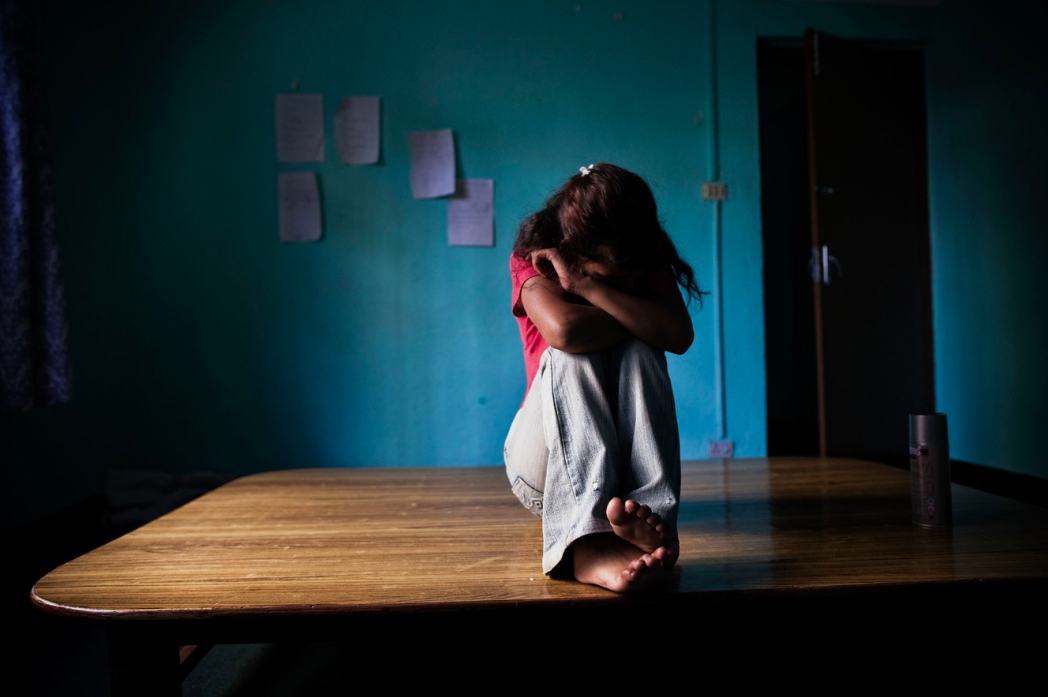
An underage trafficking survivor rehearsing a play about trafficking at Shakti Kendra shelter. (Photograph: Katie Orlinsky) Kathmandu, Nepal
In time, some of the adults opened up and let me tell their stories, but for the children, the policy was non-negotiable. Although frustrating from the point of view of documenting this issue, I respected this choice.
Trafficking survivors face huge stigma in Nepal, where the shame associated with the sex industry is so great that most survivors’ families don’t even want their own daughters to return home if they have been rescued.
A photograph discovered on the internet identifying a trafficked girl or woman could have repercussions — from an employer not wanting to hire them to a man not wanting to marry them.
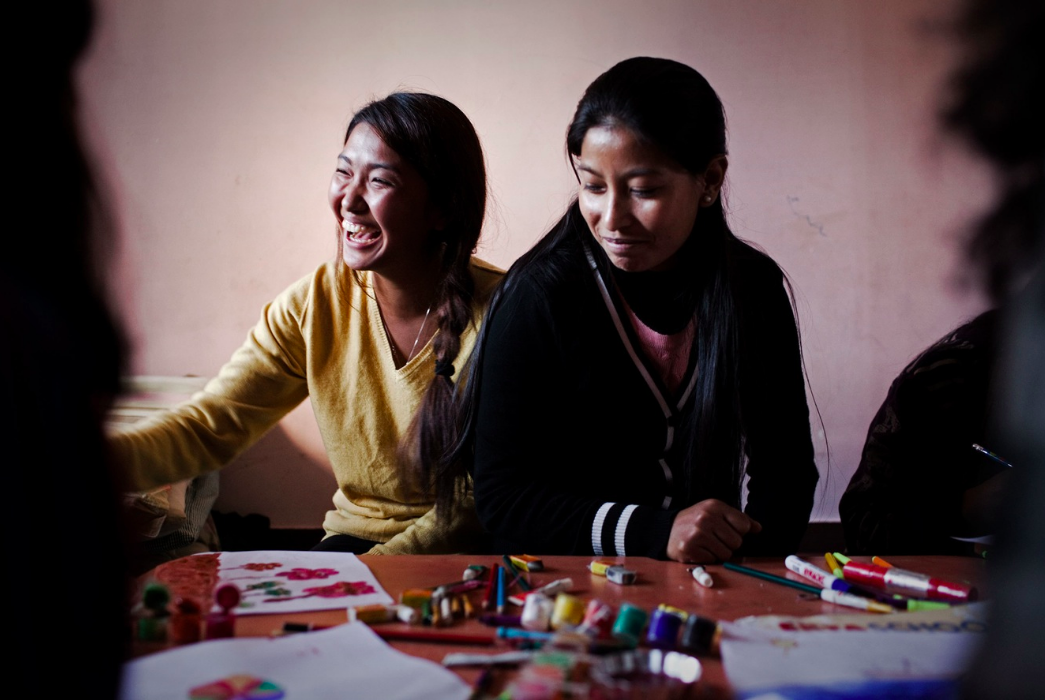
Drawing class at the arts and crafts centre at Shakti Kendra Shelter. (Photograph: Katie Orlinsky) Kathmandu, Nepal
I was by no means the first foreign visitor to the shelter, but it was hard to tell judging by how excited they were to see me. Some nights I would stay late to watch TV with them, and those were probably some of my most relaxing and memorable evenings in Nepal. I stopped thinking about the pictures and interviews and would just enjoy the company of the sweetest girls in the world as they tried to teach me Nepali and asked me a million questions on every last detail of my life.
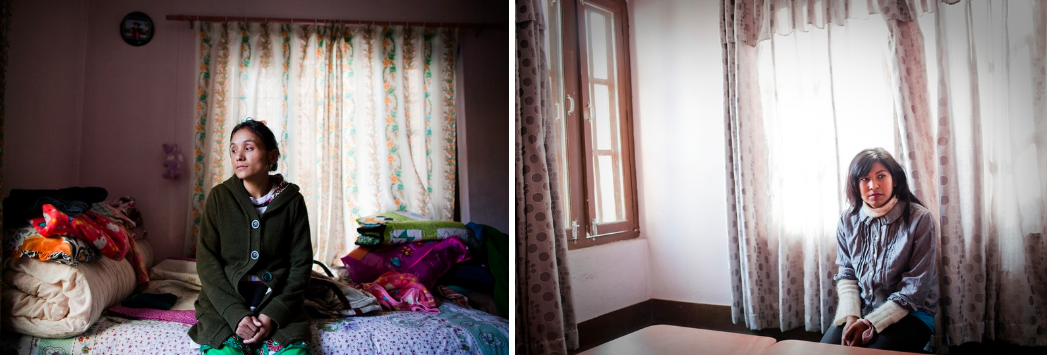
[1] A sex trafficking survivor who works at the Shakti central office as a receptionist. [2] A sex trafficking survivor, who now works at Shakti Kendra shelter as a recreation officer and teaches weaving. (Photograph: Katie Orlinsky) Kathmandu, Nepal
Growing close to women and girls who have experienced such a level trauma was difficult and emotionally exhausting at times.
It was particularly hard with the children, like thirteen-year-old Sabina who had been rescued from a brothel in India just six months ago. She had a bright smile and so much love to give it seemed she might burst.
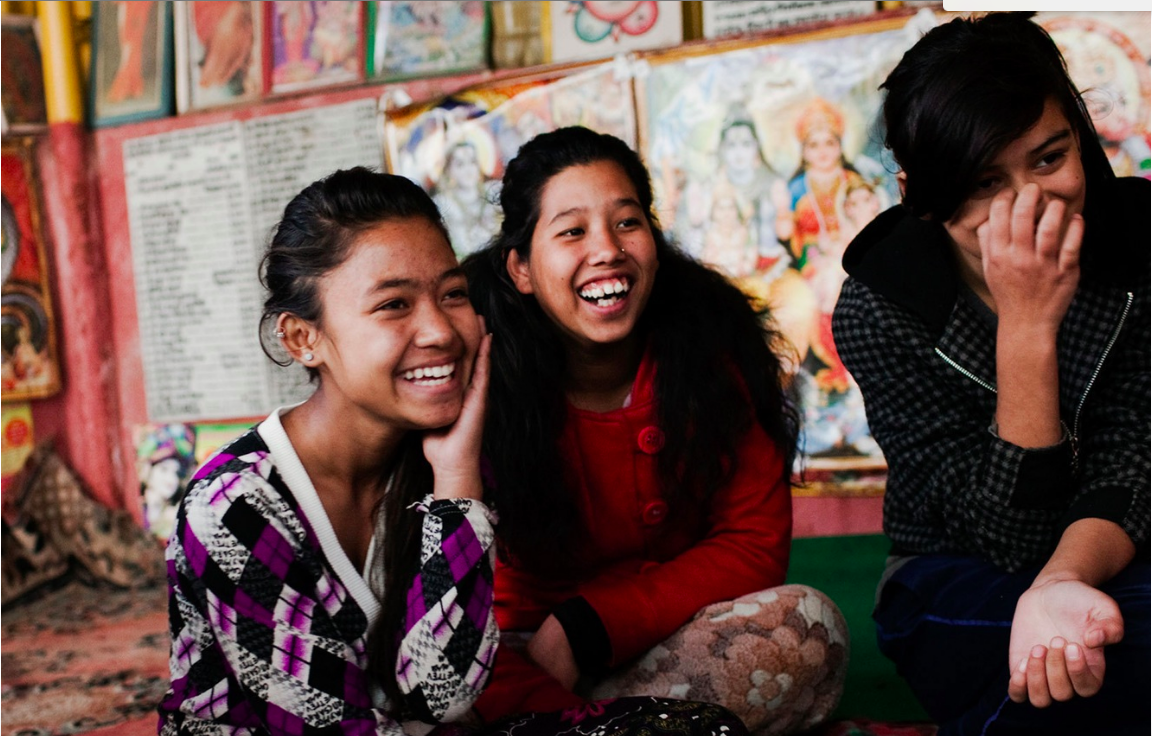
A Shakti Samuha adolescent group meeting in a slum area of Kathmandu, where staff members raise awareness about trafficking related issues with at-risk youth. (Photograph: Katie Orlinsky) Kathmandu, Nepal
She loved pop music and called me ‘Katy Perry’. I couldn’t stop thinking about the fact that she was the same age as my niece in New York, and how Sabina has already lived a life filled with more pain than I hope my niece would experience in a lifetime. Sabina dreamed of travelling, studying and getting a good job to help her family, who lived close by. She missed them, and talked about them constantly. What she had yet to understand was that it was her own family who sold her into trafficking.
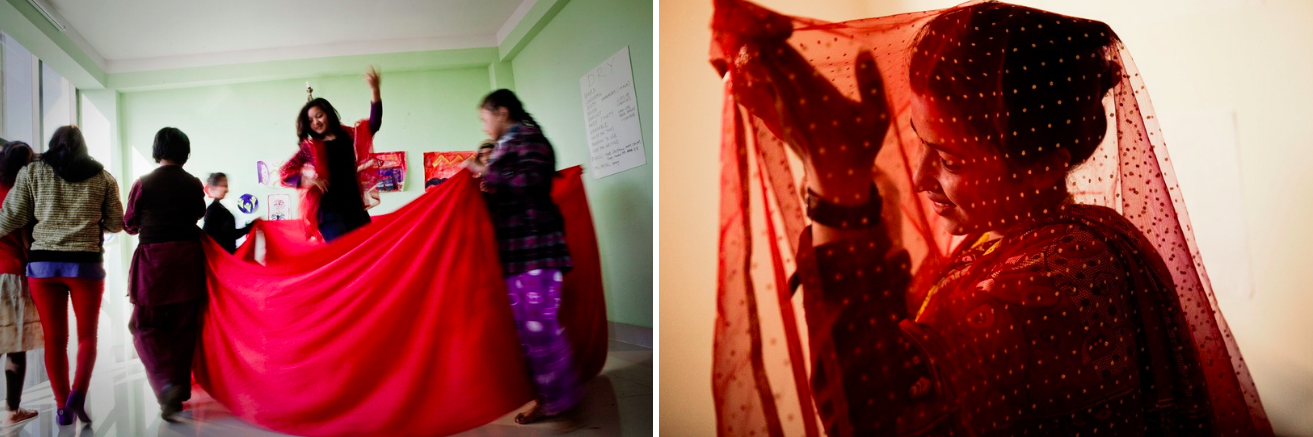
Residents and staff at Shakti Kendra perform a play they wrote and directed themselves. (Photograph: Katie Orlinsky) Kathmandu, Nepal
Trafficking in Nepal is not only something that can be managed and prevented, it can end, and it can happen within our lifetime.
It starts with the work of anti-trafficking survivor-run organisations like Shakti Kendra. These women have the motivation, ability, sensitivity and understanding to tackle the issue from all angles, from prevention and rescue, to prosecution and rehabilitation. They will not shy away from fighting to identify and imprison traffickers and their collaborators, from small-time pimps to local police to family members.
One day these young girls at the centre will take their place as the next generation’s leaders in the fight against trafficking.

Young residents dancing at the Shakti Kendra shelter. (Photograph: Katie Orlinsky) Kathmandu, Nepal
ORIGINALLY PUBLISHED ON MAPTIA
WRITTEN BY THE LEGATUM FOUNDATION
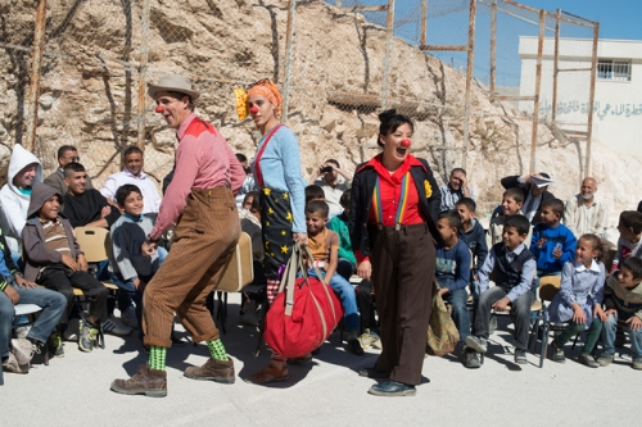
All photos courtesy of Clowns Without Borders. Palestine, 2013. Photo by Baruch Rafiach.
Clown Without Borders Go Into War Zones Armed Only with a Smile
In July 1993, a clown from Barcelona named Tortell Poltrona traveled to war-torn Croatia to do his act at a refugee camp. He had his doubts about how his performance would be received, but after an unexpectedly massive crowd of over 700 rapt children showed up to watch him, he left convinced of the value of comedy in crisis and conflict areas. That trip inspired Poltrona to found Clowns Without Borders, an organization devoted to bringing humor into lands where clowns usually dare not tread.
A year later, the internationally renowned clown Moshe Cohen, who had been bringing men and women with red noses and oversized shoes into dangerous places since 1990, opened an American chapter of Clowns Without Borders. Although it remains one of the organization’s smaller chapters (CWB has a presence in nine countries and is especially well established in France, Spain, and Sweden) and has only one part-time paid staffer, Clowns Without Borders USA now includes a board of 13 clowns, four logistical volunteers, and 30 active performers, some amateur and some professional.
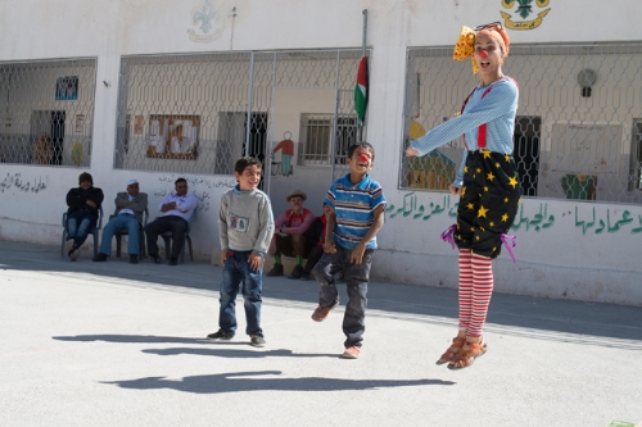
Palestine, 2013. Photo by Baruch Rafiach.
One of the earliest American Clowns Without Borders was David Lichtenstein, who had been clowning with Moshe in areas of Chiapas, Mexico affected by the Zapatista uprising since 1990. He went on to serve as a board member until, after returning from a tour in Palestine last October, he was promoted to president of the board—or the “Chief of Clown,” as he calls himself. He took over for Tim Cunningham, a graduate of the Dell’arte School of Physical Theater who got hooked on clowning when, at the invitation of fellow clown Rudy Galindo, he joined CWB on a 2003 trip to Chiapas. He later performed in Colombia, Ecuador, Haiti, Lesotho, Peru, South Africa, and Swaziland, and has promoted the organization in Brazil and America. In 2007, Tim became an emergency nurse and this year began research on the impact of clowns in crisis zones as part of a doctorate in public health at Columbia University.
Using juggling clubs and seltzer water to cheer up refugees who have lost their homes and family members is a pretty unique way to spend one’s time, so I called up David and Tim to ask them why they do what they do, and how.
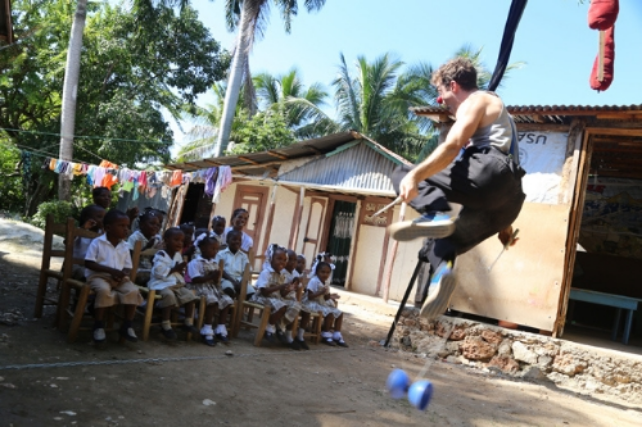
Haiti, 2013. Photo by Bobby Kintz.
Your organization is built around the concept of walking into places that have just suffered major disasters or are in the midst of armed conflict. As clowns. Isn’t that dangerous?
David Lichtenstein: We try to target the neediest people in the world. And yeah, a lot of these places are dangerous. Some of them are dangerous for the boring things like transportation issues—problems with cars and roads. Although we have been in war zones, we haven’t been too close to heated war. Still, there is often random violence in those places.
What are some of the most dangerous situations you’ve been in?
David: I’ve just been to Haiti, Guatemala, Palestine, and Chiapas, Mexico, during the [Zapatista uprisings].
Tim Cunningham: We’ve sent teams to work in Bhutanese refugee camps. I think [that we mainly ship clowns to] places that are proximal to war. In Colombia, we recently did a project along the Ecuador border and one of the towns we worked in was about 100 yards away from a FARC camp. But that [presence of violence] is in the background.
David: On that first trip to Chiapas, though, [Tim and another clown] were both robbed by Mexican police, or at least we thought they were police—we’ve been unable to find out whether they were real cops or thieves in uniforms. And during a show, Tim was lassoed by somebody and dragged by his feet on horseback. That was his first trip and he still came back for more.
Tim: I was hooked. I was like, This is real performance. This is engagement with my audience.
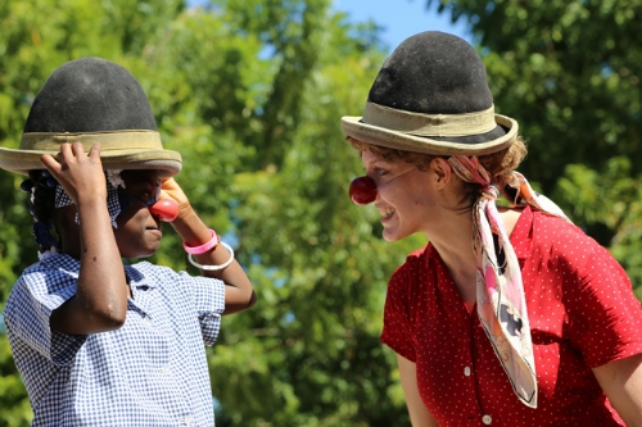
Haiti, 2013. Photo by Caitlyn Larsson.
Why did the guy lasso you?
Tim: We were in a really rural area and he was known as the regional drunk. We were doing a slapstick piece where I was working with this other clown, this really beautiful, sweet performer. And you could tell from the beginning he had his eyes set on her. He followed everything she did and was laughing really loud. In the slapstick routine we hit each other with this newspaper. She takes it from me, hits me; I take it from her… we go back and forth. Really classic slapstick. I think he decided he needed to save her, so he let out a yell during the bit and reared back on his horse like the Lone Ranger. The crowd split and I guess I was too dumb to split with everybody else. I was like, Great, I’ve touched this guy. And he touched me with his lasso. And dragged me down the road.
A lot of the places you go are very rural and have had little exposure to foreigners, much less to foreign clowns. Do you consider security risks when you travel? Like guys with lassos?
Tim: We go where we’re invited. If we have connections with other NGOs that have bases on the ground, that gives us some security. Or we have friends and family who are doing work in a place and know where we could do a show. We rarely say, “Hey guys, I think we should pack up and go to Ecuador this week and do clown work because we think it’s needed.” Haiti’s a good example of that. We’ve been working there since 2006 and wanted to go back down after the earthquake. As an organization we decided not to go until people started asking us to come. We didn’t think it was appropriate for us to go right after the catastrophe because people needed food, shelter, water… they needed life basics. We thought they would send for us six months, maybe a year later, but within a month of the earthquake we started getting calls.
It’s partially for security, but also I don’t think clowns are always appropriate. When we connect with other NGOs, where we’re welcomed and where people know we’re coming, I think it’s more ethical and effective.
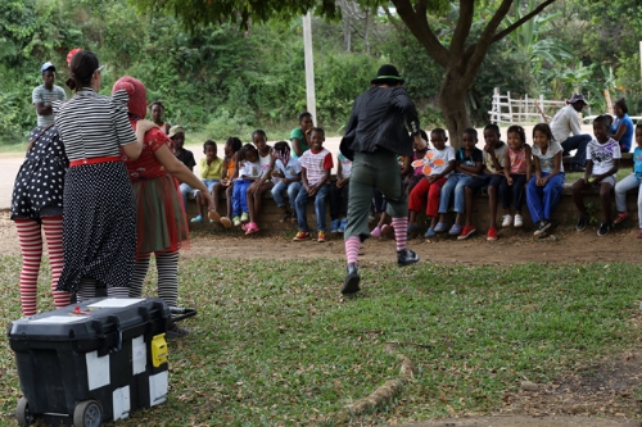
Colombia, 2013. Photo by Mauro Rebolledo.
Clowns must seem really trivial sometimes in such hard-hit areas. Are you ever criticized for what you do?
Tim: A couple of years ago I got an email from a donor who was very upset with us for what we do. He said, “You’re going to these places and you’re not bringing food, you’re not bringing shoes… what are you doing?”And I wrote back and said, “Hey, I appreciate your email and if you want to support those groups, here is a list of them that are doing exactly what you say.” But we’ve also met people who have had their minds changed after they see us with the kids, and see what a space is like when we come in, and then the change that has happened when we leave.
Is it trivial when you have people who are starving and have no medicine and you go in and clown for them? That’s a good question to ask. It’s a hard question and we certainly get a lot of pushback. We should, though. If everyone agrees with what you do, you’re probably doing something wrong.
David: As an aid group, we are a side dish. We come after medicine and water and food [aid] is underway. We’re also a volunteer-only organization. We just come in for a few weeks and do a few shows. We’re not affecting the economy. We’re doing ten major projects a year and a few small domestic projects on an annual budget of $40,000. We’re just a li’l guy in the aid world.
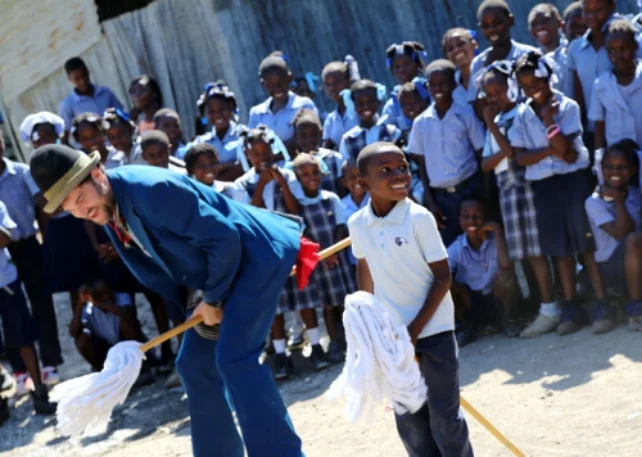
Haiti, 2013. Photo by Caitlyn Larsson
Have you had an experience where you were like, Oh, this is why I do this. This makes it all worthwhile?
Tim: In Haiti in 2006 we were working in a small, rural community called Torbeck. The kids there loved us, and one night when I was exhausted after a long day I suddenly felt this weight on my back. Before I could figure out what was going on this kid was standing on my shoulders. It was this clear night and we were looking up at the moon and I said, “Hey, hey, Jo-Jo, you and I, we’re going to go climb up to the moon.” And he laughed and looked down at me and said, “No no no, nous manger la lune [we’re going to eat the moon].”
So during this imaginary game it struck me that this kid was really malnourished. He was constantly asking us for food, but after the show and while playing with us he still had this fire of imagination that every kid in the world is capable of having. And to see his imagination explode like that just showed some really amazing resilience. I think we see that resilience with kids all over the world.
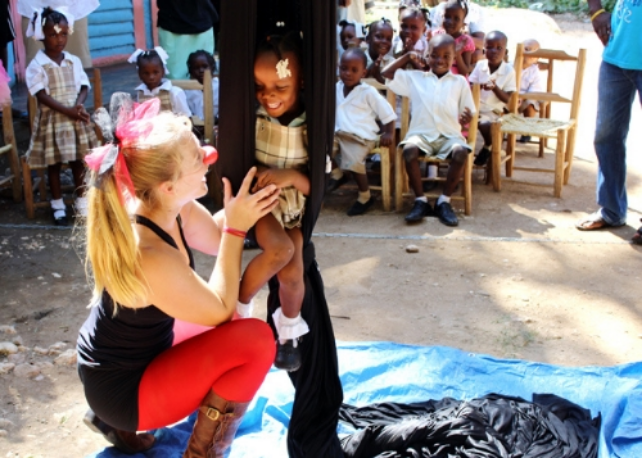
Haiti, 2013. Photo by Menley Mazile.
I imagine a lot of the people you are performing for havegone through serious trauma. And while there are some universal comedy truths—I’ve been laughed at all over the world for falling on my ass—your particular brand of performance must be unfamiliar sometimes. Do your acts ever upset people or fall flat?
David: One of the fun things for us as performers is that we get to work on a very basic, elemental version of clowning. In the US, maybe people would want something more sophisticated, but basic clowning generally works everywhere.
Tim: For example, we’ve got a bit that involves a clown finding a balloon. The clown finds the balloon, picks it up, stretches it out, slaps himself in the face by accident, and tries to blow it up. He’s not able to do it and we do all these funny things trying to figure out how to blow up the balloon. Then the bit ends with the clowns bringing a child up on stage. One of the clowns is holding the balloon in his mouth and his arm is out to the side making a half-T shape. The kid pumps his arm up and down, and that blows up the balloon. So the kid keeps pumping the arm and everyone’s laughing, but then the balloon pops. All of the clowns look at these balloon shards that are on the ground and they start crying and bawling and we have this balloon funeral.
In Haiti, we were talking with one of our sponsors about the program that we do. We told him about this funeral bit and he said, “You know, this is how women cry.” And he showed us this little hand-waving thing that women do when they wail. So we said, “OK, we’ll add that into our crying bit.”
So at the performance the female clown starts crying like that, and the kids all giggle. Then the male clowns look over to the female clown and go like, Oh, OK, that’s how we cry. So the male clowns start doing it. But in Haiti, when a male does that it’s a symbol of being gay, which is taboo—but the crowd loved it. It was one of their favorite parts on that tour because they saw us as people who didn’t know these taboos, demonstrating them in a very safe way and allowing people to laugh at them. In a way, I think we have some license through the form that you wouldn’t have if you didn’t have the nose or the character or the situation that you’re in.
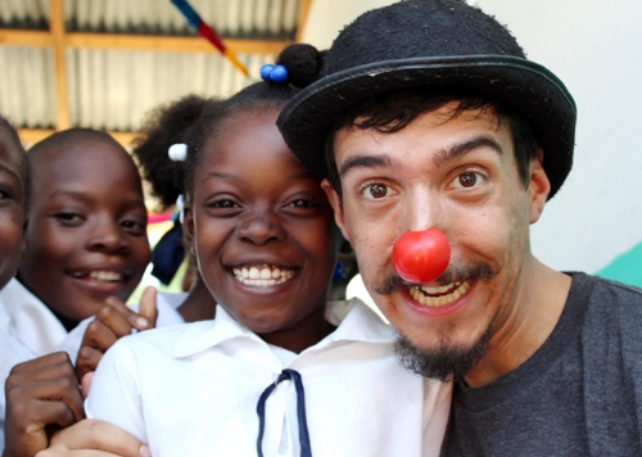
Haiti, 2013. Photo by Menley Mazile.
Have you always been that lucky with taboos? Has it ever just fallen apart?
David: In Palestine last week we developed a little checkpoint clown piece, and that worked really well there because checkpoints are a part of their daily life—not being let through, not being let out. When we started the checkpoint clowning the crowd just went quiet, but then they would laugh at the gags. Also, it’s a Muslim area and we were a mixed male and female group of clowns, as usual. We had prepared for a Muslim audience, though. We took out a lot of touching and a couple of parts where there was hip-swinging dancing because we wanted to be safe. But then we wound up putting a lot of that back in because we realized that clowns can get away with breaking the rules. It’s OK for a male and female clown to touch each other, to bang into each other or whatever, in slapstick. Clowns have different rules.
Why do you think clowns can get away with breaking taboos in so many different cultures?
David: Making fun of life is a pretty universal phenomenon. I watched a video of a Brazilian clowning troupe that went into the Amazon jungle to clown for an indigenous group. The locals had a guy who was like a clown, who made his living just going around being silly and making fun of the daily tasks that everybody else did, and the clown troupe just went in and improvised with this guy.
Speaking of universal, have you ever had any issues with coulrophobia, the fear of clowns that’s such a trope in the West, during your travels?
David: It’s the big white face and clown costume that sets it off. We’re in fairly normal costumes—goofy clothes but natural faces, with perhaps a clown nose.
Tim: In Haiti we had a clown who wore stilts. We opened the show and the kids were cheering, but as soon as the clown on stilts came around the corner they freaked out—everyone was crying and trying to back away. So the clown kind of eased off and we quieted down the music. She got the stilts off in a really funny way. Then, after about three or four minutes, they were back to sitting there, laughing with us. So there was a fear of this big thing, but I wouldn’t call it a fear of clowns.

Haiti, 2013. Photo by Bobby Kintz.
Tim, you recently started a project at Columbia to measure the impact of clowning fieldwork. What have you learned so far?
Tim: There is not a lot of evidence out there at all. People have explored clowns in hospitals and done somewhat rigorous studies looking at the benefits of stress relief for preoperative patients, as well as reducing the stress of doctors and nurses in some cases. But really very little has been done examining what Clowns Without Borders does in refugee camps, conflict zones, and zones in crisis.
There was one study where they were saying, I guess, that you can increase your chance of success with in vitro fertilization if you’re entertained by a clown while they’re doing the IVF. People say you’re less stressed and your body is more accepting of what’s going on.
Well, that’s an image.
Tim: Yeah, I don’t think I’d want to be watching a clown while I… but I guess they’ll never do that to me.
What I’d like to see, though, is if you’d have lower levels of stress in conflict zones. I’d guess there might be better community adherence. We know that using performing arts and art therapy is a whole other way for people to work with psychological trauma and find creative spaces to do something positive. I’d like to build a body of evidence that shows that. Or doesn’t show that. Who knows? Maybe what we’re doing isn’t right. That should be examined as well.
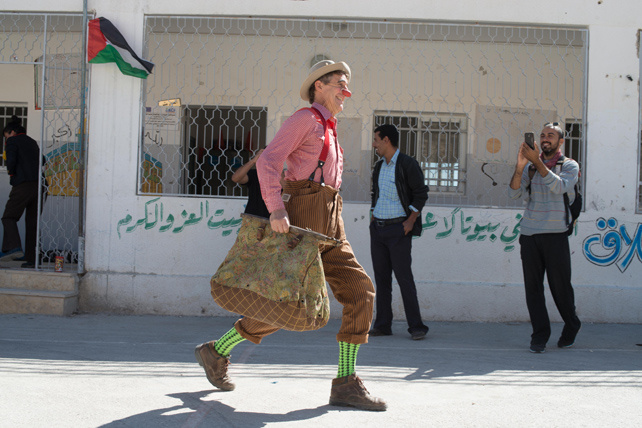
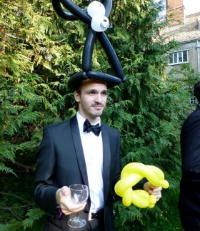
MARK HAY
Mark Hay is a sometimes-freelance write, sometimes-blogger, and former graduate student at the University of Oxford. His work appears in Asoko News, Capital New York, Esquire, The Economist, Foreign Service Journal, GOOD Magazine, Men’s Journal, Roads & Kingdoms, Slate, and VICE, among numerous other minor publications. He writes about anything under the big tent of culture, faith, identity, politics, and sexuality — basically anything human beings will fight over.
The True Cost
'The True Cost' is a story about clothing. It's about the clothes we wear, the people who make them, and the impact the industry is having on our world. Check out the trailer for this groundbreaking documentary that pulls back the curtain on untold stories of workers along the supply chain, leading the viewer to consider: who really pays the price for our clothing?
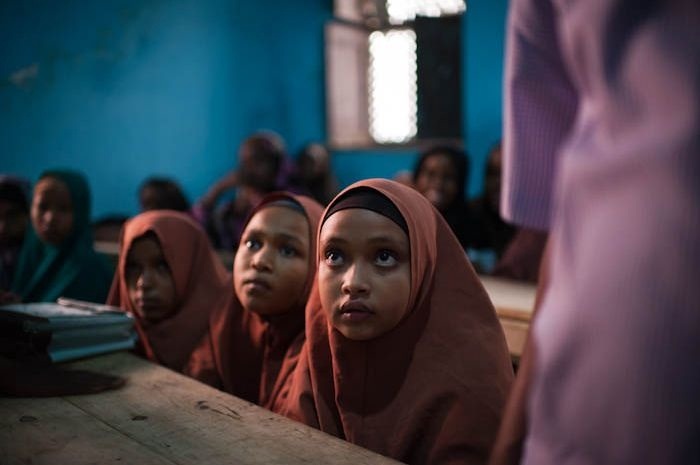
Somalia: Daily Life
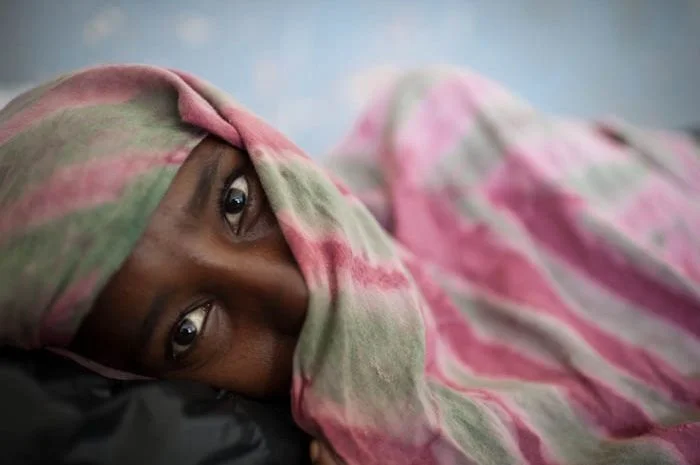
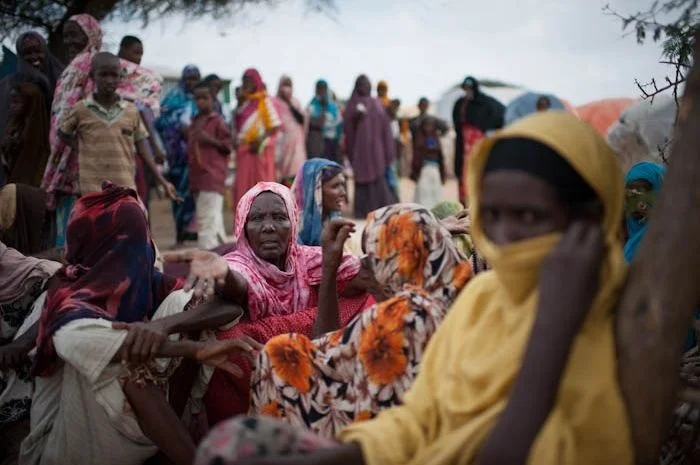
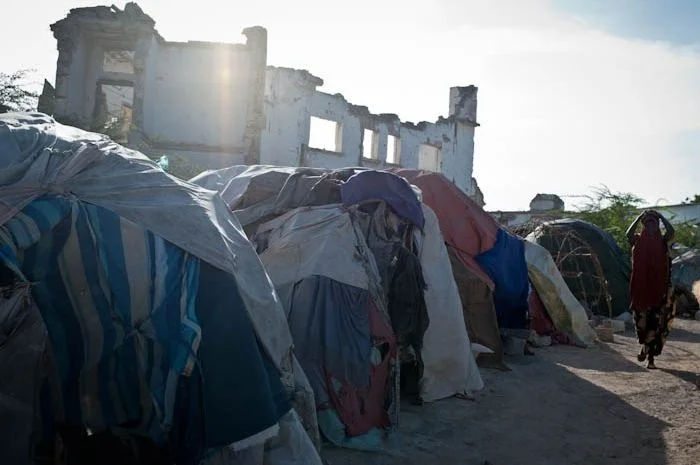
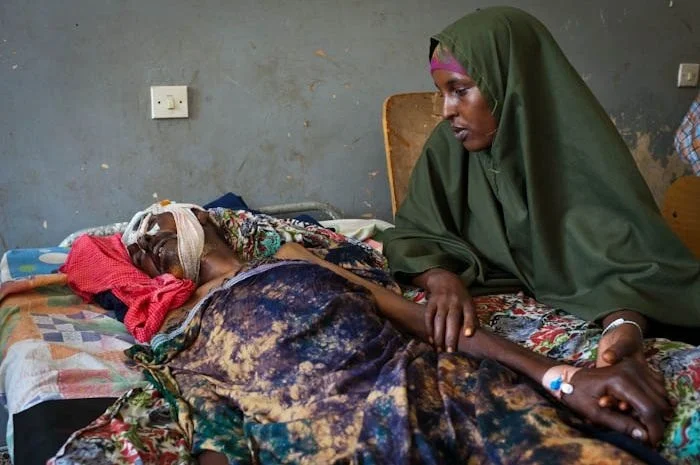
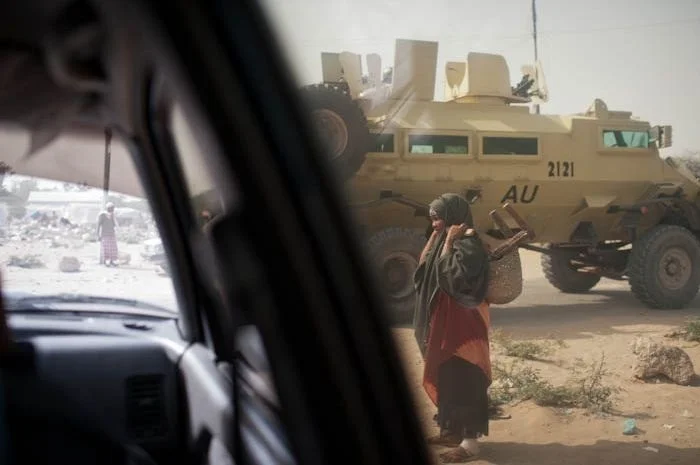
At 8:30 am the streets are crowded after the Islamic call to prayer. The echo of gunfire in the distance is a normal, and seemingly daily occurrence, in present day Mogadishu. Pick up trucks armed with groups of men carrying machine guns firing rounds to hurry along busy traffic is common, and it carries on throughout the day and into the bat-studded night sky. Mogadishu has been called the most dangerous city on earth and the country has been wrought with civil war between Islamist extremists and a failing government since 1991. Since then there has been no central government control over the country’s territory and the region has been stricken with devastating violence and famine. There are an estimated 3.7 million Somali’s living without enough food and the rate of malnutrition is approximately 50%, the highest in the world. It’s difficult for aid agencies to gain access into Somalia because many have been blocked by al-Shabab—the Somali cell of al-Qaeda—leaving nearly a quarter million people trapped without access to food. Photographer Anthony Karen ventured to Somalia’s capital in January 2012 to document the daily life of the people who call the war-torn country home and to visit the the Dadaab refugee camp on the Kenyan-Somali border.
Famine in Somalia
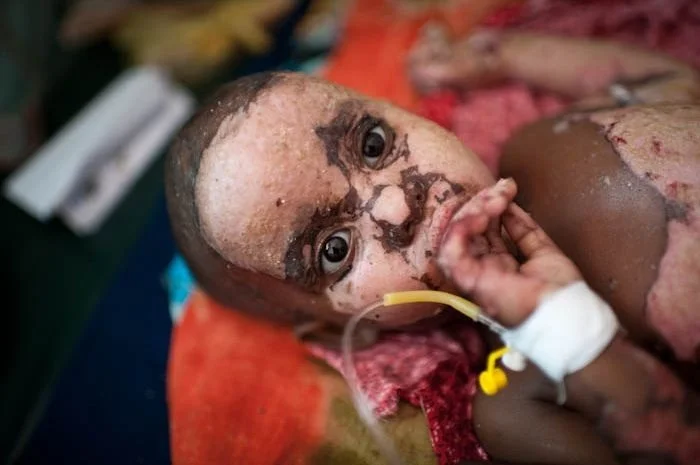
The United Nations declares a famine when 20% of households face severe food shortages. more than 30 % of the population is malnourished, and two out of every 10,000 people die from hunger each day. In July 2011, in the midst of the worst drought the country had seen in more than 60 years, the UN officially declared a famine in Somalia. The anti-Western, al-Qaeda linked militant group, al-Shabab made the situation worse, banning Western aid agencies from entering the territory and subsequently blocking starving individuals from gaining access to food. Al-Shabab has accused foreign aid workers of being spies as well as killed and kidnapped workers. The group has also diverted food supplies for themselves, leaving starving Somalis without any options and aid organizations in a tricky spot.
In February 2012, the UN declared the famine in Somalia to be over, but the country still remains in crisis with widespread hunger and violence. Since the collapse of its central government two decades ago and the civil war that ensued in 1991, Somalia has been faced with myriad disasters and has ranked as one of the poorest, most violent countries on earth. Last year, a drought killed livestock and farms which spiked death and malnutrition rates. Desperate Somalis trekked across the desert in search of aid and some arrived in Kenyan refugee camps while the few hospitals in Mogadishu were overcrowded with malnourished people affected by famine and violence.
The United Nations helped to raise more than $1 billion for relief efforts across Somalia and organizations such as the Turkish Red Crescent Society and The World Food Program have been working towards providing humanitarian relief in the country. Also, with the help of heavy rains in November, famine conditions began to subside in some parts of the country. However, the crisis is far from over and violence, instability and hunger is still widespread across Somalia.
Doctors Without Borders/Médecins Sans Frontières (MSF) is a leading humanitarian organization that provides medical care to people caught in crises. They work within over 60 countries and remain the main provider for free medical services in central and southern Somalia.
The World Food Programme reaches up to 1.3 million peopole with food relief to areas of Somalia which they have access to including, Mogadishu, Puntland, Somaliland, central regions and some border areas of the south. They have increased their nutrition programs to treat and prevent malnutrition.
AFGHANISTAN: No Burqas Behind Bars
In this upcoming, feature-length documentary by Nima Sarvestani, the viewer is taken inside one of the world's most restricted environments: an Afghan women's prison. Through the prisoners' stories we explore how "moral crimes" are used to control women in post-Taliban Afghanistan. And no — full burqas are not allowed inside the prison gates!
CONFLICT
What happens off the front lines, when the combat concludes (or has not yet begun), but guns and poverty abound? Pete Muller is an award-winning photojournalist whose work work provides insight into the tensions that lie beneath conflict cycles.