How to Find Authenticity in a Globalized World

Why do we travel? 

For those of us privileged enough to be able to travel voluntarily, reasons often include becoming more fully ourselves and experiencing something genuinely different. This desire for authenticity, in ourselves and in that which we perceive to be other and outside our current experiences, is widespread enough to be noticed and exploited by the tourism industry, with signs reading “experience the REAL Thailand” and “find yourself in Bali”.

Seeking authenticity in our travels comes from a good place. It highlights our desires for genuine interactions with other human beings, for learning about the experiences of those with different life paths and identities, and possibly even for utilizing our privilege to support real people instead of opportunistic corporations removed from the locations in which they operate.

However, as is the case with many good intentions, this desire for authenticity can be harmful. Much of this harm stems from a strict and arbitrary idea of what counts as authentic and the fact that the privileged traveler has the power to decide what makes the cut. For instance, while spending 3 months in Zimbabwe a few years ago, I asked several friends what their cuisine had looked like prior to British colonization.  As their current main foodstuff, a labor-intensive dry porridge called sadza that holds its shape when spooned onto a plate, is made of cornmeal, it couldn’t have existed prior to the transfer of corn to Africa from the Americas.  I’ve had similar questions about Italian, British and South Asian cuisines before tomatoes, potatoes, and chili peppers made a similar journey.  From my perspective, sadza was a colonial by-product, as was the black tea served alongside it.  When I shared this view with my friends, the effect was clear: my strict and arbitrary definition of what could be considered authentically Zimbabwean delegitimized and minimized their identity and emotional ties to the food they knew and loved. 

This highlights a tendency in our search for authenticity - to regard older traditions and cultural forms and those which predate recent cultural exchange as more authentic.  This viewpoint is understandable, especially as a reaction against the infiltration of Western corporations such as Coca Cola into most crannies of the world, including a remote village in eastern Zimbabwe, and the Westernization of many popular tourist destinations, from food offerings to street signs. Yet the reality is that all places and peoples are dynamic.  Historical and current globalization, the movement of people, ideas and things, has fostered cultural exchange and the transformation of traditions over time.  Cultures also evolve without interaction with outside forces. When we define authenticity as similarity of a particular part of a culture to its version at a particular point in history, we mistakenly regard people and places as static, freezing them in time.  

Aside from our tendency to award authentic status to more longstanding traditions, we also withhold this label unless the cultural form feels “other” enough and different enough from our cultural forms to be plausibly untainted by them.  But ironically and cruelly, our globally dominant culture and associated language simultaneously demand conformity for material gain and social acceptance. Without this, the inherent amount of difference between cultures would render many practically inaccessible to travelers.

When we travel in search of authenticity with these unconscious assumptions and unfair expectations lurking in our minds, we often end up unknowingly demanding that locals perform a certain version of their culture for our tourist dollars. The result is a paradox: we want specific historical versions of cultures that are different enough from our own to feel authentic but similar enough to actually understand and enjoy. We travel to search for authenticity, but by traveling we reinforce the global dominance of our culture which demeans and degrades the other cultures we seek to experience. Seeking authenticity obscures it from us.

It also shortchanges us. Traveling with a particular idea of what authentic looks, tastes, smells and sounds like creates expectations and takes our attention away from what is.  When we’re less present with ourselves, where we are, and the people around us, we’re less likely to feel deeply satisfied in addition to being more likely to cause accidental harm.


So, what to do? Here are some guidelines for navigating these realities:

1. Take people and places as they are now

Don’t force them to live up to some idea conjured up by tourist companies, history books, or your own mind as the antithesis to your everyday life. Don’t expect them to be similar enough to be accessible and understandable to you. On the flip side, don’t expect them to be different enough so that you can feel like you’ve escaped your daily grind and your culture.  Manage your expectations or avoid forming them.  Of course, it is very hard to travel with no inkling of what you’re going to find once you arrive, but be honest with yourself.  Why are you drawn to particular places? What expectations do you have?  Find balance - have just enough foresight to plan yet not enough to keep you from accepting what is when you’re there. The best days often come when you're not expecting them. 


2. Only do what you actually want to do

Travel guides and guidance from friends are riddled with “must sees”.  What if nothing on those lists strikes your fancy?  I almost always skip museums when I travel.  While you could argue that I’m missing out on important historical context, I would argue that I’ve never absorbed this information from museums even when I’ve forced myself to go to them. Luckily, each place and culture and even person is unfathomably complex and contains endless dimensions. Engage in the same activities you enjoy in back home and try new ones which feel right.  Do you in a new place. By living your truth while traveling, you’re more likely to find authenticity in the place you’re visiting.


3. Engage other cultures carefully

Cultural exchange can be mutually beneficial but it can also be oppressive.  Acknowledge the power dynamics in your interactions with non-travelers. Be aware that you probably embody and therefore unknowingly reinforce ideals that other people must conform to in order to gain social currency and acceptance.   And make sure your engagement with other cultures doesn’t cross the line into appropriation. Appropriation can take many forms, but it almost always involves travelers benefiting materially from or being praised for a particular cultural form while the people to whom that cultural form belongs are ridiculed, persecuted, or exploited for it. Engage from a place of humility to learn, not to seek validation or make money. Always respect the stated boundaries of engagement, and where appropriate, wait to be invited.
SARAH LANG

Instigated by studies in Sustainable Development at the University of Edinburgh, Sarah has spent the majority of her adult life between 20+ countries.  She is intrigued by the global infrastructure that produces inequality and many interlocking revolutionary solutions to the ills of the world as we know it.  As a purposeful nomad on a journey to eradicate oppression in all its forms, she has worked alongside locals from Sweden to Zimbabwe.  She is a lover of compassionate critique, aligning impacts with intentions, and flipping (your view of) the world upside down. 
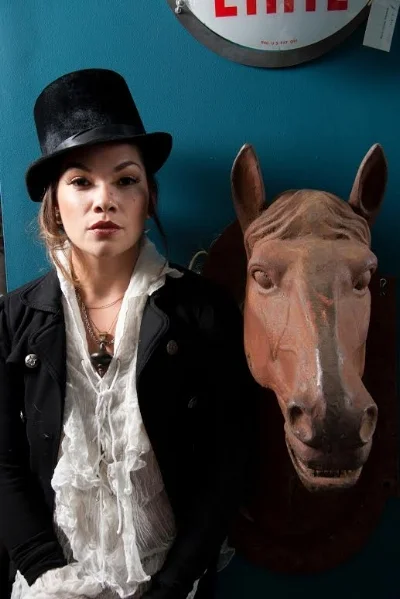
 

Conscious Capitalism: Meet Gingi Medina, Founder of Equites, An Equestrian Lifestyle Brand

Gingi Medina

There is a duality that radiates from clothing designer Gingi Medina. She is a determined, audacious business owner, who also cares deeply about the world, and minimizing waste. She struck out on her own, in part, because of the massive overproduction she saw in her industry. After a dozen years working in fashion, Gingi became disgusted by the excessive wastefulness in the manufacturing process, and thought there must be a better way to produce beautifully made garments, without littering the planet. 

She began brainstorming ways to use materials that utilized the entire plant, animal, or raw substance. After years of making clothes, bags, and goods, Medina founded the lifestyle brand, Equites. The company, which is known for its leather, uses reclaimed and raw materials that are sourced ethically, she says.

In deciding to make leather goods, Medina argues that it's an emission-less process. Leather is a "conscious material" she says, because it's sturdy, durable, and long lasting.  "It's a forever piece," she says. "If I make a bag out of leather, it has a far less, if any, carbon footprint left on the planet." Leather, Medina claims, does not require much processing because it utilizes a material that is taken directly from a natural source, versus a synthetic piece or garment-- including vegan leather-- which is manufactured and produced with emissions. She says her goods can last a consumer’s lifetime, so a buyer will need only one of her bags for example, rather than multiple synthetic bags that eventually wear out and need to be replaced. "The carbon footprint from a manmade item is far more extensive," Medina says.

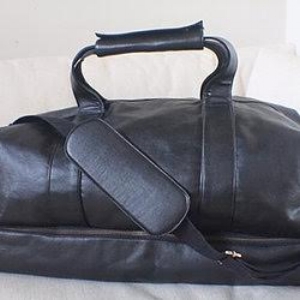
The Weekender Bag, £800 [$1006 USD]

Medina didn't always know she'd be a conscientious designer. As a child growing up in Los Angeles, she imagined she'd be "an astronaut or the next Madonna." Magician also made the list of what Gingi thought she'd do one day. By the time she was 9 years old, she began calling herself "a designer." She recalls watching her first fashion show and thinking of predicting trends, sewing, and being able to say, "I made that." Ten years later those predictions began springing to life, and she entered the fashion realm as a fit model for petites. One day a designer asked her what she wanted to do, and she replied, "your job." That not so quiet confidence, that some have called "crazy", has served her well. 

During her younger years, while partying in Hollywood, she says she encountered a well-dressed guy. Upon learning he was a designer, she offered to be his apprentice, working for free. Everyday for a year, beginning at 7am, Gingi set out to learn all she could about design. She learned how to construct leather, metal and denim. She made clothes for rock musicians, and clothing for tours-- most notably Ozzfest.

Medina’s work has also included her dressing celebs, working on TV shows, and ensuring certain designers' wares were featured prominently via product placement. She's worked as a buyer, and also in private label-- offering clothing styles to retailers who then put their own label on the garments. Medina has worked and studied fashion overseas. It was during her travels abroad and also mingling with and being inspired by people who've worked abroad, that she had some of her most successful innovations. She designed the Von Dutch "No More Landmines" tee-shirt after Angelina Jolie did mission work with the Halo Trust, which deactivates land mines in war ravaged regions. It was also during this time, that Medina began to reflect on the inefficiencies within fashion production and wondered, "Am I harming or helping... in my career." She remembers seeing freight containers filled with the previous fashion season's discarded garments and the subsequent feelings of what such wastefulness does to the planet. She noted that her clothes, and other finely made garments, were items consumers could have "for a lifetime", and even be "passed down", minimizing some of the waste. The ideas for change were within her, still she said it was, "hard to keep focus when the world is crumbling around you." 

Leather Riders, £1800 [$2265 USD]

Ultimately, Median created her own brand, Equites, in 2011. She describes it as a "five tier label where performance meets fashion." Her line includes leather goods—pants, bags and jackets—but also cashmere, performance gear, and transition wear. She says her clothes serve as a "smart garment" that allows customers to segue "between worlds" and be just as comfortable and coiffed wearing riding pants, for instance, in an equestrian event as one would be at a premiere. Her line's leather pants, for example, are made of 17 panels sewed together on top of a water wicking, breathable legging, making it suitable for multi directional athletic endeavors and fitting to wear throughout the day.

When she initially showcased these designs, Gingi says her "idea was turned down by every label," so she produced them herself. Still committed to minimalism, and anti-waste, Gingi sought out hardware for use in buttons, and researched international communities that use the entire animal, and where she could also use their skins for her leather. 

She found the Eid al-Adha, or the Festival/Feast of Sacrifice, in Indonesia. This global Muslim holiday commemorates Abraham's willingness to obey God, and sacrifice his son, who was ultimately spared, and a ram was sacrificed in his stead. During this multi-day festival, livestock—cows, goats, sheep, and camels, depending on the region—are sacrificed, and the meat, in part, is given to the poor. After the festival, some temples will sell the animal skins to Westerners, Medina says, which she considers ethical. 

Gingi describes the “ethical use of a skin" as being "when the entire animal is used and not only sought out for its skin to make a product." Her company Equites, she says, searches "far and wide for leather or a fur that has already been used," to then "recycle or upcycle the piece into something new. [We] make sure we know where it's come from.” Medina asserts that she doesn't use slaughterhouse leathers, and does “not support, nor purchase from major manufacturing facilities,” but rather acquires her animal skins and materials in “smaller, traditional ways,” like from temples. The fabrics are naturally woven, she says, and there are no chemicals used in the dying process, which further eliminates waste.

Brass Capped Knee Height Riding Boots, £1000 [$1258 USD]

Once she gets the rawhide materials back to her factory, the leather is treated with natural ingredients like oils and rocks. Occasionally vegetable dyes are used, when a customer requests a special color. Much of her items are bespoke—made to order. Turnaround can take between 45-60 days, Gingi says. She says her method of manufacturing is less wasteful and more supportive of the planet. She claims there are no companies quite like hers. In an environment where most fashion lines are “being gluttonous and over-producing,” Gingi believes her company is “doing a better job.” Although she’s unfamiliar with any manufacturers creating clothes in the same manner and impact as she does, Medina welcomes competing brands. She wants to encourage companies to elevate their corporate responsibility. 

Medina would also like to form an alliance across industries. Fashion is seen as a “status industry”, but Gingi also has a passion to “do right by the earth”, she says. Her warehouse is slated to use a Tesla Powerwall battery—which stores electricity and solar energy for later use—and she wants to partner with other companies that have a similar vision and commitment to the environment.

Medina’s company Equites is headquartered in London and the line will be available to the masses in Fall 2017. Her wares will be available in Harrods, Harvey Nichols, boutiques, country clubs, equestrian specific stores, and on her company’s website. During the company’s soft launch, Equites currently has jewelry and wearable art, bags, and boots available at equites.co.uk  and on their Facebook page. The company is also offering an invitation to its show at London Fashion Week in September of 2017 to its first one hundred customers purchasing "diamond tier" levels of the selection pieces available pre-launch. 


ALEXANDREA THORNTON

Alexandrea Thornton is a journalist and producer living in NY. A graduate of UC Berkeley and Columbia University, she splits her time between California and New York. She's an avid reader and is penning her first non-fiction book. 

VIDEO: Schoolgirls For Sale in Japan

This Thursday at 12pm EDT, Simon Ostrovsky and Jake Adelstein will join 'On The Line' to discuss this story. Ask your questions on Twitter @VICENews with #OnTheLine: http://bit.ly/1Sgvvn2 Japan's obsession with cutesy culture has taken a dark turn, with schoolgirls now offering themselves for "walking dates" with adult men.

In an effort to understand a growing underground trade of school-aged girls, Vice News interviews women who have been caught up in this sinister business. 

VIDEO: E-Waste Tsunami in Delhi

A film to accompany the E-Waste Tsunami project. This film explores the industrialized landscape of the urban poor in a developing world metropolis. The urban poor are the community and sector of society to which the waste-picker and e-waste worker belong. The journey begins at the Bhalswa Landfill and associated communities in northwestern Delhi and then moves through the rapidly expanding infrastructure of the city. It concludes with a passage through unregulated housing developments that form a large part of this 21st century metropolis.

Turning Tears to Power in Nepal

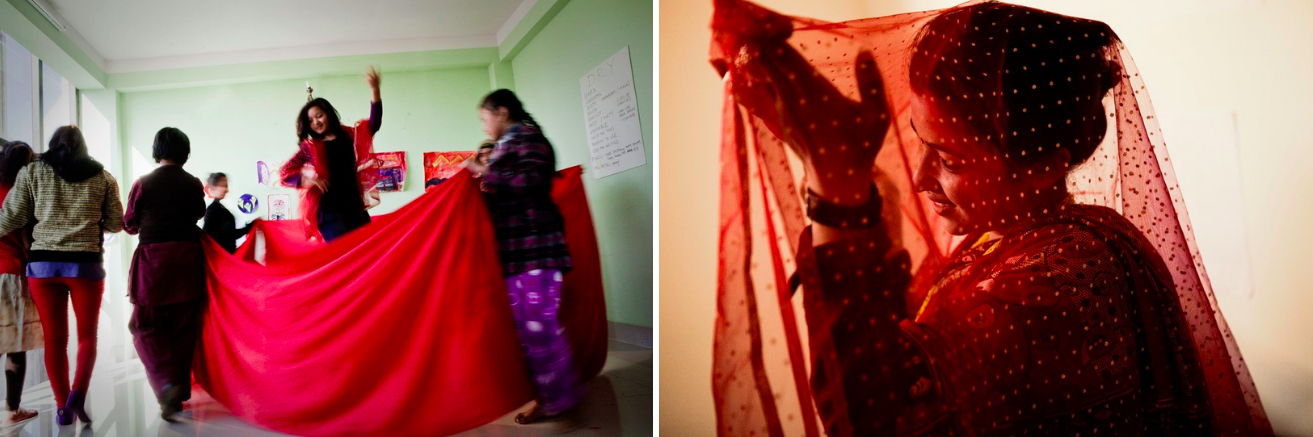
Young girls share their life stories with photographer Katie Orlinsky at a rescue center in Nepal that helps victims of sex trafficking regain their freedom and happiness.

Regularly described as one of the poorest and least developed countries in the world, Nepal is a ‘source’ country for traffickers, and its most marginalised people are also the most frequently targeted. While its capital Kathmandu benefits from a growing tourist economy, in general the country’s economic potential (for example, through opportunities to develop hydropower) is stunted by continued political instability, as well as very poor infrastructure.

Rural Nepalese — some 80% of its people — rely on subsistence farming, which frequently does not provide a stable or sufficient income to feed a family. It is under these already difficult circumstances that the sweet-talking and cajoling of sex traffickers infiltrate and take hold.

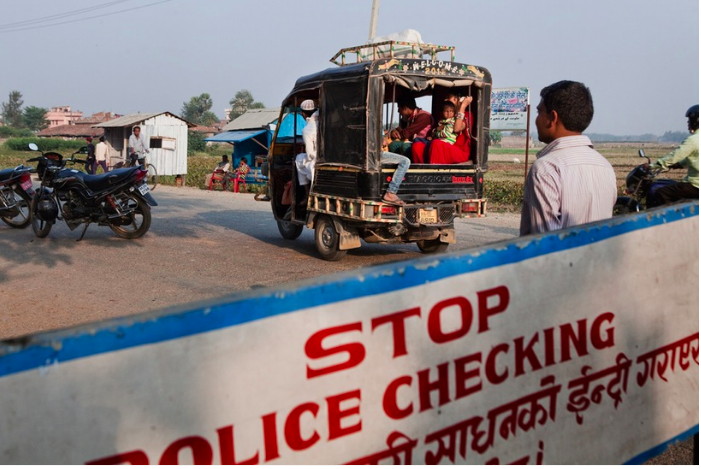
Passing through the India-Nepal border in Gaur, Nepal. Nepal’s border police have been notoriously lax in stopping suspected traffickers and are known to be susceptible to bribery. (Photograph: Katie Orlinsky) Narayani, Central Region, Nepal

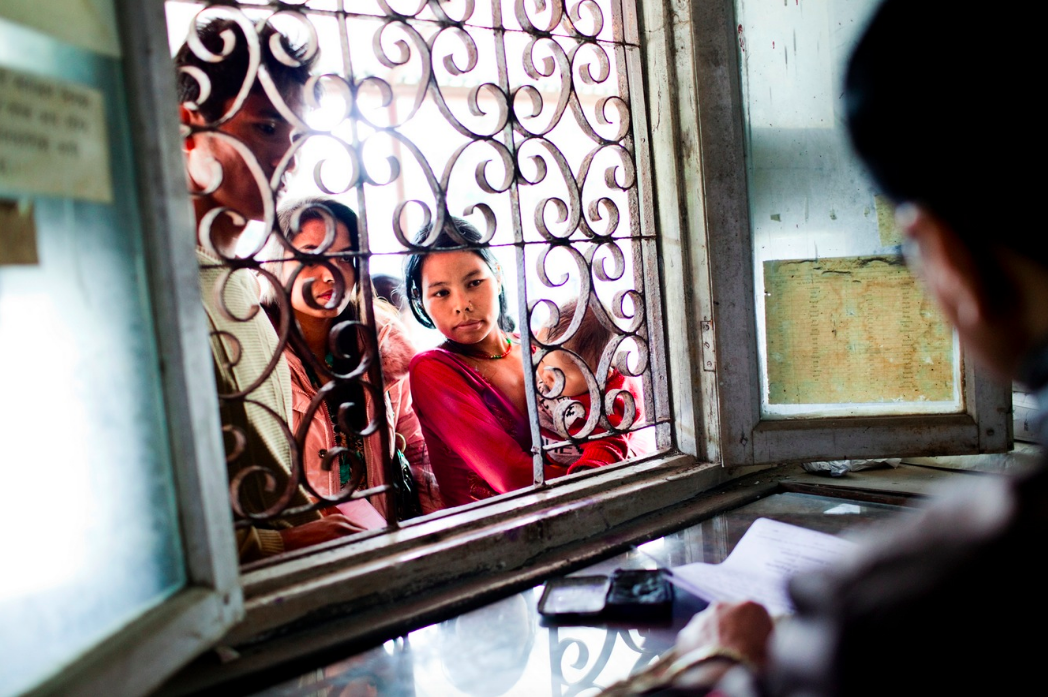
Fake migration schemes are one of the most common ways girls end up trafficked. Job options are scarce in Nepal, and around 200,000 women leave to work abroad every year, mostly as domestic servants. Poor, rural women think they are going to be domestic workers in Dubai, but instead end up working as prostitutes in Delhi.

Seeking migration paperwork at the district administration office in Haidera. (Photograph: Katie Orlinsky) Narayani, Central Region, Nepal

The sex traffickers methods are varied and unpredictable, which is why so many people fall victim to trafficking in this region, despite the initiatives and interventions of extraordinary agencies on the ground.

 Shakti Kendra in Kathmandu is one such shelter, managing to educate hundreds of girls. I met fifteen current residents during my stay, all survivors of trafficking to brothels in India or of rape within Nepal itself.

Founded by Charimaya Tamang — the first trafficking survivor in Nepal to press charges against her traffickers and win — all of the staff at the shelter are also formerly trafficked women, some of whom have been specially trained by Shakti Samuha in Japan on how to run workshops and look after their young charges.

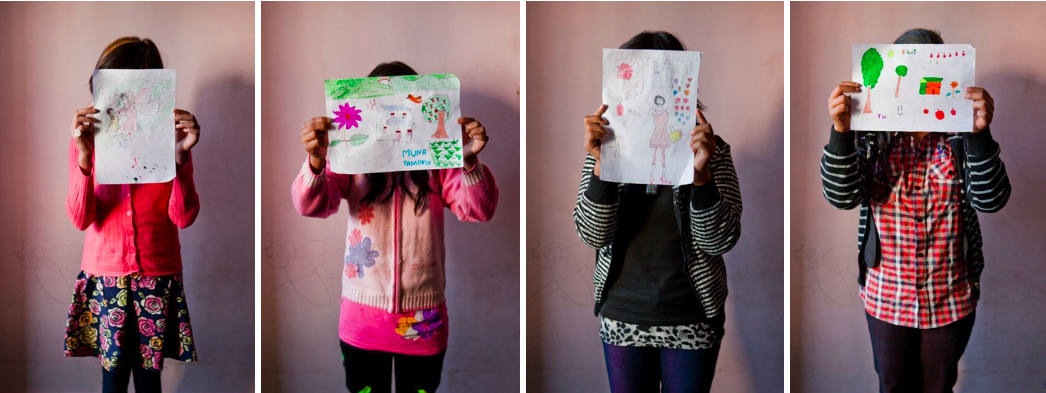
Young sex trafficking survivors at the Shakti Kendra shelter in Kathmandu, Nepal holds up their favorite drawings. From left to right, “an angel helping a girl in need”, “an imaginary house”, “going shopping”, “a house in the mountains” (Photographs: Katie Orlinsky) Kathmandu, Nepal

The children living at Shakti Kendra take classes at the centre and are also involved in drama, weaving and jewellery making programmes.

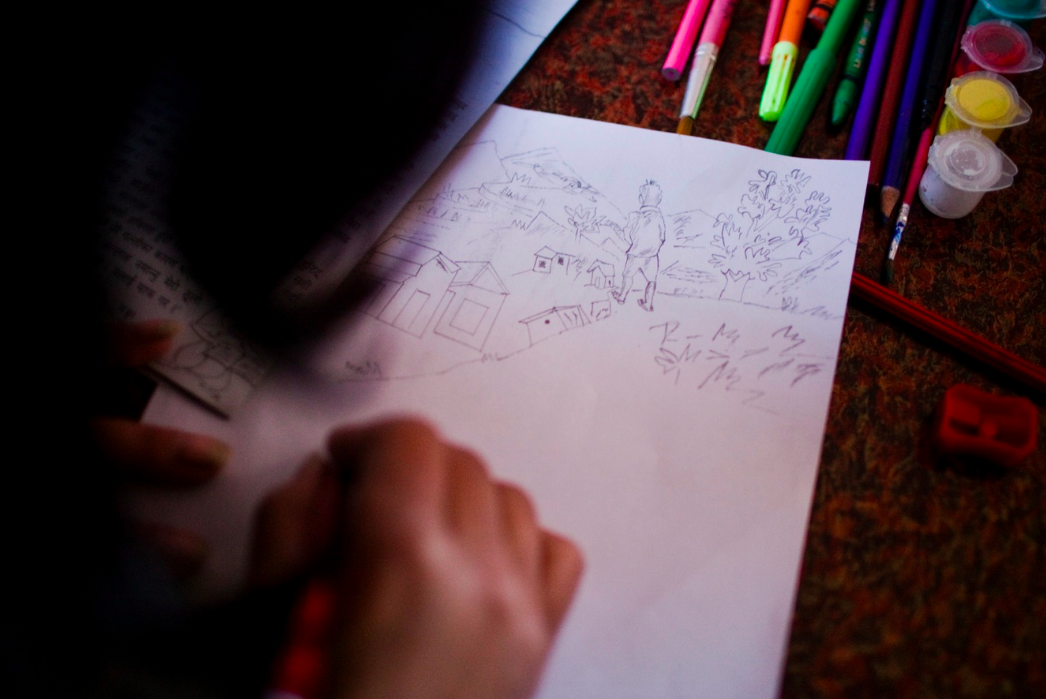
A young survivor at Shakti Kendra traces a scene from an anti-trafficking awareness cartoon. (Photograph: Katie Orlinsky) Kathmandu, Nepal

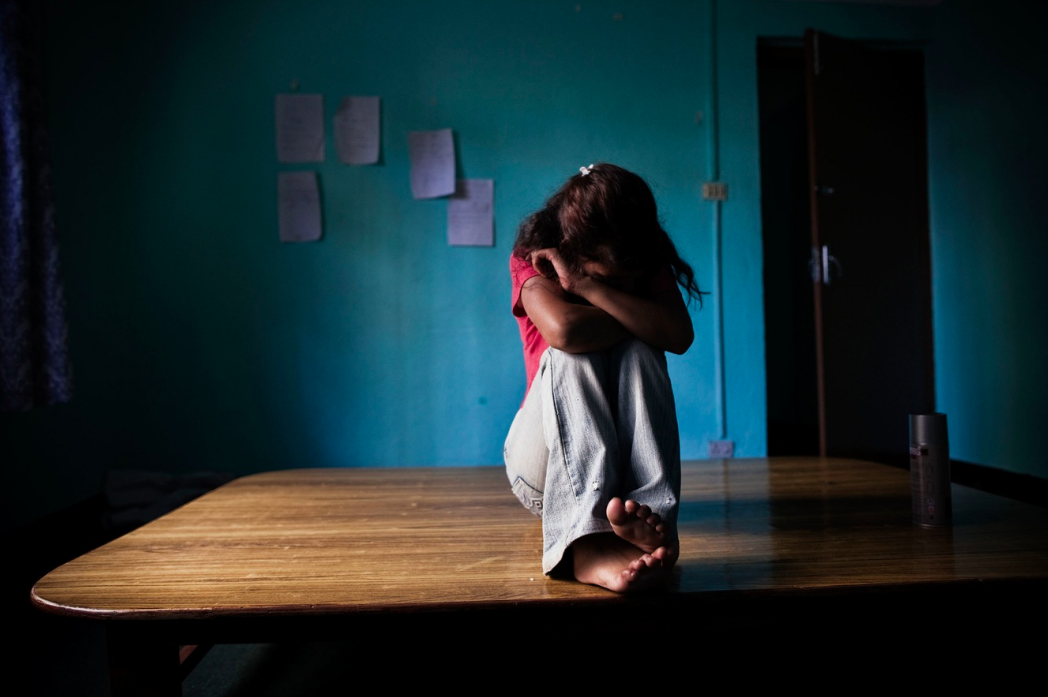
As a photographer, the Shakti Kendra shelter was an extremely challenging place to work. It has a strict media policy to protect the identities of all of its members. Still, I wanted to document the girls’ world, but it meant I had to be patient, and make a lot of images with turned backs, blurred faces and deep shadows.

An underage trafficking survivor rehearsing a play about trafficking at Shakti Kendra shelter. (Photograph: Katie Orlinsky) Kathmandu, Nepal

In time, some of the adults opened up and let me tell their stories, but for the children, the policy was non-negotiable. Although frustrating from the point of view of documenting this issue, I respected this choice.

Trafficking survivors face huge stigma in Nepal, where the shame associated with the sex industry is so great that most survivors’ families don’t even want their own daughters to return home if they have been rescued.

A photograph discovered on the internet identifying a trafficked girl or woman could have repercussions — from an employer not wanting to hire them to a man not wanting to marry them.

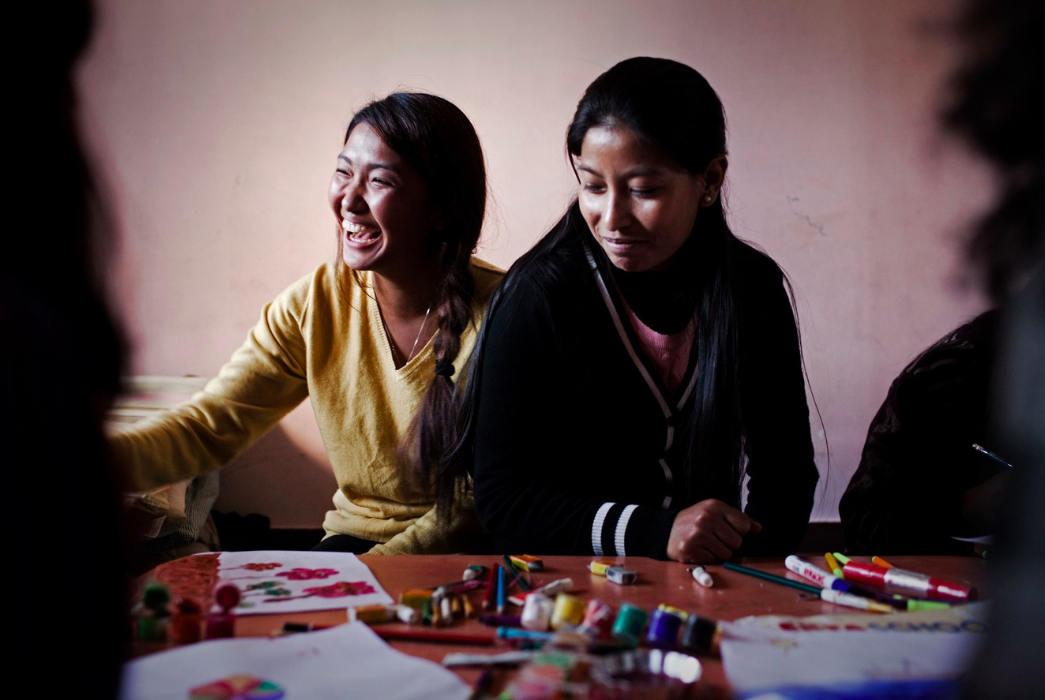
Drawing class at the arts and crafts centre at Shakti Kendra Shelter. (Photograph: Katie Orlinsky) Kathmandu, Nepal

I was by no means the first foreign visitor to the shelter, but it was hard to tell judging by how excited they were to see me. Some nights I would stay late to watch TV with them, and those were probably some of my most relaxing and memorable evenings in Nepal. I stopped thinking about the pictures and interviews and would just enjoy the company of the sweetest girls in the world as they tried to teach me Nepali and asked me a million questions on every last detail of my life.

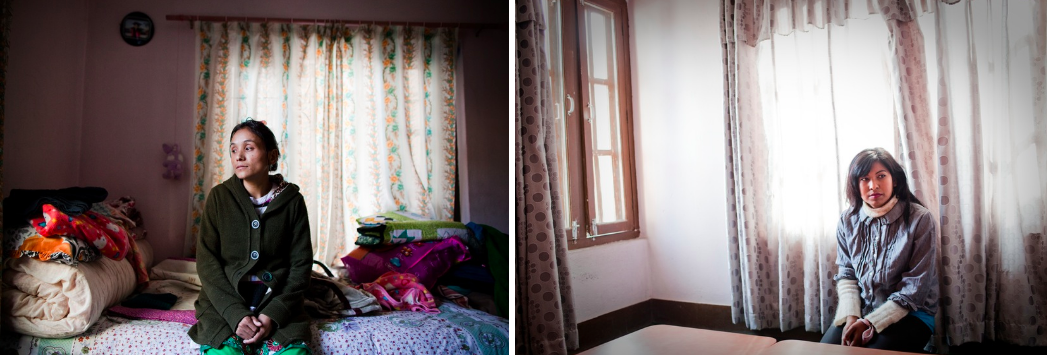
[1] A sex trafficking survivor who works at the Shakti central office as a receptionist. [2] A sex trafficking survivor, who now works at Shakti Kendra shelter as a recreation officer and teaches weaving. (Photograph: Katie Orlinsky) Kathmandu, Nepal

Growing close to women and girls who have experienced such a level trauma was difficult and emotionally exhausting at times. 

It was particularly hard with the children, like thirteen-year-old Sabina who had been rescued from a brothel in India just six months ago. She had a bright smile and so much love to give it seemed she might burst.

A Shakti Samuha adolescent group meeting in a slum area of Kathmandu, where staff members raise awareness about trafficking related issues with at-risk youth. (Photograph: Katie Orlinsky) Kathmandu, Nepal

She loved pop music and called me ‘Katy Perry’. I couldn’t stop thinking about the fact that she was the same age as my niece in New York, and how Sabina has already lived a life filled with more pain than I hope my niece would experience in a lifetime. Sabina dreamed of travelling, studying and getting a good job to help her family, who lived close by. She missed them, and talked about them constantly. What she had yet to understand was that it was her own family who sold her into trafficking.

Residents and staff at Shakti Kendra perform a play they wrote and directed themselves. (Photograph: Katie Orlinsky) Kathmandu, Nepal

Trafficking in Nepal is not only something that can be managed and prevented, it can end, and it can happen within our lifetime.

It starts with the work of anti-trafficking survivor-run organisations like Shakti Kendra. These women have the motivation, ability, sensitivity and understanding to tackle the issue from all angles, from prevention and rescue, to prosecution and rehabilitation. They will not shy away from fighting to identify and imprison traffickers and their collaborators, from small-time pimps to local police to family members.

One day these young girls at the centre will take their place as the next generation’s leaders in the fight against trafficking.

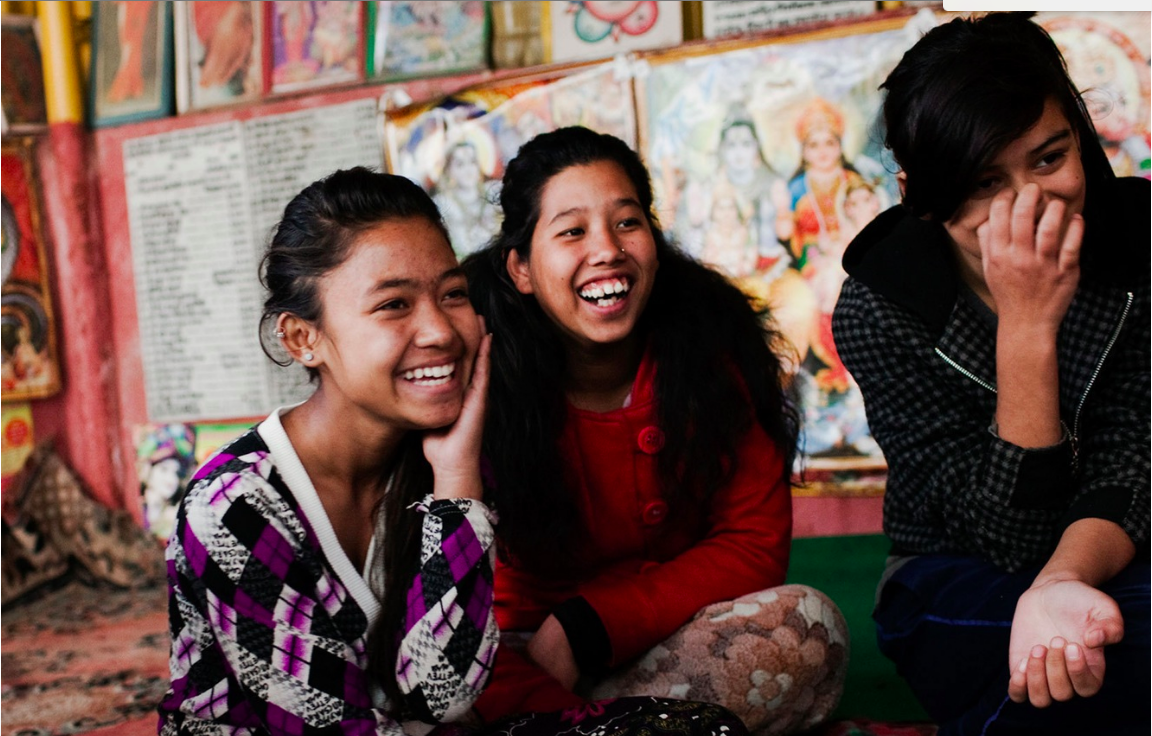
Young residents dancing at the Shakti Kendra shelter. (Photograph: Katie Orlinsky) Kathmandu, Nepal

ORIGINALLY PUBLISHED ON MAPTIA 

WRITTEN BY THE LEGATUM FOUNDATION

The True Cost

Rent or own the film today! Visit http://truecostmovie.com for more details. Available on DVD, Blu-Ray, iTunes, Amazon, or VHX. Available on iTunes: http://apple.co/1EONAlN The True Cost is a groundbreaking documentary film that pulls back the curtain on the untold story and asks us to consider, who really pays the price for our clothing?

'The True Cost' is a story about clothing. It's about the clothes we wear, the people who make them, and the impact the industry is having on our world. Check out the trailer for this groundbreaking documentary that pulls back the curtain on untold stories of workers along the supply chain, leading the viewer to consider: who really pays the price for our clothing? 

AFGHANISTAN: No Burqas Behind Bars

In this upcoming, feature-length documentary by Nima Sarvestani, the viewer is taken inside one of the world's most restricted environments: an Afghan women's prison. Through the prisoners' stories we explore how "moral crimes" are used to control women in post-Taliban Afghanistan. And no — full burqas are not allowed inside the prison gates! 

CONFLICT

Watch the following 5 episodes of Conflict free at http://thisisconflict.com. What happens off the front lines, when the combat concludes or has not yet begun, but guns and poverty abound? Pete Muller is an award-winning photojournalist whose work and life serve as enduring provocations on the tensions that lie beneath cycles of conflict. He was named by TIME Magazine as the 2010 Wire Photographer of the Year. At 29 years old he was the youngest person ever to receive the honor. Through his work he aims to illustrate broader issues through individual stories. He strives to create images that ask viewers to give emotional and intellectual consideration to the lives and experiences of those depicted.

What happens off the front lines, when the combat concludes (or has not yet begun), but guns and poverty abound? Pete Muller is an award-winning photojournalist whose work work provides insight into the tensions that lie beneath conflict cycles. 

Billions in Change Solution: Free Electric Overview

Access to electrical power is the first step toward economic advancement for billions of people living in poverty. Free Electric can light their homes and shops, make food storage possible, and usher them into the 21st century. #BillionsinChange Join us & learn more at: www.BillionsInChange.com Let's chat: https://www.facebook.com/billionsinch... https://twitter.com/billionsnchange https://instagram.com/billionsinchange

Access to electric power is the first step toward economic advancement for billions of people in poverty. Free Electric can light their homes and shops, make food storage possible, and usher them into the 21st century. 

MEET: Amber J Lawson, Founder and CEO of Good Amplified

Amber J Lawson is an American producer, entrepreneur, and online content and development executive. In another step toward her goal to “do good to scale,” Amber J. is the founder and CEO of Good Amplified, a YouTube Network solely focused on helping nonprofits evolve their donor engagement and retention via storytelling. In anticipation of Good Amplified’s launch, CATALYST connected with Amber J. to find out more about her new project and the future of content marketing.

Amber J Lawson founded Internetnetworksstudio.com in 1999 (after focusing on the performing arts at the University of Missouri). What motivated the transition from acting to developing online content and producing? 

When I first moved to L.A. (a few years after college), I loved performing. However, I disliked the way in which an acting career often left my fate to the whims and demands of other people. I wanted to make my own opportunities! So I became a producer and started writing my own content in order to have the roles I was interested in playing. This transition was taking place during the first Internet boom, and my friend said to me: “You know, I think this Internet thing is here to stay.” My initial reaction was, “What? That’s crazy!” Yet he and I (along with an 18 year-old stock market genius we worked with at a restaurant) set out to create Internetworksstudios.com. 

Our first show invited people from around the world to submit videotapes of them singing and dancing; the online community then voted for its favorites. We were a little ahead of our time — it was like our own American Idol — but after burning through the initial seed money, we created an hour-long pilot called Alyx. We partnered with Madonna on this program, which helped us sell the show to ABC/ Touchstone. 

It was all just a little ahead of its time — a notion that I’d say has defined my career so far. I’ve been involved in multiple projects that were ahead of their time, but hopefully right now (with Good Amplified) we’ll be perfectly aligned with the coming-of-age, millennial generation.  

What inspired you to create Good Amplified?

I worked as the head of programming at AOL. It was my dream job! I absolutely lived, ate, slept and breathed it. When I left my position, I thought, ‘I love doing these kinds of things.’ I believe that you can do good for the world and make money, so I contemplated how to strike that balance. I thought about what I love (entertainment), which led me to the idea of helping nonprofits across platforms to raise money through storytelling. 

I started looking for a way to do good to scale: a way that would build upon itself. I wanted to help leverage what nonprofit organizations are already doing through a platform (YouTube) that the millennial generation utilizes to consume content. And that’s when I concocted Good Amplified. 

What do you think the benefits are for a nonprofit to focus its media campaign on video production/sharing over traditional forms of digital content (e.g. articles)?

A potent form of marketing is storytelling, and every nonprofit has stories to tell. So they already have the key, potent pieces. The piece that’s missing, though, is leveraging the largest video platform (and second largest search engine) on the planet: YouTube. If you’re not there, it’s kind of like you don’t exist. 

By optimizing content that nonprofits are already making on YouTube, they can deliver their mission to the next generation. The reason I say it’s critical to be on YouTube is because millennials donate through views. If you monetize your video, and people watch it, they are (in essence) donating through their viewership. The next step in showing their commitment is becoming a subscriber. I look at this as a new donor-retention program: subscribers receive notifications about updates, which helps maintain their connection. 

According to standard marketing technique, it takes six to eight “touchpoints” for brand recognition to stick. With YouTube, this is something nonprofits would never have to think about again. All they need to do is continue telling their story to create those touchpoints in an organic way. So both the content and future viewers are present: nonprofits just have to facilitate the connection on a familiar platform. It’s an easier conversion than asking potential donors go to a website, or a new app, or something that’s completely different. 

How is Good Amplified being funded?

At first, we set ourselves up to work as a tradition Multi-Channel Network (MCN). Most MCNs operate in three steps: there is a content creator; the creator monetizes its content; when revenue is produced, the profit is shared among creator, YouTube and the MCN. This works for some companies, but with a lot of nonprofits, we found that this was a difficult system to adopt. First off, there needed to be a value in the services we (GA) are giving — it’s human nature to pay more attention to something that costs money. 

The second piece is that some nonprofits can’t take what is called Unrelated Business Income Tax (UBIT). It’s costly (and an accounting headache) to resolve this legality, which is why we have elected to give the nonprofits the option to pay a monthly fee to manage nonprofits’ YouTube channels. We run every aspect of it — titling, tagging, optimizing search algorithms — but we also educate the organization in the process. Over time, the nonprofit builds up a case for its team to start turning on the monetization (through ads) and collecting that revenue. 

Has working on Good Amplified changed your perspective at all with respect to digital media and technology consultancy? 

I feel like it has because there’s been a bit of an education process. For me, storytelling is the most powerful medium, period. While talking with nonprofits, we have found that they are waking up to the power of YouTube, but they need assistance. Quite frankly, some of the most successful nonprofits on YouTube have been the smallest organizations. In the absence of a complex, institutional process that drives internal operations, these organizations are more receptive to change. I think this is what our social media landscape demands: real-time interaction. This is how lasting relationships with online audiences are formed. 

It doesn’t cost a lot of money to get in the game, but it does cost time. A lot of organizations lack the time to curate their YouTube presence, and that’s when they bring Good Amplified onboard. Our goal is to get into the DNA of an organization: every time they create a piece of content, YouTube should be a part of its checklist for sharing. 

Most organizations use YouTube as a library or repository for past content. In reality, this material could be doing all the work for them! I use the example of Kobe Bryant, who granted a wish for Make-A-Wish Foundation a while ago. Contrary to popular belief, celebrity videos don’t always get a lot of views. Rather, a video has to be optimized on its platform in order to be picked up by the search algorithm. Once the video of LeBron got picked up, it started to generate 50,000 more views per week. That’s Kobe more people reached with your message! It’s all about the optimization and getting picked up in the algorithm. I know those things sound tedious, but they make all the difference in the world for getting your word out.

What advice can you offer people and organizations that are trying to utilize online platforms for social good? 

Number one is that you have to engage with social platforms. This is where the next generation of givers can be found, and the old techniques don’t work for them. I believe that older institutions have to disrupt what they’re doing in order to survive. Every year, we lose various nonprofits because they aren’t receiving enough funding. These organizations were doing great work, but they weren’t reaching that generation of future supporters and advocates. 

In addition to social platforms, content marketing is everything right now. What we’re talking about (brand recognition through storytelling) is exactly like branding for companies like Taco Bell or Target. Given that the commercial is going away, brands have to find different ways to engage with an audience through content that is entertaining and relatable. Why should the task of nonprofits be any different?

Good Amplified is committed to doing good to scale. We are looking forward to working with any nonprofit that has an appetite for content, and I think that is the distinction for how we can help. We are committed to making nonprofits successful — that’s our goal — but they have to have the desire for storytelling and content creation. I truly believe storytelling is the way of the future, which is why nonprofits have to embrace it now. 


SARAH SUTPHIN

sarah.sutphin@mission.tv

Sarah is an undergraduate at Yale University and a content editor for CATALYST. As a traveler who has visited 30 countries (and counting!), she feels passionate about international development through sustainable mechanisms. Sarah has taken an interest in the intersection between public health and theater, and hopes to create a program that utilizes these disciplines for community empowerment. She is a fluent Spanish speaker with plans to take residence in Latin American after graduation. 

NEPAL: Invisible Farmers

In the southern lowlands of Nepal, where the cold still bites harshly in winter, lives a voiceless, landless community of marginalized ethnic groups who have spent their whole lives working for others. With no piece of land in their names, and no opportunities, they are Nepal’s invisible farmers.

NO LAND FOR US

“I have worked on farms for more than forty years for landlords, and yet I don’t have a piece of land. What else can I do?”
— Jaga Majhi

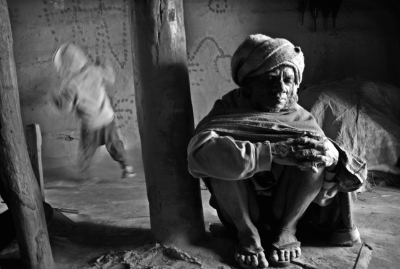
Above: Jaga Majhi, a landless inhabitant of Bagaiya village.

Meet Jaga Majhi, an elderly inhabitant from the small village of Bagaiya in the Bara District, located in the southern lowlands of Nepal. Like many of the older generation here, Jaga tells me that he can’t remember exact year of his birth, although his citizenship card states 1938. He died of old age in August 2015.

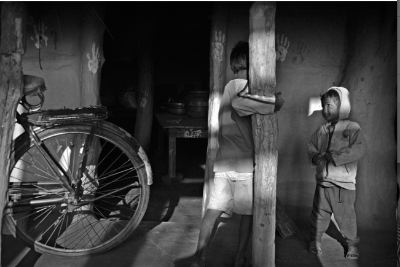
Jaga's grandchildren play within their home.

Over the last few decades landless squatters in this region have built meagre huts to house their families. They have been here for all or most of their lives, and yet have no formal title to the land they live on, and most of them work on farms for their landlords, on a daily wage basis.

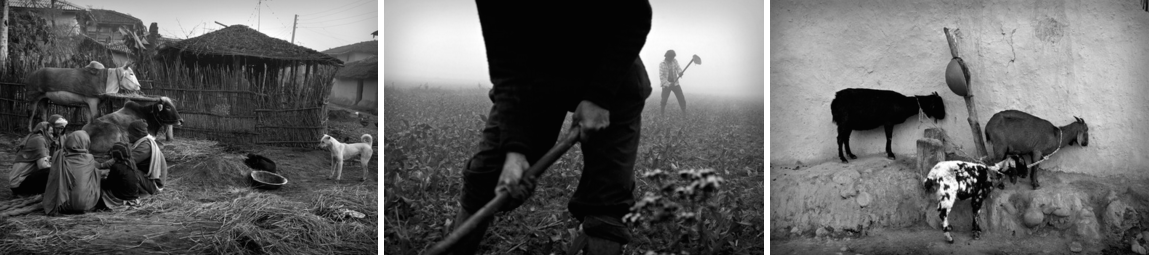
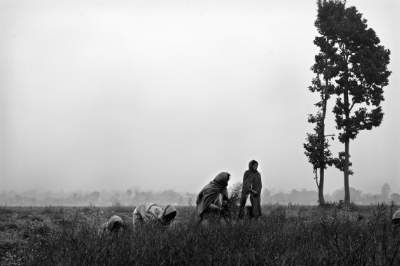
Above: [1] Locals struggle with the cold in the early winter morning. Poor housing and lack of sufficient clothing make life difficult during winters. [2] Shyam Chaudhari works in the field for a daily wage. [3] Keeping goats can help earn a living. [4] Daily wage workers. 

Most of the inhabitants here belong to marginalized ethnic groups such as Tharu, Musahar, Chamar, and Majhi. These ethnic groups are also viewed as ‘untouchables’ by the traditional and complex caste system, that is still present in many parts of Nepal.

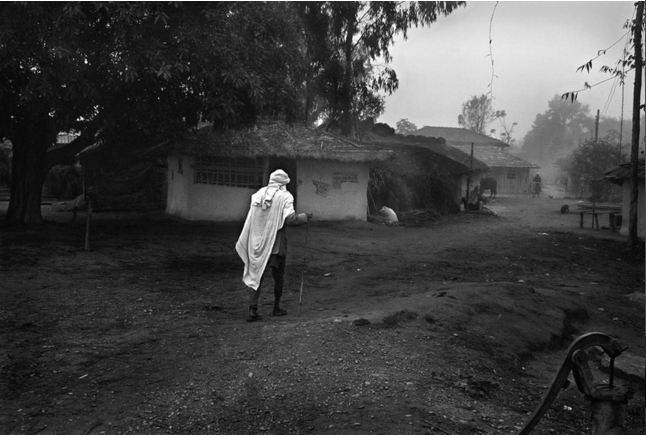
Above: [1] Children inside a classroom at the local primary school. The school has two rooms with no furniture inside. They were able to make this school building at the end of 2010. Around 60 children come to study here. [2] An old man walks into a village of landless squatters. 

With no piece of land in their name and an utter lack of opportunity, they remain as impoverished as ever. This is the story of those who have spent their entire lives working for others — they are Nepal’s invisible farmers.

Above: The women also work in the fields on a daily wage basis, but receive a lesser payment than men for an equal day’s work. 

ORIGINALLY PUBLISHED ON MAPTIA 


KISHOR SHARMA

@Kishor_ksg 

Kishor is a freelance documentary photographer based in Kathmandu, Nepal. He studied Photojournalism at the Danish School of Media and Journalism and is interested in using photography as a means of storytelling.


8 People Who Broke the Law to Change the World

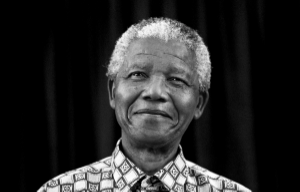
1. Nelson Mandela

Nelson Mandela is, hands down, one of the most important and celebrated figures of our lifetime.

Mandela represents equality, fairness, democracy and freedom in an often unequal, unfair and undemocratic world. But he wasn’t always seen like this…

Twenty-five years ago he was getting his first taste of freedom after being imprisoned for 27 years. Yes, you read that right. For what? What could he have done to get such a long sentence? Well, he stood up for what he believed. In 1942 he joined the African National Congress and fought against apartheid in South Africa, and was imprisoned for sabotage.

Without Nelson Mandela’s commitment to the abolition of apartheid in the face of oppression and imprisonment, the world could be a very different place. It is because of Mandela, and others like him, many more people live a free and fair life. 

To honor his bravery and determination, we take a look at 7 other brave and committed people who have been prosecuted or persecuted for standing up for what they believe in:

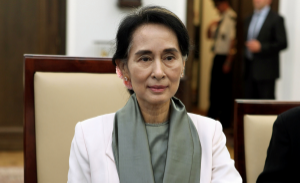
2. Aung San Suu Kyi

Aung San Suu Kyi has become an international symbol of peaceful resistance in the face of oppression.

Now the Burmese opposition politician and chairperson of the National League for Democracy in Burma, she spent 15 years under house arrest for advocating for democracy.

Suu Kyi, who was heavily influenced by Gandhi’s philosophy of non-violent protest,  helped to found the National League for Democracy. Because of her campaign for democracy in military-ruled Myanmar (Burma), she was detained and kept imprisoned by the government, as it viewed her as someone “likely to undermine the community peace and stability” of the country.

She was offered freedom if she left the country, but she refused to let her party down and stayed in Mynanmar.

In one of her most famous speeches, she said: “It is not power that corrupts, but fear. Fear of losing power corrupts those who wield it and fear of the scourge of power corrupts those who are subject to it.”

3. Liu Xiaobo

Liu Xiaobo is a Chinese writer, professor, and human rights activist who called for political reforms and the end of communist single-party rule. He is a political prisoner.

Liu was detained in 2008 because of his work with the Charter 08 manifesto, which called for an independent legal system, freedom of association and the end of one-party rule.

He was arrested in 2009 on suspicion of “inciting subversion of state power”. He was sentenced to eleven years’ in jail and two years’ deprivation of political rights.

During his fourth prison term, he was awarded the 2010 Nobel Peace Prize for “his long and non-violent struggle for fundamental human rights in China.”

He is the first Chinese citizen to be awarded a Nobel Prize of any kind while residing in China and is the third person to be awarded the Nobel Peace Prize while in prison or detention, after Germany’s Carl von Ossietzky (1935) and Aung San Suu Kyi (1991).

4. Mahatma Gandhi

India’s great independence leader first went to prison in 1922 for civil disobedience and sedition after a protest march turned violent, and resulted in the deaths of 22 people. The incident deeply affected Gandhi, who called it a “divine warning’.

He was released from prison after serving 5 years of his 6 year sentence, and went on to become the most famous advocate of peaceful protest and campaigning in the world.

Gandhi famously led Indians in challenging the British-imposed salt tax with the 400 km Dandi Salt March in 1930, for which he was imprisoned for a year without trial, and later lead the Quit India Movement, calling for Britain’s withdrawal.  He was arrested many times but never gave up. An advocate until the end, Gandhi sadly paid for his beliefs with his life when he was assassinated by a militant nationalist in 1948.

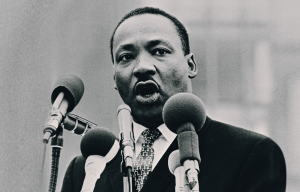
5. Martin Luther King Jr.


Martin Luther King had a seismic impact on race relations in the United States, as the face of the Civil-Rights movement in the 1950’s.

Through his activism, he played a pivotal role in ending the legal segregation of African-American citizens, as well as the creation of the Civil Rights Act of 1964 and the Voting Rights Act of 1965. King received the Nobel Peace Prize in 1964, among several other honors.

King was arrested 5 times, and wrote his second most influential speech whilst in prison in 1963 for protesting against the treatment of the black community in Birmingham, Alabama. Letter From Birmingham Jail, which was written on the margins of a newspaper and smuggled out of the prison, defends the strategy of nonviolent resistance to racism, arguing that people have a moral responsibility to break unjust laws.

Tragically, in 1968 he was assassinated in his hotel at the age of just 39.

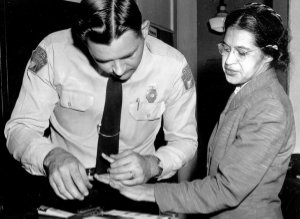
6. Rosa Parks


Rosa Parks was an African-American Civil Rights activist who became famous when she stood up for what she believed – by sitting down. On the evening of December 1, 1955, Parks was sat on a bus in Alabama, heading home after a long day of work.
During her journey she was asked by a conductor to give up her seat to a white passenger, but she refused, and she was arrested for disobeying an Alabama law requiring black people to relinquish seats to white people when the bus was full. Her arrest sparked a 381-day boycott of the Montgomery bus system. It also led to a 1956 Supreme Court decision banning segregation on public transportation.
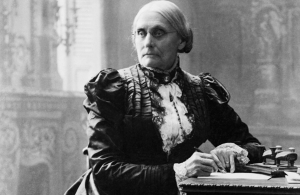
7. Susan Brownell Anthony
Or Susan B as some gender studies students know her as, was an American social reformer and feminist who played a pivotal role in the women’s suffrage movement.

Actively involved in social justice from a young age, Anthony and friend Elizabeth Cady Stanton, founded the Women’s Loyal National League, which conducted the largest petition drive in the nation’s history up to that time, collecting nearly 400,000 signatures in support of the abolition of slavery.

In 1866, they initiated the American Equal Rights Association, which campaigned for equal rights for both women and African Americans, and in 1872, Anthony was arrested for voting in her hometown of Rochester, New York, and convicted in a widely publicised trial. Although she refused to pay the fine, the authorities declined to take further action. In 1878, Anthony and Stanton arranged for Congress to be presented with an amendment giving women the right to vote. Popularly known as the Anthony Amendment, it became the Nineteenth Amendment to the U.S. Constitution in 1920!

8. Roxana Saberi

Roxana Saberi is an American journalist who was arrested in Iran and detained for 100 days after being falsely accused of espionage. She had been living in Iran for six years, doing research for a book that she hoped would show a more complete and balanced picture of Iranian society. Under pressure and being threatened with a 10-20 year sentence or even execution, Roxana falsely confessed to being a spy. She quickly realized this was a mistake and recanted her confession – knowing this would jeopardize her freedom. Instead of freeing her, her case was sent to trial, sentencing her in eight years of prison.

 “I would rather tell the truth and stay in prison instead of telling lies to be free.”

After her trial, she began her hunger strike – only drinking water with sugar. After two weeks, Roxana’s attorney appealed her conviction. She was released from prison after an appeals court cut her jail term to a two-year suspended sentence.

 “I learned that maybe other people can hurt my body, maybe they could imprison me, but I did not need to fear those who hurt my body, because they could not hurt my soul, unless I let them.

ORIGINALLY PUBLISHED ON ONE.ORG 


CLEA GUY-ALLEN

@PerfectlyClea

Clea hails from Brighton, United Kingdom and was the UK Global Citizen Editor. Now she works as the digital coordinator for ONE, a campaigning and advocacy organization to end extreme poverty and preventable disease. 

Education of Girls in the Developing World & How Le Dessein Helps

If women in the developing countries completed secondary education, 3 million children under the age of 5 would be saved every year.

This unfortunate statistic by the I.M.F. is just one the many plights young girls and women in general are facing in parts of Africa, Asia and Latin America. 

Here are some more startling facts:

1) More than 115 million 6 to 12-year old children are not in school in the developing world; three-fifths of them are girls.

2) When a girl in the developing world receives seven or more years of education, she marries four years later and has 2.2 fewer children.

3) A woman with six or more years of education is more likely to seek prenatal care, assisted childbirth, and postnatal care, reducing the risk of maternal and child mortality and illness.

4) When women and girls earn income, they reinvest 90 percent of it into their families, as compared to only 30 to 40 percent for a man.

5) Today, the U.S. invests in its future by spending about $6,800 a year per primary student on public education. In Iran the figure is $156 per student per year, in India $64, in Laos $30, and in Rwanda, $30.

6) An extra year of primary school boosts girls’ eventual wages by 10 to 20 percent. An extra year of secondary school: 15 to 25 percent.

Young girls in developing nations have not been given the attention they highly deserve in education. Yet they have the undeniable power to help uplift their communities out of poverty through education and the earning power it will generate. 

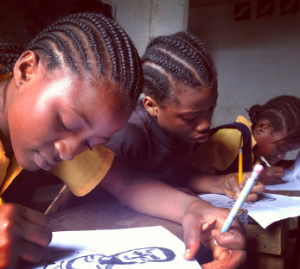
Through fashion, art, and socially responsible actions, we’ve designed a way to get involved. Le Dessein is a fashion line aimed at funding the education of underprivileged girls around the world by featuring their designs on our fashion. We then contribute 25% of our proceeds to the girls’ yearly school tuition.

The nature of our effort is not just monetary – our ultimate vision is to create independence and freedom through the empowerment of our girls. A critical component of this whole vision being self esteem – we were adamant on making sure that our girls would be intimately tied to the creation of the designs which would end up on garments. The success of their artistic journey through their participation and engagement would create a profound sense of OWNERSHIP, which is essential in affecting one’s self-esteem. Indeed, we wanted to demark ourselves from the traditional form of aid towards developing countries, which has consisted mainly of charity, and instead have “ownership” be the driving factor in maintaining this self-sustaining endeavor.

Creating an impact in these young girls’ lives will take collective effort from various committed parties. Inculcating the notion of “Ownership” though noble, can be an arduous task and required collaboration. And we’ve had the fortune and pleasure of being aligned with the More Than Me Foundation – “The More Than Me Foundation is on a mission to make sure education and opportunity, not exploitation and poverty, define the lives of the most vulnerable girls from the West Point Slum of Liberia.” Its motto is: “When she graduates, she will decide what comes next for her life.”

Indeed, for our girls, this is about reclaiming and redefining their own sense of self. For far too long, girls and women from the developing world have been subjected to a strongly patriarchal society – a society where their “value” was unilaterally decided by men – So “Ownership” to us is simply the final destination defined by an effort that consists of arming our girls and presenting them with opportunities susceptible to make this journey a worthy one.

Our fashion linehiis elegant and sophisticated and aims at serving a market that for too long has had to sacrifice quality and design for purpose and mission.

Learn more about Le Dessein. 

ERIC COLY

@Le_Dessein

Eric is the founder and CEO of Le Dessien. Eric grew up in Dakar, Senegal, where he was influenced by his mother's passion, drive, and fashion sense at a young age. His mother would eventually inspire him to start Le Dessein. He attended UCLA Business School and began his career in investment banking.