12 Local Cuisines You Can Find Around the World

Tasting local foods is one of the most interesting things about travel.  Learn about some hallmark culinary traditions of these diverse regions. 
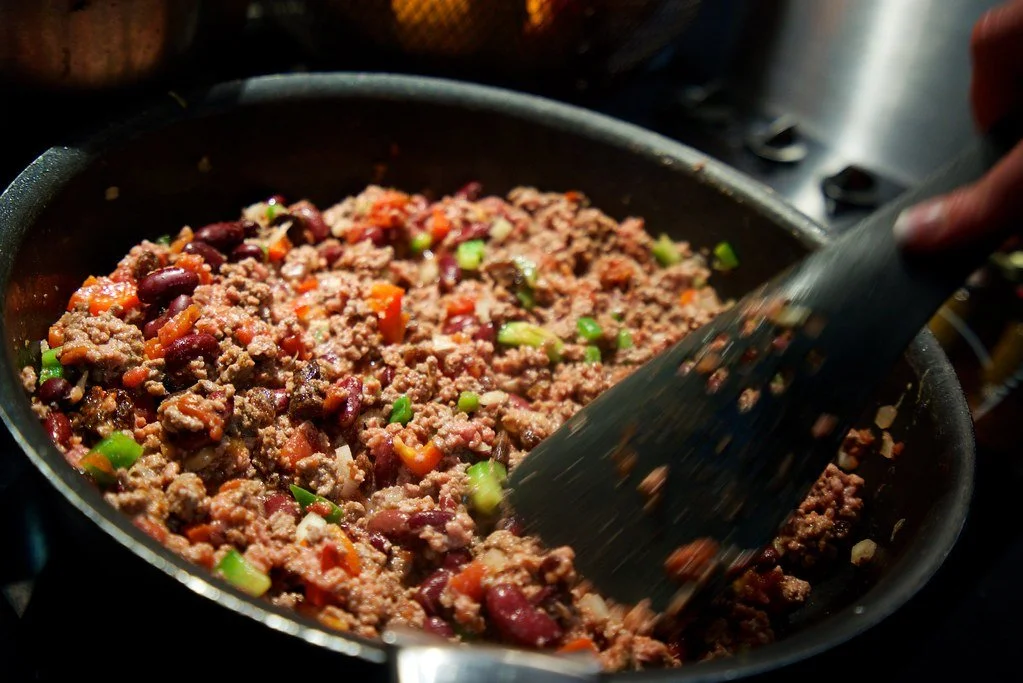
Meat and veggies simmering in a pan. LoKan Sardari. CC BY-NC-SA 2.0.

My favorite part of traveling is exploring and tasting local food dishes with culturally significant roots within the region I’m visiting. When I traveled to London, I explored the local pubs and decided fried fish wasn’t that bad. The local aspect of dishes excites me, and I would much rather dine in a family-owned restaurant than a tourist trap. 

This serves as a bite-sized serving of the infinite variety of food on this massive planet—not a definitive recounting of the delicious and culturally significant dishes on Earth, but rather these regions serve as starting points that lead to culinary exploration. 

1. Kanto Region - Japan
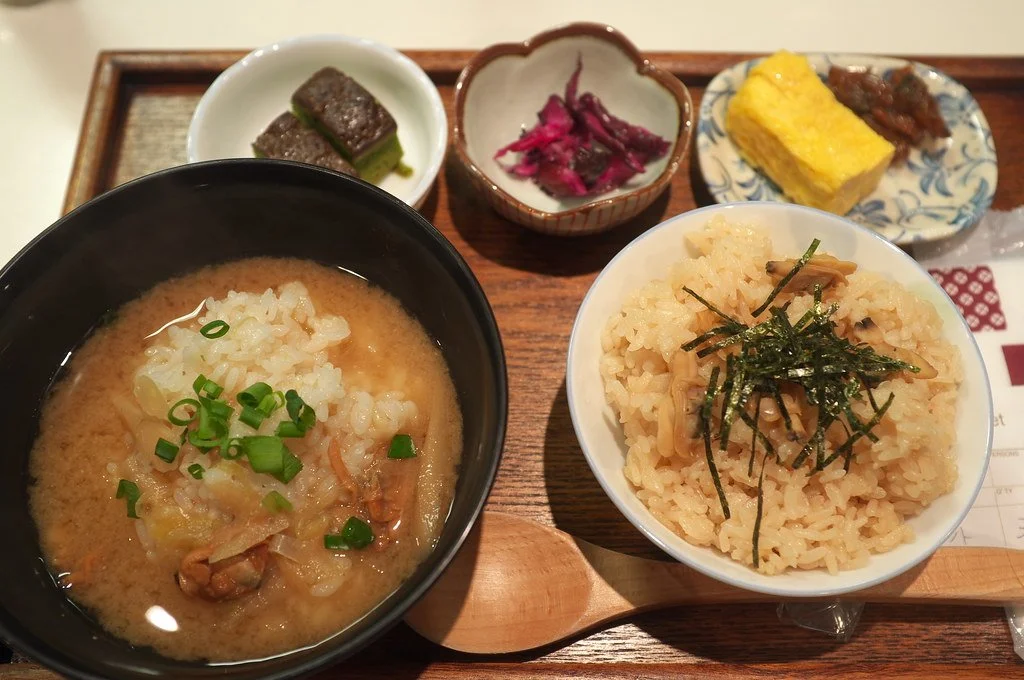
Fukagawa meshi and other side dishes. Nekotank. CC BY-ND 2.0.

Japan is divided into eight regions, each of which has its own culturally significant dishes. The Kanto region is home to the capital city of Tokyo, and the flavors are stronger than the other regions’ food. Fukagawa meshi is a dish that originated in the Edo period (approximately 1603-1867) and consists of clams and leeks cooked in a miso stew. The dish was a product of abundant fishing in the area and quickly became adopted by locals. The Kanto region became a hub for industry during the Edo period, and the cuisine naturally started evolving to incorporate other region’s influences. 

2. New South Wales - Australia 
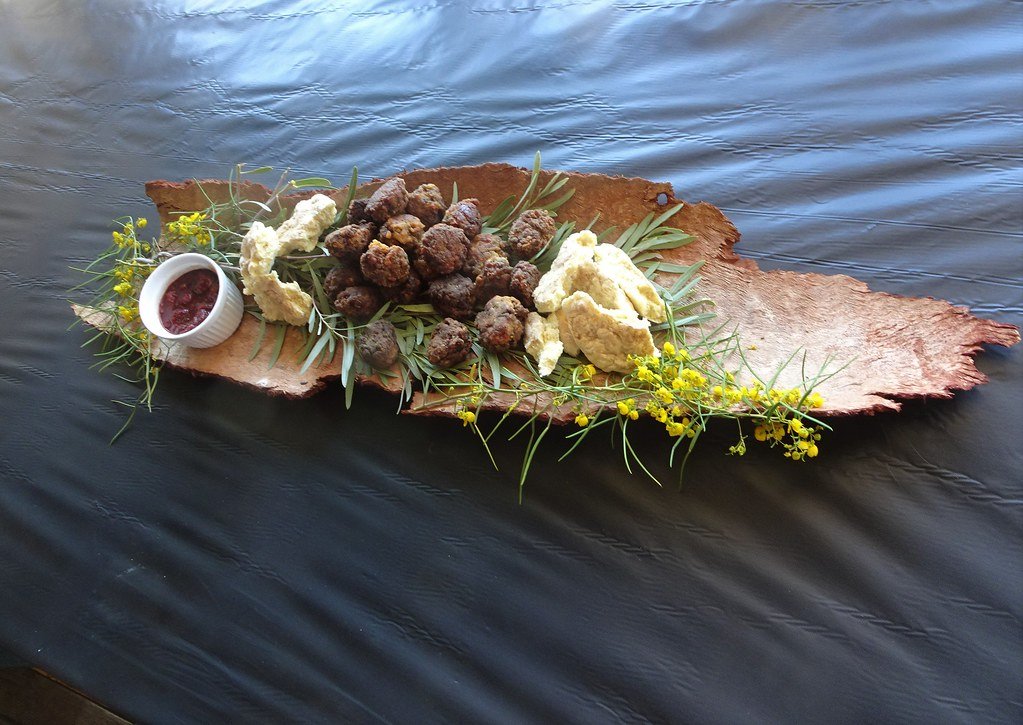
Kangaroo Meatballs with quandom jam. by denisbin. CC BY-ND 2.0.

Prior to the 18th century, the Indigenous population of Australia subsisted on hunting local wildlife, including kangaroos and wallabies. Once Australia became a continent-sized prison for the British Empire, the cuisine quickly modified to have influences of the colonizer diet. Today, Sydney cuisine reflects the multi-cultural population that lives there. Take-away foods and fast food are staples of Australian culture, and Sydney specifically is a melting pot of local and international foods. Fish and thick cut fries are common. The cuisine of Australia is heavily influenced by Western diets but still utilizes ingredients that Aussies connect with, including eating their national animal, the kangaroo—a dish low in fat, delicious, and popular in local restaurants. 

3. Phobjikha Valley - Bhutan
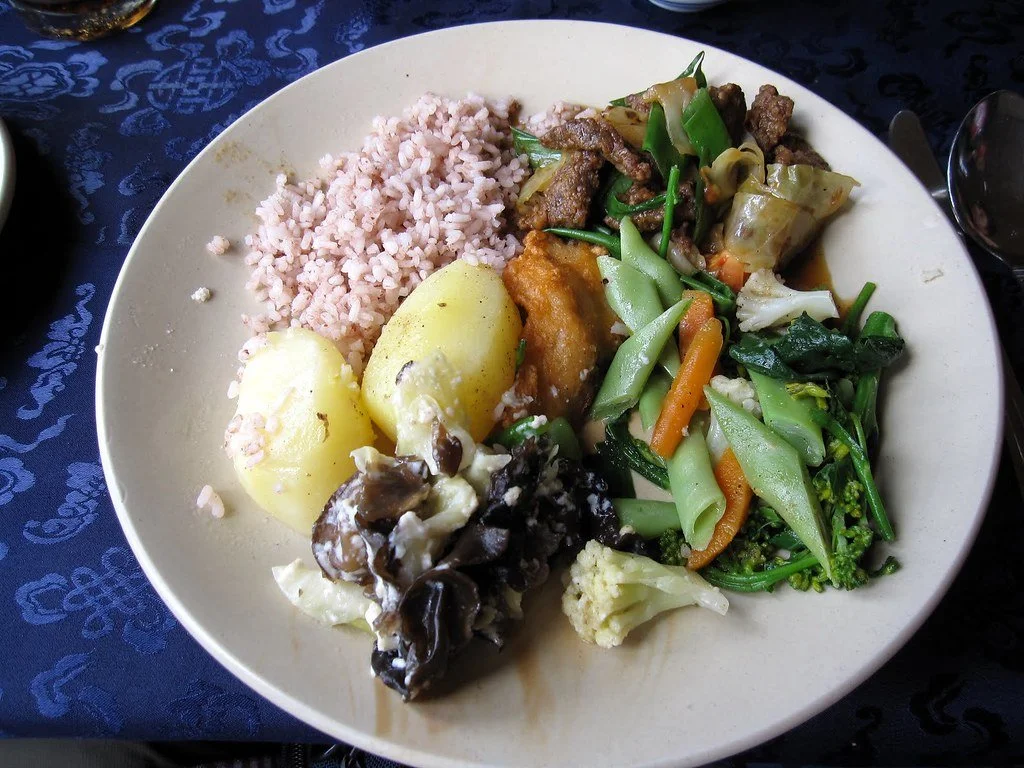
Bhutan dish with potatoes and vegetables. By rapidtravelchai. CC BY 2.0.

This region is home to many rich cultural events, such as the Black-Necked Crane Festival, which honors one of the region’s most culturally significant animals. This festival is held annually on Nov. 12, where cranes can be seen flying at high altitudes, accompanied by traditional dancers dressed in black-necked crane attire. The local cash crop is potatoes, which are the main ingredient in kewa datshi, a traditional dish prepared by thinly slicing potatoes and sauteeing with cheese, butter and chiles. The dish is relatively new to the region’s culture; in fact, potato consumption in Bhutan was near non-existent until the 1970s. Until then, it was mainly used as an export crop. Due to the region’s altitude and climate, insects do not interfere with the local’s potato crops, which eliminates the need for harmful pesticides.

4. Metsovo - Greece
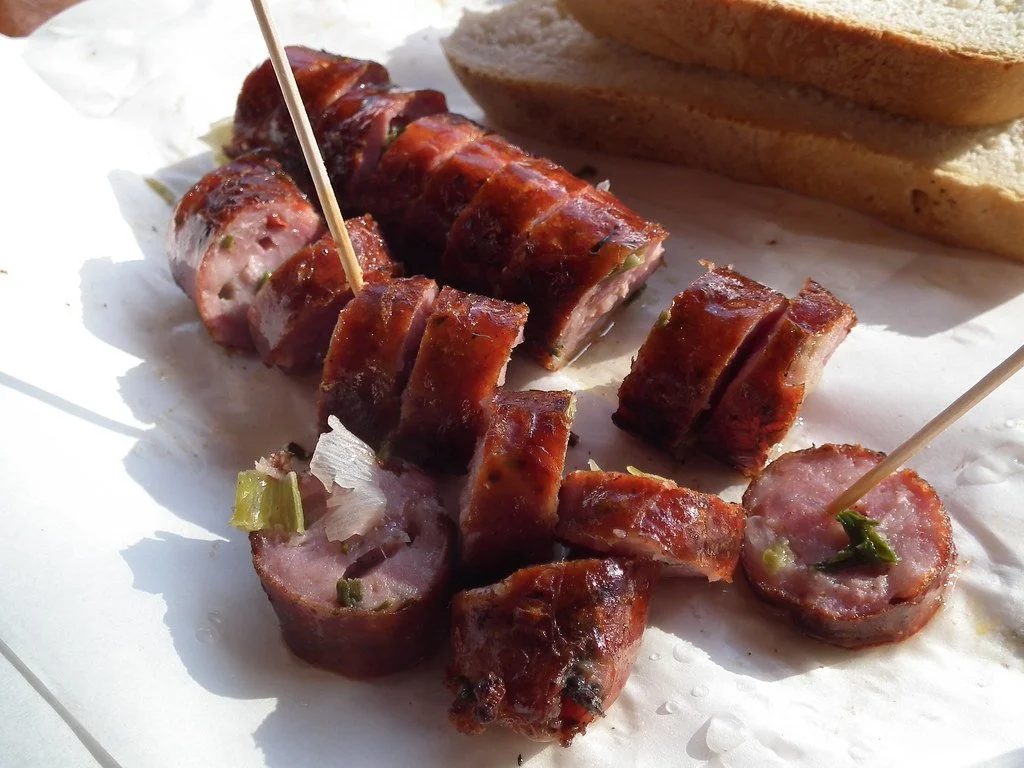
Skewered sausages. PACO POMARES. CC BY-NC-SA 2.0.

Situated to the north of Epirus, Greece, this gorgeous small town is home to some of Greece’s most delicious industries: wine and cheese. The history of this town is fascinating, with it being the center of production for sheep wool traded as far as Northern Africa during the 17th and 18th centuries. The region is most popular during the winter season for its spectacular mountains and beautiful streams. Venturing off the beaten path, one can find themselves entranced with gorgeous forests, filled with statues, 19th-century architecture and natural springs supplying fountains. The local cuisine has an emphasis on dishes with rich flavors like sausages and ruffage, as well as a nice glass of wine to pair with it. Extra virgin olive oil is a heavily used condiment that could be added to multitudes of things, including toasted bread and other dishes.  

5. Chengdu - China
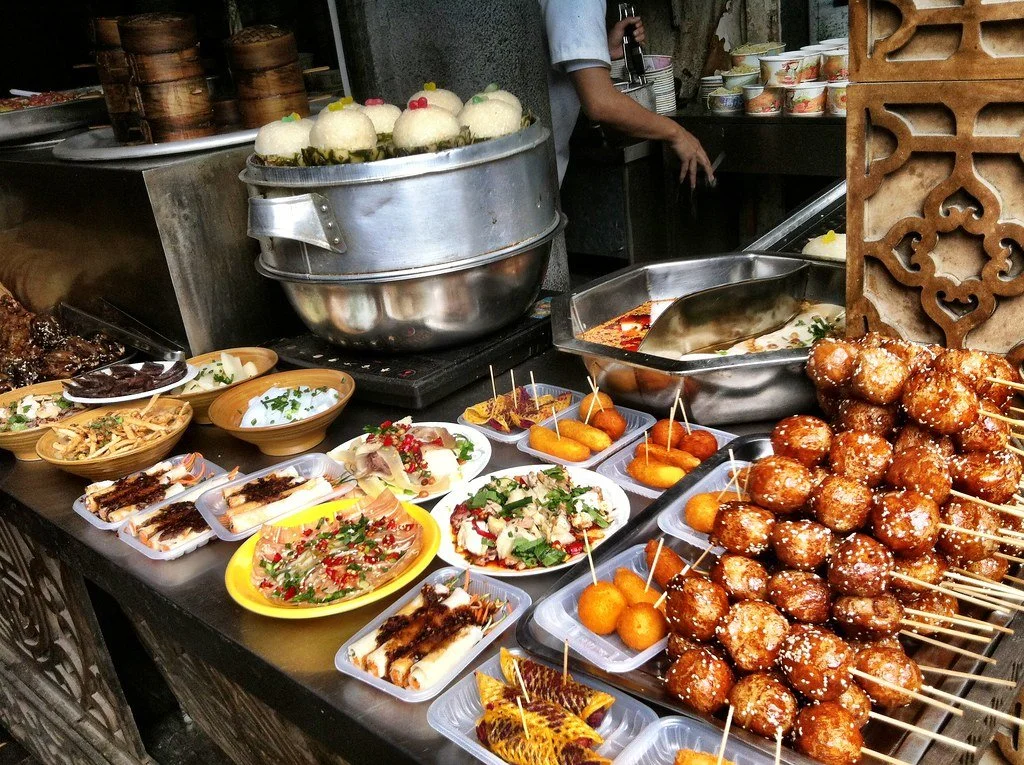
An assortment of Chengdu Foodsinosplice. CC BY-NC 2.0.

Chengdu, China is a so-called “Party City,” according to the Los Angeles Times. While it is true that Chengdu has more teahouses and bars than Shanghai, it’s also home to many local dishes, specializing in chiles and peppercorns. One dish, dan dan mein (which Chengdu is credited for making), utilizes both in order to achieve a very spicy broth. Chengdu’s local tea culture is also very important, since the city was once a starting point for the Silk Road, offering many opportunities to create and enhance cultural staples. Although not culinary-specific, the city is a hotspot for LGBTQ+ travelers and natives, combining influences from the local party scene and the Queer community. 

6. Soca Valley - Slovenia

Panettone with chocolate chips. Nicola since 1972. CC BY 2.0.

Slovenia is right in the center of four surrounding cultural influences; the Balkans, Alpines, Mediterranean and Pannonian flavors are all present in Slovenia’s dishes, and each is broken down into distinct ‘genres’ of food. The Alpine mountains are home to the cows and sheep that graze and produce milk, used for cultural dishes like žganci (literally translated as mash). The expansive meadows let honey bees run rampant to produce fresh honey. To the east of Slovenia, there is a vast amount of wheat fields, used to prepare a litany of different dishes and thermal springs that allow for fresh drinking water. The most popular fish is sea bass, and according to popular sentiment in the region, “a fish must swim three times, in water, oil and wine.” By utilizing hard harvested salt, Slovenia’s population takes its local cuisine very seriously. 

7. Cape Town - South Africa
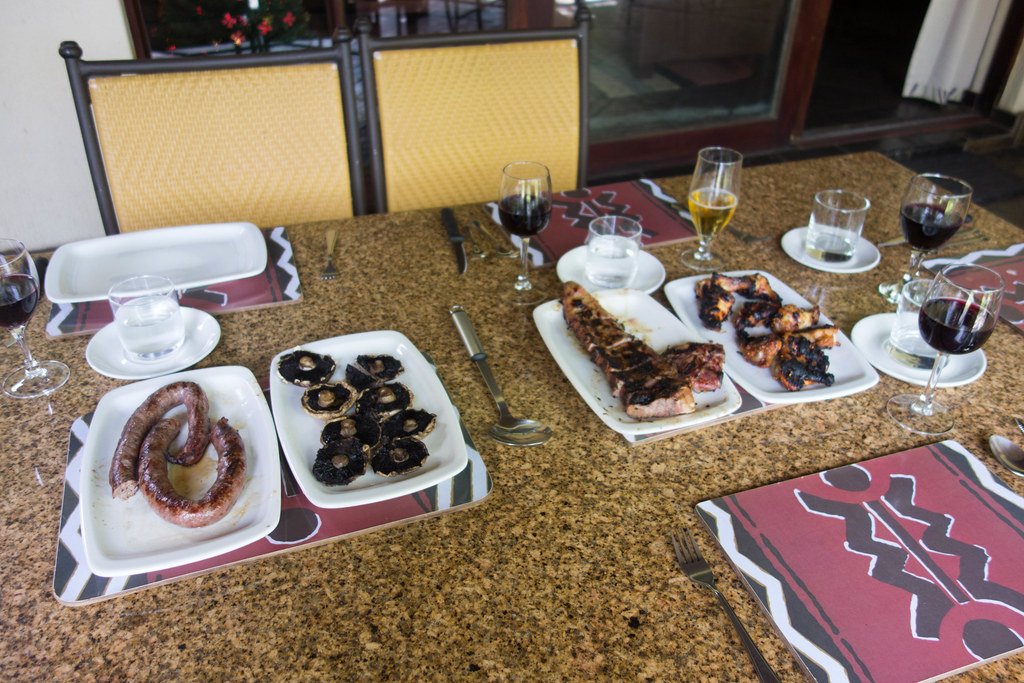
South Africa’s cuisine can be summed up with the term “melting pot,” since this region contains a mixture of Asian, European and Indigenous cultures within their food. Braai, an almost universally utilized meat preparation method in Southern Africa, is prepared by digging a firepit, providing meat and setting it ablaze. The practice is adjacent to America’s cultural touchstone of “barbecue,” although a key difference is that braai fires stay lit throughout the celebration as participants enjoy everyone’s company. Indigenous populations prioritized beef as a high-value food, and today, many South Africans still utilize foods from their Indigenous past. Colonialism severely altered the landscape of South African cuisine by bringing in an enslaved workforce from across Asia, which in turn brought their own cultural roots. The introduction of spices like nutmeg and allspice and the influence of European culture altered the cuisine further.  Fermented beer is also popular, with a common practice being offering someone homemade beer as they enter your house. 

8. Sicily - Italy

Italian cassatelle drizzled with chocolate. JohnDiP. CC BY-NC-SA 2.0.

Across the Mediterranean is the island of Sicily, a region known for its famous seafood dishes, sweets and, of course, pasta. The island restaurants have the opportunity to catch fish from the surrounding Mediterranean, specializing in tuna and freshly caught sardines. Pasta con le sarde is one of Sicily’s most popular dishes, utilizing fresh fennel seed that grows abundantly in Italy and the sardines from the surrounding sea. The dish also reflects the region’s multicultural influences, such as including raisins and pine nuts adapted from North American travelers. Sicily’s sweet side is also on full display, with cannoli being a centerpiece in Sicilian culture. Made with sweet ricotta filling, the crust of the cannolis is made from a fried pastry. 

9. Andes - South America
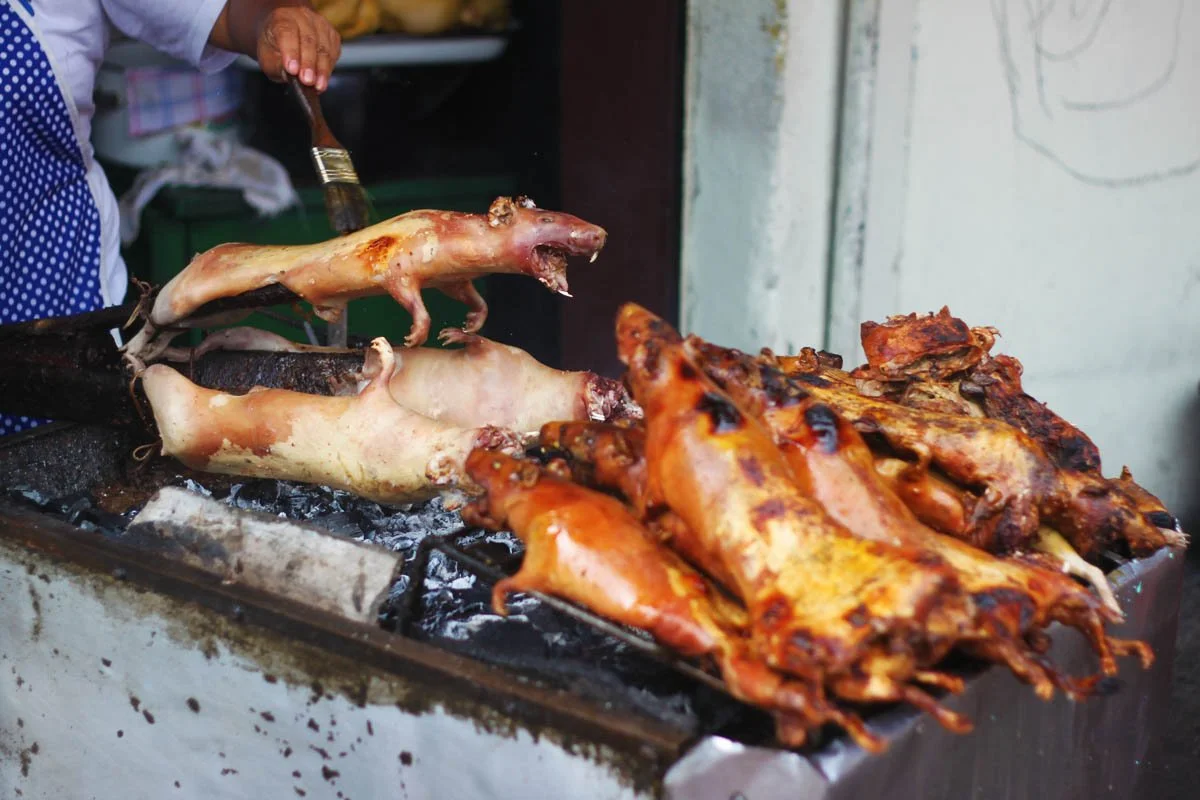
The Andes Mountains are home to communities of Indigenous peoples who have worked to preserve traditional flavors and techniques. The foodstuffs of the Indigenous peoples were incredibly versatile. Corn and potatoes are still some of the most important aspects of Andes cuisine, accompanied by traditionally used meats such as llama and guinea pig. Another word for a guinea pig is “cuy,” which has been a staple in Peruvian culture since the Incas and is used on important occasions.

10. Prague - Czech Republic
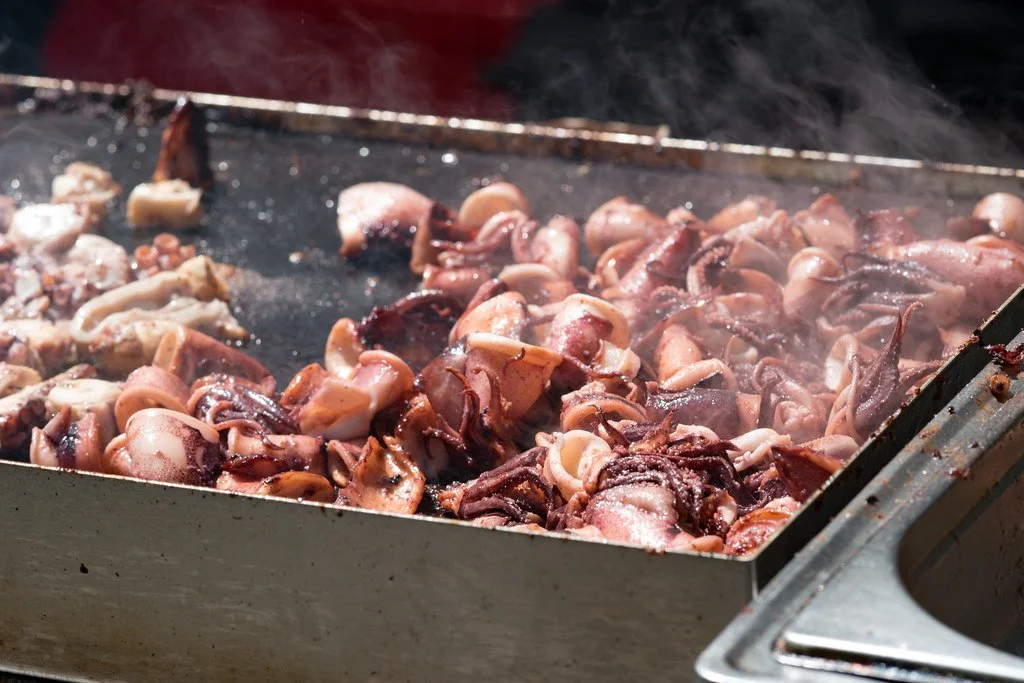
The capital of the Czech Republic harbors many cultural influences within its dishes. Italian food has touched the landscape of cuisine in Prague, but there are still many delicious dishes with deep Czech roots. Czech cuisine doesn’t have lots of vegetables in its arsenal of ingredients, and the foods of Prague are “delicious, comforting, very filling and addictive.” Steak tartare, a dish that tops “Taste of Prague’s” list of snacks that pair well with beer, is raw minced beef served with an egg or condiments. Sausages are a very common food in Prague, as well as the greater Czech region, overflowing into Germany. 

11. Central Ghana
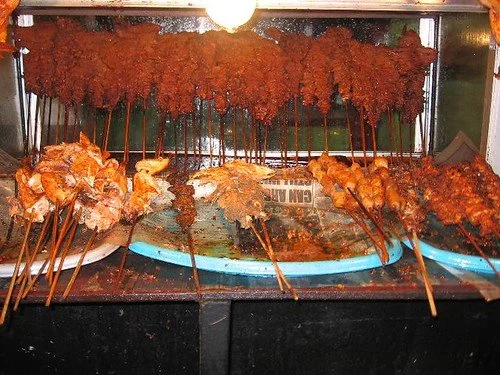
Western Africa’s recipes are still being prepared in deeply culturally important ways. Dishes are typically very starch heavy, accompanied by heavily seasoned meats, like beef, fish and the most dominant form of red meat in this region, goat. Traditionally, West Africans didn’t eat much meat and instead opted for dishes with natural oils, but now locals mix various meats together in different aspects of dishes. Suya is also a very popular street food, taking meat and mixing it with spices, resembling a kebab flavor on a stick. Prior to Ghana’s independence in 1954, residents boycotted colonial goods, including tinned meat and biscuits, in an effort to lower the cost of living. This action, along with a demonstration at the governor’s estate, set the stage for Ghana to be the first Sub-Saharan independent country. Ghana is not concerned about dictating a national food, rather it embraces the diversity of the many cultural influences within the country. 

“Ghanaians expect to encounter diverse ethnic foods when traveling through different ecological zones within their country,” said researcher Brandi Miller in her paper, “Food and Nationalism in Independent Ghana.” “They welcome this difference and consider it a source of national strength and an indication of their unique national character, which embraces diversity.”

12. Tropics - South America
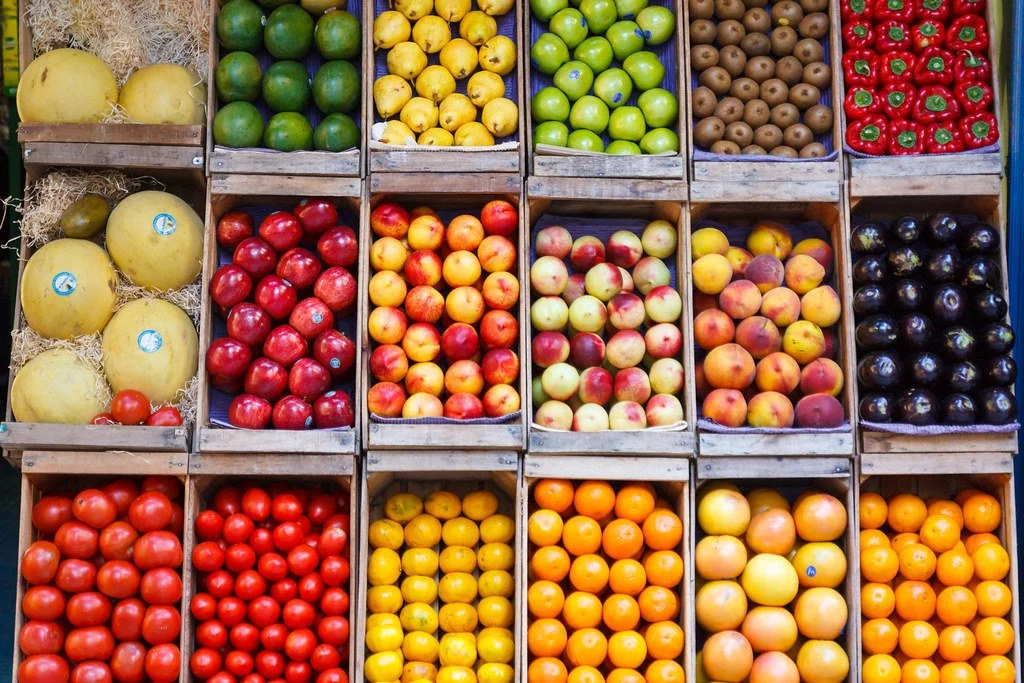
Fruit in a market. Nico Kaiser. CC BY 2.0.

On the beaches of South America, some so-called ‘exotic’ fruits are common staples of local culture. Pineapples, mangos, papayas and dozens others can be found in the tropical forests within the region. The climate allows for a dizzying variety of local agriculture to be used in recipes, such as tostones, which are popular Latin American twice-fried sliced plantains. The Amazon Rainforest is also utilized to enhance local flavors, utilizing meats from turtles and capybaras to use for local cuisine. Nearer to the coast, seafood dishes like ceviche are common to see enjoyed on a sunny day on the beach. Other than fish and fruits, there is a wide variety of vegetables that are grown in the tropics that influence local cuisine, including corn, beans and sweet potatoes.

Clayton Young

Clayton is an aspiring photojournalist with a Bachelor's in Liberal Studies with a minor in History from Indiana University - Bloomington. In his free time, he enjoys hikes, movies, and catching up on the news. He has written extensively on many topics including Japanese incarceration in America during World War II, the history of violence, and anarchist theory.
Geocaching: The World’s Largest Game of Hide and Seek

Geocaching is the world’s greatest treasure hunt. With both treasure-hiders and adventurous seekers, the hobby of geocaching takes participants on immersive adventures all around the world. 

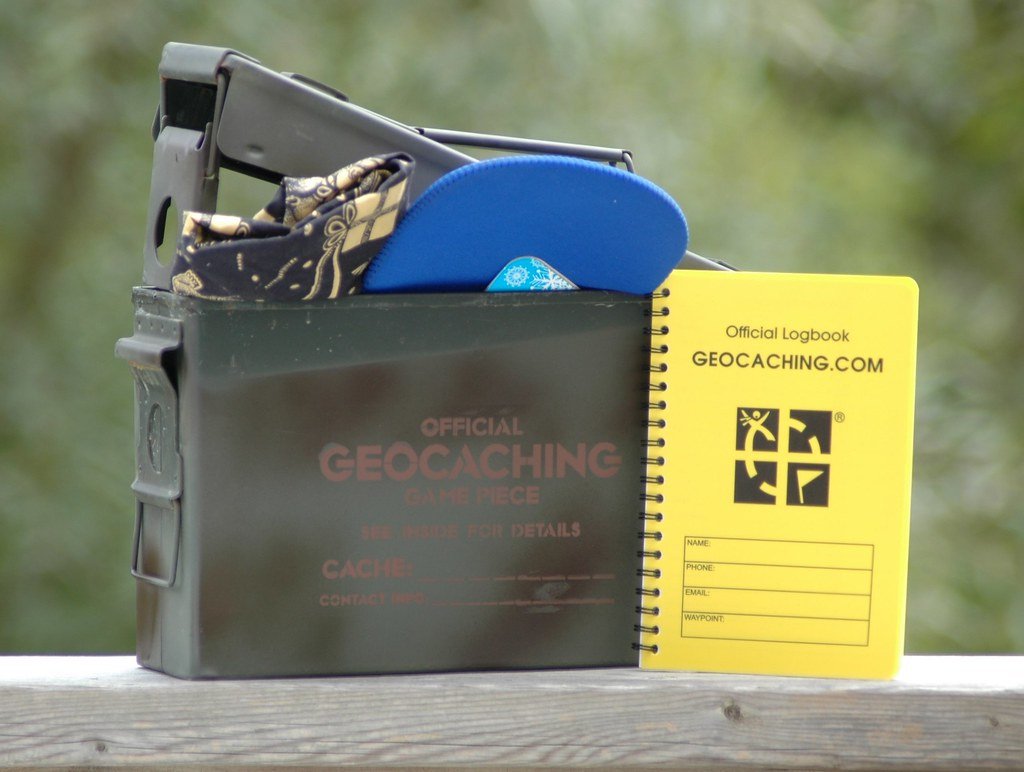
Geocache with accompanying logbook. Cachemania. BY CC-SA 2.0.

Geocaching is an outdoor hobby that allows participants of all ages to use geographic positioning system (GPS) technology to locate small boxes of treasure while exploring new outdoor areas. Composed of both hiders—those who create caches and stash them somewhere—and seekers—those who use GPS technology to locate the caches—geocaching becomes the world's biggest game of hide and seek, allowing for outdoor adventure along the way.

National Geographic states the activity began in 2000, when a small group of people from Oregon who were “interested in technology and geography” turned the idea of hiding caches into a game. Now, there are a plethora of online databases full of GPS coordinates made available to desiring participants, either for free or through registration, which can be placed into a geocaching app or hand-held GPS and guide seekers to stashes. Expanding past Oregon and now being hosted in 191 different countries, geocaching is now a world-wide activity being played by over 3 million people.

Hand-held GPS. Johan Larsson. CC BY 2.0. 

Inside caches, a bunch of different things can be found. Small trinkets, figurines and toys are very commonly stashed in geocaches. Additionally, it is good geocaching practice if seekers who find treasures add a bit of their own, taking one part of the cache and replacing it with their own treasure. This keeps the game alive and allows multiple seekers to find the same cache, while simultaneously having a unique experience from everyone else because they will find a new treasure every time. There are extreme circumstances where seekers will find coins, tokens and even dollar bills, but typically, treasures are not very valuable. This also helps prevent people from finding geocaches for the sake of monetary gain, which would ruin the communal, adventurous nature of the game.

Treasure from a cache. Dave. CC BY-NC-SA 2.0.

Those who choose to look for caches need the same basic equipment. Either a smartphone (with the downloaded Geocaching app) or a handheld GPS which can be bought on the internet is necessary to participate in geocaching. After that, all a seeker needs is coordinates from a geocache database and a free afternoon. Most seekers will find themselves hiking through woods, up hills and mountains, and immersing themselves in their local area on the way to their cache’s location. Many times, hiders will specifically place caches in areas that take seekers by camping grounds where they can rest after a day of hunting, a cool outlook where they can enjoy their treasures or spots not commonly explored in the woods or other local terrains.

View from a set of geocache coordinates. Bob n Renee. CC BY 2.0.

For those wanting to be a hider, the game gets a bit more complicated. Because the hiders dictate the coordinates, they also subsequently dictate the adventure that the seeker will go on. However, there are rules to the ways geocaches can be hidden and where. Not only do they have to obey trespassing and property laws, but they have to respect their surrounding environment. They cannot disturb plant or animal life, they must be accessible to seekers, and the box must be weatherproof for when it rains. 

Further, boxes cannot have perishable items inside, as they may pose a harm to those who find them. Finally, each cache typically has a logbook, which allows seekers to mark their find by writing their name. This is recommended because seekers and hiders alike can see how many other people have experienced the same treasure hunt.

Geocaching, although for everyone of all ages, is popular amongst younger people. Children love to geocache, and commonly groups of boy scouts and girl scouts will make camping trips and adventures out of it, especially when caches are located near campsites and in the woods. However, because geocaching has become a global game, anyone with the app and some spare time can experience the adventure. Travelers in new areas find geocaching can be a really great way to see a new local area. Porthole Cruise and Travel says geocaching is great for “road trips and day trips,” because it allows for travelers to experience more of their new area.

Geocaching is a great pastime for all ages and for travelers trying to fully experience new areas, and, what makes it even better is the fact that it is a mostly free hobby.is cheap, fun for everyone who wishes to participate and a great way to find new adventures with friends and family in your own town or ones you visit in the future.


Ava Mamary

Ava is an undergraduate student at the University of Illinois, double majoring in English and Communications. At school, she Web Writes about music for a student-run radio station. She is also an avid backpacker, which is where her passion for travel and the outdoors comes from. She is very passionate about social justice issues, specifically those involving women’s rights, and is excited to write content about social action across the globe.

World Central Kitchen: Relief Through Food

World Central Kitchen is a relief program that sends food and cooks to areas affected by disaster, that recently had a base in Ukraine hit by a Russian missile. Read to learn more about World Central Kitchen and how to support its efforts. 

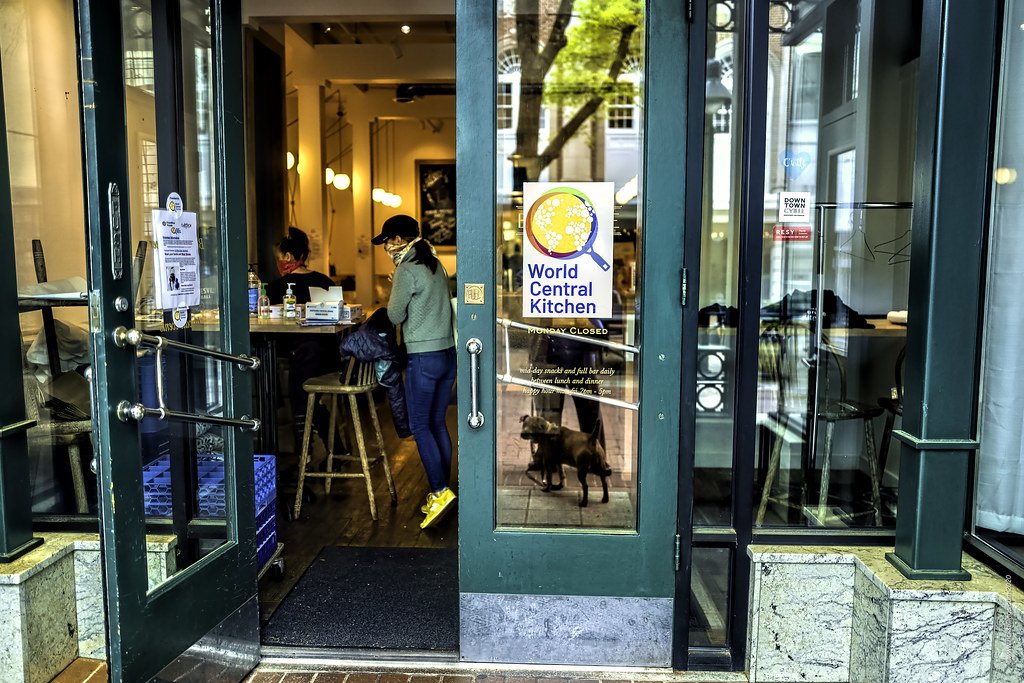
World Central Kitchen location in Charlottesville, Va. Rick Stillings. CC BY-NC-SA 2.0.

José Andrés founded World Central Kitchen in 2010 when Haiti was hit by an earthquake. The philosophy behind World Central Kitchen is that it isn’t simply food needed after a disaster, but chefs who are willing and able to cook food in the style that the people in the affected area are accustomed to, as a source of not only nourishment but also comfort. Ever since, World Central Kitchen has responded to disasters both environmental and humanitarian. 

While World Central Kitchen works to support any area in crisis, it has a specific Climate Disaster Fund. The fund is committed to spending $1 billion over the next ten years to combat climate change and assist those affected by extreme weather. It focuses on three areas: food provision for victims of climate disasters, investment in the communities most impacted by climate change and climate policy change. In terms of investing directly into communities, World Central Kitchen has a program called the Food Producer Network, which works directly with and financially supports independent farmers, fisherman and other food providers within these communities. The Food Producer Network provides grants and loans, as well as sending volunteers to work for these small businesses (if volunteers are desired). The Food Producer Network specifically operates in the Bahamas, Guatemala, Puerto Rico and the U.S. Virgin Islands. 

World Central Kitchen/World Food Programme Volunteers in Beira, Mozambique. DFID - UK Department for International Development. CC BY 2.0.

World Central Kitchen recently received a lot of publicity because its base in Kharkiv, Ukraine was destroyed by a Russian missile on April 15. This is the first time that World Central Kitchen has set up a kitchen in an active war zone, and the kitchen was not the only place hit; residences and businesses in Kharkiv were hit as well, as the missile directly hit the building across the street from the kitchen. Despite several staff members being hospitalized as a result of the missile, World Central Kitchen intends to set up another location elsewhere in Ukraine

World Central Kitchen accepts monetary donations and trains volunteers in or adjacent to the places that they are currently serving. As of May 17, they are looking for volunteers in Poland, Madrid, Barcelona, Málaga, Puerto Rico, Virgin Islands, The Bahamas and Guatemala. Some other food relief programs currently working to provide food (or money, through food) for the disaster in Ukraine are Cook For Ukraine, founded by Eastern European chefs working in conjunction with UNICEF, and Bakers Against Racism’s “Bake For Ukraine” campaign, which is an international bake sale program that has raised over $2.5 million for several global causes.


Calliana Leff

Calliana is currently an undergraduate student at Boston University majoring in English and minoring in psychology. She is passionate about sustainability and traveling in an ethical and respectful way. She hopes to continue her writing career and see more of the world after she graduates. 

Dying By Fire: Wynn Bruce’s Environmental Protest

This past Earth Day, climate activist Wynn Bruce lit himself on fire on the steps of the Supreme Court, dying the following day. Set on demonstrating the importance of global warming, Bruce chose the world’s most radical form of protest to emphasize his commitment to martyrdom.

Steps of the Supreme Court. Dbking. CC BY 2.0.

On April 22, 2022, Wynn Bruce, a climate activist from Colorado, made a fateful and radical decision: he would go to the front of the Supreme Court and, using self-immolation, become a martyr for the fight for global-warming-related policy change. Fed up with the lack of commitment to the issue of climate change, Bruce seemed to feel this was the only way he could get United States policy makers to listen—by lighting himself on fire and dying for his cause.

Self-immolation is the most radical and rarest form of nonviolent protest. It is said by ABC to have “the ability to harness both the morality of nonviolent action with the visceral nature of violent action.” By Merriam-Webster's definition, it is the “deliberate and willing sacrifice of oneself often by fire.” Typically, protestors who choose this form of action will use flammable substances such as petrol and lighter fluid to make sure flames catch and spread across the body. The goal of this form of protest is not to live to see its impact, it's to sacrifice oneself as a martyr for a cause in order to stress the dire importance of certain issues.

Used now for decades to protest a variety of social issues, self-immolation has continued its way into the practices of the modern day protest. Wynn Bruce is just one example; a civil rights lawyer named David Buckle burned himself to death in 2018, also protesting climate change. Wynn Bruce, alongside being a son, climate activist and citizen of the world, was a Buddhist, which is the religion credited by many to have started the practice of self-immolation.

Self-immolation has been used across the globe and did not necessarily start as a form of active protest. Buddhists are commonly credited not only with self-immolation’s creation but also with the practice’s infamy. ABC explains that many Buddhists believed that the ability to renounce the body and “transcend[ing] it’s limitations” was when “perfection is reached.” In Buddhism, to transcend is to reach enlightenment—a state of compassion and one that also ends the cycle of rebirth—so often, self-immolation was done as a religious act and not as a form of protest. 

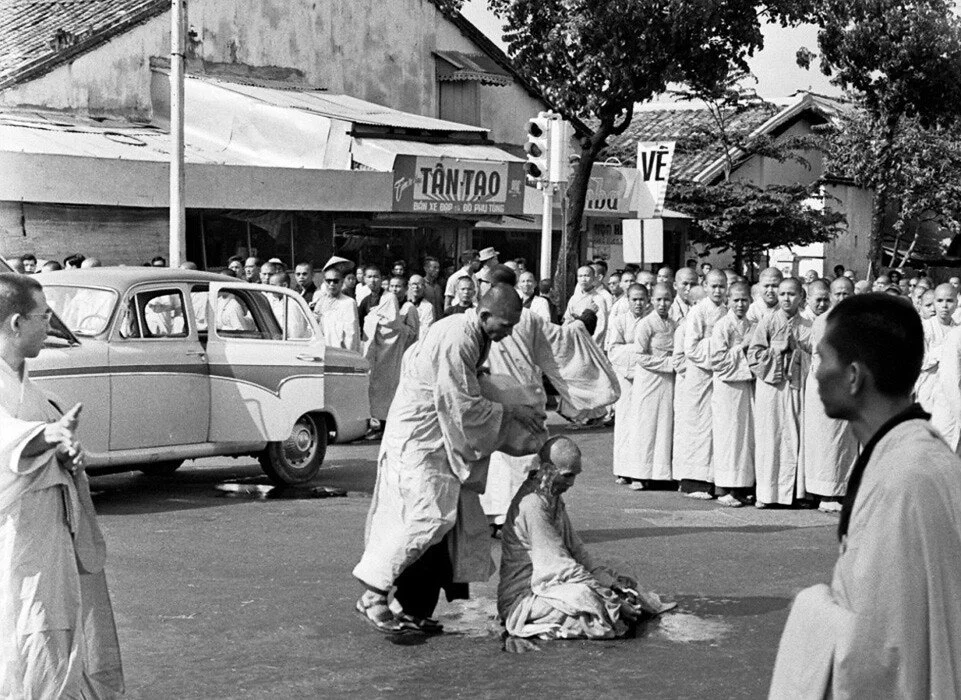
Buddhists used self-immolation first as a form of religious ceremony, but then turned to its more aggressive usages during the Vietnam War. Thich Quang Duc, known as The Burning Monk, used self immolation to protest a massacre that was allowed by the Vietnamese government. The president of Vietnam at the time had laws in place that restricted religious practices of faiths other than Catholicism, which eventually led to the. In response to this outrage, Thich Quang Duc made an ultimate sacrifice; gathering nearly 350 monks and nuns, Thich Quang Duc sat cross legged in the lotus position as a peer poured petrol over his body and lit a flame. Thich Quang Duc remained perfectly still as his body caught fire. This was an act of protest heard around the world, and the imagery from the day was quickly iconized in canonical protest media.

Thich Quang Duc being covered in petrol. Manhhai. CC BY 2.0.

Because self-immolation has the power to so strongly influence those who hear of it, it is not surprising how fast the news of Thich Quang Duc’s sacrifice reached all areas of the globe. Published in magazines such as TIME and the Associated Press, the image circulated the globe and continues to be brought up in tribute articles and memorial pieces by publications.

The act of self-immolation hurts no one except the martyr involved. It attracts all the right media attention, and it emphasizes the threat of pressing social issues in such an extreme way that the world is forced to listen. Wynn Bruce seemed to know this, and his peers claimed to understand his motivations. Dr. Kritee Kanko, a Buddhist priest took to Twitter to write, “This act is not suicide. This is a deeply fearless act of compassion to bring attention to climate crisis.”

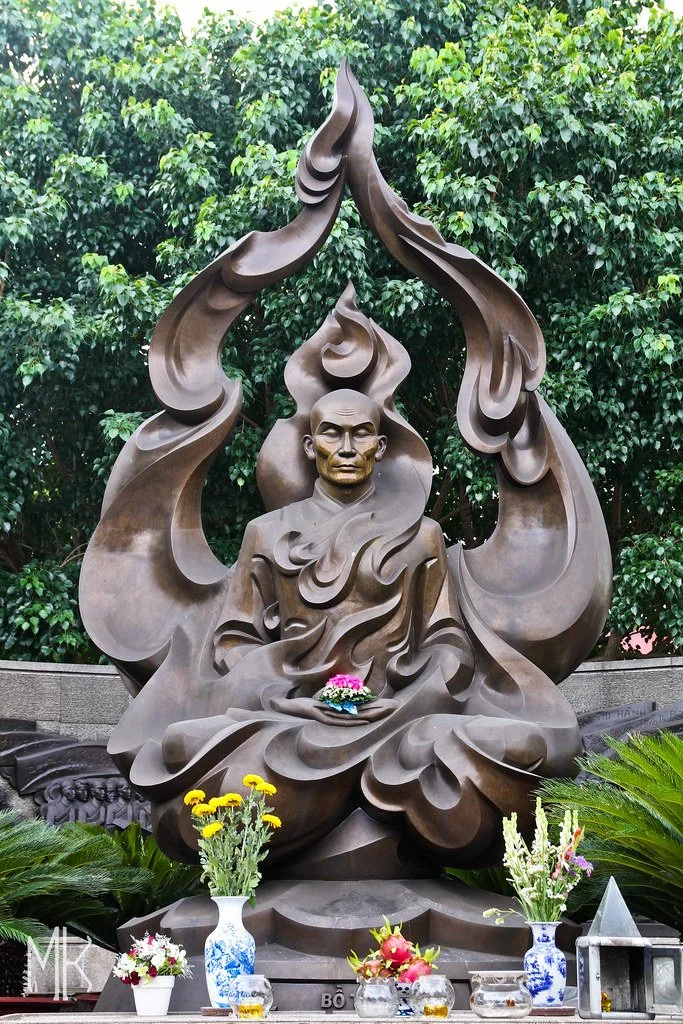
A statue of The Burning Monk. MK Photography. CC BY-NC-ND-2.0.

To Get Involved

MCE Cares is an organization designed to help people learn about how to become a climate activist. To learn more about the ways in which you can support the fight for policy change and climate activism, click here.


Ava Mamary

Ava is an undergraduate student at the University of Illinois, double majoring in English and Communications. At school, she Web Writes about music for a student-run radio station. She is also an avid backpacker, which is where her passion for travel and the outdoors comes from. She is very passionate about social justice issues, specifically those involving women’s rights, and is excited to write content about social action across the globe.

How Much Water Does A Pair of Jeans Cost?

Has the commercial giant finally found the key to environmentally sustainable denim production? Or is this just another temporary measure to keep their customers happy?

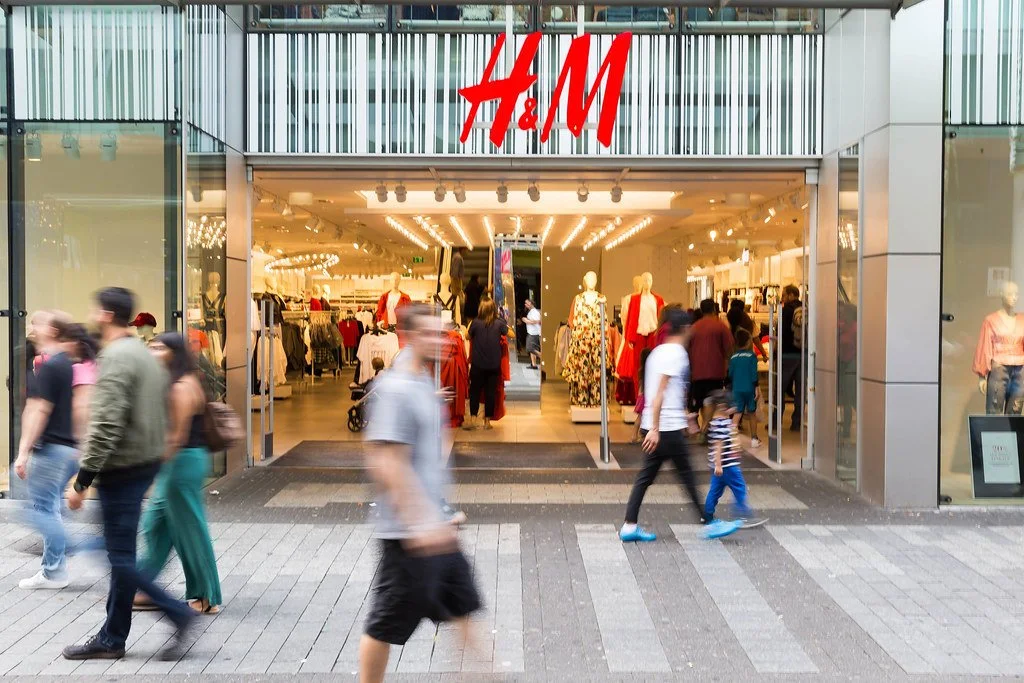
H&M outlet store in Germany. Marco Verch. CC-BY 2.0.

Over the past few years, the fashion industry has come under major public scrutiny for its general lack of concern for the environment. Every single step of the clothing manufacturing process—growing cotton, dyeing fabric, washing clothes—uses inordinate amounts of water while also producing between 4 and 10% of global carbon emissions every year. Fast fashion giant H&M produced almost 3 billion garments and earned just under $22.5 billion in revenue in 2020, making it the second largest clothing retailer in the world. The company also consumed about 85 liters of water per kilogram of dyed fabric they produced, totaling around 225 billion liters of water for that year alone.

Despite having been the target of widespread concern over the negative environmental consequences of fast fashion practices, the Swedish retailer claims to be working towards a more sustainable future. H&M publicly announced its goal to reduce greenhouse gas emissions by 56% by 2030, but many are doubtful it will be successful. Some of its current strategies include cutting ties with suppliers who still use coal boilers, enforcing carbon pricing systems within the company and establishing a green investment team to support environmental projects.

Promotional material for H&M’s Less Water denim capsule collection. H&M. CC-BY-ND 2.0.

H&M’s most recent project is its new “Less Water” capsule collection, which claims to have a focus on cutting water usage in the production process. The line includes various denim garments that are supposedly the product of new dyeing and printing technologies that reduce both the amount of water used and the amount of chemicals released. The company has already reached its previous goal of having 15% recycled water reused in the production of new clothing by 2020. This was largely the result of targeted rainwater harvesting and wastewater recycling initiatives in Bangladesh and India, where the company’s largest treatment and manufacturing plants are located.

While these are all steps in the right direction, they are decidedly small ones. The majority of H&M’s garments are still made using materials that are not harvested in an eco-friendly manner. Most importantly, it continues to operate using the fast fashion business model of providing trendy clothes for cheap, most often at the expense of the quality of the clothing, the environment and the labor conditions of the workers. Despite scoring 68% on the Fashion Transparency Index in 2021 (an annual report that reviews and ranks retailers based on their social and environmental policies) the company has failed to release any information about whether or not they are on track for their 2030 goals.

PicknWeight vintage kilo store. Lordship100. CC-BY 2.0.

The Less Water collection follows in a long line of recent attempts by various brands to improve their public image by becoming more socially responsible. Whether or not they will continue in the long run is yet to be seen, but if you are really looking to be more environmentally conscious, try your local thrift or vintage store instead. Not only can the items be equally as affordable as fast fashion brands like H&M, but giving clothes a second life saves them from the landfill, which is a much more immediate way to make a positive difference.


Tanaya Vohra

Tanaya is an undergraduate student pursuing a major in Public Health at the University of Chicago. She's lived in Asia, Europe and North America and wants to share her love of travel and exploring new cultures through her writing.

Discover Cambodia’s Beauty Despite Dark Political Past

Though still recovering from Pol Pot’s regime, Cambodia contains numerous sites and monuments worth traveling for.

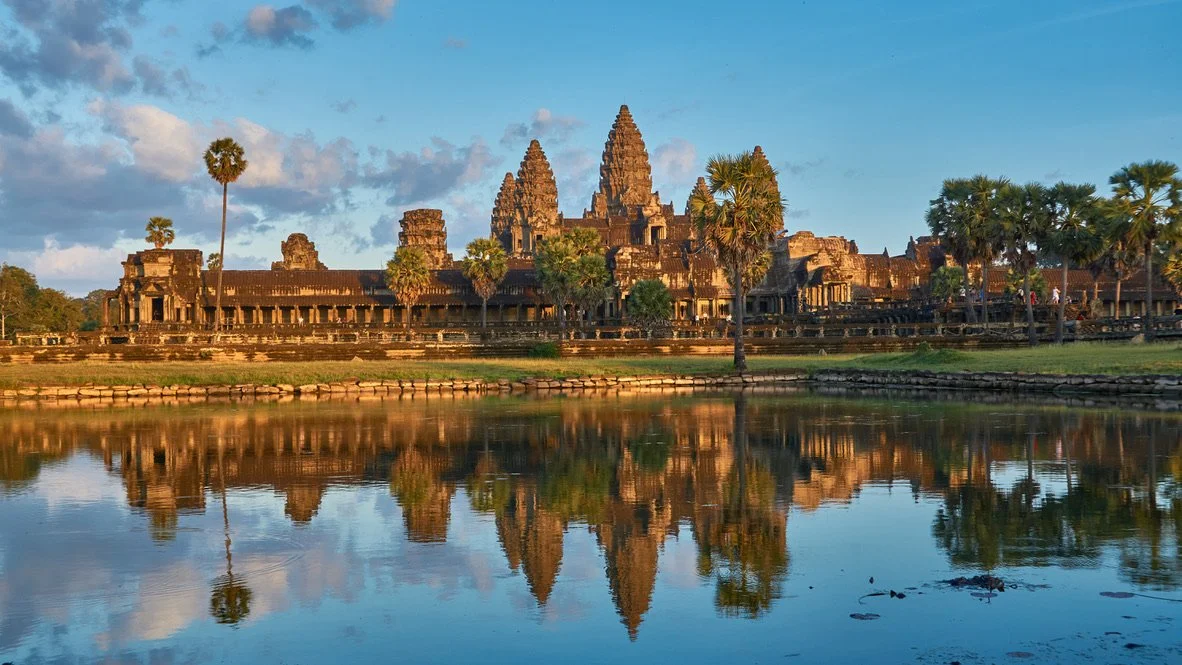
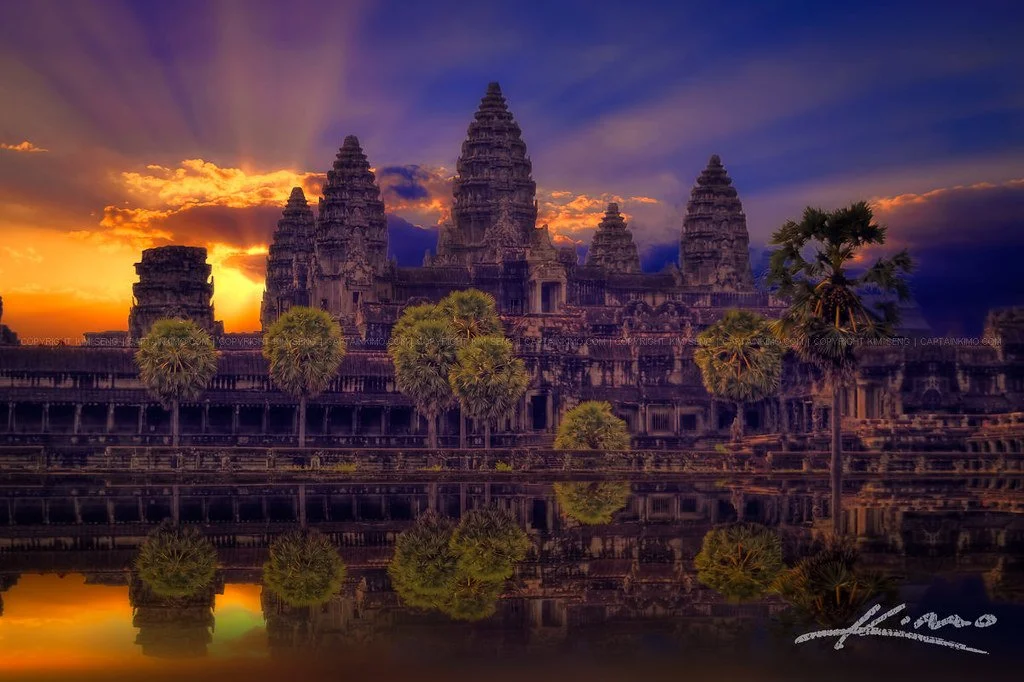
Angkor Wat Reflection. Radek Kucharski.  CC BY2.0.

Cambodia is known for its massive and brilliantly crafted religious temples, vast untouched forests and vibrant city life. What some may not know is Cambodians have and are still recovering socially, economically and politically from one of recent history's most horrific events: the reign of the Khmer Rouge. 

Under the rule of dictator  Pol Pot, the Khmer Rouge was a Marxist regime created in 1975. Whether from execution, starvation, exhaustion and disease, more than 2 million civilians died during the genocide. Despite the defeat of the Khmer Rouge on January 7, 1979 by the Vietnamese military, Cambodians struggled to regain their political and economic prosperity. General poverty rates have lingered around 35% which is a great improvement from the 50% at the initial end of the events. Those who experienced the genocide are now be in their 50s, and thus Cambodians are still living with the traumatic experiences they went through.

With that said, the Southeast Asian country has shown great perseverance and progress towards a bright future. Now, Cambodian citizens celebrate their traditional cultures and welcome outsiders to experience the atmosphere and history of their country. Here are a few of the most popular spots.

1. Angkor Wat

Said to be the largest religious monument in the world, Angkor Wat is a vast Buddhist temple that touches over 400 acres of land and comprises over 1,000 buildings. Cambodia is home to this cultural wonder of the world and is a destination that provides both visual beauty and an introduction to Cambodia’s rich history and culture. 

Angkor Wat has five lotus-like towers rising 65 meters up, being the first part of the temple visitors tend to notice. The awe-inspiring scenery continues with carvings throughout the inside of the temple. Celestial dancers, known as apsaras in Khmer (Cambodia’s national language), helped reintroduce Apsara dance in Cambodia. Carvings of war, spiritual journeys and everyday life explain Cambodia’s hardships and relationship with culture and religion. Ta Prohm, also known as the Tomb Raider Temple due to its appearance in the 2001 film, and Angkor Thom are other beautifully architected sights nearAngkor Wat.  

2. Banteay Srei 

Banteay in Angkor. Juan Antonio Segal. CC BY 2.0.

Known as the Temple of the Women, Banteay Srei is sacred in Angkor. Though it is much smaller in size than Angkor Wat, it contains some of Cambodia's most delicate carvings. Images of women holding lotus flowers and memorable stories of the Hindu religion are depicted here. Banteay Srei is still a place for women to visit and observe to feel inspired and appreciated, as well as a place where anyone can experience its beauty and history.

3.  Bayon

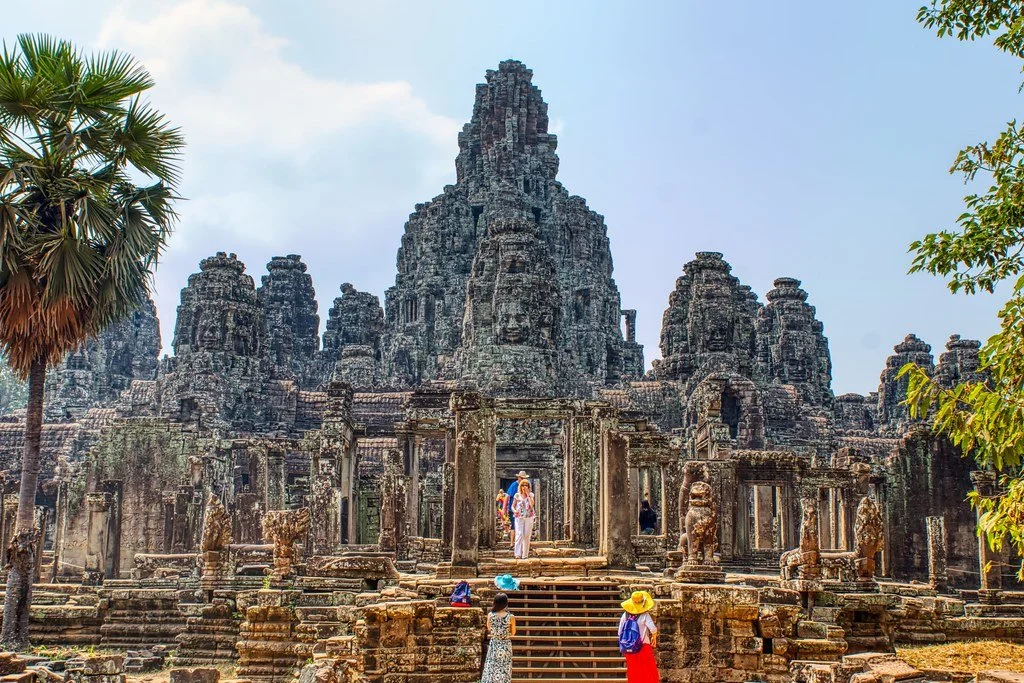
Bayon Temple Ruins in Cambodia. Uwe Schwarzbach.  CC BY-NC-SA 2.0.

This Buddhist Temple is home to 216 smiling, peaceful faces carved into towers. Numerous other carvings can be seen representing the experiences of the Khmer people. Bayon temple allows visitors to understand the goals and journey of the Khmer Empire and is a great temple to visit if you are interested in Buddhism and appreciating Cambodia’s past.  

4. Phnom Penh

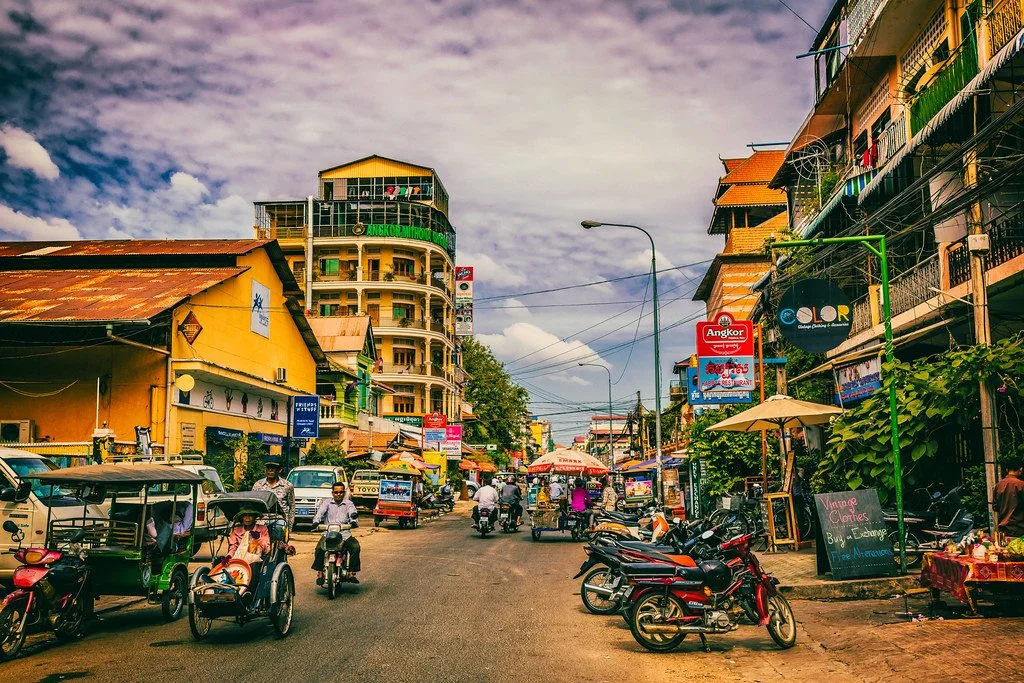
Bustling Phnom Penh. Baron Reznik. CC BY-NC-SA 2.0.

Phnom Penh is the capital of Cambodia andhome to vibrantly colored buildings, tight streets with motorbikes, friendly locals and more architectural beauty. A main mark of the Cambodian experience, Phnom Penh is affordable and easy-going—a great way to submerge yourself in the country's culture. here are some upscale restaurants and locations, but overall, Phnom Penh remains its gritty, lively and romantically chaotic self. 

5. Krong Siem Reap

Angkor Wat in Krong Siem Reap. Kim Seng. CC BY-NC-ND 2.0.

Krong Siem Reap is another other major city destination in Cambodia. Krong Siem Reap is a staple of Cambodia’s religious history, being home to Angkor Wat, the ruins of Banteay Srei and Ta Prohm. Locals treat travelers as if they have been life-long friends, and travelers will get the chance to explore much of Cambodia’s Buddhist history as long as remaining respectful. 

Krong Siem Reap is also known for its exquisite food scene. Cafes offer coffee, teas and delicious local food dishes with some even offering vegetarian and vegan-friendly options. Restaurants to grab an authentic and budgeted meal are around every corner. 

6. Kirirom National Park

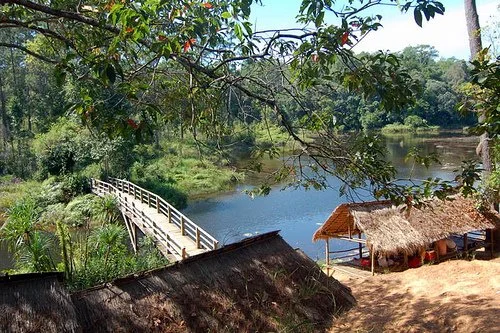
Kirirom National Park Rest Area. Arie. CC BY2.0. 

Located mostly in Phnom Sruoch District, Kirirom National Park is covered with deep forestry and high elevation. Kirirom, meaning “Mountain of Joy,” is loved for its high elevation pine forests and many glistening waterfalls. Along with vast, isolated hiking trails, the endangered sun bears, pileated gibbons and tigers can be found living in the forests. 

7. Koh Tonsay

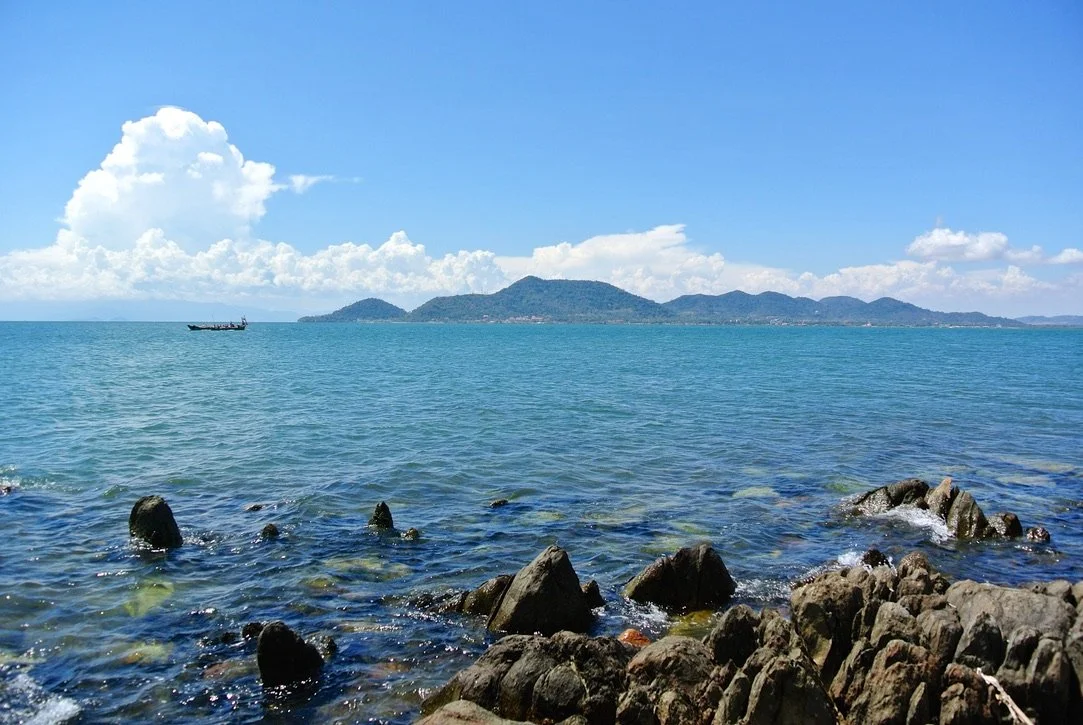
Koh Tonsay. James Antrobus. CC BY2.0. 

Located on the country's south coast in the Gulf of Thailand, Koh Tonsay can be translated as “Rabbit Island”  and received its name because it houses the furry little creatures. It is a relatively quiet coast with a more rustic beach style. While tourists tend to visit other parts of the Cambodian coast more influenced by Chinese businesses, Koh Tonsay remains a sliver of true Cambodian land. It is not as flashy as some other beaches on the coast of Cambodia, but Koh Tonsay offers a unique and isolated beach experience. 

8. Bousra Waterfall 

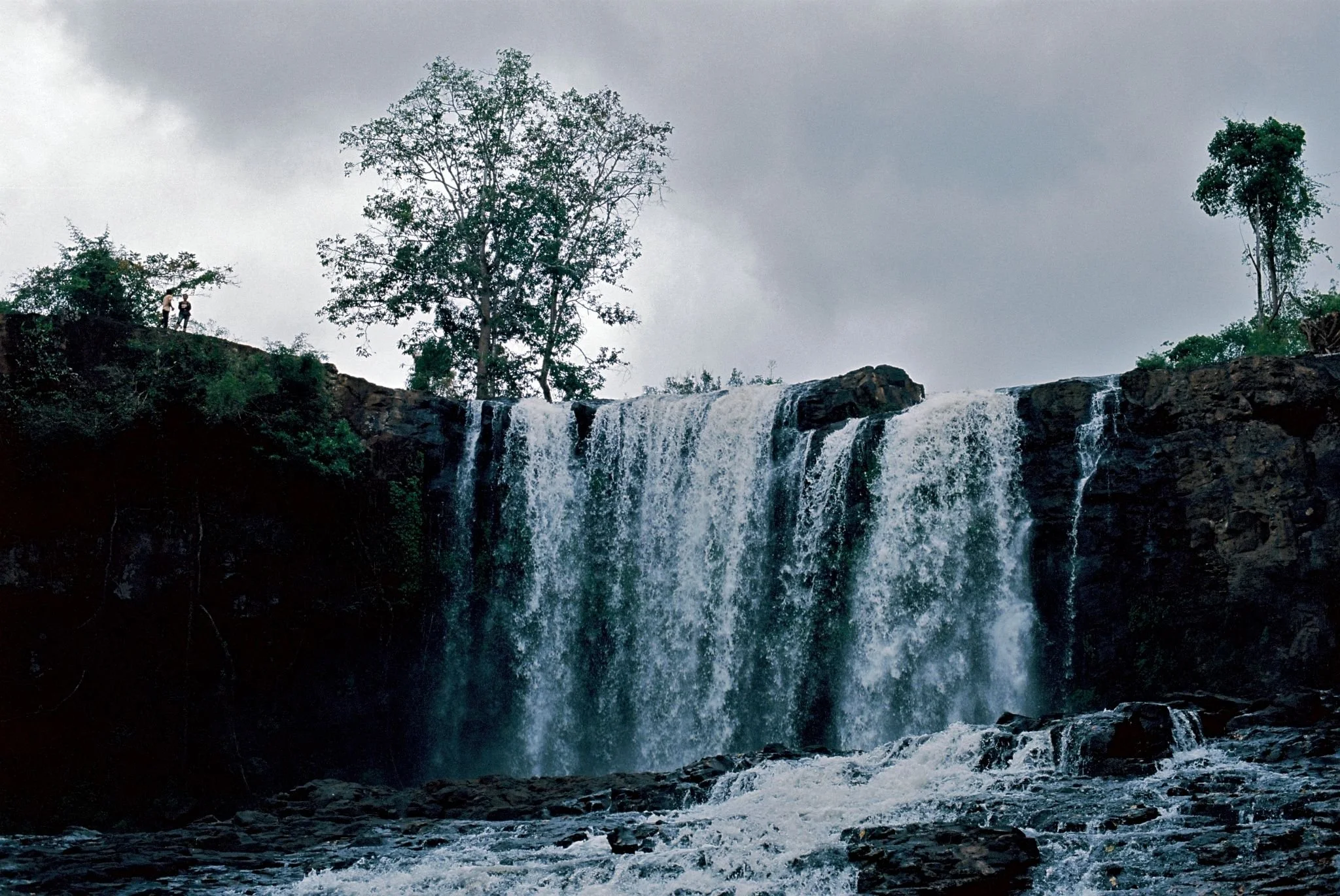
Bousra Waterfall. Lucien Tan. CC BY-ND 2.0.

Located just outside of Sen Monorom, the Bousra (also spelled Bou Sra and Busra) waterfall is a three-level natural wonder offering viewing platforms at different heights and access to its base, where visitors can get misted and explore the powerful waters.


Haleigh Kierman

Haleigh is a student at The University of Massachusetts, Amherst. A double Journalism and Communications major with a minor in Anthropology, she is initially from Guam, but lived in a small, rural town outside of Boston most of her life. Travel and social action journalism are her two passions and she is appreciative to live in a time where writers voices are more important than ever.

Sandboarding: The Art of Surfing Sand Around the World

Requiring nothing but a board and steady nerves, sandboarding has become a popular new solo-extreme sport. Small and large competitions occur all over the world as the sport gains popularity.

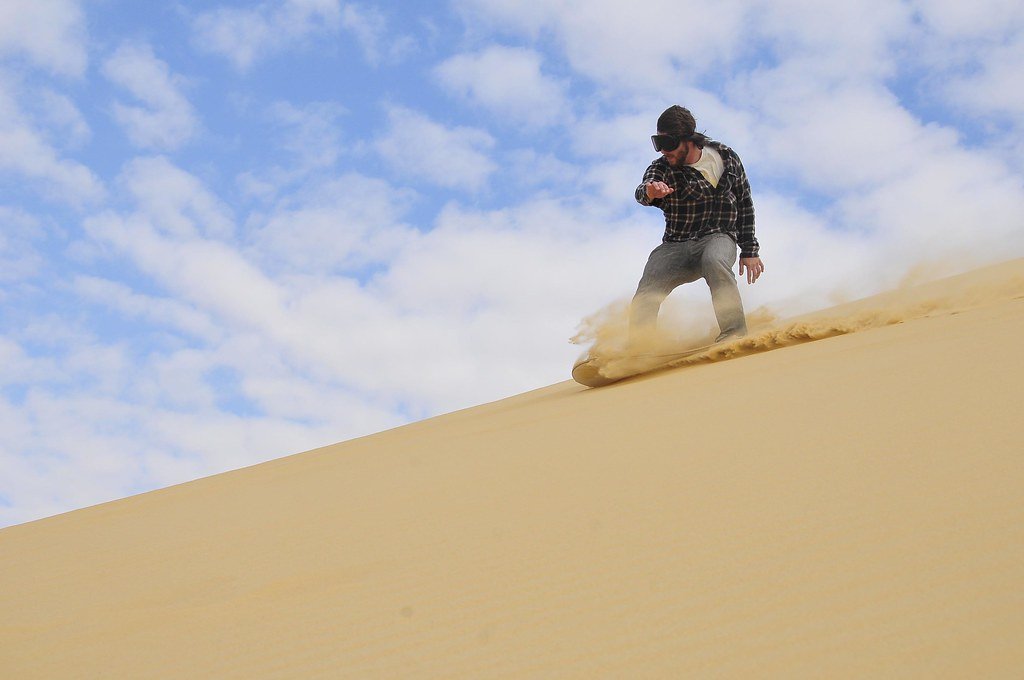
A man sandboarding in Egypt. Surfing The Nations. CC BY-NC-ND 2.0.

Sandboarding has gained popularity as an extreme solo sport, with competitions held at dunes around the world.  The sport is perfect for adventurous athletes and travelers interested in seeing new places and seeking adrenaline-fueled fun, as it can be done anywhere with expansive sand dunes and the right equipment.

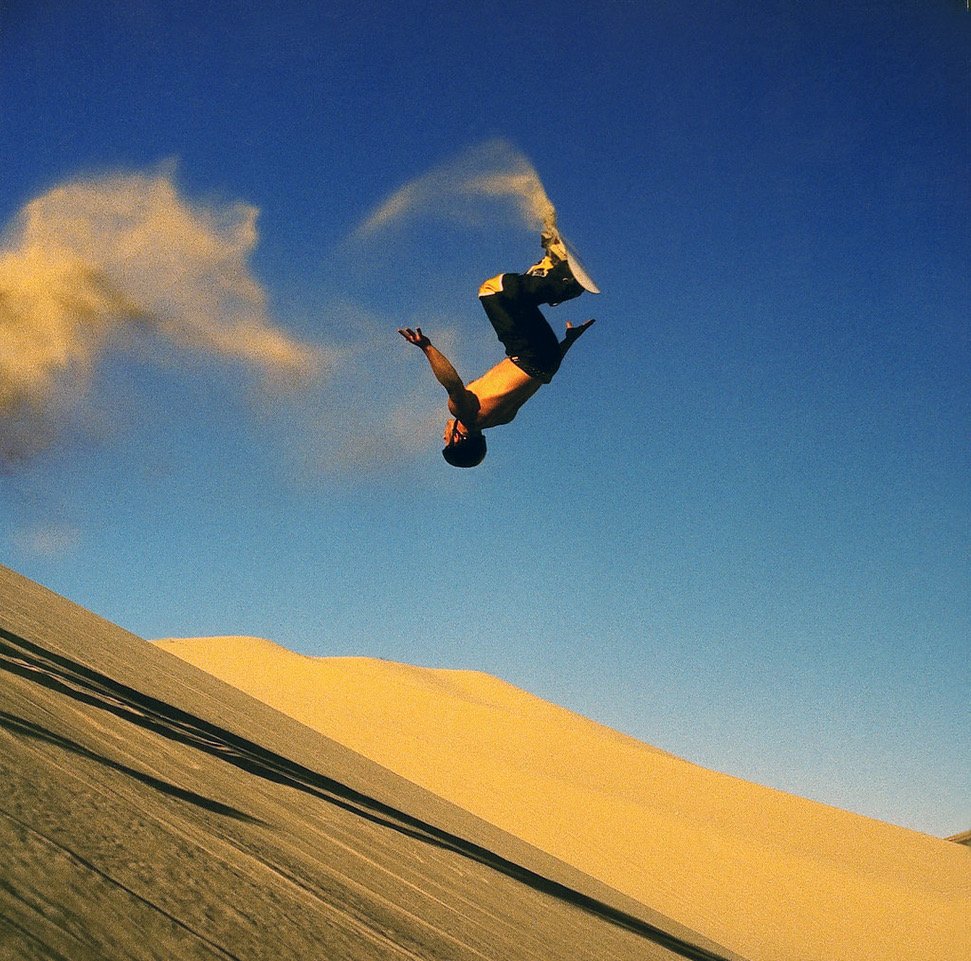
The sport itself is logistically simple: riders climb to the top of a sand dune and get on their board. Then, by jumping closer to the downward slope of the dune, pivoting to have their front foot ahead of them and leaning forward, the board will start to move and pick up speed as it makes its way down the slope—similar to snowboarding. Professionals will throw tricks like jumps and spins which have flooded YouTube over the years, and sandboarding courses have even installed bars and pipes for riders to test out, just like a skateboarder or snowboarder would find at parks or slopes.

Surfer Today describes sandboarding as “a blend between surfing, skateboarding and snowboarding.” Typically, sand boards are almost identical to snowboards, yet they tend to be lighter and either include no foot holdings or two straps for each of the rider’s feet with a latch that locks you to the board. No uniform is required unless you are competing professionally, and even then, experts and riders wear casual uniforms during competitions.

Pro-sandboarder Josh Tenge at Sand Master Park. OCVA. CC BY-ND 2.0.

Sandboarding is also an accessible sport that can be done on a range of levels from beginner to expert. At the beginner and intermediate levels, the extreme sport becomes more of a daring passtime. Perfect for summer conditions due to the dryness of the sand, recreational sandboarding is done all around the United States and in other parts of the globe. In the United States, perfect sandboarding conditions can be found in places like Utah’s Coral Pink Sand Dunes Park, Sand Master Park in Oregon, Monahans Sandhills State Park in Texas and the Kelso Dunes in California. There are more great national parks and dunes spread across the United States that perfectly cater to sandboarding conditions, and finding a location nearest to you can be easily done with a simple search on the internet; lists on the best locations to sandboard are scattered across the web because of how popular the activity is.

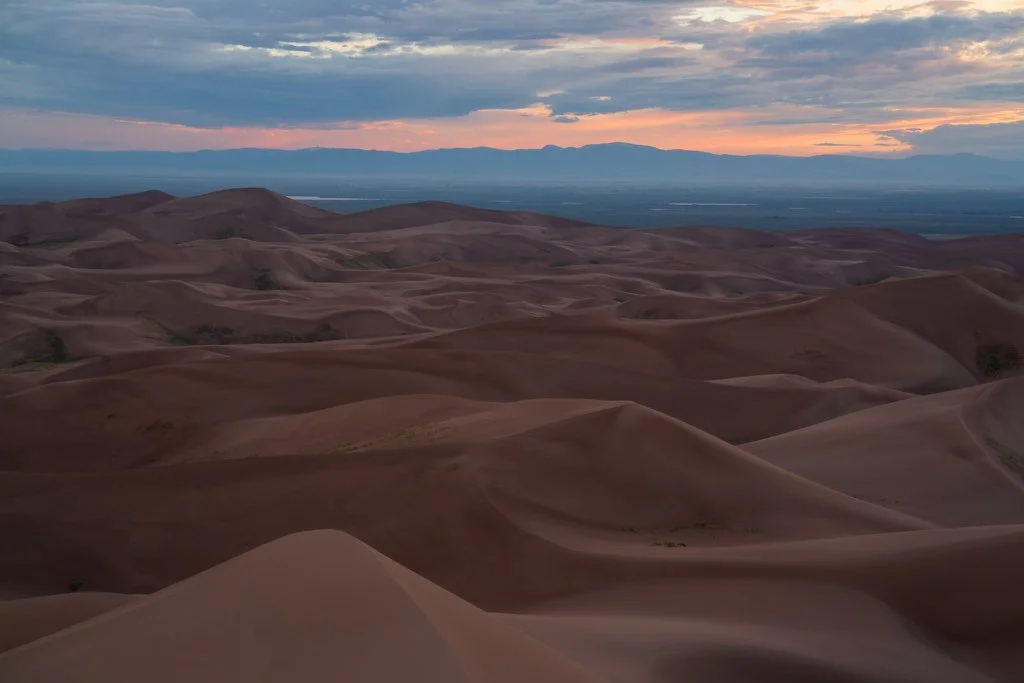
Additionally, there are amazing places to sandboard across the globe that are perfect for a day trip to some of the world’s most famous dunes and deserts. South America is immensely popular for sandboarding—the World Cup is typically hosted here because of the massive dunes and numerous locations to be found in the continent. Some examples can be found in Peru, at both Cerro Blanco and Huacachina, while other South American spots ideal for the sport are located in Concon, Chile. Towards the Middle East and Africa, other famous deserts and dunes that are great for sandboarding include the Great Sand Sea in Egypt, the Namib Desert in South Africa and the Moroccan Sahara, known for its vast expanse of sandy hills.

The Great Sand Sea in Egypt. Virtualwayfarer. CC BY-NC 2.0. 

Most parks do not make visitors pay to use the sand dunes, but occasionally visitors will have to pay an entrance fee—especially if the dunes they wish to ride are located in a national park. If participants wish to take lessons, the prices of those are somewhere between $50 for an individual lesson and $160 for a group lesson with six people that lasts for a few hours at the Sand Master Park in Oregon and may fluctuate depending on where in the world you are trying to board. Rentals are also available at certain locations, like Sand Master Park, and boards costing around $10 to rent for 24 hours. Additional costs can be applied if users wish to rent helmets and other protective gear. 

Many people find that the sport just takes practice. The beauty of sandboarding is that it is less risky to try as a beginner because the conditions are better for falling off your board or slipping on your way down the dunes when compared to icy conditions of snowboarding or the hard concrete used for skateboarding.

It is also worth noting that some places require participants to provide their own board; not all locations will have a shop where those looking to sandboard can rent the equipment. Boards for sale online range from anywhere between $150-400, but it depends on brand and size. Cheaper boards can be found on sites like Amazon for anywhere between $40 to $80 if people are not looking to invest in the sport too heavily.

Some slopes even end with a splash in a pond or lake; riders will descend dunes to find a ramp at the bottom which launches them into refreshing, cool water. This is exemplified in Huacachina, Peru, where the dunes feed right into a pond at the center of the village. Huacachina is also listed commonly as one of the best places to sandboard in the world and was the host of the Sandboarding World Cup in 2019.

Dune that feeds to water at Huacachina. Flexbox. CC BY 2.0. 

More advanced riders who wish to compete at higher levels have a multitude of competitions to choose from around the globe. Alongside the Sandboarding World Cup, which changes locations frequently, other competitive events include Sand Spirit in Germany, the Pan-American Sandboarding Challenge in Brazil, the Sand Master Jam in Oregon and the Sand Sports Super Show in California. Participants compete for titles and merchandise, all fighting to become champions in this extreme sport.

Sandboarding is a great activity to get adrenaline pumping, explore new areas of the world, and to remain active during travel. . For those looking to ride the craziest, most intense dunes in the world, Peru, Egypt, Japan and a plethora of other locations provide not only a fulfilling trip but host the correct conditions for riding. Perfect for both adventure and travel, the sport encourages riders to seek the most daunting dunes in the world and conquer them.


Ava Mamary

Ava is an undergraduate student at the University of Illinois, double majoring in English and Communications. At school, she Web Writes about music for a student-run radio station. She is also an avid backpacker, which is where her passion for travel and the outdoors comes from. She is very passionate about social justice issues, specifically those involving women’s rights, and is excited to write content about social action across the globe.

World Cup Controversy: Should Qatar Be Hosting FIFA 2022?

Ahead of the FIFA World Cup this November, Qatar has been the center of much controversy surrounding workers rights and the environmental impacts of their new stadiums.

The official ‘Adidas Telstar Mechta’ ball during the handover ceremony of the 2022 FIFA World Cup host mantle. Alneth. CC BY 2.0.

From high temperatures to Qatar's rather questionable human rights record, there has been a public outcry over FIFA’s refusal to remove the upcoming tournament from the Gulf state, despite issuing numerous vague statements that they were considering the change. There has been extensive controversy about why the second-biggest sporting event in the world after the Olympics should be held in a location which has outwardly expressed homophobic attitudes and in seven air-conditioned stadiums built by exploited migrant workers.

The criticism has all been exacerbated by the huge lack of viewer engagement the last time Qatar hosted such a major sporting event; stadiums during the 2019 World Athletics Championship were largely empty despite garnering a live viewership of 705,000 just two years prior. The economically unsustainability of the event—especially given that issues surrounding the rampant poverty and financial inequality in Qatar could have benefitted enormously from extra government funding and investment—have significantly lowered expectations for the upcoming World Cup.

A migrant worker cuts through a metal rod at a construction site for one of the football stadiums. ILO. CC BY-NC-ND 2.0.

The kafala labor system is a contractual form of labor sponsorship used in Qatar through which migrant workers are connected with a kafeel (sponsor) who manages their immigration status. Because the kafeel has ultimate authority over their workers, many of whom traveled from across Southeast Asia specifically for the construction of the stadiums, they face exploitation in the form of dangerous working conditions and insufficient wages. Increased international attention has pressured the Qatari government into passing various reforms to the system, but such changes to policy rarely come into effect in a timely manner.

Another major point of controversy has centered around the negative environmental impacts of constructing indoor, air-conditioned stadiums in the middle of the desert. On November 26, Qatar unveiled Stadium 974 to eager fans, a venue named for the number of recycled shipping containers used to construct the stadium. Despite FIFA’s extensive praise of this project, they have been accused of using it as a greenwashing exercise to divert attention away from the fact that Qatar’s climate necessitates the other seven stadiums to be artificially cooled. This will increase the country’s carbon footprint, which is already amongst the highest in the world due to its largely oil-based economy. Many critics have compared this to the backlash China received for using so much artificial snow when hosting the Winter Olympics in 2022. Environmental experts strongly believed that such environmentally harmful measures could have been avoided if the host nation chosen simply had a more suitable climate for the event, an argument they have extended to the upcoming World Cup as well.

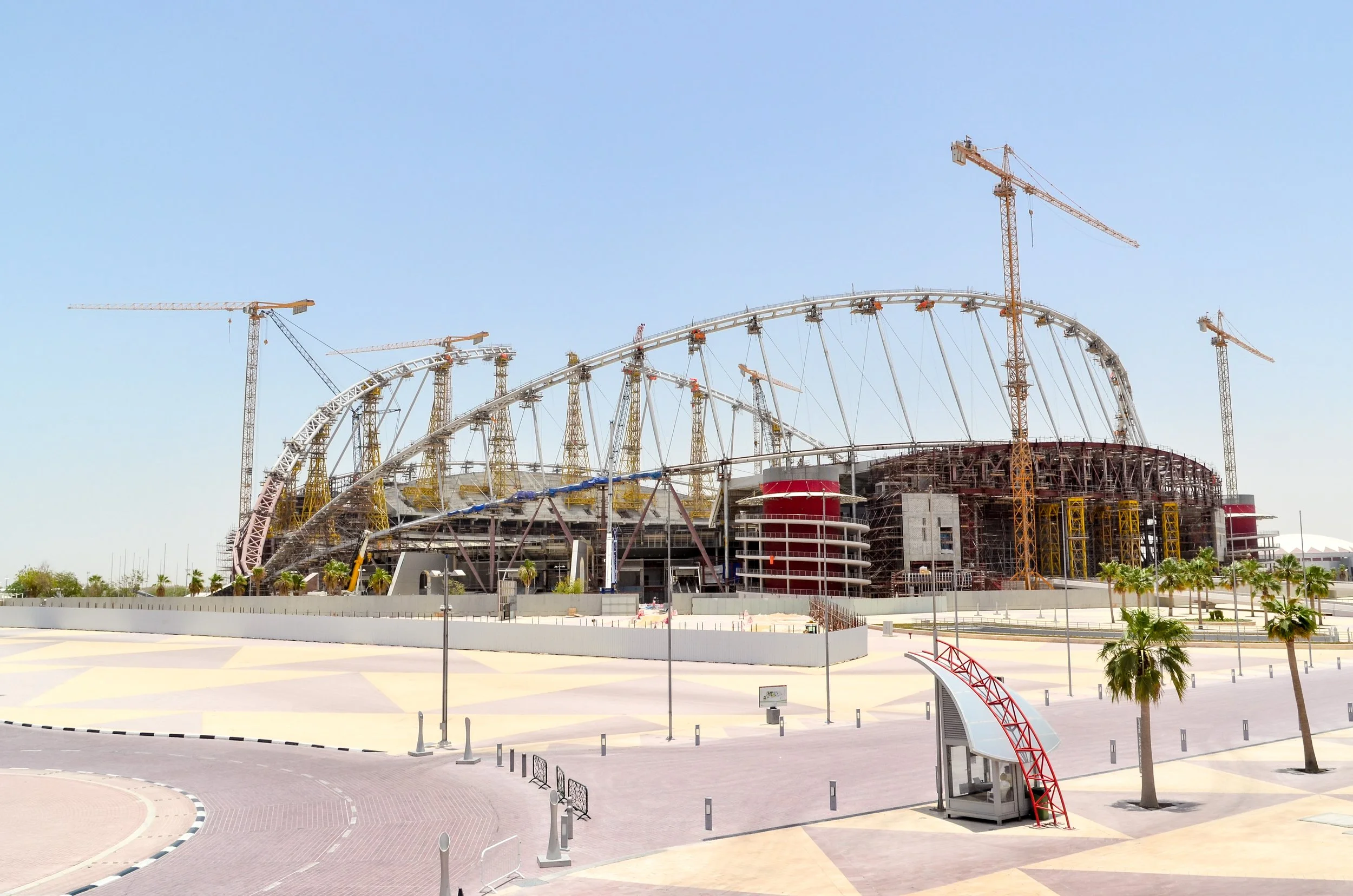
Renovation of the Khalifa International Stadium in Doha. jbdodane. CC BY-NC 2.0.

While this is definitely not the first time a World Cup has been placed under such public scrutiny, previous controversies did not receive as much publicity as those in Qatar have. It begs the question of whether this is just because social consciousness is increasing in general or whether it has to do with the event being held in the Middle East—a longtime target of Western media. Either way, there is still a lot for FIFA and the Qatari government to address ahead of kickoff in November.


Tanaya Vohra

Tanaya is an undergraduate student pursuing a major in Public Health at the University of Chicago. She's lived in Asia, Europe and North America and wants to share her love of travel and exploring new cultures through her writing.

The Top 3 Countries For Women in Government

For most of history, men have made up all global governments. However, today, a select few lead the world with more than half of their parliamentary seats being occupied by women.

UN Women’s Event. UN Women Gallery. CC BY-NC-ND 2.0.

While governments around the world are still generally male-dominated, and men continue to hold most positions of high power, women have made significant strides. Rwanda and Cuba are the only countries in the world with more than 50% of their government being occupied by women today, while Bolivia maintained a female majority from 2014-2019.There are other countries whose highest roles are filled by women. For example, Jacinda Ardern is the prime minister of New Zealand, Sanna Marin is the youngest prime minister ever elected in Finland, Mia Mottley is the first woman elected as prime minister in Barbados, and Katrín Jakobsdóttir is the prime minister of Iceland. However, Rwanda, Cuba and Bolivia are the only three countries led by women in terms of legislative percentages. .

Rwanda

Dr. Usta Kayitesi, Former Deputy CEO of Rwandan Governance Board. Paul Kagame. CC BY-NC-ND 2.0.

In 2003, Rwanda set a rule that at least 30% of government seats had to be filled by women. That very year, the elections resulted in nearly a 50/50 gender split in Rwanda’s parliament. Ten years later, the Rwandan parliament became 64% female. In 2022, Rwandan parliament is still 61% women.With that being said, women in the Rwandan government say that they still face sexism, despite holding the majority. District Vice Mayor Claudette Mukamana says women’s abilities are still questioned; Executive Secretary for the Rubavu District Berthilde Muruta says their motives for being in government are questioned.

Cuba

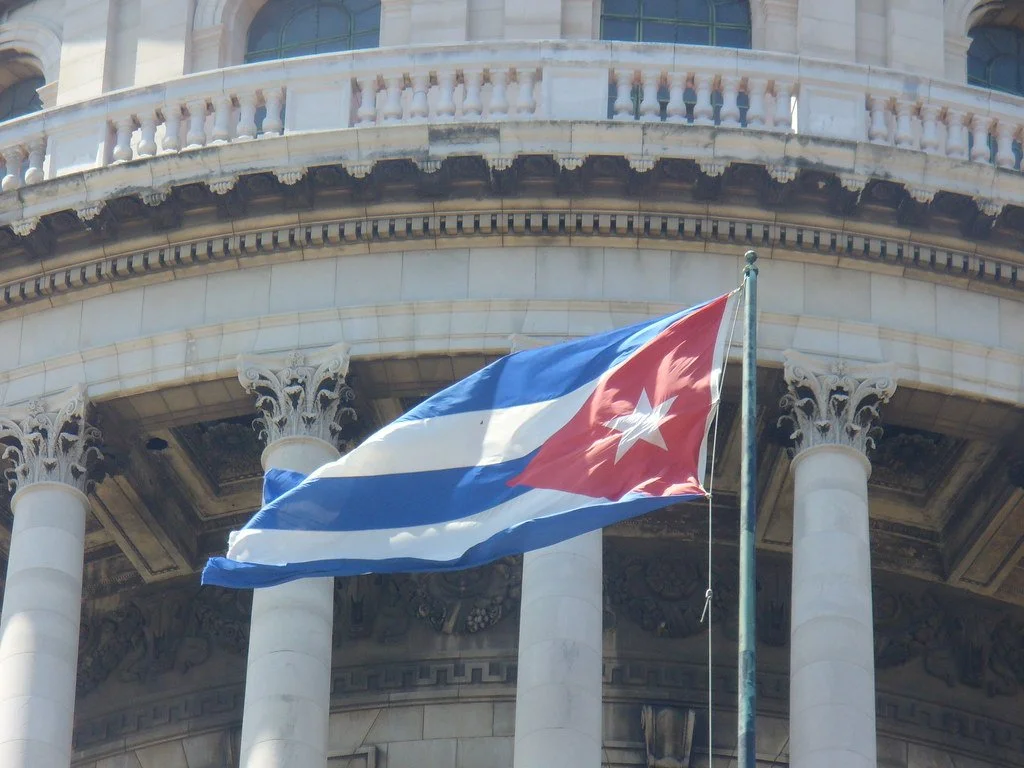
Cuban flag in Havana. Samuel Negredo. CC BY 2.0.

In 2018, Cuba followed Rwanda as the second country to elect a female majority parliament. Since 2018, 53% of Cuba’s parliament has been made up of women. Unlike Rwanda, Cuba does not have a quota in place for women in government. Despite the majority-woman parliament, there have been criticisms of Cuba’s treatment of elected women, just like Rwanda, including that the higher up one goes in the government, the less women there are. Essentially, while in terms of pure statistics women dominate Cuba’s government, men continue to occupy the roles with the most political power.

Bolivia

Former Bolivian President of Senate Adriana Salvatierra, third from the left, (insert which one she is in parentheses) at UN Women’s Event. UN Women Gallery. CC BY-NC-ND 2.0. 

In 2020, Bolivia’s proportion of women in parliament equaled  46% and has stayed at that figure since. But from 2014 to 2019, Bolivia was one of the only countries with a majority woman government, at 53%. Like Rwanda, Bolivia has gender quotas, but these quotas are enacted a bit differently in Bolivia versus Rwanda. Bolivia has a quota for the number of female candidates put forward in any given election cycle, as opposed to the number actually elected. For the Lower House, Bolivia requires at least half of the candidates to be women.


Calliana Leff

Calliana is currently an undergraduate student at Boston University majoring in English and minoring in psychology. She is passionate about sustainability and traveling in an ethical and respectful way. She hopes to continue her writing career and see more of the world after she graduates. 

Before the Sex Pistols, There Was Peruvian Punk Rock

Western punk groups have taken credit for starting the punk movement, but a small group in 1960s Peru would say otherwise. 

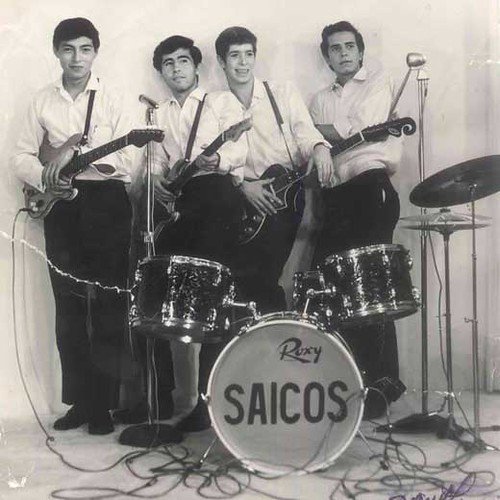
Peruvian punk band Los Saicos. TravelingMan. CC BY-NC-ND 2.0

Punk music has been used for decades as a means to express discontent about numerous topics, including politics and controversial events. But where does the genre come from? While it is easy to claim Western influences, like the Sex Pistols and The Clash to be the forefathers of the punk scene, the Peruvian rock band Los Saicos, formed in 1964, is a strong contender for the position of “Originators of Punk.”

In order to make comparisons between Los Saicos and Western punk bands, a definition of punk music is in order. Punk music consists of fast beats and often aggressive lyrics that seek to critique certain ideas or systems of power. A recent academic article discusses how the lyrics to the Sex Pistol’s “Anarchy in the U.K.” were a critique of the U.K.’s foreign policy in Ireland, a period known as The Troubles. The Los Saicos song “Demolición” lacks a specific reference to Peruvian politics at the time, but clearly expresses discontent with government infrastructure. 

The members of Los Saicos were likely influenced by the political turmoil within Peru during their upbringing. Guitarist and vocalist Erwin Flores and drummer Francisco Guevara had just graduated high school and were grappling with unprecedented political strife, drastically affecting how they prosper as adults. The group was established in 1964, with “Demolición” being one of the country’s biggest songs that year. Amidst massive inflation under President Fernando Terry’s land redistribution policy, economic hardship increased for Peruvians. The lyrics are representative of a future that was promised to them with Terry’s liberal redistribution policies, but one that ultimately drowned with the Peruvian sol’s value. ‘Demolición’ expresses hatred at the government for promising a future and delivering inflation. 

Los Saicos broke up in 1966, but its influence was picked up by garage rockers throughout Peru and abroad in the U.K. The punk genre’s grungy and generally angsty music did not necessarily originate from the members of Los Saicos, but they were critical in the genre’s explosion in popularity, especially in areas where there was a discontent with state functions. 

“Nobody invented the wheel, we were obviously building off of what others have done,” said Flores in an interview

The band’s desire to express themselves within a country in turmoil ranges across languages and generations, effectively changing how the music scene functioned as ‘angry’ music started becoming mainstream and profitable.  


Clayton Young

Clayton is an aspiring photojournalist with a Bachelor's in Liberal Studies with a minor in History from Indiana University - Bloomington. In his free time, he enjoys hikes, movies, and catching up on the news. He has written extensively on many topics including Japanese incarceration in America during World War II, the history of violence, and anarchist theory.

The Surprising Popularity of Rock Climbing in Slovenia

Slovenia, a Central European country, holds a lesser-known secret: its rock climbing. Not only does Slovenia have many beautiful natural climbing sites, but it also has world-renowned rock gyms and some of the most acclaimed rock climbers in the world. 

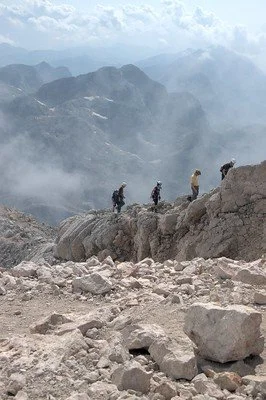
People climbing Mount Triglav in Slovenia. Derbeth. CC BY 2.0.

Formerly part of Yugoslavia, Slovenia can often be reduced down to its political turmoil. However, this Slavic country is incredibly mountainous and hilly, providing the perfect terrain for rock climbers of all skill levels. Slovenia has produced numerous renowned climbers and built a culture around the sport. 

The most well-known Slovenian rock climber would have to be Janja Garnbret, who became the first woman to win gold in sport climbing at the Tokyo 2020 Olympics—the first year that sport climbing was featured at the Olympic games at all. While many people may find rock climbing intriguing and even do it in their free time, it wasn’t well known as a competitive sport until it became an Olympic event. However, competitive rock climbing has a large community, and a major facet of that community is in Slovenia, Garnbret’s home country. For example, Garnbret also placed first in the International Federation of Sport Climbing World Cup in September of 2021, which happened to be hosted in Kranj, Slovenia.

Garnbret follows in the footsteps of years of successful Slovenian women climbers, such as Martina Cufar, who made it on the podium at sixteen different world cup events between 1997 and 2002. Slovenia’s climbing history—specifically when it comes to women—goes back to the early 20th century with Pavla Jesih and Dana Kuraltova, two Slovenian women who climbed the famous Mount Triglav in 1925. 

Slovenia’s rock climbing success isn’t by chance. An obvious source of the country’s enthusiasm for the sport is its spectacular mountains such as Mount Triglav. But the success of the Slovenian National Team today can also be attributed to how small the country is and thus how close knit the coaches and the team members are able to be. For example,  Slovenian National Team coach Luke Fonda owns Plus Climbing gym in Koper, Slovenia, a gym which the team often practices at. 

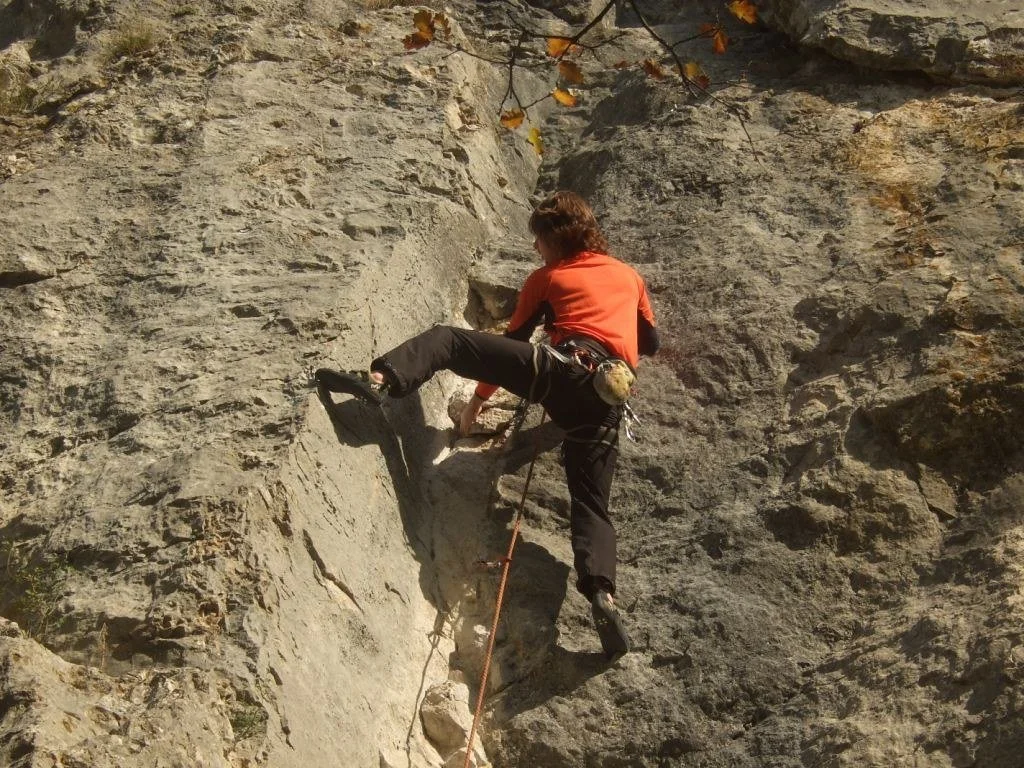
Climber in Koper, Slovenia. David Glanzer. CC BY 2.0.

In addition to Plus Climbing, rock gyms are plentiful in Slovenia, especially when compared to the country’s size. Some of the most famous gyms are First Ascent in Kranj and The Climbing Ranch in Vrbnje, which serious, competitive climbers from around the world strive to visit. In terms of Slovenia’s natural climbing sites, the country boasts stunning mountains such as Mount Triglav, Mount Viševnik and Mount Prisojnik. The mountains in Slovenia range from beginner to advanced level climbing, with Mount Triglav and Mount Viševnik being doable hikes for most travelers. Mount Prisojnik is known to have a range of trails and climbs—some good for beginners, and others that will be engaging for experienced climbers. Ultimately, Slovenia is a great option for an off-the-beaten-path visit in general, but is especially perfect for those interested in rock climbing, given its rich history and multitude of climbing sites.


Calliana Leff

Calliana is currently an undergraduate student at Boston University majoring in English and minoring in psychology. She is passionate about sustainability and traveling in an ethical and respectful way. She hopes to continue her writing career and see more of the world after she graduates. 

Photo Essay: On the Ground with Waves For Water in the Philippines

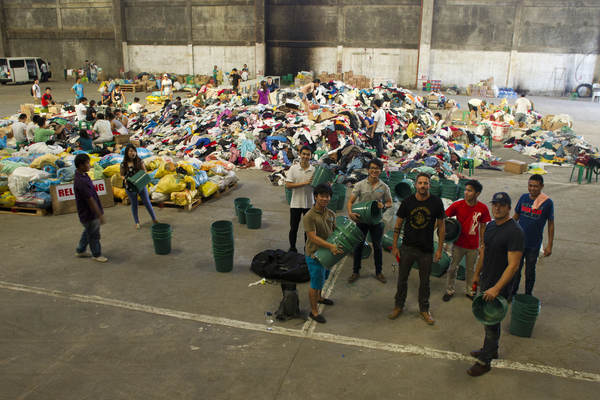
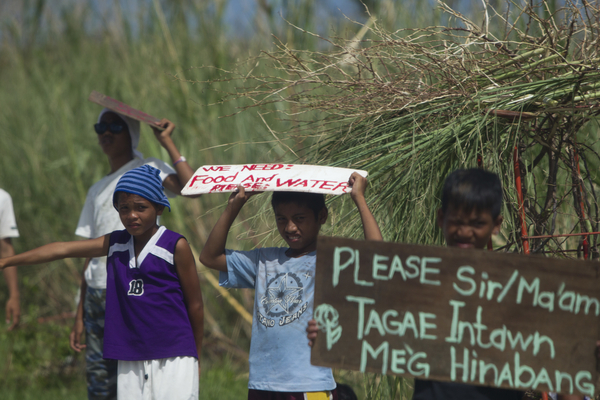
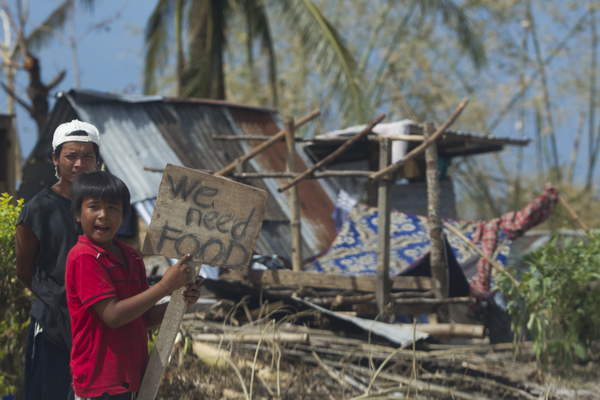
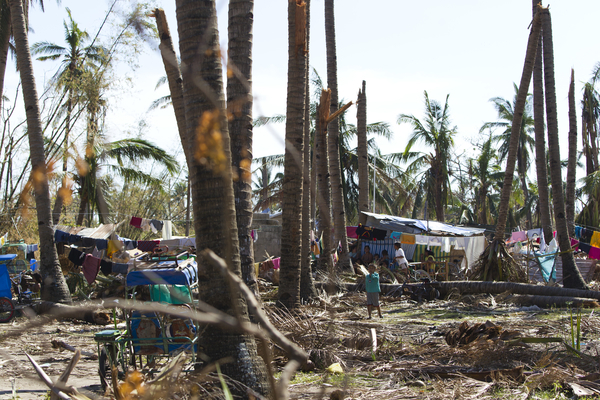
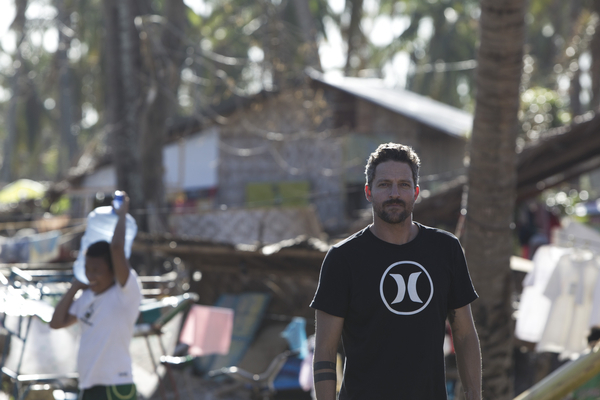
While the Philippine Islands were being struck by Super Typhoon Haiyan’s wrath, Jon Rose, Founder of Waves For Water, was already hatching his plan to help.

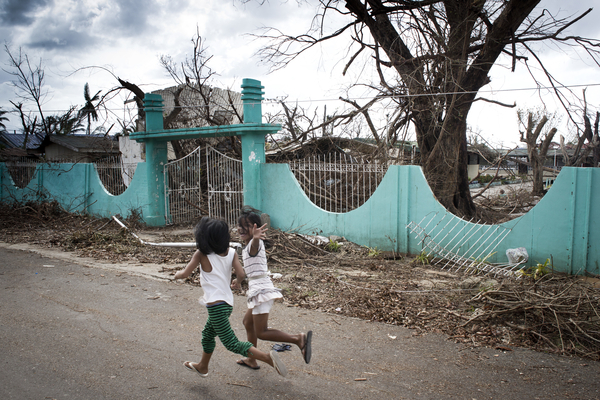
W4W began work in the Philippines in response to Typhoon Haiyan and continues to support areas with water shortages. 

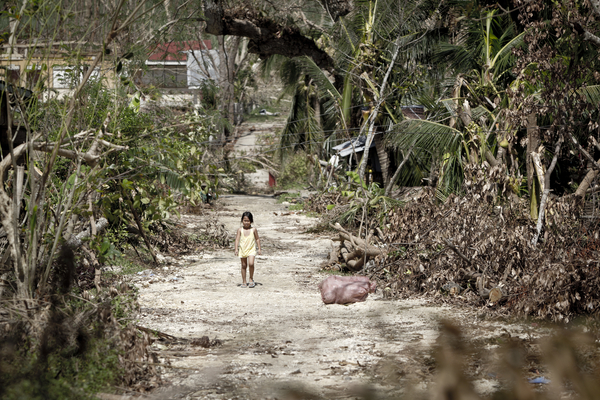
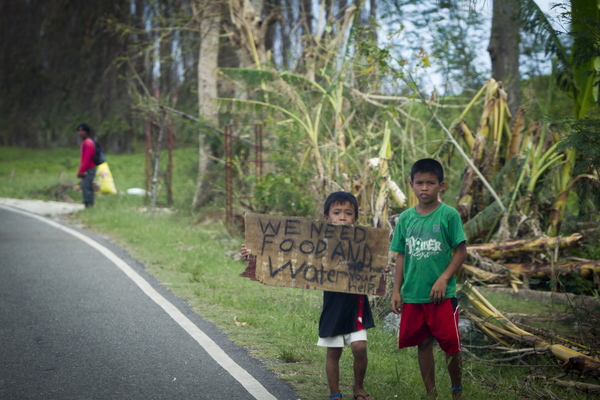
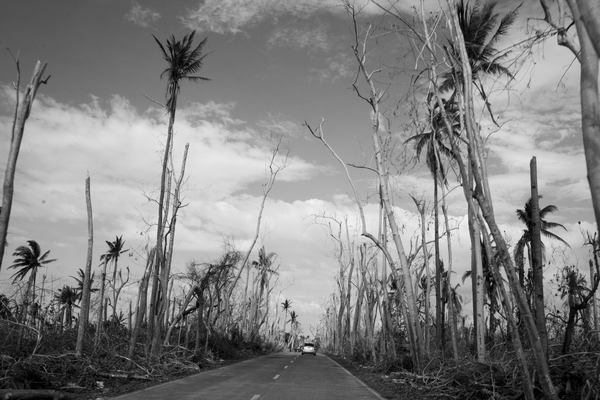
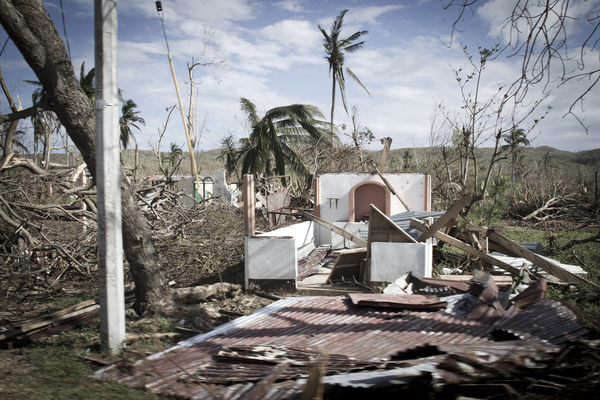
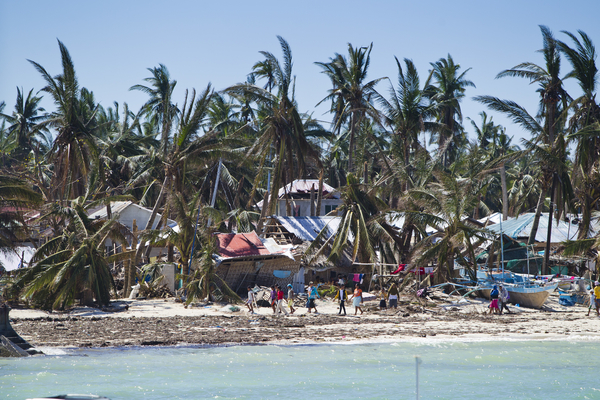
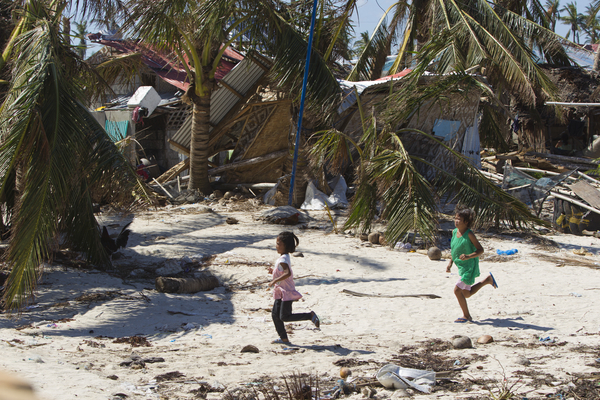
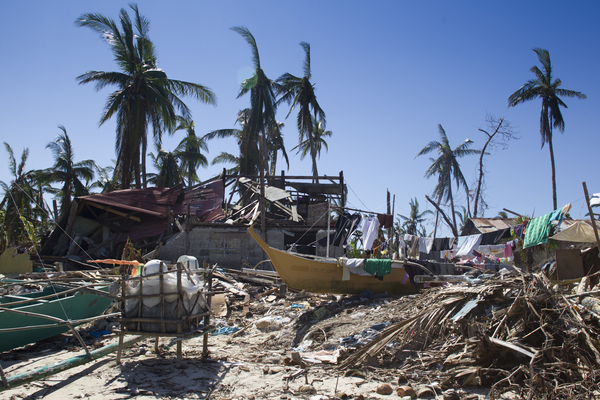
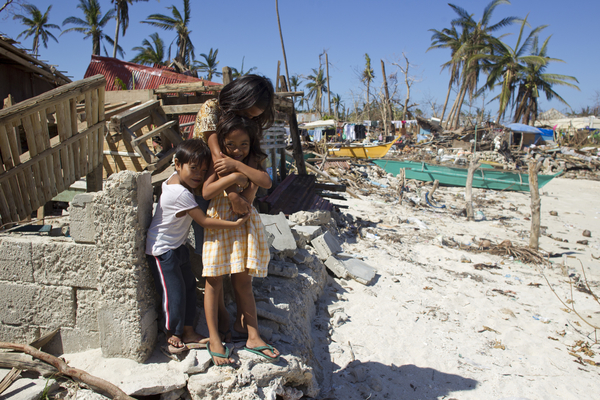
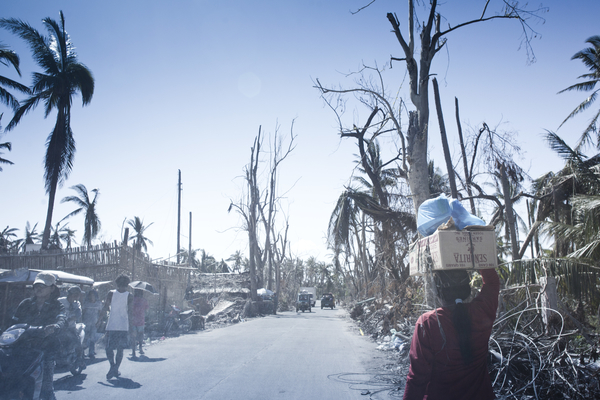
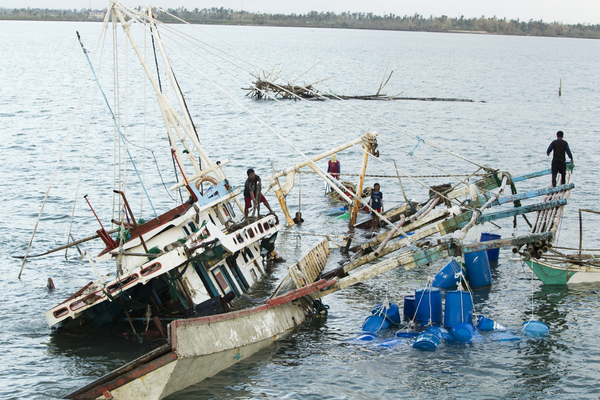
In 2013, the Philippines was hit by one of the most devastating typhoons ever recorded: Typhoon Haiyan. The natural disaster affected people throughout Southeast Asia and killed 6,300 people in the Philippines alone. Throughout the country, over 4.3 million people were affected. One major impact of the typhoon was its obstruction of access to clean water. 

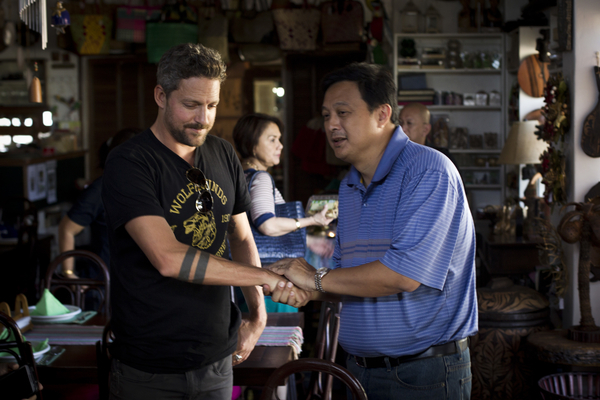
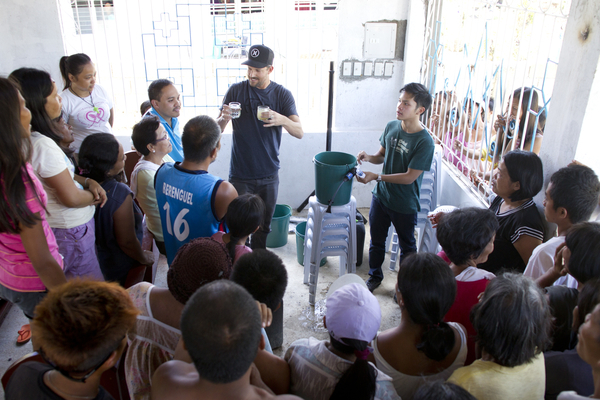
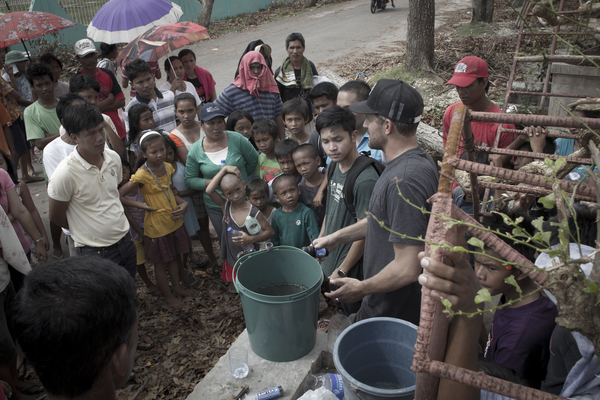
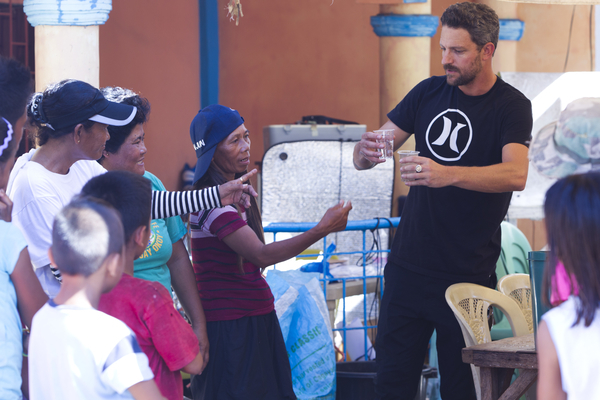
To address this problem, Jon Rose, founder of Waves for Water (W4W), arrived in the Philippines ready to distribute his organization’s water filters among “forgotten pockets,” communities that were not “the focal point of major relief efforts.” His method of distribution and relief relied on the “train-the trainer, local-based model” in which W4W organizers “empower” and “facilitate” for local people rather than decide “who gets what, when, where and how.” Two years after the typhoon, W4W established an office in the Philippines, where it is currently registered as a non-profit organization. Since 2015, W4W has built 66 rainwater catchment systems and provided over a million Filipinos with access to clean water. In December of 2021, the organization helped to address the devastation caused by Hurricane Odette in Siargao, Philippines through a partnership with Billabong. Currently, W4W is providing aid for those impacted by Tropical Depression Agaton, which has displaced 1.9 million people in Visayas and Mindanao, Philippines. You can contribute to this specific effort here

W4W’s humanitarian efforts are not limited to the Philippines. Since its inception in 2009, the organization has made an impact in 44 countries, including Mozambique, Ecuador, Sierra Leone and Chile, and has helped 3.75 million people gain reliable access to clean drinking water. W4W currently has 24r active programs helping to address water access issues. These programs seek to provide aid to citizens of Ukraine, Australia, Haiti and Guatemala. You can learn more and help out here.


Jon Rose

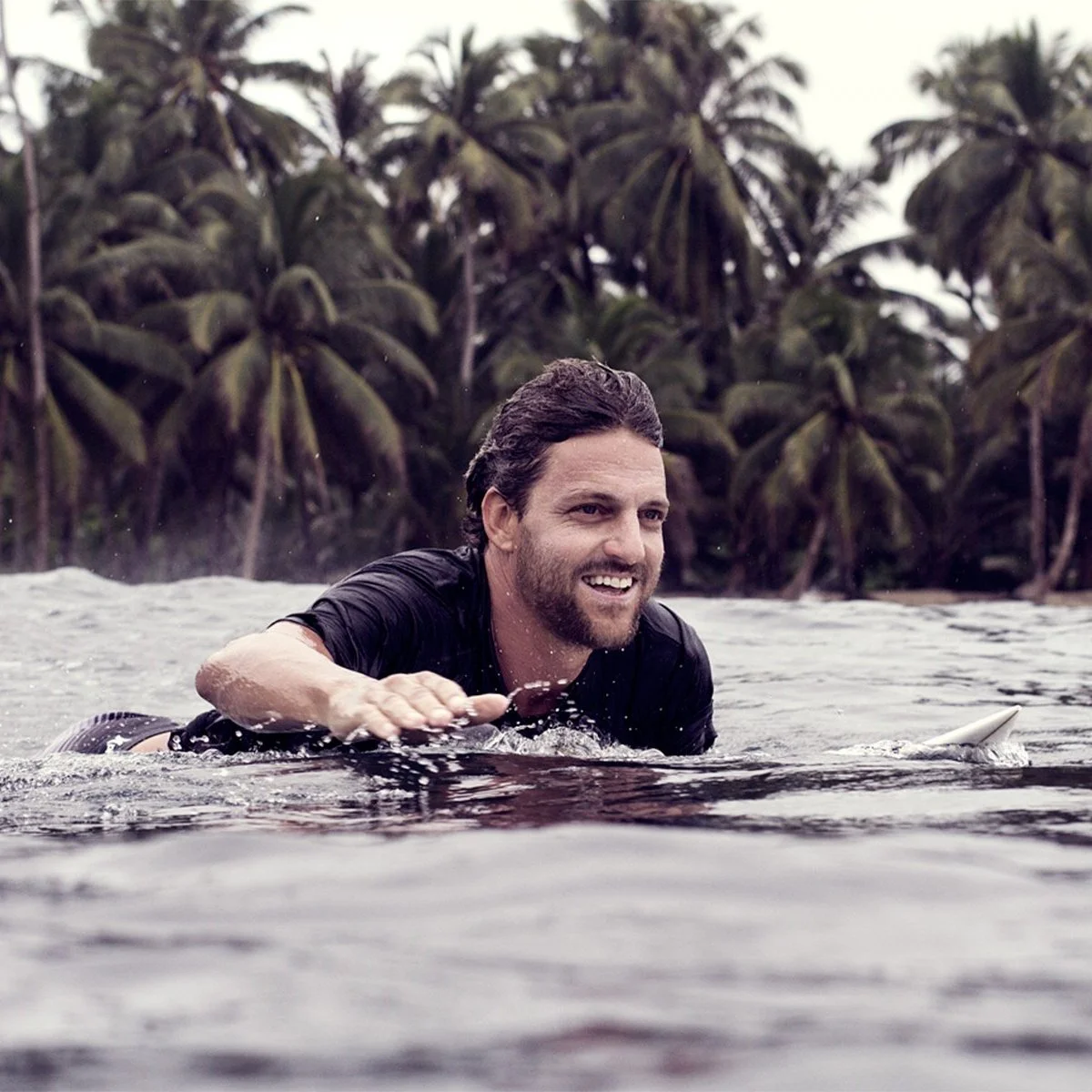
As a pro surfer of 13 years, Jon Rose traveled the world in pursuit of perfect waves. It was this passion that led him to development of Waves for Water in 2009. He hopes to see W4W enlist and empower travers to help solve the world water crisis.

The Downside of Ecotourism

The term ecotourism has been around for decades but the misunderstanding and overuse of the term has led to a lack of environmental success in a CO2 sucking industry. Places like Machu Picchu now receives over 6,000 visitors a day during peak season, making it hard to properly conserve the historical site.

According to the World Travel and Tourism Council, tourism as a whole makes up 10% of global GDP and supports over 319 million jobs. That is a huge industry but it also has a huge environmental impact. Air traffic alone accounts for 5% of CO2 emissions globally and the number of air passengers is expected to only grow, reaching 13 billion by 2030. In addition, tourists often use more resources than locals, eating at restaurants, using more water, generating more waste, and driving rental cars. Often desired tourist destinations are ones of natural beauty, with high densities in coastal, mountain, and lake areas. These environments are more susceptible to environmental degradation and increased traffic to protected areas can affect conservation efforts. A potential solution: eco-tourism. 

Ecotourism was defined in 1990 by the The International Ecotourism Society (TIES) with a focus on, “responsible travel to natural areas that conserves the environment and improves the well-being of local people”. It has good intentions: natural conservation and benefiting locals. Often eco-lodges do have greener accommodations but they can often be in remote locations, therefore requiring more carbon emissions to get there. Human presence in isolated areas will always have effects on the local land and wildlife no matter how much it is tried to be controlled. The more popular eco-tourist destinations become, the harder it is to limit the impact. 

A great example of this is Machu Picchu. Tourism is the second largest industry in Peru. Machu Picchu specifically is a highly sought-after tourist destination. The tourism there has had a huge impact on the environment. UNESCO recommended the Peruvian government to limit numbers to 2,000 a day to reduce the degradation. Instead, the government switched the ticketing process to half-day tickets, effectively increasing daily numbers from 2,500 to over 6,000, with an additional 500 a day on the Inca Trail. The lack of infrastructure supporting these numbers leads to an even higher impact. There is only one bathroom at the entrance and human waste is a huge problem. The closest village, Aguas Calientes, has resorted to pumping human waste into the Urubamba River. Increases in garbage, especially plastic water bottles, on the Inca Trail also contributes to uncontrolled waste. Jobs provided to locals are seasonal, often poorly paid, and have a huge physical cost. Machu Picchu had the potential to be a great eco-tourist site but overcrowding and mismanagement has led to a lack of conservation and hurting local communities. Yet, it still viewed and even advertised as eco-tourism. 

The term ecotourism is now over used. It has been stretched from its original purpose to encompass any nature-related travel and to many is synonymous with sustainable. This is far from true and with companies using greenwashing, consumers are not sure what they are paying for. Greenwashing is when organizations falsely advertise through an environmentally-friendly lens. In tourism this is often increased by inconsistencies in certifying bodies. Or in something as simple as have a sign in the bathroom promoting water conservation. This has a huge impact on the effectiveness of ecotourism when people who are trying to be environmentally conscious end up supporting the wrong businesses. Eco-tourism also tends to draw from a wealthier demographic, with 57% of people making over $150.000 saying they would book an eco-tourist trip, compared to 16% at $34,000. This is largely influenced by the higher price of eco-tourist trips. If ecotourism is to decrease the large environmental impact of tourism as a whole, it has a lot of work to do to limit greenwashing, overcrowding, and transportation effects while increasing affordability, minimizing local impact and supporting local communities. 


DEVIN O’DONNELL

Devin’s interest in travel was cemented by a multi-month trip to East Africa when she was 19. Since then, she has continued to have immersive experiences on multiple continents. Devin has written for a start-up news site and graduated from the University of Michigan with a degree in Neuroscience.

Pride and Punishment: The Struggles of the LGBTQ+ Community of Africa

In 32 African countries, homosexuality is deemed unlawful—punishable by imprisonment and in some cases, death. The LGBTQ+ community is fighting prejudice in a battle to be their truest selves.

Ugandan citizens at a pride parade. Chrisjohnbeckett. CC BY-NC-ND 2.0.

Out of the 54 countries that make up the African continent, 32 of them outlaw homosexuality. Historically a continent that traveling members of the queer community steer clear of, Africa has a deep and intricate history with politics surrounding sexuality. However, Africans who identify with the LGBTQ+ community fight fiercely to change legislation, stigma and prejudice in their respective countries, challenging this lineage of controversy. Those who are brave enough to protest for their rights to love whomever they desire organize in-person parades and protests, while those under threat of harm—or even death—find ways to demonstrate their pride in, generating virtual communities and workshops that allow for the LGBTQ+ community to connect across the globe without leaving the safety of their homes.

Map of African countries with anti-gay laws. Amnesty International. CC BY-ND

To understand the hardships facing the LGBTQ+ community of Africa today, it is important to know the causal factors that led to such a homophobic climate. Anti-queer sentiments were introduced to the continent during Western colonization; previous to imperialism affects on the continent, African tribes in many regions practiced homosexuality freely. Val Kalende writes in The Guardian that “there is ethnographic evidence of same-sex relationships in pre-colonial Africa.” This cultural history also demonstrates the lack of importance placed on strict gender roles. 

Additionally, the evidence also shows the practice of choice-based pronoun usage; women in positions of power would occasionally label themselves with male pronouns. Post-colonization laws that targeted the cultural muting of African traditions and practices formed the foundations for homophobia by outlawing same-sex relationships and visibly impacted African sentiments around the LGBTQ+ community for the foreseeable future.

Now, on the foundations of decades of hatred inspired by colonizers and imperialists, queer citizens of countries throughout Africa struggle under harsh legislation to simply be their truest selves. In most of the 32 countries that outlaw same-sex relationships, legislation punishes queer people by prison time and fines. Financial punishments vary in size and currency depending on the country. Prison sentences also range widely, varying anywhere between one year (as demonstrated in Ethiopia’s legislation) and lifetime imprisonment (such is the law in Kenya). 

There are four countries in Africa that make same sex relationships punishable by death: Mauritania, Somalia, Nigeria and South Sudan. In Nigeria, a country ranked by Forbes as #1 in “The 20 Most Dangerous Places for LGBTQ+ Travelers,” members of the LGBTQ+ community who are found out be participating in homosexual relationships face death by stoning.  

LGBTQ+ activists hanging signs. Distelfliege. CC BY 2.0.

Despite the gravity of the punishments for being queer, brave members of the LGBTQ+ community continue to demonstrate their pride. Unwilling to be silenced, queer people all around Africa organize pride parades, protests and online conferences to discuss ways they can fight the systemic homophobia they face in legislation. Further, the same people work hard to destigmatize same-sex relationships, challenging the post-colonial homophobia that has overpowered the original nature of African culture. 

Groups like PRIDE OF AFRICA (POA) organize yearly events to celebrate pride, inviting and encouraging queer Africans to “live their most authentic selves.” POA also founded the Johannesburg Pride Parade in 2019, which has recently gone online due to the COVID-19 pandemic, but continues to invite members of the LGBTQ+ community to speak and rally. POA also holds online conferences, so those who wish to stay at home and stay anonymous can do so to limit the threat of prejudicial punishments. 

For activists in imminent danger should their sexuality be outed, their protesting and pride demonstrations are more closely guarded. For those who need to seek exile in other countries or continents after being unexpectedly outed, journalism, photography and participation in parades like UK Black Pride (which focuses on Pride in the Black community and is based in London) are their only options to avoid death while still being able to demonstrate their pride. 

To Get Involved

There are a handful of organizations centered on the eradication of hate crimes, stigmatization, improper health care and prejudicial legislation that accept donations to support their missions. Organizations like OUT that support the destigmatization of queer lifestyles and SHE (Social, Health and Empowerment Collective) specifically serve the African queer community. To find a collective list of legitimate organizations including OUT, SHE, and other foundations actively assisting the LGBTQ+ community of Africa, click here.

POA and UK Black Pride serve the same purposes: to allow for queer Africans to have a safe place to demonstrate their pride. POA takes place mostly online and in South Africa, and UK Black Pride is held in London.

To learn more about POA events, mission statements, and goals, click here.

To learn more about the UK Black Pride Parade and their mission statements, click here.


Ava Mamary

Ava is an undergraduate student at the University of Illinois, double majoring in English and Communications. At school, she Web Writes about music for a student-run radio station. She is also an avid backpacker, which is where her passion for travel and the outdoors comes from. She is very passionate about social justice issues, specifically those involving women’s rights, and is excited to write content about social action across the globe.

Art Campaign Draws Attention to Detention of Human Rights Student

Coptic Christian University of Bologna graduate student Patrick Zaki has been detained in Cairo for his human rights work. He awaits his trial amidst international protest and artistic efforts to raise awareness of his case.

Patrick Zaki pre-detention in 2020. Egyptian Initiative for Personal Rights. CC BY-SA 4.0.

Cutouts and paintings of a line-drawn young man with “Freedom for Patrick Zaki” scrawled across the chest are plastered on almost every surface around the college-town of Bologna, Italy. Zaki is a Coptic Egyptian master’s student with an Erasmus scholarship to pursue a degree in Women and Gender Studies at the University of Bologna. He also serves as a researcher and advocate for the Egyptian Initiative for Personal Rights, a Cairo-based human rights organization.

Zaki returned to Egypt for a short family visit on February 7, 2020. Upon arriving at the airport in Cairo, he was arrested by the National Security Agency (NSA) of Egypt and detained on the grounds of “disseminating false news” and “inciting to protest” because of an article he published about discrimination faced by Coptic Christians in Egypt. He was taken to an undisclosed location, where, according to Zaki’s lawyer, he was blindfolded, handcuffed, threatened, beaten on the back and stomach, and tortured with electrical shocks during a17-hour-long interrogation about his human rights work and time in Italy. 

The drawing on the cutouts was created by artist Gianluca Constantini a few hours after the news of Zaki’s disappearance broke. The illustration was then adopted by Amnesty International’s campaign for his release. It can be seen printed on giant posters at Piazza Maggiore (the central square) and under the Two Towers (Bologna’s main tourist attraction). It was featured prominently in the protests organized by students, human rights organizations and several Italian universities, which have led 100 cities in Italy (including Bologna, Florence, Milan and Naples) to grant Zaki honorary citizenship. 

The audience of the drawing and its intended audience depends on where the cutouts are placed. Those placed around college campuses—including 150 filling an entire university library—immediately after Zaki’s arrest were meant to generate awareness and outrage. Now, students in Bologna have known about the case for two years, so the purpose of the cutouts isn’t as much to inform and inflame but to serve as a reminder that the struggle is far from over. The drawings placed in and around popular tourist attractions serve to draw international awareness to the ongoing issue. 

Following a robust student movement and international outcry, Zaki was released from prison on December 9, 2021, after 22 months behind bars. The charges against him have not been dropped, and if convicted, he faces up to five years in prison. His hearing has been postponed from February 1, 2022 to April 6. Zaki, who sees the drawn out judicial process as another form of torture, has requested authorization from Egyptian authorities to return to Italy.

Still, Zaki and his family are thankful for the partial victory. When he was released, his mother told journalists, “I’m jumping for joy!”  
Zaki, with quiet optimism, says, “The first thing I will do when I return to Bologna is to go and spend the whole day in Piazza Maggiore, meet my friends from the university and eat the exquisite Italian food.” 

He is also aware of the drawing and the accompanying journalism. 

“Art plays a leading role in advancing the cases of political prisoners and expanding their circles of support by creating awareness of their legal affairs” Zaki said. “My case is living proof: art has played a fundamental part in regaining my freedom, albeit still partially. I would like to thank Gianluca and journalist Laura Cappon who wrote a book about the case illustrated by Constantini for their activism over the past two years and for their support. I hope they continue to use their talents to free other prisoners of conscience.” 

To Get Involved

As Zaki’s case continues and the hearing unfolds, artwork by Gianluca and others will likely play a central role in stirring public consciousness and continued investment. To support the case and continue to apply international pressure, you can sign the Scholars at Risk Network (SAR) letter of appeal to release Zaki. The organization also provides a letter template to send to your representatives, requesting they engage with their Egyptian counterparts to work towards freeing Zaki. Social media can also be used to raise awareness by tagging your elected officials in tweets with #FreePatrick.


Izzy Balaban

Izzy is a student at the University of Chicago, currently pursuing a Creative Writing degree with a minor in Human Rights. She is originally from Atlanta, Georgia. When she isn’t writing, she enjoys traveling, trying new food and reading in her hammock. 

Turning Menaces Into Meals: 5 Invasive Species You Can Eat

Invasive species threaten naturally occurring ecosystems. However, locals and travelers are now being encouraged to eat these organisms, a practice allowing for sustainable eating and providing opportunities for adventurous dining.

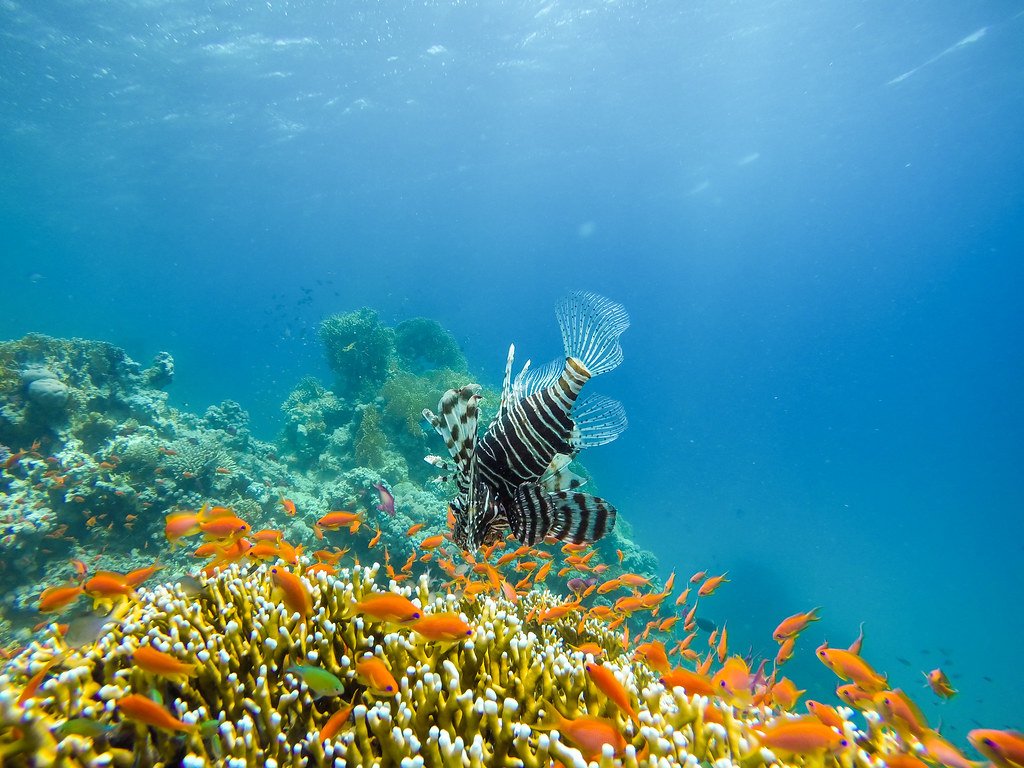
A King Lionfish. Niklas FliNdt. CC BY-SA 2.0.

By definition, invasive species are organisms that cause harm to environments they don’t originate from. When a new species is introduced to a naturally occurring ecosystem, they disrupt the balance of the environment and harm the pre-existing organisms in the area. Across the globe, invasive species wreak havoc on struggling ecosystems, but many people have found a possible solution to this environmental issue. In turning their most invasive organisms into food that locals and travelers can eat, countries around the world are creating opportunities for sustainable and adventurous eating, eliminating massive environmental threats along the way. 

Eating sustainably is the practice of consuming food and drink that are good for both the consumer and the environment. In eating invasive species, locals and travelers are playing a part in removing harmful organisms in the places they live or visit. To become a sustainable and adventurous traveler, try eating any of these five invasive species on your next trip.

1. Kelp - Alaska

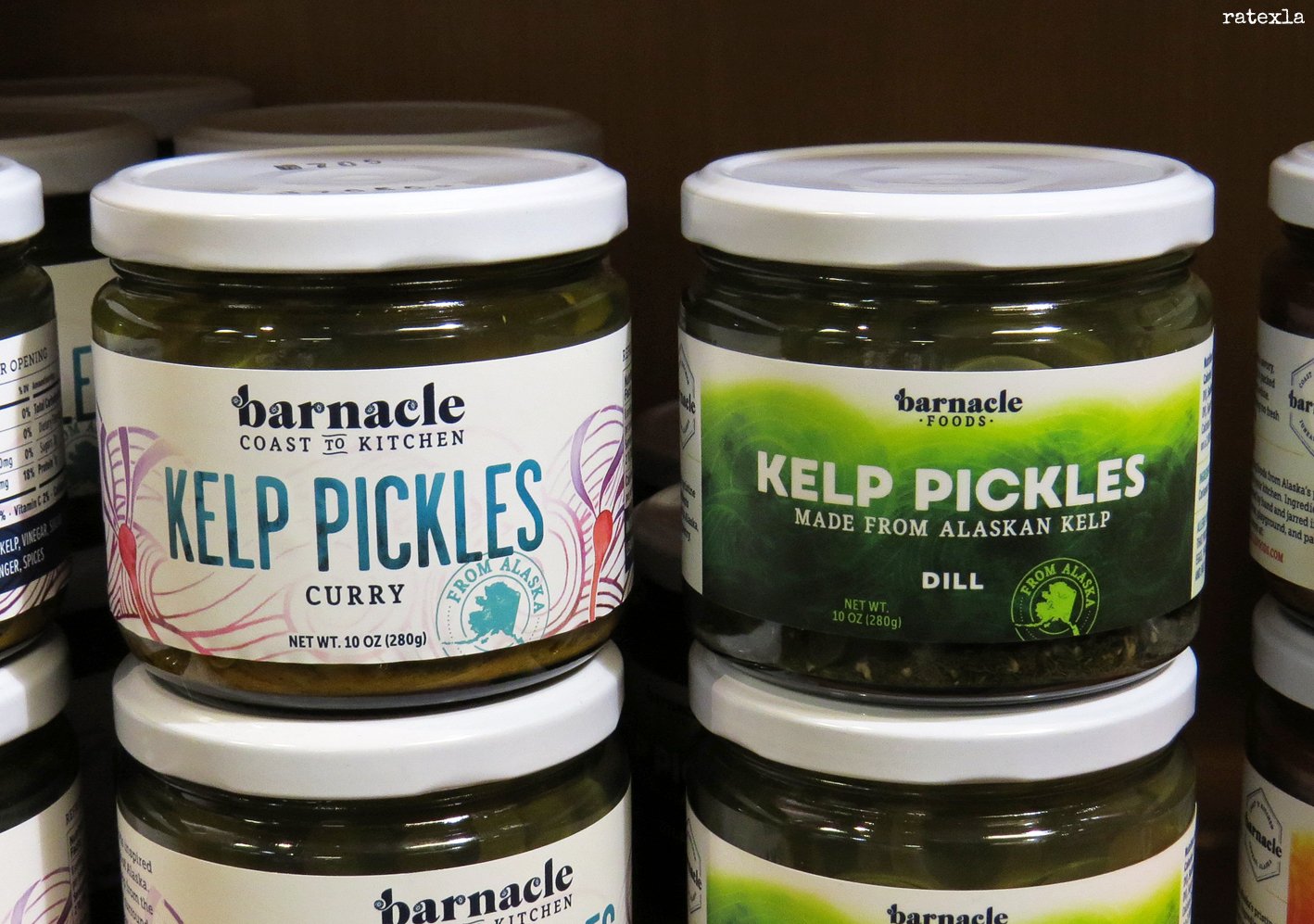
Barnacle Foods pickled kelp. Josefine S. CC BY-NC-ND 2.0

Invasive species aren’t just animals, they’re plants too. And kelp is one of the most invasive plants in the world; the Global Invasive Species Database (GISD) lists kelp among the top 100 worst invasive species around the globe. It originated in Japan and China but has since traveled through the waters of the Pacific where it now creates major problems for Alaskan marine life. However, a company called Barnacle Foods has created a way to harvest and consume this terrorizing plant: by pickling it.

Stationed in Southeast Alaska, Barnacle Foods is dedicated to harvesting kelp from the water and pickling it.. Set on remaining in Alaska, travelers can only visit their location by boat or plane, but Barnacle Food has made their product available online as well. In turning this invasive species into a beloved snack and by providing multiple recipes on their website for the pickled kelp’s usage, this food has become a great way to eat sustainably for the benefit of Alaskan marine life. It has also become a media sensation, the company gaining over 24,000 followers on Instagram and having been featured by magazines like the Specialty Food Association.

2. Wild Boar - Spain

Wild boar shank. Pabo76. CC By-NC-ND 2.0.

Although wild boar are found commonly across Europe and the United States and have been flagged as invasive in both continents, they are a true pestilence in Spain. Spanish cities have declared war on these animals, which breed rapidly, disrupt traffic in cities and have become local hunter’s number one target. Additionally, wild boar love to dig up black truffles, and as a leader in black truffle trade, Spain is looking for any way to rid themselves of the species.

Wild boar is said to taste like a cross between beef and pork. In Spain, it is most popularly prepared by the shank or as a stew and typically slow cooked like pork to give the meat a tender, juicy flavor. A great meal for hungry travelers, wild boar is also a great way to eat sustainably on the road and help Spain fight against the pigs that have disrupted their trade and cities.

3. Lionfish - The Mediterranean 

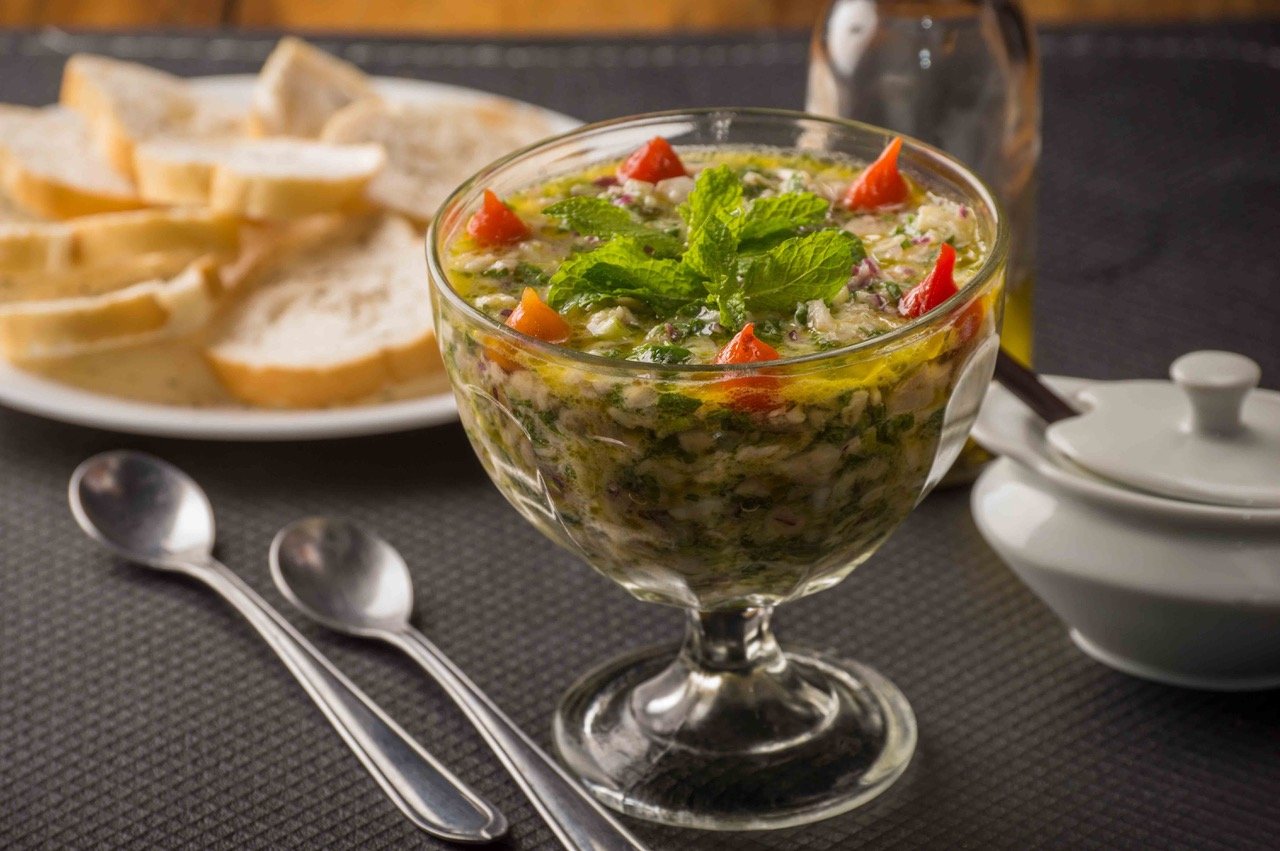
Lionfish ceviche served with bread. Leo Roza. CC BY 2.0.

Lionfish have completely overtaken the natural ecosystems in the Mediterranean Sea, but the countries that surround the affected water have started preparing and serving the fish in a multitude of ways. Although poisonous when alive, the lionfish becomes edible when killed, and the Mediterranean region has integrated the species into its culture of fresh, vibrant cuisine. 

Becoming a staple in many countries around the Mediterranean Sea, lionfish can be prepared just like all other fish; you can fry it, bake it, pan sear it and even serve it raw. The most popular way travelers will find it served in the Mediterranean is as ceviche. Described as extremely buttery and tender, Lionfish are a menace in the ocean but a treat on the plate of any traveler.

This fish can be found at most restaurants near the Mediterranean Sea. ILionfish is served in the south of France, Italy, Greece, Tunisia, Libya and Spain. 

4. Brown Hare - Ireland

Jugged Hare. Kent Wang. CC BY-SA 2.0.

Introduced to Ireland in the mid-1800s, the brown hare, also known as the European hare, has threatened the Irish hare population for decades now. The overpopulation of the brown hare is stealing resources away from Irish hare and herbivores in the country, posing a threat to the ecological integrity of the land. Hunters are allowed to take down hares during the winter months, starting in September and ending in February, and the brown hare has become a major target.

Celtic myth considered it unlawful to eat hares, but modern times have called for different measures. The Irish Examiner says it's time for rabbit to become a part of more Irish menus due to the overpopulation and invasion of the species. Luckily, a dish that originated in France has become more widespread as the brown hare has infiltrated different parts of the globe. Civet of Hare, also known as jugged hare, has become a popular dish in Ireland and the UK—where the hare is also an invasive species in many parts. The dish is made by stewing the entire brown hare in a jug or container with a variety of vegetables and red wine, making the meat so tender it falls right off the bone. This is the perfect dish to warm you up during travel to Ireland, which is notorious for their abundant rainfall and moist climate.

5. Japanese Knotweed - Everywhere but Antarctica

Knotweed ready to be cooked. K_Hargrav. CC BY 2.0.

Last on the list but certainly not least, Japanese knotweed is an invasive plant that is quite literally everywhere on the map. It is said to be found in every part of the globe except Antarctica. Growing at unbelievable rates and heights, it makes it difficult for animals in surrounding areas to walk through its dense brush and feed on other plants. It also blocks sunlight for plants lower to the ground, subsequently killing them. 

However, knotweed is edible and an extremely versatile ingredient. The most popular way knotweed is eaten is when it is sauteed like spinach or other leafy greens. It can also be pickled, like kelp, or grilled and roasted in the same way asparagus would be. Bon Appitite published an article on how chefs from all over are using Japanese knotweed as an ingredient in new recipes and where travelers can try them.


Ava Mamary

Ava is an undergraduate student at the University of Illinois, double majoring in English and Communications. At school, she Web Writes about music for a student-run radio station. She is also an avid backpacker, which is where her passion for travel and the outdoors comes from. She is very passionate about social justice issues, specifically those involving women’s rights, and is excited to write content about social action across the globe.