
A small country with big charm, Slovenia offers alpine peaks, ancient castles and fewer crowds.
Read More5 Reasons to Visit Slovenia
This captivating yet unfamiliar country in the east of Europe is a hub of culture and nature—harboring mountains, lakes and castles.
Read MoreThe Surprising Popularity of Rock Climbing in Slovenia
Slovenia, a Central European country, holds a lesser-known secret: its rock climbing. Not only does Slovenia have many beautiful natural climbing sites, but it also has world-renowned rock gyms and some of the most acclaimed rock climbers in the world.
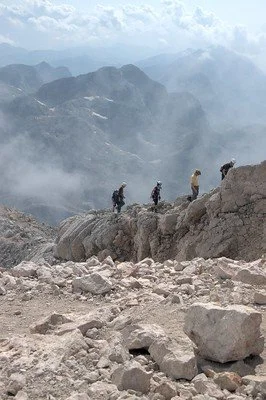
People climbing Mount Triglav in Slovenia. Derbeth. CC BY 2.0.
Formerly part of Yugoslavia, Slovenia can often be reduced down to its political turmoil. However, this Slavic country is incredibly mountainous and hilly, providing the perfect terrain for rock climbers of all skill levels. Slovenia has produced numerous renowned climbers and built a culture around the sport.
The most well-known Slovenian rock climber would have to be Janja Garnbret, who became the first woman to win gold in sport climbing at the Tokyo 2020 Olympics—the first year that sport climbing was featured at the Olympic games at all. While many people may find rock climbing intriguing and even do it in their free time, it wasn’t well known as a competitive sport until it became an Olympic event. However, competitive rock climbing has a large community, and a major facet of that community is in Slovenia, Garnbret’s home country. For example, Garnbret also placed first in the International Federation of Sport Climbing World Cup in September of 2021, which happened to be hosted in Kranj, Slovenia.
Garnbret follows in the footsteps of years of successful Slovenian women climbers, such as Martina Cufar, who made it on the podium at sixteen different world cup events between 1997 and 2002. Slovenia’s climbing history—specifically when it comes to women—goes back to the early 20th century with Pavla Jesih and Dana Kuraltova, two Slovenian women who climbed the famous Mount Triglav in 1925.
Slovenia’s rock climbing success isn’t by chance. An obvious source of the country’s enthusiasm for the sport is its spectacular mountains such as Mount Triglav. But the success of the Slovenian National Team today can also be attributed to how small the country is and thus how close knit the coaches and the team members are able to be. For example, Slovenian National Team coach Luke Fonda owns Plus Climbing gym in Koper, Slovenia, a gym which the team often practices at.
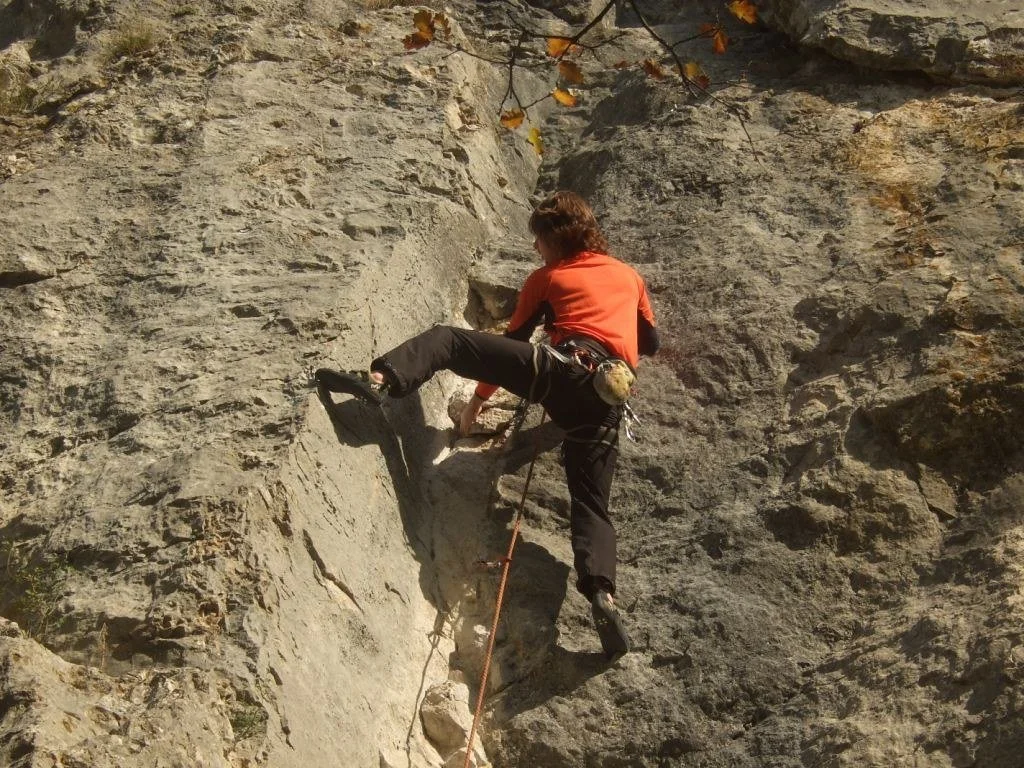
Climber in Koper, Slovenia. David Glanzer. CC BY 2.0.
In addition to Plus Climbing, rock gyms are plentiful in Slovenia, especially when compared to the country’s size. Some of the most famous gyms are First Ascent in Kranj and The Climbing Ranch in Vrbnje, which serious, competitive climbers from around the world strive to visit. In terms of Slovenia’s natural climbing sites, the country boasts stunning mountains such as Mount Triglav, Mount Viševnik and Mount Prisojnik. The mountains in Slovenia range from beginner to advanced level climbing, with Mount Triglav and Mount Viševnik being doable hikes for most travelers. Mount Prisojnik is known to have a range of trails and climbs—some good for beginners, and others that will be engaging for experienced climbers. Ultimately, Slovenia is a great option for an off-the-beaten-path visit in general, but is especially perfect for those interested in rock climbing, given its rich history and multitude of climbing sites.
RELATED CONTENT:
Ljubljana: The Green City of Slovenia
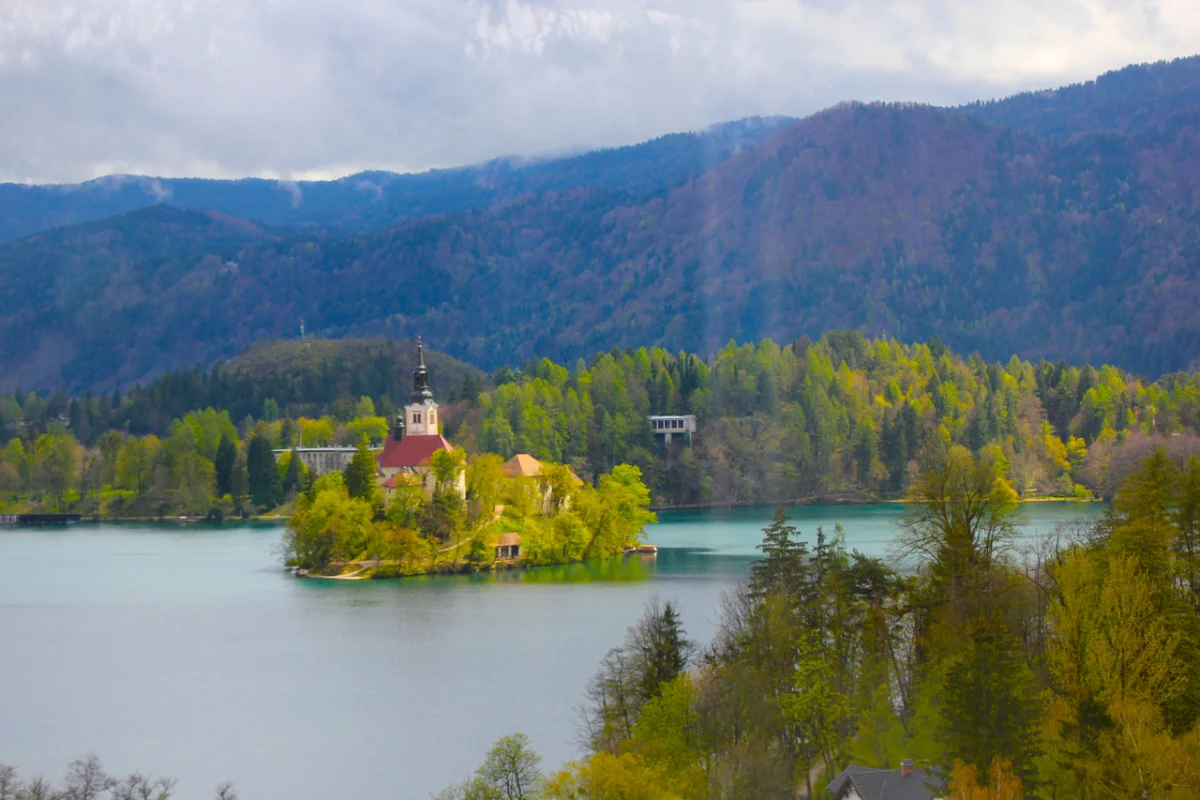
VIDE: In the Slovenian Alps, an Island on an Emerald Lake Beckons
PHOTO ESSAY: Getting Lost in Slovenia

Calliana Leff
Calliana is currently an undergraduate student at Boston University majoring in English and minoring in psychology. She is passionate about sustainability and traveling in an ethical and respectful way. She hopes to continue her writing career and see more of the world after she graduates.
In the Slovenian Alps, an Island on an Emerald Lake Beckons
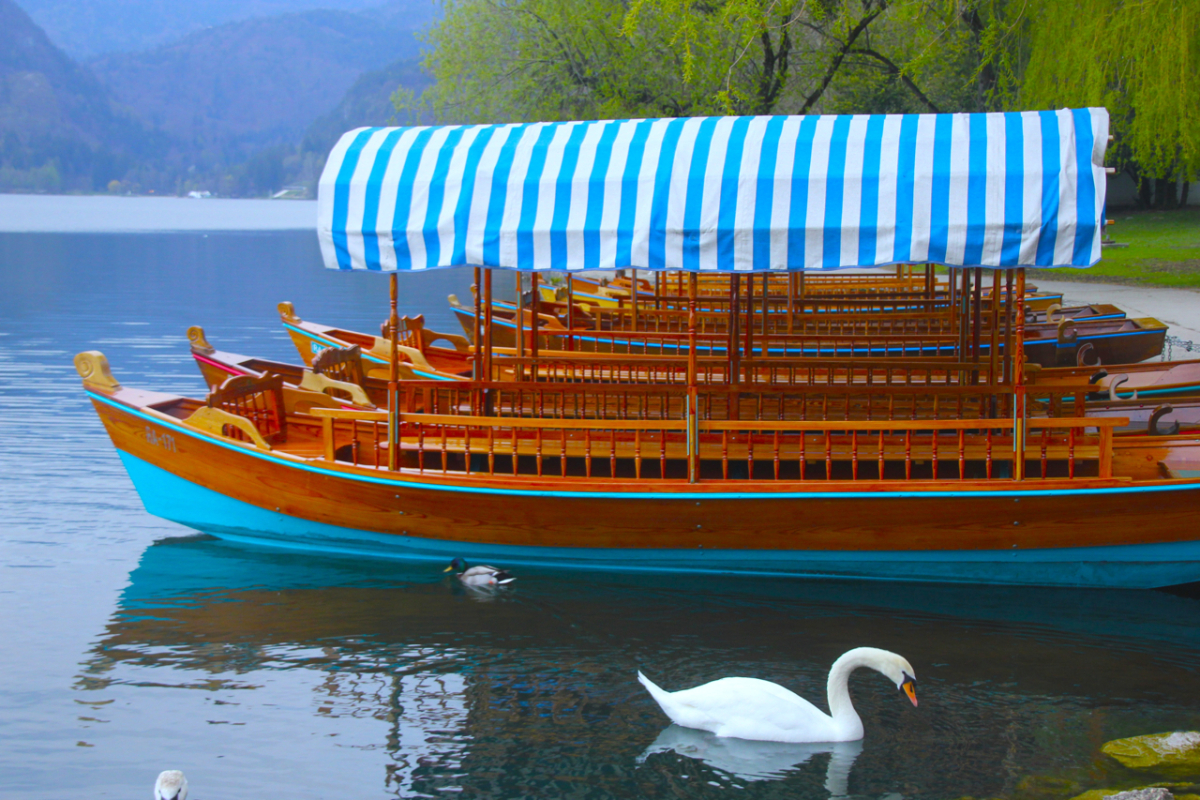
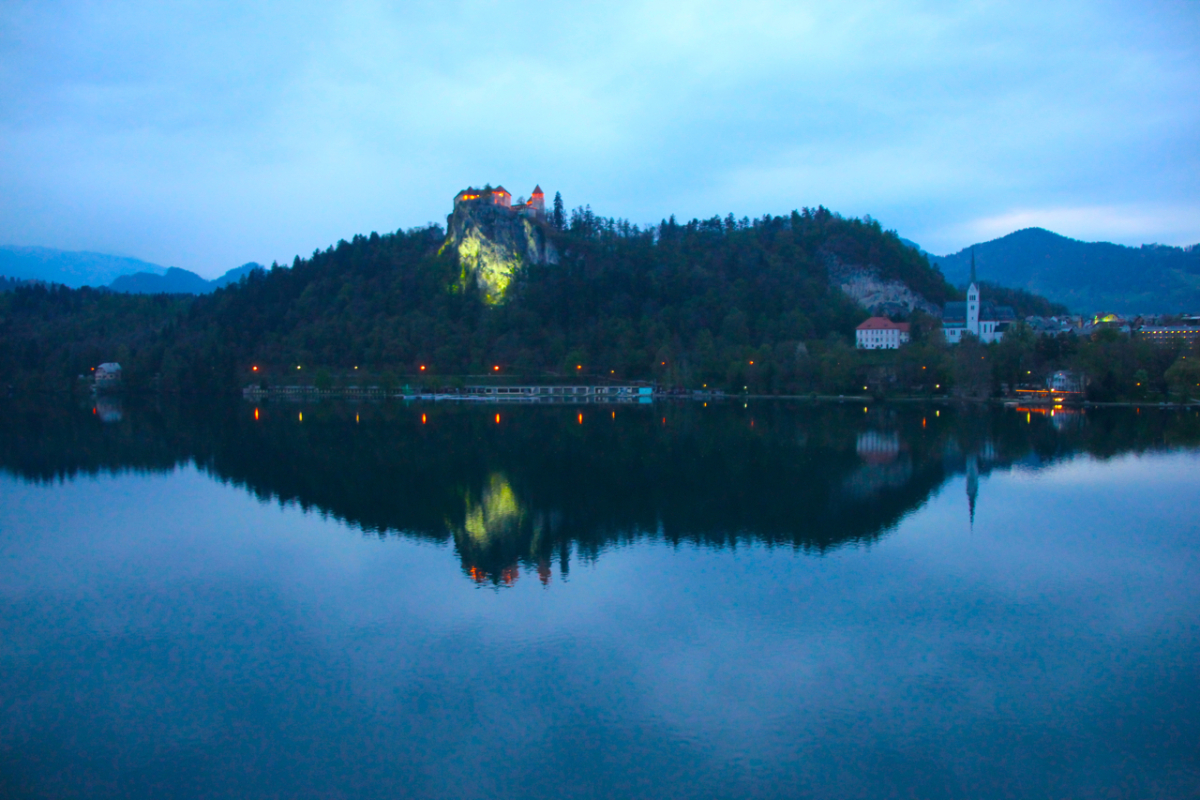
Just over 30 miles northwest of the Slovenian capital Ljubljana, you’ll find an alpine lake that looks straight out of a fairytale. With a cliff-side castle, an emerald green, fresh water lake and some of the best views of the Julian Alps, you’d be forgiven for mistaking Lake Bled and its island church for a storybook cover. And as you cross the lake in a traditional wooden boat, learn the legend of the bell that lies below these emerald green waters.







Getting Lost in Slovenia
Photos & Text by, CRISTINA NEHRING
Photo Essay Curated by, NELIDA MORTENSEN
This is what Hansel and Gretel felt like, I mused as I erred through an opaque wood. Except that I had forgotten the breadcrumb trail; I had forgotten the bread. Just an hour ago, after all, my daughter and I had been at a café on the sea. A hundred-odd hairpin turns later in a tiny car and the world had changed, darkness was upon us, the trees were impassive.
Slovenia is a country of extremes. Extreme sports, extreme combat, extreme resilience, extreme beauty. Tucked away tightly between Italy, Austria and Croatia, Slovenia shares an opening onto the Mediterranean and a big chunk of the Alps. Only half the size of Switzerland--and with a population of just 2 million--it packs an abundance of micro-climates into a tiny space. When Slovenia was part of Yugoslavia (until 1991), it accounted for a mere 8% of the land and population of its mother country, but 60% of its industry. Once independence was declared (Slovenia was the first of Yugoslavia’s six republics to split off, and to do so essentially without bloodshed), its economy and industry only took off.
Today, it is The Little Country that Could. In the Soca River Valley where many hundreds of thousands lost their lives during World War I (as recounted, in part, by Hemingway in A Farewell to Arms), locals now receive tourists for river-rafting, canyoning and paragliding. And yet the ghosts have not gone. Gingerbread-houses feel like they are just around the corner, haunted-seeming castles emerge every few miles, and every rock and rabbit appears to have a story to tell.
My girl and I gripped each others hands tightly, and kept forging ahead until the light reappeared. Like the Slovenian people have done so many times. And there’s very little more radiant than Slovenia under the sun.
CRISTINA NEHRING
Cristina is an American author, journalist and photographer. Her work has appeared in Condé Nast Traveler, The New York Times, The Atlantic Monthly, Harper’s, Slate, The Nation and elsewhere.Her books are A Vindication of Love: Reclaiming Romance for the Twenty-First Century (HarperCollins) and Journey to the Edge of the Light: A Tale Of Love, Leukemia and Transformation (Amazon Kindle Singles).Her photo exhibits include “The Sky is Falling” and “Found Love” (Chico, California).She lives in Paris with her now 5-year-old daughter, Eurydice, who has Down Syndrome, and often serves as her model. For photo purchases and other inquiries visit her website at: www.cristinanehring.com