
Tim Doucette is legally blind, yet he sees the stars better than most people. A childhood diagnosis of congenital cataracts forced doctors to remove Doucette's lenses and widen his pupils. That left the amateur astronomer with only about 10 percent of his eyesight, but it also allows his pupils to pick up more light at night. You've never seen the night sky quite like Doucette.
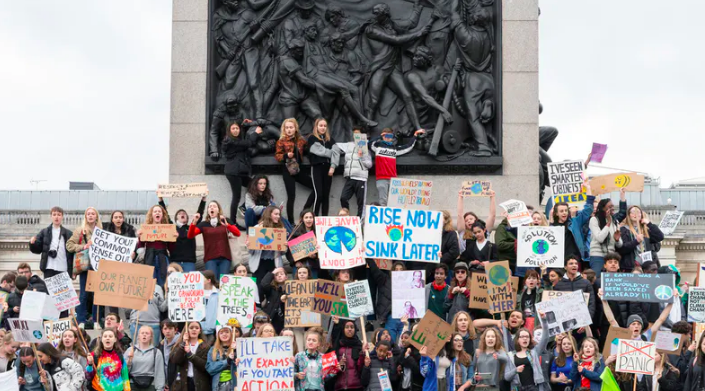
Climate Change: Children are Carving Out a Place in Politics – Now Adults Must Listen and Act
There is no doubt that young people are driving action on climate change. The #FridaysForFuture school strikes are arguably the most dedicated and sustained direct action in a generation. But will it make a difference?
Read MoreLost in Kyrgyzstan
Sara Izzi and Timur Tugalev, digital nomads and authors of the Travel blog The Lost Avocado.com document for the first time incredible country of Kyrgyzstan. The dreaming sceneries of the lake of Song Köl, from Orto Tokoy, a reservoir of turquoise water in the Kochkor District, up to Issik Kul, UNESCO Biosphere Reserve, and Karakol, with its canyons, wild parks and colourful markets.
Welcome to Hong Kong
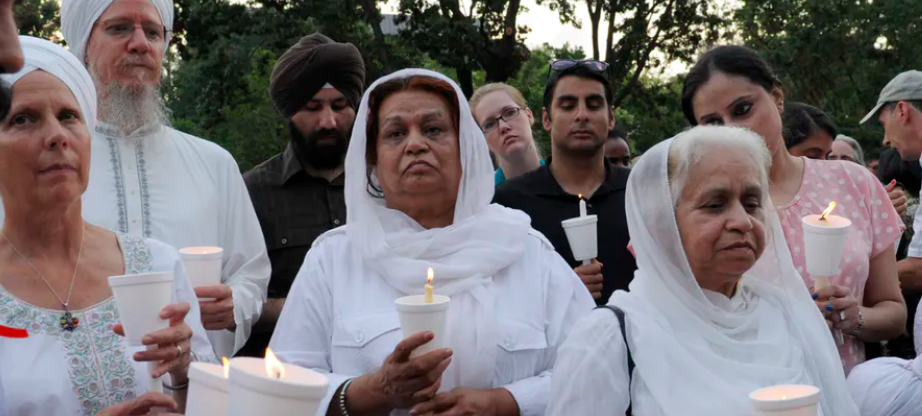
People participate in a candlelight vigil near the White House to protest violence against Sikhs in 2012. AP Photo/Susan Walsh
Why Sikhs Wear a Turban and What it Means to Practice the Faith in the United States
An elderly Sikh gentleman in Northern California, 64-year-old Parmjit Singh, was recently stabbed to death while taking a walk in the evening. Authorities are still investigating the killer’s motive, but community members have asked the FBI to investigate the killing.
For many among the estimated 500,000 Sikhs in the U.S., it wouldn’t be the first time. According to the Sikh Coalition, the largest Sikh civil rights organization in North America, this is the seventh such attack on an elderly Sikh with a turban in the past eight years.
As a scholar of the tradition and a practicing Sikh myself, I have studied the harsh realities of what it means to be a Sikh in America today. I have also experienced racial slurs from a young age.
I have found there is little understanding of who exactly the Sikhs are and what they believe. So here’s a primer.
Founder of Sikhism
The founder of the Sikh tradition, Guru Nanak, was born in 1469 in the Punjab region of South Asia, which is currently split between Pakistan and the northwestern area of India. A majority of the global Sikh population still resides in Punjab on the Indian side of the border.
From a young age, Guru Nanak was disillusioned by the social inequities and religious hypocrisies he observed around him. He believed that a single divine force created the entire world and resided within it. In his belief, God was not separate from the world and watching from a distance, but fully present in every aspect of creation.
He therefore asserted that all people are equally divine and deserve to be treated as such.
To promote this vision of divine oneness and social equality, Guru Nanak created institutions and religious practices. He established community centers and places of worship, wrote his own scriptural compositions and institutionalized a system of leadership (gurus) that would carry forward his vision.
The Sikh view thus rejects all social distinctions that produce inequities, including gender, race, religion and caste, the predominant structure for social hierarchy in South Asia.

A community kitchen run by the Sikhs to provide free meals irrespective of caste, faith or religion, in the Golden Temple, in Punjab, India. shankar s., CC BY
Serving the world is a natural expression of the Sikh prayer and worship. Sikhs call this prayerful service “seva,” and it is a core part of their practice.
The Sikh identity
In the Sikh tradition, a truly religious person is one who cultivates the spiritual self while also serving the communities around them – or a saint-soldier. The saint-soldier ideal applies to women and men alike.
In this spirit, Sikh women and men maintain five articles of faith, popularly known as the five Ks. These are: kes (long, uncut hair), kara (steel bracelet), kanga (wooden comb), kirpan (small sword) and kachera (soldier-shorts).
Although little historical evidence exists to explain why these particular articles were chosen, the five Ks continue to provide the community with a collective identity, binding together individuals on the basis of a shared belief and practice. As I understand, Sikhs cherish these articles of faith as gifts from their gurus.
Turbans are an important part of the Sikh identity. Both women and men may wear turbans. Like the articles of faith, Sikhs regard their turbans as gifts given by their beloved gurus, and their meaning is deeply personal. In South Asian culture, wearing a turban typically indicated one’s social status – kings and rulers once wore turbans. The Sikh gurus adopted the turban, in part, to remind Sikhs that all humans are sovereign, royal and ultimately equal.
Sikhs in America
Today, there are approximately 30 million Sikhs worldwide, making Sikhism the world’s fifth-largest major religion.
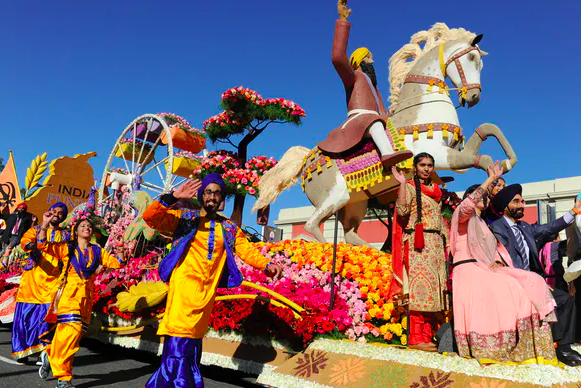
‘A Sikh-American Journey’ parade in Pasadena, Calif. AP Photo/Michael Owen Baker
After British colonizers in India seized power of Punjab in 1849, where a majority of the Sikh community was based, Sikhs began migrating to various regions controlled by the British Empire, including Southeast Asia, East Africa and the United Kingdom itself. Based on what was available to them, Sikhs played various roles in these communities, including military service, agricultural work and railway construction.
The first Sikh community entered the United States via the West Coast during the 1890s. They began experiencing discrimination immediately upon their arrival. For instance, the first race riot targeting Sikhs took place in Bellingham, Washington, in 1907. Angry mobs of white men rounded up Sikh laborers, beat them up and forced them to leave town.
The discrimination continued over the years. For instance, when my father moved from Punjab to the United States in the 1970s, racial slurs like “Ayatollah” and “raghead” were hurled at him. It was a time when 52 American diplomats and citizens were taken captive in Iran and tension between the two countries was high. These slurs reflected the racist backlash against those who fitted the stereotypes of Iranians. Our family faced a similar racist backlash when the U.S. engaged in the Gulf War during the early 1990s.
Increase in hate crimes
The racist attacks spiked again after 9/11, particularly because many Americans did not know about the Sikh religion and may have conflated the unique Sikh appearance with popular stereotypes of what terrorists look like. News reports show that in comparison to the past decade, the rates of violence against Sikhs have surged.
Elsewhere too, Sikhs have been victims of hate crimes. An Ontario member of Parliament, Gurrattan Singh, was recently heckled with Islamophobic comments by a man who perceived Singh as a Muslim.
As a practicing Sikh, I can affirm that the Sikh commitment to the tenets of their faith, including love, service and justice, keeps them resilient in the face of hate. For these reasons, for many Sikh Americans, like myself, it is rewarding to maintain the unique Sikh identity.
SIMRAN JEET SINGH is a Henry R. Luce Post-Doctoral Fellow in Religion in International Affairs Post-Doctoral Fellow at New York University.
THIS ARTICLE WAS ORIGINALLY PUBLISHED ON THE CONVERSATION
China’s Architectural Wonder Has Been Standing for 700 Years
The Guanyin Pavilion was built to last. And last. And last. This temple has sat atop a large reef rock in the middle of China’s Yangtze River in Ezhou for 700 years. When the water rises and covers the foundation, it looks like the structure is floating. Also known as the Goddess of Mercy Pavilion, the temple isn’t open to the public nowadays. But we’ve captured a glorious bird’s eye view of this historical treasure, holding its own against the swirling current.

Grid, glorious grid. Kaspars Upmanis/Unsplash., FAL
Superblocks: Barcelona’s Car-Free Zones Could Extend Lives and Boost Mental health
The world’s biggest cities have larger populations and higher economic outputs than some countries. But as they grow in size and complexity, cities are also facing thorny challenges that threaten the health and happiness of residents. Congestion, pollution and a lack of community spaces have become major drags on people’s aspirations and experiences of urban living.
In response, cities must manage their resources and priorities to create sustainable places for visitors and residents, and foster innovation and growth. Enter Barcelona – the capital of Catalonia, in Spain – where a bold stroke of urban planning first introduced “superblocks” in 2016.
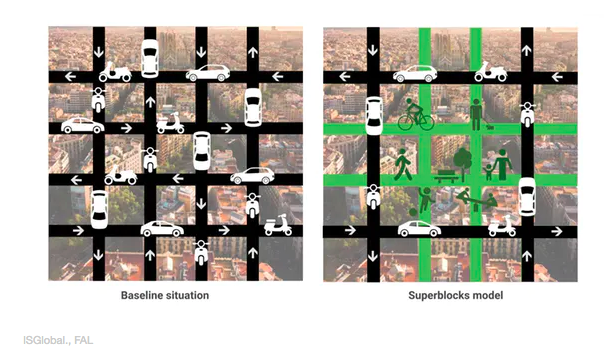
Superblocks are neighbourhoods of nine blocks, where traffic is restricted to major roads around the outside, opening up entire groups of streets to pedestrians and cyclists. The aim is to reduce pollution from vehicles, and give residents much-needed relief from noise pollution. They are designed to create more open space for citizens to meet, talk and do activities.
Health and well-being boost
There are currently only six superblocks in operation, including the first, most prominent one in Eixample. Reports suggest that – despite some early push back – the change has been broadly welcomed by residents, and the long-term benefits could be considerable.
A recent study carried out by the Barcelona Institute for Global Health estimates that if, as planned, 503 potential superblocks are realised across the city, journeys by private vehicle would fall by 230,000 a week, as people switch to public transport, walking or cycling.
The research suggests this would significantly improve air quality and noise levels on the car-free streets: ambient levels of nitrogen dioxide (NO₂) would be reduced by a quarter, bringing levels in line with recommendations from the World Health Organisation (WHO).
The plan is also expected to generate significant health benefits for residents. The study estimates that as many as 667 premature deaths from air pollution, noise and heat could be prevented each year. More green spaces will encourage people to get outdoors and lead a more active lifestyle.
This, in turn, helps to reduce obesity and diabetes and ease pressure on health services. The researchers claim that residents of Barcelona could expect to live an extra 200 days thanks to the cumulative health benefits, if the idea is rolled out across the city.

Space to play. Mosa Moseneke/Unsplash., FAL
There are expected to be benefits to mental health, as well as physical health. Having access to such spaces can stave off loneliness and isolation – especially among elderly residents – as communities form stronger bonds and become more resilient.
Stumbling blocks
It was Salvador Rueda, director of the Urban Ecology Agency of Barcelona, who first championed the introduction of superblocks – and he argues that the idea could be used in any city. Even so, authorities looking to expand the concept in Barcelona or beyond will need to be mindful of some concerns.
Changes like these require capital investment. Even as the car-free streets are transformed with urban furniture and greenery, the remaining major roads will likely have to accommodate heavier traffic.
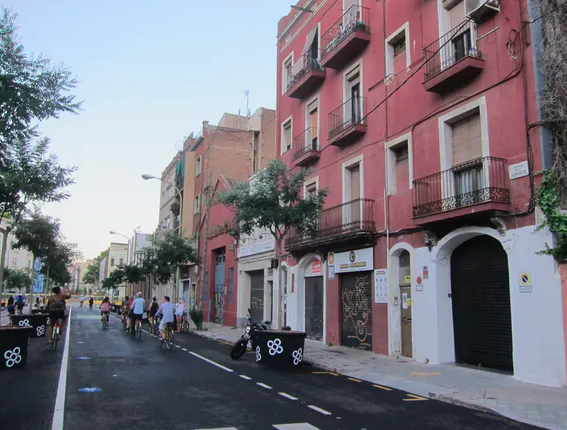
Nothing comes for free. Zvileve/Flickr., CC BY-SA
Further investments in local infrastructure – such as improving surrounding roads to deal with more traffic, or installing smart traffic management system – could be required to prevent serious congestion. Then the question remains, how to finance such investments – a higher tax rate is unlikely to be popular.
What’s more, whenever a location becomes more desirable, it leads to an increase in property demand. Higher prices and rent could create pockets of unaffordable neighbourhoods. This may lead to use of properties for investment purposes and possibly, displacement of local residents.
It’s also worth noting that Barcelona is an old and relatively well-planned European city. Different challenges exist in emerging global cities across Asia, Africa and Latin America – and in younger cities in the US and Australia. There is a great deal of variation in scale, population density, urban shape and form, development patterns and institutional frameworks across the cities. Several large cities in the developing world are heavily congested with uncontrolled, unregulated developments and weak regulatory frameworks.
Replicating what’s been done in Barcelona may prove difficult in such places, and will require much greater transformations. But it’s true that the basic principles of superblocks – that value pedestrians, cyclists and high quality public spaces over motor vehicles – can be applied in any city, with some adjustments.
Leading the way
Over the history of human civilisation, great cities have been at the forefront of innovation and social progress. But cities need a robust structure of governance, which is transparent and accountable, to ensure a fair and efficient use of resources. Imposing innovation from the top down, without consultations and buy-in, can go squarely against the idea of free market capitalism, which has been a predominant force for modern economies and can lead push-back from citizens and local businesses.
Citizens must also be willing to change their perspectives and behaviour, to make such initiatives work. This means that “solutions” to urban living like superblocks need to have buy-in from citizens, through continuous engagement with local government officials.

A man speaks at a public consultation on the Eixample superblock in Barcelona. Ajuntament Barcelona/Flickr., CC BY-ND
Successful urban planning also needs strong leadership with a clear and consistent vision of the future, and a roadmap of how that vision can be delivered. The vision should be co-developed with the citizens and all other stakeholders such as local businesses, private and public organisations. This can ensure that everybody shares ownership and takes responsibility for the success of local initiatives.
There is little doubt that the principles and objectives of superblocks are sound. The idea has the potential to catch on around the world – though it will likely take a unique and specific form in every city.
ANUPAM NANDA is the Professor of Urban Economics and Real Estate at the University of Reading.
THIS ARTICLE WAS ORIGINALLY PUBLISHED ON THE CONVERSATION
Scotland In Motion
Experience a beautiful timelapse journey through the amazing landscapes of Scotland. In this film about the Scottish Highlands you will experience places like Glencoe, The Storr, Quiraing, Fairy Pools and many other places on the Isle of Skye.

Corals release millions of sperm and eggs in synchrony to reproduce. Rich Carey/Shutterstock
Coral Reefs: Breakdown in Iconic Spawning Puts Species at Risk of Extinction – New Research
It’s rather tricky to reproduce if you’re stuck to the floor – unless you’re a coral. Their spectacular spawning events are a beautiful sight to behold. Once a year, they spill billions of sperm and eggs into the sea, peppering the deep blue with a palette of vivid reds, yellows, oranges, and whites.
But according to new research, some corals are no longer reproducing with the same clockwork timing, adding yet another survival threat to the long list already befalling reefs.
Corals are unlike any other animal on the planet. Thousands of polyps, each resembling an upside down jellyfish, live with each other in beds of limestone attached to the seabed. As they grow, they create the unified limestone skeleton we see as coral from the outside. Many of these coral colonies together create a complex three-dimensional reef structure that in turn creates a home for thousands of other plants and animals.
Corals release so many sperm and eggs that the slicks can often be seen from the air. LBM1948/Wikimedia Commons, CC BY-SA
To get around their firm attachment to the seabed, most coral species reproduce by the mass release of sperm and eggs directly into the water at the same time. This annual mass spawning is one of nature’s most iconic events – rising underwater snowstorms so thick that they create brightly coloured slicks on the sea surface, visible from high above.
Astonishingly, corals synchronise their reproduction despite not having a brain, nor any direct way of communicating between colonies. Sperm and eggs can only survive in the water for a few hours, so in the vast ocean space this synchrony is essential for a good chance of fertilisation.
Until recently, little more than this was known about the intricacies of coral reproduction. But in the context of rapid coral decline, researchers have started applying genetic and reproductive research techniques to understand how environmental conditions are impacting coral fertilisation.
Read more: Explainer: mass coral spawning, a wonder of the natural world
The new research monitored mass spawnings on corals reefs in the northern Red Sea. The researchers compared spawning timings of five coral species between 2015 and 2018 to results from two other studies conducted on the same species in the 1980s. In the species Acropora eurystoma, they also measured various reproductive traits, such as the number of sperm and eggs within a colony, the number of colonies reproducing in a given area and the size of coral colonies in the area – an index of their age.
In the 1980s, all the coral species monitored had one or two well-defined periods of spawning, where eggs and sperm were released within a few days of each other. But by the 2010s, some species released them over as many as a couple of months. With a lower concentration of eggs and sperm in the water at any one time, fertilisation becomes much rarer.

Although visually the coral reefs appeared in overall good health, the researchers found that the corals that weren’t spawning at the same time had no baby corals. This means that affected species can appear to be abundant, but in reality be nearing extinction through reproductive failure.
Threat and opportunity
This is the first study to compare current spawning behaviour with historical data, providing evidence of increased desynchrony over time. Of course, there are many, many more coral species than the five measured in the current study, so we must be cautious of drawing general conclusions at this stage. However, evidence (without historical data for comparison) suggests that the same may be happening in other parts of the world too.
Unfortunately, it’s not yet known exactly what is causing the apparent decline in spawning synchrony, making it difficult to put forward a solution to the problem. Increases in light pollution from coastal development and hormone pollution from contraceptive pills have recently been shown to disrupt the natural triggers for coral spawning. The same is true of water temperature, which has increased by 1.2℃ at the test site since the 1980s. However, further research is needed to establish whether these factors are causing corals to reproduce out of sync with each other.
While these new advances in the understanding of coral reproductive biology are worrying, they also present opportunities. If we can identify why some corals are reproducing well and others not, we may be able to innovate new conservation methods that protect corals before they show signs of dying off. Using selective breeding techniques, for example, we may be able to imbue corals with greater resilience to the factors causing spawning desynchrony.
Read more: Heat-tolerant corals can create nurseries that are resistant to bleaching
In the meantime though, all we can do to keep the glimmer of hope alive for reefs is redouble international efforts to tackle climate breakdown, and manage coastal areas responsibly. Without such intervention, these ecosystems rich in economic, ecological and cultural value will soon succumb to the multiple threats it faces.
HEIDI BURDETT is a Research Fellow, Lyell Centre for Earth and Marine Science and Technology, Heriot-Watt University.
THIS ARTICLE WAS ORIGINALLY PUBLISHED ON THE CONVERSATION
Fighting to End Child Marriage in Lebanon
Ghassan Idriss knows firsthand the harmful effects of child marriage on society. Having married at a young age to a woman even younger than himself, Idriss and his wife faced struggles that so many other couples in his home country of Lebanon grapple with. Now, with three daughters of his own, Idriss is doing everything he can to educate those around him about the dangers of this antiquated institution. By hosting talks, he’s using his voice to spark change within his community.
The Women Taking on the Macho World of Mariachi
Mariachi is a folkloric tradition as macho as it is Mexican. Eight years ago, Mireya Ramos and Shae Fiol sought to up-end convention and founded Mariachi Flor de Toloache, New York City’s first all-female mariachi band.
Read More5 Animals that Made it Off of the Endangered List
Conservation efforts are saving biodiversity.

The Panda is an example of a species that was once endangered but is now vulnerable. Photo by Ju Santana C.C. 2.0.
It’s no secret that in order for our planet to survive, we need an array of species to fulfill different niches. However, when humans over hunt animals, destroy their natural habitats, or disrupt their environment, species can die out, or become extinct. This threatens the status quo of our planet, and the safety of all living organisms.
The International Union for Conservation of Nature (IUCN) created the “Red List” in 1964 to keep track of species that are threatened by extinction. Conservation organizations like the World Wildlife Fund use this list to determine their course of action.
There are three categories to measure species that are threatened by extinction, from lowest risk to highest risk: Vulnerable, Endangered, and Critically Endangered. Because of the efforts of conservation organizations, as well as government acts (such as the 1973 Endangered Species Act), animals have had their endangered status lessened. Here are five animals that you might recognize.

Photo by David Ellis C.C. 2.0.
The Giant Panda: Endangered to Vulnerable
1. The Giant Panda, native to the bamboo forests of China, was once endangered. They are threatened due to loss of their habitat. Forest destruction to make way for roads in China means that Pandas lose access to bamboo, their main source of nutrients. Additionally, they are threatened by hunters who kill them for their fur. However, now there are more than 50 panda reservations in China, and the population has rebounded.
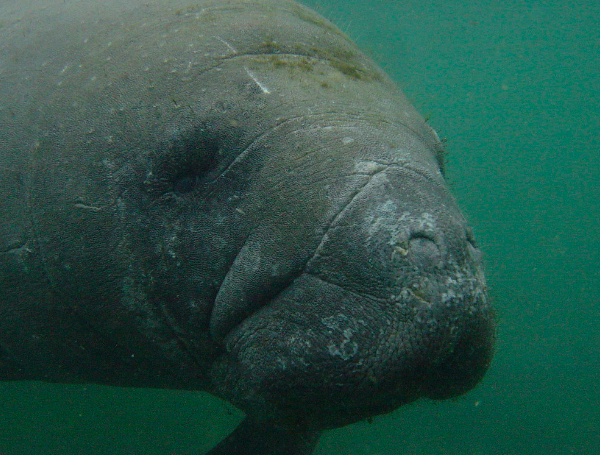
Photo by La Chiquita. C.C. 2.0.
Manatees: Endangered to Vulnerable
2. Manatees were also marked as vulnerable or threatened instead of endangered. Manatees feed on seagrass, which is found in shallow waters. This leaves them vulnerable to boats and jet skies. Conservations have been created to help protect Manatees from trash and boats. However, not everyone was enthused about the reclassification, as advocates think it could undermine the urgency to continue protection efforts for manatees.

Photo by National Marine Sanctuaries.
Humpback Whales: Delisted
3. Some populations of Humpback Whales were delisted from the US government’s endangered species list. In 2016, 9 out of the 14 populations of Humpback whales were delisted. Most whales are threatened by collisions with ships and entanglements in fishing gear. The entire species wasn’t delisted, as Humpback Whales are geographically separated and face different risks. The Marine Mammal Protection Act, and an international ban on whaling serve to continue protecting the species.

Photo by J. Phillip Krone. C.C. 2.0.
American Alligator: Delisted
4. The American Alligator is found in Southeastern United States. The species was put on the endangered list in the 1960s because of hunters and habitat loss. However, after the Endangered Species Act prohibited hunting, the species was able to recover. In 1987, it was removed from the endangered list.
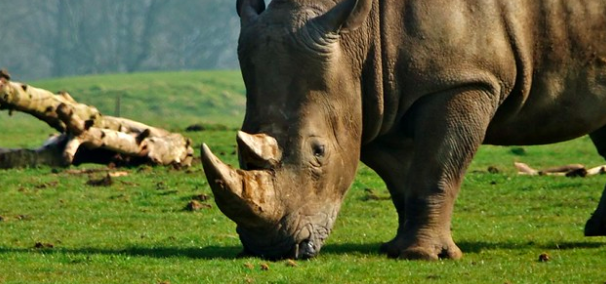
Photo by Clive. C.C. 2.0.
The White Rhino: Delisted
5. The White Rhino is found in South Africa. The species was on the brink of extinction after poachers killed them to take their horns. Due to regulation of poaching and an effort to stop illegal trade, the species has since been removed from the endangered list.
Even though these species have had their categories lessened, or have been removed from the list entirely, conservation efforts are needed to preserve the species and foster the regrowth of their population. Consider volunteering with organizations like the World Wildlife Fund to get involved.
ELIANA DOFT loves to write, travel, and volunteer. She is especially excited by opportunities to combine these three passions through writing about social action travel experiences. She is an avid reader, a licensed scuba diver, and a self-proclaimed cold brew connoisseur.

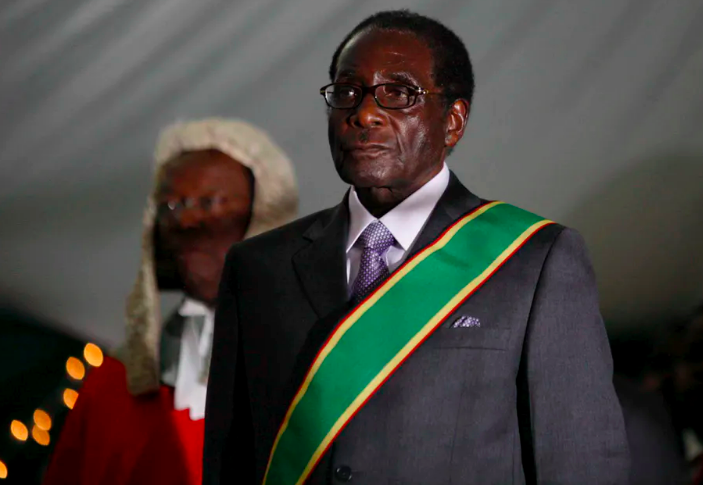
Robert Mugabe during his swearing-in ceremony in Harare, 2008. The former Zimbabwean president has died aged 95. EPA-EFE
Robert Mugabe: As Divisive in Death as he was in Life
Robert Mugabe, the former president of Zimbabwe, has died. Mugabe was 95, and had been struggling with ill health for some time. The country’s current President Emmerson Mnangagwa announced Mugabe’s death on Twitter on September 6:

The responses to Mnangagwa’s announcement were immediate and widely varied. Some hailed Mugabe as a liberation hero. Others dismissed him as a “monster”. This suggests that Mugabe will be as divisive a figure in death as he was in life.
The official mantra of the Zimbabwe government and its Zimbabwe African National Patriotic Front (Zanu-PF) will emphasise his leadership of the struggle to overthrow Ian Smith’s racist settler regime in what was then Rhodesia. It will also extol his subsequent championing of the seizure of white-owned farms and the return of land into African hands.
In contrast, critics will highlight how – after initially preaching racial reconciliation after the liberation war in December 1979 – Mugabe threw away the promise of the early independence years. He did this in several ways, among them a brutal clampdown on political opposition in Matabeleland in the 1980s, and Zanu-PF’s systematic rigging of elections to keep he and his cronies in power.
They’ll also mention the massive corruption over which he presided, and the economy’s disastrous downward plunge during his presidency.
Inevitably, the focus will primarily be on his domestic record. Yet many of those who will sing his praises as a hero of African nationalism will be from elsewhere on the continent. So where should we place Mugabe among the pantheon of African nationalists who led their countries to independence?
Slide into despotism
Most African countries have been independent of colonial rule for half a century or more.
The early African nationalist leaders were often regarded as gods at independence. Yet they very quickly came to be perceived as having feet of very heavy clay.
Nationalist leaders symbolised African freedom and liberation. But few were to prove genuinely tolerant of democracy and diversity. One party rule, nominally in the name of “the people”, became widespread. In some cases, it was linked to interesting experiments in one-party democracy, as seen in Tanzania under Julius Nyerere and Zambia under Kenneth Kaunda.
Even in these cases, intolerance and authoritarianism eventually encroached. Often, party rule was succeeded by military coups.
In Zimbabwe’s case, Mugabe proved unable to shift the country, as he had wished, to one-partyism. However, this did not prevent Zanu-PF becoming increasingly intolerant over the years in response to both economic crisis and rising opposition. Successive elections were shamelessly perverted.
When, despite this, Zanu-PF lost control of parliament in 2008, it responded by rigging the presidential election in a campaign of unforgivable brutality. Under Mugabe, the potential for democracy was snuffed out by a brutal despotism.
A wasted inheritance
Whether the economic policies they pursued were ostensibly capitalist or socialist, the early African nationalist leaders presided over rapid economic decline, following an initial period of relative prosperity after independence.
In retrospect, it’s widely recognised that the challenges they faced were immense. Most post-colonial economies were underdeveloped and depended upon the export of a small number of agricultural or mineral commodities. From the 1970s, growth was crowded out by the International Monetary Fund demanding that mounting debts be surmounted through the pursuit of structural adjustment programmes. This hindered spending on infrastructure as well as social services and education and swelled political discontent.
In contrast, Mugabe inherited a viable, relatively broad-based economy that included substantial industrial and prosperous commercial agricultural sectors. Even though these were largely white controlled, there was far greater potential for development than in most other post-colonial African countries.
But, through massive corruption and mismanagement, his government threw that potential away. He also presided over a disastrous downward spiral of the economy, which saw both industry and commercial agriculture collapse. The economy has never recovered and remains in a state of acute and persistent crisis today.
Read more: Zimbabwe's economy is collapsing: why Mnangagwa doesn't have the answers
Reputation
On the political front, the rule of some leaders – like Milton Obote in Uganda and Siad Barre in Somalia – created so much conflict that coups and crises drove their countries into civil war. Zimbabwe under Mugabe was spared this fate – but perhaps only because the political opposition in Matabeleland in the 1980s was so brutalised after up to 30 000 people were killed, that they shrank from more conflict. Peace, then, was merely the absence of outright war.
Some leaders, notably Ghana’s Kwame Nkrumah and Julius Nyerere in Tanzania, are still revered for their commitments to national independence and African unity. This is despite the fact that, domestically, their records were marked by failure. By 1966, when Nkrumah was displaced by a military coup, his one-party rule had become politically corrupt and repressive.
Despite this, Nyerere always retained his reputation for personal integrity and commitment to African development. Both Nkrumah’s and Nyerere’s ideas continue to inspire younger generations of political activists, while other post-independence leaders’ names are largely forgotten.
Will Mugabe be similarly feted by later generations? Will the enormous flaws of his rule be forgotten amid celebrations of his unique role in the liberation of southern Africa as a whole?
A Greek tragedy
The problem for pan-Africanist historians who rush to praise Mugabe is that they will need to repudiate the contrary view of the millions of Zimbabweans who have suffered under his rule or have fled the country to escape it. He contributed no political ideas that have lasted. He inherited the benefits as well as the costs of settler rule but reduced his country to penury. He destroyed the best of its institutional inheritance, notably an efficient civil service, which could have been put to good use for all.
The cynics would say that the reputation of Patrice Lumumba, as an African revolutionary and fighter for Congolese unity has lasted because he was assassinated in 1961. In other words, he had the historical good fortune to die young, without the burden of having made major and grievous mistakes.
In contrast, there are many who would say that Mugabe simply lived too long, and his life was one of Greek tragedy: his early promise and virtue marked him out as popular hero, but he died a monster whom history will condemn.
ROGER SOUTHALL is a Professor of Sociology at the University of the Witwatersrand.
THIS ARTICLE WAS ORIGINALLY PUBLISHED ON THE CONVERSATION
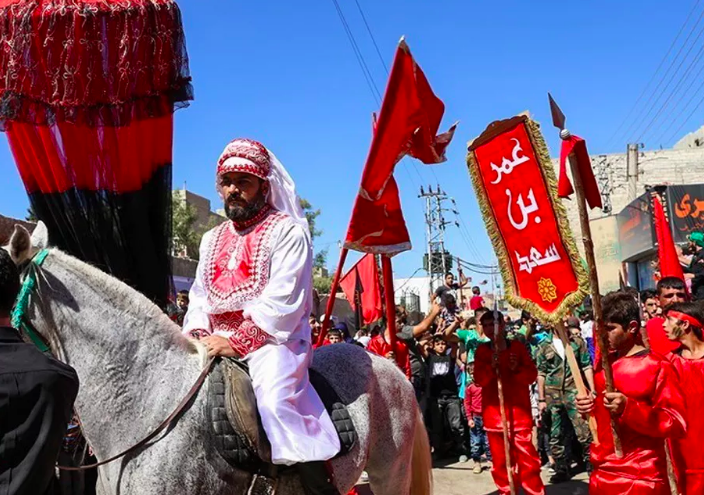
Ashura in Syria. Tasnim News Agency, CC BY-SA
What is Ashura? How this Shiite Muslim Holiday Inspires Millions
Tens of millions of Shiite Muslims from around the world will visit Iraq on Sept. 10 this year to see the shrines of Hussain, grandson of Prophet Mohammed, and his brother Abbas on the day of “Ashura.”
This annual pilgrimage marks the 10th day of Muharram, the first month of the Islamic new year. As the Islamic calendar is a lunar one, the day of Ashura changes from year to year.
Muslims visit the shrines to observe the martyrdom day of Hussain, who was killed in the desert of Karbala in today’s Iraq in A.D. 680. Shiite Muslims believe that Hussain was their third imam – a line of 12 divinely appointed spiritual and political successors.
Muharram may be an ancient festival, but as my research tracing the modern-day impact of Islamic pilgrimage shows, its meaning has changed over the centuries. What was once a commemoration of martyrdom today inspires much more, including social justice work around the globe.
Martyrdom of Hussain
The story of Muharram dates back 13 centuries, to events that followed the death of Prophet Mohammed.
After the prophet’s death in A.D. 632, a dispute emerged over who would inherit the leadership of the Muslim community and the title of caliph, or “deputy of God.” A majority of Muslims backed Abu Bakr, a close companion of the prophet, to become the first caliph. A minority wanted the prophet’s cousin and son-in-law, Ali. Those that supported his claim later came to be called Shiite Muslims.
Even if Ali was not made the caliph, Shiite Muslims would consider Ali their first imam – a leader divinely appointed by God. The title of imam would be passed on to his sons and his descendants.
Political leadership largely remained out of the hands of Shiite Imams. They would not be caliphs, but Shiites came to believe that their imam was the true leader to be followed.
By the time Ali’s second son, Hussain, came to be the third imam, divisions between the caliph and the imam had further deepened.
In A.D. 680, during the holy month of Muharram, a caliph of the Umayyad dynasty, Yazīd, ordered Hussain to pledge allegiance to him and his caliphate – a dynasty that ruled the Islamic world from A.D. 661 to 750.
Hussain refused because he believed Yazīd’s rule to be unjust and illegitimate.
His rejection resulted in a massive 10-day standoff at Karbala, in modern-day Iraq, between Umayyad’s large army and Hussain’s small band, which included his half-brother, wives, children, sisters and closest followers.
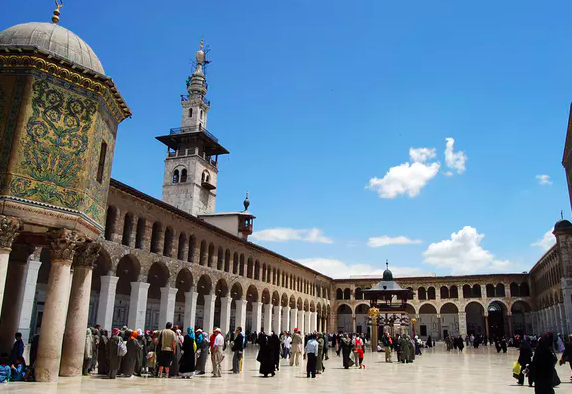
The Umayyad Mosque in Damascus. Alessandra Kocman, CC BY-NC-ND
The Umayyad army cut off food and water for Hussain and his companions. And on the day of Ashura, Hussain was brutally killed. Among the men, only Hussain’s sick son was spared. Women were unveiled – a violation of their honor as the family members of the prophet – and paraded to Damascus, the seat of Umayyad rule.
Passion plays and performances
This history is reenacted throughout the world on the day of Ashura.
In Iraq, millions of pilgrims fill the streets to visit the shrines, chanting poems of lamentation, and witness a reenactment of violence in Karbala and the capture of the women and children.
From New York and London to Hyderabad and Melbourne, thousands take part in Ashura processions carrying replicas of Hussain’s battle standard and following a white horse. This symbolizes Hussain’s riderless horse returning to the camp after his martyrdom.
Persian passion plays known as “taziyeh,” music dramas of the many martyrs and tragedies of Karbala, are performed across Iran and many other countries. Taziyeh performances are meant to evoke deep emotions of grief in the audience.
A powerful set of themes
Numerous historians and anthropologists have explored how communities across time and space have adapted the story of Karbala or the rituals around Ashūrā.
In the 16th century, a vast majority of the population across Persia, or today’s Iran, would be converted to Shiite Muslims. In this region, the passion plays evolved into a popular form of religious and artistic expression.
The character of Zainab, the Prophet Mohammed’s granddaughter, has also come to play a central role in remembrance of the Karbala story.
Scholars have drawn attention to speeches in which Zainab denounced the violence in Karbala and lauded Hussain’s “martyrdom.”
Today, Zainab is seen as a strong female model of resistance.
In the Iranian Revolution in 1979, the story of Karbala became a rallying point for opponents of the shah, who were fighting against the shah’s brutal and oppressive regime. They compared the shah to the caliph Yazīd and argued that ordinary Iranians had to stand up to an oppressor, just like Hussain had.
Zainab’s resistance to oppression helped emphasize the role of women in Islamic society.
Anthropologist Michael Fischer calls this the “Karbala paradigm” – a story that captures a powerful set of themes, including people standing up to the state and fighting for justice and morality.
Inspiring change?
Today the story of Karbala has become a powerful tool of fight for social justice in Muslim communities.
“Who is Hussain?,” a social movement with chapters in over 60 cities worldwide, carries out charitable activities and blood donations in the name of Hussain. Volunteers are encouraged to organize around events that will be meaningful in their communities and will tie into social justice issues that Hussain is believed to have fought for.
In 2018, local volunteers donated tens of thousands of bottles of water in Flint, Michigan in remembrance of Hussain and his companions, who were denied water for three days before they were killed.
As historian Yitzhak Nakash points out, the tragedy of Karbala gives Shiite Muslims a common narrative to pass on to the next generations. And commemorating it in multiple ways is an part of their unique identity.
NOORZEHRA ZAIDI is an Assistant Professor of History at the University of Maryland, Baltimore County.
THIS ARTICLE WAS ORIGINALLY PUBLISHED ON THE CONVERSATION
The Lungs of the Earth are Burning
The Amazon Rainforest is currently burning and has been for weeks, while little to no coverage has been given to the immediate and dire situation.

Fire. Cullan Smith. Unsplash.
The Amazon is on fire and has been for a little over a month. According to the World Wildlife Fund, “40,000 different types of plants” are estimated to have been affected by the fires raging in the Amazon. The Amazon fires have been burning for a while now, but coverage on the fires has been little to none. Now, though, through the outcry on social media, attention has been brought and countries across the globe are pitching in, trying to do their part in reversing and stopping the fires.
According to a NY Times article, “Hours after leaders of some of the world’s wealthiest countries pledged more than $22 million to help combat fires in the Amazon rainforest, Brazil’s government angrily rejected the offer, in effect telling the other nations to mind their own business — only to later lay out potential terms for the aid’s acceptance and then, on Tuesday evening, accepting some aid from Britain.”
Denying the aid could prove detrimental to the people and animals living in the Amazon forest. According to a CNN video, Daniel Aristizabel, a member of the Amazon Conservation team, states that the fires are affecting tons of the wildlife in the Amazon, stating “if you lose one species, you cause a chain reaction”. This “chain reaction” can cause a major shift in our ecosystem and possibly put many animals on the endangered species list.
Being far-removed from the fires makes it difficult to understand the scope and how big of areas the fires are covering. In an ABC video, Andres Ruzo from National Geographic Explorer and Conservationist and also the Director of the Boiling River Project states that “we could be losing, in certain areas, as much as 3 soccer fields of jungle every single minute”. The rate at which the Amazon is burning is huge and will have an impact on ourselves. To put the size in perspective, CNN reporter also adds that the amount of land burning is equivalent to “two thirds the size of the contenential United States”. The Amazon Rainforest has often been called the lungs of the Earth but now they are clogged with smoke.
Senior VP of Forests, WWF, Kerry Cesareo, states “we have seen a dramatic increase in deforestation in the Amazon, recently, and it is driven by humans and this is happening in part due to demand for food and other resources from the forests and exacerbated by the decline and enforcement of laws”. The apparent need for land for farming is the reason behind the fires. A great need for profit and resources are killing the Earth’s lungs.
If you would like to contribute to the efforts of saving the Amazon rainforest, you can donate to Protect and Acre Fund at https://act.ran.org/page/11127/donate/1 which “has distributed more than one million dollars in grants to more than 150 frontline communities, indigenous-led organizations, and allies, helping their efforts to secure protection for millions of acres of traditional territory in forests around the world.” You can also reduce your wood, paper, and beef consumption as those are the top reasons deforestation is currently happening to the Amazon.
OLIVIA HAMMOND is an undergraduate at Emerson College in Boston, Massachusetts. She studies Creative Writing, with minors in Sociology/Anthropology and Marketing. She has travelled to seven different countries, most recently studying abroad this past summer in the Netherlands. She has a passion for words, traveling, and learning in any form.

Sustainable Future: The New Plastic
Life in plastic can be fantastic now that Sandra Pascoe Oritz has created a material that could possibly replace regular plastic and help fight the growing climate conditions.

Nopal cactus leaves. genericavatar. CC by-NC 2.0.
Sandra Pascoe Ortiz, a Mexican researcher, has created a “plastic” dupe from cacti. Oritz states, “My idea is to produce a plastic from natural ingredients and substitute it for some of the plastics we use today”. Her invention will not only aid the fight against the growing climate crisis, but provide a more efficient way of mass producing cheaper products that will not affect our future in the long-run. The material Ortiz created takes one month to biodegrade in soil and a few days to biodegrade in water. That ensures that the product will quickly be erased, allowing for no buildup or junk yards to pollute the Earth.
Also, the material she created is so natural that it is edible. “All the materials we use can be ingested both by humans or animals and they wouldn’t cause harm.” This means that when the product does biodegrade, it should not affect the surrounding ecosystem, instead contributing to it.
But what is her process? First, she cuts the leaves off the cactus - the big round part that we associate with the general look of the cactus. Then, she peels the leaves, shaving off the outside spikey layer. Next, she presses the shaved cacti into juice placing the juice into the fridge. After some time, she takes the juice out of the fridge, mixes the non-toxic formula into the juice and after the concoctions are mixed, she laminates the mixture, letting it dry.
Oritz is currently testing many different ways the new material can be used. “We can obtain different colours, shapes, thicknesses; we can make plastics that are very smooth or very flexible and we can make others that are more rigid.” The material is malleable enough that it can possibly replace most of the functions that plastic is used for.
Currently, as Ortiz does everything by hand, the process of creating the new “plastic” takes up to 10 days. Ortiz believes that upgrading the process into an industrial factor, the process can be sped up.
The best part about the whole process? The substance is made up entirely of renewable resources. “The nopal cactus is a plant endemic in Mexico”. To continue the process, the plant must stay alive to create more leaves, ensuring overcropping will not be the result. Although the material is still in development, it shines a light for a hopeful future filled with less plastic and a more sustainable future.
OLIVIA HAMMOND is an undergraduate at Emerson College in Boston, Massachusetts. She studies Creative Writing, with minors in Sociology/Anthropology and Marketing. She has travelled to seven different countries, most recently studying abroad this past summer in the Netherlands. She has a passion for words, traveling, and learning in any form.


‘Early Days.’ Detail of Frank Happersberger’s pioneer monument, San Francisco, California, 1894. Photo by Lisa Allen. Cynthia Prescott, CC BY-SA
Think Confederate Monuments are Racist? Consider Pioneer Monuments
In San Francisco, there is an an 800-ton monument that retells California history, from the Spanish missions to American settlement. Several bronze sculptures and relief plaques depict American Indians, white miners, missionaries and settlers. A female figure symbolizing white culture stands atop a massive stone pillar.
The design of the “pioneer monument” was celebrated in newspapers across the country when it was erected in 1894. Today, however, activists have argued that the monument – particularly its depiction of a Spanish missionary and Mexican “vaquero,” or cowboy, towering over an American Indian – is demeaning to American Indians.
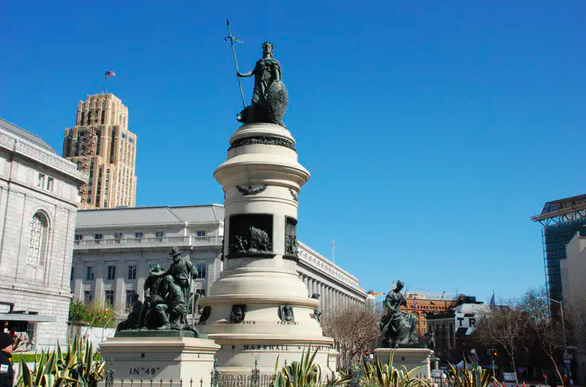
Frank Happersberger’s pioneer monument, San Francisco, California, 1894. Lisa Allen.
Should the city take down part of this 125-year-old monument?
Many cities are removing or reinterpreting their Confederate monuments, with the understanding that they commemorate racism. But few Americans realize that pioneer monuments placed across the country are also racist.
As my research and forthcoming book on pioneer monuments since the 1890s show, most early pioneer statues celebrated whites dominating American Indians.
Confederate and pioneer monuments
Since at least 2015, cities across the United States have debated what to do with more than 700 Confederate monuments.
After the Civil War, grieving widows raised funds to place monuments to soldiers in southern cemeteries. But most statues of Confederate leaders and foot soldiers were put up around 1900 by heritage organizations to honor the “Lost Cause.”
The “Lost Cause” is the idea that that the Civil War began as a heroic defense against northern aggression. In fact, the Civil War was primarily fought to defend slavery.
In the past few years, cities such as New Orleans, Louisiana and Baltimore, Maryland have chosen to remove their Confederate statues. Activists tore down a Confederate soldier statue in Durham, North Carolina last year.
By contrast, there has been far less attention on the roughly 200 pioneer monuments erected for similar reasons around the same time.

The earliest pioneer monuments were put up in midwestern and western cities such as Des Moines, Iowa and San Francisco, California. They date from the 1890s and early 1900s, as whites settled the frontier and pushed American Indians onto reservations.
Those statues showed white men claiming land and building farms and cities in the West. They explicitly celebrated the dominant white view of the Wild West progressing from American Indian “savagery” to white “civilization.”
Deviations from that script produced public controversy. For example, Denver residents in 1907 vocally opposed prominent American sculptor Frederick MacMonnies’s plan for a pioneer monument. MacMonnies proposed a large stone pillar surrounded by bronze hunters, miners and settlers similar to San Francisco’s celebrated monument. MacMonnies’s model included a mounted Plains American Indian warrior atop the pillar to show American Indians yielding to white settlement.
But Denver residents expected the figure at the top of the pillar to represent the pinnacle of progress, like “Eureka,” the female figure representing the spirit of California on San Francisco’s monument.
Denver’s residents argued that the monument needed a white man on top, so MacMonnies revised his design, replacing the American Indian warrior with frontiersman and American Indian fighter Kit Carson, on horseback.

August Leimbach, Madonna of the Trail, Springfield, Ohio, 1928.
By the 1920s, whites controlled most western lands, and they stopped depicting American Indians in their pioneer monuments. New pioneer monuments from Maryland to California focused on western women. Pioneer mothers in sunbonnets stood for white “civilization” winning in the West. And they offered a conservative model of womanhood to contrast flappers wearing short dresses and bobbed hair and women’s growing sexual freedom.
More recent monuments, such as Goodland, Kansas’s “They Came to Stay” and Omaha, Nebraska’s “Pioneer Courage,” do not directly engage racial politics. As their titles suggest, these statues honor pioneer families’ grit, and they teach local history.
But these statues still represent a racist view, ignoring the cost of white settlement on Native lands. Like earlier monuments, they reinforce white dominance and erase ethnic diversity in the American West.
Pioneer monuments today
The recent debate about Confederate monuments has sparked some discussion of pioneer monuments in a few places. In April, Kalamazoo, Michigan removed its 1940 “Fountain of the Pioneers” because local residents disliked its depiction of a white settler looming over an American Indian.
After decades of protest, San Francisco debated taking down the depiction of a Spanish missionary towering over an American Indian from the 1894 pioneer monument.
In the 1990s, activists persuaded the city to place a plaque telling the dark side of California history in front of the statue. But today’s protesters argued that plaque, hidden by landscaping, is not enough. They want “Early Days” – if not the entire monument – taken down.
The San Francisco Arts Commission agrees, but the Board of Appeals blocked its removal in April.
On September 14, 2018, the “Early Days” statue was removed from the San Francisco monument and placed in storage. In April 2019, about 150 Native American leaders and youth from across California posed for photographs on the empty base where “Early Days” once stood. The photos will be part of the San Francisco Art Commission’s American Indian Initiative.
Each pioneer monument has its own history and local meaning. There is no one-size-fits-all solution. But communities are beginning to consider removing or reinterpreting these monuments to white conquest.
CYNTHIA PRESCOTT is an Associate Professor of History at the University of North Dakota.
THIS ARTICLE WAS ORIGINALLY PUBLISHED ON THE CONVERSATION
Trinidad & Tobago: Dancing Among the Clouds
In Trindad and Tobago, “moko jumbies” soar high during Carnival. The traditional art of stilt dancing is a highlight of Trinidadian celebrations, but for stilt walker Adrian Young, it’s an everyday practice. For the past 21 years, he has been dancing among the clouds. Now, through his Future Jumbies youth group, he’s helping the next generation make their own strides.
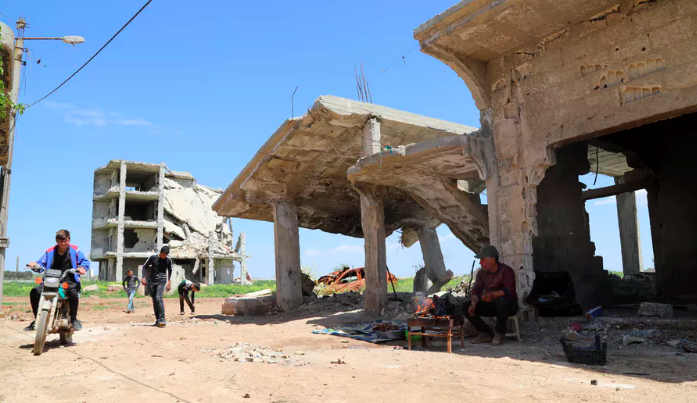
Life on the border: Kurdish men in Kobani, Syria. Ahmed Mardnli/EPA
Syria Safe Zones: What is Driving the Unexpected Rapprochement Between the US and Turkey?
After years of rising tensions between Turkey and the US over the situation in northern Syria, an unexpected rapprochement has pulled the two countries back from possible conflict.
Relations between the two countries had deteriorated over Turkish opposition to the US alliance with Kurdish fighters in northern Syria, and Turkey’s recent purchase of a Russian air defence missile system. In response, the US kicked Turkey out of its F-35 fighter programme in July.
But in August, Turkey and US announced they would collaborate to establish safe zones along the Syrian-Turkish border, managed by a joint operations centre in Turkey.
Turkey has long demanded these buffer zones across its northern border with Syria to protect against possible assaults from the Kurdish People’s Protection Units, or YPG, which leads the Syrian Democratic Forces. The safe zone will effectively serve as a buffer between the YPG-controlled area and the Turkish border, and also combat the ongoing threat of Islamic State (IS) in the region.
The Turks and Americans are yet to agree on the size of the buffer zone – with Turkey pushing for it to be larger than the US wants – and it remains unclear who will police it. But in late August, YPG leaders agreed to withdraw their troops from towns near the Turkish border in what the Pentagon said was a sign of “good faith”.
But why has the US begun to condone Turkish action in northern Syria, and why now?
Deteriorating relations
Although Turkey and the US both sought to displace the regime of Bashar al-Assad in Syria, their priorities in the region changed over time. When the US launched its coalition against IS in 2014, Turkey joined reluctantly amid fears that the fight would harm the Syrian rebels fighting against the Assad regime.
But while Turkey remained suspicious over the presence of the YPG in northern Syria, the US allied with these very forces to defeat IS and to balance Iranian influence in the region.
When US President Donald Trump declared IS had been defeated in December 2018 and that American troops would withdraw from Syria, Turkey’s President Recep Tayyip Erdoğan hurried to announce Turkish troops could replace the Americans in the region. Erdoğan has repeatedly stressed that Turkey will not harm Syrian Kurdish civilians, but rather target militant groups in the region, including the YPG which it sees as linked to the Kurdish separatist Kurdistan Workers’ Party, or PKK.


.jpg)
Similar styles. Ahmed Mardnli/EPA
After the reaction in Washington to the decision to withdraw from Syria – which caused resignations and criticism from senior politicians – Trump reversed his decision. In early January the US government said it would not withdraw until the Turkish government guaranteed it would not to attack Syrian Kurds who had been part of the alliance fighting against IS. Turkey has not given this guarantee.
Mistrust has festered over alleged links with each of the allies’ foes, namely Turkey with IS fighters and the US with the YPG. Amid the tensions, the US embassy in Ankara remained vacant.
Pulling back from conflict
There are three reasons for the current rapprochement. The first is a growing desire from both sides to avoid conflict between their military personnel in the region. In 2018, Erdoğan threatened that any US soldiers who stood in the way of the Turkish invasion of Afrin, a Syrian enclave in northern Syria, with an “Ottoman slap”.
Ankara now seems more willing to collaborate with Washington. The welcome extended to the new American ambassador to Turkey, David Satterfield, at the presidential palace on August 28, signalled the allies are looking to build bridges.
The second is that Assad’s forces are encroaching into the last remaining opposition stronghold in Idlib with their Russian allies. Turkey is likely to face another stream of Syrian refugees across to its borders. The search for an agreement over safe zones in northern Syria comes to the fore as Erdoğan feels the brunt of his pro-refugee politics at home.
Since its invasion of Afrin, Turkey has sought to settle Syrian refugees in safe zones in the province. The newly proposed safe zones are likely to see a push for further refugee returns. Similar goals of returning refugees are also pushing other peace efforts in the region – notably between the US and Taliban in Afghanistan.
The third reason is more personal. Erdoğan says Trump has a feel for him. Both leaders are celebrity politicians, with their families at the foreground of their politics. They share anti-establishment mentalities, and use religious references and nationalist discourses to appeal to their supporters.
The Russian factor
Hanging over this rapprochement, however, is the issue of the Russian missiles. So far the Trump administration has not imposed economic sanctions on Turkey over the issue, despite criticisms from Congress over the risks it poses to NATO security. Turkey said it would not activate the missiles until April 2020, allowing negotiation channels with the US over northern Syria to remain open.
Turkey has been a proactive voice against military assaults by the Assad regime in northern Syria, yet it has remained quiet on the Russian-Syrian alliance in the region. Since the failed coup attempt in 2016, the Erdoğan regime has been increasingly pro-Putin, signalling it is turning its back on its traditional Western allies.
That’s why it’s so significant that Turkey and the US are searching for collaboration in the region despite their policy differences. In the Turkish case, this could be a way to enhance its buffer as Assad forces regain the northern provinces from the rebels. In the American case, it could be to expand its alliances to offset Russian and Iranian influence in the future Assad-ruled Syria.
TARIK BASBUGOGLU is a PhD Candidate at Glasgow Caledonian University.
UMUT KORKUT is a Chair professor at Glasgow Caledonian University.
THIS ARTICLE WAS ORIGINALLY PUBLISHED ON THE CONVERSATION
India - Land of Kings
A journey across the Land of Kings "Rajasthan, India". See the wonders of Agra, Jaipur, Jodhpur & Jaisalmer through the videographer’s eyes.