Explore the country of Bhutan with this unique video.
Read MoreIslands of Aloha
There's more to Hawaii than beaches and volcanos. In this video, you'll see waterfalls, stunning mountain ranges, star studded skies and even temples. "Islands of Aloha" captures what makes the most isolated inhabited landmass in the world so special.
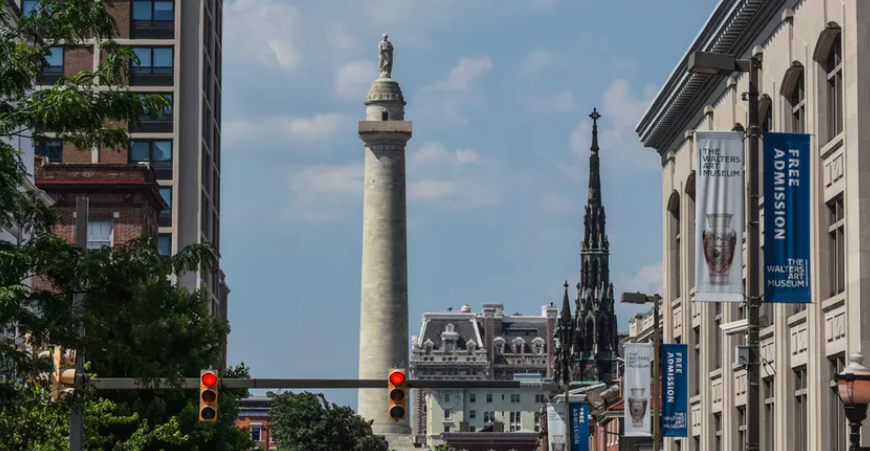
Residents of Baltimore, Maryland, seen here, were the object of dehumanizing language from President Trump. REUTERS/Stephanie Keith
There’s a Dark Political History to Language That Strips People of Their Dignity
Dehumanizing language often precedes genocide.
One tragic example: Extreme dehumanizing language was a strong contributor to the 1994 genocide in Rwanda. As I have written, the Hutu majority used a popular radio station to continually refer to Tutsi tribal members, a minority in Rwanda, as “cockroaches.”
As support for this characterization grew among Hutus, it essentially stripped away any moral obligation to see Tutsis as fellow humans. They were just vermin that needed to be eradicated.
Students of 20th century history will also recognize this pattern of dehumanizing language in the lead-up to the genocide committed by the Turks against Armenians, where Armenians were “dangerous microbes.” During the the Holocaust, Germans described Jews as “Untermenschen,” or subhumans.
On July 27, President Trump tweeted that Baltimore was a “"disgusting, rat and rodent infested mess” and “No human being would want to live there.”
The Baltimore Sun charged back with an editorial headlined “Better to have a few rats than to be one.”
I’m a scholar of conflict management. This back-and-forth got me reflecting on how extreme, dehumanizing exchanges like this can escalate into destructive outcomes.

President Donald Trump. AP/Carolyn Kaster
Insults and conflict
The goal of my research in hostage negotiation and divorce mediation is to help police negotiators and court mediators shift out of a charged situation into problem solving.
Generally, when people respect one another they have a fairly easy time problem solving. But when one person challenges the other’s identity with personal insults, both parties forget about the problem-solving task and focus only on what I call “identity restoration,” which means trying to save face and restore personal dignity.
This shift pushes them into a charged conflict that can quickly escalate.
After all, many studies over the last several decades have reinforced the finding that a human being’s group identity is their most prized possession. People craft their identities to fit into a core group – as a member of a family, a profession or a tribe, for example – that is vital to our social standing. In some cases, such as adopting the identity of a U.S. Marine, for example, group belonging may be necessary to personal survival.
Most of the time identity challenges are fairly minor and easily ignored so that problem solving doesn’t get off track too quickly. A boss might say at a meeting, “Weren’t you supposed to have that report ready today?” A quick defense of one’s identity as a competent professional for that company and the matter is dropped and we’re back to work.

Conflict and Escalation
When the challenges are more severe, the identity defense becomes fiercer. Voices get raised, emotions swell and people become locked in a spiraling conflict, which is characterized by a sustained attack-and-defend cycle.
Hostage negotiators and divorce mediators are trained to shift dialogue away from identity threats and into problem solving by isolating divisive issues and coming up with specific proposals to address them.
Unfortunately, if there are no controls over language escalation, and parties start making references that can be interpreted in extreme, dehumanizing terms, they may come to believe that the only way to restore their identities is by physical domination.
Words no longer work. When parties cross over this very thin line, they fall into an identity trap with little hope of escape until the violence ends.
While I don’t expect the conflict between the president and Baltimore to escalate into actual violence, these kinds of exchanges can make it more acceptable for followers to use this kind of language.
When the President encourages crowds to chant, “Lock her up,” and “Send her back” at rallies, or describes a city as a “disgusting, rat and rodent infested mess” where “no human being” would want to live, it sets a climate in which using lethal, dehumanizing language seems normal. That is simply dangerous.
WILLIAM A. DONOHUE is a distinguished Professor of Communication at Michigan State University.
THIS ARTICLE WAS ORIGINALLY PUBLISHING ON THE CONVERSATION.
The Threat to America that’s been Growing Inside America
While the Middle East and the border crisis get all the attention, Charlottesville and El Paso remind us that America’s worst threat is right here at home.

White supremacists gathered for the Unite the Right rally in Charlottesville, Virginia. By Anthony Crider. CC by 2.0.
August 12th 2017, fresh out of my first year at the University of Virginia, I sat in front of my TV horrified, watching white supremacists marching through a place I had recently starting calling home. Headlines on every major paper ran with Trump’s quote regarding “fine people on both sides.”
When classes started in the fall, my peers and I returned to Charlottesville deeply unsettled by what had happened on our grounds. Our community was rocked to its core. However, the rest of the world quickly moved on without us.
The past two years, this weekend has marked a time for remembrance, but also caution and fear in Charlottesville. The dates, August 11th and 12th, have become something of the towns very on 9/11, and the police presence during these two days isn’t easy to ignore. The events that took place to years ago are on our minds, however, not on the mind of the nation.
The march on Charlottesville was the last time I saw white supremacy dominate all the major headlines, that is, until this weekend’s mass shooting in El Paso. We, as a nation, let ourselves become distracted and forgetful of a real problem that’s been growing in the heart of our country. We can point to how the nation has so eagerly embraced the narrative of the “dangerous outsider” to explain why.
A decade ago, the Department of Homeland Security released a report on the growing threat of right wing extremism, correctly predicting “the potential emergence of terrorist groups or lone wolf extremists capable of carrying out violent attacks.” However, this warning was not given serious merit by the Trump administration. President Trump’s transition team made it clear to the DHS that it wanted to focus on Islamic terrorism and reorient programs meant to counter violent extremism to exclusively target international threats like al-Qaeda and ISIL. These Islamic terrorist groups have stayed in the headlines, despite the fact they no longer pose a serious domestic threat. It should come as no surprise that this June the FBI reported a significant rise in white supremacist domestic terrorism in recent months.
President Trump’s rhetoric has also turned American’s attention away from the alt-right matter at hand, and turned our attention to what he would call an “infestation.” Searching through theTrump Twitter Archive, I failed to find one mention of domestic terrorism, white nationalists or the growing menace they pose to our country. After all, why shouldn’t Trump protect his loyal voter base? It’s no secret that white nationalists are Trump supporters; alt right leaders have even been spotted at his rallies.

President Trump says immigrants “infest” our country. Via Twitter. June 19, 2018.
The president has protected these terrorists by turning the national discussion elsewhere -the southern border. As a result, liberals have kept themselves busy investigating the disgusting conditions of border control centers and “children in cages,” while conservatives call for further border restrictions. These leaves no one time for anyone to wage war against the real domestic threat --white supremacy.
Trump denounced “racist hate” Monday after the shooting this weekend. He blamed violent video games, mental health and, ironically, internet bigotry from prompting the Dayton and El Paso attacks. He failed to make mention of any real action that might be taken against white supremacist terrorism, let alone endorse gun law reform.
Had the attackers been Black, Hispanic or Middle Eastern, the White House would surely be taking extreme action. However, just like during the aftermath of Charlottesville, nothing serious is being done to combat alt-right violence.
Now,in light of the two year anniversary, I can’t help but wonder if our country truly took notice of the event that shook our little community two years ago. I still pass by the street where Heather Heyer was killed by a domestic terrorist who drove his car into a crowd of people two years ago. The street, now named Heather Heyer Way, remains adorned with chalk writing, flowers and crosses dedicated to her memory. How many more memorials must we lay in El Paso, and the rest of the world, before we address the white supremacist threat?
EMILY DHUE is a third year student at the University of Virginia majoring in media. She is currently studying abroad in Valencia, Spain. She's passionate about writing that makes an impact, and storytelling through digital platforms.

Deserts of Chile
Explore the desert of Chile like you've never seen before. This video highlights the vibrate night sky of the chilean desert; you'll see breathtaking star-scapes, constellations and eclipses. Some of the best views of our galaxy, here.
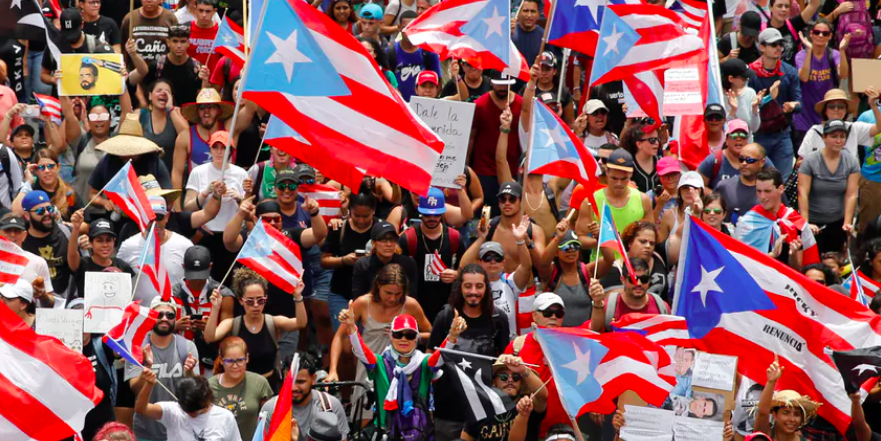
People wave Puerto Rican flags as they attend a rally to celebrate the resignation of Puerto Rican Governor Ricardo Rosselló in San Juan, Puerto Rico on July 25. REUTERS/Marco Bello
Puerto Ricans Unite Against Rosselló – And More Than a Decade of Cultural Trauma
Puerto Ricans wrote a new chapter in their history on July 24.
Governor Ricardo Rosselló finally resigned after 12 days of massive protests in Puerto Rico, as well as protests abroad, that demanded his resignation; all the protests used the hashtag #RickyRenuncia.
The beginning of the protests can be traced to the release by Centro de Periodismo Investigativo of 889 pages of a Telegram chat transcript that exposed offensive and unethical comments made by the governor and his inner circle.
But the chat was only the latest blow. A series of natural and human-made disasters have caused turmoil and trauma in Puerto Ricans’ lives, including the more than decade-long recession that started in 2006; the financial crisis and subsequent enactment of the PROMESA law in 2016that reinforced Puerto Rico’s colonial status; and the devastation caused by Hurricanes Irma and Maria in 2017.
Rosselló’s corruption further compromised the post-disaster recovery of Puerto Ricans, many of whom continue to suffer personal and cultural trauma.
Whereas personal trauma “involves a wound and the experience of great emotional anguish by an individual,” by cultural trauma, we mean what sociologist Jeffrey Alexander says “occurs when members of a collectivity feel they have been subjected to a horrendous event that leaves indelible marks upon their group consciousness, marking their memories forever and changing their future identity in fundamental and irrevocable ways.”
The chat’s transcript served as a catalyst for Puerto Ricans to come together in indignation.
Personal and cultural trauma
Together, we have been studying Puerto Rican activism, the diaspora’s political ideologies and migration, particularly in Central Florida, for many years.
After Hurricanes Irma and Maria, approximately 159,000 to 176,000 Puerto Ricans moved to the continental U.S. This major movement is expected to continue, with an anticipated 14% of the island population leaving over the next two years.
We wanted to understand the conditions under which post-disaster Puerto Rican migrants successfully integrated into continental U.S. society, and the challenges they face. We will soon begin a two-year study on how those leaving the island after the hurricanes have fared in Central Florida.
Data we have collected already suggest that post-disaster migrants continue to experience personal trauma and stress long after the immediate disasters passed.
Some Puerto Ricans not only lost family members or everything they owned, but, even a year after impact, many in Puerto Rico still lacked access to basic necessities such as potable water, warm food, shelter, medicines, and electricity.
Of the 19 Puerto Ricans we have interviewed so far, as well as over 100 surveyed, many were deeply impacted by Hurricane Maria and its aftermath. For those in our sample who lived on the island during the hurricane but have since moved to Florida, many felt traumatic loss in leaving their homes and families behind to survive the slow recovery.
Many told us that they lost their jobs, suffered health problems and, upon migration, faced racism and downward occupational mobility in the continental U.S.
Members of the diaspora also experienced personal trauma during the days and weeks after the hurricanes, not knowing about the status of their loved ones in Puerto Rico.
One of the Puerto Ricans we interviewed, John, explained the agony he felt in the aftermath of the storm waiting to hear from his father in Puerto Rico: “I talked to my dad the night before it was supposed to hit and he said he’ll call me as soon as he can. And then I didn’t hear from him for a couple days, so it was definitely stressful,” he said.
His father finally called; John said, “That was one of the most important phone calls I ever received… I cried because I was just excited to hear from him.”
In recent years, the totality of personal traumas Puerto Ricans have faced, including the recent chat scandal, amount to an arc of cultural trauma.
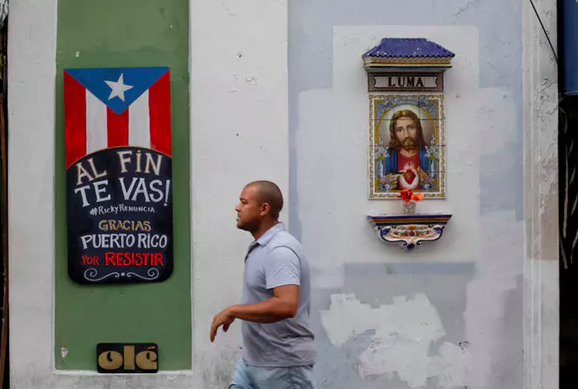
A man walks past a sign that reads ‘You are finally leaving. Ricky resign. Thanks Puerto Rico for resisting’ on the street that leads to La Fortaleza, the official residence of the governor of Puerto Rico. REUTERS/Marco Bello
Resiliency and resistance
Puerto Ricans told us that they have used a range of coping mechanisms to contend with their challenges. Some of the main coping strategies to deal with personal trauma were connecting with family and friends for support; finding solace in their faith; trying to adapt to new daily routines; and trying to secure a job to provide for their families.
All of these resilient acts bring meaning to their sacrifices and losses. Our interviewees are actively recreating their homes, whether in Puerto Rico or elsewhere.
We see the current collective protests as acts of resistance to their cultural trauma. The protests have brought about a sense of group solidarity that has strengthened cohesion among the people of Puerto Rico, regardless of where they are geographically. These protests also signal that Puerto Ricans are actively reconstructing a more democratic society.
That is why journalists and participants have compared these recent protests to the “Todo Puerto Rico con Vieques” (All of Puerto Rico with Vieques) movement that aimed to remove the U.S. Navy from using the island of Vieques – part of Puerto Rico – for military exercises, particularly, the “Paz para Vieques” march on February 21, 2000. Back then, these collective actions aimed to hold the U.S. government accountable for the damages caused by the bombings in Vieques and the poor health of its residents. The protests were successful in removing the navy, although Vieques residents are still battling in court for reparations and clean-up.
Research shows that these types of group political actions can help to foster a process of collective healing, notably when the objectives are achieved.
While the Telegram chat was the latest shock in an arc of cultural trauma afflicting Puerto Ricans, we think that Puerto Ricans have demonstrated powerful acts of resilience in rebuilding a hopeful future for Puerto Rico. A simple hashtag – #RickyRenuncia – represents resistance against more than a decade of struggles, yet it is only the beginning of what is to come.
ELIZABETH ARANDA is a Professor of Sociology at the University of South Florida.
ALESSANDRA ROSA is a Postdoctoral Scholar in Anthropology and Sociology at the University of South Florida.
THIS ARTICLE WAS ORIGINALLY PUBLISHED ON THE CONVERSATION.
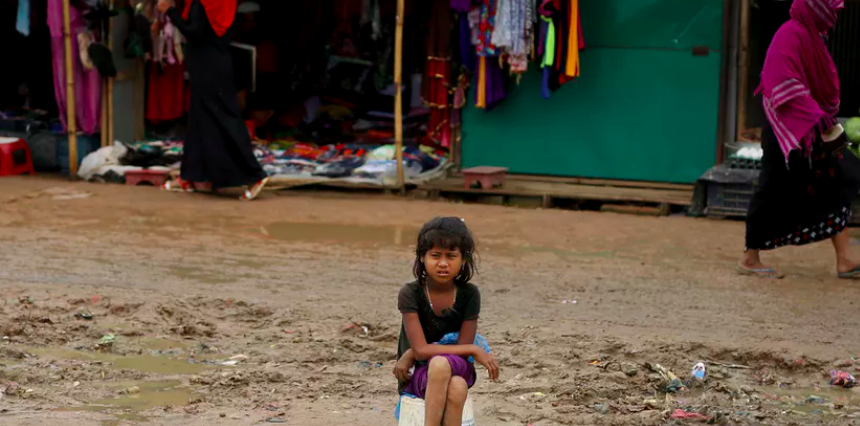
A Rohingya refugee girl sells vegetables in Kutupalong refugee camp, Bangladesh. Access to education is extremely limited in the camps, and most children — particularly girls — receive little to no formal education, Aug. 28, 2018. AP Photo/Altaf Qadri
Without School, A ‘Lost Generation’ of Rohingya Refugee Children Face Uncertain Future
The boy’s eyes lit up when he talked about his dream of becoming a doctor.
Seven-year-old “Mohammad” – not his real name – is a Rohingya Muslim from Myanmar. I met him at a learning center at a refugee camp in Cox’s Bazar, Bangladesh, in early July 2019.
After sharing his aspirations, Mohammed quickly remembered reality.
“I know my dreams will never come true,” he said with a faint smile.
Refugee crisis of global proportions
Mohammed is among the more than 700,000 Rohingya who have taken refuge in Bangladesh after an ethnic cleansing campaign of rape, killing and torture by the Myanmar military in mid-2017. They joined the more than 200,000 Rohingyas who had previously fled Myanmar’s brutal efforts to rid the Buddhist-majority country of this marginalized Muslim minority.
Of the newly arrived Rohingya, three-quarters are women and children, according to the United Nations.
In a noteworthy humanitarian gesture, the Bangladeshi government has given refuge to these persecuted people. Aided by Bangladeshi community organizations, various UN agencies and other international donors, the Rohingya have been receiving shelter, food, clothes and basic health care since the massive exodus in 2017.
This essential care, which cost an estimated US$920.5 million in 2019 represents a gargantuan global effort. Still, the resources are woefully inadequate.
Most Bangladeshi refugee camps are overcrowded and, as a result, unhygienic. Residents survive on the absolute bare minimum of nutrition and other necessities. Monsoon rain, cold and landslides are everyday threats for these Rohingya, as I’ve witnessed firsthand during my visits to Bangladeshi camps in 2017 and 2019.
It is a dismal existence for all. But it is the plight of the roughly 500,000 Rohingya children living in limbo that strikes me as bleakest.
Concerns of a lost generation
Research shows that future of refugee children grows more imperiled the longer they remain out of school.
In many countries that host substantial refugee populations, including Turkey, Lebanon and Uganda, the United Nation’s refugee agency and the United Nations Children’s Fund ensure children receive a quality, full-time education, either at the camps or in nearby public schools.
Even so, just 23% refugee children worldwide are enrolled in secondary school, according to the UN’s High Commission on Human Rights. Just 1% attend university.
Because Bangladeshi authorities have not granted the Rohingya official refugee status and consider them instead “forcibly displaced Myanmar nationals,” the roughly 500,000 Rohingya children in the country have no access to a formal education. Rohingya children are not permitted to attend Bangladeshi public schools.
The United Nations Children’s Fund and its partners offer Rohingya refugees aged 4 to 14 two-hour daily lessons on Burmese, English, math and life skills at about 1,600 learning centers located at the camps. These classes keep about 145,000 Rohingya children – or about 30% of the Rohingya youngsters in Bangladesh – occupied for part of the day but do not provide the kind of formal education that will allow the children to work toward a high school degree and enter the job market.
The camps offer no schooling at all for Rohingya refugee adolescents aged 15 to 18.
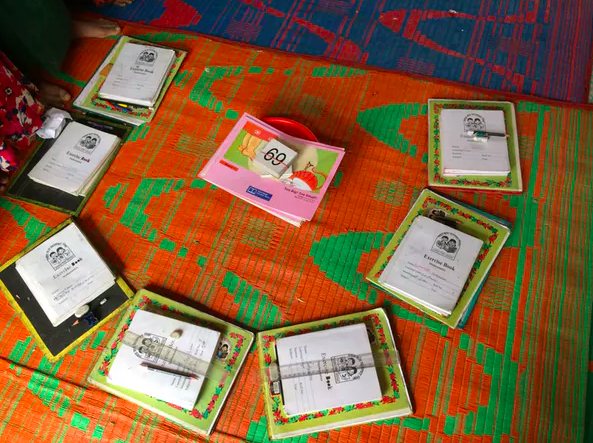
English-language exercise books at a UNICEF-supported ‘learning center’ at one of the Kutupalong refugee camps in Bangladesh. Rubayat Jesmin, Author provided
Some teenagers, mostly boys, have turned to madrassas, or Islamic learning centers, where they can receive a religious education.
The remaining Rohingya children who attend neither UNICEF classes nor madrassas are simply left to fill their own day. At the Rohingya camps, I saw boys working in shops, playing cards or sitting idle at all hours of the day.
When I asked Mohammad what he does when he is not in school, he told me that he “takes care of his family.”
“I play with the other kids, too,” he added with a grin.
Adolescent girls, I learned, are often kept at home by their parents because of the Rohingya’s conservative social and religious norms.
The camps can also be dangerous for girls. Human traffickers have been known to target young Rohingya women, promising them jobs outside the camps. Girls face other forms of violence and human rights abuse at Bangladesh’s camps, too, including child marriage.

Bangladeshi camps for the Rogingyas are typically overcrowded, unhygienic, muddy and prone to landslides. Rubayat Jesmin, Author provided
Rohingya repatriation
Growing up in unstable conditions, with no possibility of study, Rohingya children like Mohammed are at risk of becoming a lost generation.
Their limbo may not last forever. In response to heightened international pressure, Myanmar in November 2017 agreed to take the Rohingyas back starting November 2018.
However, their return was postponed due to protests by the refugees, who feared conditions in Myanmar was not yet safe. The United Nations and other international refugee services have also voiced concern about sending the Rohingya back, saying there was no indication that the Myanmar government had punished the people responsible for the crimes in Rahkine state, nor agreed to give the Rohingya citizenship.
Considered foreigners in both Myanmar, their native country, and Bangladesh, where they’ve sought refuge, the Rohingya Muslims are the world’s largest stateless people.
While the negotiations for their repatriation continue, a generation of traumatized Rohingya children wait for their futures to begin.
RUBAYAT JESMIN is a Doctoral Student at the College of Community and Public Affairs, Binghamton University, State University of New York.
THIS ARTICLE WAS ORIGINALLY PUBLISHED ON THE CONVERSATION
Enter Kenya’s Rose Oasis
Some of the best roses in the world bloom in Kenya. While the country is widely known for its scenic national parks and wildlife reserves, it’s also a major flower producer. Winnie Gathonie Njonge is the production manager at Nini Flowers, which sits on the shores of Lake Naivasha. She knows all there is about growing perfect roses and oversees the harvesting of 300,000 to 450,000 a day. “The ultimate goal of growing roses is to make other people happy,” she says. It brings her joy to know the roses she cultivates are sent to the United States, Japan and other countries, spreading love and beauty all over the world.
In Romania, 500 Days of Silence Mark Movement Against Corruption
For citizens of tiny Sibiu, Romania, “watchful eyes” nestled in the city’s roofs have become a symbol of ongoing protest.

Houses with eyes in Sibiu. lucianf. CC BY 2.0
Each day at noon, in the picturesque little city of Sibiu, the red-shingled roofs and the protestors silently assembled in the streets send the same message to the corrupt government of Romania: We are watching you.
Visitors to Sibiu take note of the standard Central European attributes: the quaint, historic architecture, punctuated by the Gothic Lutheran cathedral, whose steeple looms high into the sky; the houses clinging to the bank of the river Cibin, which winds lazily down from the main waterway of Olt. But they are likely to do a double-take upon noticing the ever-watchful Sibiu eyes—narrow windows rising up from the city’s roofs, giving the impression of a perpetual half-lidded gaze. Originally designed to ventilate attics where meat, cheese, and grain were stored while keeping the harsh sunlight out, the eyes have become a potent symbol of Romania’s anti-corruption movement—specifically, a grassroots organization called V Vedem din Sibiu, or “we are watching you from Sibiu.”
V Vedem din Sibiu came about in December 2017, when the government moved to shift judiciary statutes in a way that was widely regarded as tightening state control over judges and undermining the National Anticorruption Directorate. The attempt further inflamed tensions ignited at the beginning of the year, when the ruling Social Democrat party (PSD) decriminalized a range of corruption offenses, triggering Romania’s most sizable street protest since the fall of communism in 1989. The emergency ordinance—which, among other stipulations, dropped charges of official misconduct in cases where the financial damage did not exceed 200,000 lei ($47,000)—passed at 10 p.m. local time; by midnight, more than 10,000 infuriated citizens had taken to the streets in the capital of Bucharest, and around 10,000 in other cities across Romania.
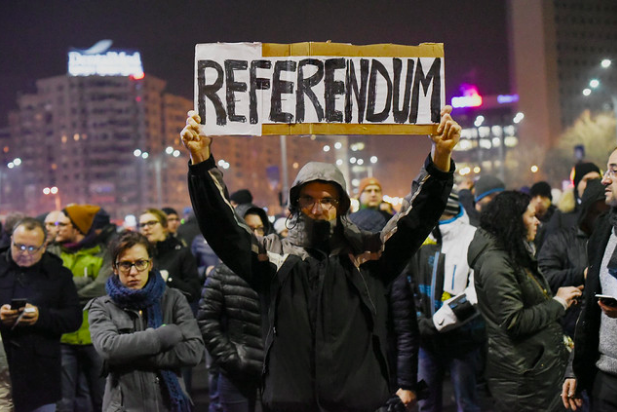
Anti-corruption protesters in Bucharest. Paul Arne Wagner. CC BY-NC-ND 2.0
Corruption is considered a serious problem in Romania, and the country’s fragile political state is exacerbated by its status as one of the European Union’s newest and poorest members, leaving citizens concerned for their rights and constantly at the ready to mount a protest. In the years and months since the events of 2017, Romania has seen ongoing organizing against corruption and in support of judicial independence, and the government has endured criticism from the European Commission, the U.S. state department, and the centrist president and National Liberal Party leader, Klaus Iohannis, who has made strong calls for governmental transparency. In January 2018, approximately 50,000 Romanians marched towards parliament in Bucharest, waving flags, contending with riot police, and raising raucous chants of “Thieves!” And in August of that year, up to 100,000 members of the Romanian diaspora descended on Bucharest to protest the PSD—an event that took a violent turn when police deterred marchers with tear gas and water cannons.
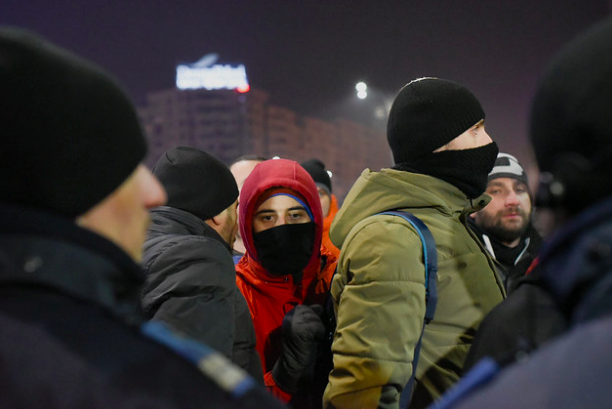
Anti-corruption protesters in Bucharest. Paul Arne Wagner. CC BY 2.0
Relative to the chaotic, overwhelming tableau of the ongoing demonstrations in Bucharest, the soundless walkouts occurring daily in Sibiu present a stark contrast. This July, the Sibiu protesters commemorated their 500th day gathering in the city center, sacrificing their lunch breaks or school recesses to stand in silence outside the headquarters of the PSD. “Those 15 minutes every day, it is like a flame that never goes out,” said Ciprian Ciocan, one of the founders of V Vedem din Sibiu, in an interview with The Guardian. “Somebody knows that there are still people in Sibiu, no matter whether it rains or snows or whatever.”
Ciocan posts live videos of the protests on V Vedem din Sibiu’s Facebook page, where they reach more than 20,000 followers. During the events of December 2017, allies from around the world sent in more than 68 versions of the Sibiu eyes—scrawled on walls and scraps of paper, carved into sand at the seashore, inscribed with branches laid on fresh snow, from Berlin to Chicago to Kuala Lumpur. Though the initial tide of eyes has slowed, the page continues to share media coverage of the protests along with its regularly scheduled live videos. The “about” section defines the sit-in as a form of protest, stating, “We are protecting the values and principles in which we strongly believe, the state of law and the independence of Justice.”
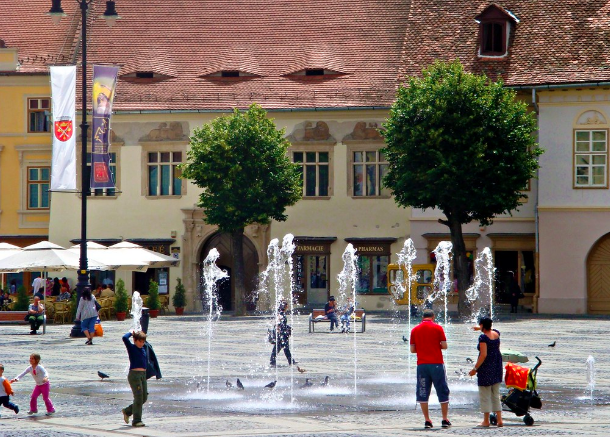
Sibiu. Camelia TWU. CC BY-NC-ND 2.0
In May of this year, under pressure from the EU and overwhelming dissent from Romanian voters, the PSD abandoned some of its most controversial measures. Even more devastating for the party was their loss of seats in European Parliament elections and the departure of the PSD leader, Liviu Dragnea, who was jailed on May 27 and is expected to serve a three-and-a-half-year sentence for corruption.
Despite small steps in the right direction, however, citizens remain on high alert. “There are many other dangers,” Bianca Toma of the Romanian Centre for European Policies told The Guardian. “There are still things to be undone and it’s a matter of fact, not just [making] statements.” And in Sibiu, the ongoing protests have had little impact on the PSD, whose workers drew the blinds when sit-ins began and issued a statement accusing the activists of “aggressive” behavior. Still, like clockwork, citizens will keep turning out in the streets, and the watchful eyes will keep gazing from Sibiu’s rooftops, waiting for a day when Romanians at home and abroad can live without fear of corruption.
TALYA PHELPS hails from the wilds of upstate New York, but dreams of exploring the globe. As former editor-in-chief at the student newspaper of her alma mater, Vassar College, and the daughter of a journalist, she hopes to follow her passion for writing and editing for many years to come. Contact her if you're looking for a spirited debate on the merits of the em dash vs. the hyphen.

Dynamic Duo: How a Lawyer Couple is Paving the Road for LGBTQ+ Rights in India
Section 377 under the India Penal Code hungover LGBTQ+ lives for years, criminalizing their very existence to exist. Lawyers Menaka Guruswamy and Arundhati Katju fought to change that—and won.

Pride flag in New Delhi, India. Nishta Sharma. Unsplash.
Since 1861, when India was under British colonial rule, there was a section of the India Penal Code that crimilized homosexualtiy as it was “against the order of nature”. In 2013, protestors fought for the code to be recognized as unconstitutional in the eyes of the law, but in a historic case titled Suresh Kumar Koushal vs. Naz Foundation, the Bench stated “We hold that Section 377 does not suffer from… unconstitutionality and the declaration made by the Division Bench of the High Court is legally unsustainable.” Although they would not mark it unconstitutional, the Bench also stated, “Notwithstanding this verdict, the competent legislature shall be free to consider the desirability and propriety of deleting Section 377 from the statute book or amend it as per the suggestion made by Attorney-General G.E. Vahanvati.” To put in more simple terms, the Bench wanted to redirect who made the decision, and stated the matter should be decided by Parliament, itself, not just the judiciary.
In 2016, the case was revisited by three Court members and they decided to pass it on to a five-member court decision. It was not until a year later when the LGTBQ+ community of India saw results. In 2017, in the Puttuswamy case, the Court ruled that “The right to privacy is implicit in the right to life and liberty guaranteed to the citizens of this country by Article 21” - a historic decision which overruled a previous case that said there is no right to privacy in India. The Court also found that “sexual orientation is an essential attribute of privacy. Discrimination against an individual on the basis of sexual orientation is deeply offensive to the dignity and self-worth of the individual. Equality demands that the sexual orientation of each individual in society must be protected on an even platform. The right to privacy and the protection of sexual orientation lie at the core of the fundamental rights guaranteed by Articles 14, 15 and 21 of the Constitution.” Essentially, they condemned discrimintion and give validity to the rights of the LGTBQ+ community.
It wasn’t until September 2018, though, when the Court ruled “in so far as it criminalises consensual sexual conduct between adults of the same sex” in the Navtej Singh Johar v. Union of India case. According to an article in the Guardian, chief justice Dipak Misra stated that “Criminalising carnal intercourse under section 377 Indian penal code is irrational, indefensible and manifestly arbitrary”. Misra goes on to say “Social exclusion, identity seclusion and isolation from the social mainstream are still the stark realities faced by individuals today, and it is only when each and every individual is liberated from the shackles of such bondage … that we can call ourselves a truly free society.”
Now, a year later, two lawyers who worked on dismantling Section 377 came out as a couple. In an interview with CNN’s Fareed Zakaria, Menaka Guruswamy and Arundhati Katju announced that they were a couple. Ms. Guruswamy stated that they fought so hard because "That was when [they] decided that [they] would never let the LGBT Indians be invisible in any courtroom".
The couple’s decision to come out was met with raved support, one user on Twitter congratulated them and added, “Personal is indeed political”. Which is true - queer people anywhere are responsible for queer people everywhere because to fight for the rights the community deserves, the community must do it as a unit, rather than individually.
Menaka Guruswamy and Arundhati Katju’s accomplishments are not limited by the strides they have made with Section 377, but also with the visibility they have given to the LGBTQ+ community - in India and across the world. They represent the strength and power the LBGTQ+ community has when they preserve despite the setbacks.
OLIVIA HAMMOND is an undergraduate at Emerson College in Boston, Massachusetts. She studies Creative Writing, with minors in Sociology/Anthropology and Marketing. She has travelled to seven different countries, most recently studying abroad this past summer in the Netherlands. She has a passion for words, traveling, and learning in any form.

In Turkey, Academia Reckons with Ongoing Effects of Brain Drain
Following a post-coup crackdown by President Erdoğan, the Turkish intelligentsia is under continuous siege.
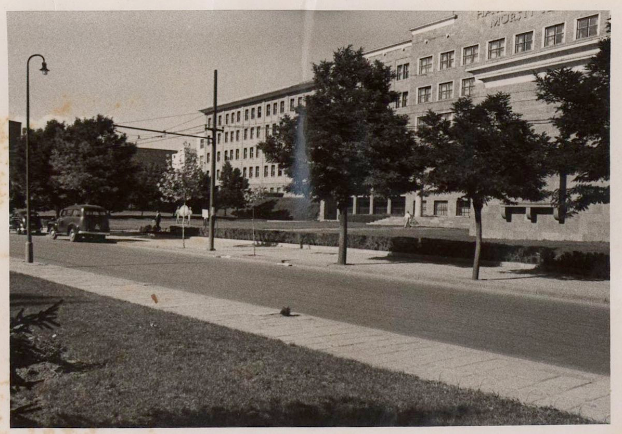
Faculty of Political Sciences, Ankara University. Fæ via Wikimedia Commons; originally by SALT Research via Flickr.
For some professors, the change occurred overnight, and with no warning: One day, they reported to work as usual, taught their classes, and returned home safe and secure. The next, they were met outside the gates of their university by swathes of security guards threatening them with tear gas, who informed them that their careers had been terminated, effective immediately. Such sudden and shocking occurrences reflected the overall timbre of 2017 for Turkish academics—hundreds of whom found themselves purged from their jobs in what they described as an officially sanctioned “intellectual massacre.”
The purge was precipitated by the failed coup of July 2016, which resulted in more than 260 fatalities and spurred President Recep Tayyip Erdoğan to declare a three-month state of emergency. During that state of emergency and in the ensuing months, hundreds of academics from more than 20 universities lost their jobs without notice—the result of drastic action by the ruling Justice and Development Party (AKP), which chose to detain, arrest, and fire thousands of public-sector workers in various different fields rather than pressing charges on those responsible for the coup attempt.
According to Erdoğan, the responsible party was Fethullah Gulen, an exiled cleric and former ally who the authorities claim infiltrated supporters into professions all over Turkey as part of a large-scale takeover scheme. Gulen denies having any part in the plan, and many purged academics said they had nothing to do with Gulen’s movement and were unsure how they ended up on the official hit list. Turkey’s Official Gazette describes the banned academics as having “suspected links to terrorist organizations and structures presenting a threat to national security,” but those accused hold a contrasting view: “It is a project to silence all dissident voices within the academy,” Murat Sevinc, who was fired from Ankara University’s Political Science faculty, told Reuters. “The government has seen you can silence 100 academics by firing only one.”
One commonality among many of the academics was their membership in a movement called Academics for Peace, or “Barış için Akademi syenler.” Of the 330 fired in October 2017, 115 had signed an Academics for Peace petition titled “We shall not be a party of crime,” which took a stand against violence in the mainly Kurdish provinces of Turkey. The signatories immediately faced demonization in the pro-government media and condemnation by Erdoğan.

President Recep Tayyip Erdoğan. U.S. Department of State.
As of March 2017, the total count of purged academics was above 7,300. Those affected were not only deprived of their jobs but also banned from taking other jobs in any public or private institutions, robbed of retirement rights, and even suspended from traveling. Certain universities and departments were particularly hard-hit—for example, the Faculty of Political Sciences at Ankara University, Turkey’s oldest collegiate institution and one comparable in prestige and rigor to France’s Sciences Po. The departments of journalism at Ankara and at Istanbul’s University of Marmara were also decimated. Emre Tansu Keten, a casualty of the purge at Marmara, told Vocal Europe, “I am simply proud to be in the same list along with my senior colleagues who are thrown out because of the opinion they expressed.” Students, though not the primary victims of the situation, were nevertheless left reeling with the realization that their universities were mere shadows of the places at which they had enrolled.
The purges of 2017 were hardly the first shockwave to ripple through Turkey’s academic sector in recent years. In the past few decades, Turkish academic life has frequently been tumultuous, with intellectuals embroiled in military takeovers, secular/religious tensions, and leftist/nationalist battles. Following the start of European Union accession talks in 2004, however, fresh influxes of funding allowed Turkish institutions to construct modern research labs, encouraging students to study in Turkey rather than in the United States or elsewhere in Europe.
That progress, some academics suggest, is now in jeopardy. Following the coup attempt and subsequent crackdown, the trend of intellectuals returning in Turkey took a sharp U-turn, with liberals, secularists, and the intelligentsia fleeing the encroachment of religious nationalism. Between the signing of the Academics for Peace petition in 2016 and the end of 2017, nearly 700 Turkish academics applied to the New York–based organization Scholars at Risk to be relocated to a safer position. Historically, many such applications have been successful: In the five years preceding 2017, approximately 17,000 Turkish nationals came to Britain, 7,000 to Germany, and 5,000 to France.
For academics remaining in Turkey, opportunities for rebuilding their careers are slim, and rewards for their work few and far between. In 2018, the more than 2,000 individuals who make up Academics for Peace finally received recognition in the form of the Courage to Think Defender Award from Scholars at Risk, which applauded the group for their “extraordinary efforts in building academic solidarity and in promoting the principles of academic freedom, freedom of inquiry, and the peaceful exchange of ideas.” Scholars at Risk went on to acknowledge the tenuous state of academic affairs in Turkey, writing, “The nomination is a specific recognition of Academics for Peace’s solidarity work, and at the same time a general recognition of the current pressures on all scholars, students and higher education institutions in and from Turkey.”
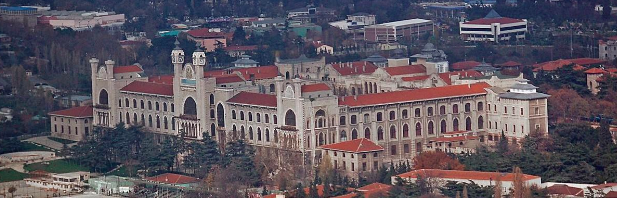
Haydarpaşa campus of Marmara University. Fikricoban. CC BY-SA 3.0
On the ground, academics across the country continue to participate in protests, boycotts, and sit-ins at various universities, while a donation fund supports victims of the purge. As of early 2017, Ankara’s “Street Academy” hosted public lectures on Sundays, extending a special invitation to workers and oppressed communities. Funda Şenol Cantek, one of the throngs of fired academics, expressed her defiance to The Advocate: “the government should worry more now that they expand academia to the streets.” Similarly, Sevilay Celenk said of the occasional lectures she holds in public parks, “We took these dismissals as an opportunity to push the limits and bring university together with the streets.”
In June 2019, the body politic of Turkey elected an opposition candidate as mayor of Istanbul, interrupting two decades of control by the AKP. Nevertheless, reported the New York Times, “something about this era under Erdogan has still felt different, more lasting, as if the continuing existence of the A.K.P.’s repressive policies will permanently impair otherwise resilient, historic institutions.” That feeling doubtless stems in part from the uncertain futures facing vast swathes of Turkey’s once-resilient academic sector: As of spring 2019, the legal proceedings concerning 501 members of Academics for Peace remain ongoing. And at the universities, absence is keenly felt. Inside Ankara’s Faculty of Political Science—known as the Mulkiye—walls once plastered with leftist posters are now smattered with a sparse assortment of Turkish flags, the Times described. Certain subjects, such as Foucault and queer theory, have been wiped from the schedule. Master’s and doctoral courses have been canceled, and at the once-lively film society, the showing of films has been banned altogether. Thus, the effects of the purge linger on: in the hallowed halls of universities, in the leafy parks and city streets, and in the hearts and minds of Turkish learners and teachers around the world.
TALYA PHELPS hails from the wilds of upstate New York, but dreams of exploring the globe. As former editor-in-chief at the student newspaper of her alma mater, Vassar College, and the daughter of a journalist, she hopes to follow her passion for writing and editing for many years to come. Contact her if you're looking for a spirited debate on the merits of the em dash vs. the hyphen.

This Surgeon Has Restored Sight to 130,000 of Nepal’s Blind
Dr. Sanduk Ruit is an ophthalmologist on a mission to restore sight to Nepal’s blind. He is the executive director of the nonprofit Tilganga Institute of Ophthalmology in Kathmandu, Nepal, and has operated on more than 130,000 patients. He has adopted innovative surgical techniques for cataracts and often travels to perform operations, walking up to seven days hauling surgical equipment to reach patients who live in Nepal’s most remote villages. Why does Dr. Ruit do this? He lost family to treatable diseases and knows what it’s like not to have access to healthcare.

Single-use plastics like straws can harm the environment. Photo by Marco Verch C.C. 2.0.
Why Stores and Restaurants are Ditching Plastic Straws
You may have noticed that the beverages you’ve been ordering at your favorite coffee shop or restaurant have not been accompanied by plastic straws. Chains as big as Starbucks and establishments as small as neighborhood cafes have been finding creative substitutes to plastic straws, or are just getting rid of them altogether.
What’s so bad about straws?
Straws are just one example of wasteful single-use plastic. Hundreds of millions of tons of plastic are produced each year, and a large portion of that plastic ends up in the ocean. It seems like plastic straws is an interesting place to start in the crusade against single-use plastics. However, for an able-bodied person, avoiding plastic straws is an easy way to start reducing plastic use.
How are things changing?
Some restaurants have tried to be more conscious about their straw usage by not automatically putting a plastic straw into each beverage. Some establishments will wait for their customers to ask for a straw instead of serving it to them.
Other establishments—like Starbucks—have developed a new plastic lid that looks like a sippy-cup so that customers can sip their drinks without needing a straw. However, cups like these are difficult for those who aren’t able to pick up their drinks and bring them to their mouths. A straw is literally the only way for some people to drink on their own.
Therefore, better solutions may be composter-approved paper straws, like Aardvark straws, or reusable glass or metal straws.
While finding alternatives to plastic straws can make a substantial impact, it should just be the beginning of a global campaign to reduce single use plastics. Hopefully, there will be future campaigns to reduce plastic bottles, plastic cutlery, or single-use containers.
ELIANA DOFT loves to write, travel, and volunteer. She is especially excited by opportunities to combine these three passions through writing about social action travel experiences. She is an avid reader, a licensed scuba diver, and a self-proclaimed cold brew connoisseur.

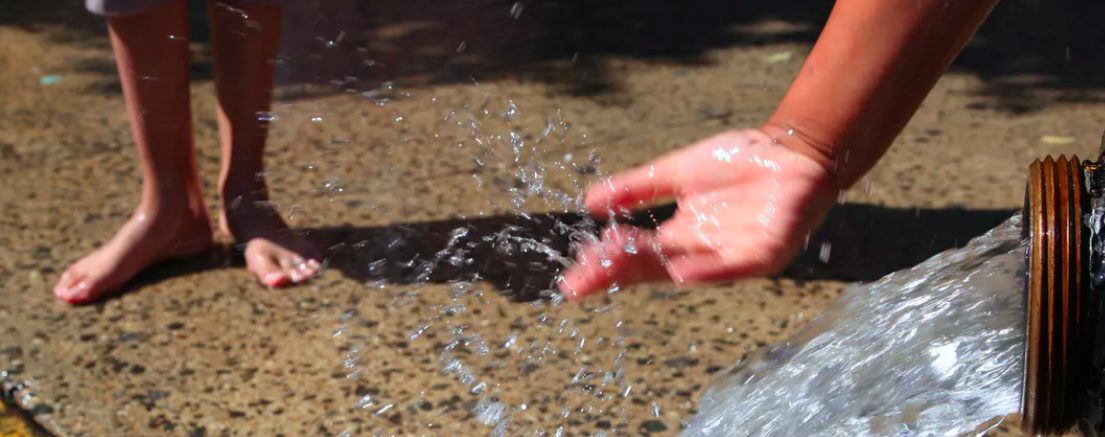
Keeping cool in Brooklyn. A. Katz/Shutterstock
Adapting Cities to a Hotter World: 3 Essential Reads
Heat waves can be deadly, especially when they combine high temperatures with elevated humidity levels that make the air feel even hotter. The impacts can be especially strong in cities, which often are several degrees warmer than nearby rural areas due to the urban heat island effect. These three articles from The Conversation’s archives describe steps that communities can take to adapt as climate change makes heat waves more frequent and intense.
1. Offer many cooling options
Emergency cooling centers are one way to mitigate the effects of heat waves, but cities need to do more. Nick Rajkovich, assistant professor of architecture at the University at Buffalo, has worked with planners around Cleveland to understand how they prepare for hot weather. Strategies there include planting more trees and shrubs, which provide shade and cool the air; weatherizing buildings with window shades and light-colored, reflective materials; and preparing emergency kits for power outages that include food, water and radios.
Most importantly, in Rajkovich’s view, different agencies and organizations need to talk to each other and plan together so they can take complementary steps.
“In Cleveland, preparing for extreme heat events has brought professionals together and encouraged overlapping approaches because no single strategy is foolproof,” he observes. Officials “should pursue multiple solutions rather than looking for one ‘best’ option.”
2. Focus upgrades on vulnerable neighborhoods
Many types of green infrastructure can help neighborhoods withstand the impacts of severe weather. For example, permeable paving and rainwater harvesting are two tools for managing flooding and reducing stormwater runoff.
Notre Dame University climate scientist Ashish Sharma has researched use of green roofs, covered with drought-resistant plants, to cool hot urban areas. In a study in Chicago, Sharma and his team determined that low-income neighborhoods on the city’s south and west sides would benefit most from installing green roofs because doing so would make them less vulnerable during blackouts:
“When temperatures spike in cities, electricity use rises sharply making it hard for utilities susceptible to power outages. When the lights go out, critical services such as drinking water, transportation and health care can be jeopardized. And poorer people, whose neighborhoods tend to be the hottest, can be the most at risk.”
By lowering rooftop surface temperatures, green roofs keep buildings cooler. This would enable residents to reduce their use of air conditioning, saving them money and easing strain on the local power grid during peak demand periods.
3. Design streets for a changing climate
Most U.S. city streets are designed with a focus on the needs of drivers, and sometimes far in second place, pedestrians. But Anne Lusk, a research scientist at the Harvard T.H. Chan School of Public Health, calls for “designing green streets for bicyclists, pedestrians, bus riders and residents who live on transit routes, as well as for drivers.”
Trees and cycle tracks would be central features of these streets, configured in ways that make pedestrians and cyclists feel safe from automobile traffic. The trees would serve as barriers while cooling neighborhoods and absorbing air pollutants. And well-designed bike paths would remove cars from the road, reducing air pollution and greenhouse gas emissions.
In surveys, respondents told Lusk that designs with trees and bushes between cycle tracks and the street best blocked their view of traffic, lessened their feeling of being exposed to pollution and made them feel cooler. Lusk also spotlights ways to offset climate-related stresses on trees, such as redesigning street drainage systems to direct water to trees’ roots.
JENNIFER WEEKS is a Environment + Energy Editor at The Conversation.
THIS ARTICLE WAS ORIGINALLY PUBLISHED ON THE CONVERSATION
5 Ethical Clothing Brands to Enhance Your Wardrobe
Green Garb for any Occasion
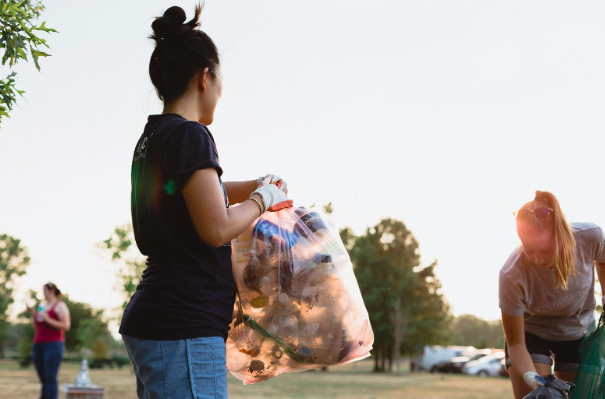
Collecting trash at one of United by Blue’s organized clean ups. Photo provided by United by Blue.
When we think about consumer ethics, our minds don’t normally turn to clothing. We think about reducing plasticware, consuming less red meat, or maybe purchasing an electric car or a bike. However, the production of clothing can involve unfair pay, a lot of waste, and consumption of energy. If you’re looking to add to your wardrobe, try buying your clothes from one of these brands:

United by Blue’s Albright Rain Shell. Photo provided by United by Blue.
To Outfit Your Outdoor Adventure- United by Blue
Based in Pennsylvania, United by Blue is more than just a sustainable clothing company. While they use the greenest materials—like recycled polyester and organic cotton—they also act as community organizers. United by Blue sells women, men, and kids’ clothing—for outdoor adventures and just lounging around—as well as accessories and camping gear. For every garment sold, United by Blue has pledged to remove one pound of trash from natural environments. They do this by organizing waterway Clean Ups in cities around the country. Check out their website for tour dates. Put on a pair of their comfortable off-trail pants, roll up your sleeves on your flannel button-down, and get to work.
Price Range: most items around $30-100, coats and outerwear $100-200

MATTER’s 2016 Jumpsuit. Photo provided by MATTER
2. For Classic Clothes all Year Round- MATTER
There’s a reason why MATTER’s clothing is so uniquely beautiful: the designs are based on ancient and traditional heritage patterns. Design isn’t the only thing MATTER borrows from the past. MATTER takes a “hybrid” approach to their production process. They use the work with artisans who use their traditional means of textile production, while incorporating more sustainable modern means of production in order to make the clothing economical. Additionally, MATTER does not operate on a “fast-fashion” model that produces new lines every season. They take their time to produce their clothing, in order to leave time for their meticulous production and reduce their waist. They make dresses, pants, tops, and scarfs. So, you can wear your MATTER garment any time of the year.
Price range: Most items $50-150

People Tree floral dress. Photo provided by People Tree
3. For a One-Stop Shop- People Tree
From dresses, to underwear, to workout clothes, UK brand People Tree has sells it all—fair trade of course. They use sustainable materials like organic cotton, natural dyes, and TENCEL™, a fibre derived from wood pulp. People tree tries their hardest to reduce waste—they even repurpose their scraps to make handmade tags for their clothing!
Price range: $50-150

Jumpsuit from ABLE’s Spring 2019 Collection. Photo provided by ABLE.
4. From Jewels to Dresses- ABLE
ABLE makes ethical and beautiful clothing: for women, by women. You can sleep easy after wearing their beautiful jewelry, fun handbags, trendy shoes, and cute dresses, because ABLE publishes their employees’ wages. Many of their factory workers are struggling to make ends meet, so able posts their prices to encourage other companies to do the same—increasing accountability and ethical production.
Price range: $25-$150

Outdoor Voices store in Austin, Texas. Photo provided by Outdoor Voices.
5. For Your Workouts- Outdoor Voices
In addition to using sustainable, recycled, and organic materials Outdoor Voices also makes sure to use ethical production. They make men and women’s workout attire with a mission to encourage people to get outdoors. Shop their comfortable leggings, jackets, running gear, and swimwear for your next sweat session.
Price range: Most items $50-80
More brands are moving towards a more sustainable and ethical mode of production—this is the trend we should be seeing more of on the runway.
ELIANA DOFT loves to write, travel, and volunteer. She is especially excited by opportunities to combine these three passions through writing about social action travel experiences. She is an avid reader, a licensed scuba diver, and a self-proclaimed cold brew connoisseur.

The Possibility of a International Environmental Court
Science professors and organizations are making the case for an international green court, which would fill in gaps in the existing environmental legal order.

Climate change is an existing problem. Scientists are coming up with solutions for keeping Earth habitable, including a possible international environmental court. Gerd Altmann. CCO.
It’s time to face scientific facts: the world is getting warmer. The five hottest years on record have all been within the last decade. Europe went through a massive heat wave this summer. Temperature changes increase the possibility of extreme heat, drought, floods, and subsequent poverty for thousands of millions of people. Climate change is a legitimate issue, seen especially by extremes in weather patterns, and scientists are pondering possible solutions beyond what is already being done.
Using previously created organizations as inspiration, one idea two scientists have suggested is a climate-based version of the International Criminal Court (ICC), according to the Huffington Post. The main problem is that the current environmental protections (which vary by country) are not enforced by any international agency, and they are failing to cope with the sheer scale of the global problem.
The 50th anniversary of the first Earth Day is less than a year away, and though the idea of getting the court up and running by then probably isn’t possible, soon afterwards would be, if initiative was taken. In 1972, the UN Environmental Programme was created, which coordinates environmental activities and assists countries with creating policies. Subsequent concerns and opinions about the environment from all corners of the world were necessary to bring attention to the problem at the time, but didn’t protect the planet on their own. Countries are now directed to measure their activities, but there isn’t any international organization in place to monitor the loopholes globally when looking at every country’s policies and activities.
According to the Huffington Post, the International Bar Association and the Coalition for an Environmental Court have also suggested a international environmental court. The World People’s Conference recommended a similar idea, a International Climate Justice Tribunal.
One question the court would need to sort out, if organized, is which charges would be in the scope of the court. Other challenges include different priorities for developed and developing countries, discerned unenforceability of international law, and global cooperation, according to the Inter Press Service. Keeping an open mind when organizing the international green court should help solve problems before they arise. An open forum setting with understood standards should be ideal, as opposed to a criminal court setting. In a similar sense, both the state and non-state clients should be allowed to raise cases for the court. Considering the complexity of the issues likely to come up, the judge or judges assigned should be specialized and capable. Clients should, of course, be found accountable for the decisions of the court. Clear language is necessary as well. If holding states completely accountable seems too positive, then adding sufficient stakes should make it work on a international scale.
An international green court should be able to harmonize with existing environmental regulations, provide justice to a broad range of people, create workable solutions for maintaining international standards, and build trust among the global community. Therefore, the forum should be able to start overcoming climate inaction, and enforce that progress for the international group through agreed-upon standards.
NOEMI ARELLANO-SUMMER is a journalist and writer living in Boston, MA. She is a voracious reader and has a fondness for history and art. She is currently at work on her first novel and wants to eventually take a trip across Europe.

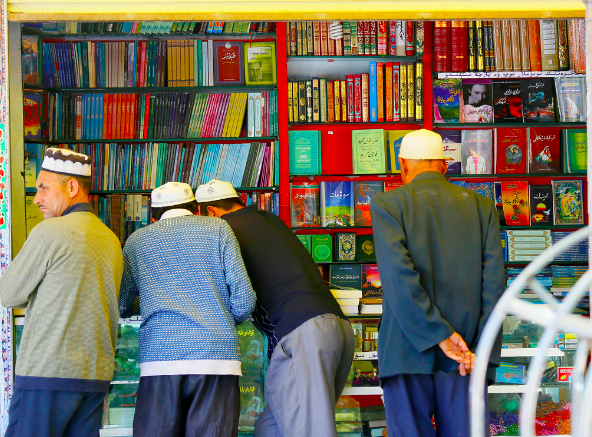
People of Xinjiang. Peter Chou Kee Liu. CC BY-NC-ND 2.0
China is Putting Muslims in Concentration Camps Because of an “Ideological Illness”
According to a UN report, China has declared Islam an “ideological illness”. One UN spokesperson claims there are approximately over a million Muslims currently in these camps. The UN report states “the evidence indicated that most of the detentions were taking place outside the criminal justice system, and targeted specifically Uyghur and other Muslim minorities, such as Kazakh”. But why is this happening? In the words of the Official Chinese Communist Party, “Members of the public who have been chosen for re-education have been infected by an ideological illness. They have been infected with religious extremism and violent terrorist ideology, and therefore they must seek treatment from a hospital as an inpatient”. The region of Xinjiang, in recent years, has faced attacks from extremist groups and because of this, have targeted the entire Uighur community in Xinjiang to prevent them from being further “infected by religious extremism and a violent terrorism disease.”
The region of Xinjiang is a highly populated by the “Turkic-speaking Muslim Uighur minority, who make up about eight million of its 19 million people”, according to a BBC article profiling the region. With the population being highly Muslim, the Chinese government has profiled that area in a subtle racist attempt to force the people of the area to renounce Islam and their practices. In a statement from the Communist Party, they state that “in order to provide treatment to people who are infected with ideological illnesses and to ensure the effectiveness of the treatment, the Autonomous Regional Party Committee decided to set up re-education camps in all regions, organizing special staff to teach state and provincial laws, regulations, the party’s ethnic and religious policies, and various other guidelines”. Furthermore, they say, “At the end of re-education, the infected members of the public return to a healthy ideological state of mind, which guarantees them the ability to live a beautiful happy life with their families”. It is disturbing to read words such as “disease” and “those infected” when it is in regards to innocent Uiguhr individuals. Using such diction creates a harmful and discriminatory connotation that the Uighur community is “sick” and “infectious”, a dangerously false narrative.
Although the camps have the intention of “[fighting] separatism and Islamic extremism”, they stem from a fear of an uprising in the Xinjiang area and has become a prejudice and gross abuse of human rights. Many of the people who were able to leave the concentration camps now are facing psychological ramifications and a complete lack of faith in the country that they are living. The camps are supposedly supposed to help threats and protect the people, yet they are harming them instead.
In many interviews from those who were in the concentration camp, they have mentioned that the “re-education” forces them to renounce Islam, renounce the Holy Quran, admit that the Uighur culture is backward in comparison to the Communist Party, and if the detainees refuse to cooperate, they are punished harshly. Some punishments include them not being fed, solitary confinement, or physical beatings. Recently, it has come out that there has been a death in one of the camps. A Uighur writer Nurmuhammad Tohti, died at the age of 70 because "he had been denied treatment for diabetes and heart disease, and was only released once his medical condition meant he had become incapacitated", according to his granddaughter, Zorigul. But even with the criticism and the death, the Chinese government still does not believe what they are doing is wrong.
China Daily, a popular media outlet, claimed that “Western critics of China's policies on human rights and religious freedom in the Xinjiang Uygur autonomous region seem to be divorced from the realities of the situation.” They stand in defense of their practices rather than understand how harmful they are and how they are creating a dogmatic perspective.
It is concerning to see how fear has created a ripple of harmful decisions and gross infringements on human rights. There is no reason for an entire community to reap the consequences of extremists actions when they are the innocents.
OLIVIA HAMMOND is an undergraduate at Emerson College in Boston, Massachusetts. She studies Creative Writing, with minors in Sociology/Anthropology and Marketing. She has travelled to seven different countries, most recently studying abroad this past summer in the Netherlands. She has a passion for words, traveling, and learning in any form.

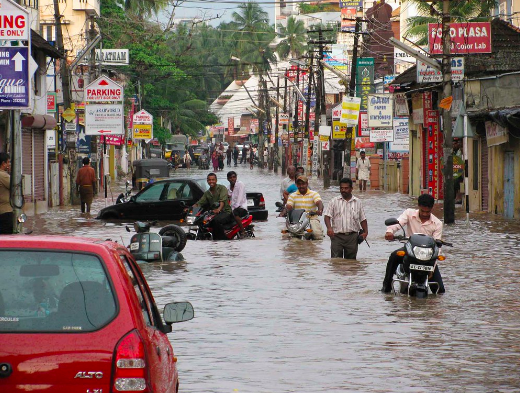
Flooded street in Trivandrum, India. By India Water Portal. CC BY-NC-SA 2.0
The Climate is in High Water and so is South Asia
Torrential monsoons throughout South Asia are causing devastating flooding, making the death toll seem to rise as fast as the water. At least 160 people have died since the flooding started.
Read MoreScientists Have Discovered a Large Freshwater Aquifer off the Northeast Coast of the U.S.
The discovery could point to similar reservoirs adjacent to water starved areas.

Photo of Bradley Beach, New Jersey, by Ryan Loughlin on Unsplash.
It’s rare to hear good news on the climate, but occasionally we get lucky. Last month, scientists led by Chloe Gustafson of Comumbia’s Lamont-Doherty Earth Observatory published an article in the Scientific Reports journal. Their discovery? A large freshwater aquifer located off the northeast coast of the U.S.
The possibility of an aquifer was initially discovered during offshore oil drilling in the 1970’s, when oil companies noticed that they occasionally hit pockets of freshwater in the north Atlantic. There was no consensus at the time on whether these were merely isolated areas or if they pointed to something larger. Then, in the late 90’s, Kerry Key, a geophysicist who co-authored the study, began working with oil companies to develop electromagnetic imaging techniques that could help them better examine the sea floor for oil. He later adapted the technology to look for freshwater deposits.
More recently, Key and his colleagues spent 10 days on board a research vessel, charting areas where freshwater had been discovered. “We knew there was freshwater down there in isolated places, but we did not know the extent or geometry,” Chloe Gustafson explained in a press release.
According to the report, the aquifer spans from New Jersey to Martha’s Vineyard, and carries an estimated 670 cubic miles of water lying beneath sponge-like sediment which separates it from the saline ocean water. “These aren’t open caverns or lakes underneath the seafloor,” Gustafson told NBC, “this is water trapped within the pores of rocks, so it’s sort of like a water-soaked sponge.” The reservoir reaches from 600 to 1,200 feet below the seafloor. For comparison, the aquifer carries more than half the water of Lake Michigan.
While the discovery of a large freshwater source is exciting under any circumstance, it is unlikely to have a major impact on access to water in New England, as the area is receives a good amount of rainwater. While the aquifer could be pumped, and the water exported to more arid areas, such efforts would be expensive and unsustainable. Graham Fogg, hydrogeology professor at the University of California Davis, told NBC that “there’s a limit to how much you can pump sustainably. It would take a long time to empty these aquifers, but we wouldn’t want to get to a point where we’ve pumped so much that we’ve exhausted the supply.”
The impact of the study lies in the possibility that such reservoirs could exist off the coasts of drier, more arid places that are prone to water shortage. NBC reports that pointers to the possibility of aquifers have already been found off the coasts of Greenland, South Carolina, and California.
As we experience the effects of climate change, and especially in light of the water shortage in Chennai, this is indeed good news.
EMMA BRUCE is an undergraduate student studying English and marketing at Emerson College in Boston. While not writing she explores the nearest museums, reads poetry, and takes classes at her local dance studio. She is passionate about sustainable travel and can't wait to see where life will take her.

Zimbabwe’s All Women Anti-Poaching Unit
Conservation becomes a community enriching project.
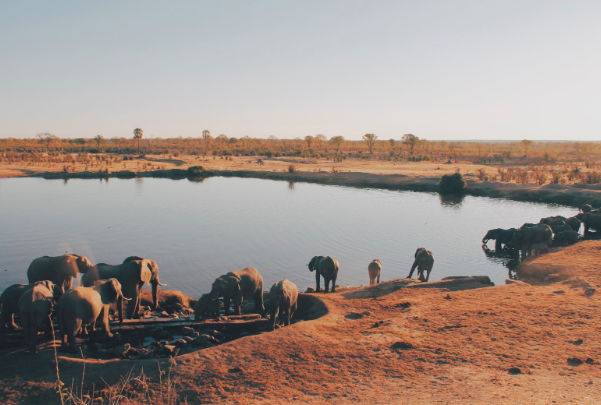
Photo of Zimbabwe’s Hwange National Park by Christine Donaldson on Unsplash.
The unit is called Akashinga, Shona for The Brave Ones, and it could not be more aptly named.
Founded by Damien Mander, an Austrailian former special forces soldier, Akashinga is a part of the International Anti-Poaching Foundation, a non-profit dedicated to preserving the Phundundu Wildlife Area.
Phundundu is a 115-square-mile area in the Zambezi Valley ecosystem which is home to 11,000 elephants and other endangered wildlife. In the past 20 years, frequent poaching has taken its toll on the reserve, resulting in the loss of thousands of elephants. While killing wildlife without a permit is illegal, animal trophies such as bones, tusks, and teeth can be sold on the black market for an amount equivalent to a month’s salary.
According to Akashinga’s website, anti-poaching initiatives often close off “traditional grazing areas, places of burial, worship, water points, food sources and traditional medicine,” making communities feel that endangered plants and animals are more important than their humanity. This resentment can fuel poaching attempts for which offenders can be arrested and sometimes killed. These experiences then reinforce the idea that endangered flora and fauna are of greater importance than the community, creating a cycle of resentment and violence.
To address this phenomenon, Akashinga takes a community-first approach to conservation. By recruiting women from the communities surrounding the Phundundu to serve on the unit, the organization is able to use conservation initiatives to enrich communities. Akashinga’s website describes the effort as having a “community-driven interpersonal focus, working with rather than against the local population for the long-term benefits of their own communities and nature.” To this end, 62% of operational costs are returned to local communities.
In this light, it is significant that the unit is made up entirely of women. According to National Geographic, research shows that in developing countries, women invest 90% of their income in their families, while men only invest 35%. Women are at the grassroots of community life, and when their wages are invested in their families, the entire community proffits.
But this is not the only reason that women are so right for the job. Mander had formerly trained male rangers for years before changing to an all-female model. He said that women are far better rangers; they are less likely to take bribes from poachers, and are skilled at de-escalating high tension situations. In National Geographic he commented that a gun in the hands of a man is a toy, but with a woman it is a tool.
Women also prove to be more resilient. Only three women quit the army-style training necessary to become part of the unit. When Mander was training men, all but three recruits quit after the first day. In National Geographic Mander said that, “we thought we were putting [the women] through hell, but it turns out, they’ve already been through it.”
This resilience is not without cause. Many of the women of Akashinga are victims of abuse, and have experienced their own trauma and exploitation. The BBC writes that Kelly Lyee Chgumbura, a unit member, was raped at seventeen and forced to drop out of school, abandoning her dream of becoming a nurse. She then had to give her baby to her rapist's mother, in accordance with Shona norms where if a mother is unable to provide for her child, the father’s parents become its guardians.
“My goals had been shattered,” she told the BBC, “It was like I couldn’t do anything more with my life.” A few years later, Chgumbura was recruited by her village head to try out for a ranger position. She was selected for the unit, and with a steady career now has a chance to win back custody of her daughter.
Being a ranger provides a sense of purpose as well as an income. “When I manage to stop poachers, I feel accomplished,” Chgumbura told the BBC, “I want to spend my whole life here on this job, arresting poachers and protecting animals.”
Like Chgumbura, most of the unit have faced traumatic experiences and lacked the agency and resources to protect themselves. “Who better to task with protecting exploited animals,” Mander told National Geographic, “than women who had suffered from exploitation?”
Phundundu is the first reserve worldwide to be managed entirely by women, but it will not be the only one for long. According to its website, Akashinga plans to welcome 1,000 new recruits who will protect 20 reserves. They aim to accomplish this by 2025.
EMMA BRUCE is an undergraduate student studying English and marketing at Emerson College in Boston. While not writing she explores the nearest museums, reads poetry, and takes classes at her local dance studio. She is passionate about sustainable travel and can't wait to see where life will take her.