The Eerie History and Uncertain Future of Japan’s Rabbit Island

Ōkunoshima and its imperiled bunny population remind us that wildlife and tourism don’t always mix.

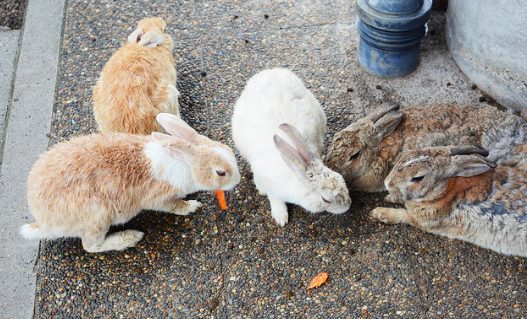
A cluster of bunnies on Rabbit Island. Cindy Pepper. CC BY-NC-ND 2.0

From its many “cat islands,” which boast more feline than human residents, to Jigokudani Monkey Park, where visitors can observe macaques bathing in the naturally occurring hot springs, Japan seems to overflow with fantastical wildlife enclaves. Perhaps the most adorable of all is Ōkunoshima, or “Rabbit Island”—but the cotton-tailed denizens for which this island is known belie its sinister past and ambiguous future.

While Ōkunoshima, located in the Hiroshima Prefecture, is a popular tourist destination for those looking to get their kawaii fix, it was once hidden from maps due to its clandestine status as a World War II military location. Production of chemical weapons in the island’s poison gas factory began in 1929, and apart from factory workers and army higher-ups, few citizens were aware of its existence.

Ōkunoshima was chosen for its location: discreet enough for goings-on there to remain under the radar, and far enough from densely populated cities like Tokyo to prevent mass casualties in case of an accident. The factory there eventually produced more than 6,000 tons of gas—primarily mustard gas and the irritant lewisite—before its closure at the end of the war. Chemicals wereould be shipped to Kitakyushu in the Fukuoka Prefecture to be weaponized, eventually resulting in more than 80,000 casualties (including and more than 6,000 deaths) among Chinese soldiers and civilians.

Despite the fact that Japan was a signatory to the 1929 Geneva Convention banning the use of chemical weapons, none of the country’s citizens were prosecuted for employing poison gas. After Japan’s defeat in the war, most of the Ōkunoshima factory was destroyed, but laboratory buildings, the shell of a power plant, an army barracks, and a few other edifices remain. In 1988, local governmental entities and citizens opened the Poison Gas Museum to pay tribute to this dark and little-known facet of Japanese history. Displays include the ineffective protective gear worn by workers at the factory, which left them vulnerable to exposure and subsequent illness, as well as equipment used to manufacture the gases.

So where did the bunnies enter the equation? We know that a colony of rabbits was brought to the factory during its operational years to test the effects of poisons, but beyond that, theories diverge. Some suggest that the original crop of rabbits was destroyed along with the factory, while others claim that workers set the bunnies free after the war. Another theory asserts that schoolchildren brought eight rabbits to the island in 1971, where they bred until they reached their current population of approximately 1,000.

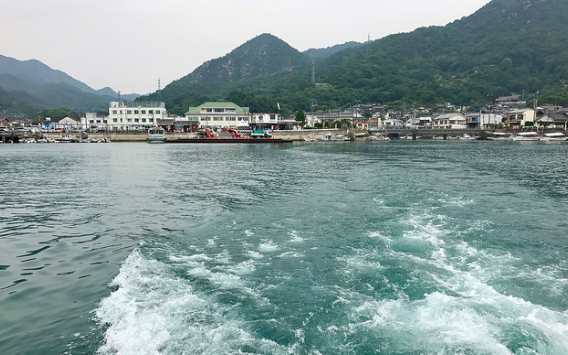
Tadanoumi Port viewed from the ferry to Ōkunoshima. Brian Shamblen. CC 2.0

Today, Ōkunoshima is easily accessible via a 15-minute ferry, and embodies peace, rest, and relaxation for tourists and locals alike. Visitors can easily explore it on foot (the island is less than 2.5 miles in circumference), collect souvenirs, dine, play tennis, swim in the ocean, and bathe in the hot spring—apart from communing with the wildlife, of course. Rabbit Island’s website describes it as a place to seek good fortune for your own family’s fertility, and advertises whipped ice cream and “original rabbit items” for sale, as well as octopus kelp rolls, a local delicacy known to pair well with sake.

Yet even the island’s thriving tourist industry and booming bunny population has a more sinister flip side. The wild rabbits depend on visitors for their food and water, but tourists often come bearing snacks that are harmful to the creatures’ delicate digestive systems—such as cabbage or vegetable peelings, which can cause fatal bloating. And while visitors are keen to share photos of their new fluffy friends online, social media has played a key role in destabilizing the rabbit population: Viral videos and articles have led to a vast influx of tourists in the past decade, and the resultant avalanche of snacks and treats has contributed to a breeding boom that the island’s ecosystem is unable to handle. These factors have combined to lower the bunnies’ life expectancy to only two years, compared to the three-to-five-year lifespan of the average wild rabbit.

The plight of the Ōkunoshima rabbits is just one example of the widespread harm social media has inflicted on wildlife populations across the globe: For instance, viral YouTube videos of slow lorises, wide-eyed nocturnal primates native to Southeast Asia, have led to people taking home lorises from the wild to keep as their own. Unfortunately, captivity is unhealthy for the animals, and they often end up relegated to props in tourist photos—or worse, sold into the illegal pet trade, and possibly slaughtered for use in cuisine or medicinals.

A curious bunny on Ōkunoshima seems to have mistaken the camera for a snack. Brian Shamblen. CC 2.0

Ultimately, bunny lovers need not be deterred from visiting Ōkunoshima, but following the rules is essential in order to treat the creatures kindly and foster their health and wellness. The Rabbit Island website lays out guidelines for responsible rabbit enthusiasts—including “refill water pans” and “check under your car,” as curious bunnies might hide underneath to escape the hot sun—and travelers can use their visit as an opportunity to educate friends and family about the unique perils posed to wildlife in the digital age. Approaching this mystical island mindfully is a small yet important step in helping the myriad diverse populations of the animal kingdom survive and thrive for many years to come.


TALYA PHELPS hails from the wilds of upstate New York, but dreams of exploring the globe. As former editor-in-chief at the student newspaper of her alma mater, Vassar College, and the daughter of a journalist, she hopes to follow her passion for writing and editing for many years to come. Contact her if you're looking for a spirited debate on the merits of the em dash vs. the hyphen.

VENEZUELA : A Country in Darkness

And why the lights were flickering in the first place.

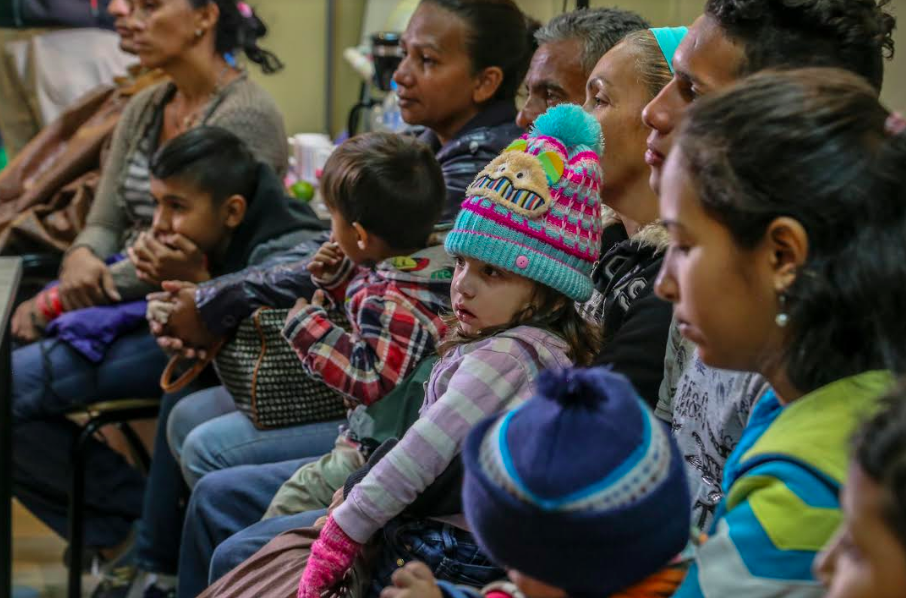
Venezuelan migrants wait at the Columbian boarder to join the millions who have already fled the country. UNICEF Ecuador. CC2.0

The streets are littered with planks of wood and broken glass from storefronts destroyed by looters. The smell of rotting food from useless refrigerators fills the air of the city’s neighborhoods. At the local hospital, groans can be heard from patients in pain without medicine and the dead appear to be multiplying.

This was Venezuela for six days in the lucky towns, and eight days in cities on the edge of the electric grid such as Maracaibo. The city of Maracaibo, about 200 miles west of Caracas, regularly experiences power outages as a result of its high energy consumption and position on the power grid.

The country’s economy has struggled throughout the past few years, and hyperinflation plagues Venezuelans’ day to day lives. Food is often scarce, and basic items such as toiletries can be costly. According to United Nations statistics, three million Venezuelans have left the country since 2014 when the economic crisis started to worsen. The blackout highlighted the systemic nature of Venezuela’s problems.

Venezuelans all over the country didn’t just lose power- they also lost the assurances that come under living in a country with rule of law. Storefronts were plundered as food became an even greater concern in a country already going hungry. “The shop owners were trying to defend their stores by opening fire, not to kill, but I think there were many dead,” Omar Chavez, a citizen of Maracaibo, told New York Times. “No one was controlling this mob.”

In Caracas, citizens resorted to drinking the heavily polluted water of the river that runs through the capital. Without electricity, hospitals had problems running equipment and suffered from shortages of medication. Citizens of the oil rich country lined up around blocks waiting for gasoline.

The blackout, while a nightmare for the citizens, has become a political battlefield for the two men who claim to be in charge of the country. Maduro, the unpopular incumbent, was first elected in 2013. In 2014, oil prices plummeted worldwide and Maduro failed to deal with the economic catastrophe that followed. Most of the county wants him out of office; according to a Gallup survey, 3 out of 4 Venezuelans view the government as corrupt. However, last May, Maduro was reelected. Many citizens claimed this election was an obvious fraud and took to the streets in protest.

Enter opposition leader Juan Guaido. In January 2019, Guaidó declared himself interim president on the grounds that the elections were rigged. Guaidó, as leader of the National Assembly, would become interim President if the role of President was vacant. The European Union and most of Latin America recognized Guaidó as the President of Venezuela. President Trump also threw his support behind Guaido, tweeting: “The citizens of Venezuela have suffered for too long at the hands of the illegitimate Maduro regime.” The US’ recognition of Juan Guaidó as the interim president led Maduro to call Guadió a Washington puppet intended to undermine Venezuelan sovereignty.

Maduro also claimed the blackout was the result of American cyber sabotage. He called the blackout an “electric war” started by “US imperialism.” But Venezuela has had problems with power since before Maduro came to the presidency. In 2010, Hugo Chavez called an “electricity emergency” after a drought caused water levels at the Guri Dam, a major hydroelectric plant, to fall dangerously low. Localized power cuts are normal, and electricity rationing comes as no surprise to the citizens. Experts say that this blackout was due to a key section of the country's national grid being taken out, possibly by a bush fire. The power system of Venezuela has also suffered from neglect as a result of years of underinvestment in infrastructure. The highest positions at Corpoelec, the state owned power company, are occupied by government loyalists. In reality, the power grid is run by soldiers instead of technicians.

Many skilled engineers have joined the three million Venezuelans who have fled to countries where lunch doesn’t cost a month’s salary. More are due to leave soon, as the power still flickers on and off. According to a Gallup survey, 36% of remaining Venezuelans said they would leave if they could. This number has more than doubled from the 13% who reported they would leave before Maduro took office.

Those who stay will have to deal with the aftermath of the devastating blackout. Pharmacies have few supplies, and grocery store shelves are sparse. In Maracaibo alone, vandals destroyed 562 businesses. Pharmacy owner Marianela Finol spoke to El País after the blackout. He compared the power outage to a natural disaster. “I feel like a tornado has passed,” he remarked. His pharmacy, robbed by a mob of strangers, remains in splinters.


EMILY DHUE is a third year student at the University of Virginia majoring in media. She is currently studying abroad in Valencia, Spain. She's passionate about writing that makes an impact, and storytelling through digital platforms.


New Zealand’s “Headscarf for Harmony” Effort

Women wear headscarves to stand in solidarity with New Zealand Muslim community.

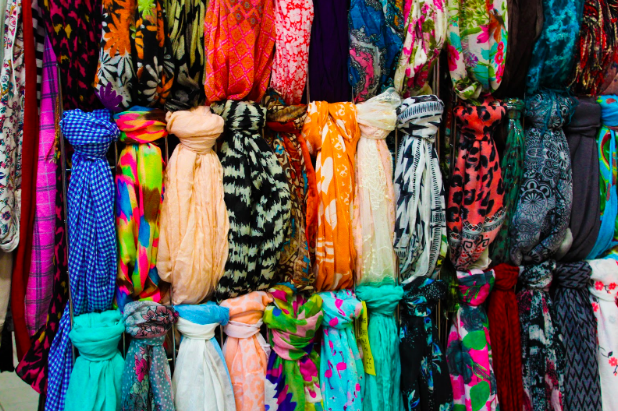
This week, women in New Zealand are wearing hijabs to stand in solidarity with the Muslim community following the shooting of 50 people at two mosques in Christchurch.

The effort, called “Headscarf for Harmony”, was created by Auckland doctor Thaya Ashman. After hearing a Muslim woman say that she was afraid to leave her house wearing a hijab, Ashman wanted a way to show her support and solidarity. “I wanted to say: We are with you, we want you to feel at home on your own streets, we love, support and respect you,” she told Reuters.


Ashman spoke with the Islamic Women’s Council of New Zealand and the Muslim Association of New Zealand before putting the effort into action. She told the New Zealand Herald that she used the word headscarf instead of hijab to recognize the cultural difference present for non-Muslims.

The Headscarf for Harmony hashtag continues to spread across social media. where New Zealanders are posting pictures of themselves in headscarves accompanied by captions offering their support for the Muslim community.

"These people are New Zealanders, just like I am,” twenty four-year-old Cherie Hailwood told CNN. “I understand that one day is very different to wearing it all the time, but I am honored to be given the permission of the Muslim community to walk in their shoes. Even just for a day.”

Prime Minister Jacinda Ardern wore a black headscarf when meeting with members of the Muslim community. Even news anchors and reporters joined the effort, wearing headscarves on live television. At an open prayer at the Al Noor mosque where the attack had taken place, New Zealand women wore head scarves as a gesture of respect and solidarity.

“Being a Muslim, I’m overwhelmed,” one man tweeted, “I have never seen this kind of solidarity in my entire life—the vigils, the Haka performances, the scarves. It’s just amazing and heartwarming.”

Not all supported the effort. On Stuff.co.nz a Muslim woman published an unsigned article saying that while the movement may mean well, it is no more than “cheap tokenism”.

She wrote that the effort, “stinks of white savior mentality, where Muslim women need to be rescued by (largely) white folk. This type of ideology plays a part in the pyramid of white supremacy and must be acknowledged so people can stop virtue signaling and understand the impact of their actions.”

She went on to say that the attack, “was not just about Muslims, it was against any person of colour in a 'white' country so this focus on hijabs is derailing the examination of white supremacy, systematic racism, orientalism and bigotry. We don't want to be turned into a caricature.”


EMMA BRUCE is an undergraduate student studying English and marketing at Emerson College in Boston. While not writing she explores the nearest museums, reads poetry, and takes classes at her local dance studio. She is passionate about sustainable travel and can't wait to see where life will take her.