
Lucio Usobiaga, the co-founder of Yolcan—a nonprofit aimed at preserving the chinampas.
Read More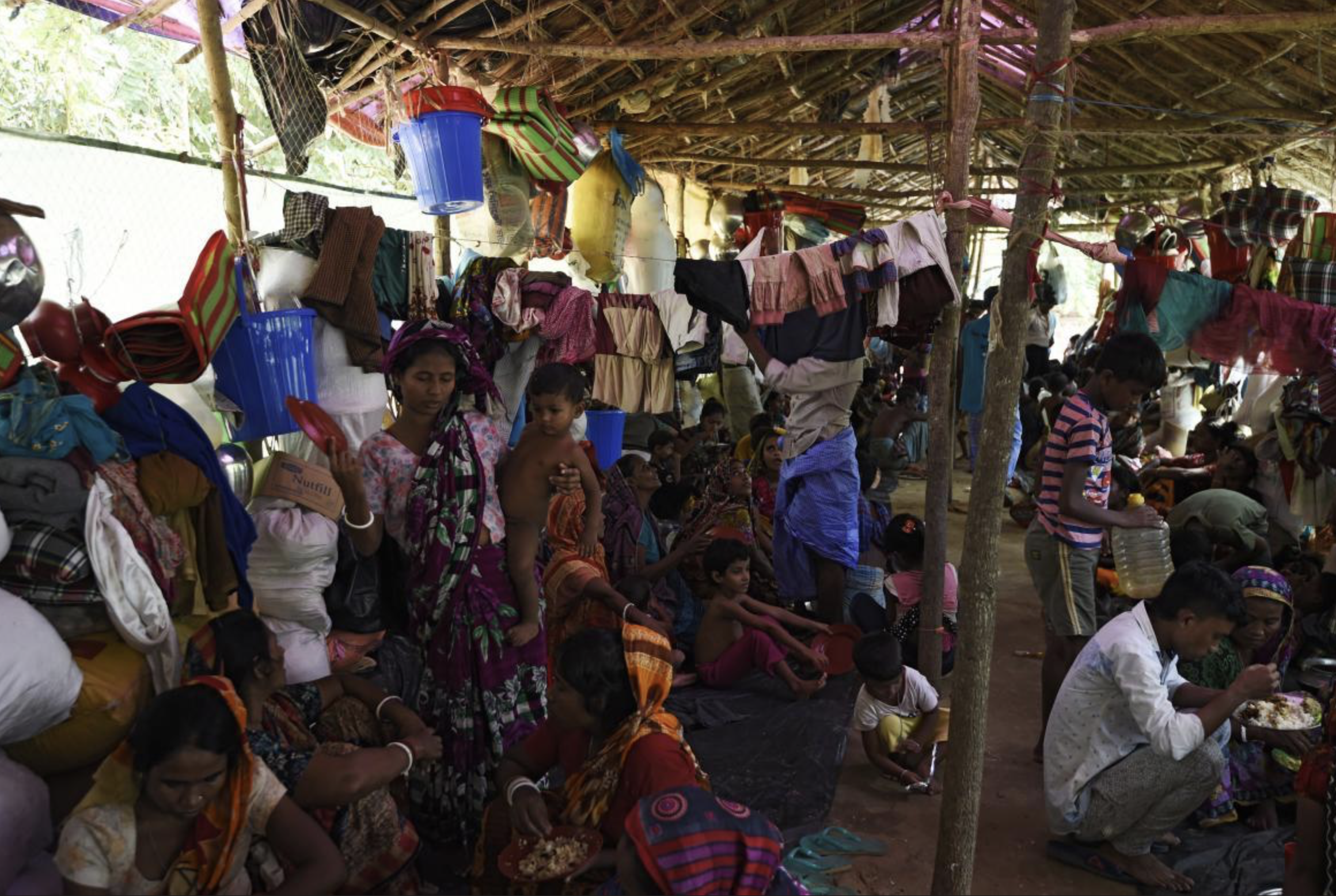
Refugees taking shelter in Southern Bangladesh
Contextualizing Refugees
On 22 May the Rohingya Muslims made the news not for their refugee situation, but for massacring Hindus. The militants responsible are members of the group Arakan Rohingya Salvation Army, also known as Arsa. The news was part of an Amnesty International report on an investigation into the 25 August 2017 attack on the Hindu village, Ah Nauk Kha Maung Seik in Maungdaw (Rakhine state), Myanmar. About 53 villagers were killed. Their proximity to another village, Ye Bauk Kyar, where about 46 were killed around the same time suggests Arsa may have also been responsible. Arsa has denied responsibility for both attacks. Still, it is the survivors of the attack who matter most. Around 500 of the Hindu villagers fled to Bangladesh from Maungdaw where they found assistance from local Hindus. These refugees are just a small part of a global refugee crisis.
The UN defines refugees as people fleeing persecution, war, or violence; often because of religion, ethnicity, or race. Refugees cross international borders, requiring international status as their home country can no longer protect them. As of June 2017, there are 22.5 million refugees around the world. This number includes those in a refugee-like state as well as Palestinian refugees registered by UNRWA. Still the number should be viewed as the best estimate of the world’s refugees as it is difficult to determine refugees living outside of camps; varied opinions exist on who is a refugee; and the variation in granting of refugee status across countries, among other potential discrepancies.
A refugee will spend 26 years on average away from home according to Ai Weiwei’s Human Flow, a 2017 documentary about the global refugee crisis. During those years away, some may seek resettlement in another country. On average, of officially registered refugees, roughly about 1% are resettled or 189,300 (UNHCR 2016). Currently the UN works with 130 countries, many of which work directly with the UNHCR to resettle refugees. The goal for resettlement is integration through self-sufficiency in their new communities. Organizations in host countries work directly with the refugees, such as the International Rescue Committee (IRC) in the United States. The IRC provides various support services—including legal aid, medical aid, English lessons, and family services—that are reflective of general integration assistance found in all host countries.
As a refugee stated in Human Flow, “no one leaves their country lightly.” Going back to the Hindu survivors, we can see the force that often drives a refugee from their home. A few have even returned to Myanmar as part of the controversial repatriation plan between Bangladesh and Myanmar. Those few Hindus represent one journey a refugee might make. And as of the 2016 UNHCR Statistical Yearbook, 552,230 refugees have been able to return home safely. Indeed, the hope of returning home is why most refugees stay close to their home countries. And it is why most refugees do not go to the West for resettlement: the top three host countries according to a 2016 UNHCR report were Turkey, Pakistan, and Lebanon.
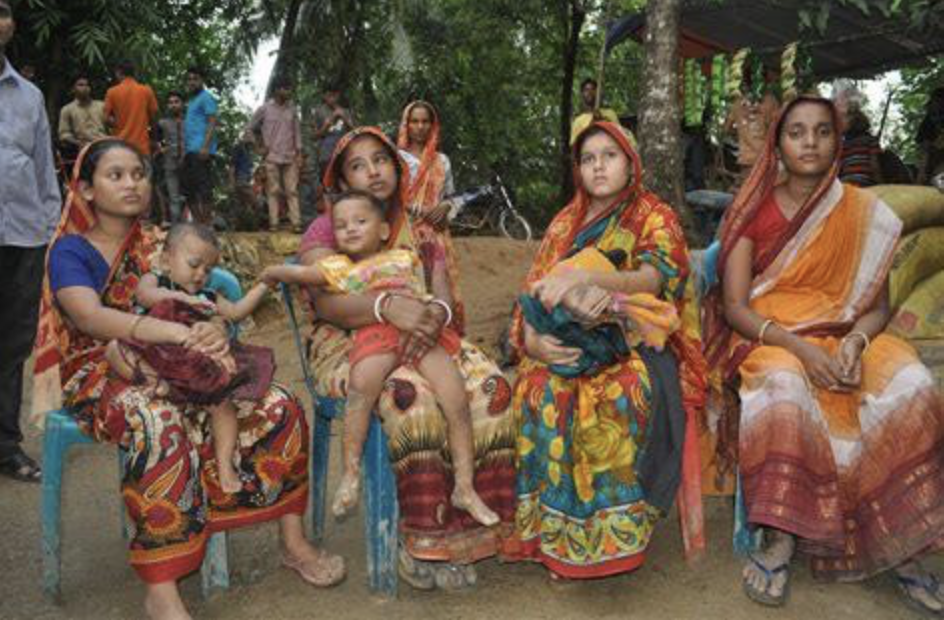
Refugees living in Kutupalong Refugee Camp in Cox's Bazar, Bangladesh
However, the attacks interconnected with wider events as the August massacres were part of deliberate attacks on police posts, which some Rohingya supported and others did not. These spurred reprisal attacks by the Myanmar military and local Buddhist mobs. The attacks displaced many Rohingya; 700,000 have crossed into Bangladesh since August 2017. As various refugee experiences suggest the Rohingya may be in Bangladesh for a few years, decades, or the rest of their life. Only time will tell—and it is that story of waiting that captures the most common theme of a refugee’s experience. The Hindus and Rohingya illustrate how the global refugee crisis has weaved together many individual refugee experiences, connecting one another at different points, together into a “singular” experience. But looking at the individual seams, it is much more complex.
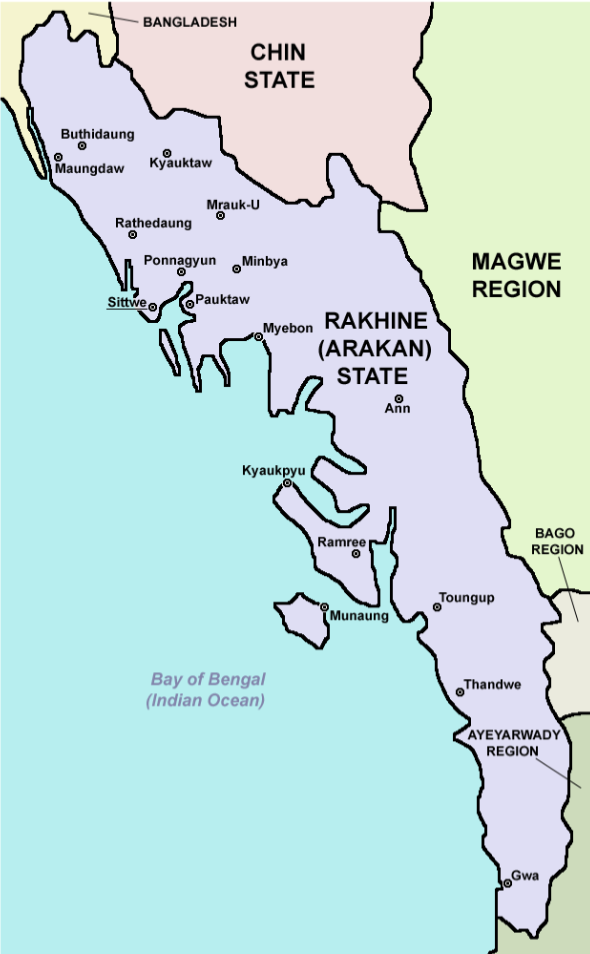
Rakhine (Arakan) State in Myanmar

Teresa Nowalk
Teresa is a student at the University of Virginia studying anthropology and history. In her free time she loves traveling, volunteering in the Charlottesville community, and listening to other people’s stories. She does not know where her studies will take her, but is certain writing will be a part of whatever the future has in store.
WAVES For Development: Changing Lives in Peru Through Surf
Meet Dave Aabo, the founder of WAVES for Development, a volunteer surf organization operating in Peru and around the world, in this exclusive CATALYST interview.
Read More
Inside Haidary’s cafe, a female barista poses next to the coffee maker on March 19, 2017.Photos by Ivan Flores
The Unlikely Industry Empowering Women in Afghanistan
The typical depiction of an Afghan woman looks like this: Timid and fearful, she is a victim of her extremely conservative and regressive society, unable to move around or do much without a man. But some Afghan women are busting these stereotypes, creating a niche for women to empower themselves and change the status quo.
A 36-year-old restaurant owner named Laila Haidary walks around the cafe gardens, carefully tending to the colorful foliage that grows generously around Kabul. She narrates her story of building a business in Afghanistan, a country governed by the rules of men. Overlooking the gardens is a midsize structure: a traditional Afghan house, with thick walls, large windows, and ample courtyard space, converted to a cozy restaurant with old tables and chairs and plenty of handmade rugs. The vibe is welcoming.
Haidary explains she wanted to provide a social space for artists and other young Afghans who want to interact with their culture and rich heritage. “This idea in itself had its own challenges because our extremely conservative society does not always approve of artistic expressions. Added to that, the fact it is run by a businesswoman makes many people uncomfortable,” she says.
Haidary’s cafe is among the many newer restaurants in Kabul, and around Afghanistan, that are either owned or managed by women in an otherwise male-dominated industry. Although data measuring this trend wasn’t available at the time of publishing, anecdotally, more women are entering the service industry: Within a two-block radius of my home in Kabul, I can count seven restaurants that have come up in the past year; that wasn’t the case in 2014, when I first came here.
Of course, not every woman in the industry is a business owner. A small but significant number of Afghan women are working jobs in the service sector—a profile that was unimaginable for Afghan women a decade ago and is still considered inappropriate.
“I feel like I’m breaking stereotypes every day by just being here. That makes me feel very proud of myself,” says 20-year-old Mujda Nasiri, who started working at 50/50, a local fast-food restaurant in Kabul, about a year ago. “Initially, my parents were reluctant, but now that they see how independent I have become, financially and personally, they’re happy for me,” she says, adding that she had always been fascinated by the restaurant industry.
In a deeply conservative society such as Afghanistan, women have few avenues to pursue careers. Many of the jobs available—such as manual labor, technical positions, and banking and finance—are not considered suitable for women because traditionally a woman’s priority has been with her family and, especially, their honor. Added to that are the decades of war that have left the Afghan economy enormously dependent on foreign aid, thereby increasing unemployment and competition in the markets. As the rate of unemployment peaked at 40 percent in 2015, it has been even more challenging for women to be considered for jobs in a market that tends to favor men.
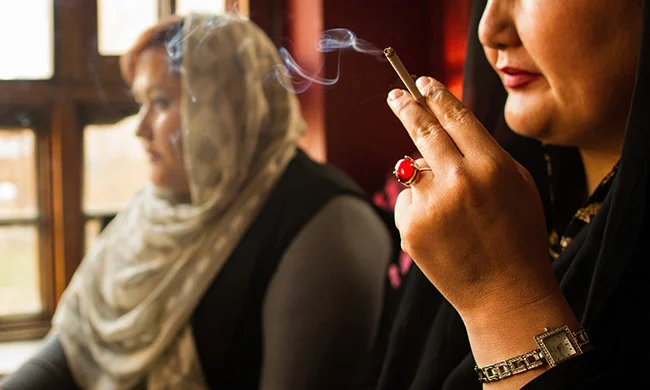
Women smoke inside Laila Haidary's restaurant on March 13 2017 in Kabul, Afghanistan. Smoking is considered a taboo for women, especially in public.
However, restaurants such as 50/50, which strives to be an equal opportunity employer, hires several women in various positions. “We are trying to create an all-inclusive space for our customers, especially for women and families, who can come here without any fear of harassment. Such a place is also good for women to work at,” explains Zahir, 37, the restaurant manager at 50/50 (most Afghans traditionally go by just one name). “We also find that women employees are more professional, timely, and able to work with grace despite pressures—a right fit for this industry.”
Nasiri is one of three waitresses the restaurant hired last year, and the move was welcomed by many of their customers. “I’ve had a very good experience working here; my colleagues are like my family and are very protective of my safety,” she says, recalling an incident where a displeased customer lectured her about how inappropriate such a job was for a woman.
“But I see that there has been a change in attitudes,” Nasiri says. “I find that a lot of our customers are not only happy to see me serve them, but [are] also very encouraging of my work. This one elderly gentleman was so happy to meet a working woman, that he left me a Afs1000 [$15] tip to keep me motivated,” she says, adding that the joy of meeting new people every day is a bigger motivation than money to stay with this job.
Twenty-five-year-old Nikbhakt, a barista at a local coffee shop frequented by the many foreigners and expats in Kabul, would agree with Nasiri. “I’ve been making and serving coffee for the last four years, and the best part of my job is interacting with people from around the world,” she says. There was a time when an Afghan woman couldn’t leave the house without a mahram—a male escort who is a blood relative—let alone talk to other people. Women had few places to engage socially in the extremely conservative and patriarchal society under the Taliban regime in the late 1990s.
Parents have reason to be concerned about their working daughters. Harassment at work and in public is a common sight in Kabul and other Afghan cities. Afghan women have to fight many gender stereotypes and inequalities along with abuse if they choose to pursue a career, any career. As a result, many women prefer jobs that require less mobility because even the act of traveling to work daily can often subject women to street harassment. Added to this the rising insecurity further discourages families from allowing their daughters to go to work.
Last year, the cafe where Nikbhakt works was attacked, and she barely missed the explosion that claimed the lives of two people, including the cafe’s guard. “I was extremely depressed for a long time after that attack. My family didn’t want me to work anymore, and I didn’t want to step out of home, either,” she says. “But now I know that cutting myself from the world isn’t a solution, and decided to come back to work two months ago.”
Since no institutes offer training to work in the service sector, Afghans have to learn on the job, which can be tedious for the employers. “We’ve had to let two of our female staff go because they were unable to cope with the pressure of working in a restaurant, but that isn’t to say that women can’t work in this industry,” Zahir says. “The environment, of course, matters, and it is perhaps up to us as employers to help create working environments that allow women to work comfortably and to their full potential.”
Women customers are drawn to restaurants where women work. “Having women around the restaurant creates a comforting and calm environment that eventually attracts a wide diversity of customers,” says Haidary, who also employs several women as servers, managers, and cooks.
She started her cafe as a way to fund her other initiative: the Mother Camp, a nonprofit drug rehabilitation shelter she opened seven years ago for homeless addicts in Kabul. When the funding to the shelter started to dry up (few in Afghanistan consider donating to rehabilitating drug addicts), Haidary and her volunteers came up with the idea of establishing this cafe. Even today, most of her employees are former or recovering addicts from the Camp, which also continues to help hundreds of Afghans recover every year.
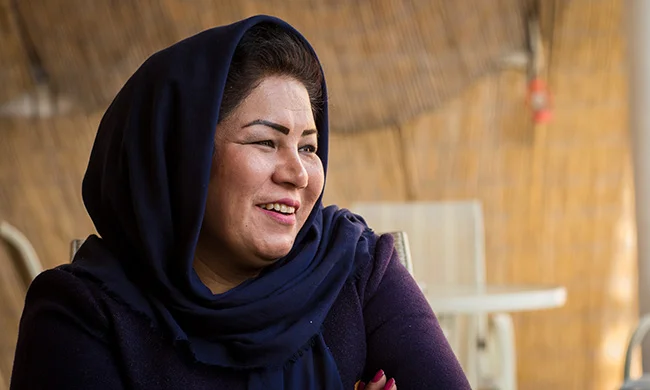
Laila Haidary sits at one of the tables in her restaurant in Kabul, Afghanistan, 2017.
Haidary has been successful as a restaurateur, but the ride hasn’t been smooth. On the contrary, she faced several threats and intimidations, sometimes even from her own customers who would show up drunk or high on hashish to her cafe, breaking her one cardinal rule—no drugs, no alcohol.
Terrorized but not afraid, Haidary would often take these men head-on. “There was a time when she literally pounced on a large Afghan man who was a guard to a local parliamentarian,” recalls a regular customer at Taj Begum who witnessed the attack. “He had come drunk to the cafe, gotten into a brawl, and threatened to have [Haidary] shut down. When [she] protested, and had him kicked out of the cafe, he smashed her car windows.”
Despite that chaos, Haidary persisted because she wanted to be an inspiration to other women in Afghanistan. “Even when the going got tough, I didn’t quit. Not only did I need this to support Mother Camp, but I also wanted to show to our society that a woman can run a successful business,” she says.
The social change, however, will have to be gradual, and Afghan society will need more time to accept working women, especially in the service sector, as a norm. That said, women have come by leaps and bounds, having survived many wars and the brutal and patriarchal Taliban regime, during which they couldn’t even step out of their homes without male escorts. They know they’re more than just victims—they’re survivors who are overcoming odds, every day.
THIS ARTICLE WAS ORIGINALLY PUBLISHED ON YES MAGAZINE.
RUCHI KUMAR
Ruchi is an Indian journalist based in Afghanistan covering developmental, cultural, and political stories from the region.
Meet The Afghan Skate Girls Breaking Barriers
These photos of girls skating in Kabul will change your perception of Afghanistan. AJ+'s Ahmed Shihab-Eldin took a tour with photographer Jessica Fulford-Dobson around her interactive exhibit hosted by Qatar Museums, and got to meet some of the Skate Girls of Kabul.
What I Couldn’t Admit Until Now After Months Of Traveling While Black
I’ve been trying to find a way to write this since I’ve gotten back to the United States with a single backpack and next to no money. For the four months that I was away, the United States of America seemed to unravel in a way that I hadn’t seen before and my bones felt so excited, so prepared to come back.
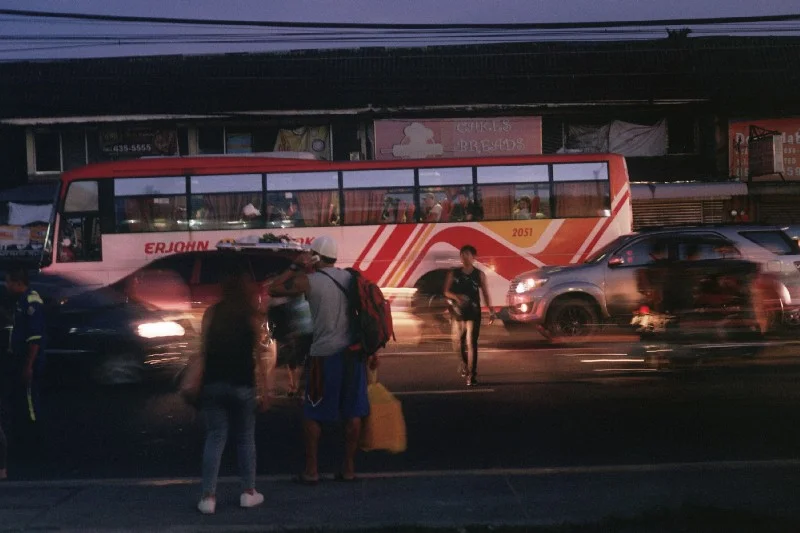
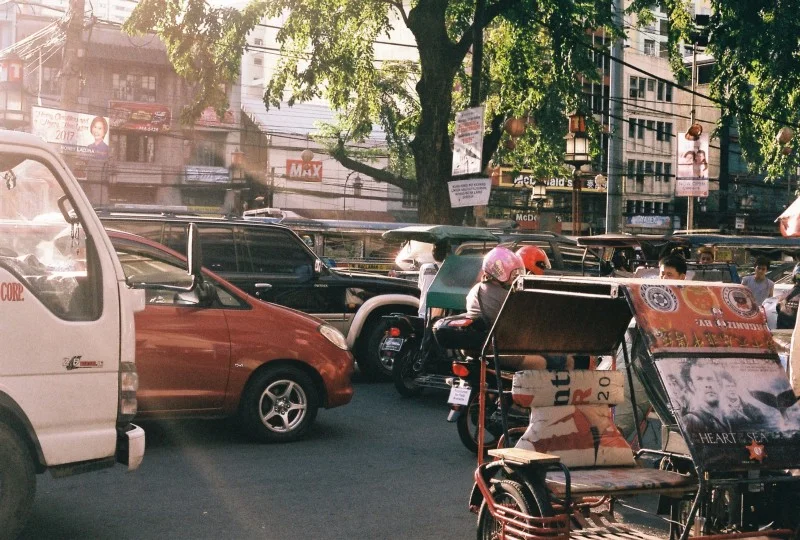
Starting in December 2016, I traveled throughout the Philippines for three months and spent another month in South Korea. This trip was integral, influential in so many ways to me. I dove headfirst into a new region of the world that I’d previously not given much thought to and I can still recall sitting in this bedroom only a week or two before that trip began and thinking, “What am I getting myself into?” as I researched the ins and outs of some of the things that I might experience.
Sometimes I feel that there is a switch in black people specifically. We tread through the world as flawlessly or strongly as possible. We climb ladders, break glass ceilings, win athletic events, and do so in the name of a lineage that has been stripped away from us. The black experience in the United States is so unique and tortured and real in ways that is still hard to express to people who haven’t been born into it or have spent their entire lives trying to contextualize it.
I believe this switch in each black person is a way to protect us, push us forward, and allow us to navigate spaces that we are not always readily welcomed into. As I traveled through the Philippines more specifically, this switch was turned on all the time. From the very first days of stepping off the plane and meeting people of different backgrounds and classes and political ideas, I was faced with a wave of self protection that was layered into how I interacted with anyone that I met.
Kids would follow me in the streets and point. Some people would ask to take photos. Others would ask questions about my dreadlocks. One time in Chinatown, my friend exclaimed behind me, “Wow, a black person!” because as he walked behind me in the crowded city streets of Manila, it became so obvious that people just didn’t stare as I walked by. They gawked. Kids sometimes called me the N-word because it was probably what they’d seen black people call each other in rap videos or movies.
“Wassup my brother?” was also a common thing for kids to say to me.
I had moments where I had to explain the basics of anti-blackness in the United States to some Filipinos. One time a woman told me that my hair looked crazy. One night I was lost while trying to meet friends and at a club. Filipino cops stopped me and asked if I needed help. During their gracious car ride, they asked me if it was true that black men had bigger penises.
Layer all of this with the fact that I am queer and understand that much of the world has a complicated relationship/ideal of acceptance towards the LGBT community; you can begin to guess why this guardedness was a part of how I interacted with people.
As a black person, I have learned to demand presence in so many spaces that I step into. As an activist, I try to be intersectional and aware of the political context of spaces that I enter. I could never go wholeheartedly into another country as an American and expect everyone to be educated on the nuances of life as queer, black male in the United States. Culture is deep and can be changed in an instant or over the course of decades, centuries.

But with this deep need to understand things as they come, feelings often get muddled. In South Korea and the Philippines, I would let people touch my hair, something that’s sort of an unspoken violation of respecting black folks and their bodies. At the time, I chalked it up to exhaustion, a lack of willingness to fight for respect for my racial experience at all times. Now that I am faced with the prospect of wondering if I should go back to the region of SE Asia for another trip, I am finally able to realize the whopping truth of what I often felt.
Humiliation
I felt humiliated and tried to stuff it inside of myself, wake up every day and face the adventure of being a backpacking entrepreneur on the other side of the world, something that is a privilege of it’s own. But the truth was that I’d drained my bank account to be there. I constantly thought,
“Why the fuck did I travel across the world to deal with this racist bullshit?”
Most of the time I was too afraid to express these feelings to Filipino people, almost in the same web of anxiety that I used to have when censoring myself when around white folks here in the States. In fall of 2016, I helped organize a memorial for Ty’re King, a 13 year old boy shot and killed by Columbus Police. At the memorial, a white guy came over and expressed his condolences. Then he compared the 13 year old boy to Osama Bin Laden and tried to spew his white privilege and fragility all over a space meant to show respect for black pain and this boy’s life.
I remember being angry, telling the guy to get the fuck away from me and how hot and immediate my body felt. So much of the past three years to me has been trying to dig into the power that allows myself to believe, “It’s okay to be angry. It’s okay to admit that you were humiliated. It’s okay to pop off.”
As black folks, we are so often used to being told that we hold the weight of our entire community on our backs. This is a reinforced ideal, that for black folks, is so different than the language around other racial groups. If you are black, how many times have you heard the following?
Don’t be hanging with those white folks and thinking you can do all the things that they do.
You gotta work twice as hard to get half of what they do.
Those white folks will be watching you.
I took care of you so you could hopefully take care of me and your father one day.
All of these are signifiers of the complicated bridge that weaves the black experience. We want to be seen and heard, but when we are denied representation, we claw our way into spaces and tell ourselves that we are “unapologetically black”.
Issa Rae, the creator of the show Insecure, recently said, “So much of the media presents blackness as fierce and flawless. I’m not.” This statement immediately made sense to me because the Strong Black Woman stereotype has been around for a reason. Self care is discussed, but how do we exercise it? Why are black people often left with the burden of contextualizing how racism and stereotypes continue to exist and hurt us? Why do we believe that we have to be so damn strong, so damn resilient all the time? What would break if we let the dam loose, let the world know how we really feel?
Is it because if we are afraid that the world would aim to destroy us once more if we were honest?
The answer could be in afro-pessimism and what Frank B. Wilderson III describes in an interview:
Normally people are not radical, normally people are not moving against the system: normally people are just trying to live, to have a bit of romance and to feed their kids. And what people want is to be recognized, to be incorporated. And when we understand that recognition and incorporation are generically anti-Black, then we don’t typically pick up the gun and move against the system, even though that’s impossible. And I think that our language is symptomatic of that when we say that ‘I don’t like police brutality’. Because, here we are saying to the world, to our so-called ‘people of color allies’ and to the white progressives, ‘we’re not going to bring all the Black problems down on you today. If you could just help us with this little thing, I won’t tell you about the whole deal that is going on with us.’
*
What freaks them out about an analysis of anti-Blackness is that this applies to the category of the Human, which means that they have to be destroyed regardless of their performance, or of their morality, and that they occupy a place of power that is completely unethical, regardless of what they do. And they’re not going to do that. Because what are they trying to do? They’re trying to build a better world. What are we trying to do? We’re trying to destroy the world. Two irreconcilable projects.
Maybe self care starts with recognizing the disappointment I felt every time in the Philippines when I’d be informed that I was “the first black person” to frequent a particular business or area of the country. Not only was my mind mangled by trying to contextualize all of the racist/stereotyping attempts by people I’d met trying to get to know me, but I was also faced with the fact that, once again, I was one of few to explore in certain ways.
So I’ll say it again. I felt humiliated and as I sit here, I find it hard to come up with many reasons to go back for the foreseeable future. When I admit this, a deeper anxiety slips in that I refuse to really indulge. This anxiety says, “Well, if you’re a traveler and you’re black, does this mean you’ll never really find a home in the world? A place that gets what it’s like to be you?”
As for the answer to this question, I don’t know, but the hopeful part of me says that I need to keep searching on my own terms before I allow my already short life of 23 years to be marred by a belief that the world is wholly inaccessible to me, a black person that wants a world where different identities are respected, but never vital to someone’s value.
If I wanted to put these horrible realizations to deeper use, I would ask myself the question, “Well, what would I feel if I just went back? And got over it?”
Maybe I’d be attempting to actualize a stronger version of myself that can deal with being stared at all the time, asked if I play basketball and told I should put my sexuality (which is fetishized by white supremacy) to good use. That version of myself, I don’t think I would like very much. That version of myself would lessen the vulnerability that I feel is so integral to creating compelling art and embodying the kind of blackness that acknowledges the strength of who we are/what we are capable of while not stripping myself of the ability to feel pain, anxiety, anguish, and humiliation.
This vulnerable version of myself is what I believe is the ideal reality to struggle towards. One where walls and borders and barriers that are physical become as obsolete as the one in our minds, but maybe that reality is only possible with people like me (and hopefully you), who face the turmoil as it comes and uses it as a way to inform how we go into the world next time around.
THIS ARTICLE WAS ORIGINALLY PUBLISHED ON FUTURE TRAVEL.

PRINCE SHAKUR
Pro-black, feminist, lover of locs and queer with restless feet.
PHOTOESSAY: The Young Men of the Free Syrian Army
The front lines of the Syrian Civil War trace through alleys and ancient streets in the Old City of Aleppo. Defending these lines are young men, most less than two decades old, carrying AK-47s and homemade grenades.
They have no military training and will not wear body armor for fear of delaying the time of death anointed for them by Allah. They are kids and recent college graduates who picked up guns for their country and, most of all, for revenge. All have lost friends and family to Assad. "These young men are warmhearted and hospitable, but daily burdened and degraded by the fighting. Every fighter I met had a different story that brought him to Aleppo; this project attempts to tell those stories.” — Cengiz Yar.


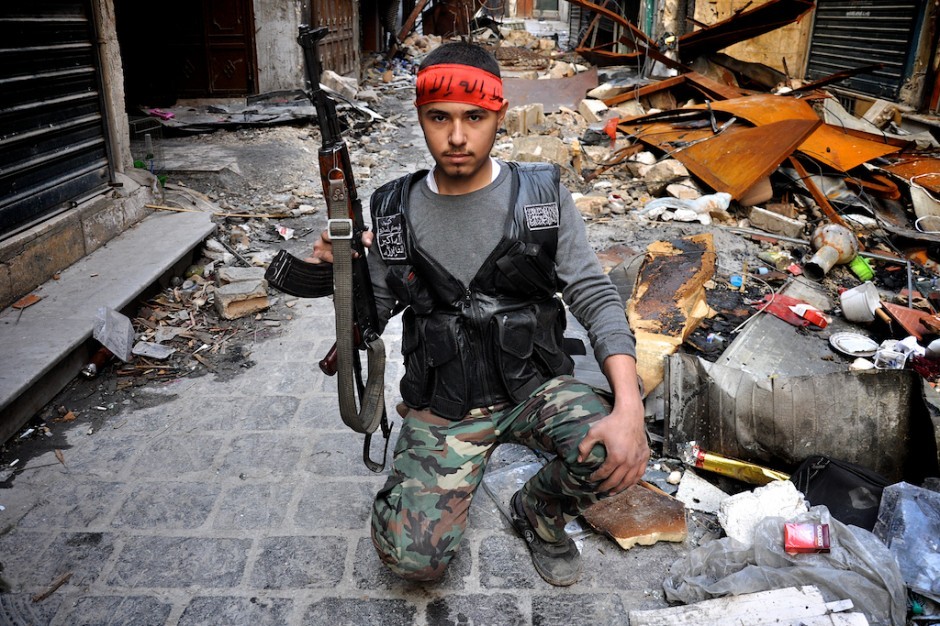


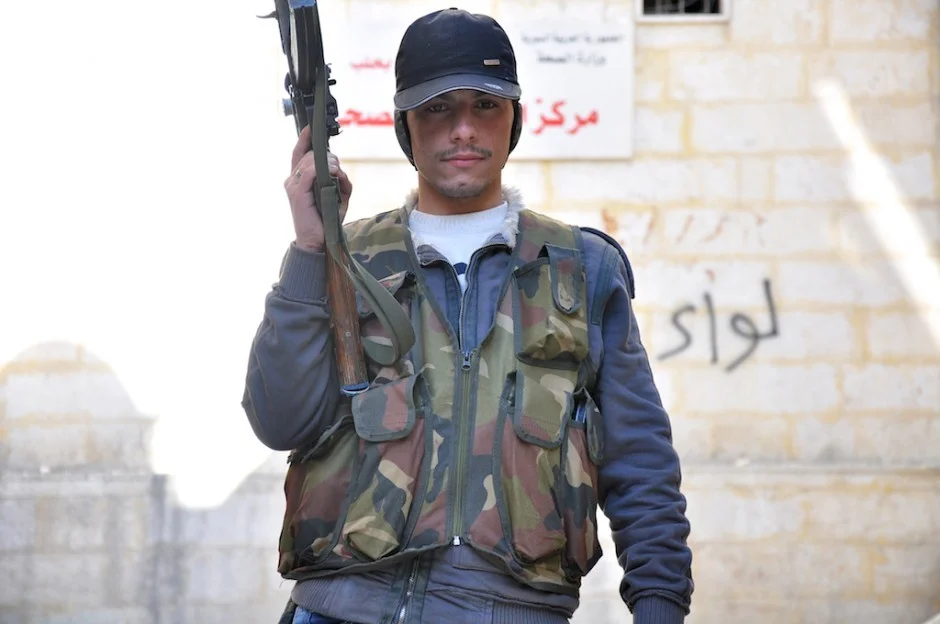

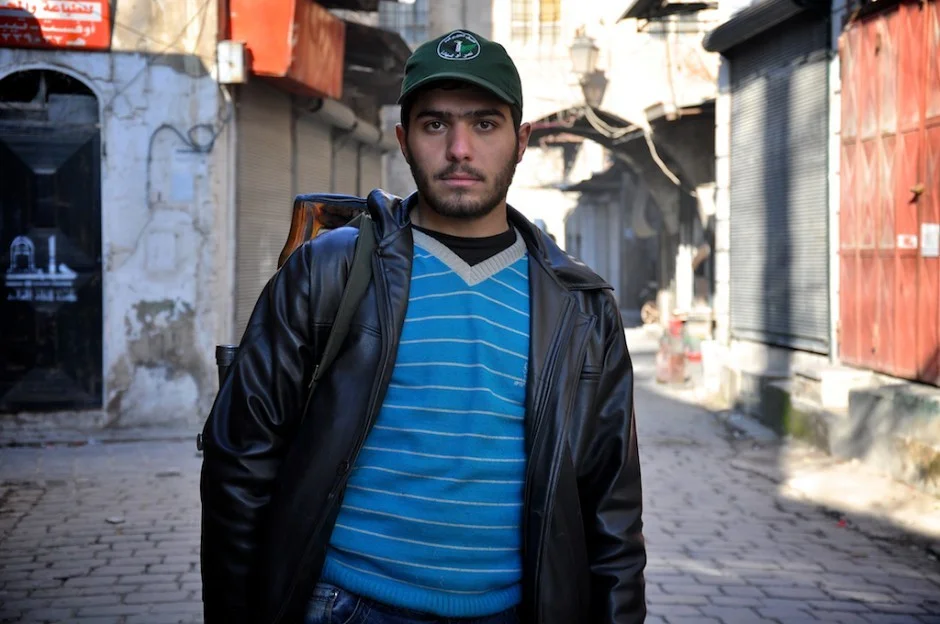

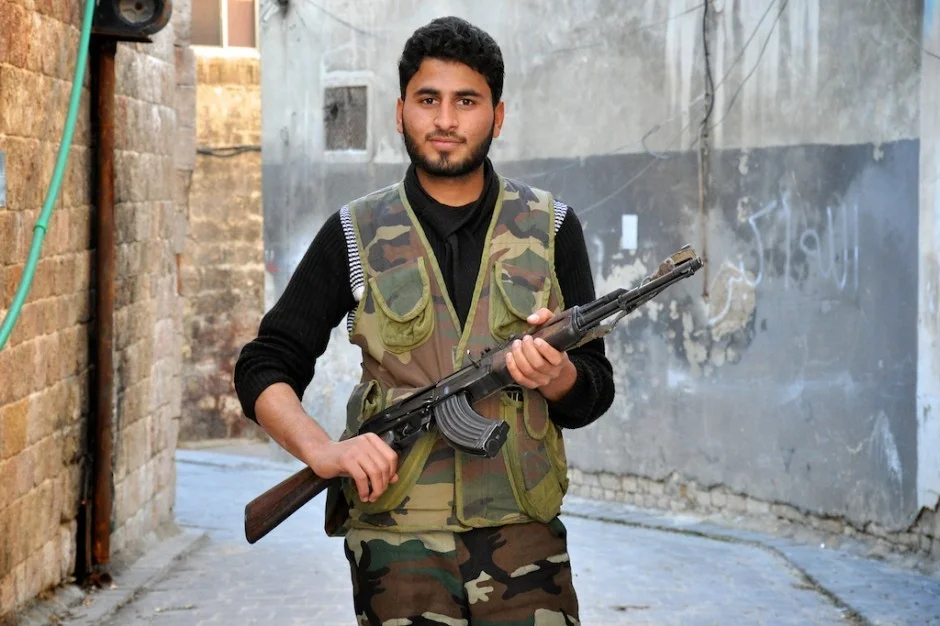


CENGIZ YAR @cengizyar
Based out of Chicago, Cengiz is a documentary photographer and freelance photojournalist whose work has been featured in publications around the world. His photography focuses on human conflicts, both violent and peaceful, and aims to encourage understanding by fostering interest and making the alien familiar.
The Lion Guardians
With human-wildlife conflict on the rise in East Africa, the hunt for a long-term, viable conservation solution is on. From conservancies that benefit the Maasai landowners, to the transformation of their young warriors into lion protectors, to “predator-proofing” livestock, a massive cultural shift is underway.
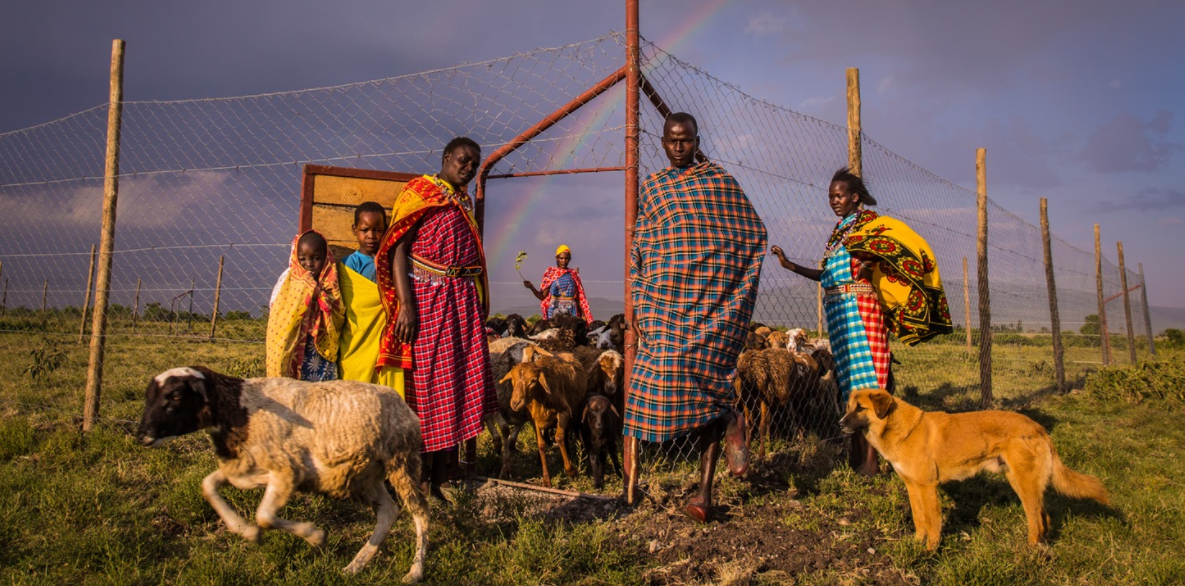
DAWN IS JUST BREAKING WHEN KAMUNU SAITOTI SETS OUT ACROSS THE AMBOSELI BUSH IN SEARCH OF LIONS.
On first glance, he appears much like any other Maasai warrior. Lean and tall, his dark red shuka is wrapped around his torso and waist concealing his only weapon, a long knife with a simple wooden handle. Brightly colored beads adorn Saitoti’s neck, ears, forearms, and ankles, and his feet, far more weathered than the rest of his body, are only partially covered by dusty sandals fashioned from discarded car tires.
“I killed my first lion when I was 21,” Saitoti says as he scans the horizon. In all, he has killed five lions. This, he says, was an integral part of his family history, part of being raised as a moran, a Maasai warrior. “My brother and father have also killed lions.”

A male lion surveys his territory on the outskirts of Masai Mara National Reserve.
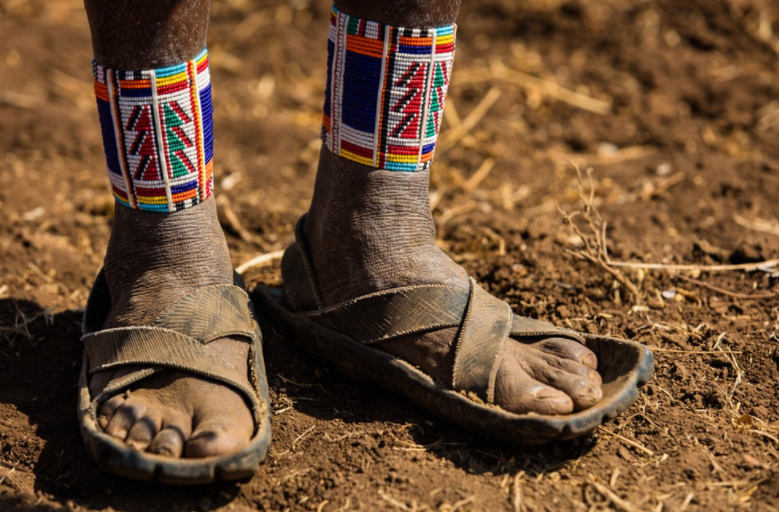
Traditional Maasai beads adorn Saitoti’s ankles.
The Maasai are traditionally a nomadic people subsisting almost exclusively on the milk, blood, and meat of cattle grazed on East Africa’s vast rangeland, once home to endless numbers of wild animals.
In the past, lion killing for the Maasai was as much about cultural tradition as it was about protecting their livestock from predators. To hunt and kill a lion was a critical right of passage known as olamayio — the way in which all young Maasai males became men. The tradition also created a powerful connection between warriors and lions, with each young moran receiving a lion name after his first successful hunt. Saitoti’s lion name, Meiterienanka, means “one who is faster than all the others.”
But traditions are beginning to change. On this day, in place of a spear, Saitoti carries a radio telemetry kit. He unfolds the antenna in a manner suggesting he has done this countless times before, and looks around in search of a hill — not an easy task in a landscape as flat as this. He settles for the remnants of an abandoned termite mound and begins to scan for a signal. Once he has a sense of the direction the signal is coming from, he packs away the kit and begins walking, dust trailing his brisk march along the well-used track.
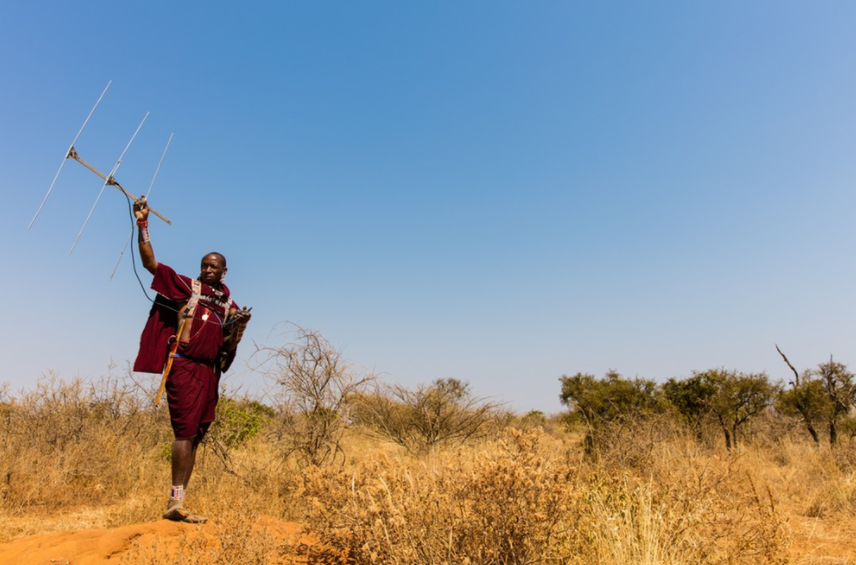
Standing on the remains of an old termite mound, Lion Guardian Kamunu Saitoti scans for a signal. A number of the lions in the area have been fitted with radio collars.
For the next three hours, Saitoti stops only to look for signs of lions, or to talk to herders. Most tracks he sees are too old to bother with, but as the sun nears its zenith, he finds a set that elicits visible excitement — a departure from his otherwise solemn demeanor. These are the tracks of lion cubs, young ones, and very fresh. Patience, however, will be required here. The narrow trail leads into a maze of dense shrubs, and that is no place to follow a lioness with cubs — even for someone as experienced as Saitoti is.
At 36, Saitoti is a seven-year veteran, and one of Kenya’s three regional coordinators, of an organization called Lion Guardians. Established in 2007, the program is dedicated to finding ways for Maasai and lions to coexist. At its core is a shift in the relationship between the moran and the lion:
Hunters have become protectors. This profound change in perspective is a critical component of East Africa’s lion conservation efforts.
But the Guardians have a lot of ground to cover — just 45 Maasai warriors patrol a million acres of Kenyan rangelands — and human-wildlife conflict is a bigger problem than one organization, or one approach, can solve.
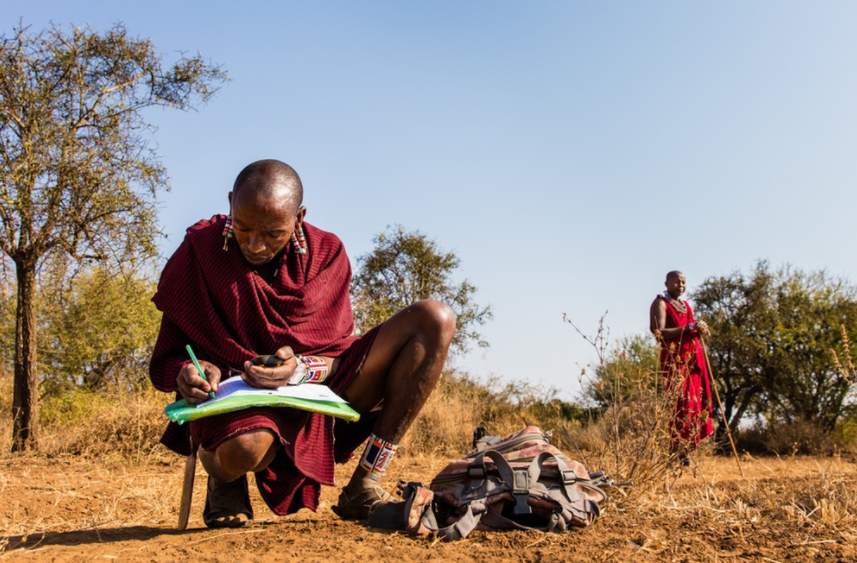
Lion Guardian Kamunu Saitoti takes meticulous notes about his observations, including GPS readings of animal tracks.
Lion Guardians is just one of a number of small- and medium-sized efforts by government officials, NGOs, and locals to reduce human-wildlife conflicts in Kenya and elsewhere in Sub-Saharan Africa. As human populations in the region have exploded, consuming increasing amounts of wildlife habitat in the process, the numbers of some of the region’s most iconic and important species have been in steep decline. Populations of many of Kenya’s large herbivores have fallen by 70 to 90 percent since the late 1970s. And as their prey have become more scarce, so too have lions.
Scientists estimate that lion populations have fallen by more than 40 percent in the past 20 years, and the 20,000 or so wild lions that remain in Africa occupy just 8 percent of the species’ historical range.
In many ways, the need for such intervention has never been greater. Yet, in a region where droughts are common and famine is never completely out of sight, finding a path toward peaceful coexistence between herders and the predators that hunt their livestock will require a great deal of persistence, creativity, and a shift in how the region’s wildlife is valued.

For most Maasai, the response to finding a leopard in your goat pen, surrounded by several slain goats, would be simple and quick: Kill the leopard. There would be no repercussions, as Kenya’s wildlife laws allow citizens to dispatch so-called problem animals. One particular young male leopard, who like his mother before him, had been terrorizing the small village of Ngerende, was certainly a good fit for that description.
Known to a number of neighboring communities for years, he had already killed hundreds of goats — losses that are keenly felt in what is one of Kenya’s poorest regions, and a hotbed of human-wildlife conflict. With the leopard’s paw now caught in the fencing of a traditional pen, or boma, as livestock enclosures are called, it seems there can be only one possible outcome. But the owner of this particular boma, Mark Ole Njapit, is no ordinary Maasai.
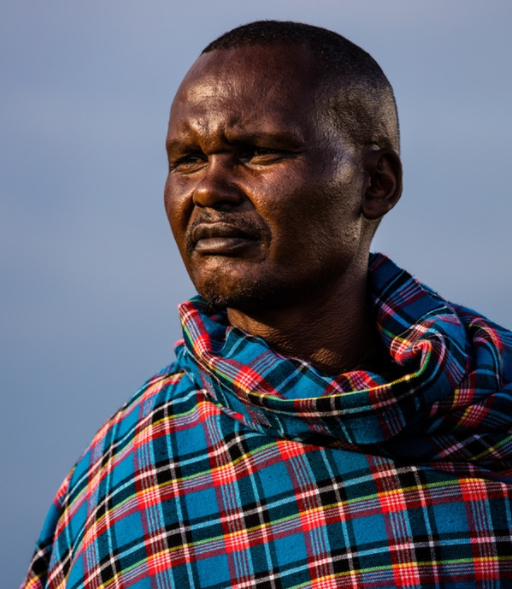
Mark Ole Njapit, who also known as “Pilot,” is a respected elder in the Masaai community of Ngerende.
“I understand the value of wildlife for the future of our people,” says Njapit (48), a Ngerende community elder known by most as “Pilot.”
“Everyone here was very upset and wanted to spear the leopard, but I calmed them down and called KWS (the Kenya Wildlife Service).” Fortunately for the leopard, KWS officers were treating some elephants nearby and responded quickly. After tranquilizing the cat, they were able to cut him free and move him to a new area where he would be less likely to get into trouble.
That was six months ago. Today, Pilot is supervising as members of his village work in partnership with the Anne K. Taylor Fund (AKTF) — an organization working to reduce human-wildlife conflicts — to construct his new boma.
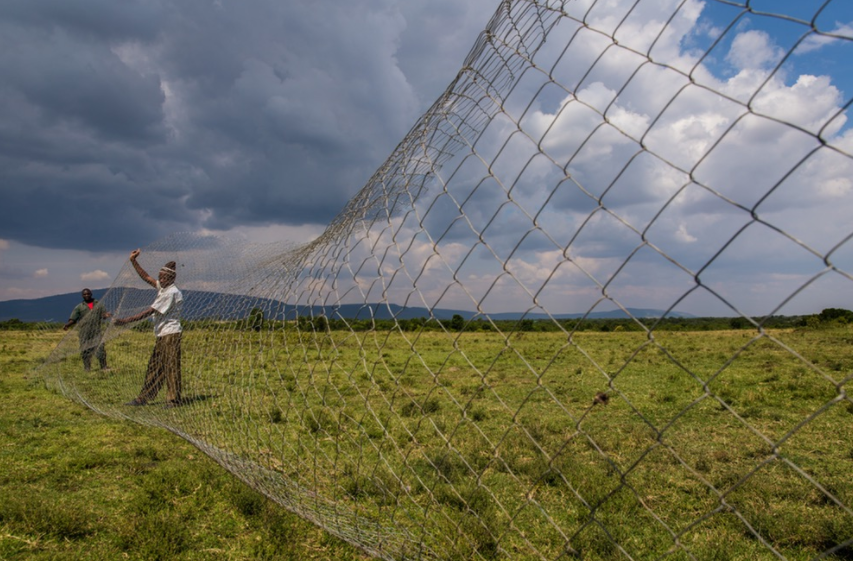
Workers stretch out the chain-link fencing for Pilot’s new ‘boma.’ The process typically takes two days, one for setting the posts in cement, and another for attaching the fencing.
The enclosure that the AKTF team is building is formidable, with welded corner posts interspersed with termite-proof eucalyptus timber poles, all set in concrete. The chain-link fence is stretched tight, seven feet above ground and another foot buried in the soil; the fence is designed to be virtually impossible for a predator to push over, climb, or dig beneath. (While a leopard could easily scale a similar-sized fence constructed entirely of wood, they tend to avoid chain-link fencing.) Today, after more than two years and nearly a hundred of the latest iteration of AKTF bomas constructed, the program’s record remains intact: Not a single livestock animal protected by one of these enclosures has been killed by a wild predator.
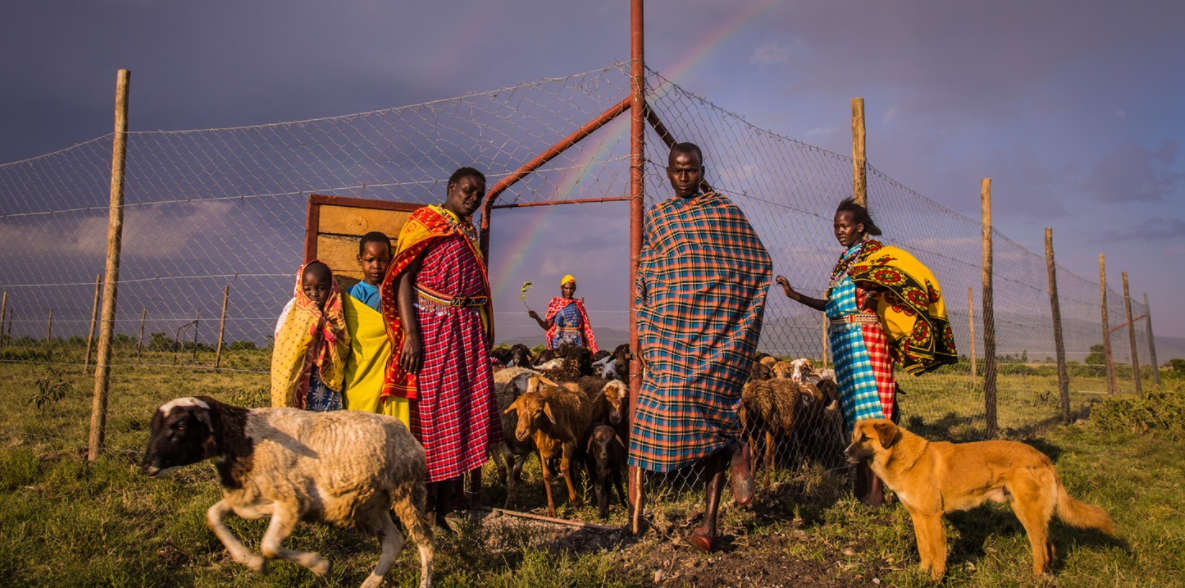
Members of Pilot’s family stand at the gate of his newly constructed predator-proof ‘boma,’ just a few miles from the edge of the Masai Mara National Reserve.
The effectiveness of the new bomas means that they are in high demand among the locals. And while AKTF doesn’t normally work in villages as far north as Ngerende, when Pilot reached out, the program’s construction director, Felix Masaku, decided to make an exception. “Here is a man whose small village loses maybe ten goats a week choosing not to kill the leopard that is doing much of that damage. That is very unusual, and it is important to support this man so others might follow his example.”
In general, AKTF prioritizes cases in which livestock losses have been greatest. “This is about conservation and co-existence,” Masaku continues. “We want to minimize conflict and retaliatory killings. If someone is losing five goats and two cows every week, that person is more likely to try to kill predators than someone who loses maybe one goat a month.”
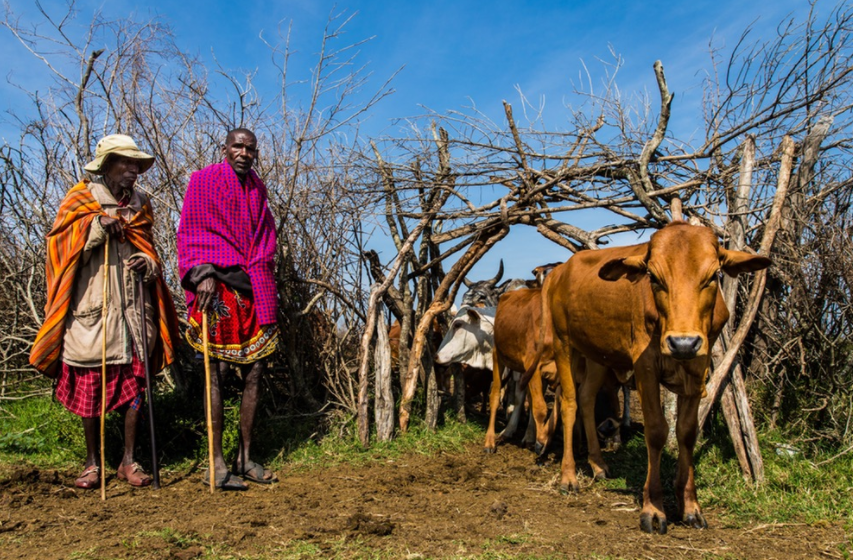
A traditional ‘boma’ that has been constructed of wood and thorny branches.
By reducing the vulnerability of livestock to predation, this program and others like it aim to reduce, if not eliminate, retaliatory killings, known as olkiyioi. This practice poses a grave threat to lions in particular, especially when angry cattle owners turn to poison rather than spears with the intention of wiping out entire prides of lions. In recent years, there have been a number of high-profile killings. For example, several members of the Marsh pride (of BBC Big Cat Diary fame) were deliberately poisoned in the Masai Mara National Reserve (MMNR) in 2015, and six lions, including two cubs, were speared to death outside Nairobi National Park in early 2016.
One troubling detail about the slaughter of the Marsh pride members is that it was carried out by Maasai seeking revenge for cattle killed while being grazed illegally inside the reserve. This practice is not uncommon. In fact, a paper published in the Journal of Zoology in 2011 estimated that by the early 2000s, livestock made up 23 percent of the MMNR’s mammal biomass — up from a mere 2 percent a few decades earlier. Today, this figure greatly exceeds that of any resident wildlife species in the protected area with the exception of buffalo. This is as much a sign of declining wildlife populations as it is of human incursions into the reserve, and it underscores significant challenges both in terms of protecting livestock and preventing human-wildlife conflicts.
As Anne Taylor, the founder of AKTF, put it:
“Inside the bomas is one thing, but keeping cattle or livestock safe if they are literally brought into the lions’ den is virtually impossible.”
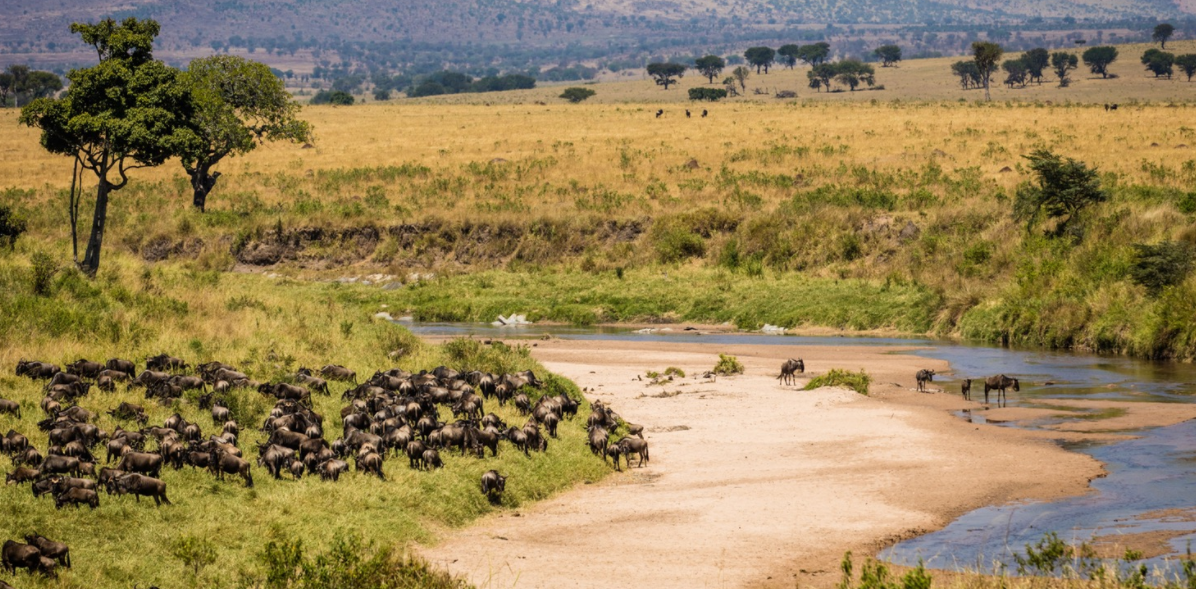
Wildebeest pause before crossing the Sand River. While the Masai Mara’s resident wildebeest are all but gone, their numbers decimated primarily by agricultural expansion, each year, more than a million cross the border from Tanzania’s Serengeti National Park.
For many Maasai today, lions and other predators have become an expensive nuisance at best, and a source of deep-seated resentment at worst. In general, this resentment is not directed toward the predators themselves, but toward a government — and the world at large — which often appears to place more value on the big cats (and the tourism dollars they generate) than on Maasai lives and livelihoods.
National parks and reserves cover a mere 8 percent of Kenya’s land area and support only a third of its wildlife. The remaining two-thirds of the country’s wild animals inhabit private and communal rangelands. This is land that they share with the Maasai, Samburu, and other pastoral people who have been here for thousands of years. Many think it is here, outside of the parks and reserves, that the future of Kenya’s wildlife will be decided.
According to a recent report co-authored by Panthera, WildAid, and the Wildlife Conservation Research Unit, loss of habitat due to agricultural expansion, which invariably pushes wildlife into closer contact with farmers and pastoralists, is the underlying factor of all major threats that lions face.
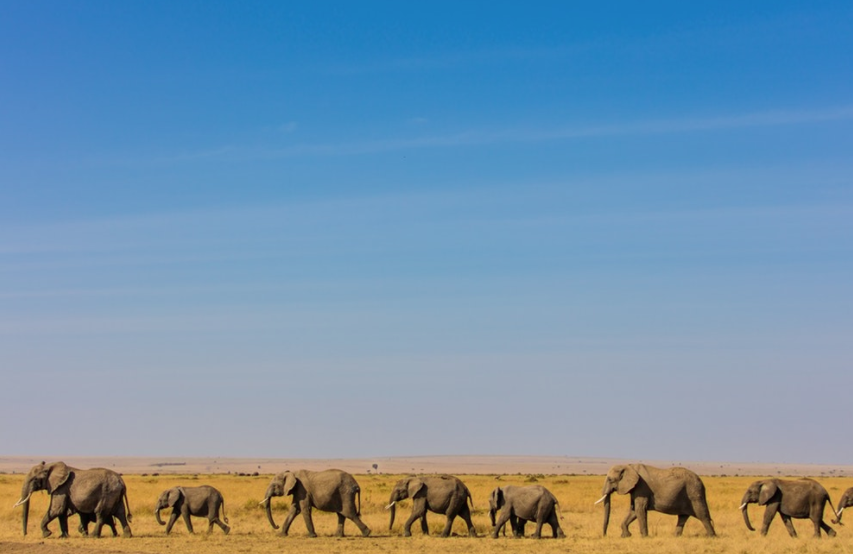
To many, the conversion of unprotected rangelands to agriculture might seem inevitable as the region’s population grows, but Calvin Cottar, a fourth-generation Kenyan whose great-grandfather emigrated from Iowa in 1915 and today runs a safari service in partnership with the Maasai community, disagrees. According to Cottar, it all comes down to economic security.
“We are talking about some of the world’s poorest people,” Cottar says. “For them it is about survival.
“Why should we expect them to care about lions or elephants when they are struggling to put food on the table ... Wildlife is costing them money, not earning them money, and that is what has to change.”
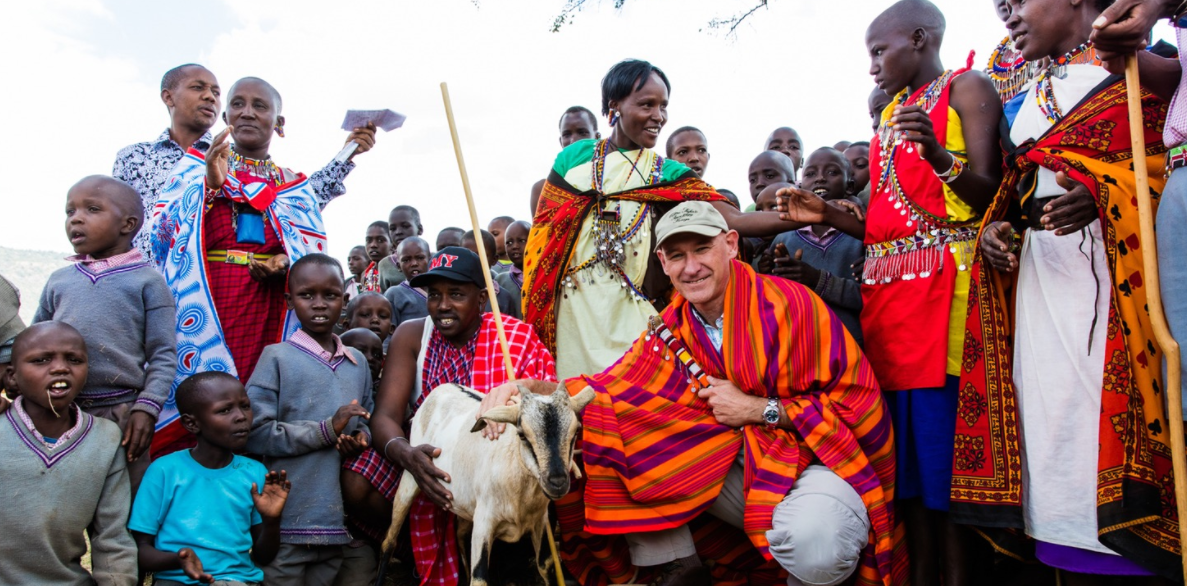
Calvin Cottar is presented with a goat as a token of appreciation for building Olpalagilagi Primary School, as well as funding salaries and meals. In the long run, the hope is that land lease fees will enable locals to fund their own projects, bringing greater autonomy.
Toward this end, while working with the Kenya Wildlife Service (KWS), the Cottars Wildlife Conservation Trust has initiated the formation of several district wildlife associations in an attempt to help local landowners acquire ownership rights to the wildlife residing on their lands. Because all wild animals in Kenya have historically been considered property of the state, benefits to the local communities that have to co-exist with these creatures have generally been few and far between.
Now in his 50s, Cottar says there is much more to be done. He is more convinced than ever that the future of Kenya’s wildlife lies with the people sharing the land with them — and with a shift in government policy.
“It’s really quite simple,” Cottar explains. “We all have to pay for ecosystem services. Pay the Maasai landowners a monthly lease for their land in return for leaving it intact. The problem is that wildlife has no value to them, whereas cattle and commercial agriculture do.”
While removing snares, building livestock enclosures, and monitoring lion populations are all important management practices, Cottar says, they don’t solve the root cause of human-wildlife conflict. Wild animals are basically a nuisance and a liability to the Maasai, he explains.
“We have to make maintaining wildlife the most productive land use, and do this in a way that respects the Maasai lifestyle and culture.”
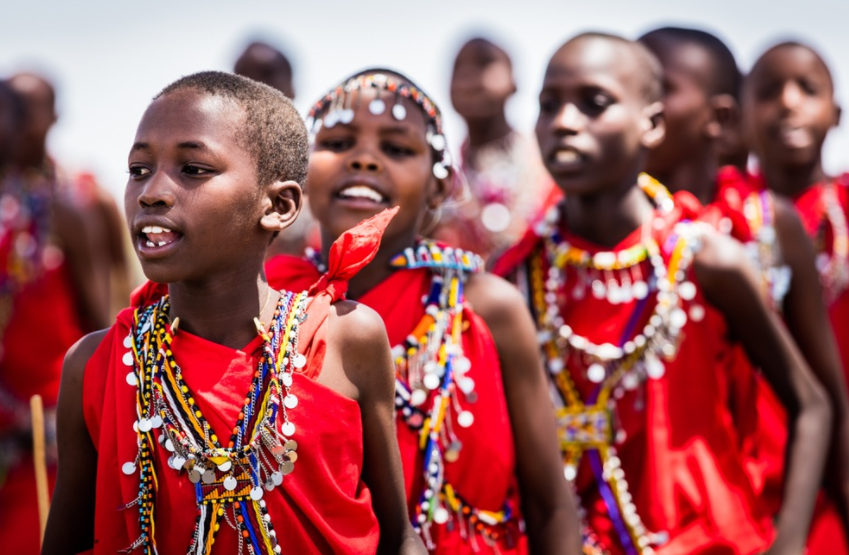
Local schoolchildren perform a traditional Maasai dance to open proceedings at a meeting hosted by Olpalagilagi Primary School.
That is why Cottar now finds himself sitting in a circle with perhaps 50 Maasai — young and old, men and women. The topic for discussion, just as it has been for the last three years, is the formation of the Olderkesi Conservancy, on the land where Cottar’s safari camp currently stands.
In general, the conservancy model consists of land being leased directly from its owners for conservation purposes. Olderkesi is slightly different in that the 100,000-hectare ranch is yet to be subdivided, making it the last communally owned ranch left in Kenya. As a result, the land will be leased from a trust representing all 6,000 land owners, and because the agreement involves the Maasai, complete consensus is required before anything can be signed. In Maasailand, patience is not so much a virtue as an absolute necessity.
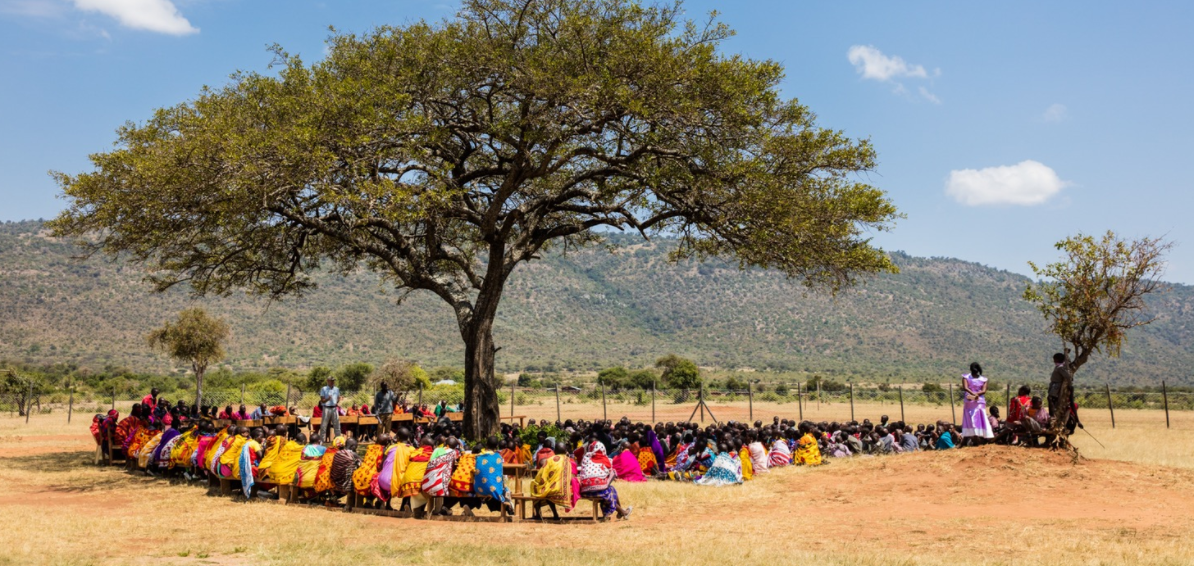
Members of the Maasai community meet at Olpalagilagi Primary School to discuss the formation of the Olderikesi Wildlife Conservancy.
Joining Cottar in the circle is one of the community’s most respected elders, Kelian Ole Mbirikani (58), a member of the Olderkesi Land Committee and Chairman of the Olentoroto land owners group, which holds the deeds to the land immediately surrounding Cottar’s safari camp. Mbirikani is also one of the key driving forces behind the conservancy initiative.
“The Maasai depend almost completely on their cattle,” Mbirikani explains, “so convincing them that it is possible to have both wildlife and livestock at the same time is our biggest challenge. In their experience, when land is set aside for wildlife, all of the cattle disappear. That’s what national parks do.”
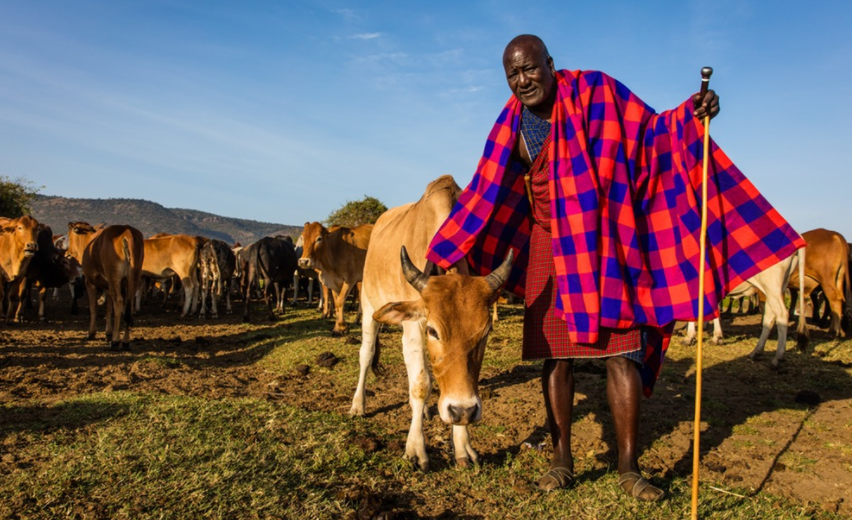
Kelian Ole Mbirikani, a member of the Olderkesi Land Committee and Chairman of the Olentoroto land owners group, with his cattle.
Mbirikani is convinced the conservancy concept can work, though. He and a group of other Maasai traveled with Cottar recently to conservancies as far north as Samburu. There, they saw wildlife and met landowners who are still able to graze their cattle. “The people are really benefitting,” Mbirikani says. “Their children are being educated all through university level with the money from the conservancies. That is what we want for our people, too.”

The AKTF team spend much of their time searching for and removing snares from inside the Masai Mara National Reserve. Although the snares are set primarily to catch herbivores they are indiscriminate killers, also trapping lions, leopards, and other predators.
There are nine other conservancies around the MMNR, and a handful more in other parts of the country, which all make regular, direct payments to local landowners. Similar approaches have been employed by Wilderness Safaris in Namibia and the Nature Conservancy in the United States, among others, and while none can be said to offer financial benefits on the same scale as Olderkesi, Cottar is clearly not alone in seeing this as a promising solution.
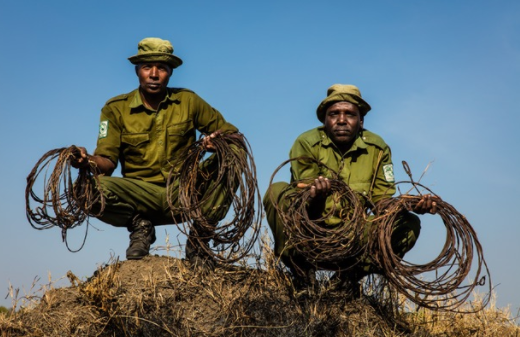
The snares displayed here by the members of the AKTF anti-poaching team were found during a single morning’s patrol in the Masai Mara National Reserve.
Indeed, two studies published last year demonstrate the effectiveness of Kenya’s conservancy approach. According to one of these assessments, despite lack-luster political support conservancies managed to achieve “direct economic benefits to poor landowner households, poverty alleviation, rising land values, and increasing wildlife numbers.” The other study saw a direct positive effect on lion populations within Kenya’s conservancies, with a nearly three-fold increase in just ten years.
However, while these results seem promising, there will always be areas outside conservancy boundaries — borderlands and buffer zones — where human-wildlife conflict are bound to continue. There is simply not enough funding to expand conservancies enough to eliminate these conflict zones.
The question, then, is whether people can learn to co-exist with lions and other wildlife even when there is no monthly payment to be collected.
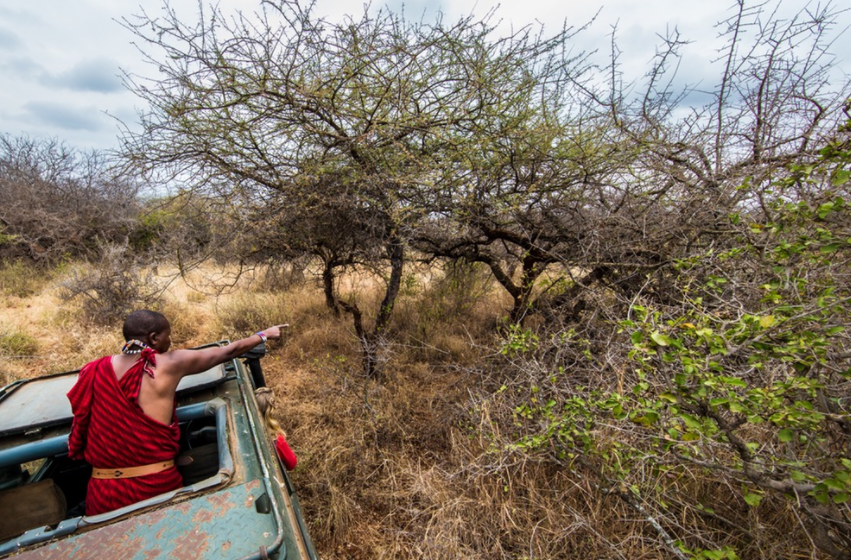
Lion Guardian and accomplished tracker Kamunu Saitoti keeps a lookout.
BACK IN THE BUSH, KAMUNU SAITOTI WAITS PATIENTLY, HOPING TO GLIMPSE THE NEW LION CUBS WHEN THEY FINALLY EMERGE FROM THE THICKET.
He has been joined by a younger Lion Guardian, Kikanai Ole Masarie, and not long after, a battered Land Cruiser arrives with one of the organization’s founders, Director of Science Stephanie Dolrenry. The two warriors pile into the vehicle and they all set off in search of the cubs. “These lions are not like those in the parks,” Dolrenry explains. “There’s no tourism here, so they are not habituated to people or cars. We’ll be lucky if we find them at all. They can be extremely shy, especially with young cubs.”
But this is a lucky day, it seems. With thorny acacia bushes screeching against the glass and metal of the bouncing vehicle, the team suddenly finds itself in a veritable crowd of cats. Dolrenry, like the Guardians, is able to identify them all. Mere meters from the car, Meoshi, her three cubs, and her mother, Selenkay, lounge in the shade. A few dozen paces away, but on their way to join them, Meoshi’s sister Nenki with her own four cubs. Much smaller than Meoshi’s, these were the young lions whose tracks Saitoti was following. This is the first time anyone has laid eyes on this new generation.

The team’s first sighting of lioness Nenki’s four young cubs.
“Selenkay is a bit of a celebrity around here,” Dolrenry says. “She causes problems like no other lion, but she’s a tough one, and it’s hard not to admire her.” Saitoti nods. Selenkay is his favorite lion — her guile and tenacity are something to be respected. She and her family frequently target cattle and are well known for giving the Guardians plenty of headaches. She has been hunted more times than anyone cares to remember. One of her sisters has fallen victim to poison, and so too has one of her mates, while another sister was killed by spear. She has endured three male takeovers, and has even attacked a Maasai moran to protect her young cubs. Like the owners of the livestock she frequently kills, Selenkay is a true warrior.
Yet Selenkay’s legacy is far greater than her own reputation. Her longevity, itself the result of the unyielding commitment of Saitoti, Masarie, and the other Guardians, combined with the growing tolerance of the Maasai inhabiting these rangelands, has helped to connect populations in vital conservation areas, and has added much-needed genetic diversity to established prides in the region. One of her sons has made it as far north as Nairobi National Park where he is now breeding successfully.

A pair of male lions seeks respite from the heat in the shade of a tree.
Saitoti did not become a Guardian because he loved lions. Instead, he was in trouble and needed a job. Arrested for being part of an illegal hunt, his father had to sell three cows to have him released on bail. That made him reconsider his path. Killing lions, despite bringing prestige and honor, also brought hardship. “For the first two years my feelings about lions were the same,” Saitoti says. “This was just a job. But slowly, things began to change. They give food for my family, they help educate my children, I even buy veterinary medicine for my cattle with my salary from the lions.”
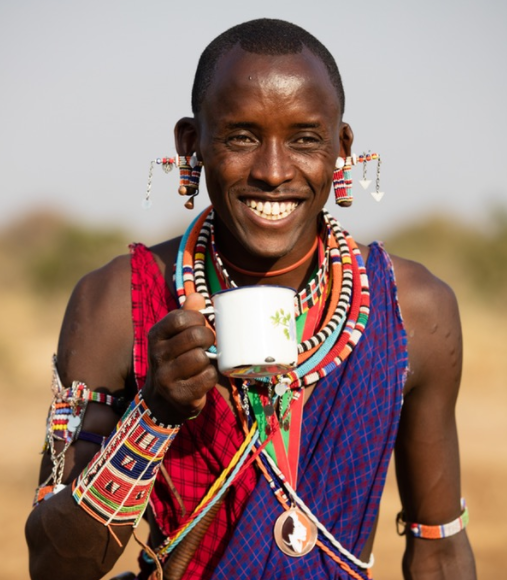
Lion Guardian Kikanai Ole Masarie celebrates the sighting of lioness Nenki’s cubs with a fresh cup of tea. Note the Lion Guardians symbol hung around his neck, alongside his traditional handmade Maasai beads.
“And we still get the girls!” Masarie chips in with a broad smile, referring to the social status that killing lions — and, more recently, protecting lions — can bring to an eligible young Maasai man. At 24, he is part of a younger generation of Guardians, and his words are significant, as they hint at an ability for long-held Maasai beliefs and traditions to change. “The other warriors mostly stay at home, but here we are, close to the lions every day, tracking them and finding lost cattle. The girls know we must be very brave!”
Saitoti smiles and continues, “For me, now, I feel there is no difference between the lions and my cows at home. I care about them equally.”

LEARN HOW YOU CAN HELP TODAY
The success of conservancies like Olderkesi, supported by Cottars Wildlife Conservation Trust, indicates their importance as long-term viable solutions for conservation in partnership with the landowners themselves, the Maasai people. Explore more about other Masai Mara Conservancies here.
The Lion Guardians organisation have been conserving lions and preserving cultures since 2007. Learn more about their work and donate to support them at lionguardians.org. The 750 predator-proof bomas constructed by the Anne K. Taylor Fund have saved many lives and you can learn more and support their work at annektaylorfund.org. I hope you will join me in supporting the work of these dedicated organisations!
THIS ARTICLE WAS ORIGINALLY PUBLISHED ON MAPTIA.
MARCUS WESTBERG
Marcus Westberg is a a Swedish photographer, writer, conservationist, and guide working primarily in Sub-Saharan Africa.
How Poaching Is Changing the Face of African Elephants
Elephants and their ancestors have roamed the African continent for millions of years. They are the largest land animals on earth and can live up to 70 years. Elephants are profoundly intelligent and social creatures. They have trunks that serves as their nose, arm, and fingers. But elephant populations have taken a massive hit to their populations. Despite an international ban on the ivory trade and other laws to protect elephants, their overall populations continue to fall due to habitat loss and rampant poaching for their tusks. Because of that, a once rare trait is being passed onto more African elephants. The trait is tusklessness, The loss of tusks is only the beginning. The real devastation occurs with the loss of a groups matriarch. The oldest and most experienced grandmothers are the family’s living memory of migration routes, friendly elephants, food and water sources, etc. Matriarchs are also, the first in line to protect their families and without them an entire group of elephants can fall apart. But with China banning ivory in 2017, providing stronger incentives to protect elephants, and sustained conservation efforts from organizations like ElephantVoices, African Parks, and others, elephants may stand a chance to roam the continent as their ancestors once did.
INDONESIA: The Kingdom of Bantar Gebang
“The world has enough for everyone’s need, but not enough for everyone’s greed.” — Mahatma Gandhi
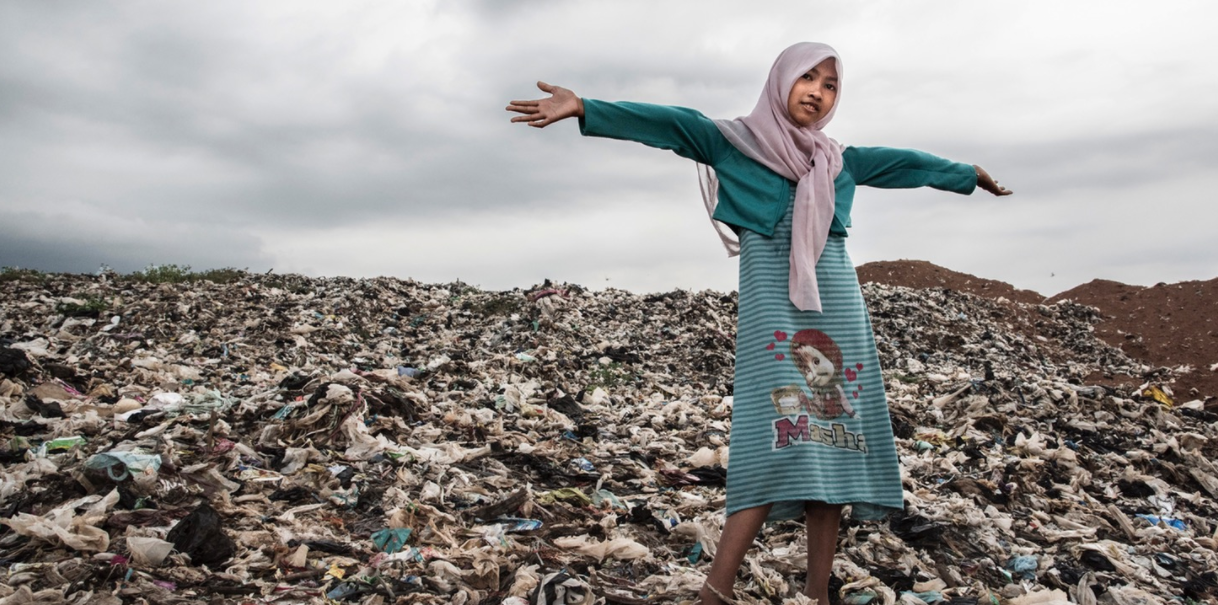
On the Indonesian island of Java, twenty kilometres from the fast-growing capital city Jakarta, is a malodorous, contaminated world with towering hills of half-decomposed waste, that stretches as far as the eye can see. This monstrosity is Bantar Gebang, the largest uncovered landfill site in Southeast Asia. It is also home to over 3,000 families, many with young children, who make a living amongst the garbage, scavenging what they can.
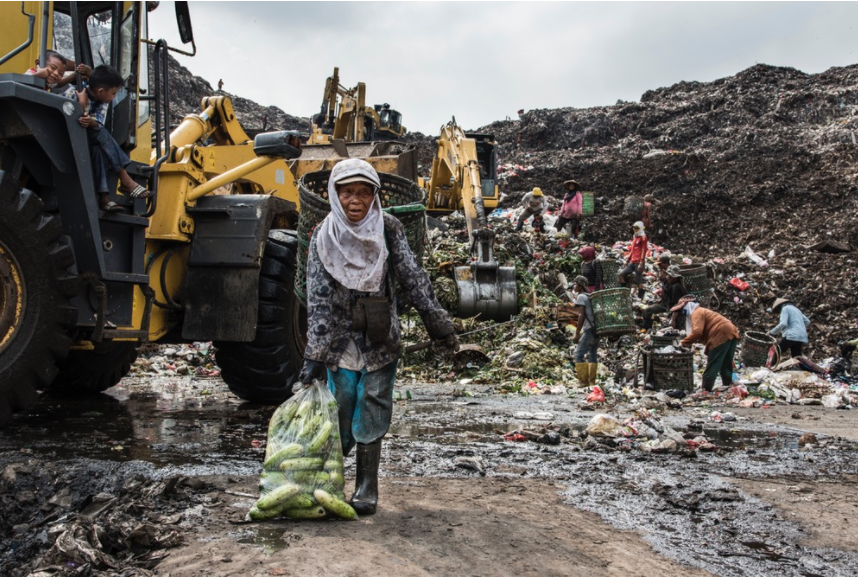
Jakarta, home to over 10 million people, produces more than 7,000 square metres of garbage per day — a figure that is still growing — and every year hundreds of thousands of tons of trash are indiscriminately dumped here, in the nearby district of Bekasi, at the massive Bantar Gebang landfill.
For the few outsiders who come to experience this place first-hand, it is a shocking wake-up call for the consequences of our over-consumption of the planet’s resources and the desperate need for better waste management. In a society enamoured with all things disposable, we are constantly having to find somewhere to put our rubbish. As general rule, far out of our sight.
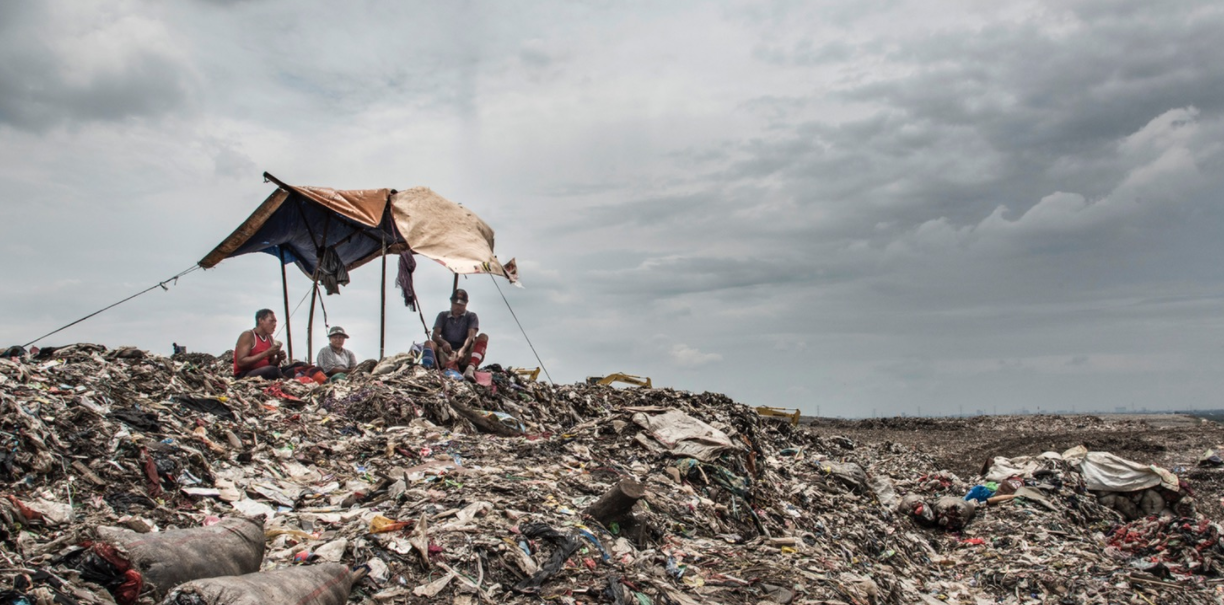
On the road towards Bantar Gebang, what hits you first is the smell. Even before you arrive at the site, an overpowering stench of decomposing organic matter steadily invades the atmosphere. Next, the buzzing clouds of flies appear, and finally, the first mountains of waste come distantly into view. Many workers who move here say that when they first arrive they cannot eat, and that the smell makes them vomit constantly for the first few weeks.
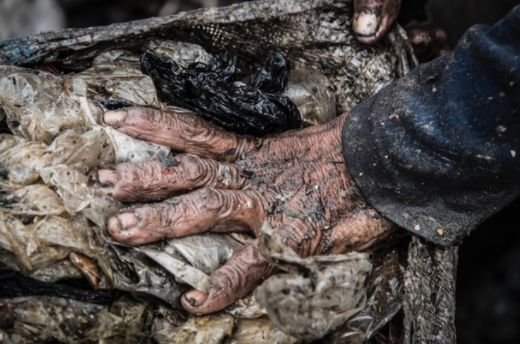
Working day in, day out at the landfill, handling the rotting, decomposing rubbish with little to no protection takes a serious toll on the basic health of all the inhabitants here.
Yet, Bantar Gebang has become the poorest people’s El Dorado, a lucrative and chaotic place of individual enterprise where hundreds of families come to salvage what can be resold or eaten. Alongside the stray cats, goats, and cockroaches, they wade knee-deep through decomposing vegetables, soiled clothes, broken furniture, and festering waste of every kind, loading their baskets with glass bottles, tins, and plastics. Business here is booming, and the scavengers, some of them children as young as five, make around 30,000 rupiah (£2.20) a day. For many, this is as good a wage as they will find.
Every day new trucks arrive with more than 8,000 tones of rubbish from Jakarta, depositing their load anywhere they can find space, while bulldozers giant mechanical arms shift and mould the ever-growing mountains of waste.
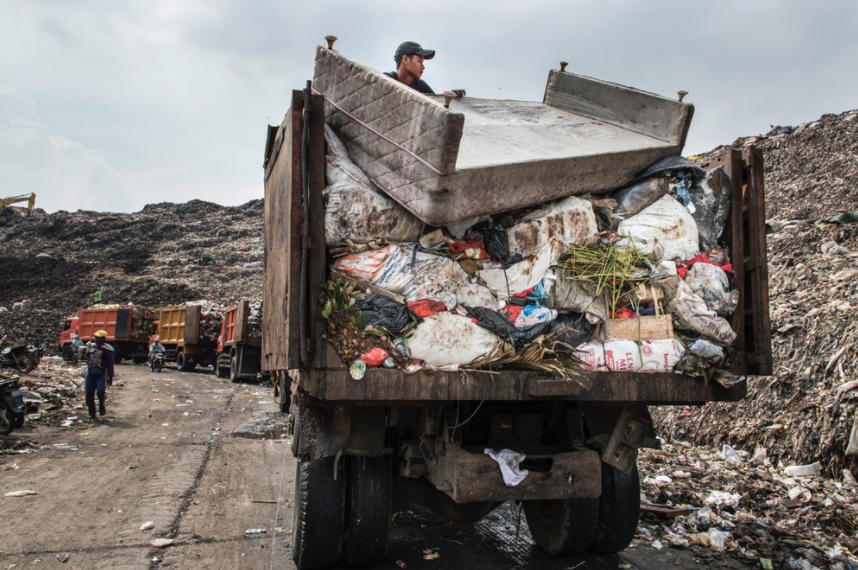
Many families are accompanied by their young children, who live in the most insanitary conditions imaginable, in this breeding ground for germs and disease. You often see them padding about, barefoot in the rubbish, looking for something which could be used as a toy. Some children slip and injure themselves, and when wounds become infected, there is no medical service available on-site to help them. Many also suffer from suffer skin infections, bronchial problems, and intestinal worms from working on the landfill.
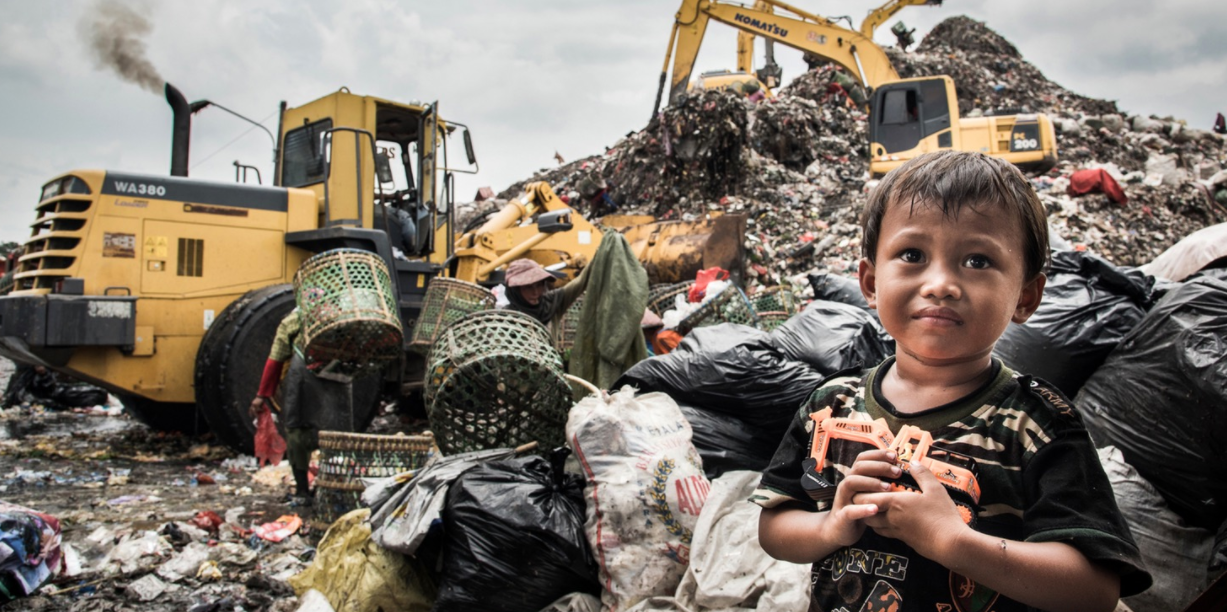
Amir, whose home is amongst these mounds of rubbish, waits for his mum who is working behind him. His favourite toy? A digger.
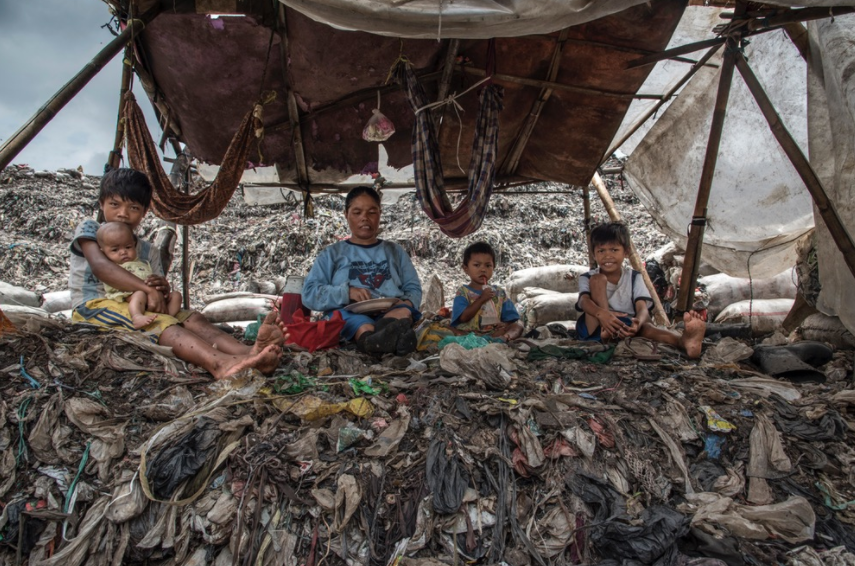
Some of these children were born here, brought into the world amongst the towering mounds of rotting waste that dominate the horizon. Every day, while parents are retrieving what they can resell or eat, these young children wait patiently for the next meal they will share as a family. This meal is often consumed directly off the ground, amidst the flies, foul odours, and trash.
The Bantar Gebang landfill was built on rice paddy fields in the district of Bekasi in 1989, and for some here, this is all they have ever known. Many are unskilled workers who have been scavenging in streets and rubbish bins their whole lives. Others, who once made their living digging the earth, are the former rice farmers whose land has been swallowed up by the relentless tide of garbage. Today, they all make a living by digging the ever-expanding “mountains” of Bantar Gebang, searching for their own personal treasure.
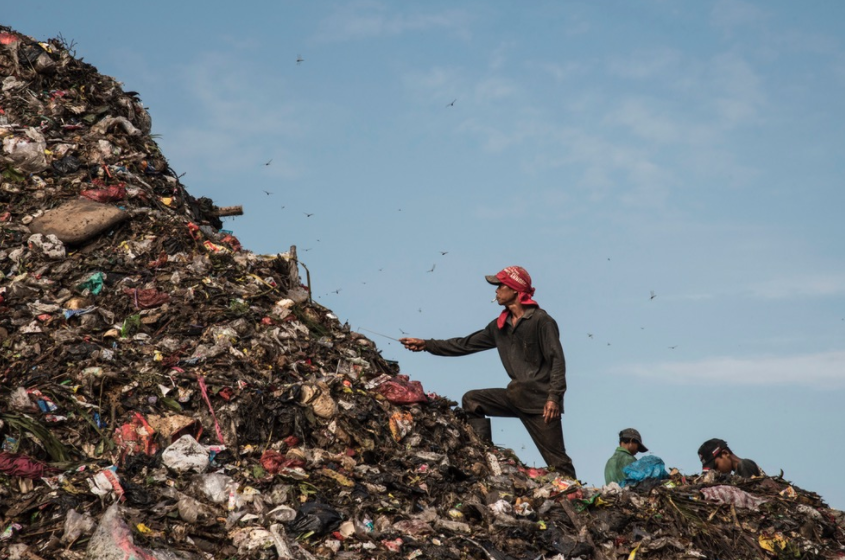
In this filthy and chaotic universe, I begin to understand how one man’s trash becomes another man’s means of survival.
Here, everything old finds a new purpose. Abandoned sofas and tables are often huddled together in impromptu ‘cafes’ where workers will pause to share a cigarette or have a cold drink, while ... You will also hear the call of Bantar Gebang’s resident imams wafting out over the landscapes of trash, but despite a strong sense of community at the landfill, many workers say that they are stigmatised and avoided if they ever cross its boundaries.
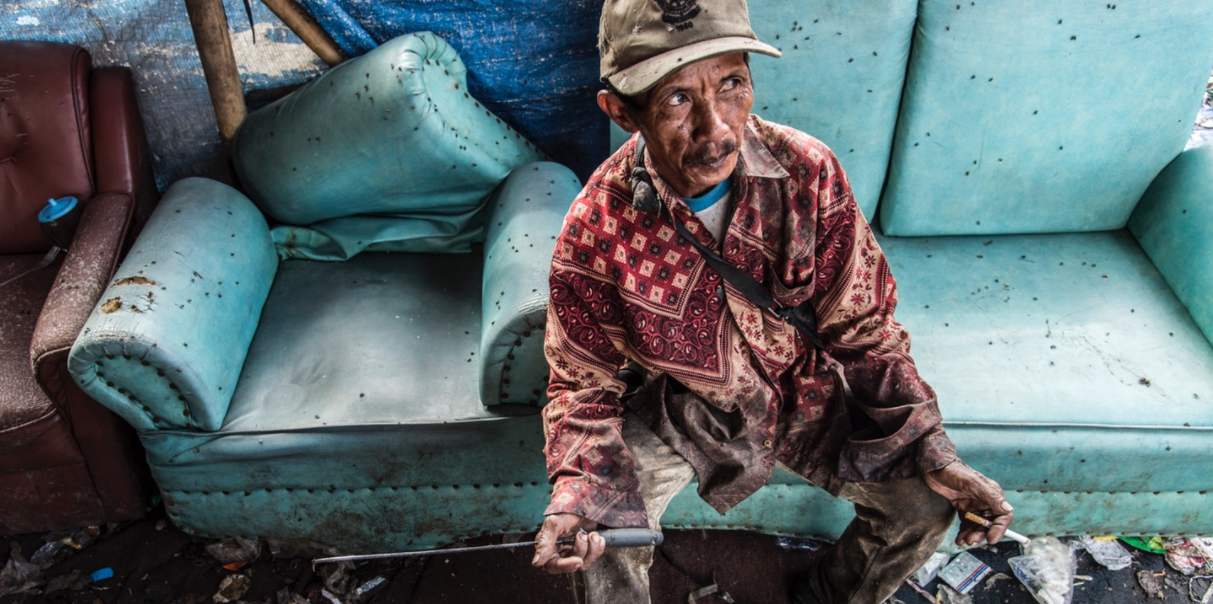
Today, the landfill is home to an estimated 3,000 families, and as Jakarta’s waste keeps growing, so does its population. Almost all residents live in makeshift shelters built from tarpaulins and scraps of metal as protection against the sun and rain. Those who have been there longer have fashioned huts from pieces of scrap wood, cardboard, old rugs, plastic advertisements, and nails rummaged from the landfill. During the rainy season, flood water rises and seeps into these dwellings. The water that is used to fulfill their daily needs is drawn from groundwater infected by leakages and sewage.
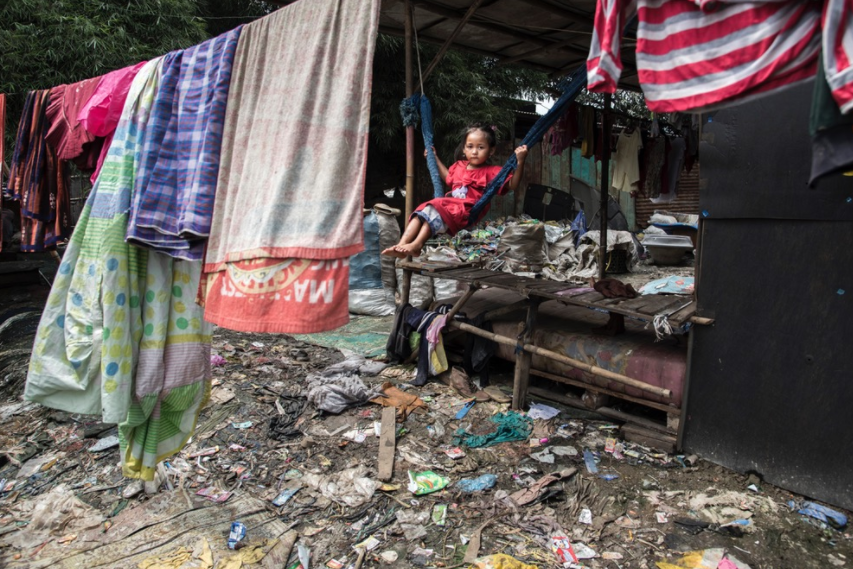
During the days I spend documenting life at Bantar Gebang, I do my best to show humanity, to take an interest in those living here, to simply be myself, and to convey that I consider those living and working here my equals.
Yet the foul smell is inescapable, the heat suffocating, and whenever I move I sweat, though I make no effort. When you find yourself in conditions like these, in an environment rife with the evidence of inequality, the only thing you feel is an overwhelming sense of gratefulness to have been able to satisfy your basic needs and a burning desire to do something to help. With my foreigner’s gaze, I cannot help but compare my everyday life to that of the men, women and children whose photographs I take. Some of them simply have no point of comparison, and live in acceptance of their condition.
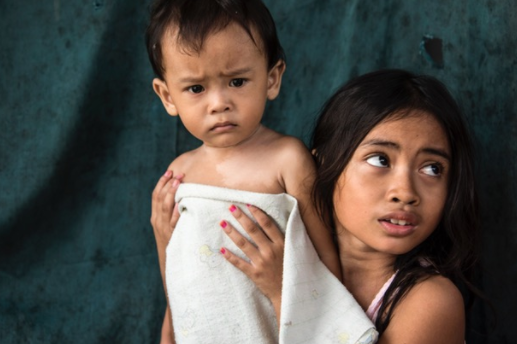
Nila, one of the children who is growing up at the Bantar Gebang landfill, bathes her little brother in their family’s shelter.
Following the day-to-day existence of the people who call Bantar Gebang their home was also a lesson in the incredible strength and resilience of the human spirit. In the midst of these challenging conditions, people of all ages proved to me that love and joy will always exist even in the worst of places.
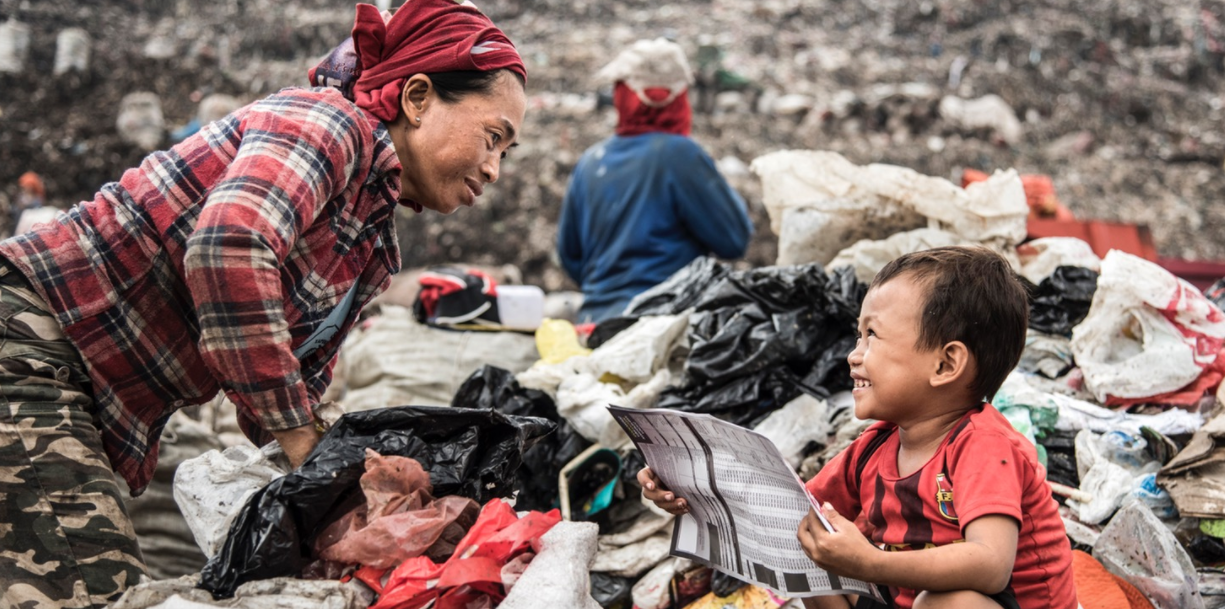
Andi, only a few years old, plays amongst the mounds of rubbish as his mother sifts through to salvage what she can.Andi, only a few years old, plays amongst the mounds of rubbish as his mother sifts through to salvage what she can.
On this occasion, I had travelled to Bantar Gebang to learn how I could assist the remarkable Resa Boenard. Brought to the area by her parents when she was just ten months old, Resa grew up one of Bantar Gebang’s children, surrounded by these vast, decaying mountains. At first her parent’s home was among rice fields, today, fifty metres of trash tower outside her windows.
Unlike so many others who live and work here, Resa had the chance to attend secondary school and to complete her studies, experiencing life outside this place, despite frequent bullying by her classmates for living on a landfill. Later, unable to afford the fees to attend university or to pursue her dream of becoming a doctor, Resa felt compelled to move back to Bantar Gebang, deciding that she would dedicate her time to helping the people here.
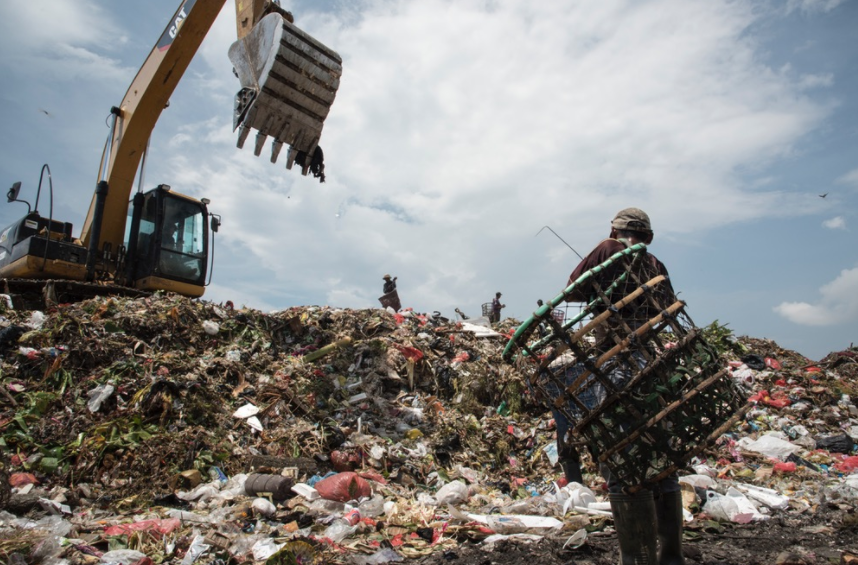
“Just because we are born among rubbish, doesn’t mean we are rubbish. My commitment to the people and young people here, it is still big in my heart. I have to do it.” — Resa, founder of BGBJ
Determined to give other children living on the landfill the same opportunity she had, Resa has re-named the landfill ‘The Kingdom of Bantar Gebang’ and started an organisation called BGBJ, which stands for ‘the seeds of Bantar Gebang’, along with her British friend and co-founder John Devlin. Resa believes that the children at the landfill are like seeds, and when nurtured and supported, they will be able to gain an education and to see that they can become something else. At first, with no funding or other support, Resa simply opened her home to the children living on the dumpsite, and began.
Today, with both a hostel and community hub on the landfill, BGBJ aims to develop a healthy and sustainable way out of poverty for the children and families who live and work here, through education and employment. Since 2014, volunteers and travellers have been helping Resa to expand her work and to turn her neighbourhood into what she calls, “the best dump ever”.
Here you can watch a short video interview I made with Resa during my time there. The positive spirit in Reza’s home and at BGBJ is simply amazing.
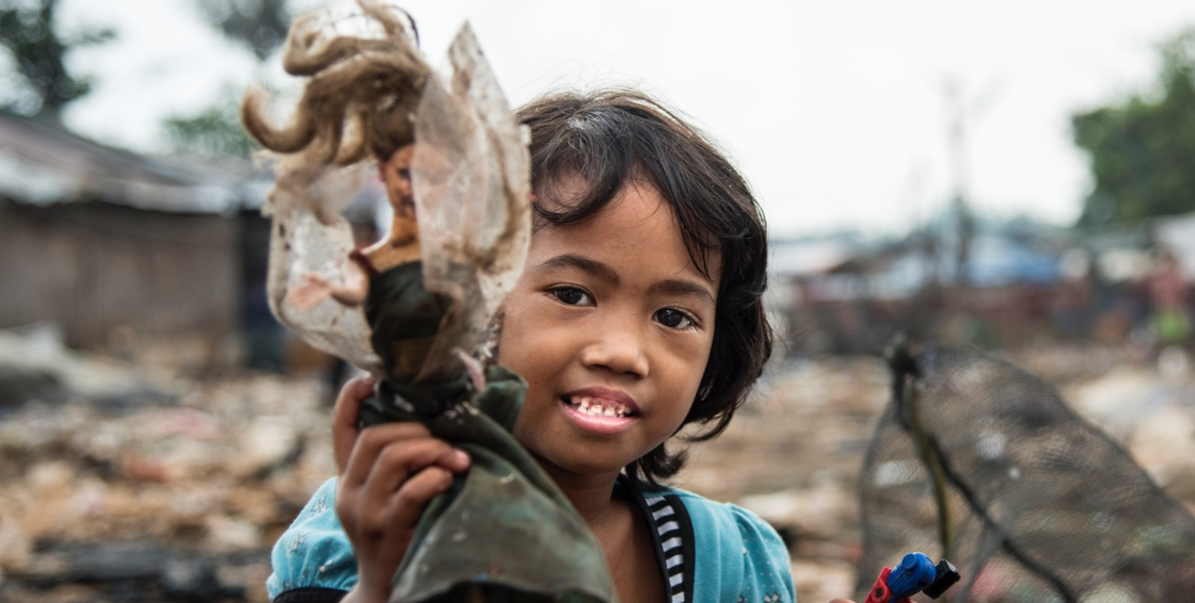
Sita, one of the young children whose families call the landfill their home, searches for toys amongst the rubbish.
Last year, waste management in Jakarta underwent a major shake-up, with multiple blockades and protests preventing trucks from entering the landfill, after disputes erupted between the Jakarta administration and their Bekasi counterparts. Angry at the stench of the never-ending stream of passing garbage trucks hauling waste to the landfill, which were now violating working hours and using a prohibited road, the protesters nearly paralysed Jakarta’s waste management during early November. The disputes were finally resolved when the city’s acting governor visited Bantar Gebang and promised to double the compensation provided for households located near the landfill to Rp 600,000 (around USD $45) every three months.
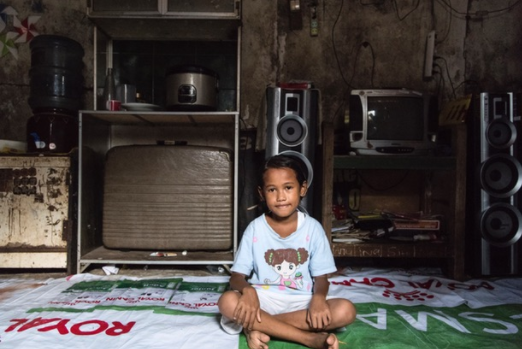
Ina, one of the luckier Bantar Gebang children, whose family have a small home with some concrete walls.
Though officials have admitted that Jakarta may need at least ten years to start fully addressing its significant waste management issues, some things look set to change. Recent initiatives to trap methane produced by the landfill and build on-site recycling facilities have eased Bantar Gebang’s pollution, and in 2016 a landmark agreement was made with Finnish energy company Fortum to develop an intermediate treatment facility (ITF) in the capital.
Despite expert concerns that the incinerator at this new ITF may emit hazardous substances if plastic waste is not properly removed, it is expected to process 2,000 to 2,200 tonnes of waste per day, and is intended to help reduce the city’s long-term dependency on the Bantar Gebang landfill. Three more bids are currently being conducted for further ITFs in the city.
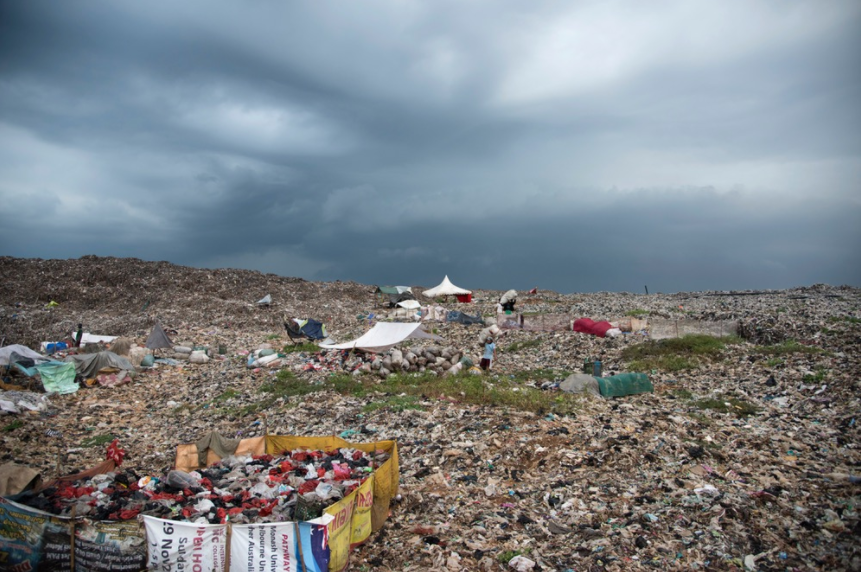
For now, however, life remains the same for the families and children of the Kingdom of Bantar Gebang, where Resa is affectionately called the ‘queen’.
Taking things one day, and one project, at a time, BGBJ is not waiting for the government to take action and has ambitious plans for improving the lives of the children and families living at Bantar Gebang, such as a new school, a workshop, a tool shed, improved sanitation, and a computer lab. For the past year, they have also been hosting backpackers and travellers, who come to offer English lessons and to go on jalan-jalan or walkabout around the dumpsite. Providing an amazing opportunity for eco-tourism and cultural exchange these events have been a wonderful success with the kids.

So far, BGBJ has been completely independent, funding improvements with their own personal savings, with money generated from the day trips and overnight stays, and with donations from individuals and groups.
Today, they are raising USD $5,000 in seed funds for a workshop that will enable BGBJ to establish a sustainable social enterprise, called ‘BGBJ Style’. With the goal of producing a range of merchandise and upcycled products from the landfill, they have already begun by developing and producing their own natural insect repellant, balms, and candles. Offering alternative employment to some of the parents of BGBJ kids, this enterprise will generate an income so that BGBJ can continue to pay for and improve its services.
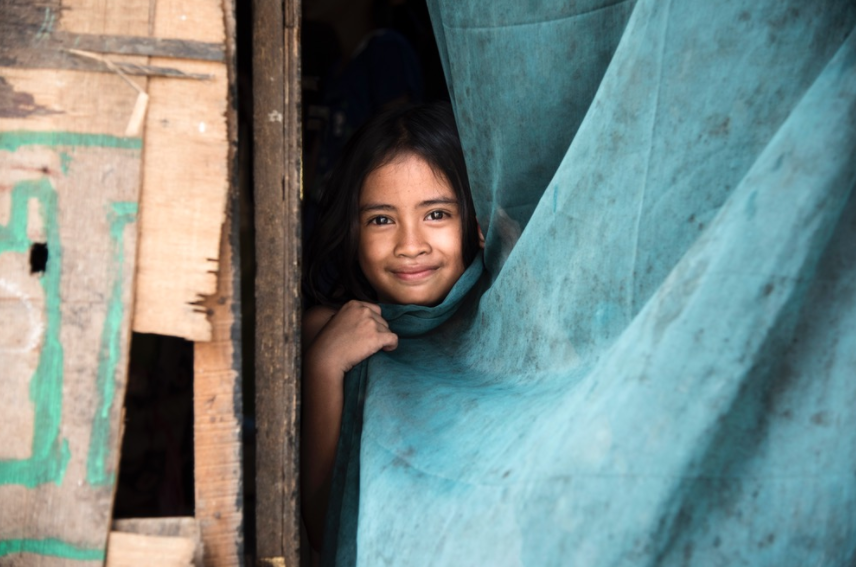
Nila, who lives with her family in a homemade shelter at the Bantar Gebang landfill, peeps out from behind a makeshift curtain.
Mahatma Gandhi once said, “Be the change that you wish to see in the world.” and it is up to all of us to do our bit. For my part, I have been inspired to do everything I can to help support Resa’s work. I hope you will join me.
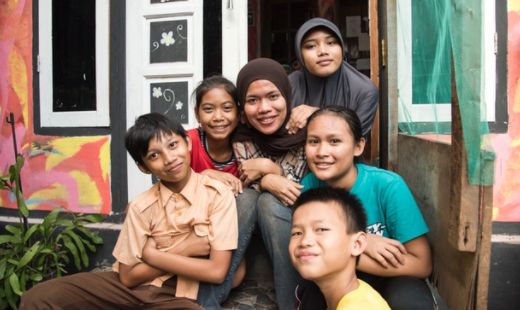
Resa Boenard, the inspiring founder of BGBJ, with some the kids growing up at Bantar Gebang landfill.
Please help me support this amazing local organization through their current GoFundMe campaign, where you will find more stories and details. More information can also be found about their work through the BGBJ website.
ALEXANDRE SATTLER
Alexandre Sattler is a photographer, traveler, and producer of audio documentaries on our planet's diverse cultures, our shared humanity, and the environment.

Photo by Quinn Dombrowski
Should one use an airbnb?
From the consumer’s side, the sharing economy is pretty fucking rad. Anyone who grew up riding in taxis and then suddenly switched to Uber knows why: getting into a cab used to be like stepping into a scene from Mad Max: Fury Road, with drivers who were very frequently about as sane as the War Boys.
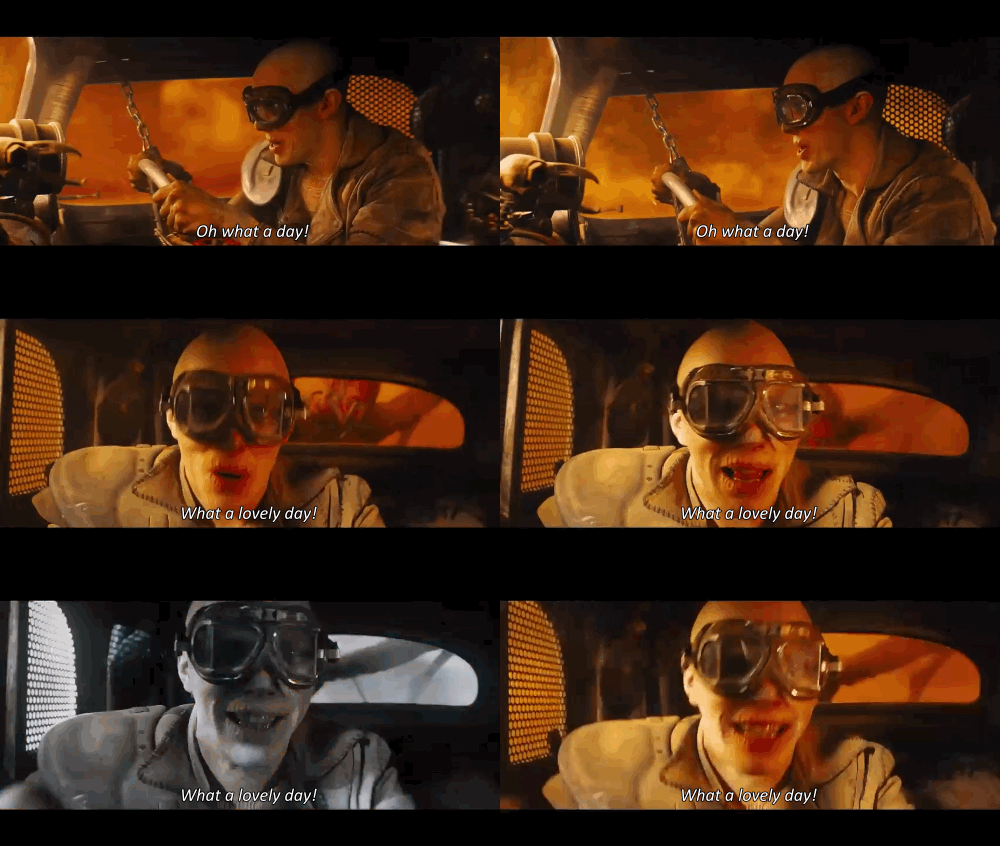
Uber drivers, however, depend on good ratings from those riding with them, and as such, have an incentive to not drive like lunatics. Likewise, you as the consumer get rated, so you have an incentive to be on your best behavior.
Consumers get the same sort of benefit with Airbnb: it’s not free, like traveler favorite Couchsurfing, so it doesn’t have the same sketchy feel, and it grants customers the opportunity to stay in actual homes in the neighborhoods they’re visiting, rather than in a generic hotel room.
The problem is that the “sharing economy” manages to conveniently undercut decades of labor laws, housing laws, and civil rights laws in ways that the legal system hasn’t caught up to just yet, which is causing some pretty ugly side effects. Uber deserves attention — it dodges and fights regulations that would apply to other cab companies, underpays its drivers, and leave cities that set a higher standard for them — but for now, we’re just going to focus on Airbnb.
What’s wrong with Airbnb?
Airbnb has two really big problems with it that ultimately stem from the same issue. And to be fair, these aren’t necessarily issues that were created by Airbnb, so much as they are issues that stem from the entire concept of the “sharing economy.”
1. Airbnb is playing by a different set of rules.
I live in the seaside town of Asbury Park, New Jersey, and Airbnb is a thing here: a lot of people will rent out their homes for a weekend to get some extra money, and Airbnb and its competitor VRBO are the simplest ways to do it. This is a tourist town, so the town encourages people to invite tourists into their homes. But some of the larger businesses in town are hotels, and there’s a good number of boutique hotels and BnB’s as well. And while they are large for the town, they aren’t mega-conglomerates like Hilton or Marriott. They’re small businesses. So it’s easy for them to be undercut by Airbnb. A homeowner’s profit margin doesn’t need to be as big as a hotelier’s — they aren’t running a full operation, they’re just trying to make some extra cash.
All of this would be fine — competition makes the market work, etc., etc. But users of websites like Airbnb and VRBO often don’t submit to fire safety and coding regulations that would be required of hotels and regular BnB’s, despite being legally required to. It’s also relatively easy for the Airbnb hosts to dodge paying their taxes, as they’re small enough to fly under the radar. This puts the Airbnb users at an unfair advantage, and it pisses a lot of hotel and BnB owners off.
Airbnb presents themselves as scrappy underdogs fighting big mean corporate hotel chains. When New York hoteliers claimed Airbnb was cutting into their business, Nick Papas, an Airbnb spokesperson told Bloomberg News:
“In fact, without Airbnb many of these travelers wouldn’t be able to visit New York City at all or would have cut their trip short. While the big hotels have been clear that they are concerned about losing the opportunity to price gouge consumers, we hope they will disclose the percent of their profits that stay in New York City and the percent they send to corporate headquarters outside of New York and, even, outside of the country.”
But Airbnb is not an underdog — last year, it was valued at $20 billion. That’s in the same league as Hilton ($27.8 billion) and Marriott ($22.9 billion). Since Airbnb isn’t responsible for making sure it’s users are paying taxes and are up to code, it’s basically just playing with the bumpers up.
By presenting themselves as a mere platform connecting people in the “sharing economy,” rather than as the manager of a huge network of small vendors, Airbnb is skirting regulations and making out like bandits.
2. Airbnb may be the reason “the rent is too damn high.”
The publication Grist explained the basics of this problem in a recent article, using the example of Tarin Towers, a resident of a rent-controlled building in San Francisco. Her building was bought by a real estate developer who wanted to charge way more for the rooms, so he offered the residents buyouts. Towers did the math and realized that even with the buyout, she wouldn’t be able to afford a new apartment in the city’s absurdly inflated rental market. From Grist:
“Towers held out as her old neighbors left and new tenants started moving in. Unlike the old neighbors, these new people were young, mobile, transient. And there were a lot of them. [Her landlord] O’Sullivan, it turned out, had leased the building to a startup called the Vinyasa Homes Project. Towers soon discovered that Vinyasa had listed her building on Airbnb, advertising it as a ‘co-creative house.’ The listing made it sound almost like a commune. ‘You want to join a community of like-minded peers who are doing inspirational things?’ it read. ‘This is the place for you.’ Unlike in the communes of yesteryear, however, each bed is going for more than $1,500 a month — and these are bunk beds in shared rooms. That means each apartment could now be bringing in $10,000 a month in rent.”
Towers eventually was forced out of her apartment, and took the buyout. She can’t afford a new rental in the city, so she’s housesitting until she figures something out.
This is a problem everywhere, though: in Barcelona, in Berlin, in New York, in New Orleans. It’s particularly tragic in the Big Easy, as it’s forcing out the last long-term residents who held on in neighborhoods devastated by Hurricane Katrina.
It’s the worst for cities with tight housing markets and a heavy flow of tourists. Remember the New York City mayoral candidate whose platform was “the rent is too damn high”? It may have gotten that high in part because of services like Airbnb — it’s way easier to wait for someone who will pay $2 grand a month for an apartment when you can rent the apartment out for exorbitant prices to travelers in the short term.
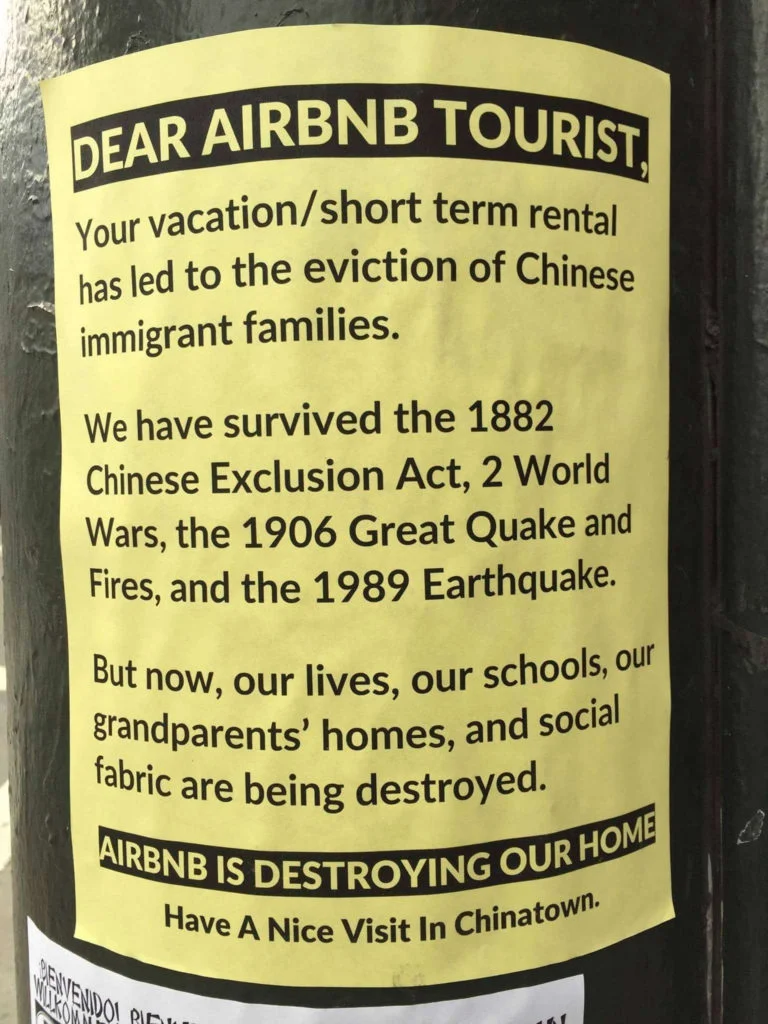
Photo by Leigh Blackall
You could argue that Airbnb isn’t responsible for the misuse of its service. But they aggressively fight any measure that would put the onus of responsibility on them. When San Francisco tried to pass a measure that would restrict the number of nights a year a unit could be used for short-term rentals, Airbnb spent $8 million fighting against it. When San Francisco tried to pass a rule that would force Airbnb to ensure its hosts were up-to-code, they donated hundreds of thousands of dollars to local political campaigns.
Some cities have fought back effectively. Barcelona has seen a population drop in its historic neighborhoods thanks in large part to its tourism industry, and as a result, have started slapping Airbnb with fines for offering apartments that weren’t registered with the city, and Berlin and Paris and even New York have been fighting back as well. But this is a problem that’s far from solved.
3. It’s not totally Airbnb’s fault.
In Airbnb’s defense, there’s no good business reason they would voluntarily take responsibility for policing their users. It’s not a charity, and it would be very expensive for them to check up on every single host. It would be a guaranteed way to decrease profits, which, incidentally isn’t legal — companies are required by to take actions that benefit their shareholders.
But this is why we have regulation. Airbnb isn’t tasked with doing what’s best for the local communities: our governments are. So this is a problem that’s fixed not by Airbnb being benevolent, but with good policies and effective enforcement. Which means it’s a battle that needs to be had on a city-by-city and country-by-country basis.
The problem is that we simply don’t know how serious the problem is yet — there’s been a little bit of research, but it’s far from conclusive, and has possibly been biased against services like Airbnb. There’s no reason to think that good policies couldn’t help solve the problems that Airbnb and its “sharing economy” counterparts cause. But more work needs to be done.
So what can we as travelers do?
Let’s be up front: staying at an Airbnb is a cooler experience than staying at a hotel. I have a friend who stayed in a goddamn castle in Italy. I know people who have stayed in treehouses in Oregon and igloos in Norway. In the Netherlands, you can stay in an honest-to-god windmill. And it’s cool that we’re giving regular people this platform to make some extra money, host out-of-town guests, and maybe try something new. So I won’t say “don’t ever stay at an Airbnb or a VRBO.” This is the future, and the solution to its problems will be through systemic change, not through any single individual’s actions. But it’s also time to call bullshit:
There is no such thing as the sharing economy. It’s just called the economy, and it’s been around for millennia.
Are you trading goods and services for cash? Yeah — that’s the economy. You’re just doing it in a different place. Airbnb and Uber haven’t reinvented the economy, they’ve just used the internet to create a new space in which economic transactions can happen.
So with that in mind, here are a couple of things you can to be a part of the solution:
1. Support fair regulation of Airbnb & VRBO in your hometown.
If your town has a lot of tourists, try to be supportive of government attempts to regulate businesses like Airbnb and VRBO. The companies will do shitty ad campaigns about how your city is turning it’s back on money and innovation, but that’s just a scare tactic. Anyone who has lived in a tourist town knows that, even if the economy is dependent on tourist dollars, what’s good for the tourists isn’t always good for the locals. Try and push your local governments to strike a balance between making money and supporting the local community. Get involved. Get organized. This is pretty much always the best solution to anything.
2. Try to avoid the shitty Airbnb hosts.
You can take steps to avoid giving money to the douchebags who are misusing the service. Think of it as another thing you want to research, along with “safety,” “service,” and “cleanliness.” In short, you want to seek out spots that the current owners actually live in.
Becky Caudill over at Casa Caudill has some great tips for spotting the shitty hosts using the platform itself. Here’s what she suggests looking for when you’re checking out the photos of the location provided by the host:
"
- Seek out properties that are decorated like you or your friends would decorate your own homes.
- Look for plants (not just fresh flowers).
- Check out the art. Is everything from Ikea or another mass market supplier? Or are there original prints or photographs on the wall? On shelves? Is there any artwork at all?
- Does the kitchen come with basic supplies like salt, pepper, olive oil, etc? People who live somewhere will have these things on hand. (Although maybe not in NYC? It’s my understanding from friends there that people eat out every night and never cook so maybe they don’t need these things?)
- Do the owners read? Are there books other than travelogues visible in the pics? (And for goodness sake, if you see hundreds of travel brochures that’s a dead giveaway this place is operated solely as a vacation rental property).
- Stay in real neighborhoods, not tourist areas."
It also helps to delve into the comments a bit. Can you get a sense from the comments as to whether this is actually someone’s home, or is it more of an “operation”? Are there big discrepancies between the reports of the rooms? That could be a sign that there are multiple rooms that are lived in by different people in your building, indicating that this is being done by a landlord, not an owner or a tenant.
And of course, if you end up in one of these “operations” in spite of your best efforts, it’s okay: just go onto Airbnb and mention it in the comments. Helping others identify exploitative hosts is as important as helping them identify bigots or creeps. And that’s what the review process is for.
As always, the name of the game is damage control — try your best to support the local communities you’re visiting. Sometimes you’ll fail. Other times you won’t. And don’t assume that all things that are shiny and new are inherently good.
THIS ARTICLE WAS ORIGINALLY PUBLISHED ON DON'T BE A DICK TRAVEL.
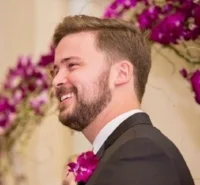
MATT HERSHBERGER
Matt Hershberger is a writer and blogger who focuses on travel, culture, politics, and global citizenship. His hobbies include scotch consumption, profanity, and human rights activism. He lives in New Jersey with his wife and his Kindle. You can check out his work at the Matador Network, or over at his website.

When should one boycott a country?
WHEN I WAS A SOPHOMORE in college, I went on Semester at Sea. It was a 4-month study abroad program that sailed around the world. Shortly after I was accepted into the program, I was sent an email with two pretty big surprises in it: first, Nobel Peace Laureate Desmond Tutu would be sailing with us for the entire voyage. Second, as a precondition of Tutu joining us, we would now be skipping our planned stop in Burma and would be going to Malaysia instead.
Tutu had insisted on this change because his friend, Burmese leader (and fellow Nobel Peace Laureate) Aung San Suu Kyi had called for a tourism boycott to Burma. Tutu had cut his teeth in the South African anti-apartheid movement, which conducted a similar international boycott over the course of several decades. The international solidarity, Tutu claimed, was essential for bringing apartheid to an end.
This led to a huge debate on the ship: a lot of people really wanted to go to Burma, and argued that the cultural exchange was valuable and worthwhile. They also argued that we could visit Burma in a way that wouldn’t be supportive of the oppressive military regime that Aung San Suu Kyi and her National League for Democracy were fighting against. We could, they argued, make sure our money would go to the right places.
In the end, we didn’t go to Burma. Several years later, Suu Kyi and her NLD lifted their call for a tourism boycott as the country started to transition towards democracy. But since then, I’ve heard a lot of calls for tourism boycotts to certain countries. It’s a question worth examining: when is it right to boycott a country? When is it wrong? When is it just pointless?
When are boycotts pointless?
During the Bush years, I heard conservative friends and family members say more than once, “I’ll never visit France after how they bailed on us in Iraq.” It was usually uttered by people who were using patriotic fervor as an excuse to skip a country they were never planning on going to in the first place, but sometimes, conservatives who might otherwise have enjoyed a trip to Paris decided that they needed to make a moral stand. No France for them. That’d teach France to bail on America, “and after we did so much for them in World War II.”
The correct response to this type of crap is “ugh,” but lefties and liberals shouldn’t get too smug: I’ve heard plenty of my activist friends suggest they were boycotting a country as well, whether it was of Japan (because of their treatment of dolphins and whales), of Thailand (because of their Tiger Temple), or of Russia (because of the Russian government’s oppression of journalists).
Boycotts can be well-meaning and still be useless. The one case in which they are always useless is in the case of the personal boycott. If you are boycotting a country for moral reasons, that’s just fine, but don’t delude yourself into thinking you’re making any sort of difference. Boycotts are an expression of political (and sometimes economic) power. By saying, “I refuse to engage with you,” you are basically saying you don’t think that country is legitimate, and that it does not deserve your support.
The truth is that, unless you are a very high-profile person, a single person boycott of a country is meaningless. It’s just not a large enough expression of power to make a noticeable difference and to affect any change. Had Rosa Parks been the only person to boycott the Montgomery, Alabama bus system, the gesture would have been noble but totally futile. It was when hundreds of people (including high-profile leaders like Martin Luther King, Jr.) joined that the boycott really did what it was meant to do. A boycott, to be done effectively, must be done collectively.
When is a travel boycott effective?
I’ve developed three tentative rules to when you should consider a travel boycott.
1. You must have power over whomever you’re boycotting.
You can’t boycott something you don’t have any power over. This is why, for instance, it would be impossible for Americans to arrange a travel boycott of North Korea (1): we simply don’t go there enough for the withdrawal of our tourist dollars to make any difference. It’s only countries that we have a healthy relationship that we can effectively boycott.
A boycott is effectively saying is, “You’re not playing by rules that we accept, so we refuse to play with you.” You can’t threaten to walk off when you weren’t playing in the first place.
2. Money isn’t enough: You must have the ear of the media.
The economic results of boycotts are tough to gauge. The Boycott, Divest, and Sanction (BDS) (2) movement against Israel has been going for over 10 years, but hasn’t necessarily resulted any tangible economic loss for Israel (3). The boycott of South Africa, on the other hand, is widely considered to have been a success in economic terms.
But ultimately, whether the BDS movement or the cultural boycott of South Africa had any real economic effect isn’t the point. The point is in getting enough media coverage to draw attention to the injustice and, presumably, to shame the perpetrators. As I write, this is happening in North Carolina, where a recent anti-LGBTQ law has resulted in New York Governor Andrew Cuomo boycotting travel to the state on official business, in Paypal pulling jobs from the state economy, and in rocker Bruce Springsteen canceling a NC concert (which, for me personally, is literally the worst punishment I could imagine).
Yes, these moves may cost North Carolina money here and there, but more importantly, they build a political and social momentum behind the movements they support. It was not, in the end, economics that ended apartheid. It was external pressure worldwide (pressure which had to come from the grassroots, as leaders like Ronald Reagan supported apartheid), and volatile internal politics which brought about the end of that regime. Boycotts can be a powerful symbol that raise awareness of an issue and turn public opinion. If they succeed in this regard, whether or not they’re effective economically is beside the point.
3. Boycotts have to have an internal element.
Boycotts have more moral clout when they’re done in solidarity with people from within the place you’re boycotting. In other words, if local people say, “don’t boycott us,” then don’t (4). So when the ANC and leaders like Desmond Tutu called for the rest of the world to boycott South Africa, it gave the boycott legitimacy. When Aung San Suu Kyi called for tourists to not visit Burma, it gave the boycott legitimacy. When Palestinians or liberal Israelis support the BDS movement, it gives the movement legitimacy.
Boycotts that are done entirely externally — as in you and your friends unilaterally deciding to boycott France because reasons — aren’t effective, and can be perceived as bullying, because you’re attempting to impose your morality on another country. If you don’t agree with someone’s morals, it’s usually better to talk to them and try and find common ground than it is to simply shut them out. But if you and your allies within that country are within agreement, and your allies think a boycott’s a good idea, then it may be worth giving a try.
So should I participate in travel boycotts?
The answer to this, I’m sorry to say, is annoyingly ambivalent: Sure. If you want. In some rare cases. Boycotts just too rarely achieve that rare combination of effectiveness and legitimacy to be worthwhile (5). Philosopher Peter Singer told Traveller.com.au of travel boycotts:
“A boycott may be one way of getting some leverage on [political issues] when nothing else seems to work. But I don’t think that there is a general obligation to boycott all countries that are doing something unethical.”
The reason, he said, is because boycotts are only really effective when they’re accompanied by a public campaign. And it’s worth noting that there’s no such thing as a totally ethical country. You should definitely not boycott a country that there’s not already an organized boycott against unless you want to undertake the gigantic effort of organizing the boycott yourself. And in all honesty, there may well be much better ways of pushing your agenda politically than through a boycott: frequently, you may be able to push your government to act instead.
Boycotts really only make sense when they’re an attempt to undermine your government’s action: in South Africa and Israel, the US Government has acted in response to perceived geopolitical interests rather than in response to human rights standards, so those places make sense to organize boycotts around. In North Carolina, Indiana, and other states that have enacted anti-LGBT laws, the boycotts are in response to actions by the government itself. In these cases, participating in boycotts may be the just and right thing to do.
That said, there are totally legitimate arguments for not participating in boycotts, from supporting locals who may be unfairly harmed by a boycott, to simply pursuing other forms of protest and resistance that you believe would be more effective. Paul Simon’s breach of the UN-approved cultural boycott of South Africa during the making of his album Graceland was extremely controversial, but in the end, he used the breach to give an international platform to black South African musicians like Ladysmith Black Mambazo and Miriam Makeba. While it may not personally have been my choice — and indeed was not the choice of many activist musicians, from Springsteen to Bono to Queen — it is conceivably justifiable.
It’s worth noting, though, that Paul Simon’s breach was at least thought-out and intentional. He didn’t simply ignore the cultural boycott for personal profit: he attempted to make things better for South African musicians. So if there’s a movement that you find yourself aligned with, and they are calling for a travel boycott to a country you want to visit, you certainly may decide to go anyway, but going will only really be justified if you engage in some other political act.
In the end, the only real sin, if you believe something wrong is being done, is silence. If you feel your voice is best heard through a boycott, go for it. If you feel you can speak out in a better way, feel free to do that instead. Just don’t do nothing.
Footnotes
1. Americans shouldn’t travel to North Korea anyway: they frequently charge American visitors with barely-supported crimes and then hold them as bargaining chips.
2. Something quick I should mention: the BDS movement hasn’t really singled out travel as a priority in their boycott movement. They’ve focused more broadly on academic boycotts, culture boycotts, divestment, and the boycotting of certain Israeli businesses. I mention them here because it’s the highest-profile active boycott movement.
3. This is totally debatable, but the lack of consensus on whether or not the boycott has worked kinda proves my point.
4. This gets tricky, of course, when you have multiple groups saying different things. At that point, you have to listen to arguments and side with the group you agree with the most.
5. Excellent ethical travel sites like Responsible Travel don’t advocate travel boycotts except in rare exceptions like Burma.
THIS ARTICLE WAS ORIGINALLY PUBLISHED ON DON'T BE A DICK TRAVEL.
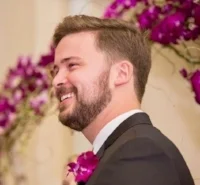
MATT HERSHBERGER
Matt Hershberger is a writer and blogger who focuses on travel, culture, politics, and global citizenship. His hobbies include scotch consumption, profanity, and human rights activism. He lives in New Jersey with his wife and his Kindle. You can check out his work at the Matador Network, or over at his website.
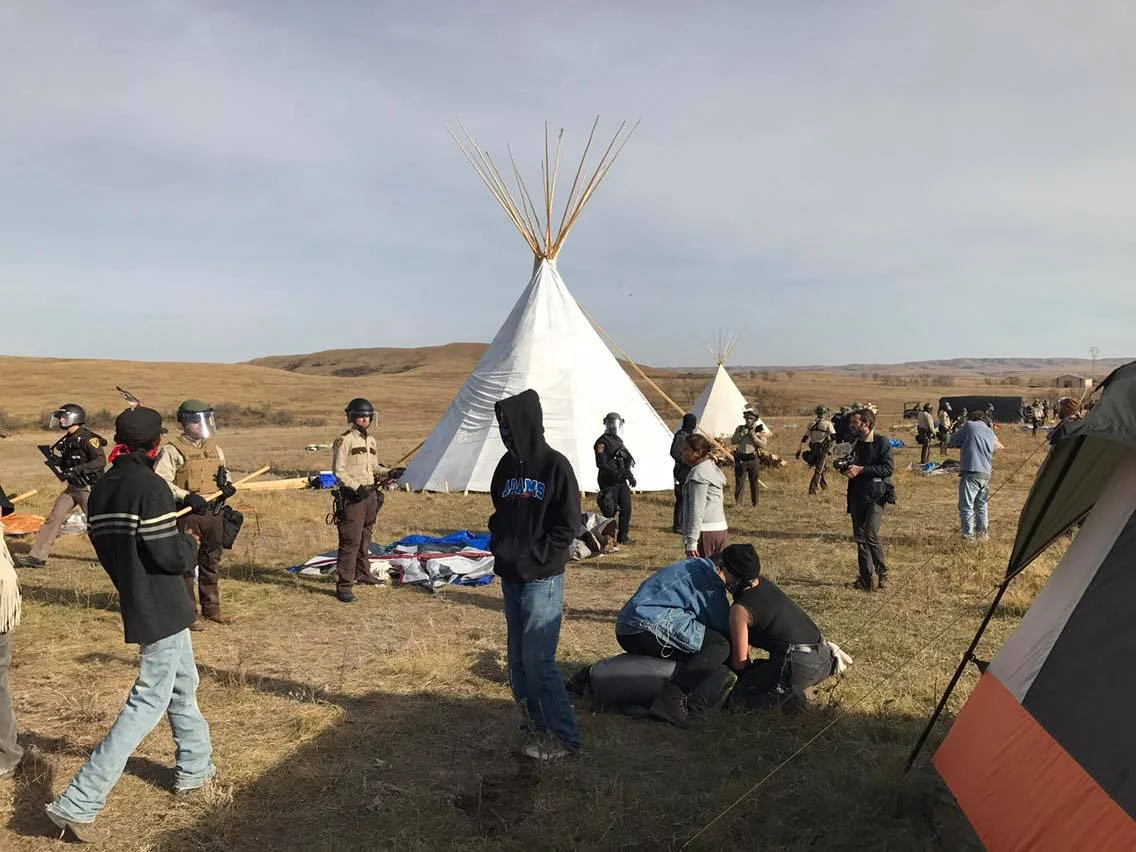
Lessons from My Time in Standing Rock
The chaos of that day was vivid. In the morning, I remember strolling around Oceti Sakowin, the main camp of Standing Rock, and asked if anyone had been arrested at the new frontline camp. My friends had camped there the night before in an effort to help protect the space from the police, whom many rumored were prepared with riot gear and paddy wagons.
The newly established camp had been set up to block the next part of the construction for the Dakota Access Pipeline and the people residing there were building the infrastructure to survive the incoming winter months. By the evening, elders were shouting over the microphones at Oceti Sakowin, “We need you on the frontlines! The police have arrived!”
Vans and trucks speed out of the main entrance of the camp, all packed with people in masks and scarves. Highway 1806 was lined with cars, cameras, and people. Grey smoke billowed in the distance as a car burned. The chaos could be felt. I rushed into the frontline camp and began helping wherever I could. A indigenous woman and I carried things out of her tent as police closed in with their batons. Dark tanks stood in the distance and snipers on hilltop.
The more that I saw, the more that my heart began to race. Bulldozers began to plow through sacred burial grounds before my very eyes. Men were dragged out of teepees in their underwear. People pulled their bruised and bleeding friends array from the barrage of tear gas and rubber bullets. I grabbed my own friend as we slipped through the crowd after police shot at a horse.
With distance from my month spent in Standing Rock, I still find myself waking up in the middle of the night and thinking of the thousands of people that devoted so much time and pain to establish one of the most powerful modern cases of resistance against corporate greed. I think of the main fire at Oceti Sakowin, where people would gather every night with soup or cornbread or rice cooked by volunteers in the kitchen. I think of the children running around during recess and of the sun setting in the background as I walked back to my tent. I think of the moments experienced there, devoured by terror at the hands of the state.
Standing Rock, like many things in life, was a lesson in pain and endurance. It was also a lesson in how to love and demand a new world in one scarred by violence. There were many times that I wished to turn away and turn away from the horror, but as an activist, writer, and lover of freedom, I could not. As a black person in America, I have faced my own ordeals because this country has refused to wash away the oppression of present social institutions.The indigenous tribes that gathered deserved more and still do after centuries of surviving colonialism.
But the question still remains - what do we do next to help the environment? The answer arrives when we build spaces, like Standing Rock, that aim to show another way, a better way to relate to each other and treat the Earth. The answer arrives when we begin to understand that all of our lives are on the line if we do not act now. The answer arrives when we choose to not turn away.
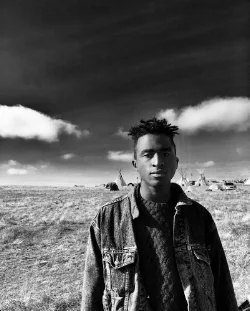
RYANT TAYLOR
Ryant Taylor is a writer and activist from Cleveland, Ohio. He has participated in protests in France, Ferguson, and Standing Rock. He is the creator of Decolonize The Mind, a travel blog, and is currently freelance writing in the Philippines.

What are ALL voluntourists good at?
In recent years Voluntourism it has gotten a bad name. There are a lot of valid reasons that people have been turned off by voluntourism, including:
- voluntourism’s potential to foster colonialist attitudes and cause harmful side effects (as in Illich’s thoughts on Peace Corps)
- projects which place unskilled foreign travelers in jobs requiring skilled laborers or taking away local jobs
- short term interactions with children without proper child protection policies (Some argue that English teaching is a great way to engage English-speaking travelers in volunteer work, and perhaps sometimes it is, but I feel that even this is not always a good fit. Often times native speakers know the language, but are not trained teachers and repeated short-term interactions can have harmful side effects for children.)
- volunteer placement agencies charging exorbitant fees from their overseas offices with little to no money reaching the development projects themselves (no need to link to a lot of them for examples, just google “volunteer abroad”!)
These reasons are some of the reasons that I too am skeptical of voluntourism initiatives. I have seen some damaging results of travelers philanthropy which did not embody effective voluntourism or development practices and ended up causing more harm than good. At PEPY, we have made many mistakes ourselves, especially in our first few years of operations where we designed trips for tourists to “teach and give” rather than “learn and support” and where we designed trips around the needs and demands of travelers rather than those of the communities we were working with. Many of our initial mistakes are highlighted in the documentary “Changing the World on Vacation” by Deeda Productions. Although watching some of your mistakes on TV and seeing yourself say some ridiculous things you no longer believe in is not a fun pass time, I appreciative that filmmaker Daniela Kon’s work will serve as a learning tool for many others and reminder to me about the lessons we have learned.
As we have examined at the hands-on service portions of our trips looking to find the most useful way to engage tourists in something they are skilled at, we asked ourselves: What ARE all tourists experts at?
The answer we came up with is this: All tourists are experts at being tourists! Of course!
They know what THEY want when they travel, and that knowledge is often the missing key to successful community based tourism initiatives. Now of course, you and I don’t share the same wants/needs as every tourist and living in Cambodia with a huge child sex tourism industry, I surely wouldn’t want to take the opinions of all tourists to heart when developing new programs. I do though believe that if we find similar minded people looking for an eco-friendly and responsible adventure, one very useful skill they all can bring is the ability to give their feedback and ideas about how to design such a trip.
Tourists can use these skills to help local communities who have a tourism product to offer but are perhaps lacking the experience to market or tailor the trip to tourists. They can also help promote positive environmental practices by highlighting their desire to see natural environments and physical and cultural preservation in the countries they visit.
By matching travelers up with community based tourism initiatives, we hope to improve the whole adventure tourism supply chain by:
- giving thorough feedback and ideas for improvement to community based tourism initiatives and groups looking to offer such products
- offering marketing advice
- promoting positive environmental practices and preservation initiatives
- creating informational and promotional material for the organizations we believe in from signs helping travelers find their way to the site to English language placards or hand-outs describing the locations highlights in areas where English speaking guides might not be available
- Physically helping to improve offerings in the area (constructing signage, cleaning surroundings, beautifying local infrastructure, building safety or protective tools such as fencing or walkways, etc)
We believe that, by designing trips which improve the local adventure tourism supply chain, we can place travelers in a position where both their time and funding are valuable while also helping to ensure that tourism dollars support local initiatives.
We have done some of this in the past, but had not embraced the concept of “using voluntourists as tourists” as much as we currently are in our upcoming tours. Our updated website (coming soon!) will highlight these offerings. In the meantime… what do you think? No, it’s not building a house for a family nor petting kids in an orphanage, so it might not have the same appeal as other offerings, but we believe that if we highlight the added value travelers can bring to responsible (aka. well-vetted) community tourism programs, people will be excited to support these programs.
What do YOU think?
THIS ARTICLE WAS ORIGINALLY PUBLISHED ON LESSONS I LEARNED.
DANIELA PAPI
Daniela is the Deputy Director of the Skoll Centre for Social Entrepreneurship. She has spearheaded student programming initiatives at Saïd Business School including the Leading for Impact programme and had taught on MBA courses including the Entrepreneurship Project and a course on high-impact entrepreneurship. Daniela is a graduate of Saïd Business School's MBA programme and was a Skoll Scholarship recipient.
Prior to coming to Oxford, Daniela spent six years in Cambodia where she grew a youth leadership organization, PEPY, an educational travel company, PEPY Tours, and an advocacy organisation, Learning Service. Daniela is co-authoring a book advocating for a 'Learning Service' approach to philanthropic and volunteer travel and has worked as a consultant to other social impact organizations, typically supporting their strategy redesign by incorporating her experience in social marketing and user-centered programme design. She recently wrote a report called 'Tackling Heropreneurship' focused on fuelling collective impact through an 'apprenticing with a problem' approach.
Check out Learning Service for more.
Rewriting the Code in Africa
Vulnerable girls and young women in Africa are being given a unique chance to learn vital technology skills in a safe space through an innovative pilot project launched by the charity Theirworld.
Code Clubs are low-cost, sustainable and scaleable safe spaces where girls can build, learn and create through technology, creativity and coding.
Theirworld - the charity behind A World at School - is launching Code Clubs in partnership with Kano, Codeacademy and Africa Gathering.
Fighting the Desert with Gardens in Senegal
This video follows a group of people in Senegal who are fighting deforestation. Due to extreme poverty, many people in Senegal result to cutting down trees to make money. This group is planting trees and gardens to help the environment.

If you want to make peace with your enemy, you have to work with your enemy. Then he becomes your partner.
VIDEO: A Fisherman's Freedom in Madagascar
Ravelo was trapped; He couldn't afford to continue paying the local loan shark to rent fishing equipment, because he couldn't catch fish to sell and make his payments. He couldn't catch fish because the mangrove estuaries had been depleted of wood for fire, in turn decimating the population of fish and seafood.
When Ravelo was hired by Eden Reforestation Projects, he was not only able to make an income planting trees, but his environment began to revitalize.
Eden Reforestation Projects hired Outskirt Films to tell this story on the remote coast of Madagascar. This powerful story was filmed in Madagascar by Outskirt Films.
VIDEO: The Social Enterprise Biji-Biji in Malaysia
The Biji-biji Initiative is a social enterprise that aims to share progressive ideas with everyone. In Kuala Lumpur the organization is a champion of sustainable living and by using discarded materials, basic electronics and passive building techniques to reuse waste in creative ways.

Protestors against travel ban.
Protesting the Travel Ban at LAX: Attorney Julia Trankiem Shares Her Volunteer Experience
On January 29, 2017, in response to Executive Order 13769—nicknamed the “travel ban”— which suspended refugee arrivals and banned entry into the U.S. for 7 predominantly Muslim countries, and likely spurred by the previous day’s demonstrations at JFK airport, hundreds of protesters descended on LAX condemning the Order.
That Sunday morning, chants like, “No Hate, No Fear. Immigrants Are Welcome Here,” rang out throughout the airport. There was marching, there were signs, there was singing, there were cries. Religious adherents, military veterans, descendants of immigrants, translators, lawyers, and politicians were present, demonstrating and lending support and services.
One of the attorneys lending her services was Julia Trankiem. The daughter of Vietnamese immigrants, and an alumna of University of Michigan Law School, Julia practices litigation and employment law in Los Angeles. Friday evening, word of the travel ban reached her. Saturday, she spent time learning more about the ban and reaching out to her contact at the American Civil Liberties Union (ACLU). By Sunday morning, she was driving towards LAX while listening to the news in tears. “I felt compelled,” she said, “I didn’t have a choice to just sit back.”
She headed to the short term parking lot, where she boarded a bus filled with protestors. After she arrived at the outside terminals, Trankiem saw a sign that read, “Hi, I’m an attorney.” The man behind the sign directed her towards The Coffee Bean & Tea Leaf inside. Once she made it, she found too many attorneys and not enough work. Undeterred, she eventually made her way to the baggage claim area, where she was able to begin volunteering.
Trankiem spent much of her day as an intake coordinator. Since there were no direct flights from the banned countries, she looked up flights to guess where else travelers might be flying in from—layover cities like London, Dubai, and Frankfurt. Afterwards, she helped send other attorneys to the corresponding terminal to meet with travelers to see if they or their family members or loved ones were subject to the Executive Order.
Detention times varied for flagged travellers, but some were detained longer than 6 hours, Julia says. There were rumors of immigration officials asking people to sign over their visas and conflicting stories of provisions, like food and water, having to be requested for detainees. There was confusion, and chaos, and disorganization, Julia says. There were also counter protesters with a different message. Julia heard accounts from attorneys that some people were told to, “Go back to where you came from.” The Los Angeles Times reported that there were about a dozen protesters in support of the travel ban.
The overwhelming majority of protesters at LAX, however, were against the ban, and in support of immigrants and refugees. Julia describes a sea of demonstrators on the parking bridge, in the lot, and in baggage claim-- some of whom applauded when international travellers de-planed and picked up their luggage. Many also held signs with compassionate messages like, “Welcome To This Country.” She says there was a “vibrant energy” that was “unifying” on that Sunday at LAX. She and others shared the “common goal of trying to make a difference and stand up for America’s core values.” Julia shares that she was thanked for her efforts, but left feeling thankful she was able to be of some assistance. She says that America blessed her family by allowing them into the U.S. after they fled the Vietnam War, and her volunteering was a small way to help repay the debt she feels she owes America.
Between January 27, 2017and January 31, 2017, an estimated 60,000 visas were revoked. By January 31st, nearly 50 lawsuits had been filed contesting the constitutionality of Executive Order 13769. On February 3, 2017, just 5 days after the LAX protest, a temporary restraining order (State of Washington v. Trump) was placed on the Executive Order. That restraining order was challenged and later upheld by United States Court of Appeals for the Ninth Circuit on February 9, 2017. The litigation is ongoing.
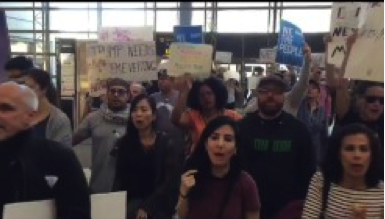

ALEXANDREA THORNTON
Alexandrea Thornton is a journalist and producer living in NY. A graduate of UC Berkeley and Columbia University, she splits her time between California and New York. She's an avid reader and is penning her first non-fiction book.