Sweden’s Unique Icehotels

From ice rooms to outdoor experiences, Sweden’s Icehotels provide a unique stay for travelers interested in the outdoors.
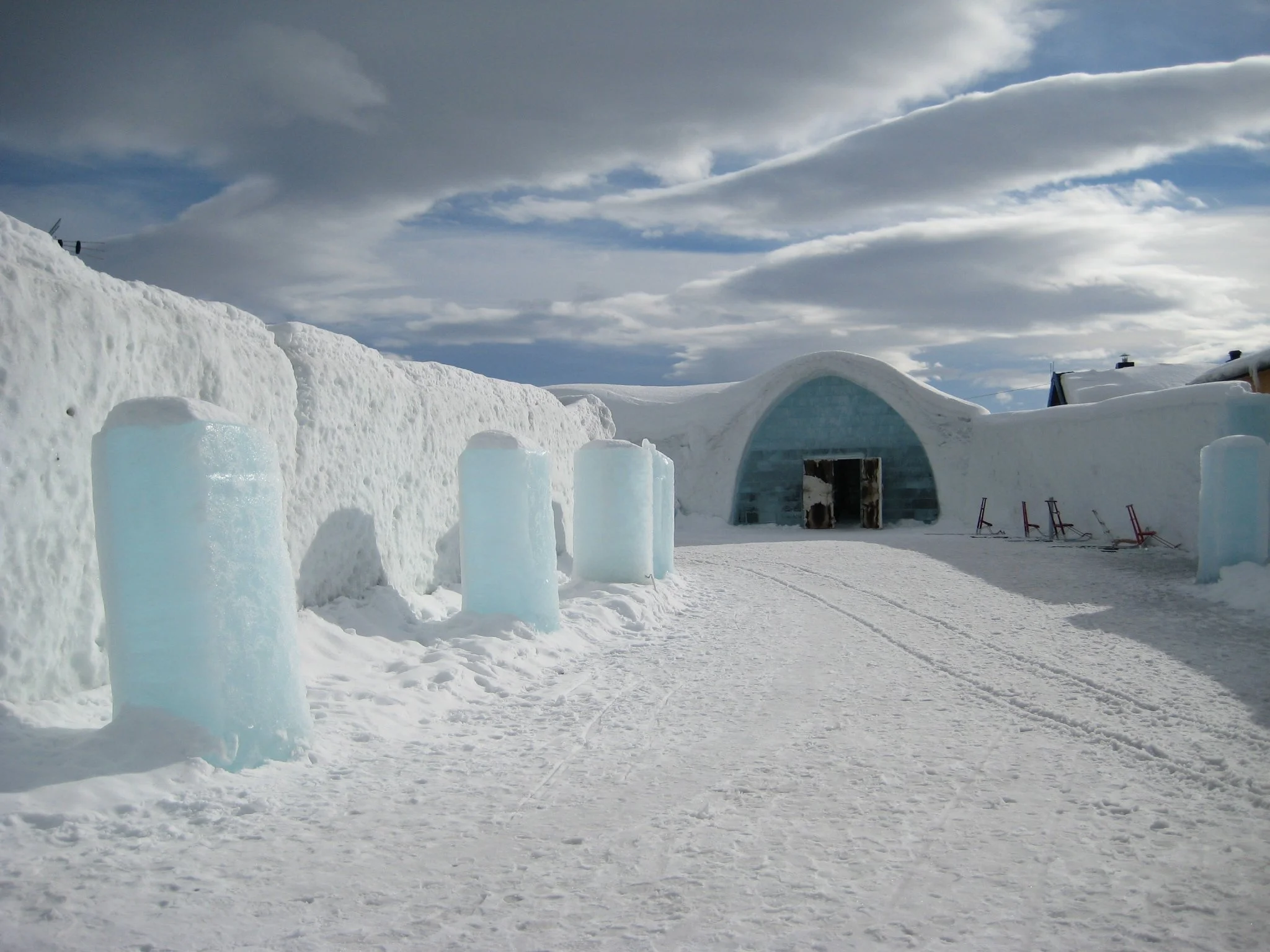
Snow tunnel entrance, lined with large ice blocks toward a hotel door that appears like an entrance to a glacier.

Entrance to Icehotel. Markus Bernet. CC BY-SA 2.5

A trip to Sweden may entail many unique experiences, but very little can parallel a stay at Icehotel in Jukkasjarvi. Located in the land region and 200km north of the Arctic Circle, the hotel was established in 1989 as the world’s first ice hotel, with the goal to, “Create life enriching experiences." A unique venue for hospitality, the ice hotel is structurally similar to an igloo. Ice and stagnant air both have very low thermal conductivity, limiting the heat transferred from the outdoors and keeping the structures from melting. The travel group Transun explains that, “The ice structure stops heat being transferred to the surroundings, because the ice and the windless air are both excellent insulators. The buildings depend on sub-freezing temperatures and usually melt in summer, rebuilt again from fresh ice every year.” 

On its site, the Icehotel group writes about the central theme of storytelling it hopes to achieve with its establishments: “Our inspiration is the Arctic and the delicate beauty of crafting something that is ephemeral yet engaging all your senses," creating its edifices with ice taken from the Torne River. With each winter, new artists are given the opportunity to showcase their talents through the Icehotel. The same river is also the source of the crystal-clear ice furniture that adorns both the original Icehotel and the new Icehotel 365, a newer project from the same brand to offer more to travelers all year.

Travel Agency "Discover the World" recommends that, although elements of Icehotel are now open year-round, the best time to visit is, “During the winter months when it is blanketed in snow, the air outside is crisp and cold and the Northern Lights might make an appearance.” For Sweden, this is from December to early April, the months when the original Icehotel is constructed and open. During this time, the Icehotel has between fifteen and twenty standard ice rooms and twelve art suites for guests to stay in. Johan Larsson, the standard ice rooms’ artist, explains that he chose to incorporate an ice bed and decor because, “I wanted to create a feeling of being embraced and protected by the ice—a good night’s sleep for all guests.” The art suites are a step up from the standard rooms. Each suite is designed by an artist who has creative freedom to choose their own themes and styles. Icehotel says that, “The artist, perhaps from Kiruna, Germany, UK, or the US has been picked from over two hundred applicants and invited to make the suite you’ll be sleeping in.” Art suites are kept between 18 and 23 degrees fahrenheit. Because of their icy cold atmosphere, all rooms have special accommodations like thermal sleeping bags, reindeer hides and curtains in place of doors. Guests are given access to Riverside, a heated lobby, for changing rooms, toilets and saunas.
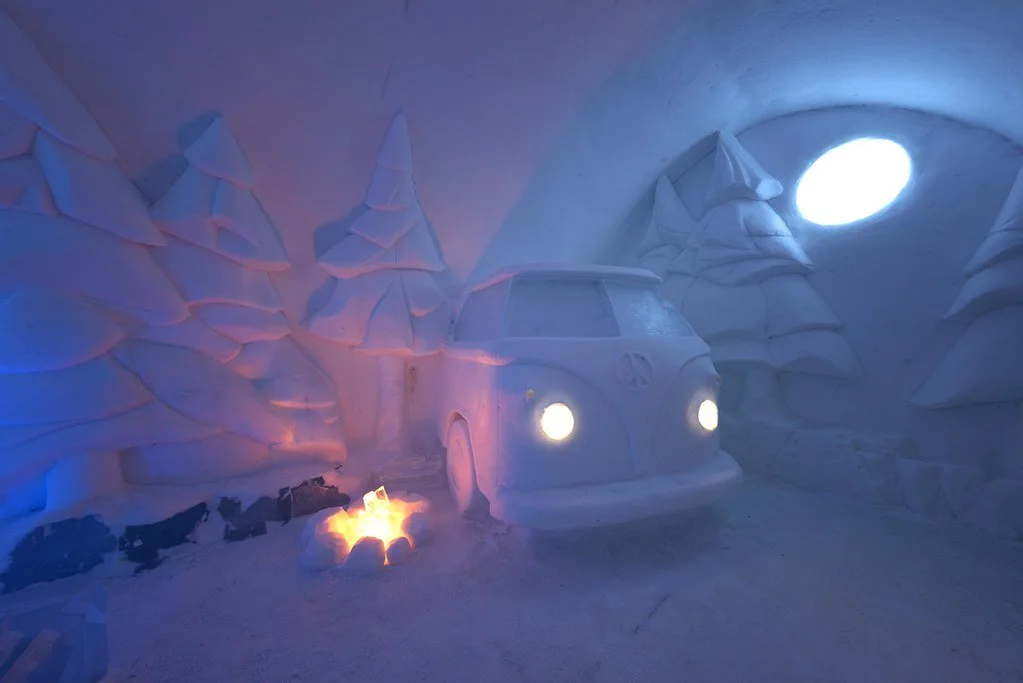
A room built in the snow. Snowy sculptures of pine trees and the front of an old-school VW camper van carved into the walls.

Art Suite in Icehotel. Rob Alter. CC BY 2.0

When planning a stay, guests are offered a choice of warm or cold accommodations. Warm rooms are like a standard hotel room and are located in a separate building. Icehotel recommends that guests spend just one night in the cold while booking a warm room for the rest of their trip, and provides special, insulated sleeping bags for guests to keep warm. The company also encourages appropriate sleepwear—thermal underwear, hats, warm jumpers, etc. Transun notes that, , although sleeping in a room made of ice might sound unpleasant, the right clothing and sleeping bags can keep guests warm as long as the outdoor temperature stays above -13 degrees Fahrenheit. Visitors can still arrange tours if they choose not to spend the night. Icehotel can accommodate up to five people in its largest warm rooms and two people in each of its cold rooms.

A white hotel room, with abstract icy mountain murals on the walls. A large bed carved from ice stands in the center with a fur blanket in the middle.

Standard Ice Room. Xraijs. CC BY-NC 2.0

Even during the summer months, the Icehotel brand still has much to offer interested travelers. Icehotel 365 was first opened in December 2016 as a year long ice experience. The building is a permanent, 2100 square meter art hall, maintaining interior sub-zero temperatures by relying on cool solar power throughout the year. Its art hall contains a collection of traditional art while the building is also home to deluxe suites, an ice bar and experience rooms that depict Icehotel’s history. Additionally, guests can enjoy Torne River rafting, private fishing tours, a ropes course, mountain hikes, and, of course, the Northern Lights.

Despite being a large tourist attraction, sustainability is central to Icehotel’s methods. The organization writes that, “We borrow the ice from the Torne River to build a new, seasonal Icehotel, which eventually melts and returns back to its origin in the spring. The basic idea of Icehotel is built on the premise of the environmental cycle, and our relation to the water and the ice is central.” The company also works with River Rescuers, an activist group protecting “The untouched waters of Sweden,” and regularly makes donations to WaterAid to assist water health throughout Sweden.


Aanya Panyadahundi

Aanya is a student at the University of Michigan studying sociology and journalism on a pre-law path. She loves to travel the world whenever she can, always eager to learn more about the different cultures and societies around her. In her free time, she likes to play the violin, ski, and listen to podcasts.
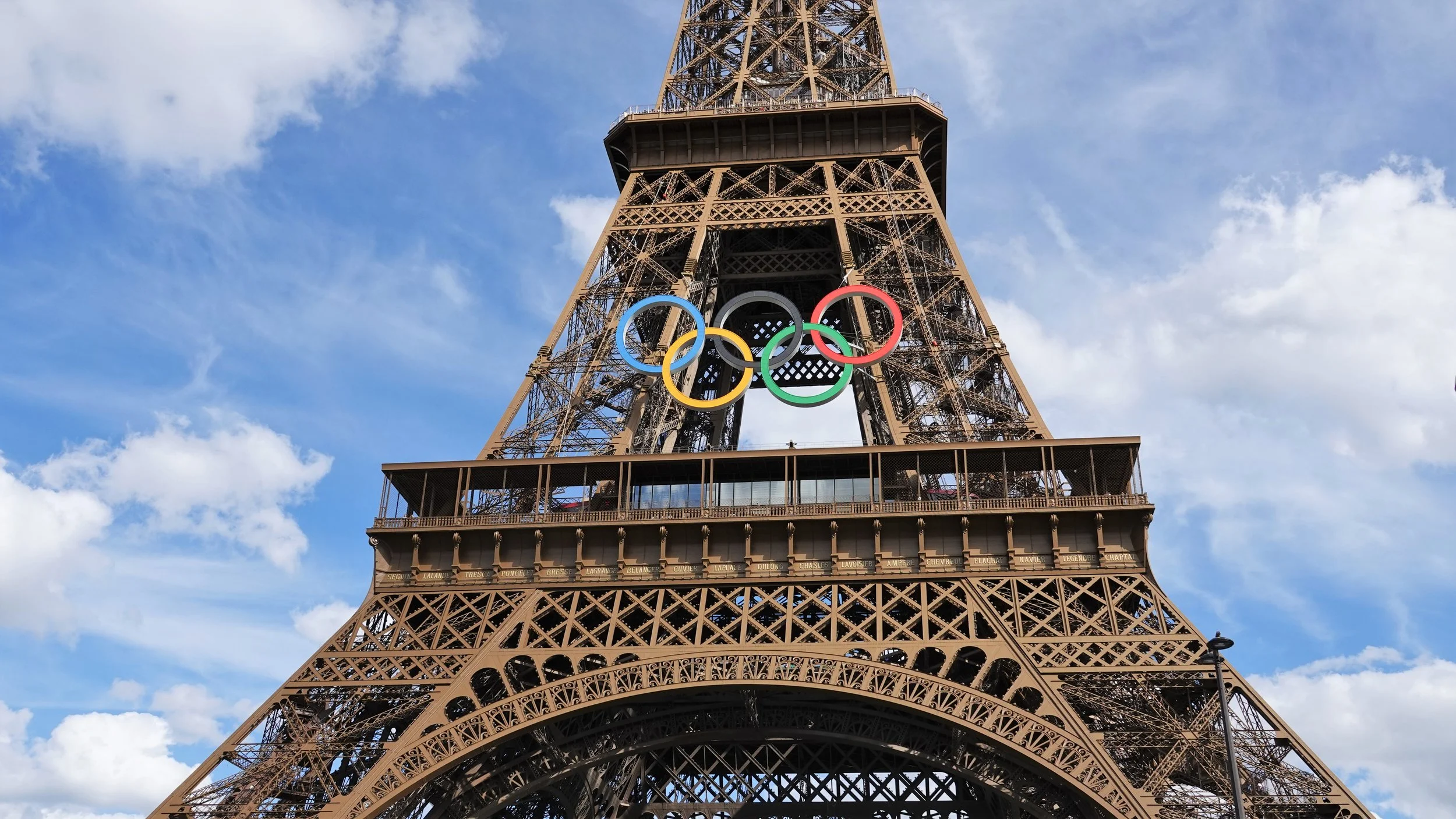
2024 Paris Olympics: Challenges, Protests and Controversies

From transportation and public safety concerns in Paris to discontent in Tahiti, the 2024 Paris Olympic Games are riddled with contention.

Looking up at the Eiffel Tower decorated with the olympic rings.

The Eiffel Tower with the logo of the Olympic Games. Ibex73. CC BY 4.0 via Wikimedia Commons

As the countdown to the 2024 Olympic Games in Paris reaches its final days, anticipation is building among the estimated 15 million visitors set to descend upon the city. However, this year’s games are not without their share of controversies. Unrest and protests have begun to surface, not just from within the borders of France but also among the vast number of international travelers and athletes. These contentious issues are casting a shadow over the upcoming Games, adding a layer of uncertainty and complexity to an event traditionally associated with unity and the celebration of athleticism.

Security Concerns, Congested Transportation, Unhoused Parisians

The opening ceremony, scheduled to take place in the open air along the historic Seine River, has raised a number of security concerns. These concerns are particularly acute because of the memory of the terrorist attacks in Paris in 2015. Furthermore, ongoing geopolitical unrest, notably the war between Gaza and Israel and Russia’s continued aggression towards Ukraine, adds to the apprehension. In anticipation of potential protests, the French government has reduced the number of tickets for the public from 600,000 to 300,000 and plans to deploy around 45,000 French police and security forces. During the opening ceremony, an additional 35,000 security agents are expected to be on duty alongside the military to safeguard against security threats. The recent stabbing of a French counter-terrorism soldier over a week before the games are set to begin has only increased tensions.

Along with security concerns come concerns over the expected additional congestion of the city’s already packed public transport system. Many Parisians believe the transportation is largely underprepared for the influx of tourists as they already deal with poor frequency of trains, overcrowding, and general uncleanliness. Those who are financially able are electing to leave the city for the period of the games, while others will be forced to turn to alternative modes of transport and access such as biking, walking or telecommuting. Those who are unable to consider alternative transportation will have to endure long commutes with few alternatives. In response to criticism over transportation concerns, the French president of the Ile-de-France region, Valérie Pécresse, made a statement to worried citizens, "Don't be afraid to walk a little, it's good for your health". 

The Olympics have also brought the plight of the city’s unhoused population to the forefront. The Olympic Village has been constructed in one of Paris’s most impoverished suburbs, an area where thousands of individuals reside in street encampments, shelters and derelict buildings. In a controversial move, the French government transported thousands of these unhoused individuals on buses to other French cities such as Marseille and Lyon. They were removed from the city under the pretext of promising housing elsewhere, only to find themselves living on unfamiliar streets far from their original homes. This action has drawn widespread criticism as it is in no way a permanent solution, but rather a means to conceal the city’s homelessness issue and present a more idyllic image of Paris. While the government denies any connection between this relocation and the Olympics, an email obtained by the New York Times and initially reported by L’Equipe reveals a government housing official stating the objective to “identify people on the street in sites near Olympic venues” and relocate them prior to the Games.

Water Sport Events

The Seine River, the chosen venue for the opening ceremony, will also host the triathlon and marathon swimming events. This decision has ignited controversy, as many Parisians view the river as polluted and unsafe. Swimming in the Seine has been illegal for over a century. In an effort to clean the river, Paris has invested $1.5 billion in infrastructure to prevent bacteria-laden wastewater from entering the river. Despite the clean up, experts are still uncertain if the river’s E. coli levels will be safe for swimming in time for the events, and no backup plan has been announced. In a show of confidence, President Emmanuel Macron and Paris Mayor Anne Hidalgo have vowed to swim in the river themselves to demonstrate its safety. Just this past Saturday, French Sports Minister Amélie Oudéa-Castéra took the plunge into the river.

In an unusual display of public anger, a distinctive form of protest seemed to be in the works for several weeks. Known colloquially as the ‘poop protest’, it called for citizens to deposit their waste into the Seine on June 23, 2024, strategically timed to coincide with the President’s original planned swim. Remarkably, an unidentified engineer had developed a website that calculates the exact moment for the waste drop-off, ensuring it aligns with the President’s swim based on the individual’s distance from the river. This protest concept was not merely a reflection of skepticism regarding the cleanliness of the Seine, but also a broader expression of French dissatisfaction with the President’s recent election gambit and the anticipated disruptions the Olympic Games are expected to bring to the city. The protestors seem to have been more bark than bite, however, because after Macron canceled his originally planned dip Oudéa-Castéra's swim took place nearly without incident; the Sports Minister slipped while getting in the water.

Meanwhile, in French Polynesia, Tahiti is set to host this year’s Olympic surfing events. Tahiti is a well-known destination for surfing competitions, and has been so for many years. The International Surfing Association (ISA) voiced its opposition to the construction of a new aluminum judges’ tower for the 2024 Olympics in Tahiti, amid concerns from locals and environmentalists about potential damage to the local coral reef. Despite the continued use of a wooden tower at Teahupo’o, one of the world’s most famous surf breaks, for the past 20 years, Olympic organizers and government leaders greenlit construction on a new tower due to safety concerns. The ISA had proposed more environmentally friendly solutions, such as building the tower on land and using digital cameras on the wooden tower, but these were rejected in favor of the new structure.

The controversy escalated from the first peaceful protest in October, with over 200,000 people signing an online petition against the tower and prominent surfers lending their support. An incident where a barge being used in the construction got stuck on the offshore reef further fueled local anger. Despite apologies from the president of French Polynesia, Moetai Brotherson, and assurances from Barbara Martins-Nio, general manager of the 2024 Paris Olympic committee based in Tahiti, that the barge incident was a mistake, the new tower was still deemed necessary for the competition. However, many locals, including the mayor of Taiarapu Ouest, stood by the belief that building the tower outweighed the costs. The protests failed, and the tower has since been completed.

As the 2024 Olympic Games in Paris approach, they carry the weight of numerous controversies and the hopes of millions of spectators, eager to participate in a global event of this magnitude for the first time since the COVID-19 pandemic. From security concerns and transportation issues to the treatment of the city’s unhoused population and environmental concerns, these Games are a testament to the complex interplay of sports, politics and society. Despite the controversies, the essence of the Olympics remains—unity, athleticism and global camaraderie. As the world tunes in, these Games will be a reminder of our shared love for sport and competition, and the collective challenges we need to address.


Julz Vargas

Julz is a student at Wellesley College studying Anthropology and Spanish. She grew up in Los Angeles, CA, and has studied all around the world in places such as Costa Rica, Greece, Iceland, and Spain. She is passionate about employing writing as a tool to explore human connection and diversity. Julz aspires to foster cross-cultural connections through community-based research, amplifying inclusive and diverse media about global cultures, foods, and people, to encourage individuals to engage more wholly with the world.

Italian Women Take Action Against Femicide

A family tragedy turns into a political movement in Italy, a country that saw over 100 femicides in 2023.

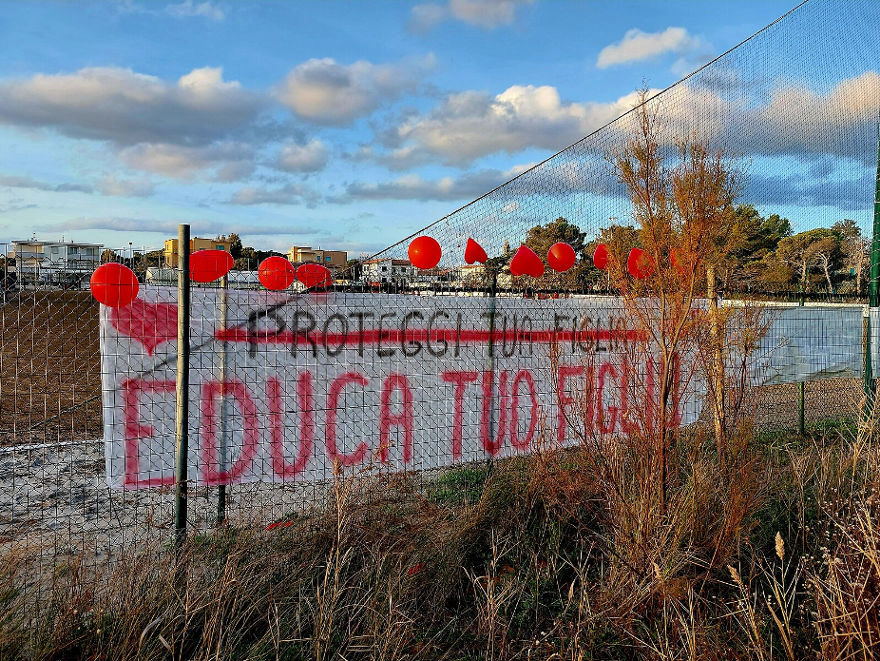
Behind a chainlink fence, a large wall is grafittied with a large protest slogan, the first line crossed out and the second part larger in red. Red ballons float above the wall.

Statement for the femicide of Giulia Cecchetin and for all women victims of femicide. "Instead of protecting your daughter, educate your son." Anna Massini. CC BY-SA 4.0

Giulia Cecchettin was 22 years old and only days away from attaining her college degree when her life was brutally ended by her ex-boyfriend, Filippo Turetta. Turetta was enraged that Cecchettin had decided to end their romantic relationship. He had been controlling while the two were together, to the extent that he had installed a spy app on Cecchettin’s phone to monitor her movements. On November 11th, 2023, Cecchettin disappeared after going to buy her graduation outfit with Turetta. After a search that lasted a week, her body was found wrapped in black plastic bags and covered in more than twenty stab wounds. A week later, Turetta was arrested near Leipzig, Germany. He was extradited to Italy to face trial for the murder and is now serving time in prison. 

The murder gained international coverage thanks in part to the efforts of Giulia’s sister, Elena Cecchettin, who turned her family tragedy into a political movement. The day that Turetta was extradited from Germany, Elena posted a letter on social media. In the letter, Elena condemned the culture of violence against women that pervades Italy. “Turetta is often referred to as a monster, but he is not a monster,” she says in the letter. "A monster is an exception, a person outside society. The ‘monsters’ are not sick, they are healthy children of patriarchy, of rape culture. Don't take a minute's silence for Giulia, burn everything for Giulia.”

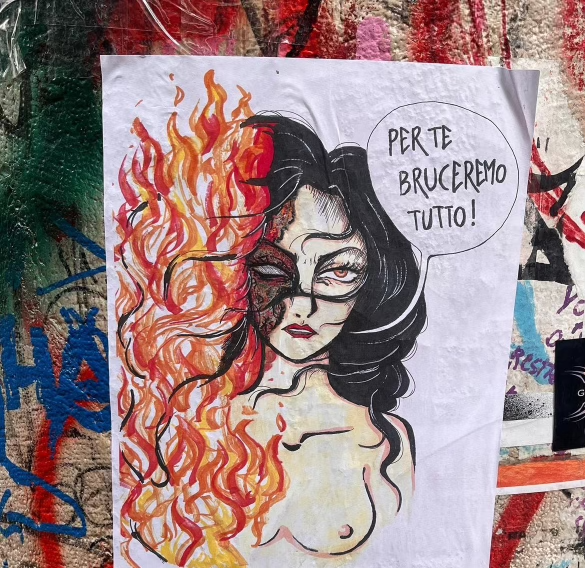
A poster with a depiction of Giulia drawn, half of her alight in flame, and a speech bubble protest slogan

Poster for Giulia Cecchettin in Naples, "For you we will burn everything." Rebecca Pitcairn.

A video of Elena reading her statement received millions of views. Elisa Ercoli, director of Differenza Donna, a women’s rights organization, told BBC that the killing was "the last straw, after a string of high-profile cases of femicides,” and that “Italy is a deeply patriarchal country.” Until 1981 honor killings were punished less stringently than other murders, and only in 1996 did rape start to be considered a crime against the person assaulted rather than a crime against “public morality.” As of 2024, only 58 percent of Italian women own a bank account, and in 2022, 44,669 women left their jobs due to the challenge of reconciling working and family life. According to statistics, a woman is murdered in a femicide every 72 hours. Giulia Cecchettin’s murder was the 105th of 120 femicides that occurred in Italy in 2023. 

After Giulia’s murder, women took to the streets and the piazzas of Italy in massive numbers to defend their right to live and to create awareness about Italy’s epidemic of violence against women. More than 500,000 people attended a protest in Rome by the Non Una Di Meno, (Not One Less) women’s rights movement, which hosted marches all across Italy in 2023. Students at the University of Padua (where Giulia studied), when asked to hold a minute of silence in Giulia’s honor, instead spent the minute making noise, clapping, reading poetry and singing.

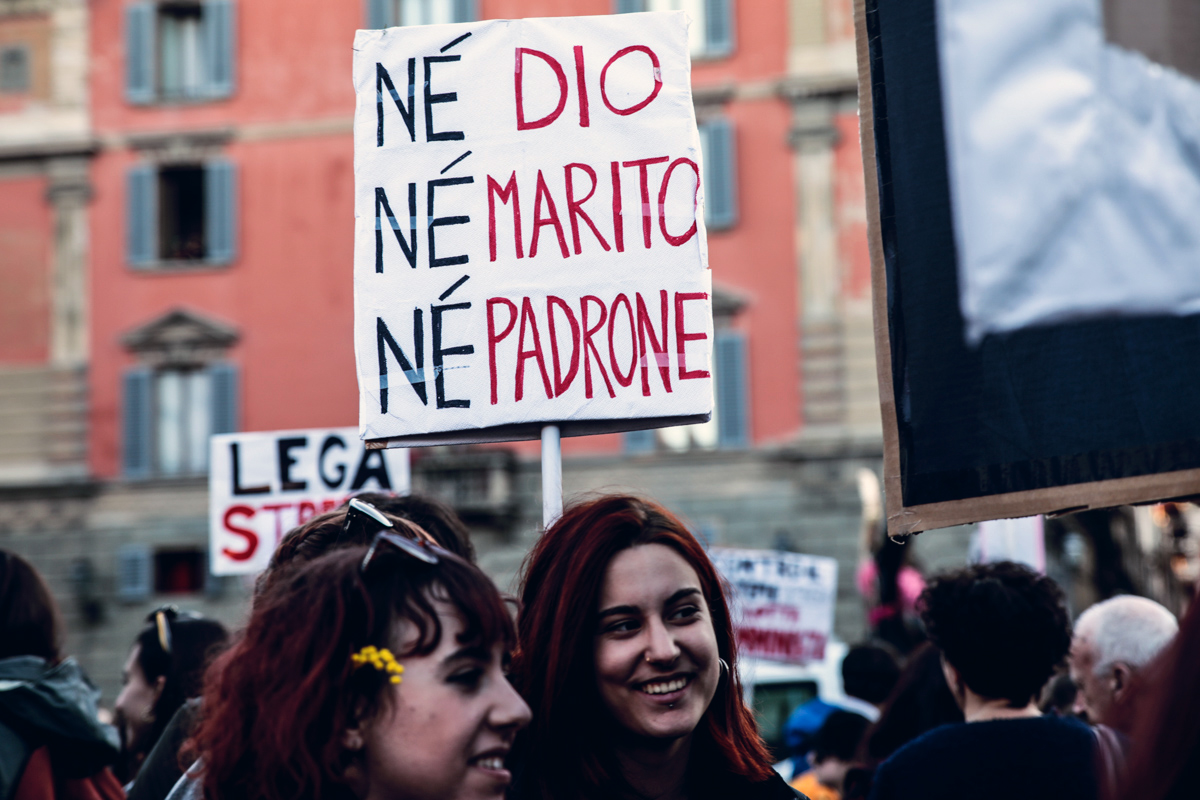
Women at a protest in the city, holding up their signs.

Protest Organized by Non Una di Meno, Firenze, "Neither God, nor husband, nor master." Valentina Ceccatelli. CC BY-NC-SA 2.0

Feminists and student collectives in other cities organized torchlight walks and “angry walks” in response to the moments of silence requested by schools in a culture where insidious silence already envelops the topic of violence against women. Non Una di Meno led students from multiple universities and hundreds of thousands of protestors across Italy in a “moment of noise” for Giulia on November 25, 2023, the International Day for the Elimination of Violence Against Women.

Many women, inspired by Elena Cecchettin, adopted the poem “Si manana me toca, quiero ser la ultima” (“If it's my turn tomorrow, I want to be the last”) by Peruvian poet and activist Cristina Torres Cáceres. The poem was written in 2011 to honor women and the victims of violence in Latin America after the murder of Mara Castilla. “If tomorrow it’s me, if I don’t come back tomorrow, mother, destroy everything./If it’s my turn tomorrow, I want to be the last,” Castilla wrote.

Thousands attended Giulia’s funeral, which was broadcast live on television. In a eulogy delivered by Giulia’s father, Gino Cecchettin, he called for men to stand against patriarchy. “We should be the first to show ourselves as agents of change against sexual violence,” he said as he addressed the crowd, “Let us speak to other men we know, let us challenge the culture that tends to play down violence by men who appear to be normal.” As Giulia’s coffin was taken out of the church, members of the crowd shook their keys in a symbolic call for violence against women to not be tolerated in silence.

TO GET INVOLVED

Non Una di Meno: This organization’s website has information about demonstrations and campaigns against violence against women that are currently active in Italy. 

Differenza Donna: This organization provides legal assistance, a hotline and shelter for victims of gendered violence. Their website includes a link to donate to their fight to protect women. 

Centro Antiviolenza Artemesia: A shelter for victims of domestic abuse that accepts donations and volunteers.


Rebecca Pitcairn

Rebecca studies Italian Language and Literature, Classical Civilizations, and English Writing at the University of Pittsburgh. She hopes to one day attain a PhD in Classical Archeology. She is passionate about feminism and climate justice. She enjoys reading, playing the lyre, and longboarding in her free time. 

Dirty Water: The Frantic Rush to Clean the Seine Before the 2024 Olympics

Officials of the French government are trying to clean the Seine, which has been deemed unswimmable for a century, in time for the 2024 Summer Olympics swim competition.

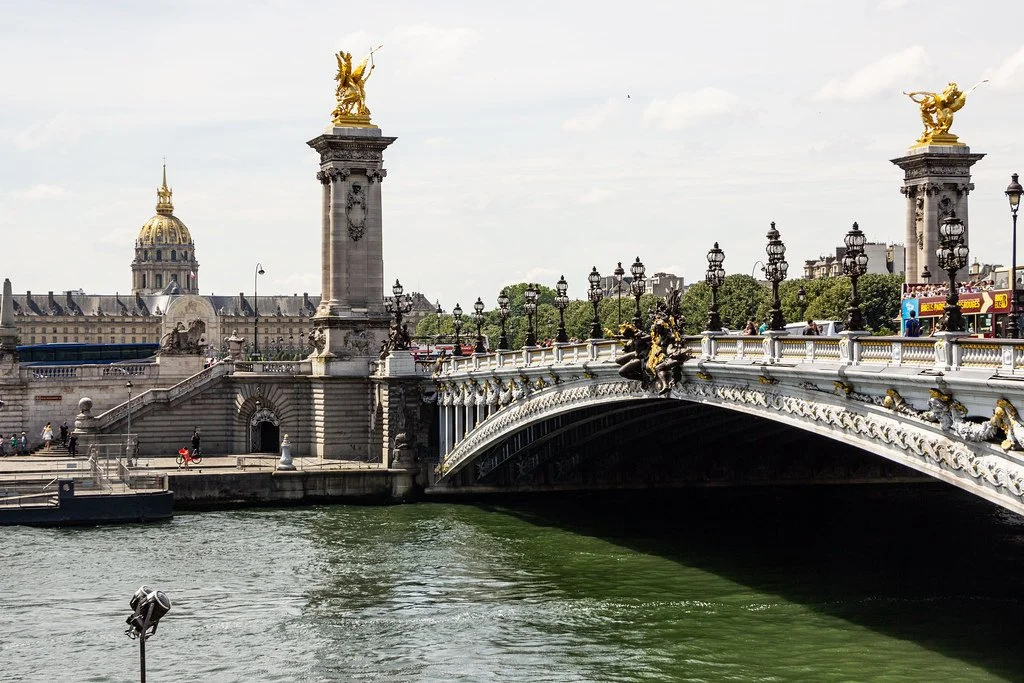
Ornate bridge over the green River Seine.

Pont Alexandre III on the River Seine, Billy Wilson, CC BY-NC 2.0

With the 2024 Olympics set for Paris, the French government has faced backlash for its efforts to quickly clean the Seine, the main river that runs through Paris. The Seine is approximately 13 kilometers long and, in Paris, accompanied by 37 bridges. The staple has promoted water travel and inspired classic French songs such as, “Sous le Pont Mirabeau” and “Sous les Ponts de Paris.” The Seine also has a long history of supplying water to Parisians. In Medieval Paris, citizens and street vendors would collect water from the Seine before they had access to running water. In 1802, Napoleon constructed the Canal St Martin connecting the Seine to the Bassin de La Villette with the goal of supplying water via public fountains throughout the city. The River Seine was in wide use, with people engaging in walks along its banks and recreational swimming, until a decree was passed in 1923 that banned such activities due to pollution and waste runoff. News Writer Olivia Craighead explains that, “The city is old as hell, and as such, sometimes sewage ends up in the Seine.” While people are still allowed to visit its banks, the River Seine has been closed to swimmers since the decree. Until the announcement of the 2024 Olympics.

Since the 2008 Olympics, there have been two open water swimming events: the triathlon and the 10k marathon swim. Pierre Rabadan, the deputy mayor in charge of sports, Olympics, and Paralympics, has said that, “Our objective is an Olympic legacy.” In 2015, Paris introduced the "Plan Baignade" (“Swimming Plan” in English), a plan to make the river swimmable for the Olympics and regular citizens by 2024. As a result, the government has invested upwards of $1.5 billion to make their plan a reality. Despite their efforts, test results from the week of June 10 reveal that E. coli levels in the river are over twice the maximum allowed in water for Olympic events. Marc Guillame, a top government official for Paris, says that these recent readings “are not in line with the standards we will have in the summer.” With the Seine, most bacteria is killed with sunlight and warm temperatures, both of which Paris has seen very little of at this point in the summer. Instead, it has endured heavy rain and cloudy conditions. Phillippe Leclercq, an 18 year old living on a houseboat on the River Seine, notes that, “When it’s good, it’s a nice green color, lately it’s just been brown.”

To ease concerns citizens and athletes have about the River Seines’ cleanliness, President Emmanuel Macron and Mayor of Paris Anne Hidalgo have pledged to be the first swimmers. Originally scheduled to take a dip on June 23, the two have moved their swim back to July 14. Hidalgo stresses that this was not due to the condition of the water, but the current weather and political atmosphere: “Yes, I will swim in the River Seine, not now because the weather is not so well in Paris, but also because we have an election. It is not possible to organize the jump to the river during the election.”


Aanya Panyadahundi

Aanya is a student at the University of Michigan studying sociology and journalism on a pre-law path. She loves to travel the world whenever she can, always eager to learn more about the different cultures and societies around her. In her free time, she likes to play the violin, ski, and listen to podcasts

Paradise for Tourists is Hell for Canary Islands Residents

Canary Islands residents are protesting against mass tourism, which they say is making the islands uninhabitable. 

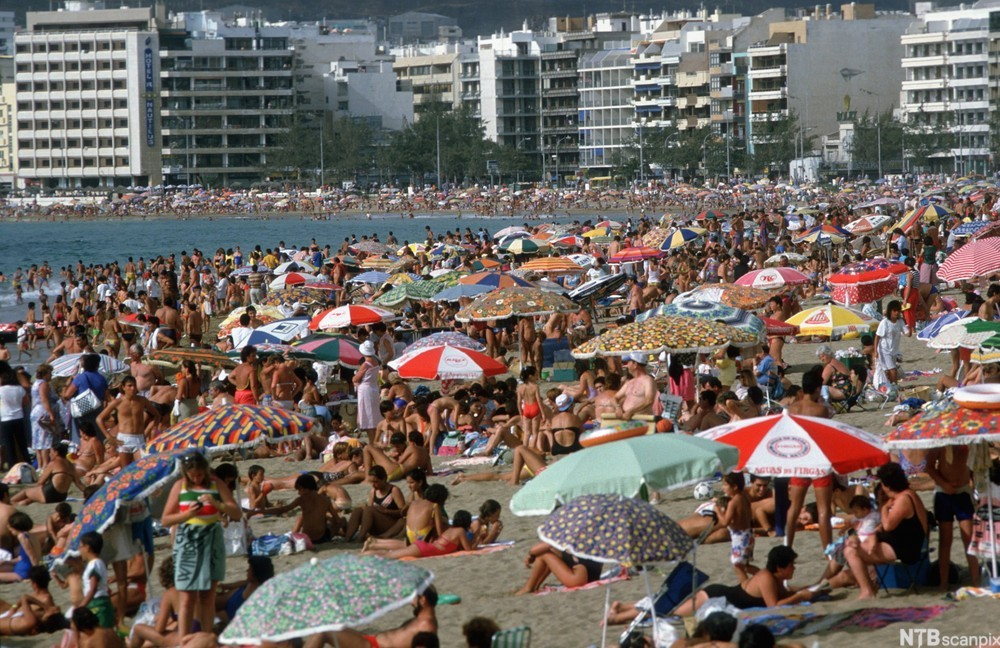
A beach packed shoulder-to-shoulder with colorful umbrellas and sunbathers beneath the cityscape

A crowded beach in Las Palmas. Trygve Bølstad. CC BY-NC-SA

The Canary Islands have long been a hotspot for tourism. Vacationers flock to the archipelago in imposing numbers, drawn by the islands’ mild climate, rich cultural history and stunning vistas. In 2023, approximately 14 million international tourists visited the Canary Islands, representing an increase of roughly 13 percent compared to the previous year, and tourism accounts for approximately 35 percent of the islands’ GDP. Unfortunately, not all residents are experiencing the benefits of this influx. In fact, many locals have begun to complain that the massive waves of tourism are actively contributing to a decline in their quality of life.

While the Canary Islands host large numbers of tourists every year, approximately 15 million, they are home to only 2.2 million native residents. Of those 2.2 million, 33.8 percent are at risk of poverty according to a living conditions survey conducted by the Instituto Nacional de Estadística of Spain in 2023. The same survey designated the Canary Islands as one of the autonomous communities in Spain with the highest percentage of people making ends meet with “a lot of difficulty.”

The bright turquoise colored ocean splashing up against rocks and small buildings on jetties

Canary Islands. PxHere. CC0 1.0

The tourism industry only exasperates the economic challenges faced by residents. The islands’ resources are simply not equipped to sustain the large numbers of tourists, who put pressure on health services, waste management, water supplies and biodiversity. According to reports, tourists use up to six times more water than residents who, as a result of a drought brought on by climate change and rising temperatures, have been subjected to restrictions on water usage. Meanwhile, tourist resorts and golf courses have not been made to comply with the same restrictions. 

Biologist Anne Striewe commented on the toll tourism takes on the environment. “There are hundreds of boats and jet skis in our waters every day pumping petrol into the water,” she said, “then there are the boat parties which blast music all day long…this is picked up by whales and other creatures and really confuses and frightens them … Meanwhile, there have been multiple cases of animals being injured or killed by boat propellers, there are often vessels in protected waters but no one is cracking down on the activity.” According to the environmental group Salvar Tenerife (Save Tenerife, the largest of the Canaries), millions of liters of sewage water are being dumped into the sea off Tenerife and other islands every single day, with amounts rising in accordance with the number of visitors.

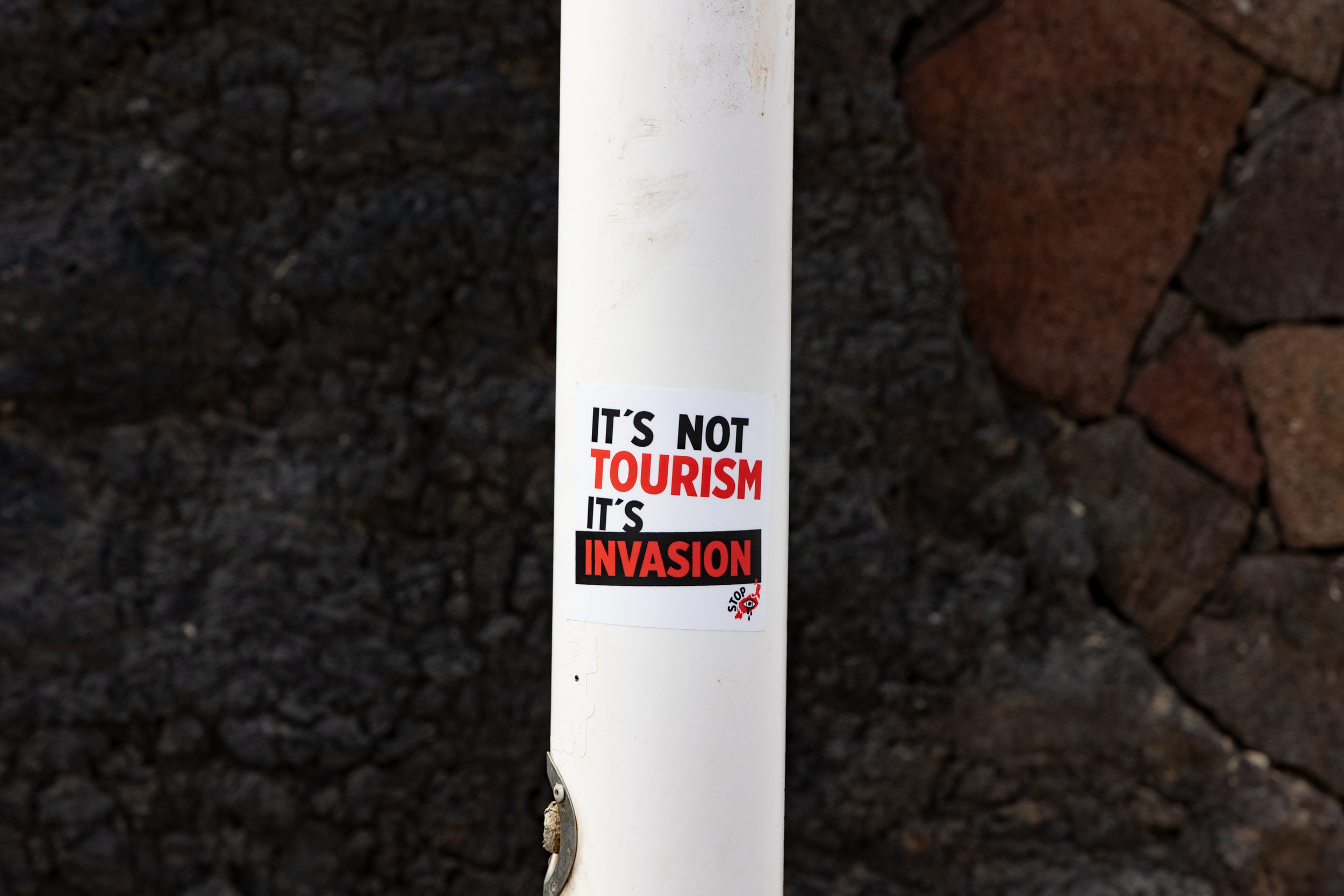
An anti-tourism sticker posted on a pole

Sticker against overtourism, 2024. Rasande Tyskar. CC BY-NC 2.0.

Female residents have reported feeling unsafe in the presence of tourists who harass and follow them in public. Trailers park illegally and leave trash in their wake. The number of hotels being built and the amount of housing being converted to short-term rentals to accommodate these tourists has caused a rise in the cost of living. As a result, some locals have been forced to begin sleeping in their cars and in caves. "It is absurd to have a system where so much money is in the hands of a very few extremely powerful groups, and is then funneled away from the Canary Islands," says Sharon Backhouse, who owns GeoTenerife along with her Canarian husband, a program that runs science field trips and training camps in the Canary Islands and conducts research into sustainable tourism.

Thousands of locals took to the streets in April to protest over tourism and defend their right to live in their native land. “We are not against tourism,” Rosario Correo, one of the protesters, clarified to the media, “We’re asking that they change this model that allows for unlimited growth of tourism.” 

Protesters are calling for a halt to the construction of a hotel and a beach resort on one of the few remaining unoccupied beaches, a moratorium on all tourism development projects, stricter regulation on property sales to foreigners and a more sustainable model of tourism that will not put the environment or the livelihoods of locals at risk. “I feel like a foreigner here, I don't feel comfortable anymore, it's like everything is made for British and German tourists who just want to drink cheap beer, lay in the sun and eat burgers and chips,” another protester, Vicky Colomer, said. “We need higher quality tourists who actually want to experience our culture and food and respect our nature.”

The protests have motivated the government to introduce measures to limit tourism. The island of Tenerife announced a tourist tax of an undisclosed amount that will go into effect on January 1, 2025 for tourists seeking to visit natural beauty spots. A law that would place harsher regulations on short-term rentals is also expected to pass in 2025.


Rebecca Pitcairn

Whatever it is, the way you tell your story online can make all the difference.

Mallorca and Beyond: Spain’s Balearic Islands

Get to know the lesser-known islands of Menorca, Cabrera and Formentera, alongside the classic Balearics, Mallorca and Ibiza. 

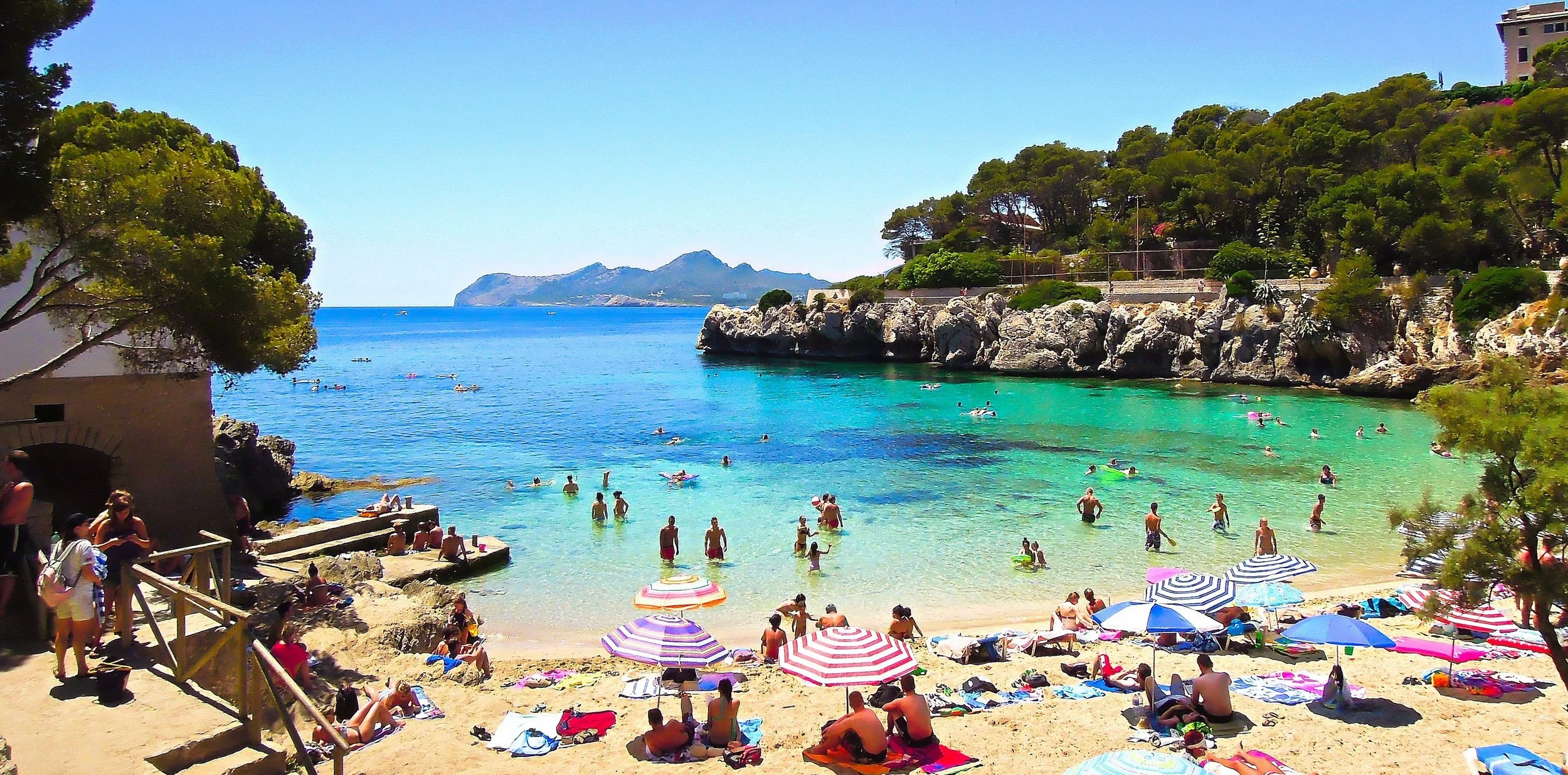
A bustling beach cove with turquoise water and rocky coastlines, swimmers, and sunbathers under striped umbrellas.

Cala Ratjada. originalpickaxe. CC BY 3.0, via Wikimedia Commons

The Balearic Islands are destinations well-known for their beaches and energetic nightlife. Beyond the impressive coastlines and vibrant parties, visitors will find charming villages, ancient ruins and traditional cuisines that showcase the islands' heritage. From Menorca to Formentera, each island boasts a rich culture and history that makes it distinct and uniquely captivating.

Mallorca

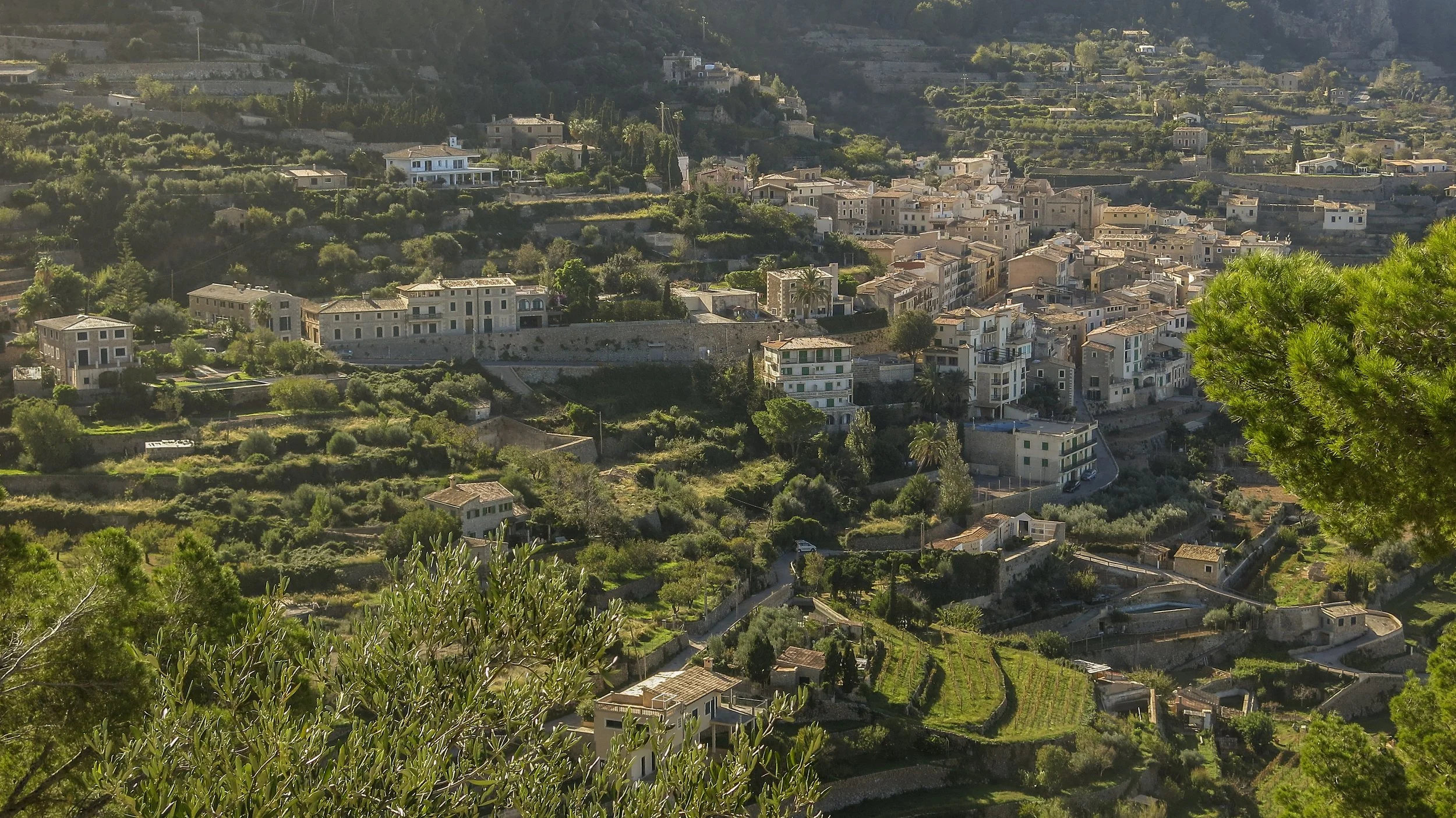
A hillside old European town, with buildings nestled in the green terraces and trees along the mountain.

The town of Banyalbufar, Serra de Tramuntana mountains. Vicenç Salvador Torres Guerola. CC BY-SA 4.0.

Mallorca, the largest of Spain's Balearic Islands, is celebrated for its diversity of landscapes, culture and history. The island has historically been a popular vacation spot among travelers for its secluded beaches and coves with turquoise waters, such as those in Cala d'Or and Playa de Muro. However, the island is also known for its dramatic cliffs and mountainous terrain along the Serra de Tramuntana mountain range, just a thirty-minute drive from the island’s capital, Palma. This region of Mallorca is home to intimate villages such as Valldemossa and Deia. Here, the towns are tranquil, filled with olive groves and surviving monastic charterhouses from as early as the 13th century, reminiscent of the island’s historic past and lasting Roman Catholic influence.  

Mallorca’s gastronomy is worth the trip alone, with dishes such as el arros brut, a meat and vegetable rice dish, and el frito mallorquin, an offal and vegetable stew. Another classic dish is the Frit mallorqui, which consists of potatoes tossed in a thickened sauce of onions, garlic, tomatoes and capers. The island is also rich in medieval architecture, being home to the gothic-style Bellver Castle, built in the 14th century for King James II of Majorca, and the renowned Cathedral of Santa Maria, once a mosque converted into a Christian church in 1229.

Menorca

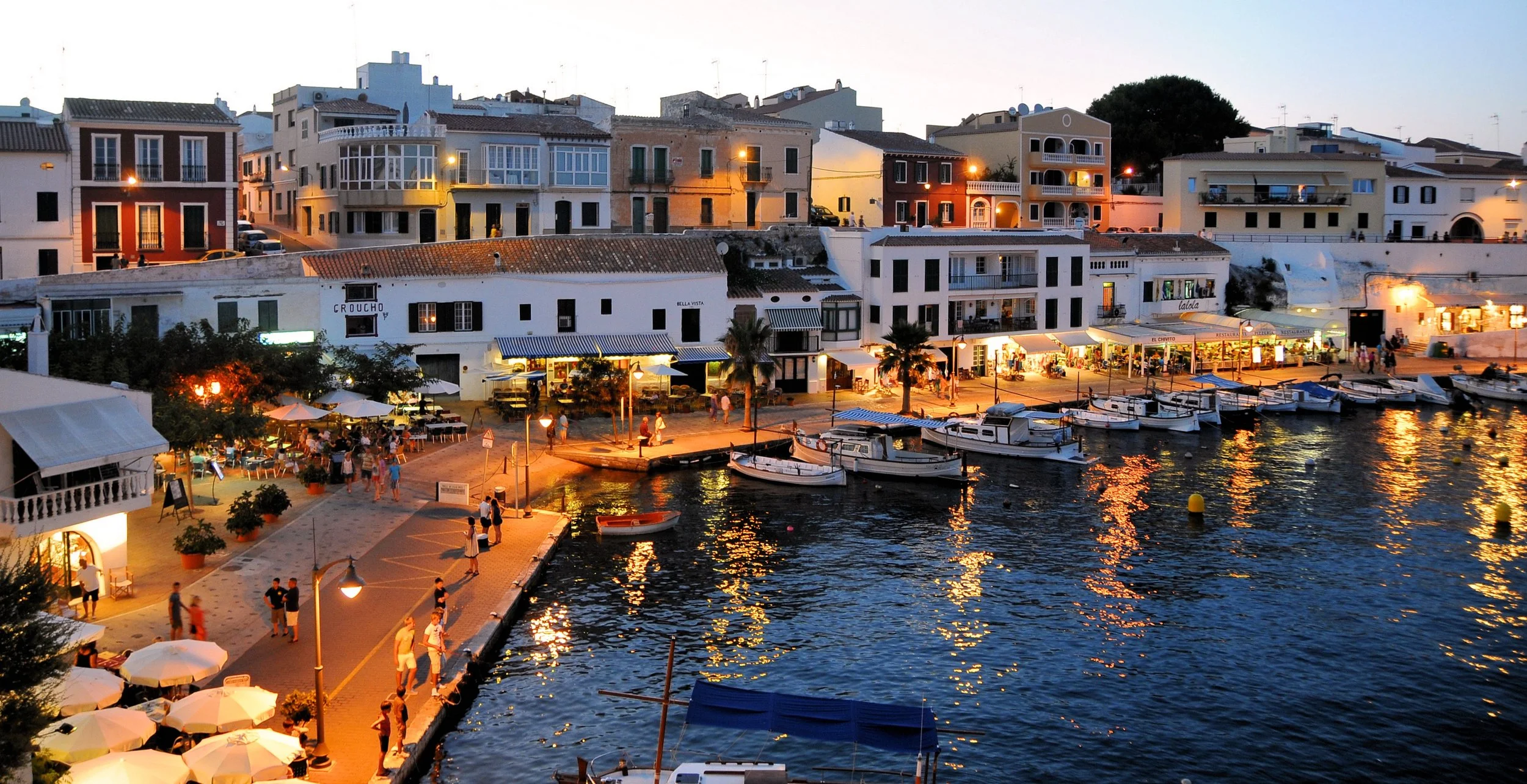
Coastal city at dusk, with lit streets and tourists walking along the harbor. Nice boats anchor the dock and shops line the street.

The city of Mahon, Menorca. pxhere. CC0, via Wikimedia Commons

In contrast to Mallorca’s bustling island pace, Menorca is renowned for its peaceful ambiance, enticing beaches and historical heritage. The island's coastline is dotted with secluded coves and crystal blue waters, with stunning beaches like Cala Macarella and Cala Mitjana. Menorca is much smaller than Mallorca, and most of its beaches are hidden 'calas,' or sandy coves between rocky cliffs. The island itself is calmer, with more intimate and relaxed “hippie” nightlife opportunities such as a cave disco in the Cova d’en Xoroi, Menorca’s most famous cave. 

Menorca’s capital, Mahon, features the second-deepest natural harbor in the world alongside charming streets lined with Georgian architecture, reflecting its British colonial past. The island is also well known for its famous Mahon cheese, matured exclusively in Menorca. The local cuisine is characterized by fresh seafood with traditional dishes such as lobster stew, Menorcan sausages and sweet and savory pastries. Additionally, Menorca is a UNESCO Biosphere Reserve, with a diverse landscape of rolling hills, wetlands and forests, ideal for hiking. This island is quieter than its Balearic counterparts yet is just as abundant in nature, cuisine and architecture.  

 Cabrera

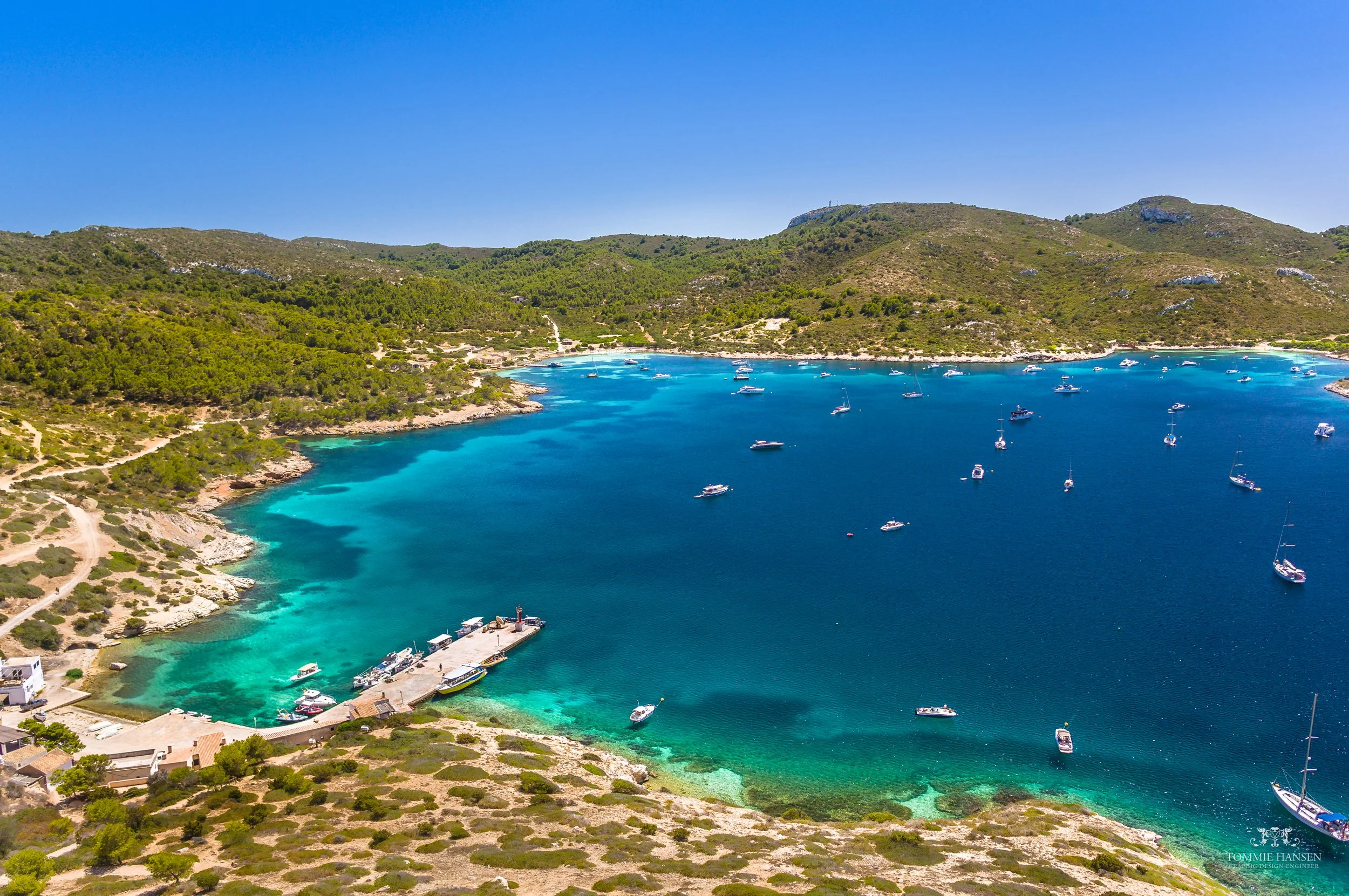
Aerial view of a beautiful bay. The water is a deep turquoise, with boats jetting along, and a sandy but vegetated hilly landscape with little development surrounds the water.

Isla de Cabrera National Park, Mallorca. Tommie Hansen from Stockholm, Sweden, CC BY 2.0, via Wikimedia Commons

Cabrera, a serene archipelago of nineteen islets off Mallorca's southern coast, stands out for its untouched natural beauty and ecological diversity. The island’s name, the Spanish word for goat, from a time when the island’s only inhabitants were goats transplanted there by the Romans as an emergency food source. Interestingly, today there are less than 30 permanent residents on the island, making it the largest undeveloped area in the Balearics. Once a hideout for pirates and later a prison for captured soldiers, today Cabrera, or Cabrera National Park, is a protected area that ensures a thriving habitat for numerous bird species and marine life. 

The island's transparent waters make it a prime spot for snorkeling and diving, revealing undisturbed marine ecosystems and caves. Visitors can also explore historical landmarks like the 14th-century Cabrera Castle, which offers sweeping sea views. Unlike its neighboring islands, Cabrera offers a tranquil retreat where nature remains untouched.  

Formentera

A rocky inlet with turquoise water, white buildings of shops or residences are dotted among the distance.

Los Pujols, in Formentera. Emanuela Meme Giudic…. CC BY 3.0, via Wikimedia Commons

Formentera, while the smallest of the Balearic Islands, stands out for its calm beaches and clear waters, particularly at Playa de Ses Illetes and Playa de Migjorn. The island’s flat landscape contrasts with Mallorca’s rugged Serra de Tramuntana and Cabrera’s protected wilderness, offering easy exploration by bike or foot. Historical sites like the Cap de Barbaria lighthouse provide a glimpse into Formentera’s past, less grandiose than Mallorca’s Bellver Castle but no less significant. The island’s cuisine is full of dishes such as seafood paella, freshly grilled fish, leg of lamb, figs and local goat and sheep cheese.

Formentera’s charm lies in its blend of serene nature and rich history, providing a unique travel experience distinct from its larger neighbors. Like Menorca, Formentera is a less common destination than its closest counterpart, Ibiza, thus preserving the island’s natural beauty and relaxed pace. The local markets, often buzzing with artisans, offer a taste of the island’s vibrant craft traditions. Additionally, the annual jazz festival brings a rhythm to the island that echoes against the backdrop of the Mediterranean, highlighting its lively yet laid-back cultural scene. 

Ibiza

An empty beach, with loungers and closed umbrellas set up, is nestled in a rocky coastline. Out in the distance, beautiful rock-cliffed islands jut out of the ocean.

Sea view, Ibiza Spain. athinaf, CC BY 2.0.

Ibiza, renowned for its vibrant nightlife, is also a bastion of cultural and historical significance. The island’s party scene, with its origins in the countercultural movements of the 1970s, has evolved into a global hub for electronic music, hosting legendary clubs like Pacha and Amnesia. These venues, alongside the annual music festivals, continue to draw international crowds and top-tier DJs, cementing Ibiza’s status as a dance music mecca.

Beyond the beats, Ibiza’s cultural tapestry is rich in history. The Phoenician settlement of Sa Caleta and the necropolis at Puig des Molins are testaments to the island’s ancient maritime trade and significant role in the Mediterranean economy in Antiquity. Dalt Vila, Ibiza Town’s historic center, is a UNESCO World Heritage site that showcases over 2,500 years of history through its Renaissance military architecture and medieval streets. The island’s cuisine offers traditional dishes like bullit de peix, a fish stew, and local desserts such as greixonera. 

Ibiza’s beaches, from the popular Playa d’en Bossa to the tranquil Cala Comte, are celebrated for their white sands and clear waters, providing a natural counterpoint to the island’s bustling nightlife. Each beach offers a unique experience, whether it’s the serene Cala Salada or the lively atmosphere of Ses Salines.


Julz Vargas

Julz is a student at Wellesley College studying Anthropology and Spanish. She grew up in Los Angeles, CA, and has studied all around the world in places such as Costa Rica, Greece, Iceland, and Spain. She is passionate about employing writing as a tool to explore human connection and diversity. Julz aspires to foster cross-cultural connections through community-based research, amplifying inclusive and diverse media about global cultures, foods, and people, to encourage individuals to engage more wholly with the world.

July 2024's Top European Music Festivals

Here's a compilation of music festivals to rock your summer.

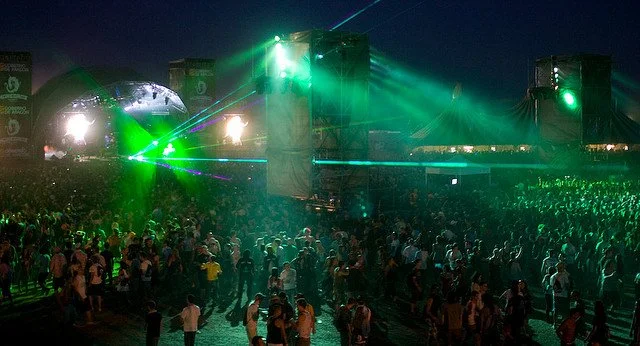
A crowd under the neon lights and lit stage at a music festival.

Live outdoor concert. Ultrafan123, CC BY-SA 4.0

Exploring Europe offers a rich tapestry of experiences, from museums and historic cathedrals to renowned cuisines and coastlines. In between the typical, however, consider enlivening your trip with a summer music festival.

Rock Werchter (Werchter, Belgium) 

July 4-7, 2024

Packed crowd attends the outdoor venue and waits under the Black Keys stage.

The Black Keys at Rock Werchter 2023. Haggis MacHaggis, CC BY-SA 4.0

Head over to the tiny town of Werchter, Belgium, which has hosted the multi-award-winning Rock Werchter festival for over 40 years. It is one of the largest and most renowned festivals in Europe, with this year’s event boasting a strong 4-day lineup with headliners including Lenny Kravitz, Måneskin, Dua Lipa, and the Foo Fighters. According to their website, the carefully curated lineup “spans across all genres, making it a truly unique experience.” The curators also make it a point to showcase established artists alongside new talents. Rock Werchter is known for its Belgian beer, waffles, campgrounds, and multiple stages.

EXIT Festival (Novi Sad, Serbia)

July 10-14, 2024

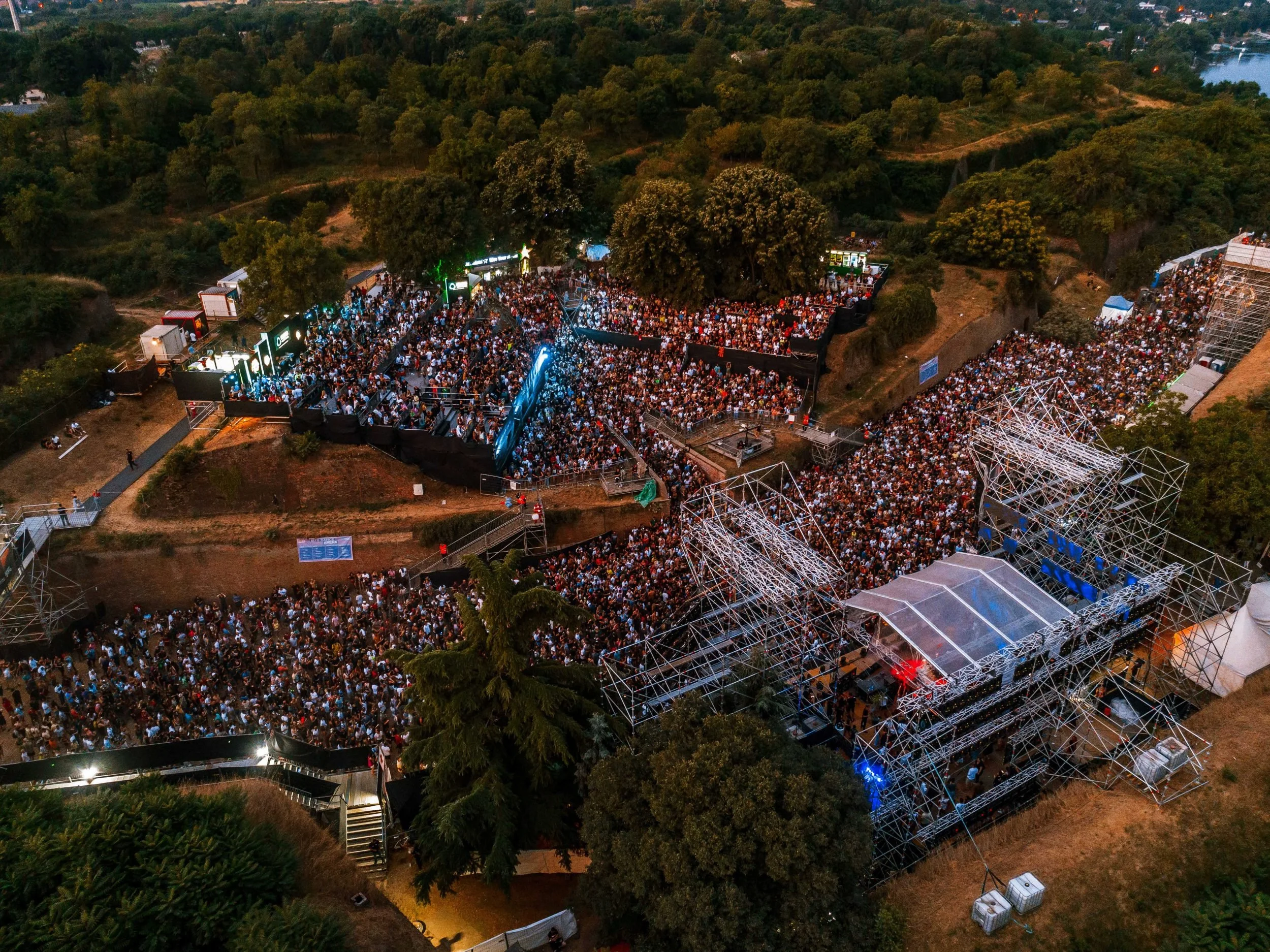
A birds-eye-view of the crowds and multiple stages at a festival

Drone shot of Exit Festival 2021. Exitfest, CC BY 3.0

The EXIT Festival of Serbia is known for its astounding location: the Petrovaradin Fortress, a historic fortress located on the banks of the Danube River, has unique acoustics and acts as a picturesque backdrop for the festival’s performances. This festival was first held in 2000 as part of a student movement fighting for democracy and freedom in Serbia. Since then, it has grown into one of the largest festivals in Southeast Europe, attracting tens of thousands of attendees each year. Today the festival continues to emphasize social activism and positive change through its various social responsibility projects. This year’s four-day lineup includes Gucci Mane, the Black Eyed Peas, John Newman, and Tom Morello.

NOS Alive Lisbon (Lisbon, Portugal)

July 11-13, 2024

Under red lights, the crowd at a main stage cheers and dances along, looking up at stage.

The view of the mainstage from the crowd at NOS Alive. Chris, CC BY-SA 2.0.

NOS Alive Lisbon takes place at the waterfront Passeio Marítimo de Alges. Formerly known as Optimus Alive, this festival is known for local and international attendees attracted by its diverse lineup, including rock, indie, pop, electronic, and more. It typically showcases a mix of established artists and emerging talents across multiple stages. Festival goers can either camp on the grounds or stay in nearby hotels as the location is just eight minutes from downtown Lisbon. The three-day lineup this year includes artists like Arcade Fire, The Smashing Pumpkins, Dua Lipa, Tyla, Aurora, Pearl Jam, and Sum 41. Its reputation for hosting top-notch artists and vibrant festival atmosphere has contributed to its global appeal. 

Parookaville (Weeze, Germany)

July 19-21, 2024

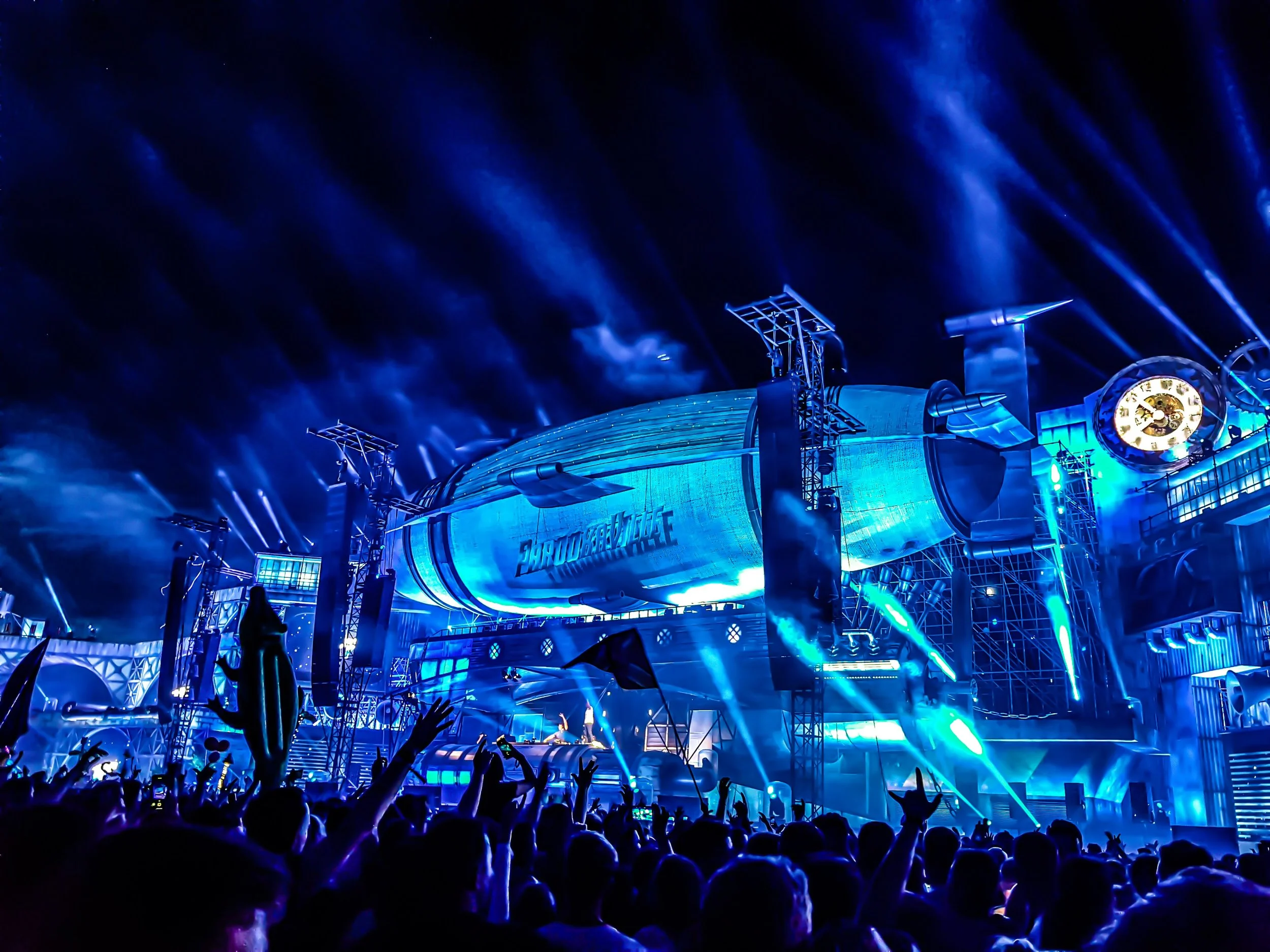
Under blue lighting and large blimp, a packed crowd cheers along under the stage at a festival.

The concert at the mainstage at Parookaville. Ss279, CC BY-SA 4.0

This German festival is truly unique as the event takes place in a faux city, known as Parookaville. Since 2015, the urban creation has come to life once a year in remembrance of the fictional founding father and mayor, Bill Parooka, whose goal was to make people remember to celebrate the joy of life. According to the festival’s website, Parooka is allegedly responsible for instituting the “Madness, Love and Pure Happiness” laws. Festival fans are invited to experience a “mad” musical place where they can connect with their purest selves, experience true connections, and feel sensations of bliss and love. This lineup for this year’s eccentric festival includes headliners such as Don Diablo, Steve Aoki, KSHMR, Oliver Heldens, and Timmy Trumpet. Parookaville is ideal for those open to new experiences and electronic dance. 

Hill Vibes Reggae Festival (Telfs, Austria)

July 24-27, 2024

Silhouette of a crowd in orange light and haze, as a girl dances atop someone's shoulders.

Concert, Crowd, Silhouette image. Mike Wall, CC0.

For the more relaxed and tranquil festival-goer, consider the Hill Vibes Reggae Festival in the mountains of Telfs, Austria. Hill Vibes celebrates reggae music and its various sub-genres. Attendees can expect performances from both local and international reggae artists. The festival boasts a lineup of talented musicians, featuring Gentleman, Alborosie, Romain Virgo, Mellow Mood, Teacha Dee, Samora, and Treesha. From roots reggae to dancehall and dub, the lineup offers something for every reggae enthusiast.

Monegros Desert Festival 2024 (Fraga, Spain)

July 27, 2024 

Festival attendees walk between crowded stages at night under flashing lights and colorful beams.

Monegros Desert Festival attendees at night. Gaudencio Garcinuño, CC BY-SA 2.0

The festival takes place in the Monegros Desert, located near Fraga in the province of Huesca, Aragon, Spain. Monegros Desert Festival is renowned for its lineup of electronic music artists, spanning various sub-genres such as techno, house, trance, drum, bass, and more. The festival has a rich history, from its inception in 1994 growing in popularity and stature to become one of the most anticipated electronic music events in Spain and beyond. In addition to the music, the festival is known for its impressive visual displays, stage designs, and production value. Immersive lighting, pyrotechnics, and other visual effects enhance the overall experience for festival-goers. This year’s one-day lineup includes Chase and Status, Vitalic, Sophia Gabanna, Culture Shock, and ASTRIX. According to Music Festival Wizard, Monegros is the biggest electronic music festival in Spain, and although many attempt to describe the festival, “It is literally impossible to put in plain words if you have not had the chance to attend it.”


Julz Vargas

Julz is a student at Wellesley College studying Anthropology and Spanish. She grew up in Los Angeles, CA, and has studied all around the world in places such as Costa Rica, Greece, Iceland, and Spain. She is passionate about employing writing as a tool to explore human connection and diversity. Julz aspires to foster cross-cultural connections through community-based research, amplifying inclusive and diverse media about global cultures, foods, and people, to encourage individuals to engage more wholly with the world.

Ukraine War Tourism: Educational or Unethical?

As Ukraine looks toward the future, it is not clear whether tourism will help or hurt efforts to rebuild the country devastated by war. 

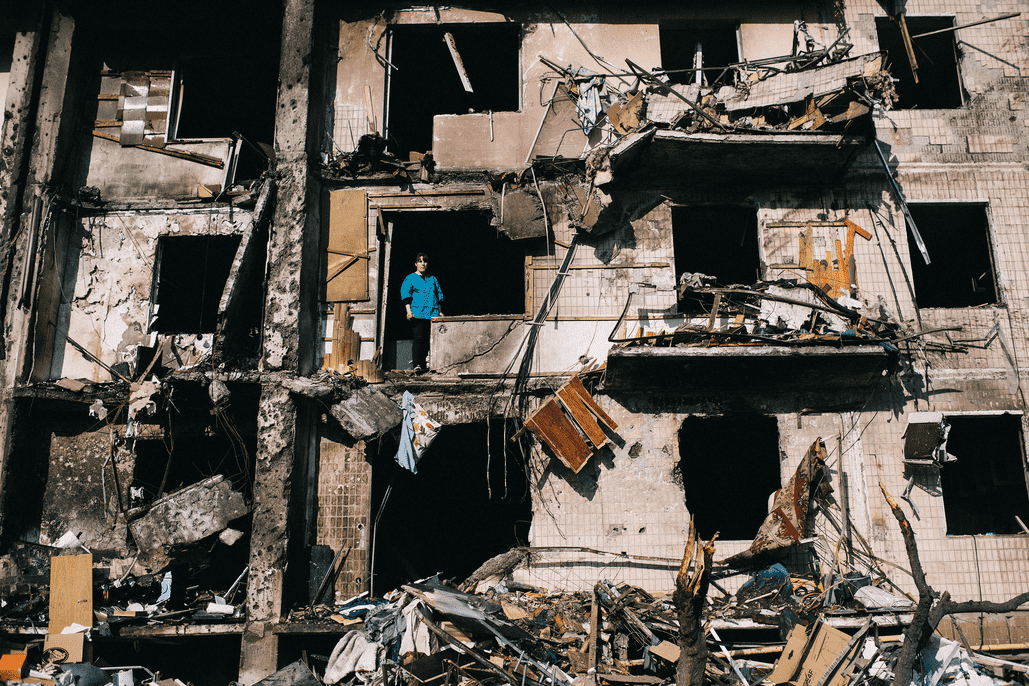
A person stands in the window of a destroyed apartment building, with rubble at the floor, pieces hanging off the walls, and holes blasted through every door.

Destroyed Apartment Building Kyiv, Ukraine. Maxim Dondyuk. CC BY 2.0

A fascination with the macabre is not a new phenomenon. For centuries human beings have been attracted to spectacles of death, suffering, and violence. In 1996 two Scottish academics, John Lennon and Malcolm Foley, coined the term “Dark Tourism'' in their book "Dark Tourism: The Attraction to Death and Disaster" to describe how some tourists are drawn to sites of catastrophe, tragedy and death, such as Chernobyl, Hiroshima or the wreckage of the Titanic. Whether these tours are purely voyeuristic or serve a purpose for those affected by the tragedy is a matter of contentious debate, and is always dependent on the nature of the tour.

In 2022, the organization Visit Ukraine proposed to host tours of cities in the Kyiv region that had been hit particularly hard during the country's invasion by Russia. The tour was meant to educate foreigners while raising funds for refugees. Mariana Oleskiv, the chair of the State Agency for Tourism Development of Ukraine, supported the proposal. However, despite its official support, the initiative faced backlash from critics who viewed it as a disrespectful intrusion into the lives of victims. As a result, Visit Ukraine and the State Agency for Tourism abandoned the idea. But is war tourism truly unethical? 

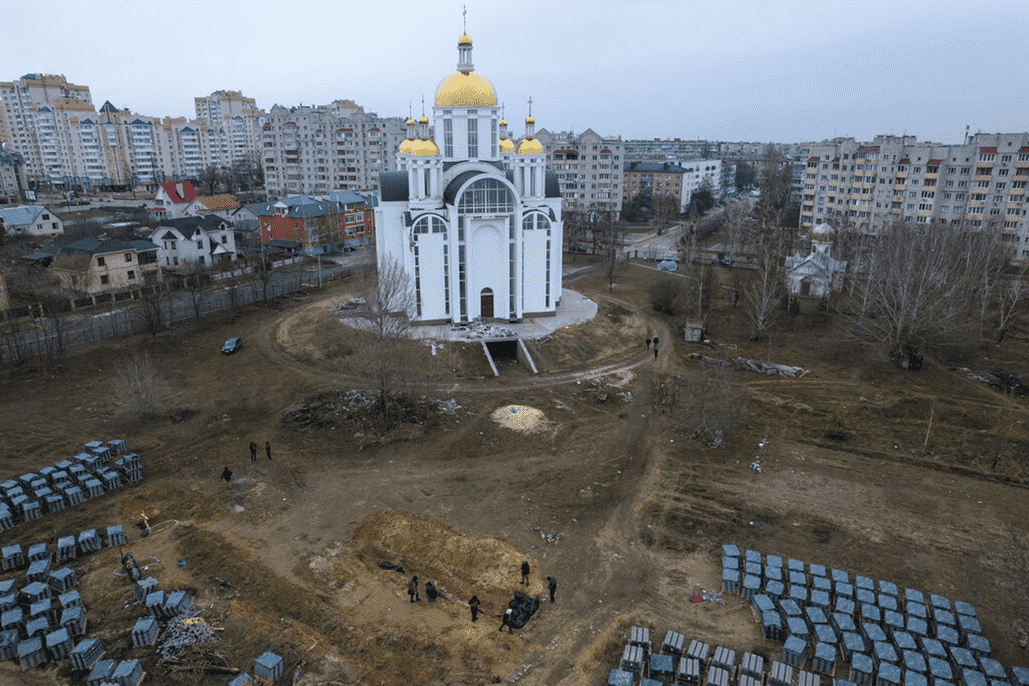
A gold-roofed building in Kyiv stands tall among an empty plot of land, with the city behind surrounding.

Outskirts of Kyiv, Ukraine. Rodrigo Abd. CC BY 2.0

Tourism is an important economic asset for many countries, and the loss of this source of revenue due to foreign invasion can represent a significant economic blow. “While the right to tourism is forcibly taken away during conflicts, tourism is always a reminder of the importance of dialogue, peace, tolerance, and sustainable development among countries,” The World Committee on Tourism Ethics said in a statement on Ukraine issued in 2022. 

According to UNESCO, since February 2022, the culture and tourism sectors have suffered losses of $19.6 billion due to the Russian invasion, while the total cost of the physical damage to these sectors is estimated to have reached nearly $3.5 billion as of March 12th, 2024. As Ukraine begins to think about rebuilding, the government believes tourism is essential for post-war recovery. 

“Any money that people will spend in Ukraine will help the economy to recover,” Oleskiv said in 2024. “We need to create interest to Ukraine not just as people that you support and you feel sorry for—but also the country you want to support by visiting.” However, the chairwoman is emphatic that Ukraine is not interested in developing a culture of “dark tourism.” Ukrainians want to attract tourists who are interested in learning about the history of the war and the story of the Ukrainian people, not thrill-seekers or adrenaline junkies. 

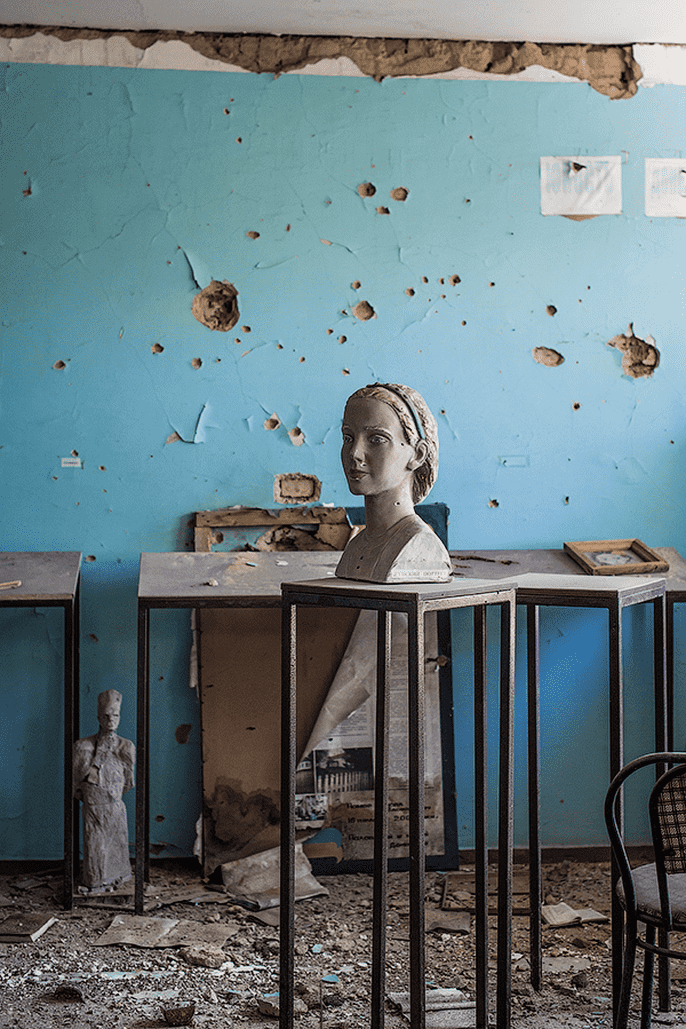
Stone bust sculpture stands atop a desk in a room with peeling paint, bullet holes and larger holes ripped out of the wall, while rubble lines the floor.

War in Ukraine. Tatyana Tkachuk. CC BY-SA 2.0

While the State Agency for Tourism Development is advising tourists to stay away until the war is over, warning that insurance may not cover risks in Ukraine, war tourism initiatives began to spring up in Kyiv as early as April of 2022, not long after Russian troops had retreated from the region. The tour guides responsible for these initiatives are aware of the precarious ethical ground upon which they tread. One Kyviv local, Svet Moiseev, saw war tourism as an opportunity to educate foreigners and raise money for the war effort. According to Moiseev, these tours are not very profitable for him, and he sees himself as a volunteer rather than a businessman, dedicated to informing the public and increasing support for the country abroad.

However, not all locals share Moiseev’s opinion, and some are uncomfortable with their lives being turned into a tourist attraction. Some locals have begun to put up signs warning tourists not to enter or photograph buildings damaged by the fighting. “Sometimes [the tour guides] bring tourists on purpose to make money from it. Not to talk about what happened,” says a resident of Hostomel, Serhii Ahiyev, in an interview with the Kyiv Independent. However, he is not entirely against the concept of war tourism and believes that it is important for foreigners to see firsthand the “terrible actions of the Russians.” 

Tourists who decide to travel to Ukraine are still undertaking a significant risk. Visit Ukraine reports that, while the majority of the fighting is currently concentrated in the eastern and southern regions, the entire country is subjected to regular rocket attacks. If tourists install the Air Alarm app, it will send an air alert notification for their chosen region of Ukraine from the Civil Defense System. Visit Ukraine also advises tourists to observe local curfews, always keep documents and IDs on their person and avoid crowded areas. Their website provides further information and resources on how to stay safe in Ukraine, such as details about the rules, prohibitions and restrictions on visiting Ukraine during the war, the most convenient routes to and through Ukraine, travel recommendations and legal support. 

The idea of war tourism in Ukraine remains a controversial subject, but organizations such as Visit Ukraine continue to plan to bring tourists to the country. “We are working to make sure that more people can see the things that the Russian army does to Ukrainian lands and people,” says Mykhailo Cherevyk, the project manager of Visit Ukraine. The organization has begun an initiative dubbed Donation Tours, and it wants prospective visitors to understand that this experience is different from war tourism or dark tourism. It is not just an opportunity to view firsthand the brutality of the invasion, but rather a way to “immerse yourself in the life of a country at war, and make a personal contribution not only to supporting the country but also to the common Victory.”


Rebecca Pitcairn 

Rebecca studies Italian Language and Literature, Classical Civilizations, and English Writing at the University of Pittsburgh. She hopes to one day attain a PhD in Classical Archeology. She is passionate about feminism and climate justice. She enjoys reading, playing the lyre, and longboarding in her free time. 

Food Fight: European Farmers Battle Food Outsourcing

As climate concerns grow, many feel that the EU’s new agricultural policies are uprooting farmers’ way of life.

Large tractors, trailers, and people line the streets on a gray winter day to block traffic in protest.

Farmers blocking a Berlin road in protest. Leonhard Lenz. CC0

Global warming, climate change, and greenhouse gasses have been hot-button topics for decades, but recent events have painted them in a much more alarming light. Many countries around the world have begun instating policies and procedures to combat this crisis, from carbon taxes to efforts at land preservation and conservation.

But just like every major change, it comes at a cost. Farmers, the backbone of the food market and a group with interests very much built around the environmental status quo, have been upended by recent policy changes. The EU has turned its attention to agriculture in recent months, proposing a variety of policies that will decrease the amount of land being used for farms, dubbed the Green Deal. In addition to stricter regulations, rising operating costs and taxes have also been cited as causes for discontent among the farming population of Europe.

This series of events reached a head in December of 2023, when farmers first began protesting across the continent. At first, it was simple picketing and protests, but in the months since, every possible display of discontent—from holding up traffic to spraying manure and throwing produce—has plagued much of the EU. Farmers in Berlin blocked the road around the Brandenburg Gate with tractors, and others in Brussels lit bales of hay on fire to deter police.

Over the last few weeks, the EU has made several concessions for the aggravated farmers. In addition to relaxing many of the regulations and reducing taxes on the diesel fuel used for tractors and farm equipment, the EU has apparently canceled its plan to import grain and other crops that could be grown in Europe from Ukraine. This in particular drove an especially angry contingent of protests, as the lower price and food standards of imported grain make domestic crops less profitable.

In the months since March, many of the more aggressive demonstrations mentioned above have begun to taper off in response to the EU’s capitulations. This demonstrates a problem that many governments are struggling to face in regards to climate change. The situation gets worse and its effects more severe, but swift action often ends up displacing people who rely on how the system has always been.

Hundreds of millions of people around the world have built their whole lives on the current status quo. Many of the changes that the EU suggested threatened their livelihoods by increasing the competition and undermining their typical methods. Unfortunately, there are not yet systems in place to account for the losses these individuals suffer, meaning future attempts to reduce the impact of climate change will risk the same backlash.

The EU may have been trying to minimize habitat destruction and land overuse, but in the process it risked harming the backbone of its economy and even its food supply. Climate change is an undeniable issue, but one that affects every person in the world differently. Any attempt to fix it will inevitably create some losers, whether the people in charge have accounted for them or not.


Ryan Livingston

Ryan is a senior at The College of New Jersey, majoring in English and minoring in marketing. Since a young age, Ryan has been passionate about human rights and environmental action and uses his writing to educate wherever he can. He hopes to pursue a career in professional writing and spread his message even further.

Exiled Russian Pussy Riot Activist Sentenced for Ukraine Tweets

After a series of tweets criticizing Russia’s invasion of Ukraine, activist and girl band member Lucy Shtein was sentenced in absentia to six years in prison. 

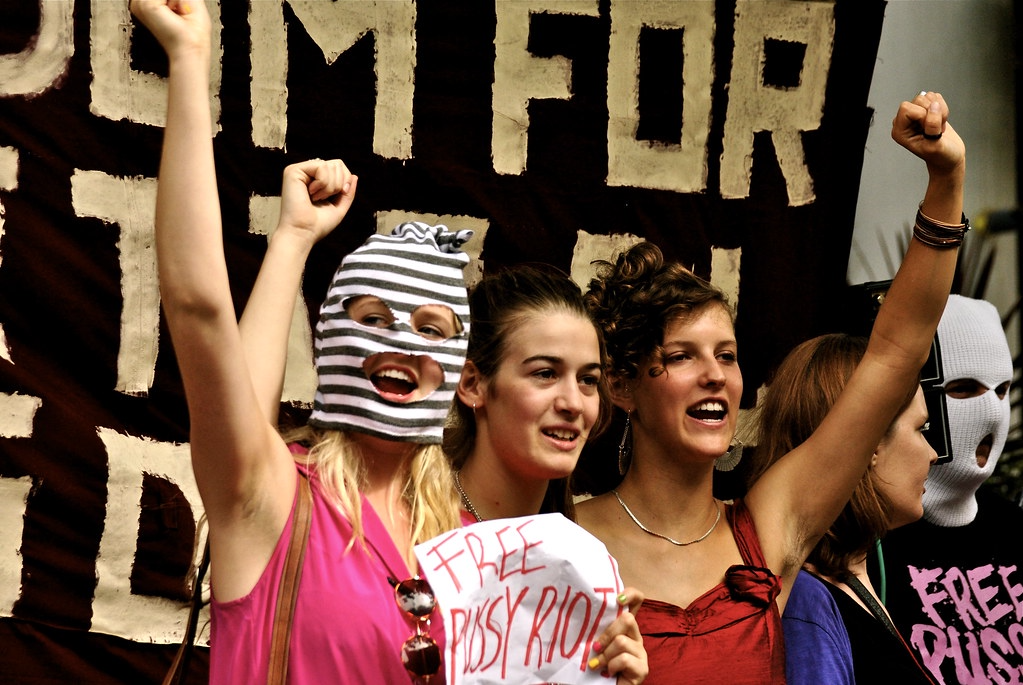
Three women, one wearing a ski mask, holding their fists in the air and yelling while holding "free pussy riot" sign.

Pussy Riot Global Day. Eyes on Rights. CC BY-NC-SA 2.0

The members of Pussy Riot, a Russian punk rock and performance art group, are no strangers to prosecution. Their political activism has landed them in legal trouble in the past. In 2012, the band briefly took over a cathedral in Moscow and performed a “punk prayer” by the church’s altar. The lyrics called for the Virgin Mary to expel Putin from Russia. As a result, three members of the group, Maria Alyokhina, Nadezhda Tolokonnikova and Yekaterina Samutsevich, were convicted of hooliganism, religious hatred and plotting to undermine social order and sentenced to serve two years of imprisonment in a penal colony, a decision that sparked worldwide protests. 

Two women in ski masks holding up a large banner that states "Free Pussy Riot"

Free Pussy Riot - Tel Aviv Israel. דוג'רית. CC BY-SA 4.0. 

On November 21st, 2023, Nadya Tolokonnikova, was arrested again, this time in absentia, for the charge of “insulting the religious feelings of believers.” The charge carried a maximum fine of about $3,400 (300,000 roubles), forced labor, and up to one year of imprisonment. In Russia, this law is often referred to informally as the “Pussy Riot Law,” and was written while the members were in court for their 2012 performance. The charges against Tolokonnikova were leveled in response to a 2022 performance art piece called “Putin’s Ashes” in which Tolokonnikova and eleven other women, all wearing balaclavas, set fire to a portrait of Putin.

Young woman, Nadya Tolokonnikova, standing on stage in front of small podium delivering an emotional speech.

Nadya Tolokonnikova. Steve Jurvetson. CC-BY-2.0. 

In March of 2024, Pussy Riot Member Lucy Shtein was sentenced in absentia to six years in prison for a tweet the activist and artist posted in March of 2022 criticizing Russia’s military activities in Ukraine. Commenting on a video allegedly of Ukrainian soldiers shooting the legs of Russian POWs, she stated that the Russian soldiers had come “to bomb other people’s cities and kill people.” Since launching its invasion of Ukraine, the Russian government has begun prosecuting citizens who speak out against the war. In 2022, the State Duma, the lower house of the Russian legislature, amended the criminal code to make it illegal to support an end to the war or to spread any information on Russia’s military activities that contradicts the official version presented by the Russian Ministry of Defense. As of 2023, there have been more than 19,700 detentions of citizens who participated in anti-war activities, and as of 2024, 929 cases have been filed against citizens under this law. The new law has been criticized as an attack on freedom of assembly, freedom of speech, political opposition and activism, and it was under this law that Shtein was sentenced. 

Shtein escaped from house arrest in Russia with her girlfriend and fellow Pussy Riot member Maria Alyokhina shortly after the invasion in Ukraine had begun, earning her a spot on the Ministry of Internal Affairs wanted list. Shtein had been accused of violating coronavirus restrictions and placed on indefinite house arrest after participating in rallies in support of opposition leader Alexei Navalny. Shtein and Alyokhina fled to Iceland, where they were granted citizenship in 2023. 

Despite being unable to return to their homeland, Pussy Riot members continue to tour internationally. On June 20th, 2024, Tolokonnikova will be opening an art exhibition entitled RAGE in Austria. In 2017, Maria Alyokhina wrote a memoir, "Riot Days," recounting her experiences with Russia’s criminal system. In 2024, the band adapted the memoir into a show described as “a mixture of concert, rally, theater and political happening” touring in Canada and Europe. 

TO GET INVOLVED 

Pussy Riot: You can support Pussy Riot here by buying their merchandise, or a ticket to one of their upcoming shows in Chicago, IL, US or Riddu Riddu, Lyngen, Norway.

Stand With Ukraine: The "Riot Days"tour raised funds for the children’s hospital Ohmatdyt in Kyiv, Ukraine. While the show is no longer on tour, you can still donate to the hospital.


Rebecca Pitcairn

Rebecca studies Italian Language and Literature, Classical Civilizations, and English Writing at the University of Pittsburgh. She hopes to one day attain a PhD in Classical Archeology. She is passionate about feminism and climate justice. She enjoys reading, playing the lyre, and longboarding in her free time. 

The Oldest Russian Theatre is in Latvia

The Mikhail Chekhov Riga Russian Theater in Riga, Latvia, faced political censorship under the Soviets but managed to keep its doors open.

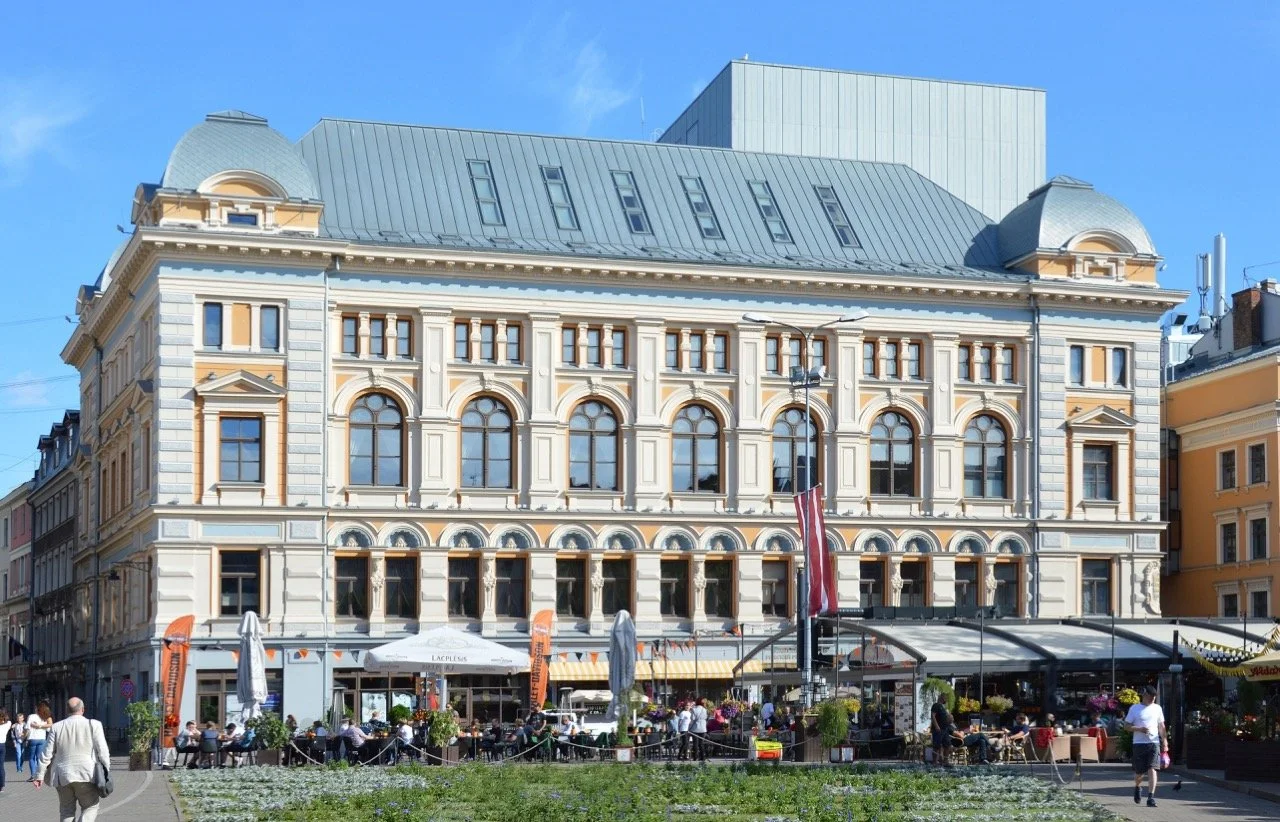
Large yellow building with ornate trim and window arches, standing tall among a lovely street.

Riga Russian Theater, 2018. Olaf Meister. CC BY-SA 4.0

Established in 1883, the Mikhail Chekhov Riga Russian Theater was the first of two kinds: the first professional theater in Latvia and the first Russian-language theater outside Russia. Before it was founded, there were no permanent Russian theaters in the capital city, only the occasional amateur performance, and it is thus deeply rooted in the history and development of professional theater in Latvia. Today the theater offers a mix of classical plays and modern, experimental works.

In 2006, the theater, known previously as the Riga Russian Drama Theater, was rechristened the Mikhail Chekhov Riga Russian Theater as a tribute to the actor, director and teacher, who spent two years working in Riga in the 1930s. A friend of Chekhov’s, Janis Karklinsh, quoted one of Chekhov's interviews with the Latvian press from this time: "Great nations crumble under the outcome of materialism and lust for power. The revival of art comes through the small nations.'' It was Chekhov’s opinion that the cultural context of Latvia in the early 1930s was the best ground for "real art.” Germany and France treated art as a "pretty cheap kind of entertainment.” “New art" could only be born in a developing country that was in the midst of cultural renewal. While in Riga, Chekhov directed and acted in five performances. 

The theater continuously confronted the issue of a lack of funding. In the early 1900s, a committee known as the ​​Society of the Guarantors of the Russian Theater in Riga was formed with the task of ensuring “the permanent existence of the Russian theater in Riga.” The First World War disrupted these efforts, and for a period of time between 1915 and 1921, the theater ceased operations. In 1921, the Latvian government made the decision to allocate close to $1,700 a year in order to “support the theaters of national minorities—German, Jewish, Russian” and the theater was able to resume its activities.

On August 5th, 1940, Latvia was occupied by the Soviet Union. Around 35,000 Latvians were killed or deported during the occupation between 1940 and 1941. As a result, the Riga Theater became a public theater and was cut off from its financial support from private entities, facing the political censorship that was common under Soviet occupation. It was not until 1998, less than a decade after Latvia had regained its independence from the USSR, that the Society of Guarantors was revived and the theater could once again receive financial donations.

The theater employs directors and designers from all parts of Europe, including Belarus, Estonia, Lithuania, Germany, Sweden, Italy, and more. Following the tradition of Russian theater, the company often performs pieces that include music and dance, though its repertoire is by no means limited to musicals. Directors employed by the theater strive to choose works that are profound and psychologically provocative in nature and push the boundaries of  drama itself. 

The theater retains a permanent troupe of actors as well as a repertoire of Russian, Latvian and international works, as well as works by young, emerging playwrights. In 2018, the theater inaugurated a studio for children and youth, ages seven to twelve, to train in the performing arts and develop skills in confidence and communication. Although the studio had to pause its workshops during COVID-19, as of 2024 they have resumed.

According to its website, the theater “harmoniously lives in the cross-cultural space, participates in the cultural dialogue—both nationally and internationally,” making it a significant cultural institution for Latvia.


Rebecca Pitcairn

Rebecca studies Italian Language and Literature, Classical Civilizations, and English Writing at the University of Pittsburgh. She hopes to one day attain a PhD in Classical Archeology. She is passionate about feminism and climate justice. She enjoys reading, playing the lyre, and longboarding in her free time.

Italian Night Life Thrives in Abandoned Buildings

Thanks to self-managed social centers, Italians have found a space to enjoy concerts, dinners, movie nights and more

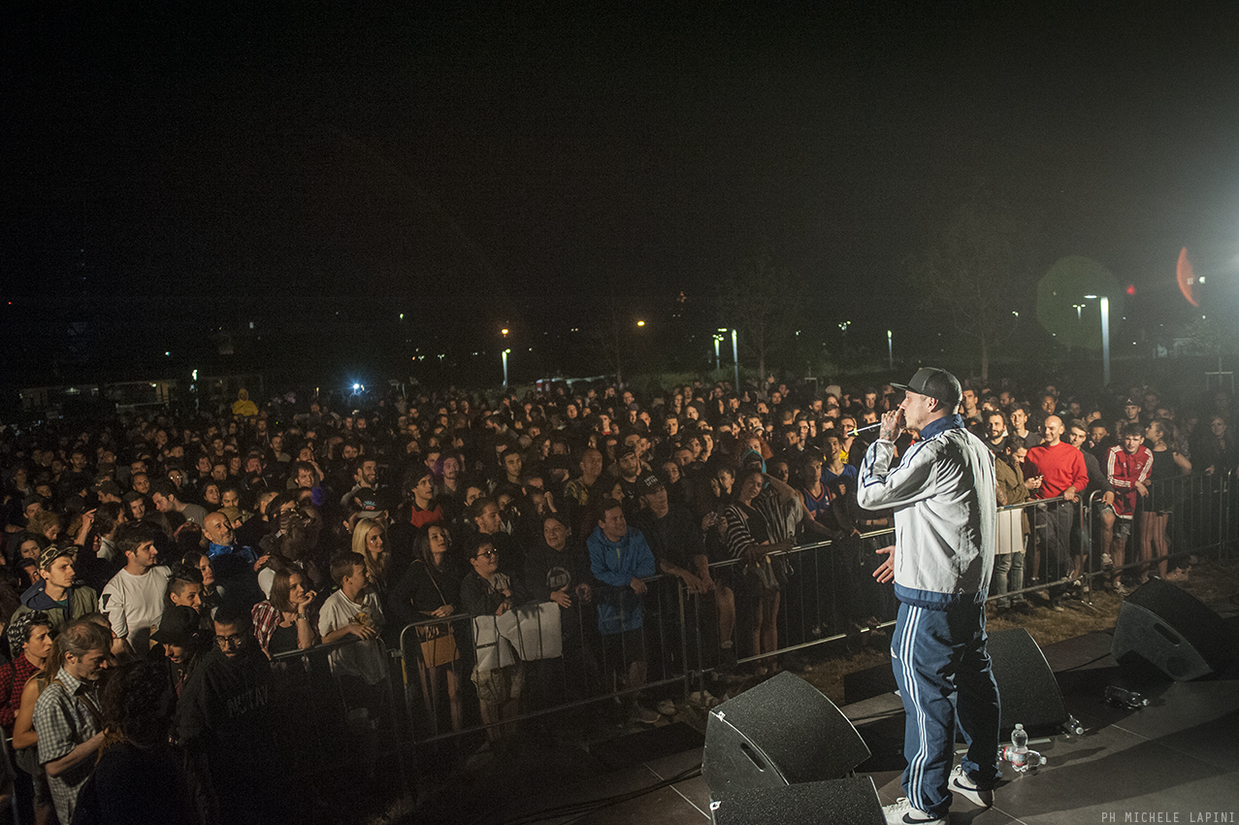
A concert at night with one performer singing to the crowd.

Concert at XM24. Zeroincondotta. CC BY-NC-SA 2.0 

Since the 1970s, self-managed social centers have offered a place for Italians to gather as a community. Usually located on the outskirts of cities, these centers are established and operated entirely by locals. They are often formed as a direct response to social issues such as lack of affordable housing, drug addiction and marginalization. Members of the community occupy buildings that have fallen into disuse, such as schools, apartment complexes, forts and even farms. 

Pasted concert and political posters on a grafittied wall.

CSOA Forte Prenestino. boklm. CC0 1.0

The legal status of these centers varies, and some face eviction by authorities despite their value to the community. Many of the centers take a strong political stance, defining themselves as anti-fascist, anti-sexist, anti-racist and anti-capitalist. These spaces serve as important refuges for members of the community and a place for diverse groups of people to meet and collaborate.

Singer on stage holding his fist in the air.

Concert at XM24. Zeroincondotta. CC BY-NC-SA 2.0 

One of the most famous of these self-managed social centers was XM24, or ExMarket, of Bologna. It emerged during a period of repression as the mayor of the city engaged in a campaign against social housing and squatter movements. The center established itself in several abandoned spaces, including a former fruit and vegetable market from which it took its name. It offered a number of services to the community, including a cafe, a bike shop, a vegetable garden, live concerts, a gym, and a dormitory for migrants, refugees and the houseless. It was run by a general assembly of local volunteers.

Written grafitti on a wall that promotes collective action.

XM24 Graffiti, Against those who close our spaces, let’s ignite our rage. Zeroincondotta. CC BY-NC-SA 2.0

In 2013, XM24 was able to reach an agreement with the local government, allowing the center to operate independently and utilize the abandoned spaces. However, the agreement expired in 2017. Members of the community attempted to protest the eviction in a struggle with the city that lasted two years, but in 2019 the space was evicted and bulldozers arrived to clear it out. As of 2024, the center no longer exists. 

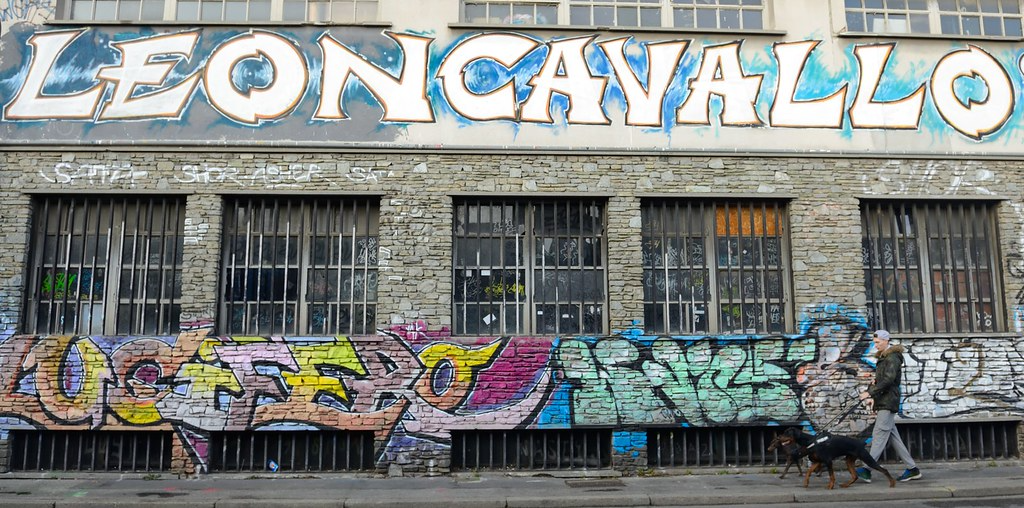
Leoncavallo Spazio Pubblico Autogestito. Robertino Radovix. CC BY-NC-SA 2.0 

XM24 was not the only self-managed center to be evicted by the government, but many centers have still found a way to thrive. The Leoncavallo Spazio Pubblico Autogestito of Milan still offers jazz concerts, stand-up comedy, dinners, English lessons and more to locals. It is currently open Thursdays through Sundays in the afternoon and evening, although they face eviction on June 18th, 2024 by the bailiff and the property’s lawyers. 

Daniele Sepe & Aldolà Chivalà. L’Asilo. CC BY-NC-SA 2.0 

Je So’ Pazzo is a self-managed center in the Marterdei district on the outskirts of the city of Naples in a former asylum for the criminally insane. When it was occupied in 2015, it was managed by the Penitentiary Police. Volunteers collaborate with local associations to house, collect clothing for and distribute meals to the houseless. Their services include medical clinics, psychiatric support and migrant aid. They also offer a number of recreational activities, such as Naples’ only indoor rock climbing wall, a football pitch, a gym, a theater, a bar, social dinners, concerts, and so much more. It is still active and open 24 hours a day, six days a week. Like most places in Italy, it is closed on Sundays.

Two male performers on stage at concert, one with a guitar and the other singing through microphone

Concert at CPA, Firenze. GothEric. CC BY-SA 2.0

The Centro Popolare Autogestito Firenze Sud and LaPolveriera SpazioComune are both self-managed centers located in Florence. Like other social centers, they offer a variety of recreational activities during the days and the evenings, such as ceramics classes and concerts, as well as important social services for the community.

Whether you are looking to participate in a ukulele workshop, enjoy a dinner and movie, discuss politics with local Italians, or let loose at a heavy metal concert, self-managed social centers are the perfect place.


Rebecca Pitcairn

Rebecca studies Italian Language and Literature, Classical Civilizations, and English Writing at the University of Pittsburgh. She hopes to one day attain a PhD in Classical Archeology. She is passionate about feminism and climate justice. She enjoys reading, playing the lyre, and longboarding in her free time. 

How Geoffrey Chaucer Inspired Pro-Migrant Literary Social Action in the U.K.

In the U.K., writers and refugees collaborate to end indefinite detention.

The United Kingdom’s immigration policy allows it to detain migrants indefinitely while the government resolves their immigration status. The U.K. is the only country in Western Europe with this law; other European nations have a maximum time limit to detain people, usually ranging from about a month in France to six weeks in Germany. In 2015, a group of writers and activists in the United Kingdom combined forces to create the Refugee Tales—a short story collection and an annual walk to raise awareness about indefinite detention for migrants in the U.K. The Refugee Tales seeks to put a 28-day time limit on immigration detention.

The walk mimics the style of fourteenth-century poet Geoffrey Chaucer’s “The Canterbury Tales.” In his poem, a diverse group travels from London to Canterbury, telling stories throughout the journey to entertain each other. The Refugee Tales takes a broader scope, engaging people worldwide for social change. 

As a part of the Refugee Tales, established writers partner with those impacted by the U.K.’s indefinite detention model. The writer transcribes their narratives. Those sharing their stories may work within the immigration system as social workers or interpreters. Oftentimes, they are migrants who have experienced indefinite detention. Writers share these stories with walkers during the evening—as Chaucer’s characters did with their tales—and compile them in short story collections, read them aloud in videos, and share them in news outlets. 

The written work created between author and refugee lies at the heart of the movement. Storytelling works to raise awareness about the problems migrants face on their journey to the U.K. and in these detention centers. 

Scottish author Ali Smith, who wrote “How to be Both” and won the Baileys Women’s Prize for Fiction, is the patron of The Refugee Tales. She described storytelling as “an act of profound hospitality.” Transcribing the stories refugees tell elicits “sympathy and empathy” from listeners. 

Smith wrote “The Detainee’s Tale,” telling of a young man who arrived in the U.K. as a victim of human trafficking. After escaping, he found a community at a church that advised him to reach out to the Home Office—the U.K.’s ministerial department responsible for security and immigration—for help.  

“You do it,” Smith writes as the young man says. “You write to the Home Office. They come. They arrest you. They put you in prison for six months because the passport you’ve got is the wrong kind.”

Many British literature scholars view Chaucer as the “Father of English poetry.” “The Canterbury Tales” is a staple in many British literature classes. Telling refugees’ stories in the style of a quintessential British text is a political statement, making these refugees a part of the cultural canon and saying they deserve a place in the United Kingdom.

TO GET INVOLVED:

The Walk: The Refugee Tales will host their annual walk this year from July 6-10 from Edenbridge in Kent to Westminster in London. You can buy tickets to participate in the walk. 

The Stories: For easier yet impactful involvement, listen to or purchase the books full of the U.K.’s refugees’ tales.


Annie O’Brien

Annie is a third-year student at George Washington University studying English, Creative Writing, and History. From Philadelphia, she is an avid reader, pop-culture enthusiast, and traveler. She’s always eager to talk about her adventures abroad and domestically, whether it's telling about the time she hitch-hiked in Bavaria or offering recommendations for the best bookstores in Key West. She hopes to become a published author one day. Enjoy more of her writing on her Substack.

Noon Against Putin: Russian Citizens Continue Navalny’s Mission

In Russia, protests in opposition to Putin’s rule continue despite the death of Alexei Navalny.

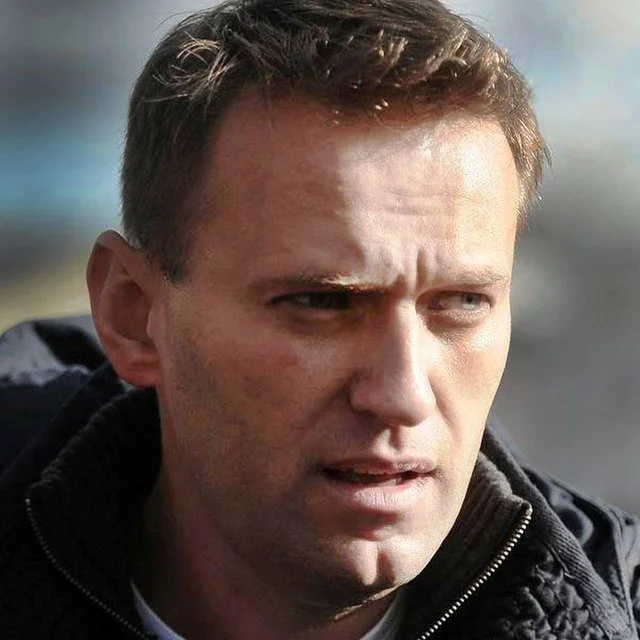
A close up image of Alexei Navalny, he furrows his brow and looks into the distance.

The late Alexei Navalny. Mitya Aleshkovskiy. CC BY-SA 4.0

On February 16, 2024, Alexei Navalny, outspoken critic of Vladimir Putin and major activist in Russian domestic politics, died in a Russian prison. On March 17, 2024, believers in Navalny’s vision took the next step in opposition to the president.

Despite his death, Navalny’s anti-Putin rhetoric continues to echo through the streets of Moscow. On the final day of the 2024 Russian presidential election, groups of silent protestors gathered at polling places across the country at exactly twelve o'clock noon in a demonstration dubbed “Noon Against Putin.” The plan had been endorsed by Navalny prior to his death, and the call was taken up afterwards by his widow, Yulia Navalnaya, via a video on YouTube in the days before the election.

The demonstrators voiced their disapproval of the unfair elections by either writing in Navalny’s name on their ballots, invalidating their vote, or simply leaving without voting at all. Around the world, Russian citizens also formed silent queues at embassies in Berlin and London, standing in solidarity with the demonstrators in Siberia and Moscow. Many also took to social media to decry what they called an unfair and rigged election, denying the Kremlin’s repeated claims that their president is always democratically chosen.

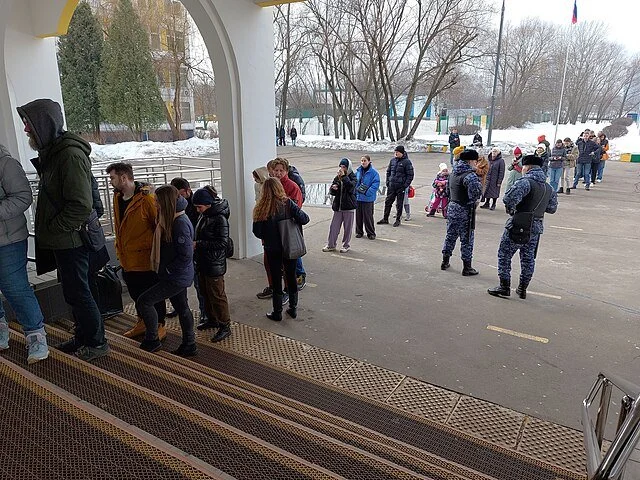
People lined up outside of a polling place in Winter. Two police are standing by, watching the line.

Protestors outside of a polling place in Moscow. Konopeg, CC0

Navalny was one of the few Russian citizens willing to outright oppose Vladimir Putin’s rule. He was arrested several times for leading protests against corruption in the Kremlin and eventually joined a centrist political party to work towards fair and just elections, among other humanitarian improvements in the daily lives of the Russian people. Navalny’s death in a Russian prison in the Arctic sparked outcry worldwide, with many world leaders accusing Putin of direct involvement.

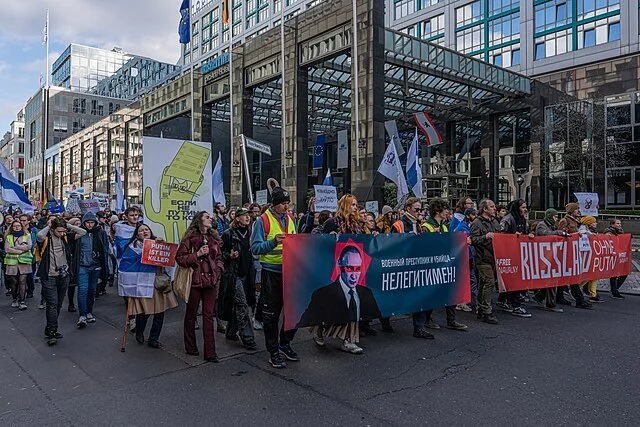
A protest with photos of Putin on banners and signs in Russian and German on the Berlin streets.

A procession outside the Russian Embassy in Berlin. A.Savin, Free Art License

“Noon Against Putin” was carried out with the knowledge that some arrests were inevitable. The demonstration ended with at least 60 citizens imprisoned and 15 criminal charges filed. Not only did the people gathering at the ballot boxes understand that their demonstration would not change the election, but they also came in spite of the laundry list of potential punishments from the authorities. The threats of imprisonment, and possibly death in captivity, hang over the heads of any Russian citizen who speaks out against the Kremlin. But the community that Navalny has built seems unafraid of these consequences. Even though Putin was still reelected, this brief and solemn display of unity among the Russian people shows that even without their vocal leader, the anti-Putin masses are still here, and are still willing to show their disapproval.

The Kremlin, and thus Vladimir Putin, still holds complete control over Russia and its government, but the forward momentum that these protestors represent, no matter how small it may appear now, suggests a potential shift in the balance of power. In the past, Russian citizens have had little choice but to put their heads down and keep moving forward. Today, Navalny’s memory has spurred those same citizens to take action towards a vision of change.


Ryan Livingston

Ryan is a senior at The College of New Jersey, majoring in English and minoring in marketing. Since a young age, Ryan has been passionate about human rights and environmental action and uses his writing to educate wherever he can. He hopes to pursue a career in professional writing and spread his message even further.

Exploring Iceland’s Westfjords

Delve into the natural beauty and memorable experiences awaiting in Iceland's overlooked northwestern region.

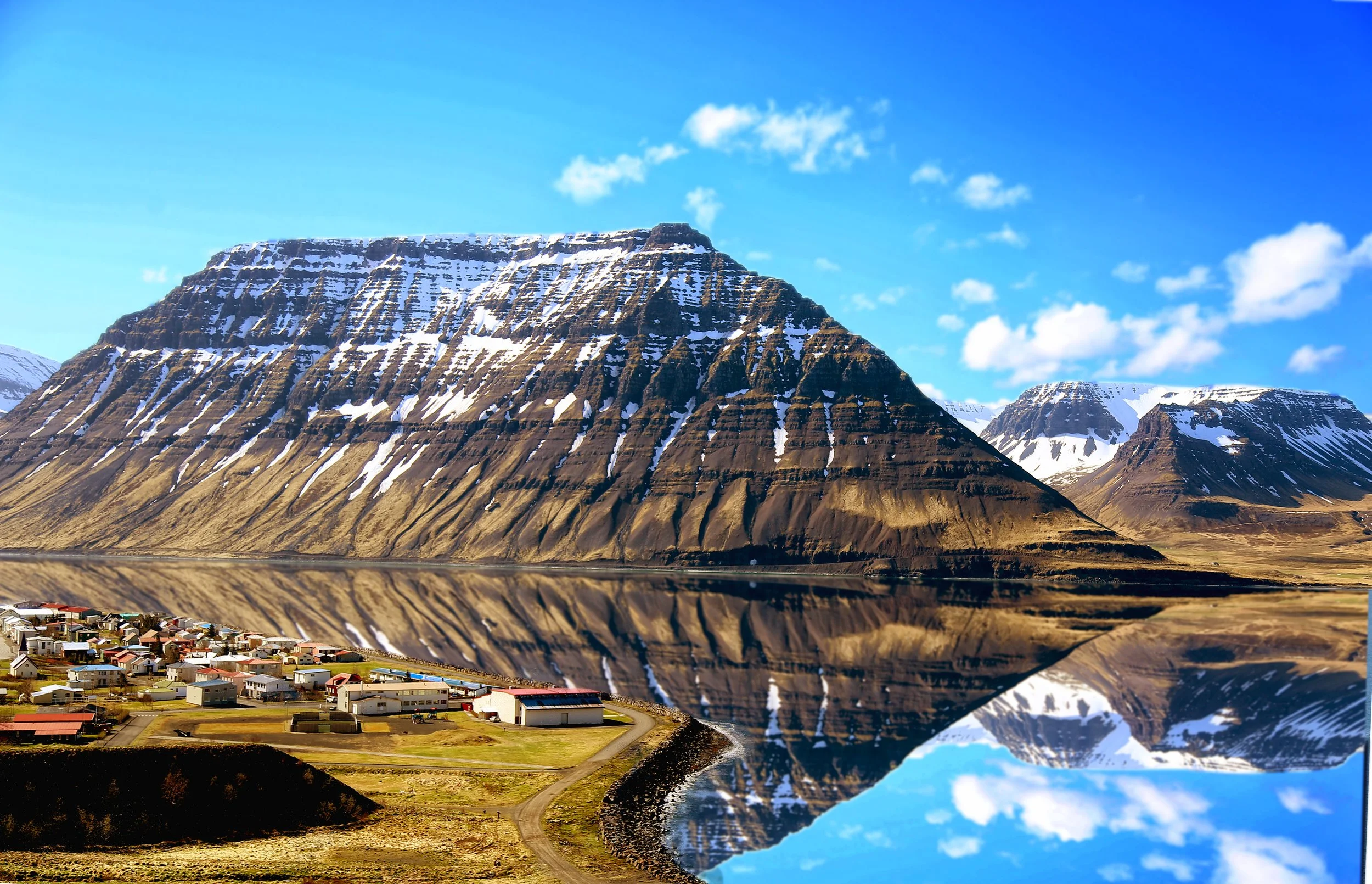
A small town bordering a remote Icelandic snow capped fjord. The water is crystal clear and still, reflecting the mountain and sky.

A small town on a fjord in the Westfjords, Iceland. RaulHudson1986. CC0.

The serene and volcanic landscapes of Iceland have attracted adventurous travelers for many years, especially the popular Golden Circle and Ring Road routes. Yet, both paths exclude one of the most scenic areas of the country, the Westfjords.

The Westfjords of Iceland is a sparsely populated, panoramic region with little geothermal activity that many travelers often overlook. Despite this neglect, there are many amazing experiences here to add to your Icelandic adventure.

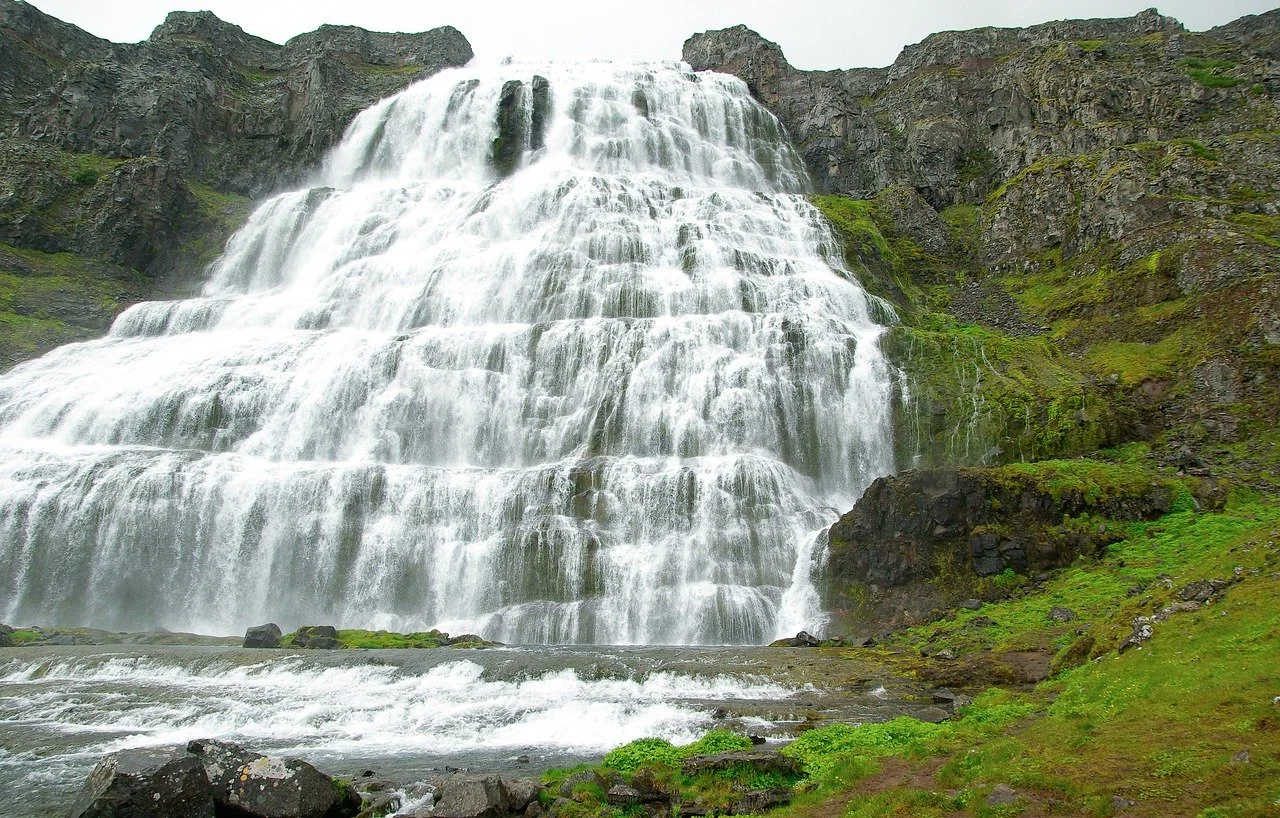
1. Dynjandi Fjallfoss Trail  (Arnarfjordur) 

A massive waterfall cascading down the vibrant green mossy rocks and mountainside into river.

Dynjandi Fjallfoss in Arnarfjörður, Iceland. Jacqueline Macou. CC0.

This majestic waterfall is the largest in the region and is frequently referred to as the Westfjords’ most beautiful attraction. It is part of a series of seven waterfalls that unravel down the peak, originating from the waters of Lake Stora-Eyjavatn. The sound that emanates from these falls mimics thunder, and it’s understood why the waterfall’s name, Dynjandi, translates to “thunderous” or “booming." 

From the parking lot, you can hike your way up the seven waterfalls, but take caution as it can be quite slippery and mossy. The average person can do this hike in around 15 minutes, but it is recommended to take your time to enjoy each one. At the peak, you can revel in the mist of the magnificent waterfall, try the fresh glacial water, and look out over the extensive views of the fjord upon your descent. 

2. Museum of Everyday Life–Hversdagssafn (Isafjordur) 

Two women in a dark exhibit in the museum. They smile and look into jars that are attached to a post in the ceiling, all filled with different various object.

Museum guests in the sensory lab in Ísafjörður, Iceland. Courtesy of Hversdagssafn.

This museum provides an intimate perspective on the everyday life of Icelanders that is largely overlooked in mainstream tourism of the island. Founders Vaida and Björg refer to Hversdagssafn as more of an art project under the guise of a museum, one that aims to collect human connection. From exhibits on family histories told through donated books from the old church, short films about the winter seasons and a local distaste of the Northern Lights to heartfelt reflections on being an immigrant in Iceland, this museum is sure to give you a fresh perspective on life in the Westfjords and the pillar of community using all five of your senses. 

3. Hike to Hornstrandir (Hornstrandir)

Hiker crossing a wide shallow river. They are surrounded by a sloping wall of bright green grassy mountainside, with still a patch of snow at the peak.

Hiker crossing the river in Hornstrandir on a trek to Hornbjarg cliff. Kristyna Sindelkova. CC0.

Hornstrandir (​​227-sq-mi) is an uninhabited area of the Westfjords that is only accessible by boat during the summer between June and August. It’s frequently called “Europe’s last wilderness” and deemed a “hiker’s paradise.” All of the homes on the peninsula have been restored since the last farmers left in 1952. 

After establishing Hornstrandir as a protected Nature Reserve in 1975, the area’s 250 species of flowering plants and 30 species of nesting birds have thrived. Up to six million birds nest on the cliffs during the summer, with species including the Atlantic puffin, Arctic terns, black guillemots and penguins. It is the only sanctuary for Iceland’s prized native mammal, the Arctic fox. As the region is uninhabited and the animals are protected, the foxes have no fear of travelers and will often raise their kits near campsites. Polar bears have also been known to drift on ice to Hornstrandir from Greenland, though this occurrence is rare. 

The area’s tundras, cliffs, flower fields and ice prove to be exciting hiking routes for self-sufficient adventurers. You can enjoy the vast region through multi-day hikes or day trips where you can eat traditional cuisine at the Old Doctor’s House. You can also do multi-day kayak tours that weave in and out of the fjords and camp overnight in the wilderness or at sleeping bag accommodations. Guided tours are highly recommended, and booking in advance is required. 

4. Tjöruhúsið (Ísafjörður)

Looking down a residential street in Isafjordur, some houses have bright red picket fences, and are vibrantly painted.

Town of Isafjordur in the Westfjords of Iceland. Gestur Gislason. CC0.

Immerse yourself in this Icelandic fish buffet, only open for dine-in during the summer season, for a communal dining experience with unlimited access to a range of unique platters and local music. It is a family-owned and run restaurant that has no menu, as the restaurant caters to the catch of the day. The atmosphere is warm, welcoming and familial. Plates vary from traditional Icelandic fish stew, to thorskkinnar (cod cheeks), monkfish and more. The restaurant also serves as a meeting space for public events within the community. Reservations for the lunch and dinner serving times during the summer seasons are highly recommended to ensure a seat at the delicious buffet-style gathering.  

5. The Icelandic Museum of Sea Monsters (Bíldudalur)

A small caution sign posted with a cartoon image of a sea monster rising out of the water posted in front of the fjord.

A cautionary sign was posted along the road in Iceland. Dendron. CC0.

Take a step back in time and discover old Icelandic lore and legend of the creatures that may or may not have plagued the Nordic seas. This region is known across Iceland for its historic reputation for prolific sea monster activity. At the Icelandic Museum of Sea Monsters, visitors can witness the extraordinary creatures of the deep vividly portrayed through an immersive and interactive blend of language, visuals and videos. Eyewitness testimonies are paired with scholarly insights into the realm of sea monsters, as on-screen narratives and academic perspectives infuse the space. Moreover, an array of relics and artifacts, serving as tangible remnants, color the museum, offering compelling evidence of their existence. The museum also has impressive interactive maps that draw on all kinds of monster legends from around the world.

Additionally, as you visit the museum, a highly recommended pitstop nearby is Reykjafjardarlaug Hot Spring, a geothermal pool just outside of the town for an ideal rest in warmed geothermal waters. 

6. Whale Watching

People holding onto the rails in front, smiling, while on a small whalewatching boat in the fjord.

Whale watchers aboard a RIB boat in Iceland. Courtesy of West Tours. CC0.

The waters of the Westfjords are home to many arctic species, including up to 20 species of whale. Here you will likely encounter dolphins, humpback whales, beak whales, minke whales and orcas. These polar water tours are frigid and icy and thus can be experienced on more relaxed boat tours. However, if you are looking for a more adventurous and open-air whale-watching tour, you can opt for an open RIB boat safari where you can feel the pulse and spray of the ocean while capturing up-close views of marine life. Most tours depart out of Isafjordur or Holmavik and last two to six hours. Almost all tours guarantee incredible whale and nesting bird sightings. 

A small whalewatching boat in the fjord, as a large whale tail sticks out of the water only a few feet away.

Whale watchers experiencing a whale sighting in Iceland. Courtesy of West Tours. CC0.


Julz Vargas

Julz is a student at Wellesley College studying Anthropology and Spanish. She grew up in Los Angeles, CA, and has studied all around the world in places such as Costa Rica, Greece, Iceland, and Spain. She is passionate about employing writing as a tool to explore human connection and diversity. Julz aspires to foster cross-cultural connections through community-based research, amplifying inclusive and diverse media about global cultures, foods, and people, to encourage individuals to engage more wholly with the world.


Buried Tragedy: The Slums Beneath the Streets of Edinburgh

A long-buried mini-city beneath the streets of Edinburgh sheds light on the lives of its 19th century poor

A dark underground tunnel with old brick walls is lit by a tall candelabra in a corner.

The Edinburgh Vaults. fw42, CC BY 2.0

The city of Edinburgh is known for its gorgeous architecture, rich history and fascinating culture, and over many years has become a prime destination for tourists visiting Scotland. But beneath the Royal Mile lie hidden catacombs and an unsettling history of poverty and crime.

Despite being used as a prime spot for chintzy “ghost tours”, the underground city (referred to varyingly as the Edinburgh Vaults and South Bridge Vaults) has a rich and tragic history. It was constructed back in 1788 as part of the South Bridge Act, which was an attempt to make the rapidly-growing city more traversable. The bridge wasn’t only for travel, however; the arches under the bridge were home to tenement buildings designed to turn the area into a marketplace. The nearly 120 individual vaults became taverns, workshops and storage units for merchants.

An underground storage site of built open shelves into the brick wall sides.

Storage in the Edinburgh Vaults. Kjetil Bjornsrud, CC BY-SA 2.5

However, these vaults were not properly sealed against water and eventually started to flood, leading to most businesses completely abandoning them before the turn of the century. The rooms were left largely empty as the Industrial Revolution swept across Britain, and eventually became slum housing for the city’s poor. As jobs began to be automated, more and more citizens were without income and found themselves unable to pay for their homes, sending them out onto the streets and, eventually, down to the South Bridge Vaults.

Since the vaults were almost totally blocked off, many of them were without air circulation and sunlight. This, coupled with a lack of running water and sanitation, made living down in the vaults a waking nightmare. Over time, the vaults became more and more crowded, with many housing several families at once.

Brick bunks builts into the wall with straw lining the double layers cubbies. The area is dark and damp.

A recreation of living conditions in the Vaults. Shadowgate, CC BY 2.0

The vaults were also entirely avoided by the city police. As a result, they became a hotspot for all kinds of crime, from theft and prostitution to murder and body snatching. Rumors have circulated for years that a pair of notorious serial killers used the vaults to store corpses that they would later sell to medical schools for use in classes. While the killings did occur, there is no evidence that the criminals actually used the vaults to store their victims.

It is unknown exactly when the vaults were finally shut down. At some point, they were cleared out and sealed off with rubble to prevent new inhabitants. The vaults were left completely forgotten underneath the city until being discovered and excavated in the 1980s. In the years since, various clubs and venues have taken up residence in the vaults, but the vast majority are still used for ghost tours.

The history of these vaults is overshadowed by the pop-culture appeal of their supposed hauntings, but their very existence shines a light on the grim conditions faced by the poor in the 19th century. The appalling conditions in which these impoverished people lived is bad enough, but the indifference shown by the city’s government was far worse, letting criminals run rampant and leaving entire families essentially trapped in the sunless, disease-ridden catacombs. Today, the vaults serve as a reminder of the shortcomings of industrialism and the suffering endured by the poor around the world throughout history.

Though much of the vault network is still closed off to the public, there are many different tour companies in the city that guide visitors through the accessible rooms. Despite being billed most often as “ghost tours,” the guides are more than receptive to questions about the vaults’ history and tend to spend just as much time describing the vaults themselves as the ghosts that ostensibly still haunt them. Mercat Tours, a well-regarded historical tour company in Edinburgh, does adults-only evening tours regularly, with ticket prices around $28.


Ryan Livingston

Ryan is a senior at The College of New Jersey, majoring in English and minoring in marketing. Since a young age, Ryan has been passionate about human rights and environmental action and uses his writing to educate wherever he can. He hopes to pursue a career in professional writing and spread his message even further.

Nature’s Day in Court: Ireland’s Green Revolution

Ireland may become the first European country to constitutionally recognize that ecosystems possess legal rights.

The rocky coastline of Ireland and a dark ocean in its coves.

Seascape in Ireland. Giuseppe Milo. CC BY 2.0 DEED

Ireland, a nation renowned for breathtaking landscapes, may become the first European country to enshrine the rights of its nature into the national constitution. In December, the Oireachtas Joint Committee on Environment and Climate Action called on the government to begin steps towards a referendum. The referendum, if successful, would recognize that ecosystems possess legal rights comparable to those of humans and corporations.

In December, the Joint Committee on Environment and Climate Action proposed a series of administrative measures for drafting constitutional amendments to the Irish government. The amendments would bestow nature with inherent rights to existence, perpetuation and restoration. Elements of nature would be seen as having the rights to flourish and be respected. The amendment would additionally recognize that humans have a right to a clean environment and protect the right of any person or organization to defend or enforce those rights on the behalf of nature.

The movement to legislate the rights of nature has grown in recent years. In Ireland, the proposition to amend the constitution emanated from the loss of biodiversity within the country as of 2023. The Citizens’ Assembly on Biodiversity Loss addressed the unprecedented rate at which human activity has driven the mass extinction of plants and animals, with over 1 million more at risk of the same. The danger to Ireland's native species has been attributed to the overall change in its climate.

Similar to Ireland, the ecosystems of other countries have equally felt the effects of climate change. In the Andean plain of Bolivia, reduced precipitation and increased temperatures have facilitated rapid desertification. In Uganda, the pace of species extinctions has accelerated as a result of prolonged periods of drought and erratic rainfall due to deforestation. These countries, among others including Ecuador, New Zealand, and Spain, have a form of national law to recognize the rights of nature, or legal personhood for ecosystems. These laws typically provide a higher level of protection to ecosystems than environmental protection laws alone, although not all are constitutionally bound. Some countries that have written the Rights of Nature include Ecuador, New Zealand, India and Mexico.

Policymakers around the world have begun to embrace a changing idea of how nature itself is treated under law. Several governments have legally bound the ‘rights of nature’ to protect certain land and water from human development. In Bangladesh, all rivers are now under legal protection. In Colombia, the Supreme Court recognized the rights of the Amazon River. Ecuador, the first country in the world to recognize the rights of nature, gives “Mother Earth” legal standing in its constitution. This jurisprudence has prompted a massive shift away from the view of nature as a ‘thing’ that humans have a right to use and eventually destroy. Dr Peter Doran of the School of Law at Queen's University Belfast argued to the Joint Committee in Ireland that granting constitutional protection to nature would not only save species and habitats but also reorient human priorities, which would have much more long term positive consequences.

Despite the good intentions behind giving nature constitutional rights, some have called the law ‘anti-human,’ claiming that it will stop extractive projects such as mining or that the rights for nature are unlikely to provide a plausible solution to the issues environmentalists aim to resolve. Proponents respond that the laws aim to protect the integrity of nature so that it may persist in the future, not abolish the rights that humans have to, among other things, private property.

The Center for Democratic and Environmental Rights appeared before Ireland’s Joint Committee to testify for why the rights of nature should be constitutionally recognized. This next step for Ireland is now in the hands of the government and the Oireachtas (parliament). For legal effect, the amendments must be approved by both houses of the Oireachtas, Dail Eireann and the Seanad, and win a majority of the popular vote in a national referendum.

TO GET INVOLVED:

The Nature Conservancy is an organization focused on creating solutions to climate change and biodiversity loss. By tackling these issues with projects involving clean energy policies, carbon storage and agricultural innovation, there is no shortage of opportunities for the public to help. The organization lists ways to get involved on their website that range from volunteering to taking a pledge to donating.

Global Alliance for Rights of Nature is a global network of organizations made up of people from all walks of life who are committed to the recognition of the Rights of Nature. The group aims to honor the relationship between humans and nature, additionally pursuing the creation of a system that treats nature as a rights-bearing entity, not a resource to be exploited at will. To better emphasize the interconnectedness of humans and their environment, the group offers the opportunity to get involved as a member, donate, or even participate in internships.

Community Environmental Legal Defense Fund aims to build sustainable communities that assist people in asserting their right to local self-governance and the rights of nature. The group assists indigenous peoples, civil societies and communities in advancing laws for the protection of nature that involves providing legislative and policy drafting, legal research, and public engagement and education. With this, the public is able to join the movement, which offers many opportunities to volunteer in a community or help to organize a campaign.

EarthJustice is a nonprofit public interest environmental law organization that is founded on the belief that everyone has the right to a healthy environment. Through projects focusing on defending a right to clean air, clean water and wild places, the group believes that a better future can be built. With 15 offices and 200 lawyers, as well as an impressive total of 500 legal cases it has represented free of charge, there is no shortage of opportunities for the public to participate, whether through signing petitions or donating.

Mira White

Mira is a student at Brown University studying international and public affairs. Passionate about travel and language learning, she is eager to visit each continent to better understand the world and the people across it. In her free time she perfects her French, hoping to someday live in France working as a freelance journalist or in international affairs.

Surfing at 2024 Olympics Destroys Coral Reefs in Tahiti

Teahupo’o locals and scientists protest the building of 2024 Olympic Games infrastructure over environmental and economic concerns.

Surfing in French Polynesia. Duncan Rawlinson. CC BY-NC 2.0 DEED

In preparation for the 2024 Olympics, Paris has placed sustainability at the heart of its environmental ambitions. In keeping with the city's aim to “assume its responsibilities” for the games' environmental and social challenges, there have been many contributions to fight carbon impact, food waste and destructive construction. However, organizers have recently faced backlash for the erection of an aluminum tower in Tahiti, built specifically for the new surfing competition, that has damaged both coral and the competition's reputation.


To take the games to new heights, Paris has decided to host a new surfing competition, set to take place in Teahupo’o, Tahiti. This setting will offer the opportunity to host a unique competition and allow France to engage with its overseas territories. Teahupo’o, described as a paradise and dream spot by surfers and travelers alike, is anticipated to bring fans and athletes together. This influx of people to the island has called for the construction of a new venue; a 14 ton aluminum tower with concrete foundations, set to host 40 people judging and televising the competition.

Coral Reefs in Tahiti. Jeremy H. CC BY-NC-ND 2.0 DEED

On 1 December, a barge intended to help build the tower got caught on a reef and damaged local coral. Save Teahupo’o Reef, a group made up of locals, surfers and NGOs, posted a video showing the broken coral and damaged boat propeller on their Instagram. After this initial damage, work was stopped to find a small barge and better route for it so as to not damage any more coral.

Plans to build the tower have been met with more resistance from locals in the form of social media campaigns or protests. Residents have fought against the construction, claiming that building it risks impacting the marine ecosystem and damaging the coral reef. Scientists based in Hawaii have advocated with locals and defended their call to stop building the tower, citing its environmental impact. Using 3D photogrammetry techniques, the researchers created maps of the reef habitat where the tower is set to be built and of the lagoon that its materials will be transported through. Their findings indicate that Teahupo’o would face devastating effects. Of the 3,500 square feet that this development would impact, there are over 1,000 corals from 20 different species. The cost of this dredging and building is estimated at $1.3 million. One of the scientists, Dr. Burns, offered no recommendation for construction that would minimize reef damage as there will be substantial damage regardless of alterations to the process. He suggested alternative solutions to broadcasting the games that included a judge in a boat, using drones or playing a live video feed, all of which are more cost-effective, environmentally friendly and presumably better aligned with the ambitions of the organizers.


Efforts to protest the tower have primarily come from groups like Association Vai Ara o Teahupo’o, who have created an online petition that has garnered over 223,000 signatures. The group is composed primarily of locals who rely on the marine environment for their livelihood and feel it is an important part of their heritage that they would like to preserve.

Coral Reefs in French Polynesia. Adam Reeder. CC BY-NC 2.0 DEED

Following the barge incident, the Olympic Committee made the decision to reduce the size of the tower by 25%. To decrease the weight placed on the foundations, the weight has been reduced from 14 tons to nine and will instead be installed at the same site as the old wooden tower. The original design required 72 four meter tall rods that would be drilled into the reef, but as a result of the now smaller design, rod length will be shortened so as to not be driven down as far. The tower is also being built in an area with fewer corals, and existing ones will be removed and taken care of to ensure regrowth.

Despite growing concern over the risk posed to marine life, there will be some benefits of the event after the games conclude. These include new infrastructure such as a pedestrian bridge, fiber internet cables and the money brought into the local economy by those renting places to stay for the games.

Paris has certainly given more thought to sustainability efforts relative to other Olympic hosts, and has certainly made concerted efforts to reduce the games' environmental impact. However, it is important to recognize the destruction that the tower has caused and the long-lasting effects that it will have even after the games end. If Paris does intend to follow through on its sustainability goals, it must ensure that the Teohupo’o reef is left undamaged not just for the short duration of the games, but even after they end. In doing this, Paris and the organizers of the games would prove themselves dedicated to both sustainability and the island's people, bringing about a new era of true environmental conservation.


Mira White

Mira is a student at Brown University studying international and public affairs. Passionate about travel and language learning, she is eager to visit each continent to better understand the world and the people across it. In her free time she perfects her French, hoping to someday live in France working as a freelance journalist or in international affairs.