CATALYST Summer Reading List

Books that will take you around the world, through a lens of travel and social action.

Summer has officially arrived, and CATALYST knows that our readers won’t just be flipping burgers on the grill or swimming at the beach. Here are 8 great travel and social action-oriented books for your summer reading.

1. Underjungle 

James Sturz, author of the novel Sasso, is set to release another heavy-hitting thriller this August 2023: Underjungle. Underjungle tells the story of a group of predatory sea creatures called the yc who happen upon a human corpse near the seafloor. The plot unfolds as the ocean’s creatures begin to consider the effects of this corpse and a tale of grief and loss springs from the metaphysical narration. The novel is set deep underwater, inspired by Sturz’s own scuba diving career. As such, the book intrinsically promotes a protection of the treasures found where human eyes rarely see: the sea floor. Sturz’s new piece promises to enrapture the reader in all its fantastical, science fiction glory and its multidisciplinary approach: Sturz includes literary-philosophical and artistic elements, which are intertwined with the novel’s focus on marine science.

2. If I Survive You

Eight  powerful, interconnected short stories that explore the complexities of cultural identity comprise Jonathan Escoffery’s If I Survive You. This work,  which is a finalist for the 2023 Pen/Faulkner Award and was nominated for the 2023 Pen/Bingham Prize and the 2023 Carnegie Medal for Excellence in Fiction, follows a protagonist named Trelawny as he navigates the American cultural landscape. The son of immigrant parents from Jamaica, Trelawny finds himself struggling to fit into society, a problem which is further exacerbated by Hurricane Andrew, the 2008 recession, and racism. The tale of Trelawny’s family is not one without hope, though, as all members fight to remain motivated and survive in America. Escoffery’s lyricism, use of humor, and incorporation of the second person take the wheel and bring the stories of If I Survive You to life. For readers seeking a dense read and one that promises a greater social consciousness, If I Survive You might be for you.

3. The Books of Jacob

Polish Nobel-prize winning author Olga Tokarczuk’s magnum opus, The Books of Jacob, is a dense, yet rewarding read. This 912-page book, first published in Poland in 2014, might be an entire summer sort of read, but its ambitious nature defines and enriches the narration. The Books of Jacob’s many awards, which include being named Best Book of the Year by The New York Times, The Wall Street Journal, Time, and The New Yorker, celebrate its power and scope. Tokarczuk’s ninth novel is a historical fiction piece that centers on the true figure, Jacob Frank, a Jew that traverses the Austro-Hungarian and Ottoman Empires in the 18th century, attracting followers and enemies with every turn. Perceived as a messiah, he leads his followers from Judaism, to conversion to Catholicism and ultimately to Islam. The mysterious, polarizing figure of Frank, based on a true historical figure, is examined and narrated by his supporters, enemies, and betrayers in separate segments of the book. The novel focuses on themes of identity–as Frank matures–and religion as well as what it means to redefine one’s religious identity.

4. The White Girl

A celebration of Aboriginal women and Indigenous voices, The White Girl was written by an Indigenous storyteller named Tony Birch. The Australian novelist condemns Australia’s racist post-colonial policies in The White Girl, which profoundly explores topics of Indigenous identity and threats to the Indigenous way of life. In the novel, Odette Brown, a Deane resident and Aboriginal, protects her fair-skinned granddaughter Sissy from authorities that threaten to separate them. The novel, set in the 1960s, elaborates on the challenges and threats encountered by the duo as well as their hope for the security of their future. The novel reminds readers of the Australian government’s policy of separating Indigenous children from their families (the Stolen Generations) while also inspiring kindness and a limitless love toward humanity.

5. Eleutheria

Allegra Hyde’s Eleutheria could be called a cli-fi novel, a neologism for the relatively new genre of climate fiction, if most of the events in the novel weren’t currently taking place. Hyde’s novel, declared a New Yorker Best Book of the Year, examines climate change from the perspective of Willa Marks, a young visionary hopeful for the future of the world despite the consistently rising ocean levels. Willa’s adventure to fight climate change takes her to the island of Eleutheria, where she reinvigorates a group of ecowarriors who inhabit the appropriately titled Camp Hope. Willa attempts to fulfill Camp Hope’s mission of fighting climate change. While the novel is set in the near future and alerts readers to the present climate crisis, it also tells the more personal story of a lost, naive individual trying to find an identity through her attachment to a cause.  

6. When We Were Sisters

Although Fatimah Asghar’s gut-wrenching When We Were Sisters was just released in October 2022, the novel has won the Carol Shields Prize for Fiction and has been named one of the Best Books of the Year by The New Yorker, Time, PopSugar, and Vox. However, these awards cannot do justice to Asghar’s narration. The award-winning author examines the lives of three orphaned Muslim sisters who must raise and support one another. Each sister tackles the loss of their parents differently: Aisha grasps for a sense of family, the book’s narrator Kausar is consumed by grief while contemplating the concept of gender, and Noreen tries to assume the role of the mother. Each sister’s fully fleshed out plot brings sorrow to the reader but also allows them space for introspection. The reader will question what it means to be Muslim in America and the principles of sisterhood and family.

7. The Seven Moons of Maali Almeida

Sri Lankan author Shehan Karunatilaka’s second novel The Seven Moons of Maali Almeida, following his first humorous novel Chinaman: The Legend of Pradeep Mathew, was an instant national bestseller and winner of the 2022 Booker Prize. The satirical piece is set in Sri Lanka in the 1980’s during the country’s multi-decade civil war, and follows deceased photographer Maali Almeida as he attempts to solve the case of his own death in seven moons. Although the novel focuses on Maali’s experience of the afterlife, the piece also includes much detail of Sri Lankan life during its civil war: suicide bombers, police suspects, and death squads litter the country. Using the second person, Karunatilaka offers a disturbing view of his country at war with itself, complete with vivid images of disturbing brutality, and yet one that is also fashioned with Karunatilaka’s gripping humor.

8. Black Cake

Charmaine Wilkerson’s debut novel Black Cake follows Byron and Benny’s attempt to solve the mystery of their mother Eleanor Bennett’s death. Eleanor’s two children must piece together the details of her death from an intriguing element of their inheritance: the family’s Caribbean black cake recipe. Throughout the novel, more family secrets and betrayals pop up; readers begin to wonder if the once-estranged siblings can find the truth about their lineage and how their family’s heirloom black cake fits into its inter-generational history. This New York Times bestselling novel expertly and beautifully analyzes the meaning of lineage, especially one riddled with important memories, and comments on the importance of exploring one’s own past back through the generations. Currently, Black Cake is also set to premiere on the screen as a Hulu original series.


Su Ertekin-Taner

Su Ertekin-Taner is a first year student at Columbia University majoring in creative writing. Her love for the power of words and her connection to her Turkish roots spills into her satire, flash fiction, and journalistic pieces among other genres. Su hopes to continue writing fearless journalism, untold stories, and prose inspired by her surroundings.

Uncovering the Diversity of African Music

If you are a music buff looking to expand your horizon, check out these 5 African music genres.

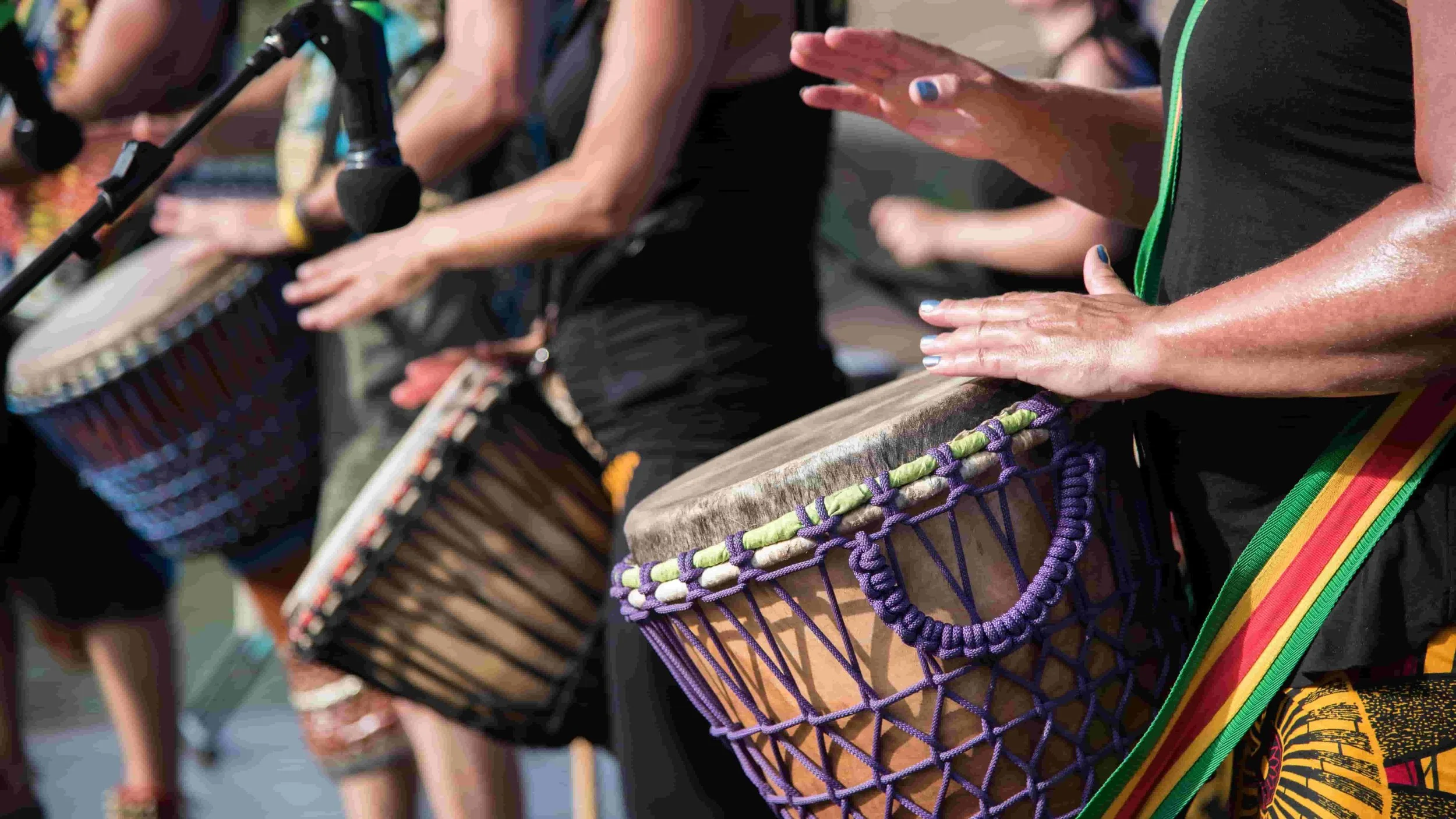
African drums. Lee Pigott. Unsplash.

People all across the African diaspora share a love for music, which connects everyone to the same frequency. Many are familiar with Afrobeats, a style of music from Nigeria, but there are many different and diverse genres to explore the sounds of, from the likes of Amapiano to Chimurenga.

Amapiano

Two people singing Amapiano together.. The Charles Gallery. Unsplash

Amapiano is a genre of music originating from South Africa characterized by a mixture of jazz, house and Gospel music. Amapiano is composed heavily of synthesizers, percussion, soulful vocals, and repetitive melodies. This genre of music is relatively new, coming into being in the early 2010’s.  Amapiano is a Zulu word meaning “the pianos.” Amapiano is a form of music South Africans believe can bridge people together, and a musical escape for the younger generations.

Listen to a Youtube playlist of Amapiano music

Juju

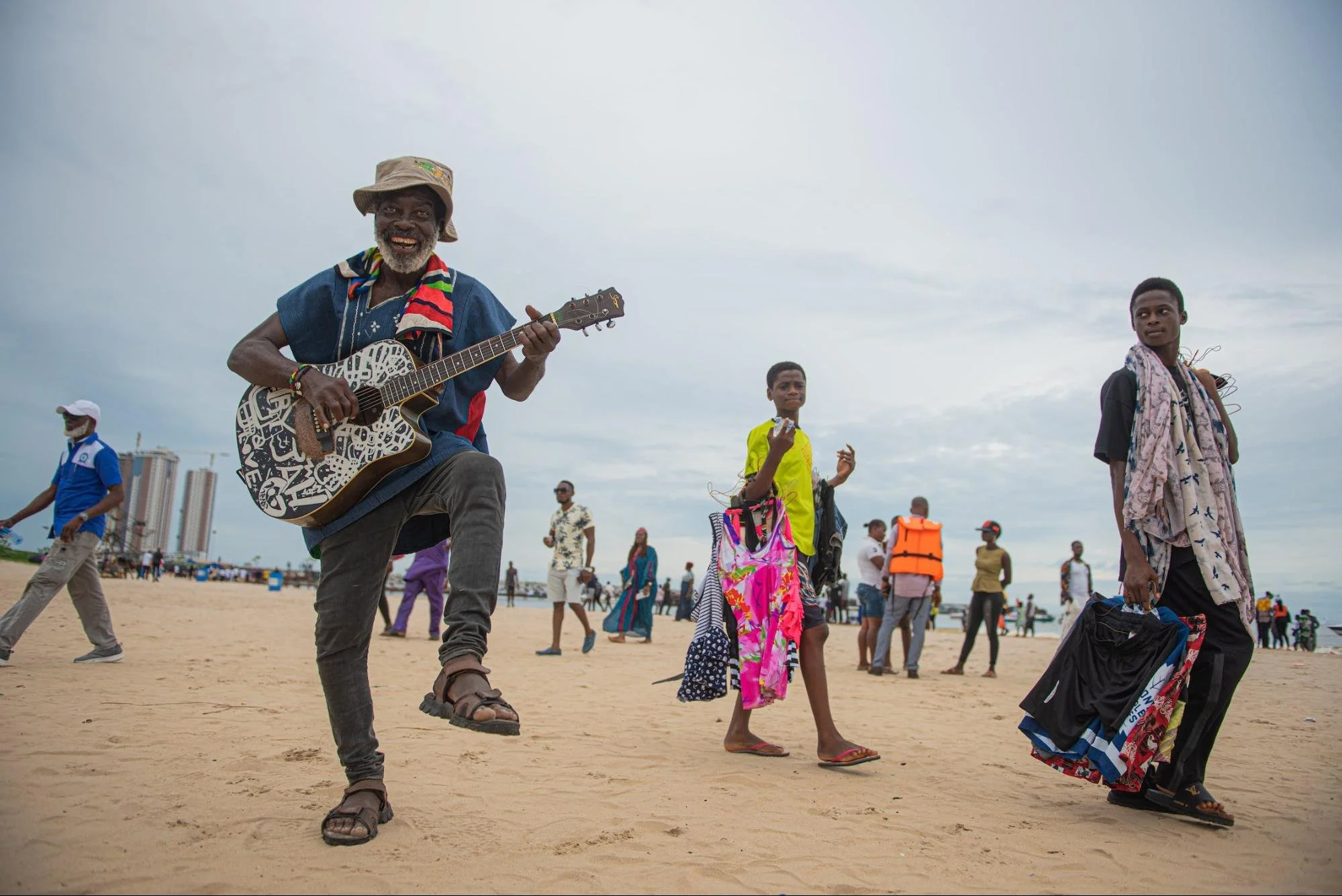
Man playing music on the beach. Seun Adeniyi-CCO.

Juju is a genre of music that originates from Nigeria, specifically its Yoruba region. It’s a musical style that is composed of praise-singing accompanied by a guitar or banjo and a gourd shaker. This genre of music was traditionally played in taverns or during festivals as dance music, but became modernized and generally popular by the 1980’s. As it grew in popularity, it led to the birth of many other genres of music like Highlife or Afrobeats, as we know of them today.

Listen to a Youtube playlist of Juju music

Coupe decale 

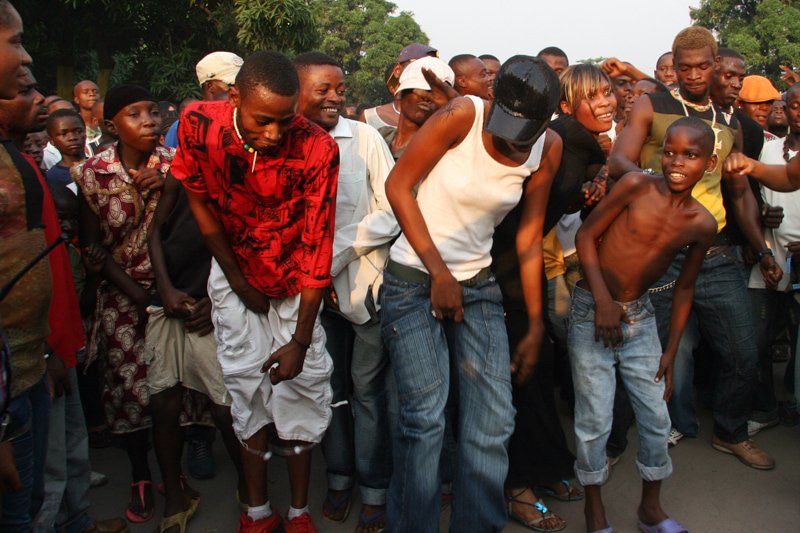
A group dances to Coupe Decale. Tommy. CC 2.0

Coupe Decale is a genre of music created by Cote D'ivoirians living in France in the early 2000’s. It’s a musical style composed of ‘computerized circular beats’ mixed with Ivorian rhythms . The lyrics themselves are inspired by the West African griot tradition of story-telling, and the genre’s primary message focuses on providing a space for many people to dress nice, go clubbing, and forget their problems during a time of economic and political crisis.

Listen to a Youtube playlist of Coupe Decale music

Gnawa–saharan Folk music

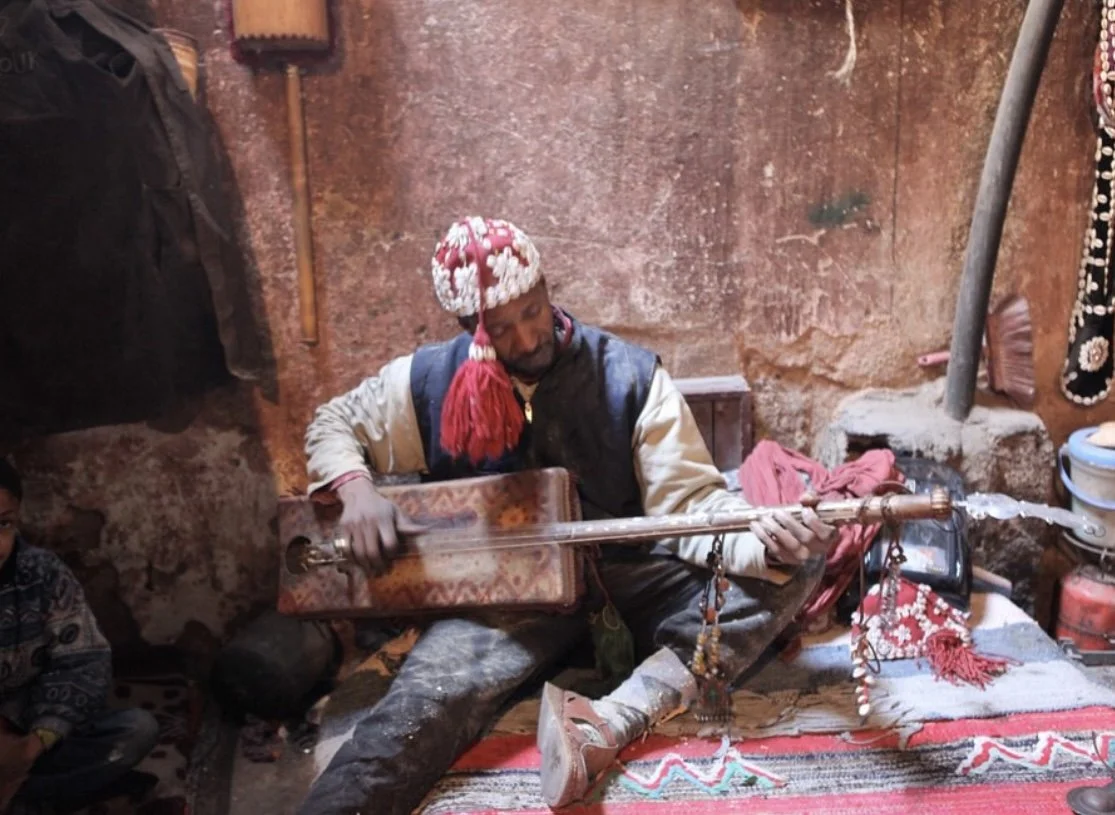
Man playing Moroccan bass lute. Marrakech Riad-CCO.

Gnawa is a folk  genre that originates from Morocco. It’s a musical style that has its roots in ancient African tradition, as it’s the result of formerly enslaved black Africans integrating into Moroccan life. It serves as a preservation of the folkloric music of their ancestors, as well as a means to heal from collective trauma. Interestingly it is also said to have healing properties for those that are possessed by ‘genie spirits.’ Its musical style is composed of African percussion, metallic castanets, and bass lutes.’ Gnawa at its core is a combination of poetry, music and dancing. This genre shares many similarities with its American counterparts Jazz and the Blues, as all three share the same purpose. The genre’ songs consist of references to the singer’s origins and history regarding enslavement. 

Listen to a Youtube playlist of Coupe Decale music

Chimurenga 

Thomas Mapfumo, the creator of Chimurenga music performs. Cultrvultr-CC BY NC-SA 2.0

Chimurenga is a genre of music that was developed in Zimbabwe. It was used to protest colonial rule in the 70s, and more generally is used to discuss and inform on societal issues and movements important to the singer. Because of this, it is recognized as ‘music for the people’s struggle’. This musical genre can be accredited to the Shona musician Thomas Mapfumo. He was inspired by the rock bands he heard playing growing up and his Shona background to create a political movement through music.

Listen to a Youtube playlist of Chimurenga music


Kadija Diallo

Kadija is a student at Georgia State in Atlanta, Ga. She is a creative spirit who loves traveling and seeing new places. She also enjoys using her love for writing/storytelling to make an impact on the world. One day she hopes to make new connections and share stories as she travels to every continent. 

How Fast Food Adapts to Local Tastes Around the World

Exploring unique regional items from KFC, McDonald’s, Pizza Hut and other fast food giants.

Fast Food Mull. Tim Reckmann. CC BY 2.0.

Fast food is a universal language that transcends borders and cultures. Whether you are craving a burger in Beijing or a pizza in Paris, you can always rely on fast food chains to provide a consistent, reliable experience. However, in the modern world, fast food chains are constantly adapting to local tastes and incorporating unique ingredients to create various flavor combinations. Here below is a flavor adventure that explores the wacky and wonderful world of region-exclusive fast food items.

1. Kentucky Fried Chicken

Kentucky Fried Chicken in Shanghai. Gwydion M. Williams.CC BY 2.0.

Kentucky Fried Chicken, or KFC for short, has come a long way since its humble beginnings in Corbin, Kentucky. Today, the iconic fast food chain can be found in almost every corner of the globe, serving up crispy fried chicken to hungry customers worldwide. But while the Colonel’s original recipe may be the same everywhere, KFC has become famous for its wildly creative region-exclusive items. For example, in the United Kingdom, KFC has introduced the “Scoff-ee Cup”, a creation that combines a biscuit cup with white chocolate to keep coffee hot and fingers crispy. Meanwhile, in Asia, KFC has rolled out some innovative treats, like the Brown Sugar Boba Tea Tart, a pastry filled with milk tea custard and boba jelly, inspired by the popular Taiwanese drink.

But KFC’s regional items are not just about sweet treats. In Korea, the chain offers Tender-Rice, a combo of crispy chicken tenders and seasoned rice. And in Malaysia, customers can try the Wasabi Rice Wrap, a fusion of Japanese and Vietnamese flavors that is designed for people on the go. According to Ling Mee Jiuan, Senior Vice President of KFC Malaysia, the Wasabi Rice Wrap was designed specifically with young, busy consumers in mind. The local team wanted to create something that was quick, convenient, and bursting with flavor for people who are always on the move. 

2. McDonald’s

McArabia. Tracy Hunter.CC BY 2.0.

McDonald’s is the poster child for the rapid spread of Western fast food across the globe. The term “McDonaldization” was coined to describe what started as a Speedee Service System, which prioritized efficiency, predictability, calculability, and control by offering a limited menu of 15-cent hamburgers, fries, and shakes. However, McDonald’s has slowed its pace and started introducing region-exclusive items that cater to local taste buds. For instance, in 2001, McDonald’s added the McFalafel sandwich to its menu in Egypt. This sandwich features three pieces of falafel, a patty-shaped fritter of Arab origin that is deep-fried and served with garnishes like tomatoes, lettuce, onions, and pickles, all wrapped in a freshly baked tortilla wrap and topped with Tahini sauce. 

But McDonald's is not just adding local twists to its burgers - the company also creates entirely new menu items for specific regions, you can find the Teriyaki Burger, which features a savory teriyaki sauce and is served on a rice bun instead of a traditional burger bun. In South Korea, McDonald's offers the Bulgogi Burger, which features marinated beef and a spicy sauce made from Korean chili paste.

McDonald’s has also tailored its famous bread to suit local palates. In China, for instance, McDonald’s introduced the distinctive Black and White Burgers. These “half burgers” were packaged in a small box and were possibly inspired by the yin-yang symbol. The black burger consisted of a beef patty with chopped onions, black pepper sauce, and a black bun topped with white sesame seeds. The white burger, in contrast, featured a chicken patty with sweet and spicy sauce and a white bun with black sesame seeds. While some of these attempts at innovation were mocked, they demonstrate a willingness to experiment and accommodate local tastes.

3. PizzaHut

Pizza Hut Pizza in Japan.Yoko Nekonomania.CC BY 2.0.

Founded in 1958 by two Wichita University students, Pizza Hut has grown to become the world's largest pizza company, with over 11,000 restaurants in 90 countries. But Pizza Hut's success isn't just due to its massive size - the company’s commitment to innovation and customer service has set it apart from competitors. 

However, some of Pizza Hut’s more unconventional offerings have raised eyebrows, and possibly even the ire of traditionalists. Weirder items, such as the “Double Sensation” in Singapore, may seem like two pizzas squished into one. The outer crust is stuffed with a melange of melted mozzarella, Parmesan, and cheddar cheeses that ooze out of holes in the crust, while the outer pie is topped with turkey ham, bell peppers, mushrooms, and salsa sauce. And for reasons beyond comprehension, a single cherry adorns the center of the pizza.

Meanwhile, Pizza Hut in China has added Peking duck as a meat topping to its menu, alongside specialized pizzas crafted with different veggies to complement the duck’s unique flavors. For many, duck is not a meat that adapts easily to other dishes. But for the daring foodies who are willing to try new things, Pizza Hut in China offers a delicious and adventurous take on traditional pizza.

4. Burger King

Burger King Halloween Whopper Black Bun. Mike Mozart. CC BY 2.0.

In 1953, Keith Kramer and his wife’s uncle Matthew Burns were struck with inspiration after visiting the original McDonald's in California. Their brainchild, Insta-Burger King, was born from their desire to create a unique restaurant experience. Equipped with a special grill machine, the Insta-Broiler, the duo set out to make their mark in the fast-food industry.

Now, with over 19,000 locations worldwide, Burger King is a force to be reckoned with in the fast-food world. While its competitors strive to innovate their international menus, Burger King takes a different approach—stuffing as much as humanly possible between two buns. Take, for example, the Bacon Lover, available in France and Switzerland, which boasts two flame-grilled beef patties, onions, tomatoes, cheese, bacon, and smoked sauce, all served between two bacon-studded buns.

But the Garlic Meat Beast in Japan takes the cake for the most outrageous offering. This monstrosity features a quarter-pound beef patty, teriyaki chicken breast, and garlic pork patty, all slathered in scallion miso sauce and topped with lettuce, tomato, onion, and bits of fried garlic. And if that’s not enough to satisfy the consumers, Burger King‘s Windows 7 Whopper hit Japanese locations for a limited time, featuring a whopping seven beef patties, plus all the usual fixings, for the price of $5.94, a nod to the release of Microsoft's Windows 7 operating system.

5. Taco Bell

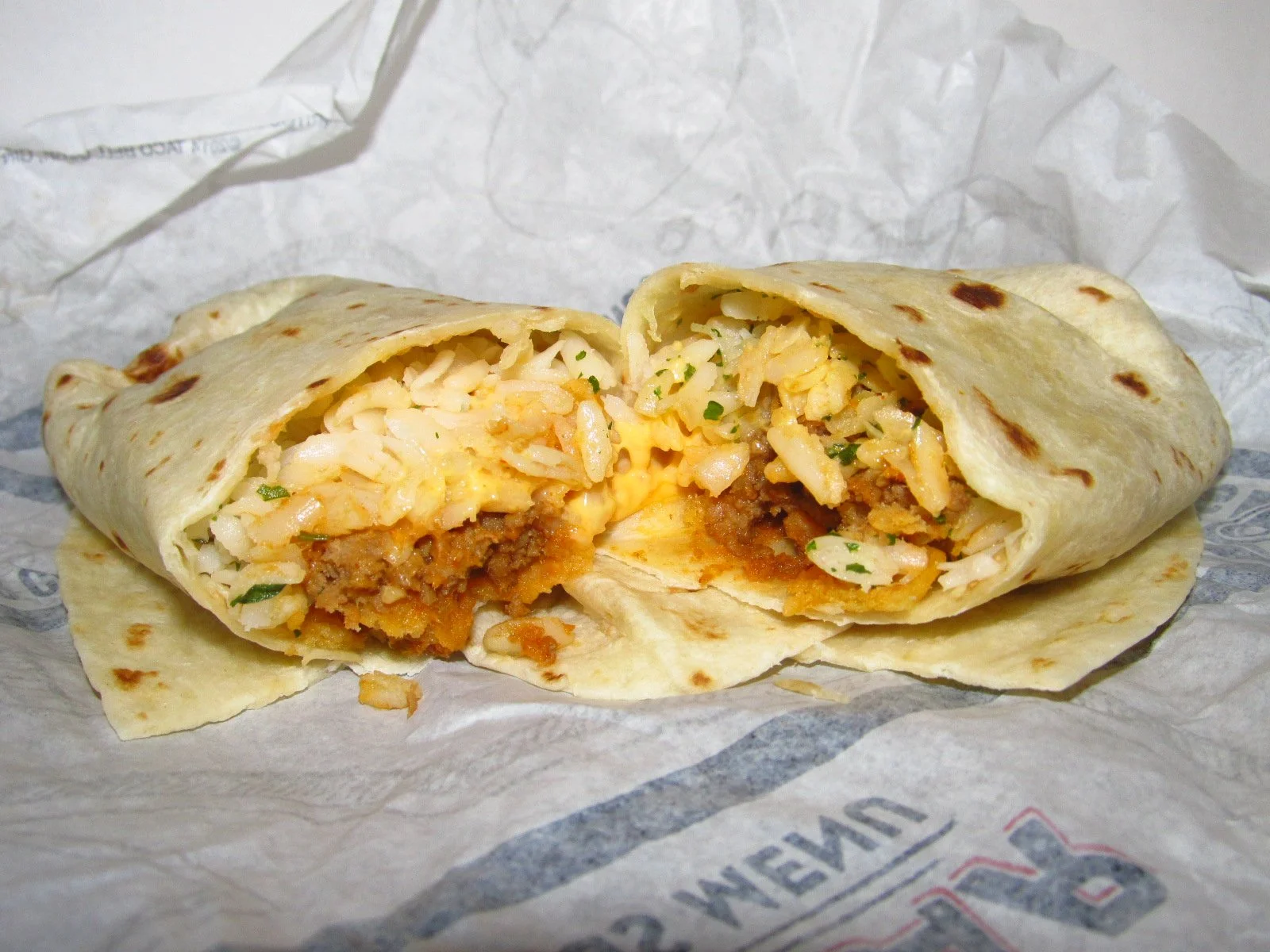
Taco Bell Beefy Fritos Burrito. Willis Lam.CC BY-SA 2.0.

Taco Bell is the new kid on the block when it comes to multinational fast food chains, but it has made its presence known around the world with its Mexican-inspired menu. The company’s catchy slogans, from “Think Outside the Bun” to “Live Mas,” have resonated with customers in Asia, Europe, and beyond. But Taco Bell’s true innovation lies in what's inside the bun (or wrap). Take, for instance, the Kimchi Quesadilla, which can be found at Taco Bell locations in Korea. This fusion dish combines the traditional Korean dish of spicy fermented cabbage with spicy chicken and a blend of melted cheeses, creating a unique flavor that is all its own. Or consider the Chicken Tikka Masala Burrito in India, where grilled chicken, Mexican rice, onion, cilantro mix, and Tandoori Mayo Sauce are wrapped in a grilled flour tortilla, showcasing Taco Bell's willingness to experiment with unorthodox flavor combinations. Other region-exclusive menu items include the Shrimp and Avocado Burrito in Japan and the Chili Cheese Burrito in the United States.

6. Domino’s

Domino’s pizza in Japan with Lazagniano and Super Deluxe. Puamelia. CC BY-SA 2.0.

Domino’s, the pizza giant with over 17,644 restaurants around the world, has managed to achieve a global presence with its menu. However, their international menu seems to be an experimental playground that has no bounds. Japan’s Boba Tapioca Pizza is a clear demonstration of the chain’s willingness to embrace bizarre combinations that cater to local tastes. The pizza’s blend of black tapioca pearls and mozzarella cheese has gotten mixed reactions from customers. While it is true that some of Domino’s experiments are not well-received, the Lotta-Chocca Pizza in the United Kingdom has won the hearts of many, thanks to its unique fusion of pizza and milk chocolate. Domino's New Zealand has also managed to make an impact with its Apricot Chicken Deluxe, a delicious combo of chicken and apricot sauce. 

From rice and curry to kimchi to Beijing duck, the amalgamation of western industrialization and local cuisine gives rise to region-exclusive fast food items that are uniquely flavorful, providing a glimpse into the cultural diversity that exists across the globe. The presence of such multicultural menus in fast food chains not only reflects the dynamism of global markets but also serves as a testimony to the importance of inclusivity and open-mindedness in our increasingly interconnected world.


Hope Zhu

Hope is a Chinese international student at Wake Forest University in North Carolina studying sociology, statistics, and journalism. She dreams of traveling around the globe as a freelance reporter while touching on a wide range of social issues from education inequality to cultural diversity. Passionate about environmental issues and learning about other cultures, she is eager to explore the globe. In her free time, she enjoys cooking Asian cuisine, reading, and theater.

The Concept of Time in Different Cultures

How where you live and the language you speak affects your view of time.

Self portrait - Ticking away, MattysFlicks, CC BY 2.0.

Over the summer I would get up at about 7:00 am every morning. By 8:30, I’d have eaten breakfast, showered, gotten dressed, and left for work. When work ended, I’d make sure to always have a plan for what to do after, whether that was hang out with friends, work out, or write something. I’d usually be done with that by around 8, at which time I’d heat something up for dinner, usually a meal I prepared in bulk on the weekend. Afterwards, I’d watch shows until I fell asleep. The next day, I would get up, and repeat. 

Like most other English speaking Americans, I view time as linear, heading from a defined beginning to a final end. Every moment is something that I can spend, save, or waste. And, I believe that if I waste too many of these moments, it could have a disastrous impact on my future. 

However, this is just one of many ways to view time. Depending on where you live, what you believe, and what language you speak, you may view time in a completely different way.

Monochronic Time and Polychronic Time

Business Calendar & Schedule, photosteve101, CC BY 2.0.

Monochronic Time is divided into small segments, allowing it to be managed and scheduled easily. It is treated as a resource, just like any other. Being used by countries such as the United States, Japan, and Germany, monochronic time is essentially the time model of industrialization. People in monochronic societies tend to be on time to meetings; similar to the schedule I described above, every moment has a distinct purpose. Wasted time can cause great stress, and going off-schedule can mean that all necessary tasks may not get completed. This causes countries with monochronic time to typically have a faster pace of living. Even times of rest are often scheduled, regulating them to certain days or hours. 

Four seasons in Japan, vitroid, CC BY 2.0

Polychronic time is much more fluid, where many things can be done at once. Rather than emphasizing the efficient use of each and every moment, people in polychronic societies tend to focus more on their relationships and traditions. Instead of organizing  time through rigid schedules, for people in these cultures the seasons, religious calendars, and community life serve as the main signs of the passage of time.  India, Mexico, and many other countries in Latin America are Polychronic. 

I am currently studying abroad in Ecuador, a largely polychronic country, where I have had to adapt to the different view of times. Unlike the United States, deadlines are rarely strict. I’ve frequently been told lunch is at 1, and then ended up not eating until 2:30. In addition, planning is often more last second. I have lived with two host families, and we often have weekend plans. In each case, I have rarely known said plans until I’m on the way to my destination. While this was stressful for me at first, I have come to appreciate it, as my host families have seemed to have a much easier time living in the present because of it.

Past, Future and Present Oriented Societies

Go Fisherman go - Gokarna India 2011, rundenreisen.org, CC BY 2.0

Past Oriented Countries, like the UK or India, have incredibly long and storied histories. Instead of living for the present alone, past oriented societies see themselves as only the newest iteration of an incredibly old tradition. This causes them to view time in a more casual manner, as the waste of an hour or a day is inconsequential when compared with thousands of years of history.

In addition, many eastern past oriented countries adhere to what is called cyclic time. This is the idea, that like the seasons, time repeats itself, and events are bound to happen again. This means that, whenever considering a major decision, it is critical to evaluate the events of the past.

Getting cab times square, new york, andre stoeriko, CC BY-NC-ND 2.0

Future oriented countries, like the United States, are young and hungry. Without thousands of years of culture to fall back on, citizens of the United States tend to look forward. In future oriented countries, every moment matters, as only by maximizing these moments can a person truly succeed. 

Juma River, Amazonas, Brazil, Alexey Yakovlev, CC BY-SA 2.0

Present Oriented Societies are rare, but they do exist. The Indigenous Piraha tribe of the Amazon Rainforest has no past tense in their language. They have no origin story or particular religious beliefs, no reverence for their ancestors, and tell no stories. For them, things just are. What has happened in the past is not relevant.

Language and Time

Washing line, Kate#2112, CC BY 2.0.

Anglophones usually think about time as something that has length. Phrases such as “a long day” or “a never-ending year” are common. In Swedish, time is viewed in this same way.

In Spanish, days are described as “full,” instead of long. Rather than as a line, time is visualized as a container waiting to be filled. 

This is most interesting when it comes to bilingual speakers, as it has been proven that they have the ability to, in switching languages, change how they view time. If someone bilingual is spoken to in English, they will view time as a line, and if they are spoken to in Spanish, they will visualize it as a container, giving them a foot in both worlds.


Jeremy Giles

Jeremy is a Writing Seminars and International Studies major at Johns Hopkins University. He is an avid writer and the Co-Founder of Writers’ Warehouse, Johns Hopkins’ first creative writing group. He is an advocate for Indigenous rights, and studies how Indigenous philosophies can be used to help prevent climate change. Using his writing, he hopes to bring attention to underrepresented voices in today’s world.

7 Sites of Mexico City’s Architectural Diversity, from Baroque to Brutalist

Mexico City is a flourishing metropolis with a plethora of historic and modernist architectural sites. Here are a few attractions scattered around the city.

Read More

12 Local Cuisines You Can Find Around the World

Tasting local foods is one of the most interesting things about travel.  Learn about some hallmark culinary traditions of these diverse regions. 

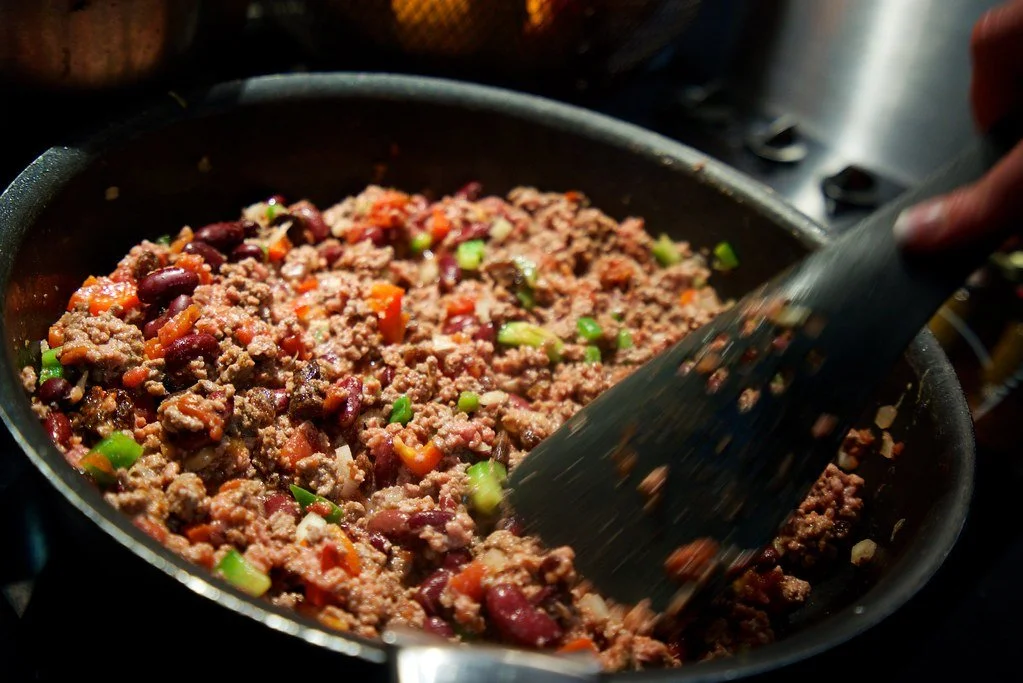
Meat and veggies simmering in a pan. LoKan Sardari. CC BY-NC-SA 2.0.

My favorite part of traveling is exploring and tasting local food dishes with culturally significant roots within the region I’m visiting. When I traveled to London, I explored the local pubs and decided fried fish wasn’t that bad. The local aspect of dishes excites me, and I would much rather dine in a family-owned restaurant than a tourist trap. 

This serves as a bite-sized serving of the infinite variety of food on this massive planet—not a definitive recounting of the delicious and culturally significant dishes on Earth, but rather these regions serve as starting points that lead to culinary exploration. 

1. Kanto Region - Japan

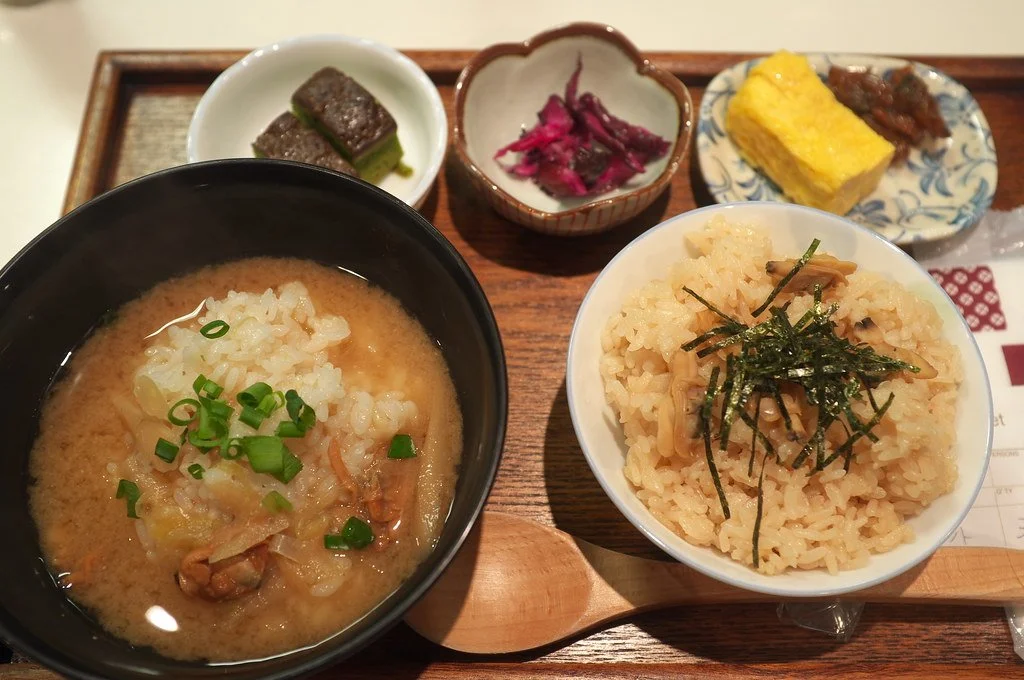
Fukagawa meshi and other side dishes. Nekotank. CC BY-ND 2.0.

Japan is divided into eight regions, each of which has its own culturally significant dishes. The Kanto region is home to the capital city of Tokyo, and the flavors are stronger than the other regions’ food. Fukagawa meshi is a dish that originated in the Edo period (approximately 1603-1867) and consists of clams and leeks cooked in a miso stew. The dish was a product of abundant fishing in the area and quickly became adopted by locals. The Kanto region became a hub for industry during the Edo period, and the cuisine naturally started evolving to incorporate other region’s influences. 

2. New South Wales - Australia 

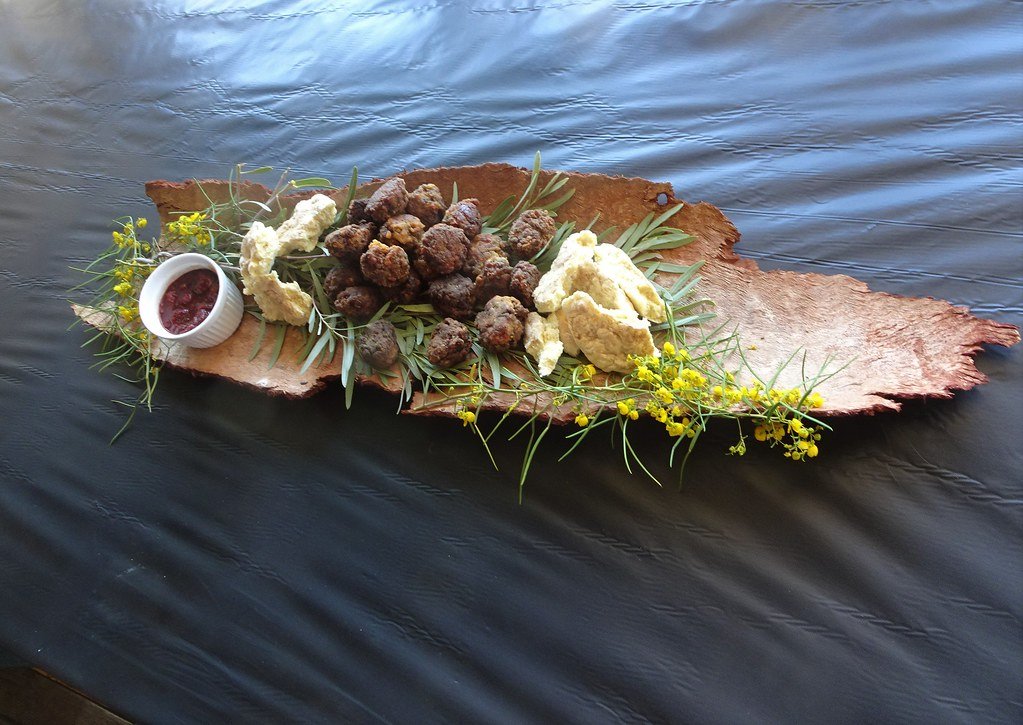
Kangaroo Meatballs with quandom jam. by denisbin. CC BY-ND 2.0.

Prior to the 18th century, the Indigenous population of Australia subsisted on hunting local wildlife, including kangaroos and wallabies. Once Australia became a continent-sized prison for the British Empire, the cuisine quickly modified to have influences of the colonizer diet. Today, Sydney cuisine reflects the multi-cultural population that lives there. Take-away foods and fast food are staples of Australian culture, and Sydney specifically is a melting pot of local and international foods. Fish and thick cut fries are common. The cuisine of Australia is heavily influenced by Western diets but still utilizes ingredients that Aussies connect with, including eating their national animal, the kangaroo—a dish low in fat, delicious, and popular in local restaurants. 

3. Phobjikha Valley - Bhutan

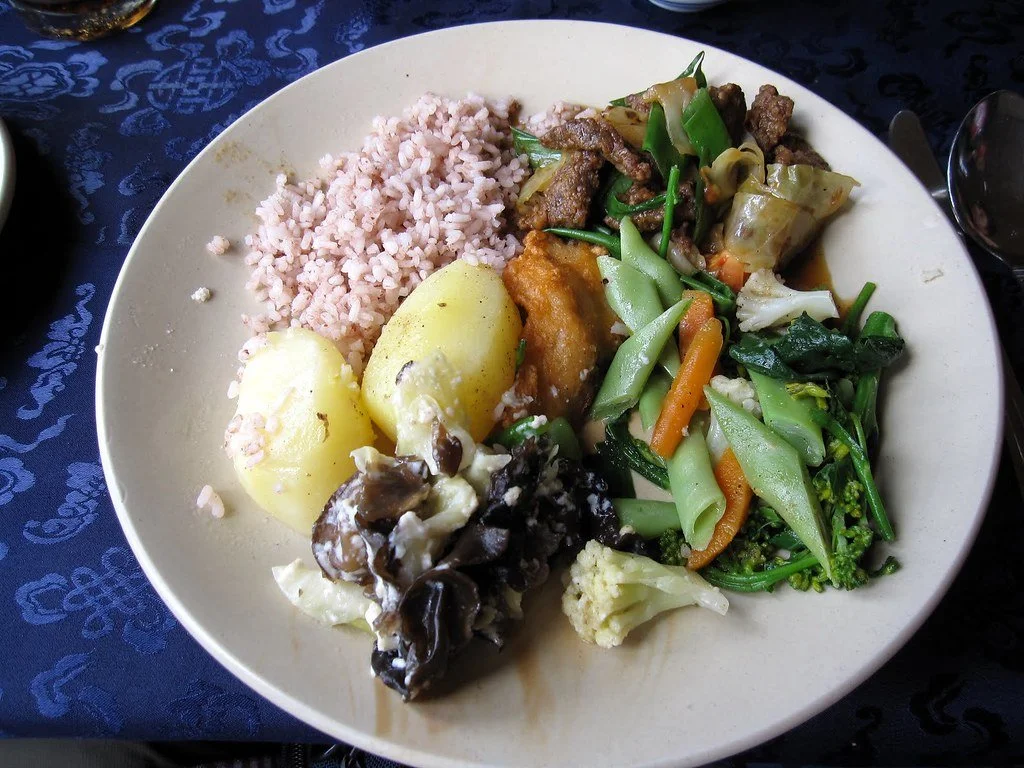
Bhutan dish with potatoes and vegetables. By rapidtravelchai. CC BY 2.0.

This region is home to many rich cultural events, such as the Black-Necked Crane Festival, which honors one of the region’s most culturally significant animals. This festival is held annually on Nov. 12, where cranes can be seen flying at high altitudes, accompanied by traditional dancers dressed in black-necked crane attire. The local cash crop is potatoes, which are the main ingredient in kewa datshi, a traditional dish prepared by thinly slicing potatoes and sauteeing with cheese, butter and chiles. The dish is relatively new to the region’s culture; in fact, potato consumption in Bhutan was near non-existent until the 1970s. Until then, it was mainly used as an export crop. Due to the region’s altitude and climate, insects do not interfere with the local’s potato crops, which eliminates the need for harmful pesticides.

4. Metsovo - Greece

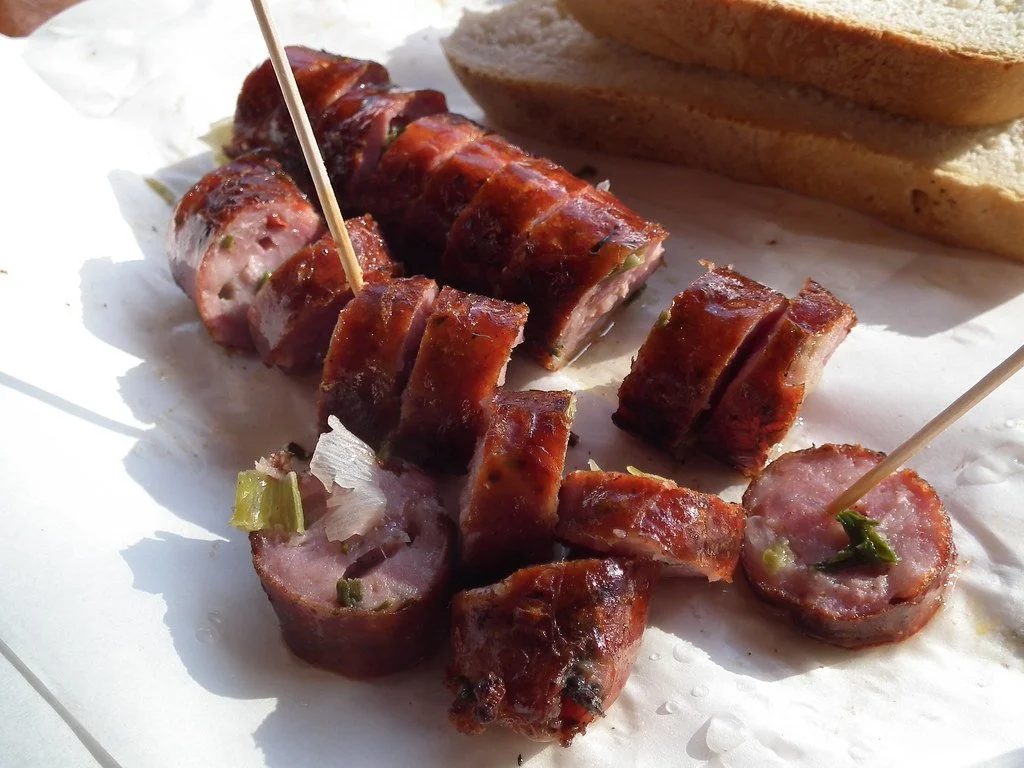
Skewered sausages. PACO POMARES. CC BY-NC-SA 2.0.

Situated to the north of Epirus, Greece, this gorgeous small town is home to some of Greece’s most delicious industries: wine and cheese. The history of this town is fascinating, with it being the center of production for sheep wool traded as far as Northern Africa during the 17th and 18th centuries. The region is most popular during the winter season for its spectacular mountains and beautiful streams. Venturing off the beaten path, one can find themselves entranced with gorgeous forests, filled with statues, 19th-century architecture and natural springs supplying fountains. The local cuisine has an emphasis on dishes with rich flavors like sausages and ruffage, as well as a nice glass of wine to pair with it. Extra virgin olive oil is a heavily used condiment that could be added to multitudes of things, including toasted bread and other dishes.  

5. Chengdu - China

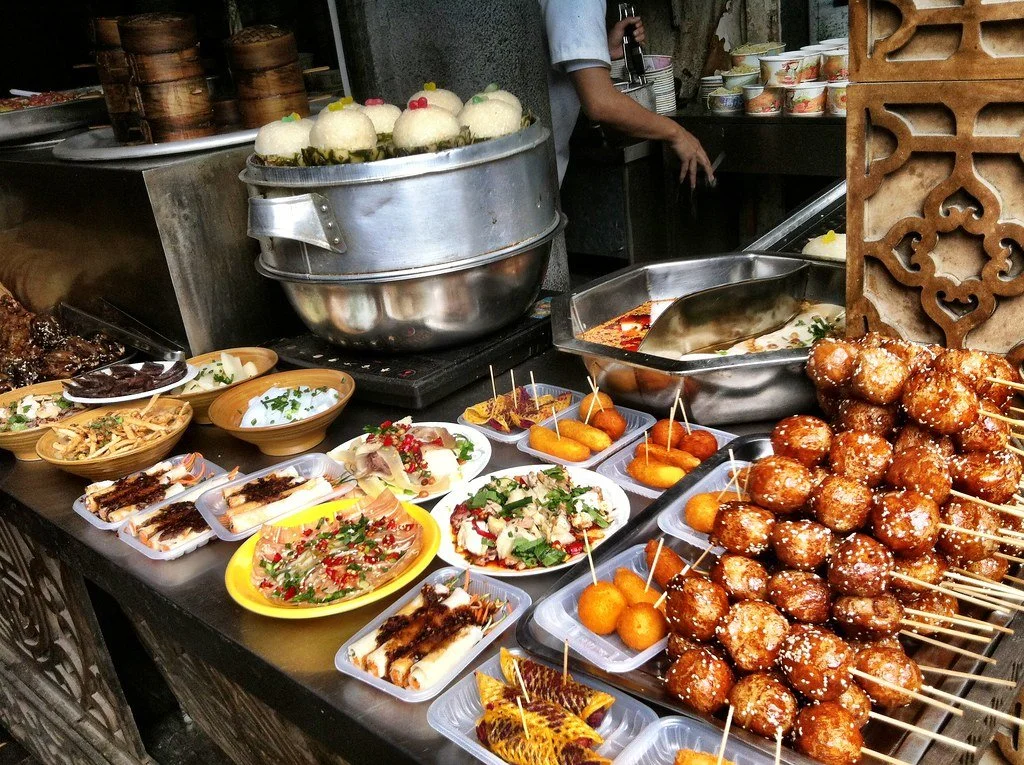
An assortment of Chengdu Foodsinosplice. CC BY-NC 2.0.

Chengdu, China is a so-called “Party City,” according to the Los Angeles Times. While it is true that Chengdu has more teahouses and bars than Shanghai, it’s also home to many local dishes, specializing in chiles and peppercorns. One dish, dan dan mein (which Chengdu is credited for making), utilizes both in order to achieve a very spicy broth. Chengdu’s local tea culture is also very important, since the city was once a starting point for the Silk Road, offering many opportunities to create and enhance cultural staples. Although not culinary-specific, the city is a hotspot for LGBTQ+ travelers and natives, combining influences from the local party scene and the Queer community. 

6. Soca Valley - Slovenia

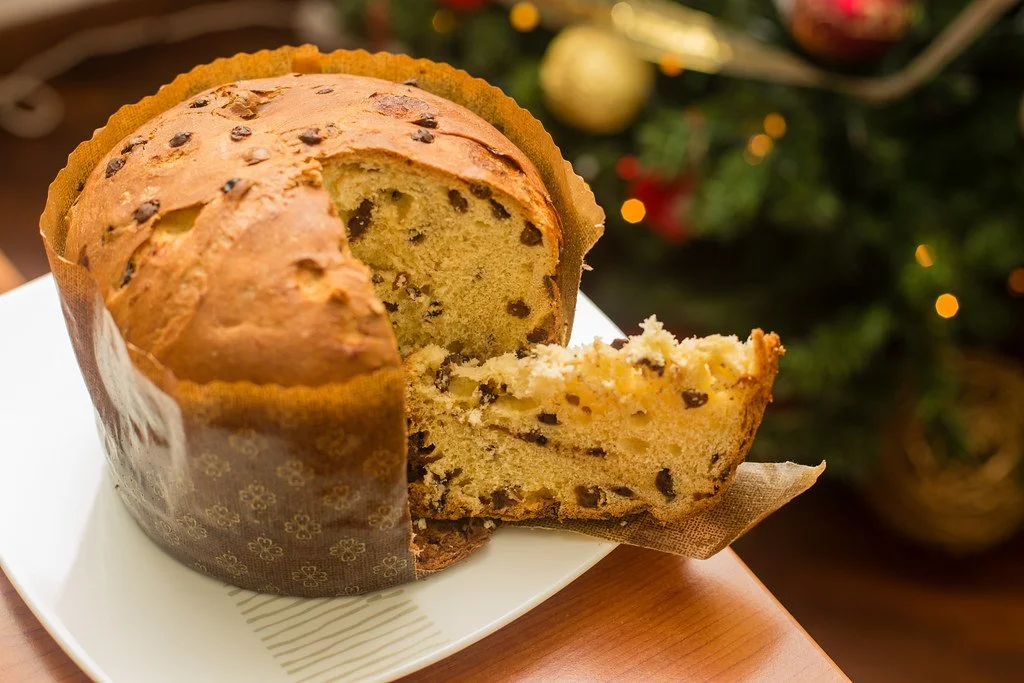
Panettone with chocolate chips. Nicola since 1972. CC BY 2.0.

Slovenia is right in the center of four surrounding cultural influences; the Balkans, Alpines, Mediterranean and Pannonian flavors are all present in Slovenia’s dishes, and each is broken down into distinct ‘genres’ of food. The Alpine mountains are home to the cows and sheep that graze and produce milk, used for cultural dishes like žganci (literally translated as mash). The expansive meadows let honey bees run rampant to produce fresh honey. To the east of Slovenia, there is a vast amount of wheat fields, used to prepare a litany of different dishes and thermal springs that allow for fresh drinking water. The most popular fish is sea bass, and according to popular sentiment in the region, “a fish must swim three times, in water, oil and wine.” By utilizing hard harvested salt, Slovenia’s population takes its local cuisine very seriously. 

7. Cape Town - South Africa

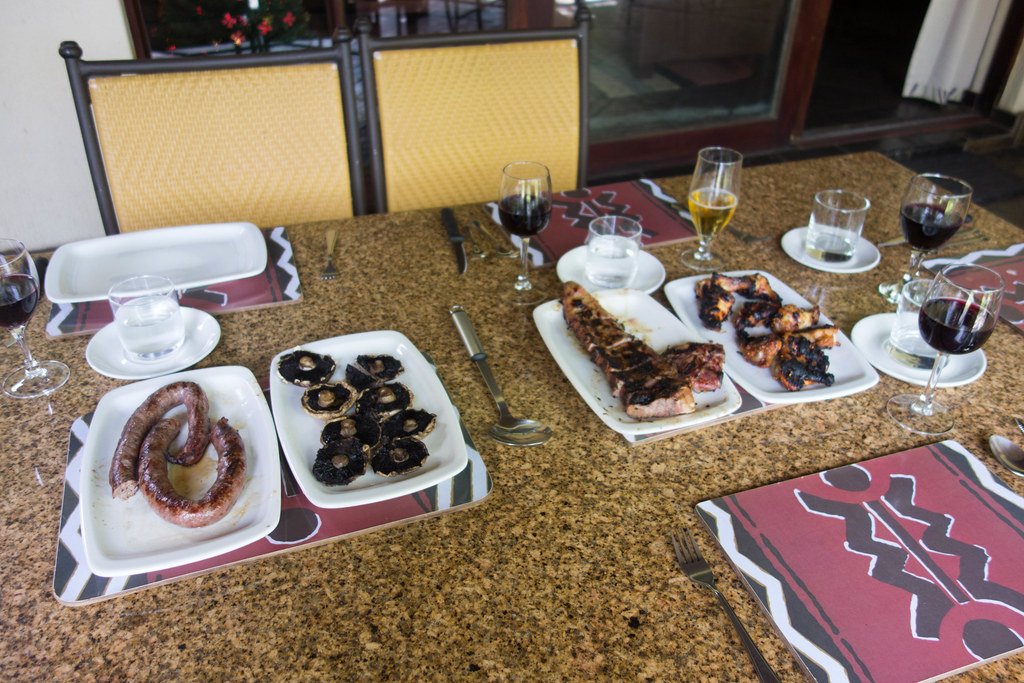
South Africa’s cuisine can be summed up with the term “melting pot,” since this region contains a mixture of Asian, European and Indigenous cultures within their food. Braai, an almost universally utilized meat preparation method in Southern Africa, is prepared by digging a firepit, providing meat and setting it ablaze. The practice is adjacent to America’s cultural touchstone of “barbecue,” although a key difference is that braai fires stay lit throughout the celebration as participants enjoy everyone’s company. Indigenous populations prioritized beef as a high-value food, and today, many South Africans still utilize foods from their Indigenous past. Colonialism severely altered the landscape of South African cuisine by bringing in an enslaved workforce from across Asia, which in turn brought their own cultural roots. The introduction of spices like nutmeg and allspice and the influence of European culture altered the cuisine further.  Fermented beer is also popular, with a common practice being offering someone homemade beer as they enter your house. 

8. Sicily - Italy

Italian cassatelle drizzled with chocolate. JohnDiP. CC BY-NC-SA 2.0.

Across the Mediterranean is the island of Sicily, a region known for its famous seafood dishes, sweets and, of course, pasta. The island restaurants have the opportunity to catch fish from the surrounding Mediterranean, specializing in tuna and freshly caught sardines. Pasta con le sarde is one of Sicily’s most popular dishes, utilizing fresh fennel seed that grows abundantly in Italy and the sardines from the surrounding sea. The dish also reflects the region’s multicultural influences, such as including raisins and pine nuts adapted from North American travelers. Sicily’s sweet side is also on full display, with cannoli being a centerpiece in Sicilian culture. Made with sweet ricotta filling, the crust of the cannolis is made from a fried pastry. 

9. Andes - South America

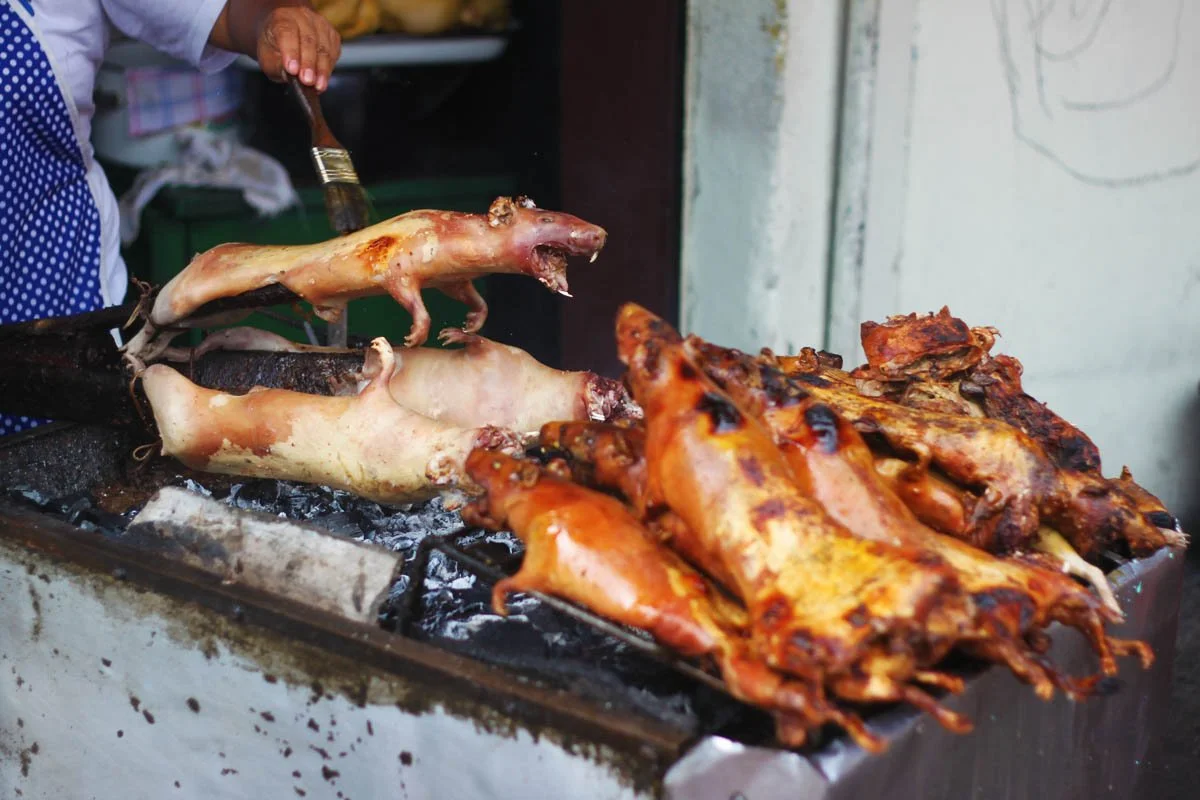
The Andes Mountains are home to communities of Indigenous peoples who have worked to preserve traditional flavors and techniques. The foodstuffs of the Indigenous peoples were incredibly versatile. Corn and potatoes are still some of the most important aspects of Andes cuisine, accompanied by traditionally used meats such as llama and guinea pig. Another word for a guinea pig is “cuy,” which has been a staple in Peruvian culture since the Incas and is used on important occasions.

10. Prague - Czech Republic

The capital of the Czech Republic harbors many cultural influences within its dishes. Italian food has touched the landscape of cuisine in Prague, but there are still many delicious dishes with deep Czech roots. Czech cuisine doesn’t have lots of vegetables in its arsenal of ingredients, and the foods of Prague are “delicious, comforting, very filling and addictive.” Steak tartare, a dish that tops “Taste of Prague’s” list of snacks that pair well with beer, is raw minced beef served with an egg or condiments. Sausages are a very common food in Prague, as well as the greater Czech region, overflowing into Germany. 

11. Central Ghana

Western Africa’s recipes are still being prepared in deeply culturally important ways. Dishes are typically very starch heavy, accompanied by heavily seasoned meats, like beef, fish and the most dominant form of red meat in this region, goat. Traditionally, West Africans didn’t eat much meat and instead opted for dishes with natural oils, but now locals mix various meats together in different aspects of dishes. Suya is also a very popular street food, taking meat and mixing it with spices, resembling a kebab flavor on a stick. Prior to Ghana’s independence in 1954, residents boycotted colonial goods, including tinned meat and biscuits, in an effort to lower the cost of living. This action, along with a demonstration at the governor’s estate, set the stage for Ghana to be the first Sub-Saharan independent country. Ghana is not concerned about dictating a national food, rather it embraces the diversity of the many cultural influences within the country. 

“Ghanaians expect to encounter diverse ethnic foods when traveling through different ecological zones within their country,” said researcher Brandi Miller in her paper, “Food and Nationalism in Independent Ghana.” “They welcome this difference and consider it a source of national strength and an indication of their unique national character, which embraces diversity.”

12. Tropics - South America

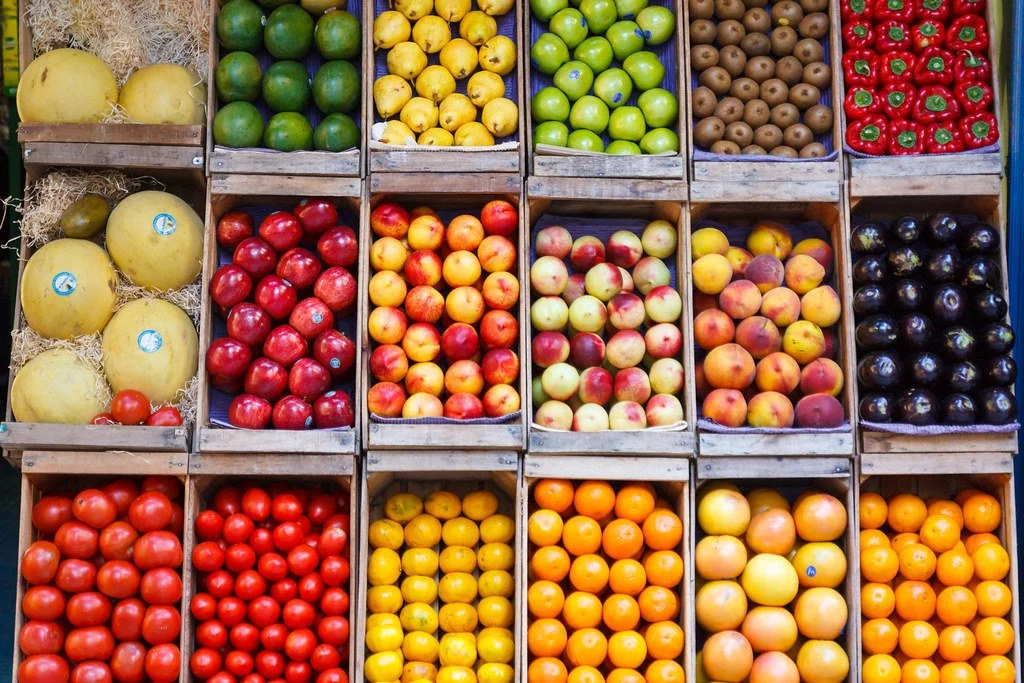
Fruit in a market. Nico Kaiser. CC BY 2.0.

On the beaches of South America, some so-called ‘exotic’ fruits are common staples of local culture. Pineapples, mangos, papayas and dozens others can be found in the tropical forests within the region. The climate allows for a dizzying variety of local agriculture to be used in recipes, such as tostones, which are popular Latin American twice-fried sliced plantains. The Amazon Rainforest is also utilized to enhance local flavors, utilizing meats from turtles and capybaras to use for local cuisine. Nearer to the coast, seafood dishes like ceviche are common to see enjoyed on a sunny day on the beach. Other than fish and fruits, there is a wide variety of vegetables that are grown in the tropics that influence local cuisine, including corn, beans and sweet potatoes.


Clayton Young

Clayton is an aspiring photojournalist with a Bachelor's in Liberal Studies with a minor in History from Indiana University - Bloomington. In his free time, he enjoys hikes, movies, and catching up on the news. He has written extensively on many topics including Japanese incarceration in America during World War II, the history of violence, and anarchist theory.

Inside the Lives of the American Amish  

The Amish are known for their conservative beliefs and rejection of modern technology. Today, more than 300,000 Amish live in the United States.

Teen Returning Home From Work. Melnee Benfield. CC BY-NC-SA 2.0

The Amish Church originated in Europe in the seventeenth century following a split from the Mennonite Swiss Brethren in 1692. This split was due to a disagreement about the treatment of members who had been found guilty in breaching the doctrine. To escape persecution, the Amish migrated to Pennsylvania in the 1730s. Today the population is an estimated 300,000 people in more than 30 states and is steadily growing due to the Amish belief that children are a blessing from God. The majority of the Amish community (62 percent) live in Pennsylvania, Ohio and Indiana. They are Christian believers who have isolated themselves from modern society and live in rural areas of the United States. They do this to keep their community from being influenced by outsiders, who they refer to as the “English.”

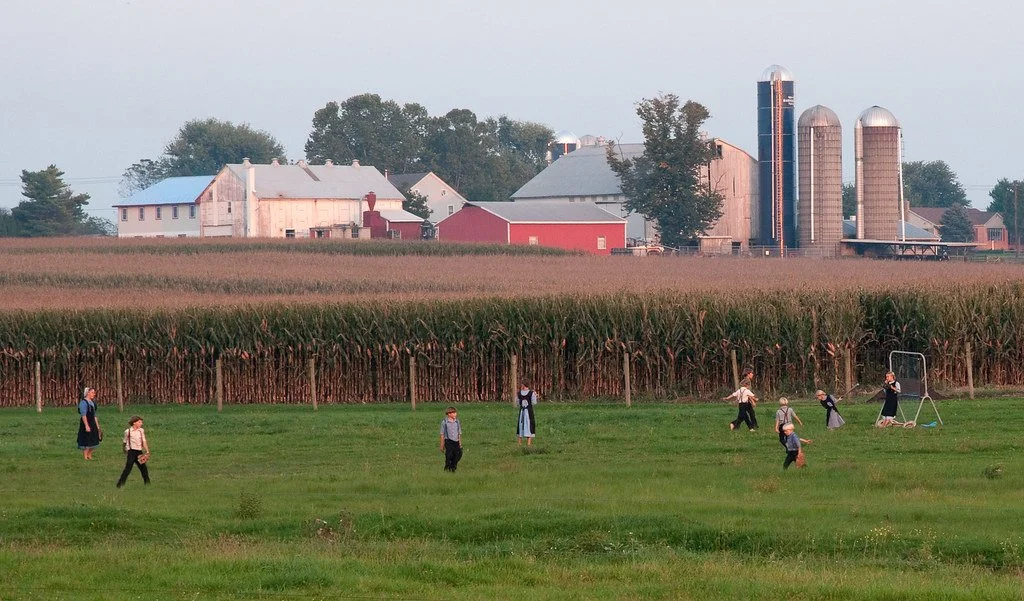
Family is the most important social unit in Amish culture. On average, families have seven children, although larger family units than this are common. Chores are divided traditionally by the gender binary, with girls staying and helping their mothers manage the home. If they decide to work outside the home, it is within the Amish community doing jobs like sewing, selling food in local stands or stores, waitressing, midwifing or nursing. Boys work alongside their father in farms, construction, crafting furniture, raising livestock and auctioneering. On days when they are not working, the Amish turn to sports like baseball, volleyball and basketball. Board games are also very popular among the Amish household, as well as fishing, hunting and being in community with friends and family. 

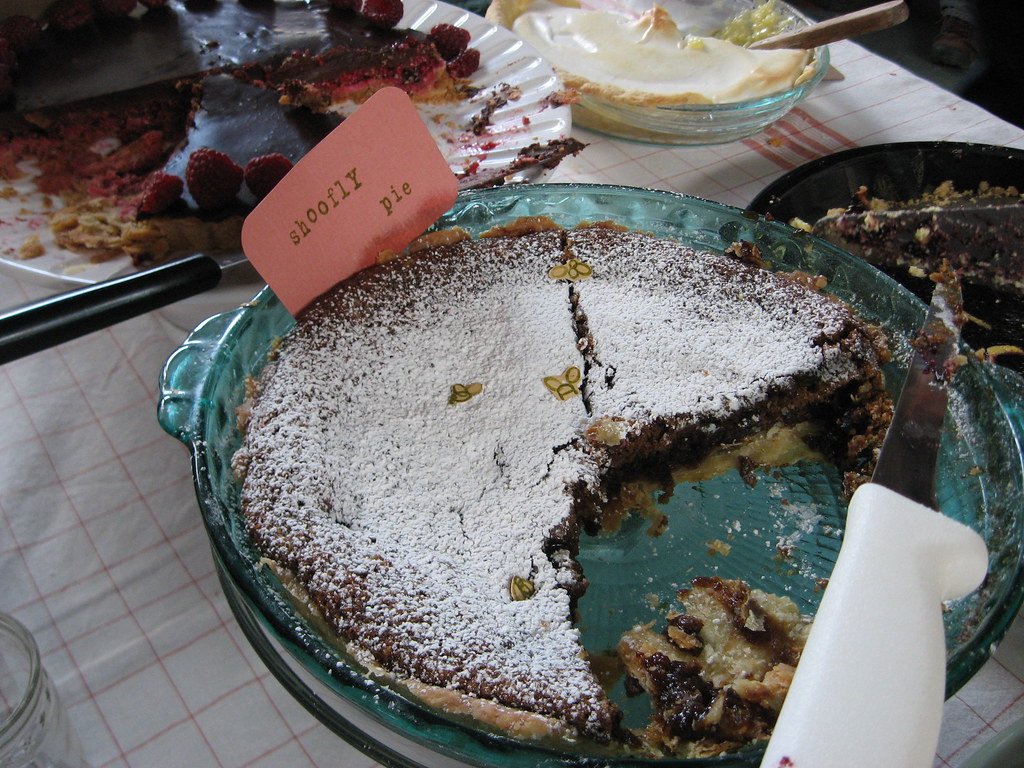
The Amish generally eat foods produced in their own gardens or on their farms. As a rule, they do not eat processed, store-bought foods. Homegrown fruits and vegetables, eaten fresh, canned or frozen, play an important part of the Amish diet. Vegetables often found in their meals include peas, corn, zucchini, beets, beans and rhubarb. Meals are designed to sustain hardworking lifestyles. The women in the community are known to bake cakes, pies, cookies and bread. An Amish dessert favored by many is Shoofly pie, typically composed of flour, brown sugar, water, spices and egg. The pie is topped with crumbs and served in a flaky pie crust. Shoofly pie is similar to coffee cake, but with a gooey molasses bottom. 

Kids of All Ages Playing Baseball. Bob Jagendorf. CC BY-NC 2.0

Education in the Amish community begins at the age of six (first grade) and culminates at 13 (eighth grade). Children are taught in a one-room schoolhouse, usually within walking distance of their home. The classroom is composed of 30-35 children, many of which are siblings or cousins. The day begins with Bible reading, hymn singing and reciting the Lord’s Prayer. At the end of the morning routine, the basics are taught: writing, math, history, arithmetic and English. The students’ first language is Amish German dialect, then English is learned at school. The teacher or teacher’s aide will circulate the room teaching individual grades while the other grades read or prepare for their time of teaching. Higher education is discouraged, as it could lead to leaving the Amish community and influencing others to do the same. Amish children are exempt from state compulsory attendance beyond the eighth grade based on religious principles.

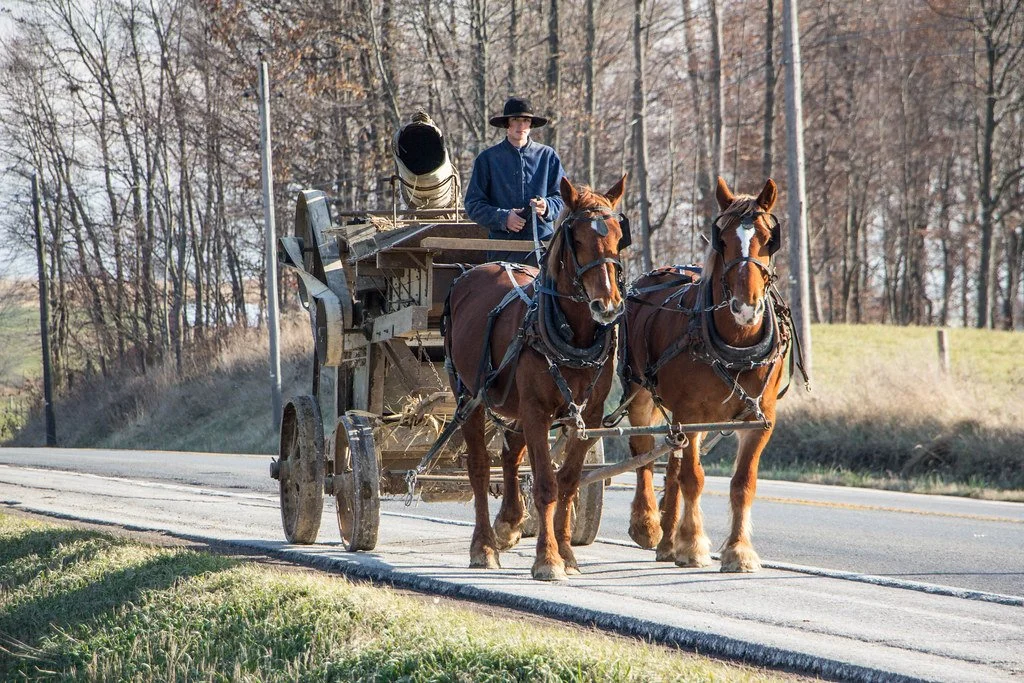
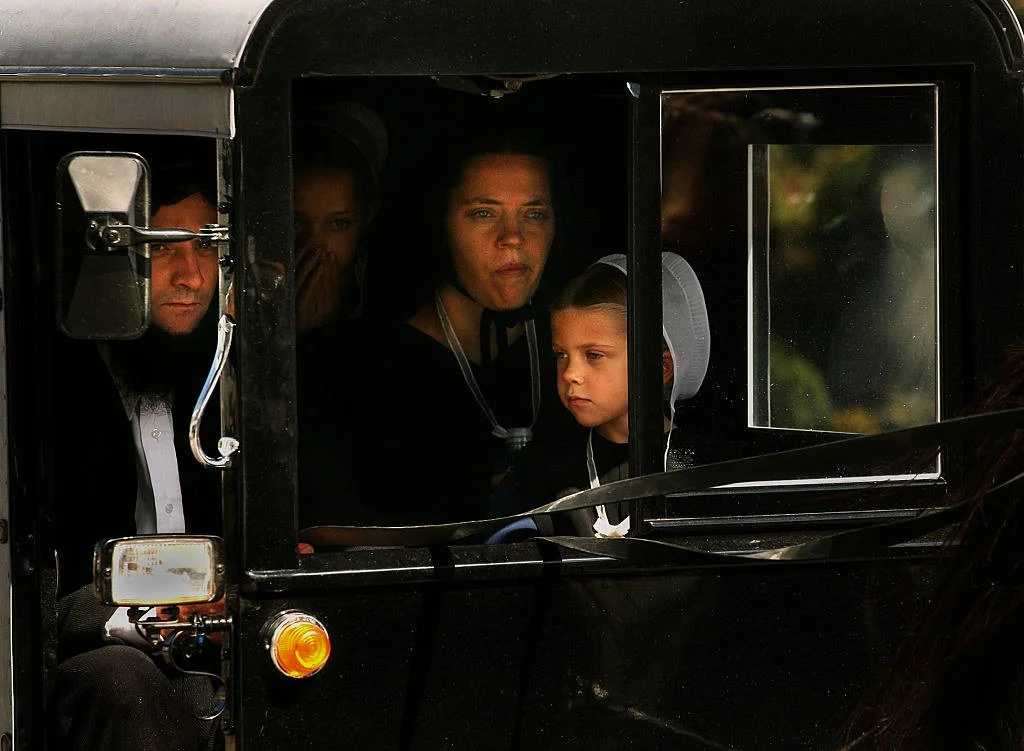
The Amish reject modern technology as it can open the door to temptations and change their traditional lifestyle. Instead, they choose to live simple lives and are self-sufficient. The Amish farm and produce everything they own and ride a horse and buggy or a bike to travel around the community. However, there is a time when Amish youth can decide whether or not they would like to continue living within the community. This is a season where rumspringa, a German term for running around, takes place. At the age of 16, parents allow the teens to fully experiment with the outside world and activities, which would otherwise be condemned and result in shunning. Due to the fact that individuals aren’t baptized, teens are not yet under the church authority. This is part of the reason why they are given a pass. This experience lasts two years and 90 percent of teens return home. 

Amish Family on a Horse and Buggy. Brucedetorres. CC BY-PDM 1.0

After arriving more than three centuries ago, the Amish have sustained a private life from the outside world. Not allowing many into their community has resulted in the preservation of their beliefs and isolation. The Amish continue to live in the US with two new recent settlements, Argentina and Bolivia.


Jennifer Sung

Jennifer is a Communications Studies graduate based in Los Angeles. She grew up traveling with her dad and that is where her love for travel stems from. You can find her serving the community at her church, Fearless LA or planning her next trip overseas. She hopes to be involved in international humanitarian work one day.

The Cultural Renaissance of the Sámi

The Sámi have resided in Northern Scandinavia long before the borders of existing countries were drawn. Despite pressure to assimilate to Norwegian culture, traditional Sámi culture remains strong.

More than 4,000 miles north of the equator in Finnmark county, Norway live roughly 40,000 descendents of the Sámi, a nomadic people from thousands of years ago in Northern Scandinavia. The Sámi live in parts of Norway, Finland, Sweden and Russia. Of the 80,000 total population of Sámi, roughly half live in Finnmark, Norway. 

The Sámi have their own language with five dialects currently used in Northern Norway. Of the dialects spoken, Northern Sámi, Lule Sámi and Southern Sámi are the most common. Each dialect is completely unique and does not resemble each other nor other Scandinavian languages. In the 1990s, the Norwegian government made speaking Sámi illegal in efforts to force assimilation of the Sámi people, resulting in many Sámi today being unable to speak the language. The Norwegian government has officially apologized for the past legislation, but the damage is still evident as less than half of Sámi people in Norway speak a Sámi dialect. In recent years the Sámi language has had an increasing role in new media and broadcasting, signaling efforts to keep the language alive.

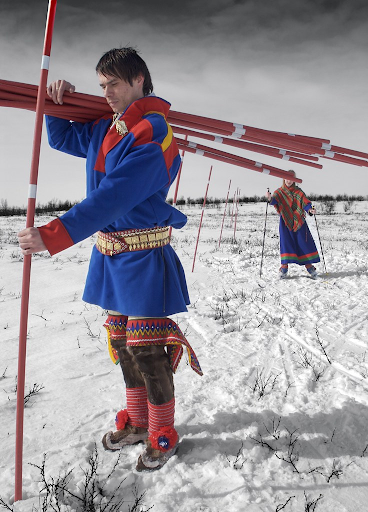
A pillar of Sámi culture is reindeer herding, which played a major part in the Sámi economy for hundreds of years. Starting in the 16th or 17th century, the Sámi transitioned from hunting reindeer to becoming nomadic herders. Reindeers are used for more than just cooking — the Sámi make clothes and shoes from the skin, and the horns can be used to make traditional art. Today, Sámi herding is less nomadic; most families stay in permanent homes while the herder will travel with the reindeer.

Despite previous attempts from governments to assimilate Sámi people, their culture and traditions have remained present in modern life. Notably, Sámi Joik has had a cultural renaissance in recent years. Joik is a traditional form of music that has been passed down orally for generations. The music, performed acapella, is storied to have been taught to the Sámi by fairies and elves. Joik is very personal in nature, as the music is typically dedicated to a specific person, place or animal. Joik is a central part to Sámi culture, and many young Sámi people have begun to incorporate the traditional music into different genres of music. 

New artists are revitalizing Joik after intense pressure from the Norwegian government in the 20th century caused some areas to lose the tradition.  Norwegian music group KEiiNO entered the 2019 Eurovision Song contest with music that included pop, electronic and Joik, and took 6th in the competition, winning the popular vote by viewers. Joik has made a recent impact in Hollywood as well, inspiring “Vuelie,” the opening track of Disney’s Frozen.

Joik is not the only part of Sámi culture that has continued in contemporary forms. The Sámi Center for Contemporary Art was established in 1986 and features contemporary Sámi art. The gallery blends traditional art pieces with modern art forms of expression. Despite past pressure and action from governments, the Sámi continue to keep important aspects of their culture alive. These efforts were continued with the establishment of the Norwegian Sámi Parliament in 1989. The Sámi Parliament is made of 39 elected representatives and oversees matters that deal directly with the Sámi. The parliament is a political party for the Sámi people that promotes Sámi interests. Traditional Sami culture remains an integral part of daily life for the Sami to this day, and illustrates how the rich history of the Sami is being brought into the modern day.


Dana Flynn

Dana is a recent graduate from Tufts University with a degree in English. While at Tufts she enjoyed working on a campus literary magazine and reading as much as possible. Originally from the Pacific Northwest, she loves to explore and learn new things.
Congo Couture: “Sapeurs” Bring Europe’s Designer Fashion to Central Africa

The Republic of the Congo’s world-famous fashionistas strut through the streets of Brazzaville wearing outfits from Europe’s most revered designers. But to sapeurs, their fashion savvy is not just style but a lifestyle. 


A sapeur in his Sunday best. ilja smets. CC BY-ND 2.0.

Maxime Pivot makes all the ladies scream. Men call him the pride of the town. Children follow him wherever he goes. The Republic of the Congo has never seen a more dashing, debonair, sharp-dressing gentleman. As a modern-day dandy in the streets of Brazzaville, he is a painterly splash of Congo couture amid near-universal penury. He boasts a double-breasted red suit, a pearl-white shirt, pitch-black sunglasses and a pink bowtie, an outfit to amaze the prim and plebeian alike. Rather than envy, his panache inspires pride. Some may call his focus on fashion amid staggering poverty vain, but really, he is preserving a decades-long tradition. He is a sapeur

That means that he is a member of the Société des Ambianceurs et des Personnes Élégantes—La Sape for short. In English, it translates to the Society of Ambiance-Makers and Elegant People. Every weekend, he and his fellow dandies meet to compare outfits from the hottest European designers, trade notes on color combinations and revel in the pomp of haute couture. They smoke, they dance and they conversate. They escape the squalor in which so many Congolese live—when sapeurs dress up, they feel like the richest men in the world.

No, they are not rich. Quite the opposite. By day, sapeurs are chefs, mechanics, electricians, craftsmen, businessmen, handymen, journeymen, or any other kind of blue-collar worker. 70 percent of people in the Republic of the Congo live in poverty, and most sapeurs are included in that number. What distinguishes them is not wealth but aesthetic distinction, good taste, and a deep knowledge of the latest fashion trends. They aspire to look like a million bucks, not spend it. 

The street is a catwalk. Jean-Luc Dalembert. CC BY-SA 4.0.

The tradition began during the Congo’s colonial period. Congolese servants, tired of wearing their Belgian and French colonizers’ secondhand clothes, began saving their wages and purchasing the latest clothes for European dandies.  After serving in the French army during World War II, Congolese soldiers returned home bringing closets-worth of European suits, shirts, ties, shoes and accessories. By the time the central African nation gained independence in 1960, many Congolese elites were making pilgrimages to Paris to rack up designer clothes for their wardrobes back home. Although they were accused of relying on white, “Western” traditions, most sapeurs insist on their artistic independence. As Papa Wemba, one of La Sape’s earliest celebrities, said, “White people invented the clothes, but we make an art of it.”


However, investing in clothes instead of, say, property or livestock can be difficult to justify in one of the poorest parts of the world. Many sapeurs hide their expensive lifestyles from relatives to avoid endangering family ties. If a cousin learns that their family member would rather buy an Armani suit or Weston shoes than help put food on the table, they may feel betrayed and break off relations. Furthermore, the wives of sapeurs tend to bear the brunt of the sapeur lifestyle far more heavily than their husbands, as they suffer the financial cost without being able to revel in high fashion. 

European style, African art. Opencooper. CC BY-SA 4.0.

La Sape is overwhelmingly male. Overwhelmingly, but not entirely. As the tradition evolves, more women are staking their claim as sapeuses. They, too, don designer suits from Versace, Dior and Yves Saint Laurent and develop mannerisms and gaits to build a persona around their clothes. Even children are beginning to partake in the sapeur culture. Many worry that Congolese tailors lack apprentices to carry on the tradition, so the sight of a child strutting down the streets of Brazzaville in an Armani suit assures them that the legacy of La Sape will continue. 

In fact, Maxime Pivot established an organization, Sapeurs in Danger, to preserve the tradition of La Sape, which he asserts is not just about fashion but also is a way of life. When committing to the lifestyle, sapeurs adopt a code of conduct which Ben Mouchaka, another famous sapeur, summed up in 2000. He calls it the Ten Commandments of Sapeology

1- Thou shalt practise La Sape on Earth with humans and in heaven with God thy creator.

2- Thou shalt bring to heel ngayas (non-connoisseurs), nbéndés (the ignorant), and tindongos (badmouthers) on land, under the earth, at sea and in the skies.

3- Thou shalt honour Sapeology wherever thou goest.

4- The ways of Sapeology are impenetrable for any Sapeologist who does not know the rule of 3: a trilogy of finished and unfinished colours.

5- Thou shalt not give in.

6- Thou shalt demonstrate stringent standards of hygiene in thy body and clothes.

7- Thou shalt not be tribalistic, nationalist, racist or discriminatory.

8- Thou shalt not be violent or insolent.

9- Thou shalt abide by the Sapelogists’ rules of civility and respect thy elders.

10- Through prayer and these 10 commandments, thou, as a Sapeologist, shall conquer the Sapeophobes.

Maxime Pivot aims to pass down the tradition of La Sape to any man, woman, or child willing to devote themselves to the lifestyle. He operates a school of La Sape where he teaches aspiring sapeurs how to combine colors tastefully and craft a swaggering gait. His classes teach that La Sape needn’t sap their wallets. As the sapeur life and style spread, he hopes that dandies will don local brands, not just expensive European ones.

Innovating a classic style. Makangarajustin. CC BY-SA 4.0.

Then, La Sape could be truly independent from European designers. Fashion trends have been increasingly moving in that direction, thanks to Maxime Pivot’s efforts, especially now that La Sape has moved into the mainstream. Every August 15, the Republic of the Congo’s independence day, sapeurs march alongside the military, indigenous tribes and even the President in the largest parade of the year. Their flashy clothes and sauntering stride draw cheers from the crowd. Their tradition provides an example of how the country can emerge from an oppressive European past and spring into a liberated African future.


Michael McCarthy

Michael is an undergraduate student at Haverford College, dodging the pandemic by taking a gap year. He writes in a variety of genres, and his time in high school debate renders political writing an inevitable fascination. Writing at Catalyst and the Bi-Co News, a student-run newspaper, provides an outlet for this passion. In the future, he intends to keep writing in mediums both informative and creative.