
While apartheid has been dismantled in South Africa for more than 25 years, segregation is still visible on its seashores as the economic and social consequences of apartheid continue to disadvantage and discriminate against Black South Africans.
Read MoreHong Kong Activist Group Forced to Delete Social Media
In order to comply with China’s recent national security law, a well-known pro-democracy group was ordered to scrub its online presence.
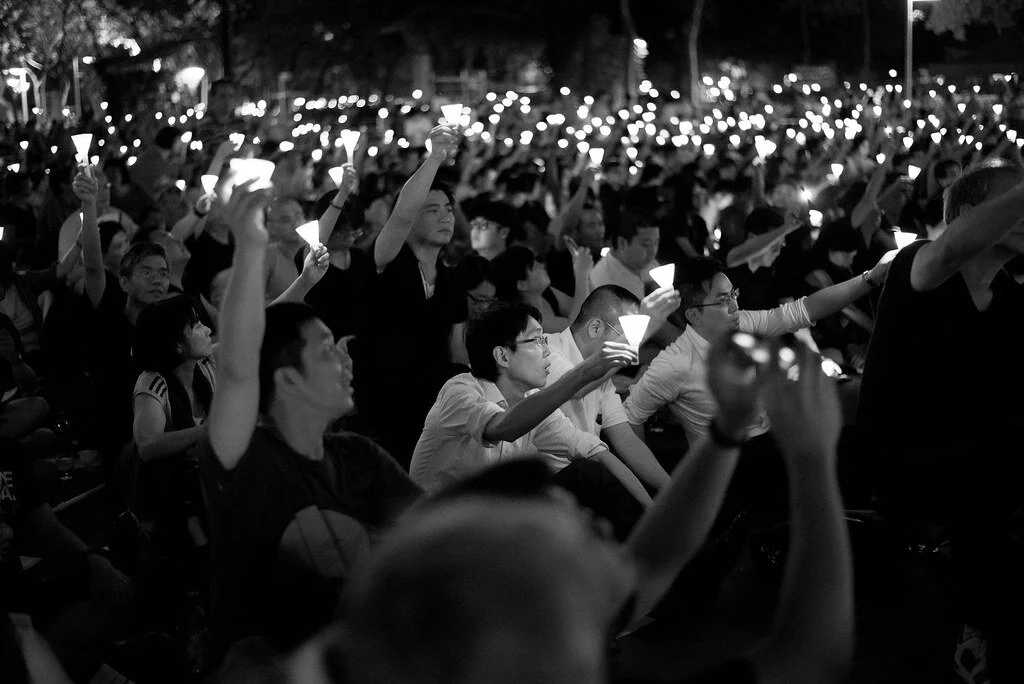
A 2015 vigil for the 1989 Tiananmen Square Protests. VeryBusyPeople. CC BY-SA 2.0
In early September 2021, the Hong Kong Alliance in Support of Patriotic Democratic Movements of China, a well-known activist group in Hong Kong, received notices from officials to delete all online content to comply with the recent national security law. As a result, the group has closed its website as well as all social media pages, including their Facebook, Twitter and Youtube. The Hong Kong Alliance is most well known for hosting vigils for the 1989 Tiananmen Square student protests that resulted in hundreds of deaths. The protests in 1989 called for political and economic reform, and Chinese police responded violently and arrested tens of thousands of protesters. In addition, the group is known for advocating for democratic movements and does not hesitate to criticize the government online. Officials also used the national security law to arrest several leaders of the group who refused to provide information to police regarding the group’s funding and membership.
The security law went into effect on June 30, 2020, causing concerns that Hong Kong was losing its judiciary independence and other democratic freedoms such as freedom of speech and assembly. Under the initial 1997 agreement, when China gained control of Hong Kong from Britain, there was always supposed to be a national security law in Hong Kong. However, Hong Kong would retain a separate judiciary system. Hong Kong has previously had protests starting in 2019 in response to a law that allowed extradition to the mainland. The protests turned increasingly violent, and eventually, the extradition bill was withdrawn. The controversial security law criminalized succession, subversion of state power, terrorism and collusion with foreign entities. The law takes precedence over a local Hong Kong law, and a National Security Committee will be put in place with no local oversight. In addition, crimes considered to be serious national security threats will be tried on the mainland in Chinese courts, essentially a version of the extradition bill that was thrown out as a result of the 2019 protests.
The Hong Kong Alliance was not the first group that faced the consequences of the recent security law. Shortly after the law was enacted in 2020, many people deleted their social media, and pro-democracy media outlets deleted old posts and entire archives. The Hong Kong alliance has restarted a Facebook page. Still, it is unclear how the group will be using social media in the future.

Dana Flynn
Dana is a recent graduate from Tufts University and holds a degree in English. While at Tufts she enjoyed working on a campus literary magazine and reading as much as possible. Originally from the Pacific Northwest, she loves to explore and learn new things.
Summit the Tallest Mountain in Southeast Asia
At more than 10,000 feet, Fansipan Mountain in Vietnam is the tallest mountain in SE Asia. Hikers traverse clouds and thick forests to get to the top. Cable cars ascend to the peak for those who don’t want to make the trek.
Read MoreWhat Happens to Afghan Refugees Once They Flee?
People have been leaving Afghanistan for 40 years, hoping to escape conflict, violence, and poverty. The Taliban’s recent takeover has exacerbated the displacement and flight of Afghan people, but where do they go once they’ve left?
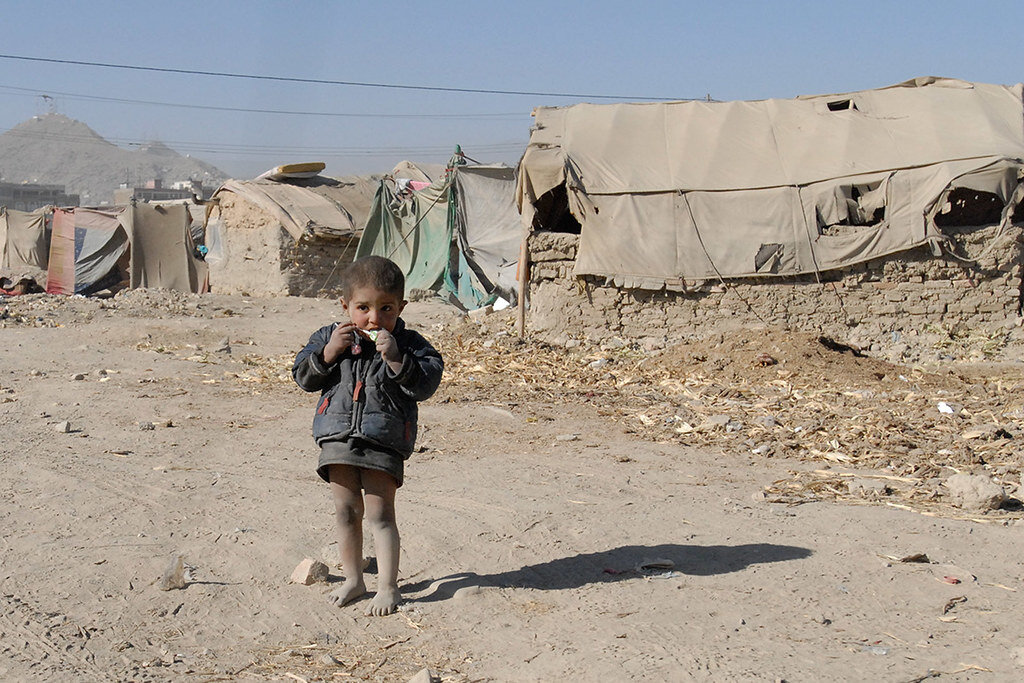
Why are people fleeing Afghanistan?
This year, 20 years after The Taliban was ousted from power in Afghanistan, the insurgent group regained control of the country. On August 15, Taliban forces took Kabul, the nation’s capital, with little resistance. Afghan President Ashraf Ghani fled the country, and the government collapsed, securing The Taliban’s position of power.
Following The Taliban’s seizure of Kabul and effective takeover of the country, tens of thousands of people fled Afghanistan, fearing their safety under Taliban rule.
Amnesty International reports that at present, there are over 2.6 million registered refugees from Afghanistan worldwide and more who haven’t been registered or who are asylum seekers (meaning they haven’t yet been legally recognized as refugees). People began leaving Afghanistan forty years ago, seeking refuge from conflict, violence and poverty. However, the recent Taliban takeover has escalated the amount of violence faced by people in Afghanistan and raised human rights concerns, especially over the treatment of women and girls.
The United Nations Refugee Agency predicts that up to half a million people could flee Afghanistan by the end of the year. As many as 125,000 people fled between August 16 and 26 during a multinational evacuation effort led by the U.S. military. However, more Afghans are still displaced and trying to escape Taliban rule.
What happens to Afghan refugees once they leave the country?
If Afghans can make it out of the country, what happens next varies. Those leaving via land borders often live in temporary refugee camps, like the ones set up by Iran and Tajikistan.
Pakistan and Iran have been the countries to take in the largest numbers of Afghan refugees in the past. However, this time, officials from both countries have said that they cannot take another large influx of refugees. Instead, they will be expected to stay in camps on the borders until they return to Afghanistan.
On August 16, the UNHRC issued a non-return advisory, meaning that no country can deport people to Afghanistan right now.
Some governments, such as Austria, Poland, Turkey and Switzerland, have made clear that they will not welcome any Afghan refugees and are upping border security to guard against anyone entering their countries illegally. However, other governments, such as France, Germany, Canada, Australia, the U.K. and the U.S., have pledged to host Afghan refugees and asylum-seekers.
United States
Axios reports that an expected 37,000 Afghan refugees will soon be entering the U.S., likely the first group of several. They will be sent to 46 states, excluding Hawaii, South Dakota, West Virginia and Wyoming, with California and Texas receiving the most people.
More than half of the Afghan refugees who have already arrived in the U.S. helped the U.S. officals and their families, some of whom hold Special Immigrant Visas. This next wave of 37,000 also includes many people regarded as U.S. allies, who either have an SIV or have applied for one.
Those refugees who are not eligible for an SIV can apply for other types of relief, such as asylum or a temporary visa. In additoin, they can still enter the U.S., even without a valid visa, if they have applied for humanitarian parole, which allows those facing an emergency or urgent humanitarian crisis to enter the country for a temporary period.
All Afghan refugees are eligible to apply for humanitarian parole and asylum, and they can also apply for a U.S. visa. However, those who have applied for either but have not yet completed the lengthy screening and interview process to receive clearance are being sent to third-party countries before they can enter the United States. Kosovo, Albania, North Macedonia and Uganda have agreed to temporarily host smaller numbers of refugees ultimately destined for the U.S.
When Afghan refugees arrive in the U.S., legal residents or U.S. citizens are tested for COVID-19 and then released to go to their destinations. Those who are not will be sent to military bases for processing, which includes a health screening and services such as help to apply for work authorization. After processing, these refugees are connected with a refugee resettlement agency.
Resettlement agencies, like RAICES in Texas, are funded by the U.S. Committee for Refugees and Immigrants. Resettlement agencies, using a $1200-per-person stiped, set up housing, including utilities and furniture, for the refugees, and enroll children in school and sign families up for social services programs such as Medicaid. The agencies also provide job skills training and help refugees with their job searches; they also help refugees adjust to their new homes through cultural orientation programs. In addition, some refugees qualify for monthly cash assistance, which the resettlement agencies also provide.
United Kingdom
The Home Office, the U.K.’s lead immigration department, has announced that any Afghans that worked for the U.K. government or British military can stay in the U.K. permanently. There are currently over 8000 Afghan refugees in the U.K., and many of those who were initially only granted temporary residency can now upgrade their immigration status and find permanent housing and jobs.
Right now, manyf Afghan refugees in the U.K. are living in hotels, but the government hopes to have them resettled more permanently soon. The government has developed two resettlement plans for Afghan refugees—the one currently in progress is known as Operation Warm Welcome, which provides support similar to that of U.S. resettlement agencies such as enrolling kids in school, registering refugees for healthcare and helping them to find housing. The second plan, the Afghan Citizens Resettlement Scheme, is a longer-term plan, aiming to take in an additional 20,000 refugees over the next few years.
The refugees who are not currently eligible for permanent residency can apply for a five-year visa; after the visa is up they can apply for permanent residence.
France
Between August 16 and 27, France evacuated over 2500 Afghans from Kabul, mainly activists. Many of these refugees left families behind in Afghanistan and now worry that they will be unable to reunite. France is notoriously slow at approving family reunification applications, with Afghans having to wait an average of three years before bringing their relatives. France’s president, Emmanuel Macron, has expressed concerns about a large influx of immigrants, saying that though France will continue to protect those who are most threatened under Taliban rule, “irregular migratory flows” need to be stemmed.
According to the European Resettlement Network, refugees who can enter France are granted a temporary, six-month leave to work and receive certain social services benefits. After that, all refugees are required to lodge an asylum claim, which, when approved, grants them official refugee status. After gaining refugee status, refugees may apply for French citizenship.
Challenges
Whether refugees are in camps or have found refuge in other countries, they often face challenges like unsanitary conditions, a lack of food and housing, and harassment from people around them. Though people leaving Afghanistan are safe from the more immediate dangers of conflict and violence, just leaving the country does not ensure their long-term well being.
Organizations like Refugees International and Amnesty International have put forth recommendations on how countries can best respond to the Afghan refugee crisis and better help refugees.
To Get Involved:
To learn how to support Women for Women International’s emergency relief fund, click here.
To get involved with the International Rescue Organization, click here.
To learn more about Afghan Aid, an organization that has been working in Afghanistan for nearly 40 years, click here.
Ways to help Afghan refugees are different depending on where you live, so consider looking into local and national organizations as well.

Rachel Lynch
Rachel is a student at Sarah Lawrence College in Bronxville, NY currently taking a semester off. She plans to study Writing and Child Development. Rachel loves to travel and is inspired by the places she’s been and everywhere she wants to go. She hopes to educate people on social justice issues and the history and culture of travel destinations through her writing.
5 African World Heritage Sites Under Threat
Of the 17 natural UNESCO World Heritage Sites that are in danger, 12 are located in Africa. Here is a deep-dive into five of these unique sites and the looming threats that surround them.
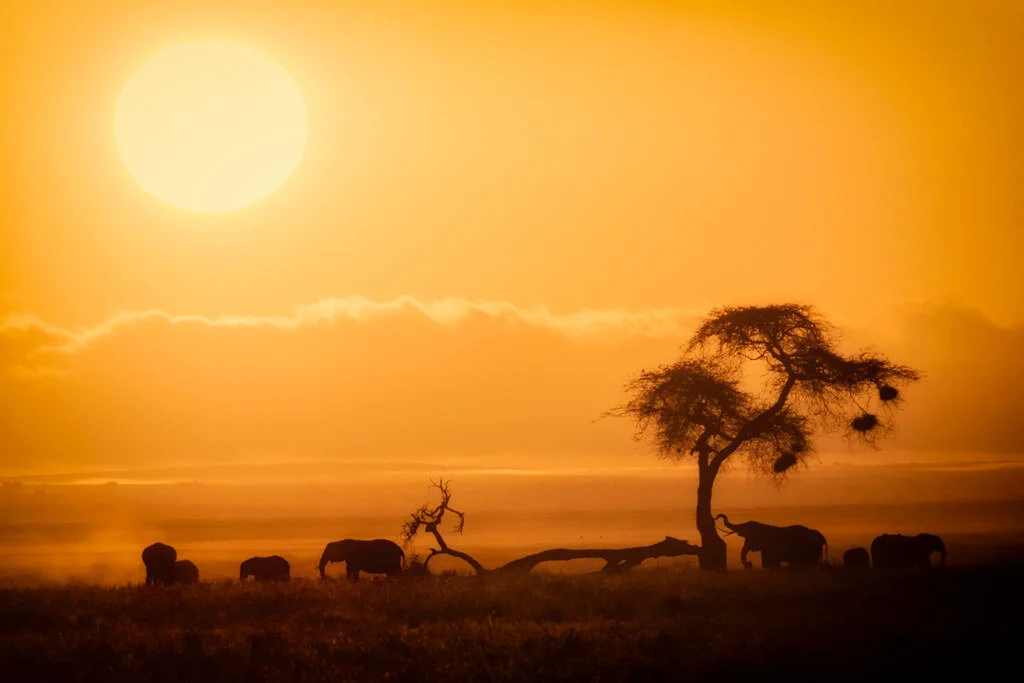
The United Nations Educational, Scientific and Cultural Organization (UNESCO) awards landmarks and areas around the world status as a ‘World Heritage Site’ for the location's unique cultural, historical or environmental significance. As part of this, World Heritage Sites are provided legal protection by UNESCO, however, many of these sites are now endangered. According to UNESCO, Africa and the Middle East have the largest number of threatened sites. Of the 17 UNESCO natural world heritage sites that are endangered, 12 are located in Africa. Five of these endangered African parks and reserves are described below.
1. Manovo-Gounda St Floris National Park, Central African Republic
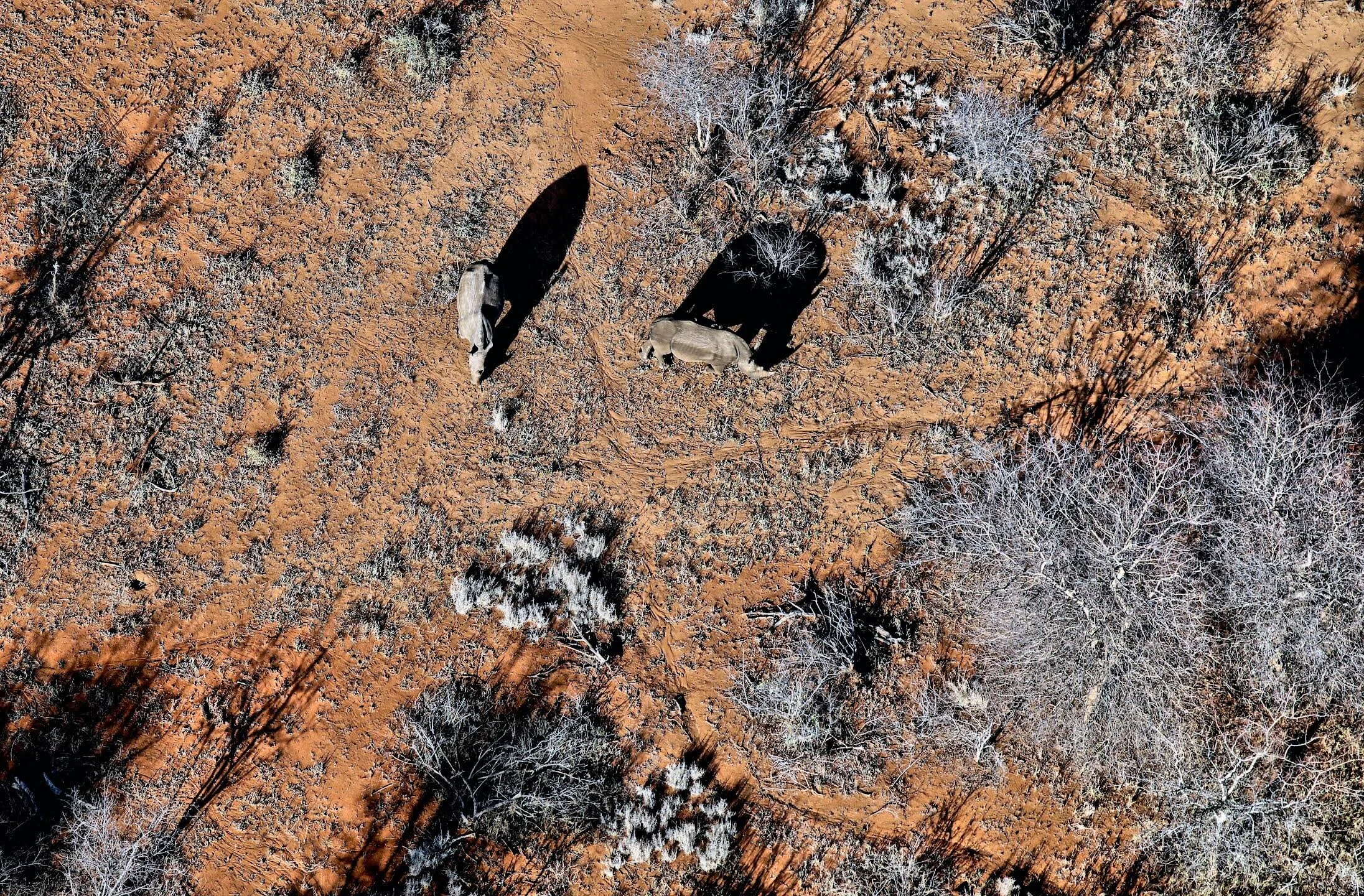
Black rhinoceros, Central African Republic. Photo by Wynand Uys on Unsplash.
This Central African national park is located in the prefecture of Bamingui-Bangoran near the Chad border on the Bahr Aouk and Kameur Rivers. It was awarded status as a UNESCO World Heritage Site in 1988 because of its unique biodiversity and is the largest park in the country, with around 6,700 square miles of land. This park’s historical significance lies in its unique flora and fauna and its position as a “crossroads” savanna. This location acts as the intersection where species from Eastern and Western savanna communities and Southern savanna communities meet. Straddling the Sudano-Sahelian and Sudano-Guinean biogeographical zones, the park hosts various habitats from grassy floodplains and wetlands in the north to savannas with gallery forests in the south. The park is home to various rare species, including black rhinoceroses, elephants, sudanese cheetahs, leopards, wild dogs, red-fronted gazelles, buffalo and hippopotamus.
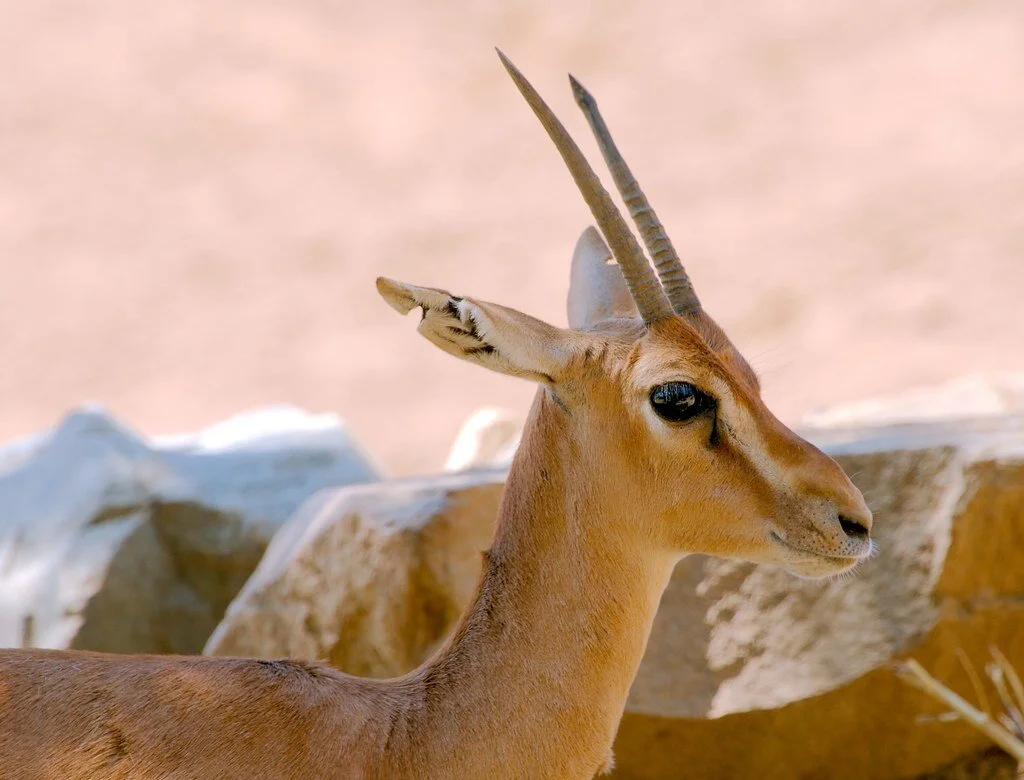
Around 320 bird species can be spotted in the park, with at least 25 of them being species of raptors. Manovo-Gounda St Floris National Park is home to many rare animals; however, its unique biodiversity has made it a target for illegal poaching of rhinoceros, elephants and giraffes as well as grazing. The western black rhinoceros that was indigenous to the land went extinct in 2011. The park is now governed by the Ministry of Water and Forests, Hunting and Fishing in efforts to protect the property.
2. Okapi Wildlife Reserve, Democratic Republic of Congo
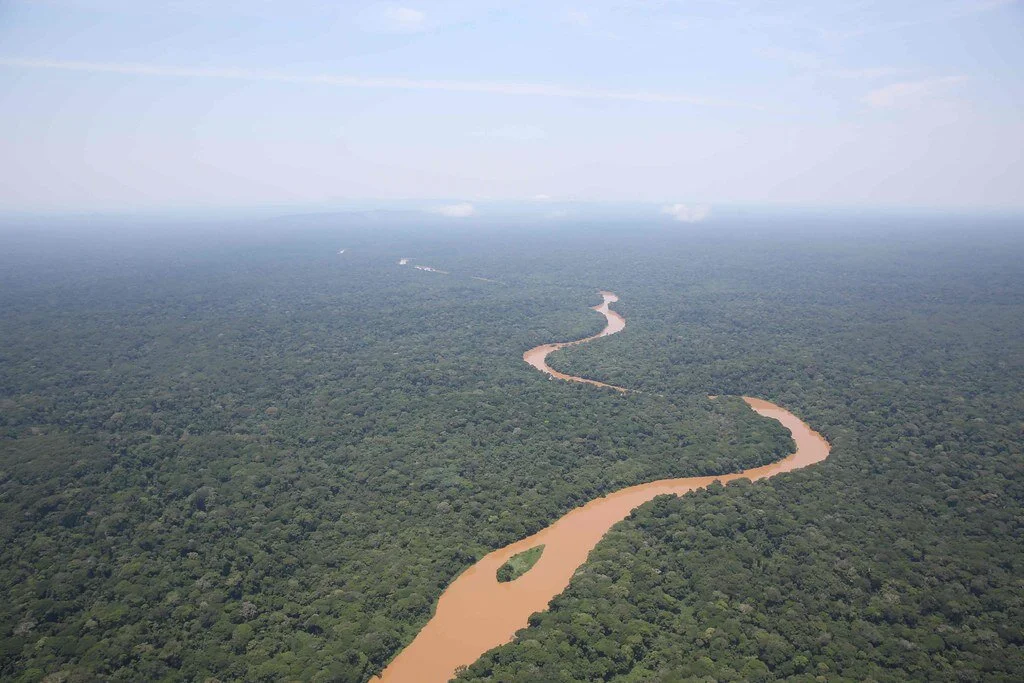
Ituri Forest, near Okapi Wildlife Reserve. MONUSCO. CC BY-SA 2.0.
The Okapi Wildlife Reserve is located in the northeast of the Democratic Republic of Congo, occupying one-fifth of the Ituri forest. It is part of one of the largest drainage systems in Africa, the Congo river basin. Labeled as a UNESCO World Heritage Site in 1996 and categorized as “in danger” by 1997, the Okapi Wildlife Reserve stretches to around 5,300 square miles. The reserve is home to many threatened species of primates and birds, including leopards, forest buffalos, bongos, water chevrotain, dwarf antelopes and giant forest hogs. It also provides refuge to 5,000 of the estimated 30,000 remaining okapis, a forest giraffe and has the country’s largest population of forest elephants and chimpanzees.
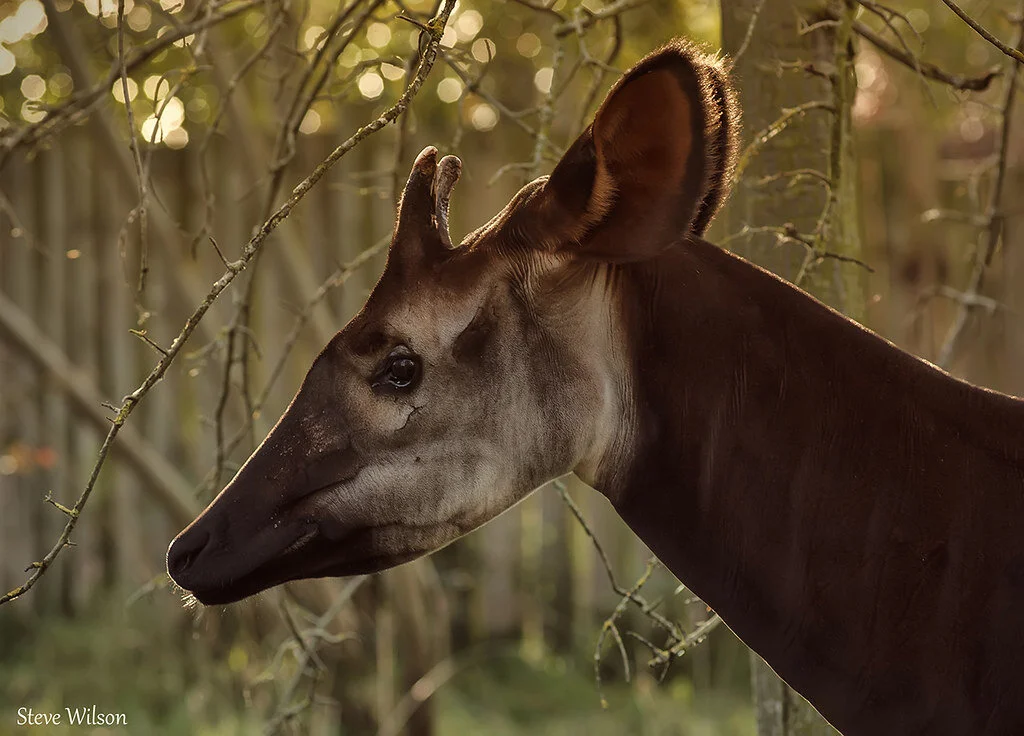
In addition to the 17 species of primates, the reserve is inhabited by nomads and hunter-gatherers like the Mbuti and Efe pygmies. Although the Ituri forest is mostly untouched by logging and other development activities, the reserve is threatened by slash and burn deforestation, commercial hunting and gold mining.
3. Aïr and Ténéré Natural Reserve, Niger
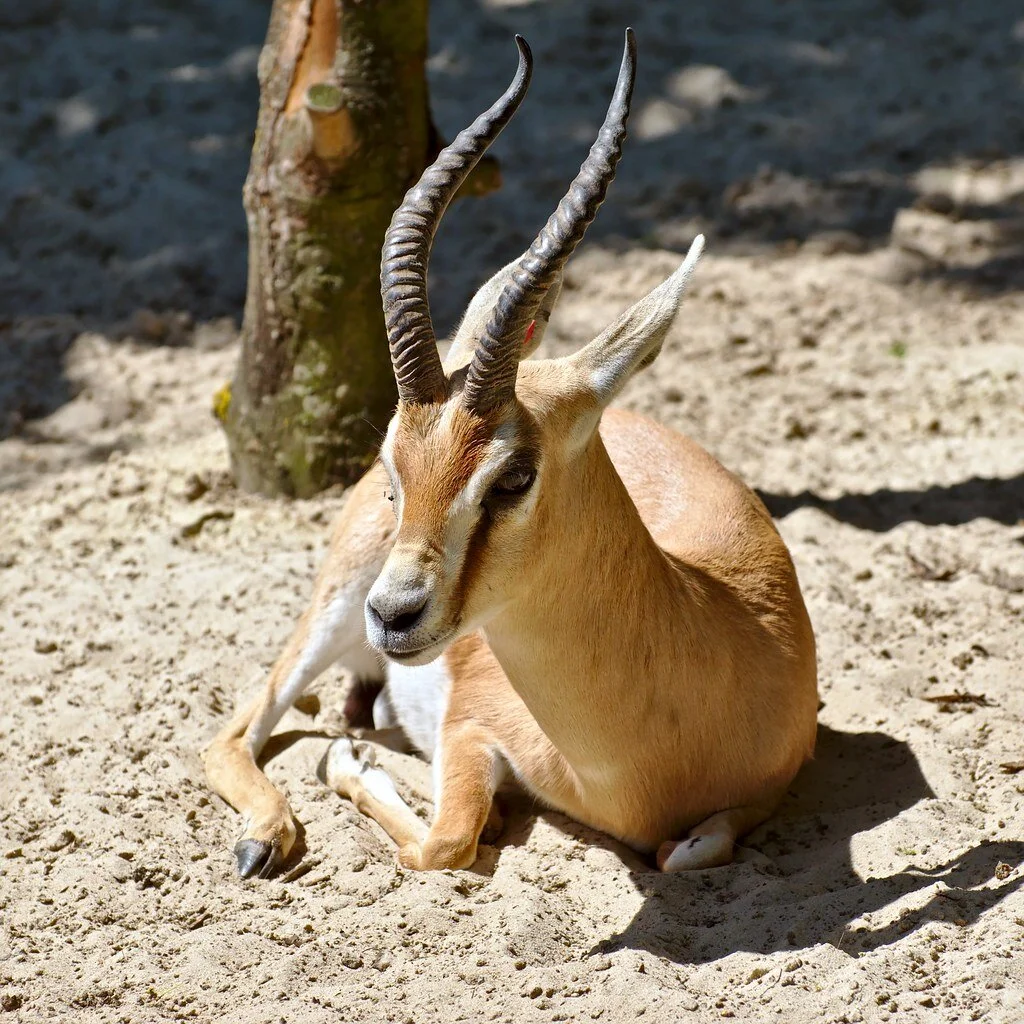
Dorcas Gazelle which can be found in Aïr and Ténéré Natural Reserve, Niger. FurLined. CC BY-NC-SA 2.0.
The Aïr and Ténéré Natural Reserve in Niger covers 29,870 square miles, awarding it position as the second-largest nature reserve in Africa. It was first established as a UNESCO World Heritage site in 1991 to preserve endangered species, various habitats and beautiful desert landscapes. The reserve is made up of two main zones: the eastern half of the Aïr mountains and the western sections of the Ténéré desert. The mountainous and plain landscapes are home to Saharo-Sahelian flora and fauna that exist within the various habitats of the reserve. Everything from it’s living dunes and stony gravel desert, to cliff valleys and water holes is necessary to preserve the reserve’s biodiversity. The property provides a sanctuary for many threatened species, emphasizing desert antelopes, including the addax, the white antelope native to the Sahara desert, the dorcas gazelle, ostrich, fennec fox, barbary sheep and cheetah. The mountains also attract large numbers of migratory birds, totaling around 165 different species of birds. However, political instability in northern Niger, poaching and illegal grazing and other threats have led to the disappearance and decline of many endangered species and designated the site in danger by 1992. The civil unrest left the reserve with no official management plan; poaching led to the extinction of rare species, grazing of domestic animals and crop production minimized resources for wildlife and denied wildlife access to certain crucial wetland habitats.
4. Niokolo-Koba National Park, Senegal

Bordering the Gambia river, Niokolo-Koba National Park is located in the Sudano-Guinean zone. The park is home to the Derby Eland, an open forest and savanna antelope, chimpanzees, lions, elephants, leopards and more than 300 bird species.

Waterways, gallery forests, dry forests, savanna floodplains and rocky slopes are all landscapes that are found in this endangered World Heritage Site. Inscribed as a UNESCO World Heritage Site in 1981, the park is managed through the Ministry of Environment and Nature Protection and the National Parks Directorate. Poaching, one of the most significant factors contributing to landing the park on UNESCOs danger list in 2007, has been a major threat to the park for decades and has eliminated most giraffes and elephants that resided in the park. Bush fires, poor soil and the premature drying up of ponds are other factors that have endangered the park.
5. Selous Game Reserve, Tanzania
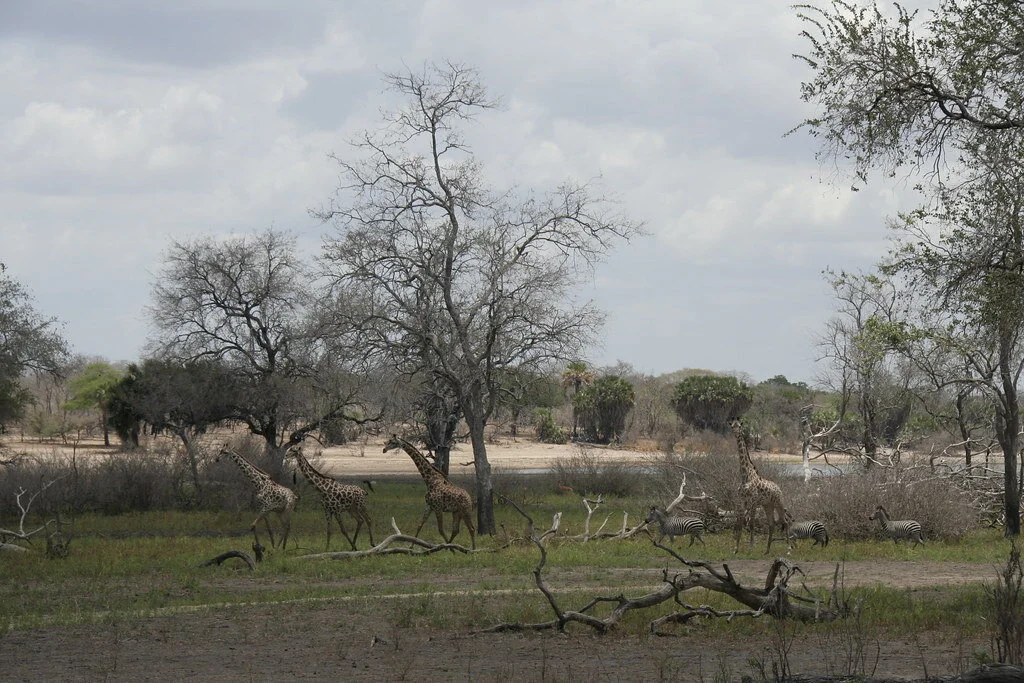
The Selous Game Reserve is located in Tanzania and covers more than 21,000 square miles of land. A UNESCO World Heritage Site since 1982, the reserve has diverse wildlife and habitats such as Miombo woodlands and its inhabitants—African bush elephant, black rhinoceros, East African wild dog, Cape buffaloes, Masai giraffe, Plains zebra and Nile crocodile—grasslands, Acacia savanna, rivers and swamps.
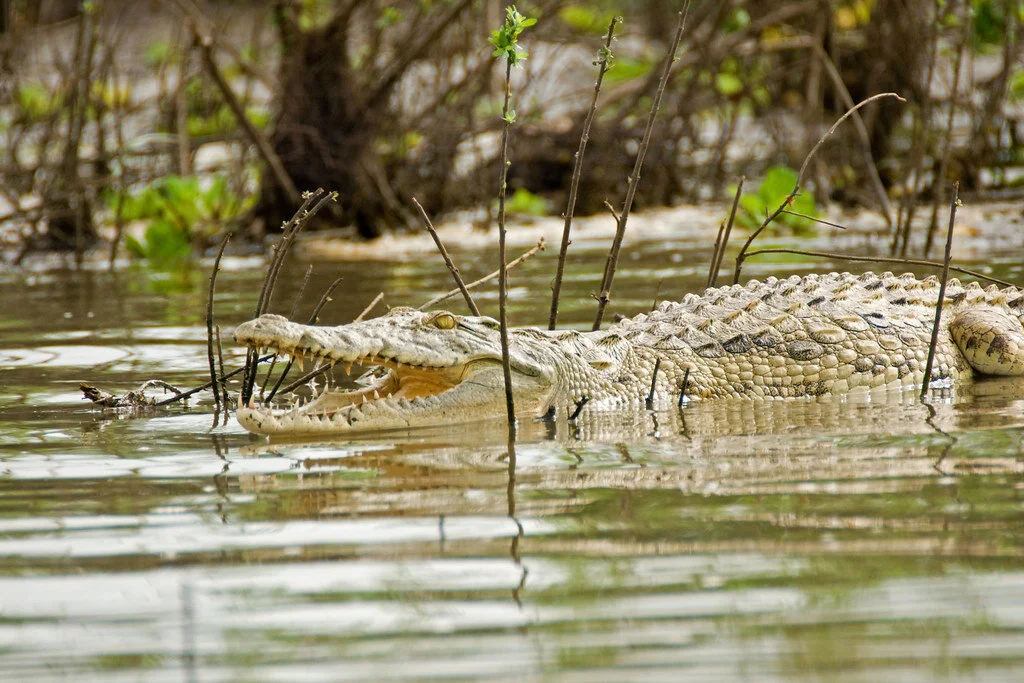
Crocodile, Selous Game Reserve. Ravpix. CC BY-NC-SA 2.0.
One of the most famous rivers in the region includes the Rufiji River, which flows into the Indian ocean. While the reserve held the largest number of elephants in the world in the mid-1970s, more than 100,000, the number of elephants in the ecosystem fell to about 15,000 by 2014. The reserve was labeled as endangered by UNESCO in 2014 and is threatened by poaching, deforestation, mining, oil and gas exploration and dam construction. The national government approved a plan to build a hydroelectric dam across the Rufiji River in 2018, and the dam is currently under construction. The damage caused by the dam’s construction has tempted UNESCO to strip the reserve of its status as a World Heritage Site.

Mia Khatib
Mia is a rising senior at Boston University majoring in journalism and minoring in international relations. As a Palestinian-American, Mia is passionate about amplifying the voices of marginalized communities and is interested in investigative and data-driven journalism. She hopes to start out as a breaking news reporter and one day earn a position as editor of a major publication.

Two capoeiristas in the streets of Brazil. Otubo. CC BY 2.0
5 Latin American Dances
Latin America originated many famous dances, including merengue, bachata, tango, samba and capoeira. Culturally, they represent the heart of Latin America with music and dance styles that are now celebrated throughout the world.
1. Merengue, Dominican Republic:

Merengue dancer. Max Bosio. CC BY 2.0
Merengue is the national dance of the Dominican Republic; however, merengue originated in multiple sites across the Caribbean. In Puerto Rico, Cuban marching bands created the merengue initially called the “upa” in 1842. At this time, local elites considered an African variant of the dance as a “corrupting influence.” Therefore, the government passed laws to fine and imprison those who danced merengue. Forty years later, Puerto Rico’s merengue died out, but Dominican merengue lived on. Merengue has two origin stories circulating in the Dominican Republic. The first story is that enslaved people created the dance as they cut sugar to the beat of drums while dragging one chained leg behind them. The other story is about a hero who returned to his village with a wounded leg after a revolution in the Dominican Republic. Both stories explain the usage of a dragging leg movement used in merengue.
Merengue pairs dance with flirtatious gestures as dancers move in circles. Meanwhile, the music usually consists of accordions, drums and saxophones. Merengue plays an active role in many people’s daily lives; for instance, at social gatherings, celebrations and political campaigning. The dance has migrated to other Latin American countries, such as Venezuela and Colombia, where various forms have emerged.
2. Bachata, Dominican Republic:

A couple dancing street bachata. Fridaycafe. CC BY-SA 2.0
Bachata was born in the Dominican Republic during the dictatorship of Trujillo. Trujillo claimed bachata was a lower art form and altogether banned both the music and the dance. As a result, bachata was only enjoyed in brothels, not helping its status as a respectable dance. Even after Trujillo’s reign, bachata was still frowned upon by society. In the 1960s and 70s, the people considered bachata to be “the poor people’s music.” Now, bachata is accepted and celebrated as hundreds of academics, studios and schools are dedicated to its transmission. There are three primary forms of bachata practiced; the Dominican bachata, bachata moderna and the traditional style. Bachata is a passionate dance between partners characterized by sensual hip movement and a simple eight-step structure. The lyrics of bachata music typically express deep feelings of love, passion, nostalgia, and feature a strong guitar base. Recently, bachata gained popularity because artists like Aventura, Prince Royce and Romeo Santos who turned bachata into one of the most sensual and romantic Latin dances.
3. Tango, Argentina:

Tango dancers amidst their dance. Armando Maynez. CC BY 2.0
Tango emerged from the immigrant culture on Argentina’s dockside slums; it’s a fusion of New World, African and European dance styles. Specifically, the music is inspired by the African community in Buenos Aires and uses elements from African rhythm, European music and South American songs. In its early years, tango primarily took place in the brothels of Buenos Aires. The steps are considered sexual and aggressive, with music creating feelings of longing and despair. It is said that dancers acted out the relationship of the prostitute and the pimp. In Buenos Aires, the upper-class society formerly considered tango indecent and associated it with violence, illicit sex and the lower class. In 1912, the passage of universal suffrage laws granted the lower class legitimacy, giving tango higher credibility.
Additionally, as tango moved across Europe, the steps simplified and the sensual quality diminished a little. European approval made the tango acceptable to all Argentineans, and by the 1920s, it evolved into a national folk treasure. Argentinian dancers at its peak in the 1940s performed in cabarets, dance salons, social and sports clubs and restaurants. During tango’s golden age, Maria Nieves, a star from the 1980s show Forever Tango, said, “We were swept away by our love for tango. We just loved to go dancing. We didn't go out looking for sex...we didn't care what the man looked like. It was a nice, beautiful, pure group of girls, interested only in the tango.”
4. Samba, Brazil

Samba dancers in Brazil. Sfmission.com. CC BY 2.0
Samba originated in Brazil as a musical genre and dance style. Samba’s roots are in Africa. Brazil’s African descendants brought as slaves from Angola and Congo first influenced and created the dance. Samba was first born in Bahia, a coastal state of Brazil known as “Little Africa.” Some believe the Bahian priestesses would invoke the gods through song and dance. The word “samba” derives from the African Bantu word “semba.” The Kimbundo word means “naval bump” which depicts intimacy and invitation to dance. The word samba is also the infinitive of kusamba, which means to pray or do a favor to the gods through song and dance. Some believe the heart of samba comes from Angola’s traditional semba music, which is about celebrating religious worship through an ancient rhythm. The musical genre combines percussion tempo with sounds of pandeiro, reco reco, tamborim and ciuca. The dance form typically emphasizes the movements of the hip and belly. Samba has become an icon of Brazil’s national identity as a form of cultural expression.
5. Capoeira, Brazil

Capoeira with instruments playing in the background CC BY-SA 2.0
Capoeira isn’t a typical dance; it’s an art form tying fighting, dance, music, ritual and philosophy together to create a unique game called jogo de capoeira. Enslaved Africans brought their traditions from various cultures to South America, including capoeira. It was practiced on plantations as means of breaking the bonds of slavery both physically and mentally. At that time, capoeira was prohibited by the Brazilian Penal Code, because it was considered a social infirmity. The term “the outlaw” became so deeply incorporated with capoeira that the word transformed into a synonym for “bum,” “bandit” and “thief.”
Nevertheless, capoeira persisted from its marginalized identity and became a cultural phenomenon. As a cultural art form, capoeira was a means to ensure African tradition would survive through slavery. Afro-Brazilians still uniquely evolve the practice throughout the years. The music along with capoeira consists of a bateria (orchestra) with three berimbau (stringed bow-like instruments), pandeiros (tambourines), an agogo (bell), a reco-reco (small bamboo instrument) and an atabaque (drum). The dance is like a game that can be playful and cooperative, intense and competitive. The movement is a fluid, swinging stance called “ginga.” Capoeiristas teach to attack and defend from any position with any part of the body to practice adaptability and preparedness for any movements. The underlying principles of capoeira are understanding the complexities of human interaction, being ready for anything, the value of cleverness and the strength of indirect resistance. As its creators were once oppressed, capoeira’s philosophy is rooted in survival at all costs through creative measures.
RELATED CONTENT:
VIDEO: The Band Bringing Venezuela’s Best Dance Party to the World

Kyla Denisevich
Kyla is an upcoming senior at Boston University, and is majoring in Journalism with a minor in Anthropology. She writes articles for the Daily Free Press at BU and a local paper in Malden, Massachusetts called Urban Media Arts. Pursuing journalism is her passion, and she aims to highlight stories from people of all walks of life to encourage productive, educated conversation. In the future, Kyla hopes to create well researched multimedia stories which emphasize under-recognized narratives.

Shohei Ohtani pitching in Sapporo. Scott Lin. CC BY-NC-ND 2.0.
Baseball: A Japanese Pastime
America, over the years, has given a lot of cultural significance to the sport of baseball. We place it alongside apple pie and fireworks in the grand list of material symbols of our country. Not only that: baseball, over the years, has often reflected our country’s struggles back at us. It’s confronted discrimination in Jackie Robinson, and labor disputes with Curt Flood. It’s helped heal us, as well. Mike Piazza’s post-9/11 home run brought more joy to New York than anything that followed during the War on Terror.
But baseball is also of waning interest to many Americans. The sport is long, with games usually clocking in over three hours long. It also doesn’t market itself very well. Some of the greatest of all time are playing right now, but has any non-baseball fan heard of Mike Trout, Jacob DeGrom, or Shohei Ohtani? Likely not. The sport isn’t going away anytime soon, but there’s no doubt baseball’s cultural significance is declining in America. Fortunately, that isn’t the only place the sport is cherished.
Baseball was introduced to Japan during the late 1800s by way of an English professor from Maine named Horace Wilson. It didn’t take long for the sport to become a national pastime; professional leagues have existed since 1936, and the country’s national high school baseball championship, Summer Koshien, began in 1915. Today, baseball is Japan’s most popular sport; an almost bizarre outcome considering the existence of nationally-developed sports like sumo and globally adored sports like soccer.
But the popularity of baseball in Japan would be diminished if it weren’t for the homegrown players who have starred overseas. The first Japanese player to play in the MLB was a pitcher, Masanori “Mashi” Murakami, who debuted in 1964. Murakami wasn’t an elite player, and was even forced to return to Japan after two years due to his restrictive contract, but his appearance in the bigs opened the floodgates for others to make America’s game their own.
The first bona-fide Japanese star was pitcher Hideo Nomo. In 1995, Nomo’s first year in Major League Baseball, he posted a league-leading 11.1 strikeouts per nine innings to go alongside a 2.54 ERA (ERA stands for earned run average, or the average number of runs allowed every nine innings. Anything under 4 is considered good. Under 3? Great.) His rookie season is his best known (“Nomo fever” was said to have hit LA), but Nomo went on to have an excellent career, eventually retiring in 2008 after 323 games, 1918 strikeouts, and 2 no-hitters.

A fan holds a “Japan National Team” baseball flag at the World Baseball Classic. Steve Rhodes. CC BY-NC-ND 2.0
There is also the case of Ichiro Suzuki, who with his illustrious career and unique style of play became one of the most well-loved baseball players of the 21st century. Ichiro had exceptional speed, stellar defense, and a superhuman ability to take care of his body, but he was best known for what he did with the bat in his hands. Ichiro’s approach was simple: he would slap the ball around the field, and beat out singles and doubles. He rarely walked or hit for power, but was so talented at this contact-oriented approach that it didn’t matter. It was primordial baseball planted firmly into the twenty-first century, and it worked. In 2004, Ichiro broke the single-season hit record, a record that had stood for 84 years and seemed all but unbreakable with how the game had changed. The principles of hitting have strayed from Ichiro’s even further since then; it’s not unlikely that Ichiro’s grand total of 262 hits in 2004 will stand until the earth is swallowed by the sun.
There’s only one active player who has a chance of topping Ichiro in the Japanese pantheon of stars, and his case is being made this very season. He’s a 27-year-old, currently having not just the best-ever season by a Japanese player, but possibly the best-ever season by anyone.
To explain Shohei Ohtani, one must first note that over its 150-year history professional baseball has become more and more a sport of specialization. Teams today might feature hitters who only hit against left-handed pitching, and speedsters who rarely start but are used late in games as pinch runners.
Ohtani is the one man who breaks up modern baseball’s prime order. He is a pitcher who hits; it’s as simple as that, really. Baseball players have long been separated into hitters and pitchers. Hitters don’t pitch (not seriously, anyway), and pitchers don’t hit (at least, not well; perhaps the best example of baseball’s specialist tendencies is how pitchers haven’t cared about being able to hit for a hundred years, despite the fact that half of the league still requires them to on a regular basis). But Ohtani plays both roles.
That in itself is historic. No player has been both a MLB pitcher and a lineup regular since Babe Ruth, who served the role in 1919. But here’s the kicker—Ohtani is really, really good at both his positions. He has hit 44 home runs while pitching to a 9-2 recond and a 3.36 ERA so far this season. Those are elite statistics, better than Ruth’s 1919 numbers. The value of one man bringing a season of premier pitching and hitting to his team is hard to quantify. But the case can be made that Ohtani’s 2021 season is the greatest of all time, at least so far. There’s no doubt the man is a one-in-a-million player, a gift from the baseball heavens. By coming from Japan, he also represents a nation that may lead in taking the sport forward.
This year, Japan beat the United States to win the gold medal in Olympic baseball. The victory, though marred by the fact that the best players from both countries stayed home, represented another step up the baseball ladder for Japan. As baseball exits America’s zeitgeist, it continues to grow in the island nation. The NPB’s level of play is going up—it’s still behind the major leagues, but not by a massive amount. Even more important is fan interest. In 2019, the last full season of the NPB, the league’s total attendance numbers grew to second in the world across all professional sports leagues.
As more stars are born and made, Japan’s baseball legacy will only continue to grow. Who knows? Maybe in a century, Japan will have come so far that baseball fans will diminish the careers of MLB stars like Trout, DeGrom, and Ohtani. They can’t be that good, the fans will say. They were playing in the United States.

Finn Hartnett
Finn grew up in New York City and is now a first-year at the University of Chicago. In addition to writing for CATALYST, he serves as a reporter for the Chicago Maroon. He spends his free time watching soccer and petting his cat.
Brazil’s Black Lives Matter Movement
Brazil, the last South American country to abolish slavery in the late 1800s, struggles to uplift their nation’s Black lives. Through pay gaps, urban designs, government representation and policing, Brazil’s society threatens the Black community.
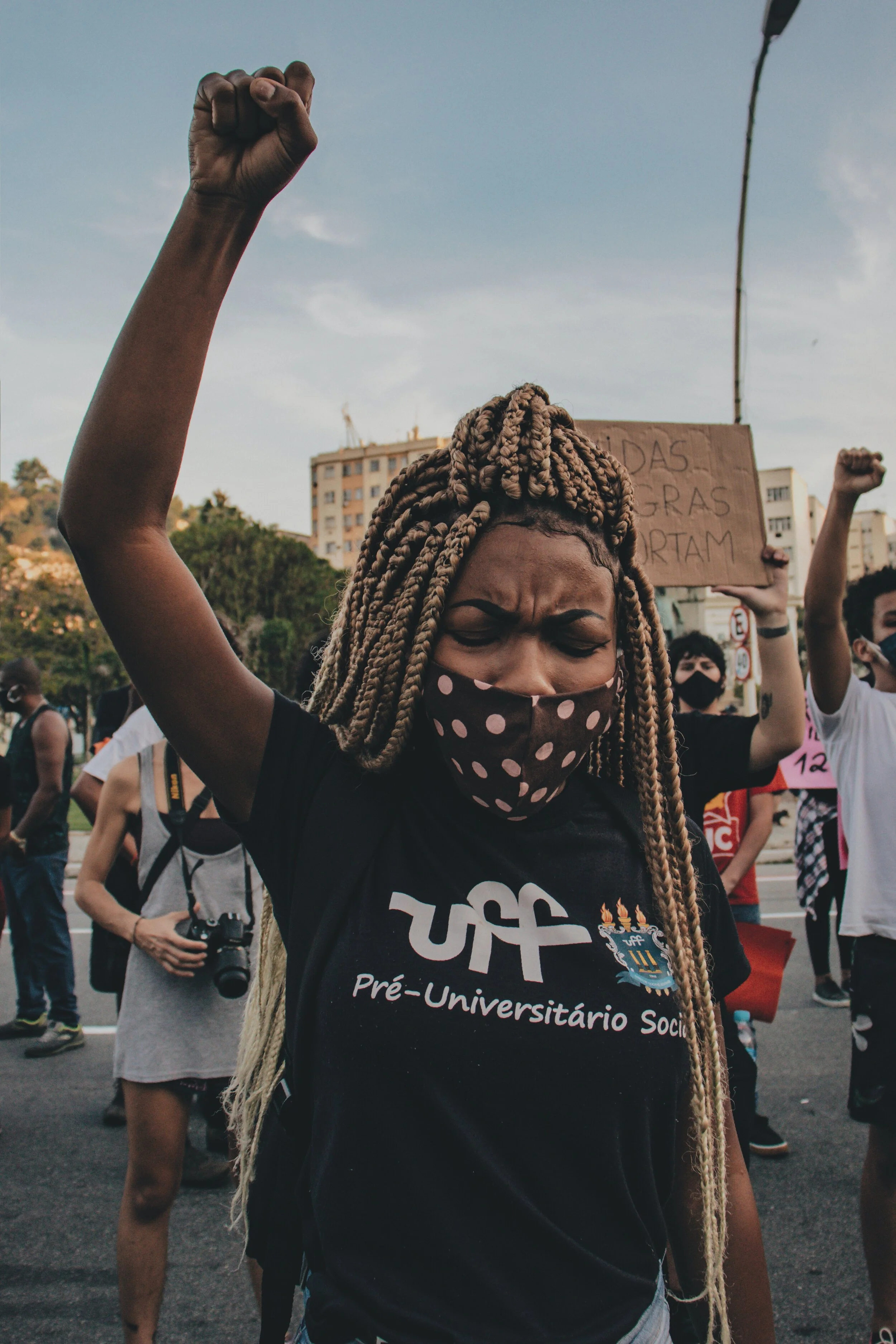
A protester on the streets in Brazil. Michelle Guimarães.
Over the course of 300 years, approximately four million Africans were taken to Brazil as slaves. Today, Brazil’s racial demographics are 47.7 percent white, 43.1 percent multiracial and 7.6 percent Black. The average income for white Brazilians is almost double that of the average income for Black or multiracial Brazilians, according to the Brazilian Institute of Geography and Statistics. Also, 78.5 percent of people in Brazil who are receiving the lowest rate of income (equivalent to $5.50 U.S. dollars per day) are Black or multiracial people.
This May, Black Lives Matter protests filled the streets of Rio de Janeiro, Sao Paulo and Brasília after 28 people died during a police raid. Human rights activists said that the officers killed people who wanted to surrender and posed no threat. The raid took place in Rio de Janeiro, where heavily armed officers with helicopters and vehicles went into Jacarezinho, a poor neighborhood. Thousands of residents were subject to nine hours of terror.
Organizers said that 7,000 people took to the streets in Sao Paulo. Protesters painted the Brazilian flag with red paint and held up a school uniform stained with blood. In Rio de Janeiro, protestors chanted, “Don’t kill me, kill racism.”
As Brazilian author and activist Djamila Ribeiro said, “The Brazilian state didn't create any kind of public policy to integrate Black people in society," and that "although we didn't have a legal apartheid like the U.S. or South Africa, society is very segregated—institutionally and structurally."
In 2019, the police killed 6,357 people in Brazil, which is one of the highest rates of police killings in the world—and almost 80 percent of the victims were Black.
During COVID-19, Black Brazilians were more likely than other racial groups to report COVID-19 symptoms, and more likely to die in the hospital. Experts attributed this disparity to high rates of informal employment among Black people, preventing them from the ability to work from home, and a higher prevalence of pre-existing conditions. Specifically, in 2019, Black Brazilians already accounted for the majority of unemployed workers (64.2%); therefore, they already lacked economic support even before the pandemic.

An artist’s photoshoot with Brazil flag covering their bodies. Eriscolors.
Only a quarter of federal deputies in the lower chamber of Brazil’s Congress and a third of managerial roles in companies were Black people, according to the IBGE statistics from 2019.
Brazil’s President, Jair Bolsonaro, said during his campaign in 2018 that descendants of people who were enslaved were “good for nothing, not even to procreate,” while using the slogan “my color is Brazil.”
Keisha-Khan Y. Perry, a professor at the University of Texas, conducted an ethnographic study looking at how Black women in Gamboa de Baixo—a city culturally and historically tied to Black Brazilians—are leading the community towards social activism against racist politics. Specifically, these racist policies include political urban revitalization programs that push out Black and poor people. Perry said that these policies are a political tactic continually utilized in Brazilian cities.
However, recently in May, Milton Barbosa, one of the founders of the most notable Black civil rights organization in Brazil, Unified Black Movement, said, “There’s been an increase in awareness nationally… We still have to fight, but there have been important changes.”

Kyla Denisevich
Kyla is an upcoming senior at Boston University, and is majoring in Journalism with a minor in Anthropology. She writes articles for the Daily Free Press at BU and a local paper in Malden, Massachusetts called Urban Media Arts. Pursuing journalism is her passion, and she aims to highlight stories from people of all walks of life to encourage productive, educated conversation. In the future, Kyla hopes to create well researched multimedia stories which emphasize under-recognized narratives.
Report Finds W.H.O. Workers Sexually Exploited Women During Ebola Mission
Women were sexually exploited and abused by aid workers in order to obtain or keep jobs during the Ebola Crisis in the Democratic Republic of Congo.
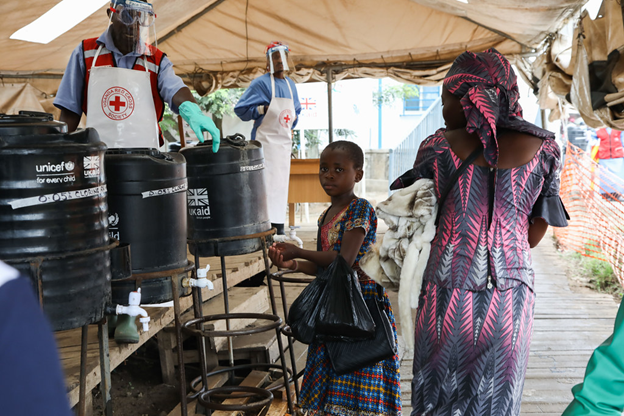
A young girl washes her hands at a checkpoint at the border between Uganda and the DRC. UK Department for International Development. CC BY 2.0
According to a report commissioned by the agency’s head, World Health Organization workers sexually abused women while in the Democratic Republic of the Congo to aid the Ebola outbreak from 2018 to 2020. The report found that 83 people participated in the abuse, and in 21 cases, those involved were confirmed to be WHO officials. The investigation started in September 2020 when The New Humanitarian and the Thomas Reuters Foundation published a report investigating abuse claims. The report found that 31 out of 50 women interviewed reported abuse and exploitation from men working for the WHO. In response, leadership in the World Health Organization ordered an independent commission to investigate. After working in Beni, one woman interviewed by the commission stated, “To get ahead in the job, you had to have sex … Everyone had sex in exchange for something. It was very common.” In addition, women reported that they were sexually harrassed and faced exploitation in order to keep their jobs, get paid or get a promotion. In some cases women were dismissed from their jobs when they refused to have sex with supervisors.
The commission established that the majority of the victims were already vulnerable because of precarious social and economic status, and women with more education and economic power were less vulnerable to abuse. The report found that there was a “systematic tendency to reject all reports of sexual exploitation and abuse unless they were made in writing”. While the WHO has training in place to prevent sexual abuse, the report found that training for employees did not happen until November 2019, months after the outbreak had been declared an emergency. Only 371 out of 2,800 workers attended the training. Additionally, men make up the vast majority of employees during the crisis, averaging 73.4% overall. The report cites that men held 77.49% of leadership positions and 91.52% of operations support and logistic positions.
The WHO was not the only organization accused of abuse, The New Humanitarian’s investigation found that there were allegations against workers at World Vision, Unicef and Alima, among others. Additionally, the investigation found that underreporting was prevalent in these cases, with one woman stating, “Why would you even ask if I reported it?” The New Humanitarian found that many women were unaware of how to report abuse or exploitation at all. Most aid agencies claimed they had received no reports of abuse, and the WHO stated they had received only a small number of complaints. Dr. Tedros Adhanom Ghebreyesus, the Director-General of the WHO, apologized to victims and said it was his top priority to hold perpetrators accountable during a press conference after the report’s publication.

Dana Flynn
Dana is a recent graduate from Tufts University with a degree in English. While at Tufts she enjoyed working on a campus literary magazine and reading as much as possible. Originally from the Pacific Northwest, she loves to explore and learn new things.
8 Animals Recently Declared Extinct
Anywhere from 24 to 150 animal species go extinct daily, with human activity as a primary cause. Here are eight animals that have recently gone extinct.
Many animal species have recently gone extinct at the hands of humans, which should be a wake up call about how our actions can harm wildlife and the environment. Learn about these eight recently extinct animals to see what you can do to help.
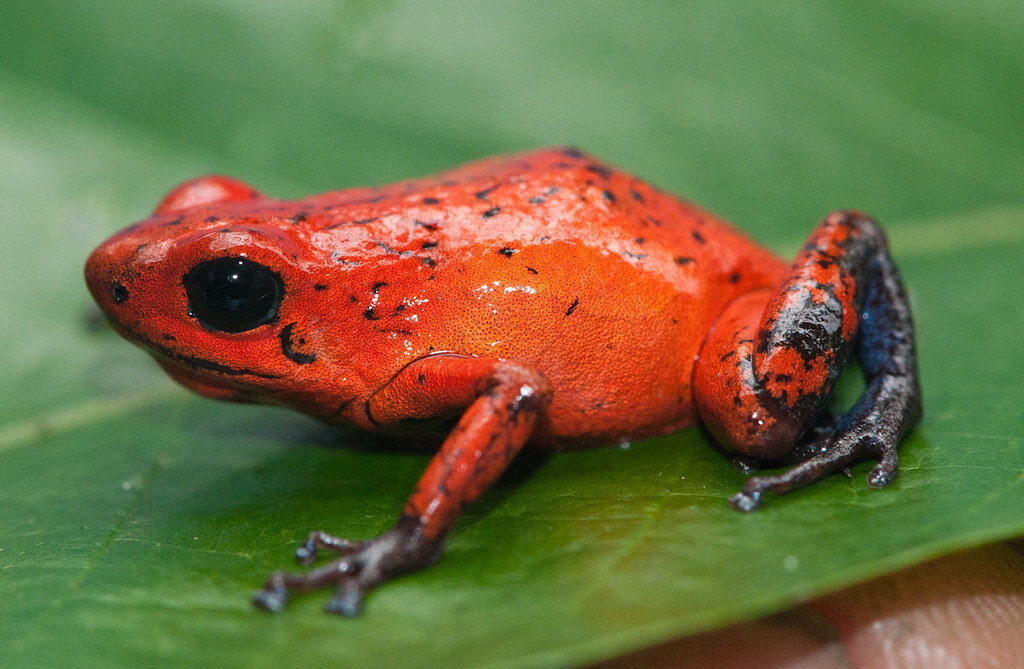
Poison Arrow Frog (Dendrobatidae). Jerry Kirkhart. CC BY 2.0.
1) Splendid Poison Frog
The IUCN added the splendid poison frog to the Red List of Endangered Species in 2004 and officially declared the species extinct in 2020, making it one of the most recently extinct species on the planet. These frogs are often referred to as poison arrow or poison dart frogs, and they are the brightest colored frogs in the world. Splendid poison frogs’ diets cause them to secrete toxins from their skin, and their bright colors warn predators of their toxicity. While the species lived in the humid lowlands and forests of western Panama, deforestation and habitat degradation severely harmed these areas and threatened the frogs. Human invasion such as with logging and construction in the area decreased the species’ population significantly.
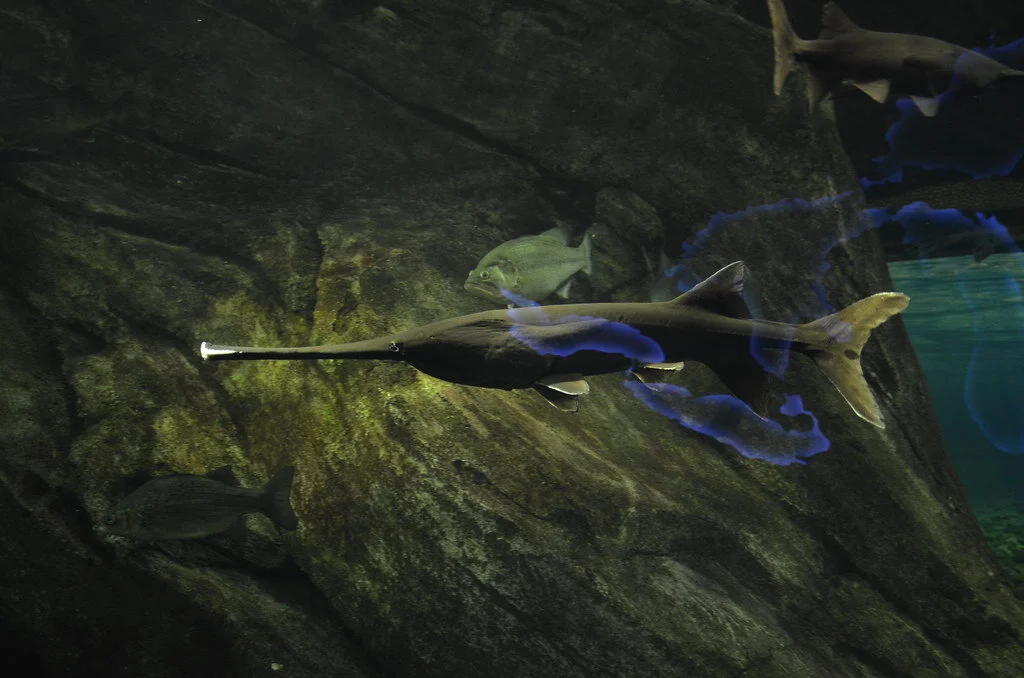
2) Chinese paddlefish
Like the baiji dolphin, the Chinese paddlefish (also known as the Chinese swordfish) was most commonly found in the Yangtze River and was one of the largest freshwater fish in the world. This ancient fish species has lived since the Lower Jurassic period and survived the mass extinction that killed off the dinosaurs and many reptiles. Yet, the biggest threat to their existence was human activities. In the 1970s and 80s, overfishing and construction severely decreased the species’ population size. By 1993, this disruption caused the fish to become functionally extinct, which meant that the species lacked the numbers to meaningfully reproduce. The species has not been spotted since 2003, and it was officially declared extinct in 2020.
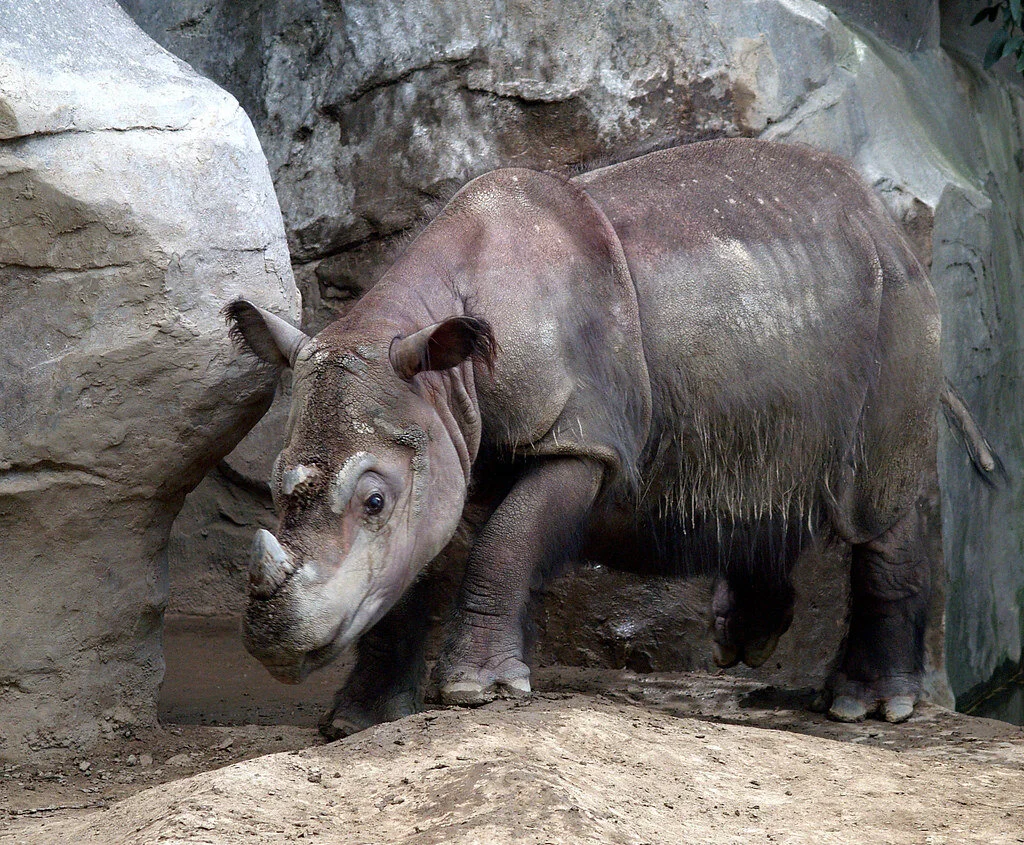
Sumatran rhino. David Ellis. CC BY-NC-ND 2.0.
3) Sumatran Rhino
Sumatran rhinos—also known as Asian Two-Horned Rhinos—are the smallest and most endangered rhino species in the world. They generally live for between 35 and 40 years, and their habitat is the dense tropical forests mainly on the Indonesian island of Sumatra. Due to poaching, the species’ numbers have decreased more than 70% over the last 20 years. The Sumatran rhino was officially declared extinct in mainland Malaysia in 2015 and in Malaysian Borneo in 2019. The last Sumatran rhino died in 2019.
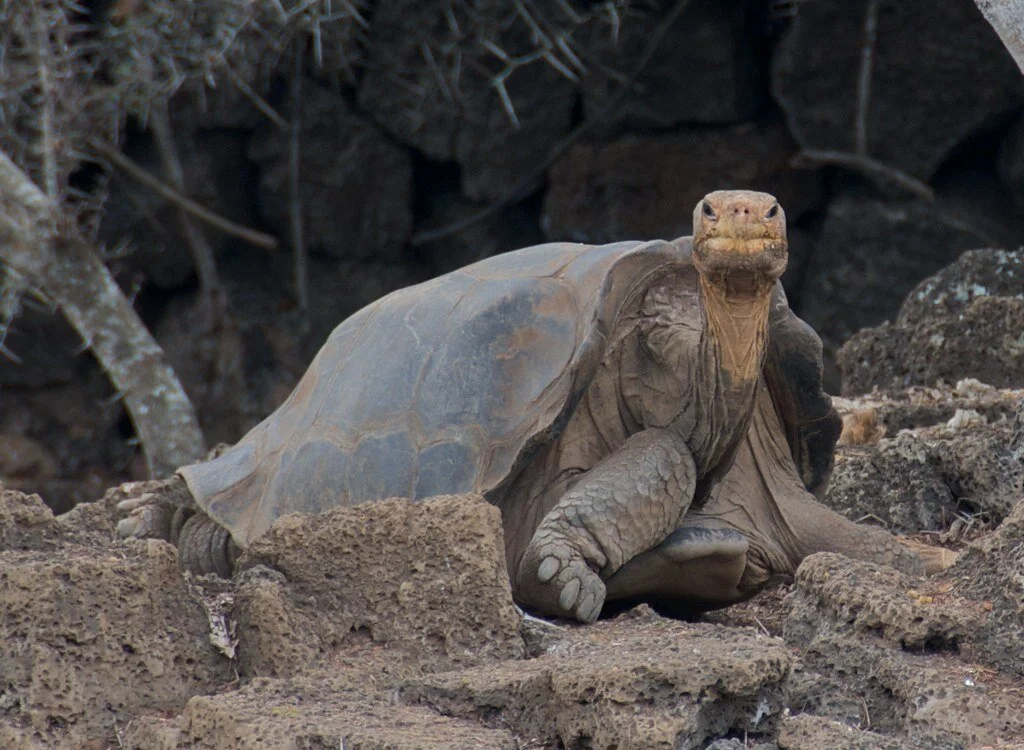
4) Pinta giant tortoise
In 2012, “Lonesome George,” the world-famous tortoise, passed away at the estimated age of 100 years. George was the last remaining land tortoise from Pinta Island, a northern island in the Galapagos, and lived at the Charles Darwin Research Station since he was found in 1971. Most of his species went extinct because they were used as an onboard food source for 19th-century whalers, as well as due to habitat destruction. The Galapagos National Park searched for a mate for George for over three decades to try to save the Pinta subspecies, but they could not find one. When George passed away in 2012, the Pinta subspecies passed with him.
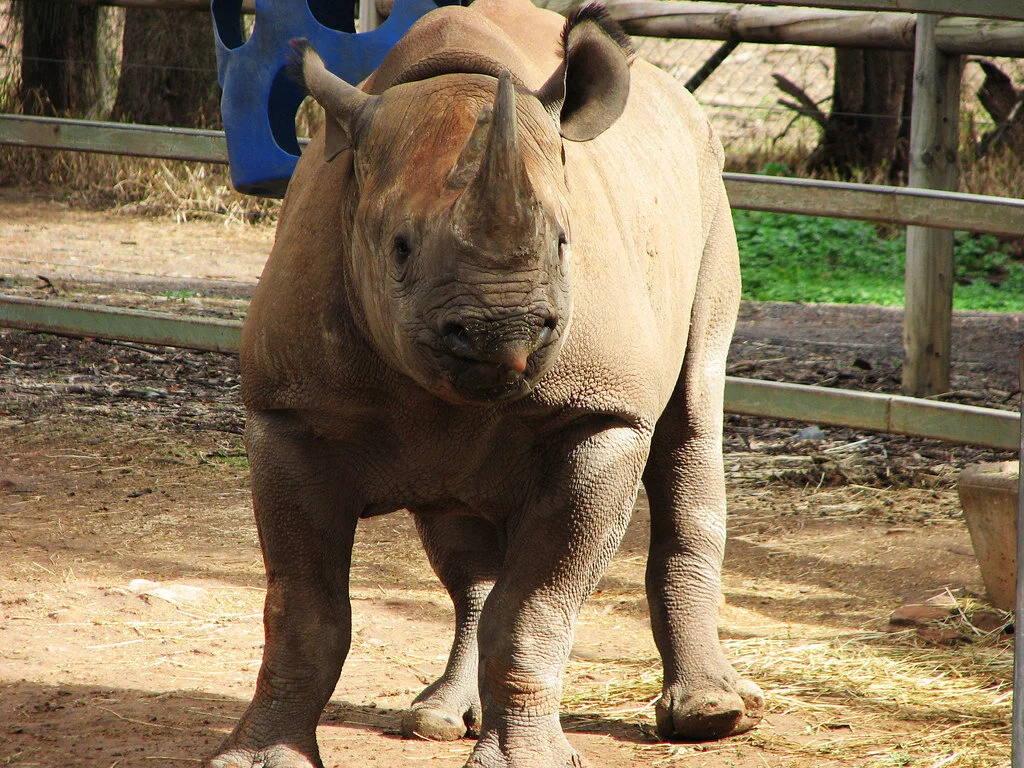
Black rhino. Corrie Barklimore. CC BY 2.0.
5) Western black rhino
The western black rhino, which was the most uncommon of the black rhino subspecies, went extinct in 2011. In the past, the species had a large range across central and western Africa, but it was not able to survive in the 20th century. Hunting for sport quickly decreased rhino populations, and industrial agriculture cleared rhino habitats to make fields and settlements. In addition, between 1960 and 1995, 98% of black rhinos were killed by poachers. By 1980, the western black rhino’s range had shrunk to only two countries: Cameroon and Chad. The species’ population had fallen to about 10 rhinos by 1997. Due to this, the International Union for Conservation of Nature added the species to the critically endangered species list in 2008, and declared them extinct in 2011.
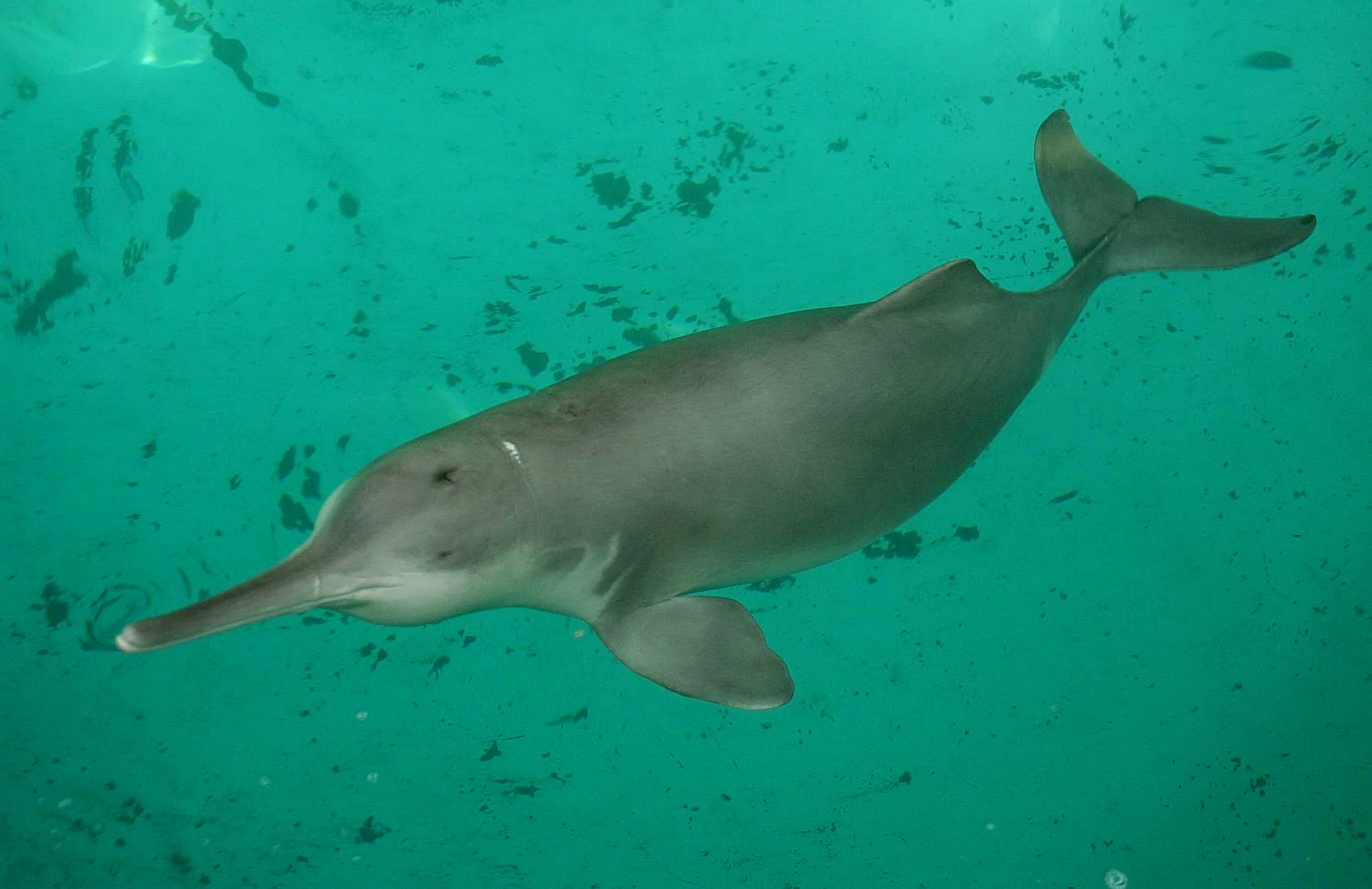
Baiji, Lipotes vexillifer. CC BY-SA 4.0
6) Baiji
Commonly referred to as the Yangtze River dolphin, Baiji is the first dolphin species to become extinct because of human activity. The Yangtze River was the Baiji’s home for 20 million years, and it only took humans 50 years to completely wipe them out. The Baiji’s ability to communicate, navigate, avoid danger and find food became very challenging as the river became noisier and noisier due to humans. In 2006, researchers embarked on a six-week journey on the river for over 2,000 miles to search for the Baiji, but they were not able to detect any existing dolphins. They were declared extinct in 2007.
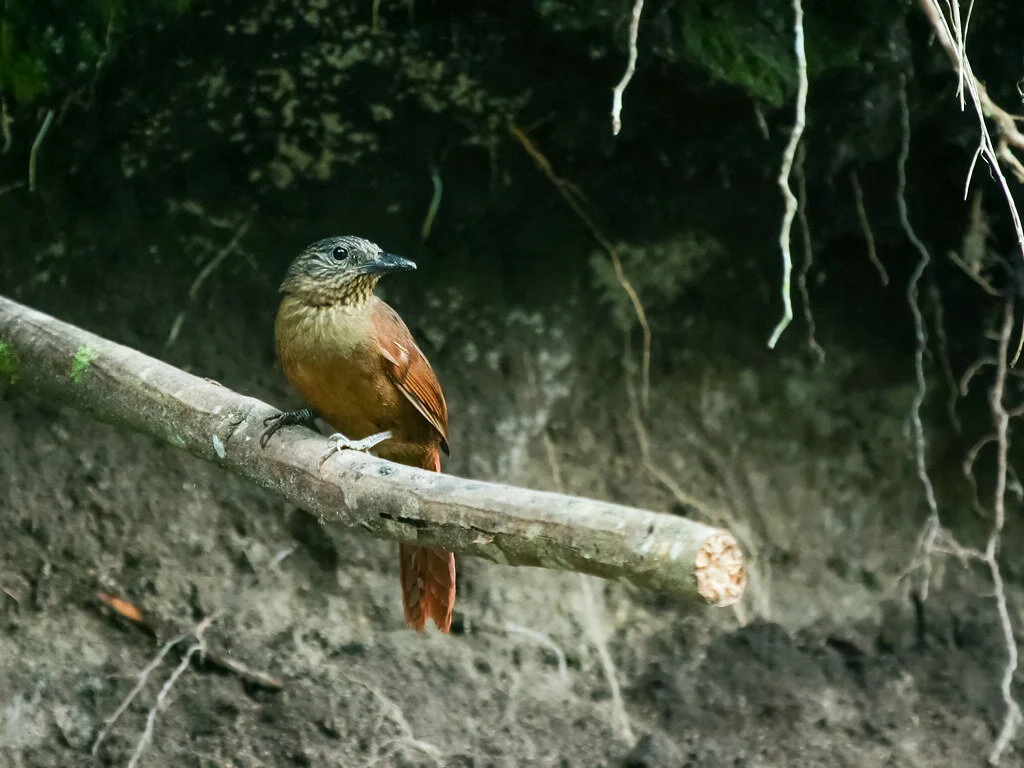
Treehunter. Nick Athanas. CC BY-NC-SA 2.0.
7) Cryptic treehunter
There have been no records of the cryptic treehunter since 2007, mainly due to extensive habitat loss in its region, Brazil. Cryptic treehunters were usually found in grasslands, woodlands and humid forests. Logging and conversion of forest to sugarcane plantations and pastureland was a major reason for the species’ decline. Some scientists believe that the species has not completely vanished due to their incredible hiding abilities, but since one has not been seen since 2007, it is unlikely.
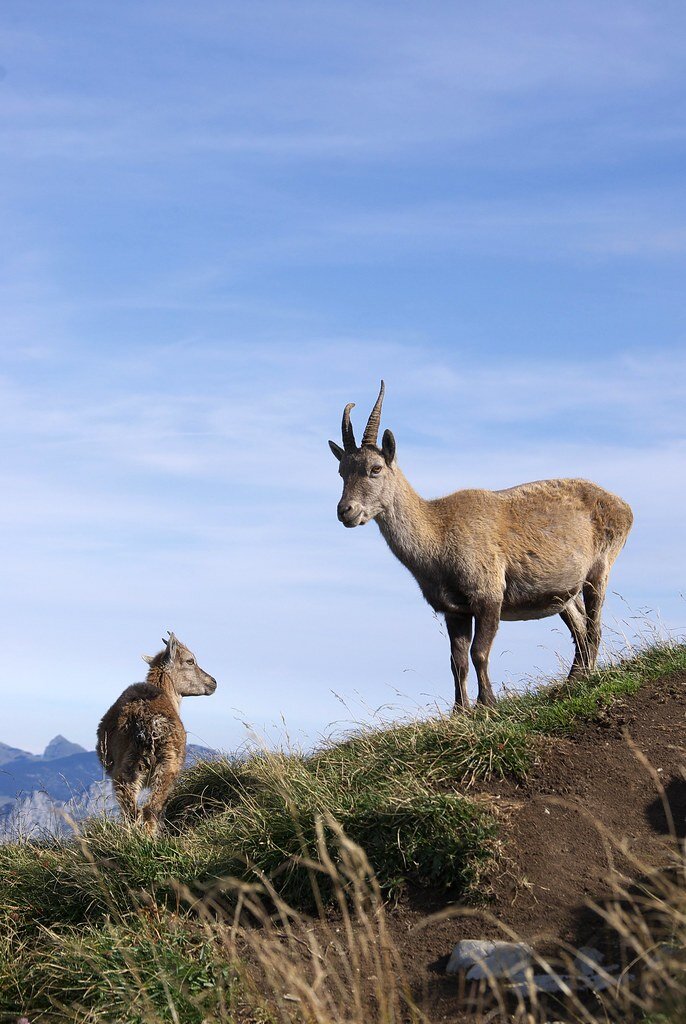
Bouquetin—the French name for Pyrenean ibex. Jean-Raphaël Guillaumin. CC BY-SA 2.0.
8) Pyrenean ibex
Once a large population which roamed across France and Spain, the Pyrenean ibex is one of two subspecies of the Spanish ibex that was declared extinct in 2000. The last Pyrenean ibex died in January of 2000 when a falling tree killed her. After she died, scientists took skin cells from her ear and preserved them in liquid nitrogen. In 2003, her DNA was cloned into a new ibex, becoming the first species to be “unextinct.” However, the clone died minutes after it was created due to lung issues. Scientists suspect that the species went extinct due to poaching, disease and competition for food.

Isabelle Durso
Isabelle is an undergraduate student at Boston University currently on campus in Boston. She is double majoring in Journalism and Film & Television, and she is interested in being a travel writer and writing human-interest stories around the world. Isabelle loves to explore and experience new cultures, and she hopes to share other people's stories through her writing. In the future, she intends to keep writing journalistic articles as well as creative screenplays.
U.S. House Passes Bill Repealing Prevention of Abortion Abroad
A new U.S. State Department spending bill includes provisions that expand global abortion rights. The bill passed in the House on July 28 and requires Senate approval by Sept. 30.

On July 28, the U.S. House of Representatives passed a Department of State, foreign operations and related programs budget bill for the 2022 fiscal year. If the bill passes in the Senate and becomes law, it will have major implications for the global health industry.
The bill is the first of its type since 1973 to exclude language from the Helms Amendment, which blocks U.S. foreign aid money from funding health services abroad related to abortions.
The Helms Amendment’s language specifically prevents U.S. funds from paying for abortions as a method of family planning—yet foreign aid organizations have interpreted the amendment much more restrictively, to ban funding for abortions in other cases, such as rape, incest and life-threatening pregnancies. USAID has used the amendment to enforce a ban on the purchase of equipment and drugs to aid in post-abortion care.
Around 73 million abortions occur annually worldwide, even in countries where access to abortions is restricted. In fact, data shows that abortion rates are often higher in countries where abortion is restricted than in those where abortion is legal. Abortion restrictions, which the Helms Amendment helps to maintain, do not mean that pregnant people are not getting abortions—they just mean that access to safe abortions is severely limited.
The World Health Organization defines an unsafe abortion as one carried out by a person lacking the necessary skills or in an environment that does not meet minimal medical standards. Out of the 73 million annual abortions, nearly 35 million are estimated to occur in unsafe conditions. Unsafe abortions account for 8% of maternal mortality worldwide; each year about 47,000 women die from unsafe abortions.
Unsafe abortions occur overwhelmingly in developing countries, where U.S. funding could be crucial to removing obstacles for safe abortions.
The recent bill also permanently repealed the 1984 Global Gag Rule, which prevented foreign non-governmental organizations that were receiving U.S. funding from providing assistance on anything related to abortions, including information, referrals, or services. The Global Gag Rule banned such foreign organizations from providing abortion-related assistance even if they used their own, non-U.S. funds.
A 2019 study found that the Global Gag Rule effectively prevented NGOs from providing functional reproductive health services. The rule caused NGOs to reduce sexual and reproductive health and pregnancy counseling and stop providing information on legal abortion services. The Global Gag Rule also prevents NGOs from involvement in pro-abortion advocacy.
The U.S. is the largest funder and implementer of global health worldwide, but for nearly 50 years, the Helms Amendment and the Global Gag Rule have meant that a large portion of the healthcare sector misses out on this funding. Rather than preventing abortions, this legislation has served as further obstacles for people seeking safe abortions. Therefore, their exclusion from the most recent U.S. foreign spending budget bill is monumental.
In addition to the provisions regarding the Helms Amendment and Global Gag Rule, the bill allocated $760 million for family planning and reproductive health services, an $185 million increase from last year’s bill.
The spending bill passed in the House by a slim majority of 217 to 212. To become law, the bill must pass the Senate in the same form. The final 2022 fiscal year budget needs to be approved by Sept. 30.
If the bill passes the Senate without mention of the Helms Amendment and with the inclusion of the Global Gag Rule repeal, it will become a landmark piece of legislation for sexual and reproductive health rights around the world.
To Get Involved:
For more information about global reproductive health policy and how you can support initiatives to make safe abortions accessible, visit the Guttmacher Institute here or PAI here.

Rachel Lynch
Rachel is a student at Sarah Lawrence College in Bronxville, NY currently taking a semester off. She plans to study Writing and Child Development. Rachel loves to travel and is inspired by the places she’s been and everywhere she wants to go. She hopes to educate people on social justice issues and the history and culture of travel destinations through her writing.
Wildfires Burn Through Turkey as Climate Crisis Worsens
Hundreds of wildfires have blazed across Turkey as the Mediterranean experiences extreme heat this summer. At least eight people have died in the fires and thousands have fled as firefighters and residents struggle to extinguish the fires.
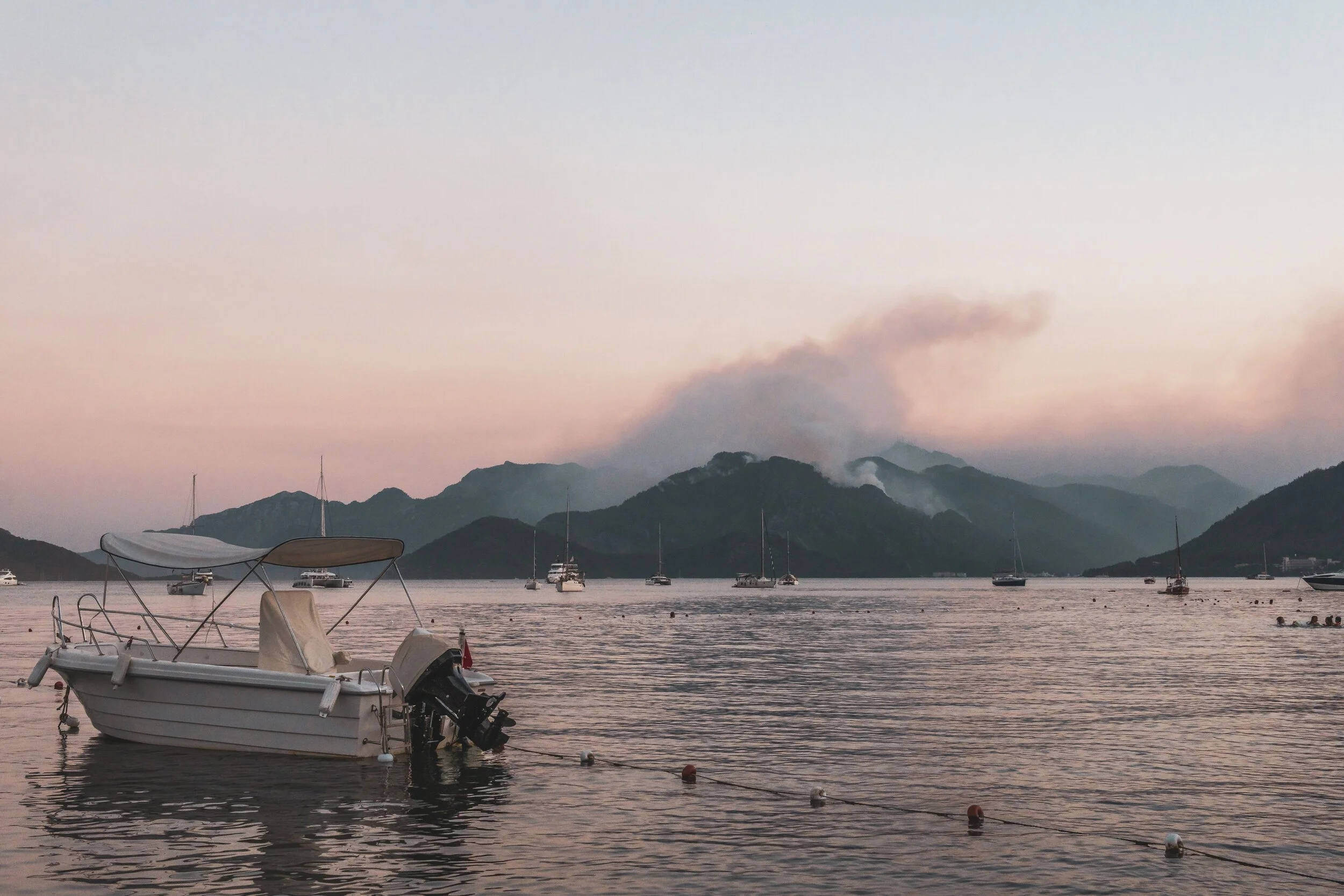
Mountains in the smoke of fires in Turkey, on the Turkish coast in Marmaris, 2021. Photo by Vitolda Klein on Unsplash
Wildfires have been spreading across Turkey since July 28, terrorizing residents, hospitalizing dozens, and killing at least eight people and more than 2,000 farm animals. Around 200 wildfires have burned through more than 40 Turkish provinces, destroying more than 500 square miles of forest, in addition to villages, homes and farmland. Thousands have been forced to leave their shelter and livestock behind just to make it out alive.
The fires started in Manavgat in the Antalya province, and the majority have broken out along the coasts of the Mediterranean and Aegean Sea. Antalya and Mulga, among other beach districts, have been hit the hardest, with a total of 21 wildfires and 14 wildfires respectively, more than double the number of wildfires in other districts. While popular tourist destination Antalya is accustomed to averaging near the mid-30s Celsius over the summer, the district has experienced highs of more than 40 degrees Celsius this summer. Cizre, a southeastern Turkish town, broke the country’s 60-year-old temperature and set the new record at 49.1 degrees Celsius on July 20. Experts believe the wildfires in Turkey and the Mediterranean may have been caused by extreme heat that hailed from North Africa. High winds—around 31 mph—have also facilitated these fires by making them difficult to extinguish and easier to spread.
Turkey is not alone in this, as southern European nations including Greece, Spain, Italy and Lebanon have also been affected by blazing wildfires and soaring temperatures over the past few weeks. However, Turkey has experienced the bulk of the destruction and the worst wildfires in the nation in decades. President Recep Tayyip Erdogan has been criticized for failing to fight the inferno and for the nation’s lack of firefighting planes. Meanwhile, government officials have attempted to offset the blame from Erdogan by accusing political opponents and saboteurs of igniting the fires to get international intervention and undermine the current government. Some help has come in the form of international assistance from the Middle East, Europe and some of Turkey’s neighbors, such as Azerbaijan and Iran, , but many residents were still left to fight the fires in their backyards alone.
Politics and conspiracies aside, Turkey’s recent wildfires are representative of a larger trend of worsening climate change and an increase in extreme weather events around the world. While the majority of wildfires can be attributed to human activities such as lighting campfires and throwing lit cigarettes on the ground, severe heat and drought make forests drier and more prone to catching on fire. Additionally, the average wildfire season has increased by three and a half months due to winter snowpacks melting about a month earlier than they did in the past. Scientists are comfortable linking these environmental circumstances—and Turkey’s recent extreme weather conditions in particular—to climate change, which is accelerating “dangerously close” to irreversible change.
As one of six countries that has not ratified the Paris Climate Agreement, Turkey’s commitment to climate policies is weaker in comparison to that of other nations. Without the necessary fire-combatting equipment, including a usable fleet of water-dropping planes, Turkey is struggling to overcome this natural disaster. Despite the government and its supporters’ claims that Turkey can fight this alone, many residents continue to ask for increased international assistance.
Get Involved
While Russia, Ukraine and other nations send tangible assistance to Turkey, there are ways for individuals to help as well. The World Wide Fund for Nature works to reduce human impact on the environment and preserve wildlife around the world, and is constantly looking for donors to monetarily contribute to the fight against climate change.
More specifically, Turkish Philanthropy Funds has set up a Wildlife Relief Fund to supply Turkey with the equipment necessary to rebuild and recover affected communities. Individual GoFundMe pages are also circulating across social media to facilitate Turkey's relief efforts.
To not only help Turkey but to help push forward the climate agenda in general, individuals can contribute by regulating and lowering their carbon footprint and voting for officials who will prioritize the environment.

Mia Khatib
Mia is a rising senior at Boston University majoring in journalism and minoring in international relations. As a Palestinian-American, Mia is passionate about amplifying the voices of marginalized communities and is interested in investigative and data-driven journalism. She hopes to start out as a breaking news reporter and one day earn a position as editor of a major publication.
VIDEO: Islands in the Sky
Located 200 miles northwest of Scotland, the Faroe Islands is a self-governing territory officially part of the Kingdom of Denmark. The archipelago consists of 18 small islands connected by bridges, road tunnels, ferries and causeways. This video shows the beauty of these tiny islands, which travelers often overlook due to their remote location and small size. However, they boast steep seaside cliffs, secluded coves and deep valleys. The film captures the islands at all times of day, from stormy mornings to rich sunsets.
Deforestation in Myanmar Amid Political Unrest
While deforestation has been a major issue in Myanmar for decades, recent data shows a surge in deforestation that could be linked to the nation’s recent coup and ongoing internal conflict.
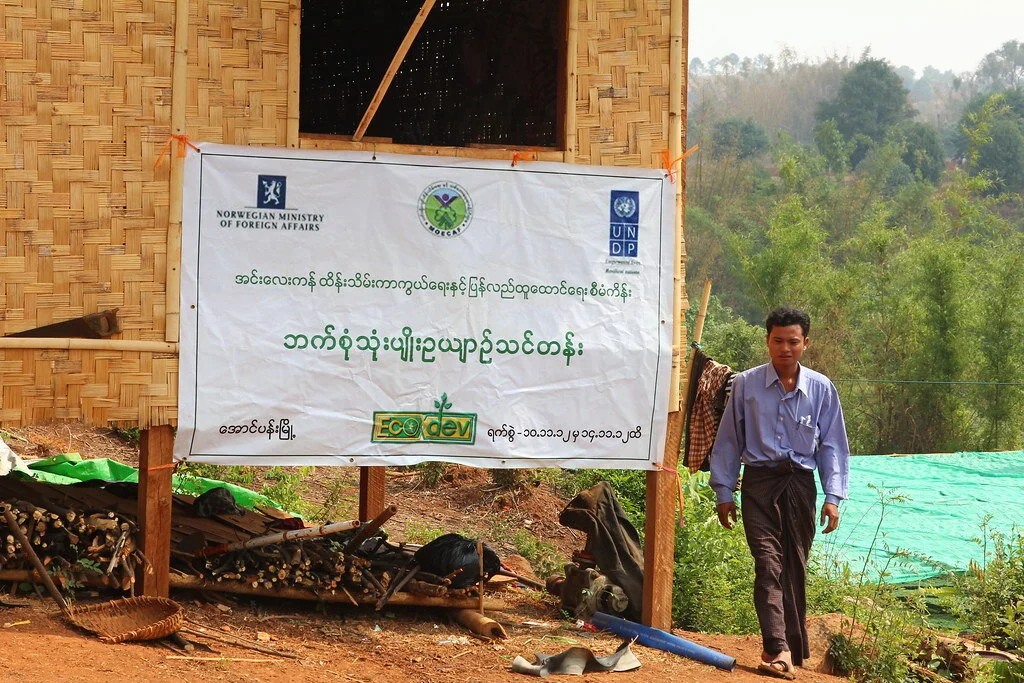
Environment and Food Security in Myanmar. United Nations Development Programme. CC BY-NC-ND 2.0.
On February 1, a coup took place in Myanmar. The Tatmadaw, Myanmar’s military, overthrew many democratically elected members of the National League for Democracy , the ruling party in Myanmar following the November 2020 general elections. After the coup, the Tatmadaw enforced a year-long state of emergency, transferring power from the elected democratic authorities to the Commander-in-Chief of Defense Services Min Aung Hlaing. The military assumed control of the nation and invalidated the November vote on the premise that the elections were fraudulent; however, many question the legitimacy of this premise. Some believe that this reasoning was a cover for the Tatmadaw to step in because many members of its party lost in the election.
Interestingly, the coup took place the day before the Parliament of Myanmar swore in the newly elected members from the November 2020 election, preventing the election. Unsurprisingly, residents did not welcome the control of the Tatmadaw with open arms—many protested the coup and experienced grave, and sometimes deadly, consequences. Citizens who spoke out against the Tatmadaw authorities were punished, as freedom of speech and the press are not guaranteed by law in Myanmar. Since the conflict began, over 900 civilians have been killed by military or police forces and at least 5,000 people have been arrested, charged or sentenced. Additionally, three prominent members of the NLD have died while under police custody in March.
While this political situation in Myanmar is new, its environmental situation is not. When the nation achieved its independence from the British in 1948, Myanmar, previously known as Burma, had a landscape that was 70 percent forest. In 2014, there was around 48 percent forest cover, as the nation lost around 19 percent of its forests between 1990 and 2010. Although Myanmar’s deforestation rate is less than some of its neighbors, including Indonesia and Vietnam, deforestation is still a major concern in the region. Deforestation in Myanmar is often attributed to three major factors: unsustainable and illegal logging, unresolved land disputes and agricultural development. Despite deforestation, Myanmar has the largest tropical forest in mainland Southeast Asia that is home to more than 80 endemic species. Despite the size of Myanmar’s forests, only around six percent of its land is protected by law while the rest is susceptible to deforestation.
Myanmar’s Tanintharyi region exemplifies the consequences deforestation can have on Myanmar’s wildlife. Satellite data from the University of Maryland shows that deforestation is increasing in the nation, especially in the Mergui and Kawthoung districts of the Tanintharyi. According to UMD, Mergui and Kawthoung lost around 15 percent of their tree cover between 2001 and 2019, and recent data from UMD’s Global Analysis and Discovery lab suggest that this number may be higher in 2020 and beyond.
Gurney’s pittas, small birds with a stubby tail, live in the area between Mergui and Kawthoung in the Tanintharyi. These birds were thought to be extinct until they were rediscovered in the 80s. According to the International Union for Conservation of Nature, the Gurney’s pitta is a critically endangered species with only between 1,000 and 2,500 remaining in 2019, a drastic decline from the 10,300 to 17,000 that were alive 15 years earlier. Habitat loss is the reason behind this decline.
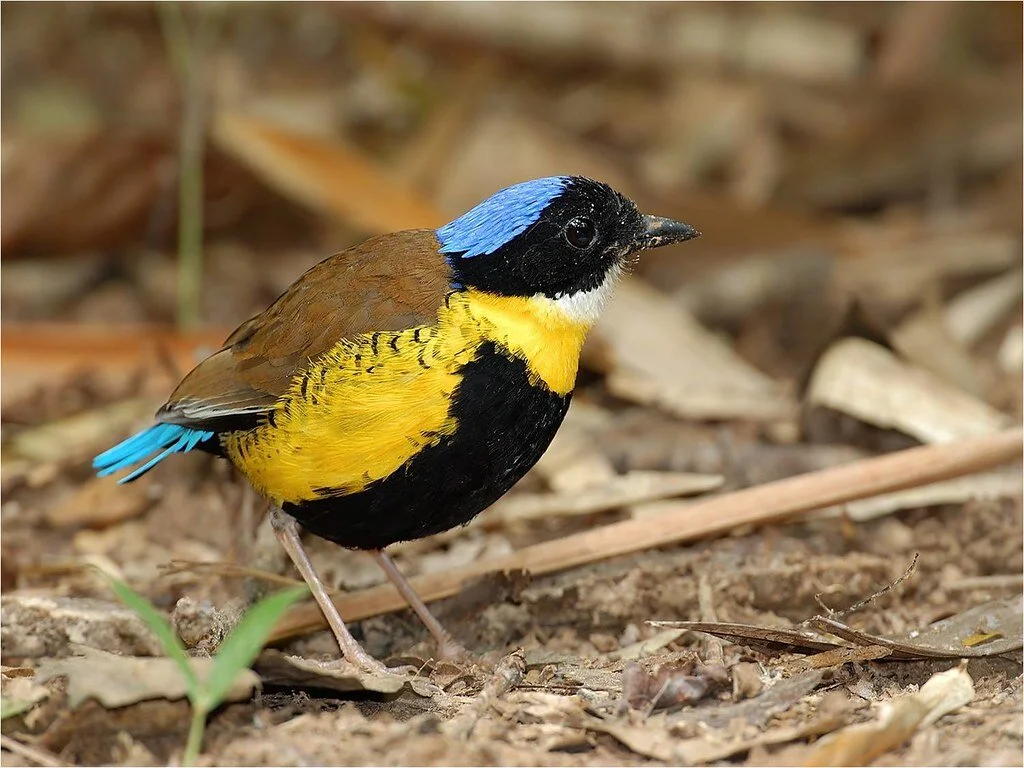
Gurney pitta. darwin_initiative. CC BY-NC-SA 2.0.
Beyond threatening extinction for wildlife that has been around for decades, deforestation in Myanmar is also threatening the advancement of science in studying biodiversity. New species have recently been discovered in the Tanintharyi region. In 2015 and 2016, researchers discovered two species of geckos, genus Cyrtodactylus, that are known for their bent toes. In 2019, another group of researchers discovered an Asian rock gecko known as Cnemaspis tanintharyi. Some scientists are worried that continued deforestation in the Tanintharyi region could mean the extinction of undiscovered and recently discovered species, in addition to well-known species.
Myanmar’s political climate has implications for its environmental situation. With Myanmar’s 70-year-long and ongoing internal conflict as well as the recent coup, displaced individuals have turned to its forests for support. Many have taken up farming in the Tanintharyi to make a living and others have sought refuge in surrounding forests—both of which have contributed to increased deforestation in the Tanintharyi region and the decline of unique, local species.
In addition to the environmental consequences of displacement, experts speculate that the coup has opened the nation to increased illegal deforestation as international oversight and trade partnerships deteriorate. With other nations increasing sanctions against Myanmar and refusing to cooperate with the country because of the coup, Myanmar is more susceptible to illegal deforestation and the selling of illegally obtained wood to foreign partners who neglect to question its legitimacy. Satellite data by Planet Labs, Google Earth and Global Forest Watch show that large patches of forest have been removed between January and April of this year. Despite this incriminating data, there is no clear evidence that directly links the recent deforestation to illegal activities conducted by the Tatmadaw.

Mia Khatib
Mia is a rising senior at Boston University majoring in journalism and minoring in international relations. As a Palestinian-American, Mia is passionate about amplifying the voices of marginalized communities and is interested in investigative and data-driven journalism. She hopes to start out as a breaking news reporter and one day earn a position as editor of a major publication.
Water Protests Erupt in the Middle East
Droughts have caused agricultural collapse and water shortages across several Middle Eastern countries, with recent protests erupting, calling for governments to take action.
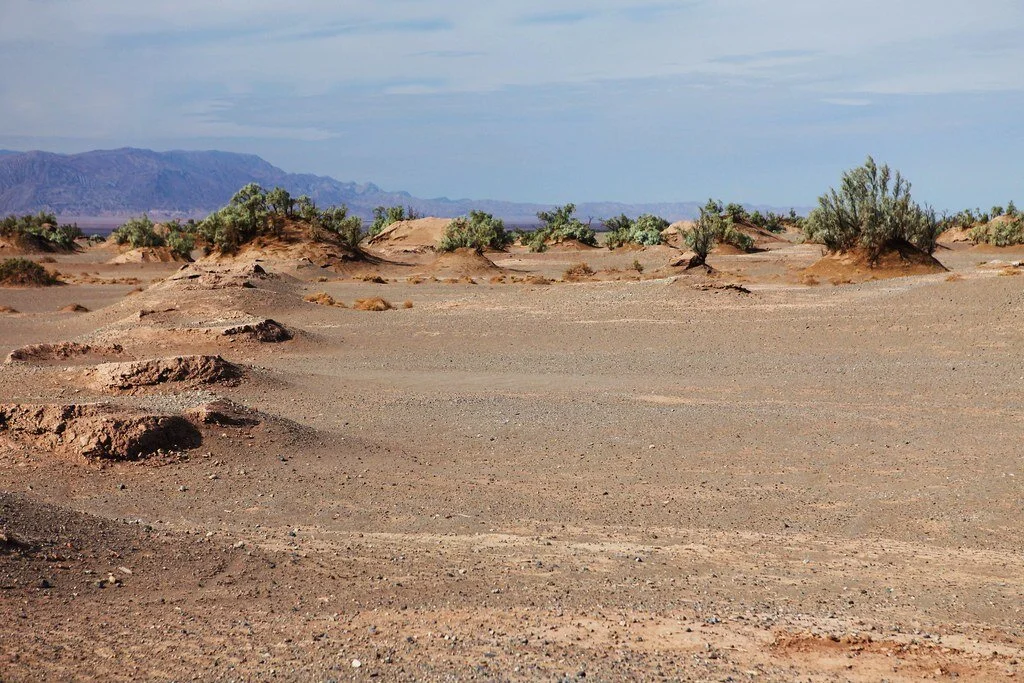
The recent protests in Iran over water scarcity were a part of unrest and rebellion across the entire Middle East after droughts caused agricultural collapse and water shortages in several countries.
The protests began in the oil-rich southwestern province of Khuzestan after accusations that the Iranian government is diverting water to drill for oil. At least eight protestors were killed in different cities.
Climate change is partly responsible for the protests, due to droughts and sandstorms but years of government inefficiency have also largely contributed to the problem. Many development projects put forth in Khuzestan over the years have caused environmental damage and water shortages, including the construction of hydroelectric dams, water transfers to neighboring provinces and irrigation schemes that have only fed agriculture.
According to Khuzestan lawmaker Mojtaba Youssefi, more than 700 villages in the province do not have drinking water and many farmers’ livestock have died of thirst.
Authorities in the area have reacted to the water protests with violence and have cut internet access.
Drought is one of the most significant drivers of conflict not just in Iran, but also everywhere in the Middle East. For example, agricultural collapse and droughts caused many rural Syrian families to migrate to cities and fight for resources and jobs.
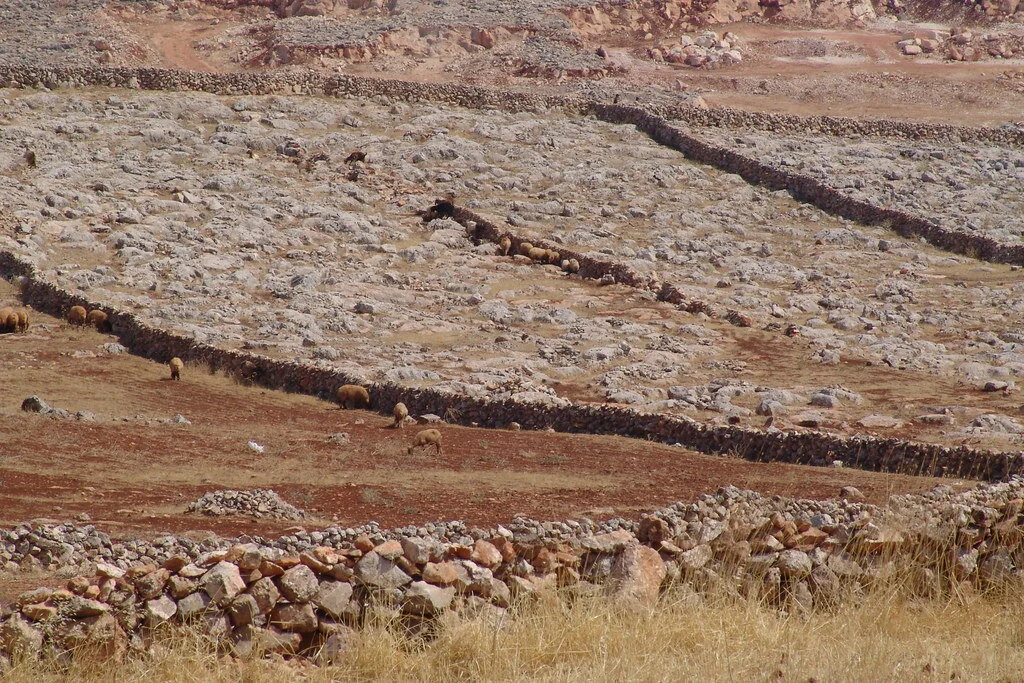
The northern Syrian countryside in high summer. Charles Roffey. CC BY-NC-SA 2.0.
Droughts have been a historical constant in the Middle East, but water shortages are becoming even more intense and are present for greater lengths of time due to longer dry seasons and higher temperatures which are driven by global warming.
Yet, politicians and government corruption are also to blame for the droughts. Water shortages only continue to point toward unrest and rebellion, prolonging the social and political trouble that climate change has already caused. Also, the ineffectiveness of water dams in Iraq have caused acute and chronic water shortages there as well.
To make up for these water shortages, farmers and governments are pumping huge amounts of groundwater, which risks turning fertile land into deserts. In 2015, NASA satellites mapped water losses in the region since 2002 and found that parts of Iran and Iraq had lost from 6 to 10 inches of groundwater due to human activity.
As the conflict progresses in Iran, there are risks of violence between neighboring states competing over water resources.
GET INVOLVED
The Borgen Project is a nonprofit that addresses global poverty and hunger and works towards ending them. With their project on the water crisis in the Middle East, they offer internships and volunteering opportunities as well as accept donations.
Water for People is another organization which brings water, sanitation and hygiene services to those in need. People can get involved with this nonprofit by fundraising, partnering with the company and volunteering.

Isabelle Durso
Isabelle is an undergraduate student at Boston University currently on campus in Boston. She is double majoring in Journalism and Film & Television, and she is interested in being a travel writer and writing human-interest stories around the world. Isabelle loves to explore and experience new cultures, and she hopes to share other people's stories through her writing. In the future, she intends to keep writing journalistic articles as well as creative screenplays.
Trekking Up Le Morne Brabant Mountain in Mauritius
This mountain, which serves as a symbol of hope, offers hikers a breathtaking view of Le Morne beach and remains a meaningful part of local Mauritian culture.
Read MoreThe Best Places to Rock Climb Around the World
Rock climbing has been growing in popularity over recent years. These 5 spots are just a few of the world’s most impressive outdoor rock climbing sites.
Read More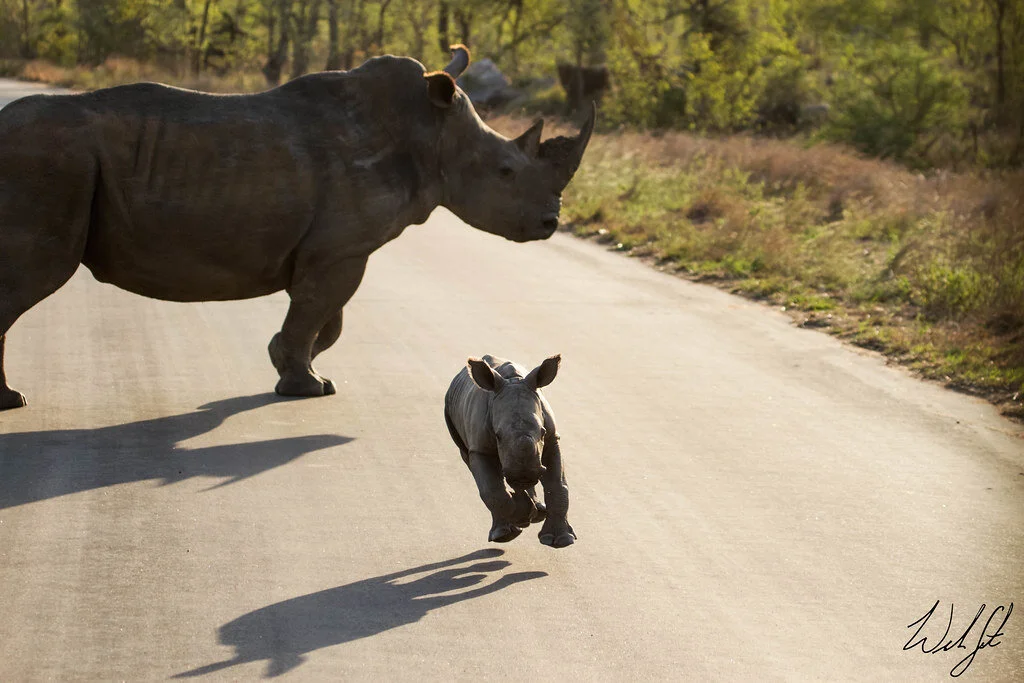
Square-lipped Rhino in Kruger National Park, South Africa. Will Sweet. CC BY 2.0
Exploring 5 South African National Parks
South Africa has 19 national parks, each with its own connections to historical and environmental treasures. National parks help preserve biodiversity by supporting the ecosystems within them, which provide sustainable energy and mitigate climate change. Not only that, but these parks help national and local economies by supporting tourism and protecting agriculture. In South Africa, the parks also highlight important historical and cultural moments.
1. Kruger National Park
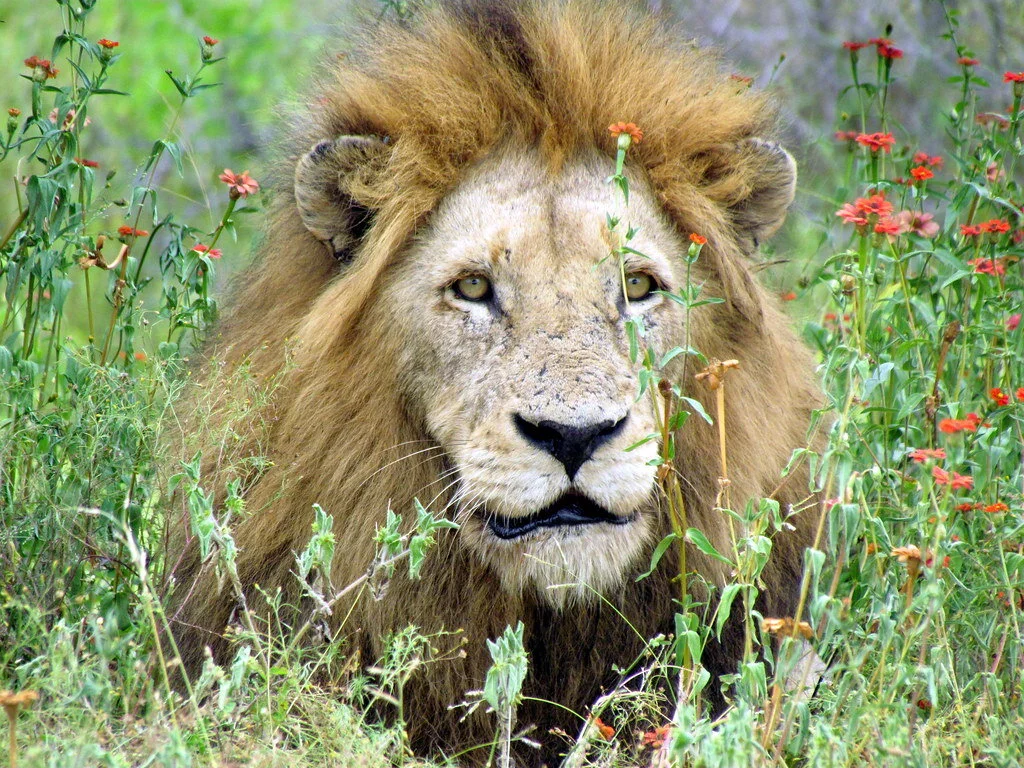
Lion at Kruger National Park. David Berkowitz. CC BY 2.0
Kruger National Park's 2 million hectares are home to unrivaled biodiversity as well as archaeological sites. Specifically, Kruger National Park contains a wide variety of species, including 336 species of trees, 49 fish, 34 amphibians, 114 reptiles, 507 birds and 147 mammals. The main attractions are “the big five:” buffalos, elephants, leopards, lions, and rhinos. Currently, 4,000 rhinos reside in Kruger Park, which is down from its 10,000 in 2010—this decrease is largely due to poaching. Kruger’s rhinos make up about 30 percent of the world’s estimated 18,000 wild rhinos still alive. Another special site to see at Kruger’s is the archeological sites like Masorini and Thulamela. During the 1800s, the Sotho-speaking BaPhalaborwa people lived in Masorini and developed an advanced industry of mining, smelting iron ore, and trading iron products. Kruger National Park has 255 recorded archaeological sites ranging from the early Stone Age (about 1 million years ago) to the Iron Age. These sites hold cultural, historical and spiritual importance to the land.
2. Golden Gate Highlands National Park
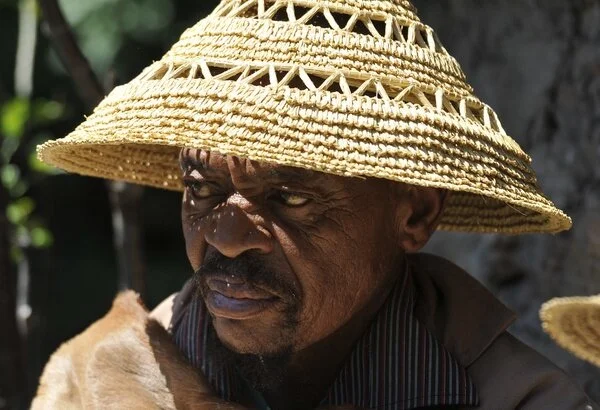
Basotho Cultural Village member. Chris G Earley. CC BY-NC-SA 2.0
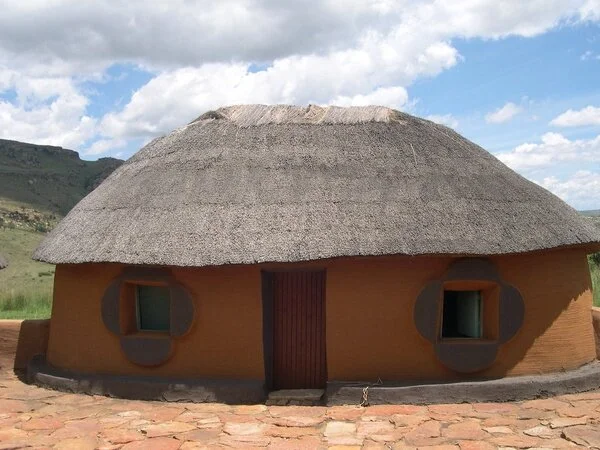
Basotho Cultural Village home. mifl68. CC BY-NC-ND 2.0
The Golden Gate Highlands National Park covers 130 square miles. The park gets its name from the sandstone cliffs that frame the valley. Amid the striking panoramic landscapes, dinosaur remains have been discovered. Five notable sites to visit in the Golden Gate Highlands National Park include Basotho Cultural Village, Vulture’s restaurant, Cathedral Cave, Clarens, and Brandwag Buttress. Basotho Cultural Village trail is a cultural route that acts as an education program, spreading awareness about the first occupants of historical sites of Qwa Qwa. A visit to the Basotho Cultural Village includes tasting the locally brewed beer and foods, enjoying traditional dances, learning how local arts and crafts are produced, and meeting with village elders. The Basotho Cultural Village is a replica of the 18th-century village and has houses replicating ones from the 16th century to the present day. However, research demonstrated that visitors had concerns about the service, facilities, and staff’s portrayal of genuine Basotho culture at the village. Nonetheless, a trip to Clarens—a small town 12 miles from Golden Gate Highlands with sandstone mountains and a picturesque town—is a great way to invest your time and money into the area.
3. Table Mountain National Park
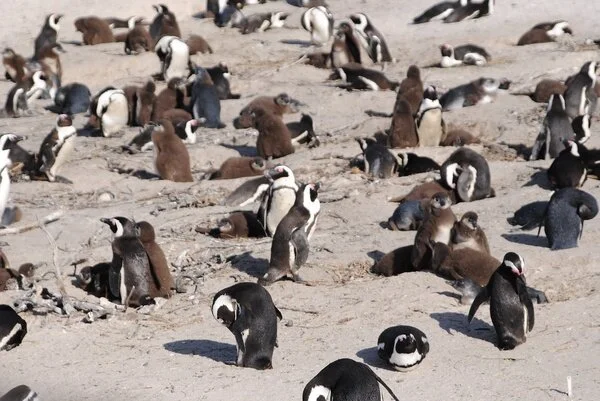
Boulders beach filled with African penguins. George M. Groutas. CC BY 2.0
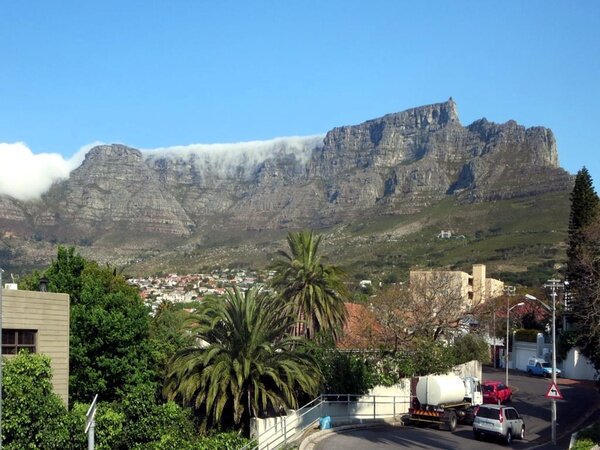
A tablecloth of clouds on Table Mountain. David Stanley. CC BY 2.0
Table Mountain National Park has mountains, beaches, forests and oceans. Within these environments are many activities to choose from: scuba diving, paragliding, mountain biking, horseback riding, surfing and much more. Also, one can reach the top of Table Mountain—which is now one of the New 7 Wonders of Nature—on the environmental education experience called Class in the Clouds. This youth educational experience takes a cable car to the top of Table Mountain where they’re taught a natural science lesson. The park focuses on protecting the land in conjunction with education. The Cape Research Centre was developed in 2008 to conduct socio-ecological research for many of the unique parks in South Africa. At TMNP, there is also the Boulders Penguin Colony, which is home to endangered African penguins. The Boulder Penguin section consists of three beaches, three boardwalks and one penguin viewing area. The decline of the African penguins is due to habitat destruction, oil spills and other marine pollution, global warming’s effect on fish stocks and fish movement, overfishing, irresponsible tourism, and domestic pets. To protect the biodiversity in the oceans at TMNP, the park created the TMNP Marine Protected Area in 2004. Although fishing is allowed in the MPA with a permit, it has six restricted areas with five “no-take” zones. The restricted zones aim to assist breeding for threatened marine life, giving the populations a chance to regenerate.
4. Addo Elephant National Park
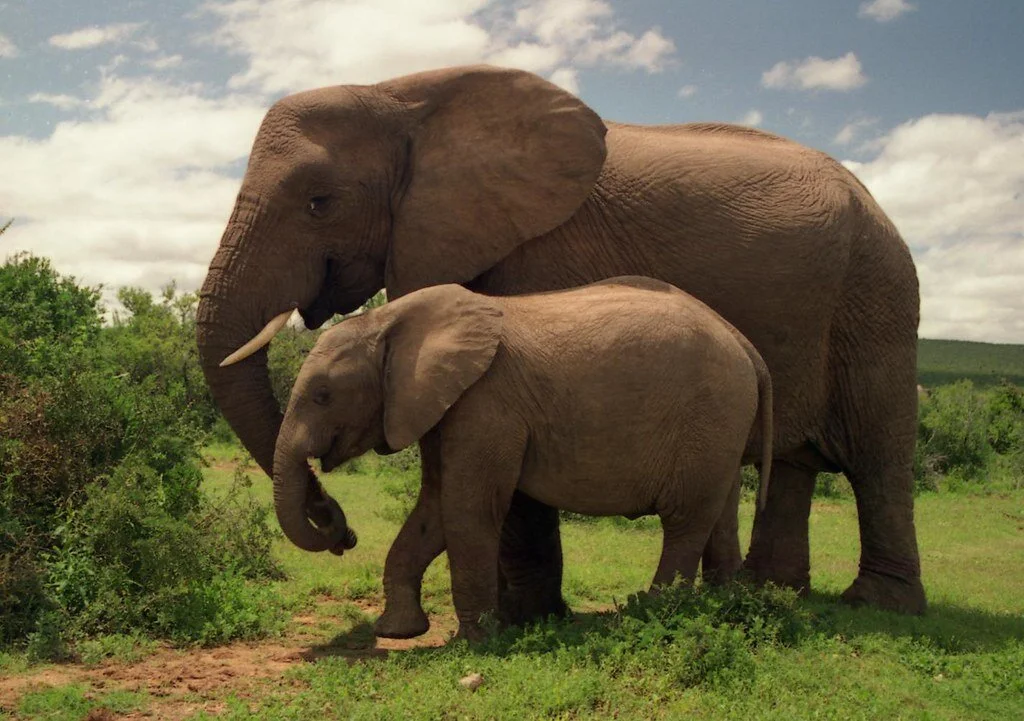
Elephants at Addo Elephant National Park. Brian Snelson. CC BY 2.0.
The Addo Elephant National Park is home to three of the 10 most endangered African animals: the lion, African elephant and African penguin. . In 2003, six lions were reintroduced to the park, and now there are 26 wild lions. Also, the park currently has over 600 elephants, with an average population increase of 5% each year. In the early part of the 20th century, it is estimated that 3.5 million African elephants roamed wild in Africa— now there are only 415,000. Habitat destruction and poaching are driving the decline of these species. The Addo Elephant National Park partners with the Imbewu project to help educate local youths about conservation and culture through experience, connecting present and future generations emotionally to the Earth. Additionally, Addo Elephant Park strives to connect with local communities. Within the park, the Eyethu Hop-on Guides are people from the adjacent communities that provide guide services for visitors in their own vehicles. This program is meant to create mutually beneficial relationships with the communities surrounding the park.
5. Mountain Zebra National Park
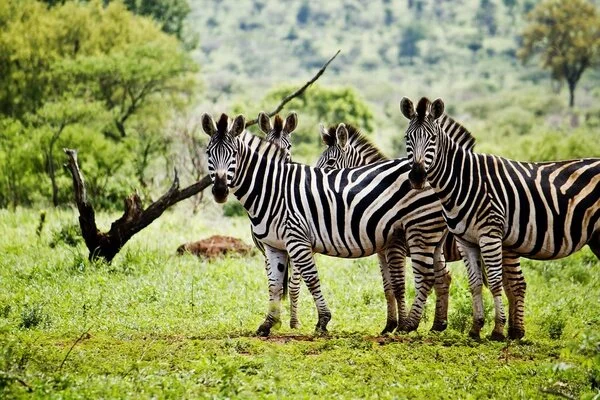
Mountain Zebras drinking water at Mountain Zebra National Park. Clive Reid. CC BY-NC-ND 2.0
The Mountain Zebra National Park was established in 1937 to protect the endangered Mountain Zebra, which was almost hunted to extinction in the 1800s. The 28,412 hectares of the MZNP are a part of a transitional area between Grassland, Nama Karoo and Albany Thicket biomes. As a result, the conservation of MZNP is essential because it protects ecological processes in addition to biodiversity. Today, the MZNP has achieved a population of over 700 Mountain Zebras, compared to 55 Mountain Zebras in 1964. Culturally, the MZNP contains over 30 sites with pottery and stone artifacts dating back to 14,000 to 10,000 years ago. Specifically, there is evidence left by the San people 300 years ago in at least three rock shelters containing rock art in the park. The paintings show antelopes, baboons, large cats and human figures. Visitors with a Park guide can see the painting sites through a protective fence. Also, one can find remnants of an etched chess board made by English colonizer soldiers at the park. The MZNP continues to grow in size and aims to expand to the west to join with the Camdeboo National Park.
RELATED CONTENT:

Kyla Denisevich
Kyla is an upcoming senior at Boston University, and is majoring in Journalism with a minor in Anthropology. She writes articles for the Daily Free Press at BU and a local paper in Malden, Massachusetts called Urban Media Arts. Pursuing journalism is her passion, and she aims to highlight stories from people of all walks of life to encourage productive, educated conversation. In the future, Kyla hopes to create well researched multimedia stories which emphasize under-recognized narratives.
9 Climate Emergencies Around the World
Over the past few months, global warming has caused extreme weather phenomena around the world. From wildfires in Turkey, to sandstorms in China, to cyclones in India, the devastating impact of climate change is far-reaching and omnipresent.
Read MoreVolcano Boarding in Nicaragua
Looking for an adrenaline rush? Slide down the side of an active volcano at up to 60 miles per hour during your stay in Nicaragua.
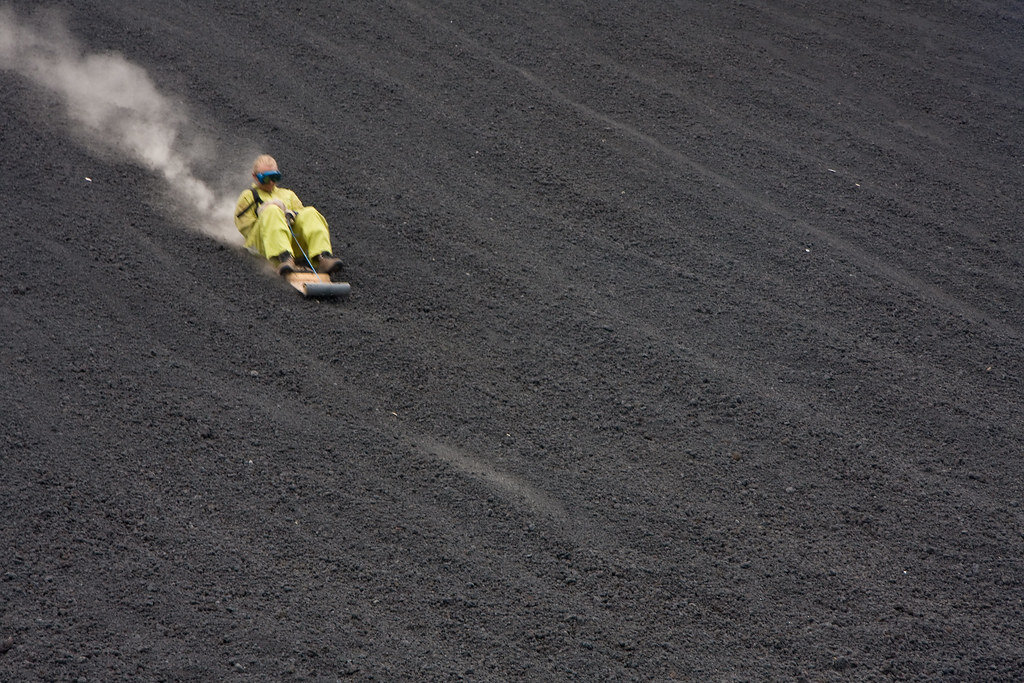
Volcano boarding on Cerro Negro, Nicaragua. Garrett Ziegler. CC BY-NC-ND 2.0.
Bigfoot Hostel in Leon, Nicaragua is one of the only places in the world where you can go volcano boarding. According to their website, volcano boarding is the “thrill of a lifetime.” The hostel’s original owner, Daryn Webb, created the extreme sport, where those brave enough to try it can speed up to 60 miles per hour down the side of an active volcano.
Webb and his crew tested various objects for sliding down the volcano, and after some trial and error, they created a sit-down toboggan made of metal and plywood. The hostel offers daily tours beginning at 9 a.m., with prices at $25 per person. Tours return at 3 p.m.
The Cerro Negro volcano is the youngest volcano in Central America, and is also one of the most active volcanoes in Nicaragua, erupting nearly every 20 years.
Bigfoot Hostel has sent over 20,000 people down Cerro Negro slope at up to 62 miles per hour, and it is known for attracting many sports enthusiats and adrenaline junkies. One of the most famous people to attempt the extreme sport was Eric Barone, who rode down the volcano on a bike at 107 miles per hour in 2002.
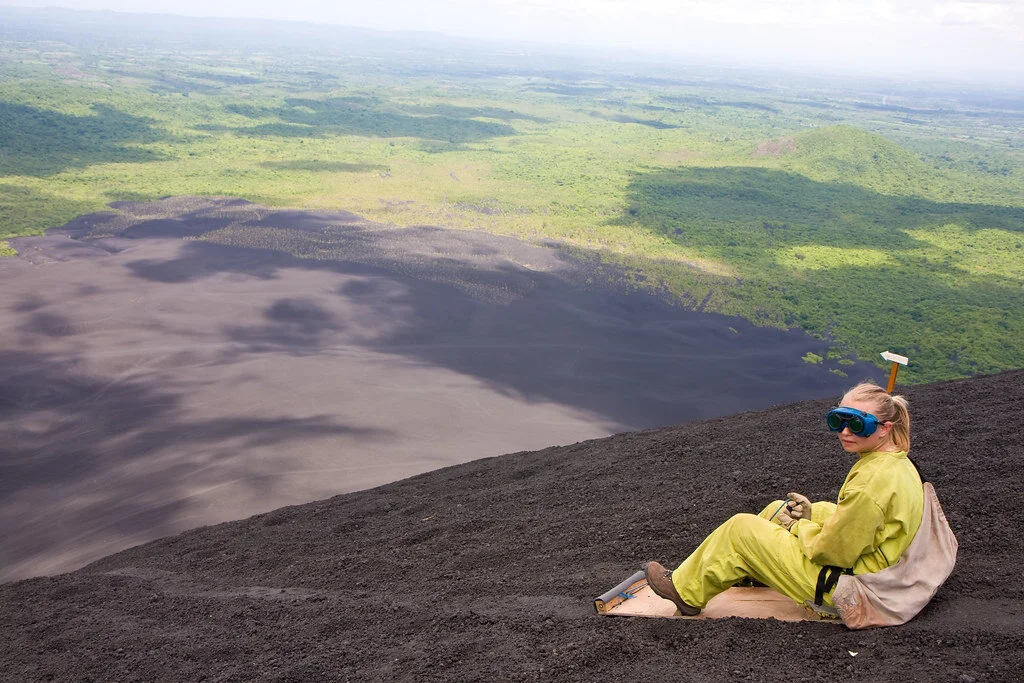
Volcano boarding on Cerro Negro. Garrett Ziegler. CC BY-NC-ND 2.0.
It is possible to slide down the Cerro Negro because the volcano is made of small grain-like volcanic rocks, which came from the crater. In addition, there is almost always a very strong wind hitting the volcano, so it’s the perfect surface for boarding.
Those who have visited before say that they could feel the heat radiating from the volcano and could even cook their meals in a hole dug out in the volcano.
All visitors must wear closed toe shoes and comfortable clothing. Those who have boarded down the volcano before recommend wearing hiking boots (since it takes about 45 minutes to reach the summit) and a multipurpose head wrap to cover your nose and mouth while boarding. Also, take a large water bottle and a GoPro if you want to record the experience.
The hostel offers dorm-style rooms, with rooms with fans at $6 and rooms with air conditioning at $10. There are also private rooms with double, triple, or quadruple beds.
RELATED CONTENT:

Isabelle Durso
Isabelle is an undergraduate student at Boston University currently on campus in Boston. She is double majoring in Journalism and Film & Television, and she is interested in being a travel writer and writing human-interest stories around the world. Isabelle loves to explore and experience new cultures, and she hopes to share other people's stories through her writing. In the future, she intends to keep writing journalistic articles as well as creative screenplays.