Daring Divers: The Superhuman Bajau People of Southeast Asia 

Mastering the seas has long been a task attempted by many seafaring cultures around the world. The Bajau people, however, seem to command the ocean with an unmatched talent. 

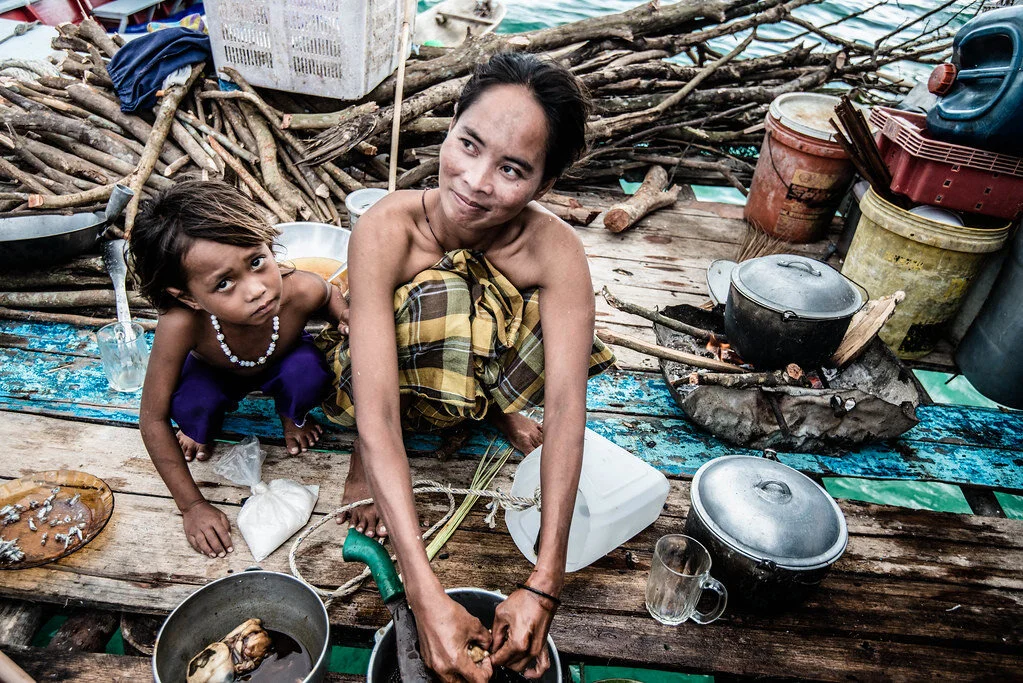
Bajau people. johnjodeery. CC BY 2.0.

Wandering the Sulu Sea off the coast of the Philippines, the Bajau people spent the last 1,000 years accumulating an impressive track record for their seafaring ways. Often referred to as “sea nomads” or “sea gypsies,” the Bajau people live almost entirely on houseboats, and only return to land to bury their dead, trade, construct their houseboats, and wait out sea storms. This ethnic group sails the waters around Indonesia and Malaysia as well, which are highly congested with piracy; the Bajau people usually flee from attack instead of choosing combat. Because they live solely on the waters, the ethnic group does not have any official affiliation with neighboring countries. 

Houseboat of the Bajau people. Yanajin33. CC BY-SA 4.0.

The exact origins of the Bajau people are unknown, but it is presumed that they are of a Malay background. Most of their known background is contained in oral history, with much of it being unraveled through folklore. One story of their origin recounts the tale of a man named Bajau who was known to displace the water in rivers using his body mass. It is told that villagers then followed him to easily collect the fish that were left behind. Envy of his people’s large fish hauls raged among neighboring tribes, but all attempts to kill Bajau were unsuccessful. His people then thrived and became the rulers of the oceans that they are today. 

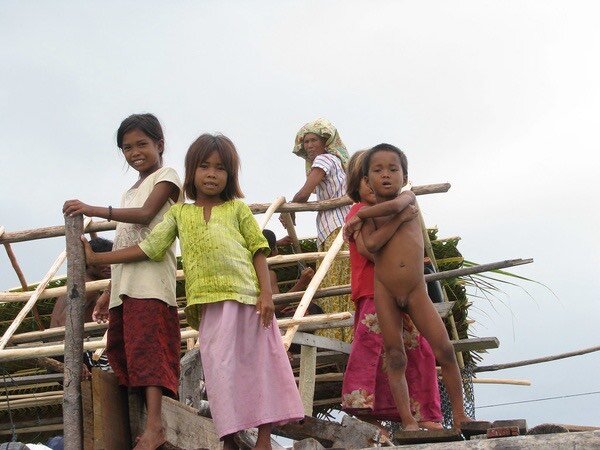
Bajau children. Education Projects for Children in Sabah. CC BY 2.0.

The Bajau people are famous for their incredible fishing expertise, with specific mastery of diving. Researchers have observed Bajau divers reaching depths of over 230 feet and remaining underwater for several minutes at a time. Yet, the most surprising aspect of their expertise is that it is completely unaided; the Bajau people do not use wetsuits or advanced diving technology. They rely solely on wooden goggles and makeshift spears, but display unparalleled precision in spearfishing. Master divers spend about five hours a day underwater and catch almost 20 pounds of fish and other elusive marine life. 

Although most of the Bajau people’s skill comes from endless hours of practice, scientists have found that their bodies adapted to their active lifestyle. The Bajau people are found to have spleens larger than the average human, which researchers conclude is due to their long diving hours. The spleen stores red blood cells needed in oxygen retention, so larger spleens correlate positively with intense diving. Other studies have found that they also possess different variants of genes that assist in long dives, such as that of BDKRB2 which is linked to the rate in which oxygen spreads throughout the body. 

Little can be traced of the origins of the Bajau people, but they surely hold a steady future in being uncontested overlords of the oceans.

Ella Nguyen

is an undergraduate student at Vassar College pursuing a degree in Hispanic Studies. She wants to assist in the field of immigration law and hopes to utilize Spanish in her future projects. In her free time she enjoys cooking, writing poetry, and learning about cosmetics.

Argentina Times Two: Country Declares Rule over Antarctica—and the Falklands

The nation claims disputed territories in Antarctica. Will anyone notice?

A disputed no man’s land. Trey Ratcliff. CC BY-NC-SA 2.0.

Argentina recently doubled in size, according to Argentina. President Alberto Fernandez signed into law a 650,000-square-mile expansion of Argentinian territory from its southernmost tip to the South Pole, including maritime territory in between. Though the law was signed in August, its effects are just beginning to be felt. Next school year, Argentinian children will receive textbooks proclaiming their country to be twice the size it was when their parents went to school. 

The law’s legal reasoning is rooted in the United Nations Convention on the Law of the Sea, which provides President Fernandez a somewhat adequate basis for such an expansion. Argentina’s geographical shelf extends far into the sea, and the water is shallow enough to extend the country’s claim beyond the standard limit of 200 nautical miles from the nation’s coast. Though the move is grounded in international law, it has the potential to produce some controversy. 

Most strikingly, the law asserts what President Fernandez calls “Argentina’s claim to the Malvinas,” also known as the Falkland Islands. Fighting erupted between Britain and Argentina in 1982 when Argentina attempted to seize control of the Falklands, only to be rebuffed by Britain’s navy. While Britain still maintains control, most Argentinians support President Fernandez’s insistence that they have a rightful claim to the islands. 

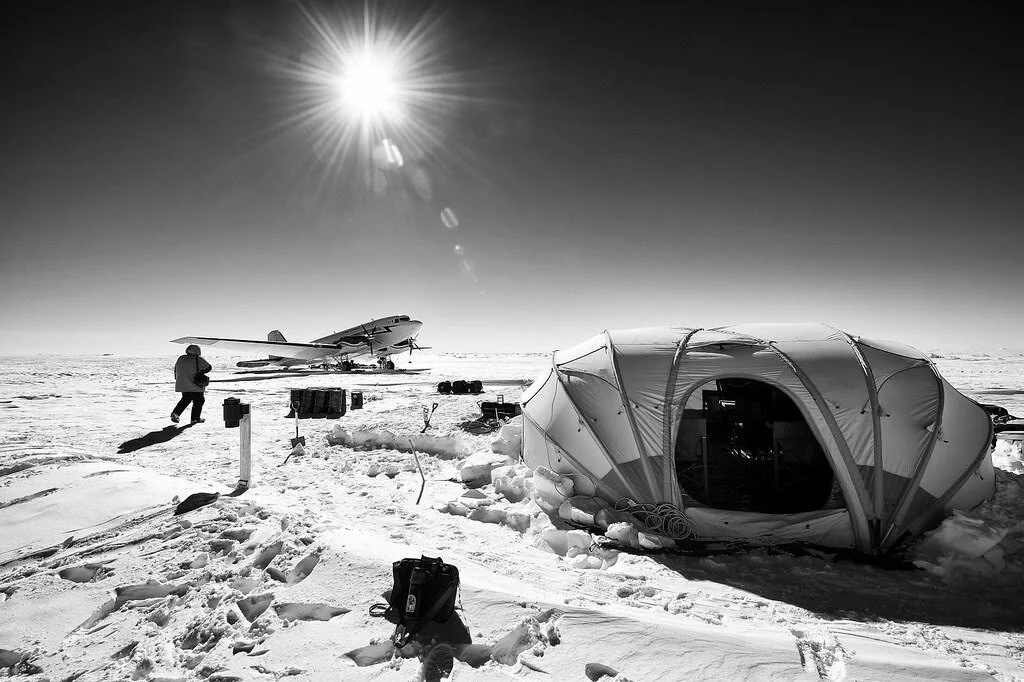
Life on the ice. Christopher.Michel. CC BY 2.0.

For the time being, however, the conflict over the Falklands is as frozen as Antarctica itself. Other territorial spats are unlikely to occur. Since explorers began mapping the continent, numerous nations have claimed it as their own. International negotiations over land claims in Antarctica culminated in the Antarctic Treaty System in 1961. It provided freedom of scientific research for all nations and banned military activity, mineral mining and nuclear waste disposal. 

Argentina’s new waters offer much more than the snowy lands of Antarctica. Commercial fishing is lucrative just off the British-controlled island of South Georgia. There, fishermen enjoy prime access to abundant schools of Patagonian toothfish, icefish and Antarctic krill. While the COVID-19 pandemic has stopped most tourism, Antarctica contains myriad natural wonders for tourists strong-willed enough to endure the frigid temperatures. 

For now, disputed waters in Antarctica are unlikely to ignite any conflicts. The regions are sparsely populated and for the most part strategically unimportant. Even the Falkland Islands, the flashpoint of the war with Britain, has only 2,500 residents.

Scientific research at the end of the world. NASA Goddard Photo and Video. CC BY 2.0.

In fact, the brave few Argentinians who currently live in Antarctica enjoy a unique perk: safety from the coronavirus. The 400 people from the country in Antarctica reside on the only continent without a single case of COVID-19. These scientists and soldiers conduct scientific research but with far less staff than in prior years. To prevent the spread of the virus, Argentina opted to send only 400 researchers rather than the usual 2,000. Every person sent will take a test and quarantine before traveling to Argentina’s facilities, and since they won’t have many medical resources, people will be evacuated at the first sign of infection. Argentinian researchers can rest assured, though, that their president believes they tread not on a foreign continent but on their own home turf.


Michael McMarthy

is an undergraduate student at Haverford College, dodging the pandemic by taking a gap year. He writes in a variety of genres, and his time in high school debate renders political writing an inevitable fascination. Writing at Catalyst and the Bi-Co News, a student-run newspaper, provides an outlet for this passion. In the future, he intends to keep writing in mediums both informative and creative.

Activists from the Marshall Islands Fight to Save Their Home

The Marshall Islands are facing the catastrophic effects of climate change. In this climate-vulnerable country, local activists are working to save their nation. 

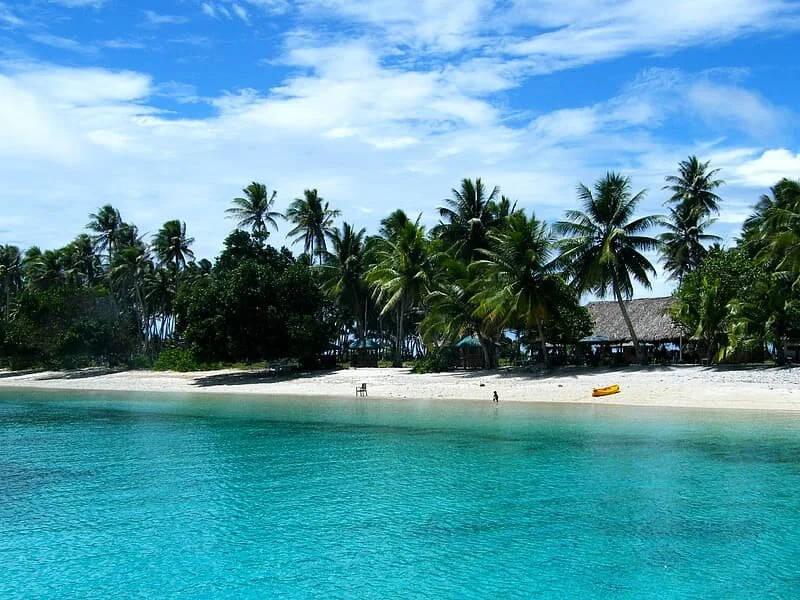
A beach in the Marshall Islands. Pik Repo. CC BY 2.0. 

The Marshall Islands, one of the smallest countries on Earth, comprises more than 1,200 islands in the central Pacific Ocean. After decades under U.S. control, the Marshall Islands became independent in 1986, though the islands are still home to key test sites in the U.S. missile defense network. This tiny island nation has a population of just under 78,000, with the majority of islanders living on the atolls of Majuro and Ebeye. 

The Marshall Islands are incredibly climate vulnerable. Over the past several decades, this low-lying nation has become overwhelmed by rising sea levels. In October 2019, the Marshall Islands officially declared a climate crisis. Without policy and tangible action needed to prevent rising sea levels, the Intergovernmental Panel on Climate Change has warned that sea levels could rise up to 4 feet by 2100, which would make the Marshall Islands uninhabitable by 2050. 

Leading the fight for global leaders to take action is Marshallese youth climate activist Litokne Kabua. Kabua is leading a group of 16 youth activists, including climate activist Greta Thunberg, in petitioning the United Nations to engage with the catastrophic effects of climate change on the Marshall Islands. Under the U.N. Convention of the Rights of the Child, countries have an obligation to protect the lives of children. Because of the imminent threat of the climate crisis, these conditions are at risk. Through this rationale, youth activists have submitted a petition demanding that nations combat climate change rapidly and actively. 

In an op-ed for The Elders, Kabua writes: “Climate change will play a big role in destroying the future of our children, all of our children, and the children of future generations. If we take action today, while climate change will not go away it could still reduce to a significant level allowing us to live and prosper, we could still live a sustainable life.”

Hilda Heine, former president of the Marshall Islands, giving a speech. Sean Wu. CC BY 2.0. 

The former president of the Marshall Islands, Hilda Heine, is another global advocate for the islands. In an interview with NPR, Heine said:  “Prolonged and unseasonal droughts are hitting us real hard, and salt water is creeping into our freshwater lands. We are on the very front line of climate change. We need resources. We need support.”

The Marshall Islands are struggling with the catastrophic ramifications of climate change. Without immediate change, the islands face submersion. But in efforts to preserve their island nation, activists like Litokne Kabua and Hilda Heine are working fiercely to champion their home. 

Sarah Leidich

is currently an English and Film major at Barnard College of Columbia University. Sarah is inspired by global art in every form, and hopes to explore the intersection of activism, art, and storytelling through her writing. 

One of the World’s Natural Wonders, the Monarch Butterfly, is Fighting for its Survival and What You Can Do About It

Raising monarch butterflies in fourth grade science classes may be a thing of the past as the steadily declining rate of North America’s favorite butterfly continues. 

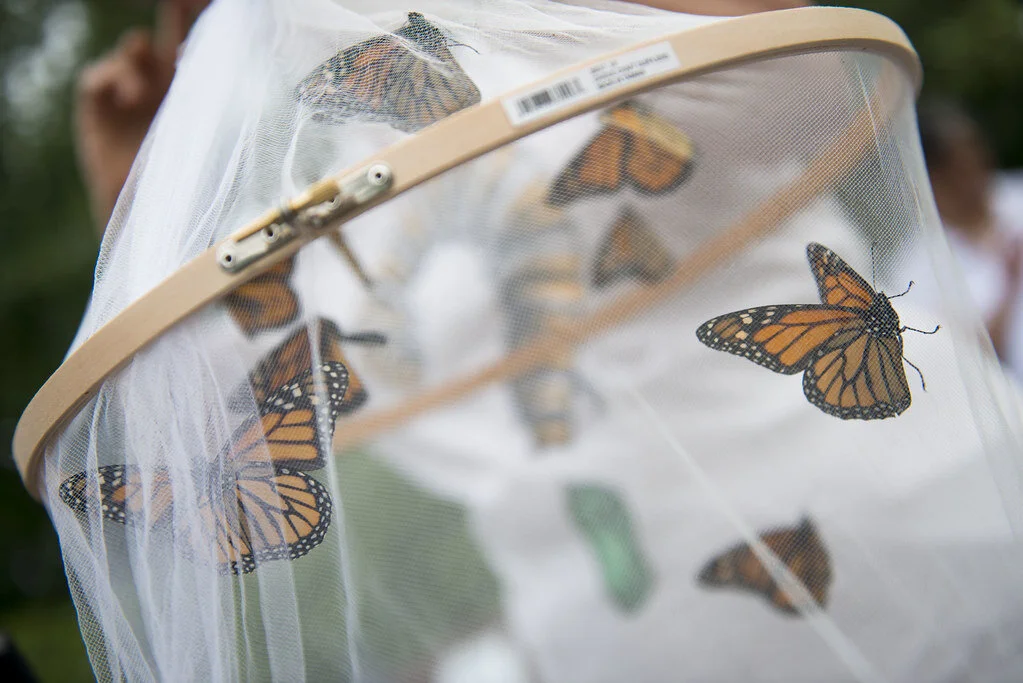
Monarch butterflies in a net. Arlington National Cemetery. CC PDM 1.0

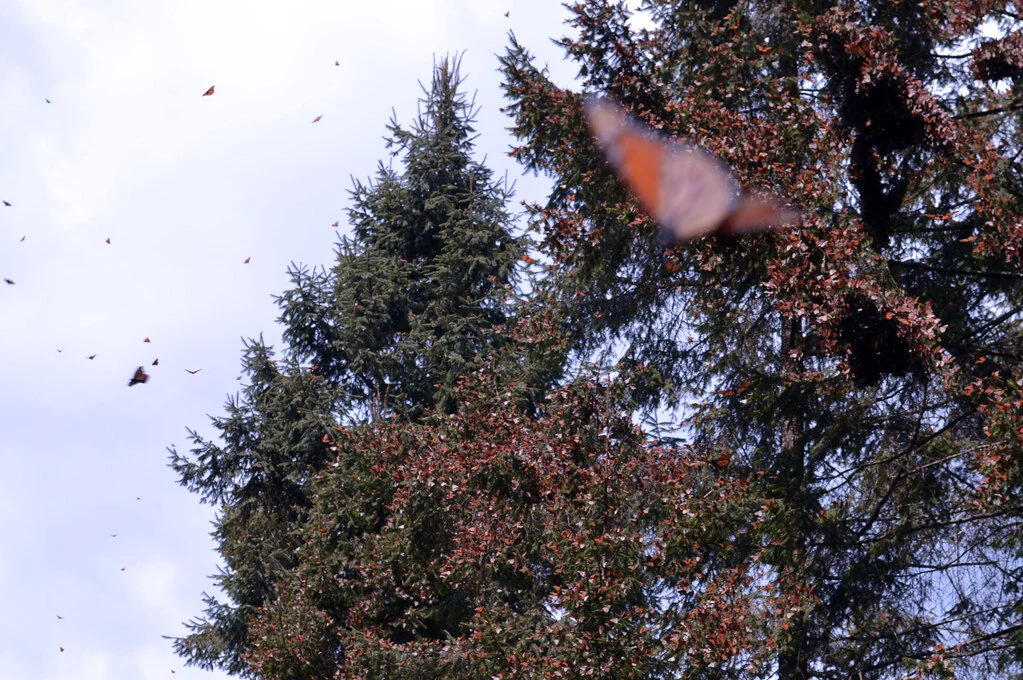
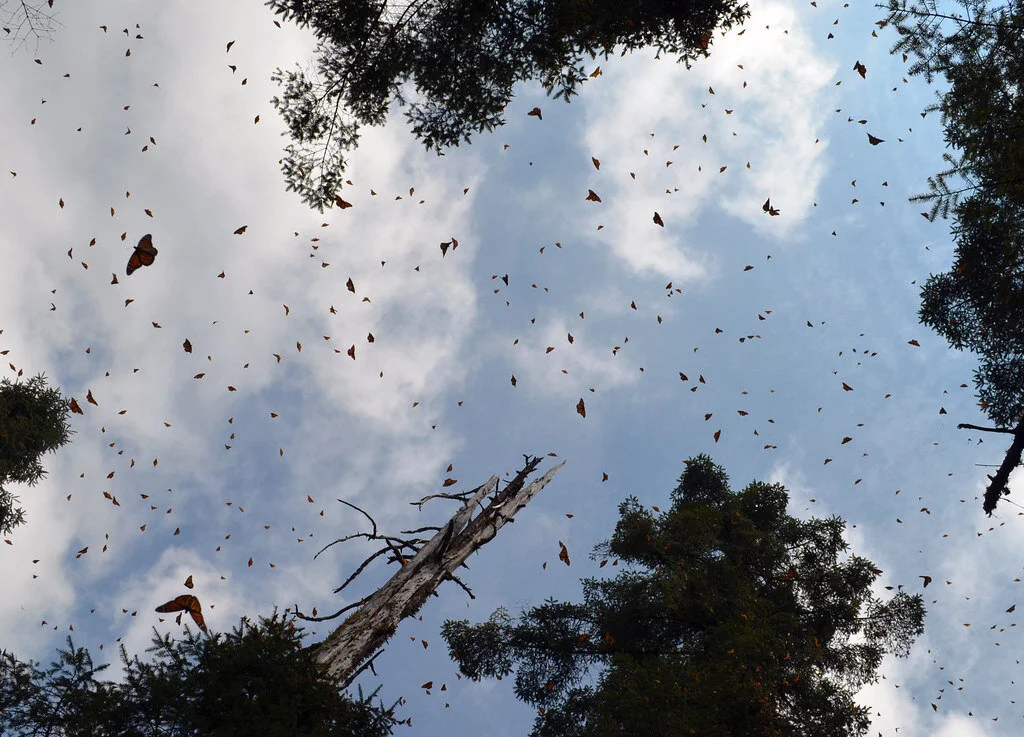
Early spring in the forests of Michoacan, Mexico, the newest monarch butterfly population clusters in the branches to mate by the millions. Each fall the monarchs, which weigh no more than a paper clip, make their way through their 3,000-mile journey from Canada and the northern United States to California and central Mexico for their warm winter months. Steadily gaining traction in Mexico’s tourism industry, the North American migration has become one of the world’s natural phenomena, attracting people to take part in witnessing the inspiring journey.

Monarchs in Michoacan, Mexico. U.S. Fish and Wildlife Services-Midwest Region. CC PDM 1.0

Monarch butterflies, a crucial part of our ecosystem, belong to the important group of pollinator insects that allows people to enjoy the pleasures of beautiful flora and an abundance of food.  It has been said that monarchs are like the proverbial “canary in the coal mine” for pollinators.

They are easy to spot and since they share the same habitat as many other animals, it is evident that their decline is most likely synonymous with the decline of other important wildlife.

Monarchs in Michoacan, Mexico. U.S. Fish and Wildlife Services-Midwest Region. CC PDM 1.0

The National Wildlife Federation has estimated that the monarch population has declined in total about 80% in the past 20 years. Human-caused climate change and habitat loss are key factors that are pushing the monarchs toward a closely looming extinction. D. Andre Green II from the University of Michigan mentioned in The Conversation that the area of forest in Mexico covered by monarchs has fallen from a high of 45 acres in 1996 to 1.6 acres in 2014. California reported the lowest levels of monarchs ever in 2019.

Higher temperatures for longer periods of time are causing confusion within monarchs’ internal clocks on when to migrate and mate. The increase in temperature is affecting their flight pattern, driving them farther north than they would initially, and is being reflected in the size of the wings grown over the last few generations. Micah Freedman from the University of California, Davis, collected data samples from a variety of museums around the country, dating back all the way back to the 1870s. He was able to measure the average wingspan, finding in his research that there had been a consistent 4.9% increase in size over 150 years. 

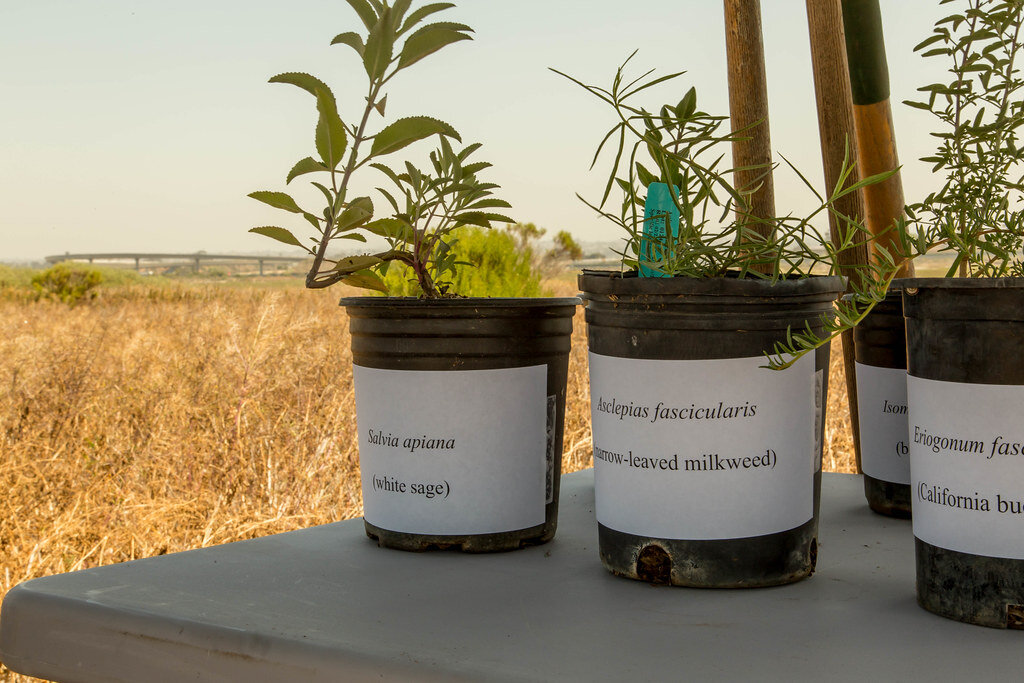
Milkweed seedlings. USFWS Headquarters. CC PDM 1.0

Increasing carbon dioxide levels in the air are also a major issue, the consequences reflected in the food monarchs eat. The carbon may be making milkweed too toxic for the caterpillars. Milkweed is the only source of food monarch caterpillars are able to ingest, supplying them with a low-dose toxin, cardenolide, that helps fight against parasites and gives them a bitter-tasting deterrent against predators. In researcher Leslie Decker’s Ecology Letters, she grew milkweed in a greenhouse, simulating the carbon-rich air projected to happen in the next 150 years. In her research she found that the plants produced a different variety of cardenolides, rendering them ineffective in protecting future monarchs from parasites or predators and much more susceptible to die. 

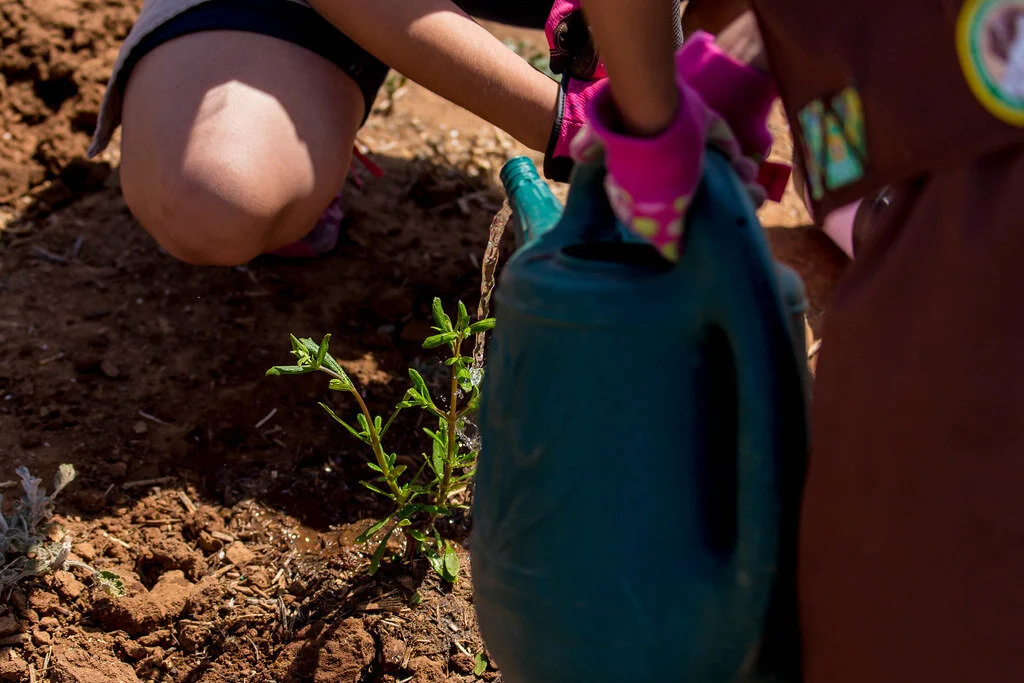
Milkweed planting event. USFWS Headquarters. CC PDM 1.0

But as scientist Orley R. Taylor says, “We have the capacity to save monarchs and other species. The question is whether we have the will to do it.” It seems as if the U.S. heard him because grassroots educational outreach programs, facilitated by public schools and citizen scientists, gained the attention of the U.S. Fish and Wildlife Services, which created a top-down strategy called the Nationwide Candidate Conservation Agreement. It is essentially a business deal with corporate and private landowners to commit a portion of their land to dedicate to the replenishing of monarch habitat previously lost to land development. In return, the government will not place monarchs on the endangered animals list, waiving the harsher regulations that would otherwise have been established. 

Wildlife refuge milkweed planting event. USFWS Headquarters. CC PDM 1.0

This agreement is supposedly going to generate 2.3 million acres collectively of newly protected habitat. Even if the plan only generated 20% of the goal, that is still over half a million acres and a big step in the right direction. If the process succeeds, it could prove as a national and even global model to “bridge the differences of interests to achieve a common conservation goal.”

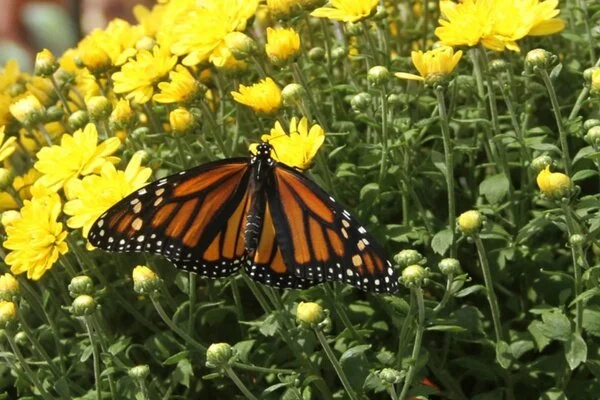
Butterfly on a flower. USFWS/Southeast. CC PDM 1.0

If you would like to help the movement there are many things that normal citizens can do on a day-to-day basis:

  • Research types of native milkweed in your area and plant them in your backyard. It gives the butterflies a much-needed resting place during their migration and provides you with a beautiful butterfly garden right outside your window.

  • Become a citizen scientist and help join the mass movement that is actively helping the progression of conservation advocacy. 

  • Spread the word about climate change and its importance to everyone you know. The more that people are educated and aware, the more likely we are to band together and make impactful differences. Save the world, one person at a time.

Yuliana Rocio

is currently a Literature/Writing major at the University of California San Diego. Yuliana likes to think of herself as a lover of words and a student of the world. She loves to read, swim, and paint in her free time. She spent her youth as part of a travel-loving family and has grown up seeking adventure. She hopes to develop her writing skills, creating work that reflects her voice and her fierce passion for activism.

Singapore’s Dying Dialects

Singapore is a tiny Southeast Asian country often celebrated for its diverse and multilingual population. Despite efforts to preserve its cultural heritage, the country is at risk of completely losing the speakers and history of its Chinese dialects. 

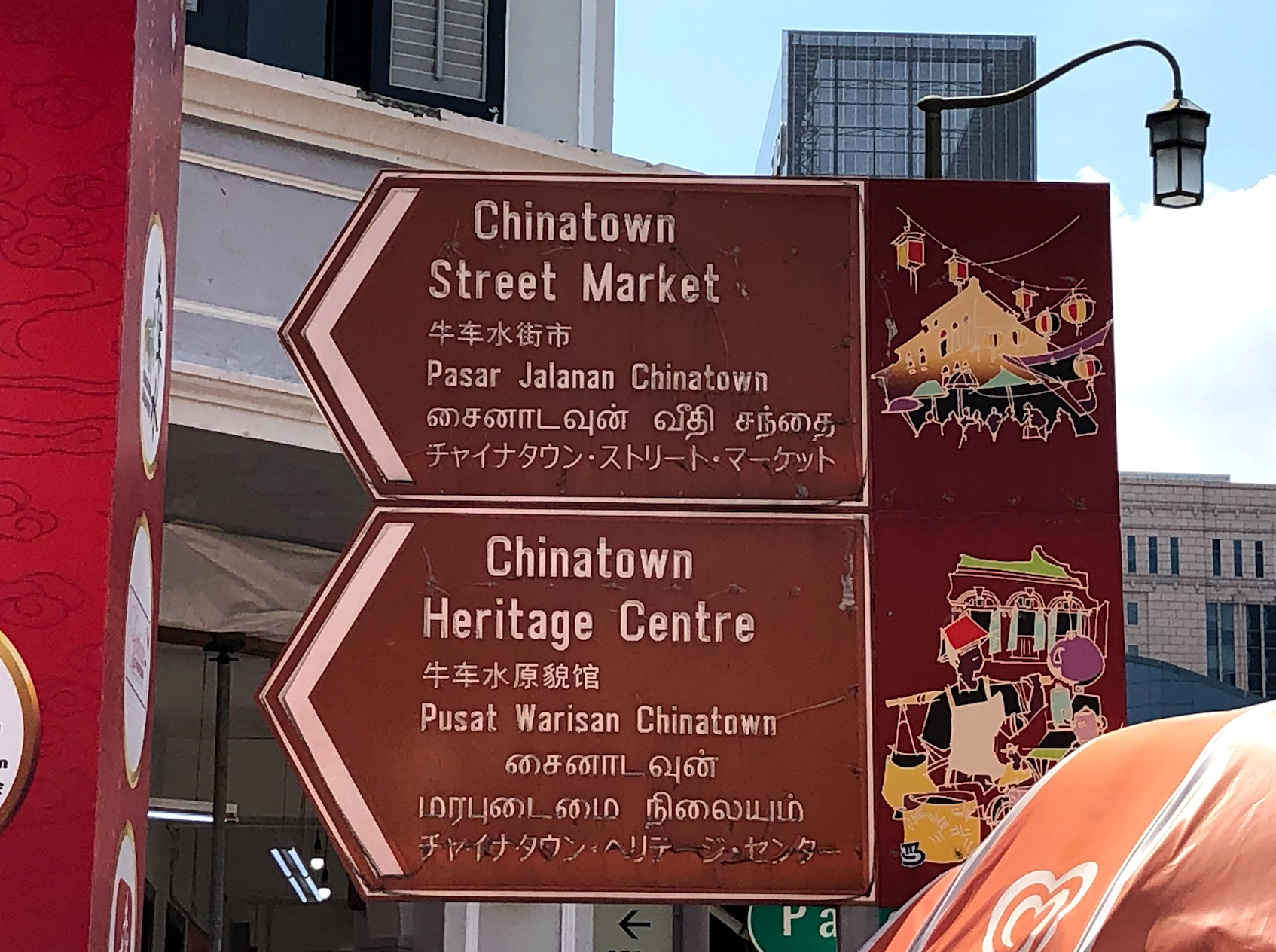
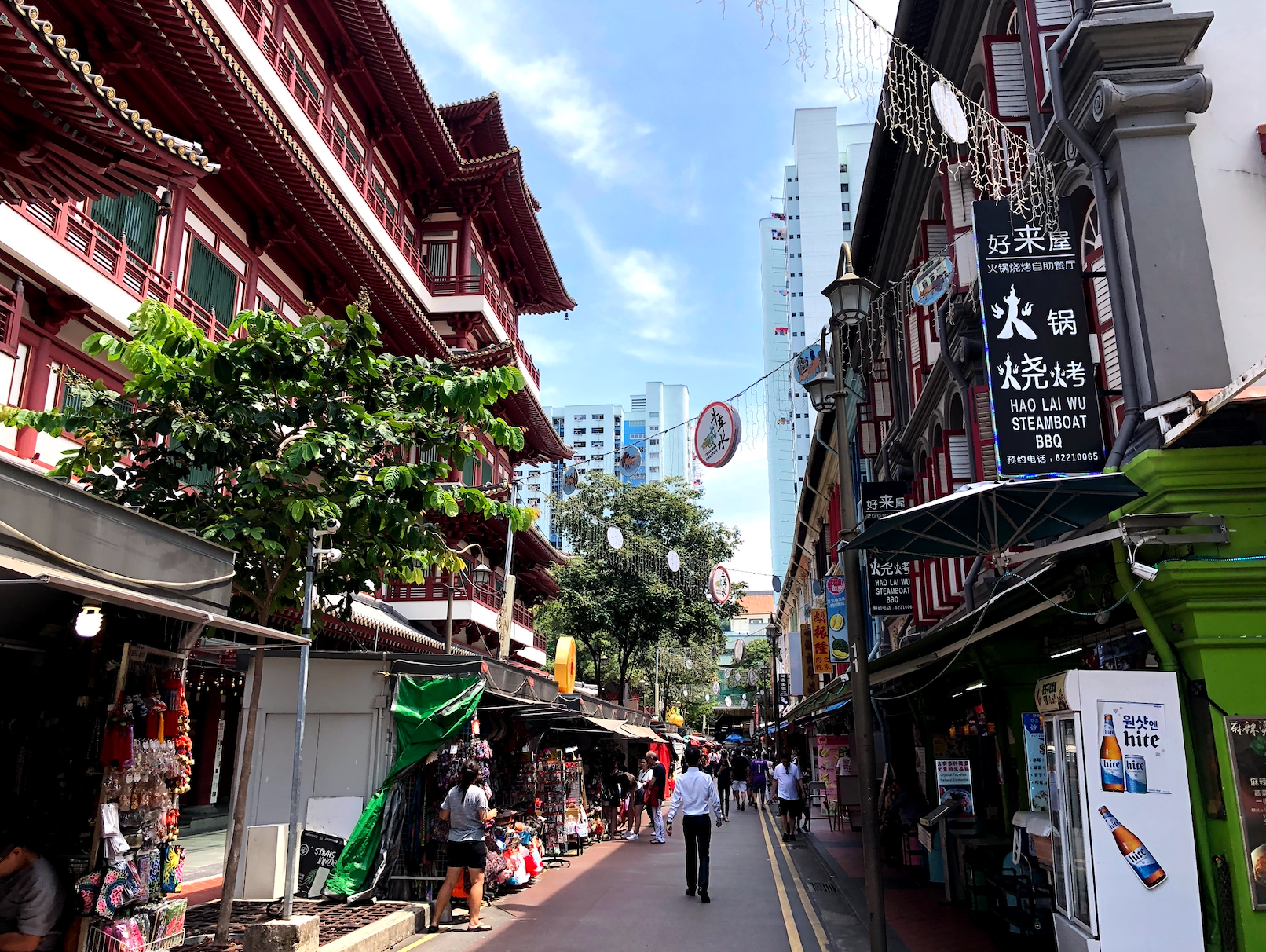
A street in Singapore’s Chinatown showcasing the four official languages of the country. Courtesy of Rhiannon Koh.

Singapore is an island nation located on the tip of the Malay Peninsula. This city-state is an international port known for its cleanliness, law and order, and neo-futuristic cityscapes. Under its sleek veneer of lights, however, Singapore also harbors an impressive heritage thanks to its multicultural populace.

The official story of Singapore begins in the third century. Early Chinese records show that this island was frequented by the Malays, the Javanese, the Indian Cholas and other passing tradesmen. According to legend, the 14th-century Srivijayan prince Sri Tri Buana stumbled upon the island, saw a tiger, and mistook it for a lion. He then named the island “Singapura,” or the “Lion City.” After nearly five centuries of obscurity, the island resurged into the spotlight when the British statesman Stamford Raffles founded what is now considered modern-day Singapore. Even before Raffles’ influence, the island was already home to an ethnically diverse mix of Chinese, Malays and Indians. 

Since its independence in 1965, Singapore has encoded multiculturalism and linguistic diversity into its constitution. Statute 153A states that Malay, Mandarin, Tamil and English shall be the four official languages in Singapore; no person shall be discriminated against for whichever they choose. Consequently, multilingual signs are considered the norm and it can cause a public uproar when signs fail to be inclusive. In recent years, however, English has dominated communication in many homes.

Singapore’s city plan emphasizes historical preservation, fostering an urbanscape of both old and new. Courtesy of Rhiannon Koh.

When Singapore’s first prime minister, Lee Kuan Yew, came to power, he believed that knowledge of dialects undermined the mastery of key languages. Since Singapore was a former British colony and was largely comprised of those of a Chinese background, Yew pushed for English and Mandarin education in schools, essentially cutting down a “thriving linguistic tropical rainforest.” Though these languages gave Singapore a competitive edge in global markets, many Singaporeans lost knowledge of their mother tongues—Hokkien, Teochew, Hakka and others—as well as their connection to grandparents and elders who spoke exclusively in those dialects. A 2015 Department of Statistics study found that in-home dialect use decreased from 18.2% in 2005 to 12.6%. In the wake of this reckoning, many youths are taking steps to reclaim their heritage. Students like Lee Xuan Jin came to understand that Hokkien and Teochew were his “true mother tongues” as opposed to mainland Mandarin. To rekindle the language and improve literacy, Lee launched a Facebook page called Writing in Hokkien.

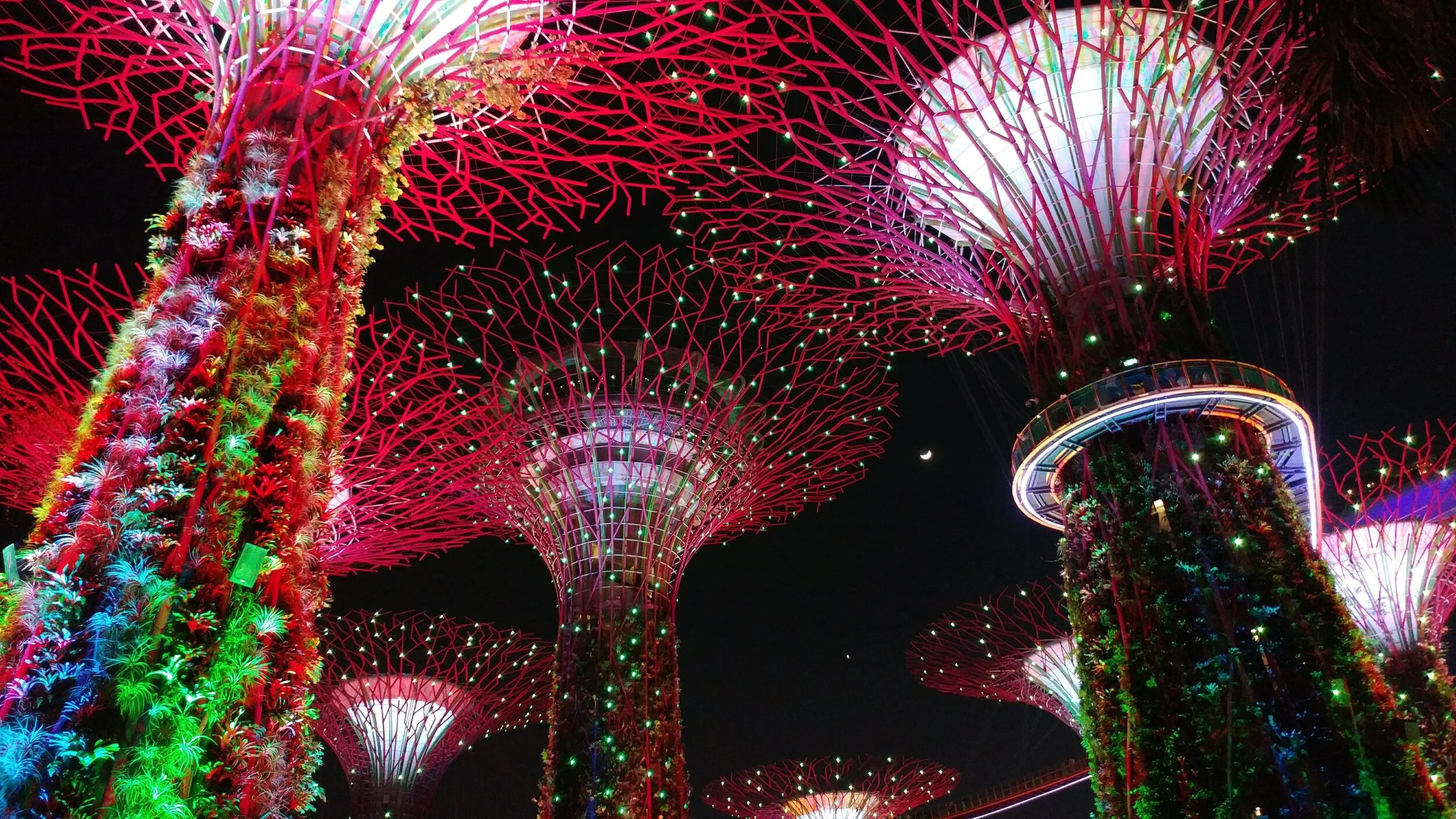
Singapore’s Gardens by the Bay, a testament to the country’s endemic botany and the potential of its future. Courtesy of Rhiannon Koh.

In an op-ed piece for Rice, Natalie Tan questions Singapore’s Speak Mandarin Campaign—a program that effectively rendered dialects obsolete in favor of a unified but vague Chinese culture. Tan argues that Singaporeans lost a bridge to the past. If this trend continues, Singaporeans will lose their ability to translate interviews and other important historical documents. Locals will also lose the stories of their elders as well as the rich histories still bound up in fading languages. 

The demise of Chinese dialects taps into the overarching issue of dying languages across the globe. Some feel the dissolution of language is inevitable, citing cultural differences in value and multicultural diversity. Others argue that dying languages should be saved, referencing the invaluable knowledge Indigenous languages harbor. Many languages disappear each year; the difficult question is whether anything should be done to prevent this fate.

Rhiannon Koh

earned her B.A. in Urban Studies & Planning from UC San Diego. Her honors thesis was a speculative fiction piece exploring the aspects of surveillance technology, climate change, and the future of urbanized humanity. She is committed to expanding the stories we tell.

Syria’s Allies Exploit the Nation’s Strife

With friends like these, who needs enemies?

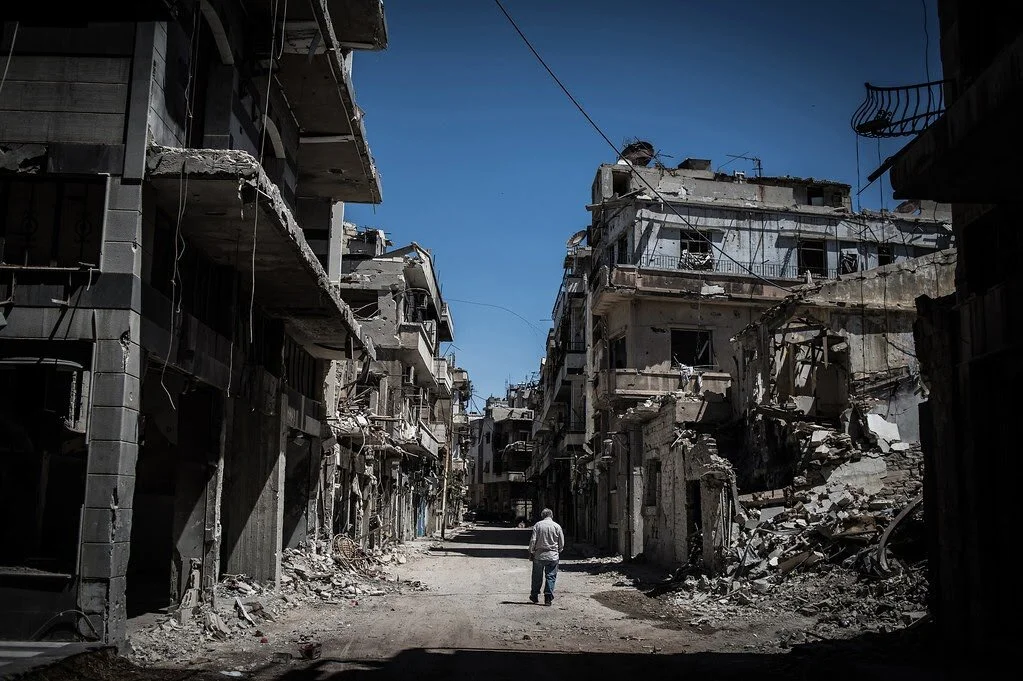
A long road to recovery. Chaoyue Pan. CC BY-NC-ND 2.0.

Bashar Assad didn’t survive his country’s civil war alone. Only with the help of Russia was he able to resist rebel forces and reestablish his grip on Syria. Now, his grip on power seems unshakable, and the question has moved from who will win to how Syria will rebuild. This challenge, however, Assad might have to do alone.

It will be a mighty task. Every aspect of Syria’s economy suffered in the almost decade long civil war. Oil, the country’s primary export, is being produced at one-sixth its prewar level, and last year’s wheat crop was half the prewar average. 60% of businesses have closed either permanently or temporarily. What savings citizens had are losing value fast, for the Syrian currency lost 70% of its value against the dollar. The forthcoming peace is preferable to war but far from easy. 

COVID-19 only adds to the country’s plight. The Assad regime has attempted to hide the extent of the devastation by blaming COVID-19 deaths on “pneumonia,” but the damage is clearly intense. Desperate for food and cash, many Syrians shirked lockdown measures. Other measures enforced in other countries are impossible to follow in a war zone. What little medical infrastructure existed has been swiftly overwhelmed. 

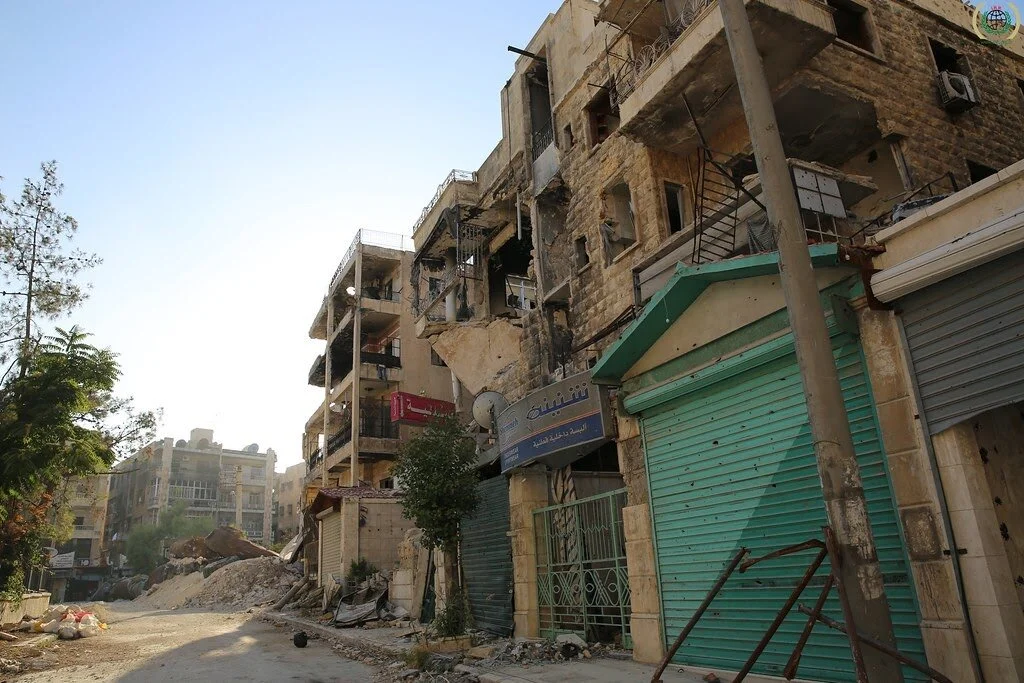
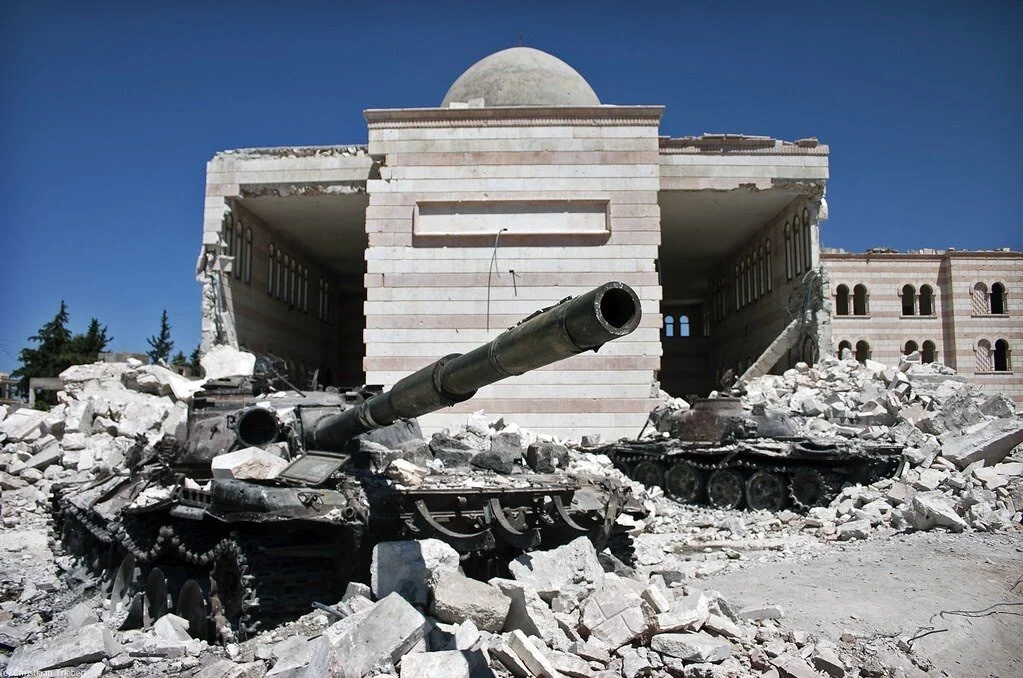
The ruins of Aleppo. Ihh Insani Yardim. CC BY-NC-ND 2.0.

Syria’s allies and neighbors seem content to watch its slow death and profit where they can. Recently, Russian Foreign Minister Sergei Lavrov visited not to help with reconstruction efforts but to scope out energy and construction contracts. Russia knows it can depend on Syria’s loyalty because the Assad regime has nowhere else to turn. Turkish involvement in Syria, meanwhile, focused on supporting anti-Assad rebels along with limiting the influence of regional Kurds, an ethnic group with aspirations of a nation-state.

What’s left of Azaz. Christiaan Triebert. CC BY-NC 2.0.

The United States and Europe provide only humanitarian aid. The U.S. heaped sanctions on Assad’s government in an effort to force at least a semi-democratic settlement, but Assad drifts still further into authoritarianism. At one point, President Donald Trump entertained assassinating the Syrian leader after his use of chemical weapons in 2018. “I would have rather taken him out. I had him all set. Mattis didn’t want to do it,” Trump said, referring to former Secretary of Defense James Mattis. To switch from a desire for assassination to a respectful negotiation would be a stark, and unlikely, change. 

Rather than give aid, Russia seems content to exploit Syria’s weaknesses. As always, the decisions of Syria’s leaders and allies will mainly affect Syrian citizens. The Assad regime’s finances have been bled so dry that it is rumored that customs officers and generals impound trucks and confiscate goods just to charge hefty bribes for their return. 

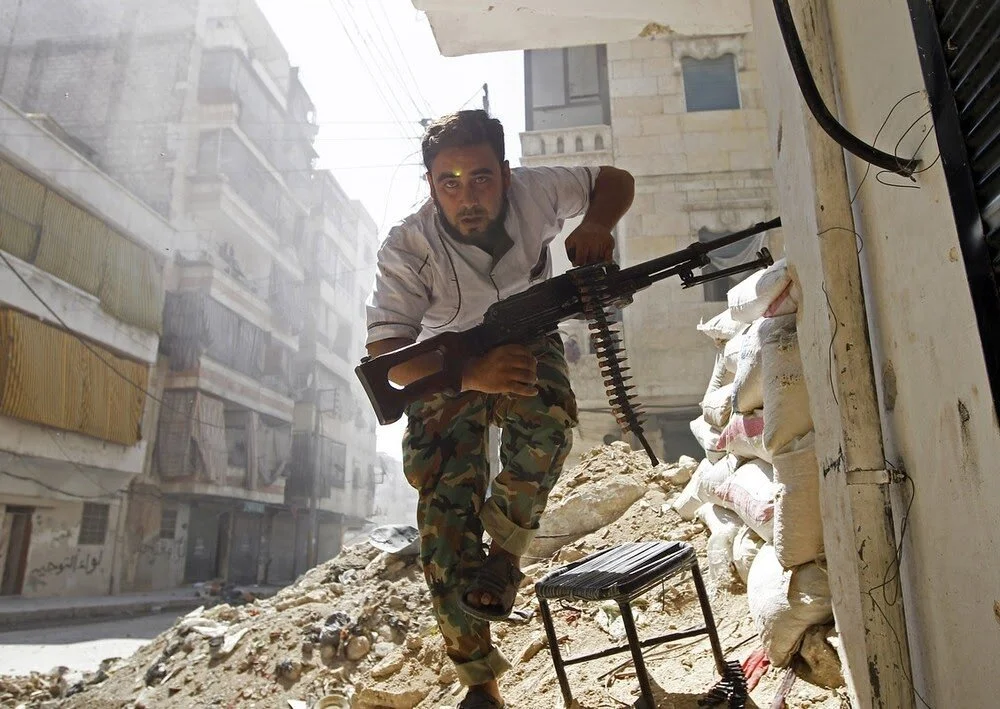
The plight of Syrian mercenaries illustrates just how dire life the situation has become. Years of fighting created a generation of young men whose only marketable skill is waging war. With no fighting left to be done at home and hungry families to feed, these men have enlisted as mercenary soldiers for Turkey and Russia. Once on the fringe of Syrian life, brick and mortar offices now house recruiters who advertise on WhatsApp, often lying about the safety of certain deployments. Families have more or less accepted fighting as a necessary means to make a living. In the current economy, there are no other options. 

Nowhere left to run. a.anis. CC BY-ND 2.0.

What these fighters make can hardly be called a living. A soldier earns the equivalent of $1 a day, most of which has to be sent home to their family. Syrian mercenaries were deployed in 2019 to fight the conflict in Libya, and just recently, they were deployed to fight for Azerbaijan against Armenia in the disputed Nagorno-Karabakh territory. Russia and Turkey have made pawns out of Syria’s most desperate citizens to support their foreign policy expansions. As one Syrian businessman loyal to Assad observed, “Our saviors have become vultures.”

Syria’s isolation will only intensify in the near future. The Netherlands recently announced that it is preparing a case for the International Criminal Court at The Hague for “gross human rights violations and torture in particular.” Russia repeatedly blocked efforts from the U.N. Security Council to refer such a case, but the Netherlands has bypassed the U.N. altogether. It is yet another thrust from the international community to move Assad in a more democratic direction., For the time being, however, Assad refuses to budge and the plight of Syrians is likely to continue. 


Michael McCarthy

Michael is an undergraduate student at Haverford College, dodging the pandemic by taking a gap year. He writes in a variety of genres, and his time in high school debate renders political writing an inevitable fascination. Writing at Catalyst and the Bi-Co News, a student-run newspaper, provides an outlet for this passion. In the future, he intends to keep writing in mediums both informative and creative.

Soviet Nostalgia Rises Again in Russia

In recent years, Russian citizens have expressed appreciation for their Soviet past, associating it with feelings of security, justice and simplicity.

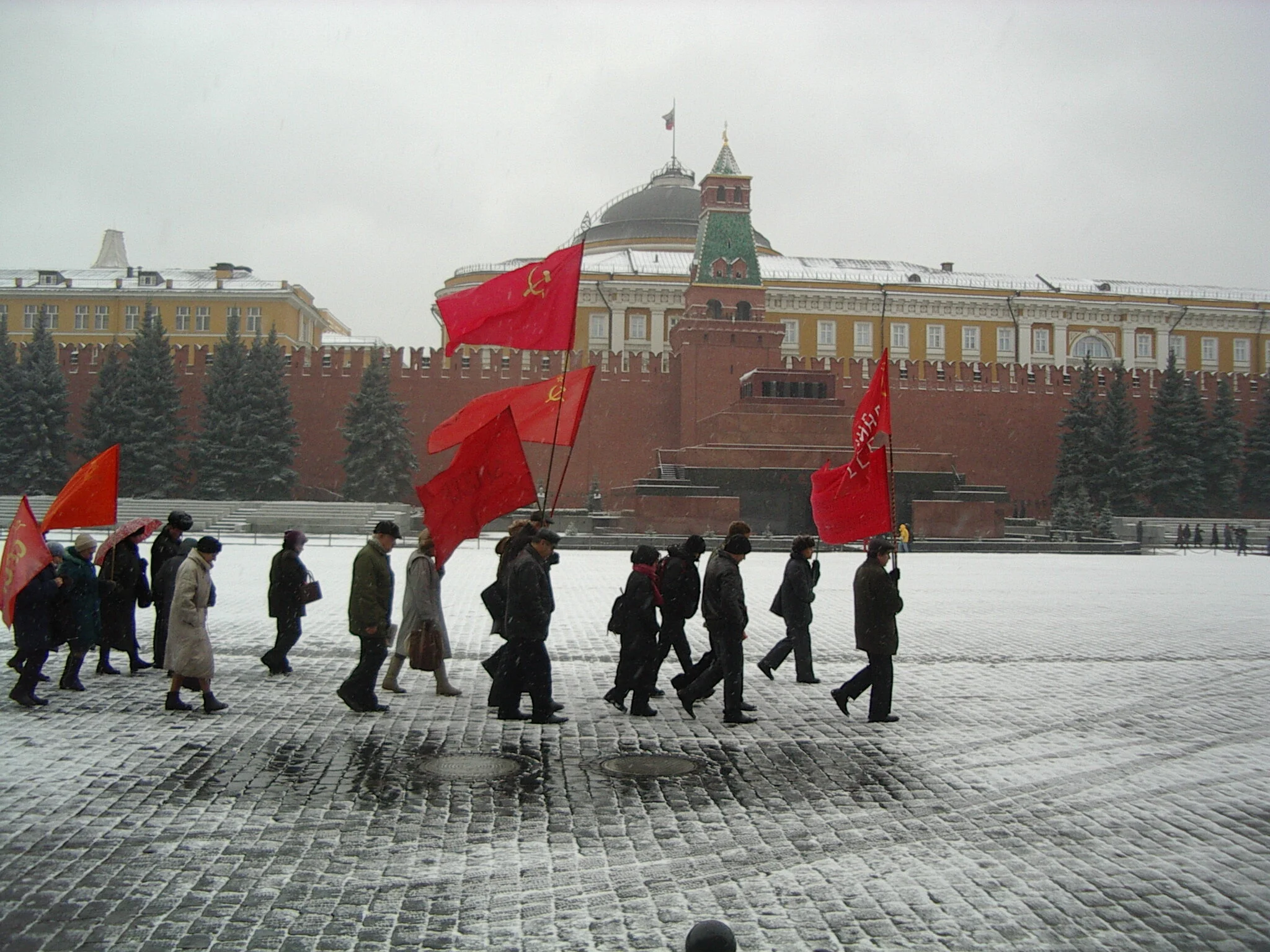
Russians commemorating the USSR at Red Square in Moscow. Errasti. CC BY-NC-ND 2.0.

Although the Soviet Union is often depicted as a state rife with spartan regulations and severe censorship, many of its old citizens look back on it fondly. Perhaps due to the current state of the job market and the impenetrable pandemic, Russians, more than ever, seek refuge in their Soviet past. In recent years, surveys held by the Levada Center polling group have shown a persistent growth in positive sentiments toward the USSR among Russians. Approximately three out of four Russians miss the Soviet Union and prefer its socialist system to the constantly fluctuating free market economy of Russia today. In various interviews, elders who were born in the USSR express that it ensured financial stability, universal pricing of goods and accessible health care. 

Post-Soviet Russian Economy

After the dissolution of the USSR in 1989, Russia’s new free market economy was plagued by economic disparity and poverty. Due to the communist state’s previous restrictions on its economy, Russia struggled to incorporate its industries into the global market economy. The economic collapse in 1998 threw post-USSR Russia into a period of hyperinflation and unemployment, which reached unprecedented heights that were 10 times greater than the rate of unemployment during the Soviet era. In a 1999 presentation on the future of Russia’s economy, Clifford G. Gaddy describes how the remnants of collectivization clashed with the hasty modernization of the previously communist nation, afflicting the state with a “virtual economy.” This meant that Russian enterprises could not survive in a global competitive market due to their resistance to cash flow. Old Soviet enterprises remained noncompetitive producers of goods without the integration of revenue.

During the ‘90s, millions of Russians were in poverty, by the U.N.’s standard of earning less than $1.90 a day. In an attempt to combat the deteriorating economy, the newly-elected President Vladimir Putin launched a rigorous campaign to modernize Russia. As a result, Russia’s overall gross domestic product and general social well-being improved dramatically by the year 2000. His “Programme for the Socio-Economic Development of the Russian Federation for the Period 2000-2010,” also known as the Gref plan, helped restore the general well-being of Russia’s population: poverty rates lowered and Russia’s share of the world’s economy rose by twofold. The debilitating market crash in 2008 halted this growth period, which stifled the economy into a stagnation that has continued ever since. However, there is no denial that Russia’s overall standard of living has improved since the ‘90s, and the poverty rate of 14.3% is comparable to that of most Western nations. 

While Putin’s economic policies have managed to cushion the staggering blow of liberalism, Russia’s citizens still feel the weight of capitalism's unpredictability. Grants and services previously offered by the state, such as universal health care and free schooling, were retracted, and along with it, the financial security of the average Russian individual. Life expectancy increased, but Russia’s population has plummeted throughout the last 20 years. “The Soviet era may not be seen as a time of high living standards, but as a time of justice,” said Andrey Kolesnikov, senior associate at Carnegie Center Moscow. “Today's state capitalism is viewed as unfair: the injustice is in distribution, access to goods and infrastructure. And this feeling is growing stronger.”

Seeking Refuge in Cultural Artifacts

The COVID-19 pandemic poses a new threat for Russia’s economy, which had already been experiencing a period of stagnation. Putin’s response to the coronavirus, much like many government policies around the world, has done little to protect the citizens of Russia. Unemployment is rising and spending is decreasing. Russians today are generally anxious about the state of their economy and their individual well-being. A large spike in new COVID-19 cases in October prompted Putin to reinstate restrictions on public spaces and private businesses. Jack Cordell of The Moscow Times notes that Russia had been “reluctant to dip into its reserves for a stimulus package the first time round, and will need to decide what to do about measures such as cheap business loans, extra payments for families with young children, higher unemployment benefits, extra pay for medical workers and a bankruptcy moratorium that are expiring soon.” 

Soviet nostalgia isn’t only a result of the economic uncertainty that plagues Russians under capitalism. Nostalgia for a country’s past is a transnational phenomenon that depends on aesthetic factors as well as sociopolitical changes. Ekaterina Kalinina, a scholar in post-Soviet nostalgia from Copenhagen University, told Document Journal that the revival and preservation of Soviet era forms of entertainment and fashion propagated positive feelings toward the USSR. The Museum of Soviet Arcade Machines, with locations in St. Petersburg and Moscow, has seen up to 60,000 visitors per day in recent years. Both the youth and elderly indulge in Soviet memorabilia, finding comfort in the stability of simpler times. Through personal recollections of their lives under communism, and through intergenerational stories inherited by younger people, Russians view the Soviet Union through rose-colored glasses. The era of the USSR represents a “golden age” where current financial troubles under capitalism were nonexistent. Another notable promoter of Soviet-themed entertainment is Nostalgia TV. Nostalgia TV includes a wide range of media, from music to shows and movies from the Soviet era. Expanding its outlets to radio and YouTube, Nostalgia TV provides a platform for Russians to recall their fond memories of the USSR and to explore the relics of Soviet media. Often ignoring the totalitarian nature of the USSR, Russians feel comforted by these virtual artifacts of their communist past.

However, these increasingly positive views toward the Soviet Union cannot be dismissed as the inflated fantasies of Russians. It is undeniable that the economic stability ensured under socialism is now absent under the current laissez-faire system. As Russians face the COVID-19 crisis with the rest of the world, they continue to grapple with the supposed freedom which also bars them from accessible health care. The Russian people do not wish to revert to the Soviet system in its totality, but the precarious state of society causes them to yearn for pieces of the safety net found in the past. They desire a new, united way forward that guarantees the overall security of the populace while remaining incorporated with the global capitalist economy. 

Heather Lim

recently earned her B.A. in Literatures in English from University of California, San Diego. She was editor of the Arts and Culture section of The Triton, a student-run newspaper. She plans on working in art criticism, which combines her love of visual art with her passion for journalism.

Ravishing Revels in Red: China’s Red Beach and Red Land

China’s captivating landscape stuns all with its flowery Red Beach and portrait-like Red Land. These two locations are havens both for artists aching for inspiration and for travelers in search of a heavenly view. 

RED BEACH

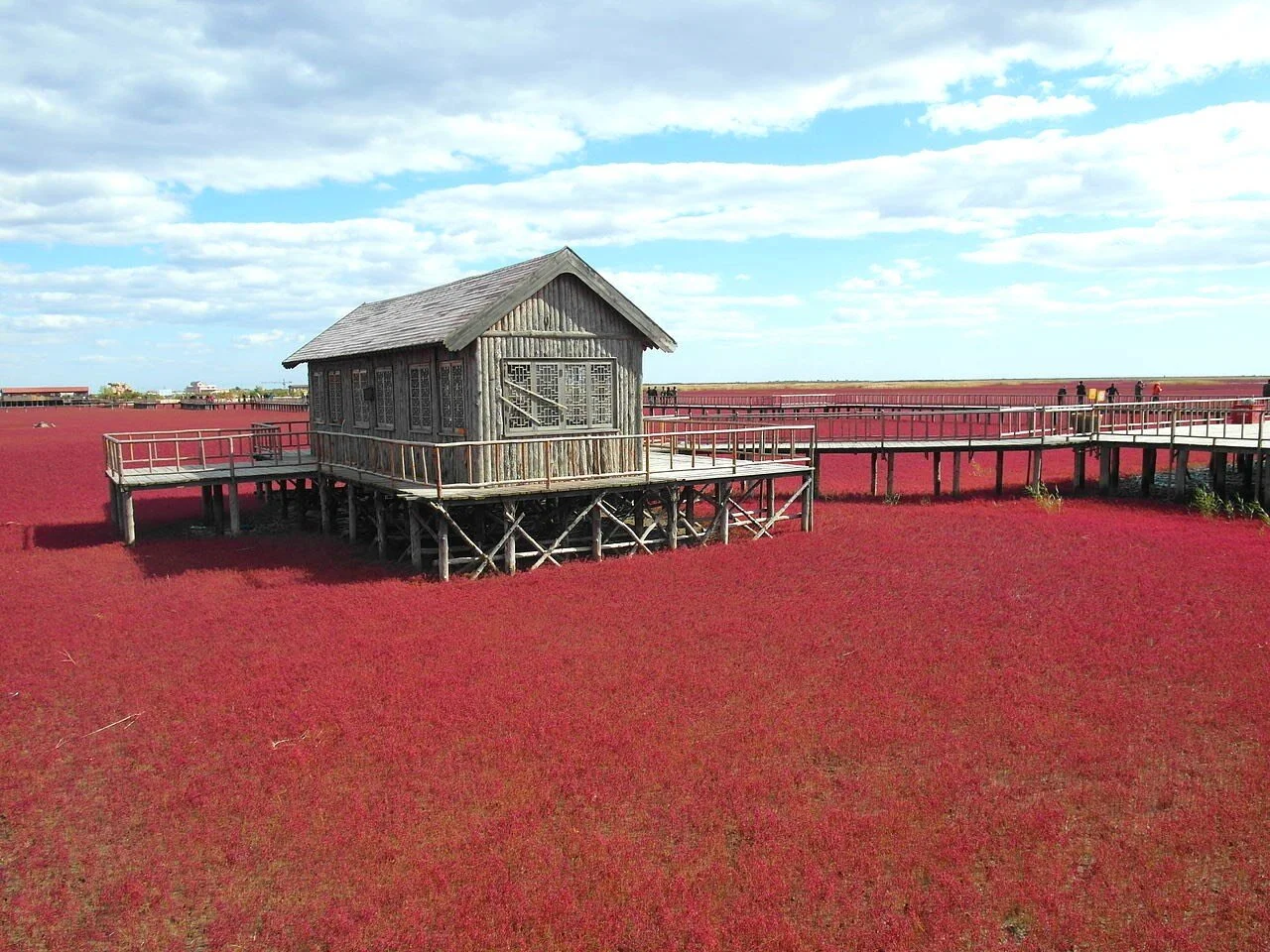
Panjin’s Red Beach. Ahbbwzf. CC BY-SA 3.0.

Located in the lush Liaohe River Delta of northeast China, the Panjin Red Beach does not look anything like what one would expect. Instead of being dusted in soft sand like a normal beach, the wetland derives its name from endless fields of crimson seepweed. This wetland contains a single wooden pathway for visitors to admire the bright hues of red, possibly catching a glimpse of the various native species that inhabit the area. Seepweed is common along China’s coasts, but this area is profoundly saturated with the radiating red species called suaeda. This species of seepweed blossoms in spring as an ashy green hue that turns into a light jade in the summer and finally an enchanting red in the fall.

Panjin Red Beach, under government protection, also serves as a wildlife reserve. Over 400 wildlife species can be found in the fields; half of them are birds of which many are protected. The birds find bountiful fish to feed on as well as stable nesting sites in the region. 

However, the plentiful ecosystem supported in the wetland also draws humans to consume its goods; rice and crab species in the area are highly prized. Additionally, the nearby Liaohe Oil Field poses a massive threat to wildlife species roaming in the region. 

Conservationists have taken action to preserve the balance of the area’s ecosystem, and many hope that this will be enough to protect the wetland’s precious biodiversity. 
RED LAND

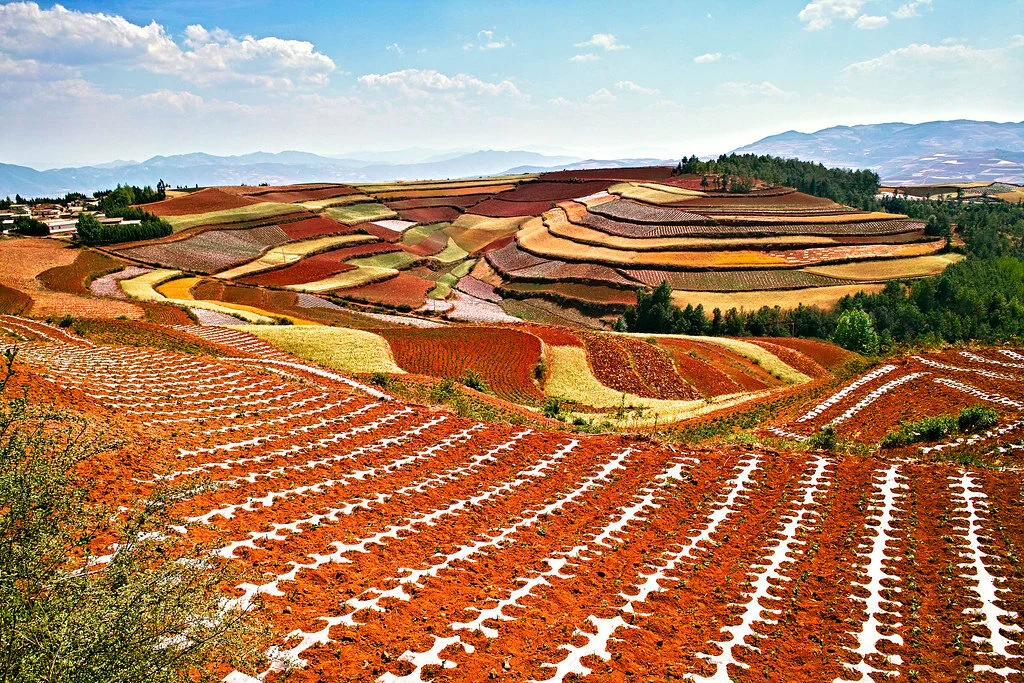
Dongchuan Red Land. Fotokon Kiki. CC BY-NC-ND 2.0.

Situated in China’s southwestern province of Yunnan, Dongchuan Red Land is an idyllic sight with its hundreds of miles of crimson crops. Named for the iron oxide deposits responsible for its glorious red hues, the Red Land has drawn flocks of artists and photographers eager to capture its magnificence. The land also houses an array of golden and green crops that shine against clear skies. 

Witnessing the extraordinary color palette of the area, one would surely doubt that this sight exists year-round. However, the various types of crops lining the hills peak at different times of the year, keeping the area glowing all the time. The random array of crops is due to the lack of regulation in the area; local farms lay their fields as they see fit. 

The endless miles of fields are home to a variety of villages, each with unique characteristics. One notable stop is Qicaipo, or the “Seven-Color Slope,” which features purple potato flowers that stripe the hills. Another stop is Yuepuao, or the “Music Hollow,” named for the way farmers appear like musical notes while working the thinly lined fields. 

Although one could easily get lost in the flourishing fields of the Red Land, it would surely be an artful adventure attempting to find a way out.

Ella Nguyen

is an undergraduate student at Vassar College pursuing a degree in Hispanic Studies. She wants to assist in the field of immigration law and hopes to utilize Spanish in her future projects. In her free time she enjoys cooking, writing poetry, and learning about cosmetics.

Stirring Up the Stronghold: Philippines Divided as Pope Francis Supports Same-Sex Civil Unions

With Pope Francis’ recent comments in support of same-sex civil unions, many have protested the remarks. However, the Catholic stronghold of the Philippines has particularly mixed reactions. 

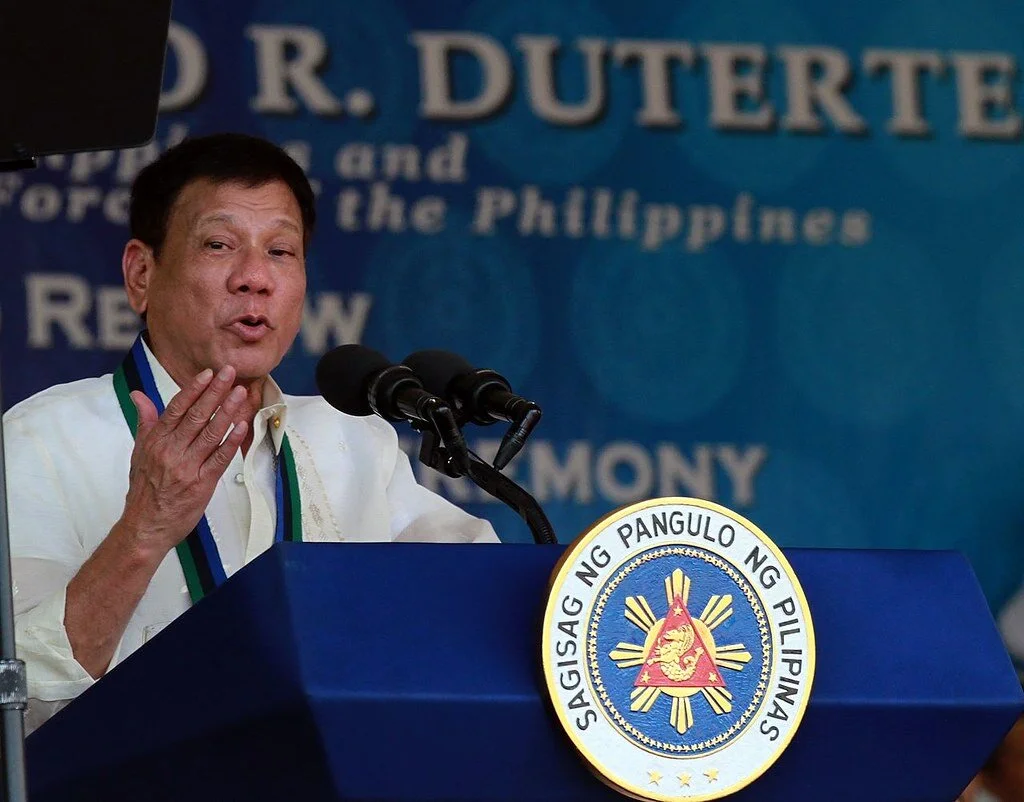
President Rodrigo Duterte. Prachatai. CC BY-NC-ND 2.0.

Locals and officials in the Philippines have become divided with the reveal of Pope Francis’ remarks siding with same-sex civil unions. It has been a long-established teaching of the Roman Catholic Church that same-sex civil unions are immoral, so many are skeptical that the pontiff had indeed made such comments. In fact, many bishops around the world have now responded with public remarks blaming the comments on miscontexualization. As with many other stories coming from the Vatican, the pope’s comments are wrapped in scandal, with many other officials saying that the remarks had been reframed for propaganda purposes. 

The pontiff’s remarks are sourced from a 2019 interview with the Mexican broadcaster Televisa in which he states, “Homosexuals have a right to be a part of the family. They’re children of God and have a right to a family. Nobody should be thrown out or made miserable because of it.” Homosexual acts in the Philippines are currently permitted, but same-sex marriage remains illegal. 

The Philippines, the world’s third most Catholic country with around 81% of its residents identifying with the religion, now stirs with controversy at the pope’s statement. The bishop of Sorsogon, Arturo Bastes, reacted with serious hesitancy toward the ethicality of the pope’s comments. Other bishops have withheld rash responses and instead have chosen to wait for a more formal declaration from the pontiff. For now, the Catholic Bishops’ Conference of the Philippines remains tight-lipped as well. 

While some officials have reacted with great disturbance, LGBTQ+ residents and organizations have celebrated the pontiff’s comments as an incredible breakthrough. Bahaghari, one of the Philippines’ LGBTQ+ groups, expressed jubilation that the comments may very well be the first step toward viable change. It hopes that the pontiff’s remarks will ease the minds of legislators whose traditional beliefs have squashed attempts at passing pro-LGBTQ+ legislation. Many legislators have held tightly to conservative views in fear of the iron grip that church leaders have on the heavily Catholic country, but all of this now has the potential to shift. The pope’s disapproval of same-sex marriage has long been a pillar of conservative legislators’ reasons for rejecting the legislation, but some Filipinos hold hope that the loss of this argument will be enough to tip the scales. President Rodrigo Duterte himself has been a proponent of same-sex civil unions, and in recent years has publicly expressed support for laws legalizing same-sex marriage. 

Not much can be said at the moment about which steps the nation will take going forward, but what can be expected is skyrocketing tension in the long-standing debate. Regardless, some young residents have seen the pope’s remarks as a call to action, and may very well turn the nation’s views on their head.

Ella Nguyen

is an undergraduate student at Vassar College pursuing a degree in Hispanic Studies. She wants to assist in the field of immigration law and hopes to utilize Spanish in her future projects. In her free time she enjoys cooking, writing poetry, and learning about cosmetics.

Recycling for the Future: Scientists Create Enzyme Formula to Break Down Plastics

Our human habit of excessive plastic consumption has degraded the environment, and we have yet to find a solution to undo the damage. However, scientists have paved the way for a much speedier resolution with a new enzyme formula. 

Scientists have crafted a formula of two plastic-munching enzymes, PETase and MHETase, to rapidly break down plastic waste. The PETase enzyme has been previously used to break down plastics, and now when combined with MHETase, this duo can dissolve plastics six times faster. 

PETase, as its name implies, is the enzyme that dissolves polyethylene terephthalate (PET), a thermoplastic polymer commonly used in plastic bottles and clothing. The polymer PET takes hundreds of years to break down, but with PETase, the process is reduced to mere days. 

However, the rate at which PET is produced has proven to be far too mighty for the rate at which PETase can break plastics down.

So far, researchers have only found a way to break down plastic bottles, which account for just over 4% of all of the PET production that exists. Ecologists find this minuscule number frightening, as many of Earth’s limited resources are being pushed to the brink while a shift to regular recycling has been quite limited. Scientists are also highly concerned with PET’s active role in accelerating climate change. The copious amounts of greenhouse gases that are spit into the atmosphere during PET production grows more concerning as PET usage rapidly increases. PET is a sturdy material that is not broken down well by microbial organisms, so other potential solutions have failed to effectively break down the impenetrable product. The downside to current popular methods of breaking down plastics is the high amount of energy required; in turn, this becomes an incredibly costly process.

Now, an innovative team consisting of American and British scientists has found a way to create a “super-enzyme.” The MHETase enzyme was studied using the Diamond Light Source, a powerful X-ray beam that is 10 billion times brighter than the sun, to study the atoms of MHETase. They have engineered a way to connect PETase with its sibling enzyme MHETase, which has now tripled the speed of the breakdown process. Their preliminary experiments tested the ability of the enzymes to work together, but as two separate enzymes. Then, they physically connected the two enzymes, and found that the two work better attached. This new enzyme deconstructs plastics in two steps. First, PETase eats away at the surface of the plastic. Then, MHETase slices up the rest. 

Researchers are hoping that providing a commercially sustainable method for plastic deconstruction will shift people away from depleting Earth’s oil and gas resources. The discovery of the super-enzyme formula certainly holds hope for preserving the world’s ecology, if only humans learn to change destructive consuming habits for the better.

Ella Nguyen

is an undergraduate student at Vassar College pursuing a degree in Hispanic Studies. She wants to assist in the field of immigration law and hopes to utilize Spanish in her future projects. In her free time she enjoys cooking, writing poetry, and learning about cosmetics.

Aotearoa: Reclaiming Maori Language and Identity in New Zealand 

Compared to Indigenous groups around the world, the Maori in New Zealand enjoy more agency because of the Treaty of Waitangi, a founding document that recognizes Maori ownership of land and their subsequent autonomy in the country’s government. However, some feel that more can be done to create a bicultural and celebratory society—one that puts the Maori language at the forefront. 

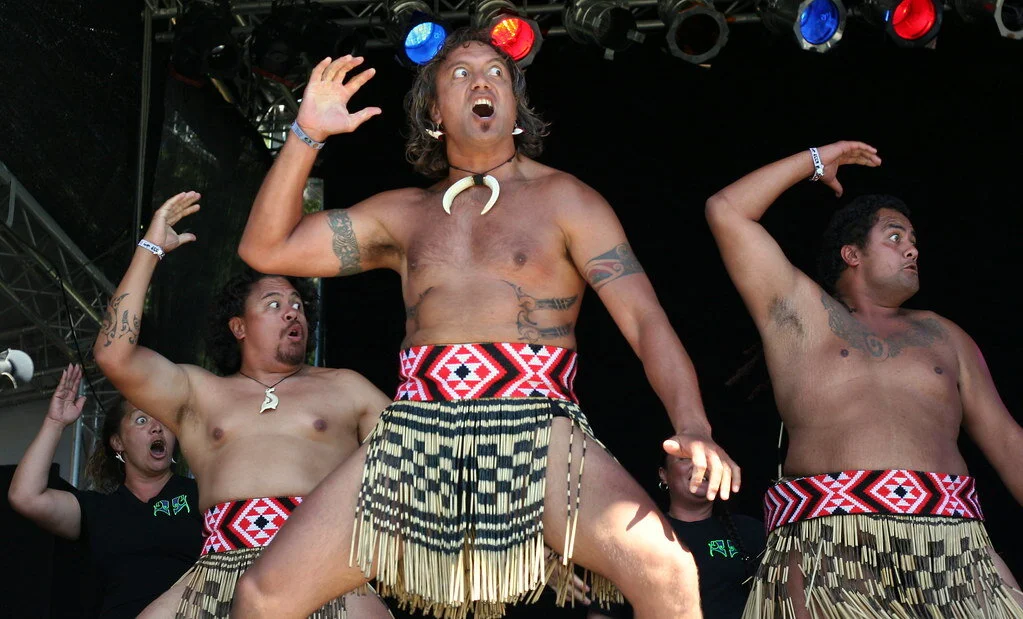
A performance of the haka, a traditional Maori dance. Matthieu Aubry. CC BY-NC-SA 2.0.

New Zealand is an island country known for its scenic views, its native kiwi bird and its iconic role as the fictional Middle Earth. The country, named Aotearoa (meaning “long white cloud”) in the Maori language, is also steeped in rich history and culture.

Before European settlement, New Zealand was home to the Maori, one of the region’s many Polynesian ethnic groups. According to their oral histories, the Maori first voyaged from present-day Tahiti. They arrived and began inhabiting Aotearoa as early as 1300 A.D. Once settled, the Maori formed tribal societies. Their culture revolves around respect for the natural environment. The Maori also possess elements of a warrior culture—they craft unique performative arts such as the haka, a war dance turned into a ceremonial celebration.

Although the first Europeans—Dutch navigators—made contact with the Maori in 1642, the Maori way of life was not significantly impacted until the late 1700s. With the arrival of British Capt. James Cook, the scramble for New Zealand ensued. As nearby French voyagers and ungoverned sealers and whalers reaped profits from the islands’ natural resources, the British moved to make New Zealand a colony in 1840.

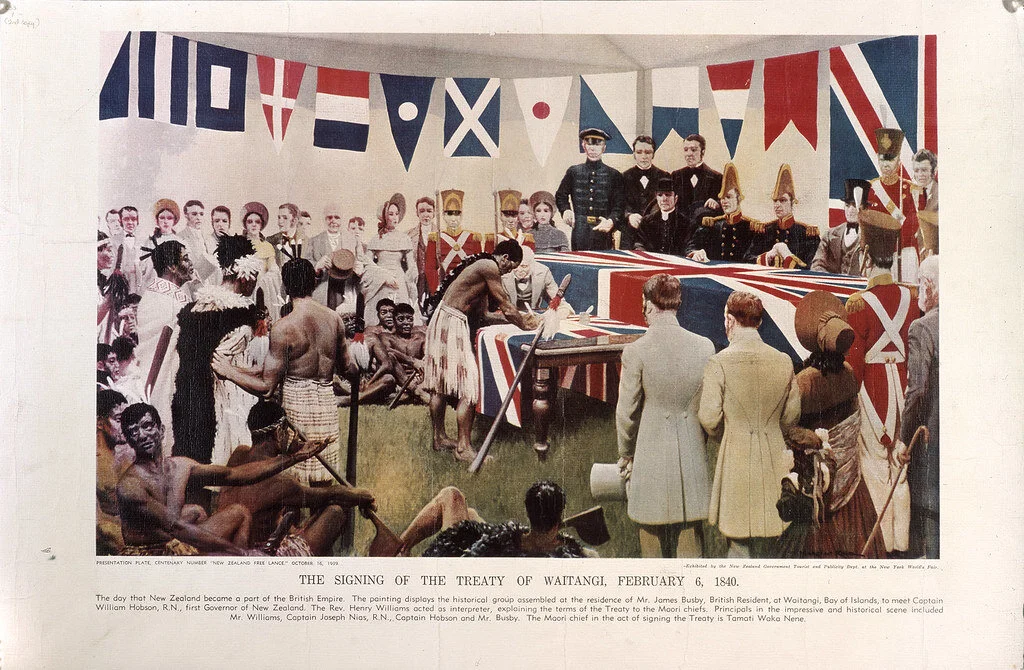
Reconstruction of the signing of the Treaty of Waitangi. Archives New Zealand. CC BY 2.0

In that same year, the Treaty of Waitangi was created. This artifact is not only recognized as a founding document but also as one that acknowledges Maori rights to the land. Despite its contentious nature, the Treaty of Waitangi is still considered a key success for the treatment of Indigenous people in New Zealand. In countries like Canada and Australia, Indigenous groups suffer a lower quality of life and enjoy less autonomy than their counterparts in New Zealand. These disparities can be traced back to the absence of a document acknowledging Indigenous people’s land rights. 

Although the status of the Maori in New Zealand may be considered a model for Indigenous treatment across the globe, there are still discrepancies that prevent them from fully embracing their dual identities. Though Maori is considered one of the national languages and has been celebrated every September since 1975, a national study found that only 148,000 people in New Zealand can hold a conversation in it.

In a piece for The Guardian, Leigh-Marama McLachlan explains her rejection of Maori culture to sustain success in New Zealand. She writes, “Back then, almost no one in my family spoke [Maori]. My grandmother was like so many Maori of that generation who were led to believe that our language would be of no use to their children.” Although McLachlan possesses some rudimentary Maori, she laments the overwhelmingly monolingual sentiment of the country.

The personal rejection of Maori culture can be traced back to the early stages of New Zealand’s modernization. In a 2015 study, Maori education professors Lesley Rameka and Kura Paul-Burke found that education for children dismissed the value of Maori. Textbooks failed to frame Maori history in a positive light, rendering the culture and language as “unintellectual, trivial and strange.”

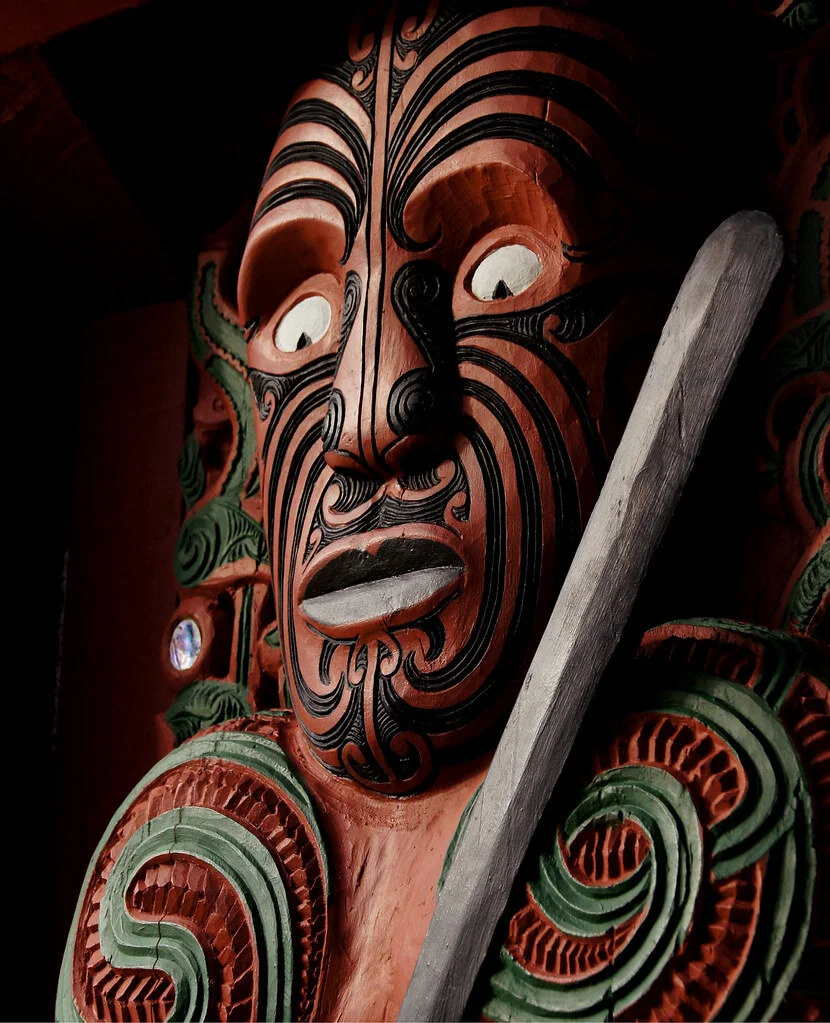
A Maori carving. Bernard Spragg.

Since the last Maori Language Week in September, some feel that it is time to restore places to their rightful Maori names. Since the protests against racial injustice in the United States, policymakers and stakeholders were forced to reexamine New Zealand’s racist past of colonialism and disenfranchisement. With an overall renewed interest in Maori rights and treatment, several telecommunications firms in the country have already changed their names to include “Aotearoa.”


Rhiannon Koh

Rhiannon earned her B.A. in Urban Studies & Planning from UC San Diego. Her honors thesis was a speculative fiction piece exploring the aspects of surveillance technology, climate change, and the future of urbanized humanity. She is committed to expanding the stories we tell.

Polish Leaders Reject Criticism of LGBTQ+ Policies 

50 ambassadors and international representatives published an open letter pressing Poland to work for the tolerance of LGBTQ+ people. Polish leaders responded by saying that the rights of LGBTQ+ Poles are not threatened.

Polish leaders denied that the rights of LGBTQ+ citizens have been restricted after an open letter from 50 ambassadors and international representatives expressed concerns over the policies of President Andrzej Duda’s government. 

The letter, posted on Sept. 27, asserts that Poland needs to work for “nondiscrimination, tolerance and mutual acceptance,” particularly in the education, health, social affairs, public service, public documents and citizenship sectors. It goes on to say that “human rights are universal and everyone, including LGBTI persons, are entitled to their full enjoyment” and affirms that “this is something that everyone should support.” 

Poland’s LGBTQ+ community has dealt with persecution from a number of sources, including the Catholic Church, local communities and the government. This summer, President Duda won reelection after campaigning against LGBTQ+ “ideology,” which he labeled as “more destructive” than communism. During his campaign, Duda agreed with another politician who claimed that “LGBT is not people,” but an ideology that threatens the young and those in traditional families.  

U.S. Ambassador Georgette Mosbacher, one of the letter’s signatories, tweeted a link to the letter with the caption: “Human Rights are not an ideology—they are universal. 50 Ambassadors and Representatives agree.” Joachim Brudzinski, of Poland’s ruling Law and Justice party, responded that “we in Poland also agree.” Brudzinski followed the statement with a call for a letter in defense of Christians, who he alleges have faced mistreatment. Poland is majority Catholic, and Christians are generally considered to not experience oppression. This summer, Brudzinski tweeted that “Poland without LGBT is most beautiful.” 

The rhetoric of Duda, Brudzinski and other politicians has led to a number of towns in conservative parts of Poland passing resolutions pronouncing themselves free of “LGBT ideology.” These towns, widely known as “LGBT-free zones,” house nearly 32% of Poland’s population, according to an LGBTQ+ rights group tracking the resolutions. 

Bart Staszewski, a Polish activist, protests these resolutions by briefly attaching a sign that reads “LGBT-FREE ZONE” in four languages next to the towns’ signs. He posts pictures of the signs on Instagram, often including an LGBTQ+ person from the town in his shot. Staszewski’s signs are a form of performance art that offers a visual representation of Poland’s anti-LGBTQ+ policies, which Staszweski and other activists say harm an already marginalized community. 

During a news conference in response to the open letter, Prime Minister Mateusz Morawiecki called Staszewski’s protests a “falsified reality” that presents LGBTQ+ rights in Poland as under attack. Morawiecki also addressed the ambassadors directly, saying, “To the dear ambassadors, I can only say that tolerance belongs to Polish DNA … Nobody needs to teach us tolerance.” He concurred with the letter’s claim that every person is entitled to the enjoyment of rights, but rejected the idea that LGBTQ+ Poles were being denied these. 

Poland is not particularly LGBTQ+ friendly, despite what its leaders have said in recent days. Members of the community are angry and fearful after Duda’s reelection on an anti-LGBTQ+ platform. Activists are currently advocating for legislation criminalizing hate speech based on sexual identity. The open letter praises the kind of work done by Polish activists, urging the government to support all people’s “fundamental rights.” 

Rachel Lynch

is a student at Sarah Lawrence College in Bronxville, NY currently taking a semester off. She plans to study Writing and Child Development. Rachel loves to travel and is inspired by the places she’s been and everywhere she wants to go. She hopes to educate people on social justice issues and the history and culture of travel destinations through her writing.

What Makes Bhutan So Happy?

Meet the country which prioritizes the contentment of its citizens before everything else through its “Gross National Happiness” program.

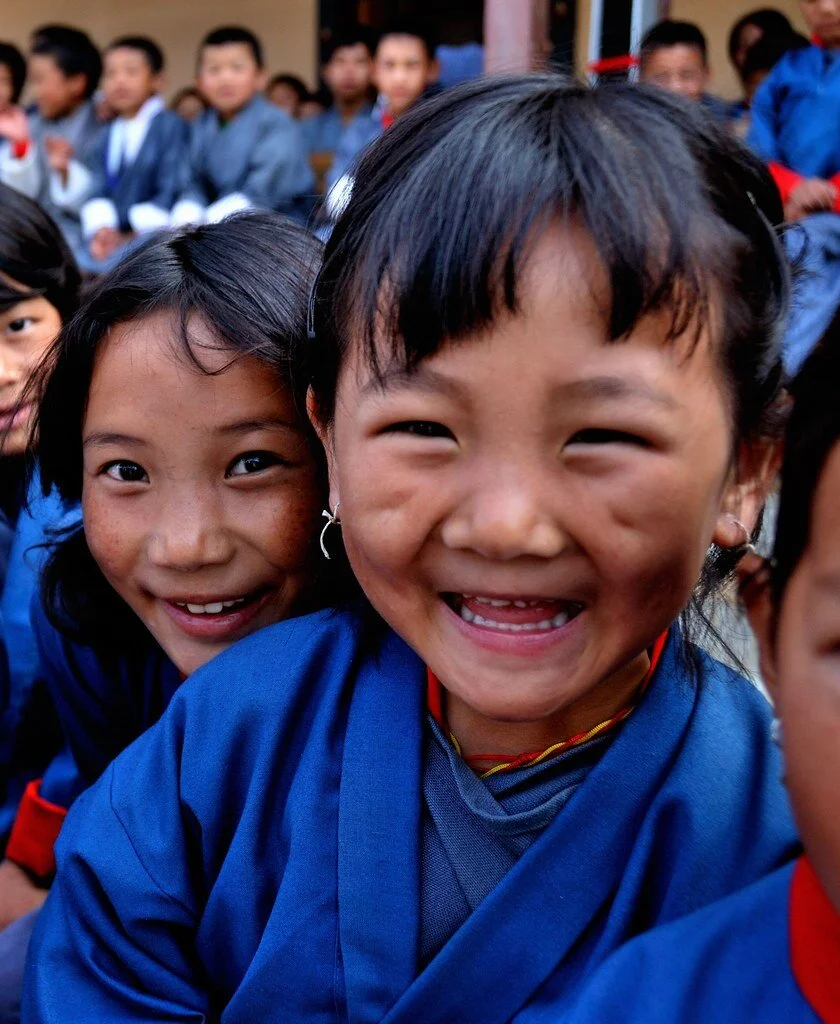
Bhutanese children. r y _ _ _ _ . CC BY-NC 2.0

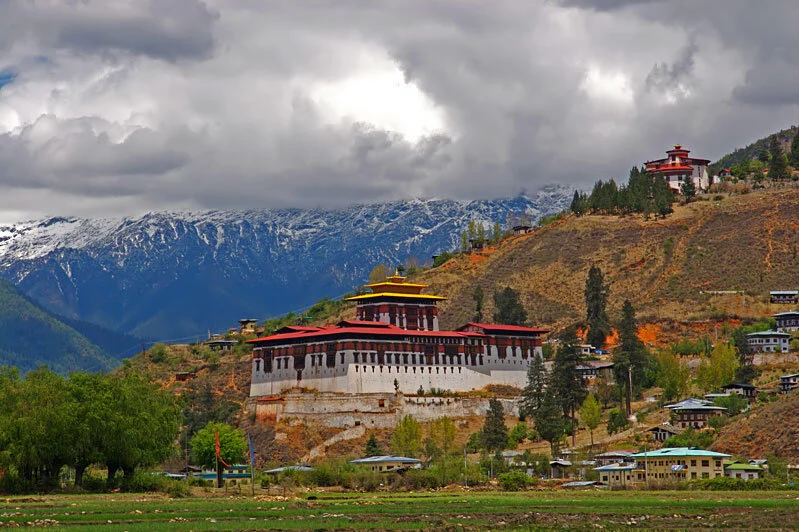
Imagine a country hidden away from the rest of the world. Tucked in between China and India, the world’s most populous countries, little Bhutan rests at the base of the Himalayan mountains. The rural country long ago made the decision to close off its borders to most tourism in hopes of preserving the nation’s unique Buddhist culture and the identity of its 740,000 people. In 1974 the country gradually reopened, though the Bhutanese monarchy was reluctant for the nation to be connected with the rapidly urbanizing world. Bhutan could not be completely isolated for long due to globalization, and in 1999 internet and Wi-Fi were quickly introduced. Being alone for so long, Bhutan was innovative in ways that made sense for its culture and ecosystem.

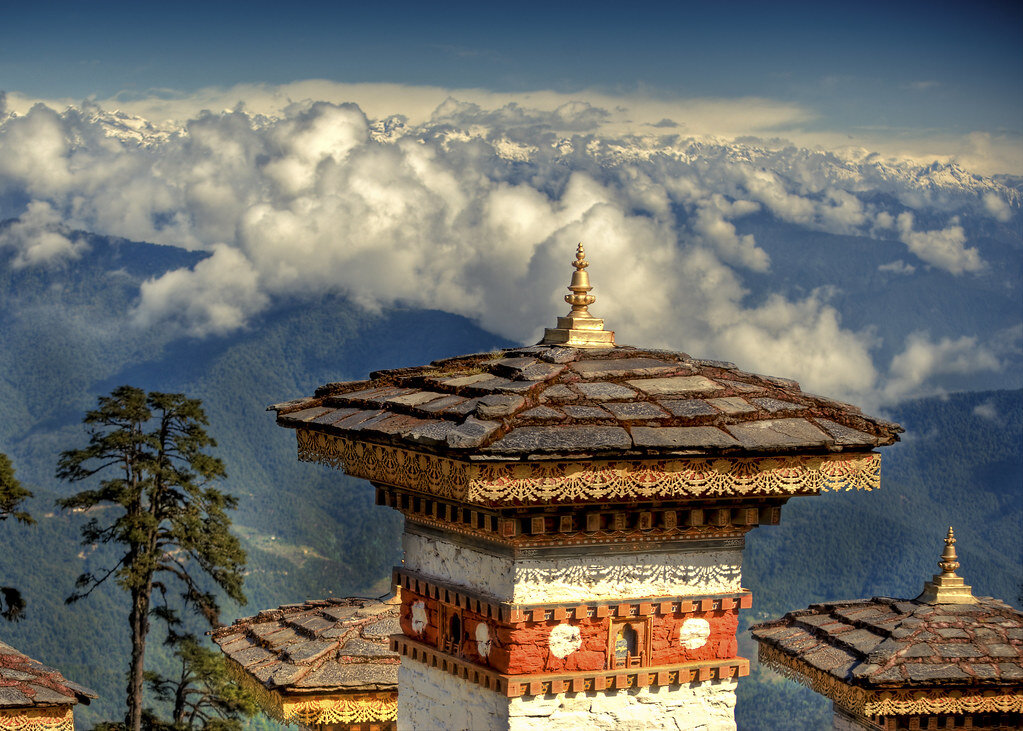
Dochula Pass. Göran Höglund (Kartläsarn). CC BY 2.0

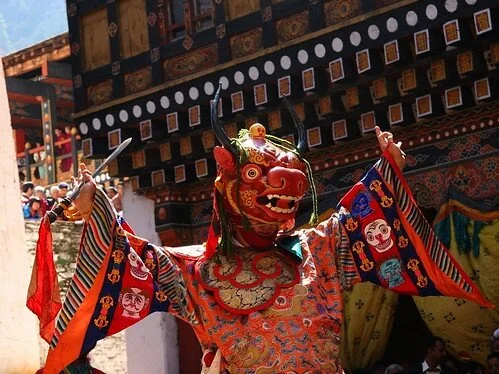
Bhutan is unique in its location and recent connections to the outside world, but it’s the traditions and customs within Bhutan that really make it a sight to behold. Even during the age of colonization and imperialization, Bhutan was never colonized. The country’s official religion remains Vajrayana Buddhism, a deity-dense, merit-based and karma-focused faith implemented into everyday life and routines. 

Bhutan Buddhist monk sand art. John K. CC BY-NC-ND 2.0

Dance of the death god. jmhullot. CC BY-SA 2.0

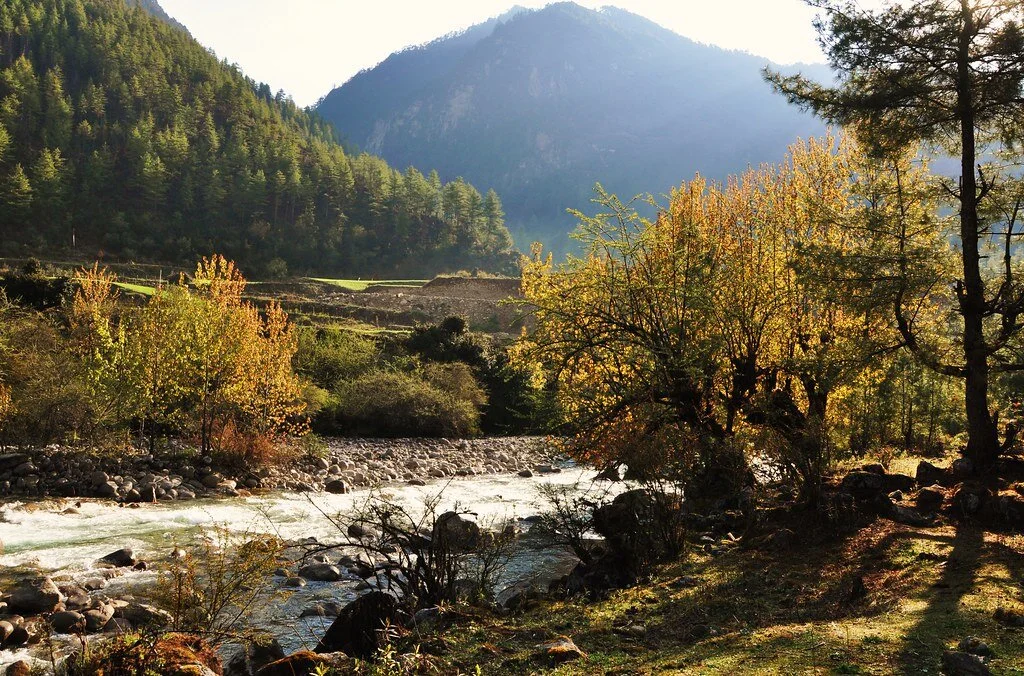
Ecology is everything. Bhutan is the only carbon negative nation in the modern world, absorbing three times more carbon than it produces. In light of climate change, that feat is revolutionary. Its government has established laws that require Bhutan to always have its area 60% covered in forest lands. Keeping in mind its minimal carbon footprint, Bhutan is still vigilant about tourists who enter the country, always prioritizing  the preservation of the nation’s cohesive identity. The tourist industry is nationally regulated, making it expensive and difficult to travel to. Documents and visas are issued by state-appointed companies and provide visitors with everything, including hotels, insurance and most importantly a guide who must accompany travelers at all times

Ecology is everything. 360around. CC BY 2.0

Ecology and tourism are not the only things the government has taken to regulating. Bhutan is once again unique in national policy, measuring its nation’s happiness. Outsiders like to say that Bhutan is the “happiest country in the world” and the statistics given by Bhutan back up this claim. In 2015, the annual extensive survey that gauges the nation’s happiness concluded that 91% of its population was happy.” The Ministry of Happiness measures the contentment of its population with “Gross National Happiness” (GNH). 

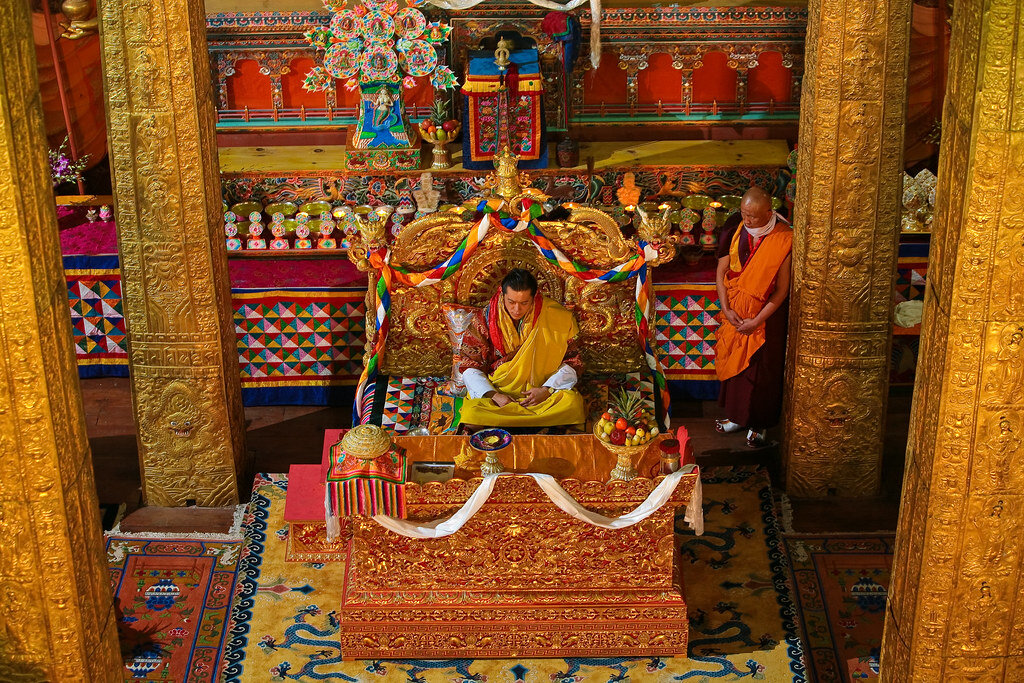
King of Bhutan. Bhutan-360. CC BY-NC-SA 2.0

Ex-Prime Minister Tshering Tobgay defined it as “a developing philosophy that acknowledges that economic growth is important, but that growth must not be mindless, but sustainable.”

Much like a country’s gross domestic product, GNH is considered important. Established in 2008, the Gross National Happiness Commission was appointed to take into consideration and care the inner peace of Bhutan’s people. Broken down into four pillars, nine domains and 72 indicators, GNH is a difficult concept to comprehend. The country’s leaders take into account how happy its people are in every aspect of life: governance, health, education, living standards, culture, ecology, time use and psychological well-being. 

Tobgay breaks Bhutan’s complicated process down to three components: the key to happiness is security, identity and purpose. These things are not mutually exclusive; they reinforce one another in every direction, both on an individual and a national level. He says that, “The government has a responsibility to ensure the whole nation has individual pursuit of the keys to happiness.” 

Temple overlooking the Himalayas. Jean Marie Hullot. CC BY-SA 2.0

The Bhutanese are often misunderstood. Outsiders often believe that just because they have GNH, it automatically makes them the happiest country in comparison to all others. They have free health care, free education, clean air, a thriving environment and a strong sense of community. But Tobgay argues that the Bhutanese still struggle because that is what it means to be human. Bhutan is a “real country with real people, and real desires.” Although every person may suffer from inner turmoil for whatever reason, the Bhutanese should be happy knowing that they have been given the keys to happiness.


Yuliana Rocio

Yuliana is currently a Literature/Writing major at the University of California San Diego. Yuliana likes to think of herself as a lover of words and a student of the world. She loves to read, swim, and paint in her free time. She spent her youth as part of a travel-loving family and has grown up seeking adventure. She hopes to develop her writing skills, creating work that reflects her voice and her fierce passion for activism.

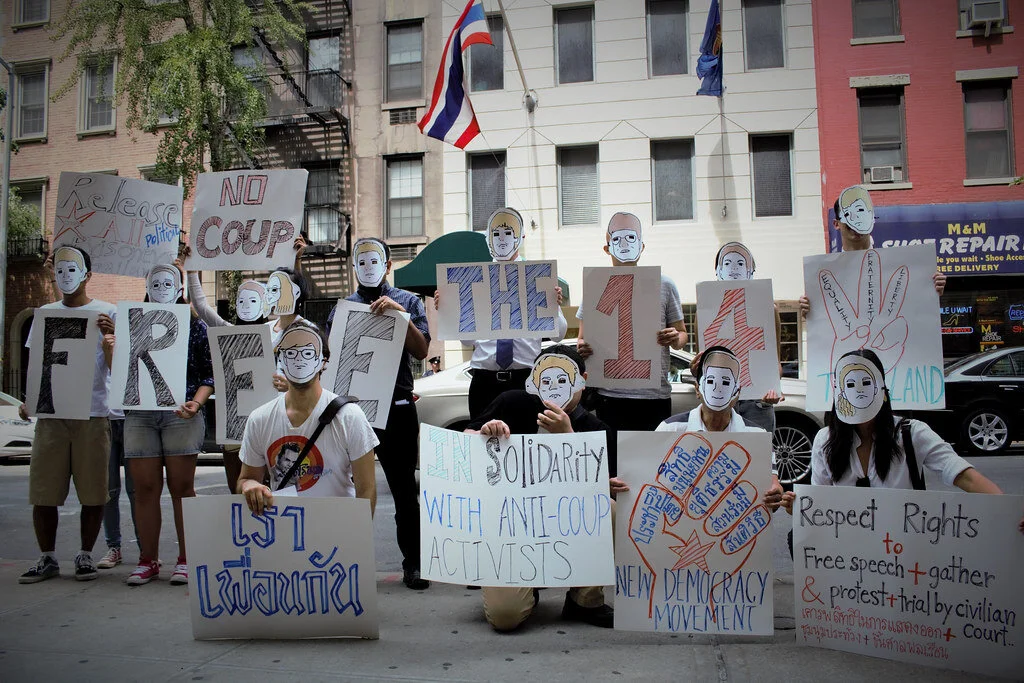
Students Call for a Democratic Revolution in Thailand

2020 seems to be the year when students across the globe take part in changing their societies, no matter the cost.

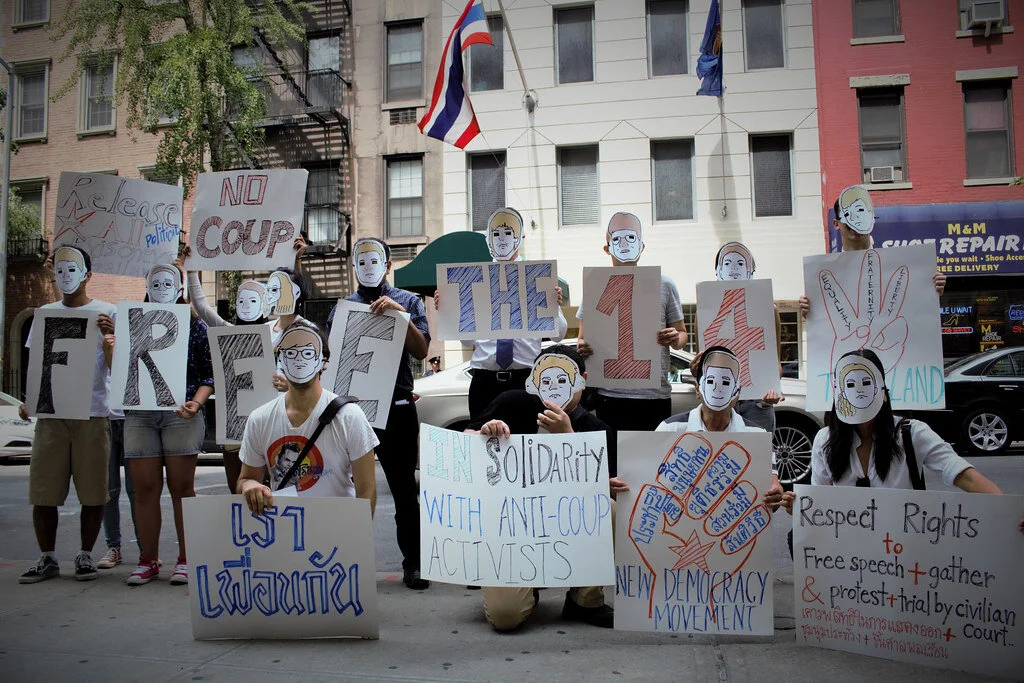
Student protesters. Prachatai. CC BY-NC-ND 2.0

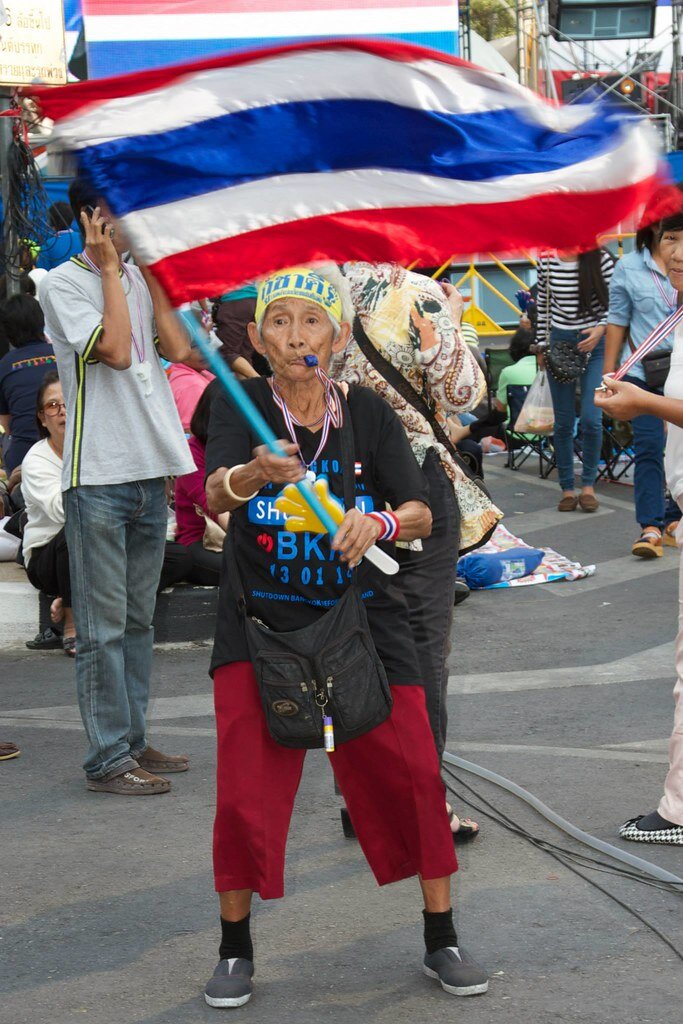
In Thailand, student-run organizations have led the march that grew to be an all-out revolution in the busy streets of Bangkok. Thousands of protesters have congregated in the crowded commercial center, Ratchaprasong, chanting for the Thai government to listen to their demands. Protesters call for the removal of Prime Minister Prayut Chan-o-cha, the reduction of the monarchy’s budget so the king’s funds would be separated from crown assets, and the abolition of the strict lese majeste laws which ban the voicing of criticisms against the king. 

The unrest began in 2019 when the government banned the most vocal party opposing the power of Prime Minister Prayut Chan-o-cha. Thai citizens are calling for his removal due to the potentially corrupt manner in which he came to power. In 2014 it is said that Prayut staged a coup that shifted his position from army chief to prime minister. The monarchy endorsed his premiership in 2019, allowing him to stay in power after elections which were controversially deemed “fair.” 

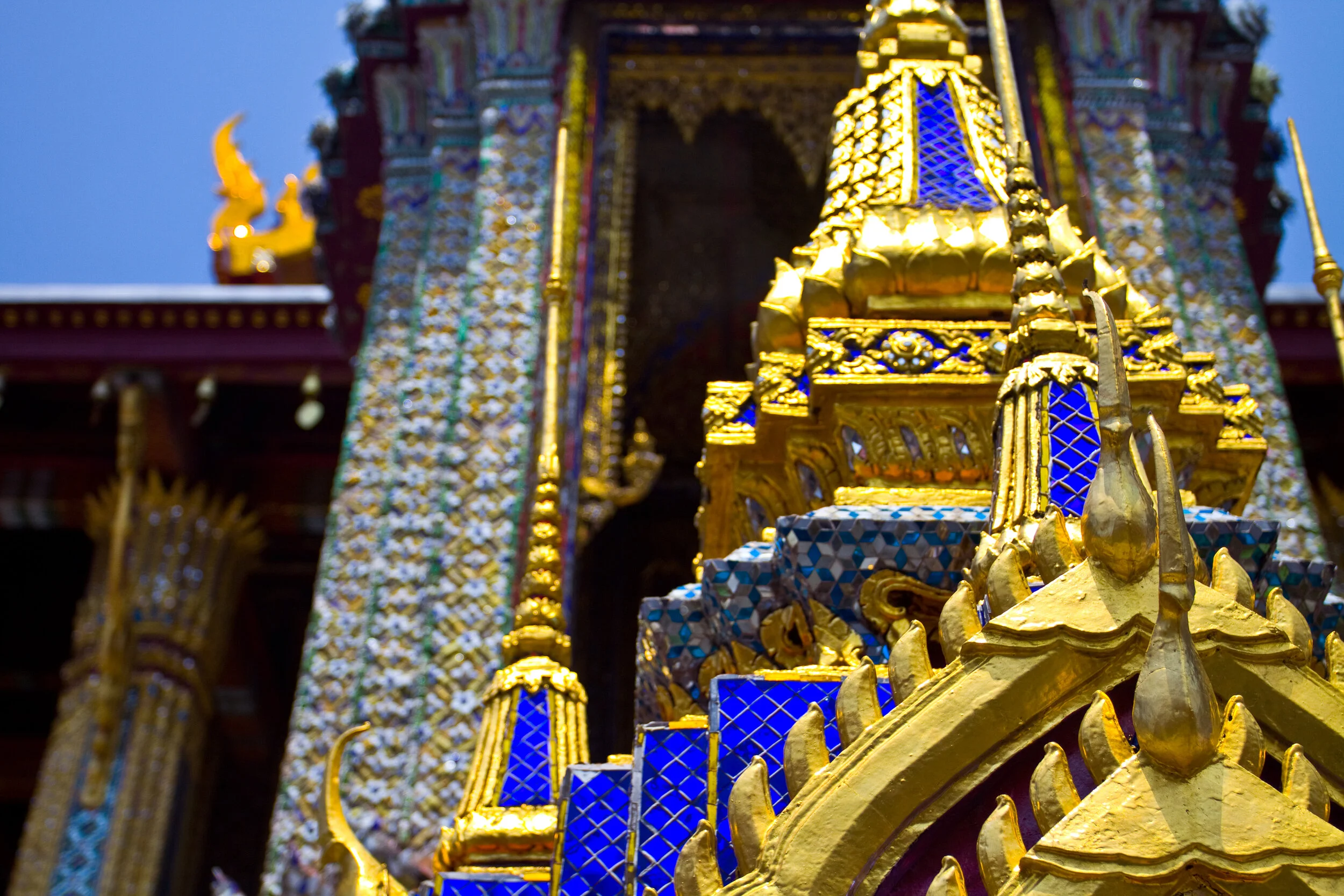
The Grand Palace in Bangkok. Tom Eversley. CC0

The protests were put on hold through the early part of the year due to COVID-19, but are now growing at a rapid rate. In early October, the government accused protesters of obstructing Queen Suthida’s motorcade during a mass gathering at the Government House to demand the removal of Prayut. Despite the government’s imposition of emergency measures such as banning the gatherings of five or more people, forbidding the  publication of news that could “harm national security” and deploying 15,000 police officers to quell the protesters, tens of thousands continually show up to stand for their rights.

Woman waving the Thai flag. The Global Panorama. CC BY-SA 2.0

According to Human Rights Watch, the new emergency measures are allowing officials to keep protesters for up to 30 days without bail or access to lawyers and family members. Human Rights Watch’s deputy director of the Asia Division, Phil Robertson, stated that, “Rights to freedom of speech and holding peaceful public assemblies are on the chopping block from a government that is now showing its truly dictatorial nature.”

University students seem to be at the core of the current demonstrations. The Free Youth Movement was behind the first major protest back in July, inspiring a group from Thammasat University to establish the United Front of Thammasat. Even high school students have joined the fray, identifying as the Bad Student Movement, as they call for education reform. Most of these kids are in their twenties, but they have attracted the attention and support of human rights leaders and lawyers like Arnon Nampa, who was arrested in October along with prominent youth leaders. 

Student protesters. Prachatai. CC BY-NC-ND 2.0

Panupon Jadnok, a teenage protest leader, led a passionate speech during a rally: 

“Like dogs cornered, we are fighting till our deaths. We won't fall back. We won't run away. We won't go anywhere.”

Raising their hands in the iconic three-finger salute made popular by ”The Hunger Games,” protesters are shouting in the streets for the police to “release [their] friends” and to stop being “slaves of dictatorship.” They will continue to fight for what they believe is right until all of their demands have been met and their friends and country are free.


Yuliana Rocio

is currently a Literature/Writing major at the University of California San Diego. Yuliana likes to think of herself as a lover of words and a student of the world. She loves to read, swim, and paint in her free time. She spent her youth as part of a travel-loving family and has grown up seeking adventure. She hopes to develop her writing skills, creating work that reflects her voice and her fierce passion for activism.

Unpacking the Nagorno-Karabakh Conflict and the Armenian Diaspora

The renewed conflict in the South Caucasus region has its roots in long-standing historical divisions between Turkey and Armenia. 

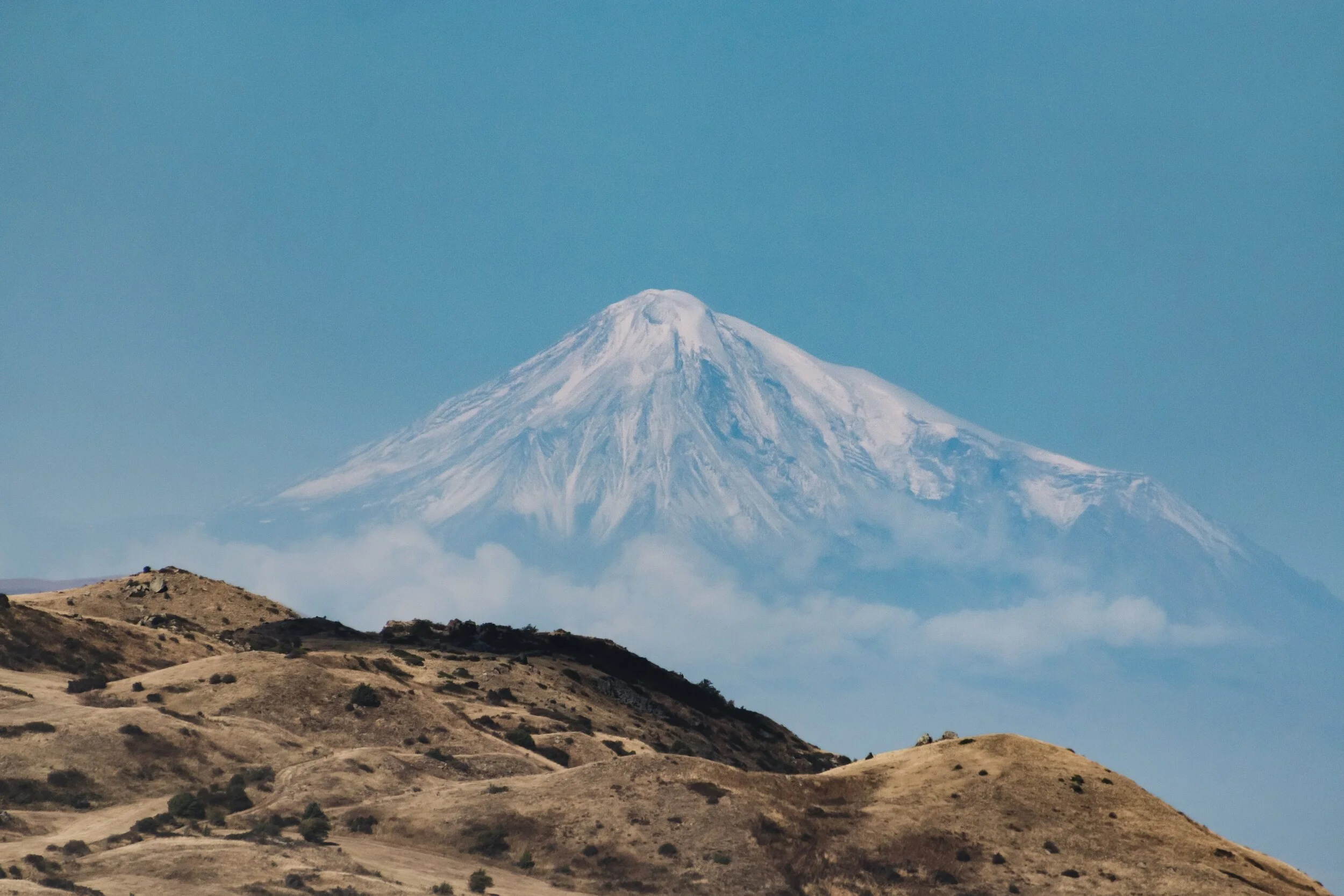
A view of Mount Ararat. West. CC2.0

Tensions between Azerbaijan and Armenia have been renewed due to the ongoing territorial dispute over Nagorno-Karabakh. Fighting started up again on Sept. 27 and has caused massive upheaval and casualties on both sides. Backed by Turkey, the Azerbaijani military bombed Nagorno-Karabakh’s regional capital of Stepanakert with intense artillery fire, while Armenia launched missiles at Ganja (Azerbaijan’s second-largest city), putting citizens in grave danger. Officials speculate that the last two weeks of fighting have proven to be the worst since a cease-fire was brokered by Russia in 1994. Although another cease-fire is a possibility, there is no prediction of what will come next. “Don’t discount the possibility of this turning into something much larger,” said Kevork Oskanian from the University of Birmingham in England. “Once a conflict like this kicks off, it has a dynamic of its own and you don’t know where it will go.”

A Brief History of the Nagorno-Karabakh Dispute

A map of the Nagorno-Karabakh region. Achemish. Wikimedia Commons. CC4.0

The recent fighting is a result of a renewed 32-year-long military conflict between Azerbaijan and Armenia. The territory of Nagorno-Karabakh, also known as Artsakh to Armenians, contains a population of about 150,000. Although completely surrounded by Muslim-majority Azerbaijan, it is governed and claimed by Christian Armenians. Josef Stalin gave the territory to Azerbaijan in 1921 and made it an autonomous region two years later. Initially, the territorial dispute was not violent, as both Armenia and Azerbaijan were under the stronghold of the Soviet Union. However, nationalistic and militaristic tensions increased between the two nations when the USSR began to dissolve. The fighting began in 1991, which resulted in 30,000 casualties and over one million displaced. Although a cease-fire was agreed to in 1994, no official peace deal has been reached. Armenia is happier with the status quo than Azerbaijan, as it was able to reclaim 20% of surrounding land during the fighting in the ‘90s (shown in yellow on the map above). However, Azerbaijan still has a large population of people displaced by the fighting who want to return to their homes. 

Why Turkey is Supporting Azerbaijan

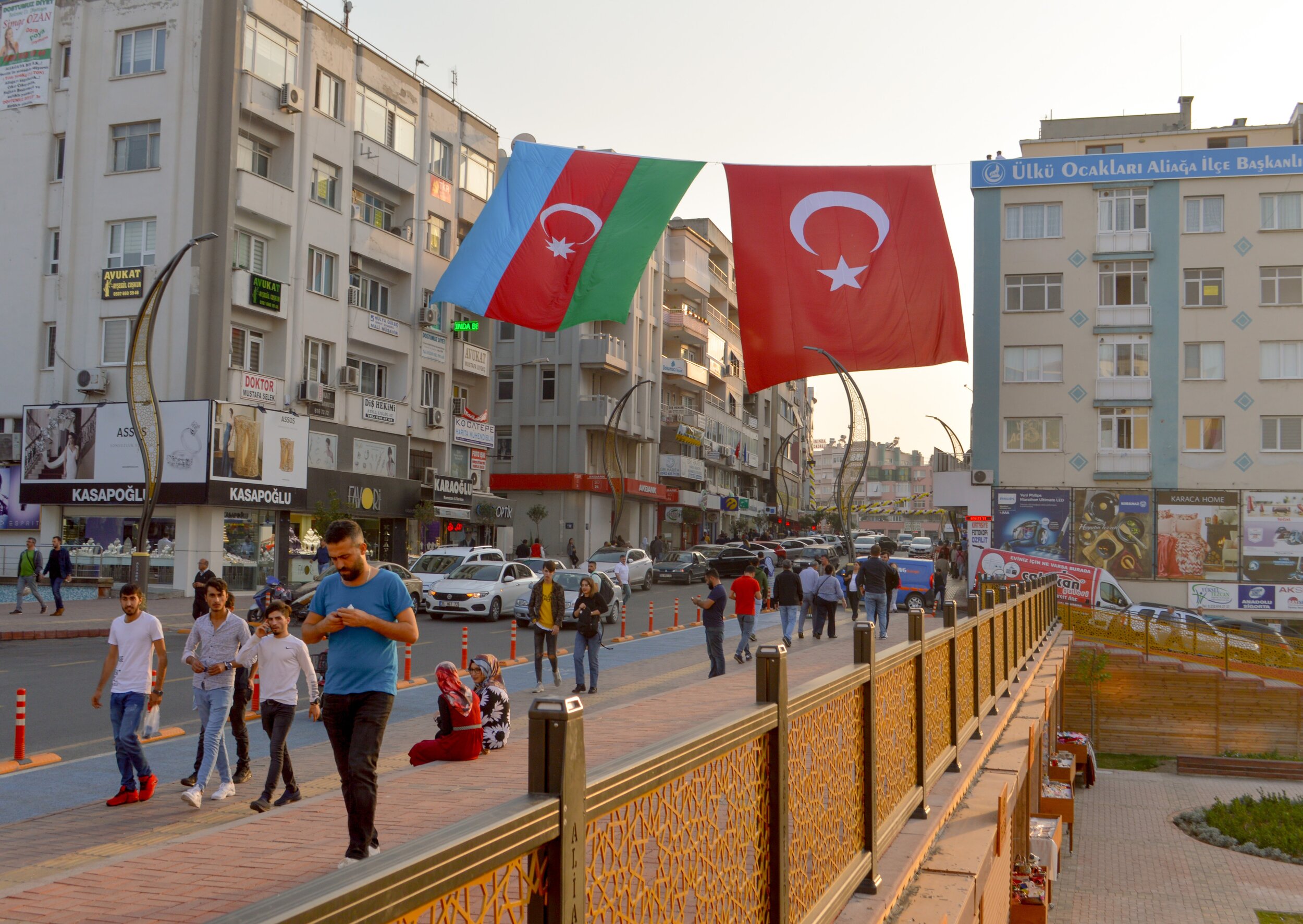
Azerbaijani and Turkish flags in Izmir, Turkey. Anzola. CC 2.0

Azerbaijan is often referred to as a little brother to Turkey, due to the two nations’ connections through cultural, linguistic and religious ties.The two have a relationship built on trade and mutual exchange. Azerbaijan provides a large portion of Turkey’s gas and oil, where the money in return is used to buy weapons from Turkey. Azerbaijan is currently using military weapons provided by Turkey to strike Nagorno-Karabakh, allowing Turkey to increase its political presence in the region. Underpinning Turkey’s involvement in the conflict are the events of 1915, where 1.5 million Armenians were killed under the direction of the Ottoman Empire (present-day Turkey), which many consider a genocide but Turkey denies. Many Armenians see Azerbaijan’s alliance with Turkey as a resurfacing of these events, providing an ultimate threat to their existence and statehood. 

The Conflict Reaches the Armenian Diaspora

An Armenian church in Los Angeles. Steeds. CC2.0

Although Armenia has a population of 3 million, the diaspora population is estimated to be much larger, with notable communities in Australia, Russia, Lebanon, France and Southern California. Although the events of 1915 resulted in mass migrations of Armenians around the world, the diaspora goes as far back as the Middle Ages. Throughout history, many Armenians migrated to new corners of the world due to political upheaval. Armenian merchants often traveled to trade and sell wares, playing a key role in the economies of China, India and Persia. Armenia’s long history of migration and displacement has resulted in a strengthened cultural identity in diaspora communities. Many notable Armenian celebrities, including Kim Kardashian and Serj Tankian, are strong proponents of the Armenian cause, posting on social media to raise awareness of the Nagorno-Karabakh dispute. Armenian lobby groups have held protests in Southern California, as well as asking Armenian-Americans to bring awareness of the conflict to representatives and congresspeople. Some Armenians even contemplate returning to their country to fight Azerbaijan. According to Alex Galitsky, part of the Armenian National Committee of America’s western region, “I think a lot of people see themselves as bearing some responsibility for the defense of our nation.” 

The conflict in Nagorno-Karabakh continues to escalate as nationalistic and militaristic tendencies fuel both sides. True peace will only be reached if Turkey, Armenia and Azerbaijan are willing to begin the difficult work of listening and embracing each other’s conflicting histories and narratives.


Megan Gürer

Megan is a Turkish-American student at Wellesley College in Massachusetts studying Biological Sciences. Passionate about environmental issues and learning about other cultures, she dreams of exploring the globe. In her free time, she enjoys cooking, singing, and composing music.