Between 2015 and 2018, more than 200,000 unaccompanied children claimed asylum in Europe. Many of these young people, now in the EU, have one thing in common: their smart phones.
Digital tools are not only a means to keep in touch with friends and family. They can also become a lifeline for refugees and unaccompanied minors, according to a recent report, becoming as essential as food, water and shelter. But for many of these unaccompanied young children, out-of-date kit, lack of access to digital technologies and expensive mobile broadband packages can all act as barriers to being able to live in a digital environment.
Similarly, levels of literacy, can also significantly hinder technological development. And without structured educational provision, many young refugees can also struggle because of poor IT skills.
As researchers based in the UK and Hungary, we decided we wanted to help. And what began as a chance conversation at a conference in Prague, is now a major research project. The main aim of our two-year-long media literacy project was to understand how unaccompanied young refugees use digital technologies and social media.
We wanted to find out whether these technologies can help to foster successful integration. The fieldwork was carried out in four European countries with a high share of unaccompanied minors among asylum-seekers: Sweden, Italy, the Netherlands and the UK.
EU Calling
Our project involved interviews with 56 refugees, age 14-19, as well as their carers, mentors and educators. We met and observed the young people in their homes and community centres. We also carried out “digital ethnography” –- a type of online “audit” – on Facebook, with some of the children.
We found that young refugees can become easily lost when trying to access the digital world, needing multiple skills and tools to integrate successfully into a highly networked culture. The plethora of service providers, social media platforms and devices can be intimidating at first, but we were astonished at how quickly some of the young people we worked with were able to finds ways to negotiate their new digital circumstances – often after leaving war-torn countries.
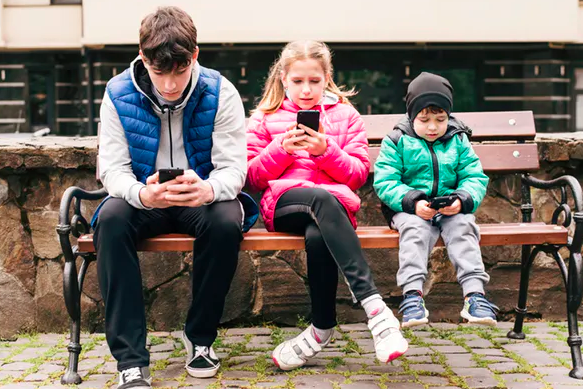
A phone can be a lifeline for unaccompanied minors. Shutterstock/Marian Fil
From using translating apps, to communicate with locals, to downloading music from their own countries, some of these young people learned very rapidly how these tools work. That said, this was not the case for the majority of unaccompanied young people.
And for many, mentors or guardians were often the first point of aid when it came to problems encountered online. Older refugee children who have perhaps been in the new host country for some time – or have more familiarity with digital technologies – were also found to be key in helping new and arriving young people to better understand the digital world.
Digital navigation
We also found that many of the young people did not think too critically about their online experiences. And in an era of “fake news” they may be ushered into making poor judgements on what information to trust, and which opinions to follow. So for this reason we created an app called Media+Mentor specifically for mentors or educators who work with unaccompanied refugee youth.
The idea is that the Media+Mentor app will bring mentors and carers together. The app will also point users to further resources, support and advice on the most common issues unaccompanied minors face online – such as fake news, cyberbullying or hate speech.
From our findings, it’s clear that media literacy education is essential for these young people and their mentors. Indeed, for any teenager in the EU, popular apps and platforms are useful resources for learning new things, finding relevant information or simply as a way to connect with other young people. But as a refugee in a new country it can be hard to know how to access such help.
And these children are not just crossing physical borders, but are shifting into the heightened technological spaces that all EU youth probably take for granted. It has been estimated, for example, that 83% of young people across the EU use their smart phones to access the internet – and generally use fairly up-to-date kit.
So we hope that our research could help to provide young refugee people with the skills needed to stay safe and thrive – not only in the online world, but also in a new country where they are building new lives.
ANNAMARIA NEAG is a Marie Curie Research Fellow at the Bournemouth University.
RICHARD BERGER is an Associate Professor, Head of Research and Professional Practice, Department of Media Production, Bournemouth University.
THIS ARTICLE WAS ORIGINALLY PUBLISHED ON THE CONVERSATION