Holi, known as the Festival of Colors, is a popular Hindu festival celebrated in India and surrounding areas. Colors and water are thrown on each other, amidst loud music and drums to celebrate. Kieran Mellor, the videographer, comments on his work “Since witnessing the insane celebrations of Holi inside Banke Bihari Temple in Vrindavan, I knew that these celebrations deserved their own little film. Hours before the temple doors open, thousands upon thousands of devotees gather to take part in the 20 minute flower and colour throwing celebration of Phoolon Wali Holi. As the doors open, an unstoppable surge begins as the crowd funnels inside and the chanting and applause becomes thunderous. Many people carry offerings which they will bring to the front of the temple to devote to the deities, others pray as they enter through stone archways. For me, however, the most intense part comes when the entire temple unites in raising their hands, and yelling in unison as colours and flowers surround them.”
The Teenager Schooling World Leaders on Climate Change
For hundreds of thousands of young people, Greta Thunberg is an icon. At only 16, she’s proving you don’t have to be an adult to make a world of a difference. Today, the Nobel Peace Prize nominee is among the most influential voices speaking out about Earth’s dire climate crisis.
The teen first learned about the devastating, lasting impact of climate change when she was just 11 years old. Dismayed by adults’ unwillingness to respond, she decided to take action herself. She began by making small changes in her own life—cutting meat and dairy from her diet and convincing her parents to also live more sustainably.
Frustrated by the lack of attention from policymakers, Greta held a strike in August 2018, missing class to sit in protest in front of the Swedish Parliament with a sign that read “Skolstrejk för Klimatet” (“School Strike for the Climate”). She vowed to hold strikes every Friday until Sweden was in alignment with the Paris Agreement.
People in Sweden (and now, the world over) began to take notice of Greta’s stance. After a viral TED Talk where she explained her call to action, others began to join in her protests. Today, #FridaysforFuture has grown to be a global phenomenon, with hundreds of thousands of young people from over 125 countries standing alongside Greta.
In addition to her Nobel Peace Prize nomination, Greta’s actions have earned her speaking engagements at the World Economic Forum and COP24—but most importantly, they’ve ignited a new generation to create change and stand up for the future.
Greta says she owes her dogged determination in part to being on the spectrum: “I think if I wouldn’t have had Asperger’s I don’t think I would have started the school strike, I don’t think I would’ve cared about the climate at all… That allowed me to focus on one thing for a very long time.”
Her #FridaysforFuture protest on March 15, 2019 drew 1.6 million strikers, from 2,000 locations, across all seven continents. She wants world leaders to know that change is coming, whether they like it or not.
Turning Plastic Trash Into Cash in Haiti
What would our world look like without plastic? From life-saving medical devices to computers to Tupperware, it’s changed the way we live, work and understand the world around us. But the same wonder material that has revolutionized so much is choking our oceans. It’s estimated that, every minute, an entire garbage truck worth of plastic hits our oceans. Otherwise put, 8 million tons of once-useful items find their way to global waters each year. There, over time, they break into tiny pieces called “microplastics,” which end up consumed by marine life.
For David Katz, fighting plastic pollution should start long before a soda bottle hits the tide. What’s more, he believes the very plastic waste that litters our shores and seas is anything but waste. In 2014, David launched the Plastic Bank, “a global network of micro-recycling markets that empower the poor to transcend poverty by cleaning the environment,” according to its website. The organization currently operates in Haiti, the Philippines, Indonesia and Brazil, and works like this: community members collect plastic waste (much of it post-consumer products like milk containers, detergent bottles and plastic bags) and bring it to Plastic Bank centers where it’s weighed and exchanged for cash. In Haiti, for example, more than 2,000 collectors have recovered around 7-million pounds of plastic since the organization arrived in 2015.
What was once considered waste can now be sold to major brands like Marks and Spencer and Henkle, who will use it to package and distribute their products in a more sustainable manner. As David Katz puts it, this “social plastic” is “empowering and precious”—something that bonds collectors in places like the Philippines and Haiti to brands and consumers around the world.
Fighting Human Extinction in London and Beyond
Over the past week, governmental officials and police say, protesters have wreaked havoc in London—but it’s all part of an effort to address the sociopolitical factors wreaking havoc on our planet.
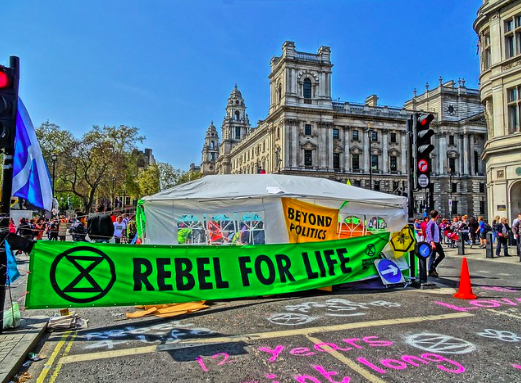
Parliament Square on April 19. DAVID HOLT. CC BY 2.0
In the early afternoon of Monday, April 22, about 100 people entered London’s Natural History Museum and made their way to Hintze Hall. As sunlight streamed in from the skylights and illuminated the Romanesque arches that punctuate the stone walls, the protestors positioned themselves underneath Hope—the enormous blue whale skeleton suspended from the ceiling—and lay down on the ground. After about half an hour, most concluded their “die-in,” but a few remained; wearing face paint and crimson robes, they gave a classical music performance on the steps beneath the skeleton.
This unusual demonstration was part of a massive mobilization by Extinction Rebellion (abbreviated as XR), a non-partisan movement aiming to revise environmental policy with the goals of slowing climate change and minimizing the possibility of imminent human extinction. The group launched in the United Kingdom in October of 2018—in response to the Intergovernmental Panel on Climate Change report announcing that we have just 12 years to halt catastrophic change—and quickly proliferated worldwide.
Today, the movement boasts about 130 groups across the UK, and is active in countries from the U.S. to South Africa to Australia. Its core demands are threefold: Honesty and transparency from governments regarding the ecological crisis; reduction of carbon emissions to zero by 2025; and the implementation of a participatory democracy to monitor progress towards these goals.
The current actions in London, advertised on XR’s website as “UK Rebellion—Shut Down London!,” are the focal point of a constellation of protests planned in 80 cities across 33 countries. Beginning on April 15, thousands of protestors poured into the heart of London, blocking five major landmarks: Waterloo Bridge, Marble Arch, Parliament Square, Oxford Circus, and Piccadilly Circus. From the beginning, group members made it clear that they weren’t going anywhere, filling the bridge with trees and flowers and even setting up a skate park and stage. Live music emanated from Oxford Circus, and a life-sized model of a boat with “Tell the Truth” painted on the side blocked the center of the bustling junction.
Nearby at Piccadilly Circus, younger protestors chalked messages on the pavement, while inside an open-sided truck at Marble Arch, bands entertained hundreds of onlookers. In Parliament Square on April 15, Jamie Kelsey Fry—contributing editor for the Oxford-based New Internationalist magazine—encouraged demonstrators from an octagonal stage.
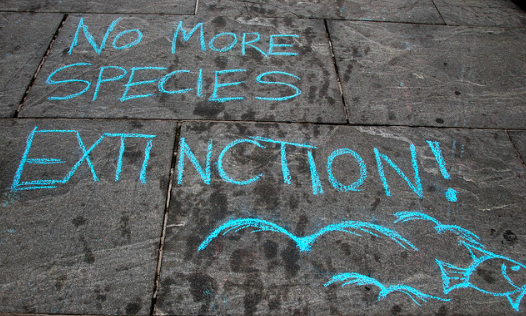
Chalk message on April 17. Felton Davis. CC BY 2.0
The audience waved flags and banners emblazoned with the symbol of the movement, dubbed by Steve Rose of The Guardian as the ubiquitous logo of 2019. According to Rose, the “X” signifies extinction, and the horizontal lines suggest an hourglass—reminding us once again that time is running out.
A high point for protestors was a visit from 16-year-old climate activist Greta Thunberg on Sunday, April 21. The Swedish teenager, who staged a “School Strike for Climate” at Sweden’s Parliament last year and initiated the weekly #FridaysforFuture school walkouts, received chants of “We love you” as she took the stage at Marble Arch.
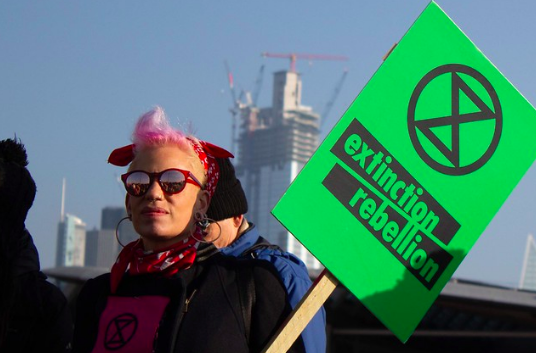
Demonstrating on London’s Blackfriars Bridge last November. Julia Hawkins. CC BY 2.0
While the protests have in some ways resembled a modern-day Woodstock, full of music and goodwill, London authorities—who have deployed some 9,000 police officers in response—see a different side of the story. As of April 22, more than 1,000 people had been arrested since the demonstrations began; the youngest to be charged was 19, and the oldest 74.
London mayor Sadiq Khan said that the protest was taking a toll on London’s police forces and businesses, commenting, “I'm extremely concerned about the impact the protests are having on our ability to tackle issues like violent crime.” Protestors, for their part, view the stress on police as unavoidable: “We wish we didn’t have to distract police resources,” their website states. “80 year old grandfathers would rather not be putting themselves in the physically uncomfortable position of being in a police cell and children don’t want to be skipping school – but 30 years of government inaction have left us with no choice.”
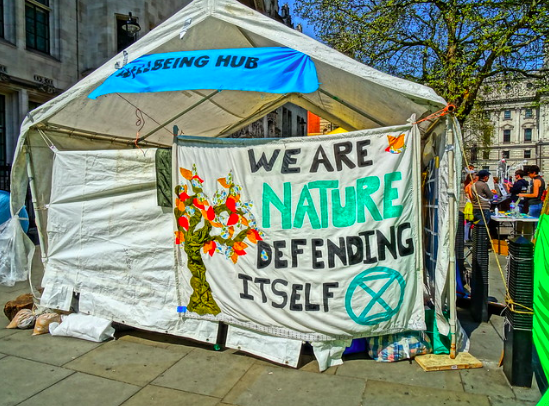
Tent set up in Parliament Square. DAVID HOLT. CC BY 2.0
As protesters continue to be removed from the scene one by one by the police, with more rushing in to take their place, the question is whether or not the government will be responsive to XR’s message. On the first day of the mobilization, XR wrote to Prime Minister Theresa May outlining its demands, requesting talks, and issuing a stern warning: Failing government action, the group’s disruptive demonstrations would only escalate over the coming weeks. On April 22—the day of the Natural History Museum die-in, and also Earth Day—the group said that they would soon hold a “people’s assembly” to determine next steps. The next day, protesters marched on Parliament in a renewed push to open dialogue with government officials.
London’s Energy & Climate Intelligence Unit has said that XR’s demand for carbon neutrality by 2025 “technically, economically and politically has absolutely no chance of being fulfilled,” but nevertheless supports the message behind the movement and the actions it has engendered. For XR, surmounting the impossible is the only way forward to ensure that human beings can continue to inhabit the earth: Their website reads, “Only a peaceful planet-wide mobilisation of the scale of World War II will give us a chance to avoid the worst case scenarios and restore a safe climate.” Only time will tell whether those in power agree.
TALYA PHELPS hails from the wilds of upstate New York, but dreams of exploring the globe. As former editor-in-chief at the student newspaper of her alma mater, Vassar College, and the daughter of a journalist, she hopes to follow her passion for writing and editing for many years to come. Contact her if you're looking for a spirited debate on the merits of the em dash vs. the hyphen.

Indigenous Communities in Brazil Protest Encroachment on Land Rights
The annual Free Land protest takes on a new sense of urgency under Bolsonaro’s far-right government.

Photo of the Brazilian flag by by Rafaela Biazi on Unsplash.
Last week, more than 4,000 indigenous people from over 300 tribes across Brazil gathered in Brasilia to set up camp in front of government buildings for three days of cultural celebrations and protest.
While the Free Land protest is an annual event, it has taken on a new significance this year under president Jair Bolsonaro and his far-right government’s encroachment on the rights of native people and their territories. Al Jazeera writes that according to The Articulation of the Indigenous People of Brazil (APIB), the central organizer of the gathering, this year the event occurs in a "very grave context".
Recently, Bolsonaro promised to stop the development of new indigenous reserves, and to revoke the protected status of established land reserves. Bolsonaro has even gone so far as to publicly question the need for indigenous reserves at all.
The Guardian writes that among the new far-right government’s projects is a movement to enable commercial farming and mining on indigenous reserves. One of the reserves targeted is the Yanomami territory, Brazil’s largest reserve which already experiences threats from illegal gold miners.
“We are defenders of the land, we are defenders of the Amazon, of the forest,” Alessandra Munduruku, one of the representatives of the Munduruku tribe told the Guardian. “The white man is [...] finishing off our planet and we want to defend it.”
Instead of directly handling the demarcation of Brazil’s indigenous reserves, the government has given the project to the agriculture ministry, a branch controlled by the farming lobby, a powerful organization which has been known to oppose indigenous land rights (Guardian). Joenia Wapichana, the first indigenous congresswoman in Brazil, told Al Jazeera that during her time in office she had become aware of just how deeply the government was to indigenous rights. “The government is completely anti-indigenous,” she said, “[Jair Bolsonaro] is only open to those who defend mining and land grabbing, which is his intention.”
After days of encampment outside government buildings, indigenous groups began their annual march last friday. Protestors wore body paint and feathered headdresses, while beating beating drums and holding bows and arrows (Reuters).
The Guardian writes that last week Bolsonaro’s justice minister Sérgio Moro, requested the presence of Brazil’s national guard at the event, foreshadowing possible clashes with protestors. While Moro said that the guard would be working to “secure the public order and the safety of people and patrimony,” the guard said in a statement to Al Jazeera that it would use force “if necessary” to protect the “safety of the patrimony of the Union and its servers.”
In response to growing concern, the APIB released a statement saying that “our camp has been happening peacefully for the past 15 years to give visibility to our daily struggles. [...] We are not violent, violence is attacking our sacred right to free protesting with armed forces.”
In a statement to Reuters, David Karai Popygua, a native person from the state of Sao Paulo, summed up what is at stake for protestors. “Our families are in danger, our children are under threat, our people are being attacked,” he said. “In the name of what they call economic progress they want to kill our people.”
EMMA BRUCE is an undergraduate student studying English and marketing at Emerson College in Boston. While not writing she explores the nearest museums, reads poetry, and takes classes at her local dance studio. She is passionate about sustainable travel and can't wait to see where life will take her.

Living With Albinism in Sub-Saharan Africa
In Malawi, Mozambique, Tanzania, and beyond, children and adults with this rare condition face widespread violence based on superstition—and fight for the right to live their lives free of persecution.
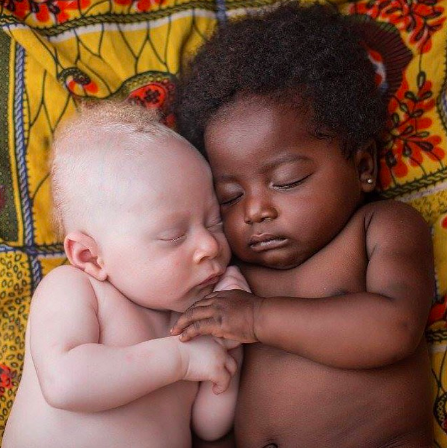
On the left, a baby with albinism. Kaysha. CC BY-NC-ND 2.0
On January 1 of this year, unknown assailants climbed through the window of Kwenda Phiri’s home in Nhkata Bay, Malawi, and hacked him to death, chopping off his hands and fleeing with them. Their motive? Phiri had albinism, meaning that—due to a rare genetic condition—he was born without pigment in his skin, hair, or eyes. Unfortunately, Phiri’s killing was far from an isolated incident. Across sub-Saharan Africa, people with albinism face physical violence and persecution based on superstition, often leaving them unemployed, isolated, and fearful of even leaving their homes.
Kidnapping and dismemberment, such as in the case of Phiri, is common, as body parts from people with albinism can bring in up to $75,000 on the black market. Witchdoctors perpetuate myths about the magical qualities of people with albinism, and make outlandish claims that their body parts can be used in charms and potions to summon wealth, power, and good luck. Babies born with albinism may be considered a curse and slaughtered at birth, especially in certain regions: in Tanzania, where the condition affects up to 1 in 1400 citizens, people with albinism are called zeru zeru, meaning “ghosts,” and assumed to bleed a different color or be immortal. Such superstitions have fueled more than 520 recorded attacks in 28 countries since 2006; Tanzania had the highest number, at more than 170 incidents. Attackers and witchdoctors rarely face legal action, and not a single buyer in this gruesome segment of the black market has ever been prosecuted.
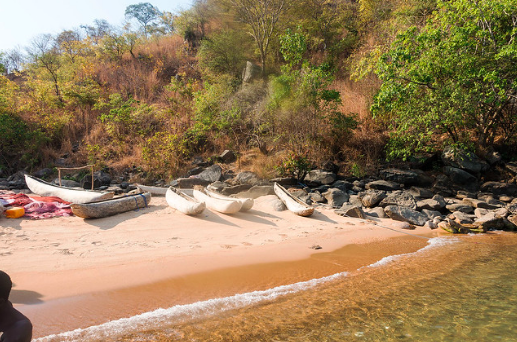
The Nkhata Bay, Malawi, area, near where Kwenda Phiri was killed. Matthew and Heather. CC BY-NC-ND 2.0
For people with albinism who manage to escape fatal attacks, prospects for education and gainful employment are often dim. In Tanzania, only half of children with albinism complete primary school, and even fewer attend secondary. The condition typically affects vision, leaving children without access to glasses to struggle and underperform academically. Adults with albinism are met with few job opportunities, and often fall into poverty. Women with albinism suffer specific and especially dangerous injustices. Unfounded myths run rampant that sex with a women who has the condition can cure HIV/AIDS, leading to many women with albinism contracting AIDS through this heinous variety of ritual rape. Even after death, persecution persists: Many families whose relative with albinism has passed away do not hold the funeral in public, for fear that the grave might be dug up and the corpse stolen. This practice of quiet, unnoticed burial may also perpetuate superstitions regarding immortality.
Attacks are especially prevalent in certain countries—namely Tanzania, Malawi, and Mozambique, according to Turkish news outlet TRT World. Indeed, Nyasa Times, the online breaking news source that reported Phiri’s murder, stated that “Malawi faces ‘systematic extinction’ of people living with albinism if they continue to be murdered for their body parts.”
The general culture of neglect and harmful behavior toward people with albinism also exacerbates concerns about skin cancer, to which people with albinism are particularly susceptible given their lack of pigmentation. Parents often do not know about the importance of covering up in the sun and copiously applying sunscreen; in fact, some actually take their children with albinism into the sun to intentionally darken their skin, leading to dark-colored pre-cancerous lesions that only encourage the parents to continue. Only 2 percent of people with albinism in sub-Saharan Africa live beyond age 40—largely due to the scourge of cancer—and most children with albinism as young as 10 already have some early form of the disease.
In response to the unchecked spread of skin cancer, a company called Kilimanjaro Suncare, or Kilisun, has designed a sunscreen especially for people with albinism. When the product was released in 2012, it was used to help 25 children; as of 2017, it was being given free of charge to 2,800 people at clinics taking place every four months. Over half of those receiving Kilisun were children.
While skin cancer can be mitigated with appropriately distributed medical care, resolving the culture of violence against people with albinism will be a longer and more arduous process. In its 2017–2018 report, Amnesty International acknowledged the situation of people with albinism in Mozambique for the first time ever, estimating that 30,000 people experienced discrimination for their condition and pointing to a spike in incidents of persecution. In Tanzania, a charity called Under One Sun runs an education program for students with albinism and a summer camp for students who have been abandoned by their families due to their condition, as well as performing public advocacy and outreach through seminars and film screenings. The Albino Foundation offers similar advocacy services in Nigeria, aiming to empower people with albinism and educate the Nigerian and global societies about the realities of the condition.
For some individuals with albinism, art has served as a powerful means to address the injustices hindering their lives on a daily basis. Singer-songwriter Salif Keita—who endured bullying and rejection as a child in Mali due to his albinism, and who founded a global foundation in 2006 to aid those who are afflicted—dedicated a benefit concert in November 2018 to a five-year-old girl with albinism who was kidnapped, tortured, and killed in Mali in May of that year. More than 100 politicians, diplomats, and people with albinism attended the event.
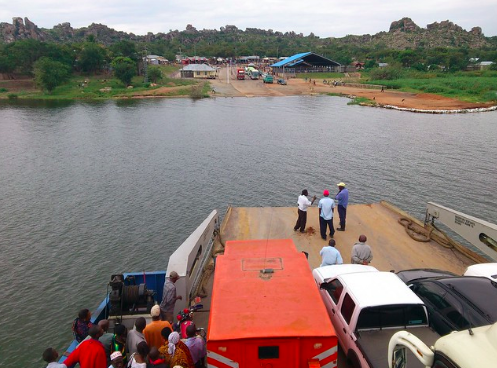
Arriving to Sengerema region in Tanzania, where a life-sized statue dedicated to people attacked due to their albinism can be found. TANZICT Project. CC BY-NC-SA 2.0
In Sengerema, Tanzania, a monument has been erected to honor those who have been assaulted and murdered due to their albinism. The statue portrays a dark-skinned father and mother; the father holds his light-skinned child with albinism on his shoulders, and the mother places a hat on the child’s head to keep them safe from the rays of the sun. Around the monument are etched the names of people with albinism who have been attacked, representing an homage to those lost to the anachronistic attitudes of the past. Standing tall above the ground, the life-sized statue—which was made by Tanzanian artists with disabilities—imagines a possible future in which people with albinism can live safely and normally regardless of their pigmentation.
TALYA PHELPS hails from the wilds of upstate New York, but dreams of exploring the globe. As former editor-in-chief at the student newspaper of her alma mater, Vassar College, and the daughter of a journalist, she hopes to follow her passion for writing and editing for many years to come. Contact her if you're looking for a spirited debate on the merits of the em dash vs. the hyphen.

This Small Mexican Border Town Prizes its Human and Environmental Links with the US
The tiny Mexican town of Boquillas del Carmen sits nestled between the Sierra del Carmen Mountains and the Rio Grande. Its Chihuahuan Desert location is strikingly beautiful, with green vegetation along the river, the brown soil of the surrounding desert and pink mountain cliffs creating splendid color contrasts.
Read MoreMirage of Persia
Csaba Labancz filmed this video compilation when he spent three weeks in Iran visiting most of the major cities and some unknown villages up in the Elburz mountains as well as some of the most remote places in the desert. This film is an essence of a country of ancient traditions, breathtaking landscapes, truly helpful and kind people and countless historical places.
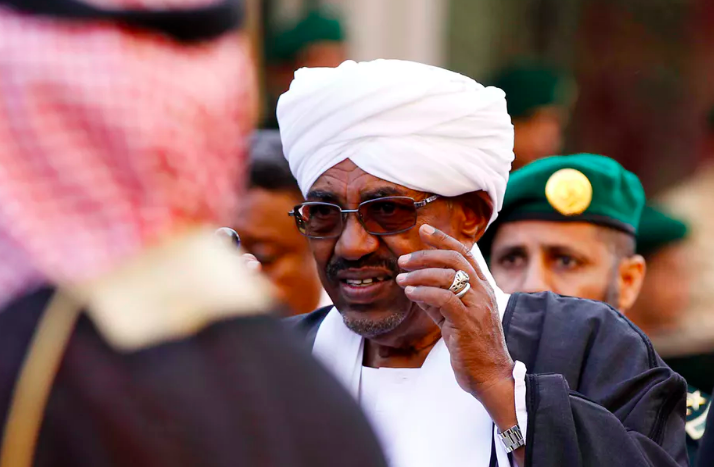
Sudan’s Omar al-Bashir has resigned after three decades in power. AHMED YOSRI/EPA
How Sudan’s Protesters Upped the Ante, and Forced Al-Bashir from Power
Following months of protests, and a prolonged sit-in outside the military headquarters in Khartoum, Sudanese president Omar al-Bashir was placed under house arrest on April 11 as the country’s military prepared for a transitional government.
Many have described the Sudanese uprising as a “bread protest” against a rise in inflation. In fact the Sudanese people took to the streets for much more than a struggling economy, or the price of bread. They have been calling for freedom, peace, justice and the downfall of the regime.
And they have finally won.
The generation leading the uprising was born and raised during al-Bashir’s 30-year rule. The protesters are mostly young professionals who have been directly affected by the regime’s Islamisation and Arabisation policies.
These policies have been particularly harsh against women’s freedoms and rights, which explains why young Sudanese women are at the heart of the uprising. The policies have also resulted in multiple years of conflict and insecurity in Darfur, South Kordofan, and the Blue Nile.
Sudan’s governing system has already deteriorated because of years of state autocracy, nepotism, corruption and violent conflict.
Al-Bashir’s removal may bring down the state if a strong successor isn’t positioned to replace him. But in my view, given how Sudan has historically been run, the democratic preferences of many young protesters is unlikely to come to fruition. Their expectations for a functioning democracy, with free and fair elections, and constitutional freedoms will not be met unless the next leader of Sudan is a reformist.
Al-Bashir’s first responses
The regime responded to the protests in three ways.
First, al-Bashir tried to quickly reconsolidate his power by proposing constitutional changes that would have allowed him to stand for reelection in 2020. That was quickly taken off the table.
He then declared a year-long nationwide state of emergency. The emergency state prohibited “unauthorised” gatherings and movements. Violence followed as the state deployed heavy-handed tactics to break up the protests.
Al-Bashir also dissolved federal and state governments, replacing almost all of Sudan’s 18 state governors with army officers. And he ordered parliament to delay deliberations over proposed constitutional amendments that would allow him to run for an extra-constitutional term in next year’s elections.
When the protests didn’t subside he called for broad-based dialogue.
In a bid to stay in power, al-Bashir also reached out to those who had backed him financially on previous occasions. These included the Persian Gulf states as well as Egypt and Russia. However, these allies have done little more than offer him vague statements of support.
Read more: How foreign backing is keeping Sudan’s Omar al-Bashir in power
He also began to lose the support of Western backers. Once warm to al-Bashir, they recently began to issue stern reprimands.
The protests
By the time al-Bashir stepped down protests had taken hold in more than 35 cities across the country. People took to the streets in more and more places following the first demonstration in the northern Nile-side town of Atbara.
The current uprising was triggered by a government decision to lift subsidies on essential commodities and to drastically increase bread prices. In a matter of weeks, the protest in Atbara would reach the capital Khartoum 349 kilometres away.
As protests erupted across the country agents of the powerful National Intelligence and Security Service and riot police began to crack down on demonstrators. Throughout, however, the army refrained from intervening. Rumours began to surface that al-Bashir was ready to hand over power to the armed force. But this was swiftly rejected by the Minister of Information and government spokesman of the government, Hassan Ismail.
In the final days before al-Bashir stepped down thousands of demonstrators reached the ministry compound in Khartoum. This also houses al-Bashir’s residence, the secret service headquarters and the defence ministry.
Protesters then upped the stakes by trying to gain support from the army. What began to emerge was that senior officers were possibly weakening, or that they were hoping to use the protests to pressure factions within the ruling elite.
Protesters used a number of tactics to keep the momentum going. These included using social media such as Facebook, Twitter and WhatsApp. All evolved during the uprising despite the government’s attempts to block the user, and Virtual Private Networks were used to access the women’s only Facebook group called “Minbar Chat”.
Videos recorded by the protesters became important in documenting the crimes perpetrated by the security forces during the peaceful protests. They also became the main means of informing the Sudanese people and the international community about the brutality of al-Bashir’s regime.
Now that al-Bashir has resigned he will probably be required to leave the country by agreeing to safe passage to a friendly state, possibly somewhere like Egypt, or Qatar. The only way he can remain in Sudan is if he had prior agreement with the military to ensure his safety. It’s possible that the new generals he appointed after the declaration of a state of emergency might side with him.
Their support could have been one of the reasons why he felt that he could step down. Looking ahead, with or without Bashir, there’s also a possibility that the protests could continue if the people of Sudan feel that the swamp has not been drained of all the regime’s oppressive leaders.
ANDREW EDWARD TCHIE is an Editor at the Armed Conflict Database; a Research Fellow at the Conflict, Security and Development at International Institute for Strategic Studies at University of Essex.
THIS ARTICLE WAS ORIGINALLY PUBLISHED ON THE CONVERSATION
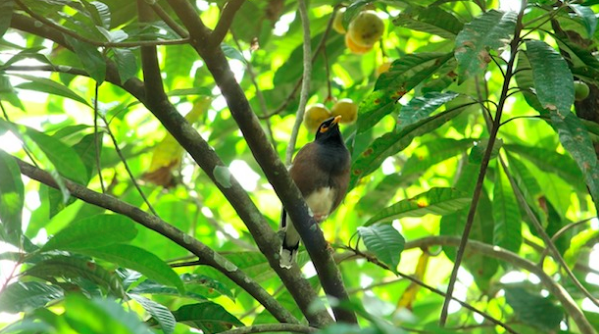
A black-winged mynah bird on a branch in Kerala, India. Ambady Sasi. CC0.
Black-Winged Mynah Birds are Critically Endangered, Despite Thousands in Captivity
Indonesia’s illegal pet trade is an old evil, with animals from tortoises to wild birds caught in its trap. For beauty, prestige, or simply the siren call of money, Indonesian wildlife has undergone massive unasked-for change, particularly because of its bountiful resources and impressive biodiversity.
Three similar species—black-winged mynahs, grey-humped mynahs, and grey-backed mynahs—are all coveted for their brilliant plumage as well for as their vocalizations, to the point that they are explicitly captured out of the wild for songbird competitions in Indonesia. According to National Geographic, around 40,000 live in captivity, while an estimated 500 remain in the wild.
Collectively, these three species are known as black-winged mynahs, and were once thought to be one species. Members of the starling family, these birds’ plumage is distinct, with their tails and parts of their wings being glossy black, while the rest of their bodies are white. They are able to make a range of vocalizations, from trills to chirps, which is one of their most prized attributes for people. In 2010, the status of the black-winged mynah was changed from “endangered” to “critically endangered”. It is estimated that their population shrank 80 percent in the last 10 to 15 years.
Indonesia overall is an epicenter for the illegal wildlife trade, and according to data from WWF-Indonesia, the country accounts that around 85 percent of the animals traded were from illegal hunting. The loss of key animals in the biosphere disrupts the food chain that the ecosystem has built up over millions of years. In turn, this damages human food sustainability, particularly for the foods we obtain from flora and fauna. For example, declining tiger populations causes the wild boar population to rise, which causes issues for farmers in the same areas. WWF-Indonesia is currently raising awareness of the world’s wildlife, as well as how the trade ultimately destroys what we all need to survive.
Indonesia has a long history of keeping birds as pets, even to the point of mentioning the prestige of owning birds in sayings. However, this has led to what some are calling the “Asian Songbird Crisis”. Capturing birds in the wild is cheaper than breeding them. On the other hand, breeding birds in captivity is at least legal. Though breeders are supposed to release 10 percent of the birds they breed back into the wild, this is rarely done, or if it is, it’s entirely possible that the birds could be released in the wrong areas. The crisis has become so rampant that prices have dropped low enough (to an estimated $73) for black-winged mynahs to become a common pet for the middle classes, according to National Geographic.
In April 2018, a revision was submitted to the Indonesian government for an overhaul of the country’s 28-year-old conservation law. Though the draft made some steps to curb the illegal wildlife trade, it also opened many loopholes, to the point where critics saw it as a regression, according to Mongabay. Though Indonesia added 919 birds to their protected species list this past August, revising it for the first time since 1999, nothing seems to have changed about their conservation laws.
Indonesia’s illegal wildlife and pet trade still has an uncertain future, with nothing more uncertain than the eventual fate of the species driven further to extinction, including the three that make up the collective black-winged mynah birds.
NOEMI ARELLANO-SUMMER is a journalist and writer living in Boston, MA. She is a voracious reader and has a fondness for history and art. She is currently at work on her first novel and wants to eventually take a trip across Europe.
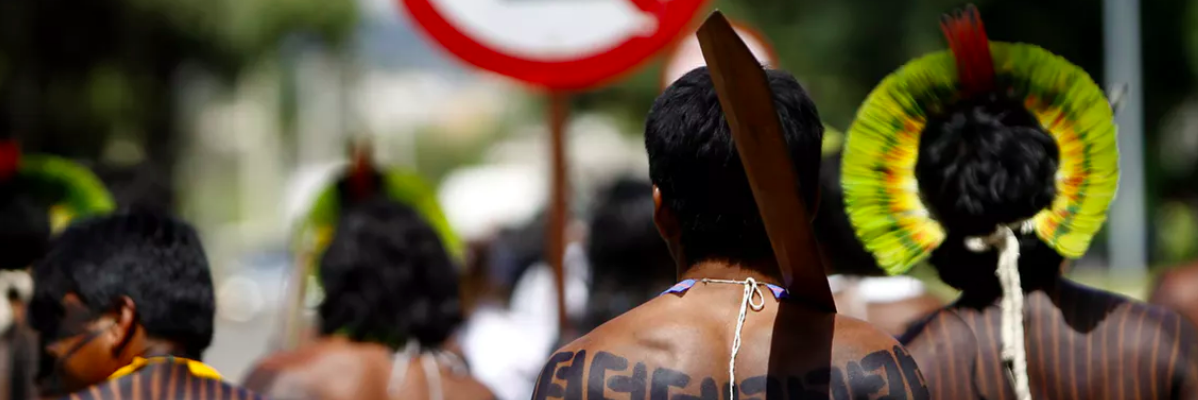
Fernando Bizerra Jr. / EPA
Only Local Amazonians Can Bring True Sustainable Development to Their Forest
The Brazilian government has earmarked a vast tract of Amazonian land for mining. The so-called “Renca” reserve sits in the last great wilderness area in the eastern Amazon and contains lots of unique rainforest wildlife. The controversial decision to allow mining has since been rewritten to clarify that development cannot take place on indigenous lands that lie within the “Renca”, and then put on hold by a federal judge, pending support from congress.
Protected areas such as the Renca are under threat right across the Amazon, and many have already been downsized or downgraded. Conservation is undermined by chronic underfunding of the national environmental protection agencies, the devolving of environmental enforcement to regional states that cannot cope, and by rural violence so severe that Brazil leads the world in assassinations of environmentalists.
The result of all this is an Amazon where 90% of logging is illegal and deforestation is increasing, where unprecedented wildfires burn each summer, and where large vertebrates are now going extinct for the first time since the Pleistocene.
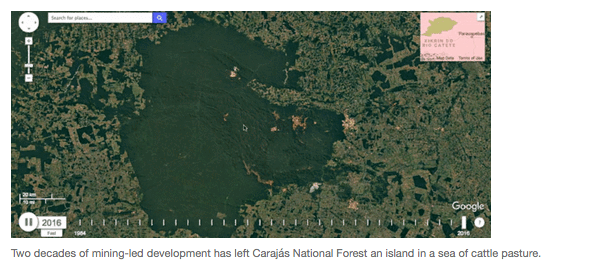
Brazil says mining and logging will boost national economic growth. Yet people in the Amazon remain some of the poorest and most marginalised in South America, and there is little evidence this kind of development has enhanced their quality of life. For example, the municipalities of Eldorado dos Carajás, Marabá, and Paraupebas, all of which surround large mining operations, have a human development index lower than that of Libya, a country stricken by civil war. And the construction of the controversial Belo Monte dam resulted in the regional capital of Altamira attaining the highest per capita homicide rate in all of Brazil, equivalent to 25 murders a day if scaled to a city the size of London.
Why has development failed Amazonians?
First, the companies driving the change are generally big multinationals based either in and around Rio and São Paulo (1,700 miles away) or abroad. Despite some municipal taxes, only a tiny portion of the profits remain locally.
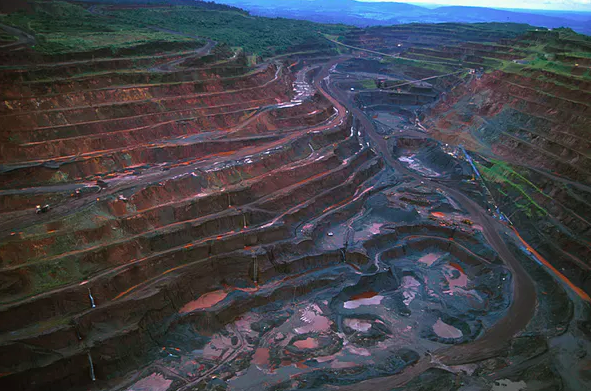
Carajás Mine, the largest iron ore mine in the world, is found within the Carajás National Forest (pictured above). T photography / Shutterstock
Development, as currently practised, also favours the wealthy over the poor. When protected areas are downgraded the chief beneficiaries are landholders who are able to log or mine their territory. Other social groups aren’t so lucky. Some are even actively attacked – either directly, as occurred in the assassination of ten landless movement squatters in a large Amazonian farm, or through legal changes, such as the downgrading of the rights of quilombolas, historical communities descended from African slaves, and indigenous peoples.
Brazil’s ongoing “car wash” corruption scandal has led to allegations of worrying links between large development projects in the Amazon, such as the Belo Monte dam, and the diversion of state funds to political parties. If the purpose of development is political gain, there can be little hope for regional citizens.
Are there alternative ways forward?
Both Amazonian people and forests would benefit if we stopped evaluating development schemes solely in terms of the profits they could generate. This sort of narrow, economic assessment cannot truly capture the value of the Amazon’s forests: how do you put a price on conserving unique species, or mitigating global climate change?
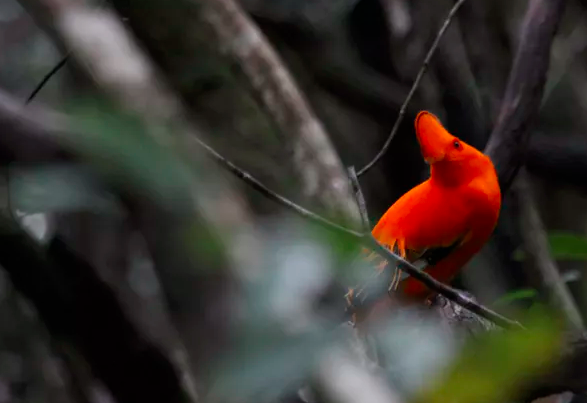
The Guianan Cock-of-the-rock (Rupicola rupicola) is one of northern Amazonia’s more spectacular inhabitants. Alexander Lees, Author provided
The forests of the Renca are some of the most dense and slow-growing in the Amazon basin. Even deforesting just 30% of the area would effectively emit more than four billion tonnes of CO₂ into the atmosphere – equivalent to Brazil’s entire fossil fuel emissions over the past ten years. Unless climate change forms part of the decision making process in the region, Brazil will fail to meet its international commitments such as the Paris agreement.
Development must also secure constitutional rights for everyone, not just those of the elites. Brazil currently has so called “differentiated citizenship”, where in practice there is a gradation of rights among citizens, depending on their race, social class or region.

Munduruku people map out their territory along the River Tapajos in Pará state. Larissa Saud, Author provided
Local action is often the only defence against the expansion of mining or dams. Recent examples of a grassroots success include the Munduruku indigenous people, who are forcing various concessions by resisting megadams on the middle Tapajós River. Another example is the practice of “counter-mapping” among indigenous peoples which entails them mapping their own territorial boundaries to defend their land from industrial agriculture, mining, dams and logging. These alternative approaches are the best way forward in the Renca too. Instead of opening up the area for mining multinationals, Brazil should recognise the rights of local people and empower them to lead decision-making. Brazil nut harvesting is already big in the local economy and, along with ecotourism and carbon-payments (being effectively paid to not chop down a forest), could deliver sustainable development, while leaving the minerals in the ground.
JOS BARLOW is a Professor of Conservation Science at Lancaster University.
ALEXANDER C. LEES is a lecturer in tropical ecology at Manchester Metropolitan University.
ERIKA BERENGUER is a Senior Research Associate at University of Oxford.
JAMES A. FRASER is a Lecturer in Political Ecology at Lancaster University.
JOICE FERREIRA is a researcher in Ecology at Federal University of Pará.
THIS ARTICLE WAS ORIGINALLY PUBLISHED ON THE CONVERSATION
In Bhutan, a History of Matriarchy and the Question of True Equality
Much like the diverse landscape of Bhutan, women’s representation and access in the country features impressive peaks as well as low-lying valleys.
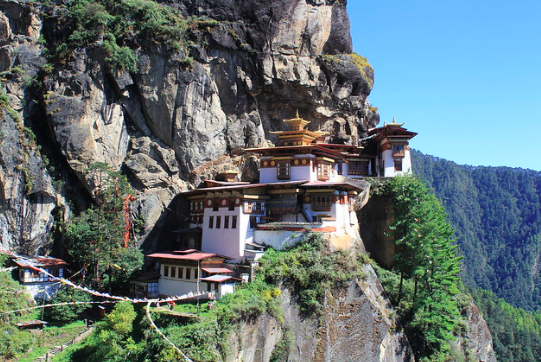
Paro Taktsang, a Himalayan Buddhist sacred site and temple complex, located in the upper Paro valley. Arian Zwegers. CC BY 2.0
The tiny Buddhist kingdom of Bhutan is known for its ornate fortresses, or dzongs; the breathtaking Paro Taktsang, or Tiger’s Nest, temple complex, which clings to a steep cliffside; and its matriarchal traditions—but while Bhutan has much to be proud of in terms of gender parity, it still has a long way to go in creating true equality and professional mobility for its women.
Traditional society in Bhutan, which lies in the Eastern Himalayas between China and India, is matriarchal, and Bhutanese women do not have to contend with any institutionalized forms of discrimination. Participation in decision-making in the local and national spheres is accessible to all genders, with female involvement reaching as high as 70 percent at the grassroots level. Women account for nearly half of land owners, a figure that increases to 60 percent in rural regions. Summing up her own experience as a Bhutanese woman before moving to the Netherlands, journalist Karma Pem Wangdi writes, “My life has been created and shaped by the fact that our society has generally allowed us women the same freedoms and equality of opportunity as men.”
Nevertheless, entrenched inequalities lurk beneath the surface. Lily Wangchuk, the first and only woman president of a Bhutanese political party, referred in 2013 to “huge gender gaps” in societal attitudes, which have inspired her to continue pursuing her political ambitions. Wangchuk, whose Druk Chirwang Tshogpa party was eliminated in the first round of elections that year after garnering only 6 percent of the vote, told the Indian business news publication Mint: “During my campaign, my male opponents said, ‘[How] can a woman assume such an enormous responsibility?’ If I quit now I will be proving them right.”
Writing the previous year, Wangdi pointed specifically to gaps in economic and governmental participation, with far fewer women than men in the civil service workforce, and women making up just 8.5 percent of the National Assembly and 24 percent of the National Council. On the personal level, female reproductive rights lag in certain aspects: while women in the public and private sectors receive three months’ maternity leave with 100 percent of wages, abortion is illegal except in certain specific cases, leading many women to cross into India and seek abortions in unsafe conditions.
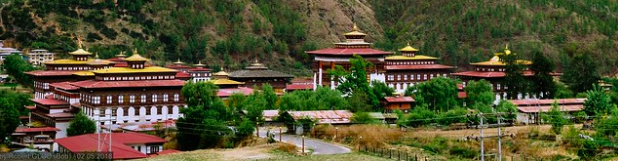
Thimphu Dzong, which has been the seat of the Bhutanese government since 1952. Robert GLOD. CC BY-NC-ND 2.0
Attitudes toward abortion may be traced to the tenets of the Buddhist religion, which has otherwise played a key role in many facets of gender parity, given that its tradition and values view men and women as equal. In terms of participation in the public sphere, two factors are broadly to blame, the first being a historical lack of education for women. In the 1950s and ’60s, when Bhutan began to prioritize national development and education, more boys than girls were sent to India for formal learning—a disparity that stemmed not from gender discrimination but rather from fears about girls’ safety during the long journey to school.
Also of concern is the burden on women as caretakers and unpaid workers in the home, which may hinder or entirely preclude professional development. In the case of divorce, Bhutanese law grants custody of children under nine years old to the mother, a statute that may further ingrain the stereotype of women as primary caregivers. A 2001 study found that, in rural areas, women were responsible for cooking, washing clothes, and preserving food for over 80 percent of households; urban regions presented an even starker figure, with more than 90 percent of households leaving cooking, cleaning, washing, and food purchasing to women. These time-consuming tasks undeniably present a barrier to engaging in activities outside the home: A 2012 study revealed that nearly 62 percent of women felt their household responsibilities prevented them from taking a more active role in public life.
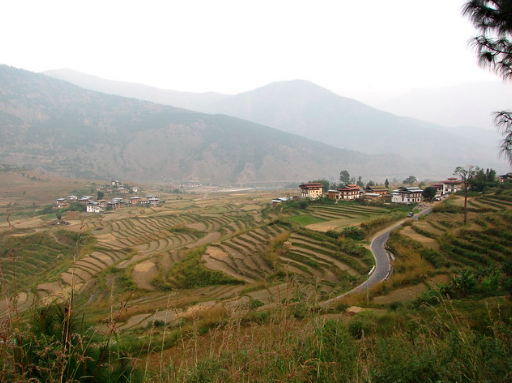
Bhutan’s Punakha Valley. Andrea Williams. CC BY-NC-ND 2.0
Fortunately, Bhutan has recently made strides toward closing gender gaps in various arenas, and thus envisioning an end to the self-perpetuating cycle in which women—missing role models in positions of power—lack the structural support needed to pursue such positions themselves. In 2016, more girls were attending school than boys, with 98 percent vs. 97 percent enrolled at the primary level, respectively. Bhutan’s first woman Dzongda (District Governor) was elected to office in 2012, and its first woman minister in 2013, ushering in a wave of successful woman candidates in 2016: that year witnessed a 68 percent increase in female representation compared to the previous election in 2011.
With evolving attitudes toward gender representation, however, come increased pressures brought on by a globalized and digital media: in 2013, Siok Sian Pek-Dorji, executive director at the Bhutan Centre for Media and Democracy, told Mint that the changing media landscape has created “a pressure to conform that is eroding the natural confidence of Bhutanese women.” Just last month, in March 2019, Bhutan gained an advocate for media representations of women in the form of Namgay Zam, who was appointed as the executive director of the Journalists Association of Bhutan. Speaking with the International Federation of Journalists, she addressed the lack of managerial role models for women, and pointed to the fact that a preponderance of male media magnates leads to the perpetuation of gender stereotypes.
Zam, looking toward a future in which Bhutanese women take their rightful place at the helm of Bhutan’s civil society as well as its media sector—thus fully realizing the matriarchal ideals on which the country was built—commented: “I think top-level management need to rethink gender representation at the workplace. Women also need to believe in themselves more. Hopefully, things will change for the better sooner than later.”
TALYA PHELPS hails from the wilds of upstate New York, but dreams of exploring the globe. As former editor-in-chief at the student newspaper of her alma mater, Vassar College, and the daughter of a journalist, she hopes to follow her passion for writing and editing for many years to come. Contact her if you're looking for a spirited debate on the merits of the em dash vs. the hyphen.

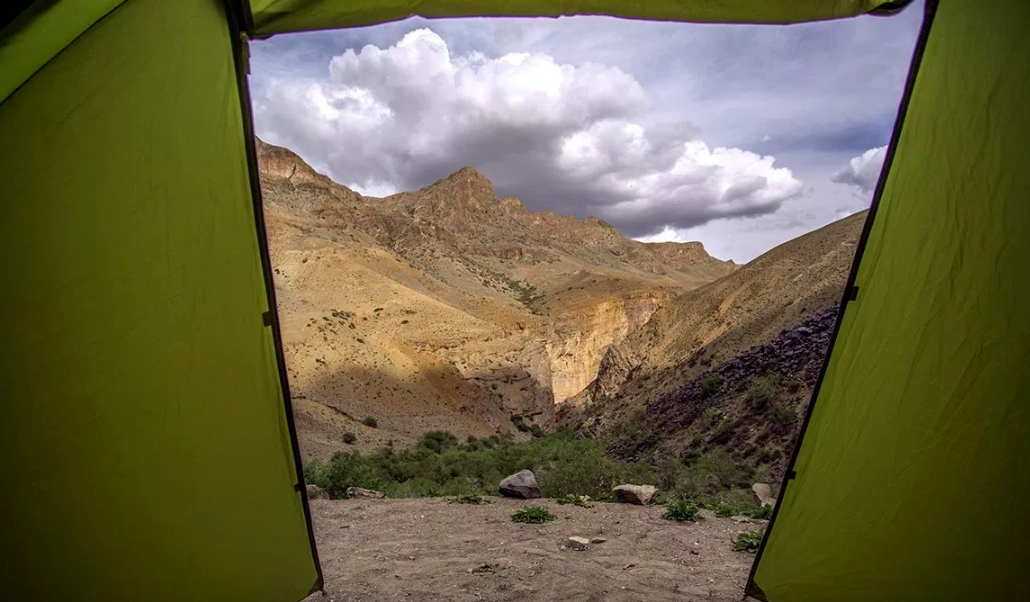
INDIA: The Landscapes and Cultures of the Chadar Trek
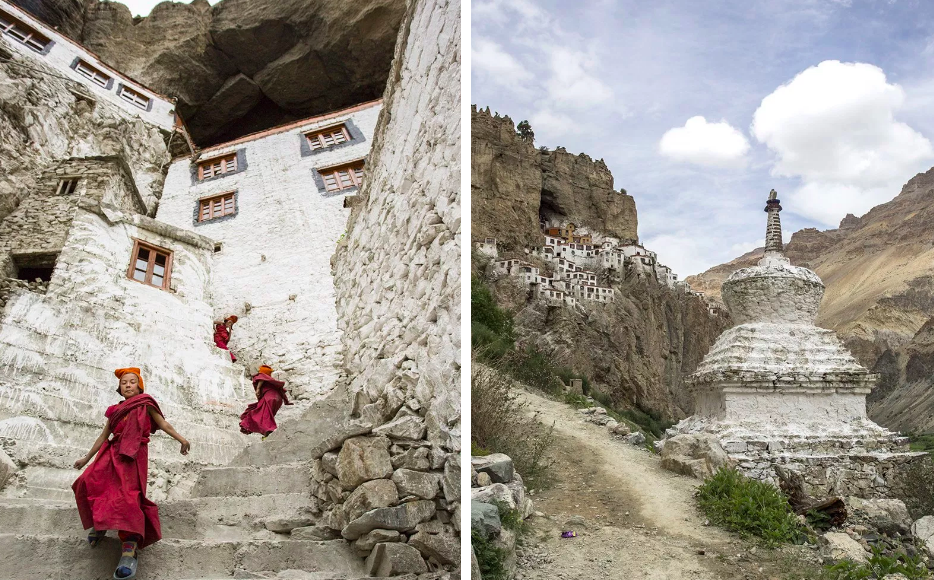
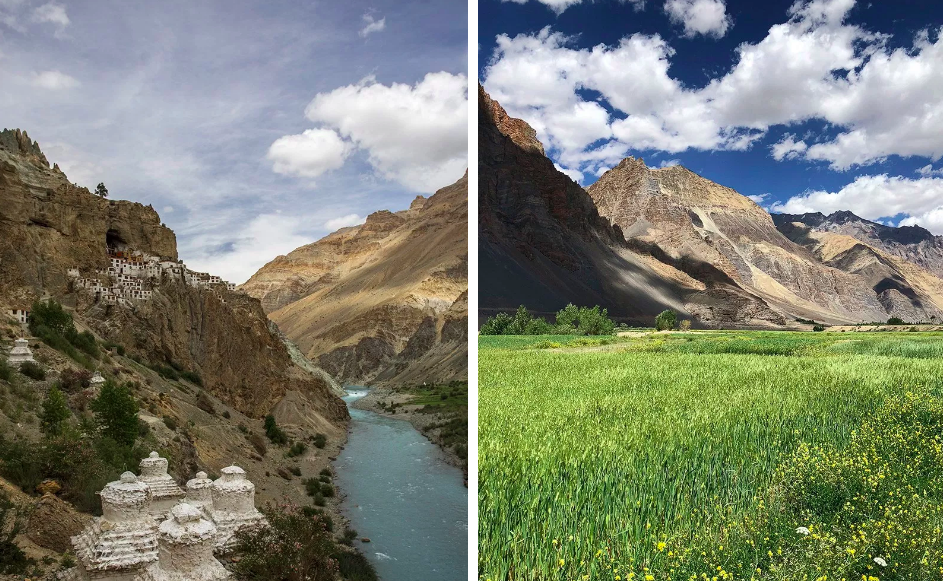
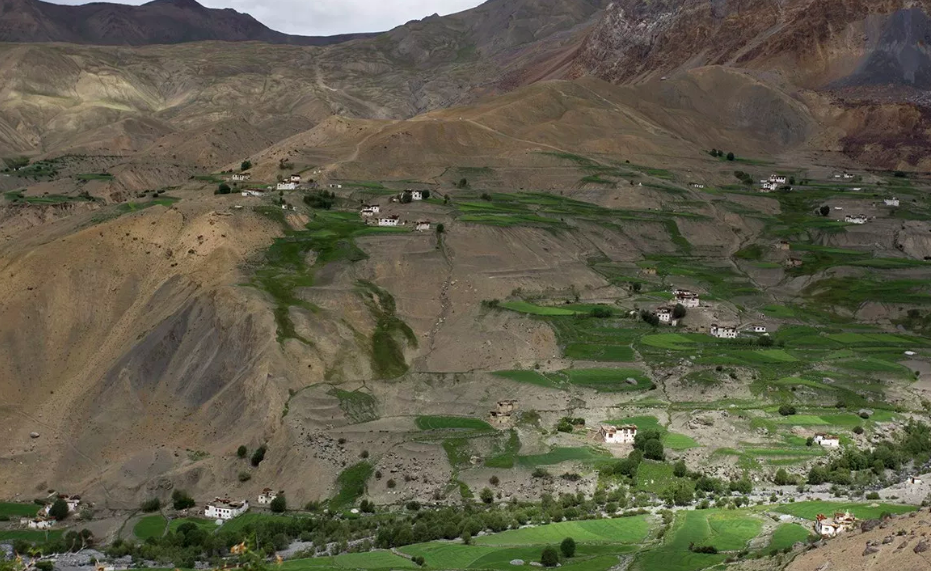
Home to the legendary, yet treacherous, Chadar Trek, the Zanskar region of Ladakh has earned the reputation of a trekker’s delight.
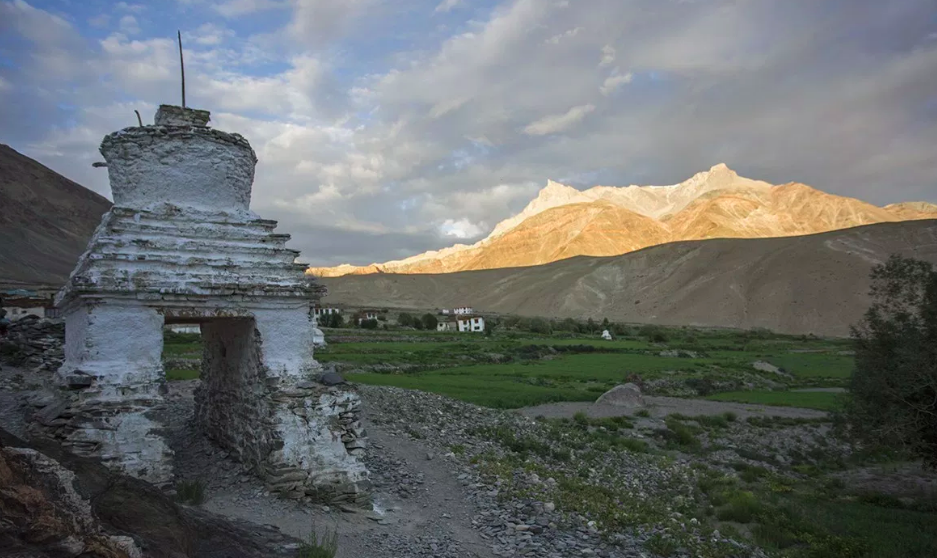
Stirring images of the Phugtal Monastery, and the river, both in full spate and frozen, of the lush valleys and the Zanskari people have enticed me from the time I was at school and this year, I finally managed to do the trek for myself.
The trek usually begins at Lingshed and culminates in Phugtal, but I undertook it the other way around. In fact, I was able to reduce two days travel time to two hours by chartering a helicopter to my starting off point. It all began at Padum from where we headed to Phugtal and then across the Zanskar through Pishu, Hannmur, ending finally at Lingshed.
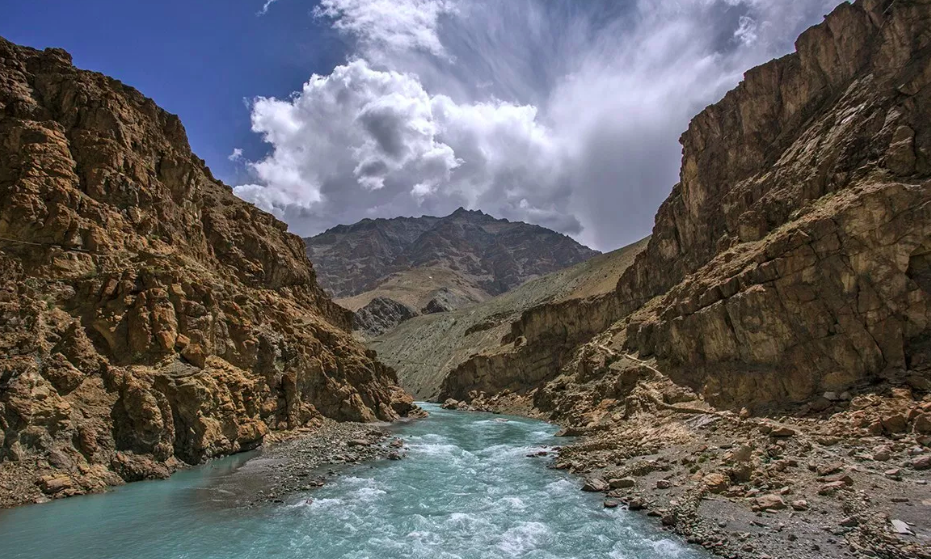
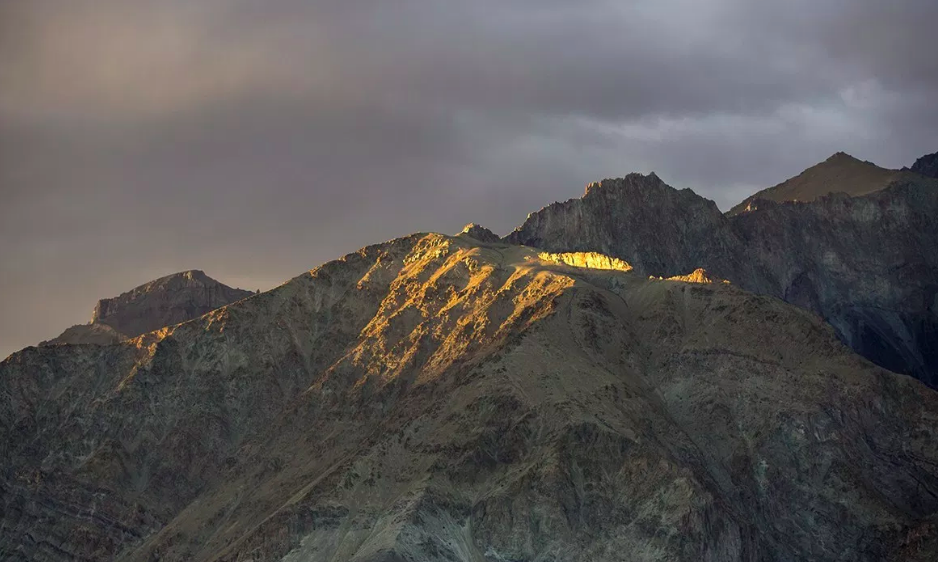
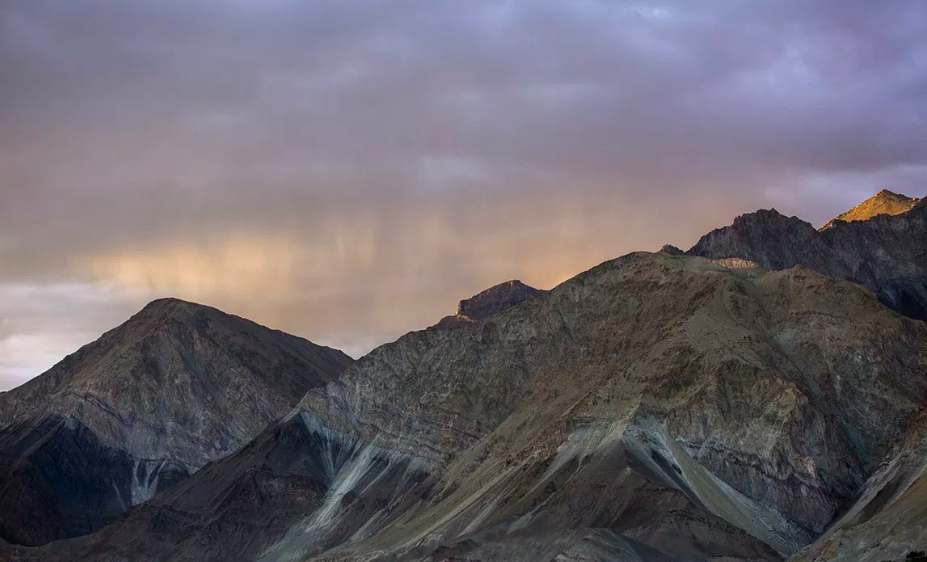
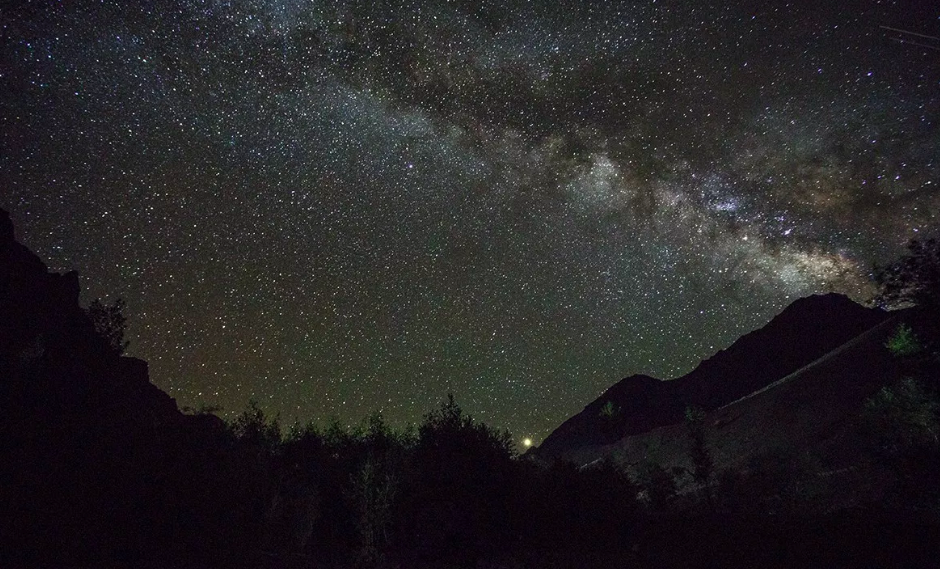
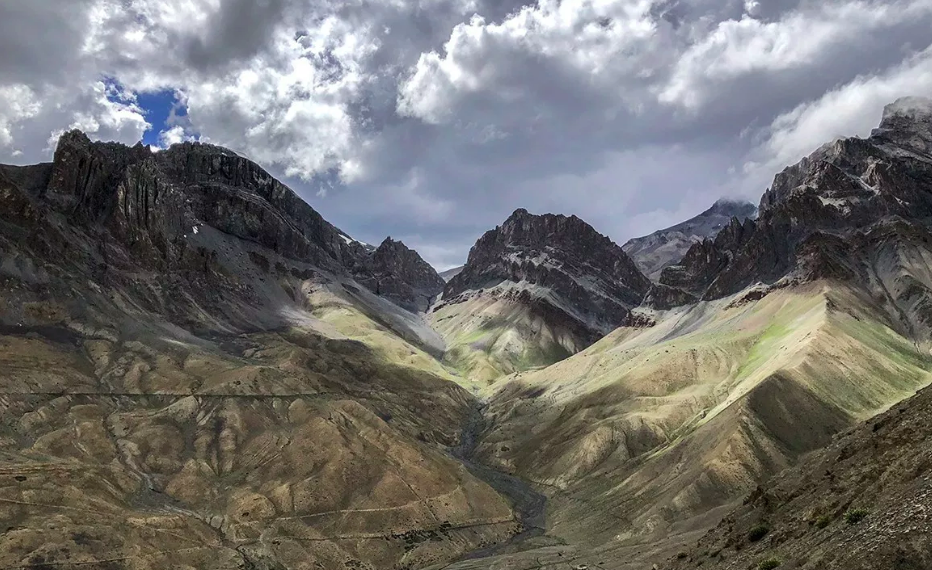
The experience was phenomenal. From traversing the most treacherous paths and crossing deep gorges and valleys to witnessing rivers of the most unreal blue and sleeping under the milky way, the entire trek was really something else; the delight of a hot shower at the end of those ten days made it sweeter still. It wasn’t all milk and honey though. Ascending nearly 16,000 feet at some passes and walking at least 20 kilometres a day, the trek tested my wits and guts, making me question why I embarked on this adventure in the first place.
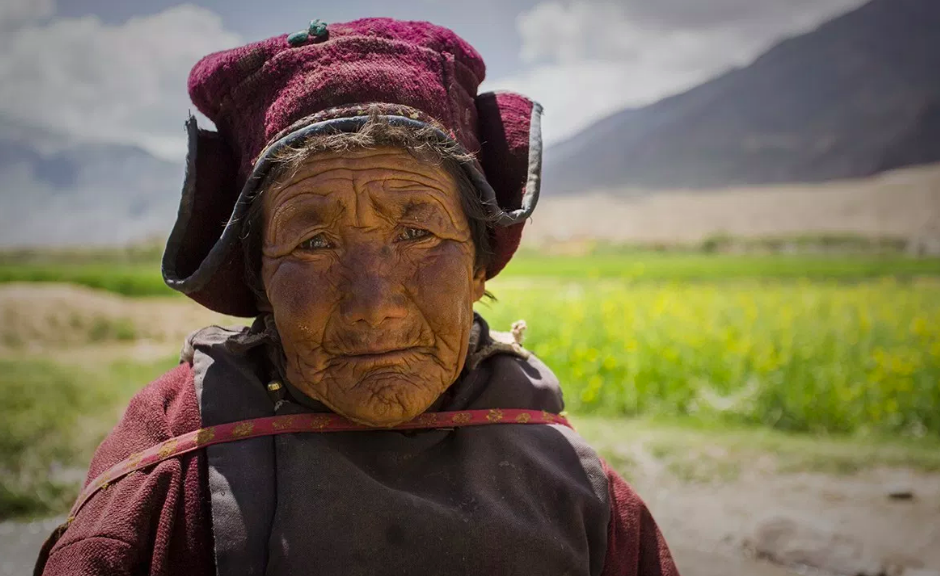
In retrospect though, I can say without a shred of doubt that it was well worth it. Not only did I witness first-hand the glories of a phenomenal terrain, but I also met some wonderful people and experienced inspirational no-waste lifestyles. More than anything else, I learned what I myself am capable of enduring both physically and mentally; that when push comes to shove the human body and mind can surprise us in more ways than one.

HAJRA AHMAD studied photography in Ooty, a small hill town in South India. She became inspired by the darkroom and now specializes in travel and wildlife photography as well as often shooting hotels and interiors. Her photography has enabled her to travel to many new places and her work continues to evolve with each shoot.
THIS ARTICLE WAS ORIGINALLY PUBLISHED ON ROAM MAGAZINE
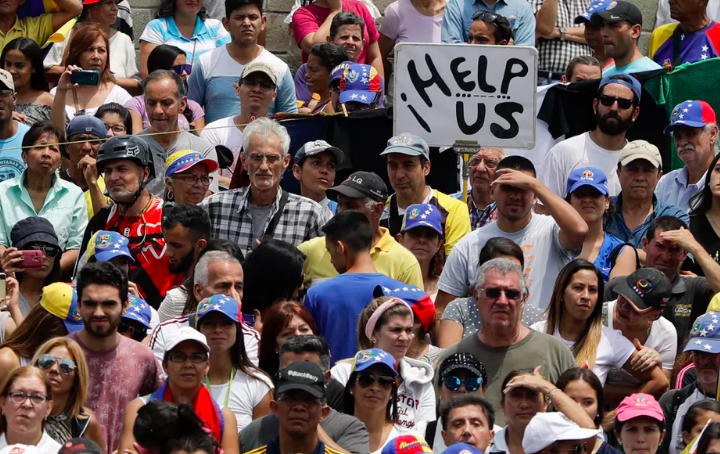
Venezuelans have faced food and medicine shortages since late 2015. Now power outages have cut off water supplies, too. AP Photo/Natacha Pisarenko
Venezuela’s Power Struggle Reaches a Tense Stalemate, as Human Suffering Deepens
Even in a country where crisis has become the norm, the past month has been eventful for Venezuela.
On April 3 Juan Guaidó, the Venezuelan National Assembly president who is leading an effort to remove President Nicolás Maduro from office, was stripped of his parliamentary immunity. Arrest seems increasingly likely. Guaidó’s chief-of-staff was jailed on March 22, on charges of organizing a “terrorist cell.”
Two days later, two Russian military planes carrying 35 tons of unspecified equipment and 100 soldiers landed at the international airport in Caracas.
Meanwhile, three blackouts left over 90 percent of the country in the dark. Since water pumps need electricity to run, neighborhoods and families were forced to organize water rationing systems or fetch water from polluted rivers and streams.
Maduro blames the blackouts on “sabotage” by Guaidó and the United States. The opposition blames government corruption and neglect of Venezuela’s energy grid.
Thousands of Venezuelans protesting the power outages on March 30 were met with violent repression. Counter-protestors came out to support the Maduro government.
These extraordinary events may give the appearance that armed conflict is on the horizon. But having researched Venezuela for over 25 years, I believe a prolonged deadlock – and deeper human suffering – is the more likely result.
International conflict
Each side in Venezuela’s political struggle has powerful international backers.
Guaidó has been coordinating with the Trump administration since before assuming the interim presidency, and Trump has made regime change in Venezuela a foreign policy priority. Over 50 countries now recognize Guaidó as Venezuela’s legitimate president.
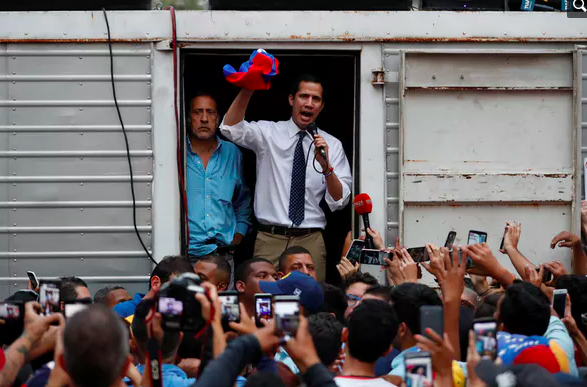
Venezuelan opposition leader Juan Guaidó at a rally in Caracas, March 29, 2019. Reuters/Carlos Garcia Rawlins
Maduro’s government retains important support from Cuba, Turkey and China – though China, which has loaned Venezuela some $60 billionover the last 12 years, has diminished its public backing of Maduro.
Russia has become Maduro’s most important ally. The Russian military equipment and personnel sent in March will likely help maintain and operate Venezuela’s sophisticated Russian-made S-300 air defense system, which protects the capital and key military bases from air attack.
The missile defense system may have been damaged in recent power outages, or left understaffed by desertions from Venezuela’s military.
In a March 29 press statement, White House national security adviser John Bolton called Russia’s military assistance to Venezuela a “direct threat to international peace and security in the region” that will “perpetuate the economic crisis that has destroyed Venezuela’s economy.”
Russian officials retorted that the deployment is part of a prior bilateral arms trade agreement with Venezuela.
“The United States is present in many parts of the world and no one is telling it where it should or shouldn’t be,” said Russian President Vladimir Putin’s spokesman Dmitry Peskov at a March 28 Kremlin press conference.
Regime change stalled
Venezuela’s opposition coalition and its allies in the U.S. appear to have thought that global rejection of Maduro’s re-election and Guaidó’s assuming the interim presidency – coupled with threats of a U.S. military invasion and sanctions on Venezuelan oil – would lead Venezuela’s armed forces to turn against Maduro. That would then usher in a democratic transition.
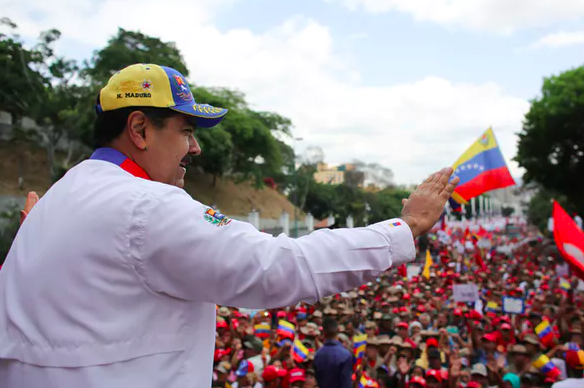
Eighty percent of Venezuelans oppose Maduro, but he retains some popular support – and the power of the Venezuelan armed forces. Miraflores Palace via Reuters
Recent events have shown that this strategy was simplistic.
More than 500 Venezuelan soldiers have defected to Colombia and Brazil. But most have stayed loyal, as have the generals who hold high positions in Maduro’s government. And Maduro has shown himself quite adept at using dispersed violence to discourage dissent.
Despite President Donald Trump’s repeated mentions of a “military option” for dealing with Venezuela, it’s become clear in recent weeks that the U.S. has no actual plans for military action. Indeed, it does not have significant military assets in position near Venezuela.
Venezuela’s armed forces are the fifth most powerful in Latin America, according to Global Fire Power, which ranks military strength. It has around 200,000 troops, a volunteer militia, plus paramilitary forces and a fleet of Russian Sukhoi fighter jets.
The presence of Russian troops in Venezuela further complicates any plans for U.S. intervention. Russia is a nuclear power, so incurring Russian casualties is probably too big of a risk for the U.S. to take.
Adam Isacson, a defense expert at the Washington Office on Latin America, a human rights organization, suggests that removing Maduro by force would not only kill thousands of people on the ground, it would likely require tens of thousands of U.S. troops to occupy Venezuela for years in order to stabilize it.
Outside of south Florida, where some 200,000 Venezuelan exiles are clamoring for Maduro’s ouster, few Americans would have an appetite for such a prolonged operation.
U.S. economic sanctions – which are now targeting Venezuelan oil – appear to be hurting the Venezuelan people more than Maduro’s government.
That will only make a democratic transition more elusive. Depriving the Venezuelan government of cash and credit will impede it from fixing the electrical grid by preventing the purchase of new equipment. And without electricity and water, Venezuelans, who in their vast majority oppose Maduro, will be concentrating on survival rather than protest.
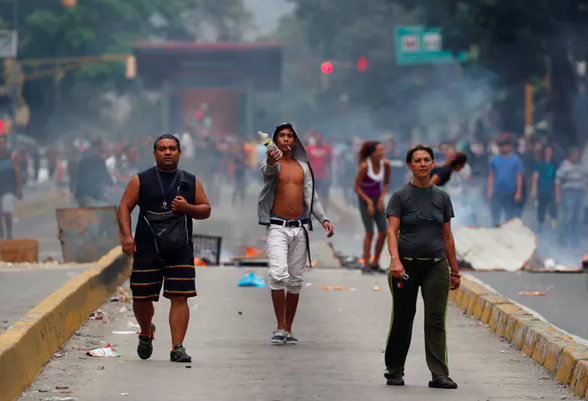
Venezuelans protest water shortages in Caracas on March 31, 2019. Reuters/Carlos Garcia Rawlins
Working for peace
An international effort led by the European Union, Uruguay, Ecuador and Costa Rica is seeking to negotiate new elections. Calling itself the International Contact Group, this coalition has sent technical teams to Caracas twice to meet with the Maduro government and the opposition.
The International Contact Group has not actually found much interest on either side.
The opposition and its allies in the Trump administration still believethat their strategy of political pressure and economic punishment will lead to the government’s collapse. Maduro, it appears, thinks he can hunker down and wait out the storm.
There is one glimmer of hope.
After years of political wrangling over humanitarian aid, on March 29 the International Committee of the Red Cross announced that it had brokered agreements with both the Maduro government and the opposition. They will allow the Red Cross to distribute food and medicine to Venezuelans, who have suffered severe shortages of both since 2015.
The United Nations estimates that 94 percent of Venezuela’s population now lives in poverty, and a quarter of its people urgently need humanitarian assistance.
The Red Cross deal shows what can be achieved with “satellite diplomacy” – that is, negotiations that engage with rival factions independently rather than requiring them to meet face to face.
This is significant. It is the first time that this diplomatic technique has succeeded in Venezuela’s conflict.
In the best-case scenario, the humanitarian aid agreement will stick. And it could serve as a model for how international actors can facilitate a democratic transition in Venezuela.
DAVID SMILDE is a Professor of Sociology at Tulane University.
THIS ARTICLE WAS ORIGINALLY PUBLISHED ON THE CONVERSATION
How Small Science Is Creating Big Possibilities in Africa
Ofori Charles Antipem wears many hats—he’s an inventor, an entrepreneur and an advocate of STEM. Now, he’s bringing all his passions together, dedicating his life to bringing affordable science education to kids across Africa. The Science Set is Antipem’s creation, developed to give students access to a unique toolkit. Each set contains 45 scientific components and costs just $20. His next invention? Cheap and easy-to-assemble microscopes, carefully designed and built using 3D printed materials.
This Great Big Story was made possible by IBM Africa.
For Native Americans, US-Mexico Border is an ‘Imaginary Line’
Immigration restrictions were making life difficult for Native Americans who live along – and across – the U.S.-Mexico border even before President Donald Trump declared a national emergency to build his border wall.
Read MoreBANGLADESH: Lost in Dhaka
Dhaka is a city in southern Asia and the capital of Bangladesh. It is located next to the Buriganga River. Many palaces and mosques remain from the 17th-century when the city was the Mughal capital of Bengal. The population is around 9 million people.
CHILE: Patagonia
Torres del Paine National Park is in Chile’s Patagonia region and known for its beautiful mountain ranges, icebergs and glaciers, and golden pampas, which are the grasslands that shelter wildlife such as guanacos. Some of its most iconic sites are the 3 granite towers from which the park takes its name and the horn-shaped peaks called Cuernos del Paine.
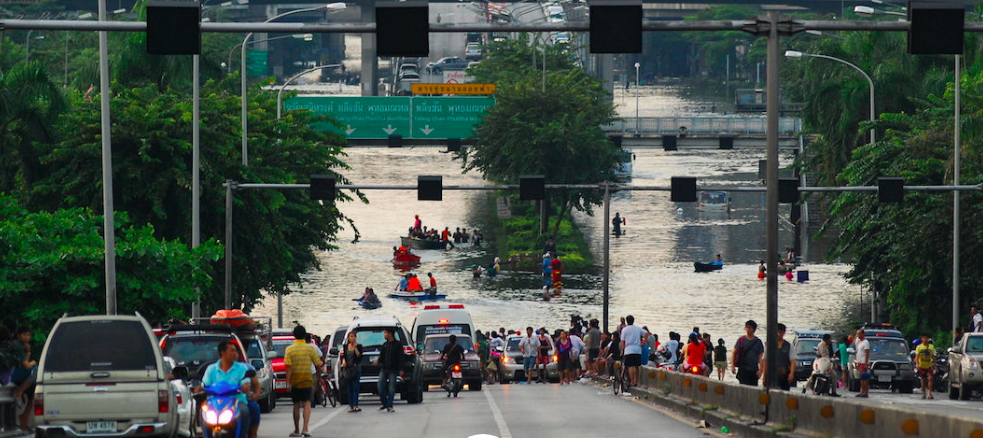
Photo: Artistpix/Shutterstock
These 5 Major Cities are Sinking Rapidly into the Sea
WE’VE BEEN HEARING about the dangers of climate change for quite some time. Scientists routinely caution against warmer temperatures, rising sea levels, and melting ice caps, but sometimes it can be difficult to imagine the impact of these phenomena on our daily lives.
Gradually sinking cities may be the first (and most alarming) way climate change manifests in a tangible sense. Due to rising sea levels and other environmental factors, several of the world’s major cities are slowly sinking into the ocean — some at a staggering pace. No continent is immune, either.
Dr. Katherine Kramer, lead author of the research paper “Sinking Cities,” notes that rampant development has also weakened many cities’ natural means of flood protection, and poor city planning only make matters worse. “The global metropolises may look strong and stable,” she told The Guardian, “but it’s a mirage.” From the United States to Africa to Asia, here are a few of the cities most in danger of being overtaken by the sea.
1. Jakarta
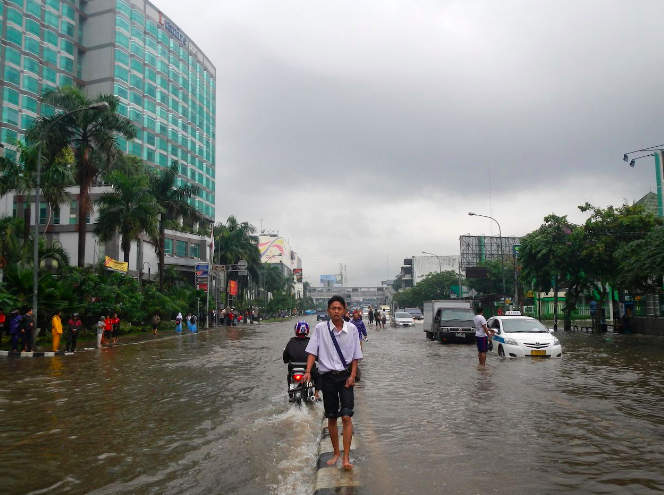
Photo: dani daniar/Shutterstock
The capital of Indonesia has the unenviable privilege of being the fastest sinking city in the world. Forty percent of the city currently lies below sea level, and it’s sinking at the alarming rate of 10 inches per year. The cause is directly related to the city’s infrastructure as Jakarta does not have a reliable network of piped-in water. This is leading to an abundance of private wells used by residents to obtain groundwater. According to The New York Times, this causes underground aquifers to become drained, “like deflating a giant cushion underneath the city.” The unfortunate result is a two-pronged assault on the city from above and below. Rains flood neighborhoods while the heavy skyscrapers sink into earth whose stability is compromised by a lack of groundwater.
2. London
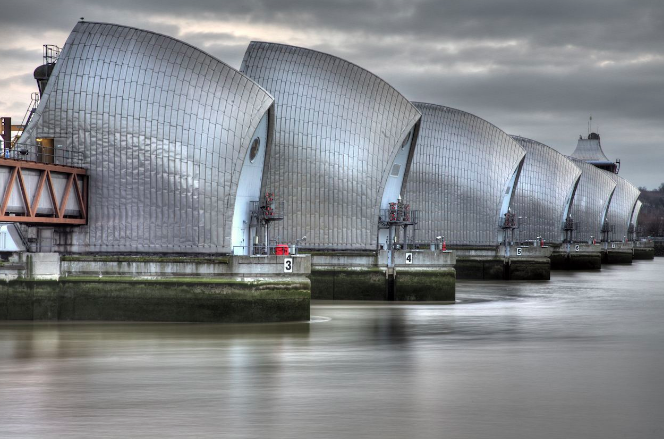
Photo: Marc Pinter/Shutterstock
London can’t blame its sinkage on skyscrapers or faulty infrastructure. It’s actually the result of the last ice age and a phenomenon called “glacial isostatic adjustment.” According to Kramer, London’s sinking is caused by “the weight of the glaciers pressing down on Scotland 11,000 years ago. These depressed the north and allowed the south of the UK to relatively soar.” Since the UK’s glaciers have since melted, however, Scotland is now rising — at .04 inches per year — while the south of the UK is sinking back into the sea. Although the metallic gates of the Thames Barrier were designed by engineers to protect London against flooding, they were only expected to be needed a maximum of three times per year. Currently, they’re being used six or seven times per year.
3. Dhaka
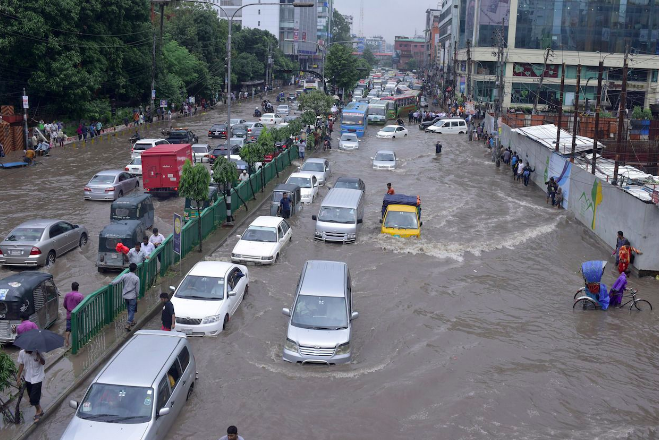
Photo: Sk Hasan Ali/Shutterstock
The capital of Bangladesh is sinking at a rate of a half-inch per year. While this may not put Dhaka in as dire straits as Jakarta, the sea level in the Bay of Bengal is rising 10 times faster than the global average. Millions in the city’s coastal areas have already fled, migrating to Dhaka’s overcrowded slums. Like Jakarta, the situation is being exacerbated by groundwater extraction at an unsustainable rate, as well as shifting tectonic plates. To solve the groundwater problem, officials have endeavored to improve the city’s water infrastructure though it’s unclear whether these efforts will be enough.
4. Bangkok
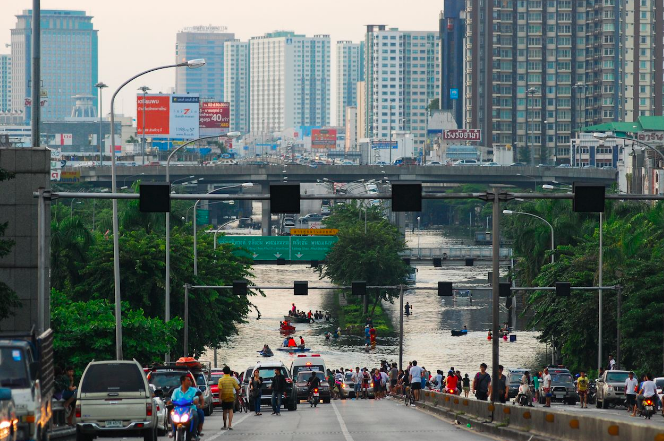
Photo: Artistpix/Shutterstock
Bangkok finds itself in a precarious position. Currently sitting just five feet above sea level, and sinking at a rate of one inch per year, the city is projected to be submerged by 2030 unless drastic measures are taken. Bangkok does not suffer from the same groundwater issues as Jakarta and Dhaka, but its towering skyscrapers are, however, causing the ground to cave in on itself. “Bangkok’s sinking feeling has ironically been made worse by its reaching for the skies,” Kramer writes. “The sheer weight of its buildings are pressing into the riparian sediments and compacting them as the sustaining water is depleted from them.” Thailand’s National Reform Council has recommended building a huge seawall around the entire city to help curb the problem.
5. New Orleans
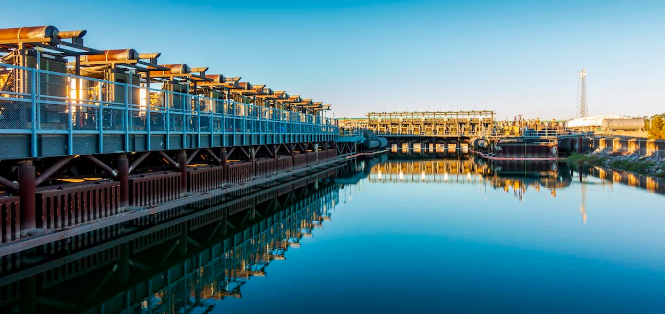
Photo: Victor Wong/Shutterstock
According to a 2016 NASA study, New Orleans is projected to see 14.5 inches of sea level rise by 2040. That’s one of the highest in the world. NASA’s maps show parts of the city sinking at a rate of two inches per year, mostly areas near the Mississippi River and industrialized sectors like Norco and Michoud. Like other major cities, the rising water level is being caused by groundwater pumping; human withdrawal of water, oil, and gas; compacting of shallow sediments; and continued land movement from glaciers during the last glacial period. The danger to the region is so immediate that the government recently set aside a $48 million grant to move residents of Isle de Jean Charles — among Louisiana’s fastest-sinking communities — to drier land.
THIS ARTICLE WAS ORIGINALLY PUBLISHED ON THE MATADOR NETWORK
EBEN DISKIN is a staff writer at Matador, and pizza connoisseur with a serious case of FOMO (Fear of Missing Out); he has traveled to over 30 countries and lived in the UK for a year. Follow him on Instagram @ebenflow_.
#MeToo Movement Reaches South Korea, Shaking the Foundations of a Society in Flux
In a deeply patriarchal culture, feminist activists face constant setbacks and scrutiny.
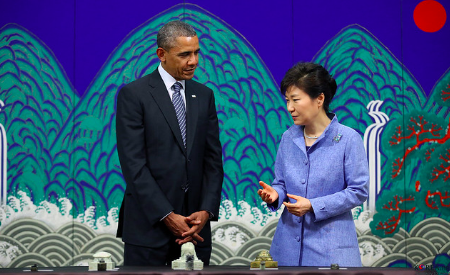
Park Geun-hye meeting with former President Barack Obama in 2014. Republic of Korea/Jeon Han. CC BY-SA 2.0
In 2017, TIME Magazine named “The Silence Breakers” as its Person of the Year, marking the influence of the #MeToo movement and commending the women who have shattered decades of complacency regarding sexual harassment. Yet despite the movement’s place at the forefront of the American cultural zeitgeist, the effects of #MeToo are far from confined to the United States. On the other side of the globe, in South Korea, generations of women—long oppressed by the sexism that has proliferated in Korean society—are now uniting to push back against gender discrimination and question the influence of the patriarchy.
A glance at the numbers reveals the gender bias deeply embedded in Korean culture. On average, women earn 37 percent less than their male colleagues, creating the most severe gap among the 35 countries in the Organization for Economic Cooperation and Development (OECD). Countrywide, women account for only 11 percent of managerial positions and 2.1 percent of corporate boards, in comparison to the OECD averages of 31 percent and 19 percent, respectively. In its glass ceiling index, The Economist ranks South Korea as the worst developed nation for working women.
The problem is a self-perpetuating one, as female role models in positions of power are few. In 2013, Park Geun-hye became Korea’s first female president—but far from sharing in her victory, women’s rights organizations strongly opposed her candidacy, recalling her father’s 18-year dictatorship. Only two of Park’s 19 ministers were women, and the aspects of her platform that did promote women’s rights and access were not much more progressive than those of the male presidential hopefuls she defeated. More important, Park lost all credibility when she became embroiled in an extortion scandal in 2016. In April 2018, she was found guilty of 16 out of 18 charges relating to abuse of power and coercion and sentenced to 24 years in jail.
February of that year witnessed an incident that encapsulated Korea’s suspicious attitude towards women’s liberation: Singer Son Naeun of the all-female group Apink was attacked for posting a photo on Instagram of her holding a phone case with the words “Girls can do anything.” In a culture that responds to even such minor displays of feminism with scorn and shame, sexual abuse toward women often goes unnoticed, and survivors who try to make their claims public are met with mockery.
However, despite these hostile attitudes, #MeToo principles in South Korea are finally gaining traction, and Korean women’s accounts of sexual abuse are beginning to garner at least a modicum of respect in the public eye. In January 2018, attorney Seo Ji-hyun—who had experienced years of sexual harassment at the hands of Ahn Tae-geun, the former chief of the Seoul prosecutors’ office—came forward with her allegations on the nightly news, precipitating Ahn’s two-year prison sentence for abuse of power. (He claimed not to remember the incident.) The next month, Choi Young-mi published a poem effectively accusing 85-year-old poet Ko Un of molestation, coerced sex, and harassment. The piece, titled “Monster,” has since gone viral.
The ensuing wave of sexual abuse allegations reached into the hundreds, with presidential hopeful Ahn Hee-jung and award-winning movie director Kim Ki-duk among the accused. Throughout 2018, both traditional and social media networks grew increasingly saturated with talk of societal change, and issues of gender discrimination entered public discourse. Online profiles owned by male and female Koreans alike sported the English-language hashtags #MeToo and #WithYou.
In March 2018, the burgeoning movement reached a watershed moment: a marathon protest in downtown Seoul, during which nearly 200 women publicly shared their stories of sexual harassment for 2018 consecutive minutes. In May, 15,000 people turned out to Daehangno in central Seoul to attend a rally for government accountability on sex crimes; a follow-up in July brought around 60,000, and continuing protests have earned a nickname that translates as “Uncomfortable Courage.”
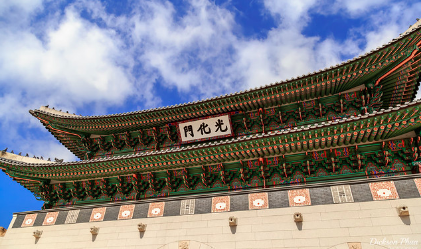
Gwanghwamun Gate, at the edge of the plaza where almost 200 women shared their experiences with sexual assault as part of a massive protest. Dickson Phua. CC BY-NC-ND 2.0
Younger generations have been at the forefront of the movement, and some have pushed for change specifically within the culture of schools. Using the hashtag #SchoolMeToo, students at more than 65 Korean schools have come forward with allegations of verbal and physical sexual abuse by teachers. Their stories led to several criminal investigations, and in February of this year, a former middle school teacher was sentenced to a year and a half in prison on charges of repeated assault. In response to the multiple allegations, hundreds of female students turned out for a march in downtown Seoul, which culminated in a gathering outside the presidential palace to protest inadequate responses to abuse.
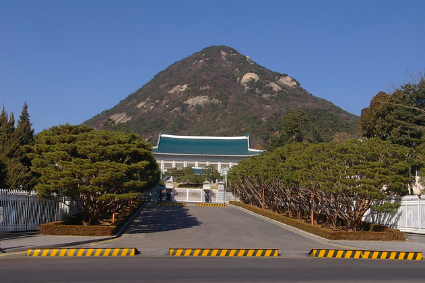
The Blue House, Seoul’s presidential residence, where students gathered to protest the lack of response to sexual abuse. Julio Martínez. CC BY-NC-ND 2.0
On the legislative side, there are signs of incremental change. As of September 2018, maintenance staff in Seoul are now required to check public restrooms daily for hidden cameras, which are often used to secretly record footage of women that is later sold to porn websites. The administration of President Moon Jae-in, who was elected following Park’s impeachment, has announced extensions to the statute of limitations in sexual abuse cases, and a process for anonymous reporting of sexual assault crimes.
Despite progress, activists continue to face persecution. For instance, in the city of Gwangju, where 11 teachers and the principal at one school were criminally charged with sexual abuse, a newspaper editorial questioned the value of the movement and accused students of undermining teachers’ authority. Progressive politicians, such as Shin Ji-ye, a 28-year-old Green Party leader who ran for mayor on a feminist platform last June and finished impressively in fourth, may usher in more substantial shifts. For now, isolated policy decisions and grassroots uprisings are chipping away at the inequities entrenched in Korean ways of life—and #MeToo, from one side of the world to another, continues to stake a claim against centuries of injustice.
TALYA PHELPS hails from the wilds of upstate New York, but dreams of exploring the globe. As former editor-in-chief at the student newspaper of her alma mater, Vassar College, and the daughter of a journalist, she hopes to follow her passion for writing and editing for many years to come. Contact her if you're looking for a spirited debate on the merits of the em dash vs. the hyphen.