

This short film features random shots of Tokyo, offering an artistic perspective of this non-stop city. Shot and edited by Junwoo Lee.
Tokyo: Random Access Memories
5 Cities That Are Leaders in Sustainable Public Transportation Initiatives
The World Economic Forum released its most recent Sustainable Cities Mobility Index, which ranks some of the globe’s largest metropolises based on both the viability of transport and its relative footprint.
The Index measures factors such as connectedness via public transport, including metros and buses, as well as pedestrian accessibility, ease of use by cyclists, among others. What unites each of the five cities featured here seems to be the overall strategy of incentivizing use of public transport, while disincentivizing the tendency to commute by automobile. In this way, public transportation systems trade on efficiency: by running frequently, integrating renewable energy sources, and maximizing often-limited physical space in the crowded cities, the public transport strategies of each of the cities listed have served to reduce car emissions significantly.
HONG KONG. Named number one on the sustainable mobility index, Hong Kong has constructed an impressive MTR metro system, which is responsible for 90% of residents’ daily journeys. Likewise, the cost of transport in Hong Kong has remained relatively low, permitting accessibility to all residents, further disincentivizing travel by car. In fact, due in large degree to the success of the public transportation system, less than 20% of residents of Hong Kong own a car.
ZURICH. At number two on the list, Zurich has demonstrated a great deal of success minimizing transportation by car, with just 37% of the population owning a car, as well as a little over a quarter of journeys measured occurring by car. The majority of public transportation in Zurich occurs by high-speed light rail, a system widely recognized to be one of the most energy- and space-efficient modes of public transport.
PARIS. In 2012, Paris pledged to reduce travel emissions by 60% within the most populated areas of its city, introducing more networks of pedestrian walkways and bike paths, incentivizing the use of bicycles and electric cars through two new city rental systems, as well as altering delivery systems such that it limits the number of diesel-fueled vehicles driving through the city each day. Parisian city officials have also been working to initiate regular “car-free” days, as well as other measures that promote alternative forms of transport.
SEOUL. Throughout the past decade, Seoul has pioneered a significant number of innovations that promote sustainable mobility. An inefficient highway system has been repurposed to become a large public park with an extensive network of pedestrian causeways. Moreover, Seoul has employed specified bus lanes, which have increased by nearly one million the number of citizens who use the public transport system each day, as opposed to driving. The significantly greater efficiency of public transportation, as well as the ease of access afforded to pedestrian traffic has cut down greatly on the number of citizens commuting by car, one of the most inefficient and least sustainable modes of travel.
PRAGUE. Prague has undertaken the “Tune Up Prague” initiative, just one of a series of sustainable transportation proposals enacted under the 2015 Sustainable Urban Mobility Plan. The “tune up” has focused on increasing foot and bicycle travel through the facilitation of pedestrian pathways. The proposal has also worked to bring accessible, sustainable transportation to all, seeking to bump up the amount of wheelchair-accessible metro stations by 23%, such that 95% of the city’s metro stations are wheelchair-accessible.
In integrating energy and space-efficient public transport with initiatives that promote pedestrian and cyclist travel, the five cities listed above have developed transportation networks that are both accessible and sustainable. Incentivizing public transport increases a city’s ability to experiment with “greener” travel, while simultaneously reducing automobile emissions. The ingenuity of each of the five metropolises provides a crucial example for other major cities, working towards a more sustainable, more connected future.

Hallie Griffiths
Hallie is an undergraduate at the University of Virginia studying Foreign Affairs and Spanish. After graduation, she hopes to apply her passion for travel and social action toward a career in intelligence and policy analysis. Outside of the classroom, she can be found, quite literally, outside: backpacking, rock climbing, or skiing with her friends.
Biking through a Guatemalan Jungle Preserve
Winding through the lush rainforests below Guatemala’s Volcan de Agua is a growing mecca for mountain biking. Known as El Zur, the 2,500-acre private nature reserve was created to protect the land. Turns out, the best way to protect the land sustainably is to offer a variety of outdoor activities. Join guide José Pablo Jelkmann Mendia as he takes us through this pristine paradise on bike, replete with lush trails, suspension bridges and dreamlike waterfalls. It's truly a site to behold.

Nairobi’s current waste disposal system is fraught with major problems. EPA/Dai Kurokawa
How Nairobi Can Fix Its Serious Waste Problem
Uncollected solid waste is one of Nairobi’s most visible environmental problems. Many parts of the city, especially the low and middle-income areas, don’t even have waste collection systems in place. In high income areas, private waste collection companies are booming. Residents pay handsomely without really knowing where the waste will end up.
The Nairobi county government has acknowledged that with 2,475 tons of waste being produced each day, it can’t manage. Addis Ababa Ethiopia has a similar size population but only generates 1,680 tons per day.
Nairobi’s current waste disposal system is fraught with major problems. These range from the city’s failure to prioritise solid waste management to inadequate infrastructure and the fact that multiple actors are involved whose activities aren’t controlled. There are over 150 private sector waste operators independently involved in various aspects of waste management. To top it all there’s no enforcement of laws and regulations.
Nairobi’s waste disposal problems go back a long way and there have been previous efforts to sort them out. For example in the early 1990s, private and civil society actors got involved, signing contractual arrangements with waste generators. They often did this without informing or partnering with the city authorities.
More recently other strategies were put in place, some of which left parts of the city clean. They worked for a period, but unfortunately they weren’t sustainable because no institutional changes were made.
But there’s hope on the horizon with a new Nairobi Governor – Mike Sonko Mbuvi. He should learn from the mistakes of the past and put a new regime in place that addresses the structural problems that have plagued the city. This would include an improved improved collection and transportation plan that incorporates the private sector.
Learning from the past
In 2005 John Gakuo took over the management of city affairs as the Town Clerk. During his tenure (2005-2009) he made a deliberate effort to introduce new approaches.
When he took over the city only had 13 refuse trucks. They were able to collect a paltry 20% of the waste produced by the city. To overcome this, the authorities contracted private waste collection firms to collect, transport and dispose waste at Dandora dump site which is the biggest and the only designated site. This quickly boosted the total waste collected with levels oscillating between 45%-60%.
Other changes included:
The development of a proper waste collection and transportation schedule with market operators. This meant waste from open-air markets was brought to identified collection points on specific days.
A weighbridge to measure amounts of waste disposed at Dandora was introduced. An important way to know disposal levels vis-a-vis collection and generation.
Enforcement officers were deployed to prevent dumping in parts of the city that were notorious for waste accumulation.
Over 2,000 arrests were made, making residents aware that indiscriminate dumping was illegal and punishable under the city authority laws.
All these efforts paid off – for parts of the city. For example, the heart of the city, the Central Business District, was cleaned up and waste was brought under control.
But crucial elements that would have ensured that the changes were sustainable were left out. For example, no new physical infrastructure, like the construction of waste transfer centres and proper landfills, were built, nor was new equipment bought.
After Gakuo’s regime, the next one worth a mention is Evans Kidero’s regime (2013 - 2017). It can be credited for trying to fast-track the implementation of the Solid Waste Management Master Plan which assessed the waste management problem of Nairobi and developed projects that could be implemented to ensure a sustainable system was in place.
This ensured that while the private sector needed to help with waste collection and transportation, the government was key to institutionalising waste management services.
Thirty waste collection trucks were bought and serious investment was made into heavy equipment. And in an effort to streamline waste collection a franchise system of waste collection was rolled out. This involved dividing the city into nine zones to make it easier to manage waste.
The franchise arrangement gave private operators a monopoly over both waste and fee collections, but relied heavily on the public body for enforcement of the system.
The franchising system failed due to a lack of enforcement by the city. In addition, in-fighting broke out between the private waste collection firms that had individual contracts with waste generators and the appointed contractor.
But other changes introduced during this period were more successful and had longer lasting effect. For example new laws were introduced designed to create order in the sector. These included the solid waste management act in 2015. This classified waste and also created a collection scheme based on the sub-county system. It also put penalties in place.
In addition, in 2016, 17 environment officers were appointed and posted to the sub-counties to plan and supervise waste management operations alongside other environmental issues.
These changes planted the seeds of an efficient and working waste management system. But the regime fell down when it come to enforcement. This meant that the gains that had been made were soon lost.
What needs to be done
Expectations are high for the new regime that has taken over. It should look to fast-track the following programmes:
Implement an improved collection and transportation plan that incorporates private sector and civil society groups;
Establish a disposal facility to reduce secondary pollution from the city’s dumps;
Decommission the Dandora dump site;
Implement the re-use, reduction, and recycling of waste;
Establish intermediate treatment facilities to reduce waste and its hazards;
Create an autonomous public corporation;
Put in place legal and institutional reforms to create accountability;
Implement a financial management plan, and
Implement private sector involvement.
Nairobi can fix it’s waste disposal problems. All it needs is focused attention, good governance and the implementation of systems that ensure changes outlive just one administration.
This article was originally published on The Conversation.

LEAH OYAKE-OMBIS
Part-time lecturer and Director of the Africa Livelihood Innovations for Sustainable Environment Consulting Group, University of Nairobi
The Band Bringing Venezuela’s Best Dance Party to the World
El Clavo is a small village in Venezuela with a proud musical heritage. There, Afro-Venezuelans—many of whom are descendants of slaves brought from Africa—continue a cultural tradition known as “parranda.” Part community jam session, part dance party, parranda is a festive performance that involves rhythmic percussion and singing. El Clavo’s lead vocalist Betsayda Machado is a renowned singer throughout Venezuela. She and her band have been given the opportunity to bring their traditional dance music on tour to North America and Europe. We caught up with them in New York City to get lost in the endless rhythms of parranda.
MEXICO: Turning Gas Guzzlers Into Clean Cars
In Mexico City, more than 3.5 million cars navigate the streets, plazas and avenues of North America’s most populous urban area. That makes for a ton of exhaust, but luckily, there’s a solution to this environmental problem. Enter engineer/auto mechanic Alvaro de la Paz and computer scientist Hector Ruiz. Together, they’re transforming old gasoline-fueled automobiles into electric cars.
Read More8 Steps We Can Take To Support Women and Girls
On the 8th of March - International Women's Day - here are 8 steps decision makers must take to support women and girls fighting for their rights in the most difficult places on Earth.
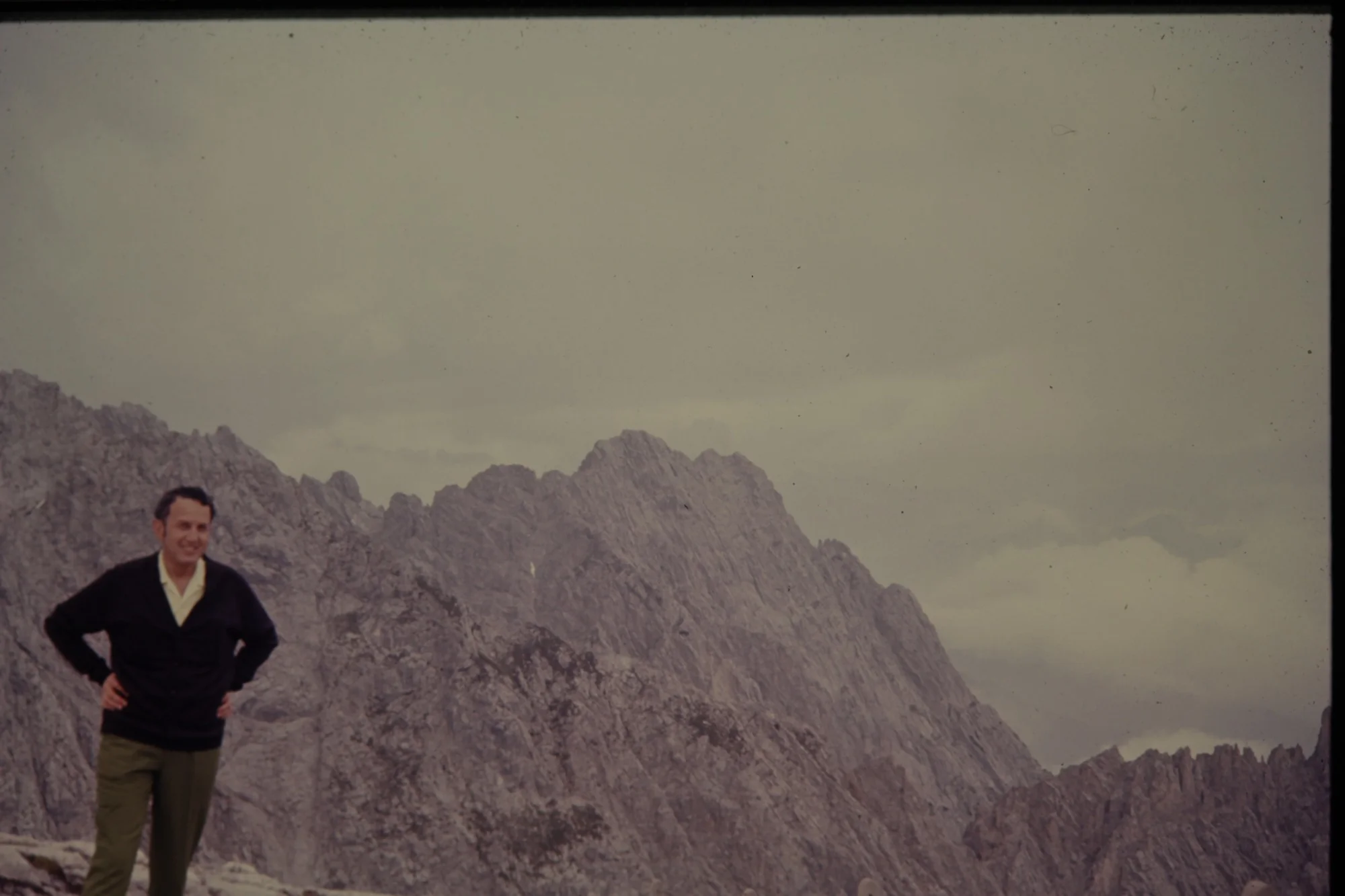
Grandpa Joe, somewhere in the world. Photo by Ethel Ellenbogen.
The Man Who Loved To Travel.
My Grandpa Joe was one of those classically great men. A mensch. Born in the bathroom of his parents’ Temple Street home in downtown Los Angeles in 1917. The family moved around Los Angeles a lot — from downtown to Boyle Heights to Tujunga to Beverlywood. Sticking close to the pockets of other Jewish immigrants who faced daily anti-semitism. In his pre-teen days, he would travel miles by bus to get to school, then travel all the way back to work in his father’s garment factory into the night — the schmata business — learning the machines. Then he’d do his homework. It was clear very early on that he was a standout student and, after skipping pretty much every other grade, he ended up at Berkeley. Apparently, he was in a rush to meet my grandmother, Ethel, who was also at Berkeley. After graduation, they came back to L.A. He also ended up in the garment industry, one of the first to create women’s sporting apparel.
And as great and respect-worthy as that all is, the story of how he made his way in the world was simply a precursor to a just-as-impressive story of how he made his way around the world. Joe’s true passion was travel.
By his retirement, he had also started a small side business as a travel agent. He called it, Love To Travel. He kept himself busy (and his travel deductible) by organizing and sometimes leading tour group in various parts of the world.
By the time I came around, he had already been across the globe a few times — which was in and of itself a pretty exotic feat for the era — but he was only just getting started. Joe and Ethel rewarded themselves for a good life of hard work by spending the second half of it, over thirty years, visiting places all over the world. At least once a year, they would take off — most often in Western Europe, but also Canada, Mexico, the Caribbean, South America, Central and Eastern Europe, and probably quite a few more. When they’d return, the family would gather for an old-fashioned slide show. Ethel would prepare a platter of dried fruits and nuts, the screen would go up, lights would go down and the projector would flick on. What proceeded then would be a competition of memory for the small stories and events of their trip. My grandfather’s memory for detail was unassailable, but Ethel always had the last word.
Many years later, after he had died and it was apparent that I would continue the legacy of travel and photo-taking, my grandmother entrusted me with his many boxes of slides. They were highly unorganized and consisted of everything from loose negatives to filled carrousels to small, bulging slide boxes. Thousands and thousands of images. All un-labeled.
It’s taken me fifteen years to get it all together and scanned. I have barely started down the process of trying to figure out where these places are and what year they might have been taken. I may never know. In some ways, it’s not what really matters. I actually quite enjoy the mishmash of time and place that these images, in this scattered format, create. They come together exactly like my memory of him — a richly condensed man of great experience and joie de vivre.
What I love about these images (and this is only a very small taste of them) is that they are there to document the travel as much as the place. His images are heavily aware of being a visitor — in those days, foreign travel had a formality to it. In the images, you can see both the formulaic-ness of tourism but also a man who would climb to any height to get a better view than the crowds. He would do anything for a good shot — I watched him sneakily break off to go take a snap, many times.
I love the raw talent depicted in these photos. A high percentage of them are out of focus, which for me only adds to my appreciation for him. Focusing was hard, in those days — no electronics or fancy in-camera technologies. He learned it all on his own, with no training — and considering that, there’s a side story that develops with these images of a man who was learning a craft from love of subject backwards. Which is also how I learned photography.
My favorite image is one that I don’t recall ever making it into a family slide show. It features my grandmother driving an early 70’s Nova on a foreign beach somewhere. It’s a shocking image for me in so much as she never drove. Usually, Ethel was in the back of a stuffy Cadillac — she suffered from a deep, nearly-disabling anxiety and her overly-dramatic fears made her almost comically over-concerned about every little thing. Seeing her here, carefree and outrageously off-the-beaten-course adds an entirely different look at their relationship and adventures together.
In the end, your photographs should not only show a great life, they should convey what you loved. Enjoy the following story of the man who loved to travel.
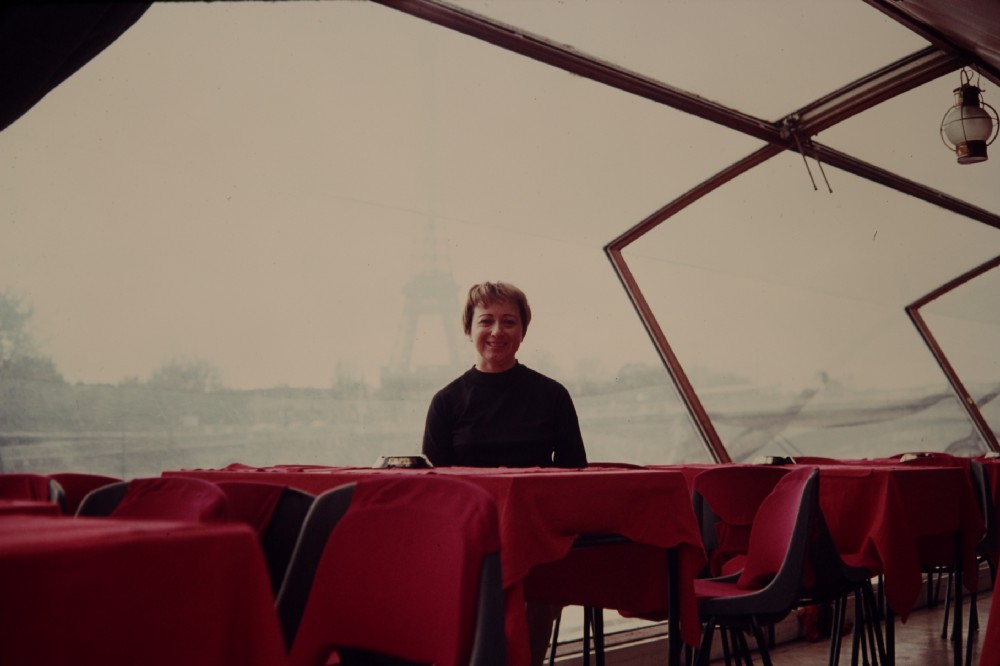
Grandma Ethel, in Paris. Photo by Joe Ellenbogen.
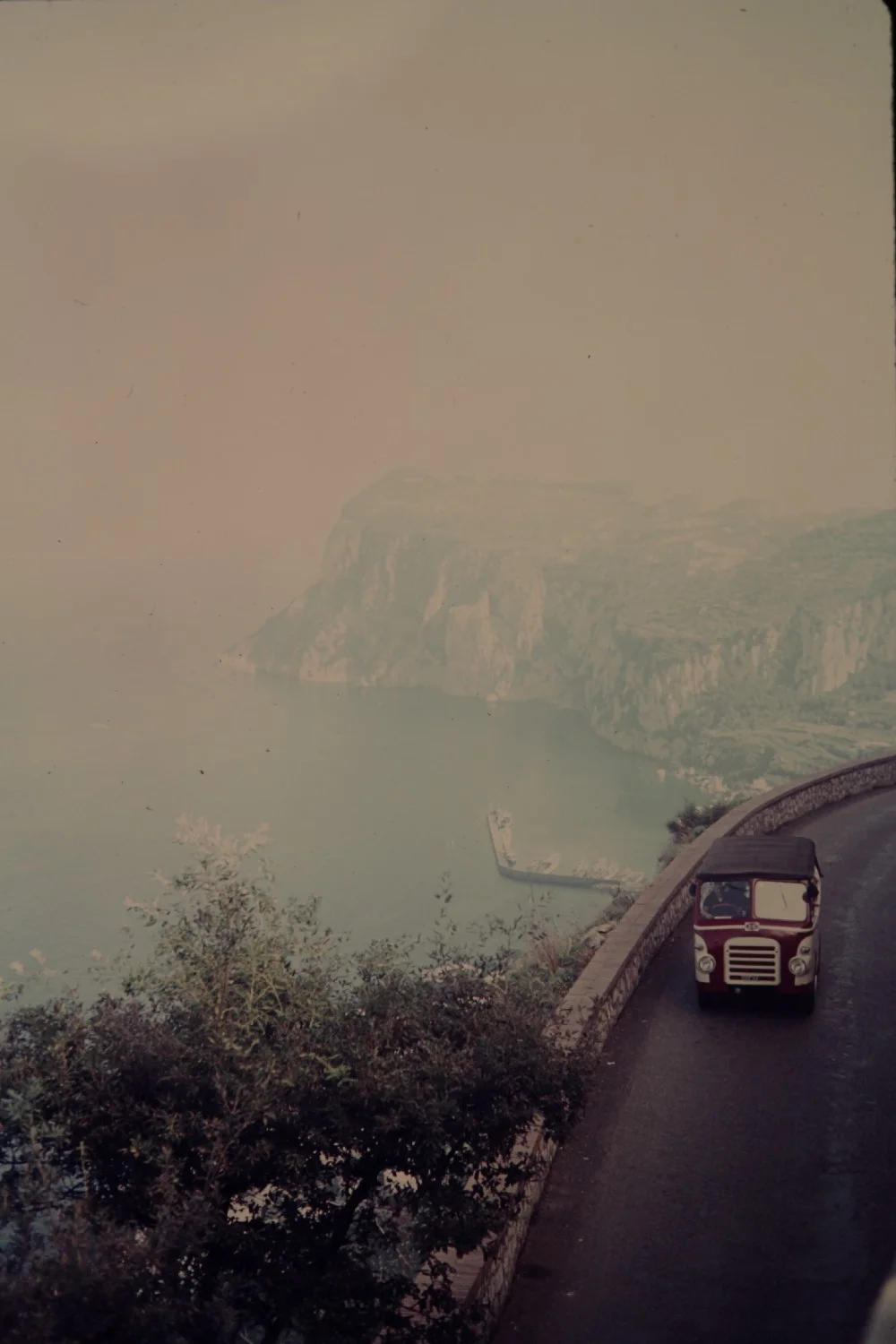
Photo by Joe Ellenbogen
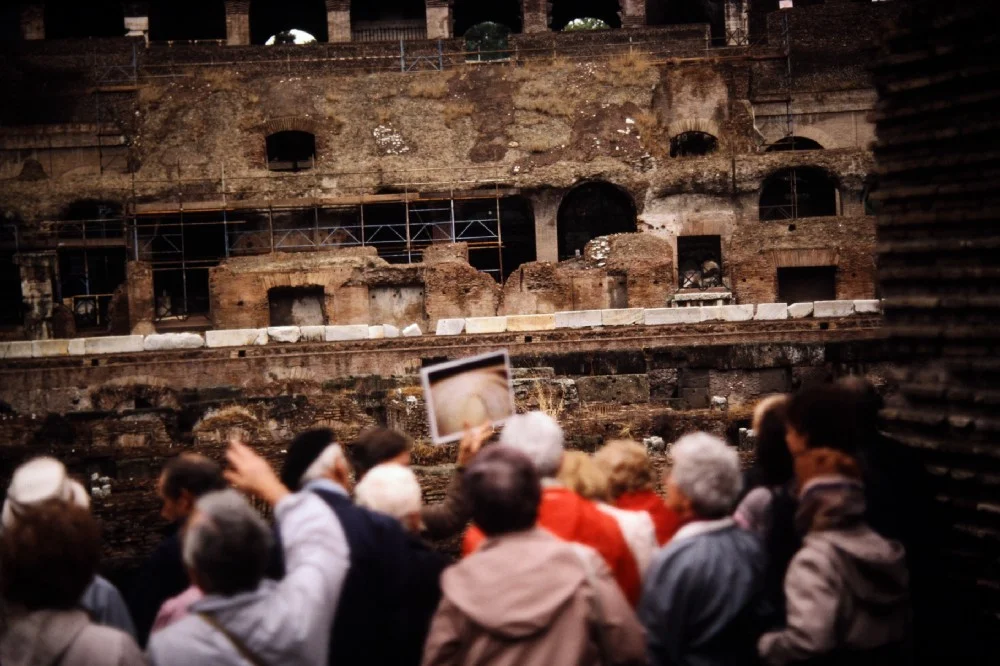
Photo by Joe Ellenbogen
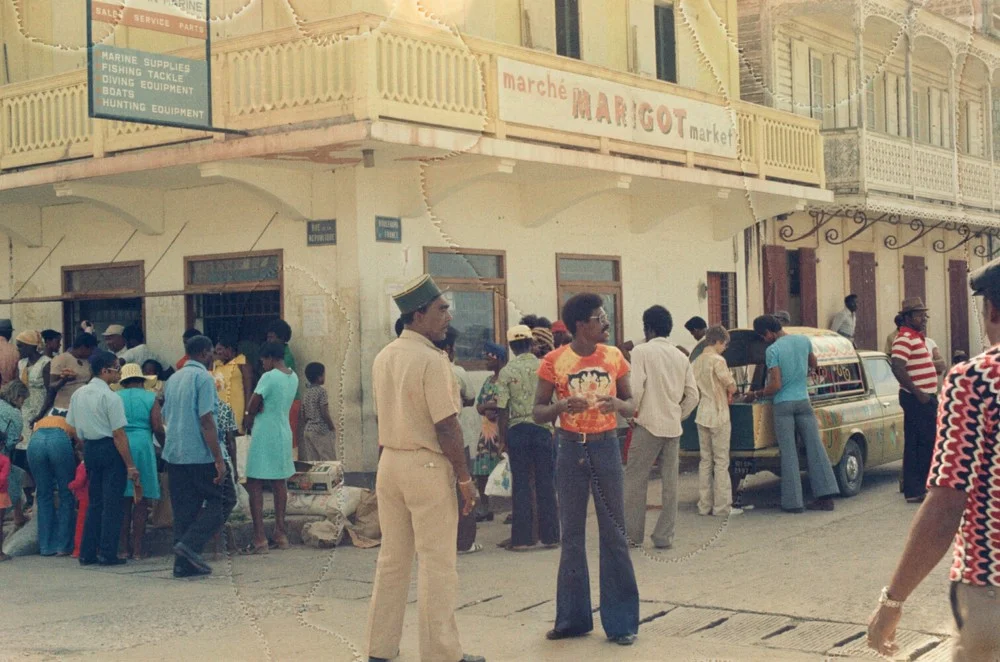
The corner of Rue de la République and Boulevard de France in Marigot, Saint Martin (thank you Richard Hopkins). Photo by Joe Ellenbogen
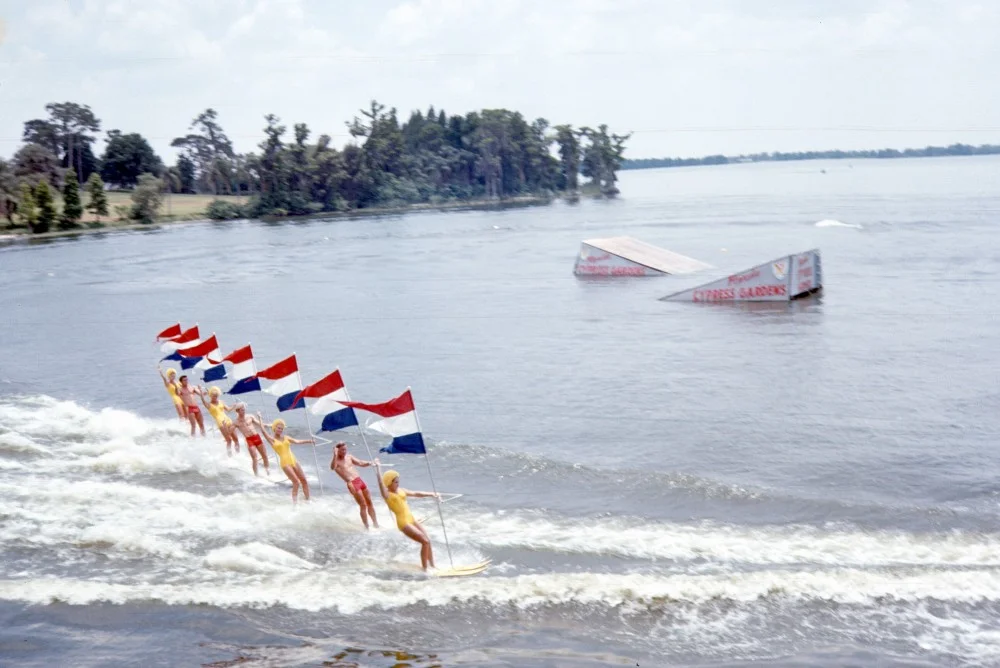
Photo by Joe Ellenbogen
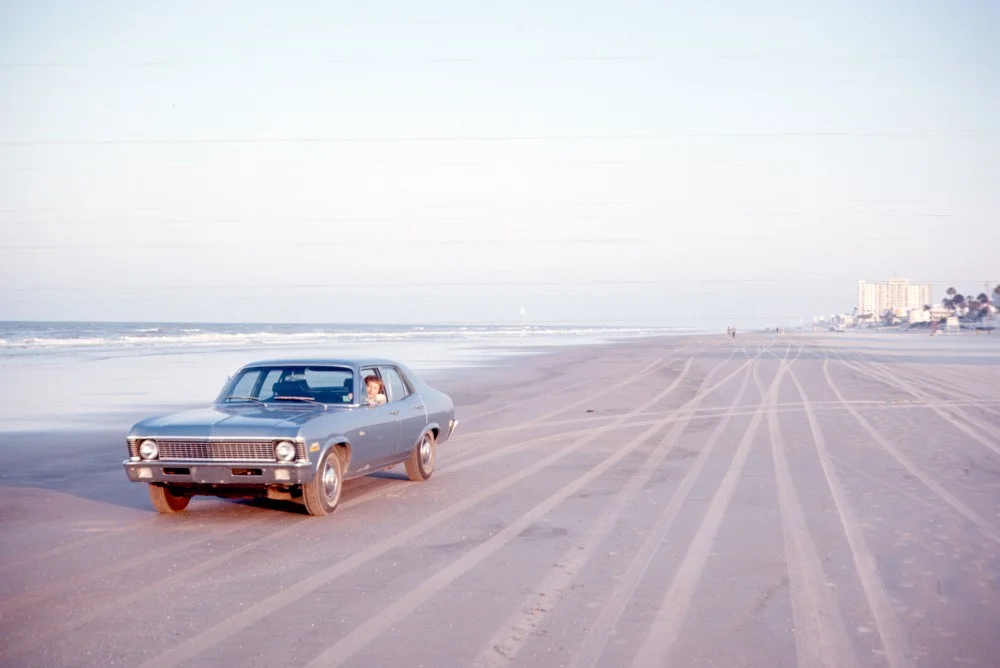
Photo by Joe Ellenbogen

Photo by Joe Ellenbogen

Photo by Joe Ellenbogen

Photo by Joe Ellenbogen
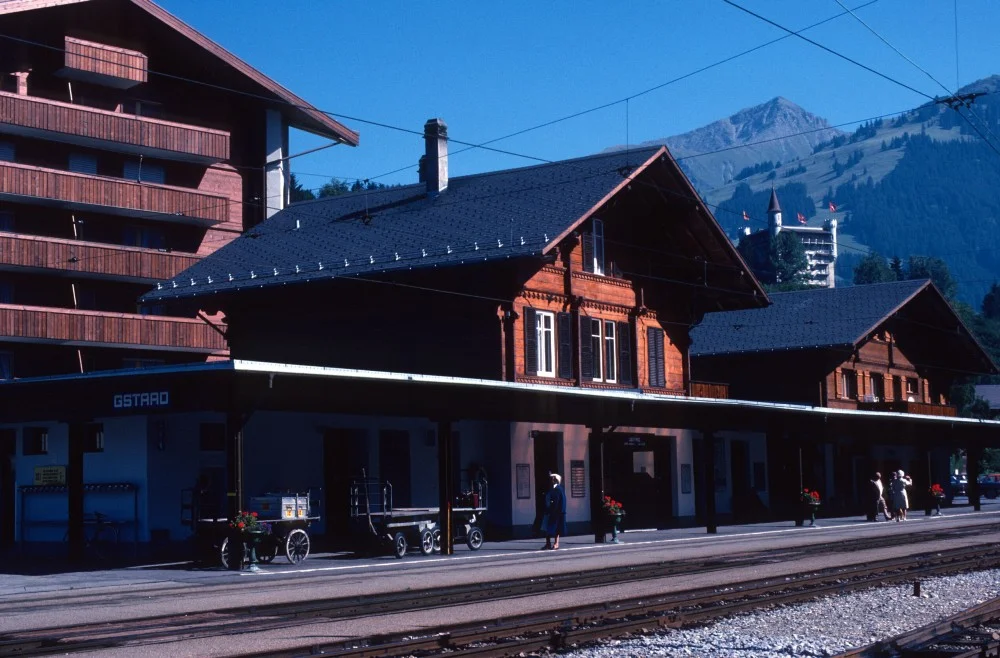
Photo by Joe Ellenbogen
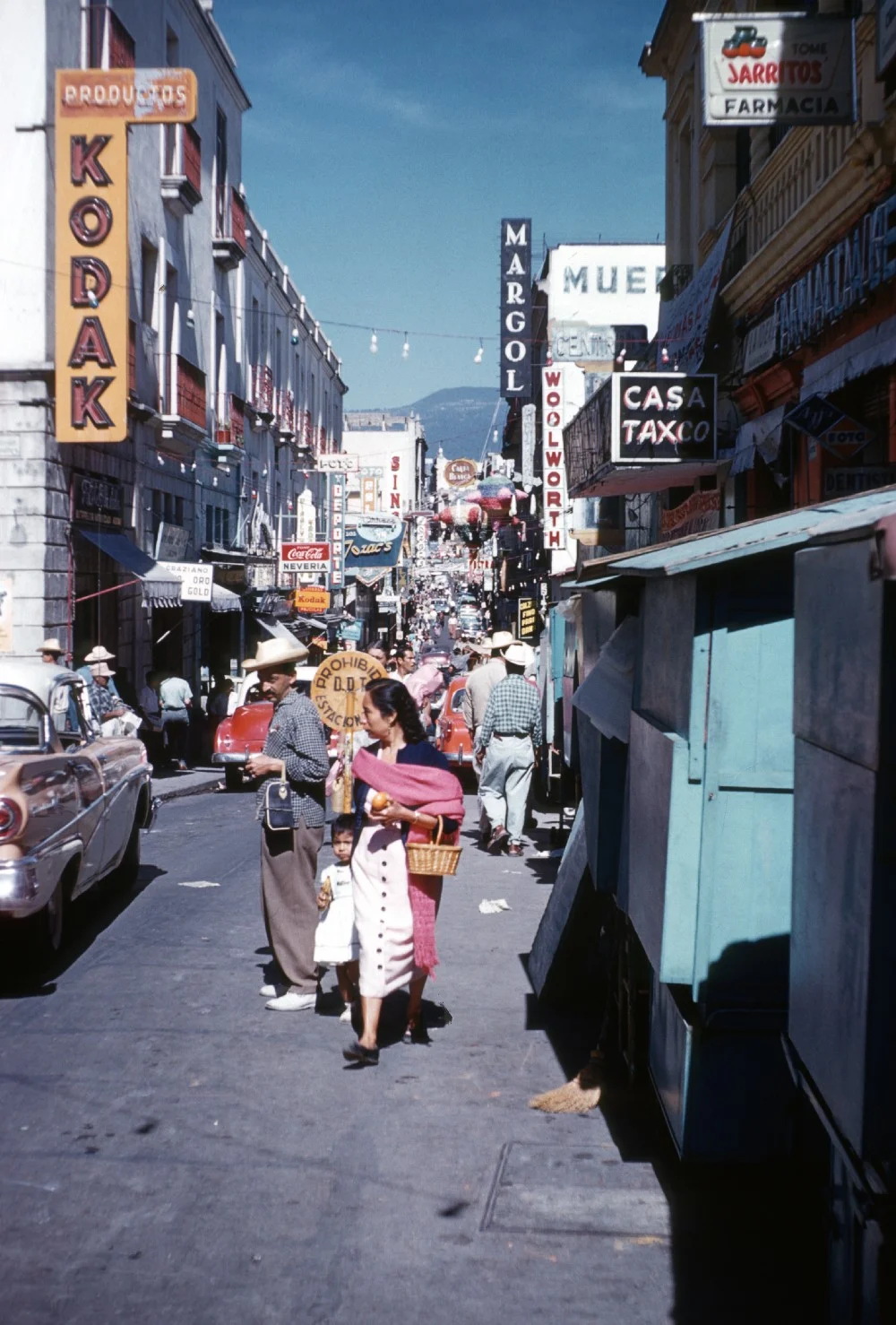
Photo by Joe Ellenbogen

Photo by Joe Ellenbogen
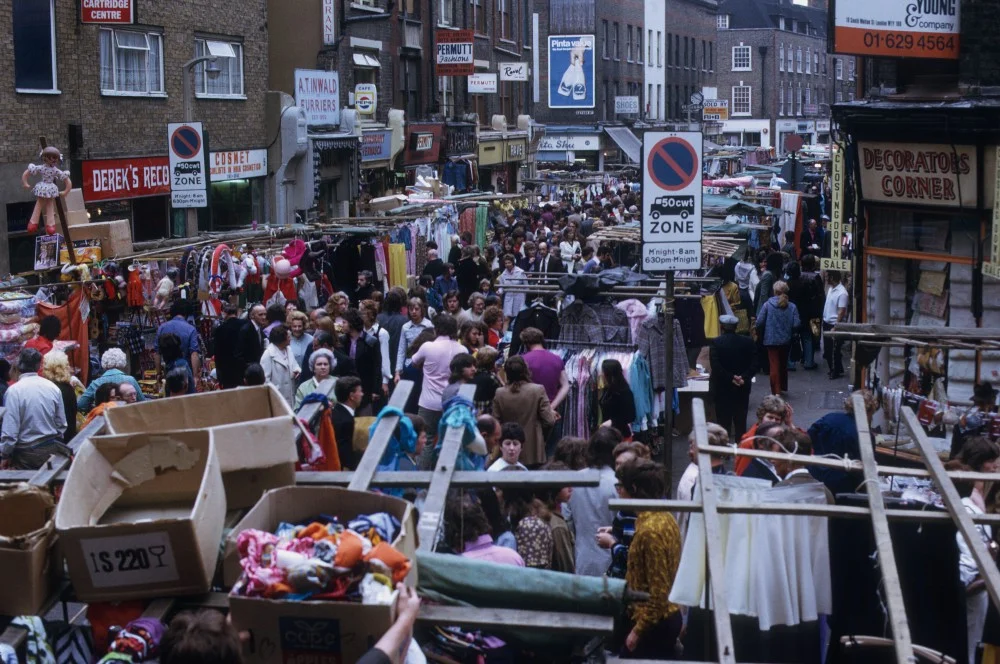
Photo by Joe Ellenbogen
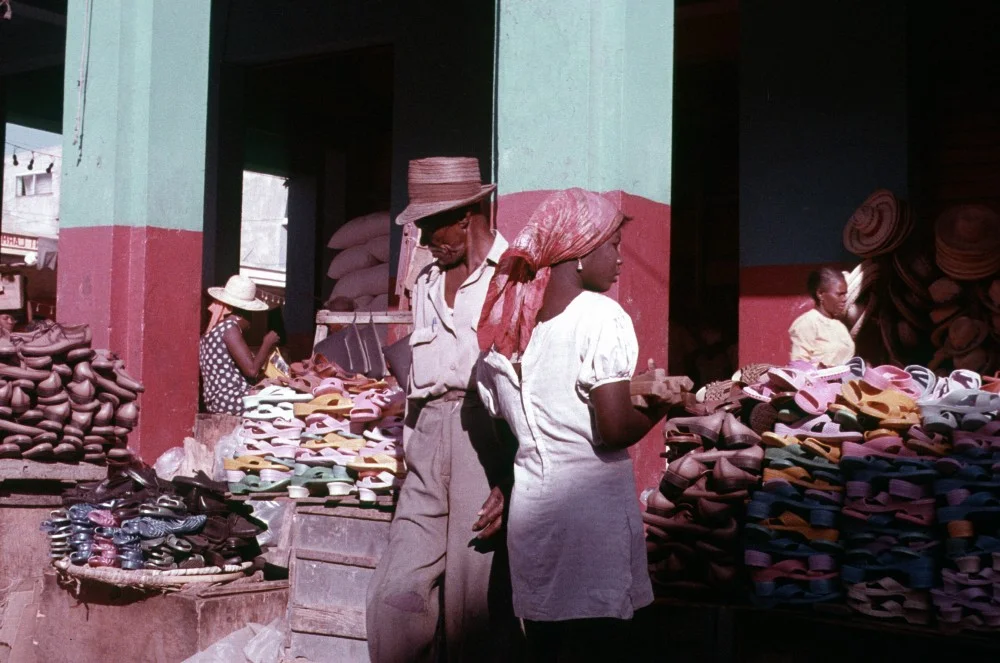
Photo by Joe Ellenbogen

Photo by Joe Ellenbogen

Photo by Joe Ellenbogen
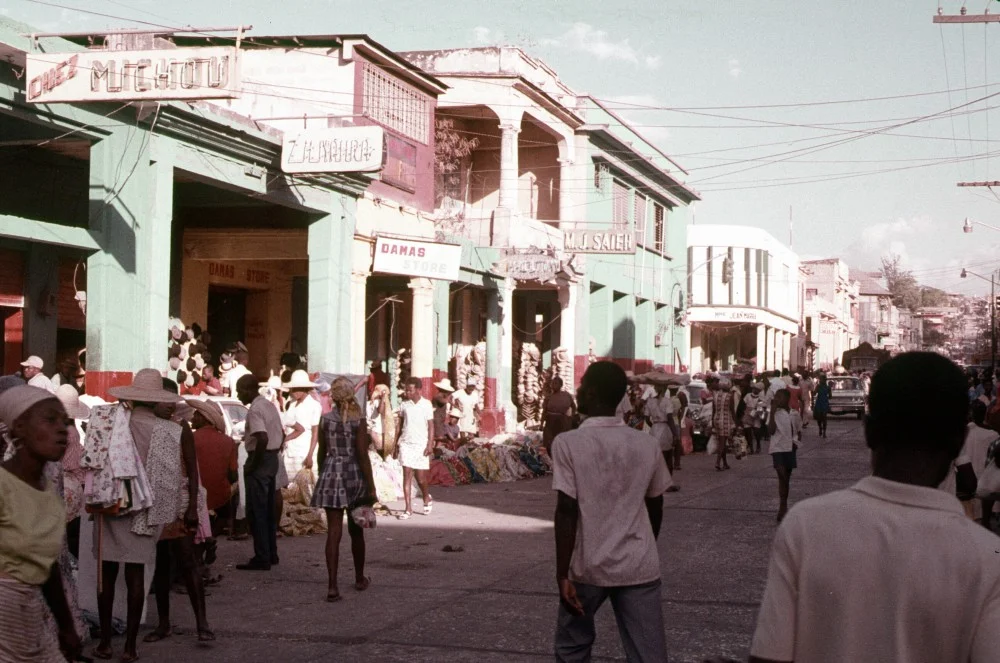
Photo by Joe Ellenbogen
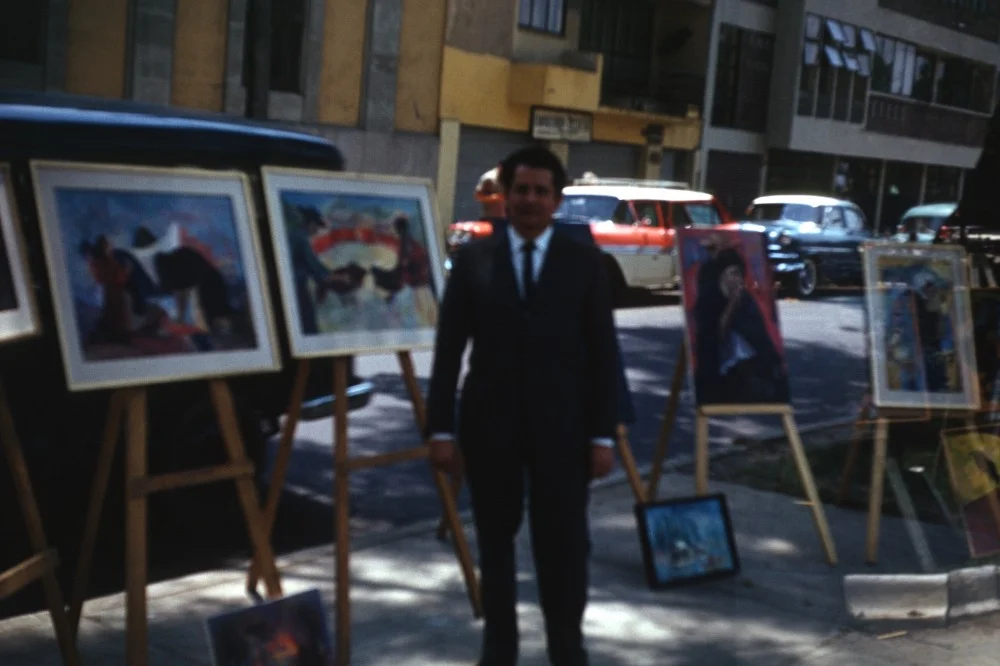
Photo by Joe Ellenbogen
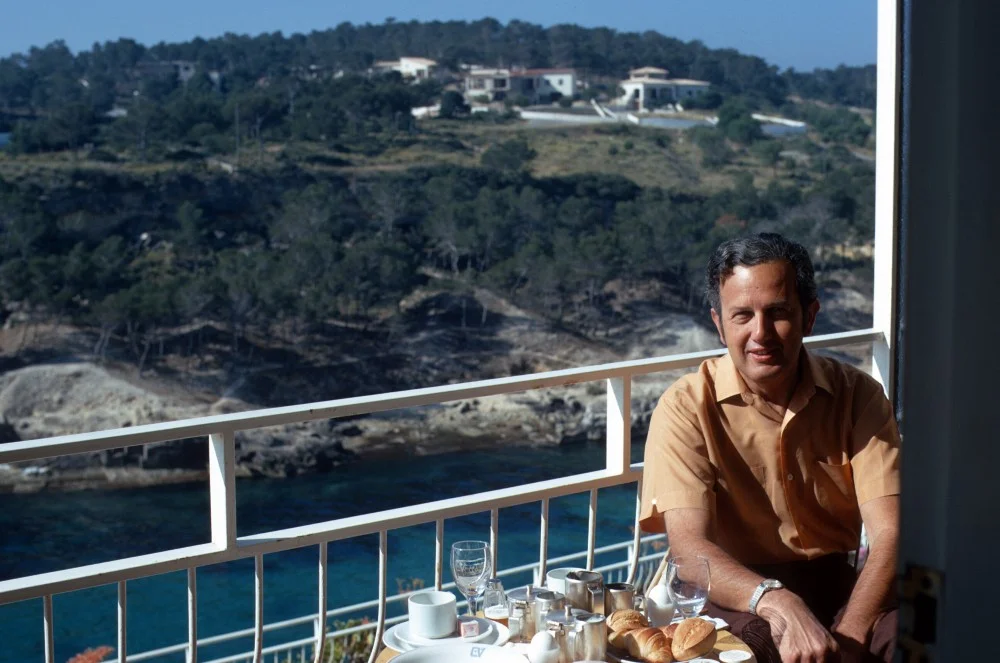
Grandpa Joe, somewhere in the world. Photo by Ethel Ellenbogen.
Thank you for reading. For my own photography, find me at instagram.com/joshsrose
THIS ARTICLE WAS ORIGINALLY PUBLISHED ON MEDIUM.
JOSH ROSE
Journalist, photojournalist, creative director.
Feel The Sounds of Senegal
A 3 week trip in Senegal allowed filmmaker Cee-Roo to capture the culture of a people and feel the power and importance of music in a country where the joy of living takes over poverty.
Moscow Moves
Filmmaker Alex Soloviev tried to avoid favourite tourist clichés (though not without some), catching with camera what is usually missing in the regular timelapse videos - the true rhythm and the flow of the city. It is impossible to do it in just 2 minutes, it's just a little piece of what you can see there. Alex says "Moscow is an unusual city, it's really huge and has different shapes. The city with so many stereotypes that are often spoken about it. The city that is easy to overestimate and underestimate at the same time. "
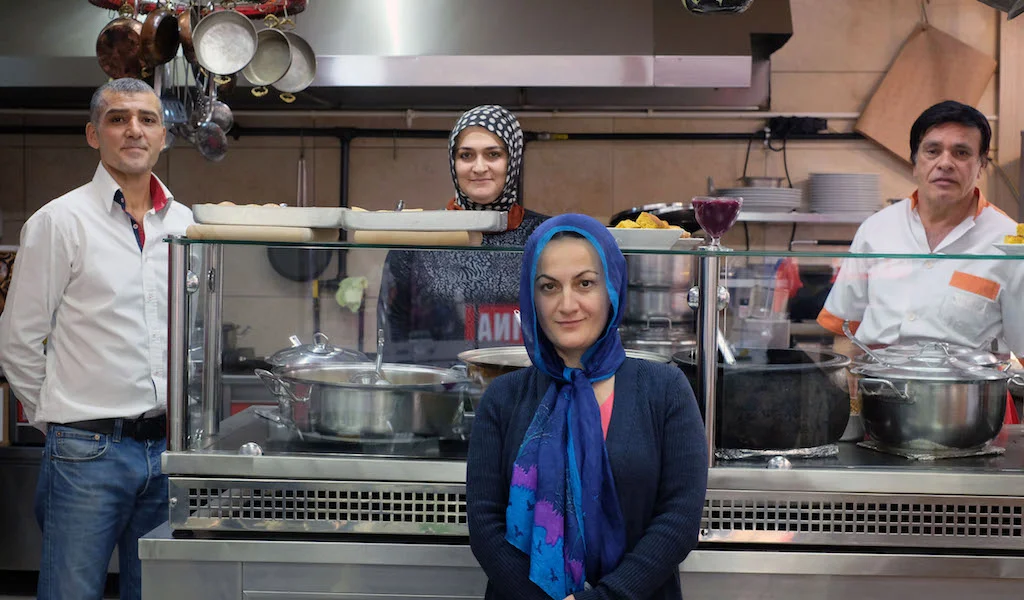
The staff of Emice'nin Yeri, with Nezahat Hanum in the back, photo by Paul Osterlund
TURKEY: Black Sea Soul Food
Everyone seems to feel at ease in Emice’nin Yeri. It’s the kind of place where workers come after their shifts, families and couples dine, single men drink their tea and watch football matches on the TV, and women too are comfortable eating alone. But it’s not just a welcoming place – Emice’nin Yeri also happens to be one of the best Black Sea restaurants around.
The emice part of the name comes from the Laz language and means “uncle,” or amca in Turkish, so can be translated to “Uncle’s Place,” a fitting moniker for the restaurant does have a certain avuncular charm. There are the wooden hamsi, which were hanging from the ceiling when we first started coming here (although they disappeared after a new ceiling was put in), a collection of toy cars, pictures of bucolic Black Sea towns, flags of regional favorite Çaykur Rizespor Football Club on the walls, and gourds hanging in the kitchen – all create a homey feel. Yet the modest, eclectic setting doesn’t quite let on how good the food is.
With its bright red color and neon sign, Emice’nin Yeri cheerfully commandeers a corner in the Fıstıkağacı neighborhood of the Asian side’s Üsküdar district, about a 10-minute walk uphill from the ferry terminal on the Bosphorus. The restaurant is the work of Kemal Teker, who opened it in 2009, though he came to Istanbul much earlier, from Çayeli in the Black Sea region, in 1976. He had a store for some years before turning to the restaurant business because, in his own words, “I like to eat.”

He is joined in the kitchen by his aunt Nezahat Teker, who takes over in the evenings from the daytime cook, Ayşe Amaç. It’s not a stretch to say that their warm, hearty smiles are what make the food so delicious and taste reliably homecooked.
Chatting between orders, Nezahat Hanım shared with us that in a former life she had been a housewife but had always been known for her desserts. Finally she answered the call to the restaurant because the owner didn’t think anyone else could make her kabak tatlısı (pumpkin dessert) as well. She then spent eight years preparing only desserts but was informally apprenticing as a chef all that time. So, when the former cook left a year ago, she took over in the kitchen.
It’s an inviting kitchen, directly to the right upon entering the door, the food upfront and simmering in pots on the stove. So while there is a menu, there’s usually no need to look at it. We quite literally just see what’s cooking and decide.
Something about the Black Sea’s butter-rich dishes warms the soul.
The fare typically consists of a dozen or so regional classics like muhlama, a cornmeal porridge with melted cheese that’s the culinary equivalent of a warm, fuzzy sweater; karalahana sarması whose spice-infused rice, minced meat, and tangy collard greens are perfectly complemented by the housemade yogurt on the side; Rize kavurmasi, a dish of tender pieces of beef in a savory broth and, of course, at this time of year, hamsi, or Black Sea anchovies.
The arrival of the hamsi seems to trigger a response, as it’s the time of year when the temperature drops, the air turns crisp and golden crackly leaves congress, that a real hankering for Black Sea food sets in. Something about the Black Sea’s butter-rich dishes do not just fill the belly but warm the soul, the perfect counterpoint to cold, drizzly weather.
The hamsi tava are indeed tasty. Breaded and crispy, they are plated in a kind of anchovy-mandala, the cornmeal crust nicely offsetting the briny, savory meat of the fish.

But the real reason we keep coming back is the Çayeli kurufasulye, the Black Sea kitchen’s take on baked beans. Creamy, thick and oozing flavor, the kurufasulye owes its goodness to two key ingredients, according to Nezahat Hanım: the beans that come from İspir in the Erzurum region, and the smacking-good butter delivered fresh from Rize. Then it must be slow-cooked in a copper pot in the oven.
Whenever we come there’s not even a question about ordering this dish, while we have slowly eaten our way through most of the rest of the menu. During a recent visit, we had just finished spooning down another portion of kurufasulye and were in the middle of a conversation with the owner when he suddenly turned and said, “Oh the bean delivery has arrived.”
Then he went off to heave sacks of beans over his shoulder with two or three other men helping. They went by again and again, in a veritable parade of bean sacks, carrying them to the depot downstairs. Turns out that a full ton of beans was delivered that night, enough for the whole year.
While the beans came in, some butter from the kitchen went out that night. After our raving about the flavor of the kurufasulye and being told about the importance of the butter and then wondering where one might find such butter, the cook wrapped up a half-kilo for us to take home.

This article originally appeared in Culinary Backstreets, which covers the neighborhood food scene and offers small group culinary walks in a dozen cities around the world.
AUTHOR
ZAMIRA SKALKOTTAS
PHOTOGRAPHER
PAUL BENJAMIN OSTERLUND
Paul, one of Culinary Backstreets' Istanbul correspondents, is a freelance journalist and writer who has called Istanbul home for over 5 years. He completed an MA in Turkish Studies at Sabancı University, and has written for Al Jazeera, The National, The Atlantic's City Lab, Middle East Eye, Roads and Kingdoms, Deutsche Welle, and others. He loves exploring the far-flung reaches of Istanbul and plays guitar in the band Foton Kuşağı.
Fighting to Keep Mexico’s Floating Farms Alive
Lucio Usobiaga, the co-founder of Yolcan—a nonprofit aimed at preserving the chinampas.
Read More
Through the “Open Veins of Latin America” | Bogota to Lima by Bicycle
Photo essay by photographer Bernardo Salce, who rode 4,000 km on his bicycle from Bogota, Colombia to Lima, Peru
Read MoreINDIA: In Her Shoes
Rani is a 17-year-old in Mumbai. Like most girls her age, she likes Instagram, boys and good food. But Rani is also the daughter of a sex worker, and she grew up hearing, “a whore’s daughter can only be a whore.” Follow filmmakers Doree Simon and Caz Tanner Film as they explore women’s empowerment efforts around the world in a new original series, In Her Shoes. Episode one features a-day-in-the-life of Rani — who is transcending her circumstances and helping her community along the way.

"I'm in love with cities I've never been to and people I've never met."

Author provided
After the Niqab: What Life Is like for French Women Who Remove the Veil
Islamic headscarves and veils continue to be the subject of intense debate in Europe. Countries’ approaches toward the burqa and niqab, which cover the face, range from tolerance in the UK to an outright ban in France. Reactions of Muslim women to restrictions have varied, including protests by some, reluctant acceptance by others and also support for bans.
But what happens when a woman who has worn a niqab, sometimes for years, makes the decision to leave it behind?
Hanane and Alexia – whose names are pseudonyms to protect their identity – were both born in France. Hanane grew up in a non-practicing Muslim family, while Alexia converted to Islam at age 22. For five years they both wore a niqab. Hanane began in 2009, just before France banned the full-face veil, while Alexia adopted it later. Once ardent defenders of the right to wear the niqab, both women have now completely abandoned it. But the transition took place gradually and was accompanied by a growing distance from extreme Salafist ideology.
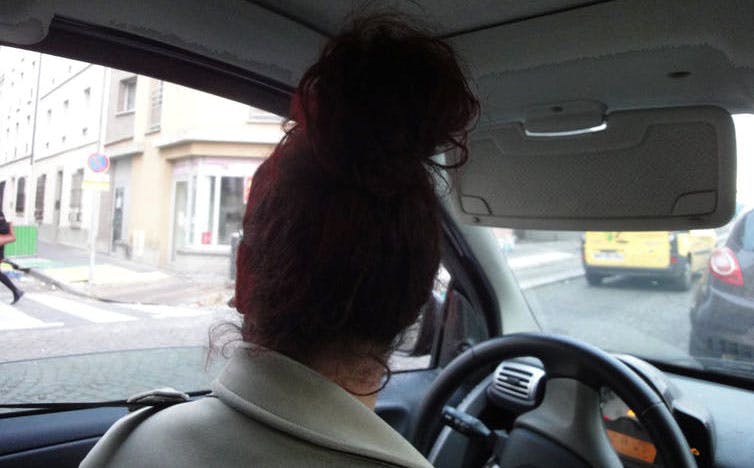
Hanane today. Agnès De Féo
‘Start living again’
On January 10, during the New Year’s discount sales in France, Alexia and I met near Paris’ Gare du Nord train station. She wanted to buy clothes and “start living again”. In the first shop she bought four slim pairs of pants and a trim jacket. She then tried out some Nepalese clothes designed for Western tastes, including a colourful jacket and pants with huge bell bottoms.
As she came out of the dressing room, Alexia gauged herself in front of the mirror: “It’s really me, I finally feel like myself again after years of being locked up.” With her hair brushing her face, she looked like a modern woman, fully alive. I was impressed with her metamorphosis: it’s hard to imagine that she wore a niqab for five years and was one of the most radical women I’d ever met.
I met Alexia in August 2011 in the context of my research on the full-length veil during a demonstration by the Salafist group Forsane Alizza(literally Knights of the Pride) in a city near Paris. She was wearing a niqab and presented herself as the wife of one of the group’s leaders.

Event of the Salafist group Forsane Alizza in August, 2011. At the centre is its leader, Mohamed Achamlane, who was jailed in 2015 for criminal conspiracy in connection with a terrorist enterprise. Agnès De Féo, Author provided
Alexia remembers that time:
We considered all Muslim supporters of the French Republic to be unbelievers. We were doing the takfir (excommunication) against those who did not practice like us. We were opposed to the taghout (idolatry in the broad sense), i.e., the state and institutions. We defined ourselves as ghûlat, which means ‘extremists’ in Arabic.
Estimates of the number of women who wear the niqab vary widely, from a few hundred to several thousand. In terms of even France’s Muslim population the percentage is tiny.

Hanane, whom I met on the side-lines of a demonstration in front of the French National Assembly, 2010. Agnès De Féo, Author provided
‘The niqab was protecting me’
I’ve known Hanane even longer than Alexia. We met during a January 2010 demonstration of women in niqab at the Place de la République in Paris and then in front of the National Assembly. She and others were protesting a proposed measure that would outlaw concealing one’s face in public.
At the beginning of 2017, Hanane reached out to ask me to help her write a book about her life. In the book she’d like to write, Hanane doesn’t want to denounce the niqab, but to tell the story of the rapes she says were repeatedly inflicted by her father-in-law. To her, they help explain her involvement in Salafism.
Religion brought a lot that helped me escape from the trauma of rape. I was 19 to 20 years old when I started wearing the niqab, I took it off when I was 25. The further I went, the more I wanted to cover myself. The niqab protected me, I liked hiding from men. I could see them, but they couldn’t see me.
Unlike Alexia, who decided on her own to begin wearing a veil, Hanane remembers the influence of her social circle at the time:
We were a bunch of girlfriends and wore niqab almost all at the same time. In our group the earliest was Ayat Boumédiène, who adopted it more than two years before the law. At first everything was normal with her, and then she started to organise gatherings to encourage us to take up arms. It was her husband, Ahmadi Coulibaly, who turned her head – he was low-key until he went to jail. Ayat wanted to introduce me to a man she said I should marry, she really pushed hard. He was later imprisoned for murder. Thank goodness I didn’t give in – I’d be in Syria today.
On January 9, 2015, Ahmadi Coulibaly attacked the Hyper Cacher market near Paris. Boumédiène left Paris one week earlier, and was spotted at the Istanbul airport. She remains at large. Coulibaly killed five people during his attack and died when the police assaulted the grocery store in which he was holding hostages.
Trailer of the film Forbidden Veil, directed by Agnès De Féo and produced by Marc Rozenblum, 2017.
‘I felt like I was getting out of jail’
When France banned full-length veils in 2010, some of the women who wore the niqab switched to the jilbab, which covers the whole body except the face, while others gave in to public pressure and ceased wearing it. Both Alexia and Hanane are different: they say they’ve turned the page completely.
Alexia has even become a fierce opponent of the Islamic veil and Salafism. She continues to define herself as a Muslim but reads the texts with a critical eye. Hanane admits that she has become less diligent in her rituals: “I often skip prayers or make them late. Some days I don’t even have time to pray. When I wore the niqab I was a little more regular, even though I was often late.”
Both say they’ve put aside the more radical texts they once favoured, and no longer frequent fundamentalist websites. But this process didn’t happen all at once – it took several months. Alexia says she decided to remove the niqab on the advice of the man who shared her life at the time. A convert to Islam and Salafism, he was a supporter of conservative dress for women, but nonetheless suggested she cease wearing the niqab:
When he saw my physical condition, he asked me to remove the niqab – he feared for my health. I had worn it to please Allah, but because of the lack of sunlight I wasn’t synthesising vitamin D any more – my health was failing. I followed his advice, but it’s been long and hard.
Alexia remembers:
When I took the niqab off, I felt like I was getting out of jail. But that doesn’t mean I was released – I still felt bad. It takes years to get by and I haven’t finished cleaning my head yet.
Hanane abandoned her veil after the attacks on the French satirical magazine Charlie Hebdo in 2015 because she feared for her safety, facing more and more insults in the street. She said the hardest part has been the exclusion from her social circle:
Since I removed my veil, many of my Muslim sisters no longer want to talk to me. I find them stuck-up and unfair, because anyone can choose to take off their veil. A few rare ones talk to me, but it’s not like it used to be.
For a long time Alexia would put her veil back on when returning to her old neighbourhood in northeast Paris where social and religious conservatism is strong in certain communities. Then she finally changed her life entirely.
My life began to change when I enrolled in a gym, which allowed me to get out of the Salafist social networks that were my only source of socialisation before. Then I got a job and then I finally said goodbye to my past.
And it was at this job that she met the man whom she would marry. He is not Muslim and the civil marriage took place at city hall, an unthinkable choice for this woman who once hated French institutions.
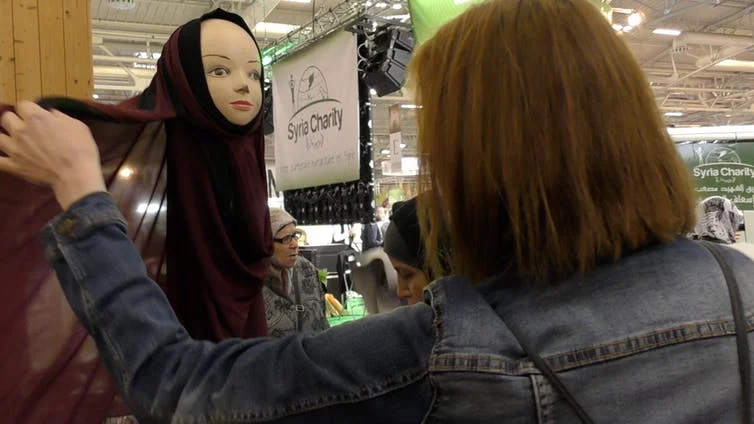
Alexia visits a booth at the annual salon for French Muslims at Le Bourget, north of Paris, 2017. Agnès De Féo, Author provided
A bitter taste
In hindsight, neither Alexia nor Hanane spoke of their “exit” from the niqab as a liberation. Instead, the experience has left them with a bitter taste. They say they were convinced at some point in their lives of the importance of wearing a full-length veil: Alexia believed that she was achieving Muslim perfection and giving meaning to her life – she imagined meeting the pious and virtuous man who would save her from her life as a single mother. For Hanane, the goal was to heal the wounds of an adolescence torn apart by family trauma and foster care.
Alexia now feels that this period cost her years of her life and expresses anger at the propaganda coming from Saudi Arabia. She blames the entire system that indoctrinated her, even though she acknowledges it was, in a sense, voluntary. According to her, the Islamic State benefits from the naivety of those who believe they are committed to Salafism for legitimate reasons.
Even if they’ve both renounced the niqab, neither Hanane nor Alexia support the 2010 ban. Hanane told me recently: “The law is counterproductive. The only way out is by yourself. The ban will never convince any woman to take it off.” Alexia has the same reaction, saying that the law that has led some women to cut themselves off from society and that some might adopt it as a rebellious gesture.
Testimonies of those who’ve chosen to “leave the niqab behind” are rare. The number of women who have adopted it is extremely low, and the ones who then choose to renounce it must often sever their old relationships and adopt what is in many ways a new identity – they change their e-mail addresses, phone numbers and move on completely. For them the full-length veil has become something firmly in the past, representative of a transitional stage in their lives.
Translated from the original French by Leighton Walter Kille.
This article was originally published on The Conversation.

AGNÉS DE FÉO
Agnès De Féo is co-founder of Sasana Productions and teaches at the journalism school CFPJ.
JAPAN: Seeking Nirvana - The Lost Craftsmen
A journey into Japan's rich maker culture and legendary powdery winter. A look at the past, present and future of craftsmanship intertwined with the search for carving the perfect turn.

How to Enjoy Travel Without Social Media
DID YOU KNOW that if a tree falls in the woods and you don’t post the video to your Instagram story, it still actually happened? I’m aware of the irony of writing about a topic like this on a popular travel website, where, if all goes well, it will be retweeted, shared on Facebook, and maybe even receive a video response on YouTube (please?), but there are ways to enjoy traveling without social media.
Low-tech travel is still an option
Some travelers get the idea that getting offline also means completely cutting themselves off from technology, when in fact a simple reduction will do. Leaving your phone at home and using a calling card to stay in touch may be annoying, but isn’t it worth removing the temptation of snapping a selfie? Just because we no longer live in a world where Polaroid cameras are ubiquitous doesn’t mean they aren’t out there to capture memories. If you use your blog primarily as an outlet for your creativity and not as a form of income, you can try jotting your experiences down on paper. Travel like it’s 1999.
Time goes further without technology
You may not be able to look back on what happened one day ten years ago in Thailand without some digital photographic evidence, but if you spent that time bathing elephants and getting drunk with expats you’re going to remember the experience better without wasting time documenting everything as it’s happening. My weekends in Japan usually fly by when I’m traveling solo and stop to write on my Macbook or scroll through IG on my phone, but when two Couchsurfers came to visit and we spent the whole day talking and exploring, I couldn’t help but appreciate how much longer the days seemed to last. Being mindful during your travels means taking the minute between when your food is served not to find the perfect angle for a picture, but instead reflect on how fortunate you are to have this nourishment in this foreign country with good friends.
Live your life without online feedback
Social media has fundamentally changed how we communicate in many ways, but probably none more than allowing snapshots of our lives to receive immediate feedback from the whole world. We’ve probably all taken a picture of a scene like a sunset over the ocean with the intention of wanting to know want other people think about it, without taking the time to wonder whether we actually like it in the first place.
Your travel experiences have value even if no else sees your picture and gives it a like. Seeing someone’s expression in person and understanding their reaction to your temple stay and spiritual awakening (even if it’s an eye roll) are going to mean more to you than someone writing a cliché comment with an emoji.
Think about where you travel, and why
I had a falling out with a friend last year after – having discussed the issue of the treatment of elephants at length – she chose to ride on one in Asia in a stereotypical tourist fashion. When I quite angrily asked what the hell she was thinking, knowing full well she was aware of how these animals were tortured, she casually replied “Yeah, well, I wanted a selfie with one.”
Think about your motivation in traveling to a place like Macchu Picchu or posing with a tiger… is it something you genuinely want to do, or just something you think would look pretty sweet on Instagram? Take away that incentive, and would you still go there, or do that?
Traveling without social media forces you to focus on why you travel, knowing that people may still hear about the story ex post facto, but you completely control the narrative. Why work yourself to death squeezing in another attraction before sunset to make sure it’s posted during prime viewing time if no one is going to see it? Avoiding social media generally gives you quality over quantity.
THIS ARTICLE WAS ORIGINALLY PUBLISHED ON MATADOR NETWORK.
TURNER WRIGHT
Turner Wright is a marathon runner first, an adventurer second, and a writer through it all. Apparently, he has a thing for island nations, having lived in Japan, and soon to be headed for New Zealand. Check out his adventures at Once a Traveler.
MEXICO: Día de los Muertos
Since filmmaker Kevin Clerc was a kid, it always been his dream to see "El dia de los Muertos" in Mexico. So last October him and a friend traveled there to witness this special day. They spent 3 weeks travelling around Quintana Roo, Yucatán and Campeche states. Clerc made this video to show how this country has its own culture and its own history that you will find nowhere else in the world.
Read More