Life on the Margins

During the northern summer of 2001 thousands of Chinese security personnel, backed by an army of labourers armed with sledgehammers, massed at the entry of the Larung Gar Tibetan Buddhist Institute. In this almost impossibly remote place, sitting high on the Tibetan Plateau, 9,000 monks and nuns had found a home, defying decades of China’s aggressive atheist policies to learn from its charismatic and avowedly apolitical founder, Khenpo Jigme Phuntsok.  
PRC authorities had long been skittish about the institute’s remarkable growth, and particularly alarmed by its growing appeal to ordinary Han Chinese. By 2001 over 1,000 Han also called Larung Gar home.
 

The Larung Gar Five Sciences Buddhist Institute.

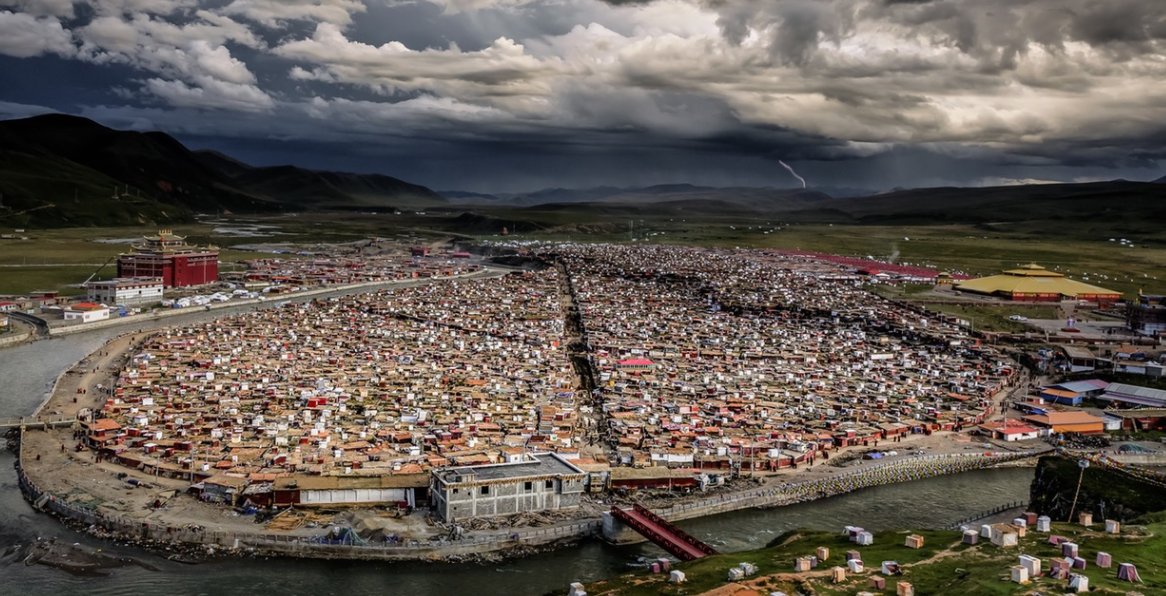
Both Larung Gar and Yarchen Gar (gar translates as camp) have remained largely hidden from the outside world, as much because of their inaccessible geography as the tight controls on freedom of movement put in place by the Chinese government. Both sit at elevations of over 4,000 metres, sunk deep into hidden valleys of the Hengduan mountain range, which cuts across China’s south-western Sichuan province.
 

Yarchen Gar sits hard against the border of the TAR and is home to roughly 9,000 nuns. 
 

Both Yarchen and Larung Gar are part of what is known as the Garzê Semi Autonomous Prefecture, where 77 percent of the inhabitants — some 800,000 people — claim ethnic Tibetan heritage. As is the case in the similarly named Tibetan Autonomous Region (TAR), the people’s future has long been out of their own hands.

In theory, to move around Garzê as a foreigner, one only needs a Chinese tourist visa and bucket loads of time, patience and fortitude. This is in stark contrast to the neighbouring TAR, at the border of the lands known to the wider world as ‘Tibet’. Visitors to the TAR are required to first negotiate a complex and shifting permit process, before joining an organised and highly controlled tour of the region.
 

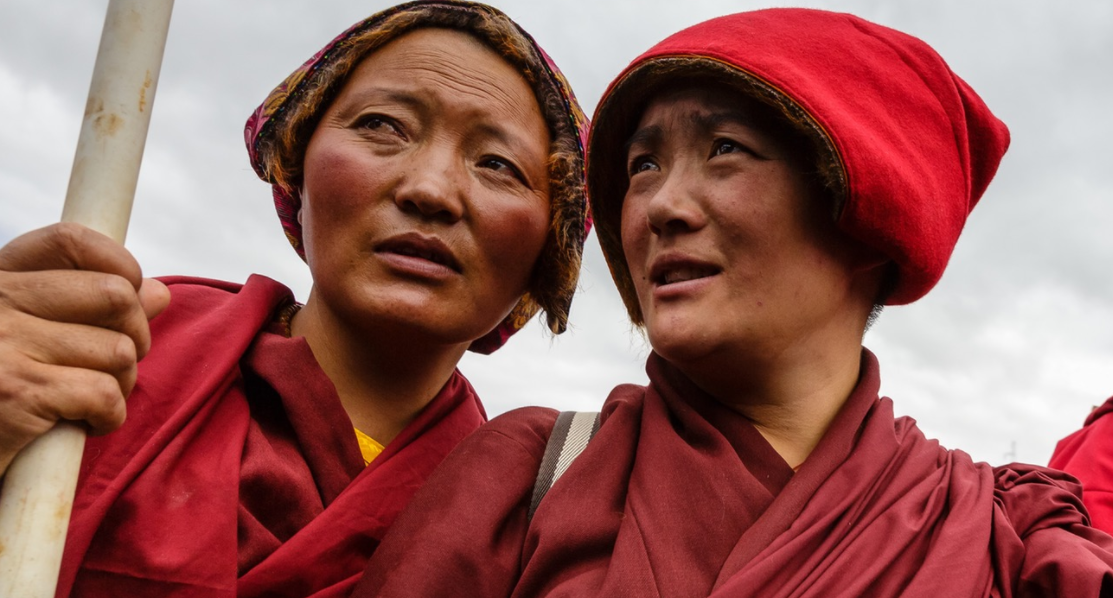
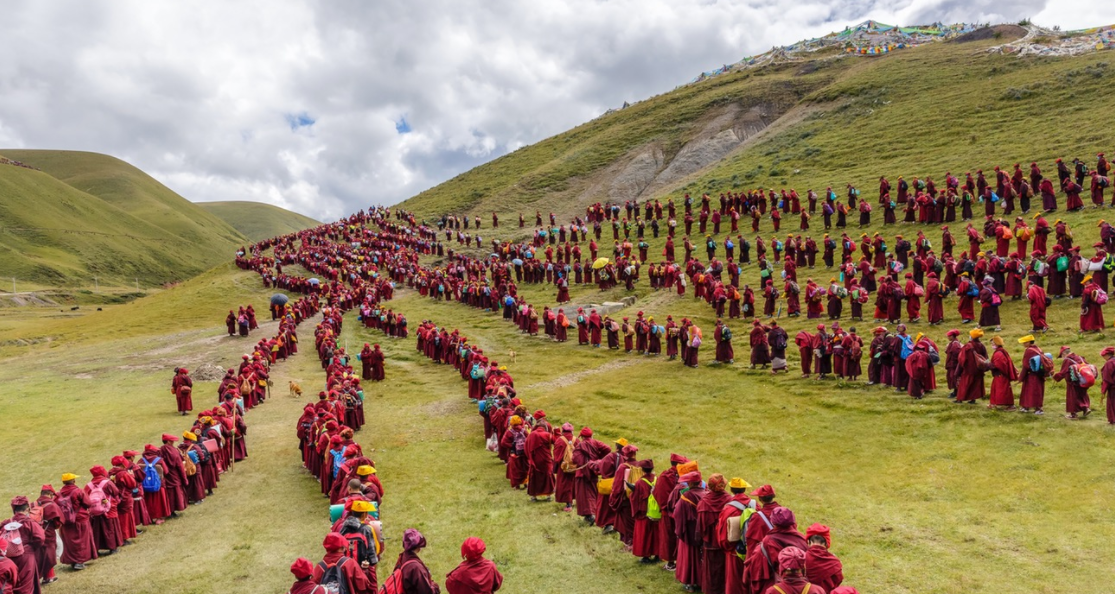
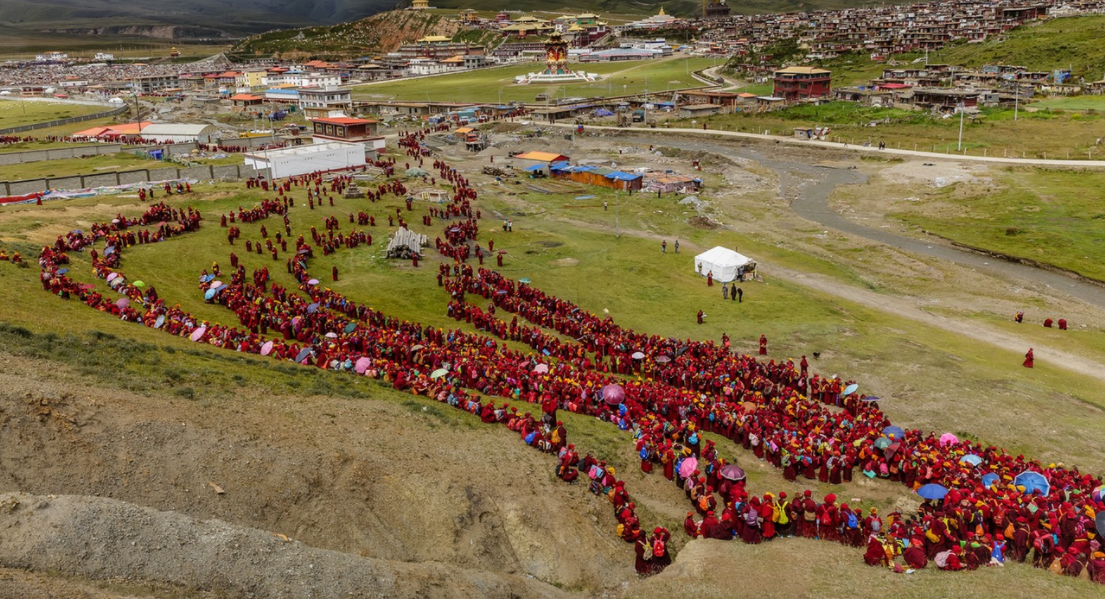
Nuns at a ceremony at Yarchen Gar in which almost the entire population of the camp leaves for a month of meditation in the surrounding hills. 

Yet Garzê and nearby Qinghai are also restive. Tibetans here have openly protested against Chinese control, most notably as part of a violent uprising in 2008. Referred to by the Chinese as the 3-14 riots, unrest had spread from the TAR into Sichuan. This unrest effectively slammed the door shut to the region’s hidden treasures until 2013. Today, despite relative calm, nuns and monks continue to take the extreme measure of self-immolation in towns and villages. Reports of random arrests and the disappearance of accused activists are common. Recently Garzê has been open, yet regulations can change overnight and information is scarce. 
 

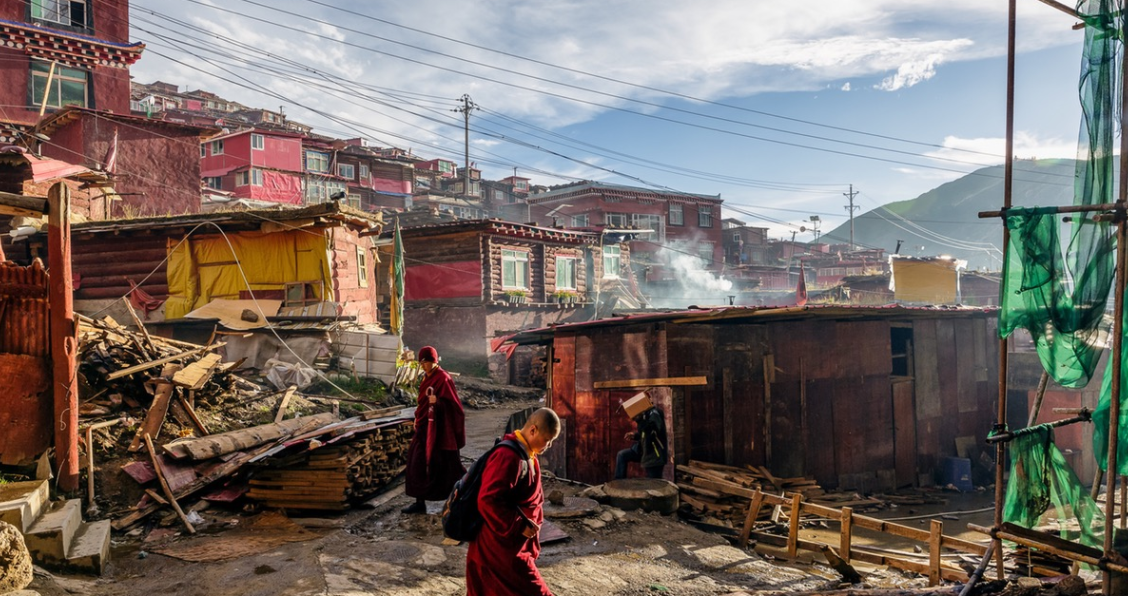
The narrow, winding alleyways of Larung Gar.

During China’s breakneck boom the mountainous Garzê region represents ground zero in the great ‘go west’ campaign — viewed by the People’s Republic as integral to the rapid growth of the Chinese economy. 

The wealth of natural resources found here, as well as the nation-building railway into Tibet (completed in 2006) have been the catalyst for extraordinary development. In the regional town of Sertar, which sits astride the Larung Gar complex, the reality of the security situation quickly hits home. I was challenged in the main square and taken to police headquarters to sign in and face a barrage of questions.

Mercifully, one officer spoke English and took my story of being a history teacher at face value. This would be just one of my almost daily encounters with the local police force over the coming weeks.

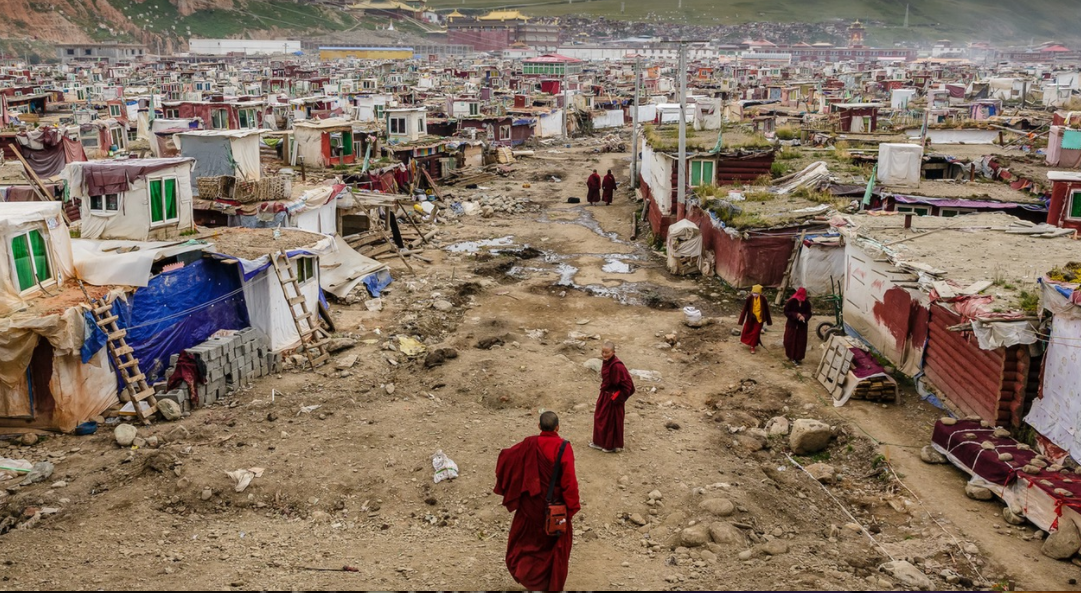
The main street through Yarchen Gar

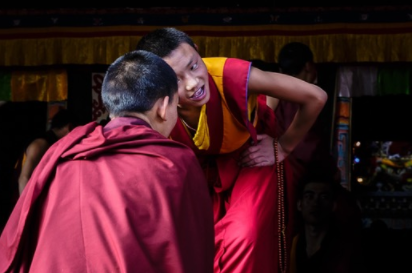
Monks debating at Larung Gar.

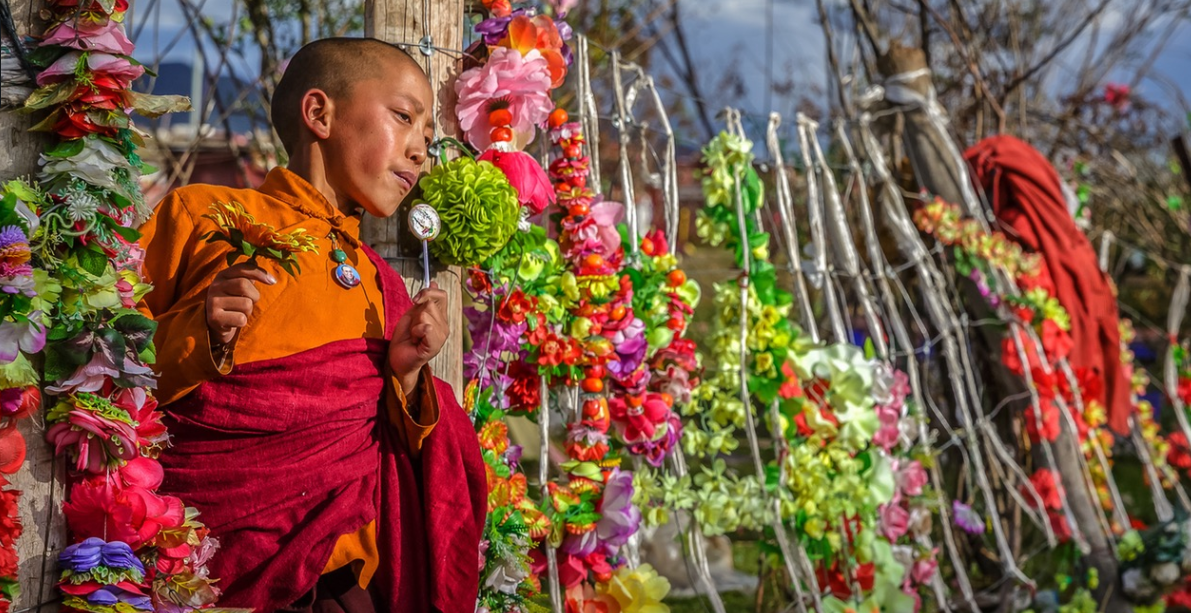
During the following days I was left free to explore the vast warren of huts, temples and study houses that surround the complex. One morning I witnessed a loud monks’ debate; where the men and boys almost come to blows over competing theological arguments.

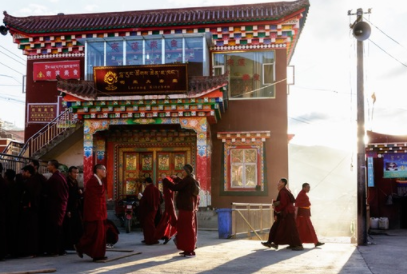
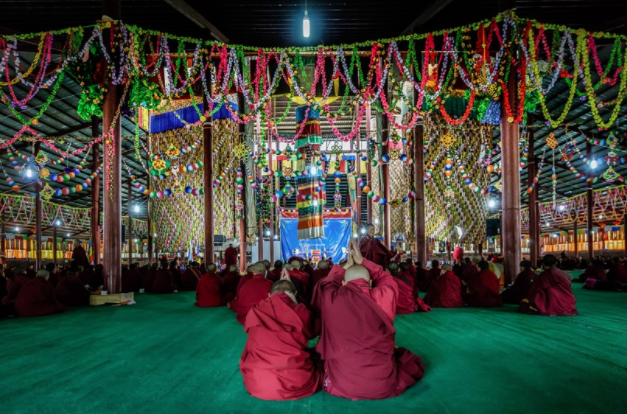
The monks and nuns live their lives separated by the main road which slices Larung Gar camp down the middle. I found both groups to be generally welcoming and curious, and the tinderbox atmosphere and police presence of Sertar is replaced by the constant hum of worship, with the sound of prayer and Tibetan horns a constant.
 

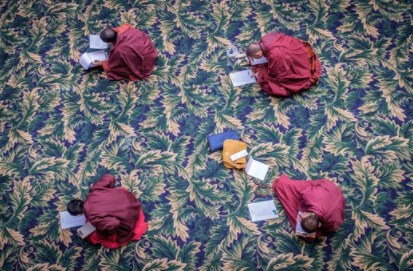
Monks in study and debate at Larung Gar. 

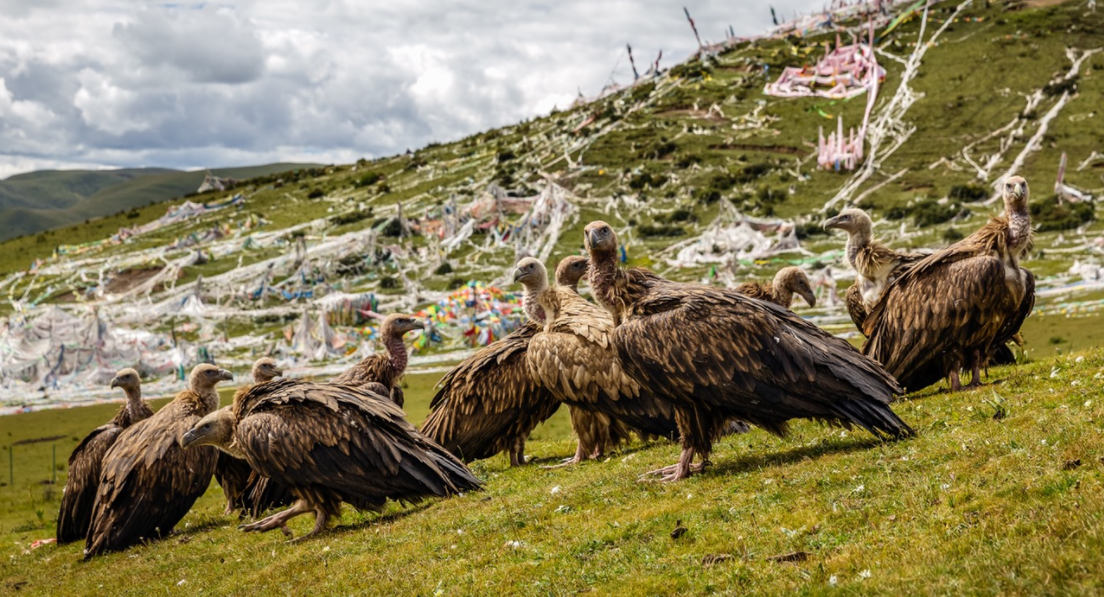
Many Chinese tourists visit Larung too. The biggest draw for them turns out to be the opportunity to witness a traditional Tibetan ‘Sky Burial’. At 1pm every day, the Rogyapa (“body breaker”) arrives to dismember recent human remains, which are then fed to aggressive flocks of resident vultures on a hillside set back from the complex.

Macabre to some, this ancient ritual is both a practical way of disposing of human remains whilst also adhering to jhator, the principle of kindness to all living things, which includes feeding these huge carrion creatures. Few of traditional these sky burial locations remain operational, mainly due to religious marginalisation, urbanisation and the decimation of vulture populations.
 

The vultures who are fed during the traditional ‘Sky Burial’ on the hillside above Larung Gar. 

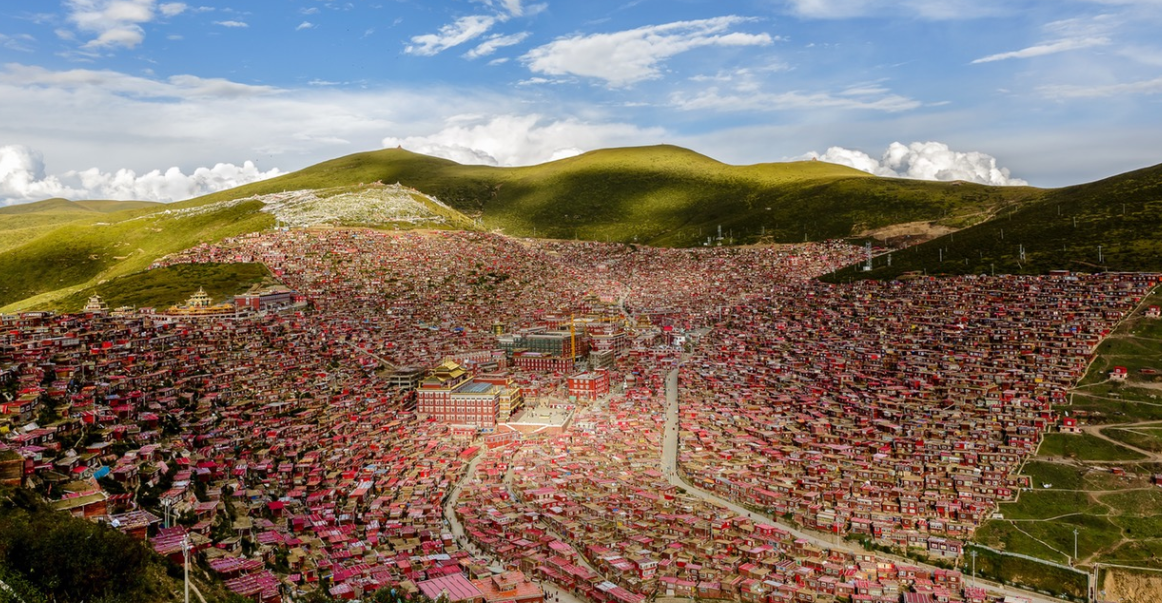
The institute at Larung Gar currently attracts followers of Tibetan Buddhism from all over China. Its regrowth after the 2001 evictions was swift; students began to illegally return and rebuild almost immediately. After Jigme’s death in 2004, countless followers made a pilgrimage to Larung Gar to pay homage to their spiritual master. Many stayed and contributed to the already rapid regrowth of the population. Today, Larung Gar is home to an estimated population of 50,000 people.
 

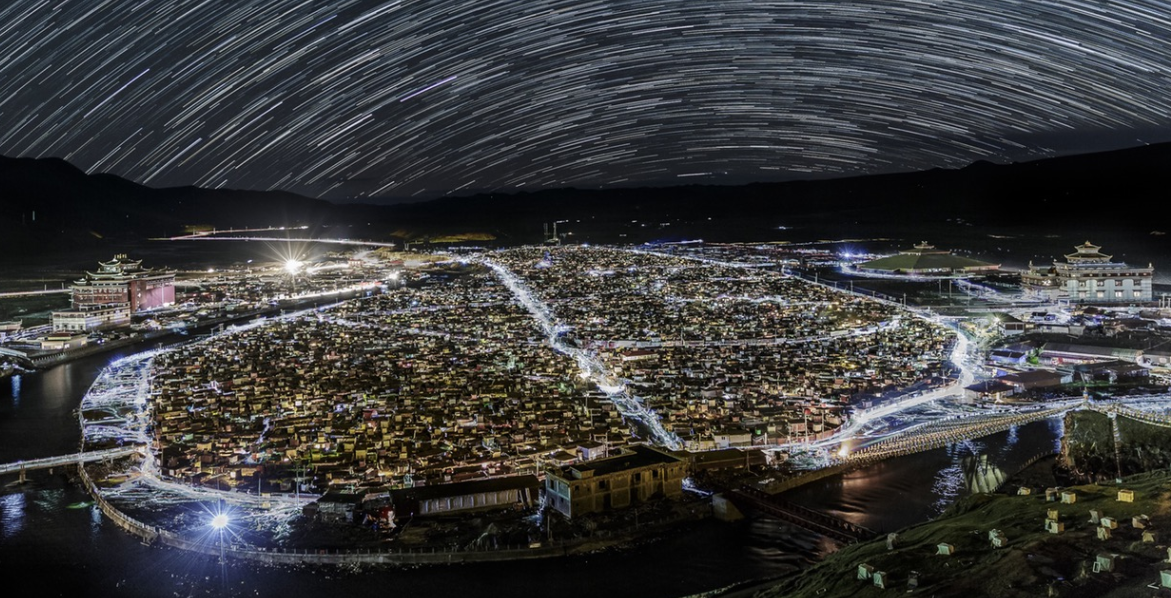
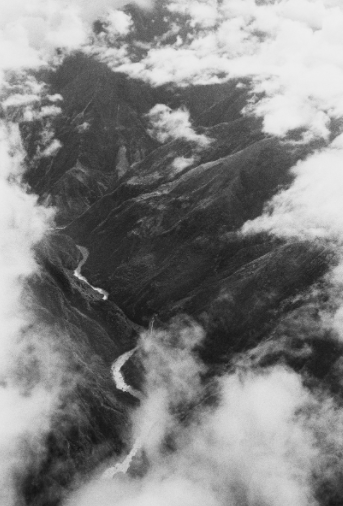
Gar camp from above, on rare clear day.

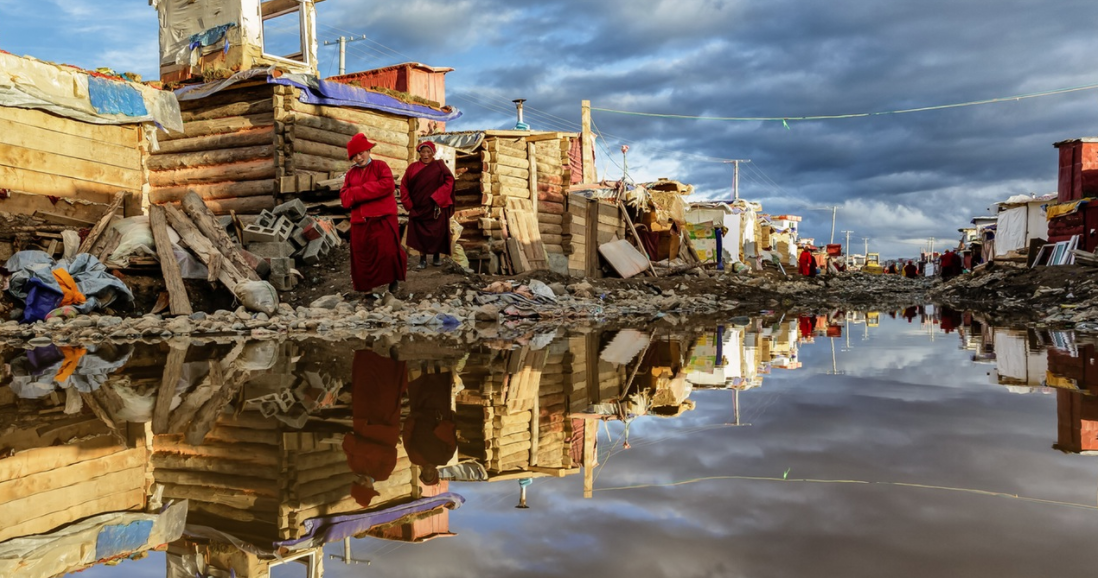
Yarchen Gar, founded in 1985 hard against the border of the TAR, has deplorable living conditions. Without even basic sanitation, every corner of the complex is permeated by a breathtakingly toxic smell.  Around 9,000 nuns live in ramshackle huts on an island, while the more solidly built monks’ quarters sit more favourably on the surrounding hills. Monsoon rains bring regular flooding; on my visit ankle-deep raw sewage flowed into the streets on more than one occasion. 

Rains in Yarchen Gar flood the streets with raw sewage.

No electricity runs to the island where the nuns live. Cholera and typhoid outbreaks are a daily threat. In winter, the temperatures plunge to a life-threatening minus 25 degrees. Yet this does not deter the nuns. Winter meditation sessions, referred to as the “direct crossing”, can last for days, with nothing more than a blanket to shield worshippers from the cold.
 

Sunrise at Yarchen

 The reward for this remarkable display of self-deprivation is the chance to learn first-hand from some of the most revered figures in Tibetan Buddhism. The current leader in residence is Asong Tulku. ‘Tulku’ is a title given to a person who has reached the highest level of spiritual enlightenment, and Asong is considered a living Buddha by his followers. To assist in his teaching at Yarchen, Asong is aided by senior nuns, called khenmos. Many nuns begin their life here at the age of just six.
 

Worshippers inside one of the temples at Yarchen Gar.

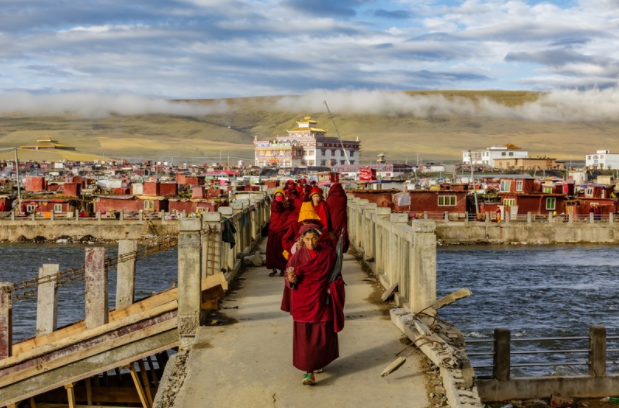
The bridge over to the island where the nun’s live.

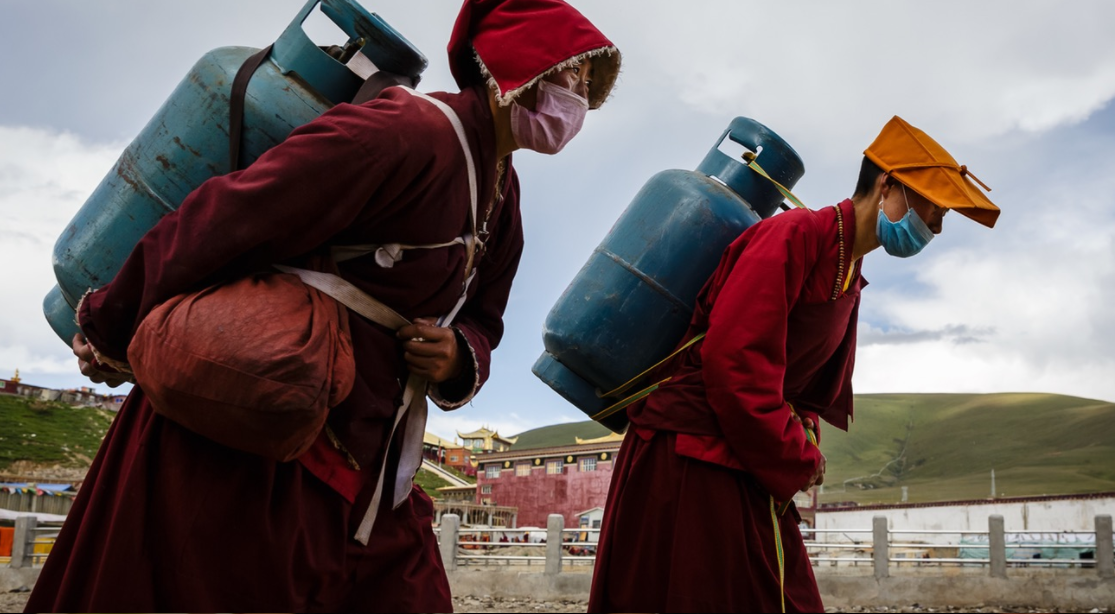
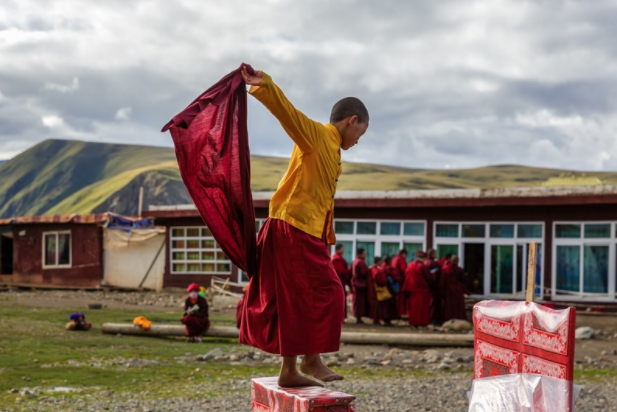
Not only do the nuns dedicate themselves fully to their studies, they are also responsible for almost all physical labour at Yarchen, constructing houses, unloading trucks or building roads. The monks, who rarely participate in physical labour here, seem to have it easy in comparison.
 

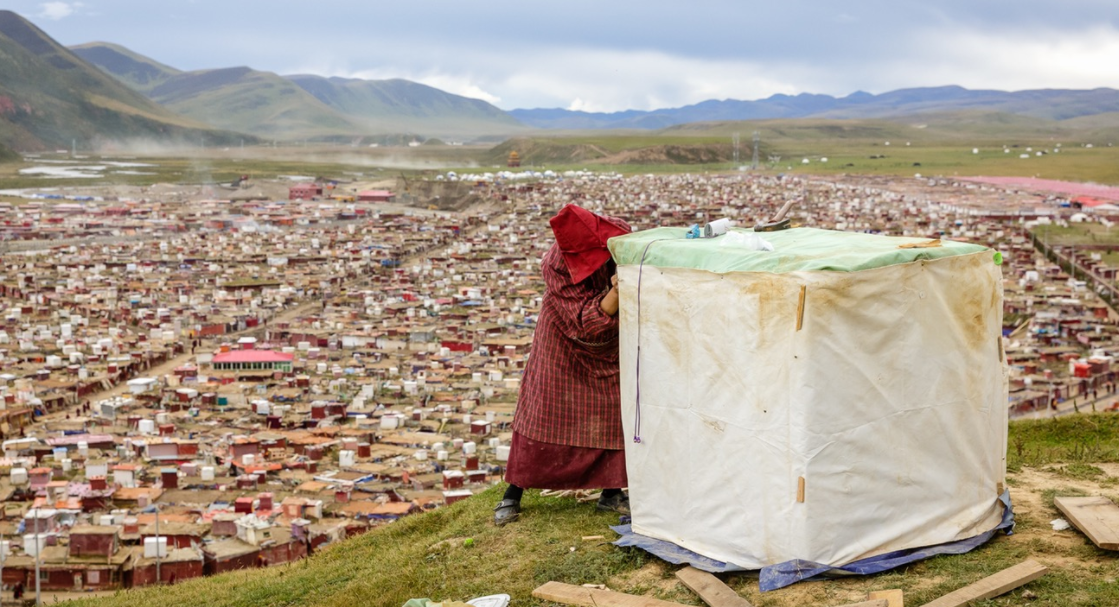
Building a basic meditation hut on the hills overlooking the nun’s encampment.

The nuns carry out most of the hard physical labour at Yarchen. 
 

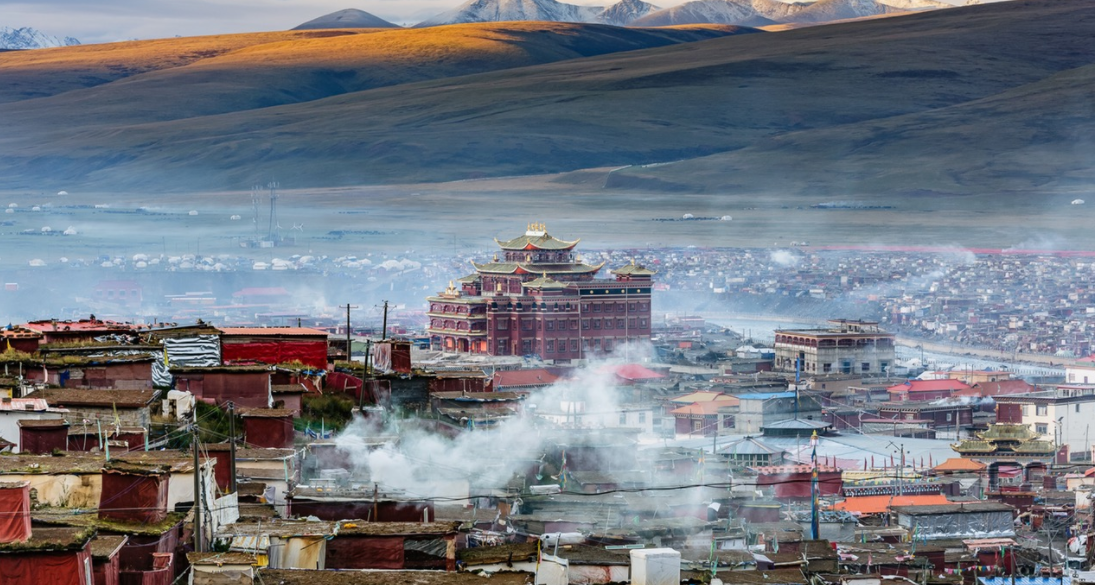
Despite the challenging living conditions, vast amounts of money are being funnelled into gigantic, ornate temples and monuments in the heart of the camp, while the surrounding slums continue to crumble.

Han Chinese money has poured into this region, with relatively wealthy converts to Tibetan Buddhism bringing much needed funds to the camps. These wealthy benefactors, hoping to improve their karma for the next business deal, or through a “cover all bases” spiritual mentality, have sparked a huge construction boom on the far western Chinese frontier.

A young nun exits an area reserved for eating and socialising in the centre of Yarchen. 

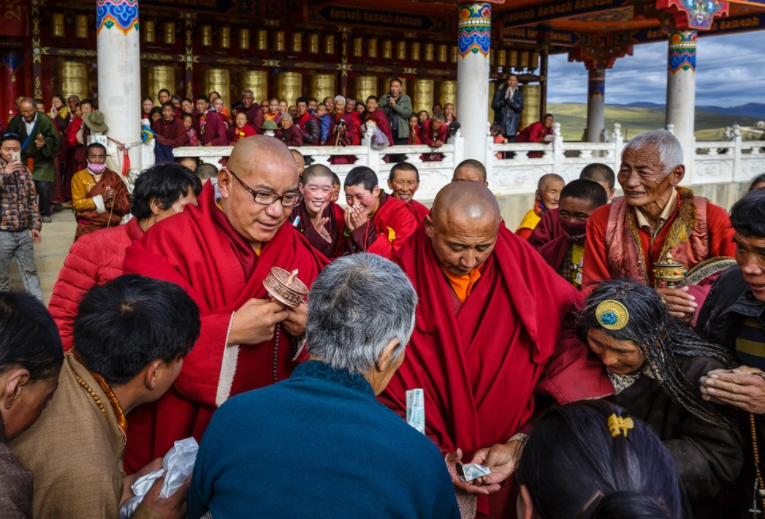
During my time in Yarchen I had several memorable brushes with the revered leader, Asong Tulku. As he piloted his gleaming white Lexus around the slum, our paths would meet on my early morning photo shoots. Watching people fall into the putrid mud at his feet wherever he walked, all rushing to pay tribute with cash and gifts, I found myself wondering if the money for the Lexus couldn’t be better spent elsewhere.
 

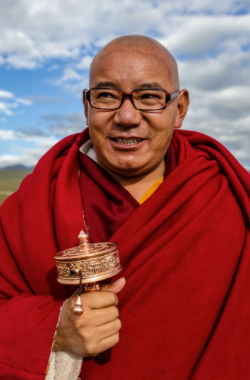
Asong Tulku is considered a living Buddha by his followers

The abrupt change from the monsoon season to the biting cold of winter was a fortuitous time to be visiting Yarchen. A ceremony in which almost the entire population of nuns empty from the confines of their island home for a month of meditation in the hills was due to take place. For days, preparations for this ritual, translating roughly to the “circle of life”, had provided a preview of what was to come.
 

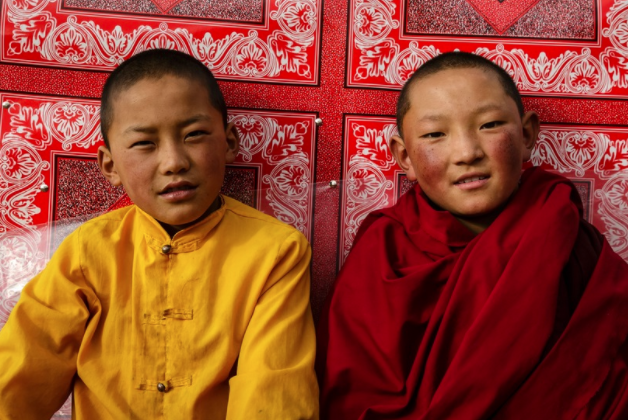
Young monks taking a break from daily classes at Yarchen.

Basic supplies were taken by foot to a hidden nook outside the complex, the location of which was strictly off limits to outsiders. When the fortuitous day finally arrived, the sight of 9,000 nuns in their bright red robes streaming into the hills was a privilege to see.
 

The nuns of Yarchen Gar prepare to walk into the hills for a month of meditation.

At the entrance to the valley I reached a sign hammered into the ground, with a message written in bold letters, announcing that any man who followed the nuns on their trek would return blind. With this, I knew that my luck had held out for long enough; it was time to go.
 

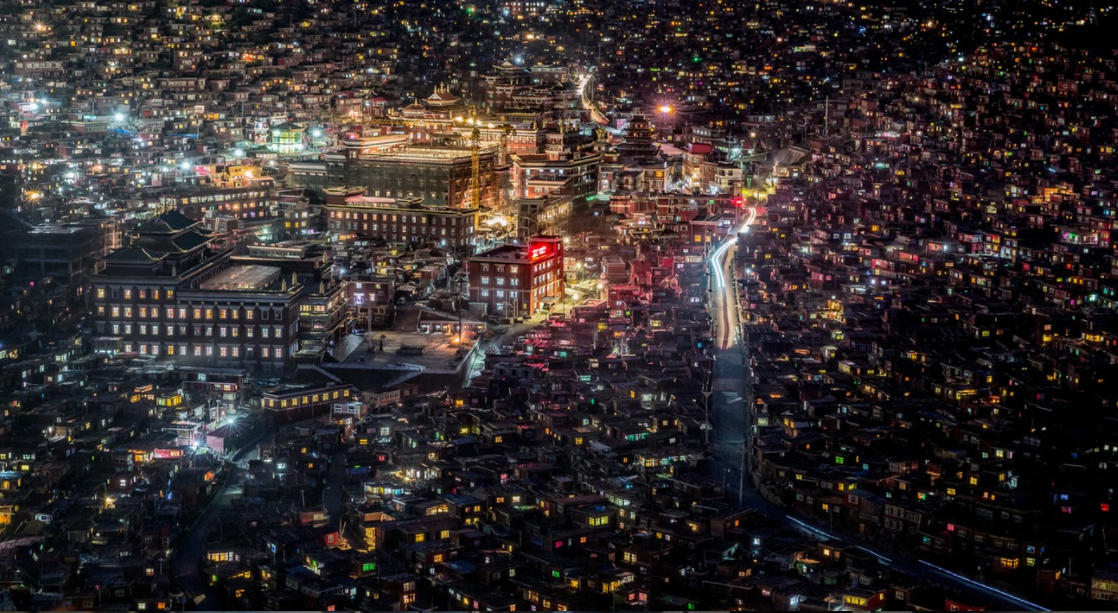
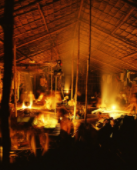
Larung Gar camp by night. 

By rights Larung Gar and Yarchen Gar shouldn’t exist, and at different times the authorities have tried to sweep them away. Draconian restrictions on the freedom of movement and religious practices in the TAR itself means that nothing exists there to rival these two sites.

Quite possibly, the future leadership of Tibetan Buddhism rests not within the more recognisable white-washed walls of Lhasa’s hillside fortresses, or within the Dalai Lama’s inner circle, but within China itself.
 

Star trails arching over Yarchen Gar.


THIS ARTICLE WAS ORIGINALLY PUBLISHED ON MAPTIA.


BROOK MITCHELL

Brook Mitchell is a photographer + writer with Getty & The Sydney Morning Herald.

Visions of Kenya

A long time went by before I was able to understand this trip. Sometimes, the present is not understood until it becomes the past. Kenya belongs to a continent of origins, remote and distant, and for now, for better or worse, many of its vast and beautiful rural areas remain far from the globalised world.

In a matter of two weeks I had organised everything. Bought the tickets from Buenos Aires to Mombasa, got the necessary vaccines, packed my things and let my friends know I was leaving. “I’m going to Kenya for a month, alone, just my backpack and camera, nothing else.” It was a long flight to Mombasa. I was very tired and somewhat nervous about it all. At the airport in Mombasa the image of a rhino gave me goosebumps. I had arrived.

— Mombasa —

The first morning I was woken by the heat and the unrelenting racket made by the many crows that inhabit Mombasa. I looked outside the window to see Africa for the first time: bonfire smoke on the sides of the street, women selling fresh fruit right outside our building, next to them, I saw other women with beautiful braids in their hair, and a little further away, a man selling plants. Here, life takes place on the streets.

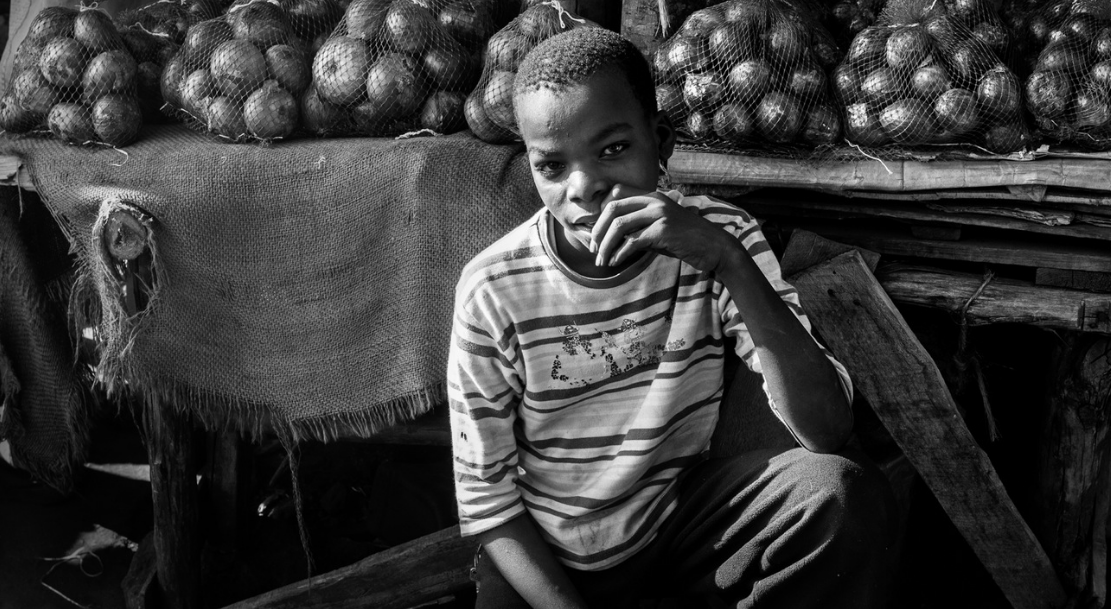
He was selling onions on the side of the road to Nairobi

I enjoy travelling alone and getting to know different cultures, in the most simple and genuine way possible, simply by being there, and merely observing. Trying not to alter what I see, to be inconspicuous. But in Mombasa, I was noticed right away. I am a white Argentinian, in a city where almost everyone is black. It was impossible to remain unseen.

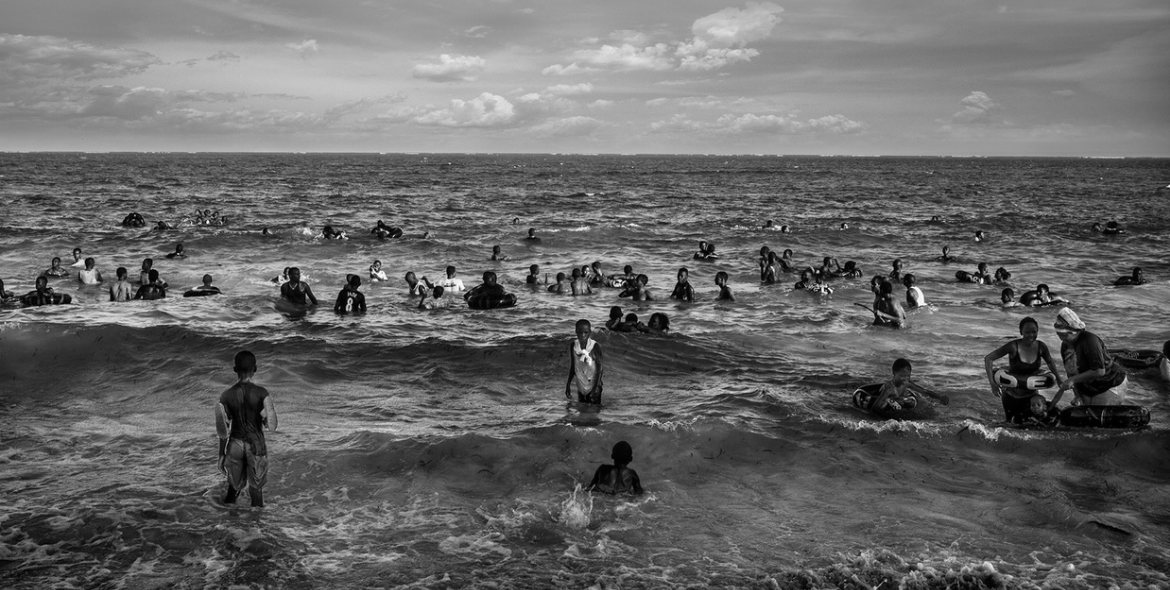
Sunday morning is a social time for families at the public beach

The first few days were filled with nervousness and anxiety. I was alone in a place completely different to my own, full of tension and expectations about what the trip might become. Was I going to be able to adapt to Africa? I just wanted to let go, come to know the locals, let down my resistance, and give myself up to whatever had to happen.
 

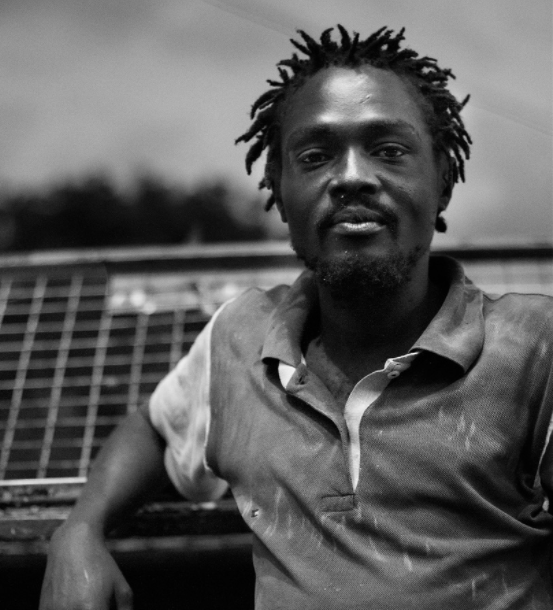
Eddie lives inside a garbage container in Mombasa. The day I left Kenya, I gave Eddie all of my clothes.

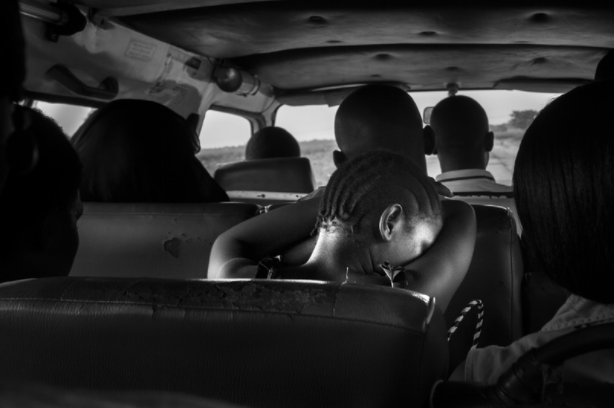
Two days went by and I decided it was time to get out of the city. Venturing into the more rural areas of Kenya would be better than staying in Mombasa. Leaving my big backpack behind, I grabbed my camera, my flip flops, swimming trunks, and my kikoy — a traditional man’s wraparound worn on the Swahili coast of East Africa, especially in Kenya. It protected me from the sun and from the stares too. I took a tuk-tuk to the south of town, then a ferry, and then a three-hour matatu — one of Kenya’s colourful buses. My destination was Wasini Island, a small island in the south, where people usually snorkel for a few hours and then leave. I wanted to stay, at least for a few days.

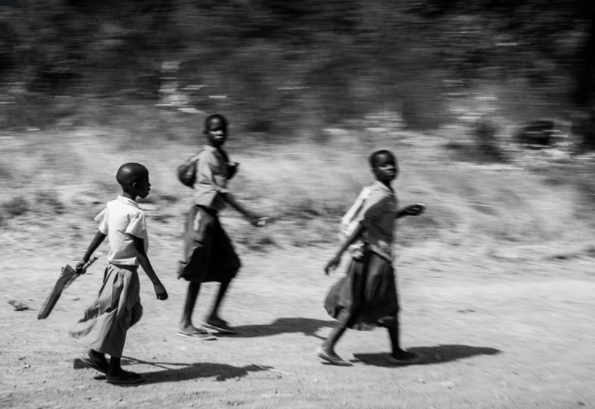
School children on the road from Mombasa to Kilifi / She was sleeping in the matatu along the way.

I was greeted by Abdullah, who was surprised to meet a foreigner who wanted to stay longer than a few hours. I got on a small boat and crossed the island with two guys who were carrying huge machine guns, which they used to absentmindedly scratch their feet and faces — I had never seen such big weapons. 
 

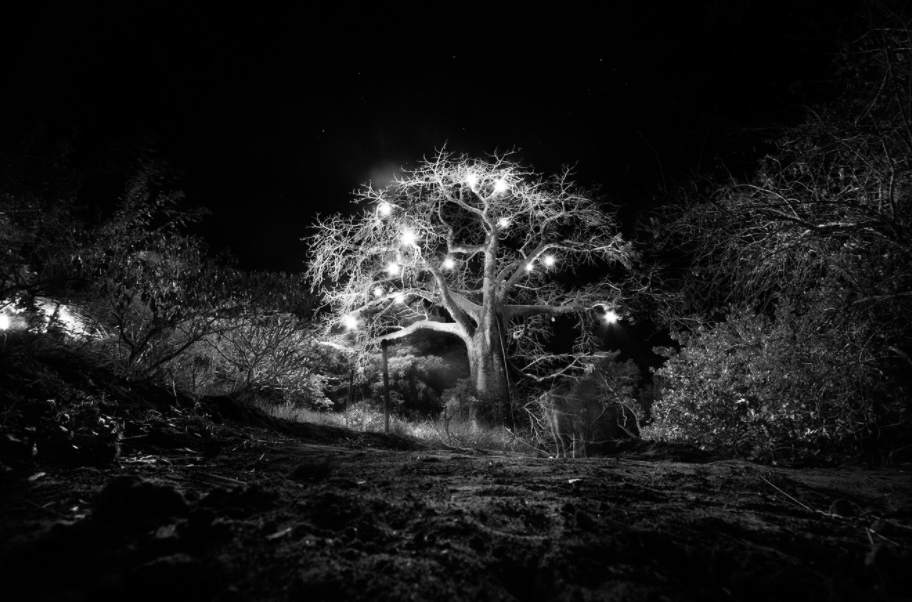
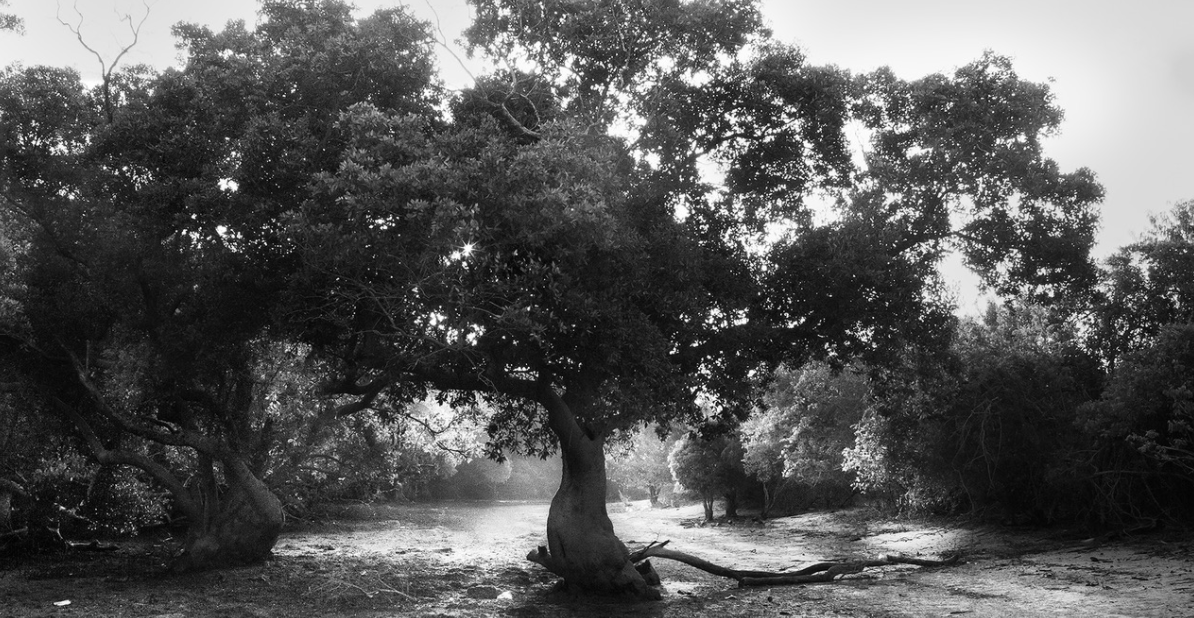
Baobab tree lit up at night

— Wasini —

Wasini is a coral rock island that during its hey-day was a popular summer destination for retired and wealthy Europeans who wanted to enjoy the heat and beaches of Kenya. The day I arrived, there was just one dutchman and me, and the rest of the island was a small fisherman’s village. Abdullah cooked a fish for me with great care, and later made me visit the “tourist attractions,” which meant very little to me.


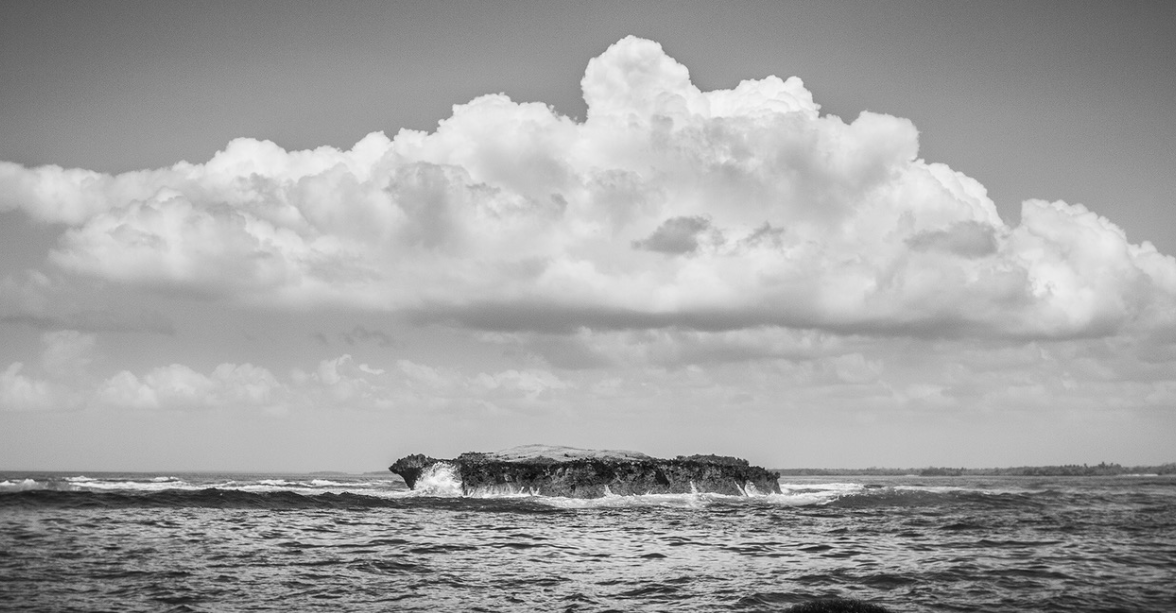
Coral stones in the Indian Ocean

I met someone who said he would take me over to the other side of the island along a path that would pass through the mangroves. I told him I had very little to tip him with, as I had left all my money in Mombasa. He gently insisted on taking me and I followed him. We walked through the island for a long time and I started to worry, thinking about where this stranger was actually taking me. The sun had started to set and as is common in many places in Kenya, there was no electric light.
 

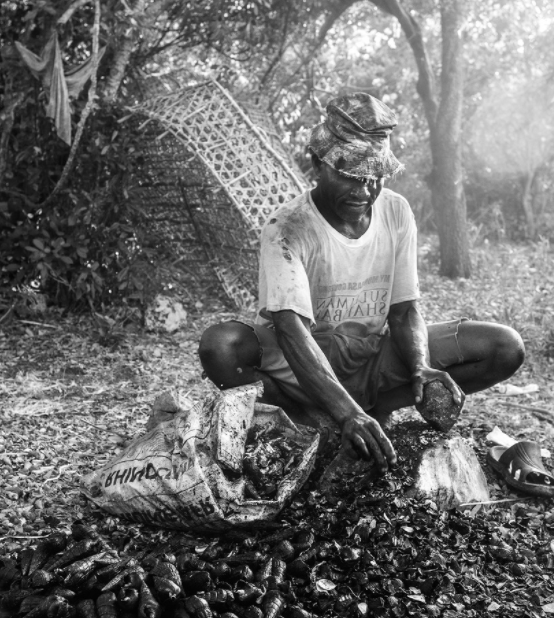
We were crossing the path with this guy, while a fisherman was preparing his bait. I asked to take a picture of him, and he accepted.

We kept on walking until we finally reached the other side of the island. The mangrove trees continued all the way into the sea, and it was a very beautiful sight. I calmly took a breath, my guide had not deceived me. At that moment I felt that if I had managed to get to such a remote place with a complete stranger, then it meant that the rest of my trip would turn out alright. It was a feeling I had. Complete trust.
 

Among the mangroves

— Kilifi —

I spent a few days in Wasini and then returned to Mombasa to continue northwards along the coast, towards Kilifi. In Kilifi there was a very impressive hostel, but when I entered I had the feeling of being out from what I have been seeing. Luckily, I decided to walk towards the beach, where I found a beautiful sunset.
 

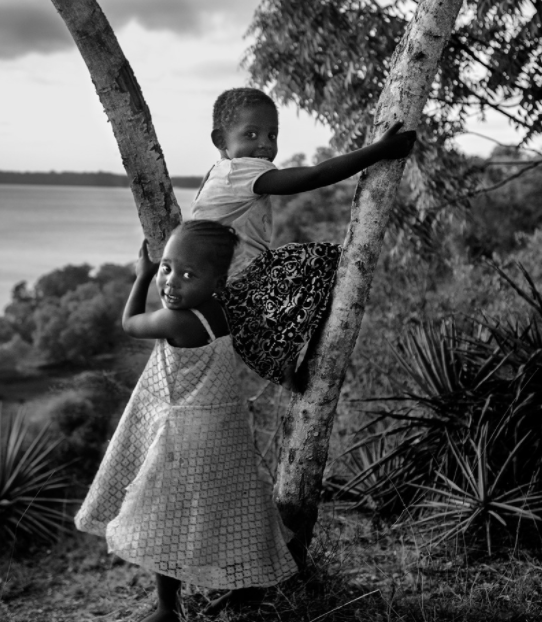
Little sisters playing together in a tree near their home.

The beach was deserted. It was actually an estuary, very serene. I loved rural Kenya, so far away from the cities. As I sat with my camera I saw a kid walking in the distance. As he approached me I waved, then he waved back and continued to walk. A few hours later, the kid returned and I went over to have a chat. He responded by asking me if I knew how to hunt crabs. His name was Buda.
 

Portrait of Buda

We became friends and I met all of his brothers and sisters as well. They were many, and lived on the coast with their aunts and cousins. Most families in Kenya live with their extended family, and the women are in charge of the houses. Men are absent most of the time, often spending time with friends, away from their homes.
 

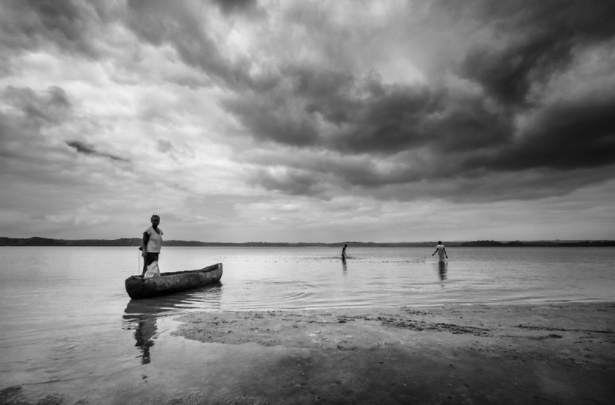
Full of joy in the ocean / Fishermen and family in the early morning

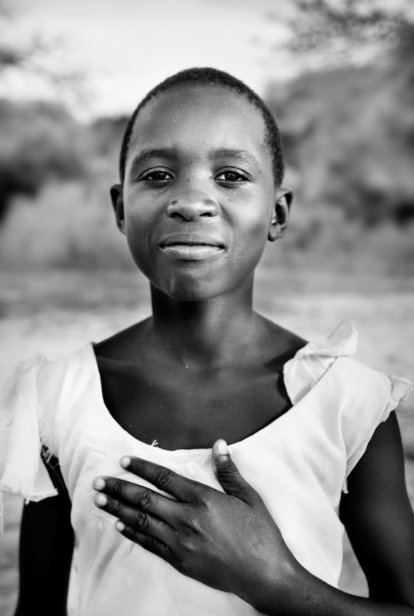
I quickly became very fond of Buda and his siblings, and they became fond of me. Every time I came down to the beach, they would arrive to greet me. I spent whole days on the beach, sometimes helping them gather wood for making fires, or finding things their mother had asked for — I learnt a lot about their culture and way of life, which was not always easy. Buda and Nuzrah were the eldest siblings and spoke better English. They taught me a lot of words in Swahili, their native tongue.
 

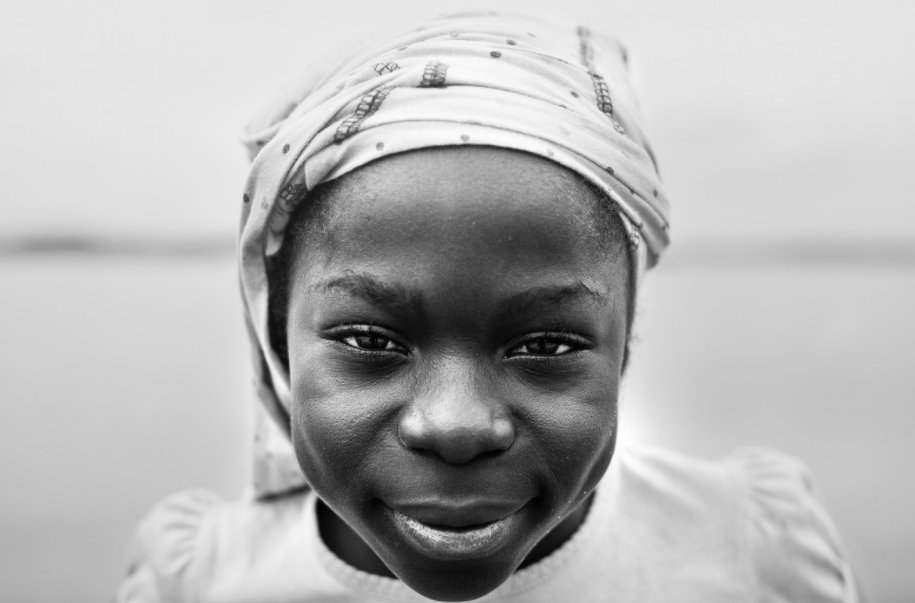
Portrait of Nuzrah

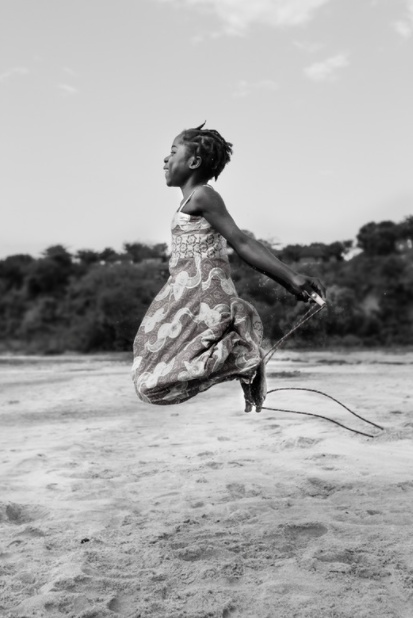
One of the days we spent together I brought them a football, a water gun and a jumping rope. We played with them, they taught me beach games, and every now and then we would all go for a swim. It was with great grief that I said goodbye to these children, as I had to continue travelling towards the west of the country. They stayed with me until I left, and their mother also came to say goodbye.
 

Portrait of Buda / Jumping rope / Portrait of Mwanaisha

— Amboselli —

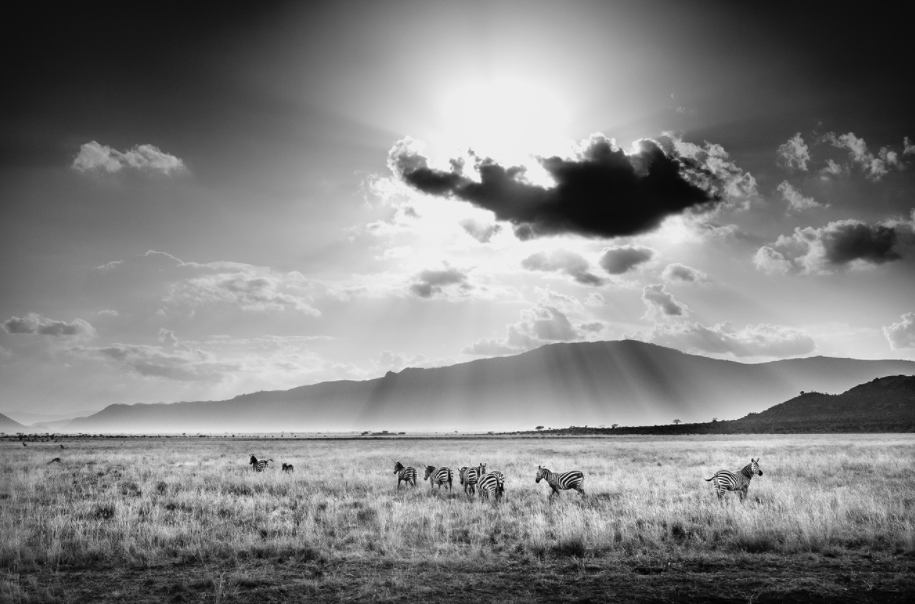
I took a tuk-tuk back to Mombasa, thinking about everything I was experiencing. It felt so powerful and different, making me reflect on my own life, and how grateful I was for the opportunity to travel. The following dayay I left for Amboselli National Park. Enormous and open, there were no fences around it. Animals are not easy to see. You might spend a whole day walking around and only encounter a few zebras.

Morning of the Zebras

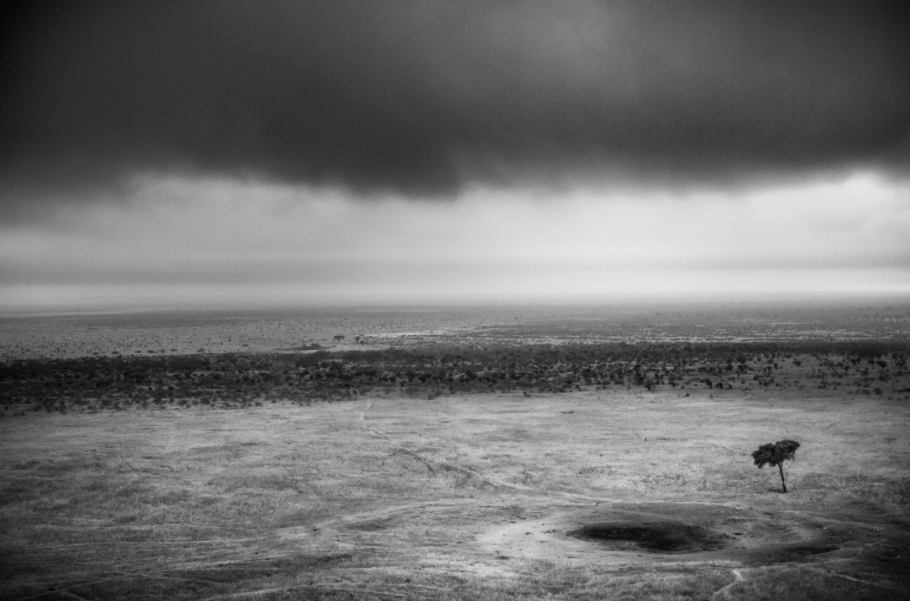
But the immensity and beauty of the landscape was truly dazzling to me, sometimes reminding me of my native Patagonia, similarly wild and empty in its own way. I also thought about the devastation humans have caused to the natural environment, and the complex challenges local and international communities face as they attempt to tackle and reverse this.
 

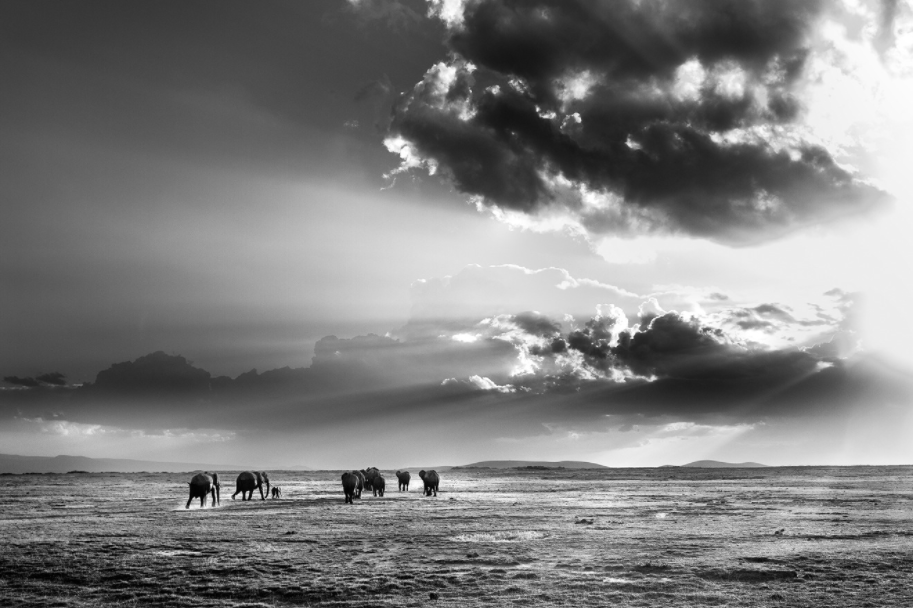
Afternoon of the elephants

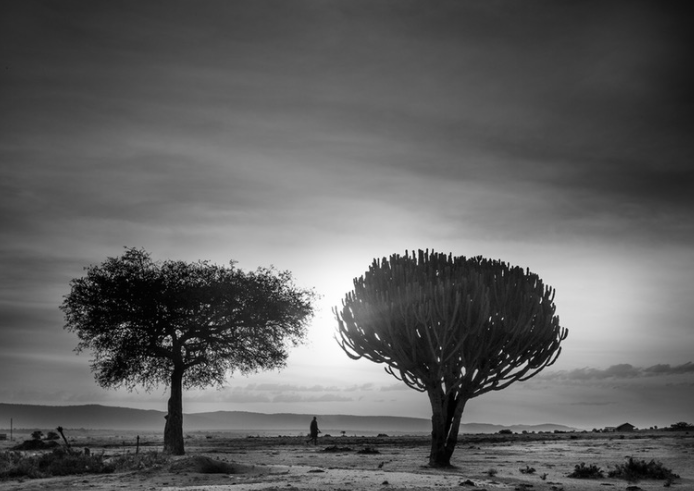
I spent my whole childhood fascinated by documentaries on Animal Planet, or Discovery Channel. I could not quite believe I was there, in these vast landscapes. The animals were so big, so strong. They had very little to do with the image I had of elephants in zoos or television. And the trees, they were so magical, I really have no words to describe them.
 

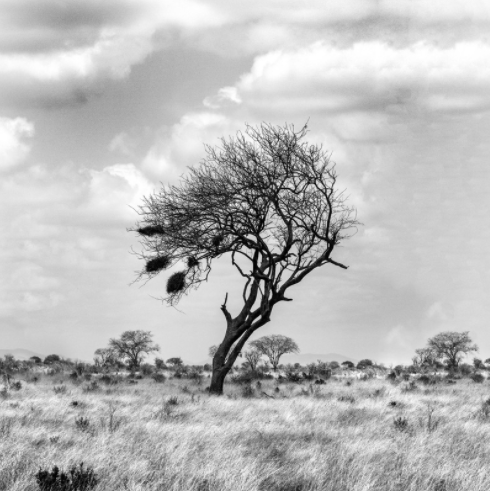
Masai walking in the early morning / Just a beautiful tree, in my first moments in the park

A long time went by before I was able to understand this trip. Sometimes, the present is not understood until it becomes the past. 

When I travel, I seek to explore places that will surprise and challenge me, and from that surprise create beautiful experiences and photographic visions of what I have witnessed. Kenya belongs to a continent of origins, remote and distant, and for now, for better or worse, many of its vast rural areas remain far from the globalised world.
 

Early morning at Tsavo. There is always magic in the first hours of the day.


THIS ARTICLE WAS ORIGINALLY PUBLISHED ON MAPTIA.


FRAN PROVEDO

Fran Provedo is a photographer and Architect from Argentina. Passionate about nature, and what is invisible in it.

Life Among Trees

For generations, the Kombai hunter-gatherers have lived hidden deep in the forests of West Papua. First coming into contact with the outside world less than forty years ago, today their unique and self-sustaining way of life — from their reliance on the sago palm, to the tree houses they construct — is under threat.

Flying towards the tiny village of Wanggemalo, the valley is filled with a canopy of dense forest, wildlife, and no visible human presence for hundreds of miles. In this hot, swampy region — one of the wettest on Earth — the elusive Kombai hunter-gathers, along with many other indigenous groups, have remained hidden for generations.
 

Seven metres of rain fall per year in West Papua’s lowland forests, which are rarely more than a few metres above sea level.

Living in small isolated family groups, it was less than forty years ago when a Dutch missionary made a controversial ‘first contact’ with the Kombai. He was reportedly fed human meat by his hosts, and fled.

Today, their numbers have dropped to around 4,000 individuals. The relentless tide of logging and mining activities is steadily encroaching on the territory of the Kombai and their neighbours, and the ongoing violent conflict in the region — between the Indonesian military and those who believe in independence for West Papua — continue to threaten these peoples and their way of life. Human rights groups claim that since the contested Indonesian occupation of West Papua began in 1963, an estimated 100,000 natives of the island have been slaughtered by Indonesian soldiers or have ‘disappeared’ in the last half-century.
 

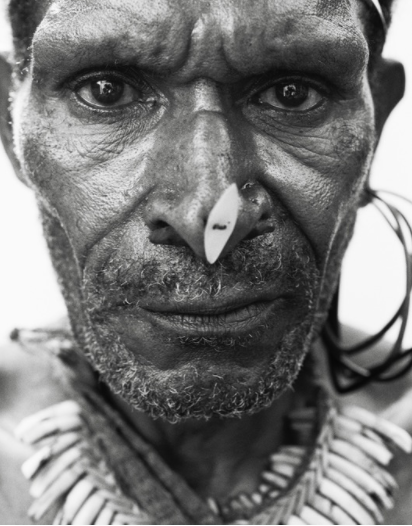
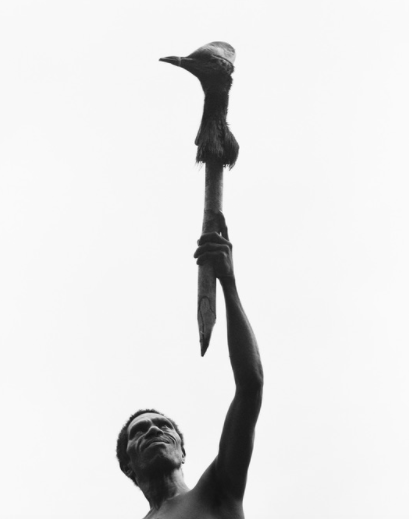
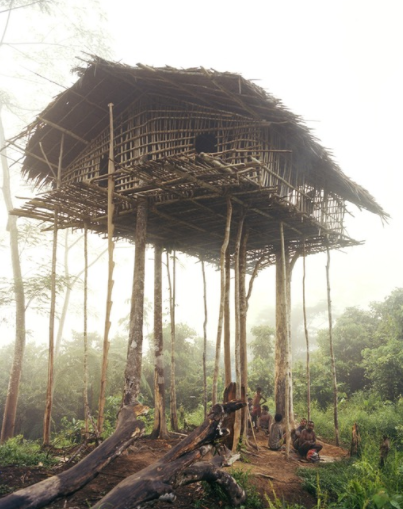
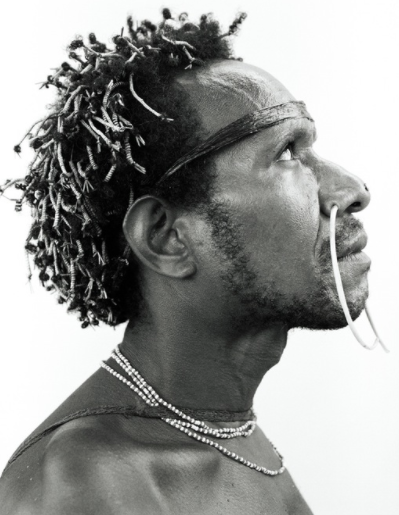
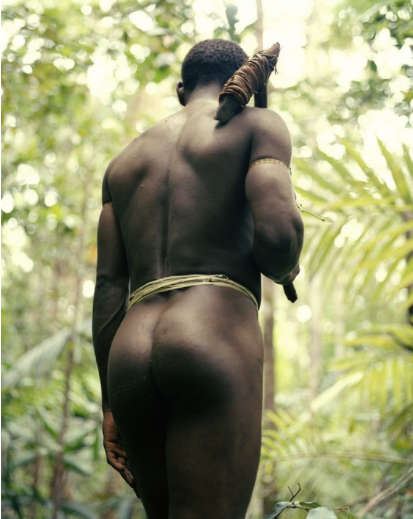
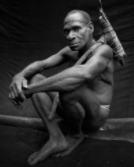
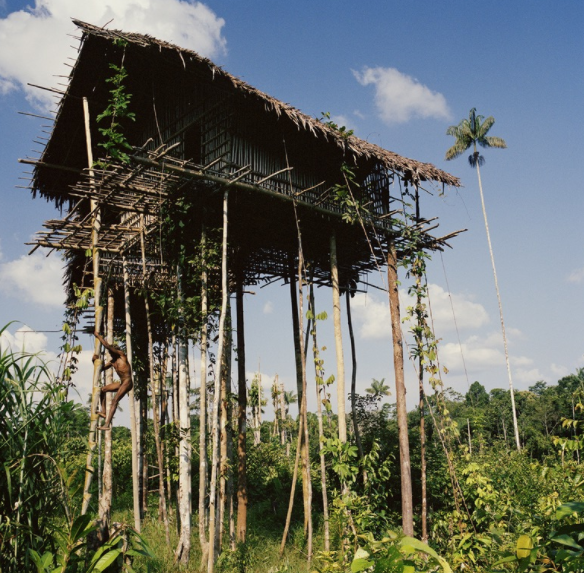
Kombai hunter wearing a necklace made of dog’s teeth / Head of a cassowary bird mounted on a staff / Traditional Kombai treehouse

The expedition on which the photographs in this story were taken, was in 2008, and in many ways, would come to have a profound impact on me.

Leaving the miniature makeshift airstrip at Wanggemalo behind, we headed into a remote part of the Papuan forest. Around twenty local porters formed a quarter-of-a-mile-long procession, carrying our supplies and tents for the intense two-week-long trek. Some of the porters had been hired to help carry my photo equipment, stands and backgrounds.
 

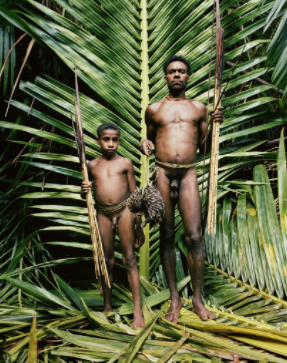
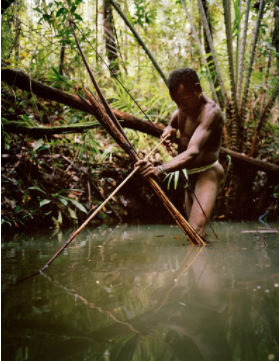
Kombai father and son, with their traditional weapons and catch of a small marsupial / Kombai hunter fishing in a forest stream

Our trek took us a few days deep into the hot and humid forest, before we reached Kombai territory. Constantly covered in insect repellent, as the risk of malaria was very high, my guide had warned me that when it rained the conditions could become a quagmire of mud and very challenging. Fortunately we did not experience that kind of weather.

According to Kombai tradition, when strangers are approaching a treehouse, including invited guests, they are stopped by men armed with bows and arrows, and forced to prove that they mean no harm.
 

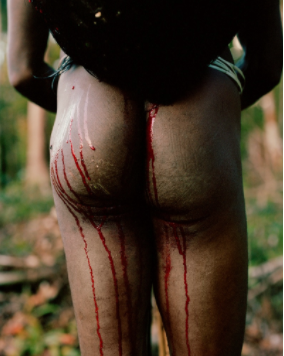
Young Kombai carrying a freshly killed piglet after a successful hunt in the forest, with blood pouring down his lower back.

Day-to-day, the men use their bows and arrows — crafted from cassowary bones and dry sugar cane stick — to hunt a wide range of prey in the surrounding forests, including cassowary birds, marsupials, and wild boar and pigs, often using small dogs to help track down and kill animals. The Kombai also fish in the many streams, by building small dams, and then beating the poison from a particular toxic root into the pooled water. This forces the fish to the surface, where they are easily captured.
 

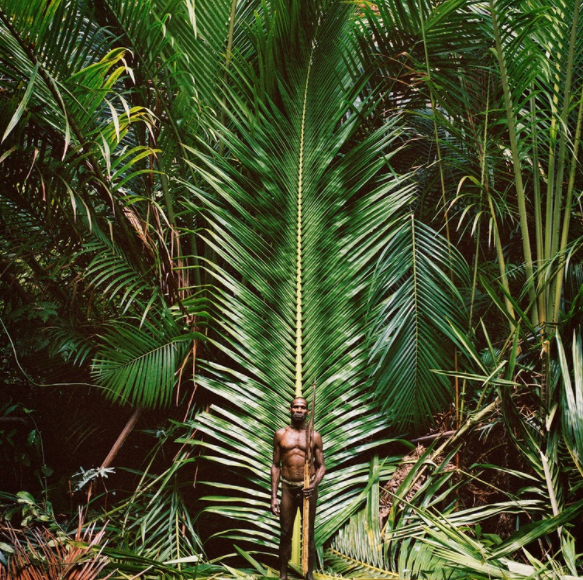
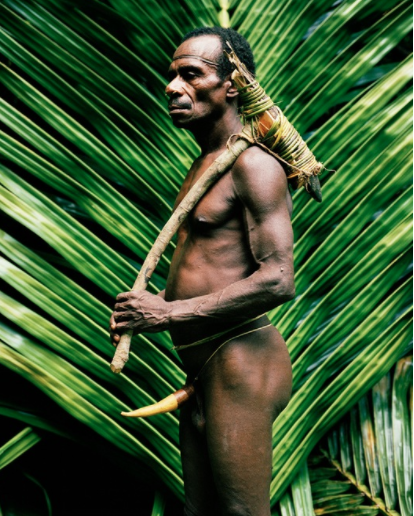
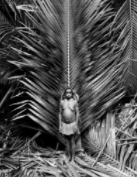
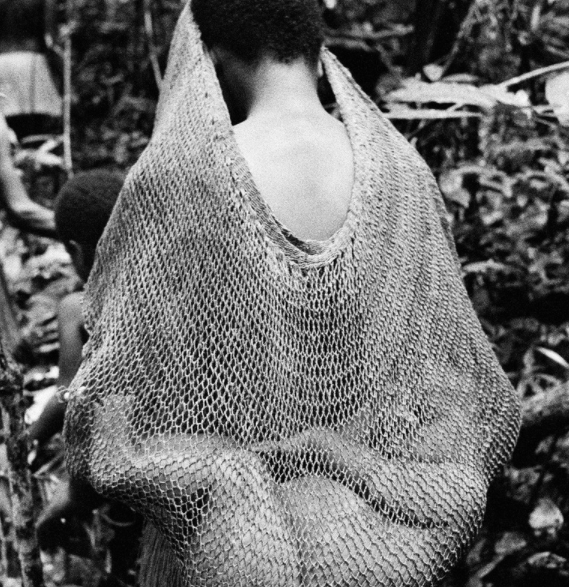
Kombai mother carrying her child through the forest in a root bag / Kombai hunter standing in front of a giant sago palm leaf

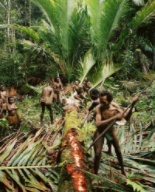
As food is abundant in the forest, none is stored, and it is the sago palm tree that provides the Kombai’s staple food — acting as their main source of carbohydrate. In addition to their role as hunters, the men are responsible for cutting down the sago palms, which grow in clumps of a few dozen, wild in the forest. Once felled, the women and girls will then drain and dry bundles of starchy pulp extracted from the inside of the palm, before pulverising it into flour and baking a kind of bread. A large sago tree can provide enough pulp to sustain a family for at least a week.
 

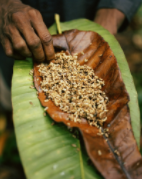
Aman is eating sago out of a leaf / A Kombai drinks water from a stream out of a leaf
 

The sago tree also provides a particular delicacy and treat for the Kombai: the sago grub, which is actually the larvae of the capricorn beetle. In order to harvest these grubs, they will cut down a sago palm, leave it for a month, and then wrap the trunk in leaves while it continues to rot. Three months later, they will return once again to collect the grubs. Both the Kombai, and their neighbouring tribe, the Korowai, have traditionally held special festivals, usually every five or ten years, to feast on these grubs and renew social ties. The grub is a luxury, and it is customary for the hosts to feed each one of their many guests before eating themselves.
 

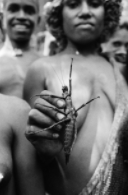
Giant cricket / Kombai men cutting down a sago tree and the size of the many insects in the forest was mesmerising. The natural environment, the trees, the birds — they all had an extraordinary quality.

The size of the many insects in the forest was mesmerising. The natural environment, the trees, the birds — they all had an extraordinary quality.
 

Many Kombai pierce their noses with a sago thorn / Kombai men start wearing penis gourds during puberty / Kombai hunter with his stone axe

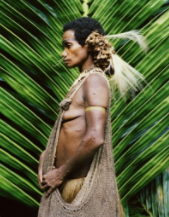
The forest also provides the Kombai with materials for their traditional garments. The men wear little apart from a koketa, or a penis gourd, which seemed to be made from a bird’s beak. Some of the men we met also wore necklaces made from dog’s teeth. A few times during our stay, I was asked why I was wearing clothes, and was told that it would make my hosts less afraid and more at ease if we were all naked. Meanwhile, the women fashion grass skirts, and as a sign of beauty also wear crowns made of dry moss or feathers, including those of chickens and cockatoos. Mothers will often carry their babies through the forest in root beerags, woven out of fibrous strands, with the load resting on their foreheads.
 

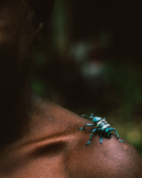
Colourful forest beetle / Kombai hunter at rest

Although machetes and metal knives are becoming more common, most Kombai men still carried and used a homemade axe composed of a piece of rock wrapped around a tree branch. Often the stone had been traded for hundreds of miles away, and kept in the family for generations.
 

Inside a Kombai treehouse ‘kitchen’ / Kombai hunter seated on a palm tree branch, carrying a handcrafted traditional stone axe

High above the ground, the Kombai’s tree houses are reached by scaling a tree trunk that has steps carved into it, to form a ladder. It is thought that their tree houses evolved as a method of protection from raiding enemy tribes, and the roofs are created using the giant leaves of the sago palms.
 

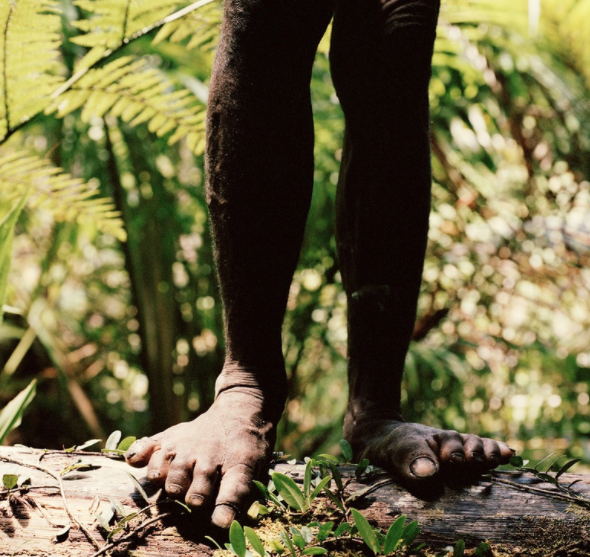
Descending a stepped trunk from a Kombai tree house / The Kombai are intimately connected with the forest around them

While living with the Kombai, I learned that only the men will sleep in the tree houses, while the women will sleep in small houses on the ground. I wondered about this apparent division between the men and women, who for the most part, spent their days apart and did not eat or sleep together. When they shared moments of intimacy remained a mystery.
 

Hunters advancing in the forest, looking for pigs and cassowary birds / Kombai couple

Kombai life is suffused with belief and rituals linked to both benevolent and evil spirits. The forest is divided into clan or family territories, but there are also areas where no clan will live, as these are thought to be inhabited by spirits. Historically, it was seen a grave threat for a stranger to enter a clan’s territory, and it is interesting that the word for a spirit in their language, kwai, is also the word used to describe an outsider.

In traditional Kombai culture, men who have been identified as evil, called Khakhua-Kumu, are believed to consume the souls of their victims, and must be killed or eaten in return. Reports vary as to whether or not cannibalism is still practised as a punishment among the Kombai today.
 

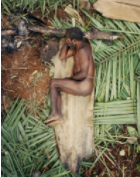
Hunter at rest in a tree house / Kombai woman standing in front of a giant sago palm leaf

It was hard for the Kombai to fathom or understand what I was trying to achieve with the strange and utterly unfamiliar device that I was pointing at them. Asking whether they would mind standing still for a few minutes for a particular pose was often very challenging, as my unusual requests had to be first translated from English into Bahasa Indonesian, and then from Bahasa into the local Kombai language.

Although I could not communicate with the Kombai except through a translator, I was able to observe a few of the characters with whom we were spending time. Most of them were hunters. I remember them laughing a lot, and it seemed as if they were in the habit of constantly cracking jokes at each other. They certainly had a good sense of humor.
 

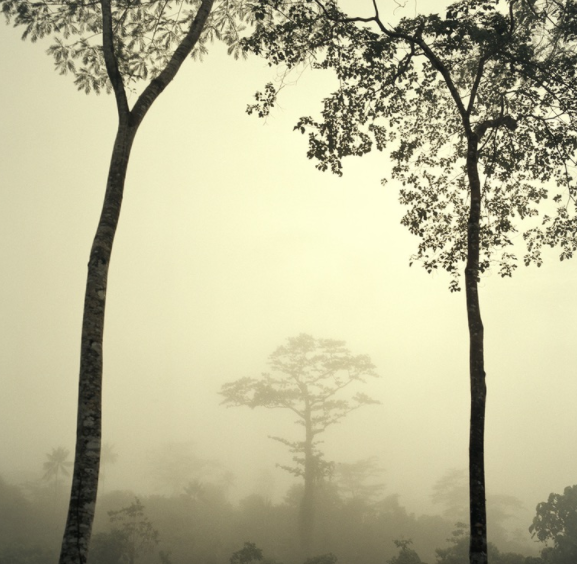
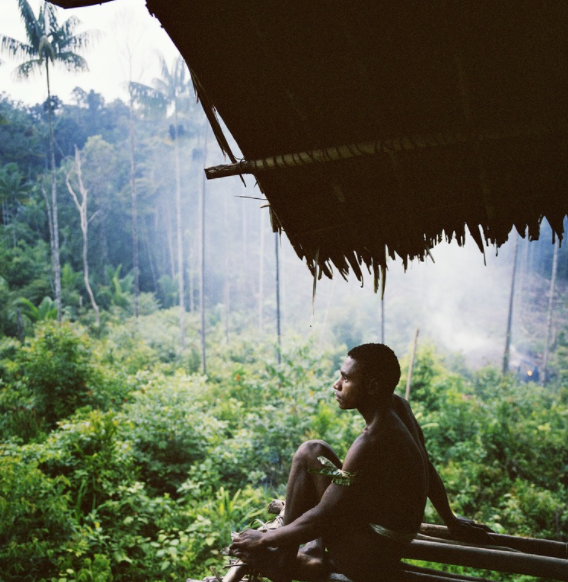
Mist in the early morning / Kombai hunter scrutinising the forest from a tree house

The time I spent with the Kombai was a very introspective one. So often during my stay in their pristine natural environment it seemed quite unbelievable and incredible to think of the life and the material world that I had left behind in New York, and to which I would be returning in just a few weeks — there was a chasm of thirty or forty thousand years between my life and theirs. Those moments felt like an out-of-body experience, thinking that this was the way of life we all once came from.

I was millions miles away from New York and all the hassles that living in a big modern city bring. This trip, I would realise weeks and months later, was to have a deep lasting effect on me and to be a life-changing event in many ways. Most importantly, it put a great many things into perspective. Once back home, I thought very often about my startling and unusual time with the Kombai, and I found that the everyday stress and worry had a very different impact on me. It was truly a remarkable effect.
 

Kombai women wearing a moss crown and feathers as a sign of beauty, also carrying a traditional root bag.

Today, Kombai lands and their traditional way of life in the forest are under great threat, particularly from deforestation. For decades, the island has ben plagued by political unrest, mining, logging, unscrupulous traders, inter-tribal conflict, controversial missionary influences, and human rights atrocities committed by the Indonesian military.

Though the remote, inaccessible areas of virgin forest where the Kombai live are some of the last to be reached by outsiders, they are now being subject to powerful forces beyond their control. Many other groups are still actively fighting for independence for West Papua, and it is important that peoples like the Kombai somehow have a voice in the future of the lands that their ancestors have inhabited for many thousands of years.

THIS ARTICLE WAS ORIGINALLY PUBLISHED ON MAPTIA.

FREDERIC LAGRANGE

Frédéric  Lagrange is a photographer & director based in Brooklyn, NYC shooting for a diverse range of editorial and commercial clients world-wide. Follow the journey on Instagram @fredericlagrange.