
• Travel Features
  • Global Action
  • Take A Trip
  • Travel Guides
    • Podcast
    • Courses
    • Bookshop
  • About
  • Sign Up
Menu

CATALYST PLANET

  • Travel Features
  • Global Action
  • Take A Trip
  • Travel Guides
  • Discover
    • Podcast
    • Courses
    • Bookshop
  • About
  • Sign Up

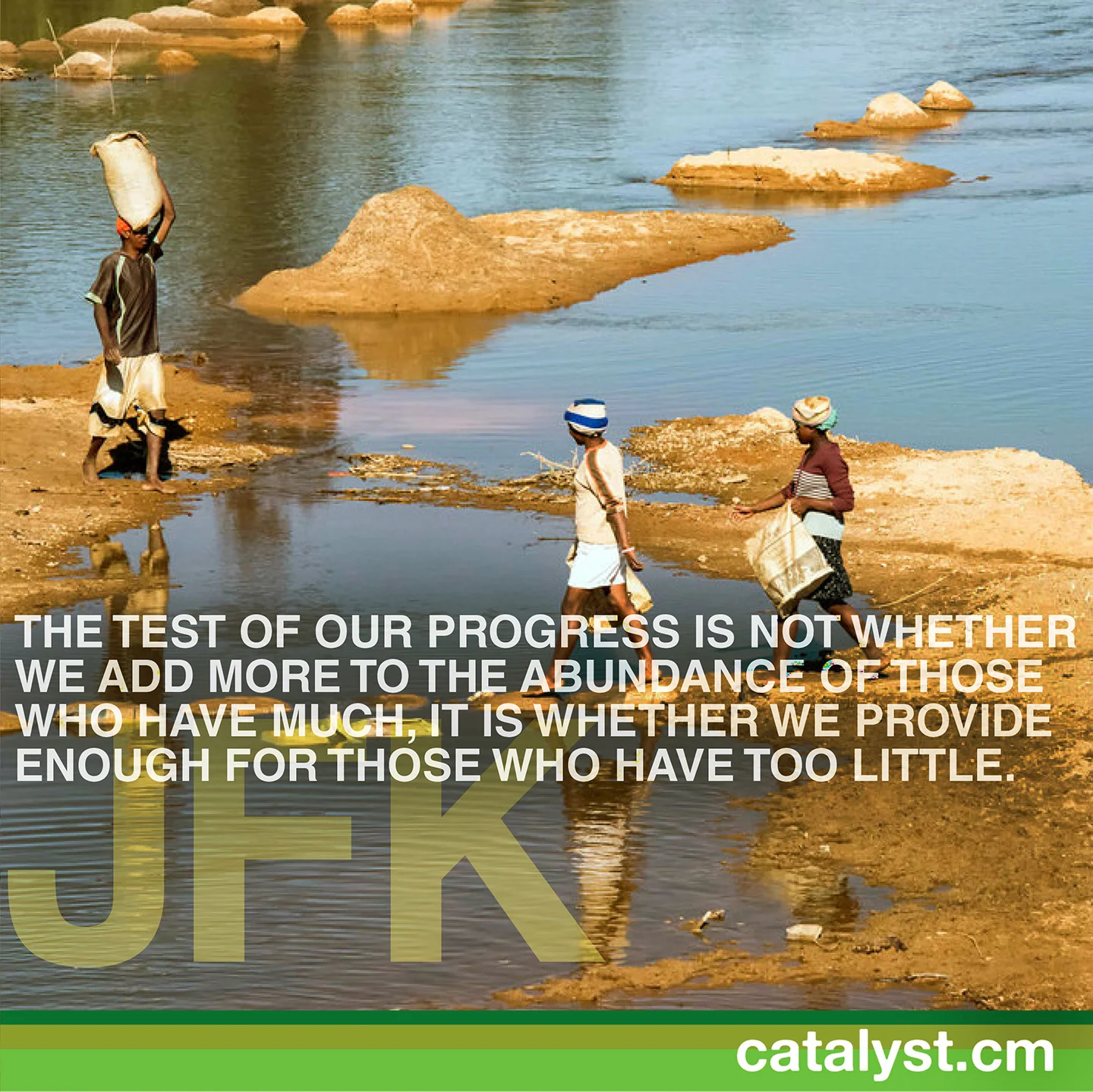
The test of our progress is not whether we add more to the abundance of those who have much, it is whether we provide enough for those who have too little.

April 3, 2017
In World and Travel Tags quotes, photography, progress, helping, charity, nonprofit, social actions, generosity, Human Rights, Travel
Comment

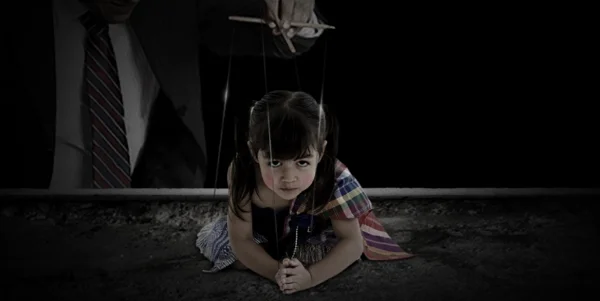
IMAGE COURTESY OF ORPHANAGES.NO

Orphanage Volunteering’s Shocking Link to Child Abuse

March 10, 2017

I never thought that playing catch with a kid could be a bad thing, or that goofing off could contribute to long-term psychological damage. Even now, as I write it, it all seems a little absurd. Is it really possible that making kids laugh could do permanent harm?

Every year, millions of people travel around the world to volunteer. Orphanages are one of the most popular destinations, and it makes sense. Many volunteers like working with children, often because children are enthusiastic and working with them is very active and “hands on.” Most of the tasks volunteers are given when working with kids are simple, and it is rare that volunteers are expected to have any specialized skills or to participate in any in-depth training before starting their volunteer work.

At the same time, orphanages are often understaffed and poorly kept up. Operating with limited resources (or under the appearance of limited resources), they are frequently on the lookout for people who are willing to pay to work. Placement companies and organizations provide orphanages with paying volunteers to help with childcare, teaching, cooking, and maintenance. Volunteers are told that they’ll be providing orphaned children with a more nurturing environment while orphanages get a steady income and a constant flow of helping hands.

All of this sounds fine and dandy, but the problem with orphanage volunteer work isn’t in the volunteer’s desire to help, but in the very existence and implementation of orphanages themselves.

Not many would-be volunteers realize that more than 80% of children who are labeled as “orphans” have a surviving parent. Even fewer understand that the traditional kinship structures of many non-western countries, especially those where orphanage volunteering is most common, actually result in very few children being left without someone to care for them (Richter and Norman, 2010; UNAIDS/UNICEF/USAID, 2004).

Which begs the question: why are there so many kids in orphanages?

There are orphans that need a home, and sometimes that means that they have to go into group care, but for many of the children who are labeled as orphans and blazoned across brochures, it’s poverty, not a loss of family, that put them there. Desperation will make people do unthinkable things, especially with the promise of ample food, a solid education, and a comfortable bed. Because of this, all around the world caregivers are willingly giving up their children to orphanages. Sometimes, they even get cash in return. This isn’t altruism on the orphanages part, it’s well-disguised human trafficking.

None of this is the volunteer’s fault, but just by working at orphanages, volunteers are contributing to the problem and, inadvertently, may be supporting the exploitation and traumatization of children - the opposite of what their goal was in going to volunteer in the first place.

Once the volunteer arrives at the orphanage, they might get a feeling that something is off, but it’s easy to push that feeling away when there are kids who genuinely do need help regardless of how they got there. The do need attention and love, they do need teachers and caregivers, and when they get those things children, especially young children, are often overwhelming grateful. It’s hard to walk away, and it’s easy to ignore the problems when there’s a kid on your lap, a kid on your back, and another looking for a place to grab onto.

While the industry is definitely shockingly corrupt, there are many orphanages and children’s homes that truly believe that they are acting in their ward’s best interests and are committed to putting the child’s, not the paying visitor’s, needs first. The way children get into an orphanage, and the ongoing exploitation of them once they have arrived, are part of a systemic problem that may not apply to every orphanage. However, there are also more personal impacts of short-term volunteering, relevant across the entire industry, that may be just as harmful.

Three key aspects of child development that most people can agree on are:

  1. Children benefit from long-term relationships with adult figures.
  2. Those adults don’t have to be a family member in the traditional sense, but having a stable familial atmosphere promotes positive development.
  3. Children without stable relationships with adults often suffer from psychological and behavioral issues that are directly related to a lack of stability and guidance early in life.

All three of these are proven concepts that apply around the world from Cambodian orphanages to the American foster care system. Orphanages that rely heavily on free or paying volunteer labor and, as a result, tend to have only a small local staff, act in complete disregard of these three concepts. They drastically reduce the opportunities that their children have to form long-term relationships, they create an unstable environment where people are constantly rotating in and out and, by doing those two things, they are causing psychological damage to the children that they are supposed to be helping.

As a privileged “gringa,” or white girl, who spends time in impoverished communities, I’ve come to realized not only what my presence can mean, but also what it can do. I know that when I was doing short-term volunteer work, I was as much of an exotic distraction to the children I was working with as they were to me. Even when they had the opportunity to form relationships with locals who could serve as role models, it was my presence that was highlighted. I, the person who was going to leave in just a few days, was given all the attention that should have been shined on the heroes who the children were interacting with every day.

Some might argue that this is giving volunteers too much credit since that all they are there to do is help. Any person who has had children climb on top of them in a frenzy for attention, clamor to have their picture taken, or cry in their arms as they prepare to leave, has to admit that they are in a position of immense power. By choosing to support orphanages that rely on volunteer labor, well-meaning volunteers are inadvertently using this power to exacerbate a broken system and disincentivize governments and NGOs from finding lasting systems-based solutions.

Even if the orphanage that you’ve been eyeing looks perfect, short-term volunteering at orphanages feeds a market that trafficks in, exploits, abuses, and permanently traumatizes the very children that you are looking to help. Even in the best of cases, short-term volunteer work, especially unskilled and non-specialized placements, encourage an uneven power dynamic in which the volunteers are held above the locals. They are looked to as benevolent angels, turning the lens away from the men and women who could serve as positive adult role-models for children who desperately need a stable family environment.

I’ve would never have labeled myself as abusive before I volunteered at an orphanage, and I think it’s fair to say that most volunteers would recoil at the suggestion that they could be categorized as abusers. Now that I know what orphanage volunteer does to children, I have to call it out for what it is - abusive and exploitative.

So no, you shouldn’t go. Don’t support orphanage volunteering. Don’t support child abuse.

You can support this effort in two ways:

  1. Sign the petition calling on travel operators to remove orphanage volunteering placements from their websites.
  2. Share this post, along with your thoughts on orphanage volunteering, using the hashtag #StopOrphanTrips. 

THIS ARTICLE WAS ORIGINALLY PUBLISHED ON HUFFINGTON POST.


PIPPA BIDDLE

Pippa Biddle is a writer. Her work has been published by The New York Times online, Antillean Media Group, The FBomb, MTV, Elite Daily, Go Overseas, Matador Network, and more. She is a graduate of Columbia University with a degree in Creative Writing. Twitter: @PhilippaBiddle
In Women and Girls, Human Rights Tags Africa, orphanage, orphans, trafficking, parents, parental neglect, money, finances, voluntourism, helping, social justice, equality, Children and Youth, Human Rights, Volunteering
Comment

Is Voluntourism Worthwhile?

February 21, 2017

Is it worth it to volunteer where there isn’t a sustainable social, political, or environmental impact? I think of those stories of Habitat for Humanity where volunteers think they build a house during the day only to have their crappy work torn down and redone later.

Sincerely,
Wants To Fix The World

Thank you, so much, WTFTW, for giving my first one-word answer to a question of the week:

Nope.

Okay, now to go into a bit more detail: The voluntourism impulse is an awesome one. It means that people don’t just want to take from the places they visit, but to give back as well. It’s akin to helping with the dishes when you’ve eaten dinner at a friend’s house. It’s all that’s right about humankind.

Which is why it’s really depressing that it’s usually a waste of time.

The story I believe you’re referring to is from this excellent article by Pippa Biddle, which is worth giving a read. She talks about a voluntourism trip she took in high school to Tanzania, which cost $3000 a pop:

“Our mission while at the orphanage was to build a library. Turns out that we, a group of highly educated private boarding school students were so bad at the most basic construction work that each night the men had to take down the structurally unsound bricks we had laid and rebuild the structure so that, when we woke up in the morning, we would be unaware of our failure. It is likely that this was a daily ritual. Us mixing cement and laying bricks for 6+ hours, them undoing our work after the sun set, re-laying the bricks, and then acting as if nothing had happened so that the cycle could continue.”

What Biddle concludes is that the problem wasn’t that a library wasn’t needed, it was that she simply wasn’t the one to do it. This is the case with many voluntourism trips: they exist more to give the volunteers the endorphin rush humans get when doing something nice for someone else than they do to actually help. The presence of unskilled volunteers may, in some cases, actually be more of a hindrance than a help.

But sometimes voluntourism is more insidious. The popularity of supporting Cambodian orphanages among western tourists has actually fueled a market for orphans. There are the reports of voluntourists actually taking jobs from better-qualified locals. And for many locals, voluntourism looks more like an expiation of colonial guilt than a good-hearted act of service. In his book Travel as a Political Act (1), travel industry titan Rick Steves points out the name that Salvadorans have for Americans who come to visit and express solidarity, only to return home a few days later feeling self-satisfied: “round-trip revolutionaries.”

Just this week, Prisca Dorcas Mojica Rodriguez, founder of Latina Rebels, made an extremely strong case against voluntourism. Rodriguez was born in poverty in Nicaragua, and vividly remembers the many visiting westerners. She remembers them as good people, but:

"They really wanted us to like them, because they loved us — indiscriminately. It was the sort of love where they did not get our mailing addresses or phone numbers, because it was not about becoming lifelong friends. They loved being around me, it was something about my poverty, brownness, and how they felt like they were saving me. They loved that feeling."

She continues:

"I do not have fond memories of the Beckys and Chads who came to my country and took pictures with me so that they could hang the photos in their dorm rooms and go on with their lives.

Those same Beckys did not stand up against Trump’s xenophobic agenda. The Chads stayed silent during that Cinco de Mayo party that their roommates hosted, perpetuating problematic stereotypes about ALL Latinxs. The Beckys know that NAFTA and CAFTA rulings keep kids like me in poverty, but still shop at stores known for using slave labor and sweatshops.

Those Chads and Beckys have never done anything for me."

As a white person from America, this can sound harsh (2). But it’s worth noting that, especially in Central and South American countries, our country has played a pretty significant role in supporting horrible, genocidal dictatorships in the name of protecting “American business interests.” These dictatorships have frequently taken the place of legitimate left-leaning democracies.

It doesn’t matter if you agree with this assessment of the history of US colonialism in the western hemisphere or not: it’s a fairly widely-held perception in the rest of the Americas (and in parts of the Middle East as well). And in that view of the world, an American paying thousands of dollars to come down for a weekend so he can build a library, feel good about himself, and then return to his affluence, seems like an inadequate form of repentance.

So… should you participate in voluntourism at all?

My suggestion is a gentle no, with a set of clarifications:

1. If you have a set of skills that could be effectively utilized in your destination, absolutely go. Have a medical degree? Join Doctors Without Borders and go do some good. Can you do some consulting work with local NGOs, or provide training that may be desperately needed? Please, go.

2. “Voluntourism” and “volunteering” are not the same thing. If you’re really committing to a project — and not just rolling a pre-packaged project into a vacation — then what I’m saying doesn’t apply. Looking at you, JETs, TEFLs, and Peace Corpsers.

Personally, I think the better thing to do when going abroad is to simply listen to the stories, the history, and the culture of the people that you’re visiting. You should not assume to have answers to a society’s problems after a weekend visit. You don’t. Instead, listen, read, and learn. If you want to help as efficiently and effectively as possible, donate money to people who are already in place to help, and then work on making your society a better place. A more humane America would help make a more humane world.

Still want to try voluntourism?

If you do want to participate in voluntourism, my Matador colleague Richard Stupart put together an excellent guide to finding the most ethical voluntourism projects possible (and, I should note, there are good projects. It’s not all cynicism and neocolonialism). Feel free to add other good ethical voluntourism resources in the comments.

Footnotes

1. Review: meh.
2. It may also paint white voluntourists with too broad a brush — I have no doubt that some Chads and Beckys have spoken out against Trump, NAFTA, and CAFTA, but that’s kind of beside the point — the statement is, as the philosopher Ken Wilber says, “true but partial,” and the truth deserves as much attention as the nuance it misses.

THIS ARTICLE WAS ORIGINALLY PUBLISHED ON DON'T BE A DICK TRAVEL.

MATT HERSHBERGER

Matt Hershberger is a writer and blogger who focuses on travel, culture, politics, and global citizenship. His hobbies include scotch consumption, profanity, and human rights activism. He lives in New Jersey with his wife and his Kindle. You can check out his work at the Matador Network, or over at his website.

Tags voluntourism, tourism, helping, East, third world, charity, social justice, Doctors without Borders, Human Rights, Volunteering
Comment

Also check out...

Featured
Vietnam’s Floating Markets Are Disappearing
The Supernatural Role of Masks in Nigeria’s Yoruba Tribal Culture
Opening the World to Deaf Travelers with Lily Yu

Featured trips

Featured
Offer NGO Support While Visiting Quito
Experience Life as a Mongolian Nomad
Help Grow Organic Costa Rican Coffee

Sign up for the CATALYST newsletter

Sign up for our newsletter to get the scoop on international travel, global social impact insights, our latest podcast releases, and more from around the world, all delivered right to your inbox!

We respect your privacy.

Thank you!
Newsletter Sign Up | Advertise | Careers + Internships | Privacy Policy | Submissions | Contact Us

Copyright © 2025, MISSION MEDIA LLC. All rights reserved.