
• Travel Features
  • Global Action
  • Take A Trip
  • Travel Guides
    • Podcast
    • Courses
    • Bookshop
  • About
  • Sign Up
Menu

CATALYST PLANET

  • Travel Features
  • Global Action
  • Take A Trip
  • Travel Guides
  • Discover
    • Podcast
    • Courses
    • Bookshop
  • About
  • Sign Up

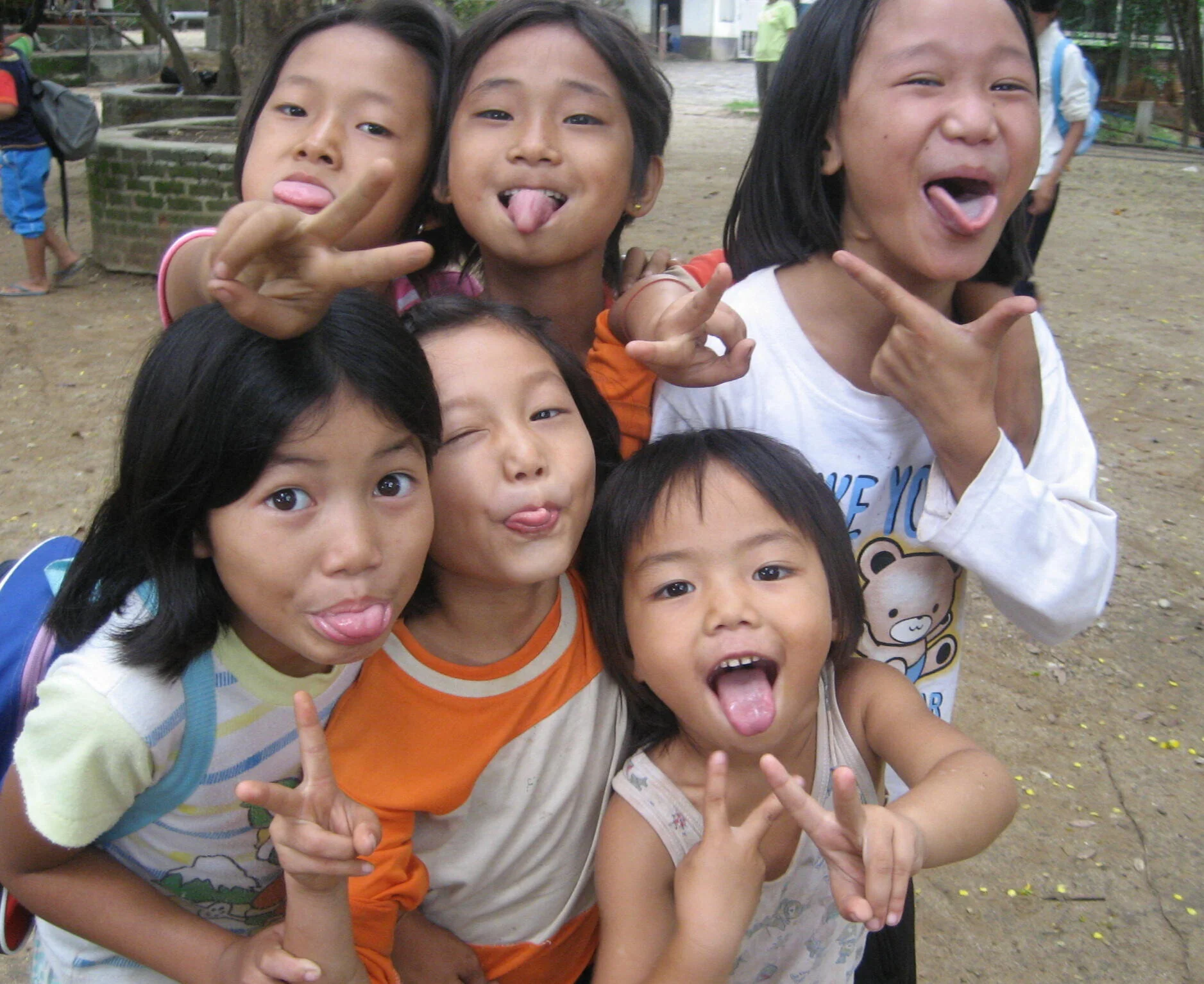
Young girls from the DEPDC in Thailand make silly faces for volunteers. Photo by Raeann Mason

Volunteer Tourism is (Sometimes) Not the Answer

March 28, 2020
“The number of truly orphaned children in Cambodia halved in 2013, but the number of orphanages doubled.”

Perhaps you woke up today and realized that it was time for you to travel the world. If you’re anything like me, avoiding traditional tourism is a priority as you begin to research the ways and places to travel. The good news is, there are many alternatives to traditional tourism. Oftentimes, travelers want to make a difference as they move through the world so, naturally, combining your travel adventures and your philanthropy is a good idea, right? Not necessarily. While it’s likely that the most effective way to help someone in need, is to stay put and send them the money you were going to use on your trip, I know that most folks who volunteer in place of traditional tourism do so with good intentions. You should know then that there are some things that often go over-looked by those of us who want to see the world and make it better as we do. So, before you pack up and head to the Bahamas to do some hurricane relief here are three of the more commonly overlooked risks to keep in mind:

1)     Carbon footprint

Chances are if you’re going somewhere that falls into the category of volunteer tourism, or voluntourism, it’s going to take massive amounts of fuel to fly there. Make sure that it’s worth the environmental cost before you hop on a plane and travel somewhere that is likely experiencing the effects of climate change firsthand. Check for train routes, and other alternative forms of transport before you book a flight that covers the whole length of your trip.

2)     Building Projects

Many do-gooders hope to help people in need by building homes, schools or orphanages. While these things are certainly needed around the world, I hate to say it, you’re most likely not a qualified builder, and you probably don’t know building codes/laws for the place you’re visiting (though if you are-good on ya). You’re more likely to build a poor standing structure than say, a local professional, who you may have inadvertently taken the job from because you were willing to do it for free (though this isn’t always the case).

3)     Orphanages

Turns out that many children in orphanages around the world have at least one living parent –or at least an Aunt or two. Many families are told that their children will be better cared for and given better opportunities if they allow their child to be separated from them. Those opportunities rarely arise, and governments love to capitalize off the billion-dollar (orphan) travel industry. For example: the number of truly orphaned children in Cambodia halved in 2013, but the number of orphanages doubled.
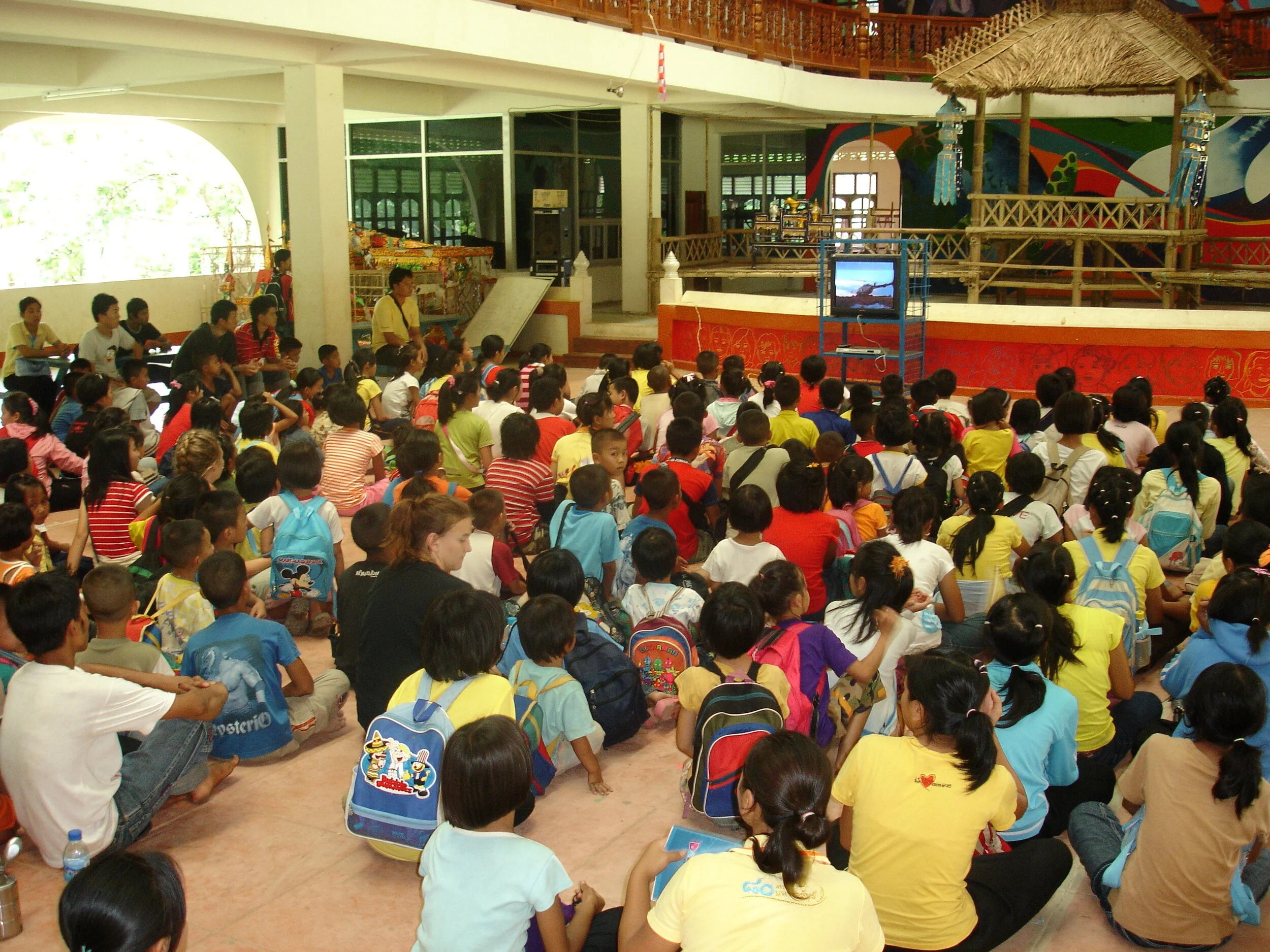
Children are included in a workshop on how to mitigate the struggles their community faces. Raeann Mason

In an increasingly xenophobic world, however, travel volunteerism can be used to combat these very problems. In order to avoid falling into the trap of becoming volunteers who perpetuate poverty and crisis, we need to shift our focus. We can mitigate the negative effects of voluntourism by first engaging with a place as it is –be patient— wait to be invited by a local and help in their pre-existing projects. We can also educate ourselves about the organizations we are considering volunteering with – doing some vetting is necessary if we want to be responsible travelers. Don’t forget, we can always not volunteer with an organization at all. Get neighborly and meet the people around you; see if you can meet their needs all on your own. Because if we can shift our mindset from “helping” the poor to engaging in a cultural exchange we allow ourselves, and those we hope to benefit, a stable foundation that can be built upon. The more we learn about the places we hope to go, and the people who live there (like, on a personal level), the better we can bring the world together instead of breaking it down with our ignorance.

Raeann Mason

Raeann is an avid traveler, digital storyteller and guide writer. She holds a Bachelor’s degree in Mass Comm & Media Studies from the Walter Cronkite School of Journalism & Mass Communication. Passionate about a/effective journalism and cultural exchange, she is an advocate of international solidarity and people's liberation. As the founder of ROAM + WRITE and EIC of Monarch Magazine, Raeann hopes to reshape the culture of travel and hospitality to be ethically sound and sustainable.

In News and Social Action, Global Health & Crisis Tags tourism, carbon footprint, orphanage, Thailand, Sustainability, Travel, Global Health
Comment

IMAGE COURTESY OF ORPHANAGES.NO

Orphanage Volunteering’s Shocking Link to Child Abuse

March 10, 2017

I never thought that playing catch with a kid could be a bad thing, or that goofing off could contribute to long-term psychological damage. Even now, as I write it, it all seems a little absurd. Is it really possible that making kids laugh could do permanent harm?

Every year, millions of people travel around the world to volunteer. Orphanages are one of the most popular destinations, and it makes sense. Many volunteers like working with children, often because children are enthusiastic and working with them is very active and “hands on.” Most of the tasks volunteers are given when working with kids are simple, and it is rare that volunteers are expected to have any specialized skills or to participate in any in-depth training before starting their volunteer work.

At the same time, orphanages are often understaffed and poorly kept up. Operating with limited resources (or under the appearance of limited resources), they are frequently on the lookout for people who are willing to pay to work. Placement companies and organizations provide orphanages with paying volunteers to help with childcare, teaching, cooking, and maintenance. Volunteers are told that they’ll be providing orphaned children with a more nurturing environment while orphanages get a steady income and a constant flow of helping hands.

All of this sounds fine and dandy, but the problem with orphanage volunteer work isn’t in the volunteer’s desire to help, but in the very existence and implementation of orphanages themselves.

Not many would-be volunteers realize that more than 80% of children who are labeled as “orphans” have a surviving parent. Even fewer understand that the traditional kinship structures of many non-western countries, especially those where orphanage volunteering is most common, actually result in very few children being left without someone to care for them (Richter and Norman, 2010; UNAIDS/UNICEF/USAID, 2004).

Which begs the question: why are there so many kids in orphanages?

There are orphans that need a home, and sometimes that means that they have to go into group care, but for many of the children who are labeled as orphans and blazoned across brochures, it’s poverty, not a loss of family, that put them there. Desperation will make people do unthinkable things, especially with the promise of ample food, a solid education, and a comfortable bed. Because of this, all around the world caregivers are willingly giving up their children to orphanages. Sometimes, they even get cash in return. This isn’t altruism on the orphanages part, it’s well-disguised human trafficking.

None of this is the volunteer’s fault, but just by working at orphanages, volunteers are contributing to the problem and, inadvertently, may be supporting the exploitation and traumatization of children - the opposite of what their goal was in going to volunteer in the first place.

Once the volunteer arrives at the orphanage, they might get a feeling that something is off, but it’s easy to push that feeling away when there are kids who genuinely do need help regardless of how they got there. The do need attention and love, they do need teachers and caregivers, and when they get those things children, especially young children, are often overwhelming grateful. It’s hard to walk away, and it’s easy to ignore the problems when there’s a kid on your lap, a kid on your back, and another looking for a place to grab onto.

While the industry is definitely shockingly corrupt, there are many orphanages and children’s homes that truly believe that they are acting in their ward’s best interests and are committed to putting the child’s, not the paying visitor’s, needs first. The way children get into an orphanage, and the ongoing exploitation of them once they have arrived, are part of a systemic problem that may not apply to every orphanage. However, there are also more personal impacts of short-term volunteering, relevant across the entire industry, that may be just as harmful.

Three key aspects of child development that most people can agree on are:

  1. Children benefit from long-term relationships with adult figures.
  2. Those adults don’t have to be a family member in the traditional sense, but having a stable familial atmosphere promotes positive development.
  3. Children without stable relationships with adults often suffer from psychological and behavioral issues that are directly related to a lack of stability and guidance early in life.

All three of these are proven concepts that apply around the world from Cambodian orphanages to the American foster care system. Orphanages that rely heavily on free or paying volunteer labor and, as a result, tend to have only a small local staff, act in complete disregard of these three concepts. They drastically reduce the opportunities that their children have to form long-term relationships, they create an unstable environment where people are constantly rotating in and out and, by doing those two things, they are causing psychological damage to the children that they are supposed to be helping.

As a privileged “gringa,” or white girl, who spends time in impoverished communities, I’ve come to realized not only what my presence can mean, but also what it can do. I know that when I was doing short-term volunteer work, I was as much of an exotic distraction to the children I was working with as they were to me. Even when they had the opportunity to form relationships with locals who could serve as role models, it was my presence that was highlighted. I, the person who was going to leave in just a few days, was given all the attention that should have been shined on the heroes who the children were interacting with every day.

Some might argue that this is giving volunteers too much credit since that all they are there to do is help. Any person who has had children climb on top of them in a frenzy for attention, clamor to have their picture taken, or cry in their arms as they prepare to leave, has to admit that they are in a position of immense power. By choosing to support orphanages that rely on volunteer labor, well-meaning volunteers are inadvertently using this power to exacerbate a broken system and disincentivize governments and NGOs from finding lasting systems-based solutions.

Even if the orphanage that you’ve been eyeing looks perfect, short-term volunteering at orphanages feeds a market that trafficks in, exploits, abuses, and permanently traumatizes the very children that you are looking to help. Even in the best of cases, short-term volunteer work, especially unskilled and non-specialized placements, encourage an uneven power dynamic in which the volunteers are held above the locals. They are looked to as benevolent angels, turning the lens away from the men and women who could serve as positive adult role-models for children who desperately need a stable family environment.

I’ve would never have labeled myself as abusive before I volunteered at an orphanage, and I think it’s fair to say that most volunteers would recoil at the suggestion that they could be categorized as abusers. Now that I know what orphanage volunteer does to children, I have to call it out for what it is - abusive and exploitative.

So no, you shouldn’t go. Don’t support orphanage volunteering. Don’t support child abuse.

You can support this effort in two ways:

  1. Sign the petition calling on travel operators to remove orphanage volunteering placements from their websites.
  2. Share this post, along with your thoughts on orphanage volunteering, using the hashtag #StopOrphanTrips. 

THIS ARTICLE WAS ORIGINALLY PUBLISHED ON HUFFINGTON POST.


PIPPA BIDDLE

Pippa Biddle is a writer. Her work has been published by The New York Times online, Antillean Media Group, The FBomb, MTV, Elite Daily, Go Overseas, Matador Network, and more. She is a graduate of Columbia University with a degree in Creative Writing. Twitter: @PhilippaBiddle

In Women and Girls, Human Rights Tags Africa, orphanage, orphans, trafficking, parents, parental neglect, money, finances, voluntourism, helping, social justice, equality, Children and Youth, Human Rights, Volunteering
Comment

Cambodian Orphanage Shows Effects of Voluntourism

July 22, 2015

We all start with the best intentions, and want to make a positive difference in the world when we travel. But when orphanages become volunteer tourism destinations, they create incentives to direct children with living parents away from their homes, 3 out of 4 Cambodian "orphans" have a living parent. Studies show family-based care is a far better solution for these kids. 

CONNECT WITH ORPHANAGES NOT THE SOLUTION

In Cambodia, Asia, Global Poverty Tags southeast, orphanage, no, solution, tourism, voluntourism, fighting, Global Poverty, Children and Youth, Asia, Cambodia
Comment

Also check out...

Featured
Vietnam’s Floating Markets Are Disappearing
The Supernatural Role of Masks in Nigeria’s Yoruba Tribal Culture
Opening the World to Deaf Travelers with Lily Yu

Featured trips

Featured
Offer NGO Support While Visiting Quito
Experience Life as a Mongolian Nomad
Help Grow Organic Costa Rican Coffee

Sign up for the CATALYST newsletter

Sign up for our newsletter to get the scoop on international travel, global social impact insights, our latest podcast releases, and more from around the world, all delivered right to your inbox!

We respect your privacy.

Thank you!
Newsletter Sign Up | Advertise | Careers + Internships | Privacy Policy | Submissions | Contact Us

Copyright © 2025, MISSION MEDIA LLC. All rights reserved.