
This video follows a group of people in Senegal who are fighting deforestation. Due to extreme poverty, many people in Senegal result to cutting down trees to make money. This group is planting trees and gardens to help the environment.
Where is this place we call 'away' when we say 'throw away'?

If you want to make peace with your enemy, you have to work with your enemy. Then he becomes your partner.
A good traveller has no fixed plans and is not intent on arriving.

Change will not come if we wait for some other person or some other time. We are the ones we've been waiting for. We are the change we seek.
Travel is to live.
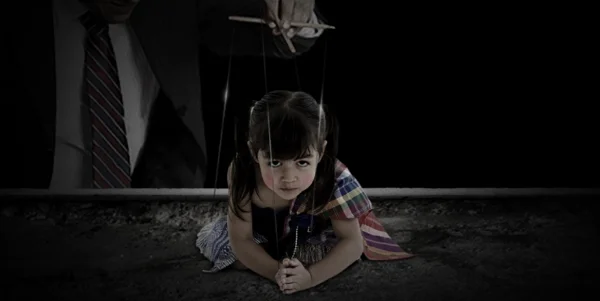
IMAGE COURTESY OF ORPHANAGES.NO
Orphanage Volunteering’s Shocking Link to Child Abuse
I never thought that playing catch with a kid could be a bad thing, or that goofing off could contribute to long-term psychological damage. Even now, as I write it, it all seems a little absurd. Is it really possible that making kids laugh could do permanent harm?
Every year, millions of people travel around the world to volunteer. Orphanages are one of the most popular destinations, and it makes sense. Many volunteers like working with children, often because children are enthusiastic and working with them is very active and “hands on.” Most of the tasks volunteers are given when working with kids are simple, and it is rare that volunteers are expected to have any specialized skills or to participate in any in-depth training before starting their volunteer work.
At the same time, orphanages are often understaffed and poorly kept up. Operating with limited resources (or under the appearance of limited resources), they are frequently on the lookout for people who are willing to pay to work. Placement companies and organizations provide orphanages with paying volunteers to help with childcare, teaching, cooking, and maintenance. Volunteers are told that they’ll be providing orphaned children with a more nurturing environment while orphanages get a steady income and a constant flow of helping hands.
All of this sounds fine and dandy, but the problem with orphanage volunteer work isn’t in the volunteer’s desire to help, but in the very existence and implementation of orphanages themselves.
Not many would-be volunteers realize that more than 80% of children who are labeled as “orphans” have a surviving parent. Even fewer understand that the traditional kinship structures of many non-western countries, especially those where orphanage volunteering is most common, actually result in very few children being left without someone to care for them (Richter and Norman, 2010; UNAIDS/UNICEF/USAID, 2004).
Which begs the question: why are there so many kids in orphanages?
There are orphans that need a home, and sometimes that means that they have to go into group care, but for many of the children who are labeled as orphans and blazoned across brochures, it’s poverty, not a loss of family, that put them there. Desperation will make people do unthinkable things, especially with the promise of ample food, a solid education, and a comfortable bed. Because of this, all around the world caregivers are willingly giving up their children to orphanages. Sometimes, they even get cash in return. This isn’t altruism on the orphanages part, it’s well-disguised human trafficking.
None of this is the volunteer’s fault, but just by working at orphanages, volunteers are contributing to the problem and, inadvertently, may be supporting the exploitation and traumatization of children - the opposite of what their goal was in going to volunteer in the first place.
Once the volunteer arrives at the orphanage, they might get a feeling that something is off, but it’s easy to push that feeling away when there are kids who genuinely do need help regardless of how they got there. The do need attention and love, they do need teachers and caregivers, and when they get those things children, especially young children, are often overwhelming grateful. It’s hard to walk away, and it’s easy to ignore the problems when there’s a kid on your lap, a kid on your back, and another looking for a place to grab onto.
While the industry is definitely shockingly corrupt, there are many orphanages and children’s homes that truly believe that they are acting in their ward’s best interests and are committed to putting the child’s, not the paying visitor’s, needs first. The way children get into an orphanage, and the ongoing exploitation of them once they have arrived, are part of a systemic problem that may not apply to every orphanage. However, there are also more personal impacts of short-term volunteering, relevant across the entire industry, that may be just as harmful.
Three key aspects of child development that most people can agree on are:
- Children benefit from long-term relationships with adult figures.
- Those adults don’t have to be a family member in the traditional sense, but having a stable familial atmosphere promotes positive development.
- Children without stable relationships with adults often suffer from psychological and behavioral issues that are directly related to a lack of stability and guidance early in life.
All three of these are proven concepts that apply around the world from Cambodian orphanages to the American foster care system. Orphanages that rely heavily on free or paying volunteer labor and, as a result, tend to have only a small local staff, act in complete disregard of these three concepts. They drastically reduce the opportunities that their children have to form long-term relationships, they create an unstable environment where people are constantly rotating in and out and, by doing those two things, they are causing psychological damage to the children that they are supposed to be helping.
As a privileged “gringa,” or white girl, who spends time in impoverished communities, I’ve come to realized not only what my presence can mean, but also what it can do. I know that when I was doing short-term volunteer work, I was as much of an exotic distraction to the children I was working with as they were to me. Even when they had the opportunity to form relationships with locals who could serve as role models, it was my presence that was highlighted. I, the person who was going to leave in just a few days, was given all the attention that should have been shined on the heroes who the children were interacting with every day.
Some might argue that this is giving volunteers too much credit since that all they are there to do is help. Any person who has had children climb on top of them in a frenzy for attention, clamor to have their picture taken, or cry in their arms as they prepare to leave, has to admit that they are in a position of immense power. By choosing to support orphanages that rely on volunteer labor, well-meaning volunteers are inadvertently using this power to exacerbate a broken system and disincentivize governments and NGOs from finding lasting systems-based solutions.
Even if the orphanage that you’ve been eyeing looks perfect, short-term volunteering at orphanages feeds a market that trafficks in, exploits, abuses, and permanently traumatizes the very children that you are looking to help. Even in the best of cases, short-term volunteer work, especially unskilled and non-specialized placements, encourage an uneven power dynamic in which the volunteers are held above the locals. They are looked to as benevolent angels, turning the lens away from the men and women who could serve as positive adult role-models for children who desperately need a stable family environment.
I’ve would never have labeled myself as abusive before I volunteered at an orphanage, and I think it’s fair to say that most volunteers would recoil at the suggestion that they could be categorized as abusers. Now that I know what orphanage volunteer does to children, I have to call it out for what it is - abusive and exploitative.
So no, you shouldn’t go. Don’t support orphanage volunteering. Don’t support child abuse.
You can support this effort in two ways:
- Sign the petition calling on travel operators to remove orphanage volunteering placements from their websites.
- Share this post, along with your thoughts on orphanage volunteering, using the hashtag #StopOrphanTrips.
THIS ARTICLE WAS ORIGINALLY PUBLISHED ON HUFFINGTON POST.
PIPPA BIDDLE
Pippa Biddle is a writer. Her work has been published by The New York Times online, Antillean Media Group, The FBomb, MTV, Elite Daily, Go Overseas, Matador Network, and more. She is a graduate of Columbia University with a degree in Creative Writing. Twitter: @PhilippaBiddle
VIDEO: A Fisherman's Freedom in Madagascar
Ravelo was trapped; He couldn't afford to continue paying the local loan shark to rent fishing equipment, because he couldn't catch fish to sell and make his payments. He couldn't catch fish because the mangrove estuaries had been depleted of wood for fire, in turn decimating the population of fish and seafood.
When Ravelo was hired by Eden Reforestation Projects, he was not only able to make an income planting trees, but his environment began to revitalize.
Eden Reforestation Projects hired Outskirt Films to tell this story on the remote coast of Madagascar. This powerful story was filmed in Madagascar by Outskirt Films.
VIDEO: Deep in Panama's Rainforest
Enrique Pacheco’s cinematography takes us on a journey through Panama’s lush landscape.
“Deep in the Rainforest” captures the density and beauty of this undisrupted natural space. Through Pacheco’s lens, we explore nature’s gentle power—torrential storms, vibrant light, and the intricate ecosystems that make up Panama’s environment.
VIDEO: The Social Enterprise Biji-Biji in Malaysia
The Biji-biji Initiative is a social enterprise that aims to share progressive ideas with everyone. In Kuala Lumpur the organization is a champion of sustainable living and by using discarded materials, basic electronics and passive building techniques to reuse waste in creative ways.
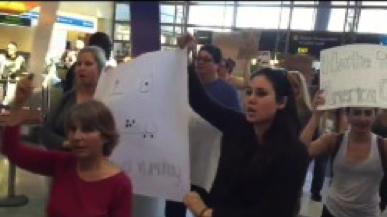
Protestors against travel ban.
Protesting the Travel Ban at LAX: Attorney Julia Trankiem Shares Her Volunteer Experience
On January 29, 2017, in response to Executive Order 13769—nicknamed the “travel ban”— which suspended refugee arrivals and banned entry into the U.S. for 7 predominantly Muslim countries, and likely spurred by the previous day’s demonstrations at JFK airport, hundreds of protesters descended on LAX condemning the Order.
That Sunday morning, chants like, “No Hate, No Fear. Immigrants Are Welcome Here,” rang out throughout the airport. There was marching, there were signs, there was singing, there were cries. Religious adherents, military veterans, descendants of immigrants, translators, lawyers, and politicians were present, demonstrating and lending support and services.
One of the attorneys lending her services was Julia Trankiem. The daughter of Vietnamese immigrants, and an alumna of University of Michigan Law School, Julia practices litigation and employment law in Los Angeles. Friday evening, word of the travel ban reached her. Saturday, she spent time learning more about the ban and reaching out to her contact at the American Civil Liberties Union (ACLU). By Sunday morning, she was driving towards LAX while listening to the news in tears. “I felt compelled,” she said, “I didn’t have a choice to just sit back.”
She headed to the short term parking lot, where she boarded a bus filled with protestors. After she arrived at the outside terminals, Trankiem saw a sign that read, “Hi, I’m an attorney.” The man behind the sign directed her towards The Coffee Bean & Tea Leaf inside. Once she made it, she found too many attorneys and not enough work. Undeterred, she eventually made her way to the baggage claim area, where she was able to begin volunteering.
Trankiem spent much of her day as an intake coordinator. Since there were no direct flights from the banned countries, she looked up flights to guess where else travelers might be flying in from—layover cities like London, Dubai, and Frankfurt. Afterwards, she helped send other attorneys to the corresponding terminal to meet with travelers to see if they or their family members or loved ones were subject to the Executive Order.
Detention times varied for flagged travellers, but some were detained longer than 6 hours, Julia says. There were rumors of immigration officials asking people to sign over their visas and conflicting stories of provisions, like food and water, having to be requested for detainees. There was confusion, and chaos, and disorganization, Julia says. There were also counter protesters with a different message. Julia heard accounts from attorneys that some people were told to, “Go back to where you came from.” The Los Angeles Times reported that there were about a dozen protesters in support of the travel ban.
The overwhelming majority of protesters at LAX, however, were against the ban, and in support of immigrants and refugees. Julia describes a sea of demonstrators on the parking bridge, in the lot, and in baggage claim-- some of whom applauded when international travellers de-planed and picked up their luggage. Many also held signs with compassionate messages like, “Welcome To This Country.” She says there was a “vibrant energy” that was “unifying” on that Sunday at LAX. She and others shared the “common goal of trying to make a difference and stand up for America’s core values.” Julia shares that she was thanked for her efforts, but left feeling thankful she was able to be of some assistance. She says that America blessed her family by allowing them into the U.S. after they fled the Vietnam War, and her volunteering was a small way to help repay the debt she feels she owes America.
Between January 27, 2017and January 31, 2017, an estimated 60,000 visas were revoked. By January 31st, nearly 50 lawsuits had been filed contesting the constitutionality of Executive Order 13769. On February 3, 2017, just 5 days after the LAX protest, a temporary restraining order (State of Washington v. Trump) was placed on the Executive Order. That restraining order was challenged and later upheld by United States Court of Appeals for the Ninth Circuit on February 9, 2017. The litigation is ongoing.

ALEXANDREA THORNTON
Alexandrea Thornton is a journalist and producer living in NY. A graduate of UC Berkeley and Columbia University, she splits her time between California and New York. She's an avid reader and is penning her first non-fiction book.
VIDEO: People Before Profit
Most development projects, at face value, seem aimed at improving the lives of people. The reality for communities living at or near a project -- be it a dam, a sports complex, or a shopping mall -- is often quite different.
Forced evictions regularly do not uphold obligations to fairly consult, compensate, resettle and rehabilitate communities. An estimated 15 million people are affected each year.
WITNESS, with partners around the world, are bringing the stories of communities facing human rights abuses and forced evictions to the government officials, the courts and corporations who can make change. For more information about this campaign visit www.witness.org
BANGLADESH/INDIA: From No-Man's Land to the Unknown
For decades, more than 50,000 people have been stranded, without access to basic rights, on tiny islands of no-man’s land locked within India and Bangladesh. 2015 finally saw an end to these enclaves, or ‘chitmahals,’ bringing hope and change to communities living on the world’s most complex border.
The party lasted long into the night across remote patches of northern Bangladesh. As the clock struck midnight people played music, danced and sang using candles for light, and for the first time in their villages they raised a national flag. Similar events were also taking place on the other side of the border in India just a stone’s throw away.
For 68 years, ever since the formation of East Pakistan in 1947 (which later became known as Bangladesh), the residents of one of the world’s greatest geographical border oddities have been waiting for this moment; for their chance to finally become part of the country that has surrounded yet eluded them for so many years.
At 12.01am on July 31st, 2015, India and Bangladesh finally exchanged 162 tracts of land — 111 inside Bangladesh and 51 inside India.
Known in geographical terms as enclaves, or locally as chitmahals, these areas can most easily be described as sovereign pieces of land completely surrounded by another, entirely different, sovereign nation.
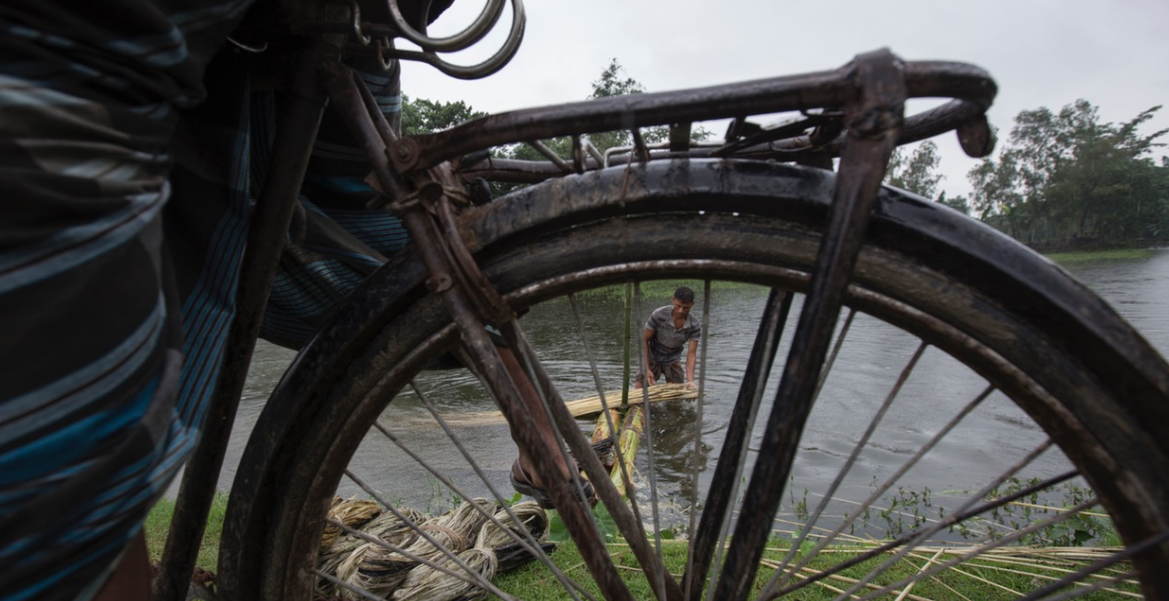
Inside an enclave, a man prepares jute by removing the long, soft vegetable fibres that can be spun into coarse, strong threads, and keeping the sticks. For many enclave dwellers, jute is where most of their income comes from and also what they use to build their houses.
Enclaves aren’t as rare as you may think, and until now this part of South Asia has contained the vast majority. Existing around the world, mostly in Europe and the former Soviet Union, they were once much more prevalent — until modern day cartography and accurately defined borders eliminated many. Some still remain, such as the Belgium town of Baarle-Hertog, which is full of Dutch territory. The locals have turned the unusual border into a tourist attraction. However, for this region of southern Asia, where political and religious tensions run high, the existence of enclaves is not so jovial. Life for those who are from these areas is far harder than in neighbouring villages, only minutes away.
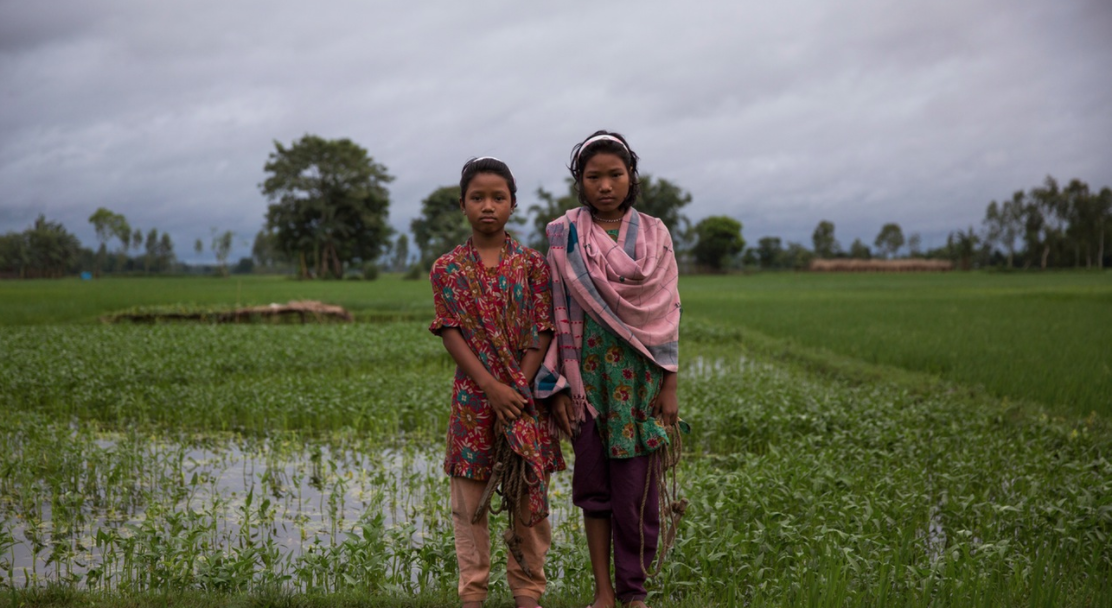
Sisters Lobar Rani Bormoni, 11, and Shapla Rani Bormoni, 12, stand in a paddy field in the enclave in Bangladesh where they born.
“These enclaves are officially recognised by each state, but remain un-administered because of their discontinuous geography. Enclave residents are often described as “stateless” in that they live in zones outside of official administration — since officials of one country cannot cross a sovereign frontier into administered territory,” explains Jason Cons, a Research Assistant Professor at the LBJ School of Public Affairs at the University of Texas, Austin and author of the forthcoming book, ‘Sensitive Space: Fragmented Territory at the India-Bangladesh Border.’
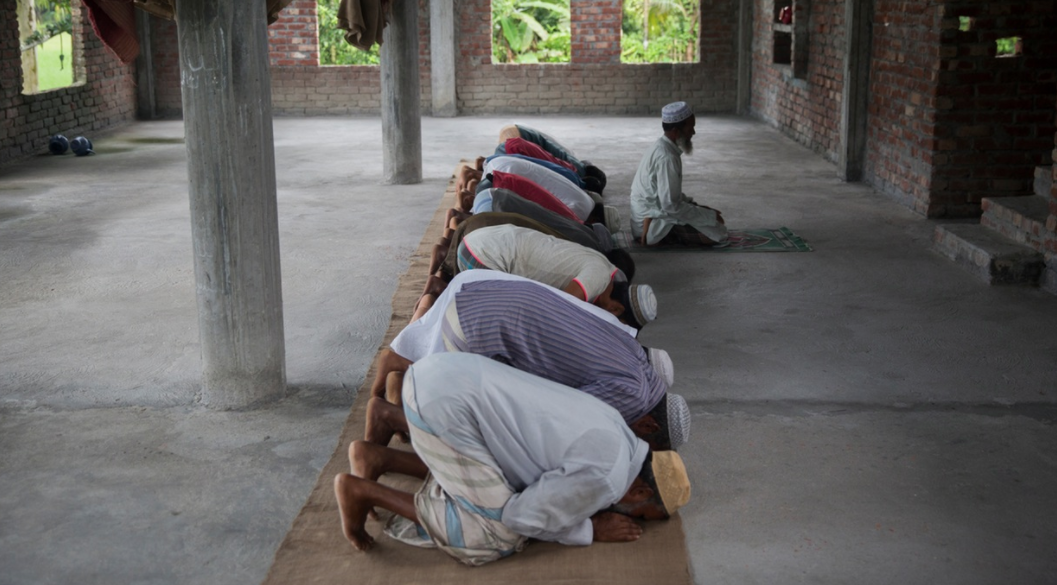
Muslim men from Dhoholakhagrabari enclave pray in their mosque. Mosques are usually the only solid structures that exist inside the enclaves.
Several folktales tell of the origin of these enclaves being the stakes in a game of chess between two feuding maharajas in the 18th century, or even the result of a drunken British officer who spilt spots of ink on the map he drew during partition in 1947. Captivating as these stories are, the most likely explanation dates back to 1711 when a peace treaty was signed between the feuding Maharajah of Coch Behar and the Mughal Emperor in Delhi. After the treaty their respective armies retained and controlled areas of land, where the local people had to pay tax to the respective ruler, thus creating pockets of land controlled by different people.
Prior to 1947, when this region was entirely Indian territory, living in these locally-controlled enclaves made little difference. However, during the drawing of the boundary between India and Bangladesh, the Maharajah of Coch Behar asked to join India — on the condition that he retain all his land, including that inside the newly formed East Pakistan, which his ancestors had rightly won control of over 200 years ago.
So, through no fault of their own, the lives of 50,000 people turned upside down — for decades they have been stranded on islands of no-man’s land.
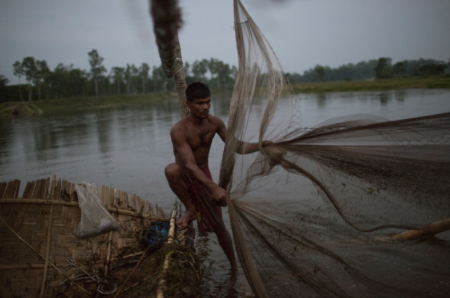
A man fishes at dusk using his large bamboo fish trap. This river exists just outside the enclave but as it’s in Bangladesh territory, enclave dwellers are forbidden to fish here otherwise angering the local fishermen.
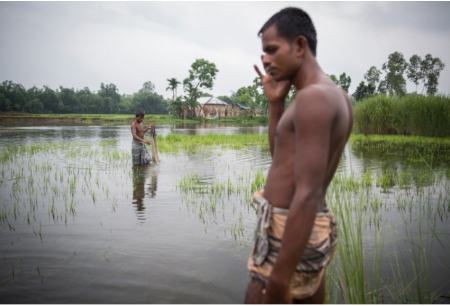
Enclave dwellers fish in a flooded paddy.
During the early 1970s a framework to find a solution to this problem was put in place — called the 1974 Land Boundary Agreement. For forty years, as governments came and went, neither the Indian nor the Bangladeshi politicians were able to agree with their counterparts at the time. And whilst the politicians squabbled, the residents suffered.
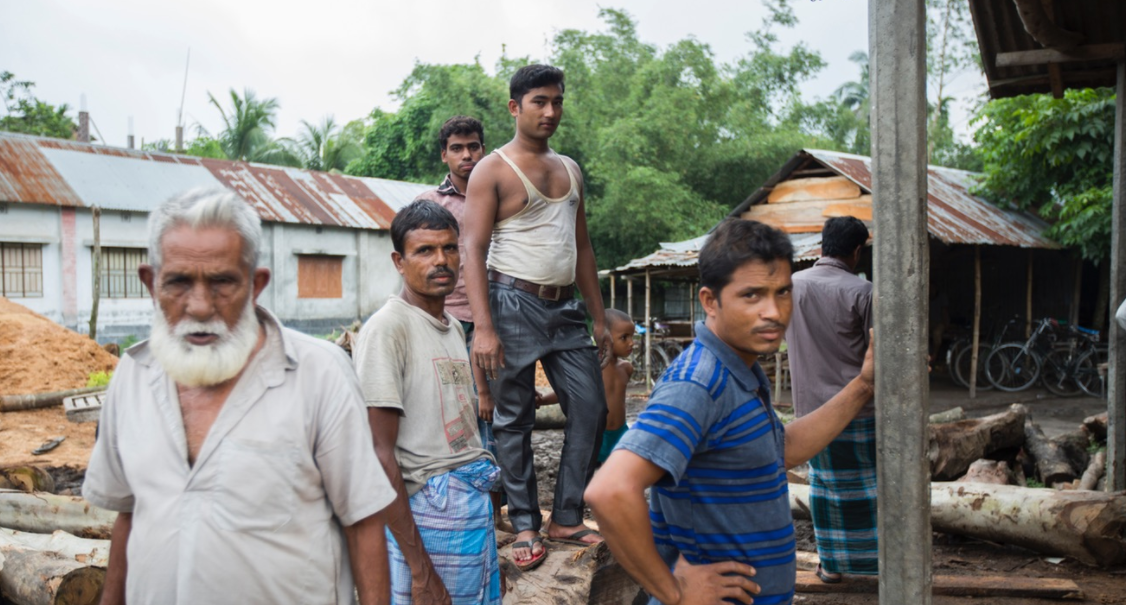
Only informal work, like at this sawmill, is available for enclave dwellers in Bangladesh.
On the ground there are no border fences or security checkpoints, and without realising it, you can walk in and out of India countless times, crossing an international boundary completely obliviously. However, there is a serious lack of infrastructure and this has been one of the most serious problems facing the residents. Paved roads quite literally stop at the boundaries to the chitmahals, as do electricity poles. The enclave inhabitants in Debiganj District of Bangladesh, as non-Bangladeshi citizens, were even barred from sending their children to school, also receiving no state assistance or even the most basic of hospital treatment.
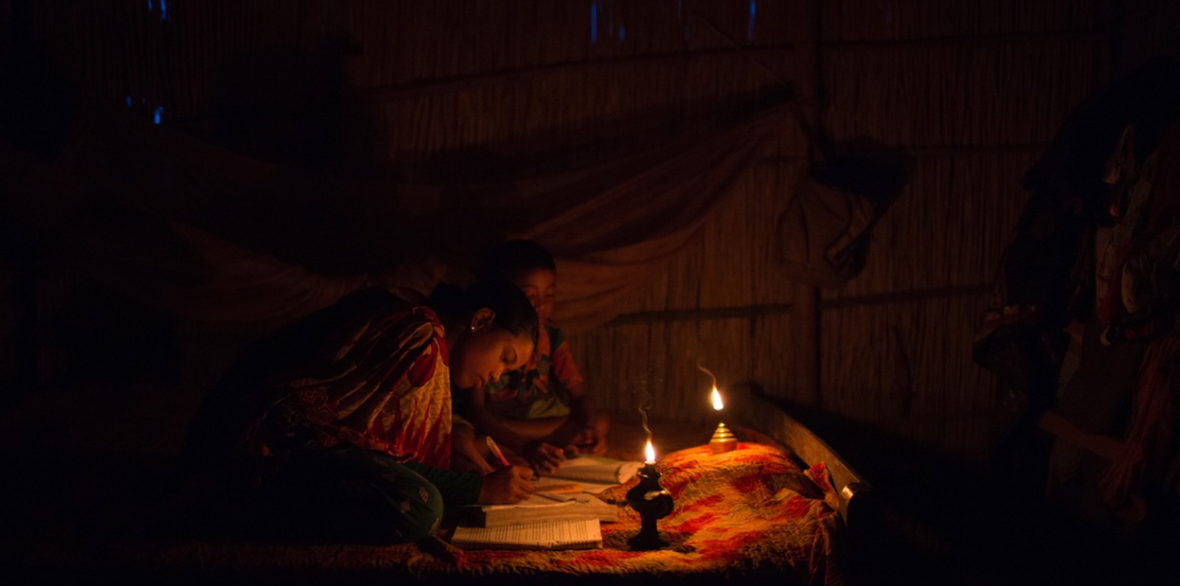
Sheltered within their small bamboo house, located inside the enclave of Dhoholakhagrabari, Eity Rani, 14, and Shobo Rai, 8, carefully do their homework by the light of an oil lamp. Life is much harder for children who are born in enclaves.
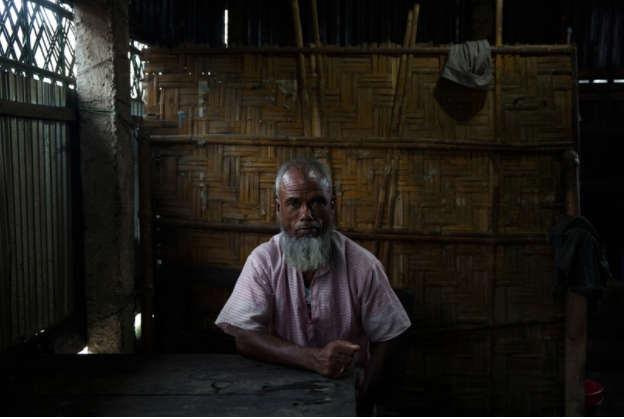
A Bangladeshi man sits in a shop in the market of a small town that sits between enclaves.
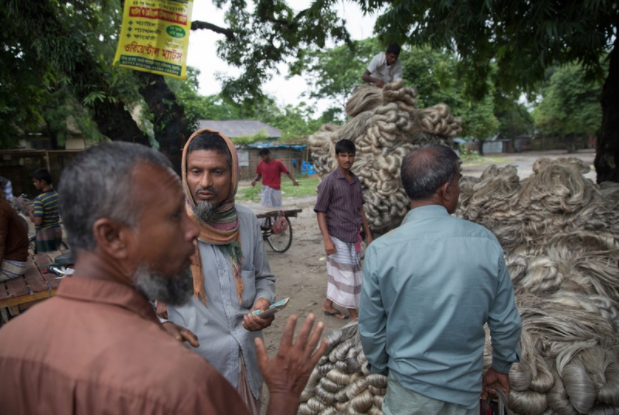
Every Saturday a jute market is held in Debiganj. For the many inhabitants of the enclaves that surround the town, jute is where most of their income comes from.
Wearing just a lungi — a traditional sarong worn around the waist — Sri Ajit Memo is sitting in the middle of a small muddy courtyard, surrounded by houses made of bamboo and jute sticks. At 55 years old, his family have lived in a Dhoholakhagrabari chitmahal for generations. Chewing on the twig of a certain tree that locals here use as an alternative to toothpaste, he explains, “All kinds of problems exist here. The government doesn’t care about us, or our children, and so it’s very difficult for them to even go to school. Honestly, we are Indian, but how can we feel this way when we get no help from them?”
For enclave dwellers on both sides of the Indian-Bangladeshi border, the entitlement to receive even the most basic of rights has eluded them.
Reece Jones, an Associate Professor in Political Geography at the University of Hawai’i Manoa, who has visited many chitmahals on both sides of the border, explains further, “After decades in this situation many people have found ways around it through bribes to officials or through friends who helped them to obtain the documents they needed, such as school enrolment forms for their children. However, the situation was not stable or secure. They were extremely vulnerable to theft and violence because the police had no jurisdiction in the enclaves.”
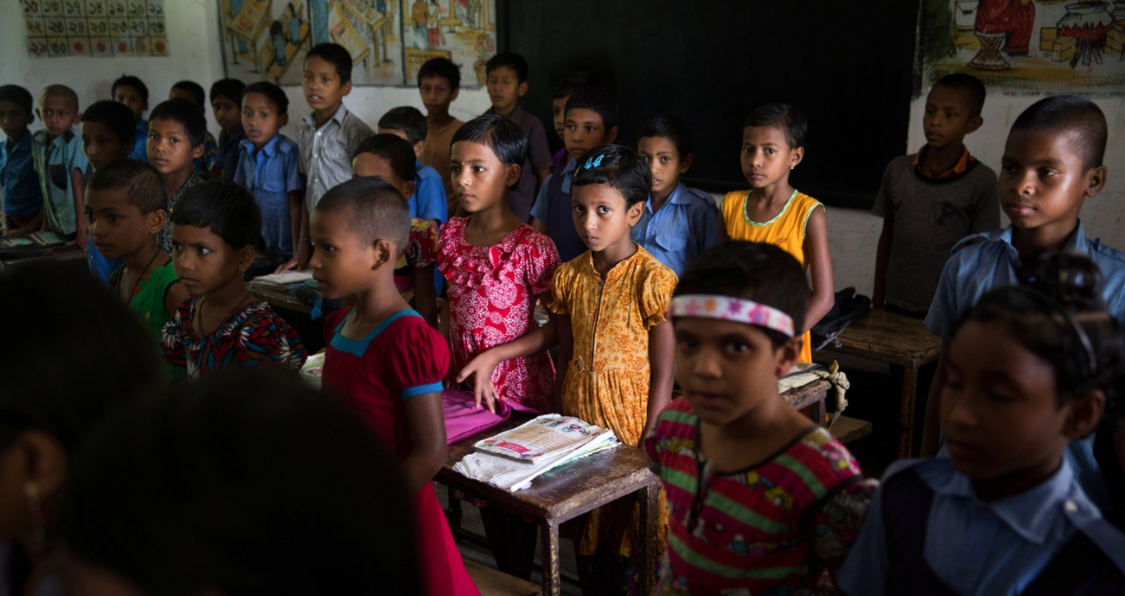
Rupsana Begum, 7, (pink dress) and Monalisa Akter, 7, (orange dress) are from an enclave but were able to come and study at Sher-e-Bangla Government School because their parents managed to acquire fake documents and were able to pay the school.
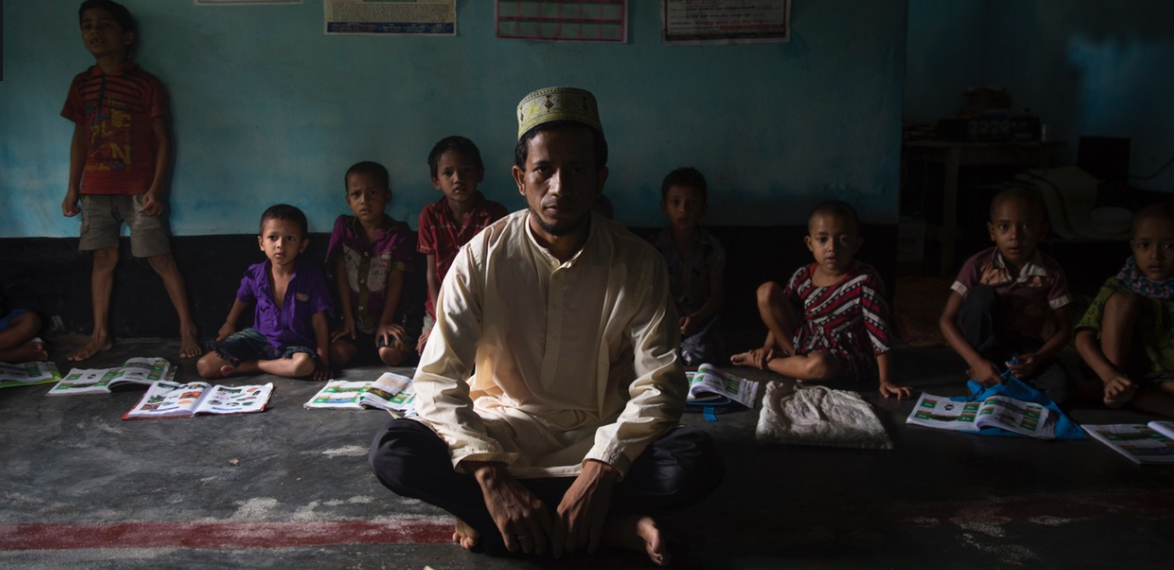
In Dhoholakhagrabari enclave students and their teacher sit in a madrassa class. Because enclave children have a difficult time accessing the education system in Bangladesh the locals of this enclave formed an Islamic Foundation funded on donations.
Today, after decades left living in limbo in these randomly placed no-man’s lands, around 47,000 people on the Bangladeshi side and some 14,000 on the Indian side have finally been given the right make a choice: stay where they have lived for generations with official citizenship of the country that will absorb them, or return to their country of origin.
None of the residents living in Bangladeshi enclaves within India asked to return to Bangladesh and as a result they will now all become Indian citizens. However, on the other side of the border in Bangladesh, whilst the vast majority of the Indian enclave dwellers decided to stay and become Bangladeshi citizens, 979 people requested to return to India. For these families, the enclave saga has yet to end.
Of those 979 individuals, a total of 406 come from Debiganj district. In 2011, a team of Indian officials visited every home in every enclave in Bangladesh and produced the first ever detailed census of all those living within the Indian enclaves. This report formed the basis of all subsequent decisions on the status of each person living in the enclaves.
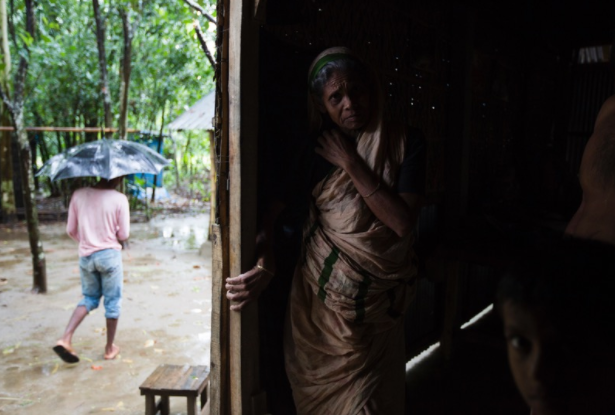
An old lady inside her home, which has no running water or electricity, in Dayuti enclave.
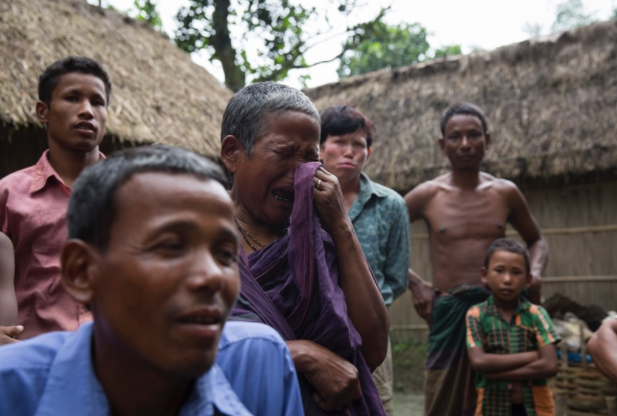
Dhonobala Rani, 70, gets emotional knowing that she has to leave her son (in the blue shirt) behind in Bangladesh, as she takes Indian citizenship.
Several months after my visit to document the enclaves during the final days of their existence, those who had chosen to leave for India finally crossed the border, leaving their homes in Bangladesh forever. In India they were given land and began the process of integrating into Indian society. Those who chose to stay behind in Bangladesh also started to receive such basic rights as eligibility to vote and access to health care.
Let us hope that after decades of struggle on these isolated political islands, the lives of these ex-enclaves dwellers can begin to reach some level of normalcy. In the end, after so many years of uncertainty, the world’s strangest border region has now become a thing of the past.
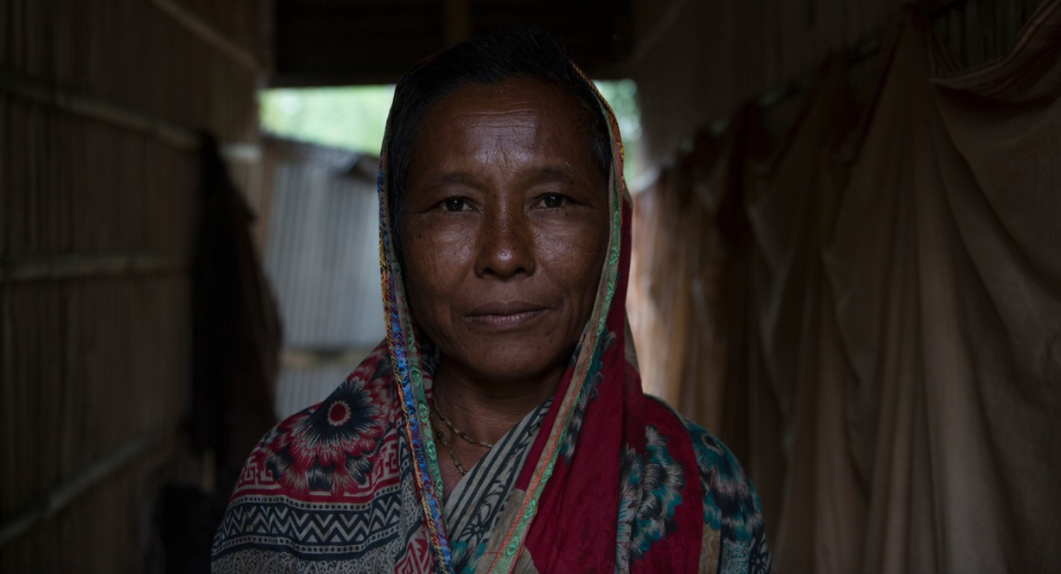
A lady from Ponchoki Bhajini village, in the enclave of Dhoholakhagrabari. She has chosen to leave for India, to start a new life as an Indian citizen.
THIS ARTICLE WAS ORIGINALLY PUBLISHED ON MAPTIA.
LUKE DUGGLEBY
Luke Duggleby is a British freelance documentary and travel photographer living in Bangkok.
VIDEO: My Other Life as a Photographer in Denmark
The subject of this short piece is a professional photographer, Lars Schneider, specifically focusing on travel and lifestyle photography. This was shot during his trip to the Faroe Islands to shoot landscapes. Witness the wild nature of this environment yourself in his short film.
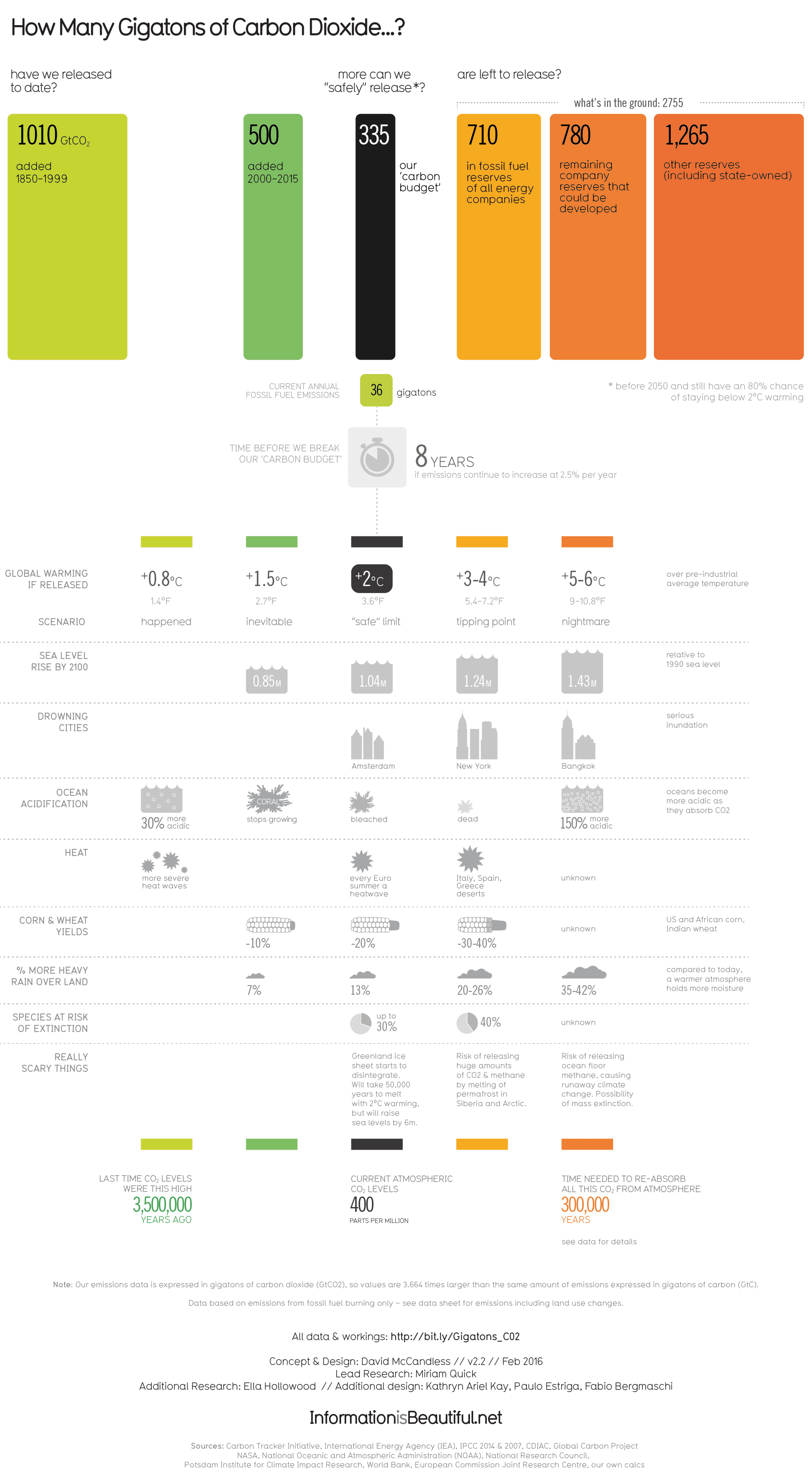
How many Gigatons of CO2?
Examine the CO2 data for yourself: http://bit.ly/Gigatons_C02
THIS IMAGE WAS CREATED BY DAVID MCCANDLESS AT INFORMATION IS BEAUTIFUL.

Regenerative Agriculture: our best shot at cooling the planet?
It’s getting hot out there. For a stretch of 16 months running through August 2016, new global temperature records were set every month.[1] Ice cover in the Arctic sea hit a new low this past summer, at 525,000 square miles less than normal.[2] And apparently we’re not doing much to stop it: according to Professor Kevin Anderson, one of Britain’s leading climate scientists, we’ve already blown our chances of keeping global warming below the “safe” threshold of 1.5 degrees.[3]
If we want to stay below the upper ceiling of 2 degrees, though, we still have a shot. But it’s going to take a monumental effort. Anderson and his colleagues estimate that in order to keep within this threshold, we need to start reducing emissions by a sobering 8-10% per year, from now until we reach “net zero” in 2050.[4] If that doesn’t sound difficult enough, here’s the clincher: efficiency improvements and clean energy technologies will only win us reductions of about 4% per year at most.
How to make up the difference is one of the biggest questions of the 21st century. There are a number of proposals out there. One is to capture the CO2 that pours out of our power stations, liquefy it, and store it in chambers deep under the ground. Another is to seed the oceans with iron to trigger huge algae blooms that will absorb CO2. Others take a different approach, such as putting giant mirrors in space to deflect some of the sun’s rays, or pumping aerosols into the stratosphere to create man-made clouds.
Unfortunately, in all of these cases either the risks are too dangerous, or we don’t have the technology yet.
This leaves us in a bit of a bind. But while engineers are scrambling to come up with grand geo-engineering schemes, they may be overlooking a simpler, less glamorous solution. It has to do with soil.
Soil is the second biggest reservoir of carbon on the planet, next to the oceans. It holds four times more carbon than all the plants and trees in the world. But human activity like deforestation and industrial farming – with its intensive ploughing, monoculture and heavy use of chemical fertilisers and pesticides – is ruining our soils at breakneck speed, killing the organic materials that they contain. Now 40% of agricultural soil is classed as “degraded” or “seriously degraded”. In fact, industrial farming has so damaged our soils that a third of the world’s farmland has been destroyed in the past four decades.[5]
As our soils degrade, they are losing their ability to hold carbon, releasing enormous plumes of CO2 into the atmosphere.
There is, however, a solution. Scientists and farmers around the world are pointing out that we can regenerate degraded soils by switching from intensive industrial farming to more ecological methods – not just organic fertiliser, but also no-tillage, composting, and crop rotation. Here’s the brilliant part: as the soils recover, they not only regain their capacity to hold CO2, they begin to actively pull additional CO2 out of the atmosphere.
The science on this is quite exciting. A study published recently by the US National Academy of Sciences claims that regenerative farming can sequester 3% of our global carbon emissions.[6] An article in Science suggests it could be up to 15%.[7] And new research from the Rodale Institute in Pennsylvania, although not yet peer-reviewed, says sequestration rates could be as high as 40%.[8] The same report argues that if we apply regenerative techniques to the world’s pastureland as well, we could capture more than 100% of global emissions. In other words, regenerative farming may be our best shot at actually cooling the planet.
Yet despite having the evidence on their side, proponents of regenerative farming – like the international farmers’ association La Via Campesina – are fighting an uphill battle. The multinational corporations that run the industrial food system seem to be dead set against it because it threatens their monopoly power – power that relies on seeds linked to patented chemical fertilisers and pesticides. They are well aware that their methods are causing climate change, but they insist that it’s a necessary evil: if we want to feed the world’s growing population, we don’t have a choice – it’s the only way to secure high yields.
Scientists are calling their bluff. First of all, feeding the world isn’t about higher yields; it’s about fairer distribution. We already grow enough food for 10 billion people.[9] In any case, it can be argued that regenerative farming actually increases crop yields over the long term by enhancing soil fertility and improving resilience against drought and flooding. So as climate change makes farming more difficult, this may be our best bet for food security, too.
The battle here is not just between two different methods. It is between two different ways of relating to the land: one that sees the soil as an object from which profit must be extracted at all costs, and one that recognizes the interdependence of living systems and honours the principles of balance and harmony.
Ultimately, this is about more than just soil. It is about something much larger. As Pope Francis put it in his much-celebrated encyclical, our present ecological crisis is the sign of a cultural pathology. “We have come to see ourselves as the lords and masters of the Earth, entitled to plunder her at will. The sickness evident in the soil, in the water, in the air and in all forms of life are symptoms that reflect the violence present in our hearts. We have forgotten that we ourselves are dust of the Earth; that we breathe her air and receive life from her waters.”
Maybe our engineers are missing the point. The problem with geo-engineering is that it proceeds from the very same logic that got us into this mess in the first place: one that treats the land as something to be subdued, dominated and consumed. But the solution to climate change won’t be found in the latest schemes to bend our living planet to the will of man. Perhaps instead it lies in something much more down to earth – an ethic of care and healing, starting with the soils on which our existence depends.
Of course, regenerative farming doesn’t offer a permanent solution to the climate crisis; soils can only hold a finite amount of carbon. We still need to get off fossil fuels, and – most importantly – we have to kick our obsession with endless exponential growth and downsize our material economy to bring it back in tune with ecological cycles. But it might buy us some time to get our act together.
[1] “August 2016 Global Temperatures Set 16th Straight Monthly Record”, weather.com, Sept. 20, 2016.
[2] “Arctic sea ice crashes to record low for June”, The Guardian, July 7, 2016.
[3] “Going beyond ‘dangerous’ climate change”, London School of Economics lecture, Feb 4, 2016.
[4] Anderson, Kevin, “Avoiding dangerous climate change demands de-growth strategies from wealthier nations”, Nov. 25, 2013.
[5] “Earth has lost 1/3 of arable land in last 40 years”, The Guardian, Dec. 2, 2015.
[6] Gattinger, Andreas, et al, “Enhanced topsoil carbon stocks under organic farming”, Proceedings of the National Academy of Science, vol. 109 no. 44.
[7] Lal, R., “Soil Carbon Sequestration Impacts on Global Climate Change and Food Security”, Science magazine, June 11, 2004.
[8] Rodale Institute, “Regenerative Organic Agriculture and Climate Change”, April 17, 2014.
[9] Altieri, Miguel et al, “We Already Grow Enough Food for 10 Billion People … and Still Can’t End Hunger”, Journal of Sustainable Agriculture, July, 2012.
THIS ARTICLE WAS ORIGINALLY PUBLISHED ON LOCAL FUTURES.

JASON HICKEL
Jason Hickel is an anthropologist at the London School of Economics. He specializes in globalization, finance, democracy, violence, and ritual, and is the author of "Democracy as Death: The Moral Order of Anti-Liberal Politics in South Africa".
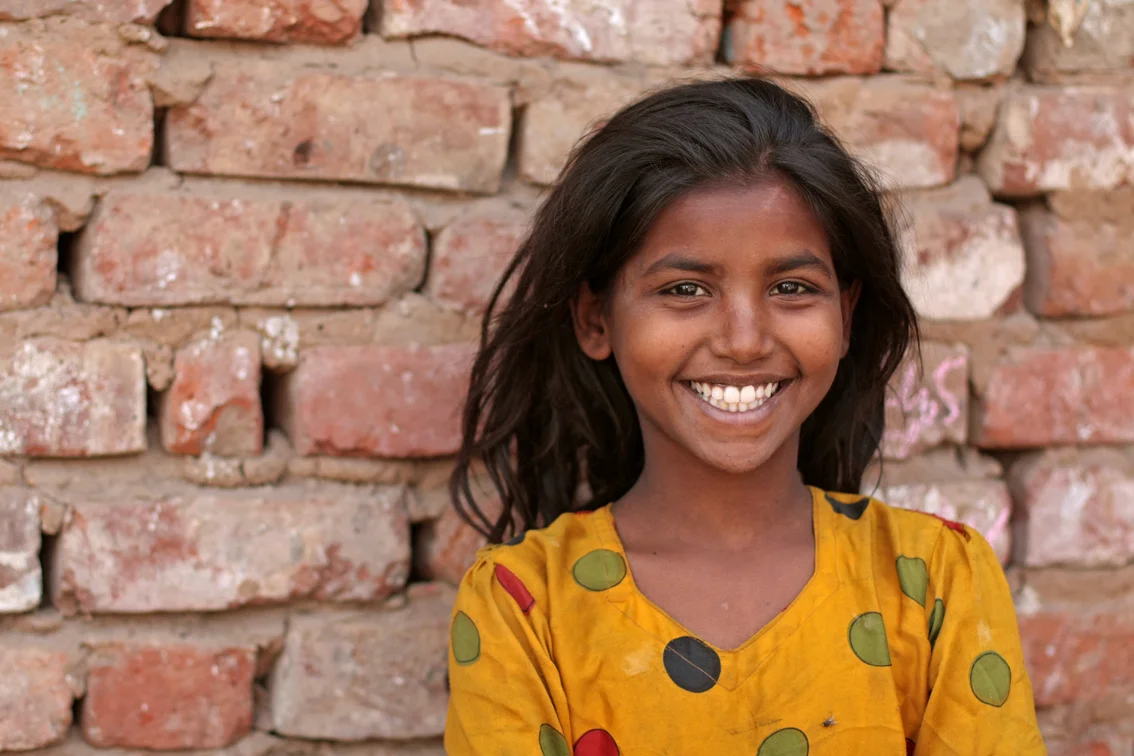
Is Voluntourism Worthwhile?
Is it worth it to volunteer where there isn’t a sustainable social, political, or environmental impact? I think of those stories of Habitat for Humanity where volunteers think they build a house during the day only to have their crappy work torn down and redone later.
Sincerely,
Wants To Fix The World
Thank you, so much, WTFTW, for giving my first one-word answer to a question of the week:
Nope.
Okay, now to go into a bit more detail: The voluntourism impulse is an awesome one. It means that people don’t just want to take from the places they visit, but to give back as well. It’s akin to helping with the dishes when you’ve eaten dinner at a friend’s house. It’s all that’s right about humankind.
Which is why it’s really depressing that it’s usually a waste of time.
The story I believe you’re referring to is from this excellent article by Pippa Biddle, which is worth giving a read. She talks about a voluntourism trip she took in high school to Tanzania, which cost $3000 a pop:
“Our mission while at the orphanage was to build a library. Turns out that we, a group of highly educated private boarding school students were so bad at the most basic construction work that each night the men had to take down the structurally unsound bricks we had laid and rebuild the structure so that, when we woke up in the morning, we would be unaware of our failure. It is likely that this was a daily ritual. Us mixing cement and laying bricks for 6+ hours, them undoing our work after the sun set, re-laying the bricks, and then acting as if nothing had happened so that the cycle could continue.”
What Biddle concludes is that the problem wasn’t that a library wasn’t needed, it was that she simply wasn’t the one to do it. This is the case with many voluntourism trips: they exist more to give the volunteers the endorphin rush humans get when doing something nice for someone else than they do to actually help. The presence of unskilled volunteers may, in some cases, actually be more of a hindrance than a help.
But sometimes voluntourism is more insidious. The popularity of supporting Cambodian orphanages among western tourists has actually fueled a market for orphans. There are the reports of voluntourists actually taking jobs from better-qualified locals. And for many locals, voluntourism looks more like an expiation of colonial guilt than a good-hearted act of service. In his book Travel as a Political Act (1), travel industry titan Rick Steves points out the name that Salvadorans have for Americans who come to visit and express solidarity, only to return home a few days later feeling self-satisfied: “round-trip revolutionaries.”
Just this week, Prisca Dorcas Mojica Rodriguez, founder of Latina Rebels, made an extremely strong case against voluntourism. Rodriguez was born in poverty in Nicaragua, and vividly remembers the many visiting westerners. She remembers them as good people, but:
"They really wanted us to like them, because they loved us — indiscriminately. It was the sort of love where they did not get our mailing addresses or phone numbers, because it was not about becoming lifelong friends. They loved being around me, it was something about my poverty, brownness, and how they felt like they were saving me. They loved that feeling."
She continues:
"I do not have fond memories of the Beckys and Chads who came to my country and took pictures with me so that they could hang the photos in their dorm rooms and go on with their lives.
Those same Beckys did not stand up against Trump’s xenophobic agenda. The Chads stayed silent during that Cinco de Mayo party that their roommates hosted, perpetuating problematic stereotypes about ALL Latinxs. The Beckys know that NAFTA and CAFTA rulings keep kids like me in poverty, but still shop at stores known for using slave labor and sweatshops.
Those Chads and Beckys have never done anything for me."
As a white person from America, this can sound harsh (2). But it’s worth noting that, especially in Central and South American countries, our country has played a pretty significant role in supporting horrible, genocidal dictatorships in the name of protecting “American business interests.” These dictatorships have frequently taken the place of legitimate left-leaning democracies.
It doesn’t matter if you agree with this assessment of the history of US colonialism in the western hemisphere or not: it’s a fairly widely-held perception in the rest of the Americas (and in parts of the Middle East as well). And in that view of the world, an American paying thousands of dollars to come down for a weekend so he can build a library, feel good about himself, and then return to his affluence, seems like an inadequate form of repentance.
So… should you participate in voluntourism at all?
My suggestion is a gentle no, with a set of clarifications:
1. If you have a set of skills that could be effectively utilized in your destination, absolutely go. Have a medical degree? Join Doctors Without Borders and go do some good. Can you do some consulting work with local NGOs, or provide training that may be desperately needed? Please, go.
2. “Voluntourism” and “volunteering” are not the same thing. If you’re really committing to a project — and not just rolling a pre-packaged project into a vacation — then what I’m saying doesn’t apply. Looking at you, JETs, TEFLs, and Peace Corpsers.
Personally, I think the better thing to do when going abroad is to simply listen to the stories, the history, and the culture of the people that you’re visiting. You should not assume to have answers to a society’s problems after a weekend visit. You don’t. Instead, listen, read, and learn. If you want to help as efficiently and effectively as possible, donate money to people who are already in place to help, and then work on making your society a better place. A more humane America would help make a more humane world.
Still want to try voluntourism?
If you do want to participate in voluntourism, my Matador colleague Richard Stupart put together an excellent guide to finding the most ethical voluntourism projects possible (and, I should note, there are good projects. It’s not all cynicism and neocolonialism). Feel free to add other good ethical voluntourism resources in the comments.
Footnotes
1. Review: meh.
2. It may also paint white voluntourists with too broad a brush — I have no doubt that some Chads and Beckys have spoken out against Trump, NAFTA, and CAFTA, but that’s kind of beside the point — the statement is, as the philosopher Ken Wilber says, “true but partial,” and the truth deserves as much attention as the nuance it misses.
THIS ARTICLE WAS ORIGINALLY PUBLISHED ON DON'T BE A DICK TRAVEL.
MATT HERSHBERGER
Matt Hershberger is a writer and blogger who focuses on travel, culture, politics, and global citizenship. His hobbies include scotch consumption, profanity, and human rights activism. He lives in New Jersey with his wife and his Kindle. You can check out his work at the Matador Network, or over at his website.
VIDEO: Who's Developing Who?
The common assumption is that the rich countries of the global north, through foreign aid programs and by participating in projects like the SDGs (Sustainable Development Goals), are helping the less wealthy countries of the global south develop. But how true is this?
Right now, for every $1 that is given in foreign aid to the global south, around $18 is taken out by other means, most notably rigged trade deals than benefit the most powerful countries and corporations, debt repayment on debts already paid off many times over, and massive tax evasion and other forms of corruption, committed by political and business elites north and south, and facilitated by the large and growing web of tax havens. So in the grand scheme of things, who’s actually developing who?
The answer to this question will also affect your opinion of the SDGs. They don’t have a lot to say about this dynamic, and in fact riff pretty heavily on the basic idea that it’s the north that is the generous party. They do acknowledge both the vast level of illicit finance, and that the global financial system is relevant to their project, but capture their level of concern in vague statements about the need to “enhance global macroeconomic stability” through “policy coordination”. There are no specific responsibilities for anyone, or any actual targets.
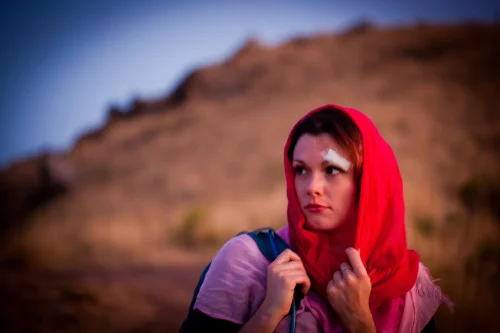
Featured image by David Sorich.
How do I balance being a feminist with respecting other cultures?
Q: When visiting a country that has a culture that represses women, how far do you go in respecting their culture when visiting? Covering my head and shoulders seems okay. But I have a friend whose husband called out a waiter in India for asking him what she wanted to order when she was perfectly capable of answering for herself. That seems awesome to me but may have been offensive to them. Where’s the line?
Sincerely,
Yes Always to Solidarity with Kickass Women in Eastern & Extremist Nations
That’s a really great question, YASKWEEN. I have opinions, but I am also a dude, and as such, am at risk of mansplaining. So it seems worthwhile to ask a few women who either travel or live in more patriarchal cultures what they think before offering up my own dudepinion.
On cultures that repress women:
When we think of the most oppressive society towards women, we probably think of a country like Saudi Arabia. Sydney Meredith, the travel blogger behind Passports & Prose, currently lives in Saudi Arabia told me she doesn’t love equating “repressing women” with “covering your head and shoulders,” as many Muslim women consider it a personal religious choice to wear the hijab, and not something that’s imposed upon them by men. In regards to wearing it as a traveler, she says:
“I remember visiting historic churches in Spain and France during a trip in high school and the women were asked to cover their shoulders. Do I consider Spain and France ‘repressive?’ No. I was just respecting someone’s wishes.”
She also warns against developing a sense of superiority:
“I mean, aren’t women repressed everywhere? …The US is among only 2 other countries in the world who do not pay pregnant women who take time off from work. We were only allowed to vote just a 100 years ago.”
On "calling people out":
Traveler Sarah Lewis says it usually comes down to reading the situation, and points out there may be alternatives to “calling out” someone that are more effective.
“I feel like in that one specific situation, I would try not to be rude about it, especially at first, because the waiter was just doing what he considers to be polite in his particular culture in his line of work. As a server in the US, I’ve seen men order for women, so for some people that type of thing is still traditional, even in less conservative countries. If he addressed a man I was with rather than myself, I would probably just answer the questions and not necessarily “correct” him per se. (Similar to how in Japan, the server always talks to the Asian-looking person. You correct them not by calling them out, but by just responding in Japanese, and eventually they realize they can talk to you.)”
What’s important, then, is trying to gauge intent. She adds:
“However, if he continued or was being obviously rude to me, that would be another thing entirely, and I think that’s where the ‘line’ sort of starts. If a person is doing something that, even in his culture, would be rude (such as catcalling or harassment), that would not be tolerated.”
On balancing idealism with safety and comfort:
My friend Nandika Kumari is an Indian human rights activist, and she says this regarding the clothes issue:
“The class divide in India often means that urban girls/women from the upper classes will usually dress like any other American twenty year old. However, this is a very small number of people. Most women in India will dress as per their cultural traditions (which are often conservative)… The one rule I’ve always followed is to be 100% comfortable with myself. This also means that in a place where I am likely to get stares if I wear shorts, I will make the functional decision to wear something more conservative so I don’t have to get into arguments with creepy men every 10 steps.”
In regards to the what visitors should do, she adds:
“If someone is just on holiday it probably makes sense to dress close to the way most women in the area are dressed simply to reduce chances of harassment (I know how that sounds). A dress code is only likely to be enforced in religious places. Everywhere else, you are free to dress the way you like. If a woman feels comfortable wearing a dress in an Indian market, then please go ahead and do it. The culture of trying to control women’s behaviour doesn’t need encouragement. Seeing a western woman in different clothing may actually do some good.”
She also noted, “This is India, where you won’t get a death threat for pushing cultural boundaries.” This doesn’t hold true for every country, however, and there are other places where pushing the envelope may be a much more dangerous thing to do. Sarah Lewis adds:
“If something isn’t exactly rude in their culture, but I feel uncomfortable with it, I would probably say something, although again, depending on my level of comfort, I would probably in varying degrees attempt to be sensitive to the culture and not aim to immediately embarrass the person (unless I was really in danger or in a bad situation).”
And, of course, some mansplaining.
Okay, so this isn’t technically mansplaining: I don’t really know what it’s like to travel as a woman, and I won’t pretend to. But I have come across similar situations where something happens in a culture I’m visiting that clashes with my own personal values. A quick story:
When I was working a journalism internship at an English-languge newspaper in China, I really wanted our editors to cover issues like human rights. My bosses had to worry about government censors, so they weren’t really on board with taking editorial advice from an uppity 22-year-old foreigner. I pushed them on it, and all it did was alienate me from my bosses, to the point where I wasn’t being given any work. Towards the end of the internship, I was grabbing drinks with a British journalist who’d worked in China for years. I bitched to him about the Chinese journalists, calling them cowards.
“That’s not been my experience of Chinese journalists,” he said. “I’ve found them to be quite brave.”
I asked how. He said, “You’ve been here what, two months? You need to get to know the system better before you can attack it. These journalists are quite subversive, but they have to be more subtle in their attacks than a British or American could be. They don’t seek to topple anything, just to chip away. Keep in mind very few western journalists are actually risking their necks when they go to work every day.”
He went on to tell me how Chinese journalists would frequently undermine government-mandated stories through the subtle use of puns. For example, when the government wanted to show off their expensive new language-teaching program (which was incredible ineffective), the paper’s editors titled the piece, “GOVERNMENT CREATES ARMY OF CUNNING LINGUISTS.” This effective pun-usage has become so pervasive among Chinese dissidents that censors in China have actually banned the use of puns and idioms.
The lesson of that internship for me was that while the causes I was fighting for were just the world over, the tools for fighting for them changed from place to place depending on the context. It’s easy to fall prey to the whole “when you have a hammer, every problem looks like a nail” trap, and for a lot of Westerners, becoming confrontational over small or large injustices is our hammer.
Your impulse to resist misogyny is always a good one, YASKWEEN, but you may simply not have the localized knowledge to resist it effectively. Which is fine. It creates an opportunity to learn and listen. The best thing you can do if you want to support feminists in the area you’re visiting is to ask them how you can best support them. Some may say money. Some may say political support from your government. Some may say “call out the waiter when he ignores you to talk to your husband.” Some may say, “definitely don’t call out the waiter.” The response will change based on the place you’re in and even on whom you’re talking to.
That said, respect cuts both ways. If you are trying to treat another culture with respect, you’re allowed to insist they treat you with respect as well.
Writer’s note: could we all take a second to appreciate how far I came in a single week with my anonymous questioner acronyms? Last week, I dubbed my questioner “TUTBFTS.” This week, I pulled off motherfucking YASKWEEN. At this exponential rate of improvement, I’ll be a billionaire in a goddamn MONTH.
THIS ARTICLE WAS ORIGINALLY PUBLISHED ON DON'T BE A DICK TRAVEL.
MATT HERSHBERGER
Matt Hershberger is a writer and blogger who focuses on travel, culture, politics, and global citizenship. His hobbies include scotch consumption, profanity, and human rights activism. He lives in New Jersey with his wife and his Kindle. You can check out his work at the Matador Network, or over at his website.
Unexpected Friends in Amsterdam
August 29, 2015: I was cruising on my bike on a rare sunny day in Amsterdam, weaving in and out of pockets of confused tourists, when I rode past an orange and white sign that read “A’DAM INT’L ART FAIR.” Just two weeks into my four-month long journey of self-discovery in Amsterdam, my one-item agenda on this particular day consisted solely of exploring my new city. In that moment, my explorations led me to Berus van Berlage, a medieval looking building in the city center where the art fair was slated to take place. I secured my bike to a nearby pole and headed inside having neither the intentions of purchasing art, nor the expectations of what fascinating people I might meet inside.
I took my time strolling up and down each aisle, attempting to take in all of the photographs, sculptures, and paintings hanging on the walls of Berus van Berlage amidst the mixed crowd of intrigued passersbys and veteran art collectors. Eventually I found myself in the far right corner of the hall, where I came across a row of ceramic necklaces next to a sculpture of what appeared to be a naked woman with a severed torso. Nervously, I approached the woman standing next to the display and inquired if she was the artist who created the necklaces. She told me she was not, but the artist who did make the necklaces would be back from lunch in just a few minutes. I wandered aimlessly for a couple of minutes before returning to the far right corner to solicit information from the artist herself about the necklaces.
Upon my return to the far right corner, I was greeted by a beautiful blonde woman who introduced herself to me as Mirjam (Miriam). Originally born in Turkey, Mirjam had immigrated to The Netherlands at the age of 5, living in different places throughout the country until settling in The Hague, a small city southwest of Amsterdam. From inside her apartment on the beach in Scheveningen, Mirjam creates all different types of art—pottery, paintings, and nearly everything in between—which she then sells at regional art fairs. The only piece she does not sell, but brings to every art show, is her most prized creation: a sculpture she calls “A Tribute to Every Woman in the World,” the woman with the severed torso.
I then introduced myself as Allie, an American college student studying in Amsterdam for the semester, and asked if I could purchase one of the ceramic necklaces on display. In an exchange that lasted no more than 5 minutes, Mirjam wrapped up the necklace, handed me her card, and invited me to have coffee with her in The Hague should I ever found myself there. I then left the fair, not thinking too much about the encounter I just had with Mirjam.
The following Wednesday I boarded a train from Amsterdam to The Hague. Mirjam was going to meet me and my friends at the train station, share a bite to eat with us, and then we would be on our separate ways; or at least, that is how I envisioned the day going. When I arrived in The Hague, Mirjam greeted me with a hug so tight you may have thought we had known each other for years having no prior knowledge of our relationship. She treated me and my friends to lunch, showed us the ins and outs of town, and then brought us back to her beachside apartment for snacks and drinks. Before heading back home to Amsterdam, we strolled along the ocean just as the sun was setting and I thanked her for an unforgettable day. On the ride home I replayed moments from the day over and over again in my mind, finding it difficult to process the bond I had just formed with a woman I met at an art fair that I hadn’t even planned on going to. Though we had just gotten acquainted with one another, Miriam believed that our souls had met one another prior to our first physical encounter, and I could not help but think that she was right.
Miriam and I kept in touch throughout the remainder of my stay in Amsterdam. Each month we met in a different city in Holland: Rotterdam in October, Amsterdam in November (where she met my family while they were visiting me), and Delft in December. Seeing all of these new places from her perspective made me appreciate them that much more. Every time I met up with her became adventures that I will never forget. When I return to Amsterdam next month, we will surely add another adventure to our list.
Traveling or spending any significant period of time abroad presents one with unique opportunities to meet people they more than likely would not have met otherwise. While I could have never anticipated meeting Miriam where I did or forming the relationship I have since formed with her, being open to new experiences and meeting new people definitely lends itself to the possibility of forming relationships like the one I have with Miriam. So next time you find yourself at an art fair in Amsterdam, strike up a conversation with an artist you meet; perhaps she’ll become your Dutch mother just like Miriam became for me.
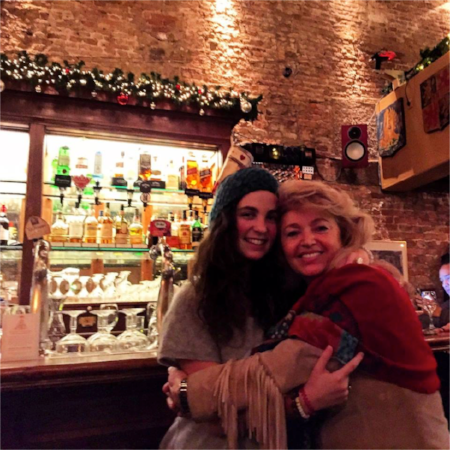
Miriam and I in Delft at Café De Waag, December 2015
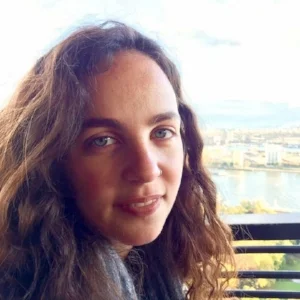
ALLIE BLUM
Born and raised just outside of Philadelphia, PA, Allie's love for travel has led her to find that you can call many places "home." While she is primarily based in New Orleans, LA, where she will be completing her undergraduate studies this coming May, Allie has spent significant periods of time traversing the continental US (mostly by car) and Europe, and parts of the Middle East. Allie hopes that her curiosity to understand other cultures will bring her to every continent over the course of her lifetime. When she's not studying or planning her next trip, Allie loves to read, write, and make playlists on Spotify.