BANGLADESH: From No-Man's Land to the Unknown

For decades, more than 50,000 people have been stranded, without access to basic rights, on tiny islands of no-man's land locked within India and Bangladesh. Last year finally saw an end to these enclaves, or 'chitmahals,' bringing hope and change to communities living on the world's most complex border. 

The party lasted long into the night across remote patches of northern Bangladesh. As the clock struck midnight people played music, danced and sang using candles for light, and for the first time in their villages they raised a national flag. Similar events were also taking place on the other side of the border in India just a stone’s throw away. 

For 68 years, ever since the formation of East Pakistan in 1947 (which later became known as Bangladesh), the residents of one of the world’s greatest geographical border oddities have been waiting for this moment; for their chance to finally become part of the country that has surrounded yet eluded them for so many years.

At 12.01am on July 31st, 2015, India and Bangladesh finally exchanged 162 tracts of land — 111 inside Bangladesh and 51 inside India. 

Known in geographical terms as enclaves, or locally as chitmahals, these areas can most easily be described as sovereign pieces of land completely surrounded by another, entirely different, sovereign nation.
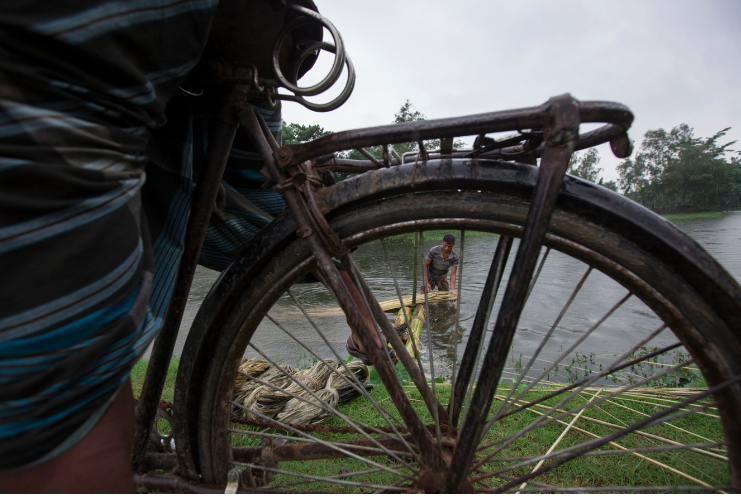
ABOVE: Inside an enclave, a man prepares jute by removing the long, soft vegetable fibres that can be spun into coarse, strong threads, and keeping the sticks. For many enclave dwellers, jute is where most of their income comes from and also what they use to build their houses. 

Enclaves aren’t as rare as you may think, and until now this part of South Asia has contained the vast majority. Existing around the world, mostly in Europe and the former Soviet Union, they were once much more prevalent — until modern day cartography and accurately defined borders eliminated many. Some still remain, such as the Belgium town of Baarle-Hertog, which is full of Dutch territory. The locals have turned the unusual border into a tourist attraction. However, for this region of southern Asia, where political and religious tensions run high, the existence of enclaves is not so jovial. Life for those who are from these areas is far harder than in neighboring villages, only minutes away.
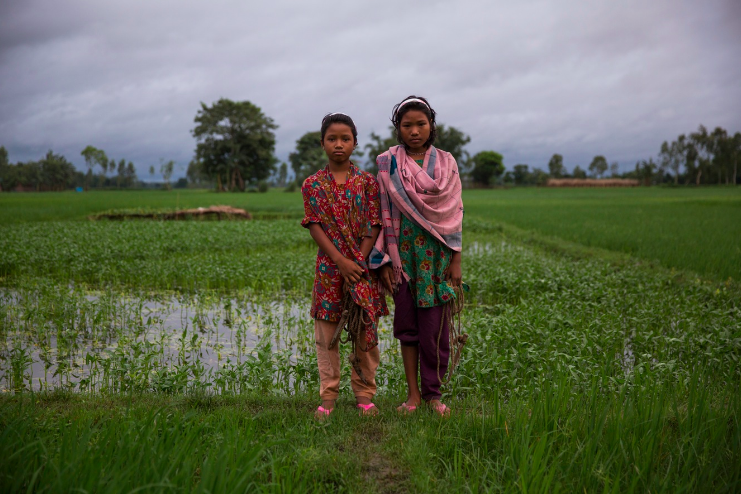
ABOVE: Sisters Lobar Rani Bormoni, 11, and Shapla Rani Bormoni, 12, stand in a paddy field in the enclave in Bangladesh where they born. 

“These enclaves are officially recognised by each state, but remain un-administered because of their discontinuous geography. Enclave residents are often described as “stateless” in that they live in zones outside of official administration — since officials of one country cannot cross a sovereign frontier into administered territory,” explains Jason Cons, a Research Assistant Professor at the LBJ School of Public Affairs at the University of Texas, Austin and author of the forthcoming book, ‘Sensitive Space: Fragmented Territory at the India-Bangladesh Border.’
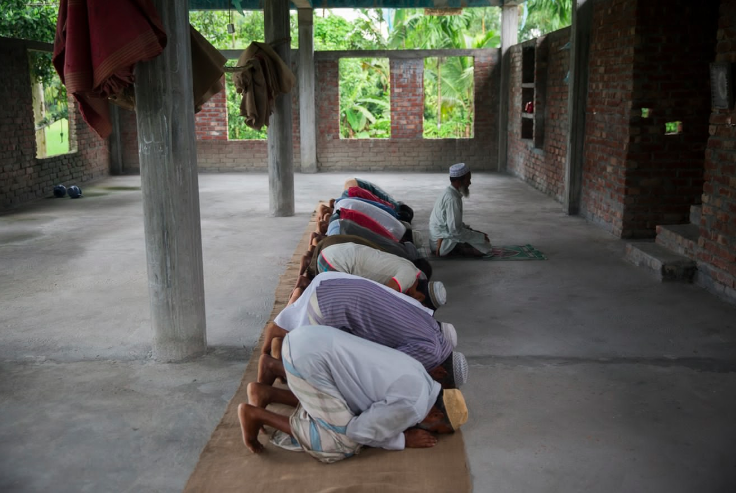
ABOVE: Muslim men from Dhoholakhagrabari enclave pray in their mosque. Mosques are usually the only solid structures that exist inside the enclaves.

Several folktales tell of the origin of these enclaves being the stakes in a game of chess between two feuding maharajas in the 18th century, or even the result of a drunken British officer who spilt spots of ink on the map he drew during partition in 1947. Captivating as these stories are, the most likely explanation dates back to 1711 when a peace treaty was signed between the feuding Maharajah of Coch Behar and the Mughal Emperor in Delhi. After the treaty their respective armies retained and controlled areas of land, where the local people had to pay tax to the respective ruler, thus creating pockets of land controlled by different people.

Prior to 1947, when this region was entirely Indian territory, living in these locally-controlled enclaves made little difference. However, during the drawing of the boundary between India and Bangladesh, the Maharajah of Coch Behar asked to join India — on the condition that he retain all his land, including that inside the newly formed East Pakistan, which his ancestors had rightly won control of over 200 years ago.

So, through no fault of their own, the lives of 50,000 people turned upside down — for decades they have been stranded on islands of no-man’s land.
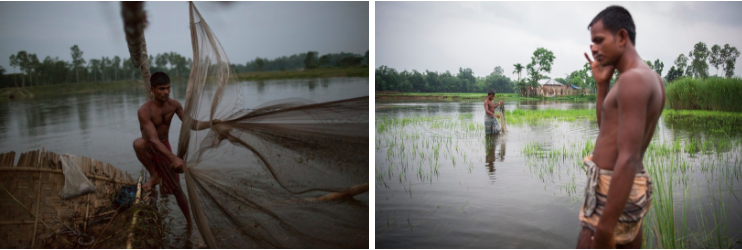
ABOVE: (Left) A man fishes at dusk using his large bamboo fish trap. This river exists just outside the enclave but as it’s in Bangladesh territory, enclave dwellers are forbidden to fish here otherwise angering the local fishermen. (Right) Enclave dwellers fish in a flooded paddy. 

During the early 1970s a framework to find a solution to this problem was put in place — called the 1974 Land Boundary Agreement. For forty years, as governments came and went, neither the Indian nor the Bangladeshi politicians were able to agree with their counterparts at the time. And whilst the politicians squabbled, the residents suffered.
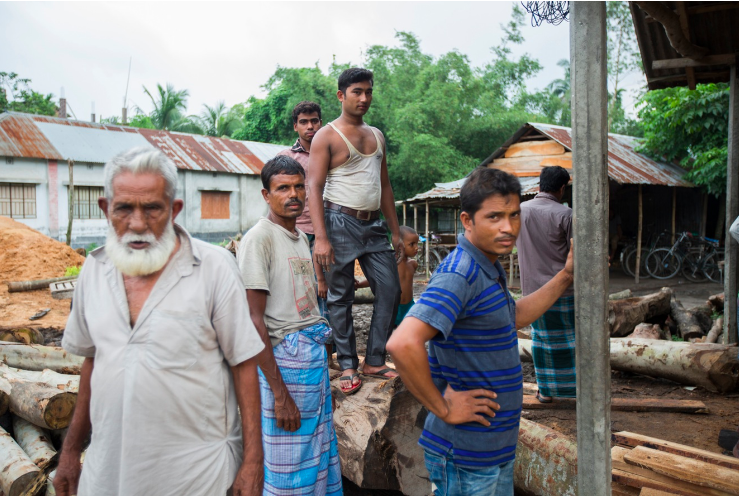
ABOVE: Only informal work, like at this sawmill, is available for enclave dwellers in Bangladesh. 

On the ground there are no border fences or security checkpoints, and without realising it, you can walk in and out of India countless times, crossing an international boundary completely obliviously. However, there is a serious lack of infrastructure and this has been one of the most serious problems facing the residents. Paved roads quite literally stop at the boundaries to the chitmahals, as do electricity poles. The enclave inhabitants in Debiganj District of Bangladesh, as non-Bangladeshi citizens, were even barred from sending their children to school, also receiving no state assistance or even the most basic of hospital treatment.
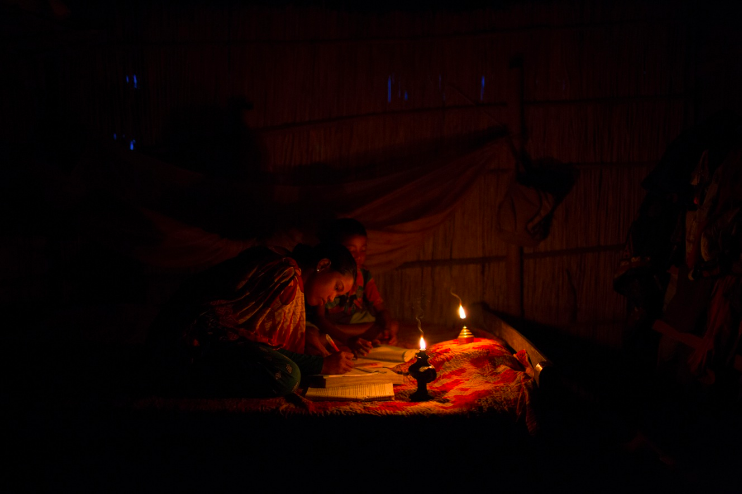
ABOVE: Sheltered within their small bamboo house, located inside the enclave of Dhoholakhagrabari, Eity Rani, 14, and Shobo Rai, 8, carefully do their homework by the light of an oil lamp. Life is much harder for children who are born in enclaves.
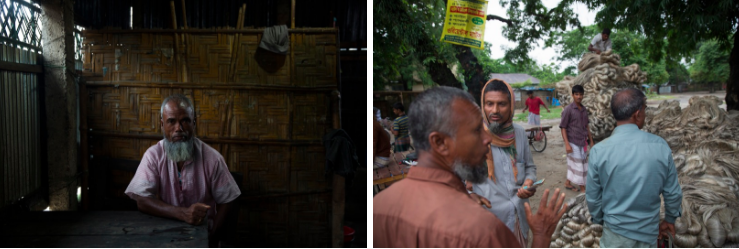
ABOVE: (Right) A Bangladeshi man sits in a shop in the market of a small town that sits between enclaves. (Left) Every Saturday a jute market is held in Debiganj. For the many inhabitants of the enclaves that surround the town, jute is where most of their income comes from. 

Wearing just a lungi — a traditional sarong worn around the waist — Sri Ajit Memo is sitting in the middle of a small muddy courtyard, surrounded by houses made of bamboo and jute sticks. At 55 years old, his family have lived in a Dhoholakhagrabari chitmahal for generations. Chewing on the twig of a certain tree that locals here use as an alternative to toothpaste, he explains, “All kinds of problems exist here. The government doesn’t care about us, or our children, and so it’s very difficult for them to even go to school. Honestly, we are Indian, but how can we feel this way when we get no help from them?”

For enclave dwellers on both sides of the Indian-Bangladeshi border, the entitlement to receive even the most basic of rights has eluded them.

Reece Jones, an Associate Professor in Political Geography at the University of Hawai’i Manoa, who has visited many chitmahals on both sides of the border, explains further, “After decades in this situation many people have found ways around it through bribes to officials or through friends who helped them to obtain the documents they needed, such as school enrolment forms for their children. However, the situation was not stable or secure. They were extremely vulnerable to theft and violence because the police had no jurisdiction in the enclaves.”
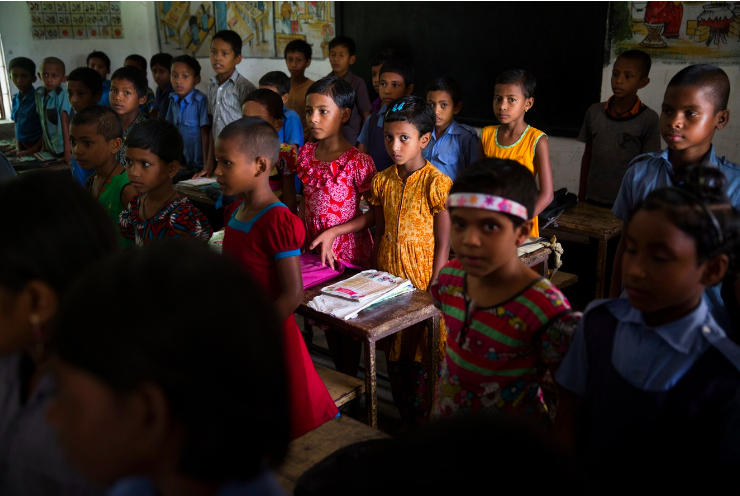
ABOVE: Rupsana Begum, 7, (pink dress) and Monalisa Akter, 7, (orange dress) are from an enclave but were able to come and study at Sher-e-Bangla Government School because their parents managed to acquire fake documents and were able to pay the school.
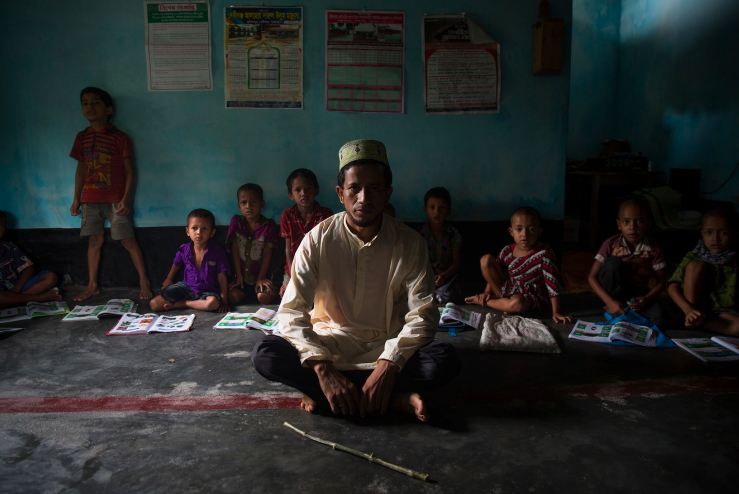
ABOVE: In Dhoholakhagrabari enclave students and their teacher sit in a madrassa class. Because enclave children have a difficult time accessing the education system in Bangladesh the locals of this enclave formed an Islamic Foundation funded on donations.

Today, after decades left living in limbo in these randomly placed no-man’s lands, around 47,000 people on the Bangladeshi side and some 14,000 on the Indian side have finally been given the right make a choice: stay where they have lived for generations with official citizenship of the country that will absorb them, or return to their country of origin.

None of the residents living in Bangladeshi enclaves within India asked to return to Bangladesh and as a result they will now all become Indian citizens. However, on the other side of the border in Bangladesh, whilst the vast majority of the Indian enclave dwellers decided to stay and become Bangladeshi citizens, 979 people requested to return to India. For these families, the enclave saga has yet to end.

Of those 979 individuals, a total of 406 come from Debiganj district. In 2011, a team of Indian officials visited every home in every enclave in Bangladesh and produced the first ever detailed census of all those living within the Indian enclaves. This report formed the basis of all subsequent decisions on the status of each person living in the enclaves.

ABOVE: (Left) An old lady inside her home, which has no running water or electricity, in Dayuti enclave. (Right) Dhonobala Rani, 70, gets emotional knowing that she has to leave her son (in the blue shirt) behind in Bangladesh, as she takes Indian citizenship. 

Several months after my visit to document the enclaves during the final days of their existence, those who had chosen to leave for India finally crossed the border, leaving their homes in Bangladesh forever. In India they were given land and began the process of integrating into Indian society. Those who chose to stay behind in Bangladesh also started to receive such basic rights as eligibility to vote and access to health care.

Let us hope that after decades of struggle on these isolated political islands, the lives of these ex-enclaves dwellers can begin to reach some level of normalcy. In the end, after so many years of uncertainty, the world’s strangest border region has now become a thing of the past.
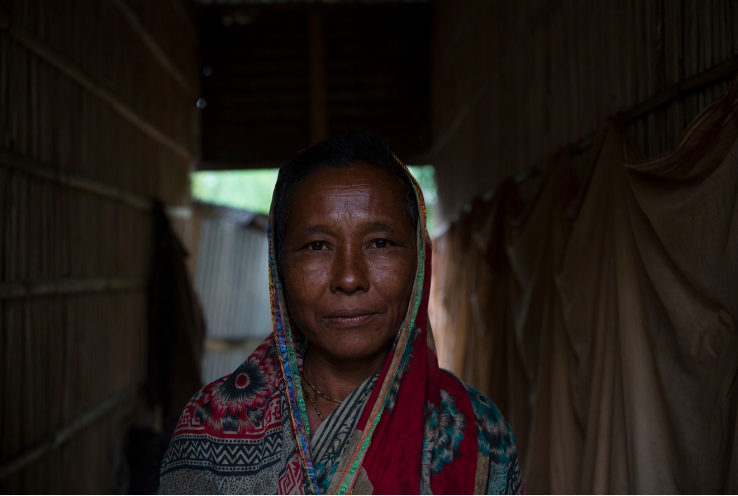
ABOVE: A lady from Ponchoki Bhajini village, in the enclave of Dhoholakhagrabari. She has chosen to leave for India, to start a new life as an Indian citizen.

 

ORIGINALLY PUBLISHED ON MAPTIA 


LUKE DUGGLEBY

@LukeDuggleby

Luke Duggleby is a British freelance documentarian and travel photographer. He currently lives in Bangkok and is represented by Redux Pictures. 
 

VIDEO: Schoolgirls For Sale in Japan

This Thursday at 12pm EDT, Simon Ostrovsky and Jake Adelstein will join 'On The Line' to discuss this story. Ask your questions on Twitter @VICENews with #OnTheLine: http://bit.ly/1Sgvvn2 Japan's obsession with cutesy culture has taken a dark turn, with schoolgirls now offering themselves for "walking dates" with adult men.

In an effort to understand a growing underground trade of school-aged girls, Vice News interviews women who have been caught up in this sinister business. 

VIDEO: E-Waste Tsunami in Delhi

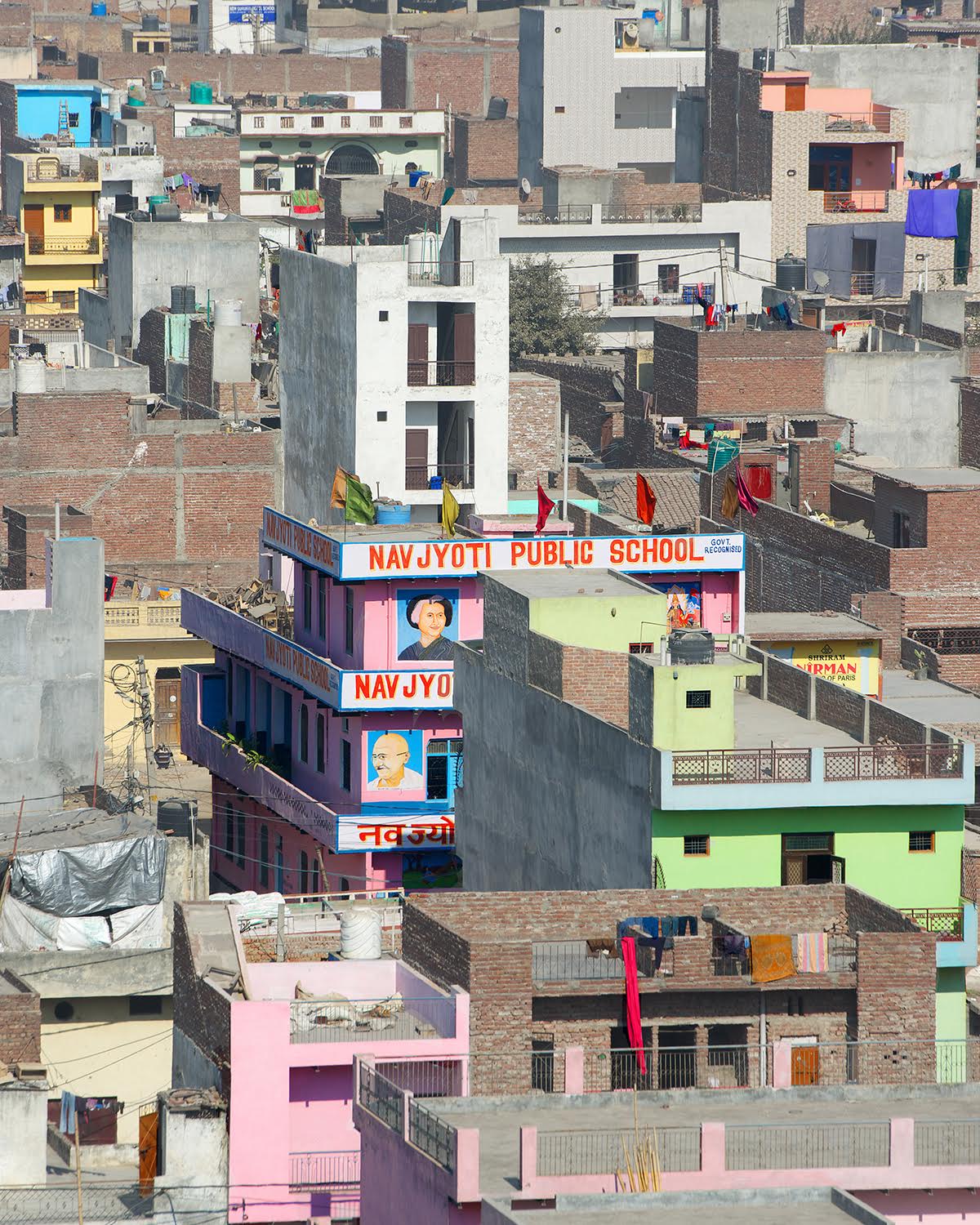
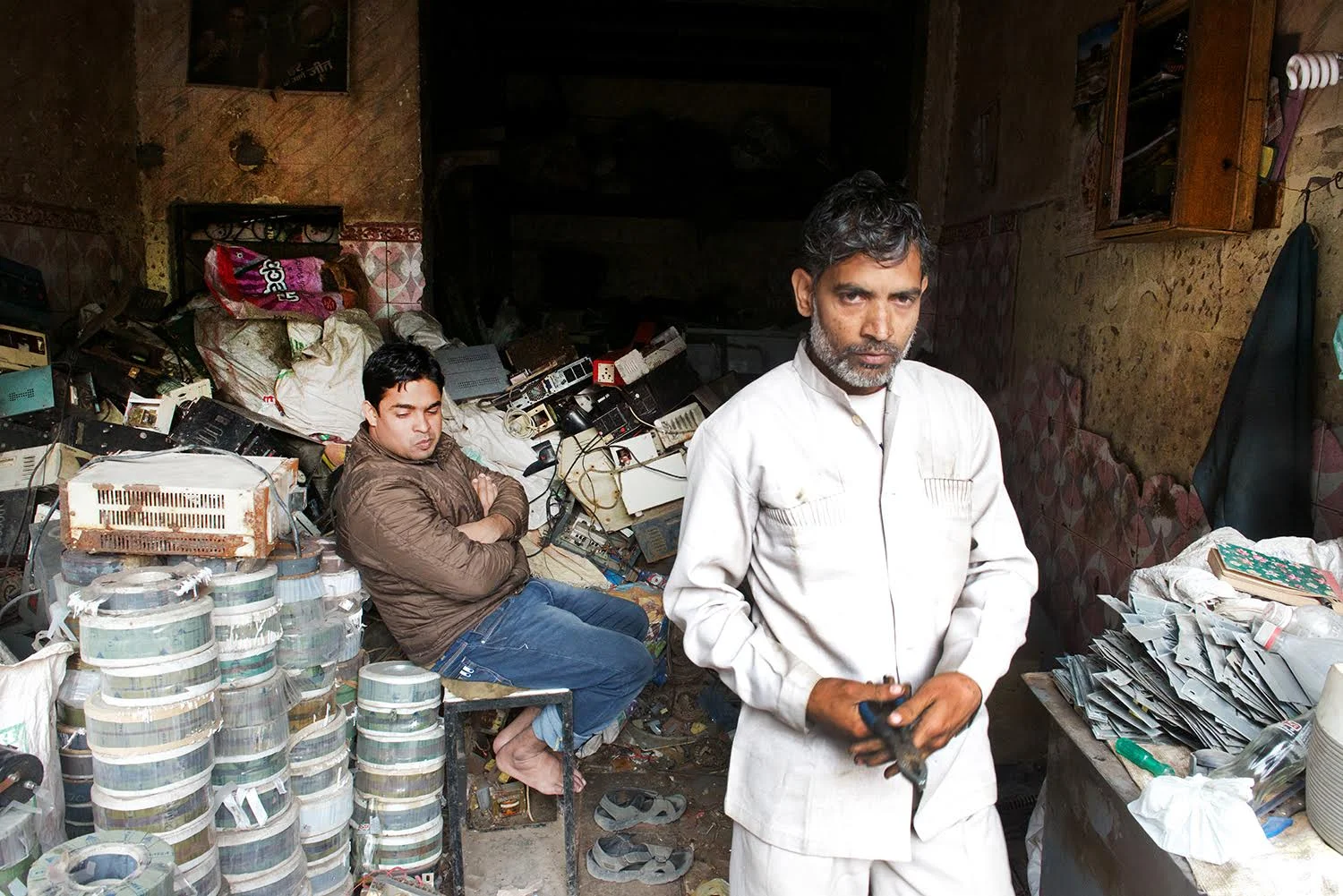
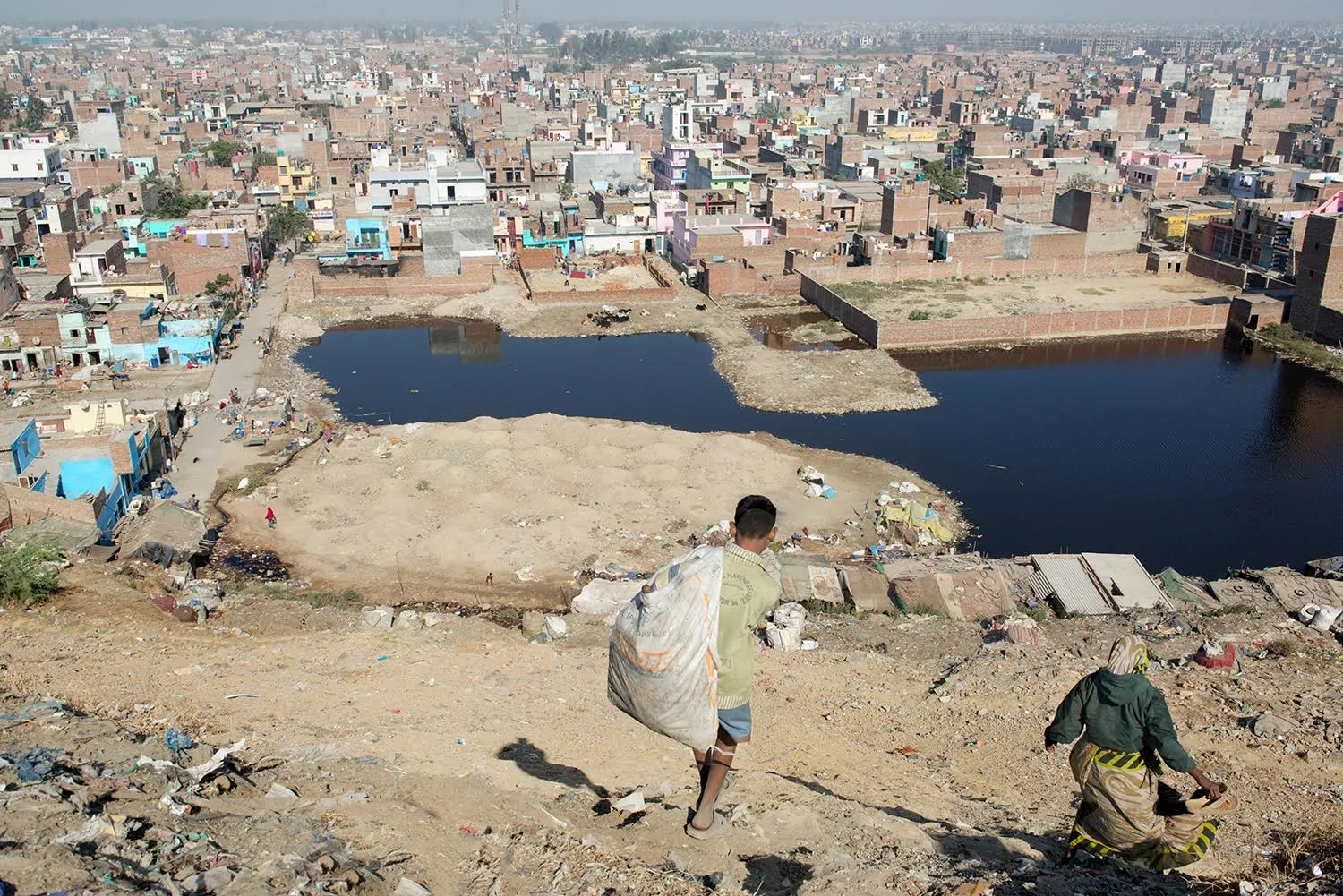
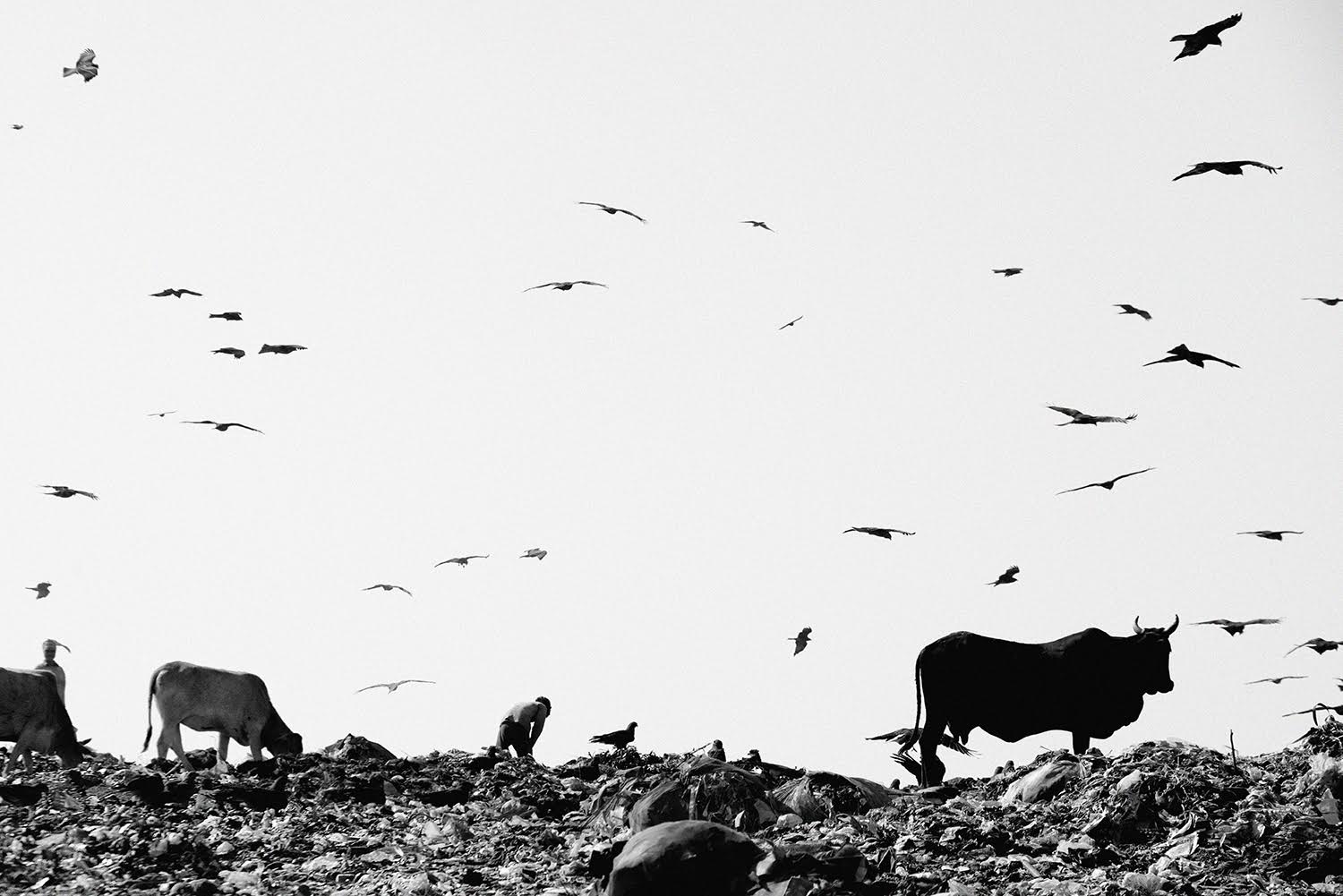
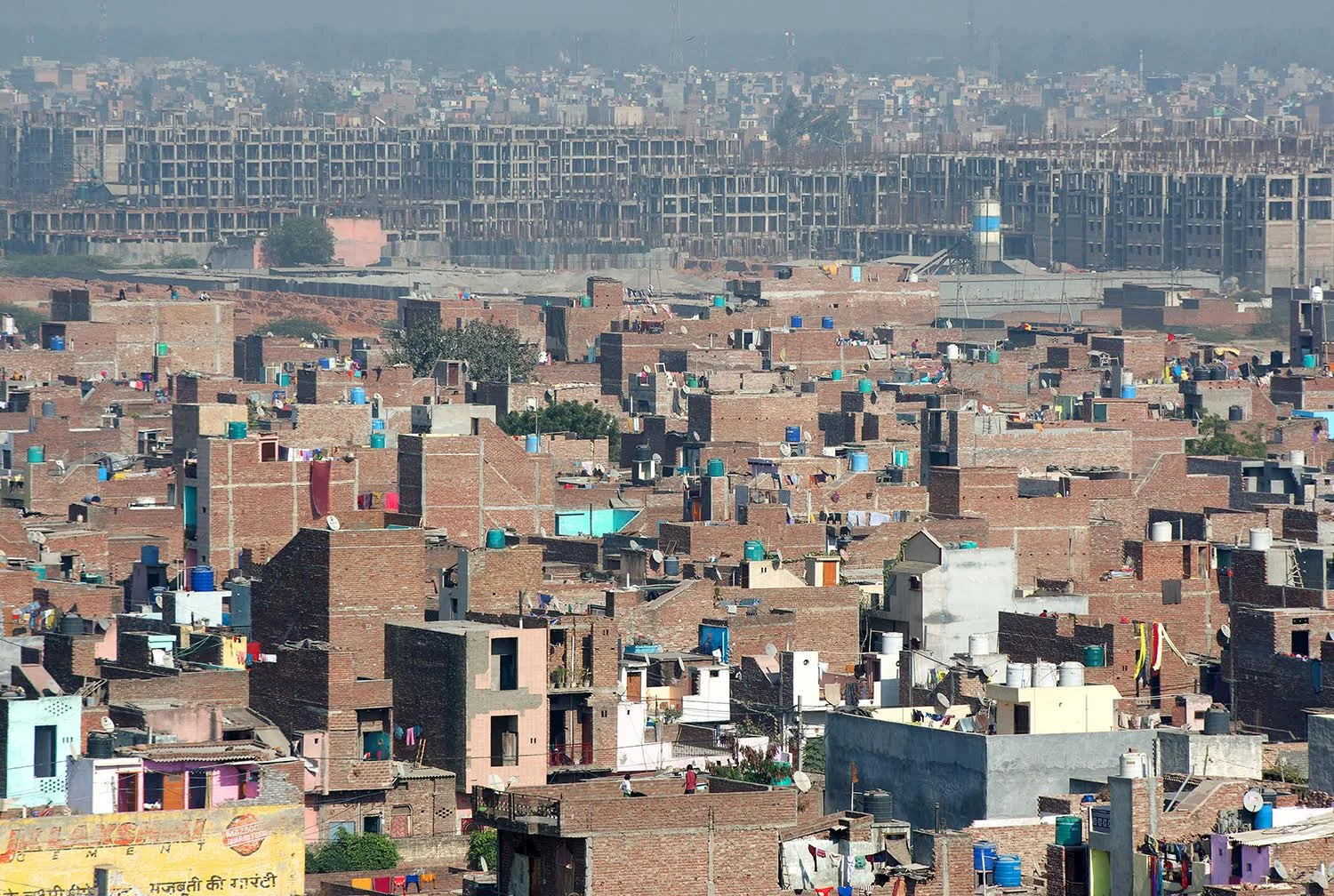
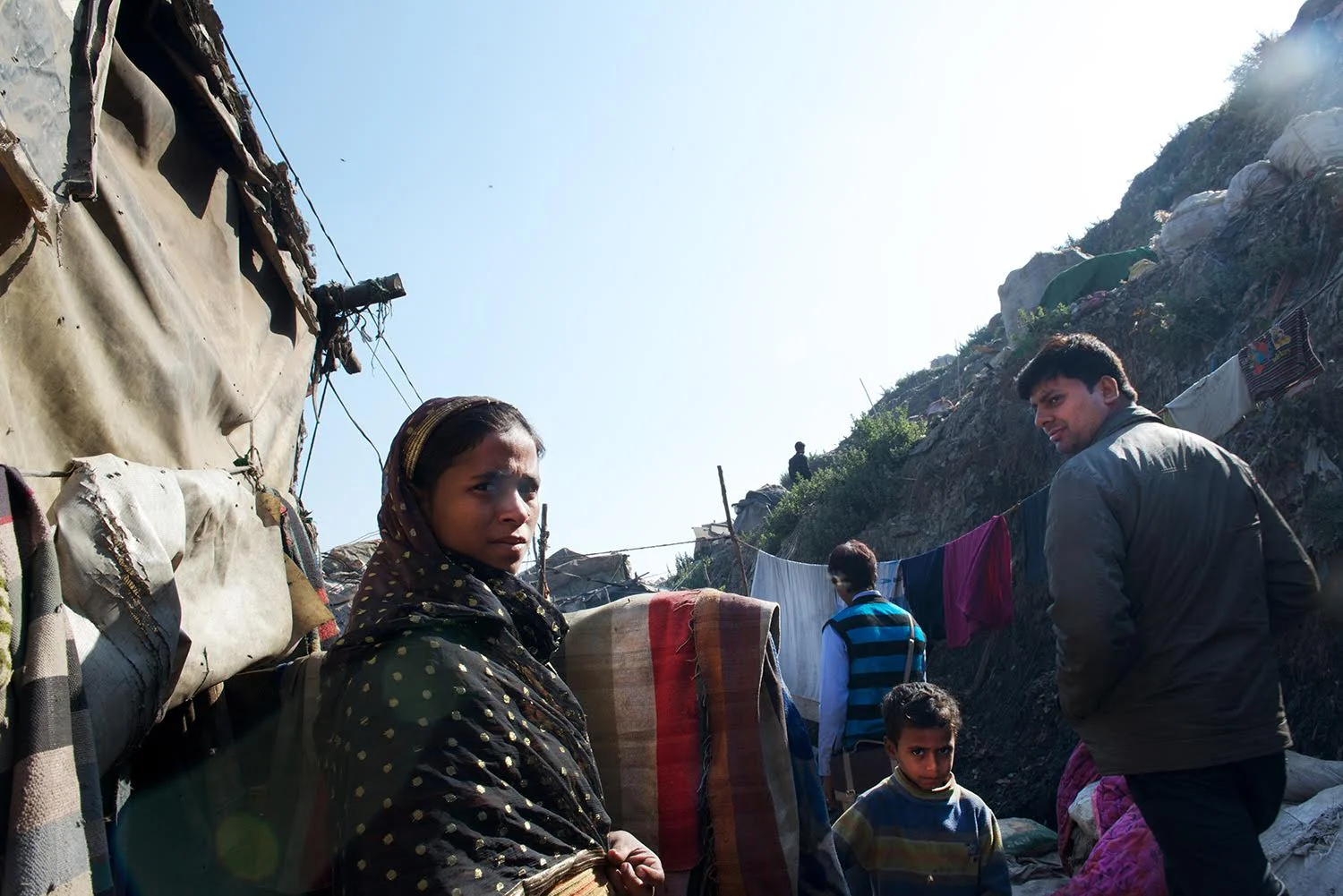
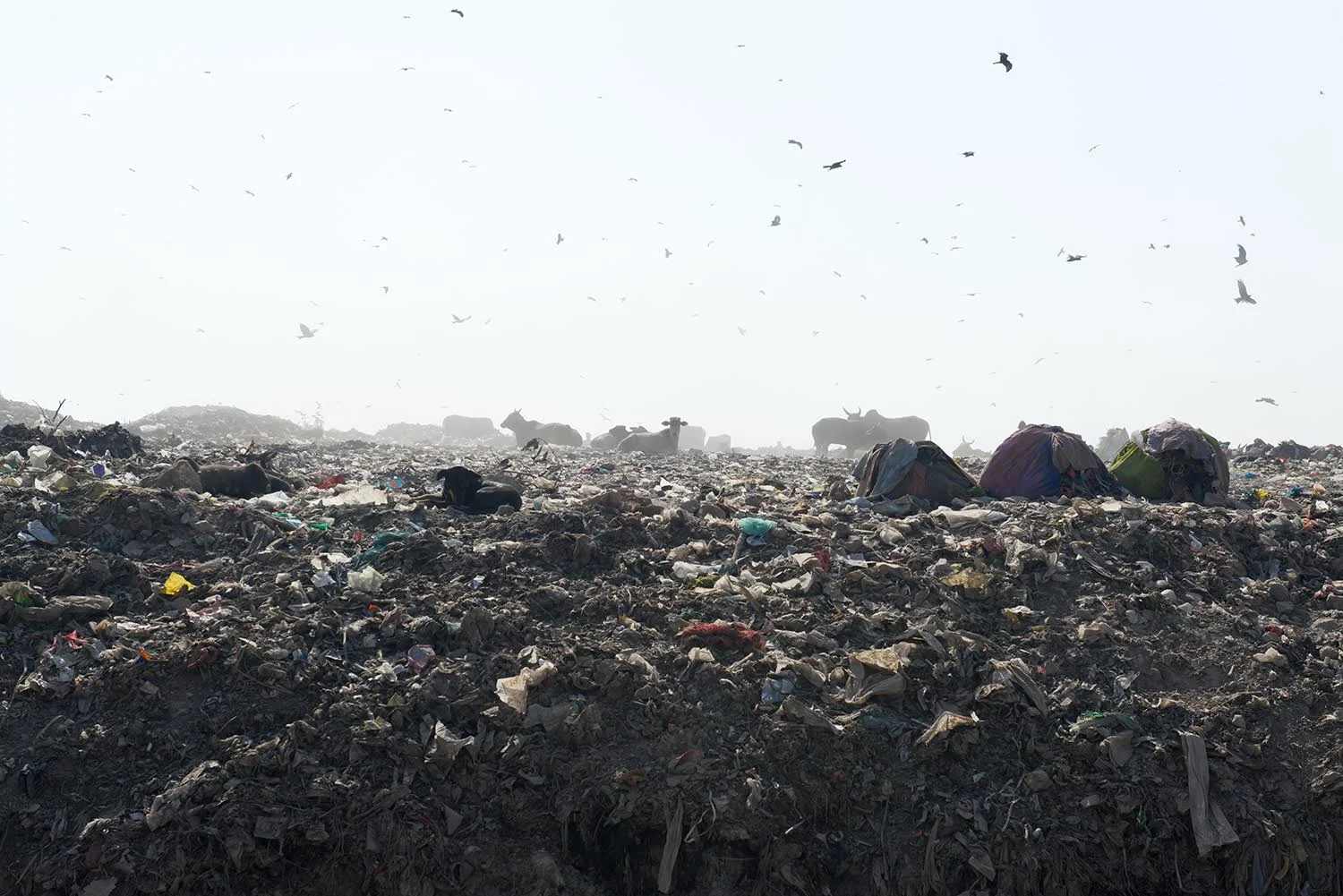
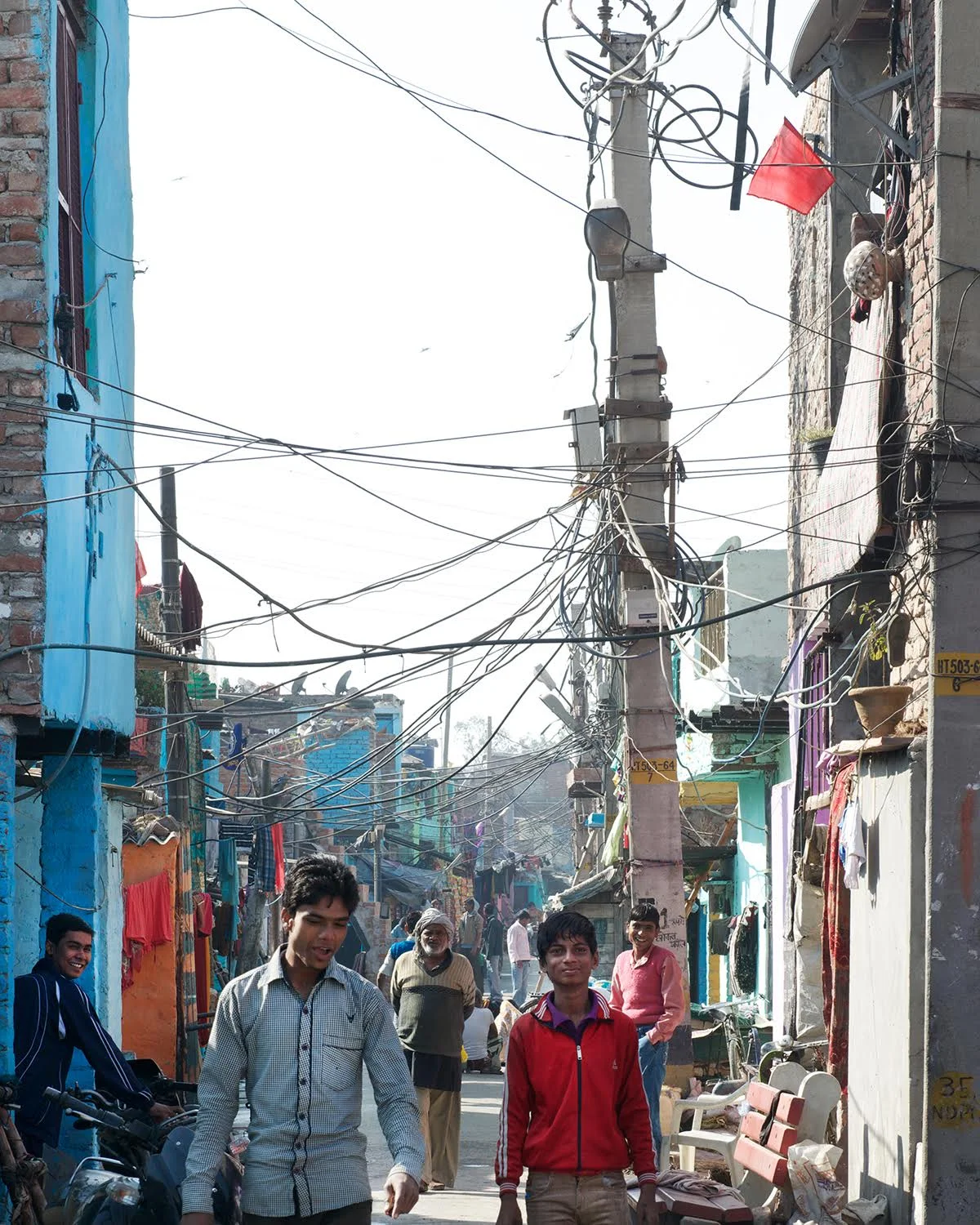
A film to accompany the E-Waste Tsunami project. This film explores the industrialized landscape of the urban poor in a developing world metropolis. The urban poor are the community and sector of society to which the waste-picker and e-waste worker belong. The journey begins at the Bhalswa Landfill and associated communities in northwestern Delhi and then moves through the rapidly expanding infrastructure of the city. It concludes with a passage through unregulated housing developments that form a large part of this 21st century metropolis.

E-WASTE TSUNAMI

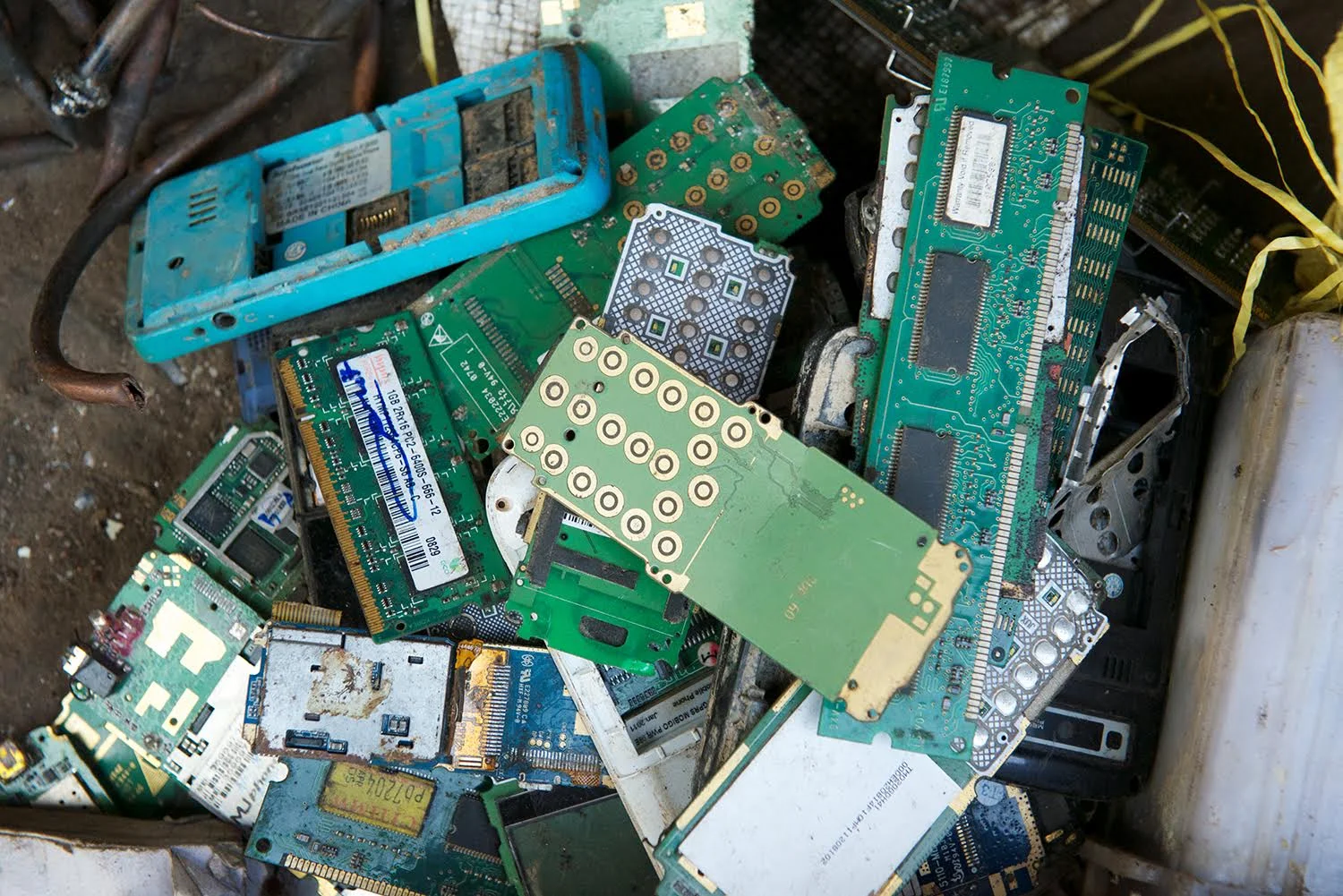
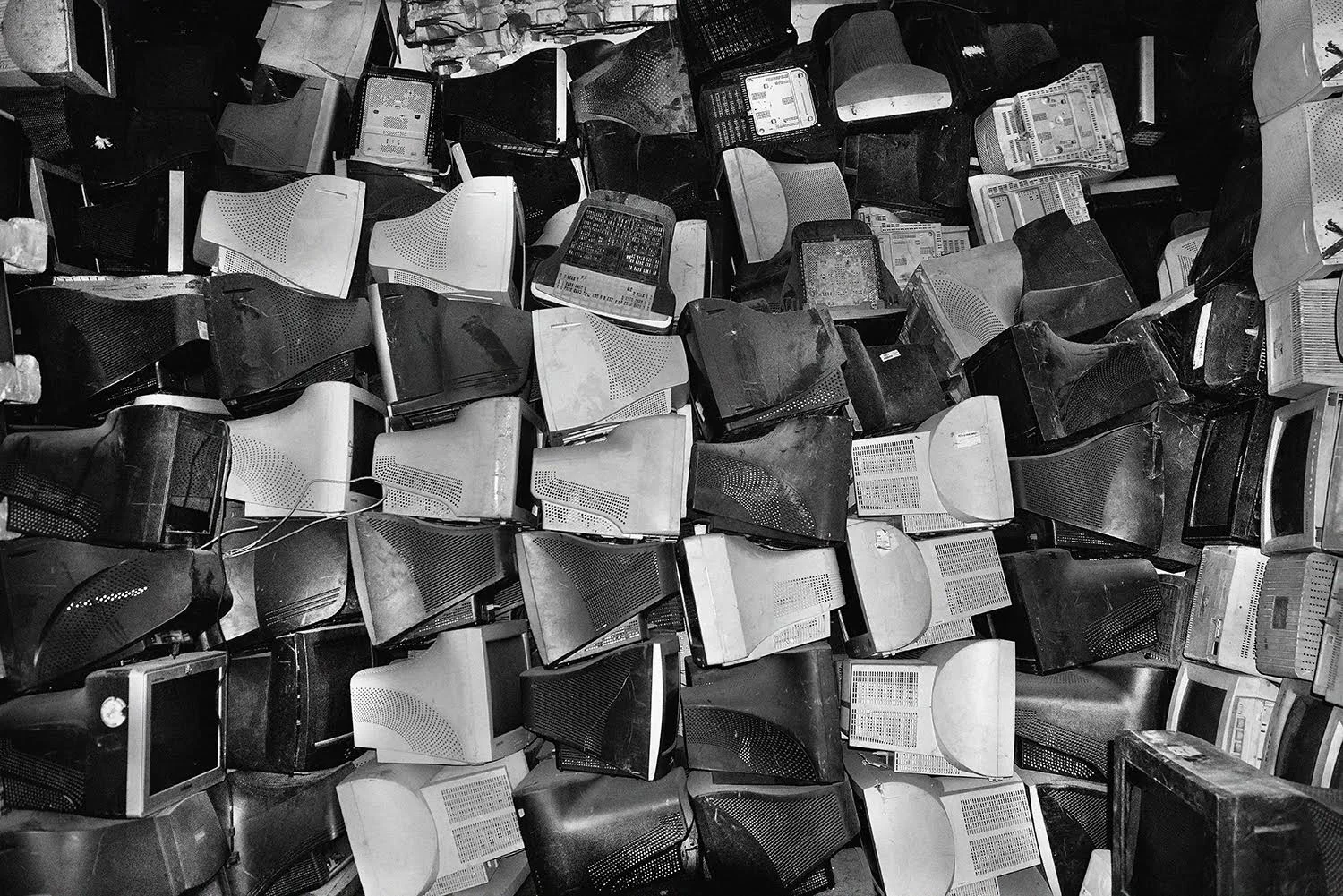
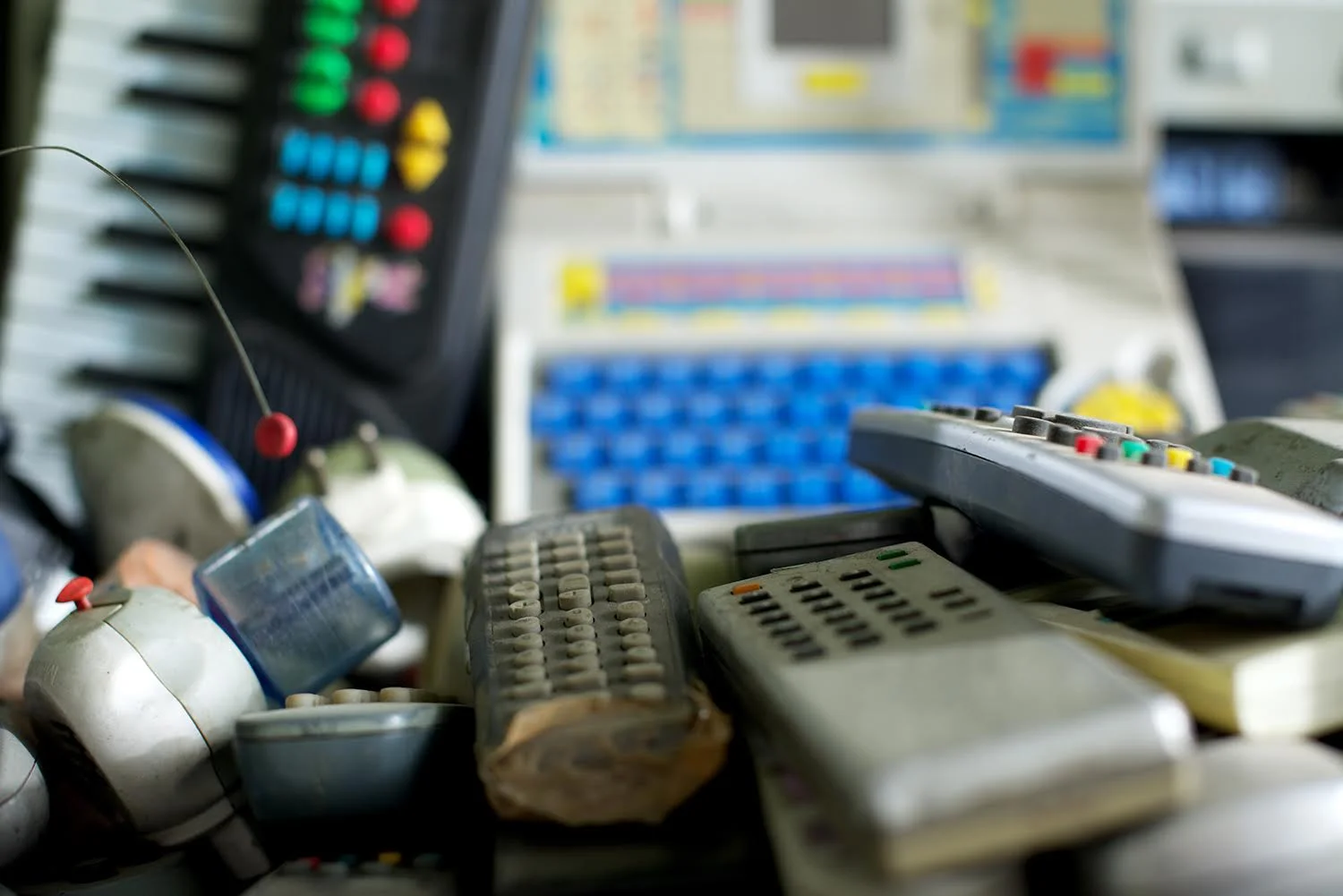
E-WASTE TSUNAMI peers behind the virtual world conjured by our computers and mobile phones to the very real world of electronic trash.

The ecosystems of production and consumption create the ecosystem of the receiver. In the receiver ecosystem are the environment into which products and materials are disposed, and the urban poor who work in the informal labor sector, generally in unregulated conditions
and facilities. Increasing consumer affluence, population growth, and decreasing product prices exponentially accelerate the e-waste problem. This project documents what’s happening at the frontline in the world of the receiver in a developing economy.
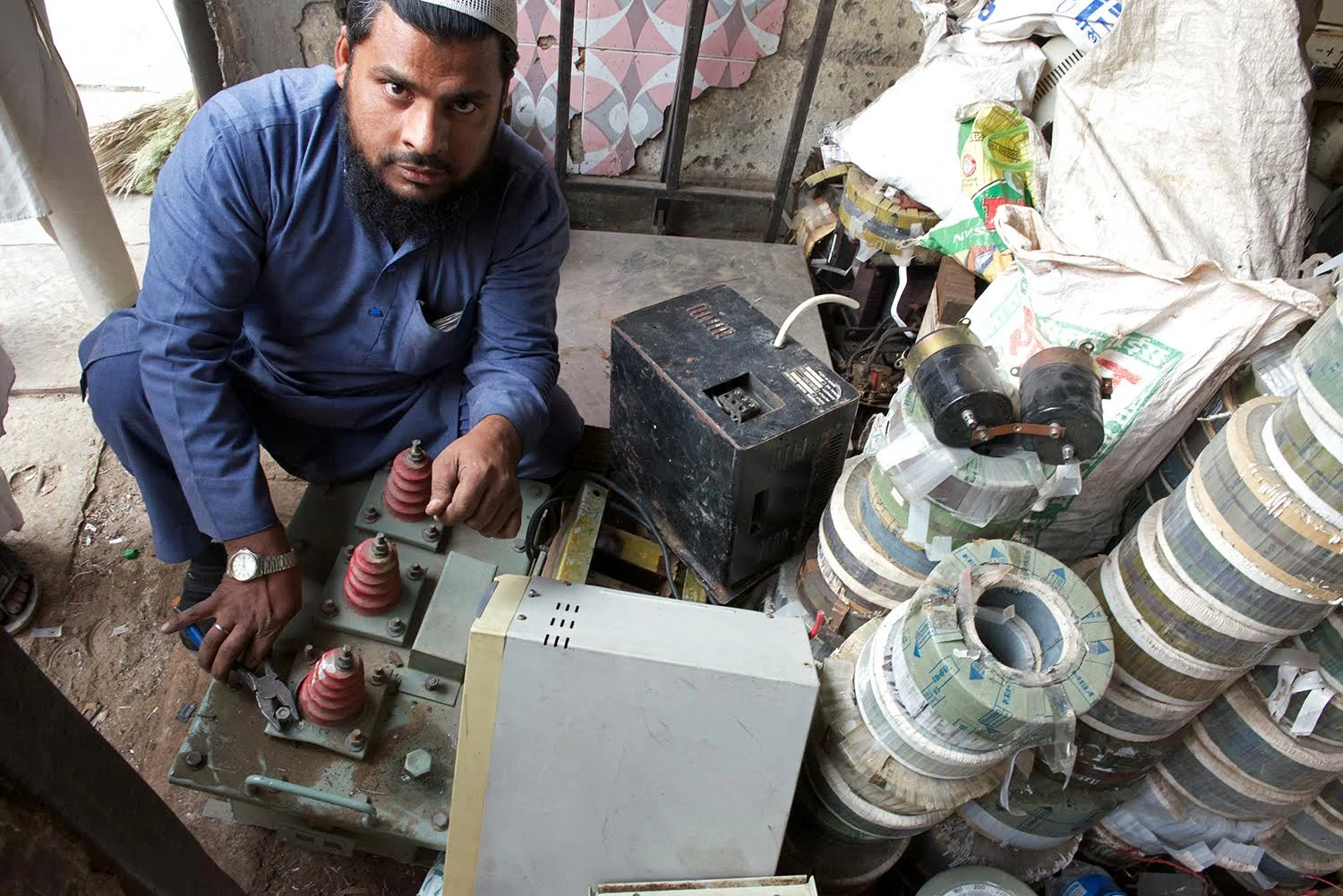
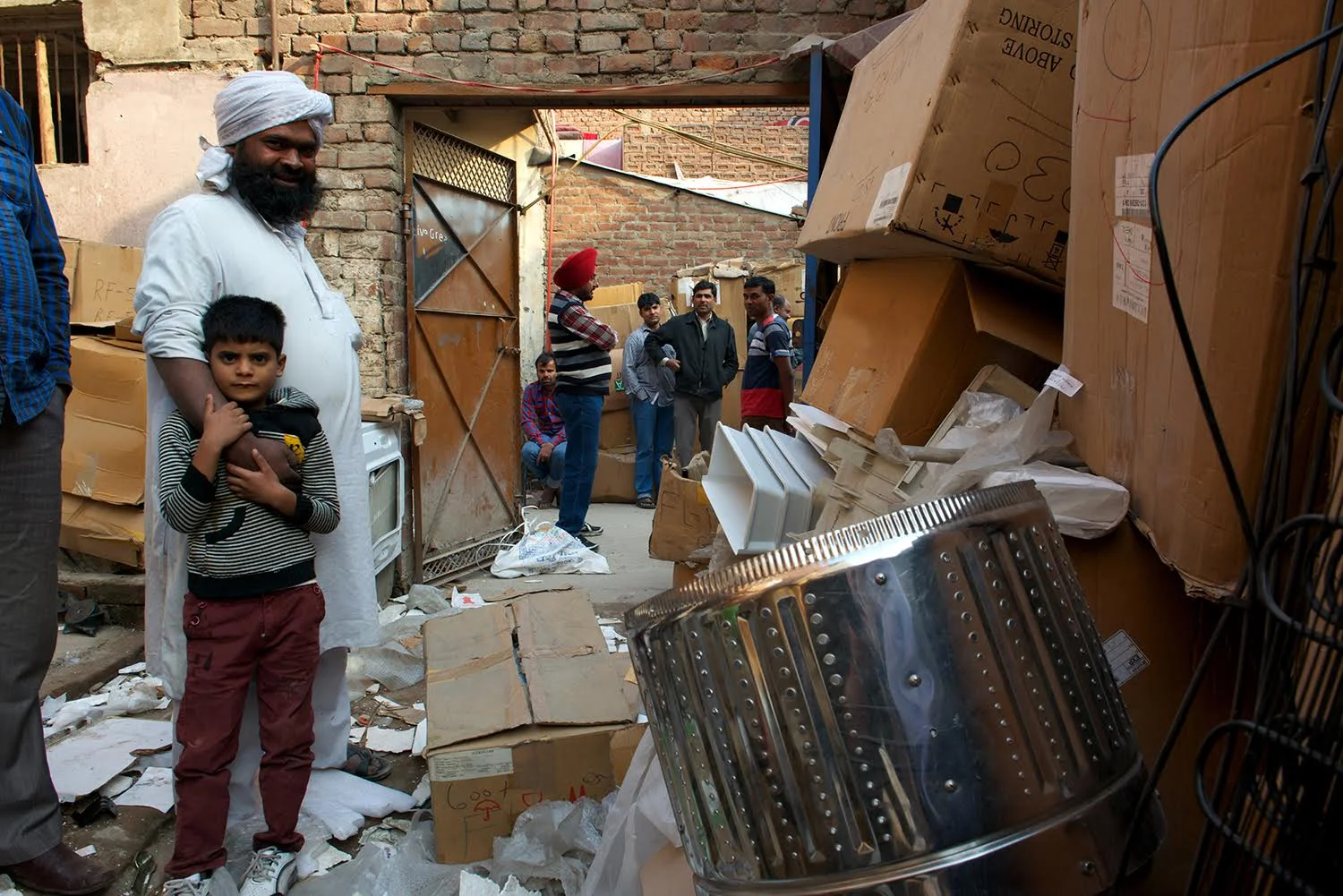
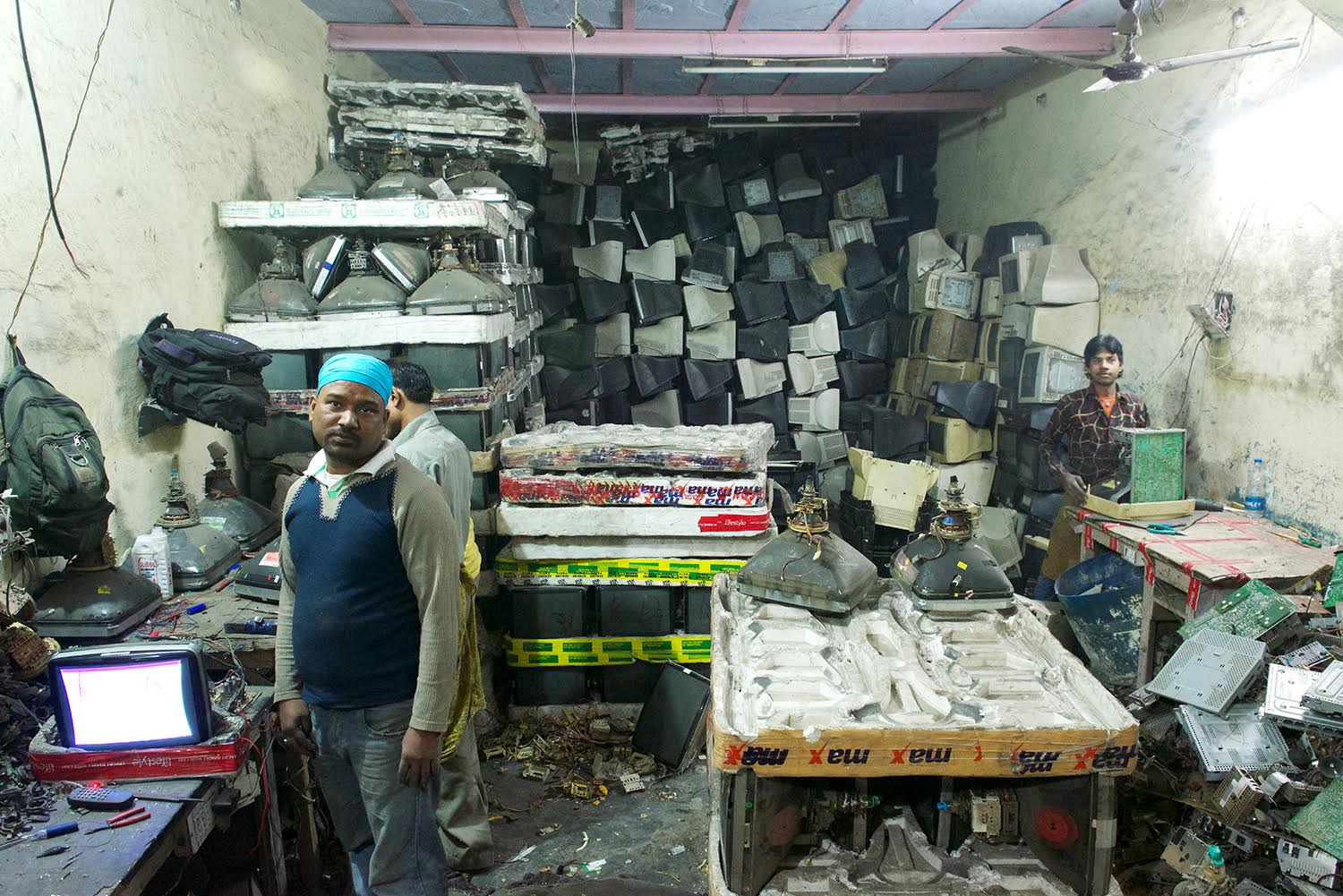
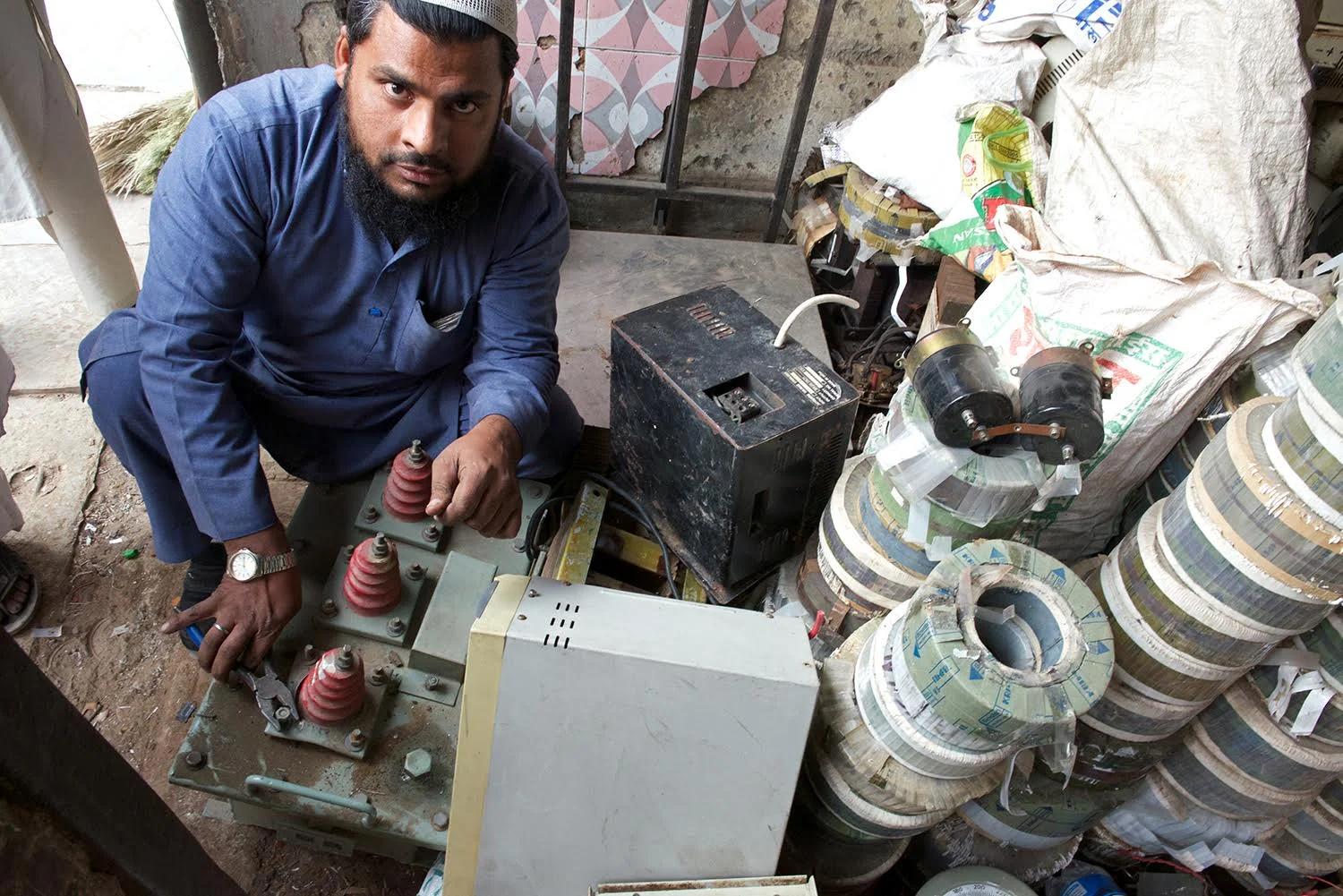
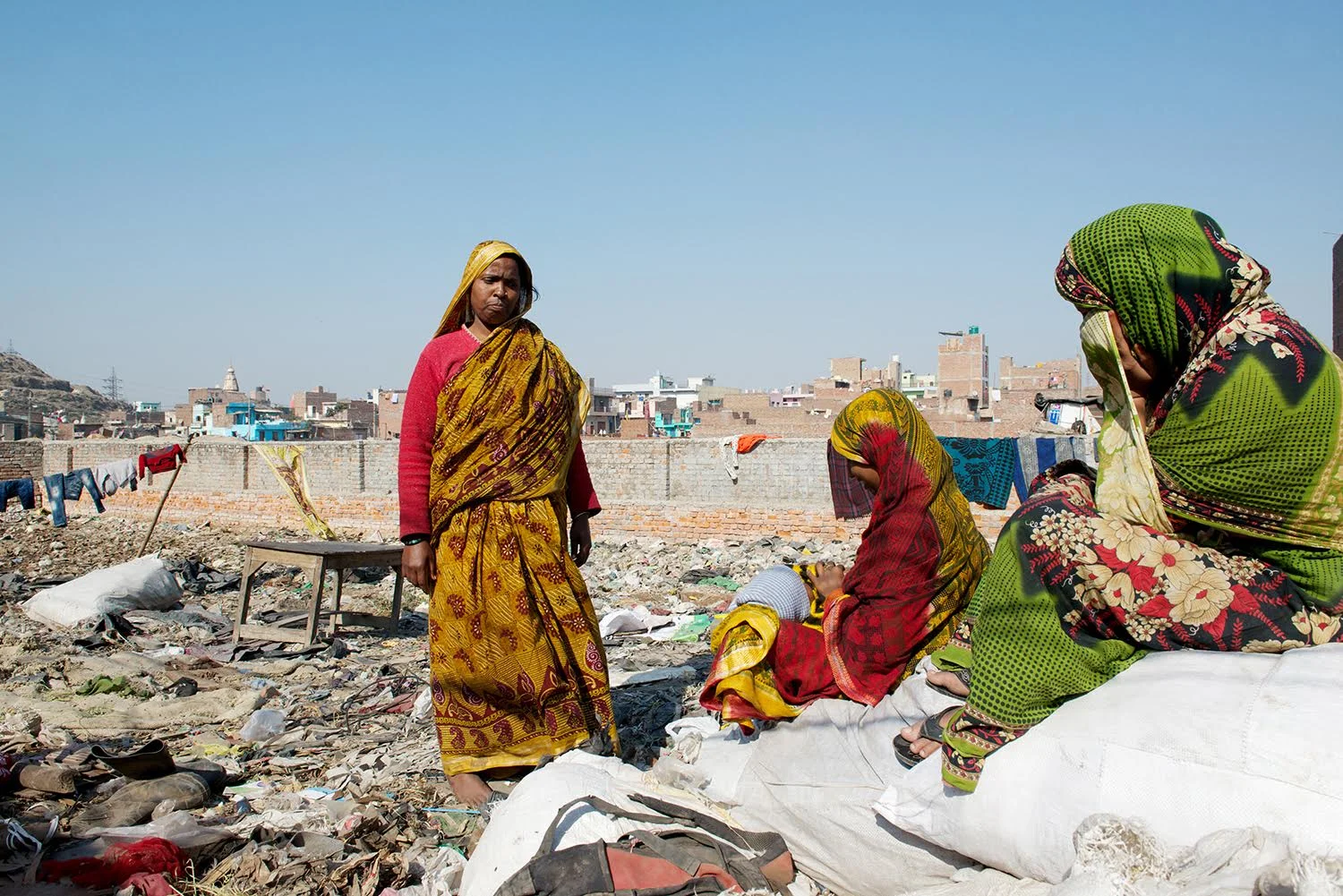
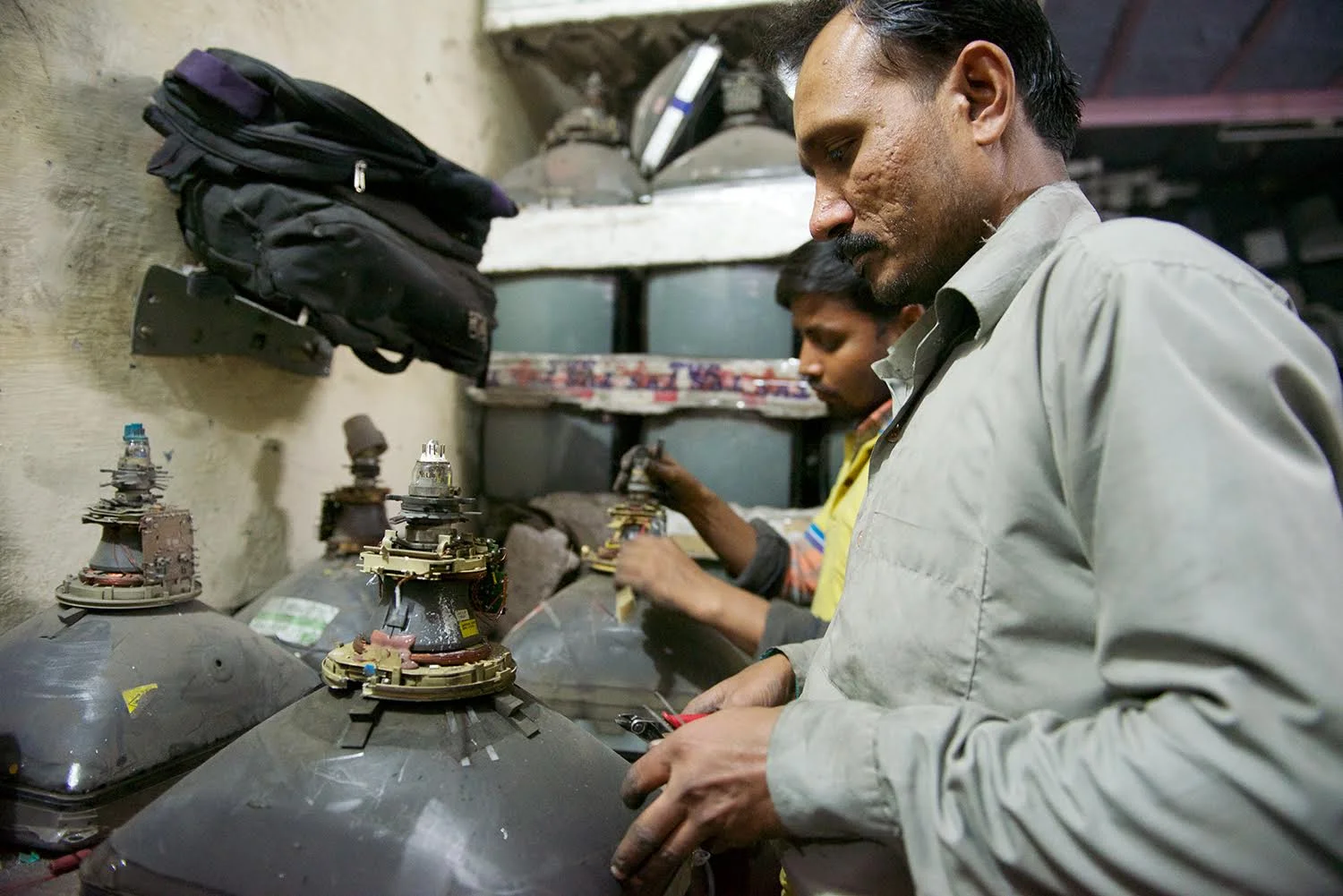
The photographic documentary, and film, produced by StudioFYNN,  provide a glimpse into the lives of those who work with e-waste on a daily basis in Bhalswa and Mustafabad, Delhi, India. While alternatives to toxic labor practices exist, only a handful of socially conscious and technologically equipped facilities are committed tobest practices with e-waste end-of-lifecycle. Given this highly complex problem, in what generative ways can diverse fields (such as industrialdesign, psychology, or urban policy) begin to model a more sustainable future?

PHOTOGRAPHS BY SHAUN FYNN

Want to see more? Check out STUDIOFYNN's Delhi Journey, an accompanying film for the E-Waste Tsunami project. 

SHAUN FYNN

@studiofynn 

Shaun Fynn is an acclaimed designer with over 20 years experience in advising and creating for Fortune 500 companies. Since founding STUDIOFYNN in 1997, he has developed the practice globally, working in areas of design research, photo documentary and design education. E-Waste Tsunami — a project that peers behind our virtual worlds to capture the real world of electronic trash — was on exhibition in The Sheila C. Johnson Design Center's Arnold and Sheila Aronson Galleries in New York City at the beginning of 2016. 
In Search of Beauty in Antarctica

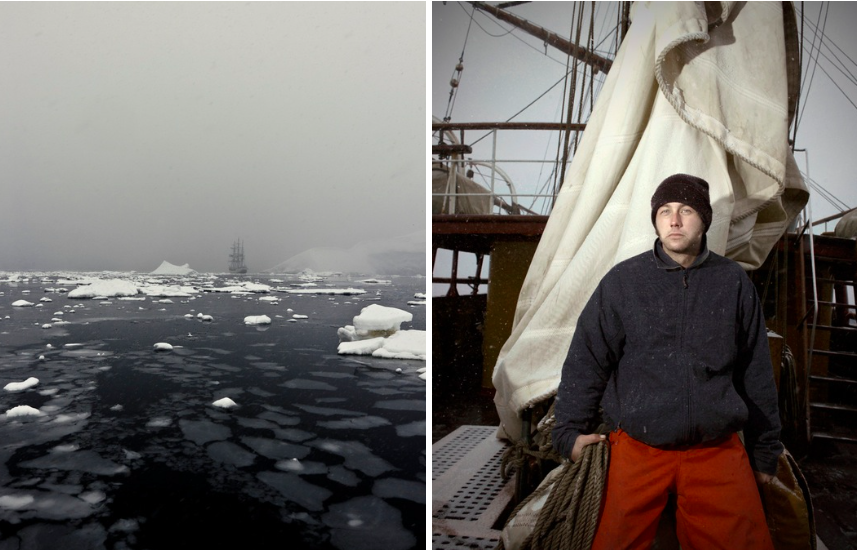
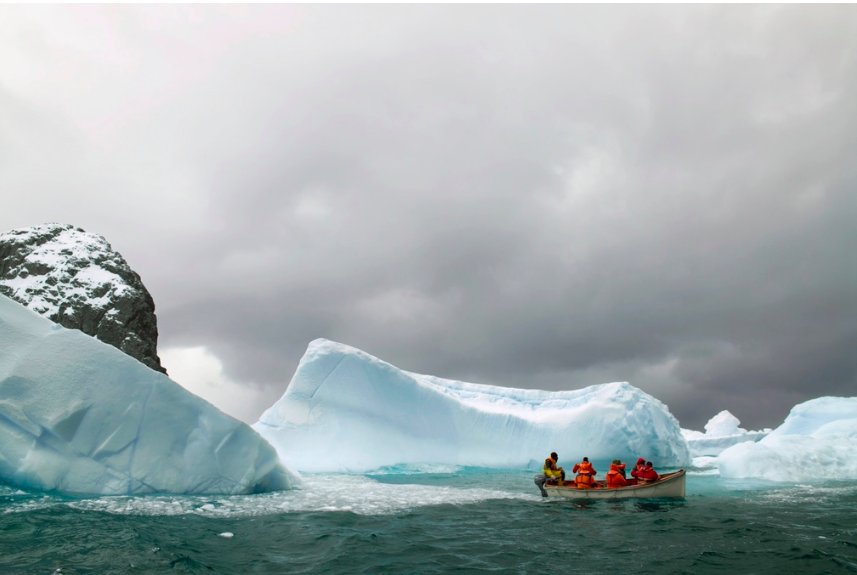
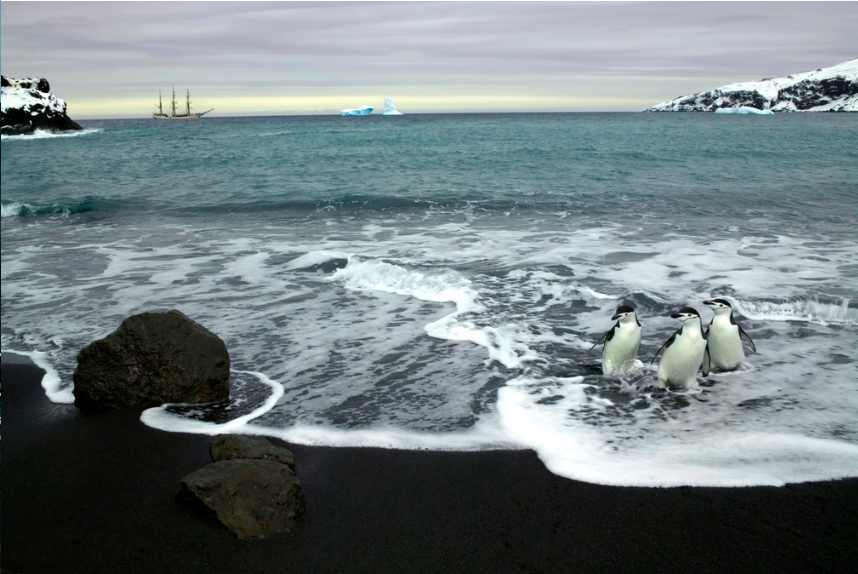
Traveling on a sailing ship built in 1911, the same era the last great expeditions braved the unknown and departed for the infinite and barren landscapes of the white continent, René Koster leaves on his own voyage in search of beauty, the beauty of emptiness and cold.

Thoughts of frozen ships trapped in ice-covered seas cross my mind.

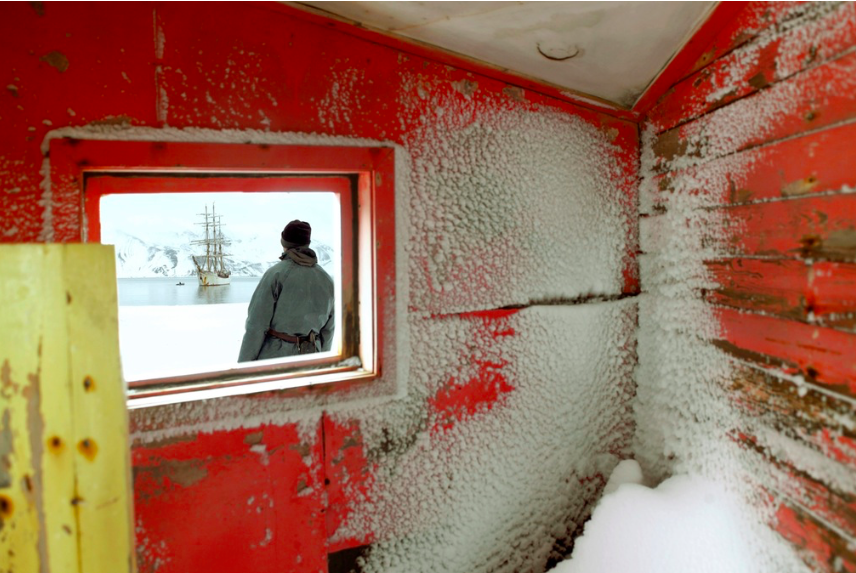
Embarking on a voyage to the South Pole, I travel in a sailing ship built in 1911, the same era the last great expeditions departed for the unknown continent. I recall images of the photographers who joined these expeditions to report of the unexplored. Fascinated by their stories I head for the same circumstances as those of the early twentieth century.

I am on a journey of longing, to a time that once was. A heroic saga, filled with hardship and adventure, in an infinite, barren land.

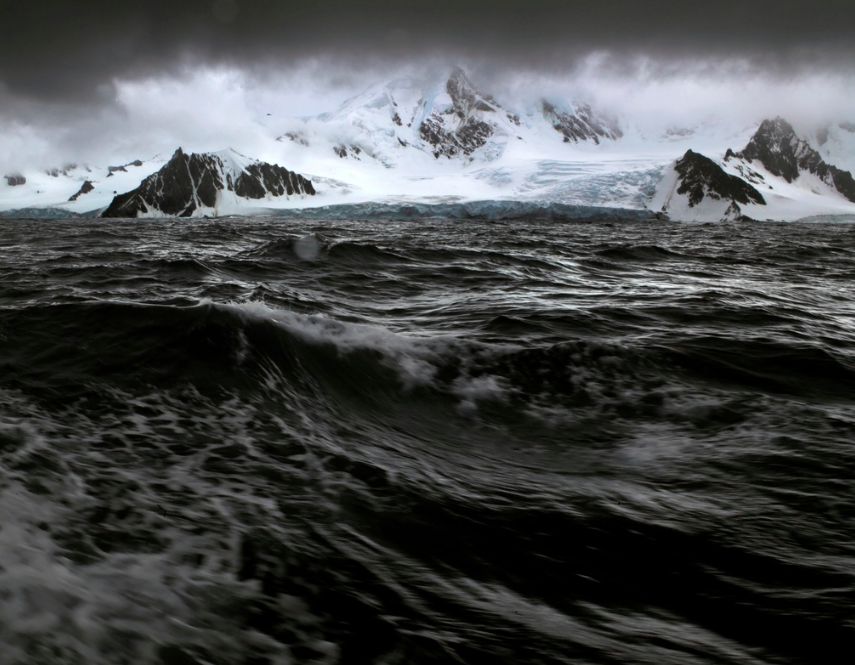
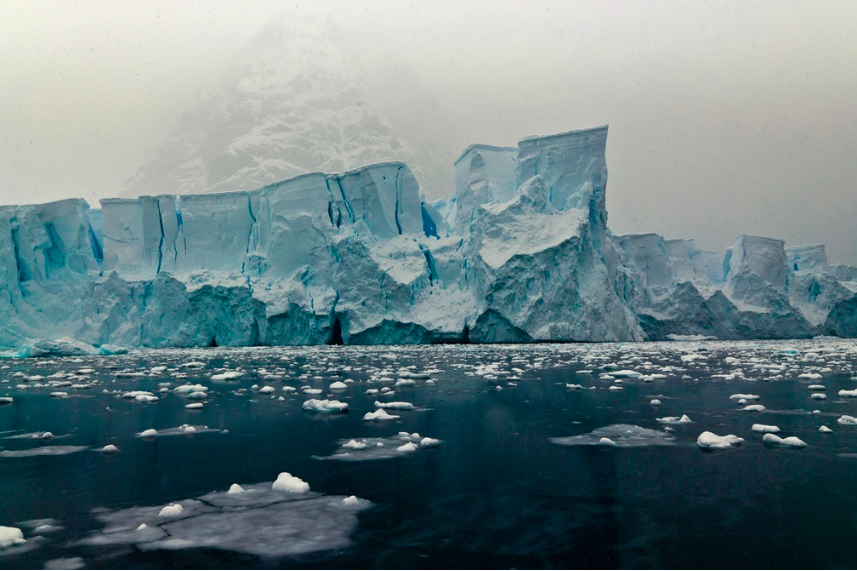
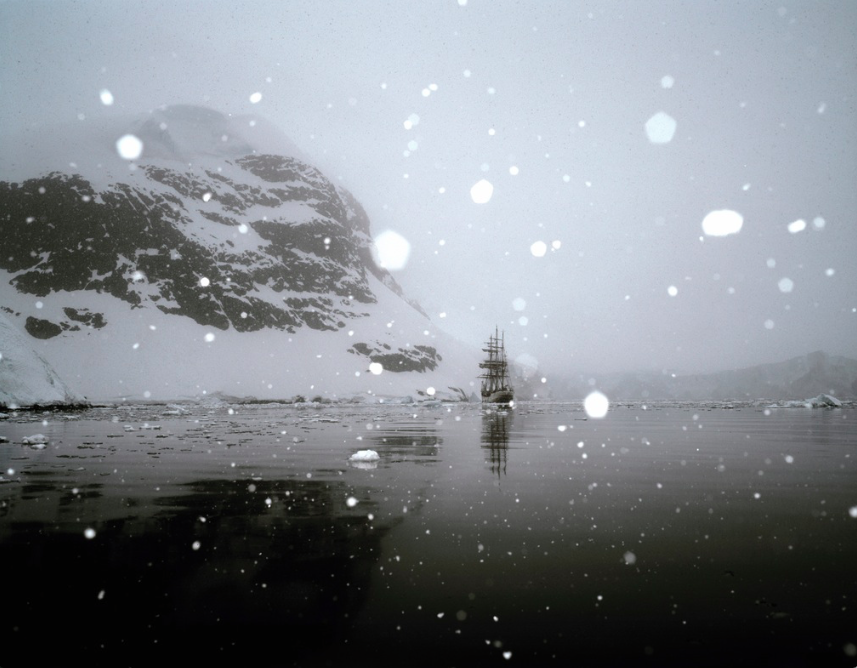
This series of photographs, taken with modern equipment, references the past. Personally, I feel no need for the photographs to look as if they have been created with techniques of the early 1900s. This is why I have deliberately chosen to work in color; allowing the greyscale of the landscape to emphasize the blue captured in ice. In my search for the right images, I have tried to avoid as many elements of the present time as possible; things that would remind me of everyday life.

The calm misty weather gives me a sense of desolation and makes the whole world feel smaller.

The slow rate of traveling by sailing ship influences my way of taking photographs; I seek stillness, harmony and tragedy in these otherworldly landscapes. In search of beauty, the beauty of emptiness and cold.
 

ORIGINALLY PUBLISHED ON MAPTIA 


RENE KOSTER

@koster_rene 

René Koster's work concentrates mostly on travel photography and portraits for magazines around the globe. Work from his Antarctica project was awarded The Travel Photographer of the Year. Check out his website here.

VIDEO: How to Travel the World with Almost No Money

Many people daydream about traveling the world, but all of them have the same excuse - lack of money. Tomislav, after traveling the world for years with almost no money, shows how it is possible for everyone to do the same, if they really want to.

Many people daydream about traveling the world, but all of them share the same excuse — lack of money. After years of traveling with almost no money, Tomislav Perko shows how it is possible for everyone to do the same, if they really want. 

IRAN: A Look Inside

Impressions and moments captured from behind Iran's closed curtain, as Brook Mitchell traversed the Islamic Republic during the country's "Ten Days of Dawn" celebrations and rallies, to mark the anniversary of the 1979 revolution. 

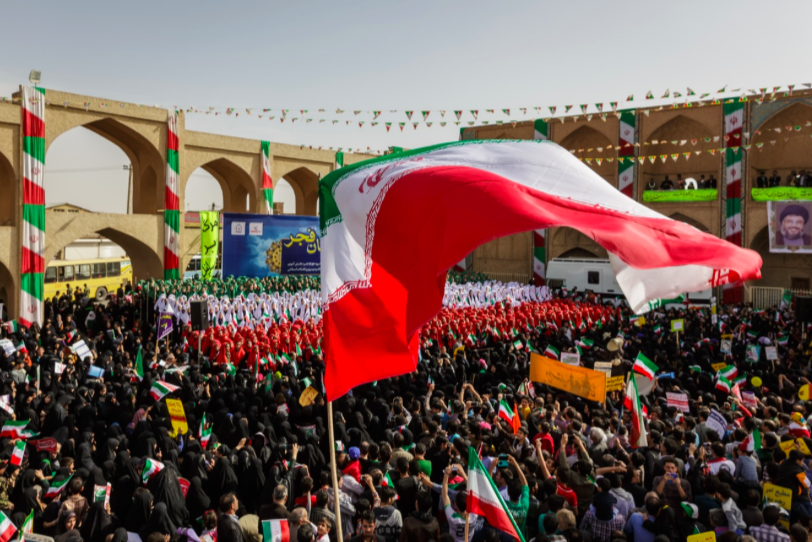
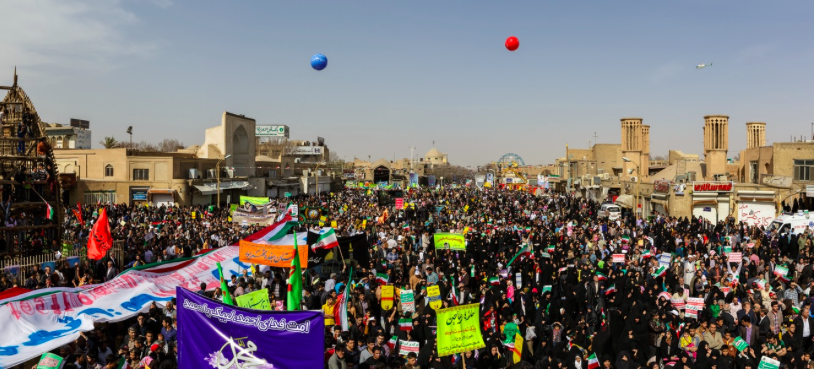
Each year on February 1st — the date Iran’s former supreme leader Ayatollah Khomeini returned to the country in 1979, after 15 years of exile — the Islamic Republic begins its annual “Ten Days of Dawn” celebrations. The tenth day marks the date that Shah Mohammad Reza Pahlavi’s regime officially collapsed, and events are held throughout the country to commemorate the anniversary of the 1979 revolution.
The celebrations offer the state-controlled media the opportunity to portray a people united behind the country’s leadership, with appeals to a sense of nostalgia, national pride and Islamic unity.  Just how much of this rhetoric really hits home with the people of Iran is hard to know.

Most travelers returning from Iran will tell you about the legendary hospitality and natural curiosity of locals toward outsiders.

This was certainly my experience. Traveling solo, spending time in both the major cities and some of the smaller, more remote and down-trodden settlements, I was always made to feel welcome. I also never questioned my safety, except for some white-knuckle taxi rides through Tehran.

My goal was simply to see and shoot as much as I could while I had the chance. I experienced few issues taking pictures, and especially outside the major cities people were surprisingly open to being photographed. 

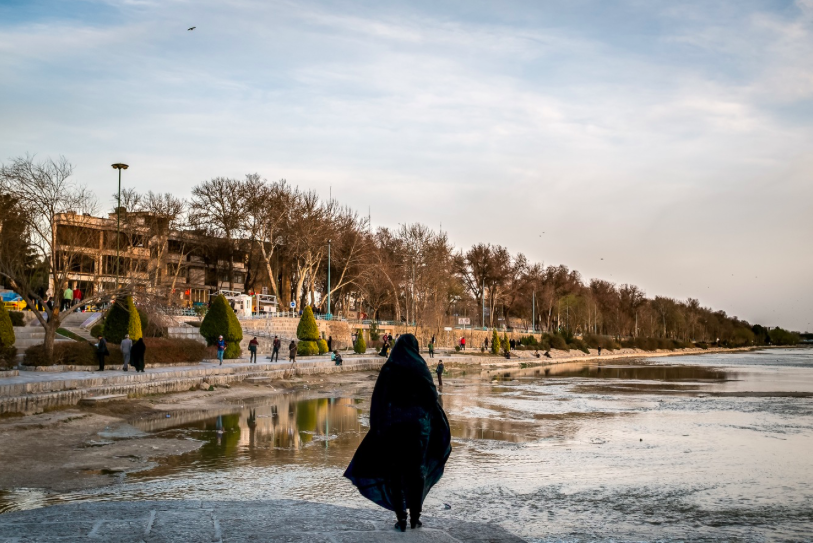
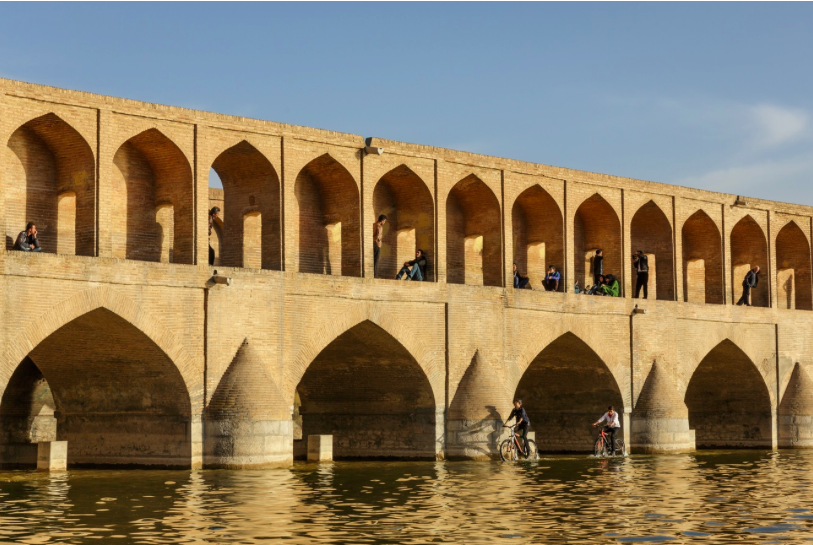
Below is Khaju Bridge in Isfahan at sunset. The bridge and its banks are a popular meeting place for young people and local families.  

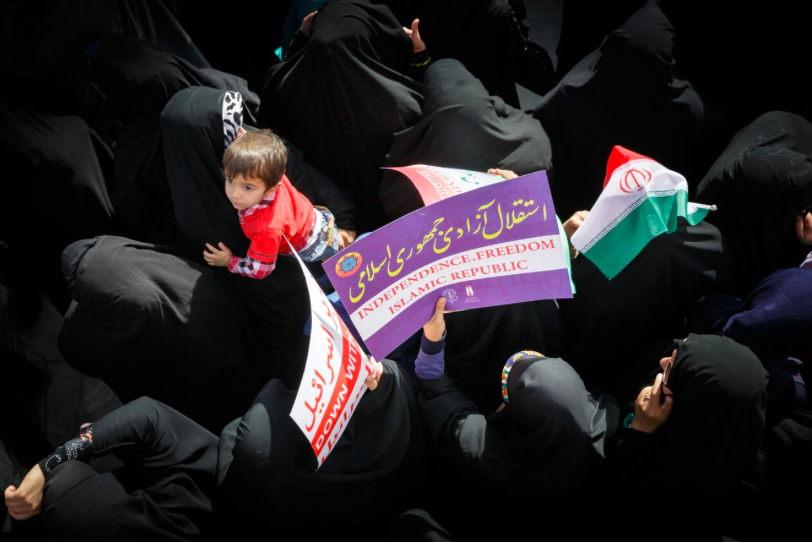
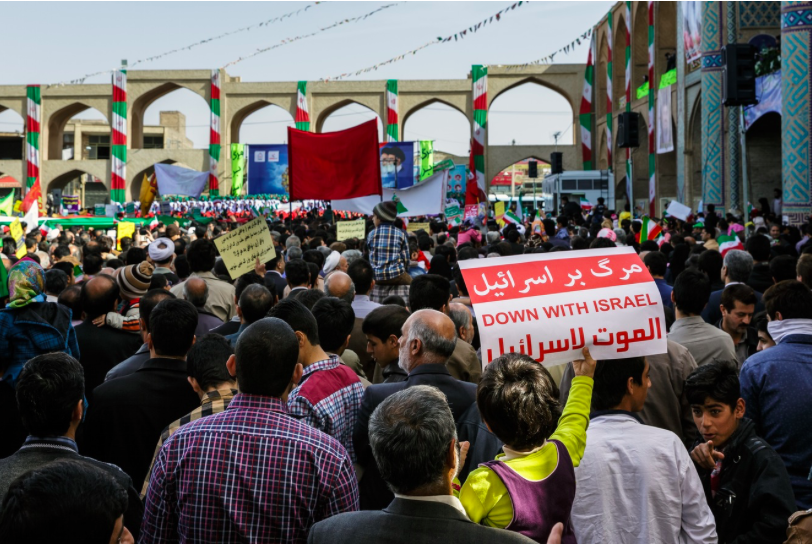
Despite the welcome, traveling at this time of year it was abundantly clear that some older attitudes die hard. Although much of the hype surrounding the anniversary of the 1979 revolution appeared to be artificially whipped up by the authorities, the sight of young children propped up on their parent’s shoulders, holding placards that called for the death of the Islamic State’s perceived enemies, was hard to ignore.

In the city of Yazd I clambered up some dodgy scaffolding to take the picture below, which was one of the more surreal experiences of my trip. Even as the revolution celebrations reached fever pitch, most people simply waved and smiled, despite the hostile sentiment.

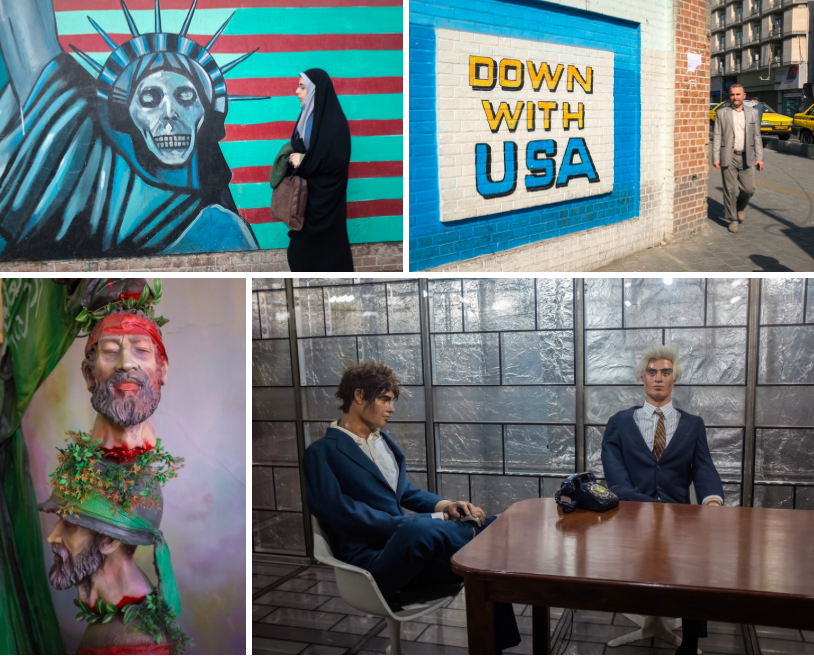
The former US embassy in the capital city of Tehran remains in much the same state as shown in the movie Argo. Now something of a museum, complete with wax figures representing former embassy staff, it is only technically open to visitors a few days each year. Anti-American murals such as those below have long been part of the urban landscape in Iran.

From these grisly monuments and stark murals around the former US embassy, to the huge national protests, rallies, and celebrations held throughout the first ten days of February, there were constant reminders that reconciliation with the West still has some way to go.

Above: Khaju Bridge in Isfahan 

However, not long after my visit a number of major steps towards this seemingly improbable reconciliation took place. Today, with the prospect of economic sanctions being fully lifted, the authorities are promoting the lofty goal of making tourism one of the country’s largest exports.  

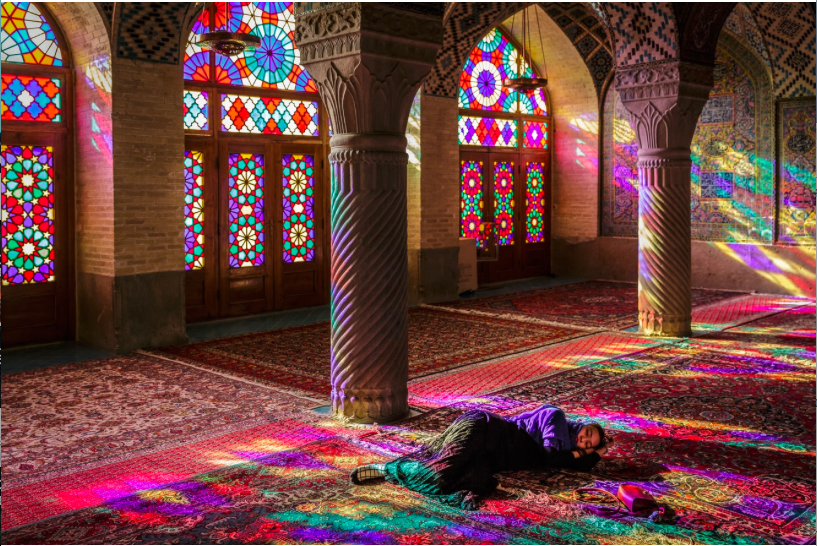
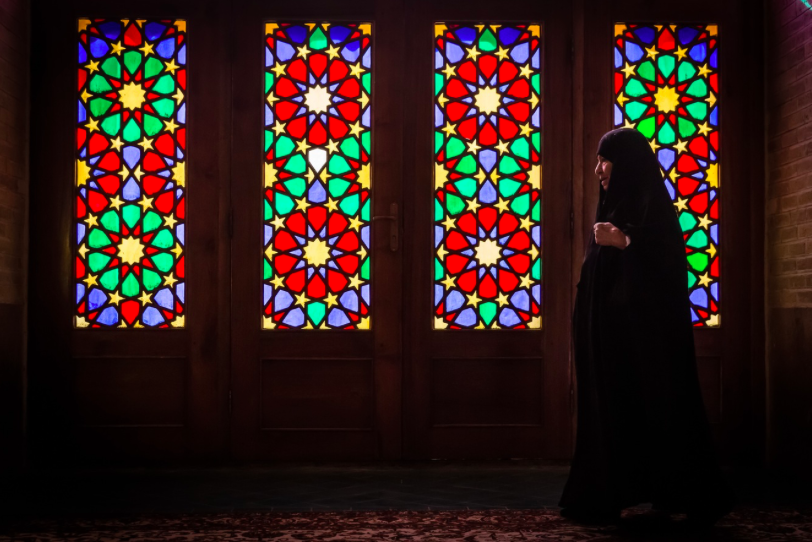
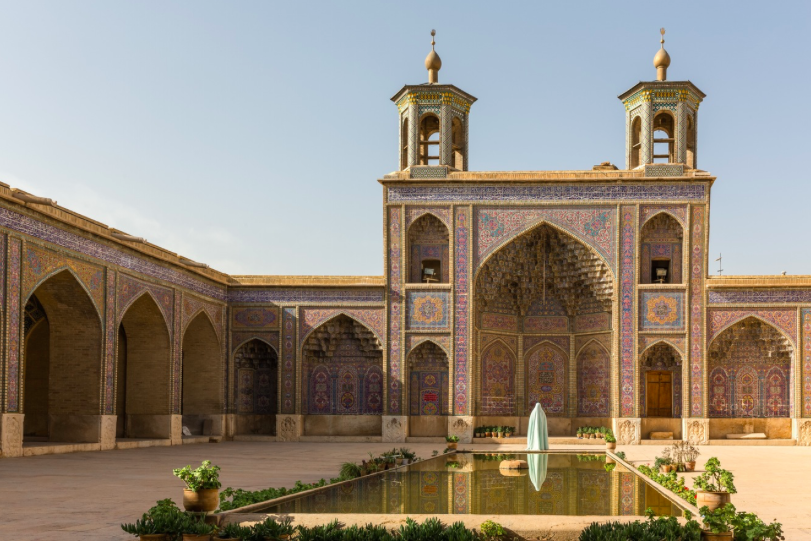
Below is an image of a fellow tourist who spent the better part of an hour posing for pictures for her friends at the beautiful Nasīr al-Mulk Mosque in Shiraz. The building is famous for the early morning light cast through its ornate stained glass windows.

Lifting the sanctions will hopefully remove two of the more significant difficulties faced by travelers to the country. At the time of my visit, Iran was almost completely cut off from the international banking system, leaving independent travelers with little or no access to funds, even in an emergency. This meant carrying all the cash I needed for my entire trip.

Above: Nasīr al-Mulk Mosque 

Added to this was the famously difficult visa situation. I arrived into Tehran at 3.00am armed only with a letter of invitation, which had been paid for in advance via a numbered Swiss bank account. After a cursory check over my documents, a friendly though wary customs officer disappeared into a back room to discuss my situation with a superior.  

After what seemed like an hour he returned, smiled, and welcomed me to the country with a crunching stamp across my newly minted visa. After all the tension, I half went to high five the officer — the pressure was off.

Yet these relatively minor inconveniences pale into insignificance compared to the challenges the Iranian people have had to endure under the crippling economic sanctions brought on by the bluster of their uncompromising, theocratic leaders. Hyper inflation had brought their country’s economy to a grinding halt. 

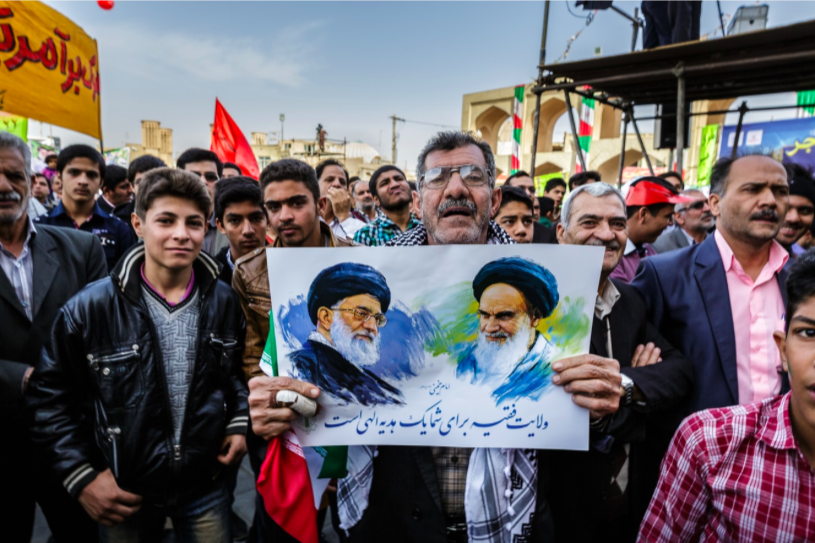
Below is a man bearing a placard with images of the supreme leader of Iran, Ali Khamenei, and the ‘the eternal religious and political leader of Iran,’ Ruhollah Khomeini.

The struggling economy, coupled with instability and insecurity, have pushed many to seek a better life outside of Iran, seeking refuge in Europe, the US, and beyond. For a brief period Iranian asylum seekers had also been arriving in large numbers via perilous boat journeys to my home country, arriving on Australia’s north coast from ports in Indonesia. Boat arrivals in Australia are presently not allowed to stay in the country and are shipped off to the small islands of Naru and Manus for deportation or relocation to third countries, most recently Cambodia.

For all the genuine pride in their country people showed me, there were just as many stories from people hoping to leave, by any means possible.

From a taxi driver who showed myself and some other travelers photos of his lacerated back after he was given lashes for drinking home made beer, to an older man who brought himself to tears talking of his beloved brother, shot by the police for translating books into English a decade earlier, it was clear that many living in Iran have extremely good reasons to search for a better life elsewhere.

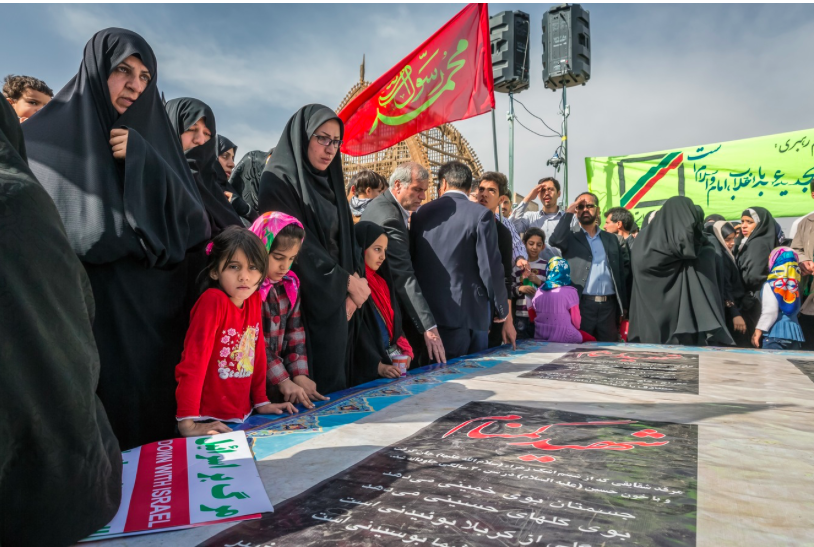
Below is a young girl and her mother leaning over the graves of some of those who lost their lives fighting during the 1979 revolution.

Yet from a traveler’s perspective the country is incredible.

Everything is cheap and the standard of hotels and food is generally pretty good. Mercifully, moving forests of selfie sticks are nowhere to be found. Well-known spots were busy at times, but never so much as to feel over crowded. Time will tell how long this will continue to be the case.

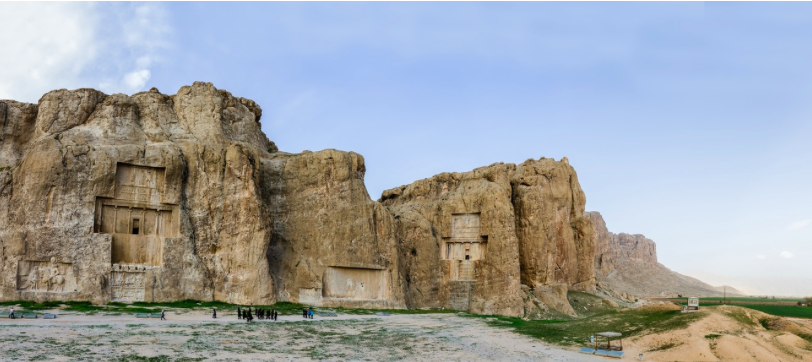
Below is Naqsh-e Rustam, an ancient necropolis with an impressive group of ancient rock reliefs cut and carved into the cliff. The oldest relief dates back to around 1,000 BC.

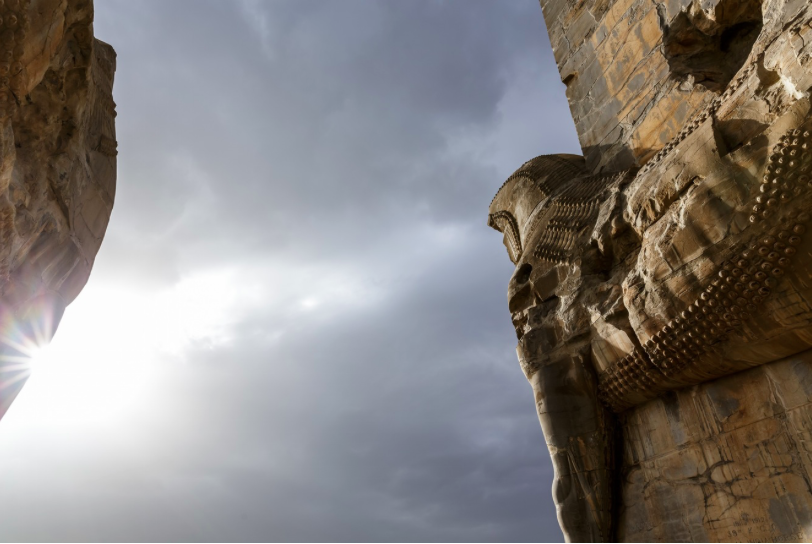
Below are two stone bulls flanking the north side of the Throne Hall at the UNESCO world Heritage site of Persepolis. Literally translating to “city of Persians,” the city Persepolis was the ceremonial capital of the Achaemenid Empire, from around 550–330 BC.

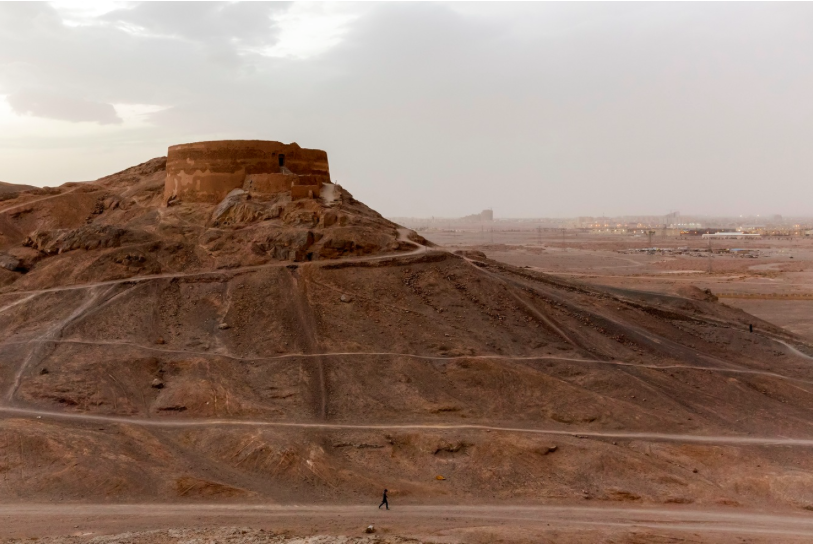
Near Yazd are the ancient Zoroastrian ‘Towers of Silence.’ The Zoroastrians ‘purified’ their dead by exposing the bodies to the elements and to birds of prey, on top of these flat-topped towers, called dakhmas.

While in the city of Isfahan, I visited the beautiful Sheikh Lotfollah Mosque. Along with the Naghsh-e Jahan Square on which it borders, the mosque is a UNESCO World Heritage Site. Early mornings see brilliant rays of light illuminate the intricate tile work of the building.

Also in Isfahan is Vank Cathederal, established by Armenian deportees settled by Shah Abbas I after the Ottoman War of 1603–1605. Today, this building remains one of the few Christian places of worship in Iran, and has many beautiful, fading murals within its interior.

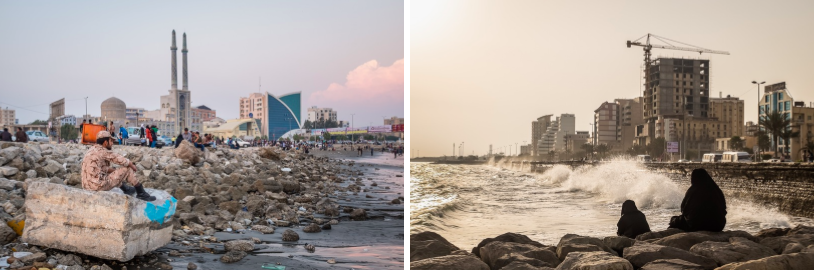
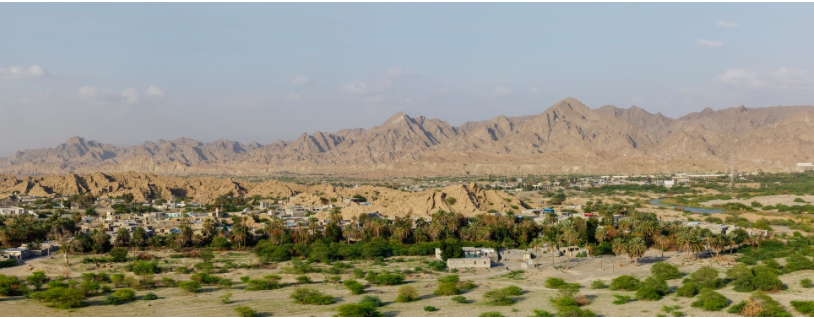
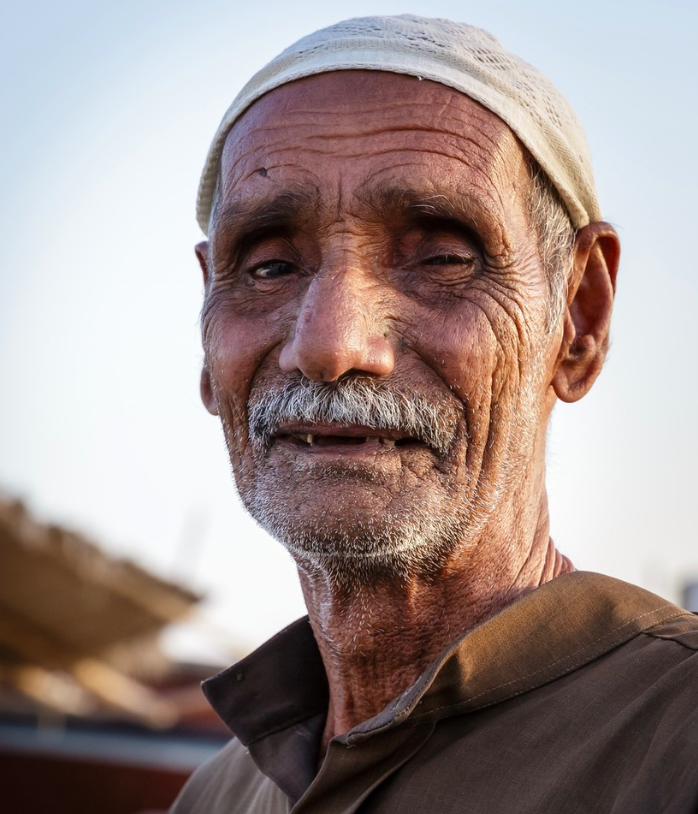
One of the most interesting areas I explored during my visit was the southern region of the country, particularly the small islands and towns along the Persian Gulf coast. Thanks to the region’s colonial history as both a slave trading port and a stop on ancient trading routes, the area is home to the most ethnically diverse people in the country. 

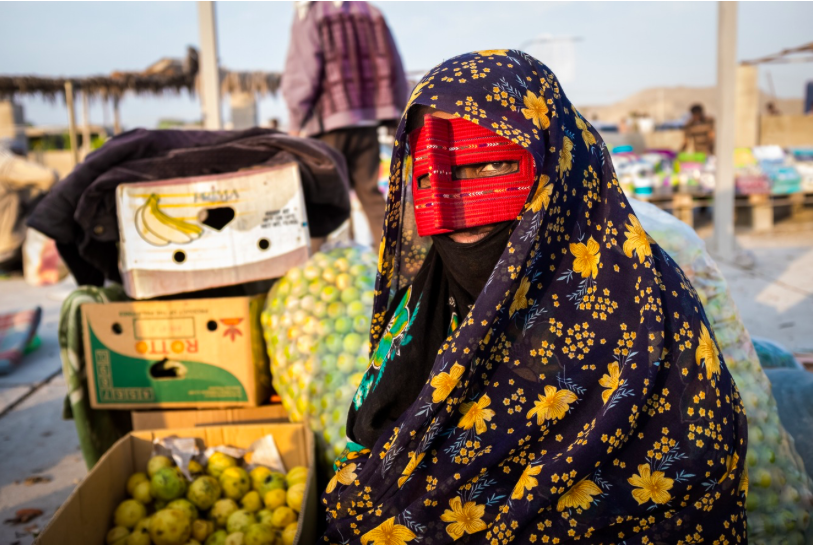
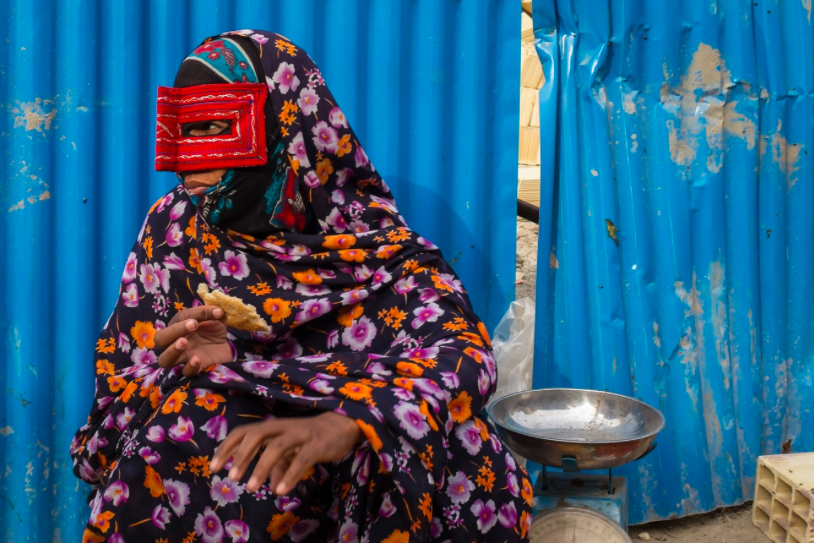
One morning I shared a simple breakfast of fruit and tea with the woman below, and afterwards she was happy for me to take her picture.

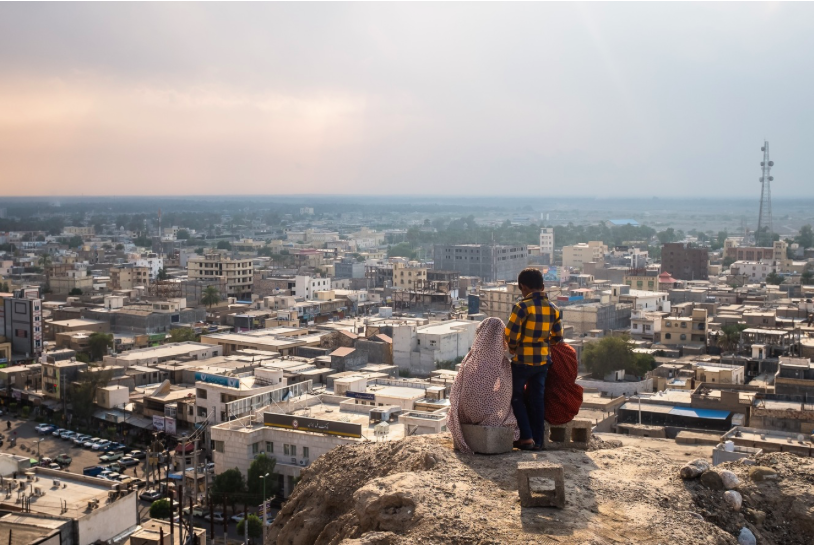
The capital city of this region is called Bandar Abbas, and is a major port for smuggled goods coming from Dubai and Oman. It is home to the Bandari ethnic group, which literally translates as ‘people of the port’.

The locals here dress colourfully and still practice many customs that differ somewhat from the rest of the country. For me, it was the potential for some colour and a break from the dark chador worn throughout much of Iran, that made it so appealing to visit.

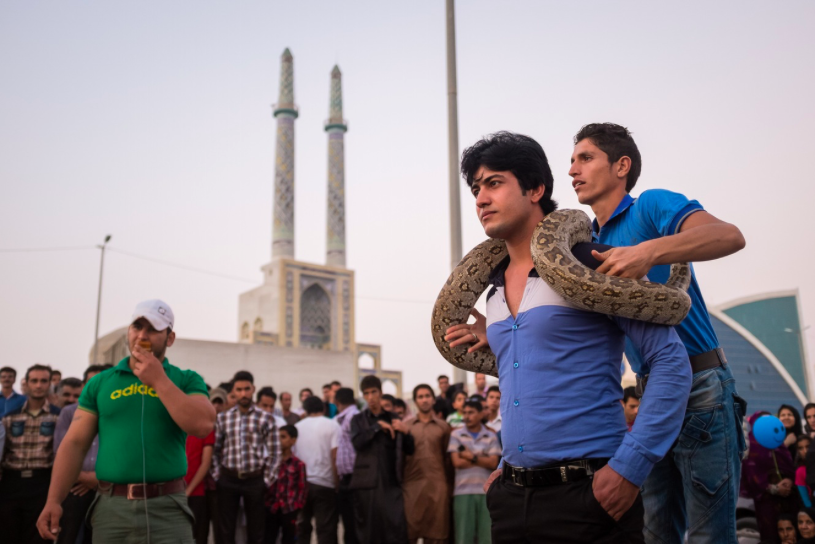
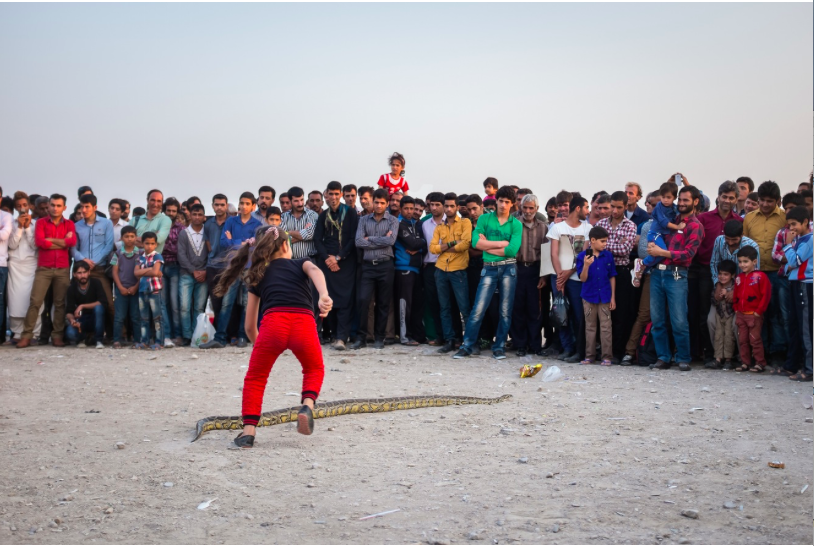
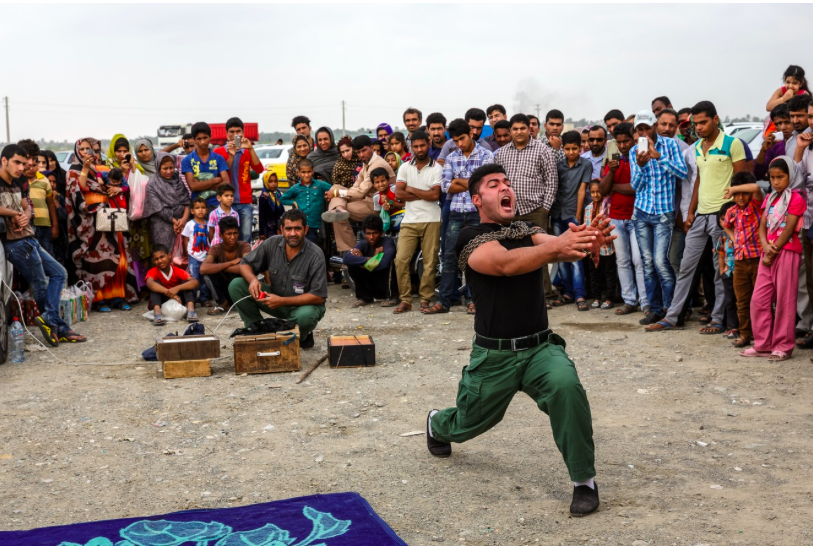
Early one evening in Bandar Abbas, I paused alongside a large crowd gathered to watch a sideshow, a common sight in the region. 

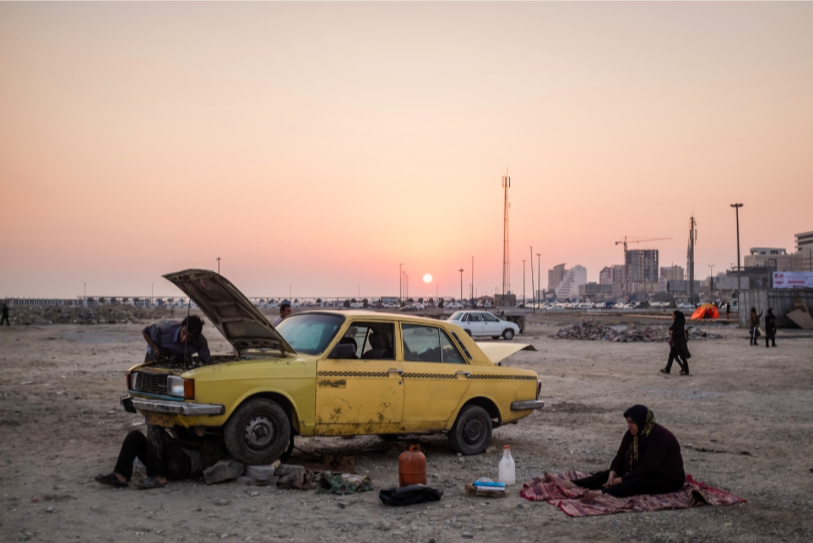
Below is a group of young men working to fix an Iranian built Paykan Taxi. When I returned to the city a week later, the men were still working on the cab, seemingly no closer to getting it moving.

Taking a short drive from the city of Bandar Abbas I arrived at the small town of Minab, seen below, where the people from around this vast area gather each week to sell their wares at the famous ‘Panjshambe Bazar’.

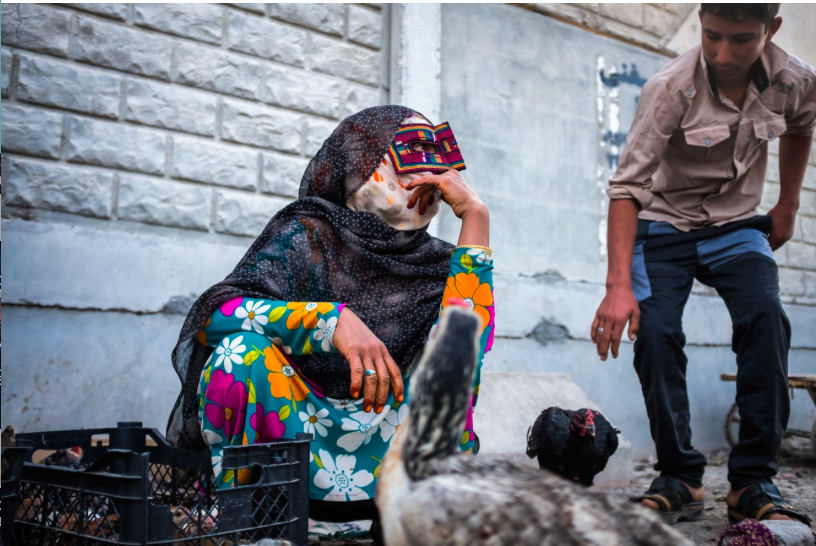
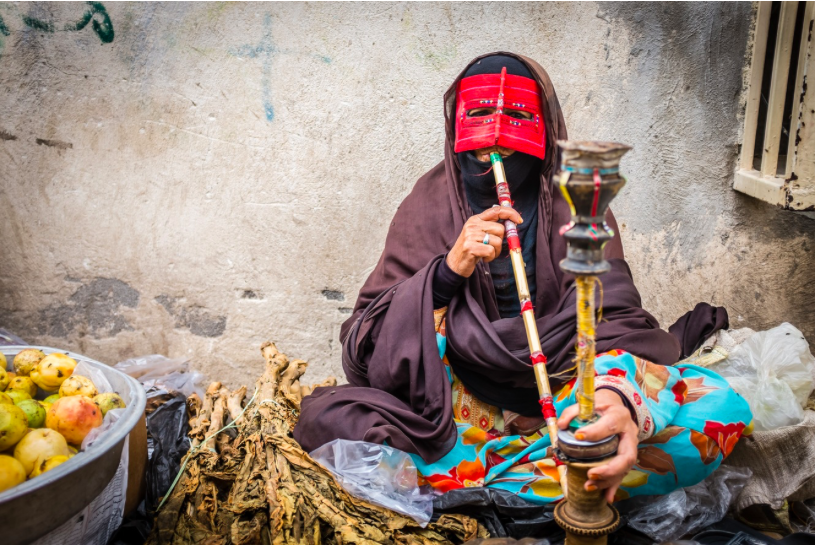
The striking coloured masks worn by the women of this region are said to have originated at a time when the Portuguese colonists would take the prettiest girls as slaves, and the masks would help to shield young girls from unwanted attention. I learned that each town in the region has its own signature variation of mask, varying in colour and construction.

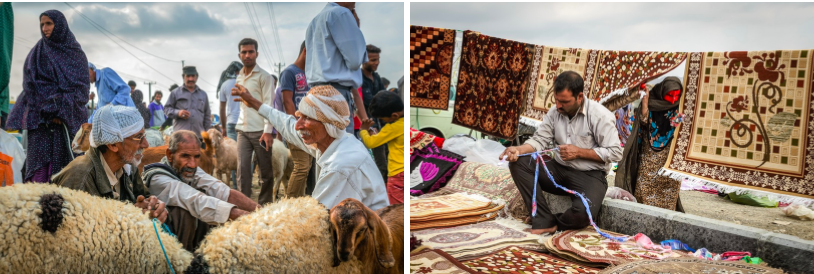
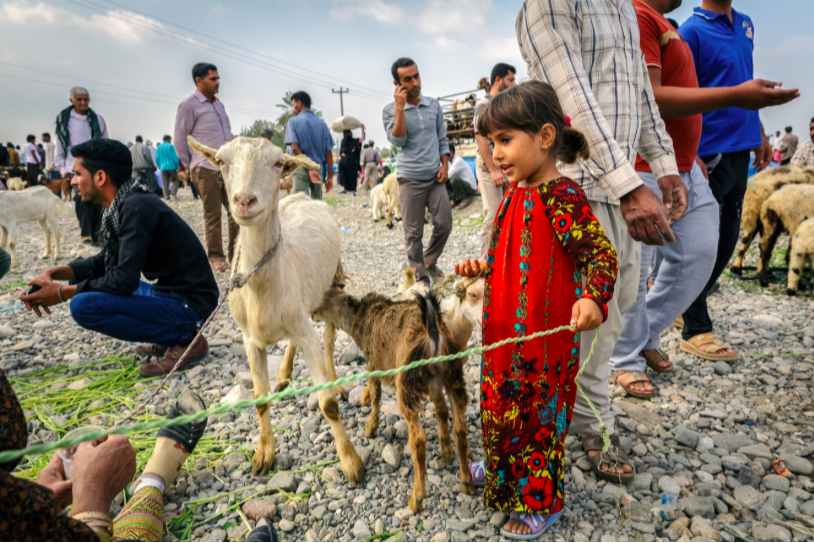
The Panjshambe Bazar was a fascinating glimpse into the lives of the different cultures and people who call this area home. While there were large sections of the town dedicated to selling ubiquitous imported goods, there was still much to see that wouldn’t have changed much since Marco Polo made a visit — from the bustling livestock market, to the vendors selling colourful fabrics and homegrown produce.

For a fully grown, healthy goat, the prices seemed to hover around the 40 USD mark, a large sum of money for Iranians struggling in an economy crippled by sanctions and high inflation.

Below is a masked woman smoking tobacco from a waterpipe, or nargeela in Persian. This practice is banned for women throughout Iran in public places, but it remains popular amongst vendors at the market in Minab, who can often be found discreetly puffing away.

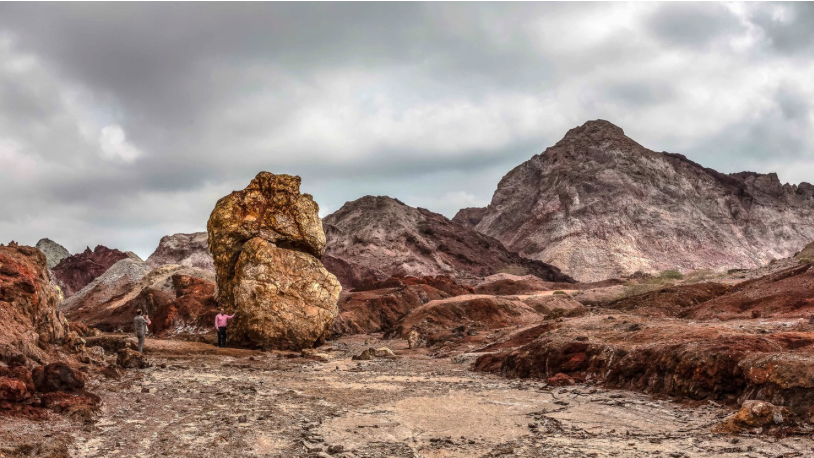
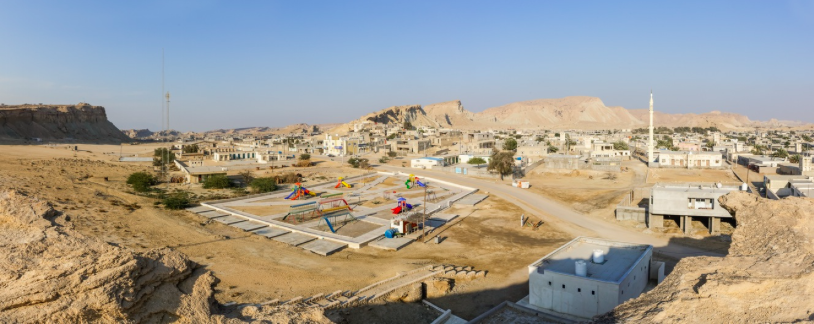
From tiny Minab I worked my way around to explore two rocky and arid islands just off the coast in the Persian Gulf, called Qeshm and Hormuz. On Hormuz, due to the severe lack of fresh water, Iranian engineers have constructed a water pipeline from the mainland.

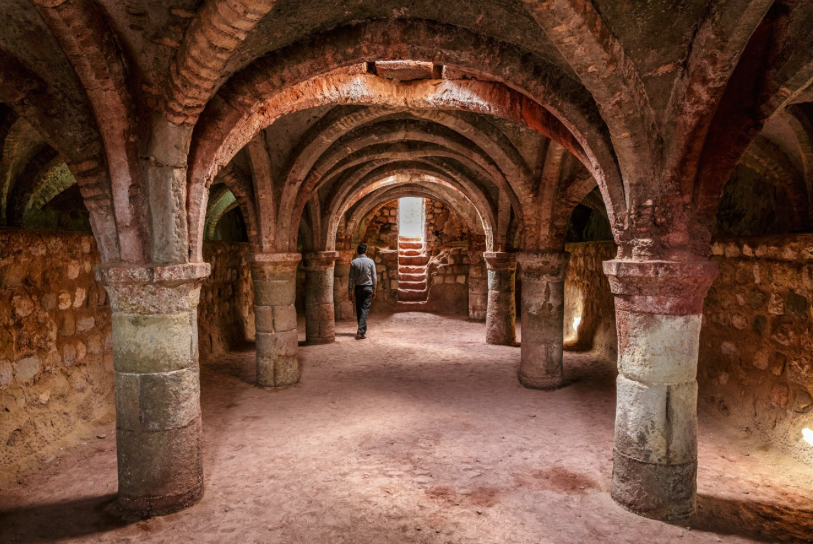
Both islands are home to some of the oldest settlements in the Middle East, with a number of historic mosques and shrines, and I explored the crumbling ruins of ancient Portuguese castles and forts.

In 1507 the Portuguese conqueror Afonso de Albuquerque attacked the island of Hormuz, and it became a part of the Portuguese Empire. For over a hundred years, the Portuguese occupied the island, also capturing other islands and ports nearby, including the island of Qeshm. Their rule came to an end in 1622 when the Safavid king, Abbas I, conquered the Portuguese territories, forcing them to leave the Persian Gulf. Below you see remains of a chapel at the Portuguese fort on the island of Hormuz.

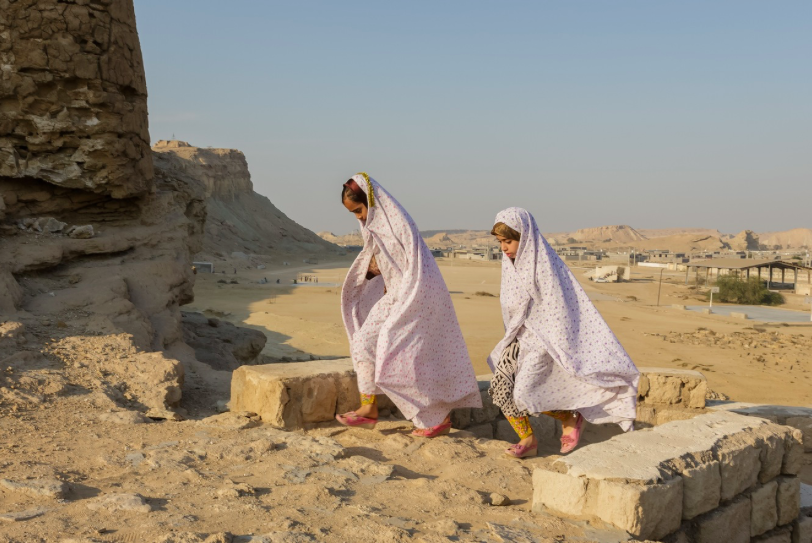
During 2009 Iran and Portugal prepared joint plans to restore historical sites in this region, however, little work seems to have taken place since then. These two young girls were passing through the ruins of the ancient Portuguese castle in the village of Laft, on Qeshm island.

Qeshm island is also home to large reserves of natural gas and a massive military presence. In early 2012, an underground military facility was established, designed to house Iran’s Ghadir-Nahang class submarines. The week after my visit a mock US warship was sunk just off the coast here by missiles fired from the main base in the east of the island.

Military service is mandatory for Iranian men. Except for special exemption cases, men not completing their service are unable to apply for a driving license, passport, or leave the country without permission.

Today the communities living on the islands of Hormuz and Qeshm are small, and in addition to natural gas exploration and production, fishing is one of the primary occupations for inhabitants of these islands.

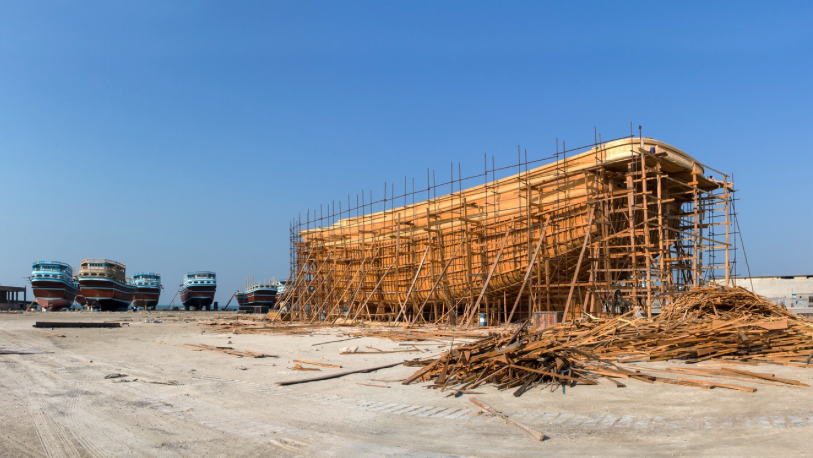
Above you see a partially constructed Iranian lenge on Qeshm island, which is a traditional style of fishing vessel made of wood.

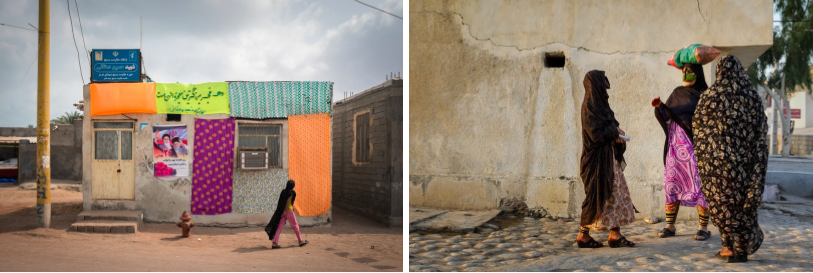
Above: (Left) A colourfully adorned house on Hormuz with a poster of Iran’s past and present. (Right) Women on Qeshm Island 

My hope is that the images shared in this story show a bit of both sides of Iran, as it is certainly a place that defies preconceptions.

Today, despite its beauty, rich history, and welcoming people, there is still a long way to go before it becomes a country where all of its people can feel safe, secure, and able to provide a better life for their children

Above: Morning light shines across the spectacular Nasīr al-Mulk Mosque in the city of Shiraz. The exterior of the building was completed in 1888. 


ORIGINALLY PUBLISHED ON MAPTIA  


BROOK MITCHELL

@brookmitchell

Brook Mitchell is a photographer and writer based in Sydney, Australia. His work ranges from local and national press for Getty Images and The Sydney Morning Herald, to longer form editorial articles and photo essays from around the globe.  

Turning Tears to Power in Nepal

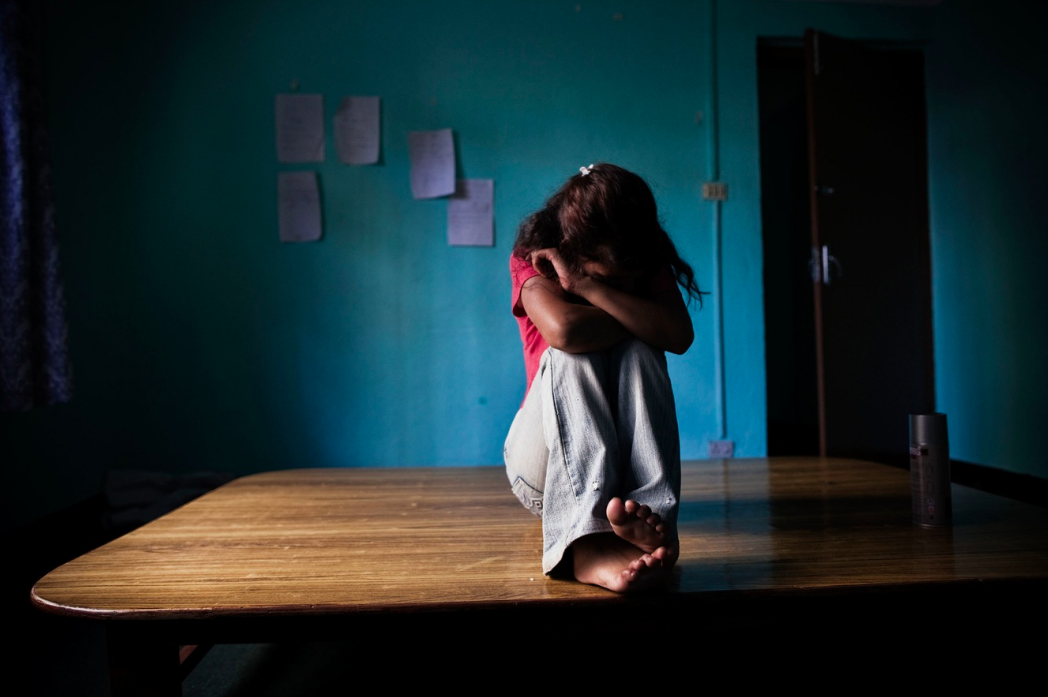
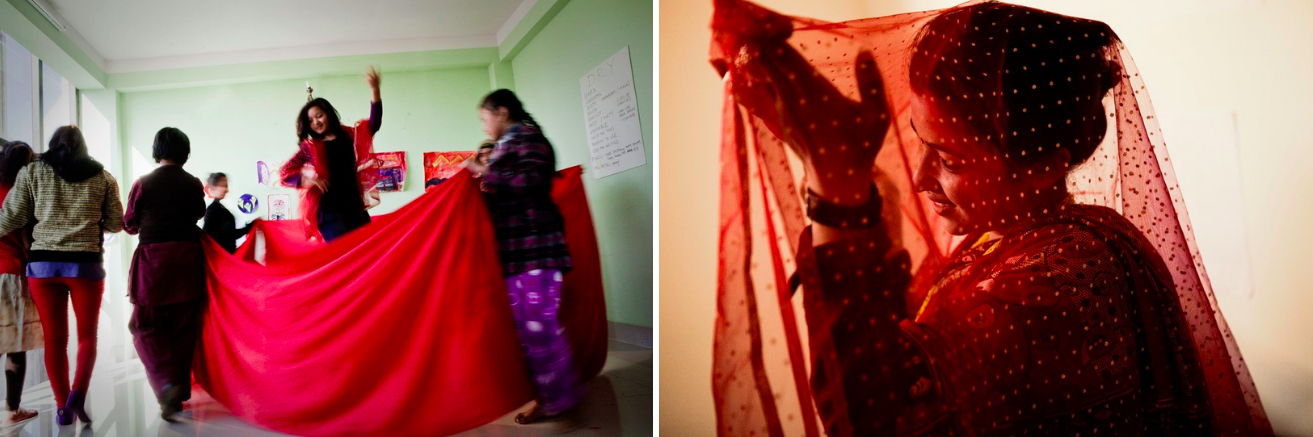
Young girls share their life stories with photographer Katie Orlinsky at a rescue center in Nepal that helps victims of sex trafficking regain their freedom and happiness.

Regularly described as one of the poorest and least developed countries in the world, Nepal is a ‘source’ country for traffickers, and its most marginalised people are also the most frequently targeted. While its capital Kathmandu benefits from a growing tourist economy, in general the country’s economic potential (for example, through opportunities to develop hydropower) is stunted by continued political instability, as well as very poor infrastructure.

Rural Nepalese — some 80% of its people — rely on subsistence farming, which frequently does not provide a stable or sufficient income to feed a family. It is under these already difficult circumstances that the sweet-talking and cajoling of sex traffickers infiltrate and take hold.

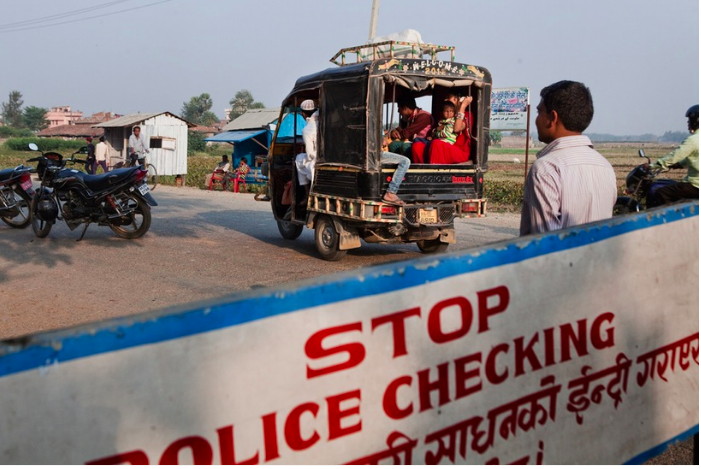
Passing through the India-Nepal border in Gaur, Nepal. Nepal’s border police have been notoriously lax in stopping suspected traffickers and are known to be susceptible to bribery. (Photograph: Katie Orlinsky) Narayani, Central Region, Nepal

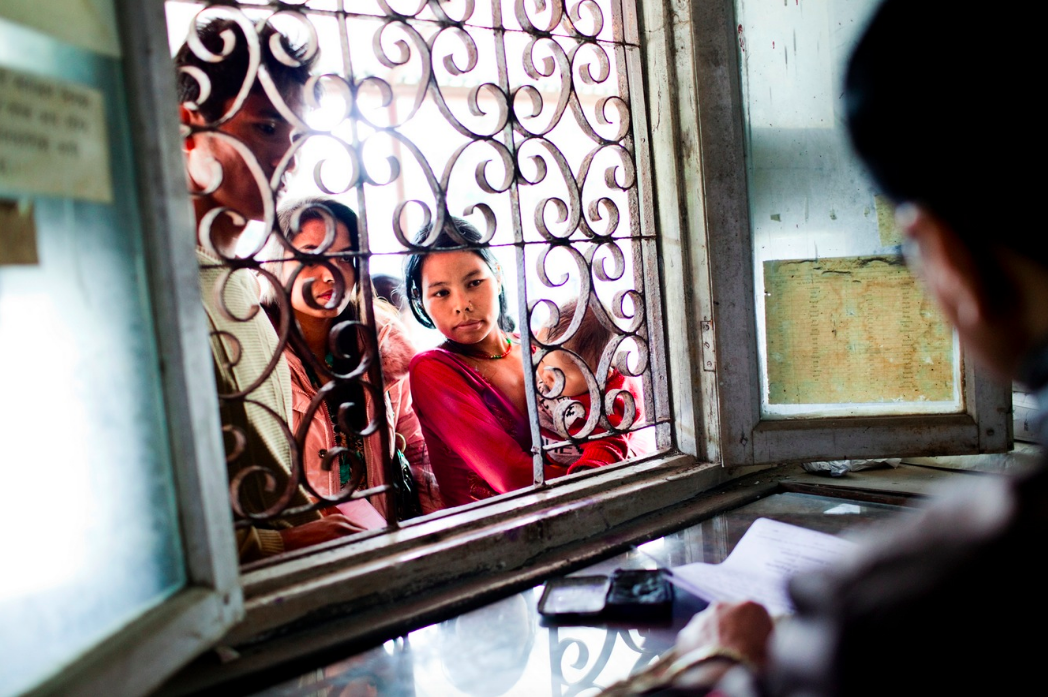
Fake migration schemes are one of the most common ways girls end up trafficked. Job options are scarce in Nepal, and around 200,000 women leave to work abroad every year, mostly as domestic servants. Poor, rural women think they are going to be domestic workers in Dubai, but instead end up working as prostitutes in Delhi.

Seeking migration paperwork at the district administration office in Haidera. (Photograph: Katie Orlinsky) Narayani, Central Region, Nepal

The sex traffickers methods are varied and unpredictable, which is why so many people fall victim to trafficking in this region, despite the initiatives and interventions of extraordinary agencies on the ground.

 Shakti Kendra in Kathmandu is one such shelter, managing to educate hundreds of girls. I met fifteen current residents during my stay, all survivors of trafficking to brothels in India or of rape within Nepal itself.

Founded by Charimaya Tamang — the first trafficking survivor in Nepal to press charges against her traffickers and win — all of the staff at the shelter are also formerly trafficked women, some of whom have been specially trained by Shakti Samuha in Japan on how to run workshops and look after their young charges.

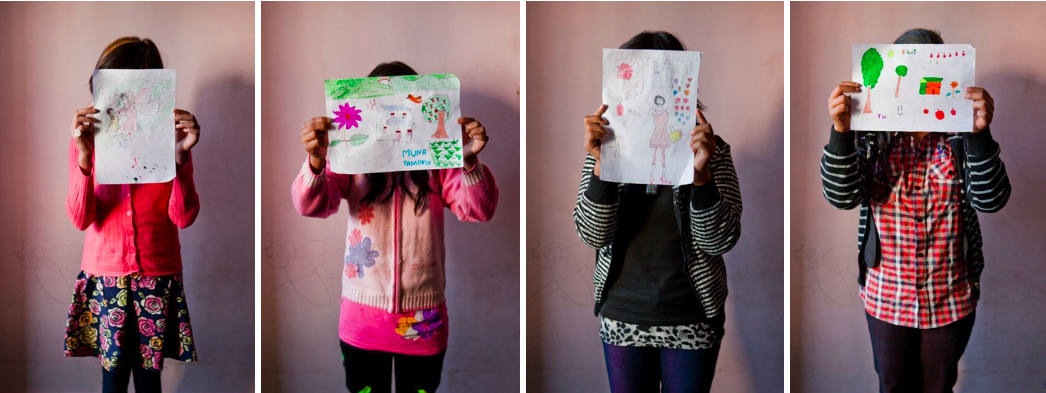
Young sex trafficking survivors at the Shakti Kendra shelter in Kathmandu, Nepal holds up their favorite drawings. From left to right, “an angel helping a girl in need”, “an imaginary house”, “going shopping”, “a house in the mountains” (Photographs: Katie Orlinsky) Kathmandu, Nepal

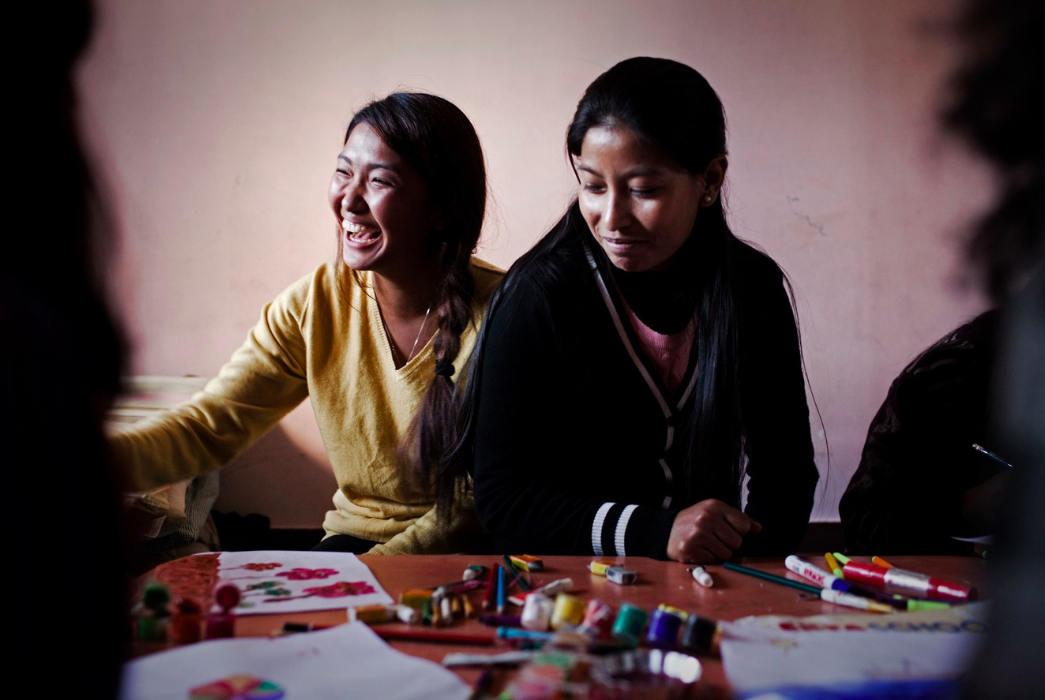
The children living at Shakti Kendra take classes at the centre and are also involved in drama, weaving and jewellery making programmes.

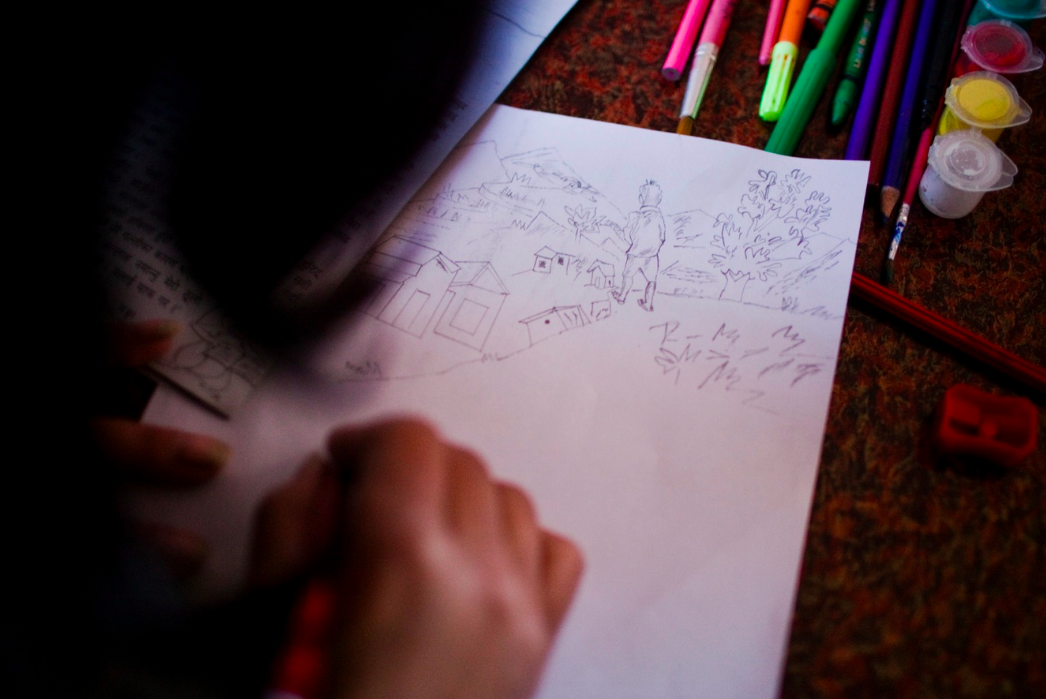
A young survivor at Shakti Kendra traces a scene from an anti-trafficking awareness cartoon. (Photograph: Katie Orlinsky) Kathmandu, Nepal

As a photographer, the Shakti Kendra shelter was an extremely challenging place to work. It has a strict media policy to protect the identities of all of its members. Still, I wanted to document the girls’ world, but it meant I had to be patient, and make a lot of images with turned backs, blurred faces and deep shadows.

An underage trafficking survivor rehearsing a play about trafficking at Shakti Kendra shelter. (Photograph: Katie Orlinsky) Kathmandu, Nepal

In time, some of the adults opened up and let me tell their stories, but for the children, the policy was non-negotiable. Although frustrating from the point of view of documenting this issue, I respected this choice.

Trafficking survivors face huge stigma in Nepal, where the shame associated with the sex industry is so great that most survivors’ families don’t even want their own daughters to return home if they have been rescued.

A photograph discovered on the internet identifying a trafficked girl or woman could have repercussions — from an employer not wanting to hire them to a man not wanting to marry them.

Drawing class at the arts and crafts centre at Shakti Kendra Shelter. (Photograph: Katie Orlinsky) Kathmandu, Nepal

I was by no means the first foreign visitor to the shelter, but it was hard to tell judging by how excited they were to see me. Some nights I would stay late to watch TV with them, and those were probably some of my most relaxing and memorable evenings in Nepal. I stopped thinking about the pictures and interviews and would just enjoy the company of the sweetest girls in the world as they tried to teach me Nepali and asked me a million questions on every last detail of my life.

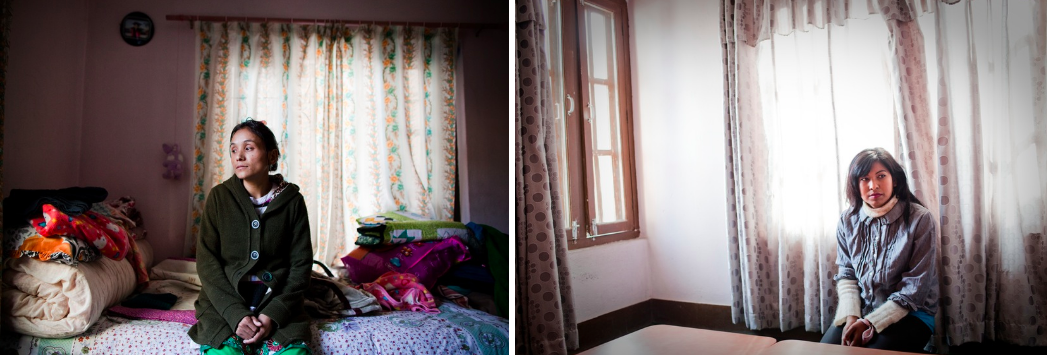
[1] A sex trafficking survivor who works at the Shakti central office as a receptionist. [2] A sex trafficking survivor, who now works at Shakti Kendra shelter as a recreation officer and teaches weaving. (Photograph: Katie Orlinsky) Kathmandu, Nepal

Growing close to women and girls who have experienced such a level trauma was difficult and emotionally exhausting at times. 

It was particularly hard with the children, like thirteen-year-old Sabina who had been rescued from a brothel in India just six months ago. She had a bright smile and so much love to give it seemed she might burst.

A Shakti Samuha adolescent group meeting in a slum area of Kathmandu, where staff members raise awareness about trafficking related issues with at-risk youth. (Photograph: Katie Orlinsky) Kathmandu, Nepal

She loved pop music and called me ‘Katy Perry’. I couldn’t stop thinking about the fact that she was the same age as my niece in New York, and how Sabina has already lived a life filled with more pain than I hope my niece would experience in a lifetime. Sabina dreamed of travelling, studying and getting a good job to help her family, who lived close by. She missed them, and talked about them constantly. What she had yet to understand was that it was her own family who sold her into trafficking.

Residents and staff at Shakti Kendra perform a play they wrote and directed themselves. (Photograph: Katie Orlinsky) Kathmandu, Nepal

Trafficking in Nepal is not only something that can be managed and prevented, it can end, and it can happen within our lifetime.

It starts with the work of anti-trafficking survivor-run organisations like Shakti Kendra. These women have the motivation, ability, sensitivity and understanding to tackle the issue from all angles, from prevention and rescue, to prosecution and rehabilitation. They will not shy away from fighting to identify and imprison traffickers and their collaborators, from small-time pimps to local police to family members.

One day these young girls at the centre will take their place as the next generation’s leaders in the fight against trafficking.

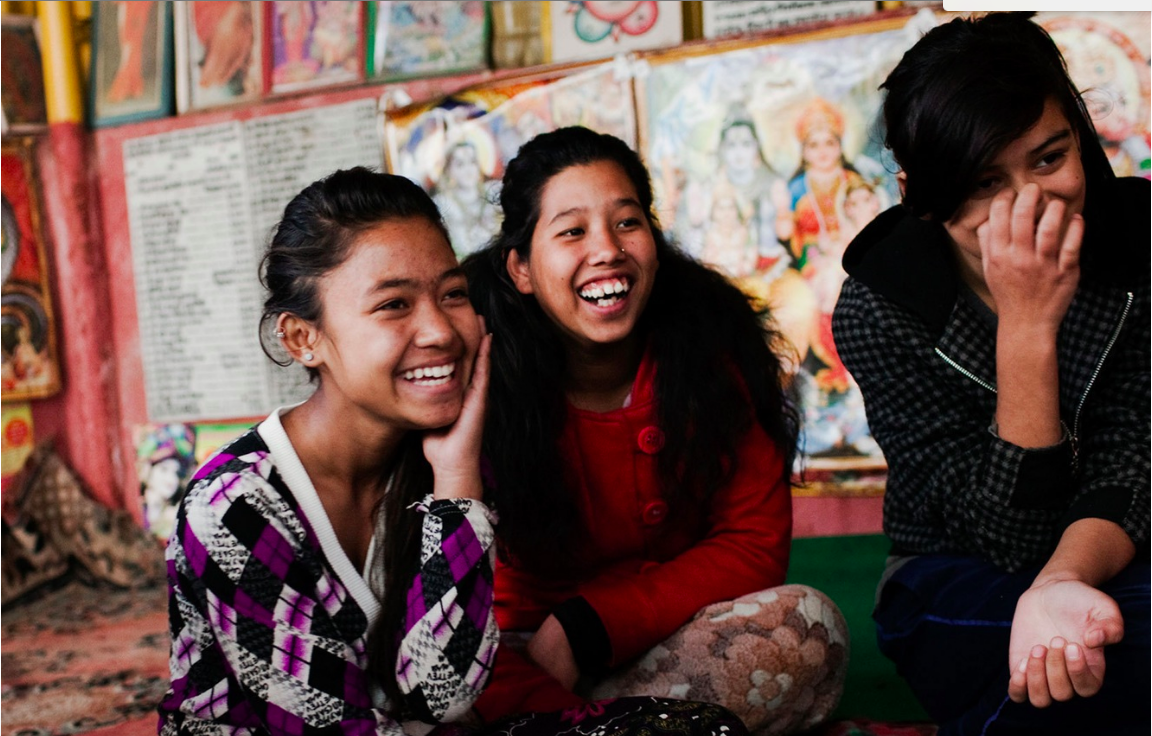
Young residents dancing at the Shakti Kendra shelter. (Photograph: Katie Orlinsky) Kathmandu, Nepal

ORIGINALLY PUBLISHED ON MAPTIA 

WRITTEN BY THE LEGATUM FOUNDATION

VIDEO: Catalyst Series on Talking with Lineage Project

CATALYST talks with Gabrielle Horowitz-Prisco, Executive Director of Lineage Project, the social action organization bringing mindfulness and meditation to at risk and incarcerated youth in New York City.

CATALYST talks with Gabrielle Horowitz-Prisco, Executive Director of Lineage Project. LP is a social action organization that brings mindfulness and meditation to at-risk and incarcerated youth in New York City. 

UTAH: Sweet Morning Light

Cam McCaul of Trek C3 Project headed out to southern Utah when the season started to wind down. He had some zones he wanted to further explore on his Trek Session Filmed By: Harrison Mendel and Nic Genovese Edited By: Harrison Mendel Color By: Harrison Mendel Title Design: Studio Dialog Sound Design/Mix: Racket Sound Still Photography by: Nic Genovese Special Thanks: Lorin Whitaker "Sweet Morning Light" Performed by Weed

Cam McCaul of Trek C3 Project headed out to southern Utah when the season started. This video highlights some of the zones he explored for the first time. 

NAMIBIA: Colors of a Country

Namibia is a land of contrasts and extremes. Situated between the Namib and the Kalahari deserts, Namibia gets less rain than any other country in sub-Saharan Africa. Namibia’s coastal desert is one of the planet’s oldest, with powerful offshore winds sculpting the highest sand dunes in the world, in some places rising more than 1,000 feet.

Water — or more to the point, its absence — defines life in Namibia.

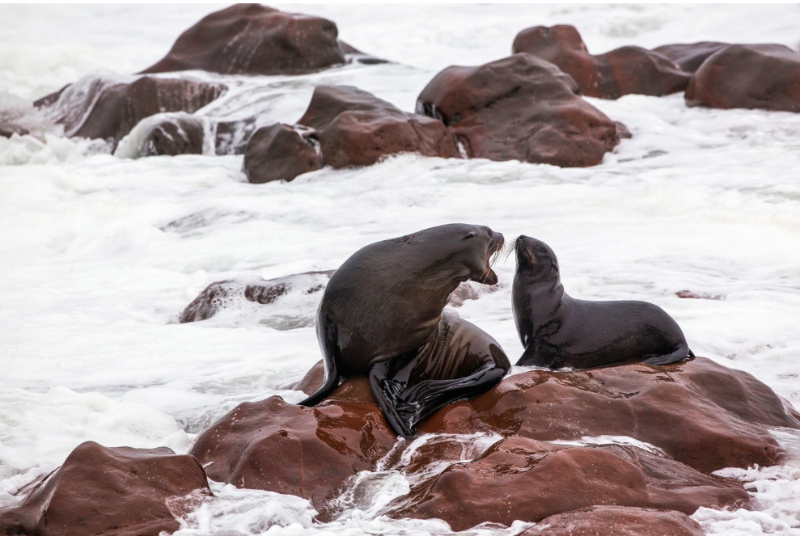
Hot and arid in the interior, Namibia’s coast is surprisingly cool and moist, the product of the cold Atlantic colliding with Africa’s warm and dry southern tip. Seals and sea birds come by the thousands to congregate in this narrow temperate zone.

In the rest of the country, only where there is water is there life. Here is my vision of this untouched and primal land, with its towering red sand dunes, vast deserts, and wild animals struggling to survive. 

KOLMANSKOP

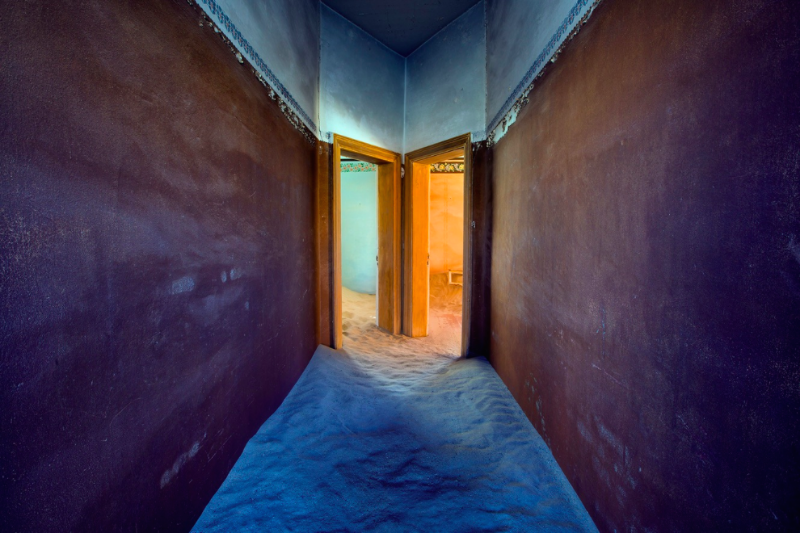
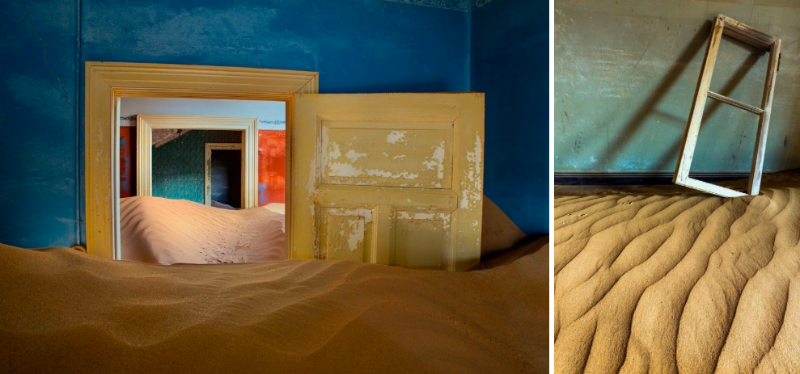
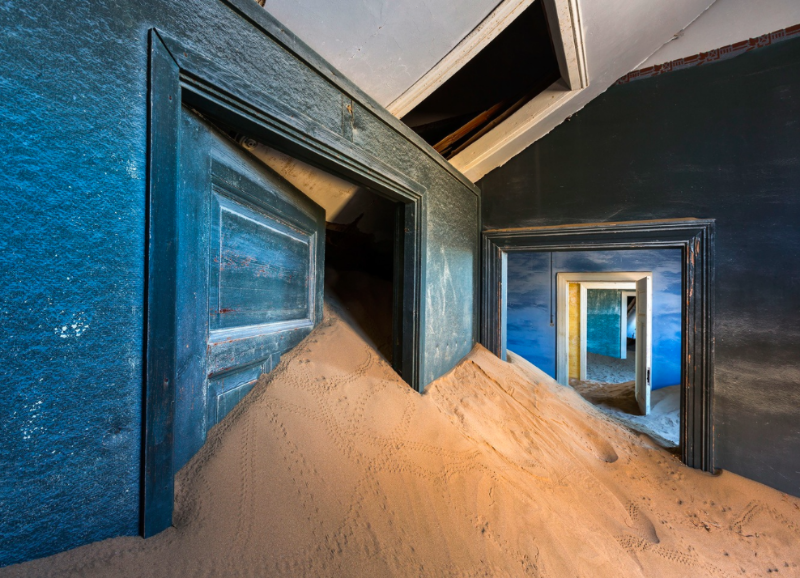
Kolmanskop is a deserted German mining settlement located in Namibia. The town was abandoned in the 1950s, and the desert has been reclaiming it ever since, creating an interesting mix of colorful painted walls and sweeping sand dunes engulfing entire rooms.

QUIVER TREE FOREST

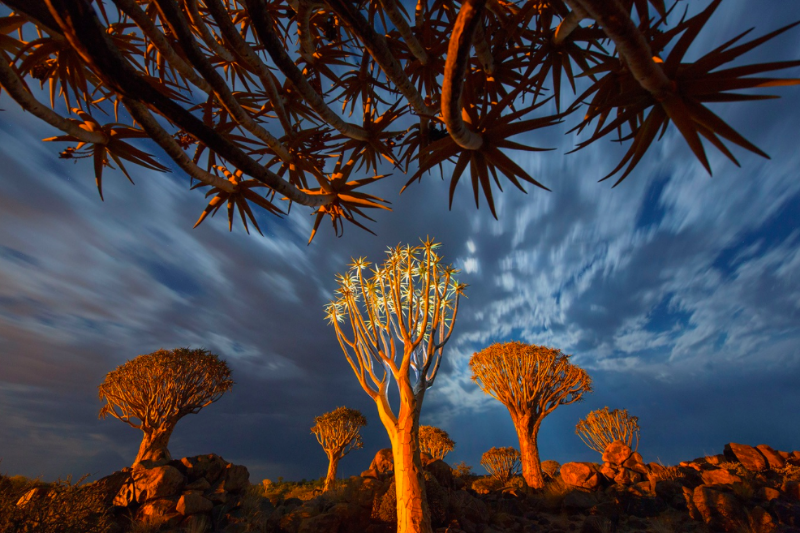
The Quiver Tree Forest, near Keetmanshoop, contains a collection of the so-called “quiver trees” which aren’t really trees at all, but rather a species of aloe, a flowering succulent plant.

NAMIB-NAUKLUFT NATIONAL PARK

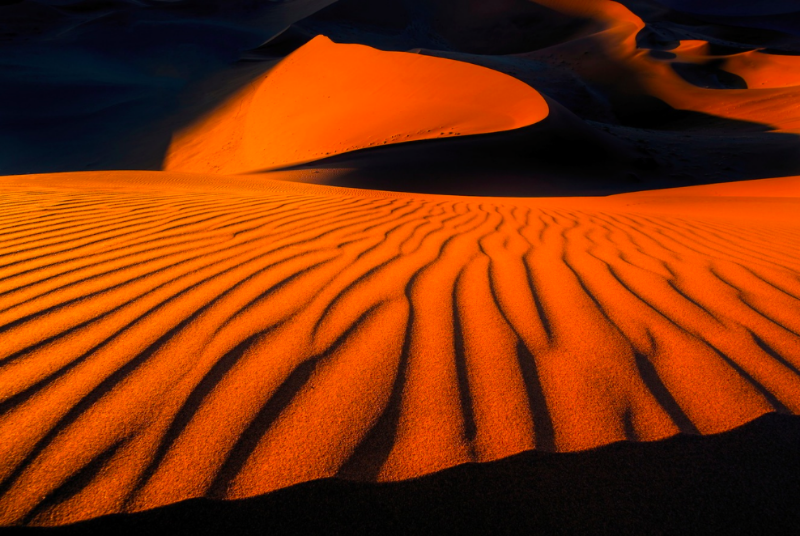
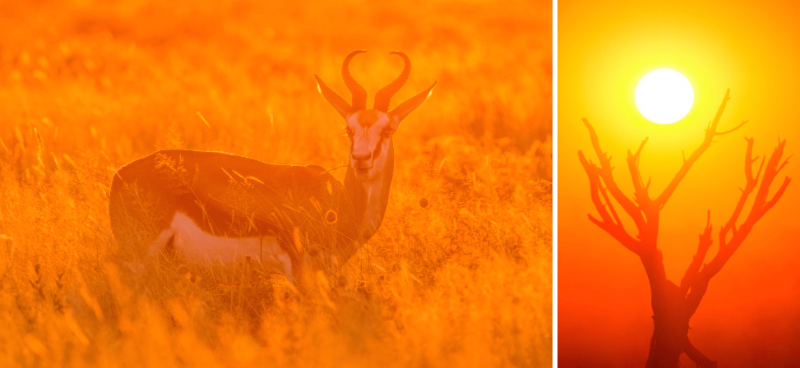
Namib-Naukluft National Park preserves part of the extensive Namib Desert. The most famous area of the park is called Sossusvlei, which contains the tallest sand dunes in the world, rising more than 1,000 feet above the desert floor. Oxidization of iron in the sand gives them a reddish-orange color, which becomes especially intense when bathed in the warm light of sunrise and sunset.

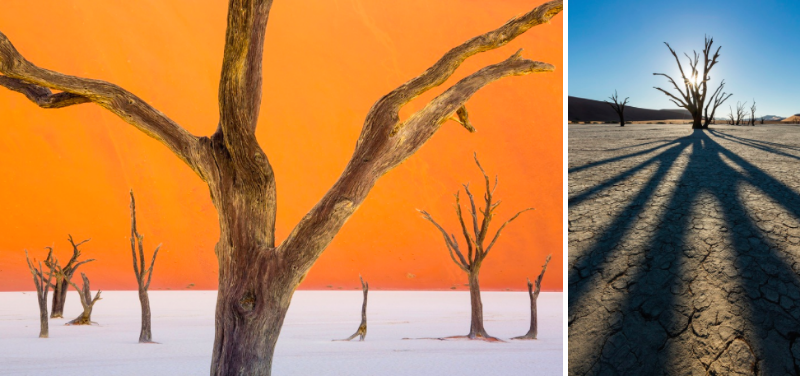
One of the most stunning places in Sossusvlei is known as Deadvlei (which means “dead marsh”). The area used to be wet and covered in trees, but 600 or 700 years ago the water dried and the trees died, their eerie skeletons preserved by the dry air.

ETOSHA NATIONAL PARK

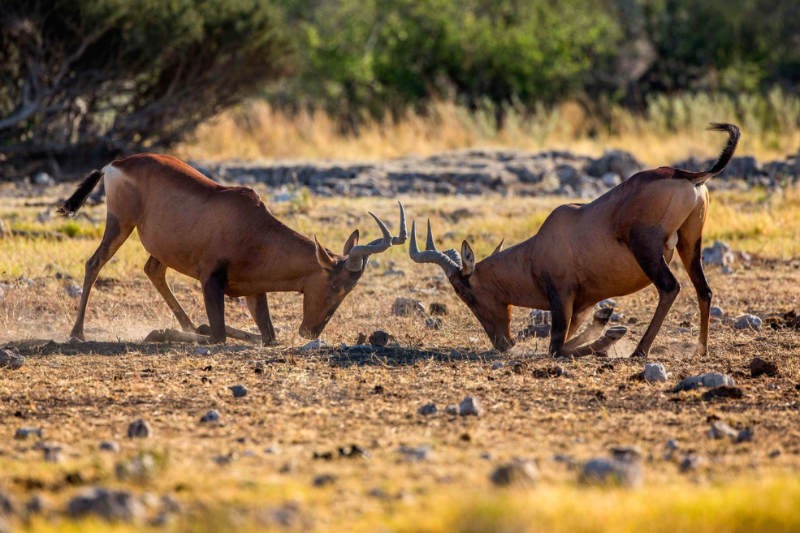
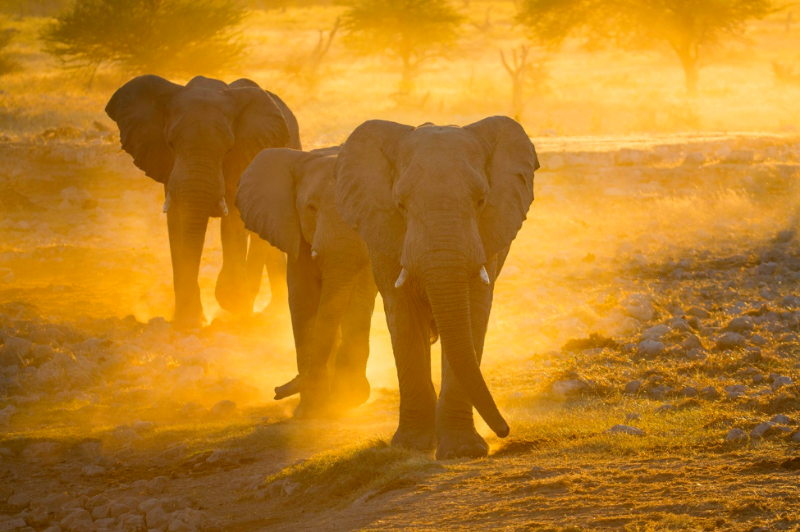
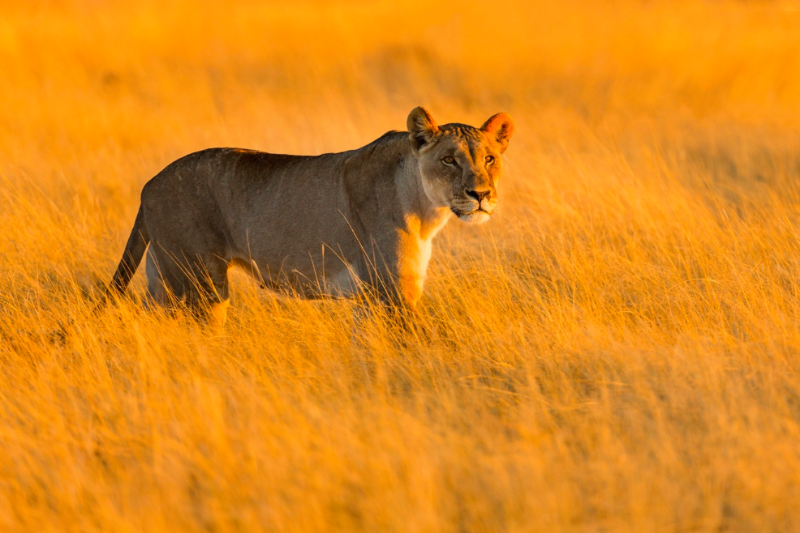
Etosha National Park is a beautiful national park in northwestern Namibia, known for its abundance of large game animals, including elephant, lion, rhino, giraffe, cheetah, zebra, and many more. What amazes me most about Etosha is the clear, strong light at sunrise and sunset, bathing animals and landscapes in warm color.


ORIGINALLY PUBLISHED ON MAPTIA 


IAN PLANT

@IanPlantPhoto 

World-renowned professional photographer, writer, and adventurer Ian Plant is a frequent contributor to and blogger for Outdoor Photographer Magazine, a Contributing Editor to Popular Photography Magazine, a monthly columnist for Landscape Photography Magazine, and a Tamron Image Master. Ian is also the author of numerous books and instructional videos. See more of his work at www.ianplant.com

ITALY: Rainbow Warriors

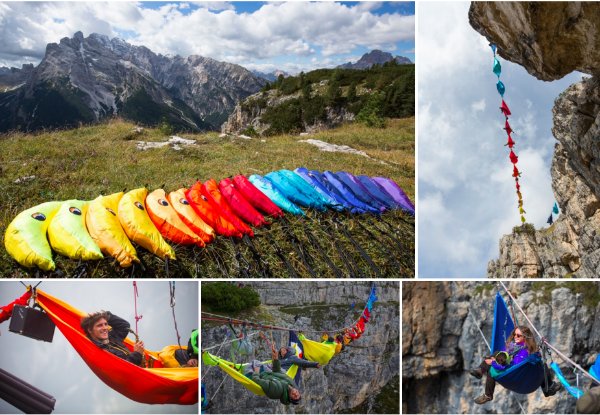
The idea to sleep in a hammock suspended hundreds of feet above the ground in such an incredible place was born back in 2012 at the very first Highline Meeting held on Monte Piana, a peak of 2.324 meters.

The event was founded by Alessandro d‘Emilia and Armin Holzer, two highliners who wanted to share the spectacular scenery of Monte Piana (Misurina) in the Dolomites, giving professionals and enthusiasts from all over the world the chance to slackline between mountain peaks, hang out in hammocks strung high in the sky, and meet like-minded people.

This year the place where d‘Emilia, Holzer and action coordinator Igor Scotland from Ticket to the Moon hammocks built their set up was memorable not only for its natural beauty but for its particular historical importance. One century ago, fierce battles broke out in the shadow of Monte Piana in the Italian Dolomites as WWI began, and today the area is an open air museum to honor the memory of the 18.000 young soldiers who lost their lives here. The seven kilometers of trenches are still visible.

“Just a hundred years ago, winters up here were characterized by bombs, grenades, and lots of pain,” d’Emilia and Holzer explain in the video from the event. “Our idea was to re-experience Monte Piana in friendship and peace with each other, accompanied by kindhearted feelings during the day, and lulled to sleep at night by magical silence.”

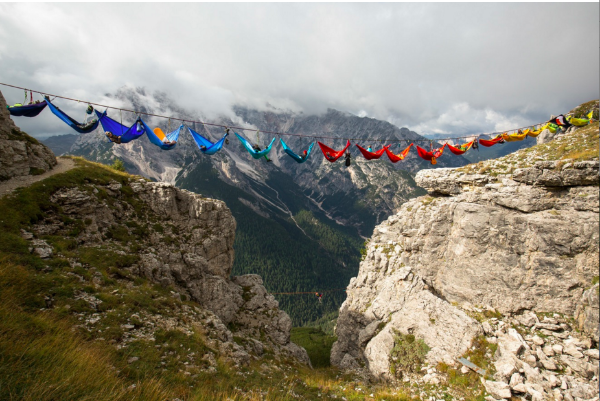
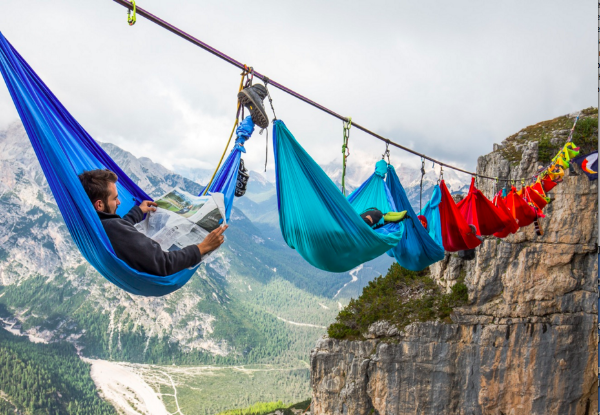
On September 10th 2015 this idea came to life and their unique project took place for the third time. 26 athletes came together to sing, laugh, and relax in 17 specially designed rainbow hammocks strung high in the sky between the peaks — a symbol of peace and a tribute to the past.

The stunt, named “Rainbow Warriors”, was performed and designed by a professional team of athletes and riggers, and the set up has a breaking strength of greater than 150 kN (15.000 kg) for the main line, along with a redundant back up. The maximum force at any one time on the line during the event was 32 kN (3.200 kg).

The values and principles of d’Emilia and Holzer — a non-competitive spirit and practicing respect for the mountain so that they can be in harmony with the location — are also shared by all of the participants.

Today Monte Piana has become a meeting point for young people from all over the world who want to share more than a passion for the sport of highlining, who come to share a philosophy and a way of life.

ORIGINALLY PUBLISHED ON MAPTIA


SEBASTIAN WAHLHUTTER

@swalhuetter

Sebastian Wahlhútter is a photographer and anthropologist from Vienna, Austria. 


PERU: Sex Worker Runs for Congress

Angela Villon has earned a living as a sex worker for over 30 years. Now she plans to fight sex trafficking and violence against women and girls by running for congress in Peru's upcoming elections.

Angela Villon has earned a living as a sex worker for over 30 years. Now she plans to fight sex trafficking and violence against women and girls by running for congress in Peru's upcoming elections. 

USA: One Stitch Closer with Veronika Scott

Get inspired by Veronika, CEO and founder of The Empowerment Plan, who empowers women to become more independent. #WomenInspire http://www.gap.com/onestitchcloser

Get inspired by Veronika Scott, the 24-year-old founder and CEO of The Empowerment Plan, a non-profit that empowers women to be live the lives they want to lead. 

AUSTRALIA: Nowhere Line - Voices from Manus Island

An animated short film, narrated by two asylum-seeking men detained in Australia's Manus Island Offshore Processing Centre, recounting the dangerous journeys that brought them to the island and their memories of the riot that erupted in 2014. ---------------------------------------- In July 2013, the Australian Government introduced a controversial immigration policy, transferring asylum seekers arriving by boat to remote offshore detention centres on foreign Pacific islands. Seven months later, the Manus Island centre erupted in violence when police and guards put down protests with sticks, machetes and guns, and 23 year-old asylum seeker Reza Barati was killed. We spoke to Behrouz and Omar, who are currently detained on Manus Island. This film contains recordings of these conversations. --------------------------------------------------------------------------------- AWARDS AND SCREENINGS: WINNER: Best Short Documentary, Melbourne International Film Festival 2015 NOMINATED: Best Animation, Raindance 2015 SPECIAL RECOGNITION FOR ANIMATION: San Francisco International Short Film Festival 2015 SHORT DOCUMENTARY COMPETITION: Flickerfest 2015 OFFICIAL SELECTION: Palm Springs Shorts Fest 2015 OFFICIAL SELECTION: British Animation Film Festival 2015 OFFICIAL SELECTION: Interfilm, Berlin 2015 --------------------------------------------------------------------------------- CREDITS Directed and Produced by Lukas Schrank Character Artwork by Luke Bicevskis Executive producers Carly Bojadziski | Gilbert Caluya | Neil Holden | Peter Murphy | Kevin Roberts | Lucy Best 2D Character animation Lukas Schrank | Marisa Rossi Matte painter Himashis Karmakar 3D character rigging and animation Elmer Frihdson Ona | Melvin Riego 3D face modelling Edgar Marocsek Production Design Lukas Schrank Music Composed by Ian King Sound design and mix by Nick Ryder at Bamboo Audio Colourist Daniel Stonehouse at Crayon Creative consultant Peter Savieri Editor Chris Ward Fixer Hossein Babaahmadi Copywriter Emma Koster Publicists Soraya Dean Miguel Oyarbide Music ‘Gnossienes 1’ Written by Erik Satie Performed by Carl Banner

Nowhere Line: Voices from Manus Island is an animated short film, narrated by two asylum-seeking men in Australia's Manus Island Offshore Processing Centre. During the interview, the men recount the dangerous journeys that brought them to the island, as well as their memories of a large riot that erupted in 2014.