
Here are some of the common problems I have seen in the voluntourism market and some tips for travelers on how to choose the right program.
Read More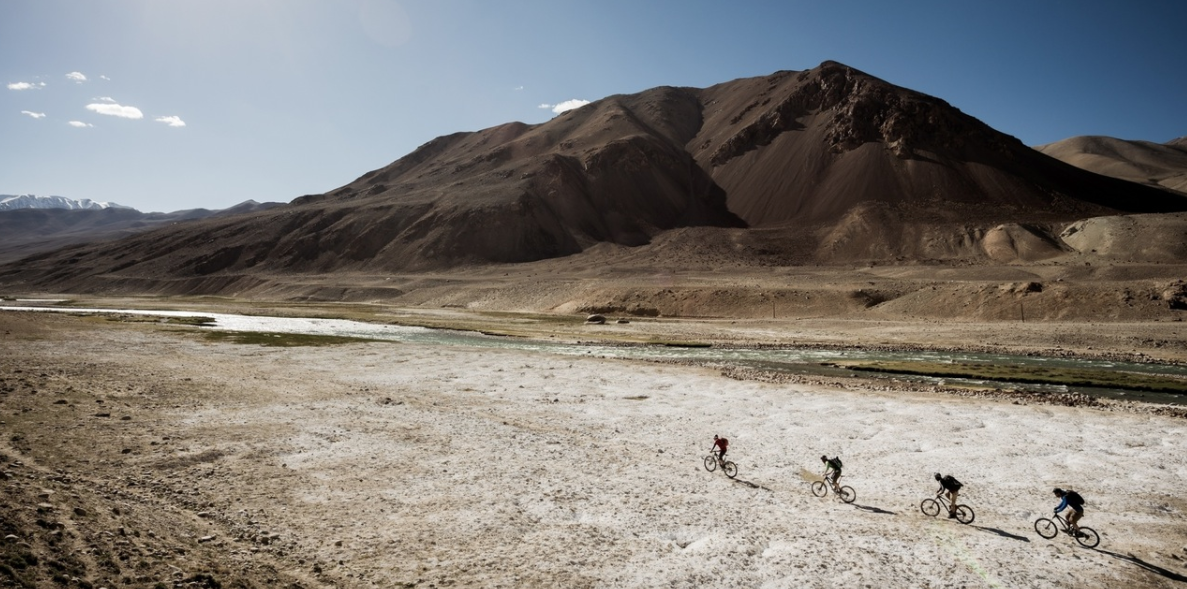
The Quest for Afghan Singletrack
“His name means ‘soldier’,” says Yaar Mahahammad, our translator. Yaar is talking about Askarkhan, a thirteen year old boy who has been hefting rocks to form the foundations for a new stone hut with the kind of ease that puts my own strength to shame.
Askarkhan looks at us with piercing, curious eyes from beneath his over-sized, hand-me-down clothes. Despite his military-sounding name, his clothes have no resemblance to a uniform, and he doesn’t need one. Here, at 4,305 metres amidst the swirls of a snowstorm in the remote Wakhan Corridor, Askarkhan is far from the war and troubles that have tragically become synonymous with his home country, Afghanistan.

Thirteen-year-old Askarkhan, whose family are semi-nomadic shepherds in the remote Wakhan Corridor.
In these regions the best weapon for survival is resilience, not a rifle. Guns are useful against marauding wolves, but it is resilience that will see Askarkhan brave the short, eight-week summer of herding yaks and sheep high on the mountainsides. Resilience that will arm him against the cold of night, the relentless snowstorms possible on 350 days of the year, and the thin air. I have a lot to learn. All in all, this is probably the harshest place I have ever been, so why the hell are we trying to ride bikes here?
Today, the snow buries our six bikes and tents alike. Above us, enveloped in dense fog, sits the way ahead. At 4,860 metres, the Karabel Pass is the second of three high passes that we have to brave during our twelve day pioneering mountain bike traverse through the Wakhan Corridor. Navigating each pass means an early 4am start, as we must give the pack animals carrying our supplies a good chance of crossing while the snowpack is still frozen hard. Each climb requires dragging ourselves from warm sleeping bags to force on frozen bike shoes hours before any sign of breakfast. But each pass, we hope, will deliver another brake-searing singletrack descent.
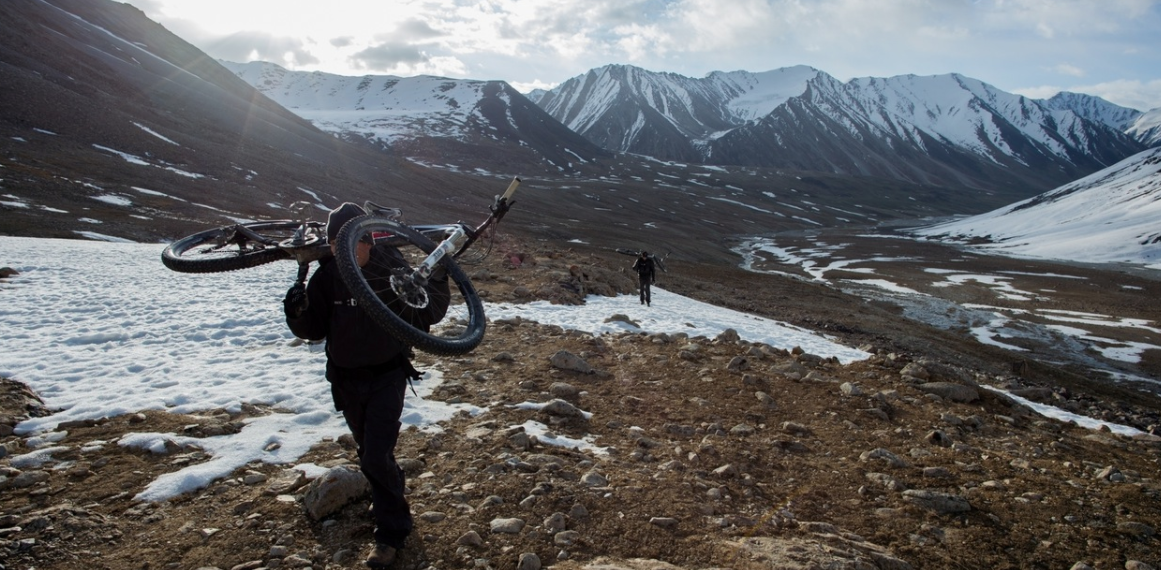
Colin Jones, half way up the 4,867 metre Shawal Pass. Early, first light starts, usually at 4am, mean that our pack animals can safely cross the snowpack while it’s still frozen.
As far as adventure-bike trips go, it doesn’t get more adventurous than this. The term ‘adventure’ seems to put such trips outside the normal remit for whinging. After all, if the going gets tough, then that is just part of ‘adventure’. Yet after thirty years of remote mountain biking trips, this one is stretching my resolve. If “hard-earned” is the price you pay for riding where no one has ever ridden before, then we are certainly paying the price in Afghanistan. There has been nothing easy about our ride so far, from hefting our bikes across perilous, icy river crossings in churning waters, to the massive temperature swings that deliver 30°C heat one day and snowstorms the next. It is day five when we meet Askarkhan. We have seven more to go. I am tired, my feet are wet and my hands numb.
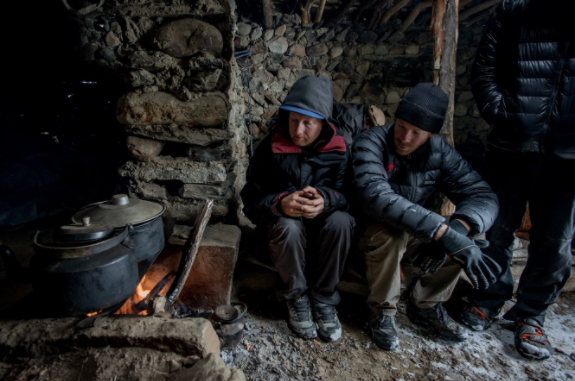
Pro rider Matt Hunter and cameraman Colin Jones huddle near the fire, inside a draughty shepherd’s hut during a day of blizzards at Karabel camp, 4,300 metres.
Every year the remote and wild Wakhan Corridor welcomes a small handful of intrepid trekkers, but nobody has tried to mountain bike across it until now. A week earlier, after the drive in, I start to understand why. With the road from Kabul deemed too dangerous for travel, the only way to enter the Wakhan is from the neighbouring capital of Dushanbe, in Tajikistan. It takes us four days of navigating dry, desolate boulder-strewn roads, fording rivers swollen with summer snow melt, in jeeps with bald tyres, cracked windscreens, and leaky radiators. We took turns to ride shotgun alongside our driver, while the cassette player tried but failed to drown out the car’s rattles, its interior constantly filled with clouds of dust.
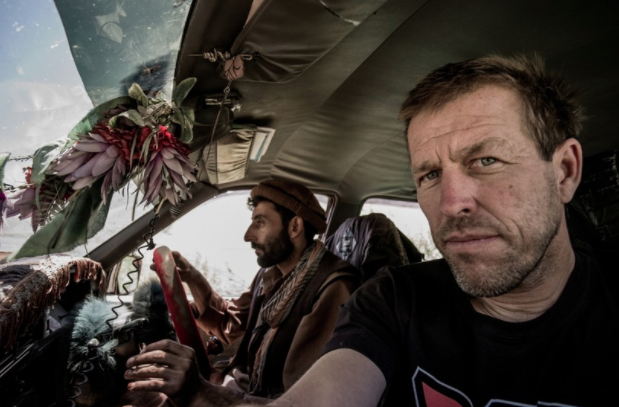
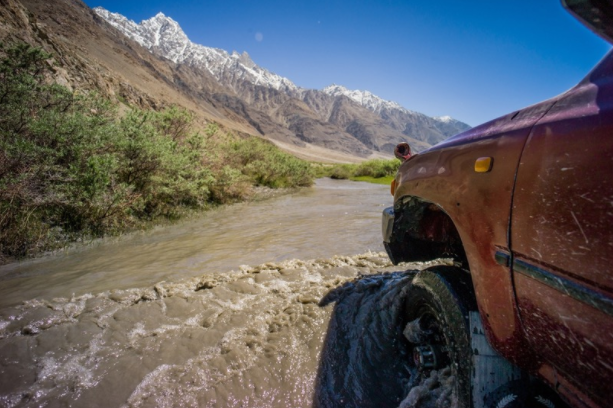
Riding shotgun in our Afghan jeep, a battered Toyota Hilux. There are few bridges in these remote regions and rivers are swollen with snowmelt.
Eventually we reach Sarhad, the village at the end of the dirt road and the starting point for our twelve day traverse of the Wakhan. Within the region’s arid landscape, such villages are an oasis of fertility. We spend two nights here, making arrangements to hire pack animals to haul the camping gear and the food we will need for the duration. For all of the assembled mountain bikers, including Canadian pro-rider Matt Hunter, the lure of this pioneering expedition is not about kudos or dubious bar-talk bravery.
It is the enticement of the unknown, of what lies beyond our usual boundaries. It is the magnetic appeal of hard-earned singletrack rewards that brings us to this unforgiving landscape.
Some might criticise venturing through such impoverished areas while flaunting our own relative wealth, but my experience suggests that such trips help break down barriers and educate both hosts and tourists alike. It is only through better understanding of different cultures that we can really do away with war.
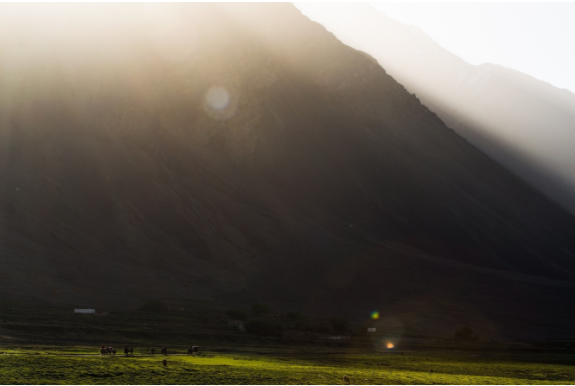
An oasis of green grazing lands surrounds the small Afghan village of Sarhad. At 3,400 metres it is the starting point for our ambitious traverse of the Wakhan.
Tom Bodkin, who runs adventure travel company Secret Compass and is the brains behind the outlandish expedition we have signed up for, lays out a patchwork of old 1980s Soviet maps on the grass. Without hacking into the US military’s drone programme, these old Soviet era maps are the only source of detail we have. The maps are a maze of tightly packed contour lines. As if adding items to a shopping list, Tom methodically points out a number of rivers swollen with snowmelt and high, snowy passes, any of which might prove un-crossable and cause our retreat.
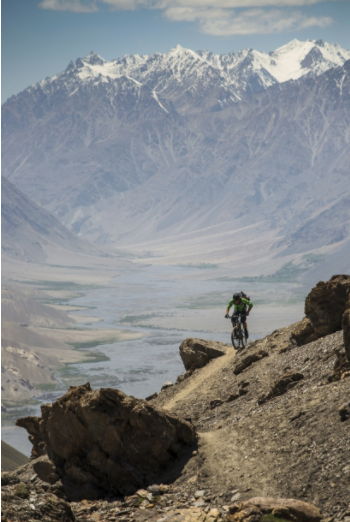
Canadian pro-rider Matt Hunter summits the 4,250 metre Dalriz pass, our first high pass of the twelve day traverse.
We strike out on day one, heading straight into a climb up the 4,250 metre Dalriz Pass, our first high pass of the ride, and a stunning view across the Little Pamir valley. Acclimatisation comes slowly to us, making the first two days a serious slog as we haul our bikes over these passes. Any semblance of vehicle, toilet, or cell-phone coverage is left behind us. Our tyres roll only on ancient trails chiselled into the dusty hillsides by centuries of determined pack animal traffic. For the first two days we follow part of the ancient silk route, beating its way East towards China, shadowed by the impossibly vertical peaks of Pakistan’s Hindu Kush.
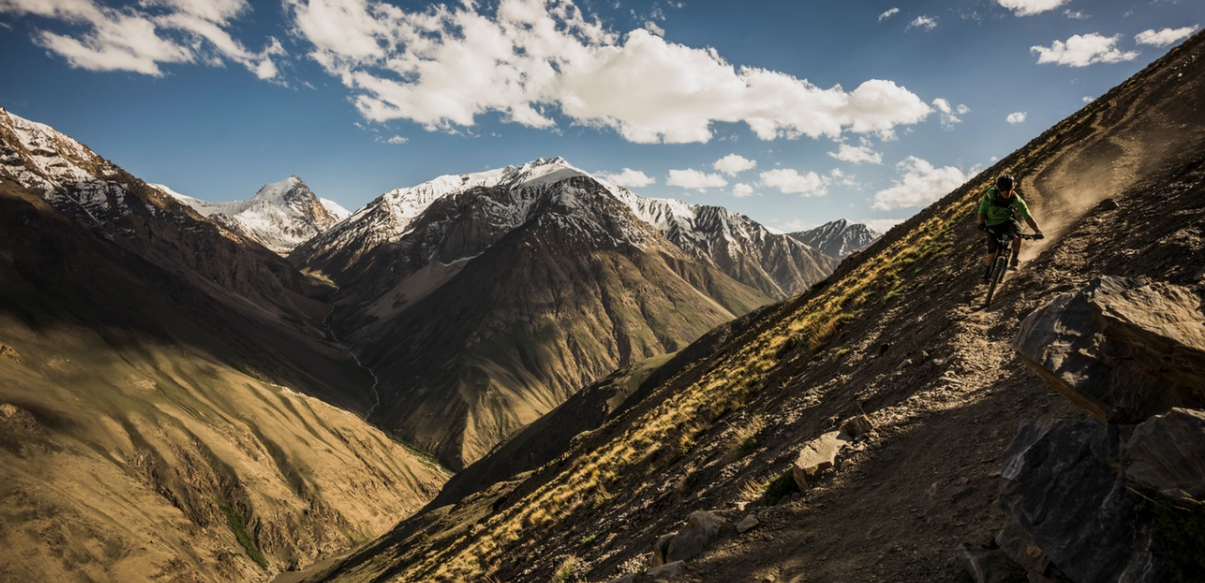
Wild, remote and high, the Wakhan Corridor’s landscape became the backdrop to the toughest expedition I have ever shot.
The locals here are among the hardiest and most resourceful people I have ever encountered. They have little choice to be otherwise. Surviving in this wild and unforgiving landscape is a constant challenge. There are few trees in the Wakhan, so yak dung is the default fuel for warmth and for cooking. Smoking fiercely when burnt, it fills the occasional stone huts our support team sometimes use for cooking duties with thick, eye-watering smoke.
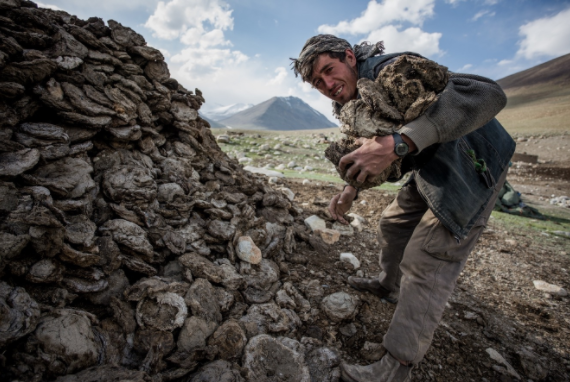
Collecting dried yak dung for the cooking fire. Respiratory complaints from the thick, acrid smoke the dung generates are common here.
We follow precarious trails perched high above the thundering Wakhan river, brown with meltwater silt. There is no shortage of off-camber, loose, narrow singletrack, making for challenging and nerve-racking riding, where a fall could spell calamity. For the first few days, getting the trail surface dialled proves to be a steep learning curve. Each of us deals with the exposure factor differently, but in the end it is the turbulent river crossings that become the single great leveller.
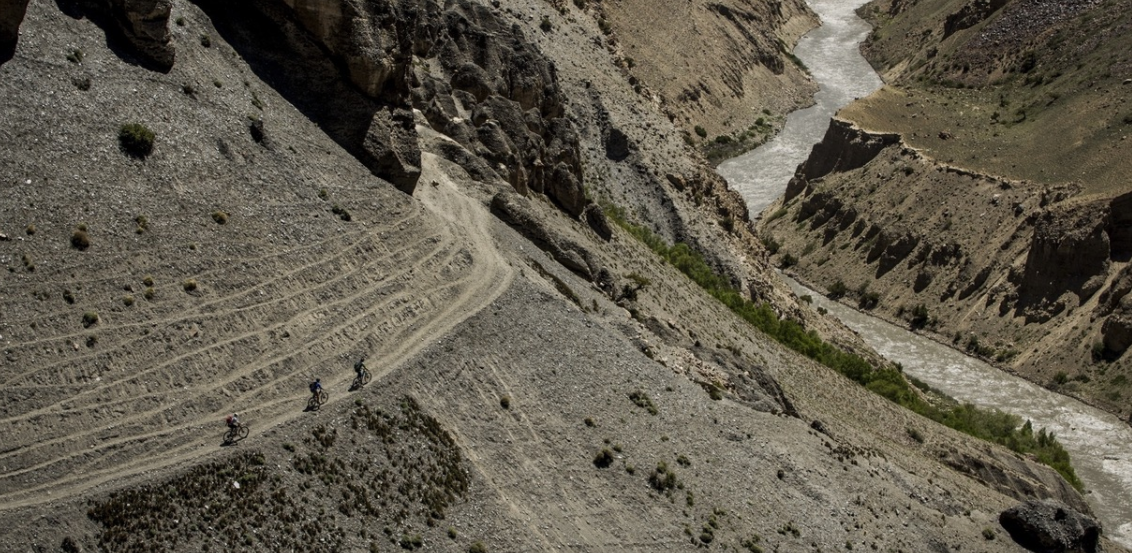
Navigating narrow, loose trails high above the churning Wakhan river, on day two. Rivers are swollen with meltwater in June.
In twelve days of riding, we only cross four bridges. For the remainder, we have no choice but to wade, often thigh deep, in icy cold, churning waters. At each river we stop, regroup and collectively plan a way across. A slip or fall here would mean a battering at best, and at worst losing a bike or even a life into the heaving mass of the Wakhan River below.
Every tributary we encounter is a raging torrent of ice-cold meltwater, formidably dark with silt. Carrying bikes becomes a game of nerves and balance. Numb feet become the targets for bowling-ball rocks, rolled along the riverbed by an angry current.
Meanwhile our enthusiastically grabbing, wildly shouting Afghan support team beckons from the far bank, adding to the drama. And then we have to get the donkeys across. It is a process we must repeat many times.
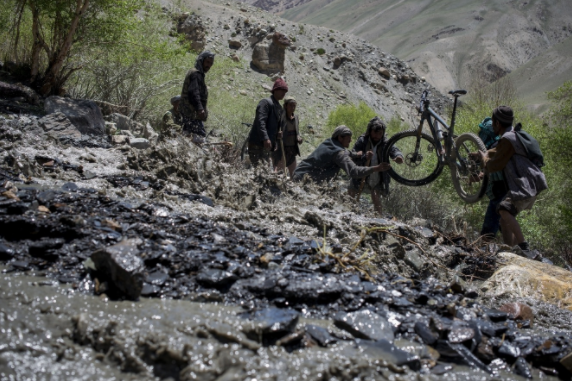
Rivers created anxiety equally within our group. Some were simple, while others were steep, muddy, raging torrents that could easily knock you from your feet. All were icy cold.
In truth, though, we would be going nowhere without the local support and hardy pack animals. In this forgotten land, where winter lasts eight months of the year, we are a valuable source of income for six locals, including our cook Amin Beg, his helper Amin Ali, and our translator Yaar Mahammad. Yaar’s English is basic, and he struggles to understand much of what Tom tries to convey to our horsemen. But without him we would be felled. Finding an English speaker in this remote corner of the world is nigh on impossible. When Tom put the word out, only three candidates showed up at the Tajik-Afghan border crossing at the town of Ishkashim. One of them had travelled for two days to pitch his service.
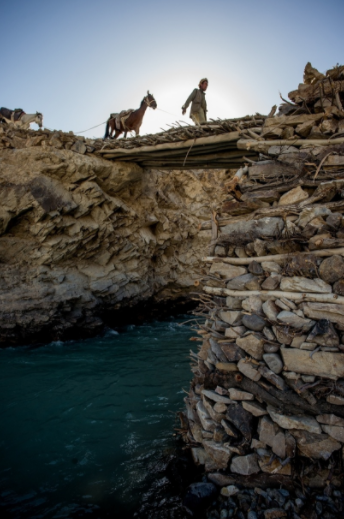
One of the only bridges we crossed during our traverse. Horses and yaks are the only possible forms of transport here.
For the first three days we work our way up the side of the thundering Wakhan river, crossing its tributaries and making the most of every dusty section of trail we can ride. We reach the magnificent rolling hills of Little Pamir, and follow a solitary horse trail up valleys and over passes. Spirits are high and group camaraderie is building, but the physical and mental challenges will take their toll before long. As the days pass, each of us suffers a low point, when energy and morale is lacking.
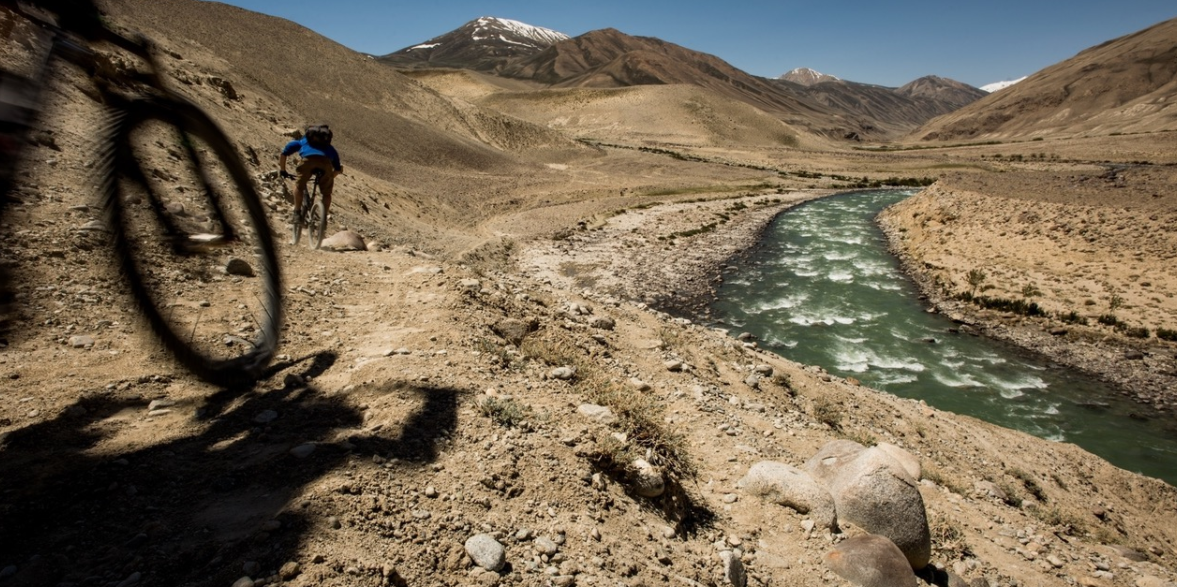
Dropping down to the Wakhan river, and towards one of the most unrideable two kilometres of trail we encountered. No-one can ride a bike through deep sand.
Where we stop to camp each night is dictated by water and the grazing needs of the pack animals, rather than by our own abilities. The distances we cover each day are not big by any standards, but I am thankful for that. We rapidly climb to over 4,200 metres, and then remain above 4,000 metres for much of the trip. Only time will allow us to acclimatise.
The vast emptiness of the Wakhan means that we are assured a permanent feeling of solitude. It is probably the most remote-feeling and wild place that I have ever journeyed through.
Sometimes we pitch our tents in open, exposed meadows surrounded by boulders etched with petroglyphs, sometimes we are squeezed into steep-sided river gorges. The people of the Wakhan are semi-nomadic, and there are are no permanent villages, so we camp wherever a shepherd’s outpost or hut can be found as shelter for our support team. On other nights, they hastily erect ad-hoc stone walls behind which they will sleep in freezing temperatures. None of us have met such a hardy, tough people, and resourceful too. The night before our first high mountain pass crossing, the Afghans sit melting the rubber soles of their shoes on the campfire to stick on patches of fabric. They tell us that these makeshift crampons will help them during the snowy hike ahead.
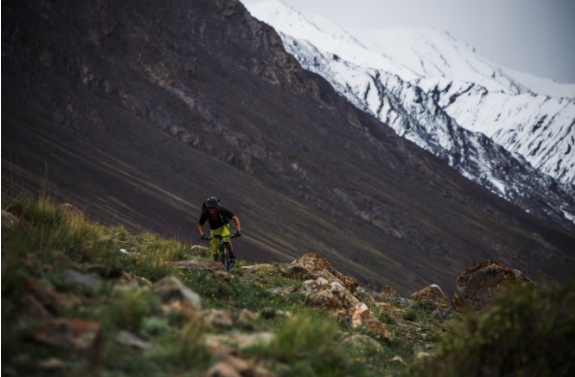
Matt Hunter dwarfed by the snowy Pamir mountains. We make the most of the times we can ride, rather than carry, our bikes.
The high passes become our biggest obstacle. Higher than any peak in Europe they are a challenge for fitness and lung capacity alike. With a 4am, sub-zero start each pass is a race against time, as we attempt to cross before the snow softens. After waiting out the blizzard on day five, with young Askarkhan and his fellow shepherds, it is the 4,860 metre Karabel Pass that finally defeats us. Without the previous night’s clear sky and sub-zero temperatures to freeze the snowpack, our horses flounder in the deep, soft snow. Although we have crested the pass, further progress is impossible without risking injuring an animal. We reluctantly beat a retreat knowing that tomorrow we will have to take a 45 kilometre detour to reach our staging post for the next pass.
This is the nature of pioneering expeditions: facing whatever challenge arises.
Back at Karabel camp, we laugh with our Afghan support team and the shepherds as they try riding our bikes, their first bike experience ever, and we try riding their horses in return. Inevitably, it is humour that most easily slices through the cultural and language barriers between us.
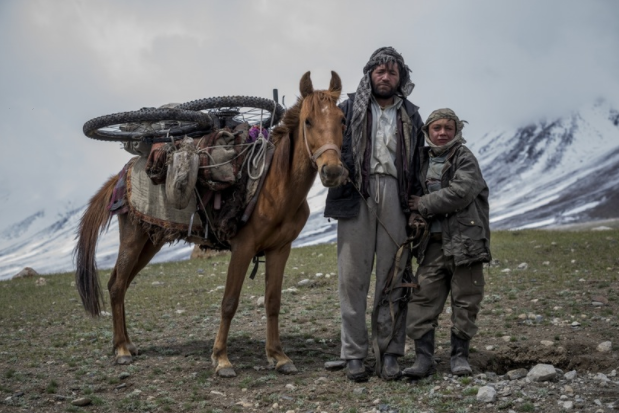
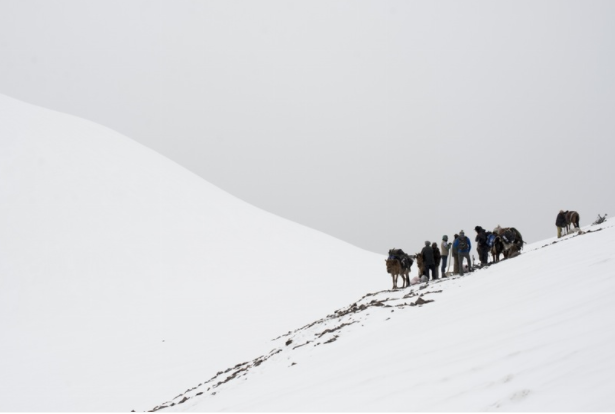
Preparing to cross the 4,860 metre Karabel pass, this was one of the few times we strapped a bike onto a horse to try and make the climb easier for us.
Riding bikes into uncharted territory like this is fraught with challenges that demand dogged resilience and a willingness to simply take what comes. At some point on this ride, we all hit ‘the wall’.
Now day seven, this detour up valley, in bleak weather of frequent snow storms, is the longest and most brutal we have endured. It is on this afternoon, in a swirl of freezing sleet, while pushing my bike across a half-frozen peat bog, I experience my moment of personal defeat. It is understandable. My feet are numb again, the weather is stacked against us, and we are eight hours into a gruelling day of physical duress. When we stop for a rest, I question our sanity. The group is silent. I get the feeling that others share my doubts, but no one wants to spoil the party. We press on, and of course later I will be glad that we did, but by the time we collapse at our camp at dusk, we will have been on the trail for fourteen gruelling hours.
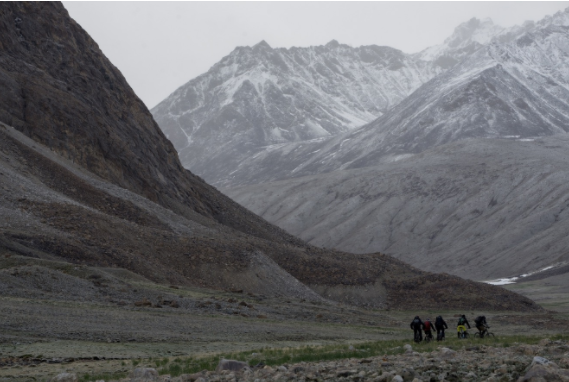
Partway through our gruelling fourteen hour detour, through peat bog and sleet storms, to avoid the Karabel Pass.
That night, we sleep at 4,400 metres beneath an enormous hanging glacier. It is possibly the most spectacular camp spot I have ever seen, but I am too exhausted to truly appreciate it. Six hours after crawling into a cold sleeping bag, we are up and hiking icy scree again, attempting to crest our third high pass, the 4,850 metre Showr Pass. When we finally cross it, the achievement is as much mental as physical. Representing a significant milestone, this pass divides the Wakhi-populated Little Pamir from the culturally distinct Kyrgyz-controlled Great Pamir. The descent is an eclectic mix of snow, mud and rocky singletrack, weaving between boulders and around bogs. The riding is as wild as our surroundings.
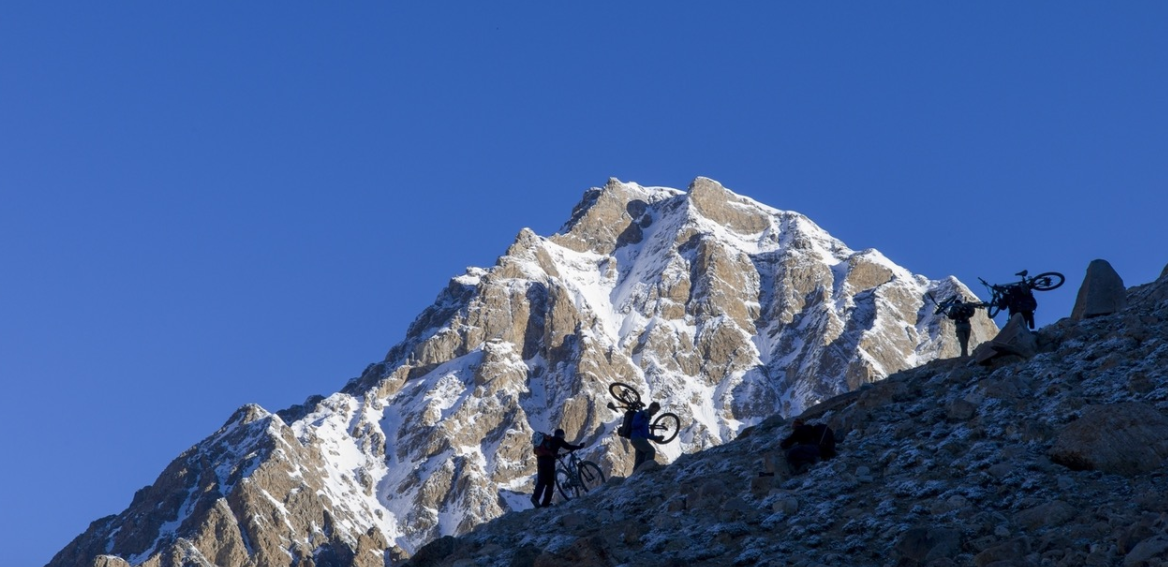
An early start to crest the 4,850 metre Showr Pass leaves our group silhouetted against the mighty peaks that welcome us.
While the Wakhan is isolated from the dangers associated with the rest of war-torn Afghanistan, its unruly, changeable weather and formidable terrain devoid of natural shelter make it a place to not come unstuck, and the locals know this. As we descend from the Showr Pass, we pause too long to photograph the late-afternoon scene, bathed in glowing light. Realising our support team are no longer in sight, we are faced with multiple junctions in the trail. The very real possibility of being lost hits us. Fortunately, the Afghans we are with have our backs. Before long, in the distance, we spot Amin Beg, our cook, running back on foot. When he finds us, his look of relief mirrors our own.
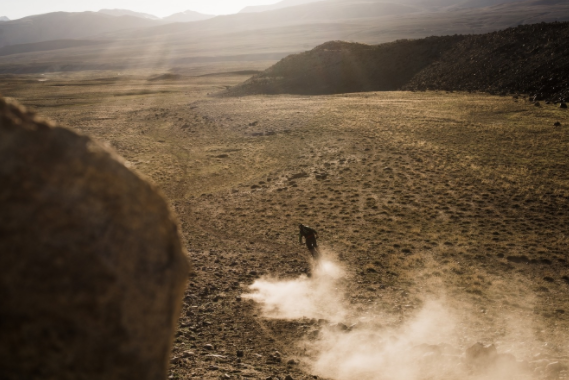
Heading into Wakhi-populated Big Pamir, we stop to photograph and re-photograph a spectacular section of trail glowing beneath the setting sun.
Eventually escorted safely to our camp for the night, we reach the Kyrgyz village of Rabot, the first permanent settlement we have encountered on our ride. Later that evening, through the limited English of our translator Yaar and our own efforts at sign language, we realise that our safety is of genuine concern to our support team. They may be surprised to find us trying to ride bikes through this unforgiving and wild land, but they will do everything in their power to help us succeed.
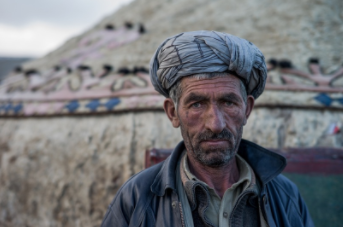
One of our Afghan support crew. There are few people as resourceful and tough as the Wakhan inhabitants.
The landscape opens up into a wide glaciated valley, and we roll through it, dwarfed by the scale our surroundings. The Kyrgyz are masters of horsemanship, and here, horses and yaks are the only practical modes of transport. Bikes have never made an appearance. As we descend further into the valleys, our bikes become the objects of intense interest. We realise none of kids here have ever handled anything like this before, let alone tried to ride a bike. The marvel that is the wheel is something that lights up dozens of faces as Matt hands one around to an eager cluster of children. They hold them up and spin, and spin, laughing.
To me, bikes will always be a great way to break down social awkwardness in remote places and regularly create smiles all round.
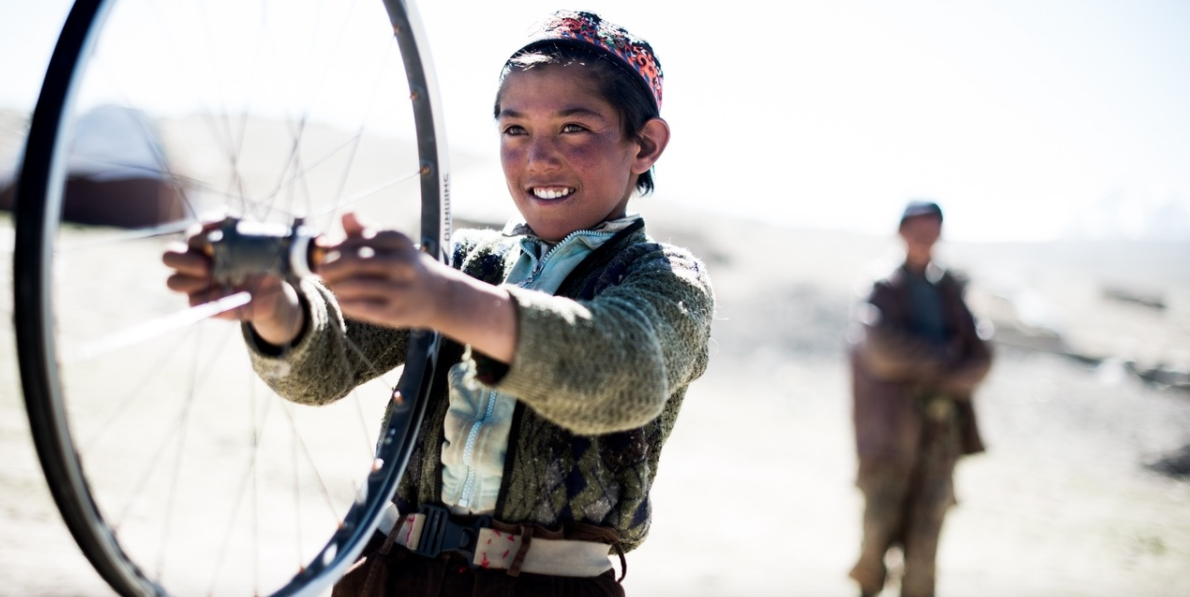
Fascinated, a young boy from the small village of Rabot in the Kyrgyz-populated Great Pamir, spins the wheel from one of our bikes.
We experience a dramatic change in culture in these valleys. Leaning our bikes up outside, we are welcomed into yurts to drink sour chai and consume fermented yak yoghurt, a staple of afternoon tea. The chief of the settlement welcomes us warmly, and a dusty rug is unrolled on which to share our meal. We are all as captivated by yurt life as the Kyrgyz are by our bikes. They laugh when we struggle to down the rancid yoghurt.
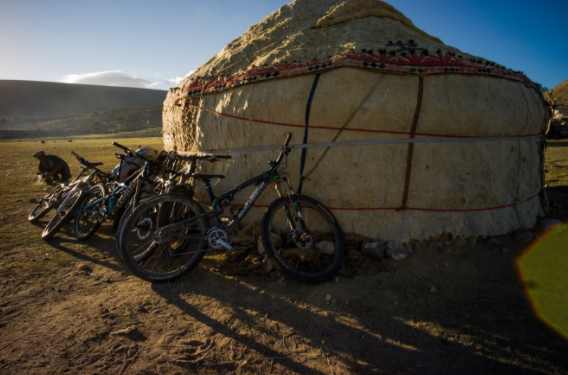
The first time that bikes have been leant against this, or any other yurt here.
Tonight, we are invited to sleep alongside our six-strong Afghan team in the shelter of the settlement’s guest yurt. It is our first chance to escape the frenzied flapping of tent flysheets pitched at the mercy of the Pamir’s relentless wind. We learn that Kyrgyz villages often have a guest yurt, something that seems unlikely in such a remote place, but given the harsh environment and changeable weather, it is customary to offer such hospitality to passing travellers. We accept gratefully, united in our appreciation of this incredibly beautiful, untamed landscape, and in our wonder and disbelief at the arduous lives of the inhabitants here.
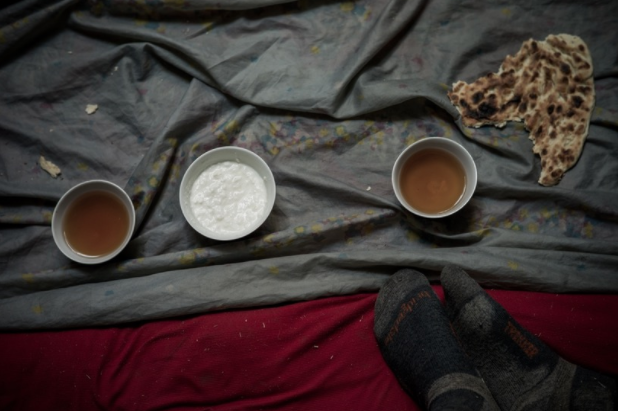

We are served tea and rancid yak-milk yoghurt, along with traditional flat breads. That evening, we are six westerners, and six Afghans, in one yurt.
Eleven days into our ride, and it is nearly time for us to leave these mountains to face the four-day drive back to the lives that we know. For now, the routine of ride, wade, eat, sleep has become normal. We are weather-beaten and at our physical and mental limits, but every day has brought incredibly rewarding experiences. Yes, hygiene has gone by the wayside, and the rivers are too cold for anything more than a token dip, but despite the daily challenge of covering distance, of climbing snowy passes or riding rocky, technical singletrack, life has become simple.
At times, the sight of bikes in this area has raised eyebrows and concerns from locals, and from us too. Faced with testing conditions this trip has become a learning experience for all involved, but also one full of rewards and rich experiences. It has to be one of the most beautiful and peaceful areas I have ever had the honour of visiting and photographing, and the people here some of the most welcoming I have ever met.
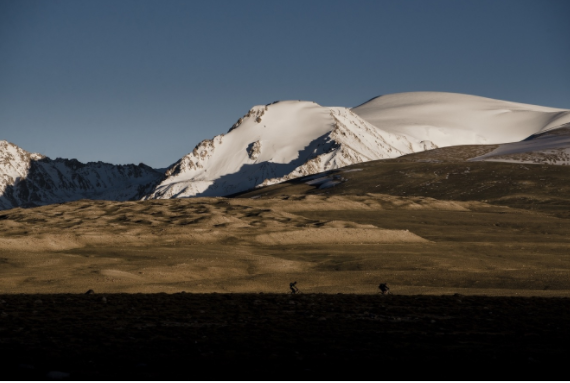
Silhouetted against the humbling grandeur of the Great Pamir, our group makes its way to camp at the end of day ten.
As I push my bike across another traverse too cluttered with fist-sized rocks to ride, I remind myself of this. The frustration of pushing a bike is something to which I am now accustomed. Before I know it, I will be boarding a plane bound for the comfort and luxuries of Europe. It is hard to pretend that I am not excited about the prospect of a real bed, or being able to turn on a tap to have drinkable water run freely from it. But at the same time I know I will never repeat what we are doing now. I will never have these same exact experiences again. And so for now I smile, revelling in the experiences that are clogging my senses in this moment.
It is the hardest thing I have ever done, but I love it. In this wild, harsh corner of the world I realise that I am between a rock and a hard place. Literally.
THIS ARTICLE WAS ORIGINALLY PUBLISHED ON MAPTIA.
DAN MILNER
Dan Milner is a British adventure travel photographer bent on shooting masochistic bike, snow or just-for-the-hell-of-it expeditions.
Where is this place we call 'away' when we say 'throw away'?

If you want to make peace with your enemy, you have to work with your enemy. Then he becomes your partner.
A good traveller has no fixed plans and is not intent on arriving.

Change will not come if we wait for some other person or some other time. We are the ones we've been waiting for. We are the change we seek.
Travel is to live.
VIDEO: Deep in Panama's Rainforest
Enrique Pacheco’s cinematography takes us on a journey through Panama’s lush landscape.
“Deep in the Rainforest” captures the density and beauty of this undisrupted natural space. Through Pacheco’s lens, we explore nature’s gentle power—torrential storms, vibrant light, and the intricate ecosystems that make up Panama’s environment.
VIDEO: My Other Life as a Photographer in Denmark
The subject of this short piece is a professional photographer, Lars Schneider, specifically focusing on travel and lifestyle photography. This was shot during his trip to the Faroe Islands to shoot landscapes. Witness the wild nature of this environment yourself in his short film.
Featured image by David Sorich.
How do I balance being a feminist with respecting other cultures?
Q: When visiting a country that has a culture that represses women, how far do you go in respecting their culture when visiting? Covering my head and shoulders seems okay. But I have a friend whose husband called out a waiter in India for asking him what she wanted to order when she was perfectly capable of answering for herself. That seems awesome to me but may have been offensive to them. Where’s the line?
Sincerely,
Yes Always to Solidarity with Kickass Women in Eastern & Extremist Nations
That’s a really great question, YASKWEEN. I have opinions, but I am also a dude, and as such, am at risk of mansplaining. So it seems worthwhile to ask a few women who either travel or live in more patriarchal cultures what they think before offering up my own dudepinion.
On cultures that repress women:
When we think of the most oppressive society towards women, we probably think of a country like Saudi Arabia. Sydney Meredith, the travel blogger behind Passports & Prose, currently lives in Saudi Arabia told me she doesn’t love equating “repressing women” with “covering your head and shoulders,” as many Muslim women consider it a personal religious choice to wear the hijab, and not something that’s imposed upon them by men. In regards to wearing it as a traveler, she says:
“I remember visiting historic churches in Spain and France during a trip in high school and the women were asked to cover their shoulders. Do I consider Spain and France ‘repressive?’ No. I was just respecting someone’s wishes.”
She also warns against developing a sense of superiority:
“I mean, aren’t women repressed everywhere? …The US is among only 2 other countries in the world who do not pay pregnant women who take time off from work. We were only allowed to vote just a 100 years ago.”
On "calling people out":
Traveler Sarah Lewis says it usually comes down to reading the situation, and points out there may be alternatives to “calling out” someone that are more effective.
“I feel like in that one specific situation, I would try not to be rude about it, especially at first, because the waiter was just doing what he considers to be polite in his particular culture in his line of work. As a server in the US, I’ve seen men order for women, so for some people that type of thing is still traditional, even in less conservative countries. If he addressed a man I was with rather than myself, I would probably just answer the questions and not necessarily “correct” him per se. (Similar to how in Japan, the server always talks to the Asian-looking person. You correct them not by calling them out, but by just responding in Japanese, and eventually they realize they can talk to you.)”
What’s important, then, is trying to gauge intent. She adds:
“However, if he continued or was being obviously rude to me, that would be another thing entirely, and I think that’s where the ‘line’ sort of starts. If a person is doing something that, even in his culture, would be rude (such as catcalling or harassment), that would not be tolerated.”
On balancing idealism with safety and comfort:
My friend Nandika Kumari is an Indian human rights activist, and she says this regarding the clothes issue:
“The class divide in India often means that urban girls/women from the upper classes will usually dress like any other American twenty year old. However, this is a very small number of people. Most women in India will dress as per their cultural traditions (which are often conservative)… The one rule I’ve always followed is to be 100% comfortable with myself. This also means that in a place where I am likely to get stares if I wear shorts, I will make the functional decision to wear something more conservative so I don’t have to get into arguments with creepy men every 10 steps.”
In regards to the what visitors should do, she adds:
“If someone is just on holiday it probably makes sense to dress close to the way most women in the area are dressed simply to reduce chances of harassment (I know how that sounds). A dress code is only likely to be enforced in religious places. Everywhere else, you are free to dress the way you like. If a woman feels comfortable wearing a dress in an Indian market, then please go ahead and do it. The culture of trying to control women’s behaviour doesn’t need encouragement. Seeing a western woman in different clothing may actually do some good.”
She also noted, “This is India, where you won’t get a death threat for pushing cultural boundaries.” This doesn’t hold true for every country, however, and there are other places where pushing the envelope may be a much more dangerous thing to do. Sarah Lewis adds:
“If something isn’t exactly rude in their culture, but I feel uncomfortable with it, I would probably say something, although again, depending on my level of comfort, I would probably in varying degrees attempt to be sensitive to the culture and not aim to immediately embarrass the person (unless I was really in danger or in a bad situation).”
And, of course, some mansplaining.
Okay, so this isn’t technically mansplaining: I don’t really know what it’s like to travel as a woman, and I won’t pretend to. But I have come across similar situations where something happens in a culture I’m visiting that clashes with my own personal values. A quick story:
When I was working a journalism internship at an English-languge newspaper in China, I really wanted our editors to cover issues like human rights. My bosses had to worry about government censors, so they weren’t really on board with taking editorial advice from an uppity 22-year-old foreigner. I pushed them on it, and all it did was alienate me from my bosses, to the point where I wasn’t being given any work. Towards the end of the internship, I was grabbing drinks with a British journalist who’d worked in China for years. I bitched to him about the Chinese journalists, calling them cowards.
“That’s not been my experience of Chinese journalists,” he said. “I’ve found them to be quite brave.”
I asked how. He said, “You’ve been here what, two months? You need to get to know the system better before you can attack it. These journalists are quite subversive, but they have to be more subtle in their attacks than a British or American could be. They don’t seek to topple anything, just to chip away. Keep in mind very few western journalists are actually risking their necks when they go to work every day.”
He went on to tell me how Chinese journalists would frequently undermine government-mandated stories through the subtle use of puns. For example, when the government wanted to show off their expensive new language-teaching program (which was incredible ineffective), the paper’s editors titled the piece, “GOVERNMENT CREATES ARMY OF CUNNING LINGUISTS.” This effective pun-usage has become so pervasive among Chinese dissidents that censors in China have actually banned the use of puns and idioms.
The lesson of that internship for me was that while the causes I was fighting for were just the world over, the tools for fighting for them changed from place to place depending on the context. It’s easy to fall prey to the whole “when you have a hammer, every problem looks like a nail” trap, and for a lot of Westerners, becoming confrontational over small or large injustices is our hammer.
Your impulse to resist misogyny is always a good one, YASKWEEN, but you may simply not have the localized knowledge to resist it effectively. Which is fine. It creates an opportunity to learn and listen. The best thing you can do if you want to support feminists in the area you’re visiting is to ask them how you can best support them. Some may say money. Some may say political support from your government. Some may say “call out the waiter when he ignores you to talk to your husband.” Some may say, “definitely don’t call out the waiter.” The response will change based on the place you’re in and even on whom you’re talking to.
That said, respect cuts both ways. If you are trying to treat another culture with respect, you’re allowed to insist they treat you with respect as well.
Writer’s note: could we all take a second to appreciate how far I came in a single week with my anonymous questioner acronyms? Last week, I dubbed my questioner “TUTBFTS.” This week, I pulled off motherfucking YASKWEEN. At this exponential rate of improvement, I’ll be a billionaire in a goddamn MONTH.

THIS ARTICLE WAS ORIGINALLY PUBLISHED ON DON'T BE A DICK TRAVEL.
MATT HERSHBERGER
Matt Hershberger is a writer and blogger who focuses on travel, culture, politics, and global citizenship. His hobbies include scotch consumption, profanity, and human rights activism. He lives in New Jersey with his wife and his Kindle. You can check out his work at the Matador Network, or over at his website.
Unexpected Friends in Amsterdam
August 29, 2015: I was cruising on my bike on a rare sunny day in Amsterdam, weaving in and out of pockets of confused tourists, when I rode past an orange and white sign that read “A’DAM INT’L ART FAIR.” Just two weeks into my four-month long journey of self-discovery in Amsterdam, my one-item agenda on this particular day consisted solely of exploring my new city. In that moment, my explorations led me to Berus van Berlage, a medieval looking building in the city center where the art fair was slated to take place. I secured my bike to a nearby pole and headed inside having neither the intentions of purchasing art, nor the expectations of what fascinating people I might meet inside.
I took my time strolling up and down each aisle, attempting to take in all of the photographs, sculptures, and paintings hanging on the walls of Berus van Berlage amidst the mixed crowd of intrigued passersbys and veteran art collectors. Eventually I found myself in the far right corner of the hall, where I came across a row of ceramic necklaces next to a sculpture of what appeared to be a naked woman with a severed torso. Nervously, I approached the woman standing next to the display and inquired if she was the artist who created the necklaces. She told me she was not, but the artist who did make the necklaces would be back from lunch in just a few minutes. I wandered aimlessly for a couple of minutes before returning to the far right corner to solicit information from the artist herself about the necklaces.
Upon my return to the far right corner, I was greeted by a beautiful blonde woman who introduced herself to me as Mirjam (Miriam). Originally born in Turkey, Mirjam had immigrated to The Netherlands at the age of 5, living in different places throughout the country until settling in The Hague, a small city southwest of Amsterdam. From inside her apartment on the beach in Scheveningen, Mirjam creates all different types of art—pottery, paintings, and nearly everything in between—which she then sells at regional art fairs. The only piece she does not sell, but brings to every art show, is her most prized creation: a sculpture she calls “A Tribute to Every Woman in the World,” the woman with the severed torso.
I then introduced myself as Allie, an American college student studying in Amsterdam for the semester, and asked if I could purchase one of the ceramic necklaces on display. In an exchange that lasted no more than 5 minutes, Mirjam wrapped up the necklace, handed me her card, and invited me to have coffee with her in The Hague should I ever found myself there. I then left the fair, not thinking too much about the encounter I just had with Mirjam.
The following Wednesday I boarded a train from Amsterdam to The Hague. Mirjam was going to meet me and my friends at the train station, share a bite to eat with us, and then we would be on our separate ways; or at least, that is how I envisioned the day going. When I arrived in The Hague, Mirjam greeted me with a hug so tight you may have thought we had known each other for years having no prior knowledge of our relationship. She treated me and my friends to lunch, showed us the ins and outs of town, and then brought us back to her beachside apartment for snacks and drinks. Before heading back home to Amsterdam, we strolled along the ocean just as the sun was setting and I thanked her for an unforgettable day. On the ride home I replayed moments from the day over and over again in my mind, finding it difficult to process the bond I had just formed with a woman I met at an art fair that I hadn’t even planned on going to. Though we had just gotten acquainted with one another, Miriam believed that our souls had met one another prior to our first physical encounter, and I could not help but think that she was right.
Miriam and I kept in touch throughout the remainder of my stay in Amsterdam. Each month we met in a different city in Holland: Rotterdam in October, Amsterdam in November (where she met my family while they were visiting me), and Delft in December. Seeing all of these new places from her perspective made me appreciate them that much more. Every time I met up with her became adventures that I will never forget. When I return to Amsterdam next month, we will surely add another adventure to our list.
Traveling or spending any significant period of time abroad presents one with unique opportunities to meet people they more than likely would not have met otherwise. While I could have never anticipated meeting Miriam where I did or forming the relationship I have since formed with her, being open to new experiences and meeting new people definitely lends itself to the possibility of forming relationships like the one I have with Miriam. So next time you find yourself at an art fair in Amsterdam, strike up a conversation with an artist you meet; perhaps she’ll become your Dutch mother just like Miriam became for me.
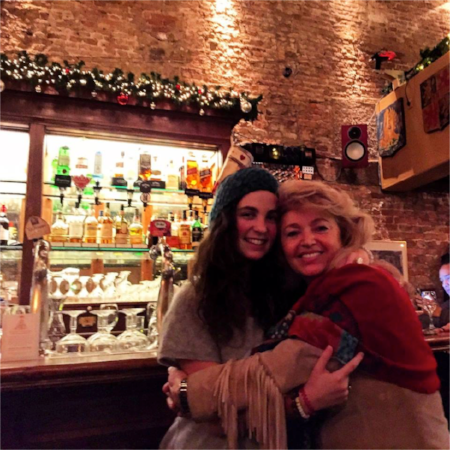
Miriam and I in Delft at Café De Waag, December 2015
ALLIE BLUM
Born and raised just outside of Philadelphia, PA, Allie's love for travel has led her to find that you can call many places "home." While she is primarily based in New Orleans, LA, where she will be completing her undergraduate studies this coming May, Allie has spent significant periods of time traversing the continental US (mostly by car) and Europe, and parts of the Middle East. Allie hopes that her curiosity to understand other cultures will bring her to every continent over the course of her lifetime. When she's not studying or planning her next trip, Allie loves to read, write, and make playlists on Spotify.
Kicking the Habit: Air Travel in the Time of Climate Change
Air travel is neither just nor sustainable. So how can environmental justice activists make a global difference?
We live in a time of far-flung relationships, our families, colleagues, and friends often spread out across continents. These relationships mirror the global nature of many of our most pressing problems, such as global climate change—and they also contribute to those problems.
In Eaarth: Making a Life on a Tough Planet, Bill McKibben likens the biosphere to “a guy who smoked for forty years and then he had a stroke. He doesn’t smoke anymore, but the left side of his body doesn’t work either.” This new world, he says, requires new habits.
And, no doubt, many of us have adopted new habits—trying to use public transportation, buying local foods, rejecting bottled water. But the “savings” from such practices are wiped out by a habit that many of us not only refuse to kick, but also increasingly embrace: flying, the single most ecologically costly act of individual consumption.
Flights of Privilege
A round-trip flight between New York and Los Angeles on a typical commercial jet yields an estimated 715 kilos of CO2 per economy class passenger, according to the International Civil Aviation Organization.
Only 2-3 percent of the world’s population flies internationally each year, but the climate impacts are felt by a much larger—and poorer—population.
But due to the height at which planes fly, combined with the mixture of gases and particles they emit, conventional air travel has an impact on the global climate that’s approximately 2.7 times worse than its carbon emissions alone, says the Intergovernmental Panel on Climate Change. As a result, that roundtrip flight’s “climatic forcing” is really 1,917 kilos, or almost two tons, of emissions—more than nine times the annual emissions of an average denizen of Haiti (as per U.S. Department of Energy figures).
Only 2-3 percent of the world’s population flies internationally on an annual basis, but the climate impacts of air travel are felt by a much larger—and poorer—population. It is difficult to illustrate the meaning of such numbers in terms of who among the planet’s citizens pays the costs.
But this is exactly what the 2009 German short film The Bill does in powerfully demonstrating the ecological privilege and disadvantage embodied by flying. In doing so, it shows aviation to be a classic example of how the comparatively well-off privatize benefits of environmental resource consumption (the ability to travel quickly and afar) while socializing the detriments. By making a disproportionate contribution to climate destabilization and associated forms of environmental degradation—biodiversity loss, rising sea levels, and desertification, for instance—air travelers exacerbate the precarious existence of the most vulnerable. In doing so, they contribute to unjust hierarchies (e.g. racism and imperialism) that reflect a world of profound inequality.
Global Organizing—Without Planes
Clearly this presents a huge challenge to social and environmental justice advocates, activists, and organizers from the planet’s relatively wealthy areas who often connect to distant peoples and places by flying. Because the institutions and individuals most responsible for our global predicaments typically exercise mobility and exert their power across great distances, those of us who want to challenge their practices often must also do so. So what to do?
One option is to use transportation that stays on the Earth’s surface, to accept traveling more slowly, and to make flying a very rare exception instead of the rule. Throughout North America, buses—and, in many places, trains—are viable options. And for transoceanic voyages, ships (including freight ones) are a possibility—albeit not typically inexpensive or as common as they need be.
In an increasingly vulnerable world, we’re searching for rooted communities—and what we can learn from them.
Another option—indeed an obligation in a time of growing ecological destruction and a degraded resource base—is to stay home more often. Given that “jet travel can’t be our salvation in an age of climate shock and dwindling oil,” McKibben writes, “the kind of trip you can take with a click of a mouse will have to substitute.” In other words, we have to become much better at exploiting the “trips” that the Internet and related technologies afford—by videoconferencing, for example.
While such options present numerous challenges, not least logistical ones, perhaps the biggest obstacle is the particular way of seeing and being common to the small slice of the world’s population that flies regularly. Traveling long distances by bus, train, or ship, for example, necessitates time—and a willingness to expend it in manners that those from the world’s privileged parts and sectors are not used to doing. It doesn’t necessarily entail doing less, but it does mean doing things in different ways.
A New Normal
It also calls for new mechanisms and institutions—and some organizing to bring them about. Take long-distance travel by ship. Less than a century ago, many regular folks traversed the seas—think of immigrants to Angel and Ellis islands. And many well-known organizers and activists—Gandhi, Helen Keller, and W.E.B. Dubois, to name just three—journeyed extensively by ship.
To do so today, of course, is far more difficult as jet travel has greatly weakened the passenger ship option. But what if, for instance, U.S. and Canadian activists and advocates going to Denmark for the Dec. 2009 climate summit had, instead of booking individual flights, organized to travel together by ship—with all promising to get to and from their ports of call by surface-level transportation? And what if they had publicized this effort as a way of setting an example for, and challenging, others?
That such a suggestion will seem unrealistic, if not foolhardy, to many illustrates the way that what we’re used to thinking of as normal can stifle our imaginations, and let us off the political, ecological, and ethical hook. The option is as “realistic” as we make it. In this regard, we need to push and support one another in the effort to make far-reaching alternatives viable.
What we’re used to thinking of as normal can stifle our imaginations, and let us off the political, ecological, and ethical hook. The option is as "realistic" as we make it.
Climate science tells us that we need a 90 percent cut in greenhouse gas emissions over the next few decades to keep within a safe upper limit of atmospheric carbon. In light of the great changes such a reduction demands, what is unrealistic and foolhardy is the notion that we can continue flying with abandon.
Interested?
• We thought we had 20, 30, 50 years to take on the climate crisis. We were wrong. The scary science, smart policies, and critical actions that could still avert disaster.
• Bill McKibben imagines himself in the year 2100, looking back at a century of climate chaos and asking: What did it take to save the world?
THIS ARTICLE WAS ORIGINALLY PUBLISHED ON YES MAGAZINE.

JOSEPH NEVINS
Joseph Nevins wrote this article for YES! Magazine, a national, nonprofit media organization that fuses powerful ideas with practical actions. Joseph is a geography professor at Vassar College. Among his books is Dying to Live: A Story of U.S. Immigration in an Age of Global Apartheid (City Lights Books/Open Media).
VIDEO: Migration vs. Traveling
“Migration vs Traveling” explores the double standards in the way we stereotype migrants as “something negative” and travelers as “something positive,” and proposes an idea on how to overcome them. This video was awarded the Prix de l'EYP 2015, the European Youth Press's award, for the best journalism on media freedom (category video), during the European Youth Media Days 2015 at the European Parliament in Brussels. It was also invited to be continuously screened to EU officials during the Dutch EU Presidency in the Netherlands in 2016.
Nomads of Mongolia
Life in Western Mongolia is an adventure. Training eagles to hunt, herding yaks, and racing camels are just a few of the daily activities of the nomadic Kazakh people. Filmmaker Brandon Li spent a few weeks living with them and experiencing one of the most unique cultures in the world. Saddle up and enjoy the ride.
Rare Glimpse into Antarctic Underwater World
An underwater robot has captured a rare glimpse beneath the Antarctic sea ice, revealing a thriving, colorful world filled with coconut-shaped sponges, dandelion-like worms, pink encrusting algae and spidery starfish.
The footage was recorded on a camera attached to a Remotely Operated Vehicle (ROV) deployed by Australian Antarctic Division scientists under the sea ice at O’Brien Bay, near Casey research station in East Antarctica.
Explore Aotearoa with Ludovic Gilbert
Aotearoa is the Maori name for New Zealand. Ludovic Gilbert and his wife spent 3 weeks there for their honeymoon, and traveled more than 4,000 miles through Christchurch, Akaroa, Lake Tekapo, Te Anau, Wanaka, Fox Glacier, Punakaiki, Kaiteriteri, Wellington, Tongariro, Taupo, Whengamata and Auckland. Here are the fantastic landscapes, beautiful people and lakes with amazing colors they found.
How to Find Authenticity in a Globalized World
Why do we travel?
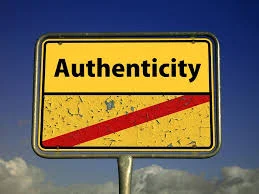
For those of us privileged enough to be able to travel voluntarily, reasons often include becoming more fully ourselves and experiencing something genuinely different. This desire for authenticity, in ourselves and in that which we perceive to be other and outside our current experiences, is widespread enough to be noticed and exploited by the tourism industry, with signs reading “experience the REAL Thailand” and “find yourself in Bali”.
Seeking authenticity in our travels comes from a good place. It highlights our desires for genuine interactions with other human beings, for learning about the experiences of those with different life paths and identities, and possibly even for utilizing our privilege to support real people instead of opportunistic corporations removed from the locations in which they operate.
However, as is the case with many good intentions, this desire for authenticity can be harmful. Much of this harm stems from a strict and arbitrary idea of what counts as authentic and the fact that the privileged traveler has the power to decide what makes the cut. For instance, while spending 3 months in Zimbabwe a few years ago, I asked several friends what their cuisine had looked like prior to British colonization. As their current main foodstuff, a labor-intensive dry porridge called sadza that holds its shape when spooned onto a plate, is made of cornmeal, it couldn’t have existed prior to the transfer of corn to Africa from the Americas. I’ve had similar questions about Italian, British and South Asian cuisines before tomatoes, potatoes, and chili peppers made a similar journey. From my perspective, sadza was a colonial by-product, as was the black tea served alongside it. When I shared this view with my friends, the effect was clear: my strict and arbitrary definition of what could be considered authentically Zimbabwean delegitimized and minimized their identity and emotional ties to the food they knew and loved.
This highlights a tendency in our search for authenticity - to regard older traditions and cultural forms and those which predate recent cultural exchange as more authentic. This viewpoint is understandable, especially as a reaction against the infiltration of Western corporations such as Coca Cola into most crannies of the world, including a remote village in eastern Zimbabwe, and the Westernization of many popular tourist destinations, from food offerings to street signs. Yet the reality is that all places and peoples are dynamic. Historical and current globalization, the movement of people, ideas and things, has fostered cultural exchange and the transformation of traditions over time. Cultures also evolve without interaction with outside forces. When we define authenticity as similarity of a particular part of a culture to its version at a particular point in history, we mistakenly regard people and places as static, freezing them in time.
Aside from our tendency to award authentic status to more longstanding traditions, we also withhold this label unless the cultural form feels “other” enough and different enough from our cultural forms to be plausibly untainted by them. But ironically and cruelly, our globally dominant culture and associated language simultaneously demand conformity for material gain and social acceptance. Without this, the inherent amount of difference between cultures would render many practically inaccessible to travelers.
When we travel in search of authenticity with these unconscious assumptions and unfair expectations lurking in our minds, we often end up unknowingly demanding that locals perform a certain version of their culture for our tourist dollars. The result is a paradox: we want specific historical versions of cultures that are different enough from our own to feel authentic but similar enough to actually understand and enjoy. We travel to search for authenticity, but by traveling we reinforce the global dominance of our culture which demeans and degrades the other cultures we seek to experience. Seeking authenticity obscures it from us.
It also shortchanges us. Traveling with a particular idea of what authentic looks, tastes, smells and sounds like creates expectations and takes our attention away from what is. When we’re less present with ourselves, where we are, and the people around us, we’re less likely to feel deeply satisfied in addition to being more likely to cause accidental harm.
So, what to do? Here are some guidelines for navigating these realities:
1. Take people and places as they are now
Don’t force them to live up to some idea conjured up by tourist companies, history books, or your own mind as the antithesis to your everyday life. Don’t expect them to be similar enough to be accessible and understandable to you. On the flip side, don’t expect them to be different enough so that you can feel like you’ve escaped your daily grind and your culture. Manage your expectations or avoid forming them. Of course, it is very hard to travel with no inkling of what you’re going to find once you arrive, but be honest with yourself. Why are you drawn to particular places? What expectations do you have? Find balance - have just enough foresight to plan yet not enough to keep you from accepting what is when you’re there. The best days often come when you're not expecting them.
2. Only do what you actually want to do
Travel guides and guidance from friends are riddled with “must sees”. What if nothing on those lists strikes your fancy? I almost always skip museums when I travel. While you could argue that I’m missing out on important historical context, I would argue that I’ve never absorbed this information from museums even when I’ve forced myself to go to them. Luckily, each place and culture and even person is unfathomably complex and contains endless dimensions. Engage in the same activities you enjoy in back home and try new ones which feel right. Do you in a new place. By living your truth while traveling, you’re more likely to find authenticity in the place you’re visiting.
3. Engage other cultures carefully
Cultural exchange can be mutually beneficial but it can also be oppressive. Acknowledge the power dynamics in your interactions with non-travelers. Be aware that you probably embody and therefore unknowingly reinforce ideals that other people must conform to in order to gain social currency and acceptance. And make sure your engagement with other cultures doesn’t cross the line into appropriation. Appropriation can take many forms, but it almost always involves travelers benefiting materially from or being praised for a particular cultural form while the people to whom that cultural form belongs are ridiculed, persecuted, or exploited for it. Engage from a place of humility to learn, not to seek validation or make money. Always respect the stated boundaries of engagement, and where appropriate, wait to be invited.
SARAH LANG
Instigated by studies in Sustainable Development at the University of Edinburgh, Sarah has spent the majority of her adult life between 20+ countries. She is intrigued by the global infrastructure that produces inequality and many interlocking revolutionary solutions to the ills of the world as we know it. As a purposeful nomad on a journey to eradicate oppression in all its forms, she has worked alongside locals from Sweden to Zimbabwe. She is a lover of compassionate critique, aligning impacts with intentions, and flipping (your view of) the world upside down.

Travel Volunteerism: Airbnb to Offer Users a Way to Help Local Communities
After 8 years in business, travel accommodations company, Airbnb is expanding its platform and the services it offers by launching Airbnb Trips. Initially a peer-based home rental service, the company went on to partner with major travel brands like Delta and American Express for airline miles, points, and business tools for users. Now, Airbnb’s co-founder and CEO, Brian Chesky, is rolling out plans to do more than just provide customers with access to private lodging; he also wants to provide travelers with things to do once they reach their destination. During November’s Airbnb Open, a travel and hospitality festival held in Los Angeles, Chesky told the audience that planning a trip takes longer than the actual trip, and his company wants “to take the research project out” of travel.
On Airbnb’s updated app, users can now create an itinerary under “Trips” and book “Experiences”— activities that range from those of typical tourism to exclusive events and meet and greets. About 1 in 10 of these Experiences are allocated for “social impact experiences,” which airbnb.com describes as volunteerism and getting involved with a “cause you care about [where] 100% of what you pay goes directly to the organizations.” Some of these causes relate to social inclusion, mass incarceration, and animal rights, and activities include dance, gardening, feeding the poor and composing music. These Experiences will reportedly cost between $150-$250, and Airbnb has waived its commission for social impact experiences.
Chesky says that Experiences will be available in 12 destinations—Detroit, London, Paris, Nairobi, San Francisco, Havana, Cape Town, Florence, Miami, Seoul, Tokyo and Los Angeles. He also says the company will expand Experiences to 50 additional cities around the globe this year, with the ultimate goal of being able to provide Experiences in every Airbnb host location.
Experiences, Chesky says, are ways to immerse oneself into local communities and are a part of a “holistic travel experience.” Social impact experiences are identified on the app by a “social ribbon.” The site notes that participating in this type of social volunteerism allows travelers to “join with passionate locals” and “leave your mark on the community.” Social impact experiences are always hosted by charities and non-profit organizations. Chesky also says that Airbnb has a partnership with the Make-A-Wish Foundation—the charity for children with life threatening illnesses—and that Airbnb will be granting “a wish a day.” This will be done via donations, accommodations, and “transformational experiences” according to its website.

Brian Chesky, the founder of Airbnb.
Learn more at airbnb.com and on their YouTube channel for a look at Social Impact Experiences at https://www.youtube.com/watch?v=CwwMT05jqfU&feature=youtu.be

ALEXANDREA THORNTON
Alexandrea Thornton is a journalist and producer living in NY. A graduate of UC Berkeley and Columbia University, she splits her time between California and New York. She's an avid reader and is penning her first non-fiction book.
The Truth about Socialized Medicine around the World
In 2010, I moved to Australia from the United States and stopped in Thailand to go diving. While walking back to my hotel, I started to have trouble breathing. When it didn’t go away, I took myself and my chest pain to the emergency room. It was sparkling clean and almost empty; the young Thai doctor was thorough and gentle, and I walked away with an EKG, a chest X-ray, and a prescription for antibiotics. The total cost of my visit, for which I had to pay out of pocket due to not being a Thai citizen? About $40 USD.
There is a lot of misinformation passed around in the United States about socialized healthcare. You can wait a year without treatment. There are only two MRI machines in all of Canada. Nobody actually likes the system, or uses it. But the one thing most Americans never do is actually use universal health care. So I asked residents of multiple other countries to tell me what their experiences were like.

ISRAEL
Health care in Israel is universal and participation in a medical insurance plan is mandatory. All Israeli citizens are entitled to basic health care as a fundamental right.
Abby: “I never used the medical system for emergencies. Doctor’s offices seemed more like walk-in clinics than private practices, but Tel Aviv is very crowded. Even with an appointment, wait times were often 40-60 minutes.
I paid small co-pays, only to see specialists. Generally, the system was very low-cost and easy to use. I had to pay for prescriptions, but they were very cheap, especially compared to the States. A downside for me was that, while the doctors spoke perfect English, often the receptionists, nurses, and other office workers didn’t, so I had to get my Israeli boyfriend to make the appointments for me.”

ENGLAND
The NHS is the state healthcare provider in the UK. The service is free at the point of use; services are free, and running costs are covered by taxation. Private insurance is used by only 8% of the population of England.
Tim: “I have used the NHS many times, although, where possible, I go to private providers to save resources. Emergency work is almost always done on NHS. My mother was recently diagnosed with lung cancer and the NHS could not have moved faster; she also gets a choice of where she can be treated. She got a biopsy yesterday, the results ought to be back in five days and then treatment will start immediately. You would not receive any better with private insurance (and I say that as Tory).
Going to Emergency (A&E) is usually good, which I know from all my rugby injuries. You can get patched up and sent on your way in a reasonable amount of time. Getting a GP appointment (a general doctor, who will give you a referral), on the other hand, is almost impossible. The waiting time for my area is about three weeks. On the whole, the NHS is a good thing. It still has many flaws, though, and is in desperate need of a restructuring.”

AUSTRALIA
Australia has universal healthcare, called Medicare. It covers all general medical care, but some services are only partially covered and individuals pay a gap fee – this is usually still reasonably affordable, however. Individuals who earn high annual salaries are encouraged to take out private insurance.
Jenny: “I had an abnormal pap smear at my GP’s office, and she sent me a referral onwards to the Royal Women’s Hospital. I’ve had a lot of anxiety about pap smears in the past, and she specifically notified them about these issues. Since my issue was not urgent, she told me to expect a wait of several months for an appointment. The hospital recommended a colposcopy.
I contacted the patient advocacy department at the hospital and asked for assistance with my anxiety and PTSD. On the day of the procedure, all doctors and nurses were helpful and calming, and I managed to get through the experience without too much fear. They recommended that I get laser surgery to remove the abnormal cells from my cervix.
All of this has been totally free -- which is to say, paid for by Medicare. My original appointment for the pap smear was in May, and my laser surgery is scheduled for December...I received the appointment at the hospital in August. The abnormalities that showed in my report were not of an emergency nature; for similar issues, the brochure I received said patients can sometimes wait up to a year for treatment. I really appreciated the personalized care and support I received; it would have been so difficult to worry about payment while trying to deal with my emotional reactions to these procedures.”

FRANCE
All French residents pay compulsory health insurance, which is automatically deducted from paycheques. Patients pay fees at the doctor or dentist, which are then reimbursed 75-80% by the government, except in the case of long-term or expensive illnesses (such as cancer), which is reimbursed at 100%
Aliyah: “My father, who is Kenyan, was on a business trip in Paris. He tripped getting out of the subway and had a nasty gash above his eye. He was rushed to hospital, treated and held overnight for one or two days. When he was released, with medication, I kept bracing for the bill. None came. I told Dad to ask about it and he did. Answer: there is no bill, it is your right to be treated for free under our system.”

SWEDEN
The Swedish health care system is government-funded, although private health care also exists. The health care system in Sweden is financed primarily through taxes levied by county councils and municipalities.
Kelly: “Giving birth, tests, and one ultrasound were free. They charged me for extra ultrasounds and non-essential testing. The only thing they give you at the hospital for the baby is diapers, cream, and formula.
Generally, in Sweden, the health care works if you are dying or having an emergency. As long as everything's normal, no one will look twice at you or even WANT to see you more often than needed. The drop-in clinics (vårdcentral) never have enough staff or resources, so if you need to see a doctor, you exaggerate your symptoms or they just tell you not to bother coming in.
I have been struggling for 3 months to get a pediatrician for my daughter. Since I started trying, we went to the emergency room once, the nurse’s office 4 times, and I called the helpline a million times. No-one wants to actually see her.”

CANADA
Canada's health care system provides coverage to all Canadian residents. It is publicly funded and administered on a provincial or territorial basis, within guidelines set by the federal government.
“Everything is covered, whether it's something minor or surgery under anaesthetic. I've had MRIs, CT scans, x-rays, ultrasound, mammograms, you name it. The times I've had to go to emergency, I've received variable treatment, depending on the hospital. My longest wait was 13 hours. The shortest was ten minutes when I was afraid I had an aneurysm. For that one, I saw a specialist right away, which was also free. When my father had necrotizing fasciitis, he went to the hospital and was treated immediately. If he'd received treatment even 30 minutes later, he may very well have lost his leg or worse. In Canada, vision and dental are not covered by universal health care, and neither are things like physiotherapy, massage therapy, or alternative medicine like acupuncture, chiropractors, and so on. That being said, private medical insurance often covers a certain percentage of these things. Prescription medicine is also not covered by federal system, but between provincial plans and private insurance, can be greatly reduced in price if not free. Flu shots are free every autumn, and I remember getting vaccinated against rubella at school when I was a little kid. If you step on a rusty nail and go to emergency, your tetanus shot is free. Travel vaccinations and more unusual vaccinations, however, cost money. When I planned a trip to South America, I went to a travel clinic. The consultation was free, but I had to pay for my yellow fever and cholera vaccines.
I wish vision, dental, and physio were covered by national health care, but I am so grateful that everything else is covered. If they weren't, there's a chance I might not have survived as long as I have.”
IN SUMMARY
The United States is one of the only developed countries that doesn’t provide universal health care for its citizens. A friend of a friend had a baby at 28 weeks (extremely premature); the baby was in the NICU for several months. Fortunately, they had very good health insurance and ended up only having to pay $250 of the $850,000 bill -- but they were lucky. The United States healthcare system is a labyrinthine mess where insurance administrators make possibly lifesaving decisions about patient care, rather than doctors. The care you receive is based on what you can afford, not what you need.
Even with these astronomical costs to the consumer, the U.S. government still ends up paying more per capita for healthcare than countries with socialized medicine. Citizens of the U.S. have a life expectancy lower than other developed nations, and more elective surgery at higher costs...and paying more does not mean the service is better, as the U.S. also has fewer doctors than comparable countries. The systems elsewhere are not perfect, but the perfect is the enemy of the good: anything would be better than ending up in debt for the rest of one’s life, or worse, suffering (and dying) in silence because the cost of treatment is too high.
CLAIRE LITTON
Clair Litton was born in Canada, moved to the United States, went to graduate school in Australia, and recently relocated to Sweden. She has written for a series of online and offline magazine, and once had a young adult novel picked up by an agent, who then had to back down due to signing a little book called "Twilight." You can most commonly find Claire arguing about human sexuality and watching her toddler open and close doors.
5 Ways to Make a Positive Impact while Traveling in Bolivia
As one of the poorest countries in Latin America, Bolivia is a nation that, more than most, would benefit from your tourism. However, a historic lack of investment in infrastructure throughout the country and a reputation of political instability has left this nation neglected by foreign visitors.
Despite being more difficult to explore than neighboring Peru, Argentina or Brazil, Bolivia is a country that shouldn’t be missed. It has a wealth of diversity of natural landmarks, from the soaring Andes Mountains to the huge plains of salt flats to the Amazon jungle, as well as tiny communities inhabited by local, indigenous people ready to share their culture with curious travelers – and who really benefit from the income that responsible, considered tourism brings.
So here are 5 ways that you can do your bit to make a positive impact when you’re traveling in Bolivia.
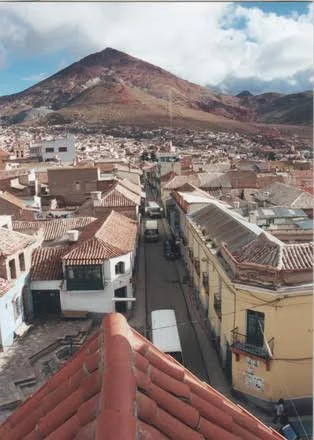
Potosi
1. Go Local
Many of us are more comfortable booking tours ahead of our trip to ensure that our visit runs smoothly and no time is wasted. But it can be difficult to know exactly how much of the money you’re paying is being invested into the country you’re visiting and whether the local people there are actually getting a fair deal.
Instead, booking tours when you arrive or online with locally-run, sustainable tourism agencies based in Bolivia will insure 100% of your money goes directly to the local people, meaning you’ll have a positive, responsible impact through your tourism.
Luckily, Bolivia has a growing number of excellent, responsible companies to choose from. Some of the best include:
Condor Trekkers based in Sucre is a hiking tour agency that leads treks into remote villages in the Andes, with hikes passing along stretches of preserved Inca trail and to landscapes potted with dinosaur footprints. They feed all of their profits back into the communities through which their tours pass to support locally-run, sustainable development projects.
The San Miguelito Conservation Ranch, a short distance from Santa Cruz, is a private reserve and conservation project that protects a section of wetlands acknowledged as having one of the highest concentration of jaguars in South America. This eco-tourism project runs tours to spot the big cats, birds and other wildlife in the reserve and uses the profits to maintain this important habitat.
Nick’s Adventures, another company based in Santa Cruz, runs a series of tours throughout the country, including spotting big cats in Kaa Iya National Park, the only park in South America established and administered by indigenous people. This agency supports sustainable development by providing employment to local people as drivers, guides and cooks and replaces any cattle killed by jaguars to stop ranch owners from shooting the cats, thus meaning that no jaguars or other native wildlife have been killed since Nick’s Adventures began this project.
La Paz on Foot runs walking tours in La Paz itself, as well as hiking trips further afield to indigenous communities. These communities receive much of the profits and La Paz on Foot have established a series of sustainable development and biodiversity conservation projects.
Solace Trekking Tours based in La Paz takes visitors on cultural tours to indigenous communities to take part in workshops about dancing, weaving and other traditional activities, as well as running climbing, biking and hiking trips to remote villages. Some of the profits of these tours are used to support the indigenous communities that are visited, as well as others who are fighting to save their land and water from mining – something that is a real threat to both natural habitats and the livelihoods of local people.
2. Don’t bargain too hard
Like many Andean countries in South America, artisanal goods of fluffy llama wool jumpers and delicate jewelry are hawked by locals on their stalls in every city and travelers are always keen to get a good bargain. But unlike parts of Asia and India where haggling hard is par for the course, in most of South America and particularly Bolivia, it’s not always the case.
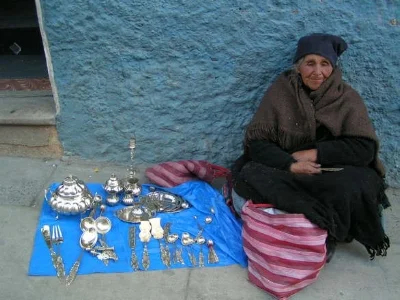
Yes, you should expect prices to be higher for you; unfortunately, as a foreigner you will be charged an inflated rate. Negotiating a small reduction is sometimes possible, but most of the time, you shouldn’t try and push for prices that are vastly lower.
Shop around a bit and get a feel for what things cost, but follow your conscience with what you spend. Saving a few dollars on a jumper probably means very little to you in the long run, but in a country where 45% of people live in poverty and earn less than $2 a day, avoiding haggling sellers into the ground is the responsible thing to do.
3. Get off-the-beaten track
Most travelers in Bolivia stick to the main gringo triangle: La Paz, Sucre and Uyuni. And while these are certainly highlights of the country, other places also need the investment that tourism brings.
Towns such as Rurrenabaque, the best place in the country to access the Amazon Jungle, really need the support of responsible tourists. Once receiving lots of Israeli visitors (because of an Israeli who got lost in the jungle here a few decades ago and wrote a book about his experiences), numbers have dwindled since the Bolivian government decided to support Palestine and introduced a fee for Israelis entering the country.
Tourism is currently at a record low in the region and desperately needs travelers who are keen to visit. Check out sustainable operators, such as Mashaquipe Eco Tours, who charge fair prices and work responsibly to protect the jungle.
Another under visited location is Potosi. Here you can actually visit Cerro Rico (Rich Mountain), the famed mountain of silver that was plundered by the Spanish conquistadores.
Potosi is now the poorest city in the country and while many local people still attempt to make a living mining the last remaining minerals in the mountain, tours with ex-miners such as with Potochji tours, located in Calle Lanza, provide another option. Visitors can enter the mountain to see the terrifying conditions and ensure that their money supports ex-miners and the mining unions that now operate there.
4. Stay and volunteer
One of the most profound ways that you can help to support social development in Bolivia is by staying for a period of time to volunteer with grassroots projects. I’m always hesitant to volunteer for less than at least three months; I know that it takes time to learn about the organization and how best you can support its work.
In Bolivia, where few people speak English and where the culture is far more reserved than in a lot of other Latin American countries, it can definitely take time to start feeling like you’re making an impact.
Unfortunately, 90-day visas are the norm for most travelers arriving into the country, which can put a time limit on your volunteering. However, a visa of up to a year is not impossible to come by, but does require you to put a lot of effort into acquiring the necessary papers.
There are plenty of organizations that need your help, including Up Close Bolivia and Prosthetics for Bolivia in La Paz, Sustainable Bolivia in Cochabamba, Communidad Inti Wara Yassi in the Bolivian Amazon and Biblioworks and Inti Magazine in Sucre.
5. Or become an ambassador
But if you can’t commit to volunteering, how about becoming an ambassador or fundraiser for a charity based in Bolivia? While travelling in the country, take the opportunity to visit some of the many volunteering organizations to get an idea of what they do. When you’re back home, it’s easy to find a way to support their work.
You can become an ambassador who promotes the charity to their friends and social media followers, as well as signing up to make a regular donation. You could also volunteer long-distance by supporting fundraising efforts or helping with their social media accounts. Most importantly, you can spread the word about what they’re helping to achieve and find other volunteers or sponsors who can support their efforts.
Ultimately, Bolivia is a fascinating country to visit and so by traveling responsibly and considering how you can make a positive impact as a foreign tourist will support social development projects in increasing the quality of life for the Bolivian people.

STEPH DYSON
Steph is a literature graduate and former high school English teacher from the UK who left her classroom in July 2014 to become a full-time writer and volunteer. Passionate about education and how it can empower young people, she’s worked with various education NGOs and charities in South America.