Who Is Anonymous Street Artist and Parisian, JR?

Not much is known about the semi-anonymous artist who calls himself "JR." We know that he is young — flirting with age 30 — French, and presumably has a name involving the letters "JR."
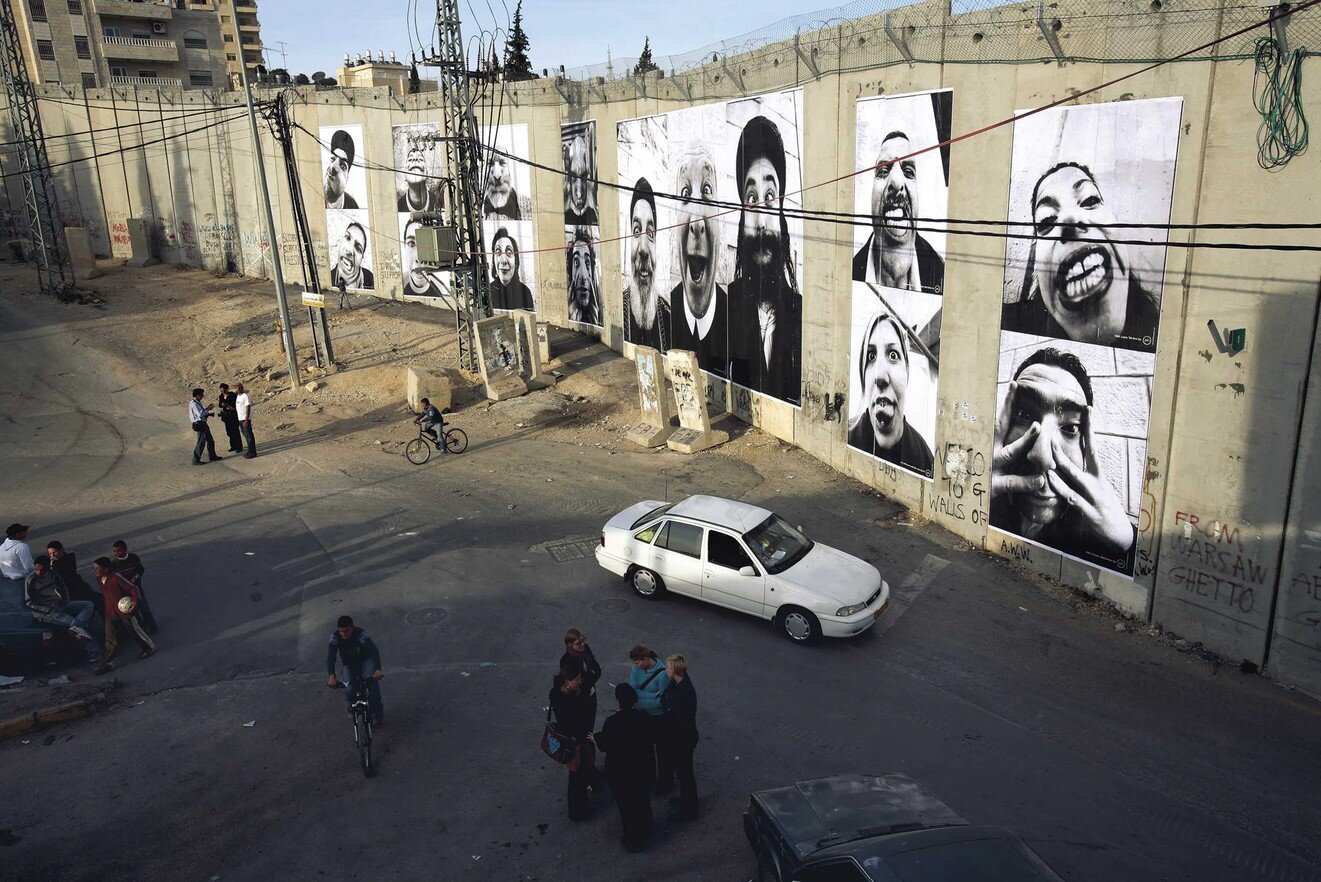
28 Millimètres, Face 2 Face, Separation wall, security fence, Israeli side, Abu Dis, Jerusalem, 2007

However, little else is known about the enigmatic past of the artist who has emerged on the world stage as the most lauded street artist since Banksy. Who Is Anonymous Street Artist and Parisian, JR?

When people hear the words "street art," they immediately picture graffiti: spray-painted images, slogans, or "tags," illegally marked onto the side of derelict urban buildings. This idea of street art must be abandoned when examining the oeuvre of JR. While it is true that JR began as a traditional street artist, using aerosol spray cans to paint on buildings around his native Paris, his artwork and his vision drastically changed when he discovered a camera that had been lost on the Paris metro. He began to document his artistic escapades and those of his friends, and he eventually abandoned traditional graffiti for something more easily duplicable: photocopies of the pictures themselves. Thus began the principle act of JR's craft, the pasting of large copies of his photographs on the sides of buildings. As with most street art, this started out as an illegal act, and one that mainly took place on the sides of run-down urban structures.
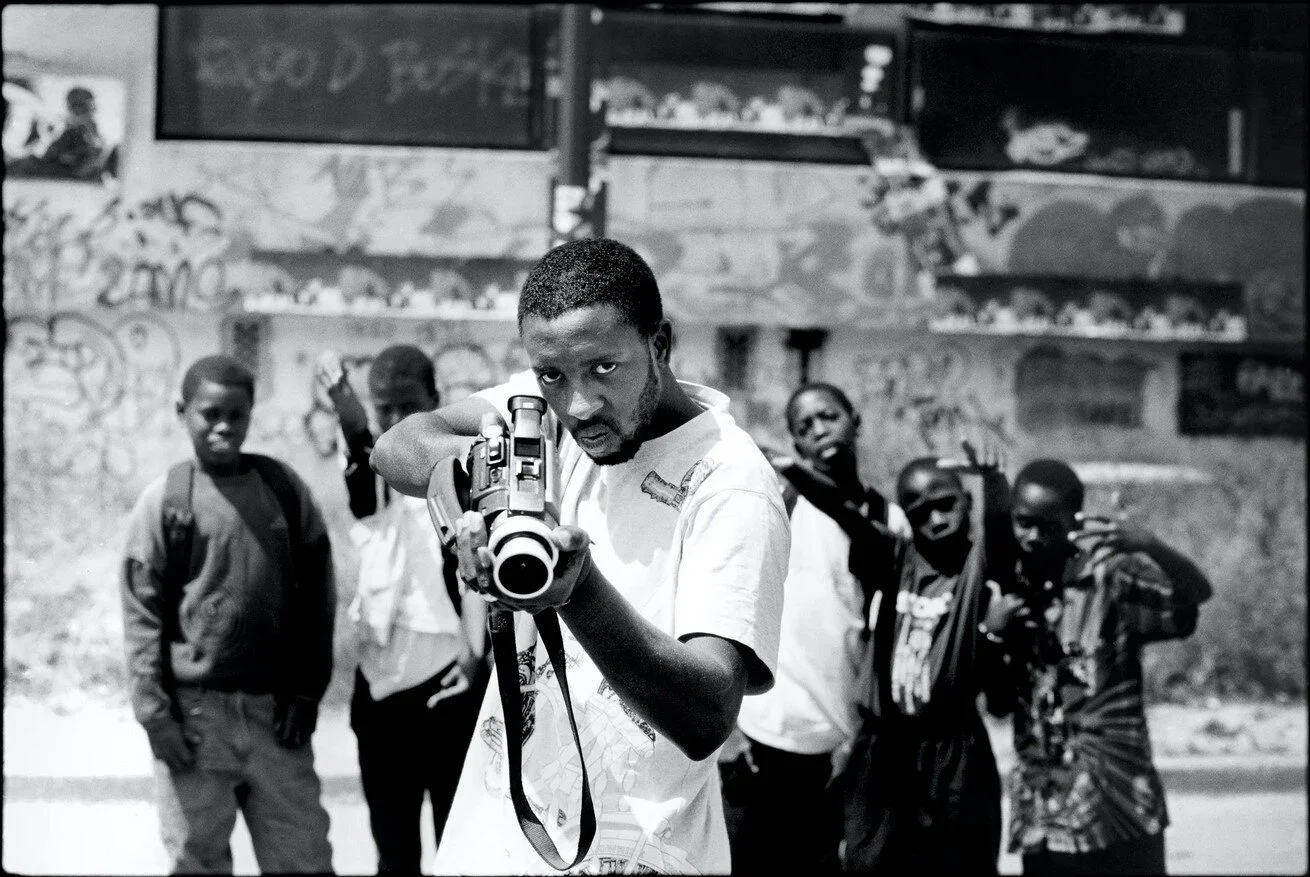
28 Millimeters, Portrait of a Generation, Hold-up, Ladj Ly by JR, Les Bosquets, Montfermeil, 2004

But then something happened: JR's art started to capture things that were extremely relevant to the general public, and capture them in extraordinary ways. His exhibit, Portraits of a Generation spanned the 2006 youth protests and riots, a turbulent period in recent French history. It would've been easy for JR to capture scenes of burning cars, looted stores, or angry teenagers holding weapons — the essential stock photographs of a small-scale revolution, material that would surely gain him some acclaim and media attention. But JR did the opposite: in a time where there was rhetoric about the pervasive lines drawn by race and class in modern French society, JR chose to challenge the paradigms and media representations of the rioting youth. He visited friends in housing projects and captured them in a way the media had not. He captured, perhaps, what the media chose not to: black French youth making funny faces, teenagers of Middle Eastern origin crossing their eyes at the camera, images that were unexpected, light-hearted, honest and above all else, human.
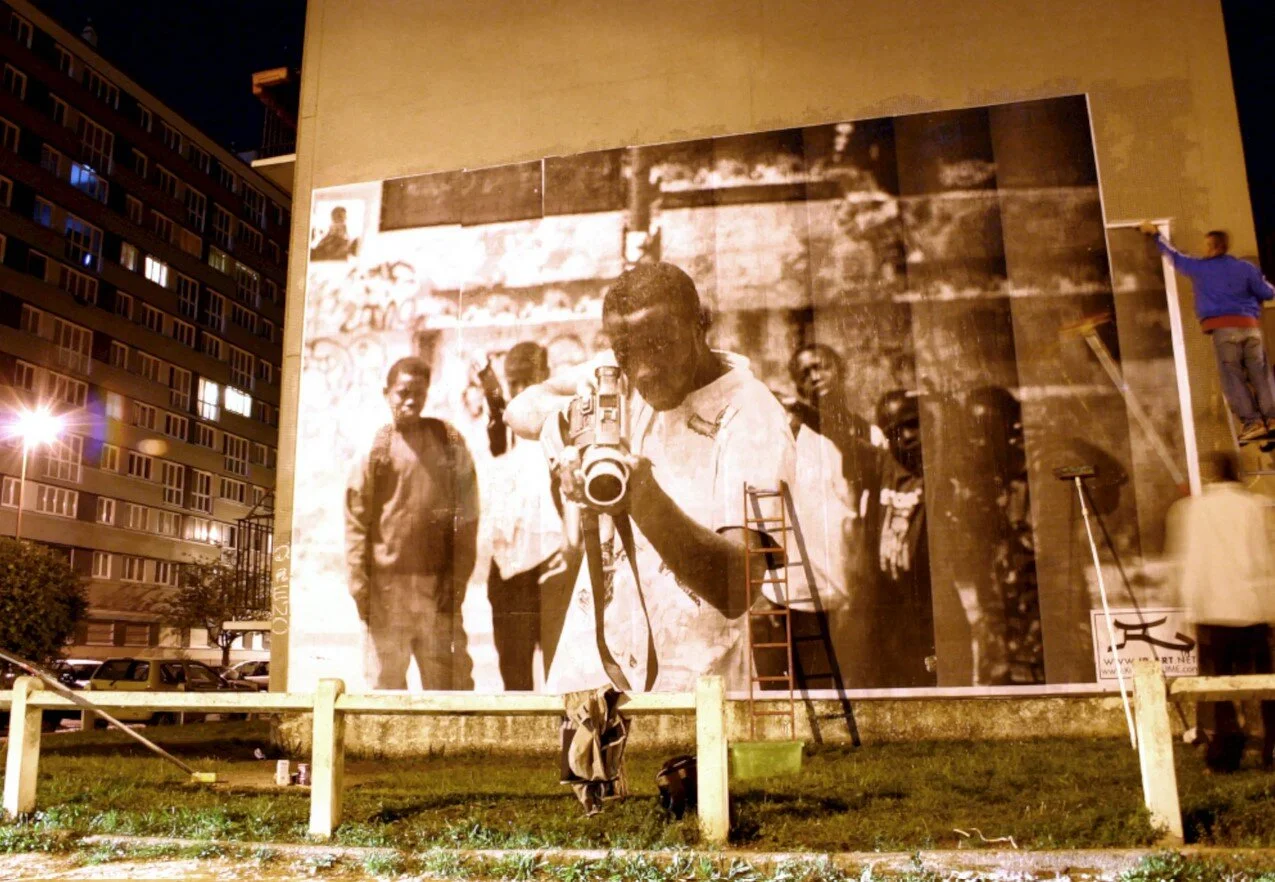
28 Millimeters, Portrait of a Generation, Pasting of Ladj Ly by JR, Montfermeil, Les Bosquets, 2004

JR blew up the photos to huge formats, and pasted them on the walls of the most bourgeois areas of Paris. It was all very illegal… at first. But there was something unmistakably powerful about JR's art: these were giant images of individuals previously viewed to be dangerous thugs, but here they were as kids, fooling around, unthreatening. JR's images worked to diminish the tension inherent in interactions between Parisians in the mainstream and in the margins. And then something happened: His images were wrapped around the buildings of the Paris City Hall. This made JR's street art "official," although he would have continued even if it hadn't.
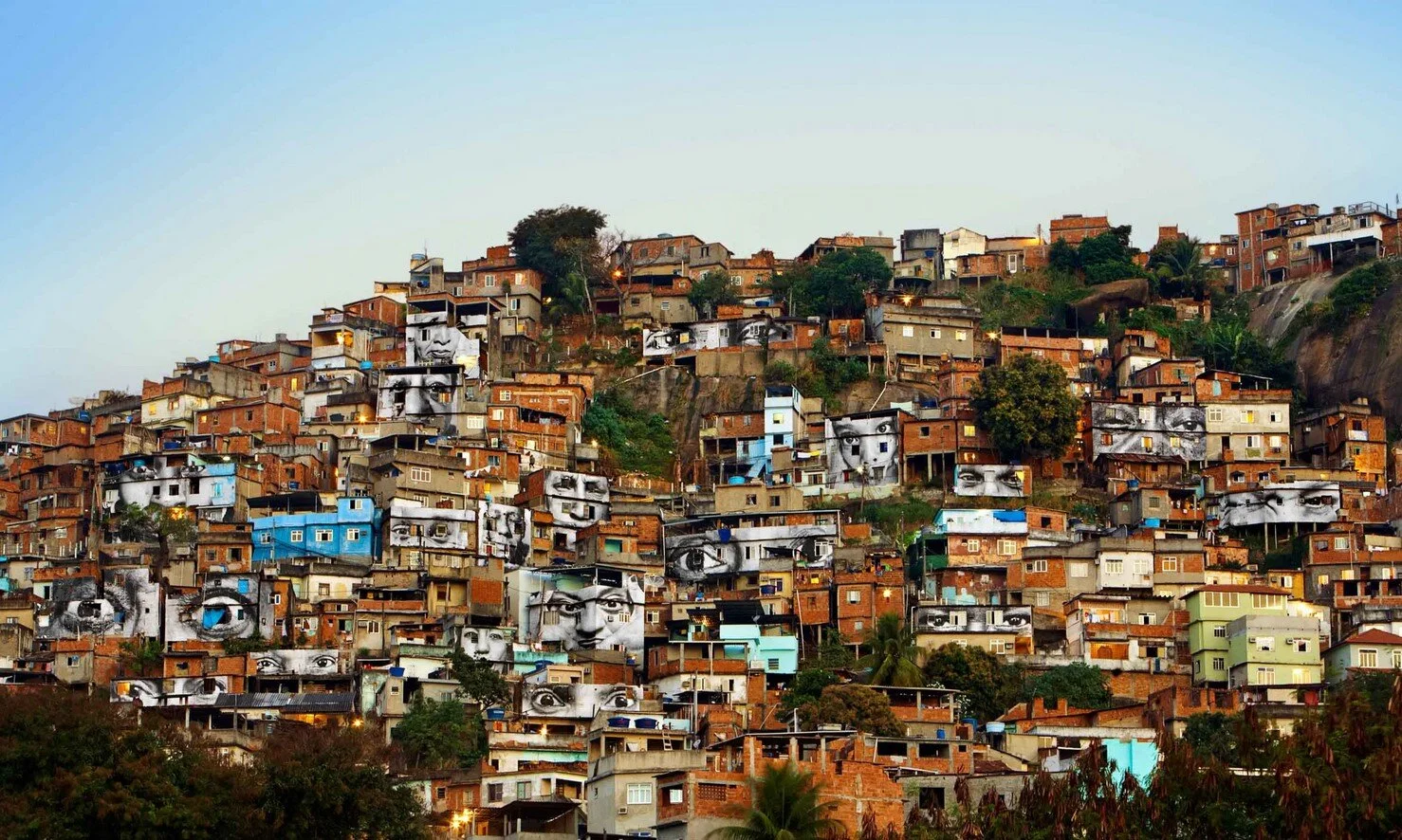
28 Millimètres, Women Are Heroes, Action in Favela Morro da Providencia, Favela by day, Rio de Janeiro, 2008

From Paris, JR began to work on the largest canvas on earth: the world itself. His work has taken him all around the globe, from his famous Face 2 Face exhibition where he posted pictures of Palestinians and Israelis face to face in a number of Palestinian and Israeli cities and on the Wall itself, to the most dangerous favelas of Rio de Janeiro, Brazil, or the space above the High Line in New York City. His work captures the faces of the world's marginalized groups and populations: women, the extremely poor, the indigenous. He takes those who are often off the radar and makes them a large and profound part of the everyday experience of cities. His art does more than turns heads, it changes perceptions.

JR’s work has won wide international acclaim, even winning him the 2011 TED Prize. At first, he was put off at the notion that he was supposed to save the world, JR sighed when the mandate was clarified: change the world, not save the world. “Oh, alright,” he said. “That’s cool.” In a TED Talk later in 2011, he continued by saying, “Art is not supposed to change the world, to change practical things, but to change perceptions. Art can change the way we see the world.” And his art really has.



Calah Singleton

Calah recently graduated from Yale, where she majored in Political Science. Her interests include urban studies, international development, and learning new languages.
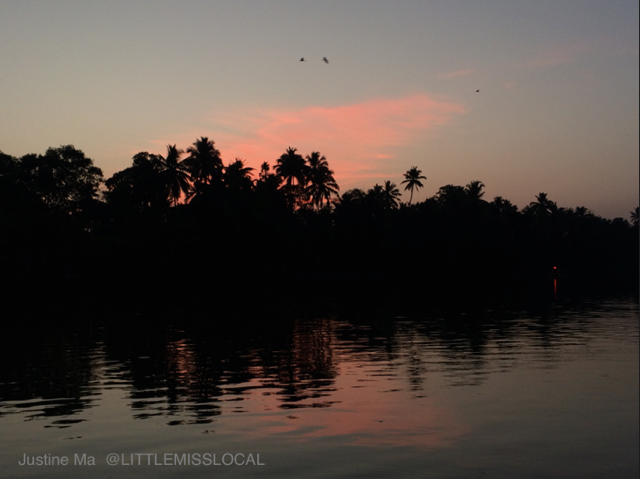

INDIA: 20 Tips on Ashram Life from a NYC Perspective

Traveling to India? AWESOME. 

India is a beautiful country deeply rooted in tradition and culture. Most of my friends travel to India for a spiritual experience… and well, that’s because most of my friends are yogis. Go figure.

Most yogis who travel to India stay at ashrams, which are spiritual monasteries (and really, really, really cheap places to sleep). When I traveled Southern India (Kerala) this past March, I stayed at an Ayurvedic Ashram known worldwide as Amma’s Ashram.

Amma (meaning Mother) is a living saint (yes, a real person) who has the stamina to bless and hug people for 16hrs straight sans lunch or dinner. It’s kind of her thing and she’s been doing it for decades. Her ashram is open to everyone: locals, backpackers, yogis, devotees, travelers, etc. So for my first trip to India, I was looking forward to receiving one massive hug, yoga at sunrise, and one dosa a day. However, my time at Amma’s proved to be more challenging than initially expected.

Sidenote: Dosas are thin crepes that are made of fermented beans, stuffed with spicy potatoes, cooked in ghee, and topped with coconut chutney.

It is imperative that you are aware of this street food item because dosas will lead you to happiness. Or at least it does for me.

If you’re planning to stay at Amma’s Ashram (amma.org) in Kerala, I’ve compiled a list of “need to know info” that you will not find on the main website. These tips will mentally prepare you for your upcoming journey and (hopefully) allow you to embrace life at Amma’s. Please keep in mind that the ashram lifestyle isn’t for everyone but it is an experience that I highly recommend experiencing.

HOW A NEW YORKER PREPARES FOR AMMAS:

 1. Bring toilet paper, buy toilet paper. Carry a fanny pack stocked with toilet paper, tissues, and hand sanitizer. Throw a few bottles of water in there too. Just do it.

 2. What to wear? Most people wear loose white clothing as a statement of simplicity. I wore a typical NY outfit — black on black on black—Amma still embraced me.

3. Avoid a potential argument. Every roommate should have their own key to access their room — pick up extras at the International Center.

4. FACT: Half a year's rent in NYC (or less) will last you a lifetime at Amma's.

5. In the word's of Amma, "some people who come to the ashram are crazy," so just acknowledge that for a sec.

6. You'll find that most people at the ashram are living in savasana and will walk straight into you sans apology. Don't get all NY on them, just smile and move on.

7. Public Service Announcement: The ashram uses communal spoons, plates and cups. After you use your utensils, you are responsible for washing these items in cold water and cheap, watered down soap. Consider buying your own spoon (15 rupees), a food container (180 rupees) and cup (20 rupees) from the shop located inside the ashram. Basically, keep yo' germs to yo'self!

8. On a similar note, avoid contact with ALL left hands at ALL times in India (even expats)... if you don't know what I am talking about, google it.

9. FACT: The ashram provides one sheet, one pillow and one pillow cover for your cot. The room is the same size as a NYC studio apartment.

10. FACT: When you take a shower, hot water is not available. And you’ll need to bring your own towel. If this is a potential problem for you, bring dry shampoo and deodorant.

11. FACT: The shower is positioned directly above the western toilet… so forget the towel, just double up on the dry shampoo and deodorant.

12. Sign up for seva (service) at the office. If you don’t feel like waiting at the seva office, there are plenty of opportunities to volunteer throughout the ashram. No one will refuse your help. They’re uncomfortably kind and welcoming.

13. Seva is optional. You are not obligated to clean toilets. I chopped vegetables and enjoyed it.

14. Dosas are available on-site at the Indian canteen.

15. In case you’re not interested in the complimentary Indian food, there’s a western café where you can purchase grilled cheese, handmade pizza, egg sandwiches, toast, spirulina bars, etc. However, I was told they’ve run out of tator tots until October.

16. NY’ers walk a lot so if you find yourself strolling outside of the ashram walls, you can easily find Amrita University just over the bridge. Keep in mind, this state-of-the-art building does not have western toilets, soap or toilet paper. Hence, fanny pack.

17. Head straight to the beach, just don’t go in for a swim. Their rules, not mine.

18. Take probiotics daily. I recommend hitting up your local JUICE PRESS at least one month before you arrive in India.

19. The ashram is awesome; participate as much as possible.

20. Two full days and one night will give you the opportunity to experience everything… or you can stay for 18 years, your choice. 


JUSTINE MA

@littlemisslocal

Justine is a NYC food & lifestyle blogger who has eaten her way around the world to understand the connection between local culture and cuisine. Follow Justine at LittleMissLocal.com as she explores local food, travel, health and wellness.