
A group of environmentalists based out of the Florida Keys have devised a way to farm coral and help rebuild dead reefs.
Read MoreExiled Russian Pussy Riot Activist Sentenced for Ukraine Tweets
After a series of tweets criticizing Russia’s invasion of Ukraine, activist and girl band member Lucy Shtein was sentenced in absentia to six years in prison.
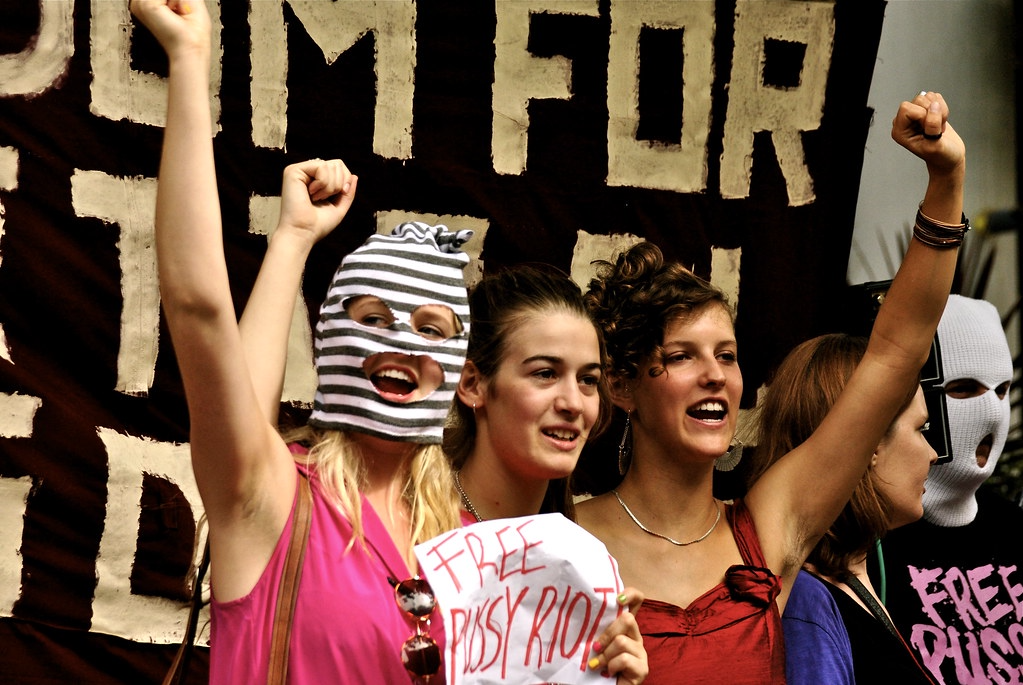
Pussy Riot Global Day. Eyes on Rights. CC BY-NC-SA 2.0
The members of Pussy Riot, a Russian punk rock and performance art group, are no strangers to prosecution. Their political activism has landed them in legal trouble in the past. In 2012, the band briefly took over a cathedral in Moscow and performed a “punk prayer” by the church’s altar. The lyrics called for the Virgin Mary to expel Putin from Russia. As a result, three members of the group, Maria Alyokhina, Nadezhda Tolokonnikova and Yekaterina Samutsevich, were convicted of hooliganism, religious hatred and plotting to undermine social order and sentenced to serve two years of imprisonment in a penal colony, a decision that sparked worldwide protests.

Free Pussy Riot - Tel Aviv Israel. דוג'רית. CC BY-SA 4.0.
On November 21st, 2023, Nadya Tolokonnikova, was arrested again, this time in absentia, for the charge of “insulting the religious feelings of believers.” The charge carried a maximum fine of about $3,400 (300,000 roubles), forced labor, and up to one year of imprisonment. In Russia, this law is often referred to informally as the “Pussy Riot Law,” and was written while the members were in court for their 2012 performance. The charges against Tolokonnikova were leveled in response to a 2022 performance art piece called “Putin’s Ashes” in which Tolokonnikova and eleven other women, all wearing balaclavas, set fire to a portrait of Putin.

Nadya Tolokonnikova. Steve Jurvetson. CC-BY-2.0.
In March of 2024, Pussy Riot Member Lucy Shtein was sentenced in absentia to six years in prison for a tweet the activist and artist posted in March of 2022 criticizing Russia’s military activities in Ukraine. Commenting on a video allegedly of Ukrainian soldiers shooting the legs of Russian POWs, she stated that the Russian soldiers had come “to bomb other people’s cities and kill people.” Since launching its invasion of Ukraine, the Russian government has begun prosecuting citizens who speak out against the war. In 2022, the State Duma, the lower house of the Russian legislature, amended the criminal code to make it illegal to support an end to the war or to spread any information on Russia’s military activities that contradicts the official version presented by the Russian Ministry of Defense. As of 2023, there have been more than 19,700 detentions of citizens who participated in anti-war activities, and as of 2024, 929 cases have been filed against citizens under this law. The new law has been criticized as an attack on freedom of assembly, freedom of speech, political opposition and activism, and it was under this law that Shtein was sentenced.
Shtein escaped from house arrest in Russia with her girlfriend and fellow Pussy Riot member Maria Alyokhina shortly after the invasion in Ukraine had begun, earning her a spot on the Ministry of Internal Affairs wanted list. Shtein had been accused of violating coronavirus restrictions and placed on indefinite house arrest after participating in rallies in support of opposition leader Alexei Navalny. Shtein and Alyokhina fled to Iceland, where they were granted citizenship in 2023.
Despite being unable to return to their homeland, Pussy Riot members continue to tour internationally. On June 20th, 2024, Tolokonnikova will be opening an art exhibition entitled RAGE in Austria. In 2017, Maria Alyokhina wrote a memoir, "Riot Days," recounting her experiences with Russia’s criminal system. In 2024, the band adapted the memoir into a show described as “a mixture of concert, rally, theater and political happening” touring in Canada and Europe.
TO GET INVOLVED
Pussy Riot: You can support Pussy Riot here by buying their merchandise, or a ticket to one of their upcoming shows in Chicago, IL, US or Riddu Riddu, Lyngen, Norway.
Stand With Ukraine: The "Riot Days"tour raised funds for the children’s hospital Ohmatdyt in Kyiv, Ukraine. While the show is no longer on tour, you can still donate to the hospital.
Rebecca Pitcairn
Rebecca studies Italian Language and Literature, Classical Civilizations, and English Writing at the University of Pittsburgh. She hopes to one day attain a PhD in Classical Archeology. She is passionate about feminism and climate justice. She enjoys reading, playing the lyre, and longboarding in her free time.
The Slow Rise of Gang Violence in Haiti
Haiti finds itself in a humanitarian crisis, with limited access to resources and police assistance amid widespread gang presence.

UN officials try to aid the police force in Haiti as violence escalates, CC0 1.0.
Already in a long-term humanitarian crisis stemming from a 7.0 magnitude earthquake in 2010, Haiti has been in a vulnerable position for the last fourteen years. Until recently, the fate of Haiti rested with 10 remaining senators, all of whose terms expired two weeks into 2023. There are currently about 200 gangs in Haiti, half of which are residing in Port-au-Prince, Haiti’s capital. Among these are G9 and GPep; two rival gangs with the largest presence in the capital.
G9 Family and Allies (“G9”) was formerly associated with the dominating Haitian Tet Kale political party, rising via a relationship between Chérizier and the Moïse administration in 2020. The intention of this group was to maintain social order among civilians angry about lack of political assistance to their poor conditions. Over time, it strayed away from its initial goals and took up violence and kidnapping.
The second politically relevant gang present in Port-au-Prince is GPep, less well known but equally dangerous. GPep, a gang alliance led by Gabriel Jean Pierre (“Ti Gabriel”), is the sworn enemy of G9. Associated with Haitian opposition parties, GPep is responsible for high levels of violence, famines and the deaths of innocent civilians in its clashes with G9 for power. In September of 2023, the rivals made a public pact to “viv ansanm” (“live together”) to coordinate against shared political rivals.
In February 2024, various Haitian gangs carried out a series of coordinated attacks throughout Port-au-Prince. Chérizier and the G9 Alliance ultimately claimed responsibility for the spike in violence. The gangs’ intentions were to reduce the power of the police force and prevent the return of the Prime Minister from Kenya, where he had previously been negotiating with the United Nations for protective measures. Since then, gang activity has seen a steady increase in Port-au-Prince, including the storming of two of the country’s largest prisons to free thousands of inmates and an attempted seizure of the national airport. G9 also notably expanded its control and effectively blocked access to the country’s main oil storage facility, worsening the fuel shortage. On March 3, the Prime minister declared a state of emergency and enforced a nightly curfew.
The recent increase in gang presence has also limited citizens’ access to healthcare. As a result of a storm by the gangs in March, the State University of Haiti Hospital (HUEH) was forced to close and has not reopened since. TIME journalist Dánica Coto looks broadly at the impact gang violence has had on the medical system and explains that, “Even if a hospital is open, sometimes there is little or no medical staff because gang violence erupts daily in Port-au-Prince, forcing doctors and nurses to stay at home or turn around if they encounter blocked roads manned by heavily armed men.” The gangs therefore not only harm citizens directly, but medical restrain them by limiting access to cancer, asthma, diabetes and other medical condition treatments.
The rapid increase in gang violence is impacting more than just the capital, the displacement of people also posing a risk for the rest of Haiti. With a large population residing in Port-au-Prince, smaller cities outside the capital are too fragile to support people fleeing en masse. The United Nations International Organization for Migration raised their concerns in early April: “It should be emphasized that [these] provinces do not have sufficient infrastructure and host communities do not have sufficient resources that can enable them to cope with these massive displacement flows coming from the capital.” The insufficient resources of the regions surrounding Port-au-Prince continues to pose a risk for Haitains, their food security, health and safety still insecure even if they escape the capital.
The United Nations is calling for more support for Haiti, with only 8% of the 2024 Humanitarian Needs and Response Plan for Haiti already funded. In a United Nations meeting, the Haiti delegate focuses on the importance of sending aid to the police force and emphasizes that, “We need to ring alarm bells. It is absolutely vital to act quickly to avoid the genocide being implemented in the country." Executive Director of the UN Office on Drugs and Crime Ghada Waly echoes the need for outside intervention; “In the absence of international action to improve Haiti’s security, through the deployment of the multinational security support mission […] alongside a long-term political solution, the circumstances will remain enormously challenging.” Haiti is in desperate need of outside assistance from the United Nations and other countries, its current support system too weak to protect and care for its people.
The Dominican Republic has deployed its own limited resources to stem the flow of arms into Haiti, although its Minister of Foreign Affairs emphasized the need for tougher sanctions and an arms embargo to help build a sustainable peace. United Nations delegates are also pushing for a rigorous implementation of the sanctions regime to hold financiers of the violence accountable, and thus reduce the damage being done to Haiti. In its current state, Haiti’s healthcare and political system are on the verge of collapse. It is only through external intervention and support that the country has a hope of making it through the crisis and starting, once again, on a path to reconstruction.
TO GET INVOLVED:
Save the Children has an ongoing campaign to help children and refugees in Haiti. Check out their website here to learn about the current state of Haiti and steps, both big and small, that can be taken to send humanitarian aid overseas.
Christian humanitarian organization World Vision is working to help end the suffering in Haiti by sponsoring individual childrens’ wellbeing, as well as general crisis response efforts. Click here to learn more.
Aanya Panyadahundi
Aanya is a student at the University of Michigan studying sociology and journalism on a pre-law path. She loves to travel the world whenever she can, always eager to learn more about the different cultures and societies around her. In her free time, she likes to play the violin, ski, and listen to podcasts.
Why You Should Care About the War in Eastern Congo
A decades-old conflict in Central Africa threatens to reignite in full, with worldwide implications.
Read MoreUniversity Encampments and the Future of Free Speech
What the pro-Palestine encampments and the official responses to them mean for the future of protest.
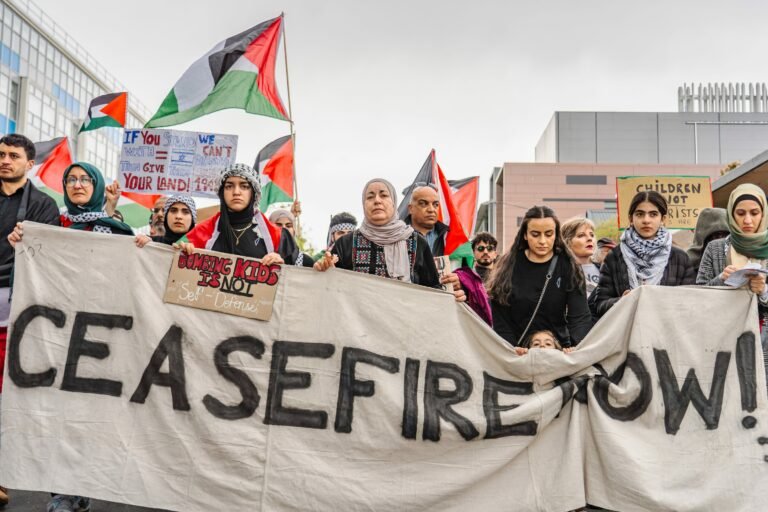
Protestors holding up a pro-Palestine “Cease Fire Now!” banner. Sword & Shield. CC BY 3.0 NZ
Will encampments continue to be an effective mode of protest? Palestine solidarity is growing worldwide, especially among college students. Inspired by protests at Columbia, students at numerous universities have established pro-Palestine encampments, urging the institutions to divest funds that support Israel, aiming to halt the mass killing in Gaza. Since October 7, thousands of Palestinians have been killed, and nearly half the population is suffering from malnutrition. Encampments sprang up at major universities worldwide, including McGill, Trinity, Oxford and the University of Tokyo. Robert Cohen, a professor at NYU, told ABC News that he considers encampments to be the biggest student movement of the 21st century. The varying responses globally reflect the nuanced nature of encampments, balancing concerns for student safety with protecting their right to freedom of speech. Some universities, such as Wesleyan University and Oxford University, are more tolerant of the encampments, allowing them to continue so long as they remained nonviolent and nondisruptive. Other schools, such as UCLA and UT Austin, have taken a different approach and alerted the police and attempted to remove encampments by force, leading to thousands of student arrests. Students at Brown University and UC Berkeley dismantled encampments after reaching agreements with officials to discuss divestment strategies. Pro-Palestine encampments and the varied responses to them have compelled students to reflect on the extent to which their right to freedom of speech is protected.
While “freedom of speech” is a broad term, the US Constitution's First Amendment specifies that it includes the right to peacefully assemble and the right to petition the government, but it has limits and cannot justify violence. According to FIRE (Foundation for Individual Rights and Expression), while police can dismantle encampments that disrupt class or block student traffic, they can not interfere or issue arrests out of personal bias. However, rights to freedom of speech vary by institution, especially between public and private schools. Private universities are not necessarily required to follow constitutional rights, and universities driven by religious or military interests may prioritize other values over freedom of speech. In the context of encampments, there doesn’t seem to be a large correlation between university type and response from officials. One pattern that has emerged is that most student arrests are occurring in urban areas like New York and Los Angeles. The media has wielded a dual influence, serving as both an inspiration for global encampments and a source of delegitimization. Across the internet, students are labeled as “entitled” and “immature,” facing criticism from professors, government officials and religious leaders who deride their anti-imperialist goals as unrealistic.
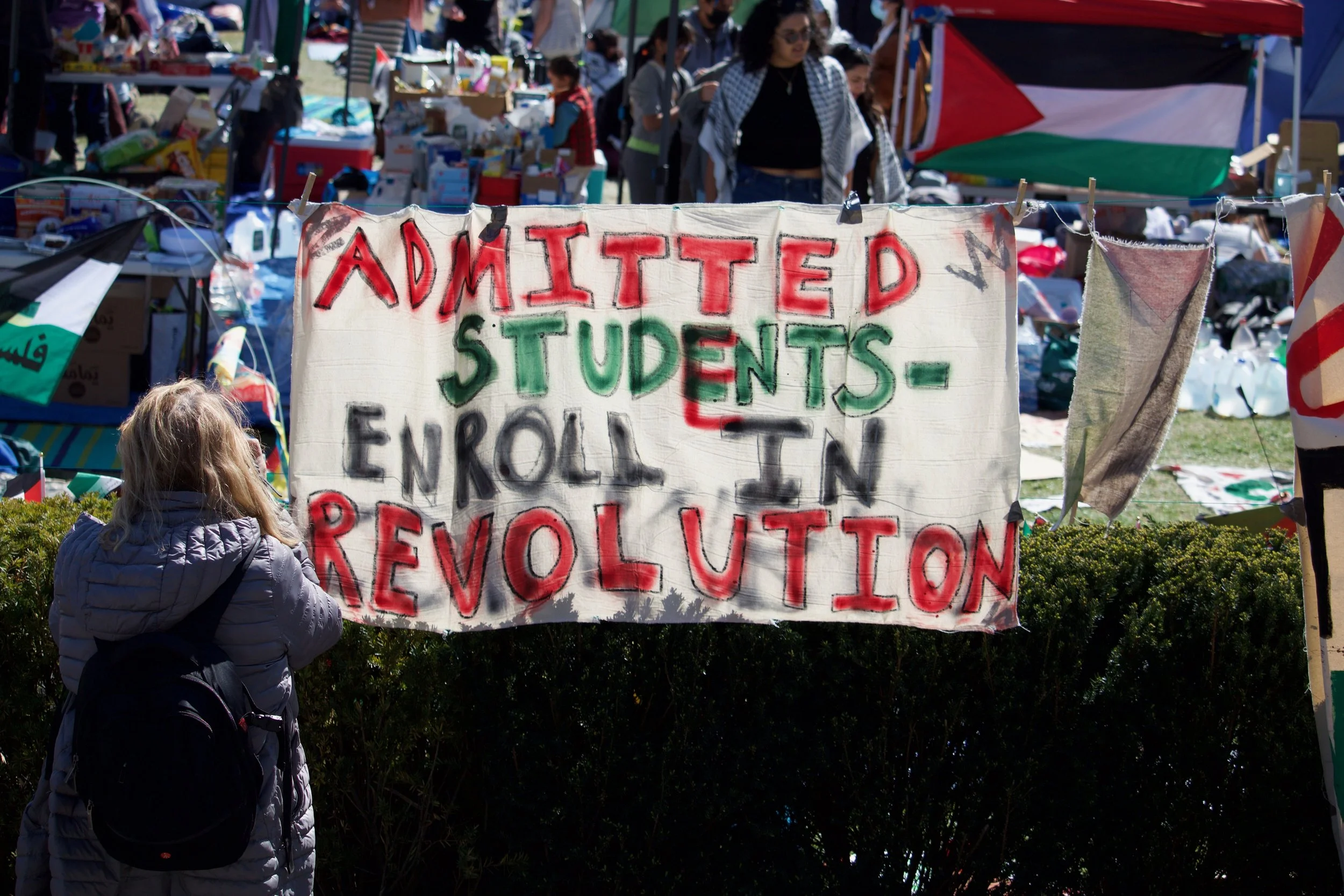
Columbia Encampment Day After NYPD Raid. Pamela Drew. CC BY-NC 2.0
Some argue that history is repeating itself with the rise of pro-Palestine encampments. During the Vietnam War, students at universities worldwide urged institutions to cut ties with the military and ultimately end the war through pro-peace propaganda and counterculture lifestyles, most notably at UC Berkeley and Columbia. Students held abolitionist views toward the armed forces, viewing the military as systematically oppressive.
With semesters wrapping up and campuses quieting down, encampments are naturally disassembling, even if no agreements have been reached with universities. As November's election approaches, more members of Gen Z are eligible to vote. It remains unclear as to whether or not young voters will support Biden, as they criticize his support for the Israeli military, emphasizing a lack of unity amongst Democrats. Regardless of short-term and long-term outcomes, pro-Palestine encampments have demonstrated the role students can play in fostering dialogue and raising awareness, ultimately reshaping public opinion. Recent events have prompted discussions about whether or not students are protected by their First Amendment rights when establishing encampments, forcing us to reconsider the essence of free speech.
TO GET INVOLVED
UNRWA (United Nations Reliefs and Works Agency) is an organization that provides direct relief to Palestine refugees. Donate to provide humanitarian relief to those affected here.
Call on Congress and President Biden for an immediate cease-fire via moveon.org
Check out the Palestine Resource Guide, which provides updates on the latest news and resources pertaining to Palestine. Find a protest/event near you here.
Agnes Moser Volland
Agnes is a student at UC Berkeley majoring in Interdisciplinary Studies and minoring in Creative Writing, with a research focus on road trip culture in America. She currently writes for BARE Magazine and Caravan Travel & Style Magazine. She is working on a novel that follows two sisters as they road trip down Highway 40, from California to Oklahoma. In the future, she hopes to pursue a career in journalism, publishing, or research.
Madagascar’s Cyclone Gamane—The Devastating Storm Nobody’s Talking About
Thousands of homes were destroyed and families displaced, with almost no American news coverage.
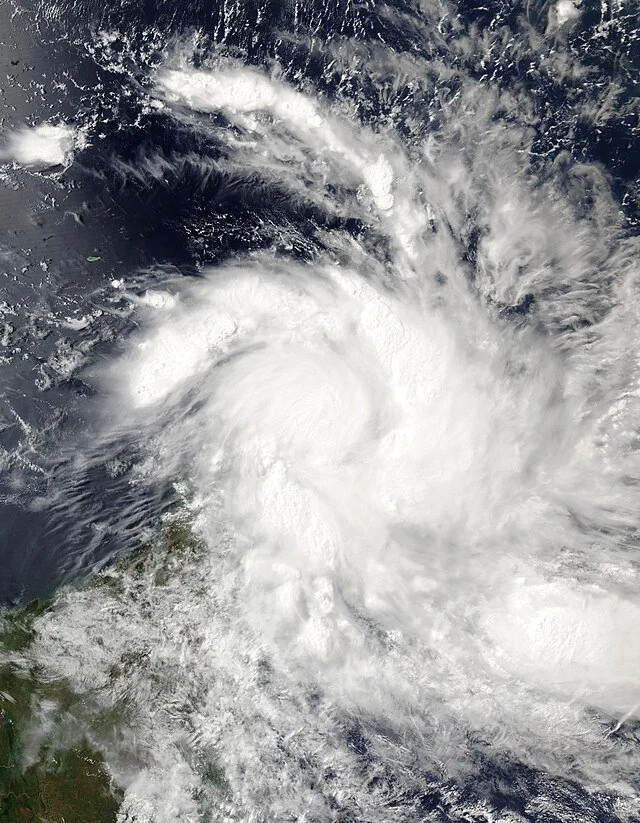
Cyclone Gamane over Madagascar. NASA, CC0
A few weeks ago, Cyclone Gamane made landfall on Madagascar. It devastated the island in no time flat, leaving tens of thousands of people homeless and without food or electricity. It arrived on March 27th; the government declared a state of emergency on April 3rd. And despite all of this, there was almost no American news coverage about the disaster.
Gamane began as a tropical cyclone over the South Indian Ocean. By the time it reached Madagascar, its wind speed was clocked at an average of 93 mph, with gusts up to 130 mph recorded. Thirty-three communes were flooded in the three days it pummeled the northern coast, and more than 780 houses were destroyed. Eighteen people were killed and more than 22,000 were displaced from their homes. Estimates suggest that there are roughly 220,000 people in need of humanitarian assistance on the island.
Even before the cyclone, Madagascar was numbered among the worst off in the Global Hunger Index in 2023. Before the flooding in February and with Gamane, much of the island was unable to produce enough food to support the population. Roughly 1.6 million citizens are food insecure, relying instead on humanitarian aid. Additionally, the cyclone came at the beginning of Madagascar’s notoriously dry lean season, which lasts from late March until May. If conditions don’t improve quickly, there are concerns that large chunks of the country will experience crisis-level food insecurity.
Emergency supplies on the island are already low—Gamane is only the third crisis to hit Madagascar in 2024, after the Alvaro storm in January and heavy flooding in February. Local humanitarian associations have made efforts to help the populace recover, but without resources, the government has had to call for aid from other countries.
The UN has set up a funding program under the CERF, the Central Emergency Response Fund, to accumulate funds to send to Madagascar. As of April 21st, the program is 20% funded, and is seeking to raise 90 million dollars. Smaller humanitarian organizations, such as the Redemptorist Solidarity Office (headquartered in Cork, Ireland), have taken action in the meantime to provide what help they can. According to their website, the RSO has provided 15,000 pounds for financial support and is shipping several tons of food items and medical kits. They hope to raise enough money to help provide shelter-building supplies for the displaced as well.
Madagascar is uniquely situated as one of the most susceptible places on Earth to natural disasters. Over the last 35 years, more than 50 hazards, including locust swarms, droughts, and heavy flooding, have struck the country and affected nearly half of the entire population. This has, to some degree, resulted in less coverage being dedicated to each event; even now, almost a month since the storm first made landfall, it has received very little publicity in the United States. But despite this lack of interest, humanitarian action is still being taken. It will be an uphill battle, between the fallout from the storm and the height of the lean season approaching, but with the help of the UN and other independent aid groups, Madagascar can and will recover.
Get Involved
At the moment, due to the lack of publicity that the crisis has received in the US, there are not many volunteer opportunities within the country. Those looking to help can donate to SEED Madagascar (which seeks to combat food insecurity), UNICEF Madagascar (which is working to minimize the effects of climate change on the island), or the World Food Programme’s Madagascar mission (which aims to supply over 1.6 million people with humanitarian assistance).
Ryan Livingston
Ryan is a senior at The College of New Jersey, majoring in English and minoring in marketing. Since a young age, Ryan has been passionate about human rights and environmental action and uses his writing to educate wherever he can. He hopes to pursue a career in professional writing and spread his message even further.
Beyond the Quakes: Taiwan’s Earthquake Preparedness
Despite being hit with a 7.4 magnitude earthquake during rush hour on April 3rd, 2024, Taiwan has emerged largely unscathed. Why is that?

A seismogram of the April 3rd, 2024 earthquake in Taiwan. James St. John. CC BY 2.0
On April 3rd, 2024, the strongest earthquake in about 25 years rocked the streets in and around Hualien on the east coast of Taiwan, followed by hundreds of aftershocks. While the search for survivors remains underway, so far 13 people have been found dead, and nearly 1,000 people have reported injuries. While any number of deaths and injuries is tragic, these figures are minuscule compared to the near 2,500 dead and 100,000 injured during the 7.7 magnitude earthquake that struck in 1999 and left approximately 50,000 homes destroyed.
Considering its location along the Ring of Fire and the presence of three seismic belts in the country, Taiwan has a long history of earth-shaking events. The Ring of Fire refers to a fault line around the Pacific Ocean that is home to a majority of the world’s earthquakes. Because of this, Taiwan records an average of about 2,200 earthquakes every year, with a record of nearly 50,000 during 1999. Taiwan’s mountains then amplify the impact of earthquakes, which resulted in the landslides that accounted for most of the deaths on April 3rd.
Because of this susceptibility and catastrophic earthquakes in the past, Taiwan has developed some of the best earthquake preparedness techniques in the world. Following the devastating Chi-Chi earthquake in 1999, the Taiwanese government began reforming construction regulations. This included seismic retrofitting in buildings and infrastructure across the country and the prosecution of inadequate construction practices. Years of experience have also resulted in efficient emergency response, aided by surveillance cameras and social media used to identify locations requiring aid.
Educating the public has been another initiative to prevent deaths during earthquakes and aftershocks. In addition to public awareness campaigns, the Central Weather Administration frequently publishes resources including information and tips surrounding earthquake preparedness. The Central Weather Administration has also run a real-time seismic network since 1994, which tracks data and notifies the public of seismic activity through an early warning system. The data collected by the seismic network is also used to update building codes.
GET INVOLVED
Ways for people to support Taiwan’s emergency response and earthquake preparedness include donating to and supporting organizations such as the Red Cross, Taiwan Root Medical Peace Corps and Peace Winds America.
Madison Paulus
Madison is a student at George Washington University studying international affairs, journalism, mass communication, and Arabic. Born and raised in Seattle, Washington, Madison grew up in a creative, open-minded environment. With passions for human rights and social justice, Madison uses her writing skills to educate and advocate. In the future, Madison hopes to pursue a career in science communication or travel journalism.
Nature’s Day in Court: Ireland’s Green Revolution
Ireland may become the first European country to constitutionally recognize that ecosystems possess legal rights.
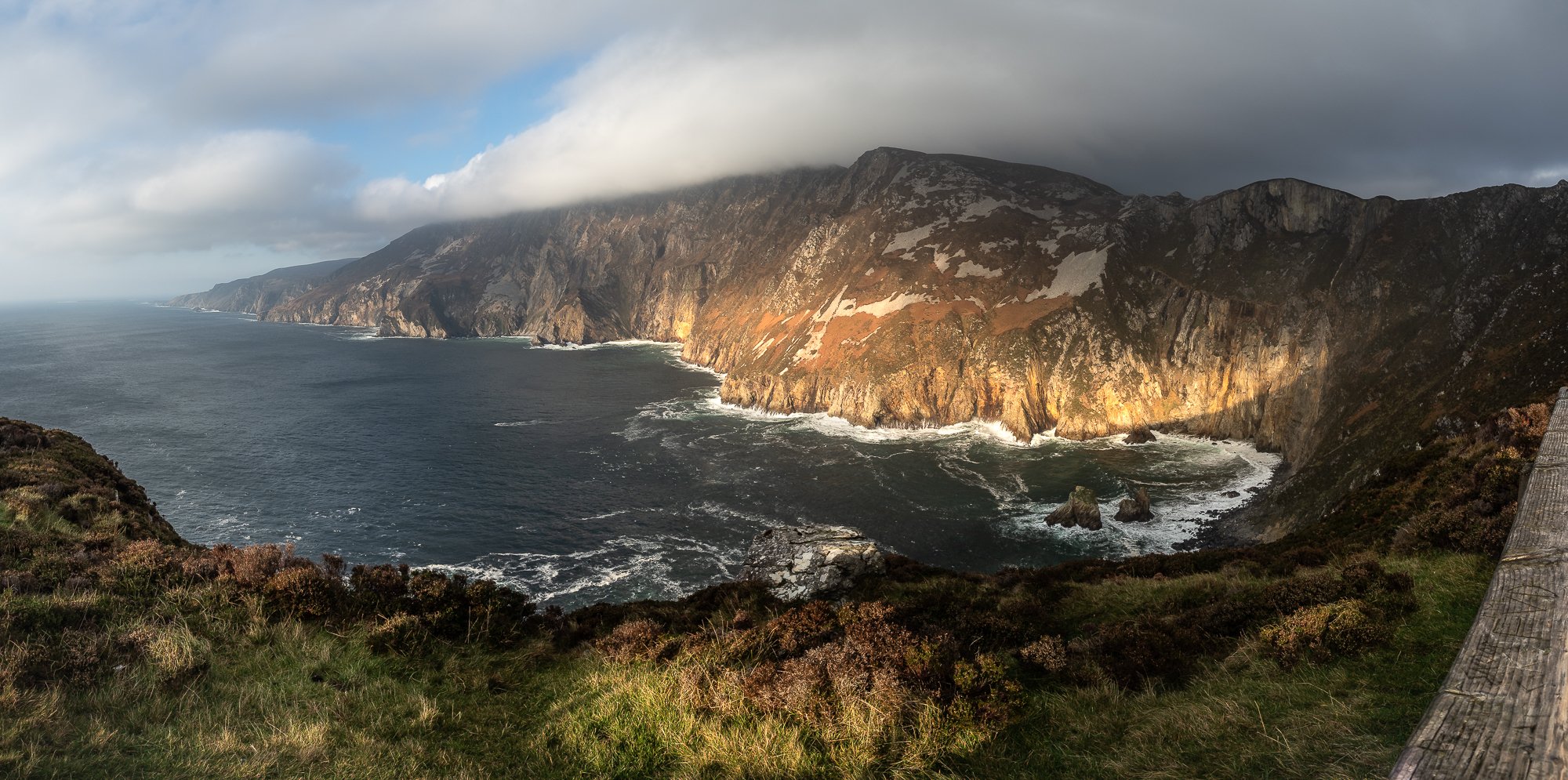
Seascape in Ireland. Giuseppe Milo. CC BY 2.0 DEED
Ireland, a nation renowned for breathtaking landscapes, may become the first European country to enshrine the rights of its nature into the national constitution. In December, the Oireachtas Joint Committee on Environment and Climate Action called on the government to begin steps towards a referendum. The referendum, if successful, would recognize that ecosystems possess legal rights comparable to those of humans and corporations.
In December, the Joint Committee on Environment and Climate Action proposed a series of administrative measures for drafting constitutional amendments to the Irish government. The amendments would bestow nature with inherent rights to existence, perpetuation and restoration. Elements of nature would be seen as having the rights to flourish and be respected. The amendment would additionally recognize that humans have a right to a clean environment and protect the right of any person or organization to defend or enforce those rights on the behalf of nature.
The movement to legislate the rights of nature has grown in recent years. In Ireland, the proposition to amend the constitution emanated from the loss of biodiversity within the country as of 2023. The Citizens’ Assembly on Biodiversity Loss addressed the unprecedented rate at which human activity has driven the mass extinction of plants and animals, with over 1 million more at risk of the same. The danger to Ireland's native species has been attributed to the overall change in its climate.
Similar to Ireland, the ecosystems of other countries have equally felt the effects of climate change. In the Andean plain of Bolivia, reduced precipitation and increased temperatures have facilitated rapid desertification. In Uganda, the pace of species extinctions has accelerated as a result of prolonged periods of drought and erratic rainfall due to deforestation. These countries, among others including Ecuador, New Zealand, and Spain, have a form of national law to recognize the rights of nature, or legal personhood for ecosystems. These laws typically provide a higher level of protection to ecosystems than environmental protection laws alone, although not all are constitutionally bound. Some countries that have written the Rights of Nature include Ecuador, New Zealand, India and Mexico.
Policymakers around the world have begun to embrace a changing idea of how nature itself is treated under law. Several governments have legally bound the ‘rights of nature’ to protect certain land and water from human development. In Bangladesh, all rivers are now under legal protection. In Colombia, the Supreme Court recognized the rights of the Amazon River. Ecuador, the first country in the world to recognize the rights of nature, gives “Mother Earth” legal standing in its constitution. This jurisprudence has prompted a massive shift away from the view of nature as a ‘thing’ that humans have a right to use and eventually destroy. Dr Peter Doran of the School of Law at Queen's University Belfast argued to the Joint Committee in Ireland that granting constitutional protection to nature would not only save species and habitats but also reorient human priorities, which would have much more long term positive consequences.
Despite the good intentions behind giving nature constitutional rights, some have called the law ‘anti-human,’ claiming that it will stop extractive projects such as mining or that the rights for nature are unlikely to provide a plausible solution to the issues environmentalists aim to resolve. Proponents respond that the laws aim to protect the integrity of nature so that it may persist in the future, not abolish the rights that humans have to, among other things, private property.
The Center for Democratic and Environmental Rights appeared before Ireland’s Joint Committee to testify for why the rights of nature should be constitutionally recognized. This next step for Ireland is now in the hands of the government and the Oireachtas (parliament). For legal effect, the amendments must be approved by both houses of the Oireachtas, Dail Eireann and the Seanad, and win a majority of the popular vote in a national referendum.
TO GET INVOLVED:
The Nature Conservancy is an organization focused on creating solutions to climate change and biodiversity loss. By tackling these issues with projects involving clean energy policies, carbon storage and agricultural innovation, there is no shortage of opportunities for the public to help. The organization lists ways to get involved on their website that range from volunteering to taking a pledge to donating.
Global Alliance for Rights of Nature is a global network of organizations made up of people from all walks of life who are committed to the recognition of the Rights of Nature. The group aims to honor the relationship between humans and nature, additionally pursuing the creation of a system that treats nature as a rights-bearing entity, not a resource to be exploited at will. To better emphasize the interconnectedness of humans and their environment, the group offers the opportunity to get involved as a member, donate, or even participate in internships.
Community Environmental Legal Defense Fund aims to build sustainable communities that assist people in asserting their right to local self-governance and the rights of nature. The group assists indigenous peoples, civil societies and communities in advancing laws for the protection of nature that involves providing legislative and policy drafting, legal research, and public engagement and education. With this, the public is able to join the movement, which offers many opportunities to volunteer in a community or help to organize a campaign.
EarthJustice is a nonprofit public interest environmental law organization that is founded on the belief that everyone has the right to a healthy environment. Through projects focusing on defending a right to clean air, clean water and wild places, the group believes that a better future can be built. With 15 offices and 200 lawyers, as well as an impressive total of 500 legal cases it has represented free of charge, there is no shortage of opportunities for the public to participate, whether through signing petitions or donating.
Mira White
Mira is a student at Brown University studying international and public affairs. Passionate about travel and language learning, she is eager to visit each continent to better understand the world and the people across it. In her free time she perfects her French, hoping to someday live in France working as a freelance journalist or in international affairs.
The Dark Side of Light Pollution
As light pollution engulfs over 80 percent of the world's skies, artificial light has demonstrated its detrimental impacts on the health of humans, ecosystems and the planet.

Light pollution in Los Angeles. Erik Levin. CC BY-NC 2.0
Artificial lighting fixtures like street lights and billboards have become commonplace for billions across the globe. While artificial light has been in use for centuries, light pollution has dramatically increased over the past few decades. Considering the global urban population is projected to rise by up to 68 percent in the next 25 years, the demand for artificial light is unlikely to subside.
Light is integral to life on Earth, influencing the planet's creatures down to their DNA. From reproduction to protection from predators, many life-sustaining behaviors rely on the cycle of day and night. Artificial light has been shown to disrupt life in many kinds of ecosystems. In the wetlands, artificial light interferes with nocturnal mating rituals. Starlight and the Sun's rays also serve as important navigation devices for many animals and insects. When artificial light disrupts these natural signals animals like baby sea turtles and birds can be drawn to their demise.
Within ecosystems, seemingly small changes brought by the presence of artificial light can have cascading effects. For example, some predators have evolved to target insects swarming artificial light. As vital members of the food chain, the decline of insect populations poses a threat to everything in the food web.
The reach of artificial light is not limited to urban areas, as it has been found to seep below the soil and into the oceans. Artificial light hinders the ability of microorganisms in the dirt to use carbon. Meanwhile, artificial light in the oceans has been found at depths of more than 66 feet, affecting the life-sustaining activities of many marine species.
The negative effects of artificial light are not always direct. The electricity required to sustain the current consumption of artificial light mostly comes from coal-fueled power plants. This production emits 15 million tons of carbon dioxide into the atmosphere every year, contributing to climate change and posing further threats to ecosystems.
People are not immune to the negative effects of their own creations. A mere 15 minutes of exposure to bright artificial light has the power to halt melatonin production. Due to its disruptive effects on circadian rhythms, artificial light can contribute to health conditions ranging from sleep disorders to heart disease. While artificial light is often used as a tool for safety and security, it can have the opposite effect. For example, glaring light can cause poor visibility.
While artificial light may be necessary for people to function at night, nearly one-third of all lighting is unnecessary, leaving ample room to cut down on its negative effects. Scholars propose prioritizing dark sky conservation in electric lighting design, using warm-colored light, and avoiding blue-colored light. Blue-colored light is particularly harmful for people and ecosystems alike because it scatters farther than warm-colored light. People can limit their light pollution by shielding, dimming, and turning off lights. Advocacy organizations suggest keeping light pollution in mind when shopping for lighting products. Environmentally friendly models will have adequate shielding to prevent glare and limit the amount of light escaping into surrounding areas.
TO GET INVOLVED
To advocate for limiting light pollution, get involved in non-profits like DarkSky and Light Justice, which offer opportunities for advocacy and education.
Madison Paulus
Madison is a student at George Washington University studying international affairs, journalism, mass communication, and Arabic. Born and raised in Seattle, Washington, Madison grew up in a creative, open-minded environment. With passions for human rights and social justice, Madison uses her writing skills to educate and advocate. In the future, Madison hopes to pursue a career in science communication or travel journalism.
Miles4Migrants' Pledge to Reunite 70,000 Families
Through the donation of unused travel rewards, Miles4Migrants has leveraged $17 million worth of donated frequent flier miles to reunite vulnerable individuals affected by war, persecution or climate disaster with their families.
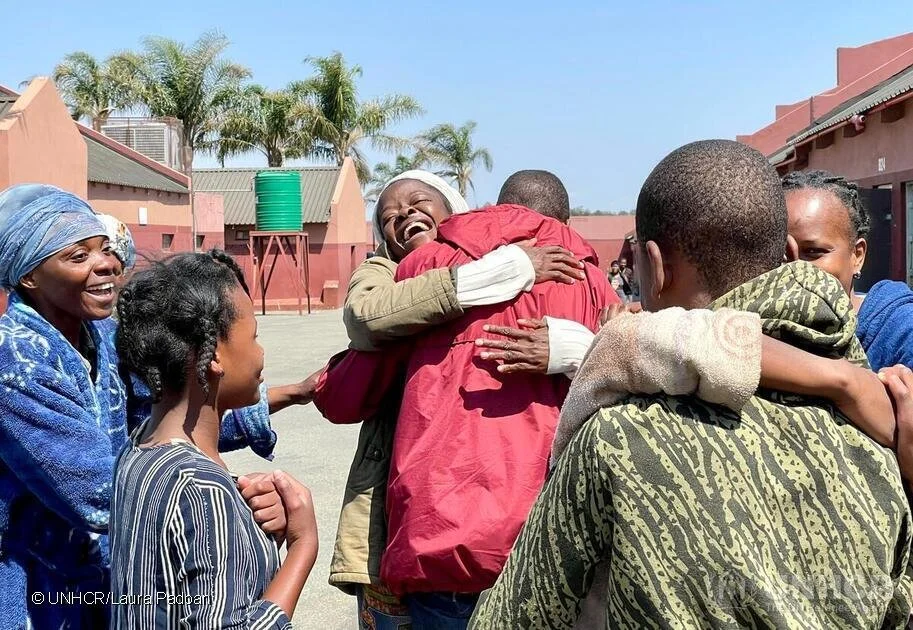
Courtesy of UNHCR.
Founded in 2016 by Seth Stanton, Nick Ruiz and Andy Freedman, Miles4Migrants (M4M) emerged as a philanthropic force dedicated to the cause of preventing families from being torn apart by displacement. With a resolute focus on leveraging donated frequent flyer miles and points, the non-profit organization strategically orchestrates flights, intricately navigating global airline alliances, airline routes and immigration regulations for families who have received legal approval for relocation.
Donors are asked to commit a minimum of 1,000 to 47,500 points or miles, depending on the program. After pledging, the flight booking team at M4M will match the donated miles with an individual or family seeking asylum or with refugee status but who cannot afford airfare to relocate. The matching process looks at which itinerary will get the most out of a donation, which case will keep the most family members together on the same reservation, the fastest flight route, and the least booking friction for the donor. The matching process may take several weeks, and M4M will keep donors informed, providing the recipient's photo(s) and a story detailing how their contribution has made a difference. In addition to frequent flyer miles, donors can contribute travel vouchers and cash. Miles4Migrants presently accepts a wide range of vouchers, including those from Alaska Airlines, American Airlines, United Airlines, Delta Air Lines, Southwest Airlines, JetBlue, Allegiant Air and others.
Miles4Migrants has achieved remarkable feats since its inception, facilitating travel for an impressive 43,187 individuals spanning 98 countries. This commendable endeavor, valued at an astounding $17 million, has been made possible by redeeming an impressive 775 million miles, courtesy of generous donors.
The organization's recent appearance at the UNHCR Global Refugee Forum in Geneva underscored its commitment to an innovative and ambitious strategy. M4M’s Executive Director Glaydon de Freitas revealed a visionary multi-currency system, integrating money, frequent flyer miles, credit card points, and travel vouchers. This multi-faceted approach, coupled with M4M's expertise in flight booking and strategic partnerships with major airlines, ensures a cost-effective and efficient procurement of airline tickets.
During the forum, Miles4Migrants boldly pledged to reunite 70,000 forcibly displaced individuals with their families by 2030, with an initial goal of reuniting 10,000 families in the upcoming year. This resolute commitment aligns seamlessly with Global Compact On Refugee’s Roadmap 2030 on third-country solutions for refugees and the broader multi-stakeholder initiative to reunite at least 1 million refugee families by 2030.
To achieve these tremendous family reunification goals, Miles4Migrants has meticulously outlined specific strategies. These include identifying the most value-efficient flight options across all airlines, proactively mobilizing resources, utilizing a comprehensive database system for efficient tracking, providing post-booking support to NGO partners, and fostering crucial partnerships with airlines and corporations.
In fact, corporate partnerships and long-term sponsorships have emerged as linchpins in Miles4Migrants' operation. The Shapiro Foundation, led by President Ed Shapiro, stands as a keystone partner, generously committing to funding 500 flights in 2024, contributing significantly to the nonprofit's goal of reuniting 70,000 families by 2030. A recent collaboration with The Points Guy (TPG), a prominent name in the travel industry, further exemplifies the importance of corporate support. TPG became an official corporate sponsor and pledged to match cash donations of up to $15,000. At the end of its five-week campaign, TPG raised 5,561,479 miles (worth nearly $120,000), receiving more than $1,487 in flight vouchers, and—thanks to TPG and Lonely Planet matches—raised $30,275 in cash donations. Miles4Migrants said it was the second-highest number of miles contributed from any partner campaign and also one of the highest cash amounts it has been able to raise. The donations were enough to fly around 500 people to safety.
Get Involved
The call to action is clear—dormant travel rewards can catalyze change. Miles4Migrants implores individuals to consider donating unused frequent flyer miles, credit card points or travel vouchers to play a pivotal role in reuniting families and offer fresh starts to those in need. The organization encourages supporters to amplify its cause through social media, whether that be through sharing impactful stories, motivating friends and family to contribute unused rewards, or organizing local events to bolster collective efforts.

Raeann Mason
Raeann is a traveler, digital storyteller, and guide writer with a Mass Communication & Media degree from the Walter Cronkite School of Journalism. She is passionate about a/effective journalism and cultural exchange and advocates for international solidarity and people's liberation. Her work at CATALYST focuses on reshaping the culture of travel and hospitality to be more ethically sound and sustainable.
8 Ways to Surf Sustainably
Dive into the world of sustainable surfing and learn how to ride the waves without harming our oceans.
Read MoreClean Cookware Used to Improve Women’s Health and Combat Climate Change
Millions of women in developing countries lack access to clean cookware. International organizations are working to change that.
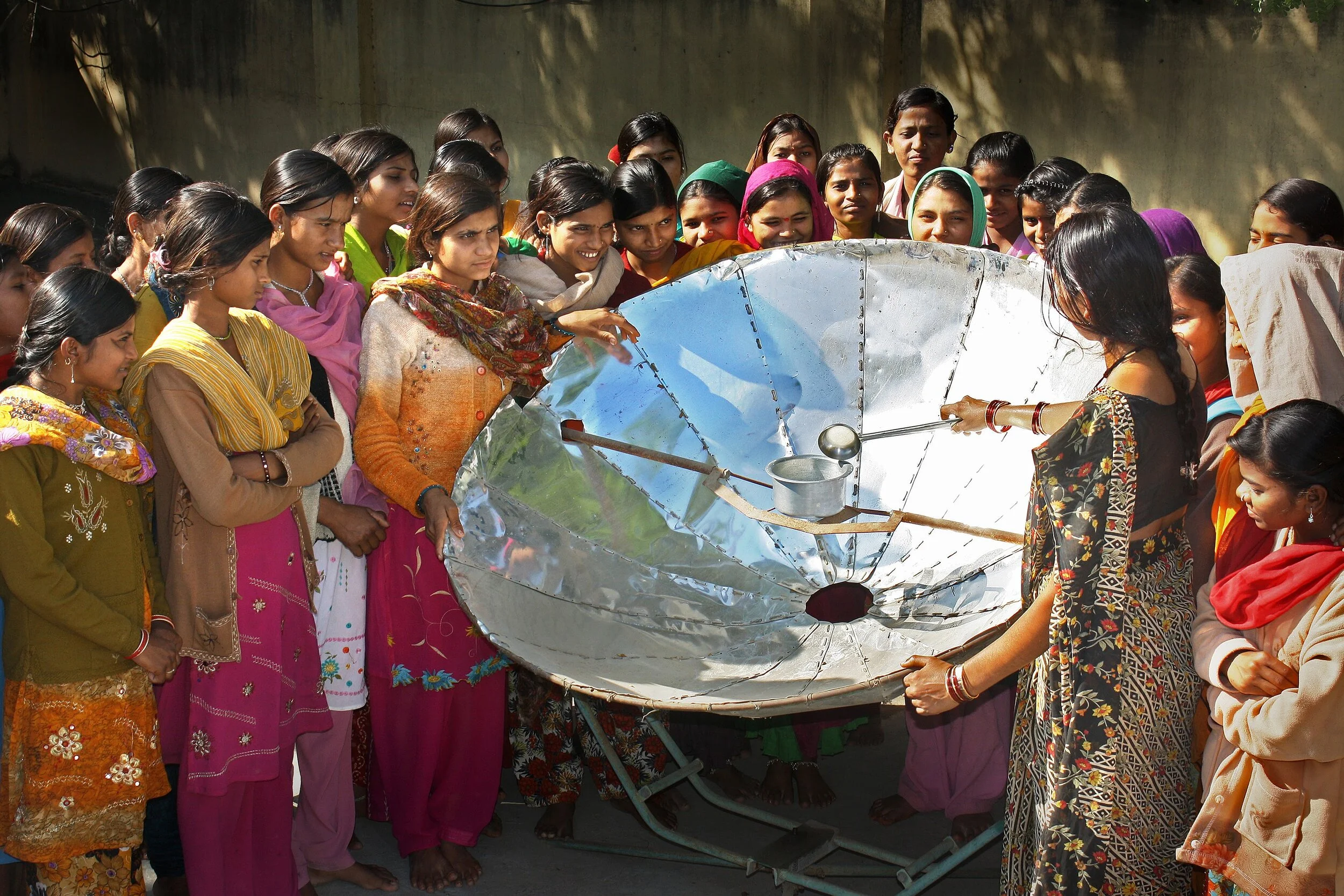
Women in India testing a solar cooker. United Nations Development Program. CC BY-NC-ND 2.0
Although the Beijing Declaration and Platform for Action in 1995 made groundbreaking strides toward gender equality, one key issue was never addressed: providing households with clean cookstoves. At least 3 billion people across the developing world rely on open fires to cook their food, a task mainly entrusted to women. Cooking on open fires can hold severe environmental and health implications for women and their families.
Modern cookstoves have reduced black carbon emissions by 30-60%
According to the Clean Cooking Alliance, cooking over open fires is the second-largest contributor to global warming aside from carbon dioxide emissions. The burning process releases black carbon, or soot, which lowers the reflective quality of glaciers and sea ice, causing them to melt. Additionally, the demand for wood as fuel results in unsustainable harvesting and deforestation. Studies indicate that at least 30% of the wood used in the developing world is unsustainably harvested, negatively affecting the ecosystem’s health, biodiversity and erosion. The absence of trees prevents carbon dioxide from being absorbed from the atmosphere through photosynthesis, further compounding the effects of global warming.
Cooking on an open fire also exposes women and children to toxic levels of household air pollution, sometimes over 35 times the amount deemed safe by the World Health Organization. Exposure to air pollution can have detrimental effects on one’s health, causing increased risks of childhood pneumonia, lung cancer, strokes and atherosclerosis. In some cases, exposure to high levels of air pollution has led to complications during birth. Health conditions related to smoke inhalation kill over 4 million people each year.
Access to safe cookware in the developing world remains limited, especially in areas torn apart by humanitarian crises. Women often put themselves in dangerous and even life-threatening situations while searching for cooking fuel. Women collecting firewood near refugee camps and conflict zones face increased risks of gender-based violence. Additionally, children accompanying their mothers to find firewood cannot attend school and miss out on available educational opportunities. The time spent gathering firewood further prevents women from seeking valuable opportunities to generate income for their families and children.
Empowering Women Through the Clean Cooking Alliance
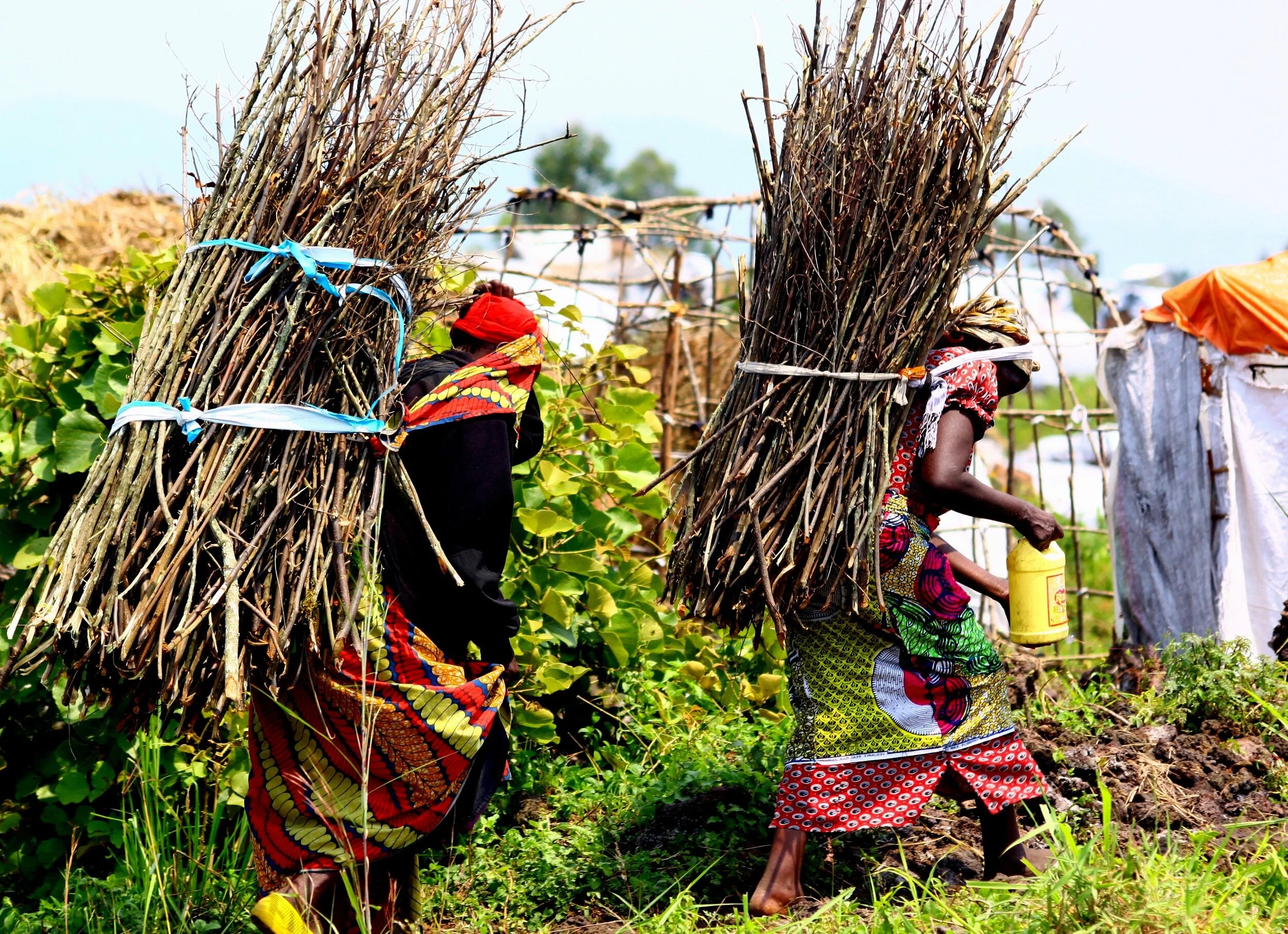
Women collecting firewood in the Democratic Republic of Congo. Oxfam International. CC BY-NC-ND 2.0
Founded in 2010, the Clean Cooking Alliance is an U.N.-backed organization focused on gender equality through cooking. The alliance works with a global team to ensure that 3 billion people gain access to clean cookstoves. Its focus is on increasing consumer demand and supporting local businesses while developing a clean cooking industry in seven countries: Bangladesh, China, Ghana, India, Kenya, Nigeria and Uganda. Modern cookstoves have reduced black carbon emissions by 30-60% and help to combat climate change. Additionally, having access to cooking equipment can save women up to 300 hours and $200 per year, giving them more free time to spend with their families or economic pursuits. As the Clean Cooking Alliance expands its reach, hopes are high that women and their families will be empowered across the developing world.
To Get Involved:
Check out the Global Cooking Alliance’s initiatives on its website or head to its fundraising page.
Megan Gürer
Megan is a Turkish-American student at Wellesley College in Massachusetts studying Biological Sciences. Passionate about environmental issues and learning about other cultures, she dreams of exploring the globe. In her free time, she enjoys cooking, singing, and composing music.
The Sexism Woven into Language
Subtle sexism in language emerges when the male gender is prescribed as default, contributing to gender inequalities and linguistic biases.

Language Across the World. Emma Howard. CC BY 2.0
Language shapes and reflects the cultural norms and values of its speakers. Unfortunately, many languages around the world include subtle forms of sexism which have historically prescribed the male gender as their default. From grammatical structures to the usage of words that perpetuate unequal dynamics, language can unintentionally serve as a vehicle for sexism.
Most languages around the world fall into three categories: gendered languages—nouns and pronouns have a gender (Spanish—el es pequeno/ella es pequena—he/she is little, French—il est petit/elle est petite—he/she is little), genderless languages—nouns and pronouns do not have a gender (Mandarin—他很小 / 她很小—he/she is little) and natural gender languages—gendered pronouns and genderless nouns (English, he is little/she is little). Of the gendered languages listed, the two share patterns of a masculine grammatical default, mixed-gender groups taking masculine endings and feminine nouns derived from masculine ones. In Spanish and French there is a male default that applies when the gender of a subject is unclear or if a group is mixed-gender. A male friend in French is ami while a female friend is amie. In French, there is no gender neutral pronoun for ‘they’ and the masculine is considered the dominant plural form. Therefore, if there is a group of French girls who are amies; add one male and they become amis. Aside from grammar, some words in French did not have a feminine form until official guardians of the French language approved the feminisation of certain titles to eliminate male linguistic dominance. Insistence on calling female presidents Madame le president was subsequently dropped in an attempt to end the bias putting women at a disadvantage.
Mandarin, unlike some European languages, does not assign gender to its nouns, but some of its written characters ascribe negative stereotypes to women. Chinese characters are made up of phonetic and semantic radicals that are listed together in dictionaries. The Chinese radical for “woman” (女) can be found in characters such as “mother,” (妈) “sister” (姐) and “safety” (安) but is also found in more negative characters including “jealousy,” (妒) “slave” (奴隶) and “rape” (强奸). The contrast between these positive and negative connotations are stark but even those that are positive are representative of gender stereotypes themselves; “safety” (安) is thought to represent a woman under a roof. Conversely, the word for “man” (男) is made by the radicals for “field” (田) and “power” (力). Aside from the makeup of the characters themselves, grammatical word order has been said to favor men, for example, in instances where the word “parents” means literally “father and mother.” Ironically, even the phrase for “gender equality” places the male character before the female one (男女平等).
Globally, some languages are representative of a time where the patriarchy was more powerful. They serve as a reminder that words and grammar can sustain sexism covertly and can also impose particular worldviews on their speakers. Some words have different meanings depending on whether they are used in a masculine or feminine form. Others have no male equivalent for a derogatory female word. For instance in Italian, un passeggiatore is a man who loves to walk. Make this word feminine and the definition drastically changes to have a sexual connotation. Alternatively, in English, there is no male equivalent of a “spinster,” the closest being “bachelor” which tends not to carry the same negative, undesirable connotations.
Negative connotations have made their way into technology as well, with one study finding that Google Translate often assumes that, when translating from other languages into English, the subject is male. Male default has also shown up in translator applications where gender bias shows up most in “fill in gender” translations. One tweet focused on Turkish and its gender-biases when translating to English. Sentences like o bir ascı translated to “she is a cook” while others like o bir muhendis translated to “he is an engineer.” Because Turkish is a gender neutral language it becomes clear that Google Translate filled in genders based on stereotypes and bias. Modern neural network-powered machines derive meaning from the statistical patterns of large texts during training, meaning that if our data is biased, machines will be as well.
Women already face barriers to their participation in society, but now with gendered languages playing a role. One research project examined the grammatical structure of over 4,000 languages spoken by 99% spoken by the world’s population, finding that nearly 40% of people speak a gendered language. From this it was found that grammatical gendered language is associated with roughly a 15% gap in female labor force participation. Consequently, gendered languages have become associated with worse labor market participation for women and regressive gender norms. Recognizing how linguistic sexism is causing quantifiable effects is a crucial step in creating more inclusivity in language and society. Efforts to challenge sexist vernacular have gained momentum in the form of gender-neutral language or inventing female-gendered nouns, as opposed to the old practice of adding suffixes onto male ones. In Spanish, the masculine “o” and feminine “a” endings are being replaced by a gender-neutral “e” to create more inclusion for women and those who identify as non-binary. Similarly, in Russia women are advocating for female-gendered nouns which are not mere add-ons to male nouns. In Russian, “doctor” is vrach but becomes vrachinia in its feminine forms, roughly translated as “doctoress,” housing some sexist undertones.
As to be expected, there has been some backlash over leaving behind current gender structures and deviating from the original languages, but speech is not a stagnant entity. Language, to be inclusive, must evolve and change over time in order to progress and mitigate pervasive forms of gender inequality. Recognizing and challenging these linguistic biases is crucial for dismantling the systematic disadvantages and stereotypes that women face.
Mira White
Mira is a student at Brown University studying international and public affairs. Passionate about travel and language learning, she is eager to visit each continent to better understand the world and the people across it. In her free time she perfects her French, hoping to someday live in France working as a freelance journalist or in international affairs.
Protests for Palestine and Israel Take Off Around the World
Countries across the world have taken to protest in response to the Israel-Hamas War.
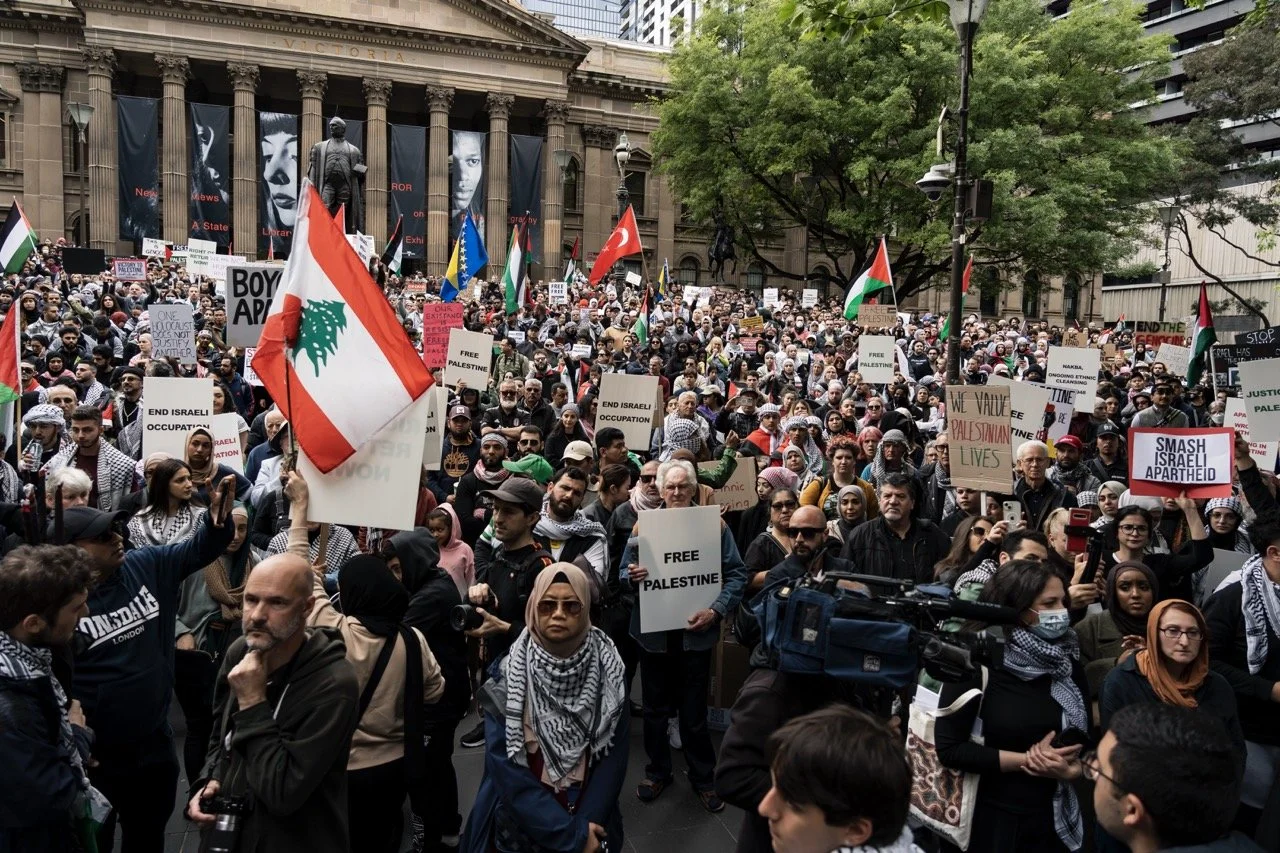
Protest for Palestine in Melbourne. Matt Hrkac. CC BY 2.0
On October 7, Hamas launched an unprecedented attack on Israel from the Gaza Strip that killed more than 1,200 people. Since the assault Israel has responded with a ground invasion that has resulted in the death of more than 11,000 people in the exclave. In light of the growing humanitarian crises in Israel and Palestine, protests supporting either side in the conflict erupted globally.
In the Middle East, and particularly Egypt, pro-Palestinian rallies have broken out, expressing solidarity with the population of Gaza over the hostilities. A mass protest on October 20 resulted in the prosecution and detainment of at least 100 people at al-Azhar Mosque in Central Cairo. On October 29, thousands gathered in Islamabad, which became the largest pro-Palestine rally in Pakistan since the beginning of the war in October. Protests denouncing Israel’s aerial bombardment in Gaza have ramped up around the Middle East, particularly in Jordan. On October 13, riot police dispersed hundreds of protestors attempting to reach a border zone within the West Bank. Jordanian anti-riot police clashed with protesters again on October 18 after demonstrators planned to march to the Israeli embassy and were torching property along the way. In Africa, Israel has substantial support from the Ivory Coast and Kenya, but public sympathies have predominantly tilted toward the Palestinians.
Reactions to the war have varied across Europe. In Paris, hundreds gathered on October 12 to express solidarity with Palestinians and call for a ceasefire from Israeli strikes in Gaza. This demonstration resulted in police using tear gas and water cannons to control crowds. Across France there were around 40 other demonstrations, including one in Lyon with an estimated turnout of 5,000 people, according to French police who, again, used force to control the protest. Conversely, thousands marched in support of Israel. On October 9, a crowd gathered at Place du Trocadero for a march that rallied 20,000 people at an Eiffel Tower lit to resemble the flag of Israel.
London has also experienced thousands of pro-Palestine protests. On October 21, nearly 100,000 protestors took to the streets of Central London to call for an end to Israel’s bombing of Gaza. Hundreds more gathered in Trafalgar Square on November 5 for a sit-in that brought Oxford Circus to a standstill. On November 11, hundreds of thousands of people gathered for what became the largest pro-Palestine protest in British history. Demonstrators also expressed support for Israel in Trafalgar Square in response to the pro-Palestine demonstration a day before. The rally filled Central London Square and included posters of those who are missing, calling for the release of hostages taken by Hamas in the initial attack.
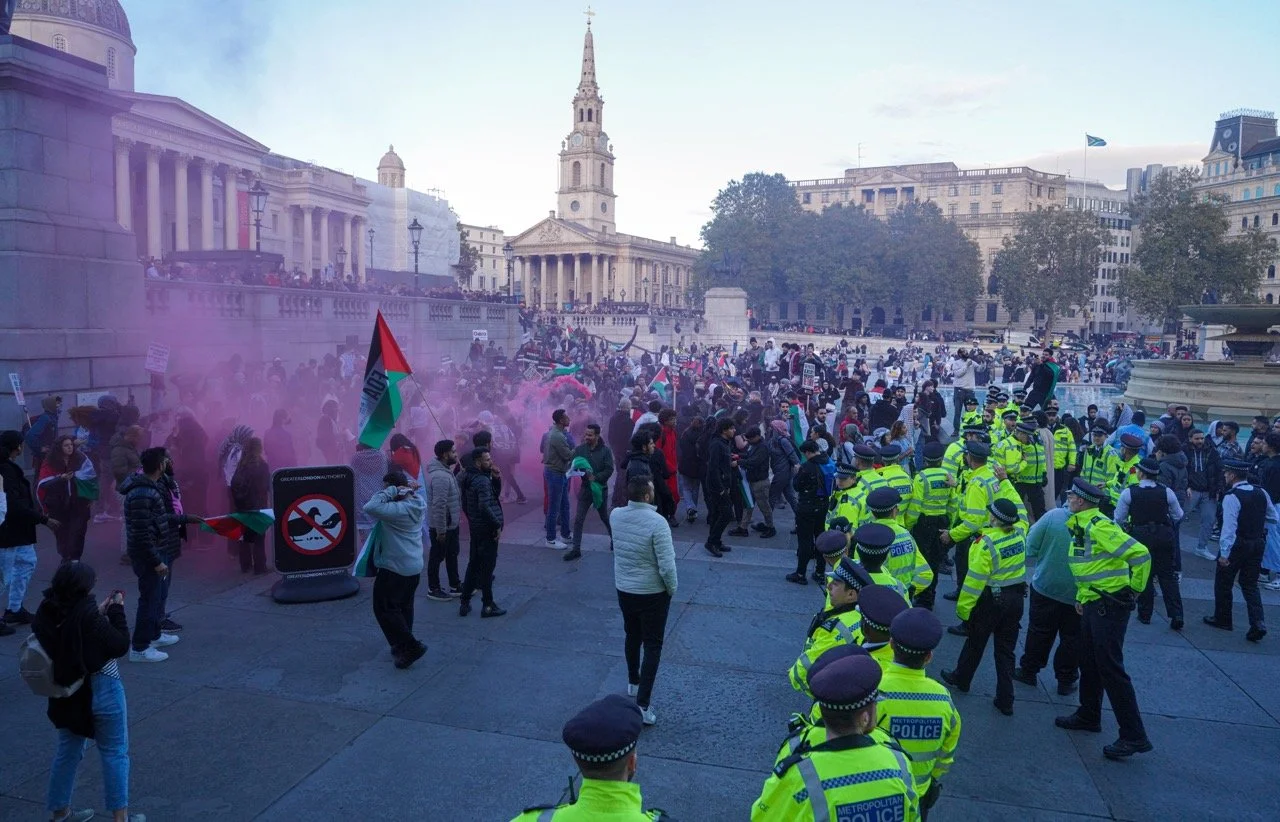
Palestine Solidarity Protestors in Trafalgar Square, London. Alisdare Hickson. CC BY 2.0
Similar to Europe, in the United States there has been widespread support for the Palestinian cause. A November 4 protest in Washington D.C. drew supporters from around the country with 300,000 people in attendance, making this the largest pro-Palestine mobilization in U.S. history. Other cities across the country have also demonstrated support for Palestine: hundreds marched in Boston on October 16, over 1,000 people attended a demonstration in Chicago on October 18 and a peaceful march on November 7 in New York City. Tens of thousands of demonstrators have crowded city streets to demand a ceasefire in Gaza, including Jewish advocacy groups. On October 27, thousands of Jews gathered in Grand Central Station to denounce the violence against Palestinians. The gathering was organized by the Jewish Voice for Peace organization, which held a second protest on November 6 at the Statue of Liberty, attended by hundreds. The group has been involved with cities across the country and has mobilized demand for a ceasefire in many other places: JVP-Philly, JVP-Seattle, JVP-BayArea and JVP-Triangle (Durham NC). In concentrated efforts, universities across the country have held protests. At Harvard University, more than 1,000 students rallied in Harvard Yard in support of Gaza on October 15. In Providence, around 500 Brown University students walked out of class on October 25 to support Palestine and a second walkout was held on November 8. On the evening of the 8th, a peaceful sit-in of about 20 Jewish students took place in Brown’s University Hall.
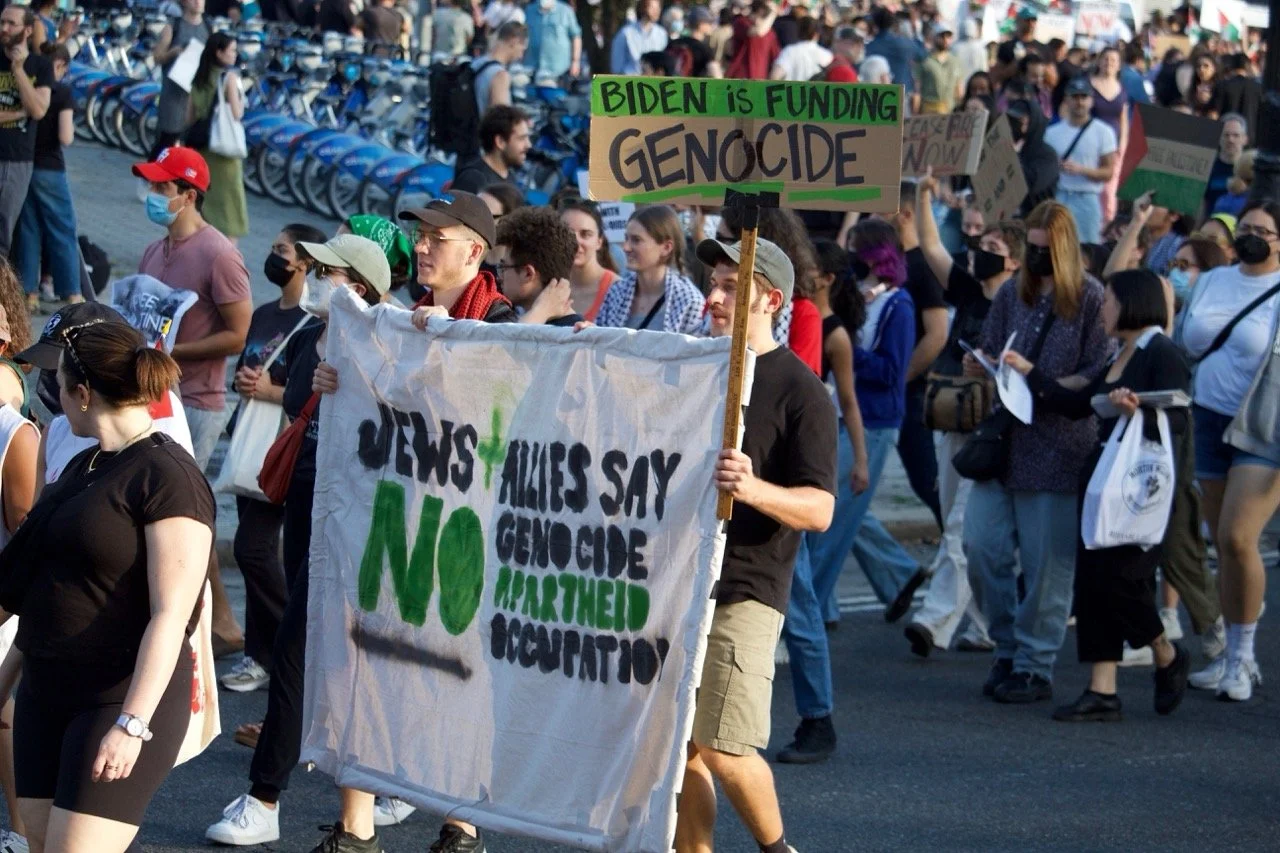
Jewish Allies for Palestine in NYC. Pamela Drew. CC BY 2.0
Comparable to other global responses to the conflict, Asia has also experienced an influx of pro-Palestine support. In Indonesia and Malaysia, protests against Israel’s offensive in the Gaza Strip have erupted. In Jakarta, thousands gathered at the National Monument on November 5 to express solidarity and support with Gaza. In Kuala Lumpur, 15,000 people gathered on October 15 to condemn Israel’s attacks, including prominent politicians such as former prime ministers Muhyidden Yassin and Mahathir Mohamad. Much of Southeast Asia has been swept by solidarity for Palestinians, including Singapore, and in response to the ban on public rallies, activists have mobilized online to demonstrate their support. In New Delhi, two Muslim scholars used a WhatsApp display photo reading ‘I stand with Palestine’ to extend their support. Online mobilization has perhaps created a way to reach a broader audience. In India, pro-Israel rallies have been permitted; however, there has been a crackdown on Palestinian solidarity demonstrations.
In Latin and South America, protests have spread across most countries in support of the Palestinian cause, including Belize, Bolivia, Brazil, Chile and Venezuela. On November 4, pro-Palestine supporters gathered on Avenida Paulista in Sao Paulo for a demonstration. They held rolled clothes stained with red paint to represent children who have been lost to the violence. Outraged by the conflict, thousands gathered on October 25 at the outskirts of Santiago de Chile for a concert expressing solidarity with Palestinians. Support for Israel in South America in the form of protests or demonstrations appears to be minor; however, it may just be overwhelmed by the abundance of support for Palestine.
In Australia, pro-Palestine rallies in Sydney have called for the government to drop its support for Israel. On October 5, 20,000 people participated in a pro-Palestine rally that came after the one in Washington D.C., calling for a ceasefire of the hostilities. Protests in Australia have continued to be primarily pro-Palestine, with 15,000 marching through Sydney on October 21 and other rallies held in Perth, Hobart and Brisbane. On November 7, a pro-Palestine protest of about 100 people blocked a busy intersection in Melbourne. The police subsequently used pepper spray on the activists and dragged them from the intersection in an attempt to get traffic moving again. Hundreds of people showed up to a protest the following day, preventing trucks from entering the operating area of an Israeli shipping line.
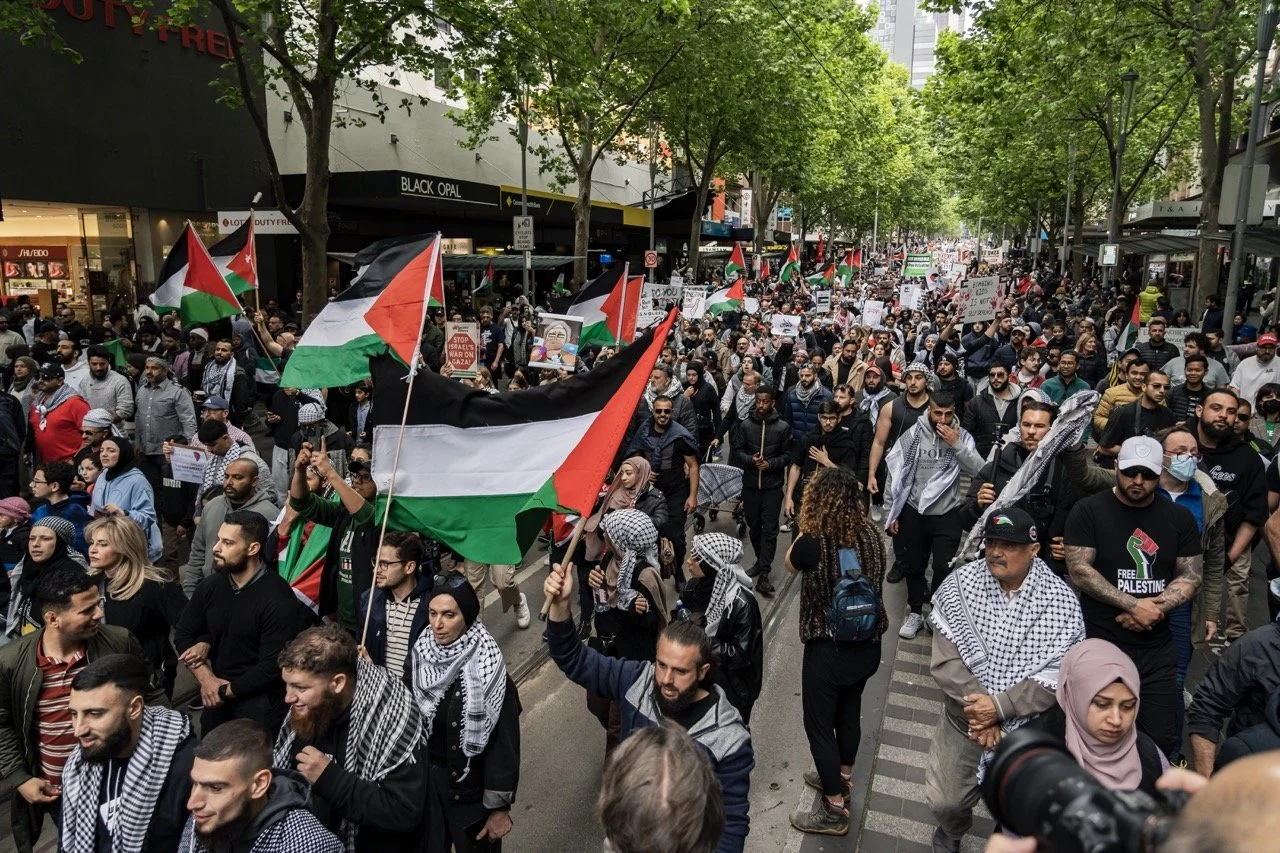
Melbourne Rally for Palestine. Matt Hrkac. CC BY 2.0
Even in the midst of polarized opinions, Jewish peace activists in the United States called for a ceasefire in Gaza and justice for Palestinians. 10,000 people, including Jews, marched on Capitol Hill on October 18, calling on the U.S. government to stop providing aid to Israel and acknowledging the conflict as a “sobering reminder” of Jewish history. Stark reminders of Jewish people lost to or missing in the conflict have taken shape in the form of “kidnapped” posters or empty Shabbat tables, representing the plight of the Israeli psyche and spreading awareness of those being held hostage. These kidnapped posters have subsequently been torn down by anti-Israel activists, quickly become its own form of protest, often characterized as antisemitic. An empty Shabbat table installation was created in Times Square to raise awareness for the 224 hostages being held by Hamas. An estimated 290,000 people gathered on November 14 in D.C. to demonstrate the solidarity of the Jewish community and in response to critics of the Israeli military.
Globally, people are demanding peace and justice through action. In spite of challenges towards a sustainable solution, global protests embody the collective hope for Israelis and Palestinians to coexist in peace and security.
TO FIND OUT WHERE TO JOIN PROTESTS
Jewish Voice for Peace - As the largest anti-Zionist organization in the world, this group identifies themselves as a political home for Jews on the left and a Jewish community with solidarity for the Palestinian cause.
Palestine Solidarity Campaign - PSC is the biggest organization in the UK, dedicated to securing Palestinian rights and freedom for everyone in the region.
National Students for Justice in Palestine - The group supports over two hundred Palestine solidarity organizations on college campuses in the U.S. and Canada, promoting an agenda for Palestinian liberation.
ANSWER Coalition - As an acronym that stands for Act Now To Stop War and End Racism, the coalition has mobilized anti-war and peace movements for the people of Palestine.
Palestinian Feminist Collective - PFC is a group of Palestinian and Arab feminists committed to Palestinian liberation by addressing gendered and sexual violence.
Rabbis for Ceasefire - A group of Rabbis who have called for ceasefire to genocidal violence, calling on American representatives to demand immediate action.
Israeli-American Council - The IAC’s mission is to build a united community of Israeli-Americans to strengthen the Jewish identity. It is the United States’s largest Israeli-American organization.
The Jewish Federations of North America - Made up of 146 federations across North America, the group's mission is to protect and enhance the well-being of Jewish people through contributions to Jewish communities and Israel.
Mira White
Mira is a student at Brown University studying international and public affairs. Passionate about travel and language learning, she is eager to visit each continent to better understand the world and the people across it. In her free time she perfects her French, hoping to someday live in France working as a freelance journalist or in international affairs.
Flooding in Libya: A Harbinger of Climate Change’s Deadly Effects
Sustainable infrastructure is the world’s best defense against increase in precipitation due to climate change.

Aid workers struggle to reach city in Libya where catastrophic flooding killed thousands. PBS.
Catastrophic flooding in Libya in September has taken as many as 5,300 human lives, according to the Interior Ministry of Libya’s eastern government. Amid such massive human casualties, many around the world are left wondering how such losses may be prevented as climate related natural disasters become increasingly common.
Extreme flooding events like the one in Libya are on the rise as Earth’s average temperature increases, causing more evaporation and thus greater precipitation. According to the EPA, global precipitation has increased by an average of 0.04 inches per decade since 1901. In more than half of recorded locations, flooding is now at least 5 times more common than it was in the 1950s. This month alone, the effects of extreme precipitation and flooding have been felt in Hong Kong, Greece, Turkey, Brazil, Libya and the United States.
In Libya and around the world, urban planning must adapt quickly to the rising threat of flooding. However, this poses a challenge for many developing nations where resources are often either limited or diverted elsewhere. For example, in Derna, the city in northeast Libya that was the most affected by the flooding, neglected infrastructure was in part to blame for the catastrophic loss of human life. Heavy rains caused two dams to burst, dams that experts have been warning are prone to collapse for years. Unfortunately, resources in Libya are generally diverted towards the ongoing civil war. More busy with conflict than governing, public officials failed to provide the necessary repairs on the dams.
Moreover, climate change not only increases precipitation but also hinders the environment’s ability to withstand heavy rainfall. In Derna, the inundation of the area has washed away much of the soil, which would have helped absorb some of the precipitation. The ground in and around Derna has been left hard, cracked, and stripped of vegetation. Due to these conditions, very little water was retained in the ground, worsening the flooding. Globally, similar conditions must be prevented if flooding events like the one in Libya are to be curbed.
Libya is far from the only place where the infrastructure is inadequate in the face of increasingly heavy rains. Most urban areas around the world, even those in rich countries with the resources to adapt like the United States, have not created infrastructure nor correctly supported the local environment to prevent extreme flooding. Globally, urban planning must now be rapidly modified to account for increasing precipitation.
Making the ground more permeable is the most impactful way urban planning can help reduce extreme flooding. One way this can be achieved is through the incorporation of permeable pavement. Using this type technique allows water to pass through porous paved surfaces into groundwater stores instead of overwhelming the local drainage systems. Further, creating more green spaces, including green roofs, trees, parks, and rain gardens, all increase the permeability of the ground. When the ground can absorb more water, flooding events like the one in Libya may be prevented.
Get Involved:
To help Libyan flood victims you can donate to UNICEF, International Rescue Community, or Doctors Without Borders.
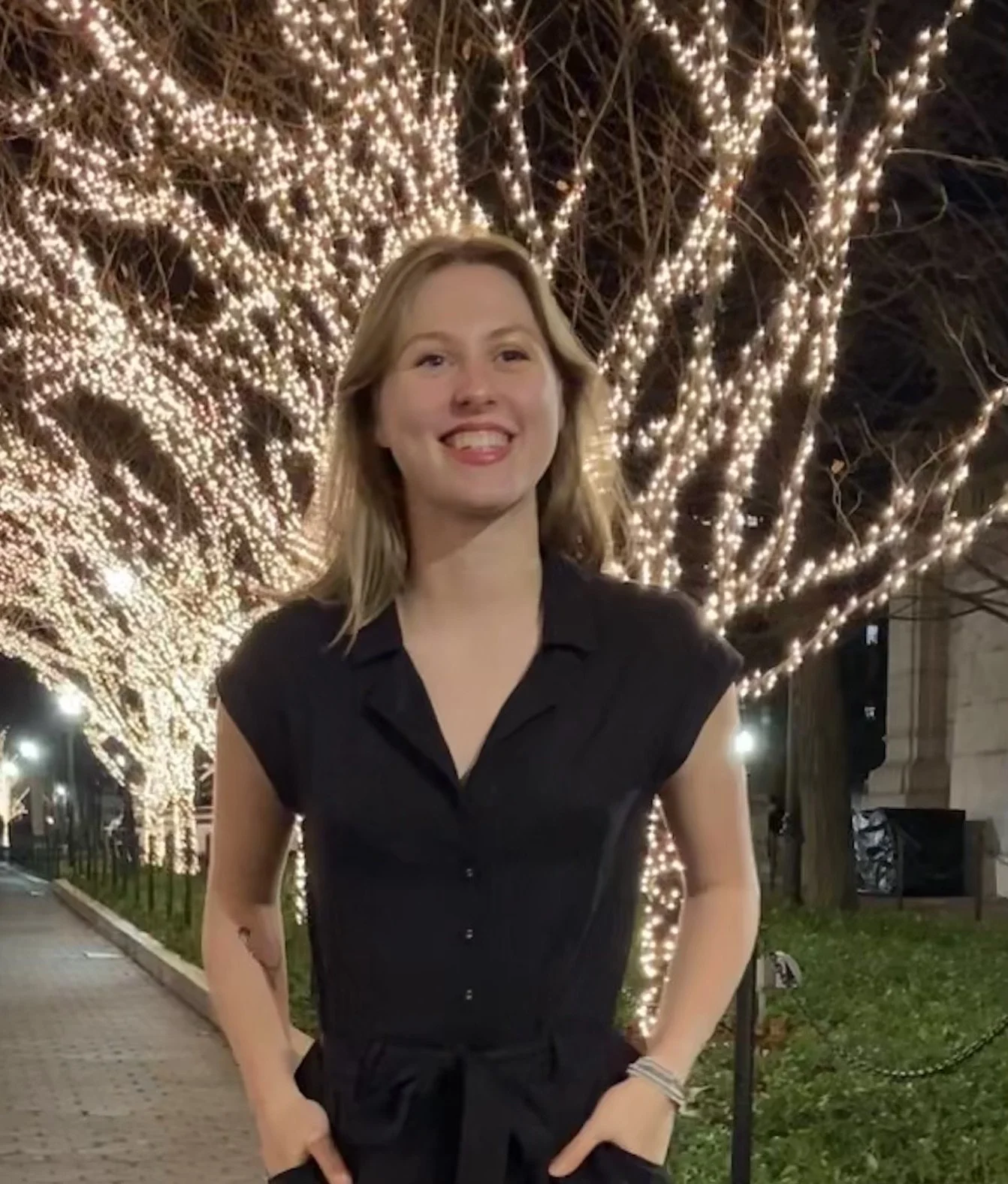
Sophia Larson
Sophia Larson is a recent graduate of Barnard College at Columbia University. She previously worked as the Assistant Editor on the 2021 book Young People of the Pandemic. She has also participated as a writer and editor at several student news publications, including “The UMass Daily Collegian” and “Bwog, Columbia Student News.”
Free The Nipple: Unpacking Inequality in the Feminist Movement
Evaluating the absence of inclusive representation in a movement that claims to empower all women.
Read MoreIndonesia's Most Dangerous Job: Mining in an Active Volcano
The mesmerizing sulfur-induced blue flames of Indonesia’s Mount Ijen attract hundreds of tourists every night, but mask one of the most dangerous jobs in the world: sulfur mining.
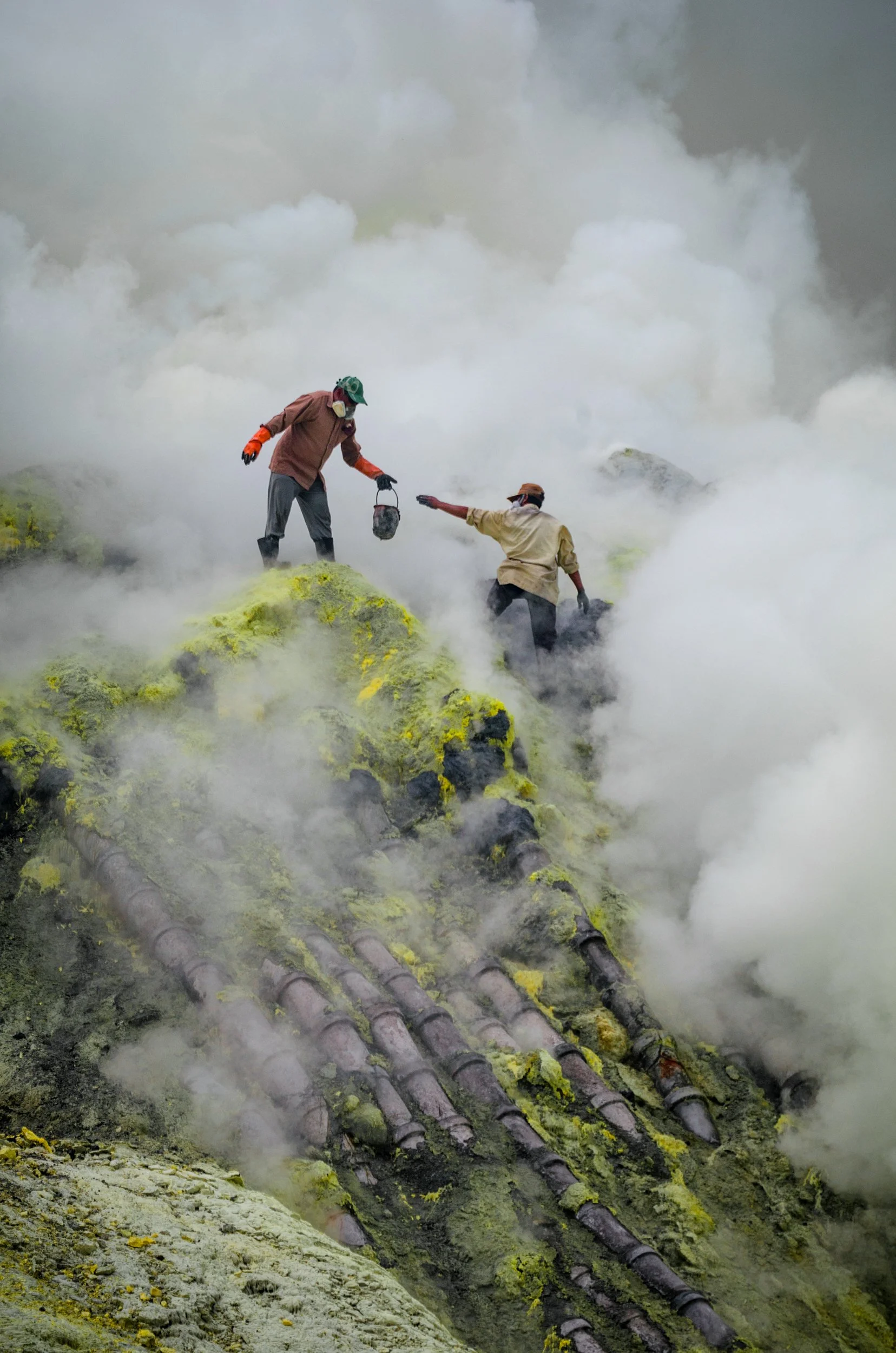
Sulfur miners of Mount Ijen. Candra Firmansyah. CC BY-SA 4.0.
Sulphur-induced blue flames are nothing more than a mining by-product, but they have turned Indonesia’s Mount Ijen into a popular tourist attraction. Lured in by the magical phenomenon, I joined a tour group and hiked up the volcano in the hopes of getting a glimpse of the beautiful fire. But the shocking truth of what I discovered was far from magical. Sulfur miners were working in the crater. Slaving away among the fire and smoke, they wore no special clothing nor eye protection. Some did not even have gas masks. Watching the men was heart-rending, and made the blue flames seem completely insignificant. The reality of Mount Ijen is that sulfur miners work everyday in the most unforgiving environment in the world.
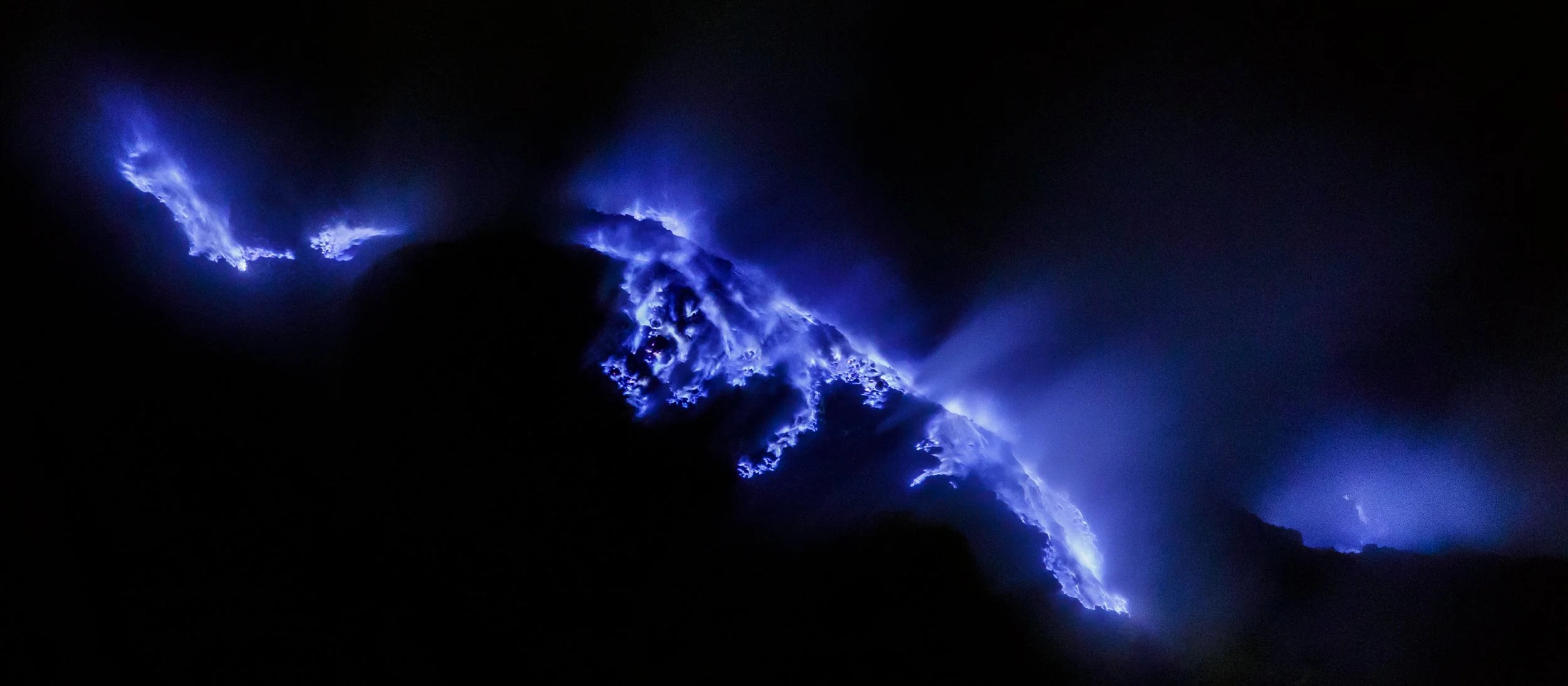
Blue flames at Mount Ijen. Thomas Fuhrmann. CC BY-SA 4.0.
Mount Ijen, in Indonesia, is an active volcano situated on East Java, the closest island to the holiday-maker hotspot of Bali. Possessing unique characteristics, the views at Mount Ijen are otherworldly. The volcanic crater holds the largest highly acidic lake in the world, which beams with a vibrant, almost inviting turquoise blue. Above the lake are vivid yellow rocks that have been stained as a result of sulfur gasses condensing.
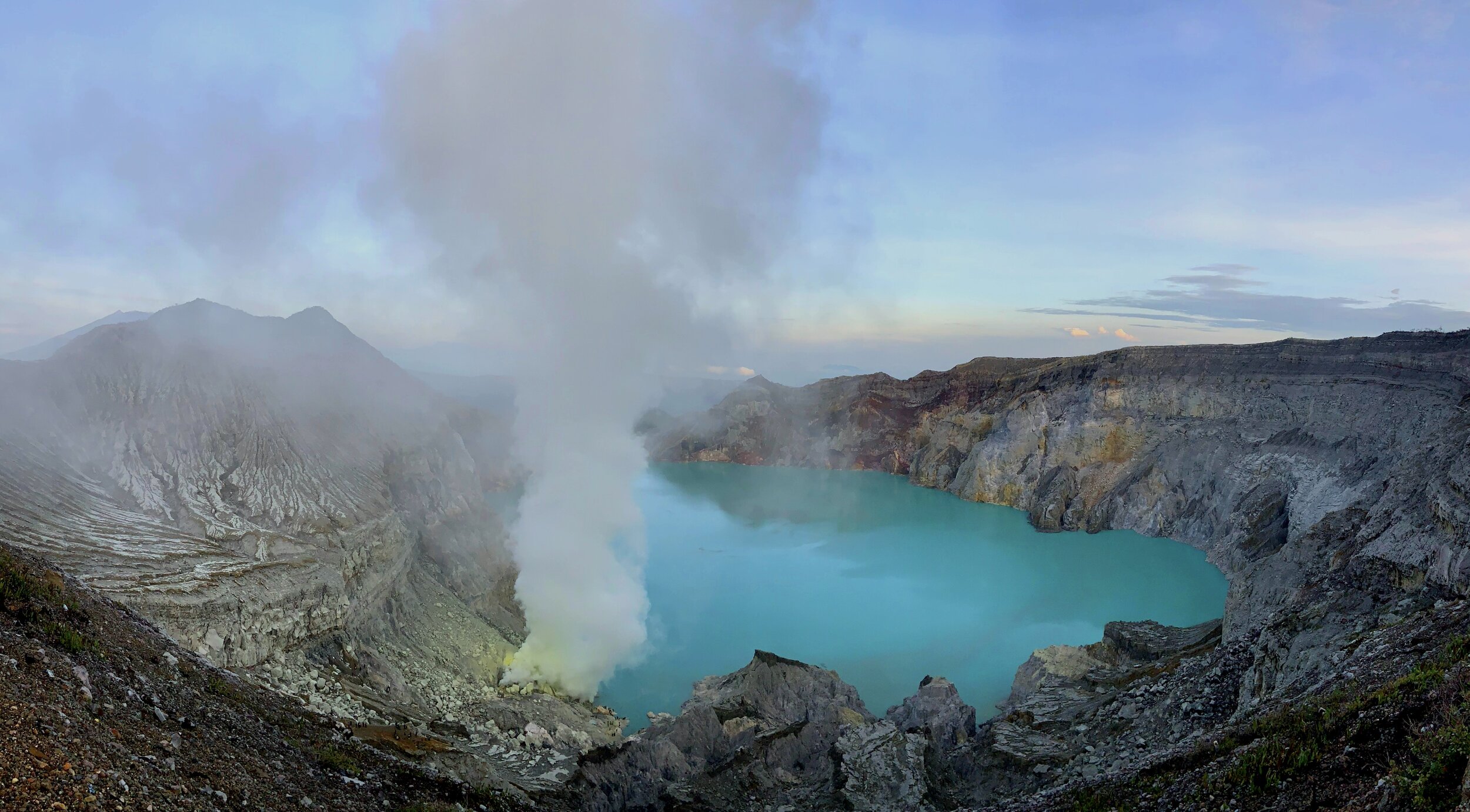
Mount Ijen. Taylor Girhiny. Used with the author’s permission.
While spectacular to see, many dangers lurk in the volcano. Aside from the unpredictable volcanic eruptions, earthquakes are common and have been known to cause landslides in the crater. There was even an earthquake in 2020 that triggered a seiche-type tsunami in the acid lake. The seismic activity caused the mountain to belch poison gas and generated a three-meter wave that swept across the crater,, killing a sulfur miner.
Despite these dangers, the sulfur has drawn miners to the volcano since 1968 and has become a trade passed down through families ever since. Known locally as the ‘devil’s gold’, it is considered a commodity worth high risk. Not only do miners risk a quick death while mining, but they also experience long-term health issues and have an average life expectancy of just 50 years old.
In the dead of night, when the air is at its coolest, sulfur extraction commences. Miners start by hiking the 2000 feet incline, the equivalent of two eiffel towers, before descending into the crater. At this point, the sulfuric smell of rotten egg takes over, making it hard to breathe. Pipes that travel below the surface provide access to the sulfur. The miners use fire to heat the ground, causing the sulfur to liquidize and trickle through the pipework onto the ground outside. Left to cool and dry, the ‘devil’s gold’ takes shape in the form of rich, yellow crystalized rocks.
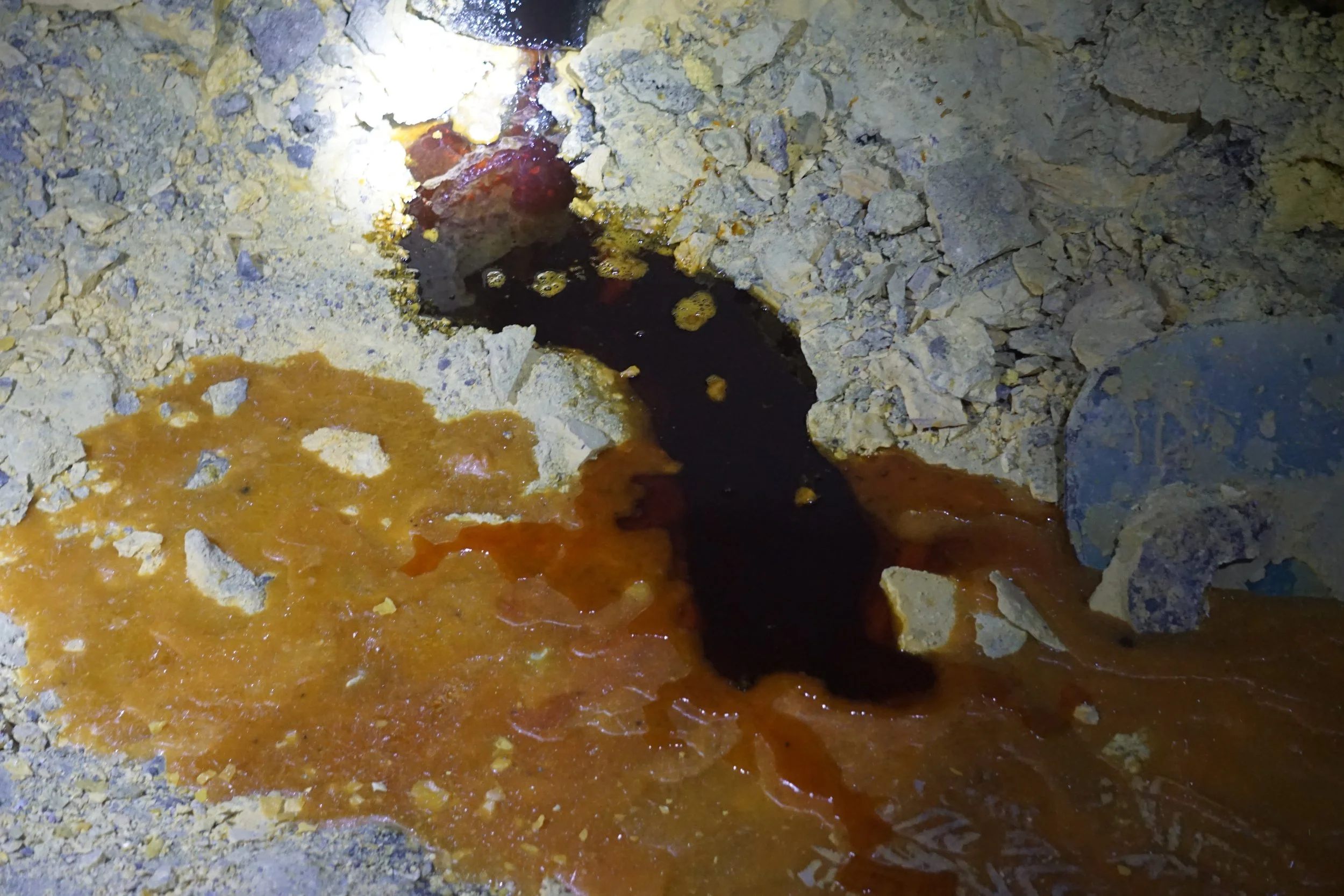
Melted sulfur crystallizing. Taylor Girhiny. Used with the author’s permission.
During the heating process, large clouds of harmful gas burst out from beneath the arid, rocky terrain. Each thick, opaque cloud swallows everything in its path, causing a complete whiteout. Unable to see even one meter in front of them, miners are left sightless until the miasma disperse. The atmosphere was so harsh that my throat tightened up and I was coughing after just 10 minutes in the crater. Daily exposure to these toxic fumes leaves miners with life-long respiratory issues. One miner, Udi, explained to me that his own father became blind due to repeated exposure to the fumes and, despite seeing the suffering in his family, has no choice but to follow the same line of work.
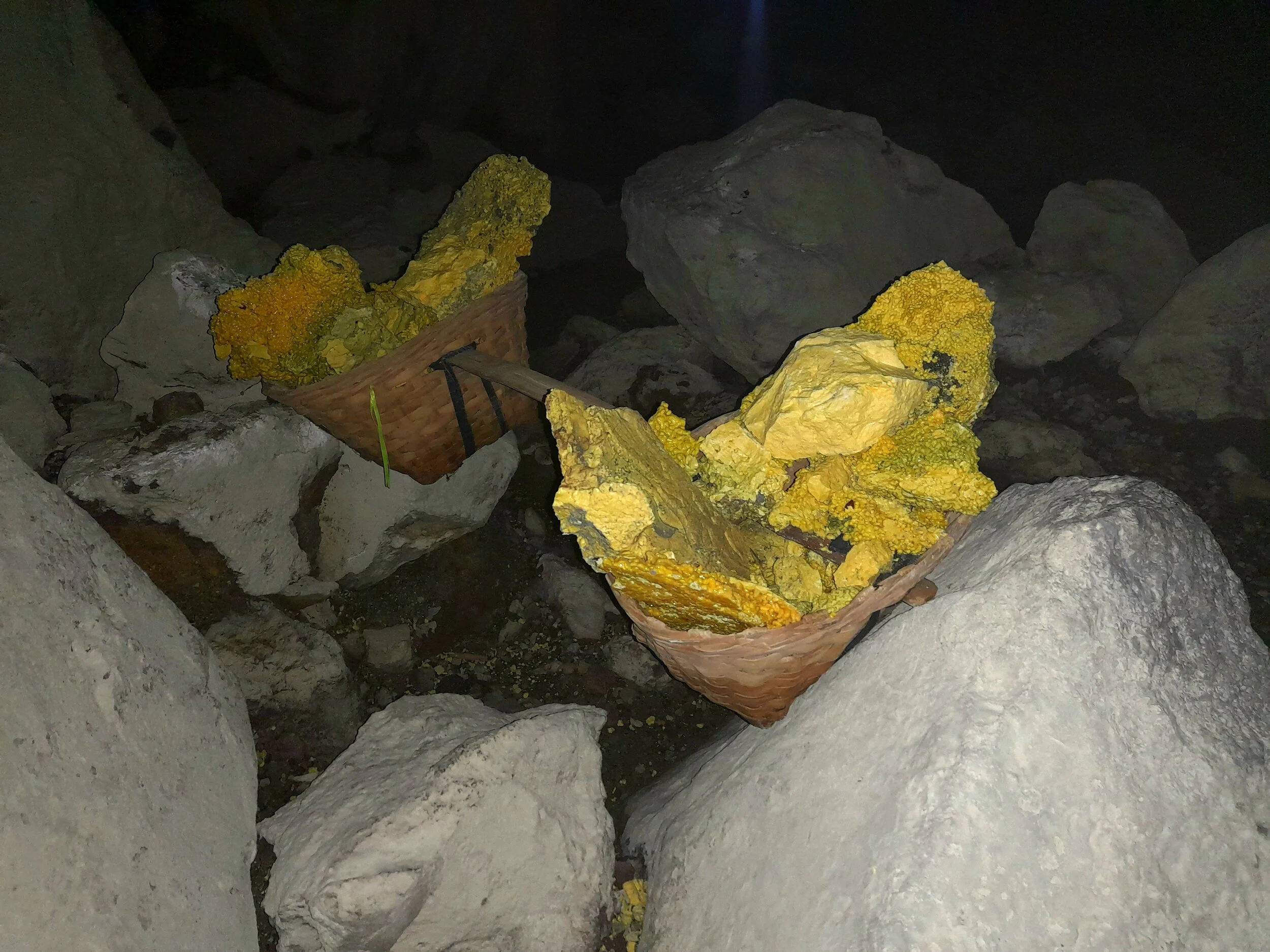
Handmade carrier full of mined sulfur. Eva Adorisio.
Once the sulfur has been processed, it must be carried out of the volcanic crater. A steep path consisting of unsteady rocks is the only way out and, with no technology to aid in their efforts, miners must physically transport every piece of the precious material. They precariously balance up to 170 pounds of sulfur, more than their bodyweight, on their handmade shoulder carriers. Without proper back support, miners suffer back problems and often swelling in the shoulders.
Sulfur produced at Mount Ijen is sold on and used in a variety of products including detergents and cosmetics, and is even used to whiten sugar. According to Udi, one kilogram of sulfur is sold for 1000 Indonesian Rupiah ($0.065). If a miner sells a full load of sulfur that may have taken all night to produce, he will make 75,000 Rupiah (approximately $5). Surprisingly, this makes sulfur mining one of the better paid jobs in this remote area of Java. With high poverty rates, it is clear why locals risk their lives to sustain a livelihood.

Miner selling miniature baskets of sulfur as souvenirs for tourists. Eva Adorisio.
The shocking reality is that local men are putting their lives on the line for what most in the West would consider pocket money. Witnessing them work tirelessly in the most inhumane conditions is an inconceivable sight, yet has become a spectacle for tourists to gawk at. The promise of stunning blue flames may sound alluring, but in truth Mount Ijen is a merciless place that no one should have to call work.
In 2017, Ijen Assistance raised $15,000 for relief work in the region from a music video following Bas, a sulfur miner, and his family.
Novo Amor & Lowswimmer - Terraform (official video)
TO GET INVOLVED
Providing aid after natural disasters, Islamic Relief has been working in Indonesia since 2000. After the earthquakes of 2006 and 2009, the organization responded immediately, distributing emergency supplies and later rebuilding a hospital and school. They also work to reduce the effects of poverty and have a variety of development projects across Indonesia.
Currently, there are no organizations working directly to improve the conditions for sulfur miners at Mount Ijen. Despite previous campaigns raising awareness and money, such as the ‘Terraform’ music video, miners continue to work in the same harsh conditions.
Eva Adorisio
Eva is an avid traveler and writer from Bristol, England. In her writing, she aims to show the true nature of what a place is really like. Her Italian roots have led to a love of food, culture and language. She also spends her time staying active out in nature and is always searching for the next adventure.
The Life Changing Power of Global Literacy
For the millions of people around the world who cannot read or write, creating educational opportunities for literacy can help close economic and health inequalities.
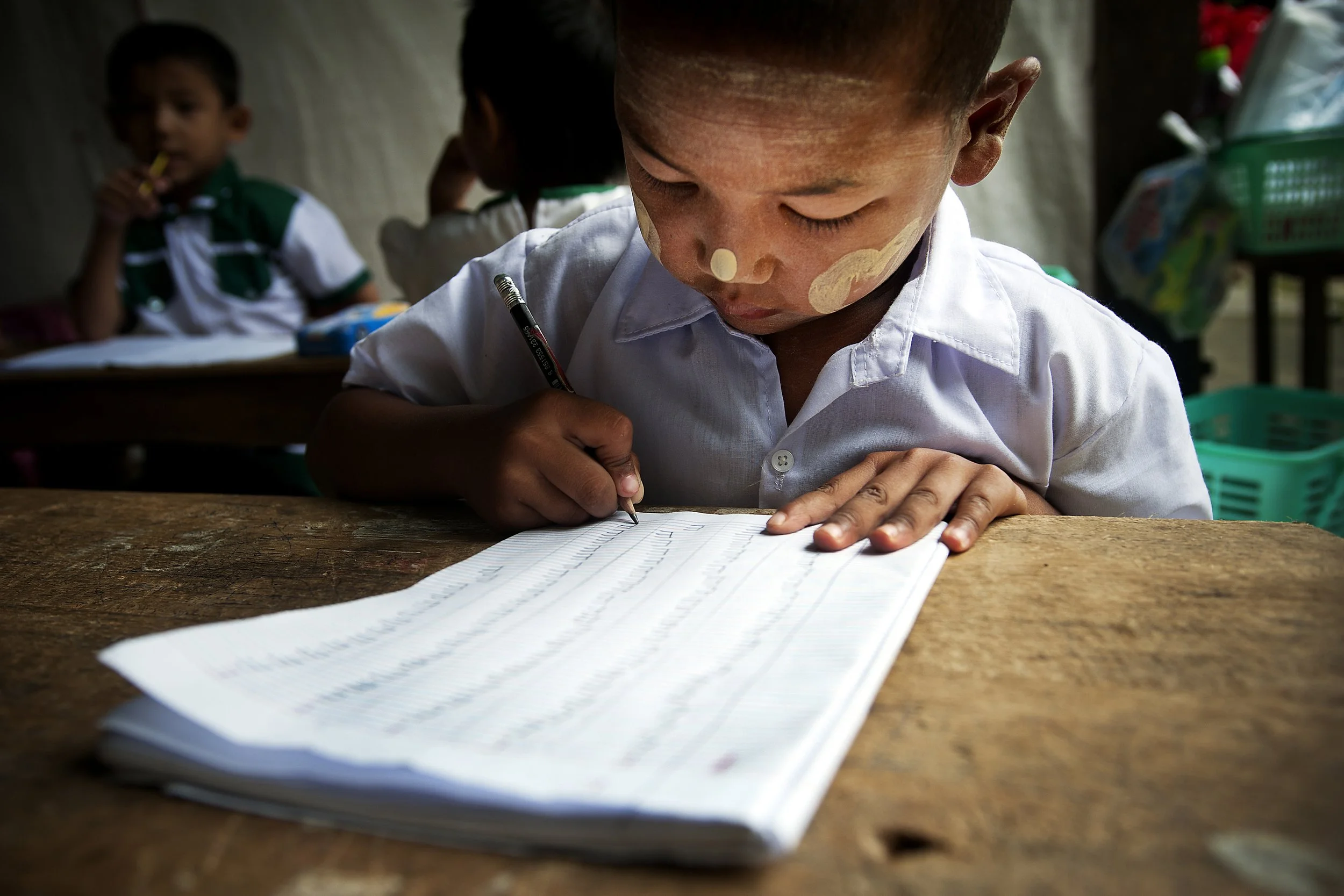
A child practicing writing in Myanmar. United Nations Photo. CC BY-NC-ND 2.0.
Within the last five decades, the world has been reading more. Literacy rates have increased around the world, growing from 67% to 86.8% between 1976 and 2020.
However, despite global improvements, there are still some 781 million people around the world who cannot read or write. These numbers do not exist in a vacuum, but rather are intrinsically tied to economic and gender disparities. About 95% of the world’s illiterate population lives in developing countries, and nearly two-thirds are women. Such statistics reflect global gender disparities in which women are more likely to be defined by traditional domestic roles and childcare, roles that — especially in countries where educational opportunities are already limited — cut off women’s access to literacy.
Child marriages can also derail young girls' education. On Earth today around 650 million women were married before the age of 18. While child marriages rip young girls of education opportunities, access to education itself actively combat rates of child marriage. Each year of secondary education that a girl completes reduces her risk of marrying before the age of 18 by 5%
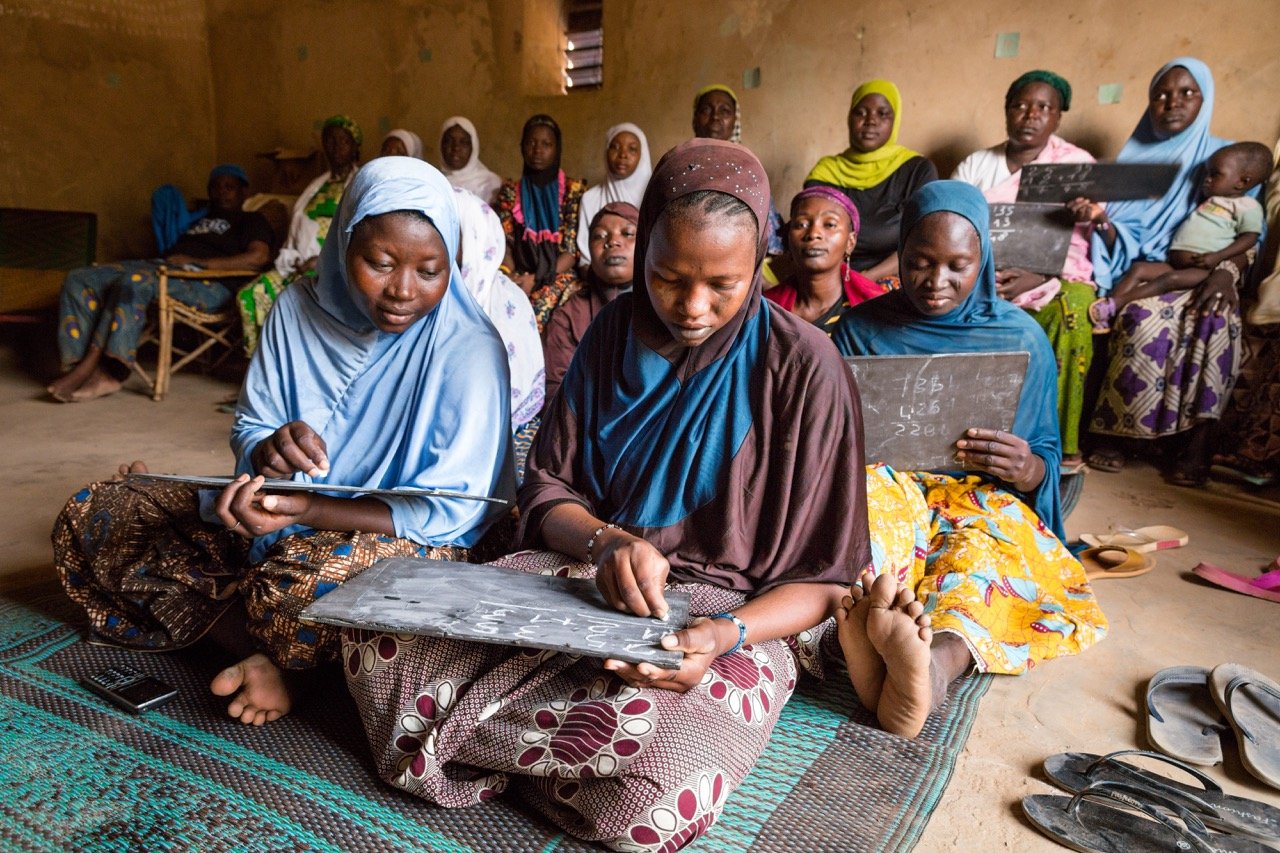
Benefits of ReadingWomen attend school in Niger. Global Partnership for Education - GPE. CC BY-NC-ND 2.0.
The benefits of reading and writing skills extend way beyond the pages, as globally literacy works to make the world a healthier, richer and more democratic place.
Increasing women’s literacy does not just impact lives on an individual level, but entire communities and economies. Every 10% increase of female students in a country leads to a 3% increase in gross domestic product. The real world economic power of literacy plays a crucial role in lifting communities out of poverty. Concern USA estimates that if every student in a low-income country had literacy skills, some 171 million people would escape extreme poverty.
Opening up educational opportunities, specifically for women, creates a ripple effect among communities. Because women are more likely to be the primary caretakers to children, their own literacy influences whether or not they decide to send their children to school.
Increasing access to information through literacy can also have long-standing health benefits. Not only does literacy encourage individuals to read and understand medication and treatment options, but it also empowers individuals to seek out medical attention when necessary.
A study from 2002 found that women in Bolivia who attended literacy programs were more likely to seek out medical help when needed, as well as be more open minded towards receiving vaccinations — both for themselves and their children. Another study found that if a woman was literate she was four times more likely to know how to protect herself from AIDS, while in Nepal literacy has been connected to a more open mind towards family planning.
In measuring the effects of literacy and its economic and health impacts in communities, UNESCO estimated that infant mortality rates decrease 9% for every year of education that women attend.
In addition to increasing access to education and medical knowledge, literacy also strengthens democracy by combating political marginalization and exclusion. Reading and writing are necessary skills for individuals to fill out voting forms necessary in any democratic system, and can also help increase political engagement by granting access to newspapers and written political material.
Education and Empathy
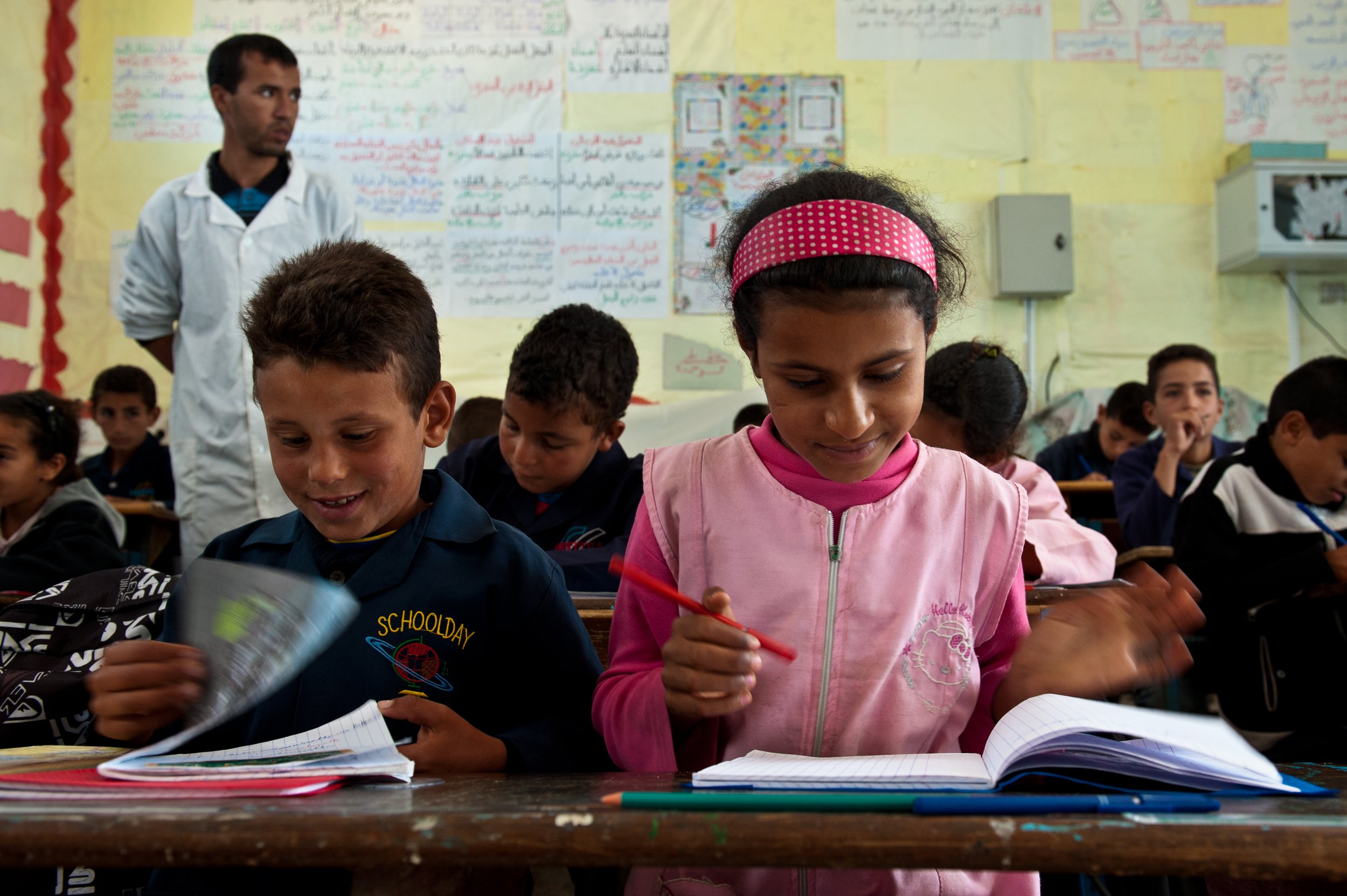
Students reading in a classroom in Sejnane. World Bank Photo Collection. CC BY-NC-ND 2.0.
One of the greatest psychological and social benefits of reading is in the way it builds empathy and fosters opportunities for communication and connection. Fiction in particular has been connected to empathy-building. One study in 2006 found that people who read more fiction scored higher in empathy tests. Another study from 2013 found that those who studied fiction improved on empathy tests that measure one’s ability to understand other people’s beliefs and desires that are different from one’s own.
The effect of fiction on reader’s emotional intelligence stems in part from the way it forces readers to use their imagination and view the world from another’s perspective and life. Fiction writing forces readers to grapple with choices and scenarios that disrupt their expectations and practice empathy towards characters in order to understand their thoughts and actions.
Get Involved
Organizations all around the world are doing their part to make literacy accessible, encouraged, and achievable globally.
The World Bank seeks to combat global illiteracy through educational interventions, with the goal of reducing the number of children who cannot understand a simple story to half of what it is to today by 2030. The World Bank encourages the public to share information on the global literacy crisis, encourage government officials to invest in literacy programs, and understand the impacts of learning poverty around the world.
Save the Children’s Literacy Boost works to increase literacy rates around the world through individual and communal efforts. The program relies on schools and teacher training as well as community initiatives that support literacy through Book Banks, reading clubs and workshops for parents. A Stanford study found the average child who went through Save the Children’s Literacy Boost program in Rwanda scored higher on reading comprehension tests than 63% of children who did not go through the program.
Jessica Blatt
Jessica Blatt graduated from Barnard College with a degree in English. Along with journalism, she is passionate about creative writing and storytelling that inspires readers to engage with the world around them. She hopes to share her love for travel and learning about new cultures through her work.
Suffering in Silence: The Women of South Sudan
An increasing amount of discrimination and violence is targeting Sudanese women.
Read More10 Natural Disasters that Shook History
Witness the awe-inspiring forces of nature unleashed through devastating hurricanes, volcanic eruptions and catastrophic floods.
Read More