Hot Air Ballooning in Bristol

Known as the hot air balloon capital of the United Kingdom, Bristol prides itself on lighter-than-air travel.

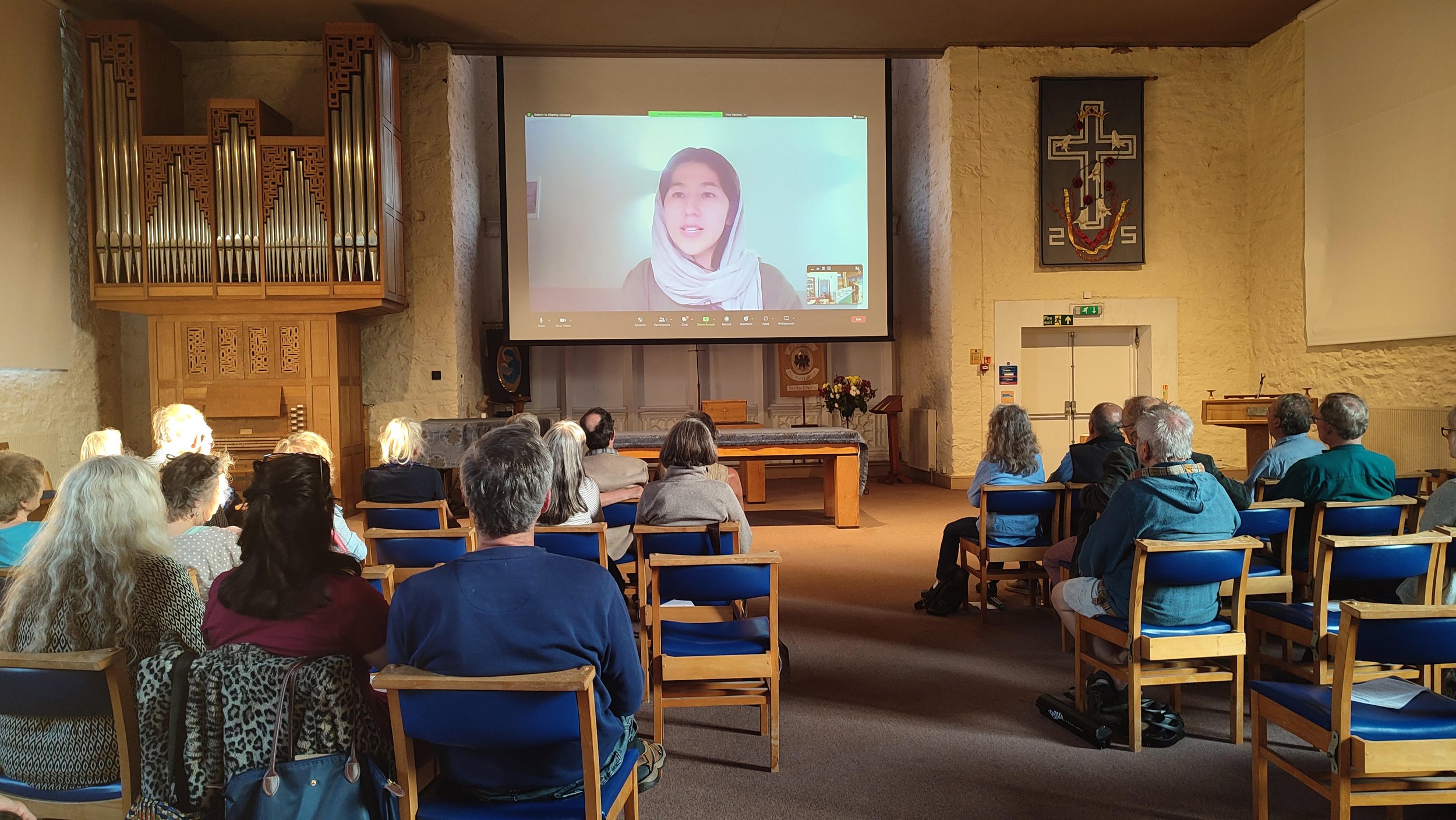
Bristol International Balloon Fiesta. PughPugh. CC BY 2.0.

The sun is shining and the air is still. Laying on the soft grass, I watch the fluffy clouds float along. I wonder what could possibly make this day better. Then, just as my eyelids begin to close, I am jolted awake by a loud sound overhead. It is the iconic roar of a hot air balloon igniting. Passing over me, the cushiony balloon glides effortlessly, allowing the gentle breeze to direct it through the sky. I sit up to get a better view and realize two more hot air balloons are following behind the first. Pops of red, yellow and purple embellish the blue skies.

On these perfect summer days in my hometown of Bristol, just two hours west of London, that familiar roaring sound is bound to be heard. And once you see one hot air balloon in the sky, keep an eye out, as there are probably more coming. Although the weather conditions don’t always favor ballooning, Bristol takes great pride in its culture in the clouds.
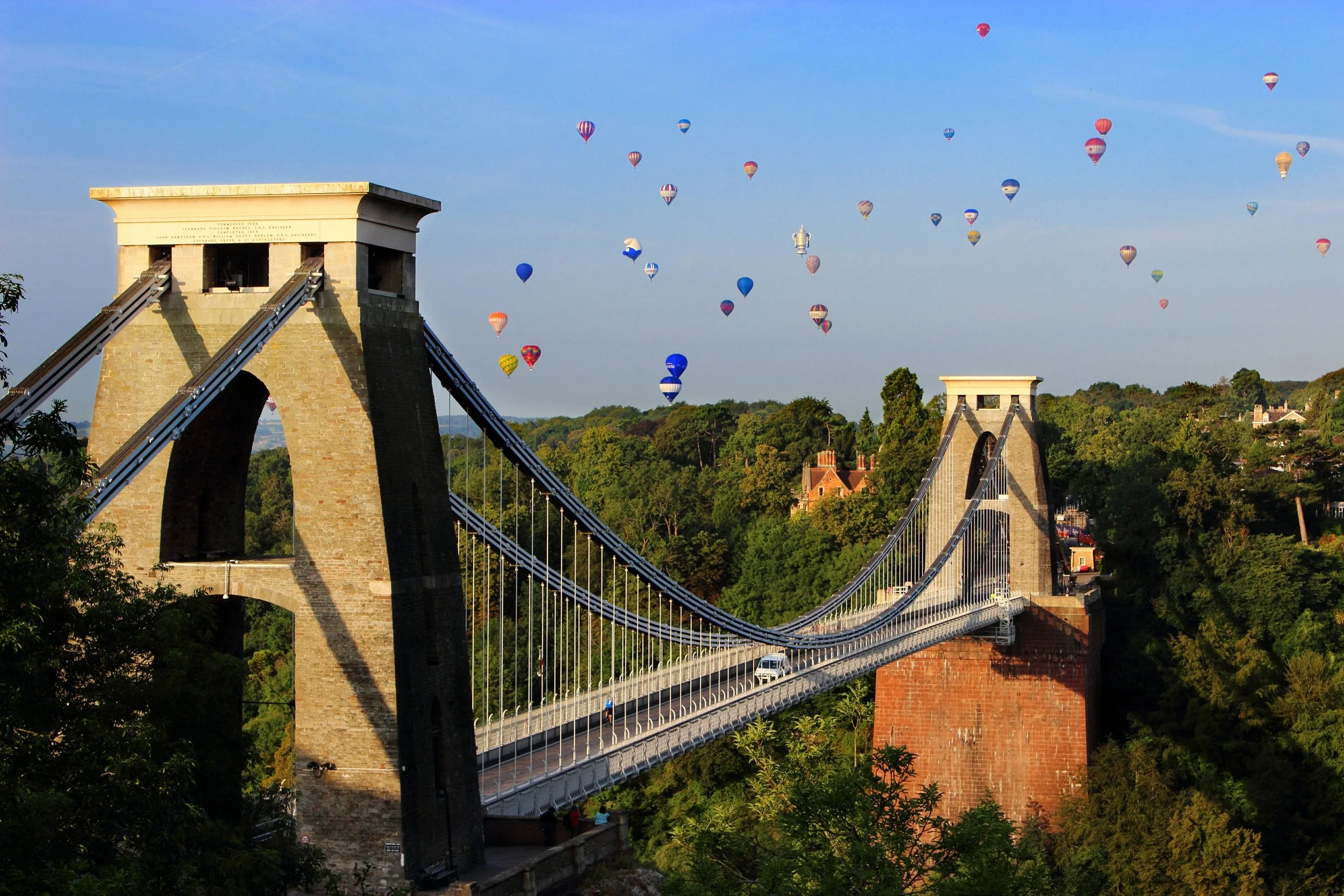
Hot Air Balloons over Bristol Suspension Bridge. Matt Prosser. CC BY-SA 3.0.

Hot air balloons were the first form of air travel and date back to 1783, all thanks to the French Montgolfier brothers. Having created a balloon contraption, the brothers successfully transported living animals — a sheep, a rooster and a duck — two miles in their invention. A year later, Michael Baggini brought the invention to Bristol. In 1784, he launched a balloon in Cooper's Hall, now known as the Bristol Old Vic Theatre. Demonstrating the potential of this exhilarating form of air travel, he sparked great excitement in the public as they watched the balloon float around the room.

Nearly 200 years later, Britain’s first modern hot air balloon was created by Don Cameron, a member of the Bristol Gliding Club. He named the craft the Bristol Belle, a red and yellow striped balloon which took flight in 1967. This event put Bristol on the map as a pioneer of the ballooning industry.

Nowadays, Bristol celebrates its hot air balloon culture with the International Balloon Fiesta, the largest hot air balloon festival in Europe. Taking place in mid-August every year since 1979, thousands of people, from Bristol and beyond, gather over its four days to experience the graceful balloons brightening up the sky. When the weather permits, up to 100 hot air balloons launch at the same time, turning the sky into a playing field of different colors, shapes and sizes. Every year, quirky balloon designs can be spotted, such as 2023’s screwdriver, various animal shapes and even a shopping trolley. This eye-catching event sparks excitement all around the city as the balloons float over Bristol.

Bristol International Balloon Fiesta. Karen Roe. CC BY-2.0.

The magic continues into dark for the night glow. Dozens of balloons ignite while stationary on the ground. The roaring flames warm the whole fiesta in an otherworldly illumination.
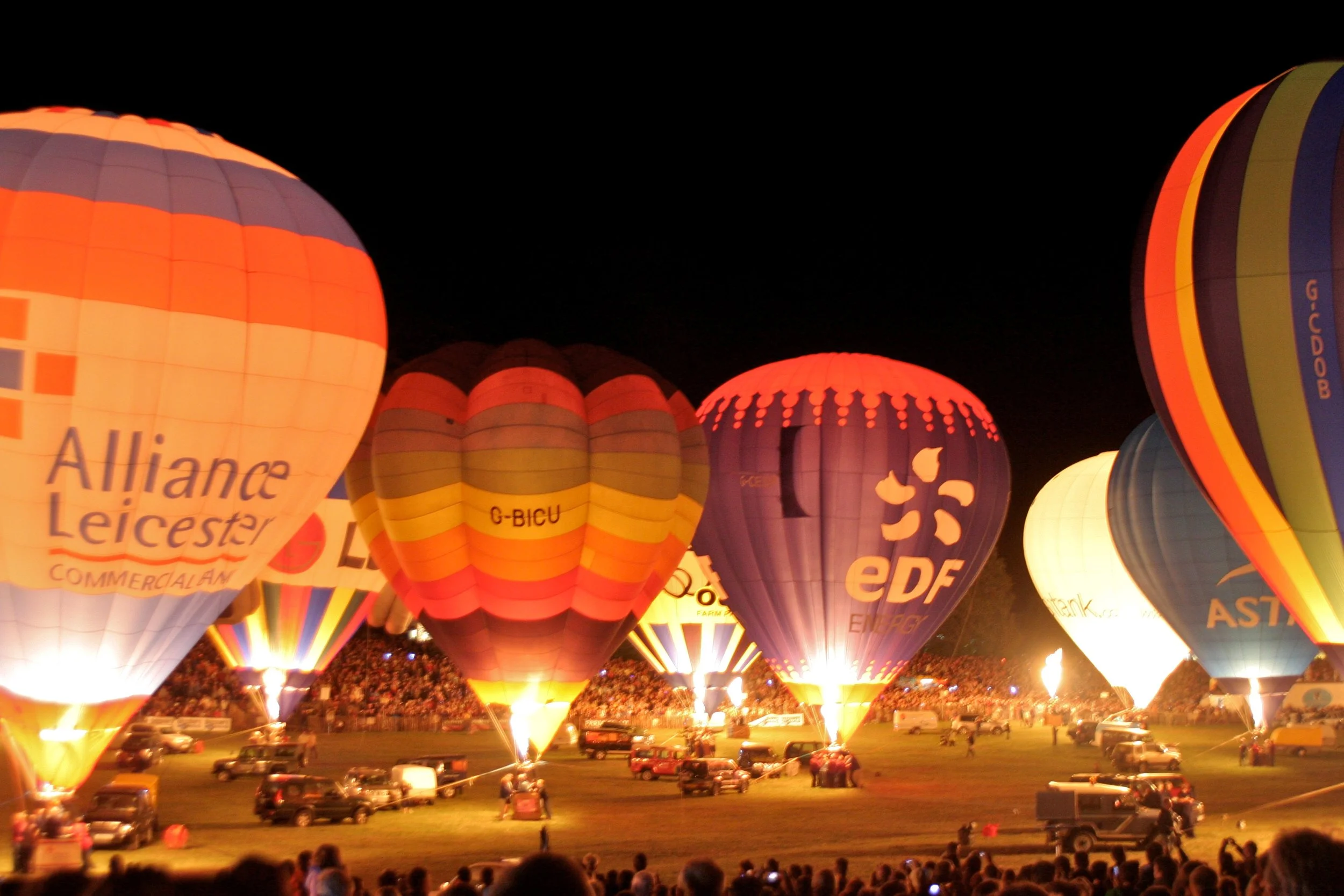
Bristol International Balloon Fiesta. Mike Peel (www.mikepeel.net). CC BY-SA 4.0.

While the Balloon Fiesta showcases the best of Bristol’s balloons, it is not the only time they appear in our skies. Serendipitous balloon sightings are arguably more impressive, as their unexpected presence is so calming. A balloon in the sky signifies the winds are resting and the air is undisturbed. In harmony with the clouds, their graceful, humble nature allows them to be unobtrusive as they soar through the sky.

Another way to experience the serenity of the balloon is to step inside the basket and go on the journey of a lifetime. What better way to see Bristol than an unforgettable one-hour flight over this home of the hot air balloon? A variety of operators fly in the area, including First Flight Hot Air Balloons and Bailey's Balloons. Flights cost from $250 per person and can accommodate families, private parties and even romantic proposals.

However you experience it, the hot air balloon epitomizes Bristol, representing innovation and creativity and creating peace and calm. No matter how many times I see the colorful contraptions overhead, I will always be in awe of them. They will continue to light up the skies for centuries to come as Bristol will always be known as the ballooning capital of the UK.

Eva Adorisio

Eva is an avid traveler and writer from Bristol, England. In her writing, she aims to show the true nature of what a place is really like. Her Italian roots have led to a love of food, culture and language. She also spends her time staying active out in nature and is always searching for the next adventure. 
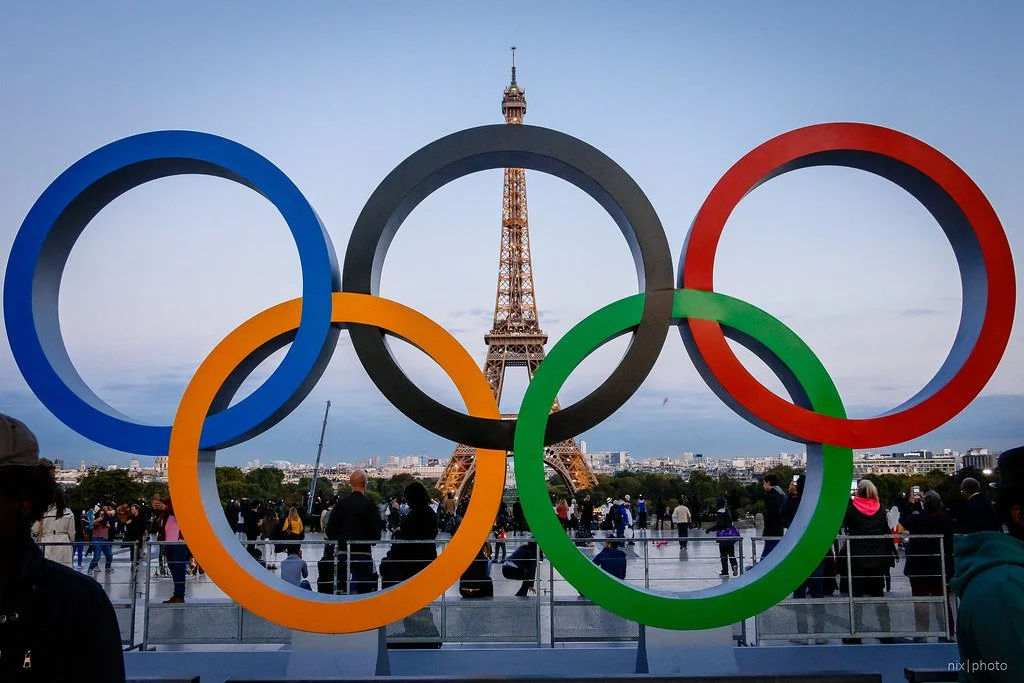
Will the Paris Olympics Be the Green Games?

In preparation for the Olympic Games, Paris invests in sustainable resources to minimize environmental impact.

Paris Olympic Games. Nicolas Michaud. CC BY 2.0

Keeping up the momentum of its previous environmental ambitions, Paris has committed to complete environmental sustainability for the 2024 Olympic Games. This greener approach will be made possible through careful consideration of the event’s chosen venues, operations (catering and accommodation) and transportation.

As a city renowned for its architecture, Paris has addressed one major change that it can make to the games — using existing infrastructure to host events. As of now, 95% of the chosen venues are pre-existing  or temporary structures. 

The competition zones are divided into two main areas both inside and outside of Paris’ center. Universally connected by the Seine, 80% of the venues are within a 10 kilometer distance of the Olympic and Paralympic Zones, allowing 85% of athletes to stay less than 30 minutes away from their venue. Through the use of existing facilities that require minimal transportation, Paris can host an event that will aid in its goal to, hopefully, halve a previous carbon footprint of 3.86 million tons. The French aim for a decrease in emissions compared to that of the Tokyo Games in 2020. With Tokyo’s post-game estimation of 2.16 million tons of carbon dioxide, Paris has committed to a limit of 1.65 million tons and to offset any indirect impact with climate-positive projects. Meeting carbon emission goals for the games may prove challenging because of these indirect impacts, primarily the substantial travel emissions generated by spectators. This seems a daunting task when compared to the Tokyo games which managed to achieve low net emissions because of the lack of spectators due to the COVID-19 pandemic

In accordance with the city’s holistic sustainability vision, Paris has placed emphasis on the importance of green catering. As an event that is responsible for serving 13 million meals, embracing sustainable food sources and partnerships now will set the city up for environmental prosperity even after the games.

In recognizing the environmental impact of certain food sources and resulting waste, Paris has quantified its objectives to reduce its carbon footprint. This eco-conscious catering approach is made up of 6 commitments: two times more plant-based food, 100% certified food (food that is sourced, produced and consumed in a responsible way), reduced plastic consumption, recycling of all uneaten food, reuse of all equipment and structures and hiring 10% of workers from professional integration programs. Athletes and spectators will have a wide variety of plant-based options at their disposal, with 60% of food and beverages available to spectators being vegetarian. With 80% of the total food supply being sourced from within France’s borders, the alternatives to traditional cuisine should hardly be noticed as food will be prepared by culinary professionals who are familiar with creating meals that make the best use of the seasonal menu. Expertise from the chefs and localized sourcing will leave little room for waste across both food and its packing. In its drive to cut down on single-use plastic, Paris’ catering teams will exercise the use of plastic alternatives and employ a “reducing, reusing, replacing and recycling” concept on drink and food containers. 

Paris’ goal to minimize waste generation and increase localized food sourcing encourages a healthier lifestyle that will extend beyond the games and become a beacon for environmental change. Even during the 2016 Olympic Games in Rio de Janeiro, plastic in the Guanabara Bay made it difficult for sailing teams to compete. This problem only intensified after the games when produced waste registered at over 18,500 tons, most being non-renewables. Despite this, some of the food waste after those games was utilized by an Italian chef, who created meals for the homeless.

The Paris Olympics will not focus only on breaking athletic records, but on breaking new ground for environmental action, particularly in sustainable event management. Through reliance on a well-developed, effective public transit system and localizing operations within France to minimize travel distance, Paris is showcasing a dedication to environmental impact that will extend beyond the games. If successful, this will serve as an inspiring example for how a large-scale international event can align with sustainability goals to change not just experiences, but lifestyles.


Mira White

Mira is a student at Brown University studying international and public affairs. Passionate about travel and language learning, she is eager to visit each continent to better understand the world and the people across it. In her free time she perfects her French, hoping to someday live in France working as a freelance journalist or in international affairs.

Traveling Along the Western Coast of Turkey

Exploring the places where I feel most connected to my Turkish heritage.

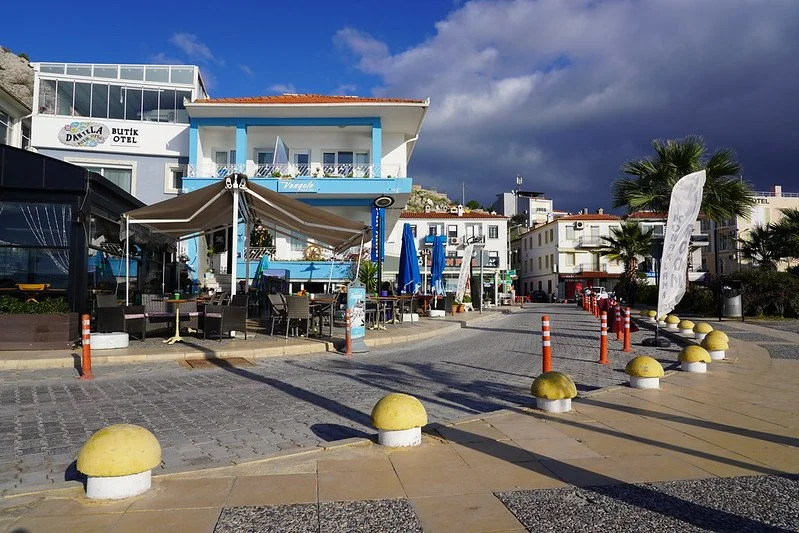
Cesme. CharlesFred. CC BY-NC-SA 2.0.

The First Steps: Traveling to Turkey

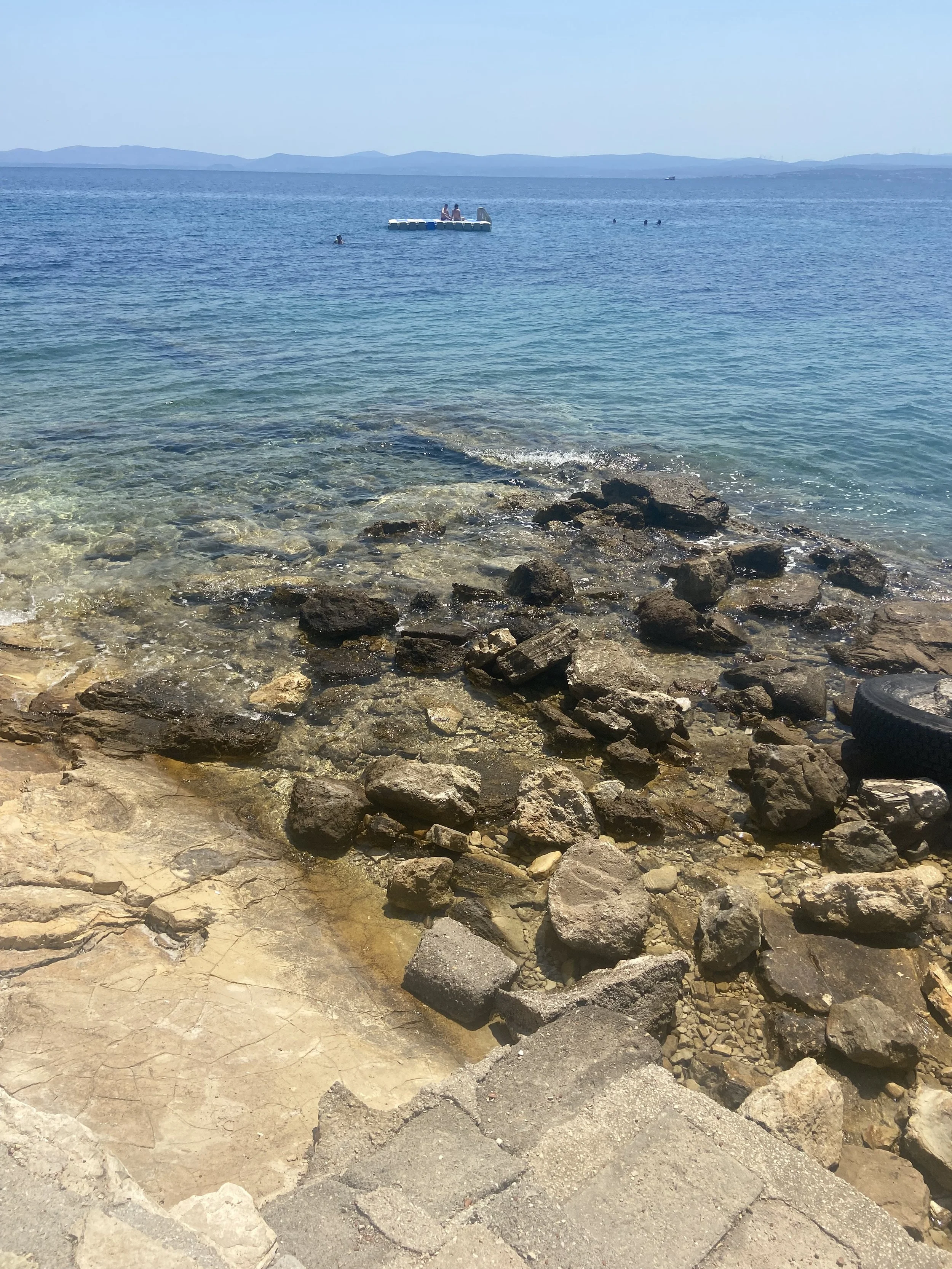
An ocean view near my grandparent’s house in Cesme. Su Ertekin-Taner.

Today, my mom, younger sister, and I begin the first leg of our family’s annual trip to Turkey. Usually, we visit my Turkish parents’ childhood homes on these yearly trips, learning personal and national history that is too distant in the United States, where few close relatives live. I am a U.S. citizen with a Turkish identity. These trips help parse out parts of me, aid in my understanding of who I am — with, of course, a bit of leisure and excitement. Soon we will be partaking in this tradition. We will arrive at Cesme, where my mom’s side of the extended family waits for us. Cesme, one of the most popular vacation spots in Turkey, fills up this time of year. Located on the country’s western coast, this small town attracts many visitors from nearby Izmir, who eagerly travel an hour by car, and even some from Istanbul, who may not so eagerly await their six hour ride to the resort town. 

Regardless, they all flock to Cesme. The town’s name means “fountain” in Turkish; accordingly, many come for the beaches and the water of the Aegean Sea — the fountain of the earth — but Cesme has much more to offer than that: resorts, day hikes, the Cesme castle, artisan shops, seafood restaurants, and orbiting small towns like Dalyan and Alacati.

Now, I’m getting eager and I know my extended family is too. A year has been too long for them. A year has been too long for me. 

The ten hour flight doesn’t fly by. Instead, the minutes pass begrudgingly. I pass them thinking of the waves, the harbor, my grandparents’ Cesme house. Soon, but not soon enough, we arrive at a familiar small house pushed claustrophobically against its neighbors. Flowers and vines grow everywhere, and a bird or two coo. Across from my mom’s childhood home, the bright blue Aegean stretches out for miles. My eyes barely acclimate to this sort of paradise on Earth before I fall asleep.

Dalyan Harbor

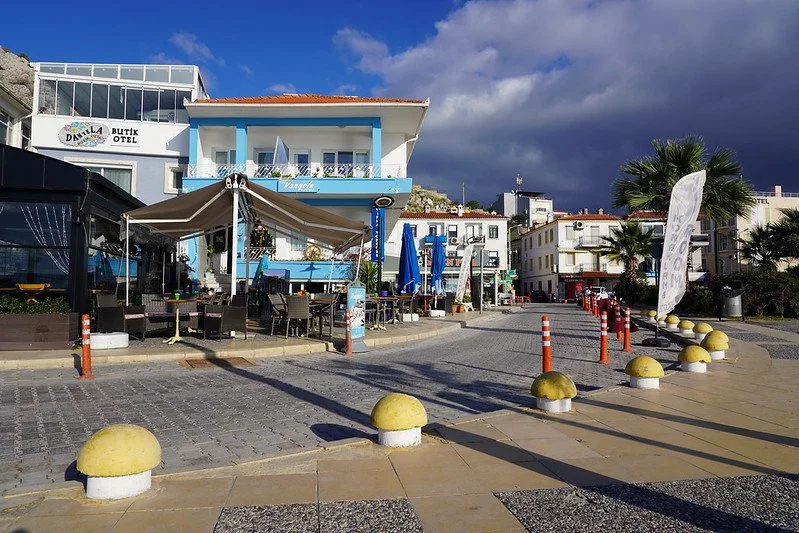
Cesme. CharlesFred. CC BY-NC-SA 2.0.

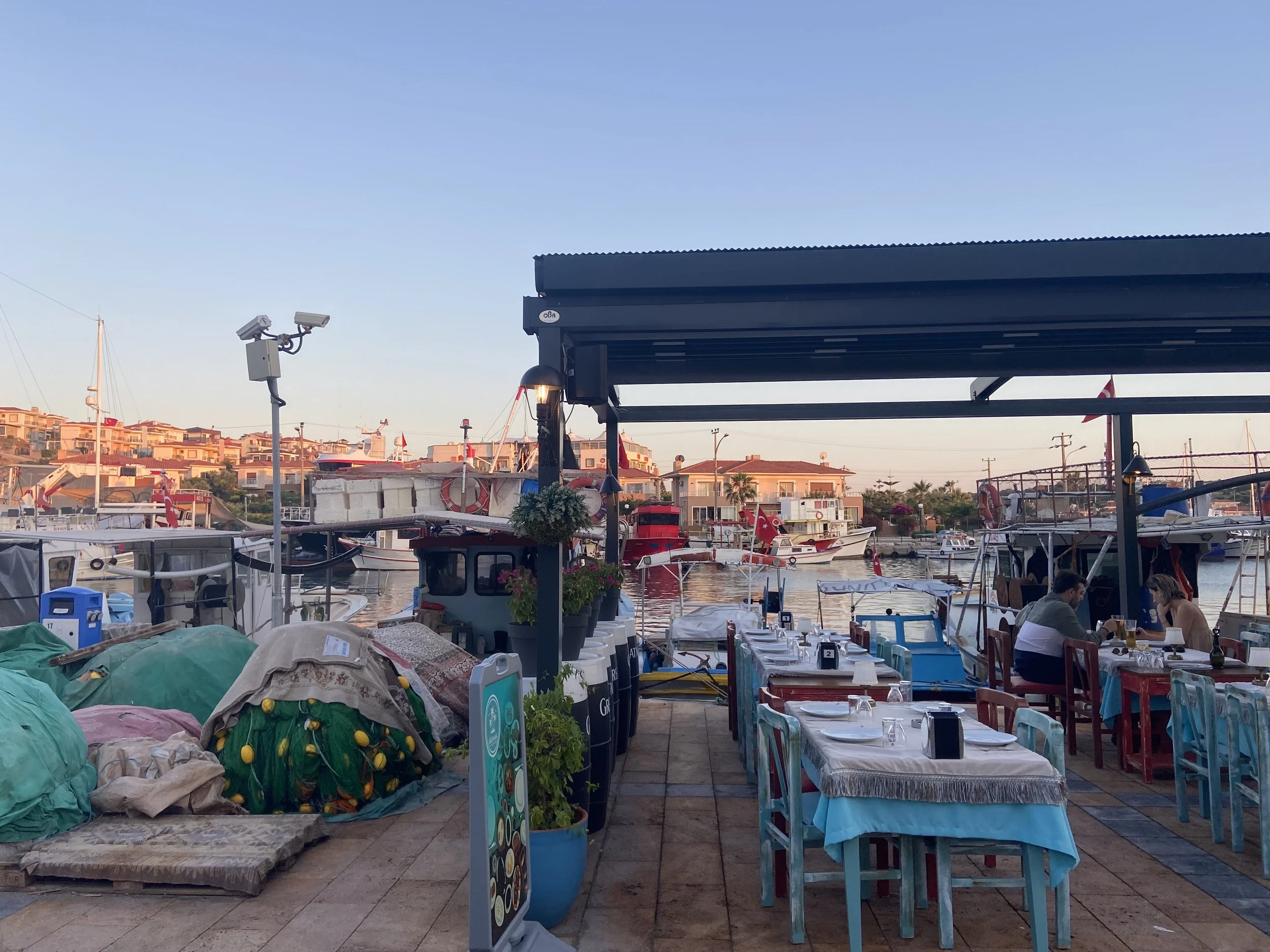
A view of the Dalyan harbor. Su Ertekin-Taner.

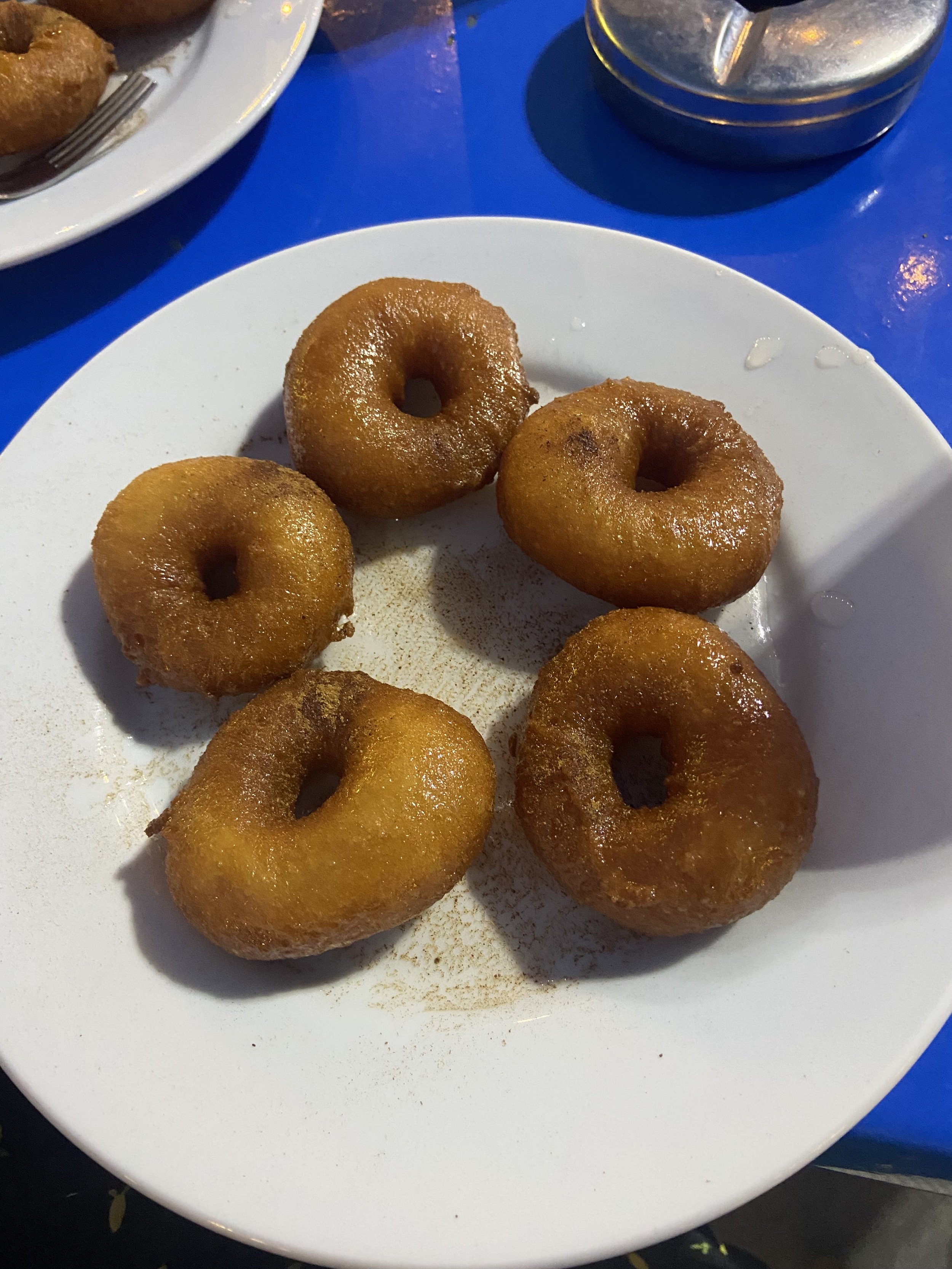
Plate of lokma on a dinner table.

A bite of lokma. Su Ertekin-Taner.

My mom takes me down to Dalyan via a cheap but reliable minibus. Dalyan is another small harbor town just an hour outside of the main Cesme gathering grounds, between the Fethiye and Marmaris districts. While our minibus trip takes thirty minutes, the town is an hour and a half drive from the Izmir airport.

Dalyan, though small and with a population of a little more than a couple thousand, offers many nautical traditions. The riverside dining experience is famed not only for its gastronomy (the fish), but also the riverside aspect; day-long boat tours float along the coast of the town, stopping in the odd Dalyan mud bath; and oh, the beaches. The finest salt water, found for example at Iztuzu Beach, cleanses and captivates swimmers and paddlers.

But now, it is night. We might engage in those activities later. For now, we’re walking through a quiet town. Although this town isn’t loud, its colors are: they shout their pride willingly. The green fishnets, the red-mauve roofs of houses, the turquoise pots of green leaves, the constant blue of the Aegean sea. There are too many hues to count, or rather identify. 

We greedily walk near the harbor first, our eyes hungering for the myriad colors. Fish restaurants — typical of Dalyan — line the scenery, some more crowded than others, some more touristy than others. The diners have just started their mezzes, a kind of Turkish tapas, or they’re readily consuming their main course, of which sea bass is the most popular. A small band plays outside one of the restaurants, trying to attract visitors, but the restaurants are relatively overpriced for Turkey and we’re unwilling to invest; instead, we will order from a more reasonably priced seafood restaurant in the coming days. In between restaurants are boats, small and little, with or sans people. Some boat goers sing to a radio, others drink Turkish tea (cay), reminiscing on some memory or another. 

Then we travel the inner street, more dangerously paved this time. The colors are still exciting here. We walk alongside apartments, markets, pharmacies, and small shops. Some boys play soccer near a tea shop, a couple struts hand in hand. This is a familial sort of place, a close neighborhood — almost. The cobblestone path we walk on eventually takes us to a lokma maker. Lokma is a traditional Turkish dessert of fried dough glistening with a sweet sugar syrup; lokma feels quite traditional, actually, to my stomach. It’s been a year since I’ve eaten my favorite dessert, and my mouth is watering. 

The lokma-makers have prepared the dough and fried it in front of visitors. When the lokma arrives, I’m salivating and finally, the syrup infused dough cuts through the saliva; this is fine enough dining for me. My mom opts for a Turkish coffee which, for many, is quite bitter. I’m fine with my lokma. and I go to bed full.

A Night in Cesme

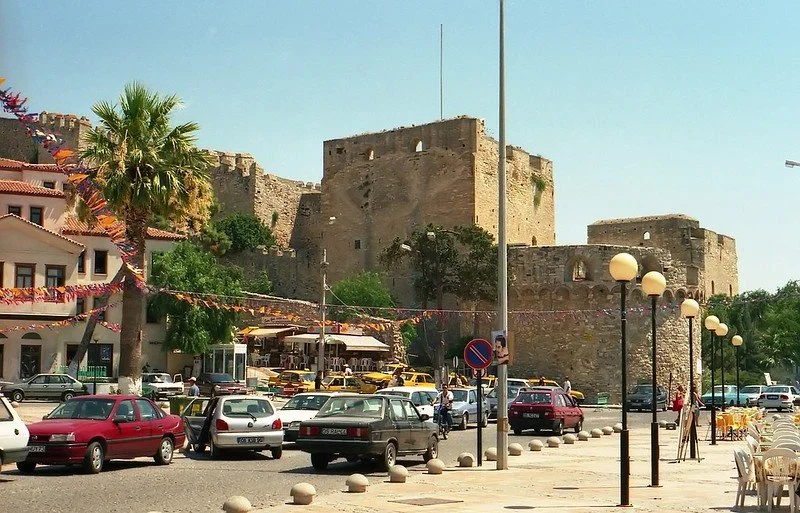
Cesme Kale. Spiterman. CC BY-ND 2.0

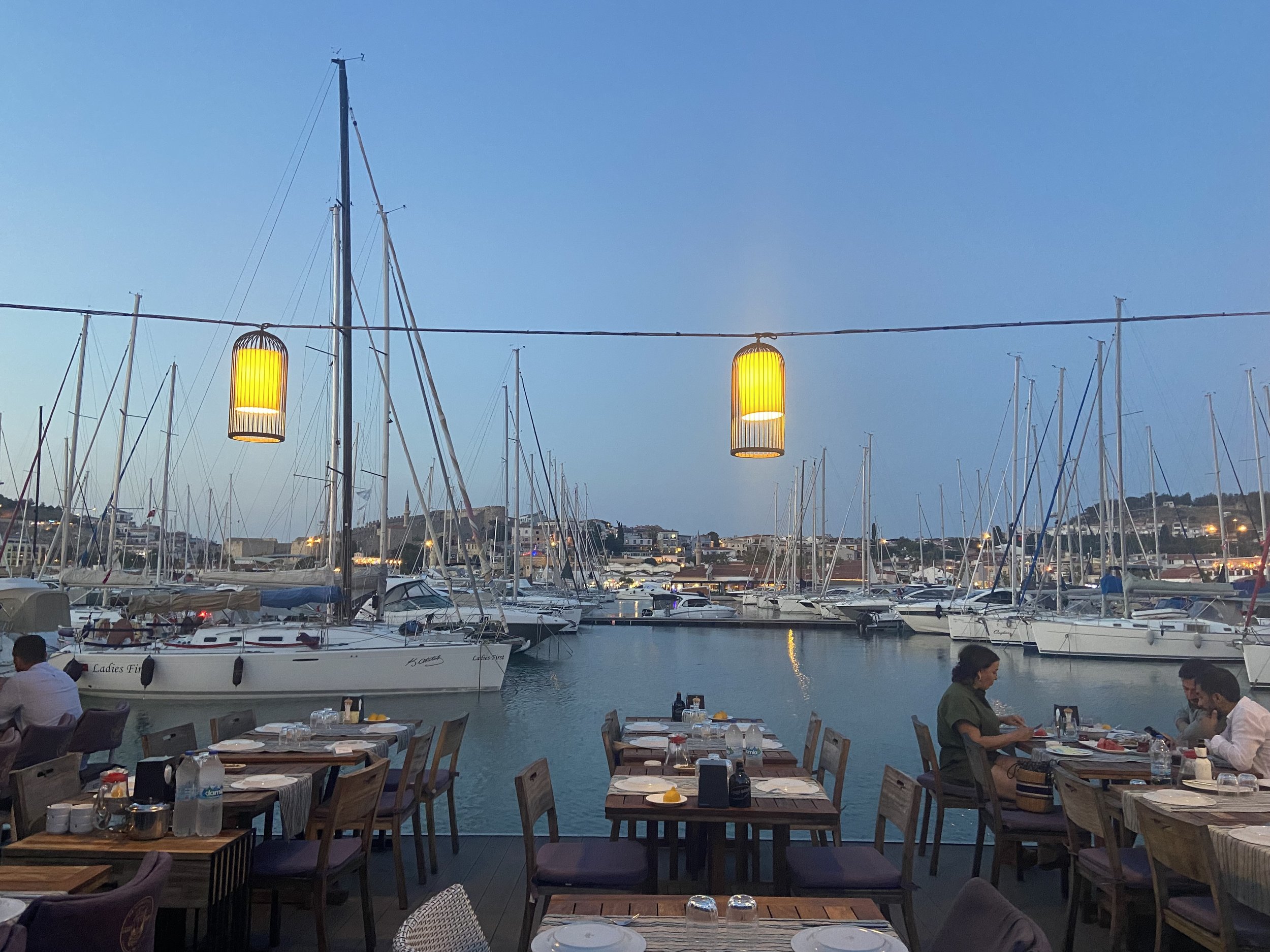
Restaurants line Cesme harbor. Su Ertekin-Taner.

Today, the family travels to the epicenter of Cesme — about 52 miles outside of Izmir — which is not quite accurately described as Downtown Cesme because of its lack of imposing buildings. This is the most heavily populated town we’ll be visiting, with over 30,000 residents, and in some ways, the surroundings reflect this fact. We’re in a developed area, away from the sailing villages, the resorts like Altin Yunus (gold dolphin), Ilica Plaj (Ilica Beach) and Ephesus. We’re near the Cesme Marina, the shopping centers, and the Cesme castle, built to protect the town from the attacking Venetians.

The same minibus leaves us at the top, or start, of a crowded street, but one entirely without cars — it’s only people swarming here. A wide street is host to visitors and locals alike, trotting alongside jewelry stores, shoe stores, bookstores, restaurants and the most common business, gum-infused ice cream. Cesme’s gum trees are as famous as the ice cream they help produce. In the battle for most authentic gum ice cream billboards are used as ammunition, but taste is the final deciding factor in any stalemate. 

Rumeli Dondurma (ice cream) wins the taste, and therefore authenticity, battle by far. Ice cream flavors like banana, melon, pistachio and chocolate are infused with some of the gum from Cesme’s gum trees to create a chewy, stretchy consistency. The ice cream is not only flavorful, but fun to eat. 

With my banana ice cream in hand, we walk along the Cesme harbor now far from the streets teeming with people. Again, boats like the coast along with restaurants, but high end Turkish clothing shops also appear near the water. We practice some visual retail by gazing at the bright colors of clothing in store windows like those of Ipekyol and Yargici. Our feet have been reduced to automated machines by the time we’ve reached the end of the harbor strip and we soon find our way back to our grandparents’ home — by minibus, of course.

Exploring in Alacati

An artist’s shop in Alacati. Su Ertekin-Taner.

A small stone house in Alacati. CharlesFred. CC BY-NC-SA 2.0

We’re close to our final days here, and Alacati is the next stop. We’re met with a sight I have yearned to see for some time: colorful stone houses, boutique hotels, small stores, art galleries, booming bars with music and local restaurants. Because of Alacati’s alluring sights, it’s no surprise that it is the site of many weddings and engagements. 

We’re in a “Downtown” part of Alacati, an hour minibus ride away from Cesme and an hour car ride away from the Izmir airport, but I hesitate again to say so, because I still can’t associate the richness of this landscape with any sort of downtown. Just outside of this “Downtown” Alacati are several beaches like Delikli (hole-y) Koy named for the porous rocks along its shore, resorts, markets, the Alacati Marketplace mosque, Alacati’s famous windmills, dating back to 1850, and even windsurf clubs with day and even week-long excursions and lessons, but we’ve decided to be among the Alacati locals. We’re right in the middle of tight streets, nearly unwalkable due to the crowd, but lined with local flora.

The shops that we pass now have oriented themselves similar to the houses of Cesme — nearly on top of one another. Each shop has a well-marked, distinct storefront painted a different color and accompanied by an eager salesperson, ready to sell their own handicraft in many cases or just drinking tea outside socializing, as is Turkish tradition. The local artisans boast hand painted cups, hand-glass blown calligraphy pens, abstract art, handmade jewelry, and more. Still, as we dive deep into the spider webbing streets, the craft doesn’t end.

We reluctantly stop our trek through the tight streets and sit down at a popular Turkish dessert franchise, Ozsut. The cafe offers a selection of ice creams and chocolates as well as more traditional Turkish dessert like kazandibi (a burned pudding with milky and caramel flavors), sutlac (a Turkish rice pudding), and asure (another pudding of dried fruit, nuts, rice, wheat, chickpeas, and beans), but I end up opting for banana ice cream anyway.

Parting

Our trip comes to a close and so does this love letter to the three small towns I visited in West Turkey. To the Aegean sea, the small shops and their local artisans, the tight streets, the delicious fish, the morning, afternoon, and evening tea, to the minibus and the lokma, I wave goodbye — for now.


Su Ertekin-Taner

Su Ertekin-Taner is a first year student at Columbia University majoring in creative writing. Her love for the power of words and her connection to her Turkish roots spills into her satire, flash fiction, and journalistic pieces among other genres. Su hopes to continue writing fearless journalism, untold stories, and prose inspired by her surroundings.

The Life Changing Power of Global Literacy

For the millions of people around the world who cannot read or write, creating educational opportunities for literacy can help close economic and health inequalities.

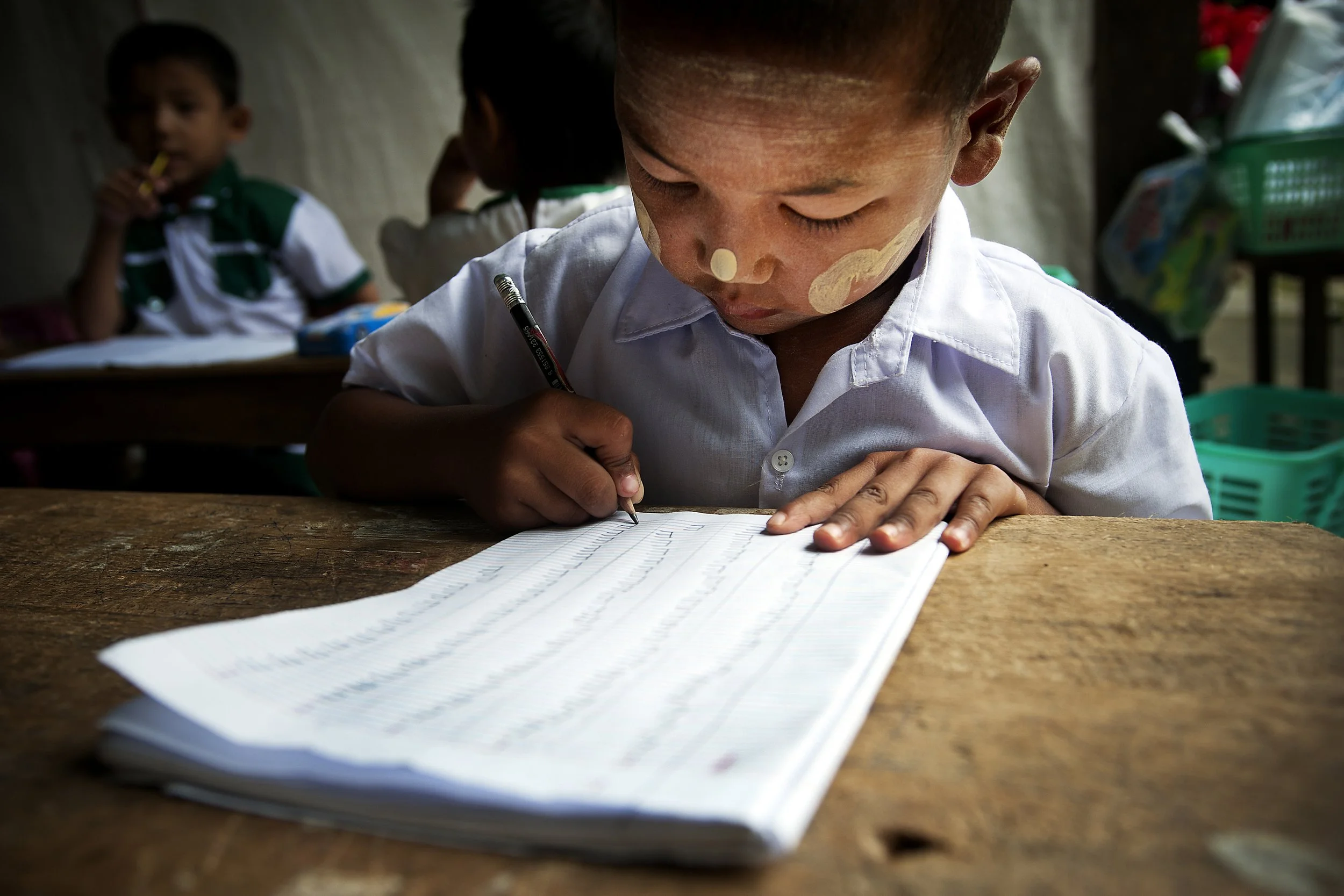
A child practicing writing in Myanmar. United Nations Photo. CC BY-NC-ND 2.0. 

Within the last five decades, the world has been reading more. Literacy rates have increased around the world, growing from 67% to 86.8% between 1976 and 2020.

However, despite global improvements, there are still some 781 million people around the world who cannot read or write. These numbers do not exist in a vacuum, but rather are intrinsically tied to economic and gender disparities. About 95% of the world’s illiterate population lives in developing countries, and nearly two-thirds are women. Such statistics reflect global gender disparities in which women are more likely to be defined by traditional domestic roles and childcare, roles that — especially in countries where educational opportunities are already limited — cut off women’s access to literacy. 

Child marriages can also derail young girls' education. On Earth today around 650 million women were married before the age of 18.  While child marriages rip young girls of education opportunities, access to education itself actively combat rates of child marriage. Each year of secondary education that a girl completes reduces her risk of marrying before the age of 18 by 5%

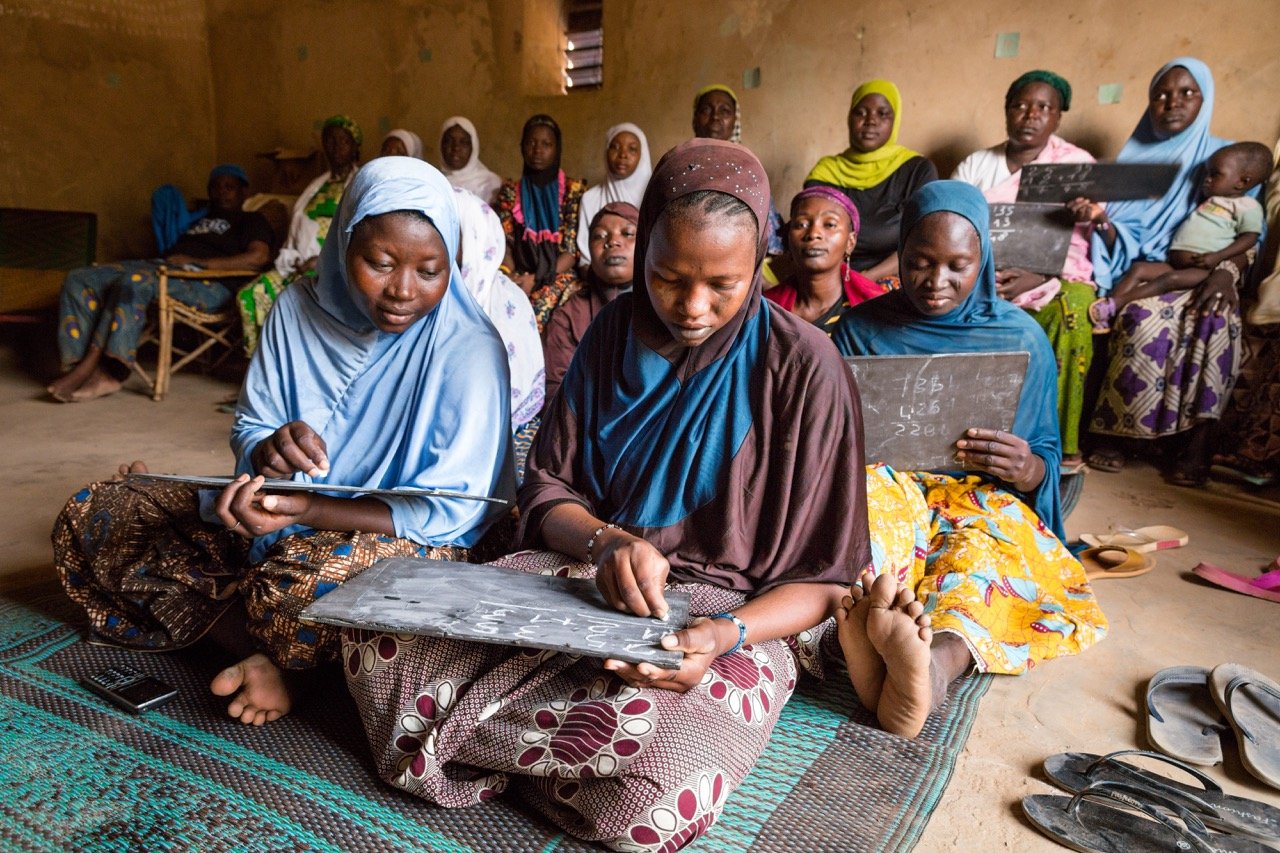
Benefits of ReadingWomen attend school in Niger. Global Partnership for Education - GPE. CC BY-NC-ND 2.0.

The benefits of reading and writing skills extend way beyond the pages, as globally literacy works to make the world a healthier, richer and more democratic place. 

Increasing women’s literacy does not just impact lives on an individual level, but entire communities and economies. Every 10% increase of female students in a country leads to a 3% increase in gross domestic product. The real world economic power of literacy plays a crucial role in lifting communities out of poverty. Concern USA estimates that if every student in a low-income country had literacy skills, some 171 million people would escape extreme poverty. 

Opening up educational opportunities, specifically for women, creates a ripple effect among communities. Because women are more likely to be the primary caretakers to children, their own literacy influences whether or not they decide to send their children to school. 

Increasing access to information through literacy can also have long-standing health benefits. Not only does literacy encourage individuals to read and understand medication and treatment options, but it also empowers individuals to seek out medical attention when necessary.  

A study from 2002 found that women in Bolivia who attended literacy programs were more likely to seek out medical help when needed, as well as be more open minded towards receiving vaccinations — both for themselves and their children. Another study found that if a woman was literate she was four times more likely to know how to protect herself from AIDS, while in Nepal literacy has been connected to a more open mind towards family planning.  

In measuring the effects of literacy and its economic and health impacts in communities, UNESCO estimated that infant mortality rates decrease 9% for every year of education that women attend

In addition to increasing access to education and medical knowledge, literacy also strengthens democracy by combating political marginalization and exclusion. Reading and writing are necessary skills for individuals to fill out voting forms necessary in any democratic system, and can also help increase political engagement by granting access to newspapers and written political material. 

Education and Empathy 

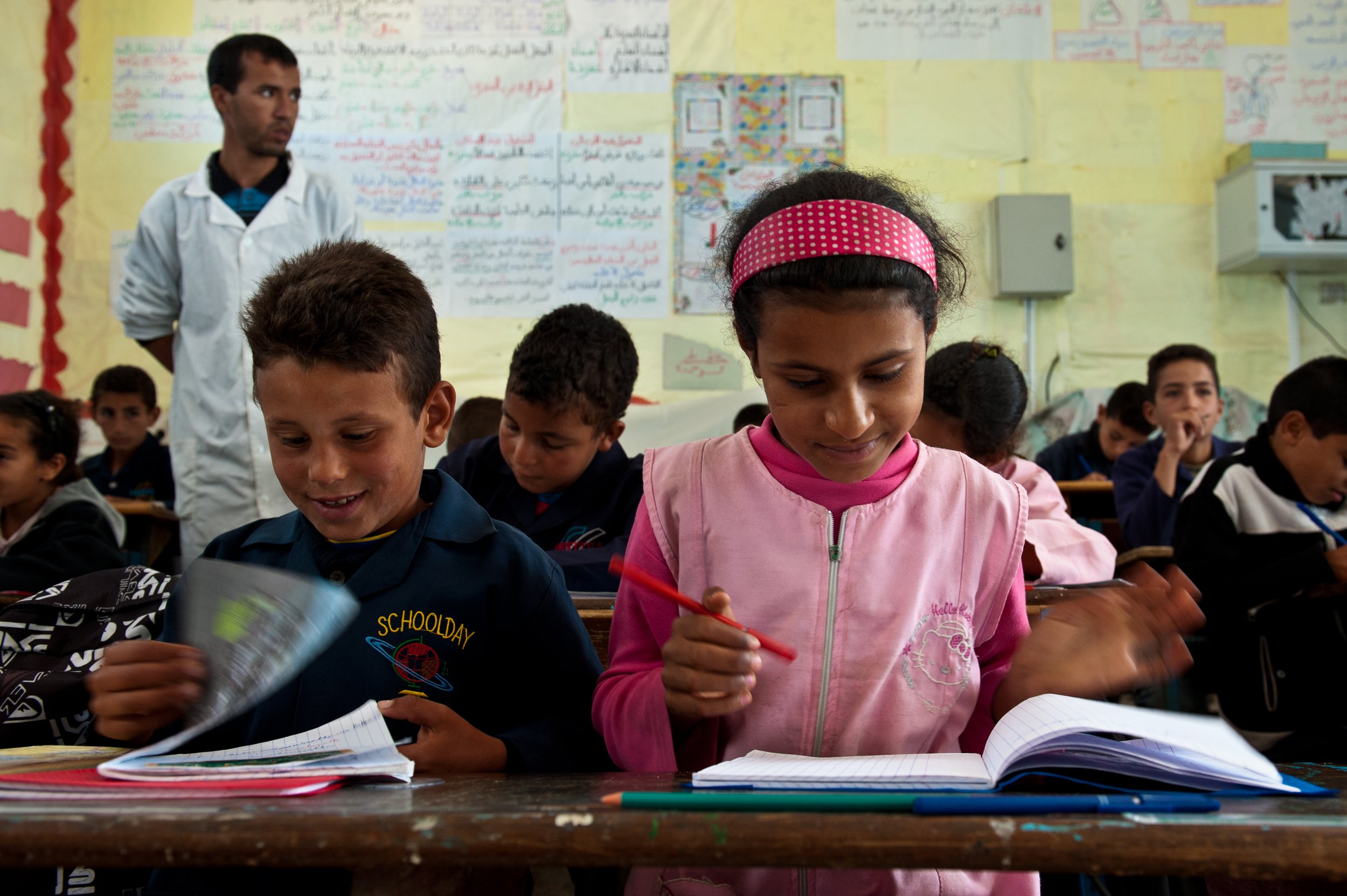
Students reading in a classroom in Sejnane. World Bank Photo Collection. CC BY-NC-ND 2.0.

One of the greatest psychological and social benefits of reading is in the way it builds empathy and fosters opportunities for communication and connection. Fiction in particular has been connected to empathy-building. One study in 2006 found that people who read more fiction scored higher in empathy tests. Another study from 2013 found that those who studied fiction improved on empathy tests that measure one’s ability to understand other people’s beliefs and desires that are different from one’s own. 

The effect of fiction on reader’s emotional intelligence stems in part from the way it forces readers to use their imagination and view the world from another’s perspective and life. Fiction writing forces readers to grapple with choices and scenarios that disrupt their expectations and practice empathy towards characters in order to understand their thoughts and actions.

Get Involved

Organizations all around the world are doing their part to make literacy accessible, encouraged, and achievable globally. 

The World Bank seeks to combat global illiteracy through educational interventions, with the goal of reducing the number of children who cannot understand a simple story to half of what it is to today by 2030. The World Bank encourages the public to share information on the global literacy crisis, encourage government officials to invest in literacy programs, and understand the impacts of learning poverty around the world.

Save the Children’s Literacy Boost works to increase literacy rates around the world through individual and communal efforts. The program relies on schools and teacher training as well as community initiatives that support literacy through Book Banks, reading clubs and workshops for parents. A Stanford study found the average child who went through Save the Children’s Literacy Boost program in Rwanda scored higher on reading comprehension tests than 63% of children who did not go through the program.


Jessica Blatt

Jessica Blatt graduated from Barnard College with a degree in English. Along with journalism, she is passionate about creative writing and storytelling that inspires readers to engage with the world around them. She hopes to share her love for travel and learning about new cultures through her work.

24 Hours in Berlin

Getting to know the Grey City in a jiffy.

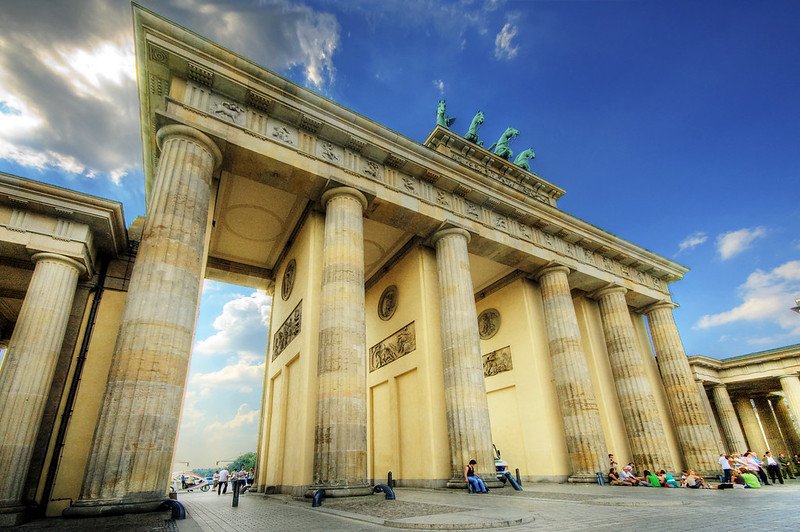
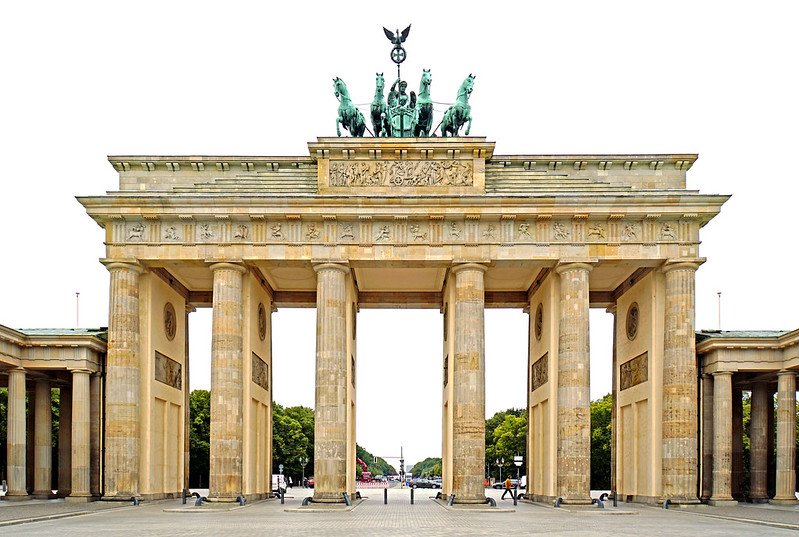
Brandenburg Gate. Wolfgang Staudt. CC BY-NC-ND 2.0

Berlin is a gritty city, and one whose food, architecture, monuments and culture can only be explained through its grave past. The German capital is a historic center of Europe as the nerve center of Nazi Germany in World War II, the greatest symbol of the Cold War’s infamous Iron Curtain and the prime city to see grand Prussian architecture. While many German institutions like monuments, transportation and active government buildings paint a picture of this historical influence, the picture of Berlin would be left incomplete without mentioning its spirited present. 

In between landmarks like the Reichstag, Germany’s Parliament building, the famous Brandenburg Gate, the remains of the Berlin wall and Prussian palaces lies an amalgamation of diverse restaurants with owners from every corner of the world, a bustling nightlife of clubs and bars, a thriving local music scene and a fashion-forward community. 

Berlin is an urban city through and through; its streets and unassuming apartment buildings (sprinkled between colorful modern architecture) comparable to those of Istanbul with an artistic, stylish flair reminiscent of New York. Live through a bit of history and a bit of present with me as I spend a day in Berlin:


We’re out and about today, but refuse to approach our day on an empty stomach, so we head to a local breakfast place, Erchy’s. Other days we have feasted on the cinnamony pastries of a staple German breakfast cafe, Zeit fur Brot, and even some German-made cheeses bought from German grocery store REWE when we really wanted to masquerade as Berliners. But today is Erchy’s. Their food will fuel the traveling to be done.

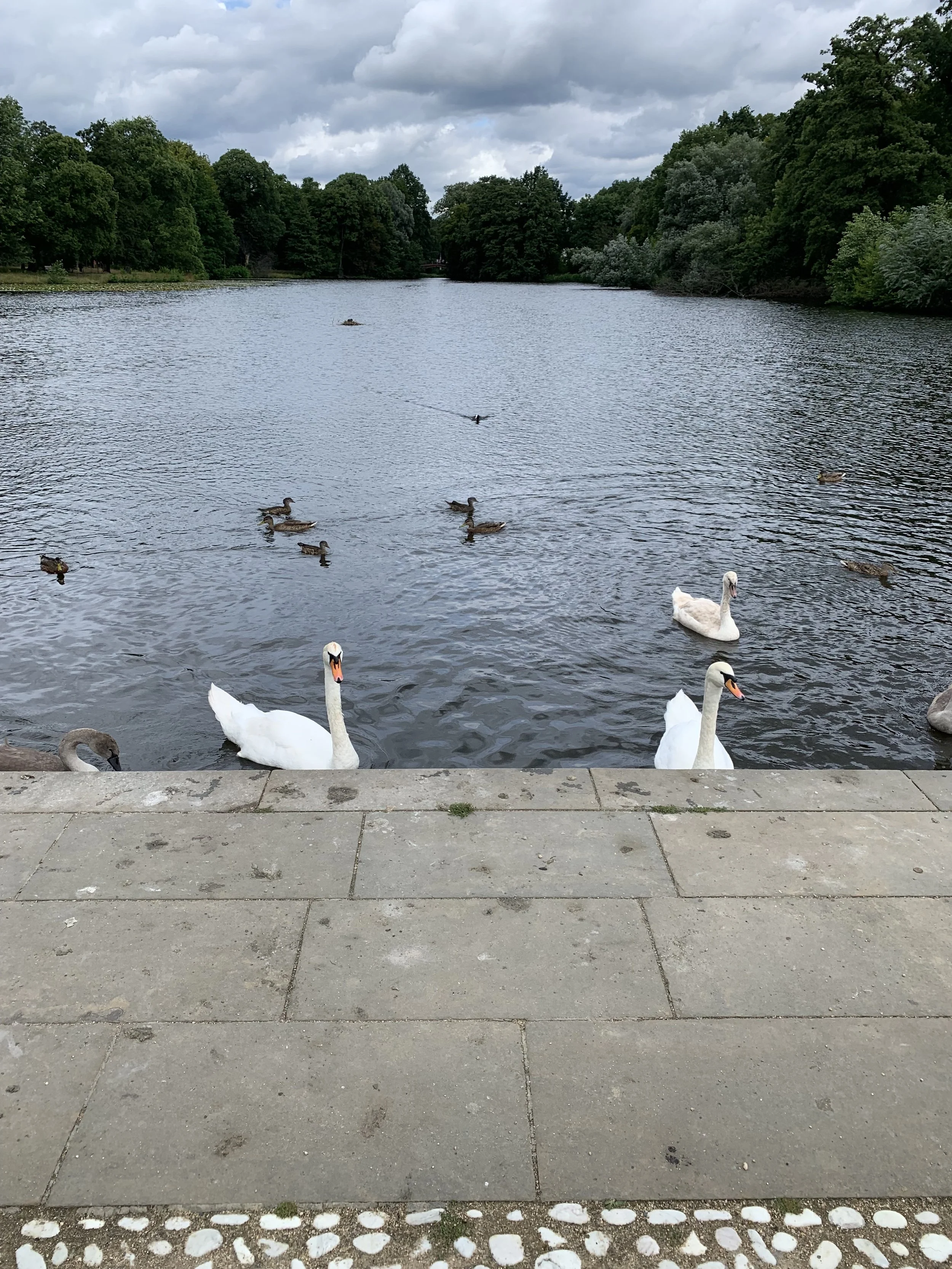
Swans in the palace gardens of Charlottenburg. Su Ertekin-Taner.

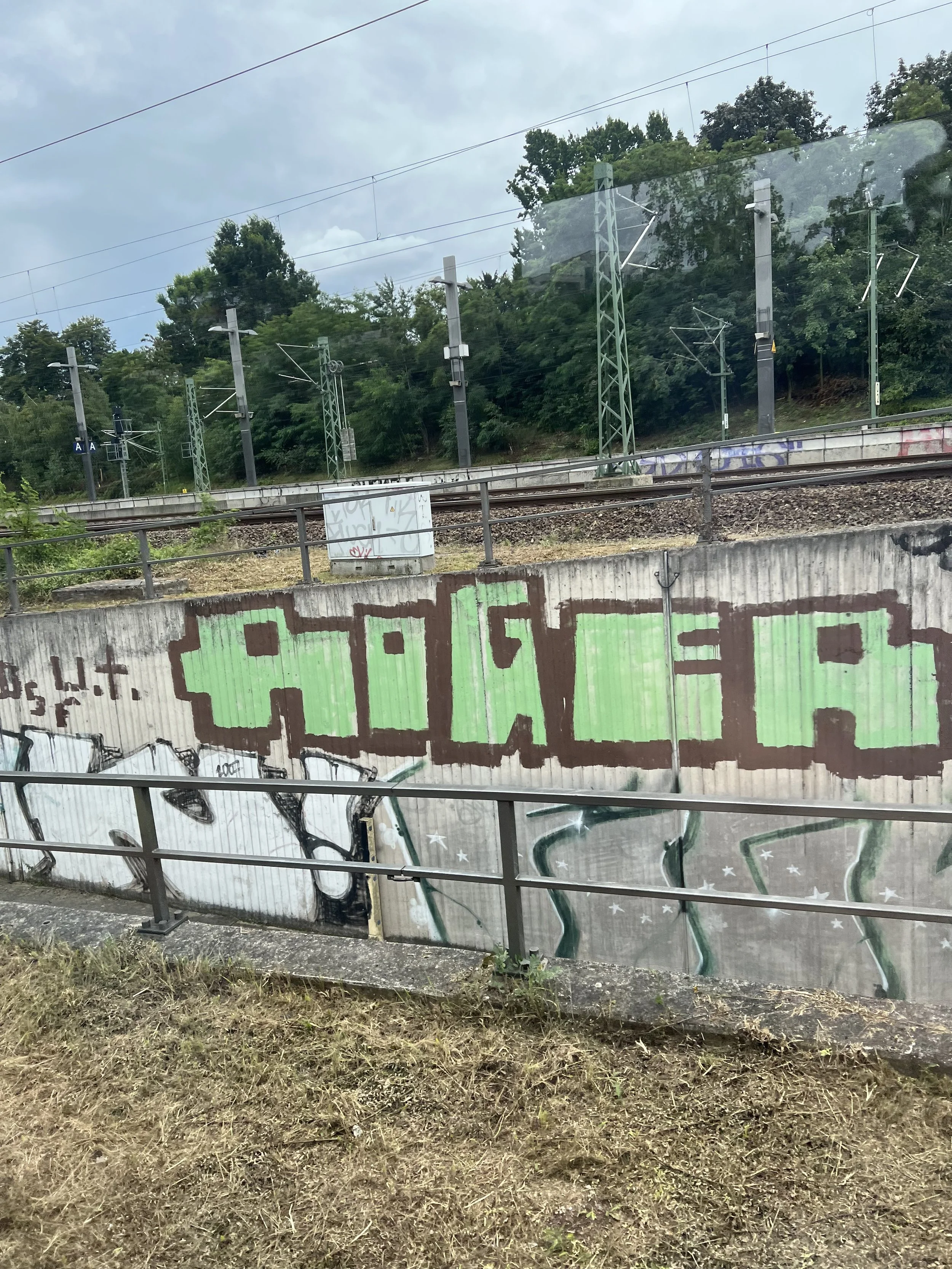
Graffiti near the S-bahn. Su Ertekin-Taner.

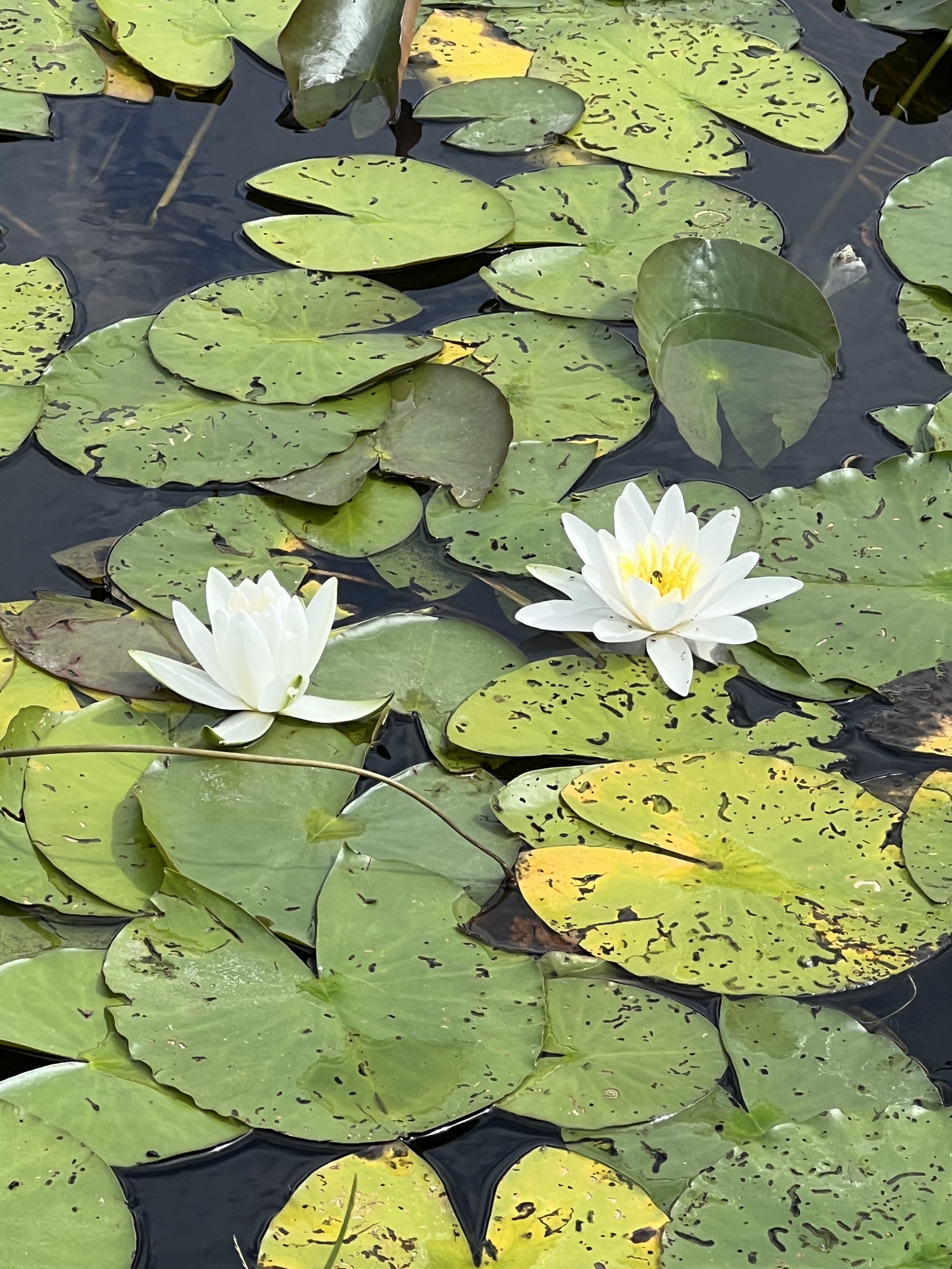
Lily pads in the palace gardens of Charlottenburg. Su Ertekin-Taner.

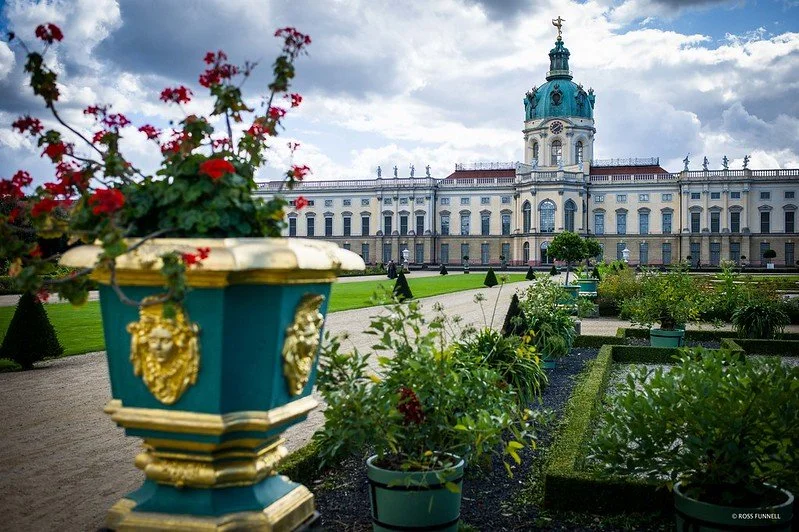
Charlottenberg. Rfunnell. CC BY-NC-ND 2.0

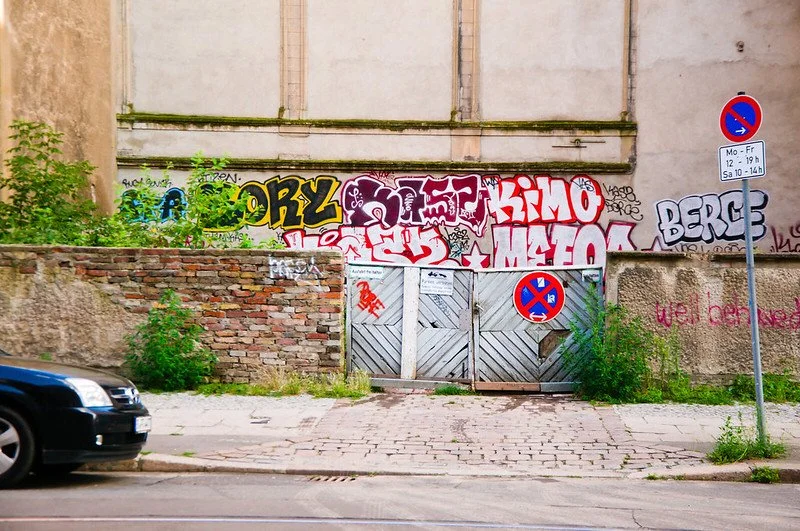
Graffiti in Berlin. Mitch Altman. CC BY-SA 2.0

We immerse ourselves in Berlin’s public transportation system after food. We use the U-bahn, the German metro, and then the S-bahn, Berlin’s fastest form of transportation to get to today’s location. At times using Berlin’s transportation reveals more about the divide of Berlin via the Berlin wall than any museum could, I think.

Altogether, the journey takes about 45 minutes from the center of East Germany. As we travel, the underground tunnels melt into cloudy skies that overlook old beige buildings decorated completely with graffiti. Berlin’s graffiti scene is one of the most vibrant in the world due to the rise of a countercultural voice during the Cold War and the Berlin Wall days. Graffiti galleries, exhibits, and alleys like the East Side Gallery, Cafe Cinema and Raw Gelande are staples of the Berlin community. As I wander through my thoughts, I sense the train stop. The trek has been made and so, we expect to be met with a reward.

The Charlottenburg Palace more than qualifies as a reward. This Baroque palace was originally constructed on behalf of Friedrich III’s (later King Friedrich I) wife Sophie Charlotte, hence the name. The interior of the palace is richly decorated, representing the height of Prussian high culture: porcelain from the royal porcelain providers KPM lines the walls, mantels are decorated with an East Asian-inspired blue and a ballroom fit with large windows divides the palace in two and overlooks the gate. The signs that guide us through the palace also note, however, the racist portrayal of Middle Eastern and East Asian figures throughout the palace’s art; the Prussian monarchy hoped to assert its dominance in every corner.

Behind the palace, we escape into nature, or a manufactured sort of nature: the Charlottenburg Palace Gardens, inspired by those of Versailles. We walk near rivers of lily pads, greet some sheep tended by palace attendants, swans and even some bike riders; the access to this park is free.

Chicken gemuse kebab at Ruyam. Su Ertekin-Taner.

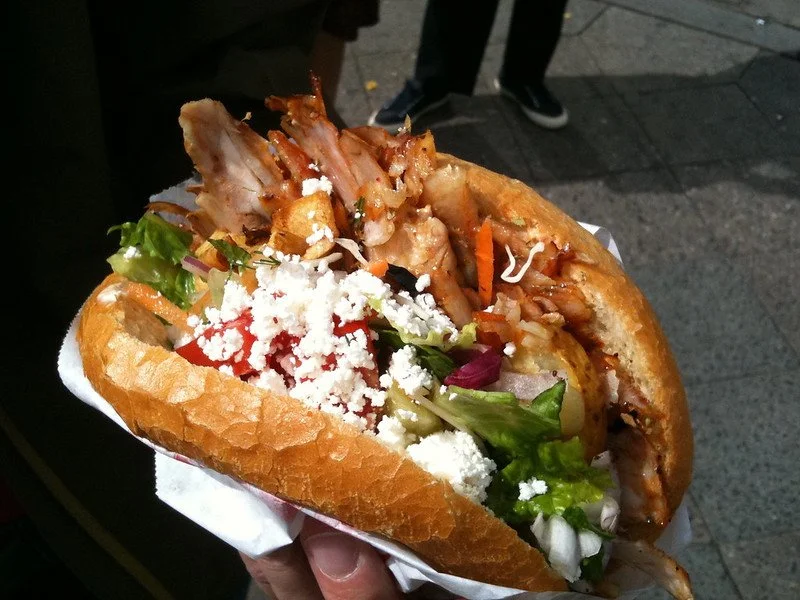
Doner kebab. Addison Berry. CC BY-NC-SA 2.0

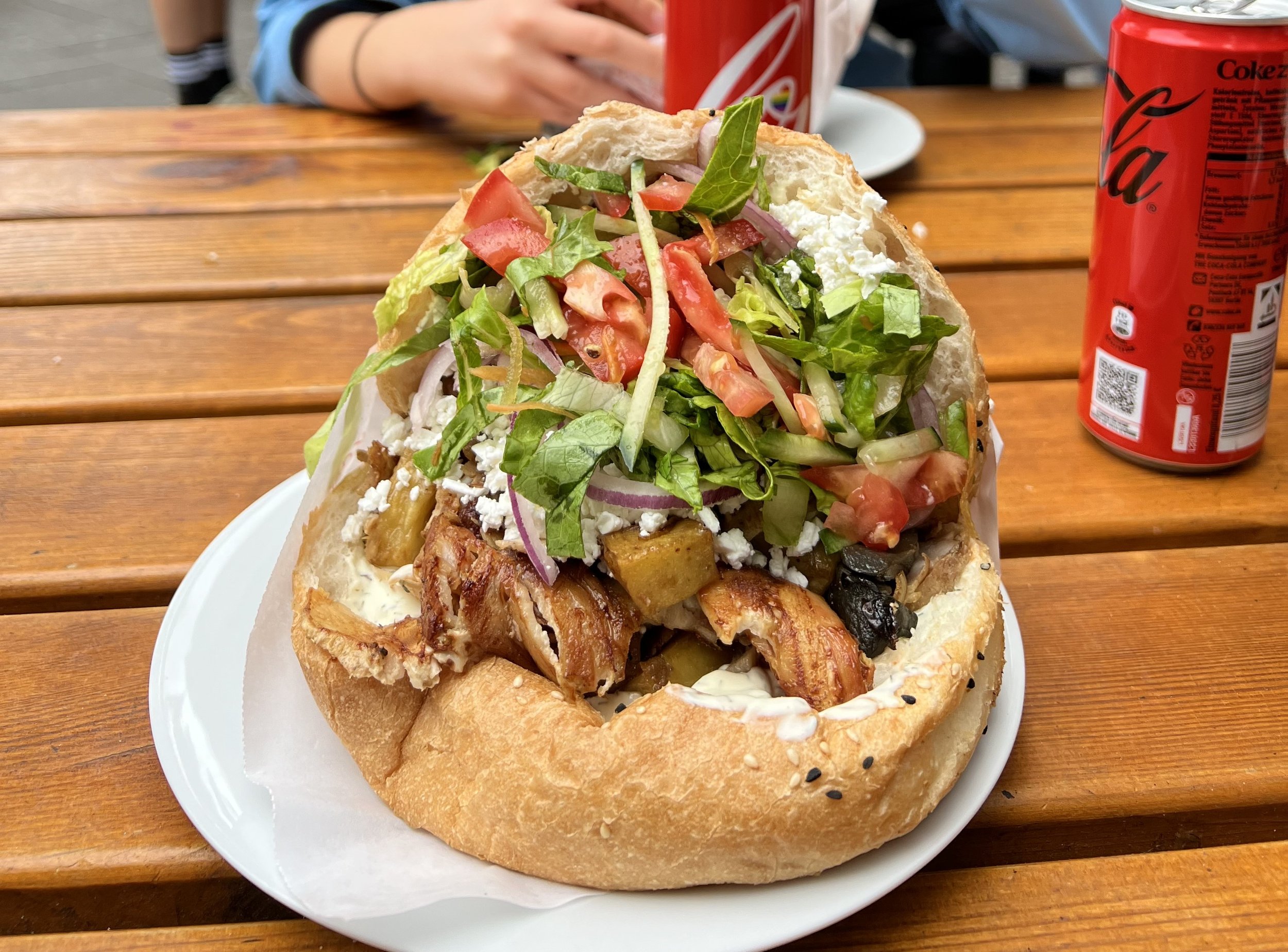
By the late afternoon, we have ambled back near the center of East Berlin. We decided on chicken gemuse doner at Ruyam Doner, which offers the best doner kebab in Berlin, though we did consider a meal at one of the many Vietnamese restaurants — established by the large Vietnamese community —in the area. The line spills out of the restaurant and into the street; everyone is craving some of this chicken gemuse. But the line quickly shortens until we are ordering our kebab of moist chicken, a spicy blend of sauces, and slightly heated bread. 

Turks are the largest ethnic minority group in Germany and often occupy entire neighborhoods like Keuzberg. Many Turks immigrate to Germany for work and stay, or accompany family members who have already migrated. As a Turk, I feel lucky to taste a part of my culture on the streets of Berlin.

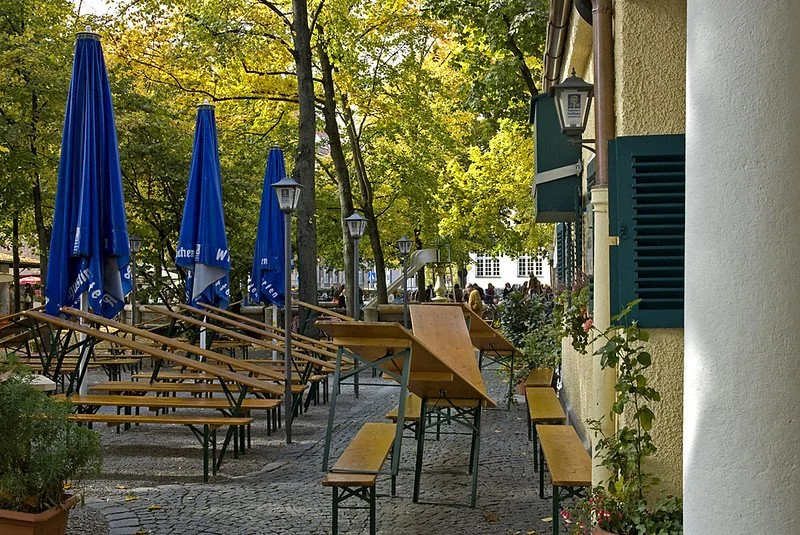
A biergarten in Elisabethmarkt. digital cat. CC BY 2.0

We end our day with a biergarten, or beer garden experience. A biergarten usually consists of an open air bar filled with long tables of merry drinkers and well, their drinks; the biergarten is integral to the German citizen and open-air lover. 

We encounter fewer merry drinkers than we plan to, but still sit alongside friends talking and a couple laughing. I have a feeling we’ve arrived in the belly of Berlin, especially as more Berliners gather round, huddle up, and grab some warming alcohol during this chilly summer. 

For travelers hoping to find a warm community with a common motivation–tasting the richness of German beer–a biergarten might fulfill your needs.


While my day quickly ended after my biergarten experience, no two 24 hours in Berlin can be alike, so here are some more options for day adventures to quench your traveling thirst.

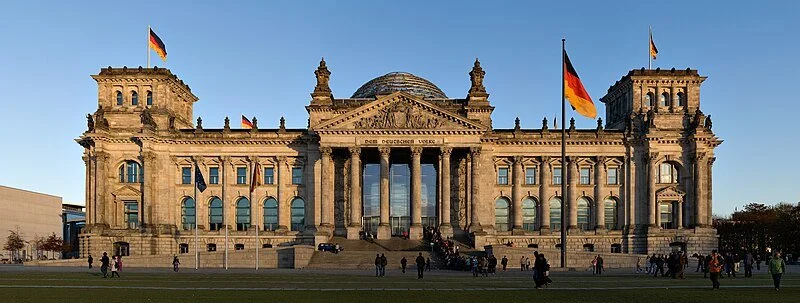
Reichstag building. Jurgen Matern. CC BY-SA 3.0

Monuments

Reichstag: The Reichstag, the Parliament building of Germany, actively houses Parliament meetings throughout the year, and somewhat unusually, also allows visitors year round. Attending a tour of the Reichstag means sitting in the German Parliament’s main chamber, observing interior corridors with Russian graffiti completed after the Russian capture of the building in the Battle of Berlin and receiving an oral history from World War II on.

Memorial to the Murdered Jews of Europe: This Holocaust Memorial, designed by New York architect Peter Eisenman, consists of 2711 concrete blocks of varying heights laid out in a rectangular city block. Visitors might note that the blocks increase in height as they approach the middle of the monument; many speculate that this effect reflects the rising fear and agony of the Jewish community throughout World War II. 

Brandenburg Gate: While this neoclassical gate was originally constructed in the 18th century, much of its history lies in the coming centuries. The Quadriga statue of horses perched on the top of the gate, for example, tells a history of Napoleon’s acquisition of Berlin. Napoleon transported the statue out of Berlin to reflect his victory over the Germans. The Brandenburg Gate also symbolizes the division between East and West Berlin during the Cold War, as the Wall was constructed within a couple meters of the gate.

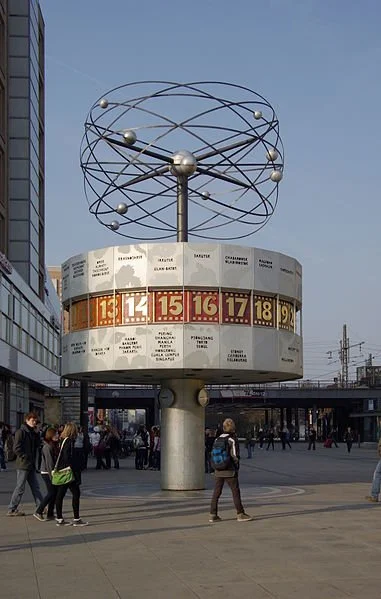
World Clock at Alexanderplatz. Berthold Werner. CC BY-SA 3.0

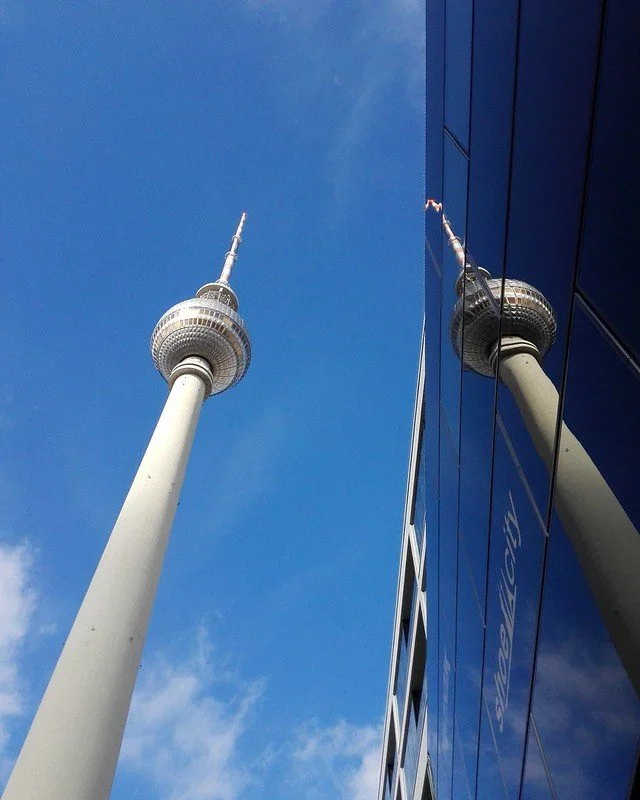
Berlin TV Tower. A_Peach. CC BY 2.0

Public Squares

Alexanderplatz: This public square named after Russia’s Tsar Alexander I is a commercial and transportation center that houses malls, public art and even live events like concerts. Visit the world-famous World Clock that tells the time of countries around the world, watch a stark yellow tram pass by through crowded streets, or even spot the Berlin TV Tower from afar.

Potsdamer Platz: Potsdamer Platz, located about a mile from the Brandenburg Gate, contains much of the city’s culture. Find the Sony Center dome housing an international cinema, restaurants, offices, museums and the center of underground transportation here —all constructed after the destruction of the public square during World War II.
Museums

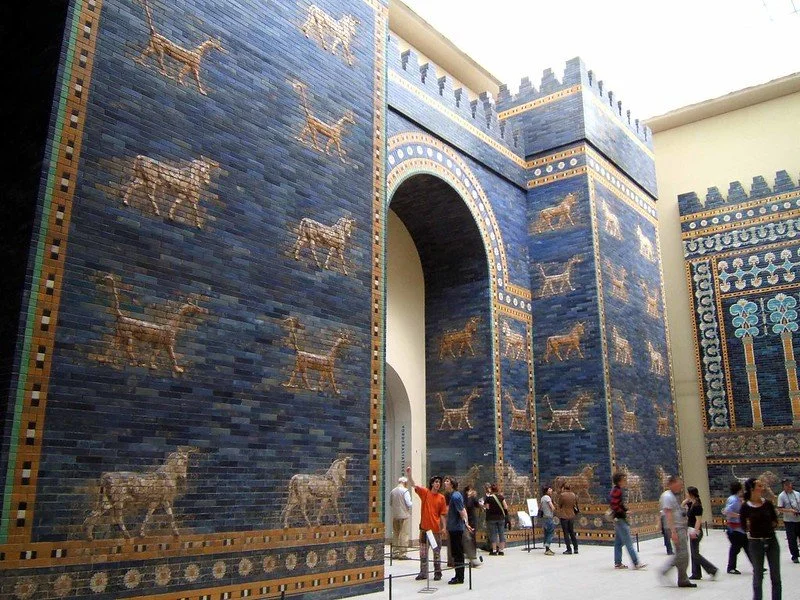
Ishtar Gate in the Pergamon Museum. Rictor Norton and David Allen. CC BY 2.0

Pergamon Museum: The Pergamon is one of the museums located on Berlin’s “Museum Island.” The building boasts its collection of classical antiquities from Middle Eastern civilizations and Islamic cultures. The most famous exhibits include the Market Gate of Miletus, the Ishtar Gate that opened up to the processional way to the eponymous capital of the Babylonian Empire and the Aleppo room featuring paneling with images of both the Islamic and Christian faith. 

Topography of Terror: Such a historical city requires a history-based museum. The museum itself is located on a plot that once housed administrative buildings of the Nazi Party, like the headquarters of the SS and the Gestapo. The one-floor museum uses exhibition panels (supported by historical documents and quotes) to guide visitors through the rise and eventual fall of the Nazi Party.

Other

Brandenburg Gate. Dennis Jarvis. CC BY-SA 2.0

Historical Walking Tour: A city with such plentiful history necessitates a historical walking tour. Sightseeing walking tours take visitors through World War II and Cold War monuments like the Memorial to the Murdered Jews of Europe and the demarcation of the Berlin Wall, respectively, as well as some of Berlin’s must-see sights like the Brandenburg Gate and even the Reichstag.

Cuisine

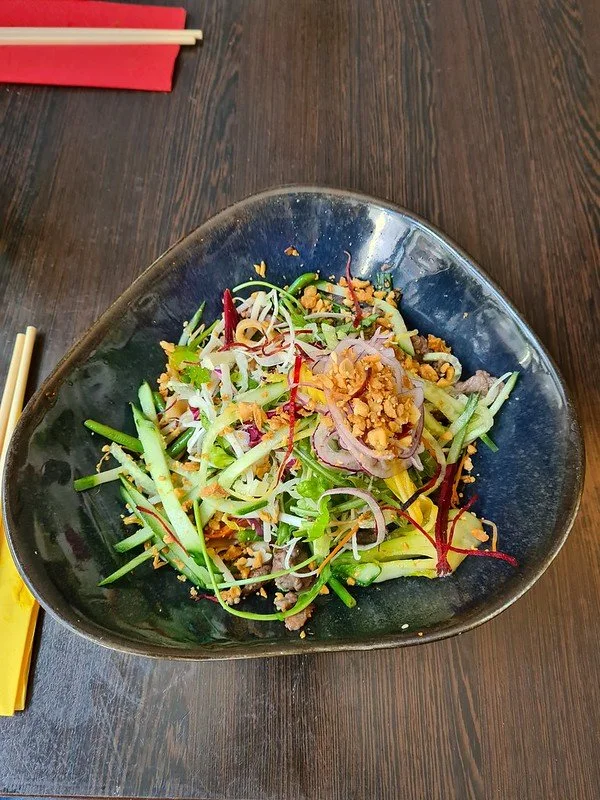
A dish from Madami. George M. Groutas. CC BY 2.0

German cuisine: While much of German food pays its cultural respect to other international cuisines, some German dishes are uniquely synonymous with German culture. Sausages accompanied by sauerkraut or potato salad, rouladen, beef-wrapped bacon, onions, mustard, and pickles and sauerbraten — a German pot roast — all grace the menus of German restaurants. Try restaurants Schwarzwaldstuben in Mitte, Max and Moritz in Kreuzberg, and Clarchens Ballhaus also in Mitte for a taste of Germany.
Vietnamese cuisine: Due to the influx of Vietnamese immigrants —many of whom were temporary contract workers — into East Berlin during the Cold War, the city offers much authentic Vietnamese food. Some high-rated restaurants include Madami located on Rosa Luxemburg Street, Monsieur Vuong on Alte Schonhauser Street, and Maison Umami on Schlesische Street.

Turkish cuisine: Much like the Vietnamese, a Turkish community slowly immigrated to Germany for work and stayed to build institutions that reflect their culture, like the Turkish restaurant. Doner, lahmacun (the Turkish Pizza) and borek (a salty Turkish pastry) proliferate in Berlin. Some high-rated restaurants include Hasir in Kreuzberg, Adana Grillhaus on Manteuffel Street, and Osmans Tochter near Helmholtz Platz.

Nightlife

Clubs: The Berlin party scene is second-to-none. Berlin’s clubs are perfect for those craving a new eccentric song to add to their playlist or a place to wow their friends for a night. Room 4 Resistance’s playlists of tunes with genres ranging from contemporary pop to industrial techno attract a diverse group of music lovers. For those music lovers who prefer to stick to a genre or two, Weeeirdos’ techno sets and Hoe_Mies’s R&B and trap music might be a perfect fit.
Biergarten: Outdoor lovers might prefer the biergarten, or beer garden, night experience. Under a dusk sky, between clumsily strung up lights, lies a comforting community of German beer lovers gathering around wooden benches and tables and self-serving the ale. Try the Prater Beer Garden, Schleusenkrug, and Golgatha Beer Garden for some biergarten action.

Bars: Whether you desire a cocktail or a dance floor for the night, a Berlin bar or two will satisfy your appetite. When in the party capital of Europe, you must do as partiers do, and partiers love to gather on these alcohol-washed oases. Gay bar Model Olfe, aesthetic Victorian-inspired bar Geist im Glas and the traditional Bar 3 are all excellent alternatives for a night of drinking and dancing.


Su Ertekin-Taner

Su Ertekin-Taner is a first year student at Columbia University majoring in creative writing. Her love for the power of words and her connection to her Turkish roots spills into her satire, flash fiction, and journalistic pieces among other genres. Su hopes to continue writing fearless journalism, untold stories, and prose inspired by her surroundings.

Independence and Adventure in Nordic Parenting Culture

Nordic countries’ healthcare and parenting culture allows for an unusual amount of balance and independence — for both children and parents.

Winter stroller walks are the norm. William Fortunato. CC0.

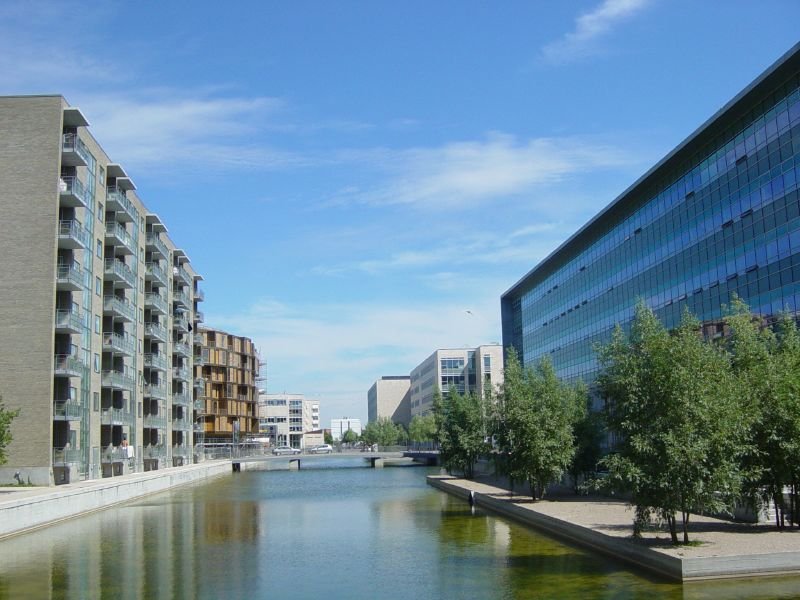
When walking through the streets of Orestad — a developing neighborhood just seven minutes by metro from central Copenhagen, Denmark — it's not uncommon to see dozens of strollers being pushed by young parents clad in thick jackets and scarves. In fact, it seems that this relatively new and modern neighborhood is populated primarily by young parents with babies and toddlers.

Meanwhile, in Oslo, Norway, streets outside of coffee shops and grocery stores are also crowded by parked strollers. Despite the same cold temperatures, the parents are nowhere to be seen. Bundled tightly, the children are left alone to enjoy the cold weather.

Although these two Scandinavian countries take slightly different approaches to monitoring young children, there is much overlap in the parenting cultures of many Scandinavian (and, more broadly, Nordic) countries. In general, many of the parenting techniques new mothers and fathers practice are rooted in a desire to teach their children independence, empathy, respect, and responsibility all while keeping them safe and healthy — even though some tips and tricks may seem shocking to outsiders.

Orestad in Copenhagen, Denmark. Jonas Smith. CC by 2.0.

Perhaps the time and care it takes to foster this unique parenting culture stems from the unusual, yet tremendously beneficial, length of parental (both maternal and paternal) leave in many Nordic countries. In Norway, for example, parents of all genders have the option to take fifteen weeks of paid leave and are paid 100% of their pay, or can take nineteen weeks at 80%. The only difference is that mothers must take the first six weeks after their child’s birth off while their partner begins their quota from week seven after birth. Similarly, in Sweden parents together are entitled to 480 days or paid parental leave (240 per parent). Days off not taken by one parent can be transferred to another if needed. 

The result of these lengthy leaves has not only fostered a deeper sense of shared responsibility by both parents, but also a greater amount of care and attention focused on personalized early childhood development. The level of shared cultural focus on and respect towards young children is just one of the many factors that contribute to the level of safety and health among infants and toddlers in Nordic countries. 

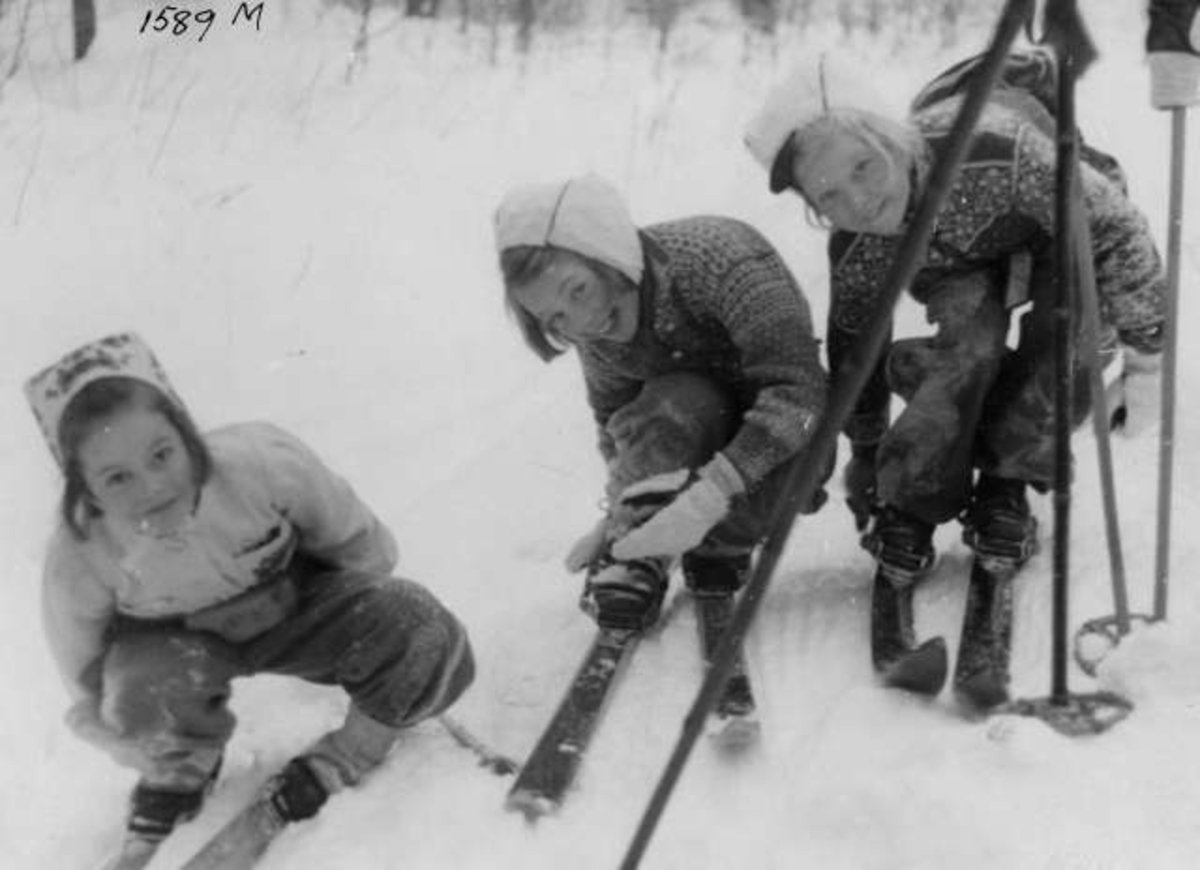
Because of their time at home, a huge staple of Nordic parenting culture is “play” time. Whether children bond with parents at home, or are encouraged to go outside the home and make friends independently, children in Nordic countries are encouraged to explore, play and discover their adventurous side from a young age. There is even a word for this: “friluftsliv.” The word can be roughly translated to “open-air living” and serves as a mantra for parents (and non-parents, too!)

“Friluftsliv” has been a norm for decades. Anders Beer Wilse. CC0.

While play in any capacity is important, play outside is considered especially beneficial to young children. Rather than being scolded for being too rambunctious or messy, children in Nordic countries are encouraged to run and climb to their hearts’ content. Even in the cold weather that pervades Nordic countries for more than half of the year, children bundle up and get outside in the fresh air. 

Rain or shine, it is completely normal to see little ones either running around outside or sleeping! Although there is a deep emphasis on energetic outdoor activities, one of the most prevalent cultural and parenting norms is to leave children outside to sleep. Even in freezing cold temperatures, children are put down to nap outside. Of course, they are accompanied by warm blankets and outerwear. Few in Scandinavia fear the cold, where doctors in Nordic countries recommend outside napping to decrease the risk of illness and infection. 

And, when children aren’t enjoying playtime with parents, bundled-up naps, or outdoor adventure, they have the opportunity to start day care as mere one-year olds. In Denmark, childcare charges are capped at 30% of the actual cost for nurseries and after school centers. In Norway, child centers are open 10 hours per day and charge a maximum fee of US $250 a month.

While having a child is a tremendous responsibility, both the healthcare benefits and parenting culture in Nordic countries allows a balance that eases some stress among new parents. Though unique, many aspects of Nordic parenting culture harness an unprecedented sense of adventure and independence in early childhood.


Carina Cole

Carina Cole is a Media Studies student with a Correlate in Creative Writing at Vassar College. She is an avid journalist and occasional flash fiction writer. Her passion for writing overlaps with environmentalism, feminism, social justice, and a desire to travel beyond the United States. When she’s not writing, you can find her meticulously curating playlists or picking up a paintbrush. 

A 4-day Guide to Exploring Rome

Rome is a city full of must-see sites, but it can be overwhelming to plan for. Here is a 4-day itinerary to make sure you see all the top spots, while getting the atmosphere of a unique European summer.

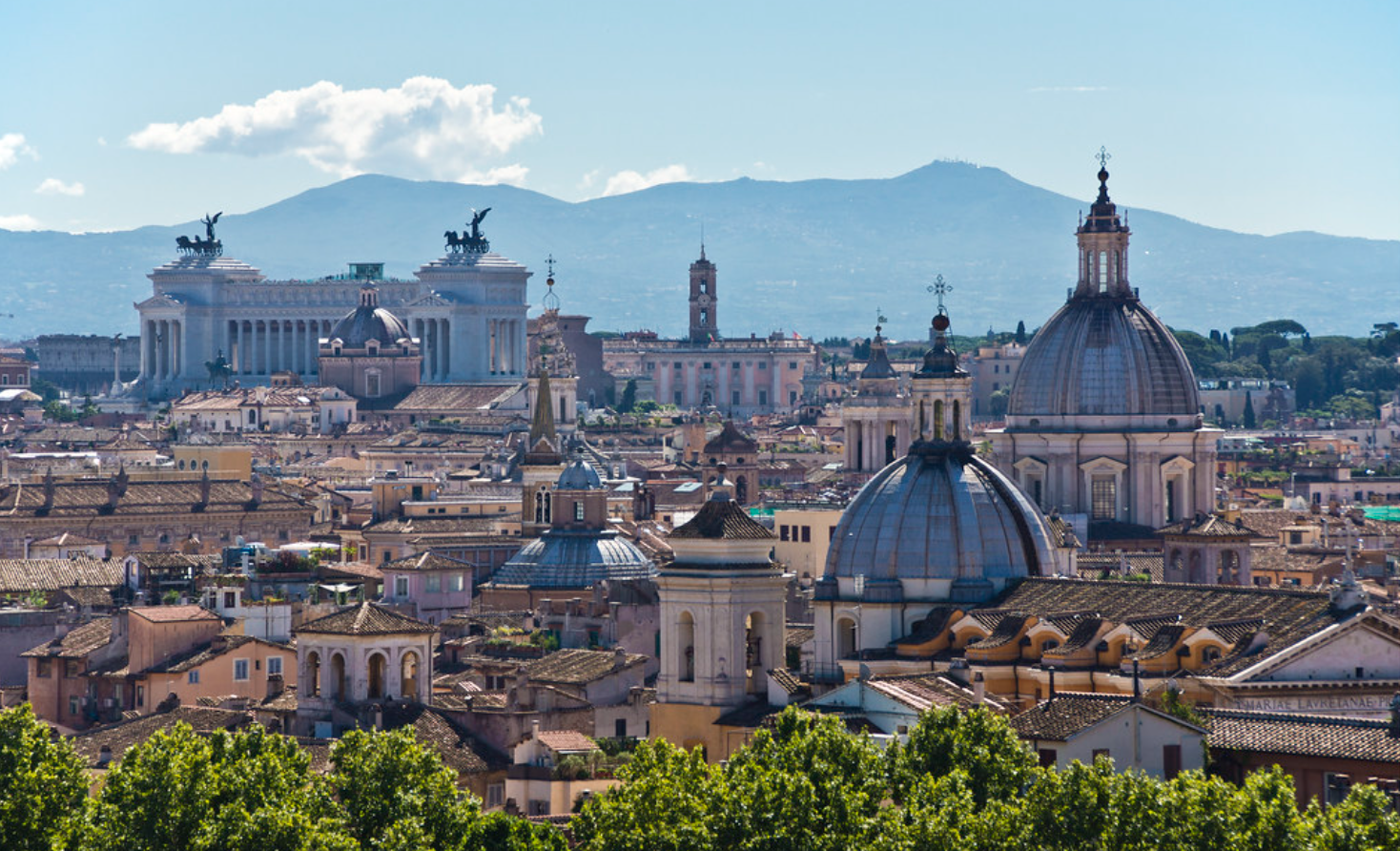
Rome, Italy. @Bert Kaufmann. CC BY-SA 2.0

“A European Summer” is now the aesthetic of the season, spurred on by Gen Z and Millennial creators on TikTok. It’s a fashion statement, and young American women are obsessed with flowing white dresses, gold jewelry, maxi skirts, and more. The romanticization of European cities is a perfect escape from the monotonous urban environment Stateside. 
Over the past month I was lucky enough to travel to Rome, Italy and experience a taste of the European summer that influencers have been talking about nonstop. But a trip to the Eternal City takes a lot of planning and, while it was only my first time exploring the history-rich city, I feel as though I know enough to compose an ideal 4-day itinerary — so travelers can experience every aspect of the European summer.

Day 1

As your feet touch the streets of Rome, it’s important to keep two things in mind: firstly, your primary means of transportation will be by walking, especially if your hotel accommodations are in the heart of the city itself, something I definitely recommend. So, pack footwear accordingly. Second, temperatures will be soaring. Expect around 100 degrees Fahrenheit, particularly in mid-summer.

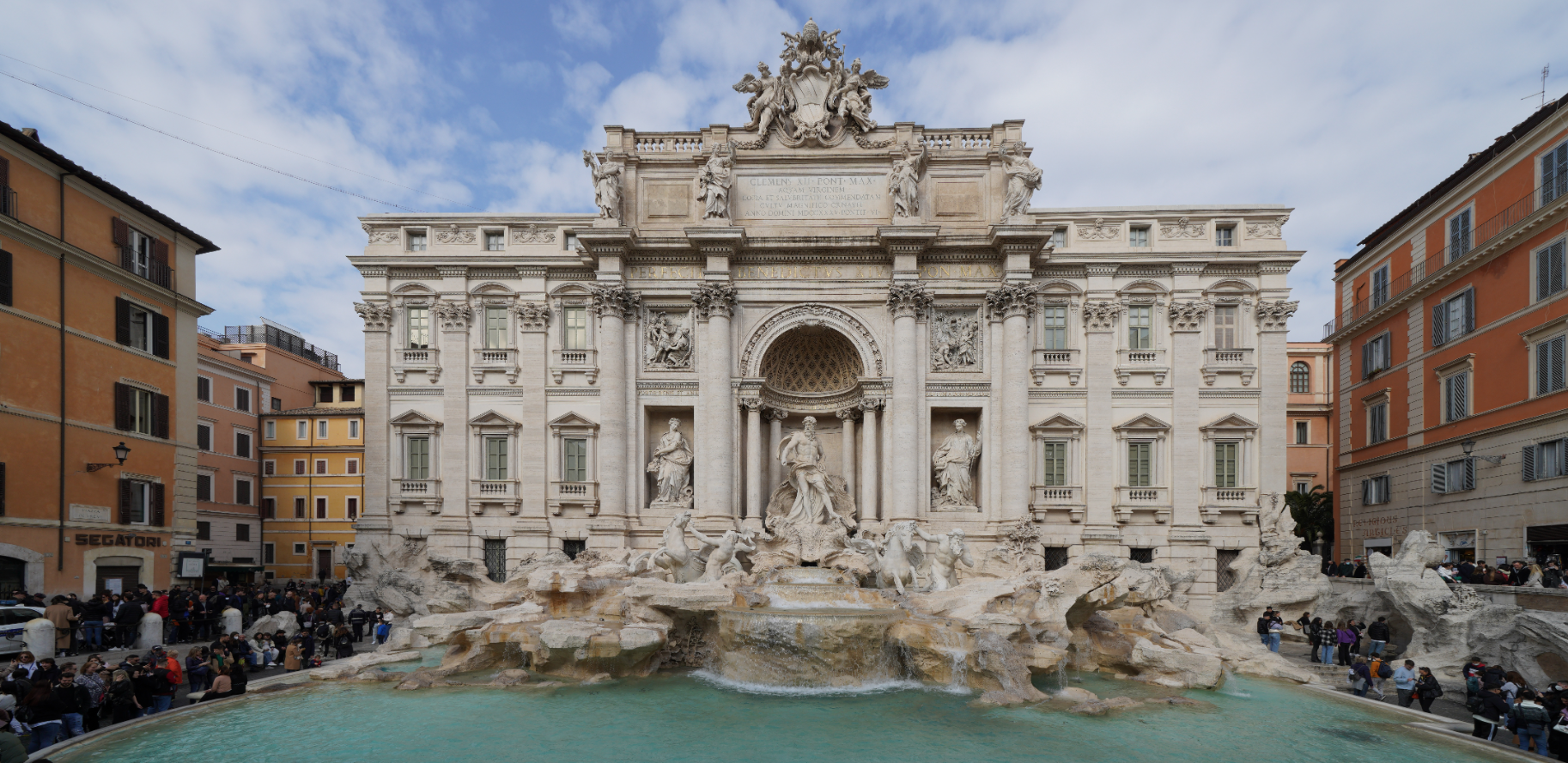
Trevi Fountain. @NikonZ711. CC BY-SA 4.0

I recommend getting familiar with the main tourist sites on the first day. These include the Spanish Steps and Trevi Fountain, which are located relatively close to one another. Both are beautiful in the daylight and won’t eat up too much of your time. Throughout the streets it’s common to find small stores that sell gelato or souvenirs — pop into one and notice that prices are surprisingly cheap, especially compared to costs in the US. 

One of the things I enjoyed about my time in Rome was the vibrant nightlife, so make sure to take advantage of all the city has to offer when the sun sets. The temperatures are much more bearable and the streets are filled with small, lively alleyways that offer restaurants and more stores. Live music is usually always playing, especially in places where tourists are likely to flock. If you’re looking for an opportunity to wear that white flowy dress you bought just for the sake of fitting the Italian summer aesthetic, now’s the time. 

Enjoy the unique scenery and environment, and make sure to visit the Spanish Steps once more — while a great place to visit in the daytime, this tourist site comes to life at night and brings that perfect feeling of that “European Summer” the TikToks show so often. 

Day 2

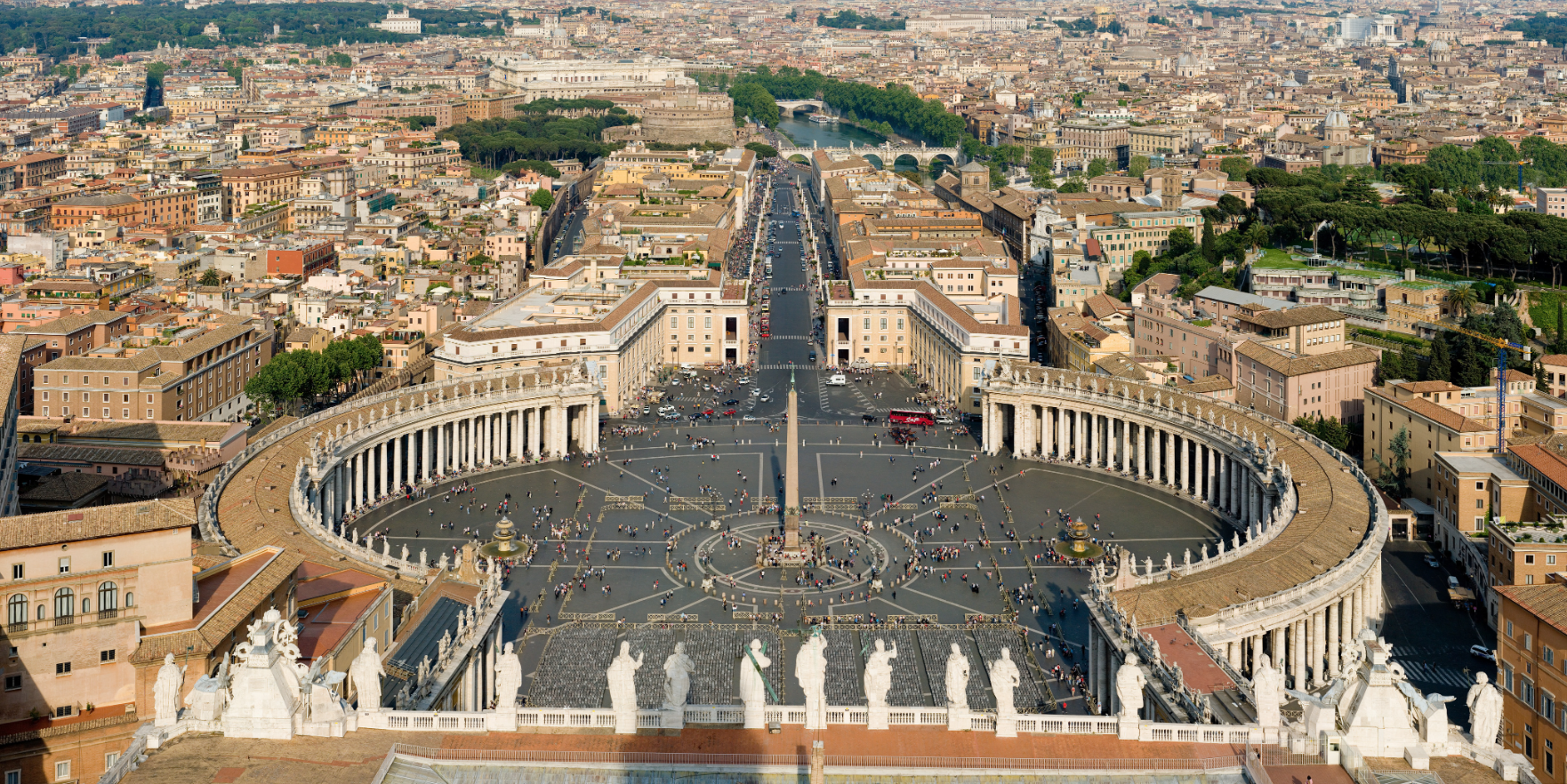
Hopefully you got a full night’s rest, because day two is the perfect day to visit Vatican City — a landlocked independent country within the borders of Rome itself. It’s important to dedicate an entire day to this because, while you’ll most likely only spend a few hours exploring, the exhaustion will set in quickly.

If interested in the Vatican Museums, I strongly recommend buying tickets weeks beforehand and selecting an earlier time. The tourists that were hoping to get tickets on the day of had to wait in line for hours on end in the burning heat. Make sure to arrive early, since the museum is a little further than expected from the main entrance to Vatican City.

Vatican City. @Diliff. CC BY-SA 3.0

Once in the museum, you can either follow your tour guide or explore at your own pace, depending on the ticket you bought. You’ll get a glimpse of St. Peter’s Basilica — a famous church built in Renaissance style — from a viewing platform and get to visit the Sistine Chapel, a Catholic church located inside the Vatican Museums home to some of Michelangelo’s finest work.

Because Vatican City is a Theocratic city-state, most websites will advise you to wear a certain type of outfit. But because it’s so hot in the summer months, it’s alright to push the rules a little. Showing up in shorts and a T-shirt is completely acceptable.

Take the rest of the day to recharge. Walking to, from and around Vatican City can get very tiring, especially if it’s hot out. Stay close to your hotel for dinner, and day two will shoot past in the blink of an eye.

Day 3

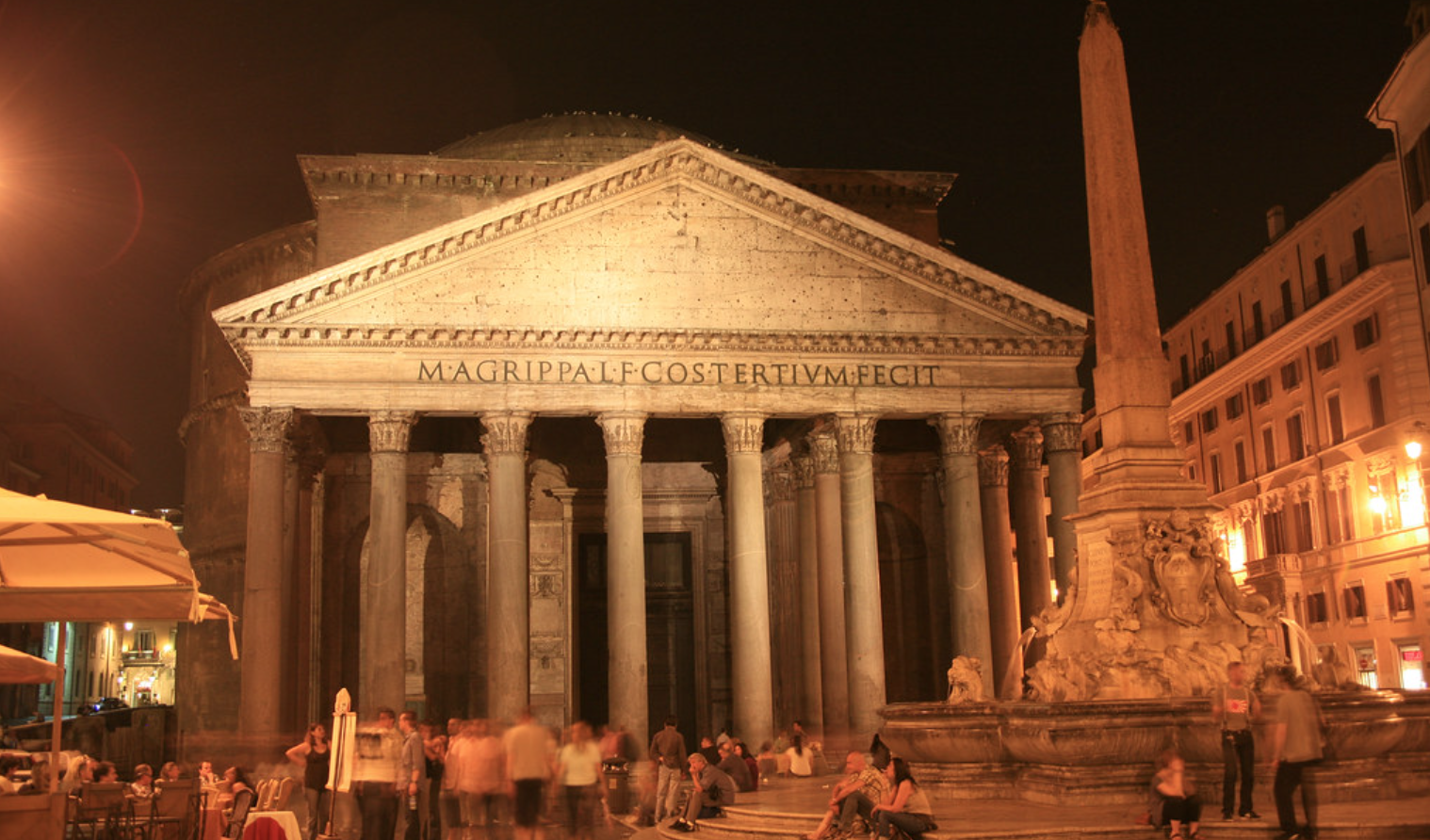
Depending on whether or not you’re fascinated by Roman culture, Day 3 is dedicated to the rest of the places you weren’t able to see. For me, this included the Pantheon and Piazza Navona, which are both very close to one another. Shopping in Rome was also a pleasant experience, with such cheap prices, so I recommend it if you’re able to fit it in. 

Pantheon. @laszlo-photo. CC BY 2.0

For dinner, venture on over to Trastevere — a neighborhood filled with authentic Italian restaurants, located just across the Tiber River. The pasta and pizza is, of course, something every visitor should try. Paired with a drink of your choice, it’s hard to question why Rome is a city that attracts so many people from all over the world. The constant chatter of customers, the lights hung up as decoration, and the comfortable temperature combine to make a perfect getaway.

Day 4

Your last day in Rome should be dedicated to doing whatever you want. After three full days of so much walking, your body is bound to be tired, so just take this day as a time to relax and soak this experience in.

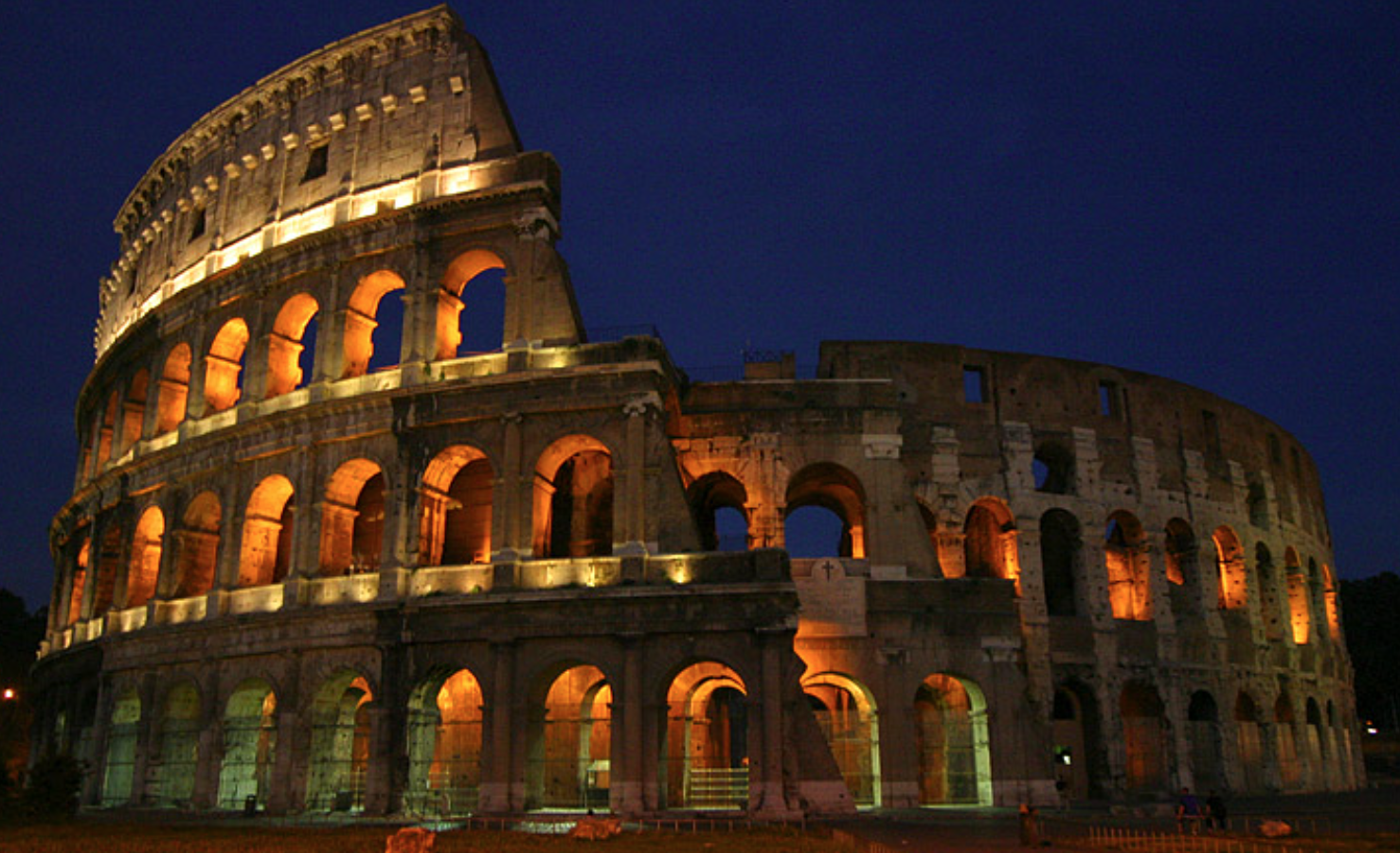
I know I haven’t mentioned the Colosseum — and it isn’t because it’s been forgotten. During my trip, I visited the Colosseum at night on my last full day in Rome, and it was the right decision. Of course, depending on the kind of traveler you are, this might not be your ideal itinerary but I loved seeing one of the most iconic landmarks in the world at night. I didn’t have to worry about the heat, and there is something so special about seeing the Colosseum lit up with hundreds of lights as it towers above you. It’s a great image to part Rome with, and along the road you’ll most likely pass the Roman Forum, which is impossible to miss. 

A night view of the Colosseum. @Aaron Logan. CC BY 1.0

Personally, this 4-day itinerary helped me get the feel of every aspect of the “European Summer” — from its nightlife to its famous sites, it didn’t disappoint. Depending on the type of person you are, this itinerary is bound to change but as someone who loves spontaneity and surprises, I followed this rough guide and was able to soak in all the wonders of this eternally beloved city.


Michelle Tian

Michelle is a senior at Boston University, majoring in journalism and minoring in philosophy. Her parents are first-generation immigrants from China, so her love for different cultures and traveling came naturally at a young age. After graduation, she hopes to continue sharing important messages through her work.

Barbie Across Borders

Around the world, countries censure or celebrate Barbie, a film that violates localized beliefs about feminist expression and the satirization of patriarchy.

Barbie Movie Billboard. Brecht Bug. CC BY 2.0

“Barbie” premiered around the world late last month, quickly becoming a global sensation in the weeks that led up to its release. The film follows protagonist Barbie as she ventures on a journey of self-discovery that causes her to question the values  of a patriarchal society. The United States, China, Saudi Arabia and other Middle Eastern countries had mixed reactions to the film, ranging from dissatisfaction with its promotion of women's empowerment to the celebration of female independence and capability. 

The film has caused discourse in China, where movies still include considerably outdated gender roles. Media like Mr. Six and Gentlemen From Eastern 8th are reminders of the sexist normalcies that still exist in Chinese entertainment and society, including the objectification and oppression of women in the roles that they play. Barbie has been praised and disparaged for calling attention to these instances of gender inequality with many women appreciating the film’s recognition of such an “objective reality” and depiction of strong rather than objectified women. In recent years, China’s involvement in the political landscape of feminism has been backsliding, with rejections of sexual harassment lawsuits and arrests of those protesting for greater feminist representation. Because of this, China is not entirely dissimilar to the conservative politics in the United States, both of which believe that the film succeeds at emasculating men. Regardless, across the U.S., the debut of the film was largely met by fans with outfits of pink and reviews acknowledging the film as a “cinematic and emotional masterpiece.” Not long after, fans of the film in China also began to express support for the film by wearing pink and complimented the film as the best expression of feminism

Latin and South American countries have also embraced pink, specifically through food. Vendors in Mexico and Guatemala have sold pink tacos while Venezuela, Chile and El Salvador have created arepas with beet dough for pink coloring. Support for the film has been widespread across the region, as it has reinvigorated radical public protest and prompted movements like “Barbie Buscadora.”

Across countries in the Middle East, “Barbie” has been banned as it was found to promote subversive elements that distort the values of society, namely the protection of public ethics and social traditions. Because of loyalty to these values, the most severe restrictions were issued in Kuwait and Lebanon, where the film was completely banned from theaters as opposed to the more targeted censorship of scenes that challenged social norms around male guardianship and homosexuality. As cultures with heavy importance placed on gender roles within a family, those with a vested interest in the current system find their values contradicted by the film’s feminism. In Lebanon, Mohammed Mortada asked that the film be banned saying that it, “challenges the guidance of the father … ridiculed the role of mothers.” 

Despite aversion to the film’s release in Kuwait and Lebanon, “Barbie” premiered in Saudi Arabia and the United Arab Emirates. With men and women alike flooding theaters to view the film, many felt that the movie had important lessons for everyone regarding their  roles in the world. Saudi Arabia’s perception of the film has reflected the broader changes occurring in the country’s cultural and entertainment landscape. As a country that is steeped in patriarchal gender traditions, specifically repressive guardianship and the imposition of domestic responsibilities on women, the immersion of Western-influenced media into the nation is expected to be regulated. However, the current reception of the film suggests a society capable of combining tradition and progress.

“Barbie” has brought forward an interplay between cultural normalities and evolving societal attitudes across a variety of countries. In some ways, the film could be perceived as a step towards female empowerment, while conversely approached with caution to avoid disrupting traditional values. As a testament to how global media can challenge and align perspectives, the film is one that illustrates the ability to challenge universal themes despite differences in local interpretations. The global tendency in the 21st century has been to encourage the feminist movement across progressive and conservative countries alike, and with such a broad range of perspectives, it’s a film that has caused considerable ripple effects.


Mira White

Mira is a student at Brown University studying international and public affairs. Passionate about travel and language learning, she is eager to visit each continent to better understand the world and the people across it. In her free time she perfects her French, hoping to someday live in France working as a freelance journalist or in international affairs.

Pathways and Pilgrimages: Exploring The Camino de Santiago

This pilgrimage to the Cathedral of Santiago de Compostela in Spain has been a centerpiece of Christian spiritual life for thousands of years, and a destination for travelers around the world.

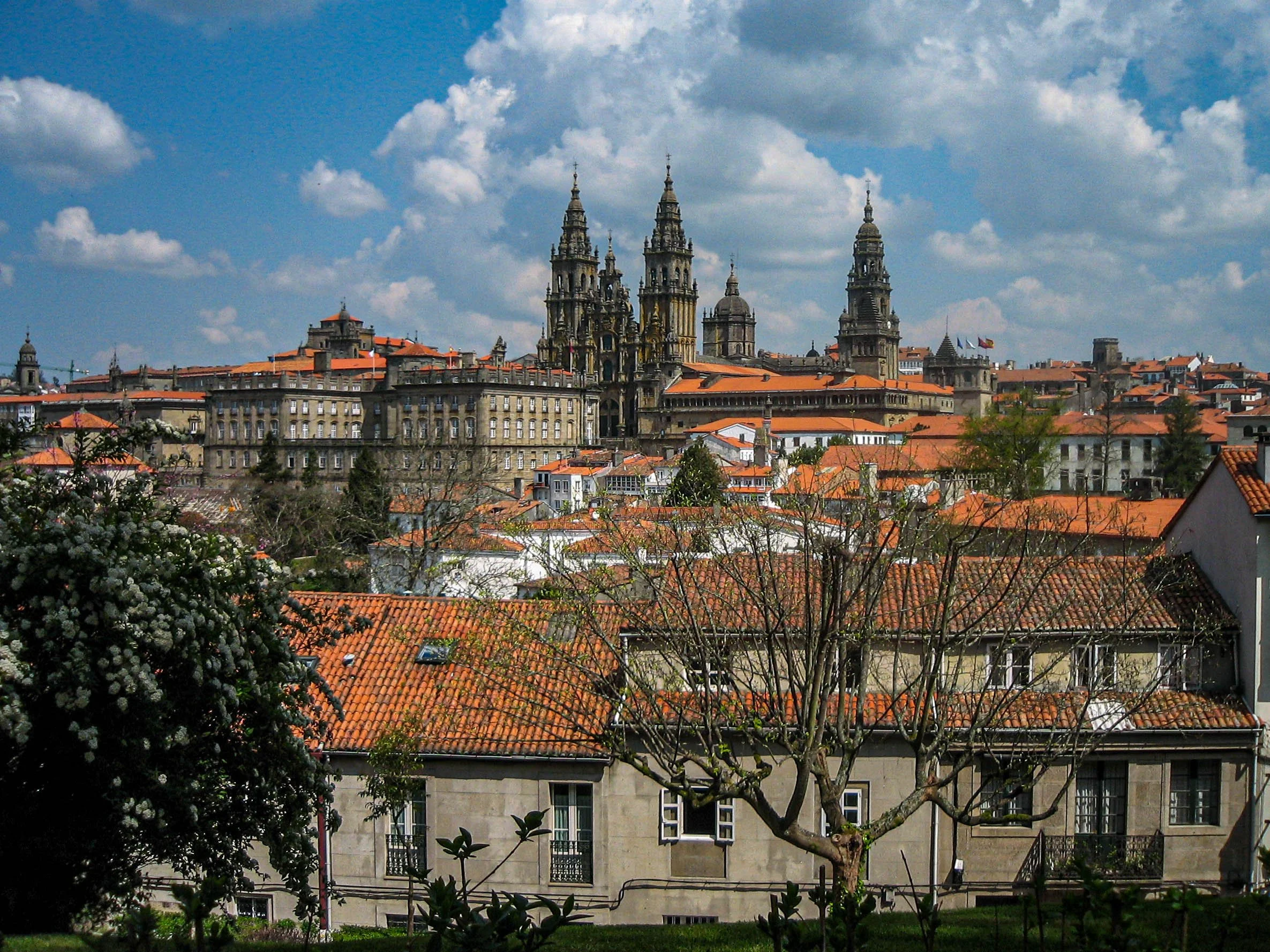
The Santiago de Compostela. Dafydd Parri. CC BY-NC-ND 2.0.

The Camino de Santiago, also known as the Way of St. James, marks a pilgrimage to the Cathedral of Santiago de Compostela in Galicia, an autonomous community in northwestern Spain. Extending roughly 500 miles and taking about 30 to 35 days to complete at an average of around 15 miles per day, the Camino is known today both as a center for Christian spiritual life and a hiking haven for travelers looking to submerge themselves in nature with affordable accommodations and opportunities to adventure through local villages along the way.

Today, around 300,000 travelers make their way through the Camino every year, and those who complete the journey earn a Compostela Pilgrims Certificate. According to measurements from 2021, 45% of travelers reported walking the Camino for “religious and other reasons” while 30% reported walking the Camino strictly for religious reasons and 24% said they had no religious reasons for the pilgrimage. The growing popularity of the Camino as a secular travel experience as well as a religious one is aided by its accessibility. While daily expenditures on the Camino depend largely on the town one is stopping in, travelers can plan to budget for about $30 a day to cover the cost of food. Albergues, or hostels specifically made for pilgrims, are also a reliable and affordable option for accommodations along the Camino, with municipal albergues typically costing between $5 to $10 per person, while private albergues range between $12 and $15 per person. Via Lusitana helps connect travelers to albergues along the Camino Portugues.

While there is no exact starting point to the Camino, there are a handful of popular routes to choose from including Camino del Norte, Camino Primitivo, and Camino Ingles. The two most popular routes are that of the Camino Frances, which begins in Saint-Jean-Pied-de-Port in southwest France, and the Camino Portuguese which starts from Portugal’s coastal city of Porto. While the Camino Frances covers 500 miles, the Camino Portuguese offers two distinct routes: the Camino Portuguese Central route which is 385 miles and the Camino Portuguese Coastal route which is 175 miles. 

The Camino became a UNESCO World Heritage site in 1993 and was recognized as the first European Cultural Route in 1987, however its history is one that dates back to the 9th century,  when remains of the apostle James were believed to be found in Galicia. Saint James preached in the Iberian peninsula before returning to Jerusalem, where he was beheaded by the king Herod Agrippa I in 44 AD. The legend surrounding St. James details how his body was transported from Jerusalem to Spain via a boat and was buried by his followers in Galicia in what is now the city of Santiago de Compostela.

The tomb was discovered in the 9th century by the bishop Theodomir. Upon its discovery the King of Asturia, Alfonso II, widely considered the first pilgrim to the Santiago de Compostela, traveled to the site and ordered that a church be built at the place of burial. Construction began in 1075 and the church was consecrated in 1211.

To accommodate an increase of pilgrimages through the Camino in the Middle Ages, bridges and other infrastructure were built along the route to aid travelers. Between the 11th and 13th century, the Camino’s rising popularity gave rise to a network of housing options and medical services along the route, including hospitals chartered by European kings.

The Camino’s many routes  were created by early travelers who shared information amongst themselves regarding the safest travel conditions, which nearby towns to stop in, and where to source food and water throughout the journey. Though lacking official infrastructure,  these paths became well defined by the pilgrims who traveled them for hundreds of years. It was not until the 1980s that Father Elías Valiña Sampedro, a priest of a neighboring Galician village, added yellow arrows along the path in an attempt to prevent travelers from getting lost.

Camino Frances

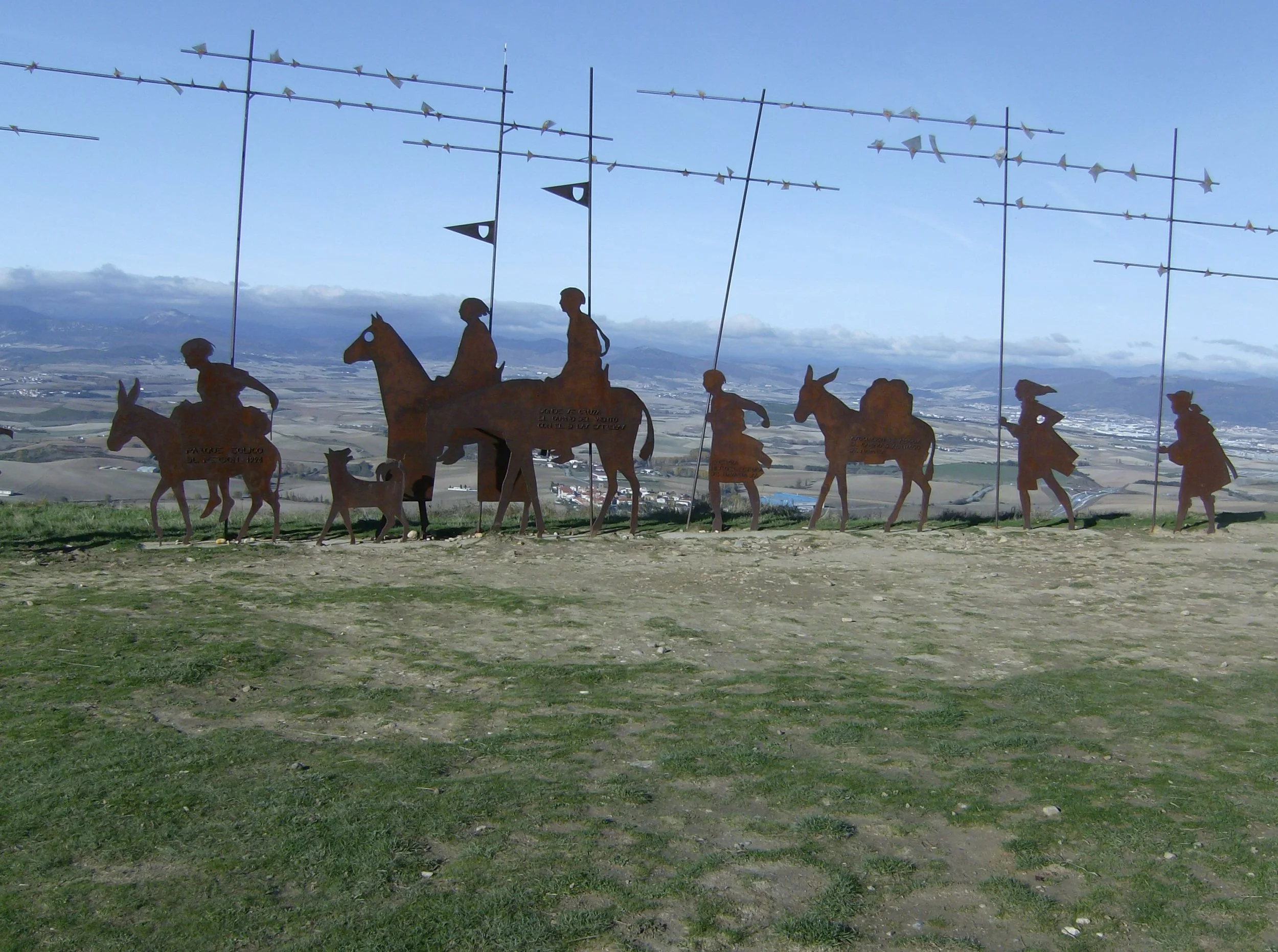
El Alto del Perdón. Rocco Rossi. CC BY 2.0.

As the most popular route, the Camino Frances sees around 55% of all travelers on the Camino de Santiago. Embarking on the French Way is one of the most social options to experience the Camino, and those who do so are sure to run into fellow pilgrims and have opportunities to build connections and a sense of camaraderie along the way. 

The entire Camino Frances starts at St Jean Pied de Port, a commune in southwest France, and extends roughly 500 miles and takes about 30 to 34 days to complete with an average of about 15 miles per day. However, the most popular starting point for travelers along the Camino is found at the last 60 miles of the pilgrimage, in the city of Sarria. This last stretch of the Camino takes approximately 7 days and passes through the towns of Portomarin, Melide and Arzua. 

Travelers embarking on the Camino Frances will move through the Pyrenees mountain range and into the La Rioja region of Northern Spain. Travelers interested in enjoying the region’s world famous vineyards can explore a variety of wine tours showcasing the region’s diverse earthly flavors.

Other notable traveling stops along the Camino Frances include the Spanish city of Pamplona, whose yearly San Fermín Festival every July features the country’s world-famous bull runs. When the festival is not happening, the Pamplona remains a popular resting spot for travelers along the Camino to explore Gothic and Renaissance art at the Museum of Navarra and the historic Plaza del Castillo where cafes and bars such as Cafe Iruna served as prominent landmarks in American novelist Ernest Hemmingway’s life and writing.   

Another highlight along the Camino Frances is the sculpture of El Alto del Perdon, which shows metal silhouettes representing pilgrims traveling through the Camino on foot and horseback. The art piece is located near the town of Puente de la Reina, a historical meeting point for early pilgrims traveling the Camino through a variety of routes along the Pyrenees. The town’s current architecture derives from attempts to accommodate pilgrims during the Middle Ages, including the bridge constructed under Queen Muniadona to assist pilgrims in their travels. The bridge is responsible for the town’s namesake, with Puente de la Reina translating to “the queen’s bridge.”

Camino Portugues

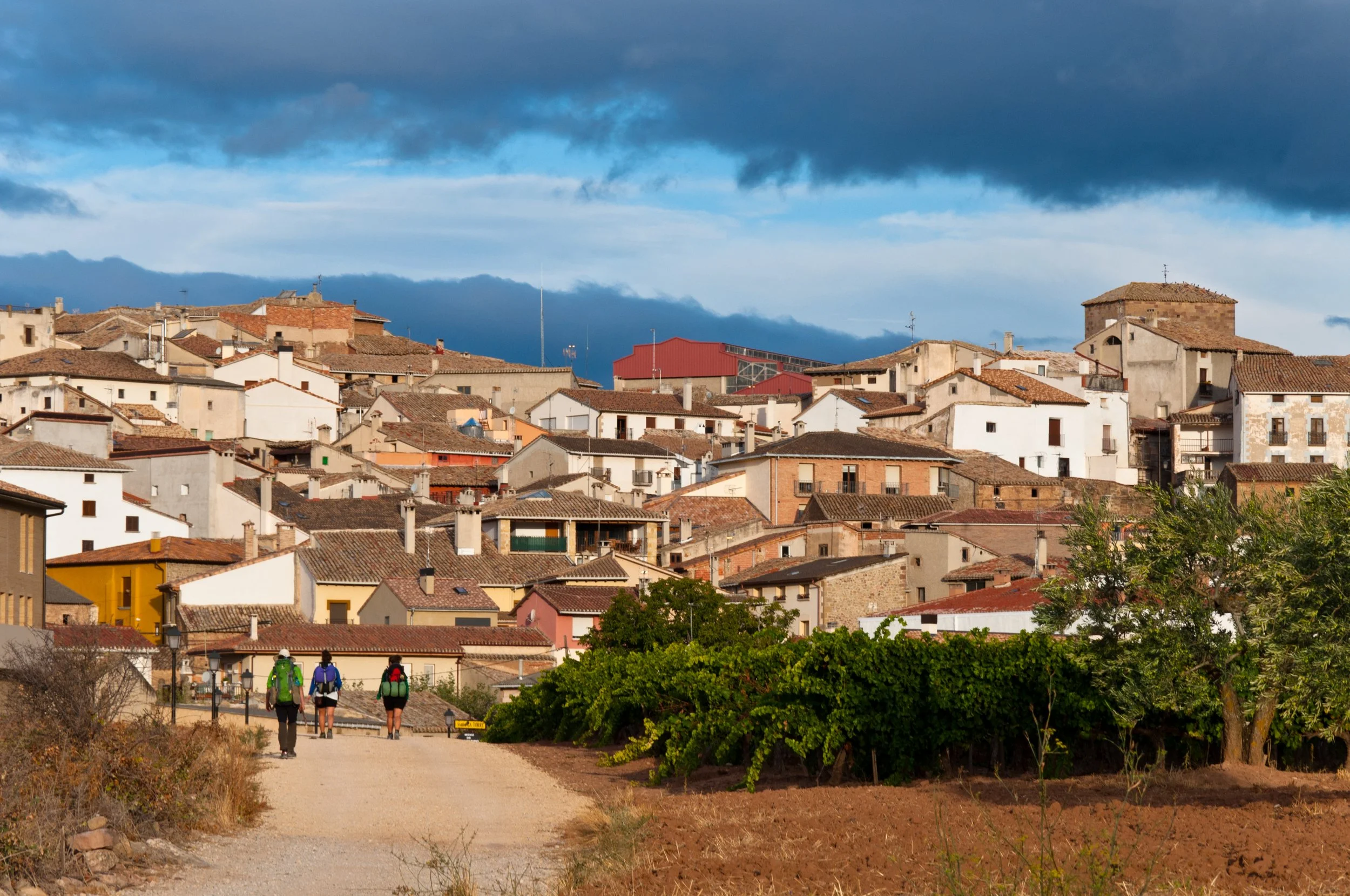
Travelers on El Camino. Staffan Andersson. CC0 1.0. 

An alternative to the Camino Frances, the Camino Portugues begins in Portugal and moves the coastline up to Galicia as the second most popular path for the Camino de Santiago pilgrimage. The route gained popularity in the 12th century after Portugal gained its independence when Queen Isabel of Portugal, known as the “Holy Queen,” made the pilgrimage herself in the 14th century. Today, the Camino Portugues sees about 25% of all travelers embarking on the pilgrimage. 

There are three main routes that travelers embarking on the Camino Portugues can choose from: the Central Route, which takes around 12 days, the Coastal Route, which takes between 12-14 days, and the Litoral Route, which follows the Coastal Route in large part while also incorporating pathways onto the beach. All routes meet in the Spanish town of Redondela before reaching Santiago de Compostela. 

Each route carries its own advantages and disadvantages. The Central Route has more infrastructure and access to towns and accommodations, however it is also the busiest route, seeing 70% of all travelers on the Camino Portugues. Comparatively, only about 30% of travelers opt for the Coastal Route, making it a quieter experience with less built-in tourism. 

Those starting the Camino Portugues from Porto will get to enjoy the city’s famous local port wine, the Baroque style Porto Cathedral — or Se do Porto — and the boat tours of the stunning Douro River. 

Vigo is a popular starting point for those who want to experience the last 60 miles  of the Camino, and the city offers a variety of activities including fish markets and a coastline overlooking the Cies Islands. 

Services such as Pilgrim help travelers create a personal guide for their trip, curated towards each individual’s preferred route and transportation type — including walking, cycling and completing the Camino on horseback or with pets. Pilgrim also helps connect travelers to special services while on the road, including the options to order bike gear, rent a car and transport personal luggage.  

Online guides are another helpful tool for travelers when it comes to finding rest stops and maps of nearby towns to explore along the Camino


Jessica Blatt

Jessica Blatt graduated from Barnard College with a degree in English. Along with journalism, she is passionate about creative writing and storytelling that inspires readers to engage with the world around them. She hopes to share her love for travel and learning about new cultures through her work.

Hagia Sophia: Istanbul’s Oldest Building

Having served as a church, mosque and museum, Hagia Sophia represents both religion and history in Istanbul. 

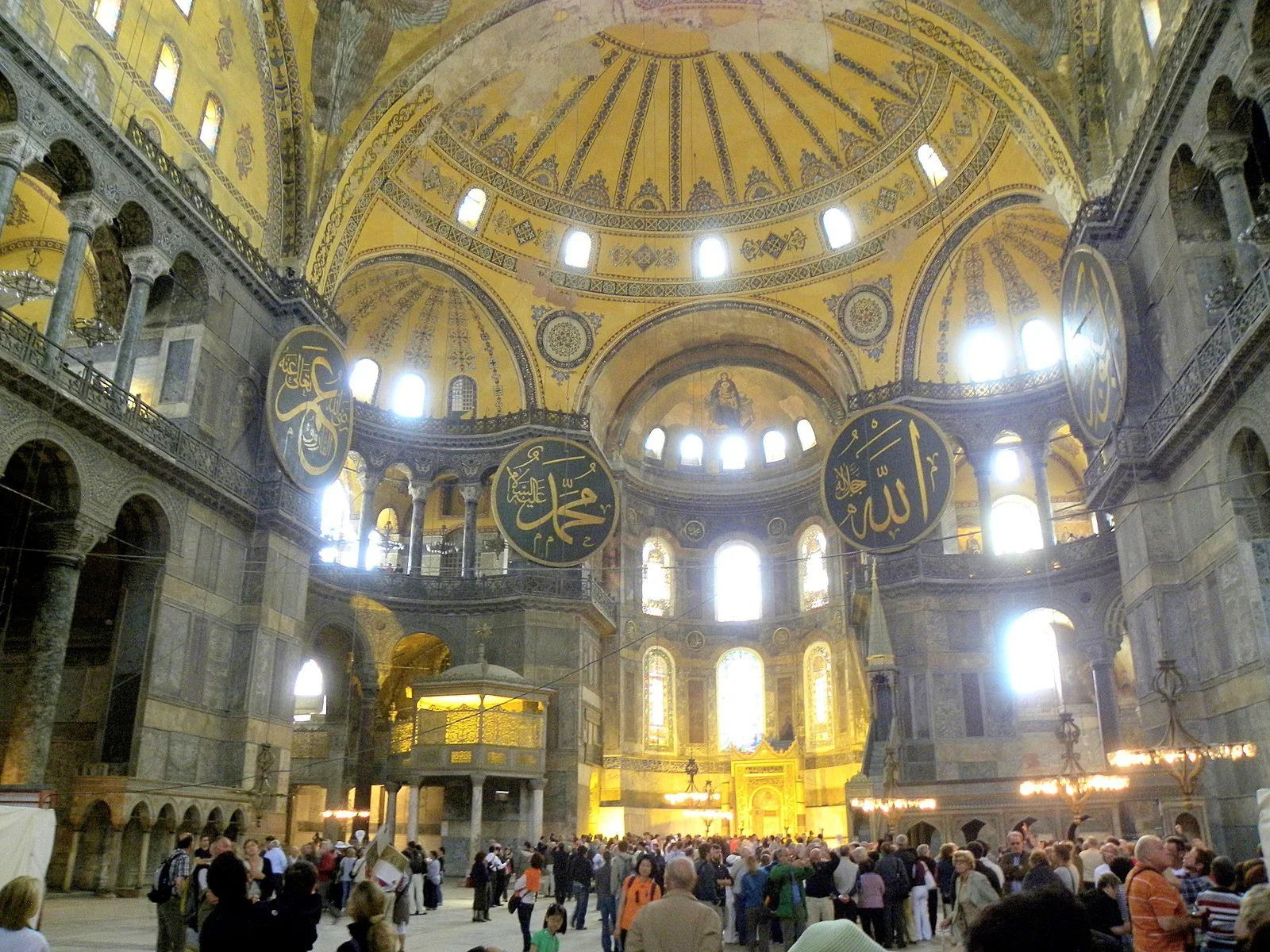
Hagia Sophia. Adli WahidCC BY-SA 3.0.

Built in the 6th Century, Hagia Sophia is the oldest building in Istanbul, Turkey. This ancient structure has been an important spiritual center for both Christians and Muslims, and its history is shown through its architectural features. Here is a deep-dive into the creation of Hagia Sophia, its meaning to different cultures, and how to visit it today.

History

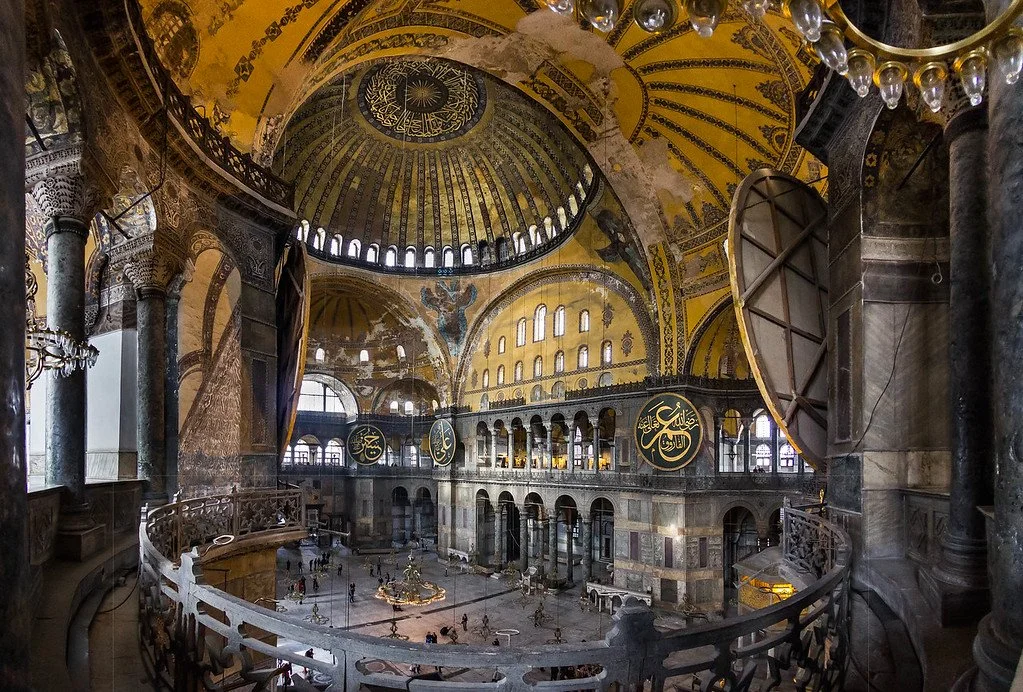
Interior of Hagia Sophia. Wolfgang Guelcker. CC BY 3.0.

Originally named “Megale Ekklesia,” or “Great Church,” Hagia Sophia was built in 360 under Emperor Constantius. After the church was destroyed by riots in 404, it was rebuilt by Emperor Theodosius in 415. During this period, the church received its current name, “Hagia Sophia,” or “Holy Wisdom.” After being burned down during a revolt in 532, the final structure of Hagia Sophia was resurrected under Emperor Justinian I in 537, with some restorations in the 14th century. This version of the church was known as the Cathedral of the Ecumenical Patriarchate of Constantinople, which was a spiritual center of the Eastern Orthodox Church. After the Ottoman Empire took over Constintinople in 1453, Sultan Mehmet II repurposed Hagia Sophia, which served as a mosque until becoming a museum in 1935. In 1985, Hagia Sophia became a UNESCO World Heritage site, giving official recognition its long cherished cultural value. 

Controversy

Greek protest against Turkey. Des Byrne. CC BY 2.0.

In 2020, Hagia Sophia was renamed a mosque under the Turkish government. This decision created controversy between Turkey and other nations, as repurposing it as a mosque draws away from the entirety of the structure’s history and the mutual respect between religions. This also strengthened existing tensions between Turkey and Greece, as Hagia Sophia was once part of the Greek Orthodox Church.

Architecture

Dome

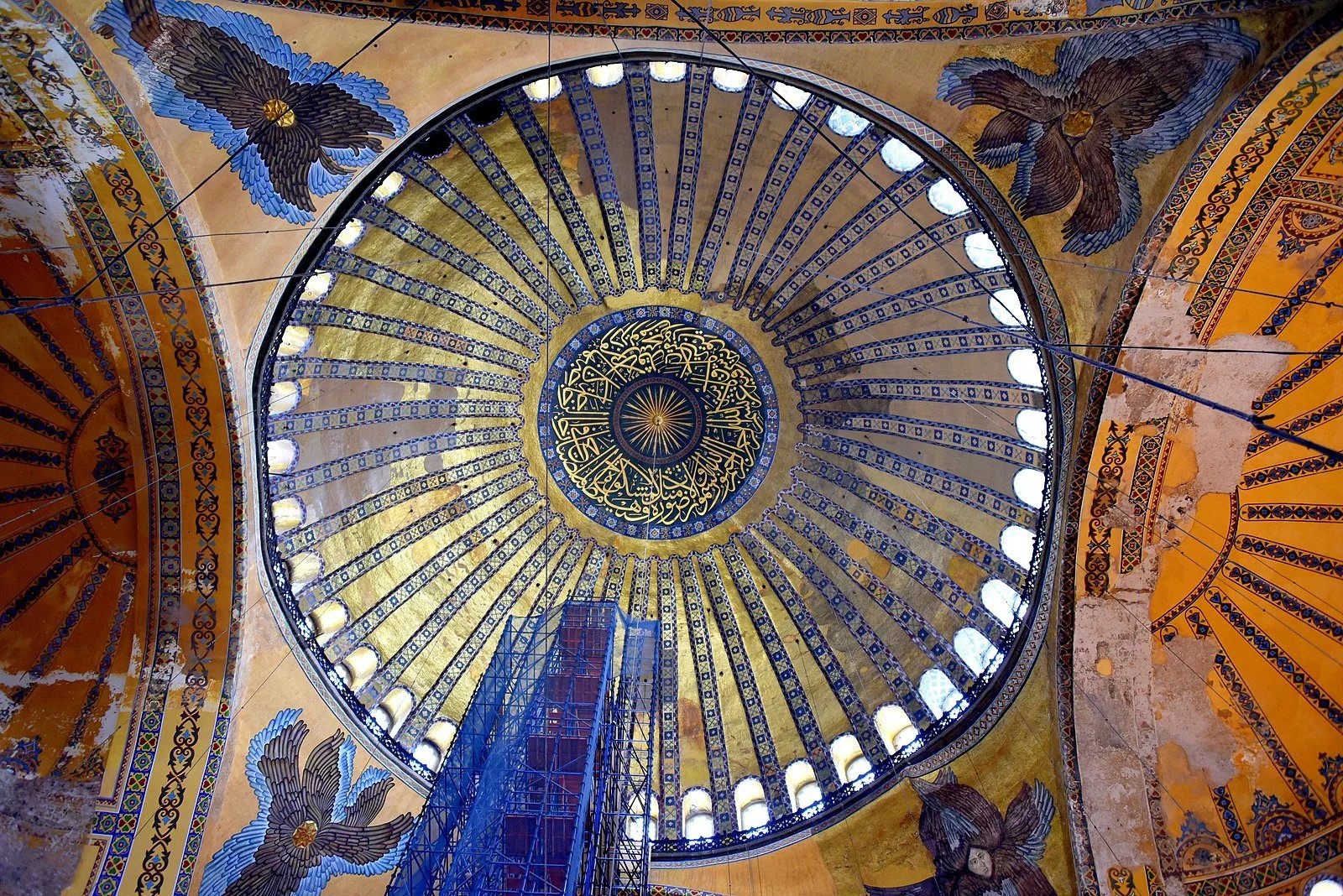
Main dome of Hagia Sophia. Osama Shukir Muhammed Amin. CC BY-SA 4.0.

Following St. Peter’s Basilica in Rome, Hagia Sophia is home to the second largest pendentive dome in the world. The main dome of the structure has a diameter of 107 feet and is supported by 4 pendentives, which are large triangular arches that meet in the middle of a structure. These structures are one of the earliestlarge pendentives to ever be made. There are also two semi-domes on each side of the main one, supported by columns.

Columns

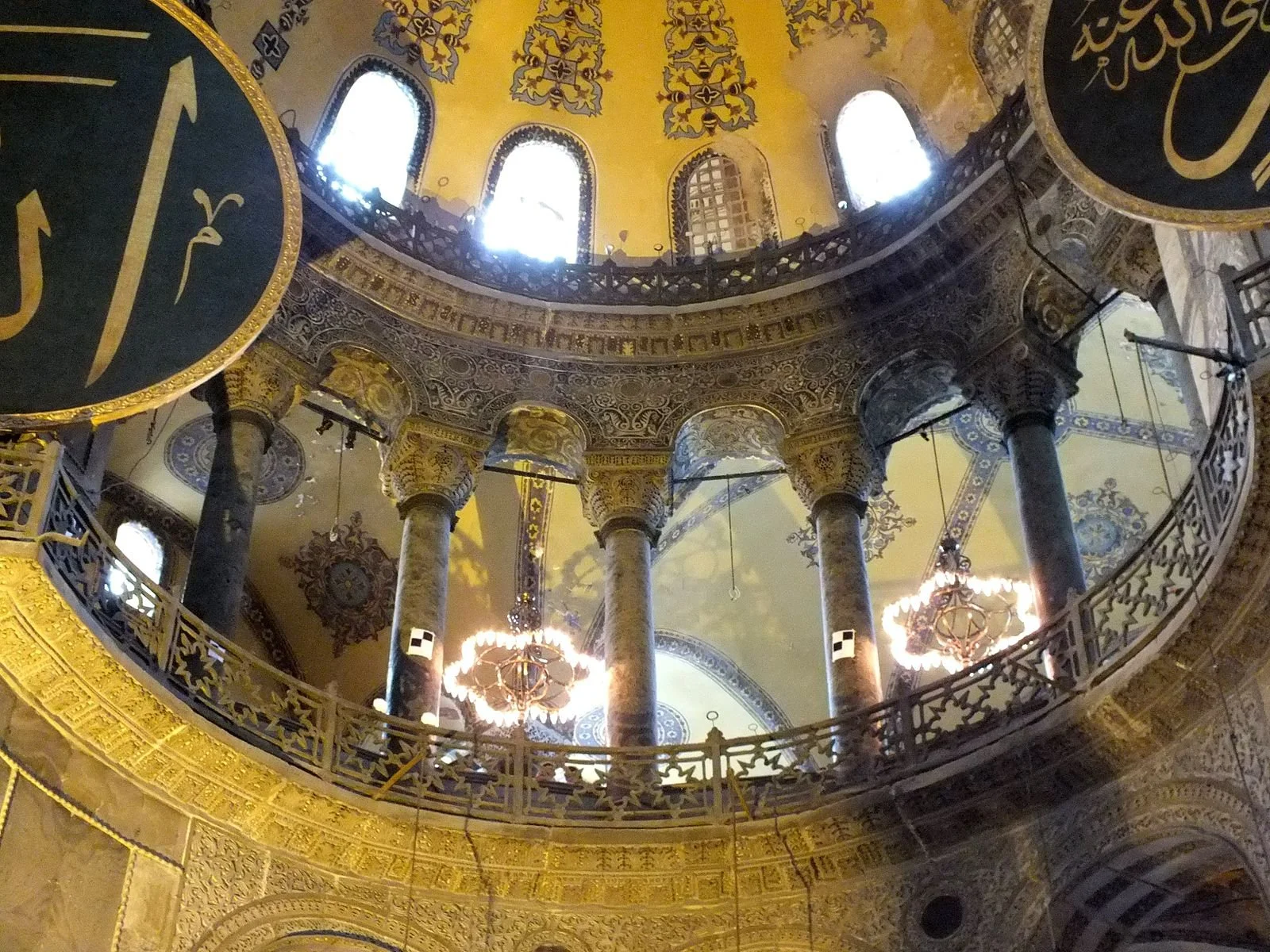
Columns in Hagia Sophia. Serafita. CC BY-SA 4.0.

Hagia Sophia has 140 columns, all from different parts of the world. For example, the purple columns supporting the semi-domes of the structure originated in Egypt. There are also green columns from the Artemis Temple in Ephesus, an ancient Greek city. The most prominent columns are made of Verde Antique stone, which was mined from quarries in the city of Larissa, Greece during the Byzantine empire. These columns are 34 feet tall, and its material was used frequently during the 6th century.

Mosaics

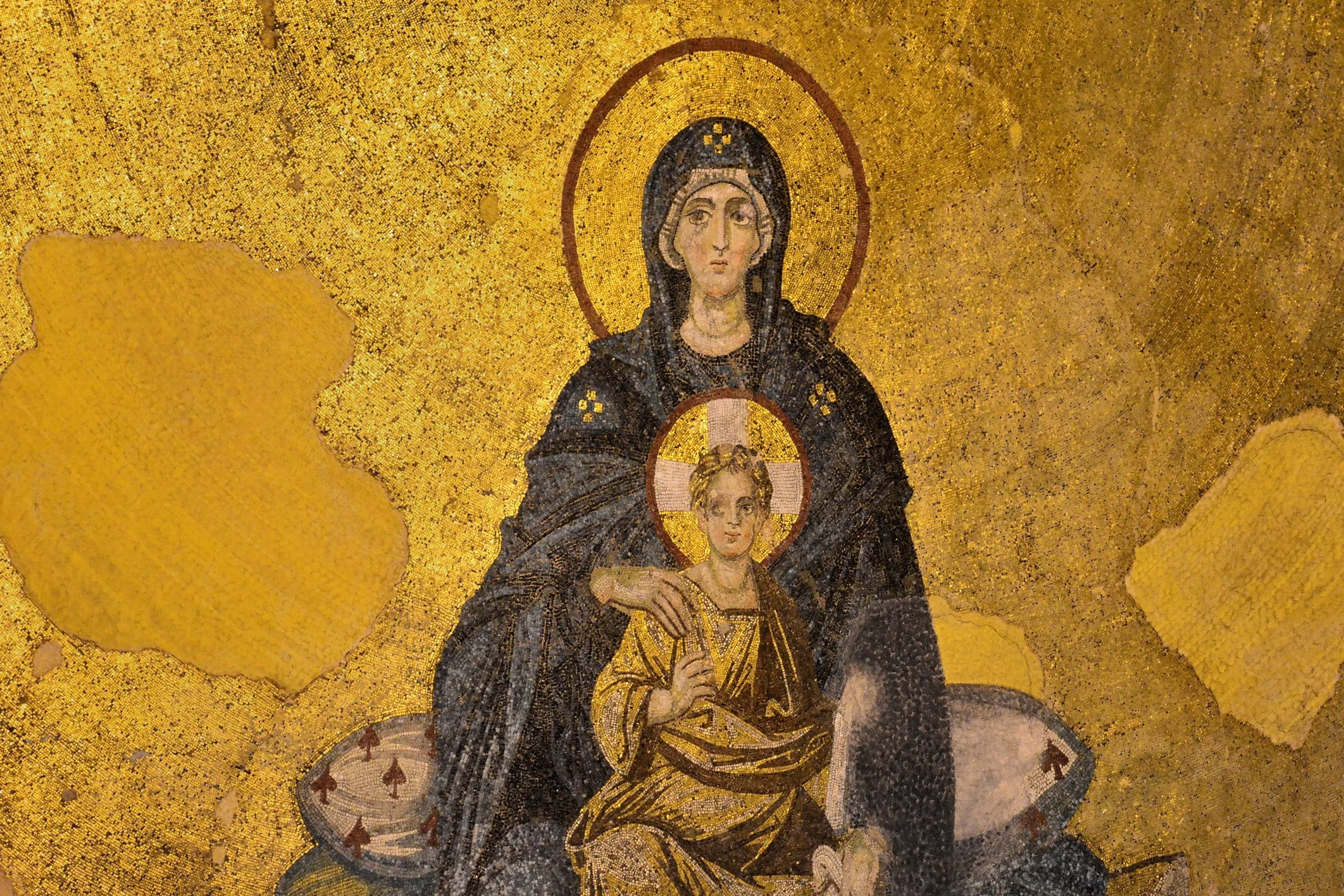
Mosaic of the Virgin Mary and Jesus. World History Encyclopaedia. CC BY-NC-SA 4.0.

Originally, Hagia Sophia displayed many Christian mosaics, but these images were covered during the Ottoman Empire. Some of these mosaics depict angels and praise Jesus and the Virgin Mary, while others take the form of emperors such as Justinian and Constantine. One of the most iconic mosaics shows the Virgin Mary holding baby Jesus, and this image remains uncovered today. Created in the 860s, this is the oldest mosaic in Hagia Sophia.

How to Visit

People visiting Hagia Sophia. Magnus Manske. CC BY 2.0.

Though it has reverted to a mosque, Hagia Sophia is still open to the public. Visitors are required to remove their shoes before walking its carpets. Hagia Sophia is open to the public every day of the week, but closes to non-worshipping visitors during prayer hours. Guided tours of Hagia Sophia are also offered through different websites, usually for a fee.

Click here for more Hagia Sophia visitation guidelines.


Alexandra Copeland

Alexandra is a student at The College of New Jersey studying psychology and journalism. She is a lover of coffee, dancing, and visiting new places. Being raised with her Greek culture has inspired her interest in cultural customs around the world. She is a passionate writer and hopes that her work will make an impact in the future.

Ink Under Fire: The Ongoing Struggle Against Literary Censorship

More books are being banned than ever before, posing a real threat to the universal right to freedom of expression.

A demonstrator holds up a sign against book bans in the US. Craig Bailey. CC BY-SA 2.0

For decades, authors have written about the banning of books and censoring of literature in the context of dystopian societies dominated by harsh autocratic rulers. In a world that values the free exchange of ideas and uses the written word as a means to express and share ideas, beliefs and knowledge, the act of banning books stands as a paradoxical and deeply contentious practice. Nevertheless, 2022 saw a record breaking 2,571 unique titles banned in the US alone, compared to just 566 in 2019, not to mention the handful of other countries around the world with much stronger and infamous censorship policies. Banning books raises questions about the limits of authority, the boundaries of creativity and in some cases, the very nature of truth itself — without literature, those in power can freely rewrite history.

Almost all recently banned books have been targeted due to their inclusion of LGBTQ+ characters or racial themes. Mark Mulligan. CC BY-SA 2.0

Unfortunately, it is not just books that have come under fire: Many library workers across the US and beyond have reported being harassed or even threatened with legal action and violence if they do not take certain titles off the shelves. While some books have been singled out due to racist language and themes — Mark Twain’s “The Adventures of Huckleberry Finn”, Toni Morrison’s “Beloved” and Ralph Ellison’s “The Invisible Man”, to name a few — the undeniable majority of complaints have come from conservatives who take issue with literature that touches on LGBTQ+ or contemporary racial justice topics. This latter category includes books like “Gender Queer” by Maia Kobabe, “The Hate U Give” by Angie Thomas and even the Pulitzer Prize-winning 1619 Project, which chronicles the legacy of American slavery. While some books have returned to the shelves after being banned, many have been put to the side indefinitely, setting dangerous restrictions on the types of history and social commentary available for public consumption. 

A display of books that have been banned over the past two years. Getty Images. CC BY-NC 2.0

Despite the obvious challenges this poses, writers have continued to find ways to defy unfair censorship laws and continue to publish their work. A recent example occurred when internationally renowned author Margaret Atwood published a new, fireproof edition of her award winning book “The Handmaid’s Tale”. First published in 1985, this novel has been banned in countries all over the world for reasons including its sexual content, prominent LGBTQ+ characters and anti-Christian themes. In a nod to the practice of book burning as a popular form of literary censorship, Atwood wrote in The Atlantic that trying to stop young people from reading “The Handmaid’s Tale” will, “only make them want to read it more,” and wished her critics luck. The special edition was auctioned off for $130,000 by Sotheby’s, the proceeds of which went to PEN America for their campaigns to fight literary bans.

82-year-old author Margaret Atwood aiming a flamethrower at her inflammable book, The Handmaid’s Tale. NPR. CC BY-NC-ND 2.0

Given the increased democratization of information due to the internet, Atwood’s words raise the crucial question of whether banning books is actually still an effective way to remove literature from the public sphere. In an effort to counter the effects of such bans, publishing houses, libraries and some academic institutions have compiled online databases of banned books to ensure that they are still available to the public. Another counter-movement saw PEN America join forces with National Youth Poet Laureate Amanda Gorman to challenge the banning of her inauguration poem “The Hill We Climb” at an elementary school in Florida. Even in the face of these efforts, however, the digital domain is still not safe from literary censorship. Just last year, a number of online library and reading apps used widely by students during the pandemic were targeted by parents who were uncomfortable with the titles available to their children; again, the reasons cited revolved around the inclusion of pro-LGBTQ+ themes and supposedly anti-religious content.

Banned books are made available to children at this school in the UK. St Benedict’s School. CC BY-NC 2.0

From the historic book burning bonfires to the rise of online censorship, the conflict over banned books reflects a struggle for control over narratives that challenge conventions and expand our understanding of the world. Literature has the power to challenge norms and provoke curiosity, but doing so has often put it at odds with those seeking to maintain the status quo. In a society driven by information and ideas, the censorship of literature raises a critical question: What does freedom mean if we are denied the opportunity to explore a diversity of perspectives, no matter how discomforting or provocative they may be?


Tanaya Vohra

Tanaya is an undergraduate student pursuing a major in Public Health at the University of Chicago. She's lived in Asia, Europe and North America and wants to share her love of travel and exploring new cultures through her writing.

7 Books by LatinX Authors to Read This Hispanic Heritage Month

From literary classics to modern favorites, here is a list of must-read titles by LatinX authors in celebration of Hispanic Heritage Month.

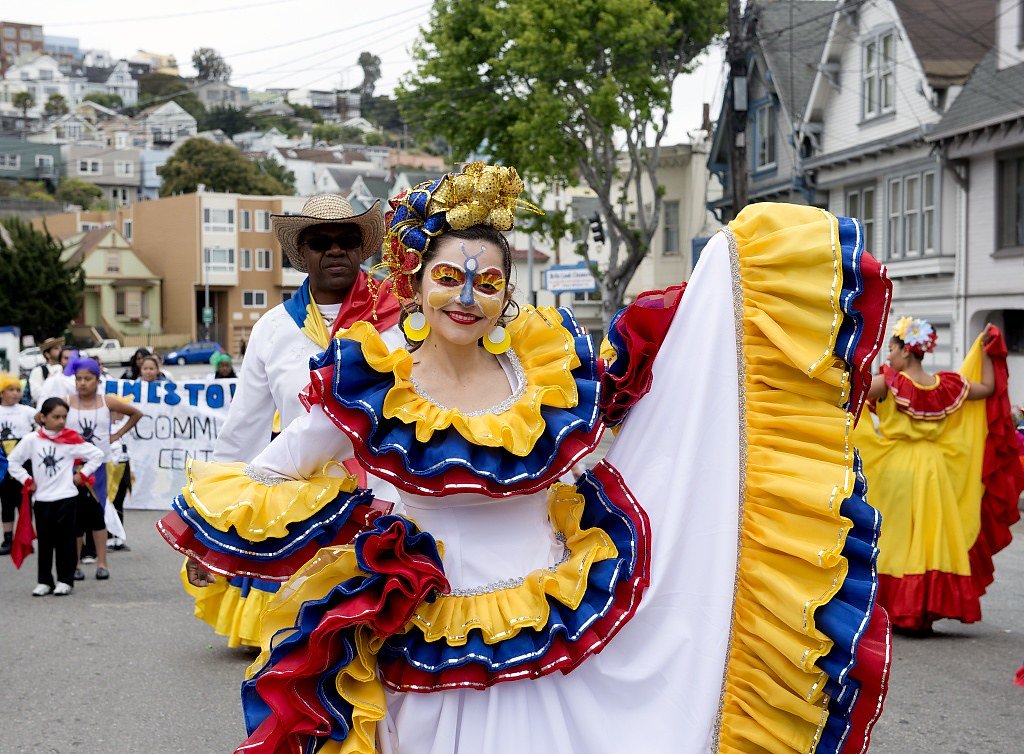
A traditional dancer performs at a Hispanic Heritage Month festival. GPA Photo Archive. CC0

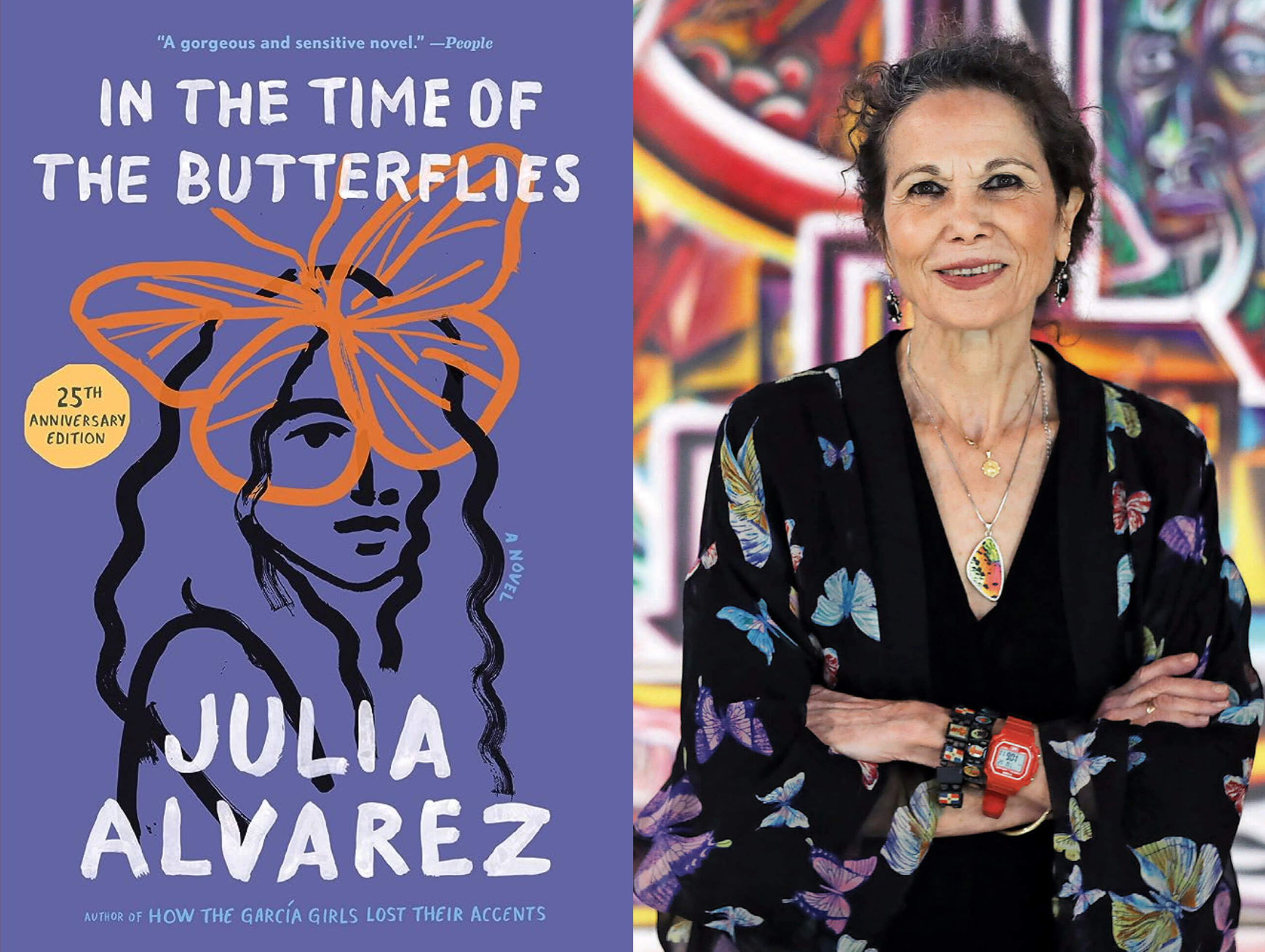
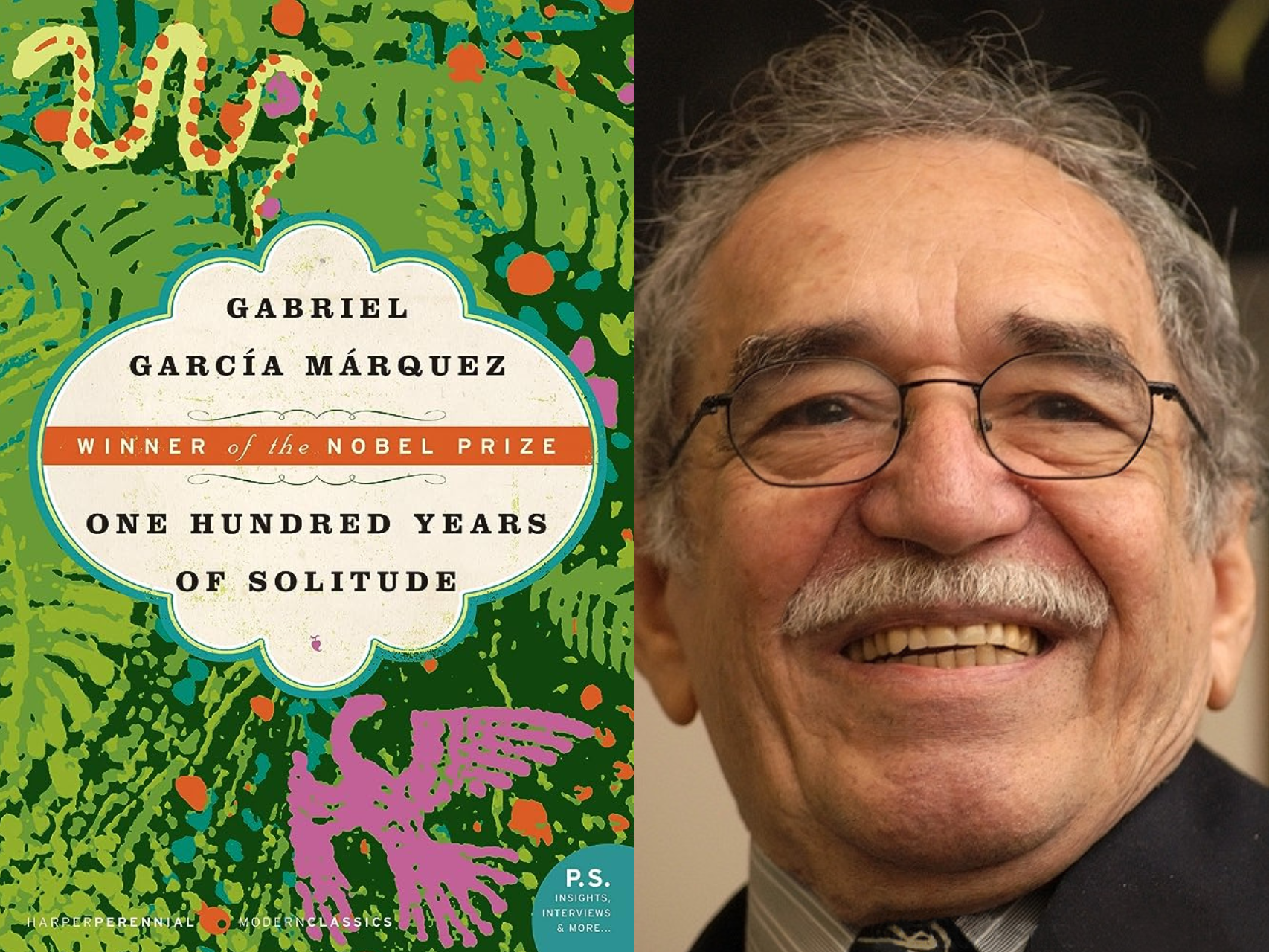
With an incredibly rich history and huge variety of cultures, it is no surprise that Latin America has consistently produced world famous and award winning authors for decades. From historical fiction about the continent’s troubled colonial past to light-hearted stories about colorful local traditions, the diversity of Latin American literature spans time and space to offer incredible insights into life for bookworms and the average fiction reader alike. In celebration of September as LatinX Heritage Month, here are seven incredible books by LatinX authors to add to your reading list.

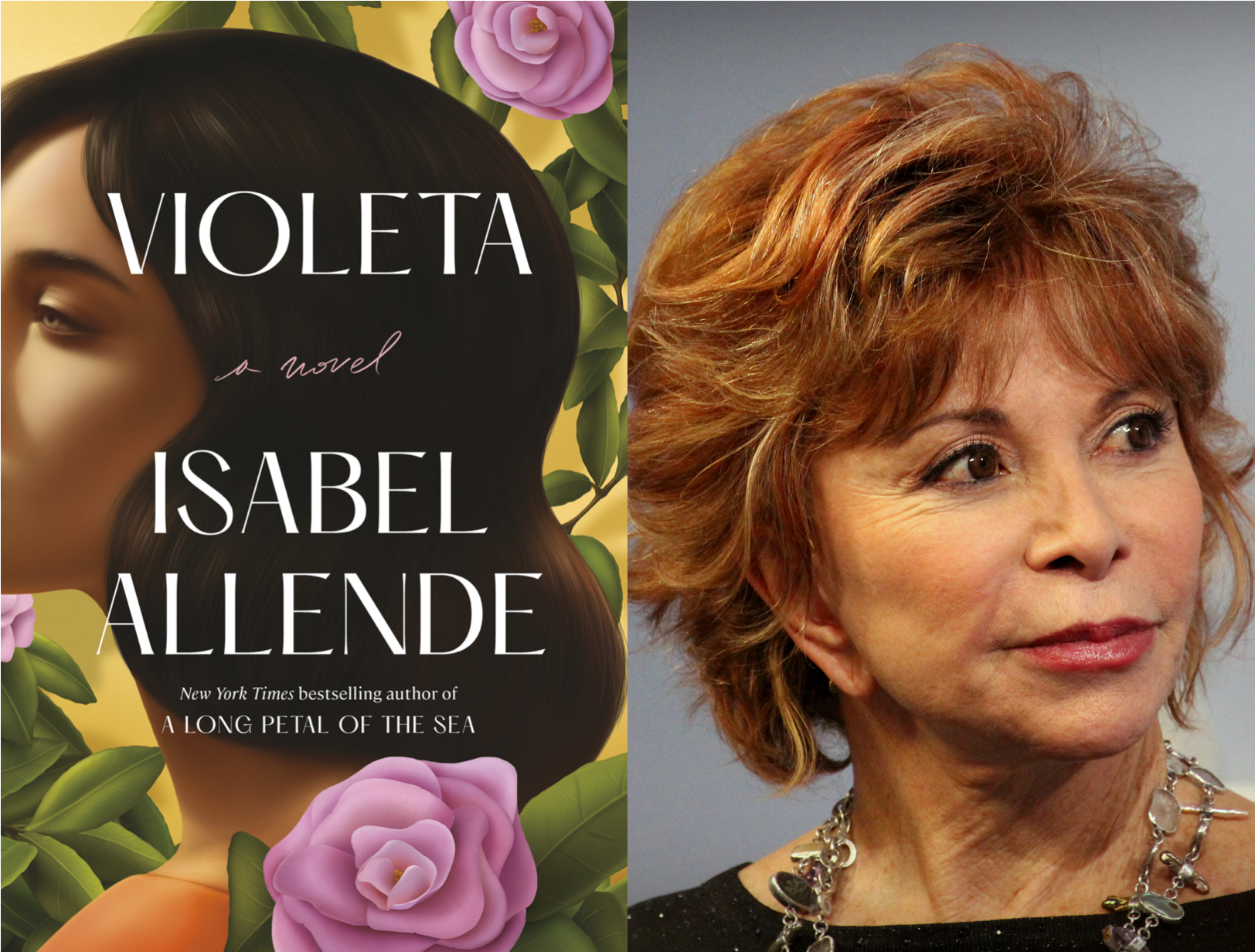
“Violeta” - Isabel Allende

Left: Violeta. Goodreads. CC BY-SA 2.0 Right: Isabel Allende. Lesekreis. CC BY-SA 2.0

Multi-award winner Isabel Allende’s most recent novel follows the titular character from her birth to her death over a tumultuous century. Violeta is born during the Spanish Flu in 1920 and lives through the Great Depression, World War II and all the changes brought by the turn of the twenty-first century, while navigating family, romance and her own desires. Allende, arguably the first internationally successful female Chilean author, is known for writing in the “magic realism” style, weaving history with fiction and myth with reality to create engaging plotlines that find their roots in Hispanic culture, society, and politics. This novel is no different, and Violeta’s story, written in the form of a letter to the one person she loves the most, recounts 100 years of Chilean history through the eyes of a determined, humorous woman who, above all else, carries a deep love life.

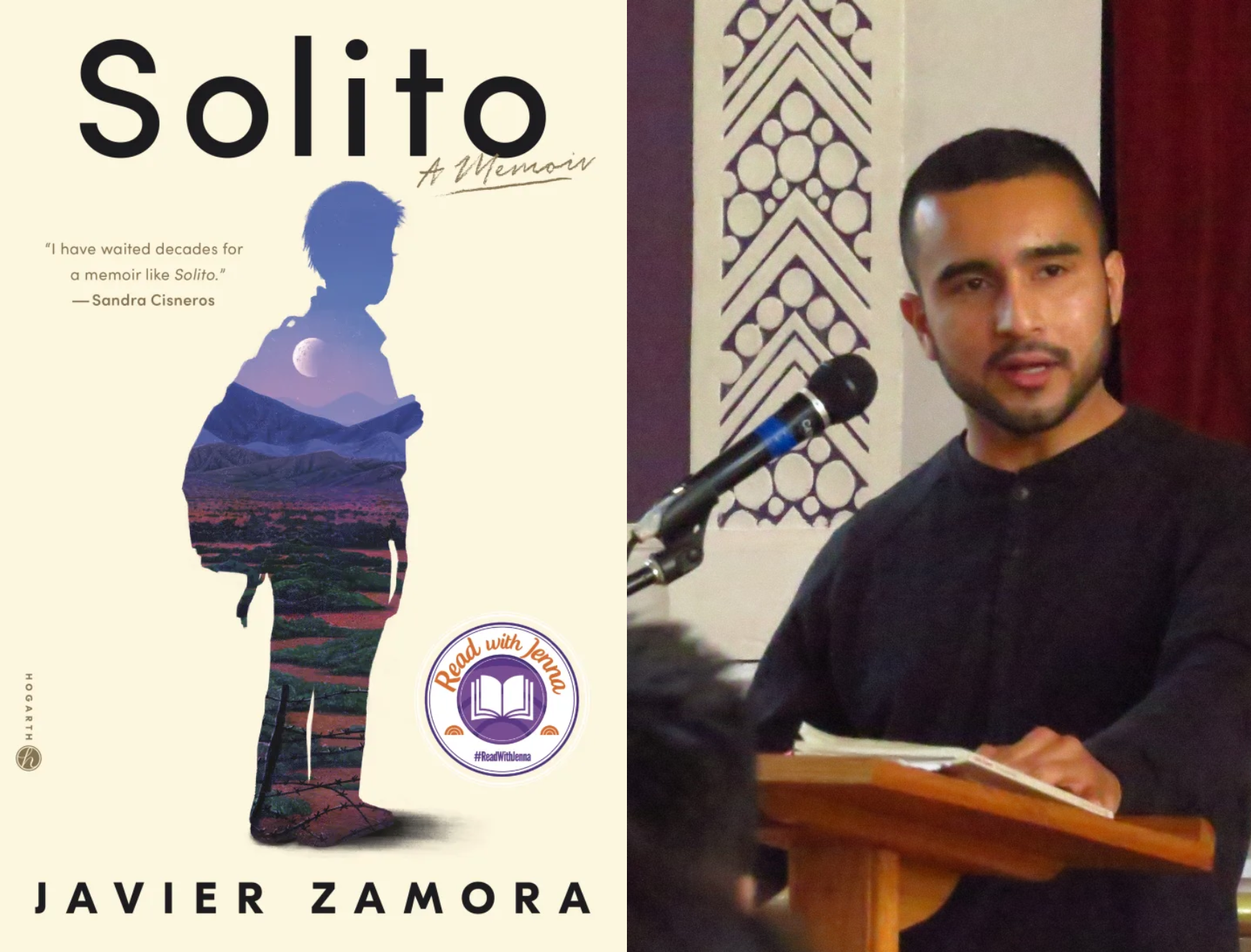
“Solito” - Javier Zamora

Left: Solito. NBCNews. CC BY-NC 2.0 Right: Javier Zamora. Dan Vera. CC BY-SA 2.0

A poet by trade, Salvadoran writer and activist Javier Zamora has collected his fair share of accolades, and is currently a Radcliffe Fellow at Harvard University. The New York Times bestseller “Solito” is his latest project having been published in 2022 and tells the heart wrenching story of Zamora’s perilous journey from El Salvador to the United States at only nine years of age. Leaving his extended family and childhood home behind, Javier travels almost entirely alone to reunite with his parents who had fled the country years earlier. He has no way of knowing about the seemingly insurmountable obstacles that will stand in his way, or the group of kind-hearted strangers who will come to treat him like one of their own. This biographical memoir is unlike either of Zamora’s earlier published works, and provides an incredible and intimate account of a story shared by millions of Central American migrants who have no choice but to flee their homes due to violence and political unrest.

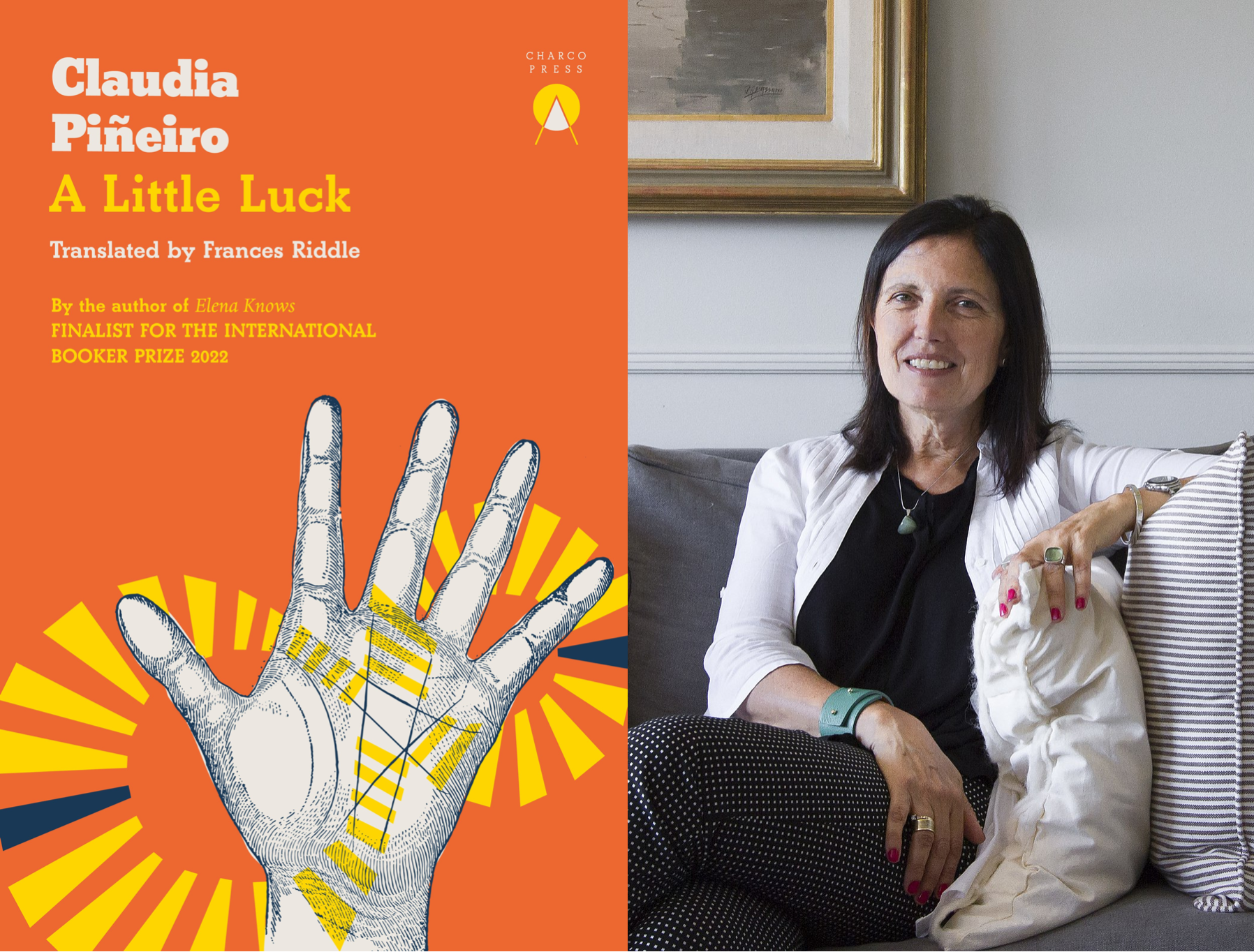
“A Little Luck” - Claudia Piñero

Left: A Little Luck. Charco Press. CC BY-NC-ND 2.0 Right: Claudia Piñero. Secretaría de Cultura de la Nación. CC BY-NC 2.0

After the success of her earlier novel “Elena Knows,” Argentine novelist and finalist for the 2022 International Booker Prize Claudia Piñero has astounded her readers once again with this 2015 novel which has only recently been translated to English. Piñero has an incredible talent for exploring the depths of unbelievably tragedy and pain while offering her audiences brief moments of hope, and “A Little Luck” is no different. The novel follows Mary Lohan, a woman who fled the suburbs of Buenos Aires after an accident but has finally returned two decades later. While on the outside she in no way resembles her past self, she is very much still the same Mary, and as the past starts to resurface her present begins to crumble. “A Little Luck” is a beautifully crafted story about love, lies, unforgettable places, uninvited people, and most of all, the inescapable power of fate.

“The Brief Wondrous Life of Oscar Wao” - Junot Díaz

Left: The Brief Wondrous Life of Oscar Wao. Biblio. CC BY-NC-ND 2.0 Right. Junot Díaz. American Library Association. CC BY-NC-SA 2.0

Originally published in 2007, this novel won the Pulitzer Prize for Fiction in 2008, along with a host of other awards. Dominican-American author Junot Díaz penned this novel, during his time at MIT, where he continues to teach in the Creative Writing department. Díaz wrote several works while attending the prestigious university, but “The Brief Wondrous Life of Oscar Wao” remains his most well-known and celebrated title to this day. The novel follows the titular character, a lovable and overweight Dominican teenager living in New Jersey with his mother and sister. He wants nothing more than to become a world famous author, except for maybe finding true love, a dream that feels far out of reach given the curse that has afflicted his family for generations and has resulted in only ill-fated romances. With an incredibly skilled hand, Díaz guides his readers through the life of Oscar and his family, both past and present, while also touching on the brutal reign of Dominican dictator Rafael Trujillo.

“Like Water for Chocolate” - Laura Esquivel

Left: Like Water for Chocolate. Grab The Lapels. CC BY-SA 2.0 Right: Laura Esquivel. Secretaría de Cultura de la Ciudad de México. CC BY-SA 2.0

This 1989 novel was translated into English in 1992, and immediately became a modern classic in the pantheon of Latin American literature. The title comes from a common idiom in Spanish-speaking countries, “como agua para chocolate,” which refers to an intense state of emotion, whether it be anger, excitement or even arousal. Mexican author and screenwriter Laura Esquivel chose this for the title of her first novel because of the many references to food and culinary culture throughout the story, which add to her detailed description of family life at the turn of the century in Mexico. The novel makes use of humor and magic to explore a bittersweet love story both relatable and fantastical, as well as its impact on the families at the center of the drama. Each chapter begins with a recipe filled with cleverly chosen words and descriptions which allude to upcoming character and plot developments, an aspect that was unfortunately largely lost when Esquivel wrote the screenplay for the 1992 movie adaptation.

“In the Time of the Butterflies” - Julia Alvarez

Left: In the Time of the Butterflies. Amazon. CC BY-NC-ND 2.0 Right: Julia Alvarez. Julia Alvarez. CC BY-SA 2.0

Julia Alvarez is a Dominican-American essayist, poet, and novelist who is known for her ability to weave fact with fiction and craft irresistible plotlines that detail political and social events through the eyes of colorful and relatable characters. “In the Time of the Butterflies” is a perfect example of this, as a work of historical fiction with its foundations in the very real story of the Mirabal sisters, four young women who tirelessly fought for their country’s freedom under the dictatorship of Rafael Trujillo in the Dominican Republic during the 1900s. Known by Dominicans as “las mariposas” or “the butterflies,” the sisters were unfortunately assassinated in 1960 for their efforts to overthrow the government. Alvarez gives these characters a new life by imagining their time as teenagers, and how they came to be involved with revolutionary efforts before falling victim to the destructive regime. Through the voice of each sister, the story of their political involvement, victimization and deep love for each other slowly but surely come to light.

“100 Years of Solitude” - Gabriel García Márquez

Left: 100 Years of Solitude. Amazon. CC BY-NC-ND 2.0 Right: Gabriel García Márquez. Jose Lara. CC BY-SA 2.0

No list of Latin American literature is complete with this 1982 Nobel Prize-winning classic, and what many consider to be Gabriel García Márquez’s best work. The late Colombian novelist published this novel in 1967, chronicling seven generations of the Buendía family and the rural town of Macondo they built in Colombia between the 1820s and the 1920s. While separated from the rest of Colombian society by an imposing mountain range, Macondo is a microcosm of larger society with its troubles and its magic, although the key to all of the town’s secrets remain hidden in a coded book. Through its delicate blend of magic, reality, history, and tradition, Márquez presents an allegorical insight into the turbulent social and political atmosphere in Colombia during the post-colonial times, and the country’s development over the following century.


Tanaya Vohra

Tanaya is an undergraduate student pursuing a major in Public Health at the University of Chicago. She's lived in Asia, Europe and North America and wants to share her love of travel and exploring new cultures through her writing.

Afghanistan’s Only Female Tour Guide Hosts Virtual Tours

This is the story of 24-year-old Fatima Haidari’s love and dedication to her country — from 3,000 miles away.

Bamyan Province, Afghanistan. Untamed Borders.

Meet Fatima Haidari: a 24-year-old guide who offers virtual tours of her country, Afghanistan. Forced to flee by the Taliban, Fatima now resides in Milan, Italy and provides a detailed tourist experience through Zoom of the Afghan city of Herat — taking visitors through sites such as the Citadel and the Central Blue Mosque.

Before the Taliban seized power in August 2021, Fatima worked as a local tour guide in Herat, using the job as a means to pay for her education, where she studied journalism and mass communication at university. Fatima is also the first ever female tour guide in Afghanistan, recognized in headlines in 2020. While she is no longer able to offer those in-person tours of her homeland, she continues to do what she can to show Herat off to the world — not just because the city is a beautiful and interesting place to explore, but because she doesn’t want outsiders to associate Afghanistan only with war and terror. Rather, its culture and history are what matter to her, and should take center stage.
But her passion and love for her country isn’t the only place Fatima’s heart lies. Growing up in the mountains in the central region of Ghor, Fatima was the youngest of seven children and was denied a rightful education, because she was a woman and because her family lacked the money. She worked for three years, making items such as traditional clothes to earn her way into an education, and was finally able to convince her parents to allow her to go to university in Herat in 2019, where she studied journalism.

Fatima in Herat. Untamed Borders.

Through years of hard work, Fatima was able to get an education. But many girls back home in Afghanistan do not have the same privilege. Considered one of the lucky ones to have fled, Fatima will use a portion of the money she earns from the Afghan virtual tours to donate to a women's education charity, which currently operates in Afghanistan.

Fatima partners with Untamed Borders — a travel operator dedicated to taking groups to some of the most interesting and inaccessible places — to make these virtual tours possible. The approximately 1.5 hour tour will take guests to see the 1,400-year-old Great Mosque, the Herat Citadel and through the city’s bazaars and traditional teahouses, while Fatima narrates stories about Afghanistan that focus on its people, culture and extensive history. 

But this event is a milestone itself. There has never been a virtual tour of Herat, and as Afghanistan’s first-ever female tour guide, this is a groundbreaking step to inspire other women in the nation. As Fatima says, she wants to be a changer, not a victim.

Fatima leading a virtual group tour. Untamed Borders.

And, of course, there can be no frank and open discussion about the people of Afghanistan without mentioning its women. Not only are they denied an education, Fatima has said the reascendant Taliban forces women to marry and perpetrates sexual or physical abuse against them. Things are more expensive for women, even though they are losing their jobs and forced to become housewives. By shining a light on the current situation in Afghanistan, Fatima is able to talk about her homeland while also spreading awareness to those able to make a difference.

Fatima’s next virtual tour will take place on September 12. Guests are able to book through Untamed Borders, and tickets will cost $60. 

Through her own personal experiences and ties to a country seized by tyranny, Fatima hopes to share what makes Afghanistan so distinct and worthy of exploration while also fighting for justice, so that the women there will grow up knowing what it’s like to go to school. 


Michelle Tian

Michelle is a senior at Boston University, majoring in journalism and minoring in philosophy. Her parents are first-generation immigrants from China, so her love for different cultures and traveling came naturally at a young age. After graduation, she hopes to continue sharing important messages through her work.