Here’s Where the 2020 Presidential Candidates Stand on Climate Change

Each of the Democratic hopefuls has made environmental justice a priority. Here’s who stands out in the search for a greener future.

Climate change protesters. Michael Gwyther-Jones. CC BY 2.0

On June 1, 2017, President Trump announced his intention to withdraw from the Paris Climate Accord, signaling to the international community that the United States was backing down from the fight against climate change. Just over two years later, at the 2019 G20 Summit in Japan, Trump indicated his disdain for the essential mission of that fight: “We have the cleanest water we have ever had, we have the cleanest air we have ever had,” he claimed of the United States, adding that wind power “does not work” because it has to be subsidized.

Particularly coming from a president who has described climate change as a hoax, such a statement represented a disheartening and dangerous attitude toward environmental issues for concerned citizens across the country. As 2020 and the possibility of a new POTUS approaches, such voters will be parsing policy proposals to determine—among many other salient issues—who stands the best chance of mitigating climate change. Below are stances on climate change from a few Democratic candidates who stand out in the crowded political landscape.
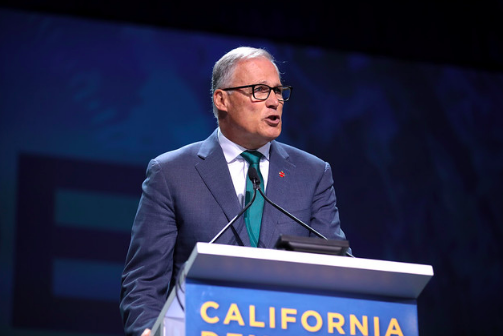
Jay Inslee. Gage Skidmore. CC BY-SA 2.0

Jay Inslee (Governor of Washington)

Inslee’s name is practically synonymous with the battle for a greener future: He has made climate change a key plank of his campaign platform, and has released four extensive climate plan proposals, each outranking his competitors in length and depth. Part one addresses clean energy in electricity, cars, and buildings; part two is a 10-year, $9 trillion investment plan; part three discusses foreign policy; and part four recommends stemming the flow of fossil fuels from the United States. Together, the four segments speak to a whopping 41 out of 48 components in the rubric put forth by leftist think tank Data for Progress, which in 2018 created one of the first blueprints for the Green New Deal—the clean energy–based economic stimulus package championed by Representative Alexandria Ocasio-Cortez and Senator Ed Markey. As of now, Inslee’s plan lacks proposals to curb waste, increase antitrust enforcement, establish a universal basic income, or found a public bank, but the governor has promised more to come.

Inslee on whether it’s possible for the next president to stop climate change: “Victory is the only option against climate change, because without victory there is not survival.”

Polling numbers: 0.4 percent.
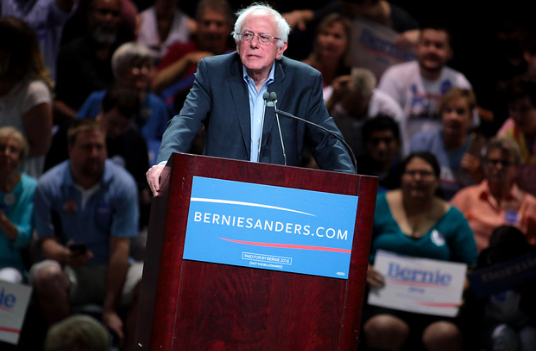
Bernie Sanders. Gage Skidmore. CC BY-SA 2.0

Bernie Sanders (US Senator, Vermont)

Given that Sanders hails from the Green Mountain State, it’s no surprise that going green is high on his political agenda. In the Senate, he has introduced carbon-pricing legislation and pushed for the Democratic Party to embrace a carbon tax, but his stance on climate change can be traced back to well before he was elected senator in 2006: Videos are available from 30 years ago of him discussing the issue. During his 2020 bid, Sanders has been enthusiastic about the Green New Deal (also an unsurprising development, given that Ocasio-Cortez worked for Sanders during his 2016 campaign). In April, he released his climate platform under the heading “Combat Climate Change and Pass a Green New Deal,” citing upgraded public transit, a ban on fracking, and an end to fossil fuel exports as key tenets. Yet despite his long-running push for improved environmental policy, Sanders’ proposals fall short of some more specific and nuanced iterations put forth by competitors like Inslee.

Sanders on whether it’s possible for the next president to stop climate change: “Not alone, and not, certainly, just by doing what has to be done in the United States.”

Polling numbers: 14 percent.
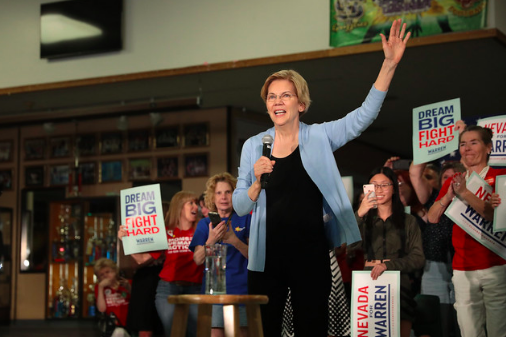
Elizabeth Warren. Gage Skidmore. CC BY-SA 2.0


Elizabeth Warren (US Senator, Massachusetts)

Rather than releasing policies focused narrowly on climate change, Warren has taken a different tack, addressing the issue through the lens of public lands, the military, and domestic industrial development through three distinct proposals. And running through each of these manifestos is the thread of Warren’s policy centerpiece: getting money out of politics and out of the hands of massive oil conglomerates. Her latest proposal, which is also her longest, fleshes out some of the tenets outlined in the Green New Deal, suggesting a Green Industrial Mobilization that earmarks $1.5 trillion for low-carbon tech; a Green Marshall Plan that encourages foreign countries to buy American clean energy tech; and a Green Apollo Program that invests $400 billion in energy research and development over a decade. Taxing wealth and corporate profits would provide funding for the ambitious plans, which have led Greenpeace to place her as tied with Sanders in its climate scorecard.

Warren on whether it’s possible for the next president to stop climate change: “I believe that the opportunities for the next president are enormous. We can show worldwide leadership.”

Polling numbers: 13.8 percent.
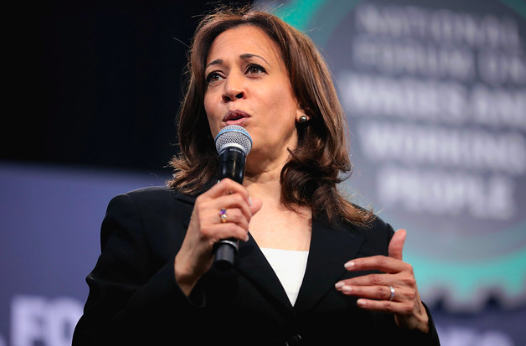
Kamala Harris. Gage Skidmore. CC BY-SA 2.0

Kamala Harris (US Senator, California)

Harris has supported and co-sponsored the Green New Deal, but her 2020 bid has otherwise made limited mention of climate justice. Past actions, however, show at least some commitment to the issue: As San Francisco’s district attorney, she established an environmental justice unit, and as attorney general, she launched an investigation into Exxon Mobil to see whether the company lied to shareholders and the public about the risks posed by climate change. During her time in Congress, she joined with five other senators to file a brief on behalf of San Francisco and Oakland in their climate damages lawsuit against fossil fuel companies, pointing to massive spending by the industry to quash climate concerns and influence lawmakers.

Harris on whether it’s possible for the next president to stop climate change: “There’s no question that the next president has within her capacity to significantly reduce greenhouse gas emissions.”

Polling numbers: 15.2 percent.
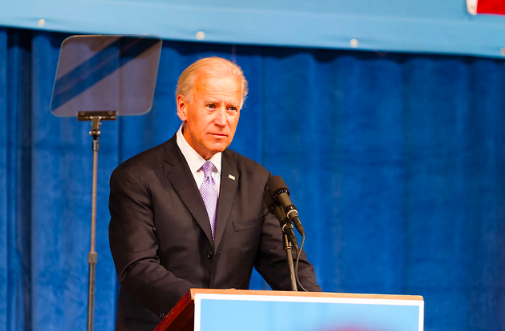
Joe Biden. Chad Cassin. CC BY-SA 2.0

Joe Biden (Former Vice President)

As part of his lengthy legislative career, Biden has the distinction of being among the first to introduce a climate change bill in the Senate: the Global Climate Protection Act of 1986, which called for an EPA national policy on the issue. In concert with President Obama, Biden built a notable record on climate change, particularly with the signing of the Paris climate agreement in 2016 and the initiation of auto fuel economy standards that slashed emissions levels. Nevertheless, Biden has faced scrutiny for missing crucial climate votes earlier in his career—including the 2008 Lieberman-Warner Climate Security Act, regarded as the strongest climate change bill to reach the Senate floor. Despite his support of the Green New Deal, Biden initially put forth a “middle ground” approach to environmental policy in the early days of his 2020 run. Facing subsequent criticism from activists and lawmakers, including Ocasio-Cortez, he replaced that suggestion with a proposal that aligned more closely with those of his competitors, and which allocates $1.7 trillion in federal spending to climate policy over the next decade.

Biden declined to be interviewed on whether it’s possible for the next president to stop climate change.

Polling numbers: 26 percent.
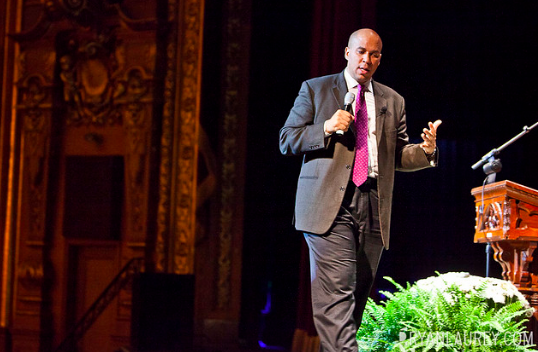
Cory Booker. Anne White. CC BY-NC 2.0

Cory Booker (US Senator, New Jersey)

Climate change is far from the hottest-button issue for Booker, who tends to focus instead on topics like gun control, racial justice, and health care. Still, he was one of the first legislators to support the Green New Deal, has voiced support for a price on carbon, and has pointed to nuclear energy (which supplies more than one-third of New Jersey’s power) as an alternative to fracking. And while such moves may be largely tactical, Booker has pledged not to take fossil fuel money in his presidential bid as well as publicizing the fact that he is a vegan.

Booker on whether it’s possible for the next president to stop climate change: “It’s not going to be one person in one office—it has to be a movement, a renewed commitment in our country and across this planet.”

Polling numbers: 2.2 percent.
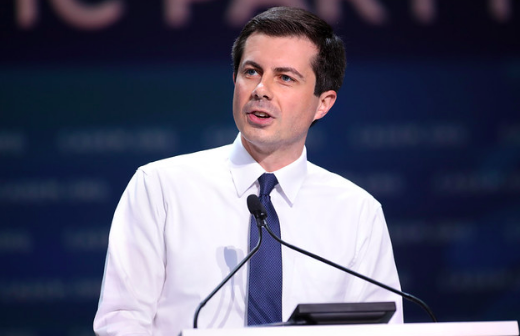
Pete Buttigieg. Gage Skidmore. CC BY-SA 2.0


Pete Buttigieg (Mayor of South Bend, Indiana)

As the youngest candidate in the race at just 37, Buttigieg has a personal stake in the matter of climate change, given that his generation is one of the first to substantively feel its detrimental effects. “It just gives you a very different relationship to political decision makers and decision making,” he told The Atlantic on dealing with environmental justice as a millennial. Like most of his competitors, Buttigieg has endorsed the Green New Deal, and the climate platform he released in May describes full implementation and a 100% carbon-free society. That could include a major role for the rural communities in his native Midwest: At a town hall in June, he described how improved soil management could help mitigate the climate crisis.

Buttigieg on whether it’s possible for the next president to stop climate change: “This is a generational project. It’s going to have to be a national project.”

Polling numbers: 5.2 percent.
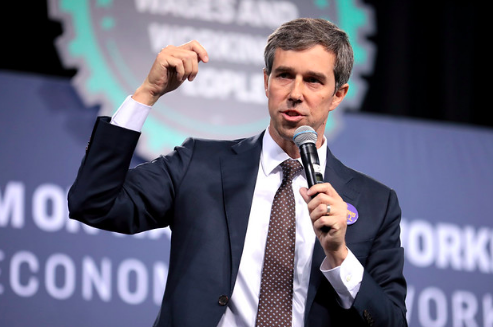


Beto O’Rourke. Gage Skidmore. CC BY-SA 2.0

Beto O’Rourke (Former US Representative, Texas)

On May 1, O’Rourke became the first 2020 candidate to release a comprehensive climate plan, which defines a binding target of net-zero greenhouse gas emissions across the U.S. economy by 2050. Unlike Inslee’s target of 2045, however, this goal raised the ire of some environmental groups, who asserted that O’Rourke should have aimed for as soon as 2030. And although O’Rourke signed the No Fossil Fuel Money Pledge two days after issuing his platform, he accepted more than $550,000 from oil industry sources during his Senate bid against Ted Cruz—the second-highest number among the candidates after Cruz.

O’Rourke on whether it’s possible for the next president to stop climate change: “It’s going to take this entire country, and it’s going to take this country leading the entire world.”

Polling numbers: 2.4 percent.


At a point in the race where the strength of actual policy proposals is often eclipsed by intangible factors like electability and charisma, voters still have a while to wait before realistic options for environmental justice begin to coalesce. Until then, temperatures will keep ticking up, waters will continue rising, and communities in the United States and across the globe will keep hoping for a leader with the power to reverse the inevitable.


TALYA PHELPS hails from the wilds of upstate New York, but dreams of exploring the globe. As former editor-in-chief at the student newspaper of her alma mater, Vassar College, and the daughter of a journalist, she hopes to follow her passion for writing and editing for many years to come. Contact her if you're looking for a spirited debate on the merits of the em dash vs. the hyphen.




What You Need to Know About Beyond and Impossible Burgers

Why plant-based meat substitutes are good for you, and even better for the environment.

Impossible Burger. Photo Provided by Impossible Foods.

There has been a lot of buzz recently around plant-based meat substitutes—especially since Beyond Meat just went public in May at a nearly $1.5 billion dollar valuation. Two of the most popular meat substitutes on the market, Beyond Meats and Impossible Foods, have been astonishing consumers at their resemblance to actual meat. These products look and taste like the meat products they are modeled after. 

What makes them different? 

Impossible Foods’ main product is their burger. And while the Beyond Burger is probably the most well known product that Beyond Meats offers, the company also offers “ground beef,” two flavors of “sausages,” and “beef crumbles.” However, it is possible to mash or crumble the Impossible Burger to create meatballs, pizza toppings, or even tacos. 

Additionally, the products differ in their main protein ingredient. Beyond Burgers’ main protein source comes from pea protein, while Impossible Burgers get their protein from soy protein concentrate. 

The Impossible Burger looks a little more realistic than the Beyond Burger. It appears to “bleed” thanks to the Heme molecule an ingredient called soy leghemoglobin. The Heme molecule is found in every living plant and animal. Since it’s found most abundantly in animals, it’s what makes meat taste like meat. Impossible Foods use the Heme molecule in soy roots. In fact, Impossible Burgers taste so much like actual beef, that some vegetarians and vegans don’t like to eat them because it creeps them out! 

Why are they good for us? 

Meat increases risk of cancer by 16% and risk of heart disease by 21%. By eating a patty that looks and tastes like meat—without the added cholesterol—we can satisfy our cravings without having to worry about health risks.

Why are they good for the environment? 

Aside from the fact that less animals will be killed if more people switch to meat substitutes, plant-based substances are made more sustainably than meat products. 51% of greenhouse gas emissions result from raising livestock and producing meat products. 45% of global surface area is reserved for livestock systems. Imagine the greenery and nature that could be preserved with just a fraction of that space! 

So, for your next summer barbeque, try switching to a Beyond or Impossible Burger. Your guests will barely notice the difference. 


ELIANA DOFT loves to write, travel, and volunteer. She is especially excited by opportunities to combine these three passions through writing about social action travel experiences. She is an avid reader, a licensed scuba diver, and a self-proclaimed cold brew connoisseur. 


In the Czech Countryside, a City Eaten Alive by Its Own Beauty

Since the fall of communism, Český Krumlov has transformed from relic to hotspot—but has it lost its authentic appeal along the way?

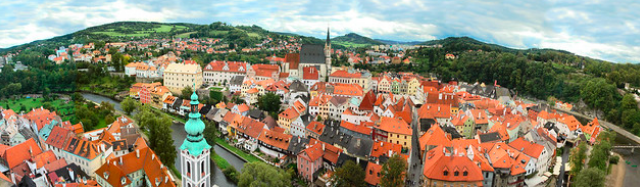
Český Krumlov. Alan Bloom. CC BY-NC-ND 2.0

The Czech capital of Prague is known the world over for its storybook beauty, manifesting most dramatically in the towering gothic facade of the St. Vitus Cathedral and the sprawling tableau of red rooftops visible from atop Petřín Hill. Yet just over 100 miles away is another sparkling jewel in the Czech Republic’s crown: Český Krumlov, a city of only 13,000 residents whose 13th-century castle and picturesque riverbanks have brought it not only recognition as a UNESCO World Heritage site but also an increasing influx of tourists that now threatens its very identity. 

Former Czechoslovakia’s communist regime, which lasted from 1948 to 1989 before it was ushered out by the Velvet Revolution, left much of Český Krumlov in disrepair. Yet the city’s neglected state lent it a sense of mystery and charm. In the years since, Krumlov—much like the country’s capital, Prague—has been transformed into a tourist wonderland, with historic buildings being renovated and revitalized and ensuing increases in tourist income bolstering the city’s economy.

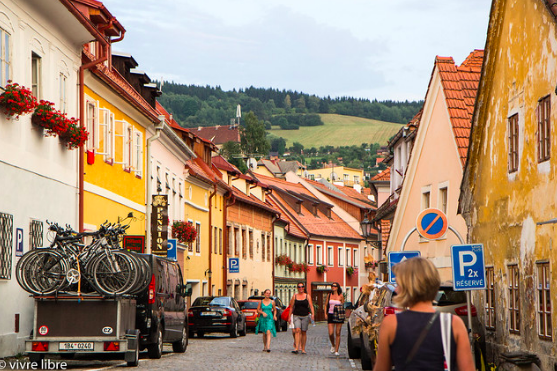
City streets. Hindol Bhattacharya. CC BY-SA 2.0

As the city has changed, so have the demographics of its visitors. In an interview with Radio Praha, Krumlov’s mayor, Dalibor Carda, explained that an initial boom of Austrian and German tourists after 1989 gave way to an influx of Americans, many of whom settled in the city indefinitely. Today, for locals—whether native-born or transplants—the off-season is a thing of the past, with tour groups flooding the city on a year-round basis. “[I]f you want to have a pristine Krumlov,” writes Jan Velinger in a piece for Radio Praha, “you have to get up very early to ever have its romantic streets, or overlooking castle, ramparts to yourself.” Fed up with the unrelenting crowds, locals have largely migrated to the outskirts of the city, resulting in an exodus of local businesses: Bakeries, hardware stores, and family-owned shops are now difficult to find, having been replaced with bars, restaurants, and hostels catering to short-term visitors.

One of Český Krumlov’s bars, popular among tourists. kellerabteil. CC BY-NC 2.0

In some respects, Český Krumlov has moved to mitigate the encroaching tendrils of tourism, notes reporter Chris Johnstone, pointing to a ban on advertising and the exclusion of cars and buses from the city center. Moreover, just this June, the city established a tariff on buses in an effort to regulate the influx—up to 20,000—arriving each year. The plan is the first of its kind in the Czech Republic, although Salzburg and other Austrian cities have imposed similar measures. Now, all buses rolling into Krumlov must book in advance, navigate to one of two designated stops, and pay the toll of CZK 625, approximately $28.

Tourism has inspired not only legislative changes, but also works of art—as in the case of “UNES-CO,” a 2018 project by renowned conceptual artist Kateřina Šedá. Responding to the profound impact of visitors on the distribution of local populations, Šedá conceived of a work that involved relocating a group of individuals and families to the heart of Český Krumlov for three months at the height of the tourist season. The participants were provided with starter apartments and jobs “on the basis of what Krumlov most needs,” which Šedá deemed to be “the pursuit of normal life.” The title played on the city’s status as a UNESCO World Heritage site and on the Czech words “unést” and “co,” meaning “take away” and “what,” as in “What do visitors get out of this place?” Šedá, whose work often involves social themes and who is famed for relocating an entire Czech village to London’s Tate Modern in 2011, stressed that the project was not intended to be a show for tourists, but rather a social experiment.

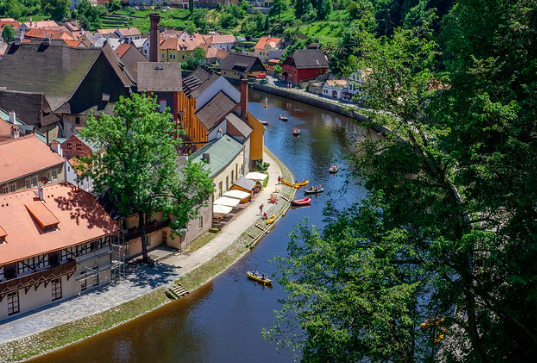
Houses along the banks of the Vltava River. P. N. CC BY-SA 2.0

On the opposite side of the artistic spectrum, Huawei—the Chinese electronics behemoth currently facing scrutiny from the U.S. for potential security issues—announced in January that it would build an exact facsimile of Český Krumlov at its headquarters. The Huawei campus, which lies just outside of Shenzhen in the city of Dongguan, will also count Granada, Verona, Paris, Budapest, and Bruges among its plethora of reconstructed European cities. “I heard about it when they started preparing it,” commented Cardo. “The fact that they [are] building it without at least contacting the city does not sit well with me.”

The Krumlov replica may well draw more Chinese tourists, who already represent the largest segment of visitors to the historic city. Yet for embittered locals, the mini-city could be a grimly apt representation of what their home has become: a mere palimpsest of its original iteration, and a cautionary tale depicting how capitalism and tourism can spur unwelcome transformation.


TALYA PHELPS hails from the wilds of upstate New York, but dreams of exploring the globe. As former editor-in-chief at the student newspaper of her alma mater, Vassar College, and the daughter of a journalist, she hopes to follow her passion for writing and editing for many years to come. Contact her if you're looking for a spirited debate on the merits of the em dash vs. the hyphen.



Digital Nomads: Connecting to Wifi and Communities Around the Globe

With an uptick in digital nomad lifestyles and coworking tourism, how are digital nomads positively or negatively impacting the world?

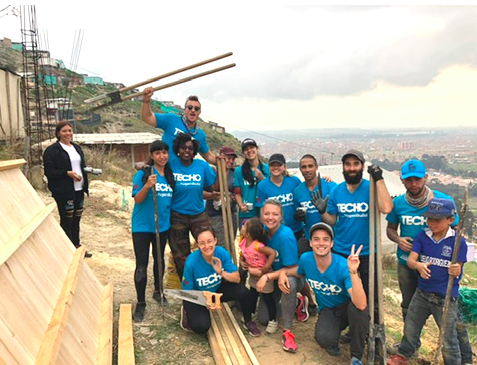
Remote Year Kahlo group volunteering in Bogota, Colombia with former partner, TECHO, a Latin American organization that seeks to overcome poverty through the help of locals and volunteers. Photographer and CC Travis King.

Birds sing melodically against the white-washed backdrop on a sunny Greek isle as Travis King shares, over Zoom, how his passion for purposeful travel evolved into his role. King collaboratively runs social impact projects across the globe at the digital nomad program, Remote Year.

“I fell in love with the world and the way we can connect with new people and cultures,” King says. For close to five years, he did everything - from working on an Alaskan fishing boat to attaining a one year work VISA in Australia in order to extend the adventure.

“I kept working and volunteering and realized I wanted more,” King says.

When King started out as a Remote Year Program Leader, he found the group he led shared a deep interest in doing good. Each Remote Year community is a group of digital nomads that will stay together throughout the year, sharing experiences, lodging, and coworking spaces in 12 different cities around the world. 

“My community’s identity was connected to giving back. We made a commitment - every month we would do one big service event in each new city.”

Digital nomads, defined as people who choose to embrace a location-agnostic, technology-enabled lifestyle that allows them to travel and work remotely globally are increasing in numbers, according to MBO Partner's research. As of 2019, 4.8 million remote workers currently describe themselves as digital nomads, and upwards of 17 million aspire to someday become nomadic. 

“I think we’re on the tipping point of this cloud-based revolution where most laptops can connect to the internet anywhere - it gives us ultimate freedom,” King says.

As location-agnostic lifestyles continue to grow, how are digital nomads positively or negatively impacting the places they travel and how are these programs addressing social and environmental impact? 

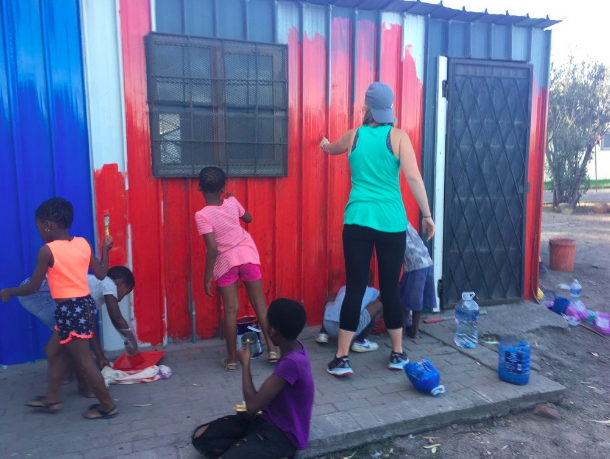
Remote Year Ohana group volunteering in Cape Town, South Africa with partner, Phillipi Music Project, a social enterprise aiming at offering an infrastructure to the musicians from the townships. Photographer and CC Travis King.

Making an impact is in the fabric of Remote Year, according to King, but it began as one-off projects that lacked sustainable results. “The early groups were doing great things with intention and heart - but everything was scattered,” King says. 

According to King, one group would go to Buenos Aires, Argentina and plant trees in the mangroves and the next group would find an orphanage to sponsor in Cambodia, while another group would paint families’ homes outside of Medellín, Colombia. 

“We realized if we connect the efforts, our impact overtime will be magnified,” King says. 

“A lot of problems with social and environmental impact programs are it’s a one time experience and then you’re gone,” says recent Remote Year participant, Rebecca Stone. 

“The cool thing about Remote Year is my group could start working on a project, and when we left at the end of the month, there’s a new group that came to take our place,” says Stone.

Stone completed first-hand reporting and travel industry data for Skift during her Remote Year. Like the 40 others in her group, she didn’t want to put her career on hold to travel the world. Remote Year took care of the infrastructure so she could pursue her other interests, including studying tourist impact on cities.

Since Remote Year runs several long-term programs, new groups arrive on a rotating basis to the same 12 to 15 cities, which, according to Stone, mitigates unnecessary negative tourism impact. “I’m in a city like Split, Croatia for one month. I don’t take jobs away from locals. All I do is add my income into the city via eating out, participating in activities, volunteering, all while knowing my tourism dollars are going into the city.”

Now, Remote Year impact projects focus on long-term partnerships. These partnerships touch on a diverse array of social issues. “You’ll get to see a different layer of each city you wouldn’t necessarily be exposed to,” says King about those who get involved.

With a rise in volunteering while traveling among digital nomads, some argue that this can do more harm than good. Medium contributor, Paris Marx writes in an article, “Digital nomads are far less likely to work toward positive local change or halt the gentrification that displaces long-term residents .” 

When asked whether he thinks this is changing, Marx responds, “there are some people trying to ‘give back’ in various ways, but the people taking part in these programs don't actually spend much time in these cities. They consume them; they don't live in them.”

Remote Year’s Director of Community Development and Positive Impact, Travis King, volunteering with the RY Ohana group in Cape Town, South Africa, with partner, Phillipi Music Project. Photographer and CC Travis King.

When asked about the criticism of volunteering abroad, King responds, “My biggest concern is that the conversation has gone too far and people would do nothing than do something, because they worry it may be considered hurtful.” He sees this as a hurdle and encourages people to always research viable organizations and causes to put energy and funding toward while traveling. 

As of 2019, Remote Year communities have volunteered 14,842 hours, worked on 312 service projects and fundraisers, raised $134,390 and engaged 2,063 locals in their efforts.

With an uptick in coworking tourism, companies like Remote Year, Unsettled, Venture with Impact, and Nomad Cruise are growing rapidly as more people seek innovative ways to take their profession on the road. 

What’s next? 

“I would love to see our net cast wider to people of a variety of socioeconomic backgrounds so everyone has an opportunity to be part of Remote Year,” says King. He shares his last stories from Valencia, Spain where they are launching a new program to help nomadic communities preserve and share their arts with the larger Spanish population. 

Lasting impact is challenging to measure. According to Marx, real impact abroad “means getting politically involved in one's community to fight for and enact social change in the interests of working-class people. There is hope for positive change but digital nomadism isn't a vehicle for broad-based political action.”

While some people, like Marx, believe digital nomads are a highly individualized group of privileged Westerners who make little positive impact on local communities, others, like King, believe in a broader approach to giving back.

A traveler who can explore and live in new countries and cultures has a unique opportunity. Some will give back, while others may not. 

In the end, whatever one is seeking abroad, an excellent way to find yourself is to lose yourself in the service of others. 


JULIA KRAMER is a New York-based writer and avid traveler who addresses systems changes to social challenges through storytelling and community building. When she’s not writing or on the road, you will find her cooking something from her urban garden or hiking. Read more of her articles on travel and social impact at julia-roos.com.


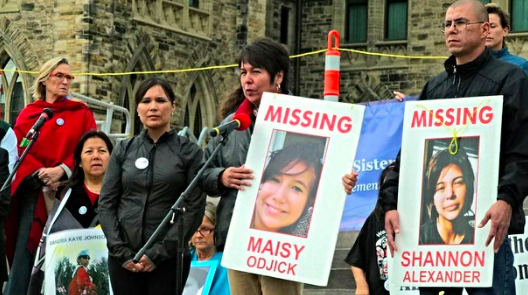
Canadian Inquiry Comes to a Close, Revealing Systematic Mistreatment of Indigenous Women

Three years in the making, the final report calls on authorities to institute a paradigm shift in policing practices.

Ottawa vigil for missing and murdered aboriginal women in 2014. Obert Madondo. CC BY-NC-SA 2.0

Over the past three years, Canada has held 24 hearings and events, engaged with more than 2,380 citizens, and spent $92 million on a massive national inquiry into the murders and disappearances of Indigenous women and girls—who make up less than 4 percent of Canada’s female population but a whopping 16 percent of females killed in the country annually. On June 3, the harrowing process came to a close, culminating in a conclusion as decisive as it is unsettling: The Canadian government and civil society is complicit in perpetrating what amounts to genocide.

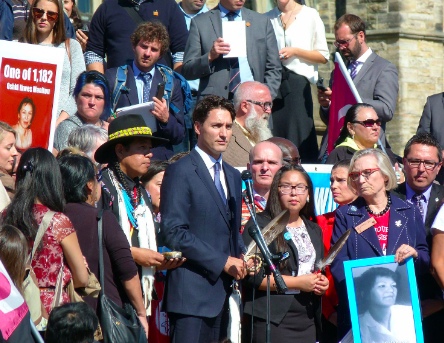
Justin Trudeau giving a speech on missing and murdered Indigenous women in 2016. Delusion23 via Wikimedia Commons. CC BY-SA 4.0

At the closing ceremony in Gatineau, Quebec, Indigenous youth presented the final report, wrapped in a traditional cloth, to Prime Minister Justin Trudeau. All told, the report is over 1,200 pages long and includes 230 recommendations. It describes a historical failure on the part of the police and the criminal justice system, systems that have ignored the concerns of Indigenous women and viewed them “through a lens of pervasive racist and sexist stereotypes”—behavior that has in turn fostered mistrust of the authorities among the Indigenous population. In beginning to mitigate these chronic injustices, the report suggests, authorities should expand Indigenous women’s shelters and improve policing in Indigenous communities; increase the number of Indigenous people on police forces; and empower more Indigenous women to serve on civilian boards that oversee the police.

In addition, it calls for a shift in the criminal code to classify some killings of Indigenous women by spouses with a history of violent abuse as first-degree murder, regardless of premeditation. Addressing the less tangible issue of cultural discrimination, the report also requested that the federal and provincial governments afford Indigenous languages the same status as Canada’s official tongues of English and French.

Regardless of future success in creating a safer and more equitable situation for Indigenous women, helping Canadians understand the historical narrative of violence will remain crucial. As such, the report addresses teachers and post-secondary institutions, asking them to educate the public about missing and murdered Indigenous women and the root causes of their plight, and to bring attention to the state laws, policies, and colonial practices that catalyzed the genocidal conditions. In an interview for Quartz, Carol Couchie, co-chair of the National Aboriginal Council of Midwives, spoke to the lasting effects of structural discrimination: “Family structure has broken up, tribal structure has broken up, leadership has been weakened, the self-esteem has been reduced to on the ground, and these things have all affected our ability to care for young people, to care for women.” Marion Buller, chief commissioner of the inquiry and a retired Indigenous judge, expressed a similar sentiment in her succinct statement to the New York Times: “An absolute paradigm shift is required to dismantle colonialism in Canadian society.”

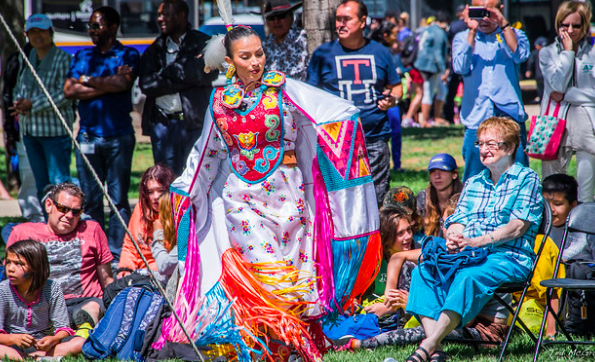
Woman performing at 2017 National Aboriginal Day in Regina. Ted McGrath. CC BY-NC-SA 2.0

Trudeau, for his part, guaranteed a thorough review of the report, and committed to creating a National Action Plan “with Indigenous partners to determine next steps.” Yet even with promises of legislative change, some Indigenous Canadians point to harmful attitudes that may undermine the reality of reform on the ground. For instance, according to the Royal Canadian Mounted Police, most of the violent crimes against Indigenous women are perpetrated by people within their own communities—a statistic that, according to Indigenous author Niigaan Sinclair, “has become the linchpin for arguments that murdered and missing Indigenous women and girls are not a Canadian problem, but an Indigenous one.” In a piece for the Winnipeg Free Press, Sinclair notes that former minister of Aboriginal affairs Bernard Valcourt used this argument to refute the prospect of the inquiry in the first place, and addresses the systemic factors that invalidate Valcourt’s position: “Indigenous women and girls do not join the ranks of the murdered and missing because of Indigenous men, but because of the contexts they are in. Most of these are dangerous situations imposed from circumstances brought on by poverty, abusive cycles and systems, and oppression.”

The REDress Project, on display in Winnipeg, serves as a reminder of missing and murdered Indigenous women. Ted McGrath. CC BY-NC-SA 2.0

Still, the very existence of the report and the promises of action it has engendered are cause for optimism, however cautious it might be. In a piece for The Conversation, Margaret Moss describes her disappointment as an American Indian woman who recently moved to Canada and has observed the same racism in the United States’ northern neighbor as she did back home. Yet her viewpoint as an American also lends her perspective and a sense of hope. “[C]ompared to the lack of moral outrage in the U.S. on this issue, I am [made] hopeful by the very fact that in Canada, after much activism, such a committee was formed and a report of the findings were released with a bold statement,” Moss writes. “Maybe this will shake people out of complacency.”


TALYA PHELPS hails from the wilds of upstate New York, but dreams of exploring the globe. As former editor-in-chief at the student newspaper of her alma mater, Vassar College, and the daughter of a journalist, she hopes to follow her passion for writing and editing for many years to come. Contact her if you're looking for a spirited debate on the merits of the em dash vs. the hyphen.



Blue Out on Insta

Blue Out on Instagram: Support for Sudan through Social Media Awareness

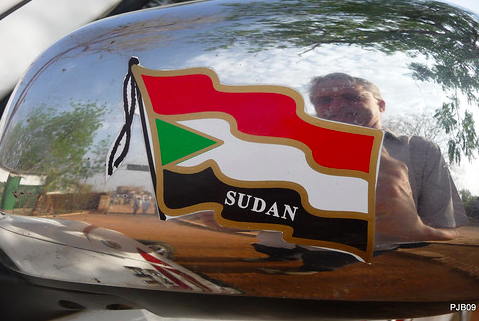
Sudan Flag Sticker on a Car. pjbury. CC BY-NC-ND 2.0

Recently, a specific shade of blue has been popping up around Instagram in the form of profile pictures. This Blue Out was started by Instagram influencer Shahd (@hadyouatsalaam). She is a Sudanese-born, New York City-based activist—or how she likes to identify herself, “a political scientist by degree and a social media influencer by interest”, according to her recent Insta post, introducing herself to her new followers. 

Shahd created this movement for the sole purpose of raising awareness to what is currently going on in Sudan. Protests in Sudan began in December of last year, when there was a price-spike in basic commodities (i.e. bread). It was not until April 11th, after a mass, multi-day sit-in, that the Sudanese people did see the change they wished for. The current President, a man named Omar al-Bashir, and his party were being jailed or put on house arrest. The protestors believed this to be a victory. They were wrong. General Awad Ibn Auf, the Vice President, soon gave a televised statement explaining the new governmental system that was going to be put in place—one run by three separate military factions called the Transitional Military Council (TMC). He stated that they intended to remain in power for two years until the country could elect a new President, also claiming a three-month state of emergency and curfew. The people did not accept these conditions and in under 24 hours, Ibn Auf resigned and General Abdelfattah al-Burhaan become the new chairman.

Since General Abdelfattah al-Burhaan’s new appointment, negotiations between the people and the TMC have been chaotic. Once again being fed up, the Sudaneese people, with the people of the Sudanese Professionals Association (SPA), organized a mass strike from the 28th of May to the 29th. These strikes immediately became violent and the TMC used these mass demonstrations to portray the SPA in a vicious light. On June 3rd, government forces began shooting at the protestors which, reportedly, left 118 dead and many more injured. Since then, an Internet black out has been in place and thus sparked social media outcry.

But why should this matter to us? The answer is simple: because we have the power and the privilege of accessing the Internet with the capable means of shouting loud enough that somebody will listen. Over the past two weeks, because of the uproar on social media, there have been an influx of articles written about what is going on, how long it has been going on, what is the important information that we need to know about the revolution in Sudan. One Instagram user, Rachek Cargle (@rachel,cargle), with the help of “an incredible group of activists” has even composed a masterlist of articles ranging from immediate updates to fundraising efforts, according to her post that calls for any more information to add. 

Unfortunately, with the uproar, there have also been people who cruelly want to capitalize on the movement for clout reasons. Just last week, a post went viral that claimed for every re-post to a page or story, the originators of the account would donate meals to the Sudanese people. Very soon, the page was labeled as a hoax given curious peoples’ inquiries into how they would provide the food, where is the funding coming from, and other questions which the page either did not answer or gave vague responses to. From these instances, it is important to remember that when trying to get information out, there needs to be a more thorough and conscious effort on the part of other social media users to not just mindlessly click-and-post, but rather, do a quick search about what the post is, and then determine whether or not it is legitimate. 

Using the privilege we have—whether it be from simply having the means to repost an article or getting in contact with local government officials so they can talk about what is going on—is a butterfly-effect that will change how the Sudanese revolution will go. Being complacent or a bystander is just as harmful as supporting the violence because inaction is not action, inaction does not bring about change but lets things remain as they are, because they are not directly affecting us. I encourage those of you reading this article to look at the Instagram influencers I have mentioned as well as the hashtag #Iamsudanrevolution. There you will find countless posts, articles, links, and organizations that can inform you, help you, and guide you on how you can help. For immediate action, check out Cargle’s post which is a picture of protestors with SUDAN in bold, blue letters and the subtitle of Information & Support Round Up. There you will find the link to the master document which will provide the beginning of any information you want to know. 

I must repeat—acting as a bystander perpetuates the actions that are harming individuals because it is neglecting them the action they need. Use your privilege for something productive. 


OLIVIA HAMMOND is an undergraduate at Emerson College in Boston, Massachusetts. She studies Creative Writing, with minors in Sociology/Anthropology and Marketing. She has travelled to seven different countries, most recently studying abroad this past summer in the Netherlands. She has a passion for words, traveling, and learning in any form. 


The LGBTQ Migrant Caravan that Sought Asylum in the US

LGBTQ migrants from Central America seeking asylum in the US faced hardship and discrimination not only from gangs that prey on migrants as they travel, but also from their fellow travelers. They were a part of a “caravan” of 3,600 asylum seekers that started to journey from San Pedro Sula, Honduras, in October 2018, traveled through Mexico, and reached the Northern Mexican city of Tijuana, bordering the US, in November 2018. The members of the caravan were escaping all kinds of violence in their home countries of Honduras, Guatemala, and El Salvador.

Read More

Rainbow Railroad

How Rainbow Railroad is Saving LGBTQI Lives Worldwide

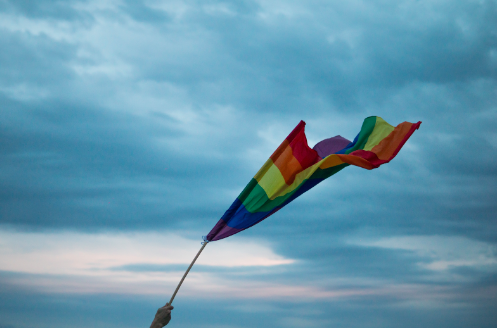
Person holding the Pride flag. Yannis Papanastasopoulos. CC 2.0

Love is one of the most powerful acts of humanity. Unfortunately, it is an act not all can do freely. For those in countries that disavow LGBTQI+ rights, love is illegal for them. To express it is a crime, dangerous and potentially life-threatening. For these individuals, there almost seems no hope. “I want you to imagine being beaten, interrogated, stabbed for who you love,” says Executive Director Kimahli Powell in a YouTube video by Rainbow Railroad titled SAVE A LGBTQI LIFE. “I want you to imagine this is all happening to you because you live in one of over 70 countries where your government not only tolerates, but supports and initiates this violence towards you—and in some cases, you might even face the death penalty all for loving who you love.”

Rainbow Railroad is a non-profit organization solely focused on rescuing and aiding LGBTQI+ individuals across the globe. They help those who are living in countries that do not condone the LGBTQI+ community. Rainbow Railroad is currently “working on 30-50 open cases, confirming their details, putting them in touch with local resources and helping them identify safe routes for escape.”. One of their most recent cases helped Ahmed, an Egyptian activist and Rainbow Railroad rescuee, escape.

Ahmed was persecuted by his own country solely because he made the brave decision of brandishing the rainbow Pride Flag at a Marshrou’ Lelia concert in Cairo, Egypt. The consequence of the impactful decision? Ahmed being sentenced to jail for a little over three months. “It was the worst feeling I had ever felt,” states Ahmed in a video detailing his story on the Rainbow Railroad site. “Knowing that all of the country was against you and all of the country wanted to … arrest you and kill you.” Ahmed then pauses in the video and then pridefully states, “Now I am free.”

Egypt has no explicit laws condemning homosexuality, but the country has many ways of making the law work in their favor. Many individuals who are suspected of being apart of or supporting the LGBTQI+ community can face “debauchery and public morals laws with prison terms of up to 17 years” according to Lonely Planet's advice column for LGBTQI+ travellers going to Egypt. But they are not alone in their mistreatment.

Countries such as Malaysia, Brunei, Maldives, Yemen, United Arab Emirates, Syria, Saudi Arabia, Iran, Afghanistan have strict and life-threatening laws in place that subject anybody who is openly or suspected of being in the LGBTQI+ community in danger. The laws in place range from years in imprisonment, fines, public whipping/physical abuse, and in the worst cases, death. Rainbow Railroad has been able to aid the people in these countries, specifically Tarek and Mazen, a couple from Syria. They applied for aid and were granted asylum in Canada in 2016, where they now live happily and freely.

But how does Rainbow Railroad do it? They raise funds from donations that volunteers, visitors, or supporters of their cause can donate at any time. All donations are put into a general fund that helps the organizations overall mission. Rainbow Railroad also provides a way where one can turn their upcoming birthday party or celebration into a sponsored event. If a host opts to sponsor an event, the proceeds they will raise go directly to a case they are sponsoring. According to a spokesperson for Rainbow Railroad, “Rainbow Railroad has community sponsorship, which means the organization facilitates helping LGBTQI refugees through the government PSR program (http://www.rstp.ca/en/refugee-sponsorship/the-private-sponsorship-of-refugees-program/). Groups of community members get together, raise about $20,000 to support a newcomer as they prepare for their journey, meet them at the airport and through their first year in Canada.” Rainbow Railroad also has volunteers across the globe to help with tasks from outsourcing people to verifying individuals request for help. For more information, click on their TAKE ACTION tab on their website, rainbowrailroad.com. There they list step by step how to get involved and how to contact them regarding how one wants to get involved.

Ahmed is one of the 198 people helped in 2018, but there are still many more individuals in need of escape. If you are interested in helping Rainbow Railroad, under their TAKE ACTION tab on their website, rainbowrailroad.com, list the many ways you could get involved with their organization. The most immediate way to help is to click the DONATE tab and give whatever you are able. Our capacity to love is what keeps us powerful and Rainbow Railroad continues to exemplify the actions that can be taken with said power.

OLIVIA HAMMOND is an undergraduate at Emerson College in Boston, Massachusetts. She studies Creative Writing, with minors in Sociology/Anthropology and Marketing. She has travelled to seven different countries, most recently studying abroad this past summer in the Netherlands. She has a passion for words, traveling, and learning in any form.