These footages were taken during a trip through Botswana in Africa. The videographer, Erwin Olmos, recalls it being “a tough trip, but at the same time a great experience.” Some places that are featured are Serowe Rhino reserve, Moremi National Park, Chobe River and Chobe National Park, Amazing Okavango Delta and many towns.
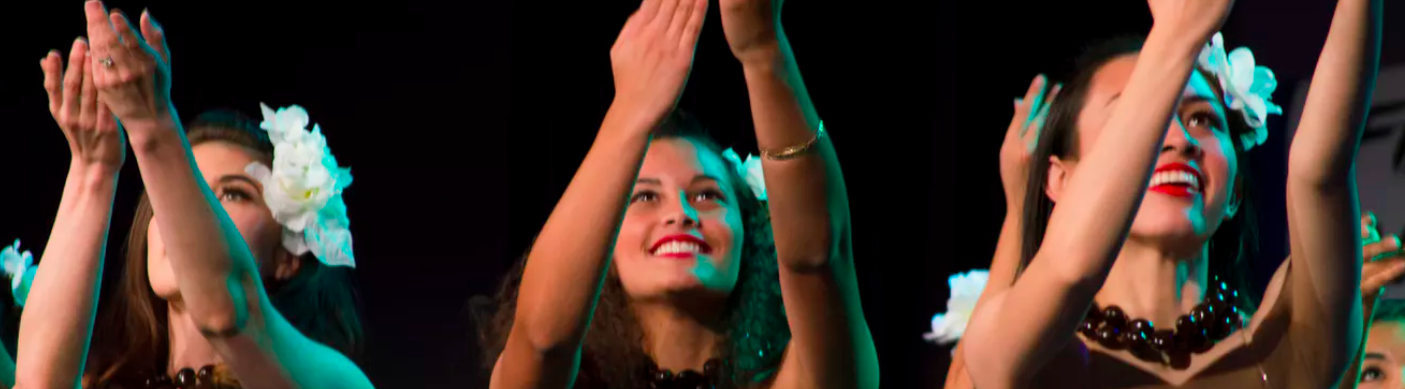
Dance is a unique way of passing on cultural stories to a younger generation. Aaron Hawkins/Flickr.com, CC BY-ND
How the Loss of Native American Languages Affects our Understanding of the Natural World
Alaska has a “linguistic emergency,” according to the Alaskan Gov. Bill Walker. A report warned earlier this year that all of the state’s 20 Native American languages might cease to exist by the end of this century, if the state did not act.
American policies, particularly in the six decades between the 1870s and 1930s, suppressed Native American languages and culture. It was only after years of activism by indigenous leaders that the Native American Languages Act was passed in 1990, which allowed for the preservation and protection of indigenous languages. Nonetheless, many Native American languages have been on the verge of extinction for the past many years.
Languages carry deep cultural knowledge and insights. So, what does the loss of these languages mean in terms of our understanding of the world.
Environmental knowledge
Embedded in indigenous languages, in particular, is knowledge about ecosystems, conservation methods, plant life, animal behavior and many other aspects of the natural world.
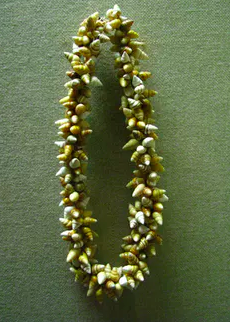
The shell necklace of Queen Liliʻuokalani. David Eickhoff/Flickr.com, CC BY
In Hawaiian traditions and belief systems,for example, the tree snails were connected to “the realm of the gods.” Hawaiian royalty revered them, which protected them from overharvesting.
The Bishop Museum in Honolulu holds a shell necklace, or lei, of Queen Lili‘uokalani, the last monarch of the Kingdom of Hawaii. It is made from tree snail shells, which signifies the high rank of female royalty. Wearing a shell was believed to provide “mana,” or spiritual power and a way to understand ancestral knowledge.
Many of these snails are now extinct and those remaining are threatened with extinction. Scientists are working with Hawaiian language experts to learn about the belief systems that once helped protect them and their habitats.
A tool for doctors
Words in indigenous languages can have cultural meanings, that can be lost during translation. Understanding the subtle differences can often shift one’s perspective about how indigenous people thought about the natural world.
For example, as an indigenous scholar of the environment, I led a team some years ago of language experts, elders and scholars from Montana and Alberta, Canada, to create a list of Blackfeet words, called a lexicon, of museum objects. The elders I worked with noted that the English word “herb,” which was used to describe most plant specimens within museums, did not have the same meaning in Blackfeet.
In English, the word “herb” can have numerous meanings, including a seasoning for food. The closest English word to herb in Blackfeet is “aapíínima’tsis.” The elders explained this word means “a tool that doctors use.”
The hope is that the lexicon and audio files recorded in the Blackfeet language that our research helped create, might assist future scholars access the embedded meanings in languages.
Blackfeet Word of the Day. Blackfeet History, Language and Environmental Knowledge.
Saving vanishing languages
Many Native American communities in the United States are now working to save these cultural insights and revitalize their languages.
In Wisconsin, an Ojibwe language school called “Waadookodaading,”translated literally as “a place where people help each other,” immerses its students in the environmental knowledge embedded in the language.
The Ojibwe believe that theirs is a language of action. And the best way for children to learn is by doing and observing the natural world. Each spring, for example, the students go into the woods to gather maple sap from trees, which is processed into maple syrup and sugar. These students learn about indigenous knowledge of plants, their habitats and uses.
Language loss can be considered as extreme as the extinction of a plant or an animal. Once a language is gone, the traditional knowledge it carries also gets erased from society.
Efforts are now underway worldwide to remind people of this reality. The United Nations has designated 2019 as the “International Year of Indigenous Languages” in order to raise awareness of indigenous languages as holders of “complex systems of knowledge” and encourage nation states to work toward their revitalization.
The loss of indigenous languages is not Alaska’s concern alone. It affects all of us.
ROSALYN R. LAPIER is an Associate Professor of Environmental Studies at The University of Montana.
THIS ARTICLE WAS ORIGINALLY PUBLISHED ON THE CONVERSATION
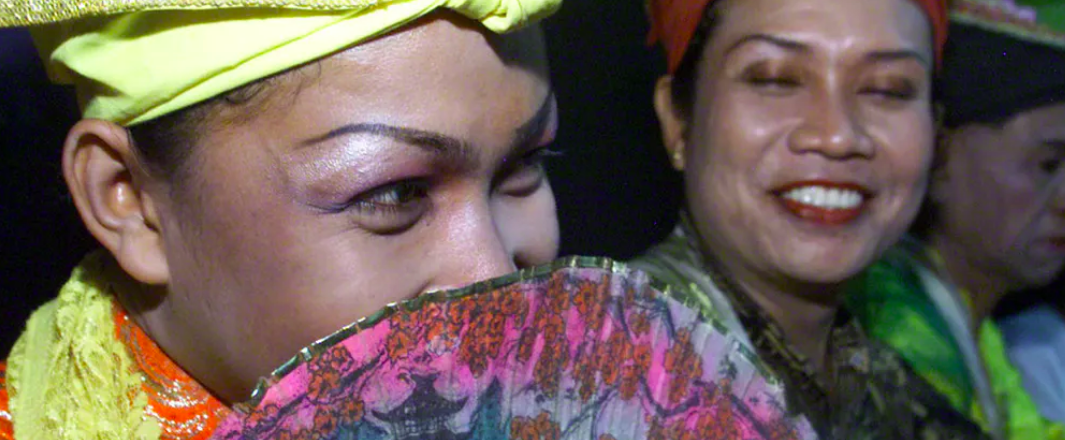
Bissu, or transgender priests, are one of five genders recognized by the Bugis. Reuters
What We Can Learn From an Indonesian Ethnicity that Recognizes Five Genders
On June 13, when a judge in Oregon allowed a person to legally choose neither sex and be classified as “nonbinary,” transgender activists rejoiced. It’s thought to be the first ruling of its kind in a country that, until now, has required that people mark “male” or “female” on official identity documents.
The small victory comes in the wake of a controversial new law in North Carolina that prevents transgender people from using public restrooms that do not match the sex on their birth certificates.
The conflict rooted in these recent policies is nothing new; for years, people have been asking questions about whether the “sex” we are born with should dictate things like which public facilities we can use, what to tick on our passport application and who’s eligible to play on particular sports teams.
But what if gender were viewed the same way sex researcher Alfred Kinsey famously depicted sexuality – as something along a sliding scale?
In fact, there’s an ethnic group in South Sulawesi, Indonesia – the Bugis – that views gender this way. For my Ph.D. research, I lived in South Sulawesi in the late 1990s to learn more about the Bugis’ various ways of understanding sex and gender. I eventually detailed these conceptualizations in my book “Gender Diversity in Indonesia.”
Does society dictate our gender?
For many thinkers, such as gender theorist Judith Butler, requiring everyone to choose between the “female” and “male” toilet is absurd because there is no such thing as sex to begin with.
According to this strain of thinking, sex doesn’t mean anything until we become engendered and start performing “sex” through our dress, our walk, our talk. In other words, having a penis means nothing before society starts telling you that if you have one you shouldn’t wear a skirt (well, unless it’s a kilt).
Nonetheless, most talk about sex as if everyone on the planet was born either female or male. Gender theorists like Butler would argue that humans are far too complex and diverse to enable all seven billion of us to be evenly split into one of two camps.
This comes across most clearly in how doctors treat children born with “indeterminate” sex (such as those born with androgen insensitivity syndrome, hypospadias or Klinefelter syndrome). In cases where a child’s sex is indeterminate, doctors used to simply measure the appendage to see if the clitoris was too long – and therefore, must be labeled a penis – or vice versa. Such moves arbitrarily forced a child under the umbrella of one sex or the other, rather than letting the child grow naturally with their body.
Gender on a spectrum
Perhaps a more useful way to think about sex is to see sex as a spectrum.
While all societies are highly and diversely gendered, with specific roles for women and men, there are also certain societies – or, at least, individuals within societies – who have nuanced understandings of the relationship between sex (our physical bodies), gender (what culture makes of those bodies) and sexuality (which kinds of bodies we desire).
Indonesia may be in the press for terror attacks and executions, but it’s actually a very tolerant country. In fact, Indonesia is the world’s fourth-largest democracy, and furthermore, unlike North Carolina, it currently has no anti-LGBT policy. Moreover, Indonesians can select “transgender” (waria) on their identity card (although given the recent, unprecedented wave of violence against LGBT people, this may change).
The Bugis are the largest ethnic group in South Sulawesi, numbering around three million people. Most Bugis are Muslim, but there are many pre-Islamic rituals that continue to be honored in Bugis culture, which include distinct views of gender and sexuality.
Their language offers five terms referencing various combinations of sex, gender and sexuality: makkunrai (“female women”), oroani (“male men”), calalai (“female men”), calabai (“male women”) and bissu (“transgender priests”). These definitions are not exact, but suffice.
During the early part of my Ph.D. research, I was talking with a man who, despite having no formal education, was a critical social thinker.
As I was puzzling about how Bugis might conceptualize sex, gender and sexuality, he pointed out to me that I was mistaken in thinking that there were just two discrete sexes, female and male. Rather, he told me that we are all on a spectrum:
Imagine someone is here at this end of a line and that they are, what would you call it, XX, and then you travel along this line until you get to the other end, and that’s XY. But along this line are all sorts of people with all sorts of different makeups and characters.
This spectrum of sex is a good way of thinking about the complexity and diversity of humans. When sex is viewed through this lens, North Carolina’s law prohibiting people from choosing which toilet they can use sounds arbitrary, forcing people to fit into spaces that might conflict with their identities.
SHARYN GRAHAM DAVIES is an Associate Professor of Social Sciences at Auckland University of Technology.
THIS ARTICLE WAS ORIGINALLY PUBLISHED ON THE CONVERSATION
Swimming with Whale Sharks in Mexico: Ecotourism or Exploitation?
Whale Shark ecotourism in Cancun, with tour companies recruiting the very fishermen who killed sharks in the past as tour operators working toward their preservation.
Read MoreLights of the Medina
This video depicts the famous medinas in Marrakesh, Morocco. The medinas are huge hubs of commerce for locals and tourists. Every sort of product can be found in the medinas, such as food, clothes, souvenirs, performances, etc.
Read More
"It had long since come to my attention that people of accomplishment rarely sat back and let things happen to them. They went out and happened to things." -Leonardo DaVinci

"A journey is like marriage. The certain way to be wrong is to think you control it." -John Steinbeck
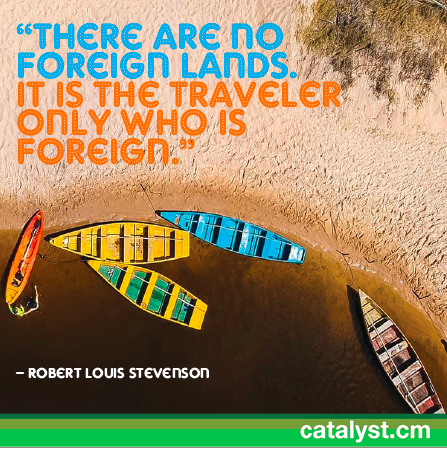
"There are no foreign lands. It is the traveler only who is foreign." -Robert Louis Stevenson
One Woman’s Mission to End Polio in Pakistan
Polio is still a critical problem in Pakistan where vaccination efforts have stalled. Khalida Nasreen is on a mission to change that. Every morning at 5 a.m., she hops on a motorbike and makes her way around Karachi, going door-to-door to inoculate the children in town. It’s a dangerous job as healthcare workers have lost their lives in the same pursuit, but that doesn’t stop Khalida. Thanks to her efforts, the prevalence of polio in town has decreased, building a brighter future for the next generation of Pakistani children.
Sumo Soup: Living Large with Chanko Nabe
Want to bulk up like a sumo wrestler? Try chanko nabe, an ancient Japanese dish that is synonymous with sumo culture. While the average wrestler eats about 10 bowls of it per day, non-wrestlers can enjoy this traditional soup at any number of chanko restaurants, including Kotogaume.
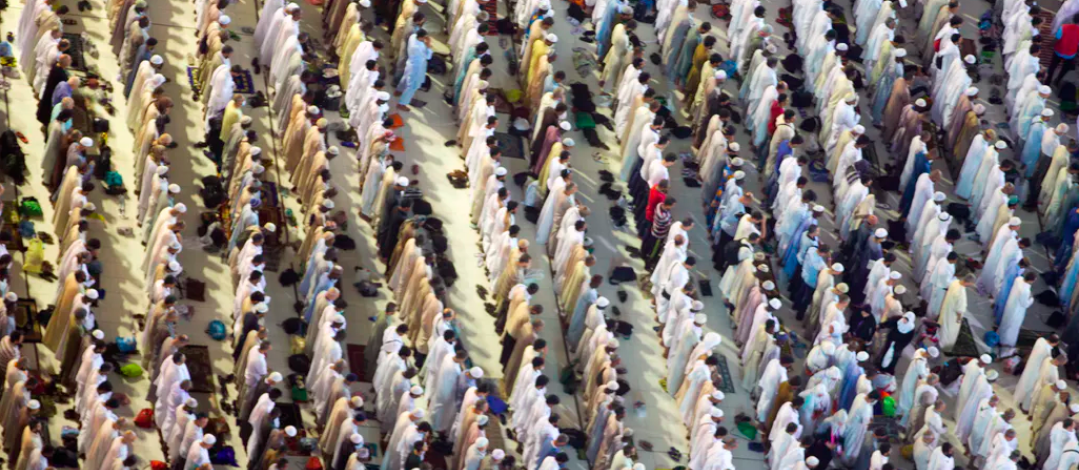
Muslim pilgrims pray at the Grand Mosque, ahead of the annual Hajj pilgrimage in Mecca, Saudi Arabia, in August 2017. AP Photo/Khalil Hamra
What is the Hajj?
Nearly 2 million Muslim pilgrims are gathering in the holy city of Mecca in Saudi Arabia for the Hajj. This five-day pilgrimage is a once-in-a-lifetime obligation for all Muslims who have the physical and financial ability to undertake the journey.
What is the religious and political significance of this annual pilgrimage?
The fifth pillar
Millions of Muslims come from countries as diverse as Indonesia, Russia, India, Cuba, Fiji, the United States and Nigeria – all dressed in plain white garments.
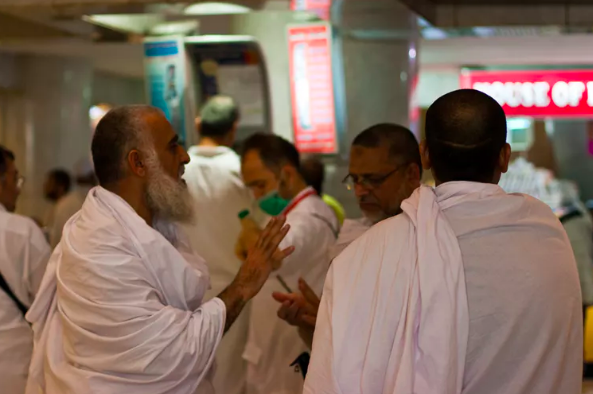
Pilgrims dressed in white garments. Al Jazeera English, CC BY-NC
Men wear seamless, unstitched clothing, and women, white dresses with headscarves. The idea is to dress plainly so as to mask any differences in wealth and status.
The pilgrimage is considered to be the fifth pillar of Islamic practice. The other four are the profession of faith, five daily prayers, charity and the fast of Ramadan.
The first day of the Hajj
The rites of the Hajj are believed to retrace events from the lives of prominent prophets such as Ibrahim and Ismail.
Pilgrims start by circling the “Holy Kaaba,” the black, cube-shaped house of God, at the center of the most sacred mosque in Mecca, seven times. The Kaaba occupies a central place in the lives of Muslims. Muslims, all over the world, are expected to turn toward the Kaaba when performing their daily prayers.
The Quran tells the story of Ibrahim, who when commanded by God, agreed to sacrifice his son, Ismail. Muslims believe the Kaaba holds the black stone upon which Ibrahim was to carry out his oath.
Pilgrims are bound by specific rules regarding going around the Kaaba. They may kiss, touch or approach the Kaaba during the pilgrimage as a sign of their devotion.
In performing these rituals, they join a long line of pilgrims to Mecca – including Prophet Muhammad, who circled the Kaaba.
Pilgrims then proceed to a ritual walk – about 100 meters from the Kaaba – to hills known as “Safa” and “Marwah.” Here they re-create another significant event recorded in the Quran.
The story goes that Ibrahim was granted a son by God through his Egyptian slave girl Hajar. After the birth of Ismail, God instructed Ibrahim to take Hajar and her newborn son out into the desert and leave them there. Ibrahim left them near the present-day location of the Kaaba. Ismail cried out with thirst and Hajar ran between two hills, looking for water until she turned to God for help.
God rewarded Hajar for her patience and sent his angel Jibreel to reveal a spring, which today is known as “Zamzam Well.” Pilgrims drink water from the sacred well and may take some home for blessings.
The second day of the hajj
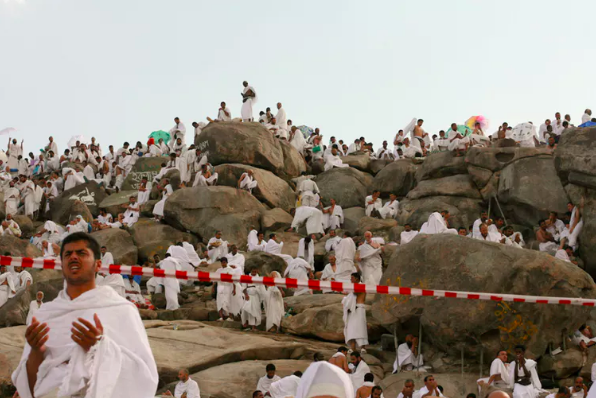
Pilgrims praying on Arafat. Al Jazeera English, CC BY-SA
The hajj “climaxes” with a sojourn in the plains of Arafat near Mecca. There, pilgrims gather in tents, spend time with one another and perform prayers. Some pilgrims will ascend a hill known as the “Mount of Mercy,” where Prophet Muhammad delivered the farewell sermontoward the end of his life.
They then proceed to an open plain near Mecca, often a highlight of the journey for many pilgrims. Muslims believe that the spirit of God comes closer to Earth in this place at the time of the pilgrimage.
As a scholar of global Islam, during my fieldwork I have interviewed those who have gone on the Hajj. They have described to me their personal experiences of standing in the plains of Arafat or circling the Kaaba with fellow Muslims and feeling a close communion with God.
Final three days
Afterwards, pilgrims move to Mina, also known as the Tent City where more than 100,000 tents house the millions of pilgrims about 5 kilometers from the holy city of Mecca.
Here they recall how Satan tried to tempt Ibrahim to disobey God’s call to sacrifice Ismail. Ibrahim, however, remained unmoved and informed Ismail, who was willing to be offered to God. To reenact Ibrahim’s rebuff of Satan’s temptation, pilgrims throw small stones at a stone pillar.
They then proceed to follow Ibrahim in the act of sacrifice. The Quran says just as Ibrahim attempted to kill his son, God intervened and a ram was killed in place of Ismail. In remembrance, Muslims all over the world ritually slaughter an animal on this day. The “festival of the sacrifice” is known as Eid al-Adha.
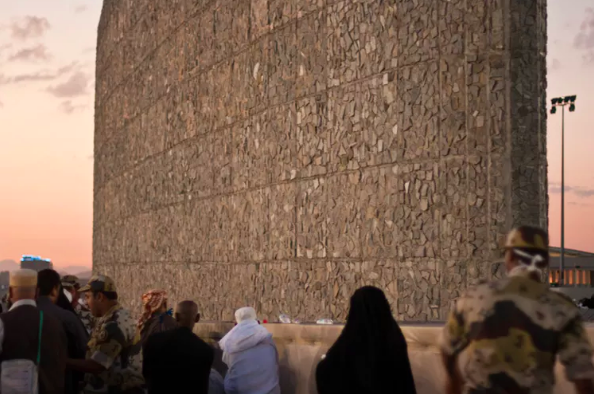
Pilgrims stoning the devil in Mina. Al Jazeera English, CC BY-SA
Many pilgrims spend the next few days in Mina, where they repeat some of the rituals. It is where they start to transition to their worldly life by putting on their everyday clothes.
Muslims believe that a proper performance of the Hajj can absolve them of any previous sins. However, they also believe that just undertaking the pilgrimage is not enough: It is up to God to judge, based on the intention of those undertaking the pilgrimage.
Creating one Muslim community
Of course, the pilgrimage does not take place in a political void. The Hajj is a massive organizational project for the Saudi authorities. Issues concerning crowd management, security, traffic and tensions constantly plague the successful organization of the event. A tragic stampede in 2015 left over 700 dead. Since then Saudi authorities review preparations even more carefully.
There are other tensions too that come up at this time: Some Shiagovernments such as Iran, for example, have leveled charges alleging discrimination by Sunni Saudi authorities.
This year, Muslims from Canada are concerned about logistics traveling back from the Hajj. Saudi Arabia has suspended all direct flights to Canada in a diplomatic feud sparked by tweets related to the Kingdom’s human rights violations.
To address such issues, Muslims in the past have called to put together an international, multi-partisan committee to organize the pilgrimage. Perhaps that could help avoid regional or sectarian conflicts. The Hajj, after all, is any individual Muslim’s single most symbolic ritual act that reflects the ideal of unity.
By requiring Muslims to don the same clothes, pray in the same space and perform the same rituals, the Hajj has the potential to unite a global Muslim community across national and class boundaries.
KEN CHITWOOD is a Ph.D. Candidate of Religion in the Americas and Global Islam at the University of Florida
THIS ARTICLE WAS ORIGINALLY PUBLISHED ON THE CONVERSATION
Rio
A year ago, Yury Sharov was asked to go to Rio with a couple of musicians from London to make a music video for their song, capturing their holidays on the IPanema beach. After the video was done, Yury had a lot of material that was not used and decided to make this short video about all the sides of Rio.
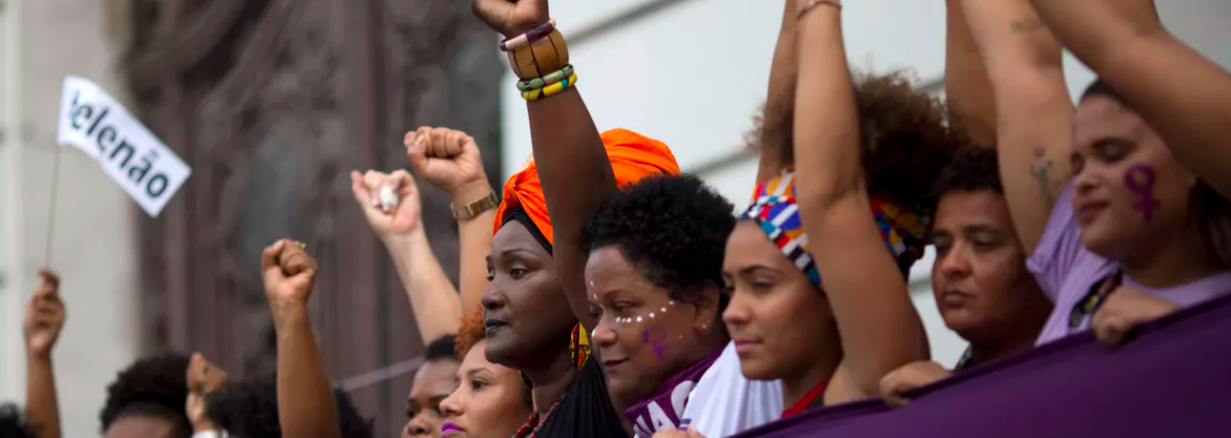
Black women in Brazil protest presidential frontrunner Jair Bolsonaro, who is known for his disparaging remarks about women, on Sept. 29, 2018. AP Photo/Silvia Izquierdo
Sexism, Racism Drive More Black Women to Run for Office in Both Brazil and US
Motivated in part by President Donald Trump’s disparaging remarks about women and the numerous claims that he committed sexual assault, American women are running for state and national office in historic numbers. At least 255 women are on the ballot as major party congressional candidates in the November general election.
The surge includes a record number of women of color, many of whom say their candidacies reflect a personal concern about America’s increasingly hostile, even violent, racial dynamics. In addition to the 59 black female congressional candidates, Georgia’s Stacey Abrams hopes to become her state’s first black governor.
The U.S. is not the only place where the advance of racism and misogyny in politics has has spurred black women to run for office at unprecedented levels.
In Brazil, a record 1,237 black women will be on the ballot this Sunday in the country’s Oct. 7 general election.
Brazilian women rise up
I’m a scholar of black feminism in the Americas, so I have been closely watching Brazil’s 2018 campaign season – which has been marked by controversy around race and gender – for parallels with the United States.
Last weekend, hundreds of thousands of Brazilian women marched nationwide against the far-right presidential frontrunner Jair Bolsonaro, under the banner of #EleNao – #NotHim.
Bolsonaro, a pro-gun, anti-abortion congressman with strong evangelical backing, once told a fellow congressional representative that she “didn’t deserve to be raped” because she was “terrible and ugly.”
Bolsonaro has seen a boost in the polls since he was stabbed at a campaign rally on Sept. 8 in a politically motivated attack.
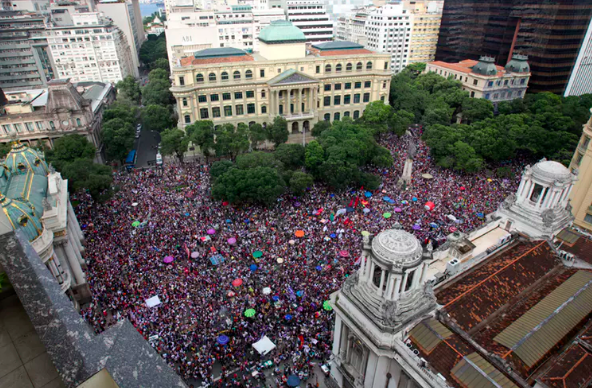
Protests in Rio de Janeiro against Jair Bolsonaro on Sept. 29, organized under the hashtag #EleNao (#NotHim). AP Photo/Silvia Izquierdo
Brazil has shifted rightward since 2016, when the left-leaning female president Dilma Rousseff was ousted in a partisan impeachment process that many progressives regard as a political coup.
Her successor, then-Vice President Michel Temer, quickly passed an austerity budget that reversed many progressive policies enacted under Rousseff and her predecessor, Workers Party founder Luís Inácio “Lula” da Silva.
The move decimated funding for agencies and laws that protect women, people of color and the very poor.
Racism in Brazil
In Brazil, these three categories – women, people of color and the very poor – tend to overlap.
Brazil, which has more people of African descent than most African nations, was the largest slaveholding society in the Americas. Over 4 million enslaved Africans were forcibly taken to the country between 1530 and 1888.
Brazil’s political, social and economic dynamics still reflect this history.
Though Brazil has long considered itself colorblind, black and indigenous Brazilians are poorer than their white compatriots. Black women also experience sexual violence at much higher rates than white women – a centuries-old abuse of power that dates back to slavery.
Afro-Brazilians – who make up just over half of Brazil’s 200 million people, according to the 2010 census – are also underrepresented in Brazilian politics, though sources disagree on exactly how few black Brazilians hold public office.
Three Afro-Brazilians serve in the Senate, including one woman. In the 513-member lower Chamber of Deputies, about 20 percent identify as black or brown. Women of color hold around 1 percent of seats in the Chamber of Deputies.
Black women step into the fray
That could change on Sunday.
This year, 9,204 of the 27,208 people running for office across Brazil are women, which reflects a law requiring political parties to nominate at least 30 percent women. About 13 percent of female candidates in 2018 are Afro-Brazilian.

A campaign ad for Rio city council member Talíria Petrone, who is running for Congress.Facebook
In most Brazilian states, that’s a marked increase over Brazil’s last general election, in 2014, according to the online publication Congresso em Foco.
In São Paulo, Brazil’s most populous state, 105 black women ran for office in 2014. This year, 166 are. In Bahia state, there are 106 black female candidates for political office, versus 59 in 2014. The number has likewise doubled in Minas Gerais, from 51 in 2014 to 105 this year.
As in the United States, Brazil’s black wave may be a direct response to alarming social trends, including sharp rises in gang violence and police brutality, both of which disproportionately affect black communities.
But many female candidates in Rio de Janeiro, Brazil’s second largest city, say one specific event inspired them to run.
In March, Marielle Franco, an Afro-Brazilian human rights activist and Rio de Janeiro city councilwoman, was assassinated – the 11th Brazilian activist to be murdered since November 2017.
Franco’s murder remains unsolved, but she was an outspoken critic of the military occupation of Rio’s poor, mostly black favela neighborhoods. The ongoing police investigation has implicated government agents in the shooting, which also killed her driver.
Her death unleashed an avalanche of activism among black women in Rio de Janeiro, with new groups offering fundraising and political training for female candidates of color.
On Sunday, 231 black women from Rio de Janeiro state will stand for election in local, state and federal races – more than any other state in Brazil and more than double the number who ran in 2014.
Black representation from Rio to Atlanta
Black women may have been historically excluded from Brazil’s formal political arena, but they have been a driving force for social and political change since the country’s transition from dictatorship to democracy in 1985.
Decades before #MeToo, Brazilian women of color were on the front lines of activism around issues like gender-based violence, sexual harassment and abortion.
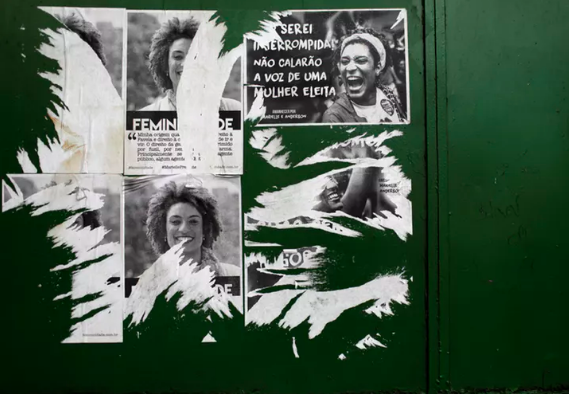
The March 2018 assassination of Rio de Janeiro city councilwoman, Marielle Franco, spurred a wave of black women running for local and federal office in Brazil. Reuters/Ricardo Moraes
Brazil has hundreds of black women’s groups. Some, including Geledes, a center for public policy, are mainstays of the Brazilian human rights movement. The founder of the Rio de Janeiro anti-racism group Criola, Jurema Werneck, is now the director of Amnesty International in Brazil.
The fact that thousands of black women, both veteran activists and political newcomers, will appear on the ballot on Sunday is testament to their efforts.
As in the United States, black Brazilian women’s demand for political representation is deeply personal. They have watched as their mostly male and conservative-dominated congresses chipped away at hard-won protections for women and people of color in recent years, exposing the fragility of previous decades’ progress on race and gender.
Black women in Brazil and the U.S. know that full democracy hinges on full participation. By entering into politics, they hope to foster more inclusive and equitable societies for all.
KIA LILLY CALDWELL is a Professor of African, African American, and Diaspora Studies at the University of North Carolina at Chapel Hill.
THIS ARTICLE WAS ORIGINALLY PUBLISHED ON THE CONVERSATION
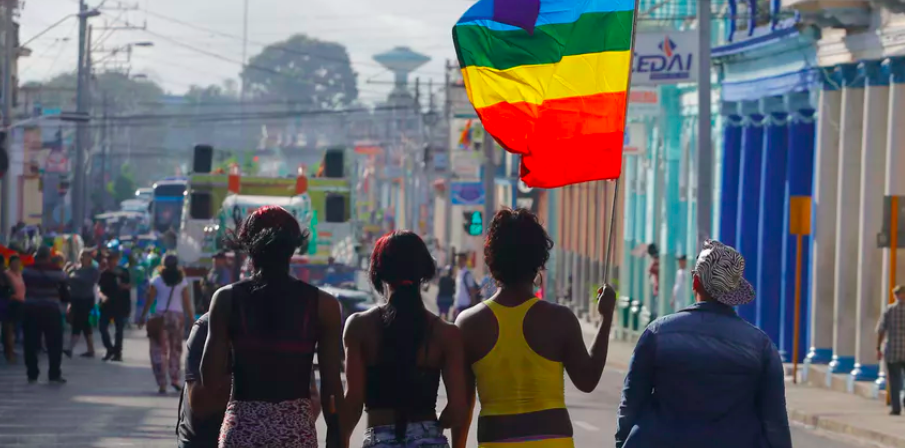
As gay Cubans gain more rights, opposition is also growing. AP Photo/Desmond Boylan
As Cuba Backs Gay Marriage, Churches Oppose the Government’s Plan
Cubans are debating a constitutional reform that, among other legal changes, would open the door to gay marriage. It would also prohibit discrimination against people based on sex, gender, sexual orientation and gender identity in the communist nation.
The proposed new Constitution, drafted by a special commission within Cuba’s National Assembly, was unveiled in July. If the National Assembly and President Miguel Díaz-Canel approve the document after a Feb. 24, 2019 public referendum, marriage would be defined as a “union between two people.”
Cuba’s 1976 Constitution, known as the Carta Magna, defines marriage as a union between a man and a woman. And it does not fully protect private enterprise, freedom of association or allows for same-sex marriage – despite growing social acceptance and political tolerance for such rights.
Emigrés who retain Cuban nationality have been invited to participate in Cuba’s public debate on the constitutional reform – though not to vote on it – via a digital forum run by the Foreign Ministry – a level of citizen outreach that’s “unprecedented” in Cuba, says Ernesto Soberón, the ministry’s director of consular affairs and Cubans residing overseas.
Cuba’s political process opens up
This lively, broad-based debate is a sign of how much Cuba – a main subject of my research as a professor of literature and cultural studies – has changed in recent years.
President Raúl Castro, who took over for his ailing older brother Fidel in 2006, began to open Cuba’s economy to foreign investment and normalized diplomatic relations with the United States, which has maintained its economic embargo on the Communist island since 1962.
Raúl Castro also worked with President Barack Obama to ease some economic restrictions on Cuba.
Castro stepped down in April 2018, handing power over to the much younger Díaz-Canel.
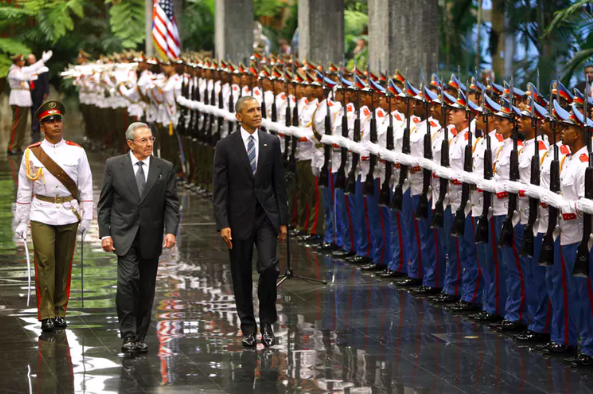
Presidents Barack Obama and Raúl Castro met in Havana in 2016, the culmination of the diplomatic ‘normalization’ process between the U.S. and Cuba. Reuters/Jonathan Ernst
Cuba has moderately amended its Carta Magna just three times. A 1978 constitutional reform created an official channel for youth political participation, for example, while that of 1992 liberalized elements of Cuba’s socialist economic model to revitalize Cuba’s economy.
Today’s proposed reform is a complete overhaul. It would add 87 articles, change 113 and eliminate 13, even a section of Article 5 affirming Cuba’s “advance toward a Communist society.”
Beyond legalizing gay marriage, the new Constitution would protect private property, limit the presidential term to five years and introduce the role of prime minister.
Intense debate has surrounded the possibility of marriage equality in Cuba, and not just within the government’s official public meetings. Cubans are also discussing and debating gay marriage with neighbors and friends, in the streets and online – a departure from Cuba’s traditionally more top-down style of government.
The rise of gay rights in Cuba
Cuba’s nascent LGBTQ rights movement also began under Raúl Castro, thanks in large part to the leadership of his daughter Mariela Castro, a National Assembly member and president of the semi-governmental Centro Nacional de Educación Sexual, founded in 1987 to advance sexual awareness in Cuba.
A lack of opinion polling makes it difficult to measure Cuban public support for gay marriage. But acceptance of homosexuality, both within the government and in civil society, has grown appreciably.
During the 1960s and 1970s, homosexuality was considered incompatible with Cuba’s model of the revolutionary man: atheist, heterosexual and anti-bourgeoisie. Gay people, active Christians and others who defied these ideals were sent to military work camps to “strengthen” their revolutionary character.
Today, the Cuban government appears to accept homosexuality as part of socialist society. In 2008 the National Assembly approved a law allowing sexual reasignment surgery.
La Habana holds annual marches against homophobia and transphobia and cities across the island celebrate the Gay Pride parade.
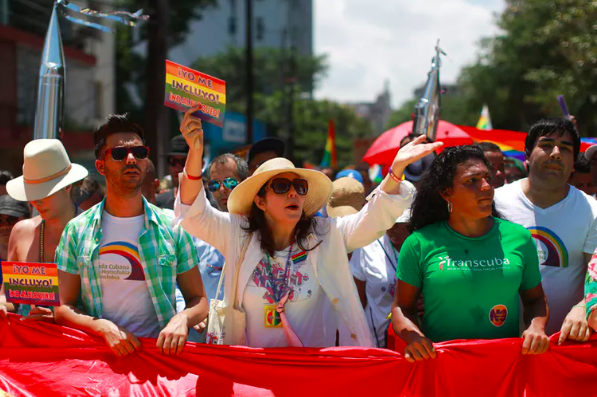
Mariela Castro (center), daughter of former president Raúl Castro, is a leader in Cuba’s LGBTQ movement.Reuters/Alexandre Meneghini
But legacies of intolerance remain.
The Assembly of God Pentecostal Church, the Evangelical League and the Methodist Church of Cuba, among other Christian churches, have issued a joint statement opposing gay marriage.
Traditionally, religion has taken a back seat to politics in Cuba. AP Photo/Cristobal Herrera
Their public letter, published on June 8, argues that such “gender ideology” has “nothing whatsoever to do with our culture, our independence struggles nor with the historic leaders of the Revolution.”
Cuba is a secular country where political ideology has historically trumped religion. Religious opposition to a government proposal is rare.
It is even more unusual for the church to attempt to mobilize the Cuban public, as some Christian leaders are trying to do now.
According to the Cuban magazine La Jiribilla, preachers on the streets have been handing out fliers saying gay marriage defies God’s “original design” for the family.
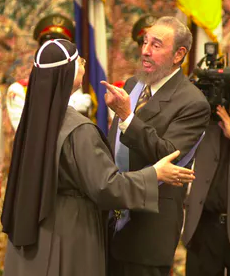
Traditionally, religion has taken a back seat to politics in Cuba. AP Photo/Cristobal Herrera
LBGTQ activists answer
Gay rights groups and feminists are responding with a creative show of force.
Clandestina, Cuba’s first online store, and the tattoo studio La Marca are spearheading a campaign called “Cuban design,” celebrating a “very original family” – phrasing that rebuts Christian claims about God’s design.
“More than anything, this is an issue of free expression,” Roberto Ramos Mori, of La Marca, said in an email. “The way to push back against hate is calmly, with intelligence – and, of course, humor.”
Cubans with internet access use the hashtag #mifamiliaesoriginal to signal their support for LGBTQ rights on social media.
The church’s powerful opposition to marriage equality reflects a strategy commonly deployed across Latin America, says the Cuban feministAilynn Torres Santana.
Catholic and evangelical groups in Ecuador used similar language, for example, to oppose a 2017 law allowing citizens to choose their own gender identifier, she says. In response to the legislation – which recognized gender as “a binary that is socially and culturally created, patriarchal and heteronormative” – churches called for “citizens to live in harmony with nature.”
Similar scenes played out when both Colombia and Brazil advanced LGBTQ rights, with Christian groups dismissing any attempt to change traditional gender roles as the “result” of what they pejoratively call “gender ideology.”
What’s next for Cuba
Gay marriage is not the only battlefield for Cuba’s newly empowered churches.
Abortion, illegal in most of Latin America, has been a woman’s right in Cuba since 1965. Traditionally, not even Cuba’s Catholic church publicly opposed it.
Recently, though, Christians in Cuba have begun publicly advocatingagainst abortion.
If conservative religious groups manage to prevent gay marriage in Cuba, I believe it would be a setback for social progress on the island.
But the mere existence of alternative voices in Cuba’s public sphere – including that of its churches – is, itself, proof that the country has already changed.
MARÍA ISABEL ALFONSO is a Professor of Spanish at St. Joseph's College of New York.
THIS ARTICLE WAS ORIGINALLY PUBLISHED ON THE CONVERSATION
Female Saudi Arabian Activist on Death Row for Peaceful Protest
On August 21, 2018, Saudi Arabian public prosecutors announced that they were considering the death penalty for five Saudi Shia activists. One of the five is Israa al-Ghomgham, a female activist who could become the first woman sentenced to death in Saudi Arabia. Ghomgham, along with four other Saudi Shia activists including her husband, engaged in peaceful demonstrations for Shia rights beginning in 2011 during the rise of the Arab Spring, which led to their 2015 arrests.
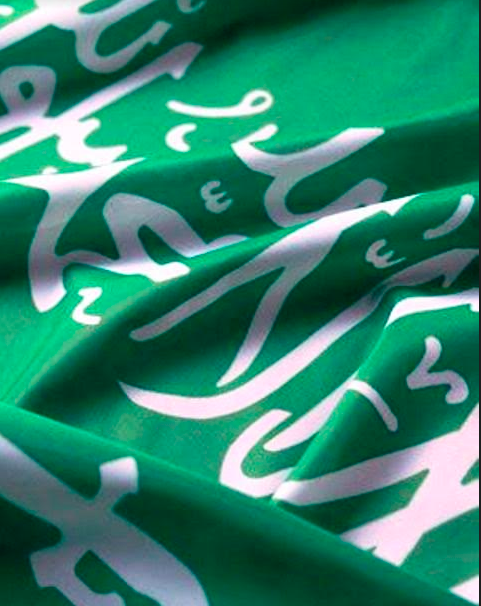
Saudi Arabian Flag. Iqbal Osman. Wikimedia Commons
“Any execution is appalling, but seeking the death penalty for activists like Israa al-Ghomgham, who are not even accused of violent behavior, is monstrous,” said Sarah Leah Whitson, who directs the Middle East sector of Human Rights Watch. “Every day, the Saudi monarchy’s unrestrained despotism makes it harder for its public relations teams to spin the fairy tale of ‘reform’ to allies and international business.”
Responding to peaceful protests with the death penalty is compromising both to proponents of human decency and order, and these actions are symptomatic of a larger illness. If Saudi Arabia is to continue to suppress and murder its own citizens, its actions could lead to its internal combustion. To preserve its tenuous position of prosperity, the Saudi Arabian government must honor the voices of its insurgents—or at least allow them to live.
Saudi Arabia, a desert country in the Middle East said to be the birthplace of Islam, holds a complex position at the pinnacle of capital and culture. It has the world’s third highest national total estimated value of natural resources. It is home to the world’s largest oil company, and it has been the proponent of various reform agendas, significant amount of money invested in solar energy. It is also ruled by the ultraconservative Wahhabi religious movement, which is part of Sunni Islam.
It has shown support for counterterrorism and revolutionary liberal and Arab Spring ideals and has supported rebel forces in Syria and Yemen, but internally it has been a breeding ground for violent forms of radical Islam, placing it at a crux between the most progressive and oppressive sides of the ideological spectrum. The nation’s 32-year-old king, Mohammed bin Salman, has been pushing to modernize his country, opening movie theatres and allowing women to drive for the first time—but his actions towards protestors despite his presentation of liberalism rings eerily close to the actions of Bashar al Assad, Syrian president who also began his reign by encouraging Westernization in Syria before cracking down on protestors and unleashing a bloody civil war. Under Salman, critics of the Saudi Arabian regime have been arrested in scores, and 58 people are currently on death row. Many of these prisoners are women, often arrested for protesting the country’s guardianship system, which places Saudi Arabian men in almost complete control of their daughters’ or wives’ lives.
Israa al-Ghomgham and her husband were arrested on December 5, 2015, and are on trial at the Specialized Criminal Court, which Saudi Arabia installed in 2008 and which has drawn expense criticism from human rights activists, sentencing eight protestors to death in 2014 and 14 in 2016. Currently human rights campaigners are working to secure her freedom and life.
EDEN ARIELLE GORDON is a writer, musician, and avid traveler. She attends Barnard College in New York.

The Truth About Where Hair Extensions Come From
This video takes us into the underground world of human hair trafficking. Wigs and extensions are often made of real human hair, but the hair is usually sourced from human trafficking.
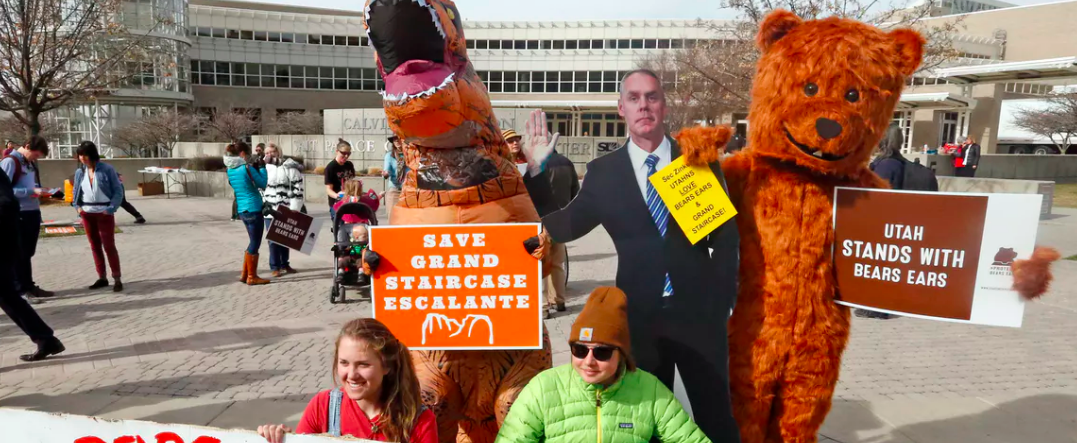
People protest the shrinking of Bears Ears National Monument. AP Photo/Rick Bowmer
Why Native Americans Struggle to Protect Their Sacred Places
Forty years ago the U.S. Congress passed the American Indian Religious Freedom Act so that Native Americans could practice their faith freely and that access to their sacred sites would be protected. This came after a 500-year-long history of conquest and coercive conversion to Christianity had forced Native Americans from their homelands.
Today, their religious practice is threatened all over again. On Dec. 4, 2017, the Trump administration reduced the Bears Ears National Monument, an area sacred to Native Americans in Utah, by over 1 million acres. Bears Ears Monument is only one example of the conflict over places of religious value. Many other such sacred sites are being viewed as potential areas for development, threatening the free practice of Native American faith.
While Congress created the American Indian Religious Freedom Act to provide “access to sacred sites,” it has been open to interpretation. Native Americans still struggle to protect their sacred lands.
Land-based religions
Native Americans have land-based religions, which means they practice their religion within specific geographic locations. As Joseph Toledo, a Jemez Pueblo tribal leader, says, sacred sites are like churches; they are “places of great healing and magnetism.”
Some of these places, as in the case of Bears Ears National Monument, are within federal public lands. As a Native American scholar, I have visited many of these places and felt their power.
For thousands of years, tribes have used Bears Ears for rituals, ceremonies and collecting medicines used for healing. The different tribes – the Hopi, Navajo, Ute Mountain Ute, Ute Indian Tribe and the Pueblo of Zuni – have worked to protect the land. Together they set up a nongovernmental organization, the Bears Ears Inter-Tribal Coalition to help conserve the landscape in 2015.
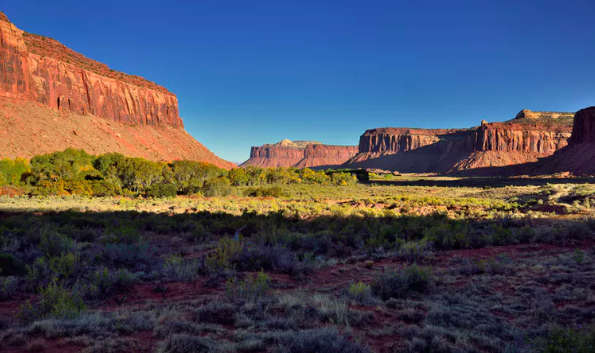
Native American tribes believe Bears Ears is the last of undisturbed sacred lands. Mark Stevens, CC BY-NC-SA
The tribes believe Bears Ears is one of the last large undisturbed areas in the lower 48 states and contains the spirits of those who once lived there. Bears Ears Navajo elder Mark Maryboy emphasized, “It’s very important that we protect the earth, the plants, and special ceremonial places in Bears Ears for future generations — not just for Native Americans, but for everybody.”
Sacred landscape
My great-grandparents, Páyotayàkχkumei and Kayetså’χkumi, (translated as Aims-while-flying-through-the-air and Hollering-in-the-air), were well-known religious leaders on the Blackfeet reservation. They lived in the foothills of the south side of the reservation. However, they went into the mountains and onto public lands in an area now called the Badger-Two Medicine in northcentral Montana to practice their religion.
My great-grandfather traveled into Badger canyon to trap eagles and gather their feathers which he used in ceremonies and for divine protection. My great-grandmother gathered medicinal plants used in healing ceremonies. Together they prayed and sought solitude in this sacred landscape.
Similar to Bears Ears, the Badger-Two Medicine, a 130,000-acre area within the Lewis and Clark National Forest, became embroiled in a controversy over potential natural resource development between 1982 and 2017. The Blackfeet tribe argued that these lands were sacred. And that tribal members, such as my great-grandparents, had used these lands for years for spiritual purposes.
The Blackfeet tribe ultimately succeeded in stopping development, but only after a 35-year-long fight with the Department of Interior, which initially approved almost 50 oil and gas leases. In 2017 Interior Secretary Jewell canceled the last of these leases. This means these public lands will not be used for natural resource development in the future.
Now my family and other Blackfeet, who have used the Badger-Two Medicine for millennia, can use these public lands for their religious practice in solitude.
Forty years later
The reality is, however, that not every dispute between tribes and the U.S. government ends up in favor of the tribes. Historically, Native American tribes have struggled to explain why certain landscapes are sacred for them.
In 1988, just 10 years after the passage of the American Indian Religious Freedom Act, the Supreme Court considered a case involving the construction of a U.S. Forest Service road through undeveloped federal lands sacred to northern California tribes in the Six Rivers National Forest.
The lower court had ruled in favor of the Yurok, Karok and Tolowa tribes stating the road would impact their religious practice.
However, the Supreme Court reversed the decision, ruling that building a road through a sacred landscape would not prohibit the tribes “free exercise” of religion.
The tribes lost, because the Supreme Court viewed the American Indian Religious Freedom Act as a policy and not a law with legal protections.
Ultimately, the road was not built because Congress stepped in and added this sacred area to the existing Siskiyou Wilderness, which is a protected area by federal law.
What was noteworthy in the SCOTUS deliberations, though, was the dissenting opinion of Justice William Brennan, who defended land-based religions. He said,
“Native American faith is inextricably bound to the use of land. The site-specific nature of Indian religious practice derives from the Native American perception that land is itself a sacred, living being.”
Indeed, religion scholars such as Yale professor Tisa Wenger point outthat “the most important religious freedom issues for Native Americans” center around protecting their sacred places.
At a time when the Trump administration has created a new task force to address discrimination against certain religious groups, the exclusion of Bears Ears and other places of religious significance from these discussions raises important questions about religious freedom in the United States and also the legacy of the American Indian Religious Freedom Act.
ROSALYN R. LAPIER is an Associate Professor of Environmental Studies at The University of Montana.
THIS ARTICLE WAS ORIGINALLY PUBLISHED ON THE CONVERSATION
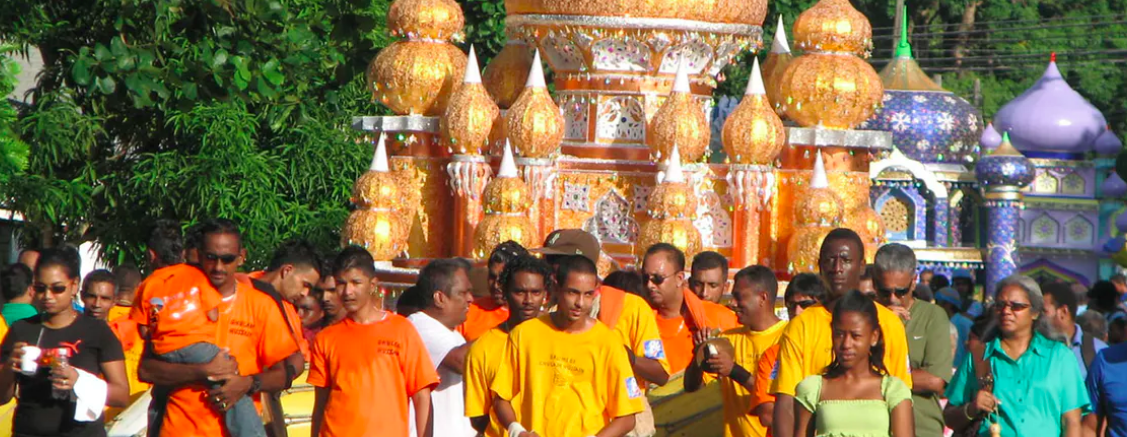
Hosay procession in St. James. Nicholas Laughlin, CC BY-NC-SA
How an Ancient Islamic Holiday Became Uniquely Caribbean
A throng of Trinidadians line up along the streets of St. James and Cedros to admire the vibrant floats with beautifully bedecked models of mausoleums. Their destination is the waters of the Caribbean, where the crowds will push them out to float.
This is part of the Hosay commemorations, a religious ritual performed by Trinidadian Muslims, that I have observed as part of the research for my forthcoming book on Islam in Latin America and the Caribbean.
What fascinates me is how a practice from India has been transformed into something uniquely Caribbean.
Re-enacting tragedy
During the 10 days of the Islamic month of Muharram, Shiite Muslims around the world remember the martyrdom of Hussein, Prophet Muhammad’s grandson, who was killed in a battle in Karbala, today’s Iraq, some 1,338 years ago. For Shiite Muslims Hussein is the rightful successor to Prophet Muhammad.
Ashura, the 10th day of Muharram, is marked by public mourning and a re-enactment of the tragedy. Shiite Muslims put on passion plays that include inflicting suffering, as a way to remember Hussein. In Iraq, Shiite are known to beat themselves with swords. In India, mourners whip themselves with sharp blades. Some Shiite also visit Hussein’s shrine in Iraq.
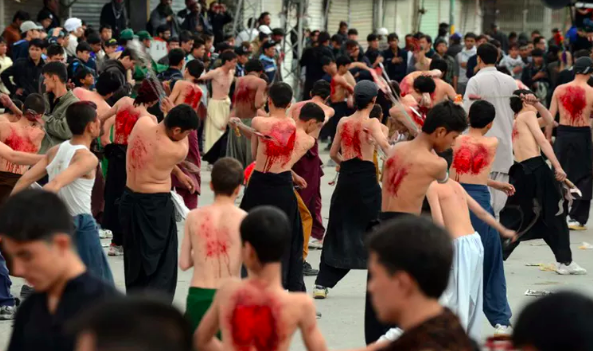
Ashura procession in Pakistan. Diariocritico de Venezuela, CC BY
The commemoration has also become a symbol for the broader Shiite struggle for justice as a minority in the global Muslim community.
Early history
In Trinidad, the 100,000 Muslims who make up 5 percent of the island’s total population, celebrate the day of Ashura, as Hosay – the name derived from “Hussein.”
The first Hosay festival was held in 1854, just over a decade after the first Indian Muslims began to arrive from India to work on the island’s sugar plantations.
But Trinidad at the time was under British colonial rule and large public gatherings were not permitted. In 1884, the British authorities issued a prohibition against Hosay commemorations. Approximately 30,000 people took to the streets, in Mon Repos, in the south, to protest against the ordinance. Shots fired to disperse the crowd killed 22 and injured over 100. The ordinance was later overturned.
The “Hosay Massacre” or “Muharram Massacre,” however, lives in people’s memories.
Colorful floats of Trinidad
These days, Hosay celebrations in St. James and Cedros not only recall Hussein, but also those killed during the 1884 Hosay riots. Rather than recreate the events through self-flagellation or other forms of suffering, however, people in Trinidad create bright and beautiful floats, called “tadjahs,” that parade through the streets to the sea.
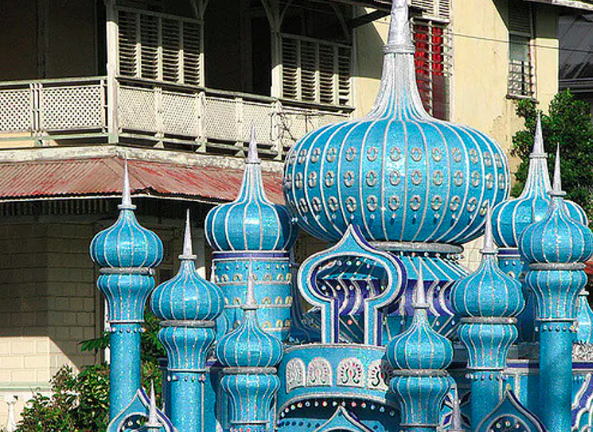
The tadjah, a colorful model of a mausoleum. Nicholas Laughlin, CC BY-NC-SA
Each tadjah is constructed of wood, paper, bamboo and tinsel. Ranging from a height of 10 to 30 feet, the floats are accompanied by people parading along and others playing drums, just as is the practice in India’s northern city of Lucknow. Meant to reflect the resting place of Shiite martyrs, the tadjahs resemble mausoleums in India. To many, their domes might be a reminder of the Taj Mahal.
Walking ahead of the tadjahs are two men bearing crescent moon shapes, one in red and the other in green. These symbolize the deaths of Hussein and his brother Hassan – the red being Hussein’s blood and the green symbolizing the supposed poisoning of Hassan.
The elaborateness of the tadjahs continues to increase each year and has become somewhat of a status symbol among the families that sponsor them.
A bit carnival, a bit Ashura
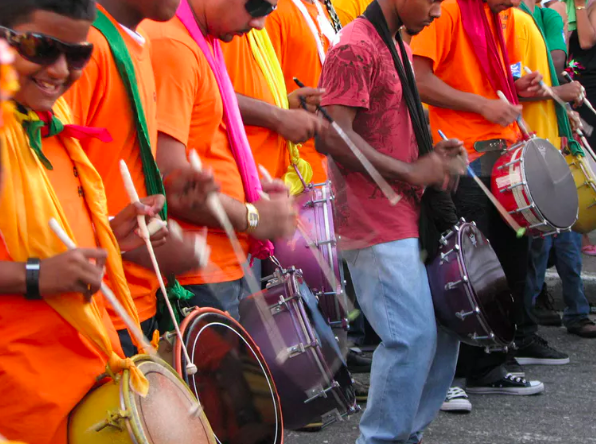
Trinidad’s Hosay brings in a more carnival-like joy to a somber remembrance. Nicholas Laughlin, CC BY-NC-SA
While the festival is certainly a somber one in terms of its tribute, it is also a joyous occasion where families celebrate with loud music and don festive attire. This has led some to compare Hosay to Trinidad’s world-famous carnival with its accompanying “joie de vivre.”
But there are also those who believe that the occasion should be a more somber remembrance of the martydom of Hussein. More conservative Muslims in Trinidad have made attempts to “reform” such celebrations. These Muslims believe local customs should be more in line with global commemorations like those in Iraq or India.
What I saw in the festival was an assertion of both the Indian and Trinidadian identity. For Shiite Muslims, who have dealt with oppression and ostracism – both in the past and in the present – it is a means of claiming their space as a minority in Trinidadian culture and resisting being pushed to the margins. At the same time, with its carnival-like feel, the festival could not be more Trinidadian.
Indeed, the celebrations each year illustrate how Indian and Trinidadian rituals and material culture merged to create a unique festival.
KEN CHITWOOD is a Ph.D. Candidate in Religion in the Americas and Global Islam at the University of Florida
THIS ARTICLE WAS ORIGINALLY PUBLISHED ON THE CONVERSATION
Nigeria’s First Female Car Mechanic Is Changing the World
Sandra Aguebor is the first female mechanic in Nigeria and the founder of the Lady Mechanic Initiative, an organization that teaches women from diverse backgrounds how to fix cars and become financially independent. In Aguebor's garage, you’ll find tools to fix cars and so much more.
Sudden Death Among Oldest Baobab Trees
Researchers link the 1,000 year old trees deaths to climate change.
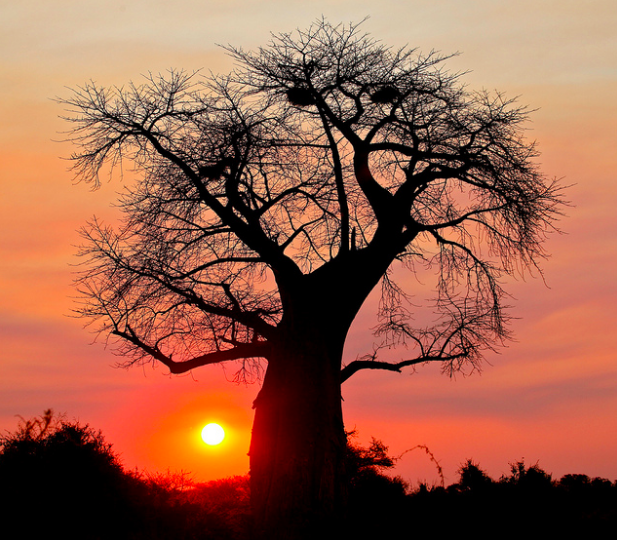
Baobab tree silhouetted against a Botswana sunset. Steve Jurvetson. CC 2.0
Over the past few decades many baobab trees have died suddenly in South Africa.
The baobab is a tall bulbous tree native to the savanna region in Africa and is known for being the largest and longest living flowering tree. While its usual lifespan is between 1,100 and 2,500 years, baobabs can survive for up to 3,000 years. The fruit of the tree is edible and extremely nutritious, containing 10 times the vitamin C of an orange. The leaves of the baobab can also be consumed and its bark can be used for robe, musical instrument strings, baskets, and waterproof hats.
With their incredible thousand year lifespan baobab trees are normally “very difficult to kill,” according to Kruger Park, a natural habitat for the tree in South Africa. The park also stated that the trees “can be burnt, or stripped of their bark, and they will just form new bark and carry on growing. When they do die, they simply rot from the inside and suddenly collapse, leaving a heap of fibres.”
Although more analysis is needed to solidly prove their hypothesis, many researchers believe that the sudden deaths of many baobabs is due at least in part to climate change. According Adrian Patrut, a chemist at Babeș-Bolyai University in Romania who co-authored a study on baobabs, the “trees are under pressure by temperature increases and drought,” likely do to the effects of climate change.
“Such a disastrous decline is very unexpected, Patrut told NPR. “It's a strange feeling, because these are trees which may live for 2,000 years or more, and we see that they're dying one after another during our lifetime. It's statistically very unlikely.”
Among the trees that have died are four of the biggest baobabs and nine of the oldest.
But the recent demise of the baobabs is not only an environmental problem. Baobabs have immense cultural significance in communities in southern Africa and are often used as shrines and meeting places. There is an indigenous myth that the first baobabs were arrogant about their size and lorded over the smaller plants. As a punishment they were torn from the ground by the gods who planted them wrong side up with their roots in the air. According to legend, evil spirits now haunt the plant’s white flowers and anyone who plucks one will be killed by a lion.
In another story a hollow baobab in Zambia was home to a giant python who was worshipped by the local people and answered their prayers for rain, good crops and hunting. Later, a white hunter came and shot the python leading to terrible consequences. According to the story the python’s ghost still haunts the tree.
While the future for baobabs certainly looks grim, there is hope that the current increase in awareness surrounding baobab death will result in monitoring of the trees which in turn will do more to ensure their health and survival.
EMMA BRUCE is an undergraduate student studying English and marketing at Emerson College in Boston. While not writing she explores the nearest museums, reads poetry, and takes classes at her local dance studio. She is passionate about sustainable travel and can't wait to see where life will take her.