5 Must-Visit Speakeasies Across the Globe

Inspired by the American Prohibition era, speakeasies exist in the most unconventional places today.
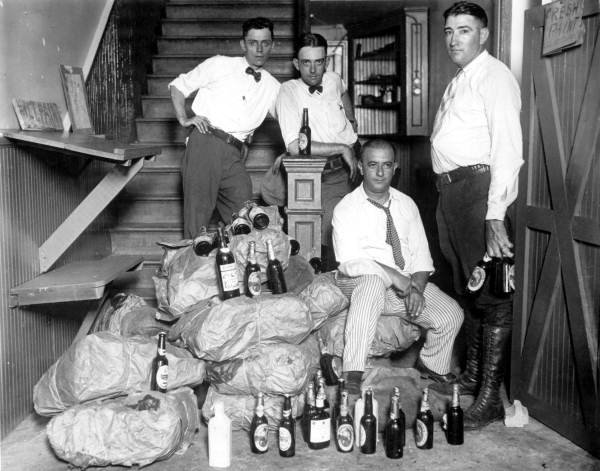
Black and white image of four men sitting on bags of confiscated liquor bottles in a house pose

Liquor raid by sheriff’s department circa 1925. Gleason W. Romer. CC0

Prohibition was a result of the 18th amendment of the U.S. Constitution in 1919, which stated that, “The manufacture, sale, or transportation of intoxicating liquors within, the importation thereof into, or the exportation thereof from the United States and all territory subject to the jurisdiction thereof for beverage purposes is hereby prohibited,” within a years time. The amendment marked a political move that brought dismay to many citizens. Daniel Okrent, author of "Last Call: The Rise and Fall of Prohibition," argues that, “Prohibition became the same sort of political football that people on either side would use trying to struggle to get it towards their goal, which was control of the country," with politicians using the ban and the controversies around it to push other agendas.

Although Prohibition was mainly an American phenomenon, many countries around the world have made, or are currently making, attempts to limit alcohol consumption. Currently, Nordic countries concerned with their citizens’ alcohol intake are resorting to alcohol monopolies, marketing bans and higher taxation to combat it. Japan also struggles with alcoholism, with 60% of alcoholics being businessmen that drink socially to help their careers. With alcohol consumption quadrupling in Japan since 1960, private treatment centers and halfway houses have been popping up to combat the issue.

One of the most recognizable institutions of the Prohibition era was the speakeasies. A speakeasy was a place where alcohol was illegally sold, usually underground or at least out of view due to the danger posed to workers, owners and patrons. Although the 18th amendment was repealed in 1933, speakeasies still exist throughout the United States and the world today. Listed below are five notable and currently operating speakeasies from various major cities.

Evans and Peel Detective Agency 

London, England
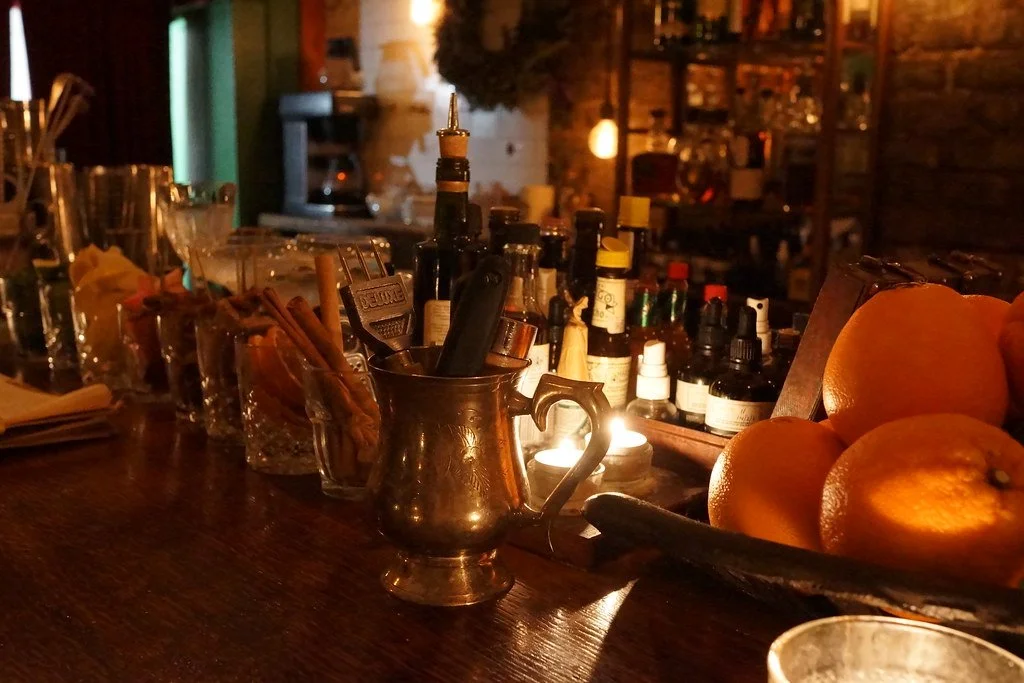
Bartop and Evans and Peel. Jan Mark Holzer. CC By 2.0.

Located in Chelsea, Evans and Peel is a detective-themed speakeasy. Appointments are booked through the company's website, which tells prospective visitors, “We’re Evans & Peel, a highly renowned Detective duo who operate from our hidden Agency in Chelsea, London. Go beyond our facade and discover our famous secret.” People are given the option to customize their experience, sending the detective agency information about the “case” they wish to consult on. To enter the bar, customers have to ring a buzzer to enter a fake detective’s office and stay in character, explaining that they have, “an appointment with the detective.” They are then guided down a staircase to consult with the detective. Emily Gray from "The Handbook"  recalls that, “The Agatha Christie fan that I am, I went into a long story about losing a very expensive earring that had been stolen from a jeweler in the 1920’s (apparently most people say they’ve just lost their cat).” Evans and Peel's drink menu is also outlaw themed, with most of its special cocktails based on some of the biggest real and fictional superstar criminals like Thomas “Tommy” Shelby, Bill McCoy and Al Capone. The "agency" claims to make the “World’s Best Old Fashioned.”

‘Al Capone’ themed drink on the menu. Evans and Peel.

Located at: 310c Earls Court Road, London, SW5 9BA, England

Bank Bar 

Manila, Philippines
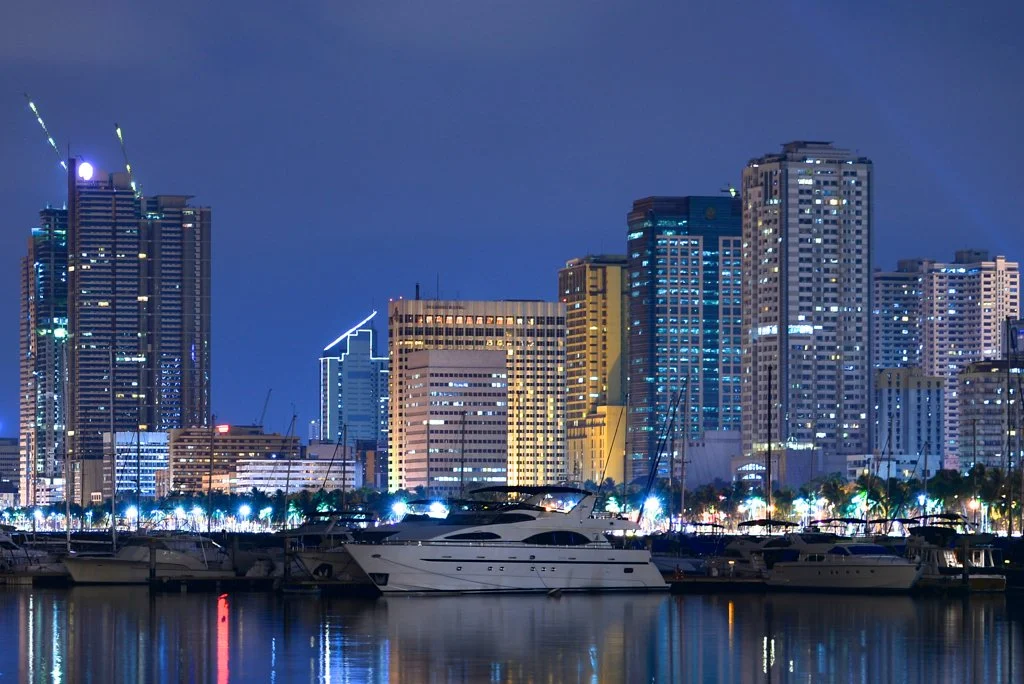
City skyline at night, with skyscrapers lit up in the background and small boats in the port.

Manila skyline at night. Thomas Yie. CC BY 2.0

In keeping with its name, the Bank Bar in Metro Manila's Bonifacio Global City has set up shop in the RBCB Savings Bank Corporate Center. A bouncer is waiting inside, next to a small door which opens into a fake stockroom that patrons walk through to enter the bar. Once in, there is a calming and luxurious ambiance. Erica Jahn notes in her review that, “The velvet sofa and candles on the marble table make the place attractive and intimate.” The bar advertises its own drinks drinks as including, “ Inventive cocktails and the widest selection of any bar in Manila” Although located in the Philippines, much of the bar's menu has an American theme. Bank Bar offers pasta, pizza, burgers, steaks, fried chicken and more American classics. The establishment is far from a simple American outpost, however, offering among other indigenous options Chicharon Bulaklak, a traditional Filipino appetizer and street food. Visitors are asked to call ahead and reserve their spots because space is limited and can fill up quickly.

Located at: 26th and 25th Street G/F RCBC Savings Bank Corporate Center, Taguig City, Luzon 1934, Philippines

Janai Coffee 

Tokyo, Japan
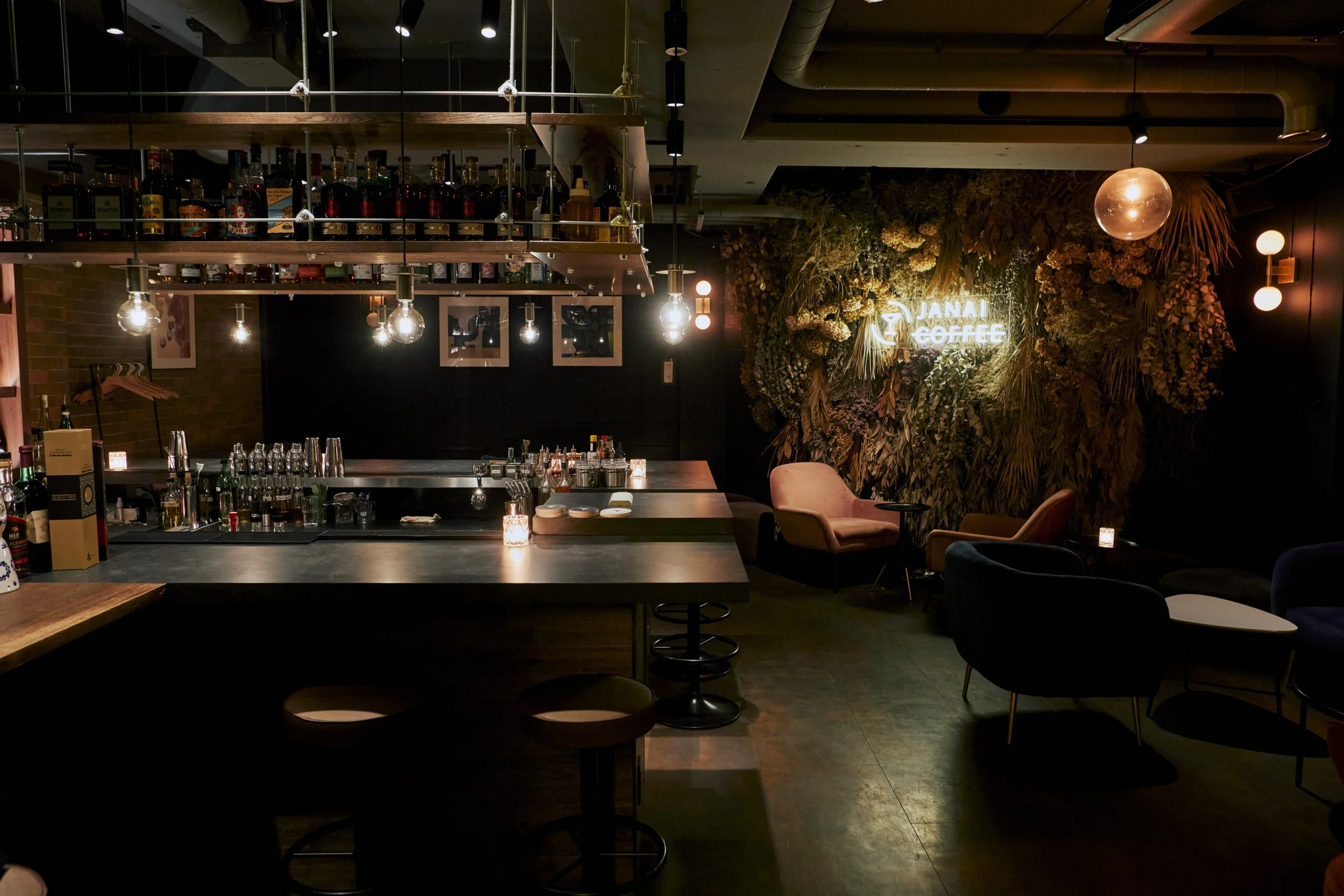
Low-lit interior of trendy coffee shop. Low stone bar counter, comfortable modern chairs, and a flower wall with neon light sign

Interior of Janai Coffee. Junki Yoshida.

This Tokyo speakeasy takes on the guise of a traditional coffee bar, hidden behind a secret doorway only the barista knows how to access. At first glance, Janai's website sticks with the coffee theme, offering to-go cups, explaining seasonal coffee bean selection, all while subtly hinting that it might offer more: “We don’t just want to serve coffee. Forget about time. Stop measuring. Don’t compare yourself to others. Take time to relax and forget about your daily routine. A place where you can forget about your daily routine and enjoy coffee to your heart’s content without thinking about anything else.” There is a secret puzzle that has to be solved on their website before being able to make a reservation (a hint—look at the logo). The flipside states their mission as a speakeasy and adds that, “This bar has a wide selection of alcohol that the staff all tasted and selected together. Even if you are not an expert, even if the taste is difficult, you can enjoy Janai Coffee for some ‘just because’ reason such as the cute label or the interesting name.”

Espresso martini from Janai Coffee’s bar, Junki Yoshida.

Located at: 2-3-13 Ebisu, Shibuya, Tokyo, 150-0022

Moonshiner 

Paris, France
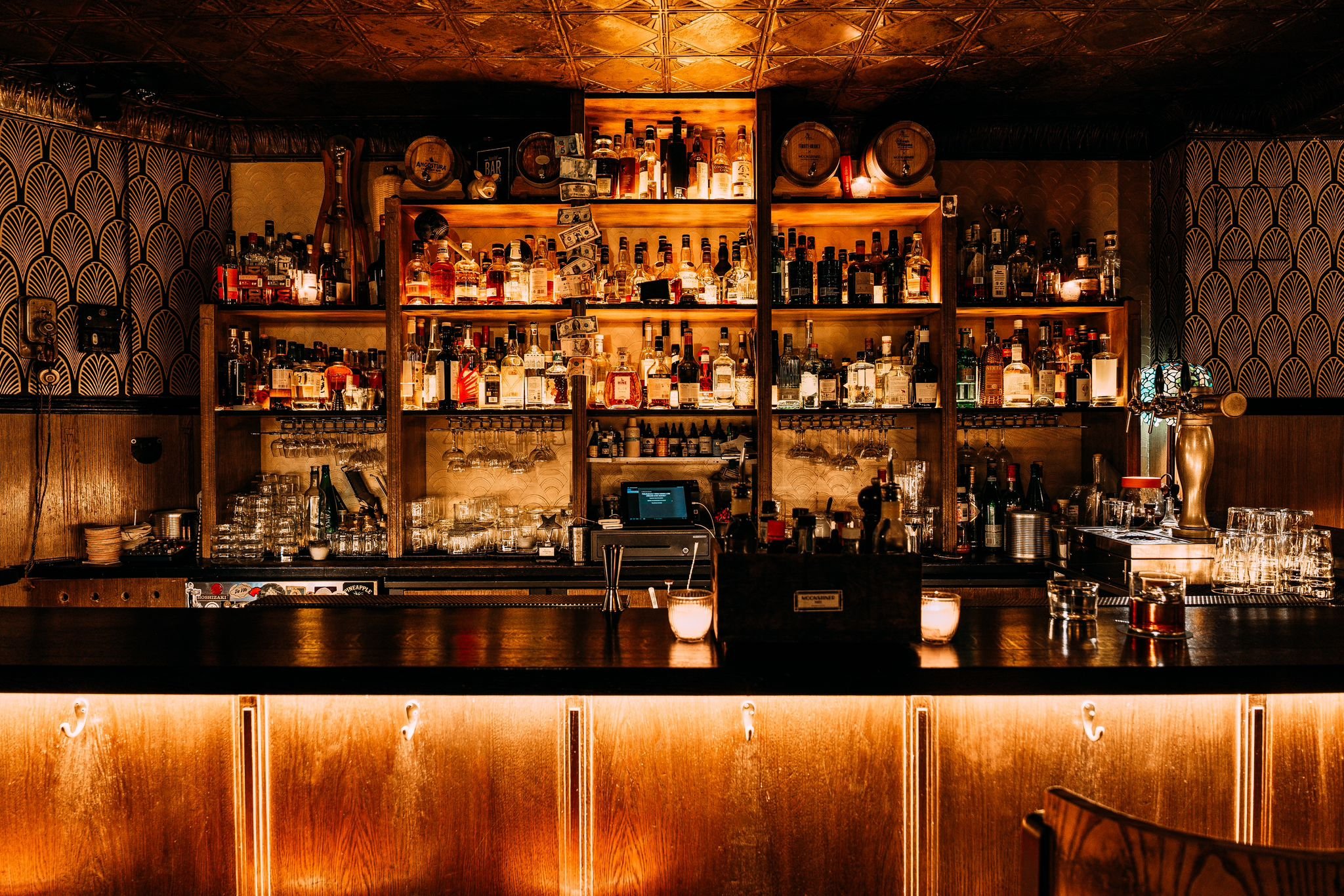
Swanky wood bar design, lit from underneath, with intricate shelving on the wall behind to hold dozens of bottles and garnishes

Bartop at Moonshiner, Fiamma Brighi. 

Continuing the theme of being hidden behind a conventional storefront, the Moonshiner’s entrance is through Da Vito, a small pizza parlor in Paris. The joint's website tells potential visitors, “Shhhh, listen up, music is filtering behind this wall … lower your voice, lighten your steps, and push the door to the cold room … we’ll see you on the other side!” To enter, guests walk into the pizza parlor and head directly to the steel door of a fake meat locker at the back. This speakeasy in particular tends to attract a younger crowd of twenty-to-thirty-year-olds, and a combination of travelers and locals. Their drinks range from classic cocktails like Old Fashioneds to more novel and creative options like “Money Time” or “Back to Basil.” As it is a small space, the bar tends to get very busy. Sara Lieberman from Conde Nast Traveler notes that, “Despite it looking like the type of place you want to sit and sip luxuriously, unless you get there early be prepared to stand and hover over those with seats until other bar-goers finally get up (IF they get up!).” Many bar goers are just stopping by for a drink while waiting for the pizza they ordered on the way in, with Liberman also explaining that, “Moonshiner and the pizza parlor out front—Da Vito—--are more or less one in the same, so if you’re hungry, put your name on the list when you arrive and head to the back for a drink while you wait.”

Old Fashioned at the Back Room. Fiamma Brighi.

Located at: 5 rue Sedaine, 75011, Paris, France.

The Back Room 

New York City, United States

A street in the city with a small metal barrier gate around a staircase leading down to a building basement. There is a stickered sign on the gate pointing to the stairs, describing it as the "Lower East Side Toy Co."

The entrance to the Back Room, Troy Hahn.

Finally, located in the heart of the Big Apple, the Back Room is a speakeasy in New York that has been operating since the Prohibition era. Disguised as  the "Lower East Side Toy Company,"  the Back Room is hidden down a secret staircase in a narrow corridor. There are no clear indications to the entrance and a variety of staircases are involved before visitors find themselves at the door of the bar. In order to enter, a weekly password from the official Bank Room website is required. Once entered, the bartenders serve drinks in a traditional Prohibition-era style—cocktails are served in teacups and beers in brown paper bags, disguising their true contents. The Back Room was predated by Ratner’s Backroom, which was opened in 1908 in the same location. Owner Johnny Barounis has said that it used to be a popular meeting spot for many Jewish gangsters due to its convenient location, saying, “If somebody came in and was being double crossed or there was a hit going on, there were so many different ways out if you knew the space. You could [even] hop the roofs all the way to Rivington.” The general appearance of the Back Room is luxurious, straying away from the traditional rough appearance speakeasies had due to fear that cops would overturn the establishment at any given point. Barouis calls it, “My bastardized version of these old 1920s ballrooms fused with a speakeasy.” The decor incorporates 1920s cigarette dispensers, mutoscopes, chandeliers, hardwood floors and other period-accurate details. 
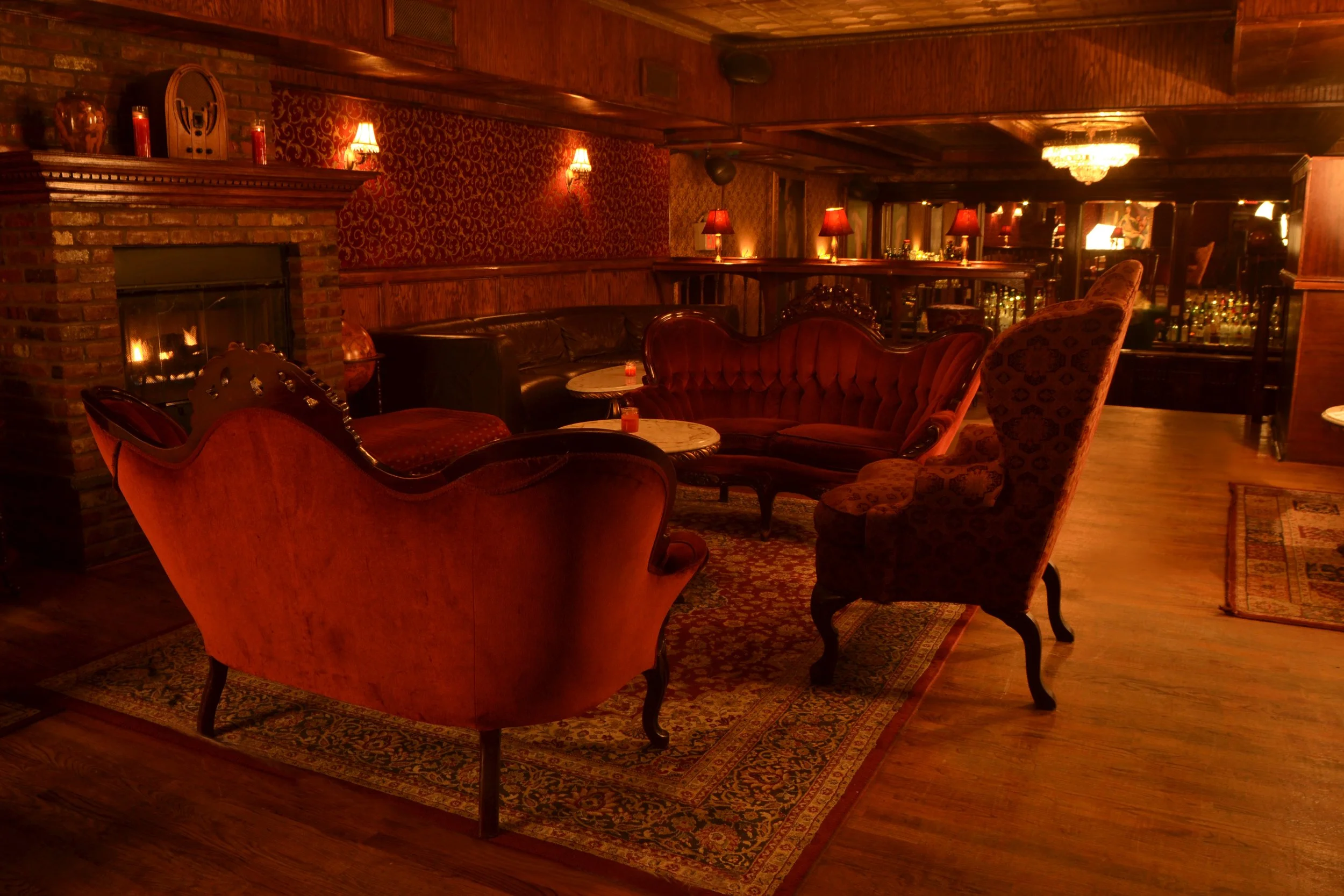
A look back in time, with a luxurious interior decoration with massive brick fireplace, red velvet antique chairs and couches, hardwood floors, and warm lighting

The Back Room’s luxurious decor, Troy Hahn.

Located at: 102 Norfolk Street, New York City, NY, 10002-3310


Aanya Panyadahundi

Aanya Panyadahundi Aanya is a student at the University of Michigan studying sociology and journalism on a pre-law path. She loves to travel the world whenever she can, always eager to learn more about the different cultures and societies around her. In her free time, she likes to play the violin, ski, and listen to podcasts.
Sweden’s Unique Icehotels

From ice rooms to outdoor experiences, Sweden’s Icehotels provide a unique stay for travelers interested in the outdoors.

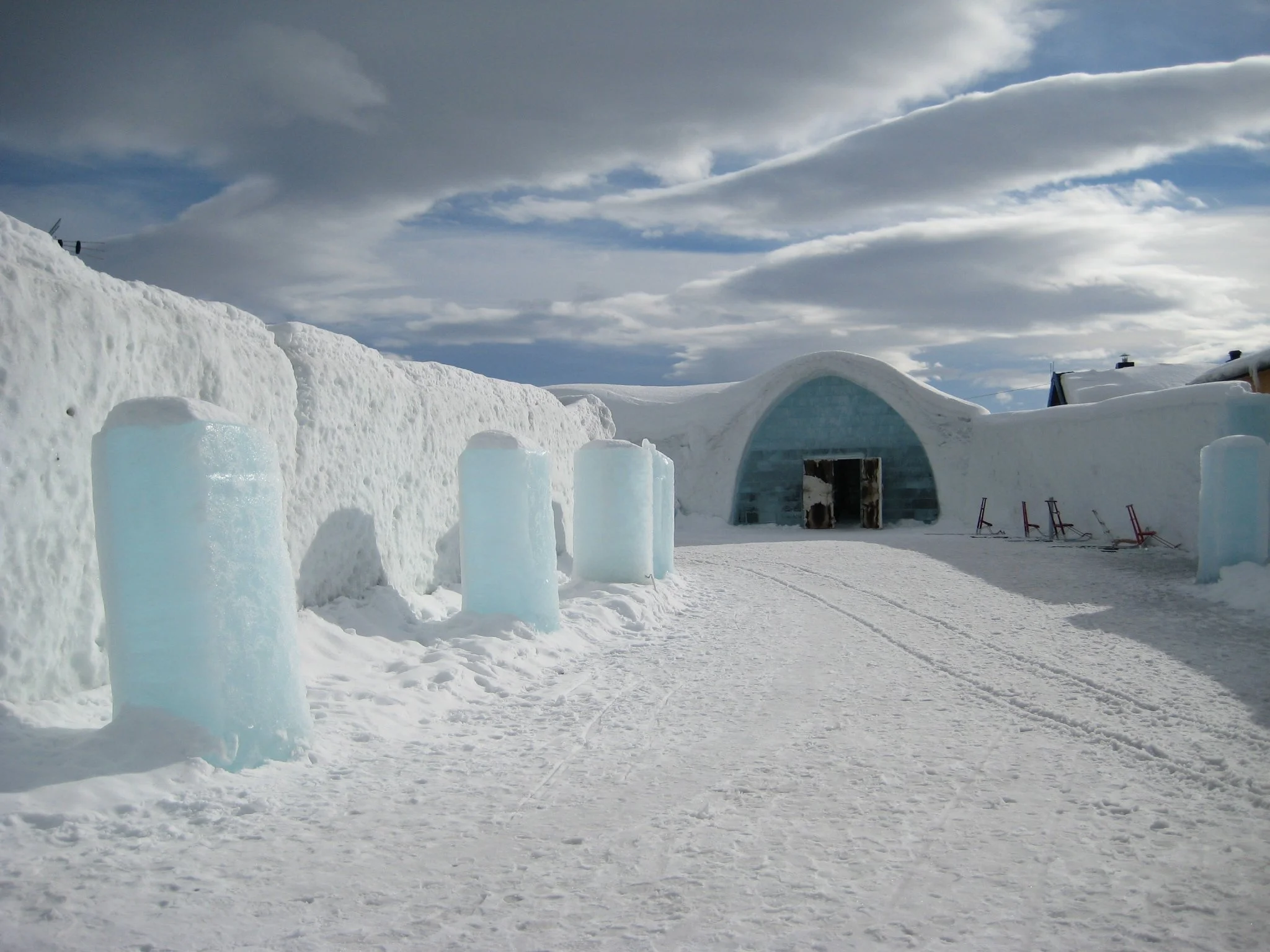
Snow tunnel entrance, lined with large ice blocks toward a hotel door that appears like an entrance to a glacier.

Entrance to Icehotel. Markus Bernet. CC BY-SA 2.5

A trip to Sweden may entail many unique experiences, but very little can parallel a stay at Icehotel in Jukkasjarvi. Located in the land region and 200km north of the Arctic Circle, the hotel was established in 1989 as the world’s first ice hotel, with the goal to, “Create life enriching experiences." A unique venue for hospitality, the ice hotel is structurally similar to an igloo. Ice and stagnant air both have very low thermal conductivity, limiting the heat transferred from the outdoors and keeping the structures from melting. The travel group Transun explains that, “The ice structure stops heat being transferred to the surroundings, because the ice and the windless air are both excellent insulators. The buildings depend on sub-freezing temperatures and usually melt in summer, rebuilt again from fresh ice every year.” 

On its site, the Icehotel group writes about the central theme of storytelling it hopes to achieve with its establishments: “Our inspiration is the Arctic and the delicate beauty of crafting something that is ephemeral yet engaging all your senses," creating its edifices with ice taken from the Torne River. With each winter, new artists are given the opportunity to showcase their talents through the Icehotel. The same river is also the source of the crystal-clear ice furniture that adorns both the original Icehotel and the new Icehotel 365, a newer project from the same brand to offer more to travelers all year.

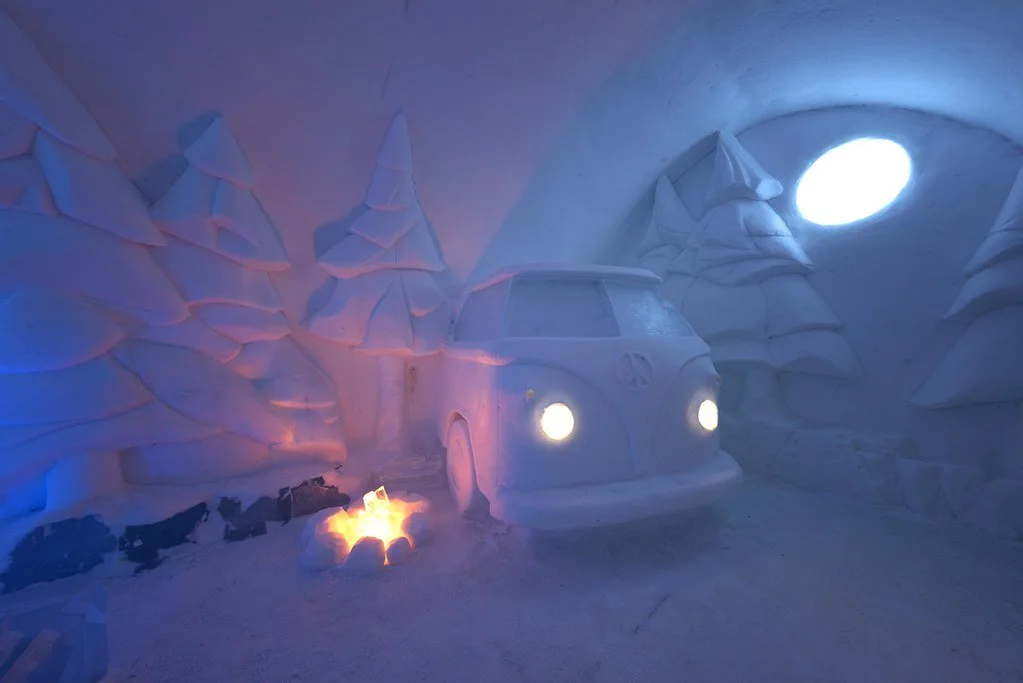
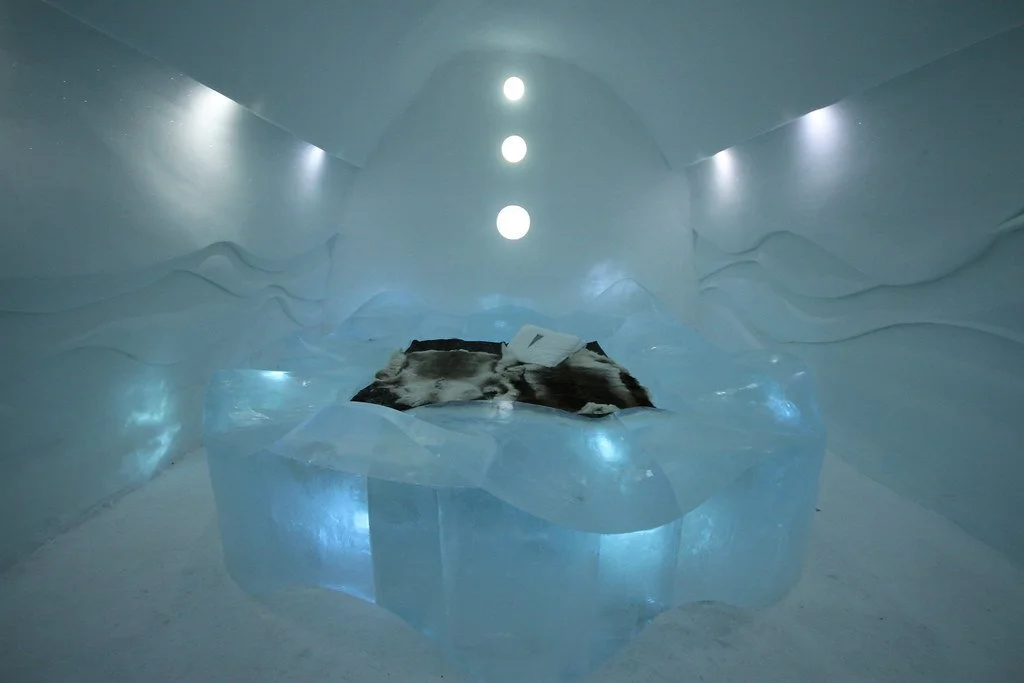
Travel Agency "Discover the World" recommends that, although elements of Icehotel are now open year-round, the best time to visit is, “During the winter months when it is blanketed in snow, the air outside is crisp and cold and the Northern Lights might make an appearance.” For Sweden, this is from December to early April, the months when the original Icehotel is constructed and open. During this time, the Icehotel has between fifteen and twenty standard ice rooms and twelve art suites for guests to stay in. Johan Larsson, the standard ice rooms’ artist, explains that he chose to incorporate an ice bed and decor because, “I wanted to create a feeling of being embraced and protected by the ice—a good night’s sleep for all guests.” The art suites are a step up from the standard rooms. Each suite is designed by an artist who has creative freedom to choose their own themes and styles. Icehotel says that, “The artist, perhaps from Kiruna, Germany, UK, or the US has been picked from over two hundred applicants and invited to make the suite you’ll be sleeping in.” Art suites are kept between 18 and 23 degrees fahrenheit. Because of their icy cold atmosphere, all rooms have special accommodations like thermal sleeping bags, reindeer hides and curtains in place of doors. Guests are given access to Riverside, a heated lobby, for changing rooms, toilets and saunas.

A room built in the snow. Snowy sculptures of pine trees and the front of an old-school VW camper van carved into the walls.

Art Suite in Icehotel. Rob Alter. CC BY 2.0

When planning a stay, guests are offered a choice of warm or cold accommodations. Warm rooms are like a standard hotel room and are located in a separate building. Icehotel recommends that guests spend just one night in the cold while booking a warm room for the rest of their trip, and provides special, insulated sleeping bags for guests to keep warm. The company also encourages appropriate sleepwear—thermal underwear, hats, warm jumpers, etc. Transun notes that, , although sleeping in a room made of ice might sound unpleasant, the right clothing and sleeping bags can keep guests warm as long as the outdoor temperature stays above -13 degrees Fahrenheit. Visitors can still arrange tours if they choose not to spend the night. Icehotel can accommodate up to five people in its largest warm rooms and two people in each of its cold rooms.

A white hotel room, with abstract icy mountain murals on the walls. A large bed carved from ice stands in the center with a fur blanket in the middle.

Standard Ice Room. Xraijs. CC BY-NC 2.0

Even during the summer months, the Icehotel brand still has much to offer interested travelers. Icehotel 365 was first opened in December 2016 as a year long ice experience. The building is a permanent, 2100 square meter art hall, maintaining interior sub-zero temperatures by relying on cool solar power throughout the year. Its art hall contains a collection of traditional art while the building is also home to deluxe suites, an ice bar and experience rooms that depict Icehotel’s history. Additionally, guests can enjoy Torne River rafting, private fishing tours, a ropes course, mountain hikes, and, of course, the Northern Lights.

Despite being a large tourist attraction, sustainability is central to Icehotel’s methods. The organization writes that, “We borrow the ice from the Torne River to build a new, seasonal Icehotel, which eventually melts and returns back to its origin in the spring. The basic idea of Icehotel is built on the premise of the environmental cycle, and our relation to the water and the ice is central.” The company also works with River Rescuers, an activist group protecting “The untouched waters of Sweden,” and regularly makes donations to WaterAid to assist water health throughout Sweden.


Aanya Panyadahundi

Aanya is a student at the University of Michigan studying sociology and journalism on a pre-law path. She loves to travel the world whenever she can, always eager to learn more about the different cultures and societies around her. In her free time, she likes to play the violin, ski, and listen to podcasts.
Hiking with Dinosaurs in Argentina

Argentina's Talampaya and Ischigualasto Parks contain between them the most complete continental fossil record of the Triassic Period, and a record of early humanity. 

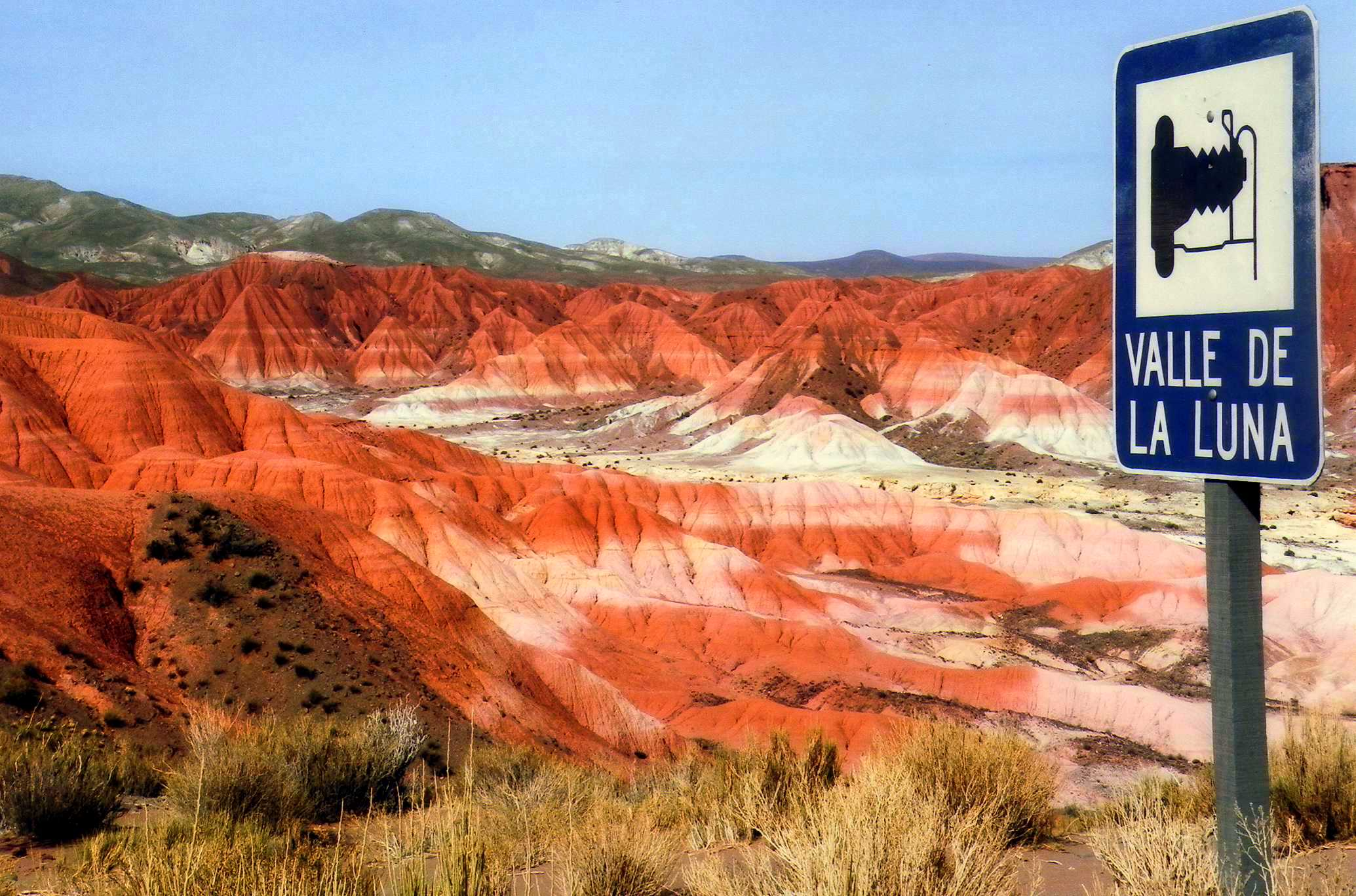
A red, orange, and white striated canyon badlands. Larger green mountain hills in the distance

Valle de la Luna. Rodoluca. CC BY-SA 3.0

In the heart of Argentina, the Ischigualasto and Talampaya Natural Parks are a gateway to a prehistoric world. Situated on the border between the provinces of San Juan and La Rioja, in Argentina's Monte ecoregion, a warm scrub desert along the Eastern Andean foothills, these contiguous parks contain a plethora of geological marvels, ancient history and stunning desert landscapes for visitors to explore. 

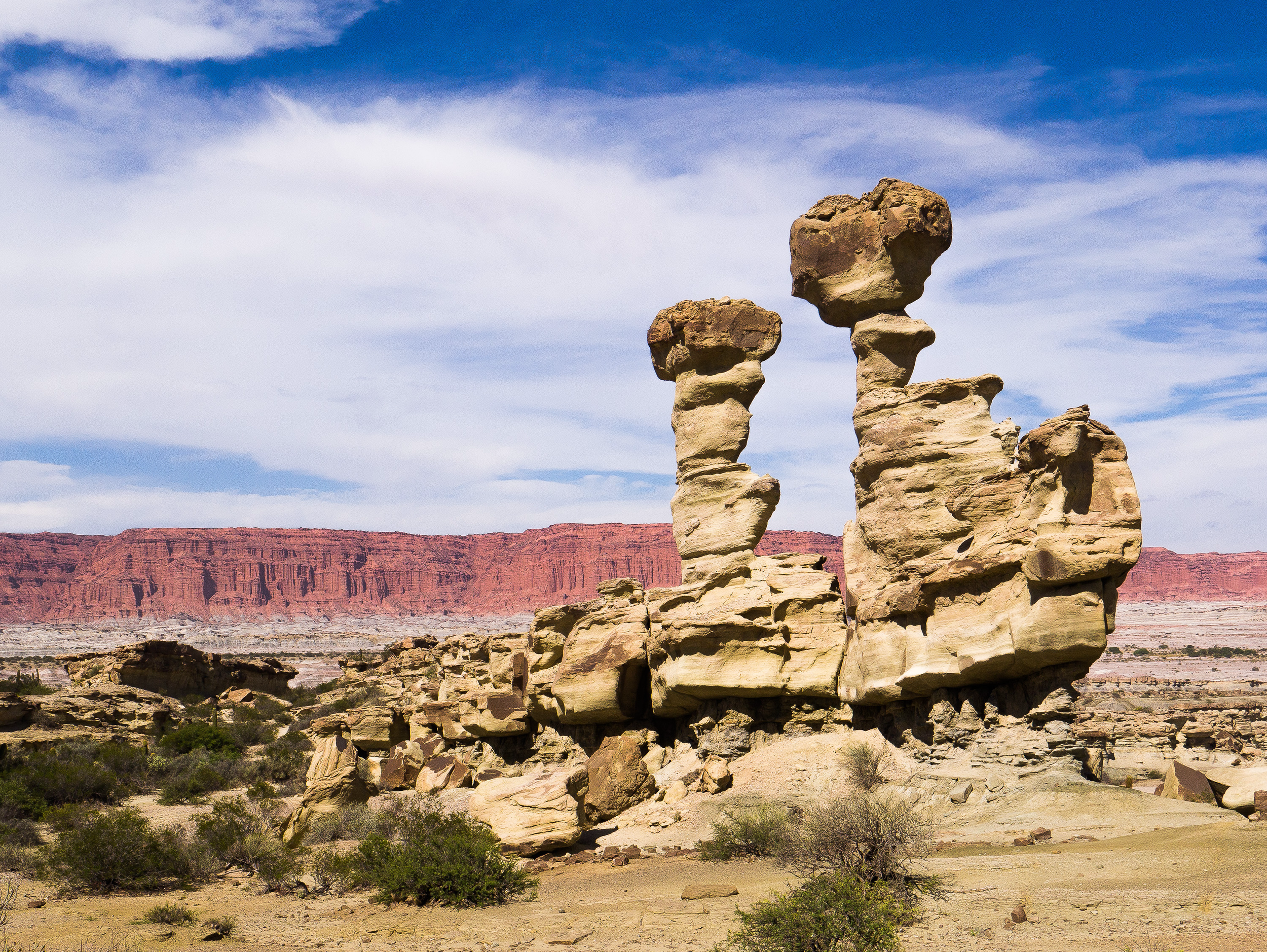
Two tan hoodoo rock formations stand tall in front of rocky terrain and a red canyon in the background

Ischigualasto Rock Formations. Rita Willaert. CC BY-NC-SA 2.0

Ischigualasto and Talampaya stretch over most of the sedimentary basin of the Ischigualasto-Villa Union Triassic, a geologic basin of great scientific importance which formed during the Triassic Period, approximately 250 to 200 million years ago. The basin contains a sequence of six layers of continental fossiliferous sandstone and mudstone sediments deposited by rivers, lakes and swamps, providing the world’s most complete and undisturbed picture of the geological history of the Triassic Period. 

The geological record helps us understand the evolution of vertebrate life and the nature of palaeoenvironments in the Triassic, the era that ushered in the Age of the Dinosaurs. Fossil records of at least 100 species of plants, 56 known genera and many more species of vertebrates, such as fish, amphibians, and a great variety of reptiles and direct mammalian ancestors, including the early dinosaur Eoraptor, have been found in the park. 

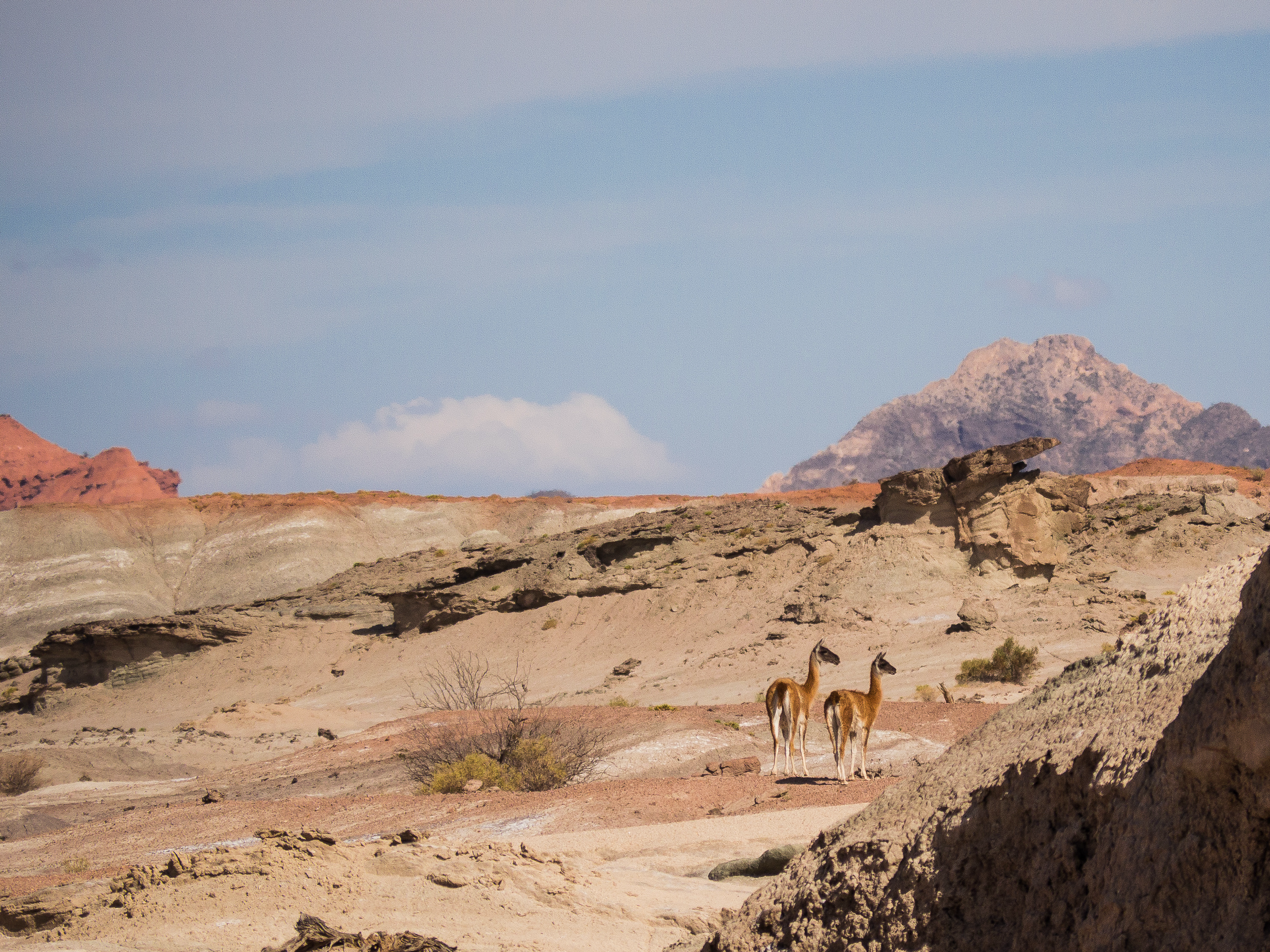
Two guanacos standing on a desert slope. The rock is red and sandy, with a variety of elevations and terrains

Guanacos, Ischigualasto National Park. Rita Willaert. CC BY-NC-SA 2.0

Radiocarbon dating suggests that humans occupied the area approximately 2,590-950 years ago. At Ischigualasto, six rock art sites have been discovered, along with burial sites, campgrounds and tool-making areas, as well as 1500-year-old petroglyphs (images carved into rock). The petroglyphs depict, among other things, geometric human figures, animals and a radiating sun figure. Animal and human footprints have also been found in the art, mainly puma, rhea and guanaco prints. 

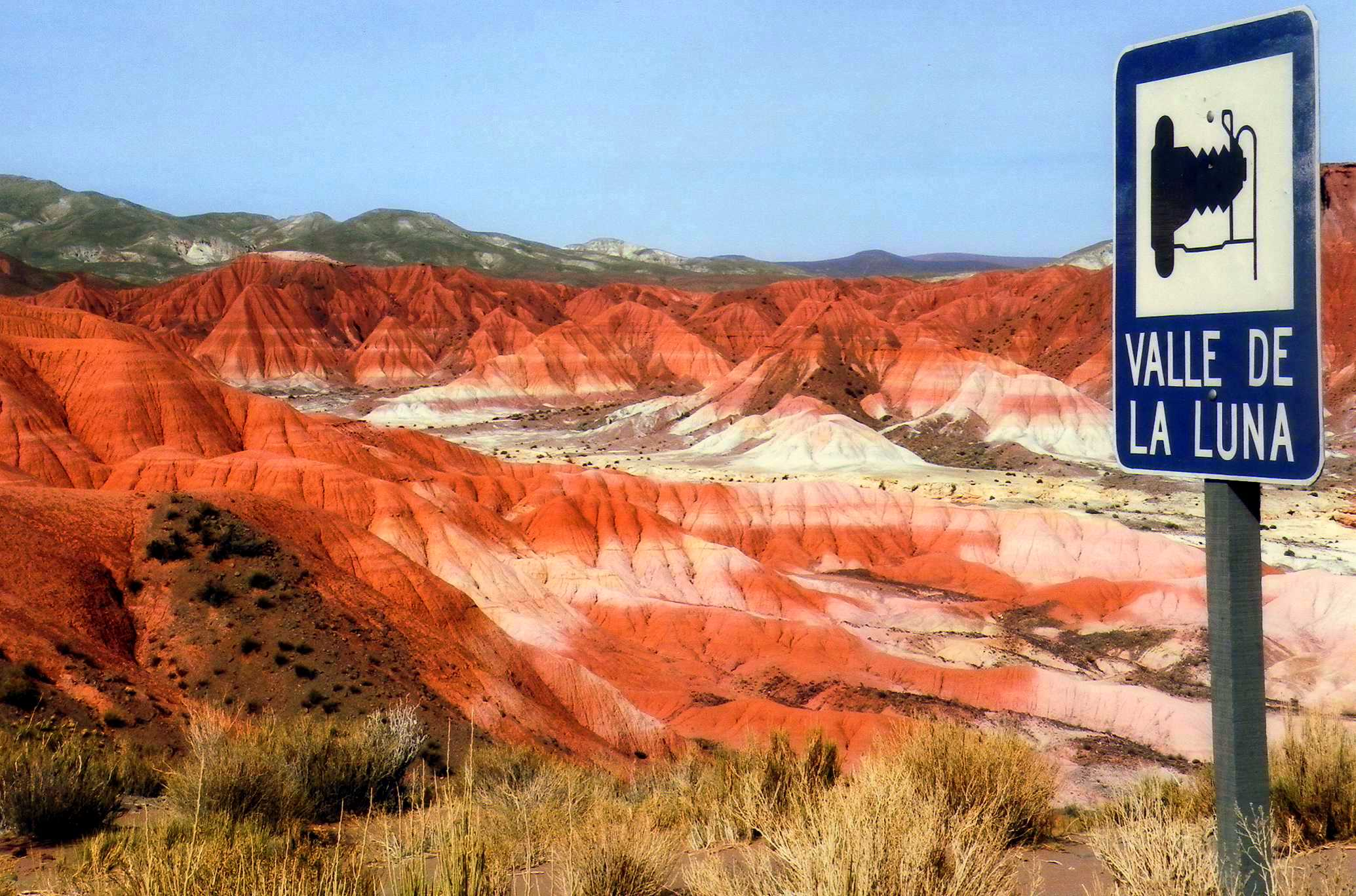
A red, orange, and white striated canyon badlands. Larger green mountain hills in the distance

Valle della Luna. Guslight. CC BY-NC 2.0

One of Ischigualasto's main attractions is the Valle della Luna (Valley of the Moon). The valley, located near the provincial capital of San Juan, is famous for its unique and otherworldly landscapes. The valley is composed of rugged badlands of bizarrely shaped multicolored rocks and a floor of barren gray-white volcanic clay. Two hundred and thirty million years ago, the desert was a volcanically active floodplain, crisscrossed by rivers and subjected to seasonal heavy rainfalls. Petrified tree trunks more than 130 feet tall are a record of the ancient vegetation. These days the stark desert vista has sparse vegetation, xeric shrubs, cacti, the occasional tree and several rare species of flora and fauna. 

The Canon de Talampaya (Talampaya Gorge) is Talampaya’s main attraction. The red sandstone walls of the canyon and the surrounding cliffs reach up to 656 feet. The landscape has been deeply eroded by watercourses, a testament to the artistry of nature. These days the area is usually dry, but flash floods powerful enough to move large boulders have been known to strike the area.

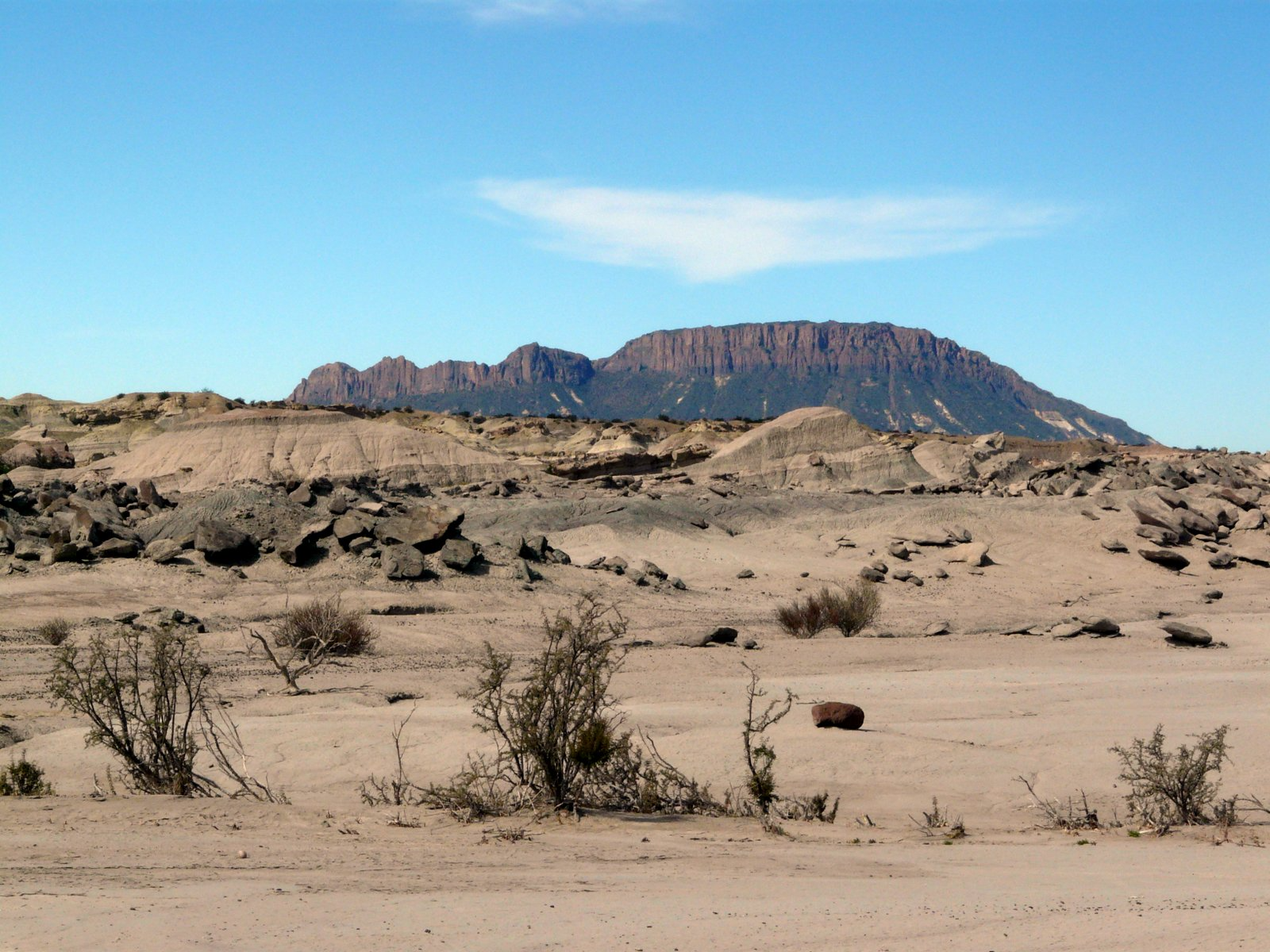
A desert scene with large red mountain mesa in the background.

Ischigualasto National Park. Benjamin Dumas. CC BY-NC-SA 2.0

Before Spain began its conquest of South America, the area that now makes up the parks was inhabited by several groups of Indigenous people who lived as semi-nomadic hunters and gatherers, including the Diaguita and Huarpes.

The Ischigualasto and Talampaya Parks are more than just sites of great natural beauty. They are a journey into the history of this planet. Their spectacular geological formations, unparalleled scientific significance and cultural heritage have rightfully earned them a place on UNESCO’s list of World Heritage sites.

GETTING THERE

Fellow travelers recommend reaching the parks by taking an airplane to Villa Union, the closest neighboring city. From there you can rent a car, and it is about a 40-minute drive to Talampaya. You could also stay in La Rioja, which is about a 2-hour drive from the parks. Rough camping is permitted in the buffer zone at Ischigualasto Park, which has a small visitor center with an interpretive display, four toilets and a single ranger’s residence. Small buffet food services are available at both parks. Walking trails and interpretive signs are scarce. There are full-service facilities, lodging, commerce and medical care in the nearby towns of San Agustin in San Juan Province and Patquja and Villa Union in La Rioja Province. There are agencies in La Rioja and Villa Union that offer guided tours of the park.


Rebecca Pitcairn

Rebecca studies Italian Language and Literature, Classical Civilizations, and English Writing at the University of Pittsburgh. She hopes to one day attain a PhD in Classical Archeology. She is passionate about feminism and climate justice. She enjoys reading, playing the lyre, and longboarding in her free time. 

6 of August's Hottest Music Festivals

From the U.S. to Hungary, music festivals have blossomed over recent decades and now attract millions of people from around the world every year.

A lit up stage at night with festivalgoers cheering in the crowd as confetti falls from the sky.

Music festival performance. Veld Music Festival. CC BY-SA 2.0

Since the origins of music festivals sprung up in ancient Greece in 582 BC, these lively events have evolved from local music and sports competitions to globally renowned happenings. During August, many people flock to these festivals to experience remarkable performances accompanied by the summer weather.

Boomtown Festival, England

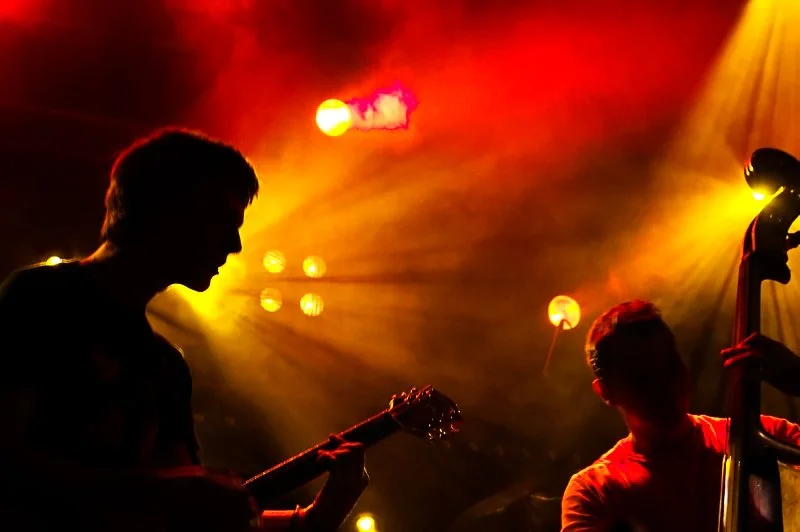
Two artists on stage silhouetted by warm orang and red lights, playing the guitar and bass.

Performers at the 2006 Boomtown Festival, UK. Dimi15. CC BY-NC-SA 2.0

With over 50 venues, a dozen main stages and thousands of performers, the Boomtown Festival located near Winchester in the United Kingdom brings eight city districts to life from August 7 to 11, 2024. The lineup is often kept a mystery until right before the festival, but the Boomtown Festival generally incorporates all kinds of genres into the lineup, from folk music to EDM.

Festival-goers are encouraged to camp overnight. Every ticket provides access to the Campsite Villages located throughout the festival. For eco-conscious attendees, the Boomtown Festival offers upgraded Green Transport Citizen Entry Tickets at a discounted rate for those who arrive via public transport.

Burning Man, U.S.

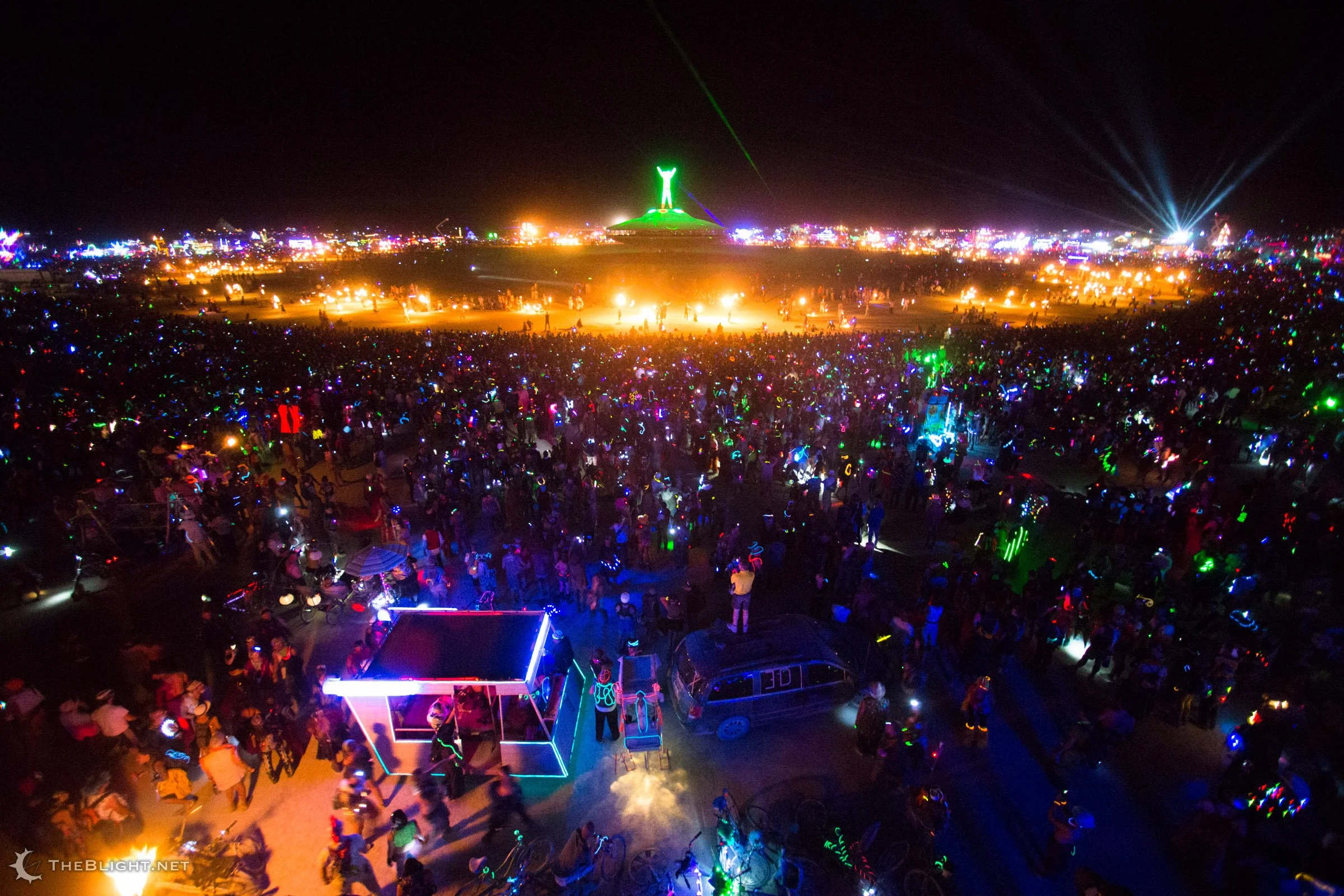
An aerial view of Burning Man music festival, the crowd littered with multi-colored neon lights, food trucks, and art structures

Burning Man, 2013. Chayna Girling. CC BY-NC-ND 2.0

From August 25 to September 2, 2024, tens of thousands of people will come together in Nevada’s Black Rock Desert for the notorious Burning Man music festival. The theme for Burning Man 2024 is "Curiouser & Curiouser," inviting participants to explore their curiosities and wonders. The lineup has not yet been released, but Burning Man is known to host artists from many different genres.

Burning Man evolved from a spontaneous event on a San Francisco beach in 1986, when Larry Harvey and Jerry James drew a crowd to burn a wooden man in celebration of the Summer Solstice. Since then, Burning Man has become an official event that has attracted as many as 75,000 people. Ticket prices range greatly, from $225 tickets for low-income participants who qualify for the Ticket Aid Program, to $2,500 for early-bird FOMO Tickets. The Main Sale tickets cost $575 in addition to a $150 vehicle pass.

Creamfields, England

Festivalgoers at a neon pink lit DJ stage dancing along.

2005 Creamfields music festival, UK. Edith Adasme. CC BY-NC-SA 2.0

From August 22 to 25, 2024, Creamfields will return to Daresbury, UK, for another electrifying multi-day music festival. Since its origins as a weekly house music night called Cream, the event has transformed from a cozy club night into an iconic music festival that attracts thousands of attendees each day. 

With each stage dedicated to a different genre, Creamfields attracts lovers of all kinds of music. Dozens of artists will perform throughout the festival, from blk. to Calvin Harris. For an elevated festival experience, Creamfields offers a range of ticket options to suit different preferences and budgets. The ticket costs range from Standard Day Tickets, which cost about $100, to four-day Gold Tickets that cost about $550. 

Edinburgh Fringe Festival, Scotland

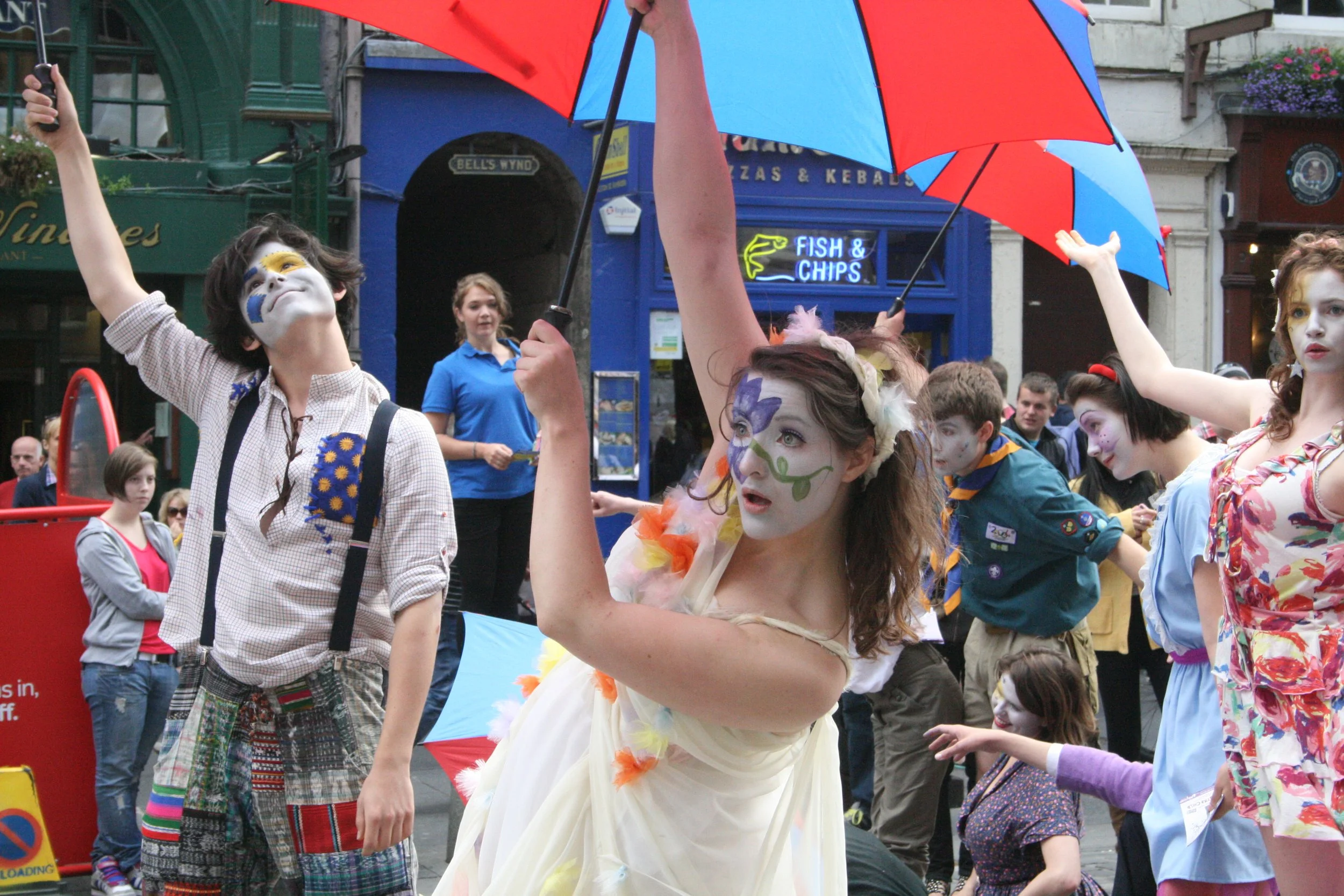
Three street performers in facepaint holding multi-colored umbrellas in downtown Edinburgh

Edinburgh Fringe 2011, Scotland. Anriro96. CC BY-NC 2.0

The 2024 Edinburgh Fringe Festival will bring 14 venues to life throughout Edinburgh from August 2 to 26. The origins of the Edinburgh Fringe Festival date back to 1947, when eight theater groups performed on the fringes of the Edinburgh International Festival. Since then, the Edinburgh Fringe has drawn millions of people.

Edinburgh Fringe features thousands of shows, from comedy to music. With many free shows, festival-goers can attend the Edinburgh Fringe Festival regardless of financial status. For those on a budget or with limited travel ability, there are some virtual events that festival-goers can attend as well. 

Lollapalooza, U.S.

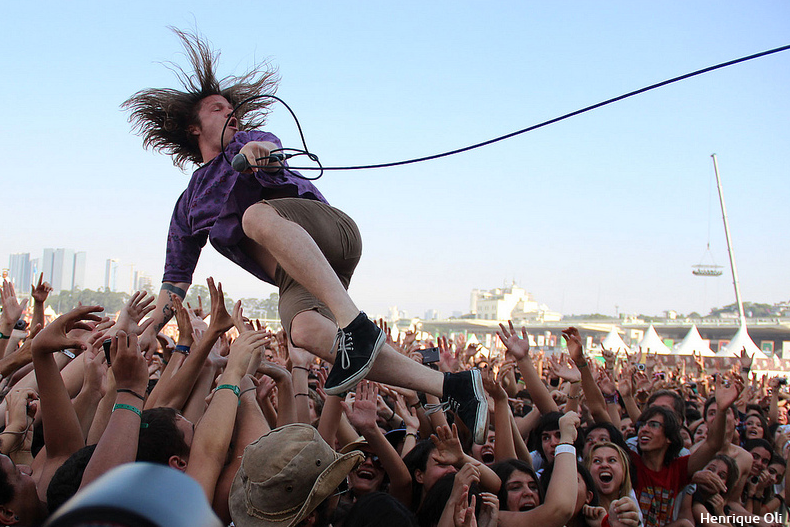
A singer crowdsurfing over cheering fans while still holding onto the corded microphone.

Cage the Elephant crowdsurfing at Lollapalooza. Henrique Oli. Wikimedia. CC 3.0

Lollapalooza returns to Chicago’s Grant Park from August 1 to 4, 2024, featuring a star-studded lineup with headliners like SZA, Megan Thee Stallion, The Killers, Blink-182 and Skrillex. Lollapalooza began as a traveling festival in 1991 when founder Perry Farrell envisioned it as a grand farewell for Jane’s Addiction. 

Since then, the festival has found its home in Chicago’s Grant Park, growing from a two-day event into a four-day extravaganza that attracts 100,000 attendees daily. With international outposts in cities like Santiago, São Paulo, Berlin and Mumbai, Lollapalooza’s impact has transcended borders. Ticket prices range from $155 for general admission to $4,500 for platinum two-day tickets. 

Sziget Festival, Hungary

A full crowd at night dancing along against the lit stage.

A performance at the Sziget Festival, Hungary. Opethpainter. CC BY 2.0

From August 7 to 12, 2024, the Sziget Festival will transform Budapest into a musical paradise. At the Sziget Festival, festival-goers can witness world-renowned performances by artists like Halsey, Janelle Monáe, Sam Smith, Fred Again, Liam Gallagher, Martin Garrix, Skrillex, Stormzy, Louis Tomlinson and RAYE.

Tickets are available for purchase directly from the website. The ticket prices range from less than a dollar to about $2.50. Families are welcome, and children under 11 can enter free with a child wristband. Basic camping is included with the tickets, allowing festival-goers to set up a tent in any free camping area.


Madison Paulus

Madison is a student at George Washington University studying international affairs, journalism, mass communication, and Arabic. Born and raised in Seattle, Washington, Madison grew up in a creative, open-minded environment. With passions for human rights and social justice, Madison uses her writing skills to educate and advocate. In the future, Madison hopes to pursue a career in science communication or travel journalism.

Become an Artist-in-Residence at a National Park

Writers, painters and musicians can receive a stipend to create in some of the most majestic landscapes in the US.

Woman sat in a grassy field in front of an easel, painting with her materials beside her.

Woman painting outdoors. Caroline Veronez. Unsplash

There is a long-running debate over whether to preserve the natural beauty of western landscapes or exploit them. The Artist-in-Residence program many national parks are now offering serves as a compromise, honoring these landscapes and giving back to the parks once inhabited by native tribes. This program provides writers, painters, musicians and other artists the chance to refine their art in some of the country’s most scenic landscapes. Selected artists live in the park and receive a stipend, as well as coverage for food and travel expenses. The stipends can reach up to $5,000, with half of it usually given at the start of the program and half at the end. The program lengths vary, but typically last between two to four weeks. These residencies are inclusive, welcoming artists of all backgrounds and ages (although only legal adults may submit applications). Each artist's primary task is to create art inspired by their natural surroundings and—upon completion of their residency—donate a piece of their work to the park.

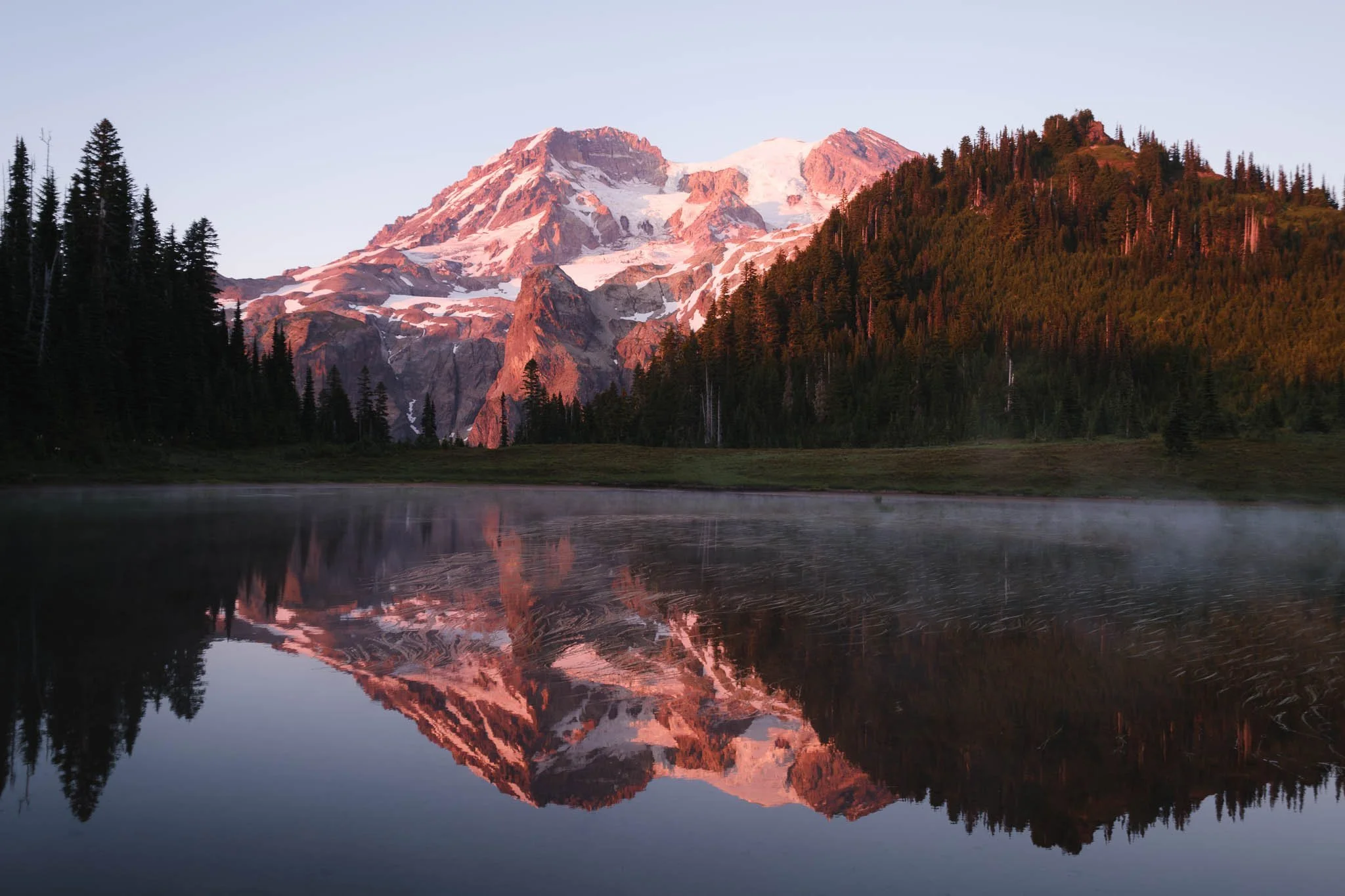
In Mount Rainier National Park, the mountain reflects into a pond below with the light in a pinkish hue.

Mount Rainier National Park. Lily M. Tang. CC BY-NC-ND 3.0

Artist-in-Residence programs welcome unique projects. Felix, a musician, served as the 2021 Artist-in-Residence at Canaveral National Seashore. His project, Listeners, was a collaborative sonic experience, capturing the park’s soundscape through contributions from people who live, work and visit there. Casey, a food writer, served as the 2022 Artist-in-Residence at Acadia National Park. She released a recipe book, Maine Ingredients: Recipes Inspired by Acadia National Park, crafting dishes using local ingredients and traditional regional cuisine.

These programs give artists the chance to immerse themselves in natural landscapes, gaining insight into the indigenous peoples who occupied western landscapes before us and learning about how their legacies live on today. While some view national parks as a byproduct of white settlement, the Artist-in-Residence program forces us to consider how we can shift the narrative, redirect the focus back onto their original inhabitants. The submission window for applicants is open during the summer, so act now! Keep in mind acceptance rates vary based on the park’s popularity. Check out NPAR openings here.


Agnes Moser Volland

Agnes is a student at UC Berkeley majoring in Interdisciplinary Studies and minoring in Creative Writing, with a research focus on road trip culture in America. She currently writes for BARE Magazine and Caravan Travel & Style Magazine. She is working on a novel that follows two sisters as they road trip down Highway 40, from California to Oklahoma. In the future, she hopes to pursue a career in journalism, publishing, or research.

Mallorca and Beyond: Spain’s Balearic Islands

Get to know the lesser-known islands of Menorca, Cabrera and Formentera, alongside the classic Balearics, Mallorca and Ibiza. 

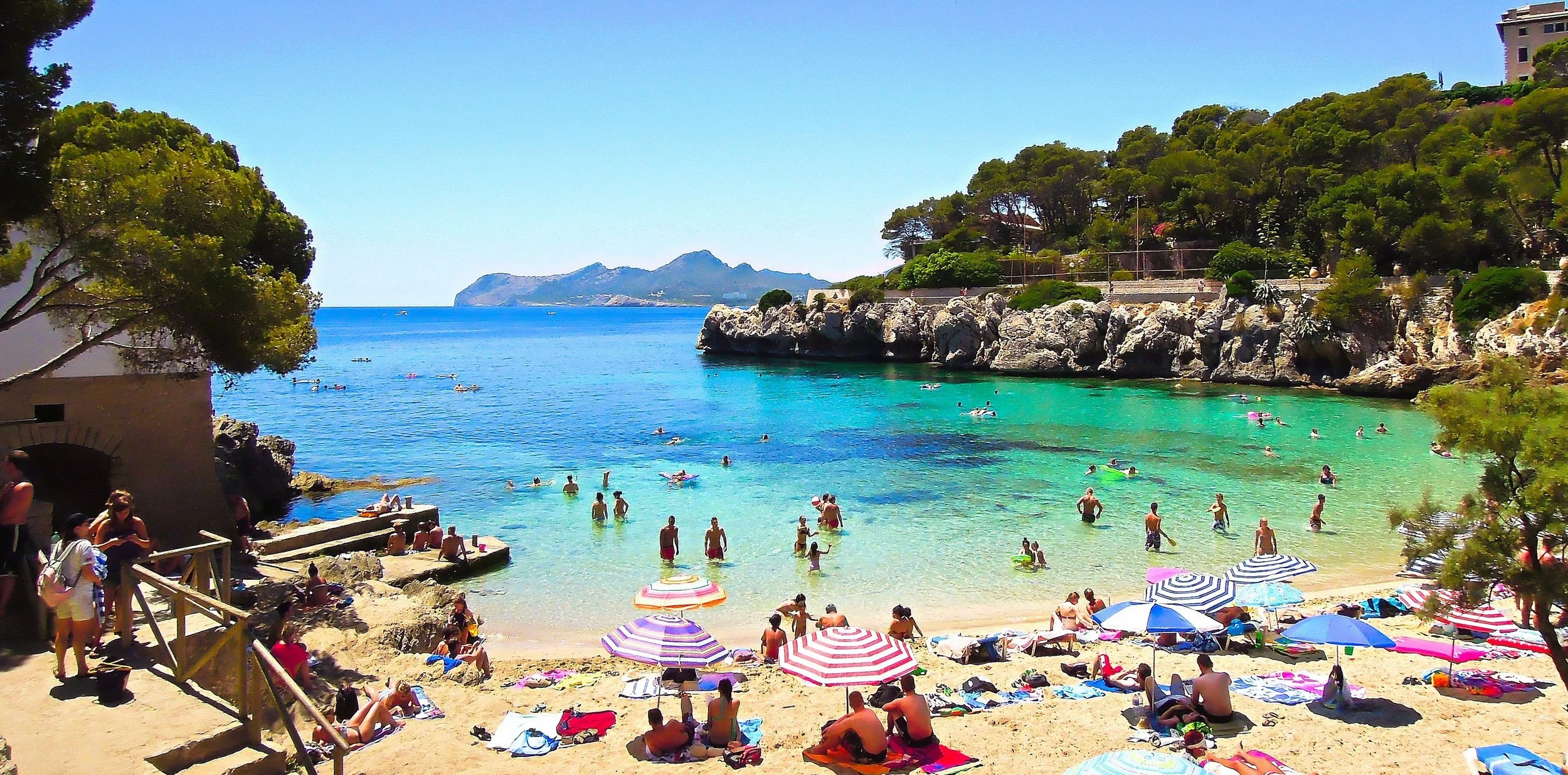
A bustling beach cove with turquoise water and rocky coastlines, swimmers, and sunbathers under striped umbrellas.

Cala Ratjada. originalpickaxe. CC BY 3.0, via Wikimedia Commons

The Balearic Islands are destinations well-known for their beaches and energetic nightlife. Beyond the impressive coastlines and vibrant parties, visitors will find charming villages, ancient ruins and traditional cuisines that showcase the islands' heritage. From Menorca to Formentera, each island boasts a rich culture and history that makes it distinct and uniquely captivating.

Mallorca

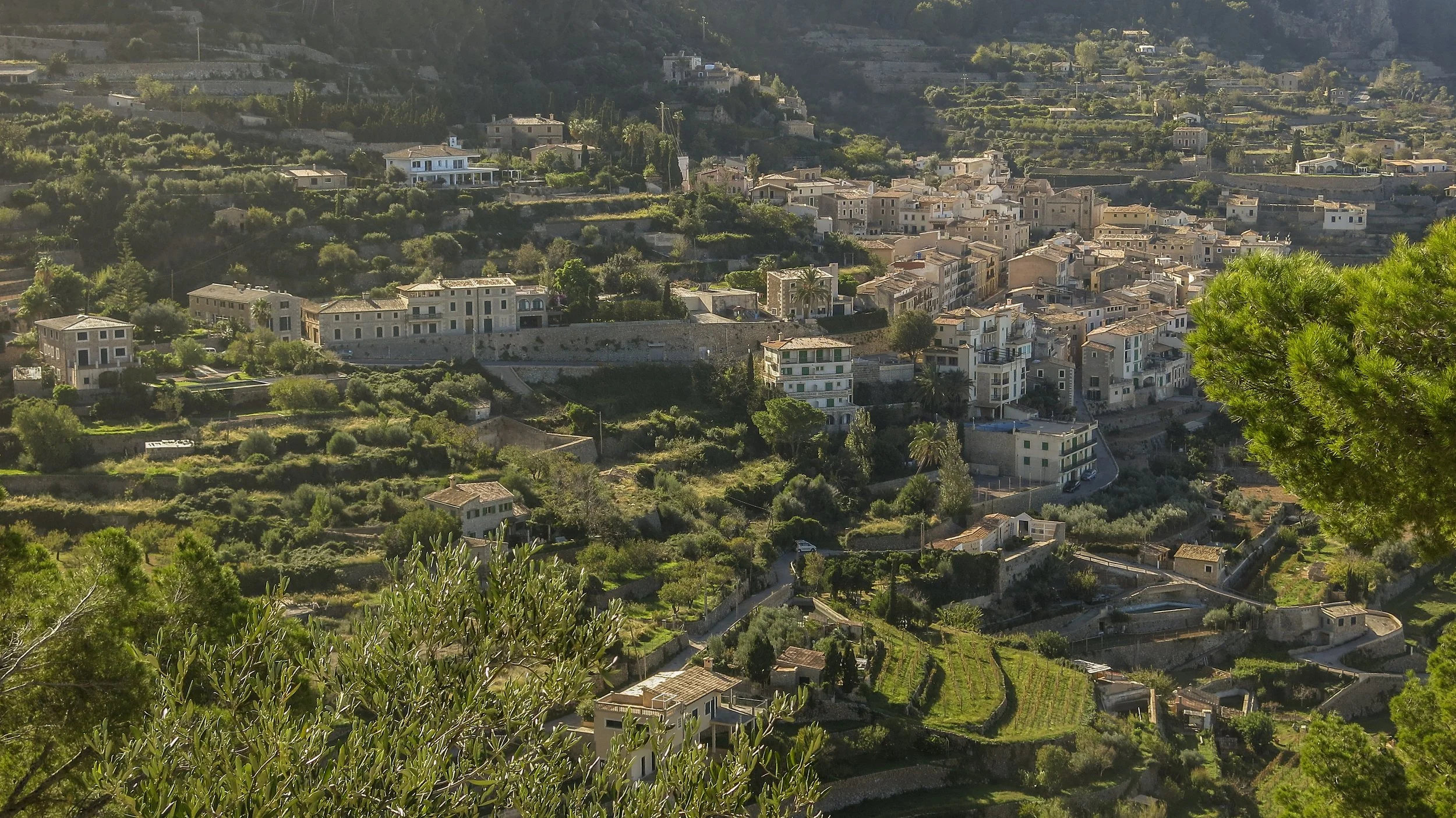
A hillside old European town, with buildings nestled in the green terraces and trees along the mountain.

The town of Banyalbufar, Serra de Tramuntana mountains. Vicenç Salvador Torres Guerola. CC BY-SA 4.0.

Mallorca, the largest of Spain's Balearic Islands, is celebrated for its diversity of landscapes, culture and history. The island has historically been a popular vacation spot among travelers for its secluded beaches and coves with turquoise waters, such as those in Cala d'Or and Playa de Muro. However, the island is also known for its dramatic cliffs and mountainous terrain along the Serra de Tramuntana mountain range, just a thirty-minute drive from the island’s capital, Palma. This region of Mallorca is home to intimate villages such as Valldemossa and Deia. Here, the towns are tranquil, filled with olive groves and surviving monastic charterhouses from as early as the 13th century, reminiscent of the island’s historic past and lasting Roman Catholic influence.  

Mallorca’s gastronomy is worth the trip alone, with dishes such as el arros brut, a meat and vegetable rice dish, and el frito mallorquin, an offal and vegetable stew. Another classic dish is the Frit mallorqui, which consists of potatoes tossed in a thickened sauce of onions, garlic, tomatoes and capers. The island is also rich in medieval architecture, being home to the gothic-style Bellver Castle, built in the 14th century for King James II of Majorca, and the renowned Cathedral of Santa Maria, once a mosque converted into a Christian church in 1229.

Menorca

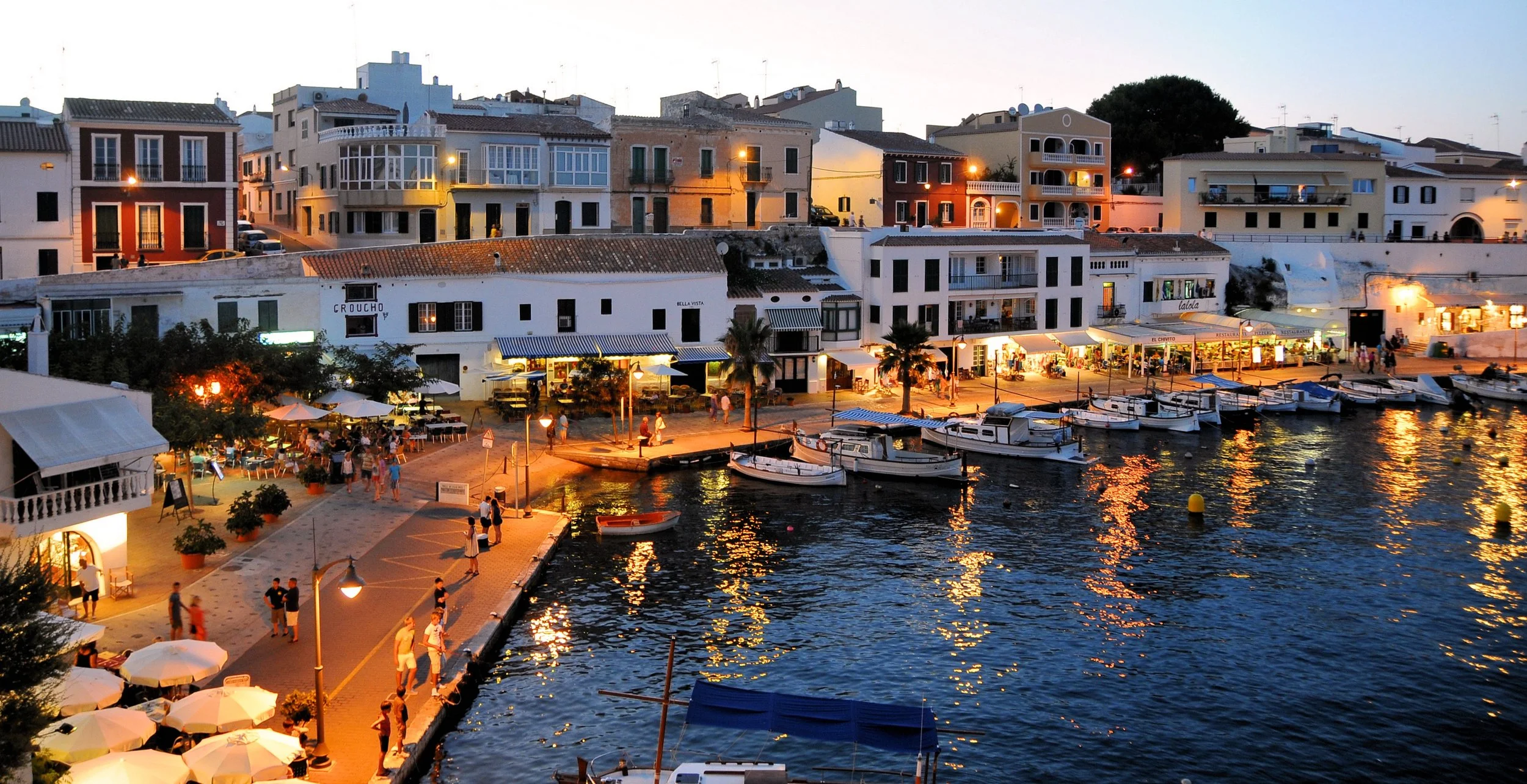
Coastal city at dusk, with lit streets and tourists walking along the harbor. Nice boats anchor the dock and shops line the street.

The city of Mahon, Menorca. pxhere. CC0, via Wikimedia Commons

In contrast to Mallorca’s bustling island pace, Menorca is renowned for its peaceful ambiance, enticing beaches and historical heritage. The island's coastline is dotted with secluded coves and crystal blue waters, with stunning beaches like Cala Macarella and Cala Mitjana. Menorca is much smaller than Mallorca, and most of its beaches are hidden 'calas,' or sandy coves between rocky cliffs. The island itself is calmer, with more intimate and relaxed “hippie” nightlife opportunities such as a cave disco in the Cova d’en Xoroi, Menorca’s most famous cave. 

Menorca’s capital, Mahon, features the second-deepest natural harbor in the world alongside charming streets lined with Georgian architecture, reflecting its British colonial past. The island is also well known for its famous Mahon cheese, matured exclusively in Menorca. The local cuisine is characterized by fresh seafood with traditional dishes such as lobster stew, Menorcan sausages and sweet and savory pastries. Additionally, Menorca is a UNESCO Biosphere Reserve, with a diverse landscape of rolling hills, wetlands and forests, ideal for hiking. This island is quieter than its Balearic counterparts yet is just as abundant in nature, cuisine and architecture.  

 Cabrera

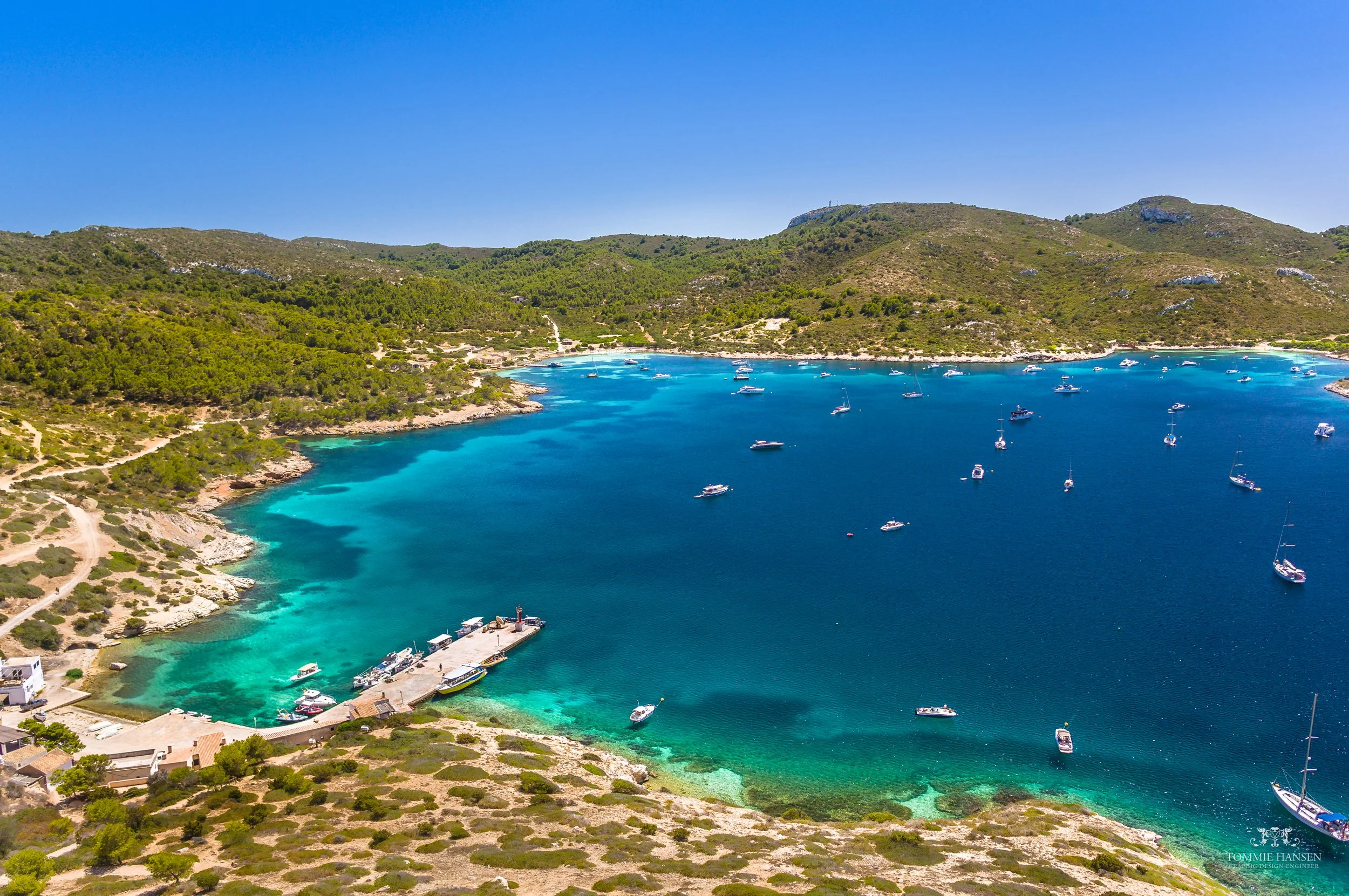
Aerial view of a beautiful bay. The water is a deep turquoise, with boats jetting along, and a sandy but vegetated hilly landscape with little development surrounds the water.

Isla de Cabrera National Park, Mallorca. Tommie Hansen from Stockholm, Sweden, CC BY 2.0, via Wikimedia Commons

Cabrera, a serene archipelago of nineteen islets off Mallorca's southern coast, stands out for its untouched natural beauty and ecological diversity. The island’s name, the Spanish word for goat, from a time when the island’s only inhabitants were goats transplanted there by the Romans as an emergency food source. Interestingly, today there are less than 30 permanent residents on the island, making it the largest undeveloped area in the Balearics. Once a hideout for pirates and later a prison for captured soldiers, today Cabrera, or Cabrera National Park, is a protected area that ensures a thriving habitat for numerous bird species and marine life. 

The island's transparent waters make it a prime spot for snorkeling and diving, revealing undisturbed marine ecosystems and caves. Visitors can also explore historical landmarks like the 14th-century Cabrera Castle, which offers sweeping sea views. Unlike its neighboring islands, Cabrera offers a tranquil retreat where nature remains untouched.  

Formentera

A rocky inlet with turquoise water, white buildings of shops or residences are dotted among the distance.

Los Pujols, in Formentera. Emanuela Meme Giudic…. CC BY 3.0, via Wikimedia Commons

Formentera, while the smallest of the Balearic Islands, stands out for its calm beaches and clear waters, particularly at Playa de Ses Illetes and Playa de Migjorn. The island’s flat landscape contrasts with Mallorca’s rugged Serra de Tramuntana and Cabrera’s protected wilderness, offering easy exploration by bike or foot. Historical sites like the Cap de Barbaria lighthouse provide a glimpse into Formentera’s past, less grandiose than Mallorca’s Bellver Castle but no less significant. The island’s cuisine is full of dishes such as seafood paella, freshly grilled fish, leg of lamb, figs and local goat and sheep cheese.

Formentera’s charm lies in its blend of serene nature and rich history, providing a unique travel experience distinct from its larger neighbors. Like Menorca, Formentera is a less common destination than its closest counterpart, Ibiza, thus preserving the island’s natural beauty and relaxed pace. The local markets, often buzzing with artisans, offer a taste of the island’s vibrant craft traditions. Additionally, the annual jazz festival brings a rhythm to the island that echoes against the backdrop of the Mediterranean, highlighting its lively yet laid-back cultural scene. 

Ibiza

An empty beach, with loungers and closed umbrellas set up, is nestled in a rocky coastline. Out in the distance, beautiful rock-cliffed islands jut out of the ocean.

Sea view, Ibiza Spain. athinaf, CC BY 2.0.

Ibiza, renowned for its vibrant nightlife, is also a bastion of cultural and historical significance. The island’s party scene, with its origins in the countercultural movements of the 1970s, has evolved into a global hub for electronic music, hosting legendary clubs like Pacha and Amnesia. These venues, alongside the annual music festivals, continue to draw international crowds and top-tier DJs, cementing Ibiza’s status as a dance music mecca.

Beyond the beats, Ibiza’s cultural tapestry is rich in history. The Phoenician settlement of Sa Caleta and the necropolis at Puig des Molins are testaments to the island’s ancient maritime trade and significant role in the Mediterranean economy in Antiquity. Dalt Vila, Ibiza Town’s historic center, is a UNESCO World Heritage site that showcases over 2,500 years of history through its Renaissance military architecture and medieval streets. The island’s cuisine offers traditional dishes like bullit de peix, a fish stew, and local desserts such as greixonera. 

Ibiza’s beaches, from the popular Playa d’en Bossa to the tranquil Cala Comte, are celebrated for their white sands and clear waters, providing a natural counterpoint to the island’s bustling nightlife. Each beach offers a unique experience, whether it’s the serene Cala Salada or the lively atmosphere of Ses Salines.


Julz Vargas

Julz is a student at Wellesley College studying Anthropology and Spanish. She grew up in Los Angeles, CA, and has studied all around the world in places such as Costa Rica, Greece, Iceland, and Spain. She is passionate about employing writing as a tool to explore human connection and diversity. Julz aspires to foster cross-cultural connections through community-based research, amplifying inclusive and diverse media about global cultures, foods, and people, to encourage individuals to engage more wholly with the world.

Summer Road Trip to the Tetons and Yellowstone

From experiencing geysers, to hot springs to glacial lakes, this is an adventurous road trip that offers exceptional and unique camping lodging. 

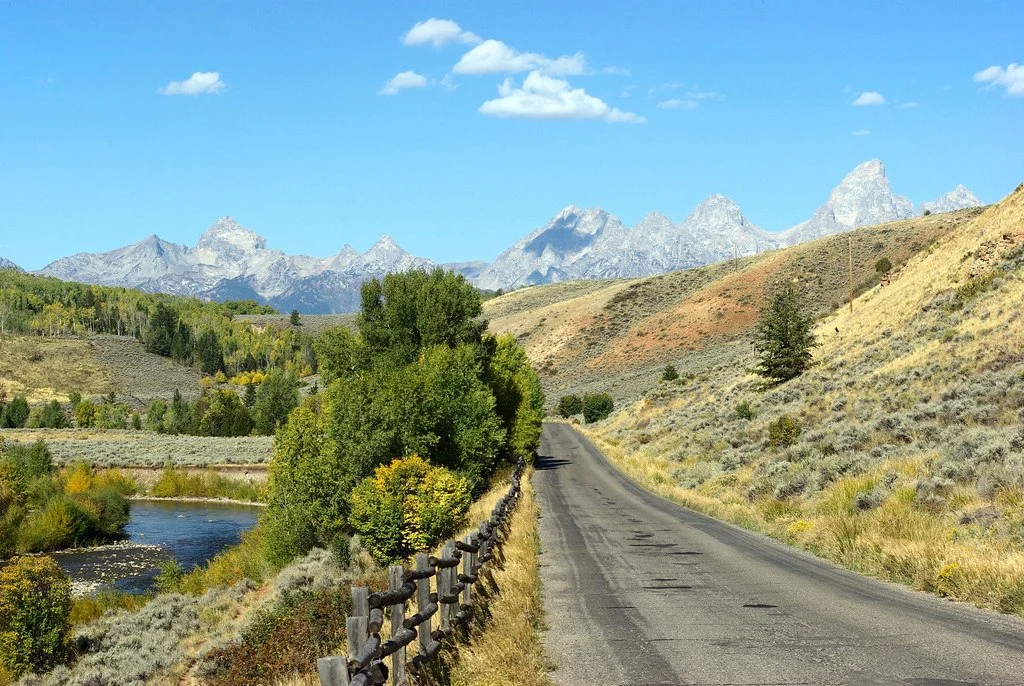
A backroad through the open space and rolling hills in the Tetons. A pond and wooden fence are on side and a shrubby hill the other.

Gros Ventre Road. Mike Goad. CC0 1.0

Grand Teton and Yellowstone are neighboring National Parks celebrated for their rich biodiversity, particularly vibrant during the summer months. A scenic drive through both parks typically spans about a week, allowing time to explore key attractions along the route. Yellowstone National Park is renowned for its geothermal vents, pine tree forests and grasslands, while Grand Teton National Park is known for its rugged landscape, including lush fields and U-shaped valleys. For those planning a summer road trip to Wyoming, here are the top attractions, hiking trails and campgrounds in the Tetons and Yellowstone.

Attractions

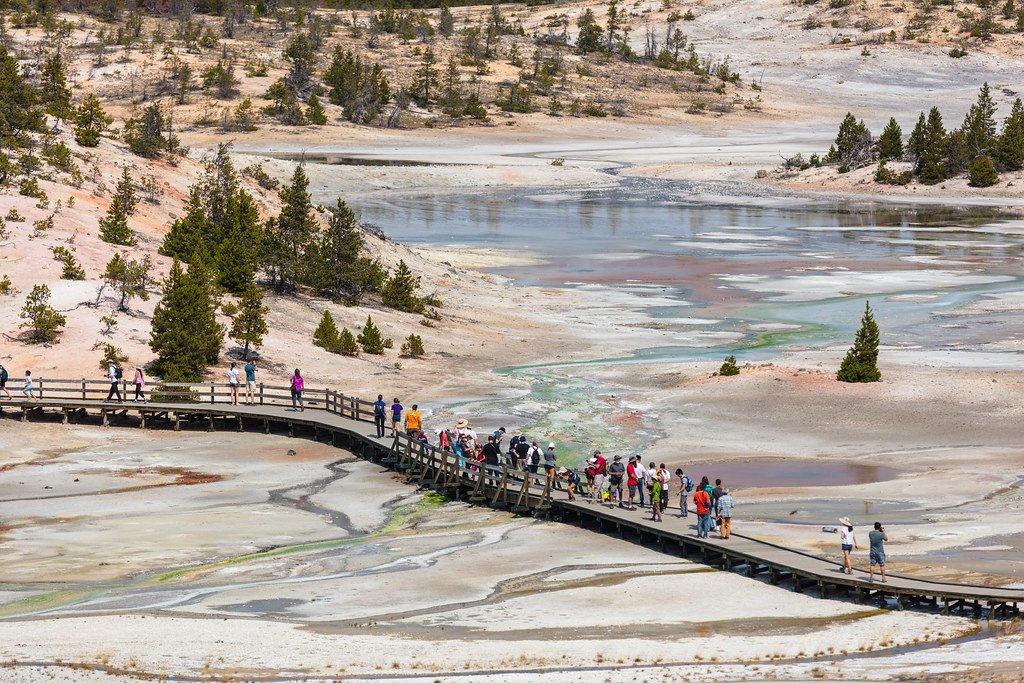
Tourists lining the boardwalk over hot springs, waiting for a geyser to erupt

Norris Geyser Basin boardwalk. Yellowstone National Park. PDM 1.0

Norris Geyser Basin, the hottest geyser basin in Yellowstone, erupts every 20 to 80 minutes. A 1.8-mile loop trail, accessible via a boardwalk, offers views of steaming blue pools, and bison are sometimes spotted in the area. Notably, it features the Steamboat Geyser, the world's largest active geyser, known to reach heights of up to 380 feet. 

Side note: for visitors road tripping through the Tetons and Yellowstone, I recommend purchasing the $80 America the Beautiful pass, granting access to attractions in all National Parks.

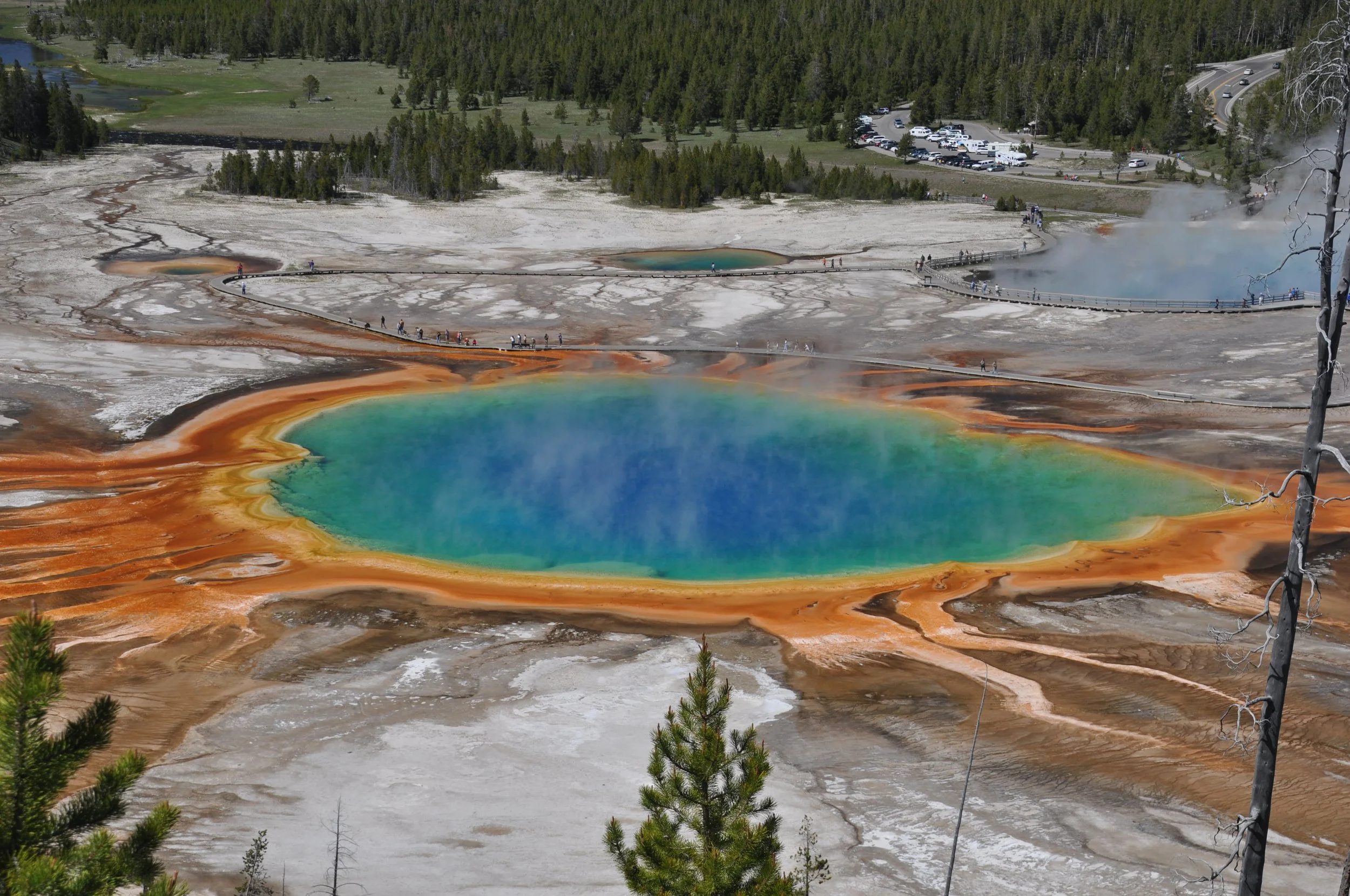
An aerial view at the large multicoloured Grand Prismatic spring, with tourists dotting the windy path to admire it.

Grand Prismatic Spring. James St. John. CC BY 2.0

Yellowstone’s Grand Prismatic Spring, the largest hot spring in the United States, is celebrated for its vibrant colors—a teal blue pool with bands of orange and yellow. For a viewpoint overlooking the spring, follow the 0.5-mile Fairy Falls trail.

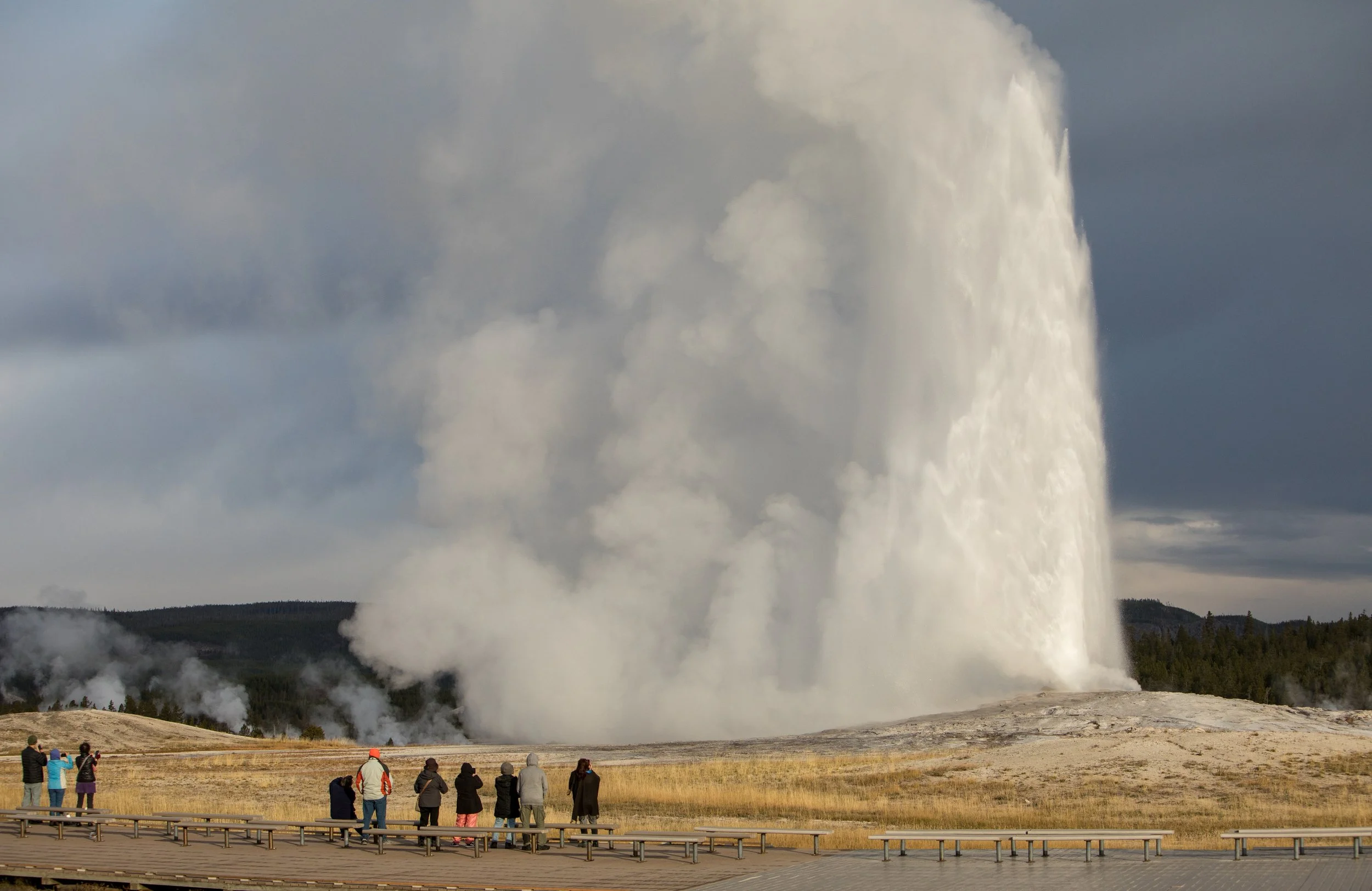
Large geysir erupts while tourists stand in front and admire.

Old Faithful Geyser. National Parks Gallery. PDM 1.0

Old Faithful Geyser erupts regularly, every forty minutes to two hours. Located in West Yellowstone near the Old Faithful Inn, the 0.7-mile loop trail offers convenient access to the geyser.

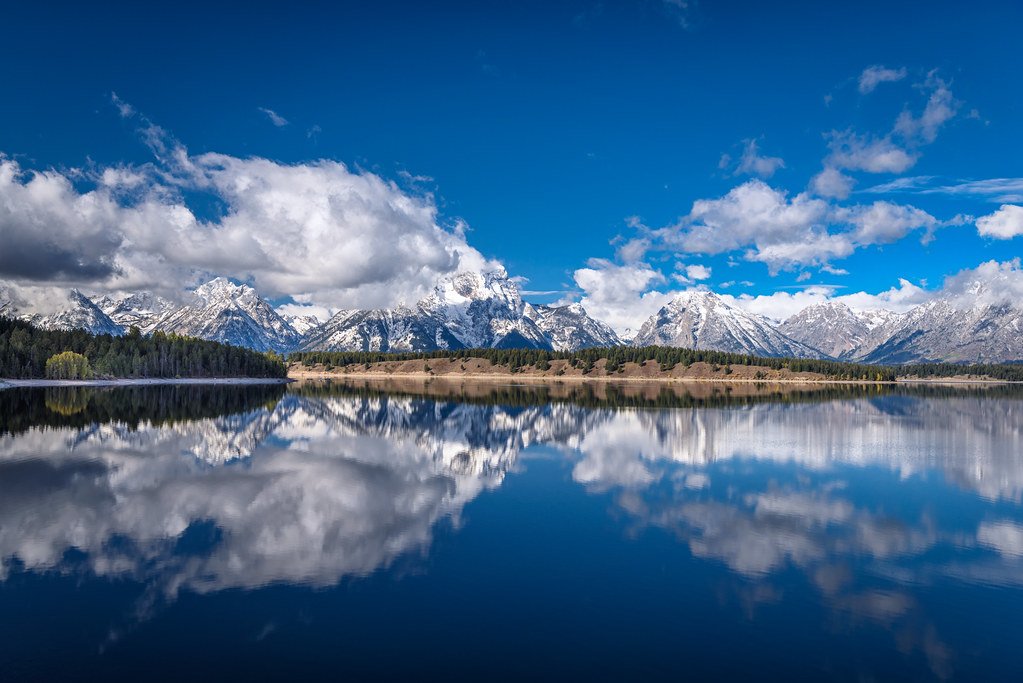
Snowy Teton mountains on a sunny day reflected into clear lake below.

Jackson Lake. Diana Robinson. CC BY-NC-ND 2.0

Jackson Lake is a glacial lake known for its clear, icy water, surrounded by snow-capped mountains. Colter Bay picnic area and beach provide opportunities for fishing, boating and polar plunging. The Colter Bay campground is convenient for water enthusiasts and is the largest campground in the Tetons.

Hikes

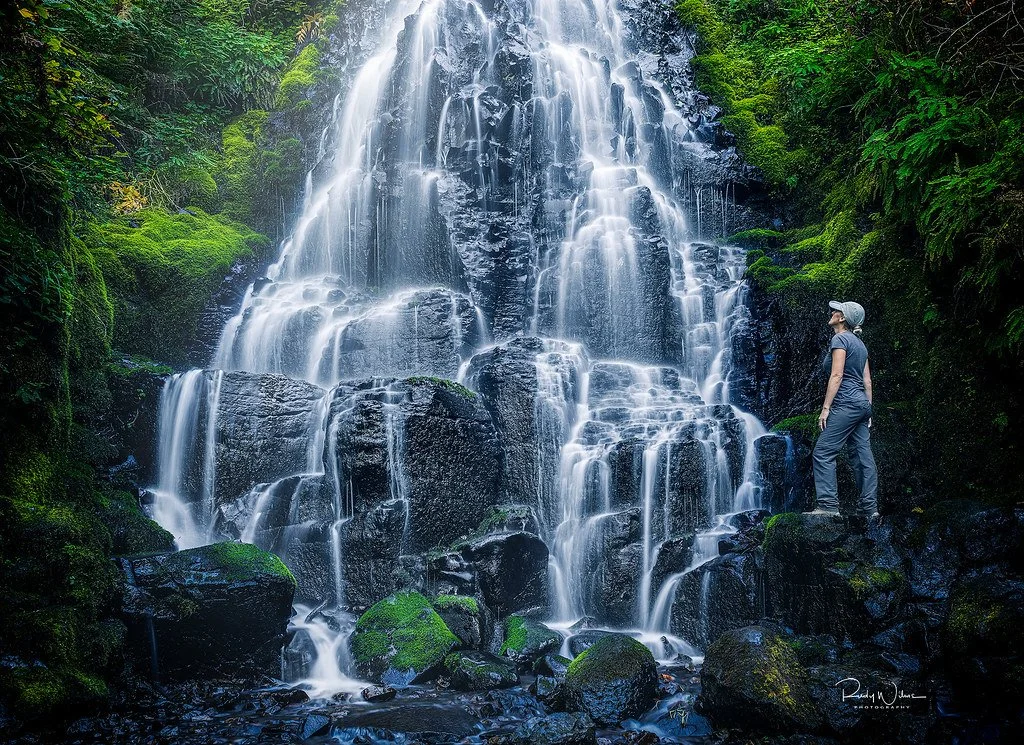
Hiker standing beside massive waterfall cascading in a mossy forest.

Fairy Falls. Rudy Wilms. CC BY-NC-ND 2.0

For outdoors lovers, there are can’t-miss hikes in both parks. In Yellowstone, the Fairy Falls trail is an easier, flatter route, a 1.6-mile hike to a waterfall surrounded by lush greenery. A little longer, Mystic Falls is a 2.4-mile hike to a cascade-type waterfall. Pelican Valley is a 6.2-mile hike, providing a quieter, less touristy experience through serene meadows. In the Tetons, Cascade Canyon is a 9.1-mile out-and-back trail to a glacier-formed canyon, with wildflowers that are most vibrant during spring and summer months. It’s a more strenuous hike, so less experienced trekkers may opt for the Cascade Canyon Express to experience panoramic views of the area.

Campgrounds

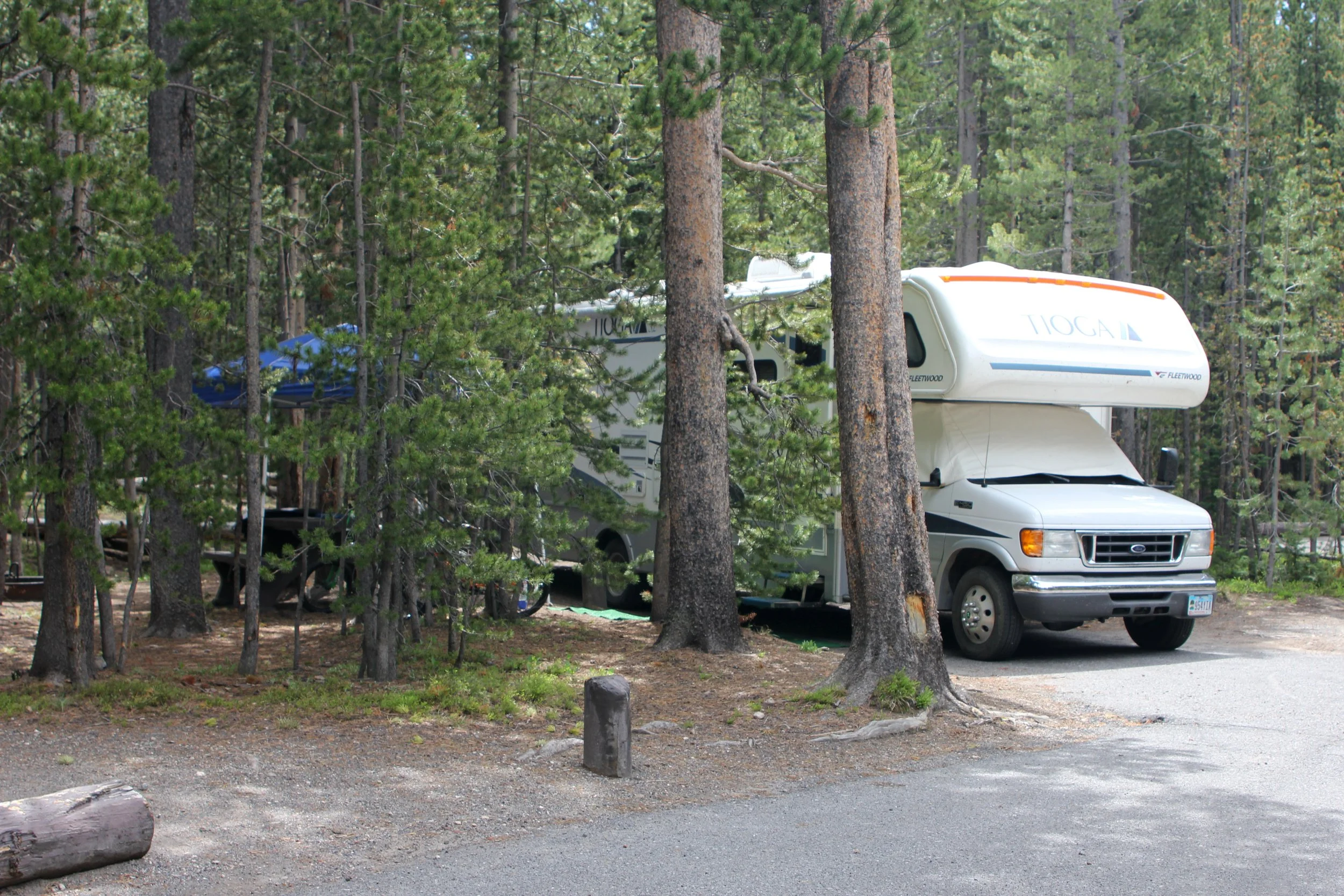
A camper van parked into a wooded site on the campground

Canyon campground site. Yellowstone National Park. PDM 1.0

In Yellowstone, both Madison campground and Canyon campground are centrally located. Madison is close to the Old Faithful area and Madison River, while Canyon is near the Geyser Basins. Canyon campground arguably has more privacy, mostly due to the shade from pine trees.

In the Tetons, Jenny Lake campground is next to the scenic Jenny Lake, providing expansive views of snow-peaked mountains.

Yellowstone is recognized by the National Park Service as one of the planet's last and largest natural ecosystems. The Tetons, often overshadowed by Yellowstone, are just as worth visiting. Experience the unbeatable views, attractions and trails of Grand Teton and Yellowstone National Parks on a road trip this summer.


Agnes Volland

Agnes is a student at UC Berkeley majoring in Interdisciplinary Studies and minoring in Creative Writing, with a research focus on road trip culture in America. She currently writes for BARE Magazine and Caravan Travel & Style Magazine. She is working on a novel that follows two sisters as they road trip down Highway 40, from California to Oklahoma. In the future, she hopes to pursue a career in journalism, publishing, or research.

A Trip Through the Past: Japan’s Living Heritage on Sado Island

The historical music, performing arts and cuisine are kept alive on a tiny resort island off the Japanese coast.

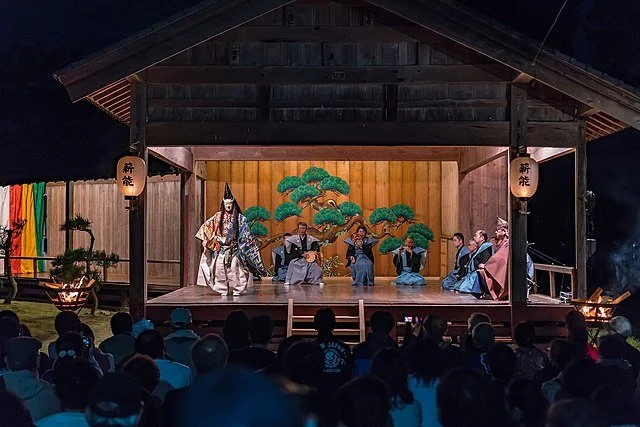
Traditional performers with instruments and in dress on stage as an audience sits and watches.

A Noh performance onstage on Sado Island. Yoshiyuki Ito, CC BY-SA 3.0

Feudal Japanese history gave rise to one of the most fascinating cultures in the world. Decades of relative isolation on the islands of Japan allowed for a completely unique society to blossom, and the resulting art, music and performance is incredible to behold. Although the world has largely moved on from the 18th century, there are still small pockets of society that try to keep those cultures alive. And there is no better place to see Japan as it once was than on Sado Island.

Sado Island was not always beautiful. In the beginning, it was used as a prison colony for political exiles from nearby Japan. Around 1601, however, the territory's rulers discovered a massive vein of gold running through the island. This naturally led to a gold rush, which jump started the population of Sado. The mine lasted for over 400 years, closing at last in 1989. After this, the population began to decline, and now the island has gone from a mining hub to a lush resort.

Today, Sado is a massive cultural hotspot. Throughout history, Sado Island was a crucial trading base on the way to Osaka—this resulted in a huge number of cultures leaving their mark on the land over centuries. Ancient Buddhist shrines and feudal Japanese temples share space across the island, as architecture from all eras fills in the gaps.

The city of Shukunegi, for instance, has been around for over 400 years—it was constructed during the beginning of the Edo era in the 1600s. Many of the buildings were actually built from wood and stone brought by or recycled from the trading ships themselves. Many of these structures are still standing today, packed tightly together to form blocks of houses.

However, the heart of Sado’s cultural preservation comes in the form of its performing arts and music. Noh, a traditional style of Japanese theater, is typically performed in shrines, with the audience sitting outside around bonfires. The stages are open on three sides, with the back featuring a painted image of pine trees. The lead performer typically wears a mask, fashioned after the leading characters of the play (although they are also used to denote spirits and demons). There is nothing in the world quite like Noh, and Sado Island is one of the best places to watch these magnificent performances in person.

Another example of classic Japanese culture on Sado Island is onidaiko, which literally translates as “demon drumming”. These performances include masked dancers and the famous music of Japanese taiko drumming, which was traditionally used to ward off negative energy and spirits during rice harvests. Taiko is most prominent during the Earth Celebration, which takes place in the middle of August every year and lasts for three days of music, performances, and culture. The Sado Island Taiko Centre, where visitors can see taiko drumming year-round, is home to two of the biggest taiko drums in the world.

In addition to its vibrant culture and rich history, Sado Island is a simply gorgeous natural vista. It boasts over 170 miles of coastline, with everything from nearly 100-foot cliffs and volcanic rock walls to lovely beaches. The island is also home to a wide variety of rare plants and animals, including the toki, also called the crested ibis, an extremely rare bird that has become the unofficial mascot of Sado. Even if you’re more in the market for nature than culture, there’s an incredible amount of both to be found on Sado.

Sado has a large number of hotels all over the island, ranging in price from $99 to $500. The island is a wonderful travel destination year-round, but the best time to go is mid-August in order to catch the Earth Celebration.


Ryan Livingston

Ryan is a senior at The College of New Jersey, majoring in English and minoring in marketing. Since a young age, Ryan has been passionate about human rights and environmental action and uses his writing to educate wherever he can. He hopes to pursue a career in professional writing and spread his message even further.

July 2024's Top European Music Festivals

Here's a compilation of music festivals to rock your summer.

A crowd under the neon lights and lit stage at a music festival.

Live outdoor concert. Ultrafan123, CC BY-SA 4.0

Exploring Europe offers a rich tapestry of experiences, from museums and historic cathedrals to renowned cuisines and coastlines. In between the typical, however, consider enlivening your trip with a summer music festival.

Rock Werchter (Werchter, Belgium) 

July 4-7, 2024

Packed crowd attends the outdoor venue and waits under the Black Keys stage.

The Black Keys at Rock Werchter 2023. Haggis MacHaggis, CC BY-SA 4.0

Head over to the tiny town of Werchter, Belgium, which has hosted the multi-award-winning Rock Werchter festival for over 40 years. It is one of the largest and most renowned festivals in Europe, with this year’s event boasting a strong 4-day lineup with headliners including Lenny Kravitz, Måneskin, Dua Lipa, and the Foo Fighters. According to their website, the carefully curated lineup “spans across all genres, making it a truly unique experience.” The curators also make it a point to showcase established artists alongside new talents. Rock Werchter is known for its Belgian beer, waffles, campgrounds, and multiple stages.
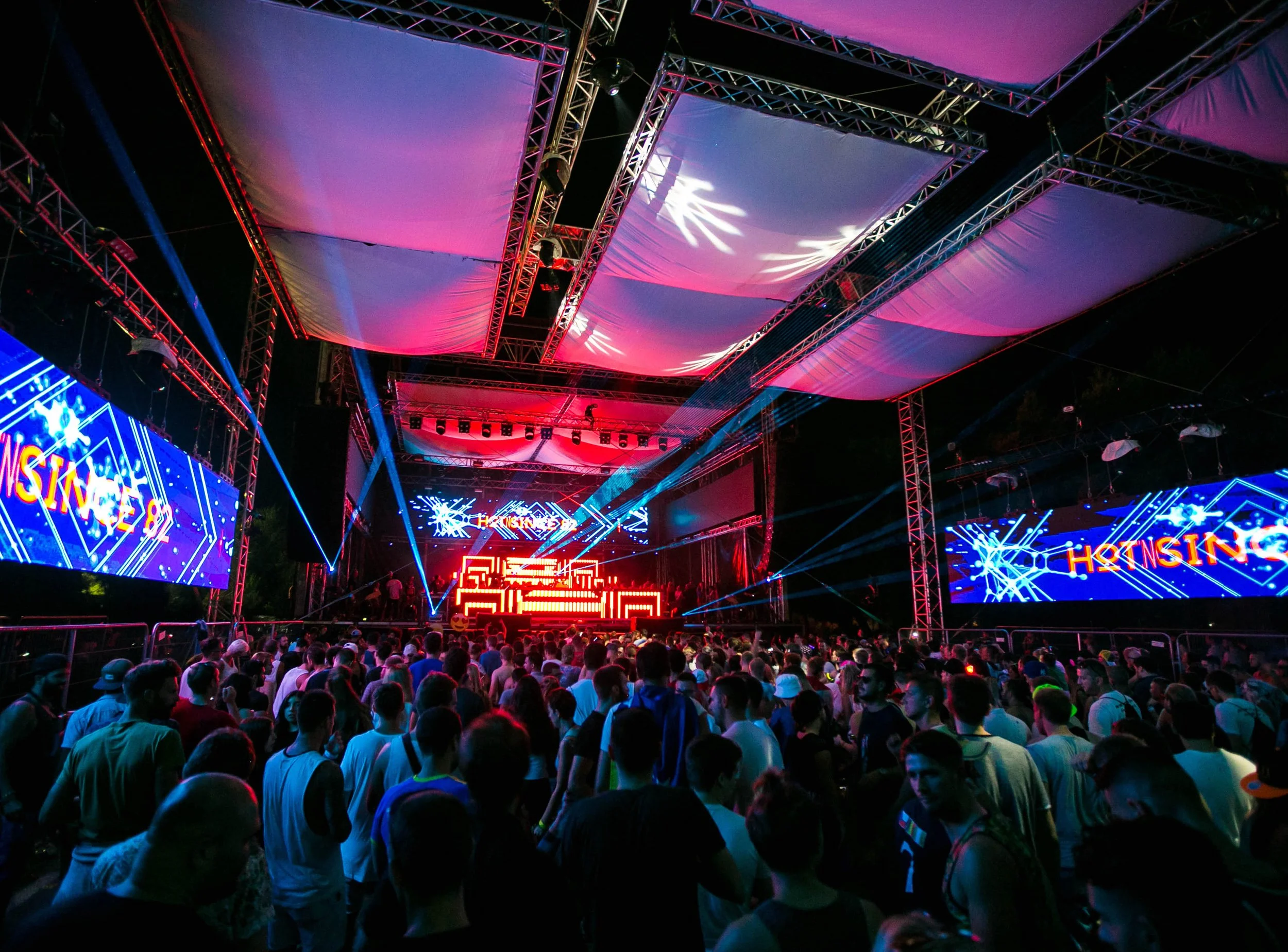
EXIT Festival (Novi Sad, Serbia)

July 10-14, 2024

A birds-eye-view of the crowds and multiple stages at a festival

Drone shot of Exit Festival 2021. Exitfest, CC BY 3.0
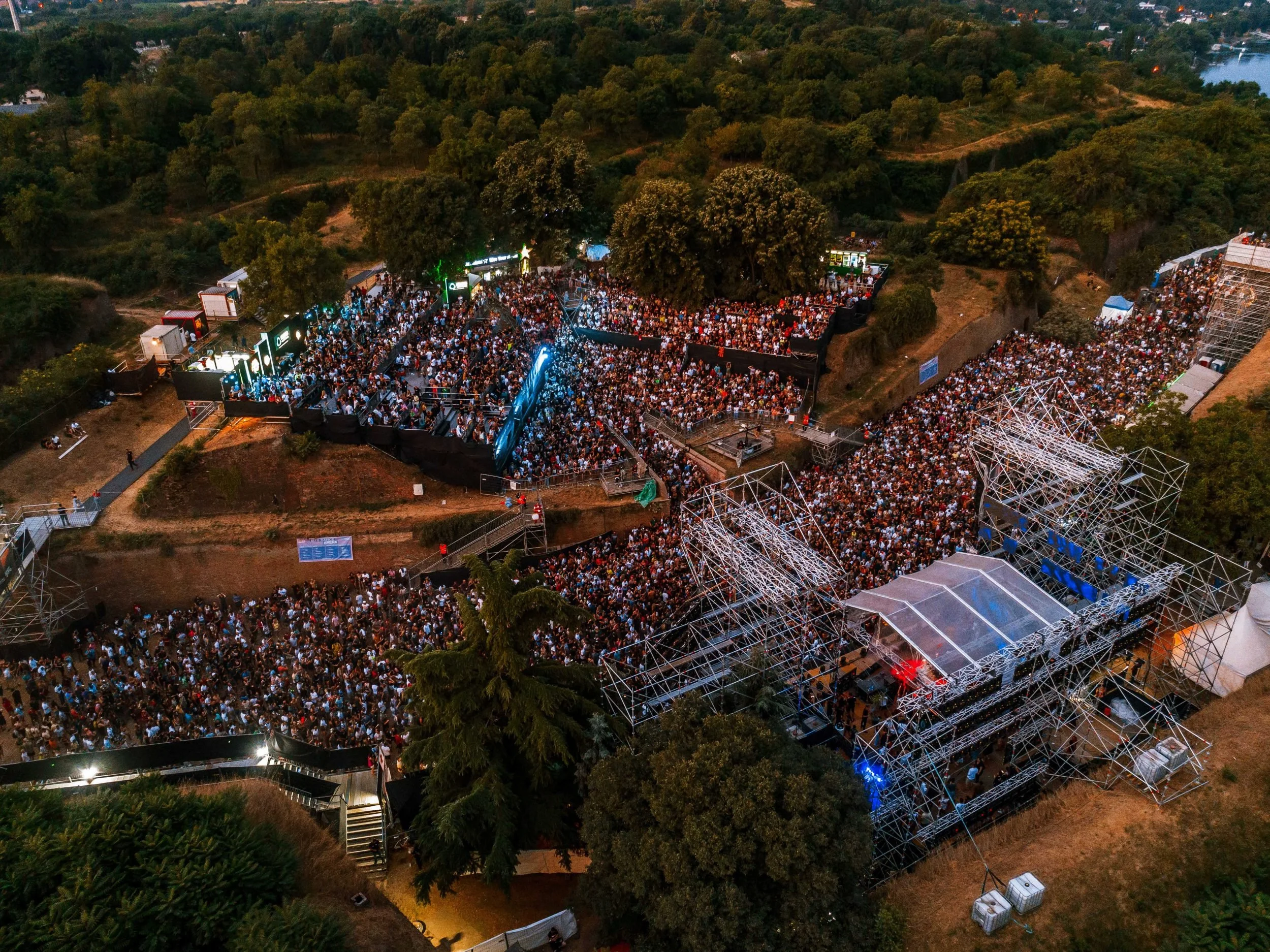
The EXIT Festival of Serbia is known for its astounding location: the Petrovaradin Fortress, a historic fortress located on the banks of the Danube River, has unique acoustics and acts as a picturesque backdrop for the festival’s performances. This festival was first held in 2000 as part of a student movement fighting for democracy and freedom in Serbia. Since then, it has grown into one of the largest festivals in Southeast Europe, attracting tens of thousands of attendees each year. Today the festival continues to emphasize social activism and positive change through its various social responsibility projects. This year’s four-day lineup includes Gucci Mane, the Black Eyed Peas, John Newman, and Tom Morello.

NOS Alive Lisbon (Lisbon, Portugal)

July 11-13, 2024

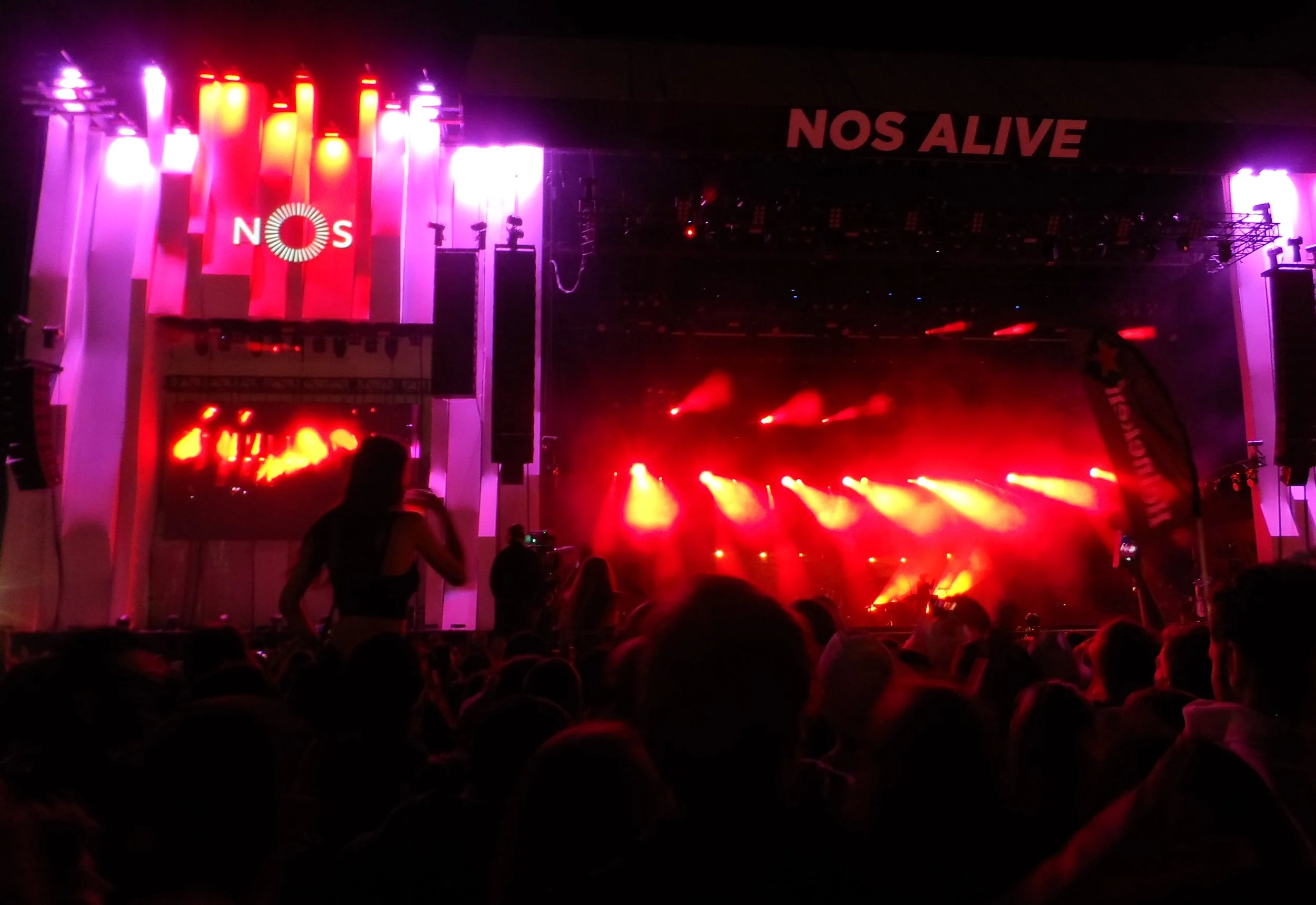
Under red lights, the crowd at a main stage cheers and dances along, looking up at stage.

The view of the mainstage from the crowd at NOS Alive. Chris, CC BY-SA 2.0.

NOS Alive Lisbon takes place at the waterfront Passeio Marítimo de Alges. Formerly known as Optimus Alive, this festival is known for local and international attendees attracted by its diverse lineup, including rock, indie, pop, electronic, and more. It typically showcases a mix of established artists and emerging talents across multiple stages. Festival goers can either camp on the grounds or stay in nearby hotels as the location is just eight minutes from downtown Lisbon. The three-day lineup this year includes artists like Arcade Fire, The Smashing Pumpkins, Dua Lipa, Tyla, Aurora, Pearl Jam, and Sum 41. Its reputation for hosting top-notch artists and vibrant festival atmosphere has contributed to its global appeal. 

Parookaville (Weeze, Germany)

July 19-21, 2024

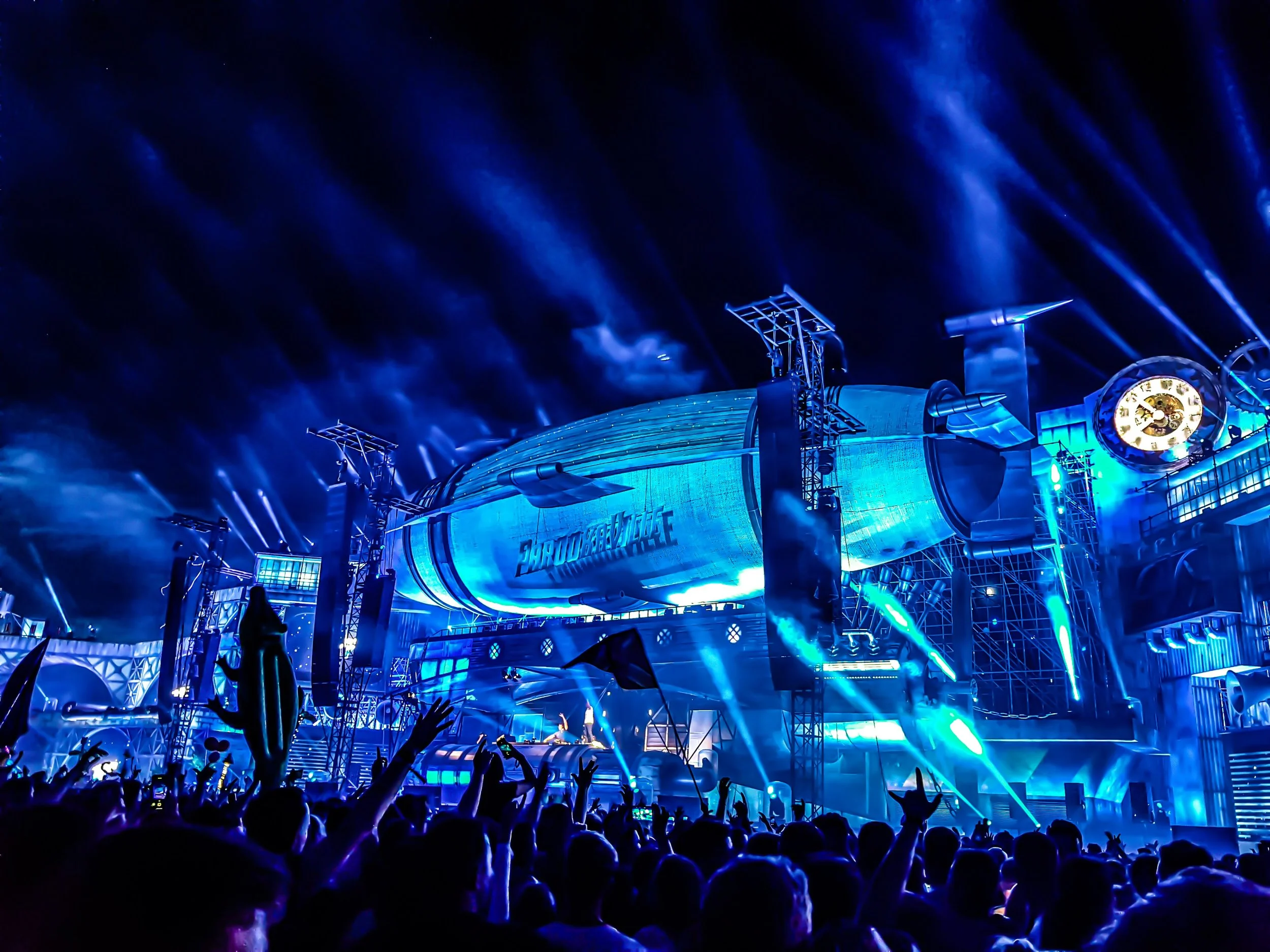
Under blue lighting and large blimp, a packed crowd cheers along under the stage at a festival.

The concert at the mainstage at Parookaville. Ss279, CC BY-SA 4.0

This German festival is truly unique as the event takes place in a faux city, known as Parookaville. Since 2015, the urban creation has come to life once a year in remembrance of the fictional founding father and mayor, Bill Parooka, whose goal was to make people remember to celebrate the joy of life. According to the festival’s website, Parooka is allegedly responsible for instituting the “Madness, Love and Pure Happiness” laws. Festival fans are invited to experience a “mad” musical place where they can connect with their purest selves, experience true connections, and feel sensations of bliss and love. This lineup for this year’s eccentric festival includes headliners such as Don Diablo, Steve Aoki, KSHMR, Oliver Heldens, and Timmy Trumpet. Parookaville is ideal for those open to new experiences and electronic dance. 

Hill Vibes Reggae Festival (Telfs, Austria)

July 24-27, 2024

Silhouette of a crowd in orange light and haze, as a girl dances atop someone's shoulders.

Concert, Crowd, Silhouette image. Mike Wall, CC0.

For the more relaxed and tranquil festival-goer, consider the Hill Vibes Reggae Festival in the mountains of Telfs, Austria. Hill Vibes celebrates reggae music and its various sub-genres. Attendees can expect performances from both local and international reggae artists. The festival boasts a lineup of talented musicians, featuring Gentleman, Alborosie, Romain Virgo, Mellow Mood, Teacha Dee, Samora, and Treesha. From roots reggae to dancehall and dub, the lineup offers something for every reggae enthusiast.

Monegros Desert Festival 2024 (Fraga, Spain)

July 27, 2024 

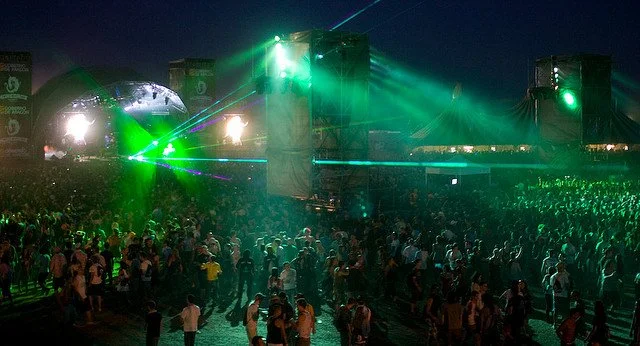
Festival attendees walk between crowded stages at night under flashing lights and colorful beams.

Monegros Desert Festival attendees at night. Gaudencio Garcinuño, CC BY-SA 2.0

The festival takes place in the Monegros Desert, located near Fraga in the province of Huesca, Aragon, Spain. Monegros Desert Festival is renowned for its lineup of electronic music artists, spanning various sub-genres such as techno, house, trance, drum, bass, and more. The festival has a rich history, from its inception in 1994 growing in popularity and stature to become one of the most anticipated electronic music events in Spain and beyond. In addition to the music, the festival is known for its impressive visual displays, stage designs, and production value. Immersive lighting, pyrotechnics, and other visual effects enhance the overall experience for festival-goers. This year’s one-day lineup includes Chase and Status, Vitalic, Sophia Gabanna, Culture Shock, and ASTRIX. According to Music Festival Wizard, Monegros is the biggest electronic music festival in Spain, and although many attempt to describe the festival, “It is literally impossible to put in plain words if you have not had the chance to attend it.”


Julz Vargas

Julz is a student at Wellesley College studying Anthropology and Spanish. She grew up in Los Angeles, CA, and has studied all around the world in places such as Costa Rica, Greece, Iceland, and Spain. She is passionate about employing writing as a tool to explore human connection and diversity. Julz aspires to foster cross-cultural connections through community-based research, amplifying inclusive and diverse media about global cultures, foods, and people, to encourage individuals to engage more wholly with the world.

In Mongolia, a Summer Festival for the Ages

For a few days in early July, the people of Mongolia eat, dance and play “the three games of men” during a storied festival called Naadam.

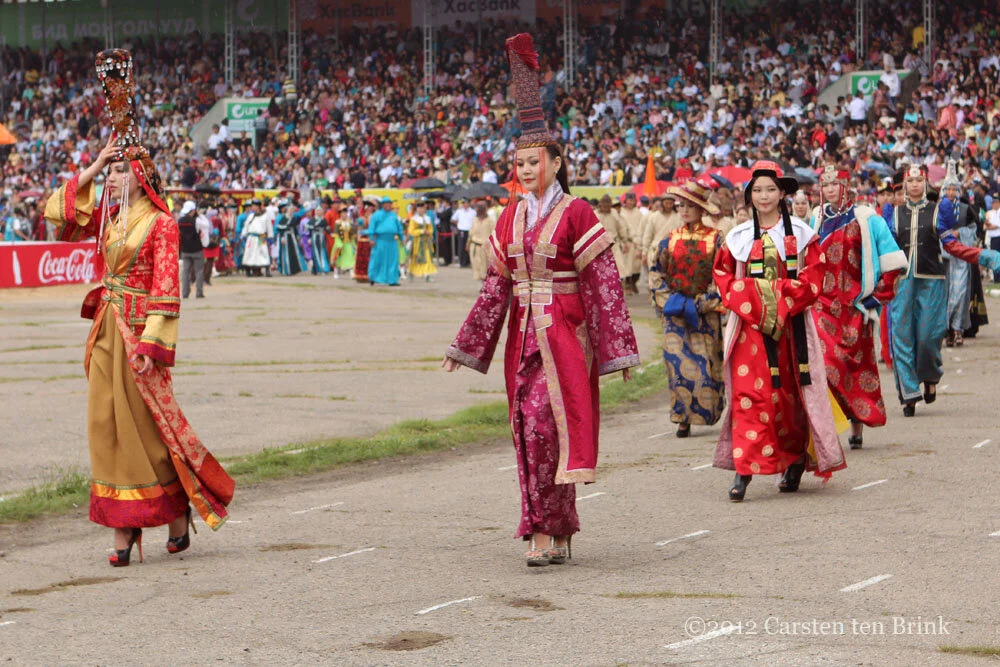
Women in traditional dress walk in a line during the opening ceremony of a festival in a filled stadium

The 2012 Naadam opening ceremony in Ulaanbaatar. Carsten ten Brink. CC BY-NC-SA 2.0.

Mongolia is a country primarily known for its nomadic inhabitants and isolated location. Positioned between Russia and China, it is easily overlooked in the midst of these global giants. Its relative emptiness does not help matters; only 3.3 million people inhabit Mongolia’s 603,909 square miles , making it the least densely populated country in the world. But every summer, those 3.3 million come together in a celebration of sports, culture and Mongolia’s past. This celebration is called Naadam, and as far as festivals go, it is one of the last of its kind.

In ancient times, when Ghengis Khan and his horde of Mongols were inhabiting what would eventually become Mongolia, soldiers were selected for battle based on their skills in various sports. Wrestling, horse racing and archery in particular were activities that Khan believed a good soldier should, and would, excel at. Before and after battles, his battalions would organize and participate in sports competitions. These local competitions evolved into what Naadam is now. 

As a consequence of the 1921 Mongolian People’s Revolution, which brought the nation independence from China, Naadam’s essence was altered. It was officially sanctioned as a national holiday, with a date set in the second week of July. Mongolia’s capital of Ulaanbaatar became the home of “National Naadam,” the biggest and most important celebration of the holiday. Most importantly, the festival became less of a violent competition and more of a national celebration; an emotional change which remains today. 

Every celebration of Naadam features the three main sports of Mongolia; wrestling, horse racing and archery. All three sports have histories in Mongolia that are older than the country itself. For example: if a rock carving found in central Mongolia is anything to go by, wrestling competitions have been around in the county since the Bronze Age. Naadam features the grandest of all Mongolian wrestling competitions; up to a thousand or more take part in the Ulaanbaatar tournament. Before their matches, wrestlers often mimic local birds such as eagles, hawks and vultures. By doing well in the competition, wrestlers can receive titles based on these animals—“hawk of Ulaanbaatar,” for example, would be given to a wrestler who makes it to the final few rounds.

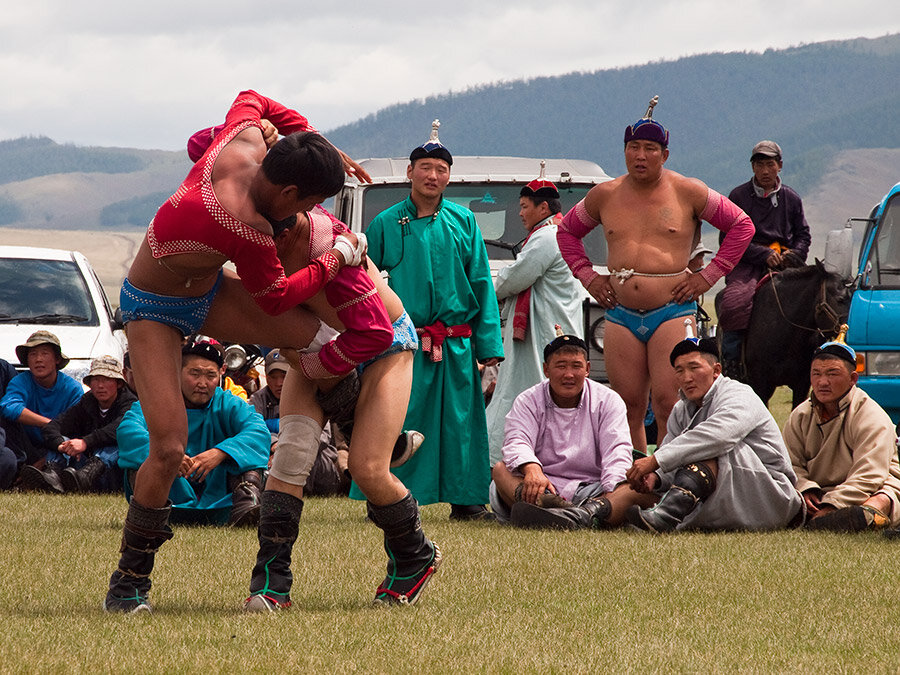
The final thing to note about Mongolian wrestling is the dress code, which is very particular. Wrestlers must don a four-sided hat, shorts, boots, and a shoulder vest that exposes the chest. The legend is that the open vest was put into practice after a woman snuck into the male-only wrestling competition in ancient times by pretending to be her father, and eventually won the competition. Such deceptions have been made impossible by exposing the chest of the wrestlers; to this day, Mongolian wrestling continues to be an exclusively male sport.

Two wrestlers in traditional dress on a grassy field, while a crowd sitting forms around them to watch.

Naadam wrestling in the village of Tariat. Evgeni Zotov. CC BY-NC-ND 2.0

Horses are a large part of Mongolian life—nomadic tribes continue to depend exclusively on them for transportation. It follows that horse racing is extremely popular in the nation. According to Naadam’s official website, around 180,000 horses race during the holiday. All of Naadam’s races are very long in distance—at least in comparison to western competitions. The Kentucky Derby is about 1¼ miles long; a Naadam race can be up to ten times that.

Mongolian jockeys are incredibly wily and experienced; most Mongolians learn to ride a horse when they are just five years old. The jockeys treat their horses with incredible care. Before, after and even during the races, they are said to sing complimentary songs to their steeds.

The final sport of Naadam is archery, which is said to be even older than wrestling in Mongolia. Naadam’s official website hypothesizes that archery has been around in Mongolia since the Neolithic period, which ended in 4,500 BC. It was first used for hunting—later on, Ghengis Khan would employ it in his battles and sports competitions.

Male, female and child archers all compete at Naadam, wearing traditional costumes made of colorful cloth. There are three categories of the sport—Khalka, Buriat and Uriankhai—each of which come from different tribes and have different sets of rules. Only men are allowed to practice Uriankhai archery, for example.

While these three sports are the core of Naadam, the festival does not begin and end with them. There are smaller carnival games, singing and dancing. National cuisine is enjoyed; Khuushuur, a fried pancake with meat, is the most popular dish. Airag, a fermented, alcoholic drink made from horse milk, is also popular.

However, Naadam’s most important attribute is not the food, the history or the sports competitions. It is the fact that for a few summer days, the sparse vastness of Mongolia is filled. Whether in Ulaanbaatar or in a tiny village, Naadam brings Mongolians together to celebrate a culture that few in the world know anything about. This quiet happiness is the magic of Naadam; it is a magic that will continue long into the future.


Finn Hartnett

Finn grew up in New York City and is now a first-year at the University of Chicago. In addition to writing for Catalyst, he serves as a reporter for the Chicago Maroon. He spends his free time watching soccer and petting his cat

Travel Europe For Free: Red Bull’s Annual “Can You Make It?” Challenge

Every year, the Red Bull drink company attracts hundreds of young travelers to participate in a race across Europe, using only social skills and Red Bull cans to fuel their adventures. 

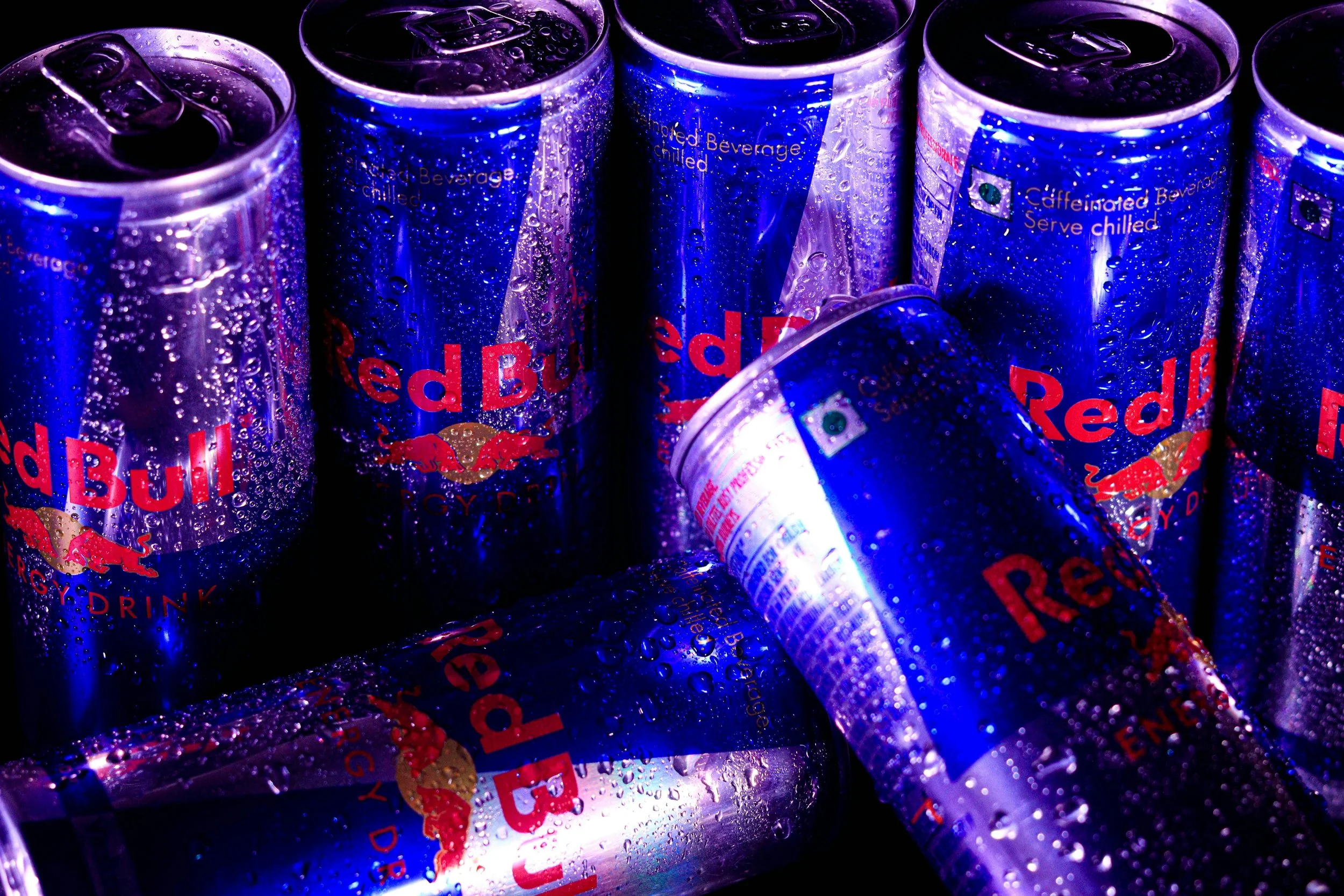
Close up of six cold Red Bull cans

Red Bull Cans. Sanket Sawale, CC0.

On May 21, 2024, teams of three from around the world began Red Bull’s "Can You Make It?" challenge across Europe. Every year, at the end of May, the drink company hosts a competition to challenge adventurous young adults. In order to compete, contestants must assemble a team of three eighteen-plus-year-olds and create a video explaining why they should be chosen as one of the representatives for their country. After being selected to represent their nations, contestants fly to one of five locations to begin their journey. This year, the cities were Copenhagen, Milan, Amsterdam, Barcelona and Budapest. From there, Red Bull states that, “Each team will hand over their cash, credit cards, and personal phones, and they’ll have just one week to make it to Berlin.” Their only form of currency: a case of Red Bull cans.

Teams are given the Red Bull, and it is up to them how they will pitch themselves to the European public in order to gain food, transportation, housing, etc. The can trades may also lead to once-in-a-lifetime experiences for competitors. One team’s contestants had never seen snow before, so they traded some of their cans for a ride up to the Swiss Alps. Other teams have traded cans for things like tattoos, private jet rides, tickets to the Champions League quarterfinal, fine dining at a three Michelin Star restaurant, and many more unique adventures.

While in the modern day it seems difficult to make thousand mile journeys with just cans and teamwork at one's disposal, the Red Bull teams make it work. The Salt Lake City based team “Connoisseurs'' shared their experiences with The Daily Utah Chronicle: “We are just armed with people’s kindness. That’s all we had to get from one point to another.” The group, which started in Copenhagen, had come up with different strategies for how they would convince people to help them. Team captain Zuni Olivares shares, “We had plans for different routes out of Copenhagen, we had plans for the pitch we were going to use, and plans for how we were going to get to Berlin.” Eight minutes into the competition, however, the team met a man from Italy that offered them tickets to Milan after hearing about the competition that they were participating in. Throughout their journey, the Connoisseurs noted that “Europeans were very receptive.” People would offer to bring them places and buy them good after hearing about the competition they were participating in, “intrigued by just helping us out rather than getting anything in return. People loved the adventurous nature of it all.”

In 2020, a Czech team known as “Airborne” also competed in the RedBull competition. Team member Ondrej Vašíček notes that, after their team was accepted, they attempted to strategize but realized that it would be difficult; “We basically had no idea what we signed up for. You can’t prepare for something like that.” The team struggled with finding accommodations for the night, spending upwards of four hours wandering city streets to find a hotel with an open room. At one point, the team exchanged four cans for a whole package of beer. Contestant Vašíček said that this exchange worked out well for the team because, “we could then give the beer as a present to others to make them happy because until this point people were constantly helping us.” As expected, the team did encounter their own set of issues when traversing across Europe. They noted that people would usually refuse at first, but then became more helpful once they heard Airborne’s story and more about the competition. Overall, the team was pleasantly surprised by the kindness and helpfulness of the local people.

In addition to the staple Red Bull can trades, contestants are also encouraged to participate in two categories of challenges; Adventure Challenges and Checkpoint Challenges. Adventure Challenges can be completed at any point during the day at any location. Most of these challenges are created to promote fun amongst teammates and focus on their creativity. Red Bull notes that, this year, “Adventure Challenges included the straightforward (trading cans for ice cream) as well as the more complex (gathering 30 people to scream their team name in public).” The second type is Checkpoint Challenges. These challenges have specific locations in several cities across Europe. Red Bull tries to make these more specific to the location, immersing contestants into the local culture or activities. Some Checkpoint Challenges contestants took part in were abseiling, surfing, recording music tracks, skydiving, and learning a traditional alpine Schuhplattler dance.”

This year, a United States team composed of Texas A&M University students won the seven day competition. Their team, called “Gladiators,” was composed of college students Weston Cadena, Jacob Mathiasmeier, and David Greek. Over the week, the team traveled 3,000 miles, created 80 vlogs, competed in 53 adventure and 14 checkpoint challenges, and traded approximately 150 Red Bull cans for a grand total of 18,784 points. The team recounts that, “We visited eight countries in seven days and interacted with people who spoke many different languages. But simply smiling, and our body language, allowed us to communicate and make strong relationships.”


Aanya Panyadahundi

Aanya is a student at the University of Michigan studying sociology and journalism on a pre-law path. She loves to travel the world whenever she can, always eager to learn more about the different cultures and societies around her. In her free time, she likes to play the violin, ski, and listen to podcasts

Hiking in the Canadian Rockies: The Natural Magic of Waterton National Park

Find some of the best hikes in the world on the southern Canadian border.

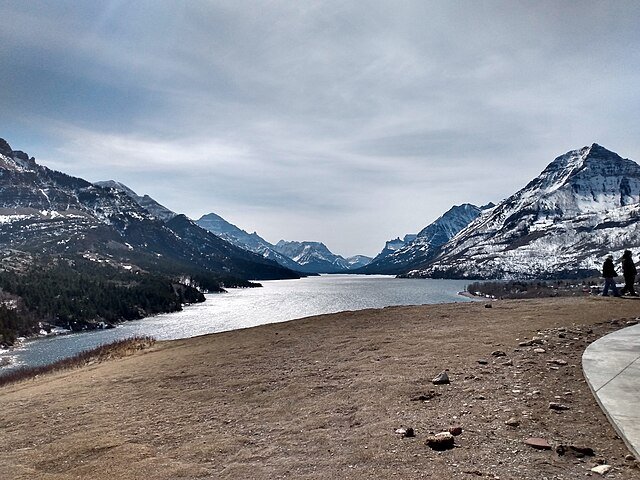
The Canadian rockies scattered with snow, bordering an alpine lake with a sandy beach in the foreground.

Waterton Lakes seen from the Prince of Wales. Sean Tseng, CC BY-SA 4.0

Uniquely positioned as the only national park in both the United States and Canada at the same time and known as an International Peace Park, and the first of its kind, Waterton is a once-in-a-lifetime experience. During my two weeks there, I discovered hidden waterfalls, hiked over miles of snow and ice, and took a step back into Canadian history.

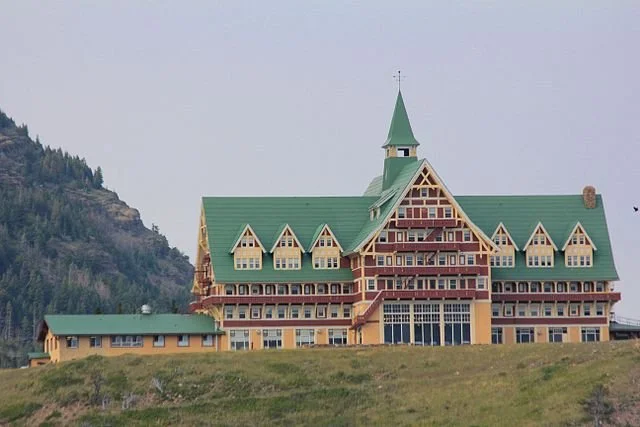
Our first destination was the Prince of Wales Hotel. Positioned on top of a hill overlooking the beautiful Upper Waterton Lake, this building was constructed in 1927 and has remained one of the most recognizable landmarks in the entire park. The interior is a classic 20th-century hotel, complete with a manually-operated crank elevator. Niagara, the restaurant within the hotel, holds high tea in the drawing room in the afternoons, bringing guests back to Victorian England, complete with pastries and ornate British tea sets.

Perched atop a grassy hilltop, a yellow hotel with a green roof in Victorian style

The Prince of Wales Hotel. Royalbroil, CC BY-SA 3.0

Heading down along the steep path on the hillside, we arrived in the small town of Waterton on the edge of the lake. The sleepy mountain village was a lovely experience; it felt like taking a trip back through Canadian history, complete with uniformed mounties patrolling the streets. The town opens up onto a variety of hiking trails into the surrounding mountains and along the shores of the lake.

Taking one of these mountain paths, we climbed up and around the foothills and into a gorgeous pine forest. Making our way along the rocky outcroppings and winding paths, we found ourselves facing a thundering waterfall only a few minutes after we started out. This would prove to be the standard for our trip; it seems like everywhere you look, there’s another beautiful vista or secret wonder waiting to be discovered.

Just a few minutes’ drive from the hotel, we arrived in Red Rock Canyon, a small but beautiful gap in the earth lined by small brush and occasionally frequented by coyotes. Thankfully, we didn’t run into any of them on our trail, but at the viewing spot at the end of the short hike we spotted one scampering along the bank of the small river far below us. This canyon is also a known visiting spot for both brown and grizzly bears; their presence in the park has led seasoned travelers to suggest carrying noisemakers or regularly shouting, “Hey, bear!” to avoid taking the huge animals by surprise and risking an attack.

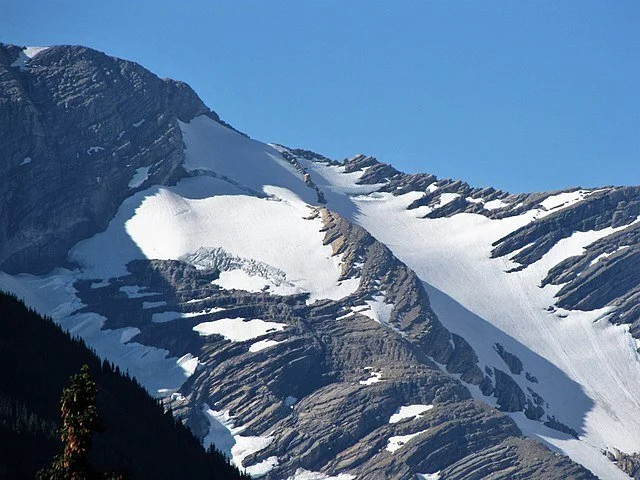
After a few days enjoying the sights of Waterton, we made our way further west and crossed the border back into the US’s Glacier National Park to visit some of the last remaining glaciers in North America. One of these ancient ice giants, Jackson Glacier, is visible from the side of the famous Going-to-the-Sun Road. This winding path along the side of the Rocky Mountains sits at an elevation of around 6,000 feet and is lined with waterfalls and scenic vistas. If you’re lucky, you can spot herds of bighorn sheep climbing the hills alongside the road; with their unique hooves, they can cling to a sheer rock wall as if it was flat ground. And as long as the weather is good, you can clearly see the massive ice sheet that carved out the valleys below, suspended between two peaks in the far distance.

A close-up of a glacier on the slopeside of a rocky mountain.

Jackson Glacier as seen from Going-to-the-Sun Road. MONGO, CC BY-SA 4.0

Further along the road, we came to our next stop; a trailhead that led out into a massive field of snow. With bandanas and wool hats to resist the biting cold, we started out across what looked like a scene straight out of a Hallmark movie. But after a few feet, we discovered that there was actually a wooden walkway—about three yards beneath us. This massive field of snow was in reality a mountain of its own; it was several yards deep and miles wide in all directions.

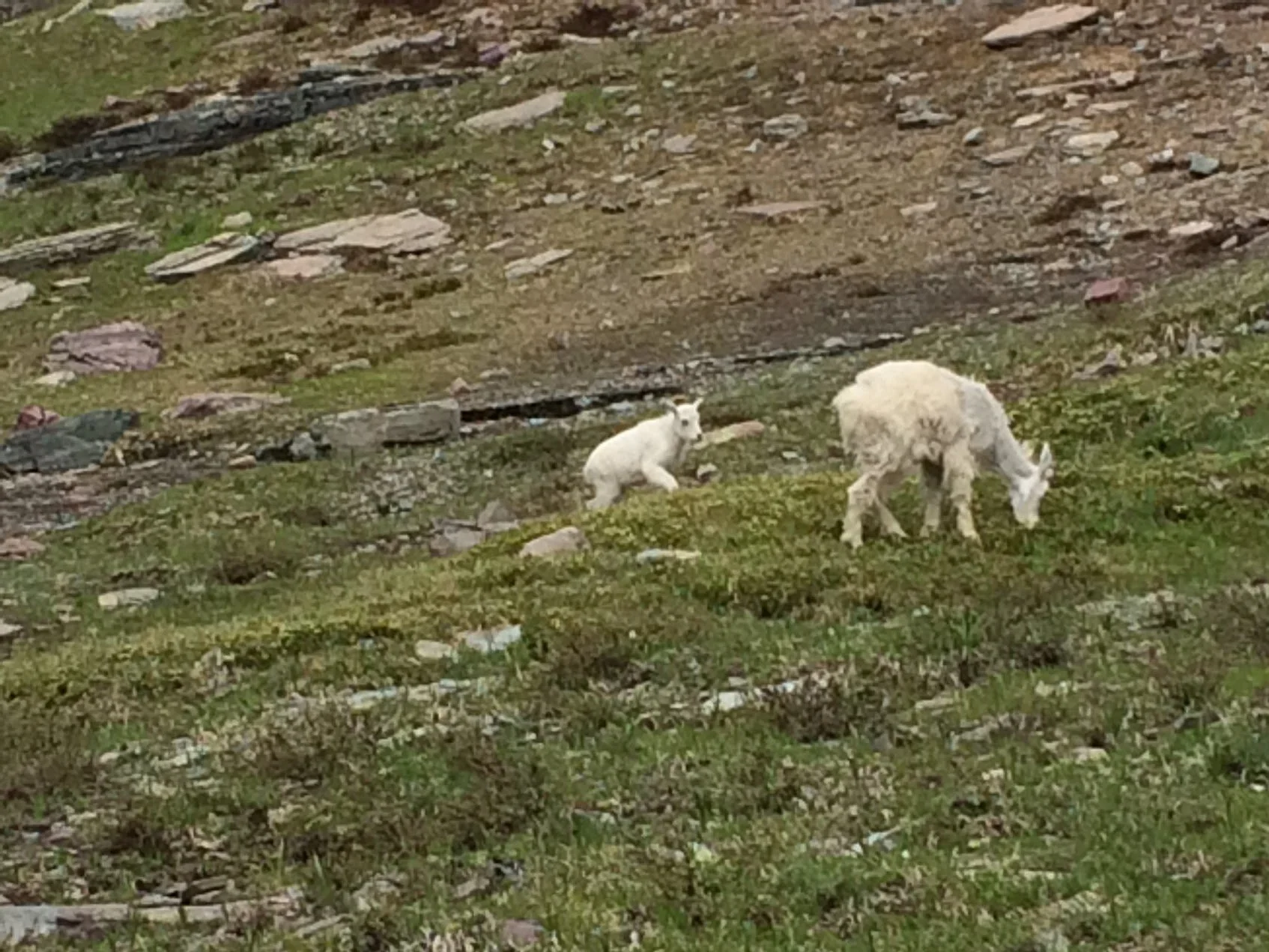
After picking our way along the often slippery surface of the snowy mountain, we found ourselves in another forest, this one populated by tons of wild mountain goats. Groups of hikers stood along the roped-off path, snapping photos of the adorable baby goats as they rooted through the snow and brush for food. We also spotted some wolverines, keeping their distance from us as they hunted for prey along the upper slopes of the mountain.

Two mountain goats, one a baby, grazing in a rocky and grassy hillside.

A mountain goat with its kid. Photo by author.

Once we had descended to our car again, we made our way back north to our last stop: Many Glacier Hotel, overlooking Swiftcurrent Lake. After dropping off our things, we hopped on board one of the boating tours. We were taken across the lake to the opposite shore, where we briefly hiked our way through the foothills before hopping on another boat and circling back around. During our cruise, we were given the history of the area, from the area’s original residents, the Cheyenne and Blackfoot tribes, to the park’s founding in 1910.

Waterton and Glacier are some of the most beautiful national parks in the world; despite being overshadowed by Yellowstone and the Grand Canyon, there is nothing quite like hiking across miles of snow and viewing the ancient glaciers that formed the landscape of America and Canada. The wildlife, the environment and even the towns of Waterton are steeped in natural beauty and wonder; anyone who enjoys hiking and loves a good view should make their way to Waterton once in their lives.

There are many ways to visit and stay in Waterton. The closest airport to the park is Kalispell (FCA), although for some Calgary International Airport (YYC) may be preferable. The Prince of Wales Hotel from this article is open for online bookings in the spring and summer at their website, and other lodgings are bookable here and on other sites you can find through Google Hotels. Prices in the area generally range from around $130 to $150 per night.


Ryan Livingston

Ryan is a senior at The College of New Jersey, majoring in English and minoring in marketing. Since a young age, Ryan has been passionate about human rights and environmental action and uses his writing to educate wherever he can. He hopes to pursue a career in professional writing and spread his message even further.