Barbie Across Borders

Around the world, countries censure or celebrate Barbie, a film that violates localized beliefs about feminist expression and the satirization of patriarchy.

Barbie Movie Billboard. Brecht Bug. CC BY 2.0

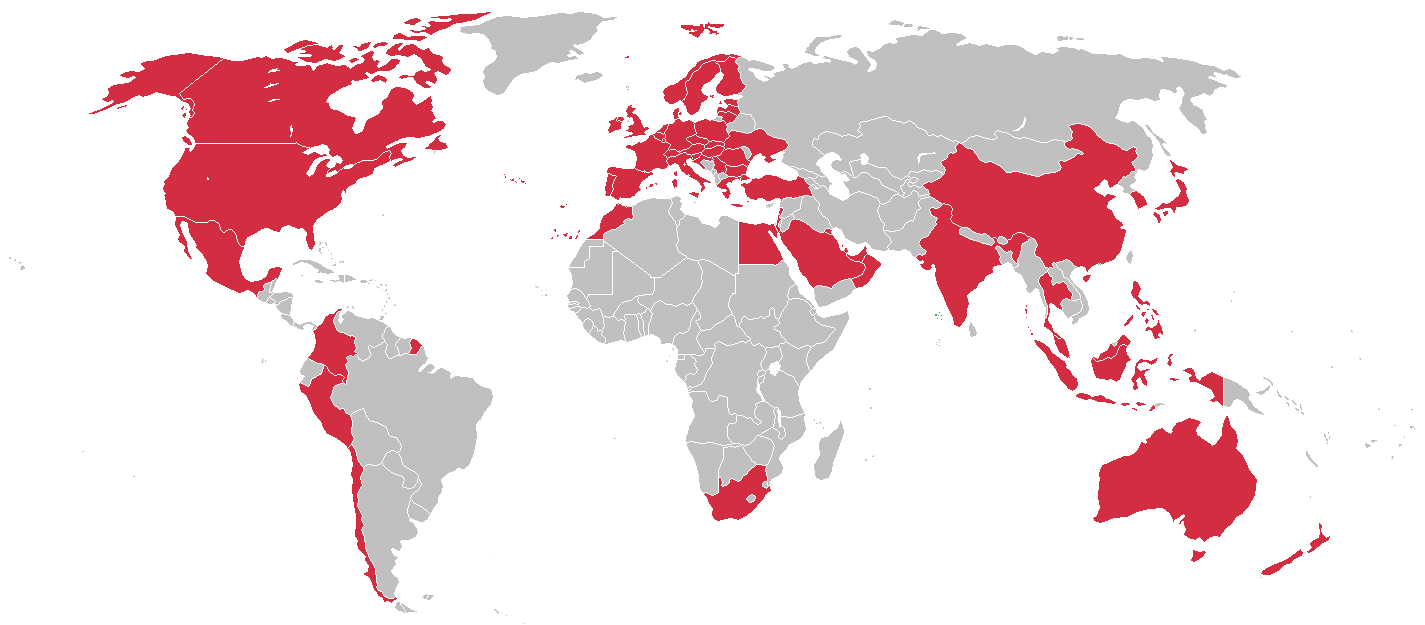
“Barbie” premiered around the world late last month, quickly becoming a global sensation in the weeks that led up to its release. The film follows protagonist Barbie as she ventures on a journey of self-discovery that causes her to question the values  of a patriarchal society. The United States, China, Saudi Arabia and other Middle Eastern countries had mixed reactions to the film, ranging from dissatisfaction with its promotion of women's empowerment to the celebration of female independence and capability. 

The film has caused discourse in China, where movies still include considerably outdated gender roles. Media like Mr. Six and Gentlemen From Eastern 8th are reminders of the sexist normalcies that still exist in Chinese entertainment and society, including the objectification and oppression of women in the roles that they play. Barbie has been praised and disparaged for calling attention to these instances of gender inequality with many women appreciating the film’s recognition of such an “objective reality” and depiction of strong rather than objectified women. In recent years, China’s involvement in the political landscape of feminism has been backsliding, with rejections of sexual harassment lawsuits and arrests of those protesting for greater feminist representation. Because of this, China is not entirely dissimilar to the conservative politics in the United States, both of which believe that the film succeeds at emasculating men. Regardless, across the U.S., the debut of the film was largely met by fans with outfits of pink and reviews acknowledging the film as a “cinematic and emotional masterpiece.” Not long after, fans of the film in China also began to express support for the film by wearing pink and complimented the film as the best expression of feminism

Latin and South American countries have also embraced pink, specifically through food. Vendors in Mexico and Guatemala have sold pink tacos while Venezuela, Chile and El Salvador have created arepas with beet dough for pink coloring. Support for the film has been widespread across the region, as it has reinvigorated radical public protest and prompted movements like “Barbie Buscadora.”

Across countries in the Middle East, “Barbie” has been banned as it was found to promote subversive elements that distort the values of society, namely the protection of public ethics and social traditions. Because of loyalty to these values, the most severe restrictions were issued in Kuwait and Lebanon, where the film was completely banned from theaters as opposed to the more targeted censorship of scenes that challenged social norms around male guardianship and homosexuality. As cultures with heavy importance placed on gender roles within a family, those with a vested interest in the current system find their values contradicted by the film’s feminism. In Lebanon, Mohammed Mortada asked that the film be banned saying that it, “challenges the guidance of the father … ridiculed the role of mothers.” 

Despite aversion to the film’s release in Kuwait and Lebanon, “Barbie” premiered in Saudi Arabia and the United Arab Emirates. With men and women alike flooding theaters to view the film, many felt that the movie had important lessons for everyone regarding their  roles in the world. Saudi Arabia’s perception of the film has reflected the broader changes occurring in the country’s cultural and entertainment landscape. As a country that is steeped in patriarchal gender traditions, specifically repressive guardianship and the imposition of domestic responsibilities on women, the immersion of Western-influenced media into the nation is expected to be regulated. However, the current reception of the film suggests a society capable of combining tradition and progress.

“Barbie” has brought forward an interplay between cultural normalities and evolving societal attitudes across a variety of countries. In some ways, the film could be perceived as a step towards female empowerment, while conversely approached with caution to avoid disrupting traditional values. As a testament to how global media can challenge and align perspectives, the film is one that illustrates the ability to challenge universal themes despite differences in local interpretations. The global tendency in the 21st century has been to encourage the feminist movement across progressive and conservative countries alike, and with such a broad range of perspectives, it’s a film that has caused considerable ripple effects.

Mira White

Mira is a student at Brown University studying international and public affairs. Passionate about travel and language learning, she is eager to visit each continent to better understand the world and the people across it. In her free time she perfects her French, hoping to someday live in France working as a freelance journalist or in international affairs.
Ink Under Fire: The Ongoing Struggle Against Literary Censorship

More books are being banned than ever before, posing a real threat to the universal right to freedom of expression.

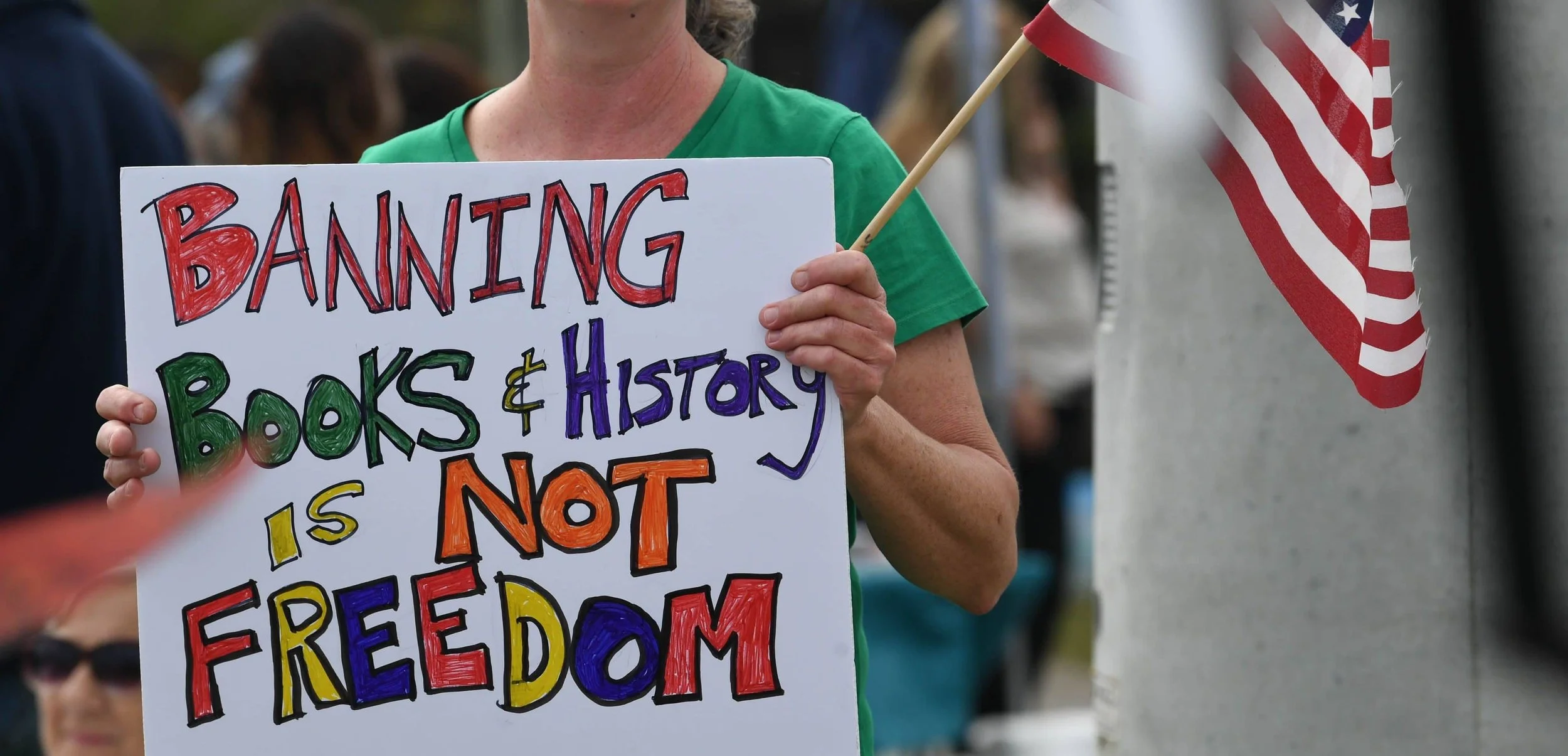
A demonstrator holds up a sign against book bans in the US. Craig Bailey. CC BY-SA 2.0

For decades, authors have written about the banning of books and censoring of literature in the context of dystopian societies dominated by harsh autocratic rulers. In a world that values the free exchange of ideas and uses the written word as a means to express and share ideas, beliefs and knowledge, the act of banning books stands as a paradoxical and deeply contentious practice. Nevertheless, 2022 saw a record breaking 2,571 unique titles banned in the US alone, compared to just 566 in 2019, not to mention the handful of other countries around the world with much stronger and infamous censorship policies. Banning books raises questions about the limits of authority, the boundaries of creativity and in some cases, the very nature of truth itself — without literature, those in power can freely rewrite history.

Almost all recently banned books have been targeted due to their inclusion of LGBTQ+ characters or racial themes. Mark Mulligan. CC BY-SA 2.0

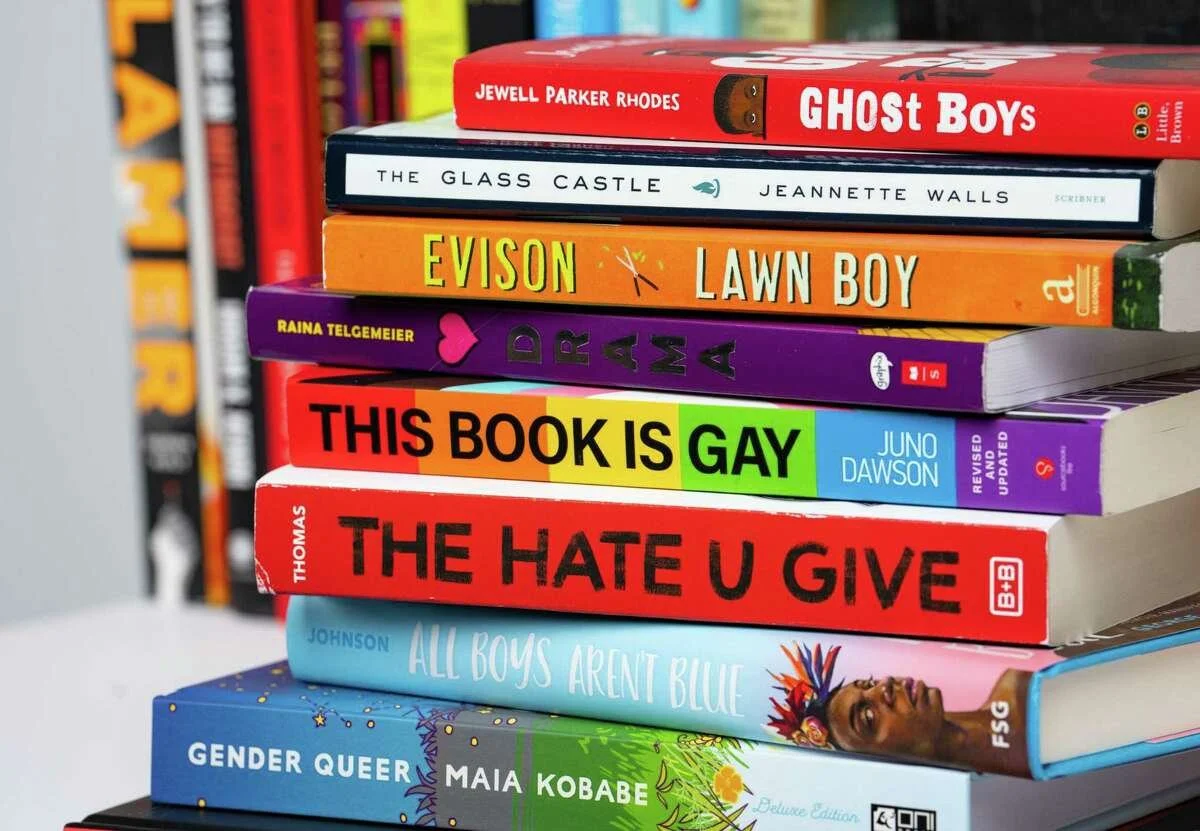
Unfortunately, it is not just books that have come under fire: Many library workers across the US and beyond have reported being harassed or even threatened with legal action and violence if they do not take certain titles off the shelves. While some books have been singled out due to racist language and themes — Mark Twain’s “The Adventures of Huckleberry Finn”, Toni Morrison’s “Beloved” and Ralph Ellison’s “The Invisible Man”, to name a few — the undeniable majority of complaints have come from conservatives who take issue with literature that touches on LGBTQ+ or contemporary racial justice topics. This latter category includes books like “Gender Queer” by Maia Kobabe, “The Hate U Give” by Angie Thomas and even the Pulitzer Prize-winning 1619 Project, which chronicles the legacy of American slavery. While some books have returned to the shelves after being banned, many have been put to the side indefinitely, setting dangerous restrictions on the types of history and social commentary available for public consumption. 

A display of books that have been banned over the past two years. Getty Images. CC BY-NC 2.0
Despite the obvious challenges this poses, writers have continued to find ways to defy unfair censorship laws and continue to publish their work. A recent example occurred when internationally renowned author Margaret Atwood published a new, fireproof edition of her award winning book “The Handmaid’s Tale”. First published in 1985, this novel has been banned in countries all over the world for reasons including its sexual content, prominent LGBTQ+ characters and anti-Christian themes. In a nod to the practice of book burning as a popular form of literary censorship, Atwood wrote in The Atlantic that trying to stop young people from reading “The Handmaid’s Tale” will, “only make them want to read it more,” and wished her critics luck. The special edition was auctioned off for $130,000 by Sotheby’s, the proceeds of which went to PEN America for their campaigns to fight literary bans.
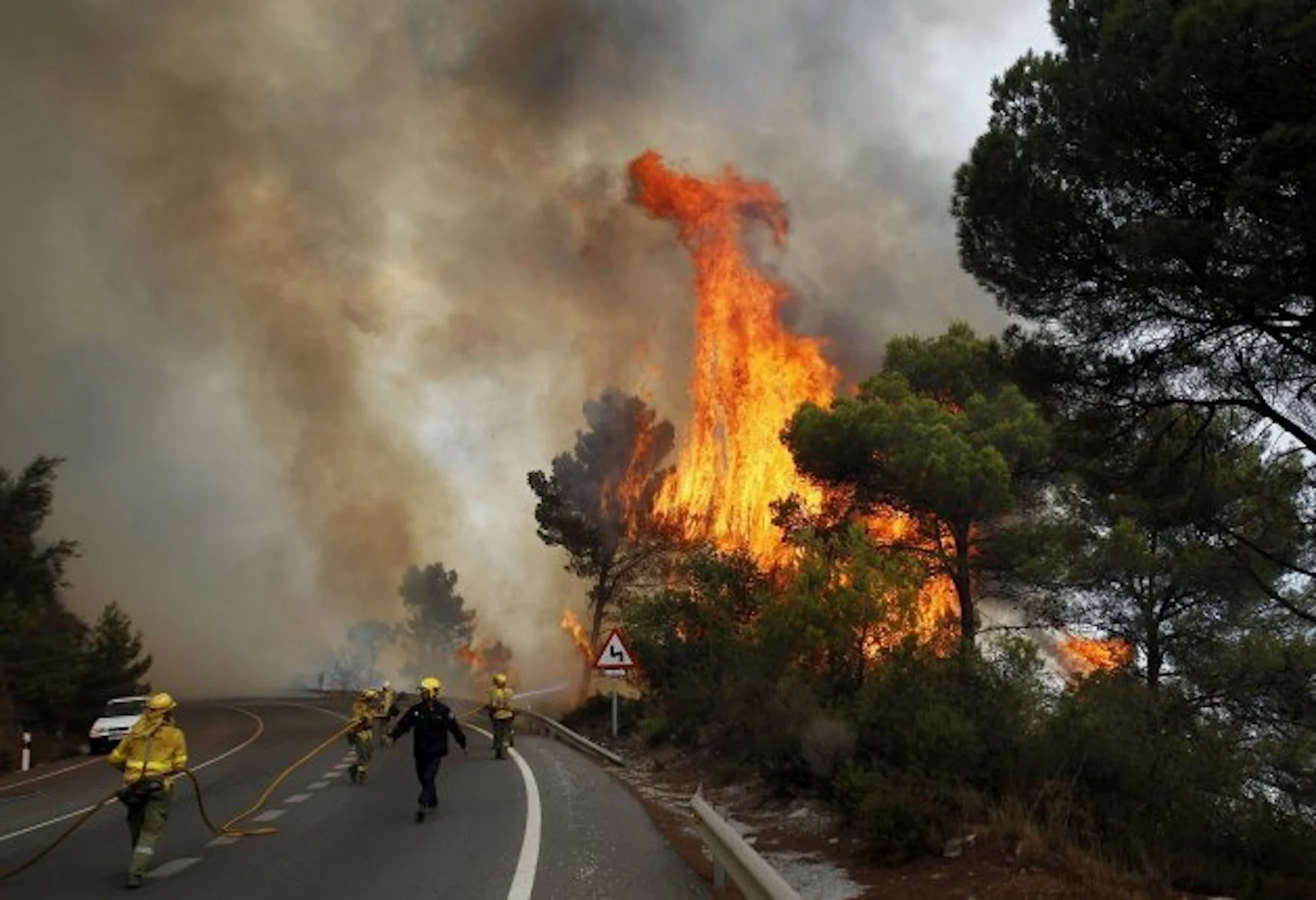
82-year-old author Margaret Atwood aiming a flamethrower at her inflammable book, The Handmaid’s Tale. NPR. CC BY-NC-ND 2.0

Given the increased democratization of information due to the internet, Atwood’s words raise the crucial question of whether banning books is actually still an effective way to remove literature from the public sphere. In an effort to counter the effects of such bans, publishing houses, libraries and some academic institutions have compiled online databases of banned books to ensure that they are still available to the public. Another counter-movement saw PEN America join forces with National Youth Poet Laureate Amanda Gorman to challenge the banning of her inauguration poem “The Hill We Climb” at an elementary school in Florida. Even in the face of these efforts, however, the digital domain is still not safe from literary censorship. Just last year, a number of online library and reading apps used widely by students during the pandemic were targeted by parents who were uncomfortable with the titles available to their children; again, the reasons cited revolved around the inclusion of pro-LGBTQ+ themes and supposedly anti-religious content.

Banned books are made available to children at this school in the UK. St Benedict’s School. CC BY-NC 2.0

From the historic book burning bonfires to the rise of online censorship, the conflict over banned books reflects a struggle for control over narratives that challenge conventions and expand our understanding of the world. Literature has the power to challenge norms and provoke curiosity, but doing so has often put it at odds with those seeking to maintain the status quo. In a society driven by information and ideas, the censorship of literature raises a critical question: What does freedom mean if we are denied the opportunity to explore a diversity of perspectives, no matter how discomforting or provocative they may be?


Tanaya Vohra

Tanaya is an undergraduate student pursuing a major in Public Health at the University of Chicago. She's lived in Asia, Europe and North America and wants to share her love of travel and exploring new cultures through her writing.

Afghanistan’s Only Female Tour Guide Hosts Virtual Tours

This is the story of 24-year-old Fatima Haidari’s love and dedication to her country — from 3,000 miles away.

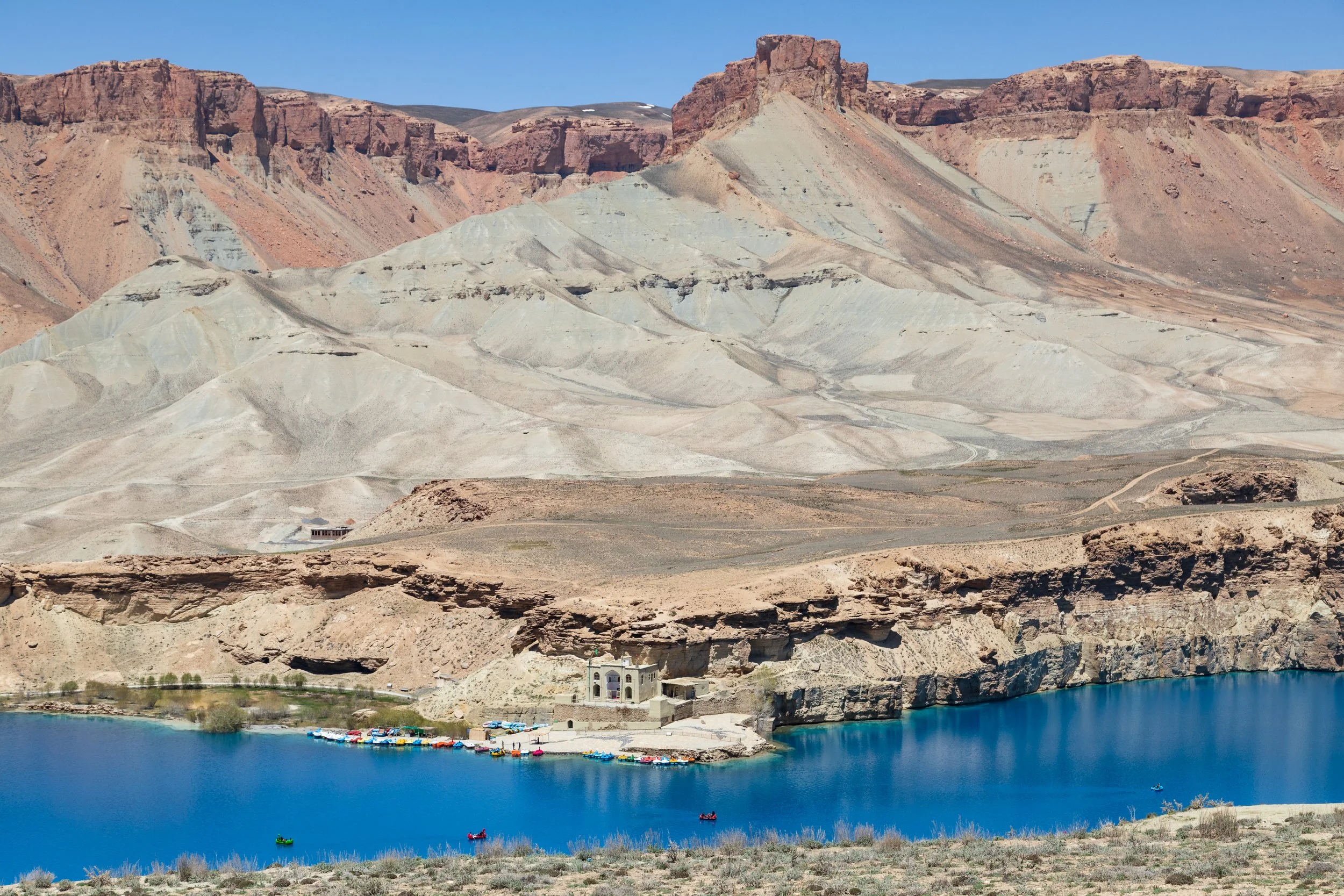
Bamyan Province, Afghanistan. Untamed Borders.

Meet Fatima Haidari: a 24-year-old guide who offers virtual tours of her country, Afghanistan. Forced to flee by the Taliban, Fatima now resides in Milan, Italy and provides a detailed tourist experience through Zoom of the Afghan city of Herat — taking visitors through sites such as the Citadel and the Central Blue Mosque.

Before the Taliban seized power in August 2021, Fatima worked as a local tour guide in Herat, using the job as a means to pay for her education, where she studied journalism and mass communication at university. Fatima is also the first ever female tour guide in Afghanistan, recognized in headlines in 2020. While she is no longer able to offer those in-person tours of her homeland, she continues to do what she can to show Herat off to the world — not just because the city is a beautiful and interesting place to explore, but because she doesn’t want outsiders to associate Afghanistan only with war and terror. Rather, its culture and history are what matter to her, and should take center stage.
But her passion and love for her country isn’t the only place Fatima’s heart lies. Growing up in the mountains in the central region of Ghor, Fatima was the youngest of seven children and was denied a rightful education, because she was a woman and because her family lacked the money. She worked for three years, making items such as traditional clothes to earn her way into an education, and was finally able to convince her parents to allow her to go to university in Herat in 2019, where she studied journalism.

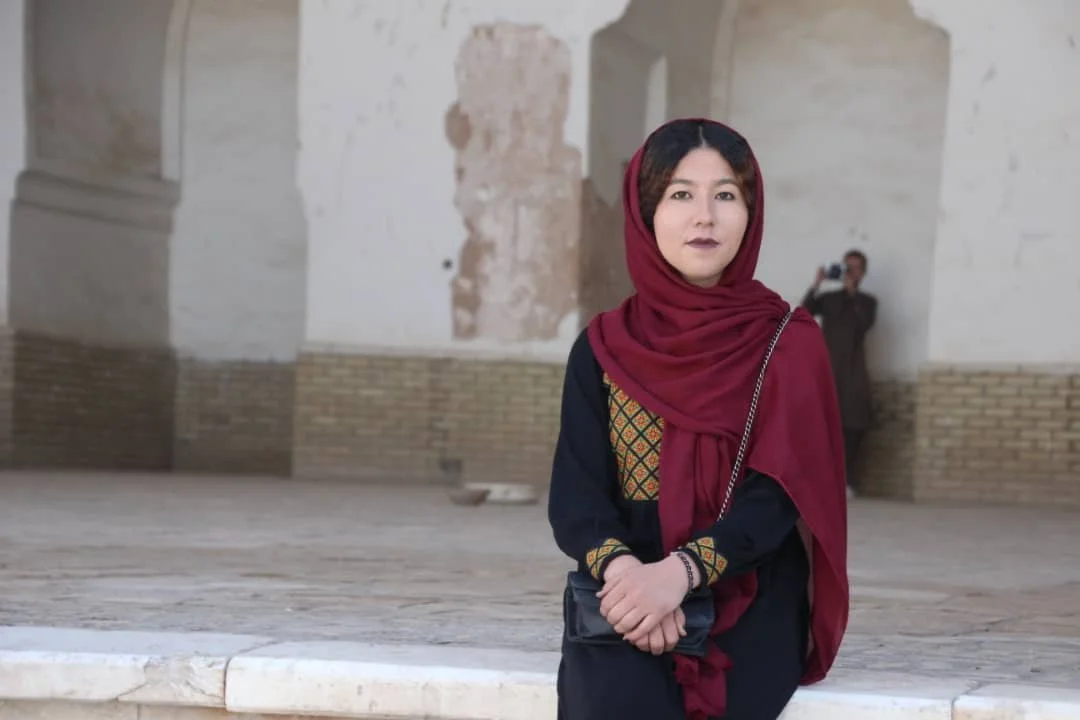
Fatima in Herat. Untamed Borders.

Through years of hard work, Fatima was able to get an education. But many girls back home in Afghanistan do not have the same privilege. Considered one of the lucky ones to have fled, Fatima will use a portion of the money she earns from the Afghan virtual tours to donate to a women's education charity, which currently operates in Afghanistan.

Fatima partners with Untamed Borders — a travel operator dedicated to taking groups to some of the most interesting and inaccessible places — to make these virtual tours possible. The approximately 1.5 hour tour will take guests to see the 1,400-year-old Great Mosque, the Herat Citadel and through the city’s bazaars and traditional teahouses, while Fatima narrates stories about Afghanistan that focus on its people, culture and extensive history. 

But this event is a milestone itself. There has never been a virtual tour of Herat, and as Afghanistan’s first-ever female tour guide, this is a groundbreaking step to inspire other women in the nation. As Fatima says, she wants to be a changer, not a victim.

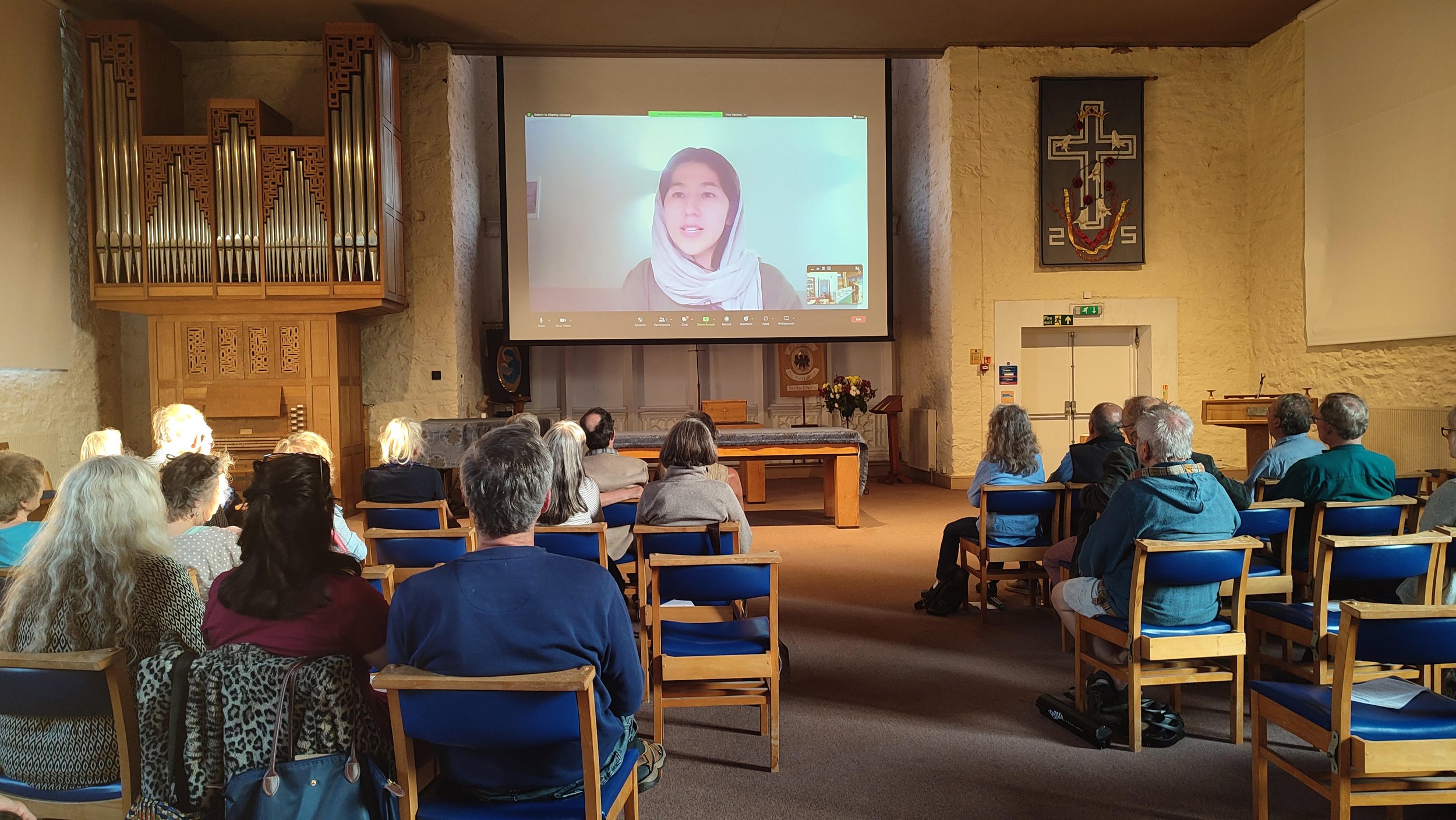
Fatima leading a virtual group tour. Untamed Borders.

And, of course, there can be no frank and open discussion about the people of Afghanistan without mentioning its women. Not only are they denied an education, Fatima has said the reascendant Taliban forces women to marry and perpetrates sexual or physical abuse against them. Things are more expensive for women, even though they are losing their jobs and forced to become housewives. By shining a light on the current situation in Afghanistan, Fatima is able to talk about her homeland while also spreading awareness to those able to make a difference.

Fatima’s next virtual tour will take place on September 12. Guests are able to book through Untamed Borders, and tickets will cost $60. 

Through her own personal experiences and ties to a country seized by tyranny, Fatima hopes to share what makes Afghanistan so distinct and worthy of exploration while also fighting for justice, so that the women there will grow up knowing what it’s like to go to school. 


Michelle Tian

Michelle is a senior at Boston University, majoring in journalism and minoring in philosophy. Her parents are first-generation immigrants from China, so her love for different cultures and traveling came naturally at a young age. After graduation, she hopes to continue sharing important messages through her work.

Oppenheimer’s Critical Omission: The Relocation of Hispanic and Indigenous Populations

Intricate but incomplete, Christopher Nolan’s Oppenheimer disregards the true history of Hispanic and Indigenous populations in New Mexico.

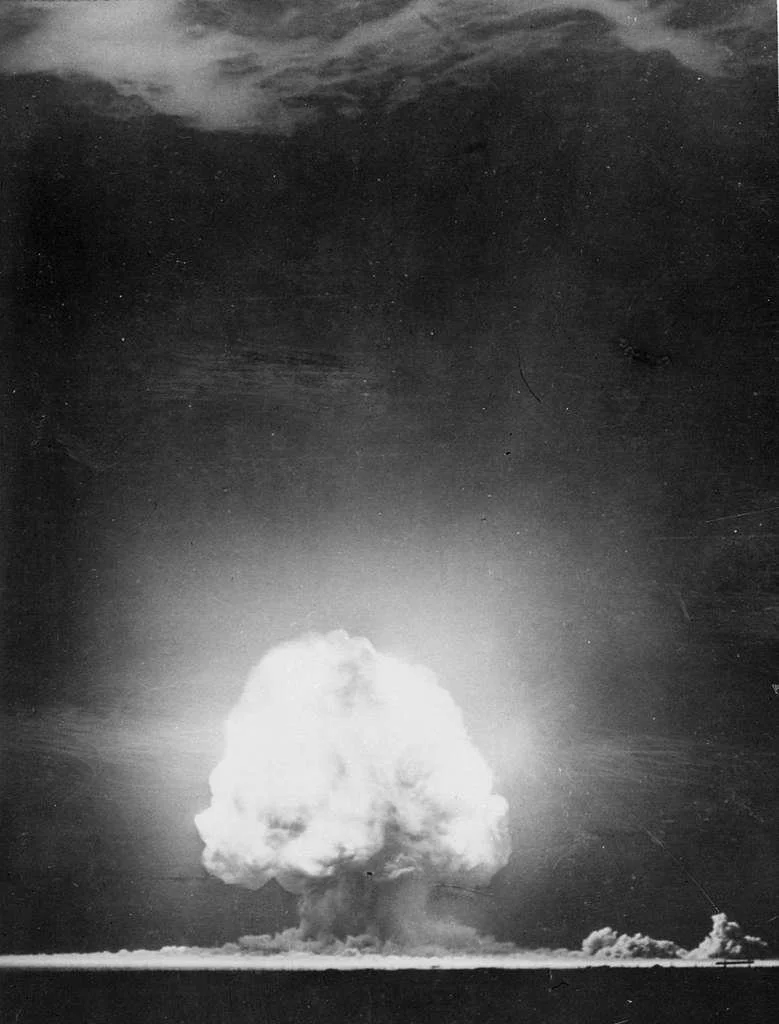
Trinity Nuclear Test. U.S. National Archives and Records Administration. CC0.

A picturesque aquamarine sky hangs lazily above a dusty, deserted New Mexico landscape. Through a tangle of brush, a lanky Robert Oppenheimer, played by Irish actor Cillian Murphy, emerges on horseback. His eyes feast on the remote plains and he declares that besides a local boys’ school and “Indian” burial grounds, Los Alamos will be the perfect site to construct the world’s first atomic weapons.

These momentous decisions and moral quandaries are explored in Christopher Nolan’s Oppenheimer. Grossing $450 million in its first fourteen days at the box office, the 1940s period piece has cemented itself as a somewhat unlikely cultural icon. Gone are the days of Nolan’s slightly fantastical films — notably Inception (2010) and Interstellar (2014). Recently, the Academy Award-nominated director has been dipping his toes in the realism of period pieces, beginning with Dunkirk (2017) and continuing with Oppenheimer.
Nolan’s portrayal of Oppenheimer — based on the biography American Prometheus: The Triumph and Tragedy of J. Robert Oppenheimer by Kai Bird and Martin J. Sherwin — is deliberately layered. The audience travels alongside Oppenheimer over the course of his life for three hours. On one hand, Oppenheimer’s humanity is a gut punch: viewers experience his mistress’s death, his tumultuous marriage, and his gradual realization of the death and destruction his scientific creation has wrought. On the other, viewers gaze upon the physicist with disgust: the man was, as he infamously declared himself, a destroyer of worlds.

J. Robert Oppenheimer. U.S. National Archives and Records Administration. CC0.

The use of the first atomic bomb by the United States to defeat Japan and win World War II is one of the signal events of the modern era, arguably helping to prevent a land invasion of Japan that could have killed millions. Despite the magnitude of this technical and geopolitical accomplishment, the legacy of the destruction of Hiroshima and Nagasaki will forever cast a negative light on the United States government and the team of nuclear physicists involved in the development of the atomic bomb. While Nolan acknowledges this complex legacy, his portrayal of key elements of the Manhattan Project and the Los Alamos Laboratory obscures another historical moral quandary. The remote sandy vistas in Nolan’s cinematography smother the true story of Los Alamos and the Trinity nuclear test.

The reality, omitted from Nolan’s film, is that during the Manhattan Project the U.S. Government forcibly relocated Indigenous and Hispanic populations that resided in Los Alamos, New Mexico. Contrary to the movie’s dialogue, there were two dozen homesteaders and a ranch occupying the land that was taken by the government for the project, in addition to the school mentioned by Oppenheimer. The government seized the land and offered the owners compensation based on an appraisal of the land — an amount of compensation that the government itself thought was fit. Some homesteaders, however, objected to the compensation offered by the government, considering it far too little. Many in the Federal Government would eventually come to agree with them; in 2004, decades after the original compensation, Congress established a $10 million fund to pay back the homesteaders. 
Moreover, it was difficult for the homesteaders to object in the first place due to the language barrier. Most homesteaders spoke Spanish, while government officials often only communicated in English. Some families were even held at gunpoint as they were forced to leave with no explanation, due to the project’s secrecy. Livestock and other animals on property were shot or let loose. Livelihoods were destroyed along with these animals.

Los Alamos Colloquium of Physicists. Los Alamos National Laboratory. CC0.

The element of secrecy surrounding the Manhattan Project and the Trinity nuclear test disrupted the lives of families living directly on Los Alamos land. But, for the 13,000 New Mexicans living within a fifty mile radius of the Trinity test (in Jornada del Muerto, New Mexico), the nuclear explosion truly seemed to be the end of the world. Because the mushroom cloud was visible from up to 200 miles away from the test site, and no civilians knew tests were being conducted, fear erupted in concert with the explosion. 

Nolan’s film not only fails to indicate that homesteaders on Los Alamos were forcibly relocated — it also fails to mention that civilians from northern to southern New Mexico were exposed to harmful radiation from the bomb. Radioactive fallout initially contaminated water and livestock, and in turn, civilians. There were no studies or treatment conducted on individuals exposed to radiation, which could have exposed the highly classified program. Those who were in the radius or downwind of the fallout became known as “downwinders,” and began to develop autoimmune diseases, chronic illness and cancer. 

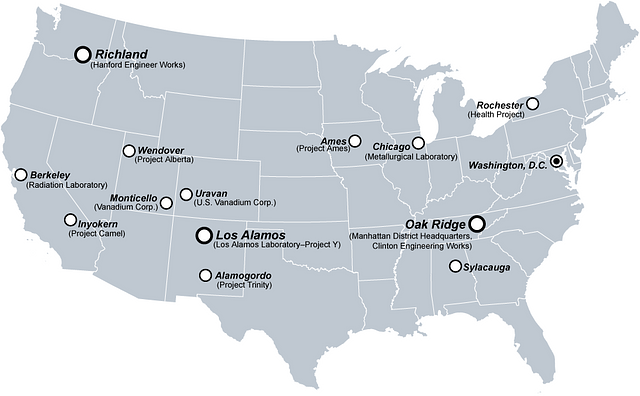
Manhattan Project U.S. Map. Wikimedia Commons. CC by 3.0.

Eventually, the Hispanic American and Indigenous populations who lived in the area returned to Los Alamos to work for the project without knowing its true nature or extent. They returned as maids or as construction workers, often handling radioactive and contaminated materials without knowledge of the harm and risk of exposure. Many became economically dependent on a laboratory that posed environmental and health risks for the greater Los Alamos population. This led to struggles with physical and mental health that have continued to the present time. 

The legacy of the Manhattan Project, the Los Alamos Laboratory and the Trinity nuclear test hangs in a state of limbo. It transcends time — becoming the past, present and future for Hispanic and Indigenous populations in New Mexico. Nolan’s failure to acknowledge these populations’ displacement and unwitting contamination silences their narratives and obscures this unique patrimony. J. Robert Oppenheimer’s depiction as a thumbtack in sandy nothingness is historically inaccurate — Nolan’s cinematic depiction of desolation glosses over a more complex reality. Los Alamos was, and is, living and breathing.


Carina Cole

Carina Cole is a Media Studies student with a Correlate in Creative Writing at Vassar College. She is an avid journalist and occasional flash fiction writer. Her passion for writing overlaps with environmentalism, feminism, social justice, and a desire to travel beyond the United States. When she’s not writing, you can find her meticulously curating playlists or picking up a paintbrush.

The Dark Side of H&M's Fast Fashion Empire

As the fashion industry grapples with its environmental impact, the fast fashion brand H&M comes under scrutiny for its pollution and hazardous labor conditions.

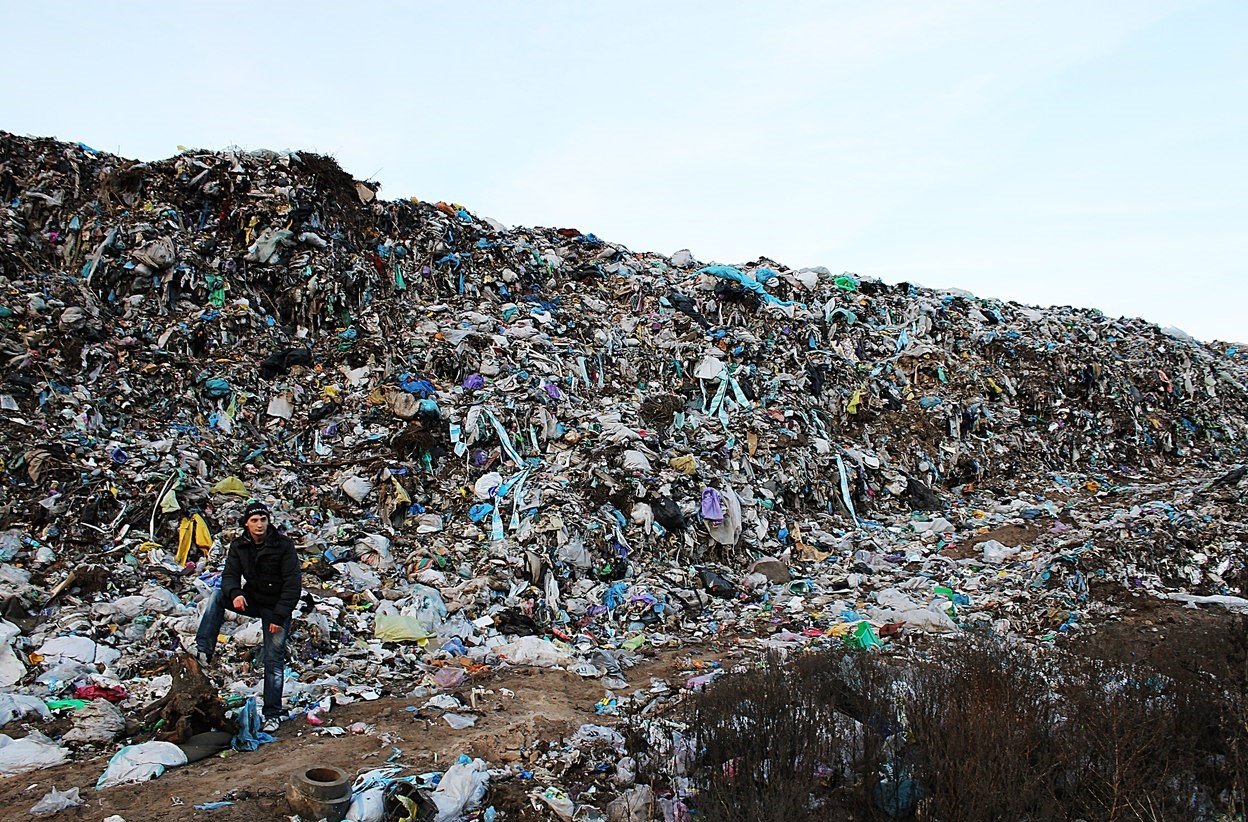
A landfill in Russia. Wikipedia commons. CC BY-SA 4.0

Have you ever fallen in love with a dress, imagining it would exude the same style and allure as it does on a model or your favorite celebrity, only for it to be worn just once or twice before being forgotten in the depths of your closet? Many of us can relate to this experience. Interestingly, today’s average person buys 60 percent more clothing items than they did 15 years ago, but keeps them for only half as long as they used to. Waste in the fashion industry has many causes, but is often associated with fast fashion, a business strategy in which companies quickly turn around cheap imitations of high status garments to cash in on transient fads.

In the realm of fashion, vanity can lead to excessive consumption and an alarming amount of waste. Although individual choices play a role in this, it is crucial to recognize that fashion behemoths, including renowned names like H&M, Zara, and UNIQLO, often promote fast fashion trends while glossing over environmental costs to maximize profits.

The dawn of fast fashion can be pinpointed to the rapid evolution of supply chain management in the industry. Gone were the days of traditional craftsmanship, where each individual garment was lovingly designed either at home or within small workshops. Thanks to the fashion supply chain, designers could now disseminate their original creations through an intricate network of textile sourcing companies, manufacturing facilities, distribution channels, retail stores and warehousing centers. The 1960s witnessed a surge in young people embracing affordable clothing, shunning the age-old notion of sartorial grandeur. In response to this cultural shift, retailers began introducing trendy and pocket-friendly attire, consistently refreshing their offerings through the 1990s. While this innovative approach bolstered brand visibility and efficiency, it also gave rise to a notable drawback: excessive waste. Take the production of shirts and shoes, for instance; over the past five decades, production has doubled, yet three out of four of these items end up either incinerated or in landfills.

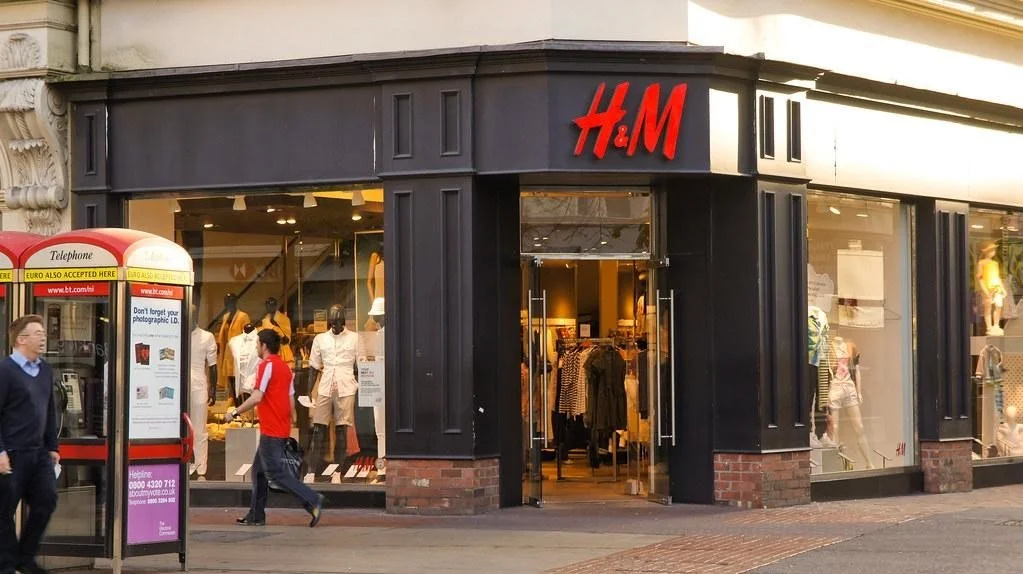
H&M at Belfast. William Murphy. CC BY-SA 2.0.

The 1990s were a turning point for brands like H&M. Originally established in 1947 by Swedish businessman Erling Persson under the name “Hennes,” the company later acquired Mauritz Widforss in 1968, a Swedish hunting and fishing store, leading to the more succinct and memorable name of H&M that we know today. Rapidly expanding across Europe, the company set its sights on global outreach by the 1980s. H&M made its first foray outside Europe with a store on New York’s 5th Avenue, positioning itself alongside myriad other fast fashion brands. Catering to a diverse consumer base, including women, men, teenagers and children, it offers an extensive range of products, from sportswear and underwear to shoes, accessories and cosmetics, all at affordable prices. With a presence in over 4,000 stores worldwide and a workforce of over 100,000 people, H&M stands as the eighth most valuable apparel brand in the world as of 2022, only trailing behind giants like Nike, ZARA, and Adidas.

However, behind H&M’s tale of success lies a daunting environmental cost. The brand’s significant contribution to waste and pollution is a matter of public concern. In 2019 alone, H&M churned out a staggering 3 billion garments, making it one of the foremost polluters in the fashion industry. The use of cheap and toxic textile dyes, coupled with the fabrics themselves, is contributing to the global warming crisis. Polyester, an artificial textile that constitutes roughly 60% of the global fiber market in 2020, is derived from fossil fuels and sheds microfibers that exacerbate the proliferation of plastic in our oceans. Although H&M promotes its use of recycled polyester, made from oil-based waste like old PET bottles or pre-existing polyester clothing, studies reveal that the recycling process is energy-intensive, and tracing the origin of recycled polyester is challenging. Surprisingly, of all the materials used by H&M, a mere 23% are recycled, even though the brand touts that 84% of its products are sourced from recycled or sustainable materials, and the criteria for a “sustainable material” remains elusive. Even H&M's acclaimed Conscious Collection, which is marketed as sustainable and has seen brisk sales, contains only a fraction of recycled materials. All of these concerns are artfully obscured by the ambiguous language of H&M’s sustainability report.

Protest against Fast Fashion. Stefan Muller. CC-BY 2.0

While acknowledging the importance of gradual change, H&M's approach to sustainability is unacceptable due to the company’s engagement in greenwashing — a disconcerting technique whereby companies overstate their actual sustainability accomplishments to divert criticism from harmful practices. A study conducted by The Changing Markets Foundation, an organization dedicated to propelling and amplifying solutions for sustainability challenges through market influence, revealed that a startling 96% of the claims in H&M's sustainability report were “unsubstantiated” and “misleading” as per guidelines. Despite the vagueness in its official report, H&M invests diligently in presenting a clear and positive image of its sustainability initiatives through vigorous social media and marketing campaigns. An example of this involves the brand’s strategic partnerships with celebrities. For instance, H&M collaborated with the former Game of Thrones actress Maisie Williams, whom the company lauded as a symbol for her generation and an influential advocate for female empowerment, sustainability and diversity. In 2020, H&M introduced “The Loop Machine,” a recycling program aimed at transforming old H&M garments into new clothing items. However, access to this program remains limited worldwide and is burdened by lengthy processing times, with hours required to recycle a single item.

Beyond its environmental impact, H&M’s massive production business model has led to serious ethical concerns, particularly regarding labor conditions. While H&M has taken some steps towards recognizing the importance of decent, meaningful jobs with fair compensation, benefits, and safe working environments free from discrimination and with the right to freedom of association, statistics paint a grim picture. During the pandemic, a staggering 89 percent of H&M workers received wages below the international poverty line. In June 2023, just a month earlier, over 4,000 Spanish employees from H&M's brands, including Other Stories and Cos, took to the streets, demanding pay raises in line with the rising cost of living and protesting increased workloads resulting from layoffs during the COVID-19 pandemic. Workers at factories producing for H&M and Best Seller also reported witnessing explosions and exposure to electrical discharge and harmful substances.

H&M Global map in 2015.Barthateslisa. CC BY-SA 4.0.

While it is true that H&M has made  progress — evident in its 2022 report with highlights such as 17 approved projects that can potentially reduce the supply chain’s CO2e production by 50,000 tonnes and an improved Fashion Transparency Index ranking — there is still much more the company must do to be ethical and go green. The root of the issue lies in its fundamentally unsustainable fast fashion model, which prioritizes cost reduction and profit maximization above all else.

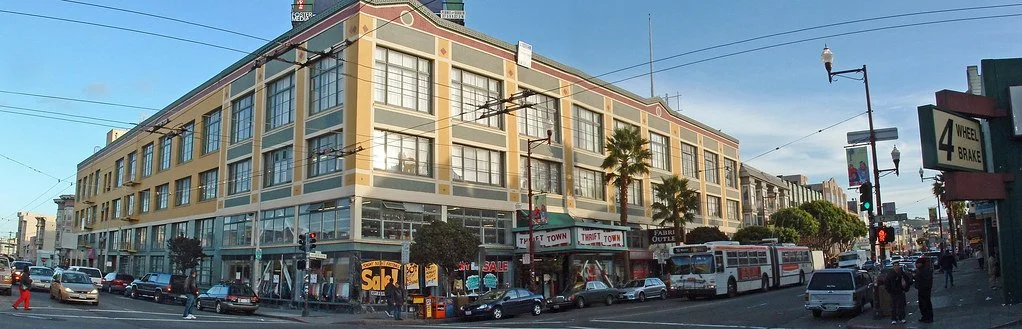
Thrift Town in California. MikeR. CC BY 2.0.

On the other hand, the resale and rental industries are rising as more sustainable alternatives to fast fashion. Embracing a recycle-oriented model, they eliminate the need to extract additional resources to meet our demands. Though not as widely accepted in the world of fashion, they provide compelling alternatives for those seeking a more environmentally-conscious lifestyle. For H&M and other fast fashion brands, addressing current concerns about pollution, waste, and human rights is only a partial solution on the path to sustainability. As they continue to expand globally, new challenges will inevitably arise. The true path to progress lies in an unwavering commitment to a radical transformation of the industrial model, embracing a truly sustainable approach.

TO GET INVOLVED:

Centre for Sustainable Fashion

The Centre for Sustainable Fashion (CSF) is a research institute in the University of the Arts London's London College of Fashion. Its mission is to challenge and question the status quo in the fashion industry, driving toward a system that values and respects the planet’s ecology. Embracing Fashion Design for Sustainability, the CSF pioneers innovative approaches in academia, industry and education. Learn more about CSF here.

Fashion For Good

Fashion For Good, a platform fueled by the fashion industry, spearheads sustainable fashion innovation. Its goal is to unite the entire fashion ecosystem, transforming it into a powerful force for good. Shifting away from the linear 'take-make-waste' model, Fashion For Good advocates for a circular Good Fashion strategy, one that is restorative and regenerative by design. With its Accelerator, Scaling Program and Good Fashion Fund, the organization targets technologies and business models with immense potential to revolutionize the industry. Learn more about CSF here.


Hope Zhu

Hope is a Chinese international student at Wake Forest University in North Carolina studying sociology, statistics, and journalism. She dreams of traveling around the globe as a freelance reporter while touching on a wide range of social issues from education inequality to cultural diversity. Passionate about environmental issues and learning about other cultures, she is eager to explore the globe. In her free time, she enjoys cooking Asian cuisine, reading, and theater.

Humans are Leading Blue Whales Toward Extinction in Sri Lanka

Human activity has compromised the blue whale habitats in Sri Lankan waters. Here’s what is being done about it.

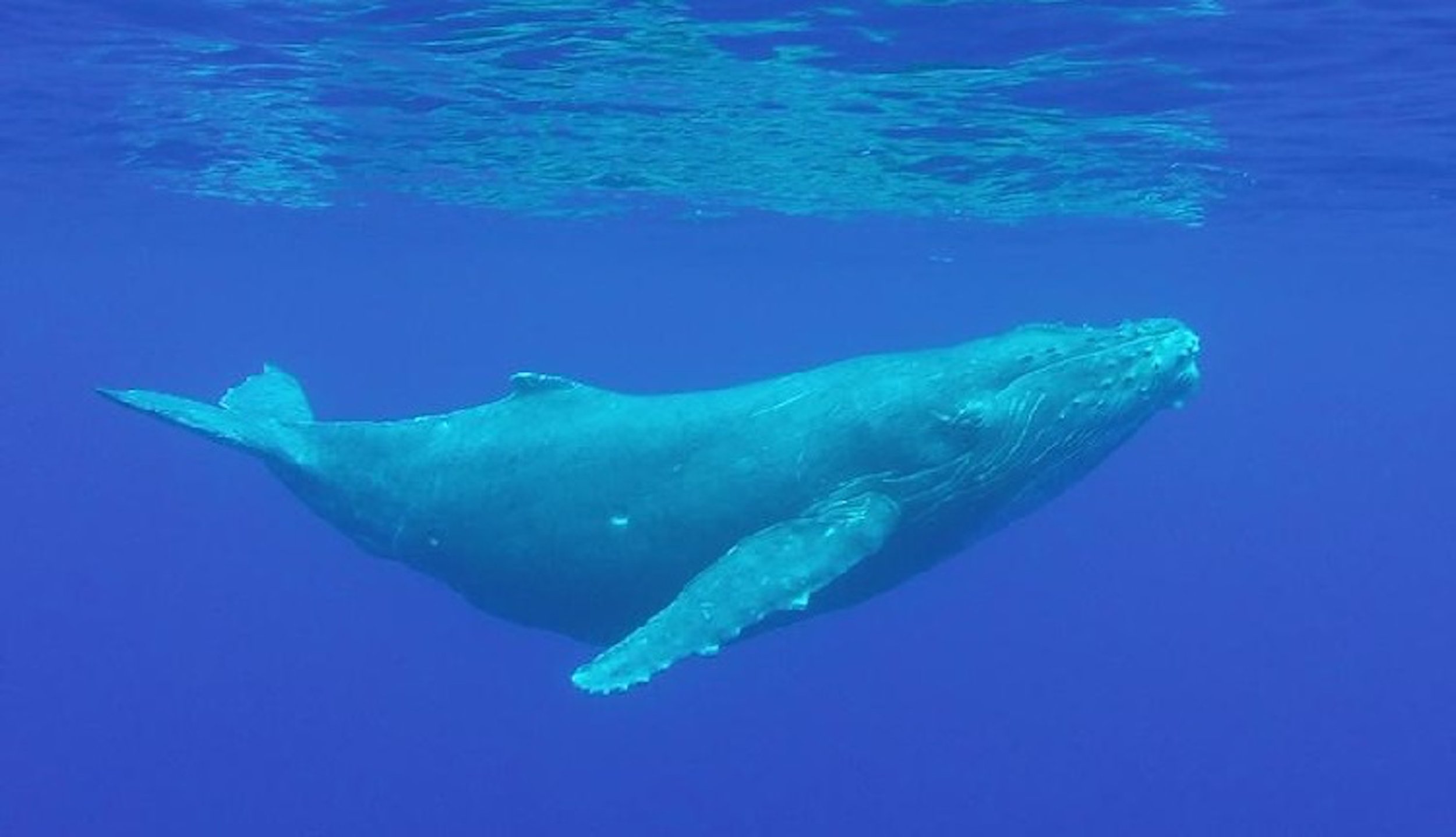
Blue whale. U.S. Embassy New Zealand. CC0 1.0.

Though blue whales are the largest animal species on Earth, their population has been shrunk by human activity. There are an estimated 10,000 to 25,000 blue whales left on Earth, compared to a population of at least 100,000 just a century ago. A traditional hotspot for these endangered gentle giants is the northern Indian Ocean, in Sri Lankan waters. Human actions, such as fishing and shipping, have contributed to the death of blue whales in this area, pushing this species ever closer to extinction. Here are some ways that humans have negatively impacted the blue whale population, as well as some potential solutions.

Pollution

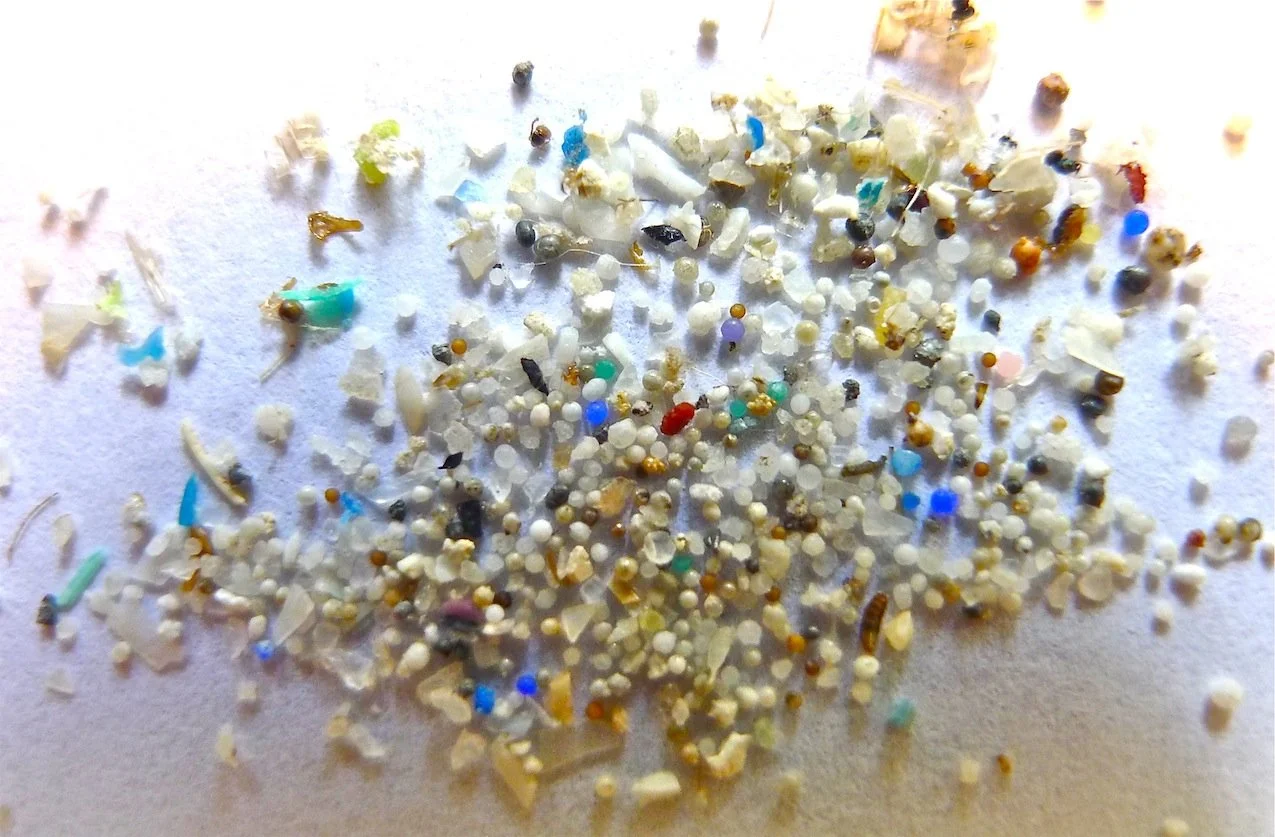
Microplastic. Oregon State University. CC BY-SA 2.0.

Pollution, particularly of microplastics, has contributed toward the decrease in the blue whale populations. As their name suggests, microplastics are tiny pieces of plastic that are created when larger objects break down, or are manufactured at tiny sizes for beauty products such as face scrubs. Krill often consume this type of debris, and are themselves food for whales in huge quantities. Because of the enormous amount of krill they eat, filter feeding baleen whales may consume about 10 million pieces of microplastic per day, equivalent to about 96 pounds of plastic. Blue whales in Sri Lankan waters are especially vulnerable to plastic pollution, as this area is a major shipping lane and microplastics are used in product packaging, leading to an increased risk of exposure. Though the mechanisms by which microplastics harm whales are still under investigation, they can carry toxic materials, which may be a contributing factor toward increased blue whale mortality.

Entanglement

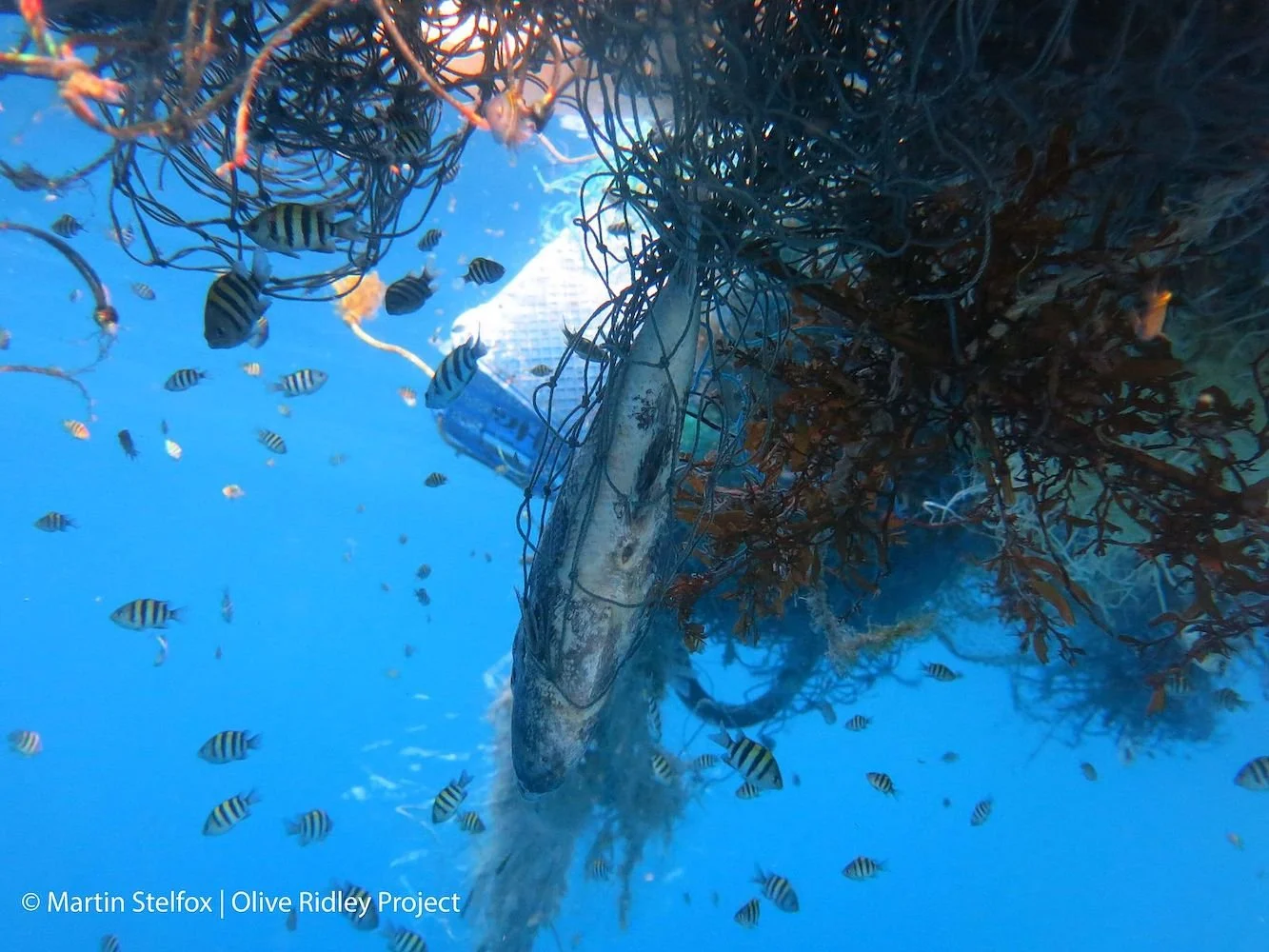
Marine organisms caught in fishing nets. Martin Stelfox. CC BY-SA 4.0.

Whales can get entangled in fishing gear, resulting in injuries and infections. Whales may also carry around tangled fishing nets for years, making it  more difficult for them to swim and feed,and leading to exhaustion. It has been found that about 300,000 whales and dolphins die from entanglement every year. Entanglement is one of the leading causes of death for blue whales in Sri Lanka.

Shipping Accidents

Ships in Sri Lankan waters. NZ Defence Force. CC BY 3.0 NZ.

The northern Indian Ocean contains a major shipping lane, and this lane happens to be a large feeding ground for blue whales. Due to the overlapping use of this area by boats, many blue whales have been killed in collisions with ships. Within the last decade, there has been an increase of shipping traffic by 300 percent, with more than 200 ships using the lane in Sri Lankan waters per day. There are differing estimates on the number of whales killed by ships, but it is suggested that as many as 56 whales die this way each year.

Resolutions

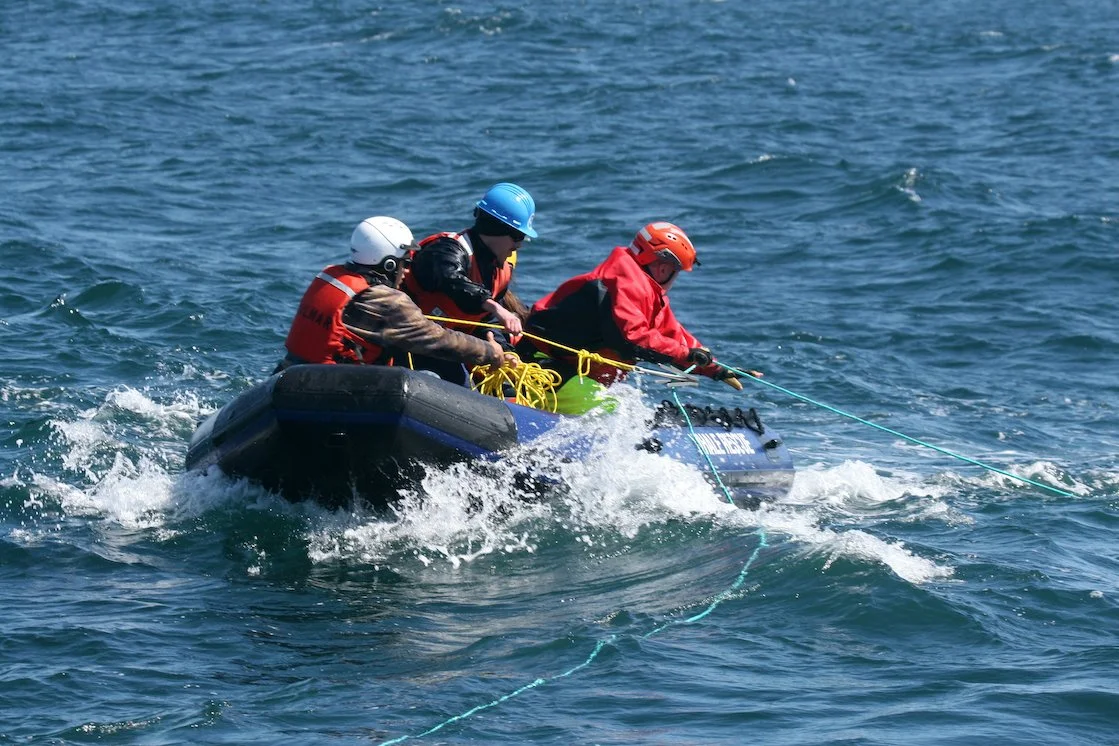
Whale disentanglement training. Nicole Capps. CC0 1.0.

Change of Shipping Routes

There are currently efforts to relocate Sri Lanka’s shipping lanes to decrease harm done to whales. It has been found that by directing ships 15 miles south of the current route, 95 percent of whale fatalities in the area may be avoided. Organizations such as International Fund for Animal Welfare (IFAW), the International Maritime Organization (IMO), and OceanCare have requested changes in this shipping route. The major shipping corporation, MSC Group, has agreed to move these routes south in order to benefit the blue whale population. Although this action has now been approved, it was previously rejected by the former Sri Lankan government due to economic concerns.

Entanglement Response

There are current international efforts to save whales that have been entangled in fishing nets. The International Whaling Commission (IWC), which regulates whale hunting and preservation globally, provides training workshops on disentanglement, reaching over 1300 government representatives, scientists and conservationists globally. The Center for Coastal Studies also has a “Disentanglement Network,” where trained response teams visit popular whale feeding and calving areas to assist any possible whales-in-need.

Addressing Microplastic

The Whale and Dolphin Conservation, Environmental Investigation Agency, Humane Society International and OceanCare recently got the European Union  push for the IWC to prioritize plastic pollution in its conservation efforts. The motion received consensus approval; all votes were in favor. Individual efforts against the use of plastic can help reduce its prevalence in the ocean, such as taking small measures like recycling, using reusable products instead of single-use, and avoiding beauty products that contain microplastic beads.

TO GET INVOLVED

Click here to donate to the International Fund for Animal Welfare.

Click here to donate to Marine Life Studies.
Click here to donate to Greenpeace.


Alexandra Copeland

Alexandra Copeland is a student at The College of New Jersey studying psychology and journalism. She is a lover of coffee, dancing, and visiting new places. Being raised with her Greek culture has inspired her interest in cultural customs around the world. She is a passionate writer and hopes that her work will make an impact in the future.

Women at the Western Wall

This organization is working to break down traditional gender barriers to create a communal space for women and men to pray together at Jerusalem’s Western Wall.

The Western Wall Chris Yunker. CC BY 2.0

Located in Jerusalem’s ancient Old City, the Western Wall marks a central point of religious and spiritual life for millions of Jews, Christians, and Muslims across the world. The wall is believed to mark the only remaining structure of the Temple Mount, the place of the original Temples for the Jewish people, the first of which was destroyed by the Babylonians in 586 BCE and the Second Temple by the Romans in 70 CE.

The Western Wall is also referred to as the Kotel, which is just the Hebrew word for “wall,” and as the Wailing Wall in reference to the manner in which the Jewish people wept at the site during the Roman domination of the Levant. The Wall remains a pivotal place of Jewish history and religious life, with thousands visiting the site daily and leaving prayer notes in the stone crevices.

However, in recent years, the Western Wall has also been at the center of religious debates concerning traditional gender separation. For generations, men and women have visited and prayed at the Western Wall in separate sections, the measures of which are not equal. Stretching just 12 meters in width, the women’s section 36 meters short of-the male side.

Women of the Wall

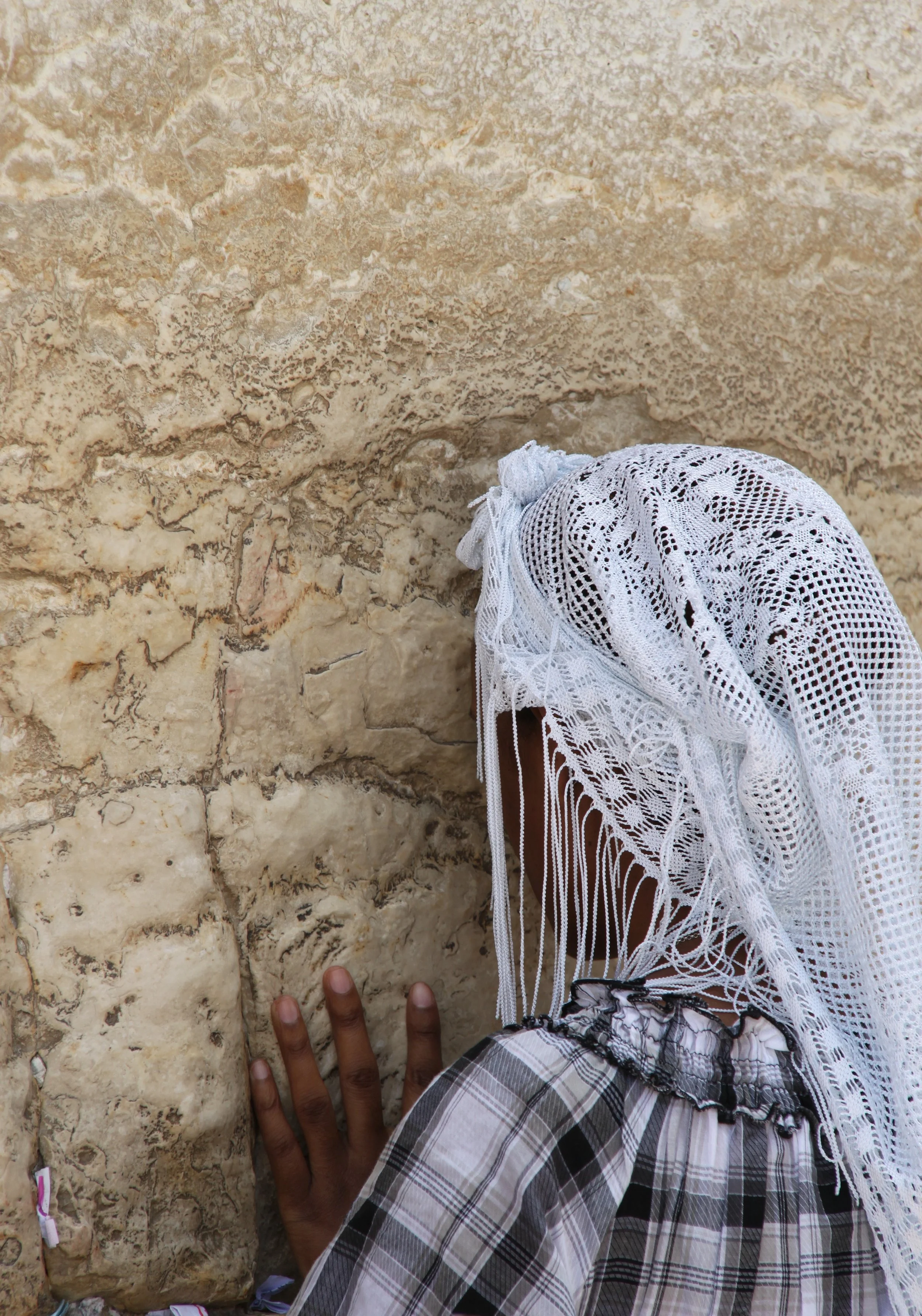
Woman praying at the Wall. it is elisa. CC BY-NC-ND 2.0

An organization called Women of the Wall (WOW) is working to increase women’s rights and equality at the Western Wall. The organization’s first meeting occurred in 1988, with 70 Jewish women gathering at the Western Wall to join together in prayer and the Torah reading, where they were met with stark disapproval and verbal assaults from Orthodox Jewish men and women. The event led to WOW’s founding and beginning of its legal fight to empower women to pray at the Western Wall, going against Orthodox norms.

By drawing on systems of social advocacy, education and empowerment WOW is seeking social and legal acceptance of women’s right to wear prayer shawls and to pray and read aloud from the Torah. The group’s mission advocates for women’s right with regards to the four t’s: the right to say a prayer, or Tefillah, the right to wear traditional leather wraps, or Tefillin, that are inscribed with verses from the Torah, the right to wear prayer shawls known as Tallit, and finally the right to read aloud from the Torah.

Along with its advocacy work, WOW regularly gathers together in community at the Western Wall. The group commemorates Rosh Chodesh, a Jewish holiday that marks the new moon at the beginning of each month in the Hebrew calendar, with a collective morning prayer at the Kotel. The holiday is traditionally connected to a celebration of women, with origins dating back to the time of Moses when wives refused to give up their jewelry to build the golden calf, a symbol of sin and idolatry in the Torah.

While these monthly prayer gatherings are a means of celebrating Jewish women’s spiritual life and collective community, they are often met with violence and aggression. The women of WOW are often double searched at the entrance to ensure that they are not smuggling in a Torah, and the group regularly face physical and verbal aggression from the Ultra Orthodox community, an experience that often leaves them with scars and bruises after their day of prayer.

Members of WOW are accustomed to receiving verbal and physical pushback against their cause, and even being spit on by those who view their message as sacrilegious.

A Legal Battle

In 1988 the Ministry of Religion established The Western Wall Foundation, a government body responsible for the care and administration of the Western Wall. Rabbi Shmuel Rabinovitch has served as chairman of the foundation since 1995 and has been known for his efforts to maintain traditional Orthodox customs at the Wall. Rabbi Rabinowitz has criticized WOW’s work in the past, including in 2014 when he spoke out against  activists efforts to smuggle a Torah into the women’s section of the Wall

In spite of women’s legal right to read the Torah, Rabbi Rabinovitch has created regulations that prevent women from bringing in Torahs into the Plaza. Furthermore, Rabbi Rabinovitch’s regulations prevent women from borrowing one of the 200 Torah scrolls kept within the Plaza, which are freely offered to men. 

In April 2013, a decision written by Judge Moshe Sobell in the case of Israel Police v. Lesley Sachs, Bonnie Riva Ras, Sylvie Rozenbaum, R. Valerie Stessin, & Sharona Kramer, found that the Israeli Supreme Court’s 2003 case which prohibited women from wearing prayer shawls or reading from the Torah had been misinterpreted, and could not be applied to WOW. Judge Sobell also found that WOW had not endangered the public peace, nor had it violated the Law of Holy Places governing the Western Wall that demands visitors adhere to the local customs. Instead, the ruling dictated that local customs should be determined by the public through  nationalistic and pluralistic lenses in addition to the Orthodox one.

The 2013 court decision helped spur ongoing discussions regarding communal prayer spaces at the Wall. In 2013, Prime Minister Benjamin Netanyahu appointed a committee chaired by Natan Sharansky to resolve the issue of communal prayer at the Wall. Sharansky proposed to extend the Western Wall plaza to an area known as Robinson’s Arch in order to provide a pluralistic prayer space for both men and women. The area can accommodate some 450 people, and was seen in many ways as a temporary solution to the question of mixed-gendered prayer. 

In January 2016, the Israeli government approved a plan to set up a communal space in which both men and women could pray together. The plan will also give women who want to pray alone but not in accordance with Orthodox rules the option to set up a temporary barrier. 

The new area is expected to double the size of the temporary communal prayer area set up in 2013 under Netanyahu, in order to accommodate 1,200 worshippers. 

The fight for communal prayer spaces remains a contentious issue between Orthodox and Reformed communities. Although the plan for a pluralistic prayer space was passed by the Knesset, Israel’s legislature, in 2016, as of 2023 the construction and implementation have not yet begun. The issue remains a top priority for members of WOW, who will continue to pray at the Wall’s women’s section until a pluralistic prayer space is constructed.

Get Involved

Other organizations in Israel have come out in support of WOW and embraced a pluralistic perspective towards religious traditions. 

Rabbi Danny Rich, a chief executive of Liberal Judaism, celebrated the decision for a communal prayer space as one that represented Judaism’s inclusivity. Through education opportunities, social action campaigns, collaborative interfaith work, and its provision of programming and library of historical archives, Liberal Judaism engages with social justice issues such as climate change, inequality, and poverty.  

The Israel Movement for Reform and Progressive Judaism has also praised the women’s representation at the Western Wall, as an exemplification of pluralism and diversity within Jewish community. The Movement seeks to increase the accessibility of progressive and pluralistic Judaism through education programming as well as legislation changes as part of their Israel Religious Action Center (IRAC). Along with their advocacy work, the IRAC offers resources and publications that engage with modern social issues through a progressive and religious lens. 


Jessica Blatt

Jessica Blatt graduated from Barnard College with a degree in English. Along with journalism, she is passionate about creative writing and storytelling that inspires readers to engage with the world around them. She hopes to share her love for travel and learning about new cultures through her work.

What Is Killing the Dead Sea?

Industrialization and restricted water flow have led the Dead Sea to shrink, throwing its survival into question. 

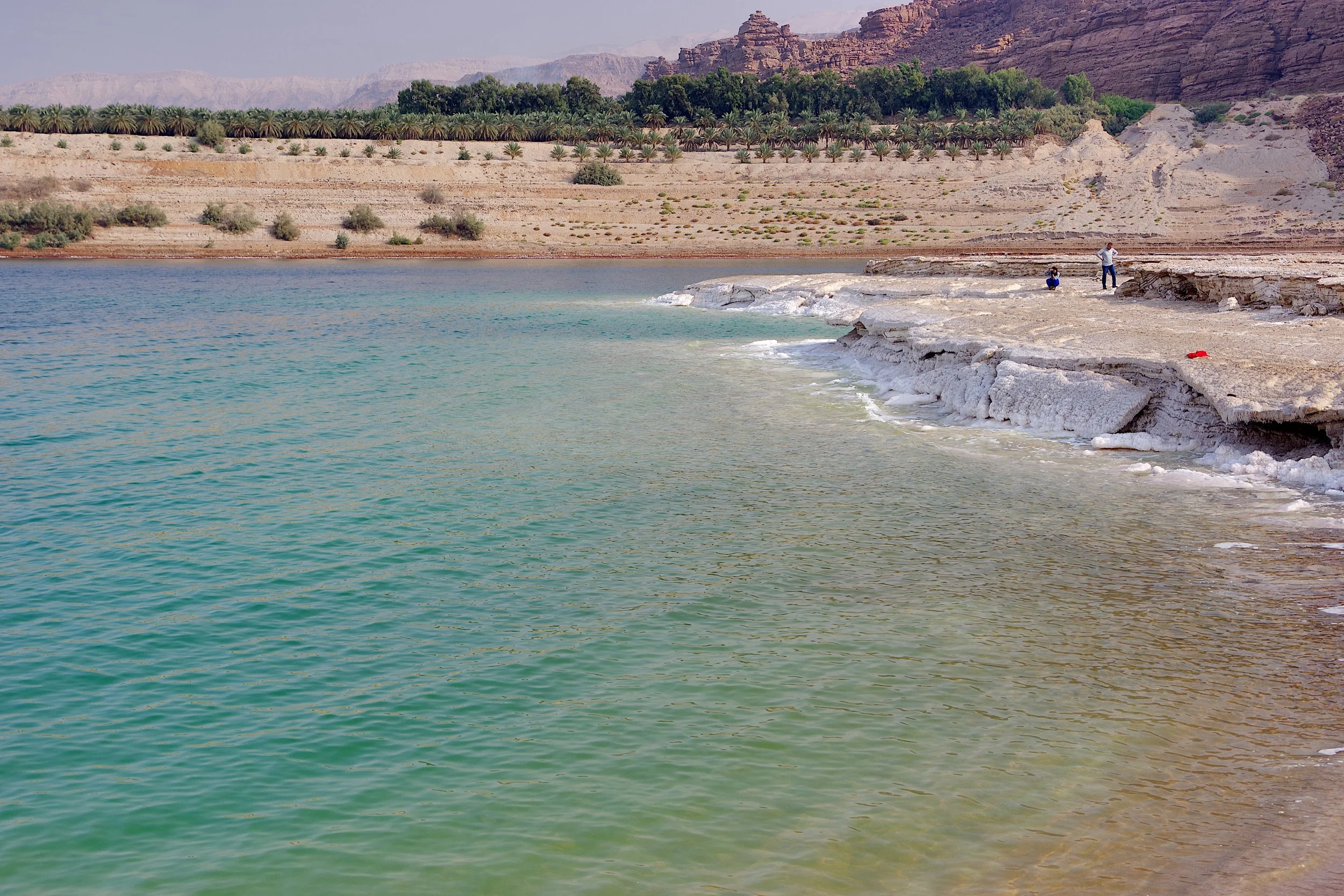
Dead Sea Shoreline. Jan Helebrant. CC0 1.0

As a landmark of the ancient world, the Dead Sea, which lies between East Jordan and the West Bank, has long been a staple for international travel. Every year, more than 800,000 people travel to the Dead Sea where they can experience the lowest point on earth and the salt lake’s extremely high salinity levels, which allow travelers to float easily on the surface while looking out on the desert’s beauty. While many travelers make the journey for the unique and thrilling experience of floating in the Dead Sea, others journey with the hope that the water will cure health ailments, including chronic skin diseases such as psoriasis and eczema. 

The area surrounding the Dead Sea is a place of cultural and religious importance, and has been featured as a sacred site in Islamic, Christian, and Jewish stories. Some Muslims believe that Moses is buried at Nabi Musa, a hilltop mosque off the main road of Jerusalem overlooking the northern edge of the Dead Sea. In Christianity, Jesus’ baptism in the Jordan River was believed to have occurred after he traveled from Galilee down through the Dead Sea. And in the Judean Desert, on a peak overlooking the Dead Sea, sits fortress Masada, a spot in which a community of nearly 1,000 Jewish Israelites committed suicide in A.D. 73 in order to avoid surrender to the Romans. 

The Dead Sea is not only an important cultural and historical site, but an environmental one as well. Some 500 million birds, representing about 300 different species, fly through the area during a biannual migration moving from Africa to Europe. And nearby desert mountains serve as home to ibexes and hyraxes.

In recent decades, the Dead Sea has been facing serious environmental dangers that threaten to make it, and the cultural and historic importance it carries, disappear forever. Within the past fifty years, the Dead Sea has shrunk by over a third of its original size, a rate that experts believe may lead it to completely disappear by the year 2050. The changes are already being felt on an annual level in the area, with the sea receding by more than a meter each year. 

Increased Industrialization

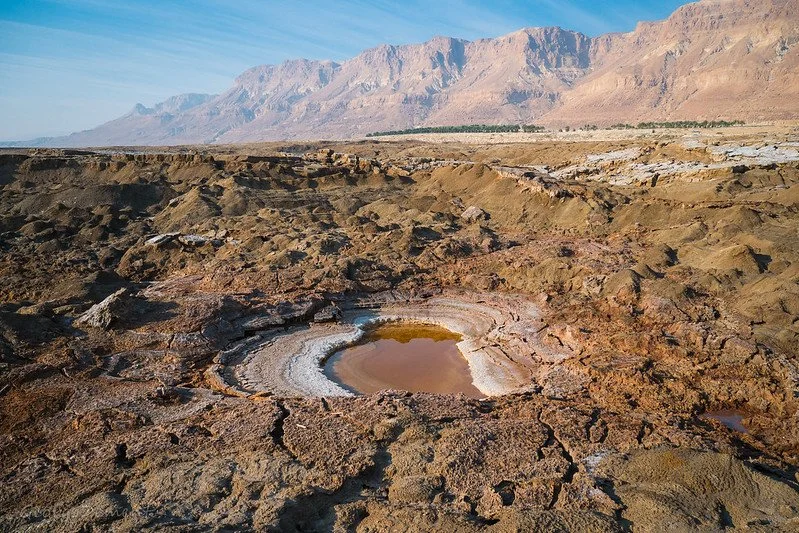
Dead Sea Sinkhole. Ziva & Amir. CC BY-NC-ND 2.0

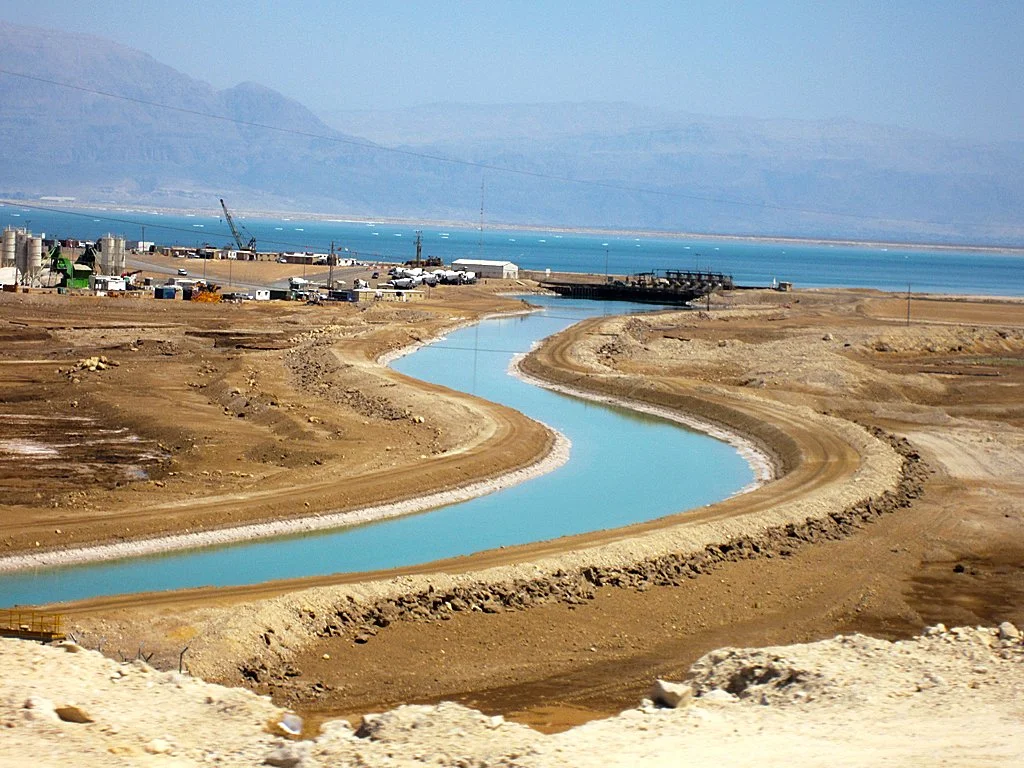
For generations, the Dead Sea was maintained by a careful equilibrium in which evaporation was offset by fresh water coming in from nearby streams and rivers. However, in the 1960s, a massive pumping station built by Israel on the banks of the Sea of Galilee re-directed the flow of water. Fresh water from the upper part of Jordan that had been feeding into the Dead Sea was moved into a pipeline to supply water across Israel. It and other industrial projects have led the Dead Sea to receive only about 5% of its original water inflow. 

With these fresh water lines being redirected, the Dead Sea has been unable to make up for its high evaporation rates. Today, it receives only about 10% of the 160 billion gallons of water it would need annually to maintain its current size.

Sinkholes

A sink by the Dead Sea. CC BY-SA 2.0

Erosion of the land surrounding the Dead Sea and limited water flow has led to the creation of dangerous sinkholes in the surrounding area. 

When underground salt deposits caused by receding salt water combine with fresh water from flash floods, the salt deposits dissolve, and form a kind of cavern that eventually causes the ground to collapse. Reaching depths of over 30 feet, sinkholes surrounding the Dead Sea pose a danger to surrounding communities and farmlands. Today, locals of communities must avoid the over 3000 sinkholes on the western side of the Dead Sea. 

Cosmetics

Dead Sea. WebsThatSell. CC BY-NC 2.0

Another potential major source of harm to the Dead Sea lies with the cosmetic industry and beauty products that have been built around the Dead Sea’s mineral supply. The Dead Sea cosmetics market has grown to a massive industry, valued by Allied Market Research at $723.00 million in 2021, with predicted growth to $2.6 billion by 2031. 

Al-Haq, a Palestinian human rights organization, is seeking to combat the exploitation of the Dead Sea’s natural resources. In their 2012 report labeled, “Pillage of the Dead Sea”, al-Haq brought attention to the exploitation of Palestinian land and natural resources by the Israeli government and the resulting environmental damage. 

A major player in the Dead Sea cosmetics industry is Ahava Dead Sea Laboratories. The company, which began in 1988, has annual sales at almost $150 million.

In its report, al-Haq advocates for the restrictions from the European Union on Israeli products from Israeli settlements in Palestine as well as for the Israeli government to withdraw the mud mining permission that was granted to Ahava Dead Sea Laboratories in 2004. The group also demands that private cosmetic companies provide more information about the origins of their products and their environmental impact in order to allow consumers to make better informed decisions.

Get Involved 

In the wake of an ecological crisis, environmental organizations are working to bring awareness and protection to the issues facing the Dead Sea. Founded in 1994, EcoPeace Middle East brings together Jordanian, Palestinian, and Israeli environmentalists in order to coordinate their activism. The organization is working to protect the Dead Sea with a three step plan of action: inclusion of the Dead Sea as a UNESCO World Heritage site, creating a rehabilitation plan to replace the water flow that has been diverted from the Jordan River, and ensuring that the Israeli government places a public trust obligation on companies that receive concessions to extract Dead Sea minerals.


Jessica Blatt

Jessica Blatt graduated from Barnard College with a degree in English. Along with journalism, she is passionate about creative writing and storytelling that inspires readers to engage with the world around them. She hopes to share her love for travel and learning about new cultures through her work.

The Game of Activism: The Impact of 6 FIFA Women’s World Cup Players

From record-breaking seasons and legendary careers to equal pay activism and supporting girls in sport, these six women are proof that you really can do it all.

Players from the Norwegian and Dutch women’s football teams battle it out on the pitch. Ailura. CC BY-SA 2.0

By far the world’s most popular sport, soccer is enjoyed by over a billion players and spectators. International events such as the Europa League Championship and of course the quadrennial FIFA World Cup draw incredible crowds both in person and digitally, uniting the world in patriotic pride and love for a beautiful game. This year, soccer fans have once again been drawn together by the 9th edition of the FIFA Women’s World Cup, considered to be the biggest women’s sporting event in the world, with more than 30 nations competing during July and August in stadiums across Australia and New Zealand. The importance of this event for advancing and promoting professional female athletes and tournaments, both in soccer and otherwise, can not be understated, especially with equal pay and female representation being such hot button issues in today’s social discourse. As such, in addition to achieving the celebrity of household name status, many of the athletes playing in this year’s tournament are also avid activists when not on the pitch. Here are six Renaissance women to keep an eye out for during the game.

1. Marta, Brazil

Soccer legend Marta taking a penalty against South Korea at the World Cup in 2015. Phillippe Bouchard. CC BY-NC 2.0

This mononymous veteran of the game is playing in her sixth Women’s World Cup this year at 37 years of age. Marta is widely considered to be among the greatest female footballers of all time, as a two-time Olympic medallist, six-time recipient of the FIFA World Player of the Year award and record holder for the most goals in any men’s or women’s World Cup with 17 to her name. In addition to her role as a star player in Brazilian national women’s team, Marta plies her trade for the Orlando Pirates in the National Women’s Soccer League (NWSL). When not scoring goals, she is a strong proponent for increasing female participation in sport and champions equal opportunities for girls to get active from a young age. In July 2018, she was appointed UN Women Goodwill Ambassador for women and girls in sport and has continued to further gender equality and female empowerment, encouraging girls to pursue their dreams and overcome barriers in sport. She was also appointed Sustainable Development Goals Advocate to the UN in May of 2019 and has since worked to raise awareness and call for greater global commitment to achieving the project’s targets by 2030. All of this goes to show that Marta’s footballer status as the GOAT applies to her activism as well.

2. Sam Kerr, Australia

Sam Kerr is considered Australia’s greatest hope at a World Cup title this year. Adam Davy. CC BY-NC-ND 2.0

You might know her for her iconic backflip goal celebration, but Australia’s Sam Kerr has accrued an impressive number of accolades since debuting internationally at the age of 15. She was named Australian Sports Personality of the Year in 2017, and won the NWSL’s Golden Boot award both that year and the following one. Kerr was also nominated for FIFA’s Best Player Award in 2018, and has been nominated for the Ballon d’Or Féminin four times. In short, fans have big expectations for the Australian captain, especially since the World Cup is on her home turf. As determined as she is to cinch the gold, she has also been equally dogged with her support of LGBTQ+ rights, and has been a role model to countless young women and girls as an openly gay athlete, spearheading The Matildas’ partnership with Sydney WorldPride just earlier this year. She spoke publicly for the first time about her new relationship with fellow Sky Blue FC player Nikki Stanton in a pre-World Cup sponsorship video for Nike, and pushed back against the incredible number of hateful comments she received in the aftermath. Kerr continues to speak publicly about her sexuality and the importance of being proud and passionate about who she is in an effort to inspire a sense of community among LGBTQ+ athletes.

3. Asisat Oshoala, Nigeria

Asisat Oshoala playing at the Champions League tournament in 2019 for FC Barcelona. Steffen Prößdorf. CC BY-SA 2.0

Asisat Oshoala is definitively the most successful African female footballer in history, and she is only 28 years old. Aside from being the first African woman to both score in and win the UEFA Women’s Champions League, she is also a two-time nominee for the Ballon d’Or and five-time winner of the African Women’s Footballer of the Year award. After playing at a club level in England, China and Spain, Oshoala joined FC Barcelona in 2019 and has quickly risen the ranks to become a key player on the team. As such, the star forward is acutely aware of how her story has inspired many girls that share her ethnic and religious background. In 2015, Oshoala created her namesake foundation in partnership with Women Win of Germany and Nike that runs a number of sport, humanitarian and educational initiatives for girls across Africa. The most prominent is the Asisat Oshoala Academy, which provides tri-weekly football training sessions for young girls in marginalized communities across Africa. As an ambassador for Nike, Oshoala also founded the Football4girls tournament in Lagos, Nigeria, an annual occurrence which brings together teams from schools across the country to compete for a significant cash prize. Oshoala’s talent and passion for her sport is undeniable, rivaled only by her dedication to social work.

4. Ada Hegerberg, Norway

Ada Hegerberg celebrates on the pitch with her Lyon club team. Steffen Prößdorf. CC BY-SA 2.0

When on the pitch, Norwegian soccer legend Ada Hegerberg plays for both Olympique Lyon in France’s Division 1 Féminine league and Norway’s national team. At just 28 years old, Hegerberg is the all-time highest scorer in the UEFA Women’s Champions League with 59 goals to her name and is also the current record holder for the most goals scored in a UEFA Women’s Champions League season. In 2018, she was the inaugural recipient of the Ballon d’Or Féminin and has been named as BBC Women’s Footballer of the Year twice. Off the pitch, however, Hegerberg is most well known for taking a five year hiatus from the Norwegian national team in protest of the lack of equal pay between the men’s and women’s teams, and the Norwegian Football Federation’s (NFF) poor treatment of female players. Her absence was a huge blow to Norway’s chances of victory, and is recognized as being a significant factor in the NFF’s 2022 decision to give the women’s team equal pay. Hegerberg has also been a vocal supporter of LGBTQ+ rights and raised a rainbow band during a match against New Zealand in June 2022 in solidarity with victims of a shooting at a gay nightclub in the Norwegian capital of Oslo earlier that year. With the rest of the Grasshoppers by her side, Hegerberg will be spearheading Norway’s attack at the World Cup this year.

5. Khadija “Bunny” Shaw, Jamaica

Khadija Shaw is captaining the Reggae Girlz at this year’s World Cup. Jorge Martinez, Mexsport. CC BY-NC 2.0

Khadija Shaw went to her first World Cup at only 21 years of age as part of the first Caribbean team to qualify for a Women’s World Cup, and has returned this year as captain of Jamaica’s national team at the same competition. Khadija, or Bunny as she is affectionately known by her fans, made a smashing debut in Bordeaux back in 2019 tallying a whopping 32 goals in 35 games. She has since continued to build her lead as Jamaica’s all-time leading goal scorer among both the men’s and women’s teams after moving to Manchester City in 2021 where she has also broken the record for most goals scored in a single season. Soon after that fateful World Cup qualification in 2019, however, Shaw took to social media to express her discontentment with the Jamaican Football Federation over not being paid to compete, joining the movement for equal pay rights. She is also a big proponent of encouraging girls to participate in sports, and has been very vocal about the lack of opportunities and role models for young girls in Jamaica and the Caribbean, having faced plenty of challenges in trying to pursue her passion while at home. Shaw and Jamaica’s Reggae Girlz, as the team is fondly known, will be appearing for their second World Cup this year in the hopes of inspiring even more funding and investment in grassroots soccer initiatives in Jamaica.

6. Megan Rapinoe, USA

Megan Rapinoe on the victory tour with the US Women’s National Team in 2019. Lorie Shaull. CC BY-SA 2.0

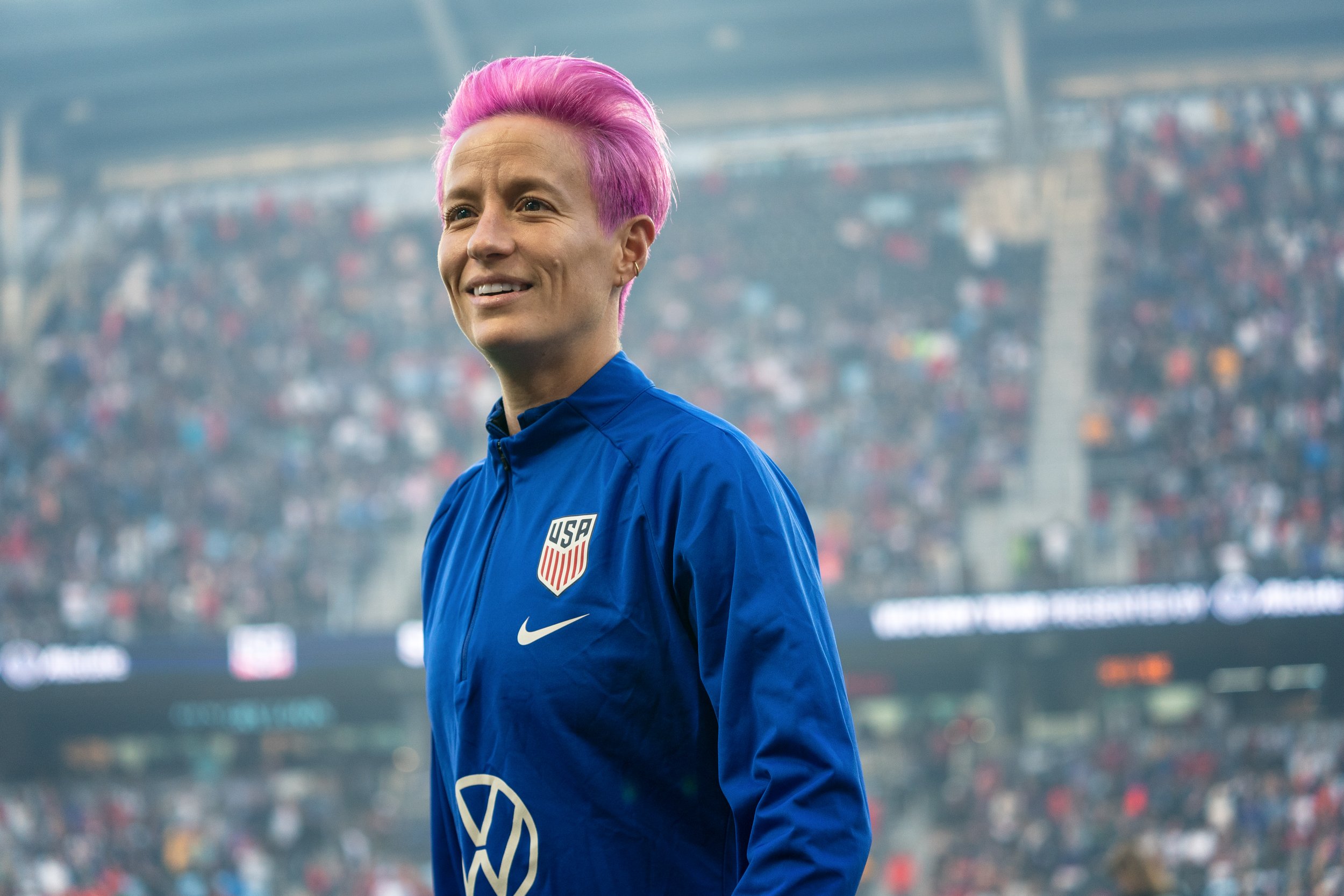
No list of women soccer players is complete without the iconic colorful-haired Megan Rapinoe. At 38 years of age, Rapinoe is a two-time World Cup champion, an Olympic gold medallist and has also won both the Best FIFA Women’s Player award and the coveted Ballon d’Or Féminin in 2019. She first made headlines in activism when she joined fellow athlete Colin Kaepernick in kneeling during the American National Anthem, which she followed up soon after in her role as an extremely outspoken proponent of the successful fight for equal pay in American soccer led by the US Women’s National Team. Rapinoe has also been a notable critic of the overturning of Roe v. Wade last year, and has publicly called on the Supreme Court to support abortion rights. As one of, if not the most, popular American women’s soccer players of our time, many will be showing their support for Rapinoe after her announcing that this World Cup will be her last, as she plans to retire at the end of the NWSL season. Given her extensive involvement in a variety of activist movements, however, there is no doubt that she will continue to remain involved in the sport even after she leaves the pitch.


Tanaya Vohra

Tanaya is an undergraduate student pursuing a major in Public Health at the University of Chicago. She's lived in Asia, Europe and North America and wants to share her love of travel and exploring new cultures through her writing.

How Malaria Might Make a Comeback in the US

In order to prevent another pandemic so soon after the last one, US authorities need to stop this new malaria outbreak in its tracks.

The female Anopheles mosquito plays host to the disease’s parasite. CC BY-SA 2.0

Over the past two months, seven cases of locally acquired malaria have been identified in the US. These cases, six of which appeared in Florida and one in Texas, have drawn significant attention as the first time in 20 years the disease has been transmitted domestically. At present, the Center for Disease Control and Prevention (CDC) has reported that all five patients have received medical treatment and are recovering positively, and that the risk of malaria reappearing in a more widespread epidemic across the U.S. is extremely low. That being said, this is a good reminder for those in charge of American public health infrastructure to reflect on how best to shore up national defenses, especially in the wake of the recent Covid-19 pandemic.

Malaria is caused by parasites, which commonly infect Anopheles mosquitoes, and who in turn transfer the disease to humans when they inject their proboscises into our bloodstreams. There are several species of the malaria parasite, collectively known as Plasmodium, some of which cause more serious cases than others, but all of which require tropical climates to thrive. Regardless of the species, malaria is still extremely serious and symptoms such as high fevers, chills, and nausea begin to manifest in a few weeks. Most worryingly is that malaria, if left untreated, is fatal. As of 2021, the World Health Organization (WHO) believed that a grand total of 247 million cases of malaria occurred around the world, of which 619,000 were fatal. The majority of these deaths were children in various countries in Africa, where malaria is a constant present threat and contributes to a vicious cycle of social and economic poverty, taking a massive toll on countries in already precarious situations.

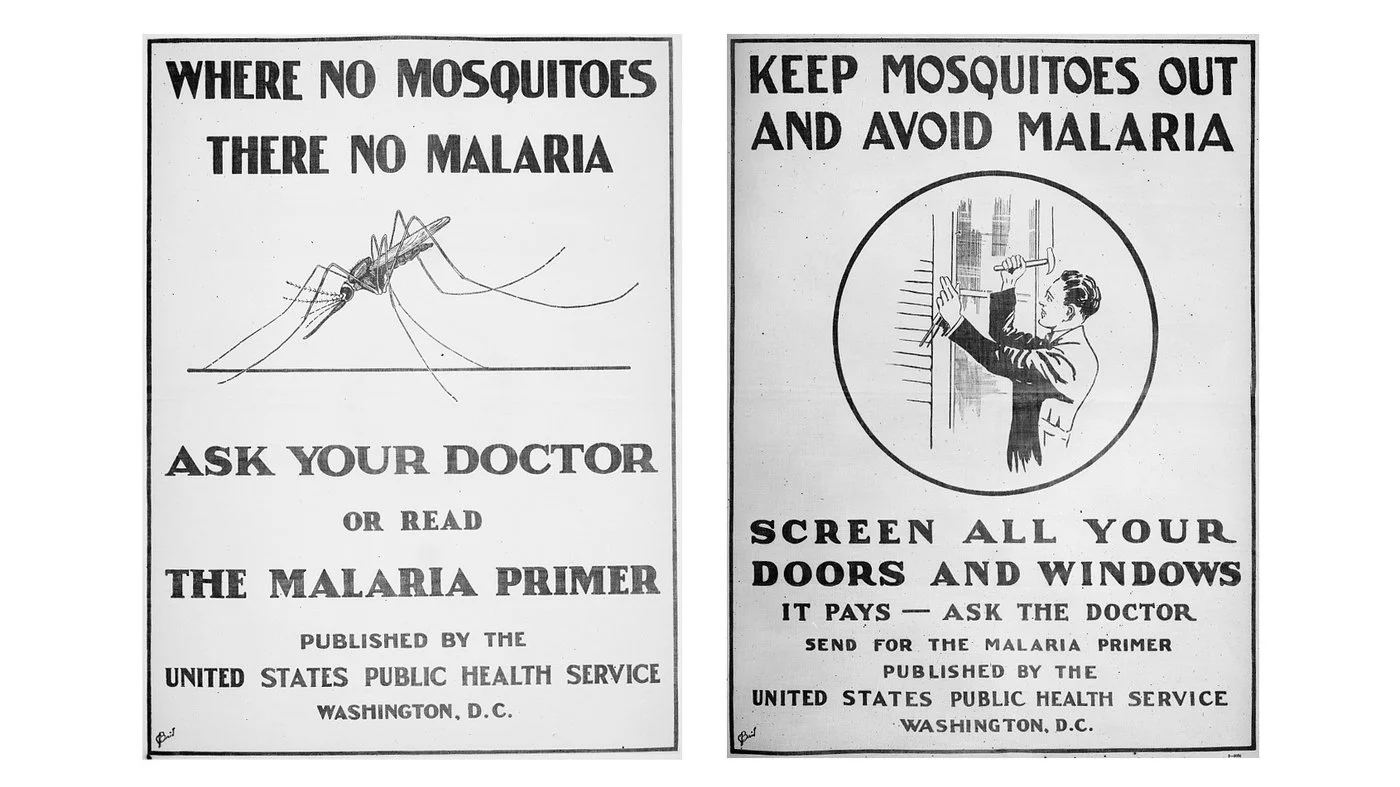
Malaria awareness in the US during the 1950s. Library of Congress. CC BY-NC-ND 2.0

At the beginning of the 20th century, malaria was considered an extremely serious issue in the US; the CDC was actually founded in 1946 to eliminate the disease. Over the next six years, various public health measures such as insecticide use and window screens were implemented to reduce the 15,000 cases reported in 1947, and in 1951, the CDC finally announced that malaria was in the US no longer. This remained the case for decades, until an incident in 2003 when eight locally acquired cases in Palm Beach, Florida were identified. Fortunately, the outbreak was quickly quashed thanks to an immediate response campaign that completely rid the area of mosquitoes to prevent transmission. Since then, malaria has remained fairly absent from the American healthcare landscape.

It is important to note, however, that malaria has never been completely extinct in the US; prior to the recent COVID-19 pandemic, roughly 2,000 cases of the disease were identified and reported annually in patients who had traveled to countries with high incidences of malaria in Southeast Asia and Africa. Additionally, once infected individuals return to the US, local mosquitos who feed on them can pick up the parasite and spread it further. Every so often, this may result in a small reintroduction of the disease and potentially even some limited transmission, but there has never been any worry of it resulting in a much widespread epidemic.

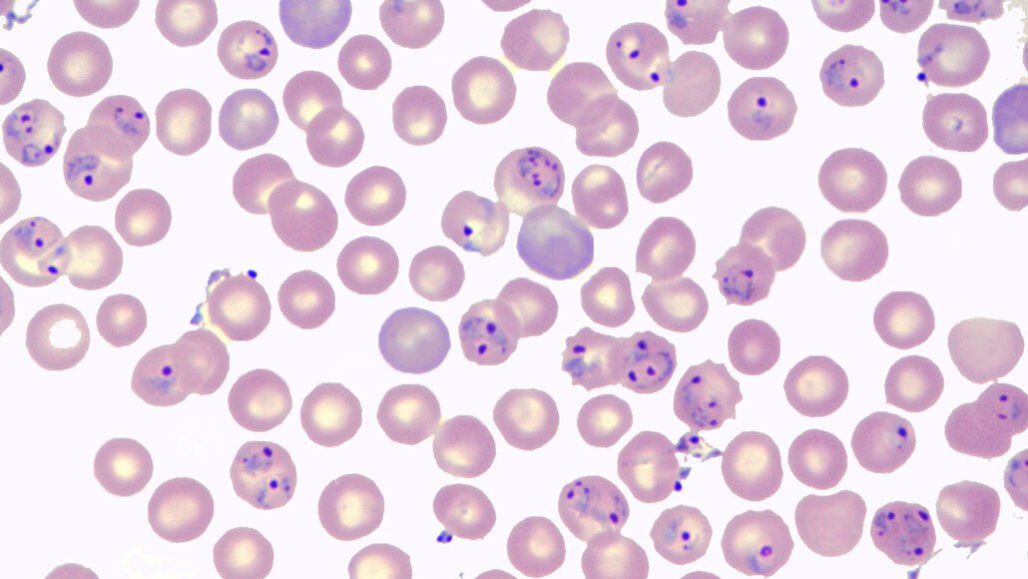
The malaria parasite pictured under a microscope. Joseph Takahashi Lab. CC BY-NC-ND 2.0

The reason these recent cases received so much attention were that all five were acquired locally within the US, which likely indicates that the parasitic mosquito population has made a resurgence as well. Thankfully, the species of parasite identified to have caused this small outbreak is known to transmit one of the milder forms of the disease, but that in no way detracts from the gravity of the situation. Matters of public health have become much more salient in regular discourse since the COVID-19 pandemic, and with it, some extreme opinions about containing and treating transmissible diseases. While America’s healthcare infrastructure continues to operate in largely the same way as it did during the 2003 outbreak, experts have agreed that public cooperation is now more important than ever if this re-appearance is to be nipped in the bud.

The RTS,S malaria vaccine. TheScientist. CC BY-SA 2.0

One particular area in which this agreement would go a long way, is that surrounding the efficacy of vaccines. In October of 2021, the WHO officially recommended the use of the RTS,S malaria vaccine developed by GlaxoSmithKline to prevent transmission in regions with high incidences of the disease. In addition to being logistically simple to store and administer, trials proved that the vaccine was beneficial to 90% of those treated, a staggering figure in the world of pharmaceutical development. Introducing the vaccine to the U.S. seems like an obvious step to take in the wake of these recent malaria cases, especially given the low price of a single dose at $9.30.

Vaccines have been a hotspot of controversy over the past few years, with many people denouncing both their safety and efficacy as a preventative treatment. Government authorities and healthcare professionals and academics around the world continue to release studies and evidence to show that vaccines are essential to build up individual and population-wide resistance  to a variety of diseases, but large groups of the public still remain unconvinced. Among the many lessons and important takeaways from the COVID-19 pandemic, the importance of vaccinations is among the most important, especially in the face of a potential re-emergence of a disease as deadly as malaria.


Tanaya Vohra

Tanaya is an undergraduate student pursuing a major in Public Health at the University of Chicago. She's lived in Asia, Europe and North America and wants to share her love of travel and exploring new cultures through her writing.

It’s Time to Decolonize Healthcare

Medicine has a long history of reinforcing colonial stereotypes.

Medical students at their induction ceremony at the University of Minnesota. Anthony Souffle. CC BY-NC-ND 2.0

Have you heard that women are 73% more likely to experience serious injuries in a car crash than men? If you are curious as to why, it’s because when designing airbags and other safety features, auto manufacturers use crash-test dummies based on measurements of the average male. These so-called safety precautions are engineered to protect only half of the world’s population. The scariest part, however, is that car manufacturing is not the only industry in which such blatant exclusion and discrimination occur. The practice of medicine, whose sole purpose is to treat and cure people, has recently come under fire for having a foundation rife with antiquated and colonial ideas, upholding social hierarchies that alienate not just women, but people of non-European heritage. The term “decolonizing” here refers to efforts to eliminate these racist, sexist and homophobic ideals that existed during the initial development of the Western Medicine, in favor of methods that recognize and successfully treat the whole, diverse range of patients. This need for a decolonization of healthcare became especially apparent during the COVID-19 pandemic, as African Americans and Hispanic people were twice as likely to have severe cases of the disease as white Americans. Unfortunately, there is no equivalent of the average male crash-test dummy in this case. Western medicine as it is known and applied in many countries around the world has existed for hundreds of years, continuously cementing its elitist and exclusionary ideals.

Protestors in Portland, Oregon during the COVID-19 pandemic in 2020. Spencer Platt. CC BY-SA 2.0

As with most disciplines, medicine is practiced the way it is taught. Exclusionary principles date all the way back to the very origins of the field: even Aristotle described the female body as a mutilated version of the male one. These and other, similar beliefs have trickled down through the years, resulting in the white, heterosexual, able-bodied man being considered the “average” patient, while everyone else is forced to fit the cookie cutter treatments and medical services designed for a fraction of the population. This results in huge gaps in specific medical knowledge about women, people of color and people with disabilities that are often either ignored by the medical community or, more dangerously, are filled by blaming other, unrelated causes.

A prime example of this appears in the controversial condition termed “female hysteria” which, for hundreds of years, has been used by doctors (especially male ones) to label any women’s symptoms or behaviors they did not recognize. Far from being a historical phenomenon, psychology is still used today to brush aside the symptoms of female patients. Dr. Kate Young, a public health researcher from Monash University in Australia, is one of many medical professionals who has published research on how female patients suffering from endometriosis are often referred to as “reproductive bodies with hysterical tendencies,” furthering the harmful idea that women are oversensitive to pain and therefore are more inclined to exaggerate their discomfort.

Improving access to health education is crucial to help female patients deal with medical gaslighting. American Association of Nurse Practitioners. CC BY-SA 2.0

Of course, women are just one of many groups who stand at a systemic disadvantage when receiving medical care and advice, and the effects of racism on the health of people of color and minority populations have been studied extensively for years. In 1992, Professor Arline Geronimus of the University of Michigan proposed a concept called “weathering,” which describes the pattern of early health deterioration among African Americans as the consequences of constant and repeated experiences with socio-political marginalization and discrimination. Almost three decades later, doctors are finally starting to make the connection between this more or less forgotten idea and the disproportionately high incidences for African Americans of high blood pressure, strokes and even colon cancer, along with a host of other conditions.

While contemporary racism, both structural and otherwise, is definitely to blame, we cannot ignore medicine’s long history of excluding Black and Brown bodies in science and research, not to mention medical textbooks, illustrations and even case studies. Historically, the main use of people of color for medical study was as test subjects in unethical experiments, with no intention of using the results to better the medical conditions of these minorities. The Tuskegee Experiments are often the first such example that comes to mind: a study in which American researchers deliberately infected African American men with syphilis under false pretenses, and proceeded to withhold care in order to track the natural progression of the disease. However, other similar “studies” have occurred time and time again, with The Aversion Project singling out LGBTQ+ members of the South African military between 1971 and 1989, or the US government-run Guatemalan syphilis experiments of 1947 which duplicated the Tuskegee study on Guatemalan immigrants to the US. Like female hysteria, the perception that certain people are less deserving of treatment and are therefore more expendable has leached into the modern medical landscape. Fixing such deep-rooted issues will not only require a huge increase in diversity within the medical profession, but also a serious push towards increasing our understanding of how medicine and disease is experienced by a wide range of people.

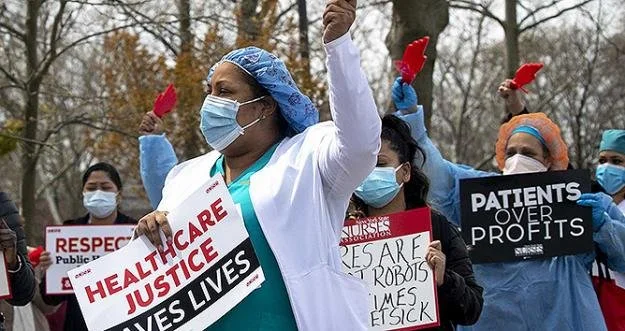
Nurses in New York advocating for healthcare justice. New York State Nurses Association. CC BY-NC 2.0

Ridding healthcare systems of their colonial foundations will not happen overnight, but there are many individuals and organizations who are working to foster change. Here are a few that you can learn about and support in their efforts to increase diversity and inclusivity in the medical community:

  1. Dr. Annabel Sowemimo: In addition to being a noted doctor and academic, Dr Sowemimo is a prolific activist and writer, especially in regards to reproductive health. She founded the Reproductive Justice Initiative which focuses on reducing health inequalities and also published her first book earlier this year about racism in medicine titled “Divided: Racism, Healthcare, and Why We Need to Decolonize Healthcare.”

  2. Mind The Gap: Founded in late 2019, this project culminated in medical student Malone Mukwende publishing a handbook with staff at St George’s University of London that highlights how a variety of medical conditions present on patients with darker complexions.

  3. Dr. Nadine Caron: As the first female general surgeon of First Nations descent in Canada, Dr. Caron has long been an outspoken advocate for Indigenous people’s rights in both medical practice and research. In 2014, she co-founded the Center for Excellence in Indigenous Health at the University of British Columbia, her alma mater, which focuses on supporting research on Indigenous health.

  4. Advancing Health Equity: Founded in 2019 by Dr Uché Blackstock, an internationally recognized doctor, advocate and speaker, this organization partners with medical institutions and gives professional training on how to provide racially equitable healthcare and medical services.


Tanaya Vohra

Tanaya is an undergraduate student pursuing a major in Public Health at the University of Chicago. She's lived in Asia, Europe and North America and wants to share her love of travel and exploring new cultures through her writing.

Chad is the Country Most Vulnerable to Climate Change

In Chad, climate change creates new challenges for an already disadvantaged population.

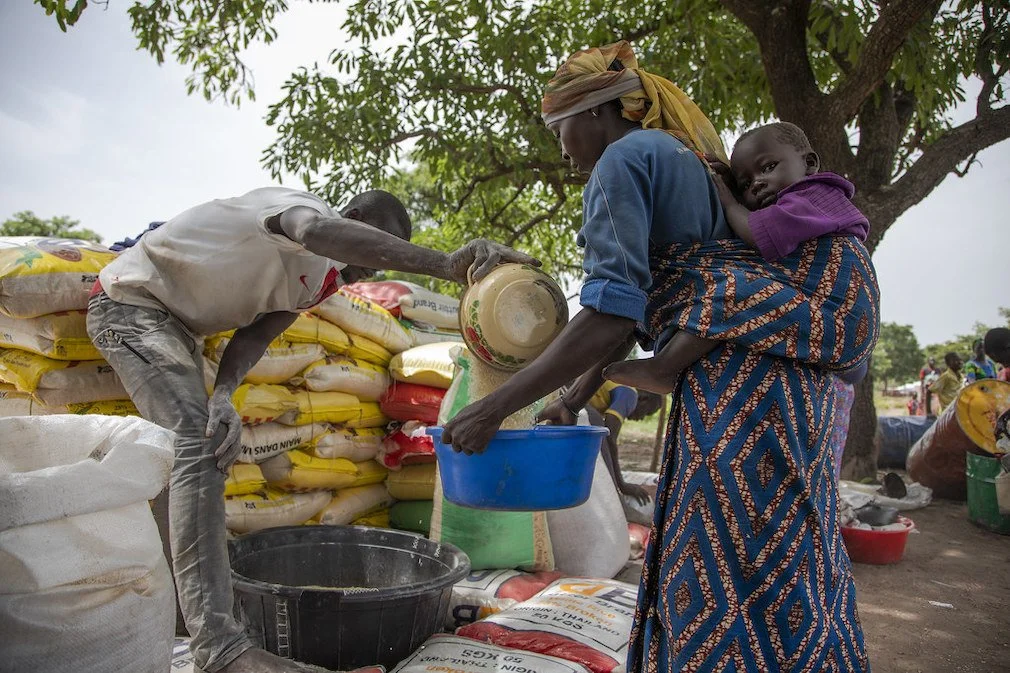
Humanitarian aid in Chad. EU Civil Protection and Humanitarian Aid. CC BY-NC-ND 2.0.

Due to its geography, Chad has experienced a temperature increase of 1.5 times higher than other places in the world. With additional disadvantages of poverty and political conflict, Chad has been ranked as the country most vulnerable to climate change. Here are some of the ways Chad is currently being affected by climate change, as well as current action against this crisis and ways you can help.

Lake Chad

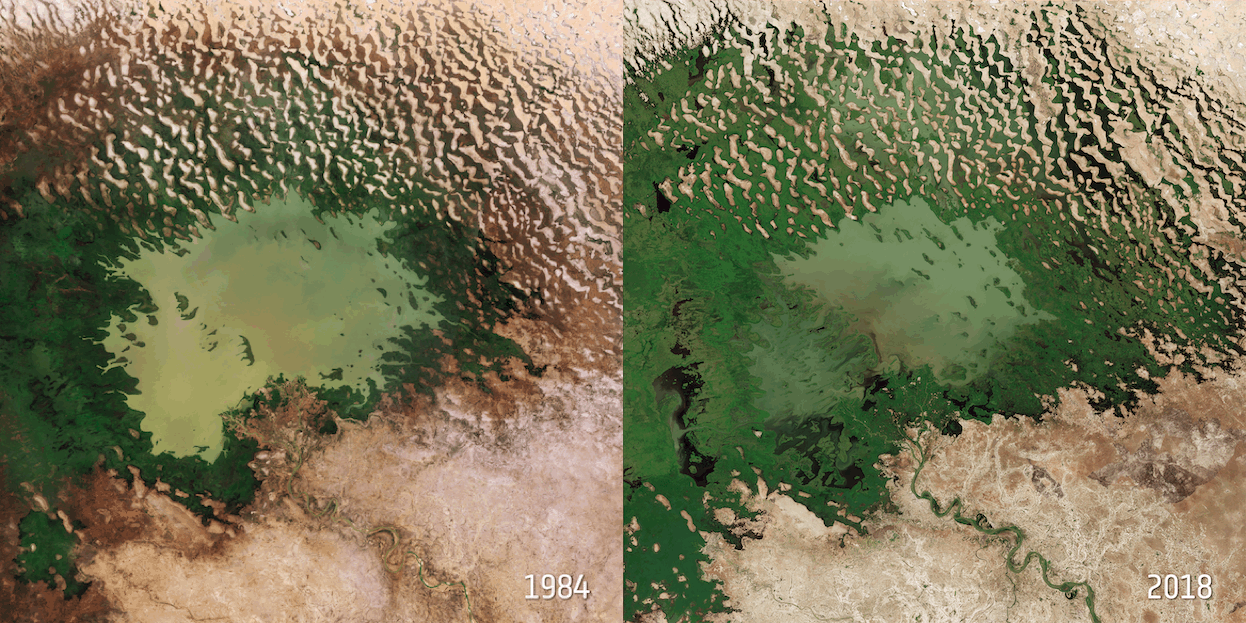
Satellite images of Lake Chad’s shrinking waters between 1984 and 2018. Fae. CC BY-SA 3.0 IGO.

With a surface area of 2.3 million square kilometers, Lake Chad is the country’s reservoir. Climate degradation has taken a toll on this freshwater inland sea over the decades, resulting in its shrinkage of 90 percent within the past 60 years. Not only does this affect the country of Chad itself, but also surrounding nations that rely on Lake Chad, such as Nigeria, Niger, and Cameroon. The increasing lack of this water source reduces the availability of drinking water for both humans and animals, and also impacts irrigation and fishing. Access to clean water is an existing issue in Chad, with only 43 percent of the population able to obtain clean drinking water, forcing many to consume unsafe water that exposes them to diseases like cholera.

Flooding

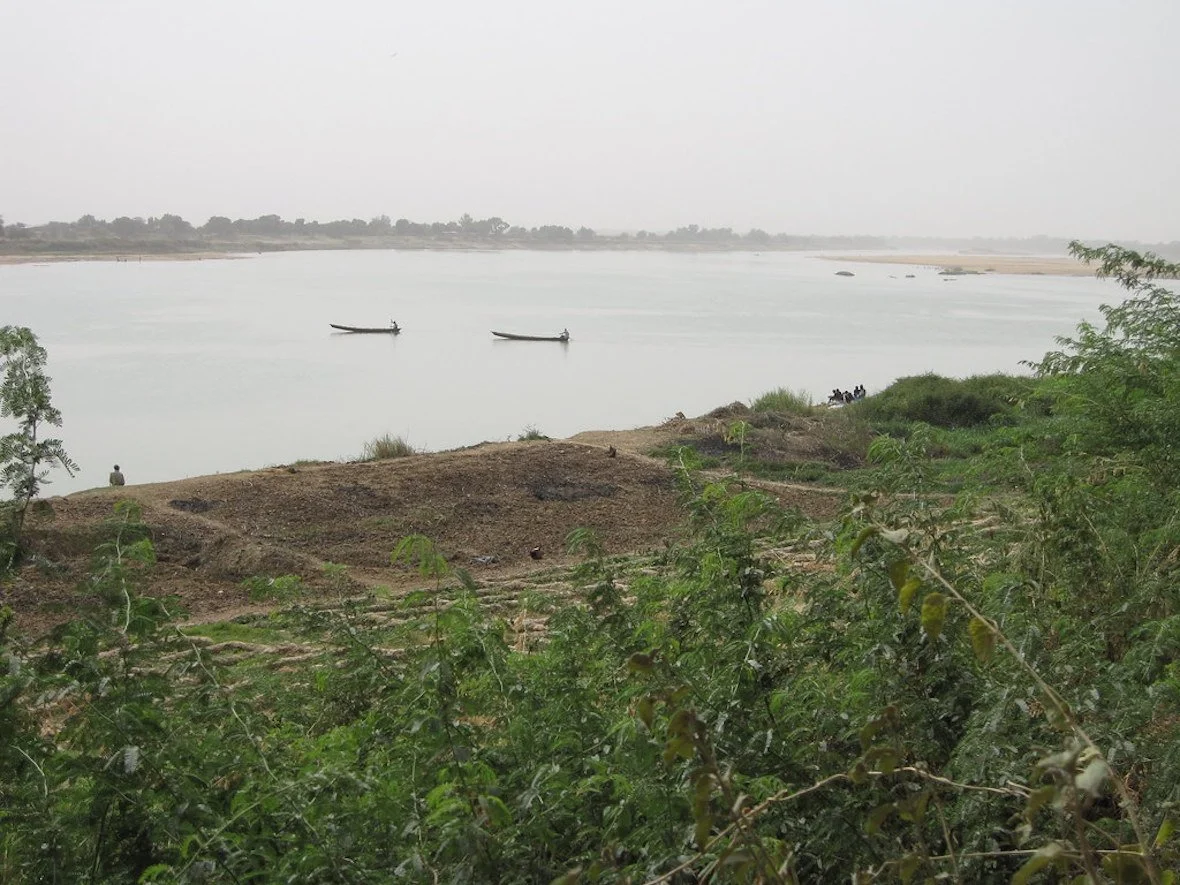
Chari River. Afcone. CC BY-ND 2.0.

In sharp contrast to the drought affecting Lake Chad, the rest of this Sahelian Republic has suffered flood damage over the past year, caused by its heaviest rain season in 30 years. In October of 2022, both the Chari and Logone rivers overflowed, causing 18 out of 23 Chadian provinces to flood. This flooding has affected more than 340,000 people, destroying thousands of homes and farmland. Though climate change has caused much drought in Chad, it is also a contributing factor to this flooding. As climate change causes temperatures to rise, it allows for more evaporation from the ground and water sources, leading to extended periods of drought and punctuated by bursts of extreme rainfall.

Illness

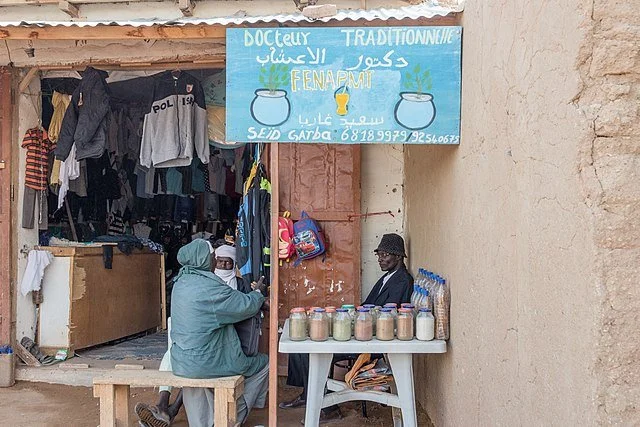
Medicine in Faya-Largeau, Chad. Gerhard Holub. CC BY-SA 4.0. 

Another way climate change endangers Chadians is by increasing the probability of illness transmission. As mosquitoes are attracted to water, increased flooding could create a greater risk of malaria contraction. In 2022, there were 1.8 million cases of malaria in Chad, with over 2,500 fatalities. Though malaria cases have decreased over the last 20 years due to an increase in treatment and preventative measures, they have been rising within the last decade, with 190 cases per 1,000 at risk in 2014 versus 206 cases per 1,000 in 2021. An uptick in temperatures can also cause a greater risk of meningitis, an illness that is common in Southern Chad, which is part of a region known as the “Meningitis Belt.” Heatstroke is also a danger to Chadian people, as well as malnutrition, as crops are destroyed by drought and flooding. With only 1 in 17 children having access to soap and water to wash their hands with, there is already a public health crisis in Chad, and rising temperatures only exacerbate the problem. 

Resolutions

World Food Programme. Anjeli Mendoza. CC BY-SA 4.0.

Chad National Adaptation Plan Advancement Project (NAP)

Launched in 2018, the NAP was created as part of Chad’s national contribution to the Paris Climate Agreement. With this plan, eight areas are prioritized, including environmental subjects such as agriculture, forests, sanitation, water resources, and more. National planning and budgeting are being developed on these fronts, all aiming to improve conditions for the Chadian population.

United Nations (UN)

In April, the United Nations appealed for $674 million for a humanitarian response plan, in order to address climate, health, and food crises in Chad. The Sustainable Development Group of the UN also aims to aid the country in its struggles by helping the government enact national security, humanitarian and economic policies.

World Food Programme (WFP)

The WFP provides nutritional support to infants, young children, and pregnant women in order to combat malnutrition in Chad, helping 458,000 children and 235,400 nursing and pregnant women in 2021. WFP has also provided meals to schoolchildren and helped restore degraded land.

To Get Involved

Click here to donate to the World Food Programme.

Click here to donate to the International Committee of the Red Cross.

Click here to donate to UNICEF.


Alexandra Copeland

Alexandra Copeland is a student at The College of New Jersey studying psychology and journalism. She is a lover of coffee, dancing, and visiting new places. Being raised with her Greek culture has inspired her interest in cultural customs around the world. She is a passionate writer and hopes that her work will make an impact in the future.

Filming "Beyond the Surface" in India

“Unite those with positive minds and compassionate hearts and good things happen…” I thought to myself, after meeting Emi Koch in San Diego and chatting with Crystal Thornburg-Homcy about her idea to make a unique surf film in India.

She and her husband, renowned filmmaker, Dave Homcy, planned to document Emi’s work in India under her NGO, Beyond the Surface International, and other inspiring cases of youth and women’s empowerment through surfing, yoga, and ecological creativity. 

On a scouting mission, they serendipitously met Ishita Malaviya, India’s first female surfer and a powerful voice for Indian women, who happily agreed to accompany us on the adventure. Shortly after, Damian Handisides of Free Theo Productions joined the team and the project’s momentum became unstoppable. I was honored to be a participant, along with Lauren Hill who is the founder of The Sea Kin, and Kate Baldwin, yogini extraordinaire. 

We all met in India from our various points on the globe this past April with the hope of exchanging light and love with the people we met along the way, especially those facing poverty, gender inequality, and social disparity. At the same time, the adventure would be a platform of growth for our own individual paths of self-realization. Our three unforgettable weeks were abound with surprises, beauty, surf, and new friendships while touring and filming in southern India. We explored together in search of a deeper connection to our fellow humans and Mother Nature.

Learn more about Beyond the Surface here.


Liz Clark

Liz is a professional free surfer, writer, environmental activist and adventurer who has captained her 40ft sailboat, Swell, over 18,000 miles on a surfing expedition in the Pacific since 2005. Through her website/blog, she shares her journey with the world in an effort of inspire people to live out their passions, spend more time in nature, engage in self-awareness and personal growth, and develop a consciousness of their everyday planetary impact.

An Ethiopian’s Path to From Refugee Camp to College Campus

How a refugee survived genocide and rebuilt a life in the United States.

Omot retelling his journey coming to the U.S. during our interview. Image courtesy of Ojullu Omit.

This semester, I had the privilege of connecting with Ojullu Omot, whose life was forever altered by tragedy. On December 13, 2003, when he was just 14 years old, Omot experienced a massacre at his hometown in south-west Ethiopia. As part of a Wake Forest University project to raise awareness about the challenges faced by refugees, a team made up of me and my classmates produced a 10-minute advocacy film that aims to shed light on the often-overlooked struggles refugees encounter while adapting to life in the United States. Omot’s story is a testament to the blend of heartbreak and perseverance that characterizes the ongoing global refugee crisis, capturing the resilience and fortitude of those seeking haven away from home.

Omot’s story began with displacement, as he fled the 2003 massacre in the remote Gambella region of southwestern Ethiopia. From December 13-15, in a reprisal against a small ambush against Ethiopian federal government officials, ethnically Amhara, Oromo, and Tigrayan soldiers and rioters murdered hundreds of minority Anuak civilians. Human Rights Watch’s report suggests that these atrocities should be considered crimes against humanity. . The Ethiopian government claimed that only 57 were killed and that the violence resulted from ethnic tensions between rival Anuak and Nuer groups, in contrast to the claims of international human rights groups and the Anuak themselves.  Human rights NGOs have called for a thorough investigation into the incident, with concerns that others like it could occur. Despite facing deadly tragedy along with the immense challenges of settling into a new society as a refugee, Omot has found a new home in the United States, where he serves as a living witness to the egregious human rights abuses of his homeland. He remains committed to starting a new chapter in life.

By now Omot has gotten used to retelling the story of how he left his home in Ethiopia in the midst of genocidal violence, and his journey  from there to become an international politics student in the United States. The three-day-long massacre in Gambella town of southwestern Ethiopia was an outburst of ethnic conflict between the indigenous Anuak group and members of the Ethiopian military. As the situation in Ethiopia deteriorated, Omot moved to Sudan when he was a teenager, with the hope that things would get better in a year or two.

But they didn’t. The military confrontation neither started, nor ended with the massacre.  More than 10,000 Anuak people were forced to leave Ethiopia in 2004, the year after the massacre took place.

Omot left Sudan for Kenya after two years of waiting. The unrest had separated him from his family, and he lacked many colorful memories about his childhood in Ethiopia, Sudan and Kenya. What he remembered is playing football with his friends in refugee camps everyday; many of those eventually being sent to Canada, Australia and other developed nations. Omot remembers planes from the United Nation hovered above their heads in refugee camps, dropping food and supplies and people hurrying to grab them. “We were dependent on the refugee program,” Omot said, “Resettlement in the United States was not a typical solution for refugees living in the United Nations High Commissioner for Refugees(UNHCR) camp.”

Omot never dreamed about coming to the United States then. He was invested in the idea that everything will go back to normal in Ethiopia, and that he could then return home. Yet Omot’s life took a major turn in the year 2016. He was called for an interview, which he later found out was part of the application process by U.S. Citizenship and Immigration Services employees concerning whether he is eligible for resettlement in the United States as a refugee. The approval rate for a refugee status in the United States is 27%, according to World Data.  

Omot waited for roughly six months until he was called for a series of security checks, examinations and orientation. In February 2016, International Organization for Migration contacted Omot, telling him that his case is ready. He then boarded a plane to the United States on April 4th, 2016, his first ever flight. When he landed in Miami, Florida, it was like landing on a new planet- the shock of the novel language and lifestyle almost dazzled the then 28 year old. 

“There was something change, [such as] the day became longer, I was not even comfortable, and I cannot see where I come from, ” Omot recalled his initial exposure to the United States, “The first question I asked myself [was], is this the U.S. [as] I expected it?”

And the first few months continued to affirm to him that starting anew wasn’t easy. Omot often found himself alone in his house assigned by the government, since his roommates busied themselves working in the daytime, and went straight to sleep not long after walking in the door at night. Comparing the situation to the community life in Ethiopia, where everyone would sit down and share stories after a day’s work, filled Omot with homesickness at night. 

Language is also a major challenge to Omot. Going to a university was at the top of his wish list when he came to the United States, but he couldn’t even understand people’s accents when he asked for directions on his way to school. He had no idea how to open emails during his first semester at a community college. When one of his classmates finally taught him how to view the inbox, he found emails from professors flooded in there. In winter, the temperature dropped so low that Omot, who used to live near the equator, had to drop his English as Second language (ESL) classes to avoid traveling in freezing weather.

But Omot is determined to realize his dream. Instead of “wasting time” in ESL classes, he decided to push himself, taking the General Educational Development (GED) tests directly.  He works as a hospital janitor in the daytime for living; in the evening and before dawn, he dives into his study. Whenever he had free time, Omot would peruse his textbooks, went up to the library of the community college he attended everyday, asking every librarian what GED looks like, and tips and tricks to score higher. 

The global refugee population has reached crisis proportions, with more than 30 million refugees displaced in 2022, signaling a significant surge from the previous year's level. The United Nations High Commissioner for Refugees (UNHCR) has reported a staggering total of 103 million people forcibly displaced as of mid-2022. In response, President Joe Biden has committed to revamping America’s current “inhumane” immigration policy. However, the administration's effort to admit refugees has fallen significantly short of its goal, with only 25,465 individuals granted admission by the end of the previous fiscal year on September 30, 2022, a mere 20% of the objective. The number of refugees received by the United States still remains one of the lowest among all nations, and the number continues to decrease.

Refugees face a plethora of challenges when they resettle in a foreign country, with attaining secure housing among the most pressing. Asylum seekers in particular struggle to obtain temporary housing due to a lack of government support and unfamiliarity with the US housing system. Non-profit organizations and shelters provide vital assistance to these individuals. Despite this aid, refugee and asylum seekers are disproportionately at risk for health problems, both physical and mental. They are more susceptible to severe mental health conditions like PTSD and depression, while chronic illnesses like diabetes, hypertension, and cardiovascular disease exacerbate their already challenging circumstances.

In 2017, Omot took the GED for the first time. And hard work pays off — he passed the test.

“It [passing the test] gives me hope that I could continue to do all of them,” said Omot, breaking into a smile. And he did. After he finished with GED, Omot is currently pursuing a bachelor degree in international politics at University of North Carolina Greensboro. When asked why he could recall his story in astonishingly clear detail, Omot answered, “I think my story is important because if other people, other refugees heard about it, they would think, oh, this guy did that and starting his new life. Maybe I could do the same.”

To Get Involved:

While Omot is navigating through his new life in the United States, it is not without support from various refugee organizations, such as Every Campus a Refugee (ECAR), an organization aiming to mobilize colleges and universities to host refugees on campus grounds and support them in their resettlement. ECAR provided nearly 4 years free housing and accessories to Omot, and provides several other services to refugees in the North Carolina region. Learn more about ECAR here.


Hope Zhu

Hope is a Chinese international student at Wake Forest University in North Carolina studying sociology, statistics, and journalism. She dreams of traveling around the globe as a freelance reporter while touching on a wide range of social issues from education inequality to cultural diversity. Passionate about environmental issues and learning about other cultures, she is eager to explore the globe. In her free time, she enjoys cooking Asian cuisine, reading, and theater.

Affirmative Action: An International Perspective

The US Supreme Court struck down affirmative action in college admissions, but across the world other countries maintain programs to diversify higher education.

Harvard campus. Anne Helmond. CC BY-NC-ND 2.0

On June 29, 2023, the U.S. Supreme Court, led by a conservative majority, struck down the use of affirmative action in college admissions. The ruling prevents colleges from considering race as a factor when deciding whether to admit applicants. The Supreme Court ruled in favor of The Students For Fair Admission, which sued Harvard and University of North Carolina on the claim that the schools' affirmative action policies discriminate against Asian Americans. The case was seen by supporters of affirmative action as an example of using Asian Americans as a wedge group for a conservative agenda, and a poor representation of the wide spectrum of Asian Americans’ views on affirmative action. 

The story of affirmative action in the U.S. is a fraught one, emerging from generations of racial inequality and discrimination. However, it is not a story that exists in a vacuum. About 25% of all countries have some form of affirmative action with the goal of opening up higher education to students from different backgrounds.

History of Affirmative Action in The U.S.

Affirmative action encompasses any program that actively improves job and educational opportunities for minorities or women. The belief was adopted by president Kennedy in 1961 through Executive Order 10925, which sought to use "affirmative action to ensure that applicants are treated equally without regard to race, color, religion, sex, or national origin,” and established the Committee on Equal Employment Opportunity. President Johnson’s 1965 Executive Order 11246 helped cement affirmative action by requiring government and contractors and subcontractors to expand opportunities to minorities.

During the Civil Rights movement, and following the assassination of Dr. Martin Luther King Jr., student groups and advocates implored universities to make education more accessible, and to establish class demographics that were indicative of American society. In the weeks following Dr. King’s death, the Dean of Admissions at Harvard announced his commitment to enroll more Black students, a decision that led to a 76% increase in black students enrolled at Harvard between 1968 and 1969. Harvard’s stance was soon followed by other elite institutions including Princeton, Yale and Columbia. 

While universities individually pledged to embrace student diversity and increase enrollment among racial minorities, it wasn’t until a 2003 Supreme Court case that affirmative action became established as a national precedent. The 2003 case of Grutter v. Bollinger determined that affirmative action did not violate the Constitution’s Equal Protection Clause, and created a precedent in which a desire for increasing diversity could be used as a means of using racial preferences within admissions. 

India

Classroom in Patna, India. TESS India. CC BY-SA 2.0

One of the earliest examples of affirmative action was adopted in India during British colonial rule in the 19th century. Under the programs, reservations were created as a means of establishing educational opportunities for the Dalit, commonly (and offensively) known as the “untouchables.” India’s modern affirmative action program seeks to expand opportunity by reserving 22.5% of all spots in educational institutions for lower caste youth. In 2005 the program was expanded to include private higher education institutions as well. These programs have led enrollment by targeted low caste disadvantaged groups to increase by three times

India’s affirmative action system has contributed to a national increase in Dalit’s social and economic standing. In 1965, only 1.6% of the most senior service positions were held by Dalits, a number that rose to 11% by 2019, making it more representative of India’s demographics as 25% of the country is Dalit. 

France

Garden at the Sciences Po. that ambitious girl. CC BY-NC 2.0

In France, affirmative action measures target specific neighborhoods as priority education areas, or Zones d’Education Prioritaires, which are often characterized by low income, many residents of immigrant background, and a high percentage of the population for whom French is a second language. In place of quotas some elite institutions, including Sciences Po, have sought to reach out directly to students coming from these disadvantaged neighborhoods, asking secondary schools in these areas to send over their best applicants, with the university providing necessary financial aid. The program seems to have had limited effects, and since its establishment in the early 2000s only 860 students have been admitted in through this specific channel. However, the number of students on financial aid has increased by roughly 20% in recent years. 

Brazil

Students in Brazil. World Bank Photo Collection. CC BY-NC-ND 2.0

In 2012, the Brazilian government adopted a bill to reserve half of the spots in elite federal education institutions for students from state schools. The bill, supported by President Dilma Rousseff, also set up racial quotas for universities to allocate spots for black, mixed race, and indigenous populations according to the demographics of each state. The bill was proposed with the aim of combatting education and economic inequalities, as only about 10% of Brazilian students graduate from the elite private schools that act as feeders for the country’s top universities; the majority of private school students are White, despite the country’s racial diversity. 

The use of such affirmative action policies in Brazil have been met with criticism, in part because the country’s demographics are racially mixed, with many seeing themselves unreflected in Black and White binary. Despite this, racial inequality is widespread, and a 2021 survey found that White Brazilians earned an average of 75% more than Black Brazilians and 70% more than Brown Brazilian workers. 

In 2023, President Luiz Inácio Lula da Silva signed a decree that reserves 30% of federal government positions for candidates who are Black or of mixed race.


Jessica Blatt

Jessica Blatt graduated from Barnard College with a degree in English. Along with journalism, she is passionate about creative writing and storytelling that inspires readers to engage with the world around them. She hopes to share her love for travel and learning about new cultures through her work.

5 Wildfires Around the World in 2023

The increasing temperatures and drier conditions created by climate change have caused bigger and more dangerous wildfires.

Wildfire. Rawpixel. CC0 1.0.

Wildfires are occurring more frequently, burning hotter and causing more destruction than ever before. In the US alone, the top five years for the largest acreage burned have occurred since 2007, with the top three all within the last eight years. Climate change causes warmer and drier atmospheric conditions, leading to more intense and longer-lasting wildfires. The years with the most burned acreage tend to also be the years of the warmest temperatures on record, suggesting the role of climate change-induced aridity in the intensity of these natural disasters. Here are examples of wildfires that have occurred in 2023 so far.

Chile - February 2023

Wildfire smoke in Chile. Lacasadeljotta. CC BY-SA 4.0.

Wildfires in south-central Chile led to 24 deaths and about two thousand injuries, burning over 800,000 acres of land. These fires arose from a phenomenon referred to as “La Nina,” which explains the occasional cooling of ocean temperatures, leading to rainier and colder conditions in the north as well as drier and warmer conditions in southern regions, such as Chile.

Spain - March 2023

Wildfire in Spain. Sergio Torres. CC BY-SA 4.0.

Fires originating in the province of Castellón marked the beginning of this year’s wildfire season for Spain. Forcing over 1,800 people to evacuate, the blaze spanned over 10,500 acres of land. Though these fires were destructive, the country experienced even more devastation last year, with about 500 wildfires and the burning of about 756,000 acres of land.

Russia - May 2023

Wildfire damage in Russia. Ivan Simochkin. CC BY-SA 3.0.

Wildfires in the Russian Ural Mountains and Siberia have led to at least 21 deaths and many injuries. These inferno covered 280,000 acres of land, destroying hundreds of homes. The cause of these fires was a heat wave likely caused by climate change, and the degree of destruction has been attributed to lack of resources and in and the sheer isolation of in the locations of these fires’ origins.

United States - June 2023

Smoke from California wildfires. Frank Schulenburg. CC BY-SA 4.0.

Like Spain, the United States experienced a brutal wildfire season in 2022, especially in western states. For example, fires in the state of Oregon burned over 400,000 acres of land in 2022 alone. So far in 2023, Oregon has experienced 18 wildfires and the burning of over 17,000 acres of land. Other US states, such as Arizona and California, have also had multiple wildfires recently.

Canada - June 2023

Forest fire in Canada. Stefan Doerr. CC BY-ND 3.0.

The Canadian province of British Columbia experienced its worst wildfire on record this June. The fire occurred in Donnie Creek, burning 2,063 square miles of land. The summer of 2023 is projected to be the worst wildfire season ever for Canada in terms of damage, as the country experiences warmer and drier conditions than usual.

In recent years, the most wildfire damage has occurred in the month of July, with an average of 1.7 million acres burned in this month between 2002 and 2020. With this statistic, it can be inferred that there will be even more destruction to come from wildfires in 2023. More than 80 percent of wildfires are caused by humans, often through cigarettes, campfires, and other common products and activities. Fires are becoming deadlier due to atmospheric conditions resulting from climate change, as drier and warmer temperatures make the environment more flammable and induce larger fires. Indeed, the wildfires in Chile, Spain, and Oregon were likely caused by human activity. With this information, it is important to spread awareness about wildfires and to be cognizant of possible environmentally-harmful behaviors.

Here are some ways you can help prevent wildfires:

Ensure that you properly extinguish your camp fire.

Douse your camp fire with a bucket of water twice, stirring it in between. Before leaving, check to make sure the ground is cold.

Avoid engaging in fire-related activities during dry conditions

Dry atmospheric conditions increase flammability. Avoid building fires, using fireworks, or engaging in any other fire-related activities on dry days.

Avoid driving or parking on dry grass.

The exhaust of one vehicle alone can exceed one thousand degrees. As dry grass is highly flammable, it is best to not park or drive in these areas.

Put used matches in a cup of water or closed container.  

Ensure that you are being conscious of how you dispose of your matches to avoid accidentally igniting them. Put used matches in a cup of water or a closed container (to starve any embers of oxygen) before disposing of them.

Another way of making an impact is to donate to wildfire relief organizations. Many organizations help revitalize areas that have been devastated by wildfires. 

Click here to donate to the American Red Cross Disaster Relief .

Click here to donate to the UN Crisis Relief.


Alexandra Copeland

Alexandra is a student at The College of New Jersey studying psychology and journalism. She is a lover of coffee, dancing, and visiting new places. Being raised with her Greek culture has inspired her interest in cultural customs around the world. She is a passionate writer and hopes that her work will make an impact in the future.

Thrill-Seekers Turned Activists: How Urban Explorers Reshape Our Cities

Dive headfirst into the vibrant and rebellious world of urban exploration.

An abandoned building in Dallas, TX, USA. CC0 Photo by Jamison Riley

A clandestine movement has taken root in the heart of the concrete jungle, where towering skyscrapers cast long shadows and the city’s pulse beats relentlessly. Urban explorers, audacious pioneers of the metropolitan underworld, have transcended the realm of mere thrill-seeking to become a force of exploration and social change. With a fervor matched only by their insatiable curiosity, these modern-day adventurers navigate our cities’ forgotten nooks and crannies, unearthing hidden stories and breathing life into the abandoned.

Venturing beyond the metropolis’s surface, urban explorers are more than mere adrenaline junkies. They don headlamps and sturdy boots, equipped not only with a passion for the forbidden and abandoned but also a profound desire to expose the secrets that lie dormant, just out of view. These intrepid souls are the custodians of forgotten spaces, the keepers of memories that time and progress threaten to erase. But what sets many of these thrill seekers apart is their mission to harness these spaces to advocate for change and ignite the fires of awareness.

Exploring an abandoned building in Buzludzha, Bulgaria. Photo by Natalya Letunova. 

In urban exploration, unearthing hidden gems is an art form. With meticulous research, cunning and bit of audacity, explorers infiltrate abandoned factories, derelict warehouses, and silent asylums that once teemed with life. Their discoveries often yield fascinating historical tidbits that lurk in the shadows of our urban landscapes, waiting to be rediscovered.

Did you know that beneath the bustling streets of New York City, a hidden network of tunnels snakes its way, unseen by the masses above? These forgotten catacombs were once arteries of the city's subway system, now frozen in time. Urban explorers, torches in hand, venture into this subterranean labyrinth, weaving through tracks forgotten by the city above. Through their daring expeditions, they expose the forgotten arteries of the past, awakening a collective sense of awe and inspiring us to question the evolution of our cities.

Catacombs of Paris. 1ivia CC BY 2.0

One early example comes from the Catacombs of Paris, a vast underground ossuary housing the remains of millions of people. In the late 18th century, the catacombs were initially explored by a group of quarry workers; subsequent ventures by early urban explorers brought attention to a massive hidden underworld. Their expeditions and documentation highlighted the historical and cultural significance of the catacombs, which were at risk of being forgotten and destroyed. Their efforts led to the catacombs being officially opened to the public in 1809, ensuring their preservation and creating a unique tourist attraction that continues to this day.

The Spreepark Ferris wheel is overgrown with vines. Björn O. CC BY-ND 2.0 

Similarly, a remarkable instance of urban exploration leading to tangible change can be found in the case of Berlin's iconic Spreepark. Once a bustling amusement park in East Germany, it fell into disrepair after the fall of the Berlin Wall. Urban explorers were among the first to return to its abandoned rides and dilapidated structures. Their documentation and artistic endeavors drew attention to the park's unique history and architectural significance. This, in turn, sparked public interest and led to grassroots movements advocating for its preservation. Eventually, the city recognized the cultural value of Spreepark, and it is now being renovated and revitalized as a cultural hub and public space, thanks in part to the efforts of urban explorers.

Today, urban explorers, armed with cameras and a flair for the arts, transform abandoned spaces into living, breathing works of art. With strokes of creativity, they paint vivid pictures of urban decay, capturing the beauty in the broken and turning dilapidated factories into canvases that scream for attention. By juxtaposing the modern world with the remnants of the past, they challenge the status quo and force us to confront the transient nature of our surroundings.

In fact, urban exploration has played a crucial role in shedding light on neglected neighborhoods and highlighting social issues. In the 1960s and 1970s, urban explorers in New York City, known then as "street historians," ventured into abandoned buildings and derelict neighborhoods. Their photographs and documentation exposed the city's neglect of these areas and the struggles faced by marginalized communities. Their work drew attention to urban decay, inequality, and the urgent need for urban revitalization. This activism paved the way for grassroots movements, policy changes, and community involvement in transforming neglected neighborhoods into vibrant, inclusive spaces.

Le Petite Ceinture. Photo by Florian Olivo.

Beyond artistic endeavors, urban exploration is rooted in a more profound purpose – preserving cultural heritage and pursuing environmental consciousness. Many urban spelunkers strive to save architectural relics from the clutches of demolition, advocating for the conservation of our shared history. By documenting these forgotten spaces and shedding light on their plight, they ignite a collective sense of responsibility, prompting us to question the blind march of progress and contemplate alternative paths for urban development.

Take, for instance, the case of the Centralia Mine Fire in Pennsylvania, USA. This underground coal mine fire has been burning since 1962, releasing toxic gasses and pollutants into the air and soil. Urban explorers, recognizing the environmental impact and danger posed by the fire, have documented its effects and brought attention to the ongoing issue. By sharing their findings and raising awareness, they have contributed to the push for environmental remediation and the implementation of measures to mitigate the harmful effects of the fire on the surrounding ecosystem.

Similarly, urban explorers have also played a crucial role in exposing and advocating for the cleanup of contaminated industrial sites, such as abandoned factories and chemical plants. Their explorations and documentation draw attention to these neglected spaces’ potential hazards and environmental risks. By highlighting the presence of pollutants, hazardous materials, and the need for cleanup, they contribute to the dialogue surrounding environmental conservation and encourage responsible remediation efforts.

Once relegated to the fringes of society, urban exploration has evolved into a powerful movement and is even the focus of several social media accounts like Decaying Midwest and Martin Horton who explores South Yorkshire. In the footsteps of these fearless adventurers, a new narrative of urban development is being written. They challenge the status quo, champion the forgotten, and reawaken our senses to the untapped potential of our cities. As modern-day explorers, they continue to rewrite the story of our cities, one forgotten space at a time, bridging the gap between past and present.


Raeann Mason

Raeann is an accomplished traveler, digital storyteller, and guide writer with a degree in Mass Communication & Media. Her work as the Content Manager with CATALYST focuses on reshaping travel culture to be ethically sound and sustainable, while promoting social and environmental reform through cultural exchange. With over a decade of experience crafting unforgettable adventures, she creates and reports on experiences that leave a lasting impact.

4 Stunning Coral Reefs: Their Threats and Beauty

Coral reef systems are home to some of the largest concentrations of biodiversity in the world, but climate change is putting them at risk. 

Fish swimming through coral reefs in Panama. Thinkpanama. CC BY-NC 2.0

Home to countless fish and vibrant aquaflora, these awe-inspiring reefs are feeling the impacts of climate change. 

To dive into the world of coral reefs is to experience an underwater garden defined by vibrant colors, rare plant life, and unparalleled biodiversity. Not only are coral reefs visually stunning and awe-inspiring, but they serve an important role in food systems and economic growth, as approximately one billion people rely on coral reefs across their world for food and income.

However, the effects of climate change are damaging the health and vitality of reef systems. One major effect of rising water temperatures on coral reefs is coral bleaching. Coral bleaching occurs as an adaptive response to warming waters, during which corals shed their symbiotic algae, or zooxanthellae, in the hopes of replacing it with algae that is more heat tolerant, a process that leads the corals to take on a white color and appear ‘bleached.’ This doesn’t immediately kill the coral, but the environmental keystone is left vulnerable and its death rate increases. With so many species relying on reefs as a source of nutrients and shelter, bleaching not only affects the health of the coral itself but the entire network of life that the reefs support.

The impacts of coral bleaching are increasing steadily alongside rising temperatures, with an ocean heat wave causing roughly 75% of the world’s reefs to experience bleaching between 2014 and 2017.  

As reefs around the world feel the effects of climate change, now more than ever is it crucial to understand and appreciate the beauty and significance of coral reef systems around the world, as well as the efforts being made to protect them.

Great Barrier Reef, Australia

The Agincourt Reef in the Great Barrier Reef. Robert Linsdell. CC BY 2.0

Perhaps the most famous of all coral reefs, the Great Barrier Reef is also the largest coral reef system in the world, stretching some 348,000 square kilometers along the Australian coast. Home to distinct ecology and biodiversity, the reef holds roughly 400 distinct types of coral, 1,500 different species of fish, and around 240 different species of birds. The Great Barrier Reef is one of the most popular tourism destinations in Australia, with some 2 million people visiting the Marine Park each year.

Around  344,400 square kilometers or about 99% of the reef is included as part of the Great Barrier Reef Marine Park. As part of The Reef 2050 Long-Term Sustainability Plan, the Australian government invested  $260 million into the park in an effort to aid reef protection and conservation efforts. The Great Barrier Reef Marine Park Authority has also taken strides to acknowledge Indigenous communities’ relationships to the reef and reserves specific marine tourism permits that offer opportunities for Indigenous people to build tourism businesses and collaborate with other operators to share their cultural connection with the reefs.

In 1981, the Great Barrier Reef became a World Heritage Site, an area that is granted legal protection by the United Nations Education, Scientific and Cultural Organization (UNESCO), making it the most biodiverse ecological area to be included in the category. 

Despite such protections, the Great Barrier Reef is vulnerable to harmful bleaching practices, with nearly 400,000 hectares disappearing due to bleaching between 2015 and 2016 alone. As outlined in The Reef 2050 Plan, the Australian Government aims to reduce the nutrients loads entering the ocean via rivers by 80% by 2025

The Great Barrier Reef is one of the most popular diving destinations, and offers travelers the experience to glimpse a range of marine life, from whitetip sharks to yellow snappers. The town of Cairns is a popular entry point and has a bustling hostel season in peak diving season during which day boats take divers out to nearby reefs. If travelers want to escape the crowds they can venture farther north to Port Douglas and utilize the town's diving resort options.  Because the quality of reefs increases as one moves further from the mainland, divers frequently utilize liveaboard trips, which allow them to spend multiple days and nights living on a boat that transports them to different diving sites. While diving is possible year-round, Australia’s summer months between December and February bring in warmer and clearer water to talk in the stunning vibrancy of the corals. However, during the winter months from March to November (the Southern Hemisphere’s de facto summer), divers are more likely to come across large marine mammals. The Great Barrier Reef is suitable for divers at all levels, though degrees of difficulty vary depending on the site, with spots such as the Osprey and Ribbon Reef being more suitable for advanced divers.

Raja Ampat, Indonesia

Colorful corals and fish at the Raja Ampat. Carlos Fernandez-Cid. CC BY 2.0

As part of The Coral Triangle, an oceanic ecological area in Southeast Asia and the Pacific, the Raja Ampat reef stretches nearly 4 million square miles. The rich nutrients and biodiversity of this area makes it home to 1,600 different fish species and 75% of the world’s coral species. The diversity in the area in part stems from the area's proximity to the “Ring of Fire”, a range of underwater volcanoes that extends for some 25,000 miles along the Pacific Ocean. Stretching along the boundaries of several tectonic plates, the area is rich in volcanic activity, and holds 75% of the Earth’s volcanoes, of which it has more than 450

Parts of the Raja Ampat are included in the network of Marine Protected Areas that was established by local communities and governments along with Conservation International, The Nature Conservancy, and Worldwide Fund For Nature, to provide conservation and zone regulations to a total of 2,000,109 hectares.   

The Raja Ampat has proven widely resilient to the effect of climate change and warming waters. The reef’s unique location has rendered it adaptable to a variety of different climates, with low tide reefs heated by the sun and deep ocean reefs that experience oceanographic upwellings which bring in cold, nutrient rich water. Temperatures across The Raja Ampart can range between 66 degrees to 96 degrees Fahrenheit. Because coral bleaching is a stress response to climate change, The Raja Ampat reefs resilience to intense warm water temperatures also means that the reef system has exhibited few signs of bleaching. 

Due to its remote locale, the Raja Ampat is less popular with divers than some of the other major reef systems. But those who choose to embark on the journey will not be disappointed. Liveaboarding is the most popular way to see the reefs, with around 40 liveaboards in the area, and trips are on offer from October to May.  Dive resorts are also popular for visitors who want a land-based option.  Some of the most popular diving spots include Sardine's Reef, Mike's Point and Blue Magic, located at the Dampier Strait. Along with its coral, the Raja Ampat contains a plethora of rich marine life including reef sharks, barracudas, and octopuses. With such diversity, it's no wonder the Raja Ampat reef holds the record for the largest number of different species recorded in a single dive. 

Red Sea Coral Reefs, Indian Ocean

Divers in the Red Sea near Big Brother Island. Derek Keats. CC BY 2.0

The Red Sea Coral Reefs are defined by their distinct location and geological history. The reef platforms are over 5,000 years old and extend for some 1,240 miles (2,000 km). Due to its unique location and regional climate, the Red Sea reefs are tolerant to extreme climates, including high temperatures, salinity, and frequent turbidity from seasonal dust storms. A lack of river discharge, combined with low rainfall in the region helps make the water exceptionally clear and free of heavy sediments. This unique geology makes the Red Sea Reefs an ideal home for rare species, with roughly 10% of its 1,200 recorded fish species being endemic, meaning that they are found nowhere else. 

The Red Sea Coral reefs are unique in their resistance to climate change and ocean bleaching. This resistance is in part due to the fact that many of the reefs in the Red Sea actually migrated to their current location from the south, an area with significantly higher temperatures. Relying on their historical comfort with extreme heat, today, reefs in the Red Sea seem to be actively thriving as water temperatures rise, with algae doubling the amount of oxygen they produce. In order to learn more about the Red Sea reefs’ ability to thrive in such extreme weathers, scientists have built a Red Sea Stimulator to try and mimic the conditions of the area and understand how the specific environment in the Red Sea can be used to help protect other reef systems that are not as resistance to climate change. 

While the Red Sea coral reefs have proven resilient to climate change, they face the threat of degradation from nearby urban expansion that can create runoff and debris harmful to the water quality. In 1994, the governments of Israel and Jordan collaborated to found the Red Sea Marine Peace Park, in the Gulf of Aqaba. The park offers a groundbreaking example of a cross-national collaboration to preserve and protect coral reefs.  

Diving the Red Sea allows an opportunity not just to see the coral, but also large marine mammals such as sharks and dolphins, unique underwater environments including labyrinths and lagoons, and remnants of past shipwrecks, including the SS Thistlegorm, a British cargo steamship that sunk in 1941. Most dive resorts can be found in the coastal towns of Sharm el Sheikh and Dahab. The Red Sea’s high evaporation rates and infrequent rainfall and isolated location make it a nearly year-round diving destination. Diving in the northern region allows opportunities to explore the lagoons of El Gouna and shipwrecks found in the Straits of Gubal. In the South, the Fury Shoals is perfect for gentle drift dives, and the Zabargad and Rocky Islands house shallow reefs and black coral trees. The St. John’s Reef on the border of Sudan is one of the more isolated regions of the Red Sea. Divers can explore pristine caves and tunnels, however choppy winds between October and April can cause harsh conditions. 

Rainbow Reef, Fiji

Fish swimming in Fiji’s Rainbow reef. David Burdick. CC BY-NC-ND 2.0

Located in the Somosomo Strait, a passageway that separates the Taveuni and Vanua Levu islands in Fiji, the Rainbow Reef offers a striking spectrum of colors that live up to its name. The Rainbow Reef is often called the soft coral capital of the world, and one of its most popular reefs is the Great White Wall, an underwater slope covered in a tapestry of soft white corals and home to countless colorful anthias as well as reef sharks and manta rays. 

Fiji’s reefs have also been impacted by rising temperatures and bleaching. In 2017, a major bleaching event killed nearly half of Australia’s Great Barrier Reef and affected almost all of the reef’s protected by UNESCO as World Heritage Sites. As a reaction to the devastating bleaching, Fijian Prime Minister Frank Bainimarama called for greater protection of reefs as they face the triple manmade threats of ocean acidification, rising temperatures, and harmful fishing practices. In January 2018, the Fijian government banned the sale of live coral, in an effort to provide further protection of the coral systems and recognize the important role these reefs play for local Fijians who rely on them for food and economic stability.

The Rainbow Reef is a popular diving spot, with the Great White Wall being included as one of the top 10 diving destinations by U.S. Divers Magazine  and there are a few different diving resorts in the area. Most diving is done through resorts as there is only one liveaboard in Fiji.  One of the most popular diving spots is Annie's Bommies, located between the Taveuni and Vanua Levu islands. The ‘bommies’ refer to the three submerged coral reefs that provide the perfect passageways for divers to weave between and catch a glimpse of the schools of fish, eels, leopard sharks and the stunning hues of the opal bubble coral.  The best visibility for diving along the Somosomo Strait occurs from April to October, with the winter season from July to September ushering in choppier water conditions.


Jessica Blatt

Jessica graduated from Barnard College with a degree in English. Along with journalism, she is passionate about creative writing and storytelling that inspires readers to engage with the world around them. She hopes to share her love for travel and learning about new cultures through her work.