Climate Change is Shrinking Italy’s Lake Como

Many major landmarks are now visibly facing the consequences of climate change. Because there is no water from rainfall, ice, or melted snow, water levels in Lake Como are now lower than ever recorded before.
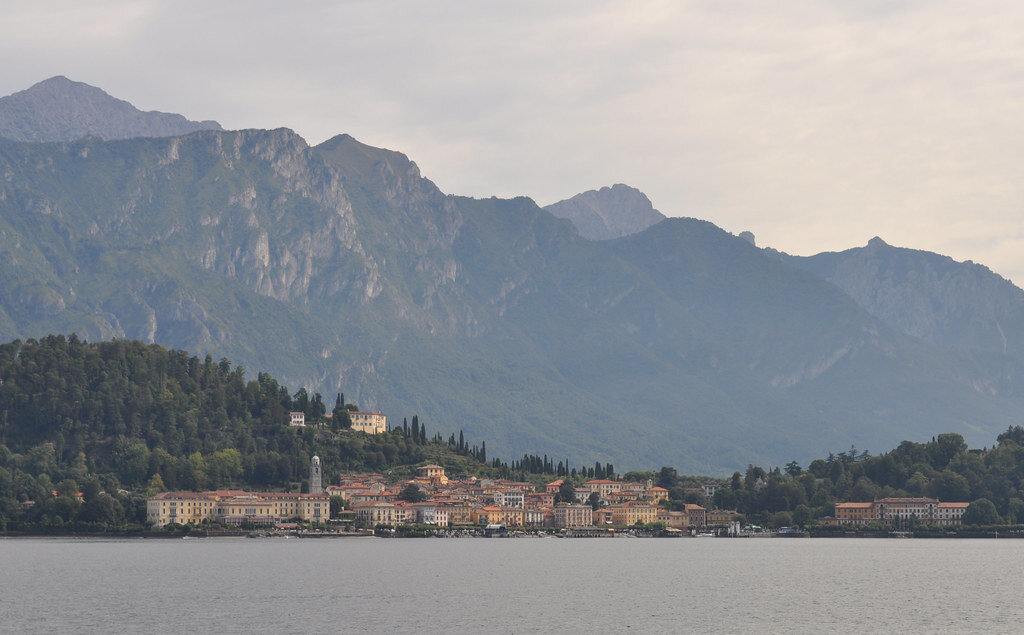
Lake Como, Italy. Harshil Shah. CC BY-ND 2.0.

Lake Como is an extremely popular destination for travelers due to its natural beauty and stunning landscape. However, climate change is threatening its future and hurting the local economy.

The water level in Lake Como is unprecedentedly low due to lack of rainfall and melted ice or snow. There is even a gap of more than three feet between the old waterline and where the water currently sits.

Lake Como has an area of  56 square miles, which means that this low water level is due to the loss of 4.6 billion gallons of water. According to local geologists, the rapidly-shrinking Fellaria glacier is the largest contributing factor to the decreased water levels.

Climate change has greatly affected the glacier, as  not much of it remains. Since the late 1800s, the Fellaria glacier has lost two-thirds of its total mass, which translates into an average of more than 20 feet per year.

The lake’s lack of water is enough to cause dangerous erosion and even rockslides. When water recedes, the base of the mountain starts to collapse because the water along the shore can no longer help the rocks stay in place.

Varenna, Lake Como, Italy. Harshil Shah. CC BY-ND 2.0.

Yet another detrimental effect of climate change is that the lack of water in the lake has begun to kill off fish. Many locals rely on fishing for their livelihoods, and they say that the fish level is already 50 percent less than it was 10 years ago.

As one of Europe’s deepest lakes at 1,345 feet deep, Lake Como is not in danger of drying up anytime soon. However, losing its most consistent water source—the Fellaria glacier—will place new pressure  on those who rely on the lake. This will have widespread effects, from affecting hydropower reservoirs located upstream to irrigated farms located downstream.Roads and walls that border the lake are also at risk of fracturing or collapsing due to low water levels.

GET INVOLVED

Nonprofits like the Environmental Defense Fund are dedicated to solving environmental challenges from many different angles with the help of scientists and experts. They offer opportunities to make donations, take action, sign petitions and even ways for companies to get involved. Anything helps. 

Another nonprofit is Conservation International, which works to protect the land and sea in over 70 countries. They combine fieldwork with innovations in science, policy and finance to secure the benefits that nature provides us with. Conservation International encourages people to donate, fundraise, or become a member.


Isabelle Durso

Isabelle is an undergraduate student at Boston University currently on campus in Boston. She is double majoring in Journalism and Film & Television, and she is interested in being a travel writer and writing human-interest stories around the world. Isabelle loves to explore and experience new cultures, and she hopes to share other people's stories through her writing. In the future, she intends to keep writing journalistic articles as well as creative screenplays.
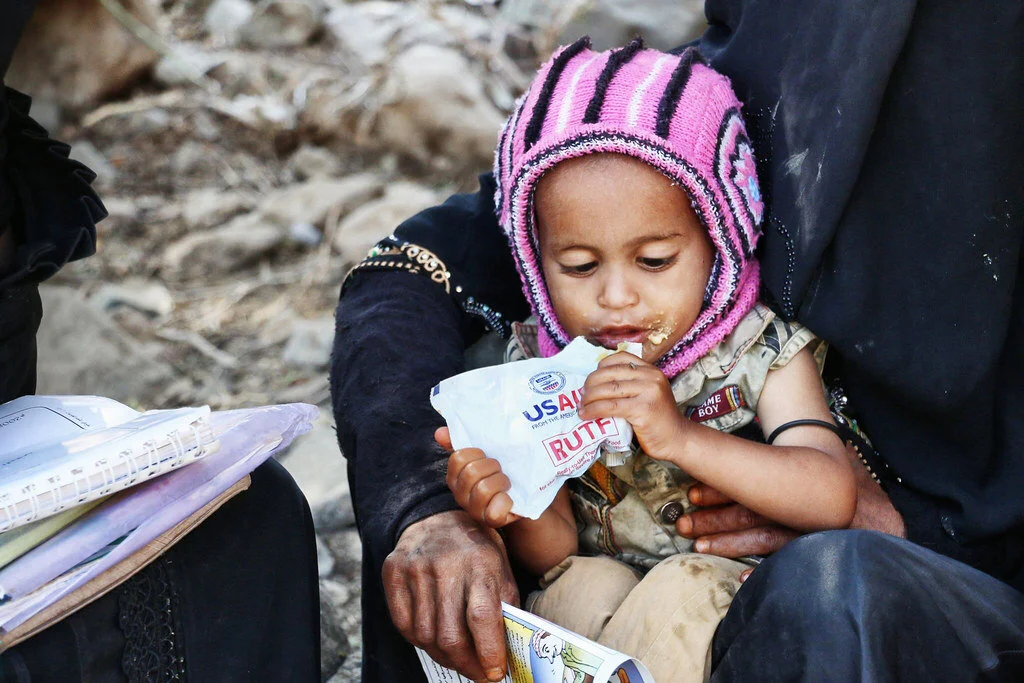

Yemen Experiences World's Worst Humanitarian Crisis

Yemen’s ongoing civil war has left 24 million in need of assistance and more than 100,000 dead since the conflict began in late 2014. Today, Yemen is considered the world’s worst humanitarian crisis and is on the brink of being labeled by the United Nations as the world’s worst famine in 100 years. 

A hungry Yemeni child eats a food bag. USAID_IMAGES. CC BY-NC 2.0.

Hunger, malnutrition, famine, displacement and mental health issues are among some of the devastating consequences imposed upon Yemeni civilians by the country’s civil war. Although the conflict between Yemeni President Abdrabbuh Mansour Hadi’s government and the Houthi, or Ansar Allah, armed movement broke out in late 2014, Yemen was already one of the most vulnerable countries in the Middle East.

Following the Arab Spring in late 2011, previous Yemeni President Ali Abdullah Saleh was forced to turn over his power to his deputy, Abdrabbuh Mansour Hadi. Since then, the country has been enthralled in a civil war which has left millions of civilians hungry homeless, or dead. Houthi forces took over Sana’a, the capital of Yemen, in late 2014, instigating the war. By early 2015, Houthi officials declared mobilization to overthrow Hadi’s regime and, only a day later, fighting broke out in Lahij Governorate. Lahij Governorate quickly succumbed to Houthi rule and President Hadi fled the nation. 

With the help of the United Arab Emirates, Saudi Arabia created a coalition of mostly Sunni Arab states to combat Houthi forces and the rise of Iranian influence in the Middle East in 2015. Today, much of the conflict in Yemen is a proxy conflict for the power struggle between Iran and Saudi Arabia in the region. 

The Arab coalition conducted countless air campaigns to drive out Houthi forces from Yemen and facilitate the return of Hadi’s government, despite the trail of destruction these air strikes leave behind. Funerals, weddings, homes, mosques, schools and hospitals have all fallen victim to these bombs. In response to an attack on Saudi Arabia’s eastern oil fields—which disrupted nearly five percent of the world’s global oil supply—Saudi Arabia spearheaded a bombing campaign. According to the Yemen Data Project, the conflict and air strikes since 2015 left around 17,000 Yemeni civilians dead or injured, as of March of 2019. 

According to the United Nations, Yemen remains the world’s worst humanitarian crisis. With over 100,000 people killed and 85,000 children dead from famine, the UN warned that millions of Yemenis could face starvation in what could be “the world’s worst famine in 100 years.” Currently, 16.2 million Yemenis are food insecure while famine continues to rise; child malnutrition there is one of the highest in the world, with two million children in need of acute malnutrition assistance; and at least one child dies of malnutrition or diarrhea every 10 minutes in Yemen. 

Displacement is another major consequence of the war in Yemen. With more than five million people estimated to have been forced to flee their homes, four million Yemenis remain displaced today. These displaced families live in camps of makeshift shelters, forcing them to continue moving around and making them vulnerable to severe weather conditions, air strikes and other dangers. In addition to the overwhelming number of displaced and homeless Yemenis, the nation is also home to around 300,000 refugees mostly from the Horn of Africa.

The devastating impacts of Yemen’s ongoing war does not stop at the physical realm—consequences of the violence have affected the mental health of Yemeni youth. According to Columbia Global Centers’ PGIF Project, a 25-year-old living in Yemen today “has already lived through 15 major conflicts and wars,” making depression, PTSD and other mental health disorders common in Yemen’s youth. Considering the lack of infrastructure and medical facilities already in Yemen, mental health concerns are pushed to the backburner. With roughly one psychiatrist per 500,000 people, only three mental health hospitals exist in Yemen. The lack of mental health services and resources has forced individuals who battle with mental health issues to turn to alternate methods of help, such as Quranic healing, while professional help is reserved for more extreme disorders, such as psychosis. 

PTSD is one of the most common products of war, and this is evident with  Yemeni children. Growing up with bombs dropping all around them, PTSD in Yemeni civilians and children is often triggered by loud noises and the sounds of planes whooshing overhead. Behavioral changes such as bedwetting, isolating oneself and emotional detachment are common consequences of PTSD in children. 

Beyond death by air strike or on-the-ground fighting, many Yemenis have lost their lives to hunger and diseases because of restrictions on humanitarian assistance, imports and access to essential services. Because of this, UN Secretary-General Antonio Guterres refers to Yemen’s crisis as “man-made.” Many third party nations, organizations and institutions have requested the warring countries involved to improve civilian protection, but have experienced little success. Now, many activists have taken to social media to garner support and aid for Yemen’s children, as well as raise awareness of Yemen’s situation—for being the world’s worst humanitarian crisis, Yemen is often underrepresented in the media.

GET INVOLVED

Despite the restrictions on humanitarian aid in Yemen, there are still ways to help. Save the Children is one of the largest organizations operating in Yemen and is currently aiding children suffering from malnutrition, supporting health facilities in hard-to-reach areas and leading educational programs. 

The international organization, World Food Programme, aims to provide 13 million people with food assistance across Yemen. To accomplish this goal and ensure their efforts are uninterrupted in 2021, the WFP is seeking to raise $1.9 billion. 

The Danish Refugee Council offers partnership opportunities to private companies, where partners will have the opportunity to help solve the global displacement crisis. The DNC is a trusted partner of the United Nations, is rated the world’s third best non-governmental organization, and is a Core Humanitarian Standards certified organization.


Mia Khatib

Mia is a rising senior at Boston University majoring in journalism and minoring in international relations. As a Palestinian-American, Mia is passionate about amplifying the voices of marginalized communities and is interested in investigative and data-driven journalism. She hopes to start out as a breaking news reporter and one day earn a position as editor of a major publication.

Meet the Activist and Intersectional Storyteller Developing Data-Driven Humanitarian Tools

Melissa Jun Rowley is a journalist, entrepreneur and activist focused on the intersection of storytelling, technology and social justice.

As the founder and CEO of Humanise, Inc., Melissa Jun Rowley is developing TheToolbox.org, a data-driven humanitarian initiative created by acclaimed musician Peter Gabriel. CATALYST had the chance to catch up with Melissa to learn more about Humanise in Detroit and Melissa’s path to social entrepreneurship.

How did your experience with TheToolbox.org inspire you to develop Humanise, Inc.?

TheToolbox.org is an online destination, founded by Peter Gabriel, that connects people to apps that can help them improve their lives and become everyday activists. I first became involved as an editorial consultant, and was developing stories while curating tools that promote social impact.

For example, there’s an app you can scan over a product’s barcode to see if human trafficking was involved in the product chain. While apps like these are interesting and useful, they’re under-utilized given their lack of commercial and entertainment value. 

We came to the conclusion that the site itself is a valuable database of tools, but in order to have an impact, we need to go into the field and get people on the ground using the tools, and providing feedback about how they can be improved. That’s where Humanise comes in: It was created to function as the parent company of TheToolbox.org. The tools we curate are now one of three pillars. We’ve evolved into an organization that promotes human rights through technology, storytelling, AND collaboration with local communities.

Can you describe some of the projects that Humanise has initiated since its founding?

We decided to take Humanise to Detroit, primarily because there’s a lot of data-driven development unfolding in the city. Also, I grew up an hour outside of the D and am in love with the entrepreneurial community there. They’re so spirited. They’re the genuine article. 

While money is being directed to development in certain districts, such as downtown, the neighborhoods on the outskirts are tragically deprived of funding and resources. Forty percent of the people in Detroit don’t have Internet access, and 40 percent can’t pay their water bills. It’s a first world city crawling with third world problems! 

In the year 2015, there are no excuses for letting people in our own backyard suffer like this. We need to meet them where they are, not where we think they should be, and we need to collectively solve the problems from the ground up — not the top down. 

So we started thinking of ways we can work with technology providers to foster digital inclusion. We’ve been working closely with community activists in the Detroit neighborhood of Morningside to understand the neighborhood’s needs and aspirations. We’ve connected them with a smart city advisory to see if the area is eligible for some pretty revolutionary technology. Some of the Detroiters we know are going to use TheToolbox.org as their own citizen journalism platform, where they can publish stories about their neighborhood and discuss the tools they find the most empowering. 

If we’re able to provide connectivity for this neighborhood, we may be able to do the same thing in some of Detroit’s other hardest hits zones. 

Before developing Humanise, Inc., you spent much of your career as a journalist. How did working in journalism influence your interest in social entrepreneurship? 

Being a journalist is the way I became an entrepreneur, really. I worked in TV when I was younger, producing business news updates for CNN and then covering entertainment in Hollywood. The red carpet was my second home.  But eventually, I started to feel like I was losing my soul. I became a journalist because I wanted to help connect people through storytelling — not perpetuate the dumbing down of the country, which is what I felt like I was doing half the time, particularly when I was asked to start quoting TMZ in stories. I knew that was the end. 

I left Los Angeles, and I started focusing on nonprofits and social responsibility movements. I quickly discovered that I couldn’t make any money that way. Two years later, I began developing content for companies that have a social mission. This was when I started to view myself as more of an entrepreneur. But I’m always going to be a journalist at heart, always looking for the truth and humanity in every story. 

Do you have any advice for future journalists or entrepreneurs? 

These days, if you’re going to be a journalist, you have to be an entrepreneur. By that I mean, you need to think like an entrepreneur. You need to be constantly thinking of different strategies, who you can connect with, and how you can build your brand and business. It was this mindset that led me to TheToolbox.org and Peter Gabriel. 

A second piece of advice is that the best way to develop an idea is to collaborate and find some common core or level of connectivity in the heart of why you’re doing what you’re doing. It’s only through that kind of commitment that you can build a business that has meaning. It’s not easy. But the people you meet along the way will change your life and expand your heart and mind in ways you’ve never dreamed of. I can promise you that. 

LEARN MORE ABOUT HUMANISE, INC. HERE.


Sarah Sutphin

Sarah is an undergraduate at Yale University and a content editor for CATALYST. As a traveler who has visited 30 countries (and counting!), she feels passionate about international development through sustainable mechanisms. Sarah has taken an interest in the intersection between public health and theater, and hopes to create a program that utilizes these disciplines for community empowerment. She is a fluent Spanish speaker with plans to take residence in Latin American after graduation. 

Cubans Protest Government’s Response to Economic Crisis 

Political turmoil, severe economic struggles and lack of freedom have pushed Cubans to take a stand against their government. 

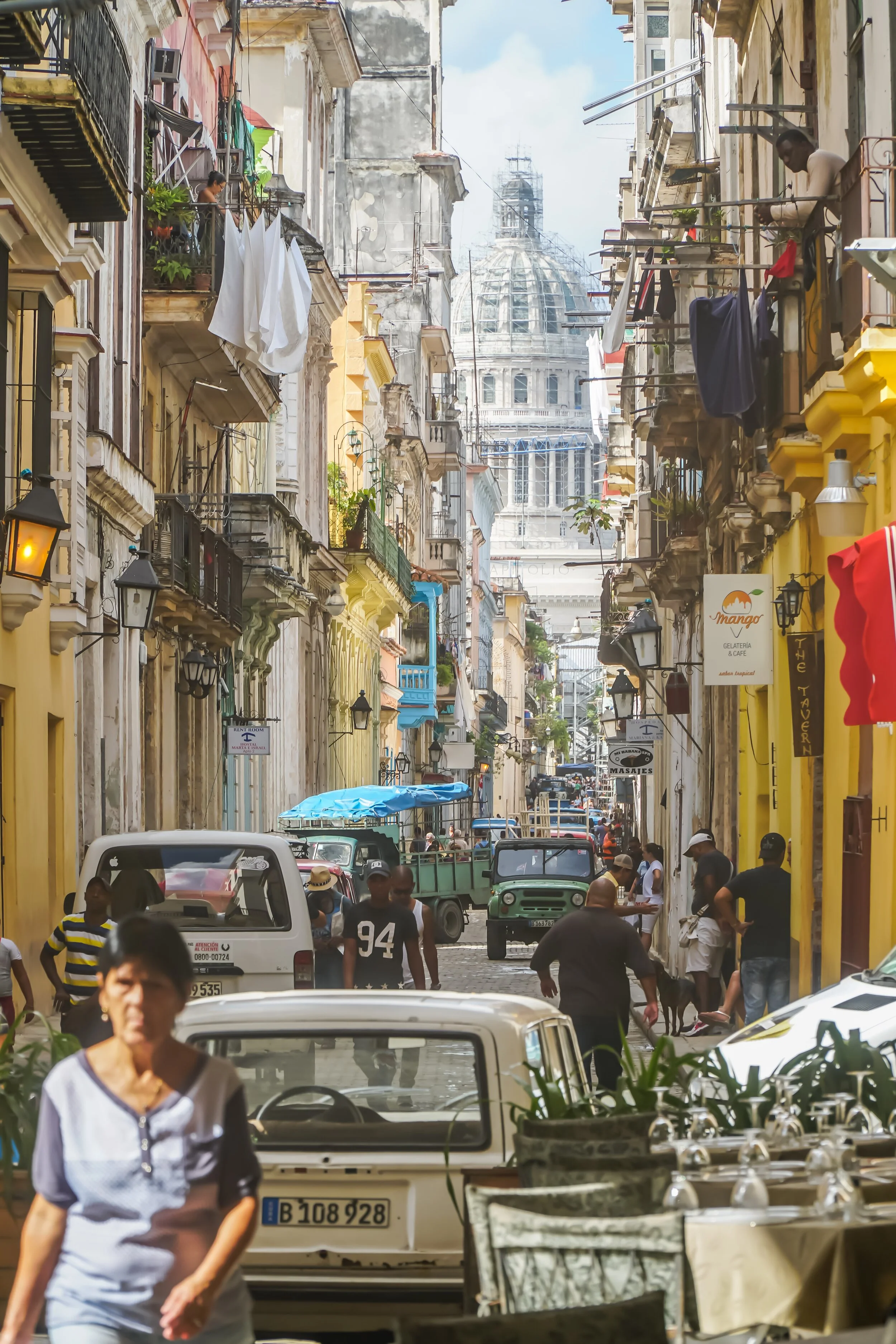
People walking the streets of Havana, Cuba. Tiago Claro. Unsplash. 

Thousands of Cubans marched the streets of Havana on Sunday, July 11 in protest against the poor economic conditions and governmental response to the COVID-19 pandemic. Among other hardships, many demonstrators have faced long-term hunger and medicine shortages due to the Cuban government's lack of action to address the struggles of its people. These protests have led to the damaging of police equipment, the detainment of a journalist and the death of a civilian. 

Besides having a mere 15 percent vaccination rate, due to shortages, pharmacies and hospitals lack even the most basic medicines such as penicillin and aspirin. According to Cuban healthcare authorities, on Sunday there were almost 7,000 new reported COVID-19 cases, with a total of nearly 240,000 COVID-19 patients across the country. Many Cubans have also reported having to wait hours in line to purchase food, if they even have access to food to begin with. 

These cruel living conditions have pushed many Cubans to a breaking point—in fact, these protests mark the first large-scale acts of defiance that Cuba has seen since the fall of the Soviet Union in the 1990s. The main difference since then is the easy accessibility of the internet, which has been used to spread the word about the protests and inspire a larger turnout. In an attempt to silence protesters on social media, internet access across Cuba was cut off for roughly 30 minutes amidst protests on July 11, with shutdowns intermittently continuing. This makes the stories from activists who were arrested or beaten by police difficult to corroborate due to lack of evidence. 

Despite suppression efforts, protesters have managed to maintain a far reach, with Cuban communities such as Little Havana in Miami gathering in solidarity with Cubans. The Cuban protest movement has also garnered international support on social media with the hashtag #SOSCuba, and many celebrities have gotten involved to raise awareness about the protests. 

In response to the unrest, the Cuban government has directed the blame toward the American trade embargo, which they believe is responsible for the nationwide shortages. While some activists agree with this point, others have argued that the issue goes far beyond the American embargo, and that it is more due to governmental financial mismanagement and a lack of tourism revenue. 


Zara Irshad

Zara is a third year Communication student at the University of California, San Diego. Her passion for journalism comes from her love of storytelling and desire to learn about others. In addition to writing at CATALYST, she is an Opinion Writer for the UCSD Guardian, which allows her to incorporate various perspectives into her work.

International Human Rights Court Rules in Favor of Trans Rights

The Inter-American Court of Human Rights ruled that the government of Honduras was responsible for the 2009 murder of a transgender woman. Today, Honduras is one of the largest contributors to anti-trans violence in Latin America. 

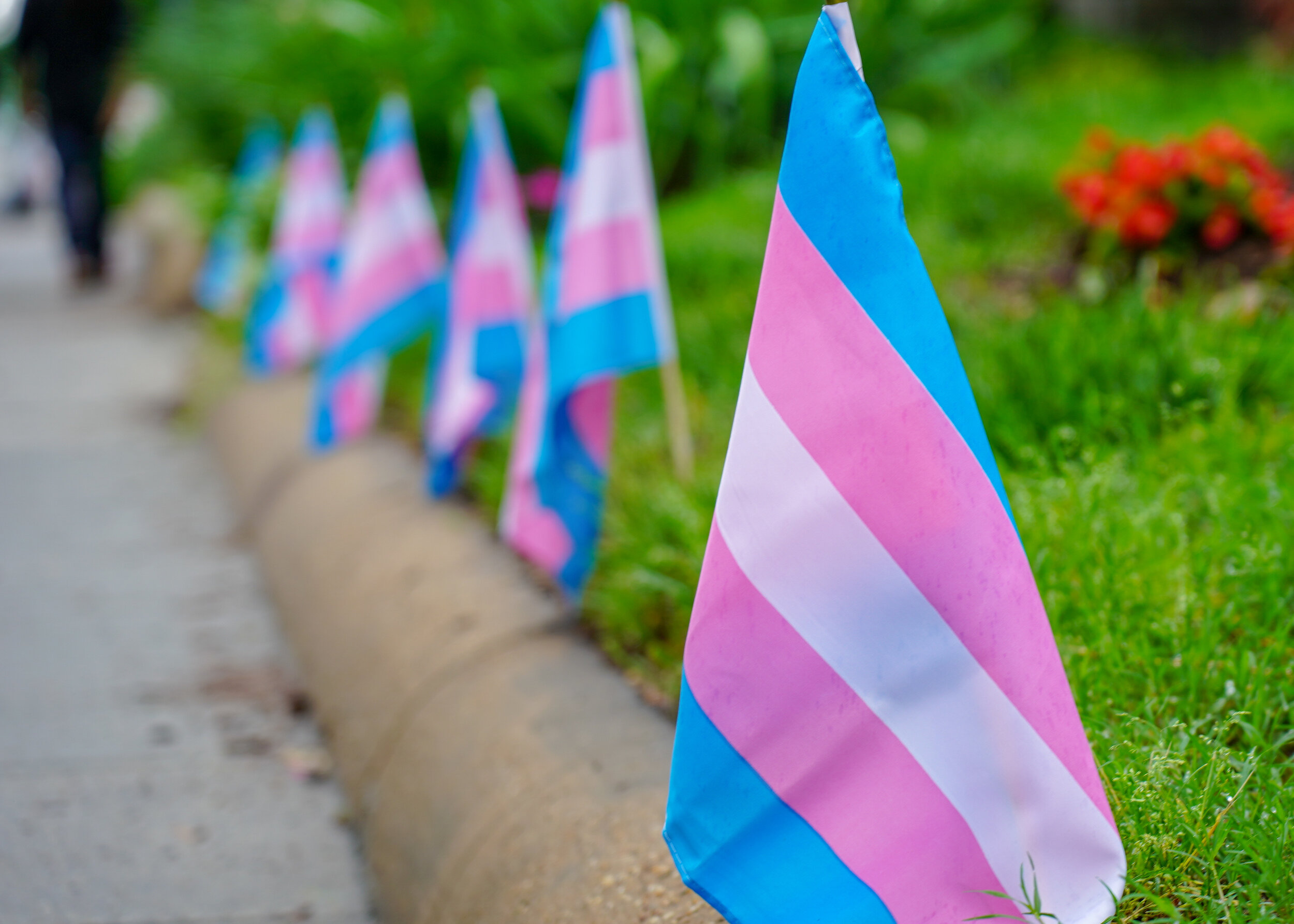
Transgender pride flags. Ted Eytan. CC BY-SA 2.0 

On June 26, the Costa Rica-based Inter-American Court of Human Rights delivered a landmark ruling in a transgender rights case. The court held that the government of Honduras was responsible for the 2009 murder of trans woman and trans rights activist Vicky Hernández, stating that the government had violated Hernández’s rights to life and fair trial. 

Hernández was 26 years old when she was killed by a single gunshot to the head. No one was ever charged for the crime. 

The Court’s ruling stated that Honduran authorities did not sufficiently investigate Hernández’s death. Her murder was dismissed quickly as a “crime of passion,” and police failed to interview anyone from the scene or examine the bullet casing. It is unclear whether a postmortem examination was performed. 

Lawyers acting on behalf of Cattrachas, the LGBTQ+ rights organization that brought forward the case, argued that this incomplete investigation was a result of Hernández’s gender identity. Robert F. Kennedy Human Rights reports that during the investigation, authorities continuously identified Hernández as male and referred to her on documents and records by her birth name, which she did not use. In 2009, shortly before Hernández’s killing, Human Rights Watch published a report which found that police in Honduras routinely failed to investigate reports filed by trans people. The report also detailed the harassment and beatings that trans people had endured at the hands of the police. 

Hernández’s murder occurred on June 28, 2009, the first night of a military coup against then-President Manuel Zelaya. Zelaya was taken into custody, and the military imposed a 48-hour curfew, leaving the streets closed to everyone but military and police forces. Hernández was a sex worker, and was still on the street after curfew arrived, along with two other trans women. The three women saw a police car approaching and scattered, fearing violence. The next morning, Hernández’s body was found in the street. 

Due to the circumstances surrounding her death, lawyers for Hernández’s case posited that she was the victim of an extrajudicial killing, meaning that state agents were responsible for her death. Robert F. Kennedy Human Rights points to the execution-style way in which Hernández was shot and the fact that the streets were closed to everyone but police and military forces, as well as the lack of effort put into the criminal investigation. 

In its ruling, the Court found evidence that state agents had participated in Hernández’s death. 

Hernández’s murder was the first in a wave of anti-trans violence that followed the 2009 coup. Cattrachas documented 20 deaths of LGBTQ+ people in the 15 years before the coup, and 31 deaths in the eight months directly afterward. 15 of these 31 people were trans women, like Hernández.

Today, Latin America is still a deadly area for LGBTQ+ people. Research released in 2019 showed that four LGBTQ+ people are murdered every day in Latin America and the Caribbean, with Honduras, Columbia and Mexico accounting for nearly 90 percent of these deaths. In 2020, Human Rights Watch published a follow-up to their 2009 report, which found that LGBTQ+ Hondurans still face rampant discrimination and violence from police and other authorities, as well as from non-state actors. 

Twelve years after Hernández’s murder, Honduras is finally being held accountable for its anti-LGBTQ+ violence and being made to implement reforms. Activists hope that the ruling will encourage other Latin American countries to address their own issues with violence against the LGBTQ+ community. 

The Court’s ruling included orders for the Honduran government to pay reparations to Hernández’s family, restart its investigation into her murder and publicly acknowledge its own role in the event, train security forces on cases involving LGBTQ+ violence, and keep a better record of cases motivated by anti-LGBTQ+ sentiment. The Court also ordered the Honduran government to allow people to change their gender identity in documents and public records, which is a major step forward. The next step is ensuring that Honduras’ new LGBTQ+ legislation is actually enforced. 


Rachel Lynch

Rachel is a student at Sarah Lawrence College in Bronxville, NY currently taking a semester off. She plans to study Writing and Child Development. Rachel loves to travel and is inspired by the places she’s been and everywhere she wants to go. She hopes to educate people on social justice issues and the history and culture of travel destinations through her writing.

Future of Afghan Women in Limbo after U.S. Troops Leave

After U.S. troops recently left the largest American base in Afghanistan, Bagram Air Base, the future of Afghanistan remains unknown. In particular, the lives of Afghan women are now at stake due to the gender inequality that still exists in the country.

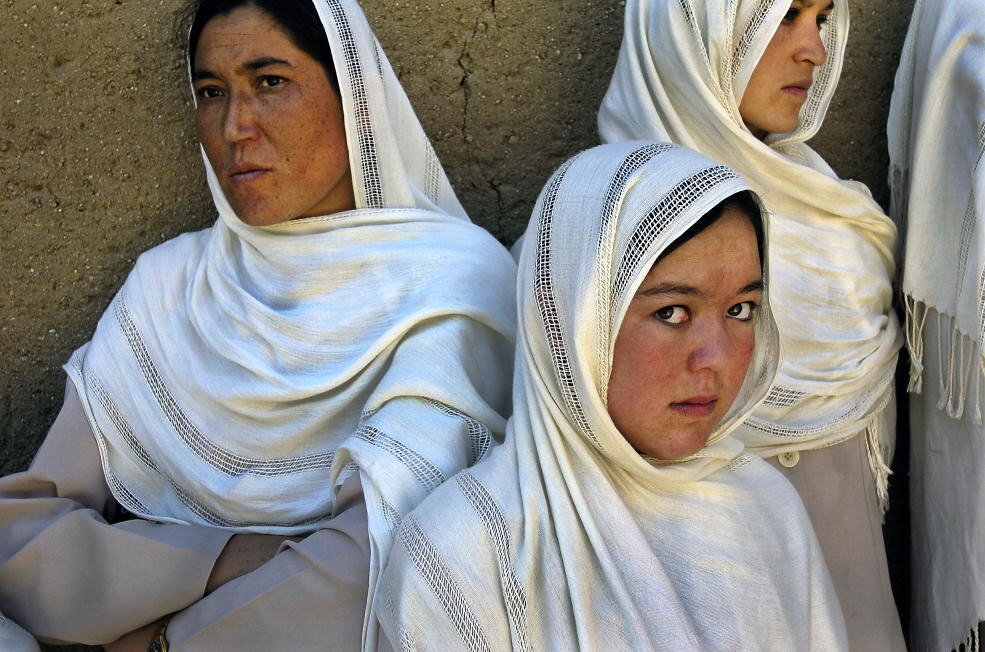
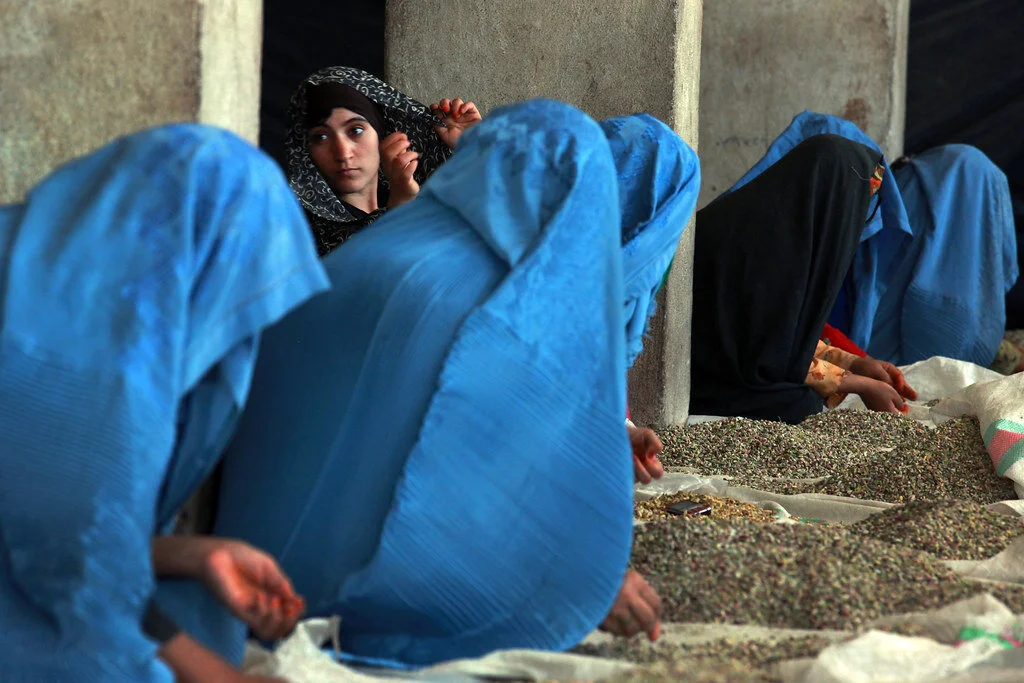
Midwifery students in Afghanistan. United Nations Photo. CC BY-NC-ND 2.0.

Due to the Taliban’s strict rules restricting women’s rights, gender inequality remains a threatening reality in Afghanistan. Countries retreating from Afghanistan—the U.S. included—are leaving behind a dark future for Afghan women and girls, who face serious crises of health, education and violence. The U.S. left Bagram Air Base, its largest base in Afghanistan, on July 1.

Afghanistan has a history of violence within the country after foreign forces have retreated their troops. For example, when the Soviets withdrew from Afghanistan in 1988, the U.S. looked away, and Afghanistan erupted in a factional war that killed thousands. During this conflict, Afghan women were raped by fighting forces.

Photos of Afghan women cowering under the whips of Taliban members haunt history, and they were the cause of feminist sympathies that emerged across the U.S. Those activists hoped that American involvement in the area would bring relief to a tortured country.

Since the Taliban were ousted in 2001, Afghan women have not wasted one minute in fighting for their rights.  Today, many women serve in important governmental roles, like as parliament members and ambassadors. Many women are also musicians, artists, entrepreneurs, or inventors. In fact, during the pandemic, the Afghan girls robotics team created low-cost ventilators to treat COVID-19 patients.

Women on the job in Afghanistan. United Nations Photo. CC BY-NC-ND 2.0.

In more good news, infant mortality has decreased and life expectancy has increased. Foreign involvement has had a big hand in accomplishing this. However, now that international troops are withdrawing, aid has been shrinking and pledges to help Afghanistan are less frequent.

Along with the U.S., several other embassies have also withdrawn their troops from Afghanistan, including Australia.

In an interview with Human Rights Watch, Afghan women said that they now face obstacles in accessing care due to costs, insecurity, and scarcity of providers. Furthermore, as countries withdraw from Afghanistan, the unknown future of the country could mean further violence that would produce even more problems for women and families.

GET INVOLVED

To help the fight for women’s rights in Afghanistan, consider working, interning, or volunteering with Women for Afghan Women WAW. WAW was founded to advocate for women then living under the brutal rule of the Taliban in Afghanistan. Now, it is the largest organization for Afghan women and girls globally and the largest women’s organization in Afghanistan. Afghan Women’s Educational Center also focuses on Afghan women’s rights—they are a non-profit women-led national organization that reduces vulnerability among marginalized communities with a special focus on women and children. They offer various jobs and projects to get involved with.


Isabelle Durso

Isabelle is an undergraduate student at Boston University currently on campus in Boston. She is double majoring in Journalism and Film & Television, and she is interested in being a travel writer and writing human-interest stories around the world. Isabelle loves to explore and experience new cultures, and she hopes to share other people's stories through her writing. In the future, she intends to keep writing journalistic articles as well as creative screenplays.

Study Predicts African Great Apes Will Lose 94% of Their Territory 

A new study about  the effects of climate change, land use and human population growth on African great apes found that they may lose up to 94% of their habitat by 2050. 

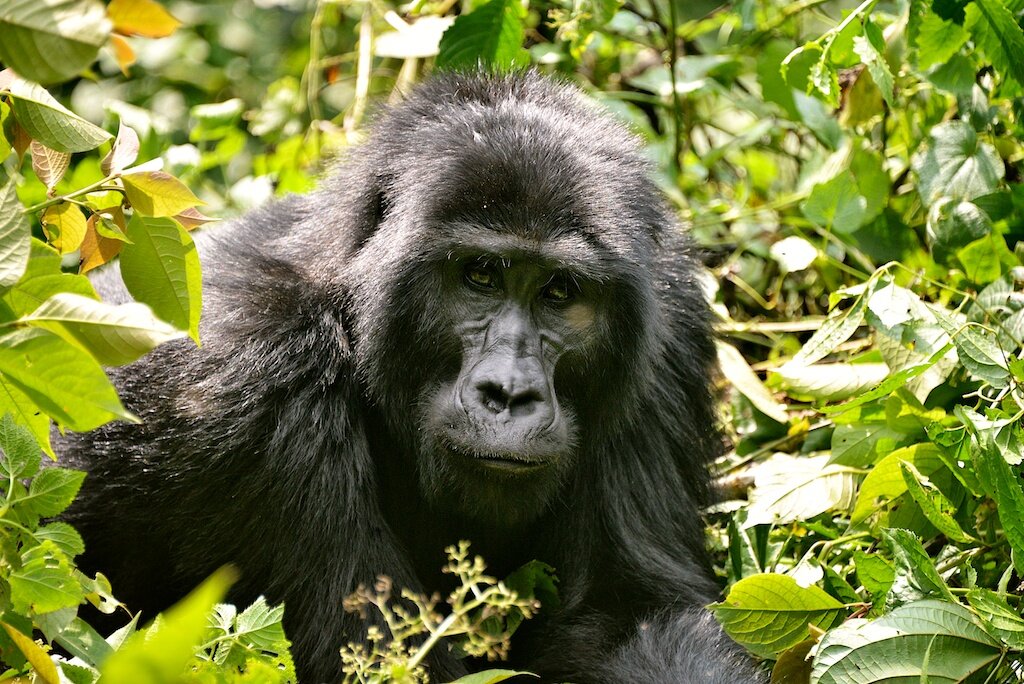
A mountain gorilla in Uganda. Rod Waddington. CC BY-SA 2.0 

Great apes are humanity’s closest relatives. They are also a highly endangered group of animals, and experts believe that this status will likely worsen in the coming years. A new study published in the journal Diversity and Distributions predicts that the combined pressures of climate change, human land use and human population growth will lead to immense territory losses for African great apes in the next 30 years. 

There are four types of great apes: gorillas, bonobos, orangutans, and chimpanzees. Africa is home to a number of species of great apes, including Cross River and Eastern and Western gorillas, as well as bonobos and chimpanzees. The situation for these species is already critical. All are listed as either endangered or critically endangered on the International Union for Conservation of Nature and Natural Resources Red List of Threatened Species, a comprehensive list detailing the conservation status of animals around the world. And, as wild areas are destroyed for timber, minerals and food; the human population expands; and climate change alters the land where great apes can comfortably live, experts warn that African great apes could lose a devastating portion of their range by 2050. 

The study was conducted by nearly 60 scientists from different research institutions, universities and conservation organizations. The scientists used data about African great ape populations from the IUCN database and then modelled the future effects of climate change, land use and human population growth. Using this data, the scientists analysed a best case scenario, where action is taken to protect the environment , and a worst case scenario where nothing is done. There is little difference in the two outcomes. Both result in massive range loss for African great apes, with 85% range loss by 2050 in the “best case” scenario and 94% by 2050 in the “worst case”. 

Half of this lost range will be territory inside national parks and other protected areas, the study predicts. Although these areas are safe from human land use, they will still be affected by climate change, which will make the habitat unsuitable for great apes. Most great ape species prefer to live in lowland habitats, but climate change will make them hotter and drier. In areas where there is no higher lands, apes will be left with nowhere to live. In areas where there are uplands, however, experts suggest that great apes will attempt to migrate upward, following the climate and vegetation they prefer. 

Yet, even apes that have the ability to migrate as their range decreases may not have enough time to do so. Apes reproduce slowly, have a low population density and require a very specific diet. All of these factors mean that apes are generally not efficient migrators compared to other species; to fully acclimate to a new habitat would take great ape species longer than the 30 years the study predicts they have left. 

The authors of the study urge that their findings be used to guide conservation efforts for African great apes in order to prevent irreversible population losses. Their findings suggest that the range loss can be mitigated through specific conservation efforts that focus on new and existing protected areas, as well as connecting habitats that are predicted to still be suitable for great apes in the future.


Rachel Lynch

Rachel is a student at Sarah Lawrence College in Bronxville, NY currently taking a semester off. She plans to study Writing and Child Development. Rachel loves to travel and is inspired by the places she’s been and everywhere she wants to go. She hopes to educate people on social justice issues and the history and culture of travel destinations through her writing.

Global Warming Blankets Turkey’s Waters in “Sea Snot”

Turkey’s Sea of Marmara is covered in a thick blanket of mucus that is suffocating marine life. Global warming is likely the reason. 

Turkey’s Sea of Marmara is covered in a thick layer of a beige, viscous substance known as “sea snot” that is clogging fishing nets, killing corals and disrupting the breeding grounds of fish. 

Sea snot—officially known as marine mucilage—comes from phytoplankton, with high levels occurring as a result of prolonged warm temperatures, calm weather and abundant nutrients in the water. An abundance of nutrients like nitrogen and phosphorus lead to a boom in the phytoplankton population. In normal amounts, phytoplankton are an important part of the ocean’s ecosystem; they are microscopic organisms that exude oxygen. During a population boom, however, phytoplankton can become harmful; under conditions of stress they expel mucus that can accumulate on the surface, creating sea snot that can grow to cover many square miles of ocean. 

Typically, sea snot on its own is not harmful. In fact, research shows that some deep-sea organisms depend on sea snot to stay alive. It only becomes dangerous when sea snot of large amounts begins to host E. coli and other bacteria and viruses, or forms a layer that covers the surface of the ocean, as in Turkey. 

When the sea snot is thick enough to cover the water’s surface, it can act as a blanket, suffocating the marine life below. Immobile organisms like corals are especially vulnerable to damage from sea snot because it can wrap around them, cutting off their ability to breathe or feed. Blankets of sea snot such as the one in Turkey can set off a cyclical chain of events wherein the sea snot suffocates sea creatures, leading to mass die-offs. This in turn leads to mass decomposition, a process that sucks even more oxygen out of the already depleted water, making it more inhospitable for marine life. 

Sea snot is not a new phenomenon; it has been periodically blooming in the Mediterranean Sea since the 18th century. However,  the frequency and extent of sea snot occurrences along Turkey’s coast since 2007 are unusual, and scientists suggest that global warming may be to blame. Phytoplankton thrive in warmer waters. The average seawater temperature in the Sea of Marmara has increased by 2-3 degrees C since preindustrial times. While that may not seem like a lot, the warmer waters are enough to make a major difference in the phytoplankton populations of the sea, which is already rife with nutrients from wastewater. The higher temperatures make the sea even more hospitable to phytoplankton, which leads to disruptive sea snot events like the one Turkey is currently experiencing. 

While the sea snot problem has recently gotten international attention, it has been negatively impacting Turkey’s fishing industry since December, when the bloom began. Fishers have been unable to cast their nets without them getting caught in the sticky mucus, and many of the creatures they do manage to catch are dead, their gills clogged with sea snot. 

Dr Neslihan Özdelice, a marine biologist at Istanbul University, urged for a  focus on preventing overfishing and limiting waste water discharges into the sea, two factors that scientists have identified as contributing to the sea snot phenomenon. Ultimately, the layer of sea snot that is currently covering the Sea of Marmara, disrupting fishing and threatening biodiversity, is a symptom of a problem that needs to be addressed globally. Major sea snot blooms are an easily visible example of climate change. Global cooperation is necessary to address the root of the problem by working towards mitigating climate change and global warming. 


Rachel Lynch

Rachel is a student at Sarah Lawrence College in Bronxville, NY currently taking a semester off. She plans to study Writing and Child Development. Rachel loves to travel and is inspired by the places she’s been and everywhere she wants to go. She hopes to educate people on social justice issues and the history and culture of travel destinations through her writing.

Sexual Assault Prevention: How to Help Yourself and Others

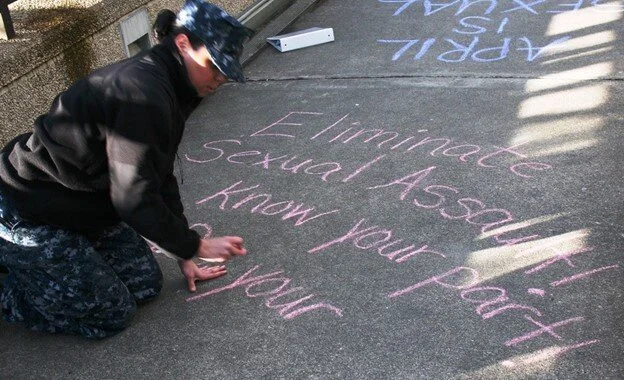
Sexual assault prevention campaigns have been circulating on social media, giving tools to  women and men around the world to remove themselves from threatening situations and ward off sexual predators. 

Sexual assault is a major issue across the world. From childhood bedrooms and college parties to first dates and marital beds, both women and men alike experience unwanted sexual attention and violence. According to the World Health Organization, 1 in 3 women experience physical or sexual violence from a partner or non-partner in their lifetime. Similarly, at least 1 in 6 men have experienced sexual abuse or assault. 

In the past, survivors and allies frequently shied away from speaking about sexual assault; however, in recent years, the topic that was considered taboo is beginning to be  spoken about more frequently and openly. Today, workplaces require sexual assault education courses, educational institutions encourage victims to utilize the resources available to them, and social media keeps the conversation alive with its various sexual assault resources, prevention and discussion accounts. People are now more aware of the severity of sexual assault and the long lasting psychological implications it can have on victims, as well as how to report a sexual attack, cope with an unwanted sexual experience or escape situations in which sexual abuse feels imminent. 

In recent years, many sexual assault prevention campaigns have been created, often utilizing social media to share these life-saving tactics. One campaign that gained global traction online is “Ask For Angela,” which was launched in Lincolnshire, England by Hayley Child in 2016. The campaign is named in memory of Angela Crompton, a woman who was abused and killed by her husband in 2012 when an argument about redecorating spiraled out of control. Ask For Angela was created to help people escape uncomfortable and potentially threatening situations. By asking a bartender, waiter or employee of an establishment, “is Angela working tonight?” the employee will be alerted that the patron is uncomfortable and would like to be safely and discreetly escorted home. However, Ask For Angela is only effective if the establishment is aware of the phrase and has trained its staff to respond appropriately. 

Not only did this campaign gain a lot of traction, but it even encouraged another code word system based on Ask For Angela. The spin-off exists in the United States where, rather than asking if Angela is working, a customer will ask for an “angel shot” when they feel unsafe. Additional setting-appropriate phrases exist to secretly and specifically identify what type of help the person needs. If the person wants the shot “neat,” they want to be escorted to their car; if they want the shot “on the rocks,” they want the establishment to call a taxi for them; and if they want the shot “with a lime,” they are requesting police assistance. 

While #AskforAngela recently resurfaced on social media, it is just one of many sexual assault prevention tactics that exist. TikTok is more than an app to share Gen Z’s trendy short dances, comedy skits and shopping hauls—many people have posted videos that mimic real-time phone calls as a way to ward off threatening Uber drivers or escorts when played aloud. According to Uber’s safety report, out of 1.3 billion trips in 2018, over 3,000 sexual assaults and nine murders occured. These TikTok videos typically include a fictitious friend subtly stating that they have your live location, are tracking your ride and are awaiting your arrival, alerting the driver that whatever potential predatory plans they had in mind will not go uncaught. These videos are especially helpful and reassuring because they can be used at times when friends and family members cannot be reached. 

Beyond campaigns like these, there are many social media accounts dedicated to sexual assault awareness and discussion. While there is no evidence to suggest that these social media campaigns are effective in deterring sexual violence, at the very least, these initiatives reassure men and women that they are not powerless in those situations. It is important that these posts continue to circulate on social media and inform people how to help others in danger, as well as how to get help when necessary. 

TO GET INVOLVED 

While it may seem hard to combat sexual assault as an ally, there are many ways to get involved. The Rape, Abuse & Incest National Network—an American non-profit that aims to raise awareness about sexual assault and provide resources and support for sexual assault survivors—is always looking for volunteers to help with it’s 24/7 live chat and hotline, as well as to lead fundraising efforts for research and support programs. 

Similarly to RAINN, NO MORE works toward ending sexual violence by spreading awareness, selling products, accepting donations and spearheading various sexual assault prevenetion campaigns. To support NO MORE in their efforts to prevent sexual violence, take the pledge, buy their products and wear their merchandise to show allyship and raise awareness of their organization and cause. 

Ending Rape on Campus is an organization that works to prevent sexual assault by providing educational resources in school environments. Help EROC by signing up for its “Action Alerts,” and stay informed about what petitions to sign, events to attend and protests to support.


Mia Khatib 

Mia is a rising senior at Boston University majoring in journalism and minoring in international relations. As a Palestinian-American, Mia is passionate about amplifying the voices of marginalized communities and is interested in investigative and data-driven journalism. She hopes to start out as a breaking news reporter and one day earn a position as editor of a major publication.

Sri Lankan Journalists Revive the #MeToo Movement

Female journalists in Sri Lanka have united under the #MeToo movement to foster change within the newsroom.

An overhead view of Colombo, Sri Lanka. Jalitha Hewage. Unsplash. 

The Sri Lankan government has called for an investigation of several media outlets following allegations of sexual harassment from female journalists. This resurgence of the #MeToo movement was sparked on June 18 when Sri Lankan journalist Sarah Kellapatha spoke up on Twitter about her experience with a male colleague who threatened to rape her during her time at a publication from 2010-2017. 

Encouraged by Kellapatha’s story, several other female journalists began to speak out about their own experiences with sexual harassment in the workplace. For example, Sahla Ilham spoke out about being sexually abused by an editor who pressured her family to remain silent. Another who shared their experience was Jordana Narin, who was harassed by a senior colleague until he was forced to resign by the chief editor. 

The Sri Lankan government appears to be taking these allegations seriously, as the Minister of Mass Media, Keheliya Rambukwella, asked the Government Information Department to further investigate the claims to help ensure that female journalists feel safe at work. 

Currently, the only type of law that Sri Lanka has to address sexual harassment is a criminal law, which would result in imprisonment of up to five years, or a mere fine, for those found guilty. However, according to human rights lawyer Ermiza Tegal, the problem is that the criminal law is rarely used and victims are often undermined and invalidated. 

This recent movement shares its roots with the global #MeToo campaign which started back in 2017 following numerous sexual assault allegations against Harvey Weinstein. The movement fostered awareness of sexual abuse, as well as a safe space for victims to speak about their experiences. Similarly, the journalists who have come forward in Sri Lanka have shared their own experiences, many of them from different news publications, in hopes of fostering change and reform within newsrooms. 


Zara Irshad

Zara is a third year Communication student at the University of California, San Diego. Her passion for journalism comes from her love of storytelling and desire to learn about others. In addition to writing at CATALYST, she is an Opinion Writer for the UCSD Guardian, which allows her to incorporate various perspectives into her work.

Greenland’s Hot Springs Affecting Glacier Melting

The heat from the Earth’s crust that leads to the creation of hot springs, such as those on the island of Uunartoq in Greenland, may be contributing to sea level rise.

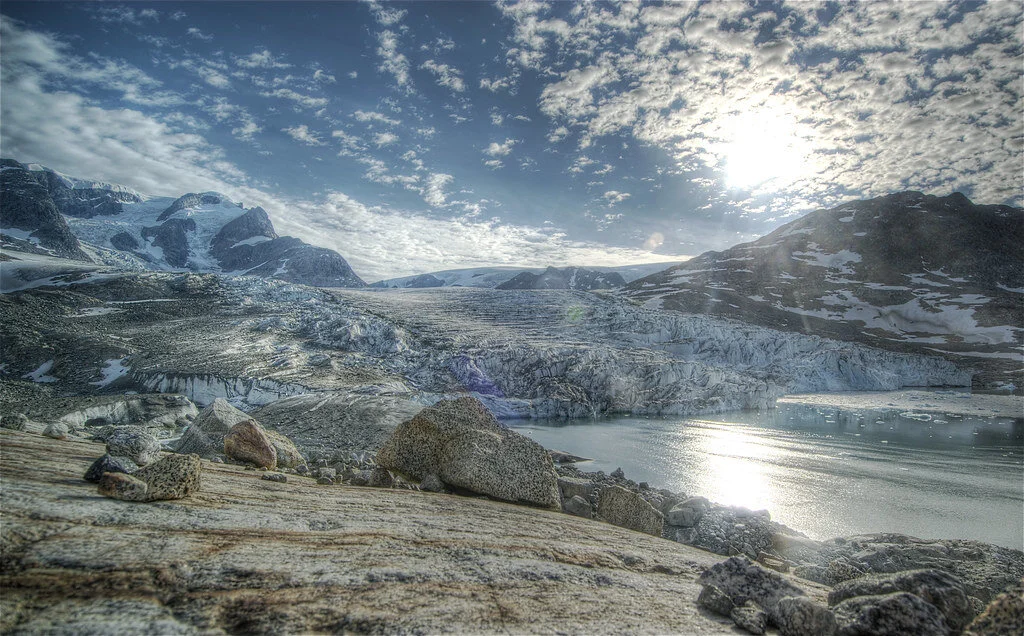
Glacier in Greenland. Ville Miettinen. CC BY-NC 2.0.

Over 1,000 years ago, Southern Greenland’s crystal-clear hot springs were discovered by the Norsemen, who were members of the Scandinavian seafaring warriors—also known as Vikings— who raided and colonized areas of Europe from the 9th to 11th centuries.

Hot springs are pools of naturally heated water that have the same temperature all year and are warmer than the average temperature of the location.

In Greenland, natural hot springs are very common, but the island of Uunartoq is the only place where the hot springs are warm enough to bathe in. There are three naturally-heated springs that run together into a small pool between the land of Alluitsup Paa and Nanortalik. In this pool, people can lie in the water and enjoy the mountains and icebergs around the spring.

The water in the hot spring is heated by deep layers in the Earth’s crust rubbing against each other, as opposed to being created by volcanic activity like the hot springs in Iceland. Uunartoq’s hot springs are a perfectly warm 98 to 100 degrees Fahrenheit (37 to 38 degrees Celsius).

Uunartoq’s hot springs also act as the only heated outdoor spa in Greenland. People can visit the springs all year round and in any weather because the water temperature is always suitable to soak in. Natural hot springs are also high in minerals, including calcium, magnesium, silica and lithium, which help to soothe muscles and promote healing.

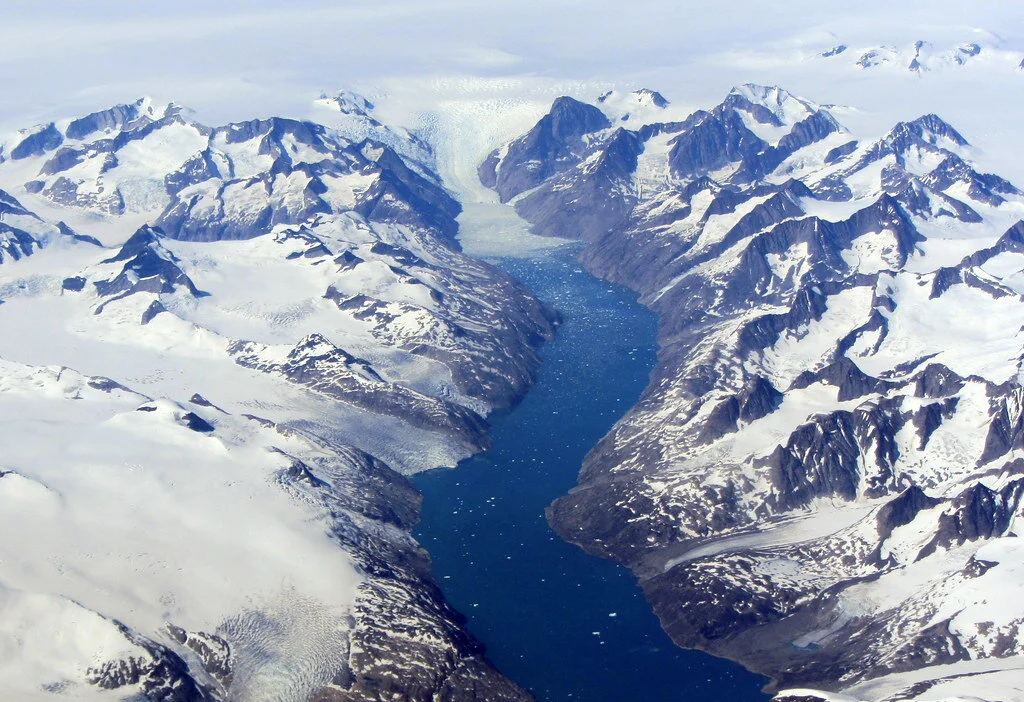
Greenland fjord. Tearbringer. CC BY-NC 2.0.

However, the heat from the friction of Earth’s crust is possibly contributing to Greenland’s glacier retreat. Greenland’s melting glaciers are a large reason why global sea levels are rising in response to climate change.

According to researchers, a significant amount of geothermal activity is bubbling in Greenland beneath the Earth’s surface. The heat radiating from within Earth’s interior—which warms the hot springs—is melting the glaciers above, making it easier for them to slide into the sea and contribute to rising sea levels.

In addition, the Earth’s interior heat flowing outward (in scientific terms, geothermal heat flux) is causing deep-sea temperatures in the fjords to rise significantly, which also results in melting glaciers. It is important to understand the processes by which polar ice is melting in order to predict how soon, and how much, sea levels will rise in the future.


Isabelle Durso

Isabelle is an undergraduate student at Boston University currently on campus in Boston. She is double majoring in Journalism and Film & Television, and she is interested in being a travel writer and writing human-interest stories around the world. Isabelle loves to explore and experience new cultures, and she hopes to share other people's stories through her writing. In the future, she intends to keep writing journalistic articles as well as creative screenplays.

Battlefield Reenactments Attract Controversy

Reenactments of the Civil War and World War II help educate the public about important historical events, but they also risk glorifying some of history’s most evil societies. 

Impersonating a Nazi soldier. virtualwayfarer. CC BY-NC 2.0.

Spring, 1944. The American G.I. hid with the Russian partisans, waiting to ambush the Nazi patrol. The Allies were making short work of Hitler’s war machine on both the eastern and western fronts. Still, these soldiers learned that war involves a lot of waiting around. They scoured the forest for the optimal position for attack. Finding an advantage was crucial when fighting the Waffen SS, the most elite Nazi soldiers. When the first round sounded out, the American hid in the underbrush. He managed one kill from his position. When he started moving, the ambusher became the ambushed. Nazis opened fire and shot him down. He lied gasping on the battlefield. 

A while later, he got up and joined the other fallen soldiers, Nazis and partisans alike. They gathered on a dirt path to trade notes on what could have been done to save their lives. Later that night, they enjoyed a hog roast. 

His name is Joe Bish, and he’s a reporter for VICE News. For one day, he partook in a controversial pastime with a group of enthusiastic British history buffs: reenacting World War II battles. It seems innocuous enough for a part-time hobby, yet concerns  arise when half of them don Nazi uniforms for the sake of historical accuracy. 

Nazi reenactors on the move. jcubic. CC BY-SA 2.0.

Such hardcore history buffs brought controversy to an English village in 2018 when a Jewish visitor spotted reenactors moseying through the streets in Nazi uniforms. National media, from The Sun to The Guardian, relayed the visitor’s discomfort and disbelief. Organizers defended the public utility of reenacting history, but reenactors were nonetheless on the defensive. The situation called into question what was thought to be an innocuous, even publicly educational, hobby. 

Such controversies are not exclusively British. In 2010, Rich Iott lost a Congressional election in Ohio after The Atlantic unearthed two pictures of him dressed as a Waffen SS soldier. A favorite among Tea Party candidates, Iott defended his reenactments as a harmless pastime and a father-son bonding experience; he also participated in reenactments as a Union soldier in the Civil War and as an American soldier in both World Wars. Predictably, his statements did little to stymie public outrage. Jewish groups denounced his reenactments, and even fellow Republicans distanced themselves from him. It goes without saying that few people could elect a man they saw dressed as a Nazi soldier.

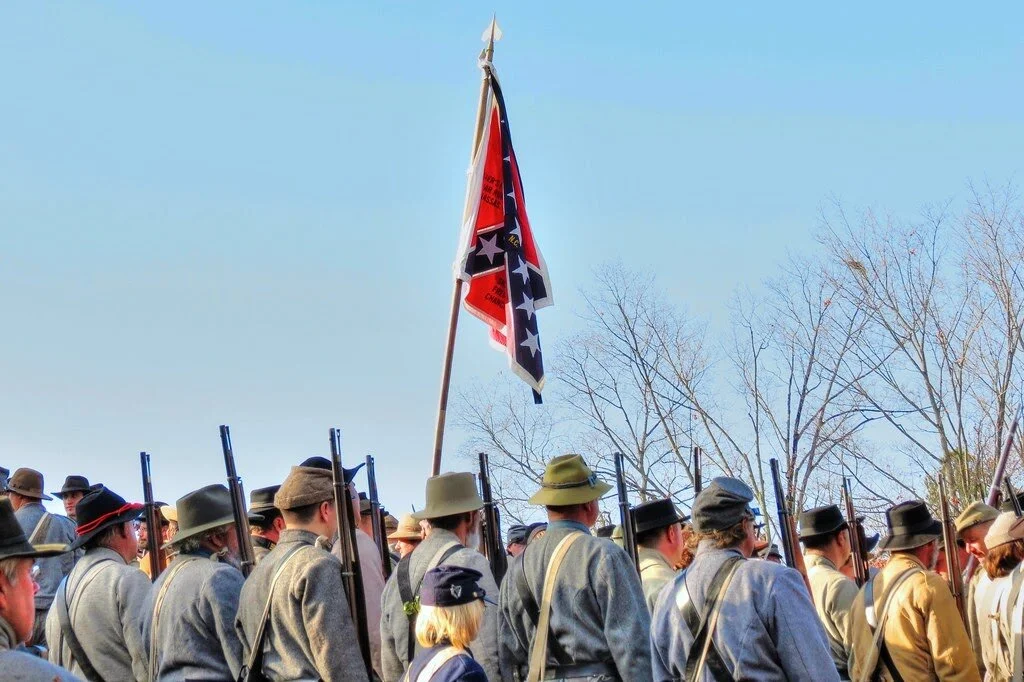
Recreating war or perpetuating racism? Matthew Straubmuller. CC BY 2.0.

But these controversies are also not just Nazi-related. As debate rages in the United States about the legacy of Confederate monuments, many call into question the need for recreations of Civil War battles. Although many participants are just outdoorsy historians, some blur the line between embodying history and living out a fantasy. The Sons of Confederate Veterans have 30,000 members, many of whom play their Confederate ancestors in historical reenactments. They market themselves as a “non-political heritage organization.” Their website calls the Civil War the “War for Southern Independence” and defines their mission as “the vindication of the cause for which we [the Confederates] fought.” One of their slogans is to “Make Dixie Great Again.” In a multicultural and diverse country, their participation makes reenactments difficult to justify. 

Confederate symbols worryingly overlap with Nazi ones in many international contexts,especially in Germany. Swastikas are banned there, but Confederate flags appeared in great numbers at anti-lockdown demonstrations. To Germans unfamiliar with its historical context, the flag symbolizes rebelliousness. The Confederate flag also appeared at the fall of the Berlin Wall in 1989. 

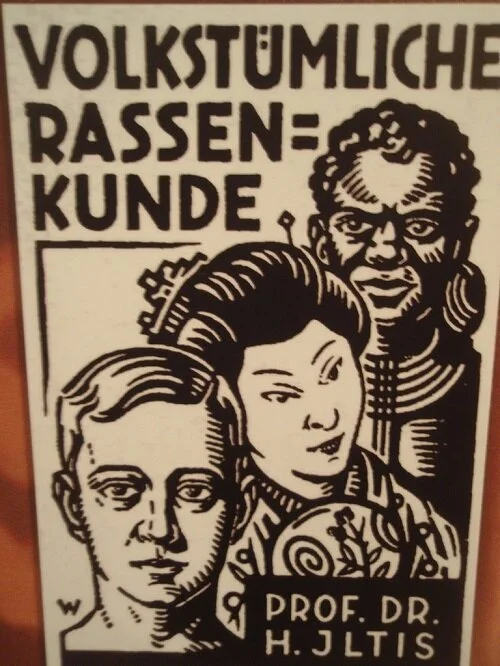
The Nazi’s racial heirarchy. Joelk75. CC BY 2.0.

Anti-Blackness appears elsewhere in German culture. Gone with the Wind was a beloved film and smash hit; the book on which it was based sold 300,000 copies in Germany alone. The film romanticized the antebellum South by chronicling dainty balls and gentlemanly courtships while ignoring the plight of the enslaved. Although the film was banned by the Nazis, it remained an influential cultural artifact. Joseph Goebbels, Reich Minister of Propaganda, wrote of the film in his diary, “We will follow this example.”

Riders of Berlin’s subway encounter Germany’s disturbing nostalgia for the American antebellum South on a daily basis at the station named “Onkel Toms Hutte,” or Uncle Tom’s Cabin. The name comes from Harriet Beecher Stowe’s incendiary anti-slavery novel of 1852. Though advocating for the abolition of slavery, the book spread the myth of the “happy slave” among American and international audiences; the book sold widely in Germany. In the early 20th century, the book was cited to justify the racial hierarchies of German colonialism. 

Given the political weight of Confederate flags and Nazi uniforms, historical reenactments remain an embattled practice. COVID-19 caused countless reenactors to forgo battles for the good of public health. Now, many seem reluctant to bring them back. War reenactments serve a valuable function in educating the public about the not-too-distant past, but for some, they don’t tell historic stories—They glorify them. It seems that reenactors, no matter how hard they try to escape into the past, remain bogged down in the present.


Michael McCarthy

Michael is an undergraduate student at Haverford College, dodging the pandemic by taking a gap year. He writes in a variety of genres, and his time in high school debate renders political writing an inevitable fascination. Writing at Catalyst and the Bi-Co News, a student-run newspaper, provides an outlet for this passion. In the future, he intends to keep writing in mediums both informative and creative.

COVID-19 Has Fueled Child Labor in Nepal

With the closing of schools due to COVID-19 and insufficient government aid, children in Nepal are being pushed into dangerous labor.

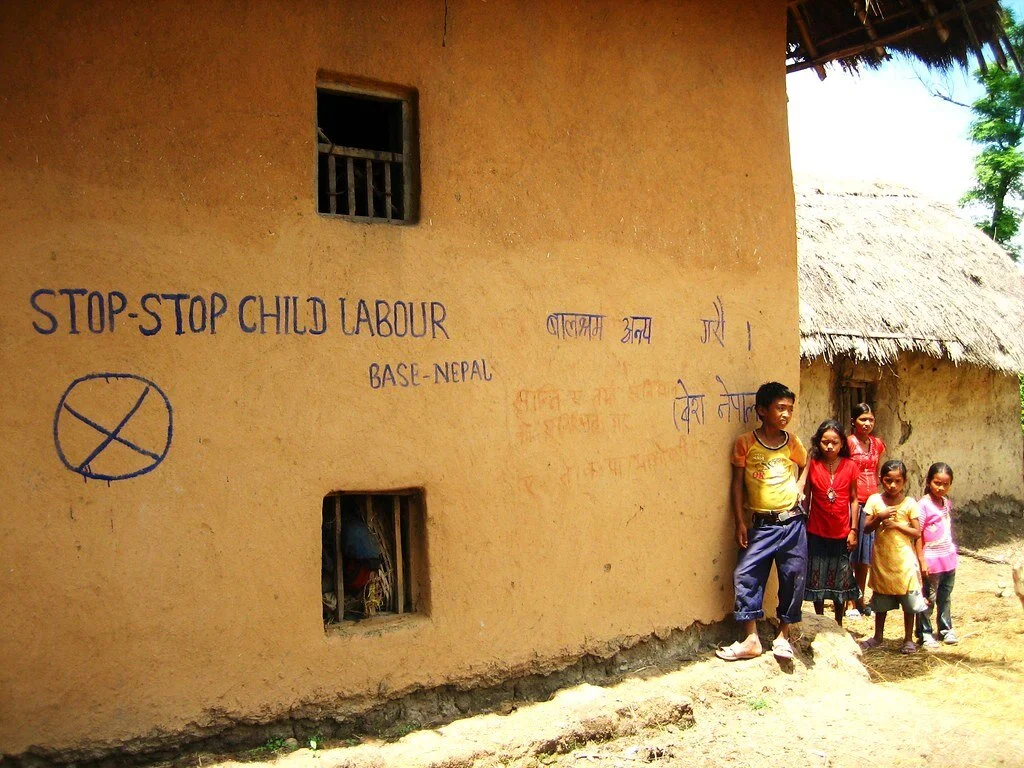
Stop Child Labor Graffiti in Kothari. The Advocacy Project. CC BY-NC-SA 2.0.

The COVID-19 pandemic has affected all aspects of life in Nepal, including education, government assistance, employment and domestic life. Due to adults losing their jobs and income, the rising illness and death rates among caregivers, and even more lockdowns, children are being forced into exploitative labor so they can provide for their families.

The second wave of COVID-19 cases in Nepal continues to put children at risk of child labor. Many children feel that they have no choice in the matter—they work long, grueling hours to help their families survive and provide food.

In Nepal, children work at places like brick kilns, carpet factories and in construction, or as carpenters or vendors selling various items. Some children carry heavy bags at mining sites or crush ore with hammers, all while breathing in dust and fumes from machines and acquiring injuries from sharp objects or particles.

Human Rights Watch interviewed 25 Nepali children between ages 8 and 16, and nearly all of them said that the COVID-19 pandemic had a negative effect on their family income. According to this report, one-third of the children interviewed worked at least 12 hours per day, and some even worked seven days per week. Among the reported side-effects of working long hours, children listed fatigue, dizziness and muscle pain. In addition, many children described hazardous working conditions; many have experienced violence, harassment and pay theft.

A majority of children interviewed also reported that they made less than Nepali minimum wage for their work, which is 517 rupees per day ($4.44 in U.S. dollars). Some children said their employers paid their parents based on a piece rate instead of paying them directly.

Nutrition education seminar in Bandarkharka, Nepal. Bread for the World. CC BY-NC-ND 2.0.

One of the biggest factors contributing to the rise in child labor is the lack of access to education due to COVID-19. In Nepal, school closures began on March 18, 2020, which affected more than 8 million students. A majority of Nepali students were unable to learn online as well, leaving them without education for over a year. In that education gap, children were often forced to work for their families.

Although most schools reopened in Nepal in January and February of 2021, some children continued to work because their families still needed their child’s income to prevent  going into debt. However, in April 2021, schools closed again due to a second wave of COVID-19, and children were put back to work.

Several of Nepal’s neighboring countries, including Bangladesh, India and Pakistan, have expanded cash allowances in order to cover more families. However, Nepal has not yet taken this step. Nepal needs to expand cash allowances so children can be taken out of dangerous labor and put back into school, as well as to enable families to maintain adequate standards of living without relying on child labor.

TO GET INVOLVED

To aid in the global fight against child labor, volunteer with Global March Against Child Labor, a wide network of organizations that work together to eliminate and prevent all forms of child labor through volunteering, fundraising and donating. Love 146, an international human rights NGO working to end child trafficking and exploitation, also provides many ways for people to help. Among many opportunities to help, Love 146 encourages people to get active and start a workout or host a 5k to help raise funds for their work.


To learn more about child labor and find more ways to take action, visit UNICEF’s page on global child labor.


Isabelle Durso

Isabelle is an undergraduate student at Boston University currently on campus in Boston. She is double majoring in Journalism and Film & Television, and she is interested in being a travel writer and writing human-interest stories around the world. Isabelle loves to explore and experience new cultures, and she hopes to share other people's stories through her writing. In the future, she intends to keep writing journalistic articles as well as creative screenplays.

Residents of Phnom Penh’s Floating Homes Evicted 

In preparation for Southeast Asian Games, Cambodian government officials have mandated the evacuation of floating homes on the Tonle Sap River, displacing hundreds of families. 

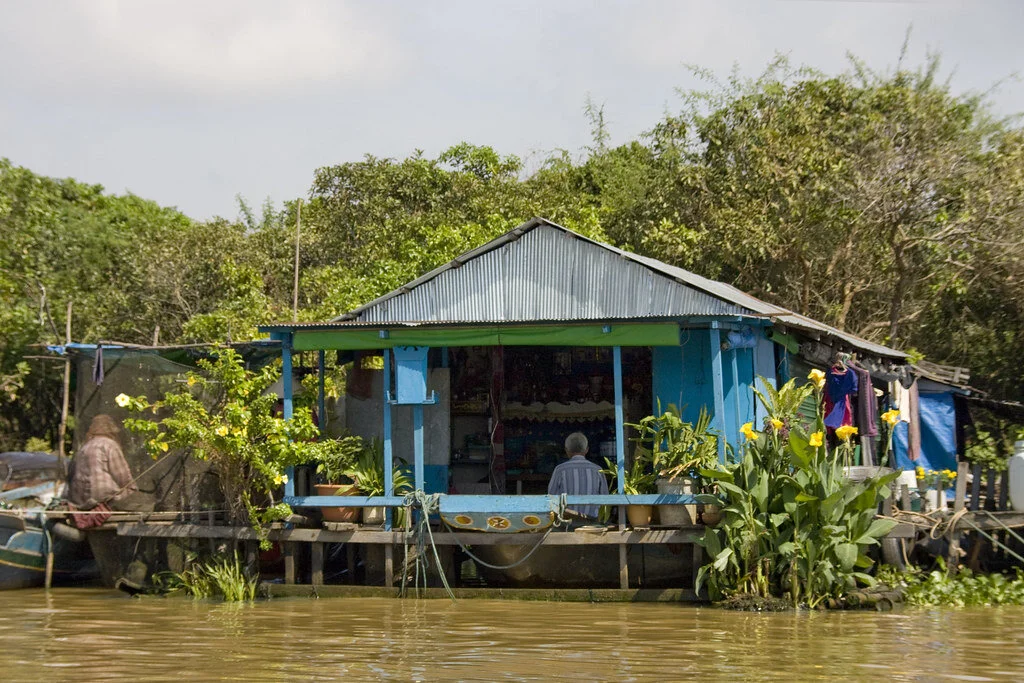
 A floating village in Phnom Penh. Anne Roberts. CC BY-NC-SA 2.0 

Cambodia's capital city of Phnom Penh has experienced turmoil over the past few weeks following the sudden eviction of the city’s iconic floating homes. 

Floating villages have been an integral part of the culture and lifestyle in the community of Phnom Penh for generations, and many homes have been passed down through ancestry. Each individual home is made primarily of wooden planks and hand-built bridges that interconnect the platforms. Many even have small boats on the river alongside their homes to make travel amongst the homes easier. Their location on the banks of the Tonle Sap River, one of the most productive freshwater ecosystems in the world, provides access to around 150 different kinds of fish and allows residents to make a living from fish farming.

The evacuation notices were issued by the Phnom Penh Municipality after it received multiple complaints about litter and sewage polluting the communities. The city is set to host the Southeast Asian Games in 2023 and is currently undergoing a clean-up campaign to prepare the community for the surge of tourism and press that will follow. Rather than investing money into the communities to clean and rebuild this part of the city, the government decided to get rid of them altogether. 

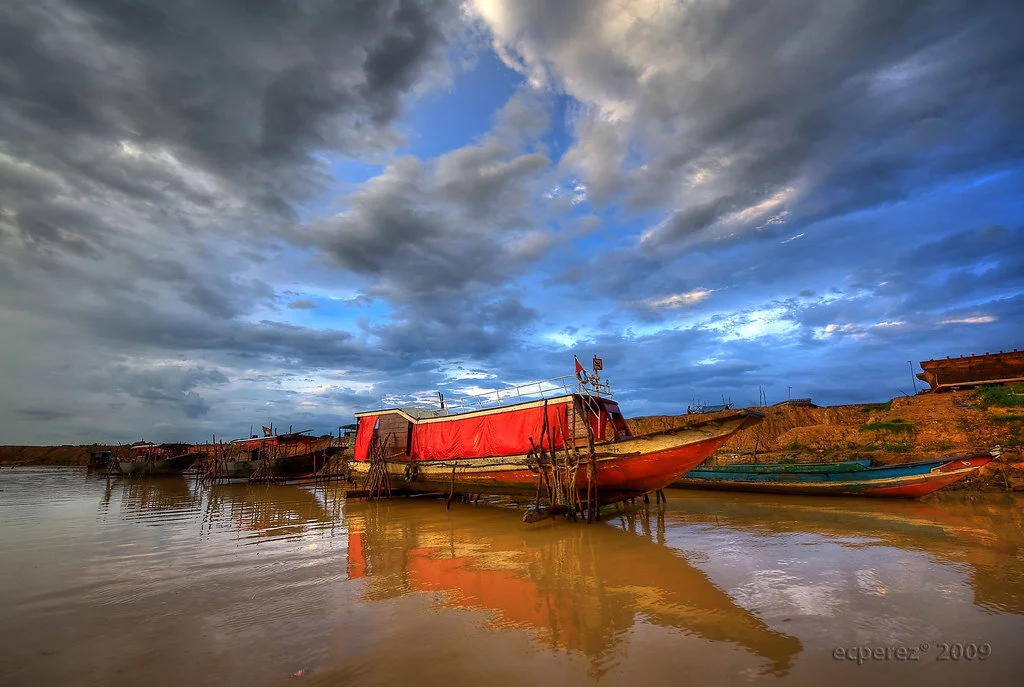
A boat on the Tonle Sap River. Ec Perez. CC BY 2.0

The evacuation of these communities was sudden and gave families little time to relocate, not to mention that many did not have a place to relocate to. The pandemic has not made any of this easier, as moving around puts the citizens at risk of spreading or contracting COVID-19. Furthermore, the closure of Cambodia's shared border with Vietnam leaves them with fewer relocation options. 

This situation sheds light onto the large-scale infringement of citizen rights that is common in cities preparing to host large events. Whether it be the 2014 Fifa World Cup in Brazil or the Tokyo Olympics, many cities have sacrificed the well-being of their citizens for the preparation and funding of events. While hosting globally-recognized events is an exciting opportunity, it often comes at the expense of the very people that live there. Citizens are often permanently displaced by the construction of stadiums and plunged into poverty while the host cities pour money into refurbishments and the beautification of the city. 

While the evictions are still underway, many citizens of Phnom Penh are now in search of unoccupied land and job opportunities in order to compensate for the stability that they have lost. 


Zara Irshad

Zara is a third year Communication student at the University of California, San Diego. Her passion for journalism comes from her love of storytelling and desire to learn about others. In addition to writing at CATALYST, she is an Opinion Writer for the UCSD Guardian, which allows her to incorporate various perspectives into her work.

Police Brutality Increases Amidst Protests In Columbia

Colombia’s police brutality, economic inequality, unemployment and poor public services have been brought into the spotlight after the April 28 protests against a proposed nationwide tax increase. 

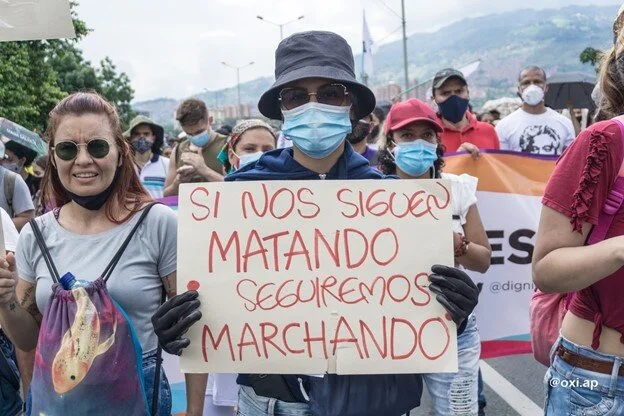
 Protesters holding a sign that says “if they keep killing us, we’ll keep marching.” Ox.ap. CC BY 2.0

 The COVID-19 pandemic has taken a severe social and economic toll on Colombia; with more than 101,000 deaths and 5 million jobs temporarily affected, Colombia recorded it’s largest recession on record. With many Colombians struggling to find work, the concept of the proposed tax change by the government was immediately protested, later withdrawn by the government after a few days of protest.

 The proposed tax increase would have affected anyone making more than $656 a month, and President Iván Duque initially insisted that the tax was needed to fix the country’s economy. After the protests caused deaths, however, he asked the Congress to withdraw the proposed law and created a new law to avoid financial uncertainty. The protests ignited civil unrest that lasted after the withdrawal of the tax increase. On June 15, organizers said that they are temporarily suspending the weekly Wednesday protests.

The earlier protests highlighted the  excess of police brutality in Colombia. More than 1,100 protesters and bystanders have been injured since April 28, and the total number is most likely higher as many cases have not been reported to authorities. Human Rights Watch confirmed 34 deaths, including 2 police officers and 31 demonstrators or bystanders, 20 of whom appeared to be murdered by the police.

The Independent Forensic Expert Group of the International Rehabilitation Council for Torture Victims, an international group of forensic experts, explained that live ammunition was used on individuals, causing deaths. Also, IRCTV concluded that tear gas and kinetic impact projectiles are being misused, causing death and severe injury including blunt trauma to eyes.

More specifically, at least 16 protesters or bystanders died from live ammunition of police firearms, at least one other victim died from beatings and three others from inappropriate or excessive use of teargas or flash bangs. Additionally, there were 9 cases of severe eye injuries from either teargas cartridges, stun grenades, or kinetic impact projectiles fired from riot guns. Human Rights Watch, also stated, “Victims included journalists and human rights defenders who were covering the protest, including some who wore vests identifying them as such.”

Furthermore, on May 14, the Ombudsperson’s Office reported 2 cases of rape, 14 cases of sexual assault and 71 other cases of gender-based violence by police officers.. Two cases of sexual violence by police officers against protesters were documented by Human Rights Watch. 

In November 2016, the Colombian government and the Revolutionary Armed Forces of Colombia reached a peace accord after a 52-year armed conflict, demobilizing the country’s then-largest armed group. Protection of human rights defenders through specific initiatives was a part of the agreement. As seen with these recent protests, however, the agreement has not been held to the highest accountability. Conflict-related violence has displaced more than 8.2 million Colombians since 1985

On June 6, President Iván Duque stated that the government would take steps to “transform” the police. The protests continued from the end April untill mid-June; National strike committee spokesman Francicso Maltes said to Al Jazeera that the umbrella of workers unions, student organizations and others decided to “temporarily” pause the Wednesday protests. However, Maltes also stated, “Protest in Colombia will continue because the reasons behind it are still there.”

Unions and business associations will draft bills to share with Congress when it begins a new session on July 20—a protest is expected on that day, stated  Maltes. “We hope that Congress, and lawmakers, do not fail Colombians like President Ivan Duque has,” said Maltes.


Kyla Denisevich

Kyla is an upcoming senior at Boston University, and is majoring in Journalism with a minor in Anthropology. She writes articles for the Daily Free Press at BU and a local paper in Malden, Massachusetts called Urban Media Arts. Pursuing journalism is her passion, and she aims to highlight stories from people of all walks of life to encourage productive, educated conversation. In the future, Kyla hopes to create well researched multimedia stories which emphasize under-recognized narratives.

Hong Kong’s Domestic Workers Demand to Be Treated Like Employees, Not Slaves

As COVID-19 exacerbates the discrimination and abuse that domestic workers in Hong Kong face on a daily basis, activists vigorously fight for their rights 

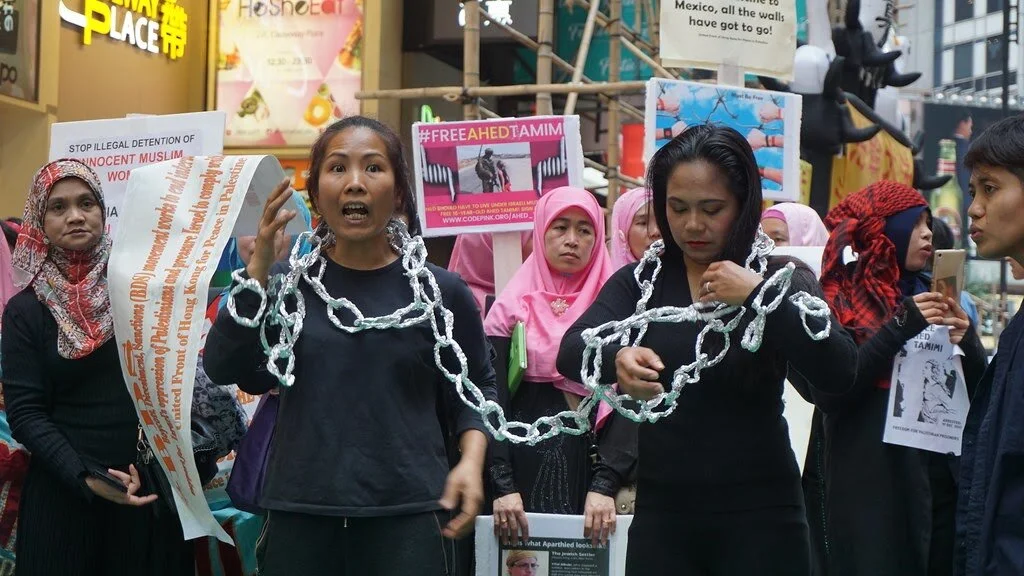
Domestic workers take to the streets. International Domestic Workers Federation. CC BY-NC-ND 2.0.

Erwiana Sulistyaningsih knocked on her neighbor’s door at 2 a.m. She needed food. She was a domestic worker, or “helper,” in Hong Kong for Law Wan-tung, who rarely fed her. By Hong Kong law, helpers are required to live with their employers, so such abuse is not unheard of. Nor was forced starvation the full extent of this abuse. Law once shoved a metal vacuum cleaner tube into Sulistyaningsih’s mouth, causing her lip to bleed. Law even forced her to stand naked in the shower in the middle of the winter while she splashed water on her. That night at 2 a.m., her neighbors saw the result of months worth of abuse. 

Long a marginalized group, helpers fuel the economic engine of Hong Kong, completing domestic work so their employers can dedicate time to their careers, often in the lucrative financial sector. They shop, do laundry, help children with homework, cook meals, clean living spaces and do anything else their employers wish. While helpers are employed by both the middle and upper class and have a widespread presence in Hong Kong, they rarely have a voice in public policy debates. Because most helpers are migrants and ethnic minorities, they often endure discrimination and abuse because of their race and social class. 

A woman protesting helper abuse. International Domestic Workers Federation. CC BY-NC-ND 2.0.

Helpers suffer in an economic system that leaves almost no space to be human. Minimum wage for helpers is $596 a month. Having employers provide food and housing is intended to compensate for this low pay, but the real consequence of living with their employers is that helpers are effectively on-call all day, every day. Although helpers are required to be given one full day off each week, many are made to work anyway to satisfy their employers. Hong Kong law requires employers to provide helpers with “suitable accommodation” and “reasonable privacy,” but many helpers are forced to sleep on cots behind thin, cloth partitions. Some sleep on the floor. 

A demonstration for helpers’ rights. International Domestic Workers Federation. CC BY-NC-ND 2.0.

COVID-19 further exacerbated the discimination which they face daily. In late April, the government ordered all 370,000 domestic workers in Hong Kong to take COVID-19 tests or get a vaccine, deeming them “high risk” due to their “mingling” with other migrant workers. However, they rescinded the vaccination requirement after public outcry in May, yet the testing requirement remained. This order prompted accusations of discrimination because it did not apply to migrant workers in white-collar positions or those who employ helpers. In fact, infection rates among helpers are lower than the Hong Kong average. Still, police and passers-by regularly harass people they suspect are helpers for not following COVID-19 guidelines, even if they are. 

In particular, the live-in law has caused concern among activists campaigning for the rights of domestic workers in Hong Kong. In 2020, 17% of helpers reported being physically abused, a 2% increase from 2019. Cases of rape and sexual abuse increased to 6%. An astonishing 98% of helpers say they have worked longer hours during the pandemic. This is only the continuation of a trend. A 2016 study found that one in six helpers experienced forced labor at some point in their careers. 

Demonstrators hold a flag from the Federation of Asian Domestic Workers Unions. International Domestic Workers Federation. CC BY-NC-ND 2.0.

Erwiana Sulistyaningsih was only one of thousands to experience abuse as a helper. When she became so injured that she could no longer work, Law attempted to sneak her onto a plane to Indonesia, hiding her bruises with makeup and threatening to hurt her family if they were caught—they were. Law enforcement intercepted Law before she could do any more harm, and a Hong Kong court sentenced her to six years in prison. It was a major victory, not just for Sulistyaningsih but for all 370,000 helpers working in Hong Kong. 

One positive trend for helpers’ rights has been a more focused public spotlight on their situation, led by a dedicated group of activists documenting and addressing helpers’ concerns. Sulistyaningsih made Time Magazine’s 100 Most Powerful People in 2014 for telling the story of her abuse. Her case serves as a reminder of the abuse that continues to befall helpers, and of how far away justice remains. Law Wan-tung got out of prison early in 2018, but for Sulistyaningsih and countless other domestic workers, physical and mental scars still persist. 


Michael McCarthy

Michael is an undergraduate student at Haverford College, dodging the pandemic by taking a gap year. He writes in a variety of genres, and his time in high school debate renders political writing an inevitable fascination. Writing at Catalyst and the Bi-Co News, a student-run newspaper, provides an outlet for this passion. In the future, he intends to keep writing in mediums both informative and creative.

Major Win in German Youth’s Fight for Climate Justice

Spurred on by youth climate activism, German courts rule that the 2019 Climate Protection Act does not adequately protect the futures of its youth.

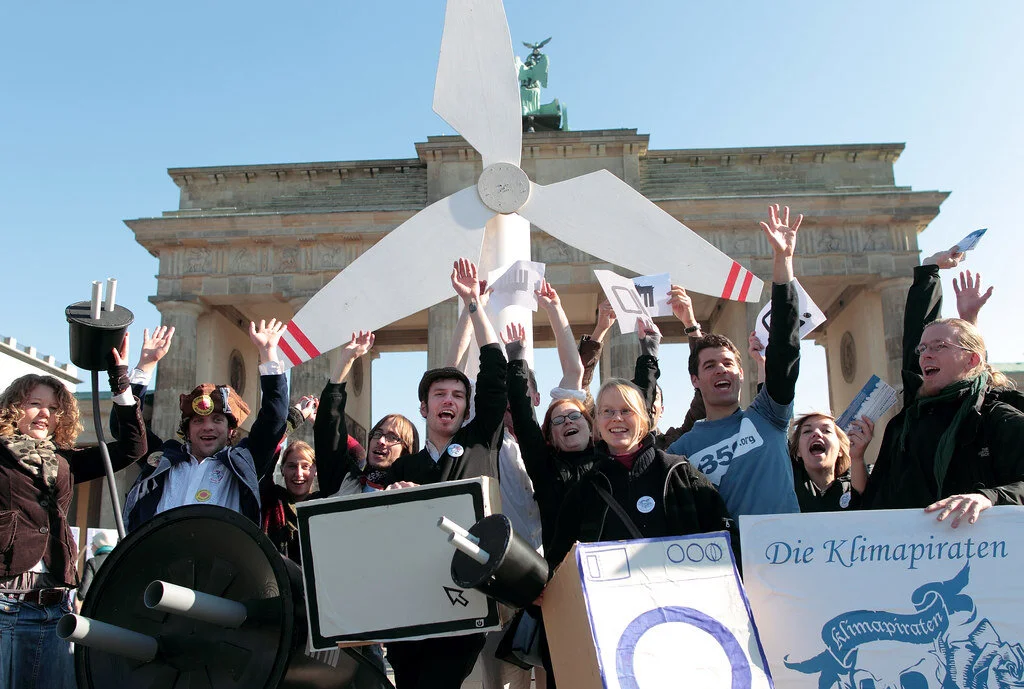
Climate change protesters in Berlin, Germany. 350 Action Fund. CC BY-NC-SA 2.0.

On April 29, 2021, Germany’s highest court ruled that the 2019 Climate Protection Act does not go far enough to protect the country’s youth. When it was created, the act stated that intensified climate action was needed to reduce greenhouse gas emissions and prevent additional strains on the federal budget. The act required energy, transportation, industry, building, waste and agriculture sectors to collectively reduce carbon emission levels by 55% from 1990 levels.

However, the plans to reduce carbon emission under this act were set to stop by the year 2030. A group of nine young German protestors filed a lawsuit against the act for not containing explicit targets to fight climate change during the 20 years after 2030 and up until the country’s 2050 goal of reaching greenhouse gas neutrality. Young protestors fought for additional measures to be put in place from 2031 to 2050 to effectively reach the law’s goals.

In a significant climate case decision, the German court sided with youth climate activists and ordered the government to expand carbon emission mitigation measures to reach greenhouse gas neutrality by 2050. This new legislation hopes to protect future generations by taking action against climate change. 

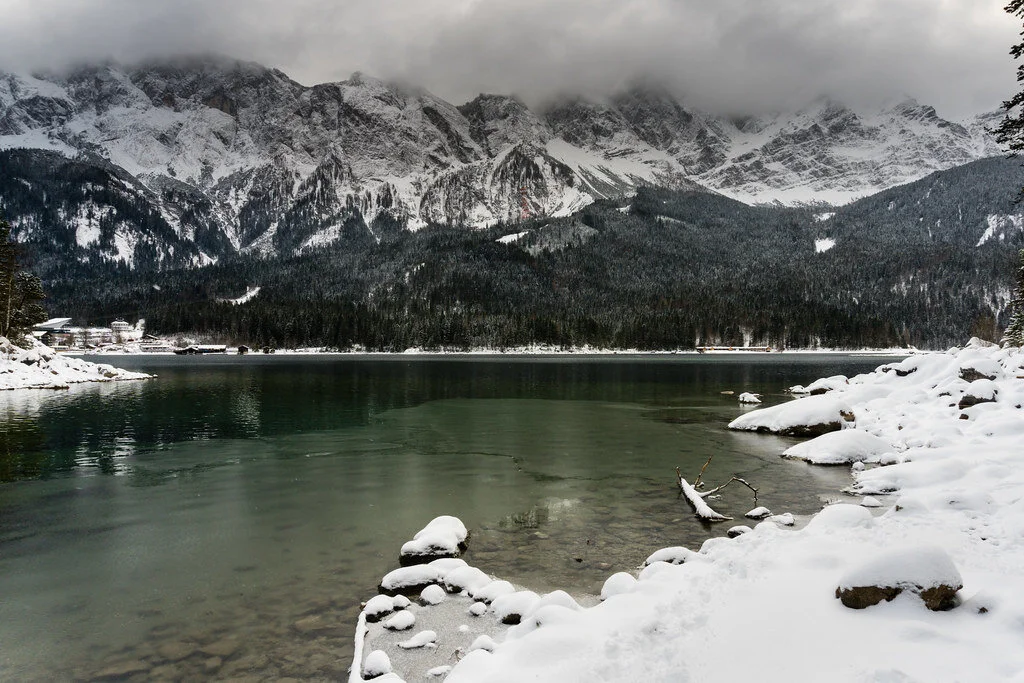
This decision came just in time for a warning report from Bavaria that the region’s five alpine glaciers are melting quickly and are projected to be gone in a decade. According to Thorsten Glauber, the state’s environment minister, a glacier on the northern side of the country’s highest peak, the Zugspitze, is losing 250 liters (66 gallons) of water every 30 seconds. In the past decade, the glaciers in Bavaria have lost two-thirds of their ice.

Eibsee Lake in Bavaria, Germany. Barnyz. CC BY-NC-ND 2.0.

Germany’s glaciers are essential to their landscape and society, providing water for rivers and streams during droughts, stabilizing mountain rocks, and hosting popular ski resorts. The glaciers are also indicators of global climate temperatures, serving as further proof that climate action needs to be taken immediately.

Germany’s recent court decision on the 2019 Climate Protection Act is more important now than ever. Not only does it come in time to help the country’s beautiful glaciers, but it also serves as an example of young people’s power to influence legislative decisions. Similar court cases filed by youth were attempted in other countries, but not many have been as successful as this one in Germany. Hopefully this case will pave the way for t many similar victories in the future.


Isabelle Durso

Isabelle is an undergraduate student at Boston University currently on campus in Boston. She is double majoring in Journalism and Film & Television, and she is interested in being a travel writer and writing human-interest stories around the world. Isabelle loves to explore and experience new cultures, and she hopes to share other people's stories through her writing. In the future, she intends to keep writing journalistic articles as well as creative screenplays.

LGBTQ+ Activists Fight Anti-Gay Hate in Siberia

In the Siberian tundra, queer folks face conservative attitudes, constant harassment and violence. As a result, the region’s few LGBTQ+ activists struggle to meet their community’s needs. 
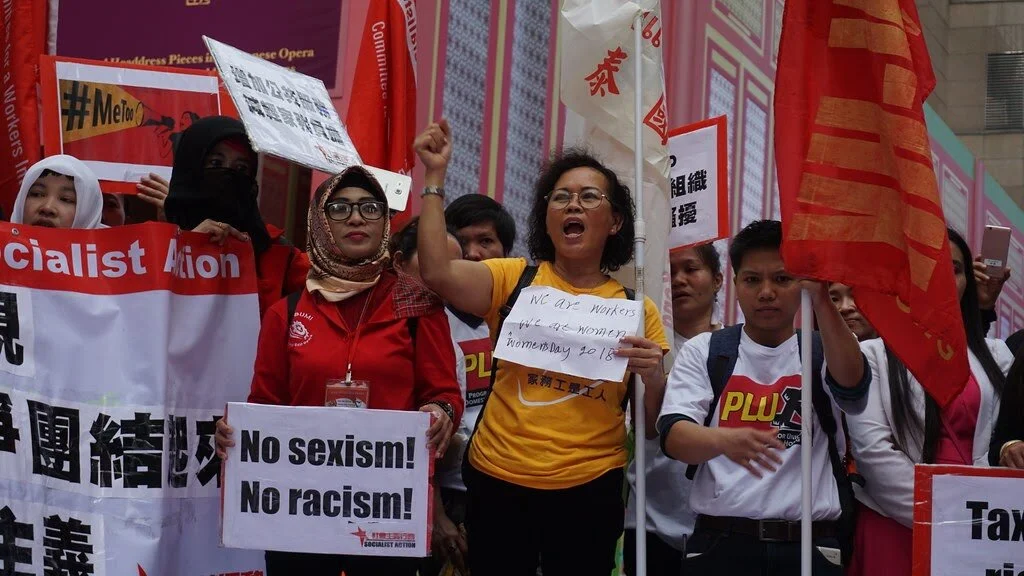
A small show of support in Siberia. reassure. CC BY-NC-SA 2.0.
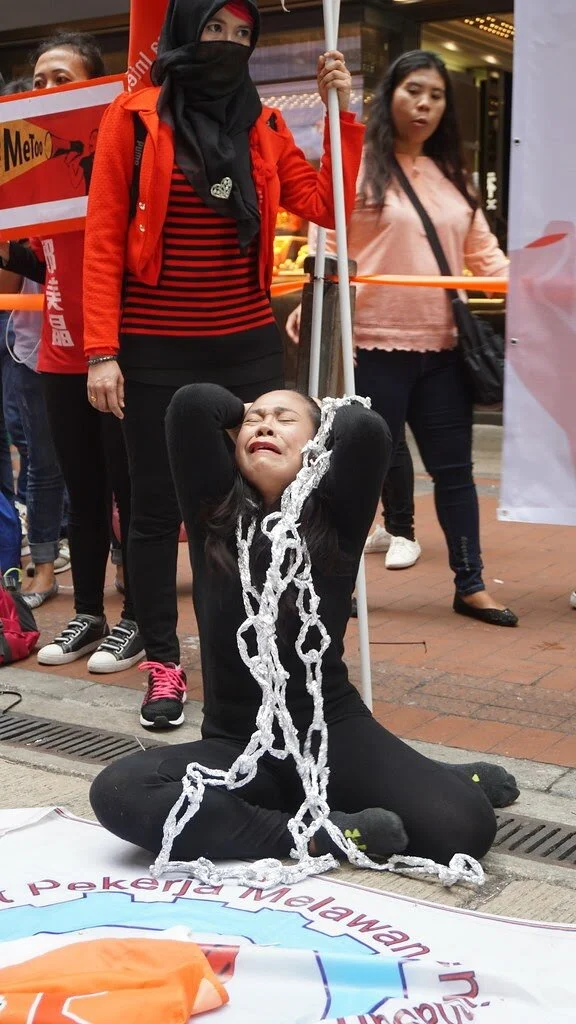
To this day, Yevgeniy Glebov doesn’t know how the two strangers found his address. Secure in his apartment, he heard a knock at the door. He opened it. They asked, “Aren’t you that gay activist?”

Yevgeniy needed to go to the hospital to recover from his injuries. After he reported the assault, the police closed the case without looking for a suspect. He expected little else from the authorities in Irkutsk Oblast, the Russian federal subject deep in Siberia where he lives and works. His NGO “Time to Act” provides legal, psychological and HIV prevention resources for the region’s LGBTQ+ community. However, this work  also puts a target on his back. Advocating for gay rights is mostly a thankless job, demanding secrecy. For most LGBTQ+ Russians, it’s safer inside the closet than out. 

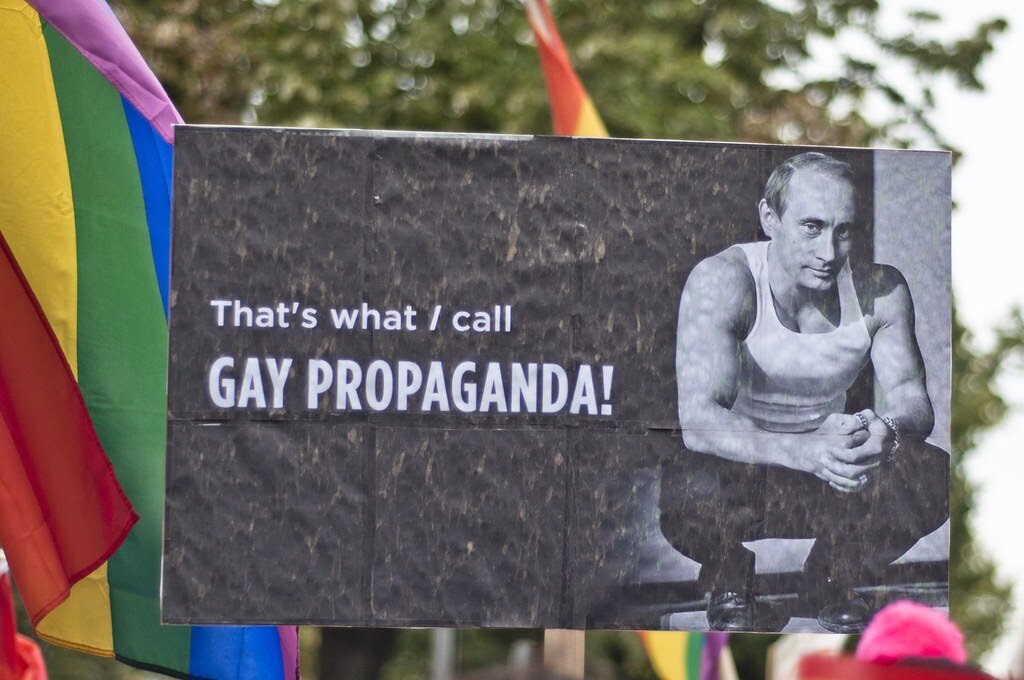
Gay pride hasn’t yet reached the mainstream in Russia. Homophobia runs rampant in Russian society and riddles the country’s laws. Article 148 of the Russian criminal code gives prosecutors the license to claim any violation of religious practice as a crime, giving them a cudgel against gay rights groups. In 2013, Prime Minister Vladimir Putin signed into the law a ban on “propaganda of nontraditional sexual relations” designed to prevent children from viewing or learning about anything homosexual. These laws reflect widespread disdain and discrimination against queer folks. The bill passed the State Duma with unanimous support. 

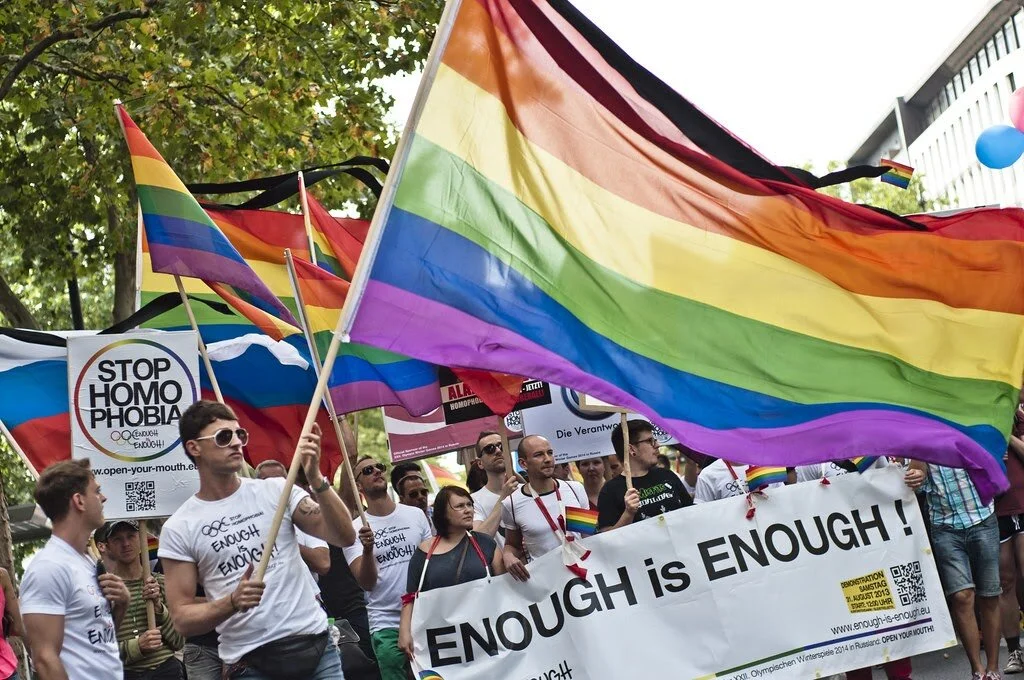
Anti-homophobia demonstration in Russia. Marco Fieber. CC BY-NC-ND 2.0.

Homophobia is less rampant in the cultural capitals of Moscow and St. Petersburg. There, gay clubs, beaches and bookstores thrive because of a highly concentAnti-homophobia demonstration in Russia. Marco Fieber. CC BY-NC-ND 2.0.rated LGBTQ+ community. On the other hand, in Siberia, the presence of gay life diminishes as the threat of hate-fueled violence increases. Gay men have been lured to online dates in remote locations only to find a violent gang of homophobes when they arrive. Police have been known to abuse queer people as well. Yevgeniy once drove to nearby Angarsk after a supposedly gay boy had been brutalized by two strangers. When he arrived, the police had arrested the boy to accost him about his sexuality, letting the attackers go. 

This environment demands a different approach to LGBTQ+ activism than in Russia’s European part. There, activists like Nikolay Alexeyev vociferously demand their rights. Alexeyev organized the first Moscow Pride parade in 2006, which then mayor of Moscow Yuri Luzhkov deemed “satanic.” The participants in the small parade faced arrests from the police and attacks from Neo-Nazis, but the subsequent, yearly demonstrations made Alexeyev the public face of the gay rights movement. He frequently brings his combative style to TV debate shows. On such a show, he grew so frustrated with a fancifully-hatted woman decrying “homosexual extremism” that he called her a “hag in a hat” and left. 

A protest placard mocking Putin. Marco Fieber. CC BY-NC-ND 2.0.

Alexeyev often makes life difficult for gay activists in far-flung areas of Russia. Yevgeniy claims that the Russians he interacts with on a daily basis aren’t ready for Pride festivals, and that his pugnacity alienates those they need to win over. Irkutsk Oblast is home to 2.5 million people, but only forty LGBT activists, Yevgeniy estimates. His work with Time to Act doesn’t even pay. For money, he works at a local bakery. 

A long road lies ahead for Yevgeniy and his fellow activists. LGBTQ+ folks remain political untouchables across the Russian political spectrum. Even Alexei Navalny, Putin’s most powerful foe, does not touch the issue of gay rights. Amnesty International revoked his status as prisoner of conscience mainly because of his unapologetic xenophobia, but also because of his comments about the LGBTQ+ community. In a recent interview, Navalny repeatedly used a Russian slur to describe gay people. 

In the Soviet era, gay folks, if discovered, were sent to gulags—brutal work camps that relied on the frigid tundra to stop prisoners from escaping. Queer artistic luminaries such as filmmaker Sergey Paradjanov and poet Anna Barkova were enslaved there, leaving a legacy of queer survival. Their spirit invigorates LGBTQ+ activism in Russia; it is sorely needed. Although gulags now sit empty, queer Russians too often find their only safe haven in the closet. 


Michael McCarthy

Michael is an undergraduate student at Haverford College, dodging the pandemic by taking a gap year. He writes in a variety of genres, and his time in high school debate renders political writing an inevitable fascination. Writing at Catalyst and the Bi-Co News, a student-run newspaper, provides an outlet for this passion. In the future, he intends to keep writing in mediums both informative and creative.

Gen Z’s Online Activism Helps and Harms Social Movements

Gen Z, those currently ages 11-25, have been using the Internet and social media all their lives. More informed about social issues through Instagram and TikTok, they are also more vulnerable to misinformation as much content on such platforms is not fact-checked or verified.

Read More