
Each year, over one-fifth of Bangladesh suffers from flooding. And when water overtakes already struggling roads, much of life is put on hold—including kids’ education. But if children can’t travel to the classroom, architect and entrepreneur Mohammed Rezwan thought, why not have it travel to them? Welcome aboard the Shidhulai Swanirvar Sangstha floating school—a network of boats that’s both school bus and schoolhouse for students ages six to ten in Northern Bangladesh.
World’s Youngest Prime Minister Will Head Women-Led Government in Finland
FINLAND IS GETTING a new prime minister, and she’s about to become the world’s youngest leader. Not only that, but she will also head a coalition government of five parties, all of them led by women. Sanna Marin, 34, was nominated by her party on Sunday and will be sworn as prime minister later this week.

Finland’s previous government resigned last week after the Centre Party lost confidence in then-Prime Minister Antti Rinne’s handling of a postal strike.“I myself have never thought about my age or gender,” said Marin, “but rather about the issues for which I took on politics and about the reasons for which we were trusted in the elections.”
For many countries, like the US, electing its first female leader would be a historic occasion. For Finland, however, this isn’t exactly news — the first Finnish female prime minister was elected in 2003 and after elections this year, women make up 47 percent of its parliament.
Eben Diskin is a staff writer for Matador Network
THIS ARTICLE WAS ORIGINALLY PUBLISHED ON MATADOR NETWORK
Pope Affirms Catholic Church’s Duty to Indigenous Amazonians Hurt by Climate Change
The Catholic Church “hears the cry” of the Amazon and its peoples. That’s the message Pope Francis hopes to send at the Synod of the Amazon, a three-week meeting at the Vatican that ends Oct. 27.
Images from Rome show tribal leaders in traditional feather headdresses alongside Vatican officials in their regalia. They are gathered with hundreds of bishops, priests, religious sisters and missionaries to discuss the pastoral, cultural and ecological struggles of the Amazon.
The densely forested region spans nine South American countries, including Brazil, Colombia and Peru. Its more than 23 million inhabitants include 3 million indigenous people.
The Amazon meeting is part of Pope Francis’s efforts to build a “Church which listens.” Since taking office in 2013, Francis has revitalized the Catholic Church’s practice of “synods” – a Greek word meaning “council” – expanding decision-making in the church beyond the Vatican bureaucracy to gather input from the entire church, including from laypeople.
Voting on synod decisions, however, remains restricted to bishops and some male clergy.
The Amazon synod is the first such meeting to be organized for a specific ecological region. Media coverage of this event has emphasized its more controversial debates – such as the possibility of easing celibacy requirements in the rural Amazon, where priests are in extremely short supply.
But its focus is much broader: listening to the suffering of the Amazon – particularly the environmental challenges facing the region – and discerning how to respond as a global church.
Amazon in crisis
After more than a decade of environmental policies that successfully slowed deforestation in the Amazon, logging and agricultural clearing have begun to increase rapidly again. The fires in the Brazilian rainforest that captured headlines in early September are symptoms of much broader destruction.
Up to 17% of the Amazon rainforest has already been eliminated – dangerously close to the 20% to 40% tipping point that experts say would lead the entire ecosystem to collapse.
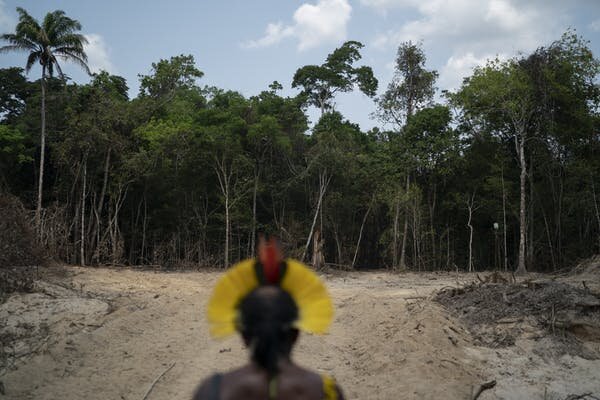
Deforestation of the Amazon is rapidly approaching the tipping point that, experts say, could lead to total collapse of the rainforest ecosystem. AP Photo/Leo Correa
Stories of deforestation can seem insignificant against the vastness of the Amazon, a region two-thirds the size of the lower 48 United States.
But for the 390 indigenous ethnic groups who inhabit the region, each burned forest grove, polluted stream or flooded dam site may mark the end of a way of life that’s survived for thousands of years.
Deprived of their land, many indigenous Amazonians are forced into an exposed life on the edge of frontier towns, where they are prey to sex trafficking, slave labor and violence. In Brazil alone, at least 1,119 indigenous people have been killed defending their land since 2003.
The Catholic Church recognizes that it still has to address the “open wound” of its own role in the colonial-era violence that first terrorized the indigenous peoples of the Americas, according to the synod’s working document. The church legitimated the colonial confiscation of lands occupied by indigenous peoples and its missionaries often suppressed indigenous cultures and religions.
For this reason, according to the Vatican, organizers of the synod have sought input through 260 listening events held in the region that reached nearly 87,000 people over the past two years. Indigenous leaders have been invited as observer participants in the meeting itself.
Learning from indigenous peoples
As a theologian who studies religious responses to the environmental crisis, I find the pope’s effort to learn from the indigenous people of the Amazon noteworthy.
The Vatican sees that the Amazon’s traditional residents know something much of humanity has long forgotten: how to live in ecological harmony with the environment.
“To the aboriginal communities we owe their thousands of years of care and cultivation of the Amazon,” the 58-page synod working document reads. “In their ancestral wisdom they have nurtured the conviction that all of creation is connected, and this deserves our respect and responsibility.”
Pope Francis has expressed his respect for indigenous peoples before.
At a meeting of indigenous leaders in Peru in January 2018 he said, “Your lives cry out against a style of life that is oblivious to its own real cost. You are a living memory of the mission that God has entrusted to us all: the protection of our common home.”
Global problems, local solutions
Environmental destruction isn’t the synod’s only concern.
Catholicism – long the dominant religion in Latin America – is rapidly losing members to evangelical Protestantism. Evangelicals are projected to eclipse Catholics in Brazil by 2032.
One advantage evangelical churches have in Amazonian countries is that they can appoint local indigenous pastors to minister to their communities. Meanwhile, with less than one priest per 8,000 Catholics in the Amazon, some isolated communities might see a priest only once a year.
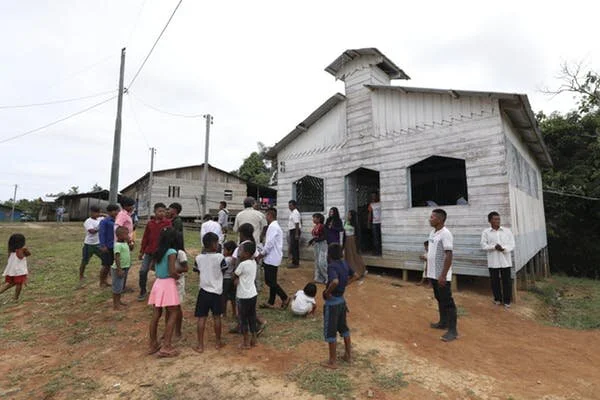
Catholic churches are in short supply in rural Brazil, where many people will go a year without seeing a priest. AP Photo/Fernando Vergara
The scarcity of priests in rural Latin America is behind a proposal to the synod to ordain older married men as priests in isolated Amazonian communities.
In the the U.S., the celibacy question is easily mapped onto a familiar divide. Progressive Catholics argue that clerical celibacy should be optional, while conservative Catholics insist this discipline is fundamental to the faith.
The issue is far less politicized in the Amazon, where, in the words of one bishop, the Catholic Church remains a “visiting church” with limited day-to-day presence in indigenous communities.
Some might dismiss this synod as just a meeting. But, in my judgment, it is an attempt to apply Francis’ vision of a “listening Church” to the environmental crisis. The Synod of the Amazon marks a significant shift from high-minded papal exhortations about taking climate action to a global religious community that gives voice to those living on the front lines of ecological destruction.
Vincent J. Miller is a Professor of Religious Studies, University of Dayton
THIS ARTICLE WAS ORIGINALLY PUBLISHED ON THE CONVERSATION
The Eco-Friendly Genius of 'Earthships' | That's Amazing
The New Mexico desert is a landscape of harsh extremes: brutally hot in the summer, frigid in the winter. It was the perfect testing ground for architect Mike Reynolds' "earthships"—houses of unconventional design material and utility that are completely self-sustained. They're built with used tires and empty glass bottles and produce their own electricity, water and food. For Reynolds, sustainable houses are the key to making a home in a better future—and now, the rest of the world is catching on to Reynolds' eco-friendly designs.
How This Women's Biker Club is Helping Babies in Need
The Sirens Women's Motorcycle Club in New York City is more than a group of women riding choppers. And that's a really good thing for nursing babies who need donated breast milk to survive. The club, which focuses on women's health issues, teamed up with The New York Milk Bank to deliver donor milk to mothers and babies who need it — all for free.
Afghanistan’s Female Journalists Risk Their Lives to Tell the News
Afghanistan is a dangerous place for journalists to work, especially women. Journalists are harassed, terrorized and murdered in this war-torn country. But Khalida Rashid won’t be deterred from pursuing her profession. She covers politics and news for Zan TV, the country’s first all-female news network. Rashid hopes to pave the way for others who want to follow in her footsteps. “When a woman is empowered, society is empowered,” she says.
Following the Removal of Evo Morales, Anti-Indigenous Sentiment Explicit in Bolivia
In the aftermath of the ouster of former President of Bolivia, Evo Morales, many suspected a right-wing coup had taken place. Now, a month later, the status of Indigenous peoples in Bolivia hangs in the balance.
Read MoreFighting to End Child Marriage in Lebanon
Ghassan Idriss knows firsthand the harmful effects of child marriage on society. Having married at a young age to a woman even younger than himself, Idriss and his wife faced struggles that so many other couples in his home country of Lebanon grapple with. Now, with three daughters of his own, Idriss is doing everything he can to educate those around him about the dangers of this antiquated institution. By hosting talks, he’s using his voice to spark change within his community.

Rogerio Cavalheiro/Shuttershock
Brazil Tribe Wins as Hotel Group Cancels Plans for 500-Room Resort
On Monday November 18, Brazilian indigenous group Tupinambá de Olivença won a battle to prevent a luxury resort from being built on its land. Portuguese hotel group Vila Gale had been planning to build a 500-room resort on the Bahia coast — land the tribe used for gathering food. The Tupinambá land is popular among tourists for its beaches lined with coconut trees, making it a prime location for a resort, but pressure on Vila Gale caused it to withdraw its construction plans.
Despite Vila Gale’s attempt to deny the presence of indigenous people on the land meant for construction, a leaked document published in October shows just the opposite. In this letter, Embratur, a Brazilian tourism agency, asked the government not to classify the land as a reserve for indigenous people so that the resort could bring investments of $200 million and create 2,000 jobs.
In the aftermath of the letter being published, pressure from the Portuguese press, Portuguese political party Bloco da Esquerda, and anthropologist and Tupinambá expert Susana Viegas, Vila Gale canceled its plans.
The tribe is still awaiting the final sign-off from the Ministry of Justice and president Bolsonaro that would designate its land as a reserve . The president, however, has previously expressed his reluctance to designate more territory for indigenous groups.
Eben Diskin is a staff writer for Matador Network
THIS ARTICLE WAS ORIGINALLY PUBLISHED ON MATADOR NETWORK
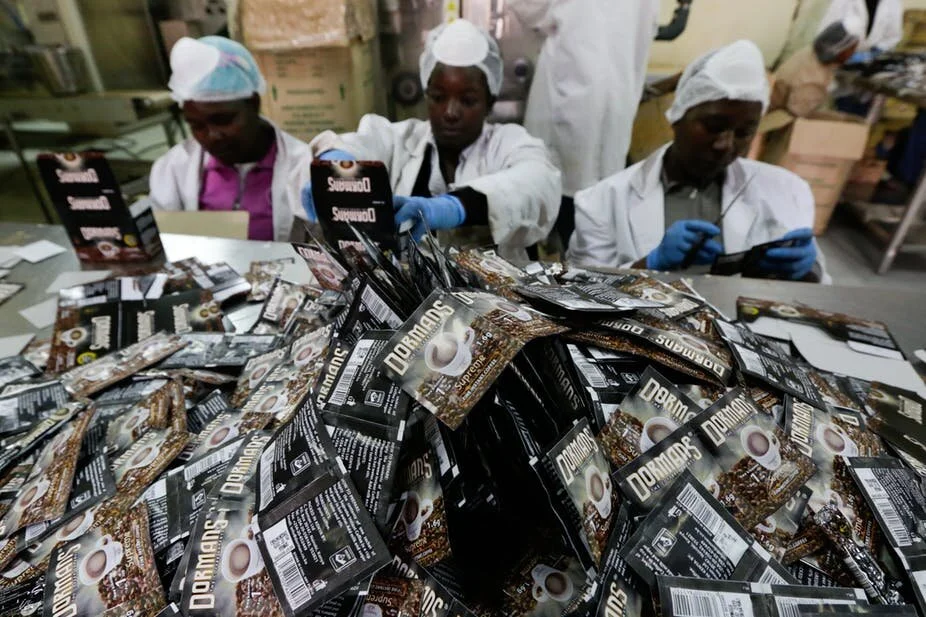
African Countries Can’t Industrialise? Yes, They Can
Narratives are essential. Humans are, after all, “helpless story junkies”. Business and economic success depend much more than is commonly acknowledged on getting the narrative right. And if there is a narrative where getting it right or wrong matters hugely, it is the narrative about Africa’s industrial development.
Africa is the poorest continent. It is likely to be the most affected by climate change. It is the continent where terrorist groups are spreading fast.
Therefore, African industrialisation is essential. Unfortunately, the dominant narrative is that Africa has been de-industrialising, even prematurely. In this narrative, it is also questioned whether Africa can ever industrialise. African countries have even been advised not to try. The World Bank’s “Trouble in the Making”report concludes that manufacturing is becoming less relevant for low-income countries.
Fortunately, a very different narrative is possible. In a recent paper, I argue that Africa can industrialise because of three factors. These are “brilliant” new technologies enabling digitisation, smart materials and 3D-printing; a more vibrantentrepreneurship scene; and Africa’s growing middle class (as measured by the share of households that earn between $11 and $110 per person per day), which supports the continent’s first generation of indigenous tech-entrepreneurs.
Consider therefore the following narrative: More than 300digital platforms, mostly indigenous, are operating across the continent. There are also more than 400 high-tech hubs, and more are being added. In addition, venture capital funding into African tech start-ups increased ten-fold between 2012 and 2018.
Moreover, manufacturing has more than doubled in size in real terms since 1980. And since 2000, manufacturing value added has grown at more than 4% a year. That is double the average between 1980 and 2000 (numbers from the Expanded African Sector Database).
As a result, total employment in manufacturing in 18 of the largest African economies (for which there is data) grew from roughly 9 million in 2004 to more than 17 million by 2014. That is an 83% increase in ten years. The proportion of labour in manufacturing for Africa as a region grew from roughly 5% in the 1970s to almost 10% by 2008.
So, how will these trends shape the future? I argue that they will result in three varieties of industrialisation.
Three varieties
The first variety can be labelled “acquiring traditional manufacturing capabilities”. This variety is implied by Overseas Development Institute researchers Karishma Banga and Dirk Willem te Velde. It will be experienced by countries and sectors where technological change is too fast and complex to benefit immediately. These countries and sectors will need time to first put complementary investments in place, while at the same time continuing to promote traditional labour-intensive manufacturing.
The second variety, “fostering sectors with the characteristics of manufacturing”, is elaborated in a recent UNU-WIDER book. Here it is argued that service sectors can take up “the role held by manufacturing in the past”. In many countries, services such as ICT and telecoms, tourism and transport, financial and farming services can lead to productive development.
The third variety, “resurgent entrepreneurship-led industrialisation” is based on my earlier work. I point to the growing list of achievements of African countries in terms of high-tech manufacturing. For example South Africa leads in advanced manufacturing in having one of the world’s largest 3D-printers, used to manufacture parts for the aviation industry.
Different combinations of these varieties will dominate in different countries. For example, Kenya is already experiencing the simultaneous development of high-tech financial services alongside growth in traditional manufacturing, such as food processing and textiles, as well as clusters of advanced manufacturing. While every country’s pathway will be a unique combination of these varieties, what they will have in common is that progress will require that they deal with the impact of new technology, especially digitisation, on manufacturing.
To ensure momentum is maintained, the narrative about industrialisation has to change. As Israeli historian Yuval Noah Harari pointed out, neither land – the core resource of feudalism – nor physical capital – the core resource of 20th-century capitalism – will be decisive for competitiveness in the future. Instead, data and data science, free information flows, ICT (data) skills, and decentralisation of decision-making will be the decisive factors.
What needs to be done
With an outdated story that gives up on manufacturing, Africa will fail to close the huge digital gap it still faces. The gap is reflected in the fact the continent contributes less than 1% of world’s digital knowledge production. To reduce this gap, African countries will have to start by expanding internet access and use. If internet use across the continent can be expanded to the same rate as in high-income countries, 140 million new jobs and US$2,2 trillion could be added to GDP.
What must be done to change the narrative? What do African governments need to do? The first is that its leaders need to start telling more stories about the future than about the past. Perhaps, like China’s leaders, they can even be inspired by science fiction. British best-selling author Neil Gaiman relates how China started to embrace science fiction after sending a delegation to
“the US, to Apple, to Microsoft, to Google, and they asked the people there who were inventing the future about themselves. And they found that all of them had read science fiction when they were boys or girls.”
Helping to imagine the future of African industrialisation, South African President Cyril Ramaphosa recently stressed that fact that Africa is one of the early adopters of mobile telephony and moreover that the continent needs to aspire to more:
We need to focus on the new technologies that are going to revolutionise the world, and we need to be ahead of the curve.
This is the right narrative. It is necessary, although not sufficient for African industrialisation. For this, words need to lead to actions. And some consistent actions, at least for a start, would be for African governments to refrain from creating stumbling blocks for their brave new tech-entrepreneurs, such as curbing access to the internet, restricting digital information flows, under-investing in science, technology, engineering and mathematics education, neglecting data-privacy legislation, and restricting the rights of women to work in manufacturing.
Wim Naudé is a Professorial Fellow, Maastricht Economic and Social Research Institute on Innovation and Technology (UNU-MERIT), United Nations University
THIS ARTICLE WAS ORIGINALLY PUBLISHED ON THE CONVERSATION
An Inuit Approach to Cancer Care Promotes Self-Determination and Reconciliation
For thousands of years, Inuit have adapted to the changes in their environment, and continue to find new and innovative ways to survive.
But life expectancy among populations in Inuit Nunangat (the traditional territory of Inuit in Canada) is an average of 10 years less than that of the general Canadian population.
Cancer is a leading cause of this disparity. Inuit experience the highest mortality rates from lung cancer in the world, and mortality rates of some other cancers continue to increase disproportionately.
Inuit communities tend to be self-reliant and are renowned for working together for a common goal, which is evident in their self-governance and decision-making activities. They have also endured a long history of cultural insensitivity and negative health-care experiences that span generations
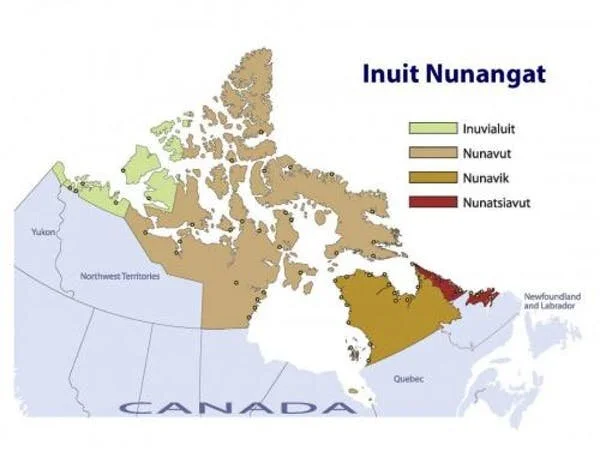
Map of Inuit Nunangat (Inuit Regions of Canada) (Inuit Tapiriit Kanatami)
The ways the Canadian health-care system interacts with Inuit populations plays an important part in this health disparity. And there is an urgent need for Inuit to be able to access and receive appropriate health care.
Elder Peter Irniq speaks about the remarkable Inuit capacity for survival in extreme conditions
In 2015, the Truth and Reconciliation Commission of Canada (TRC) report made 94 recommendations in the form of Calls to Action. Seven of these Calls to Action specifically relate to health. They explain the importance of engaging community members, leaders and others who hold important knowledge in the development of health care.
As members of a team of Inuit and academic health-care researchers, we have been working with health-system partners to support Inuit in cancer care. We focus on enhancing opportunities for Inuit to participate in decisions about their cancer care through the shared decision-making model, in a research project we call “Not Deciding Alone.”
We travel thousands of miles for cancer care
Our collective success in addressing the TRC Calls to Action will require health research to focus on addressing the health-care inequities experienced by Inuit, First Nations and Métis populations in ways that take action to promote self-determination.
This is important as current health-care models do not often support Indigenous values, ways of knowing and care practices.
Poor cultural awareness in our mainstream health-care systemsdiscourages Indigenous people from seeking care and engaging with health services. It increases the risk that Indigenous people will encounter racism when seeking care.
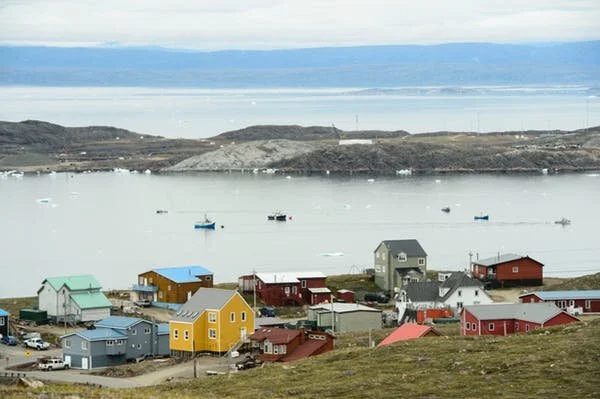
Small boats make their way through the Frobisher Bay inlet in Iqaluit on Aug. 2, 2019. THE CANADIAN PRESS/Sean Kilpatrick
There are many documented instances of our health-care system’s failure to provide appropriate health care to Indigenous people, due to unfair assumptions and demeaning and dehumanizing societal stereotypes.
These health system failures discourage people from seeking care, and have resulted in death, as in the case of Brian Sinclair,who died after a 34-hour wait in a Winnipeg hospital emergency room in September 2008.
There can also be significant physical barriers to care for Inuit. Critical health services such as oncology specialists and treatments are often located in urban centres such as Ottawa, Winnipeg, Edmonton, Montréal and St John’s, thousands of kilometres away from remote communities in Inuit Nunangat. This leaves many Inuit negotiating stressful urban environments, dealing with cultural dislocation and navigating complex health systems without the benefit of community support networks.
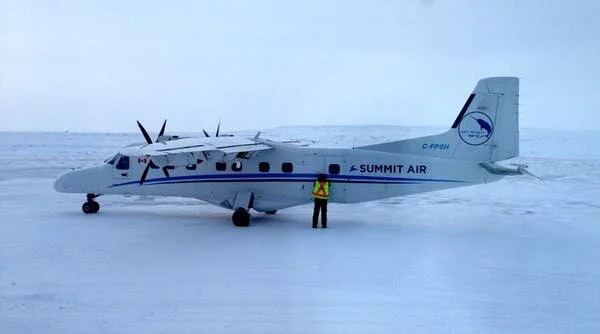
People must fly out of remote communities for cancer treatment. (Alex Hizaka), Author provided
During our research, an Inuit peer support worker explained what it can be like for those who travel far from their family and community for their care:
“People come with no idea of why, and we are having to bridge two worlds for them. Often patients have no idea why health-care providers tell them to get on a plane, and then they think they are coming for treatment for three days and then it becomes two weeks. It is a tough situation as often people have no money, no support. People need to be able to explain their situation and how it is for them. People need to know that they are not alone.”
Research shows that these geographical challenges significantly impact access to health care and are often exacerbated by language barriers. Together these factors may make people vulnerable to additional harms unrelated to the health conditions for which they seek treatment.
Patients and health-care providers work together
Shared decision-making is an important evidence-informed strategy that holds the potential to promote patient participation in health decisions
In this model, health-care providers and patients work togetherusing evidence-based tools and approaches and arrive at decisions that are based on clinical data and patient preferences— to select diagnostic tests, treatments, management and psycho-social support packages.
Shared decision-making is considered a high standard of carewithin health systems internationally and it has been found to benefit people who experience disadvantage in health and social systems.
Shared decision-making has also been found to promote culturally safe care, and has the potential to foster greater engagement of Inuit with their health-care providers in decision-making.
The concept of cultural safety was developed to improve the effectiveness and acceptability of health care with Indigenous people. Culturally safe care identifies power imbalances in health-care settings — to uphold self-determination and decolonization in health-care settings for Indigenous people.
The aim of a shared decision-making approach is to engage the patient in decision-making in a respectful and inclusive way, and to build a health-care relationship where patient and provider work together to make the best decision for the patient.
Most importantly, our approach has emphasized ways of partnering that align with the socio-cultural values of research partners and community member participants, both to develop tools and create approaches to foster shared decision-making. The term “shared decision-making” translates in Inuktitut to “Not Deciding Alone” and so that is the name of our project.
The results are outcomes that Inuit are more likely to identify as useful and relevant and that respect and promote Inuit ways, within mainstream health-care systems.
Self-determination through Inuit Qaujimajatuqangit
Our research uses the guiding principles of Inuit Qaujimajatuqangit — a belief system that seeks to serve the common good through collaborative decision-making — as the foundation for a strengths-based approach to promote Inuit self-determination and self-reliance.
Inuit Qaujimajatuqangit principles have been passed down from one generation to the next and are firmly grounded in the act of caring for and respecting others.
There is important learning taking place within academic and health-care systems that involves deepening understandings of what “patient-oriented care” means. We need to learn how to do research in partnership with those who are the ultimate knowledge users in cancer-care systems — patients.
In our work, Inuit partners and community members are leading the development of shared decision-making tools and approaches, building on their strengths and resiliency. Our research and health systems are beneficiaries of these partnerships that hold potential to create health care that is welcoming and inclusive for all.
With guidance and support from Inuit and more broadly, from Indigenous partners, we are learning how to take action on the TRC recommendations, and to make respect and kindness integral to best practice in research and health care.
Janet Jull is a Assistant Professor, School of Rehabilitation Therapy, Queen's University, Ontario
THIS ARTICLE WAS ORIGINALLY PUBLISHED ON THE CONVERSATION
This School on a Bus Is Bringing Education to Everyone
Shelia Hill grew up in San Francisco’s Sunnydale Projects. It was a rough neighborhood. She got into trouble when she was young and dropped out of school. She thought it wasn’t for her. Hill’s attitude changed after she had her own children. One day, her son asked why he should bother going to school since she didn’t. It was a lightbulb moment. Hill realized that she had to do better for herself and her family. She learned how to read and got her high school diploma through Five Keys, an organization that gives members of underserved communities a chance to restart their education. Today, Hill works for Five Keys as community ambassador. She goes out into neighborhoods considered education deserts on the Five Keys bus and encourages residents to board the mobile classroom where they can study with a teacher and earn their GEDs. Hill doesn’t want anyone to feel ashamed for not finishing school. So she always makes sure to share her own story, letting people know there was a time when she couldn’t read. And she’s big on follow-up with potential students. “I’ll call them. I’ll bug them. I’ll text them. I’ll email ’em. Whatever it takes,” she says. “I just want you to get your education. That’s it.”
How Solar Energy Is Bringing Power Back to Puerto Rico
After watching Hurricane Maria devastate his native Puerto Rico, New York City-based architect Jonathan Marvel knew he needed to do anything he could to give back. He banded together a group of friends to launch Resilient Power Puerto Rico, hoping to use the strength of renewable, solar energy to provide a steady source of electricity back to the island.
Just two weeks after the ambitious initiative was born, Marvel was back in Puerto Rico installing solar panels and batteries on the rooftops of community centers. The storm had wiped out power lines and had left people without electricity. Solar-powered energy would allow them to live and operate off the grid, without reliance on fossil fuel-burning power plants. Suddenly, these solar-powered community centers were able to provide spaces where people could refrigerate medication, filter water and gather together to rely on one another in the midst of a humanitarian crisis.
At last count, Marvel and Resilient Power Puerto Rico were able to bring solar power to 20 community centers across the island—helping over 100,000 people in the process.
Still, Marvel’s work is far from over. It took nearly a year before the Puerto Rico Electric Power Authority restored power to most of the island’s residents, and, according to reports, the electricity system is in not in a much better state than it was before Maria wiped out the island.
Longer term, Marvel dreams of a day when Puerto Rico is able to shift to 100-percent renewable energy sources. He believes it is an achievable goal, and Resilient Power Puerto Rico is working to make it a reality.
“We can no longer rely on large fossil fuel burning power plants distributing energy and wires that are going to get blown down every year,” Marvel says. “We have all this power from the sun that needs to be harnessed.”
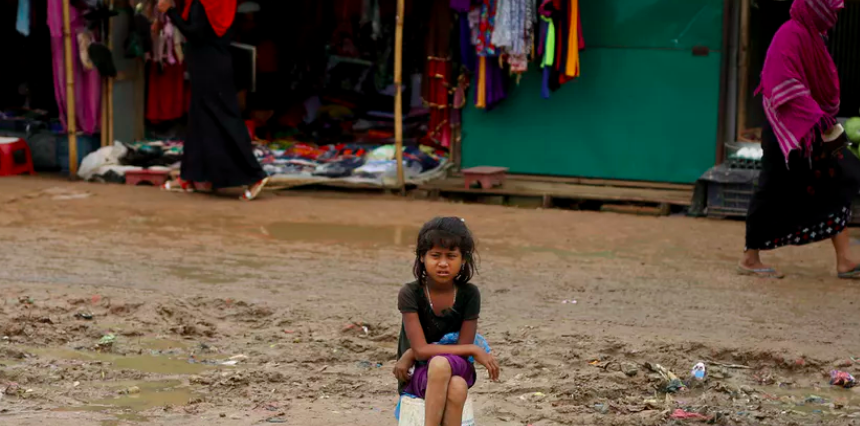
A Rohingya refugee girl sells vegetables in Kutupalong refugee camp, Bangladesh. Access to education is extremely limited in the camps, and most children — particularly girls — receive little to no formal education, Aug. 28, 2018. AP Photo/Altaf Qadri
Without School, A ‘Lost Generation’ of Rohingya Refugee Children Face Uncertain Future
The boy’s eyes lit up when he talked about his dream of becoming a doctor.
Seven-year-old “Mohammad” – not his real name – is a Rohingya Muslim from Myanmar. I met him at a learning center at a refugee camp in Cox’s Bazar, Bangladesh, in early July 2019.
After sharing his aspirations, Mohammed quickly remembered reality.
“I know my dreams will never come true,” he said with a faint smile.
Refugee crisis of global proportions
Mohammed is among the more than 700,000 Rohingya who have taken refuge in Bangladesh after an ethnic cleansing campaign of rape, killing and torture by the Myanmar military in mid-2017. They joined the more than 200,000 Rohingyas who had previously fled Myanmar’s brutal efforts to rid the Buddhist-majority country of this marginalized Muslim minority.
Of the newly arrived Rohingya, three-quarters are women and children, according to the United Nations.
In a noteworthy humanitarian gesture, the Bangladeshi government has given refuge to these persecuted people. Aided by Bangladeshi community organizations, various UN agencies and other international donors, the Rohingya have been receiving shelter, food, clothes and basic health care since the massive exodus in 2017.
This essential care, which cost an estimated US$920.5 million in 2019 represents a gargantuan global effort. Still, the resources are woefully inadequate.
Most Bangladeshi refugee camps are overcrowded and, as a result, unhygienic. Residents survive on the absolute bare minimum of nutrition and other necessities. Monsoon rain, cold and landslides are everyday threats for these Rohingya, as I’ve witnessed firsthand during my visits to Bangladeshi camps in 2017 and 2019.
It is a dismal existence for all. But it is the plight of the roughly 500,000 Rohingya children living in limbo that strikes me as bleakest.
Concerns of a lost generation
Research shows that future of refugee children grows more imperiled the longer they remain out of school.
In many countries that host substantial refugee populations, including Turkey, Lebanon and Uganda, the United Nation’s refugee agency and the United Nations Children’s Fund ensure children receive a quality, full-time education, either at the camps or in nearby public schools.
Even so, just 23% refugee children worldwide are enrolled in secondary school, according to the UN’s High Commission on Human Rights. Just 1% attend university.
Because Bangladeshi authorities have not granted the Rohingya official refugee status and consider them instead “forcibly displaced Myanmar nationals,” the roughly 500,000 Rohingya children in the country have no access to a formal education. Rohingya children are not permitted to attend Bangladeshi public schools.
The United Nations Children’s Fund and its partners offer Rohingya refugees aged 4 to 14 two-hour daily lessons on Burmese, English, math and life skills at about 1,600 learning centers located at the camps. These classes keep about 145,000 Rohingya children – or about 30% of the Rohingya youngsters in Bangladesh – occupied for part of the day but do not provide the kind of formal education that will allow the children to work toward a high school degree and enter the job market.
The camps offer no schooling at all for Rohingya refugee adolescents aged 15 to 18.
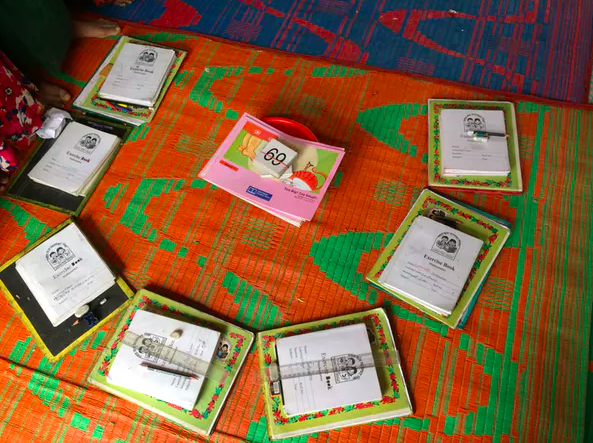
English-language exercise books at a UNICEF-supported ‘learning center’ at one of the Kutupalong refugee camps in Bangladesh. Rubayat Jesmin, Author provided
Some teenagers, mostly boys, have turned to madrassas, or Islamic learning centers, where they can receive a religious education.
The remaining Rohingya children who attend neither UNICEF classes nor madrassas are simply left to fill their own day. At the Rohingya camps, I saw boys working in shops, playing cards or sitting idle at all hours of the day.
When I asked Mohammad what he does when he is not in school, he told me that he “takes care of his family.”
“I play with the other kids, too,” he added with a grin.
Adolescent girls, I learned, are often kept at home by their parents because of the Rohingya’s conservative social and religious norms.
The camps can also be dangerous for girls. Human traffickers have been known to target young Rohingya women, promising them jobs outside the camps. Girls face other forms of violence and human rights abuse at Bangladesh’s camps, too, including child marriage.

Bangladeshi camps for the Rogingyas are typically overcrowded, unhygienic, muddy and prone to landslides. Rubayat Jesmin, Author provided
Rohingya repatriation
Growing up in unstable conditions, with no possibility of study, Rohingya children like Mohammed are at risk of becoming a lost generation.
Their limbo may not last forever. In response to heightened international pressure, Myanmar in November 2017 agreed to take the Rohingyas back starting November 2018.
However, their return was postponed due to protests by the refugees, who feared conditions in Myanmar was not yet safe. The United Nations and other international refugee services have also voiced concern about sending the Rohingya back, saying there was no indication that the Myanmar government had punished the people responsible for the crimes in Rahkine state, nor agreed to give the Rohingya citizenship.
Considered foreigners in both Myanmar, their native country, and Bangladesh, where they’ve sought refuge, the Rohingya Muslims are the world’s largest stateless people.
While the negotiations for their repatriation continue, a generation of traumatized Rohingya children wait for their futures to begin.
RUBAYAT JESMIN is a Doctoral Student at the College of Community and Public Affairs, Binghamton University, State University of New York.
THIS ARTICLE WAS ORIGINALLY PUBLISHED ON THE CONVERSATION
In Hong Kong Protests, Technology Serves as a Tool of Both Expression and Repression
While activists have used the internet as a powerful organizing tool, web coverage on the Chinese mainland is defined by mass blackouts and systematic silencing.
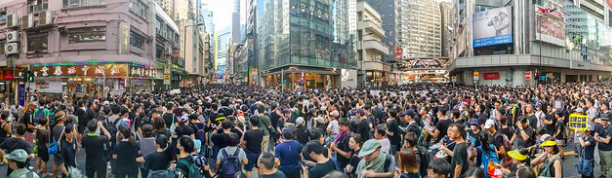
Protesters in Hong Kong. Studio Incendo. CC BY 2.0
The most widely attended protest in recent American memory, the Women’s March, brought about 1 percent of the population onto the streets. Last month’s protests in Hong Kong brought 25 percent.
By any standards, the anti-extradition campaign in Hong Kong, spurred by a proposed China-backed amendment that would allow for the extradition of Hong Kongers to mainland China, was an astronomical success, engaging huge swathes of the population and eventually leading to the death of the proposal. Images of the demonstration depict unfathomable numbers of citizens exercising their right to peaceful protests, but something remains invisible in those photos: the constantly active, multilayered and multifaceted presence of the internet, which—through messaging apps, social media, and LIHKG (Hong Kong’s answer to Reddit)—allowed protestors to turn ideology into concrete action.
On June 12, the protest reached a milestone when tens of thousands of citizens surrounded the Hong Kong legislative building, spurring an initial suspension of the bill. In order to mobilize without attracting unwanted attention, activists created online events inviting people to a “picnic” in nearby Tamar Park, a cover-up for their actual intentions. Messaging services, too, helped with planning efforts. Particularly popular was the encrypted app Telegram—although the arrest of Ivan Ip for “conspiracy to commit a public nuisance” set efforts back, given that Ip was leading a group on the platform of 30,000 users. Still, Ip’s group was far from the only one: In a Baptist University poll of protestors, more than half of respondents reported using Telegram for broadcasting information and participating in discussion groups.
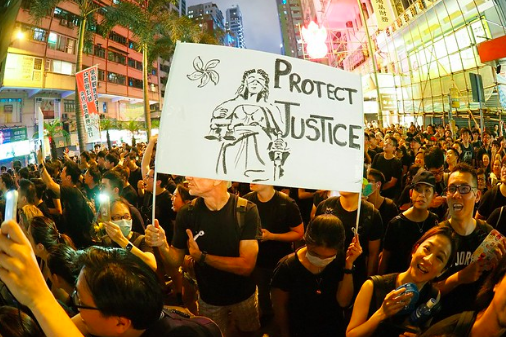
Protestors in the streets. Etan Liam. CC BY-ND 2.0
The survey also revealed the protestors’ widespread use of LIHKG, which lived up to its reputation of supporting free speech by subtly assisting activist efforts: Administrators removed ads from their site for about two weeks in June to shorten loading time and upped the number of replies allowed on some threads from 1,001 to 5,001, citing a need “for more convenient discussions.”
For protestors, the utility of social media and messaging platforms was far from over once planning progressed into action. During the demonstration on June 12, attendees broadcast real-time updates through countless Instagram stories and an hour-long livestream on the Twitter-owned service Periscope. In addition to spreading the word to Hong Kongers not attending the demonstration, protestors were able to communicate amongst themselves, using apps to request supplies, share the locations of food and water stations, and disseminate hand signals that would allow for discreet communication. Technical difficulties, however, thwarted efforts to some degree: Poor mobile signals made accessing the internet a challenge and threatened to spur chaos. “Without Telegram and WhatsApp, people did not know what they had to do,” Laura, 18, a student who volunteered as a first-aid staffer, told the South China Morning Post.
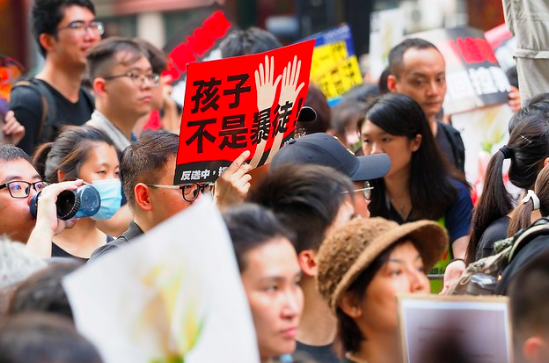
Holding a sign that reads “kids are not rioters.” Etan Liam. CC BY-ND 2.0
Limited connectivity was not the only tech-related hurdle facing protesters. Tech-savvy activists cautioned against using public Wi-Fi or swiping their Octopus public transit card, actions that could put users at risk of having their personal information picked up and employed to incriminate them. And protestors made sure to turn off Face ID and fingerprint ID on their phones so that police could not unlock their devices without consent, as well as enabling encryption on apps where it was not already automatic.
Across the border in China, however, such internet-driven activism would have been impossible. Hong Kongers have the privilege of a much more open internet—a dichotomy that has manifested starkly in mainland media coverage of the protests. As part of the mass censorship and limited access that has long defined the Chinese internet and that is sometimes dubbed the “Great Firewall of China,” the Communist Party has enacted a total blackout on protest coverage in newspapers and on TV, with television screens simply going dark when foreign news outlets show images of the demonstrations. Video footage of Hong Kong Chief Executive Carrie Lam apologizing for her attempt to push through the extradition law never lasted long on social media, as censors would immediately delete the content each time it was reuploaded. And even a song that activists sang during the protests, “Can You Hear the People Sing” from “Les Miserables,” was inexplicably missing from QQ, a popular musical streaming site.
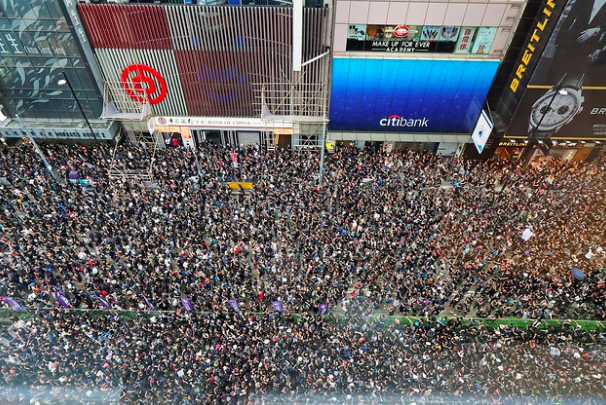
Protestors filled the streets on June 16. Etan Liam. CC BY-ND 2.0
On social media platforms like WeChat and Weibo, users devised strategies to get around the firewall, like distorting images of the protests or blocking parts of the image with giant smiley-face logos. In some cases, however, China’s tech power was simply too strong: Telegram reported on June 12 that it was experiencing a distributed denial of service (DDoS) attack, which means that a number of computers were attempting to overload its servers with bogus requests, resulting in service slowdowns or outages. Telegram’s CEO, Pavel Durov, said that the IP addresses behind the attack were coming mainly from China, potentially suggesting a concerted effort by authorities.
By systematically silencing the voices of activists, China is able to spread its own narrative of the protests, which it portrays as violent events provoked by foreign elements amining to undermine Hong Kong and the “one country, two systems” policy. The policy was formulated in the 1980s for the reunification of China by Paramount Leader of the People’s Republic of China Deng Xiaoping; in the interest of furthering Hong Kong’s status as a global financial center, it guarantees freedom of speech and protest for citizens. Yet Hong Kongers have long feared an erosion of their autonomy, a concern that most recently boiled over in the form of the 2014 Umbrella Movement, during which streets in the city’s business district were flooded by demonstrators for nearly three months. Throughout that time, mainland China busily erased all mention and images of the protests from its internet.

Protesters were unsatisfied by the original postponement of the bill. Etan Liam. CC BY-ND 2.0
On July 8, Lam publicly stated that the bill was finally dead, describing the proposed amendment as a “total failure.” Yet Hong Kongers were not entirely satisfied, as questions remain about whether Lam will officially withdraw the bill or whether it might be revived in future. Either way, the anti-extradition movement of 2019 will stand as a landmark protest for the digital age: one whose scale and power could have only coalesced in an era of instant connectivity, and one that throws into stark relief the power of technology—for expression and repression alike.
TALYA PHELPS hails from the wilds of upstate New York, but dreams of exploring the globe. As former editor-in-chief at the student newspaper of her alma mater, Vassar College, and the daughter of a journalist, she hopes to follow her passion for writing and editing for many years to come. Contact her if you're looking for a spirited debate on the merits of the em dash vs. the hyphen.

From North Carolina to Norway, Fossil Fuel Divestment Hits Headlines
Whether motivated by practical or ideological means, institutions around the world are pulling their finances out of oil, gas, and coal.
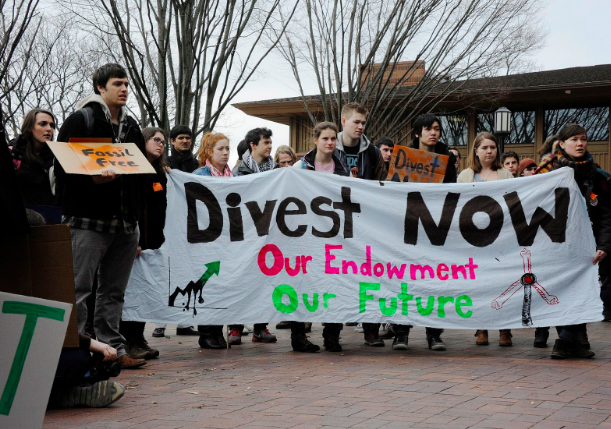
Divestment protest at Tufts University. James Ennis. CC BY 2.0
Upon receiving the news in 2017 that our planet is in the midst of its sixth mass extinction event, spurred partly by rampant climate change, stunned denizens of Earth everywhere struggled to process the implications and searched for concrete ways to mitigate the damage. In the months since, countless climate proposals have rolled out across the globe, and U.S. citizens have watched as 2020 presidential hopefuls laid out their plans—all while the current president decried the very existence of climate change. In the flurry of rhetoric and policy aimed at addressing the climate crisis, one strategy continues to hold strong: fossil fuel divestment, which has hit the headlines this summer with particular force.
On July 4—Independence Day in the United States—Britain’s largest membership organization declared independence from fossil fuel investments. The National Trust, which stewards 780 miles of coastline; 612,000 acres of land; and more than 500 historic houses, castles, monuments, and parks, announced that it would divest its £1 billion portfolio from fossil fuels in a bid to address the worsening climate crisis.
Previously, the trust had invested £45 million into oil, gas, and mining companies, despite having made earlier pledges to cut down on its own use of fossil fuels. The vast majority of those investments will be withdrawn in the next 12 months, the trust promises, and 100 percent within three years. The freed-up funds will be diverted to alternative energy options: CFO Peter Vermeulen told The Guardian, “Now we will seek to invest in green startup businesses and other suitable portfolios that deliver benefits for the environment, nature and people.”
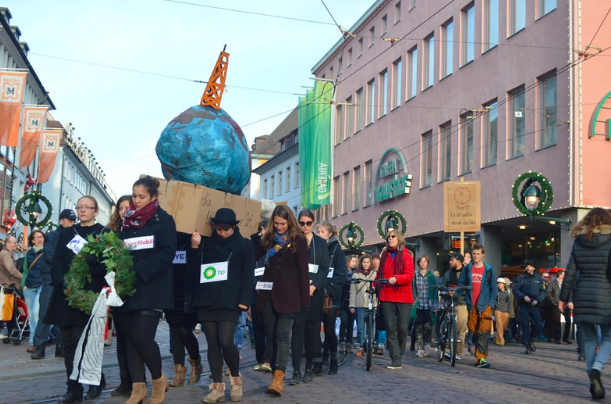
Fossil Free Freiburg divestment protest. 350.org. CC BY-NC-SA 2.0
Five hundred miles away in Norway, another high-profile institution is also preparing to drop fossil fuels: the Government Pension Fund Global (GPFG), which was founded in 1990 to oversee the integration of petroleum revenues into the national economy, and which invests in more than 9,000 companies worldwide, including Apple, Amazon, and Microsoft. On June 21, Norway’s parliament, the Storting, approved plans for the GPFG to divest more than $13 billion of the $1.06 trillion it manages from investments in oil, gas, and coal. The decision comes with some caveats: GPFG will only divest from companies that are exclusively involved with fossil fuels, but not oil companies that also have renewable energy units, such as BP and Royal Dutch Shell. And the fund maintains that financial considerations, not ideological ones, are behind the divestment, given the risk posed by fluctuations in oil prices. Nevertheless, environmental advocates can appreciate the fact that GPFG will earmark up to 2 percent of its funds—or about $20 billion—for investments in renewable energy.
In some cases, not only individual institutions are divesting, but also entire regions. At the beginning of June, the city council of Charlottesville, Va., voted 4-1 to divest the city’s operating budget investments from any entity involved with the production of fossil fuels or weapons. Supporters explain that the divestment—which will be carried out within 30 days of the decision—aligns with the city’s strategic plan goals, including being responsible stewards of natural resources. Charlottesville joins various other college towns across the United States, including Ann Arbor, Mich., and Berkeley, Calif., in pledging to divest.
At some universities, however, the prospect of divestment has long brewed controversy, which is coming to a head in light of the climate crisis. During Al Gore’s speech at Harvard University on May 29, the former vice president turned environmental activist called on his alma mater to divest, stating that climate change is “a threat to the survival of human civilization as we know it” and framing divestment as “a moral issue” for the university. In recent years, student activists at Harvard have ramped up demands on the school to divest, and the student newspaper reversed its formerly opposed position in May, acknowledging that Harvard’s reluctance to entertain the possibility of divestment “compromises its efforts to position itself as an academic institution at the forefront of the fight against climate change.” On the administrative side, more than 300 faculty members have signed a petition calling for divestment of fossil fuel stocks. Nevertheless, this number represents less than 14 percent of all faculty, and the university maintains the opinion that it should impact public policy through research rather than through its endowment.
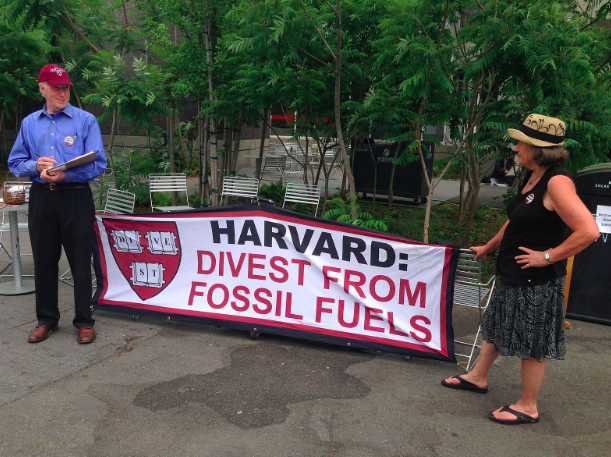
Advocates for divestment at Harvard. victorgrigas. CC BY-SA 3.0
Across the country, 47 U.S. colleges and universities have chosen to divest, although the number has dropped off in recent years, with only 10 making the decision since 2017. Most recently, the Board of Trustees at the University of North Carolina, Asheville, voted on June 21 to divest a portion of their $50 million endowment from fossil fuels. The unanimous vote, which will make the Asheville campus the first in the UNC system to divest, builds on a resolution spearheaded by student activists. In concert with administration and the Board, these activists researched new funds in which the university could invest about 10 percent of its capital, eventually landing on Walden Asset Management, which focuses on investing using environmental, social, and governance criteria.

Botanical gardens at Asheville. David441491. CC BY-NC-ND 2.0
Meanwhile, earlier this month, the University of California—another sprawling and well-regarded state university system—saw 77 percent of its voting faculty agree “to divest the university’s endowment portfolio of all investments in the 200 publicly-traded fossil fuel companies with the largest carbon reserves.” The decision is now in the hands of the University Regents. Should the Regents choose to divest, the news would make waves on the national level due to U Cal’s significant size and prestige—and in the fight against fossil fuels, ideological statements, even if they have negligible bearing on the industry’s financial resources, are of the utmost importance.
Individuals in academic circles, therefore, are beginning to take their own stands to support divestment. In a piece for the Chronicle of Higher Education, climate activists Christiana Figueres and Bill McKibben explain that they have begun refusing to accept honorary degrees from colleges that have not divested, writing, “[e]ach of us has already turned down these honors at institutions that remain committed to coal, gas, and oil.” Meanwhile, members of the younger generation are also weighing in—such as Jamie Margolin, a rising high school senior and prominent environmental activist with more than 11,000 Twitter followers. In a piece for Teen Vogue last month, Margolin wrote, “I have serious concerns about how my future school might be investing in fossil fuels and, if they can’t be convinced to divest by student activists like me, how that might render my college education useless.” From Norway to Britain to Asheville to Cambridge, from Ivy-educated vice presidents to those still awaiting their high school degrees, the world is beginning to agree that taking action is not optional.
TALYA PHELPS hails from the wilds of upstate New York, but dreams of exploring the globe. As former editor-in-chief at the student newspaper of her alma mater, Vassar College, and the daughter of a journalist, she hopes to follow her passion for writing and editing for many years to come. Contact her if you're looking for a spirited debate on the merits of the em dash vs. the hyphen.

Canadian Inquiry Comes to a Close, Revealing Systematic Mistreatment of Indigenous Women
Three years in the making, the final report calls on authorities to institute a paradigm shift in policing practices.
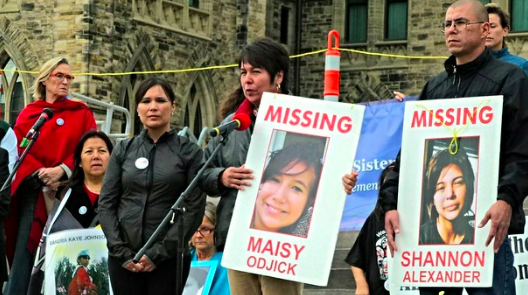
Ottawa vigil for missing and murdered aboriginal women in 2014. Obert Madondo. CC BY-NC-SA 2.0
Over the past three years, Canada has held 24 hearings and events, engaged with more than 2,380 citizens, and spent $92 million on a massive national inquiry into the murders and disappearances of Indigenous women and girls—who make up less than 4 percent of Canada’s female population but a whopping 16 percent of females killed in the country annually. On June 3, the harrowing process came to a close, culminating in a conclusion as decisive as it is unsettling: The Canadian government and civil society is complicit in perpetrating what amounts to genocide.
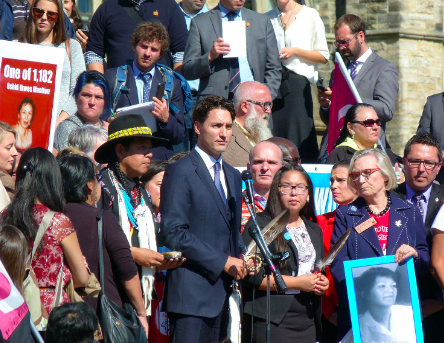
Justin Trudeau giving a speech on missing and murdered Indigenous women in 2016. Delusion23 via Wikimedia Commons. CC BY-SA 4.0
At the closing ceremony in Gatineau, Quebec, Indigenous youth presented the final report, wrapped in a traditional cloth, to Prime Minister Justin Trudeau. All told, the report is over 1,200 pages long and includes 230 recommendations. It describes a historical failure on the part of the police and the criminal justice system, systems that have ignored the concerns of Indigenous women and viewed them “through a lens of pervasive racist and sexist stereotypes”—behavior that has in turn fostered mistrust of the authorities among the Indigenous population. In beginning to mitigate these chronic injustices, the report suggests, authorities should expand Indigenous women’s shelters and improve policing in Indigenous communities; increase the number of Indigenous people on police forces; and empower more Indigenous women to serve on civilian boards that oversee the police.
In addition, it calls for a shift in the criminal code to classify some killings of Indigenous women by spouses with a history of violent abuse as first-degree murder, regardless of premeditation. Addressing the less tangible issue of cultural discrimination, the report also requested that the federal and provincial governments afford Indigenous languages the same status as Canada’s official tongues of English and French.
Regardless of future success in creating a safer and more equitable situation for Indigenous women, helping Canadians understand the historical narrative of violence will remain crucial. As such, the report addresses teachers and post-secondary institutions, asking them to educate the public about missing and murdered Indigenous women and the root causes of their plight, and to bring attention to the state laws, policies, and colonial practices that catalyzed the genocidal conditions. In an interview for Quartz, Carol Couchie, co-chair of the National Aboriginal Council of Midwives, spoke to the lasting effects of structural discrimination: “Family structure has broken up, tribal structure has broken up, leadership has been weakened, the self-esteem has been reduced to on the ground, and these things have all affected our ability to care for young people, to care for women.” Marion Buller, chief commissioner of the inquiry and a retired Indigenous judge, expressed a similar sentiment in her succinct statement to the New York Times: “An absolute paradigm shift is required to dismantle colonialism in Canadian society.”
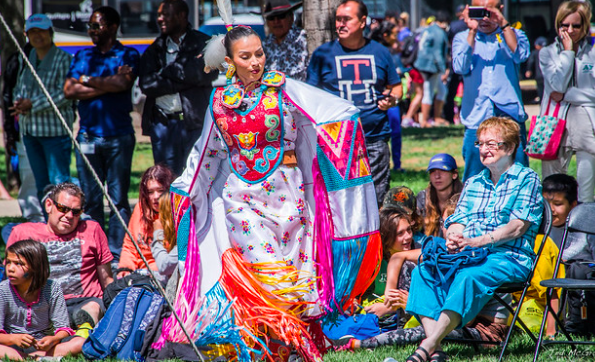
Woman performing at 2017 National Aboriginal Day in Regina. Ted McGrath. CC BY-NC-SA 2.0
Trudeau, for his part, guaranteed a thorough review of the report, and committed to creating a National Action Plan “with Indigenous partners to determine next steps.” Yet even with promises of legislative change, some Indigenous Canadians point to harmful attitudes that may undermine the reality of reform on the ground. For instance, according to the Royal Canadian Mounted Police, most of the violent crimes against Indigenous women are perpetrated by people within their own communities—a statistic that, according to Indigenous author Niigaan Sinclair, “has become the linchpin for arguments that murdered and missing Indigenous women and girls are not a Canadian problem, but an Indigenous one.” In a piece for the Winnipeg Free Press, Sinclair notes that former minister of Aboriginal affairs Bernard Valcourt used this argument to refute the prospect of the inquiry in the first place, and addresses the systemic factors that invalidate Valcourt’s position: “Indigenous women and girls do not join the ranks of the murdered and missing because of Indigenous men, but because of the contexts they are in. Most of these are dangerous situations imposed from circumstances brought on by poverty, abusive cycles and systems, and oppression.”

The REDress Project, on display in Winnipeg, serves as a reminder of missing and murdered Indigenous women. Ted McGrath. CC BY-NC-SA 2.0
Still, the very existence of the report and the promises of action it has engendered are cause for optimism, however cautious it might be. In a piece for The Conversation, Margaret Moss describes her disappointment as an American Indian woman who recently moved to Canada and has observed the same racism in the United States’ northern neighbor as she did back home. Yet her viewpoint as an American also lends her perspective and a sense of hope. “[C]ompared to the lack of moral outrage in the U.S. on this issue, I am [made] hopeful by the very fact that in Canada, after much activism, such a committee was formed and a report of the findings were released with a bold statement,” Moss writes. “Maybe this will shake people out of complacency.”
TALYA PHELPS hails from the wilds of upstate New York, but dreams of exploring the globe. As former editor-in-chief at the student newspaper of her alma mater, Vassar College, and the daughter of a journalist, she hopes to follow her passion for writing and editing for many years to come. Contact her if you're looking for a spirited debate on the merits of the em dash vs. the hyphen.

Blue Out on Insta
Blue Out on Instagram: Support for Sudan through Social Media Awareness
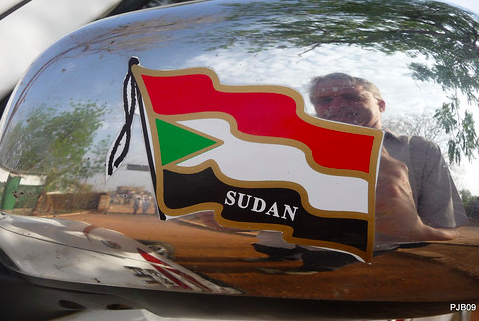
Sudan Flag Sticker on a Car. pjbury. CC BY-NC-ND 2.0
Recently, a specific shade of blue has been popping up around Instagram in the form of profile pictures. This Blue Out was started by Instagram influencer Shahd (@hadyouatsalaam). She is a Sudanese-born, New York City-based activist—or how she likes to identify herself, “a political scientist by degree and a social media influencer by interest”, according to her recent Insta post, introducing herself to her new followers.
Shahd created this movement for the sole purpose of raising awareness to what is currently going on in Sudan. Protests in Sudan began in December of last year, when there was a price-spike in basic commodities (i.e. bread). It was not until April 11th, after a mass, multi-day sit-in, that the Sudanese people did see the change they wished for. The current President, a man named Omar al-Bashir, and his party were being jailed or put on house arrest. The protestors believed this to be a victory. They were wrong. General Awad Ibn Auf, the Vice President, soon gave a televised statement explaining the new governmental system that was going to be put in place—one run by three separate military factions called the Transitional Military Council (TMC). He stated that they intended to remain in power for two years until the country could elect a new President, also claiming a three-month state of emergency and curfew. The people did not accept these conditions and in under 24 hours, Ibn Auf resigned and General Abdelfattah al-Burhaan become the new chairman.
Since General Abdelfattah al-Burhaan’s new appointment, negotiations between the people and the TMC have been chaotic. Once again being fed up, the Sudaneese people, with the people of the Sudanese Professionals Association (SPA), organized a mass strike from the 28th of May to the 29th. These strikes immediately became violent and the TMC used these mass demonstrations to portray the SPA in a vicious light. On June 3rd, government forces began shooting at the protestors which, reportedly, left 118 dead and many more injured. Since then, an Internet black out has been in place and thus sparked social media outcry.
But why should this matter to us? The answer is simple: because we have the power and the privilege of accessing the Internet with the capable means of shouting loud enough that somebody will listen. Over the past two weeks, because of the uproar on social media, there have been an influx of articles written about what is going on, how long it has been going on, what is the important information that we need to know about the revolution in Sudan. One Instagram user, Rachek Cargle (@rachel,cargle), with the help of “an incredible group of activists” has even composed a masterlist of articles ranging from immediate updates to fundraising efforts, according to her post that calls for any more information to add.
Unfortunately, with the uproar, there have also been people who cruelly want to capitalize on the movement for clout reasons. Just last week, a post went viral that claimed for every re-post to a page or story, the originators of the account would donate meals to the Sudanese people. Very soon, the page was labeled as a hoax given curious peoples’ inquiries into how they would provide the food, where is the funding coming from, and other questions which the page either did not answer or gave vague responses to. From these instances, it is important to remember that when trying to get information out, there needs to be a more thorough and conscious effort on the part of other social media users to not just mindlessly click-and-post, but rather, do a quick search about what the post is, and then determine whether or not it is legitimate.
Using the privilege we have—whether it be from simply having the means to repost an article or getting in contact with local government officials so they can talk about what is going on—is a butterfly-effect that will change how the Sudanese revolution will go. Being complacent or a bystander is just as harmful as supporting the violence because inaction is not action, inaction does not bring about change but lets things remain as they are, because they are not directly affecting us. I encourage those of you reading this article to look at the Instagram influencers I have mentioned as well as the hashtag #Iamsudanrevolution. There you will find countless posts, articles, links, and organizations that can inform you, help you, and guide you on how you can help. For immediate action, check out Cargle’s post which is a picture of protestors with SUDAN in bold, blue letters and the subtitle of Information & Support Round Up. There you will find the link to the master document which will provide the beginning of any information you want to know.
I must repeat—acting as a bystander perpetuates the actions that are harming individuals because it is neglecting them the action they need. Use your privilege for something productive.
OLIVIA HAMMOND is an undergraduate at Emerson College in Boston, Massachusetts. She studies Creative Writing, with minors in Sociology/Anthropology and Marketing. She has travelled to seven different countries, most recently studying abroad this past summer in the Netherlands. She has a passion for words, traveling, and learning in any form.


Palestinians protest German athletics company Puma for sponsoring the Israeli Football Association (IFA). The IFA’s six national teams have been playing in Israeli settlements on traditional Palestinian land, thus violating International Law. MustangJoe. CC0.
Palestinians Protest Puma
Palestinian activists, organized by the Palestinian Campaign for the Academic and Cultural Boycott of Israel (PACBL), protested and boycotted German athletics company Puma the weekend of June 15. They targeted stores in 15 different countries as a way of spreading information about the boycott. As of last year, Puma began sponsoring the Israeli Football Association (IFA). The IFA hosts games in Israeli settlements held on traditional Palestinian land. This is in violation of both international law and FIFA (football’s governing body) rules. The protesters feel that Puma is profiting off this situation, as well as normalizing it for the rest of the world.
Six teams play in this section of the West Bank. In 2018, Puma began sponsoring the IFA as part of a 4-year deal to provide equipment, including kits, for Israel’s national football teams. Adidas had been the IFA’s sponsor for the last 10 years, until they ended their sponsorship over a similar boycott campaign in July 2018.
In December 2016, the UN Security Council reaffirmed the position that Israeli settlements in Palestinian territories are a violation of international law. In 1961, FIFA suspended apartheid-laden South Africa, but has said little about Israel and Palestine’s current problem. The Palestinian Football Association (PFA) called for a vote on Israel’s FIFA membership in 2014 and 2015, but ultimately backed down both times. In June 2019, FIFA’s Ethics Committee launched an investigation in PFA President Jibril Rajoub regarding statements and actions against Israel.
PACBL appealed to both Puma and Adidas on the basis of social justice. Puma launched a social justice campaign called #REFORM last year, inspired by American sprinter Tommie Smith, who raised his fist at the 1968 Olympic games in protest of racism. However, according to the Palestinian protesters, this hypocrisy in regards to justice shows that money is still the ultimate factor with sports sponsorships. There is always an element of calculation as to how beneficial the social justice commitment will be.
Ultimately, Puma’s decision—regardless of the protests—will come down to reputation. Meanwhile, the protests and boycott against Puma are supported by over 200 Palestinian sports associations and clubs, as well as prominent Palestinian athletes such as Aya Khattab, who is on the women’s national football team.
Mahmoud Sarsk, a Palestinian footballer who used to play on the national team, said, “Endless restrictions on freedom of movement, access to resources and fundamental civil liberties make engaging in sport a constant struggle for Palestinians—these violations of rights are totally incompatible with the principle of sport being accessible to all,” according to Aljazeera. Sarsk was imprisoned for three years by Israeli authorities without charges or a trial. This ended his career as a professional player.
In a statement last year, Adidas said they ended their sponsorship of the IFA for political reasons, as they upheld human rights and agreed with FIFA that a decision needed to be made regarding the state of the settlements. The protest included complaints from over 130 Palestinian football clubs, according to the Palestine Chronicle. Regardless, it was claimed afterwards that Adidas ended the sponsorship for non-political reasons, particularly since the sponsorship term was ending
The Boycott, Divestment, and Sanctions movement (BCD) is a Palestinian-led organization with a larger sports component, which is what the Puma boycott is part of. The sports component has been steadily growing since 2011.
The international response has also been growing. According to Mondoweiss, in February 2017 six NFL players withdrew from a PR trip to Israel, which serves as a prominent win for the BDS movement. Argentina also called off a friendly match with an Israeli team in Jerusalem last June.
FIFA’s response has been lacking, but the international disdain has made it clear that Israel may soon start to run out of sponsors for its sports teams if something is not done about the settlements held on Palestinian land that violate International Law.
NOEMI ARELLANO-SUMMER is a journalist and writer living in Boston, MA. She is a voracious reader and has a fondness for history and art. She is currently at work on her first novel and wants to eventually take a trip across Europe.

The LGBTQ Migrant Caravan that Sought Asylum in the US
LGBTQ migrants from Central America seeking asylum in the US faced hardship and discrimination not only from gangs that prey on migrants as they travel, but also from their fellow travelers. They were a part of a “caravan” of 3,600 asylum seekers that started to journey from San Pedro Sula, Honduras, in October 2018, traveled through Mexico, and reached the Northern Mexican city of Tijuana, bordering the US, in November 2018. The members of the caravan were escaping all kinds of violence in their home countries of Honduras, Guatemala, and El Salvador.
Read More