After watching Hurricane Maria devastate his native Puerto Rico, New York City-based architect Jonathan Marvel knew he needed to do anything he could to give back. He banded together a group of friends to launch Resilient Power Puerto Rico, hoping to use the strength of renewable, solar energy to provide a steady source of electricity back to the island.
Just two weeks after the ambitious initiative was born, Marvel was back in Puerto Rico installing solar panels and batteries on the rooftops of community centers. The storm had wiped out power lines and had left people without electricity. Solar-powered energy would allow them to live and operate off the grid, without reliance on fossil fuel-burning power plants. Suddenly, these solar-powered community centers were able to provide spaces where people could refrigerate medication, filter water and gather together to rely on one another in the midst of a humanitarian crisis.
At last count, Marvel and Resilient Power Puerto Rico were able to bring solar power to 20 community centers across the island—helping over 100,000 people in the process.
Still, Marvel’s work is far from over. It took nearly a year before the Puerto Rico Electric Power Authority restored power to most of the island’s residents, and, according to reports, the electricity system is in not in a much better state than it was before Maria wiped out the island.
Longer term, Marvel dreams of a day when Puerto Rico is able to shift to 100-percent renewable energy sources. He believes it is an achievable goal, and Resilient Power Puerto Rico is working to make it a reality.
“We can no longer rely on large fossil fuel burning power plants distributing energy and wires that are going to get blown down every year,” Marvel says. “We have all this power from the sun that needs to be harnessed.”
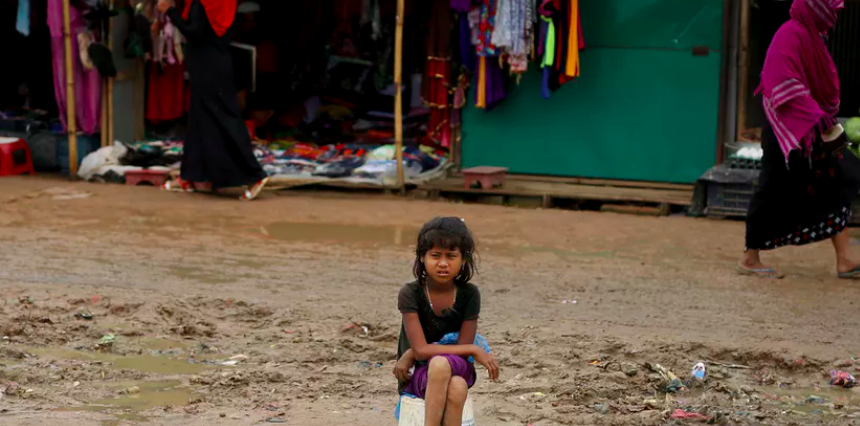
A Rohingya refugee girl sells vegetables in Kutupalong refugee camp, Bangladesh. Access to education is extremely limited in the camps, and most children — particularly girls — receive little to no formal education, Aug. 28, 2018. AP Photo/Altaf Qadri
Without School, A ‘Lost Generation’ of Rohingya Refugee Children Face Uncertain Future
The boy’s eyes lit up when he talked about his dream of becoming a doctor.
Seven-year-old “Mohammad” – not his real name – is a Rohingya Muslim from Myanmar. I met him at a learning center at a refugee camp in Cox’s Bazar, Bangladesh, in early July 2019.
After sharing his aspirations, Mohammed quickly remembered reality.
“I know my dreams will never come true,” he said with a faint smile.
Refugee crisis of global proportions
Mohammed is among the more than 700,000 Rohingya who have taken refuge in Bangladesh after an ethnic cleansing campaign of rape, killing and torture by the Myanmar military in mid-2017. They joined the more than 200,000 Rohingyas who had previously fled Myanmar’s brutal efforts to rid the Buddhist-majority country of this marginalized Muslim minority.
Of the newly arrived Rohingya, three-quarters are women and children, according to the United Nations.
In a noteworthy humanitarian gesture, the Bangladeshi government has given refuge to these persecuted people. Aided by Bangladeshi community organizations, various UN agencies and other international donors, the Rohingya have been receiving shelter, food, clothes and basic health care since the massive exodus in 2017.
This essential care, which cost an estimated US$920.5 million in 2019 represents a gargantuan global effort. Still, the resources are woefully inadequate.
Most Bangladeshi refugee camps are overcrowded and, as a result, unhygienic. Residents survive on the absolute bare minimum of nutrition and other necessities. Monsoon rain, cold and landslides are everyday threats for these Rohingya, as I’ve witnessed firsthand during my visits to Bangladeshi camps in 2017 and 2019.
It is a dismal existence for all. But it is the plight of the roughly 500,000 Rohingya children living in limbo that strikes me as bleakest.
Concerns of a lost generation
Research shows that future of refugee children grows more imperiled the longer they remain out of school.
In many countries that host substantial refugee populations, including Turkey, Lebanon and Uganda, the United Nation’s refugee agency and the United Nations Children’s Fund ensure children receive a quality, full-time education, either at the camps or in nearby public schools.
Even so, just 23% refugee children worldwide are enrolled in secondary school, according to the UN’s High Commission on Human Rights. Just 1% attend university.
Because Bangladeshi authorities have not granted the Rohingya official refugee status and consider them instead “forcibly displaced Myanmar nationals,” the roughly 500,000 Rohingya children in the country have no access to a formal education. Rohingya children are not permitted to attend Bangladeshi public schools.
The United Nations Children’s Fund and its partners offer Rohingya refugees aged 4 to 14 two-hour daily lessons on Burmese, English, math and life skills at about 1,600 learning centers located at the camps. These classes keep about 145,000 Rohingya children – or about 30% of the Rohingya youngsters in Bangladesh – occupied for part of the day but do not provide the kind of formal education that will allow the children to work toward a high school degree and enter the job market.
The camps offer no schooling at all for Rohingya refugee adolescents aged 15 to 18.
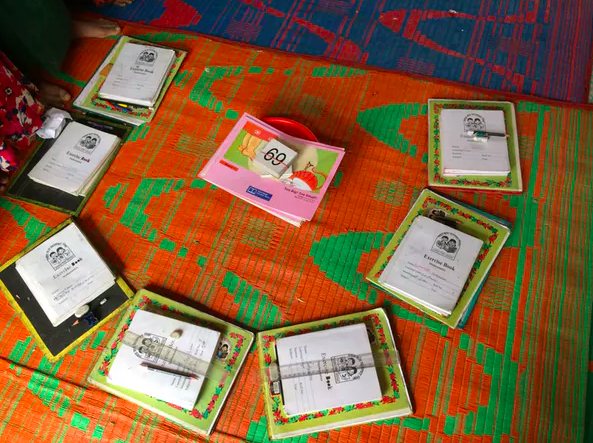
English-language exercise books at a UNICEF-supported ‘learning center’ at one of the Kutupalong refugee camps in Bangladesh. Rubayat Jesmin, Author provided
Some teenagers, mostly boys, have turned to madrassas, or Islamic learning centers, where they can receive a religious education.
The remaining Rohingya children who attend neither UNICEF classes nor madrassas are simply left to fill their own day. At the Rohingya camps, I saw boys working in shops, playing cards or sitting idle at all hours of the day.
When I asked Mohammad what he does when he is not in school, he told me that he “takes care of his family.”
“I play with the other kids, too,” he added with a grin.
Adolescent girls, I learned, are often kept at home by their parents because of the Rohingya’s conservative social and religious norms.
The camps can also be dangerous for girls. Human traffickers have been known to target young Rohingya women, promising them jobs outside the camps. Girls face other forms of violence and human rights abuse at Bangladesh’s camps, too, including child marriage.

Bangladeshi camps for the Rogingyas are typically overcrowded, unhygienic, muddy and prone to landslides. Rubayat Jesmin, Author provided
Rohingya repatriation
Growing up in unstable conditions, with no possibility of study, Rohingya children like Mohammed are at risk of becoming a lost generation.
Their limbo may not last forever. In response to heightened international pressure, Myanmar in November 2017 agreed to take the Rohingyas back starting November 2018.
However, their return was postponed due to protests by the refugees, who feared conditions in Myanmar was not yet safe. The United Nations and other international refugee services have also voiced concern about sending the Rohingya back, saying there was no indication that the Myanmar government had punished the people responsible for the crimes in Rahkine state, nor agreed to give the Rohingya citizenship.
Considered foreigners in both Myanmar, their native country, and Bangladesh, where they’ve sought refuge, the Rohingya Muslims are the world’s largest stateless people.
While the negotiations for their repatriation continue, a generation of traumatized Rohingya children wait for their futures to begin.
RUBAYAT JESMIN is a Doctoral Student at the College of Community and Public Affairs, Binghamton University, State University of New York.
THIS ARTICLE WAS ORIGINALLY PUBLISHED ON THE CONVERSATION
In Hong Kong Protests, Technology Serves as a Tool of Both Expression and Repression
While activists have used the internet as a powerful organizing tool, web coverage on the Chinese mainland is defined by mass blackouts and systematic silencing.
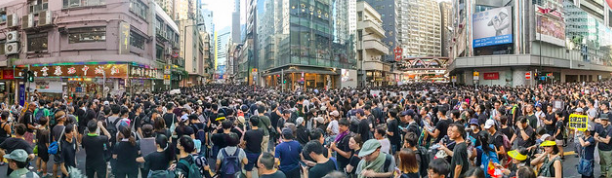
Protesters in Hong Kong. Studio Incendo. CC BY 2.0
The most widely attended protest in recent American memory, the Women’s March, brought about 1 percent of the population onto the streets. Last month’s protests in Hong Kong brought 25 percent.
By any standards, the anti-extradition campaign in Hong Kong, spurred by a proposed China-backed amendment that would allow for the extradition of Hong Kongers to mainland China, was an astronomical success, engaging huge swathes of the population and eventually leading to the death of the proposal. Images of the demonstration depict unfathomable numbers of citizens exercising their right to peaceful protests, but something remains invisible in those photos: the constantly active, multilayered and multifaceted presence of the internet, which—through messaging apps, social media, and LIHKG (Hong Kong’s answer to Reddit)—allowed protestors to turn ideology into concrete action.
On June 12, the protest reached a milestone when tens of thousands of citizens surrounded the Hong Kong legislative building, spurring an initial suspension of the bill. In order to mobilize without attracting unwanted attention, activists created online events inviting people to a “picnic” in nearby Tamar Park, a cover-up for their actual intentions. Messaging services, too, helped with planning efforts. Particularly popular was the encrypted app Telegram—although the arrest of Ivan Ip for “conspiracy to commit a public nuisance” set efforts back, given that Ip was leading a group on the platform of 30,000 users. Still, Ip’s group was far from the only one: In a Baptist University poll of protestors, more than half of respondents reported using Telegram for broadcasting information and participating in discussion groups.
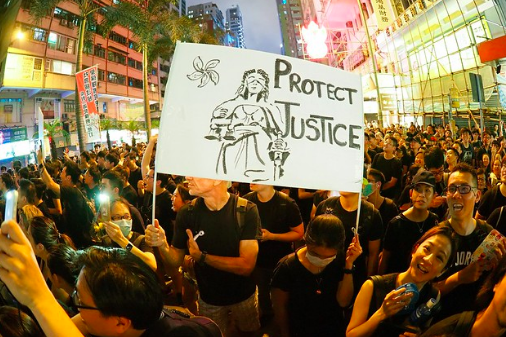
Protestors in the streets. Etan Liam. CC BY-ND 2.0
The survey also revealed the protestors’ widespread use of LIHKG, which lived up to its reputation of supporting free speech by subtly assisting activist efforts: Administrators removed ads from their site for about two weeks in June to shorten loading time and upped the number of replies allowed on some threads from 1,001 to 5,001, citing a need “for more convenient discussions.”
For protestors, the utility of social media and messaging platforms was far from over once planning progressed into action. During the demonstration on June 12, attendees broadcast real-time updates through countless Instagram stories and an hour-long livestream on the Twitter-owned service Periscope. In addition to spreading the word to Hong Kongers not attending the demonstration, protestors were able to communicate amongst themselves, using apps to request supplies, share the locations of food and water stations, and disseminate hand signals that would allow for discreet communication. Technical difficulties, however, thwarted efforts to some degree: Poor mobile signals made accessing the internet a challenge and threatened to spur chaos. “Without Telegram and WhatsApp, people did not know what they had to do,” Laura, 18, a student who volunteered as a first-aid staffer, told the South China Morning Post.
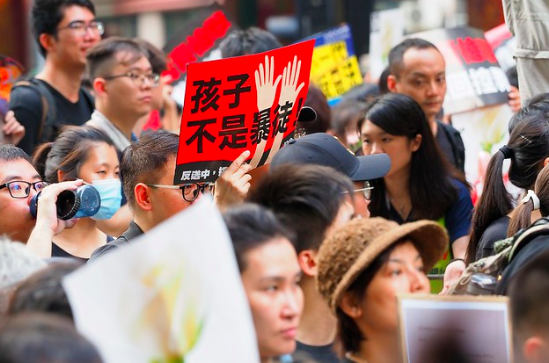
Holding a sign that reads “kids are not rioters.” Etan Liam. CC BY-ND 2.0
Limited connectivity was not the only tech-related hurdle facing protesters. Tech-savvy activists cautioned against using public Wi-Fi or swiping their Octopus public transit card, actions that could put users at risk of having their personal information picked up and employed to incriminate them. And protestors made sure to turn off Face ID and fingerprint ID on their phones so that police could not unlock their devices without consent, as well as enabling encryption on apps where it was not already automatic.
Across the border in China, however, such internet-driven activism would have been impossible. Hong Kongers have the privilege of a much more open internet—a dichotomy that has manifested starkly in mainland media coverage of the protests. As part of the mass censorship and limited access that has long defined the Chinese internet and that is sometimes dubbed the “Great Firewall of China,” the Communist Party has enacted a total blackout on protest coverage in newspapers and on TV, with television screens simply going dark when foreign news outlets show images of the demonstrations. Video footage of Hong Kong Chief Executive Carrie Lam apologizing for her attempt to push through the extradition law never lasted long on social media, as censors would immediately delete the content each time it was reuploaded. And even a song that activists sang during the protests, “Can You Hear the People Sing” from “Les Miserables,” was inexplicably missing from QQ, a popular musical streaming site.
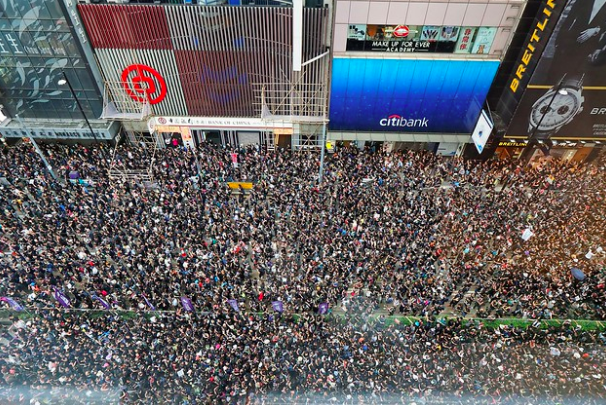
Protestors filled the streets on June 16. Etan Liam. CC BY-ND 2.0
On social media platforms like WeChat and Weibo, users devised strategies to get around the firewall, like distorting images of the protests or blocking parts of the image with giant smiley-face logos. In some cases, however, China’s tech power was simply too strong: Telegram reported on June 12 that it was experiencing a distributed denial of service (DDoS) attack, which means that a number of computers were attempting to overload its servers with bogus requests, resulting in service slowdowns or outages. Telegram’s CEO, Pavel Durov, said that the IP addresses behind the attack were coming mainly from China, potentially suggesting a concerted effort by authorities.
By systematically silencing the voices of activists, China is able to spread its own narrative of the protests, which it portrays as violent events provoked by foreign elements amining to undermine Hong Kong and the “one country, two systems” policy. The policy was formulated in the 1980s for the reunification of China by Paramount Leader of the People’s Republic of China Deng Xiaoping; in the interest of furthering Hong Kong’s status as a global financial center, it guarantees freedom of speech and protest for citizens. Yet Hong Kongers have long feared an erosion of their autonomy, a concern that most recently boiled over in the form of the 2014 Umbrella Movement, during which streets in the city’s business district were flooded by demonstrators for nearly three months. Throughout that time, mainland China busily erased all mention and images of the protests from its internet.

Protesters were unsatisfied by the original postponement of the bill. Etan Liam. CC BY-ND 2.0
On July 8, Lam publicly stated that the bill was finally dead, describing the proposed amendment as a “total failure.” Yet Hong Kongers were not entirely satisfied, as questions remain about whether Lam will officially withdraw the bill or whether it might be revived in future. Either way, the anti-extradition movement of 2019 will stand as a landmark protest for the digital age: one whose scale and power could have only coalesced in an era of instant connectivity, and one that throws into stark relief the power of technology—for expression and repression alike.
TALYA PHELPS hails from the wilds of upstate New York, but dreams of exploring the globe. As former editor-in-chief at the student newspaper of her alma mater, Vassar College, and the daughter of a journalist, she hopes to follow her passion for writing and editing for many years to come. Contact her if you're looking for a spirited debate on the merits of the em dash vs. the hyphen.

From North Carolina to Norway, Fossil Fuel Divestment Hits Headlines
Whether motivated by practical or ideological means, institutions around the world are pulling their finances out of oil, gas, and coal.
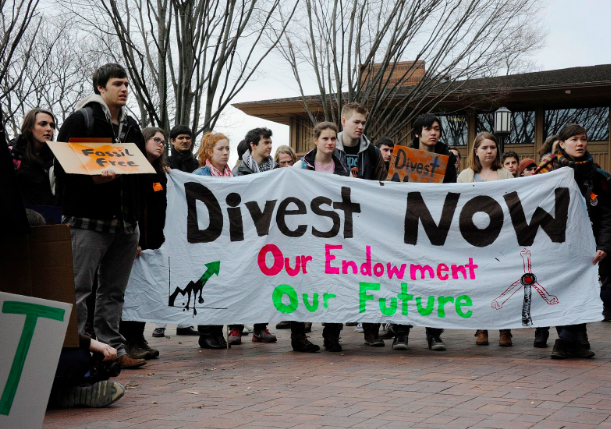
Divestment protest at Tufts University. James Ennis. CC BY 2.0
Upon receiving the news in 2017 that our planet is in the midst of its sixth mass extinction event, spurred partly by rampant climate change, stunned denizens of Earth everywhere struggled to process the implications and searched for concrete ways to mitigate the damage. In the months since, countless climate proposals have rolled out across the globe, and U.S. citizens have watched as 2020 presidential hopefuls laid out their plans—all while the current president decried the very existence of climate change. In the flurry of rhetoric and policy aimed at addressing the climate crisis, one strategy continues to hold strong: fossil fuel divestment, which has hit the headlines this summer with particular force.
On July 4—Independence Day in the United States—Britain’s largest membership organization declared independence from fossil fuel investments. The National Trust, which stewards 780 miles of coastline; 612,000 acres of land; and more than 500 historic houses, castles, monuments, and parks, announced that it would divest its £1 billion portfolio from fossil fuels in a bid to address the worsening climate crisis.
Previously, the trust had invested £45 million into oil, gas, and mining companies, despite having made earlier pledges to cut down on its own use of fossil fuels. The vast majority of those investments will be withdrawn in the next 12 months, the trust promises, and 100 percent within three years. The freed-up funds will be diverted to alternative energy options: CFO Peter Vermeulen told The Guardian, “Now we will seek to invest in green startup businesses and other suitable portfolios that deliver benefits for the environment, nature and people.”
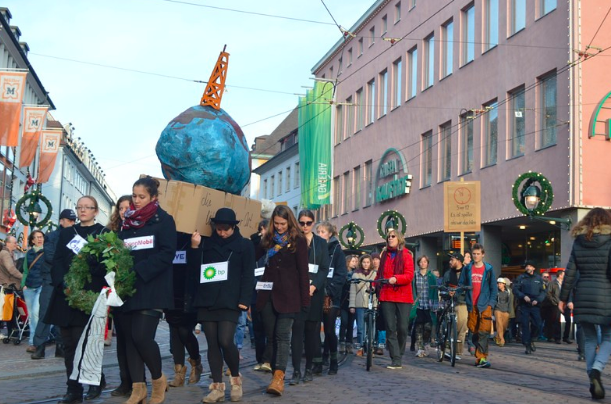
Fossil Free Freiburg divestment protest. 350.org. CC BY-NC-SA 2.0
Five hundred miles away in Norway, another high-profile institution is also preparing to drop fossil fuels: the Government Pension Fund Global (GPFG), which was founded in 1990 to oversee the integration of petroleum revenues into the national economy, and which invests in more than 9,000 companies worldwide, including Apple, Amazon, and Microsoft. On June 21, Norway’s parliament, the Storting, approved plans for the GPFG to divest more than $13 billion of the $1.06 trillion it manages from investments in oil, gas, and coal. The decision comes with some caveats: GPFG will only divest from companies that are exclusively involved with fossil fuels, but not oil companies that also have renewable energy units, such as BP and Royal Dutch Shell. And the fund maintains that financial considerations, not ideological ones, are behind the divestment, given the risk posed by fluctuations in oil prices. Nevertheless, environmental advocates can appreciate the fact that GPFG will earmark up to 2 percent of its funds—or about $20 billion—for investments in renewable energy.
In some cases, not only individual institutions are divesting, but also entire regions. At the beginning of June, the city council of Charlottesville, Va., voted 4-1 to divest the city’s operating budget investments from any entity involved with the production of fossil fuels or weapons. Supporters explain that the divestment—which will be carried out within 30 days of the decision—aligns with the city’s strategic plan goals, including being responsible stewards of natural resources. Charlottesville joins various other college towns across the United States, including Ann Arbor, Mich., and Berkeley, Calif., in pledging to divest.
At some universities, however, the prospect of divestment has long brewed controversy, which is coming to a head in light of the climate crisis. During Al Gore’s speech at Harvard University on May 29, the former vice president turned environmental activist called on his alma mater to divest, stating that climate change is “a threat to the survival of human civilization as we know it” and framing divestment as “a moral issue” for the university. In recent years, student activists at Harvard have ramped up demands on the school to divest, and the student newspaper reversed its formerly opposed position in May, acknowledging that Harvard’s reluctance to entertain the possibility of divestment “compromises its efforts to position itself as an academic institution at the forefront of the fight against climate change.” On the administrative side, more than 300 faculty members have signed a petition calling for divestment of fossil fuel stocks. Nevertheless, this number represents less than 14 percent of all faculty, and the university maintains the opinion that it should impact public policy through research rather than through its endowment.
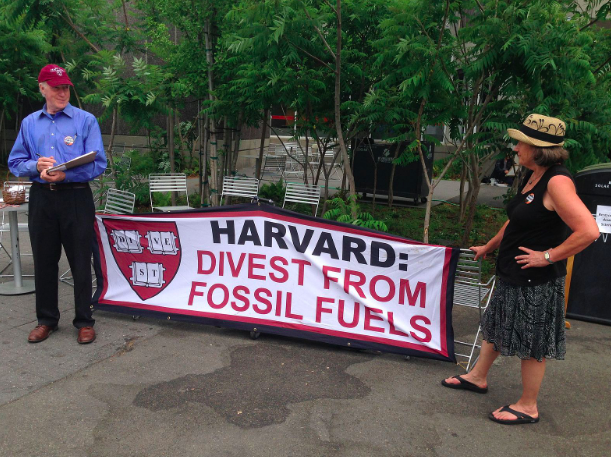
Advocates for divestment at Harvard. victorgrigas. CC BY-SA 3.0
Across the country, 47 U.S. colleges and universities have chosen to divest, although the number has dropped off in recent years, with only 10 making the decision since 2017. Most recently, the Board of Trustees at the University of North Carolina, Asheville, voted on June 21 to divest a portion of their $50 million endowment from fossil fuels. The unanimous vote, which will make the Asheville campus the first in the UNC system to divest, builds on a resolution spearheaded by student activists. In concert with administration and the Board, these activists researched new funds in which the university could invest about 10 percent of its capital, eventually landing on Walden Asset Management, which focuses on investing using environmental, social, and governance criteria.
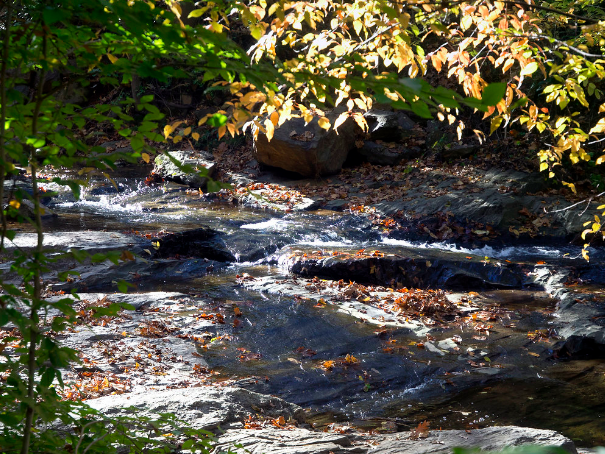
Botanical gardens at Asheville. David441491. CC BY-NC-ND 2.0
Meanwhile, earlier this month, the University of California—another sprawling and well-regarded state university system—saw 77 percent of its voting faculty agree “to divest the university’s endowment portfolio of all investments in the 200 publicly-traded fossil fuel companies with the largest carbon reserves.” The decision is now in the hands of the University Regents. Should the Regents choose to divest, the news would make waves on the national level due to U Cal’s significant size and prestige—and in the fight against fossil fuels, ideological statements, even if they have negligible bearing on the industry’s financial resources, are of the utmost importance.
Individuals in academic circles, therefore, are beginning to take their own stands to support divestment. In a piece for the Chronicle of Higher Education, climate activists Christiana Figueres and Bill McKibben explain that they have begun refusing to accept honorary degrees from colleges that have not divested, writing, “[e]ach of us has already turned down these honors at institutions that remain committed to coal, gas, and oil.” Meanwhile, members of the younger generation are also weighing in—such as Jamie Margolin, a rising high school senior and prominent environmental activist with more than 11,000 Twitter followers. In a piece for Teen Vogue last month, Margolin wrote, “I have serious concerns about how my future school might be investing in fossil fuels and, if they can’t be convinced to divest by student activists like me, how that might render my college education useless.” From Norway to Britain to Asheville to Cambridge, from Ivy-educated vice presidents to those still awaiting their high school degrees, the world is beginning to agree that taking action is not optional.
TALYA PHELPS hails from the wilds of upstate New York, but dreams of exploring the globe. As former editor-in-chief at the student newspaper of her alma mater, Vassar College, and the daughter of a journalist, she hopes to follow her passion for writing and editing for many years to come. Contact her if you're looking for a spirited debate on the merits of the em dash vs. the hyphen.

Canadian Inquiry Comes to a Close, Revealing Systematic Mistreatment of Indigenous Women
Three years in the making, the final report calls on authorities to institute a paradigm shift in policing practices.
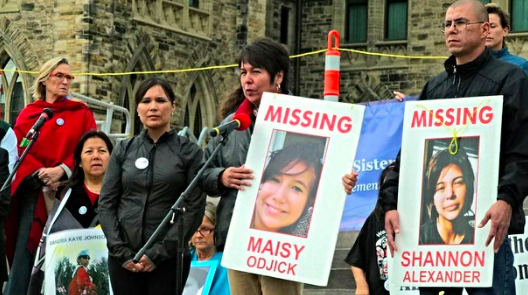
Ottawa vigil for missing and murdered aboriginal women in 2014. Obert Madondo. CC BY-NC-SA 2.0
Over the past three years, Canada has held 24 hearings and events, engaged with more than 2,380 citizens, and spent $92 million on a massive national inquiry into the murders and disappearances of Indigenous women and girls—who make up less than 4 percent of Canada’s female population but a whopping 16 percent of females killed in the country annually. On June 3, the harrowing process came to a close, culminating in a conclusion as decisive as it is unsettling: The Canadian government and civil society is complicit in perpetrating what amounts to genocide.
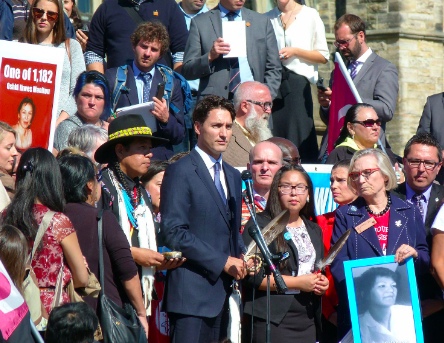
Justin Trudeau giving a speech on missing and murdered Indigenous women in 2016. Delusion23 via Wikimedia Commons. CC BY-SA 4.0
At the closing ceremony in Gatineau, Quebec, Indigenous youth presented the final report, wrapped in a traditional cloth, to Prime Minister Justin Trudeau. All told, the report is over 1,200 pages long and includes 230 recommendations. It describes a historical failure on the part of the police and the criminal justice system, systems that have ignored the concerns of Indigenous women and viewed them “through a lens of pervasive racist and sexist stereotypes”—behavior that has in turn fostered mistrust of the authorities among the Indigenous population. In beginning to mitigate these chronic injustices, the report suggests, authorities should expand Indigenous women’s shelters and improve policing in Indigenous communities; increase the number of Indigenous people on police forces; and empower more Indigenous women to serve on civilian boards that oversee the police.
In addition, it calls for a shift in the criminal code to classify some killings of Indigenous women by spouses with a history of violent abuse as first-degree murder, regardless of premeditation. Addressing the less tangible issue of cultural discrimination, the report also requested that the federal and provincial governments afford Indigenous languages the same status as Canada’s official tongues of English and French.
Regardless of future success in creating a safer and more equitable situation for Indigenous women, helping Canadians understand the historical narrative of violence will remain crucial. As such, the report addresses teachers and post-secondary institutions, asking them to educate the public about missing and murdered Indigenous women and the root causes of their plight, and to bring attention to the state laws, policies, and colonial practices that catalyzed the genocidal conditions. In an interview for Quartz, Carol Couchie, co-chair of the National Aboriginal Council of Midwives, spoke to the lasting effects of structural discrimination: “Family structure has broken up, tribal structure has broken up, leadership has been weakened, the self-esteem has been reduced to on the ground, and these things have all affected our ability to care for young people, to care for women.” Marion Buller, chief commissioner of the inquiry and a retired Indigenous judge, expressed a similar sentiment in her succinct statement to the New York Times: “An absolute paradigm shift is required to dismantle colonialism in Canadian society.”
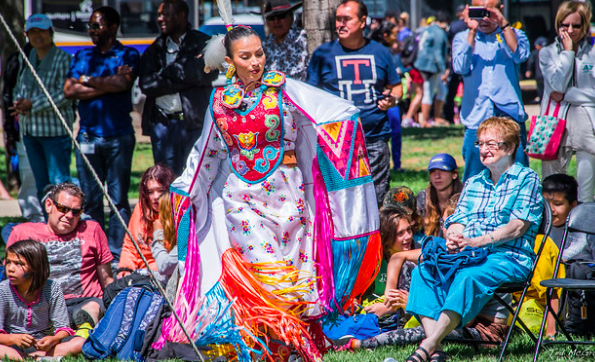
Woman performing at 2017 National Aboriginal Day in Regina. Ted McGrath. CC BY-NC-SA 2.0
Trudeau, for his part, guaranteed a thorough review of the report, and committed to creating a National Action Plan “with Indigenous partners to determine next steps.” Yet even with promises of legislative change, some Indigenous Canadians point to harmful attitudes that may undermine the reality of reform on the ground. For instance, according to the Royal Canadian Mounted Police, most of the violent crimes against Indigenous women are perpetrated by people within their own communities—a statistic that, according to Indigenous author Niigaan Sinclair, “has become the linchpin for arguments that murdered and missing Indigenous women and girls are not a Canadian problem, but an Indigenous one.” In a piece for the Winnipeg Free Press, Sinclair notes that former minister of Aboriginal affairs Bernard Valcourt used this argument to refute the prospect of the inquiry in the first place, and addresses the systemic factors that invalidate Valcourt’s position: “Indigenous women and girls do not join the ranks of the murdered and missing because of Indigenous men, but because of the contexts they are in. Most of these are dangerous situations imposed from circumstances brought on by poverty, abusive cycles and systems, and oppression.”

The REDress Project, on display in Winnipeg, serves as a reminder of missing and murdered Indigenous women. Ted McGrath. CC BY-NC-SA 2.0
Still, the very existence of the report and the promises of action it has engendered are cause for optimism, however cautious it might be. In a piece for The Conversation, Margaret Moss describes her disappointment as an American Indian woman who recently moved to Canada and has observed the same racism in the United States’ northern neighbor as she did back home. Yet her viewpoint as an American also lends her perspective and a sense of hope. “[C]ompared to the lack of moral outrage in the U.S. on this issue, I am [made] hopeful by the very fact that in Canada, after much activism, such a committee was formed and a report of the findings were released with a bold statement,” Moss writes. “Maybe this will shake people out of complacency.”
TALYA PHELPS hails from the wilds of upstate New York, but dreams of exploring the globe. As former editor-in-chief at the student newspaper of her alma mater, Vassar College, and the daughter of a journalist, she hopes to follow her passion for writing and editing for many years to come. Contact her if you're looking for a spirited debate on the merits of the em dash vs. the hyphen.

Blue Out on Insta
Blue Out on Instagram: Support for Sudan through Social Media Awareness
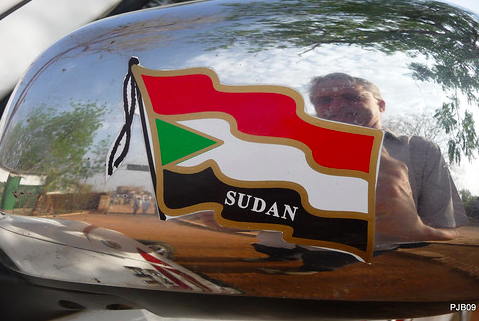
Sudan Flag Sticker on a Car. pjbury. CC BY-NC-ND 2.0
Recently, a specific shade of blue has been popping up around Instagram in the form of profile pictures. This Blue Out was started by Instagram influencer Shahd (@hadyouatsalaam). She is a Sudanese-born, New York City-based activist—or how she likes to identify herself, “a political scientist by degree and a social media influencer by interest”, according to her recent Insta post, introducing herself to her new followers.
Shahd created this movement for the sole purpose of raising awareness to what is currently going on in Sudan. Protests in Sudan began in December of last year, when there was a price-spike in basic commodities (i.e. bread). It was not until April 11th, after a mass, multi-day sit-in, that the Sudanese people did see the change they wished for. The current President, a man named Omar al-Bashir, and his party were being jailed or put on house arrest. The protestors believed this to be a victory. They were wrong. General Awad Ibn Auf, the Vice President, soon gave a televised statement explaining the new governmental system that was going to be put in place—one run by three separate military factions called the Transitional Military Council (TMC). He stated that they intended to remain in power for two years until the country could elect a new President, also claiming a three-month state of emergency and curfew. The people did not accept these conditions and in under 24 hours, Ibn Auf resigned and General Abdelfattah al-Burhaan become the new chairman.
Since General Abdelfattah al-Burhaan’s new appointment, negotiations between the people and the TMC have been chaotic. Once again being fed up, the Sudaneese people, with the people of the Sudanese Professionals Association (SPA), organized a mass strike from the 28th of May to the 29th. These strikes immediately became violent and the TMC used these mass demonstrations to portray the SPA in a vicious light. On June 3rd, government forces began shooting at the protestors which, reportedly, left 118 dead and many more injured. Since then, an Internet black out has been in place and thus sparked social media outcry.
But why should this matter to us? The answer is simple: because we have the power and the privilege of accessing the Internet with the capable means of shouting loud enough that somebody will listen. Over the past two weeks, because of the uproar on social media, there have been an influx of articles written about what is going on, how long it has been going on, what is the important information that we need to know about the revolution in Sudan. One Instagram user, Rachek Cargle (@rachel,cargle), with the help of “an incredible group of activists” has even composed a masterlist of articles ranging from immediate updates to fundraising efforts, according to her post that calls for any more information to add.
Unfortunately, with the uproar, there have also been people who cruelly want to capitalize on the movement for clout reasons. Just last week, a post went viral that claimed for every re-post to a page or story, the originators of the account would donate meals to the Sudanese people. Very soon, the page was labeled as a hoax given curious peoples’ inquiries into how they would provide the food, where is the funding coming from, and other questions which the page either did not answer or gave vague responses to. From these instances, it is important to remember that when trying to get information out, there needs to be a more thorough and conscious effort on the part of other social media users to not just mindlessly click-and-post, but rather, do a quick search about what the post is, and then determine whether or not it is legitimate.
Using the privilege we have—whether it be from simply having the means to repost an article or getting in contact with local government officials so they can talk about what is going on—is a butterfly-effect that will change how the Sudanese revolution will go. Being complacent or a bystander is just as harmful as supporting the violence because inaction is not action, inaction does not bring about change but lets things remain as they are, because they are not directly affecting us. I encourage those of you reading this article to look at the Instagram influencers I have mentioned as well as the hashtag #Iamsudanrevolution. There you will find countless posts, articles, links, and organizations that can inform you, help you, and guide you on how you can help. For immediate action, check out Cargle’s post which is a picture of protestors with SUDAN in bold, blue letters and the subtitle of Information & Support Round Up. There you will find the link to the master document which will provide the beginning of any information you want to know.
I must repeat—acting as a bystander perpetuates the actions that are harming individuals because it is neglecting them the action they need. Use your privilege for something productive.
OLIVIA HAMMOND is an undergraduate at Emerson College in Boston, Massachusetts. She studies Creative Writing, with minors in Sociology/Anthropology and Marketing. She has travelled to seven different countries, most recently studying abroad this past summer in the Netherlands. She has a passion for words, traveling, and learning in any form.


Palestinians protest German athletics company Puma for sponsoring the Israeli Football Association (IFA). The IFA’s six national teams have been playing in Israeli settlements on traditional Palestinian land, thus violating International Law. MustangJoe. CC0.
Palestinians Protest Puma
Palestinian activists, organized by the Palestinian Campaign for the Academic and Cultural Boycott of Israel (PACBL), protested and boycotted German athletics company Puma the weekend of June 15. They targeted stores in 15 different countries as a way of spreading information about the boycott. As of last year, Puma began sponsoring the Israeli Football Association (IFA). The IFA hosts games in Israeli settlements held on traditional Palestinian land. This is in violation of both international law and FIFA (football’s governing body) rules. The protesters feel that Puma is profiting off this situation, as well as normalizing it for the rest of the world.
Six teams play in this section of the West Bank. In 2018, Puma began sponsoring the IFA as part of a 4-year deal to provide equipment, including kits, for Israel’s national football teams. Adidas had been the IFA’s sponsor for the last 10 years, until they ended their sponsorship over a similar boycott campaign in July 2018.
In December 2016, the UN Security Council reaffirmed the position that Israeli settlements in Palestinian territories are a violation of international law. In 1961, FIFA suspended apartheid-laden South Africa, but has said little about Israel and Palestine’s current problem. The Palestinian Football Association (PFA) called for a vote on Israel’s FIFA membership in 2014 and 2015, but ultimately backed down both times. In June 2019, FIFA’s Ethics Committee launched an investigation in PFA President Jibril Rajoub regarding statements and actions against Israel.
PACBL appealed to both Puma and Adidas on the basis of social justice. Puma launched a social justice campaign called #REFORM last year, inspired by American sprinter Tommie Smith, who raised his fist at the 1968 Olympic games in protest of racism. However, according to the Palestinian protesters, this hypocrisy in regards to justice shows that money is still the ultimate factor with sports sponsorships. There is always an element of calculation as to how beneficial the social justice commitment will be.
Ultimately, Puma’s decision—regardless of the protests—will come down to reputation. Meanwhile, the protests and boycott against Puma are supported by over 200 Palestinian sports associations and clubs, as well as prominent Palestinian athletes such as Aya Khattab, who is on the women’s national football team.
Mahmoud Sarsk, a Palestinian footballer who used to play on the national team, said, “Endless restrictions on freedom of movement, access to resources and fundamental civil liberties make engaging in sport a constant struggle for Palestinians—these violations of rights are totally incompatible with the principle of sport being accessible to all,” according to Aljazeera. Sarsk was imprisoned for three years by Israeli authorities without charges or a trial. This ended his career as a professional player.
In a statement last year, Adidas said they ended their sponsorship of the IFA for political reasons, as they upheld human rights and agreed with FIFA that a decision needed to be made regarding the state of the settlements. The protest included complaints from over 130 Palestinian football clubs, according to the Palestine Chronicle. Regardless, it was claimed afterwards that Adidas ended the sponsorship for non-political reasons, particularly since the sponsorship term was ending
The Boycott, Divestment, and Sanctions movement (BCD) is a Palestinian-led organization with a larger sports component, which is what the Puma boycott is part of. The sports component has been steadily growing since 2011.
The international response has also been growing. According to Mondoweiss, in February 2017 six NFL players withdrew from a PR trip to Israel, which serves as a prominent win for the BDS movement. Argentina also called off a friendly match with an Israeli team in Jerusalem last June.
FIFA’s response has been lacking, but the international disdain has made it clear that Israel may soon start to run out of sponsors for its sports teams if something is not done about the settlements held on Palestinian land that violate International Law.
NOEMI ARELLANO-SUMMER is a journalist and writer living in Boston, MA. She is a voracious reader and has a fondness for history and art. She is currently at work on her first novel and wants to eventually take a trip across Europe.

The LGBTQ Migrant Caravan that Sought Asylum in the US
LGBTQ migrants from Central America seeking asylum in the US faced hardship and discrimination not only from gangs that prey on migrants as they travel, but also from their fellow travelers. They were a part of a “caravan” of 3,600 asylum seekers that started to journey from San Pedro Sula, Honduras, in October 2018, traveled through Mexico, and reached the Northern Mexican city of Tijuana, bordering the US, in November 2018. The members of the caravan were escaping all kinds of violence in their home countries of Honduras, Guatemala, and El Salvador.
Read More5 Social Action Songs about the Most Pressing Issues of 2019
Musicians Use Their Lyrics as Calls to Action

John Legend, singer of “Preach.” Lauren Monaco. CC 2.0.
Throughout the ages, some musicians have used their song lyrics as a tool to impart their political, social, and spiritual beliefs. Musicians have a unique opportunity to reach audiences with their words because unlike politicians and speechmakers or television, radio, or published personalities, musicians have their words sung over and over again by their audience. Their words—and subsequently, their ideas—are repeated with a catchy tune, until they are ingrained in the memories of their listeners.
Think about how John Lennon’s 1971 piece, “Imagine”, or Bob Marley’s 1973 hit “Get Up, Stand Up,” are still being played on the radio, and on playlists, for over 40 years. Their messages live on, even after they have both passed away.
In 2019, there is still much to protest and sing about. Musicians are still taking advantage of their platform to write and produce songs with a mission, or a call to action. Here are some powerful songs written in 2019 by famous musicians:
Madonna makes a statement about protest and gun control in her new single, “I Rise.” The song opens with a clip from a speech that Emma Gonzalez delivered to a gun control rally in Fort Lauderdale, Florida in 2018. Gonzalez became an advocate for gun control after surviving the Marjory Stoneman Douglas High School shooting in 2018.
In her song, Madonna encourages her audience to act like Gonzalez, and “Rise,” in the face of adversity. She sings, “There's nothing you can do to me that hasn't been done
Not bulletproof, shouldn't have to run from a gun.” She recognizes as humans, we are vulnerable, but we also have the power to take action as a group. This is demonstrated by her switch from “I Rise,” to “We Rise,” at the end of her song.
The Killers, “Land of the Free”
In “Land of the Free” The Killers make a scathing critique of American society. Their music video contains clips of migrants trying to cross the border from Mexico to the United States. The video does not omit the barbed wire, security guards, and fences that will greet them. The Killers sing, “Down at the border, they're gonna put up a wall, Concrete and Rebar Steel beams (I'm standing crying), High enough to keep all those filthy hands off, Of our hopes and our dreams (I'm standing crying),People who just want the same things we do, In the land of the free.”
Like Madonna, The Killers also mention gun control. “So how many daughters, tell me, how many sons, Do we have to have to put in the ground, Before we just break down and face it
We got a problem with guns? (Oh oh oh oh), In the land of the free.” They also bring up race and privilege, “ When I go out in my car, I don't think twice, But if you're the wrong color skin (I'm standing, crying), You grow up looking over both your shoulders.”
The Killers are holding up a mirror to their audience and asking them: Is America really the land of the free and home of the brave? How can we change?
Ironically, in “Preach,” John Legend sings about how it’s not enough to simply write songs, speak out, or “preach” to an audience. It is more important to take action when things are wrong in society.
He sings, “Every day I wake and, Everything is broken, Turning off my phone just to get out of bed. Get home every evening, And history’s repeating, Turning off my phone cuz it’s hurting my chest.” His music video features clips of police brutality against African Americans, and violence at the border with Mexico, as issues that deeply hurt him.
Yet, Legend knows that action speaks louder than words. “I can’t just preach, baby, preach. And heaven knows I’m not helpless, What can I do? Can’t see the use in me crying
If I’m not even trying to make the change I wanna see.”
In “One of Us,” rock band Fever 333’s rage is contagious. They are angry about the state of society today. They sing about the people in power, “They gotta isolate, they gotta segregate this. Just to keep us down, to keep us broken down.”
Instead of breaking down under oppression, Fever 333 sends the message that we are all united in taking responsibility for change. In their music video, the band marches on the street among protesters for many types of causes—from environmental, to social.
They scream at their listeners, as a wake up call, to “Stand up or die on your knees.” If we don’t stand up for ourselves, nobody else will.
The desperation and pessimism at an out-of-touch leadership is palpable in Yungblud’s “Parents.” He writes about he, and people in the LGBTQ communtiy suffer at the hands of intolerant and closed-minded people. He sings, “My daddy put a gun to my head
Said if you kiss a boy, I'm gonna shoot you dead. “
Even though Yungblud’s “high hopes are getting low,” he sings, “I'll never be alone
It's alright, we'll survive. 'Cause parents ain't always right.” Yungblud is hopeful in a new generation of ally leaders.
In 2019, just as in the past, artists continue to try and inspire change, action, and introspection through their words. Who knows which activists and movements they will inspire?
ELIANA DOFT loves to write, travel, and volunteer. She is especially excited by opportunities to combine these three passions through writing about social action travel experiences. She is an avid reader, a licensed scuba diver, and a self-proclaimed cold brew connoisseur.

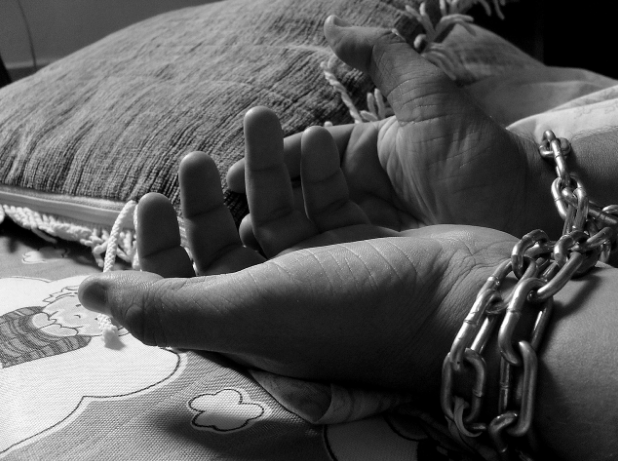
Nuns in Uganda are fighting against human trafficking, seeing it as an extension of the slave trade that plagued Africa for centuries. Sammis Reachers. CC0.
Ugandan Nuns Protest Trafficking, Seeing it as an Extension of the Slave Trade
Ugandan nuns are protesting human trafficking as part of the 6,000 member organization Association of the Religious in Uganda. They understand trafficking to be a basic human rights and dignity issue, seeing it as an extension of the slave trade. Their inspiration to fight the issue comes from a variety of sources including Biblical stories, African proverbs, Scripture, and the lives of the saints, notably St. Catherine of Siena, who said that silence kills the world. Groups of nuns have met with government representatives to implore them to combat the issue further.
At a three-day workshop in November 2018 organized by the Africa Faith and Justice Network, nuns examined the global issues facing Africa today, as well as the effects that the centuries of the slave trade have had upon the continent. The issue of human trafficking was seen in a much harsher light following that discussion, as the Africans participating in trafficking are essentially perpetuating the slave trade.
After the workshop, 32 nuns visited the Ministries of Internal Affairs; Foreign Affairs; Gender, Labour and Social Development; and the Uganda Human Rights Commission. These are departments that deal with travel outside Uganda, labor organizations, and citizens’ human rights.
The speaker of the Parliament of Uganda, Rebecca Kadaga, met with 13 Association-affiliated nuns after they petitioned her against abroad workers’ cases of slavery and torture. She said that she blames members of government for faltering on the issue. “Unfortunately, a number of people in government own labour export companies and I am told it is very lucrative so they continued,” Kadaga said, according to the Daily Monitor. Some of the workers who go abroad don’t come back. The nuns are also requesting that the government at least halt the employment of girls, because they are common targets for trafficking and sexual abuse. They also asked for law changes via harsher penalties for those caught trafficking.
"Human trafficking is dehumanising. It exposes our sisters and brothers to untold torture, sexual abuse and slavery. Some of our daughters are trafficked abroad and forced to have sexual intercourse with animals, while some are killed for organ transplant. For those lucky to return home, the trauma they have suffered incapacitates them and makes them social misfits," Sister Teresa Namataka, from Kenya, was quoted as saying in AllAfrica.
In all the meetings, a common point was expressed: a need for collaboration in fighting human trafficking. The nuns made a statement and called for a press conference, both of which caused the fight to gain more media attention. The nuns are currently working on setting up a joint meeting between stakeholders and collaborators to search for a way forward out of this human rights and dignity tragedy.
The religious international anti-trafficking organization Talitha Kum celebrates its 10th anniversary this year, and also recently launched the Nuns Healing Hearts campaign, beginning with a photography exhibition documenting the work the organization does around the world to combat trafficking.
Other issues facing Africa today include the devaluation of currency, as well as the adverse effects of globalization. Those are particularly felt through the destruction of local economies by the buildup of discarded objects like computers and refrigerators and the importation of poisonous objects. Africa has many social ills, but the nuns are starting with human trafficking, seeing it as the most alarming.
NOEMI ARELLANO-SUMMER is a journalist and writer living in Boston, MA. She is a voracious reader and has a fondness for history and art. She is currently at work on her first novel and wants to eventually take a trip across Europe.
The Earth Group Aims to Change the World Through Education and Nourishment
Newly Certified B Corp Collaborates with UN World Food Programme to Help Children Around the Globe.
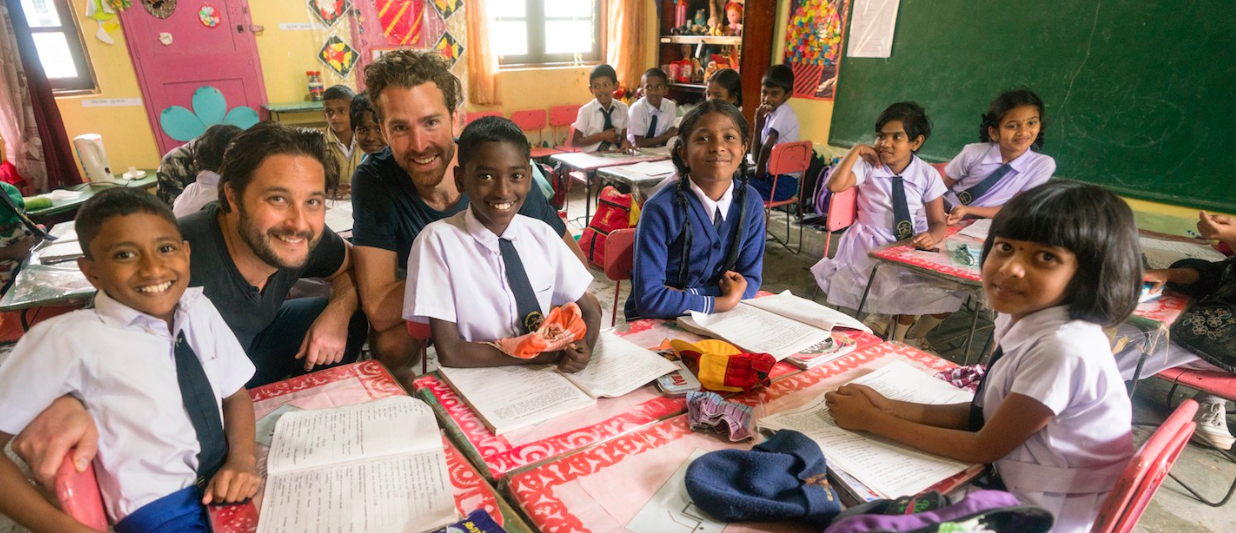
Kori Chilibeck and Matt Moreau at work for The Earth Group and World Food Programme in Sri Lanka. “Becoming a B Corp is an affirmation of what we’ve worked to achieve for so many years.”
The Earth Group is a Certified B Corporation that supports the United Nations World Food Programme (WFP) through donations that provide school meals, drinking water and education to children in the most troubled areas of our world.
To date, The Earth Group has helped fund more than 3.6 million meals to young school kids while helping them get an education in places like Tajikistan, Madagascar, Sri Lanka, Kenya, Bolivia and the Philippines. The B Corp is dedicated to informing consumers everywhere about the power of their everyday marketplace choices. For example, the simple purchase of a bag of Earth Coffee, one of three consumer products sold by the company, provides a schoolchild with meals for an entire week.
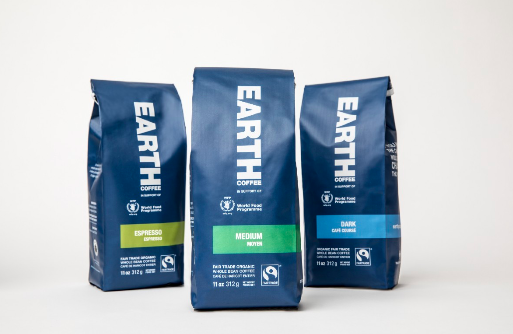
Purchase one bag of Earth Coffee online or in-store to feed one child for one entire week.
When Earth Group founders Matt Moreau and Kori Chilibeck met as fellow employees of a ski shop near the Rocky Mountains 14 years ago, they likely never imagined what lay ahead for them as individuals, new business owners or as proud supporters of the WFP.
Just forging this critical relationship with the WFP seemed daunting enough, but the maze-like process took far longer to realize than anyone could imagine. Eventually, they launched their social enterprise onto the large and complex world stage of fighting hunger, providing clean drinking water and building schools for children where none existed before.
It was at this point that Moreau and Chilibeck realized the real work had begun in earnest for their Canadian B Corp based in Edmonton, Alberta. Seeking to confirm that the aid they worked so diligently to fund would actually make the journey to the end-users, they traveled to Sri Lanka, Bolivia, Tajikistan and the Philippines to see for themselves.
As the photos and videos produced from these expeditions clearly testify, Moreau and Chilibeck landed in their natural element, surrounded by the children and co-workers they had been working so hard to support since creating The Earth Group. The expressions on the faces of not only the children and teachers but of Moreau and Chilibeck and the WFP country managers tell a tale of unselfish dedication.
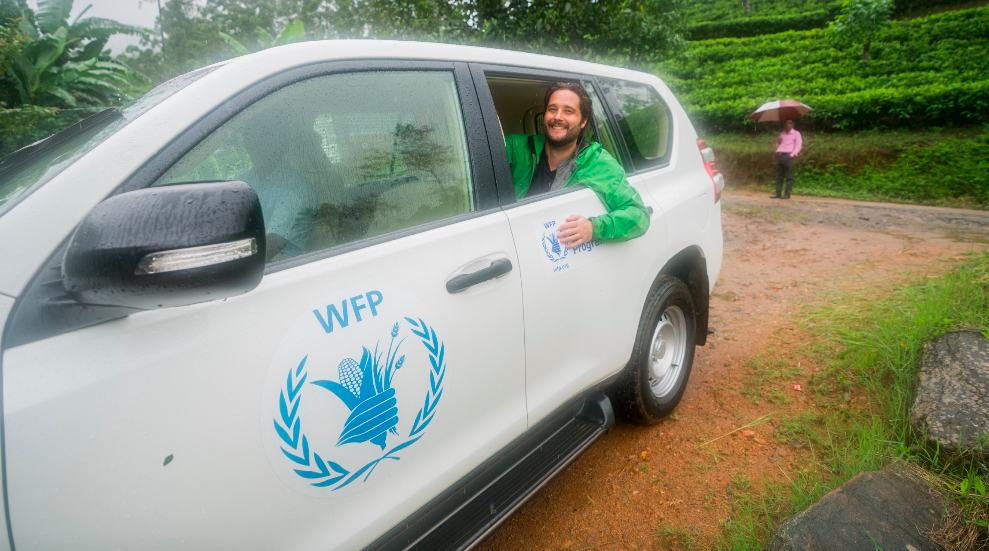
Kori Chilibeck in Sri Lanka hosted by the UN World Food Programme.
Seeing the Progress
The Earth Group maps its path to success through respect for the cultures they are trying to help. In many of these destinations, it is still frowned upon for female children to attend school. By respecting that posture yet also using the intellectual tools at hand, the company funds projects that often furnish female students with an extra helping of food to take home if they attend school, thereby allowing them to obtain an education, the family to benefit from the food, and the attitudes about females attending school to soften.
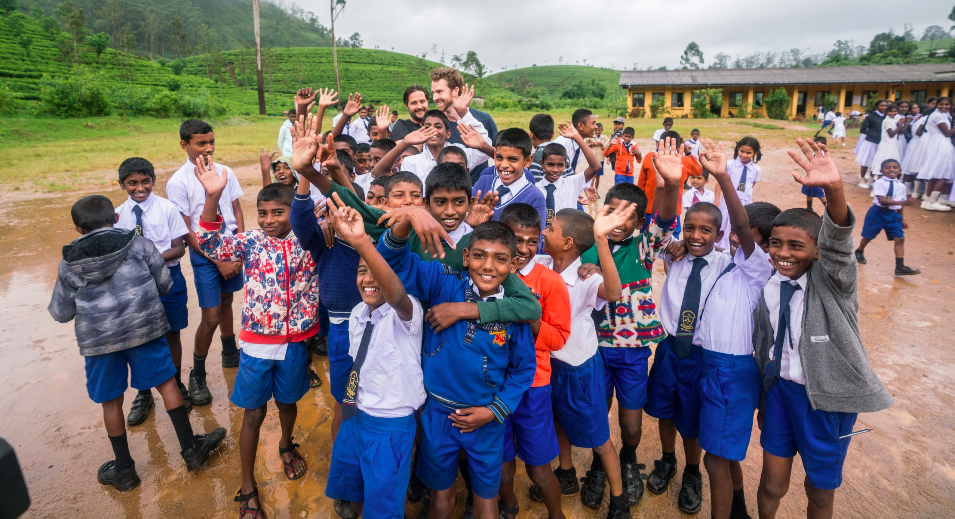
Schoolyard antics in Sri Lanka with Matt Moreau and Kori Chilibeck of The Earth Group.
The exhilaration of such remote expeditions reached its peak when the duo traveled to the Philippines, arriving in a volatile region where insurgents had blasted grenades and explosives just the day before. Their in-country WFP handlers changed safety tactics at once, and what was scheduled to be a multi-day trip ended up being a shortened-but-packed day of visiting the children in their classes, touring the school facilities, meeting the support staff and then continuing safely out of this troubled zone.
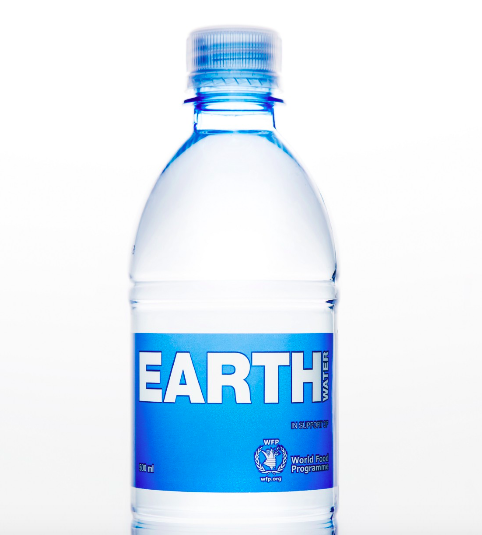
Back home in Edmonton, Moreau and Chilibeck rolled up their sleeves and focused on making their simple products-with-impact list: Fair Trade coffee from Eastern Africa, Indonesia, Central and South America; glacier-sourced drinking water from Whistler, British Columbia, and Rocky Mountain House, Alberta; and organic Alberta-grown teas, available in as many outlets as possible across Canada and around the world. Their online sales are activewith their triple bottom line—people, planet, profit—always remains in focus.
The Earth Group obtains its drinking water from Canadian glacier spring sources near the communities of Rocky Mountain House and Whistler, and their low-weight recyclable plastic bottles are landfill biodegradable. The Earth Group is also partnered with and supports Plastic Bank efforts to reduce ocean plastic.
Paying their dues during long negotiations with large corporations, Moreau and Chilibeck have now succeeded in signing major chain stores in Canada such as IKEA, Safeway, Sobeys, Whole Foods, Save On Foods, IGA and Metro. They also launched their product line in Japan, another major feat for any business run by two people, one employee and a group of dedicated volunteers.
Chilibeck is just back from the unrivaled adventure of presenting The Earth Group products in Japan to the largest food and beverage show in Asia called FOODEX. A receptive audience was excited to hear Earth Water is already available in their marketplace, with more Earth Group products sure to follow.
Path to Success
During certification in 2018 as a B Corporation, B Lab’s independent Standards Advisory Council confirmed The Earth Group’s three essentials: 1) social and environmental performance, 2) transparency and 3) accountability.
“B Corps values are synonymous with ours and embedded in our culture, so working toward the certification was both a pleasure and a reminder of being mindful of the numerous ways in which our work affects people and planet.”
And so it goes for these two young Canadian entrepreneurs and their “overnight success,” which has only taken them 14 years of collaboration, dedication, no-pay and near bankruptcy to arrive at a point where they can now see the results of their work. Having the blessings of understanding spouses has made it all possible, plus a bit of luck at critical moments.
Business gurus will tell start-up entrepreneurs timing is everything, and while this adage does have merit, the hard work and determination to succeed cannot be underestimated.
When Moreau and Chilibeck hatched their road map to success in a ski shop near the Rocky Mountains 14 years ago to create The Earth Group, at the same time Ben Cohen and Mal Warwick’s book Values-Driven Business: How to Change the World, Make Money, and Have Fun was synthesizing best practices and socially responsible business goals and laying the foundation for what would become the first B Impact Assessment, a process still used to certify B Corps.
B the Change gathers and shares the voices from within the movement of people using business as a force for good and the community of Certified B Corporations. The opinions expressed do not necessarily reflect those of the nonprofit B Lab.
GREGORY B. GALLAGHER is a Writer, Filmmaker, Musician and Producer.
THIS ARTICLE WAS ORIGINALLY PUBLISHED ON MEDIUM
Protecting Our Oceans from Ghost Traps
At any given time, there are thought to be over 360,000 tons of loose fishing gear floating through our oceans. These disregarded pieces of debris are a danger to our aquatic ecosystems, trapping fish, turtles, birds and even whales. Kurt Lieber assembled the Ocean Defender Alliance, a group of volunteer divers cleaning California’s coasts of ghost nets and traps.
Turning Plastic Trash Into Cash in Haiti
What would our world look like without plastic? From life-saving medical devices to computers to Tupperware, it’s changed the way we live, work and understand the world around us. But the same wonder material that has revolutionized so much is choking our oceans. It’s estimated that, every minute, an entire garbage truck worth of plastic hits our oceans. Otherwise put, 8 million tons of once-useful items find their way to global waters each year. There, over time, they break into tiny pieces called “microplastics,” which end up consumed by marine life.
For David Katz, fighting plastic pollution should start long before a soda bottle hits the tide. What’s more, he believes the very plastic waste that litters our shores and seas is anything but waste. In 2014, David launched the Plastic Bank, “a global network of micro-recycling markets that empower the poor to transcend poverty by cleaning the environment,” according to its website. The organization currently operates in Haiti, the Philippines, Indonesia and Brazil, and works like this: community members collect plastic waste (much of it post-consumer products like milk containers, detergent bottles and plastic bags) and bring it to Plastic Bank centers where it’s weighed and exchanged for cash. In Haiti, for example, more than 2,000 collectors have recovered around 7-million pounds of plastic since the organization arrived in 2015.
What was once considered waste can now be sold to major brands like Marks and Spencer and Henkle, who will use it to package and distribute their products in a more sustainable manner. As David Katz puts it, this “social plastic” is “empowering and precious”—something that bonds collectors in places like the Philippines and Haiti to brands and consumers around the world.
Indigenous Communities in Brazil Protest Encroachment on Land Rights
The annual Free Land protest takes on a new sense of urgency under Bolsonaro’s far-right government.

Photo of the Brazilian flag by by Rafaela Biazi on Unsplash.
Last week, more than 4,000 indigenous people from over 300 tribes across Brazil gathered in Brasilia to set up camp in front of government buildings for three days of cultural celebrations and protest.
While the Free Land protest is an annual event, it has taken on a new significance this year under president Jair Bolsonaro and his far-right government’s encroachment on the rights of native people and their territories. Al Jazeera writes that according to The Articulation of the Indigenous People of Brazil (APIB), the central organizer of the gathering, this year the event occurs in a "very grave context".
Recently, Bolsonaro promised to stop the development of new indigenous reserves, and to revoke the protected status of established land reserves. Bolsonaro has even gone so far as to publicly question the need for indigenous reserves at all.
The Guardian writes that among the new far-right government’s projects is a movement to enable commercial farming and mining on indigenous reserves. One of the reserves targeted is the Yanomami territory, Brazil’s largest reserve which already experiences threats from illegal gold miners.
“We are defenders of the land, we are defenders of the Amazon, of the forest,” Alessandra Munduruku, one of the representatives of the Munduruku tribe told the Guardian. “The white man is [...] finishing off our planet and we want to defend it.”
Instead of directly handling the demarcation of Brazil’s indigenous reserves, the government has given the project to the agriculture ministry, a branch controlled by the farming lobby, a powerful organization which has been known to oppose indigenous land rights (Guardian). Joenia Wapichana, the first indigenous congresswoman in Brazil, told Al Jazeera that during her time in office she had become aware of just how deeply the government was to indigenous rights. “The government is completely anti-indigenous,” she said, “[Jair Bolsonaro] is only open to those who defend mining and land grabbing, which is his intention.”
After days of encampment outside government buildings, indigenous groups began their annual march last friday. Protestors wore body paint and feathered headdresses, while beating beating drums and holding bows and arrows (Reuters).
The Guardian writes that last week Bolsonaro’s justice minister Sérgio Moro, requested the presence of Brazil’s national guard at the event, foreshadowing possible clashes with protestors. While Moro said that the guard would be working to “secure the public order and the safety of people and patrimony,” the guard said in a statement to Al Jazeera that it would use force “if necessary” to protect the “safety of the patrimony of the Union and its servers.”
In response to growing concern, the APIB released a statement saying that “our camp has been happening peacefully for the past 15 years to give visibility to our daily struggles. [...] We are not violent, violence is attacking our sacred right to free protesting with armed forces.”
In a statement to Reuters, David Karai Popygua, a native person from the state of Sao Paulo, summed up what is at stake for protestors. “Our families are in danger, our children are under threat, our people are being attacked,” he said. “In the name of what they call economic progress they want to kill our people.”
EMMA BRUCE is an undergraduate student studying English and marketing at Emerson College in Boston. While not writing she explores the nearest museums, reads poetry, and takes classes at her local dance studio. She is passionate about sustainable travel and can't wait to see where life will take her.

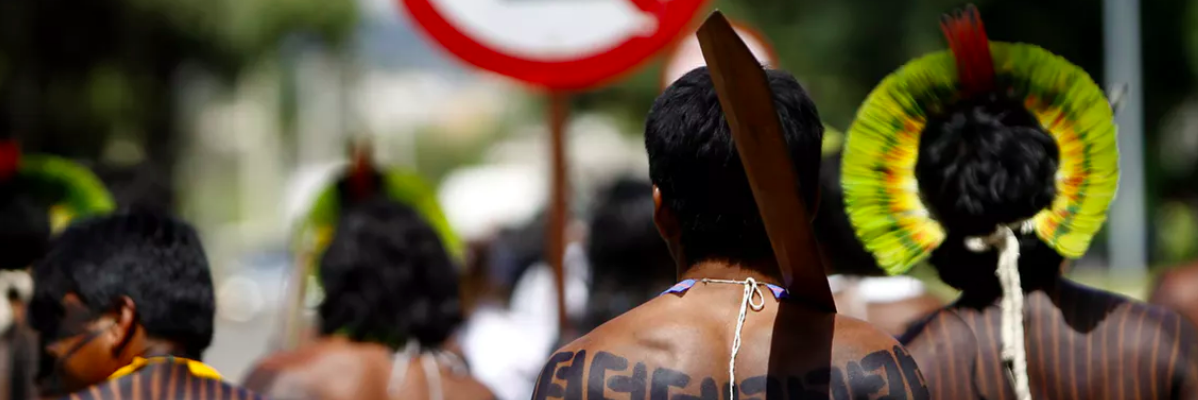
Fernando Bizerra Jr. / EPA
Only Local Amazonians Can Bring True Sustainable Development to Their Forest
The Brazilian government has earmarked a vast tract of Amazonian land for mining. The so-called “Renca” reserve sits in the last great wilderness area in the eastern Amazon and contains lots of unique rainforest wildlife. The controversial decision to allow mining has since been rewritten to clarify that development cannot take place on indigenous lands that lie within the “Renca”, and then put on hold by a federal judge, pending support from congress.
Protected areas such as the Renca are under threat right across the Amazon, and many have already been downsized or downgraded. Conservation is undermined by chronic underfunding of the national environmental protection agencies, the devolving of environmental enforcement to regional states that cannot cope, and by rural violence so severe that Brazil leads the world in assassinations of environmentalists.
The result of all this is an Amazon where 90% of logging is illegal and deforestation is increasing, where unprecedented wildfires burn each summer, and where large vertebrates are now going extinct for the first time since the Pleistocene.
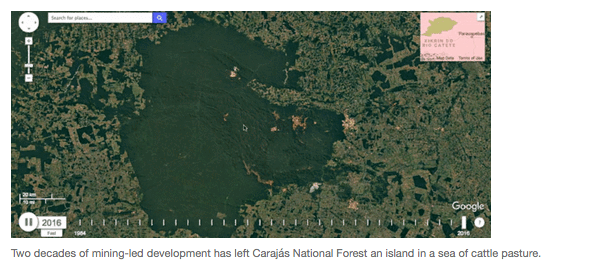
Brazil says mining and logging will boost national economic growth. Yet people in the Amazon remain some of the poorest and most marginalised in South America, and there is little evidence this kind of development has enhanced their quality of life. For example, the municipalities of Eldorado dos Carajás, Marabá, and Paraupebas, all of which surround large mining operations, have a human development index lower than that of Libya, a country stricken by civil war. And the construction of the controversial Belo Monte dam resulted in the regional capital of Altamira attaining the highest per capita homicide rate in all of Brazil, equivalent to 25 murders a day if scaled to a city the size of London.
Why has development failed Amazonians?
First, the companies driving the change are generally big multinationals based either in and around Rio and São Paulo (1,700 miles away) or abroad. Despite some municipal taxes, only a tiny portion of the profits remain locally.
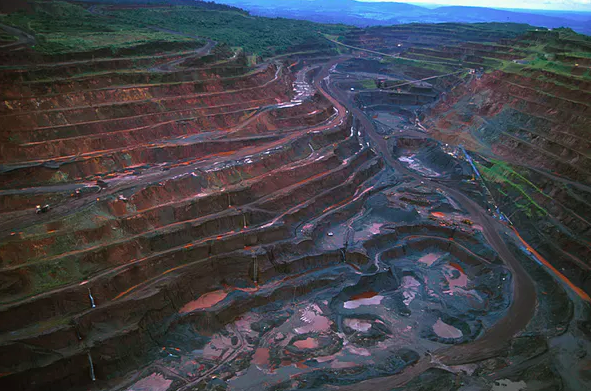
Carajás Mine, the largest iron ore mine in the world, is found within the Carajás National Forest (pictured above). T photography / Shutterstock
Development, as currently practised, also favours the wealthy over the poor. When protected areas are downgraded the chief beneficiaries are landholders who are able to log or mine their territory. Other social groups aren’t so lucky. Some are even actively attacked – either directly, as occurred in the assassination of ten landless movement squatters in a large Amazonian farm, or through legal changes, such as the downgrading of the rights of quilombolas, historical communities descended from African slaves, and indigenous peoples.
Brazil’s ongoing “car wash” corruption scandal has led to allegations of worrying links between large development projects in the Amazon, such as the Belo Monte dam, and the diversion of state funds to political parties. If the purpose of development is political gain, there can be little hope for regional citizens.
Are there alternative ways forward?
Both Amazonian people and forests would benefit if we stopped evaluating development schemes solely in terms of the profits they could generate. This sort of narrow, economic assessment cannot truly capture the value of the Amazon’s forests: how do you put a price on conserving unique species, or mitigating global climate change?
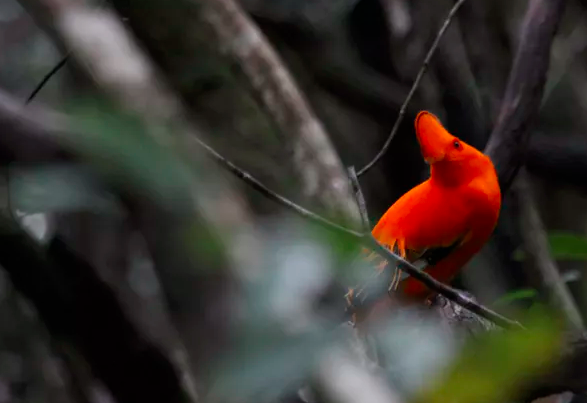
The Guianan Cock-of-the-rock (Rupicola rupicola) is one of northern Amazonia’s more spectacular inhabitants. Alexander Lees, Author provided
The forests of the Renca are some of the most dense and slow-growing in the Amazon basin. Even deforesting just 30% of the area would effectively emit more than four billion tonnes of CO₂ into the atmosphere – equivalent to Brazil’s entire fossil fuel emissions over the past ten years. Unless climate change forms part of the decision making process in the region, Brazil will fail to meet its international commitments such as the Paris agreement.
Development must also secure constitutional rights for everyone, not just those of the elites. Brazil currently has so called “differentiated citizenship”, where in practice there is a gradation of rights among citizens, depending on their race, social class or region.

Munduruku people map out their territory along the River Tapajos in Pará state. Larissa Saud, Author provided
Local action is often the only defence against the expansion of mining or dams. Recent examples of a grassroots success include the Munduruku indigenous people, who are forcing various concessions by resisting megadams on the middle Tapajós River. Another example is the practice of “counter-mapping” among indigenous peoples which entails them mapping their own territorial boundaries to defend their land from industrial agriculture, mining, dams and logging. These alternative approaches are the best way forward in the Renca too. Instead of opening up the area for mining multinationals, Brazil should recognise the rights of local people and empower them to lead decision-making. Brazil nut harvesting is already big in the local economy and, along with ecotourism and carbon-payments (being effectively paid to not chop down a forest), could deliver sustainable development, while leaving the minerals in the ground.
JOS BARLOW is a Professor of Conservation Science at Lancaster University.
ALEXANDER C. LEES is a lecturer in tropical ecology at Manchester Metropolitan University.
ERIKA BERENGUER is a Senior Research Associate at University of Oxford.
JAMES A. FRASER is a Lecturer in Political Ecology at Lancaster University.
JOICE FERREIRA is a researcher in Ecology at Federal University of Pará.
THIS ARTICLE WAS ORIGINALLY PUBLISHED ON THE CONVERSATION
How Small Science Is Creating Big Possibilities in Africa
Ofori Charles Antipem wears many hats—he’s an inventor, an entrepreneur and an advocate of STEM. Now, he’s bringing all his passions together, dedicating his life to bringing affordable science education to kids across Africa. The Science Set is Antipem’s creation, developed to give students access to a unique toolkit. Each set contains 45 scientific components and costs just $20. His next invention? Cheap and easy-to-assemble microscopes, carefully designed and built using 3D printed materials.
This Great Big Story was made possible by IBM Africa.
For Native Americans, US-Mexico Border is an ‘Imaginary Line’
Immigration restrictions were making life difficult for Native Americans who live along – and across – the U.S.-Mexico border even before President Donald Trump declared a national emergency to build his border wall.
Read More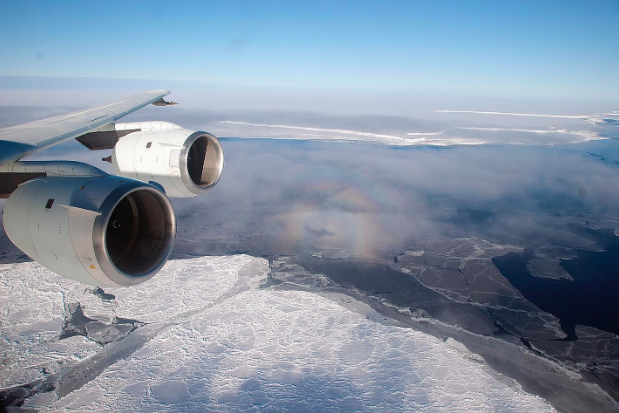
Flying over the Brunt Ice Shelf. NASA/Michael Studinger. CC 2.0 https://www.flickr.com/photos/nasa_goddard/5281037316/in/photolist-Up4XjE-8ZmvJ2-93EGpw
Iceberg Twice the Size of Manhattan Threatening to Break off Antarctica at any Moment
Antarctica’s Brunt Ice Shelf, the largest in the world, will soon lose a 660 square mile, almost 500 feet thick segment of ice—almost twice the size of the city of New York. The shelf is named for David Brunt, a British meteorologist and Physical Secretary of the Royal Secretary who organized the Royal Society Expedition to the Brunt Ice Shelf in 1955.
Two cracks in the shelf have been getting wider over the past few years. This process is known as calving: the splitting and shedding of ice chunks from the edge of a glacier. Glaciologists label these cracks or crevasses in the ice sheet as chasms. Chasm 1, the first fault line on the Brunt Ice Shelf, has been present and stable for over 35 years. But just lately, this crack has been edging north as fast as 2.5 miles a year. The second break, known as the Halloween crack, is upstream from what scientists call the McDonald Ice Rumples. These rumples form when the bottom of the ice shelf, which flows downhill toward the ocean, runs up against an underwater ridge. Chasm 1 is currently about 2.5 miles away from the McDonald Ice Rumples. Soon enough these two cracks will likely intersect, creating a massive iceberg that will begin to slowly float away from Antarctica.
Scientists closely observe the Brunt Ice Shelf with instruments measuring the distortion of the ice day by day. With the help of satellite images, ground penetrating radar and on-site drone footage, scientists have been able to track the progress of Chasm 1 and the Halloween crack.
This gigantic iceberg could elevate water levels enormously. According to National Geographic, rising sea levels could produce devastating effects on coastal areas, causing wetland flooding, aquifer and agricultural soil contamination with salt, destructive erosion, and habitat loss for fish, birds and plants. In the unlikely event that all the ice sheets and glaciers on earth melted, sea levels would rise by 216 feet.
This iceberg is not even the biggest to break off of the continent of Antarctica. In 2017, a glacier the size of Delaware broke off of the Larsen-C ice sheet:around 2,250 square miles in size. The biggestchunk to break off is Iceberg B-15. It measured around 4,200 square miles, larger than the island of Jamaica. It broke off from the Ross Ice Shelf in March 2000.
The Brunt Ice Shelf is not a stranger to cracks. Cracks that form during the summer have the potential to heal again over the winter months. Though cracks are common in ice shelves, the imminent calving of the Brunt Ice Shelf is unpredictable. The potential 660 square mile iceberg could raise sea levels drastically, impacting our coastal habitats and ultimately posing dangers to human health.

AMELIA BAUMANN is an aspiring writer and editor from New Jersey. I love to travel and am intrigued with the diversity of culture around the world. I am passionate about our environment and especially keeping our oceans clean.
The Eerie History and Uncertain Future of Japan’s Rabbit Island
Ōkunoshima and its imperiled bunny population remind us that wildlife and tourism don’t always mix.
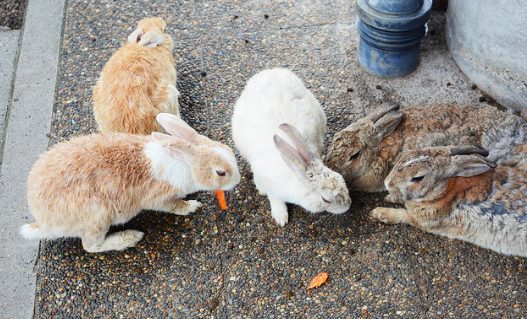
A cluster of bunnies on Rabbit Island. Cindy Pepper. CC BY-NC-ND 2.0
From its many “cat islands,” which boast more feline than human residents, to Jigokudani Monkey Park, where visitors can observe macaques bathing in the naturally occurring hot springs, Japan seems to overflow with fantastical wildlife enclaves. Perhaps the most adorable of all is Ōkunoshima, or “Rabbit Island”—but the cotton-tailed denizens for which this island is known belie its sinister past and ambiguous future.
While Ōkunoshima, located in the Hiroshima Prefecture, is a popular tourist destination for those looking to get their kawaii fix, it was once hidden from maps due to its clandestine status as a World War II military location. Production of chemical weapons in the island’s poison gas factory began in 1929, and apart from factory workers and army higher-ups, few citizens were aware of its existence.
Ōkunoshima was chosen for its location: discreet enough for goings-on there to remain under the radar, and far enough from densely populated cities like Tokyo to prevent mass casualties in case of an accident. The factory there eventually produced more than 6,000 tons of gas—primarily mustard gas and the irritant lewisite—before its closure at the end of the war. Chemicals wereould be shipped to Kitakyushu in the Fukuoka Prefecture to be weaponized, eventually resulting in more than 80,000 casualties (including and more than 6,000 deaths) among Chinese soldiers and civilians.
Despite the fact that Japan was a signatory to the 1929 Geneva Convention banning the use of chemical weapons, none of the country’s citizens were prosecuted for employing poison gas. After Japan’s defeat in the war, most of the Ōkunoshima factory was destroyed, but laboratory buildings, the shell of a power plant, an army barracks, and a few other edifices remain. In 1988, local governmental entities and citizens opened the Poison Gas Museum to pay tribute to this dark and little-known facet of Japanese history. Displays include the ineffective protective gear worn by workers at the factory, which left them vulnerable to exposure and subsequent illness, as well as equipment used to manufacture the gases.
So where did the bunnies enter the equation? We know that a colony of rabbits was brought to the factory during its operational years to test the effects of poisons, but beyond that, theories diverge. Some suggest that the original crop of rabbits was destroyed along with the factory, while others claim that workers set the bunnies free after the war. Another theory asserts that schoolchildren brought eight rabbits to the island in 1971, where they bred until they reached their current population of approximately 1,000.
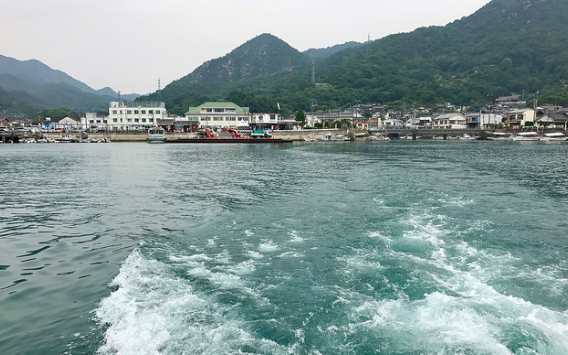
Tadanoumi Port viewed from the ferry to Ōkunoshima. Brian Shamblen. CC 2.0
Today, Ōkunoshima is easily accessible via a 15-minute ferry, and embodies peace, rest, and relaxation for tourists and locals alike. Visitors can easily explore it on foot (the island is less than 2.5 miles in circumference), collect souvenirs, dine, play tennis, swim in the ocean, and bathe in the hot spring—apart from communing with the wildlife, of course. Rabbit Island’s website describes it as a place to seek good fortune for your own family’s fertility, and advertises whipped ice cream and “original rabbit items” for sale, as well as octopus kelp rolls, a local delicacy known to pair well with sake.
Yet even the island’s thriving tourist industry and booming bunny population has a more sinister flip side. The wild rabbits depend on visitors for their food and water, but tourists often come bearing snacks that are harmful to the creatures’ delicate digestive systems—such as cabbage or vegetable peelings, which can cause fatal bloating. And while visitors are keen to share photos of their new fluffy friends online, social media has played a key role in destabilizing the rabbit population: Viral videos and articles have led to a vast influx of tourists in the past decade, and the resultant avalanche of snacks and treats has contributed to a breeding boom that the island’s ecosystem is unable to handle. These factors have combined to lower the bunnies’ life expectancy to only two years, compared to the three-to-five-year lifespan of the average wild rabbit.
The plight of the Ōkunoshima rabbits is just one example of the widespread harm social media has inflicted on wildlife populations across the globe: For instance, viral YouTube videos of slow lorises, wide-eyed nocturnal primates native to Southeast Asia, have led to people taking home lorises from the wild to keep as their own. Unfortunately, captivity is unhealthy for the animals, and they often end up relegated to props in tourist photos—or worse, sold into the illegal pet trade, and possibly slaughtered for use in cuisine or medicinals.

A curious bunny on Ōkunoshima seems to have mistaken the camera for a snack. Brian Shamblen. CC 2.0
Ultimately, bunny lovers need not be deterred from visiting Ōkunoshima, but following the rules is essential in order to treat the creatures kindly and foster their health and wellness. The Rabbit Island website lays out guidelines for responsible rabbit enthusiasts—including “refill water pans” and “check under your car,” as curious bunnies might hide underneath to escape the hot sun—and travelers can use their visit as an opportunity to educate friends and family about the unique perils posed to wildlife in the digital age. Approaching this mystical island mindfully is a small yet important step in helping the myriad diverse populations of the animal kingdom survive and thrive for many years to come.
TALYA PHELPS hails from the wilds of upstate New York, but dreams of exploring the globe. As former editor-in-chief at the student newspaper of her alma mater, Vassar College, and the daughter of a journalist, she hopes to follow her passion for writing and editing for many years to come. Contact her if you're looking for a spirited debate on the merits of the em dash vs. the hyphen.

The Great Australian Bight, South Australia. Aussie Oc at English Wikipedia. CC 3.0
This is Not a Drill: Keep Australia’s Coasts Oil-Free
The Great Australian Bight is known worldwide for its beautiful oceanic environment,home to diverse forms of marine life, and its coastline lined by the longest sea cliffs in the world. A bight is a large open bay; this specific bay runs from Cape Carnot in South Australia, all the way to Cape Pasley in Western Australia: over 700 miles of ocean and sky that thousands of whales, seals, fish, birds, plants, and surfers call home.
Equinor, a Norwegian oil company, has plans to carry out a drilling operation in the Great Australian Bight, ultimately turning it into a deepwater oil field. This operation would devastate the 85% of rare marine life that exists in the Bight. Not only is it endangering the various species that live among the coasts, but the increase in pollution could disrupt the people of Australia. A potential spill in the Bight could result in the death of several endangered species: killer whales, southern right whales, blue whales, dolphins, endemic Australian sea lions, and many more. The Bight also supports multi-billion dollar fishery, aquaculture, and tourism industries. Drilling would, most likely, halt if not destroy this economy altogether. Not unlike BP’s drilling expedition, the proposal for drilling in the Great Australian Bight could have severe consequences, and ultimately the same catastrophic ending as BP’s drilling operation could incur. 8 years after the BP oil spill, the Gulf is still experiencing significant impacts, and scientists expect them to continue. Scientists say that they may not know for another 30 or 40 years the extent of the effects. If the Equinor drilling operation resulted in another massive oil spill in our current environmental state, our economy and Earth would take much longer to bounce back than the BP oil spill. If this were to occur in summer, it would also not only affect Australia but also places as far away as northeastern Europe. If it were to happen in winter, the oil would most likely impact Kangaroo Island, the Eyre Peninsula and the Spencer Gulf in South Australia. It could also potentially reach the Victorian and Tasmanian coastline, heading towards New Zealand. Known the remarkable economic and environmental values that would be put at risk from Equinor’s drilling operation in the Great Australian Bight, this project should not be considered.
Equinor’s drilling plan has led activists and surfers worldwide to strike and start a viral movement, ‘#Fightforthebight,’ to save this Australian coastline. Surfers have paddled out in peaceful protests displaying signs with slogans like “Big oil has no future” or “Kill the Drill.” Several worldwide famous surfers that call Australia home, like Stephanie Gilmore, Nat Young, Mick Fanning, and many more, have signed an open letter concerning the Equinor’s drilling proposition and its potential impact on their coasts. To take action and help keep Australia’s coasts oil-free you can sign a Statement of Concern or donate here: https://www.fightforthebight.org.au/take-action-1 .
AMELIA BAUMANN is an aspiring writer and editor from New Jersey. I love to travel and am intrigued with the diversity of culture around the world. I am passionate about our environment and especially keeping our oceans clean.