
Ghassan Idriss knows firsthand the harmful effects of child marriage on society. Having married at a young age to a woman even younger than himself, Idriss and his wife faced struggles that so many other couples in his home country of Lebanon grapple with. Now, with three daughters of his own, Idriss is doing everything he can to educate those around him about the dangers of this antiquated institution. By hosting talks, he’s using his voice to spark change within his community.
Death Toll Rises in Tijuana
A few miles south of San Diego lies Tijuana, a favorite weekend getaway for Americans. Some Californians have even taken to living in Tijuana permanently to escape their state’s rising housing costs. However, life in Tijuana has changed drastically over the last few years as conflicts between rival drug cartels have caused the city’s murder rate to skyrocket. The situation presents a new set of risks for those wanting to visit the ever-popular tourist trap.
Read More
America’s public schools were meant to bring together children from all walks of life. Monkey Business Images/www.shutterstock.com
America’s Public Schools Seldom Bring Rich and Poor Together – and MLK Would Disapprove
Five decades after the assassination of Martin Luther King Jr., many carry on his legacy through the struggle for racially integrated schools. Yet as King put it in a 1968 speech, the deeper struggle was “for genuine equality, which means economic equality.” Justice in education would demand not just racially integrated schools, but also economically integrated schools.
The fight for racial integration meant overturning state laws and a century of history – it was an uphill battle from the start. But economic integration should have been easier. In the mid-18th century, when education reformers first made the case for inclusive and taxpayer-supported education, they argued that “common schools” would ease the class differences between children from different backgrounds.
As Horace Mann, the most prominent of these reformers, argued in 1848, such schools would serve to counter the “domination of capital and the servility of labor.” Learning together on common ground, rich and poor would see themselves in common cause – a necessity for the survival of the republic.
More than 150 years later, the nation has yet to realize this vision. In fact, it has been largely forgotten. Modern Americans regularly scrutinize the aims and intentions of the Founding Fathers; but the early designs for public education – outlined by Mann, the first secretary of education in Massachusetts, as well as by leaders like Henry Barnard, Thaddeus Stevens, and Caleb Mills – are mostly overlooked. Today, the average low-income student in the U.S. attends a school where two-thirds of students are poor. Nearly half of low-income students attend schools with poverty rates of 75 percent or higher.
Education historians, like myself, have generally focused their research and attention on racial segregation, rather than on economic segregation. But as income inequality continues to deepen, the aim of economically integrated schools has never been more relevant. If we are concerned with justice, we must revitalize this original vision of public education.
Shared community
Early advocates of taxpayer-supported common schools argued that public education would promote integration across social classes. They thought it would instill a spirit of shared community and open what Horace Mann called “a wider area over which the social feelings will expand.”
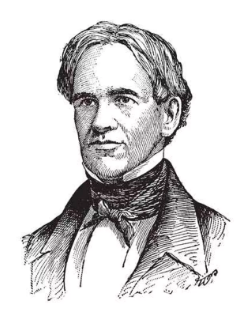
Horace Mann (1796-1859) was an early advocate of public education in the U.S. Fotolia/AP
And, generally speaking, it worked. The ultra-rich mostly continued to send their children to private academies. But many middle- and upper-income households began to send their children to public schools. As historians have shown, economically segregated schools did not systematically emerge until the mid-20th century, as a product of exclusionary zoning and discriminatory housing policies. Schools weren’t perfectly integrated by any means, particularly with regard to race. They were, however, vital sites of cross-class interaction.
Many prominent Americans – including U.S. presidents – were products of the public schools. Commonly, they sat side by side in classrooms with people from different walks of life.
But over the past half-century, students have been increasingly likely to go to school with students from similar socioeconomic backgrounds. Since 1970, residential segregation has increased sharply, with twice as many families now living in either rich or poor neighborhoods – a trend that has been particularly acute in urban areas. And segregation by income is most extreme among families with school-age children. Poor children are increasingly likely to go to school with poor children. Similar economic isolation is true of the middle and affluent classes.
Contemporary Americans commonly accept that their schools will be segregated by social class. Yet the architects of American public education would have viewed such an outcome as a catastrophe. In fact, they might attribute growing economic inequality to the systematic separation of rich and poor. As Horace Mann argued, it was the core mission of public schools to bring different young people together – to consider not just “what one individual or family needs,” but rather “what the whole community needs.”
Many parents do continue seek out diverse schools. A number of school districts have worked to devise student assignment plans that advance the aim of integration. And some charter schools are reaching this market by pursuing what has been called a “diverse-by-design” strategy. As demonstrated by research, diverse schools can and often do improve achievement across a range of social and cognitive outcomes, such as critical thinking, empathy and open-mindedness.
Largely overlooked, however, has been the political benefit of integrated schools. One rarely encounters the once-common argument that the health of American democracy depends on rich and poor attending school together. This is particularly surprising in an age of tremendous disparities in wealth and power. Members of Congress, on average, are 12 times wealthier than the typical American. Moreover, lawmakers are increasingly responsive to the privileged, even at the expense of middle-class voters.
If elites are isolated from their lower- and middle-income peers, they may be less likely to see a relationship of mutual commitment and responsibility to those of lesser means. As scholars Kendra Bischoff and Sean F. Reardon have argued, “If socioeconomic segregation means that more advantaged families do not share social environments and public institutions such as schools, public services, and parks with low-income families, advantaged families may hold back their support for investments in shared resources.”
What can be done?
Today more than 100 school districts or charter school chains work to integrate schools economically. Cambridge, Massachusetts, for instance, has four decades of experience balancing enrollments by social class, seeking to match the diversity of the city as a whole in each school.
This, of course, is only possible in a diverse place. Median family income in Cambridge is roughly US$100,000, while 15 percent of city residents live below the poverty line. It is also made possible through heavy investments in public education in the city. After all, it is far easier to convince middle-class and affluent parents to send their children to the public schools when per-pupil expenditures rival the highest-spending suburbs, as they do in Cambridge.
But not every district has Cambridge’s advantages. Nor does every district have similar political will.
The latter of those two constraints, however, may soon begin to change. Faced with a growing divide between rich and poor, Americans may begin to demand schools that not only serve young people equally from a funding standpoint, but also educate them together in the same classrooms.
Common schools by themselves are not enough to solve the problem of economic inequality. Yet if Americans seek to create a society in which the rich and the poor see themselves in common cause, common schools may be a necessary – and long overdue – step. We must come to see, in the words of Martin Luther King, that, “We are caught in an inescapable network of mutuality, tied in a single garment of destiny.”
Jack Schneider is an Assistant Professor of Education at the University of Massachusetts Lowell.
THIS ARTICLE WAS ORIGINALLY PUBLISHED ON THE CONVERSATION
Tides of Change : Japan to Resume Commercial Whaling
For more than thirty years, the island nation of Japan has fought to expand its commercial whaling operations. That fight has mostly been a losing one, with its efforts often being blocked by anti-whaling countries around the world and condemned by the International Whaling Commission, an organization whose members include Japan itself. However, Japan’s recently proposed exit from the commission will allow the country to reclaim one of its most time-honored traditions, and the move is drawing international criticism.

Two Minke Whales being loaded onto the Nisshin Maru. The ship has facilities on board which allow it to freeze and process whales while at sea. Australian Customs and Border Protection Service. CC BY-SA 3.0
In 1982 the International Whaling Commission, or IWC, imposed a global moratorium on all commercial whaling, save for subsistence whaling by Aboriginal communities. The moratorium went into effect in 1985 and was met with opposition from Iceland, Norway, and Japan, countries with strong whaling traditions. In Japan, whale meat generally served the same purpose that beef or lamb served in Western societies and this was especially true during hard times. In the 1940s as the country was recovering from World War 2, whale meat was the single most consumed meat among Japanese people, and it remained so through the 1960s. After the announcement of the IWC’s whaling ban, Japan petitioned for the right to continue whaling in the Antarctic for “scientific purposes” though the specific nature of its research remained unclear. Whale activists claimed that this “research whaling” was in fact, commercial whaling in disguise, and vessels like the Nisshin Maru, Japan’s largest whaling vessel and the world's only factory whaling ship, became a frequent target of animals rights groups, with some going so far as to board vessels of their own and try to disrupt the Maru’s whaling expeditions by obstructing its path. Earlier this year, Japan expressed a desire to develop new ships, fast enough to outrun those of the activists, but the plan appears to have been scrapped, as the Japanese government announced in late December that it will formally withdraw from the IWC, discontinue its operations in the Antarctic and resume commercial whaling operations in its own coastal waters. Though the demand for whale meat has diminished somewhat in Japan, the practice of whale fishing is still considered by many to be intrinsic to the country’s cultural identity.
Environmental conservation hinges on the idea that some of the Earth’s resources are non-renewable. Humans can hunt an animal to extinction, and that extinction creates an imbalance in the ecosystem that the animal once belonged to. The effects of that imbalance can, in turn, come back to haunt humans, either directly or indirectly. These are, however, relatively young ideas, and pitting them against hundreds of years of tradition is sure to be a test for all parties involved.
JONATHAN ROBINSON is an intern at CATALYST. He is a travel enthusiast always adding new people, places, experiences to his story. He hopes to use writing as a means to connect with others like himself.


Genking, a male-born Japanese TV personality and ‘genderless’ pioneer. _genking_/Instagram
Japan’s Gender-Bending History
I’m an anthropologist who grew up in Japan and has lived there, off and on, for 22 years. Yet every visit to Tokyo’s Harajuku District still surprises me. In the eye-catching styles modeled by fashion-conscious young adults, there’s a kind of street theater, with crowded alleyways serving as catwalks for teenagers peacocking colorful, inventive outfits.
Boutiques are filled with cosmetics and beauty products intended for both males and females, and it’s often difficult to discern the gender of passersby. Since a gendered appearance (“feminine” or “masculine”) often (but not always) denotes the sex of a person, Japan’s recent “genderless” fashion styles might confuse some visitors – was that person who just walked by a woman or a man?
Although the gender-bending look appeals equally to young Japanese women and men, the media have tended to focus on the young men who wear makeup, color and coif their hair and model androgynous outfits. In interviews, these genderless males insist that they are neither trying to pass as women nor are they (necessarily) gay.
Some who document today’s genderless look in Japan tend to treat it as if it were a contemporary phenomenon. However, they conveniently ignore the long history in Japan of blurred sexualities and gender-bending practices.
Sex without sexuality
In premodern Japan, aristocrats often pursued male and female lovers; their sexual trysts were the stuff of classical literature. To them, the biological sex of their pursuits was often less important than the objective: transcendent beauty. And while many samurai and shoguns had a primary wife for the purposes of procreation and political alliances, they enjoyed numerous liaisons with younger male lovers.
Only after the formation of a modern army in the late-19th century were the sort of same-sex acts central to the samurai ethos discouraged. For a decade, from 1872 to 1882, sodomy among men was even criminalized. However, since then, there have been no laws in Japan banning homosexual relations.
It’s important to note that, until very recently, sexual acts in Japan were not linked to sexual identity. In other words, men who had sex with men and women who had sex with women did not consider themselves gay or lesbian. Sexual orientation was neither political nor politicized in Japan until recently, when a gay identity emerged in the context of HIV/AIDS activism in the 1990s. Today, there are annual gay pride parades in major cities like Tokyo and Osaka.
In Japan, same-sex relations among children and adolescents have long been thought of as a normal phase of development, even today. From a cultural standpoint, it’s frowned upon only when it interferes with marriage and preserving a family’s lineage. For this reason, many people will have same-sex relationships while they’re young, then get married and have kids. And some even later resume having same-sex relationships after fulfilling these social obligations.
Contentious cross-dressing
Like same-sex relationships, cross-dressing has a long history in Japan. The earliest written records date to the eighth century and include stories about women who dressed as warriors. In premodern Japan, there were also cases of women passing as men either to reject the prescribed confines of femininity or to find employment in trades dominated by men.
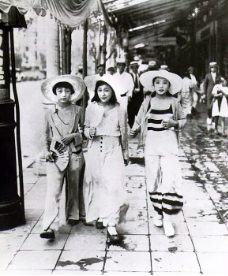
‘Modern girls’ (‘moga’) stroll along the Ginza, Japan’s Fifth Avenue, in 1928. Wikimedia Commons
A century ago, “modern girls” (moga) were young women who sported short hair and trousers. They attracted media attention – mostly negative – although artists depicted them as fashion icons. Some hecklers called them “garçons” (garuson), an insult implying unfeminine and unattractive.
Gender, at that time, was thought of in zero-sum terms: If females were becoming more masculine, it meant that males were becoming feminized.
These concerns made their way into the theater. For example, the all-female Takarazuka Revue was an avant-garde theater founded in 1913 (and is still very popular today). Females play the parts of men, which, in the early 20th century, sparked heated debates (that continue today) about “masculinized” women on stage – and how this might influence women off the stage.
However, today’s genderless males aren’t simply weekend cross-dressers. Instead, they want to shatter the existing norms that say men must dress and present themselves a certain way.
They ask: Why should only girls and women be able to wear skirts and dresses? Why should only women be able to wear lipstick and eye shadow? If women can wear pants, why shouldn’t men be able to wear skirts?
Actually, the adjective “genderless” is misleading, since these young men aren’t genderless at all; rather, they’re claiming both femininity and masculinity as styles they wear in their daily lives.
In this regard, these so-called genderless men have historical counterparts: In the late 19th and early 20th centuries, cosmopolitan “high collar” men (haikara) wore facial powder and carried scented handkerchiefs, paying meticulous attention to their Westernized appearances. One critic – invoking the zero-sum gender attitudes of the era – complained that “some men toil over their makeup more than women.” Conservative pundits derided the haikara as “effeminate” by virtue of their “un-Japanese” style.
On the other end of the masculinity spectrum were the nationalistic “primitive” men (bankara) who wore wooden clogs (geta) to complement their military-style school uniforms. Ironically, like their samurai predecessors – and unlike the foppish haikara – the macho bankara would engage in same-sex acts.
Japan’s ‘beautiful youths’
Probably the biggest contemporary inspiration for today’s genderless males are a spate of popular androgynous boy bands. Cultivated and promoted by Johnny & Associates Entertainment Company, Japan’s largest male talent agency, they include boy bands like SMAP, Johnny’s West and Sexy Zone.
Johnny’s West performs their song ‘Summer Dreamer.’
There’s a term for the type of teenage boy that Johnny & Associates cultivates: “beautiful youths” (bishōnen), which was coined a century ago to describe a young man whose ambiguous gender and sexual orientation appealed to females and males of all ages.
Similarly, Visual Kei is a 1980s glam-rock and punk music genre that features bishōnen performers who don flamboyant, gender-bending costumes and hairdos. In its new, 21st-century incarnation as Neo-Visual Kei, the emphasis on androgyny is even more pronounced, as epitomized by the prolific career of the androgynous Neo-Visual Kei pop star Gackt, who enjoys an international fan following.
Since the word “genderless” is misleading, a better term might be “gender-more,” in the sense that young men – especially in Tokyo – are insisting on the right to present and express themselves in ways that contradict and exceed traditional masculinity. In the long span of Japanese cultural history, there have been many things that were – and are – new under the sun. But genderless males aren’t among them.
JENNIFER ROBERTSON is a Professor of Anthropology and Art History at the University of Michigan.
THIS ARTICLE WAS ORIGINALLY PUBLISHED ON THE CONVERSATION
This Mega Kitchen Serves 40,000 People Each Day
With one of the largest kitchens in Asia, the Shri Saibaba temple in Shirdi, India, prepares, cooks and serves quantities of food that are nearly unimaginable. The kitchen dishes out as many as 40,000 meals per day, every day, all year long. It takes 600 people working in two daily shifts to prepare all this food. Yet despite all the effort, meals are free to the public. Why? The temple believes that those who are hungry deserve to be fed, and those who are thirsty deserve to be given a drink.

Like Dr. Seuss’ imaginary truffula trees, baobabs are endangered. Dudarev Mikhail/Shutterstock.com
Why Companies Should Help Pay for the Biodiversity That’s Good for Their Bottom Line
In the “The Lorax,” an entrepreneur regrets wiping out all the make-believe truffala trees by chopping them down to maximize his short-term gains. As the Dr. Seuss tale ends, the Once-ler – the man responsible for this environmental tragedy – tells a young child that “Unless someone like you cares a whole awful lot, nothing is going to get better. It’s not.”
Likewise, many corporations that profit from nature’s bounty, such as Unilever, Patagonia and Interface, appear to be reaching a similar conclusion. They are realizing that it’s time for the business world to do more about conservation.
We, two economists who have extensively researched natural resources and development, are proposing a new way to solve the problem of species and ecosystem loss. Corporations that benefit from biodiversity could forge what some are calling a “new deal for nature” by paying part of the tab for biodiversity conservation.
Biodiversity
Biodiversity, the variety of all natural ecosystems and species, is being lost at an unprecedented rate. According to the recent World Wildlife Fund Living Planet Report, the populations of mammals, birds, fish, reptiles and amphibians have fallen by an average of 60 percent in just over 40 years. The scientists Gerardo Ceballos, Paul R. Ehrlich and Rodolfo Dirzo have dubbed this decline and an impending wave of extinctions a “biological annihilation.”
We argue that many businesses are threatened by the loss of species and ecosystems, such as declining bee populations and dwindling stocks of fish, forests, wetlands and mangroves. Without an array of ecosystems and species, it’s tough for farmers to grow crops or ranchers to raise animals.
The pharmaceutical industry needs them to make and create drugs. For example, one team of U.S.-based researchers estimates that the pharmaceutical value of marine biodiversity for anti-cancer drug discovery could range from US$563 billion to as much as $5.7 trillion.
Insurance companies depend on coastal wetlands to minimize the impact of big storms. For example, an international group of researchers estimated that preserving one hectare of mangroves in the Philippinesyields more than $3,200 in flood-reduction benefits each year.
A global treaty, the Convention on Biological Diversity does set worldwide conservation targets. But we believe they may not be ambitious enough. Cristiana Pașca Palmer, who serves as the UN’s biodiversity chief, is considering raising the treaty’s targets to conserve at least half of terrestrial, inland water, coastal, and marine habitats to preserve biodiversity.
But the existing efforts to preserve biodiversity are not only inadequate. They’re underfunded.
New way to pay
Global biodiversity protection requires $100 billion annually, according to a previous study one of us conducted, yet the international community spends up to $10 billion each year on biodiversity conservation.
Much of the world’s biodiversity is in developing countries, which lack the financial wherewithal to adequately conserve it.

The Lorax could speak for the trees, but he lacked the cash to preserve them. Random House Children's Books
As we have explained with our colleague Thomas J. Dean in Science magazine, we believe that involving businesses in an international environmental agreement could help bridge a chronic funding gap.
A key part of this new deal for nature would be making the corporations that depend on the health of natural ecosystems and species help foot the bill to preserve biodiversity.
Benefiting the bottom line
Why would corporations want to get involved?
First off, it may benefit their bottom line. Big companies depend on robust natural ecosystems systems and individual species.
We calculate that the increase in revenue and profits from biodiversity conservation could generate between $25 billion and $50 billion annually to fund global conservation efforts.
The seafood industry stands to gain $53 billion annually from an increase in marine stocks. This could generate $5 billion to $10 billion each year to spend on preserving biodiversity.
The insurance industry could see an additional $52 billion from increasing the area of protected coastal wetlands with a similar investment.
Agriculture also has an incentive to protect habitats of wild pollinators, who along with managed populations enhance global crop production by an amount a global group of scientists estimates to be worth between $235 billion to $577 billion annually.
What’s more, there is growing evidence that when corporations engage in environmental stewardship, they become more attractive investmentsand their borrowing costs decline.
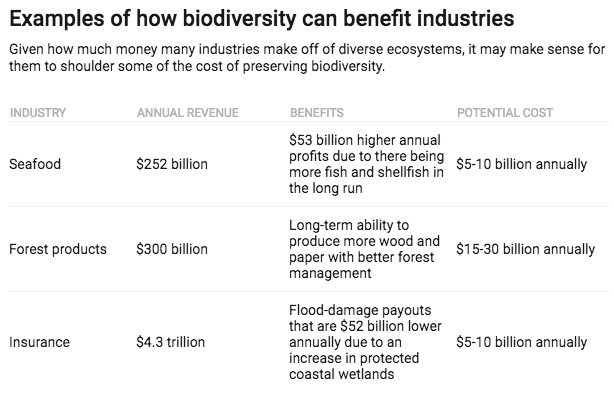
Chart: The Conversation, CC-BY-ND Source: Edward B. Barbier, Joanne C. Burgess and Thomas J. Dean Get the data
Corporate social responsibility
There is a second reason why big companies are sometimes willing to take action and pay to conserve biodiversity: corporate social responsibility, an ethos that builds into business models a commitment to protect the environment and benefit society.
Danone is a leader in this regard. It established the first partnership agreement between a global environmental convention and a private company over 20 years ago.
Since then, the multinational corporation best known for its yogurt and bottled water has promoted and supported the sustainable use and management of wetlands.
Danone, for example, worked with local partners to replant mangroves in approximately 500 Senegalese villages. We believe this reforestation project shows that investments in nature can be sustainable and scalable business models.
Danone, which earned $3 billion in profits in 2017, has its own $80 million “Ecosystem Fund.” It’s just one of an increasing number of companies taking concrete steps toward biodiversity protection, even though they are not required by any law or national policy.
More than 21 national and regional initiatives have been established to encourage partnerships between business and biodiversity conservation. For example, 10 of the 13 biggest seafood companies that control up to 16 percent of global marine catch and 40 percent of the largest and most valuable fisheries have come together to support an ocean stewardship initiative.
Similarly, the International Council of Forest and Paper Associations, which represents the global forest products industry, now engages in sustainable forest management certification.
The total area of forests worldwide deemed to be subject to sustainable practices supplying the industry increased from 62 million hectares, 12 percent of the total global forest area, in 2000, to 310 million hectares in 2015, according to the industry group. That’s more than half of the total global forest area. The annual revenue of the world’s 100 largest global forest, paper and packaging companies is over $300 billion.
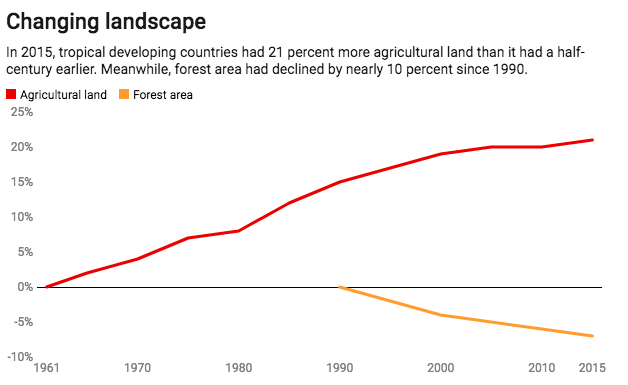
Chart: The Conversation, CC-BY-ND Source: World Bank Get the data
A new deal for nature
In addition to creating marine reserves, protecting forests, preserving the habitats of wild pollinators and conserving coastal wetlands, the private sector could also help finance conservation efforts in developing countries.
Based on our calculations, if the seafood sector were to set aside up to 20 percent of the increase in profits it gets from sustainably managing marine biomass stocks, it could conceivably spend up to $10 billion annually for marine biodiversity conservation.
And we estimate that by channeling up to 10 percent of the gains from sustainable forest management, the forest products industry could raise as much as $30 billion each year for investment in increasing protected forest area.
An agricultural sector contribution of around 10 percent of the benefits it derives from wild pollination services would amount to about $20 billion to $60 billion per year in additional financing for the conservation, creation and restoration of wild pollinator habitats.
All told, this business-world support could help close the $100 billion gap in global biodiversity conservation funding. This would go a long way toward slowing, and potentially reversing, biodiversity loss.
There are, of course, barriers to corporate conservation. The costs may be high. It may be hard for to businesses to assess the long-term value of biodiversity conservation benefits and integrate them into investment decisions. And it is possible that some of the corporations that take this step could be at a competitive disadvantage, especially in the short term.
But a number of companies are already showing that they believe investing in ecosystem preservation is worth it. In our view, corporate support for international biodiversity conservation is essential to prevent “biological annihilation.”
JOANNE BURGESS is an Assistant Professor of Economics at Colorado State University and EDWARD BARBIER is a Professor of Economics at Colorado State University.
THIS ARTICLE WAS ORIGINALLY PUBLISHED ON THE CONVERSATION
France Banned Food Waste in Supermarkets
Millions more meals can reach those who need them.

Produce at a market in Nice, France. M-Louis. CC BY-SA 2.0.
In 2016, France banned supermarkets from destroying or discarding unsold food products, requiring them to donate instead to food banks or local charities.
The law was written by Parliamentarian and former food industry minister Guillaume Garot, who believes that food waste is a national health and safety issue, akin to wearing a seatbelt. The campaign itself was the product of a grassroots movement by anti-poverty and food waste activists which eventually became a petition, lead by local councillor Arash Derambarsh.
Now that food waste has been outlawed in French supermarkets, Derambarsh has set his sights on European and ultimately global policy revisions around the issue. “Food is the basis of life, it is an elementary factor in our existence,” he told the Guardian.
While Derambarsh became a councillor to help people, he reports being called “naive and idealistic” because of the policy he hoped to implement surrounding food waste. “Perhaps it is naive to be concerned about other human beings, but I know what it is like to be hungry,” he said.
“When I was a law student living on about €400 a month after I’d paid my rent, I used to have one proper meal a day around 5pm. I’d eat pasta, or potatoes, but it’s hard to study or work if you are hungry and always thinking about where the next meal will come from.”
Now, grocery store managers in France with a 400 sq meter or larger footprint must sign contracts with local charities and food banks promising their edible expired items, or face a €3,750 ($4,500) fine per infringement.
According to Jacques Bailey, head of Banques Alimentaires, a network of french food banks, 5,000 charities rely on food banks, who in turn, receive almost half their donations from grocery stores. Under the law, these food banks are receiving larger amounts of better quality food products, enabling them to better reach the the people they serve. According to Bailey, an increase as small as 15% in donations from supermarkets will result in 10 million more meals served every year.
And yet, required donations are not the only way that France is fighting food waste. In 2014, Intermarche, one of the country’s supermarkets began selling produce that was deemed too “ugly” to sell at other markets. These “ugly” or misshapen produce are perfectly safe to eat, but have blemishes make them less marketable to consumers, resulting in their disposal before even seeing the grocery store isles. This initiative is particularly effective, as fresh fruits and vegetables are the most difficult items for charities and food banks to come by, and are necessary to a healthy diet. Intermarche’s initiative reached 13 million people after only one month of being implemented.
About a third of food produced is wasted worldwide. France has narrowed the food it wastes to 66 pounds per person every year. In comparison, Americans waste 200 billion pounds of food per year - 40% of all food produced in the country. The waste problem in America is partly due to the lack of regulation surrounding expiration dates, which are often selected at random and do not always reflect when items are safe to consume.
The rest of the world has a lot to learn from France’s policy. NPR writes that communities and governments worldwide are now reaching out to Garot, hoping for information that would help them reproduce France’s law in their own countries. Ultimately this change needs to be made, because, as Garot emphasized, supermarkets are not just businesses, they are places where humanity must be respected.
EMMA BRUCE is an undergraduate student studying English and marketing at Emerson College in Boston. While not writing she explores the nearest museums, reads poetry, and takes classes at her local dance studio. She is passionate about sustainable travel and can't wait to see where life will take her.

Forgotten, but not Gone: Zika’s Return to the Media
Earlier this week the Duchess Sussex of Meghan Markle canceled a trip to Zambia, citing exhaustion and concerns over the presence of Zika virus in the country. The Zika virus had been rather dormant in the media over the last year, all but vanishing in the wake of Trump speeches, trade wars, and Brexit. It had, however, remained a constant concern for those living in certain countries or traveling to them. Markle’s encounter with the Zika virus and the subsequent headlines have helped to push it back into public view, and once again, questions are being raised about its origin, transmission, and what is being done to fight it.

The Duchess of Sussex. Office of the Governor - General - GG.govt.nz. CC BY 4.0.
The Zika virus was first discovered in the Zika Forest in Uganda in 1947. The first recorded carriers were monkeys, but the forest was also home to over 70 species of mosquitoes, and they became the primary source of viral transmission. The disease was eventually discovered in humans in 1952, but for the most part remained confined to animals until 2007, when the first human outbreak was documented on the Island of Yap in the Federated States of Micronesia. In 2015, the virus made international headlines when Latin America and the Caribbean saw an explosion of human-related cases. As was the case in Africa, mosquitoes were the main culprits of transmission. However, in 2016, the virus saw a sharp decline in new cases, and with it a decline in news coverage.
Adults infected with Zika often display no symptoms. Those who do usually report mild fevers, rashes and muscle pain. The impact on unborn babies is far more devastating. Zika infections during pregnancy have resulted in miscarriages and babies being born with microcephaly, a condition in which a child's head is much smaller than it should be (Markle and husband Prince Harry had recently announced that they were expecting a child, and concern for the child’s welfare was thought to be Markle's main concern when she opted out of her trip to Zambia).
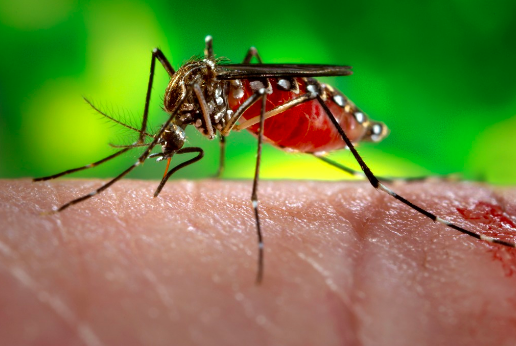
The Zika Virus is spread mainly through mosquito bites. James Gathany - https://phil.cdc.gov/phil/details.asp?pid=9257. Public Domain.
While a full-on cure for the virus remains elusive, health and government officials have been able to curb infections by going after the mosquitoes that carry and transmit the disease. In preparation for the 2016 Olympics in Rio de Janeiro, the Brazilian government launched a large-scale effort to fumigate the city for the insects, while in England a biotech company called Oxitec developed genetically modified mosquitoes, which, when released into the wild, would mate with infected mosquitoes and pass a gene on that would prevent those mosquitoes from reproducing. In the United States, The Centers for Disease Control made a point of advising those traveling to countries with high rates of infection to use insect repellants.

Microcephaly- a birth defect linked to the Zika virus. Centers for Disease Control and Prevention. Public Domain.
Many world issues persist despite the ebbing and flowing of news coverage. Though not the hot story it once was, the Zika virus is still a viable threat and will remain so until a vaccine is found. Those traveling to countries that have been deemed areas of risk should take all necessary precautions to prevent infection, or, like the Duchess of Sussex, simply the put the trip off until another time.
JONATHAN ROBINSON is an intern at CATALYST. He is a travel enthusiast always adding new people, places, experiences to his story. He hopes to use writing as a means to connect with others like himself.

Mask off: How Beijing is Managing its Smog Problem
Earlier this month, California made national headlines when the worst wildfire in the state’s history covered parts of it in smoke, creating yet another worry for citizens already vexed by the high cost of living and rising homelessness. Some news stations, hoping to illustrate the seriousness of the matter, stressed that the air quality in California was “worse than Beijing’s,” an announcement that prompted many locals to don the air masks that one often sees in images of the Chinese capital. In media, locally, and abroad, Beijing has become synonymous with bad air. The internet is peppered with images of skyscrapers draped in brown or grey fog. But recent efforts by the government have made some headway in the battle with Beijing’s notorious smog and could give us insight into how to battle this problem at home.
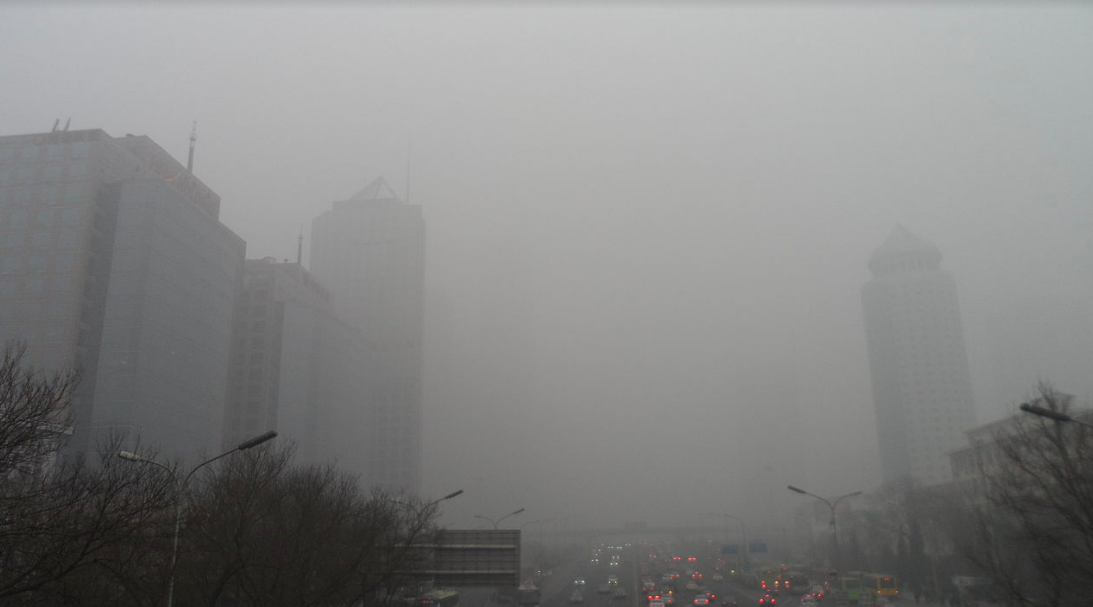
A smoggy day in Beijing. By 螺钉 - Own work, CC BY-SA 3.0, https://commons.wikimedia.org/w/index.php?curid=24944427
Those who have been to Beijing know that air quality is but one of many dangers; crossing an intersection can be like an action movie at times and drinking water out of the tap is generally a bad idea. Smog, however, is the issue most often associated with Beijing in the media. Fortunately, Beijing is aware of its reputation and has taken steps over the last few years to improve its air quality. The city has pledged to shut down 1000 manufacturing factories by 2020 to help reduce smog. It is also experimenting with new technology. Early last year Beijing employed the use a solar-powered air vacuum to help clean up the city’s air. Developed by Dutch designer Daan Roosegaarde, the Smog Free Tower sucks up 30,000 cubic meters of polluted air per hour. The air is then cleaned at a nano level and released back into the city. In a particularly bold move, Beijing's government is investigating the possibility of switching from coal to natural gas as the primary source of heating for millions of households. This shift will be implemented gradually, as concern for the well-being of Beijingers during the winter months supersedes the need for cleaner air.

Dan Roosegaardes's Smog Free Tower. By Bic - Own work, CC BY-SA 4.0, https://commons.wikimedia.org/w/index.php?curid=47801218
People can change, and ideally, their reputations will change as well. Beijing’s efforts to clean its air shows an environmental consciousness that contradicts its reputation as a dirty industrialized city. As smog becomes a more recurrent issue in cities and courtiers around the world, communities that once judged China for its smog may get to learn a thing or two about how to fight it.
JONATHAN ROBINSON is an intern at CATALYST. He is a travel enthusiast always adding new people, places, experiences to his story. He hopes to use writing as a means to connect with others like himself.

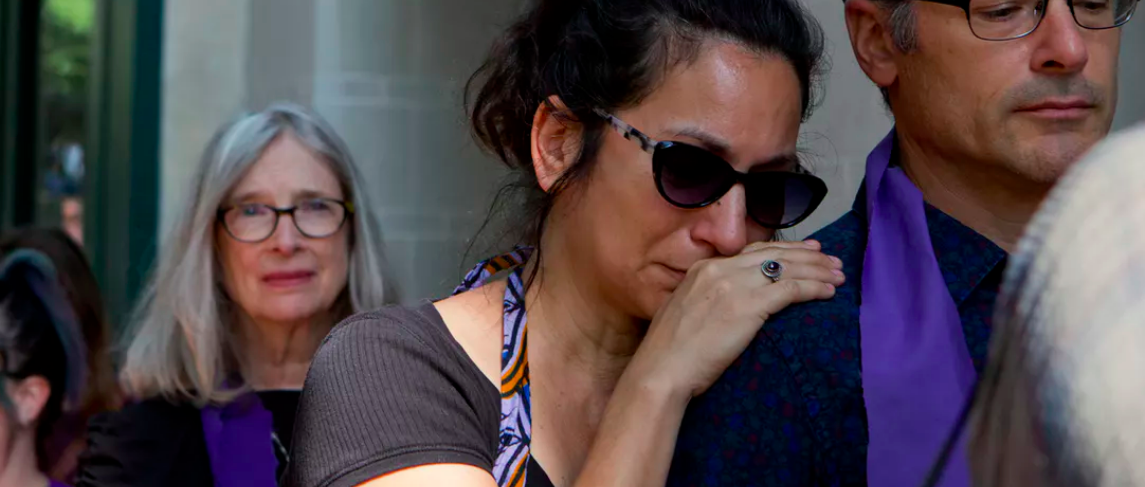
Mourners wait to attend the funeral of Heather Heyer in Charlottesville, Virginia, Aug. 16, 2017 after Heyer was killed attending a rally to protest white nationalism. Julia Rendleman/AP Photo
Why Bigotry is a Public Health Problem
Over a decade ago, I wrote a piece for a psychiatric journal entitled “Is Bigotry a Mental Illness?” At the time, some psychiatrists were advocating making “pathological bigotry” or pathological bias – essentially, bias so extreme it interferes with daily function and reaches near-delusional proportions – an official psychiatric diagnosis. For a variety of medical and scientific reasons, I wound up opposing that position.
In brief, my reasoning was this: Some bigots suffer from mental illness, and some persons with mental illness exhibit bigotry – but that doesn’t mean that bigotry per se is an illness.
Yet in the past few weeks, in light of the hatred and bigotry the nation has witnessed, I have been reconsidering the matter. I’m still not convinced that bigotry is a discrete illness or disease, at least in the medical sense. But I do think there are good reasons to treat bigotry as a public health problem. This means that some of the approaches we take toward controlling the spread of disease may be applicable to pathological bigotry: for example, by promoting self-awareness of bigotry and its adverse health consequences.
In a recent piece in The New York Times, health care writer Kevin Sack referred to the “virulent anti-Semite” who carried out the horrific shootings at the Tree of Life synagogue in Pittsburgh on Oct. 27, 2018.
It’s easy to dismiss the term “virulent” as merely metaphorical, but I think the issue is more complicated than that. In biology, “virulence” refers to the degree of pathology, or damage, caused by an organism. It differs from the term “contagious,” which refers to a disease’s communicability. But what if, in an important sense, bigotry is both virulent and contagious – that is, capable of both causing damage and spreading from person to person? Wouldn’t a public health approach to the problem make sense?
The harm to victims and to haters
There is little question among mental health professionals that bigotry can do considerable harm to the targets of the bigotry. What is more surprising is the evidence showing that those who harbor bigotry are also at risk.
For example, research by psychologist Dr. Jordan B. Leitner has found a correlation between explicit racial bias among whites and rates of circulatory disease-related death. Explicit bias refers to consciously held prejudice that is sometimes overtly expressed; implicit bias is subconscious and detected only indirectly.
In effect, Leitner’s data suggest that living in a racially hostile community is related to increased rates of cardiovascular death for both the group targeted by this bias – in this case blacks – as well as the group that harbors the bias.
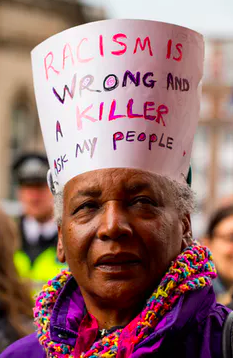
A woman protests racism at a London rally.John Gomez/Shutterstock.com
Writing in the journal Psychological Science, Leitner and his colleagues at the University of California Berkeley found that death rates from circulatory disease are more pronounced in communities where whites harbor more explicit racial bias. Both blacks and whites showed increased death rates, but the relationship was stronger for blacks. Although correlation does not prove causation, clinical psychology professor Vickie M. Mays and colleagues at UCLA have hypothesized that the experience of race-based discrimination may set in motion a chain of physiological events, such as elevated blood pressure and heart rate, that eventually increase the risk of death.
It’s unlikely that the adverse effects of discrimination and bigotry are limited to blacks and whites. For example, community health sciences professor Gilbert Gee and colleagues at UCLA have presented data showing that Asian-Americans who report discrimination are at elevated risk for poorer health, especially for mental health problems.
But are hatred and bigotry contagious?
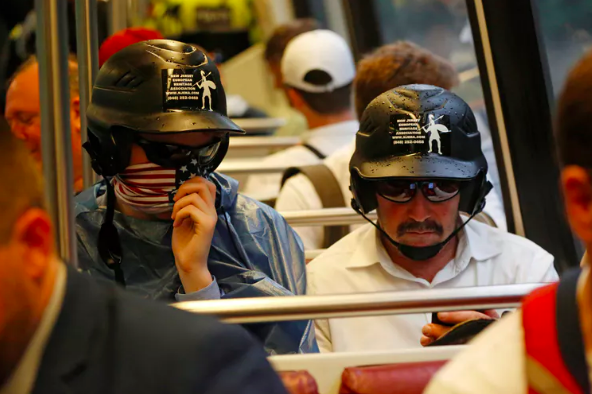
Supporters of white nationalist Jason Kessler on a subway car after an Aug. 12, 2018 rally in Washington, D.C. Jim Urquhart/Reuters
As the adverse health effects of bigotry have been increasingly recognized, awareness has grown that hateful behaviors and their harmful effects can spread. For example, public health specialist Dr. Izzeldin Abuelaish and family physician Dr. Neil Arya, in an article titled “Hatred – A Public Health Issue,” argue that “Hatred can be conceptualized as an infectious disease, leading to the spread of violence, fear, and ignorance. Hatred is contagious; it can cross barriers and borders.”
Similarly, communications professor Adam G. Klein has studied the “digital hate culture,” and has concluded that “The speed with which online hate travels is breathtaking.”
As an example, Klein recounted a chain of events in which an anti-Semitic story (“Jews Destroying Their Own Graveyards”) appeared in the Daily Stormer, and was quickly followed by a flurry of anti-Semitic conspiracy theories spread by white supremacist David Duke via his podcast.
Consistent with Klein’s work, the Anti-Defamation League recently released a report titled, “New Hate and Old: The Changing Face of American White Supremacy.” The report found that,
“Despite the alt right’s move into the physical world, the internet remains its main propaganda vehicle. However, alt right internet propaganda involves more than just Twitter and websites. In 2018, podcasting plays a particularly outsized role in spreading alt right messages to the world.”
To be sure, tracking the spread of hatred is not like tracking the spread of, say, food-borne illness or the flu virus. After all, there is no laboratory test for the presence of hatred or bigotry.
Nevertheless, as a psychiatrist, I find the “hatred contagion hypothesis” entirely plausible. In my field, we see a similar phenomenon in so-called “copycat suicides,” whereby a highly publicized (and often glamorized) suicide appears to incite other vulnerable people to imitate the act.
A public health approach
If hatred and bigotry are indeed both harmful and contagious, how might a public health approach deal with this problem? Drs. Abuelaish and Arya suggest several “primary prevention” strategies, including promoting understanding of the adverse health consequences of hatred; developing emotional self-awareness and conflict resolution skills; creating “immunity” against provocative hate speech; and fostering an understanding of mutual respect and human rights.
In principle, these educational efforts could be incorporated into the curricula of elementary and middle schools. Indeed, the Anti-Defamation League already offers K-12 students in-person training and online resources to combat hatred, bullying, and bigotry. In addition, the Anti-Defamation League report urges an action plan that includes:
Enacting comprehensive hate crime laws in every state.
Improving the federal response to hate crimes.
Expanding training for university administrators, faculty and staff.
Promoting community resilience programming, aimed at understanding and countering extremist hate.
Bigotry may not be a “disease” in the strict medical sense of that term, akin to conditions like AIDS, coronary artery disease or polio. Yet, like alcoholism and substance use disorders, bigotry lends itself to a “disease model.” Indeed, to call bigotry a kind of disease is to invoke more than a metaphor. It is to assert that bigotry and other forms of hatred are correlated with adverse health consequences; and that hatred and bigotry can spread rapidly via social media, podcasts and similar modes of dissemination.
A public health approach to problems such as smoking has shown demonstrable success; for example, anti-tobacco mass media campaigns were partly responsible for changing the American public’s mind about cigarette smoking. Similarly, a public health approach to bigotry, such as the measures recommended by Abuelaish and Arya, will not eliminate hatred, but may at least mitigate the damage hatred can inflict upon society.
RONALD W. PIES is an Emeritus Professor of Psychiatry, Lecturer on Bioethics & Humanities at SUNY Upstate Medical University and a Clinical Professor of Psychiatry atTufts University School of Medicine.
THIS ARTICLE WAS ORIGINALLY PUBLISHED ON THE CONVERSATION
VIDEO: The 12-Year-Old Scientist Taking On Flint's Water Crisis
When Gitanjali Rao first heard about the water crisis in Flint, Michigan, she wanted to help in any way she could. Now, at only 12 years old, Gitanjali is the proud inventor of “Tethys,” a portable device that detects lead in water. Named “America’s Top Young Scienist,” Gitanjali hopes to inspire other kids to get moving and make a difference in their own communities.
Grappling with Sexism: Female Wrestlers in Mongolia
There’s an old legend in Mongolia: A woman wrestler once dressed up as a man and entered an all-male wrestling competition, defeating all challengers. She then pulled up her jacket and revealed her breasts, shocking everyone in attendance. From them on, all wrestlers were required to compete bare-chested, a failsafe to ensure that Mongolia’s prized “manly” tradition remained that way. While the legend may or may not be true, the practice of bare-chested wrestling in Mongolia is real, as is the practice of banning women from the sport. Despite achieving international fame in grappling, female Mongolian wrestlers are still unable to compete in their own native games.
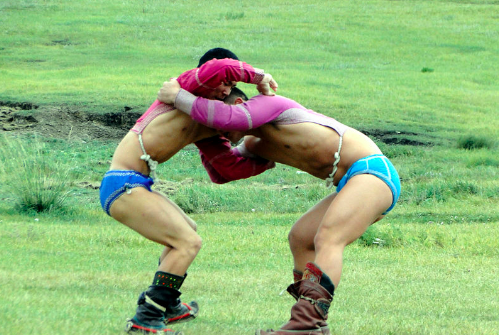
Mongolian Wrestling. A. Omer Karamollaoglu. CC BY 2.0.
The Nadaam festival is held every year in July and is the single most anticipated sporting event in the country. Short for “Eriin Gurvan Naadam” (the three games of men), it is a celebration of the three traditional sports of Mongolia: wrestling, archery, and horseback riding. Nadaam dates back to the 13th century when Genghis Khan would throw celebrations for soldiers after successful military campaigns. After Kahn’s death, warlords continued the tradition, encouraging combat sports in order to prepare men for military service. Nadaam endured and developed throughout the centuries, and today, it is the Mongolian equivalent of the Super Bowl or World Cup. The games are typically held in July. Hundreds of small, county level events lead up to the main competition, which is held in the Mongolian capital of Ulaanbaatar. Wrestling is often featured as the centerpiece of the competition, and in Mongolian, is referred to as “Bokh,” which means “durability.”
Mongolia experienced a socialist revolution in 1921 that brought with it an emphasis on male-female equality and gradually these values led to women being allowed to compete in Nadaam, but only in archery and horse racing. To fill the void, female grapplers turned their attention to other grappling sports. Soronzonboldyn Battsetseg won a bronze medal for judo in the 2012 Olympics in London, while Sumiya Dorjsuren won a silver medal in judo in the 2016 Olympics and then went on to win gold in the World Judo Championships in 2017. Both women are national heroes in Mongolia, and yet, Nadaam remains closed to them.
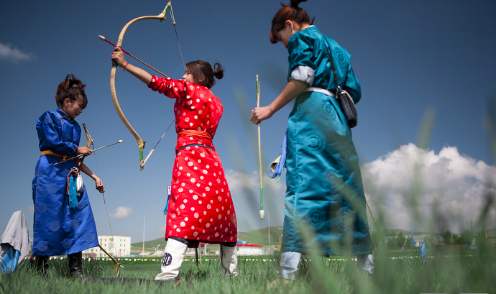
Female archers preparing for Nadaam. Taylor Weidman. CC BY SA-3.0.
The fact that a sport has to be guarded against an entire group people suggests a fear that these people could be competent in the sport. Like the wrestler in the old legend, women grapplers like Soronzonboldyn and Sumiya are barred from competing in Bokh, not because they aren't capable, but because they are. Judo is a widely recognized grappling sport, practiced by professional athletes, law enforcement officials, and ordinary citizens in literally every country on the planet. It would not be a stretch to assume that the grit and skill required to master Judo would translate well to Mongolian Bokh, and that the current barring of women from Bokh in Mongolia seems to be more about maintaining a status quo than anything else. When female grapplers will have a chance to challenge this standard is anyone’s guess.
JONATHAN ROBINSON is an intern at CATALYST. He is a travel enthusiast always adding new people, places, experiences to his story. He hopes to use writing as a means to connect with others like himself.

‘This is Africa’: Depictions of Black People in Mainland China
Earlier this year, Black Panther premiered in theaters around the world. The latest in a string of comic book-themed films turned out to be more of a cultural event than a mere movie. Black Panther broke records in the United States, as well as Great Britain, North and South Korea, and East and West Africa, dispelling the long-held Hollywood myth that “black films don’t travel.” Though fictional, the film struck a chord with audiences, as it featured a predominantly black cast and did not put them into the stereotypical roles often lamented by moviegoers. The film, however, was not as successful in Mainland China. Despite the fact that China is a major trading partner with the African continent, many Chinese moviegoers bristled at the idea of seeing Africans up close.

Chadwick Boseman, star of the movie Black Panther, appearing at Comic-Con in San Diego. Gaga Skidmore. CC BY SA-2.0
China was relatively closed to foreign trade until Deng Xiaoping's economic reform in 1978. Because of this, interactions with non-Chinese people are still a relatively new phenomenon. There is also a traditional standard in China that equates lighter skin with a comfortable, indoor lifestyle, and darker skin with peasantry, having to labor in fields under the hot sun. This combined with exposure to western media creates an environment that can be less than hospitable to blacks. Last year, an exhibit at the Hubei Provincial Museum in Wuhan titled, “This is Africa”, featured a portrait of a young African boy placed next to the portrait of a monkey. The exhibit was visited by over 100,000 people before criticism from the African community prompted museum officials to dismantle it, and the museum curator to take responsibility for the presentation. In February of this year, the same month Black Panther premiered, China’s Central China Television (CCTV) network came under fire when it aired a skit featuring a Chinese actor in blackface. Beijing issued a statement saying it was opposed to racism of any kind, but did not apologize for the skit.
Western nations are by no means immune to racial prejudice. While the Civil Rights movement of the 1960’s attempted to resolve many of the racial schisms that split the United States, lingering prejudices remain in various parts of the country. In recent years, proponents of racism have become more desperate, and less discreet. In January, the president of the United States allegedly referred to El Salvador, Haiti, and various African nations as “shithole countries,” seemingly forgetting his role as chief diplomat. Perceptions of Africa, and by extension those of African descent, are still slanted by the media, and media still accounts for much of the world’s education. This creates a quandary for those who have to live day-to-day under the banner of these stereotypes.

The CCTV building in Beijing. Verdgris. CC BY SA-3.0
There are some things that we believe because it serves us to believe them. Racism today is more than mere ideology. Like sexism, racism has evolved into a cultural standard, feeding into a lifestyle standard that is enjoyed, or not enjoyed, by millions of people around the world. As we begin to tinker with the idea racism, we also tinker with the standards it creates in our societies-some people are bound to get upset. At the same time, this tinkering opens new possibilities for growth, for all the parties it applies to. It refutes old characterizations of people and cultures and encourages us to make connections that we may not have considered before. All change involves a degree of pain and uncertainty, but we can only move forward, confident that the benefits of our efforts will justify the challenges.
JONATHAN ROBINSON is an intern at CATALYST. He is a travel enthusiast always adding new people, places, experiences to his story. He hopes to use writing as a means to connect with others like himself.

Dozens of Migrants Disappear in Mexico as Central American Caravan Pushes Northward
The Hondurans who banded together last month to travel northward to the United States, fleeing gangs, corruption and poverty, were joined by other Central Americans hoping to find safety in numbers on this perilous journey.
Read MoreIndigenous Women in Canada Have Filed a Class Action Lawsuit Over Coerced Sterilization
This practice has affected over 60 women and is a product of racism in Canada’s medical system.

Royal University Hospital in Saskatchewan, Canada. Wendy Cooper. CC BY-NC-SA 2.0
While Canada is known for its progressive policies surrounding human rights and health care, this assumption can often lead to overlooking the country’s history of institutionalized discrimination against indigenous people.
Recently, sixty women have come forward to join a class action lawsuit against doctors in Saskatchewan demanding compensation for forced sterilization. According to a report in the Guardian, these women have had their fallopian tubes tied, burned, or cut, in public government funded hospitals when they were unable to properly consent. This practice not only violates medical ethics, but Canadian law. Although this practice was exposed in 2015, reported cases have continued up to 2017.
In an interview with NPR, Alisa Lombard, the lawyer representing the women said that, “while they were in the throes of labor, they would be approached, pressured, harassed to sign consent forms [for sterilization] in some cases. In other cases, there was no such signing of a consent form. And in yet other cases, they would revoke consent either on the operating table or shortly after they had actually signed.”
This new occurrence of forced sterilization follows a disturbing trend of forced or coerced sterilization that has disproportionately affected - if not only affected - women of color, women with disabilities, incarcerated women, and indigenous women. It stems from the eugenics movement of the nineteenth and twentieth centuries that used racist and ableist ideology to justify forced sterilization of people that were not seen as ‘fit’ to reproduce. The perpetuation of this warped and inhumane theory has become clearly evident in Canada’s upcoming lawsuit.
According to Lombard, “When Indigenous women go in for these health care services and reproductive health care services in the most vulnerable state, I think, a woman can be - having gone through childbirth myself, I can say that this is not the time to have a conversation about whether you ever want to do that again. There are other better times. And so why it happens in one simple word, I think we can just say discrimination - racism, quite plainly.”
Lombard and her team uncovered that Saskatchewan health cards are embossed with a capital R. She says that the R is part of a historic practice indicating that the person holding it is registered as an indigenous person. Thus, the patient’s identity is readily available to their doctor.
While the lawsuit has yet to be certified, Amnesty International said that they would lobby the UN Committee Against Torture in order to pressure the Canadian government to act. According to Amnesty’s Jacqueline Hansen, the organization has examined comparable instances of coerced or forced sterilization in Mexico, Chile, and Peru.
“It’s always done for a very specific reason. It is clear that it’s been linked to policies around wanting to ensure a group of people doesn’t reproduce,” Hansen told the Guardian. “Ultimately, this is about women who are supposed to have the right to make decisions about their bodies, having that right taken away from them.”
EMMA BRUCE is an undergraduate student studying English and marketing at Emerson College in Boston. While not writing she explores the nearest museums, reads poetry, and takes classes at her local dance studio. She is passionate about sustainable travel and can't wait to see where life will take her.

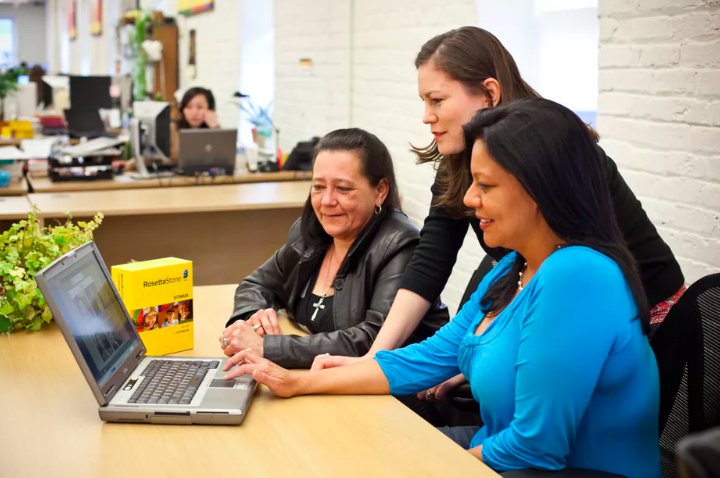
Members of the Chitimacha language team (from left to right) Sam Boutte, Kim Walden and Rachel Vilcan use the new language software for the first time. Author provided
Renaissance on the Bayou: The Revival of a Lost Language
In the summer of 1930, at the dawn of the Great Depression, a 21-year-old linguist named Morris Swadesh set out for Louisiana to record the area’s Native American languages, which were disappearing rapidly.
Morris and his peers were in a race against time to document them, and in the small town of Charenton on the Bayou Teche, he encountered Benjamin Paul and Delphine Ducloux, members of a small tribe called Chitimacha – and the last two speakers of their language.
But today, if you visited the Chitimacha reservation, you’d never know that their language went unspoken for half a century.
Over the past several decades, many Native American tribes have participated in what has become a robust language revitalization movement. As their populations of fluent speakers dwindle and age, tribes want to ensure that their heritage languages are passed on to the next generation – before it’s too late.
But because the Chitimacha tribe had no living speakers for a number of decades, it made the challenge that much greater. In the end, the story of the language’s decline, loss and rebirth is a remarkable example of cultural survival.
Why document a language?
Unlike some other cultural legacies, languages leave no trace in the archaeological record. There’s often no trace in the written record, either.
Only a small portion of the world’s estimated 7,000 languages are well-documented in places like dictionaries and grammar books. Those that are least well-documented are the most endangered.
Many dead or dying languages contain exotic features of verbal and written communication. Chitimacha, for example, doesn’t use a word “be” in phrases like “she is reading.” Instead, speakers must use a verb of position, such as “she sits reading” or “she stands reading.” These are things that challenge linguists’ understanding of how language works.
By working with Ben and Delphine, Morris was trying to capture a small piece of that linguistic diversity before it vanished.
One day, with Morris sitting on Ben’s porch dutifully scribbling down his every word in a composition notebook, Ben finished a story (a riveting tale of how the Chitimacha first acquired fire by stealing it from a mythical old blind man in the west). He then went on to tell Morris:
There were very many stories about the west. I believe I am doing well. I have not forgotten everything yet. When I die, you will not hear that sort of thing again. I am the only one here who knows the stories.
Ben passed away three years later, and Delphine not long thereafter. After their deaths, it seemed the Chitimacha language was doomed to silence.
Why do languages die?
How does a language come to have only two speakers? Why have so many Native American languages become endangered? The causes are manifold, but there are two main ones: sharp reductions in the population of the community that speaks the language, and interruptions in the traditional means of transferring the language from one generation to the next.
In the past, the former caused the most damage. Native American peoples were decimated by European diseases and subject to outright warfare.
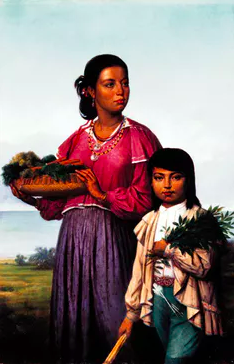
A portrait of two Chitimacha by French-born painter François Bernard (1870). Wikimedia Commons
Prior to European contact, the Chitimacha were lords of the bayou, with a territory stretching from Vermillion Bay in the west to present-day New Orleans in the east. They were expert canoe-makers and wielded extensive knowledge of the region’s labyrinthian network of waterways.
But by the time the French arrived in present-day Louisiana in 1699, the tribe’s numbers had dwindled to around 4,000, their communities gutted by European diseases that spread faster than the Europeans themselves.
After a protracted war with the French, they retreated deep into the bayou, where the their reservation at Charenton sits today. The 1910 census recorded just 69 people living there.
Only later did the second cause of language decline occur, when children on the reservation were sent to the infamous Carlisle Indian School in Pennsylvania, which interrupted the transmission of the language to the next generation.
Ben and Delphine, born in the latter half of the 1800s, were part of the last generation to learn the language at home. Eventually their parents and many of their peers passed away, leaving them as the last two speakers of the language.
Renaissance on the bayou
Ben probably never imagined that the efforts of him and Delphine would spark the tribe’s linguistic renaissance, awakening their language from 60 years of silence.

Delphine Ducloux was one of the two last speakers of the Chitimacha language, prior to its revival. State Library of Louisiana
In the early 1990s, cultural director for the tribe Kim Walden received a call from the American Philosophical Society Library informing her that they had all of Morris’ notebooks, and even his drafts for a grammar manual and dictionary, which totaled hundreds of pages in all. Thus began the herculean effort to revive the language.
The tribe put together a small-but-dedicated team of language experts, who set out to learn their language as quickly as possible. They began to produce storybooks based on Ben and Delphine’s stories, and word lists from the dictionary manuscript.
In 2008, the tribe partnered with the software company Rosetta Stone on a two-year project to create computer software for learning the language, which today every registered tribal member has a copy of. This is where I came in, serving as editor and linguist consultant for the project, a monumental collaborative effort involving thousands of hours of translating, editing, recording and photographing. We’re now hard at work finishing a complete dictionary and learner’s reference grammar for the language.
Today, if you stroll through the reservation’s school, you’ll hear kids speaking Chitimacha in language classes, or using it with their friends in the hall. At home they practice with the Chitimacha version of Rosetta Stone, and this past year the tribe even launched a preschool immersion program.
The kids even make up slang that baffles adult ears, a sure sign that the language is doing well – and hopefully will continue to thrive, into the next generation and beyond.
Author Danny Hieber presents the story of the Chitimacha language at the University of California’s Grad Slam competition.
DANIEL W. HIEBER is a PhD Candidate in Linguistics at the University of California in Santa Barbara.
THIS ARTICLE WAS ORIGINALLY PUBLISHED ON THE CONVERSATION

People protest the shrinking of Bears Ears National Monument. AP Photo/Rick Bowmer
Why Native Americans Struggle to Protect Their Sacred Places
Forty years ago the U.S. Congress passed the American Indian Religious Freedom Act so that Native Americans could practice their faith freely and that access to their sacred sites would be protected. This came after a 500-year-long history of conquest and coercive conversion to Christianity had forced Native Americans from their homelands.
Today, their religious practice is threatened all over again. On Dec. 4, 2017, the Trump administration reduced the Bears Ears National Monument, an area sacred to Native Americans in Utah, by over 1 million acres. Bears Ears Monument is only one example of the conflict over places of religious value. Many other such sacred sites are being viewed as potential areas for development, threatening the free practice of Native American faith.
While Congress created the American Indian Religious Freedom Act to provide “access to sacred sites,” it has been open to interpretation. Native Americans still struggle to protect their sacred lands.
Land-based religions
Native Americans have land-based religions, which means they practice their religion within specific geographic locations. As Joseph Toledo, a Jemez Pueblo tribal leader, says, sacred sites are like churches; they are “places of great healing and magnetism.”
Some of these places, as in the case of Bears Ears National Monument, are within federal public lands. As a Native American scholar, I have visited many of these places and felt their power.
For thousands of years, tribes have used Bears Ears for rituals, ceremonies and collecting medicines used for healing. The different tribes – the Hopi, Navajo, Ute Mountain Ute, Ute Indian Tribe and the Pueblo of Zuni – have worked to protect the land. Together they set up a nongovernmental organization, the Bears Ears Inter-Tribal Coalition to help conserve the landscape in 2015.

Native American tribes believe Bears Ears is the last of undisturbed sacred lands. Mark Stevens, CC BY-NC-SA
The tribes believe Bears Ears is one of the last large undisturbed areas in the lower 48 states and contains the spirits of those who once lived there. Bears Ears Navajo elder Mark Maryboy emphasized, “It’s very important that we protect the earth, the plants, and special ceremonial places in Bears Ears for future generations — not just for Native Americans, but for everybody.”
Sacred landscape
My great-grandparents, Páyotayàkχkumei and Kayetså’χkumi, (translated as Aims-while-flying-through-the-air and Hollering-in-the-air), were well-known religious leaders on the Blackfeet reservation. They lived in the foothills of the south side of the reservation. However, they went into the mountains and onto public lands in an area now called the Badger-Two Medicine in northcentral Montana to practice their religion.
My great-grandfather traveled into Badger canyon to trap eagles and gather their feathers which he used in ceremonies and for divine protection. My great-grandmother gathered medicinal plants used in healing ceremonies. Together they prayed and sought solitude in this sacred landscape.
Similar to Bears Ears, the Badger-Two Medicine, a 130,000-acre area within the Lewis and Clark National Forest, became embroiled in a controversy over potential natural resource development between 1982 and 2017. The Blackfeet tribe argued that these lands were sacred. And that tribal members, such as my great-grandparents, had used these lands for years for spiritual purposes.
The Blackfeet tribe ultimately succeeded in stopping development, but only after a 35-year-long fight with the Department of Interior, which initially approved almost 50 oil and gas leases. In 2017 Interior Secretary Jewell canceled the last of these leases. This means these public lands will not be used for natural resource development in the future.
Now my family and other Blackfeet, who have used the Badger-Two Medicine for millennia, can use these public lands for their religious practice in solitude.
Forty years later
The reality is, however, that not every dispute between tribes and the U.S. government ends up in favor of the tribes. Historically, Native American tribes have struggled to explain why certain landscapes are sacred for them.
In 1988, just 10 years after the passage of the American Indian Religious Freedom Act, the Supreme Court considered a case involving the construction of a U.S. Forest Service road through undeveloped federal lands sacred to northern California tribes in the Six Rivers National Forest.
The lower court had ruled in favor of the Yurok, Karok and Tolowa tribes stating the road would impact their religious practice.
However, the Supreme Court reversed the decision, ruling that building a road through a sacred landscape would not prohibit the tribes “free exercise” of religion.
The tribes lost, because the Supreme Court viewed the American Indian Religious Freedom Act as a policy and not a law with legal protections.
Ultimately, the road was not built because Congress stepped in and added this sacred area to the existing Siskiyou Wilderness, which is a protected area by federal law.
What was noteworthy in the SCOTUS deliberations, though, was the dissenting opinion of Justice William Brennan, who defended land-based religions. He said,
“Native American faith is inextricably bound to the use of land. The site-specific nature of Indian religious practice derives from the Native American perception that land is itself a sacred, living being.”
Indeed, religion scholars such as Yale professor Tisa Wenger point outthat “the most important religious freedom issues for Native Americans” center around protecting their sacred places.
At a time when the Trump administration has created a new task force to address discrimination against certain religious groups, the exclusion of Bears Ears and other places of religious significance from these discussions raises important questions about religious freedom in the United States and also the legacy of the American Indian Religious Freedom Act.
ROSALYN R. LAPIER is an Associate Professor of Environmental Studies at The University of Montana.
THIS ARTICLE WAS ORIGINALLY PUBLISHED ON THE CONVERSATION
Border Crisis: Where American Myth Meets Reality
Once upon a time, there was a highway that stretched 2,448 miles across the American landscape, from Chicago, Illinois to Santa Monica, California. Constructed in 1926, Route 66 actually no longer exists—having been replaced by the Interstate Highway System over the years. This ghostly road, which exists only in historical snapshots, relics, and memories, once represented the heart of American folklore.
Read MoreGreece’s Lifejacket Graveyard
High up in the sunburnt hills of Lesvos, Greece lies a black and orange heap of plastic. It is large, about the size of an Olympic swimming pool, but its vastness pales in comparison to the scope of the reasons why it is there—the half a million and growing masses of displaced refugees who have washed up upon the island’s shores.
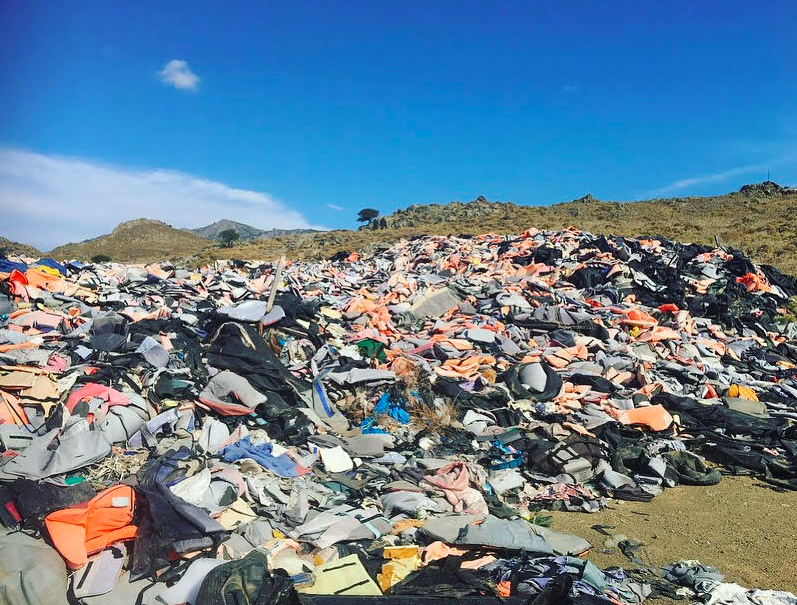
Lesvos is a major port for refugees fleeing chaos in the middle east, mostly from war-torn Afghanistan and Syria. The journey across the sea can be deadly. Refugees often pay over $5000 to smugglers who will bring them across the Mediterranean to supposedly safe ports in Europe, but there is no guarantee that the smugglers have not been bribed for one reason or another, or that the journey will be successful.
The black and orange heaps rotting in the hills of Lesvos are made up of lifejackets and boats that belonged to those who made it over, but in those quiet mountains one can almost hear the whispering of the hundreds of thousands who were lost on the way. A closer look reveals children’s floaties, some painted with princess decals, some emblazoned with the message, This is not a flotation device.
Once in Lesvos, the owners of these lifejackets were carted into packed camps, where many of them have remained for years. Conditions in the Moria camp in particular have been widely maligned by human rights organizations around the world. The camp was made to hold 2,000 people and now holds over 6,000, according to official reports, though many believe that the number has exceeded 8,000. Refugees live in cramped makeshift tents that flood when it rains, and the camps are overrun by disease, mental illness stemming from severe trauma, and chaos.
Following the Arab Spring in 2011, which catalyzed revolutions across the Middle East, Syria and many other countries experienced a mass exodus, leading to the flood of people seeking asylum in Europe that has come to be known as the modern refugee crisis.
Many refugees are university-educated professionals, fleeing in hopes of finding a better life for themselves and their families. But once in Europe, they are often caught up in bureaucratic tangles that keep them stagnant in the camps for years at a time, despite the fact that many already have family members in other parts of the continent.
Thousands of volunteers have flocked to the island in order to help. Nonprofits like A Drop in the Ocean host lessons and English classes for refugees, and facilitate the safe landings of newly arrived boats. Others work to provide hygienic services, like the organization Showers for Sisters, which provides safe showers and sanitary products to women and children.
Lesvos itself still functions in part as a tourist town, though it is mostly populated by volunteers, refugees, and locals. Not far from the lifejacket graveyard is the pleasant seaside town of Molyvos, which boasts sandy beaches and restaurants serving traditional Greek fare.
Much of the island is made up of open space, populated only by olive groves and forests, open plains, and abandoned buildings. The lifejacket graveyard is located in one such empty plain, and except for scavenging seagulls and goats, the area is empty, making the presence of the rotting heaps of plastic even more unnerving.
The only other proof of human presence to be found lies on a wall of graffiti nearby a garbage dump, marked by the sentiment Shame on you, Europe.
The combination of the Greek financial crisis and rising tides of nationalism occurring at the same time as the height of the refugee crisis have caused xenophobic sentiments to allow these horrifically overcrowded camps to mar this beautiful tropical island, which once inspired the Greek poet Sappho to write her legendary love poems.
The lifejacket graveyard has been left standing partly because of island officials’ lack of motivation to clean it up, and partly as a statement, a tribute to the thousands who still wait in limbo on the island.
If you are interested in helping out, organizations mostly need financial contributions, legal aid, medical aid, translators, and publicity. It is also possible to volunteer, and opportunities and detailed information can be found at sites like greecevol.info.



Eden Arielle Gordon
Eden Arielle Gordon is a writer, musician, and avid traveler. She attends Barnard College in New York.