LGBTQ+ Life and Culture in Iceland

Iceland has a reputation for being one of the safest and most accepting countries for the LGBTQ+ community, travelers as well as Icelandic residents.

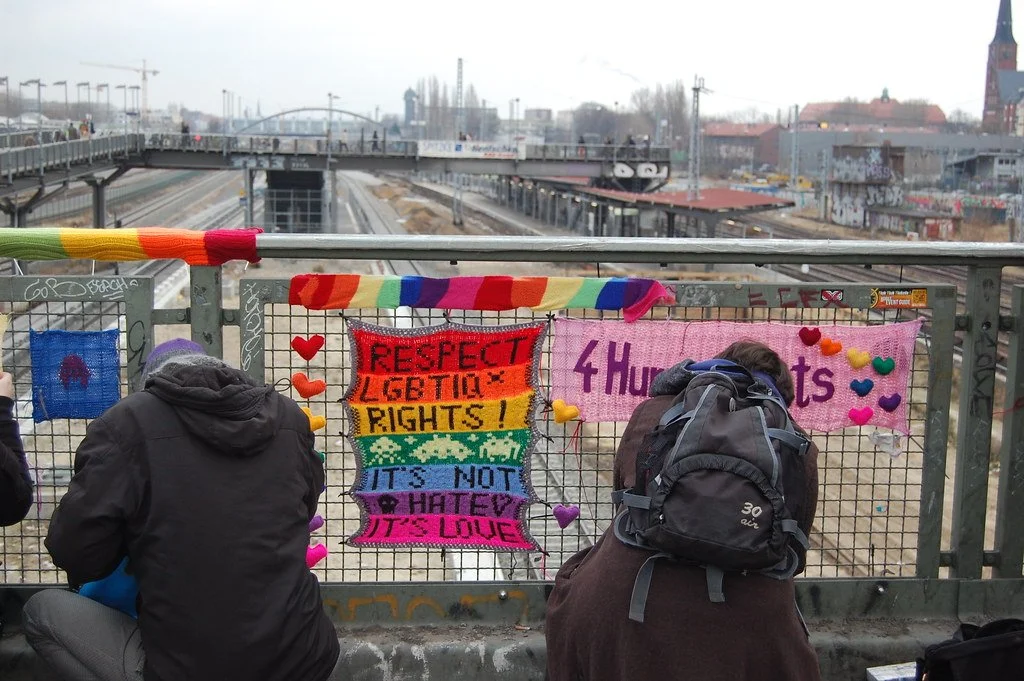
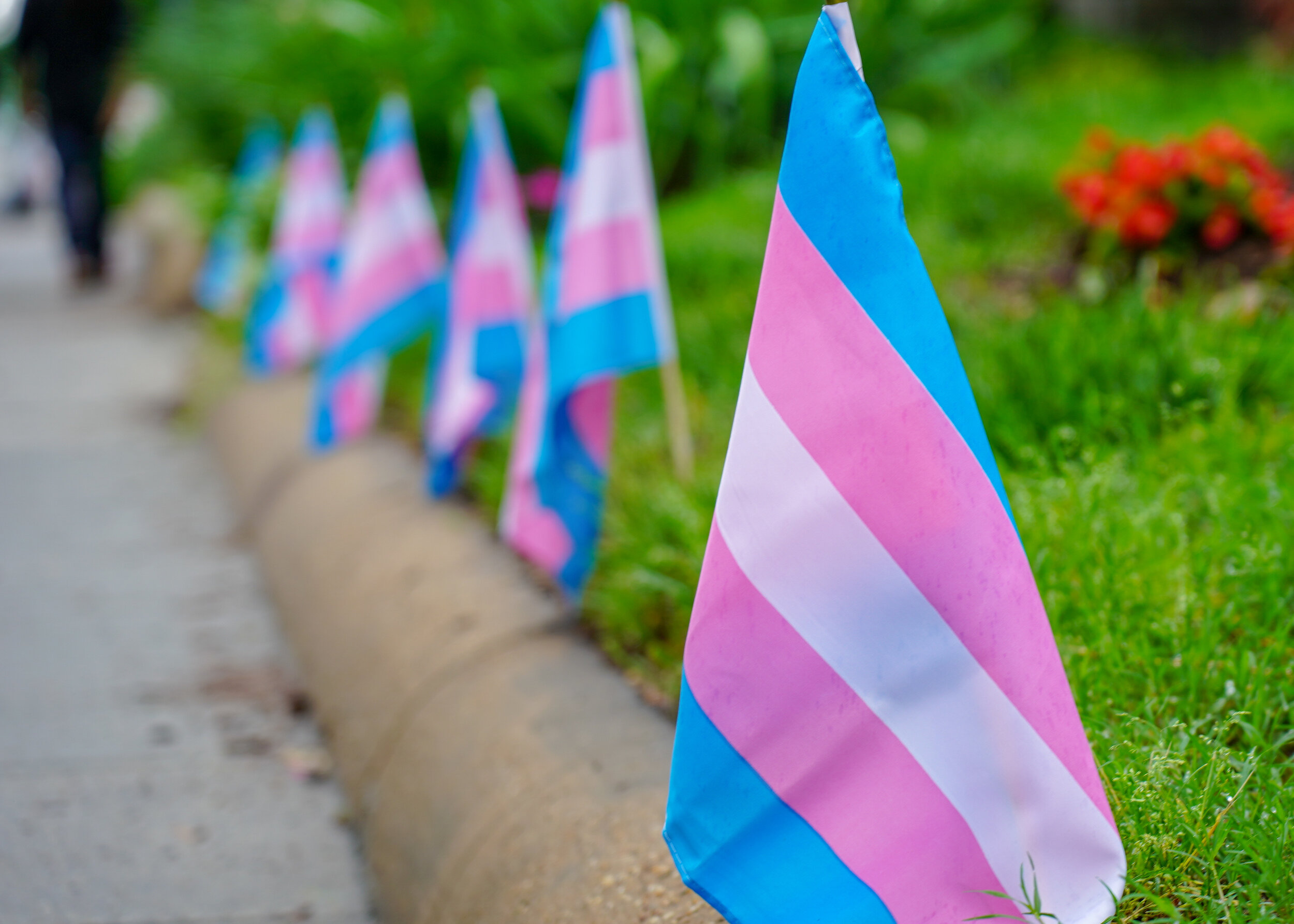
Pride flags in Reykjavík. Symbioticadesign. CC BY-NC 2.0.

While Iceland is an unusually safe and accepting place today, it has had a rocky history with LGBTQ+ rights just like everywhere else. Because Iceland is so geologically isolated from the rest of the world, Icelandic people rarely even married people from other countries prior to World War II. During World War II, Icelandic women began coupling up with and marrying non-Icelandic soldiers who were stationed in the country, and even these heterosexual relationships were met with disdain. This attachment to “traditional marriage” bled over into the public perception of LGBT+ relationships, meaning that homophobia was also rampant at that time. Even thirty years later, the first famous Icelander to come out as gay in the 1970s, Hörður Torfason, was driven out of Iceland by the extreme homophobia he faced.

However, the tide turned relatively quickly in Iceland between the 1970s and the 1990s, but not without great struggle. In 1978, the Icelandic National Queer Organization was formed, which played a major role in promoting gay rights in Iceland. In 1996, Iceland became the fourth European country to officially recognize same-sex unions. By 2004, 87% of Icelanders supported gay marriage (which was officially legalized in 2010) while in 2004, only 42% of Americans did.

Today, Iceland is a popular travel destination for LGBTQ+ travelers wishing to go somewhere that they can feel comfortable and safe. In fact, Iceland has several popular travel guides and agencies that specifically serve LGBTQ+ travelers: Gay Ice and Pink Iceland. While these websites acknowledge that like anywhere, queer people can still be targetted in Iceland, it is apparently rare, and most hotels, nightlife, gyms and other public places are known to be accommodating of same-sex relationships as well as transgender and nonbinary identities, providing gender-neutral facilities and acknolwedging and respecting preferred pronouns. 
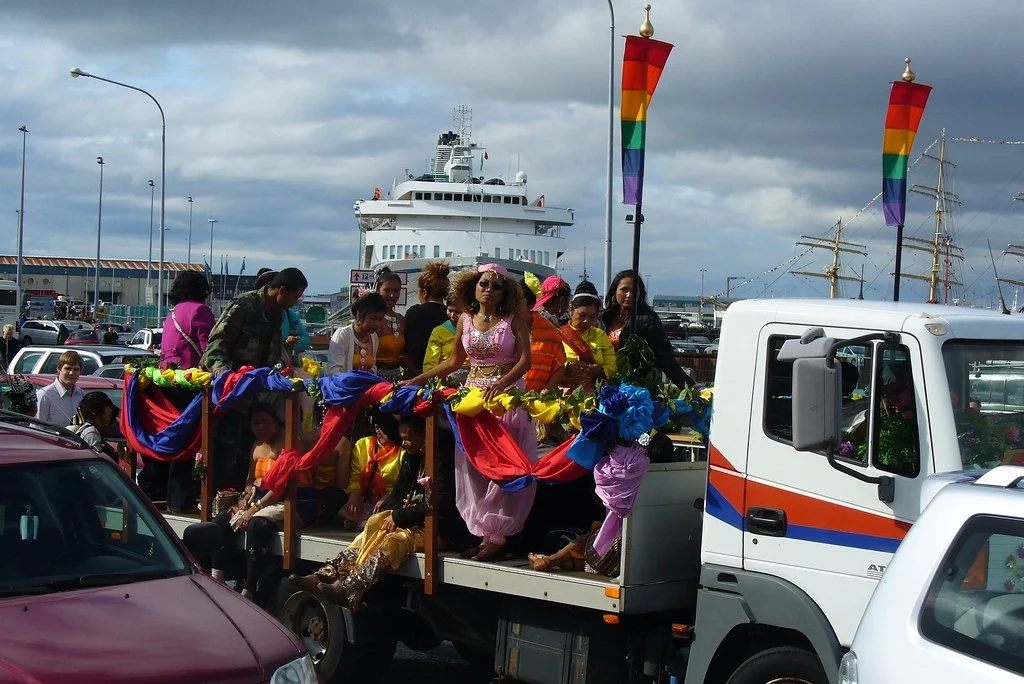
Reykjavík Pride 2009. Filip J. Cauz. CC BY-NC-SA 2.0. 

A large number of businesses and homes in Iceland have pride flags outside their windows, and Iceland hosts several LGBTQ+ events throughout the year that attract hundreds of thousands of tourists. In fact, travelers for the Reykjavík Pride Festival, which occurs in August, account for nearly a quarter of the people in Iceland that month. Reykjavík Pride is regarded as one of the major events of the year in Iceland for everyone, not only people who identify under the queer umbrella. How widespread and anticipated Reykjavík Pride is each year reflects how far Iceland has come in terms of acceptance and safety for LGBTQ+ people. Reykjavík also has a festival in February, called the Reykjavík Rainbow Festival. This is another highly anticipated and attended LGBTQ+ festival in Iceland. Additionally, there are smaller celebrations throughout the year all over the country. 

Iceland is known for being very open about same-sex relationships, with queer couples openly showing affection in public generally without fear. There are also LGBTQ+ historical landmarks in Iceland: Gay Ice recommends the LGBT History Walk, which is a walking tour through Reykjavík’s most important LGBTQ+ destinations, along with information about historical events in Iceland throughout the LGBTQ+ rights movement. 

Iceland is an excellent destination at any time of year for anyone, but especially travelers in the LGBTQ+ community. However, August and February are two of the most interesting and inspiring times to visit, so that one can catch the famous pride festivals.


Calliana Leff

Calliana is currently an undergraduate student at Boston University majoring in English and minoring in psychology. She is passionate about sustainability and traveling in an ethical and respectful way. She hopes to continue her writing career and see more of the world after she graduates. 
The Influx of ‘Pisupo’: Food Colonialism in the South Pacific

Globalization has created an influx of unhealthy canned food in the South Pacific region, leading to a dependency on it and increasing health issues associated with an unhealthy diet. 

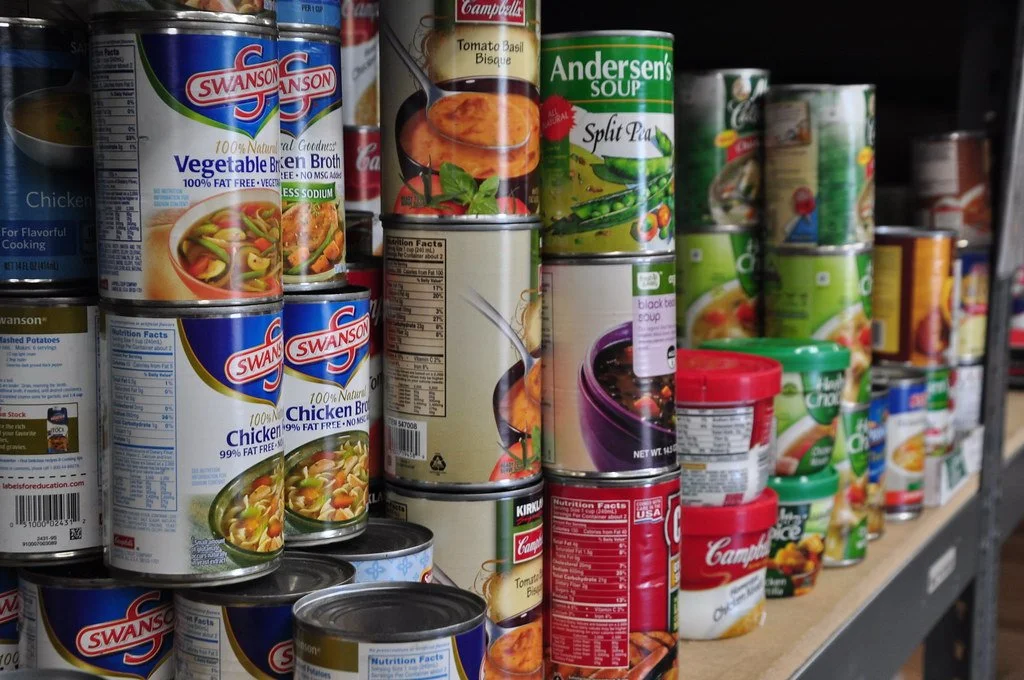
The influx of canned food in the South Pacific has led to a variety of problems. Salvation Army USA West. CC BY 2.0.

The legacy of colonialism has a lasting impact on the island of the South Pacific. Many of those islands have been colonized by Western powers, and some of them are still under the control of foreign countries. Due to this, Western influences are still pervasive throughout the region. 

One lasting legacy of Western imperialism in the South Pacific is the introduction of canned and processed food. The first canned food to be brought to the region was pea soup, and therefore, Samoan and a few other languages of the region, the word for canned food in general is “pisupo.” Today, the predominant type of canned food in the region is corned beef.

The prevalence of canned food in the South Pacific has changed the diets of the people living there and has caused a dependence on them. The new diets of the South Pacific Islanders are not necessarily an improvement from their traditional diets. However, as canned and processed foods are generally unhealthy and lacking in nutrients. That has resulted in an increase of obesity, diabetes and heart disease. Between 1990 and 2010, the total disability-adjusted life years lost to obesity also quadrupled in the region.

The traditional diets of South Pacific Islanders provide the nutrients needed for a healthy life. whl.travel. CC BY-NC-SA 2.0.

In order to provide these new foods, livestock such as cattle and pigs have been introduced to the islands, causing ecological damage. The island ecosystems are fragile, and large-scale ranching can easily destroy them. The dependence on canned food introduced by the West has resulted in not only harm to health, but also harm to the environment.

The proliferation of packaged and processed food has affected other parts of society as well, not just the typical diets. In marriage and birthday ceremonies in traditional South Pacific cultures, people often exchange gifts. While in the past, common gifts included fine mats and decorated barkcloths, but today, canned corned beef is one of the more popular gifts at those events. The introduction of canned foods has even changed traditional practices and contributed to the prevalent unhealthy diets of the South Pacific Islanders.

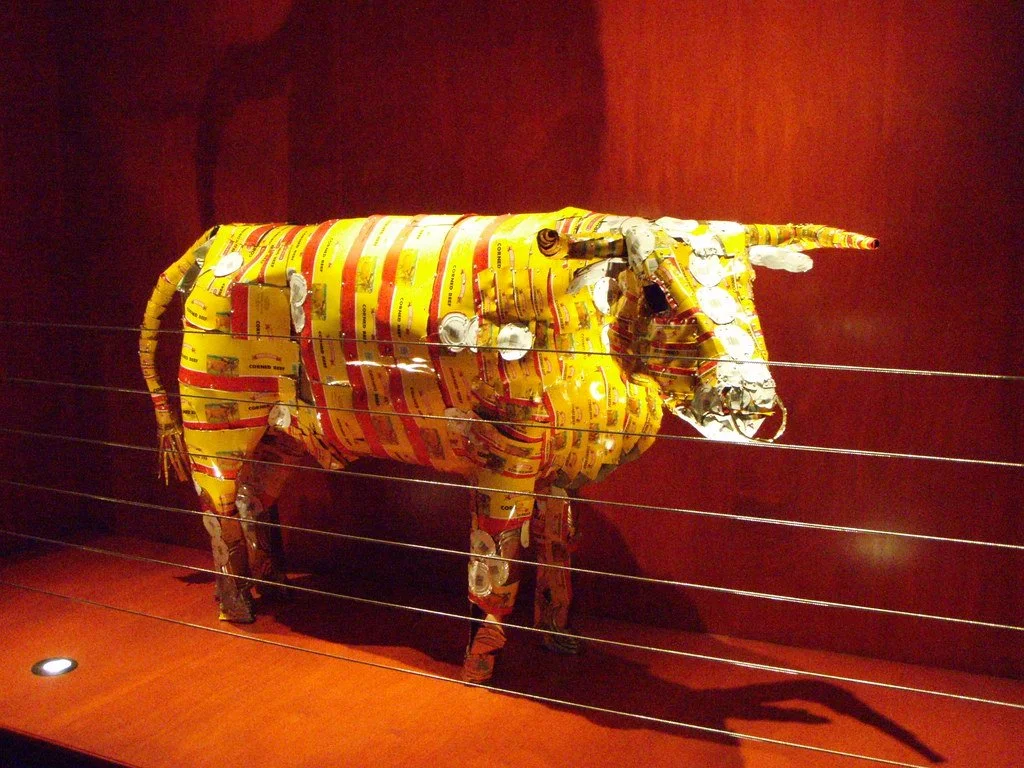
“Pisupo Lua Afe (Corned Beef 2000)” is a piece of art by Michael Tuffery that critiques the food dependency of the South Pacific. Sheep’R’Us. CC BY-NC-ND 2.0.

The neocolonial nature of these developments has its critics. One of them, Michael Tuffery, offers a unique interpretation through his artwork, with one of the most notable being “Pisupo Lua Afe,” a sculpture of a bull made from canned corned beef. He says that his art addresses the impact that the “exploitation of the Pacific’s natural resources has wrought on the traditional Pacific lifestyle.” His choice of subject matter and the material show his thoughts on the influx of canned food in the South Pacific. Bulls were a common presence at the aforementioned ceremonies, and the fact that the bull is covered in canned corned beef represents the fact that more traditional practices. Tuffery laments the changes that globalization has brought to his traditional Samoan culture, which has led to a “decline of indigenous cooking skills.”

With so much waste being created in the making of “Pisupo Lua Afe,” Tuffery calls into question whether the physical and cultural costs of food dependence are worth it. Could the South Pacific do better without the influx of canned food? Tuffery argues that it could. But even if the South Pacific Islanders decide to shun the prevalence of canned food, hurdles remain to improve the health of both the land and people of the region.


Bryan Fok

Bryan is currently a History and Global Affairs major at the University of Notre Dame. He aims to apply the notion of Integral Human Development as a framework for analyzing global issues. He enjoys hiking and visiting national parks.

Holding Corporations Responsible For Abusive Practices

The supply chain of a company represents every step along the way of production, meaning that abuses can happen thousands of miles from a company’s base and never be caught or noticed.

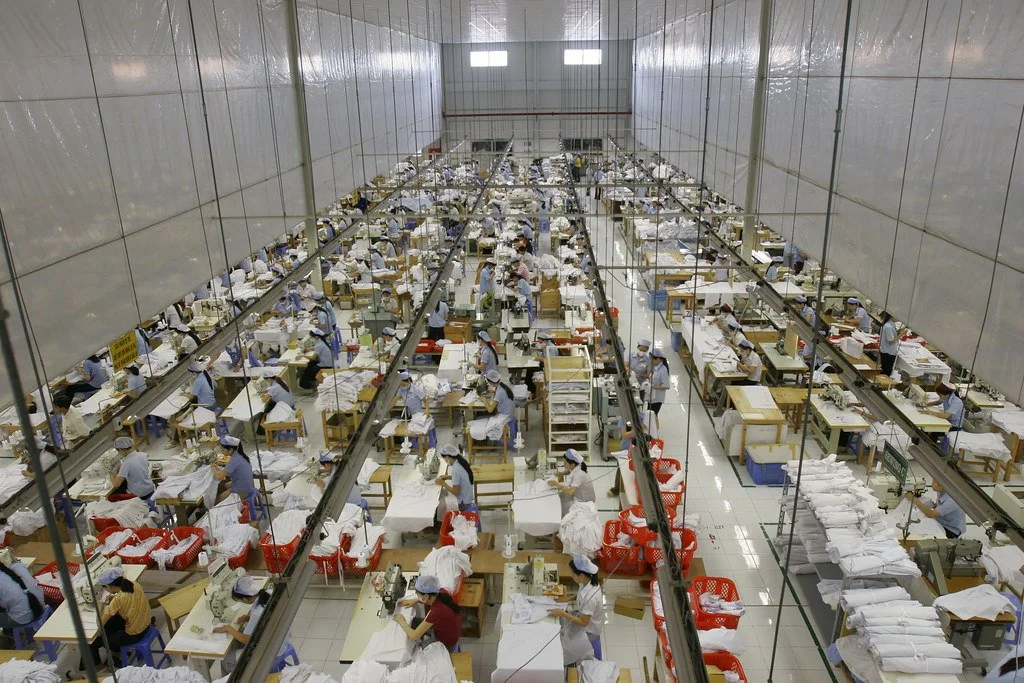
Garment factory in Vietnam. United Nations Industrial Development Organization. CC BY-ND 2.0.

A corporation’s supply chain is the structure of sources, suppliers, and producers of a corporation’s products . Because there are so many steps between an idea and the sale of the actual product, it’s easy for companies to engage in unethical work conditions—whether that be environmental or in terms of human rights—and often these abuses go unaccounted for. Recently, there’s been a push to track and regulate companies’ supply chains to reduce the number of environmental and human rights abuses throughout supply chains.

The most prominent issue in most companies’ supply chains is some form of forced labor. This can present in a very straightforward way: full on modern slavery, with workers working entirely against their will(s). However, this can also manifest in less obvious but also horrifying ways such as unfair and unlivable wages, unsafe working conditions and the impossibility for workers to quit if and/or when they want to. The reason that all of these abuses are called “supply chain issues” is because whichever company that makes the final product must be held responsible for human rights abuses at any point in its production, even if it seems far removed from the final product. 

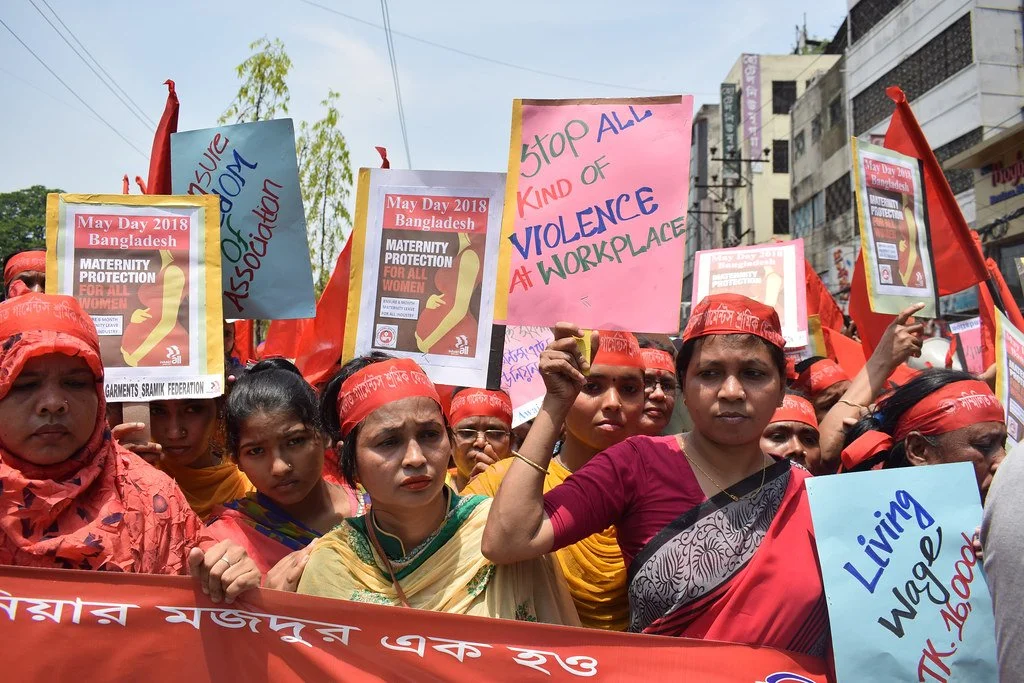
In addition to overworking and underpaying workers overseas, there have been many reports of sexual violence and even murder within garment factories. In 2021, a garment worker in India named Jayasre Kathiravel was murdered by her boss after months of sexual harassment at his hands. Prior to her death, she reported to friends and family that she felt extremely unsafe and did not feel it was possible to leave her job. There have also been fires in garment factories due to unsafe and crowded working conditions, such as the fire in 2012 in Bangladesh which tragically killed at least 112 people. Despite efforts following the fire to improve safety in these factories, garment workers in Bangladesh continue to report feeling unsafe today. There are several organizations that are striving to hold companies accountable for egregious abuses such as these, because even if the company is based halfway across the world, if the root of the problem is not regulated, change is unlikely.

Women in Bangladesh protest for workers’ rights. USAID U.S. Agency For International Development. CC BY-NC 2.0. 

Another issue, in addition to human rights abuses, is the environmental impact of large corporations. The fast fashion industry alone is responsible for 10% of pollution. Much of this pollution occurs in ways that the consumer doesn’t see. By producing so much clothing so rapidly, and then having to transport all of that clothing all around the world on a daily basis, massive amounts of resources are used, and a massive amount of CO2 is released into theatmosphere. Many of the same laws and organizations that are tackling the regulation of working conditions for large corporations are also pushing for environmental regulations. 

One organization that is working hand in hand with lawmakers in the U.S. to improve supply chain issues is the New Standard Institute. The New Standard Institute primarily focuses on the fashion industry, which is widely known for being one of the worst industries in terms of egregious human rights abuses as well as environmental damage. The New Standard Institute is working to push for The Fashion Sustainability and Social Accountability Act (The Fashion Act), a law which has been proposed in the state of New York  but would have repercussions throughout the entire world. The Fashion Act would regulate clothing and footwear brands with over $100 million revenues, forcing them to map the majority of their supply chain. The brands would then have to figure out which area of their supply chain produces the worst environmental and social effects (in terms of pay equality and greenhouse gas emissions specifically) and provide an enactable agenda for how to improve in those areas. If the brand in question has not made the progress that they promised within 12 to 18 months they would be subject to fines of up to 2% of their annual income. The companies would also have to make their environmental and human rights statistics readily available on the internet. While this law has only been proposed in New York, most supply chain abuses for major companies occur outside of the United States, and since New York provides such a major market, it will be in these corporations’ best interests to comply with the The Fashion Act if it is passed.

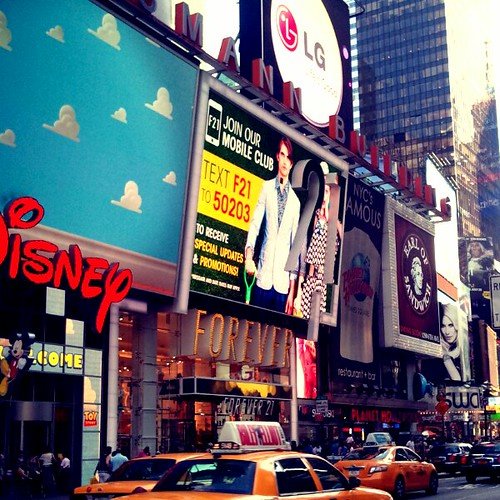
 Forever 21 in Times Square. Krogers2013. CC BY-ND 2.0.

California passed a similar law in 2010 which focused on slavery in the garment industry, and other European countries as well as Australia have fair trade laws. So, the Fashion Act would not be the first law of its kind if passed, but given the revenue brought in from New York, it would likely have a significant impact globally.


TO GET INVOLVED

There are several things that an individual can do to support supply chain regulation and a decrease in human rights abuse and pollution. As a consumer, one can be mindful of the brands that they support, and research a brand’s track record when it comes to workers’ rights and the environment. Unfortunately, most affordable brands are able to stay so affordable due to poor wages or completely unpaid labor. However, if limiting where you buy from is not an option, you can also research to see which affordable brands have plans in place to decrease their negative impact within the next few years. Additionally, there are several organizations pushing for regulation to support, such as the New Standard Institute (mentioned above), and the Ethical Training Initiative, which hosts training on how to be an ethical consumer, and supports workers in their unionization efforts and more. Additionally, you can contact your representative and tell them you support The Fashion Act, and ask what they have done to support regulation in their area. And finally, the simplest way to help with this problem is just to buy less.


Calliana Leff

Calliana is currently an undergraduate student at Boston University majoring in English and minoring in psychology. She is passionate about sustainability and traveling in an ethical and respectful way. She hopes to continue her writing career and see more of the world after she graduates. 

The Efforts to Rid Italy of Organized Crime

Images of the Mafia are ingrained in the public imagination of Italy. However, steps have been taken to eliminate it, making the country safer than in prior generations.

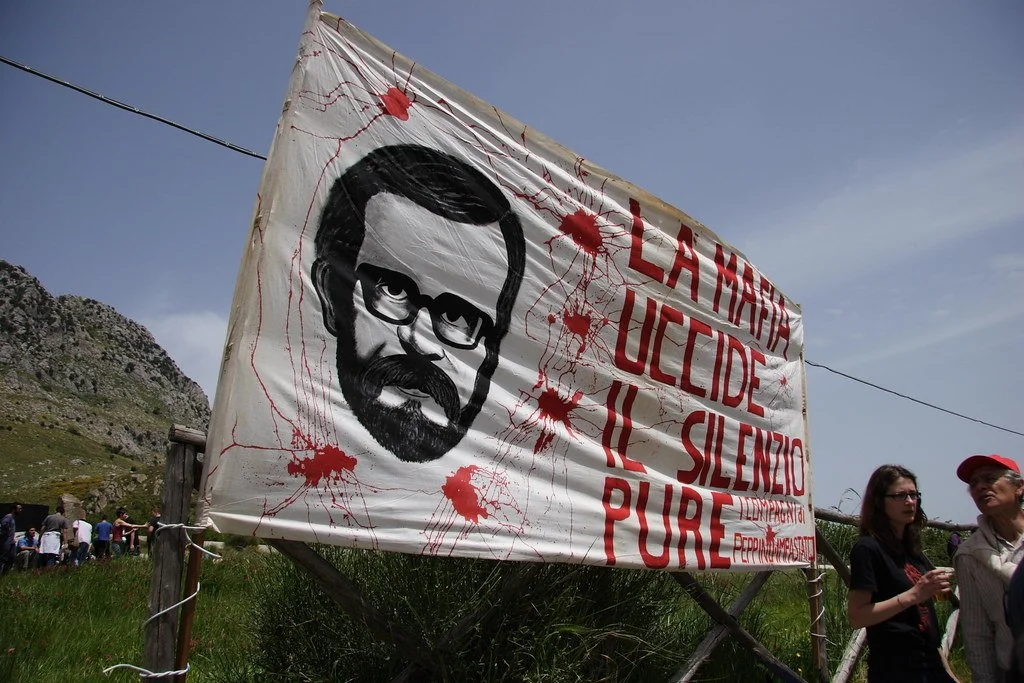
A protest banner erected after the murder of Peppino Impastato that says, “The mafia kills; so does silence.” ragnagne. CC BY-SA 2.0.

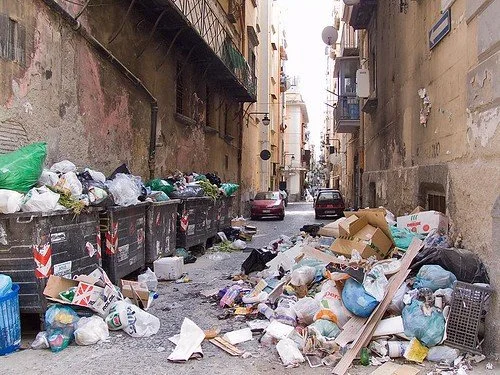
The proliferation of movies and television shows on the subject have caused some Americans to associate Italy with the Mafia. While it is true that organized crime is still causing headaches to law enforcement today, organized crime in the country is much more than just the Mafia, which is confined to Sicily. Other criminal organizations exist, such as the ‘Ndrangheta in Calabria and the Sacra Corona Unita in Apulia. The Camorra, which is based in the region of Campania and the city of Naples, is notable for using illicit methods to gain control of building contracts and garbage disposal, allowing them to control a large portion of Neapolitan society. Their negligence has also resulted in a lack of garbage collection services, causing large piles of trash on the streets to the ire of many residents of Naples. 

Each of these organizations operate somewhat differently, but they are all powerful players in the international drug trade. However, great strides have been made to eliminate their threat.

Some of the criminal organizations have their roots in the 18th century, when southern Italy was under Spanish rule. They prospered in the 19th and early 20th century, bribing politicians to ignore their activities. Sporadic but well-intentioned efforts emerged in the late 20th century to curb their influence. In the 1970s, Peppino Impastato emerged as a lone voice in questioning the tight grip the Sicilian Mafia held on his hometown of Cinisi, mocking them in his radio show, but it resulted in his murder in 1978. The Maxi Trials, the largest trial to occur in history, lasting from 1986 to 1992, resulted in the conviction and sentencing of 338 Mafia members. However, the aftermath of the trial showed that there was still a long way to go; the two judges leading the trial, Giovanni Falcone and Paolo Borsellino, were killed shortly after its conclusion.

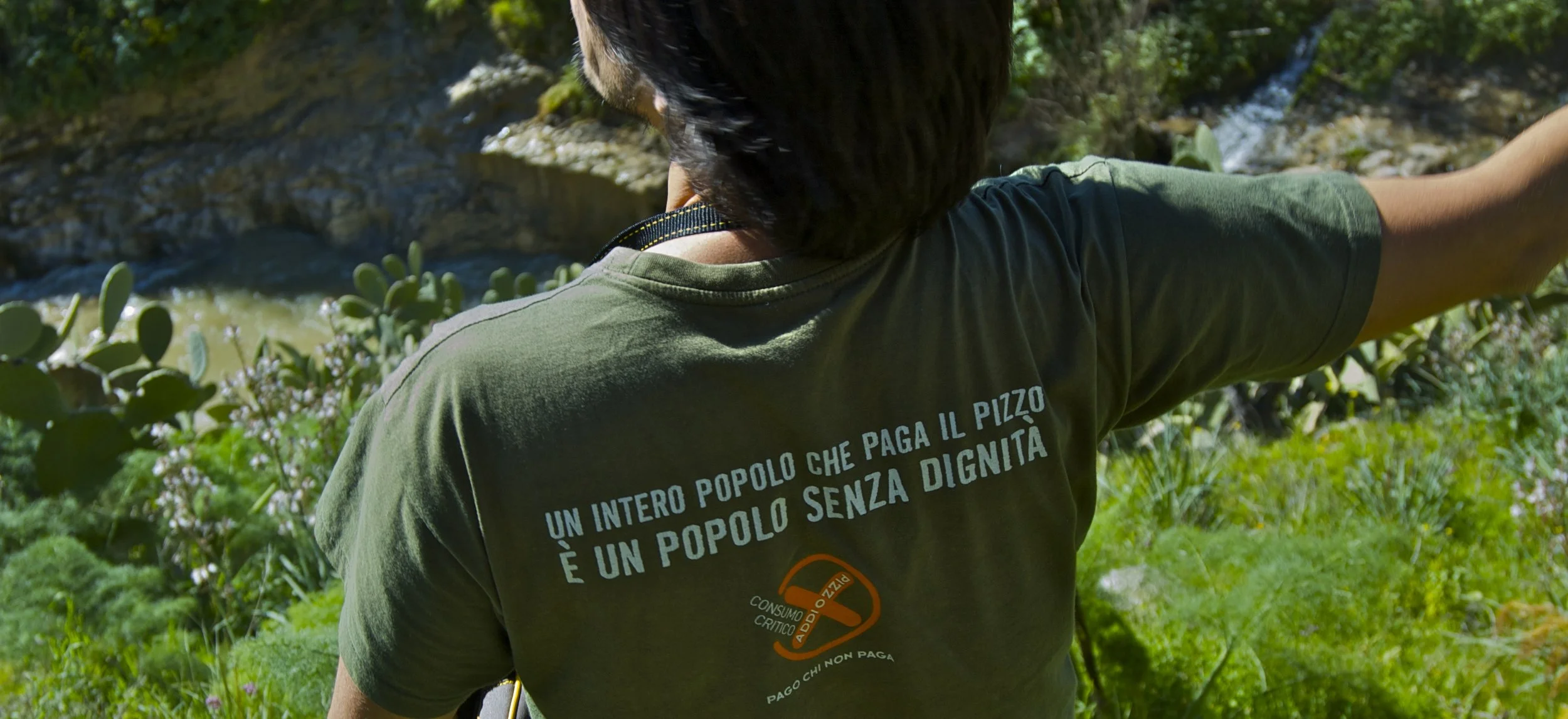
An Addiopizzo branded T-shirt,  encouraging critical consumption by only supporting businesses that do not pay extortion money to the Sicilian Mafia. Addiopizzo Travel. CC BY-NC 2.0.

Today, interventions with widespread community support have been more successful in limiting the reach of organized crime. A more recent push includes more grassroots efforts, such as Addiopizzo, which is the movement for businesses to refuse to pay extortion money, called “pizzo,” to the Mafia. Businesses had traditionally paid the Mafia money to be left alone, but in 2004, a group of young university graduates started the campaign to end the practice. Soon, the entire Palermitan community was in solidarity with them, causing untold misery to the Mafia bosses still operating by cutting their main source of income. Relying on the slogan, “An entire population that pays the pizzo is a population without dignity,” Addiopizzo has galvanized Sicilian society to push back against paying the Mafia.

Now based in several organizations in both Palermo and Catania, two major cities in Sicily, Addiopizzo is encouraging ordinary people to only buy from places that do not pay the pizzo. Stores that refuse to pay the protection money are labeled with a sign that says, “Pago chi non paga [I pay those who do not pay].” The organization Addiopizzo Travel also provides visitors to Sicily with sustainable accommodations and encourages them to frequent those businesses. 

Negligence by the Camorra, the criminal organization of Naples, has caused trash to pile on the streets. chrisjohnbeckett. CC BY-NC-ND 2.0.

The government is also taking action against organized crime. With the public getting tired of the control over garbage disposal by the Camorra in Campania, the governments of some cities are taking action. In the city of Castellammare, near Naples, the government is cutting off all contracts with the Camorra, while insisting it “will not stop the city” by doing so. The city prefect is going even further by declaring that “unwelcome people are not even candidates” for mayor.

To fully eliminate the threat of organized crime in Italy, however, their effects must be addressed. The organization Libera. Associazioni, nomi e numeri contro le mafie works to invest in education to spread knowledge of the extent of the networks of organized crime. It also repurposes property confiscated from criminal organizations for social uses by the community, helping to mitigate the effects of organized crime. The combination of grassroots, governmental and nonprofit movements ensure all aspects of organized crime are being eliminated.


Bryan Fok

Bryan is currently a History and Global Affairs major at the University of Notre Dame. He aims to apply the notion of Integral Human Development as a framework for analyzing global issues. He enjoys hiking and visiting national parks.

Why Explosive Population Growth Is Unsustainable

The world is experiencing massive population growth, most of it in the Global South. If nothing is done to slow the rate, repercussions will be felt in politics, the economy and the environment.

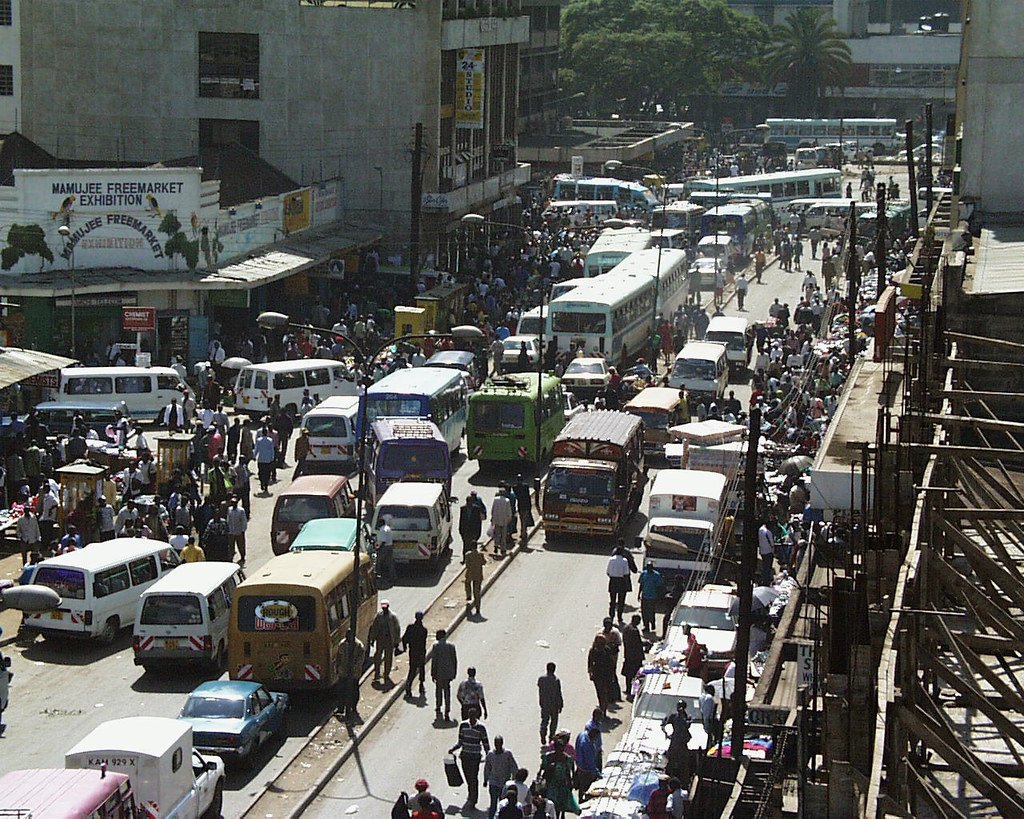
A crowded street in Nairobi, Kenya, which has one of the highest population growth rates in the world. rogiro. CC BY-NC 2.0.

The world’s population is growing at an alarming rate. In 1950, the world’s population was estimated to be around 2.6 billion. In 2022, it is almost 7.9 billion. While it is true that the world theoretically has enough resources to support the entire current global population with room to spare, the rate of population increase is a cause for concern. Most of the world’s resources are concentrated in the countries of North America and Europe, but most of the world’s population growth is located in the Global South, which can negatively affect the development of those countries.

When agricultural societies start to industrialize, the death rate usually drops due to advances in medical care. The birth rate stays high for a while until social changes encourage more women to join the workforce and have fewer children. Many countries in sub-Saharan Africa are stuck in a demographic transition trap.

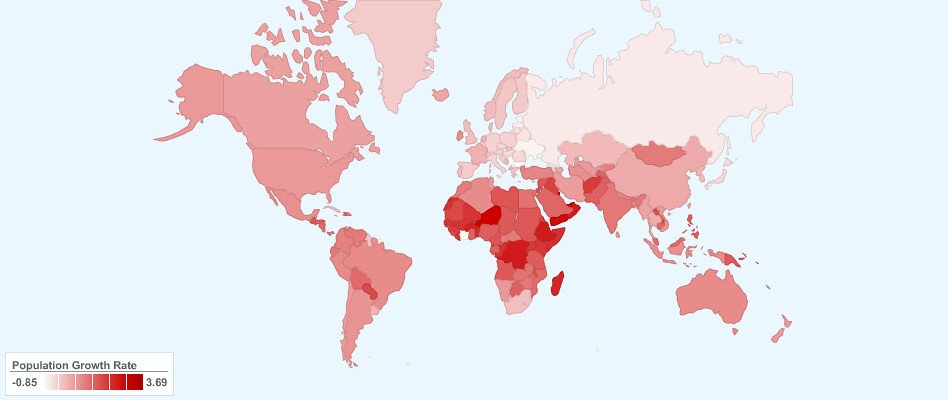
Current world population growth rate by country. Digital Dreams. CC BY 2.0.

As countries in the Global South start to industrialize, their death rates are falling, but their birth rates are not dropping to match the death rate, resulting in explosive population growth. This demographic trap occurs when “falling living standards reinforce the prevailing high fertility, which in turn reinforces the decline in living standards.” When developing countries do not make the necessary social changes to accompany industrialization, the birth rate stays high even as the economy transitions away from agriculture. These countries are slow to change their view on the ideal family size in light of emerging industrialization, and many are still engaged in labor intensive industries which reinforce the need for many children to provide free labor.

This explosive population growth has detrimental effects on both the developing country’s economy and environment. It leads to political instability, as the deluge of people overwhelm governments, causing states to fail. Governments likely cannot provide enough resources to the ever-growing population, trapping people in a cycle of poverty. Many families are impoverished due to using their resources for taking care of many children, perpetuating a cycle of poverty. 

The inability for a government to provide for its population results in a failed state. Of the 20 top failing states defined by the Failed States Index, 15 of them are growing between 2 and 4 percent a year. In 14 of those states, 40% or more of the population are under the age of 15. Large families are the norm in failing states, with women having an average of six children.

Not only does excessive population growth lead to failed states and economic problems, but it also leads to environmental problems as well. As the Global South develops, more and more people there are becoming consumers of energy and resources, contributing to climate change. In Madagascar, population growth has “triggered massive deforestation and massive species extinction.” The current rate of population growth is unsustainable in the long run economically, politically and environmentally.

However, previous efforts to decrease the birth rate in the Global South has led to the dehumanization of many women. According to Columbia professor Dr. Matthew Connelly, Americans developed programs to “motivate medical workers to insert IUDs [intrauterine devices] in more women” in South Korea and Taiwan, causing “untold misery” as there were not enough clinics to deal with the possible side effects of those procedures. Puerto Rico became a “proving ground for both the birth control pill and state-supported sterilization” due to American policy despite pushback from religious authorities. These efforts deprive women of their agency to plan their own families.

Interventions to limit population growth must ensure that families, and specifically women, have agency over their bodies. Comprehensive sexual education is an option to enable people to understand the reasons behind the different methods to decrease birth rates. Families must be able to make an informed choice on their family size, and such sexual education is a popular idea to achieve that in a humane and dignified manner.

Bryan Fok

Bryan is currently a History and Global Affairs major at the University of Notre Dame. He aims to apply the notion of Integral Human Development as a framework for analyzing global issues. He enjoys hiking and visiting national parks.

Photo Essay: On the Ground with Waves For Water in the Philippines

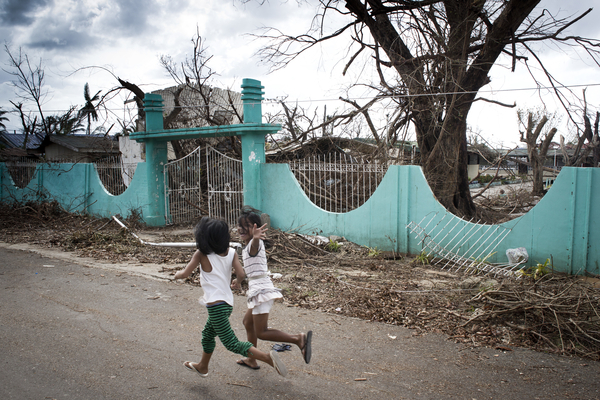
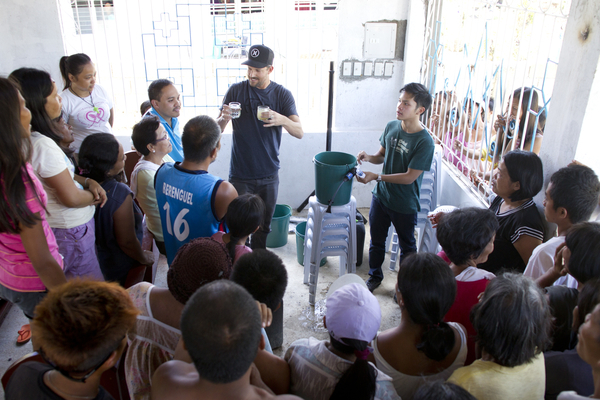
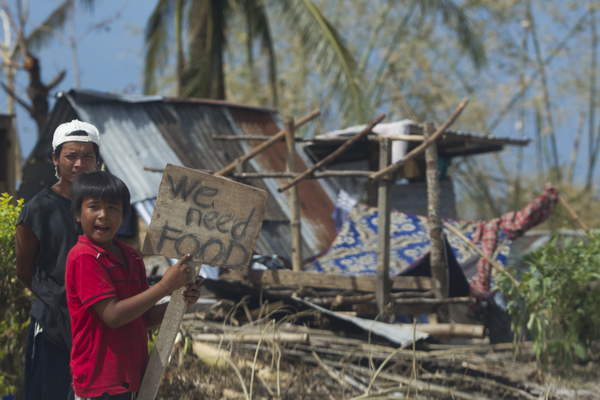
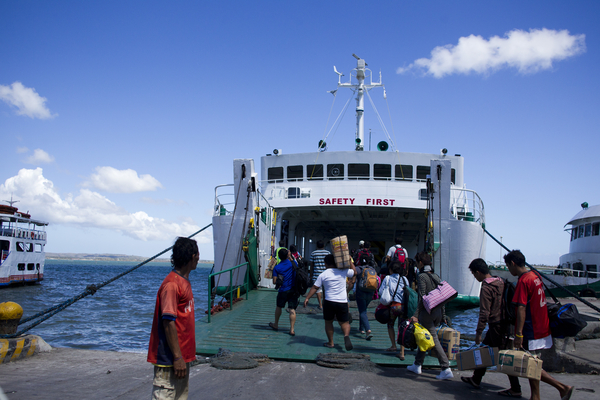
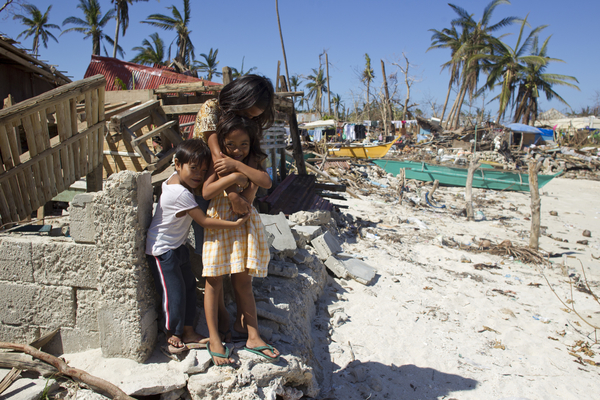
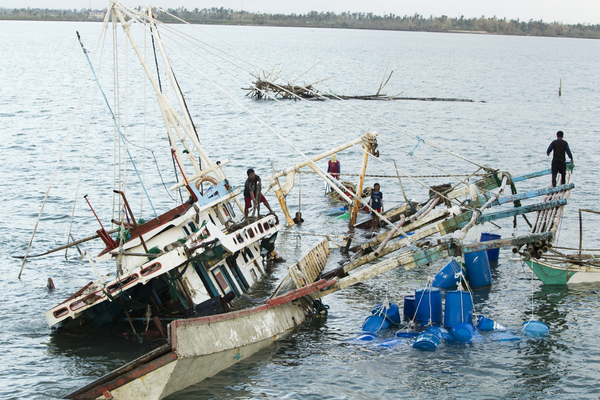
While the Philippine Islands were being struck by Super Typhoon Haiyan’s wrath, Jon Rose, Founder of Waves For Water, was already hatching his plan to help.

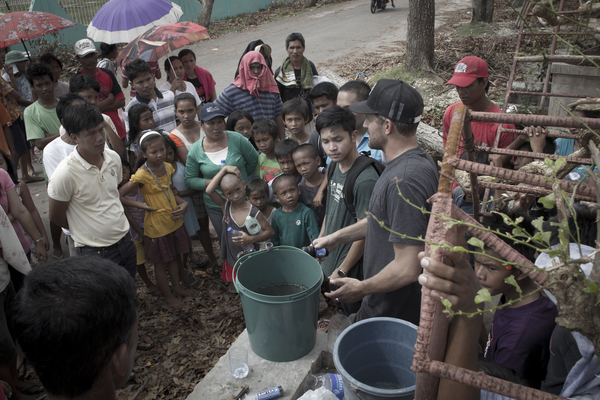
W4W began work in the Philippines in response to Typhoon Haiyan and continues to support areas with water shortages. 

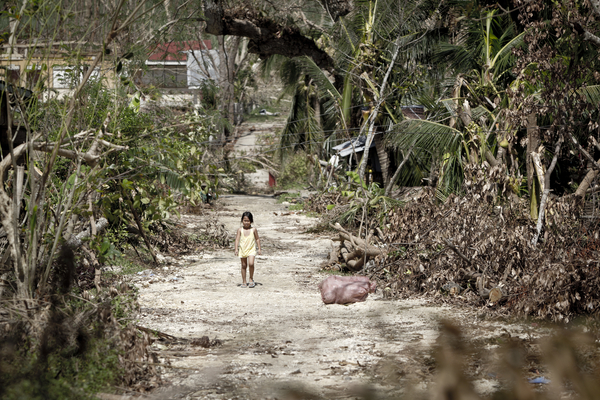
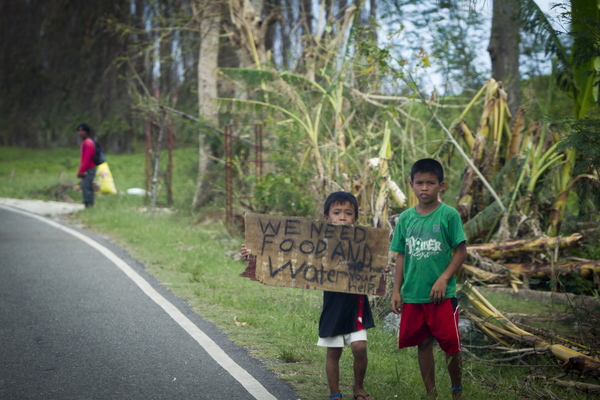
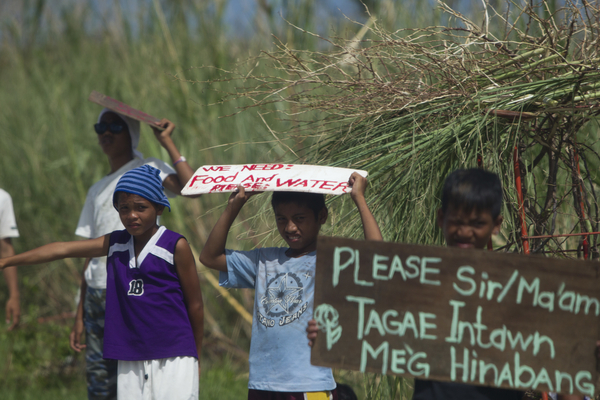
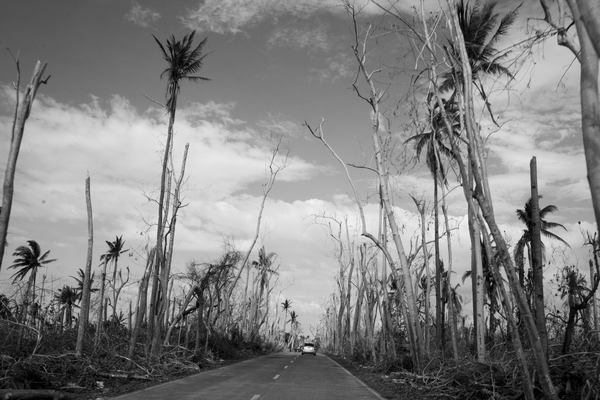
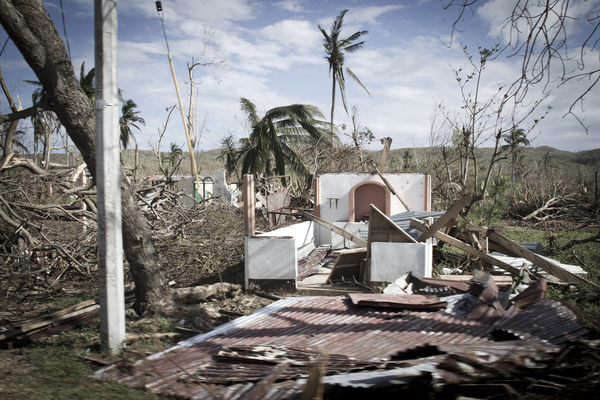
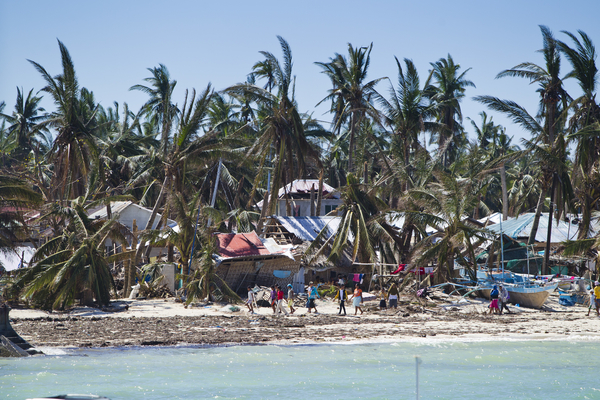
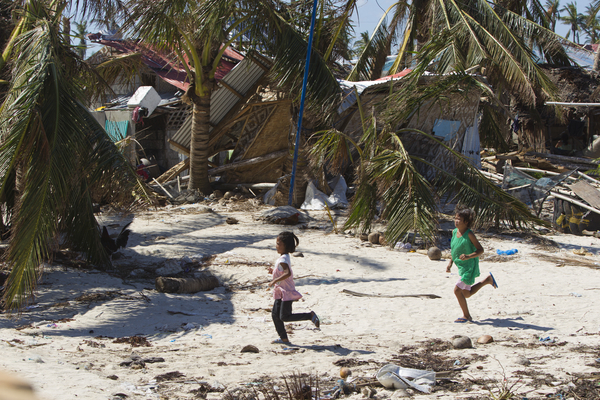
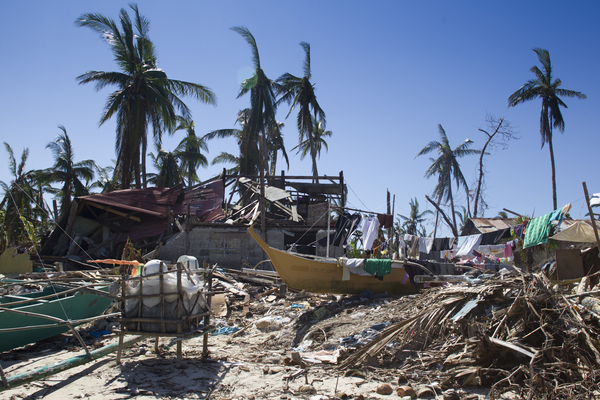
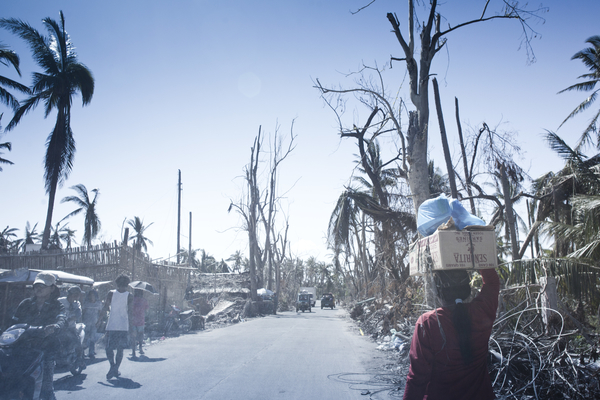
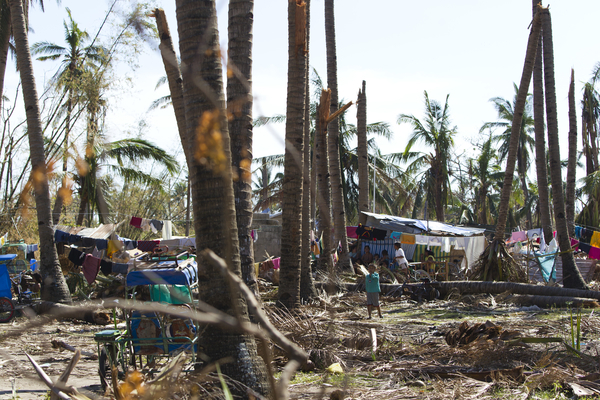
In 2013, the Philippines was hit by one of the most devastating typhoons ever recorded: Typhoon Haiyan. The natural disaster affected people throughout Southeast Asia and killed 6,300 people in the Philippines alone. Throughout the country, over 4.3 million people were affected. One major impact of the typhoon was its obstruction of access to clean water. 

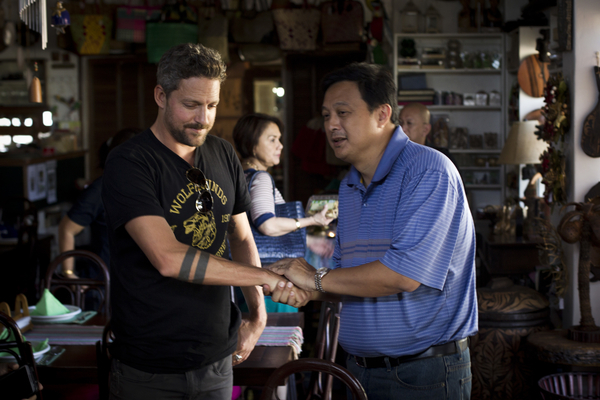
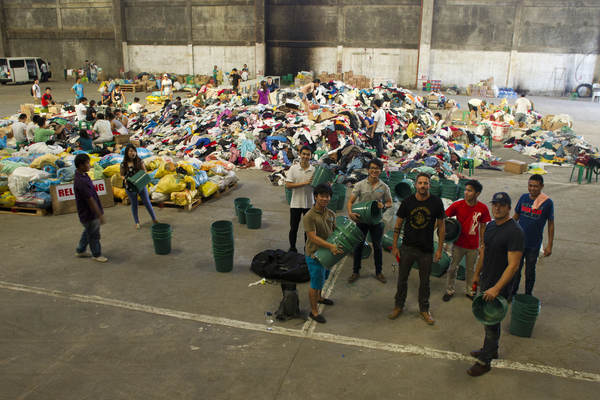
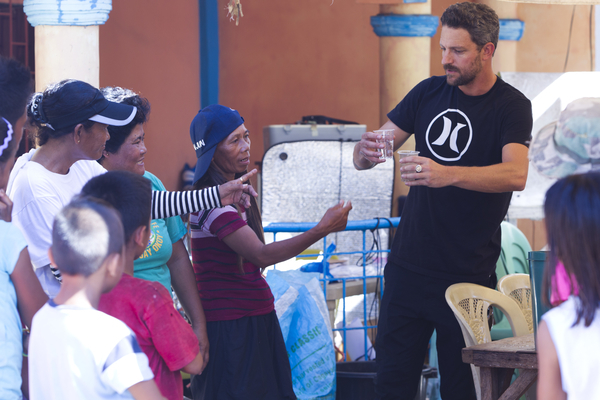
To address this problem, Jon Rose, founder of Waves for Water (W4W), arrived in the Philippines ready to distribute his organization’s water filters among “forgotten pockets,” communities that were not “the focal point of major relief efforts.” His method of distribution and relief relied on the “train-the trainer, local-based model” in which W4W organizers “empower” and “facilitate” for local people rather than decide “who gets what, when, where and how.” Two years after the typhoon, W4W established an office in the Philippines, where it is currently registered as a non-profit organization. Since 2015, W4W has built 66 rainwater catchment systems and provided over a million Filipinos with access to clean water. In December of 2021, the organization helped to address the devastation caused by Hurricane Odette in Siargao, Philippines through a partnership with Billabong. Currently, W4W is providing aid for those impacted by Tropical Depression Agaton, which has displaced 1.9 million people in Visayas and Mindanao, Philippines. You can contribute to this specific effort here

W4W’s humanitarian efforts are not limited to the Philippines. Since its inception in 2009, the organization has made an impact in 44 countries, including Mozambique, Ecuador, Sierra Leone and Chile, and has helped 3.75 million people gain reliable access to clean drinking water. W4W currently has 24r active programs helping to address water access issues. These programs seek to provide aid to citizens of Ukraine, Australia, Haiti and Guatemala. You can learn more and help out here.


Jon Rose

As a pro surfer of 13 years, Jon Rose traveled the world in pursuit of perfect waves. It was this passion that led him to development of Waves for Water in 2009. He hopes to see W4W enlist and empower travers to help solve the world water crisis.

Pride and Punishment: The Struggles of the LGBTQ+ Community of Africa

In 32 African countries, homosexuality is deemed unlawful—punishable by imprisonment and in some cases, death. The LGBTQ+ community is fighting prejudice in a battle to be their truest selves.

Ugandan citizens at a pride parade. Chrisjohnbeckett. CC BY-NC-ND 2.0.

Out of the 54 countries that make up the African continent, 32 of them outlaw homosexuality. Historically a continent that traveling members of the queer community steer clear of, Africa has a deep and intricate history with politics surrounding sexuality. However, Africans who identify with the LGBTQ+ community fight fiercely to change legislation, stigma and prejudice in their respective countries, challenging this lineage of controversy. Those who are brave enough to protest for their rights to love whomever they desire organize in-person parades and protests, while those under threat of harm—or even death—find ways to demonstrate their pride in, generating virtual communities and workshops that allow for the LGBTQ+ community to connect across the globe without leaving the safety of their homes.

Map of African countries with anti-gay laws. Amnesty International. CC BY-ND

To understand the hardships facing the LGBTQ+ community of Africa today, it is important to know the causal factors that led to such a homophobic climate. Anti-queer sentiments were introduced to the continent during Western colonization; previous to imperialism affects on the continent, African tribes in many regions practiced homosexuality freely. Val Kalende writes in The Guardian that “there is ethnographic evidence of same-sex relationships in pre-colonial Africa.” This cultural history also demonstrates the lack of importance placed on strict gender roles. 

Additionally, the evidence also shows the practice of choice-based pronoun usage; women in positions of power would occasionally label themselves with male pronouns. Post-colonization laws that targeted the cultural muting of African traditions and practices formed the foundations for homophobia by outlawing same-sex relationships and visibly impacted African sentiments around the LGBTQ+ community for the foreseeable future.

Now, on the foundations of decades of hatred inspired by colonizers and imperialists, queer citizens of countries throughout Africa struggle under harsh legislation to simply be their truest selves. In most of the 32 countries that outlaw same-sex relationships, legislation punishes queer people by prison time and fines. Financial punishments vary in size and currency depending on the country. Prison sentences also range widely, varying anywhere between one year (as demonstrated in Ethiopia’s legislation) and lifetime imprisonment (such is the law in Kenya). 

There are four countries in Africa that make same sex relationships punishable by death: Mauritania, Somalia, Nigeria and South Sudan. In Nigeria, a country ranked by Forbes as #1 in “The 20 Most Dangerous Places for LGBTQ+ Travelers,” members of the LGBTQ+ community who are found out be participating in homosexual relationships face death by stoning.  

LGBTQ+ activists hanging signs. Distelfliege. CC BY 2.0.

Despite the gravity of the punishments for being queer, brave members of the LGBTQ+ community continue to demonstrate their pride. Unwilling to be silenced, queer people all around Africa organize pride parades, protests and online conferences to discuss ways they can fight the systemic homophobia they face in legislation. Further, the same people work hard to destigmatize same-sex relationships, challenging the post-colonial homophobia that has overpowered the original nature of African culture. 

Groups like PRIDE OF AFRICA (POA) organize yearly events to celebrate pride, inviting and encouraging queer Africans to “live their most authentic selves.” POA also founded the Johannesburg Pride Parade in 2019, which has recently gone online due to the COVID-19 pandemic, but continues to invite members of the LGBTQ+ community to speak and rally. POA also holds online conferences, so those who wish to stay at home and stay anonymous can do so to limit the threat of prejudicial punishments. 

For activists in imminent danger should their sexuality be outed, their protesting and pride demonstrations are more closely guarded. For those who need to seek exile in other countries or continents after being unexpectedly outed, journalism, photography and participation in parades like UK Black Pride (which focuses on Pride in the Black community and is based in London) are their only options to avoid death while still being able to demonstrate their pride. 

To Get Involved

There are a handful of organizations centered on the eradication of hate crimes, stigmatization, improper health care and prejudicial legislation that accept donations to support their missions. Organizations like OUT that support the destigmatization of queer lifestyles and SHE (Social, Health and Empowerment Collective) specifically serve the African queer community. To find a collective list of legitimate organizations including OUT, SHE, and other foundations actively assisting the LGBTQ+ community of Africa, click here.

POA and UK Black Pride serve the same purposes: to allow for queer Africans to have a safe place to demonstrate their pride. POA takes place mostly online and in South Africa, and UK Black Pride is held in London.

To learn more about POA events, mission statements, and goals, click here.

To learn more about the UK Black Pride Parade and their mission statements, click here.


Ava Mamary

Ava is an undergraduate student at the University of Illinois, double majoring in English and Communications. At school, she Web Writes about music for a student-run radio station. She is also an avid backpacker, which is where her passion for travel and the outdoors comes from. She is very passionate about social justice issues, specifically those involving women’s rights, and is excited to write content about social action across the globe.

Art Campaign Draws Attention to Detention of Human Rights Student

Coptic Christian University of Bologna graduate student Patrick Zaki has been detained in Cairo for his human rights work. He awaits his trial amidst international protest and artistic efforts to raise awareness of his case.

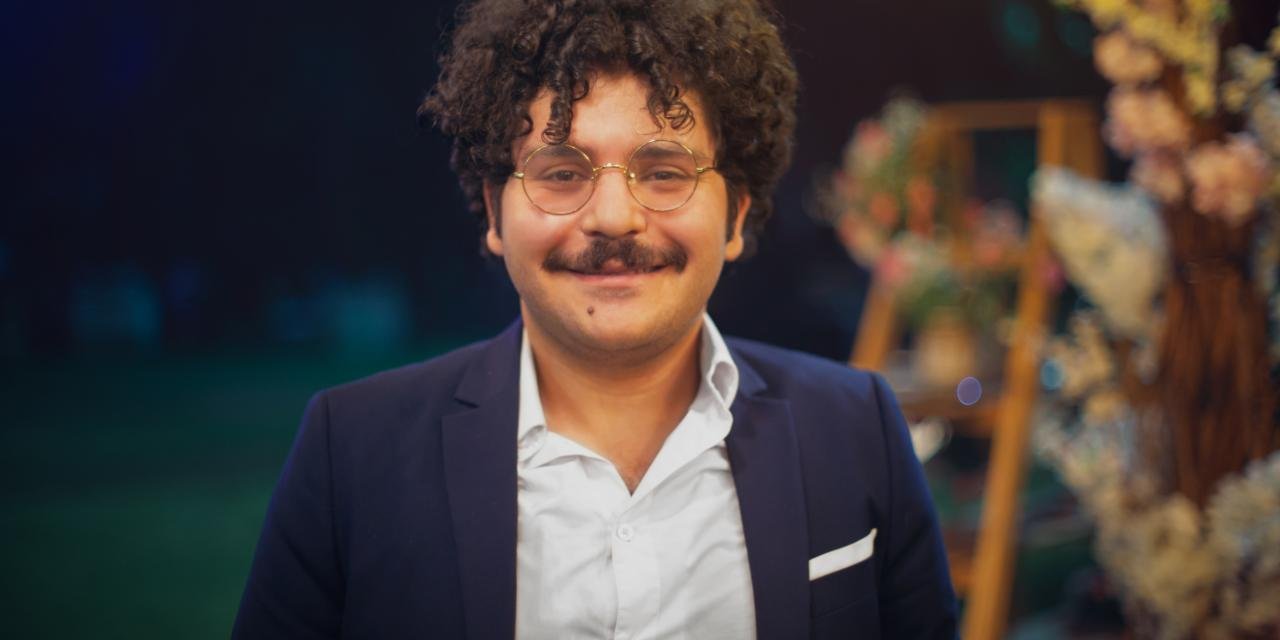
Patrick Zaki pre-detention in 2020. Egyptian Initiative for Personal Rights. CC BY-SA 4.0.

Cutouts and paintings of a line-drawn young man with “Freedom for Patrick Zaki” scrawled across the chest are plastered on almost every surface around the college-town of Bologna, Italy. Zaki is a Coptic Egyptian master’s student with an Erasmus scholarship to pursue a degree in Women and Gender Studies at the University of Bologna. He also serves as a researcher and advocate for the Egyptian Initiative for Personal Rights, a Cairo-based human rights organization.

Zaki returned to Egypt for a short family visit on February 7, 2020. Upon arriving at the airport in Cairo, he was arrested by the National Security Agency (NSA) of Egypt and detained on the grounds of “disseminating false news” and “inciting to protest” because of an article he published about discrimination faced by Coptic Christians in Egypt. He was taken to an undisclosed location, where, according to Zaki’s lawyer, he was blindfolded, handcuffed, threatened, beaten on the back and stomach, and tortured with electrical shocks during a17-hour-long interrogation about his human rights work and time in Italy. 

The drawing on the cutouts was created by artist Gianluca Constantini a few hours after the news of Zaki’s disappearance broke. The illustration was then adopted by Amnesty International’s campaign for his release. It can be seen printed on giant posters at Piazza Maggiore (the central square) and under the Two Towers (Bologna’s main tourist attraction). It was featured prominently in the protests organized by students, human rights organizations and several Italian universities, which have led 100 cities in Italy (including Bologna, Florence, Milan and Naples) to grant Zaki honorary citizenship. 

The audience of the drawing and its intended audience depends on where the cutouts are placed. Those placed around college campuses—including 150 filling an entire university library—immediately after Zaki’s arrest were meant to generate awareness and outrage. Now, students in Bologna have known about the case for two years, so the purpose of the cutouts isn’t as much to inform and inflame but to serve as a reminder that the struggle is far from over. The drawings placed in and around popular tourist attractions serve to draw international awareness to the ongoing issue. 

Following a robust student movement and international outcry, Zaki was released from prison on December 9, 2021, after 22 months behind bars. The charges against him have not been dropped, and if convicted, he faces up to five years in prison. His hearing has been postponed from February 1, 2022 to April 6. Zaki, who sees the drawn out judicial process as another form of torture, has requested authorization from Egyptian authorities to return to Italy.

Still, Zaki and his family are thankful for the partial victory. When he was released, his mother told journalists, “I’m jumping for joy!”  

Zaki, with quiet optimism, says, “The first thing I will do when I return to Bologna is to go and spend the whole day in Piazza Maggiore, meet my friends from the university and eat the exquisite Italian food.” 

He is also aware of the drawing and the accompanying journalism. 

“Art plays a leading role in advancing the cases of political prisoners and expanding their circles of support by creating awareness of their legal affairs” Zaki said. “My case is living proof: art has played a fundamental part in regaining my freedom, albeit still partially. I would like to thank Gianluca and journalist Laura Cappon who wrote a book about the case illustrated by Constantini for their activism over the past two years and for their support. I hope they continue to use their talents to free other prisoners of conscience.” 

To Get Involved

As Zaki’s case continues and the hearing unfolds, artwork by Gianluca and others will likely play a central role in stirring public consciousness and continued investment. To support the case and continue to apply international pressure, you can sign the Scholars at Risk Network (SAR) letter of appeal to release Zaki. The organization also provides a letter template to send to your representatives, requesting they engage with their Egyptian counterparts to work towards freeing Zaki. Social media can also be used to raise awareness by tagging your elected officials in tweets with #FreePatrick.


Izzy Balaban

Izzy is a student at the University of Chicago, currently pursuing a Creative Writing degree with a minor in Human Rights. She is originally from Atlanta, Georgia. When she isn’t writing, she enjoys traveling, trying new food and reading in her hammock. 

How to Vet a Charitable Organization

Sometimes it can be difficult to find a charity that is as ethical as they claim to be. This article will help you find and assess organizations worthy of your donation. 

Tree growing from coins. Michelle Chow, ejinsight. December 16, 2020

In an era of a social justice revolution, it can be daunting to find organizations to support. Sure, you see their ads on social media, but how do you know if they spend their money ethically? What if you’re paying for their CEO’s third home or even unknowingly supporting an extremist organization? Luckily, sites like charitynavigator.org and charitywatch.org have streamlined the process of vetting charitable organizations so you can ensure your money is going to a cause you care about. 


In this article, I will be focusing on three aspects to help you research nonprofits: 

Administrative costs: How much does an organization spend on the causes they are involved with vs. how much they spend on overhead?

Impact: How much does the organization actually do, and how well does it work?

Financial Transparency: How much does the organization disclose about their income and tax bracket?

Administrative Costs

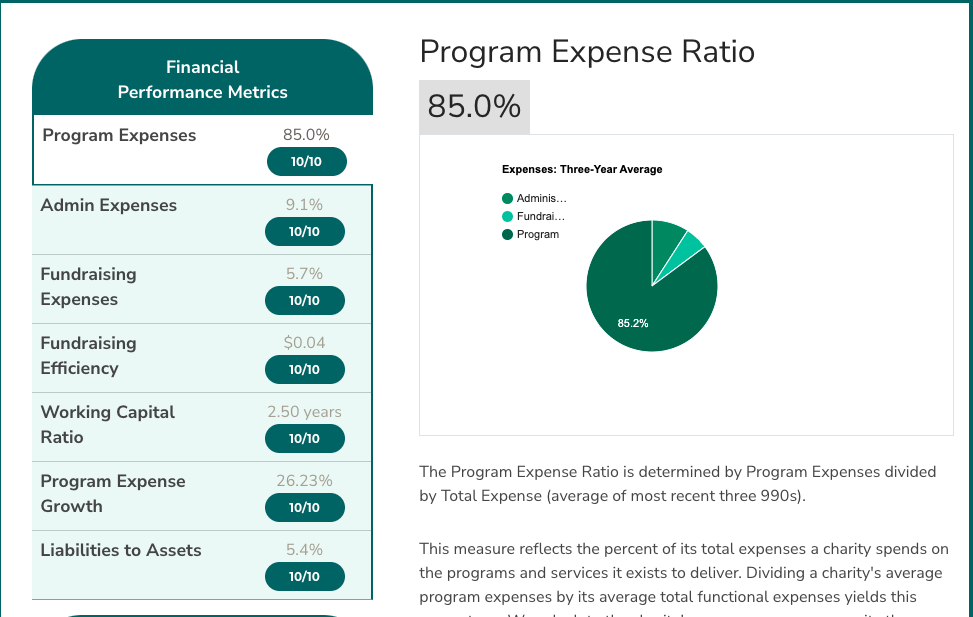
It takes a lot of money to run a non-profit organization. They have to take into account their employee salaries and office rental costs, which dictates how much the charity gives to the causes they support. Some unethical organizations use=donation money to supplement their CEO’s paycheck. The site Charity Navigator utilizes colorful graphs to help potential donors evaluate how much money the organization spends on their cause compared to their 

Pie chart dividing NWLC expenses. Clayton Young. Courtesy of CharityNavigator.org

overhead, or operational costs. Charity Navigator uses three sections of an organization’s expense report to get their Program Expense Ratio: program (how much they donate to the cause they support), administrative costs, and fundraising. 

A good example of an organization spending most of its income on the program is the National Women’s Law Center, which spends 85% of its income on the programs it supports internationally. They spend roughly 15% on administrative costs and fundraising combined. It’s important to note that all nonprofits are different and cannot be held to the same bar. While it is best to take into account their Program Expense Ratio, some organizations simply do not raise enough money to spend it all on their charitable programs. 

Impact

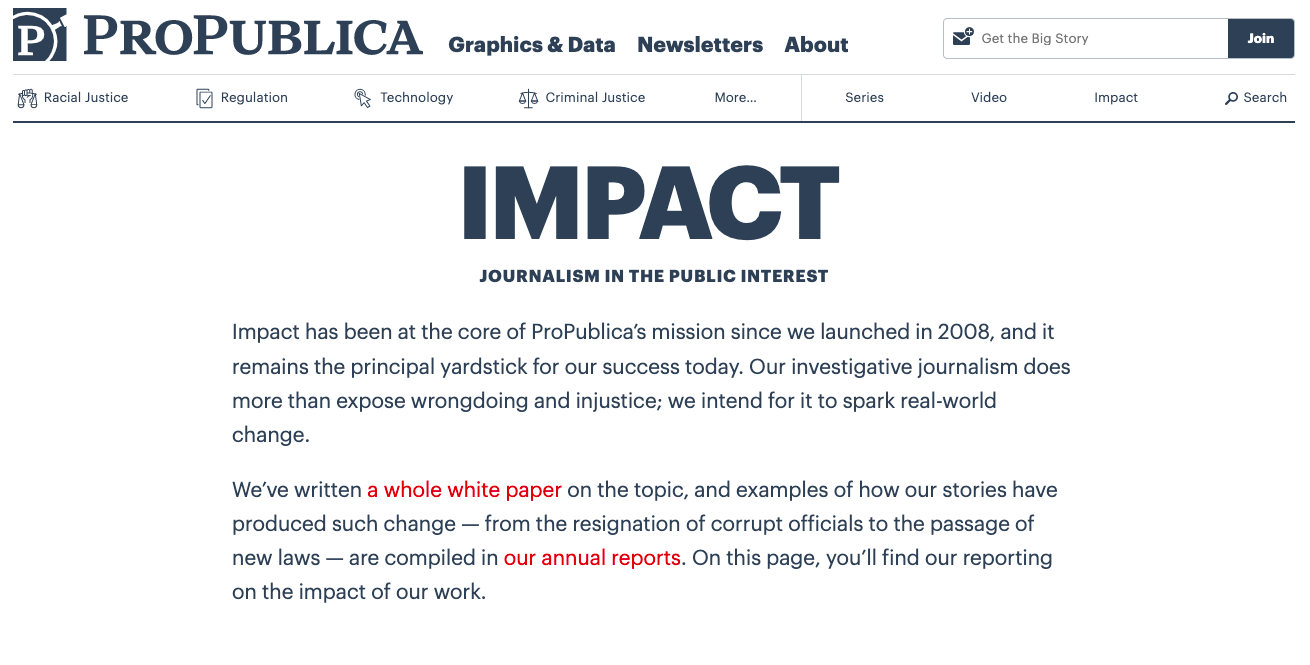
Impact statement. Courtesy of ProPublica.org. Clayton Young.

How do you know if a nonprofit is actually doing something with your donation money? It can be difficult to quantify the effectiveness of an organization, but independent research can help you make an informed decision about your donation. Charity Navigator’s video details some of the steps you can take to make sure your donation is being used well. One tip they suggest is to call the organization to directly ask them about their impact. However, this poses a problem: the organization might give biased information since they would want to look good at first glance. It helps to have something tangible the organization has done with your donation. 

ProPublica is an independent news organization founded in 2008 that exposes abuses of power against the public from government and institutions through nonbias journalism. Their Investor Impact Report, details all their work for the past year. Additionally, they link follow-up stories to their original articles that sparked the active change to fix injustices. In 2021, the administrator to the Environmental Protection Agency used ProPublica’s article on how the EPA allows some communities to breathe toxic air and announced a new Pollution Accountability Team in response to ProPublica’s article. 

Financial Transparency

Our final aspect of vetting a charitable organization relies on a group’s ability to maintain a clear view of its finances. Obviously, it’s a very important job to tell your donors where their money is going. Charity Watch defines what classifies as a charity and how that tax status could influence the money spent on the intended program. Generally, 501(c) 3 organizations are what most are classified as, meaning they receive tax-exempt contributions from donors, as long as they do not try to influence legislation or endorse presidential candidates, according to the IRS’s classification and rules of charitable organizations with that status. 

An example organization that fits the 501(c)3 status while also providing transparency to its financial records and expenditures is Amazon Watch. While it may sound like an Amazon.com watchdog organization, the charity is actually focused on legislating and providing humanitarian relief on behalf of the Indigenous communities in the Amazon rainforest. They spend 85.6% of their revenue on the Amazon program, the rest going to administration and fundraising, but their tax records are publically available for anyone to see, dating back to 2016. 

The sites utilized in this article were Charity Navigator and Charity Watch, but they’re only two of a litany of other similar sites. The nonprofits listed are not the only worthy charitable organizations in the world; rather, these are just a jumping point for you to do your own research and give to causes you are passionate about.


Clayton Young

Clayton is an aspiring photojournalist with a Bachelor's in Liberal Studies with a minor in History from Indiana University - Bloomington. In his free time, he enjoys hikes, movies, and catching up on the news. He has written extensively on many topics including Japanese incarceration in America during World War II, the history of violence, and anarchist theory.

11 Ways to Help Ukraine

Help support the Ukrainian people as their country is invaded.

The ongoing war in Ukraine has caused hundreds of civilian deaths, with more than 2 million refugees having already fled the country. It is crucial in these trying times that Ukrainians know they have support. Here are some ways to help. 

Meduza

“Within a few days, maybe even today, it is possible that there will be no independent media left in Russia,” read a post on Meduza’s website. Meduza is an independent media source at extreme risk of losing its platform to inform the public. Russian President Vladimir Putin is working to have complete control over censorship in Russia and Ukraine, meaning citizens of these countries will no longer have access to any information besides what Russia’s government allows. Meduza has already been blocked in Russia, and now it is fighting to stay alive through the support of allies outside of these countries. The organization is looking for financial support and social media awareness.
For more information and to donate, visit Meduza’s website

Reporters Without Borders

Reporters Without Borders is a worldwide independent media organization that works to keep freedom of the press and information to citizens of the world. According to their site, on March 4, Russia adopted a new law making the “publication of ‘false’ or ‘mendacious’ information about the Russian armed forces punishable by up to 15 years in prison.” This threatens every single independent media outlet in Russia and Ukraine. Support Reporters Without Borders through sponsorship, donations, volunteering and more listed on the website. 

For more information and to support, visit Reporters Without Borders’ website. 

The Kyiv Independent

The Kyiv Independent was launched three months ago by journalists who had been fired in Ukraine for defending editorial independence. Now, they are playing a vital role in keeping the freedom of the press alive in Russia and Ukraine. On their website, they have options to “become a patron” and donate to the organization’s GoFundMe.

For more information and to support, visit The Kyiv Independent’s website.  

Doctors Without Borders

Working in conflict zones, Doctors Without Borders focuses on helping citizens in need after natural disasters, wars, epidemics and more. Responding to the Ukraine crisis, the organization sent 1,400 cubic feet of medical supply shipments on March 6, along with members of the organization. There are multiple ways to get involved with Doctors Without Borders from working in offices to working in the field, and if a career path isn’t something you’re considering, donating is another great way to show support. 

For more information and to support, visit Doctors Without Borders’ website. 

International Medical Corps

A global first responder organization, International Medical Corps provides emergency medical assistance to people in need in any circumstances. A hub in Poland has been created, so members of the organization can assist members of Ukraine and surrounding countries with physical and mental health situations. International Medical Corps is looking for donations to continue its efforts in Poland. 
For more information and to support, visit International Medical Corps’ website. 

Contact Government Representatives 

Don’t have the money to donate? Another way to get involved if you are in the United States or Europe is by contacting government representatives in efforts to accept as many Ukrainian refugees as possible. Boundless offers great tips for formatting emails, finding your elected officials and learning information about what your contribution will do for citizens in need. 

To find your representative, visit the U.S. House of Representatives’ website. 

Global Giving

Global Giving is a nonprofit that connects other nonprofits with donors and companies. Helping to properly equip humanitarian projects in distressed communities and donating to the Ukraine Crisis Fund creates a direct impact on citizens in need. With a goal of $10,000,000, Global Giving has promised that all funds raised will go to providing shelter, food, clean water, health support, psychosocial support and more. 

For more information and to support, visit Global Giving’s website.

The World Food Programme 

As the world's largest humanitarian organization, The World Food Programme works to provide meals to all people in emergency situations. Working directly with citizens in Ukraine who have been forced from their homes and into hunger, donating to The World Food Programme will provide families with meal packages and more.

For more information and to support, visit The World Food Programme’s website.

UNICEF

UNICEF is running an emergency response for Eastern Ukraine, leading health, social policy, child protection and many more programs to aid families affected by the conflict. UNICEF is looking for volunteers, donors, social media support and reporters to help with the efforts in Ukraine

For more information and to support, visit UNICEF’s website. 

United Help Ukraine

An organization started directly in response to the attack on Ukraine, United Help is focusing on wounded warriors, humanitarian aid, medical supplies and raising awareness. Donating to United Help Ukraine will directly help Ukrainian citizens, soldiers and frontline volunteers. 

For more information and to support, visit United Help Ukraine’s website.

Airbnb

Offering free short-term housing for over 100,000 Ukrainian refugees, Airbnb is relying on the help of citizens across the world. Airbnb is looking for donations and possible hosts to house refugees. Nonprofits are working with Airbnb during this time to book homes for eligible citizens. 

For more information and to support, visit Airbnb’s Help Ukraine website. 

Knowing what organizations have the best intentions and support for people in need can be difficult. The American Endowment Foundation provides a great resource for choosing the right organizations where your support will make the biggest difference.


Haleigh Kierman

Haleigh is a student at The University of Massachusetts, Amherst. A double Journalism and Communications major with a minor in Anthropology, she is initially from Guam, but lived in a small, rural town outside of Boston most of her life. Travel and social action journalism are her two passions and she is appreciative to live in a time where writers voices are more important than ever.

How to Be a Global Citizen

From reading about the world and taking political action to volunteering effectively and traveling sustainably, here is a step by step guide to be a global citizen. Wherever you live, your home extends beyond national borders and here are some ways to acknowledge that. Check out these 7 steps on this path.

Read More

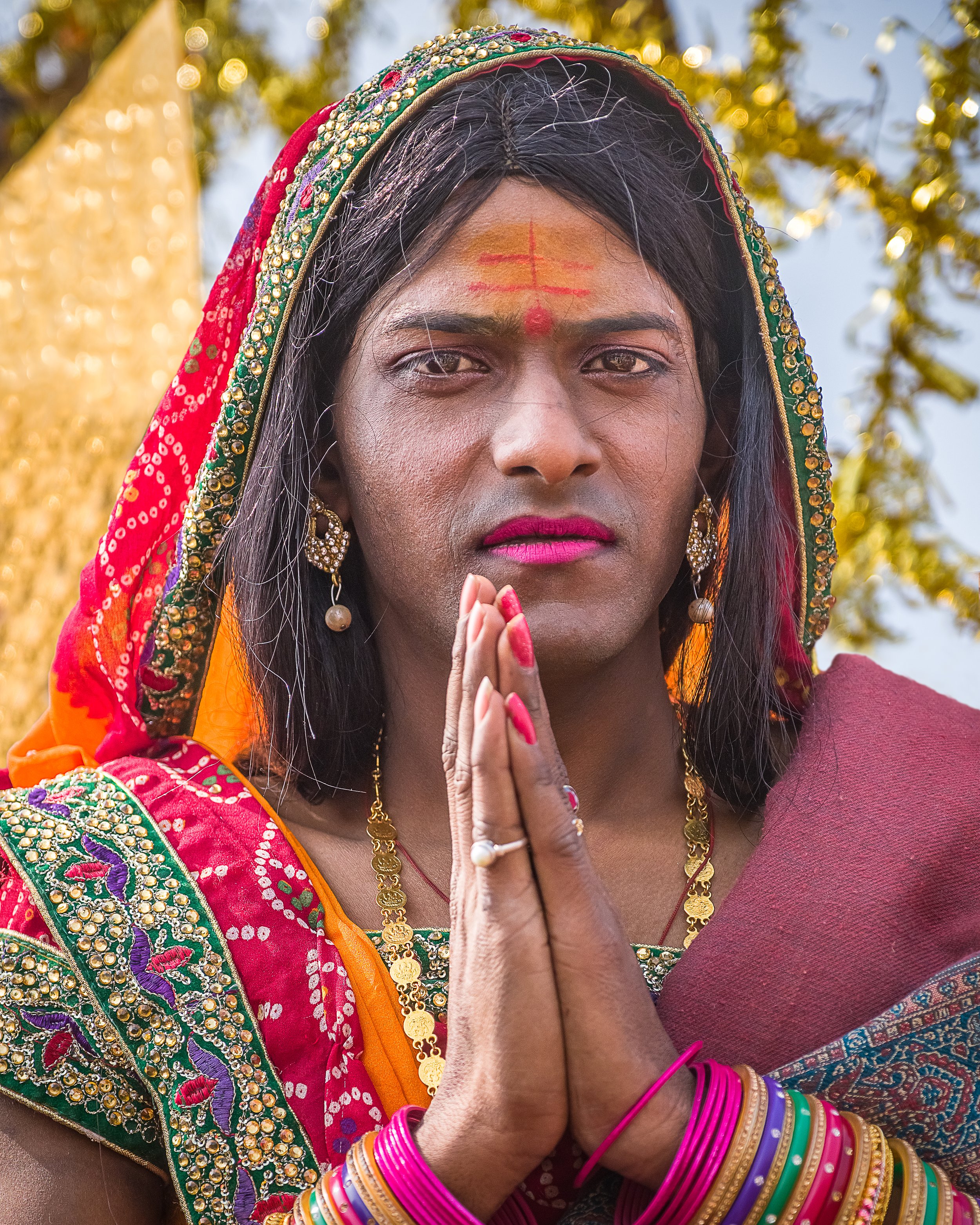
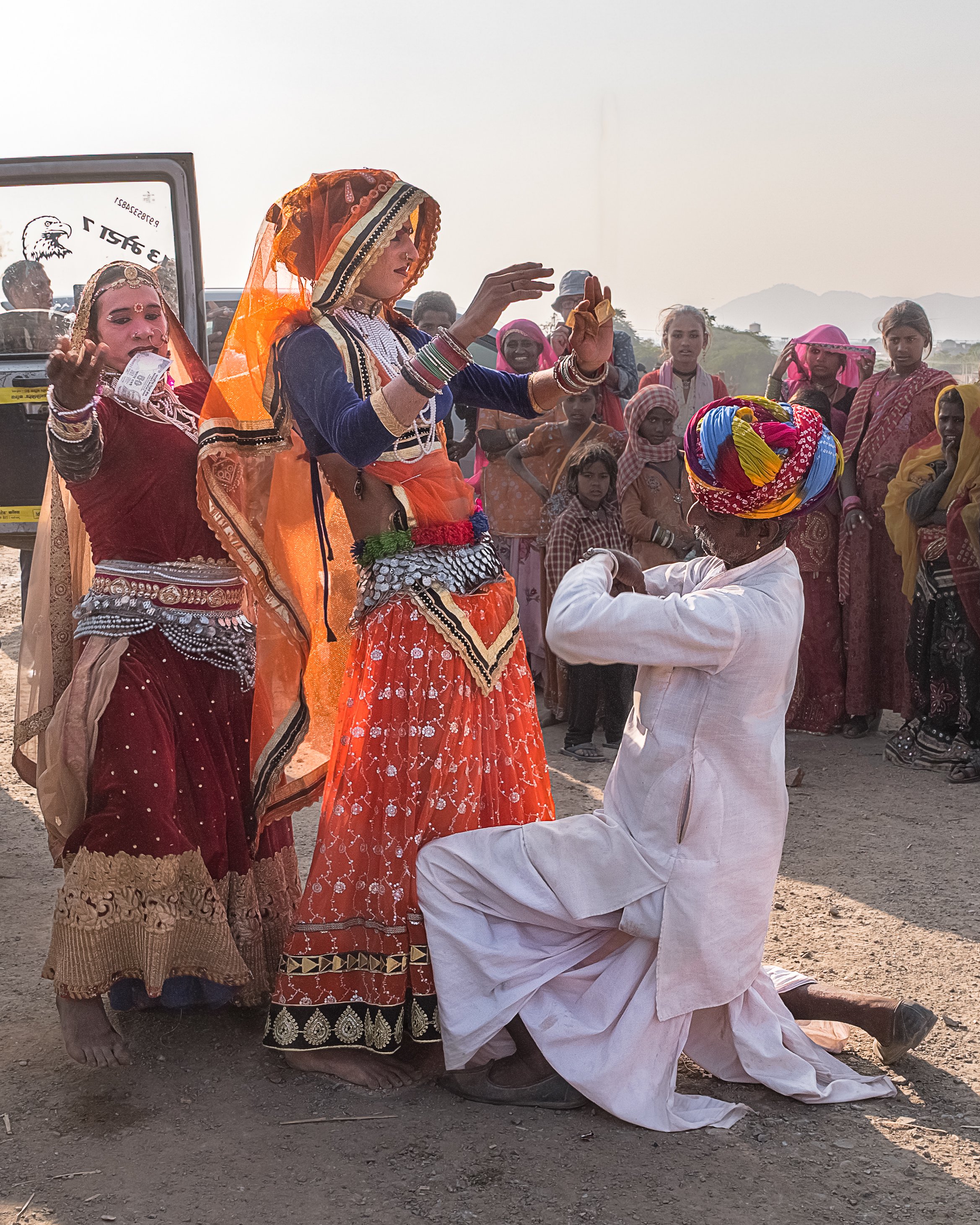
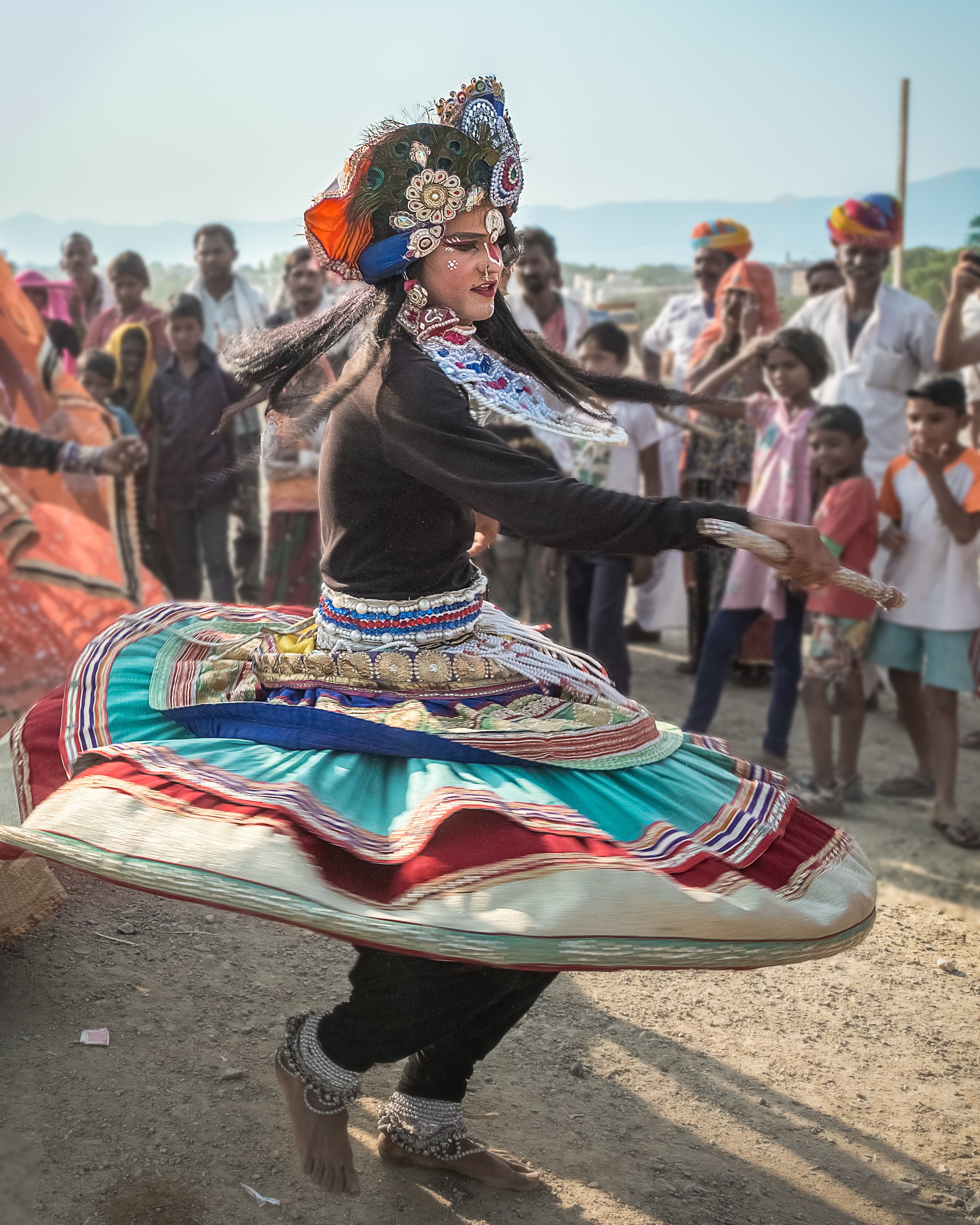
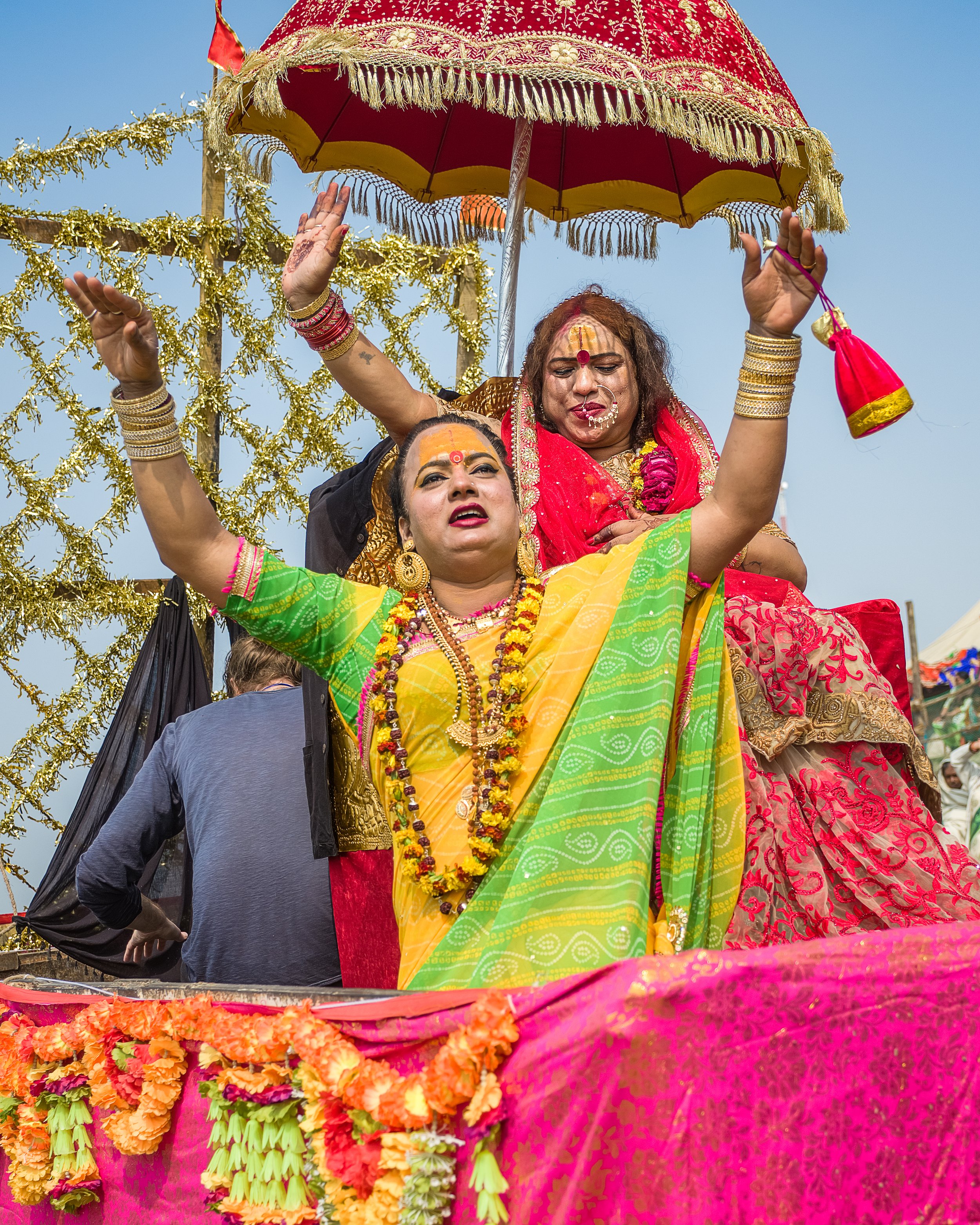
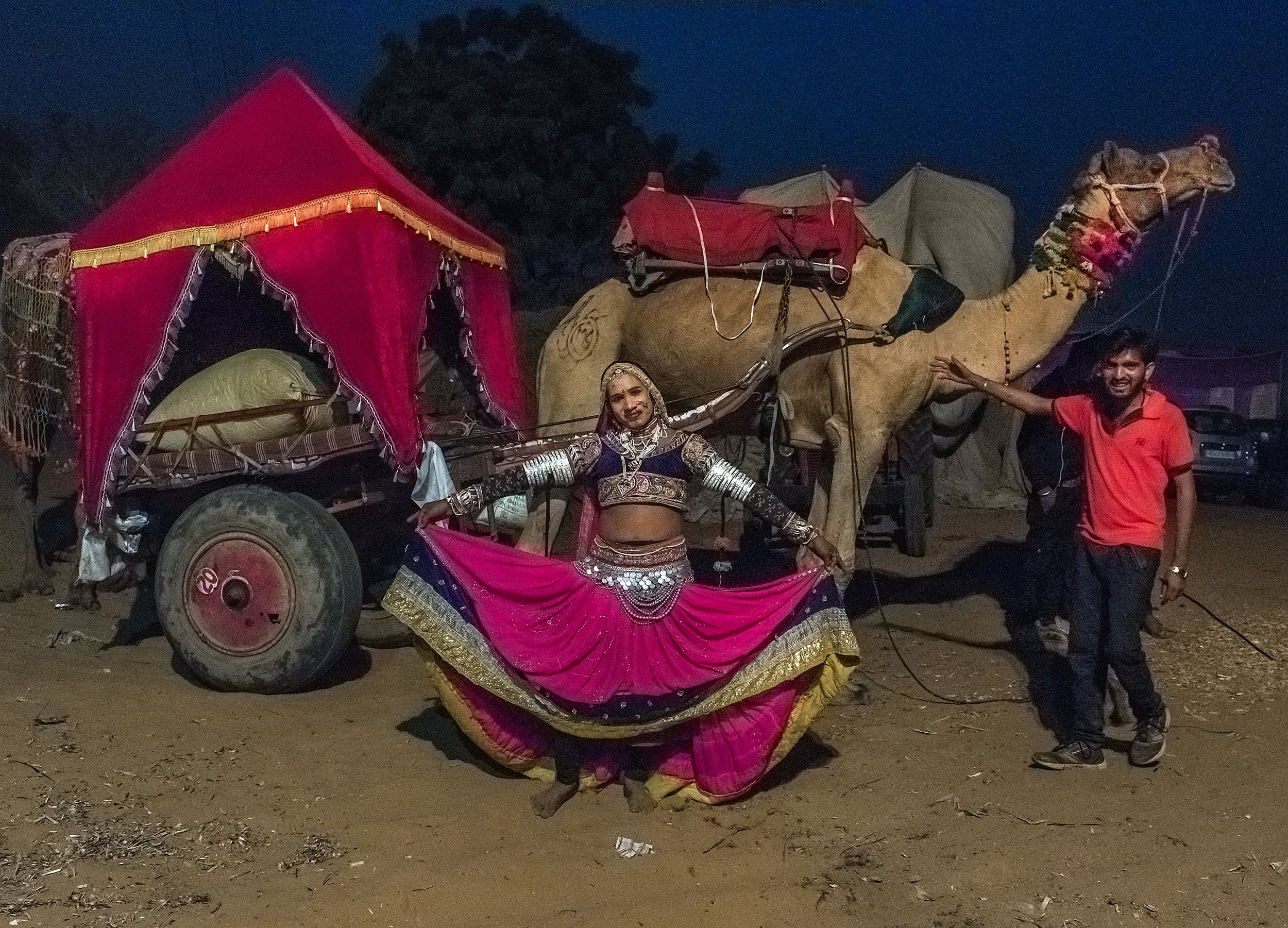
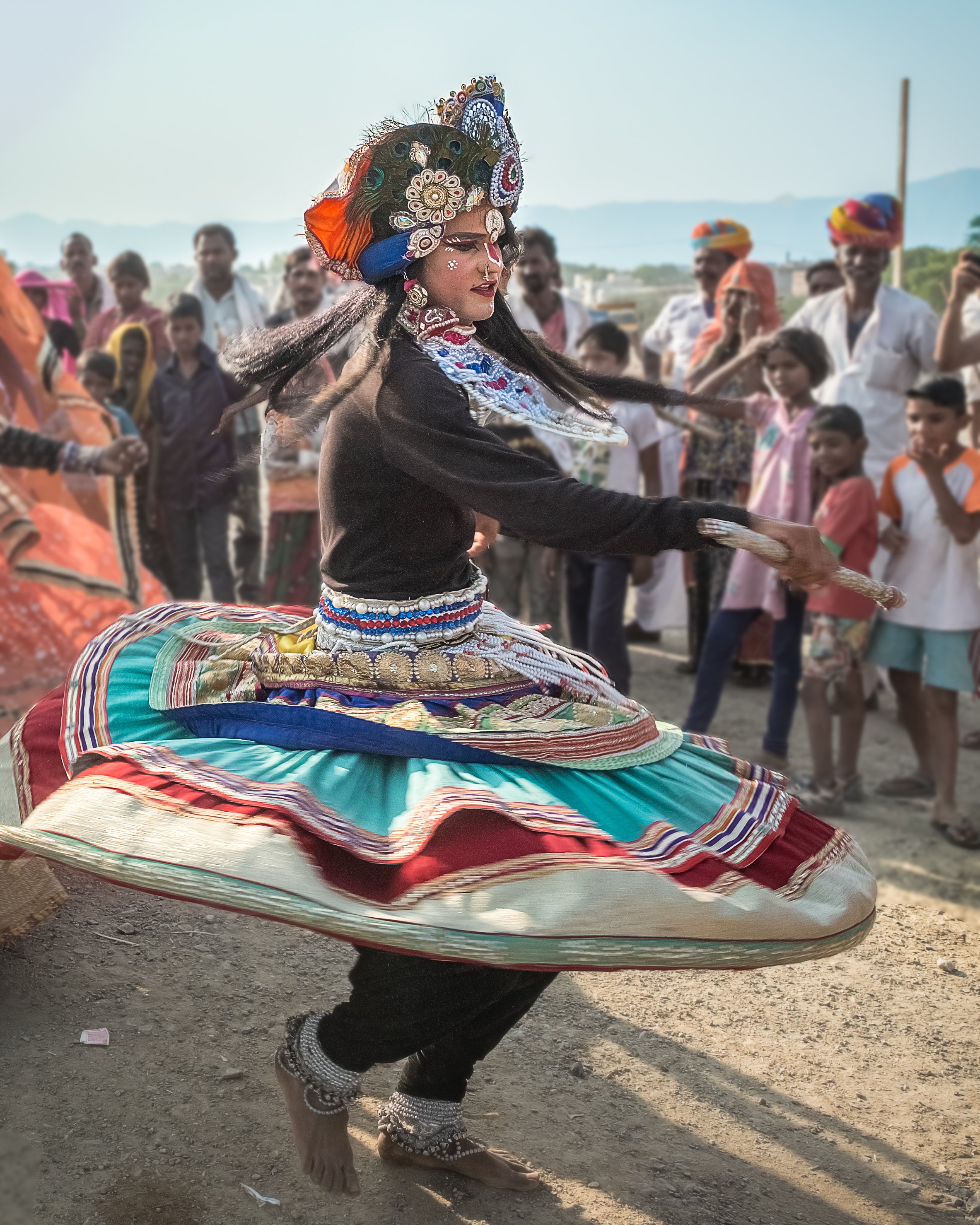
THE HIJRA — INDIA'S THIRD GENDER

While Western countries move to embrace the LGBTQ+ community, people of non-binary gender in India have played an important role in the society’s history and culture for over 4000 years.

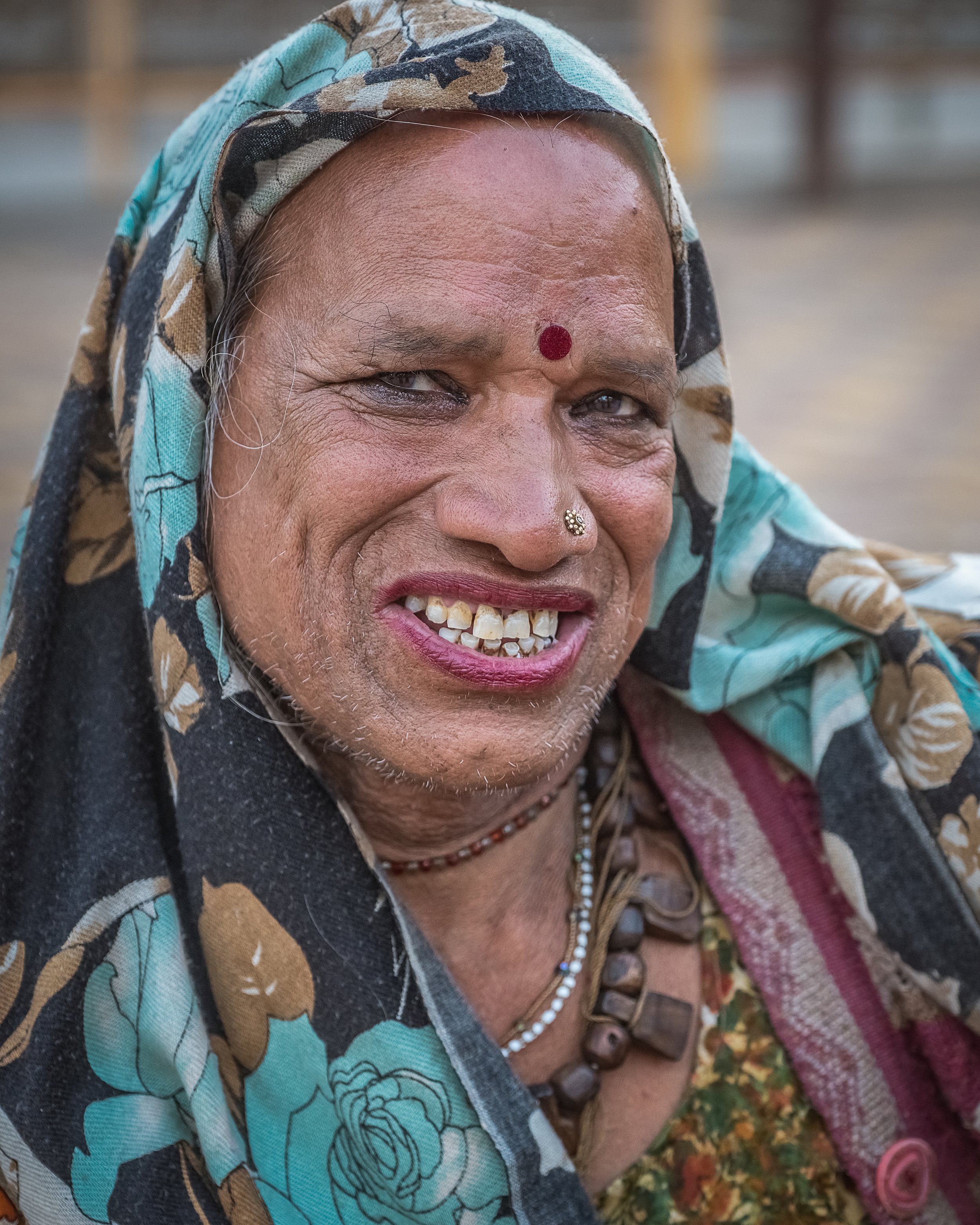
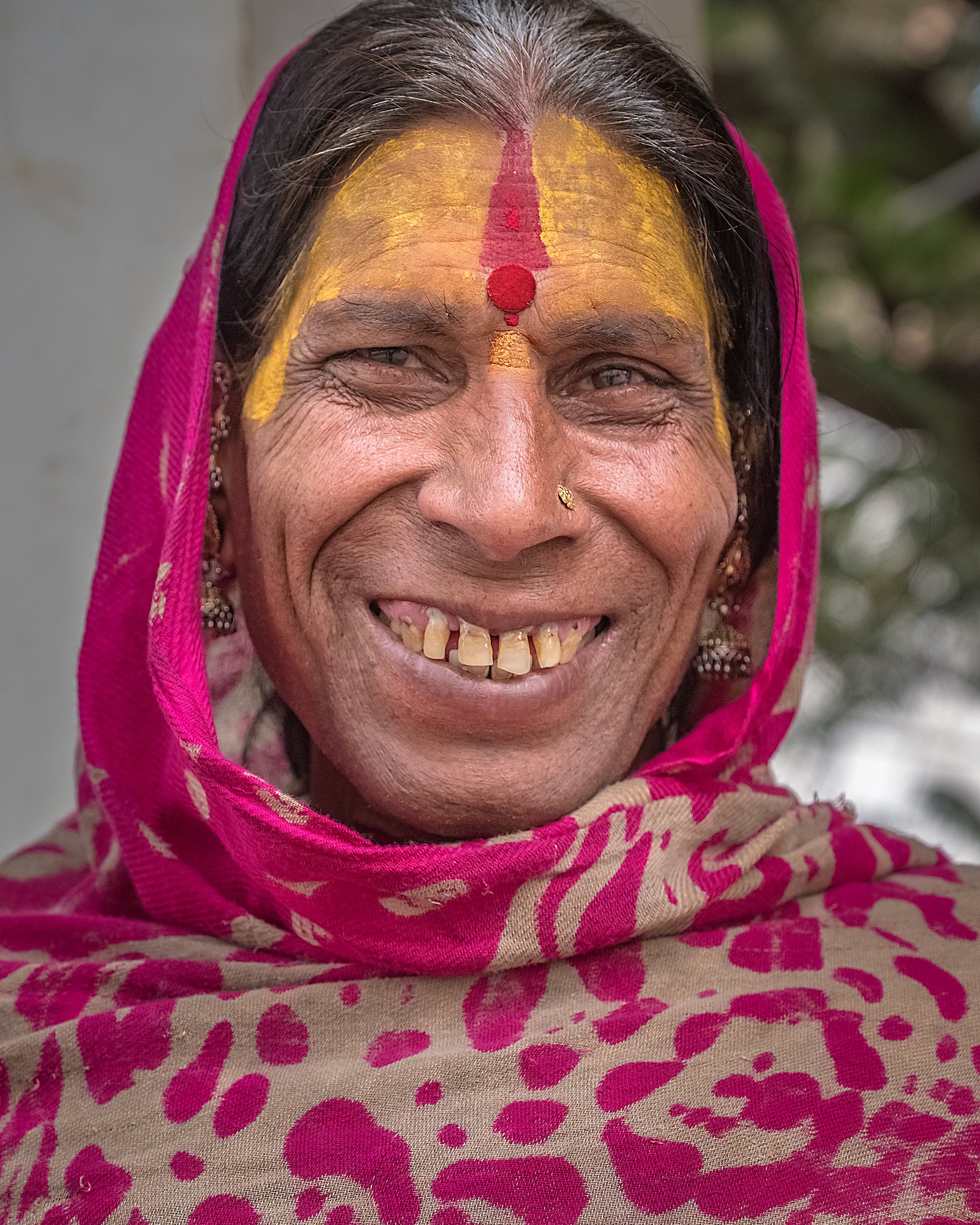
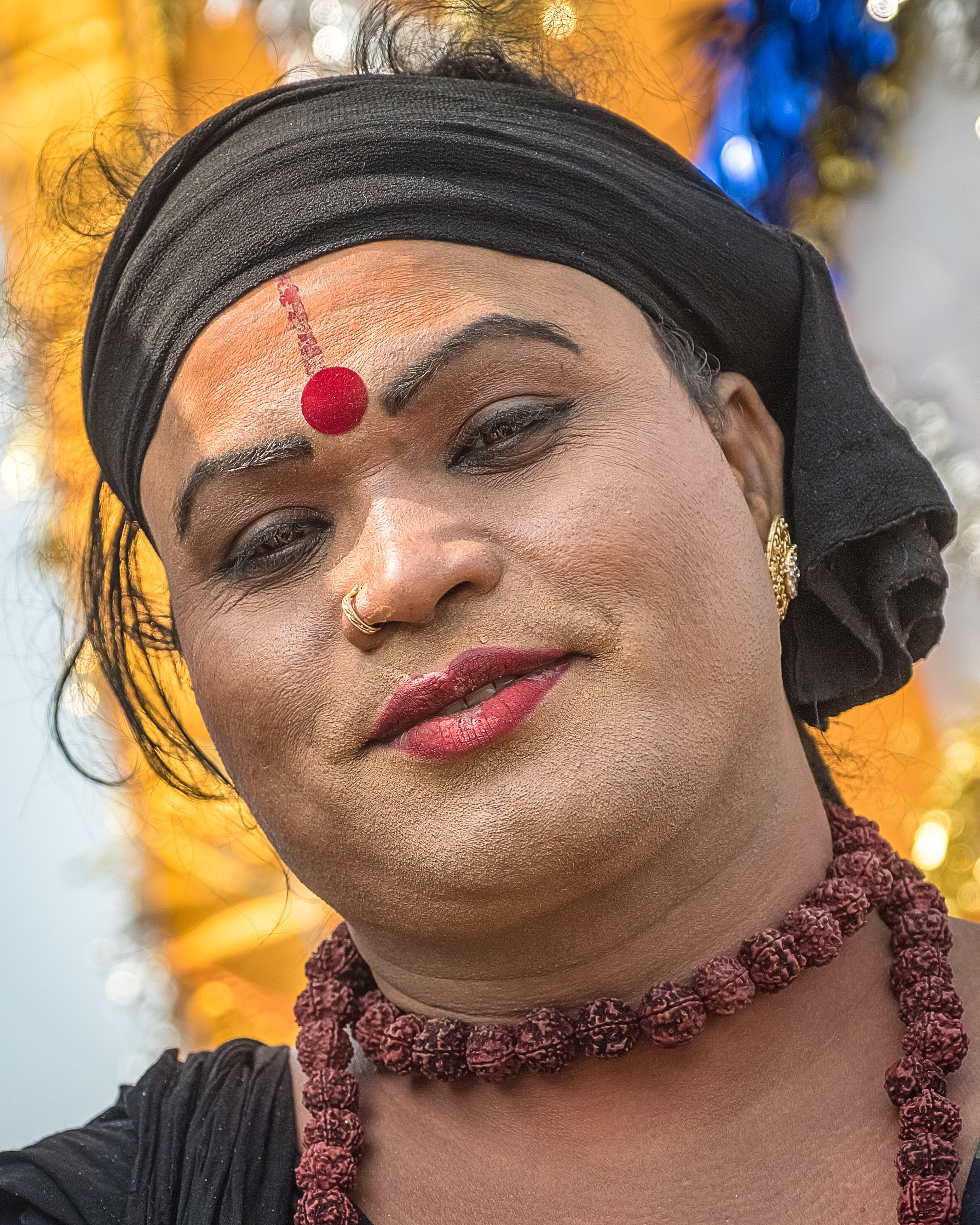
Evidence of sexual ambivalence has been a recurring theme in ancient holy texts in which Hindu deities often change genders. In various Hindu scriptures, Hijras are seen as demi-gods who have historically played important roles as entrusted advisors to rulers. Hijras are born male but look and dress as female — many will undergo castration and offer their male genitalia to the Hindu goddess Bahuchara Mata. Bahuchara Mata is a pivotal deity who enjoys the patronage of the transgender community in India.

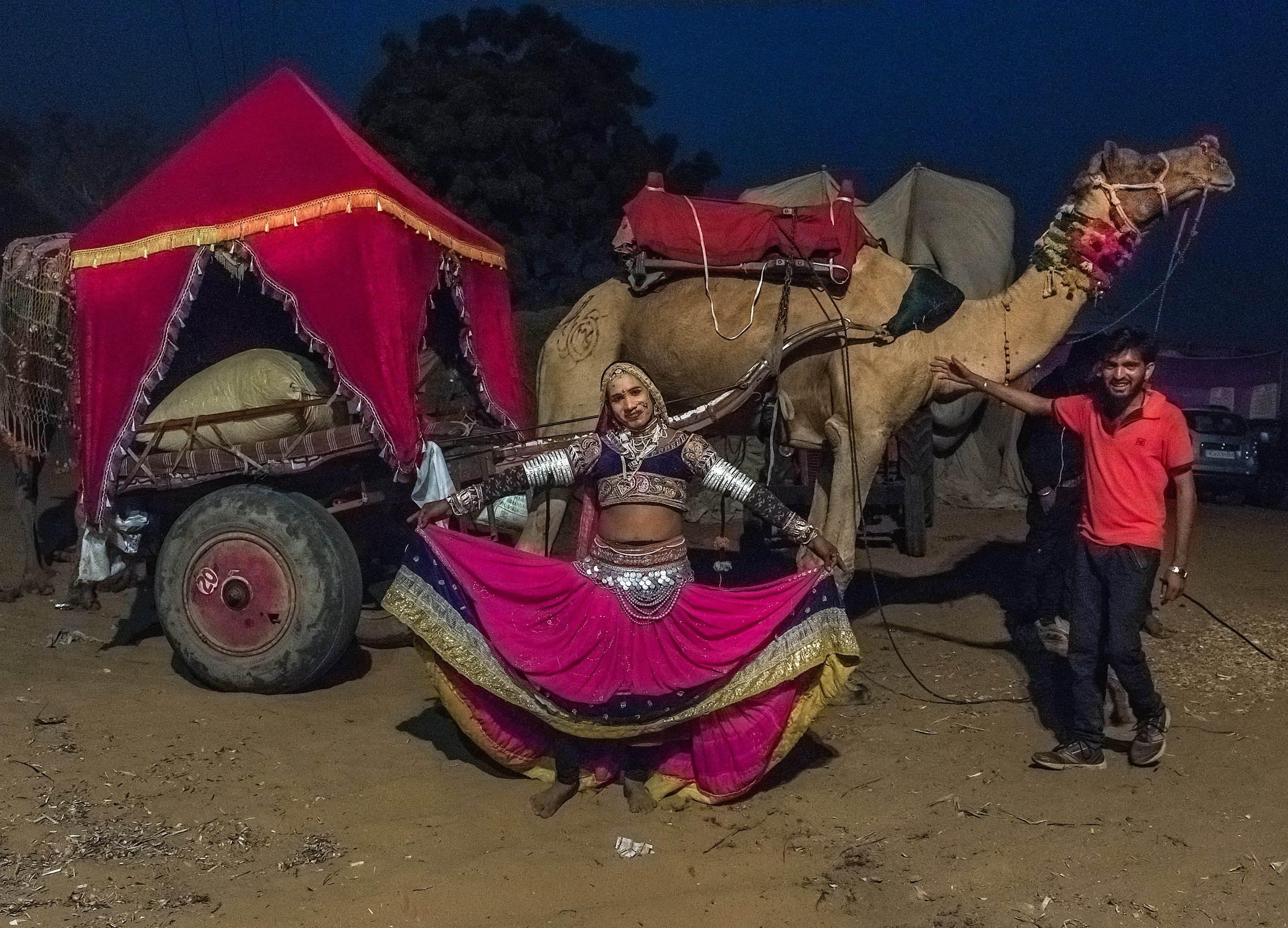
Life as a Hijra, or Kinnar (mythological beings that excel at song and dance) as they prefer to call themselves, is often a difficult one because while someone they may be revered they can also be disdained. Often cast out by their families they become open to exploitation, forces sex work and dangerous castrations. Community networks help to overcome this alienation by forming “houses” or “families” led by a Guru/teacher in order to support themselves by dancing and performing rituals. The connection to male/female characters in holy texts leads many to believe that the Hijra possess special powers and they earn a living by attending weddings and birth ceremonies to dance and offer blessings. To many Hindus, a Hijra’s blessing will mean long life and prosperity for the child. After a marriage ceremony the couple will receive a fertility blessing. It’s believed that the Hijra’s act of sacrificing their ability to procreate to the goddess Bahuchara Mata gives them their incredible religious power. 

During the British colonization of India, the fluidity of gender was repressed, transgender practices were outlawed, and they were forced underground. In recent years, the Hijra have regained some of the rights and freedoms that were formerly denied. In 2014 the Supreme Court acknowledged that third gender people are deserving of rights equal to other citizens. They are slowly assimilating into the fabric of Indian society and are now recognised as a third gender on passports and other official documents. 

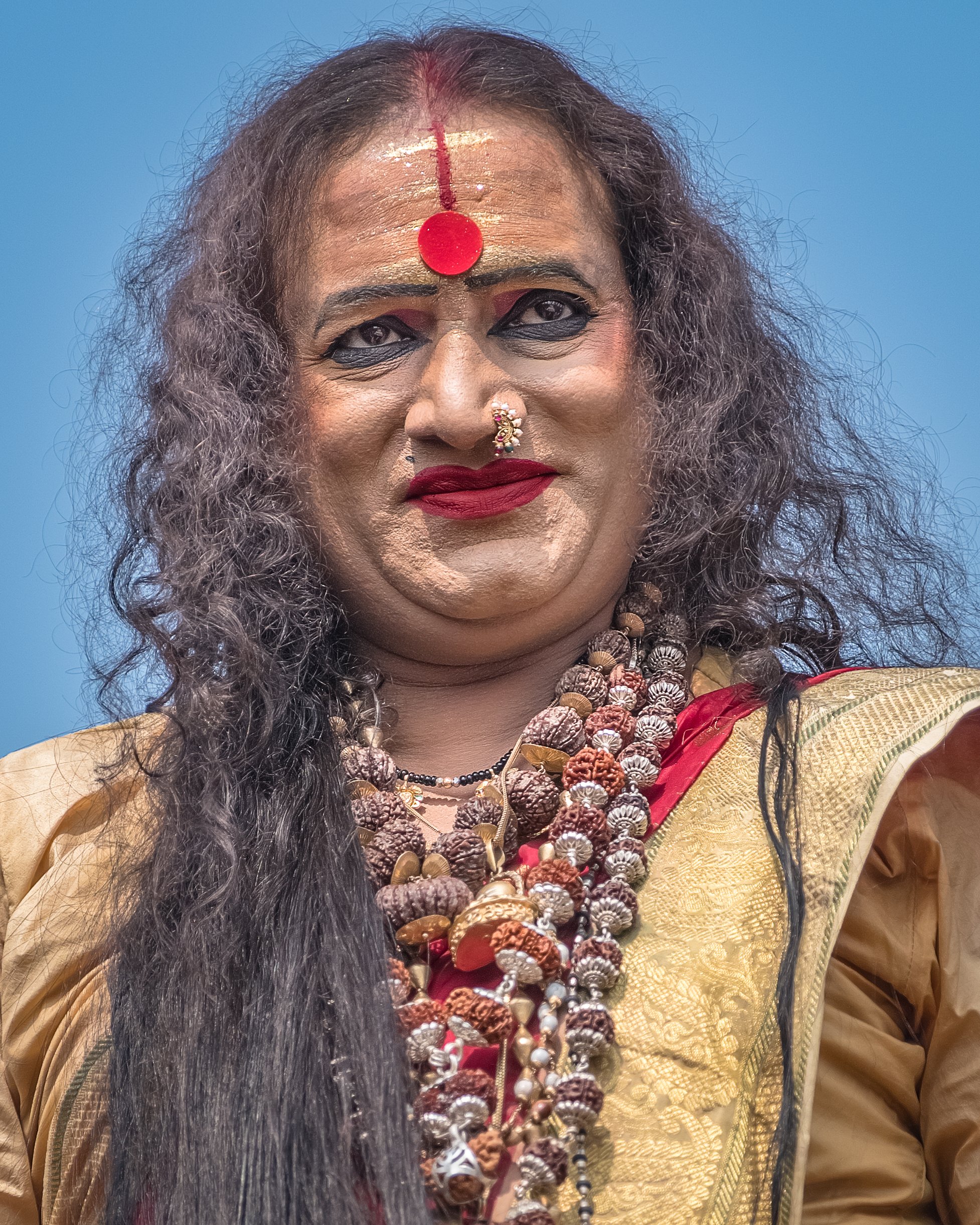
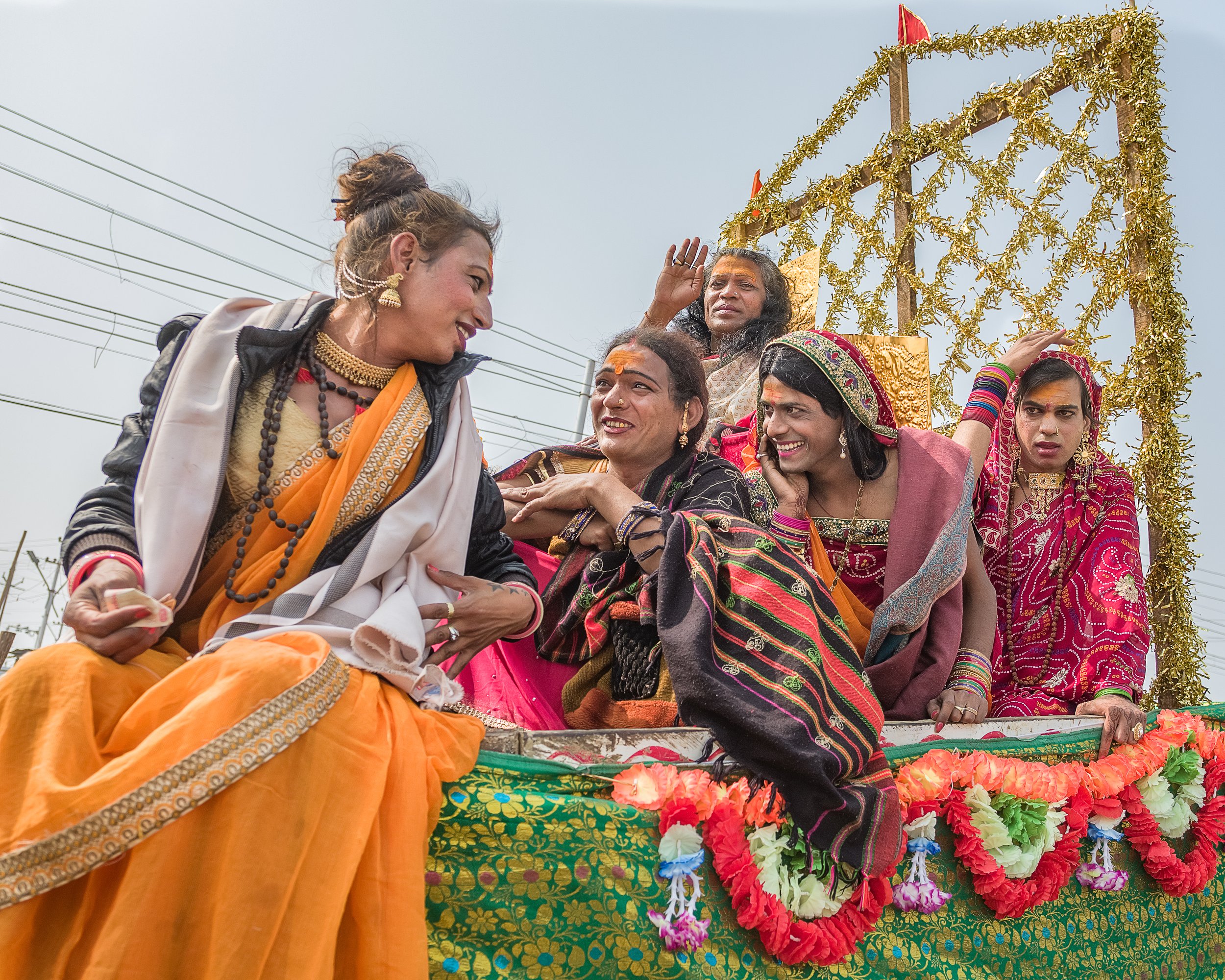
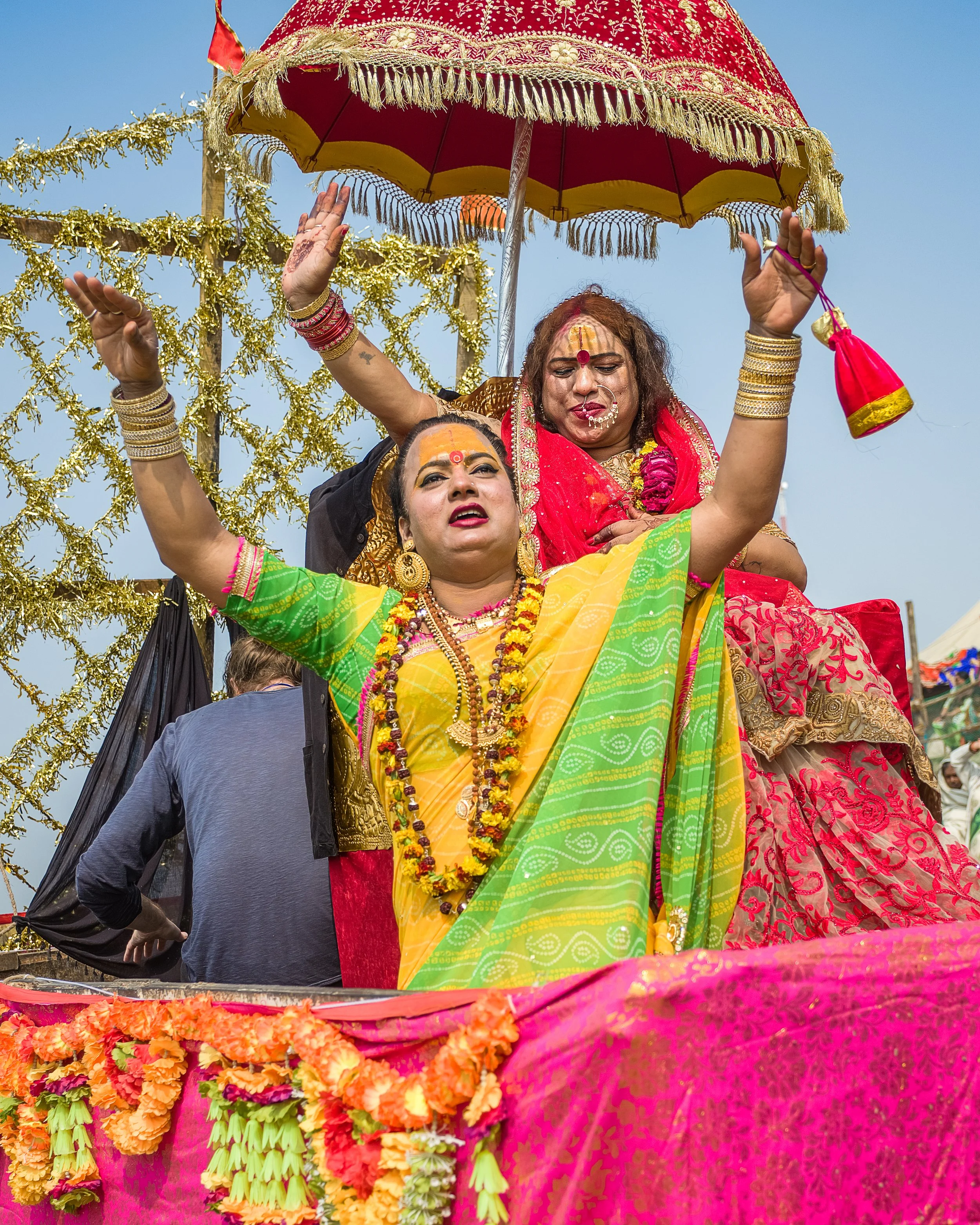
Additionally, there have been several events in the recent past which indicate a move to more inclusive sexual variance in society. In 2019 The Hijra were invited to take part in the Kumbh Mela in Prayagraj, one of the largest holy bathing festivals in India. They were led by Laxmi Narayan Tripathi, a well-known Bollywood actress and activist for transgender rights in India. When invited to speak at the Asia Pacific UN Assembly in 2008, she spoke of the plight of sexual minorities claiming that transgender people should be respected as humans and given equal rights. After centuries of ostracism, the Hijra community’s fight to be accepted by the Hindu establishment is slowly reaching fruition.


Carol Foote

Carol is based in Queensland Australia and has always been drawn to street photography, searching out the most colourful and quirky characters in her own environment. After studying documentary photography at college, she travelled to Yunnan, China to photograph the wide diversity of ethnic minorities in the region. However, over the past five years, her focus has shifted to Tibet, Nepal and India. As someone who has always been drawn to unique and different cultures, the regions rich heritage and local traditions make it a haven for her style of photography.

Follow Carol on social media @carolfoote_photographer

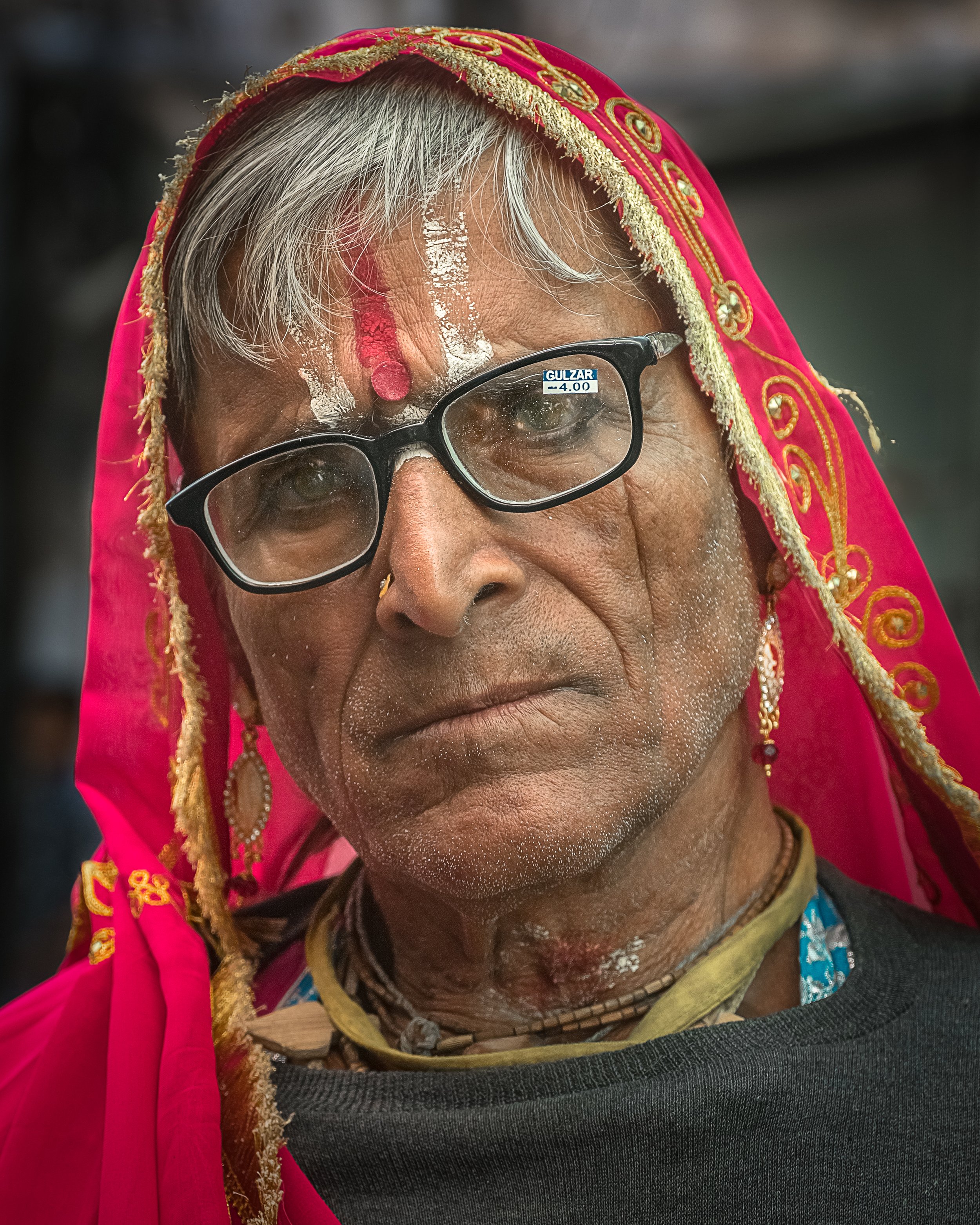
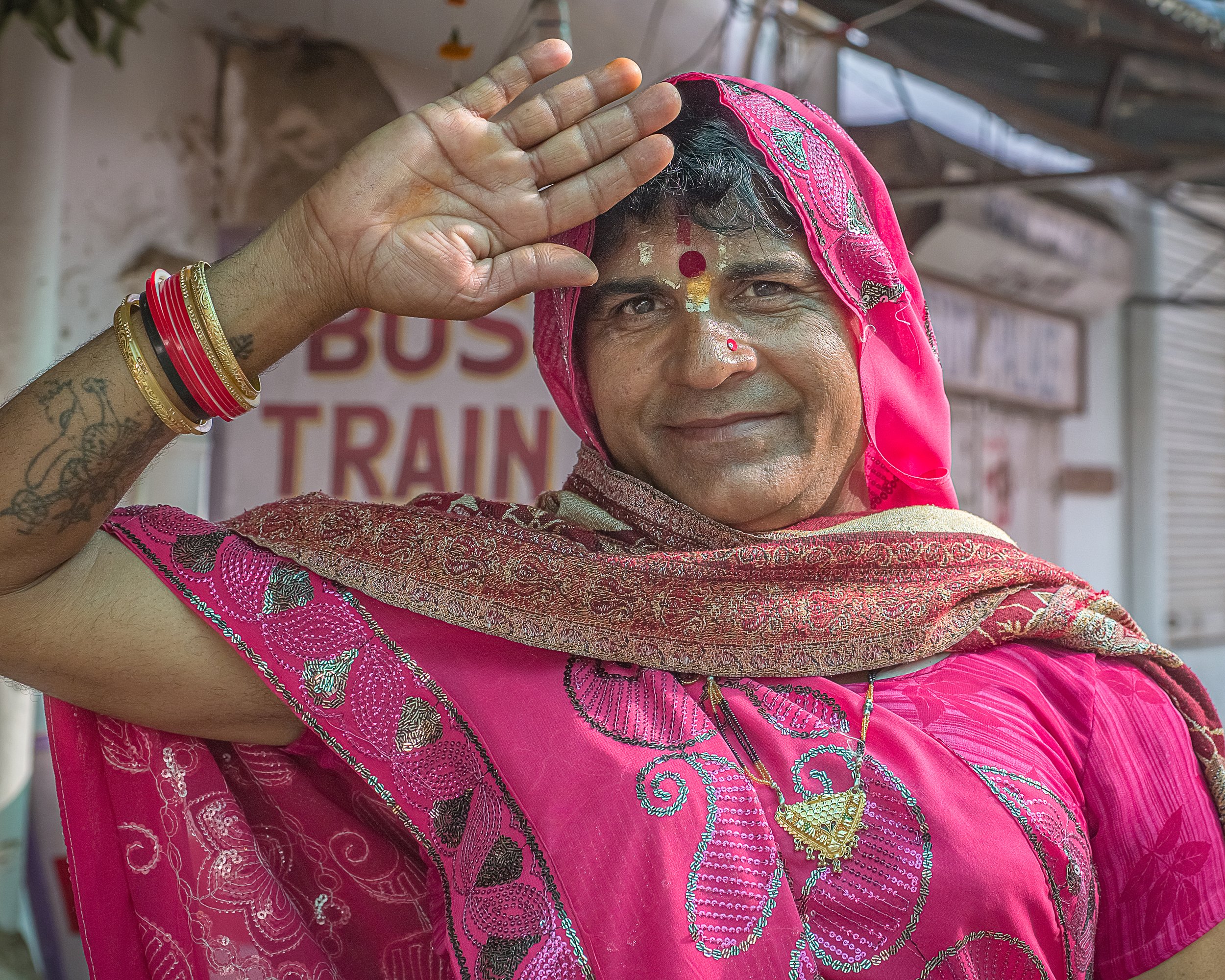
India’s Third Gender — Hijra

Despite being protected within the Indian constitution, hijra communities experience persecution. Their colonies are often sites of abuse and poverty, yet serve as the only space in Indian society for their identity.

Image by Carol Foote

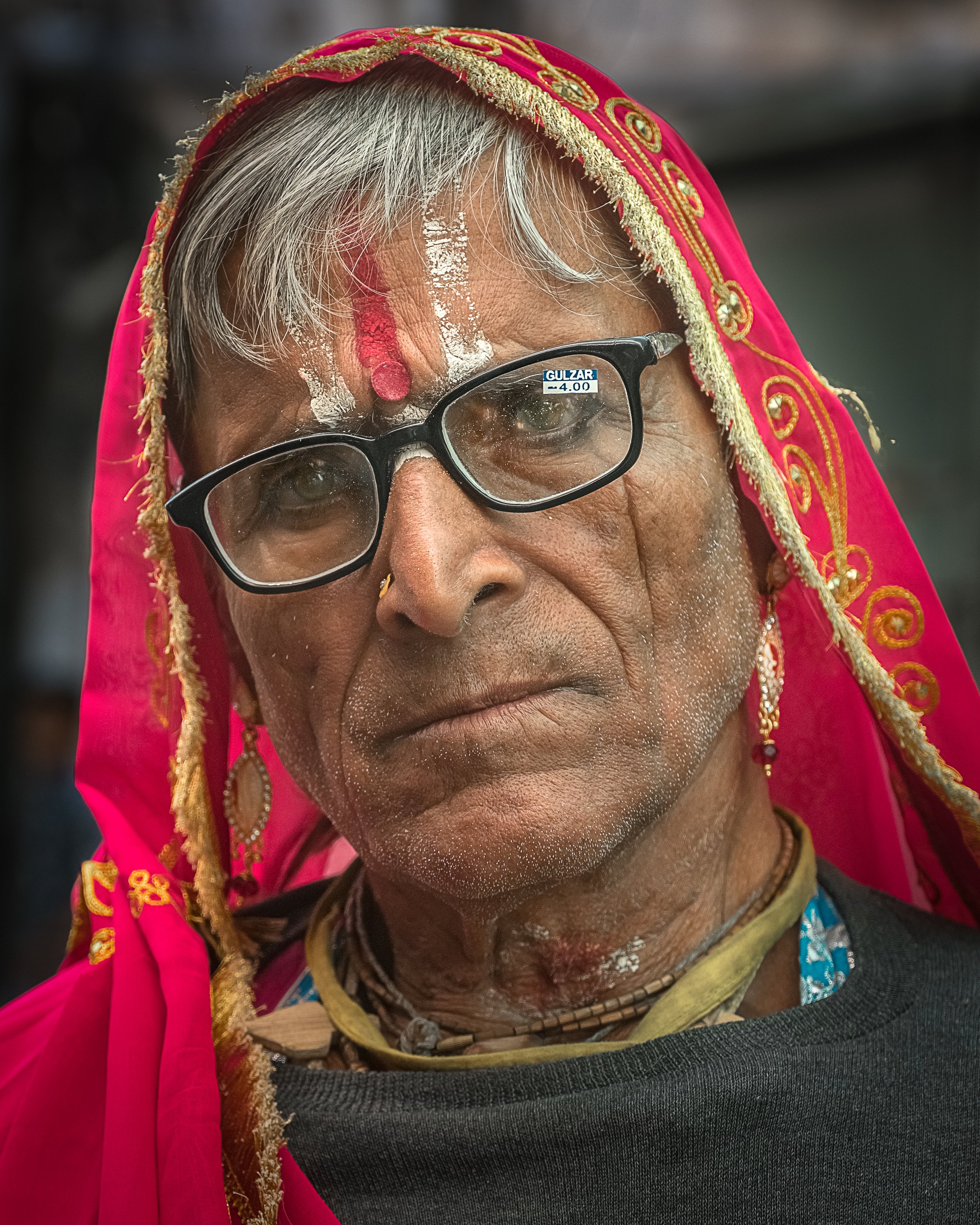
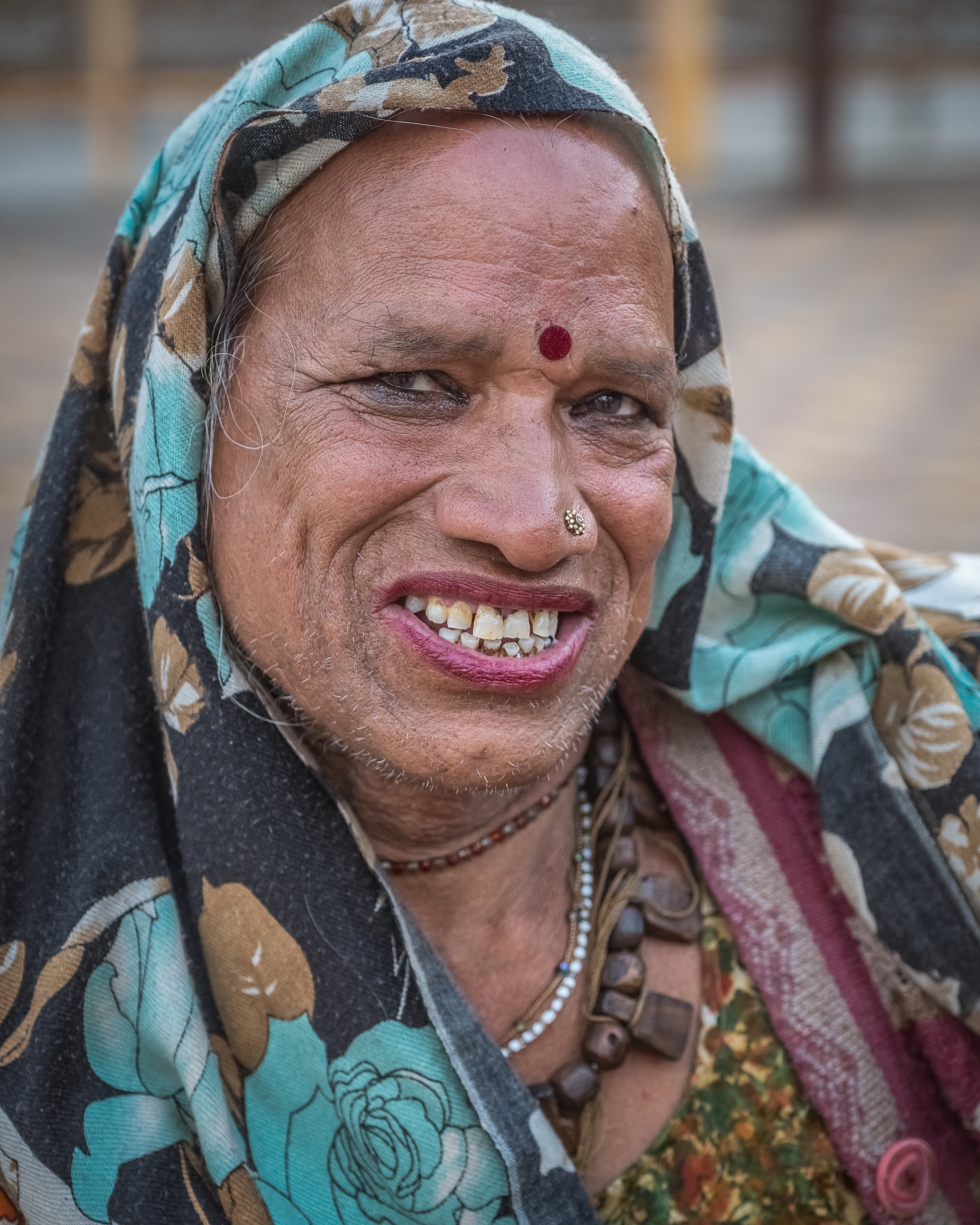
India’s third gender includes a few different groups, but the most common are the hijras. The hijra identity is complex; some are born male but dress in traditionally feminine ways, some are born intersex, some seek gender reassignment procedures, and some choose to be castrated as an offering to the Hindu goddess of chastity and fertility, Bahuchara Mata, granting them their religious powers. Outsiders tend to associate them as transgender, but Indian society considers them to be the third gender — not male, not female, not transitioning. The one defining characteristic of hijras is that they leave their homes from a young age to become a part of the hijra community, where they teach their lessons in secret. These communities exist on the outskirts of society, where they are often shunned by their families and at the mercy of police authorities. 

Image by Carole Foote

For centuries, trans, intersex and genderqueer individuals abandoned by their families have been initiated into the hijra community by gurus within the system. From the age of 12 or 13, hijras trade their relationships with their families for a relationship with a guru who takes on the role of  of parent, teacher and boss. The gurus are expected to teach each hijra the chela, or the disciple, in the hijra way of life. This includes learning their rituals, how to manage a household and how to make a living. Gurus are expected to treat the hijras like their children, but their ability to dictate how a hijra works, what they earn and even who they see maintains a hold over their lives that many activists consider a systemic form of bonded labor. 

Image by Carol Foote

These communities operate within a pyramid system where the “chelas,” or the hijra students, are divided into hierarchies by their work. At the top of the pyramid are the senior-most chelas, who sing and dance. Below them are the chelas who beg and collect alms in exchange for blessings at events. And lastly, at the bottom of the chela pyramid are the sex workers. In addition to their work, chelas are expected to take on chores that serve their guru. Regardless of how a hijra earns their money, a portion of it will go to their gurus. 

Image by Carol Foote

The founder of online transgender community Transgender India, Neysara, told NewsNewslaundry,aundry, an independent news media company in India, that the hijra community is “not a child-friendly place equipped to handle trauma.” She went on to say that, “What is vulnerable is trafficable and most that join are disenfranchised.” Neysara recalled turning to the hijra community at a time when she was young and scared. “When my family was trying to honor-kill me, I sought the hijra jamaat for help. They outright told me that I [...] could only stay with them if I do sex work and earn for them.” Honor killings are committed by a male family member seeking to protect the dignity of their family against someone they believe has brought them shame. It was sex work or death.

Image by Carol Foote

Hijras have been a part of Indian life for more than a thousand years. Evidence of their existence within Hindu society can be found inside holy texts like the Ramayana and the Mahabharata, where Arjuna became the third gender. Throughout South Asian history, third-gender people have often held positions of high power. For example, during the Mughal Empire in the 15th to 19th centuries, Hindu and Muslim rulers were considerate advocates of the third gender, and many rose to significant positions, even serving as the sexless watchdogs of Mughal harems. In Hinduism, their high regard is marked by their loyalty to Lord Rama, when hijras waited at the edge of the forest for 14 years until he returned to Ayodhya after being exiled.

Image by Carol Foote

The hijras’ religious backgrounds tend to center around traditions that blend Hinduism and Islam. The practice of removing genitalia is something stigmatized in a normal Indian community, however, it’s this act that is the source of their sacred power and legitimizes their role in society. According to tradition, when a hijra is castrated their genitalia is offered to the Hindu Mother Goddess, Bahuchara Mata. The Mother Goddessworks alongside Muslim saints to transform the sacrifice of their ability to procreate into the power to bestow fertility and good luck onto others. The hijras give blessings at births and weddings to grant new couples and their newborn children fertility and prosperity. Intersex people, transgender women and infertile men are considered to be called upon by the goddess to become a hijra. Should they ignore the call, it is believed that they will pay the price of being impotent for the next seven lives they have on Earth. 

Image by Carol Foote

The castration surgery is performed by a guru and takes place without an anesthetic. The operation is illegal and life-threatening and has led some Indian regions to consider offering a medical alternative free of charge. However, because of tradition, the sacred sacrifice is performed in absolute secrecy and never spoken of. Following the surgery, new hijras recover in semi-seclusion and eat a special diet for 40 days. Afterward, they conduct a special ceremony where they're dressed as brides and blessed with the power of Bahuchara Mata. From this moment on, they are given new names and new identities. Articles in the India Times and India Today have reported how this system has been forced upon young and at-risk men, who are then pressured into prostituion and homosexuality. 

Image by Carol Foote

Even though hijras were treated with respect for thousands of years, much of their societal downfall can be attributed to Hinduism’s encounter with colonialism. The British colonized most of South Asia in the 19th and 20th centuries, and their Christian beliefs did not prepare them for their confrontation with the third gender. In 1871, the British named all hijras hereditary criminals and ordered authorities to arrest them. The law gave police the power of increased surveillance over the community, who went as far as to compile registers of hijras. A historian named Dr. Jessica Hinchy told BCC that, "Registration was a means of surveillance and also a way to ensure that castration was stamped out and the hijra population was not reproduced." 

Image by Carol Foote

Even though the law was repealed once India regained its independence, 200 years of stigmatization took a toll. Today, hijras are almost always excluded from employment and education outside of their religious roles. They are often stricken by poverty and forced to resort to begging and prostitution. Most are victims of violence and abuse, harassed by police and refused treatment in hospitals. 

Image by Carol Foote

In a step forward, India’s Supreme Court officially recognized hijras as a third gender in August of 2014, in a law that ordered the government to provide third gender people with quotas in jobs and education. The ruling came just six months after the Supreme Court’s decision to re-criminalize homosexual acts through the reversal of a 2009 Delhi High Court order.Despite being legally recognized and protected under the Indian Constitution, the court’s choice meant that hijras would be breaking the law if they participated in consensual homosexual relations. 

Image by Carol Foote

As Neysara told NewsLaundry, “without trans representation, laws made by cis people for the ‘other’ can be damaging.” Prior progress gained seemed to be lost in 2019 when activists protested the Transgender Persons Act. According to Ajita Banerjie, a Delhi-based gender and sexuality rights researcher, this “set the whole movement back by a decade.” 

Image by Carol Foote

Today, as many as half a million members of the Indian hijra community live within the guru-chela system. Despite facing discrimination, abuse and living on the margins of society, the community continues to “remain a visible presence in public space, public culture, activism and politics in South Asia," Dr. Jessica Hinchy told BBC. On a high note, NewsLaundry says that policy-led interventions have been advocated by stakeholders in the system, with the mission to integrate “trans folks into mainstream society to reduce and ultimately end their dependency on this system, if not the system itself.” 

ABOUT THE PHOTOGRAPHER:

Carol is based in Queensland Australia and has always been drawn to street photography, searching out the most colourful and quirky characters in her own environment. After studying documentary photography at college, she travelled to Yunnan, China to photograph the wide diversity of ethnic minorities in the region. However, over the past five years, her focus has shifted to Tibet, Nepal and India. As someone who has always been drawn to unique and different cultures, the regions rich heritage and local traditions make it a haven for her style of photography.

Check out more of Carol’s work here.


Claire Redden

Claire Redden is a freelance journalist from Chicago, where she received her Bachelor’s of Communications from the University of Illinois. While living and studying in Paris, Claire wrote for the magazine, Toute La Culture. As a freelancer she contributes to travel guides for the up and coming brand, Thalby. She plans to take her skills to London, where she’ll pursue her Master’s of Arts and Lifestyle Journalism at the University of Arts, London College of Communication. 

Child Labor Increases in India During the Pandemic

Child labor in India has always been prevalent, but due to the pandemic the numbers are at an all-time high.

Photo courtesy of Vignesh S.

India has always had a large number of child laborers. In 2019, 152 million children were working. In the last two years, there has been an increase of 8 million children to the workforce. There is a great risk that this new generation will be academically displaced.

Before the pandemic, being in school protected children from child labor. However, with most families out of work or working to get by, the most vulnerable have to pay the cost: children. Children are often working 16 hour days in inhumane conditions. There are many contributing factors to this issue, the largest being that a third of the Indian population is living under the poverty line. With families working and narrowly making ends meet, families may feel they have no other choice but to send their children to work. Another factor is the country’s high illiteracy rate of 287 million people. Children who do not get a basic education will become illiterate adults, making them a target for underpaying jobs that creates an intergenerational cycle of poverty within the family. 

The states where child laborers are most prevalent are Bihar, Uttar Pradesh, Rajasthan, Madhya Pradesh and Maharashtra, where over half of the country’s children work. Uttar Pradesh in northern India is the state with the highest number of child laborers,  20 percent of children work in the silk industry and child laborers work in textile factories making garments for big companies. Gap was once in the headlines when someone discovered children working in the shops. Many of the child laborers were there due to their families selling them. Taking swift action, Gap responded and said, “the factory was being run by a subcontractor who was hired in violation of Gap’s policies, and none of the products made there will be sold in its stores.” Additionally, the spokesman for Gap Bill Chandler told The Associated Press, “Under no circumstances is it acceptable for children to produce or work on garments.” Since then Gap decided to stand up against child laborers and stated on their website that they would be “removing young workers from the facility.”

Children will work all kinds of jobs from carpet manufacturing, farming, brick making and gem extracting/polishing to selling cigarettes on the streets for the tobacco industry. Indian law prohibits children under the age of 14 to work and teens from age 14-18 to do any work that is considered hazardous. Nonetheless, most go unnoticed due to lack of enforcement of the law. Companies that turn a blind eye to this issue will oftentimes not recognize the child’s labor. Children will be forced to work long hours with no compensation or very little compensation. It has been reported that a child can make as little as 52 cents a day, if they are paid at all. They are frequently abused physically, verbally or sexually. Sexual exploitation in India is widespread, with 1.2 million children involved in prostitution. 

The mental and physical effects of this arduous and traumatic experience have consequences. Exposed children may experience mental health issues, causing a disruption in their emotional development. Many psychiatric disorders can stem from child labor, for example, depression, mood disorder, attachment issues, psychogenic seizures, post-traumatic stress disorder (PTSD) and substance abuse. The physical effects include but are not limited to exposure to toxic substances, working in extreme temperatures, malnutrition, sleep deprivation and death. The mental and physical toll it takes on the child will be long term if it is not dealt with. 

According to one estimate, more than 20 percent of India’s economy is dependent on children. This is a large financial burden on the hands of young people who should be exploring and playing, nurtured in their formative years, according to the American Academy of Pediatrics. The government’s accountability is key to move forward and to bring change to an already impacted generation. The laws that protect children need to be enforced and further tightened. 

The extreme poverty that has affected India is another root cause of child labor. According to Humanium, a organization that defends children’s rights, this is the primary reason children are falling victim to child labor. Their need to grow up before their time and help feed their impoverished family is only a momentary fix. This will impact their future and the future generations that will come after them. 

To Get Involved:

Global March is an organization that seeks to eliminate child labor. Their mission is to ensure free access to education. To learn more about Global March click here

To support the children of India through Global March click here.


Jenn Sung 

Jenn is a Communications Studies graduate based in Los Angeles. She grew up traveling with her dad and that is where her love for travel stems from. You can find her serving the community at her church, Fearless LA or planning her next trip overseas. She hopes to be involved in international humanitarian work one day.

Meet the Activist and Intersectional Storyteller Developing Data-Driven Humanitarian Tools

Melissa Jun Rowley is a journalist, entrepreneur and activist focused on the intersection of storytelling, technology and social justice.

As the founder and CEO of Humanise, Inc., Melissa Jun Rowley is developing TheToolbox.org, a data-driven humanitarian initiative created by acclaimed musician Peter Gabriel. CATALYST had the chance to catch up with Melissa to learn more about Humanise in Detroit and Melissa’s path to social entrepreneurship.

How did your experience with TheToolbox.org inspire you to develop Humanise, Inc.?

TheToolbox.org is an online destination, founded by Peter Gabriel, that connects people to apps that can help them improve their lives and become everyday activists. I first became involved as an editorial consultant, and was developing stories while curating tools that promote social impact.

For example, there’s an app you can scan over a product’s barcode to see if human trafficking was involved in the product chain. While apps like these are interesting and useful, they’re under-utilized given their lack of commercial and entertainment value. 

We came to the conclusion that the site itself is a valuable database of tools, but in order to have an impact, we need to go into the field and get people on the ground using the tools, and providing feedback about how they can be improved. That’s where Humanise comes in: It was created to function as the parent company of TheToolbox.org. The tools we curate are now one of three pillars. We’ve evolved into an organization that promotes human rights through technology, storytelling, AND collaboration with local communities.

Can you describe some of the projects that Humanise has initiated since its founding?

We decided to take Humanise to Detroit, primarily because there’s a lot of data-driven development unfolding in the city. Also, I grew up an hour outside of the D and am in love with the entrepreneurial community there. They’re so spirited. They’re the genuine article. 

While money is being directed to development in certain districts, such as downtown, the neighborhoods on the outskirts are tragically deprived of funding and resources. Forty percent of the people in Detroit don’t have Internet access, and 40 percent can’t pay their water bills. It’s a first world city crawling with third world problems! 

In the year 2015, there are no excuses for letting people in our own backyard suffer like this. We need to meet them where they are, not where we think they should be, and we need to collectively solve the problems from the ground up — not the top down. 

So we started thinking of ways we can work with technology providers to foster digital inclusion. We’ve been working closely with community activists in the Detroit neighborhood of Morningside to understand the neighborhood’s needs and aspirations. We’ve connected them with a smart city advisory to see if the area is eligible for some pretty revolutionary technology. Some of the Detroiters we know are going to use TheToolbox.org as their own citizen journalism platform, where they can publish stories about their neighborhood and discuss the tools they find the most empowering. 

If we’re able to provide connectivity for this neighborhood, we may be able to do the same thing in some of Detroit’s other hardest hits zones. 

Before developing Humanise, Inc., you spent much of your career as a journalist. How did working in journalism influence your interest in social entrepreneurship? 

Being a journalist is the way I became an entrepreneur, really. I worked in TV when I was younger, producing business news updates for CNN and then covering entertainment in Hollywood. The red carpet was my second home.  But eventually, I started to feel like I was losing my soul. I became a journalist because I wanted to help connect people through storytelling — not perpetuate the dumbing down of the country, which is what I felt like I was doing half the time, particularly when I was asked to start quoting TMZ in stories. I knew that was the end. 

I left Los Angeles, and I started focusing on nonprofits and social responsibility movements. I quickly discovered that I couldn’t make any money that way. Two years later, I began developing content for companies that have a social mission. This was when I started to view myself as more of an entrepreneur. But I’m always going to be a journalist at heart, always looking for the truth and humanity in every story. 

Do you have any advice for future journalists or entrepreneurs? 

These days, if you’re going to be a journalist, you have to be an entrepreneur. By that I mean, you need to think like an entrepreneur. You need to be constantly thinking of different strategies, who you can connect with, and how you can build your brand and business. It was this mindset that led me to TheToolbox.org and Peter Gabriel. 

A second piece of advice is that the best way to develop an idea is to collaborate and find some common core or level of connectivity in the heart of why you’re doing what you’re doing. It’s only through that kind of commitment that you can build a business that has meaning. It’s not easy. But the people you meet along the way will change your life and expand your heart and mind in ways you’ve never dreamed of. I can promise you that. 

LEARN MORE ABOUT HUMANISE, INC. HERE.


Sarah Sutphin

Sarah is an undergraduate at Yale University and a content editor for CATALYST. As a traveler who has visited 30 countries (and counting!), she feels passionate about international development through sustainable mechanisms. Sarah has taken an interest in the intersection between public health and theater, and hopes to create a program that utilizes these disciplines for community empowerment. She is a fluent Spanish speaker with plans to take residence in Latin American after graduation. 

International Human Rights Court Rules in Favor of Trans Rights

The Inter-American Court of Human Rights ruled that the government of Honduras was responsible for the 2009 murder of a transgender woman. Today, Honduras is one of the largest contributors to anti-trans violence in Latin America. 

Transgender pride flags. Ted Eytan. CC BY-SA 2.0 

On June 26, the Costa Rica-based Inter-American Court of Human Rights delivered a landmark ruling in a transgender rights case. The court held that the government of Honduras was responsible for the 2009 murder of trans woman and trans rights activist Vicky Hernández, stating that the government had violated Hernández’s rights to life and fair trial. 

Hernández was 26 years old when she was killed by a single gunshot to the head. No one was ever charged for the crime. 

The Court’s ruling stated that Honduran authorities did not sufficiently investigate Hernández’s death. Her murder was dismissed quickly as a “crime of passion,” and police failed to interview anyone from the scene or examine the bullet casing. It is unclear whether a postmortem examination was performed. 

Lawyers acting on behalf of Cattrachas, the LGBTQ+ rights organization that brought forward the case, argued that this incomplete investigation was a result of Hernández’s gender identity. Robert F. Kennedy Human Rights reports that during the investigation, authorities continuously identified Hernández as male and referred to her on documents and records by her birth name, which she did not use. In 2009, shortly before Hernández’s killing, Human Rights Watch published a report which found that police in Honduras routinely failed to investigate reports filed by trans people. The report also detailed the harassment and beatings that trans people had endured at the hands of the police. 

Hernández’s murder occurred on June 28, 2009, the first night of a military coup against then-President Manuel Zelaya. Zelaya was taken into custody, and the military imposed a 48-hour curfew, leaving the streets closed to everyone but military and police forces. Hernández was a sex worker, and was still on the street after curfew arrived, along with two other trans women. The three women saw a police car approaching and scattered, fearing violence. The next morning, Hernández’s body was found in the street. 

Due to the circumstances surrounding her death, lawyers for Hernández’s case posited that she was the victim of an extrajudicial killing, meaning that state agents were responsible for her death. Robert F. Kennedy Human Rights points to the execution-style way in which Hernández was shot and the fact that the streets were closed to everyone but police and military forces, as well as the lack of effort put into the criminal investigation. 

In its ruling, the Court found evidence that state agents had participated in Hernández’s death. 

Hernández’s murder was the first in a wave of anti-trans violence that followed the 2009 coup. Cattrachas documented 20 deaths of LGBTQ+ people in the 15 years before the coup, and 31 deaths in the eight months directly afterward. 15 of these 31 people were trans women, like Hernández.

Today, Latin America is still a deadly area for LGBTQ+ people. Research released in 2019 showed that four LGBTQ+ people are murdered every day in Latin America and the Caribbean, with Honduras, Columbia and Mexico accounting for nearly 90 percent of these deaths. In 2020, Human Rights Watch published a follow-up to their 2009 report, which found that LGBTQ+ Hondurans still face rampant discrimination and violence from police and other authorities, as well as from non-state actors. 

Twelve years after Hernández’s murder, Honduras is finally being held accountable for its anti-LGBTQ+ violence and being made to implement reforms. Activists hope that the ruling will encourage other Latin American countries to address their own issues with violence against the LGBTQ+ community. 

The Court’s ruling included orders for the Honduran government to pay reparations to Hernández’s family, restart its investigation into her murder and publicly acknowledge its own role in the event, train security forces on cases involving LGBTQ+ violence, and keep a better record of cases motivated by anti-LGBTQ+ sentiment. The Court also ordered the Honduran government to allow people to change their gender identity in documents and public records, which is a major step forward. The next step is ensuring that Honduras’ new LGBTQ+ legislation is actually enforced. 


Rachel Lynch

Rachel is a student at Sarah Lawrence College in Bronxville, NY currently taking a semester off. She plans to study Writing and Child Development. Rachel loves to travel and is inspired by the places she’s been and everywhere she wants to go. She hopes to educate people on social justice issues and the history and culture of travel destinations through her writing.

Battlefield Reenactments Attract Controversy

Reenactments of the Civil War and World War II help educate the public about important historical events, but they also risk glorifying some of history’s most evil societies. 

Impersonating a Nazi soldier. virtualwayfarer. CC BY-NC 2.0.

Spring, 1944. The American G.I. hid with the Russian partisans, waiting to ambush the Nazi patrol. The Allies were making short work of Hitler’s war machine on both the eastern and western fronts. Still, these soldiers learned that war involves a lot of waiting around. They scoured the forest for the optimal position for attack. Finding an advantage was crucial when fighting the Waffen SS, the most elite Nazi soldiers. When the first round sounded out, the American hid in the underbrush. He managed one kill from his position. When he started moving, the ambusher became the ambushed. Nazis opened fire and shot him down. He lied gasping on the battlefield. 

A while later, he got up and joined the other fallen soldiers, Nazis and partisans alike. They gathered on a dirt path to trade notes on what could have been done to save their lives. Later that night, they enjoyed a hog roast. 

His name is Joe Bish, and he’s a reporter for VICE News. For one day, he partook in a controversial pastime with a group of enthusiastic British history buffs: reenacting World War II battles. It seems innocuous enough for a part-time hobby, yet concerns  arise when half of them don Nazi uniforms for the sake of historical accuracy. 

Nazi reenactors on the move. jcubic. CC BY-SA 2.0.

Such hardcore history buffs brought controversy to an English village in 2018 when a Jewish visitor spotted reenactors moseying through the streets in Nazi uniforms. National media, from The Sun to The Guardian, relayed the visitor’s discomfort and disbelief. Organizers defended the public utility of reenacting history, but reenactors were nonetheless on the defensive. The situation called into question what was thought to be an innocuous, even publicly educational, hobby. 

Such controversies are not exclusively British. In 2010, Rich Iott lost a Congressional election in Ohio after The Atlantic unearthed two pictures of him dressed as a Waffen SS soldier. A favorite among Tea Party candidates, Iott defended his reenactments as a harmless pastime and a father-son bonding experience; he also participated in reenactments as a Union soldier in the Civil War and as an American soldier in both World Wars. Predictably, his statements did little to stymie public outrage. Jewish groups denounced his reenactments, and even fellow Republicans distanced themselves from him. It goes without saying that few people could elect a man they saw dressed as a Nazi soldier.

Recreating war or perpetuating racism? Matthew Straubmuller. CC BY 2.0.

But these controversies are also not just Nazi-related. As debate rages in the United States about the legacy of Confederate monuments, many call into question the need for recreations of Civil War battles. Although many participants are just outdoorsy historians, some blur the line between embodying history and living out a fantasy. The Sons of Confederate Veterans have 30,000 members, many of whom play their Confederate ancestors in historical reenactments. They market themselves as a “non-political heritage organization.” Their website calls the Civil War the “War for Southern Independence” and defines their mission as “the vindication of the cause for which we [the Confederates] fought.” One of their slogans is to “Make Dixie Great Again.” In a multicultural and diverse country, their participation makes reenactments difficult to justify. 

Confederate symbols worryingly overlap with Nazi ones in many international contexts,especially in Germany. Swastikas are banned there, but Confederate flags appeared in great numbers at anti-lockdown demonstrations. To Germans unfamiliar with its historical context, the flag symbolizes rebelliousness. The Confederate flag also appeared at the fall of the Berlin Wall in 1989. 

The Nazi’s racial heirarchy. Joelk75. CC BY 2.0.

Anti-Blackness appears elsewhere in German culture. Gone with the Wind was a beloved film and smash hit; the book on which it was based sold 300,000 copies in Germany alone. The film romanticized the antebellum South by chronicling dainty balls and gentlemanly courtships while ignoring the plight of the enslaved. Although the film was banned by the Nazis, it remained an influential cultural artifact. Joseph Goebbels, Reich Minister of Propaganda, wrote of the film in his diary, “We will follow this example.”

Riders of Berlin’s subway encounter Germany’s disturbing nostalgia for the American antebellum South on a daily basis at the station named “Onkel Toms Hutte,” or Uncle Tom’s Cabin. The name comes from Harriet Beecher Stowe’s incendiary anti-slavery novel of 1852. Though advocating for the abolition of slavery, the book spread the myth of the “happy slave” among American and international audiences; the book sold widely in Germany. In the early 20th century, the book was cited to justify the racial hierarchies of German colonialism. 

Given the political weight of Confederate flags and Nazi uniforms, historical reenactments remain an embattled practice. COVID-19 caused countless reenactors to forgo battles for the good of public health. Now, many seem reluctant to bring them back. War reenactments serve a valuable function in educating the public about the not-too-distant past, but for some, they don’t tell historic stories—They glorify them. It seems that reenactors, no matter how hard they try to escape into the past, remain bogged down in the present.


Michael McCarthy

Michael is an undergraduate student at Haverford College, dodging the pandemic by taking a gap year. He writes in a variety of genres, and his time in high school debate renders political writing an inevitable fascination. Writing at Catalyst and the Bi-Co News, a student-run newspaper, provides an outlet for this passion. In the future, he intends to keep writing in mediums both informative and creative.