
The New Mexico desert is a landscape of harsh extremes: brutally hot in the summer, frigid in the winter. It was the perfect testing ground for architect Mike Reynolds' "earthships"—houses of unconventional design material and utility that are completely self-sustained. They're built with used tires and empty glass bottles and produce their own electricity, water and food. For Reynolds, sustainable houses are the key to making a home in a better future—and now, the rest of the world is catching on to Reynolds' eco-friendly designs.
Protecting Our Oceans from Ghost Traps
At any given time, there are thought to be over 360,000 tons of loose fishing gear floating through our oceans. These disregarded pieces of debris are a danger to our aquatic ecosystems, trapping fish, turtles, birds and even whales. Kurt Lieber assembled the Ocean Defender Alliance, a group of volunteer divers cleaning California’s coasts of ghost nets and traps.
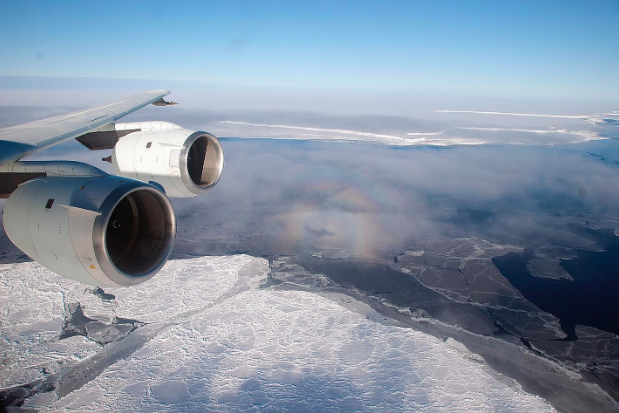
Flying over the Brunt Ice Shelf. NASA/Michael Studinger. CC 2.0 https://www.flickr.com/photos/nasa_goddard/5281037316/in/photolist-Up4XjE-8ZmvJ2-93EGpw
Iceberg Twice the Size of Manhattan Threatening to Break off Antarctica at any Moment
Antarctica’s Brunt Ice Shelf, the largest in the world, will soon lose a 660 square mile, almost 500 feet thick segment of ice—almost twice the size of the city of New York. The shelf is named for David Brunt, a British meteorologist and Physical Secretary of the Royal Secretary who organized the Royal Society Expedition to the Brunt Ice Shelf in 1955.
Two cracks in the shelf have been getting wider over the past few years. This process is known as calving: the splitting and shedding of ice chunks from the edge of a glacier. Glaciologists label these cracks or crevasses in the ice sheet as chasms. Chasm 1, the first fault line on the Brunt Ice Shelf, has been present and stable for over 35 years. But just lately, this crack has been edging north as fast as 2.5 miles a year. The second break, known as the Halloween crack, is upstream from what scientists call the McDonald Ice Rumples. These rumples form when the bottom of the ice shelf, which flows downhill toward the ocean, runs up against an underwater ridge. Chasm 1 is currently about 2.5 miles away from the McDonald Ice Rumples. Soon enough these two cracks will likely intersect, creating a massive iceberg that will begin to slowly float away from Antarctica.
Scientists closely observe the Brunt Ice Shelf with instruments measuring the distortion of the ice day by day. With the help of satellite images, ground penetrating radar and on-site drone footage, scientists have been able to track the progress of Chasm 1 and the Halloween crack.
This gigantic iceberg could elevate water levels enormously. According to National Geographic, rising sea levels could produce devastating effects on coastal areas, causing wetland flooding, aquifer and agricultural soil contamination with salt, destructive erosion, and habitat loss for fish, birds and plants. In the unlikely event that all the ice sheets and glaciers on earth melted, sea levels would rise by 216 feet.
This iceberg is not even the biggest to break off of the continent of Antarctica. In 2017, a glacier the size of Delaware broke off of the Larsen-C ice sheet:around 2,250 square miles in size. The biggestchunk to break off is Iceberg B-15. It measured around 4,200 square miles, larger than the island of Jamaica. It broke off from the Ross Ice Shelf in March 2000.
The Brunt Ice Shelf is not a stranger to cracks. Cracks that form during the summer have the potential to heal again over the winter months. Though cracks are common in ice shelves, the imminent calving of the Brunt Ice Shelf is unpredictable. The potential 660 square mile iceberg could raise sea levels drastically, impacting our coastal habitats and ultimately posing dangers to human health.

AMELIA BAUMANN is an aspiring writer and editor from New Jersey. I love to travel and am intrigued with the diversity of culture around the world. I am passionate about our environment and especially keeping our oceans clean.
The Eerie History and Uncertain Future of Japan’s Rabbit Island
Ōkunoshima and its imperiled bunny population remind us that wildlife and tourism don’t always mix.
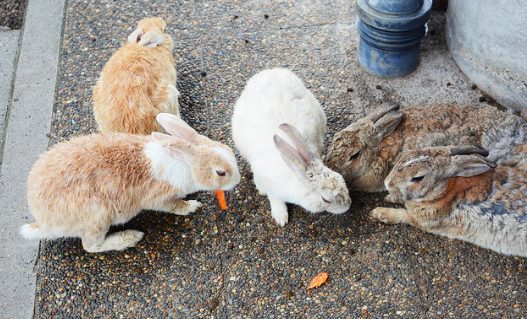
A cluster of bunnies on Rabbit Island. Cindy Pepper. CC BY-NC-ND 2.0
From its many “cat islands,” which boast more feline than human residents, to Jigokudani Monkey Park, where visitors can observe macaques bathing in the naturally occurring hot springs, Japan seems to overflow with fantastical wildlife enclaves. Perhaps the most adorable of all is Ōkunoshima, or “Rabbit Island”—but the cotton-tailed denizens for which this island is known belie its sinister past and ambiguous future.
While Ōkunoshima, located in the Hiroshima Prefecture, is a popular tourist destination for those looking to get their kawaii fix, it was once hidden from maps due to its clandestine status as a World War II military location. Production of chemical weapons in the island’s poison gas factory began in 1929, and apart from factory workers and army higher-ups, few citizens were aware of its existence.
Ōkunoshima was chosen for its location: discreet enough for goings-on there to remain under the radar, and far enough from densely populated cities like Tokyo to prevent mass casualties in case of an accident. The factory there eventually produced more than 6,000 tons of gas—primarily mustard gas and the irritant lewisite—before its closure at the end of the war. Chemicals wereould be shipped to Kitakyushu in the Fukuoka Prefecture to be weaponized, eventually resulting in more than 80,000 casualties (including and more than 6,000 deaths) among Chinese soldiers and civilians.
Despite the fact that Japan was a signatory to the 1929 Geneva Convention banning the use of chemical weapons, none of the country’s citizens were prosecuted for employing poison gas. After Japan’s defeat in the war, most of the Ōkunoshima factory was destroyed, but laboratory buildings, the shell of a power plant, an army barracks, and a few other edifices remain. In 1988, local governmental entities and citizens opened the Poison Gas Museum to pay tribute to this dark and little-known facet of Japanese history. Displays include the ineffective protective gear worn by workers at the factory, which left them vulnerable to exposure and subsequent illness, as well as equipment used to manufacture the gases.
So where did the bunnies enter the equation? We know that a colony of rabbits was brought to the factory during its operational years to test the effects of poisons, but beyond that, theories diverge. Some suggest that the original crop of rabbits was destroyed along with the factory, while others claim that workers set the bunnies free after the war. Another theory asserts that schoolchildren brought eight rabbits to the island in 1971, where they bred until they reached their current population of approximately 1,000.
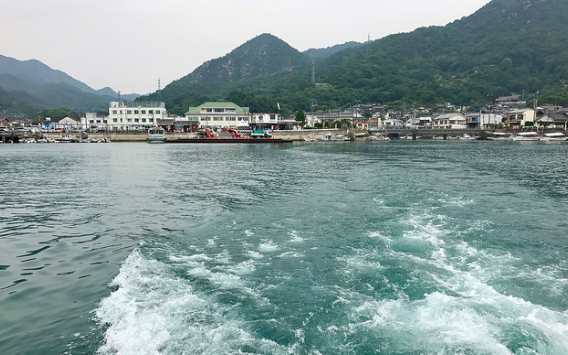
Tadanoumi Port viewed from the ferry to Ōkunoshima. Brian Shamblen. CC 2.0
Today, Ōkunoshima is easily accessible via a 15-minute ferry, and embodies peace, rest, and relaxation for tourists and locals alike. Visitors can easily explore it on foot (the island is less than 2.5 miles in circumference), collect souvenirs, dine, play tennis, swim in the ocean, and bathe in the hot spring—apart from communing with the wildlife, of course. Rabbit Island’s website describes it as a place to seek good fortune for your own family’s fertility, and advertises whipped ice cream and “original rabbit items” for sale, as well as octopus kelp rolls, a local delicacy known to pair well with sake.
Yet even the island’s thriving tourist industry and booming bunny population has a more sinister flip side. The wild rabbits depend on visitors for their food and water, but tourists often come bearing snacks that are harmful to the creatures’ delicate digestive systems—such as cabbage or vegetable peelings, which can cause fatal bloating. And while visitors are keen to share photos of their new fluffy friends online, social media has played a key role in destabilizing the rabbit population: Viral videos and articles have led to a vast influx of tourists in the past decade, and the resultant avalanche of snacks and treats has contributed to a breeding boom that the island’s ecosystem is unable to handle. These factors have combined to lower the bunnies’ life expectancy to only two years, compared to the three-to-five-year lifespan of the average wild rabbit.
The plight of the Ōkunoshima rabbits is just one example of the widespread harm social media has inflicted on wildlife populations across the globe: For instance, viral YouTube videos of slow lorises, wide-eyed nocturnal primates native to Southeast Asia, have led to people taking home lorises from the wild to keep as their own. Unfortunately, captivity is unhealthy for the animals, and they often end up relegated to props in tourist photos—or worse, sold into the illegal pet trade, and possibly slaughtered for use in cuisine or medicinals.

A curious bunny on Ōkunoshima seems to have mistaken the camera for a snack. Brian Shamblen. CC 2.0
Ultimately, bunny lovers need not be deterred from visiting Ōkunoshima, but following the rules is essential in order to treat the creatures kindly and foster their health and wellness. The Rabbit Island website lays out guidelines for responsible rabbit enthusiasts—including “refill water pans” and “check under your car,” as curious bunnies might hide underneath to escape the hot sun—and travelers can use their visit as an opportunity to educate friends and family about the unique perils posed to wildlife in the digital age. Approaching this mystical island mindfully is a small yet important step in helping the myriad diverse populations of the animal kingdom survive and thrive for many years to come.
TALYA PHELPS hails from the wilds of upstate New York, but dreams of exploring the globe. As former editor-in-chief at the student newspaper of her alma mater, Vassar College, and the daughter of a journalist, she hopes to follow her passion for writing and editing for many years to come. Contact her if you're looking for a spirited debate on the merits of the em dash vs. the hyphen.

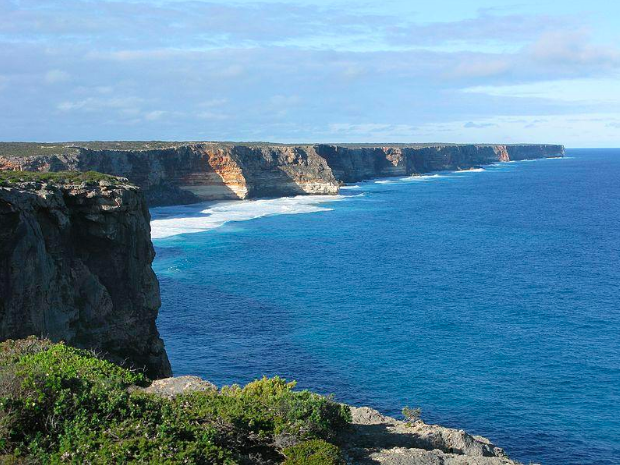
The Great Australian Bight, South Australia. Aussie Oc at English Wikipedia. CC 3.0
This is Not a Drill: Keep Australia’s Coasts Oil-Free
The Great Australian Bight is known worldwide for its beautiful oceanic environment,home to diverse forms of marine life, and its coastline lined by the longest sea cliffs in the world. A bight is a large open bay; this specific bay runs from Cape Carnot in South Australia, all the way to Cape Pasley in Western Australia: over 700 miles of ocean and sky that thousands of whales, seals, fish, birds, plants, and surfers call home.
Equinor, a Norwegian oil company, has plans to carry out a drilling operation in the Great Australian Bight, ultimately turning it into a deepwater oil field. This operation would devastate the 85% of rare marine life that exists in the Bight. Not only is it endangering the various species that live among the coasts, but the increase in pollution could disrupt the people of Australia. A potential spill in the Bight could result in the death of several endangered species: killer whales, southern right whales, blue whales, dolphins, endemic Australian sea lions, and many more. The Bight also supports multi-billion dollar fishery, aquaculture, and tourism industries. Drilling would, most likely, halt if not destroy this economy altogether. Not unlike BP’s drilling expedition, the proposal for drilling in the Great Australian Bight could have severe consequences, and ultimately the same catastrophic ending as BP’s drilling operation could incur. 8 years after the BP oil spill, the Gulf is still experiencing significant impacts, and scientists expect them to continue. Scientists say that they may not know for another 30 or 40 years the extent of the effects. If the Equinor drilling operation resulted in another massive oil spill in our current environmental state, our economy and Earth would take much longer to bounce back than the BP oil spill. If this were to occur in summer, it would also not only affect Australia but also places as far away as northeastern Europe. If it were to happen in winter, the oil would most likely impact Kangaroo Island, the Eyre Peninsula and the Spencer Gulf in South Australia. It could also potentially reach the Victorian and Tasmanian coastline, heading towards New Zealand. Known the remarkable economic and environmental values that would be put at risk from Equinor’s drilling operation in the Great Australian Bight, this project should not be considered.
Equinor’s drilling plan has led activists and surfers worldwide to strike and start a viral movement, ‘#Fightforthebight,’ to save this Australian coastline. Surfers have paddled out in peaceful protests displaying signs with slogans like “Big oil has no future” or “Kill the Drill.” Several worldwide famous surfers that call Australia home, like Stephanie Gilmore, Nat Young, Mick Fanning, and many more, have signed an open letter concerning the Equinor’s drilling proposition and its potential impact on their coasts. To take action and help keep Australia’s coasts oil-free you can sign a Statement of Concern or donate here: https://www.fightforthebight.org.au/take-action-1 .
AMELIA BAUMANN is an aspiring writer and editor from New Jersey. I love to travel and am intrigued with the diversity of culture around the world. I am passionate about our environment and especially keeping our oceans clean.

Students Across Europe Protest in Hopes of a Greener Future
After years of political gridlock surrounding climate change legislation, students emerge as a force for change.
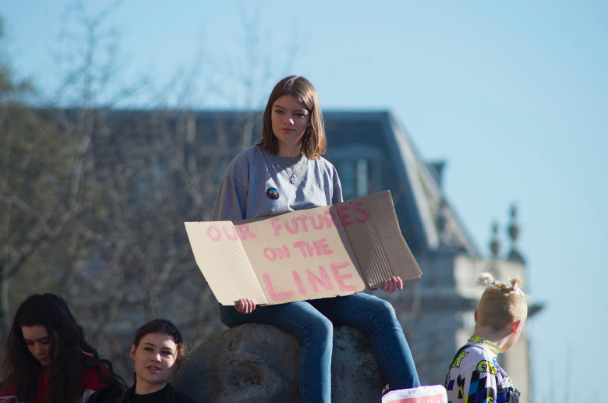
Photo of a student protester. By Josh Barwick on Unsplash.
Thousands of students across Europe left school on Friday, February 15 to protest the lack of action on climate issues in their countries. In what the New York Times called a “coordinated walk out for action on climate issues,” elementary, middle, high school, and undergraduate students came together to demand a greener future. In London, protestors held signs reading “The ocean is rising and so are we” and “Act now or swim later.”
The student-led movement for climate action that is currently taking Europe by storm began with 16-year-old Swedish activist Greta Thunberg. In September, Thunberg started skipping class to stage sit-ins at the Swedish parliament, demanding that her government seriously address climate change. Thunberg’s action inspired teens worldwide, some of whom created the global movement Youth Strike 4 Climate and began organizing protests and walkouts, using social media to coordinate efforts. According to the New York Times, demonstrations have been held in Belgium, Britain, France, Germany, Ireland, Sweden, and Switzerland, among others.
The New York Times writes that the new organization gained even more energy in October of 2018 when a report from the UN’s Intergovernmental Panel on Climate Change disclosed that the world has only twelve years to change its climate policy before the consequences of inaction such as food shortages, rising sea levels, floods and forest fires manifest themselves.
Thunberg remains a notable voice in the movement she inspired, and went on to speak at the global climate-change conference in Poland last December. “You say you love your children above all else — and yet you are stealing their future in front of their very eyes,” she told politicians at the conference. “Until you start focusing on what needs to be done rather than what is politically possible, there is no hope. We cannot solve a crisis without treating it as a crisis.”
In British schools, protesters received mixed reactions from teachers and staff. While some encouraged students, others threatened to punish them for skipping class. “My school was not supportive at the start. They said I would get detention for unauthorized absence,” Anna Taylor, the seventeen-year-old co-founder of the UK Student Climate Network told the New York Times.
Sixteen-year-old Bonnie Morely, who was attending the strike with friends from school, told the New York Times that a head teacher had taken down posters advertising the strike in her school’s common areas. “They’re treating us like we are doing something really wrong,” Morley said. “The future of our planet is looking really bleak, and all the politicians are asleep at the wheel. We have to wake them up, and I think thousands of kids on the streets will do just that.”
Like the teachers, European politicians displayed mixed reactions, with some supporting the students and others going so far as to suggest that the strikes were the product of a secret governmental organization.
According to the New York Times, a spokesperson for British Prime Minister Theresa May said that, “everybody wants young people to be engaged in the issues that affect them most so that we can build a brighter future for all of us. But it is important to emphasize that disruption increases teachers’ workloads and wastes lesson time that teachers have carefully prepared for.”
Thunberg tweeted in response: “British PM says that the children on school strike are ‘wasting lesson time.’ That may well be the case, but then again, political leaders have wasted 30 years of inaction. And that is slightly worse.”
“We don’t miss school because we’re lazy or because we don’t want to go to school,” Jakob Blasel, a high school student who assisted with the organization of an earlier protest in Berlin told the Washington Post. “We can’t go to school, because we have to strike. We have to deliver an uncomfortable message to our leaders that it can’t go on this way.”
Youth for climate is currently planning another round of protests and another global youth strike for March 15. The movement is growing and more students from nations across the world are expected to join.

Emma Bruce
Emma Bruce is an undergraduate student studying English and marketing at Emerson College in Boston. While not writing she explores the nearest museums, reads poetry, and takes classes at her local dance studio. She is passionate about sustainable travel and can't wait to see where life will take her.
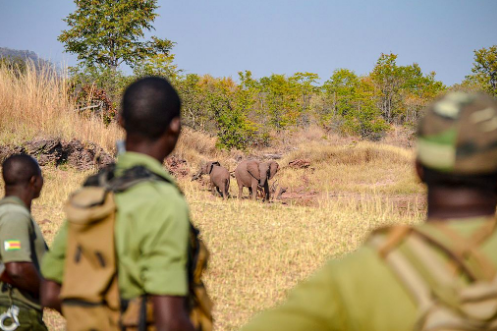
A group of rangers on patrol in Zimbabwe. Bumihillsfoundation.CC BY-SA 4.0
Wildlife War: Africa's Militaristic Approach to Animal Conservation
The plight of endangered elephants and rhinos in Africa is fairly well known to the world: Elephants are hunted by poachers for their tusks, which are carved into jewelry while rhinos are hunted for their horns which are believed in many cultures to carry medicinal value. The widespread poaching of these animals has pushed their population numbers back, causing a ripple effect in local ecosystems and presenting the possibility of extinction for the animals themselves. There is a very real chance that future generations may not grow up with these animals present as the current generation did. What is not as well known is that for years now, Africa has taken a militarized approach to prevent this outcome from becoming a reality, with armed conservation groups authorized to impose the harshest penalties on would-be poachers.
Poaching in Africa reached its zenith in the 1970s and 80s. In 1989 Kenyan President Daniel Arap Moi appointed famed paleoanthropologist Dr. Richard Leakey as head of Kenya’s Wildlife Conservation and Management Department, and Dr. Leaky created the first armed anti-poaching units. He then implemented a “shoot to kill” policy for dealing with poachers that drastically reduced environmental crime in the region. Several African nations followed suit and the practice of using arms to protect animals expanded throughout the continent, becoming more sophisticated over the years. Today conservation in Africa is a well known and a viable career path, with militarized conservation groups being trained by ex-soldiers from around the world. Nir Karlon, a former Israeli commando, manages the Maisha Group, a private security firm that focuses on preventing environmental crime in the Congo. In Zimbabwe, a nerve center of the African elephant population, Damian Mander of the Australian Royal Navy heads up the first all-female ranger team called “Akashinga” which means, “Brave Ones”. The group initially faced criticism from male conservationists who doubted that women would be able to perform the arduous physical tasks associated with the job. The Brave Ones, however, proved to be as capable as any man when it came to military conservation. New recruits to ranger units often go through several days of rigorous training before being offered a position. Some groups accept volunteers in unarmed positions, but most conservationists still carry weapons and are still authorized to use deadly force.
The job is not without risks. In the last decade, 1000 rangers have been killed while on duty. Death can come from the poachers they pursue or the animals they protect. Much of Africa’s poaching is carried out by crime syndicates and local militants who have found that ivory can be used as currency to buy weapons and fund campaigns. Encounters between conservationists and poachers have on occasion erupted into full-on firefights, and some critics have expressed concern that the rangers' methods may be too brutal. With this in mind, many ranger groups have made community outreach an even greater priority than battling poachers, as support from the locals will always be more effective than a gun. Education seminars at local schools help the rangers strengthen their relationships with people living in protected areas, with a long term goal of increasing awareness and surveillance of animal poaching in Africa.

JONATHAN ROBINSON is an intern at CATALYST. He is a travel enthusiast always adding new people, places, experiences to his story. He hopes to use writing as a means to connect with others like himself.
An Island Disappears off the Coast of Japan
It remained unnoticed until local fishermen investigated.
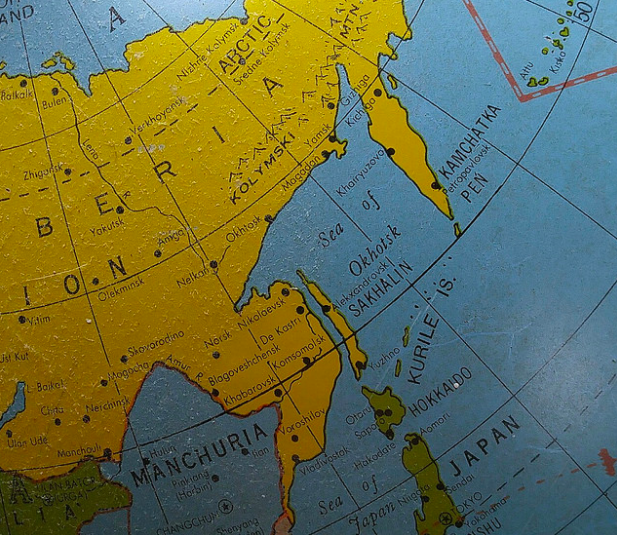
Vintage globe depicting the Sea of Okhotsk. Robin Ottawa. CC BY-SA 2.0
This fall, Esanbe Hamakita Kojima, a tiny island off the northeast coast of Japan dropped out of sight. The island’s disappearance went unnoticed by inhabitants of the nearby village of Sarufutsu, situated on the northern tip of Hokkaido island only 1,640 feet away.
It wasn’t until September, when author Hiroshi Shimizu traveled to Sarufutsu to gather inspiration for his picture book on Japan’s islands, that authorities were notified of the island’s disappearance. Shimizu had been looking for the island but couldn’t locate it. He informed local fisherman who went out to investigate and finally noted that Esanbe was missing.
When Japan’s Coast Guard last surveyed the island in 1987, it was only 4.5 feet above sea level. Authorities could not confirm how large the island had been before the sea rose around it.
Esanbe is west of Japan’s Northern Territories and part of a set of islands that has been long-contested between Japan and Russia. The islands, called the Kurils by Russia, were taken by the Soviets shortly after World War II, but ownership today remains unclear. According to CNN, Esanbe functions as a marker of Japanese ownership in contested waters. But the strategy of claiming islands to maintain the maritime space around them is not exclusive to Esanbe. In fact, according to the Washington Post, Japan owns 158 uninhabited islands that the country named in 2014 so that the sea surrounding them could remain in Japanese control.
Thus, the disappearance of the island may have a slight effect on Japan’s territorial waters, as according to international law, countries can only claim ownership of the sea around an island if that island is visible at high tide. Coast Guard officials in Japan confirmed that Esanbe’s loss, “may affect Japan's territorial waters a tiny bit.” With the island underwater, Japan will have lost approximately 1,640 feet of territorial water.
The island’s disappearance was likely due to erosion by the wind and drift ice common in the Sea of Okhotsk each winter. According to coast guard official Tomoo Fujii, “There is a possibility that the islet has been eroded by wind and snow and, as a result, disappeared,” Asahi Shimbun of the Japanese Daily reported.
According to the Smithsonian, disappearances of land masses in this area of Japan are not unlikely. The good news for Japan’s border, however, is that this phenomenon can occur in reverse. Five years ago, a 1000-foot long island rose out of the sea, prompted by a landslide.

EMMA BRUCE is an undergraduate student studying English and marketing at Emerson College in Boston. While not writing she explores the nearest museums, reads poetry, and takes classes at her local dance studio. She is passionate about sustainable travel and can't wait to see where life will take her.
Tides of Change : Japan to Resume Commercial Whaling
For more than thirty years, the island nation of Japan has fought to expand its commercial whaling operations. That fight has mostly been a losing one, with its efforts often being blocked by anti-whaling countries around the world and condemned by the International Whaling Commission, an organization whose members include Japan itself. However, Japan’s recently proposed exit from the commission will allow the country to reclaim one of its most time-honored traditions, and the move is drawing international criticism.

Two Minke Whales being loaded onto the Nisshin Maru. The ship has facilities on board which allow it to freeze and process whales while at sea. Australian Customs and Border Protection Service. CC BY-SA 3.0
In 1982 the International Whaling Commission, or IWC, imposed a global moratorium on all commercial whaling, save for subsistence whaling by Aboriginal communities. The moratorium went into effect in 1985 and was met with opposition from Iceland, Norway, and Japan, countries with strong whaling traditions. In Japan, whale meat generally served the same purpose that beef or lamb served in Western societies and this was especially true during hard times. In the 1940s as the country was recovering from World War 2, whale meat was the single most consumed meat among Japanese people, and it remained so through the 1960s. After the announcement of the IWC’s whaling ban, Japan petitioned for the right to continue whaling in the Antarctic for “scientific purposes” though the specific nature of its research remained unclear. Whale activists claimed that this “research whaling” was in fact, commercial whaling in disguise, and vessels like the Nisshin Maru, Japan’s largest whaling vessel and the world's only factory whaling ship, became a frequent target of animals rights groups, with some going so far as to board vessels of their own and try to disrupt the Maru’s whaling expeditions by obstructing its path. Earlier this year, Japan expressed a desire to develop new ships, fast enough to outrun those of the activists, but the plan appears to have been scrapped, as the Japanese government announced in late December that it will formally withdraw from the IWC, discontinue its operations in the Antarctic and resume commercial whaling operations in its own coastal waters. Though the demand for whale meat has diminished somewhat in Japan, the practice of whale fishing is still considered by many to be intrinsic to the country’s cultural identity.
Environmental conservation hinges on the idea that some of the Earth’s resources are non-renewable. Humans can hunt an animal to extinction, and that extinction creates an imbalance in the ecosystem that the animal once belonged to. The effects of that imbalance can, in turn, come back to haunt humans, either directly or indirectly. These are, however, relatively young ideas, and pitting them against hundreds of years of tradition is sure to be a test for all parties involved.
JONATHAN ROBINSON is an intern at CATALYST. He is a travel enthusiast always adding new people, places, experiences to his story. He hopes to use writing as a means to connect with others like himself.

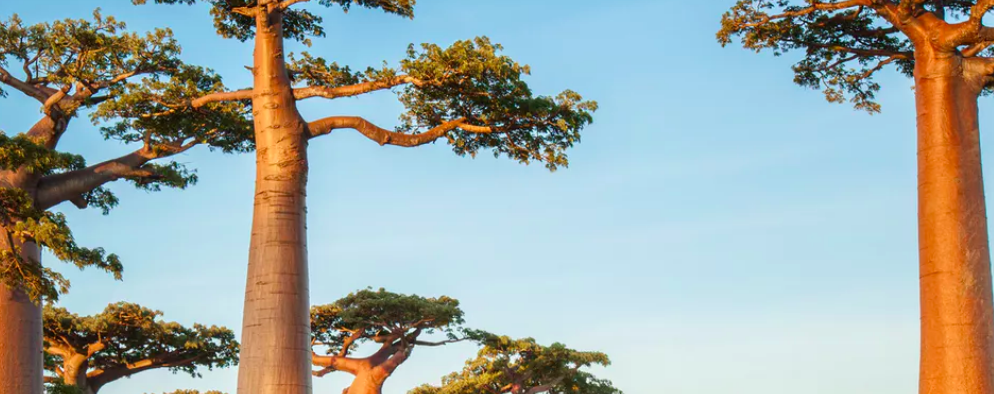
Like Dr. Seuss’ imaginary truffula trees, baobabs are endangered. Dudarev Mikhail/Shutterstock.com
Why Companies Should Help Pay for the Biodiversity That’s Good for Their Bottom Line
In the “The Lorax,” an entrepreneur regrets wiping out all the make-believe truffala trees by chopping them down to maximize his short-term gains. As the Dr. Seuss tale ends, the Once-ler – the man responsible for this environmental tragedy – tells a young child that “Unless someone like you cares a whole awful lot, nothing is going to get better. It’s not.”
Likewise, many corporations that profit from nature’s bounty, such as Unilever, Patagonia and Interface, appear to be reaching a similar conclusion. They are realizing that it’s time for the business world to do more about conservation.
We, two economists who have extensively researched natural resources and development, are proposing a new way to solve the problem of species and ecosystem loss. Corporations that benefit from biodiversity could forge what some are calling a “new deal for nature” by paying part of the tab for biodiversity conservation.
Biodiversity
Biodiversity, the variety of all natural ecosystems and species, is being lost at an unprecedented rate. According to the recent World Wildlife Fund Living Planet Report, the populations of mammals, birds, fish, reptiles and amphibians have fallen by an average of 60 percent in just over 40 years. The scientists Gerardo Ceballos, Paul R. Ehrlich and Rodolfo Dirzo have dubbed this decline and an impending wave of extinctions a “biological annihilation.”
We argue that many businesses are threatened by the loss of species and ecosystems, such as declining bee populations and dwindling stocks of fish, forests, wetlands and mangroves. Without an array of ecosystems and species, it’s tough for farmers to grow crops or ranchers to raise animals.
The pharmaceutical industry needs them to make and create drugs. For example, one team of U.S.-based researchers estimates that the pharmaceutical value of marine biodiversity for anti-cancer drug discovery could range from US$563 billion to as much as $5.7 trillion.
Insurance companies depend on coastal wetlands to minimize the impact of big storms. For example, an international group of researchers estimated that preserving one hectare of mangroves in the Philippinesyields more than $3,200 in flood-reduction benefits each year.
A global treaty, the Convention on Biological Diversity does set worldwide conservation targets. But we believe they may not be ambitious enough. Cristiana Pașca Palmer, who serves as the UN’s biodiversity chief, is considering raising the treaty’s targets to conserve at least half of terrestrial, inland water, coastal, and marine habitats to preserve biodiversity.
But the existing efforts to preserve biodiversity are not only inadequate. They’re underfunded.
New way to pay
Global biodiversity protection requires $100 billion annually, according to a previous study one of us conducted, yet the international community spends up to $10 billion each year on biodiversity conservation.
Much of the world’s biodiversity is in developing countries, which lack the financial wherewithal to adequately conserve it.

The Lorax could speak for the trees, but he lacked the cash to preserve them. Random House Children's Books
As we have explained with our colleague Thomas J. Dean in Science magazine, we believe that involving businesses in an international environmental agreement could help bridge a chronic funding gap.
A key part of this new deal for nature would be making the corporations that depend on the health of natural ecosystems and species help foot the bill to preserve biodiversity.
Benefiting the bottom line
Why would corporations want to get involved?
First off, it may benefit their bottom line. Big companies depend on robust natural ecosystems systems and individual species.
We calculate that the increase in revenue and profits from biodiversity conservation could generate between $25 billion and $50 billion annually to fund global conservation efforts.
The seafood industry stands to gain $53 billion annually from an increase in marine stocks. This could generate $5 billion to $10 billion each year to spend on preserving biodiversity.
The insurance industry could see an additional $52 billion from increasing the area of protected coastal wetlands with a similar investment.
Agriculture also has an incentive to protect habitats of wild pollinators, who along with managed populations enhance global crop production by an amount a global group of scientists estimates to be worth between $235 billion to $577 billion annually.
What’s more, there is growing evidence that when corporations engage in environmental stewardship, they become more attractive investmentsand their borrowing costs decline.
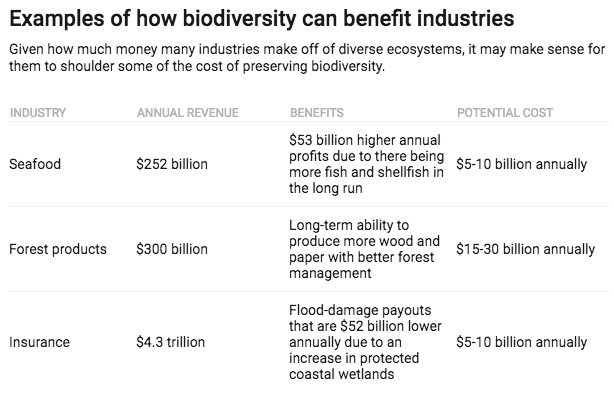
Chart: The Conversation, CC-BY-ND Source: Edward B. Barbier, Joanne C. Burgess and Thomas J. Dean Get the data
Corporate social responsibility
There is a second reason why big companies are sometimes willing to take action and pay to conserve biodiversity: corporate social responsibility, an ethos that builds into business models a commitment to protect the environment and benefit society.
Danone is a leader in this regard. It established the first partnership agreement between a global environmental convention and a private company over 20 years ago.
Since then, the multinational corporation best known for its yogurt and bottled water has promoted and supported the sustainable use and management of wetlands.
Danone, for example, worked with local partners to replant mangroves in approximately 500 Senegalese villages. We believe this reforestation project shows that investments in nature can be sustainable and scalable business models.
Danone, which earned $3 billion in profits in 2017, has its own $80 million “Ecosystem Fund.” It’s just one of an increasing number of companies taking concrete steps toward biodiversity protection, even though they are not required by any law or national policy.
More than 21 national and regional initiatives have been established to encourage partnerships between business and biodiversity conservation. For example, 10 of the 13 biggest seafood companies that control up to 16 percent of global marine catch and 40 percent of the largest and most valuable fisheries have come together to support an ocean stewardship initiative.
Similarly, the International Council of Forest and Paper Associations, which represents the global forest products industry, now engages in sustainable forest management certification.
The total area of forests worldwide deemed to be subject to sustainable practices supplying the industry increased from 62 million hectares, 12 percent of the total global forest area, in 2000, to 310 million hectares in 2015, according to the industry group. That’s more than half of the total global forest area. The annual revenue of the world’s 100 largest global forest, paper and packaging companies is over $300 billion.
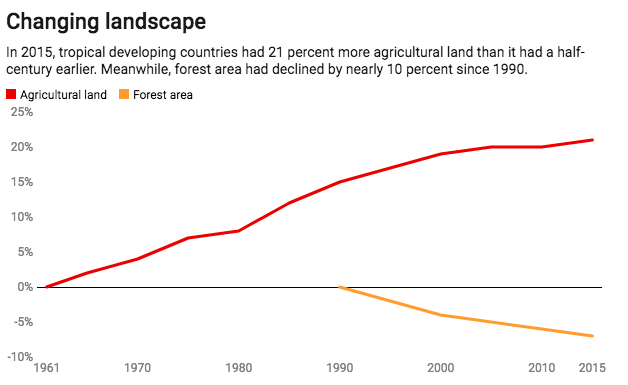
Chart: The Conversation, CC-BY-ND Source: World Bank Get the data
A new deal for nature
In addition to creating marine reserves, protecting forests, preserving the habitats of wild pollinators and conserving coastal wetlands, the private sector could also help finance conservation efforts in developing countries.
Based on our calculations, if the seafood sector were to set aside up to 20 percent of the increase in profits it gets from sustainably managing marine biomass stocks, it could conceivably spend up to $10 billion annually for marine biodiversity conservation.
And we estimate that by channeling up to 10 percent of the gains from sustainable forest management, the forest products industry could raise as much as $30 billion each year for investment in increasing protected forest area.
An agricultural sector contribution of around 10 percent of the benefits it derives from wild pollination services would amount to about $20 billion to $60 billion per year in additional financing for the conservation, creation and restoration of wild pollinator habitats.
All told, this business-world support could help close the $100 billion gap in global biodiversity conservation funding. This would go a long way toward slowing, and potentially reversing, biodiversity loss.
There are, of course, barriers to corporate conservation. The costs may be high. It may be hard for to businesses to assess the long-term value of biodiversity conservation benefits and integrate them into investment decisions. And it is possible that some of the corporations that take this step could be at a competitive disadvantage, especially in the short term.
But a number of companies are already showing that they believe investing in ecosystem preservation is worth it. In our view, corporate support for international biodiversity conservation is essential to prevent “biological annihilation.”
JOANNE BURGESS is an Assistant Professor of Economics at Colorado State University and EDWARD BARBIER is a Professor of Economics at Colorado State University.
THIS ARTICLE WAS ORIGINALLY PUBLISHED ON THE CONVERSATION
France Banned Food Waste in Supermarkets
Millions more meals can reach those who need them.

Produce at a market in Nice, France. M-Louis. CC BY-SA 2.0.
In 2016, France banned supermarkets from destroying or discarding unsold food products, requiring them to donate instead to food banks or local charities.
The law was written by Parliamentarian and former food industry minister Guillaume Garot, who believes that food waste is a national health and safety issue, akin to wearing a seatbelt. The campaign itself was the product of a grassroots movement by anti-poverty and food waste activists which eventually became a petition, lead by local councillor Arash Derambarsh.
Now that food waste has been outlawed in French supermarkets, Derambarsh has set his sights on European and ultimately global policy revisions around the issue. “Food is the basis of life, it is an elementary factor in our existence,” he told the Guardian.
While Derambarsh became a councillor to help people, he reports being called “naive and idealistic” because of the policy he hoped to implement surrounding food waste. “Perhaps it is naive to be concerned about other human beings, but I know what it is like to be hungry,” he said.
“When I was a law student living on about €400 a month after I’d paid my rent, I used to have one proper meal a day around 5pm. I’d eat pasta, or potatoes, but it’s hard to study or work if you are hungry and always thinking about where the next meal will come from.”
Now, grocery store managers in France with a 400 sq meter or larger footprint must sign contracts with local charities and food banks promising their edible expired items, or face a €3,750 ($4,500) fine per infringement.
According to Jacques Bailey, head of Banques Alimentaires, a network of french food banks, 5,000 charities rely on food banks, who in turn, receive almost half their donations from grocery stores. Under the law, these food banks are receiving larger amounts of better quality food products, enabling them to better reach the the people they serve. According to Bailey, an increase as small as 15% in donations from supermarkets will result in 10 million more meals served every year.
And yet, required donations are not the only way that France is fighting food waste. In 2014, Intermarche, one of the country’s supermarkets began selling produce that was deemed too “ugly” to sell at other markets. These “ugly” or misshapen produce are perfectly safe to eat, but have blemishes make them less marketable to consumers, resulting in their disposal before even seeing the grocery store isles. This initiative is particularly effective, as fresh fruits and vegetables are the most difficult items for charities and food banks to come by, and are necessary to a healthy diet. Intermarche’s initiative reached 13 million people after only one month of being implemented.
About a third of food produced is wasted worldwide. France has narrowed the food it wastes to 66 pounds per person every year. In comparison, Americans waste 200 billion pounds of food per year - 40% of all food produced in the country. The waste problem in America is partly due to the lack of regulation surrounding expiration dates, which are often selected at random and do not always reflect when items are safe to consume.
The rest of the world has a lot to learn from France’s policy. NPR writes that communities and governments worldwide are now reaching out to Garot, hoping for information that would help them reproduce France’s law in their own countries. Ultimately this change needs to be made, because, as Garot emphasized, supermarkets are not just businesses, they are places where humanity must be respected.
EMMA BRUCE is an undergraduate student studying English and marketing at Emerson College in Boston. While not writing she explores the nearest museums, reads poetry, and takes classes at her local dance studio. She is passionate about sustainable travel and can't wait to see where life will take her.

Mask off: How Beijing is Managing its Smog Problem
Earlier this month, California made national headlines when the worst wildfire in the state’s history covered parts of it in smoke, creating yet another worry for citizens already vexed by the high cost of living and rising homelessness. Some news stations, hoping to illustrate the seriousness of the matter, stressed that the air quality in California was “worse than Beijing’s,” an announcement that prompted many locals to don the air masks that one often sees in images of the Chinese capital. In media, locally, and abroad, Beijing has become synonymous with bad air. The internet is peppered with images of skyscrapers draped in brown or grey fog. But recent efforts by the government have made some headway in the battle with Beijing’s notorious smog and could give us insight into how to battle this problem at home.
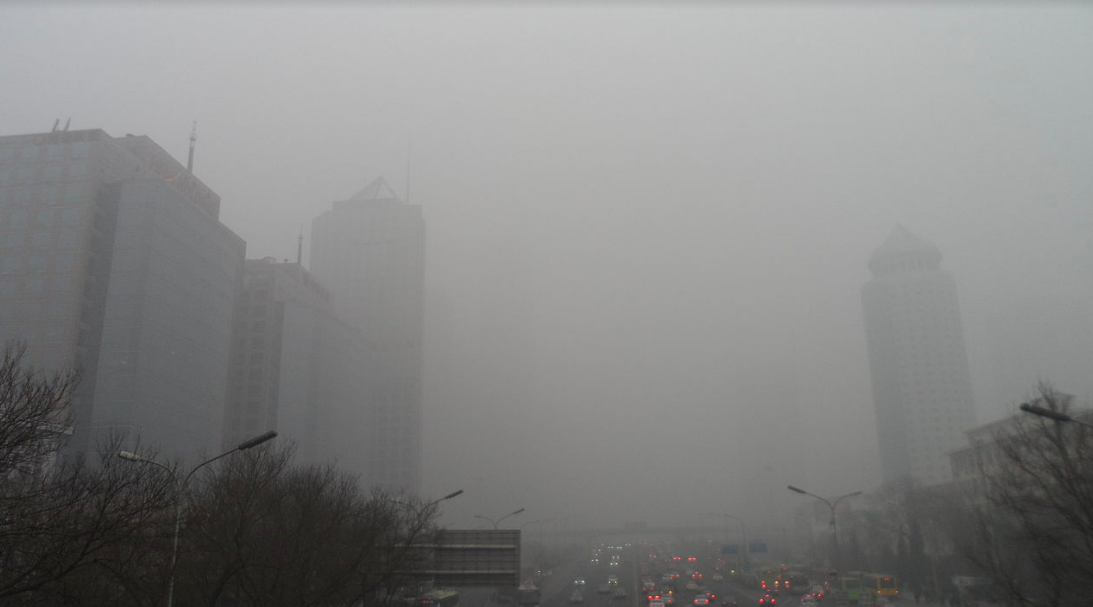
A smoggy day in Beijing. By 螺钉 - Own work, CC BY-SA 3.0, https://commons.wikimedia.org/w/index.php?curid=24944427
Those who have been to Beijing know that air quality is but one of many dangers; crossing an intersection can be like an action movie at times and drinking water out of the tap is generally a bad idea. Smog, however, is the issue most often associated with Beijing in the media. Fortunately, Beijing is aware of its reputation and has taken steps over the last few years to improve its air quality. The city has pledged to shut down 1000 manufacturing factories by 2020 to help reduce smog. It is also experimenting with new technology. Early last year Beijing employed the use a solar-powered air vacuum to help clean up the city’s air. Developed by Dutch designer Daan Roosegaarde, the Smog Free Tower sucks up 30,000 cubic meters of polluted air per hour. The air is then cleaned at a nano level and released back into the city. In a particularly bold move, Beijing's government is investigating the possibility of switching from coal to natural gas as the primary source of heating for millions of households. This shift will be implemented gradually, as concern for the well-being of Beijingers during the winter months supersedes the need for cleaner air.
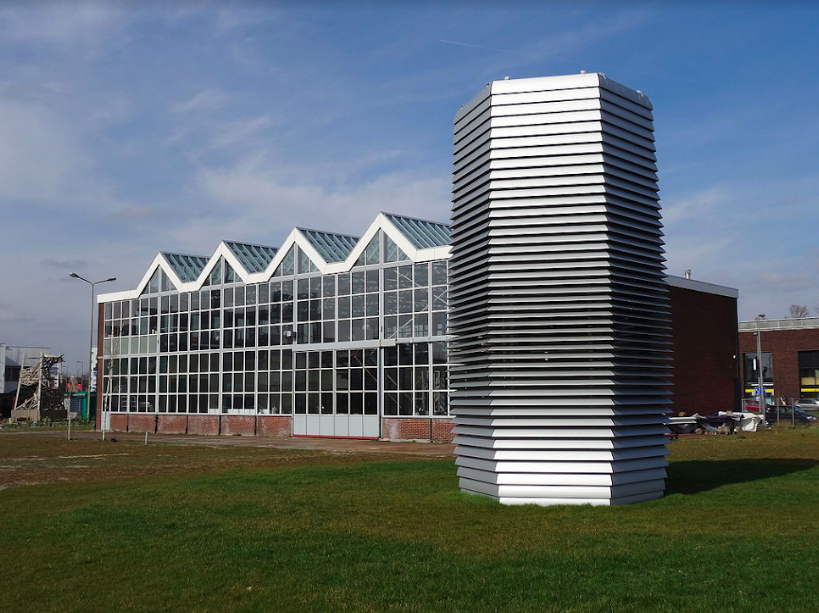
Dan Roosegaardes's Smog Free Tower. By Bic - Own work, CC BY-SA 4.0, https://commons.wikimedia.org/w/index.php?curid=47801218
People can change, and ideally, their reputations will change as well. Beijing’s efforts to clean its air shows an environmental consciousness that contradicts its reputation as a dirty industrialized city. As smog becomes a more recurrent issue in cities and courtiers around the world, communities that once judged China for its smog may get to learn a thing or two about how to fight it.
JONATHAN ROBINSON is an intern at CATALYST. He is a travel enthusiast always adding new people, places, experiences to his story. He hopes to use writing as a means to connect with others like himself.

VIDEO: The 12-Year-Old Scientist Taking On Flint's Water Crisis
When Gitanjali Rao first heard about the water crisis in Flint, Michigan, she wanted to help in any way she could. Now, at only 12 years old, Gitanjali is the proud inventor of “Tethys,” a portable device that detects lead in water. Named “America’s Top Young Scienist,” Gitanjali hopes to inspire other kids to get moving and make a difference in their own communities.
Japan’s Town With No Waste
The village of Kamikatsu in Japan has taken their commitment to sustainability to a new level. While the rest of the country has a recycling rate of around 20 percent, Kamikatsu surpasses its neighbors with a staggering 80 percent. After becoming aware of the dangers of carbon monoxide associated with burning garbage, the town instated the Zero Waste Declaration with the goal of being completely waste-free by 2020.
The Cape Town Water Crisis: Delaying Day Zero
In the Broadway musical Urinetown, people line up to use the toilet because a 20 year old drought has made private toilets a thing of the past. And when the protagonist rises up finally and allows unrestricted toilet use, the water supply completely evaporates. The final scenes ominously hint at more worrisome issues for the citizens, who, once concerned only with toilet use, most grapple with dying of thirst among other problems.
Although Urinetown is a satire, residents of Cape Town might see it as a scary prediction of their future if Day Zero arrives. As apocalyptical as it sounds, it does accurately embody the looming doomsday scenario: Day Zero is when the taps run dry. How? An unexpected three year drought, starting in 2014, drastically depleted the six dams that serve Cape Town. Whereas 20 years ago water management in Cape Town could rely on seasonal rainfall patterns and small conservation measures, it is now relying on unreliable rain and big changes.
Since Day Zero has been first predicted in early 2018, it has been continuously delayed. Projections now suggest Day Zero will occur in 2019. And in recent weeks, many are rejoicing in water returning to the dry dams. In the words of Anton Bedell, minister of Local Government, Environmental Affairs, and Development Planning: “It’s…good to see Clanwilliam dam at 20.4%. A few weeks ago the dam was below 6%.” The other dams have reflected similar increases, but the relief is only temporary as the dams await more rain—if it will come.
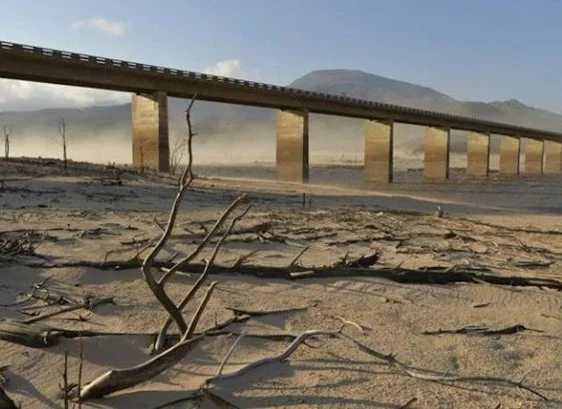
Theewaterskloof dam in February 2018 (source: 2oceanvibes)
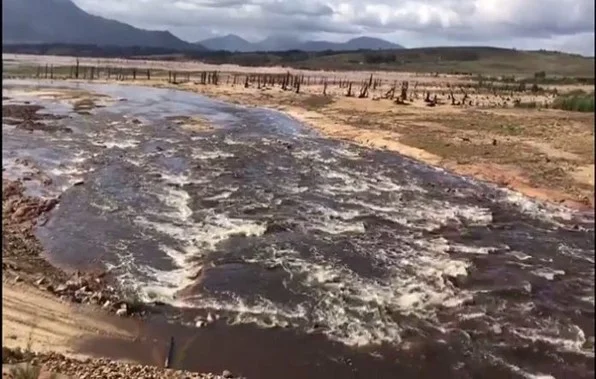
Waters return in early June (source: Storm Report)
The biggest assistance in delaying Day Zero is restrictions implemented on February 1st. The main restriction was the allowance of 50 liters, a little more than 13 gallons, of water per person. Comparatively, the average individual in the United States uses 80-100 gallons of water a day and the average family over 300 gallons a day. The question of how Americans end up using so much illustrates just how little 13 gallons is for a Capetonian. For example, imagine the average bathroom break. A toilet flush requires at least 1.6 gallons with water efficient models, but if it is an older model it will need up to 4 gallons. Then you will wash your hands with about 3 gallons of water. Considering most people take at least four bathrooms breaks a day, that’s already 18.4 gallons used in one day (on a water efficient toilet): more than what one Capetonian is allowed in a single day.
So it is no wonder people are following the “if it’s yellow, let it mellow” rule and putting reminders in bathroom stalls around Cape Town. Even restaurant and bar washroom taps are shut off. But it is not just in the bathroom that changes are being made. Any use of municipal drinking water for irrigation, watering, hosing down paved surfaces, washing vehicles, or filling a private pool is not allowed. Agricultural users have to decrease water usage by 60% and commercial places by 45% compared to their pre-drought usage in 2015. And for residential units that use too much, you’ll face a fine or have to install water management devices.
And globally, Cape Town is a sign of the future. As population increases, especially in urban centers, water resources are straining to accommodate. This is against a backdrop of climate changes that favor extreme weather events like frequent droughts. What might have worked in the past, is not necessarily the solution for the future. California, Beijing, Sao Paulo, Jakarta, Mexico City are just some cities that may be the next unwilling host of Day Zero. And water shortages lead to other problems such as famine and violence. The International Panel on Climate Change predicts the Middle East and North Africa will face the most severe water shortage problems. And already, many Somalis have become climate change refugees—leaving their rural farms for the capital, Mogadishu, in hope of different sources of income with farming no longer possible. Millions more are projected in the years to come as climate change makes itself even more apparent.
It is a bleak picture, but subtle changes are happening as global leaders are becoming more aware of the looming water crisis. But we can also start at home with our own water usage. Maybe you don’t need to take a long bath after a hard day and use 36 gallons of water simply to unwind. Instead, take a quick shower and find something else to help you relax. The small changes might sound silly but it is the little things that matter as Capetonians will tell you.
TERESA NOWALK is a student at the University of Virginia studying anthropology and history. In her free time she loves traveling, volunteering in the Charlottesville community, and listening to other people’s stories. She does not know where her studies will take her, but is certain writing will be a part of whatever the future has in store.

The Zambia Project
Janssen Powers had the pleasure of shooting this piece for World Vision. He said "to say it was an eye opening trip would be an understatement. As crazy as it is to imagine drinking contaminated water everyday, it's even crazier when you realize that so many people spend the majority of their time just looking for it."
World Vision is an amazing organization doing great things in Zambia and all over the world. To learn more about their effort to bring Zambia clean water, visit worldvisionwater.org.
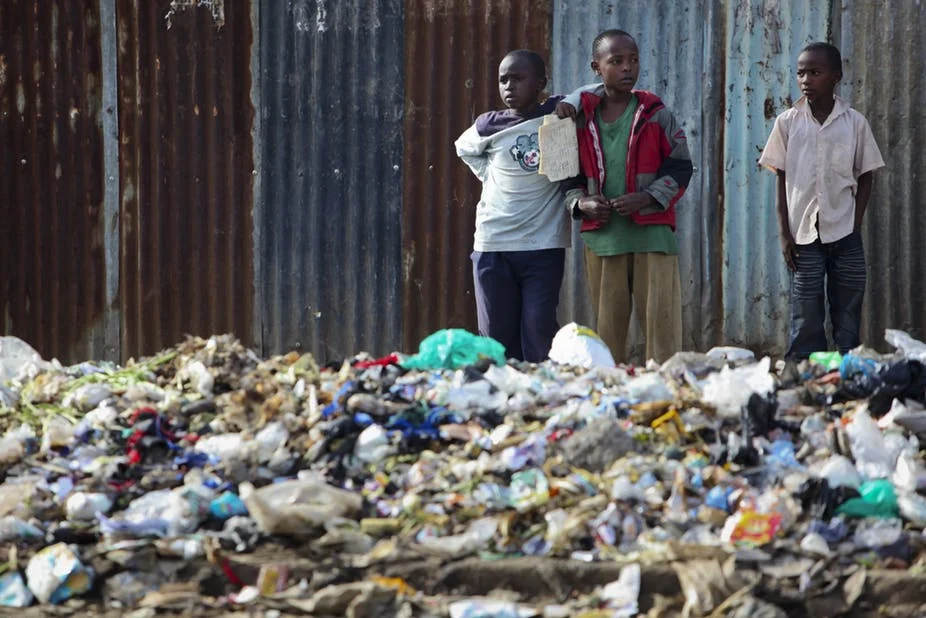
Nairobi’s current waste disposal system is fraught with major problems. EPA/Dai Kurokawa
How Nairobi Can Fix Its Serious Waste Problem
Uncollected solid waste is one of Nairobi’s most visible environmental problems. Many parts of the city, especially the low and middle-income areas, don’t even have waste collection systems in place. In high income areas, private waste collection companies are booming. Residents pay handsomely without really knowing where the waste will end up.
The Nairobi county government has acknowledged that with 2,475 tons of waste being produced each day, it can’t manage. Addis Ababa Ethiopia has a similar size population but only generates 1,680 tons per day.
Nairobi’s current waste disposal system is fraught with major problems. These range from the city’s failure to prioritise solid waste management to inadequate infrastructure and the fact that multiple actors are involved whose activities aren’t controlled. There are over 150 private sector waste operators independently involved in various aspects of waste management. To top it all there’s no enforcement of laws and regulations.
Nairobi’s waste disposal problems go back a long way and there have been previous efforts to sort them out. For example in the early 1990s, private and civil society actors got involved, signing contractual arrangements with waste generators. They often did this without informing or partnering with the city authorities.
More recently other strategies were put in place, some of which left parts of the city clean. They worked for a period, but unfortunately they weren’t sustainable because no institutional changes were made.
But there’s hope on the horizon with a new Nairobi Governor – Mike Sonko Mbuvi. He should learn from the mistakes of the past and put a new regime in place that addresses the structural problems that have plagued the city. This would include an improved improved collection and transportation plan that incorporates the private sector.
Learning from the past
In 2005 John Gakuo took over the management of city affairs as the Town Clerk. During his tenure (2005-2009) he made a deliberate effort to introduce new approaches.
When he took over the city only had 13 refuse trucks. They were able to collect a paltry 20% of the waste produced by the city. To overcome this, the authorities contracted private waste collection firms to collect, transport and dispose waste at Dandora dump site which is the biggest and the only designated site. This quickly boosted the total waste collected with levels oscillating between 45%-60%.
Other changes included:
The development of a proper waste collection and transportation schedule with market operators. This meant waste from open-air markets was brought to identified collection points on specific days.
A weighbridge to measure amounts of waste disposed at Dandora was introduced. An important way to know disposal levels vis-a-vis collection and generation.
Enforcement officers were deployed to prevent dumping in parts of the city that were notorious for waste accumulation.
Over 2,000 arrests were made, making residents aware that indiscriminate dumping was illegal and punishable under the city authority laws.
All these efforts paid off – for parts of the city. For example, the heart of the city, the Central Business District, was cleaned up and waste was brought under control.
But crucial elements that would have ensured that the changes were sustainable were left out. For example, no new physical infrastructure, like the construction of waste transfer centres and proper landfills, were built, nor was new equipment bought.
After Gakuo’s regime, the next one worth a mention is Evans Kidero’s regime (2013 - 2017). It can be credited for trying to fast-track the implementation of the Solid Waste Management Master Plan which assessed the waste management problem of Nairobi and developed projects that could be implemented to ensure a sustainable system was in place.
This ensured that while the private sector needed to help with waste collection and transportation, the government was key to institutionalising waste management services.
Thirty waste collection trucks were bought and serious investment was made into heavy equipment. And in an effort to streamline waste collection a franchise system of waste collection was rolled out. This involved dividing the city into nine zones to make it easier to manage waste.
The franchise arrangement gave private operators a monopoly over both waste and fee collections, but relied heavily on the public body for enforcement of the system.
The franchising system failed due to a lack of enforcement by the city. In addition, in-fighting broke out between the private waste collection firms that had individual contracts with waste generators and the appointed contractor.
But other changes introduced during this period were more successful and had longer lasting effect. For example new laws were introduced designed to create order in the sector. These included the solid waste management act in 2015. This classified waste and also created a collection scheme based on the sub-county system. It also put penalties in place.
In addition, in 2016, 17 environment officers were appointed and posted to the sub-counties to plan and supervise waste management operations alongside other environmental issues.
These changes planted the seeds of an efficient and working waste management system. But the regime fell down when it come to enforcement. This meant that the gains that had been made were soon lost.
What needs to be done
Expectations are high for the new regime that has taken over. It should look to fast-track the following programmes:
Implement an improved collection and transportation plan that incorporates private sector and civil society groups;
Establish a disposal facility to reduce secondary pollution from the city’s dumps;
Decommission the Dandora dump site;
Implement the re-use, reduction, and recycling of waste;
Establish intermediate treatment facilities to reduce waste and its hazards;
Create an autonomous public corporation;
Put in place legal and institutional reforms to create accountability;
Implement a financial management plan, and
Implement private sector involvement.
Nairobi can fix it’s waste disposal problems. All it needs is focused attention, good governance and the implementation of systems that ensure changes outlive just one administration.
This article was originally published on The Conversation.

LEAH OYAKE-OMBIS
Part-time lecturer and Director of the Africa Livelihood Innovations for Sustainable Environment Consulting Group, University of Nairobi
MEXICO: Turning Gas Guzzlers Into Clean Cars
In Mexico City, more than 3.5 million cars navigate the streets, plazas and avenues of North America’s most populous urban area. That makes for a ton of exhaust, but luckily, there’s a solution to this environmental problem. Enter engineer/auto mechanic Alvaro de la Paz and computer scientist Hector Ruiz. Together, they’re transforming old gasoline-fueled automobiles into electric cars.
Read MoreFighting to Keep Mexico’s Floating Farms Alive
Lucio Usobiaga, the co-founder of Yolcan—a nonprofit aimed at preserving the chinampas.
Read MoreThe Meaning of Travel: A New Guide For Millennials
In today’s highly connected and accessible world, to go anywhere is easy.
But to be a true traveler? That’s the daunting task.
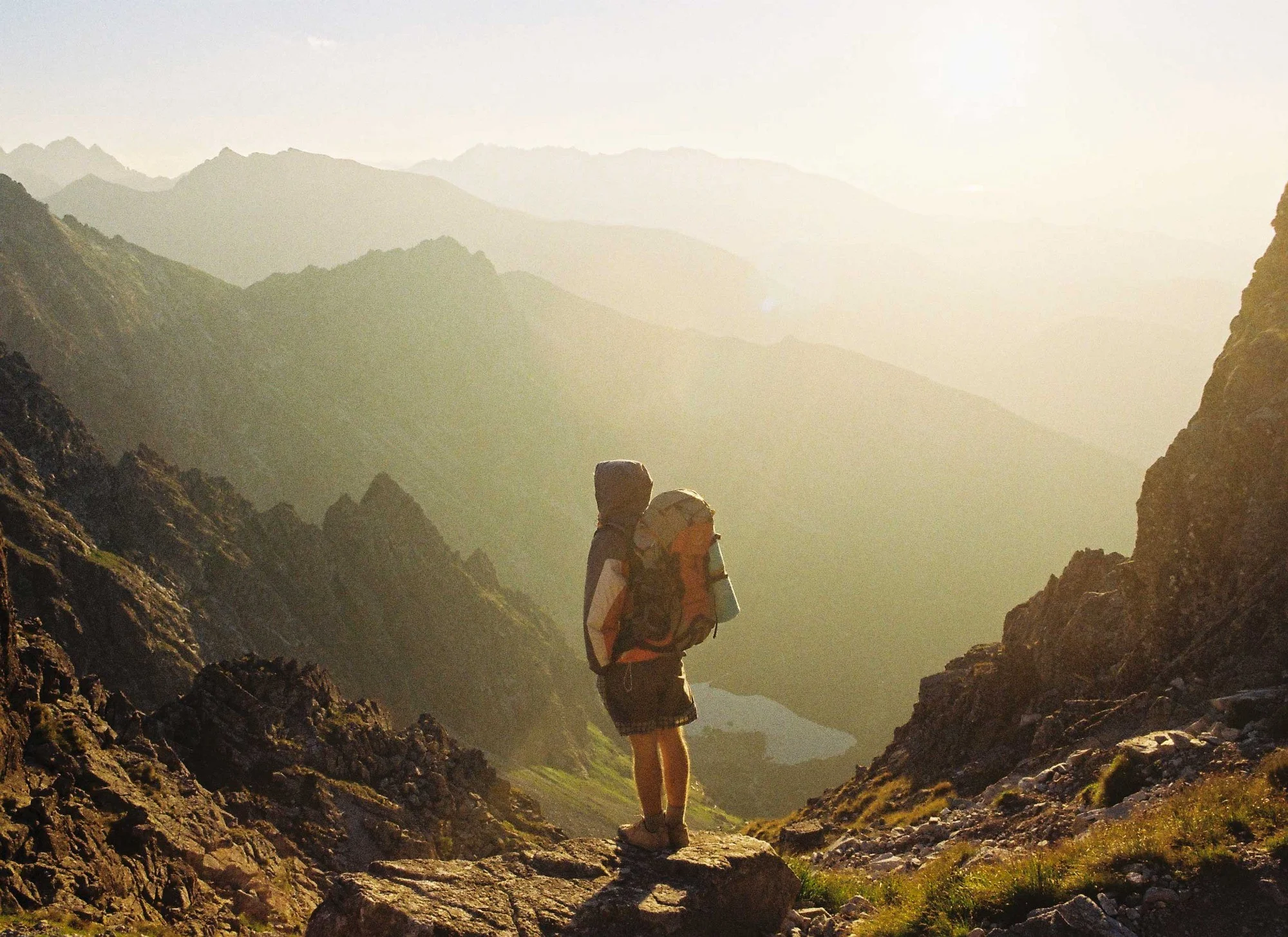
Many of us have taken planes, and have gone to exotic places outside of where we grew up and live. Be it a backpacking trip to India, a short weekend holiday spent in Bali, or a work-related trip to Johannesburg, the act of going somewhere outside of our personal zone of familiarity and comfort is often seen as an opportunity offering some form of inner transformation.
Indeed, the act of exposing ourselves to the foreign and unknown can evoke a plethora of new feelings in us. Sometimes, this experience leads us to new perspective, or even new decisions about ourselves and our lives.

Don’t be mistaken though, not all journeys that we take will lead us to a new self at the end of the road.
More often than not, we return home as the same person as we were before, just with a few more stories to tell and a few more memories to reminisce about during our mundane 9-to-5 job.
So, you may ask, what differentiates a trip that leaves us unchanged, from a travel experience that can potentially transform us from the inside out? How can I make my travels mean more? How do I get more out of them?
Well, there is no one way to achieve it, that’s for sure. We are all different individuals, from different backgrounds and with our own interpretation of the world.
Having said so, we are all similar in so many ways too. A genuine smile, a simple greeting, or an act of kindness may be all it takes for two persons separated by their backgrounds and languages to relate and connect with each other.

Photo by Laura Grier
Hear someone out. Listen to their story.
To travel is not just to see and to experience, but also to listen. I think many people missed out on that, and therefore, on a great learning opportunity. To listen is to try to empathise, to put yourself in the other person’s shoes.
By listening to the stories of the strangers we meet on the roads, about their lives, about their view of what’s happening in the world, about their dreams for the future, we gained not just the knowledge and viewpoint of another human being, but also learn of the value and validity of our own pre-existing views and beliefs.
“Perhaps travel cannot prevent bigotry, but by demonstrating that all peoples cry, laugh, eat, worry, and die, it can introduce the idea that if we try and understand each other, we may even become friends.”
— Maya Angelou
That’s how we gain human perspective I think — not by looking at the endless Himalayan mountain range, or the ebb and flow of the sea by the beach. You’ll never know, sometimes it’s the most unexpected persons who impart us with the most valuable lessons in life.
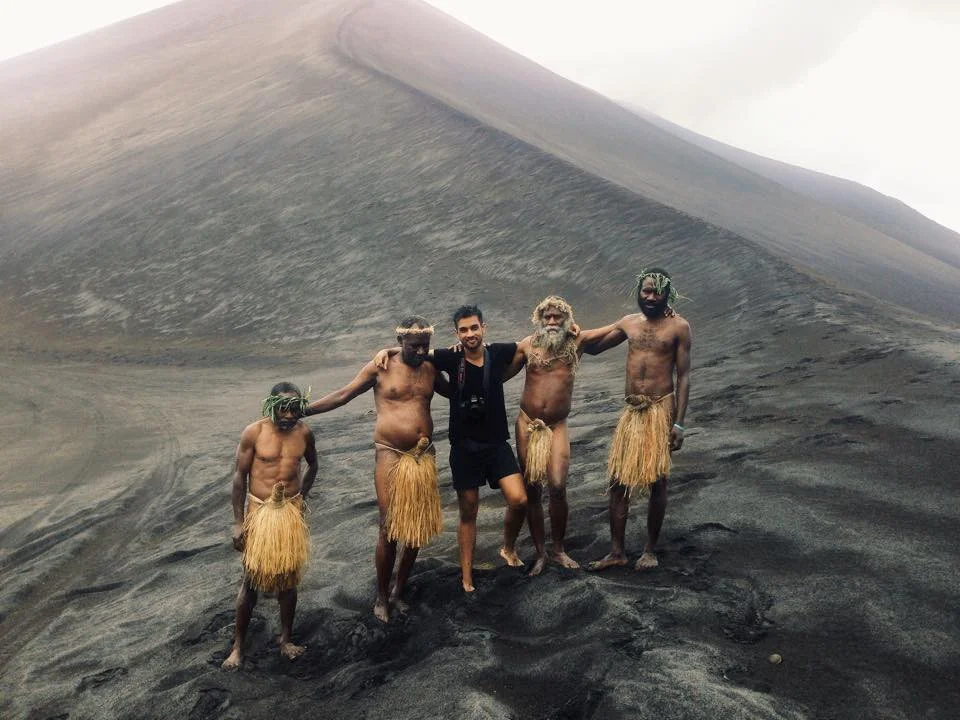
Photo by Prashant Ashoka
Also, tell your story.
I often hear people say that they travel to feel free again. They explained that traveling helps them escape temporarily from the realities back at home — their old problems, burdens and responsibilities.
True enough, being in a foreign land where nobody knows anything about you does have its unique liberating quality. You can be anybody, and you can be nobody. There, I think, is where you find your most authentic self, and then be it.
“… sometimes one feels freer speaking to a stranger than to people one knows. Why is that? Probably because a stranger sees us the way we are, not as he wishes to think we are.”
— Carlos Ruiz Zafón

Photo by Laura Grier
How do you start? Well, relax. Don’t overthink it. Instead, try to enjoy the process of letting go of your insecurities, your fears and inhibitions. What better ways to get things off your chest than to confide in a stranger whom you know you’ll never meet again? There! You just save yourself a costly trip to a therapist.
Jokes aside, it does take time and a few tries before you learn to open yourself up, not just to strangers, but to the world as a whole. But trust me, once you’ve reached that point, you will begin to see the world in a more fearless and unprejudiced manner.
Last but not least, leave your mark.
Make your travel different and more meaningful by contributing to the local cause. And no, I’m not talking about volunteering here. Neither am I talking about donating old clothes, books and stuff that people might not really need.
By contributing, I mean helping locals who want to help themselves. By aiding them in creating a positive outcome that is both tangible and sustainable. That’s what I think a real positive impact entails. That’s how we truly help.
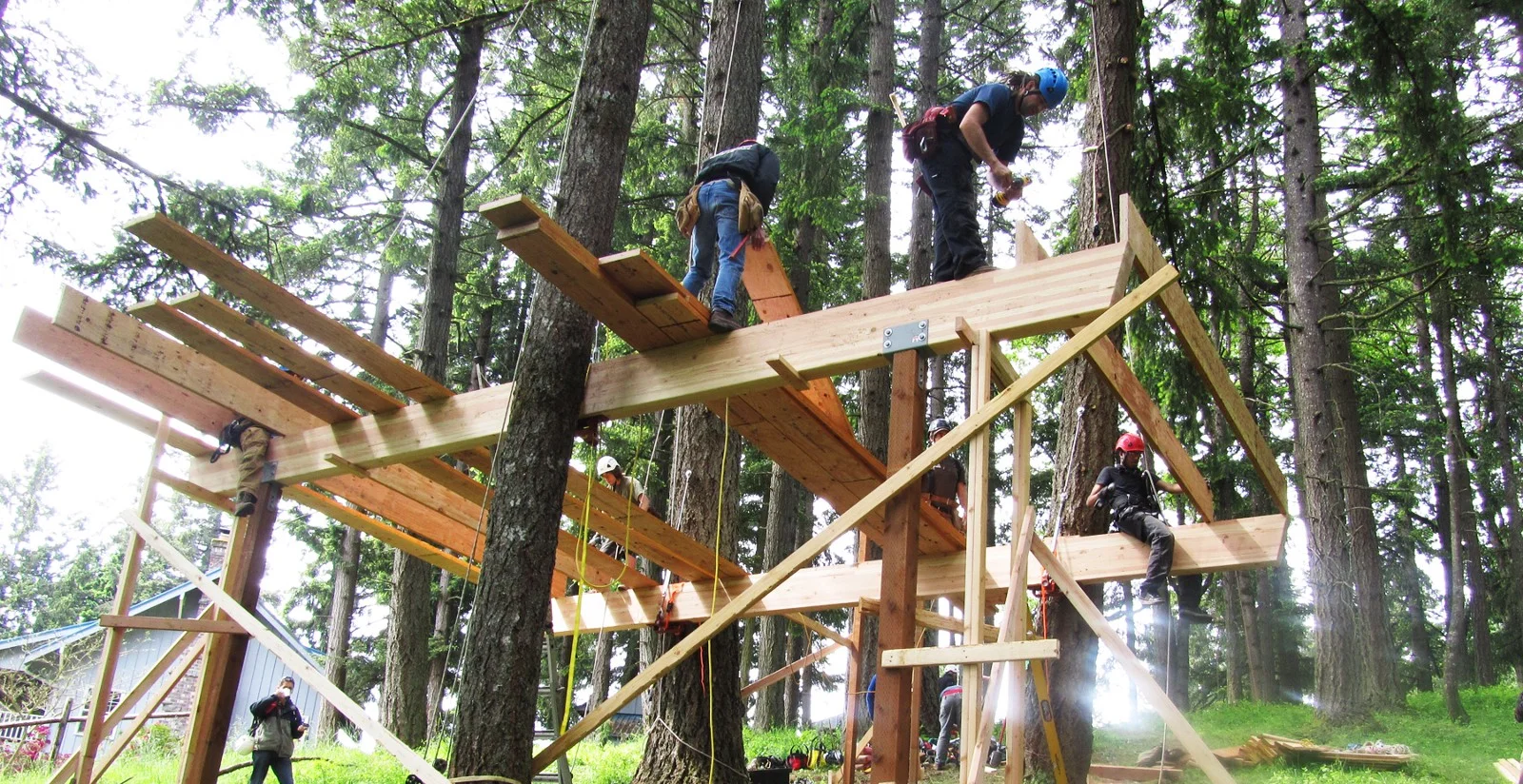
Want to help build a treehouse? A project on TravelStarter is offering just that.
Some local businesses may be starting up or in the process of renovation and need some funding. One easy way to get in touch with these people — the entrepreneurs, designers or small business owners living/working in the area you’re traveling to — is through online crowdfunding platforms like Kickstarter and Indiegogo, which have thousands of projects coming in from all across the globe.
To skip the hassle of searching through the tons of projects which may not be relevant to your needs, you can also try TravelStarter, a travel-specific crowdfunding platform with a growing array of travel and tourism business projects from different parts of the world.
Want to help a Croatian instructor rebuild his sailing boat and be rewarded with a sailing course? Or help a New Zealander living in the Philippines rebuild his Con-Fusion Cafe after typhoon Yolanda destroyed the restaurant? Or are you headed down to San Diego anytime soon? Help a new B&B at Pacific Beach in their funding raising efforts to refurnish the hostel. For a contribution of $80, you will be rewarded with a two-night stay, a three-hour whale watching tour and also a brewery tour!
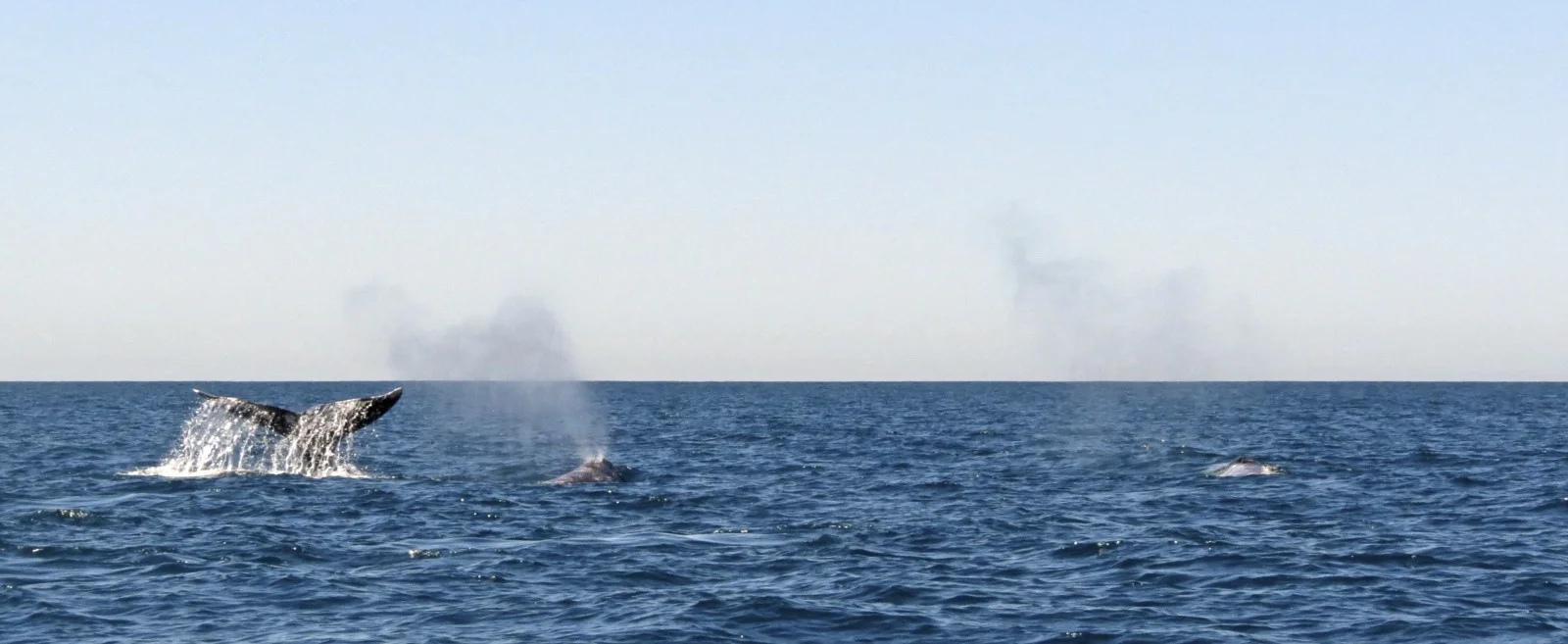
Photo by San Diego Whales And Dolphins
With the help of platforms like TravelStarter, travelers are encouraged and enabled to engage in more locally instigated experiences.
That’s not only a good way to help somebody, it’s probably the best way to make a local friend too. Definitely an experience that’s worth more than what you fork out of your pocket.

Photo by Ivon Domingo
At the end of the day,
Or at the end of your life, you will realise that it’s not the places you have seen, the crazy adventures you have gone through, or the pictures that you have taken that matters the most.
It’s the people that you have met along the way — those whom you have helped, those whom you have loved, those whose lives you have touched — that really mean the most. They are what made you a true traveler of life.
Lastly, always remember:
“A journey is best measured in friends, rather than miles.”
— Tim Cahill
The world’s waiting for you. Now GO!
THIS ARTICLE WAS ORIGINALLY PUBLISHED ON THE COFFEELICIOUS.
KEAY NIGEL
Keay Nigel is an independent writer/designer currently based in San Francisco. He has lived in the Hongkong, China, India and various parts of the United States. Travel is his passion and he's been documenting his overseas adventures through YouTube videos. Check out more of his writings here.