
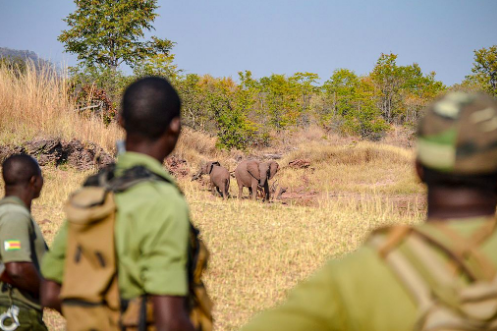
The plight of endangered elephants and rhinos in Africa is fairly well known to the world: Elephants are hunted by poachers for their tusks, which are carved into jewelry while rhinos are hunted for their horns which are believed in many cultures to carry medicinal value. The widespread poaching of these animals has pushed their population numbers back, causing a ripple effect in local ecosystems and presenting the possibility of extinction for the animals themselves. There is a very real chance that future generations may not grow up with these animals present as the current generation did. What is not as well known is that for years now, Africa has taken a militarized approach to prevent this outcome from becoming a reality, with armed conservation groups authorized to impose the harshest penalties on would-be poachers.
Poaching in Africa reached its zenith in the 1970s and 80s. In 1989 Kenyan President Daniel Arap Moi appointed famed paleoanthropologist Dr. Richard Leakey as head of Kenya’s Wildlife Conservation and Management Department, and Dr. Leaky created the first armed anti-poaching units. He then implemented a “shoot to kill” policy for dealing with poachers that drastically reduced environmental crime in the region. Several African nations followed suit and the practice of using arms to protect animals expanded throughout the continent, becoming more sophisticated over the years. Today conservation in Africa is a well known and a viable career path, with militarized conservation groups being trained by ex-soldiers from around the world. Nir Karlon, a former Israeli commando, manages the Maisha Group, a private security firm that focuses on preventing environmental crime in the Congo. In Zimbabwe, a nerve center of the African elephant population, Damian Mander of the Australian Royal Navy heads up the first all-female ranger team called “Akashinga” which means, “Brave Ones”. The group initially faced criticism from male conservationists who doubted that women would be able to perform the arduous physical tasks associated with the job. The Brave Ones, however, proved to be as capable as any man when it came to military conservation. New recruits to ranger units often go through several days of rigorous training before being offered a position. Some groups accept volunteers in unarmed positions, but most conservationists still carry weapons and are still authorized to use deadly force.
The job is not without risks. In the last decade, 1000 rangers have been killed while on duty. Death can come from the poachers they pursue or the animals they protect. Much of Africa’s poaching is carried out by crime syndicates and local militants who have found that ivory can be used as currency to buy weapons and fund campaigns. Encounters between conservationists and poachers have on occasion erupted into full-on firefights, and some critics have expressed concern that the rangers' methods may be too brutal. With this in mind, many ranger groups have made community outreach an even greater priority than battling poachers, as support from the locals will always be more effective than a gun. Education seminars at local schools help the rangers strengthen their relationships with people living in protected areas, with a long term goal of increasing awareness and surveillance of animal poaching in Africa.

JONATHAN ROBINSON is an intern at CATALYST. He is a travel enthusiast always adding new people, places, experiences to his story. He hopes to use writing as a means to connect with others like himself.