• Travel Features
  • Global Action
  • Take A Trip
  • Travel Guides
    • Podcast
    • Courses
    • Bookshop
  • About
  • Sign Up
Menu

CATALYST PLANET

  • Travel Features
  • Global Action
  • Take A Trip
  • Travel Guides
  • Discover
    • Podcast
    • Courses
    • Bookshop
  • About
  • Sign Up

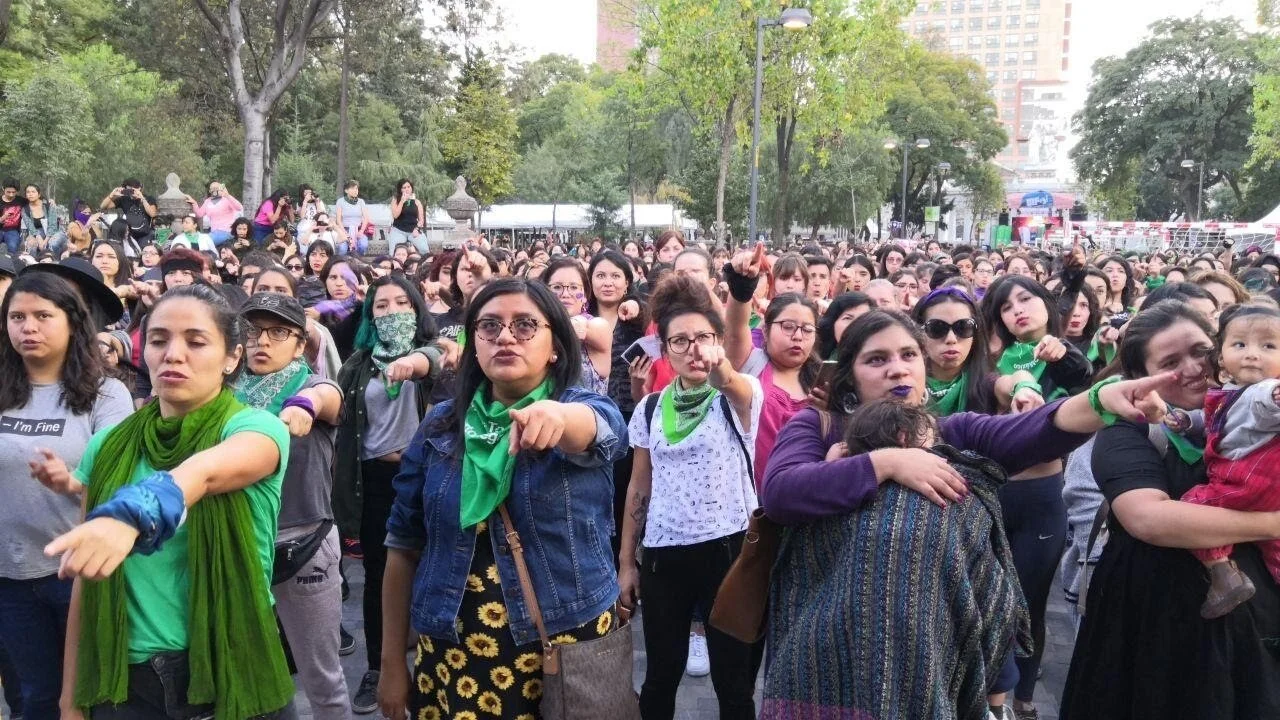
A female-dominated protest moving to "Un Violador en Tu Camino" (“A Rapist in Your Path”). Wotancito. CC BY-SA 4.0

The Chilean Roots of a Global Anti-Gender-Based Violence Movement

May 30, 2020

On the 2019 International Day for the Elimination of Violence Against Women, over 10,000 women gathered outside Chile’s Santiago National Stadium, a former detention and torture center from Chile’s military dictatorship. “Patriarchy is our judge/That imprisons us at birth/And our punishment/Is the violence you DON’T see” the group chanted, their clothes and bodies marked with anti-violence slogans. “It's femicide!” they shouted into the frigid air. “It's not my fault, not where I was, not how I dressed!” They placed their hands behind their heads, then squatted up and down, mimicking the movements that Chilean police officials and prison wardens force females to perform while naked. 

This is the movement that has globally spread, dismantling the structural forms of gender violence set in place by police and judiciary systems. The protests feature the Chilean song “Un Violador en Tu Camino,” or “A Rapist in Your Path.” Created by the Valparaíso feminist collective Las Tesis, it challenges the gender violence so prominently institutionalized by political structures. Las Tesis works closely with various activists and scholars to demystify rape as an act of pleasure. Specifically, “Un Violador en Tu Camino” is based on the work of Argentine-Brazilian anthropologist Rita Segato, one of Latin America’s most celebrated anthropologists of gender violence. Las Tesis also investigates the sexual violence, homicide and rapes within Chile that are left unaddressed in the criminal justice system. 

The song was first publicly performed in front of a Valparaíso police station. As the initial protest, women merely sought to impose small-scale street interventions. However, as the visceral lyrics moved through global media, they inspired similar demonstrations throughout Latin America and beyond. 

Thousands of women performed the piece at the Zócalo, Mexico City’s main square, on November 29, 2019, roughly a week after the Valparaíso protest. Since then, Las Tesis’ song has spurred movements in Latin American countries such as Colombia, Venezuela, Peru and Argentina, and has even spread to global protests in London, Berlin, Paris, Madrid, Barcelona, Tel Aviv, New Delhi, Tokyo, Beirut, Istanbul and New York City.  

Each protest site transforms the musical base, adapting the movements and song to their national identity. Within Latin America, green scarves represent the campaign for legal abortion. Black blindfolds acknowledge the ways that women are made vulnerable by Chilean police. Brazilian activists add the lyrics, “Marielle is present. Her killer is a friend of our president.” They reference Marielle Franco, an assassinated city council member from Rio de Janeiro. An ongoing investigation will determine if Brazilian President Jair Bolsonaro was involved in her killing.

 “It’s the cops. It’s the judges. It’s the system. It’s the president. The rapist is you.” This phrase has been chanted around the world, demanding rectification for years of human rights violations. As female protesters gather in urban areas and repeat these words, they point— physically and metaphorically—to the courthouses, police headquarters, and presidential palaces that have systematically dehumanized women, promoting gender violence and oppression. Media, movement and song give women the platform to insert their collective power and instill political change. 


Anna Wood

is an Anthropology major and Global Health/Spanish double minor at Middlebury College. As an anthropology major with a focus in public health, she studies the intersection of health and sociocultural elements. She is also passionate about food systems and endurance sports.

Tags Chile, gender stereotypes, sexual violence, violence, criminal justice, police, Latin America, Europe, music, song, protest, protests, LGBTQIA+, International Affairs
Comment

An empty classroom. Pixabay. This photo is licensed under the Pexels license.

Some Countries Reopen Schools During COVID-19 Pandemic

May 30, 2020

Despite COVID-19 forcing schools across the globe to abandon their classrooms over these past months, a handful of nations are cautiously reopening their schools. Leading this mission are countries such as China, Japan and Denmark. Although the reopening of schools has numerous potential benefits, such as providing much-needed childcare and valuable in-person education, many are wary of the risks that come with such a monumental decision. 

Children as COVID-19 Spreaders

There is considerable scientific debate over the impact that children have in the spread of COVID-19. While many fear that there will be a spike in virus cases if children resume in-person school, others counter with data suggesting that children not only make up a remarkably small percentage of severe coronavirus cases but also seem less likely to spread the virus than adults.

Even with the decreased risk of children being infected or developing acute symptoms, a recent study of children in Wuhan, China, and Shanghai concluded that ultimately, the children attending schools were just as likely to spread the virus as adults. Closing schools, however, had the potential to reduce a surge by 40% to 60%. 

The inconsistencies in data can be credited to difficulty tracking enough children, especially now that schools are closed, as well as a shortage of available tests and diagnoses.

Attempts at Reopening Schools

With a handful of countries feeling confident about their decreasing infection rates, some schools are beginning to reopen. Many schools in China reopened in March, including in Wuhan, where the COVID-19 outbreak began. Another example is Denmark, the first European country to restart classes after major shutdowns. Beginning on April 15, younger children were the first to return because of their perceived lower health risks and since they were benefiting the least from distance learning. 

For those resuming in-class school, the experience looks considerably different than before. Students in Taiwan, the place with perhaps the most success at keeping schools open, wash their hands and sanitize their shoes when they arrive at school. In Israel, children cannot check books out of the school libraries or borrow pencils from classmates. At Yangzheng Elementary School in Hangzhou, China, young students are given hats to wear with a three-foot diameter to encourage distancing. Across the world, schools are implementing numerous measures to manage the virus. Sporting events, field trips and other large physical gatherings have been dropped. Instead, schools have taken up practices that include regular temperature checks, staggered entry times, and constant cleaning. There are many tactics being used to encourage social distancing such as spaced-out desks and the use of outdoor spaces for classrooms. 

Despite the multitude of precautionary measures, some places have not found as much success. Some students in France, for example, have been sent back home after just one week of schooling. Despite only 30% of students returning to school, 70 new COVID-19 cases  prompted seven of those reopened schools to close again. French Education Minister Jean-Michel Blanquer claimed that those who spread the virus were “likely” infected before schools had resumed, especially given COVID-19’s two week incubation period. In Germany, schools have generally been successful in their reopening, but one school was shut down again after a teacher tested positive for the virus. Singapore also closed schools down again after a brief reopening, but the outbreak that prompted this closure was not school-related. 

Moving Forward

While it is impossible for schools to safely resume activities as they were before the pandemic, there are still options for schools that wish to reopen in the future. Having said that, schools cannot rush to reopen or they will risk another surge in infections. Once they are ready, however, schools must learn from those that have already opened and are finding success with their updated safety measures. If schools can adopt suitable new habits that will prevent virus transmission, students will be able to return to school and receive many of the mental and educational benefits they had before.

Phoebe Jacoby

is a Media Studies major and Studio Art minor at Vassar College who believes in the importance of sharing stories with others. Phoebe likes to spend her free time reading, drawing, and writing letters. She hopes to continue developing her skills as a writer and create work that will have a positive outward effect.

Tags COVID
Comment

March for marriage equality in Costa Rica. Courtesy Gay Community News. CC 2.0

Costa Rica Becomes the First Central American Country to Legalize Same-Sex Marriage

May 30, 2020

On May 26, 2020, same-sex marriage was legalized in Costa Rica, ending years of discrimination and struggle to get the same rights as heterosexuals.

In 2018, Costa Rica’s Supreme Court ruled same-sex marraige to be constitutional. To enforce the ruling, the country’s Legislative Assembly had 18 months to either enact it or have the decision overturned. There was even a failed attempt by 20 politicians to get an 18-month extension to further delay marriage equality.  Two years later, though, marriage equality became legalized with the first marriages officiated in May of 2020. At midnight on May 26, same-sex marriage was legalized. To celebrate, marriages were also televised across the country due to the COVID-19 pandemic postponing many in-person events.

Marriage equality was a key campaign promise by President Carlos Alvarado Quesada. According to Quesada, “Together, under the same flag, we will build a better nation.”  His 2018 presidential campaign highlighted Costa Rica’s commitment to bettering human rights and social actions. Quesada’s presidency helped the nomination of the first openly-gay congressman, Enrique Sanchez, who emphasized that this has been a long battle for activists across the nation.

Alexandra Quirós and Dunia Araya become first homosexual couple to be married at midnight on May 26. Ezequiel Becerra. CC 2.0

Sanchez was correct in this statement. Costa Rica has pushed for equality for homosexuals since 2016. It first advocated for equal protections and rights to privacy for LGBTQ+ individuals under the American Convention on Human Rights (ACHR) with assistance from the Inter-American Court of Human Rights. Through the convention, all countries within the Americas were pushed to recognize gay marriage. It was then decided in 2017 that all rights of heterosexuals and couples must be applied to every Costa Rican. 

This was not an easy feat. Many across the country protested against this decision. For instance, 20 politicians tried to get another 18 months to delay the ruling but ultimately failed. There also has been strong pushback from religious groups that deny that homosexuality has grown considerably in Costa Rica. Catholicism is recognized as the official religion of the state, so lawmakers such as Eduardo Cruickshank felt the need to “defend the family as established and pleasing our Heavenly Father.” Up until now, marriages of same-sex couples were not recognized by the state and would automatically be annulled. 

A research study by Sin Violencia LGBTI shows that more than 1,300 members of the LGBTQ+ community have been killed over the past five years across Latin America and the Caribbean. This group has become the leading coalition that pushes for governments to take action to better protect the LGBTQ+ community.

This historical achievement makes Costa Rica the first country in Central America and the 28th U.N. member state to recognize same-sex marriage and to legalize marriage equality. It is the sixth Latin American country to do so, following Argentina, Ecuador, Brazil, Colombia, Uruguay and parts of Mexico. The Costa Rican government hopes this will not only encourage change in Central America but throughout the entire world.

Eva Ashbaugh

is a Political Science and Gender, Sexuality, and Women's Studies double major at the University of Pittsburgh. As a political science major concentrating on International Relations, she is passionate about human rights, foreign policy, and fighting for equality. She hopes to one day travel and help educate people to make the world a better place.


In News and Social Action, North America, Costa Rica, Human Rights Tags Costa Rica, LGBTQIA+, North America
Comment

Asian Pacific American Heritage: How to Eat Like a Hindu God

May 28, 2020

There’s no place that combines reverence and community in the sacred and secular to encompass worship quite like the Ganesha Temple in Queens, New York. It’s a Hindu temple—with a restaurant.

The cultural touchstone for the Hindu community in New York has a full-service, A+ Indian restaurant tucked away through a side entrance, down a few staircases and hallways, and into the basement. The Temple Canteen is not hidden on purpose, according to Uma Mysorekar, the president of the Hindu Temple Society of North America. It was just kind of an afterthought that took on a life of its own.

When the temple was built in 1977, it was one of the first of its kind outside India. It quickly became an important site for both the local Hindu community in Queens and the religion’s devout throughout the United States. As pilgrimages increased from both national and international visitors to attend worship services and cultural workshops, they needed a place to eat, so the temple opened a cafeteria in its basement serving some of the most authentic South Indian cuisine around as a taste of home. Soon, word of the incredible food spread, and now the Temple Canteen is an institution in its own right.

Mysorekar says not all visitors are Hindu and the restaurant is open to the public. Indeed, as accolades from The New York Times, New York Magazine and Anthony Bourdain have attested, the Temple Canteen is the spot in Queens for some of the world’s very best vada, idli, sambar and dosas, still made by a team of 10 South Indian chefs and served affordably every day. For Mysorekar, going out to eat should be a joy, and as you can’t make a prayer to the Hindu gods without an offering of food, both the religious and those who praise the culinary arts have a home at the Temple Canteen.

THIS ARTICLE WAS ORIGINALLY PUBLISHED ON GREAT BIG STORY

Tags Hindu, Pacific, American, Heritage, temple, culinary culture, Hindi, India, Queens, New York, South Indian, Temple Canteen, CheckOut, Global Cuisine, USA, Asia
Comment

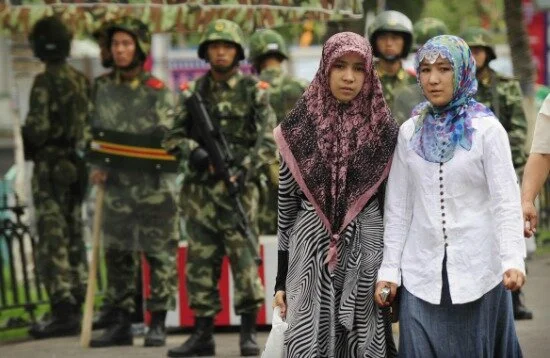
Chinese soldiers entering a Uyghur community. Peter Parks. CC 2.0.

US Calls for Action Against Chinese for Treatment of Uyghur Muslims

May 21, 2020

Last week, the U.S. Senate passed the Uyghur Human Rights Policy Act of 2020 to seek justice for Uyghur Muslims forced into labor camps in China.

It is believed that the Chinese government’s placement of Uyghur Muslims in labor camps in Xinjiang province represents the largest mass detention of people since World War II. However, since 2017, there has been an international investigation into the matter. It is estimated by the United Nations that approximately 2 million Uyghurs have been placed into at least 28 camps. 

Yet, when questioned about this activity, the government denies wrongdoing  and explains that the purpose of the camps is vocational training for the minority group to increase its participation in the economy. The government staged a press conference of alleged former “civilians” who were at the camps to show that the camps helped transform their lives and ideologies. By transformation, it is implied that they were taught to give up Muslim practices and take on more “modern” Chinese ways. Family members who are living outside of China have spoken out against Chinese statements and helped expose the torture that may actually be taking place in these modern-day concentration camps.

The Uyghur people make up 60% of Xinjiang’s population, but are a minority in the rest of China. Specifically, they are of Turkish descent, and are often labeled as terrorists and religious extremists by the Chinese government. The name “Uyghur” is actually an umbrella term for multiple Muslim minorities that have been singled out. Many of those who have been targeted have been forcibly detained for reasons such as facial hair or even clothing. 

In November 2019, United States senators called for sanctions against Chinese leaders for the detention of Uyghurs. However, due to the impeachment hearings of President Trump, the bill failed to get past the Senate floor. The U.S. is not the first country to bring attention to this human rights crisis. Xinjiang province sits along the path of China’s Belt and Road Initiative, a  plan to expand trade throughout Asia and Europe by essentially revamping the Silk Road. The human rights violations against the Uyghurs have given pause to some countries about joining the project.

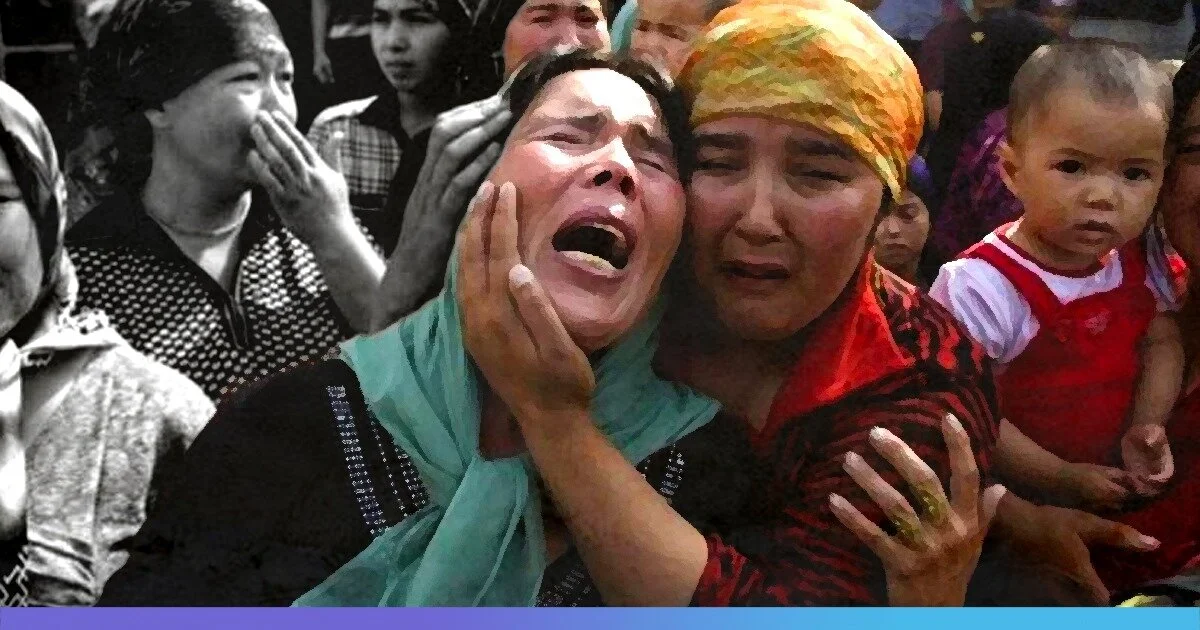
Uyghur women grieving over those who have been forcibly taken by Chinese government. Han Guan. CC 2.0

On May 14, the U.S. Senate passed the Uyghur Human Rights Policy Act of 2020. If enacted by President Trump, it would establish sanctions against China and its officials who are held responsible for inhumane acts ranging from the kidnapping of Muslims  to the high rates of abuse and death taking place in the camps.The sanctions include placing restrictions on imports of goods made at these camps as well. The State Department would also be tasked with compiling a report detailing the conditions of these camps, which would be separate from the annual Human Rights and International Religious Freedom documents.

In light of the COVID-19 pandemic, Senate Republicans have taken up an agenda that  questions many of the Chinese government’s practices. The Uyghur Human Rights Policy Act of 2020 is only one of many issues the U.S. is bringing up.

This is not the first case of Muslims being targeted in Asia. Back in August 2017, Rohingya Muslims faced persecution in Myanmar by the country’s Buddhist majority government on claims of terrorism, just like the Uyghur people. Similar to China, Myanmar’s government also refused to take responsibility for its actions.

Eva Ashbaugh

is a Political Science and Gender, Sexuality, and Women's Studies double major at the University of Pittsburgh. As a political science major concentrating on International Relations, she is passionate about human rights, foreign policy, and fighting for equality. She hopes to one day travel and help educate people to make the world a better place.

Tags China, Uighur Muslim, Uyghur Muslims, labor camps, Chinese, Asia, Europe, Silk Road, President Trump, Donald Trump, Rohingya Muslims, Refugees, Human Rights, USA, International Affairs
Comment

Airplane landing during the sunset. Kuster & Wildhaber Photography. CC BY-ND 2.0

How COVID-19 Will Impact Future Travel

May 21, 2020

As the corona-crisis continues, the world is at a virtual standstill. Globally, 16,000 commercial airplanes have been grounded. U.S. air travel alone has dropped by 96%, the greatest travel decline in American history. Following 9/11, commercial flights decreased by 26%, a downward trend which lasted for six years. The terrorist attacks resulted in rigorous airport security, passenger identification checks and a decrease in airfare prices. Due to COVID-19, the travel sector will face an economic deficit of $1.2 trillion, nine times the impact of 9/11. With such unprecedented losses, the travel industry is embracing change. 

Throughout the pandemic, airlines have adjusted boarding procedures to mitigate the risk of passengers crossing paths. Delta Air Lines recently launched a feature on its Fly Delta app which notifies passengers of when their specific seat is boarding. Similarly, EasyJet is boarding by seat number to alleviate crowded queues. 

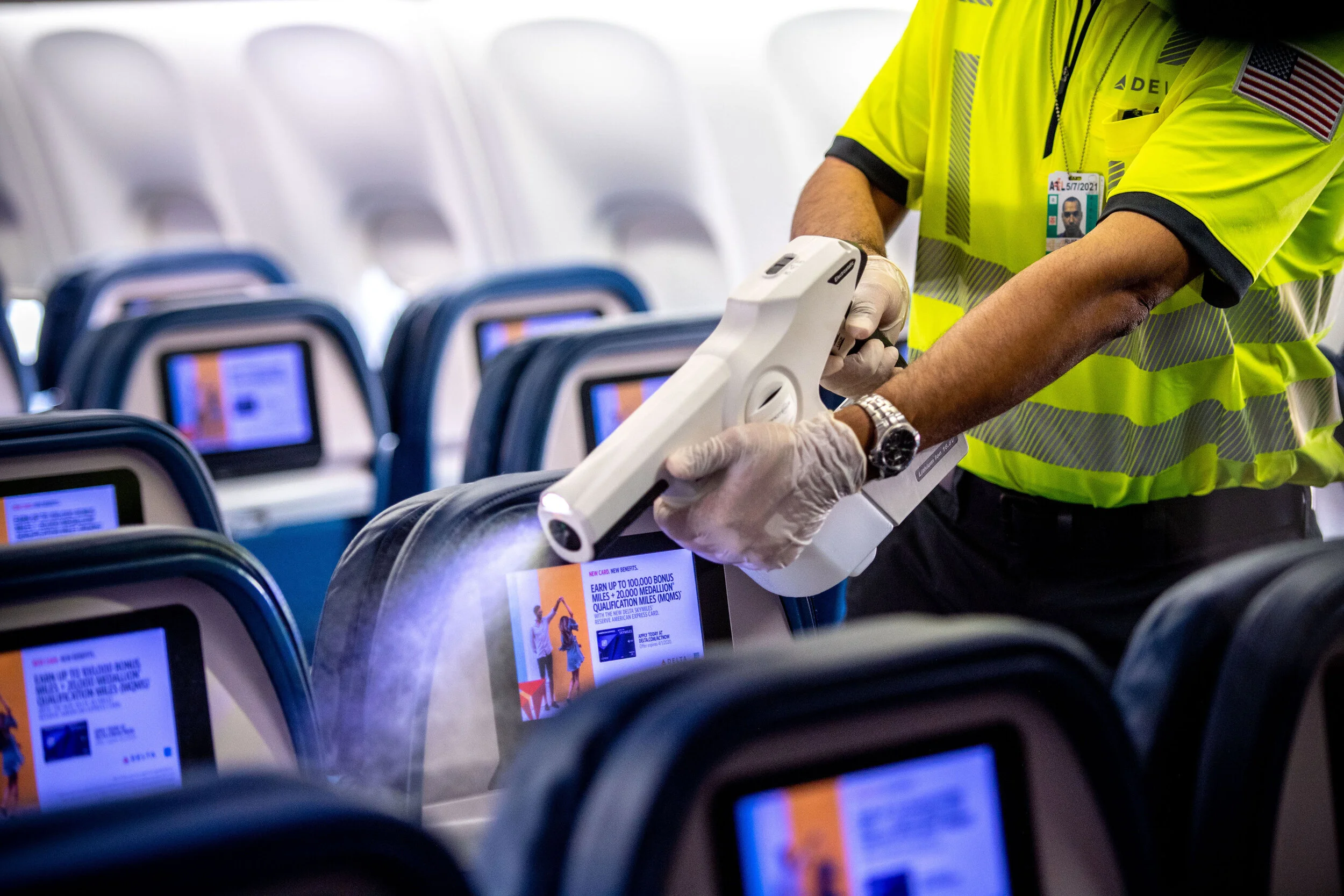
Many airlines and airports have also increased sanitation standards. San Francisco International Airport has stocked a three-month supply of disinfectant and uses battery-operated sprayers on high-touch areas like handrails, seats and elevator buttons. United Airlines and Delta have begun fogging the interiors of planes with the same disinfectants used in hospitals. During in-flight services, Singapore Airlines requires flight attendants to wear masks and gloves. Additionally, magazines and other print reading material will be eliminated. Alaska Airlines even suspended food and drink service, encouraging passengers to fill water bottles before boarding. Most carriers will follow this trend by suspending catering for short-haul flights. 

Delta workers disinfect high-touch areas on a Boeing 757. Delta News Hub. CC BY 2.0

While many airlines, such as British Airways, have blocked middle seats to separate passengers, engineers have proposed innovative alternatives. An Italian company, Aviointeriors, has created two seat designs to ensure cleanliness and uphold revenue-friendly capacity levels. The “Glassafe” social distancing seat includes a head-level divider, allowing airlines to maintain current seat configurations while blocking germ transmission. Inspired by the two-faced god of ancient Rome, the “Janus” middle seat faces backwards and is entirely surrounded by a glass shield. These seats promote the maximum isolation between travelers and have inspired additional safety precautions. 

Turkish Airlines and Emirates require all travelers to wear masks in airports and aboard planes. Emirates is also the first airline to test passengers for COVID-19 prior to departure. In less than 10 minutes, the airline conducts a blood test and issues a medical certificate with results. Many countries now mandate that incoming passengers possess this certificate, proving a negative COVID-19 test result. 

Another UAE-based airline, Etihad Airways, implemented contactless kiosks that monitor temperature, respiratory rate and heart rate to identify at-risk travelers. This hands-free device, developed by Australian company Elenium Automation, utilizes voice recognition to mitigate bacterial transmission. If harmful symptoms are detected, the technology automatically alerts airport staff  and suspends the check-in process. “This technology is not designed or intended to diagnose medical conditions. It is an early warning indicator which will help to identify people with general symptoms, so that they can be further assessed by medical experts, potentially preventing the spread of some conditions to others preparing to board flights to multiple destinations,” stated Joerg Oppermann, Vice President of Hub and Midfield Operations at Etihad Airways. 

In response to the coronavirus pandemic, U.S. Customs and Border Protection officers must wear personal protective equipment. U.S. Customs and Border Protection. CC Public Domain Mark 1.0

To prevent another pandemic and promote safer flying, these travel changes will likely continue post-coronavirus. For the time being, however, health officials urge travelers to stop flying altogether, triggering a massive shock in the travel industry. In an attempt to stimulate demand, airlines have dropped prices by 15.2%. In mid-April, an American traveler found a $35 round-trip ticket from Los Angeles to Fort Lauderdale, with multiple airlines offering similar prices. 

Despite cheap flights and new safety measures, 65% of travelers feel unsafe flying during the pandemic. With vacant planes and empty skies, daily carbon dioxide emissions have declined by 1.8 million tons. "This is a historic shock to the entire energy world," noted Dr. Fatih Birol, executive director of the International Energy Agency (IEA). By 2021, the IEA predicts that the world will use 6% less energy, equivalent to losing the entire energy demand of India. 

"The COVID-19 outbreak is showing industrialized countries not only what clean air means and how to cope without traveling, but also how healthier populations in a cleaner environment cope better with coronavirus," note researchers at UBS. This historic collapse in air travel is sparking renewable energy solutions. Norway will introduce hybrid electric planes by 2025 and projects that all of its short-haul flights will be electric by 2040. EasyJet and Wright Electric also plan on launching their first electric passenger plane by 2027. 

High-speed train station in Nanjing, China. Kristoffer Trolle. CC BY 2.0

Until then, cars and trains will be the main modes of transportation. In the United States, one in five travelers are expected to drive 500 miles or more for a leisure trip during the next six months. With gas prices dropping by 20.6%, nearly 109 million Americans plan to take family road trips this summer. In Asia and Europe, the climate impact and health risks of air travel have caused a drastic shift towards high-speed trains. Spain, France, Germany and Italy are expected to collectively add 800 high-speed rail units by 2030. 

Experts predict global travel levels won’t recover until 2023. Christopher Schaberg, professor of English at Loyola University New Orleans, strongly believes that “travel will not easily bounce back; a reckoning is in order.” Just as 9/11 transformed travel, COVID-19 will likely normalize masks, contactless kiosks and separation of passengers. Once travel does resume, expect safety and sanitation to be the top priority.

Shannon Moran

is a Journalism major at the University of Georgia, minoring in English and Spanish. As a fluent Spanish speaker, she is passionate about languages, cultural immersion, and human rights activism. She has visited seven countries and thirty states and hopes to continue traveling the world in pursuit of compelling stories.

Tags COVID
Comment

Isang Milyon: Save the Philippine Sea

May 21, 2020

It's been said the Philippines is worth dying for.

We believe the Philippines is worth diving for. 

“As the world's second largest archipelago with over 7,100 islands, Filipinos depend on the sea for livelihood, food, tourism, economy, and ultimately, our lives. Environmental conservation shouldn't be limited to NGO workers and researchers-- it should be accessible, relatable, and part of our lifestyles.” This short film was shot in tandem with the work being done by Save Philippine Seas. “SPS aims to narrow the gap between scientists and the general public, the old and young, and the passionate and indifferent by mobilizing citizen-led initiatives that are empowering Filipinos towards collective action and behavior change.” -Save Philippine Seas

Tags Phillipines, Filipino, Save Philippine Seas, grassroots, science, ocean conservation, archipelago, CheckOut, Arts and Culture
Comment

“Northern Lights in Iceland” by Cameron Pickett is licensed under CC BY 3.0

7 Off-The-Beaten-Path Adventures in Iceland

May 21, 2020

From lava caves to Elf School, here are some of the most unique travel destinations in Iceland. Enjoy!

Read More
Tags Iceland, Aurora Borealis, Northen Lights, Elfschool, supernatural, history, elves, Puffin Island, Atlantic, birds, trolls, folklore, beach, sand, tourism, seal, Luagarvatn Fontana, Thingvellir National Park, Geysir Geothermal Area, bread, scuba diving, North America, Eurasia, CheckOut, Lava Cave, Travel
Comment

Child in Yemen. Carl Waldmeier. CC 2.0

Yemen’s Last Straw May be COVID-19

May 21, 2020

The war-torn country of Yemen has long endured years of civil war and has millions of survivors currently living in UN Refugee camps. With limited resources, this developing country faces several challenges each day with civil unrest, the rainy season bringing several other diseases and international aid agencies forced to pull aid. Many have speculated that this may be the breaking point for Yemen. 

Yemen’s Civil War 

Yemen’s capital is Sana’a but is now under Houthi rebel control who control the north. The conflict is speculated by the UN to have killed more than 100,000 people. With so much destruction, bombings and millions of displaced refugees, the country called an unofficial ceasefire in April due to the coronavirus spreading around the country. Additionally, with the current travel restrictions, no one has been able to get accurate depictions of the situation, so they are relying on local testimonies and those they already have in place, but many believe the Houthi party have not been reporting accurate numbers of victims due to COVID-19.

International Aid 

The country has had many international aid systems working together to provide support to the country for many years, even as the population has struggled with violence and war. But now, with the current travel restrictions and other countries dependencies, many are getting pulled and leaving the country on its own. “They will be leaving something like 3.6 million internally displaced and 280,000 refugees without any form of assistance.” The country largely relies on the resources that are brought in through these programs, so with the projects getting pulled it means may signal a dark turn for the country. 

Resource Availability

Considered to be one of the least developed countries, Yemen has always struggled with providing enough resources to the entirety of their country. Facing factors such as over “80% of Yemenis needing humanitarian assistance, over half of the country’s hospital facilities are dysfunctional and about a quarter of country’s districts have no doctors.”  Especially now, during the rainy season many diseases such as malaria, cholera, dengue fever and chikungunya are rampant throughout the country. Just two weeks ago the country reported zero COVID-19 cases and in the past two weeks it has spiked to over 500, an alarming rate for it to spread and with the knowledge that these are inaccurate numbers, the country is in a real state of emergency.

The country already has a predicted low immunity due to most people eating one meal a day and children who are not vaccinated because of limited supplies. Even in the hospitals they have limited room, few blood tests and not enough specialists who know what to look for. Hope has started to look wane as workers dig graves in the cemetery in preparation for more bodies as they pile up but there is limited room and those who deliver the bodies do not wear any protective clothing or gear. The government’s coronavirus committee has declared the city of Aden an “invested city”, and locals live in fear as they don’t know anything about the disease and lack the specialists to confirm it.   

Yemen has struggled for years to take care of its inhabitants and have faced many fronts of violence and challenges since 2011 when their internal conflict started. COVID-19 has only added to their list of worries and serves as a warning that without aid, they may not have the proper equipment or resources to survive. Locals are working on ways to create resources that are easily accessible in the country through the local markets but for the time being, their future has taken a bleak turn as they face a rising death toll and support being pulled as their refugees once again get displaced and are forced to look for new help.

Elizabeth Misnick

is a Professional Writing and Rhetoric major at Baylor University. She grew up in a military family and lived in Europe for almost half her life, traveling and living in different countries. She hopes to continue writing professionally throughout her career and publish her writing in the future.

Tags COVID
Comment

Campanario De La Plaza San Cristobal, Cusco, Peru. Adrian Dascal. Unsplash License.

The COVID-19 Crisis in Latin America

May 21, 2020

While much of the world begins to slowly reopen the economy, Latin America continues to face an overwhelming crisis due to COVID-19. Health care systems across the globe are buckling to the disease, but economic and political instability, large rural communities and widespread indigenous populations place Latin American countries at a particular disadvantage. Minimal international support furthers the burden, leaving the region in a nearly impossible position as it attempts to fight the virus.

Factors

Preparation and response has varied across Latin America, with some countries seeing low infection rates and slower spreads. Others are facing a crisis comparable to the United States and Europe as cities in Brazil, Ecuador, Mexico and Peru report death tolls higher than in Italy and Spain. To make matters worse, Brazil and Ecuador recently slashed their health care budgets, creating strained relationships with workers in the field.

Researcher in Florianópolis, Brazil by Lucas Vasques. Unsplash License. Unsplash License.

Health care workers in Mexico fear devastation due to their country’s high rates of hypertension, obesity and diabetes, all of which are risk factors for worsened symptoms from coronavirus.. Much like in Italy and China, many Mexican communities have economies that revolve around outdoor markets and intergenerational living, spreading the virus quickly. To combat COVID-19, the region needs help from other countries. So far, it has received little. Many countries are still indebted to China from the 2008 economic crash, and the United States’ decision to withhold funds from the World Health Organization has further limited Latin America’s resources. Other countries are constantly being outbid for medical supplies. 

The Hardest Hit 

Some countries in Latin America have been impacted more than others. In Ecuador, bodies are lining the streets as hospitals and morgues fill to the brim. On Friday, Brazil became the world’s fourth biggest hot spot; in response, President Bolsonaro’s second health minister quit in under a month. Peru has also seen a massive uptick in cases, most notably seen in its markets. 79% of vendors in Lima’s wholesale fruit market tested positive for COVID-19, and at least half of the spot tests given at five other large fresh food markets in the city came back positive. Markets provide incredible resources to the economies of Latin American countries, so local political authorities must react thoughtfully moving forward.

"Fruit Market" by superfluity is licensed under CC BY-NC-SA 2.0

The New York Times quotes Aguinilson Tikuna, an indigenous leader in Manaus, Brazil, who has experienced the personal loss of friends. “We weren’t prepared for this virus,” he said. “When this disease hit us, we locked ourselves in, locked our homes, isolated ourselves, but no one had the resources to buy masks, medicine. We lacked food.”  Simply put, the region does not have the supplies to keep everyone safe, especially the vulnerable indigenous populations. 

Also at risk are Latin America’s prisoners, who live in some of the most overcrowded prisons in the world. The world has already witnessed how dangerous this can be, as rates of tuberculosis among Brazilian prisoners are 35 times higher than in the rest of the country. Fortunately, countries like Argentina, Brazil and Chile are taking steps to scale down their prison populations in order to reduce the virus’s spread. 

Our Attention 

Latin America is facing the weight of a crisis it was not at all prepared for. Much like the rest of the world, COVID-19 has sent shockwaves across the region’s communities. It is past time for the international community to turn their eyes toward Latin America and allocate resources to stop the devastation looming on the horizon.

Renee Richardson

is currently an English student at The University of Georgia. She lives in Ellijay, Georgia, a small mountain town in the middle of Appalachia. A passionate writer, she is inspired often by her hikes along the Appalachian trail and her efforts to fight for equality across all spectrums. She hopes to further her passion as a writer into a flourishing career that positively impacts others.

Tags COVID
Comment

Delivered: Bicycle Delivery in the Age of COVID-19

May 14, 2020

“A slice of life in the time of corona; thousands of invisible front line workers risk their health every day to bring food to your couch. They aren't just immigrants struggling to survive in New York City . . . They are the backbone of New York City, and they are the essential.” -Law Chen

Tags New York City, bicycle delivery, immigrants, migrant workers, personal protective equipment, essential workers, Global Health
Comment

Lockdown Singing: The Science of Why Music Helps Us Connect in Isolation

May 14, 2020

“Don’t hold back, sing with all of your heart,” said our colleague Simon Baron-Cohen on a Zoom meeting the other night with his fellow band members. Simon is director of the Autism Research Centre at Cambridge University by day and bass player of the blues and funk group Deep Blue by night. His band and many others are taking to the Zoom airways to play music together.

One of the most encouraging phenomena we have begun to see in response to social distancing laws are the innovative ways that people are starting to bond with each other, particularly musically.

At the start of the lockdown in Italy, videos went viral on social media of neighbours singing with each other across their balconies. This trend also happened in Israel, Spain, Iraq, the US, France, Lebanon, India, Germany and other countries. And it wasn’t just balconies. People went to their rooftops, windows, and even online.

Italians in lockdown all over Italy are keeping each other company by singing, dancing and playing music from the balconies. A thread to celebrate the resilience of ordinary people. This is Salerno: pic.twitter.com/3aOchqdEpn

— Leonardo Carella (@leonardocarella) March 13, 2020

This need to bond – through music especially – relates to the fundamental features of being human. In some ways, amid the horrors of the COVID-19 pandemic, we are experiencing a global social psychological experiment that is giving us insight into what lies at the core of our humanity.

Social brains

We are innately social creatures. In fact, some scholars have argued that, on a biological level, the social brain in humans is more developed than that of any other species on earth. As such, we humans have a biological need to form bonds and cooperate with one another.

This is evident in the physiological and psychological stress we experience when we are isolated, which increases our drive to connect with others – something we are witnessing in societies around the world. Simply put, the social brain needs to be fed and, if forced into isolation, will adapt to find ways to connect.

What is interesting is that simply messaging each other or making phone calls doesn’t seem to do the trick. Even face-to-face video conferencing hasn’t been enough for many. We need to connect in a way that the social brain will resonate with on an emotional level.

This is where music comes in. We are all familiar with the phrase “music is food for the soul”, but it is also true that “music is food for the brain”.

Research shows that when we sing together, our social brains are activated to produce oxytocin. This is a brain hormone closely linked to the way humans socialise with each other. It is released when we form social bonds, when we are synchronised with each other during face-to-face interactions, and when we are intimate with others, which is why some refer to it as the “cuddle” or “love” hormone.

Recent research on music has shown that oxytocin increases when we sing in all sorts of ways. Work by neuroscientist Jason Keeler and colleagues in 2015 showed that choral singing increased oxytocin. Another study in 2017 by T Moritz Schladt and colleagues showed that oxytocin increased during improvisational singing with others.

But it isn’t just singing that increases oxytocin. A 2017 study by Yuuki Oishi and colleagues showed that oxytocin increases after just listening to music. And not only that, it increases when listening to both slow and fast musical tempos.

What makes us human

All of this points to why, on a biological level, music is part of what makes us human. Everyone is different and there is music to meet everyone’s tastes, which is why we run a project called Musical Universe in which people can take tests and find out how their unique musical preferences links to their brain type and personality.

But whatever your specific tastes, music plays an important role in connecting with others in lockdown. That’s why group singing sessions have sprouted across courtyards and via video conferencing platforms during the pandemic. And why we see Elton John, Alicia Keys, Chris Martin of Coldplay and many others live streaming concerts from their homes for the world to partake in.

Loved singing with you again, Sam! https://t.co/z2ijNU6W8I

— John Legend (@johnlegend) April 19, 2020

Music dates back at least 40,000 years in human history. Evolutionary theories about the origins of music are many, but most emphasise its social role. This includes strengthening group cohesion in hunter-gatherer times and as a way of signalling shared values and strength within and between tribal groups.

Even Charles Darwin contemplated the origins of music, and argued that it may have played a part in sexual selection. He suggested that courtship songs might have signalled attractive and evolutionary adaptive traits to potential partners.

Today, while we face a global crisis, music shows no signs of slowing down, even in forced isolation. Music lies at the very essence of our humanity because it enables the level of social bonding that distinguishes us from other species. From lullabies sung from a parent to their infant, to mass jam sessions online, we can all turn to song to maintain our sanity, our hope, and our empathy toward one another.

David M. Greenberg Zuckerman Postdoctoral Scholar at Bar-Ilan University and Honorary Research Associate at the Autism Research Centre, University of Cambridge

Ilanit Gordon Senior Lecturer in the Department of Psychology and Director of the Social Neuroscience Lab at the Gonda Multidisciplinary Brain Research Center, Bar-Ilan University

THIS ARTICLE WAS ORIGINALLY PUBLISHED ON THE CONVERSATION

Tags COVID
Comment

The Truffle Kingpin And Young Entrepreneur Based In New York City

May 14, 2020

At first glance, 24-year-old Ian Purkayastha seems like any other entrepreneur: he's motivated, crafty, disciplined, and personable. But behind the facade of a clever businessman lies a youthful energy and a passion for selling some of the rarest food on the planet: truffles. Purkayastha sells all kinds of truffles to 90 percent of New York's fine dining restaurants and has been peddling the fungi out of his backpack to the likes of Eleven Madison Park, Le Bernadin, and other Michelin-starred restaurants for nine years now.​

THIS ARTICLE WAS ORIGINALLY PUBLISHED ON GREAT BIG STORY

In World and Travel, USA, New York, New York City, Video, Human Interest, Art Food & Culture Tags New York, truffles, business, restaurant, fine dining restaurants, Michelin Star, USA, new york city, Hu, Human Interest, Global Cuisine
Comment

School girls in the Central African Republic. Pierre Holtz. CC BY 2.0

A Global Look at the Consequences of COVID-19 School Closures in Developing Countries

May 14, 2020

While industrial nations like the US have shifted to remote learning, 810 million children in the developing world are enduring exacerbated social and economic disparities. Some African countries will see a spike in child marriages as a result. Many Latin American countries suffer from food insecurity and school closures mean students face malnourishment.

Read More
Tags COVID
Comment

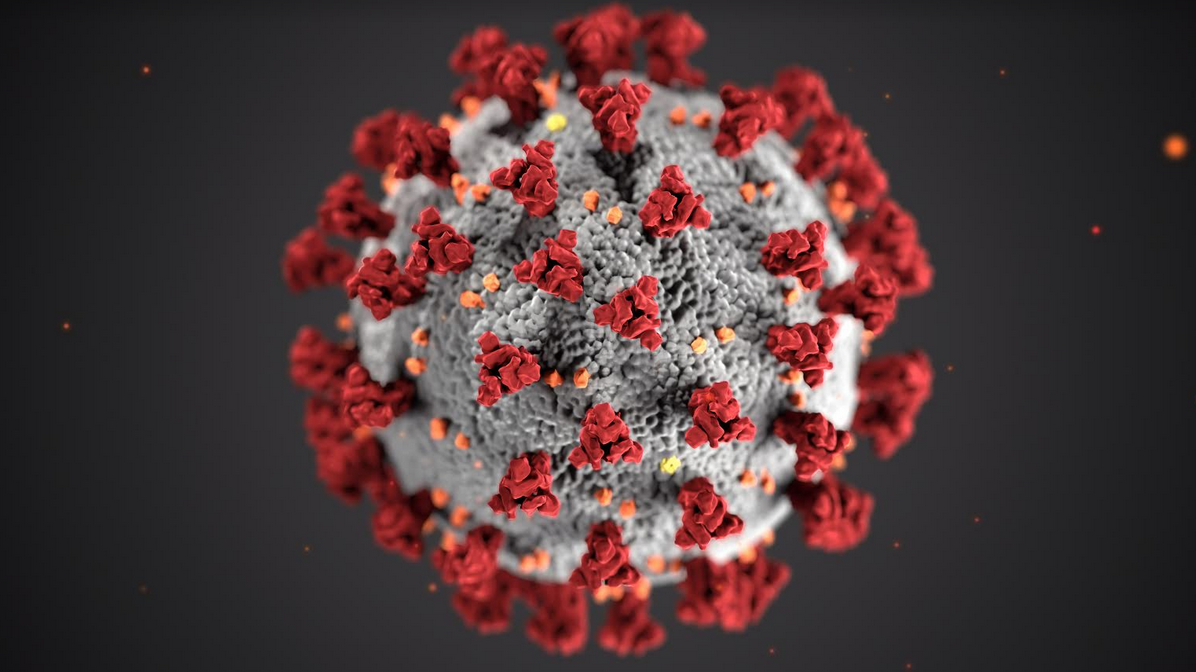
A digital image of the Coronavirus. CDC. Unsplash License.

The Brave Canines Sniffing to Fight COVID-19

May 14, 2020

Dogs have always been hailed for their loyalty to mankind. Of course, this is how they earned the title of man’s best friend. In the face of a worldwide pandemic, our canine friends have once again stepped up for us as researchers test to see if dogs can sniff out the Coronavirus. Not only have they been keeping us company while we self-quarantine and social distance, they could be the key to stopping the spread. A British charity,  Medical Detection Dogs, has teamed up with  Durham University and the London School of Hygiene and Tropical Medicine to train these special teams of canines.

What Makes These Dogs Special?

This trial is the only type of its kind currently being conducted. The charity has already been successful at training their dogs to smell out illnesses like malaria, cancer, and even Parkinson’s disease. Now they have taken up the task of training these dogs to find this new, novel virus. The hope in training these dogs is to create a simple, non-invasive testing procedure. While the dogs would not be relied upon entirely for their abilities to find the virus, they would be an invaluable attribute to helping stop the spread.  Professor James Logan, the LSHTM head of disease control, notes that dogs have already proven their capabilities to identify viruses by smell as seen by their success with malaria. He said the level to which they could detect that virus in particular is with  “accuracy above the World Health Organisation standards for a diagnostic". Proven capable, the team is preparing their dogs to save their human companions. 

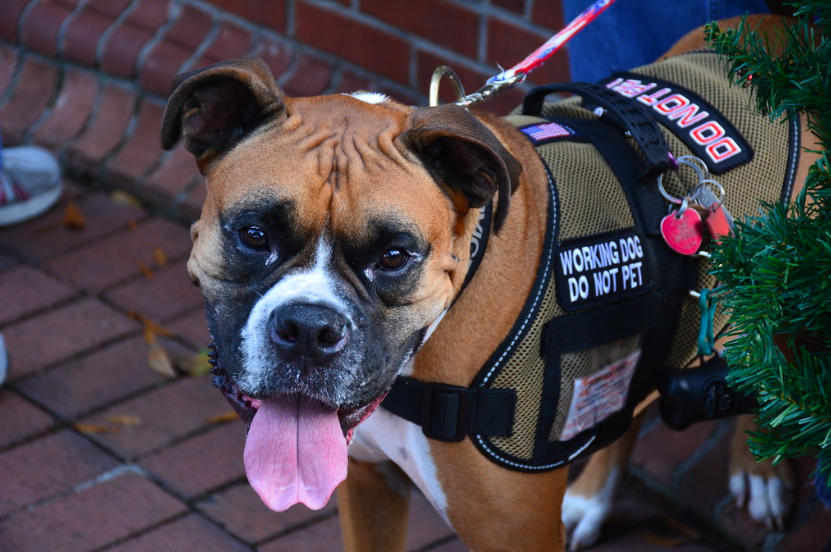
A service dog taking a break from a long day’s work. Sarah Brown. Unsplash License.

The Training

An eight week training process begins as soon as the dogs are vetted. Many of these dogs are even rescues! Researchers have begun the process with the dogs using masks and fabric samples worn by Coronavirus patients. In doing so, they are hoping that the virus itself has a unique smell the dogs can alert handlers to. While their research will take time, this could be a massive step in the identification of the virus. Not only is the training simple, but it enables researchers to train up to six dogs at a time.  Once they are trained, they can test up to 750 patients an hour, identifying the smell in merely seconds or less. These canines are a great tool of efficiency and safety. CEO of Medical Detection Dogs Claire Guest said, “When resources and testing kits are low, hundreds of people can't be tested in one go. But the dogs can screen up to 750 people really quickly. By identifying those who need to be tested and self-isolate, they can stop the spread.” These animals have the potential to combat Covid-19 in a way humans can’t, and if the trials are successful, it could change how Covid-19 is treated forever!

A service dog at work. My Photo Journey. CC BY 2.0

These canines could be incredibly beneficial to the rapid identification of Coronavirus. In the past, they have shown how capable their sniffers can be and medical researches are hoping to continue this. While many worry about the dogs themselves catching the virus, researchers feel confident they are not putting the animals at risk. As we still are not entirely sure the virus can spread from humans to animals and vice versa, this is something the researchers will certainly have to watch for. Updates on the project are still to come as trials are active, but things are looking optimistic. Dogs have always helped mankind, from hunting to therapy to official military service, and once again, we owe them our thanks for helping us make our world a little bit better.

Renee Richardson

is currently an English student at The University of Georgia. She lives in Ellijay, Georgia, a small mountain town in the middle of Appalachia. A passionate writer, she is inspired often by her hikes along the Appalachian trail and her efforts to fight for equality across all spectrums. She hopes to further her passion as a writer into a flourishing career that positively impacts others.

Tags COVID
Comment

"Flag of the Navajo Nation" by Himasaram

Native American Tribes Sue US Treasury Over Distribution of Stimulus Aid

May 13, 2020

Native American tribes are among the communities who have been suffering the most from the coronavirus, and receiving the least amount of aid. Native Americans are a high-risk population for COVID-19. According to Health Affairs—a peer-reviewed healthcare journal—heart disease, cancer, unintentional injuries, and diabetes are the leading causes of death among Native American populations, which means that life expectancy is 5.5 years less than the rest of the US population.

The coronavirus has highlighted the disparities that Native American communities face, even under “normal” circumstances. According to the American Bar Association, “health care for Native Americans lags behind other groups, despite a legal obligation on the part of the United States to provide health care to American Indians and Alaska Natives.”

In mid-March, the Seattle Indian Health Board reported that instead of receiving the medical supplies they asked for, they received a box of body bags. Though it was determined to be a mistake, the mix-up echoes the pressing lack of resources and funding that the Native American communities need. As the coronavirus continues to devastate vulnerable communities in the US, it is of the utmost importance that stimulus aid goes directly to individuals, not corporations.

The Navajo Nation, the second largest Native American tribe, now has the highest per-capita COVID-19 infection rate after New York and New Jersey. As of May 9, there were 2,973 confirmed cases and 98 confirmed deaths for the Navajo Nation, the largest Native American reservation with a population of 350,000 residents, and it continues to rise. On May 6, the Nation finally received their portion of the federal coronavirus stimulus aid, six weeks after it was promised to them, and only after the US Treasury Department was sued.

In April, a group of Native American tribal governments sued the US Treasury Department over unjust distribution of coronavirus stimulus aid. They sued the Treasury in order to prevent the agency from allowing for-profit Alaska Native Corporations (ANCs) to access the $8 billion allocated to Native American tribes from the $2.2 trillion emergency stimulus rescue package.

The ANCs were established after the passage of the Alaska Native Claims Settlement Act (ANCSA) in 1971—a law governing how Alaska Natives could manage their lands. According to Vox, the passage of the ANCSA was likely because the “ANCSA paved the way for oil and gas exploration, which some ANCs have gone on to profit from in the years since.”

The tribes argue that the aid should not include the for-profit Alaska Native Corporations, and should be distributed solely to the 574 federally recognized tribes. If the 237 ANCs were able to apply for the relief money, it would greatly reduce the amount the nation’s tribal people would receive because the Alaskan Native Corporations would disproportionately benefit. According to Politico, “it could also tilt much of the funding even further toward one state by giving some Alaska Natives the ability to seek aid as both villagers and shareholders of a corporation.”

On May 5, U.S. District Judge Amit Mehta gave the tribes a victory when he limited access of the relief aid to the Native American tribes, blocking the ANCs from getting money from the stimulus funds.

Asiya Haouchine

is an Algerian-American writer who graduated from the University of Connecticut in May 2016, earning a BA in journalism and English. She was an editorial intern and contributing writer for Warscapes magazine and the online/blog editor for Long River Review. She is currently studying for her Master’s in Library and Information Science. @AsiyaHaou

Tags COVID-19, coronavirus, Native Americans, tribe, US Treasury, stimulus aid, Navajo Nation, Alaska Natives, Vox, Global Health
Comment

UNESCO World Heritage Site In India Goes Digital

May 13, 2020

How experts of the Indian Digital Heritage Project went the 3D way to preserve sculptures at the UNESCO World Heritage Site

On a calm March evening, I virtually travel hundreds of kilometres from my home in Mangalore to a temple complex by the Tungabhadra river. Courtesy Google Art, Hampi, the pride of the Vijayanagara empire, comes alive through many frames, some of them panoramic. The project gives you an idea of the scale and scope of the temples: the Vitthala complex looms large as do the Stone Chariot, Bhim’s Gate and the Maha mantapa, among others.

Now, imagine if you could go on a digital walkthrough and see 3D recreations of the sculptures that were damaged, rotate them 360 degrees to appreciate their workmanship better, and understand why Hampi is special. If all goes as per plan, and if the Indian Digital Heritage Project is taken to its logical conclusion, this could well become a possibility in the near future.

A Department of Science and Technology (DST) initiative, the project that started in 2012 brought together researchers in the areas of technology and humanities for the digital preservation and interpretation of tangible and intangible heritage. The project concluded in 2016 and plans are now afoot to extend it to underwater structures.

Switch to 3D

In 2011, Professor AN Rajagopalan of IIT Madras visited Hampi, where more than 500 monuments dot 26-odd square kilometres. The Chennai resident was familiar with the reasonably well-maintained Pallava-era sculptures by the beach at Mamallapuram. He presumed Hampi would be similar, but was shocked to see the ruins. However, looking beyond the broken noses and smashed-in faces, Rajagopalan could imagine their former magnificence.

When the IIT Madras team he was a part of had to report on what was possible at the UNESCO World Heritage site, an idea struck him.

He wondered if the image inpainting technique (used to fill in missing information on a two-dimensional photograph or painting, based on the details around the damaged region) could be adapted to 3D, to reimagine the broken sculptures. That is how the digital arm of the project, inspired by Stanford University’s Digital Michelangelo Project and the Google Art project, took shape.

First steps

The team started off by taking extensive photographs and videos of the sculptures from various viewpoints. The hunt then began for similar works — those that could be reworked digitally using references from the other.

A 3D model was then built. The first sculpture they worked on was of a Narasimha in the Vitthala temple, whose shoulder was damaged. The original measured 1.5 ft by 2.5 ft on a pillar, and it was a recurring motif across the complex.

Printing a pillar

To create models for the walk-through, Rajagopalan printed — what looked like a mythical beast on a pillar (from the Kalyana Mandapa) — on a Polyjet 3D printer using a pale yellow and opaque material called Veroclear. It cost about ₹1,200 per cubic inch. “3D printing is very expensive. What we did was approximately a 1:1,000 scale of the pillar; something you could hold in your hand. While the model will not look like the original — it has the appearance of a candle — you can touch and feel the dips and mounds,” he says.

Group effort

Ensuring this project had the best minds working on it was Sharada Srinivasan of the National Institute of Advanced Studies, Bengaluru. As culture co-ordinator of the IDH Hampi Project, she worked with art historian S Settar and scientist S Ranganathan.

Speaking about why the project is special, she says, “We got together diverse groups from IITs, NGOs and the Crafts Council of Karnataka... It did not stop with the academic circle. A very interesting dialogue emerged and, at some point, we looked at digital renditions,” says Srinivasan, who has worked on South Indian bronzes. Also a dancer, she has choreographed and performed around the musical pillars at Hampi. She explains how as part of the project, groups worked on automatic detection of cracks, inscriptions, digital reconstructions, street mapping and digital 3D printing. “We can’t say this is the definitive attempt at conjectural reconstruction, but it is a major step towards it. This is one approach towards making heritage more accessible and inclusive,” says Srinivasan.

Even now, in its much-damaged state, the UNESCO World Heritage site continues to charm visitors. If things work out, the technology can be used to digitally revive similar structures elsewhere.

By Subha J Rao subha.rao@thehindu.co.in

THIS ARTICLE WAS ORIGINALLY PUBLISH ON THE HINDU

In India Tags COVID
Comment

Robots Are Playing Many Roles in The Coronavirus Crisis – And Offering Lessons For Future Disasters

May 7, 2020

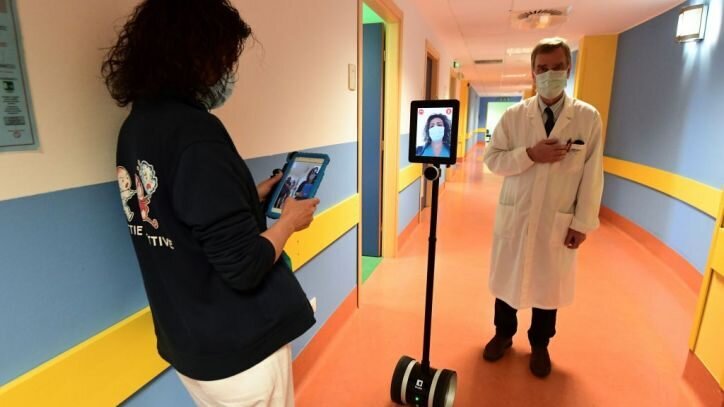
A cylindrical robot rolls into a treatment room to allow health care workers to remotely take temperatures and measure blood pressure and oxygen saturation from patients hooked up to a ventilator. Another robot that looks like a pair of large fluorescent lights rotated vertically travels throughout a hospital disinfecting with ultraviolet light. Meanwhile a cart-like robot brings food to people quarantined in a 16-story hotel. Outside, quadcopter drones ferry test samples to laboratories and watch for violations of stay-at-home restrictions.

These are just a few of the two dozen ways robots have been used during the COVID-19 pandemic, from health care in and out of hospitals, automation of testing, supporting public safety and public works, to continuing daily work and life.

The lessons they’re teaching for the future are the same lessons learned at previous disasters but quickly forgotten as interest and funding faded. The best robots for a disaster are the robots, like those in these examples, that already exist in the health care and public safety sectors.

Research laboratories and startups are creating new robots, including one designed to allow health care workers to remotely take blood samples and perform mouth swabs. These prototypes are unlikely to make a difference now. However, the robots under development could make a difference in future disasters if momentum for robotics research continues.

Robots around the world

As roboticists at Texas A&M University and the Center for Robot-Assisted Search and Rescue, we examined over 120 press and social media reports from China, the U.S. and 19 other countries about how robots are being used during the COVID-19 pandemic. We found that ground and aerial robots are playing a notable role in almost every aspect of managing the crisis.

R. Murphy, V. Gandudi, Texas A&M; J. Adams, Center for Robot-Assisted Search and Rescue, CC BY-ND

In hospitals, doctors and nurses, family members and even receptionists are using robots to interact in real time with patients from a safe distance. Specialized robots are disinfecting rooms and delivering meals or prescriptions, handling the hidden extra work associated with a surge in patients. Delivery robots are transporting infectious samples to laboratories for testing.

Outside of hospitals, public works and public safety departments are using robots to spray disinfectant throughout public spaces. Drones are providing thermal imagery to help identify infected citizens and enforce quarantines and social distancing restrictions. Robots are even rolling through crowds, broadcasting public service messages about the virus and social distancing.

At work and home, robots are assisting in surprising ways. Realtors are teleoperating robots to show properties from the safety of their own homes. Workers building a new hospital in China were able work through the night because drones carried lighting. In Japan, students used robots to walk the stage for graduation, and in Cyprus, a person used a drone to walk his dog without violating stay-at-home restrictions.

Helping workers, not replacing them

Every disaster is different, but the experience of using robots for the COVID-19 pandemic presents an opportunity to finally learn three lessons documented over the past 20 years. One important lesson is that during a disaster robots do not replace people. They either perform tasks that a person could not do or do safely, or take on tasks that free up responders to handle the increased workload.

The majority of robots being used in hospitals treating COVID-19 patients have not replaced health care professionals. These robots are teleoperated, enabling the health care workers to apply their expertise and compassion to sick and isolated patients remotely.

A robot uses pulses of ultraviolet light to disinfect a hospital room in Johannesburg, South Africa. MICHELE SPATARI/AFP via Getty Images

A small number of robots are autonomous, such as the popular UVD decontamination robots and meal and prescription carts. But the reports indicate that the robots are not displacing workers. Instead, the robots are helping the existing hospital staff cope with the surge in infectious patients. The decontamination robots disinfect better and faster than human cleaners, while the carts reduce the amount of time and personal protective equipment nurses and aides must spend on ancillary tasks.

Off-the-shelf over prototypes

The second lesson is the robots used during an emergency are usually already in common use before the disaster. Technologists often rush out well-intentioned prototypes, but during an emergency, responders – health care workers and search-and-rescue teams – are too busy and stressed to learn to use something new and unfamiliar. They typically can’t absorb the unanticipated tasks and procedures, like having to frequently reboot or change batteries, that usually accompany new technology.

Fortunately, responders adopt technologies that their peers have used extensively and shown to work. For example, decontamination robots were already in daily use at many locations for preventing hospital-acquired infections. Sometimes responders also adapt existing robots. For example, agricultural drones designed for spraying pesticides in open fields are being adapted for spraying disinfectants in crowded urban cityscapes in China and India.

Workers in Kunming City, Yunnan Province, China refill a drone with disinfectant. The city is using drones to spray disinfectant in some public areas. Xinhua News Agency/Yang Zongyou via Getty Images

A third lesson follows from the second. Repurposing existing robots is generally more effective than building specialized prototypes. Building a new, specialized robot for a task takes years. Imagine trying to build a new kind of automobile from scratch. Even if such a car could be quickly designed and manufactured, only a few cars would be produced at first and they would likely lack the reliability, ease of use and safety that comes from months or years of feedback from continuous use.

Alternatively, a faster and more scalable approach is to modify existing cars or trucks. This is how robots are being configured for COVID-19 applications. For example, responders began using the thermal cameras already on bomb squad robots and drones – common in most large cities – to detect infected citizens running a high fever. While the jury is still out on whether thermal imaging is effective, the point is that existing public safety robots were rapidly repurposed for public health.

Don’t stockpile robots

The broad use of robots for COVID-19 is a strong indication that the health care system needed more robots, just like it needed more of everyday items such as personal protective equipment and ventilators. But while storing caches of hospital supplies makes sense, storing a cache of specialized robots for use in a future emergency does not.

This was the strategy of the nuclear power industry, and it failed during the Fukushima Daiichi nuclear accident. The robots stored by the Japanese Atomic Energy Agency for an emergency were outdated, and the operators were rusty or no longer employed. Instead, the Tokyo Electric Power Company lost valuable time acquiring and deploying commercial off-the-shelf bomb squad robots, which were in routine use throughout the world. While the commercial robots were not perfect for dealing with a radiological emergency, they were good enough and cheap enough for dozens of robots to be used throughout the facility.

Robots in future pandemics

Hopefully, COVID-19 will accelerate the adoption of existing robots and their adaptation to new niches, but it might also lead to new robots. Laboratory and supply chain automation is emerging as an overlooked opportunity. Automating the slow COVID-19 test processing that relies on a small set of labs and specially trained workers would eliminate some of the delays currently being experienced in many parts of the U.S.

Automation is not particularly exciting, but just like the unglamorous disinfecting robots in use now, it is a valuable application. If government and industry have finally learned the lessons from previous disasters, more mundane robots will be ready to work side by side with the health care workers on the front lines when the next pandemic arrives.

Robin R. Murphy Raytheon Professor of Computer Science and Engineering; Vice-President Center for Robot-Assisted Search and Rescue (nfp), Texas A&M University

Justin Adams President of the Center for Robot-Assisted Search and Rescue/Research Fellow - The Center for Disaster Risk Policy, Florida State University

Vignesh Babu Manjunath Gandudi Graduate Teaching Assistant, Texas A&M University

THIS ARTICLE WAS ORIGINALLY PUBLISHED ON THE CONVERSATION

Tags COVID
Comment

Milan On Lockdown And Sending Messages During Quarantine

May 7, 2020

During this time where everything in our life is completely run within the parameters set by COVID19, the only way we might get the chance to see a city is to fly through it, like a bird. These Milanese filmmakers found a way to do just that. Check out this short documentary, shot by a drone flown through the neighborhoods of Milan, which gives us a chance to witness that life is still happening.

Tags COVID
Comment

Nests of Gold: All About Birds Nest Soup

May 7, 2020

“A visual journey following one of the world's most expensive foods. From its creation in the remote island caves of the Philippines, to its transformation into the legendary Cantonese dish of ‘Bird's Nest Soup’ at a 3 Michelin Star restaurant, this film examines this strange delicacy, and the different lives that are touched by it.”

Tags Filipino, Michelin Star, Cantonese, Birds Nest Soup, Philippines, CheckOut, Global Cuisine
Comment
← Newer Posts Older Posts →

Also check out...

Featured
Vietnam’s Floating Markets Are Disappearing
The Supernatural Role of Masks in Nigeria’s Yoruba Tribal Culture
Opening the World to Deaf Travelers with Lily Yu

Featured trips

Featured
Volunteer to Help Developing Business Communities in Jamaica
Offer NGO Support While Visiting Quito
Experience Life as a Mongolian Nomad

Sign up for the CATALYST newsletter

Sign up for our newsletter to get the scoop on international travel, global social impact insights, our latest podcast releases, and more from around the world, all delivered right to your inbox!

We respect your privacy.

Thank you!
Newsletter Sign Up | Advertise | Careers + Internships | Privacy Policy | Submissions | Contact Us

Copyright © 2025, MISSION MEDIA LLC. All rights reserved.