Syria’s Struggle: How 10-Day Span Air Raid Wiped Out Over 100 Civilians

On July 26, 2019, an air raid over Syria caused many casualties and sparked concern about why the violence was not being addressed by media outlets.

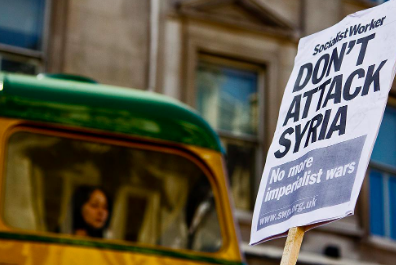
Protestor sign in London. chrisjohnbeckett. CC BY-NC-ND 2.0.

Many people have lost their lives in an air-bombing raid in Syria in the past few weeks. The raid killed 103 people in only 10 days. Michelle Bachelet, human rights advocate, blames the government for the mass bombings, condemning the “failure of leadership by the world’s most powerful nations”. Syria, as well as Syria's ally – Russia, have denied the attack on civilians, claiming they are not responsible for the violence.

UN specialist Michelle Bachelet, brought the UN’s attention to what was going on, stating that “These are civilian objects, and it seems highly unlikely, given the persistent pattern of such attacks, that they are all being hit by accident,” she added. “Intentional attacks against civilians are war crimes, and those who have ordered them or carried them out are criminally responsible for their actions.”

The air raids occurred over the Idlib regioni and in rural Aleppo region. Bachelet states, the areas “have experienced civilian casualties as a result of airstrikes in the past ten days alone, causing a minimum of 103 civilian deaths, including at least 26 children”. The reason Bachelet was so passionate about bringing the UN attention to the violence was because no one else was. The events happened over a 10 day span and in those ten days, little to no coverage was happening to address and possibly stop the violence. Bachelet states that she is “concerned that the continued carnage in Syria ‘is no longer on the international radar.’”

The air raids targeted a rebel-populated base, attacking “medical facilities, schools and other civilian infrastructure such as markets and bakeries”. These frequent and malicious attacks are too premeditated to be labeled as an “accident”, claims Bachelet. 

According to a statement made in the Daily Star, “The region under attack is home to some three million people, nearly half of them already displaced from other parts of the country. It covers nearly all of Idlib and parts of Aleppo, Hama, and Latakia provinces. The Idlib region is controlled by jihadist alliance Hayat Tahrir al-Sham, led by Al-Qaeda’s former Syria affiliate.” Still, because there was such a lack of response to the air raids, no one is taking responsibility. 

The office for the coordination of humanitarian affairs (OCHA) issued a statement claiming the air raids were seen as the “deadliest days” in the Idlib and Aleppo regions. 

Bachelet states, “This is a failure of leadership by the world’s most powerful nations, resulting in tragedy on such a vast scale that we no longer seem to be able to relate to it at all.”


OLIVIA HAMMOND is an undergraduate at Emerson College in Boston, Massachusetts. She studies Creative Writing, with minors in Sociology/Anthropology and Marketing. She has travelled to seven different countries, most recently studying abroad this past summer in the Netherlands. She has a passion for words, traveling, and learning in any form. 


Senior Welfare Benefits Universal Across Uganda

Uganda recently raised the age for welfare benefits to 80. At the same time, the government expanded the program to be universal across the country, thus both increasing and cutting the number of people who will receive benefits used for necessities.

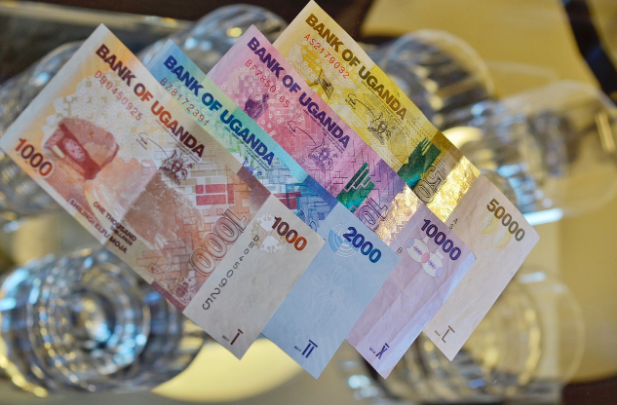
Uganda’s Senior Citizens grant gives 25,500 Ugandan shillings each month to those who are part of the program, which launched in 2010. Vjkombajn. CC0.

It is estimated that 8 million Ugandans (out of 37.7 million people) live below the poverty line. With a faltering tradition of family support, people are forced to continue working past the point when they should. Generally, they continue with trade or small-scale farming. Those who are ill or otherwise unable to work doubly suffer. 

In 2010, Uganda, together with the UK Department for International Development, Irish Aid and the United Nations Children’s Fund, began to create social pensions that assist those who have such precarious incomes. 

As of July, Uganda’s welfare Senior Citizens grant, part of their Social Assistance Grants for Empowerment (SAGE) program, has raised their age of entry to 80, which cuts people out between the ages of 65 and 79 who had previously been eligible. These people will have no access to monthly benefits as of the upcoming year. However, at the same time, they expanded the grant so it is universal in Uganda. For the first 100,000 people who joined, the age for eligibility was 65, which was lowered to 60 in Karamoja due to the lower life expectancy there. After that number was reached, the government rolled out the pension to another 40 districts. However, with those districts, it was available only to the 100 oldest in a village. Now, the pension is universal, though the entry age is 80. As of June, according to HelpAge, more than 160,000 people have been enrolled in the program. Due to making everyone eligible, roughly 365,000 Ugandans now have the opportunity to receive a pension. The exact number is unclear.

There is also the problem of earlier deaths, possibly increased by the enlarged population of those living below the poverty line. Julius Mukunda, co-ordinator of the Civil Society Budget Advocacy Group, believes that the government’s failure to care for the elderly is because of their prioritization of political projects, according to The East African. Inflation pressures have also lowered power levels for SAGE benefits.

The non-contributory pension gives each person 25,000 Ugandan shillings, which converts to $7 US, each month. People use it for food, school supplies, and other necessities. "[The pension] has been instrumental in my life. When I get the money, I become happy. I have used it to buy a goat for my family to rear. I use it to pay school fees and buy books for my children," said Longora, an older man in Napak, Uganda, according to HelpAge.

Households that receive the grants have had their poverty reduced by 19 percent while spending has gone up 33 percent. Households also use the pension to further increase their income, for example by buying livestock. Children who are part of these households have been found to have better education and are less likely to be involved in child labor.

Several other countries in Africa, such as Mauritius, Kenya and Zanzibar, have implemented a social welfare pension, while Mozambique is planning to create a social protection program. However, issues persist, such as mobility issues in getting to the pay point, missing records, and financial abuse.

If the people receiving these pensions continue to speak out about how they have helped themselves and their families, they can hold their governments to account for how services are used. This assertion helps to reduce long-term problems such as financial abuse and other errors. It is each government’s responsibility to make sure citizens are aware of social protection programs and that those services are accessible, inclusive, and efficient.


NOEMI ARELLANO-SUMMER is a journalist and writer living in Boston, MA. She is a voracious reader and has a fondness for history and art. She is currently at work on her first novel and wants to eventually take a trip across Europe.


A Crisis of Violence Pushes Honduran Women to the U.S. Border

For women facing rampant femicide and rape in Honduras, the risks of a treacherous trip across the border are minor compared to the dangers of remaining at home.

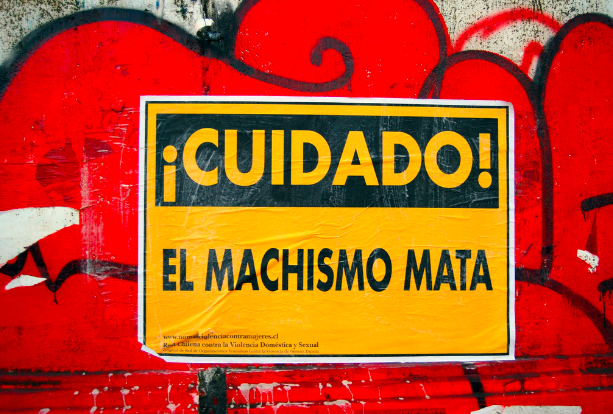
High rates of violence against women in Honduras has been attributed to a culture of machismo. Paul Lowry via Wikimedia Commons. CC BY-SA 2.0

Yo no quiero ser violada.


I do not want to be raped.

So read the signs plastered across walls and doors in the cities of Honduras. Simple black lettering is inscribed beneath a pair of thickly lashed eyes, with the eyebrows above turned downwards in an expression of anger—or, more accurately, indignation—at the dangerous injustices Honduran women face every day.

Honduras has been called the most dangerous place on Earth to be a woman, and with good reason: As of 2015, the Central American nation ranked alongside war-torn countries like Syria and Afghanistan for the highest rates of violent deaths among women. Although the overall murder rate of Honduras, which has long been wracked by drug- and gang-related violence, has declined in recent years, murder remains the second-leading cause of death for women of childbearing age.

In 2014, a high-profile “femicide”—the murder of a woman because she is a woman—rocked the nation and brought its murder rates into the international spotlight. Nineteen-year-old Miss Honduras winner Maria Jose Alvarado, just days from departing for London to compete for the title of Miss World, was brutally murdered and buried in a shallow grave in a riverbank. Authorities surmised that her sister’s boyfriend, 32-year-old Plutarco Ruiz, shot his girlfriend, Sofia Trinidad, before opening fire on Maria Jose as she attempted to flee. The ensuing investigation yielded the sisters’ bodies within a week, but their mother, Teresa Muñoz, believed it would not have happened at all if Maria Jose had not been famous: “Here in Honduras, women aren’t worth anything,” she told ABC News.

In 2013, the year before Maria Jose’s violent death, statistics showed that 636 women were murdered during the year, one every 13.8 hours. Most victims lived in urban areas, particularly San Pedro Sula and the Central District—in fact, 40 percent of all murders of women could be traced to those two areas. Nearly half of all women targeted annually were young, with the 20–24 age range being the most at risk. And murder is far from the only danger facing Honduran women. Rape, assault, and domestic violence are also rampant, and perpetrators enjoy near-total impunity: In 2014, the UN found that 95 percent of sexual violence and femicide cases were never investigated.

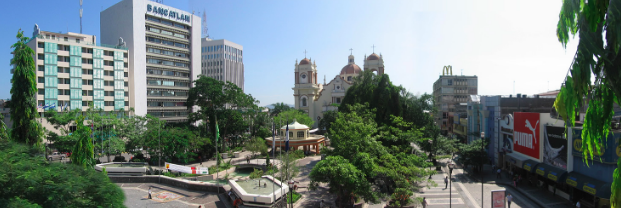
San Pedro Sula, a city with high rates of femicide. Gervaldez. CC BY-SA 4.0, CC BY-SA 3.0, CC BY-SA 2.5, CC BY-SA 2.0, CC BY-SA 1.0

Honduras’ shocking levels of violence against women can be traced in part to harmful attitudes bubbling below the surface. Suyapa Martínez, a local feminist and co-director of the Center for Women’s Studies—Honduras, points to “machismo,” a Spanish term describing a society built by men “who consider themselves to be the owners of women’s bodies.” In such a society, women have historically lacked political power: Only about half of Honduran women work outside the home, and when they do, they earn just half of what their male colleagues bring in.

Meanwhile, those ostensibly tasked with protecting all Honduran citizens—women included—have done little to mitigate the crisis. A 2015 report from the UN special rapporteur on violence against women concluded that the administration has paid “minimal attention” to gender empowerment and implemented only “ineffective measures” to address social reform. And in many cases, the government inflames the problem by limiting women’s options after sexual violence: Emergency contraception is completely banned, as is abortion, even in the case of rape, incest, or threat to the mother’s life. Women who seek abortion can receive a prison sentence of up to six years. These strict rules stem from the stranglehold of the Catholic and Evangelical churches, who have resisted even minor liberalizations to legislation—even after the UN joined with other human rights groups in 2017 to call for the allowance of abortion in cases of rape, incest, or possibility fatality. To make matters worse, the government is expected to decrease the penalty for violence against women later this year to between one and four years in prison.

Trapped in a repressive society and seeing little hope for a safer future, huge influxes of women and children have embarked on the treacherous journey to America’s southern border. In what the UN has called an “invisible refugee crisis,” women from the Northern Triangle—which includes Honduras, El Salvador, and Guatemala—have been fleeing in droves, with more than half listing violence as their reason for requesting entry to the United States. Lori Adams, director of the U.S.-based Immigration Intervention Project at Sanctuary for Families, told Politico, “Women are leaving with no other option but to flee north, even knowing that the journey itself might be life-threatening, but knowing it’s a near certainty that they will be killed if they remain.”

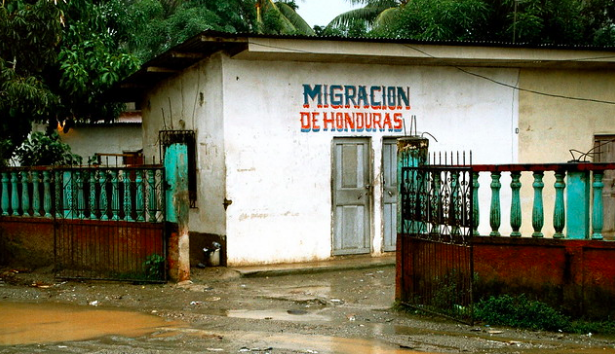
Migration office in Honduras. KriKri01. CC BY-NC-ND 2.0


Yet even if women survive the trek north, their hopes are often dashed when they reach the border. According to researchers at Syracuse University, the percentage of asylum applicants denied by U.S. immigration courts has been increasing since 2012, reaching 65 percent in 2018. That year, prospects for Hondurans were particularly grim, with judges granting just 21 percent of asylum cases. And as of mid-August, new policies from the Trump administration will privilege green-card applicants—immigrants aiming to become naturalized citizens—who are educated and monied while denying those who are considered likely to rely on government welfare programs. Given the financial dynamics of Latin America, the new rule will almost certainly affect Honduran women seeking safety in the United States. Dario Aguirre, a Denver-based immigration lawyer, told the New York Times that Trump’s policy gives officers carte blanche to deny green cards to many working-class immigrants from less developed countries, such as El Salvador, Guatemala and Honduras. Thus, another option is ripped from the hands of already desperate Honduran women—and until the U.S. government or Honduran officials enact substantive change, their eyes will stay wide open like the posters on the walls, watching keenly for danger.


TALYA PHELPS hails from the wilds of upstate New York, but dreams of exploring the globe. As former editor-in-chief at the student newspaper of her alma mater, Vassar College, and the daughter of a journalist, she hopes to follow her passion for writing and editing for many years to come. Contact her if you're looking for a spirited debate on the merits of the em dash vs. the hyphen.


President Duterte Calls to Revive the Death Penalty

The president of the Philippines, Rodrigo Duterte, requested to revive the death penalty a few days ago, solely for drug-related crimes.

HIgh level drug offenders could go from prison to the death penalty, if Filipino President Rodrigo Duterte’s call to revive it is sucessful. Jody Davis. CC0.

Filipino President Rodrigo Duterte asked Congress to revive the death penalty for drug-related crimes on July 22, during his State of the Nation Address (SONA).

Speaking before a joint session of Congress, he first brought up the revival as the first priority legislative measure in his fourth Address, according to Rappler. His party, PDP-Laban, currently has a supermajority in the House of Representatives. He mentioned the 5-month siege that evolved between the state and extremists after terrorists held onto drugs in Marawi in May 2017, citing it as a prime example as to why further action and harsher actions were and are necessary.

Duterte’s war on drugs has been ongoing since his candidacy in 2016. He has been calling for the reinstatement of the death penalty for the same length of time. He also requested capital punishment in his 2017 SONA.

Senator Ronald dela Rosa, a trusted aide to the president, won his senatorial election in 2019 on a single promise: to bring back the death penalty for drug-related crimes.

Duterte also effectively began a war on corruption in Filipino society. On July 19, three dozen of Duterte’s critics were charged with sedition and cyber libel after a series of anonymous videos that accuse the president and his family of having monetary links to the illegal drug trade, according to Newsweek

Amnesty International believes the call will only increase the country’s environment of exemption from punishment during the continuous war on drugs.

However, Senate President Vicente Sotto III believes that restricting the reinstatemnt of capital punishment to high-level offenders would be more likely to pass in the Senate. He also mentioned this bill would be among the first to be discussed. Two years ago, the House of Representatives passed a measure for the death penalty for crimes related to drugs.

“The state of our nation is a state of mourning. We should not be burying our children amid deadly and ill-conceived police raids,” said Butch Olano, Section Director for Amnesty International Philippines, according to Amnesty International.

There has been one conviction of police officers, for the killing of a 17-year-old boy. During a police operation in late June 2019, a three-year-old girl and a police officer were killed. The girl’s mother and the government both have different stories about the operation. Overall, so far the Philippine government has noted at least 6,000 killings at the hands of police officers. Amnesty International has found that there are many more unlawful killings, likely done by armed people with ties to the police.

Olano says that, despite being told to file cases before the courts if they feel there has been an unlawful death or that the police have acted illegally, many families are too afraid to speak up. There are also the problems of costs or being unable to secure evidence or the police reports.

The Office of the High Commissioner for Human Rights is meant to deliver a report in June 2020 on the state of human rights in the Philippines. President Duterte’s remarks didn’t commit to assisting with this report, which was requested last month in a resolution by the UN Human Rights Council, particularly since Duterte has been accused of human rights abuses. 

Duterte has been battling against drugs since before he was elected in 2016. Requesting the revival of the death penalty for drug-related crimes may be extreme, but it isn’t terribly unexpected from this president. If this request passes, Duterte’s war on society’s corruption will most likely increase, as he will have already have gained one victory. Amnesty International’s prediction also seems likely of coming true. However, if this request isn’t passed, it’ll be a blow to Duterte’s war on drugs. The war itself will continue, but this particular battle won’t. The human rights report will be written throughout this year and next, regardless of what happens with the death penalty. President Duterte is already under investigation, though the Philippines will become an even more dangerous place if the death penalty is passed in any form.


NOEMI ARELLANO-SUMMER is a journalist and writer living in Boston, MA. She is a voracious reader and has a fondness for history and art. She is currently at work on her first novel and wants to eventually take a trip across Europe.


Misfits Market: A Cheaper, More Sustainable Way to Buy Groceries

Quirky produce doesn’t have to be thrown out

Markets typically like to display “perfect” produce. Photo by Ja Ma.

Have you ever felt excited when you found a cute mini potato in your groceries? Or marveled at a cool way that carrots grew intertwined together? Produce with quirks can be fascinating, and not dangerous to eat. However, many supermarkets have become obsessed with finding the “perfect” produce—the picture-perfect produce that customers would want to buy. Therefore, the produce that don’t fit the bill will end up as waste. 

Misfits Market is a service that simultaneously helps the world and your wallet. They collect food from farmers that would normally go to waste, and package it to sell to their customers. The customers get their produce at a markdown of up to 50% compared to regular grocery stores, while the farmers are able to make extra money. So, customers save money, farmers make money, and both Misfits Market and their patrons are working to reduce the 3.3 billion tons of carbon dioxide that are generated annually because of food waste. 

Misfits Market makes life easier by delivering your groceries straight to your door. You can subscribe to the Mischief Box or a larger Madness Box, that can be delivered either once a week or every other week. Misfits Market delivers to a large number of states in the US, but it is growing quickly. The produce varies by season, and is always organic. 

Additionally, their packaging is entirely eco-friendly. The boxes are recyclable and compostable, and the insulation to protect the produce from the elements during delivery is also home-compostable. Misfits Market’s website gives directions for how to compost the insulation at home. 


Check out Misfits Market’s blog to see recipes to make with their produce.


ELIANA DOFT loves to write, travel, and volunteer. She is especially excited by opportunities to combine these three passions through writing about social action travel experiences. She is an avid reader, a licensed scuba diver, and a self-proclaimed cold brew connoisseur. 


The Threat to America that’s been Growing Inside America

While the Middle East and the border crisis get all the attention, Charlottesville and El Paso remind us that America’s worst threat is right here at home.

White supremacists gathered for the Unite the Right rally in Charlottesville, Virginia. By Anthony Crider. CC by 2.0.

August 12th 2017, fresh out of my first year at the University of Virginia, I sat in front of my TV horrified, watching white supremacists marching through a place I had recently starting calling home. Headlines on every major paper ran with Trump’s quote regarding “fine people on both sides.”

When classes started in the fall, my peers and I returned to Charlottesville deeply unsettled by what had happened on our grounds. Our community was rocked to its core. However, the rest of the world quickly moved on without us.

 The past two years, this weekend has marked a time for remembrance, but also caution and fear in Charlottesville. The dates, August 11th and 12th, have become something of the towns very on 9/11, and the police presence during these two days isn’t easy to ignore. The events that took place to years ago are on our minds, however, not on the mind of the nation.  

The march on Charlottesville was the last time I saw white supremacy dominate all the major headlines, that is, until this weekend’s mass shooting in El Paso. We, as a nation, let ourselves become distracted and forgetful of a real problem that’s been growing in the heart of our country. We can point to how the nation has so eagerly embraced the narrative of the “dangerous outsider” to explain why.  

 A decade ago, the Department of Homeland Security released a report on the growing threat of right wing extremism, correctly predicting “the potential emergence of terrorist groups or lone wolf extremists capable of carrying out violent attacks.” However, this warning was not given serious merit by the Trump administration. President Trump’s transition team made it clear to the DHS that it wanted to focus on Islamic terrorism and reorient programs meant to counter violent extremism to exclusively target international threats like al-Qaeda and ISIL. These Islamic terrorist groups have stayed in the headlines, despite the fact they no longer pose a serious domestic threat. It should come as no surprise that this June the FBI reported a significant rise in white supremacist domestic terrorism in recent months.

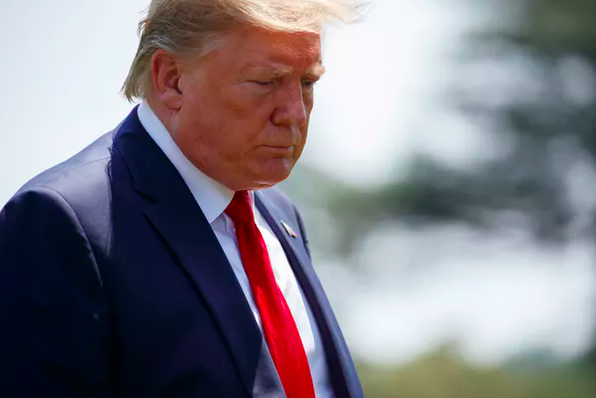
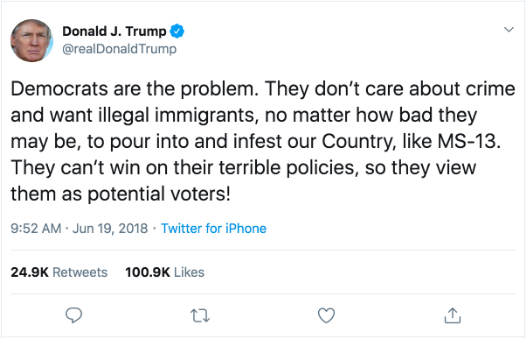
 President Trump’s rhetoric has also turned American’s attention away from the alt-right matter at hand, and turned our attention to what he would call an “infestation.” Searching through theTrump Twitter Archive, I failed to find one mention of domestic terrorism, white nationalists or the growing menace they pose to our country. After all, why shouldn’t Trump protect his loyal voter base? It’s no secret that white nationalists are Trump supporters; alt right leaders have even been spotted at his rallies.

President Trump says immigrants “infest” our country. Via Twitter. June 19, 2018.

The president has protected these terrorists by turning the national discussion elsewhere -the southern border. As a result, liberals have kept themselves busy investigating the disgusting conditions of border control centers and “children in cages,” while conservatives call for further border restrictions. These leaves no one time for anyone to wage war against the real domestic threat --white supremacy. 

Trump denounced “racist hate” Monday after the shooting this weekend. He blamed violent video games, mental health and, ironically, internet bigotry from prompting the Dayton and El Paso attacks. He failed to make mention of any real action that might be taken against white supremacist terrorism, let alone endorse gun law reform. 

 Had the attackers been Black, Hispanic or Middle Eastern, the White House would surely be taking extreme action. However, just like during the aftermath of Charlottesville, nothing serious is being done to combat alt-right violence. 

 Now,in light of the two year anniversary, I can’t help but wonder if our country truly took notice of the event that shook our little community two years ago. I still pass by the street where Heather Heyer was killed by a domestic terrorist who drove his car into a crowd of people two years ago. The street, now named Heather Heyer Way, remains adorned with chalk writing, flowers and crosses dedicated to her memory. How many more memorials must we lay in El Paso, and the rest of the world, before we address the white supremacist threat?  


EMILY DHUE is a third year student at the University of Virginia majoring in media. She is currently studying abroad in Valencia, Spain. She's passionate about writing that makes an impact, and storytelling through digital platforms.


In Romania, 500 Days of Silence Mark Movement Against Corruption

For citizens of tiny Sibiu, Romania, “watchful eyes” nestled in the city’s roofs have become a symbol of ongoing protest.

Houses with eyes in Sibiu. lucianf. CC BY 2.0

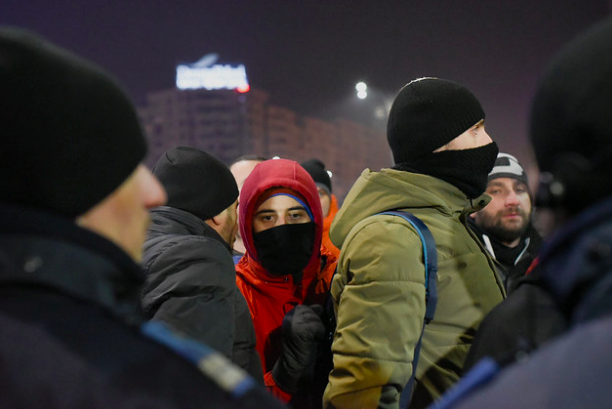
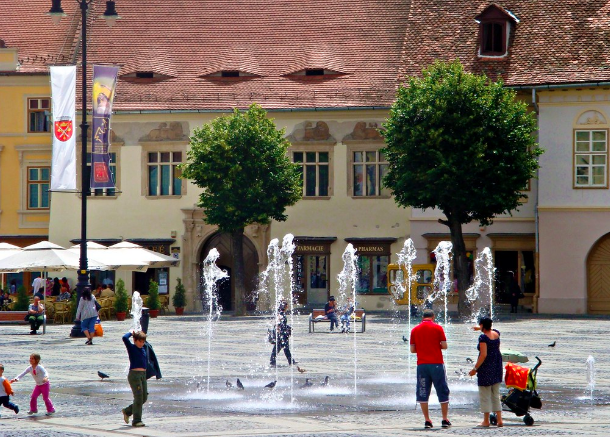
Each day at noon, in the picturesque little city of Sibiu, the red-shingled roofs and the protestors silently assembled in the streets send the same message to the corrupt government of Romania: We are watching you.

Visitors to Sibiu take note of the standard Central European attributes: the quaint, historic architecture, punctuated by the Gothic Lutheran cathedral, whose steeple looms high into the sky; the houses clinging to the bank of the river Cibin, which winds lazily down from the main waterway of Olt. But they are likely to do a double-take upon noticing the ever-watchful Sibiu eyes—narrow windows rising up from the city’s roofs, giving the impression of a perpetual half-lidded gaze. Originally designed to ventilate attics where meat, cheese, and grain were stored while keeping the harsh sunlight out, the eyes have become a potent symbol of Romania’s anti-corruption movement—specifically, a grassroots organization called V Vedem din Sibiu, or “we are watching you from Sibiu.”

V Vedem din Sibiu came about in December 2017, when the government moved to shift judiciary statutes in a way that was widely regarded as tightening state control over judges and undermining the National Anticorruption Directorate. The attempt further inflamed tensions ignited at the beginning of the year, when the ruling Social Democrat party (PSD) decriminalized a range of corruption offenses, triggering Romania’s most sizable street protest since the fall of communism in 1989. The emergency ordinance—which, among other stipulations, dropped charges of official misconduct in cases where the financial damage did not exceed 200,000 lei ($47,000)—passed at 10 p.m. local time; by midnight, more than 10,000 infuriated citizens had taken to the streets in the capital of Bucharest, and around 10,000 in other cities across Romania.

Anti-corruption protesters in Bucharest. Paul Arne Wagner. CC BY-NC-ND 2.0

Corruption is considered a serious problem in Romania, and the country’s fragile political state is exacerbated by its status as one of the European Union’s newest and poorest members, leaving citizens concerned for their rights and constantly at the ready to mount a protest. In the years and months since the events of 2017, Romania has seen ongoing organizing against corruption and in support of judicial independence, and the government has endured criticism from the European Commission, the U.S. state department, and the centrist president and National Liberal Party leader, Klaus Iohannis, who has made strong calls for governmental transparency. In January 2018, approximately 50,000 Romanians marched towards parliament in Bucharest, waving flags, contending with riot police, and raising raucous chants of “Thieves!” And in August of that year, up to 100,000 members of the Romanian diaspora descended on Bucharest to protest the PSD—an event that took a violent turn when police deterred marchers with tear gas and water cannons.

Anti-corruption protesters in Bucharest. Paul Arne Wagner. CC BY 2.0

Relative to the chaotic, overwhelming tableau of the ongoing demonstrations in Bucharest, the soundless walkouts occurring daily in Sibiu present a stark contrast. This July, the Sibiu protesters commemorated their 500th day gathering in the city center, sacrificing their lunch breaks or school recesses to stand in silence outside the headquarters of the PSD. “Those 15 minutes every day, it is like a flame that never goes out,” said Ciprian Ciocan, one of the founders of V Vedem din Sibiu, in an interview with The Guardian. “Somebody knows that there are still people in Sibiu, no matter whether it rains or snows or whatever.”

Ciocan posts live videos of the protests on V Vedem din Sibiu’s Facebook page, where they reach more than 20,000 followers. During the events of December 2017, allies from around the world sent in more than 68 versions of the Sibiu eyes—scrawled on walls and scraps of paper, carved into sand at the seashore, inscribed with branches laid on fresh snow, from Berlin to Chicago to Kuala Lumpur. Though the initial tide of eyes has slowed, the page continues to share media coverage of the protests along with its regularly scheduled live videos. The “about” section defines the sit-in as a form of protest, stating, “We are protecting the values and principles in which we strongly believe, the state of law and the independence of Justice.”

Sibiu. Camelia TWU. CC BY-NC-ND 2.0

In May of this year, under pressure from the EU and overwhelming dissent from Romanian voters, the PSD abandoned some of its most controversial measures. Even more devastating for the party was their loss of seats in European Parliament elections and the departure of the PSD leader, Liviu Dragnea, who was jailed on May 27 and is expected to serve a three-and-a-half-year sentence for corruption.

Despite small steps in the right direction, however, citizens remain on high alert. “There are many other dangers,” Bianca Toma of the Romanian Centre for European Policies told The Guardian. “There are still things to be undone and it’s a matter of fact, not just [making] statements.” And in Sibiu, the ongoing protests have had little impact on the PSD, whose workers drew the blinds when sit-ins began and issued a statement accusing the activists of “aggressive” behavior. Still, like clockwork, citizens will keep turning out in the streets, and the watchful eyes will keep gazing from Sibiu’s rooftops, waiting for a day when Romanians at home and abroad can live without fear of corruption.


TALYA PHELPS hails from the wilds of upstate New York, but dreams of exploring the globe. As former editor-in-chief at the student newspaper of her alma mater, Vassar College, and the daughter of a journalist, she hopes to follow her passion for writing and editing for many years to come. Contact her if you're looking for a spirited debate on the merits of the em dash vs. the hyphen.


Dynamic Duo: How a Lawyer Couple is Paving the Road for LGBTQ+ Rights in India

Section 377 under the India Penal Code hungover LGBTQ+ lives for years, criminalizing their very existence to exist. Lawyers Menaka Guruswamy and Arundhati Katju fought to change that—and won. 

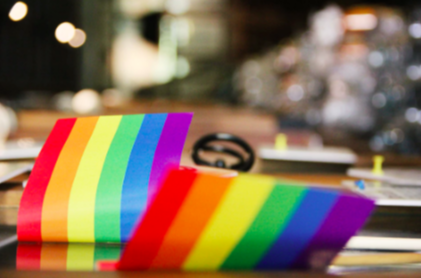
Pride flag in New Delhi, India. Nishta Sharma. Unsplash.

Since 1861, when India was under British colonial rule, there was a section of the India Penal Code that crimilized homosexualtiy as it was “against the order of nature”. In 2013, protestors fought for the code to be recognized as unconstitutional in the eyes of the law, but in a historic case titled Suresh Kumar Koushal vs. Naz Foundation, the Bench stated “We hold that Section 377 does not suffer from… unconstitutionality and the declaration made by the Division Bench of the High Court is legally unsustainable.” Although they would not mark it unconstitutional, the Bench also stated, “Notwithstanding this verdict, the competent legislature shall be free to consider the desirability and propriety of deleting Section 377 from the statute book or amend it as per the suggestion made by Attorney-General G.E. Vahanvati.” To put in more simple terms, the Bench wanted to redirect who made the decision, and stated the matter should be decided by Parliament, itself, not just the judiciary. 

In 2016, the case was revisited by three Court members and they decided to pass it on to a five-member court decision. It was not until a year later when the LGTBQ+ community of India saw results. In 2017, in the Puttuswamy case, the Court ruled that “The right to privacy is implicit in the right to life and liberty guaranteed to the citizens of this country by Article 21” - a historic decision which overruled a previous case that said there is no right to privacy in India. The Court also found that “sexual orientation is an essential attribute of privacy. Discrimination against an individual on the basis of sexual orientation is deeply offensive to the dignity and self-worth of the individual. Equality demands that the sexual orientation of each individual in society must be protected on an even platform. The right to privacy and the protection of sexual orientation lie at the core of the fundamental rights guaranteed by Articles 14, 15 and 21 of the Constitution.” Essentially, they condemned discrimintion and give validity to the rights of the LGTBQ+ community. 

It wasn’t until September 2018, though, when the Court ruled “in so far as it criminalises consensual sexual conduct between adults of the same sex” in the Navtej Singh Johar v. Union of India  case. According to an article in the Guardian, chief justice Dipak Misra stated that “Criminalising carnal intercourse under section 377 Indian penal code is irrational, indefensible and manifestly arbitrary”. Misra goes on to say “Social exclusion, identity seclusion and isolation from the social mainstream are still the stark realities faced by individuals today, and it is only when each and every individual is liberated from the shackles of such bondage … that we can call ourselves a truly free society.” 

 Now, a year later, two lawyers who worked on dismantling Section 377 came out as a couple. In an interview with CNN’s Fareed Zakaria, Menaka Guruswamy and Arundhati Katju announced that they were a couple. Ms. Guruswamy stated that they fought so hard because "That was when [they] decided that [they] would never let the LGBT Indians be invisible in any courtroom". 

The couple’s decision to come out was met with raved support, one user on Twitter congratulated them and added, “Personal is indeed political”. Which is true - queer people anywhere are responsible for queer people everywhere because to fight for the rights the community deserves, the community must do it as a unit, rather than individually.

Menaka Guruswamy and Arundhati Katju’s accomplishments are not limited by the strides they have made with Section 377, but also with the visibility they have given to the LGBTQ+ community - in India and across the world. They represent the strength and power the LBGTQ+ community has when they preserve despite the setbacks.


OLIVIA HAMMOND is an undergraduate at Emerson College in Boston, Massachusetts. She studies Creative Writing, with minors in Sociology/Anthropology and Marketing. She has travelled to seven different countries, most recently studying abroad this past summer in the Netherlands. She has a passion for words, traveling, and learning in any form.


In Turkey, Academia Reckons with Ongoing Effects of Brain Drain

Following a post-coup crackdown by President Erdoğan, the Turkish intelligentsia is under continuous siege.

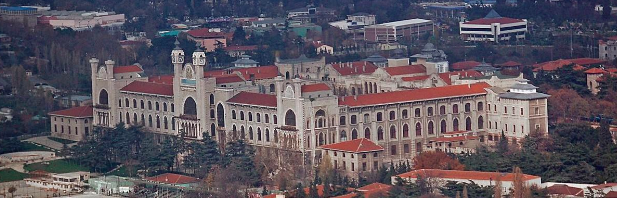
Faculty of Political Sciences, Ankara University. Fæ via Wikimedia Commons; originally by SALT Research via Flickr.

For some professors, the change occurred overnight, and with no warning: One day, they reported to work as usual, taught their classes, and returned home safe and secure. The next, they were met outside the gates of their university by swathes of security guards threatening them with tear gas, who informed them that their careers had been terminated, effective immediately. Such sudden and shocking occurrences reflected the overall timbre of 2017 for Turkish academics—hundreds of whom found themselves purged from their jobs in what they described as an officially sanctioned “intellectual massacre.”

The purge was precipitated by the failed coup of July 2016, which resulted in more than 260 fatalities and spurred President Recep Tayyip Erdoğan to declare a three-month state of emergency. During that state of emergency and in the ensuing months, hundreds of academics from more than 20 universities lost their jobs without notice—the result of drastic action by the ruling Justice and Development Party (AKP), which chose to detain, arrest, and fire thousands of public-sector workers in various different fields rather than pressing charges on those responsible for the coup attempt.

According to Erdoğan, the responsible party was Fethullah Gulen, an exiled cleric and former ally who the authorities claim infiltrated supporters into professions all over Turkey as part of a large-scale takeover scheme. Gulen denies having any part in the plan, and many purged academics said they had nothing to do with Gulen’s movement and were unsure how they ended up on the official hit list. Turkey’s Official Gazette describes the banned academics as having “suspected links to terrorist organizations and structures presenting a threat to national security,” but those accused hold a contrasting view: “It is a project to silence all dissident voices within the academy,” Murat Sevinc, who was fired from Ankara University’s Political Science faculty, told Reuters. “The government has seen you can silence 100 academics by firing only one.”

One commonality among many of the academics was their membership in a movement called Academics for Peace, or “Barış için Akademi syenler.” Of the 330 fired in October 2017, 115 had signed an Academics for Peace petition titled “We shall not be a party of crime,” which took a stand against violence in the mainly Kurdish provinces of Turkey. The signatories immediately faced demonization in the pro-government media and condemnation by Erdoğan.

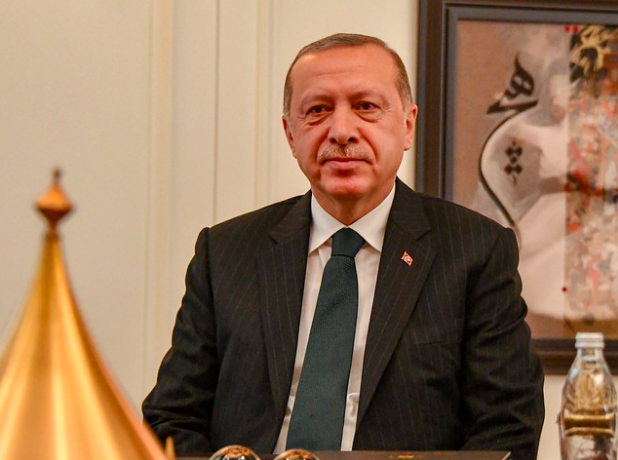
President Recep Tayyip Erdoğan. U.S. Department of State.

As of March 2017, the total count of purged academics was above 7,300. Those affected were not only deprived of their jobs but also banned from taking other jobs in any public or private institutions, robbed of retirement rights, and even suspended from traveling. Certain universities and departments were particularly hard-hit—for example, the Faculty of Political Sciences at Ankara University, Turkey’s oldest collegiate institution and one comparable in prestige and rigor to France’s Sciences Po. The departments of journalism at Ankara and at Istanbul’s University of Marmara were also decimated. Emre Tansu Keten, a casualty of the purge at Marmara, told Vocal Europe, “I am simply proud to be in the same list along with my senior colleagues who are thrown out because of the opinion they expressed.” Students, though not the primary victims of the situation, were nevertheless left reeling with the realization that their universities were mere shadows of the places at which they had enrolled.

The purges of 2017 were hardly the first shockwave to ripple through Turkey’s academic sector in recent years. In the past few decades, Turkish academic life has frequently been tumultuous, with intellectuals embroiled in military takeovers, secular/religious tensions, and leftist/nationalist battles. Following the start of European Union accession talks in 2004, however, fresh influxes of funding allowed Turkish institutions to construct modern research labs, encouraging students to study in Turkey rather than in the United States or elsewhere in Europe.

That progress, some academics suggest, is now in jeopardy. Following the coup attempt and subsequent crackdown, the trend of intellectuals returning in Turkey took a sharp U-turn, with liberals, secularists, and the intelligentsia fleeing the encroachment of religious nationalism. Between the signing of the Academics for Peace petition in 2016 and the end of 2017, nearly 700 Turkish academics applied to the New York–based organization Scholars at Risk to be relocated to a safer position. Historically, many such applications have been successful: In the five years preceding 2017, approximately 17,000 Turkish nationals came to Britain, 7,000 to Germany, and 5,000 to France.

For academics remaining in Turkey, opportunities for rebuilding their careers are slim, and rewards for their work few and far between. In 2018, the more than 2,000 individuals who make up Academics for Peace finally received recognition in the form of the Courage to Think Defender Award from Scholars at Risk, which applauded the group for their “extraordinary efforts in building academic solidarity and in promoting the principles of academic freedom, freedom of inquiry, and the peaceful exchange of ideas.” Scholars at Risk went on to acknowledge the tenuous state of academic affairs in Turkey, writing, “The nomination is a specific recognition of Academics for Peace’s solidarity work, and at the same time a general recognition of the current pressures on all scholars, students and higher education institutions in and from Turkey.”

Haydarpaşa campus of Marmara University. Fikricoban. CC BY-SA 3.0

On the ground, academics across the country continue to participate in protests, boycotts, and sit-ins at various universities, while a donation fund supports victims of the purge. As of early 2017, Ankara’s “Street Academy” hosted public lectures on Sundays, extending a special invitation to workers and oppressed communities. Funda Şenol Cantek, one of the throngs of fired academics, expressed her defiance to The Advocate: “the government should worry more now that they expand academia to the streets.” Similarly, Sevilay Celenk said of the occasional lectures she holds in public parks, “We took these dismissals as an opportunity to push the limits and bring university together with the streets.”

In June 2019, the body politic of Turkey elected an opposition candidate as mayor of Istanbul, interrupting two decades of control by the AKP. Nevertheless, reported the New York Times, “something about this era under Erdogan has still felt different, more lasting, as if the continuing existence of the A.K.P.’s repressive policies will permanently impair otherwise resilient, historic institutions.” That feeling doubtless stems in part from the uncertain futures facing vast swathes of Turkey’s once-resilient academic sector: As of spring 2019, the legal proceedings concerning 501 members of Academics for Peace remain ongoing. And at the universities, absence is keenly felt. Inside Ankara’s Faculty of Political Science—known as the Mulkiye—walls once plastered with leftist posters are now smattered with a sparse assortment of Turkish flags, the Times described. Certain subjects, such as Foucault and queer theory, have been wiped from the schedule. Master’s and doctoral courses have been canceled, and at the once-lively film society, the showing of films has been banned altogether. Thus, the effects of the purge linger on: in the hallowed halls of universities, in the leafy parks and city streets, and in the hearts and minds of Turkish learners and teachers around the world.

TALYA PHELPS hails from the wilds of upstate New York, but dreams of exploring the globe. As former editor-in-chief at the student newspaper of her alma mater, Vassar College, and the daughter of a journalist, she hopes to follow her passion for writing and editing for many years to come. Contact her if you're looking for a spirited debate on the merits of the em dash vs. the hyphen.