Dr. Sanduk Ruit is an ophthalmologist on a mission to restore sight to Nepal’s blind. He is the executive director of the nonprofit Tilganga Institute of Ophthalmology in Kathmandu, Nepal, and has operated on more than 130,000 patients. He has adopted innovative surgical techniques for cataracts and often travels to perform operations, walking up to seven days hauling surgical equipment to reach patients who live in Nepal’s most remote villages. Why does Dr. Ruit do this? He lost family to treatable diseases and knows what it’s like not to have access to healthcare.

Single-use plastics like straws can harm the environment. Photo by Marco Verch C.C. 2.0.
Why Stores and Restaurants are Ditching Plastic Straws
You may have noticed that the beverages you’ve been ordering at your favorite coffee shop or restaurant have not been accompanied by plastic straws. Chains as big as Starbucks and establishments as small as neighborhood cafes have been finding creative substitutes to plastic straws, or are just getting rid of them altogether.
What’s so bad about straws?
Straws are just one example of wasteful single-use plastic. Hundreds of millions of tons of plastic are produced each year, and a large portion of that plastic ends up in the ocean. It seems like plastic straws is an interesting place to start in the crusade against single-use plastics. However, for an able-bodied person, avoiding plastic straws is an easy way to start reducing plastic use.
How are things changing?
Some restaurants have tried to be more conscious about their straw usage by not automatically putting a plastic straw into each beverage. Some establishments will wait for their customers to ask for a straw instead of serving it to them.
Other establishments—like Starbucks—have developed a new plastic lid that looks like a sippy-cup so that customers can sip their drinks without needing a straw. However, cups like these are difficult for those who aren’t able to pick up their drinks and bring them to their mouths. A straw is literally the only way for some people to drink on their own.
Therefore, better solutions may be composter-approved paper straws, like Aardvark straws, or reusable glass or metal straws.
While finding alternatives to plastic straws can make a substantial impact, it should just be the beginning of a global campaign to reduce single use plastics. Hopefully, there will be future campaigns to reduce plastic bottles, plastic cutlery, or single-use containers.
ELIANA DOFT loves to write, travel, and volunteer. She is especially excited by opportunities to combine these three passions through writing about social action travel experiences. She is an avid reader, a licensed scuba diver, and a self-proclaimed cold brew connoisseur.

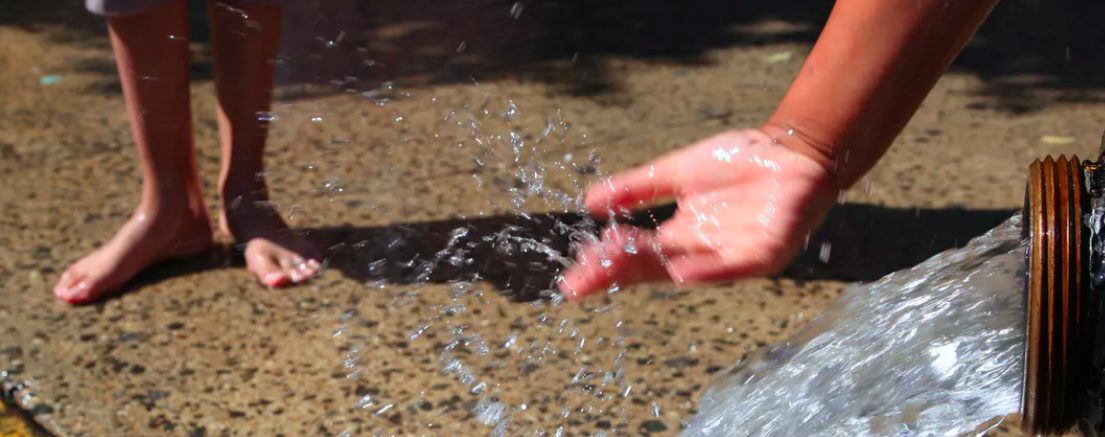
Keeping cool in Brooklyn. A. Katz/Shutterstock
Adapting Cities to a Hotter World: 3 Essential Reads
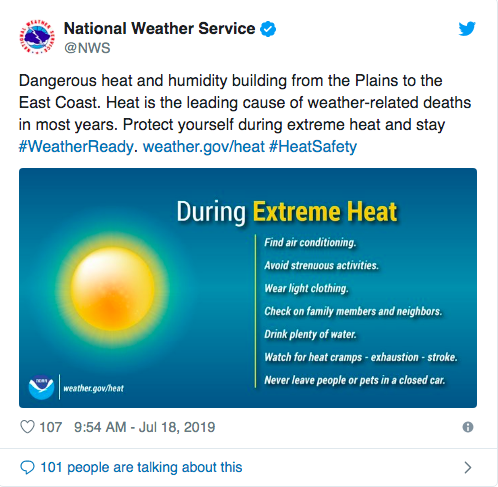
Heat waves can be deadly, especially when they combine high temperatures with elevated humidity levels that make the air feel even hotter. The impacts can be especially strong in cities, which often are several degrees warmer than nearby rural areas due to the urban heat island effect. These three articles from The Conversation’s archives describe steps that communities can take to adapt as climate change makes heat waves more frequent and intense.
1. Offer many cooling options
Emergency cooling centers are one way to mitigate the effects of heat waves, but cities need to do more. Nick Rajkovich, assistant professor of architecture at the University at Buffalo, has worked with planners around Cleveland to understand how they prepare for hot weather. Strategies there include planting more trees and shrubs, which provide shade and cool the air; weatherizing buildings with window shades and light-colored, reflective materials; and preparing emergency kits for power outages that include food, water and radios.
Most importantly, in Rajkovich’s view, different agencies and organizations need to talk to each other and plan together so they can take complementary steps.
“In Cleveland, preparing for extreme heat events has brought professionals together and encouraged overlapping approaches because no single strategy is foolproof,” he observes. Officials “should pursue multiple solutions rather than looking for one ‘best’ option.”
2. Focus upgrades on vulnerable neighborhoods
Many types of green infrastructure can help neighborhoods withstand the impacts of severe weather. For example, permeable paving and rainwater harvesting are two tools for managing flooding and reducing stormwater runoff.
Notre Dame University climate scientist Ashish Sharma has researched use of green roofs, covered with drought-resistant plants, to cool hot urban areas. In a study in Chicago, Sharma and his team determined that low-income neighborhoods on the city’s south and west sides would benefit most from installing green roofs because doing so would make them less vulnerable during blackouts:
“When temperatures spike in cities, electricity use rises sharply making it hard for utilities susceptible to power outages. When the lights go out, critical services such as drinking water, transportation and health care can be jeopardized. And poorer people, whose neighborhoods tend to be the hottest, can be the most at risk.”
By lowering rooftop surface temperatures, green roofs keep buildings cooler. This would enable residents to reduce their use of air conditioning, saving them money and easing strain on the local power grid during peak demand periods.
3. Design streets for a changing climate
Most U.S. city streets are designed with a focus on the needs of drivers, and sometimes far in second place, pedestrians. But Anne Lusk, a research scientist at the Harvard T.H. Chan School of Public Health, calls for “designing green streets for bicyclists, pedestrians, bus riders and residents who live on transit routes, as well as for drivers.”
Trees and cycle tracks would be central features of these streets, configured in ways that make pedestrians and cyclists feel safe from automobile traffic. The trees would serve as barriers while cooling neighborhoods and absorbing air pollutants. And well-designed bike paths would remove cars from the road, reducing air pollution and greenhouse gas emissions.
In surveys, respondents told Lusk that designs with trees and bushes between cycle tracks and the street best blocked their view of traffic, lessened their feeling of being exposed to pollution and made them feel cooler. Lusk also spotlights ways to offset climate-related stresses on trees, such as redesigning street drainage systems to direct water to trees’ roots.
JENNIFER WEEKS is a Environment + Energy Editor at The Conversation.
THIS ARTICLE WAS ORIGINALLY PUBLISHED ON THE CONVERSATION
5 Ethical Clothing Brands to Enhance Your Wardrobe
Green Garb for any Occasion
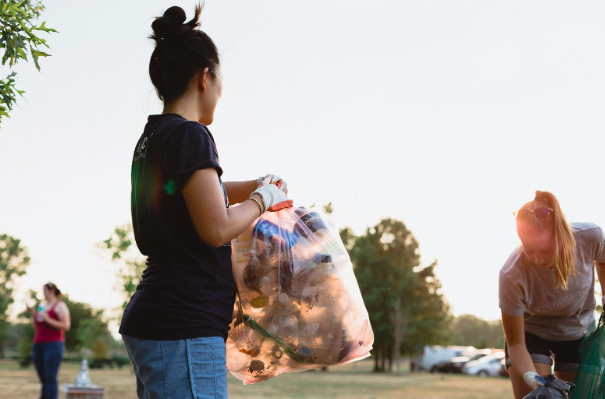
Collecting trash at one of United by Blue’s organized clean ups. Photo provided by United by Blue.
When we think about consumer ethics, our minds don’t normally turn to clothing. We think about reducing plasticware, consuming less red meat, or maybe purchasing an electric car or a bike. However, the production of clothing can involve unfair pay, a lot of waste, and consumption of energy. If you’re looking to add to your wardrobe, try buying your clothes from one of these brands:

United by Blue’s Albright Rain Shell. Photo provided by United by Blue.
To Outfit Your Outdoor Adventure- United by Blue
Based in Pennsylvania, United by Blue is more than just a sustainable clothing company. While they use the greenest materials—like recycled polyester and organic cotton—they also act as community organizers. United by Blue sells women, men, and kids’ clothing—for outdoor adventures and just lounging around—as well as accessories and camping gear. For every garment sold, United by Blue has pledged to remove one pound of trash from natural environments. They do this by organizing waterway Clean Ups in cities around the country. Check out their website for tour dates. Put on a pair of their comfortable off-trail pants, roll up your sleeves on your flannel button-down, and get to work.
Price Range: most items around $30-100, coats and outerwear $100-200

MATTER’s 2016 Jumpsuit. Photo provided by MATTER
2. For Classic Clothes all Year Round- MATTER
There’s a reason why MATTER’s clothing is so uniquely beautiful: the designs are based on ancient and traditional heritage patterns. Design isn’t the only thing MATTER borrows from the past. MATTER takes a “hybrid” approach to their production process. They use the work with artisans who use their traditional means of textile production, while incorporating more sustainable modern means of production in order to make the clothing economical. Additionally, MATTER does not operate on a “fast-fashion” model that produces new lines every season. They take their time to produce their clothing, in order to leave time for their meticulous production and reduce their waist. They make dresses, pants, tops, and scarfs. So, you can wear your MATTER garment any time of the year.
Price range: Most items $50-150

People Tree floral dress. Photo provided by People Tree
3. For a One-Stop Shop- People Tree
From dresses, to underwear, to workout clothes, UK brand People Tree has sells it all—fair trade of course. They use sustainable materials like organic cotton, natural dyes, and TENCEL™, a fibre derived from wood pulp. People tree tries their hardest to reduce waste—they even repurpose their scraps to make handmade tags for their clothing!
Price range: $50-150

Jumpsuit from ABLE’s Spring 2019 Collection. Photo provided by ABLE.
4. From Jewels to Dresses- ABLE
ABLE makes ethical and beautiful clothing: for women, by women. You can sleep easy after wearing their beautiful jewelry, fun handbags, trendy shoes, and cute dresses, because ABLE publishes their employees’ wages. Many of their factory workers are struggling to make ends meet, so able posts their prices to encourage other companies to do the same—increasing accountability and ethical production.
Price range: $25-$150

Outdoor Voices store in Austin, Texas. Photo provided by Outdoor Voices.
5. For Your Workouts- Outdoor Voices
In addition to using sustainable, recycled, and organic materials Outdoor Voices also makes sure to use ethical production. They make men and women’s workout attire with a mission to encourage people to get outdoors. Shop their comfortable leggings, jackets, running gear, and swimwear for your next sweat session.
Price range: Most items $50-80
More brands are moving towards a more sustainable and ethical mode of production—this is the trend we should be seeing more of on the runway.
ELIANA DOFT loves to write, travel, and volunteer. She is especially excited by opportunities to combine these three passions through writing about social action travel experiences. She is an avid reader, a licensed scuba diver, and a self-proclaimed cold brew connoisseur.

The Possibility of a International Environmental Court
Science professors and organizations are making the case for an international green court, which would fill in gaps in the existing environmental legal order.

Climate change is an existing problem. Scientists are coming up with solutions for keeping Earth habitable, including a possible international environmental court. Gerd Altmann. CCO.
It’s time to face scientific facts: the world is getting warmer. The five hottest years on record have all been within the last decade. Europe went through a massive heat wave this summer. Temperature changes increase the possibility of extreme heat, drought, floods, and subsequent poverty for thousands of millions of people. Climate change is a legitimate issue, seen especially by extremes in weather patterns, and scientists are pondering possible solutions beyond what is already being done.
Using previously created organizations as inspiration, one idea two scientists have suggested is a climate-based version of the International Criminal Court (ICC), according to the Huffington Post. The main problem is that the current environmental protections (which vary by country) are not enforced by any international agency, and they are failing to cope with the sheer scale of the global problem.
The 50th anniversary of the first Earth Day is less than a year away, and though the idea of getting the court up and running by then probably isn’t possible, soon afterwards would be, if initiative was taken. In 1972, the UN Environmental Programme was created, which coordinates environmental activities and assists countries with creating policies. Subsequent concerns and opinions about the environment from all corners of the world were necessary to bring attention to the problem at the time, but didn’t protect the planet on their own. Countries are now directed to measure their activities, but there isn’t any international organization in place to monitor the loopholes globally when looking at every country’s policies and activities.
According to the Huffington Post, the International Bar Association and the Coalition for an Environmental Court have also suggested a international environmental court. The World People’s Conference recommended a similar idea, a International Climate Justice Tribunal.
One question the court would need to sort out, if organized, is which charges would be in the scope of the court. Other challenges include different priorities for developed and developing countries, discerned unenforceability of international law, and global cooperation, according to the Inter Press Service. Keeping an open mind when organizing the international green court should help solve problems before they arise. An open forum setting with understood standards should be ideal, as opposed to a criminal court setting. In a similar sense, both the state and non-state clients should be allowed to raise cases for the court. Considering the complexity of the issues likely to come up, the judge or judges assigned should be specialized and capable. Clients should, of course, be found accountable for the decisions of the court. Clear language is necessary as well. If holding states completely accountable seems too positive, then adding sufficient stakes should make it work on a international scale.
An international green court should be able to harmonize with existing environmental regulations, provide justice to a broad range of people, create workable solutions for maintaining international standards, and build trust among the global community. Therefore, the forum should be able to start overcoming climate inaction, and enforce that progress for the international group through agreed-upon standards.
NOEMI ARELLANO-SUMMER is a journalist and writer living in Boston, MA. She is a voracious reader and has a fondness for history and art. She is currently at work on her first novel and wants to eventually take a trip across Europe.

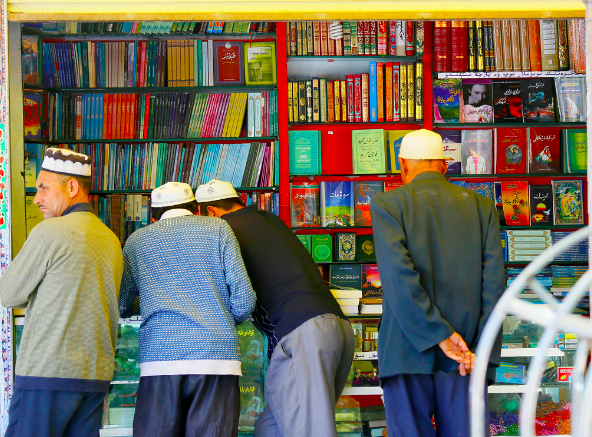
People of Xinjiang. Peter Chou Kee Liu. CC BY-NC-ND 2.0
China is Putting Muslims in Concentration Camps Because of an “Ideological Illness”
According to a UN report, China has declared Islam an “ideological illness”. One UN spokesperson claims there are approximately over a million Muslims currently in these camps. The UN report states “the evidence indicated that most of the detentions were taking place outside the criminal justice system, and targeted specifically Uyghur and other Muslim minorities, such as Kazakh”. But why is this happening? In the words of the Official Chinese Communist Party, “Members of the public who have been chosen for re-education have been infected by an ideological illness. They have been infected with religious extremism and violent terrorist ideology, and therefore they must seek treatment from a hospital as an inpatient”. The region of Xinjiang, in recent years, has faced attacks from extremist groups and because of this, have targeted the entire Uighur community in Xinjiang to prevent them from being further “infected by religious extremism and a violent terrorism disease.”
The region of Xinjiang is a highly populated by the “Turkic-speaking Muslim Uighur minority, who make up about eight million of its 19 million people”, according to a BBC article profiling the region. With the population being highly Muslim, the Chinese government has profiled that area in a subtle racist attempt to force the people of the area to renounce Islam and their practices. In a statement from the Communist Party, they state that “in order to provide treatment to people who are infected with ideological illnesses and to ensure the effectiveness of the treatment, the Autonomous Regional Party Committee decided to set up re-education camps in all regions, organizing special staff to teach state and provincial laws, regulations, the party’s ethnic and religious policies, and various other guidelines”. Furthermore, they say, “At the end of re-education, the infected members of the public return to a healthy ideological state of mind, which guarantees them the ability to live a beautiful happy life with their families”. It is disturbing to read words such as “disease” and “those infected” when it is in regards to innocent Uiguhr individuals. Using such diction creates a harmful and discriminatory connotation that the Uighur community is “sick” and “infectious”, a dangerously false narrative.
Although the camps have the intention of “[fighting] separatism and Islamic extremism”, they stem from a fear of an uprising in the Xinjiang area and has become a prejudice and gross abuse of human rights. Many of the people who were able to leave the concentration camps now are facing psychological ramifications and a complete lack of faith in the country that they are living. The camps are supposedly supposed to help threats and protect the people, yet they are harming them instead.
In many interviews from those who were in the concentration camp, they have mentioned that the “re-education” forces them to renounce Islam, renounce the Holy Quran, admit that the Uighur culture is backward in comparison to the Communist Party, and if the detainees refuse to cooperate, they are punished harshly. Some punishments include them not being fed, solitary confinement, or physical beatings. Recently, it has come out that there has been a death in one of the camps. A Uighur writer Nurmuhammad Tohti, died at the age of 70 because "he had been denied treatment for diabetes and heart disease, and was only released once his medical condition meant he had become incapacitated", according to his granddaughter, Zorigul. But even with the criticism and the death, the Chinese government still does not believe what they are doing is wrong.
China Daily, a popular media outlet, claimed that “Western critics of China's policies on human rights and religious freedom in the Xinjiang Uygur autonomous region seem to be divorced from the realities of the situation.” They stand in defense of their practices rather than understand how harmful they are and how they are creating a dogmatic perspective.
It is concerning to see how fear has created a ripple of harmful decisions and gross infringements on human rights. There is no reason for an entire community to reap the consequences of extremists actions when they are the innocents.
OLIVIA HAMMOND is an undergraduate at Emerson College in Boston, Massachusetts. She studies Creative Writing, with minors in Sociology/Anthropology and Marketing. She has travelled to seven different countries, most recently studying abroad this past summer in the Netherlands. She has a passion for words, traveling, and learning in any form.

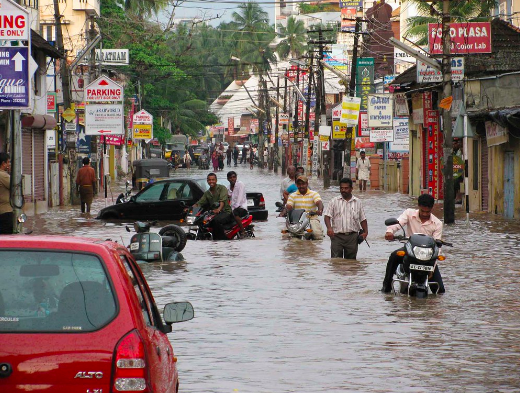
Flooded street in Trivandrum, India. By India Water Portal. CC BY-NC-SA 2.0
The Climate is in High Water and so is South Asia
Torrential monsoons throughout South Asia are causing devastating flooding, making the death toll seem to rise as fast as the water. At least 160 people have died since the flooding started.
Read MoreScientists Have Discovered a Large Freshwater Aquifer off the Northeast Coast of the U.S.
The discovery could point to similar reservoirs adjacent to water starved areas.

Photo of Bradley Beach, New Jersey, by Ryan Loughlin on Unsplash.
It’s rare to hear good news on the climate, but occasionally we get lucky. Last month, scientists led by Chloe Gustafson of Comumbia’s Lamont-Doherty Earth Observatory published an article in the Scientific Reports journal. Their discovery? A large freshwater aquifer located off the northeast coast of the U.S.
The possibility of an aquifer was initially discovered during offshore oil drilling in the 1970’s, when oil companies noticed that they occasionally hit pockets of freshwater in the north Atlantic. There was no consensus at the time on whether these were merely isolated areas or if they pointed to something larger. Then, in the late 90’s, Kerry Key, a geophysicist who co-authored the study, began working with oil companies to develop electromagnetic imaging techniques that could help them better examine the sea floor for oil. He later adapted the technology to look for freshwater deposits.
More recently, Key and his colleagues spent 10 days on board a research vessel, charting areas where freshwater had been discovered. “We knew there was freshwater down there in isolated places, but we did not know the extent or geometry,” Chloe Gustafson explained in a press release.
According to the report, the aquifer spans from New Jersey to Martha’s Vineyard, and carries an estimated 670 cubic miles of water lying beneath sponge-like sediment which separates it from the saline ocean water. “These aren’t open caverns or lakes underneath the seafloor,” Gustafson told NBC, “this is water trapped within the pores of rocks, so it’s sort of like a water-soaked sponge.” The reservoir reaches from 600 to 1,200 feet below the seafloor. For comparison, the aquifer carries more than half the water of Lake Michigan.
While the discovery of a large freshwater source is exciting under any circumstance, it is unlikely to have a major impact on access to water in New England, as the area is receives a good amount of rainwater. While the aquifer could be pumped, and the water exported to more arid areas, such efforts would be expensive and unsustainable. Graham Fogg, hydrogeology professor at the University of California Davis, told NBC that “there’s a limit to how much you can pump sustainably. It would take a long time to empty these aquifers, but we wouldn’t want to get to a point where we’ve pumped so much that we’ve exhausted the supply.”
The impact of the study lies in the possibility that such reservoirs could exist off the coasts of drier, more arid places that are prone to water shortage. NBC reports that pointers to the possibility of aquifers have already been found off the coasts of Greenland, South Carolina, and California.
As we experience the effects of climate change, and especially in light of the water shortage in Chennai, this is indeed good news.
EMMA BRUCE is an undergraduate student studying English and marketing at Emerson College in Boston. While not writing she explores the nearest museums, reads poetry, and takes classes at her local dance studio. She is passionate about sustainable travel and can't wait to see where life will take her.

Zimbabwe’s All Women Anti-Poaching Unit
Conservation becomes a community enriching project.
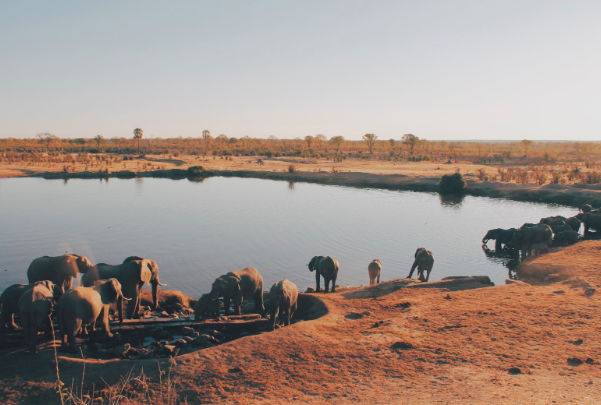
Photo of Zimbabwe’s Hwange National Park by Christine Donaldson on Unsplash.
The unit is called Akashinga, Shona for The Brave Ones, and it could not be more aptly named.
Founded by Damien Mander, an Austrailian former special forces soldier, Akashinga is a part of the International Anti-Poaching Foundation, a non-profit dedicated to preserving the Phundundu Wildlife Area.
Phundundu is a 115-square-mile area in the Zambezi Valley ecosystem which is home to 11,000 elephants and other endangered wildlife. In the past 20 years, frequent poaching has taken its toll on the reserve, resulting in the loss of thousands of elephants. While killing wildlife without a permit is illegal, animal trophies such as bones, tusks, and teeth can be sold on the black market for an amount equivalent to a month’s salary.
According to Akashinga’s website, anti-poaching initiatives often close off “traditional grazing areas, places of burial, worship, water points, food sources and traditional medicine,” making communities feel that endangered plants and animals are more important than their humanity. This resentment can fuel poaching attempts for which offenders can be arrested and sometimes killed. These experiences then reinforce the idea that endangered flora and fauna are of greater importance than the community, creating a cycle of resentment and violence.
To address this phenomenon, Akashinga takes a community-first approach to conservation. By recruiting women from the communities surrounding the Phundundu to serve on the unit, the organization is able to use conservation initiatives to enrich communities. Akashinga’s website describes the effort as having a “community-driven interpersonal focus, working with rather than against the local population for the long-term benefits of their own communities and nature.” To this end, 62% of operational costs are returned to local communities.
In this light, it is significant that the unit is made up entirely of women. According to National Geographic, research shows that in developing countries, women invest 90% of their income in their families, while men only invest 35%. Women are at the grassroots of community life, and when their wages are invested in their families, the entire community proffits.
But this is not the only reason that women are so right for the job. Mander had formerly trained male rangers for years before changing to an all-female model. He said that women are far better rangers; they are less likely to take bribes from poachers, and are skilled at de-escalating high tension situations. In National Geographic he commented that a gun in the hands of a man is a toy, but with a woman it is a tool.
Women also prove to be more resilient. Only three women quit the army-style training necessary to become part of the unit. When Mander was training men, all but three recruits quit after the first day. In National Geographic Mander said that, “we thought we were putting [the women] through hell, but it turns out, they’ve already been through it.”
This resilience is not without cause. Many of the women of Akashinga are victims of abuse, and have experienced their own trauma and exploitation. The BBC writes that Kelly Lyee Chgumbura, a unit member, was raped at seventeen and forced to drop out of school, abandoning her dream of becoming a nurse. She then had to give her baby to her rapist's mother, in accordance with Shona norms where if a mother is unable to provide for her child, the father’s parents become its guardians.
“My goals had been shattered,” she told the BBC, “It was like I couldn’t do anything more with my life.” A few years later, Chgumbura was recruited by her village head to try out for a ranger position. She was selected for the unit, and with a steady career now has a chance to win back custody of her daughter.
Being a ranger provides a sense of purpose as well as an income. “When I manage to stop poachers, I feel accomplished,” Chgumbura told the BBC, “I want to spend my whole life here on this job, arresting poachers and protecting animals.”
Like Chgumbura, most of the unit have faced traumatic experiences and lacked the agency and resources to protect themselves. “Who better to task with protecting exploited animals,” Mander told National Geographic, “than women who had suffered from exploitation?”
Phundundu is the first reserve worldwide to be managed entirely by women, but it will not be the only one for long. According to its website, Akashinga plans to welcome 1,000 new recruits who will protect 20 reserves. They aim to accomplish this by 2025.
EMMA BRUCE is an undergraduate student studying English and marketing at Emerson College in Boston. While not writing she explores the nearest museums, reads poetry, and takes classes at her local dance studio. She is passionate about sustainable travel and can't wait to see where life will take her.

Palestine Launches Global Mental Health Network
Palestinian health workers started a network to help Palestinians with emotional well-being, as they have among the highest rates for anxiety and depression due to the ongoing conflict with Israel.

The Palestinian people have exceedingly high rates for anxiety and depression. Health professionals recently began a network to help combat these disorders. Hasty Words. CC0.
Palestinian health workers recently launched the Palestine-Global Mental Health Network, in order to assist with their people’s emotional well-being and assert their professional stance.
Palestinian people have among the highest rates for anxiety and depression, in large part due to the continuous strife between Israel and Palestine. Unexpected raids in the middle of the night, checkpoints, teargas, and jailed young children all contribute to a profound sense of hopelessness and despair. For example, young men who seek out mental health services often explain that they think of looking for the Israeli Defense Forces (IDF) to create a confrontation in the potential hope that they’ll be killed, according to Mondoweiss. Suicidal ideation, depression, trauma, and anxiety are undoubtedly high conditions in most people.
This network was partially launched because of a meeting held in Tel Aviv toward the end of June for the International Association for Relational Psychoanalysis and Psychotherapy. The location was impossible to get to for Palestinian professionals who wished to attend, due to restriction of movement. Last year, a petition was circulated by the USA-Palestine Mental Health Network, with support from the Jewish Voice for Peace and UK-Palestine Mental Health Network, asking that the location be changed, but the petition was not answered.
The launch for the Palestine-Global Mental Health Network was held at the Palestinian Red Crescent’s headquarters in al-Bireh. The Palestine Red Crescent Society is involved in health care in the West Bank and the Gaza Strip. It collaborated with the Palestinian Social and Psychological Syndicate and the Arab Psychological Association as well.
Over 150 Palestinian health professionals attended from various cities, including Gaza, Haifa, Ramleh, and Jerusalem, among others. UK and U.S.-based Palestinian professionals joined through video-conferencing. The network plans to assist Palestinian people, regardless of geographic location, and promote mental health, social justice, and human dignity among people in general, and Palestinians in particular. A major goal is to augment Palestinian resistance to violence. More generally, this network will cooperate with others in the U.S., the UK, and Belgium to strengthen their programs and establish similar organizations.
The speeches addressed specific topics, as well as general thoughts on why an organization like this is necessary. In the closing session, a task force was created that would organize a paper explaining the network’s opening strategies and general framework. A separate committee was commissioned to carry out projects and plans agreed upon at the conference.
Another branch for the same organization also recently begun in Belgium. Their overall goal is also to make known the effects of occupation on the mental health of the Palestinian people. Activities include conferences, panels, and trips for international co-workers to visit Palestine and meet with other professionals, among others, according to the Washington Report on Middle East Affairs. The networks in Belgium, the U.S., and the UK generally work independently, but occasionally collaborate on ideas, strategies, and campaigns.
Mental health workers have an important role to play in the continuing struggle between Israel and Palestine, and these collaborating networks show that they intend to assist as best they can.
NOEMI ARELLANO-SUMMER is a journalist and writer living in Boston, MA. She is a voracious reader and has a fondness for history and art. She is currently at work on her first novel and wants to eventually take a trip across Europe.

In Hong Kong Protests, Technology Serves as a Tool of Both Expression and Repression
While activists have used the internet as a powerful organizing tool, web coverage on the Chinese mainland is defined by mass blackouts and systematic silencing.
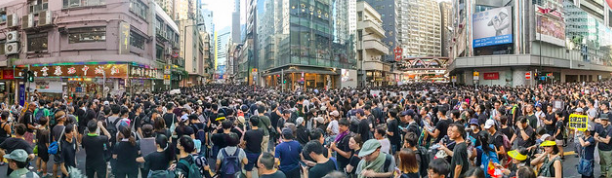
Protesters in Hong Kong. Studio Incendo. CC BY 2.0
The most widely attended protest in recent American memory, the Women’s March, brought about 1 percent of the population onto the streets. Last month’s protests in Hong Kong brought 25 percent.
By any standards, the anti-extradition campaign in Hong Kong, spurred by a proposed China-backed amendment that would allow for the extradition of Hong Kongers to mainland China, was an astronomical success, engaging huge swathes of the population and eventually leading to the death of the proposal. Images of the demonstration depict unfathomable numbers of citizens exercising their right to peaceful protests, but something remains invisible in those photos: the constantly active, multilayered and multifaceted presence of the internet, which—through messaging apps, social media, and LIHKG (Hong Kong’s answer to Reddit)—allowed protestors to turn ideology into concrete action.
On June 12, the protest reached a milestone when tens of thousands of citizens surrounded the Hong Kong legislative building, spurring an initial suspension of the bill. In order to mobilize without attracting unwanted attention, activists created online events inviting people to a “picnic” in nearby Tamar Park, a cover-up for their actual intentions. Messaging services, too, helped with planning efforts. Particularly popular was the encrypted app Telegram—although the arrest of Ivan Ip for “conspiracy to commit a public nuisance” set efforts back, given that Ip was leading a group on the platform of 30,000 users. Still, Ip’s group was far from the only one: In a Baptist University poll of protestors, more than half of respondents reported using Telegram for broadcasting information and participating in discussion groups.
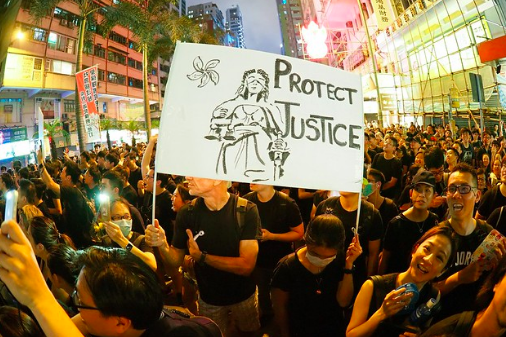
Protestors in the streets. Etan Liam. CC BY-ND 2.0
The survey also revealed the protestors’ widespread use of LIHKG, which lived up to its reputation of supporting free speech by subtly assisting activist efforts: Administrators removed ads from their site for about two weeks in June to shorten loading time and upped the number of replies allowed on some threads from 1,001 to 5,001, citing a need “for more convenient discussions.”
For protestors, the utility of social media and messaging platforms was far from over once planning progressed into action. During the demonstration on June 12, attendees broadcast real-time updates through countless Instagram stories and an hour-long livestream on the Twitter-owned service Periscope. In addition to spreading the word to Hong Kongers not attending the demonstration, protestors were able to communicate amongst themselves, using apps to request supplies, share the locations of food and water stations, and disseminate hand signals that would allow for discreet communication. Technical difficulties, however, thwarted efforts to some degree: Poor mobile signals made accessing the internet a challenge and threatened to spur chaos. “Without Telegram and WhatsApp, people did not know what they had to do,” Laura, 18, a student who volunteered as a first-aid staffer, told the South China Morning Post.
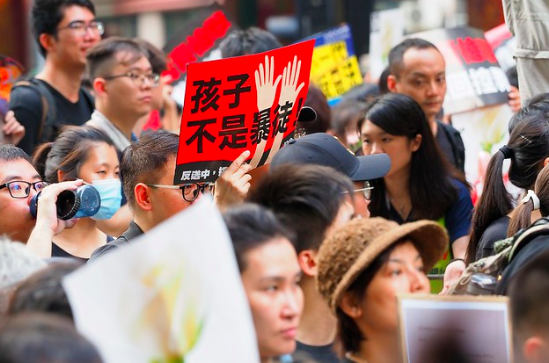
Holding a sign that reads “kids are not rioters.” Etan Liam. CC BY-ND 2.0
Limited connectivity was not the only tech-related hurdle facing protesters. Tech-savvy activists cautioned against using public Wi-Fi or swiping their Octopus public transit card, actions that could put users at risk of having their personal information picked up and employed to incriminate them. And protestors made sure to turn off Face ID and fingerprint ID on their phones so that police could not unlock their devices without consent, as well as enabling encryption on apps where it was not already automatic.
Across the border in China, however, such internet-driven activism would have been impossible. Hong Kongers have the privilege of a much more open internet—a dichotomy that has manifested starkly in mainland media coverage of the protests. As part of the mass censorship and limited access that has long defined the Chinese internet and that is sometimes dubbed the “Great Firewall of China,” the Communist Party has enacted a total blackout on protest coverage in newspapers and on TV, with television screens simply going dark when foreign news outlets show images of the demonstrations. Video footage of Hong Kong Chief Executive Carrie Lam apologizing for her attempt to push through the extradition law never lasted long on social media, as censors would immediately delete the content each time it was reuploaded. And even a song that activists sang during the protests, “Can You Hear the People Sing” from “Les Miserables,” was inexplicably missing from QQ, a popular musical streaming site.
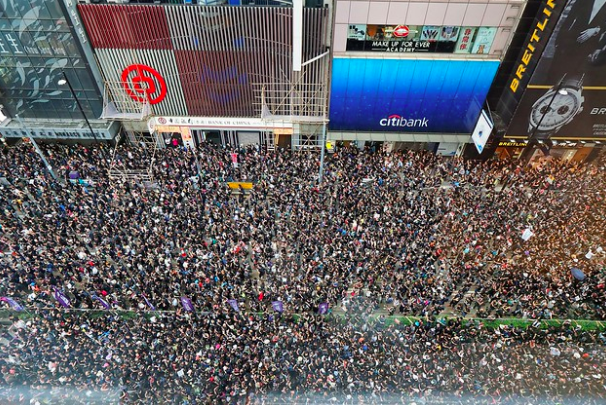
Protestors filled the streets on June 16. Etan Liam. CC BY-ND 2.0
On social media platforms like WeChat and Weibo, users devised strategies to get around the firewall, like distorting images of the protests or blocking parts of the image with giant smiley-face logos. In some cases, however, China’s tech power was simply too strong: Telegram reported on June 12 that it was experiencing a distributed denial of service (DDoS) attack, which means that a number of computers were attempting to overload its servers with bogus requests, resulting in service slowdowns or outages. Telegram’s CEO, Pavel Durov, said that the IP addresses behind the attack were coming mainly from China, potentially suggesting a concerted effort by authorities.
By systematically silencing the voices of activists, China is able to spread its own narrative of the protests, which it portrays as violent events provoked by foreign elements amining to undermine Hong Kong and the “one country, two systems” policy. The policy was formulated in the 1980s for the reunification of China by Paramount Leader of the People’s Republic of China Deng Xiaoping; in the interest of furthering Hong Kong’s status as a global financial center, it guarantees freedom of speech and protest for citizens. Yet Hong Kongers have long feared an erosion of their autonomy, a concern that most recently boiled over in the form of the 2014 Umbrella Movement, during which streets in the city’s business district were flooded by demonstrators for nearly three months. Throughout that time, mainland China busily erased all mention and images of the protests from its internet.

Protesters were unsatisfied by the original postponement of the bill. Etan Liam. CC BY-ND 2.0
On July 8, Lam publicly stated that the bill was finally dead, describing the proposed amendment as a “total failure.” Yet Hong Kongers were not entirely satisfied, as questions remain about whether Lam will officially withdraw the bill or whether it might be revived in future. Either way, the anti-extradition movement of 2019 will stand as a landmark protest for the digital age: one whose scale and power could have only coalesced in an era of instant connectivity, and one that throws into stark relief the power of technology—for expression and repression alike.
TALYA PHELPS hails from the wilds of upstate New York, but dreams of exploring the globe. As former editor-in-chief at the student newspaper of her alma mater, Vassar College, and the daughter of a journalist, she hopes to follow her passion for writing and editing for many years to come. Contact her if you're looking for a spirited debate on the merits of the em dash vs. the hyphen.

Three Years Since the Standing Rock Protests
What Has Changed?
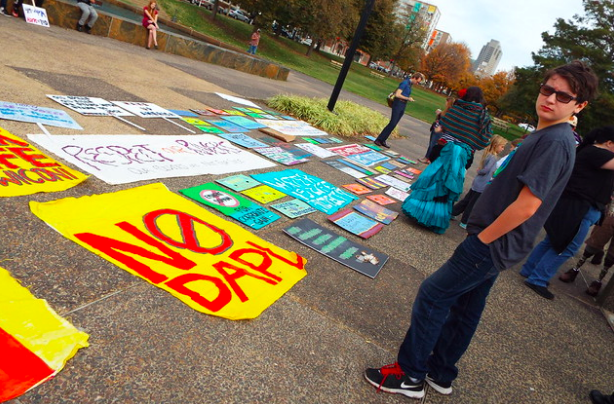
In 2016, Native American tribes and allies from all over the country came to North Dakota to protest the construction of the Dakota Access Pipeline, and to support the Standing Rock Sioux Tribe.
The Standing Rock Sioux Reservation is in the center of North and South Dakota. Standing Rock was originally established as a part of the Great Sioux Reservation, which was established in 1868. In 2014, Energy Transfer Partners LP made plans to build an oil pipeline that would stretch over a thousand miles from North Dakota to Iowa, and carry 570,000 barrels of crude oil per day. The pipeline, called the Dakota Access Pipeline, would run through the Standing Rock Sioux Reservation.
When the Dakota Access Pipeline was approved in 2016, the Standing Rock Sioux tribe sprang into action. The pipeline would run right next to their drinking water—any spill or leakage would contaminate their water supply. Additionally, the pipeline would run through the tribe’s sacred burial sites.
On April 1, 2016, a group of 200 Native Americans rode on horseback to protest the construction. They set up a camp, called The Sacred Stone Camp, which became a site of protest for the cause. In November, 2016, the protesters were ordered to evacuate their protest site. The protesters intended on staying, and clashed with the police.
Finally, the Obama Administration denied a key permit for the Dakota Access pipeline to be built. Protesters were relieved until a couple of months later, when the Trump Administration reversed that decision and approved further construction. The Dakota Access pipeline is now built, and carrying oil. Energy Transfer even plans on expanding, and transporting more oil.
But all hope is not lost. Standing Rock Activists did not give up the fight. Although the Sacred Stone Camp is gone, its ethos lives on in the Sacred Stone Village. Sacred Stone Village is an EcoVillage, whose mission is to combine Native traditions and sustainable living. Their Facebook page continues to update on the work that they have accomplished. Highlights include collecting trash from the cannonball river, planting indigenous trees and berries, and continuing to educate about the dangers of fossil fuels.
The individual activists from Standing Rock continue to speak out and work hard to warn against the dangers of oil pipelines. LaDonna Brave Bull Allard, founder of Sacred Stone Camp, continues to give speeches and educate the world about indigenous rights and environmental protection. Spiritual activist and former Standing Rock spokeswoman, Cheryl Angel, is still working towards her goal of uniting people in fighting for water safety and protection.
Three years later, activists won’t give up on their mission to fight for their slogan, Water is Life.
ELIANA DOFT loves to write, travel, and volunteer. She is especially excited by opportunities to combine these three passions through writing about social action travel experiences. She is an avid reader, a licensed scuba diver, and a self-proclaimed cold brew connoisseur.

7 Social-Action Documentaries Available Now on Netflix
These films will inspire you to make a difference.

Netflix Logo. Photo by Bago Games CC 2.0
Netflix is known for their new original television series, as well as old favorites. But Netflix also has an excellent collection of documentaries. Here are seven documentaries featured on Netflix that will inspire you to do more good.
This six, one-hour-long episode series exposes con-artists, cheaters, and schemers who are motivated by greed. Episodes focus on topics from Donald Trump’s shady business empire to a car company who cheats on emissions tests to save money. Through firsthand accounts with perpetrators and the victims, the he docu-series aims to expose the corruption in our economy.
2. Minimalism: A Documentary About the Important Things
Minimalism sheds light on the way our society rapidly consumes, and how this consumption is dangerous to our mental health and our environment. This documentary delves into the lives of people who have gotten rid of their excess belongings, and committed to a life of minimalism.
What the Health exposes the corruption in the healthcare industry as a result of the government and big business. The film wants us to ask why healthcare costs so much and is so inaccessible, costing people their lives.
4. Rotten
This six part documentary series aims to make the public aware of the crisis in the global food industry. The film encourages people to pay more attention to the source of the food they buy as they might have been frozen multiple times, or contain many additives. Since food has become treated like a commodity, fraud has increased and farming has decreased.
5. Inside the World’s Toughest Prisons
Investigative journalists voluntarily become inmates the worlds’ brutalist prisons in order to expose the poor conditions that prisoners face. One of the journalists served years in prison for a crime that he did not commit, so the docuseries is even more emotionally charged.
The White Helmets follows the first responders who rescue people from the rubble after bombings in Syria. The Academy Award nominated documentary short shows real life heroes, who are guided by their motto that “To save a life is to save all of humanity.”
This Academy Award winning documentary short about how women in India achieve financial independence, and counter stigma about menstruation, by creating low-costs sanitary napkins on a machine in their village.
These documentaries and documentary series come in all lengths, and span a range of topics. They are guaranteed to educate and inspire you on your next Netflix binge!
ELIANA DOFT loves to write, travel, and volunteer. She is especially excited by opportunities to combine these three passions through writing about social action travel experiences. She is an avid reader, a licensed scuba diver, and a self-proclaimed cold brew connoisseur.

From North Carolina to Norway, Fossil Fuel Divestment Hits Headlines
Whether motivated by practical or ideological means, institutions around the world are pulling their finances out of oil, gas, and coal.
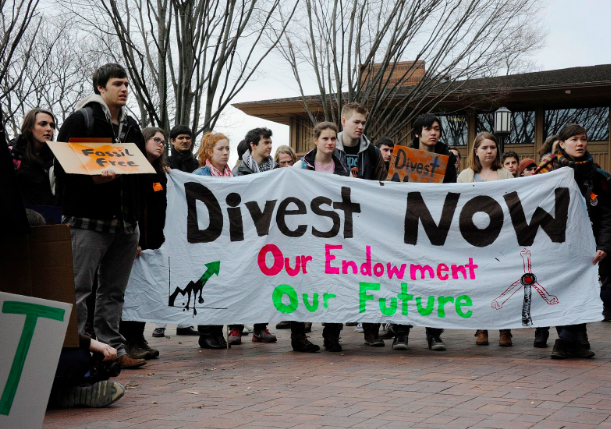
Divestment protest at Tufts University. James Ennis. CC BY 2.0
Upon receiving the news in 2017 that our planet is in the midst of its sixth mass extinction event, spurred partly by rampant climate change, stunned denizens of Earth everywhere struggled to process the implications and searched for concrete ways to mitigate the damage. In the months since, countless climate proposals have rolled out across the globe, and U.S. citizens have watched as 2020 presidential hopefuls laid out their plans—all while the current president decried the very existence of climate change. In the flurry of rhetoric and policy aimed at addressing the climate crisis, one strategy continues to hold strong: fossil fuel divestment, which has hit the headlines this summer with particular force.
On July 4—Independence Day in the United States—Britain’s largest membership organization declared independence from fossil fuel investments. The National Trust, which stewards 780 miles of coastline; 612,000 acres of land; and more than 500 historic houses, castles, monuments, and parks, announced that it would divest its £1 billion portfolio from fossil fuels in a bid to address the worsening climate crisis.
Previously, the trust had invested £45 million into oil, gas, and mining companies, despite having made earlier pledges to cut down on its own use of fossil fuels. The vast majority of those investments will be withdrawn in the next 12 months, the trust promises, and 100 percent within three years. The freed-up funds will be diverted to alternative energy options: CFO Peter Vermeulen told The Guardian, “Now we will seek to invest in green startup businesses and other suitable portfolios that deliver benefits for the environment, nature and people.”
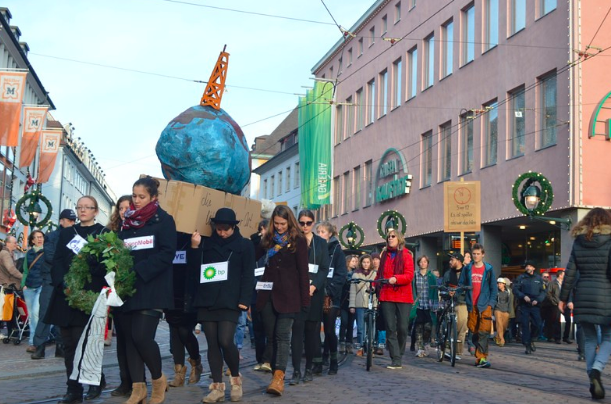
Fossil Free Freiburg divestment protest. 350.org. CC BY-NC-SA 2.0
Five hundred miles away in Norway, another high-profile institution is also preparing to drop fossil fuels: the Government Pension Fund Global (GPFG), which was founded in 1990 to oversee the integration of petroleum revenues into the national economy, and which invests in more than 9,000 companies worldwide, including Apple, Amazon, and Microsoft. On June 21, Norway’s parliament, the Storting, approved plans for the GPFG to divest more than $13 billion of the $1.06 trillion it manages from investments in oil, gas, and coal. The decision comes with some caveats: GPFG will only divest from companies that are exclusively involved with fossil fuels, but not oil companies that also have renewable energy units, such as BP and Royal Dutch Shell. And the fund maintains that financial considerations, not ideological ones, are behind the divestment, given the risk posed by fluctuations in oil prices. Nevertheless, environmental advocates can appreciate the fact that GPFG will earmark up to 2 percent of its funds—or about $20 billion—for investments in renewable energy.
In some cases, not only individual institutions are divesting, but also entire regions. At the beginning of June, the city council of Charlottesville, Va., voted 4-1 to divest the city’s operating budget investments from any entity involved with the production of fossil fuels or weapons. Supporters explain that the divestment—which will be carried out within 30 days of the decision—aligns with the city’s strategic plan goals, including being responsible stewards of natural resources. Charlottesville joins various other college towns across the United States, including Ann Arbor, Mich., and Berkeley, Calif., in pledging to divest.
At some universities, however, the prospect of divestment has long brewed controversy, which is coming to a head in light of the climate crisis. During Al Gore’s speech at Harvard University on May 29, the former vice president turned environmental activist called on his alma mater to divest, stating that climate change is “a threat to the survival of human civilization as we know it” and framing divestment as “a moral issue” for the university. In recent years, student activists at Harvard have ramped up demands on the school to divest, and the student newspaper reversed its formerly opposed position in May, acknowledging that Harvard’s reluctance to entertain the possibility of divestment “compromises its efforts to position itself as an academic institution at the forefront of the fight against climate change.” On the administrative side, more than 300 faculty members have signed a petition calling for divestment of fossil fuel stocks. Nevertheless, this number represents less than 14 percent of all faculty, and the university maintains the opinion that it should impact public policy through research rather than through its endowment.
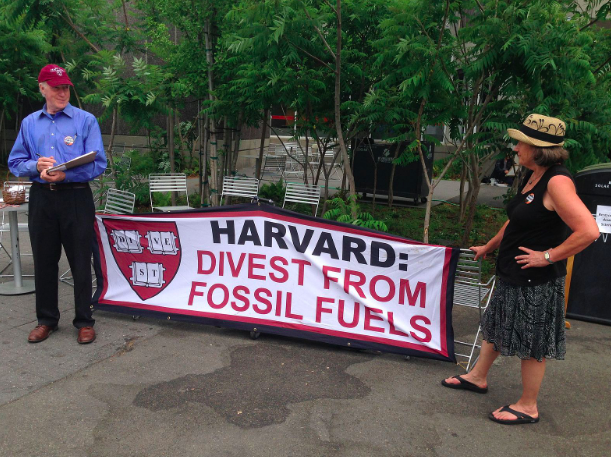
Advocates for divestment at Harvard. victorgrigas. CC BY-SA 3.0
Across the country, 47 U.S. colleges and universities have chosen to divest, although the number has dropped off in recent years, with only 10 making the decision since 2017. Most recently, the Board of Trustees at the University of North Carolina, Asheville, voted on June 21 to divest a portion of their $50 million endowment from fossil fuels. The unanimous vote, which will make the Asheville campus the first in the UNC system to divest, builds on a resolution spearheaded by student activists. In concert with administration and the Board, these activists researched new funds in which the university could invest about 10 percent of its capital, eventually landing on Walden Asset Management, which focuses on investing using environmental, social, and governance criteria.
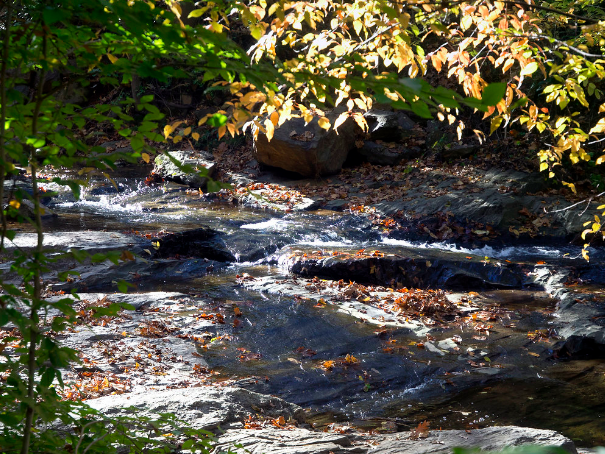
Botanical gardens at Asheville. David441491. CC BY-NC-ND 2.0
Meanwhile, earlier this month, the University of California—another sprawling and well-regarded state university system—saw 77 percent of its voting faculty agree “to divest the university’s endowment portfolio of all investments in the 200 publicly-traded fossil fuel companies with the largest carbon reserves.” The decision is now in the hands of the University Regents. Should the Regents choose to divest, the news would make waves on the national level due to U Cal’s significant size and prestige—and in the fight against fossil fuels, ideological statements, even if they have negligible bearing on the industry’s financial resources, are of the utmost importance.
Individuals in academic circles, therefore, are beginning to take their own stands to support divestment. In a piece for the Chronicle of Higher Education, climate activists Christiana Figueres and Bill McKibben explain that they have begun refusing to accept honorary degrees from colleges that have not divested, writing, “[e]ach of us has already turned down these honors at institutions that remain committed to coal, gas, and oil.” Meanwhile, members of the younger generation are also weighing in—such as Jamie Margolin, a rising high school senior and prominent environmental activist with more than 11,000 Twitter followers. In a piece for Teen Vogue last month, Margolin wrote, “I have serious concerns about how my future school might be investing in fossil fuels and, if they can’t be convinced to divest by student activists like me, how that might render my college education useless.” From Norway to Britain to Asheville to Cambridge, from Ivy-educated vice presidents to those still awaiting their high school degrees, the world is beginning to agree that taking action is not optional.
TALYA PHELPS hails from the wilds of upstate New York, but dreams of exploring the globe. As former editor-in-chief at the student newspaper of her alma mater, Vassar College, and the daughter of a journalist, she hopes to follow her passion for writing and editing for many years to come. Contact her if you're looking for a spirited debate on the merits of the em dash vs. the hyphen.

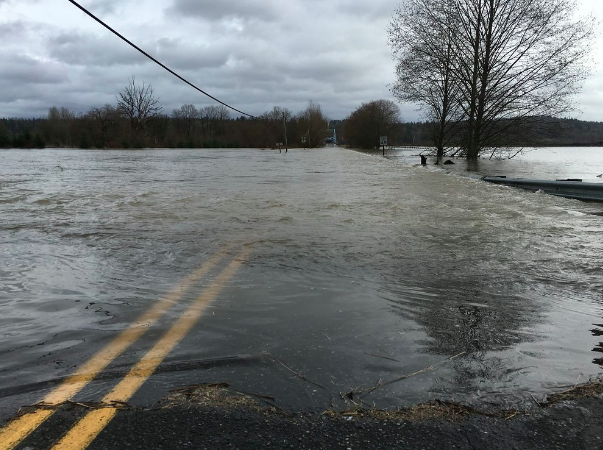
A road flooded. maxinux. CC by 2.0.
Climate Apartheid: The Prediction for our Future
Mother Earth is dying and we are only furthering her demise. Not only that, but we are creating an environment and society that will soon be the rich versus the dead, according to Philip Alston, UN special rapporteur on extreme poverty and human rights, in his report. “There is no shortage of alarm bells ringing over climate change, and an increase in biblical-level extreme weather events appear to be finally piercing through the noise, misinformation, and complacency, but these positive signs are no reason for contentment,” Alston said. “A reckoning with the scale of the change that is needed is just the first step.”
Alston is quick to call out government leaders, like President Donald Trump, about how complacent they are being concerning environmental issues. Alston states, “Somber speeches by government officials have not led to meaningful action and too many countries continue taking short-sighted steps in the wrong direction.” Alston’s report is not only a call to action—it is a warning.
Alston deems that with climate change will come “climate apartheid”, meaning “the wealthy pay to escape overheating, hunger and conflict while the rest of the world is left to suffer.” Alston states that, “while people in poverty are responsible for just a fraction of global emissions, they will bear the brunt of climate change, and have the least capacity to protect themselves.”
So not only is climate change affecting our environment, but it will affect our lives, threatening to undo the last 50 years of progress in development, global health, and poverty reduction,” Alston said. “It could push more than 120 million more people into poverty by 2030 and will have the most severe impact in poor countries, regions, and the places [where] poor people live and work.”
The risk of a climate apatheid also increases the possibility of “climate refugees”, or people who will have to seek lives elsewhere because the dying environment has made their current home unlivable. In a town in Gwynedd, Wales, Phil Black reports that the inhabitants of said town might become “climate refugees” given the rising sea levels and how close the town is to those levels. While there are people, such as Lisa Goodier, a project manager attempting to make preparations for those in the town to leave, many of the townspeople refuse to give up their properties or believe the scientific facts presented to them. They would rather stay until they truly have to leave.
It is perspectives like this that make our environmental crisis what it is today. The facts are there, the evidence has been proven, but if we continually ignore what is right in front of our faces, it will be too late. Well, it will be too late for anyone who is not rich because the rich will always have the ability to pay and get rid of anything that inconveniences them.
It is not just about our environment anymore, it is about us, as a human species. If we let things continue how they are, millions will die and it will only be time until we are all wiped out. Alston states, “The risk of community discontent, of growing inequality, and of even greater levels of deprivation among some groups, will likely stimulate nationalist, xenophobic, racist and other responses. Maintaining a balanced approach to civil and political rights will be extremely complex.”
We are responsible for our future. If we don’t take responsibility, or rather, if those who have the money and are making the problems do not take responsibility, it is not just our environment at risk. It is our humanity.
Nothing will change if those who have the money do not fix the issues. And by the looks of Alston’s report, we need change, now.
OLIVIA HAMMOND is an undergraduate at Emerson College in Boston, Massachusetts. She studies Creative Writing, with minors in Sociology/Anthropology and Marketing. She has travelled to seven different countries, most recently studying abroad this past summer in the Netherlands. She has a passion for words, traveling, and learning in any form.

Mexico
The videographer is Face du Monde and these are his comments on the video:
Read MoreA Hub For Art and Pop Culture in Dubai
Alserkal Avenue is a massive Dubai art hub housed in a complex of 91 warehouses that were once the site of a marble factory. This center of creativity is home to galleries and workshops where artists are given the tools they need to create as well as perks like an artisan cafe, a vinyl record shop and a sneaker store. Vilma Jurkute, the director of Alserkal Avenue, gives architects and photographers Anna Devis and Daniel Rueda a tour of this carefully curated community founded by businessman and patron of the arts Abdelmonem Bin Eisa Alserkal.
Here’s Where the 2020 Presidential Candidates Stand on Climate Change
Each of the Democratic hopefuls has made environmental justice a priority. Here’s who stands out in the search for a greener future.

Climate change protesters. Michael Gwyther-Jones. CC BY 2.0
On June 1, 2017, President Trump announced his intention to withdraw from the Paris Climate Accord, signaling to the international community that the United States was backing down from the fight against climate change. Just over two years later, at the 2019 G20 Summit in Japan, Trump indicated his disdain for the essential mission of that fight: “We have the cleanest water we have ever had, we have the cleanest air we have ever had,” he claimed of the United States, adding that wind power “does not work” because it has to be subsidized.
Particularly coming from a president who has described climate change as a hoax, such a statement represented a disheartening and dangerous attitude toward environmental issues for concerned citizens across the country. As 2020 and the possibility of a new POTUS approaches, such voters will be parsing policy proposals to determine—among many other salient issues—who stands the best chance of mitigating climate change. Below are stances on climate change from a few Democratic candidates who stand out in the crowded political landscape.
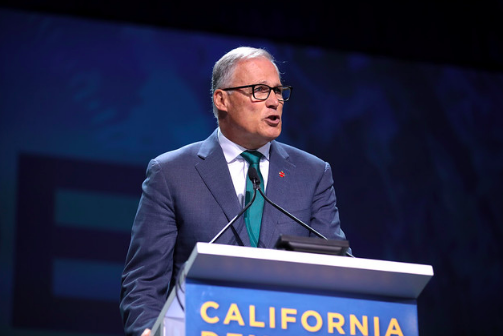
Jay Inslee. Gage Skidmore. CC BY-SA 2.0
Jay Inslee (Governor of Washington)
Inslee’s name is practically synonymous with the battle for a greener future: He has made climate change a key plank of his campaign platform, and has released four extensive climate plan proposals, each outranking his competitors in length and depth. Part one addresses clean energy in electricity, cars, and buildings; part two is a 10-year, $9 trillion investment plan; part three discusses foreign policy; and part four recommends stemming the flow of fossil fuels from the United States. Together, the four segments speak to a whopping 41 out of 48 components in the rubric put forth by leftist think tank Data for Progress, which in 2018 created one of the first blueprints for the Green New Deal—the clean energy–based economic stimulus package championed by Representative Alexandria Ocasio-Cortez and Senator Ed Markey. As of now, Inslee’s plan lacks proposals to curb waste, increase antitrust enforcement, establish a universal basic income, or found a public bank, but the governor has promised more to come.
Inslee on whether it’s possible for the next president to stop climate change: “Victory is the only option against climate change, because without victory there is not survival.”
Polling numbers: 0.4 percent.

Bernie Sanders. Gage Skidmore. CC BY-SA 2.0
Bernie Sanders (US Senator, Vermont)
Given that Sanders hails from the Green Mountain State, it’s no surprise that going green is high on his political agenda. In the Senate, he has introduced carbon-pricing legislation and pushed for the Democratic Party to embrace a carbon tax, but his stance on climate change can be traced back to well before he was elected senator in 2006: Videos are available from 30 years ago of him discussing the issue. During his 2020 bid, Sanders has been enthusiastic about the Green New Deal (also an unsurprising development, given that Ocasio-Cortez worked for Sanders during his 2016 campaign). In April, he released his climate platform under the heading “Combat Climate Change and Pass a Green New Deal,” citing upgraded public transit, a ban on fracking, and an end to fossil fuel exports as key tenets. Yet despite his long-running push for improved environmental policy, Sanders’ proposals fall short of some more specific and nuanced iterations put forth by competitors like Inslee.
Sanders on whether it’s possible for the next president to stop climate change: “Not alone, and not, certainly, just by doing what has to be done in the United States.”
Polling numbers: 14 percent.
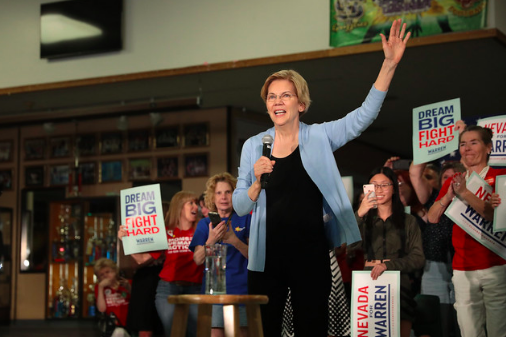
Elizabeth Warren. Gage Skidmore. CC BY-SA 2.0
Elizabeth Warren (US Senator, Massachusetts)
Rather than releasing policies focused narrowly on climate change, Warren has taken a different tack, addressing the issue through the lens of public lands, the military, and domestic industrial development through three distinct proposals. And running through each of these manifestos is the thread of Warren’s policy centerpiece: getting money out of politics and out of the hands of massive oil conglomerates. Her latest proposal, which is also her longest, fleshes out some of the tenets outlined in the Green New Deal, suggesting a Green Industrial Mobilization that earmarks $1.5 trillion for low-carbon tech; a Green Marshall Plan that encourages foreign countries to buy American clean energy tech; and a Green Apollo Program that invests $400 billion in energy research and development over a decade. Taxing wealth and corporate profits would provide funding for the ambitious plans, which have led Greenpeace to place her as tied with Sanders in its climate scorecard.
Warren on whether it’s possible for the next president to stop climate change: “I believe that the opportunities for the next president are enormous. We can show worldwide leadership.”
Polling numbers: 13.8 percent.

Kamala Harris. Gage Skidmore. CC BY-SA 2.0
Kamala Harris (US Senator, California)
Harris has supported and co-sponsored the Green New Deal, but her 2020 bid has otherwise made limited mention of climate justice. Past actions, however, show at least some commitment to the issue: As San Francisco’s district attorney, she established an environmental justice unit, and as attorney general, she launched an investigation into Exxon Mobil to see whether the company lied to shareholders and the public about the risks posed by climate change. During her time in Congress, she joined with five other senators to file a brief on behalf of San Francisco and Oakland in their climate damages lawsuit against fossil fuel companies, pointing to massive spending by the industry to quash climate concerns and influence lawmakers.
Harris on whether it’s possible for the next president to stop climate change: “There’s no question that the next president has within her capacity to significantly reduce greenhouse gas emissions.”
Polling numbers: 15.2 percent.
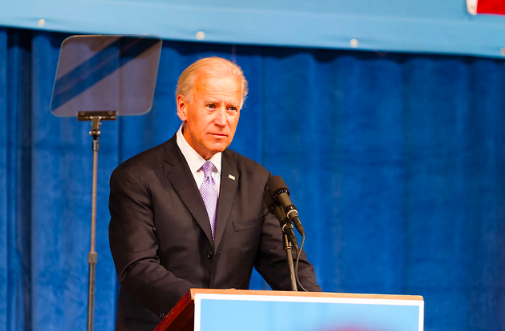
Joe Biden. Chad Cassin. CC BY-SA 2.0
Joe Biden (Former Vice President)
As part of his lengthy legislative career, Biden has the distinction of being among the first to introduce a climate change bill in the Senate: the Global Climate Protection Act of 1986, which called for an EPA national policy on the issue. In concert with President Obama, Biden built a notable record on climate change, particularly with the signing of the Paris climate agreement in 2016 and the initiation of auto fuel economy standards that slashed emissions levels. Nevertheless, Biden has faced scrutiny for missing crucial climate votes earlier in his career—including the 2008 Lieberman-Warner Climate Security Act, regarded as the strongest climate change bill to reach the Senate floor. Despite his support of the Green New Deal, Biden initially put forth a “middle ground” approach to environmental policy in the early days of his 2020 run. Facing subsequent criticism from activists and lawmakers, including Ocasio-Cortez, he replaced that suggestion with a proposal that aligned more closely with those of his competitors, and which allocates $1.7 trillion in federal spending to climate policy over the next decade.
Biden declined to be interviewed on whether it’s possible for the next president to stop climate change.
Polling numbers: 26 percent.

Cory Booker. Anne White. CC BY-NC 2.0
Cory Booker (US Senator, New Jersey)
Climate change is far from the hottest-button issue for Booker, who tends to focus instead on topics like gun control, racial justice, and health care. Still, he was one of the first legislators to support the Green New Deal, has voiced support for a price on carbon, and has pointed to nuclear energy (which supplies more than one-third of New Jersey’s power) as an alternative to fracking. And while such moves may be largely tactical, Booker has pledged not to take fossil fuel money in his presidential bid as well as publicizing the fact that he is a vegan.
Booker on whether it’s possible for the next president to stop climate change: “It’s not going to be one person in one office—it has to be a movement, a renewed commitment in our country and across this planet.”
Polling numbers: 2.2 percent.
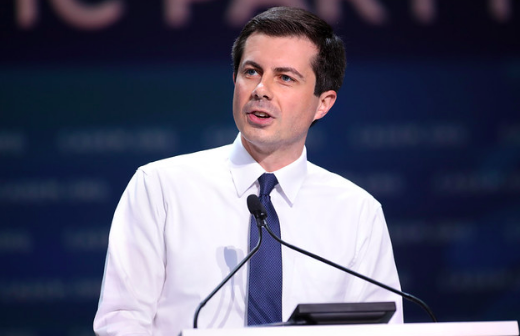
Pete Buttigieg. Gage Skidmore. CC BY-SA 2.0
Pete Buttigieg (Mayor of South Bend, Indiana)
As the youngest candidate in the race at just 37, Buttigieg has a personal stake in the matter of climate change, given that his generation is one of the first to substantively feel its detrimental effects. “It just gives you a very different relationship to political decision makers and decision making,” he told The Atlantic on dealing with environmental justice as a millennial. Like most of his competitors, Buttigieg has endorsed the Green New Deal, and the climate platform he released in May describes full implementation and a 100% carbon-free society. That could include a major role for the rural communities in his native Midwest: At a town hall in June, he described how improved soil management could help mitigate the climate crisis.
Buttigieg on whether it’s possible for the next president to stop climate change: “This is a generational project. It’s going to have to be a national project.”
Polling numbers: 5.2 percent.
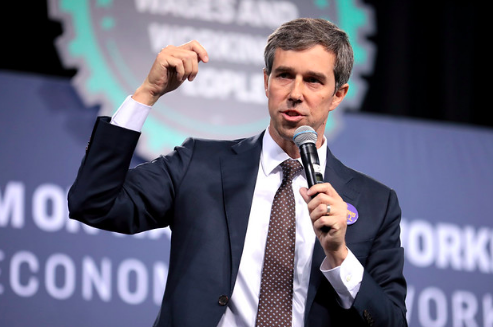
Beto O’Rourke. Gage Skidmore. CC BY-SA 2.0
Beto O’Rourke (Former US Representative, Texas)
On May 1, O’Rourke became the first 2020 candidate to release a comprehensive climate plan, which defines a binding target of net-zero greenhouse gas emissions across the U.S. economy by 2050. Unlike Inslee’s target of 2045, however, this goal raised the ire of some environmental groups, who asserted that O’Rourke should have aimed for as soon as 2030. And although O’Rourke signed the No Fossil Fuel Money Pledge two days after issuing his platform, he accepted more than $550,000 from oil industry sources during his Senate bid against Ted Cruz—the second-highest number among the candidates after Cruz.
O’Rourke on whether it’s possible for the next president to stop climate change: “It’s going to take this entire country, and it’s going to take this country leading the entire world.”
Polling numbers: 2.4 percent.
At a point in the race where the strength of actual policy proposals is often eclipsed by intangible factors like electability and charisma, voters still have a while to wait before realistic options for environmental justice begin to coalesce. Until then, temperatures will keep ticking up, waters will continue rising, and communities in the United States and across the globe will keep hoping for a leader with the power to reverse the inevitable.
TALYA PHELPS hails from the wilds of upstate New York, but dreams of exploring the globe. As former editor-in-chief at the student newspaper of her alma mater, Vassar College, and the daughter of a journalist, she hopes to follow her passion for writing and editing for many years to come. Contact her if you're looking for a spirited debate on the merits of the em dash vs. the hyphen.

What You Need to Know About Beyond and Impossible Burgers
Why plant-based meat substitutes are good for you, and even better for the environment.

Impossible Burger. Photo Provided by Impossible Foods.
There has been a lot of buzz recently around plant-based meat substitutes—especially since Beyond Meat just went public in May at a nearly $1.5 billion dollar valuation. Two of the most popular meat substitutes on the market, Beyond Meats and Impossible Foods, have been astonishing consumers at their resemblance to actual meat. These products look and taste like the meat products they are modeled after.
What makes them different?
Impossible Foods’ main product is their burger. And while the Beyond Burger is probably the most well known product that Beyond Meats offers, the company also offers “ground beef,” two flavors of “sausages,” and “beef crumbles.” However, it is possible to mash or crumble the Impossible Burger to create meatballs, pizza toppings, or even tacos.
Additionally, the products differ in their main protein ingredient. Beyond Burgers’ main protein source comes from pea protein, while Impossible Burgers get their protein from soy protein concentrate.
The Impossible Burger looks a little more realistic than the Beyond Burger. It appears to “bleed” thanks to the Heme molecule an ingredient called soy leghemoglobin. The Heme molecule is found in every living plant and animal. Since it’s found most abundantly in animals, it’s what makes meat taste like meat. Impossible Foods use the Heme molecule in soy roots. In fact, Impossible Burgers taste so much like actual beef, that some vegetarians and vegans don’t like to eat them because it creeps them out!
Why are they good for us?
Meat increases risk of cancer by 16% and risk of heart disease by 21%. By eating a patty that looks and tastes like meat—without the added cholesterol—we can satisfy our cravings without having to worry about health risks.
Why are they good for the environment?
Aside from the fact that less animals will be killed if more people switch to meat substitutes, plant-based substances are made more sustainably than meat products. 51% of greenhouse gas emissions result from raising livestock and producing meat products. 45% of global surface area is reserved for livestock systems. Imagine the greenery and nature that could be preserved with just a fraction of that space!
So, for your next summer barbeque, try switching to a Beyond or Impossible Burger. Your guests will barely notice the difference.
ELIANA DOFT loves to write, travel, and volunteer. She is especially excited by opportunities to combine these three passions through writing about social action travel experiences. She is an avid reader, a licensed scuba diver, and a self-proclaimed cold brew connoisseur.

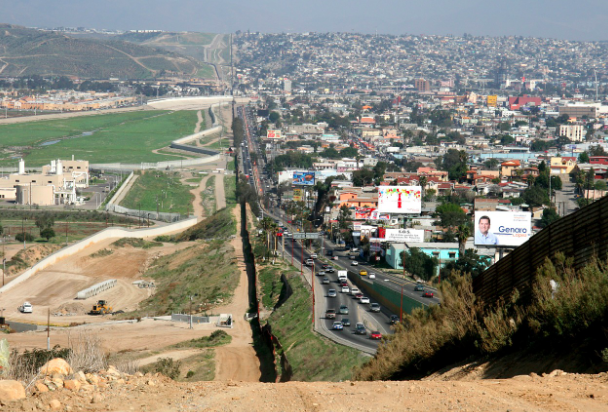
The U.S.-Mexico border, pictured here from the air, is receiving more attention as Afircan migrants cross it to seek asylum in the U.S. WikiImages. CC0.
African Migrants Journey to U.S. Border in Search of Asylum
African migrants, mostly from Angola and the Democratic Republic of Congo, are beginning to congregate at U.S. border cities, especially San Antonio, Texas and Portland, Maine, seeking asylum.
Many are flying to South America and joining fellow migrants in traveling well-trodden paths across Central America to the U.S.-Mexico border, since they have been proven to work. Europe has also recorded a sharp drop in the number of African migrants and refugees who have reached its border.
Migrants who do try to make the treacherous journey across the Meditteranean often never make it there. The EU began a regional disembarkation policy last June, which named Libya as the new center for processing refugee and asylum applications for those seeking to leave Africa for Europe. However, asylum-seekers stopped by the EU-trained and equipped Libyan Coast Guard are brought back to civil war-torn Libya. Roughly 700,000 refugees are in local detention centers, facing starvation, sexual violence, and torture, according to Foreign Policy. There is also the possibility of being captured by Libyan smugglers. Many people have either gone missing or died. Official numbers have not been released.
Niger is taking in refugees so they don’t need to stay in Libya while they wait to be fully resettled in a new host country, but is only accepting a limited number of people due to its own low poverty rate. The resettlement process can take anywhere from 8 to 12 months. Often, Africans are finding that it is easier to avoid the Mediterranean altogether, due to the trouble Libya’s smugglers and detention centers can cause. 12 countries have so far pledged to help resettle the refugees, though the U.S. is not one of them.
American border agents first started noticing the high numbers at the Del Rio border station in southern Texas last month. According to Time, the sheer number of people is overwhelming. “When we have 4,000 people in custody, we consider it high,” Customs and Border Patrol’s commissioner John Sanders said, according to the BBC. “If there’s 6,000 people in custody, we considered it a crisis. Right now, we have nearly 19,000 people in custody. So it’s just off the charts.”
According to NPR, one such refugee journey involved a family of six flying to Ecuador and traveling by foot across Central America to eventually end up in the border city of Portland, Maine. They were fleeing civil unrest in the Democratic Republic of Congo. Their destination was a makeshift border shelter—a converted sports arena—that was described as “paradise” by the father. Randy Capps, the director of research for U.S. programs at the Migration Policy Institute, said, "That journey through Central America and Mexico has been facilitated by these large migrant caravans, by more sophisticated and faster smuggling routes, and it's an easier journey from Guatemala onward than it has been in the past."
Once they get through the border station, migrants are brought to relief shelters. Staff have been bringing in Swahili and French translators. Portland city officials are hopeful for the future, seeing the migrants as a necessary part of the future workforce, especially since the city has an elderly population. Still, the influx has stressed the city in terms of space. The converted arena currently houses over 200 people.
Volunteers assist at the shelter, offering food and medical supplies and playing games with the children. Donations of both money and supplies have been pouring in. Maine governor Janet Mills has stated that she wants the state to help out, saying that Maine’s residents have a “proud tradition” of caring for their neighbors.
NOEMI ARELLANO-SUMMER is a journalist and writer living in Boston, MA. She is a voracious reader and has a fondness for history and art. She is currently at work on her first novel and wants to eventually take a trip across Europe.