
The video starts in Ushuaia, Argentina and transitions to Port Williams, Chile, then rounded up Cape Horn and crossed the Drake Passage towards the Melchior Islands in Antarctica. The videographers spent 16 days in the Antarctic and got to experience the most amazing scenery and wildlife before they returned back to Ushuaia.
Abstract Australia from Above
“The real voyage does not consist in seeking new landscapes, but in having new eyes.” — MARCEL PROUST
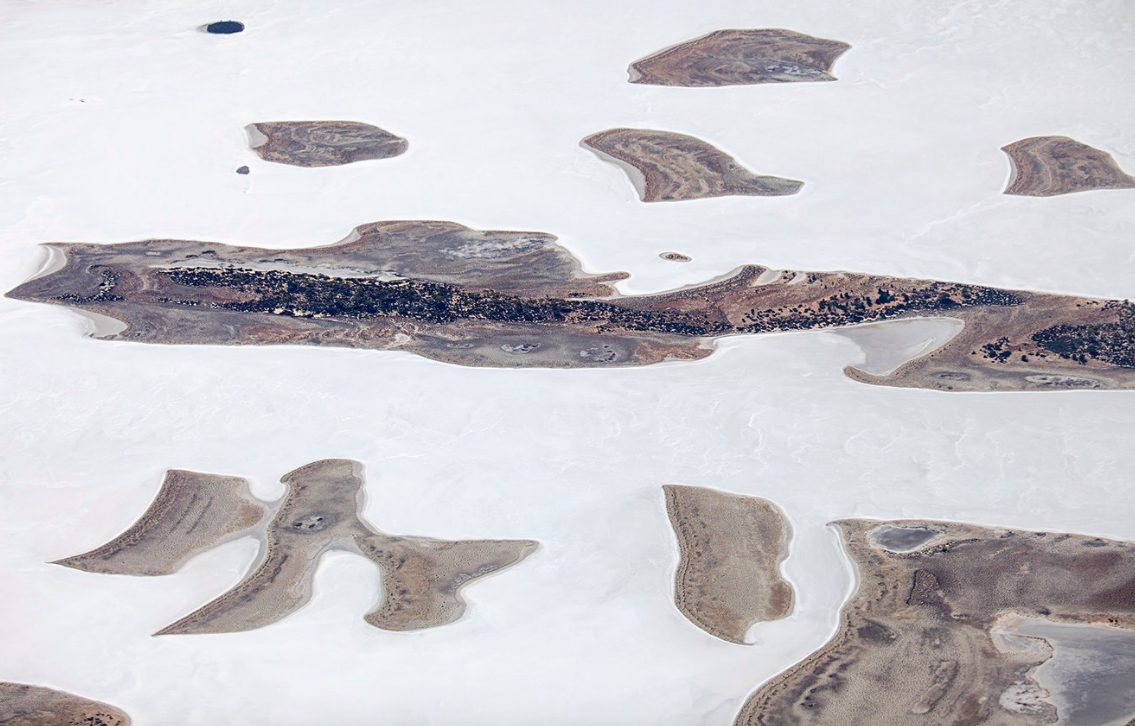
Islands on natural salt lake, Lake Johnston, north of Esperance, in Western Australia. (Taken 2014)
I have been attracted to the Australian landscape because of its size and subtle differences — a sense of wonderment, how it all came about, the evolution of the landscape. Like the rest of the world it has gone through many stages to be what it is today — uniquely Australian. But it also is a very old landscape. It is the flattest and driest continent, which compared with other countries, does not manifest itself in grandeur as we know it; large rivers, large mountains and the dramatic changes of the seasons.

The Pinnacles. Limestone formations, Nambung National Park. (Taken 2009)
However, I found that by looking at the landscape from the air, many natural characteristics revealed themselves much better, showing the evolution and the geographical variations. Nature is a great teacher. Observing and experiencing it can stimulate our creative senses which in turn is beneficial to ourselves and our environment.

Pink Lake, north-west of Esperance, Western Australia. This is the natural colouration of the salt lake. (Taken 1988)
It was in 1955 that I bought my first camera, and this was the beginning of a long association with photography. Intrigued by the unusualness of the Australian landscape, I became a landscape photographer with a strong bias for aerial photography, which I felt captured the vastness of the outback best — each flight became a flight of discovery.

Late light on a drifting sand dune, Windorah, south east Queensland. (Taken 1994)
There are so many Australian landscapes worthy of consideration whether they be rivers, coastal plains or deserts — all of which vary seasonally and at different times of the day. As much as possible I like to be inspired by what I see and this is where I experience a sense of wonderment of a world so complex, varied and beautiful.

Coastline between Esperance and Cape Arid, in Western Australia. This shows the reflection of the clouds in the lake, with the beach and ocean in the foreground. (Taken 2006)
Of course there are many ways to appreciate the landscape. My own involvement is to photograph the highlights and to interpret them with the camera in a painterly way. I emphasise these highlights by pointing the camera down and focussing on the subject, excluding the horizon so one looses a point of reference and the reality often takes on an abstract view. I hope that the character of the subject is enhanced and that it reveals more through isolation by the camera angle.
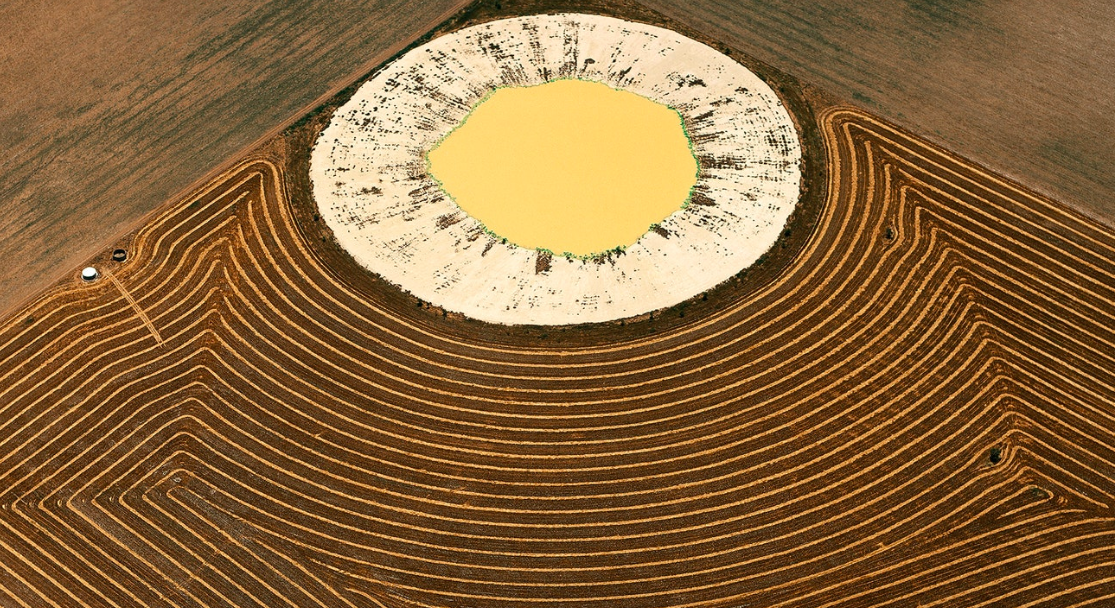
A turkey nest dam near Newdegate, Western Australia, contrasts against the ploughed fields. (Taken 1994)
The aerial point of view also allows us to examine the impact of humanity on Earth. There is a beauty in the man made landscape which takes on a relationship beyond the form as we know it. Certain subjects such as mining dumps, industry and farming look mundane at ground level, but from above my eye begins to recognise a gratifying order in the chaos — crops, paddocks and ploughed fields become masterpieces in abstraction often unknown to their creators. Simultaneously, the aerial perspective can also indicate the abuse and destruction that has taken place.
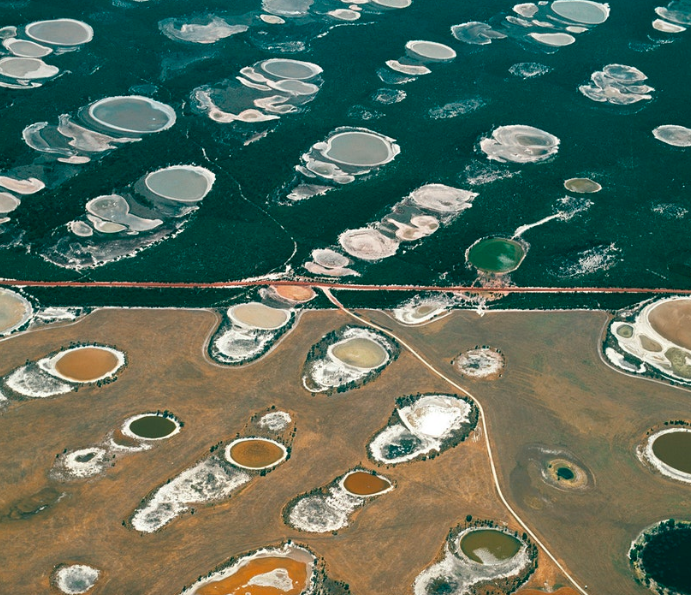
Salt lakes surrounded by wheat fields, 50 kilometers north east of Esperance, Western Australia. (Taken 1994)
At all times, I take a very personal approach to my work, but I also take great care to retain the optical reality. There are a million pictures out there. I am the only limitation. I can tune in and absorb the reality of the variations, combined with my way of seeing and my attitude. The older I get the harder it becomes, and the more I am drawn to nature. It is the creation of all life and matter that appeals to me now. Maybe I can make a small contribution to its well being which is in jeopardy. If beliefs in eternity are formed, nature is a great catalyst. I often feel intimidated by a great outback landscape, but also inspired by it.
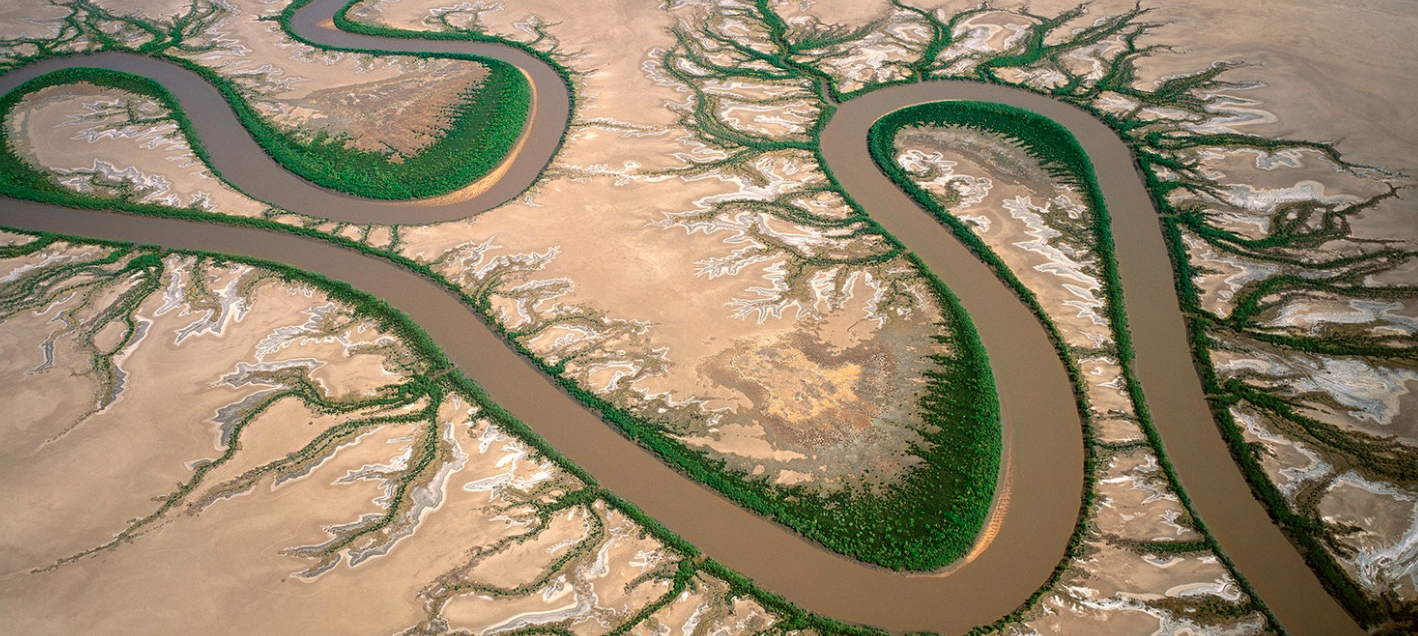
Forrest River, Kimberley, Western Australia. A tidal river system, north-west of Wyndham. (Taken 2003)
We now have more technical gadgetry at our disposal and there is no doubt it can help us to get a better photograph. But that in itself means little unless it enhances our understanding of the world around us. It is more important to use our creative spirit and gain wisdom than purely use it as a tool. Today in our digital age we have Photoshop with its possibility to enhance or to completely distort or create our own image using photographic components. We have become so image conscious that we often forget the beauty of reality.

Ocean between Ningaloo Reef and Coral Bay, Western Australia. The blue variation is due to the ocean’s floor level. (Taken 2006)
The subject of photography can either be concrete or intangible. In the first case the picture is basically realistic, where as in the latter case it is essentially abstract. But what makes photography so interesting is that by combining both we can introduce creativity in the subject and have the best of both worlds.

Ant clearings approx. 4–5 metres across, Great Sandy Desert, Pilbara, Western Australia. (Taken 2003)
Although many photographers can take photographs and do it well, it is work done in the full utilization of that creative spirit that stands out. It should be influenced by the subject itself and come from within oneself.

Tidal variations result in a coastal river pattern, Northern Territory. (Taken 2004)
“I still can’t find any better definition for the word Art, than this. Nature, Reality, Truth, but with a significance, a conception, and a character which the artist brings out in it and to which he gives expression, which he disentangles and makes free.” — VINCENT VAN GOUGH

Lake Dumbleyung, Wagin, Western Australia. Affected by farming this natural lake has become saline. After the first rains, it turns pink. (Taken 2005)
We do not always appreciate the aerial point of view. People regard the landscape as something you fly over. But in reality it is an opportunity to see the landscape from a different perspective. I never cease to marvel at the natural variations in the Australian landscape and although I value what is there photographically, in the end it is the observation and appreciation of the diversity that is the reward.

Top of Curtis Island, Cape Capricorn, north-east of Gladstone, Queensland. An estuary with sand banks. (Taken 1997)
Postscript — All of my photographs are as seen from the air and are not manipulated. I feel that the beauty, colours, and uniqueness of the Australian landscape is complete and needs no enhancing.
RICHARD WOLDENDORP is a Dutch-born Australian landscape photographer, with a focus on the aerial perspective. Appointed the Order of Australia in June 2012, “For service to the arts as an Australian landscape photographer.”
THIS ARTICLE WAS ORIGINALLY PUBLISHED ON MAPTIA
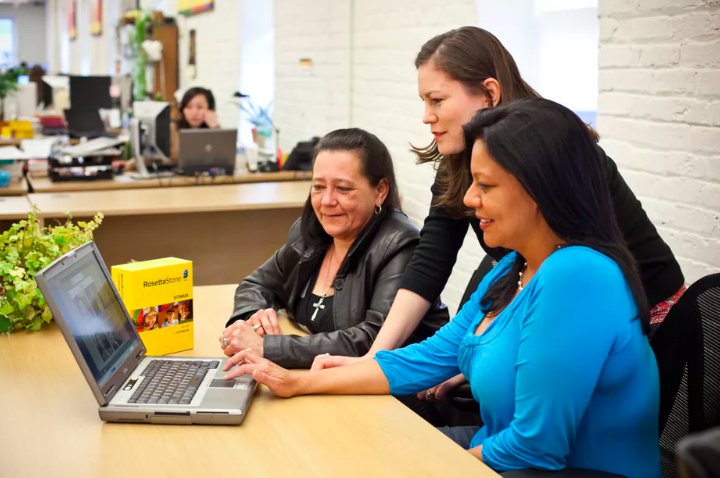
Members of the Chitimacha language team (from left to right) Sam Boutte, Kim Walden and Rachel Vilcan use the new language software for the first time. Author provided
Renaissance on the Bayou: The Revival of a Lost Language
In the summer of 1930, at the dawn of the Great Depression, a 21-year-old linguist named Morris Swadesh set out for Louisiana to record the area’s Native American languages, which were disappearing rapidly.
Morris and his peers were in a race against time to document them, and in the small town of Charenton on the Bayou Teche, he encountered Benjamin Paul and Delphine Ducloux, members of a small tribe called Chitimacha – and the last two speakers of their language.
But today, if you visited the Chitimacha reservation, you’d never know that their language went unspoken for half a century.
Over the past several decades, many Native American tribes have participated in what has become a robust language revitalization movement. As their populations of fluent speakers dwindle and age, tribes want to ensure that their heritage languages are passed on to the next generation – before it’s too late.
But because the Chitimacha tribe had no living speakers for a number of decades, it made the challenge that much greater. In the end, the story of the language’s decline, loss and rebirth is a remarkable example of cultural survival.
Why document a language?
Unlike some other cultural legacies, languages leave no trace in the archaeological record. There’s often no trace in the written record, either.
Only a small portion of the world’s estimated 7,000 languages are well-documented in places like dictionaries and grammar books. Those that are least well-documented are the most endangered.
Many dead or dying languages contain exotic features of verbal and written communication. Chitimacha, for example, doesn’t use a word “be” in phrases like “she is reading.” Instead, speakers must use a verb of position, such as “she sits reading” or “she stands reading.” These are things that challenge linguists’ understanding of how language works.
By working with Ben and Delphine, Morris was trying to capture a small piece of that linguistic diversity before it vanished.
One day, with Morris sitting on Ben’s porch dutifully scribbling down his every word in a composition notebook, Ben finished a story (a riveting tale of how the Chitimacha first acquired fire by stealing it from a mythical old blind man in the west). He then went on to tell Morris:
There were very many stories about the west. I believe I am doing well. I have not forgotten everything yet. When I die, you will not hear that sort of thing again. I am the only one here who knows the stories.
Ben passed away three years later, and Delphine not long thereafter. After their deaths, it seemed the Chitimacha language was doomed to silence.
Why do languages die?
How does a language come to have only two speakers? Why have so many Native American languages become endangered? The causes are manifold, but there are two main ones: sharp reductions in the population of the community that speaks the language, and interruptions in the traditional means of transferring the language from one generation to the next.
In the past, the former caused the most damage. Native American peoples were decimated by European diseases and subject to outright warfare.
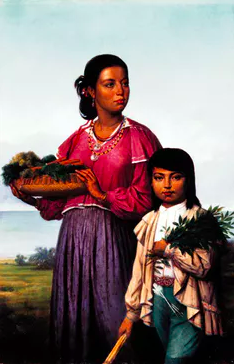
A portrait of two Chitimacha by French-born painter François Bernard (1870). Wikimedia Commons
Prior to European contact, the Chitimacha were lords of the bayou, with a territory stretching from Vermillion Bay in the west to present-day New Orleans in the east. They were expert canoe-makers and wielded extensive knowledge of the region’s labyrinthian network of waterways.
But by the time the French arrived in present-day Louisiana in 1699, the tribe’s numbers had dwindled to around 4,000, their communities gutted by European diseases that spread faster than the Europeans themselves.
After a protracted war with the French, they retreated deep into the bayou, where the their reservation at Charenton sits today. The 1910 census recorded just 69 people living there.
Only later did the second cause of language decline occur, when children on the reservation were sent to the infamous Carlisle Indian School in Pennsylvania, which interrupted the transmission of the language to the next generation.
Ben and Delphine, born in the latter half of the 1800s, were part of the last generation to learn the language at home. Eventually their parents and many of their peers passed away, leaving them as the last two speakers of the language.
Renaissance on the bayou
Ben probably never imagined that the efforts of him and Delphine would spark the tribe’s linguistic renaissance, awakening their language from 60 years of silence.
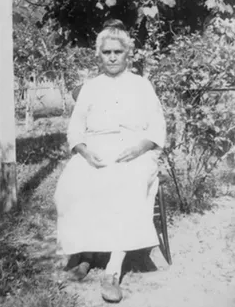
Delphine Ducloux was one of the two last speakers of the Chitimacha language, prior to its revival. State Library of Louisiana
In the early 1990s, cultural director for the tribe Kim Walden received a call from the American Philosophical Society Library informing her that they had all of Morris’ notebooks, and even his drafts for a grammar manual and dictionary, which totaled hundreds of pages in all. Thus began the herculean effort to revive the language.
The tribe put together a small-but-dedicated team of language experts, who set out to learn their language as quickly as possible. They began to produce storybooks based on Ben and Delphine’s stories, and word lists from the dictionary manuscript.
In 2008, the tribe partnered with the software company Rosetta Stone on a two-year project to create computer software for learning the language, which today every registered tribal member has a copy of. This is where I came in, serving as editor and linguist consultant for the project, a monumental collaborative effort involving thousands of hours of translating, editing, recording and photographing. We’re now hard at work finishing a complete dictionary and learner’s reference grammar for the language.
Today, if you stroll through the reservation’s school, you’ll hear kids speaking Chitimacha in language classes, or using it with their friends in the hall. At home they practice with the Chitimacha version of Rosetta Stone, and this past year the tribe even launched a preschool immersion program.
The kids even make up slang that baffles adult ears, a sure sign that the language is doing well – and hopefully will continue to thrive, into the next generation and beyond.
Author Danny Hieber presents the story of the Chitimacha language at the University of California’s Grad Slam competition.
DANIEL W. HIEBER is a PhD Candidate in Linguistics at the University of California in Santa Barbara.
THIS ARTICLE WAS ORIGINALLY PUBLISHED ON THE CONVERSATION
The Mystical Boiling River of the Amazon
When Andrés Ruzo was a boy, his grandfather would tell him tales of a mythical city of gold deep in the heart of the Peruvian jungle. Though never believing the stories to be true, the legend of the lost city stuck with him into adulthood. Years later, as a geothermal scientist, Ruzo decided to investigate. To his surprise, he discovered an incredulous river deep in the Amazon, with water hot enough to kill a human. Historically a place of pilgrimage for shamans and sorcerers, the river now faces increasing threats from poachers, loggers and squatters. Now, Ruzo is working hard to protect it.
Botswana
These footages were taken during a trip through Botswana in Africa. The videographer, Erwin Olmos, recalls it being “a tough trip, but at the same time a great experience.” Some places that are featured are Serowe Rhino reserve, Moremi National Park, Chobe River and Chobe National Park, Amazing Okavango Delta and many towns.
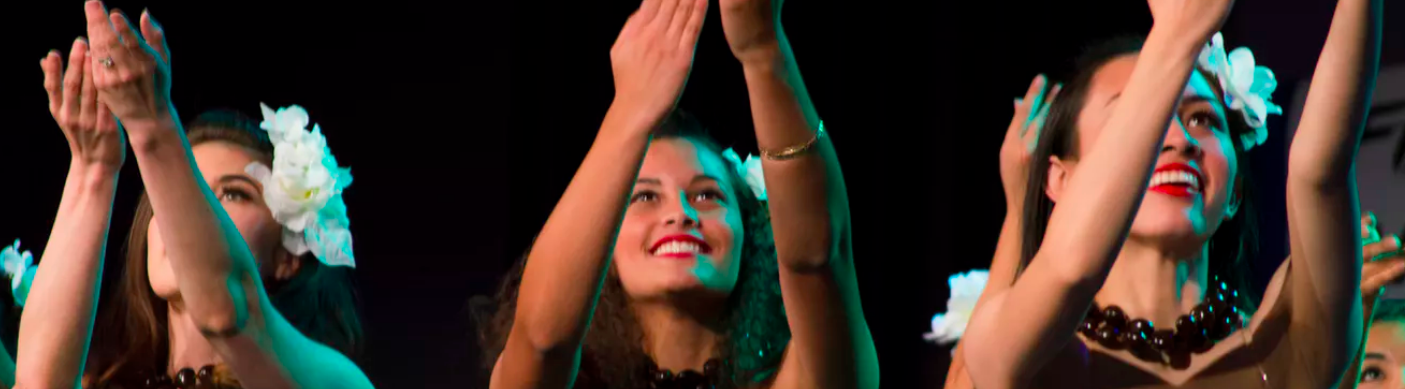
Dance is a unique way of passing on cultural stories to a younger generation. Aaron Hawkins/Flickr.com, CC BY-ND
How the Loss of Native American Languages Affects our Understanding of the Natural World
Alaska has a “linguistic emergency,” according to the Alaskan Gov. Bill Walker. A report warned earlier this year that all of the state’s 20 Native American languages might cease to exist by the end of this century, if the state did not act.
American policies, particularly in the six decades between the 1870s and 1930s, suppressed Native American languages and culture. It was only after years of activism by indigenous leaders that the Native American Languages Act was passed in 1990, which allowed for the preservation and protection of indigenous languages. Nonetheless, many Native American languages have been on the verge of extinction for the past many years.
Languages carry deep cultural knowledge and insights. So, what does the loss of these languages mean in terms of our understanding of the world.
Environmental knowledge
Embedded in indigenous languages, in particular, is knowledge about ecosystems, conservation methods, plant life, animal behavior and many other aspects of the natural world.
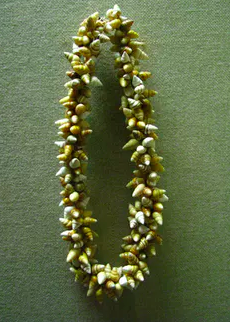
The shell necklace of Queen Liliʻuokalani. David Eickhoff/Flickr.com, CC BY
In Hawaiian traditions and belief systems,for example, the tree snails were connected to “the realm of the gods.” Hawaiian royalty revered them, which protected them from overharvesting.
The Bishop Museum in Honolulu holds a shell necklace, or lei, of Queen Lili‘uokalani, the last monarch of the Kingdom of Hawaii. It is made from tree snail shells, which signifies the high rank of female royalty. Wearing a shell was believed to provide “mana,” or spiritual power and a way to understand ancestral knowledge.
Many of these snails are now extinct and those remaining are threatened with extinction. Scientists are working with Hawaiian language experts to learn about the belief systems that once helped protect them and their habitats.
A tool for doctors
Words in indigenous languages can have cultural meanings, that can be lost during translation. Understanding the subtle differences can often shift one’s perspective about how indigenous people thought about the natural world.
For example, as an indigenous scholar of the environment, I led a team some years ago of language experts, elders and scholars from Montana and Alberta, Canada, to create a list of Blackfeet words, called a lexicon, of museum objects. The elders I worked with noted that the English word “herb,” which was used to describe most plant specimens within museums, did not have the same meaning in Blackfeet.
In English, the word “herb” can have numerous meanings, including a seasoning for food. The closest English word to herb in Blackfeet is “aapíínima’tsis.” The elders explained this word means “a tool that doctors use.”
The hope is that the lexicon and audio files recorded in the Blackfeet language that our research helped create, might assist future scholars access the embedded meanings in languages.
Blackfeet Word of the Day. Blackfeet History, Language and Environmental Knowledge.
Saving vanishing languages
Many Native American communities in the United States are now working to save these cultural insights and revitalize their languages.
In Wisconsin, an Ojibwe language school called “Waadookodaading,”translated literally as “a place where people help each other,” immerses its students in the environmental knowledge embedded in the language.
The Ojibwe believe that theirs is a language of action. And the best way for children to learn is by doing and observing the natural world. Each spring, for example, the students go into the woods to gather maple sap from trees, which is processed into maple syrup and sugar. These students learn about indigenous knowledge of plants, their habitats and uses.
Language loss can be considered as extreme as the extinction of a plant or an animal. Once a language is gone, the traditional knowledge it carries also gets erased from society.
Efforts are now underway worldwide to remind people of this reality. The United Nations has designated 2019 as the “International Year of Indigenous Languages” in order to raise awareness of indigenous languages as holders of “complex systems of knowledge” and encourage nation states to work toward their revitalization.
The loss of indigenous languages is not Alaska’s concern alone. It affects all of us.
ROSALYN R. LAPIER is an Associate Professor of Environmental Studies at The University of Montana.
THIS ARTICLE WAS ORIGINALLY PUBLISHED ON THE CONVERSATION
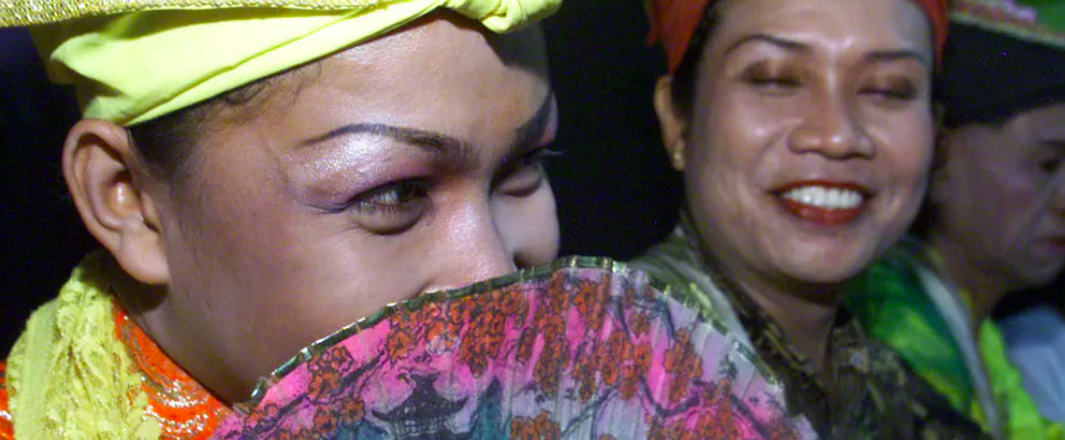
Bissu, or transgender priests, are one of five genders recognized by the Bugis. Reuters
What We Can Learn From an Indonesian Ethnicity that Recognizes Five Genders
On June 13, when a judge in Oregon allowed a person to legally choose neither sex and be classified as “nonbinary,” transgender activists rejoiced. It’s thought to be the first ruling of its kind in a country that, until now, has required that people mark “male” or “female” on official identity documents.
The small victory comes in the wake of a controversial new law in North Carolina that prevents transgender people from using public restrooms that do not match the sex on their birth certificates.
The conflict rooted in these recent policies is nothing new; for years, people have been asking questions about whether the “sex” we are born with should dictate things like which public facilities we can use, what to tick on our passport application and who’s eligible to play on particular sports teams.
But what if gender were viewed the same way sex researcher Alfred Kinsey famously depicted sexuality – as something along a sliding scale?
In fact, there’s an ethnic group in South Sulawesi, Indonesia – the Bugis – that views gender this way. For my Ph.D. research, I lived in South Sulawesi in the late 1990s to learn more about the Bugis’ various ways of understanding sex and gender. I eventually detailed these conceptualizations in my book “Gender Diversity in Indonesia.”
Does society dictate our gender?
For many thinkers, such as gender theorist Judith Butler, requiring everyone to choose between the “female” and “male” toilet is absurd because there is no such thing as sex to begin with.
According to this strain of thinking, sex doesn’t mean anything until we become engendered and start performing “sex” through our dress, our walk, our talk. In other words, having a penis means nothing before society starts telling you that if you have one you shouldn’t wear a skirt (well, unless it’s a kilt).
Nonetheless, most talk about sex as if everyone on the planet was born either female or male. Gender theorists like Butler would argue that humans are far too complex and diverse to enable all seven billion of us to be evenly split into one of two camps.
This comes across most clearly in how doctors treat children born with “indeterminate” sex (such as those born with androgen insensitivity syndrome, hypospadias or Klinefelter syndrome). In cases where a child’s sex is indeterminate, doctors used to simply measure the appendage to see if the clitoris was too long – and therefore, must be labeled a penis – or vice versa. Such moves arbitrarily forced a child under the umbrella of one sex or the other, rather than letting the child grow naturally with their body.
Gender on a spectrum
Perhaps a more useful way to think about sex is to see sex as a spectrum.
While all societies are highly and diversely gendered, with specific roles for women and men, there are also certain societies – or, at least, individuals within societies – who have nuanced understandings of the relationship between sex (our physical bodies), gender (what culture makes of those bodies) and sexuality (which kinds of bodies we desire).
Indonesia may be in the press for terror attacks and executions, but it’s actually a very tolerant country. In fact, Indonesia is the world’s fourth-largest democracy, and furthermore, unlike North Carolina, it currently has no anti-LGBT policy. Moreover, Indonesians can select “transgender” (waria) on their identity card (although given the recent, unprecedented wave of violence against LGBT people, this may change).
The Bugis are the largest ethnic group in South Sulawesi, numbering around three million people. Most Bugis are Muslim, but there are many pre-Islamic rituals that continue to be honored in Bugis culture, which include distinct views of gender and sexuality.
Their language offers five terms referencing various combinations of sex, gender and sexuality: makkunrai (“female women”), oroani (“male men”), calalai (“female men”), calabai (“male women”) and bissu (“transgender priests”). These definitions are not exact, but suffice.
During the early part of my Ph.D. research, I was talking with a man who, despite having no formal education, was a critical social thinker.
As I was puzzling about how Bugis might conceptualize sex, gender and sexuality, he pointed out to me that I was mistaken in thinking that there were just two discrete sexes, female and male. Rather, he told me that we are all on a spectrum:
Imagine someone is here at this end of a line and that they are, what would you call it, XX, and then you travel along this line until you get to the other end, and that’s XY. But along this line are all sorts of people with all sorts of different makeups and characters.
This spectrum of sex is a good way of thinking about the complexity and diversity of humans. When sex is viewed through this lens, North Carolina’s law prohibiting people from choosing which toilet they can use sounds arbitrary, forcing people to fit into spaces that might conflict with their identities.
SHARYN GRAHAM DAVIES is an Associate Professor of Social Sciences at Auckland University of Technology.
THIS ARTICLE WAS ORIGINALLY PUBLISHED ON THE CONVERSATION
Swimming with Whale Sharks in Mexico: Ecotourism or Exploitation?
Whale Shark ecotourism in Cancun, with tour companies recruiting the very fishermen who killed sharks in the past as tour operators working toward their preservation.
Read MoreLights of the Medina
This video depicts the famous medinas in Marrakesh, Morocco. The medinas are huge hubs of commerce for locals and tourists. Every sort of product can be found in the medinas, such as food, clothes, souvenirs, performances, etc.
Read More
"It had long since come to my attention that people of accomplishment rarely sat back and let things happen to them. They went out and happened to things." -Leonardo DaVinci

"A journey is like marriage. The certain way to be wrong is to think you control it." -John Steinbeck
"There are no foreign lands. It is the traveler only who is foreign." -Robert Louis Stevenson
One Woman’s Mission to End Polio in Pakistan
Polio is still a critical problem in Pakistan where vaccination efforts have stalled. Khalida Nasreen is on a mission to change that. Every morning at 5 a.m., she hops on a motorbike and makes her way around Karachi, going door-to-door to inoculate the children in town. It’s a dangerous job as healthcare workers have lost their lives in the same pursuit, but that doesn’t stop Khalida. Thanks to her efforts, the prevalence of polio in town has decreased, building a brighter future for the next generation of Pakistani children.
Sumo Soup: Living Large with Chanko Nabe
Want to bulk up like a sumo wrestler? Try chanko nabe, an ancient Japanese dish that is synonymous with sumo culture. While the average wrestler eats about 10 bowls of it per day, non-wrestlers can enjoy this traditional soup at any number of chanko restaurants, including Kotogaume.
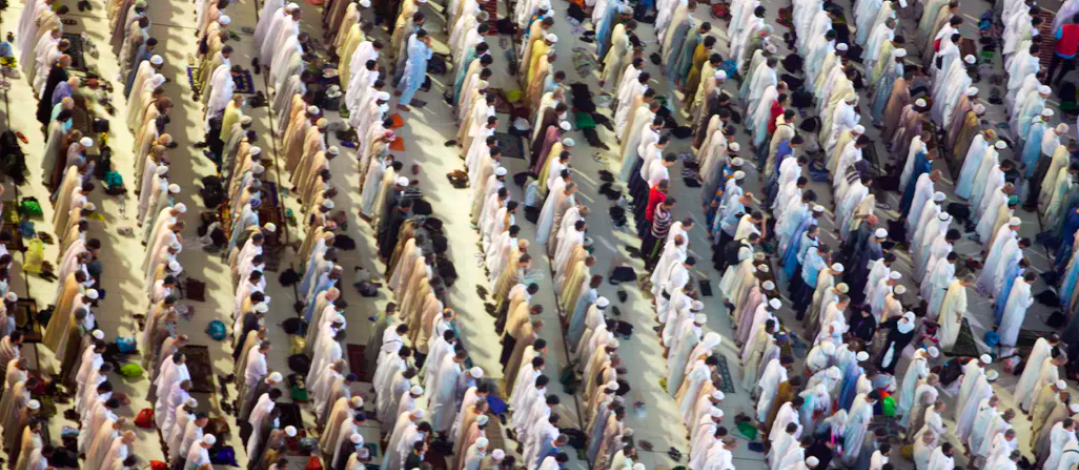
Muslim pilgrims pray at the Grand Mosque, ahead of the annual Hajj pilgrimage in Mecca, Saudi Arabia, in August 2017. AP Photo/Khalil Hamra
What is the Hajj?
Nearly 2 million Muslim pilgrims are gathering in the holy city of Mecca in Saudi Arabia for the Hajj. This five-day pilgrimage is a once-in-a-lifetime obligation for all Muslims who have the physical and financial ability to undertake the journey.
What is the religious and political significance of this annual pilgrimage?
The fifth pillar
Millions of Muslims come from countries as diverse as Indonesia, Russia, India, Cuba, Fiji, the United States and Nigeria – all dressed in plain white garments.
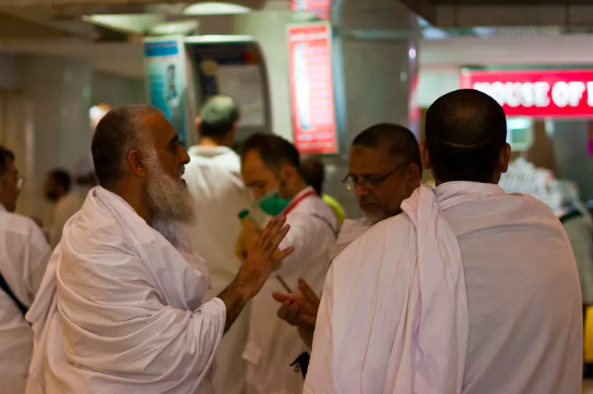
Pilgrims dressed in white garments. Al Jazeera English, CC BY-NC
Men wear seamless, unstitched clothing, and women, white dresses with headscarves. The idea is to dress plainly so as to mask any differences in wealth and status.
The pilgrimage is considered to be the fifth pillar of Islamic practice. The other four are the profession of faith, five daily prayers, charity and the fast of Ramadan.
The first day of the Hajj
The rites of the Hajj are believed to retrace events from the lives of prominent prophets such as Ibrahim and Ismail.
Pilgrims start by circling the “Holy Kaaba,” the black, cube-shaped house of God, at the center of the most sacred mosque in Mecca, seven times. The Kaaba occupies a central place in the lives of Muslims. Muslims, all over the world, are expected to turn toward the Kaaba when performing their daily prayers.
The Quran tells the story of Ibrahim, who when commanded by God, agreed to sacrifice his son, Ismail. Muslims believe the Kaaba holds the black stone upon which Ibrahim was to carry out his oath.
Pilgrims are bound by specific rules regarding going around the Kaaba. They may kiss, touch or approach the Kaaba during the pilgrimage as a sign of their devotion.
In performing these rituals, they join a long line of pilgrims to Mecca – including Prophet Muhammad, who circled the Kaaba.
Pilgrims then proceed to a ritual walk – about 100 meters from the Kaaba – to hills known as “Safa” and “Marwah.” Here they re-create another significant event recorded in the Quran.
The story goes that Ibrahim was granted a son by God through his Egyptian slave girl Hajar. After the birth of Ismail, God instructed Ibrahim to take Hajar and her newborn son out into the desert and leave them there. Ibrahim left them near the present-day location of the Kaaba. Ismail cried out with thirst and Hajar ran between two hills, looking for water until she turned to God for help.
God rewarded Hajar for her patience and sent his angel Jibreel to reveal a spring, which today is known as “Zamzam Well.” Pilgrims drink water from the sacred well and may take some home for blessings.
The second day of the hajj
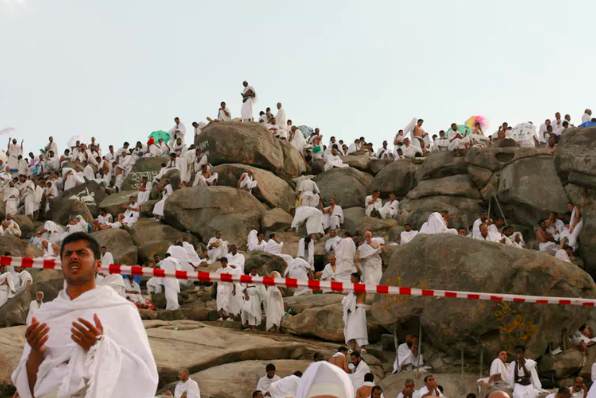
Pilgrims praying on Arafat. Al Jazeera English, CC BY-SA
The hajj “climaxes” with a sojourn in the plains of Arafat near Mecca. There, pilgrims gather in tents, spend time with one another and perform prayers. Some pilgrims will ascend a hill known as the “Mount of Mercy,” where Prophet Muhammad delivered the farewell sermontoward the end of his life.
They then proceed to an open plain near Mecca, often a highlight of the journey for many pilgrims. Muslims believe that the spirit of God comes closer to Earth in this place at the time of the pilgrimage.
As a scholar of global Islam, during my fieldwork I have interviewed those who have gone on the Hajj. They have described to me their personal experiences of standing in the plains of Arafat or circling the Kaaba with fellow Muslims and feeling a close communion with God.
Final three days
Afterwards, pilgrims move to Mina, also known as the Tent City where more than 100,000 tents house the millions of pilgrims about 5 kilometers from the holy city of Mecca.
Here they recall how Satan tried to tempt Ibrahim to disobey God’s call to sacrifice Ismail. Ibrahim, however, remained unmoved and informed Ismail, who was willing to be offered to God. To reenact Ibrahim’s rebuff of Satan’s temptation, pilgrims throw small stones at a stone pillar.
They then proceed to follow Ibrahim in the act of sacrifice. The Quran says just as Ibrahim attempted to kill his son, God intervened and a ram was killed in place of Ismail. In remembrance, Muslims all over the world ritually slaughter an animal on this day. The “festival of the sacrifice” is known as Eid al-Adha.
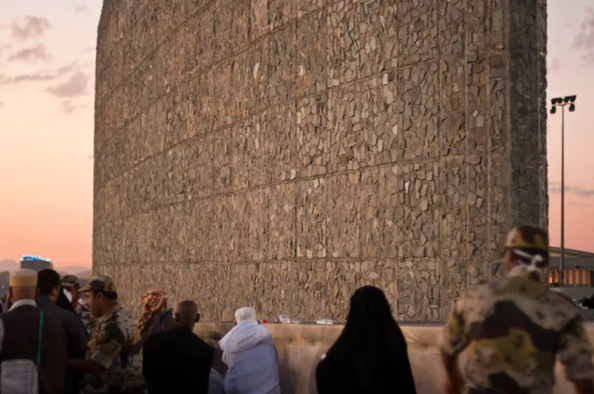
Pilgrims stoning the devil in Mina. Al Jazeera English, CC BY-SA
Many pilgrims spend the next few days in Mina, where they repeat some of the rituals. It is where they start to transition to their worldly life by putting on their everyday clothes.
Muslims believe that a proper performance of the Hajj can absolve them of any previous sins. However, they also believe that just undertaking the pilgrimage is not enough: It is up to God to judge, based on the intention of those undertaking the pilgrimage.
Creating one Muslim community
Of course, the pilgrimage does not take place in a political void. The Hajj is a massive organizational project for the Saudi authorities. Issues concerning crowd management, security, traffic and tensions constantly plague the successful organization of the event. A tragic stampede in 2015 left over 700 dead. Since then Saudi authorities review preparations even more carefully.
There are other tensions too that come up at this time: Some Shiagovernments such as Iran, for example, have leveled charges alleging discrimination by Sunni Saudi authorities.
This year, Muslims from Canada are concerned about logistics traveling back from the Hajj. Saudi Arabia has suspended all direct flights to Canada in a diplomatic feud sparked by tweets related to the Kingdom’s human rights violations.
To address such issues, Muslims in the past have called to put together an international, multi-partisan committee to organize the pilgrimage. Perhaps that could help avoid regional or sectarian conflicts. The Hajj, after all, is any individual Muslim’s single most symbolic ritual act that reflects the ideal of unity.
By requiring Muslims to don the same clothes, pray in the same space and perform the same rituals, the Hajj has the potential to unite a global Muslim community across national and class boundaries.
KEN CHITWOOD is a Ph.D. Candidate of Religion in the Americas and Global Islam at the University of Florida
THIS ARTICLE WAS ORIGINALLY PUBLISHED ON THE CONVERSATION
Rio
A year ago, Yury Sharov was asked to go to Rio with a couple of musicians from London to make a music video for their song, capturing their holidays on the IPanema beach. After the video was done, Yury had a lot of material that was not used and decided to make this short video about all the sides of Rio.
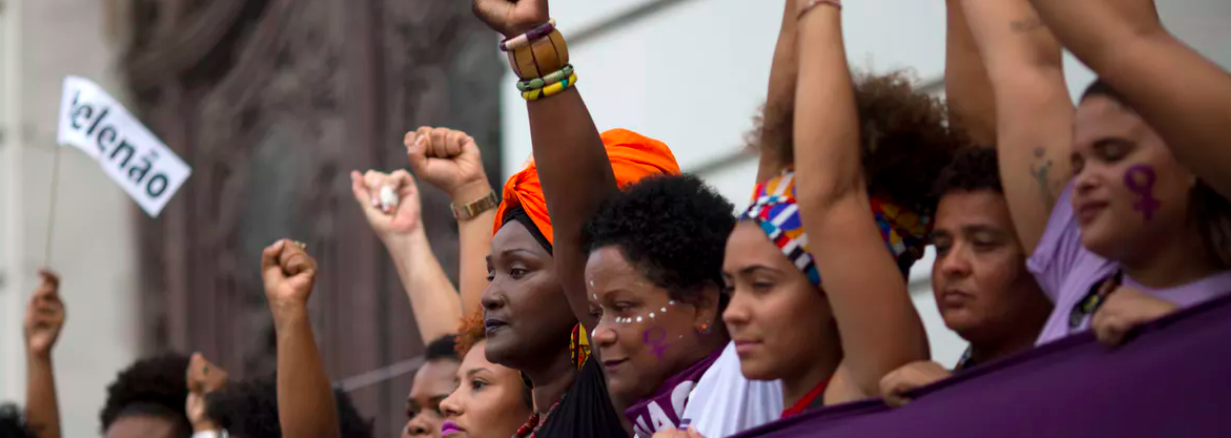
Black women in Brazil protest presidential frontrunner Jair Bolsonaro, who is known for his disparaging remarks about women, on Sept. 29, 2018. AP Photo/Silvia Izquierdo
Sexism, Racism Drive More Black Women to Run for Office in Both Brazil and US
Motivated in part by President Donald Trump’s disparaging remarks about women and the numerous claims that he committed sexual assault, American women are running for state and national office in historic numbers. At least 255 women are on the ballot as major party congressional candidates in the November general election.
The surge includes a record number of women of color, many of whom say their candidacies reflect a personal concern about America’s increasingly hostile, even violent, racial dynamics. In addition to the 59 black female congressional candidates, Georgia’s Stacey Abrams hopes to become her state’s first black governor.
The U.S. is not the only place where the advance of racism and misogyny in politics has has spurred black women to run for office at unprecedented levels.
In Brazil, a record 1,237 black women will be on the ballot this Sunday in the country’s Oct. 7 general election.
Brazilian women rise up
I’m a scholar of black feminism in the Americas, so I have been closely watching Brazil’s 2018 campaign season – which has been marked by controversy around race and gender – for parallels with the United States.
Last weekend, hundreds of thousands of Brazilian women marched nationwide against the far-right presidential frontrunner Jair Bolsonaro, under the banner of #EleNao – #NotHim.
Bolsonaro, a pro-gun, anti-abortion congressman with strong evangelical backing, once told a fellow congressional representative that she “didn’t deserve to be raped” because she was “terrible and ugly.”
Bolsonaro has seen a boost in the polls since he was stabbed at a campaign rally on Sept. 8 in a politically motivated attack.
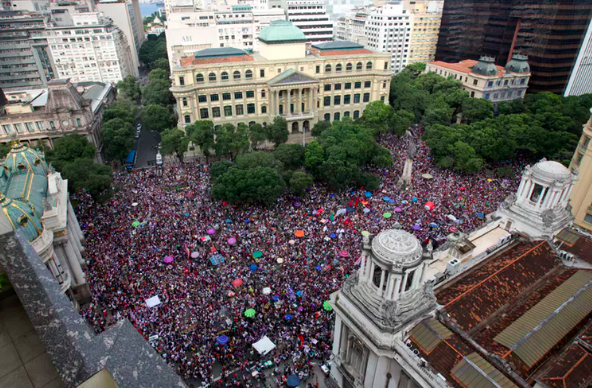
Protests in Rio de Janeiro against Jair Bolsonaro on Sept. 29, organized under the hashtag #EleNao (#NotHim). AP Photo/Silvia Izquierdo
Brazil has shifted rightward since 2016, when the left-leaning female president Dilma Rousseff was ousted in a partisan impeachment process that many progressives regard as a political coup.
Her successor, then-Vice President Michel Temer, quickly passed an austerity budget that reversed many progressive policies enacted under Rousseff and her predecessor, Workers Party founder Luís Inácio “Lula” da Silva.
The move decimated funding for agencies and laws that protect women, people of color and the very poor.
Racism in Brazil
In Brazil, these three categories – women, people of color and the very poor – tend to overlap.
Brazil, which has more people of African descent than most African nations, was the largest slaveholding society in the Americas. Over 4 million enslaved Africans were forcibly taken to the country between 1530 and 1888.
Brazil’s political, social and economic dynamics still reflect this history.
Though Brazil has long considered itself colorblind, black and indigenous Brazilians are poorer than their white compatriots. Black women also experience sexual violence at much higher rates than white women – a centuries-old abuse of power that dates back to slavery.
Afro-Brazilians – who make up just over half of Brazil’s 200 million people, according to the 2010 census – are also underrepresented in Brazilian politics, though sources disagree on exactly how few black Brazilians hold public office.
Three Afro-Brazilians serve in the Senate, including one woman. In the 513-member lower Chamber of Deputies, about 20 percent identify as black or brown. Women of color hold around 1 percent of seats in the Chamber of Deputies.
Black women step into the fray
That could change on Sunday.
This year, 9,204 of the 27,208 people running for office across Brazil are women, which reflects a law requiring political parties to nominate at least 30 percent women. About 13 percent of female candidates in 2018 are Afro-Brazilian.

A campaign ad for Rio city council member Talíria Petrone, who is running for Congress.Facebook
In most Brazilian states, that’s a marked increase over Brazil’s last general election, in 2014, according to the online publication Congresso em Foco.
In São Paulo, Brazil’s most populous state, 105 black women ran for office in 2014. This year, 166 are. In Bahia state, there are 106 black female candidates for political office, versus 59 in 2014. The number has likewise doubled in Minas Gerais, from 51 in 2014 to 105 this year.
As in the United States, Brazil’s black wave may be a direct response to alarming social trends, including sharp rises in gang violence and police brutality, both of which disproportionately affect black communities.
But many female candidates in Rio de Janeiro, Brazil’s second largest city, say one specific event inspired them to run.
In March, Marielle Franco, an Afro-Brazilian human rights activist and Rio de Janeiro city councilwoman, was assassinated – the 11th Brazilian activist to be murdered since November 2017.
Franco’s murder remains unsolved, but she was an outspoken critic of the military occupation of Rio’s poor, mostly black favela neighborhoods. The ongoing police investigation has implicated government agents in the shooting, which also killed her driver.
Her death unleashed an avalanche of activism among black women in Rio de Janeiro, with new groups offering fundraising and political training for female candidates of color.
On Sunday, 231 black women from Rio de Janeiro state will stand for election in local, state and federal races – more than any other state in Brazil and more than double the number who ran in 2014.
Black representation from Rio to Atlanta
Black women may have been historically excluded from Brazil’s formal political arena, but they have been a driving force for social and political change since the country’s transition from dictatorship to democracy in 1985.
Decades before #MeToo, Brazilian women of color were on the front lines of activism around issues like gender-based violence, sexual harassment and abortion.
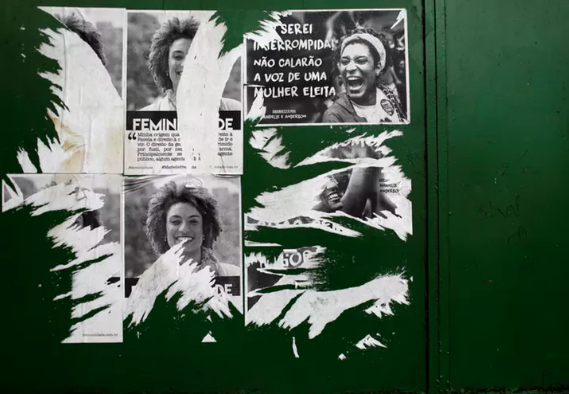
The March 2018 assassination of Rio de Janeiro city councilwoman, Marielle Franco, spurred a wave of black women running for local and federal office in Brazil. Reuters/Ricardo Moraes
Brazil has hundreds of black women’s groups. Some, including Geledes, a center for public policy, are mainstays of the Brazilian human rights movement. The founder of the Rio de Janeiro anti-racism group Criola, Jurema Werneck, is now the director of Amnesty International in Brazil.
The fact that thousands of black women, both veteran activists and political newcomers, will appear on the ballot on Sunday is testament to their efforts.
As in the United States, black Brazilian women’s demand for political representation is deeply personal. They have watched as their mostly male and conservative-dominated congresses chipped away at hard-won protections for women and people of color in recent years, exposing the fragility of previous decades’ progress on race and gender.
Black women in Brazil and the U.S. know that full democracy hinges on full participation. By entering into politics, they hope to foster more inclusive and equitable societies for all.
KIA LILLY CALDWELL is a Professor of African, African American, and Diaspora Studies at the University of North Carolina at Chapel Hill.
THIS ARTICLE WAS ORIGINALLY PUBLISHED ON THE CONVERSATION
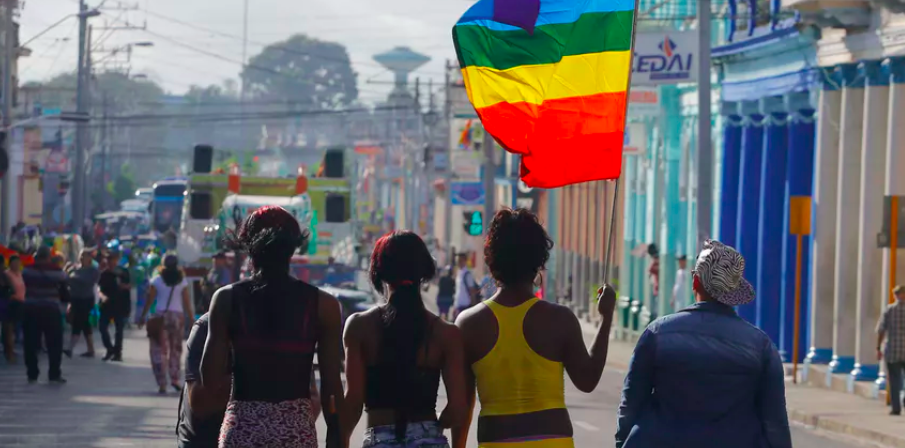
As gay Cubans gain more rights, opposition is also growing. AP Photo/Desmond Boylan
As Cuba Backs Gay Marriage, Churches Oppose the Government’s Plan
Cubans are debating a constitutional reform that, among other legal changes, would open the door to gay marriage. It would also prohibit discrimination against people based on sex, gender, sexual orientation and gender identity in the communist nation.
The proposed new Constitution, drafted by a special commission within Cuba’s National Assembly, was unveiled in July. If the National Assembly and President Miguel Díaz-Canel approve the document after a Feb. 24, 2019 public referendum, marriage would be defined as a “union between two people.”
Cuba’s 1976 Constitution, known as the Carta Magna, defines marriage as a union between a man and a woman. And it does not fully protect private enterprise, freedom of association or allows for same-sex marriage – despite growing social acceptance and political tolerance for such rights.
Emigrés who retain Cuban nationality have been invited to participate in Cuba’s public debate on the constitutional reform – though not to vote on it – via a digital forum run by the Foreign Ministry – a level of citizen outreach that’s “unprecedented” in Cuba, says Ernesto Soberón, the ministry’s director of consular affairs and Cubans residing overseas.
Cuba’s political process opens up
This lively, broad-based debate is a sign of how much Cuba – a main subject of my research as a professor of literature and cultural studies – has changed in recent years.
President Raúl Castro, who took over for his ailing older brother Fidel in 2006, began to open Cuba’s economy to foreign investment and normalized diplomatic relations with the United States, which has maintained its economic embargo on the Communist island since 1962.
Raúl Castro also worked with President Barack Obama to ease some economic restrictions on Cuba.
Castro stepped down in April 2018, handing power over to the much younger Díaz-Canel.
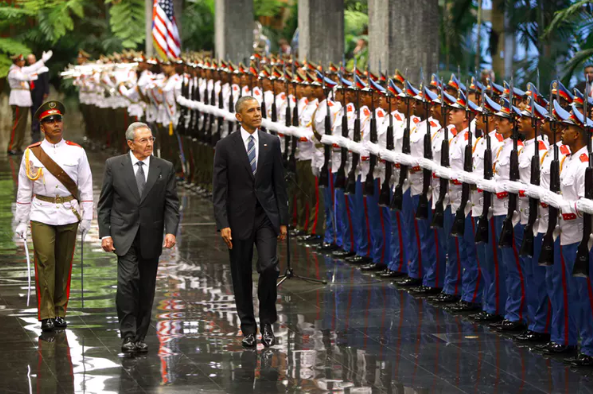
Presidents Barack Obama and Raúl Castro met in Havana in 2016, the culmination of the diplomatic ‘normalization’ process between the U.S. and Cuba. Reuters/Jonathan Ernst
Cuba has moderately amended its Carta Magna just three times. A 1978 constitutional reform created an official channel for youth political participation, for example, while that of 1992 liberalized elements of Cuba’s socialist economic model to revitalize Cuba’s economy.
Today’s proposed reform is a complete overhaul. It would add 87 articles, change 113 and eliminate 13, even a section of Article 5 affirming Cuba’s “advance toward a Communist society.”
Beyond legalizing gay marriage, the new Constitution would protect private property, limit the presidential term to five years and introduce the role of prime minister.
Intense debate has surrounded the possibility of marriage equality in Cuba, and not just within the government’s official public meetings. Cubans are also discussing and debating gay marriage with neighbors and friends, in the streets and online – a departure from Cuba’s traditionally more top-down style of government.
The rise of gay rights in Cuba
Cuba’s nascent LGBTQ rights movement also began under Raúl Castro, thanks in large part to the leadership of his daughter Mariela Castro, a National Assembly member and president of the semi-governmental Centro Nacional de Educación Sexual, founded in 1987 to advance sexual awareness in Cuba.
A lack of opinion polling makes it difficult to measure Cuban public support for gay marriage. But acceptance of homosexuality, both within the government and in civil society, has grown appreciably.
During the 1960s and 1970s, homosexuality was considered incompatible with Cuba’s model of the revolutionary man: atheist, heterosexual and anti-bourgeoisie. Gay people, active Christians and others who defied these ideals were sent to military work camps to “strengthen” their revolutionary character.
Today, the Cuban government appears to accept homosexuality as part of socialist society. In 2008 the National Assembly approved a law allowing sexual reasignment surgery.
La Habana holds annual marches against homophobia and transphobia and cities across the island celebrate the Gay Pride parade.
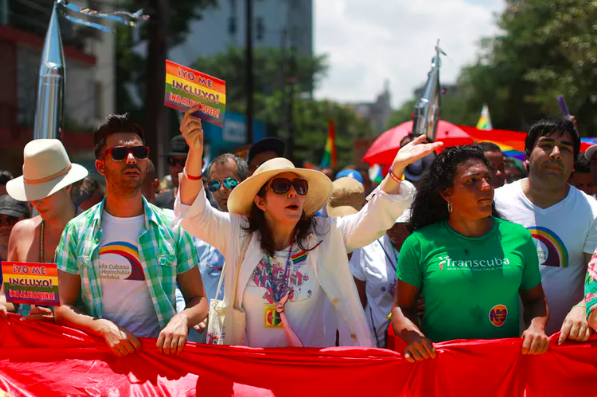
Mariela Castro (center), daughter of former president Raúl Castro, is a leader in Cuba’s LGBTQ movement.Reuters/Alexandre Meneghini
But legacies of intolerance remain.
The Assembly of God Pentecostal Church, the Evangelical League and the Methodist Church of Cuba, among other Christian churches, have issued a joint statement opposing gay marriage.
Traditionally, religion has taken a back seat to politics in Cuba. AP Photo/Cristobal Herrera
Their public letter, published on June 8, argues that such “gender ideology” has “nothing whatsoever to do with our culture, our independence struggles nor with the historic leaders of the Revolution.”
Cuba is a secular country where political ideology has historically trumped religion. Religious opposition to a government proposal is rare.
It is even more unusual for the church to attempt to mobilize the Cuban public, as some Christian leaders are trying to do now.
According to the Cuban magazine La Jiribilla, preachers on the streets have been handing out fliers saying gay marriage defies God’s “original design” for the family.
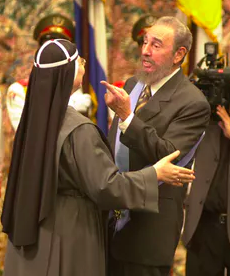
Traditionally, religion has taken a back seat to politics in Cuba. AP Photo/Cristobal Herrera
LBGTQ activists answer
Gay rights groups and feminists are responding with a creative show of force.
Clandestina, Cuba’s first online store, and the tattoo studio La Marca are spearheading a campaign called “Cuban design,” celebrating a “very original family” – phrasing that rebuts Christian claims about God’s design.
“More than anything, this is an issue of free expression,” Roberto Ramos Mori, of La Marca, said in an email. “The way to push back against hate is calmly, with intelligence – and, of course, humor.”
Cubans with internet access use the hashtag #mifamiliaesoriginal to signal their support for LGBTQ rights on social media.
The church’s powerful opposition to marriage equality reflects a strategy commonly deployed across Latin America, says the Cuban feministAilynn Torres Santana.
Catholic and evangelical groups in Ecuador used similar language, for example, to oppose a 2017 law allowing citizens to choose their own gender identifier, she says. In response to the legislation – which recognized gender as “a binary that is socially and culturally created, patriarchal and heteronormative” – churches called for “citizens to live in harmony with nature.”
Similar scenes played out when both Colombia and Brazil advanced LGBTQ rights, with Christian groups dismissing any attempt to change traditional gender roles as the “result” of what they pejoratively call “gender ideology.”
What’s next for Cuba
Gay marriage is not the only battlefield for Cuba’s newly empowered churches.
Abortion, illegal in most of Latin America, has been a woman’s right in Cuba since 1965. Traditionally, not even Cuba’s Catholic church publicly opposed it.
Recently, though, Christians in Cuba have begun publicly advocatingagainst abortion.
If conservative religious groups manage to prevent gay marriage in Cuba, I believe it would be a setback for social progress on the island.
But the mere existence of alternative voices in Cuba’s public sphere – including that of its churches – is, itself, proof that the country has already changed.
MARÍA ISABEL ALFONSO is a Professor of Spanish at St. Joseph's College of New York.
THIS ARTICLE WAS ORIGINALLY PUBLISHED ON THE CONVERSATION
Female Saudi Arabian Activist on Death Row for Peaceful Protest
On August 21, 2018, Saudi Arabian public prosecutors announced that they were considering the death penalty for five Saudi Shia activists. One of the five is Israa al-Ghomgham, a female activist who could become the first woman sentenced to death in Saudi Arabia. Ghomgham, along with four other Saudi Shia activists including her husband, engaged in peaceful demonstrations for Shia rights beginning in 2011 during the rise of the Arab Spring, which led to their 2015 arrests.
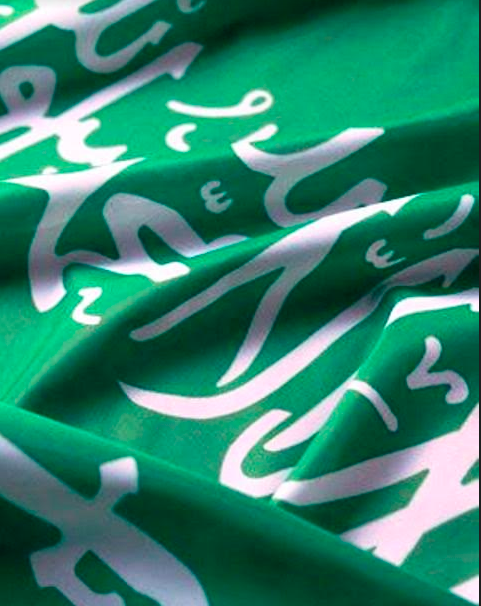
Saudi Arabian Flag. Iqbal Osman. Wikimedia Commons
“Any execution is appalling, but seeking the death penalty for activists like Israa al-Ghomgham, who are not even accused of violent behavior, is monstrous,” said Sarah Leah Whitson, who directs the Middle East sector of Human Rights Watch. “Every day, the Saudi monarchy’s unrestrained despotism makes it harder for its public relations teams to spin the fairy tale of ‘reform’ to allies and international business.”
Responding to peaceful protests with the death penalty is compromising both to proponents of human decency and order, and these actions are symptomatic of a larger illness. If Saudi Arabia is to continue to suppress and murder its own citizens, its actions could lead to its internal combustion. To preserve its tenuous position of prosperity, the Saudi Arabian government must honor the voices of its insurgents—or at least allow them to live.
Saudi Arabia, a desert country in the Middle East said to be the birthplace of Islam, holds a complex position at the pinnacle of capital and culture. It has the world’s third highest national total estimated value of natural resources. It is home to the world’s largest oil company, and it has been the proponent of various reform agendas, significant amount of money invested in solar energy. It is also ruled by the ultraconservative Wahhabi religious movement, which is part of Sunni Islam.
It has shown support for counterterrorism and revolutionary liberal and Arab Spring ideals and has supported rebel forces in Syria and Yemen, but internally it has been a breeding ground for violent forms of radical Islam, placing it at a crux between the most progressive and oppressive sides of the ideological spectrum. The nation’s 32-year-old king, Mohammed bin Salman, has been pushing to modernize his country, opening movie theatres and allowing women to drive for the first time—but his actions towards protestors despite his presentation of liberalism rings eerily close to the actions of Bashar al Assad, Syrian president who also began his reign by encouraging Westernization in Syria before cracking down on protestors and unleashing a bloody civil war. Under Salman, critics of the Saudi Arabian regime have been arrested in scores, and 58 people are currently on death row. Many of these prisoners are women, often arrested for protesting the country’s guardianship system, which places Saudi Arabian men in almost complete control of their daughters’ or wives’ lives.
Israa al-Ghomgham and her husband were arrested on December 5, 2015, and are on trial at the Specialized Criminal Court, which Saudi Arabia installed in 2008 and which has drawn expense criticism from human rights activists, sentencing eight protestors to death in 2014 and 14 in 2016. Currently human rights campaigners are working to secure her freedom and life.
EDEN ARIELLE GORDON is a writer, musician, and avid traveler. She attends Barnard College in New York.



The Truth About Where Hair Extensions Come From
This video takes us into the underground world of human hair trafficking. Wigs and extensions are often made of real human hair, but the hair is usually sourced from human trafficking.