
The star-filled night sky is one of the greatest natural wonders, but it can be hard to see these days due to light pollution. Therefore, the ultimate places for stargazing are “Dark Sky Sanctuaries”, some of the most remote and dark places where the night sky is perfectly visible. Check out these 15 spots.
Read MoreTapas Bars in Andalucía Continue Spanish Traditions
Spanish tapas started as simple small plates to accompany a drink and are now an important part of Spain’s culture where people gather for food, drinks and socializing.
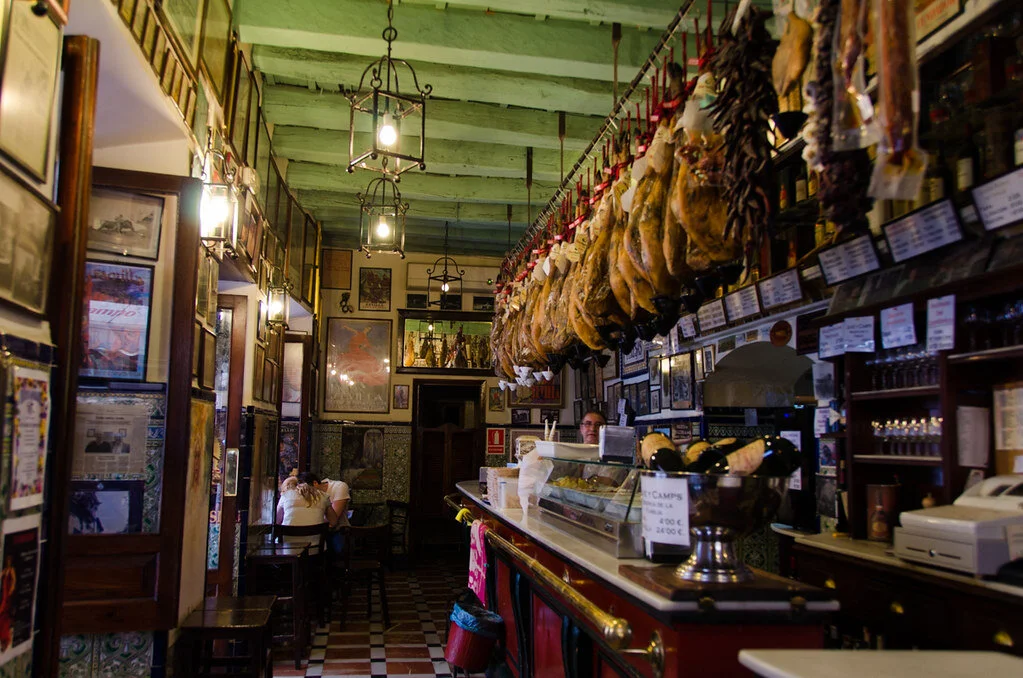
Bar Las Teresas in southern Spain. Vallausa. CC BY 2.0
Tapas bars are a long-held Spanish tradition that includes traditional food, wine, friends and a lively atmosphere. The small plates have been enjoyed at wine bars for generations, but the exact origin of tapas is unknown. There are several tales speculating how the dishes first gained popularity. One dates back to the 13th century when King Alfonso X of Castille was ill and only ate and drank in small quantities. Another story tells a more grassroots origin, with local bars in Andalucía serving wine with a saucer on top to keep flies out during the hot summer. In addition, a small amount of complimentary food would be placed on the plate to attract more customers to the bar. Even though there may be some disagreement over the origins of tapas, there is no doubt that the cuisine is a staple of Spanish food and culture. With increased tourism and popularity, most tapas are no longer free, although some wine bars still will serve complimentary tapas in smaller towns in Andalucía.


Tapas bars are typically small wine bars, with varying small plates placed on top of the bars. While many tapas may have started out as simple small plates, chefs have gotten increasingly inventive in creating new dishes over the years. Traditional cold tapas include serrano, thinly sliced salt-cured ham and manzanilla or gordal olives, classic Andalucía olives, along with a variety of salads. Seafood is prevelant, with calamari and prawns dipped in batter, called gambas gabardina, being just a few dishes offered at tapas bars. Other popular tapas include ham croquettes (a fried ball of cheese and ham), pincho de tortillas (a potato-based omelet) and patatas bravas (fried potatoes covered in sauce).

Tapas bar hopping is popular for people to socialize and enjoy traditional food. People can have tapas as a quick snack with a drink and can eat standing up at a bar, or turn the small plates into a complete meal with many people. Tapas hold so much cultural significance to Spain that in 2016 the country sought to put tapas on the UNESCO Intangible Cultural Heritage List. Tapas have now spread worldwide with chefs experimenting with small plates of all kinds. Despite the global reach, Spain’s beloved tapas bars are still a unique cultural experience.
RELATED CONTENT



Dana Flynn
Dana is a recent graduate from Tufts University with a degree in English. While at Tufts she enjoyed working on a campus literary magazine and reading as much as possible. Originally from the Pacific Northwest, she loves to explore and learn new things.
3 Cliffside Communities and Underground Towns
Towns throughout the world strive for connection with their natural environment. Here are three which built very close relationships with local geology.
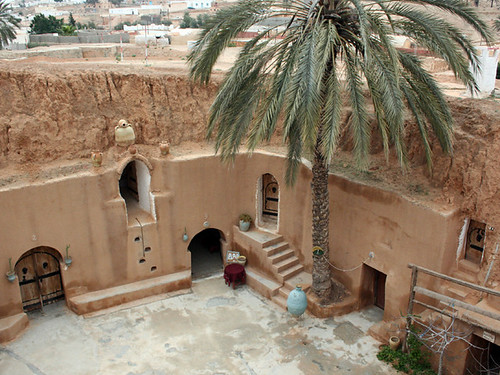
Hotel Sidi Driss, Matmata. Scottroberts. CC BY 2.0
Venice may be renowned for its aquatic urban planning, but it’s not the only place making resourceful use of its surroundings. Learn about the following three settlements whose residents literally live under a rock (or two).
1. Setenil de las Bodegas, Spain
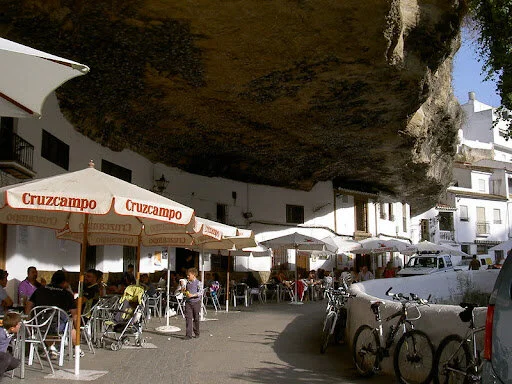
Biking street in Setenil de las Bodegas. Kans1985. CC BY 2.0
In Southern Spain lies Setenil de las Bodegas, a town carved into towering bluffs of rock. The rocky cliffs are remnants of a canyon gorge eroded by the river Rio Trejo and were first developed for residence by the Moors in the 12th century. They built houses directly into cave walls to provide inexpensive, temperature-regulated dwellings at minimal risk from disasters such as earthquakes or wildfire. With expansive rocky overhangs serving as natural roofing, these houses are materially efficient and easy to maintain. The three thousand inhabitants of Setenil de las Bodegas take pride in local history; the town is named after seven battles fought by Catholic Spaniards against the Moorish rulers during the Reconquista. The Moors maintained their defensive stronghold throughout six attempts but were defeated by the Catholics on the seventh.
Visitors may tour the town’s Nazari castle, an Arabian fortress dating back to the Almohad Caliphate, and the signature church of Our Lady of the Incantation. In addition, Setenil de las Bodegas offers several restaurants and bars for visitors to sample among its stony streets; dine upon the traditional local delicacy sopa cortijera, a wild asparagus soup enriched with boiled eggs and chorizo.
2. Matmata, Tunisia
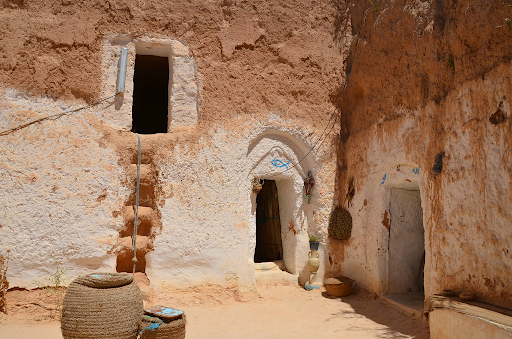
Troglodyte house. Professor Mortel. CC BY 2.0
Just across the Mediterranean Sea, Berber descendants populate the town of Matmata, iconic for its traditional subterranean dwellings. Historians are uncertain about when these troglodytes first emerged; settlement may have occurred as early as the 11th century or as late as the 15th. The Berbers excavated clay from underground pits to form cool spaces within which they could evade the dry heat of the Matmata valley. Deep, circular pits were dug into the sandstone ground and hollowed out. The troglodyte spaces were subsequently dug out around the pit’s perimeter, leaving the central pit as a courtyard. Sandstone clay was soft enough to excavate by hand but would harden rapidly upon exposure to air. Such underground homes were sturdy but vulnerable to flooding; during the 1960’s Matmata were forced to evacuate due to extreme rains.
Visitors may immediately recognize Hotel Sidi Driss, the site selected by George Lucas to film Luke Skywalker’s childhood home on the planet of Tatooine, within Matmata. Hotel Sidi Driss operates to date, boasting twenty rooms, a hotel restaurant, and Star Wars decorations in homage to its movie history.
3. Coober Pedy, Australia
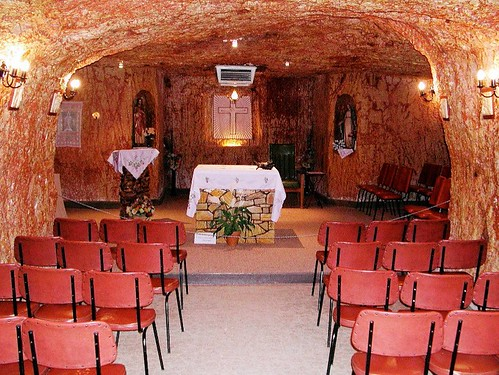
The underground church in Coober Pedy. www.wbayer.com. CC BY 2.0
In Australia’s outback, Coober Pedy is a storied subterranean town situated at the edge of the Great Victoria Desert. The town originated from the discovery of opal reservoirs in 1916 and soon became a premier mining community. Miners moved to Coober Pedy to try their luck at burrowing for gemstones but found extreme temperatures more often than opals. To deal with the dry summer heat, which can exceed 100 degrees Fahrenheit, miners started to sleep and eat in the mines. It wasn’t long before miners decided to dig out proper buildings from sandstone to reside in. Currently, Coober Pedy boasts public museums, libraries, churches, bars, a drive-in theatre and even a swimming pool,—all underground.
But the ‘Opal Capital of the World’ has cause for another claim to fame: ‘Hollywood of the Outback.’ Coober Pedy is renowned for science fiction filmography due to its extreme environment and barren landscapes. Hardly any vegetation grows natively; Coober Pedy’s tallest tree used to be a sculpture of scrap metal before townsfolk planted seeds. Moviemakers have flocked to Coober Pedy to leverage the area’s uncanny resemblance to other planets. “Mad Max: Beyond Thunderdome,” “Pitch Black,” “Red Planet” and “Until the End of the World Planet” are some sci-fi films shot in Coober Pedy.

Rohan A. Rastogi
Rohan is an engineering graduate from Brown University. He is passionate about both writing and travel, and strives to blend critical thinking with creative communication to better understand the places, problems, and people living throughout the world. Ultimately, he hopes to apply his love for learning and story-sharing skills to resolve challenges affecting justice, equity, and humanity.
Nazaré, Portugal: How A Fishing Village Became a Surfing Mecca
For centuries, Nazaré, Portugal was a traditional fishing village; until it made its way on the big wave surfing map. Now, it’s what many consider to be the Mecca of surfing, drawing crowds from across the globe.

Historically, big wave surfers gravitated towards the waves found in the surfing communities of Hawaii and California. Locations like Jaws, Mavericks, Shipstern Bluff and Mullaghmore were thought of as the best of the best. However, it wasn’t until recently that Nazaré, Portugal made its name as a surfing destination. Nazaré’s beach of Praia do Norte has all the elements for disaster—a deep underwater canyon and currents of waves that collide into one, breaking towards the coast of monumental cliffs. Surfing there, in the winter especially, was long thought to be impossible. It wasn’t until 2010 that someone was daring enough to surf the uncharted waters and alter the history of Nazaré forever.
Just a few meters off the shore of Praia do Norte is the Nazaré Canyon, an underwater submarine valley 3 miles deep. When water currents move through the valley, they get compressed and begin to move faster. When these currents collide with the local water current, they forge waves upwards of 10 stories high. Among villagers, the waves in Praia do Norte were forbidden. Many had loved ones who died at sea, and they taught their children to avoid the huge waves. So in 2010, when Garret McNamara first arrived, locals were apprehensive about getting behind him and his mission to ride a 100-foot wave.
It took five years for McNamara to take up an invitation from Dino Casimiro, a local bodyboarder who worked to publicize Nazaré’s waves. When he first laid his eyes on the view from the cliff, he told The New York Times, “it was like finding the Holy Grail.” He’d spend the next year preparing, studying the rhythm of the waves, and developing a safety system with his team of jet-ski tow-riders and spotters on walkie-talkies. Finally, in November of 2011, McNamara conquered a 78-foot wave, earning him a Guinness World Record, and serving as proof that Nazaré’s waves were real and surfable. From that moment on, every big wave surfer in the world wanted their shot to make a name for themselves at Nazaré. Today, at least 20 professional surfers stay in Nazaré during any given week in the winter, including men and women like Justine Dupont, Lucas Chianca, and Kai Lenny.
In 2013, the town’s current mayor Walter Chicharro was elected. Chicharro worked with McNamara and Casimiro to capitalize on their waves’ fame and invested in the professionalization of the surfing scene. The World Surf League now hosts an annual big wave surfing challenge event every winter, a time that Nazaré’s 10,000 locals were accustomed to having to themselves. In additon, Mayor Chicharro opened the town’s 17th-century lighthouse, Farol Da Nazaré, both as a museum showcasing the town’s history and as a space to view the waves. According to an article in The New York Times, about 40,000 people visited it in 2014, while more than 220,000 entered the fort in 2018.
Today the town is used to the presence of surfers; even the local fisherman welcome them thanks to the business they bring. Joao Carlines, a retired fisherman, told reporters that “Surfers have a different relationship with the sea, but I’m happy the town’s become known for surfing because it means we have people coming here in the winter.” While the elusive 100-foot wave has yet to be ridden, rest assured that it will be one day, and it will be in Nazaré. In anticipation of that day, surfers and their fans will continue traveling to the seaside village in hopes of witnessing the historic event for themselves.
RELATED CONTENT:

Claire Redden
Claire is a freelance journalist from Chicago, where she received her Bachelor’s of Communications from the University of Illinois. While living and studying in Paris, Claire wrote for the magazine, Toute La Culture. As a freelancer she contributes to travel guides for the up and coming brand, Thalby. She plans to take her skills to London, where she’ll pursue her Master’s of Arts and Lifestyle Journalism at the University of Arts, London College of Communication.
Hut-to-Hut: Hiking in the Italian Dolomites
Mountain Huts, called Rifugios, make multiple day treks through the Italian Alps accessible to hikers.
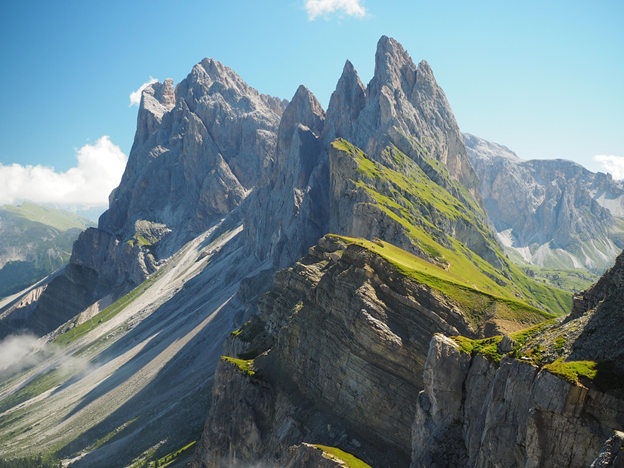
Puez-Geisler nature park in the Dolomites. Dmitry Djouce. CC BY 2.0
The mountain range located in northern Italy has 18 major peaks and uniquely diverse mountain landscapes. The Dolomites have sharp peaks in varying shapes, along with alpine meadows and valleys that have drawn hikers for years. Mountain huts, also known as rifugios, are placed throughout the Italian mountain range, all within a day’s hike of the next hut. The trek to visit each hut is a total of 75 miles, and typically takes hikers ten days to complete. The huts are stocked with food, and offer basic bedding for travelers. While not every rifugio offers places for hikers to stay overnight, many only serve food, so travelers can stop for lunch before continuing to the next hut. The huts allow hikers to do multiple day-treks without having to pack much. All they will need is personal items and sleeping bag linings. The rifugios are open starting in June and often draw travelers of varying hiking experience.
The Dolomites first started attracting hikers during the ‘golden age of mountaineering’ in the late 19th century. Many mountaineers who first summited the peaks wrote early travel guides for the region, drawing more explorers. Then, in World War One, the Dolomites became the front line for the Italian and Austro-Hungarian armies to pass through. As a result, there are still visible remnants of the war, one being an open-air museum of Mt. Lagazuoi. The ‘castle of rock’ has complex systems of tunnels dug into the mountainside during the war. The tunnels are open for people to walk through and learn more about World War One’s impact on the region.
Additionally,a museum is dedicated to World War One on the range’s highest peak, Marmolada. The summit stands at over 10,000 feet, making the museum the highest in Europe. The locals of the region often speak Italian, German and Ladin, a Rhaeto-Romaniclanguage that is recognized as an official language of the region. Roughly 30,000 people speak Ladin, and there are considerable efforts to preserve the region’s language and the culture.
RELATED CONTENT:

Dana Flynn
Dana is a recent graduate from Tufts University with a degree in English. While at Tufts she enjoyed working on a campus literary magazine and reading as much as possible. Originally from the Pacific Northwest, she loves to explore and learn new things.
Holy Men of Nepal and India
Check out this amazing special photo essay by photographer Carol Foote who visited with the Sadhus at the Kumbh Mela, the world’s largest religious pilgrimage held only once every 12 years.
Read MoreIMMERSIVE VIDEO: Comb Ridge
Comb Ridge spans almost 80 miles from southeastern Utah to northeastern Arizona, merging with the Abajo Mountains and the San Juan River. But its massive scope isn’t the only thing impressive about this monocline—its eastern side is a living museum full of long-abandoned homes and carvings created by ancient Pueblo people inhabiting the area. This video not only describes the history of the stone carvings from an Indigenous perspective, but it also allows viewers to zoom in and look around the area. Explore various corners of the rock simply by scrolling, and learn a little bit more about Pueblo tradition and artistry.
5 Cities To Visit Before They’re Underwater
Rising sea levels are slowly swallowing some of the world’s most exciting cities. Even with defensive measures in place, and immediate cuts to carbon emissions, these levels will continue to rise.
Read MoreSummit the Tallest Mountain in Southeast Asia
At more than 10,000 feet, Fansipan Mountain in Vietnam is the tallest mountain in SE Asia. Hikers traverse clouds and thick forests to get to the top. Cable cars ascend to the peak for those who don’t want to make the trek.
Read More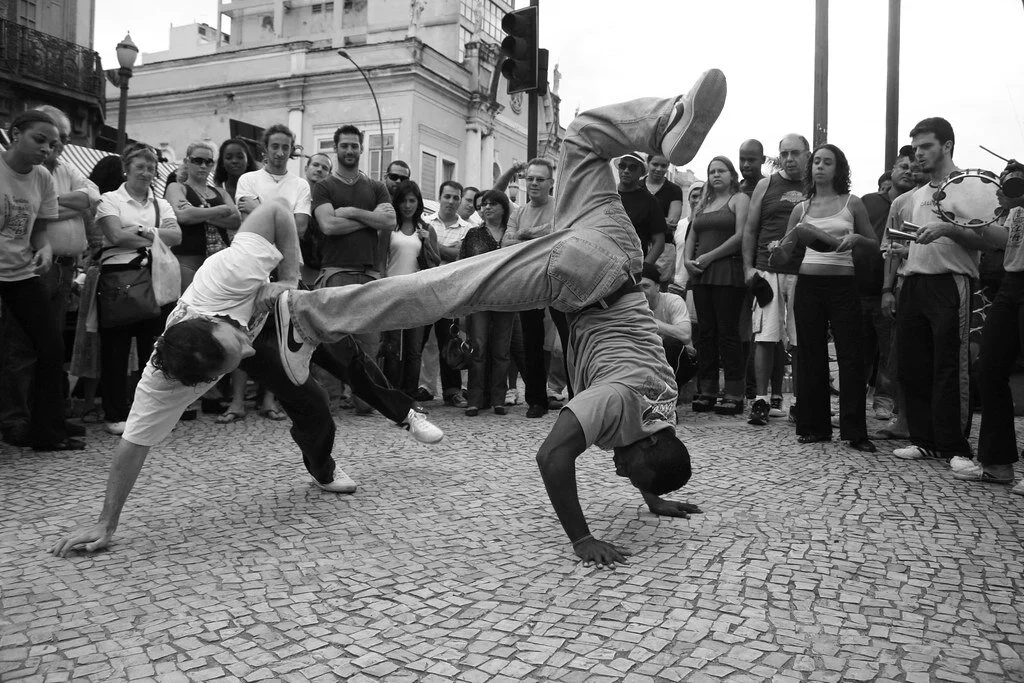
Two capoeiristas in the streets of Brazil. Otubo. CC BY 2.0
5 Latin American Dances
Latin America originated many famous dances, including merengue, bachata, tango, samba and capoeira. Culturally, they represent the heart of Latin America with music and dance styles that are now celebrated throughout the world.
1. Merengue, Dominican Republic:

Merengue dancer. Max Bosio. CC BY 2.0
Merengue is the national dance of the Dominican Republic; however, merengue originated in multiple sites across the Caribbean. In Puerto Rico, Cuban marching bands created the merengue initially called the “upa” in 1842. At this time, local elites considered an African variant of the dance as a “corrupting influence.” Therefore, the government passed laws to fine and imprison those who danced merengue. Forty years later, Puerto Rico’s merengue died out, but Dominican merengue lived on. Merengue has two origin stories circulating in the Dominican Republic. The first story is that enslaved people created the dance as they cut sugar to the beat of drums while dragging one chained leg behind them. The other story is about a hero who returned to his village with a wounded leg after a revolution in the Dominican Republic. Both stories explain the usage of a dragging leg movement used in merengue.
Merengue pairs dance with flirtatious gestures as dancers move in circles. Meanwhile, the music usually consists of accordions, drums and saxophones. Merengue plays an active role in many people’s daily lives; for instance, at social gatherings, celebrations and political campaigning. The dance has migrated to other Latin American countries, such as Venezuela and Colombia, where various forms have emerged.
2. Bachata, Dominican Republic:

A couple dancing street bachata. Fridaycafe. CC BY-SA 2.0
Bachata was born in the Dominican Republic during the dictatorship of Trujillo. Trujillo claimed bachata was a lower art form and altogether banned both the music and the dance. As a result, bachata was only enjoyed in brothels, not helping its status as a respectable dance. Even after Trujillo’s reign, bachata was still frowned upon by society. In the 1960s and 70s, the people considered bachata to be “the poor people’s music.” Now, bachata is accepted and celebrated as hundreds of academics, studios and schools are dedicated to its transmission. There are three primary forms of bachata practiced; the Dominican bachata, bachata moderna and the traditional style. Bachata is a passionate dance between partners characterized by sensual hip movement and a simple eight-step structure. The lyrics of bachata music typically express deep feelings of love, passion, nostalgia, and feature a strong guitar base. Recently, bachata gained popularity because artists like Aventura, Prince Royce and Romeo Santos who turned bachata into one of the most sensual and romantic Latin dances.
3. Tango, Argentina:
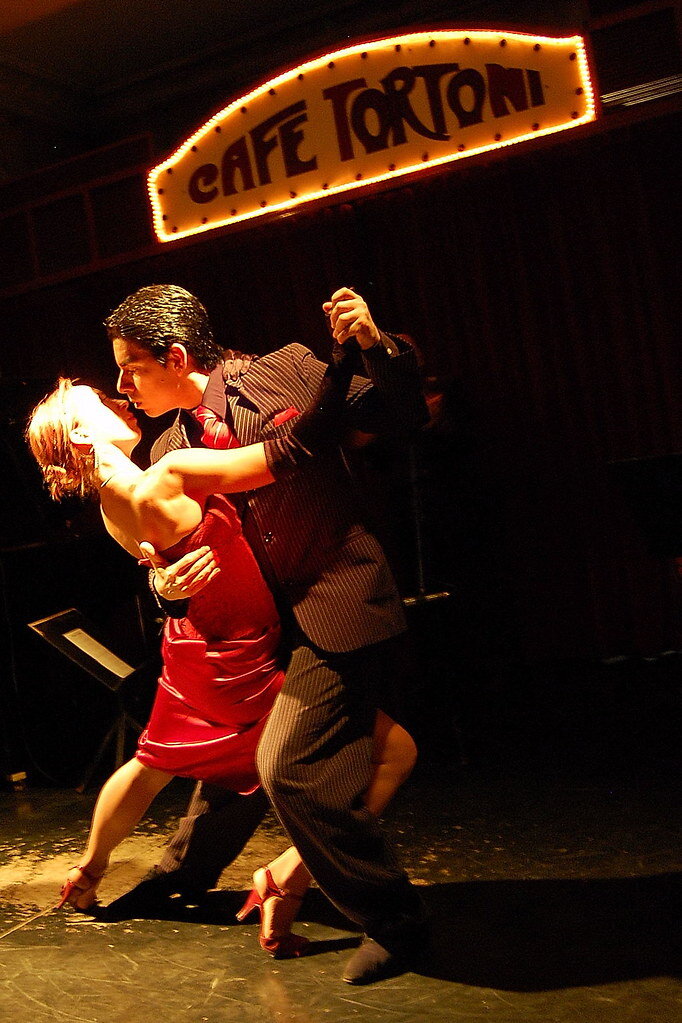
Tango dancers amidst their dance. Armando Maynez. CC BY 2.0
Tango emerged from the immigrant culture on Argentina’s dockside slums; it’s a fusion of New World, African and European dance styles. Specifically, the music is inspired by the African community in Buenos Aires and uses elements from African rhythm, European music and South American songs. In its early years, tango primarily took place in the brothels of Buenos Aires. The steps are considered sexual and aggressive, with music creating feelings of longing and despair. It is said that dancers acted out the relationship of the prostitute and the pimp. In Buenos Aires, the upper-class society formerly considered tango indecent and associated it with violence, illicit sex and the lower class. In 1912, the passage of universal suffrage laws granted the lower class legitimacy, giving tango higher credibility.
Additionally, as tango moved across Europe, the steps simplified and the sensual quality diminished a little. European approval made the tango acceptable to all Argentineans, and by the 1920s, it evolved into a national folk treasure. Argentinian dancers at its peak in the 1940s performed in cabarets, dance salons, social and sports clubs and restaurants. During tango’s golden age, Maria Nieves, a star from the 1980s show Forever Tango, said, “We were swept away by our love for tango. We just loved to go dancing. We didn't go out looking for sex...we didn't care what the man looked like. It was a nice, beautiful, pure group of girls, interested only in the tango.”
4. Samba, Brazil
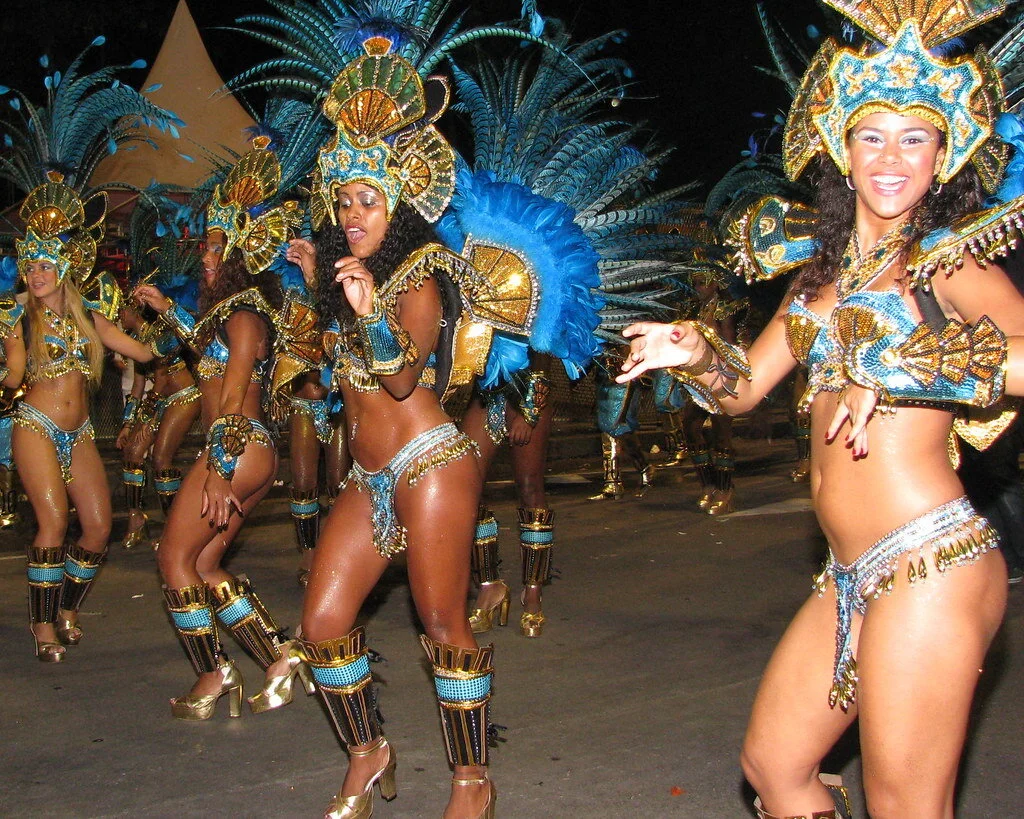
Samba dancers in Brazil. Sfmission.com. CC BY 2.0
Samba originated in Brazil as a musical genre and dance style. Samba’s roots are in Africa. Brazil’s African descendants brought as slaves from Angola and Congo first influenced and created the dance. Samba was first born in Bahia, a coastal state of Brazil known as “Little Africa.” Some believe the Bahian priestesses would invoke the gods through song and dance. The word “samba” derives from the African Bantu word “semba.” The Kimbundo word means “naval bump” which depicts intimacy and invitation to dance. The word samba is also the infinitive of kusamba, which means to pray or do a favor to the gods through song and dance. Some believe the heart of samba comes from Angola’s traditional semba music, which is about celebrating religious worship through an ancient rhythm. The musical genre combines percussion tempo with sounds of pandeiro, reco reco, tamborim and ciuca. The dance form typically emphasizes the movements of the hip and belly. Samba has become an icon of Brazil’s national identity as a form of cultural expression.
5. Capoeira, Brazil
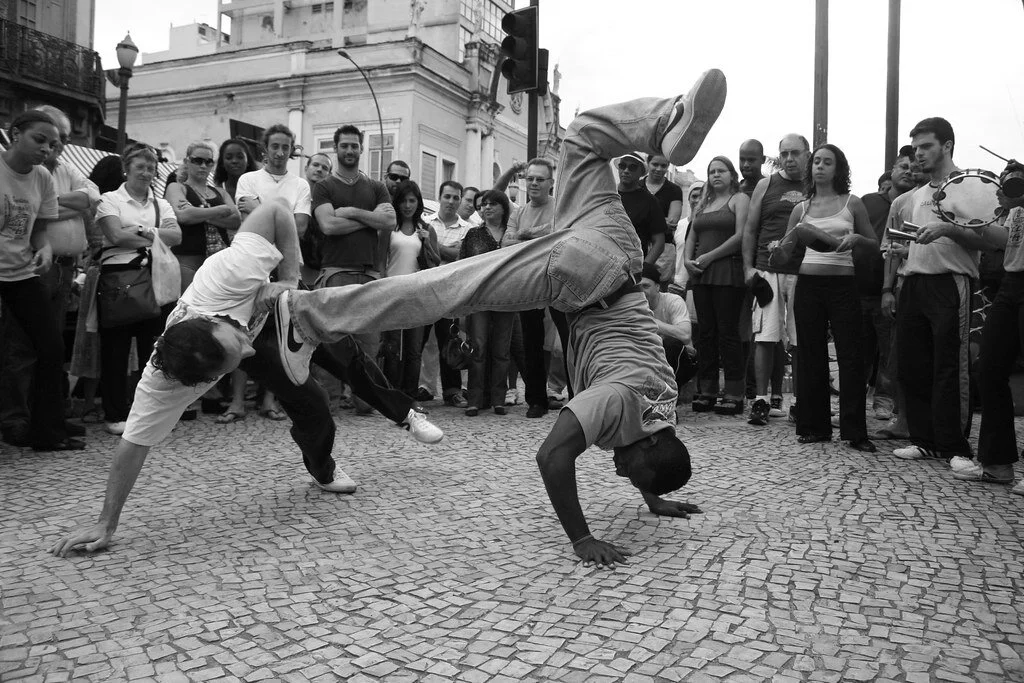
Capoeira with instruments playing in the background CC BY-SA 2.0
Capoeira isn’t a typical dance; it’s an art form tying fighting, dance, music, ritual and philosophy together to create a unique game called jogo de capoeira. Enslaved Africans brought their traditions from various cultures to South America, including capoeira. It was practiced on plantations as means of breaking the bonds of slavery both physically and mentally. At that time, capoeira was prohibited by the Brazilian Penal Code, because it was considered a social infirmity. The term “the outlaw” became so deeply incorporated with capoeira that the word transformed into a synonym for “bum,” “bandit” and “thief.”
Nevertheless, capoeira persisted from its marginalized identity and became a cultural phenomenon. As a cultural art form, capoeira was a means to ensure African tradition would survive through slavery. Afro-Brazilians still uniquely evolve the practice throughout the years. The music along with capoeira consists of a bateria (orchestra) with three berimbau (stringed bow-like instruments), pandeiros (tambourines), an agogo (bell), a reco-reco (small bamboo instrument) and an atabaque (drum). The dance is like a game that can be playful and cooperative, intense and competitive. The movement is a fluid, swinging stance called “ginga.” Capoeiristas teach to attack and defend from any position with any part of the body to practice adaptability and preparedness for any movements. The underlying principles of capoeira are understanding the complexities of human interaction, being ready for anything, the value of cleverness and the strength of indirect resistance. As its creators were once oppressed, capoeira’s philosophy is rooted in survival at all costs through creative measures.
RELATED CONTENT:
VIDEO: The Band Bringing Venezuela’s Best Dance Party to the World

Kyla Denisevich
Kyla is an upcoming senior at Boston University, and is majoring in Journalism with a minor in Anthropology. She writes articles for the Daily Free Press at BU and a local paper in Malden, Massachusetts called Urban Media Arts. Pursuing journalism is her passion, and she aims to highlight stories from people of all walks of life to encourage productive, educated conversation. In the future, Kyla hopes to create well researched multimedia stories which emphasize under-recognized narratives.

Shohei Ohtani pitching in Sapporo. Scott Lin. CC BY-NC-ND 2.0.
Baseball: A Japanese Pastime
America, over the years, has given a lot of cultural significance to the sport of baseball. We place it alongside apple pie and fireworks in the grand list of material symbols of our country. Not only that: baseball, over the years, has often reflected our country’s struggles back at us. It’s confronted discrimination in Jackie Robinson, and labor disputes with Curt Flood. It’s helped heal us, as well. Mike Piazza’s post-9/11 home run brought more joy to New York than anything that followed during the War on Terror.
But baseball is also of waning interest to many Americans. The sport is long, with games usually clocking in over three hours long. It also doesn’t market itself very well. Some of the greatest of all time are playing right now, but has any non-baseball fan heard of Mike Trout, Jacob DeGrom, or Shohei Ohtani? Likely not. The sport isn’t going away anytime soon, but there’s no doubt baseball’s cultural significance is declining in America. Fortunately, that isn’t the only place the sport is cherished.
Baseball was introduced to Japan during the late 1800s by way of an English professor from Maine named Horace Wilson. It didn’t take long for the sport to become a national pastime; professional leagues have existed since 1936, and the country’s national high school baseball championship, Summer Koshien, began in 1915. Today, baseball is Japan’s most popular sport; an almost bizarre outcome considering the existence of nationally-developed sports like sumo and globally adored sports like soccer.
But the popularity of baseball in Japan would be diminished if it weren’t for the homegrown players who have starred overseas. The first Japanese player to play in the MLB was a pitcher, Masanori “Mashi” Murakami, who debuted in 1964. Murakami wasn’t an elite player, and was even forced to return to Japan after two years due to his restrictive contract, but his appearance in the bigs opened the floodgates for others to make America’s game their own.
The first bona-fide Japanese star was pitcher Hideo Nomo. In 1995, Nomo’s first year in Major League Baseball, he posted a league-leading 11.1 strikeouts per nine innings to go alongside a 2.54 ERA (ERA stands for earned run average, or the average number of runs allowed every nine innings. Anything under 4 is considered good. Under 3? Great.) His rookie season is his best known (“Nomo fever” was said to have hit LA), but Nomo went on to have an excellent career, eventually retiring in 2008 after 323 games, 1918 strikeouts, and 2 no-hitters.

A fan holds a “Japan National Team” baseball flag at the World Baseball Classic. Steve Rhodes. CC BY-NC-ND 2.0
There is also the case of Ichiro Suzuki, who with his illustrious career and unique style of play became one of the most well-loved baseball players of the 21st century. Ichiro had exceptional speed, stellar defense, and a superhuman ability to take care of his body, but he was best known for what he did with the bat in his hands. Ichiro’s approach was simple: he would slap the ball around the field, and beat out singles and doubles. He rarely walked or hit for power, but was so talented at this contact-oriented approach that it didn’t matter. It was primordial baseball planted firmly into the twenty-first century, and it worked. In 2004, Ichiro broke the single-season hit record, a record that had stood for 84 years and seemed all but unbreakable with how the game had changed. The principles of hitting have strayed from Ichiro’s even further since then; it’s not unlikely that Ichiro’s grand total of 262 hits in 2004 will stand until the earth is swallowed by the sun.
There’s only one active player who has a chance of topping Ichiro in the Japanese pantheon of stars, and his case is being made this very season. He’s a 27-year-old, currently having not just the best-ever season by a Japanese player, but possibly the best-ever season by anyone.
To explain Shohei Ohtani, one must first note that over its 150-year history professional baseball has become more and more a sport of specialization. Teams today might feature hitters who only hit against left-handed pitching, and speedsters who rarely start but are used late in games as pinch runners.
Ohtani is the one man who breaks up modern baseball’s prime order. He is a pitcher who hits; it’s as simple as that, really. Baseball players have long been separated into hitters and pitchers. Hitters don’t pitch (not seriously, anyway), and pitchers don’t hit (at least, not well; perhaps the best example of baseball’s specialist tendencies is how pitchers haven’t cared about being able to hit for a hundred years, despite the fact that half of the league still requires them to on a regular basis). But Ohtani plays both roles.
That in itself is historic. No player has been both a MLB pitcher and a lineup regular since Babe Ruth, who served the role in 1919. But here’s the kicker—Ohtani is really, really good at both his positions. He has hit 44 home runs while pitching to a 9-2 recond and a 3.36 ERA so far this season. Those are elite statistics, better than Ruth’s 1919 numbers. The value of one man bringing a season of premier pitching and hitting to his team is hard to quantify. But the case can be made that Ohtani’s 2021 season is the greatest of all time, at least so far. There’s no doubt the man is a one-in-a-million player, a gift from the baseball heavens. By coming from Japan, he also represents a nation that may lead in taking the sport forward.
This year, Japan beat the United States to win the gold medal in Olympic baseball. The victory, though marred by the fact that the best players from both countries stayed home, represented another step up the baseball ladder for Japan. As baseball exits America’s zeitgeist, it continues to grow in the island nation. The NPB’s level of play is going up—it’s still behind the major leagues, but not by a massive amount. Even more important is fan interest. In 2019, the last full season of the NPB, the league’s total attendance numbers grew to second in the world across all professional sports leagues.
As more stars are born and made, Japan’s baseball legacy will only continue to grow. Who knows? Maybe in a century, Japan will have come so far that baseball fans will diminish the careers of MLB stars like Trout, DeGrom, and Ohtani. They can’t be that good, the fans will say. They were playing in the United States.

Finn Hartnett
Finn grew up in New York City and is now a first-year at the University of Chicago. In addition to writing for CATALYST, he serves as a reporter for the Chicago Maroon. He spends his free time watching soccer and petting his cat.
VIDEO: Islands in the Sky
Located 200 miles northwest of Scotland, the Faroe Islands is a self-governing territory officially part of the Kingdom of Denmark. The archipelago consists of 18 small islands connected by bridges, road tunnels, ferries and causeways. This video shows the beauty of these tiny islands, which travelers often overlook due to their remote location and small size. However, they boast steep seaside cliffs, secluded coves and deep valleys. The film captures the islands at all times of day, from stormy mornings to rich sunsets.
Trekking Up Le Morne Brabant Mountain in Mauritius
This mountain, which serves as a symbol of hope, offers hikers a breathtaking view of Le Morne beach and remains a meaningful part of local Mauritian culture.
Read MoreThe Best Places to Rock Climb Around the World
Rock climbing has been growing in popularity over recent years. These 5 spots are just a few of the world’s most impressive outdoor rock climbing sites.
Read More
Square-lipped Rhino in Kruger National Park, South Africa. Will Sweet. CC BY 2.0
Exploring 5 South African National Parks
South Africa has 19 national parks, each with its own connections to historical and environmental treasures. National parks help preserve biodiversity by supporting the ecosystems within them, which provide sustainable energy and mitigate climate change. Not only that, but these parks help national and local economies by supporting tourism and protecting agriculture. In South Africa, the parks also highlight important historical and cultural moments.
1. Kruger National Park

Lion at Kruger National Park. David Berkowitz. CC BY 2.0
Kruger National Park's 2 million hectares are home to unrivaled biodiversity as well as archaeological sites. Specifically, Kruger National Park contains a wide variety of species, including 336 species of trees, 49 fish, 34 amphibians, 114 reptiles, 507 birds and 147 mammals. The main attractions are “the big five:” buffalos, elephants, leopards, lions, and rhinos. Currently, 4,000 rhinos reside in Kruger Park, which is down from its 10,000 in 2010—this decrease is largely due to poaching. Kruger’s rhinos make up about 30 percent of the world’s estimated 18,000 wild rhinos still alive. Another special site to see at Kruger’s is the archeological sites like Masorini and Thulamela. During the 1800s, the Sotho-speaking BaPhalaborwa people lived in Masorini and developed an advanced industry of mining, smelting iron ore, and trading iron products. Kruger National Park has 255 recorded archaeological sites ranging from the early Stone Age (about 1 million years ago) to the Iron Age. These sites hold cultural, historical and spiritual importance to the land.
2. Golden Gate Highlands National Park
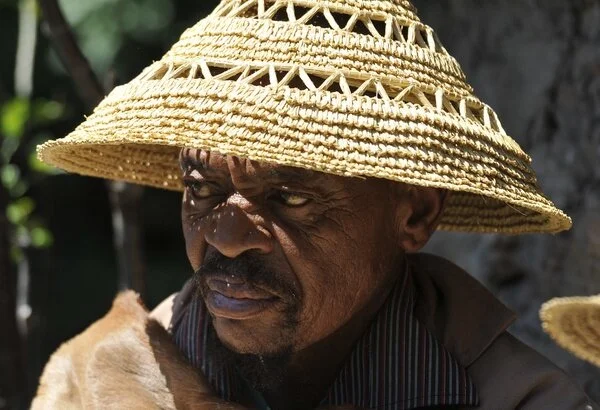
Basotho Cultural Village member. Chris G Earley. CC BY-NC-SA 2.0
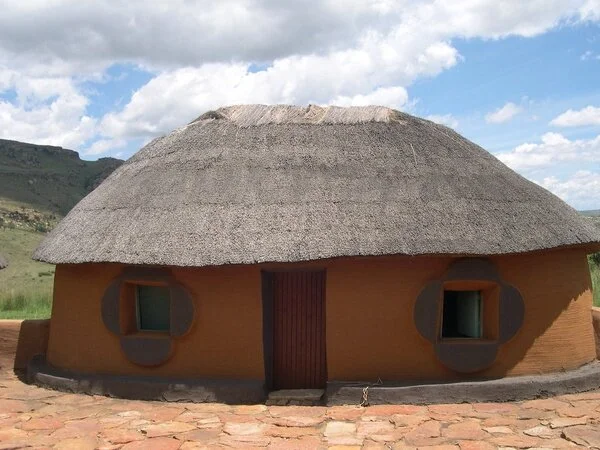
Basotho Cultural Village home. mifl68. CC BY-NC-ND 2.0
The Golden Gate Highlands National Park covers 130 square miles. The park gets its name from the sandstone cliffs that frame the valley. Amid the striking panoramic landscapes, dinosaur remains have been discovered. Five notable sites to visit in the Golden Gate Highlands National Park include Basotho Cultural Village, Vulture’s restaurant, Cathedral Cave, Clarens, and Brandwag Buttress. Basotho Cultural Village trail is a cultural route that acts as an education program, spreading awareness about the first occupants of historical sites of Qwa Qwa. A visit to the Basotho Cultural Village includes tasting the locally brewed beer and foods, enjoying traditional dances, learning how local arts and crafts are produced, and meeting with village elders. The Basotho Cultural Village is a replica of the 18th-century village and has houses replicating ones from the 16th century to the present day. However, research demonstrated that visitors had concerns about the service, facilities, and staff’s portrayal of genuine Basotho culture at the village. Nonetheless, a trip to Clarens—a small town 12 miles from Golden Gate Highlands with sandstone mountains and a picturesque town—is a great way to invest your time and money into the area.
3. Table Mountain National Park
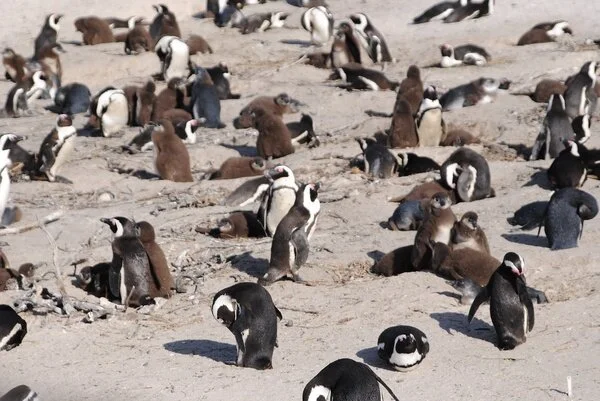
Boulders beach filled with African penguins. George M. Groutas. CC BY 2.0
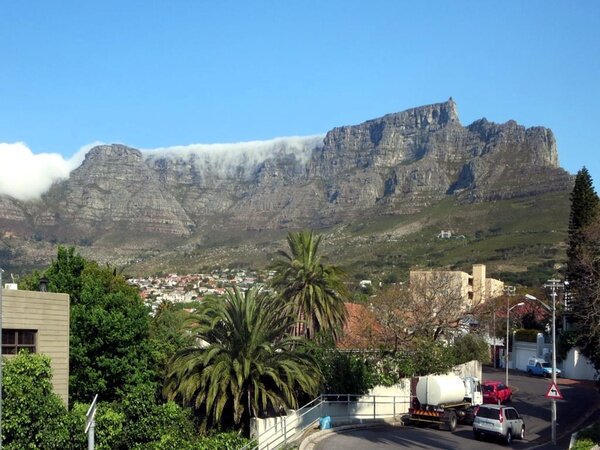
A tablecloth of clouds on Table Mountain. David Stanley. CC BY 2.0
Table Mountain National Park has mountains, beaches, forests and oceans. Within these environments are many activities to choose from: scuba diving, paragliding, mountain biking, horseback riding, surfing and much more. Also, one can reach the top of Table Mountain—which is now one of the New 7 Wonders of Nature—on the environmental education experience called Class in the Clouds. This youth educational experience takes a cable car to the top of Table Mountain where they’re taught a natural science lesson. The park focuses on protecting the land in conjunction with education. The Cape Research Centre was developed in 2008 to conduct socio-ecological research for many of the unique parks in South Africa. At TMNP, there is also the Boulders Penguin Colony, which is home to endangered African penguins. The Boulder Penguin section consists of three beaches, three boardwalks and one penguin viewing area. The decline of the African penguins is due to habitat destruction, oil spills and other marine pollution, global warming’s effect on fish stocks and fish movement, overfishing, irresponsible tourism, and domestic pets. To protect the biodiversity in the oceans at TMNP, the park created the TMNP Marine Protected Area in 2004. Although fishing is allowed in the MPA with a permit, it has six restricted areas with five “no-take” zones. The restricted zones aim to assist breeding for threatened marine life, giving the populations a chance to regenerate.
4. Addo Elephant National Park
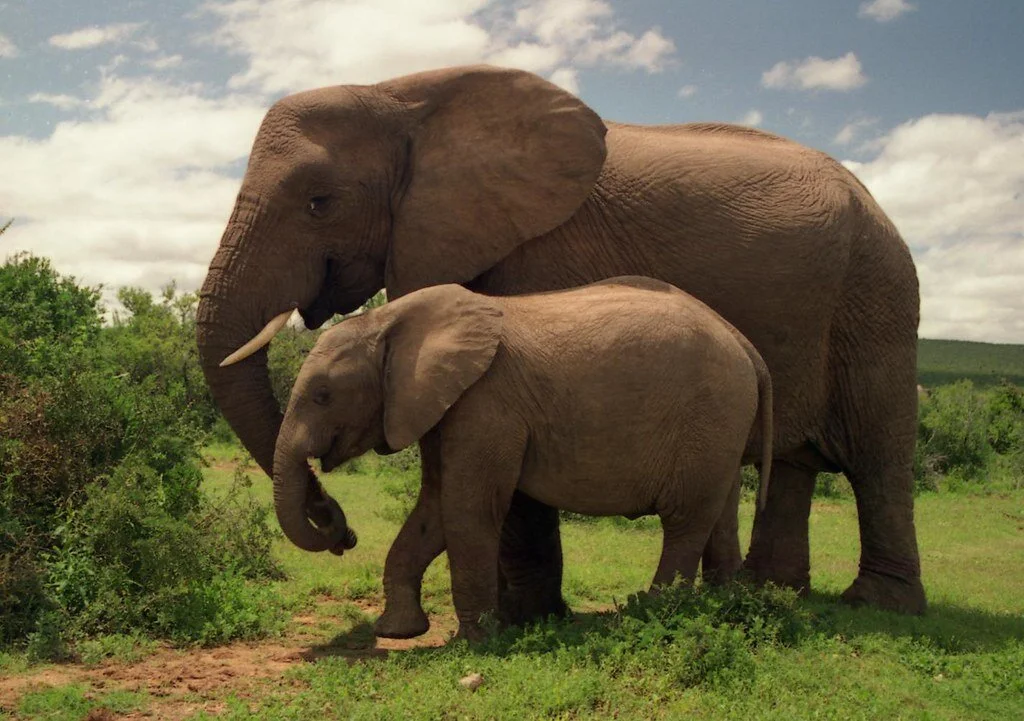
Elephants at Addo Elephant National Park. Brian Snelson. CC BY 2.0.
The Addo Elephant National Park is home to three of the 10 most endangered African animals: the lion, African elephant and African penguin. . In 2003, six lions were reintroduced to the park, and now there are 26 wild lions. Also, the park currently has over 600 elephants, with an average population increase of 5% each year. In the early part of the 20th century, it is estimated that 3.5 million African elephants roamed wild in Africa— now there are only 415,000. Habitat destruction and poaching are driving the decline of these species. The Addo Elephant National Park partners with the Imbewu project to help educate local youths about conservation and culture through experience, connecting present and future generations emotionally to the Earth. Additionally, Addo Elephant Park strives to connect with local communities. Within the park, the Eyethu Hop-on Guides are people from the adjacent communities that provide guide services for visitors in their own vehicles. This program is meant to create mutually beneficial relationships with the communities surrounding the park.
5. Mountain Zebra National Park
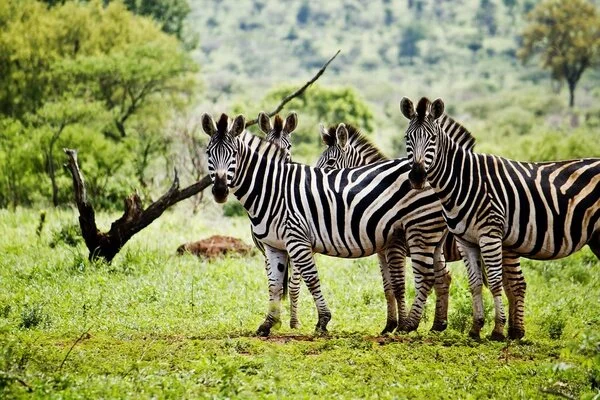
Mountain Zebras drinking water at Mountain Zebra National Park. Clive Reid. CC BY-NC-ND 2.0
The Mountain Zebra National Park was established in 1937 to protect the endangered Mountain Zebra, which was almost hunted to extinction in the 1800s. The 28,412 hectares of the MZNP are a part of a transitional area between Grassland, Nama Karoo and Albany Thicket biomes. As a result, the conservation of MZNP is essential because it protects ecological processes in addition to biodiversity. Today, the MZNP has achieved a population of over 700 Mountain Zebras, compared to 55 Mountain Zebras in 1964. Culturally, the MZNP contains over 30 sites with pottery and stone artifacts dating back to 14,000 to 10,000 years ago. Specifically, there is evidence left by the San people 300 years ago in at least three rock shelters containing rock art in the park. The paintings show antelopes, baboons, large cats and human figures. Visitors with a Park guide can see the painting sites through a protective fence. Also, one can find remnants of an etched chess board made by English colonizer soldiers at the park. The MZNP continues to grow in size and aims to expand to the west to join with the Camdeboo National Park.
RELATED CONTENT:

Kyla Denisevich
Kyla is an upcoming senior at Boston University, and is majoring in Journalism with a minor in Anthropology. She writes articles for the Daily Free Press at BU and a local paper in Malden, Massachusetts called Urban Media Arts. Pursuing journalism is her passion, and she aims to highlight stories from people of all walks of life to encourage productive, educated conversation. In the future, Kyla hopes to create well researched multimedia stories which emphasize under-recognized narratives.
Volcano Boarding in Nicaragua
Looking for an adrenaline rush? Slide down the side of an active volcano at up to 60 miles per hour during your stay in Nicaragua.
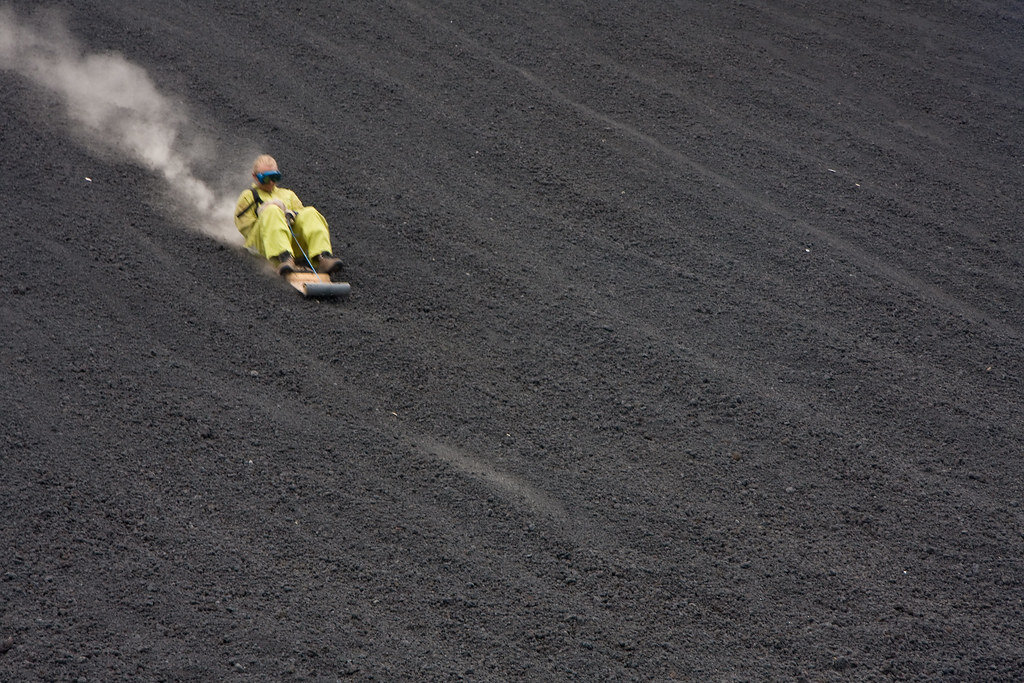
Volcano boarding on Cerro Negro, Nicaragua. Garrett Ziegler. CC BY-NC-ND 2.0.
Bigfoot Hostel in Leon, Nicaragua is one of the only places in the world where you can go volcano boarding. According to their website, volcano boarding is the “thrill of a lifetime.” The hostel’s original owner, Daryn Webb, created the extreme sport, where those brave enough to try it can speed up to 60 miles per hour down the side of an active volcano.
Webb and his crew tested various objects for sliding down the volcano, and after some trial and error, they created a sit-down toboggan made of metal and plywood. The hostel offers daily tours beginning at 9 a.m., with prices at $25 per person. Tours return at 3 p.m.
The Cerro Negro volcano is the youngest volcano in Central America, and is also one of the most active volcanoes in Nicaragua, erupting nearly every 20 years.
Bigfoot Hostel has sent over 20,000 people down Cerro Negro slope at up to 62 miles per hour, and it is known for attracting many sports enthusiats and adrenaline junkies. One of the most famous people to attempt the extreme sport was Eric Barone, who rode down the volcano on a bike at 107 miles per hour in 2002.
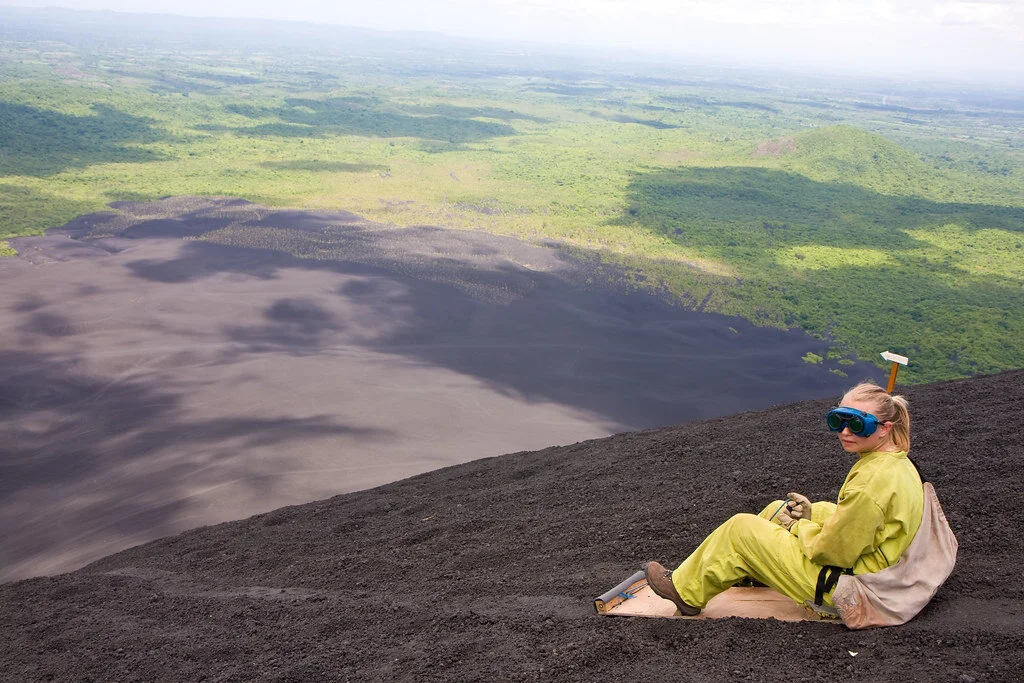
Volcano boarding on Cerro Negro. Garrett Ziegler. CC BY-NC-ND 2.0.
It is possible to slide down the Cerro Negro because the volcano is made of small grain-like volcanic rocks, which came from the crater. In addition, there is almost always a very strong wind hitting the volcano, so it’s the perfect surface for boarding.
Those who have visited before say that they could feel the heat radiating from the volcano and could even cook their meals in a hole dug out in the volcano.
All visitors must wear closed toe shoes and comfortable clothing. Those who have boarded down the volcano before recommend wearing hiking boots (since it takes about 45 minutes to reach the summit) and a multipurpose head wrap to cover your nose and mouth while boarding. Also, take a large water bottle and a GoPro if you want to record the experience.
The hostel offers dorm-style rooms, with rooms with fans at $6 and rooms with air conditioning at $10. There are also private rooms with double, triple, or quadruple beds.
RELATED CONTENT:

Isabelle Durso
Isabelle is an undergraduate student at Boston University currently on campus in Boston. She is double majoring in Journalism and Film & Television, and she is interested in being a travel writer and writing human-interest stories around the world. Isabelle loves to explore and experience new cultures, and she hopes to share other people's stories through her writing. In the future, she intends to keep writing journalistic articles as well as creative screenplays.
VIDEO: South Korea’s Shining City
Seoul, the capital of South Korea, is the country’s largest metropolis, boasting huge skyscrapers, high-speed public transportation and the latest in trends that will soon circle the globe. But this city also holds hundreds of years of history, culture and religion, which have shaped its growth and continue to impact how it functions today and thus how it will work in the future. The geography of the Seoul area is just as varied as its history; director Brandon Li explores the different aspects of the city through captivating shots of the landscape that are juxtaposed with similar-looking modern features. Above all, this video focuses on the residents of Seoul—their daily lives, journeys, work and commutes—to tell a story about the city.
Tibetan Worship and Culture at Lhasa’s Jokhang Temple
Take a visual visit to Jokhang Temple in Tibet, one of the holiest destinations for Tibetan Buddhists, with this magnificent photo essay by Carol Foote. See traditional dress and culture on this pilgrimage route.
Read More6 Interesting Facts about the Egyptian Pyramids
There is still so much we don’t know about the history and structure of the Egyptian pyramids. Here are six things that you may not have known about the pyramids and ancient Egypt.
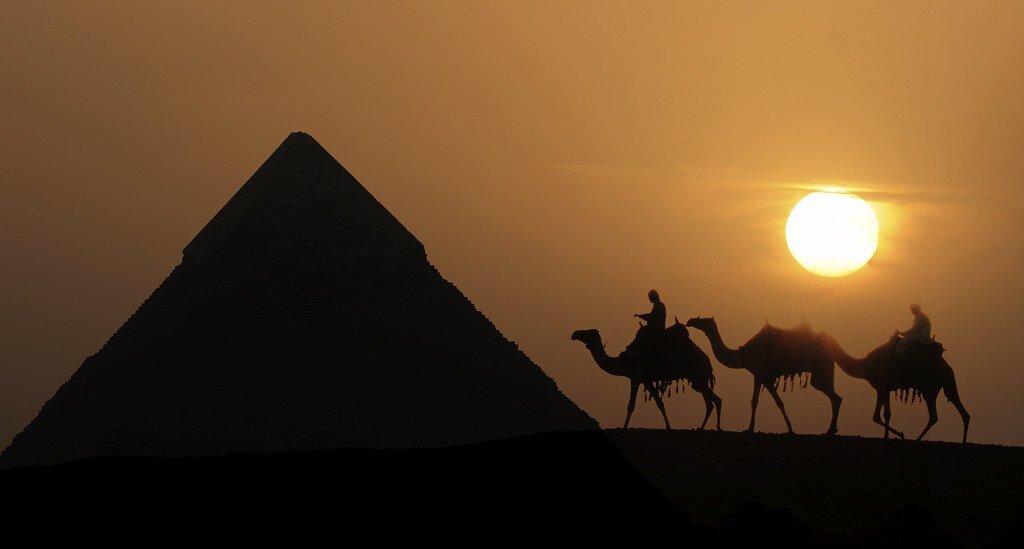
Egyptian pyramids in the sunset. Club Med UK. CC BY-NC 2.0.
The Egyptian pyramids are famous for their buried mummies and treasures, but there are still many secrets waiting to be uncovered about their history. Take a deep look into the ancient pyramids’ past with these six interesting facts.

The seven wonders of the world, Egyptian pyramids. Boston Public Library. CC BY 2.0.
1. Once upon a time, they sparkled.
According to research on ancient texts and found evidence, it is thought that the Great Pyramid of Giza used to shine like glass and sparkle in the sunlight. Ancient Egyptians even called the pyramid “Ikhet,” which translates to “glorious light.” This is mainly because the pyramid was originally covered in polished limestone which reflected light like a mirror and made the pyramids visible from anywhere nearby. What is even more interesting is that the speed of light—299,792,458 m/s—are also the exact coordinates of the Great Pyramid of Giza, which is at 29.9792 degrees north, 31.1342 degrees east. Spooky? Definitely.
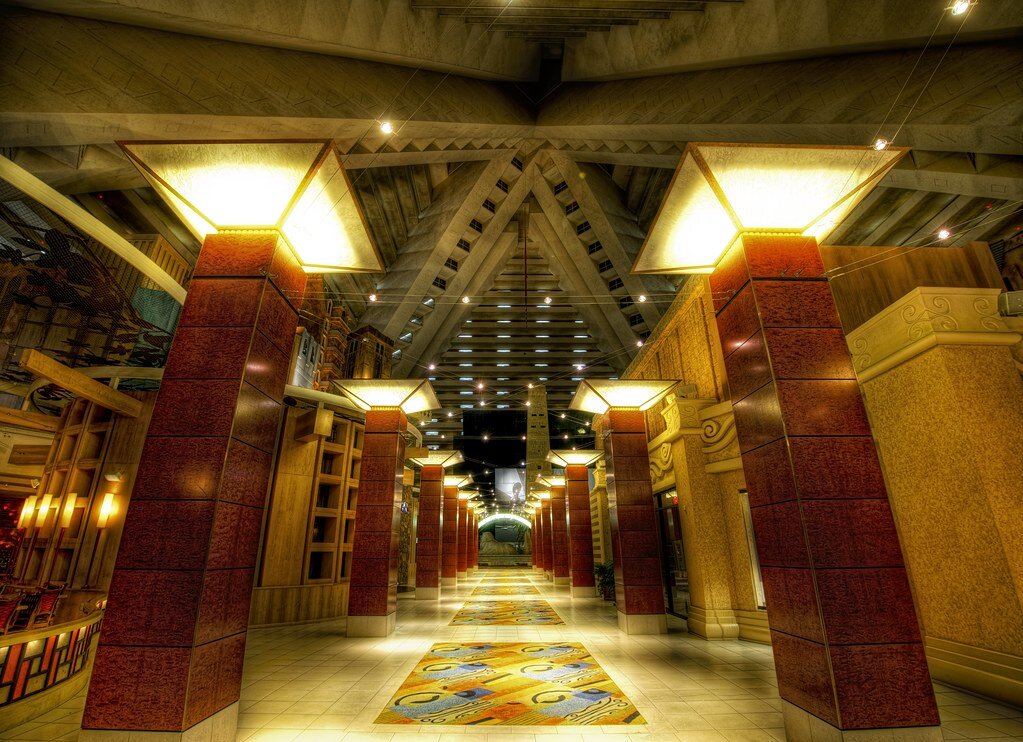
Entering the pyramid. Trey Ratcliff. CC BY-NC-SA 2.0.
2. Many of them were robbed.
A lot of the unknown history of the pyramids can be blamed on tomb robbers. Tomb robbing was a serious problem in ancient Egypt because robbers targeted the tombs for looting—even Kings’ tombs were broken into. It was the Egyptian belief that everything buried with you was taken into the afterlife, so Kings and Queens were buried with unimaginable amounts of riches. It was also very common for people to steal from their ancestors’ tombs —some even dumped the body and stole the sarcophagus. Egypt was a cashless society until the Persians came in 525 BCE, so those who stole from the tombs would have had to trade their stolen goods to higher, corrupt officials. Those caught would be executed for the offense.

The Great Pyramid of Cheops. Boston Public Library. CC BY 2.0.
3. We still don’t know how they were built.
Although the pyramids are over 4,000 years old, professionals still don’t understand how the ancient Egyptians managed to build the pyramids without advanced technology. The most accepted theory is that they used ramps to bring materials to the top, which has been proven by a recent discovery. Researchers in Egypt discovered a 4,500-year-old ramp used to haul alabaster stones out of a quarry. The ramp system dates back to Pharaoh Khufu, who built the Great Pyramid of Giza. However, the way in which the ancient Egyptians built the pyramids is still a mystery because the pyramids were not made of alabaster, which is what the discovered ramp helped to move.

Khufu’s Great Pyramid. Bernt Rostad. CC BY 2.0.
4. There is a secret chamber in the Great Pyramid of Giza (Khufu’s Pyramid).
Weighing in at 5,750,000 tons, the Great Pyramid is simply a feat of architecture. To add further to the mystery, a previously unidentified chamber in the Great Pyramid was discovered in 2017 when physicists used the by-products of cosmic rays to reveal an at least 100-foot long void. The mysterious space’s dimensions are similar to the pyramid’s Grand Gallery, which is the corridor that leads to the burial chamber of Pharaoh Khufu. What lies within the space is still unknown, as well as its purpose. Scientists hope to find out more about this newly discovered area and what it was used for.
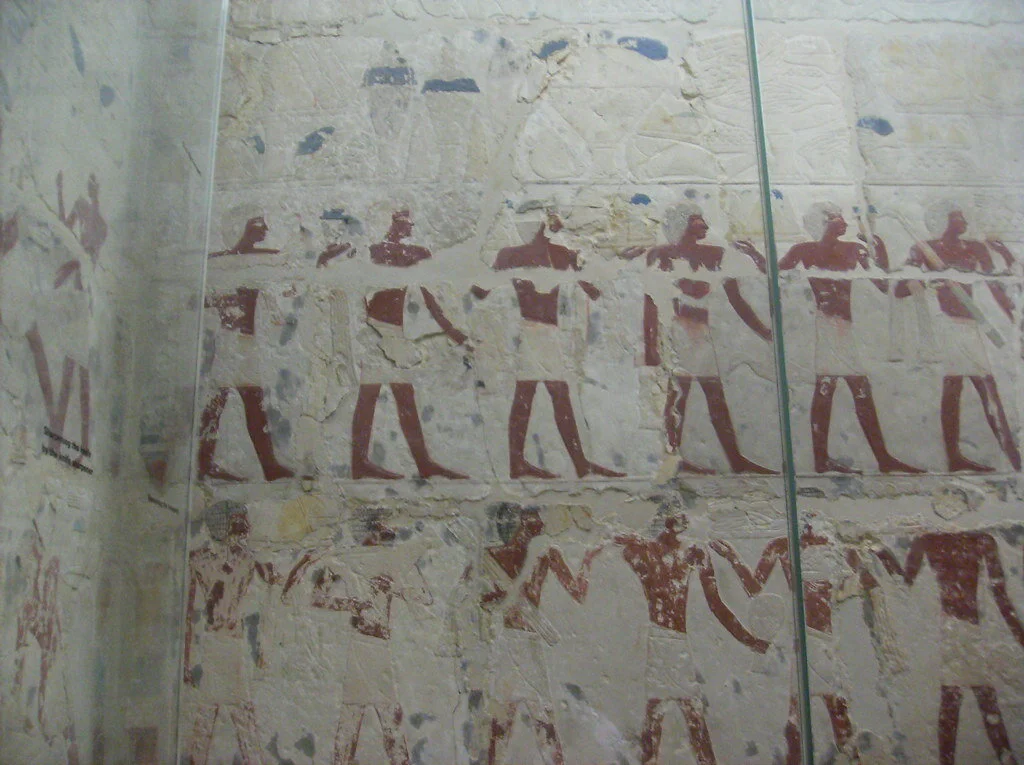
Tomb of Perneb, carving of offering bearers. Peter Roan. CC BY-NC 2.0.
5. It was tradition for the living to share food with the dead.
Ancient Egyptians believed that tombs were eternal homes for the mummified bodies and the ka spirits that lived within them. Each tomb had a tomb-chapel where families and priests could visit the deceased and leave offerings for the ka, while a hidden burial chamber protected the mummified bodies from potential harm. Visitors offered food and drink to the dead daily, and once the offerings were consumed by the ka, the living were free to eat and drink their offerings. The Beautiful Feast of the Valley was an annual festival of death and renewal where families spent the night in the tomb with their ancestors and feasted with them in celebration of their lives.

A statue ofNefertiti in the Altes Museum in Berlin. George M. Groutas. CC BY 2.0.
6. Egyptian women and men had equal rights.
In ancient Egyptian times, men and women of the same social class were treated as equals in the eyes of the law. Women could sell, own, earn, buy and inherit property. If widowed or divorced, women could raise their own children. Women could also bring cases before a court. Overall, women could legally act on their own and were responsible for their own actions. Although everyone in ancient Egypt was expected to marry, wives still had an important, equal and independent role in their marriage.

Isabelle Durso
Isabelle is an undergraduate student at Boston University currently on campus in Boston. She is double majoring in Journalism and Film & Television, and she is interested in being a travel writer and writing human-interest stories around the world. Isabelle loves to explore and experience new cultures, and she hopes to share other people's stories through her writing. In the future, she intends to keep writing journalistic articles as well as creative screenplays.
Siberia's Lake Baikal, One of the Deepest Lakes in the World
Recognized as one of the few remaining ancient lakes in the world, Lake Baikal has preserved natural history and housed thousands of animal species for centuries.
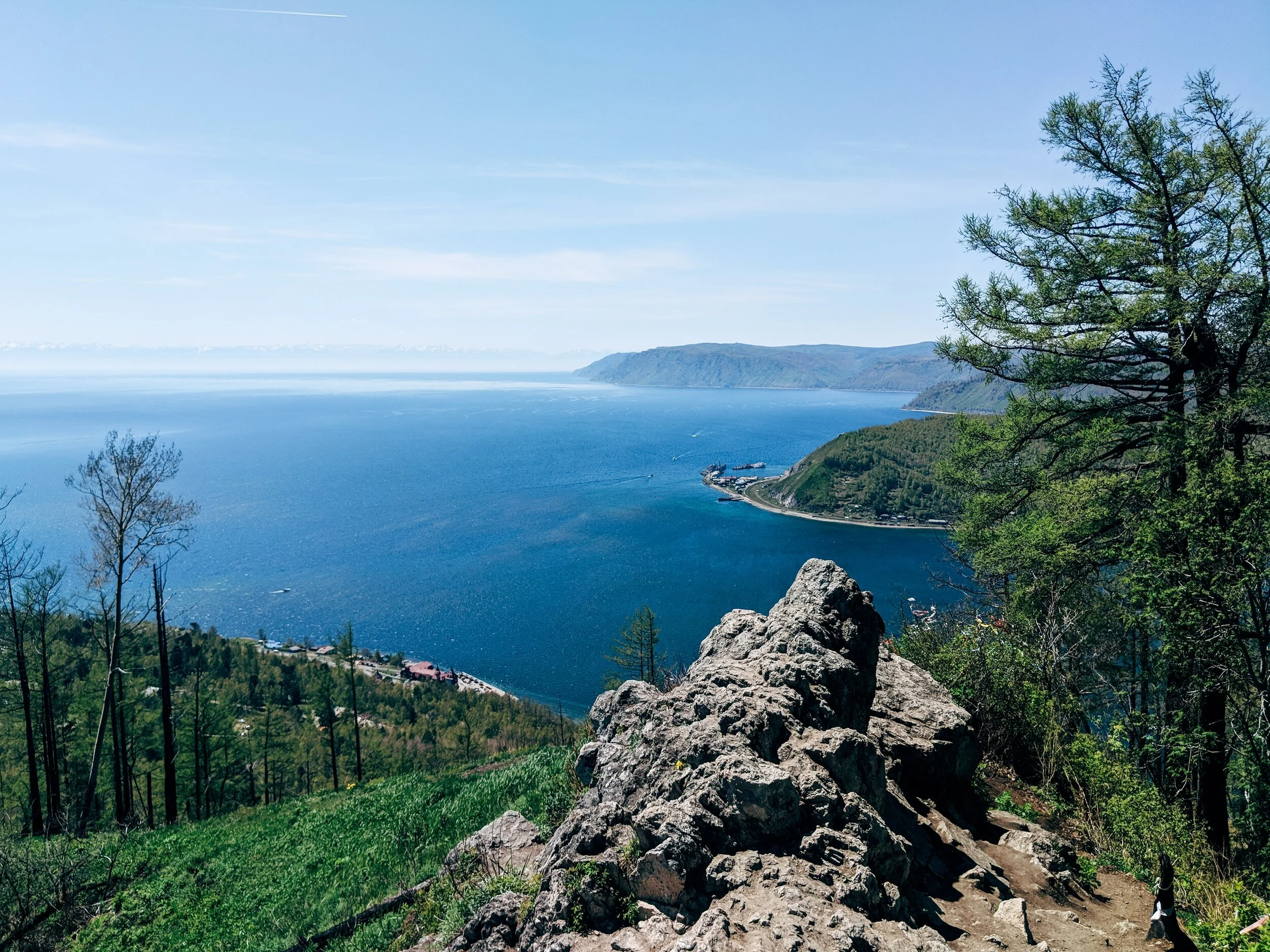
Lake Baikal surrounded by greenery. Markus Winkler. Unsplash.
In Siberia, just north of the Mongolian border, sits Lake Baikal, one of the deepest lakes in the world. The lake houses 22 percent of our planet's fresh water and measures over 5,300 feet deep. Furthermore, its location between mountains allows for over 330 rivers and streams to connect to it, and the lake is made up of three basins. While Lake Baikal only equates to around half the surface area of Lake Michigan, measuring in at about 12,200 square miles, its magnificence lies in its history.
Experts have estimated that the lake is between 25 and 30 million years old, making it one of the few remaining ancient lakes on the planet. This is because it lies in an active rift zone due to its plate tectonics, unlike most other lakes which have a history of being covered by ice sheets in previous glacial periods. Most ancient lakes are formed when the Earth's plates begin to move apart from each other, creating a rift valley that is deepened over time by erosion. Eventually, the rift widens so much that it begins to fill with fresh water. Around 75 percent of Earth's ancient lakes have been formed through this process, with the exceptions having been formed by meteor impacts and volcanic action.
Therefore, not only does Lake Baikal preserve years of Earth's history, but it is exclusively home to around 2,000 unique animal species. Although the lake is protected as a UNESCO World Heritage Site, that hasn’t stopped climate change from affecting the lake, as the surface temperature has increased by 1.5 degrees Celsius over the past 50 years. In conjunction with increasing chemical pollution, the ecosystem is believed to be rapidly changing for the first time in decades.
Throughout the COVID-19 pandemic, locals have been taking advantage of the lack of visitors populating the lake, many beginning to trek out to visit the body of water themselves. Especially during the fall and winter months, many visitors enjoy skating, hiking, or even skiing over the ice and snow.

Ice formed over Lake Baikal. Daniel Born. Unsplash.
Located near one of Russia's largest cities, there has been a constant tug-of-war between developers, locals and environmentalists to seek a balance between encouraging tourism which benefits the local economy, and protecting the deteriorating ecosystem. While the momentary break in visitors has undoubtedly allowed the ecosystem to begin to recover, ultimately its fate lies in the hands of its visitors.
RELATED CONTENT:
PODCAST: Traveling with the Nenet Reindeer Herders in the Siberian Arctic with Patrick Barrow
VIDEO: A Diamond Mine in the Rough

.jpg)
Zara Irshad
Zara is a third year Communication student at the University of California, San Diego. Her passion for journalism comes from her love of storytelling and desire to learn about others. In addition to writing at CATALYST, she is an Opinion Writer for the UCSD Guardian, which allows her to incorporate various perspectives into her work.