
Arvīds Barānovs, award winning photographer and head of Eaglewood Pictures, explores Manaslu, a mountain within the Nepalese Himalayas. Manaslu, at 8,163 meters (26,781 feet), is the eighth highest mountain in the world. The mountain stands proudly over Budhi Gandaki valley. At the peak of the mountain, one can gaze upon the adjacent Annapurna mountain range and Tibetan plateau. As one climbs the mountain, they will encounter many small tea houses along the way. Climbers often stop there to have a cup of tea and eat dal bhat, a staple dish of rice and lentils. Manaslu is inhabited by the Tsum and Nubri peoples, whose ways of life are rooted in Buddhism and Tibetan culture. The local people live traditionally and farm barley, maize and oats, in addition to cultivating nuts and fruits.
6 Things to Know About Kilimanjaro From a Past Climber
Tanzania is home to the tallest mountain in Africa, Mount Kilimanjaro. However, here are six things everyone should know before deciding if they are ready to brave the mountain.
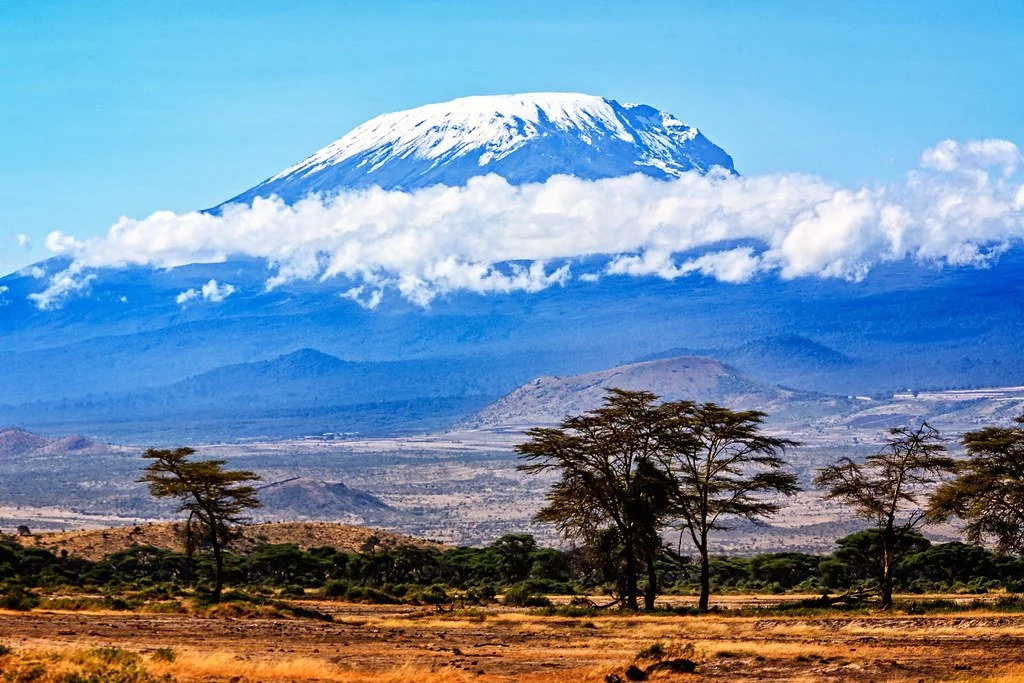
Mount Kilimanjaro. Gary Craig. CC BY-NC-ND 2.0.
Mount Kilimanjaro was created by three volcanic cones called Kibo, Shira, and Mawenzi about 2.5 million years ago. Standing at 19,341 feet, it is home to almost every ecological system: cultivation, forest, heather-moorland, alpine desert, and arctic summit zones. Climbers pass through each of these ecosystems in stages based on elevation. What many may not realize is that Kilimanjaro is dormant, not dead. This means the dormant Kibo cone could erupt again.
I made the climb in January. I will be extremely honest; it was quite miserable at times. It is simply impossible to put into words what hiking a mountain like that will do to you. From the daily struggles of altitude sickness and the feeling of breathing almost nonexistent air, to being the most exhausted you have ever been in your life, dehydrated, starving but unable to keep food down, to having to use the “bathroom” behind a rock right on the side of the trail. I even saw someone lose their life from cardiac arrest. Though it is, thankfully, not a common occurrence, it was rough.
With that said, the struggles make the reward that much sweeter. When I reminisce on my experience, I remember the hard times, but the beautiful moments I was fortunate enough to be a part of are more prominent. The dance and guitar sessions the group would have on our breaks, the feeling of being in a place completely isolated from the world, climbing higher than the plane that got me there, finding a new strength in myself that otherwise would have remained unknown. Kilimanjaro is a monster mountain, but it was the best experience of my life.
1. “Pole, Pole” are words to live by
“Pole, pole” translates to “slowly,” and I cannot stress enough how important this simple phrase is. It doesn’t matter what your physical abilities are, if you do not take your time, you will be hurting. Taking at least five days (depending on your route), this hike is no joke. It’s important to put your pride aside and accept that you might not be the fastest person to get up the mountain, and that’s completely OK! This was something I quickly learned. On the first day, I tried keeping up with the front of my group and very quickly learned I simply wouldn’t make it all six days if I kept that up. No matter what your pace, a guide will always stay by your side, carry things for you if you are struggling, and motivate you to keep going. Guides want you to succeed just as much as you want to, so definitely listen to their advice. They’re lifesavers—literally!
2. You will create amazing connections with your guides and porters
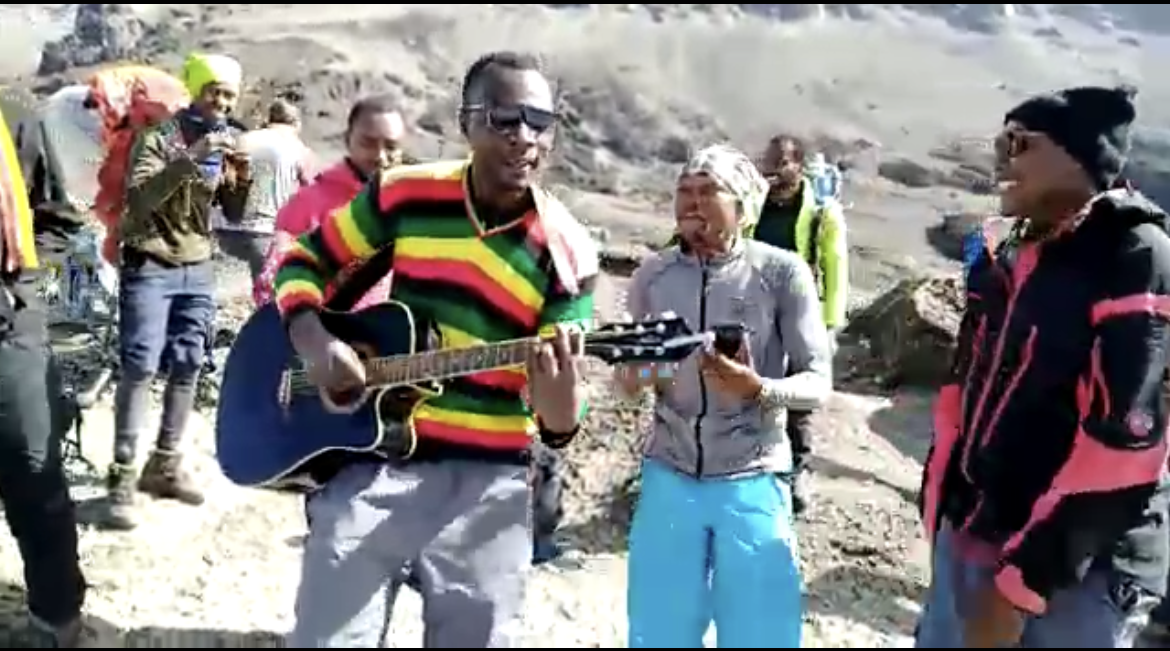
Photo taken by John Willard, my guide on my Kilimanjaro hike.
Your team on Kili will be absolutely amazing, no doubt about it. They will do whatever they can to help you summit, practically carry you if need be. They are extremely selfless and charismatic people, and they make the experience so much more enjoyable. Porters are the men and women who dedicate themselves to carrying all of your gear up the mountain, setting up camp, cooking meals, and creating a vibrant hike experience. Guides spend time with you on your hike—helping you stay on the trail, keeping an eye on your health, and really just guiding you to the summit. On my trip, the team loved to dance and sing and always invited us to join them on breaks and when at camp. They welcomed us to become immersed in the culture and understand the historical importance of Mount Kilimanjaro. The guides and porters truly enhanced the experience, so much that you simply won’t want to leave them. You will want to have WhatsApp downloaded on your phone so you can put in your favorite porters’ and guides’ numbers; when you get home, having those connections will keep a piece of Kili in your heart forever.
3. You will probably get sick
I hate to be the bearer of bad news, but if you decide to climb Kili, you will most likely find yourself experiencing at least some altitude sickness symptoms. It’s inevitable when going up 19,000 feet. Headache, nausea, and exhaustion are some of the more common symptoms. They will not end your hike early, but they will make life a little more miserable on the mountain. You just have to push through! Your guides will keep track of your vitals every day and will encourage you to eat and drink as much as your body will allow—food and water will be your best friend up there. You may hear people say that getting to high elevations eliminates your appetite, and this is very true. I found it hard to stomach even soup broth on my hike. It is best to pack some of your favorite snacks to help get past your lack of appetite. Many people, including myself, take altitude sickness pills to help combat symptoms. They are worth taking as long as they don’t cause negative effects on your body. They helped lessen the severity of my symptoms.
4. It is like being in a movie
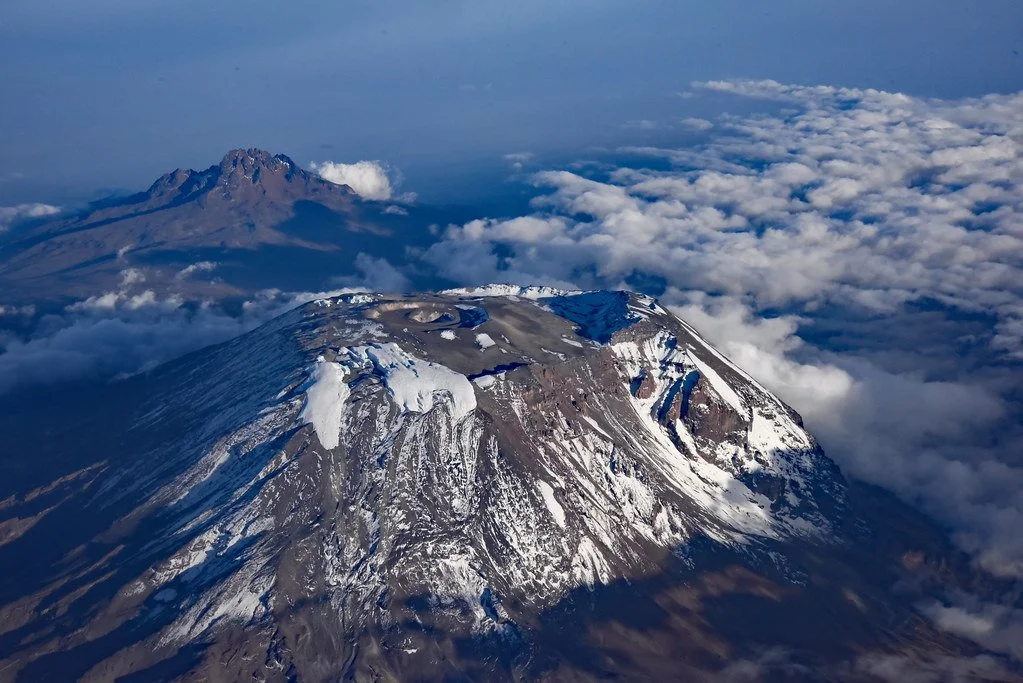
Aerial View of Mount Kilimanjaro.Takashi Muramatsu. CC BY-ND 2.0.
Kilimanjaro is absolutely breathtaking. I remember feeling like I was living in a Star Wars scene for the majority of the hike. The sunsets and sunrises are unlike anything you will ever see again. Barranco Camp, where you will find yourself after hiking from Shira to Lava Tower to Barranco, was the highlight of my entire hike. Beautiful waterfalls, camping on a cliff in the clouds, being surrounded by the massive Barranco Wall (which you will be climbing up the next morning)—it is a beautiful and untouched part of the world. It makes the everyday battle worth it. When you’re feeling like giving up, just stop and turn around. The view you see will give you the courage to keep going.
5. You may see some horrific things

Barranco Wall on Mount Kilimanjaro. Haleigh Kierman
This is not a guarantee, but it is best to know what can happen. During my hike, I witnessed a man pass away right on the trail from cardiac arrest. I never thought I would see something like this, so it is important you know that really anything is possible before deciding if the hike is right for you. It is much more common to see people get physically sick or use the “bathroom” in clear sight, which are things we can typically move on with. With that said, there is always the possibility you can see something more severe. Do not fear though, Kilimanjaro is remarkably safe given its size. Around 30,000 hikers attempt each year with only a 0.03% death rate. If you know and trust your individual abilities and health, there is little to be concerned about.
6. You will discover an unimaginable amount of self-pride when you finish
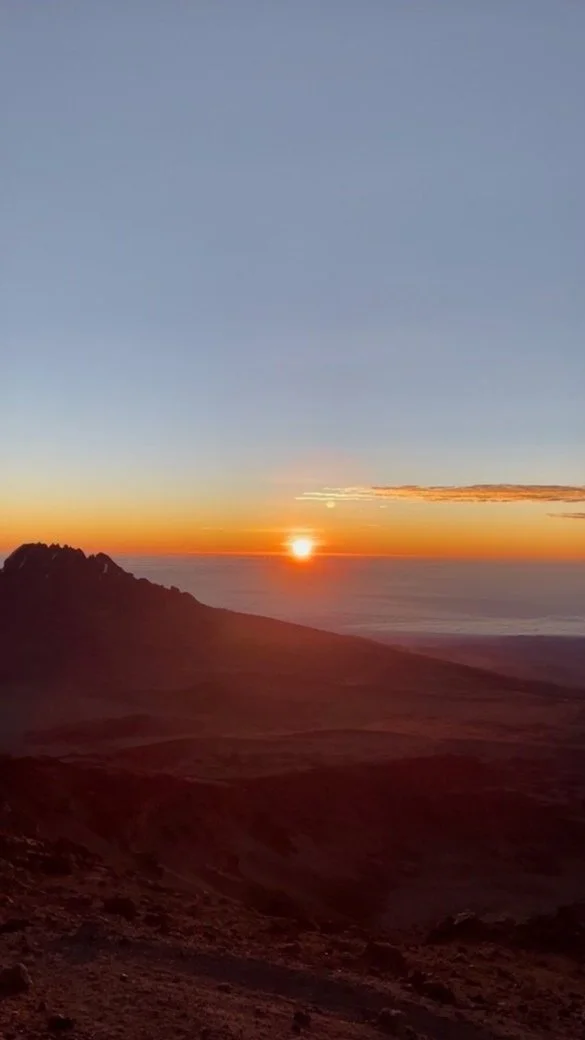
Sunrise on Summit Day. Haleigh Kierman
Summit day: it’s killer. You begin the final trek to the summit around 11:30 p.m. and get to the top around 8 a.m., depending on your pace. At this point, you will be sleep-deprived, feeling as though you are suffocating with every step you take because the air is so thin. But somehow, you will find that strength in you to keep going. And when you finally make it to the top, all you will feel is euphoria. You may even shed a tear or two. Kili will push you to your limit and then past that. You really will discover a new part of yourself you didn’t know was there. If you set your mind to conquering Kilimanjaro, you can do it. It will be one of the hardest things you will ever do, but the reward is a feeling of accomplishment that will change your life forever.
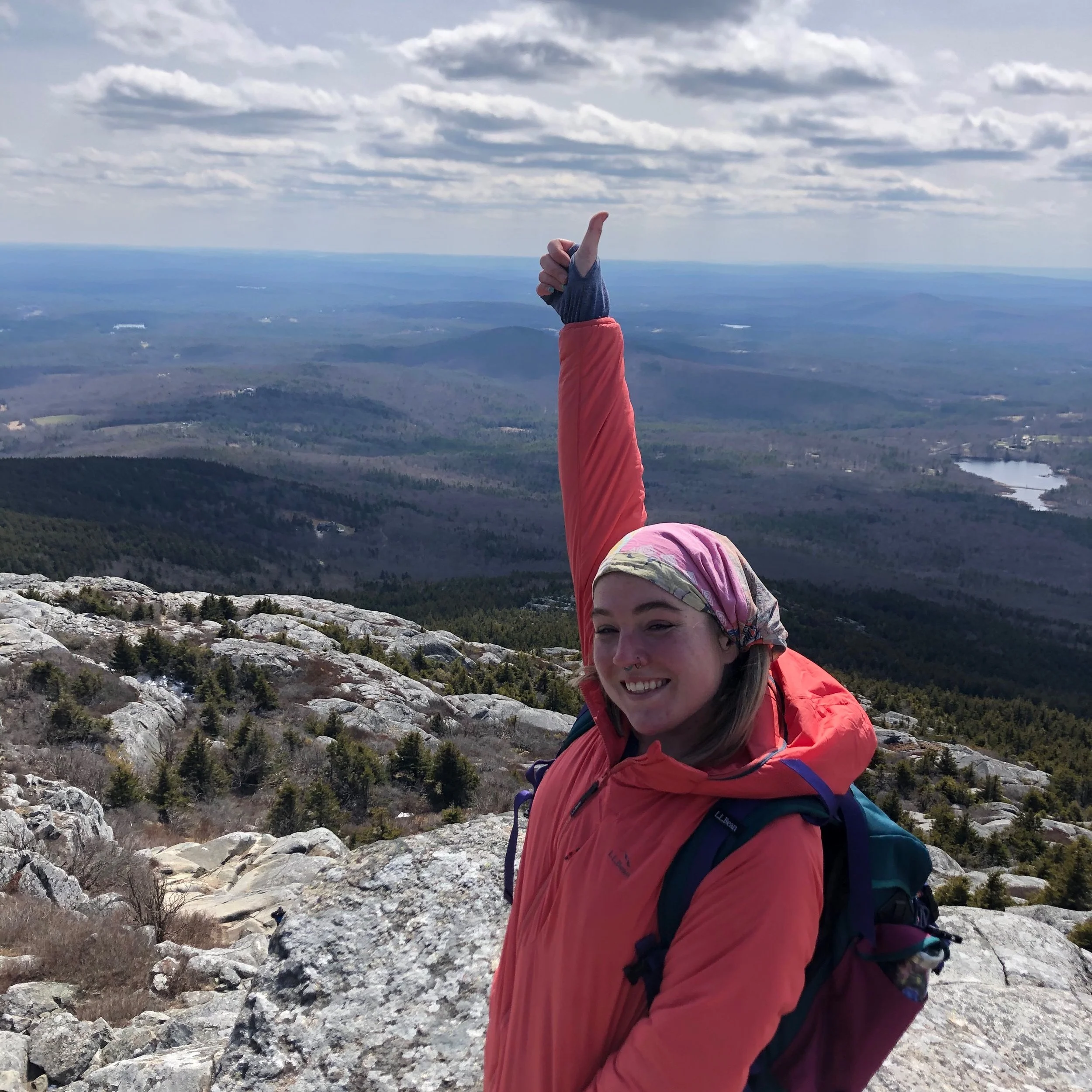
Haleigh Kierman
Haleigh is a student at The University of Massachusetts, Amherst. A double Journalism and Communications major with a minor in Anthropology, she is initially from Guam, but lived in a small, rural town outside of Boston most of her life. Travel and social action journalism are her two passions and she is appreciative to live in a time where writers voices are more important than ever.
Travel and Work for Food on Organic Farms
Organic farms look for travelers to help in exchange for housing, meals and an opportunity to learn—providing a unique mode of affordable, ethical travel.
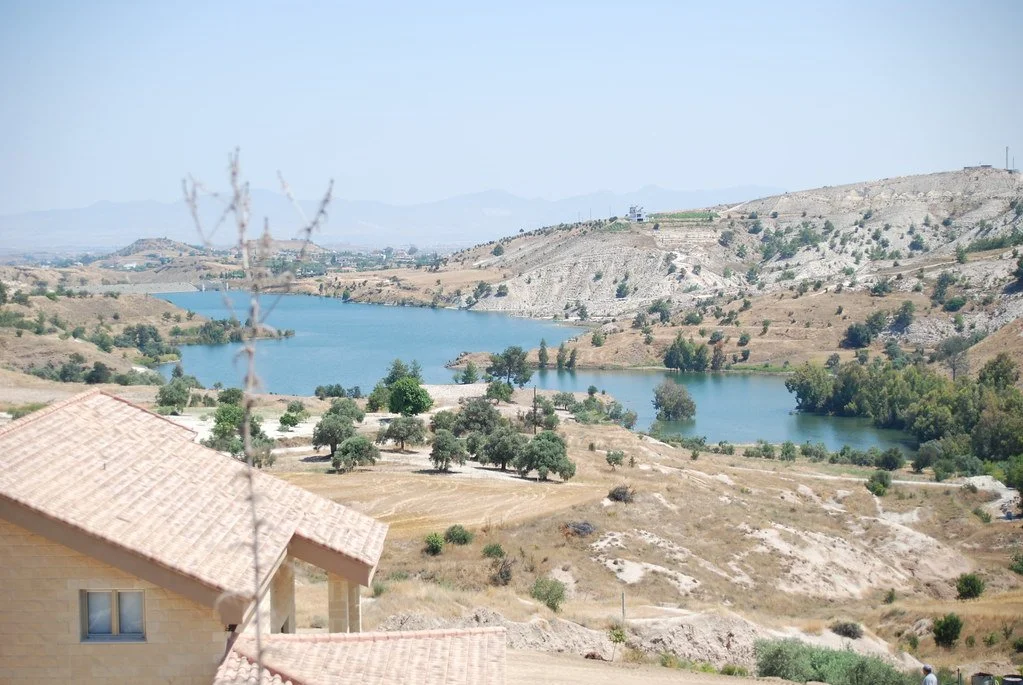
Organic farm in Cyprus, Greece. George M. Groutas. CC BY 2.0.
Worldwide Opportunities on Organic Farms (WWOOF) is the most widespread and popular organization that pairs people interested in volunteering on organic farms throughout the world with host families who run their own organic farms. The idea is that volunteers would be just that: unpaid volunteers, who work part-time on a close-knit and often family-run farm in exchange for free housing and meals with the family. In fact, WWOOF bans any exchange of money between the host and the volunteer. Often, these volunteer stints are short (a few weeks) or part-time, allowing for the volunteer to obtain paid work and/or spend time exploring the area they are living in while also growing the food they will eat during their stay, immersing themselves in culture, helping a local organization and learning from experienced farmers. Below are some detailed opportunities from every continent in the world.
North America: Consecon, Canada
Stonefield Alpaca Farm in Consecon, Canada is a 100-acre family-owned and operated farm powered by solar panels and windmills. The owners are looking for volunteers to help maintain the straw bale home they built together, grow their own food and take care of the animals (alpacas and poultry). They hope to become completely self-sufficient in terms of food, and that volunteers can help them do so while also learning from them and exploring Ontario. Learn more here.
South America: Belize City, Belize
An individual who bought and began his own 14-acre pesticide-free, organic farm in Belize City, Belize offers an opportunity to help develop his farm further in terms of sustainable energy production and other sustainable farming methods. He became a host because he was a WWOOF participant in the past. His farm has goats, monkeys, parrots and sheep. Responsibilities would include taking care of the animals, gardening, landscaping and sharing ideas on how to improve the farm’s organic practices. Learn more here.
Africa: Apam, Ghana
This family-owned farm in Apam, Ghana is not only a farm located on the coast, in the center of a fishing community, but also an educational and charitable center focused on agriculture and helping the larger community. The hosts are looking for volunteers to help with typical farming tasks, such as taking care of animals and harvesting, as well as build ecological houses and participate in the local fishing. This is a unique opportunity to not only help the environment and one local family, but the entire community as well. Learn more here.
Australia: Upper Kangaroo River
Winderong Farm is a cooperation of 10-15 employees and volunteers working together to revive their surrounding environment in Upper Kangaroo River, Australia. They’re looking for volunteers interested in conservation to work on composting, permaculture and regeneration of the Australian bush. This farm differs from most as it is a larger, community-based effort as opposed to a small family-run farm. Learn more here.
Asia: Kampot, Cambodia
Nakupenda Farm in Kampot, Cambodia is a family and community farm focused on sustainability. They are completely sustainable in terms of energy and are working towards growing all of their own food. They would like volunteers to help harvest food and help them reach their goal of becoming entirely self-sufficient. They have also worked on projects in the past such as building earth houses and solar dehydrators, which dry fruits and vegetables to preserve them. Nakupenda Farm sits on 3.5 acres of land. Learn more here.
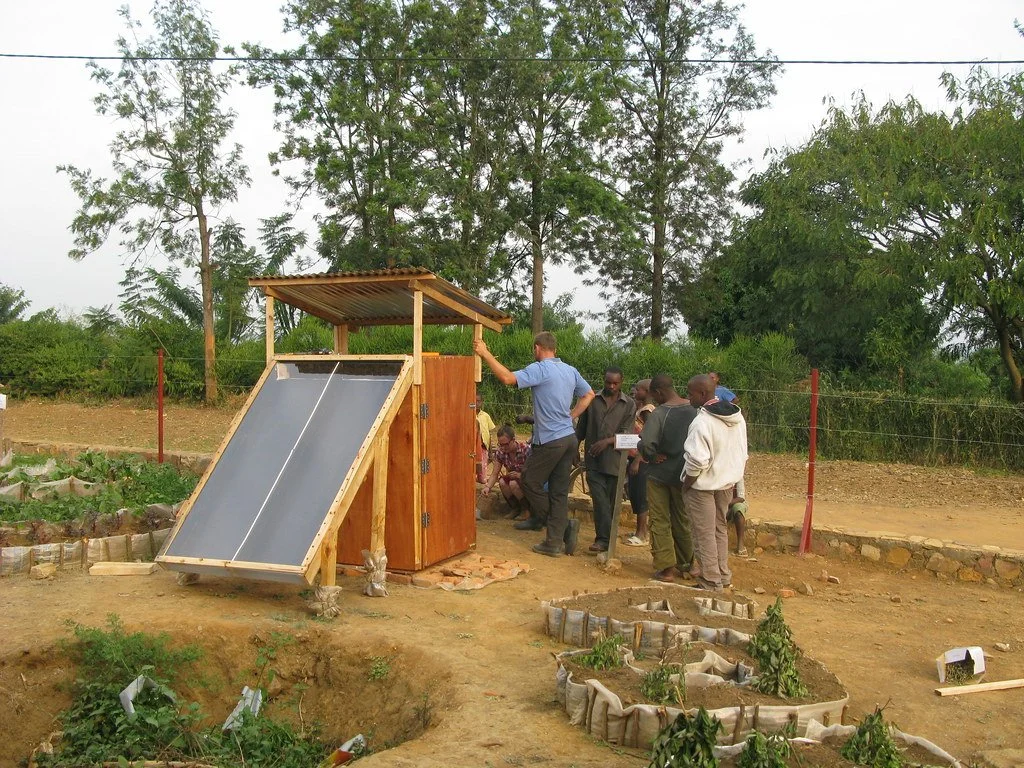
Passive solar dehydrator. Colleen Taugher. CC BY 2.0.
Europe: Hvolsvöllur, Iceland
The Farm Buland is a certified organic dairy farm run by three generations of one family. They would primarily be looking for help with the cows and other livestock, such as chicken, horses and sheepdogs. The owner is passionate about environmentalism and has studied natural healing and medicine. They have over 50 humanely treated cows, providing an opportunity to work on a large-scale ethical and organic farm. Learn more here.
These are only a few examples of the types of farms looking for volunteers; there are hundreds of local and family-owned farms all over the globe searching for people passionate about agriculture and the environment to help them while learning from their experience. In addition to WWOOF, potential volunteers can find more opportunities through similar organizations like World Packers, as well as through the websites of individual independent farms on the lookout for volunteers, such as Red Hook Farm.

Calliana Leff
Calliana is currently an undergraduate student at Boston University majoring in English and minoring in psychology. She is passionate about sustainability and traveling in an ethical and respectful way. She hopes to continue her writing career and see more of the world after she graduates.
The Unique Landscapes of New Zealand's Milford Sounds
Milford Sound located in Fiordland National Park’s diverse landscape has been preserved for years, drawing travelers from around the world.
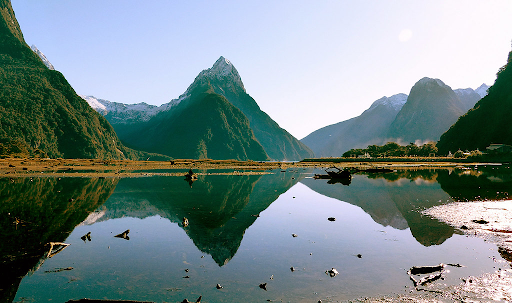
Milford Sound is often considered a destination for immersing oneself in nature. Located on the west coast of the southern island, the sound is situated in New Zealand’s Fiordland National Park. A sound, by definition, is a valley filled with seawater. Milfrorf Sound, however, is formed from glacial water, which technically makes it a fiord. Milford Sound has attracted visitors for centuries, but the history of the sound dates back more than 1,000 years.
The Māori first discovered the fiord, using the land for fishing, hunting and mining pounamu (green jade). According to Māori legend, the sound was carved by Atua, a godly figure who split the cliffs surrounding the sound. The Māori named Milfrod Sound Piopiotahi in refrence to a native bird. A Māori tells the story of a piopio bird flying over the sound after the legendary figure Maui died while pursuing immortality.
In 1877, a man from Scotland settled in Milford Sound, opening the first hotel with his wife. Visitors in the late 19th century and early 20th century were only able to reach the sound through a walking path, Milford Track. In 1954, a tunnel was drilled through the rock surrounding the sound, bringing new road access. With the building of the road, Milford Sound became much more accessible to travelers and has drawn large numbers of visitors from around the world.
Milford Track is still available to explore today within the boundaries of the national park. The path is over 30 miles long and typically takes four to five days to complete. Each night, hikers can stay at a hut along the route before continuing the next day. The trail starts at the head of Lake Te Anau and ends a short boat ride away from Milford Sound. There are also many different day-hikes that visitors can complete to see the park as well as a variety of boat tours. The area experiences heavy rainfall year round, which provides the lush environment and abundance of waterfalls. Kayaking is also popular among visitors, as it allows people to explore the water in an eco-friendly way.
One of the iconic sites of Milford Sound is the Mitre Peak. The mountain sharply rises up from the water, reaching a height of more than 5,000 feet. Additionally, the area is well known for its waterfalls. Lady Bowen Falls, the tallest permanent waterfall in the park, feeds directly into the fiord. Accessible by boat and a short hike, the falls are another important landmark in Milford Sound.

Milford Sound is not just known for its beautiful scenery and nature, but is an important aspect of New Zealand's heritage. The national park is a UNESCO World Heritage Site recognized for its unique landscapes and wildlife. The area is protected by several laws, including the Conservation Act of 1987, to ensure that the area will continue to prosper.

Dana Flynn
Dana is a recent graduate from Tufts University with a degree in English. While at Tufts she enjoyed working on a campus literary magazine and reading as much as possible. Originally from the Pacific Northwest, she loves to explore and learn new things.

Shohei Ohtani pitching in Sapporo. Scott Lin. CC BY-NC-ND 2.0.
Baseball: A Japanese Pastime
America, over the years, has given a lot of cultural significance to the sport of baseball. We place it alongside apple pie and fireworks in the grand list of material symbols of our country. Not only that: baseball, over the years, has often reflected our country’s struggles back at us. It’s confronted discrimination in Jackie Robinson, and labor disputes with Curt Flood. It’s helped heal us, as well. Mike Piazza’s post-9/11 home run brought more joy to New York than anything that followed during the War on Terror.
But baseball is also of waning interest to many Americans. The sport is long, with games usually clocking in over three hours long. It also doesn’t market itself very well. Some of the greatest of all time are playing right now, but has any non-baseball fan heard of Mike Trout, Jacob DeGrom, or Shohei Ohtani? Likely not. The sport isn’t going away anytime soon, but there’s no doubt baseball’s cultural significance is declining in America. Fortunately, that isn’t the only place the sport is cherished.
Baseball was introduced to Japan during the late 1800s by way of an English professor from Maine named Horace Wilson. It didn’t take long for the sport to become a national pastime; professional leagues have existed since 1936, and the country’s national high school baseball championship, Summer Koshien, began in 1915. Today, baseball is Japan’s most popular sport; an almost bizarre outcome considering the existence of nationally-developed sports like sumo and globally adored sports like soccer.
But the popularity of baseball in Japan would be diminished if it weren’t for the homegrown players who have starred overseas. The first Japanese player to play in the MLB was a pitcher, Masanori “Mashi” Murakami, who debuted in 1964. Murakami wasn’t an elite player, and was even forced to return to Japan after two years due to his restrictive contract, but his appearance in the bigs opened the floodgates for others to make America’s game their own.
The first bona-fide Japanese star was pitcher Hideo Nomo. In 1995, Nomo’s first year in Major League Baseball, he posted a league-leading 11.1 strikeouts per nine innings to go alongside a 2.54 ERA (ERA stands for earned run average, or the average number of runs allowed every nine innings. Anything under 4 is considered good. Under 3? Great.) His rookie season is his best known (“Nomo fever” was said to have hit LA), but Nomo went on to have an excellent career, eventually retiring in 2008 after 323 games, 1918 strikeouts, and 2 no-hitters.

A fan holds a “Japan National Team” baseball flag at the World Baseball Classic. Steve Rhodes. CC BY-NC-ND 2.0
There is also the case of Ichiro Suzuki, who with his illustrious career and unique style of play became one of the most well-loved baseball players of the 21st century. Ichiro had exceptional speed, stellar defense, and a superhuman ability to take care of his body, but he was best known for what he did with the bat in his hands. Ichiro’s approach was simple: he would slap the ball around the field, and beat out singles and doubles. He rarely walked or hit for power, but was so talented at this contact-oriented approach that it didn’t matter. It was primordial baseball planted firmly into the twenty-first century, and it worked. In 2004, Ichiro broke the single-season hit record, a record that had stood for 84 years and seemed all but unbreakable with how the game had changed. The principles of hitting have strayed from Ichiro’s even further since then; it’s not unlikely that Ichiro’s grand total of 262 hits in 2004 will stand until the earth is swallowed by the sun.
There’s only one active player who has a chance of topping Ichiro in the Japanese pantheon of stars, and his case is being made this very season. He’s a 27-year-old, currently having not just the best-ever season by a Japanese player, but possibly the best-ever season by anyone.
To explain Shohei Ohtani, one must first note that over its 150-year history professional baseball has become more and more a sport of specialization. Teams today might feature hitters who only hit against left-handed pitching, and speedsters who rarely start but are used late in games as pinch runners.
Ohtani is the one man who breaks up modern baseball’s prime order. He is a pitcher who hits; it’s as simple as that, really. Baseball players have long been separated into hitters and pitchers. Hitters don’t pitch (not seriously, anyway), and pitchers don’t hit (at least, not well; perhaps the best example of baseball’s specialist tendencies is how pitchers haven’t cared about being able to hit for a hundred years, despite the fact that half of the league still requires them to on a regular basis). But Ohtani plays both roles.
That in itself is historic. No player has been both a MLB pitcher and a lineup regular since Babe Ruth, who served the role in 1919. But here’s the kicker—Ohtani is really, really good at both his positions. He has hit 44 home runs while pitching to a 9-2 recond and a 3.36 ERA so far this season. Those are elite statistics, better than Ruth’s 1919 numbers. The value of one man bringing a season of premier pitching and hitting to his team is hard to quantify. But the case can be made that Ohtani’s 2021 season is the greatest of all time, at least so far. There’s no doubt the man is a one-in-a-million player, a gift from the baseball heavens. By coming from Japan, he also represents a nation that may lead in taking the sport forward.
This year, Japan beat the United States to win the gold medal in Olympic baseball. The victory, though marred by the fact that the best players from both countries stayed home, represented another step up the baseball ladder for Japan. As baseball exits America’s zeitgeist, it continues to grow in the island nation. The NPB’s level of play is going up—it’s still behind the major leagues, but not by a massive amount. Even more important is fan interest. In 2019, the last full season of the NPB, the league’s total attendance numbers grew to second in the world across all professional sports leagues.
As more stars are born and made, Japan’s baseball legacy will only continue to grow. Who knows? Maybe in a century, Japan will have come so far that baseball fans will diminish the careers of MLB stars like Trout, DeGrom, and Ohtani. They can’t be that good, the fans will say. They were playing in the United States.
Finn Hartnett
Finn grew up in New York City and is now a first-year at the University of Chicago. In addition to writing for CATALYST, he serves as a reporter for the Chicago Maroon. He spends his free time watching soccer and petting his cat.
Slope Point and Champagne Pool: Exploring New Zealand’s Wild Wonders
Sometimes nature is simple: vibrant sunsets, rays of warming moonlight or bouncing ocean waves. Other times, however, nature shocks and stuns. New Zealand houses two such examples: the odd site of Slope Point and the equally eerie Champagne Pool.
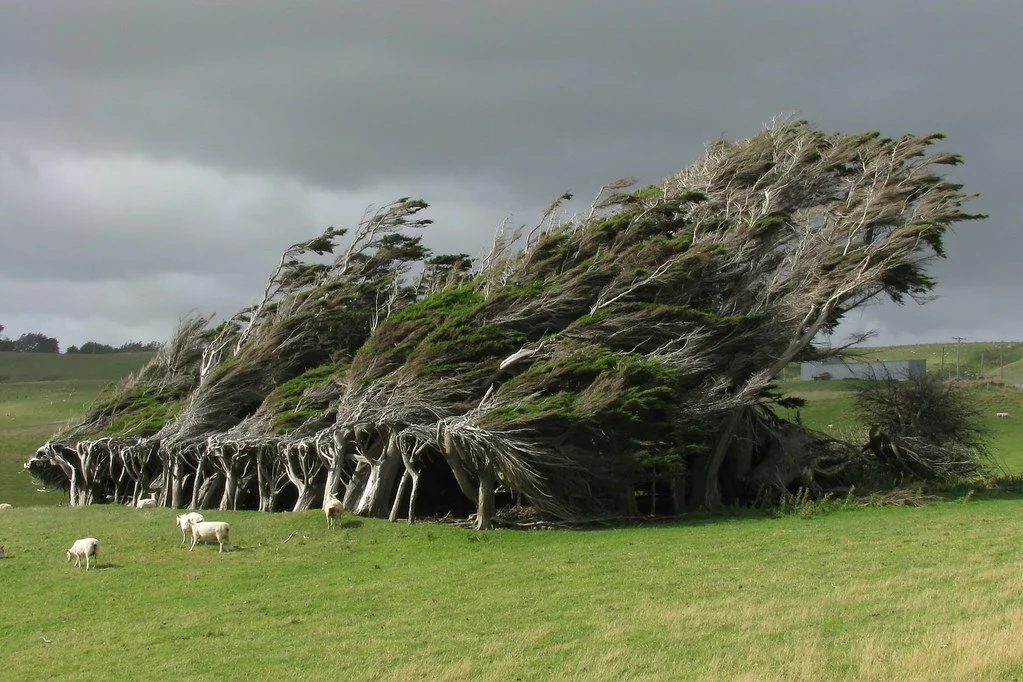
Slope Point with sheep. Seabird NZ. CC BY-ND 2.0.
Slope Point
Perhaps most descriptions of the wonders of wind speak of a gentle breeze or freshly blowing air. On the southernmost tip of New Zealand’s South Island, the winds are instead far from calm; the violently whipping winds gave one area the name “Slope Point.” Situated along a steep cliff at the island’s southern edge, Slope Point is an ideal spot for those mystified by science. The ocean winds are violent and unrelenting to the area’s trees. The wind provides a scary picture of nature’s true power, blowing away anything that may come in its path. The location of Slope Point forces the trees to become the first victims of the winds. As a result, the tall trees are bent at an odd angle, making them seem as if they were purposely posed. Although few people live in the area, local farmers planted the trees to provide shelter from the wind for their herds of sheep.
Photographs of the area offer profound inspiration for artists: the odd trees bend against a gray background striped with warm rays of sun. Although the area hosts an eerie feel, it is surely one underlined with the beauty of Mother Nature’s masterful hand.
Champagne Pool
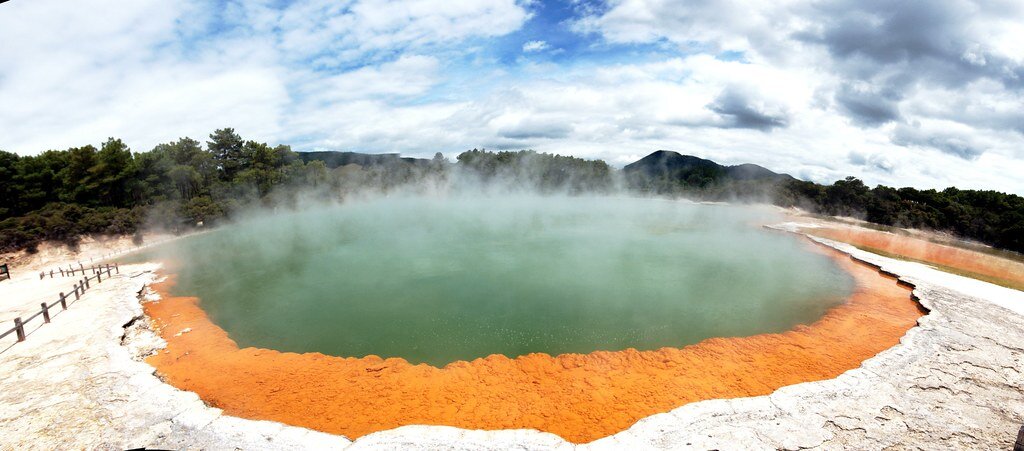
Boiling Champagne Pool. t3rmin4t0r. CC BY 2.0.
Far north of Slope Point lies the mystical Champagne Pool on New Zealand’s North Island. Although an uncanny site, Champagne Pool is only one of many geothermal spots peppering the area around the city of Rotorua. The surrounding area, called Wai-O-Tapu, is known for its geothermal sites carved throughout the landscape. The strips of active volcanic sites and geothermal pools have created an admittedly scary yet magnificent look into what lies just beneath our feet.
Champagne Pool is a captivating hot spring that stretches over 200 feet and is about equally as deep. A hydrothermal eruption caused this crater, which boils at over 160 degrees Fahrenheit, to form about 900 years ago. The hot spring earned its name from the presence of carbon dioxide that causes it to bubble like Champagne. Although seemingly uninhabitable, the hot spring teems with a rich microbial ecosystem. Additionally, striking photos of the site capture the vibrancy of the pool’s outer rim. Its neon orange strip is caused by antimony deposits that harden on the cooled rim of the pool. The surrounding grounds are equally rich in minerals; gold, mercury and silver are found in nearby rock beds.
Whether one is an artist, a scientist or an adventurous visitor, both Slope Point and Champagne Pool stand as equally inspiring trips.
Ella Nguyen
Ella is an undergraduate student at Vassar College pursuing a degree in Hispanic Studies. She wants to assist in the field of immigration law and hopes to utilize Spanish in her future projects. In her free time she enjoys cooking, writing poetry, and learning about cosmetics.
New Zealand: Aotearoa
“Rich greenery, rough landscapes and unreal scenery. Footage shot over a time period of eight months features New Zealand in a way never seen before. German electronic music artist “The Road up North” exclusively created surreal soundscapes to accentuate the unique mood of this journey through territory and changing seasons.” -Birk Poßecker
ECUADOR: The Galapagos
Andrew Norton recently got invited to visit the Galapagos islands in Ecuador. Just before returning home he called his wife, Katie, to tell her about it. A tale of trying quasi-adventurous things, Darwin marrying his cousin and riding a tortoise, and a kid that can do 1000 kick-ups, among other things.
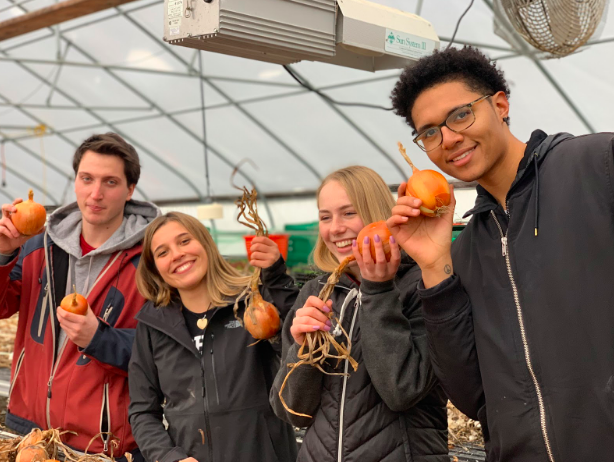
Eco-Gap Participants in the Greenhouse. Photo provided by Eco-Gap.
Take a Gap Year to Learn about Yourself and the Environment
Gap years are on the rise. More and more, young adults are being encouraged to defer their acceptance to college to take a break from the grind of school, mature, and learn more about themselves. For some, taking a gap year serves as an introduction to living away from home. For others, a gap year provides work experience, and the opportunity to make extra cash to pay for college and other expenses. Articles and opinion pieces are frequently being published, attesting to a gap year’s ability to provide crucial preparation for college.
But gap years can serve a purpose other than bettering oneself. Some gap year programs have been created with the goal of fostering a generation of environmentally aware young adults. These programs have an eco-focus, encouraging their participants to live socially and environmentally conscious lifestyles.
International School for Earth Studies
The Cushing family runs the International School for Earth Studies in Southern Alberta. According to Co-Founder, CEO, and Director of Operations Geoffrey Cushing, he and his family were, and remain, “Eco-tourism pioneers.” The International School for Earth Studies run programs that educate and connect people to the environment. They accepted their first gap year student in 2005, and they have maintained a vibrant program ever since.
At the core of their gap year program are four pillars:
Environmental Literacy
Self Defense
(Non Motorized) Outdoor Recreation
Animal connection
The International School for Earth Studies runs two sessions of gap year programs: an Autumn and a Winter session. In addition to living and learning on the institution’s immense property that includes a private lake, diverse animals, and a stable, participants travel to other important places such as the Great Lakes, and the largest concentration of power plants in North America. The gap year students will learn from knowledgeable and experienced staff and speakers, including first nation biologists.
Geoffrey explained that students experience an “immersion into an outdoor lifestyle,” as students spend six to eight hours a day working outdoors. A typical day is split up into morning, afternoon, and evening sessions. In the morning and afternoon, participants will learn how to work and connect with animals, or develop outdoor survival techniques. Evening sessions are more discussion based. Sometimes, participants will stargaze. Other times, a participant will lead a discussion. Geoffrey said that the discussions can get particularly deep and emotional.
Geoffrey hopes that participants will leave this program as more educated global citizens, and will feel the urgency of Earth’s environmental situation. “We feel that the world is in crisis environmentally,” Geoffrey said. “We try to use animals, the voiceless, as the platform for our students to realize how desperate the situation is.”
Eco-Gap at EcoVillage at Ithaca
Ecovillage at Ithaca, NY is comprised of three neighborhoods organized as housing cooperatives. Learn@ecovillage’s gap year program is brand new, they just initiated their first cohort last year.
Liz Walker, Director and Co-Founder of EcoVillage explained that Eco-Gap is unique, as it is set in the Ecovillage, a community that is completely environmentally oriented. Participants live with families in the communities.
There are two opportunities for gap year students:
The Eco-Gap immersion program
The Eco-Gap internship program
The Eco-Gap immersion program is an eight-week structured program in the fall, for a small cohort of eight participants. Liz outlined the major, and varied, components of the Eco-Gap immersion program:
Agriculture: local food and farming. Participants will work on the Ecovillage’s four organic farms, and learn to prepare food for themselves and for the needy.
Health and Wellness: Participants will learn yoga and meditation skills, as well as tap into their own artistic creativity,
Building Skills: Participants will learn about green building, and learn carpentry skills to build their own small shed.
Living and leadership skills: Participants will learn how to express themselves fully, and how to deal with conflict through non-violence.
For those that want more work experience, or a more flexible timeline, the Eco-Gap internship program offers individual mentoring.
Through Eco-Gap’s programming, Liz aims to teach from a “context of environmental and social sustainability and social justice.” Her goal is that her participants “obtain practical skills for transforming oneself and the world.”
These are just two examples of environmentally focused gap year programs. There are more out there, all around the world. Additionally, gap year students can volunteer for the environment independently, without an organized program.

Eliana Doft
Eliana Doft loves to write, travel, and volunteer. She is especially excited by opportunities to combine these three passions through writing about social action travel experiences. She is an avid reader, a licensed scuba diver, and a self-proclaimed cold brew connoisseur.
Explore the Melting Ice Caves of Alaska’s Mendenhall Glacier
Mendenhall Glacier is a spectacular 12-mile-long glacier near Juneau, Alaska. Ice caves make up its surreal interior. Only the truly adventurous can access its icy walls, as the trip to see them requires a kayak trip, an ice climb and—once you're inside—the faith that the glacier’s melting walls won't give way. But this natural wonder is under threat. The glacier has been retreating incredibly quickly in recent years due to warmer temperatures and rising sea levels. Since 1958, it has receded by almost two miles. What remains, however, is an utterly breathtaking fantasyland.
Welcome to the Jungle: Badaling’s Wildlife Park
You can't just stroll into the park. You have to take one of its special "zoo buses"...and pay for it. The initial ride is fairly benign, but after passing through a security checkpoint, you can literally see lions, tiger and bears swirling around the bus you are riding in. These animals spend their lives here at the park and have grown accustomed to vehicles passing through their enclosures—they know you're coming long before you do. As your fellow passengers pull out their phones and snap pictures, you notice a steel cage riveted to the floor of the bus. It’s filled with chickens. For 40 yuan ($6.30) you can buy one of these chickens and toss it to the animals outside. It’s not an option for the squeamish, of course, but an option nonetheless.
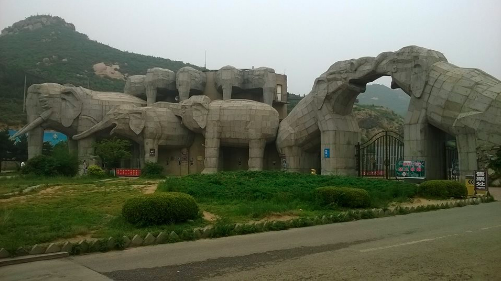
The entrance to the Badaling Wildlife Park. Jonathan Robinson.
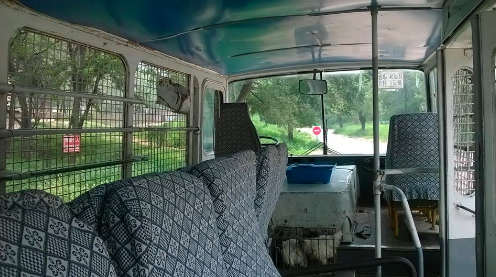
The zoo bus. Jonathan Robinson.
The Badaling Wildlife Park outside of Beijing is known for giving its guests an up-close-and-personal experience with exotic animals. If you've got the funds, the park staff can also arrange for live chickens, sheep, even cows to be served to those animals for your viewing pleasure. Critics call this practice cruel and inhumane, but live animal feedings are fairly common at zoos and wildlife parks throughout China.
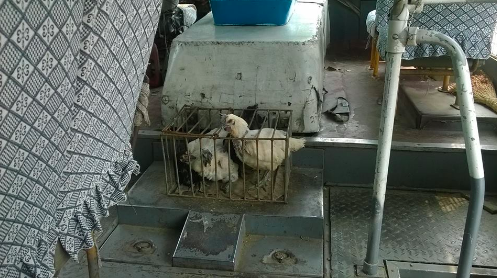
Every bus comes with its own chicken cage. Jonathan Robinson.
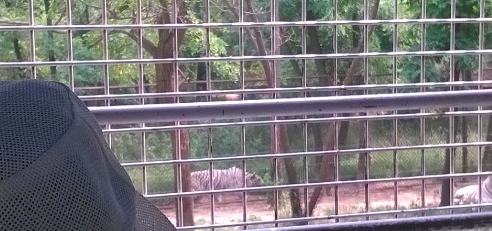
A white tiger. Jonathan Robinson.
If tourists aren't careful, they can find themselves on the menu as well. Two years ago, a woman was attacked when, after an argument with her husband, she decided to exit the car that she, her husband, and her mother were riding in and make the rest of the trip on foot. Surveillance videos show her being dragged away by a Siberian tiger, as her husband and mother look on in horror. The woman’s mother eventually exited the vehicle and jumped on the tiger, saving her daughter's life at the cost of her own. The park paid out a settlement of 1.2 million yuan ($299,917.52) following the incident. Last year, a male patron was bitten by a bear as he fed the animal through the driver's side window of his car. Despite these and other incidents, the park is still as popular as ever and continues to admit new patrons looking for an adventure.
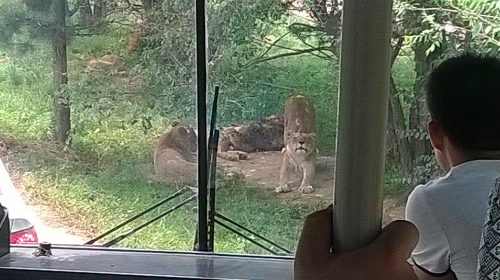
A group of lions. Jonathan Robinson.
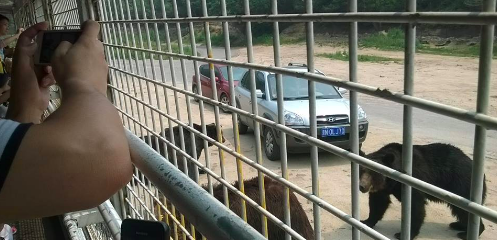
Bears looking for a snack. Jonathan Robinson.
A cardinal rule when traveling is to expect differences from one's country of origin. Not everyone will have the same beliefs and values as those of the traveler. The Badaling Wildlife Park is a prime example of this. While controversial, none of the activities that occur in the park are illegal in China. Nor do they pose an immediate threat to the population of any particular animal. Respecting things that we do not necessarily support is a vital part of the international, intercultural education that world travel gives us, and though the temptation may be great at times, we must weigh the validity of imposing our values in countries that we are admitted to as guests. For now, the park hovers in its own moral space. It cannot be labeled definitely as “right” or “wrong.” It simply is.
JONATHAN ROBINSON is an intern at CATALYST. He is a travel enthusiast always adding new people, places, experiences to his story. He hopes to use writing as a means to connect with others like himself.

Video: Antarctica's Natural Wonders
The video starts in Ushuaia, Argentina and transitions to Port Williams, Chile, then rounded up Cape Horn and crossed the Drake Passage towards the Melchior Islands in Antarctica. The videographers spent 16 days in the Antarctic and got to experience the most amazing scenery and wildlife before they returned back to Ushuaia.
A World Cup for the Overlooked
CONIFA Offers a Humanitarian Alternative to FIFA.

Conifa World Cup, Group C, Padania v Székely Land, Bedfont Sports Centre, London/England. By Ungry Young Man from Vienna, Austria. 3 June 2018. Photo Credit: Confifa
Soon, the eyes of the world will be on the FIFA World Cup. There will be all the usual pomp and spectacle, feats of athleticism, and celebration of unity. And yet, FIFA’s large-scale corruption is no secret to fans and players alike. Recurring scandals have tainted the name of soccer’s governing international organization, culminating in the arrest of seven top officials for claims of corruption in 2015. But FIFA also has a somewhat less known history of excluding the many teams that do not meet its participation requirements. To play in FIFA, the team’s nation must be recognized by the international community, and only one football team from each country is allowed to participate.
In 2013, the Confederation of Independent Football Associations, otherwise known as CONIFA, was formed with the intention of providing a world stage for these unrecognized teams to compete on. In a poetic opposition to FIFA, CONIFA was founded as a non-profit and represents teams comprised of people without a state, unrecognized nations, minorities, people who prefer representing their cultural identity over country of birth, and anyone else who cannot, or prefers not to meet FIFA’s requirements. CONIFA now includes 47 member teams and represents 334 million people worldwide. “We have nothing against FIFA,” CONIFA General Secretary Sascha Düerkop told the press shortly before the opening of the CONIFA World Football Cup, “They are very great to learn how not to do things.”
The 2018 CONIFA World Football Cup opened on May 31 in South London, and was hosted by the London-based Barawa team of Somali refugees. Among those represented at the cup was the Pandania team, comprised of players from eight different regions of northern Italy, and winners of the past two CONIFA European Football Cups as well as ending fourth in the 2016 World Football Cup. Another notable team is Abkhazia, the former title holders representing their semi-recognized Eastern European state. Representing Matabeleland, a war-torn area in western Zimbabwe, are the Warrior Birds, who successfully raised the 25,000 dollars necessary to make the trip to England entirely through crowd funding and selling jerseys. “No one ever believed we would make it to London but we made it,” said captain Praise Ndlovu, “I'd like to say thank you to everyone.”
The final match of game was between Northern Cyprus, a state recognized only by Turkey, and Karpatalya, representing the Hungarian minority in Ukraine. While in the end, Karpatalya won the match 3-2, CONIFA is about more than just winning, it’s about inclusivity, about allowing everyone to participate on the world stage.
“As long as FIFA has existed, there has always been a non-FIFA world of teams who want to play on a global stage but can’t for a variety of reasons,” Per-Anders Blind, the president of CONIFA, told The New Yorker. “What we have done is fill a gap, a white spot on the map that nobody cared about.” CONIFA represents a more honest, somewhat purer version of football, which has returned to FIFA’s original intention of supporting the world-wide football community and organizing truly international competitions.

EMMA BRUCE is an undergraduate student studying English and marketing at Emerson College in Boston. She has worked as a volunteer in Guatemala City and is passionate about travel and social justice. She plans to continue traveling wherever life may take her.
Wild Africa
Leaving the urban setting and modern life behind, for 15 years I have been privileged to travel through some of the wildest regions left on our planet — compelled to capture the unique personalities and expressiveness of the magnificent wild animals of Africa. All in black and white, all part of one big family album.
My first meeting with Africa was like a thunderbolt.
There was a part of me that wanted to return to our roots, and Africa resonated with me like the animal instinct that lies deep within each of us. After travelling for thousands of miles, I always have this incredibly vibrant feeling of being in entirely unknown territory. Africa is always evolving, free, and wild... hugely wild.
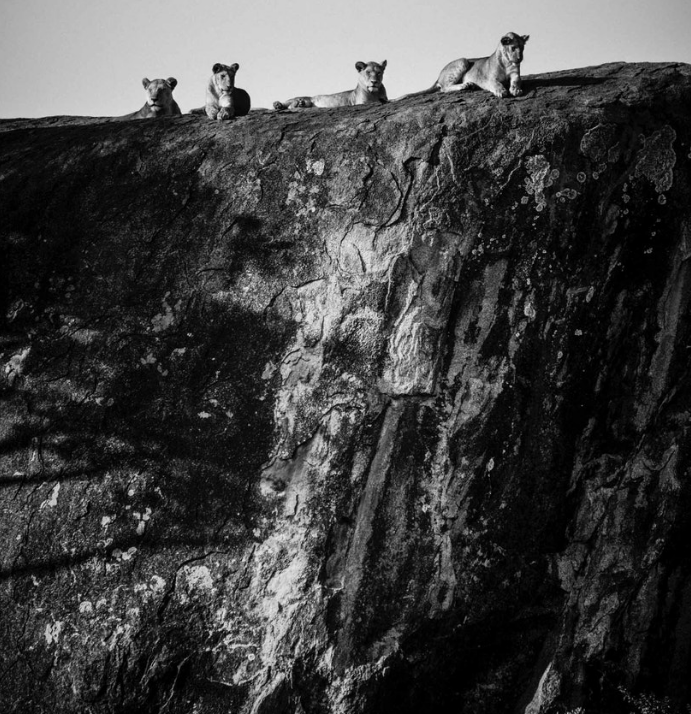
Above: Lioness (2015)
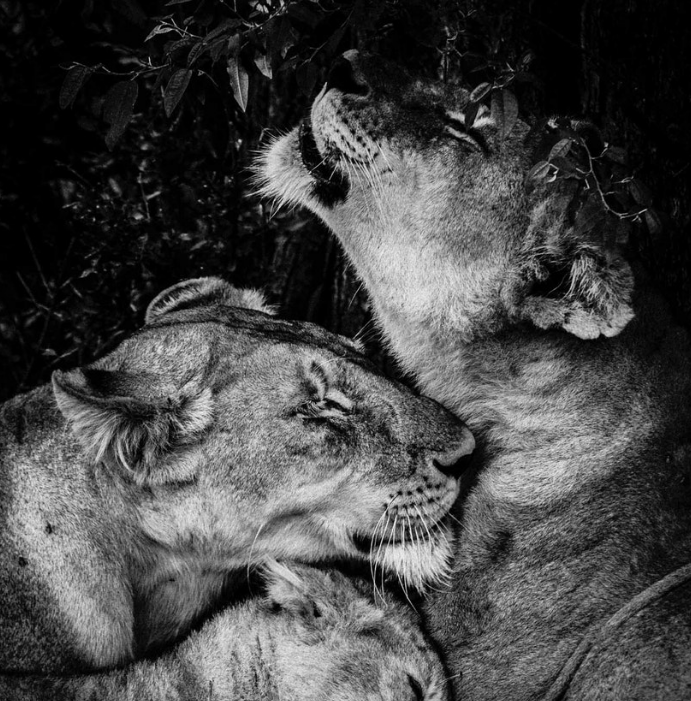
Above: Hugs of lioness (2006)
Utterly disconnected from our urban environment, for more than fifteen years I have been drawn — mind, body and soul — to photograph the remarkable animals from this land of light and contrast.
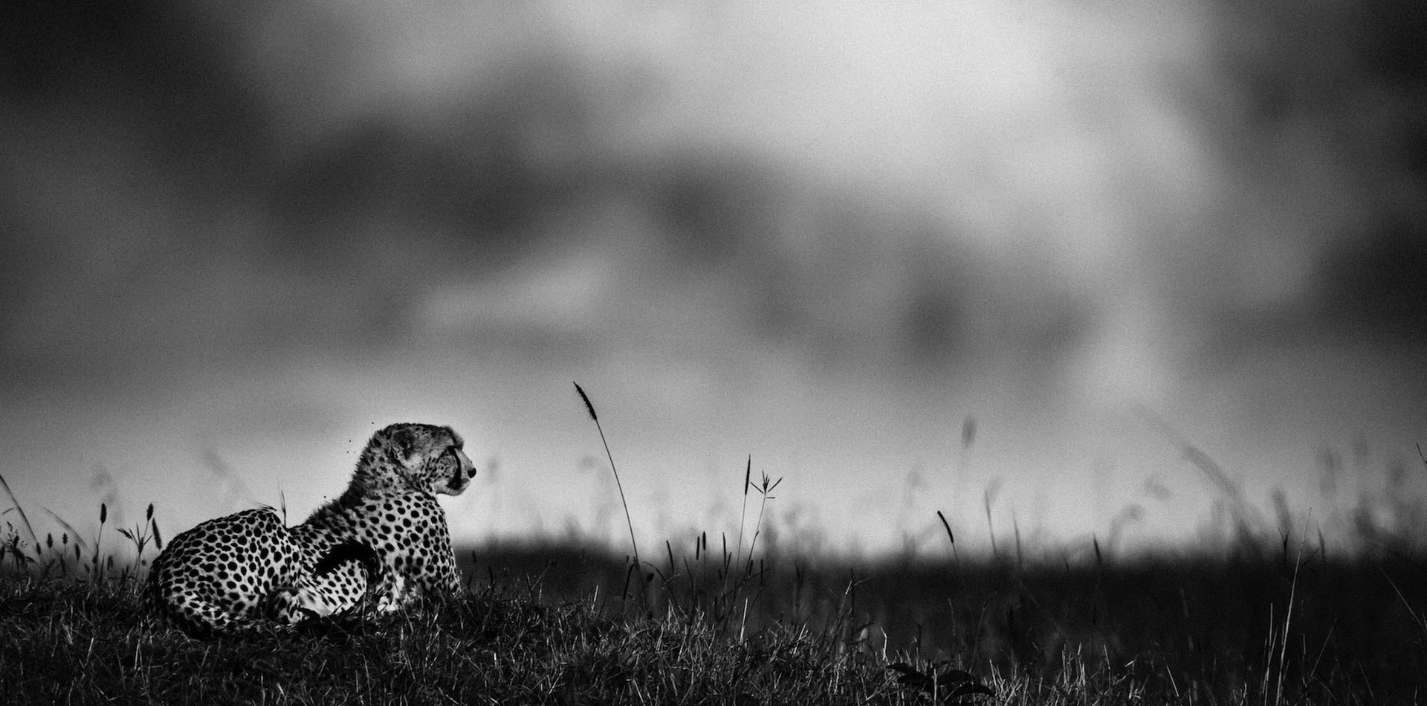
Above: Cheetah before the rain (2006)
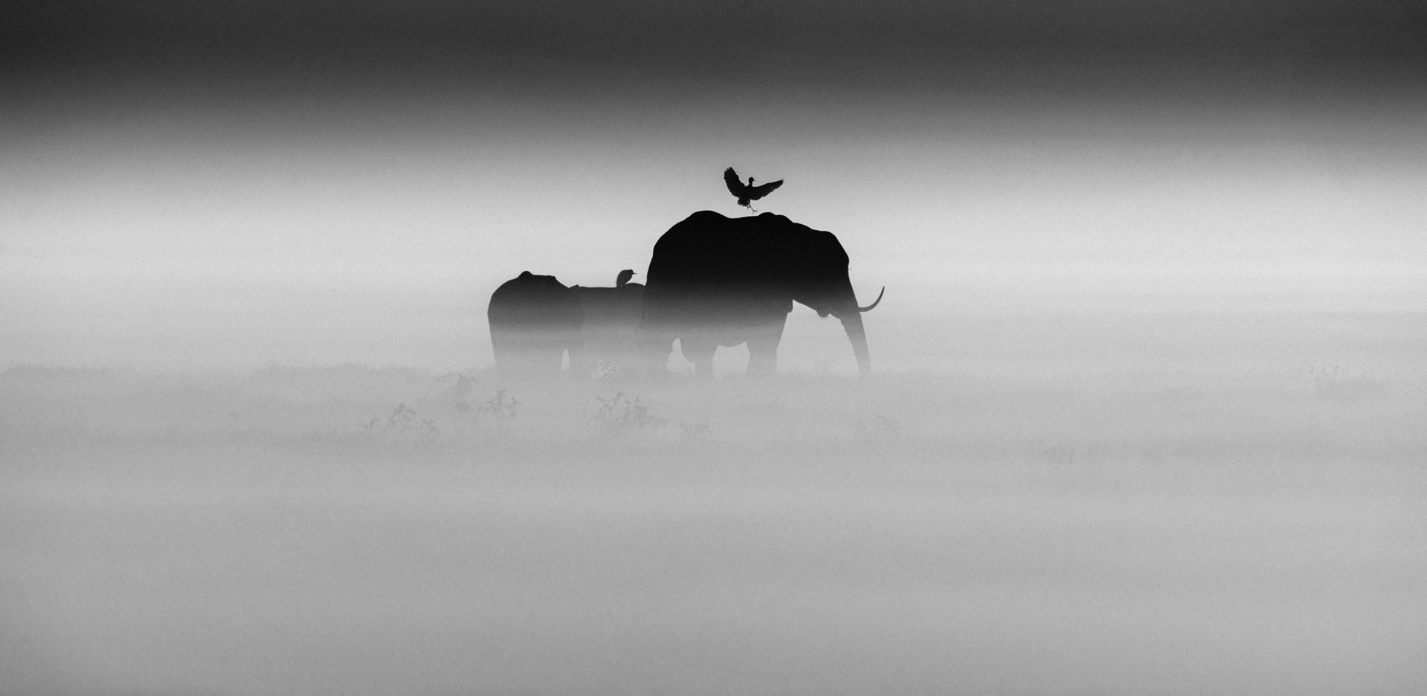
Above: Elephants and bird (2015)
I am constantly inspired by the sense of serenity and harmony between the natural landscapes and the diverse wildlife that roams these lands.
Everything is connected and the animals are totally adapted to their environment. I take photographs based on my gut instinct. For me, the thing that matters the most is the connection.
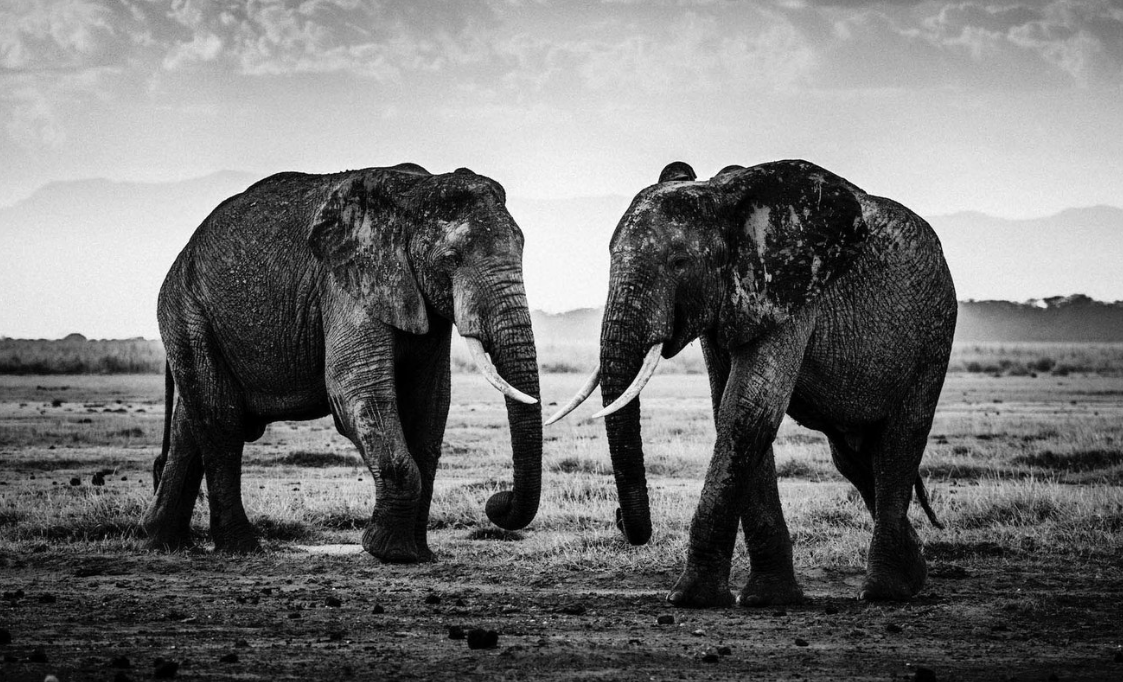
Above: Elephant, The road is closed (2015)
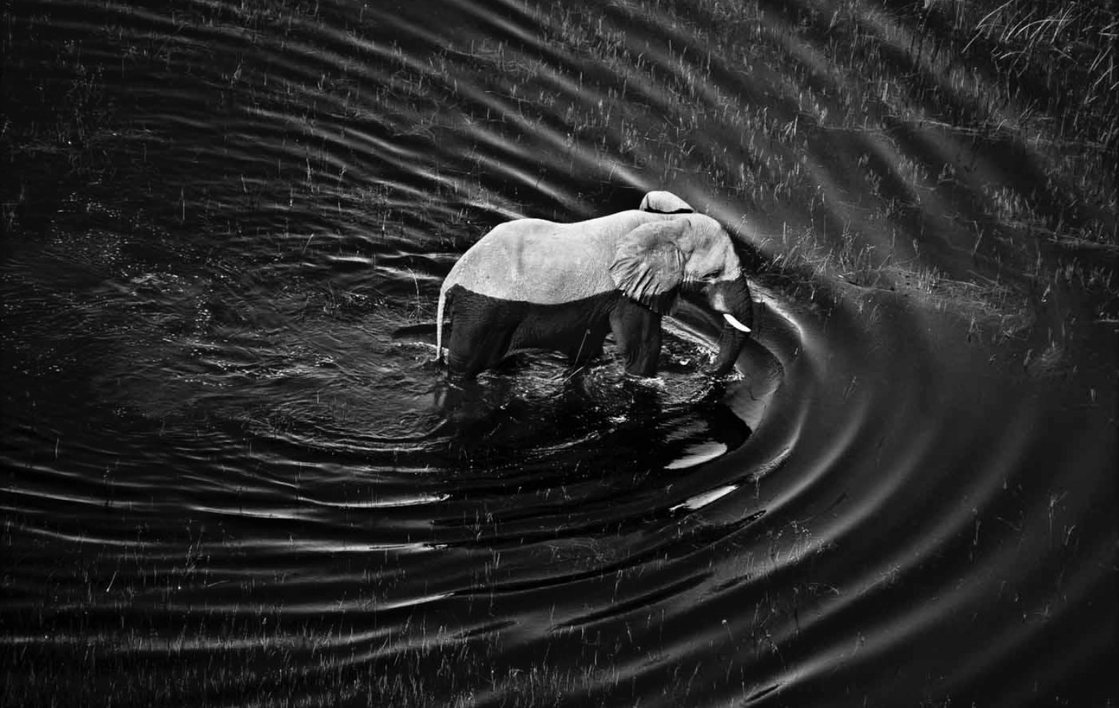
Above: Elephant crossing the river (2009)
I cannot stand strict pre-visualisation or procedures that lock people into pre-formatted ways of work. My conviction is never to prepare my shots. I prefer to be guided by luck, and to be inspired by the ever-changing spectacle of wildlife. Out in the field, I often work with a local guide who will drive the car while I concentrate on taking photos. It is very important to be utterly present in the moment, and not to be disturbed.
Opportunities in wildlife photography never come twice.
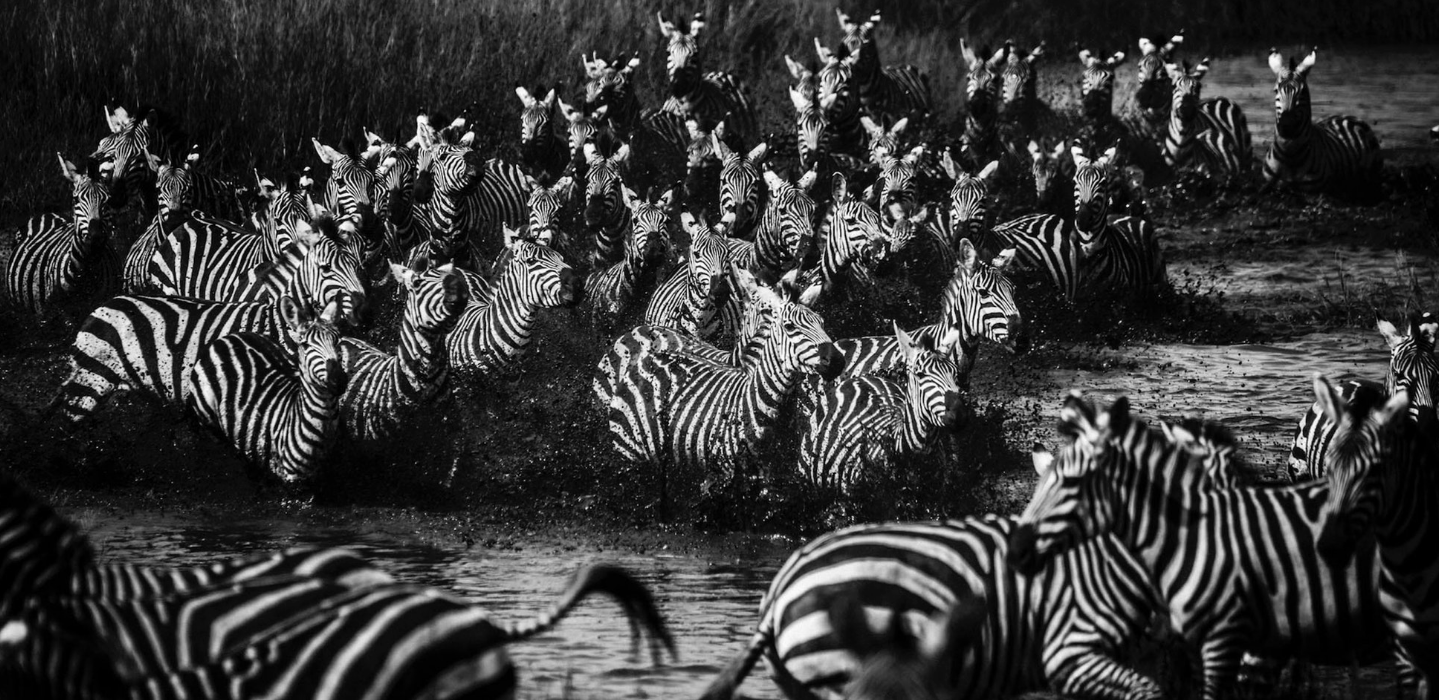
Above: Zebras crossing the river (2015)
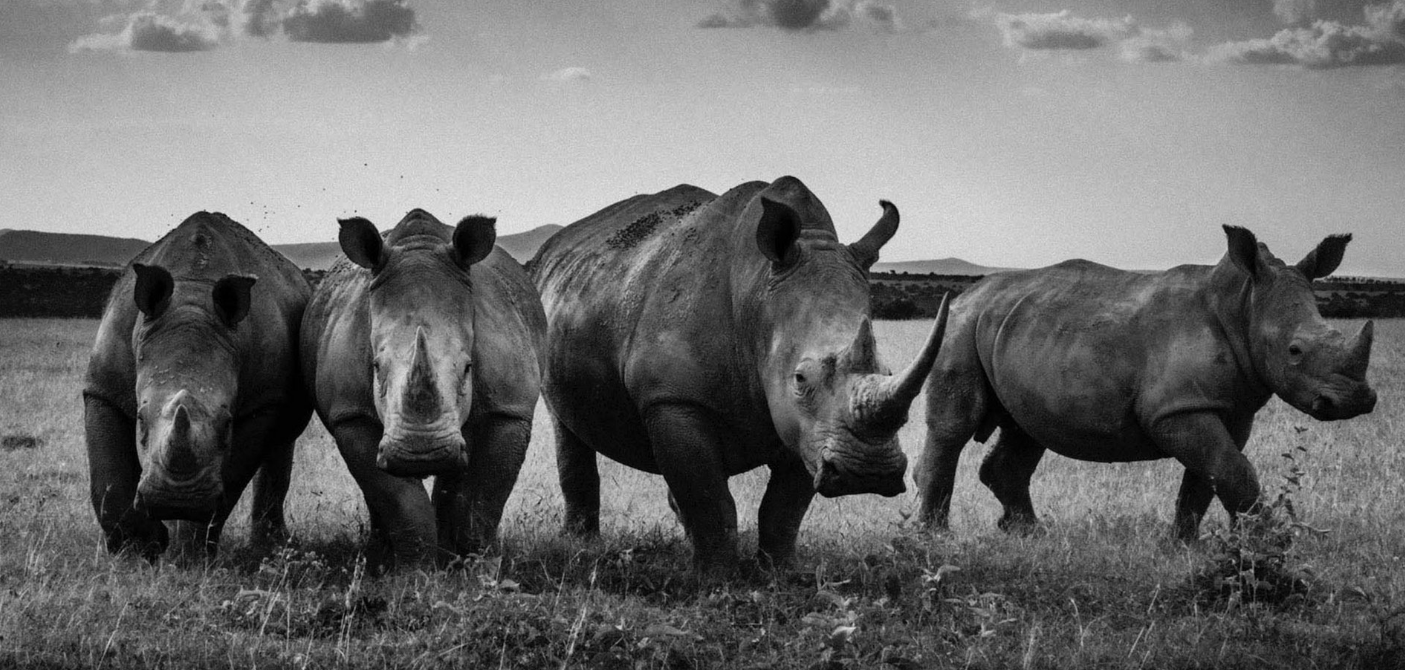
Above: Rhinos quartet (2013)
For me, there is no difference between animals and humans in terms of photography technique. When I take a picture of a lion or a giraffe, I use exactly the same approach as when I photograph people. I try to capture something of the animal’s unique personality and expressiveness, as well as their strength and sense of freedom. I believe my pictures can create a connection between the animal and viewer, as the viewers discover a personality in these animals, and realise they have emotions too.
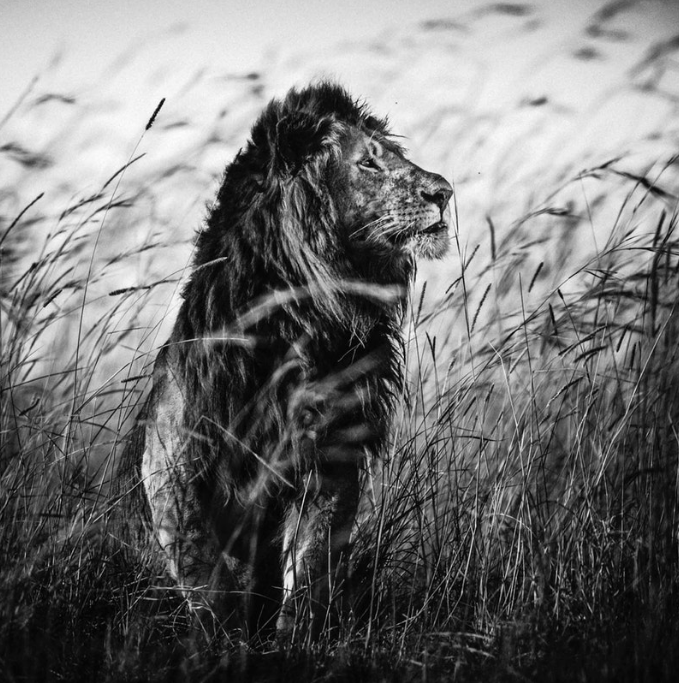
Above: Lion in the grass (2013)
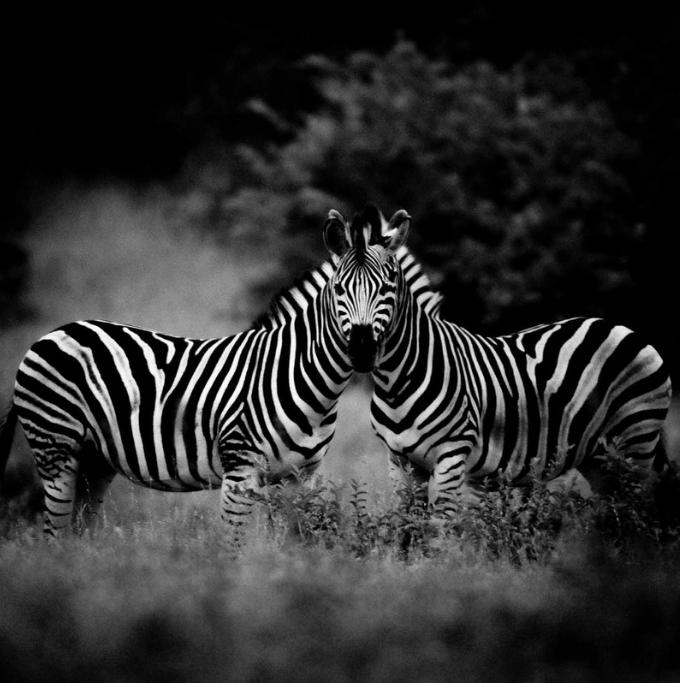
Above: Two zebras (2004)
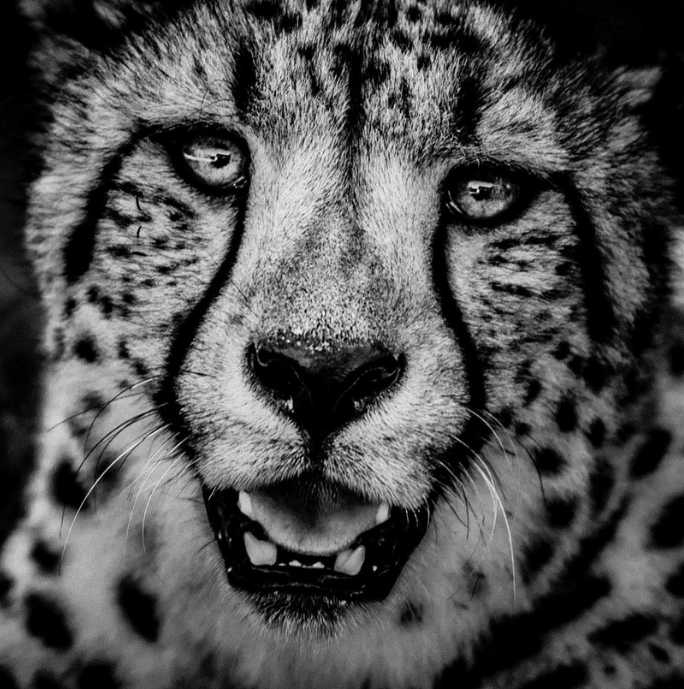
Above: Cheetah portrait (2013)
I am always filled with a great sense of tranquility and happiness when I leave the urban setting and modern life behind — travelling for weeks on end through some of the wildest regions left on our planet.
For me, there is nothing more powerful than the strength and beauty of Nature, and yet, at the same time, it is very fragile and precarious.
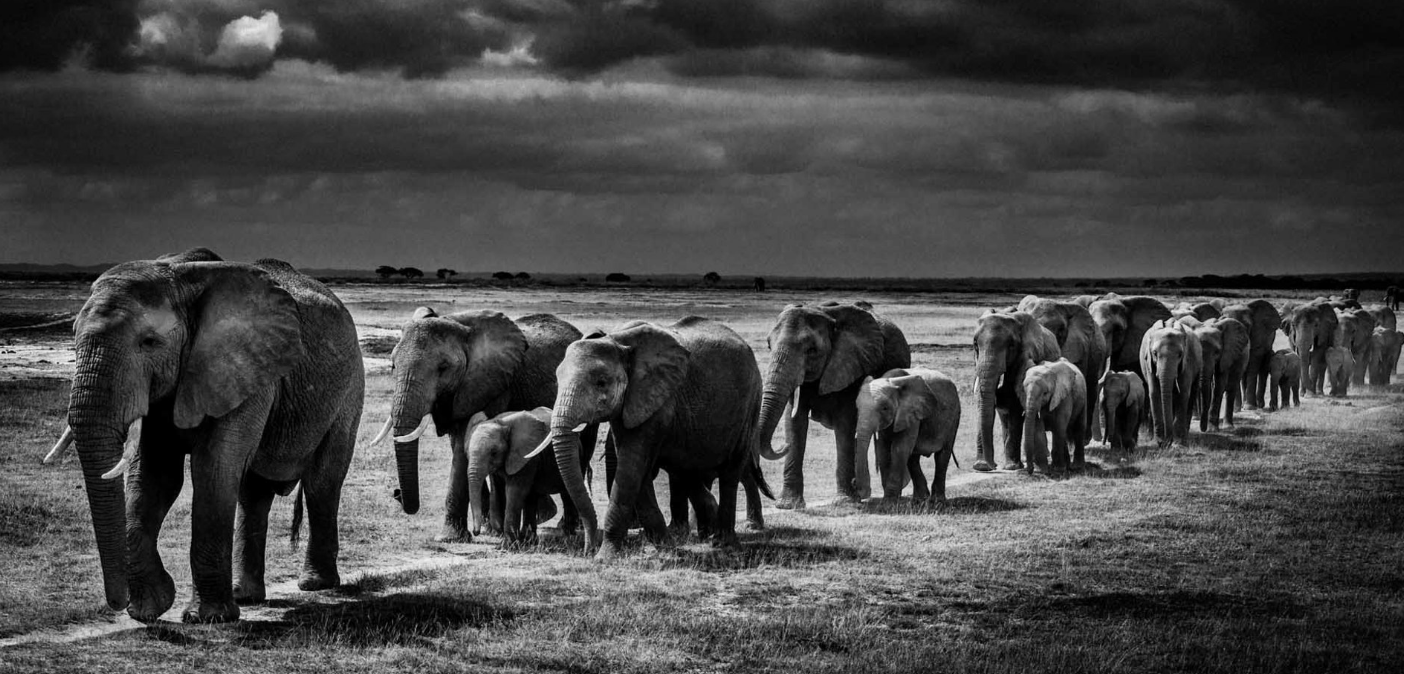
Above: Elephants crossing the plain (2013)
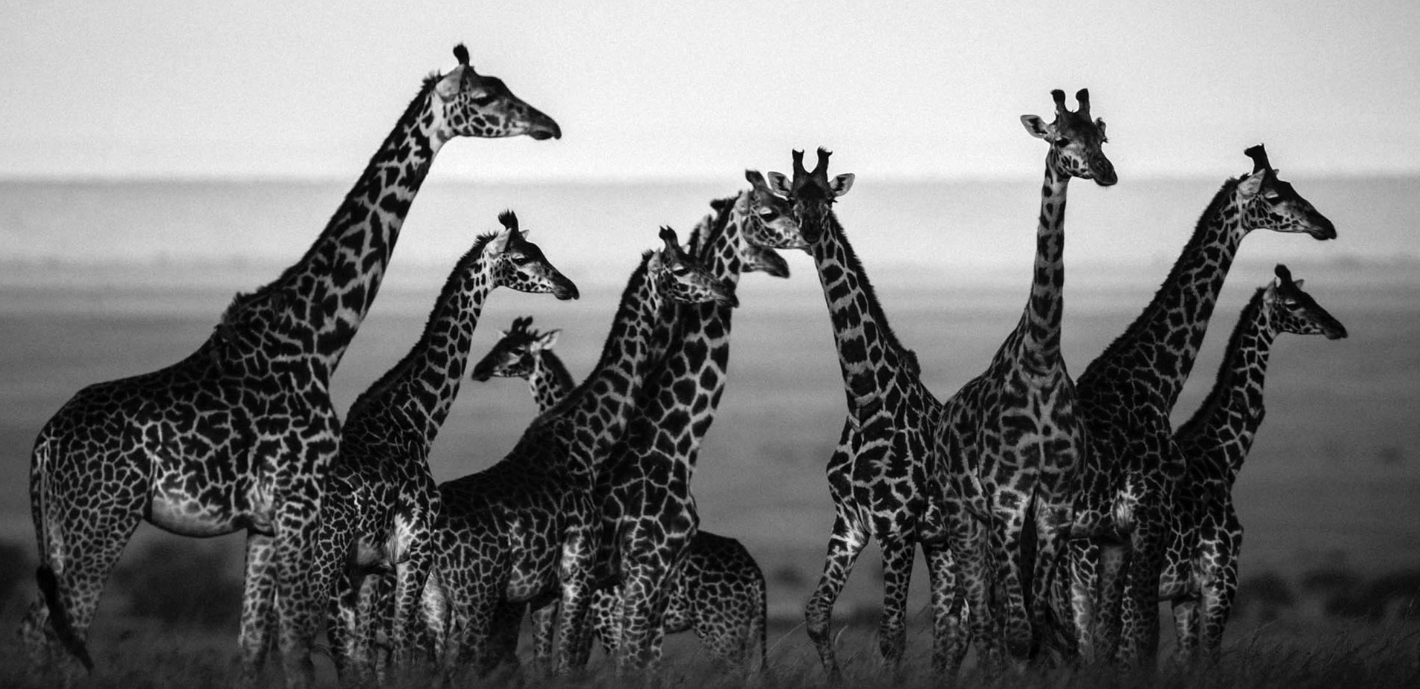
Above: Giraffe in harmony with their natural setting (2013)
Today, the fall of wildlife in Africa and elsewhere is disastrous.
I cannot know if we will discover more effective methods to halt or reverse this devastating change. However, I choose to hope and believe that we can. I believe that people are fed up with shocking images of destruction, poaching and deforestation — and yet it is of grave importance that we share these images, as we must all know what is happening on our planet. I don’t know exactly how photography can help preserve our wild ecosystems, but I feel proud when people experience my images and understand that these animals are just as ‘human’ as we are — with a personality, and a family.
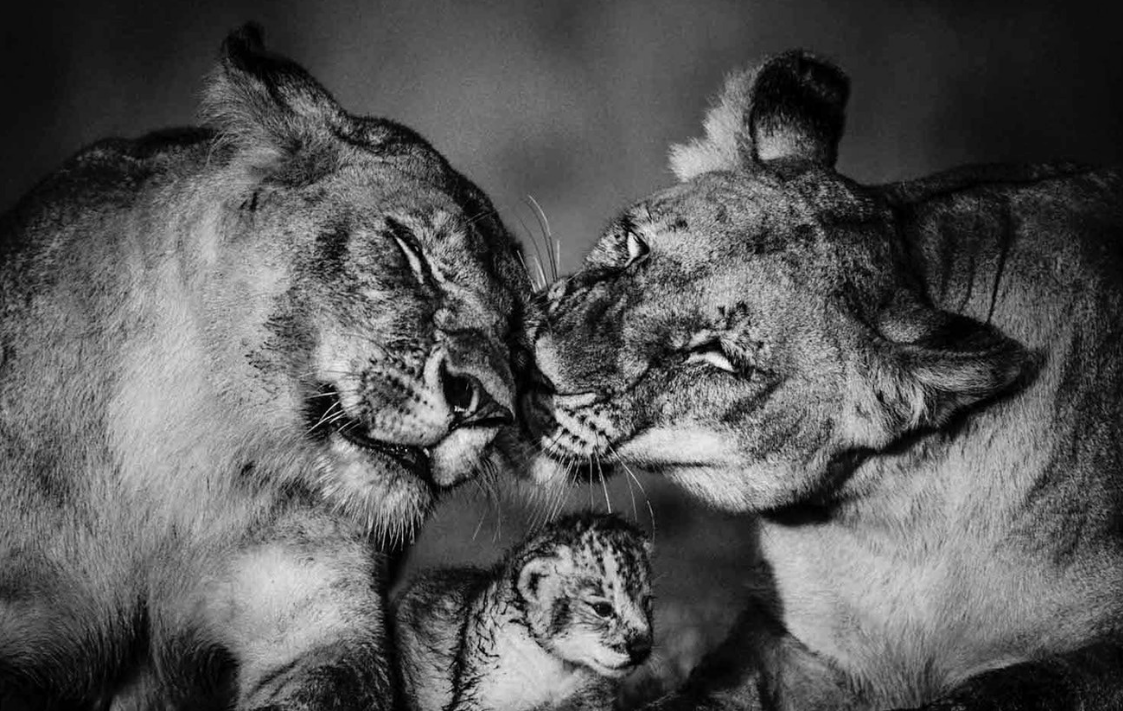
Above: Lion, The small one (2013)
I believe that we must have a sincere conscience for our fellow animals, and the devastating impact our species is having on so many of them. We must open our minds and hearts to the fact that we all part of a living, breathing planet, and recognise that we are just one piece of this wonder.
We must leave more space, more life, for all the other species, because we will not survive their extinction. It is humanity’s greatest challenge.
* * *
THIS ARTICLE WAS ORIGINALLY PUBLISHED ON MAPTIA
LAURENT BAHEUX
I am a self-taught French photographer inspired by the soul of nature and wildlife. I express this only in Black and White, like a big Family Album. www.laurentbaheux.com

On the Annapurna Circuit Trek | Hiking in the Himalayas, Nepal (Part 1)
"It's 3:30 am and I'm 3500m above sea level... it's been my dream for years to be in Nepal, trekking through the HImalays. Today is the 10th day of my trek on the Annapurna circuit."
Read MoreRare Glimpse into Antarctic Underwater World
An underwater robot has captured a rare glimpse beneath the Antarctic sea ice, revealing a thriving, colorful world filled with coconut-shaped sponges, dandelion-like worms, pink encrusting algae and spidery starfish.
The footage was recorded on a camera attached to a Remotely Operated Vehicle (ROV) deployed by Australian Antarctic Division scientists under the sea ice at O’Brien Bay, near Casey research station in East Antarctica.
NICARAGUA: Surfing for Change Travel Guide
The mission of Surfing for Change is to spread awareness that tourism, and surf travel, can bring dollars and along with it a lot of destruction to surf destinations in the developing world. Their vision is that there is a better way. Here, watch Nicaragua's Wave of Optimism (WOO) implementing a new model for surf tourism, and Courney Hull, social entrepreneur, building the world's first plastic-free hotel.
CONNECT WITH SURFING FOR CHANGE
VIDEO: Scuba Diving in the Heart of Yap
Julie Hartup, part of Manta Trust, a non-profit organization, recently went to Yap to begin a long-term monitoring and research program. This footage was complied over four days of scuba diving at a shallow cleaning station with help from the Manta Ray Bay Resort.