
Uyghur people in China are subjected to forced labor in the seafood industry, enduring brutal conditions and human rights abuses on fishing vessels and in processing plants.
Read MoreColombia: The Deadliest Nation for Environmentalists
Colombia remains the deadliest country for environmental defenders, with 79 of the 196 documented murders occurring there in 2024, largely targeting Indigenous and Afro-descendant communities.
Read MoreThe Price of Preservation: Famous Sites Limit Tourism
By: Zoe Lodge
As overtourism threatens popular sites, the only solution seems to be restricting access, a controversial move.
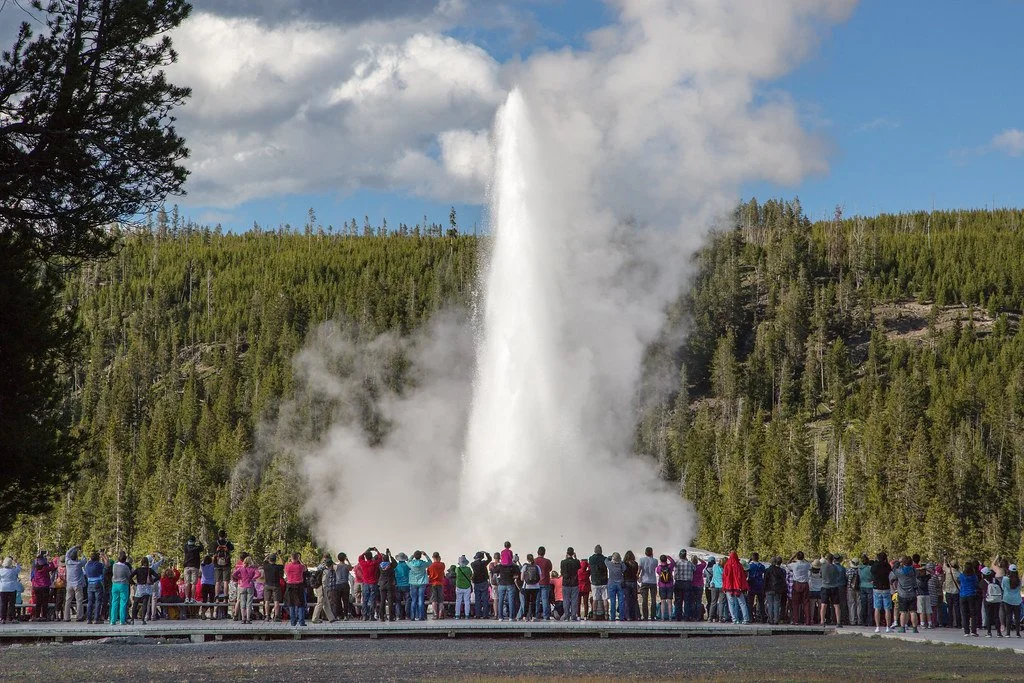
Tourists crowd Yellowstone National Park. Neal Herbert. PDM 1.0.
From Yosemite to Machu Picchu, many of the world’s most incredible natural wonders and historical landmarks are facing the complex challenge of overtourism. While these destinations attract millions of eager visitors who enable economic circulation, the surge in foot and vehicle traffic has led to environmental, cultural and infrastructural concerns. To combat these issues, many national parks and heritage sites have implemented reservation systems and strict visitor limits, measures that while frustrating to some, are essential for long-term preservation.
National parks and global historical landmarks are not merely attractions; they are delicate sites that require careful management. Overtourism can lead to severe consequences such as soil erosion, damage to plant life, disruption of local wildlife and even structural harm to historical sites. In places like Yellowstone National Park, off-trail hiking, wildlife harassment and increased vehicle traffic have led to environmental destruction and tourist injury. Similarly, Machu Picchu has suffered from footpath erosion, instances of vandalism and structural strain due to the high number of daily visitors. Without intervention, these sites risk being permanently damaged or potentially lost to future generations.
Recognizing these risks, many national parks and historical sites have begun introducing reservation systems and ticketing policies to manage visitor numbers. These restrictions help reduce congestion, minimize environmental damage and ensure more responsible tourism. While ticketing specific attractions is not a new concept, regulations limiting the number of people allowed in a park or site at a given time are becoming increasingly common. Yosemite National Park, for example, has experimented with reservation-only entry during peak seasons to control the flow of tourists. Zion National Park has implemented a permit system for some of their most popular hiking routes to prevent environmental damage and danger caused by overcrowding. Similarly, Peru has imposed strict daily limits on visitors to Machu Picchu and even restricted access to certain trails to prevent excessive wear.
Some travelers have voiced frustration with these limitations, arguing that they complicate trip planning and reduce the chance for spontaneity. However, these restrictions exist precisely because the unrestricted flow of visitors has contributed to significant degradation of these sites. Unlimited access to national parks and heritage sites might seem appealing, but unregulated tourism is not worth the cost, causing irreparable damage to the landscapes, historical structures and environments that make these destinations so remarkable.
Beyond preservation, limits ultimately enhance visitors’ experience. With fewer crowds, tourists can enjoy these sites in a more serene environment, appreciating natural and cultural significance without the chaos of overcrowding. Less congestion also means improved safety and reduced strain on park staff and infrastructure, an already complicated issue in the United States.
While restrictions on tourism might be inconvenient for some, they are a necessary measure to protect the world’s most cherished natural and cultural landmarks. Managing visitor numbers is not about keeping people out but about protecting the environmental integrity of these sites. Ultimately, it is for the good of the sites, the world and visitors, as they will then have to deal with less traffic, fewer crowds and be able to enjoy these locations more in tune with the way that nature intended.

Zoe Lodge
Zoe is a student at the University of California, Berkeley, where she is studying English and Politics, Philosophy, & Law. She combines her passion for writing with her love for travel, interest in combatting climate change, and concern for social justice issues.
White House Goes Back to Plastic Straws
On February 10, 2025, President Donald Trump issued an executive order reversing the ban on plastic straws, calling paper straws ineffective and environmentally harmful.
Read MoreThe History of Favelas, Brazil’s Impoverished Towns
Since their emergence in the 19th century, favelas have faced continuous struggles with poverty and crime, a symbol of the tension between Brazil’s government and its underrepresented communities.
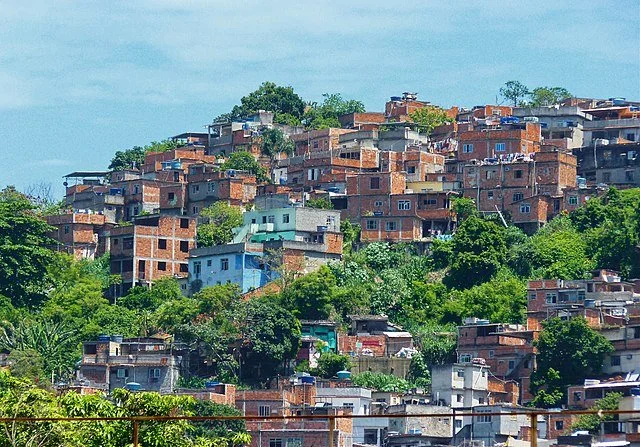
Favela of Telegrafo. patano. CC BY-SA 3.0.
Scattered throughout Brazil are built-up communities known as favelas. These towns, principally found on the outskirts of large cities like Rio de Janeiro or Sao Paulo, are settlements marked by their unique urban development. While they are often associated with drugs, crime and poverty, these neighborhoods are a symbol of Brazil’s complex history.
Finding their origins in the late 19th century, favelas emerged amid a period of tumultuous political and social change in Brazil. They initially formed after the country abolished slavery in 1888. With a large number of impoverished former slaves left homeless and unemployed, they started forming temporary shelters. These were mainly squatter settlements near their work, which was often found in cities. Over the years, these communities grew in number and size. However, it was only after the Canudos War in 1898 when they became the large settlements we know today. The War on Canudos, a deadly civil war that saw a massacre in the small town of Canudos, left almost 20,000 ex-soldiers homeless after their return from the conflict. With nowhere to live, the group established the first favelas in the federal state of Bahia.
As Brazil’s class divide grew, more favelas popped up from the 1940s to the 1970s, becoming more organized with newly created residents’ associations serving as communicators between the towns and the government. Collaboration between the two led to agreements about water and electricity accessibility and construction investment, playing a large role in the favelas’ maintenance. However, rising politicians during this era also targeted the favelas for political gain, stereotyping their existence as slums breeding disease, illiteracy, crime and moral corruption. Many favelas were “removed” as a result, but other methods were sought out to build up and sustain the communities’ infrastructure. Despite various programs intending to improve buildings, Brazil’s economic crisis led to failed attempts at providing adequate housing in many areas. At the same time, cocaine markets were growing globally, and Brazil became a prominent drug producer and transit point between European and U.S. markets. These criminal groups formed during the 1980s and solidified in the early 2000s, attracting more police attention to the neighborhoods.
In 2022, about 8.1% of Brazil’s population lived in favelas. Because of their densely built-up infrastructure and continuous struggles with crime and drugs, favelas have also become synonymous with slum life. Widespread poverty, in particular, has grown to be favela residents’ largest struggle, with economic hardship producing limits on food, healthcare and education. The government has proposed various methods to help tackle these ongoing issues and support the overall conditions of these communities. Authorities have introduced programs to help residents: setting up training programs, providing low-interest loans or materials to construct accommodations and building facilities such as health clinics or schools. Despite these attempts, favela residents still lack full sociopolitical representation and face police violence. Thus, activism in favela communities remains imperative, as residents continue to search for peace and draw attention to the need for social development and increased rights.
GET INVOLVED:
Residents living in favelas struggle against police brutality, discrimination and stark poverty daily. Those looking to help address these issues can do so in several ways, including through making donations. Outreach organizations include: The Favela Foundation, focusing on the development of sustainable social and educational programs; Catalytic Communities, an NGO based in Rio de Janeiro bringing sustainable programs and legislative support to favelas; and The Gerando Falcões Fund of BrazilFoundation, bringing education and economic development to the favelas. Supporting favela locals in their fight to speak out against systemic violence is also very important. Using social media to follow, share and repost activism can help circulate news and reframe the stereotypes usually associated with favela communities.

Julia Kelley
Julia is a recent graduate from UC San Diego majoring in Sociocultural Anthropology with a minor in Art History. She is passionate about cultural studies and social justice, and one day hopes to obtain a postgraduate degree expanding on these subjects. In her free time, she enjoys reading, traveling, and spending time with her friends and family.
How ‘The White Lotus’ is Driving Overtourism in Thailand
The “White Lotus Effect” has driven a surge in tourism to Koh Samui and Thailand, as the hit HBO series boosts global interest in these destinations.
Read MoreHow Congo and Rwanda Arrived at the Brink of War
In their fight over marginalized peoples and access to rare minerals, the Congolese military and Rwanda-backed rebels risk triggering a broader regional war in southeast Africa.
Read MoreCoastal Residents Bear the Brunt of Climate Change
Coastal communities worldwide are grappling with the widespread effects of a warming climate and rising sea levels, witnessing the devastation of their homes and increased economic difficulties.
Read MoreHow Afghan Women Are Combating the Ban on Education
After losing access to education, Afghan women advocate for rights through silent schools and public outcry.
Read MoreThe Human Cost of Renewable Energy
To ensure a sustainable future, it is crucial to address the harmful effects of lithium extraction and prioritize social justice, equitable resource distribution, and environmentally responsible practices.
Read MoreMeet an Organization Tackling Plastic Pollution in Bali
Initiatives like Sungai Watch are fighting back by implementing innovative trash barriers in rivers, preventing plastic from reaching the ocean and empowering local communities in Bali for a cleaner future.
Read MoreAgriculture and Climate Change: A Complex Relationship
Agriculture plays a critical role in contributing to and being impacted by climate change; however, sustainable farming solutions offer a path toward reducing agriculture's environmental impact while ensuring long-term food security.
Read MoreAntarctic Tourism: Exploration or Exploitation?
As Antarctic tourism continues to surge, with over 120,000 visitors in 2024 alone, concerns over environmental impacts are mounting, particularly regarding carbon footprints and the introduction of invasive species
Read MorePigs Over People: The Environmental Racism of North Carolina’s Hog Farms
Hog farming in North Carolina's Black Belt is disproportionately impacting Black and Brown communities, leading to severe health and environmental consequences.
Read MoreHow Countries Are Using AI to Manage Natural Disasters
Countries worldwide are leveraging AI and machine learning to enhance natural disaster management and resilience, with initiatives like the Global Initiative on Resilience to Natural Hazards through AI Solutions leading the way.
Read MoreTrump’s USAID Freeze: A Staggering Loss for Humanitarian Aid
Trump’s decision to freeze USAID threatens millions worldwide who rely on humanitarian aid for survival
Read MoreGhanaians Knee Deep in Clothing Waste
Ghana is struggling with the overwhelming influx of textile waste from the fast fashion industry, with millions of garments dumped each week, much of it unfit for resale
Read MoreChild Slavery in Congo’s Cobalt Mines
The world’s high demand for cobalt mining has led to the exploitation of child labor in the Congo.
Read MoreThe Ethics of Poverty Tourism in Brazil’s Favelas
Understand the implications of poverty tourism in Brazil, what a favela is, and how the growing tourist rates raise concerns about safety.
Read MoreUS Declares Genocide in Sudan
After two years of famine, disease, and misery, the U.S. has given an official deemed the ongoing conflict in Sudan as genocide.
Read More