
Coastal communities worldwide are grappling with the widespread effects of a warming climate and rising sea levels, witnessing the devastation of their homes and increased economic difficulties.
Read MoreHow Afghan Women Are Combating the Ban on Education
After losing access to education, Afghan women advocate for rights through silent schools and public outcry.
Read MoreThe Human Cost of Renewable Energy
To ensure a sustainable future, it is crucial to address the harmful effects of lithium extraction and prioritize social justice, equitable resource distribution, and environmentally responsible practices.
Read MoreMeet an Organization Tackling Plastic Pollution in Bali
Initiatives like Sungai Watch are fighting back by implementing innovative trash barriers in rivers, preventing plastic from reaching the ocean and empowering local communities in Bali for a cleaner future.
Read MoreAgriculture and Climate Change: A Complex Relationship
Agriculture plays a critical role in contributing to and being impacted by climate change; however, sustainable farming solutions offer a path toward reducing agriculture's environmental impact while ensuring long-term food security.
Read MoreAntarctic Tourism: Exploration or Exploitation?
As Antarctic tourism continues to surge, with over 120,000 visitors in 2024 alone, concerns over environmental impacts are mounting, particularly regarding carbon footprints and the introduction of invasive species
Read MorePigs Over People: The Environmental Racism of North Carolina’s Hog Farms
Hog farming in North Carolina's Black Belt is disproportionately impacting Black and Brown communities, leading to severe health and environmental consequences.
Read MoreHow Countries Are Using AI to Manage Natural Disasters
Countries worldwide are leveraging AI and machine learning to enhance natural disaster management and resilience, with initiatives like the Global Initiative on Resilience to Natural Hazards through AI Solutions leading the way.
Read MoreTrump’s USAID Freeze: A Staggering Loss for Humanitarian Aid
Trump’s decision to freeze USAID threatens millions worldwide who rely on humanitarian aid for survival
Read MoreGhanaians Knee Deep in Clothing Waste
Ghana is struggling with the overwhelming influx of textile waste from the fast fashion industry, with millions of garments dumped each week, much of it unfit for resale
Read MoreChild Slavery in Congo’s Cobalt Mines
The world’s high demand for cobalt mining has led to the exploitation of child labor in the Congo.
Read MoreThe Ethics of Poverty Tourism in Brazil’s Favelas
Understand the implications of poverty tourism in Brazil, what a favela is, and how the growing tourist rates raise concerns about safety.
Read MoreUS Declares Genocide in Sudan
After two years of famine, disease, and misery, the U.S. has given an official deemed the ongoing conflict in Sudan as genocide.
Read MoreSmall Towns Redefining Sustainable Tourism
Environmentally conscious values have made their way to the forefront of travel so lesser-known destinations can leap into the ecotourism limelight. Learn how small towns are redefining sustainable tourism.
Read MoreA New Dawn for Syrian Refugees
The fall of Assad’s regime has left the world wondering about the future of Syrian refugees abroad who plan to return home.
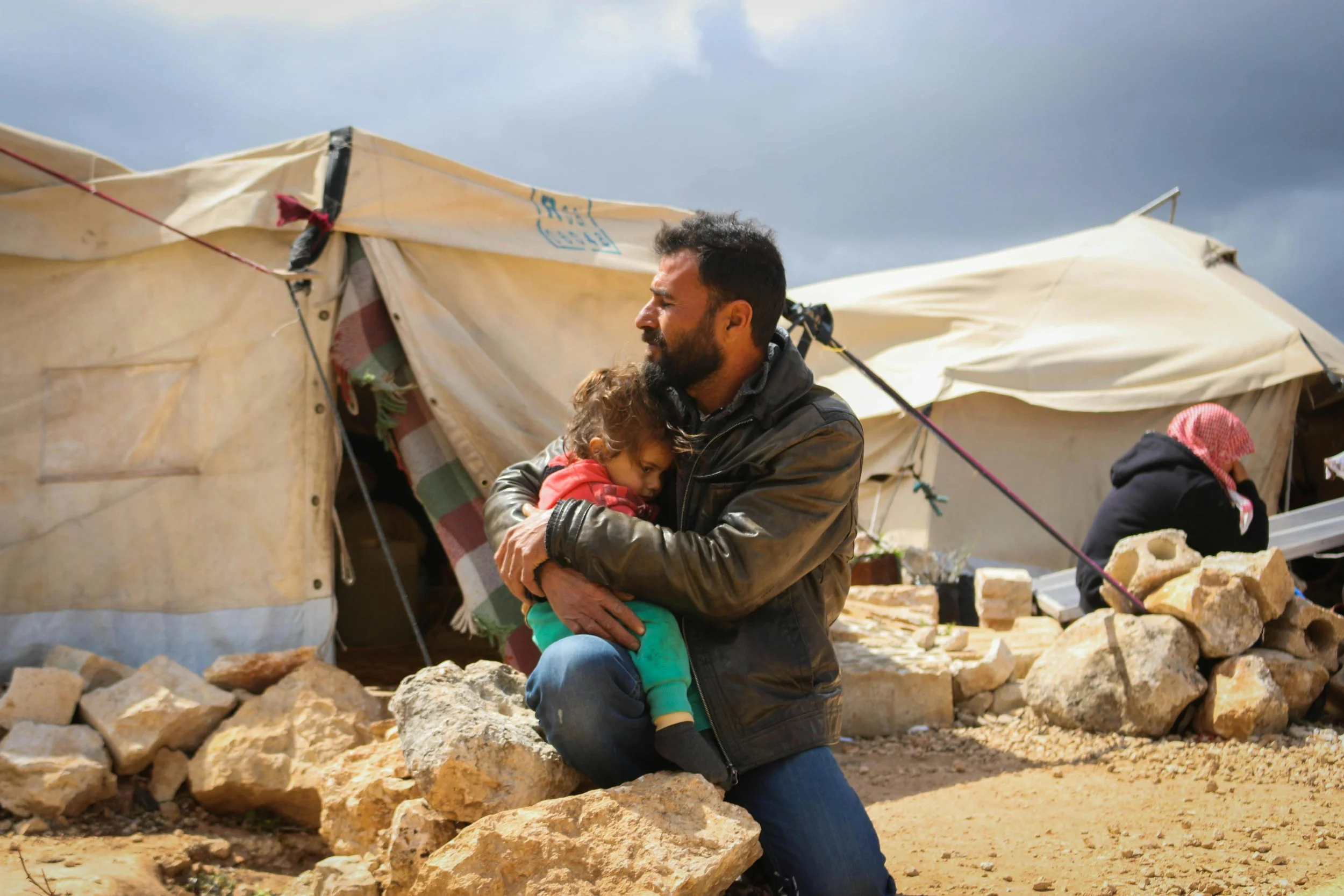
Man and daughter at Syrian refugee camp. Ahmed Akacha. CC0.
The Syrian Refugee Crisis is one of the largest humanitarian crises in history and the largest refugee crisis to date, with over 14 million people both internally and externally displaced. Over six million Syrians fled the country following the civil war that broke out in 2011; the majority of refugees currently live in Turkey, Lebanon, Jordan, Iraq, Egypt and Germany.
President Bashar al-Assad’s violent suppression of pro-democracy protests in 2011 provoked civil conflict, leading to the creation of oppositional militias and rebel groups that began to fight back by 2012. On Dec. 8, 2024, the civil war came to a head when rebel groups seized the Syrian capital, Damascus, forcing Assad to flee to Russia. Assad’s family had ruled Syria under a strict police regime since the 1960s, leading to widespread celebration across the capital as political prisoners were freed.
Despite rebel groups declaring the country free from the autocratic regime, considerable uncertainty remains about the future of the government and Syria’s stability. Some states have expressed a concern that toppling the government may make the country vulnerable to ISIS, whereas others have noted the encroachment of Israeli forces into Syrian buffer zones. The European Union issued a statement claiming that the conditions in Syria have not yet met the conditions for the safe return of refugees, as thousands have continued to flee following the rebel takeover. However, in the days following, videos swept across social media and news outlets featuring thousands of refugees returning home from Turkey, Jordan and Lebanon.
European countries hosting hundreds of thousands of Syrian refugees, including Germany and Austria, have jumped at the opportunity to tighten their asylum regulations. In December 2024, both Germany and Austria paused asylum applications, and Austria announced that they would issue a “return bonus” to Syrians who decided to return to Syria.
Providing incentives or forcing refugees to leave the country could adversely affect host countries, particularly Germany. Approximately two-thirds of employed Syrian refugees in Germany work in critical sectors of the labor force, including healthcare, transportation and food services. Whether forced or voluntary, any kind of mass exodus could negatively affect Germany’s economy by disrupting these industries and causing labor shortages.
Following an outcry from far-right German politicians to close the country’s borders and begin the expulsion of non-naturalized Syrians, current Chancellor Olaf Scholz said that Syrians who are “well-integrated remain welcome in Germany.” However, the Chancellor’s statement may prove unstable, presenting no active policy arrangements if the far-right parties gain control in the upcoming elections and creating further uncertainty for Syrians currently living in Germany.
The United Nations High Commissioner for Refugees advised that countries housing refugees should not forcibly deport them, as Syria is not yet deemed politically stable, and it is estimated that over one million Syrians will return to Syria of their own accord in the first few months of 2025.
Despite this monumental step forward, considerable humanitarian and governmental uncertainty remains surrounding the future of Syrians worldwide, a resolution that may take years to completely unfold.

Zoe Lodge is a student at the University of California, Berkeley, where she is studying English and Politics, Philosophy, & Law. She combines her passion for writing with her love for travel, interest in combatting climate change, and concern for social justice issues.
A Portable Solution to the World’s Water Crisis
Hydro Wind Energy’s Quench Sea device offers a portable solution to the global water crisis, providing communities with access to clean drinking water through innovative desalination technology.
Read MoreBarring Basic Rights: Uganda’s Anti-Homosexuality Regulation
Modern anti-gay regulations continue to threaten the lives and safety of Ugandan LGBTQ+ individuals.
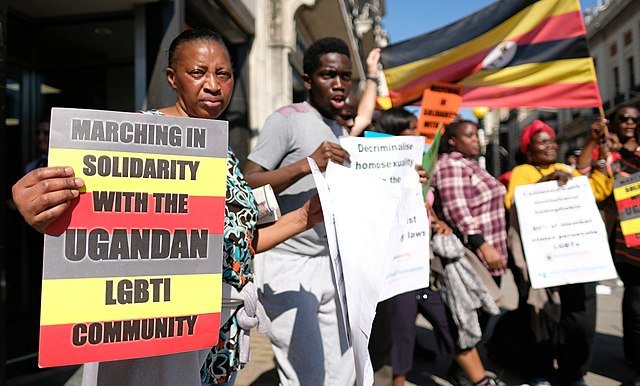
Group Marching in Support of Uganda’s LGBTQ+ Community. Alisdare Hickson. CC BY-SA 2.0.
Known for having one of the world’s harshest LGBTQ+ rights records, the Ugandan parliament has pursued longstanding efforts to diminish same-sex activity within the country. As a result of 19th-century British colonization, the severe criminalization of homosexuality set the stage for modern homophobic sentiments. This culminated in the Anti-Homosexuality Act of 2023, which was later upheld by the Ugandan parliament in April 2024.
The 2023 Anti-Homosexuality Act was signed into law by Ugandan President Yoweri Museveni in May 2023, enforcing strict restrictions against LGBTQ+ individuals. Implementing harsh penalties, the act demands life imprisonment for consensual same-sex activity and the death penalty in cases of “aggravated homosexuality,” a term that denotes any same-sex act that involves people under 18, older than 75, those with a disability, or when consent is not given or cannot be given. This act is not the first attempt to limit LGBTQ+ rights in Uganda. In 2010, the Ugandan parliament passed a bill introducing similarly anti-gay legislation that was eventually ruled illegal by the constitutional court due to its lack of necessary quorum. In 2021, however, the president succeeded in passing a sexual offenses bill that criminalized same-sex relationships and sex work in Uganda.
While the Ugandan government has praised such legislation as acting in the country’s best interest, the persistent condemnation of same-sex actions has negatively impacted the lives of LGBTQ+ Ugandans. This has not only promoted anti-gay views but has also threatened lives through the reduction of HIV prevention and perpetuation of societal abuse. In an interview with Amnesty International, Ugandan activist and founder of the gay and intersex rights organization Freedom and Roam Uganda (FARUG), Jacqueline Kasha described the new law’s impact on her community. She contends that advocacy and visibility for LGBTQ+ individuals have sharply diminished with the aggressive crackdown: “Several LGBTI persons have since gone underground which is now impeding all our efforts, especially in the health sphere in the fight against HIV, mental illness and economic disparities.” The 2023 Act has allowed anti-gay groups to accuse or arrest people with little evidence or reasoning. As such, LGBTQ+ individuals are vulnerable to attack when outside the safety of their homes, forced to hide their identities under the threat of violence. Furthermore, those in need of HIV services have become disproportionately vulnerable to health risks, driven away from receiving care due to fear of criminal punishment or discrimination.
The first case of “aggravated homosexuality” has already come into effect: 21-year-old Michael Opolot was arrested in August 2023 after allegedly participating in public sexual activity with another man reported to have a disability. While the new act permits this arrest, there has not been any evidence submitted by police to substantiate claims that the alleged victim is disabled and therefore could not give consent. Opolot’s case has provoked Ugandan activists to challenge the law's constitutionality, citing the act’s contradiction of citizens’ freedom from discrimination and rights to privacy and health. Moreover, they have noted that Opolot’s case demonstrates the senseless oppression of LGBTQ+ individuals. Ugandan activist Clare Byarugaba affirmed that this mistreatment not only violates human rights but also suppresses advocacy, as “activists, public health workers, and others face long prison sentences and hefty fines” for attempting to voice support.
As a result of such political, social and health persecution, the LGBTQ+ population in Uganda has been left unprotected and endangered by intimidating threats. Although Uganda’s government views the recent passing of anti-homosexual legislation as a “step forward” for the country, many in the LGBTQ+ community have experienced the opposite result in their daily lives. Several international organizations and governments have commented on the bill, with United States President Joe Biden describing the act as a “tragic violation of universal human rights,” and the Joint United Nations Programme on HIV/AIDS (UNAIDS) explaining that “criminalizing populations most at risk of HIV, such as the LGBTQ+ communities, obstructs access to life-saving health and HIV services.” Despite such international criticism, anti-homosexuality continues to loom largely over Uganda and LGBTQ+ existence within the country.
TO GET INVOLVED
Those looking to support LGBTQ+ communities in Uganda can do so by getting involved with organizations dedicated to supporting individuals inside the country as well as those who have fled. Such organizations include: Sexual Minorities Uganda (SMUG), an LGBTQ+ advocacy organization, Universal Coalition of Affirming Africans Uganda (UCAA - UG), a human rights organization advocating for human rights and marginalized people, and Global Black Gay Men Connect (GBGMC), a group collaborating with Uganda Key Populations Consortium (UKPC) and SMUG to launch an emergency response fund to support LGBTQ+ Ugandans.
Julia is a recent graduate from UC San Diego majoring in Sociocultural Anthropology with a minor in Art History. She is passionate about cultural studies and social justice, and one day hopes to obtain a postgraduate degree expanding on these subjects. In her free time, she enjoys reading, traveling, and spending time with her friends and family.
Racketeering in the Rainforest: How Gangs and Illegal Gold Are Taking Over the Amazon
Gangs in the Amazon Rainforest are increasingly finding that money does grow on trees and the local flora, fauna and Indigenous groups are paying the price.
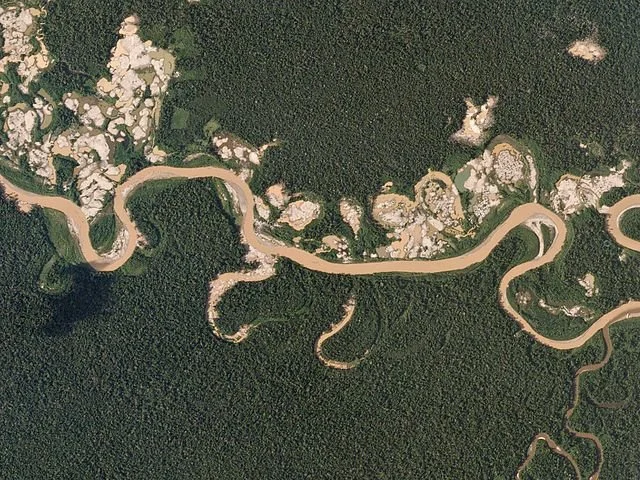
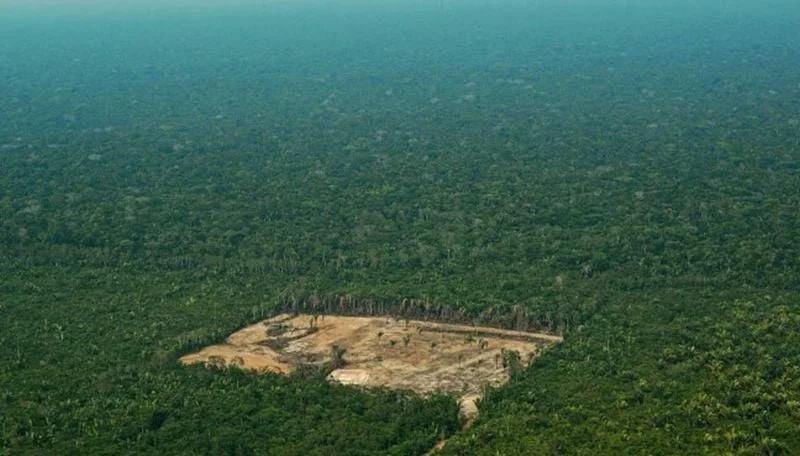
An aerial shot of the deforestation caused by illegal mining in the Amazon Rainforest. Planet Labs, Inc. CC BY 4.0.
Covering 6.7 million square kilometers of South America, the Amazon Rainforest has long been heralded as one of the world’s most beautiful natural wonders. But recently, as gang activity, illegal gold mining and deforestation continue to rise, this natural beauty is under threat.
Although concentrated mostly in Brazil, the Amazon spans nine different countries, including Peru, Colombia, and Ecuador. The world’s largest rainforest, the region contains 10% of Earth’s known species, making it a hotspot for wildlife and biodiversity. Scientific American notes that the Amazon is also a beneficial carbon sink; absorbing a significant amount of heat-trapping greenhouse gases in the atmosphere, the rainforest helps mitigate the effects of climate change. Further, the Amazon is home to nearly 2.7 million Indigenous Amazonians, according to the World Wildlife Fund (WWF). Among almost 400 Indigenous ethnic groups, the WWF reports that 60 live in voluntary isolation in order to protect their land and ways of life from outside influences.
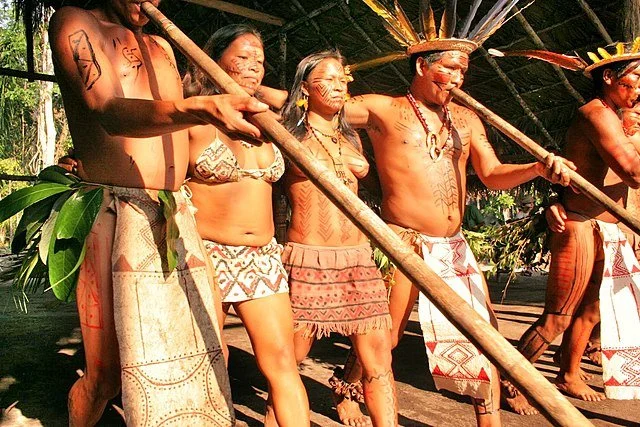
Tukanos, an Indigenous Amazonian group. James Martins. CC BY 3.0.
However, as the Council on Foreign Relations (CFR) states, since “the 1960s, when government incentives to clear land for production coincided with more effective tools such as chainsaws and bulldozers,” the Amazon has undergone alarming rates of deforestation. Especially under former Brazilian President Jair Bolsonaro, the emphasis on profits at the expense of environmental and/or Indigenous protections grew abundantly clear as new mining and cattle ranching initiatives took hold. “Deforestation hit a 15-year high during his [2019-2022] term,” the Associated Press reported. As President Bolsonaro “weakened environmental agencies” and “prioritized agribusiness expansion,” he left the rainforest vulnerable to outside exploitation.
In their September 2024 report “Gold, Gangs, and Governance,” Amazon Watch “highlights the increasing influence of organized crime” in the Amazon rainforest. Indeed, the Brazilian Forum on Public Safety affirmed that as of December 2024, “gangs were present in 260 of 772 municipalities in the region, compared with 178 in 2023.” The presence of criminal organizations like Familia do Norte (FDN) and First Capital Command (PCC) has escalated crime and deforestation to the point where homicides have increased by 574% and deforestation by 300%. According to Amazon Watch, both of these rates far exceed the Latin American average. Amazon Watch specifically points to illegal gold mining as a driver of much of this instability. “Due to institutional weakness” and the minerals’ “lack of traceability,” illegal gold is a highly lucrative commodity, bringing in between $800 million and $1 billion in exports for “over 500 shell companies” in 2022. Many gangs feel incentivized to then “reinvest [their] profits from drug trafficking into this activity,” the report found. Although drugs have indeed made the Amazon a violent “smuggling domain,” as The New York Times confirms, illegal mining activities are also responsible for transforming many rainforest cities into zones of conflict by escalating “territorial control disputes” and “strengthening the criminal groups that control mining enclaves.”
Deforestation in the Amazon. Free Malaysia Today. CC BY 4.0.
These cycles of violence have detrimental impacts that reach far beyond the gangs they involve. Amazon Watch found that from 2015 to 2021, “7,495 hectares of rainforest were lost [...] due to illegal mining.” Per Reuters, this damage puts more than 10,000 species of plants and animals at high risk of extinction. This increased deforestation also threatens the rainforest’s aforementioned status as a carbon sink: “Scientists say parts of the forest now emit more carbon dioxide than they can absorb,” the CFR reports. Rather than mitigating the effects of global warming, then, the Amazon could now exacerbate them. Sarah Brown of Mongabay estimates that deforestation will ultimately generate economic losses “seven times higher than the economic gain” of commodities produced through deforestation. Therefore, Brown argues, “deforestation for commodity growth is less valuable than rainforest preservation.”
Economics aside, the human costs of illegal mining are even higher, and they’re already rearing their head. Of the 1,519 instances of illegal mining reported between 2019 and 2024, Amazon Watch found that 46.7% occurred on Indigenous lands, disproportionately affecting the health of Indigenous Amazonians through the contamination of “rivers with heavy metals such as copper, iron, lead, and mercury.” Further, as governments try to combat these illegal activities with increased militarization, they have only provoked “increased violence in Indigenous communities” in the process. As their Amazon Watch affirms, between poisoning resources and outright death threats, gangs in the Amazon and the surrounding governments are “eroding [Indigenous] identity and threatening their cultural and physical survival.” Illegal mining in the Amazon has become a deadly enterprise on multiple fronts.
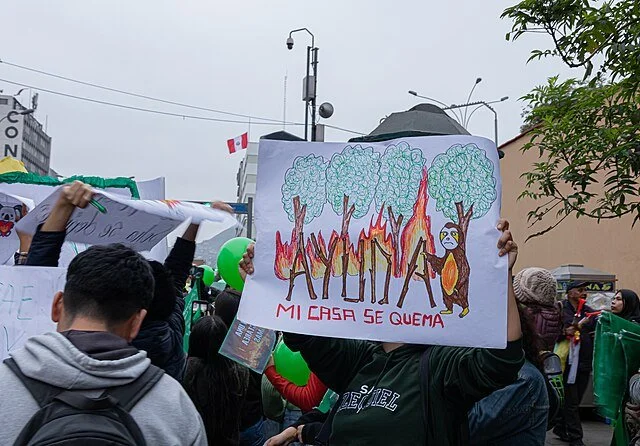
An environmentalist protest sign that reads “My house is burning” in Spanish. Candy Sotomayor. CC BY 4.0
To get involved, people can support Amazon Watch and their calls for greater institutional strengthening and increased awareness from the global community. The organization also notes that a societal cutback on beef and dairy consumption would help curb the strain of cattle ranching. Nonprofits including the WWF and the Amazon Emergency Fund also work to support sustainability projects and uplift Indigenous communities. From an administrative standpoint, some steps are being made toward these ends: deforestation in 2024 dropped by nearly 31% compared to 2023, and some international governments like the Biden administration pledged funds to support conservation efforts. But until there are strong, long-lasting initiatives that prioritize environmental and Indigenous protections, activists continue to urge the global community to continue raising awareness and applying public pressure on local governments. As Indigenous activist Allessandra Korap told the Associated Press, that “is our top priority, along with the expulsion of illegal miners.”
Bella Liu
Bella is a student at UC Berkeley studying English, Media Studies and Journalism. When she’s not writing or working through the books on her nightstand, you can find her painting her nails red, taking digicam photos with her friends or yelling at the TV to make the Dodgers play better.
Comfort or Cruelty? The Buried Truth of Imperial Japan’s Sexual Slavery
Thousands of women were forced to work in “comfort stations” during World War II and their persistent fight for justice continues today.
Read More4B: Why are American Women Swearing Off Men?
American women are participating in the 4B Movement which originated in South Korea, swearing off dating, marriage and sex.
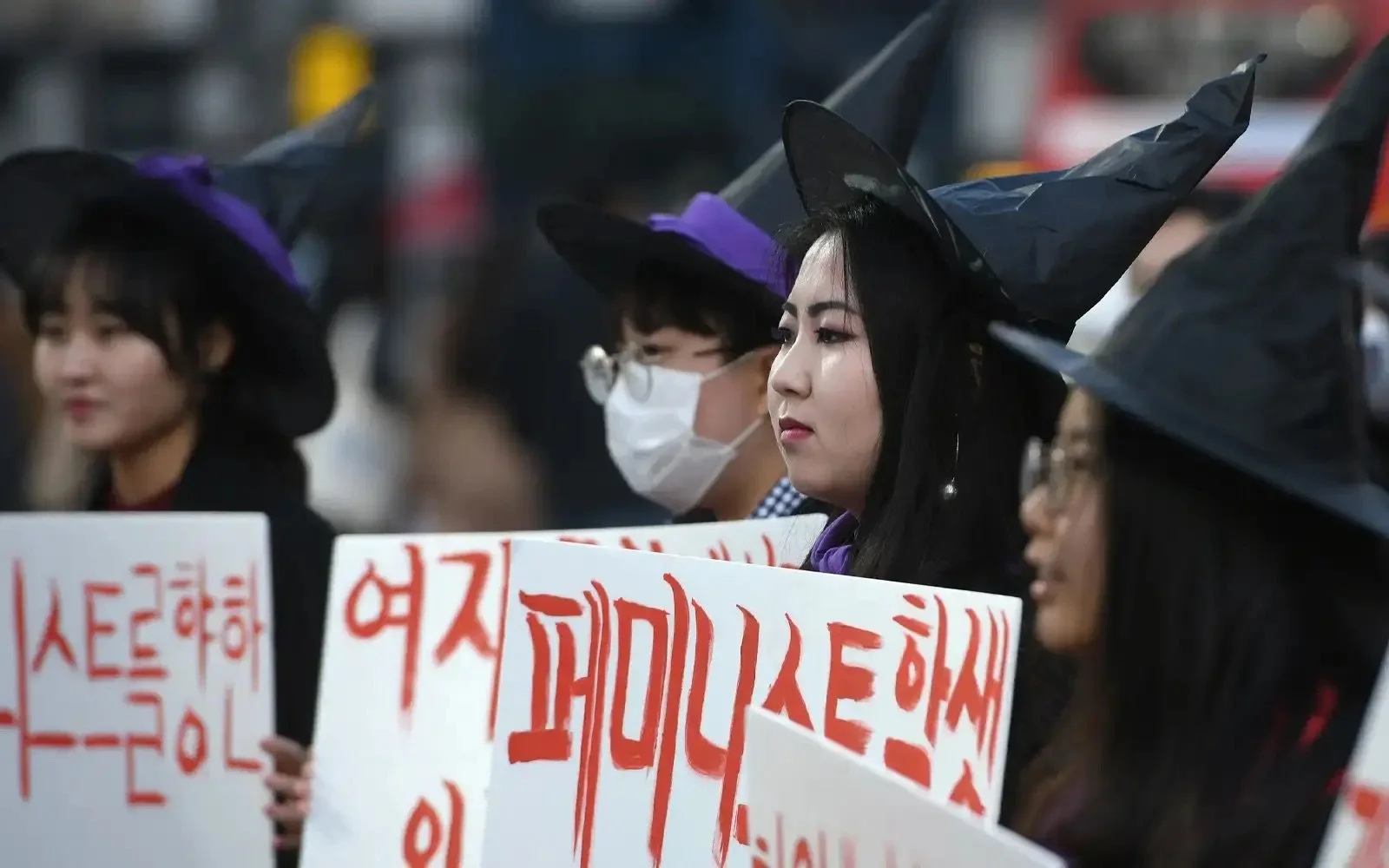
Women in South Korea at a 4B protest. Free Malaysia Today. CC BY 4.0.
In the wake of Donald Trump winning the 2024 U.S. Presidential Election, social media flooded with thousands of posts from women announcing that they were swearing off men as part of the 4B Movement. But what exactly is the 4B Movement, and what does it hope to accomplish?
Originating in South Korea, the feminist 4B Movement derives its name from its four tenets, which all start with the Korean prefix “bi” (or “no”) and denote a denial of something. Indeed, these four “Bs” are: don’t have children (bichulsan), don’t have sex with men (bisekseu), don’t date men (biyeonae) and don’t marry them either (bihon). The movement began in the mid-to-late 2010s as a protest against rising anti-woman sentiments among the nation’s men — especially following the hate-motivated stabbing of a young woman in Seoul in 2016. By withholding heterosexual attachments and exacerbating the nation’s flagging birth rates, South Korean women hope that the movement will provoke the nation’s leadership and male population into caring more about women’s rights. “I think a lot of women, through not participating in marriage and childbearing or relationships with men see a value in dropping the numbers to show through these statistics that women are not going to participate in [any] national agenda unless you listen to where women are coming from,” as Yale sociologist Meera Choi told The Times.
In South Korea, 4B is primarily a fringe movement. Its practices are so elusive and decentralized that the best estimate we have for its total number of participants is anywhere between 5,000 and 50,000, a wide range that highlights researchers’ uncertainty. However, since Nov. 5, 2024, some women in the United States have expressed a desire to introduce the movement mainstream in the West. Immediately following the 2024 U.S. Presidential Election, many expressed shock and fear that Donald Trump — a figure with a well-documented history of sexual misconduct — had again achieved the highest office in the country. Particularly, some were distressed by the sheer number of men that had turned out for Trump, believing their votes to represent endorsements of or even apathy toward Trump’s misogynistic behaviors (“Among men, who made up 47% of the electorate,” NBC News reported, “Trump won 55%”).

Trump supporters at one of his rallies in August 2024. Greg Skidmore. CC BY 2.0.
For these women, 4B’s appeal of sticking it to the government and an indifferent, if not overtly hostile, male population was immediate. “Young men expect sex, but they also want us to not be able to have access to abortion. They can’t have both,” Michaela Thomas told The Washington Post, referring to Trump’s first-term Supreme Court nominations who helped overturn Roe v. Wade. “Young women don’t want to be intimate with men who don’t fight for women’s rights; it’s showing they don’t respect us.”
4B’s popularity quickly caught on across social media. “Good luck getting laid, especially in Florida! [...] Me and my girlies are participating in the 4B Movement,” user @brielleybelly123 posted to TikTok. User @rabbitsandtea also posted on the platform: “Doing my part as an American woman by breaking up with my [R]epublican boyfriend last night and officially joining the 4B [M]ovement this morning.” Some liberal men have also expressed support for 4B. “The best way to show the importance of taking away women’s rights is to make sure men are affected as much as possible alongside them,” a Buzzfeed commenter wrote. As Instagram user @nosybystanders told her female fanbase: “Why exactly are you going to keep be[ing] subservient to a nation that [literally doesn’t] care about you?”
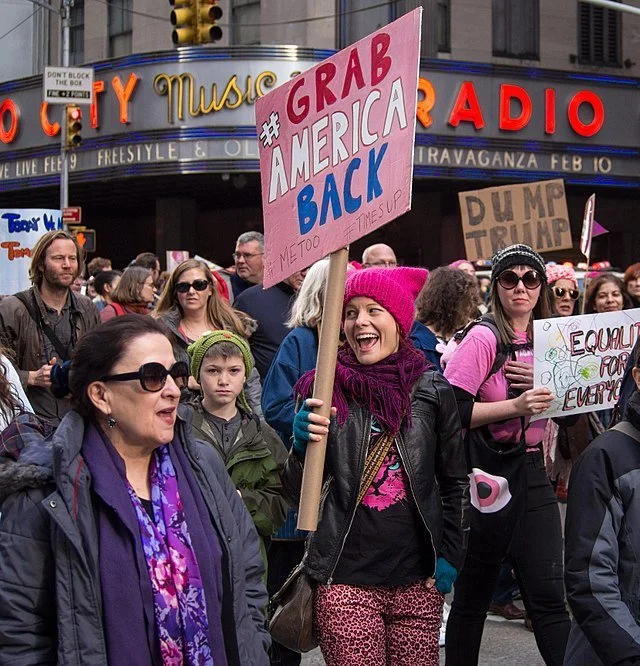
An anti-Trump women’s march following his election in 2016. Fabrice Florin. CC BY 2.0.
4B finds footing in an America currently experiencing a widening political gender gap. Young women are becoming more liberal as men drift further to the right and deeper into conservatism. In October 2024, a New York Times/Siena College poll found that “young women — those ages 18 to 29 — favored Vice President Kamala Harris for president by 38 points. And men in the same age group favored former President Donald J. Trump by 13 points. That is a whopping 51-point divide along gender lines, larger than in any other generation.” As Claire Cain Miller reported, this is partly because young women have been “politically galvanized” by “tthe triple punch of Hillary Clinton’s loss to Mr. Trump, the #MeToo movement and the overturning of Roe v. Wade.” On the other hand, young men feel increasingly “unvalued” by young women and “see former President Donald J. Trump as a champion of traditional manhood.” In terms of the 4B Movement, participants know firsthand how this male-harbored resentment can manifest in internet trolls’ hate comments.
Under @brielleybelly123’s video, @user813858060727 commented, “Thanks for not reproducing. You’re doing us all a favor.” Elsewhere, beneath a separate post under the 4B Movement hashtag, TikTok user @feronity commented, “Took a fu—kin new president just to stop being wh—res.” In the context of this vitriolic pushback — coupled with increased threats of “Your Body, My Choice” among young right-wing men — it becomes less surprising that women are joining the 4B Movement.
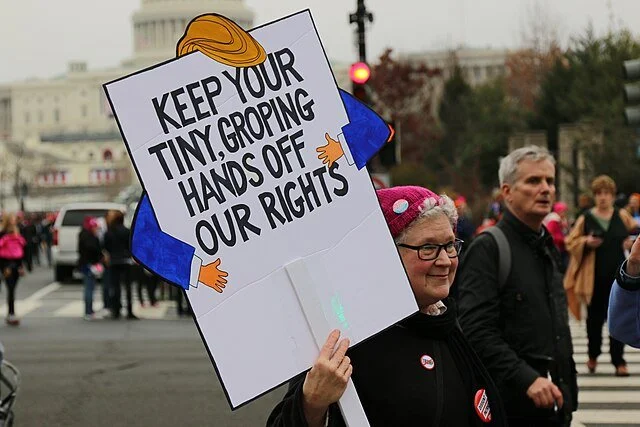
A protestor carrying an anti-Trump sign at the 2017 Women’s March. CC0.
Some of the online discourses surrounding women’s participation in the 4B movement are likely exaggerations: not every woman who posts about partaking in 4B is likely to completely follow through with its tenets, especially in the long term. For all of the buzz that it’s created in the U.S., 4B has never been among the top 100 trending hashtags on TikTok, signaling that hype for the movement has been largely sensationalized. But so long as Trump continues to campaign on misogynistic rhetoric and policies — and men continue to listen — the underlying sentiments of 4B will remain real, and so will their implications for increasingly fed-up women.
Bella Liu
Bella is a student at UC Berkeley studying English, Media Studies and Journalism. When she’s not writing or working through the books on her nightstand, you can find her painting her nails red, taking digicam photos with her friends or yelling at the TV to make the Dodgers play better. Bella is a student at UC Berkeley studying English, Media Studies, and Journalism. When she’s not writing or working through the books on her nightstand, you can find her painting her nails red, taking digicam photos with her friends or yelling at the TV to make the Dodgers play better.