
In 2015, Versova Beach in Mumbai was little more than a dumping ground for garbage and waste. After witnessing the devastating impact the refuse was having on the ocean, young lawyer Afroz Shah, with the help of 84-year-old neighbor Harbansh Mathur, decided to take matters into their own hands. What started off as a single man’s mission to clean up his favorite childhood beach turned into the world’s largest beach cleanup initiative with 70,000 adult volunteers and 60,000 student volunteers. After three years of work, Shah and hundreds of volunteers had cleaned up over 9 million kilograms of plastic and waste, with hopes to expand their initiative to other beaches in the future. The beach is now clean enough to welcome olive ridley sea turtles ready to lay their eggs to its shores. In 2016, Shah was awarded the UN’s Champions of the Earth award. He is currently working to clean Mithi River, Mumbai’s longest river.
Why Creating Rock Cairns is Dangerous and Wildly Illegal
Amplified by the social media trend of making and photographing these little towers, the prevalence of man-made rock cairns has reached an all-time high. But the illegal practice poses serious dangers to the surrounding environment.
Read MoreDonating Used Clothing May Do More Harm Than Good
Donated clothes rarely end up in the hands of someone who needs them. Instead, they usually end up in landfills or overwhelming already struggling industries.
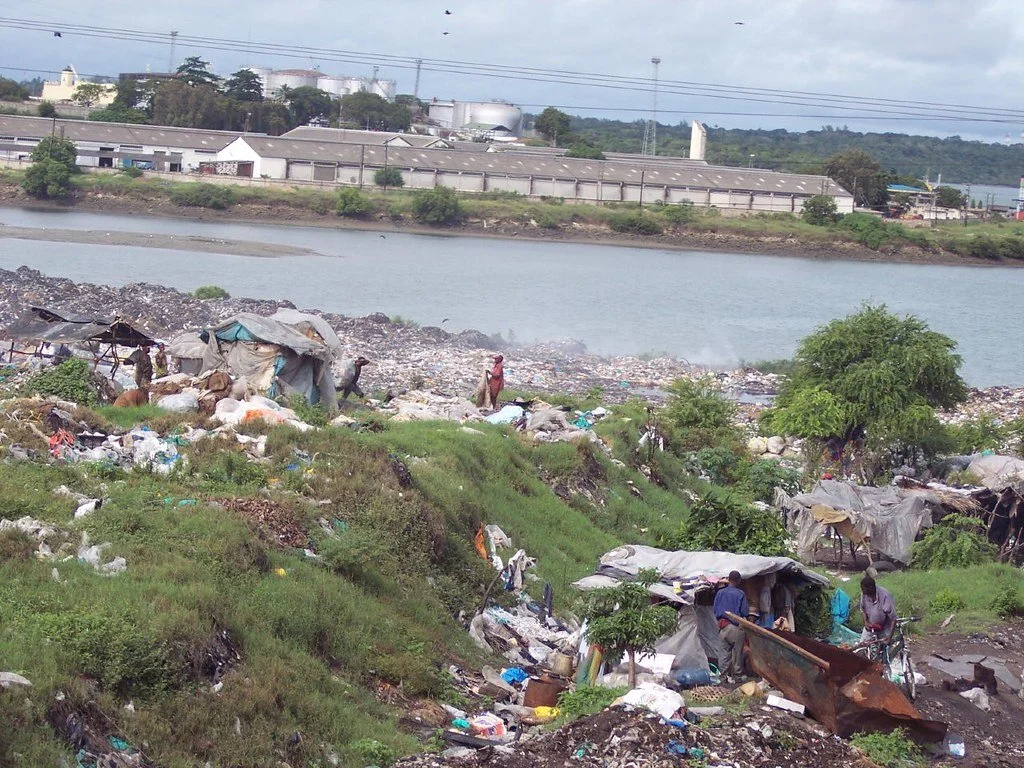
Landfill in Kenya. Thad K. CC BY-SA 2.0.
Many Americans assume donating is the best thing they could do with their old, unwanted clothing. However, in reality, more than 80% of donated clothing ends up in landfills. Only clothing in the best condition is accepted into secondhand stores in the U.S., such as Goodwill or Buffalo Exchange. Even then, if the clothing remains in the store without being purchased for weeks at a time, the store itself often disposes of it. The rejected clothing often ends up in landfills or is shipped overseas.
Americans buy five times as much clothing, on average, than they did 30 years ago. However, the quality of the clothing most people buy has decreased due to fast fashion trend cycles, resulting in an average of only seven wears per piece. The increase in purchasing combined with the decrease in wear time has resulted in an overwhelming influx of clothing donations in the past 30 years.
In theory, shipping unwanted clothing to countries seems like a good thing; it has the potential to create jobs and provide more affordable clothing. Unfortunately, many countries (mostly in East Africa, where unwanted clothes are most commonly sent to, with the exception of Ghana) cannot handle the sheer mass of the clothing they are receiving. The U.S. ships up to 700,000 tons of clothing overseas every year, which is simply too much for the textile and clothing industries to disperse. Additionally, secondhand clothing sells for such a small fraction compared to new clothing in East Africa, causing local companies unable to compete with cheap clothing to go out of business.
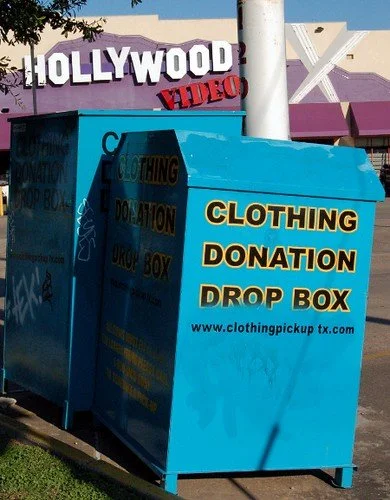
Clothing Donation Stop. Laura0509. CC BY-SA 2.0.
Several East African countries (Tanzania, Kenya, Uganda, Burundi and Rwanda) even signed a ban on the importation of used clothing from the U.S. in 2016. The Trump administration negotiated with the East African Community (EAC) to reverse the ban, which they did, mostly due to international pressure. With that being said, certain countries, such as Kenya, claim to rely on the influx of clothing from the U.S. to keep their textile industry up and running. But while that is the case for Kenya, donated clothing does more harm than good for the majority of East African countries.
In terms of the environment, secondhand clothing markets in every country in the world are simply unable to keep up with the amount of discarded clothing as the fast fashion industry continues to ramp up production exponentially. Whether the clothing begins its journey in a thrift store in the U.S. or on a plane to Kenya, it is ultimately most likely to end up creating more waste. The myth of clothing donation is part of what propels the fast fashion industry; people think donating their clothes will have an ultimately positive impact, and so they feel justified in continuing to amass more clothing.
Ultimately, the most effective fix for this problem would be to reduce collective clothing consumption. The less unnecessary clothing that is bought, the less clothing waste will be produced. With that being said, there are other options to reduce your clothing waste. Instead of donating your unwanted clothing, giving it directly to someone that you know wants and will use it ensures that it won’t end up in a landfill, at least in the short-term. Donating your clothing to homeless or women’s shelters is also another option, as they have more need than thrift stores such as Goodwill or Salvation Army. However, even when it comes to donating clothing to shelters, the clothing must be in good enough condition to actually be worn. If it’s not, another option is to keep and repurpose it yourself. Old fabric can be used as stuffing or kept for a future art project. All in all, donating excess clothing can be the last resort, which comes after making an effort to buy less, trade within your own circles and repurpose used materials.
Calliana Leff
Calliana is currently an undergraduate student at Boston University majoring in English and minoring in psychology. She is passionate about sustainability and traveling in an ethical and respectful way. She hopes to continue her writing career and see more of the world after she graduates.
Drought, Agriculture and the Water Crisis in Spain
In Spain, where drought and agricultural contaminants are affecting drinking water, the precious resource has become a rarity.
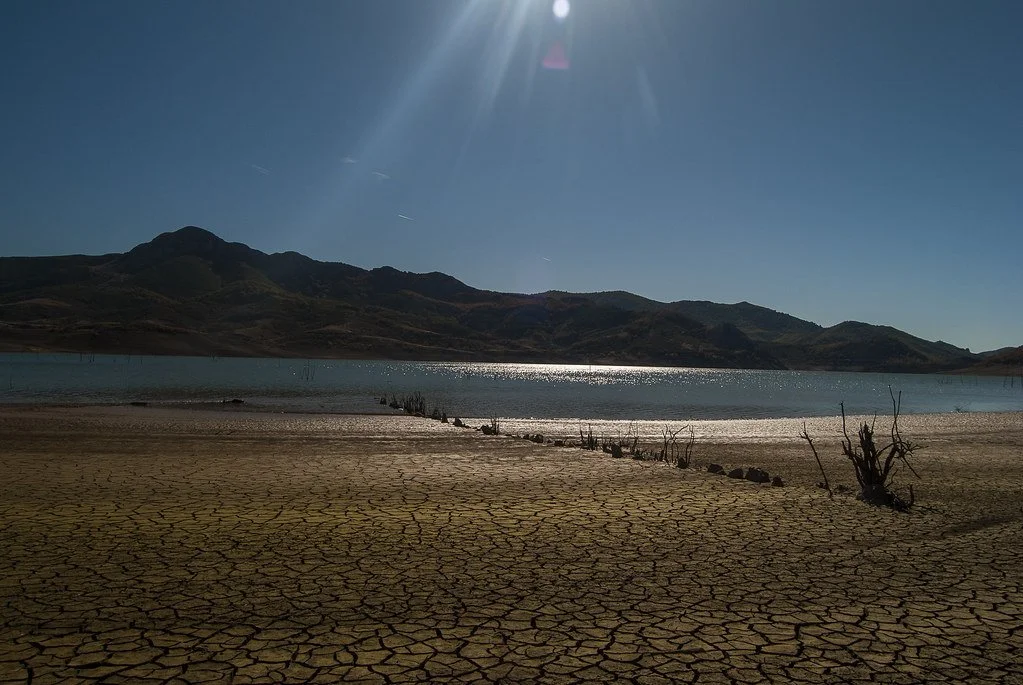
The drought’s effects on water in Spain. Oscar F. Hevia. CC BY-NC-ND 2.0.
After one of the driest winters of the past 20 years, Spain is experiencing record-low levels of water, which has severely impacted the country’s people. Spain collects the majority of its water through reservoirs and basins, which capture groundwater and rain. At this time of year, these reservoirs are typically at 70 percent. However, due to the drought Spain is currently experiencing, such reservoirs and basins are only at about 40 percent capacity—a palpable cause for concern for all Spanish citizens.
Due to the severe lack of water, Spain has placed regulations on what the limited supply should be used for. Pools remain unfilled as the weather gets hotter, city fountains are shut off, and villagers in towns closer to the interior of the country find it hard to get a sustainable supply of drinkable water. Villagers from interior areas of Spain, like Lastras de Cuéllar, depend heavily on bottled water sold in their town square. But the purchasing of bottled water is not a sustainable solution to the current water crisis. Older members of the community struggle to carry enough back home, and although many places discount their prices, bottled water is not cost effective. As summer approaches, the people of Spain worry about how long their reserves will last them and hope for heavier rainfall in the spring months to come.
The drought is being credited to climate change, and the ever-rising temperatures felt across the globe are now creating drastic impacts on the ways people will have to start managing their resources. Calls for water-management reform have begun from many scientists in Spain, the main argument being that due to rising temperatures, old ways of managing and transporting drinking water may need to change. Interior towns of the country that heavily depend on rain water to sustain them may have to rethink their system all together.

Park fountain without water. Ell Brown. CC BY-NC-SA 2.0.
On top of the drought, agricultural contaminants have threatened what little water resources Spain has left. Spain is a global leader in pork production, a process that actively affects groundwater resources commonly collected in the basins used to hold drinking water. Pig manure is loaded with toxins that make drinking this groundwater very dangerous. Wired Magazine explains that “pig feed is high in a chemical called phytate, which swine excrete as phosphorus.” When farmers use pig manure to fertilize their land, “phosphorus can become concentrated in the soil and leach to groundwater.” This concentrated phosphorus in groundwater can make humans extremely sick, another reason why clean water has become so rare in Spain.
Besides phosphorus, pig manure also secretes nitrates, something also commonly found in fertilizers used in the agricultural production of crops. Therefore, on top of the dangerous toxins found in pig manure, the nitrates in fertilizer are also seeping into groundwater and impacting the purity of Spain’s limited drinking water. The Local, an online magazine dedicated to covering news in European countries, states that “22 percent of Spain’s overall surface area…is exposed to nitrate pollution,” a startling statistic, considering Spain’s clean water crisis.
The implications of the drought—combined with the continuation of agricultural contaminants that are consistently finding their way into Spain’s drinking water—are extremely severe. If Spain doesn’t experience a spring with heavy rainfall, this issue may turn into a crisis. Spain has been for many years a water-insecure region, but as the effects of climate change excellerate and agricultural production continues to pollute the land, the issue only becomes more dire. For now, Spaniards can only hope for rain to counter the drought, and for water-management reform to make their drinking water safer. With those hopes in mind, they wait to see what the impending summer heat will mean for their depleted clean water supply.
To Get Involved:
The Organization for Economic Co-operation and Development (OECD) is an organization designed to assist economic and trade progress on a global scale. Learn about the OECD’s assessment of how water resources in Spain are allocated and how the OECD recommends to improve such allocations as conditions in Spain change here.
Circle of Blue is a non-profit organization dedicated to discussing critical research and the challenges involved with global water insecurity. Uniting journalism and data literacy, Circle of Blue serves to educate readers on global issues linked to water and provide research on ways others can get involved to fight global water insecurity. Learn more on how to eliminate global water insecurity here.
Ava Mamary
Ava is an undergraduate student at the University of Illinois, double majoring in English and Communications. At school, she Web Writes about music for a student-run radio station. She is also an avid backpacker, which is where her passion for travel and the outdoors comes from. She is very passionate about social justice issues, specifically those involving women’s rights, and is excited to write content about social action across the globe.
Mass Killings of the Gray Wolf near Yellowstone
With the 150th anniversary of Yellowstone, attention is drawn to the mass killings of the gray wolf. The park’s bordering states have no laws to protect this species, as the wolves reach a record low number.
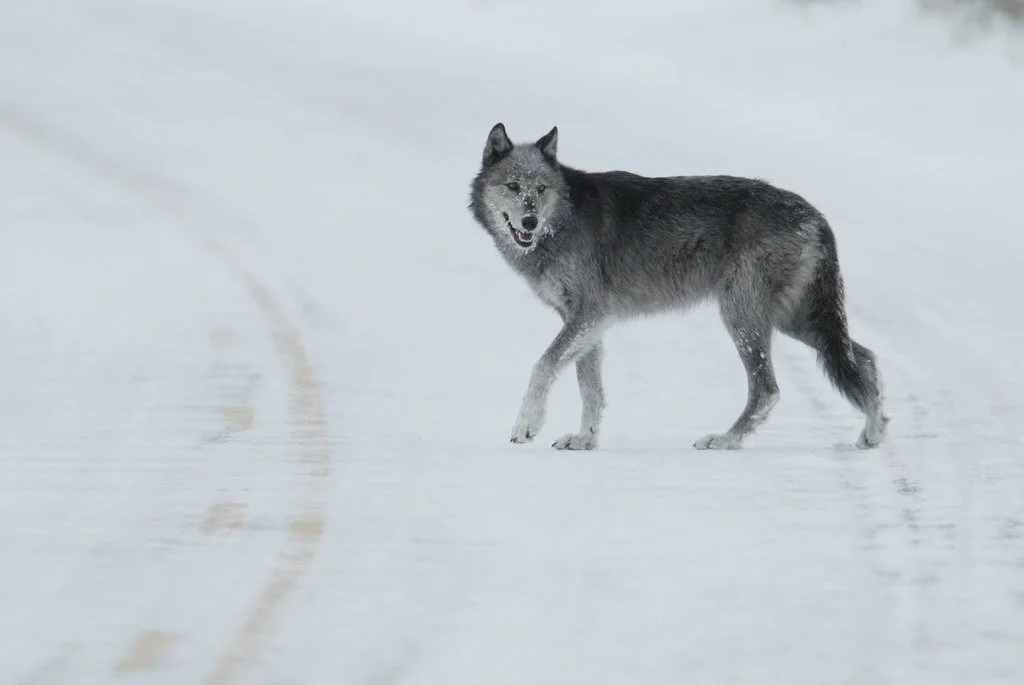
Gray wolf traveling. Yellowstone National Park. CC BY-SA 2.0.
March 1 marked the 150 years of Yellowstone National Park’s existence. However, a sad reality emerges regarding the hunting and killing of wolves. Although this event should be a time of commemoration for the park, an impending issue may finally be getting the necessary public attention.
While hunting is illegal within Yellowstone, the boundaries of the park line states like Montana, Idaho and Wyoming, which offer no protection to what crosses into their private territory. As a result, the highest number of gray wolf killings has occurred within a century this season alone, which is less than halfway over.
There are several reasons why this attack on the gray wolf has been escalating. In 2020, the Trump Administration abolished protection of the gray wolf species, meaning that they no longer receive protection as an endangered species. Two years later, though, the federal court worked to reinstate protection for the wolves. Although this preservation was successful in some states, those bordering Yellowstone were excused from this active protection. As a result, hunters in Montana, Idaho and Wyoming have brought the total population down to just 90 wolves.
Although there are strict hunting rules within Yellowstone, they now hold little value due to the ways in which these bordering states support the war on wolves. These mass killings are not only exponentially growing for the first time in a century, but pose extreme risks for the balance of the ecosystem. The gray wolf plays a key role in the ecosystem, which further affects the physical environment the park is surrounded with, as well as the stability of other organisms.
For example, the diminishing number of wolves negatively impacts the ecosystem as the species feeds on deer and elk populations, keeping them at a healthy population. When wolves eat deer or elk, they also leave their carcasses scattered which provides nutrients for other members of the system. Aside from the gray wolf affecting other species, they have large impacts on trees, plants and the physical environment at large. With the absence of the gray wolf working as predators, an abundance of elk would feed on different types of trees, which further translates into the stagnation of the species.
The issue is growing rapidly, as the entire Phantom Lake Pack has been slaughtered due to the lack of protection. New laws in Idaho encourage these killings; the governor of Montana is an active hunter himself who recently trapped and killed a wolf without following protocol. As these states fail to protect the important wildlife that walks into their territory, it is increasingly concerning why there is little to no federal concern on this issue.
Those who demand change are former members of the Fish and Wildlife Commission, who have seemingly followed the journey of the gray wolf, watching them go from full protection to total vulnerability. Although gray wolf deaths reach dangerous numbers, the problem is seemingly insular to the park itself, only being made known to the outside when action is demanded. When there is no personal connection between the park and the outside influences that have ability to make a change, protection is only considered when irreversible ecological damage to the park is noticed. Whether the federal government and commission chooses to protect the gray wolves or not is ultimately determined by their care for the environment, economics and the ecological community.
GET INVOLVED
Citizens can put active pressure on the federal government and commission to keep the Endangered Species Act protections for gray wolves in 48 states throughout the Biden Administration. This pressure would also help the wolves have protection under federal law, rather than leaving responsibility to the surrounding states.
Here, you can sign a petition to Secretary Haaland to promote this protection of wolves.

Talia Rueda
Talia is an English major and Marketing minor at Providence College. She works as a Staff Writer and Social Media Coordinator for their student-led newspaper, The Cowl. She is a lover of all things entertainment media and is happy to now grow her experience in writing about social action and travel. In the future, she hopes to work for a major entertainment magazine to continue the conversation about growing trends and popular culture.
VIDEO: Girl's Education and Global Poverty
Global Citizen provides an array of statistics to demonstrate the power of education for girls in ending global poverty. For example, when 10% more girls attend school, the GDP of a country increases by 3% on average. The film especially focuses on India and explains that education helps to prevent girls from entering early marriages. Two thirds of uneducated children are girls. By providing girls with the education that they need, countries can both improve their economies and their standard of living for girls and women.
GET INVOLVED
Global Citizen is an organization that aims to help end poverty around the world by 2030. The foundation addresses the issues of demanding equity, defending the planet and defeating poverty. According to Global Citizen, 36% of the population currently lives in extreme poverty. To raise awareness and educate yourself about global poverty, click here.
How to Vet a Charitable Organization
Sometimes it can be difficult to find a charity that is as ethical as they claim to be. This article will help you find and assess organizations worthy of your donation.
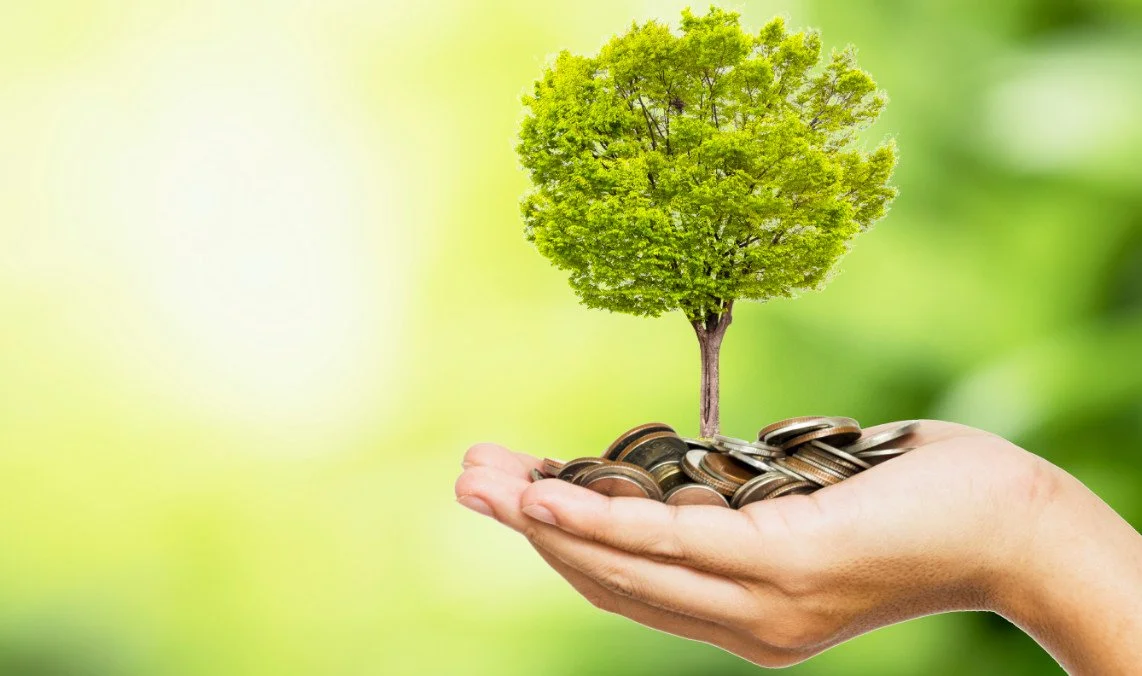
Tree growing from coins. Michelle Chow, ejinsight. December 16, 2020
In an era of a social justice revolution, it can be daunting to find organizations to support. Sure, you see their ads on social media, but how do you know if they spend their money ethically? What if you’re paying for their CEO’s third home or even unknowingly supporting an extremist organization? Luckily, sites like charitynavigator.org and charitywatch.org have streamlined the process of vetting charitable organizations so you can ensure your money is going to a cause you care about.
In this article, I will be focusing on three aspects to help you research nonprofits:
Administrative costs: How much does an organization spend on the causes they are involved with vs. how much they spend on overhead?
Impact: How much does the organization actually do, and how well does it work?
Financial Transparency: How much does the organization disclose about their income and tax bracket?
Administrative Costs
It takes a lot of money to run a non-profit organization. They have to take into account their employee salaries and office rental costs, which dictates how much the charity gives to the causes they support. Some unethical organizations use=donation money to supplement their CEO’s paycheck. The site Charity Navigator utilizes colorful graphs to help potential donors evaluate how much money the organization spends on their cause compared to their
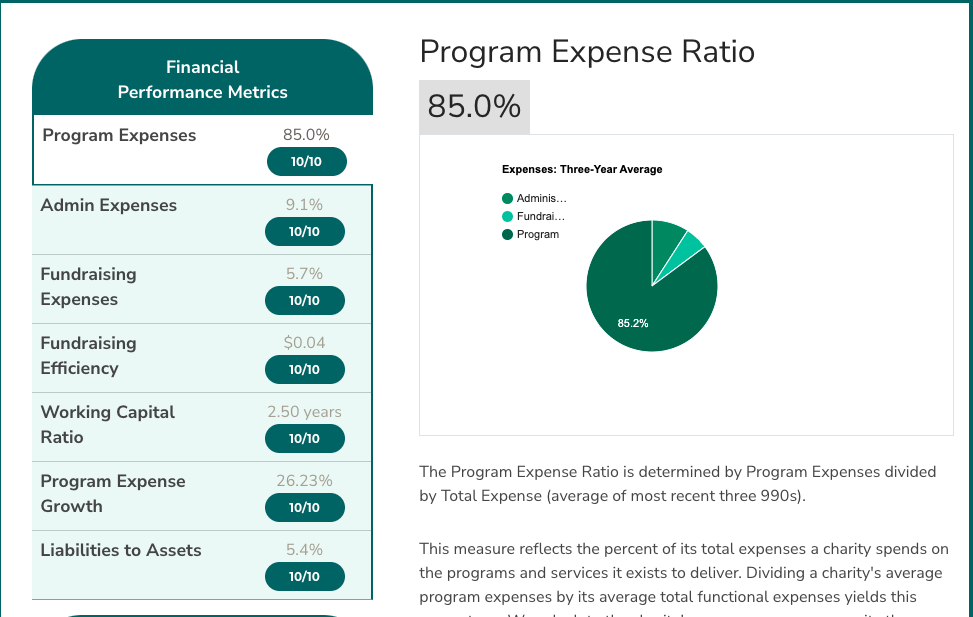
Pie chart dividing NWLC expenses. Clayton Young. Courtesy of CharityNavigator.org
overhead, or operational costs. Charity Navigator uses three sections of an organization’s expense report to get their Program Expense Ratio: program (how much they donate to the cause they support), administrative costs, and fundraising.
A good example of an organization spending most of its income on the program is the National Women’s Law Center, which spends 85% of its income on the programs it supports internationally. They spend roughly 15% on administrative costs and fundraising combined. It’s important to note that all nonprofits are different and cannot be held to the same bar. While it is best to take into account their Program Expense Ratio, some organizations simply do not raise enough money to spend it all on their charitable programs.
Impact
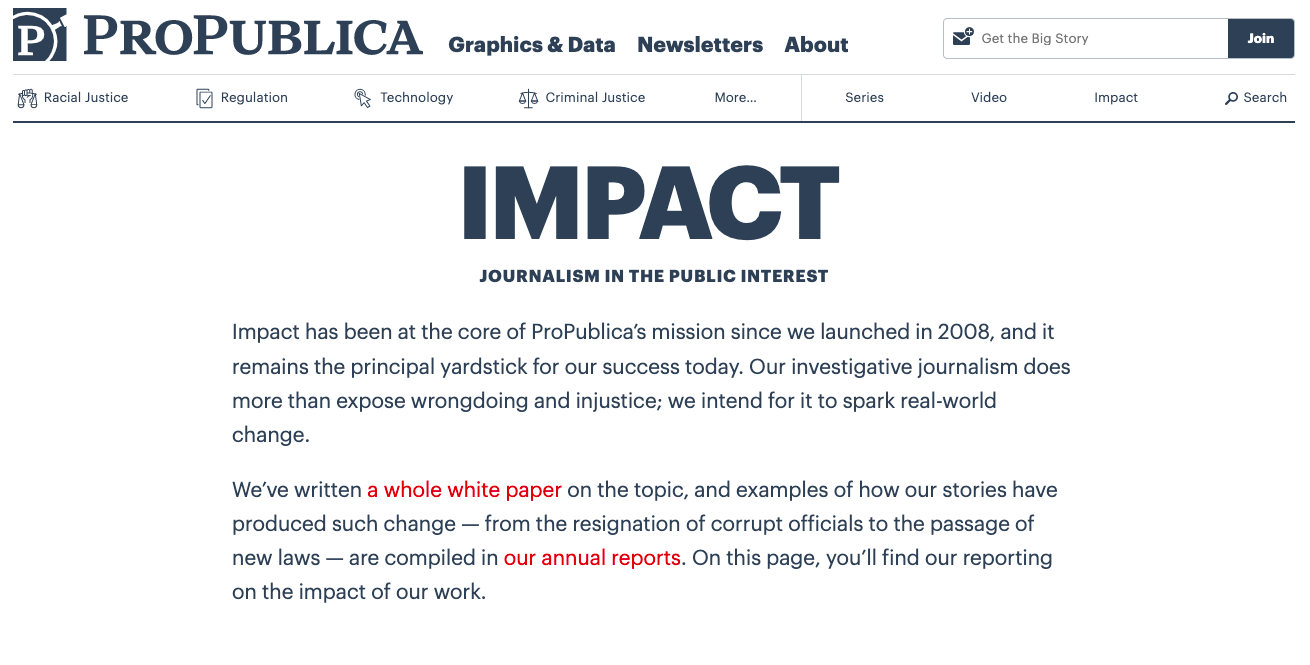
Impact statement. Courtesy of ProPublica.org. Clayton Young.
How do you know if a nonprofit is actually doing something with your donation money? It can be difficult to quantify the effectiveness of an organization, but independent research can help you make an informed decision about your donation. Charity Navigator’s video details some of the steps you can take to make sure your donation is being used well. One tip they suggest is to call the organization to directly ask them about their impact. However, this poses a problem: the organization might give biased information since they would want to look good at first glance. It helps to have something tangible the organization has done with your donation.
ProPublica is an independent news organization founded in 2008 that exposes abuses of power against the public from government and institutions through nonbias journalism. Their Investor Impact Report, details all their work for the past year. Additionally, they link follow-up stories to their original articles that sparked the active change to fix injustices. In 2021, the administrator to the Environmental Protection Agency used ProPublica’s article on how the EPA allows some communities to breathe toxic air and announced a new Pollution Accountability Team in response to ProPublica’s article.
Financial Transparency
Our final aspect of vetting a charitable organization relies on a group’s ability to maintain a clear view of its finances. Obviously, it’s a very important job to tell your donors where their money is going. Charity Watch defines what classifies as a charity and how that tax status could influence the money spent on the intended program. Generally, 501(c) 3 organizations are what most are classified as, meaning they receive tax-exempt contributions from donors, as long as they do not try to influence legislation or endorse presidential candidates, according to the IRS’s classification and rules of charitable organizations with that status.
An example organization that fits the 501(c)3 status while also providing transparency to its financial records and expenditures is Amazon Watch. While it may sound like an Amazon.com watchdog organization, the charity is actually focused on legislating and providing humanitarian relief on behalf of the Indigenous communities in the Amazon rainforest. They spend 85.6% of their revenue on the Amazon program, the rest going to administration and fundraising, but their tax records are publically available for anyone to see, dating back to 2016.
The sites utilized in this article were Charity Navigator and Charity Watch, but they’re only two of a litany of other similar sites. The nonprofits listed are not the only worthy charitable organizations in the world; rather, these are just a jumping point for you to do your own research and give to causes you are passionate about.
Clayton Young
Clayton is an aspiring photojournalist with a Bachelor's in Liberal Studies with a minor in History from Indiana University - Bloomington. In his free time, he enjoys hikes, movies, and catching up on the news. He has written extensively on many topics including Japanese incarceration in America during World War II, the history of violence, and anarchist theory.
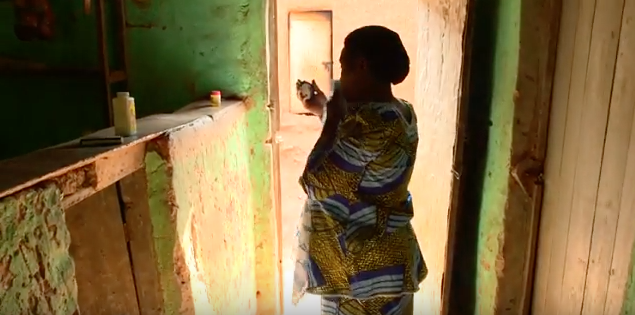
VIDEO: Mama Rwanda
Located at the converging point between the African Great Lakes region and East Africa, the Republic of Rwanda is an environmentally, economically and culturally diverse country rebuilding its identity in the wake of the 1994 Rwandan genocide, in which approximately 800,000 Tutsis were killed by Hutu extremists. The country takes pride in its regional fauna, which includes elephants, gorillas, hippos, giraffes and zebras. Travelers interested in viewing Rwandan wildlife can observe it in three national parks: Volcanoes National Park, Nyungwe Forest National Park and Akagera National Park. “Mama Rwanda” also shows Kigali, the capital of Rwanda and the heart of its economic and cultural life. The city boasts a vibrant marketplace and architecture that combines traditional and modern styles. Outside the city, Rwanda’s expansive coffee growing fields are tended by over 450,000 planters. Basket weaving has been an important aspect of Rwandan culture for centuries and is now being used by women impacted by the Rwandan genocide to pursue greater economic independence as producers within an international market. Hutu and Tutsi women have come together to weave baskets, a practice that is now a symbol of national reconciliation. These businesses sell their wares to both small stores and large department stores like Macy’s. The profits of weaving companies are often used to support Rwandan families in need of food and medicine.
How to Debate the Climate Change Skeptics in Your Life
With many climate skeptics, it’s important to know how to respond to the claims from those who don’t believe in human-induced climate.
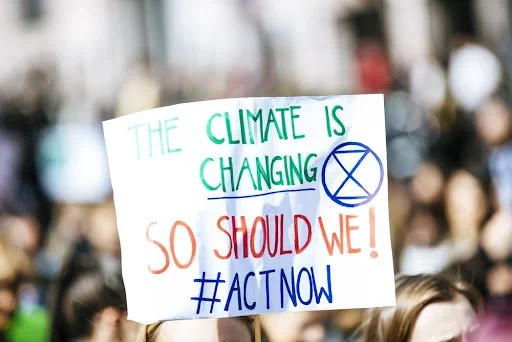
Climate change protest in Nuremberg. Markus Spiske. Unsplash.
Climate change refers to the current unprecedented warming of the climate that the Earth is experiencing. There are many skeptics who don’t believe the planet’s warming is of concern or that humanity is the main driver. These skeptics have a few main points they like to bring up. Here’s how to hit back.
“The Earth’s climate has always been changing, so there’s no reason we need to be worried now.”
Though the first part of this claim is correct (Earth’s climate has always been in flux), this is most certainly not a reason to be unconcerned about the current warming our planet is experiencing. Though the climate has changed a lot throughout Earth’s history, the planet hasn’t experienced such rapid warming in at least the last 2,000 years as it is currently. To respond to this type of statement, the key is referencing the unprecedented rate of warming as the reason modern climate change is a huge problem that needs to be addressed immediately. For specific credible evidence, one can draw from the reports made by the Intergovernmental Panel on Climate Change (IPCC), which is a body of the United Nations that conducts and disseminates scientific studies on modern climate change. In the Summary for Policymakers of the IPCC’s Sixth Assessment Report, it was reported that humans have caused the Earth to warm by an estimated 1.07 C since the Industrial Revolution. Comparing this temperature anomaly to ones before the mid 1800s shows us “human influence has warmed the climate at a rate that is unprecedented.”
“The Earth has been much warmer in the past than it is today, so we don’t need to be worried that it’s getting warmer.”
Again, the first part of this claim is true; we are actually currently in what is called an icehouse period, meaning we are experiencing a colder phase relative to Earth’s entire history. Though our current climate isn’t abnormally warm compared to all of Earth’s history, it is not only warming unusually fast, but it also poses dangers to humans, animals and many ecosystems, which are adapted to Earth’s current climate—not a warmer one. In response to these statements, it’s important to remind those in the conversation that we aren’t physically or fiscally able to adapt ourselves, our ecosystems and our industries to a warmer climate fast enough because of the unprecedented speed at which the climate is changing.
“The sun is the source of the Earth’s heat, so any change in the Earth’s temperature must be due to changes in solar radiation, not human activities.”
This type of statement is generally made by those who admit the Earth is warming quickly but don’t believe humans are the cause. The Earth is heated by the sun through solar radiation. However, if the sun was the only factor in warming our planet, the Earth would be too cold for us to survive on it. To respond to this kind of claim, you should remind whomever that our atmosphere is largely responsible for the warmness of our planet because the greenhouse gases in the atmosphere trap heat. A skeptic may then ask how we know humans have caused greenhouse gases to increase. Human-caused warming can be illustrated through graphs of the global average surface temperature, which show a continued increase in temperature since the Industrial Revolution (when humans began to emit large amounts of greenhouse gases by burning fossil fuels for energy). Countering this claim can be done by looking at any graph of global average temperature in the last century, as these graphs show the increase in the Earth’s temperature has very closely followed the increase in the human activities of fossil fuel burning, deforestation, and other greenhouse gas emitting actions. Also, it wouldn’t hurt to note the IPCC has reported “it is unequivocal that human influence has warmed the atmosphere, ocean and land.”
Whether writing about modern climate change or having a casual discussion about it amongst friends, it’s important to not only be aware of the fact that our climate is getting warmer at an unprecedented rate, but also to understand why the large majority of the scientific community is certain humans are the main reason why. Knowing this information can help you discuss and explain global warming and the importance of taking immediate action.
Jordan Hunt
Jordan Hunt is an undergraduate student at UC San Diego. She is majoring in Communication and is on track to earn her BA degree in the Spring of 2023. With an ever-growing passion for filmmaking and a strong desire to effect change in environmental policymaking, she loves to share her ideas and knowledge with others through writing.
The Swimming Savior: Journey From Refugee to Olympian
Syrian Yusra Mardini escaped civil war and became the face of Olympic refugees.

Yusra Mardini. l3o_. CC BY-NC-SA 2.0
Yusra Mardini began swimming at the budding age of 3 in her birth country, Syria. As she grew older, she continued to pursue her swimming career with the Syrian Olympic Committee, hoping to one day fulfill her dream of competing for her country in the Olympics. Outside of the pool, however, a pressing issue loomed over Mardini’s promising athletic career: a civil war in Syria jeopardizing everything she had worked for.
A peaceful Syrian protest in 2011 initiated an intense civil war. As it progressed, Mardini lost focus during swim practices due to the bomb threats and active bombings during her training. The danger eventually led the Mardini family to leave Syria in August of 2015, shortly after their family home was destroyed. The Mardinis embarked on a 25-day journey to Germany, crossing the Aegean Sea and seven countries along the way.
During that time, Mardini’s swimming career and life as a refugee merged in one defining moment. While crossing the Aegean Sea on the way to Greece, the boat the Mardinis were on stopped working. In the midst of the chaos, Yusra and her sister, Sara, boldly jumped out of the boat and began to push the vessel to shore. The Mardinis successfully delivered the boat to shore, saving the 18 other passengers on board. Yusra was just 17 years old.
Mardini began training again in Germany, the country her family settled in. This time, she swam with a greater purpose: making a name for herself at the Olympics and bringing awareness to refugees at the same time. Her hard work paid off, as Mardini was selected to compete with the 2016 Refugee Olympic Team. This team was the first of its kind, allowing refugee athletes to compete together rather than for a specific country. Representing a cause she was passionate about, Mardini traveled to Brazil to swim in the 2016 Rio Olympics and share her story with the world. She competed in the 100-meter butterfly event, as well as the 100-meter freestyle.
After her story received positive press at the Olympics, Mardini began using her voice to represent refugees both in and out of the pool. In April of 2017, the UN Refugee Agency dubbed Mardini a Goodwill Ambassador, making her the youngest UNHCR ambassador at the age of 19. Since then, she has used her life story to represent refugees on a global scale. Mardini shares her triumphant tale at conferences, schools and through her social media, allowing people to understand the trials that come with civil war, displacement and personal growth. Mardini also attended the 2020 Tokyo Olympics, where she was given the honor of being the flag bearer for the Refugee Olympic Team. She continues to train in Berlin, Germany, where she is making a name for not only herself, but refugees everywhere who are looking for a new beginning, just as Mardini once was.

Ellie Sabby
Ellie is a senior at the University of Minnesota Twin Cities, studying English literature. She is the Chief Online Editor and Chief Art Editor for undergraduate literary and art magazine, The Tower. In her free time, she enjoys writing poetry, reading anything by Shakespeare, and fulfilling her passion for traveling through a variety of spontaneous trips.
Entertainment or Exploitation? Dive Into Sea Mammals in Captivity
Marine mammals living in captivity may appear happy and healthy, but the harsh reality is the aquatic entertainment industry exploits the animals for profit. Here’s why they deserve to roam free.
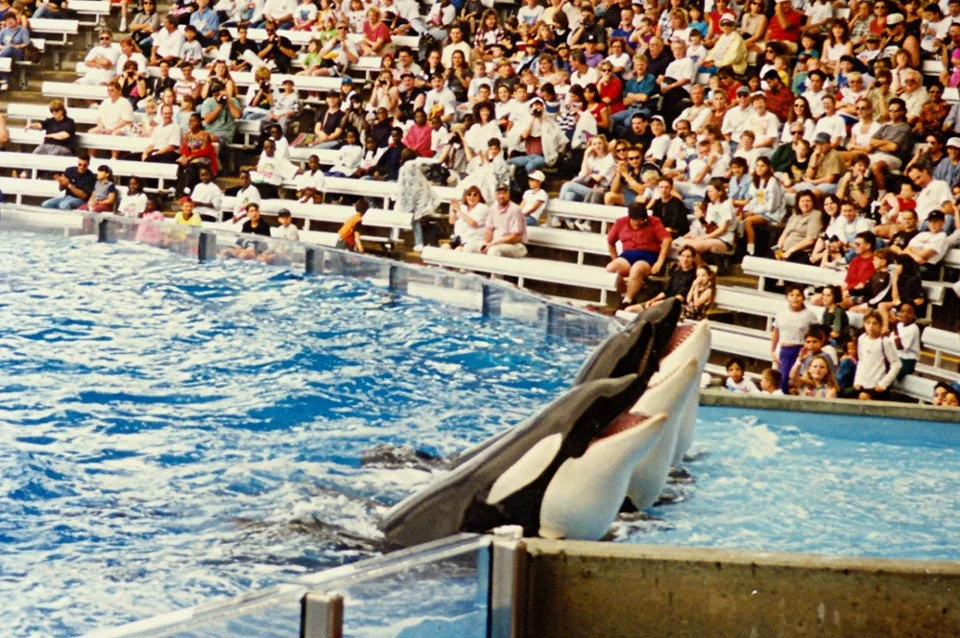
Orca show at SeaWorld. roger4336. CC BY-SA 2.0
The definition of a cetacean is a marine mammal, but they are better known as dolphins, porpoises and whales. While not everyone has viewed these creatures in their natural habitats, there is a good chance they have been seen closer to home at a local zoo or aquatic institution. However, these businesses are in possession of cetaceans for entertainment purposes, not the well-being of the actual animals.
As breathtaking as it may be to see an orca, whale, or dolphin right in front of your face, these creatures have complex ways of thinking and living that cannot be maintained in a glass tank. Cetaceans are social animals, similar to humans, who thrive off interacting with other aquatic mammals. They are also extremely intelligent and need space to explore new concepts and create families. If kept in captivity and separated from their offspring, cetaceans suffer similarly to what a human may experience if they are depressed or anxious: physical ailments, raised stress levels, aggressive temperaments and even premature death. As a result, this changes the demeanor of the animals, and several trainers have been injured or killed over the years. Organizations using cetaceans for entertainment purposes overlook the basic needs of these animals and forgo moral and ethical standards for the benefit of their business.
SeaWorld is famous for its orca shows, dazzling spectators with what seem to be displays of happy creatures performing tricks willingly but are truly a collection of unhappy animals working for food in unsuitable tanks. Years of cetacean exploitation in this organization—and ones similar to it—were masked as research. SeaWorld claimed to save marine animals who had been injured in the wild by bringing them to their facility and rehabilitating them in a controlled environment. Upon further investigation, these claims were false, as some animals had been forcefully taken from their homes rather than rescued. Companies battled with lawmakers for years over the proposal of a law that would benefit the animals more than the humans in charge of them. The Orca Protection and Safety Act was passed in 2016, banning the breeding, capturing and performing of orcas in California. SeaWorld’s long reign amongst aquatic entertainment organizations crumbled.
While several states have adopted laws banning the breeding of orcas since then, there are still 59 whales in captivity across the globe and numerous other dolphins and beluga whales in the same situation. In recent years, China and Russia have become popular locations for orca breeding and performing.
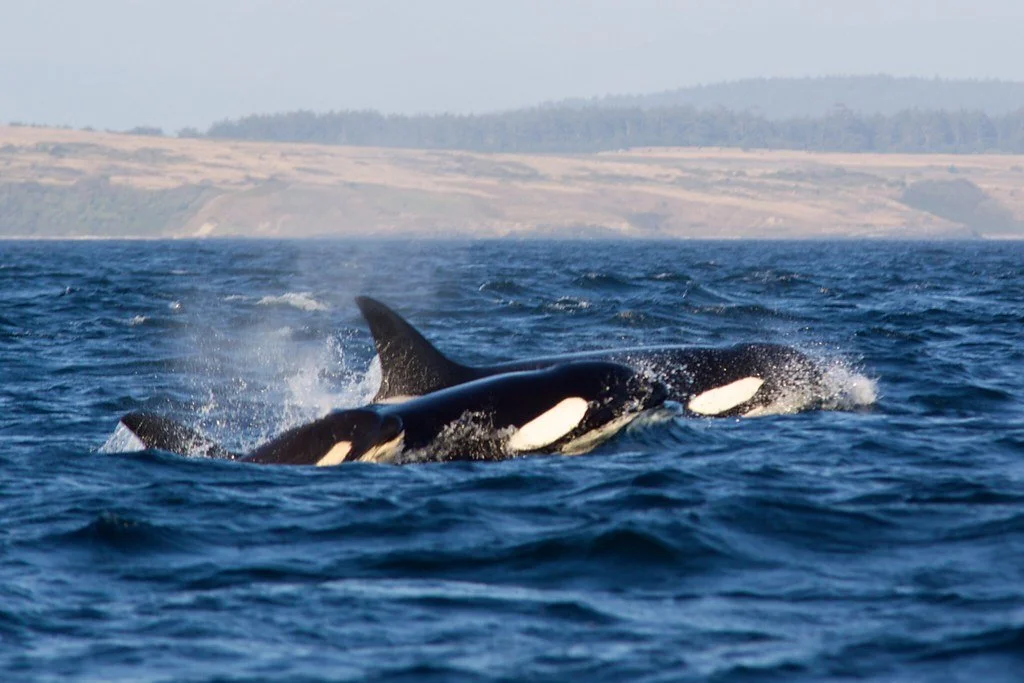
Orcas in the wild. DrTH80. CC BY 2.0
One organization in Canada is now working to rectify the unethical treatment of these animals by creating a space for them to retire and return to the life a cetacean would normally live. The Whale Sanctuary Project is dedicating their time to supporting cetaceans bred and raised in captivity who may be retired, but have no home or family to return to. The Whale Sanctuary Project creates authentic sanctuaries for these animals, large bodies of water with adequate depth where whales, dolphins and porpoises can roam free and interact with other creatures in the same situation. Their work is the first of its kind in North America and will continue to improve the lives of cetaceans in need for years to come.
GET INVOLVED
Orca Network is a non-profit organization working to spread awareness about orca whales and other aquatic mammals living in captivity. To learn more about orcas, the effects living in captivity has on marine mammals and ways you can directly support these animals, visit Orca Network’s website and consider attending one of their virtual informational events.

Ellie Sabby
Ellie is a senior at the University of Minnesota Twin Cities, studying English literature. She is the Chief Online Editor and Chief Art Editor for undergraduate literary and art magazine, The Tower. In her free time, she enjoys writing poetry, reading anything by Shakespeare, and fulfilling her passion for traveling through a variety of spontaneous trips.
11 Ways to Help Ukraine
Help support the Ukrainian people as their country is invaded.
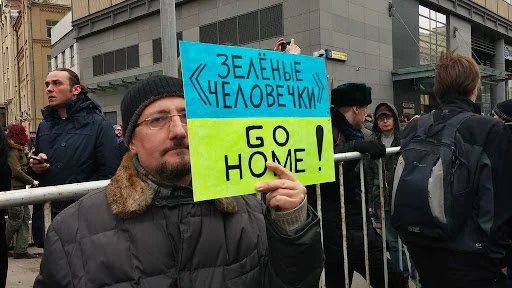
The ongoing war in Ukraine has caused hundreds of civilian deaths, with more than 2 million refugees having already fled the country. It is crucial in these trying times that Ukrainians know they have support. Here are some ways to help.
Meduza
“Within a few days, maybe even today, it is possible that there will be no independent media left in Russia,” read a post on Meduza’s website. Meduza is an independent media source at extreme risk of losing its platform to inform the public. Russian President Vladimir Putin is working to have complete control over censorship in Russia and Ukraine, meaning citizens of these countries will no longer have access to any information besides what Russia’s government allows. Meduza has already been blocked in Russia, and now it is fighting to stay alive through the support of allies outside of these countries. The organization is looking for financial support and social media awareness.
For more information and to donate, visit Meduza’s website.
Reporters Without Borders
Reporters Without Borders is a worldwide independent media organization that works to keep freedom of the press and information to citizens of the world. According to their site, on March 4, Russia adopted a new law making the “publication of ‘false’ or ‘mendacious’ information about the Russian armed forces punishable by up to 15 years in prison.” This threatens every single independent media outlet in Russia and Ukraine. Support Reporters Without Borders through sponsorship, donations, volunteering and more listed on the website.
For more information and to support, visit Reporters Without Borders’ website.
The Kyiv Independent
The Kyiv Independent was launched three months ago by journalists who had been fired in Ukraine for defending editorial independence. Now, they are playing a vital role in keeping the freedom of the press alive in Russia and Ukraine. On their website, they have options to “become a patron” and donate to the organization’s GoFundMe.
For more information and to support, visit The Kyiv Independent’s website.
Doctors Without Borders
Working in conflict zones, Doctors Without Borders focuses on helping citizens in need after natural disasters, wars, epidemics and more. Responding to the Ukraine crisis, the organization sent 1,400 cubic feet of medical supply shipments on March 6, along with members of the organization. There are multiple ways to get involved with Doctors Without Borders from working in offices to working in the field, and if a career path isn’t something you’re considering, donating is another great way to show support.
For more information and to support, visit Doctors Without Borders’ website.
International Medical Corps
A global first responder organization, International Medical Corps provides emergency medical assistance to people in need in any circumstances. A hub in Poland has been created, so members of the organization can assist members of Ukraine and surrounding countries with physical and mental health situations. International Medical Corps is looking for donations to continue its efforts in Poland.
For more information and to support, visit International Medical Corps’ website.
Contact Government Representatives
Don’t have the money to donate? Another way to get involved if you are in the United States or Europe is by contacting government representatives in efforts to accept as many Ukrainian refugees as possible. Boundless offers great tips for formatting emails, finding your elected officials and learning information about what your contribution will do for citizens in need.
To find your representative, visit the U.S. House of Representatives’ website.
Global Giving
Global Giving is a nonprofit that connects other nonprofits with donors and companies. Helping to properly equip humanitarian projects in distressed communities and donating to the Ukraine Crisis Fund creates a direct impact on citizens in need. With a goal of $10,000,000, Global Giving has promised that all funds raised will go to providing shelter, food, clean water, health support, psychosocial support and more.
For more information and to support, visit Global Giving’s website.
The World Food Programme
As the world's largest humanitarian organization, The World Food Programme works to provide meals to all people in emergency situations. Working directly with citizens in Ukraine who have been forced from their homes and into hunger, donating to The World Food Programme will provide families with meal packages and more.
For more information and to support, visit The World Food Programme’s website.
UNICEF
UNICEF is running an emergency response for Eastern Ukraine, leading health, social policy, child protection and many more programs to aid families affected by the conflict. UNICEF is looking for volunteers, donors, social media support and reporters to help with the efforts in Ukraine.
For more information and to support, visit UNICEF’s website.
United Help Ukraine
An organization started directly in response to the attack on Ukraine, United Help is focusing on wounded warriors, humanitarian aid, medical supplies and raising awareness. Donating to United Help Ukraine will directly help Ukrainian citizens, soldiers and frontline volunteers.
For more information and to support, visit United Help Ukraine’s website.
Airbnb
Offering free short-term housing for over 100,000 Ukrainian refugees, Airbnb is relying on the help of citizens across the world. Airbnb is looking for donations and possible hosts to house refugees. Nonprofits are working with Airbnb during this time to book homes for eligible citizens.
For more information and to support, visit Airbnb’s Help Ukraine website.
Knowing what organizations have the best intentions and support for people in need can be difficult. The American Endowment Foundation provides a great resource for choosing the right organizations where your support will make the biggest difference.
Haleigh Kierman
Haleigh is a student at The University of Massachusetts, Amherst. A double Journalism and Communications major with a minor in Anthropology, she is initially from Guam, but lived in a small, rural town outside of Boston most of her life. Travel and social action journalism are her two passions and she is appreciative to live in a time where writers voices are more important than ever.
Sand Mining Threatens Coastline as Sierra Leone Rebuilds
Within a few miles of Sierra Leone’s capital, sand mining is having a devastating effect. As beaches slowly disappear, so do the country’s hopes of post-war revival.

Freetown Beach in Sierra Leone, Erik Cleves Kristensen, CC BY 2.0
Twenty years after Sierra Leone's 11-year civil war, the economic promises of sand mining prove to be costly. The war, which took thousands of lives and led nearly half the country's population into poverty, destroyed most of the country. What followed was a construction boom made possible by an essential ingredient of modern civilization: sand. However, as Sierra Leone’s 300 miles of glorious beaches slowly disappear, so does the revival of tourism and the protection of 55% of the population who live along the country’s coast from the dangers of rising sea levels due to climate change.
As part of a post-civil war move to help communities benefit from local resources, Sierra Leone’s central government gave regulation of sand mining to local councils. Under the 2004 Local Government Act, local committees operate the trucks and strictly hire local people to mine the sand. After a long day of mining, the sand is dried and sold to developers to pave and extend roads as new homes, hotels and restaurants go up across the country.
Government officials defend sand mining as an essential source of jobs and a necessary component in rebuilding Sierra Leone. Kasho Cole, chairman of the Western Area Rural District Council, told the Los Angeles Times that his council is “sensitive to environmental concerns, having banned sand mining on certain beaches because of the devastation it has already caused.”
Cole also acknowledged that assessments had not been carried out anywhere in the district to determine sand mining’s environmental impact. Due to large-scale illegal sand mining operations, Cole could not provide a definite amount of sand extracted from the beaches.
Sand theft, the unauthorized and illegal form of sand mining, has led to a worldwide non-renewable resource depletion issue, causing the permanent loss of sand and significant habitat destruction. Sand mining has already made a significant environmental impact in North Stradbroke Island and Kurnell in Australia; the Indian states of Maharashtra, Madhya Pradesh, Andhra Pradesh, Tamil Nadu, and Goa; and the Red River in Yunnan, China.
In the United States, the sand mining market generates slightly over $1 billion per year. The industry continues to grow annually by nearly 10% because of its use in hydrocarbon extraction. Globally, sand mining is a $70 billion industry, with sand selling for up to $90 per cubic yard.
In Sierra Leone, sand mining operations are regulated on John Obey Beach, a village 20 miles south of the Western Area (Freetown Peninsula.) According to the Environmental Protection Agency, sand mining should be banned on all beaches apart from John Obey. However, when the police leave the beaches at 5 p.m., the mining continues after dark.
Efforts to address the issue are hampered by conflicts of interest from those involved: miners who need the work, construction companies who need the supply and investors who are getting rich taxing the sand. Last year, a press statement from the local police force confirmed “certain service personnel appear to be aiding and abetting this illegal act.”
As dump trucks continue to haul sand away and tides push further inland, John Obey Beach is slowly disappearing—taking trees, businesses, homes and dry land with it as far down the coast as Bureh, a surf town two miles south. While the activity contributes to Sierra Leone's coastal erosion, which is proceeding at up to 6 meters a year, the removal of sand also changes wave patterns that move sand along the coast, altering the quality of surf that Bureh, a renowned surf spot in Africa, is known for.
Prior to the war, Sierra Leone’s beaches were packed with adventurous travelers from around the world. Kolleh Bangura, the director of Sierra Leone’s Environmental Protection Agency, told The New Humanitarian that “sand-mining is a calamity for the tourism industry… Anywhere in the world, sand is the resource of tourism, but now our beaches are being degraded.”
Lakka, a coastal town located 10 miles from Freetown, was once known for its large beaches and seaside resorts, offering a glimpse of the future if actions are not taken. Sand mining on Lakka Beach is illegal now, but the ban came too late—leaving a thin wedge of sand lined by crumbling buildings, many of which have been left abandoned.
Even the miners themselves recognize sand mining is not sustainable; however, with a youth unemployment rate of 70%, the pressure falls on the government to provide alternative jobs. “In time, they need to ban it, as we want to bring tourism here,” Abu Bakarr, a sand miner, told The New Humanitarian. “But we need sand-mining to sustain our lives…The government needs to give us jobs. If there are no jobs, the youths will mine the sand.”
Papanie Bai-Sessay, the biodiversity officer at Conservation Society of Sierra Leone, told the Los Angeles Times that “the sand has been a buffer… we are destroying our first line of defense. If we don’t stop, it will be a disaster for millions.”
Claire Redden is a freelance journalist from Chicago, where she received her Bachelor’s of Communications from the University of Illinois. While living and studying in Paris, Claire wrote for the magazine, Toute La Culture. As a freelancer she contributes to travel guides for the up and coming brand, Thalby. She plans to take her skills to London, where she’ll pursue her Master’s of Arts and Lifestyle Journalism at the University of Arts, London College of Communication.
VIDEO: E-Waste Landfill in India
Providing insight into the landscape of the Bhalswa Landfill in northwestern Delhi, this film reveals that the task of sifting through e-waste, unwanted electronic products and parts, falls to members of the urban poor in the developing world. E-waste is collected and managed along railroads and in massive heaps, sometimes even by children. This waste is known to be harmful to human health; e-waste contains hazardous chemicals and toxins that especially affect children. The Bhalswa landfill was supposed to be shut down in 2007 but is still currently in operation and thus over capacity. Multiple fires have occured in the landfill, releasing toxic pollution into the air. This film is a product of the E-Waste Tsunami project, headed by Susannah Pal, who aims to use art to raise awareness about electronic waste.

Protest against male violence in London’s Trafalgar Square. Garry Knight. CC0 1.0.
5 Women Activists Working to End Femicide — And How You Can Get Involved
These 5 activists from Mexico, Serbia, Palestine, Brazil and Nigeria, are fighting to end femicide, the deliberate killing of women because of their gender. More than 35% of murdered women globally are killed by an intimate partner, yet femicide also manifests in honor killings, dowry killings and killing of women in armed conflict.
Read MoreLabor Cruelty Inside Dubai, the City of Gold
Ninety percent of Dubai's residents are migrant workers, many of whom are experiencing abuse from their employers.
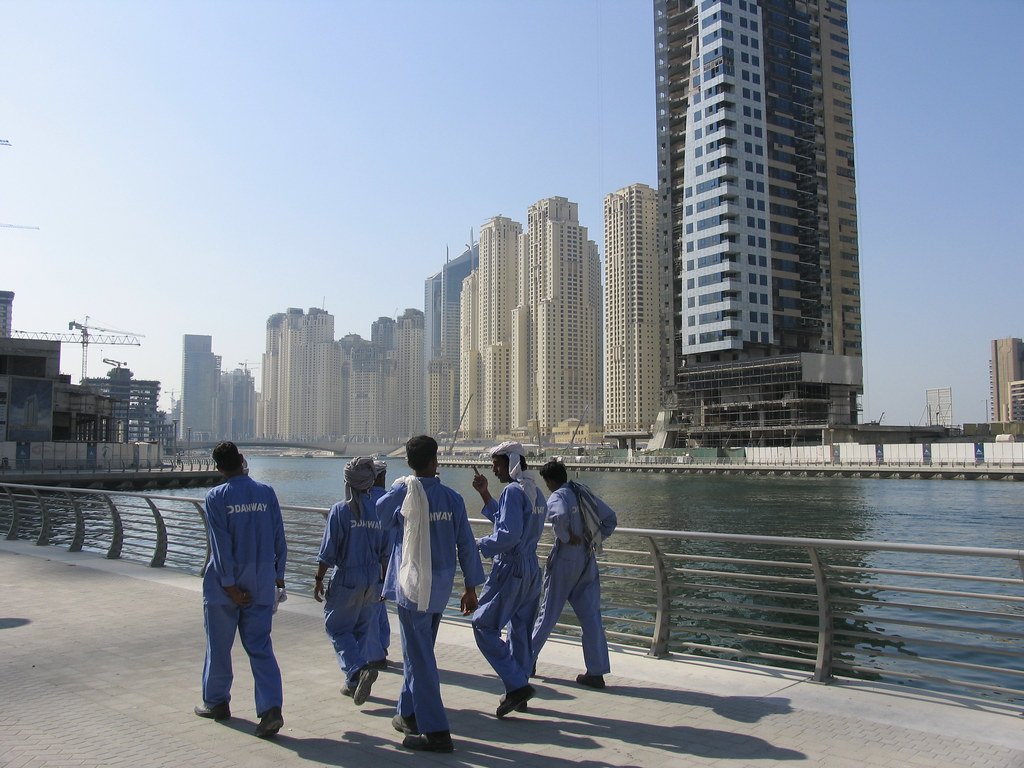
Dubai is known as the city of gold due to its rapid growth, from a global gulf port to a busy business city center. Migrant workers arrive from Asia, Africa and different parts of the Middle East through the sponsorship program kafala. The program gives employers the permits necessary to hire foreign labor workers and gives employers complete control over the legal status of whom they’ve hired. In some cases, this causes a power imbalance among the employer and employee relationship. In addition to being exploited through the sponsorship program, migrant workers have accused employers of various forms of abuse.
Migrant workers often arrive in Dubai in hopes of making a steady income to provide for their families back home. Dubai has a high demand for labor workers and provides better opportunities to migrant workers. Therefore, they take on jobs in construction or domestic work, such as nannying, housekeeping or other household services. At times, they’re promised a higher wage or a different job description; however, after arriving, that promise was broken. Migrant workers receive their wages on a monthly basis and are required to work weekends, with an average of 16-21 hour days. Overworked migrants cannot leave the job until their contract is terminated, as those are the conditions under the kafala sponsorship. If one decides to leave, the employer can have the worker sent to prison for six months, deported and/or fined $27,225 for not abiding by the contract.

Migrant Worker Cleaning a Mall in Dubai. Iwona Rege. BY-ND 2.0
This very strict rule under the kafala sponsorship forces employees to continue working under very stressful conditions. Fear of what could happen to them binds them to their employer until the contract is completed. Due to these conditions, migrant workers have complained that employers have not paid them their wages, delayed the wages or have had their passports taken from them; preventing them from leaving. At Dubai’s Expo 2020, migrant workers claimed their employers violated UAE labor laws, with one interviewee saying, “the way they treat the staff is like slaves, I mean modern day slavery.” Women have reported being raped by their employer as well as family members for the home they work in. However, there has been no action taken against these accused employers.
With the pandemic, cases got worse as most employers did not pay the migrant workers their wages. The lack of income left workers stranded in Dubai with no money to fly back home or provide themselves with basic needs. A Sri Lankan embassy source based in Dubai said, “the two most common complaints from the worker are that employers don’t give them salaries and that they are harassed either physically, sexually or verbally.” The UAE has settled requirements that help protect migrant workers rights, yet there has been non-compliance and no way to ensure workers are not being abused and/or taken advantage of.
To Get Involved: The organization Migrant-Rights advocates the rights of migrant workers affected by the kafala sponsorship program. They also assist migrant workers who need assistance.
To learn more click here.
To support Migrant-Rights’ organization click here.

Jennifer is a Communications Studies graduate based in Los Angeles. She grew up traveling with her dad and that is where her love for travel stems from. You can find her serving the community at her church, Fearless LA or planning her next trip overseas. She hopes to be involved in international humanitarian work one day.
VIDEO: Growing Up in a Megaslum in Kenya
Joseph Djemba grew up in Kibera, Kenya, the largest urban slum in Africa. Djemba found himself there when his mother became unable to support her eleven children after the death of her husband. Djemba describes his childhood sleeping outside and begging for food, detailing the psychological impacts of living in poverty. He also notes the large gap between the rich and the poor in Kenya and discusses how impoverished people help each other survive. Djemba is the main character in “Megaslumming,” a book by Adam Parsons. In his work, Parsons explores how the settlement of Kibera came into existence and documents what life is like for those who live in slums.
Get Involved:
Touch Kibera Foundation is a non-profit organization devoted to uplifting children who live in Kibera, Kenya through sports programs, sexual health programs, education support and mentorship opportunities. Donations are accepted online, and more information can be found here.
Polycom Development Project is a foundation which seeks to provide educational and athletic opportunities to girls and women in Kibera. The organization is also devoted to promoting sanitation and public health. Donations are accepted online, and more information can be found here.
St. Vincent de Paul Community Development Organization aims to provide support to orphaned and other vulnerable children in Kibera. The organization supports families and seeks to intervene on behalf of children at an early stage in their development. Donations are accepted online, and more information can be found here.
5 Everyday Products that Hurt the Environment And Their Sustainable Alternatives
In our fast-paced lives, it can be difficult to remember to make sustainable choices. Here are a few products most of us use every day that have a negative effect on the environment.
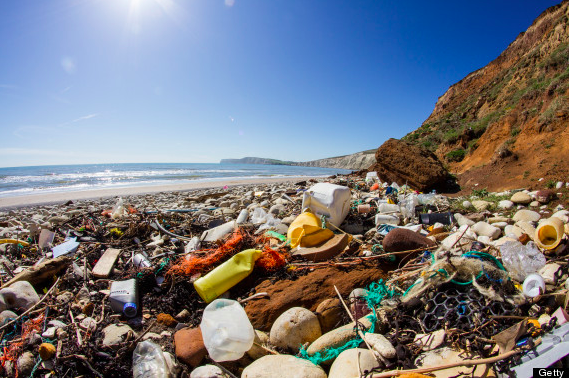
Image Credit: HuffPost UK
Plastic Bags
You’ve probably heard this one before, but despite widespread coverage of the issue, between 500 billion and 1 trillion plastic bags are used worldwide every year. These bags take enormous amounts of energy to produce and ship; they are difficult to recycle, do not decompose and emit toxic chemicals into the environment.
Fortunately, there are many green alternatives to the plastic bag. Fabric or canvas shopping bags are relatively inexpensive to purchase and can be reused for grocery shopping.
Produce Bags
Produce bags often get left out of the conversation surrounding plastic bags, but they are made from the same materials and are equally harmful. Try using washable mesh produce bags instead—they are fairly cheap and can be reused.
Exfoliant Products
Many facial soaps contain tiny plastic microbeads that help exfoliate the skin. These beads are too small to be filtered during sewage treatment and have started to build up in lakes and oceans. In one year alone, researchers found 1,500 to 1.7 million bits of plastic per square mile in the great lakes. California, Colorado, Illinois, Indiana, Maine, Maryland and New Jersey have already banned microbeads, and it is likely that other states will follow. There are many alternatives to these soaps that are environmentally friendly and better for the skin. Try using oatmeal, raw honey or coffee ground scrubs—often you can make them yourself from ingredients you probably already have in your pantry.
Coffee Pods
They may be convenient, but single-serve coffee pods aren’t recyclable, meaning almost all of the 10 billion made each year end up in landfills. Brewing coffee the old fashioned way may take a few minutes longer, but it will reduce your waste in the long run. You can recycle unbleached paper filters and compost the grinds or use them in a face scrub.
Non shade-grown coffee
While we’re on the subject, the coffee industry is responsible for massive amounts of deforestation and water pollution. Buying shade-grown coffee is easier on the environment because it allows trees to grow alongside the coffee plants, which not only guards against deforestation, but controls soil erosion and filters carbon dioxide. Shade-grown beans also mature at a slower rate, which creates a delicious flavor.
Prepackaged Food
From juice boxes to chips, almost nothing you buy at a grocery store is free of plastic packaging. While these products are convenient, they pose a risk to the environment. Like plastic bottles and bags, plastic food packaging is difficult to recycle and does not decompose. While there are alternatives to prepackaged food, such as zero waste grocery stores, they can be hard to come by. Try to reduce the amount of packaged food you buy, but when necessary, buy bulk products instead, as single-serve items have more packaging.
In the end, working to reduce or eliminate your consumption of these five products is a step towards a greener planet and more sustainable lifestyle.

EMMA BRUCE
Emma is an undergraduate student studying English and marketing at Emerson College in Boston. She has worked as a volunteer in Guatemala City and is passionate about travel and social justice. She plans to continue traveling wherever life may take her.
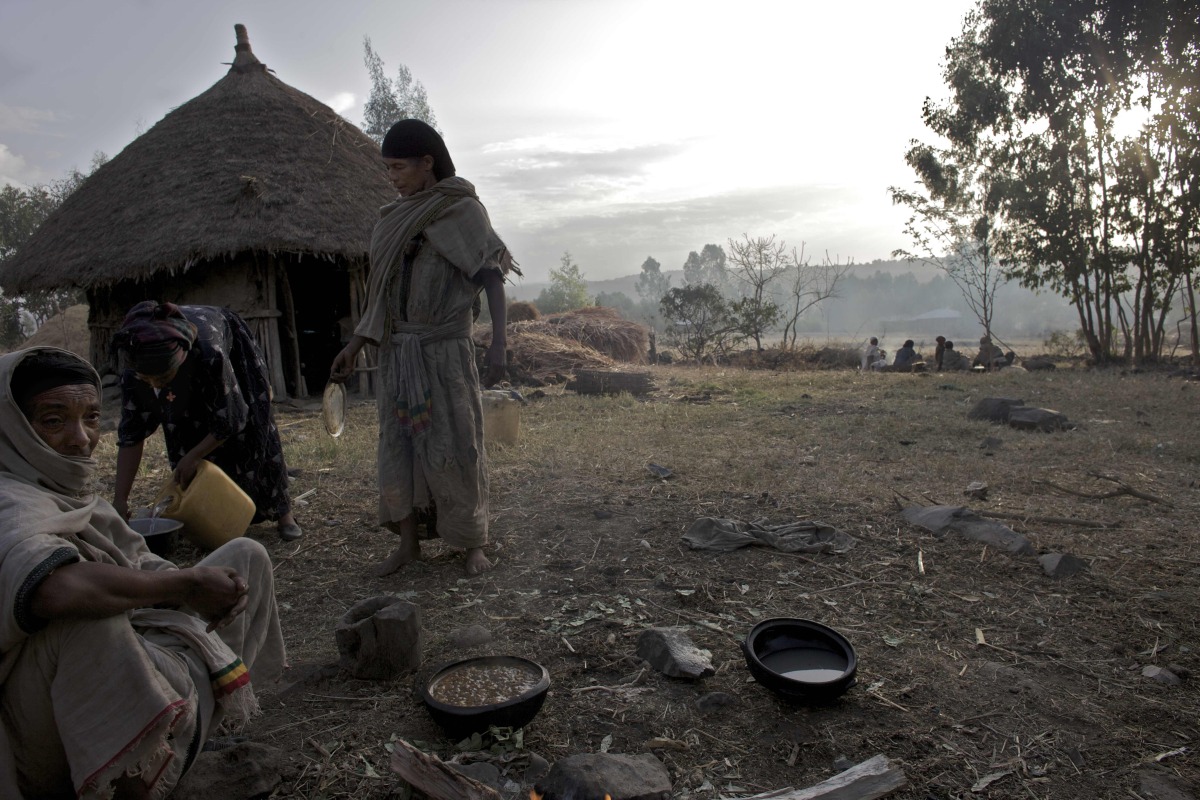
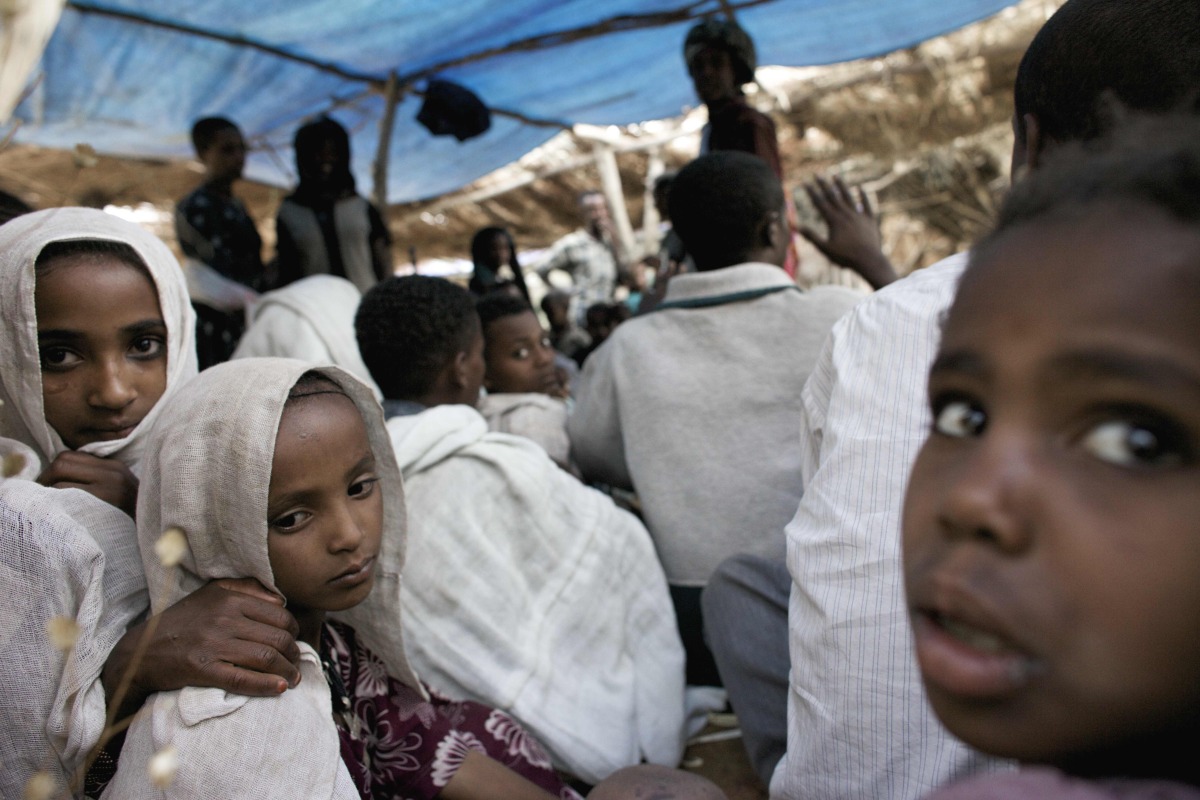
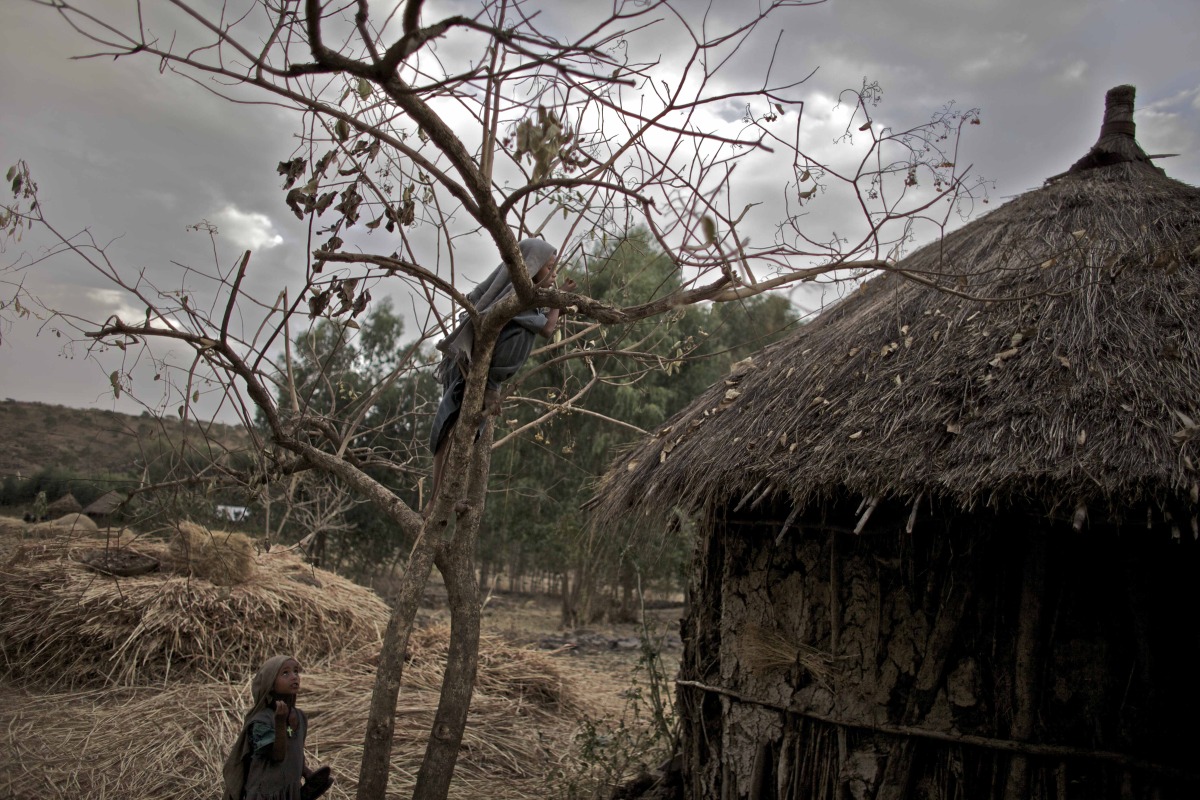
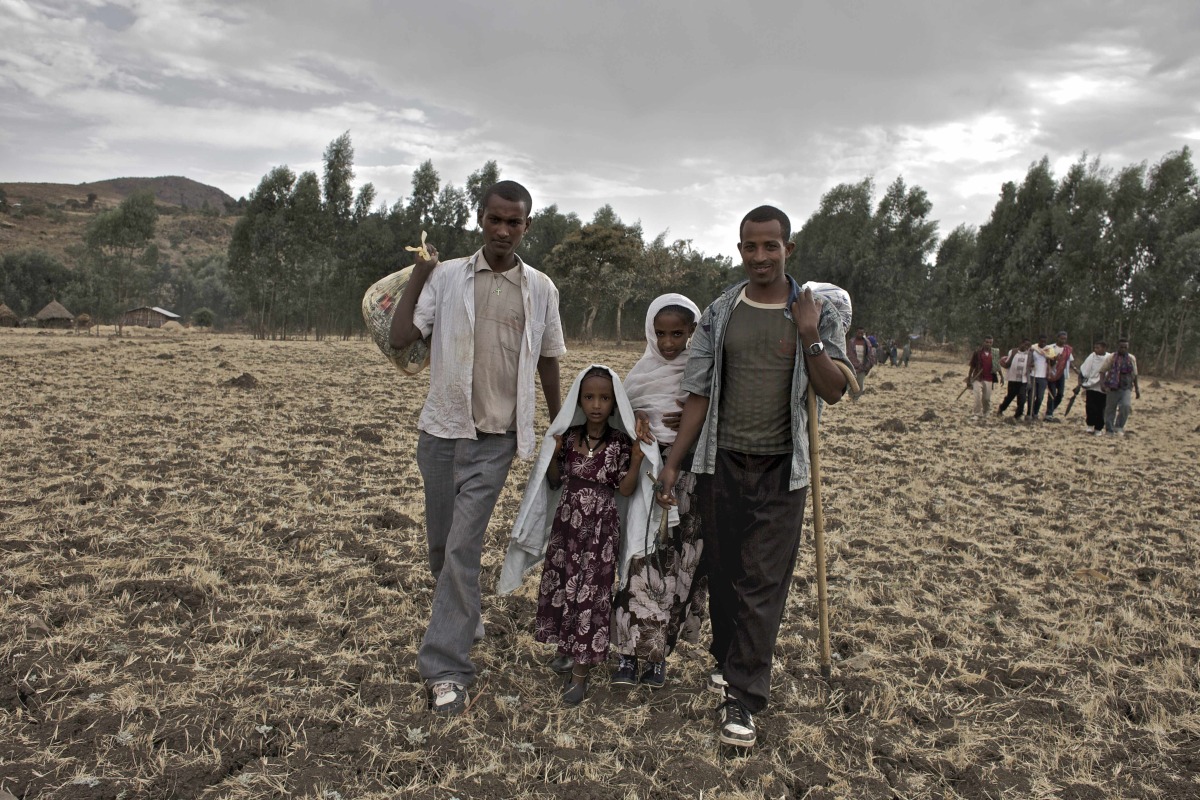
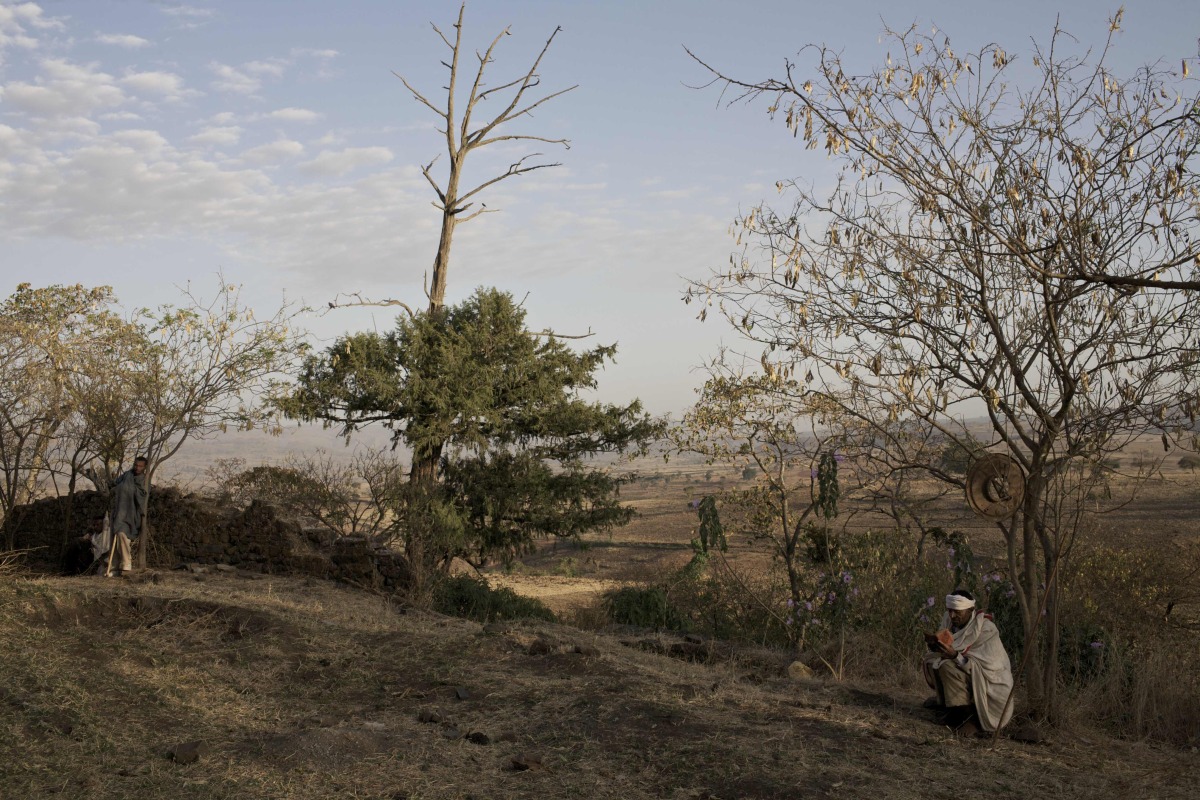
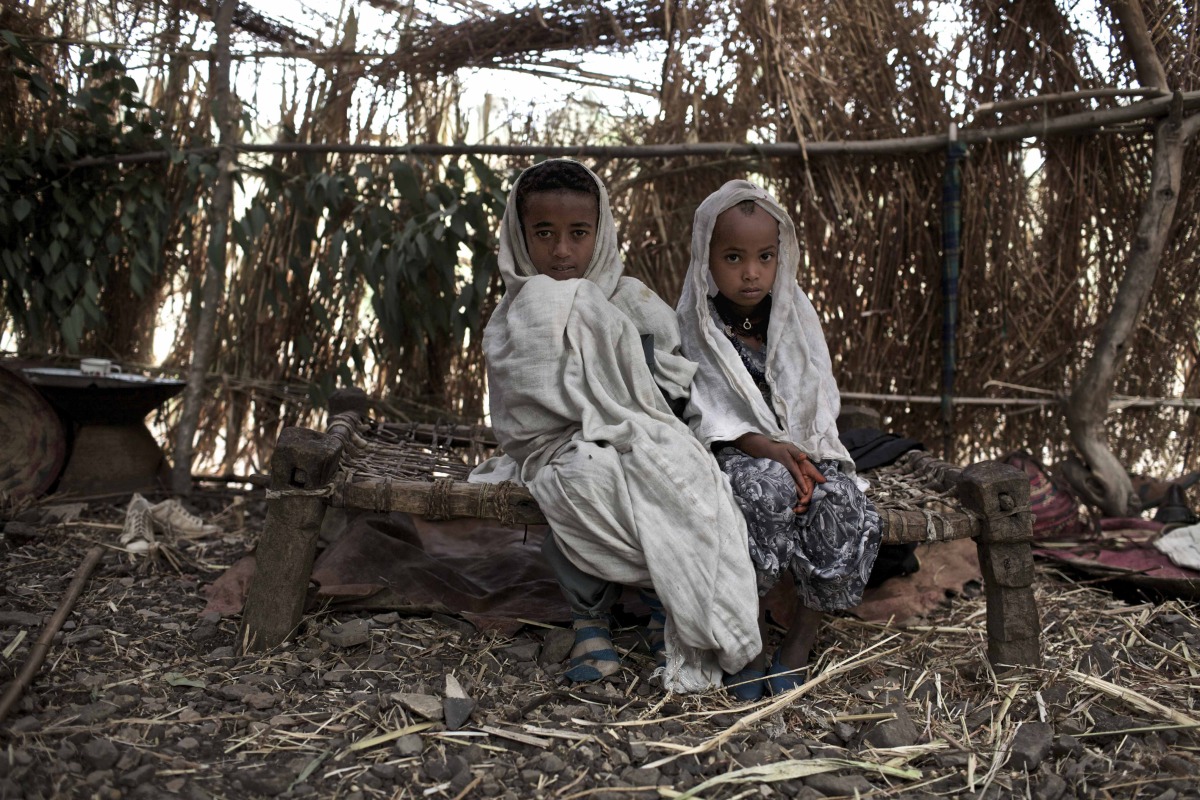
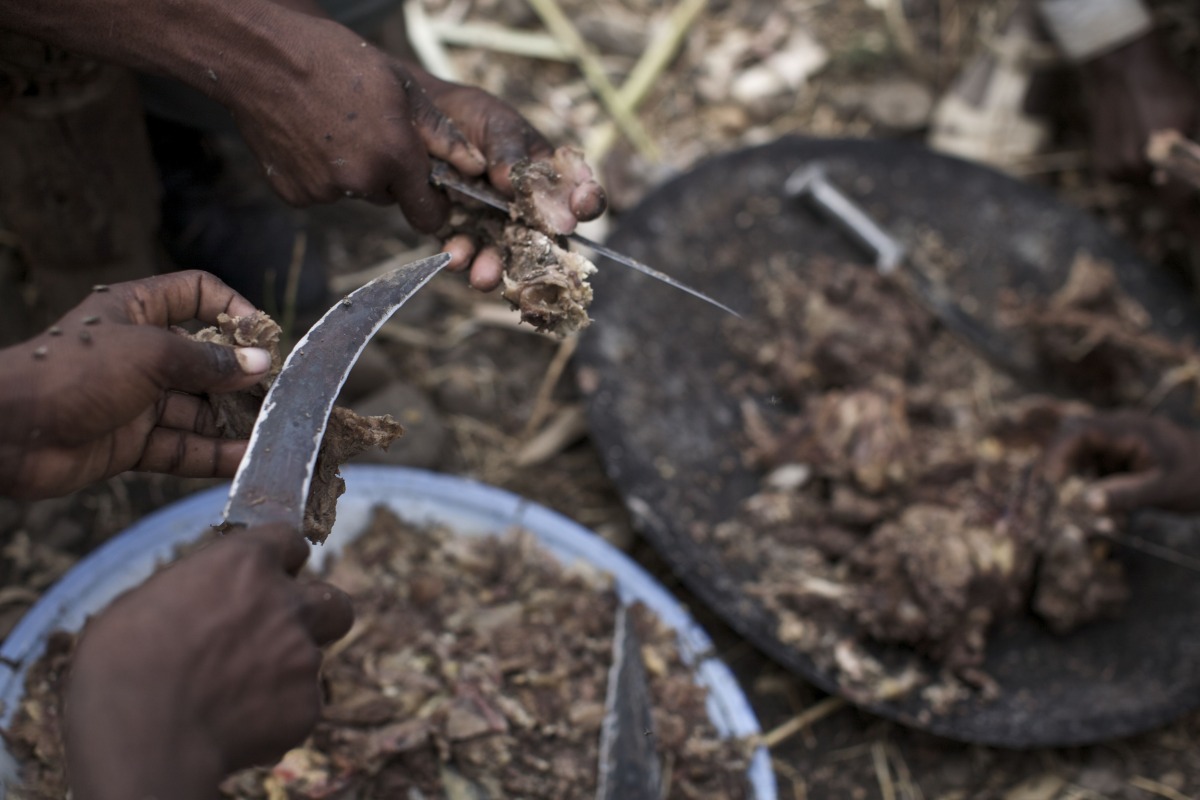
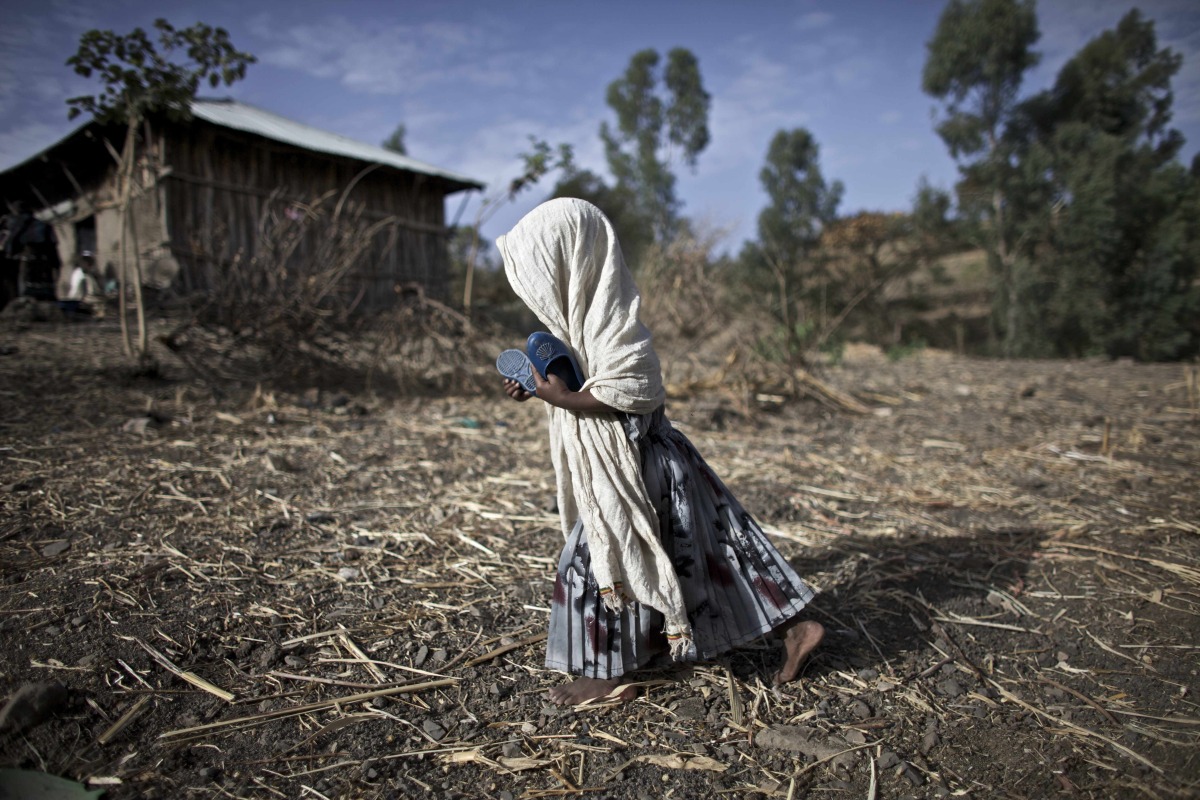
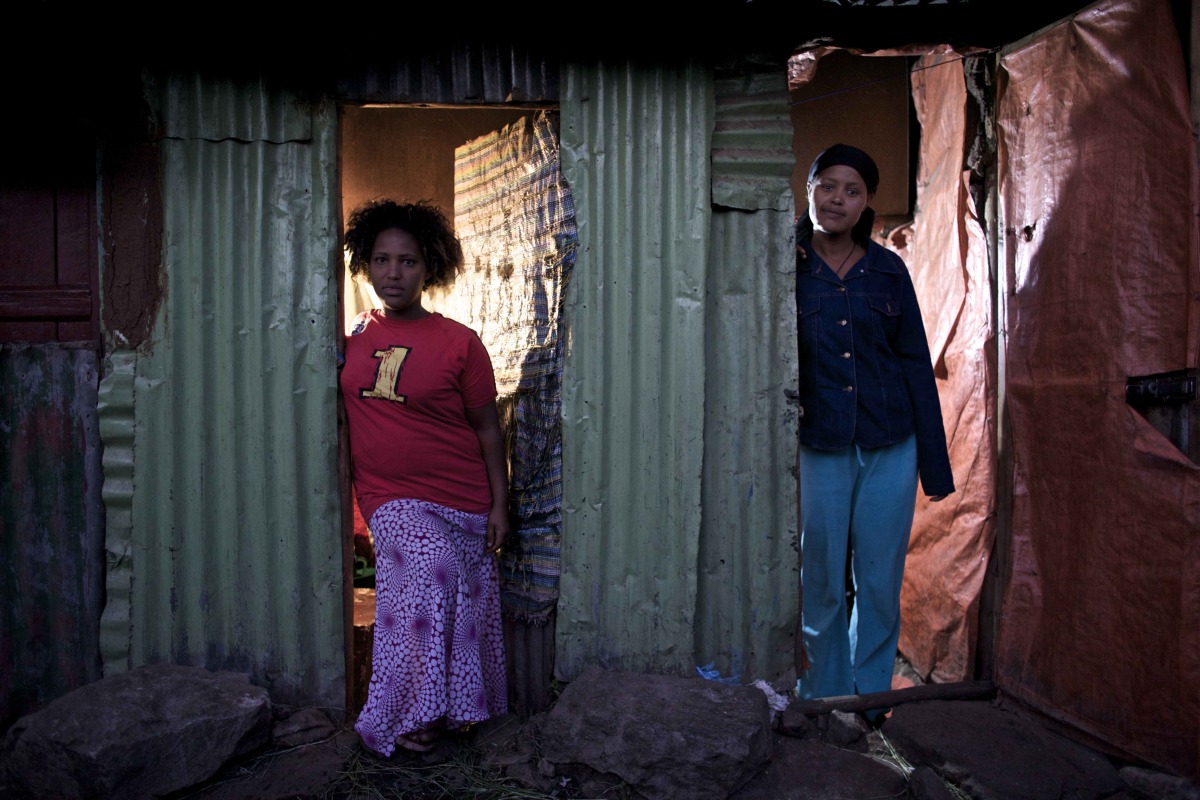
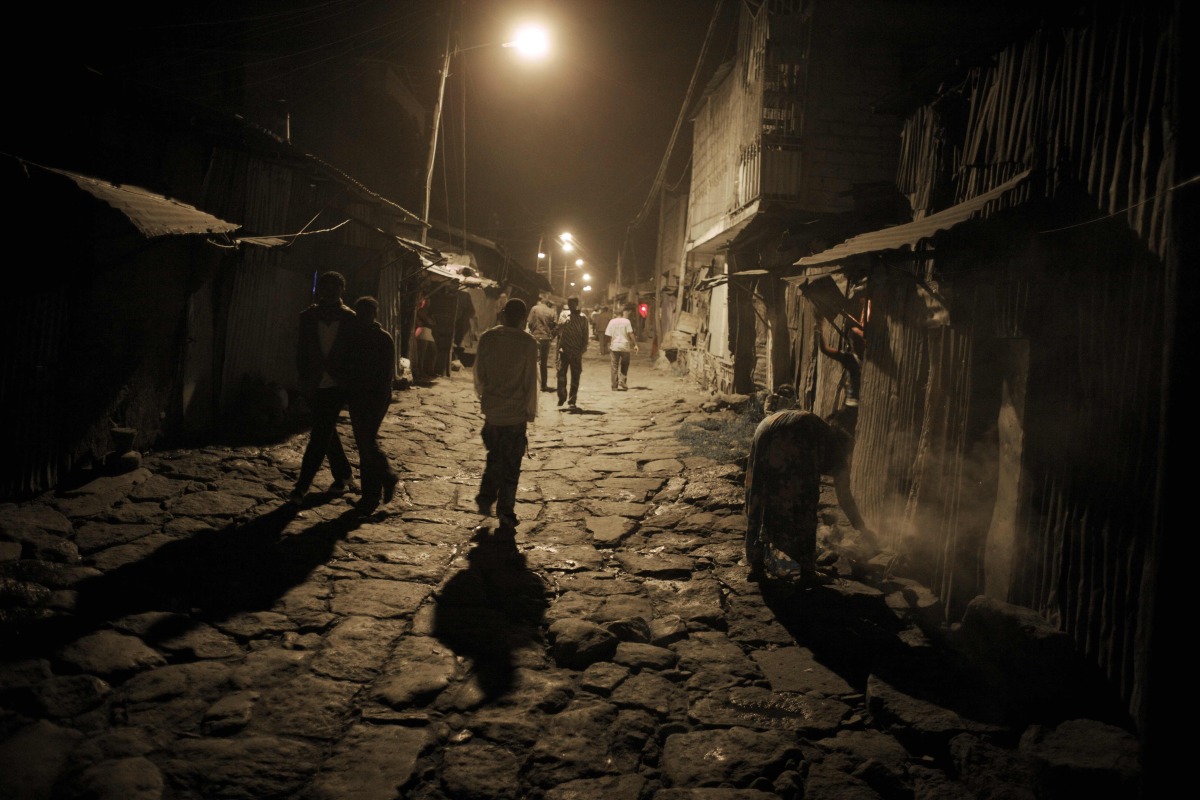
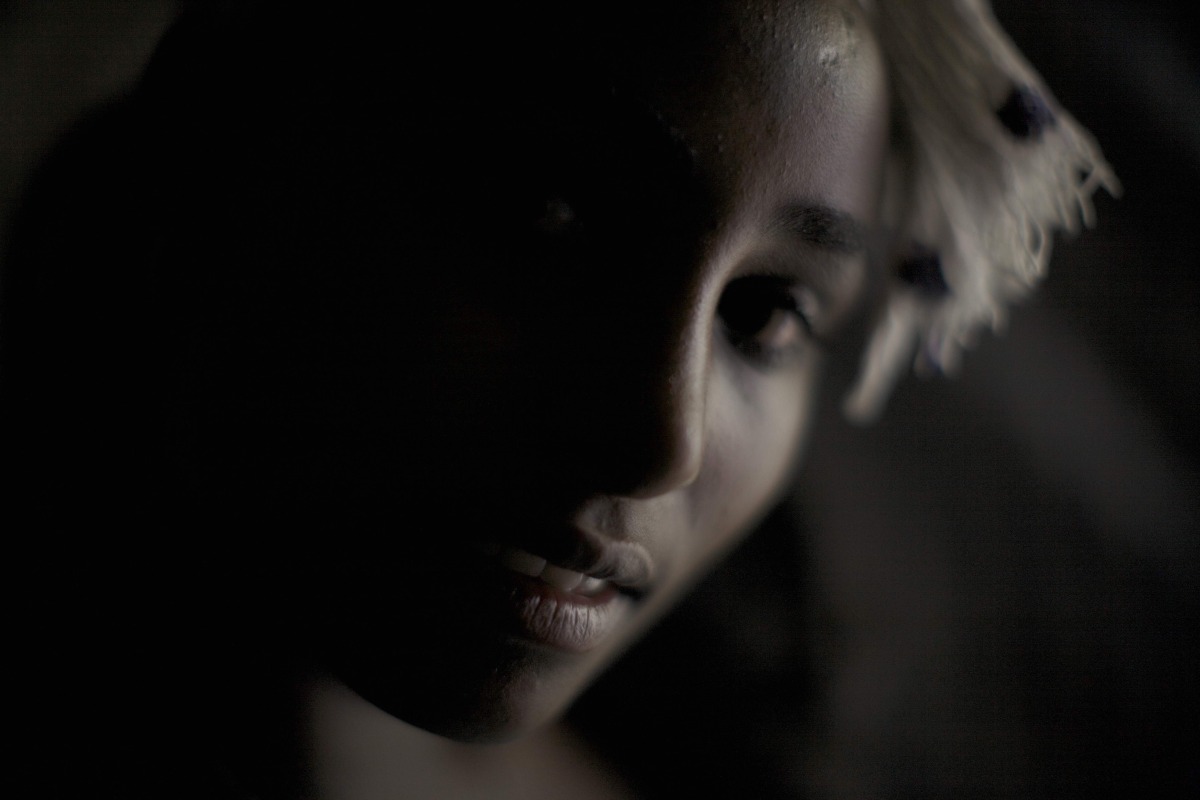
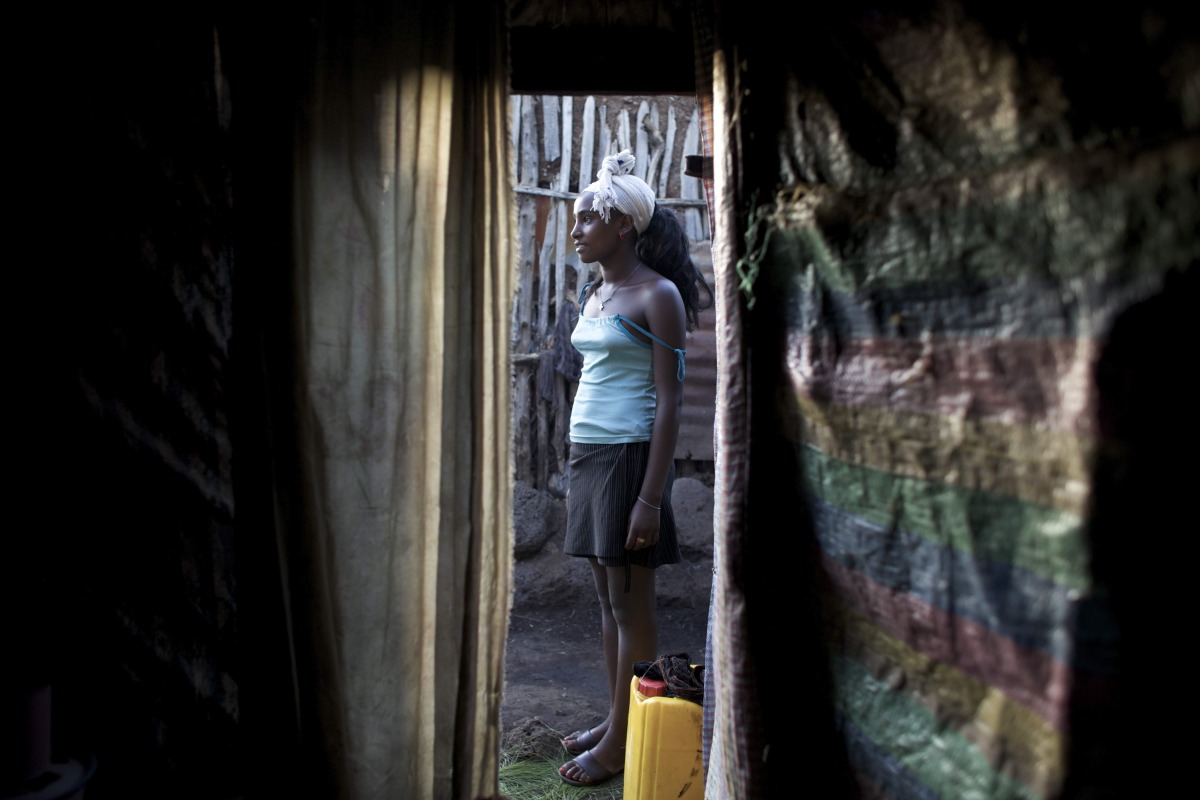
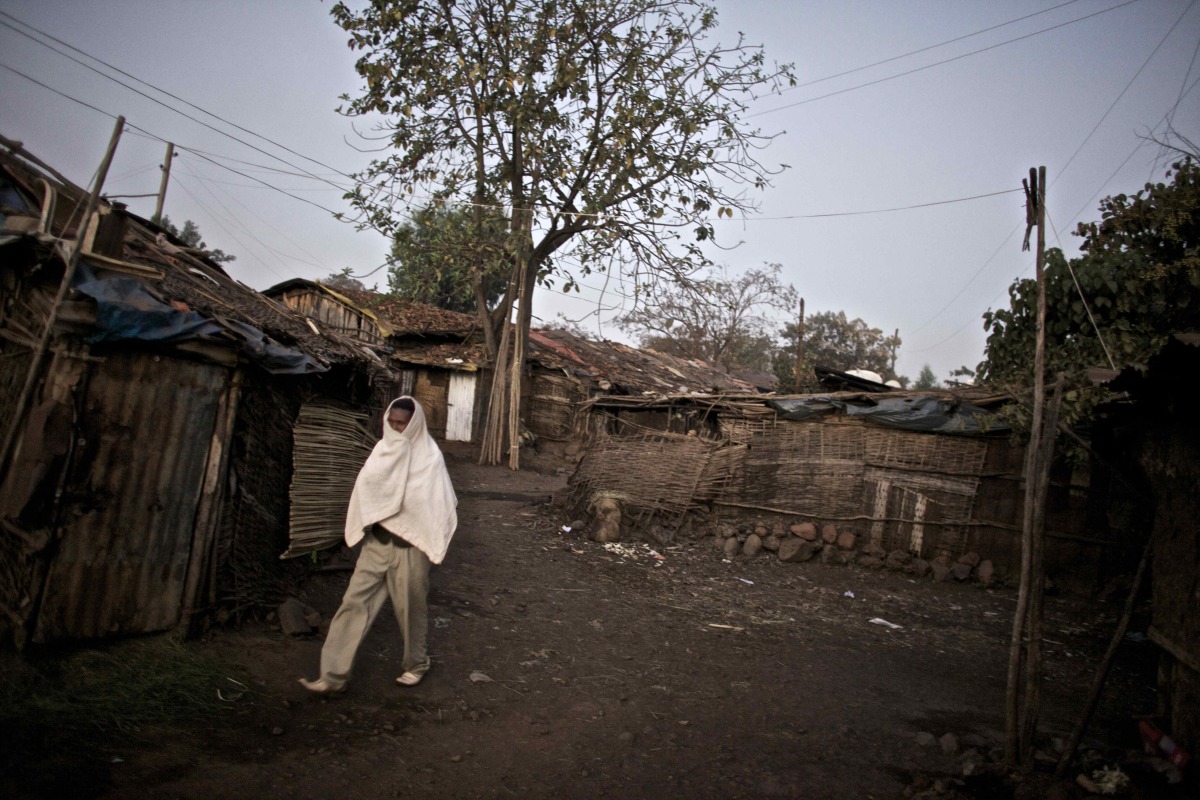
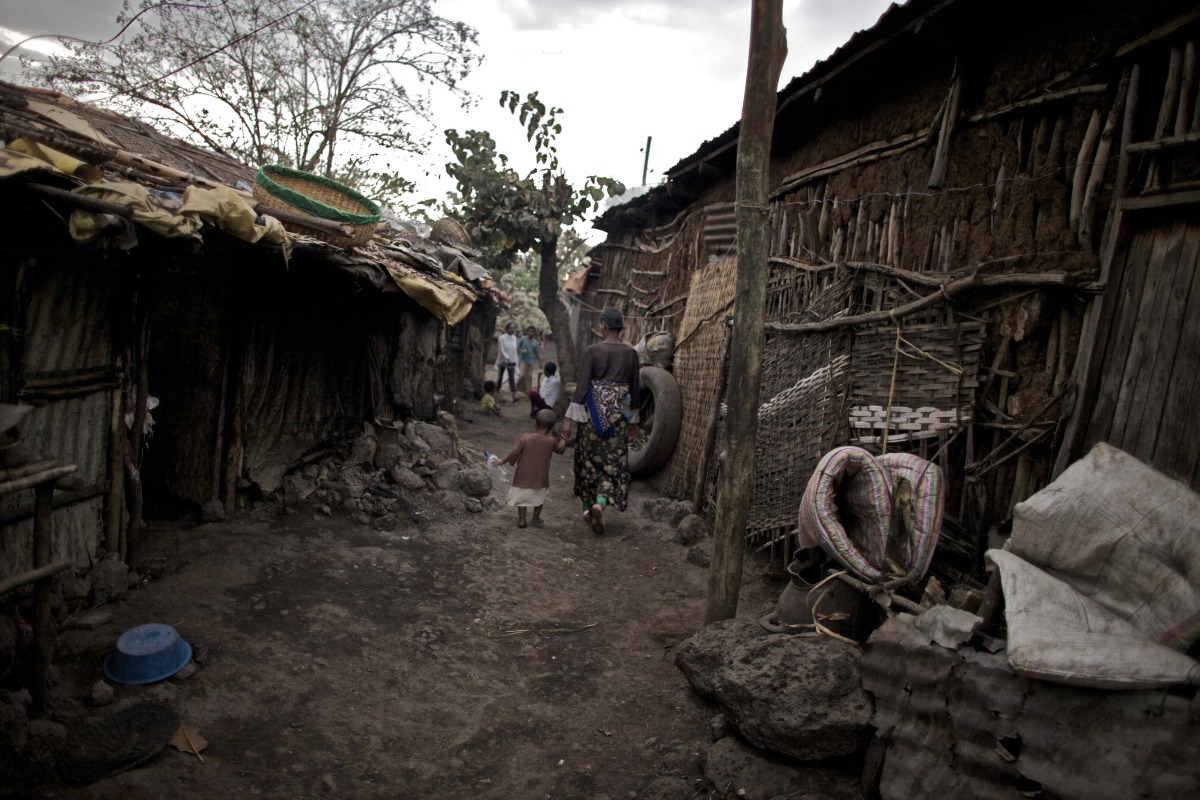
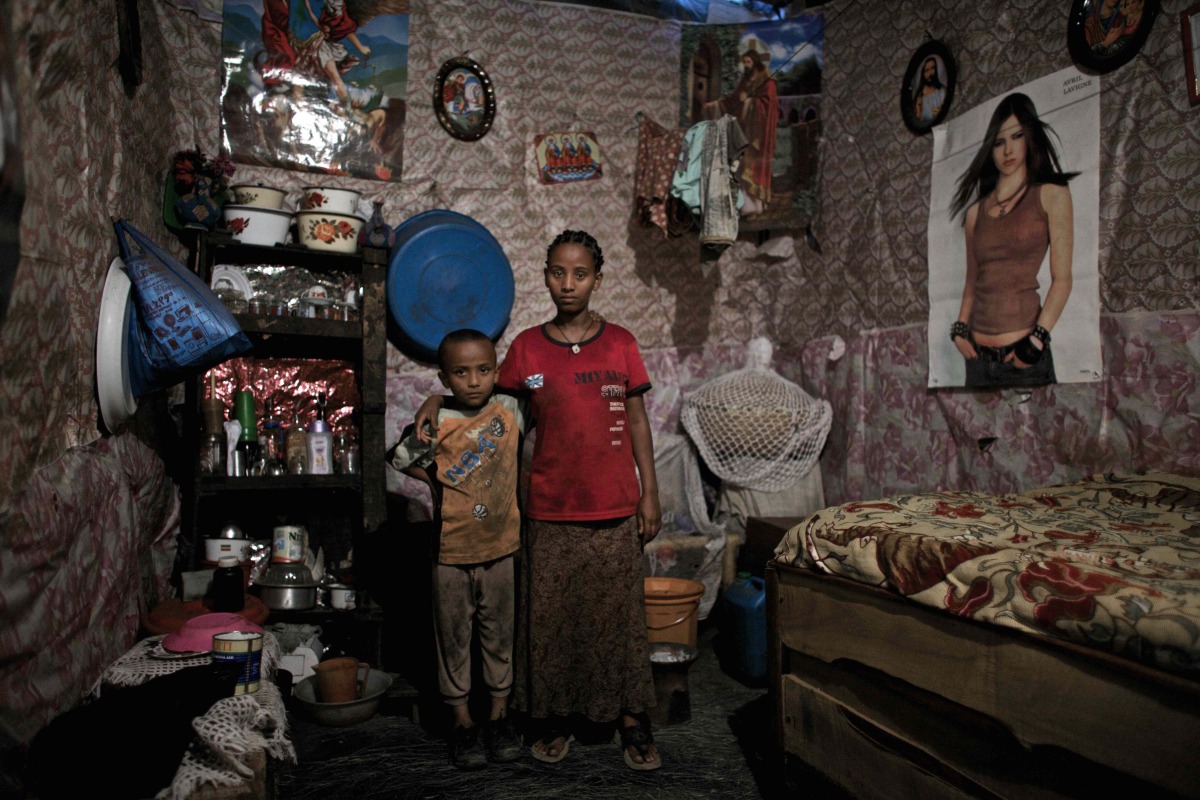
PHOTO ESSAY: Child Marriage in Ethiopia
While it may seem shocking, in Ethiopia girls are married off at ages as young as 5 years old, and 48% of rural women are married before age 15. Photographer Guy Calaf documents these young child brides and their marriages in this photo essay.
Read MoreWhere Children Sleep
Children all over the world live and sleep in very different environments. It is my hope that these photographs will help children, and adults, to think about inequality, within and between societies around the globe, and perhaps to start to figure out how, in their own lives, they may respond.
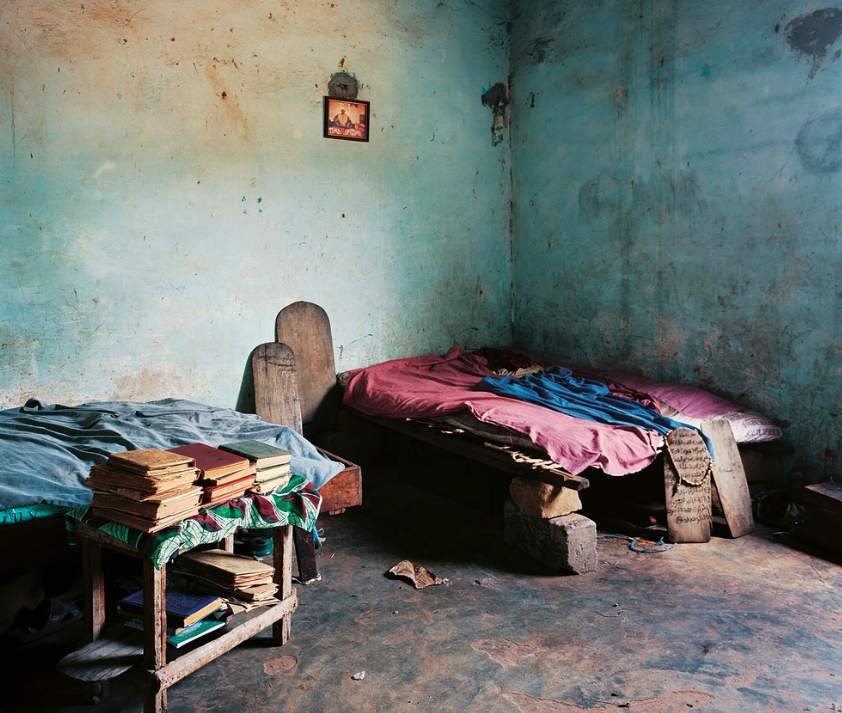
When Fabrica (Benetton’s creative research center) asked me to come up with an idea for engaging with children’s rights, I found myself thinking about my bedroom: how significant it was during my childhood, and how it reflected what I had and who I was — my bedroom was my personal kingdom. It occurred to me that a way to address some of the complex situations and social issues affecting children would be to look at the bedrooms of children in all kinds of different circumstances.
From the start of this project, I didn’t want it just to be about ‘needy children’ living in the developing world, but rather something more inclusive, about children from all types of situations.
It seemed to make sense to photograph the children themselves, too, but separately from their bedrooms, using a neutral background. My thinking was that the bedroom pictures would be inscribed with the children’s material and cultural circumstances — the details that inevitably mark people apart from each other — while the children themselves would appear in the set of portraits as individuals, as equals... just as children.
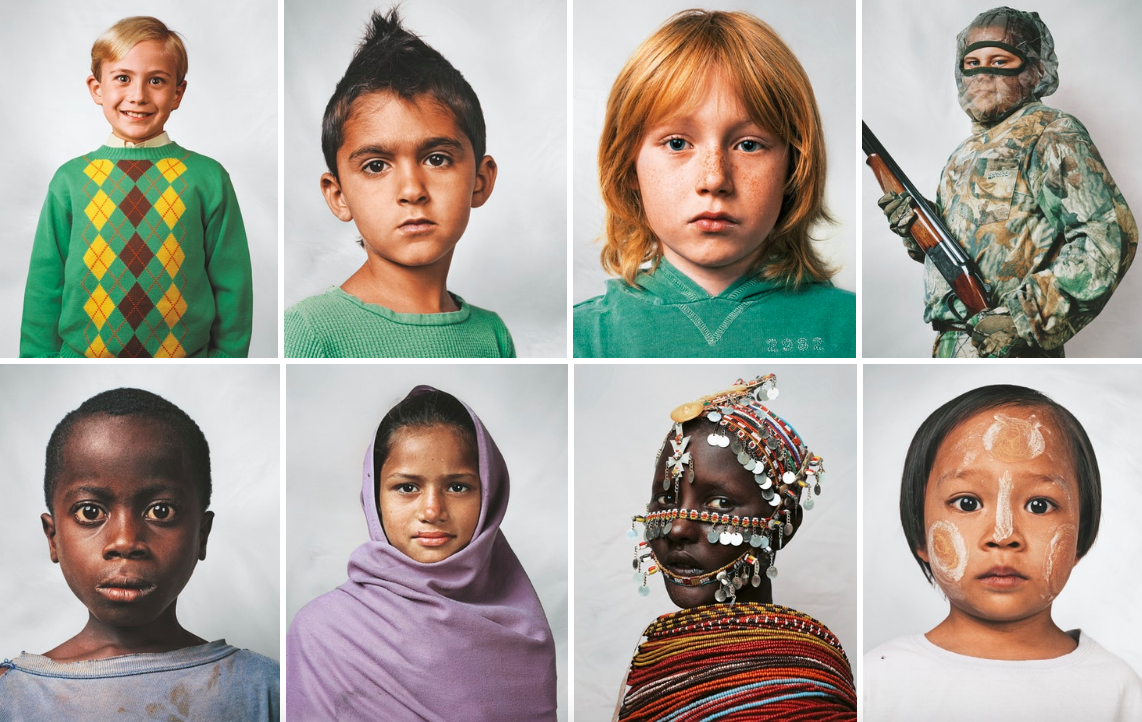
Above: You can see where these children sleep, and read their stories, below.
To begin with, I initially called the project ‘Bedrooms’, but I soon realized that my own experience of having a ‘bedroom’ simply doesn’t apply to so many kids. Millions of families around the world sleep together in one room, and millions of children sleep in a space of convenience, rather than a place they can in any sense call their room.
I came to appreciate just how privileged I had been as a child, to have had a personal kingdom in which to sleep and to grow.
For me, the project became a vehicle to think about issues of poverty and wealth, about the relationship of children to personal possessions, and the power of children — or lack of it — to make decisions about their lives.
However, this photo essay is not a campaign. There’s nothing scientific about the selection of children featured: I travelled where I could, often alongside other projects, and many of the pictures result from chance encounters, following my photographer’s nose. I am not qualified to give anyone a lecture on the state of childhood today, or the future of children’s rights. Although I have relied on the help of Save the Children, Italy, there is no agenda to the project other than my own journey and curiosity, and wanting to share in pictures and words the stories that I found interesting, or that moved me.
In the end, I hope these pictures and stories speak to children. So that lucky children (like I was) may better appreciate what they have.
But more than that, I hope these photographs will help children think about inequality, within and between societies around the world, and perhaps start to figure out how, in their own lives, they may respond.
* * *
Below you can meet twenty-five of the children whose stories and portraits are featured in my final book Where Children Sleep.
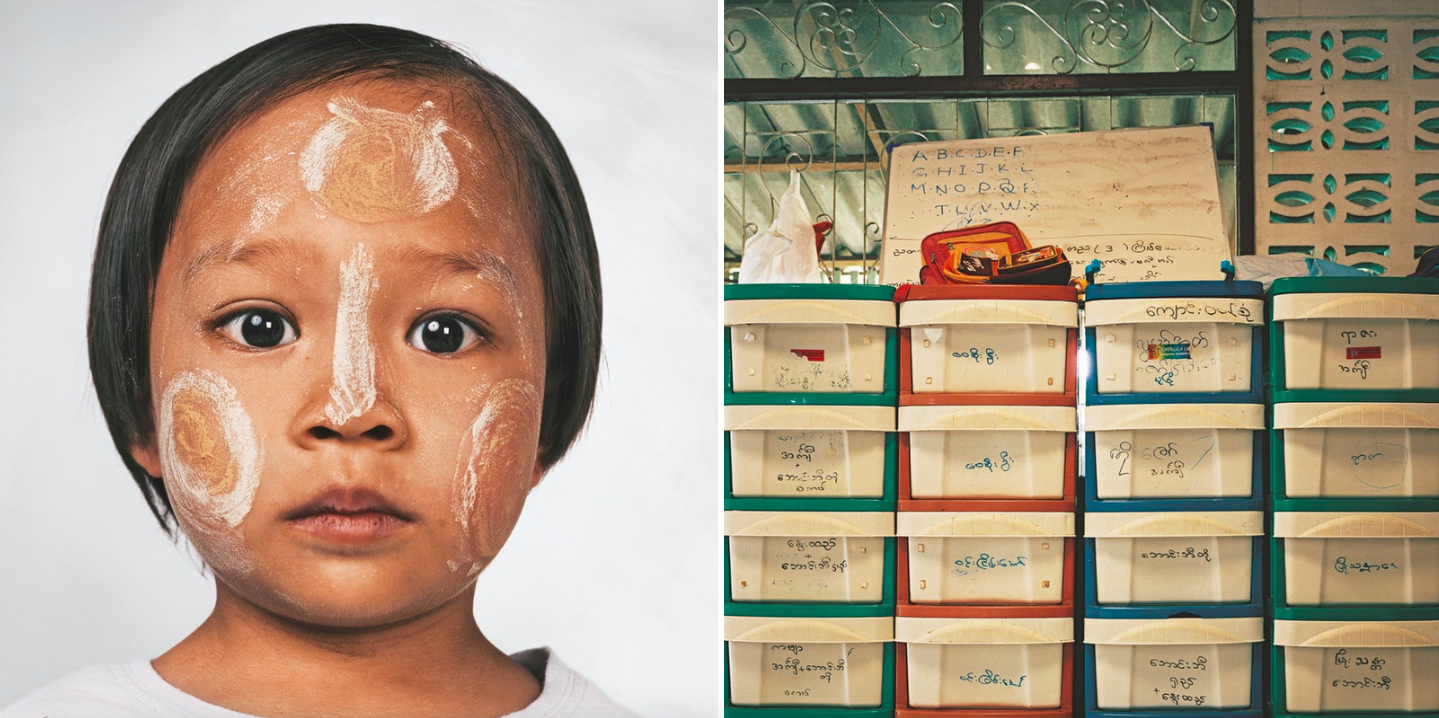
Lay Lay, 4 years old
Mae Sot, Thailand
—
Lay Lay is four years old. The cream she has on her face is made from the bark of the thanaka tree, used to condition and protect the skin. Lay Lay lives in Mae Sot, Thailand, close to the border with Burma. When her mother died, no other members of her family came to claim her, so she was placed in an orphanage. She shares this home with twenty-one other nursery-aged children. The orphanage consists of two rooms. During the day, one room is the classroom and the other is a dining room. At night, these rooms become bedrooms. The tables are pushed to one side and mats are rolled out for the children to sleep on. Each child has one drawer in which to keep their belongings.
Lay Lay does not have many belongings — just a few clothes. All that is known of her background is that she is from an ethnic group of people called the Karen, one of the persecuted minority ethnic groups which make up about forty per cent of the Burmese population. Lay Lay and her mother fled from the brutal Burmese military dictatorship and arrived in Thailand as refugees.
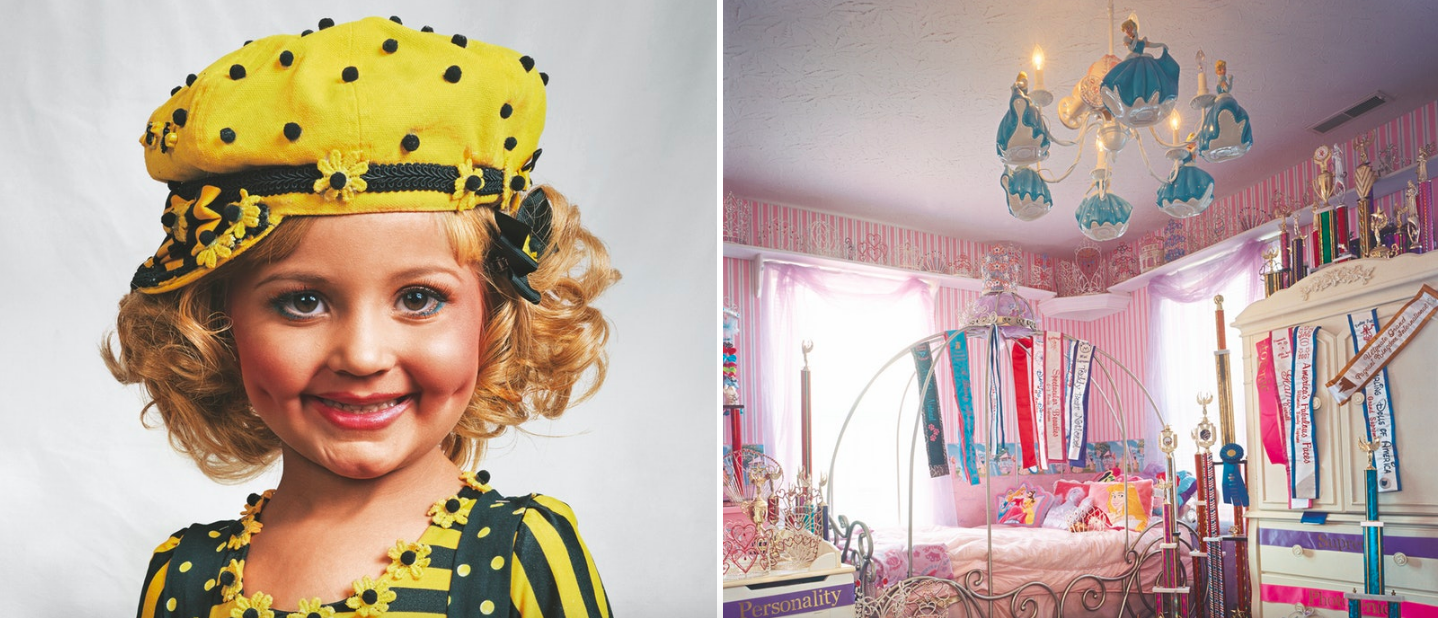
Jasmine, 4 years old
Kentucky, USA
—
Jasmine prefers to be called by her nickname, Jazzy. She lives in a big house in Kentucky, USA, with her parents and three brothers. Her house is in the countryside, surrounded by farmland.
Her bedroom is full of crowns and sashes which she has won in ‘child pageants’. She is only four years old and has already entered over a hundred of these competitions. Her spare time is completely taken up with preparation and rehearsal. She practices her stage routines every day with a trainer who teaches her new steps.
Each weekend, she participates in a different pageant, arriving on Friday afternoon, performing on Saturday, and attending the crowning ceremony on Sunday. By the end of the show, she is quite exhausted. Jazzy enjoys being pampered and treated like a princess — having her hair done and wearing pretty clothes and make-up, with false nails and a fake tan. It is a very expensive hobby and can cost her parents a thousand dollars for each pageant she takes part in. Jazzy would like to be a rock star when she grows up.
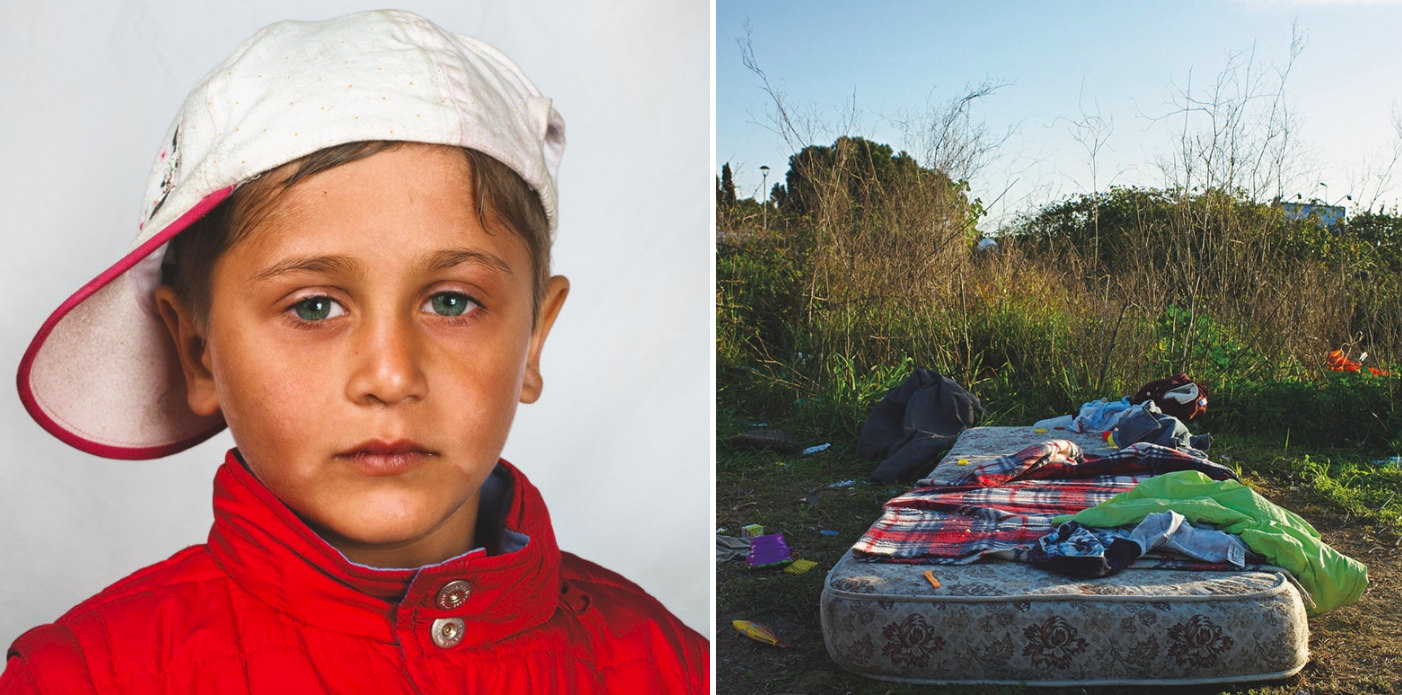
4 years old
Rome, Italy
—
Home for this four-year-old boy and his family is a mattress in a field on the outskirts of Rome, Italy. The family came from Romania by bus, after begging on the streets for enough money to pay for their tickets (€100 per adult and €80 per child).
When they first arrived in Rome, they camped in a tent, but the police threw them off the site because they were trespassing on private land and did not have the correct documents. Now the family sleeps together on the mattress in the open. When it rains, they hastily erect a tent and use umbrellas for shelter, hoping they will not be spotted by the police.
They left Romania without identity documents or work papers and so are unable to obtain legal employment. This boy sits by the curbside while his parents clean car windscreens at traffic lights, earning thirty to fifty cents a time. No one from the boy’s family has ever been to school. His parents cannot read or write.
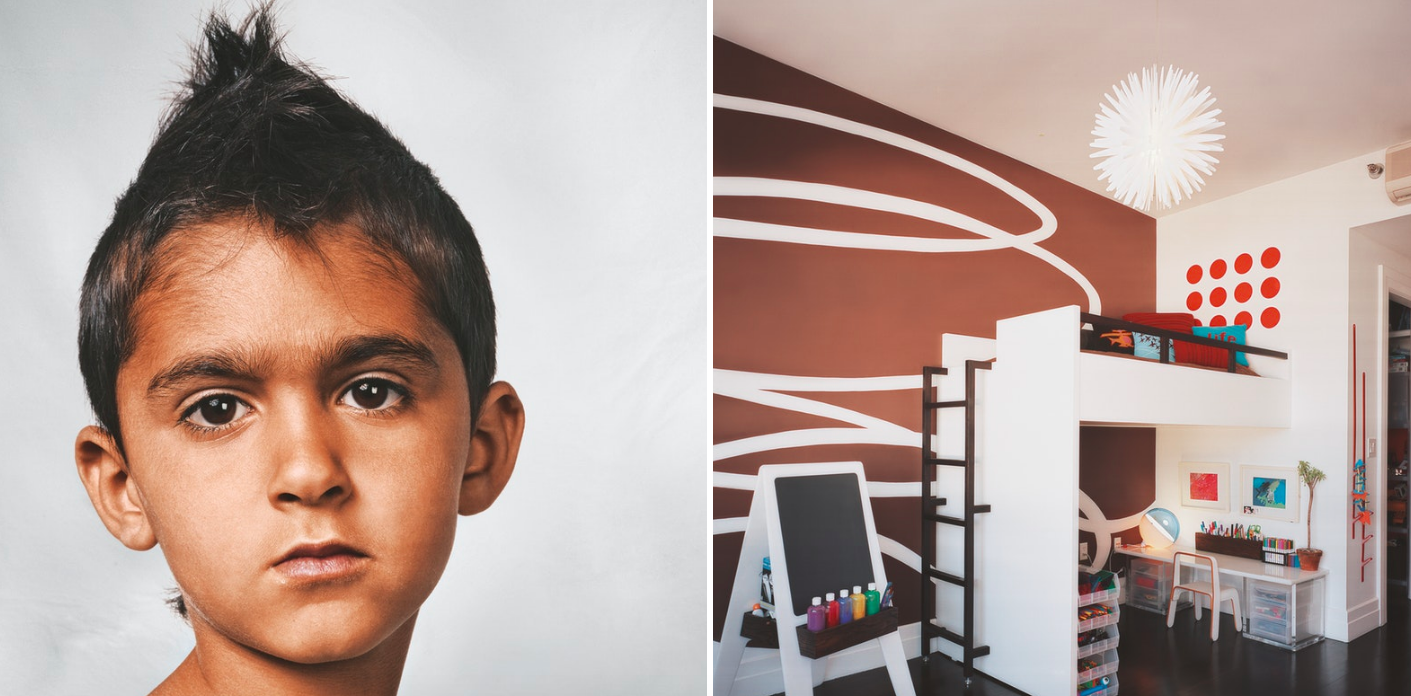
Jivan, 4 years old
Brooklyn, New York
—
Jivan is four years old. He lives with his parents in a skyscraper in Brooklyn, New York. From his bedroom window, he can see across the East River to New York’s Manhattan Island and the Williamsburg Suspension Bridge which connects it to Brooklyn. Jivan has his own bedroom with an en-suite bathroom and a toy cupboard. The room was designed by Jivan’s mother, who is an interior designer. His father is a DJ and music producer. Jivan’s school is only ten minutes’ walk away.
To gain a place at this school, Jivan had to take a test to prove that he can mix socially with other children. He found this quite stressful as he is a very shy boy. His parents were also interviewed before he was accepted by the school. Jivan’s favorite foods are steak and chocolate. He would like to be a fireman when he grows up.
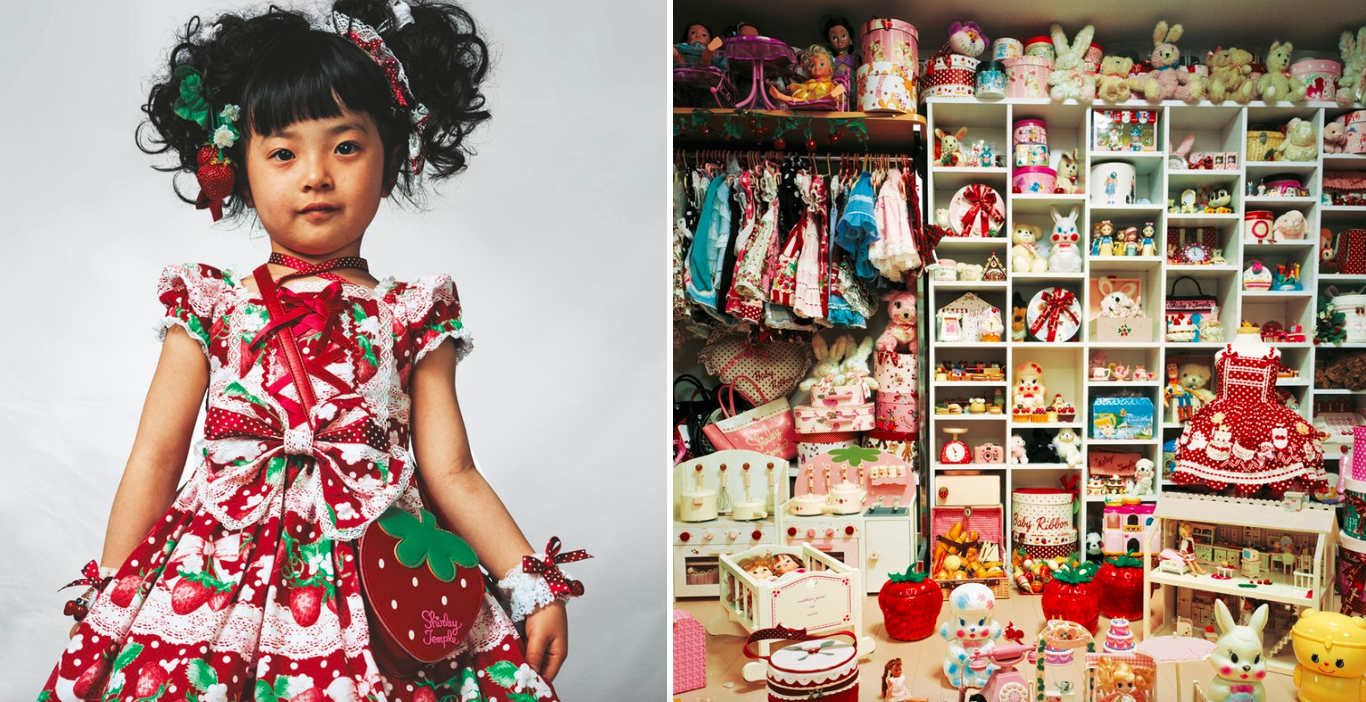
Kaya, 4 years old
Tokyo, Japan
—
Kaya is four years old. She lives with her parents in a small apartment in Tokyo, Japan. Most apartments in Japan are small because land is very expensive to buy and there is such a large population to accommodate. Kaya’s bedroom is every little girl’s dream. It is lined from floor to ceiling with clothes and dolls.
Kaya’s mother makes all Kaya’s dresses — up to three a month, usually. Now Kaya has thirty dresses and coats, thirty pairs of shoes, sandals and boots, and numerous wigs. (The pigtails in the picture are made from hairpieces.) Her friends love to come round to try on her clothes.
When she goes to school, however, she has to wear a school uniform. Her favorite foods are meat, potatoes, strawberries and peaches. She wants to be a cartoonist when she grows up, drawing Japanese ‘anime’ cartoons.
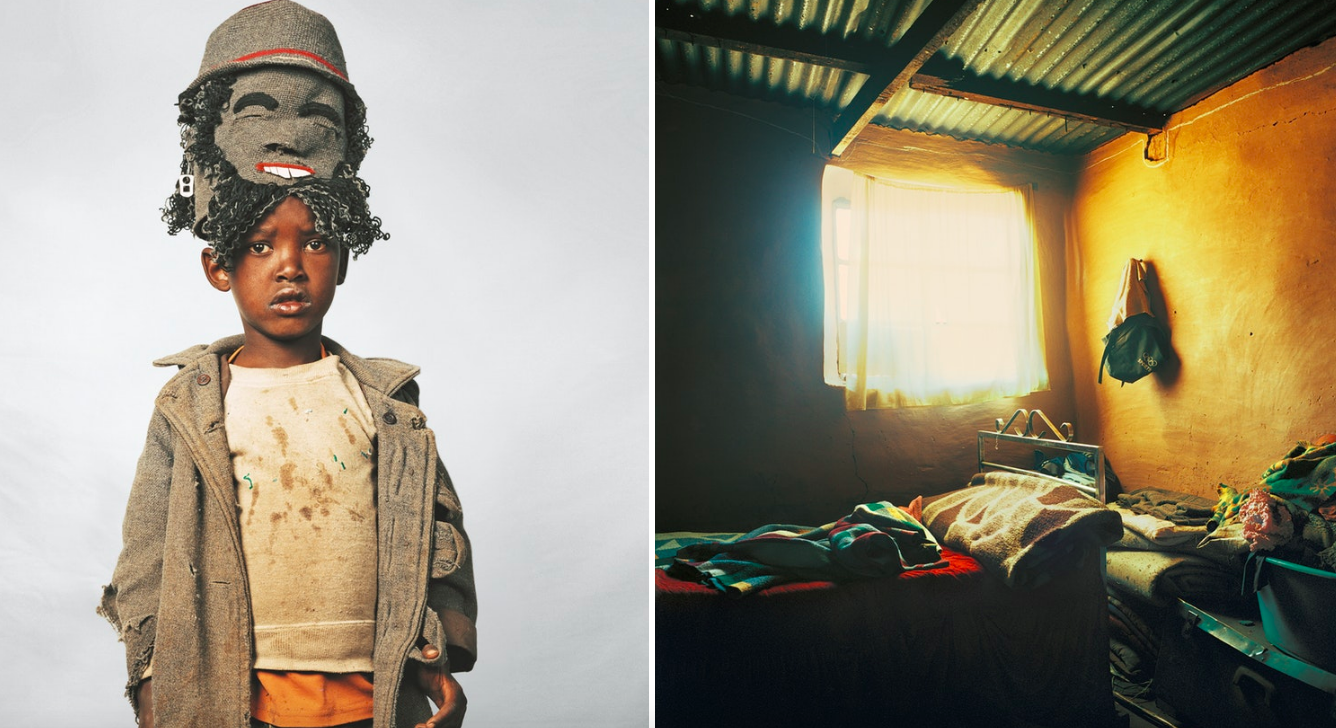
Lehlohonolo, 6 years old
Lesotho
—
Lehlohonolo is six years old. He and his three brothers live in Lesotho, in southern Africa. The boys are orphans — their father died from AIDS some years ago and they have not heard from their mother since she went away in search of work. It is likely that she also died from an AIDS-related illness. It is quite common in Lesotho for mothers and fathers to die as a result of AIDS, and there are growing numbers of orphans.
Lehlohonolo’s sixteen-year-old brother is responsible for looking after the family. The boys live in a mud hut where they sleep together on the floor, cuddling up to each other for warmth during the freezing cold nights. Two of Lehlohonolo’s brothers go to a school eight kilometers away where they are also given monthly rations of food — cereal, pulses and oil. They cannot remember the last time they ate meat.
Sadly, they will probably live in poverty for the rest of their lives because crops are difficult to grow on the infertile land and there are no prospects of employment.

Indira, 7 years old
Kathmandu, Nepal
—
Indira lives with her parents, brother and sister near Kathmandu in Nepal. Her house has only one room, with one bed and one mattress. At bedtime, the children share the mattress on the floor.
Indira is seven years old and has worked at the local granite quarry since she was just three. The family is very poor so everyone has to work. There are 150 other children working at the quarry, some of whom will lose their sight because they do not have goggles to protect their eyes from stone splinters.
Indira works five or six hours a day and then helps her mother with household chores such as cleaning and cooking. Her favorite food is noodles. She also attends school, which is thirty minutes’ walk away. She does not mind working at the quarry but would prefer to be playing. She would like to be a Nepalese dancer when she grows up.
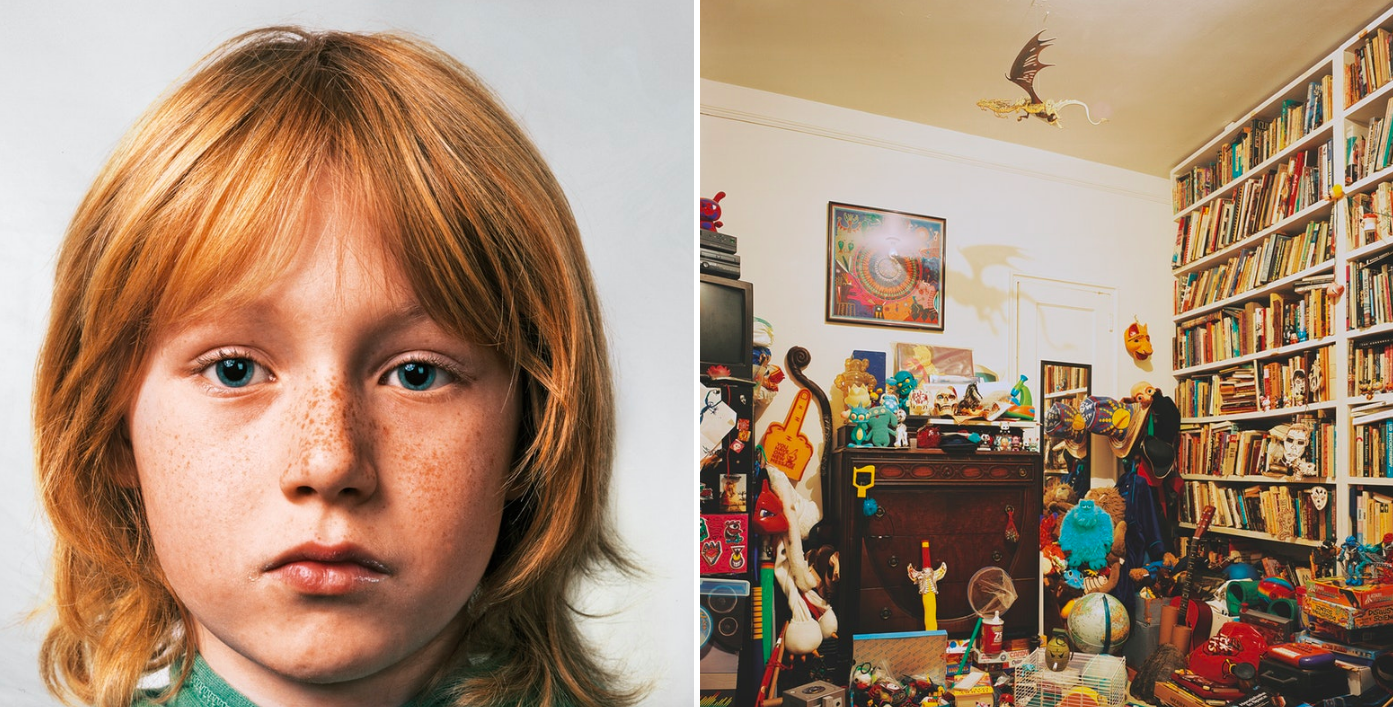
Tristan, 7 years old
Manhattan, New York
—
Tristan is seven years old and is an only child. His mother is a film maker, and his father is a pop cultural writer. They live in a small apartment in Manhattan, New York. They also own a beach house in New Jersey where they go for their summer holiday.
Tristan attends an Eco-School, a state school run on environmental principles, just ten minutes’ walk from his apartment. Here, there are no religious holidays — only the solstices and equinoxes are celebrated. Tristan had to pass several tests before he was accepted at the school, and his parents were also interviewed.
This was the tenth school he had applied to. Competition for school places is fierce in New York. He enjoys school but does not like being told to clean up after lunch. Tristan’s favorite food is bacon, and he has pizza every weekend. He has an unusual ambition for when he grows up — to be a creator of marmalade.
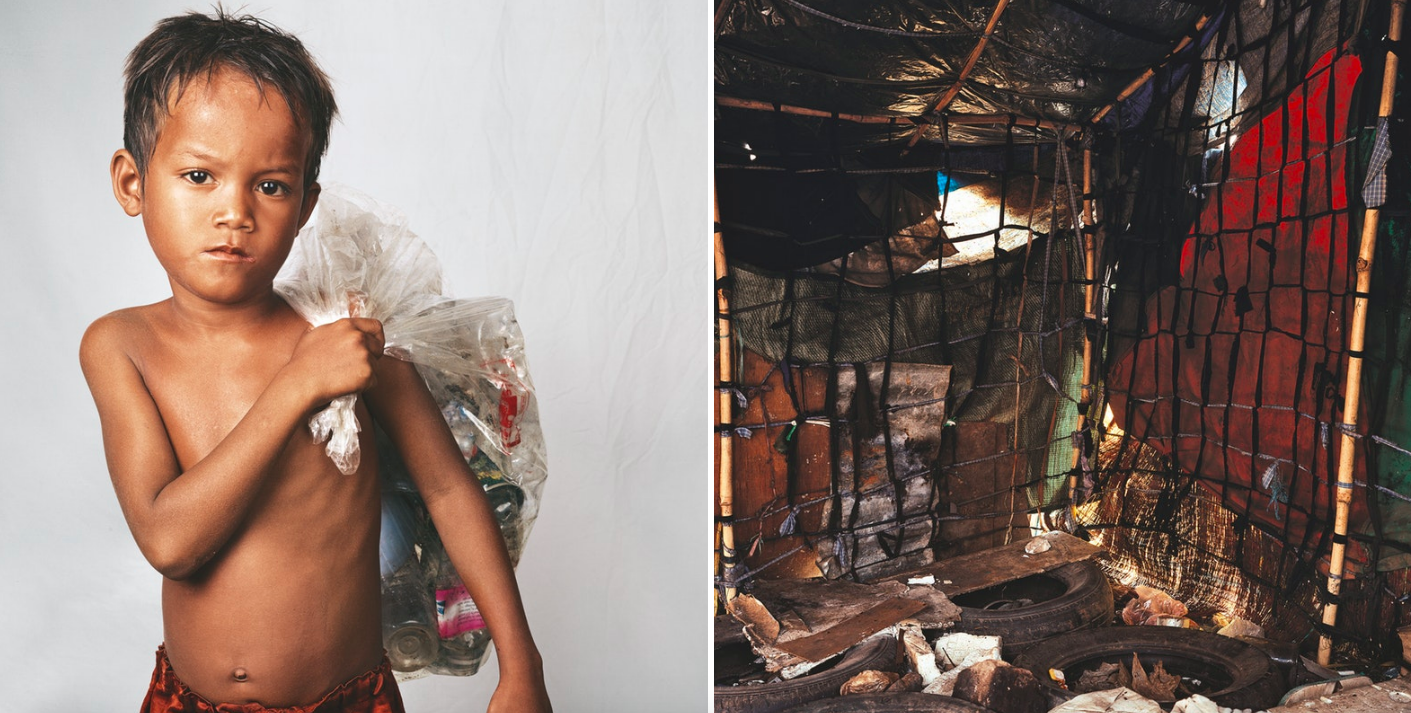
Roathy, 8 years old
Phnom Penh, Cambodia
—
Roathy is eight years old. He lives on the outskirts of Phnom Penh, Cambodia. His home sits on a huge rubbish dump which is swarming with flies. They re-use whatever they can find. Roathy’s mattress, for instance, is made from old tires. The air is thick with the stench of decomposing waste, and the ground underfoot is soft and springy — one wrong step and it gives way to a poisonous black liquid. Five thousand people live and work and pay rent here.
At six o’clock every morning, Roathy and hundreds of other children are given a shower and some breakfast at a local charity centre before they start work, scavenging through the rubbish for cans and plastic bottles which are sold to a recycling company. Breakfast is often the only meal of the day. On one occasion, Roathy’s family suffered food poisoning after eating a chicken which his brother had found on the dump.
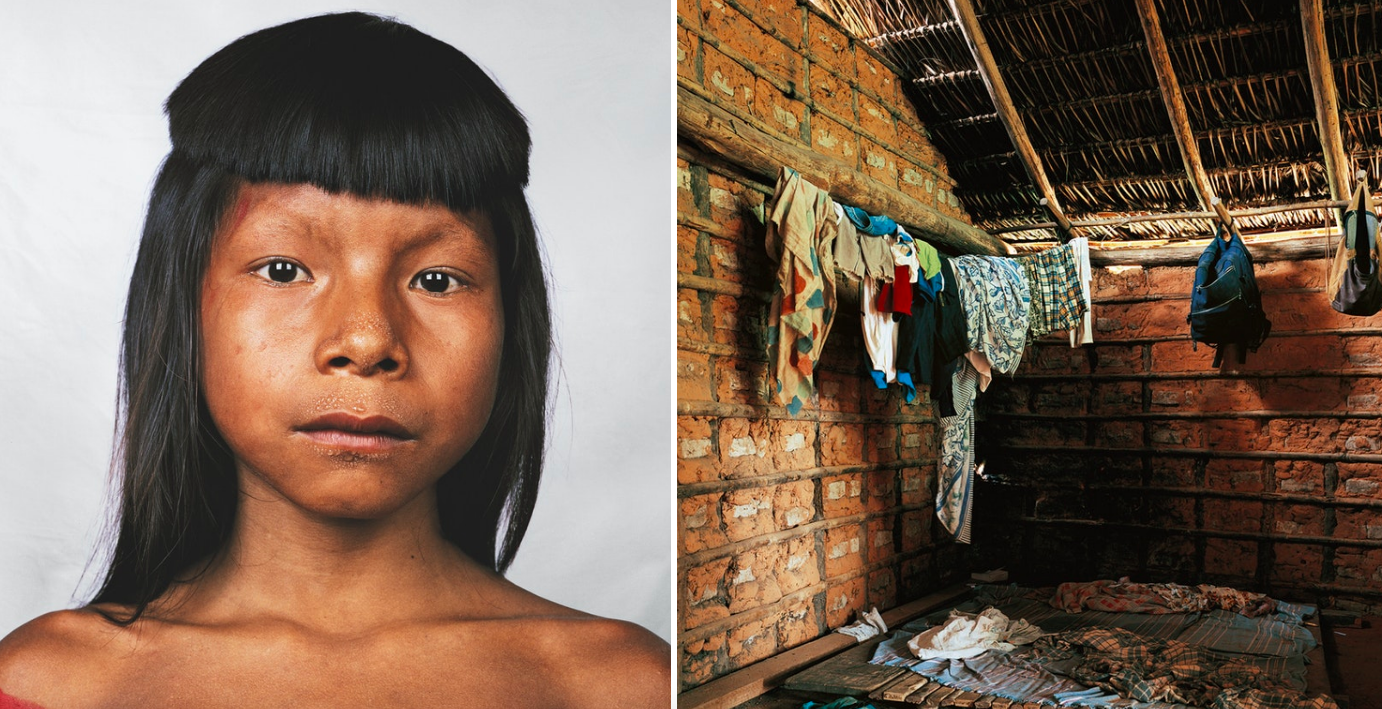
Ahkôhxet, 8 years old
Brazil
—
Ahkôhxet is eight years old and a member of the Kraho tribe, who live in the basin of the river Amazon, in Brazil. There are only 1,900 members of the tribe. The Kraho people believe that the sun and moon were creators of the universe, and they engage in rituals that are many centuries old. The red paint on Ahkôhxet’s chest is from one of his tribe’s rituals.
The elders teach Ahkôhxet’s generation to respect nature and their surroundings. Their huts are arranged in a circle, leaving space in the middle for gatherings and ceremonies to take place. The nearby river provides water for drinking and washing.
The tribe grow half their food in the poor soil using basic tools. They also hunt. The rest of their food is bought using money earned from film crews and photographers who visit their camp. There is one car, shared between the whole tribe.
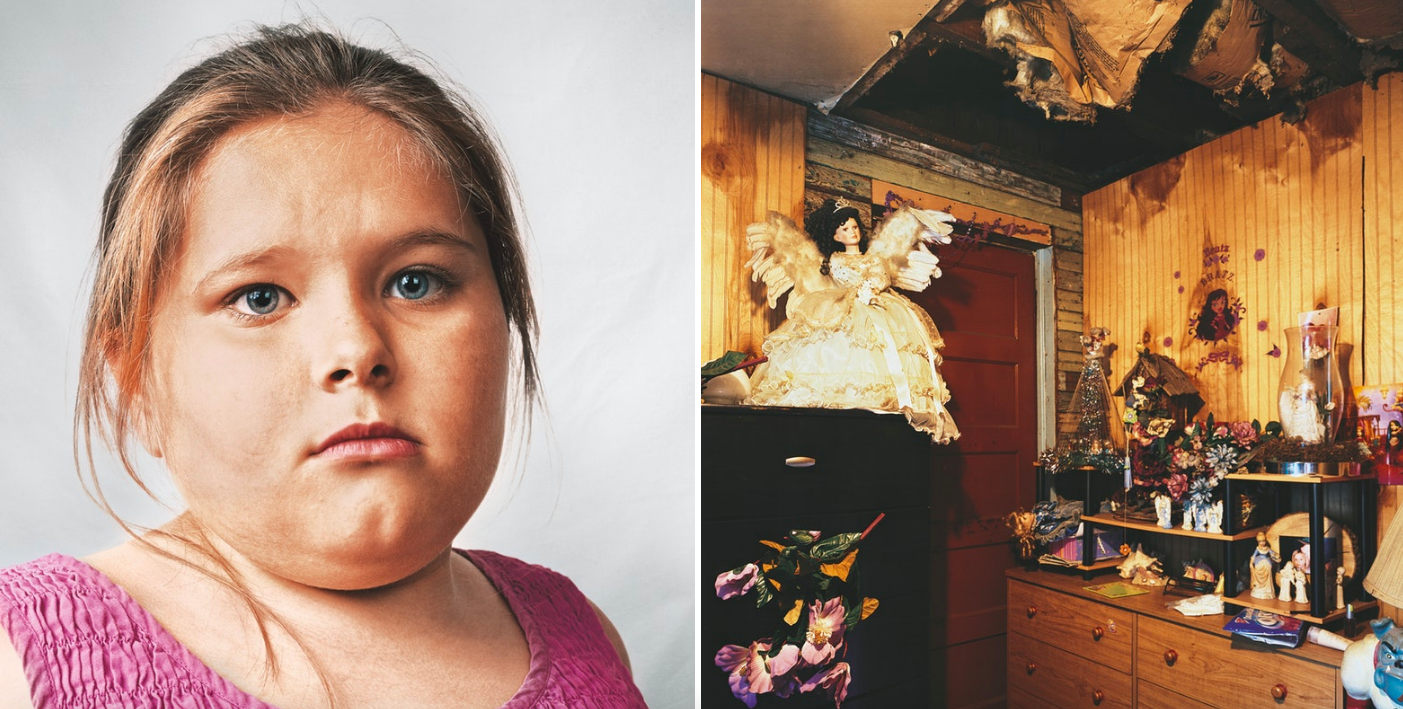
Alyssa, 8 years old
Kentucky, USA
—
Alyssa lives with her parents in Kentucky, USA. She is an only child but her grandmother, uncle and orphaned cousin live close by. It is a beautiful, mountainous region known as Appalachia, but one of the poorest parts of America.
Their small, shabby house, heated only by a wooden stove, is falling apart. The ceiling in Alyssa’s bedroom is beginning to cave in. The family would like to buy a caravan instead, if they could afford it. Alyssa’s mother works at McDonald’s and her father works at Walmart, and everything they earn goes towards bringing up their daughter.
She is lucky that her parents have jobs, even though they earn very little. Many local families are unemployed and have to rely on charity. There is a huge problem with drug misuse in the area, and two of Alyssa’s relatives have already died from drug-related problems.
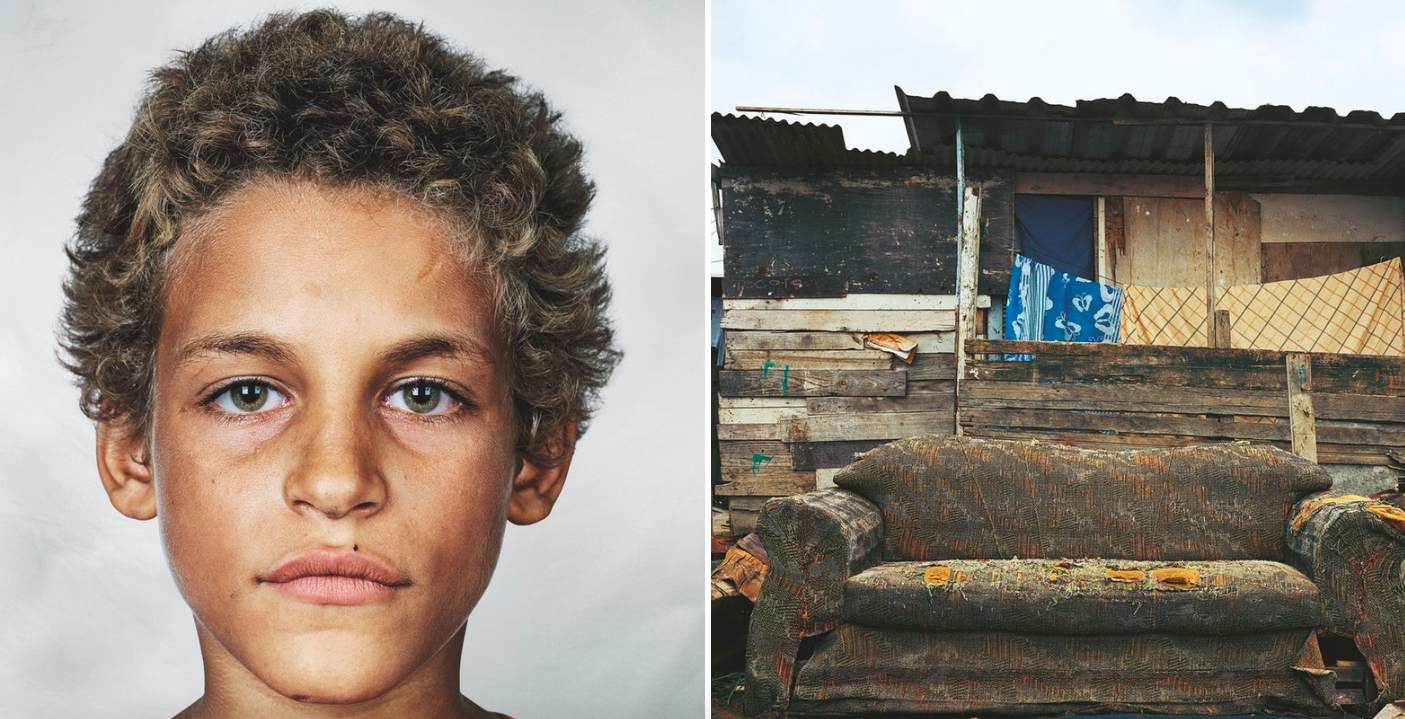
Alex, 9 years old
Rio de Janeiro, Brazil
—
Alex is nine years old. He lives in Rio de Janeiro, Brazil. He does not go to school but spends his time begging on the city streets. He has found that the only way he can survive is to beg or steal.
He admits that he sometimes steals from old people or from drivers waiting at traffic lights. As the drivers lean their arm on the window, Alex snatches the watch from their wrists. He is addicted to sniffing glue.
Most of the time he sleeps outside, on an empty bench or discarded sofa if he can find one — otherwise on the pavement. Alex is still in touch with his family, and occasionally goes to see them to share a meal.
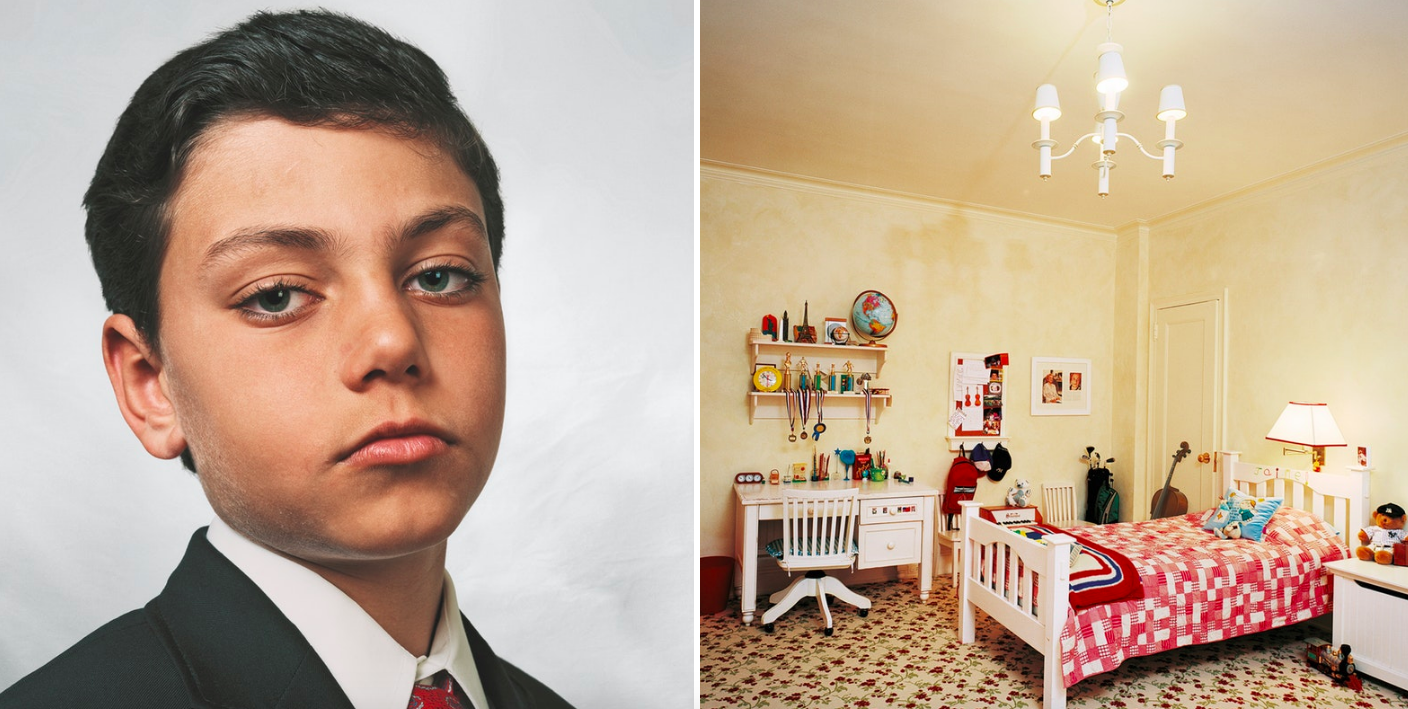
Jaime, 9 years old
Fifth Avenue, New York
—
Jaime is nine years old. He lives in a top-floor apartment on Fifth Avenue in New York. His parents also own luxury homes in Spain and in the Hamptons on Long Island. He has a younger brother and sister who are twins. Places at Jaime’s school are greatly sought after, even though the fees are very high. Jaime had to pass several tests before he was accepted.
He is doing very well at his studies and particularly enjoys computer class, spelling, and woodwork, but not geometry. He has an hour’s homework each night and often finds it hard to fit this in with his other after-school activities.
Wednesdays are particularly busy as he has judo and swimming lessons. In his spare time, apart from playing the cello and kickball, Jaime likes to study his finances on the Citibank website. When he grows up, he would like to be a lawyer like his father.
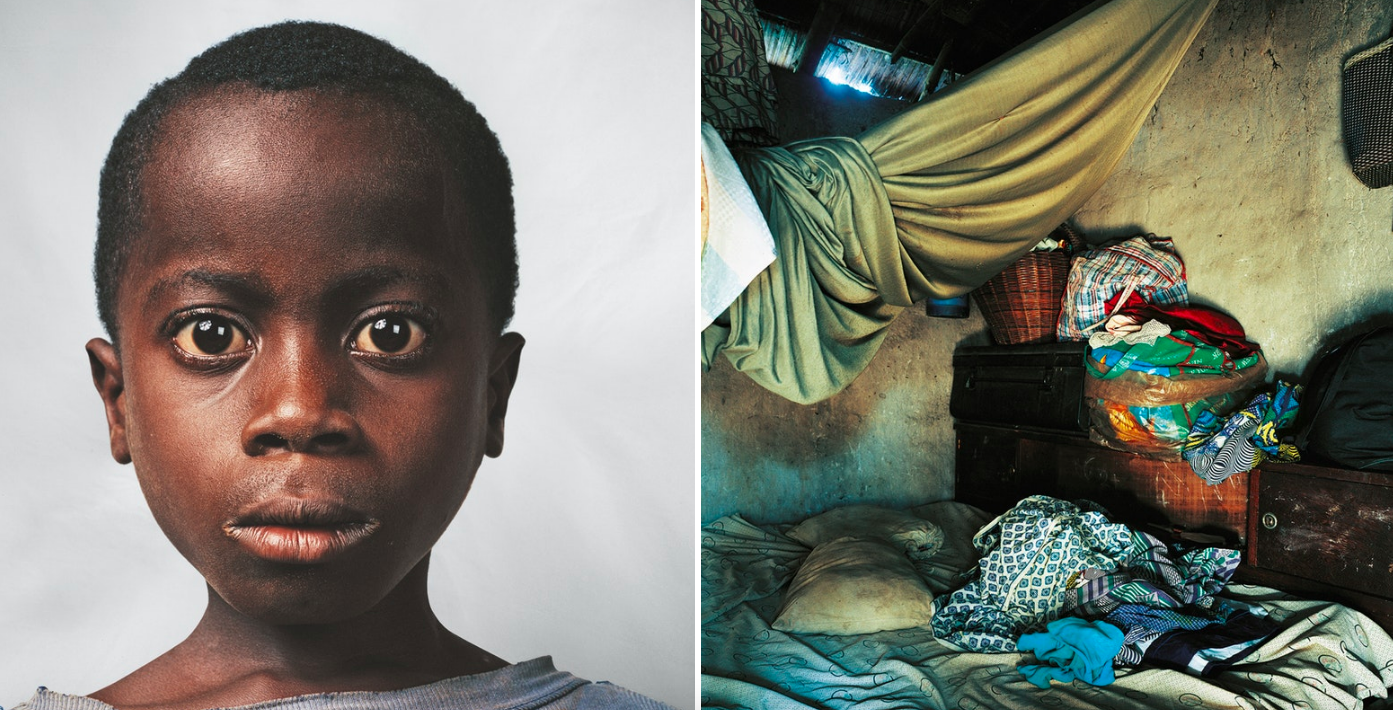
9 years old
Ivory Coast
—
This nine-year-old boy is a refugee from war in Liberia, in western Africa, and goes to a school for ex-child soldiers in Ivory Coast. His name remains a secret in order to protect his identity. If it is revealed, his life could be at risk.
Thousands of young children — many of them orphans — were recruited as soldiers to fight in the violent civil war in Liberia. They were tempted to become soldiers by promises of money, food and clothing. These child soldiers were then moved around the country during the conflict, causing them to lose track of their home villages. They became displaced.
This boy is an orphan and has three brothers. He now lives in a concrete shack alongside other pupils from his school. His favorite food is rice with tomato, meat and fish ground up together. He likes football and would like to be a teacher when he is older.
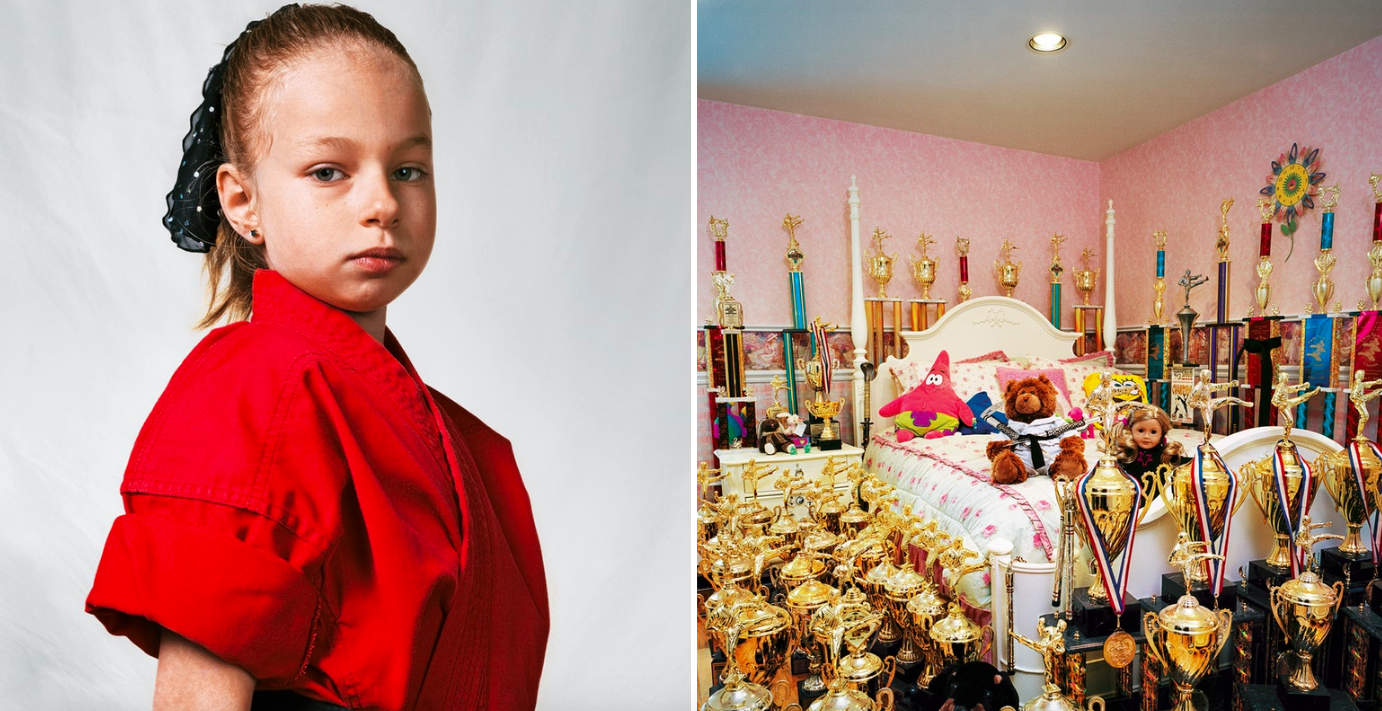
Samantha, 9 years old
Long Island, New York
—
Samantha is nine years old. She lives with her parents, and her guinea pig and fish, in a detached house on Long Island, New York. Samantha has achieved a black belt — the highest level — in karate. She has been world champion three times.
She first became interested at the age of three, when she saw a television advert featuring karate. She pestered her parents to let her learn and took her first lesson when she was four. She has now been in two adverts and a short film, and her bedroom is full of trophies she has won in competitions.
Samantha’s school is one mile away. Her mother takes her by car each morning so that she can have an extra few minutes’ rest in bed. She spends four hours a day practicing karate at the studio and also has an hour and a half of school homework each night. Samantha would like to become a karate movie star.

Tzvika, 9 years old
Beitar Illit, West Bank
—
Tzvika is nine years old and lives in Beitar Illit, an Israeli settlement in the West Bank. It is a gated community of thirty-six thousand Haredi (Orthodox) Jews, who live their lives according to a strict religious code set out in the Jewish holy book, the Talmud. Televisions and newspapers are banned from the settlement.
The average family has nine children, but Tzvika has just one sister and two brothers, with whom he shares his room. Like all good Haredi boys, Tzvika reveres God and wants to become a rabbi when he is older. He lives in a modern apartment block and is taken by car to school, a two-minute drive away.
Religion is the most important subject, followed by Hebrew and maths. Sport is banned from the curriculum. Tzvika goes to the library every day and enjoys reading the holy scriptures. All the books in the library are religious books. Tzvika also likes to play religious games on his computer. His favorite food is schnitzel and chips.
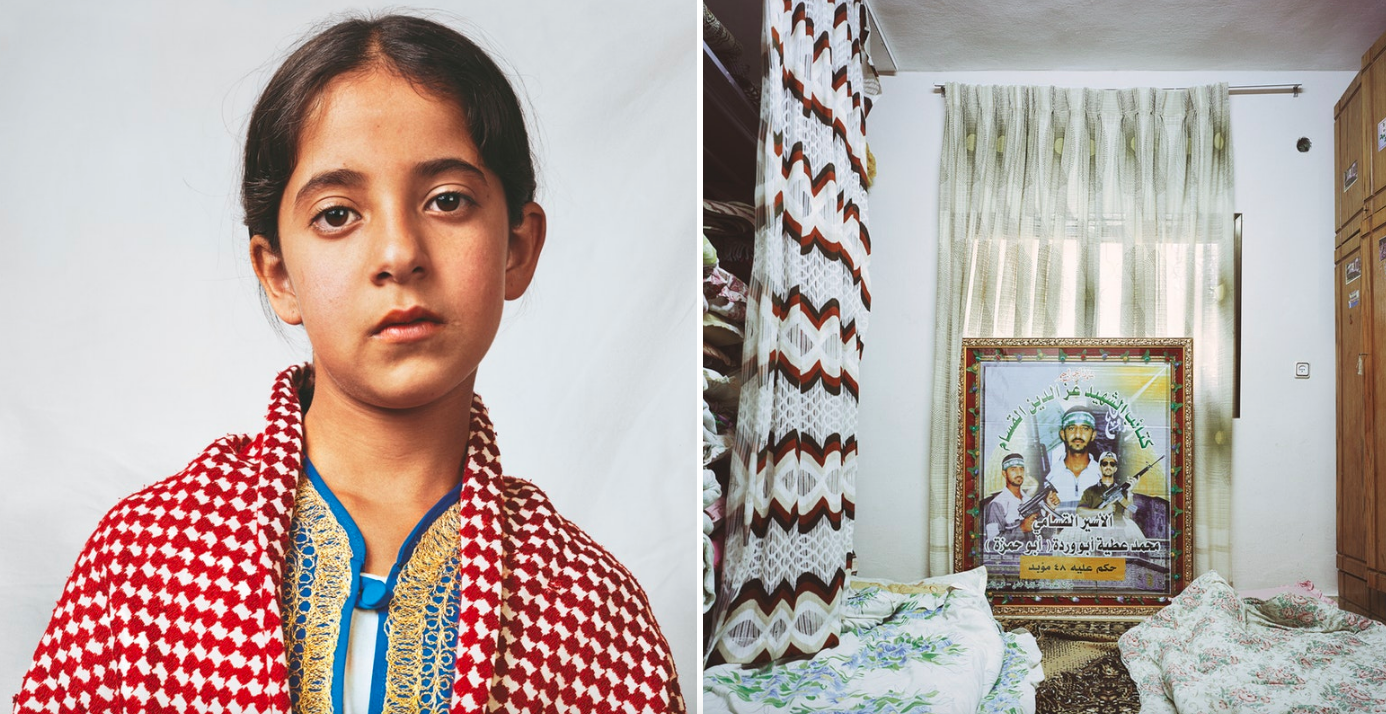
Douha, 10 years old
Hebron, West Bank
—
Douha lives with her parents and eleven siblings in a Palestinian refugee camp in Hebron, in the West Bank. She is ten years old and shares a room with all five of her sisters. The family diet mostly consists of green beans, meat, rice and lentil soup.
Douha attends a school which is ten minutes’ walk away. She works hard because she wants to be a pediatrician when she grows up. Douha’s life has been severely affected by the conflict between Palestine and Israel. Her grandparents fled from their village in 1948, when Israel took over their land, and Douha’s family has lived in refugee camps ever since.
Douha was born in a refugee camp, and there has always been violence around her. Her brother Mohammed killed himself and twenty-three civilians in a suicide bomb attack against the Israelis in 1996. Although no one in her family knew what Mohammed was planning, the whole family was punished for it: immediately after the bombing, the family home — including all their possessions — was destroyed by the Israeli military. Douha has a poster of Mohammed on her bedroom wall.
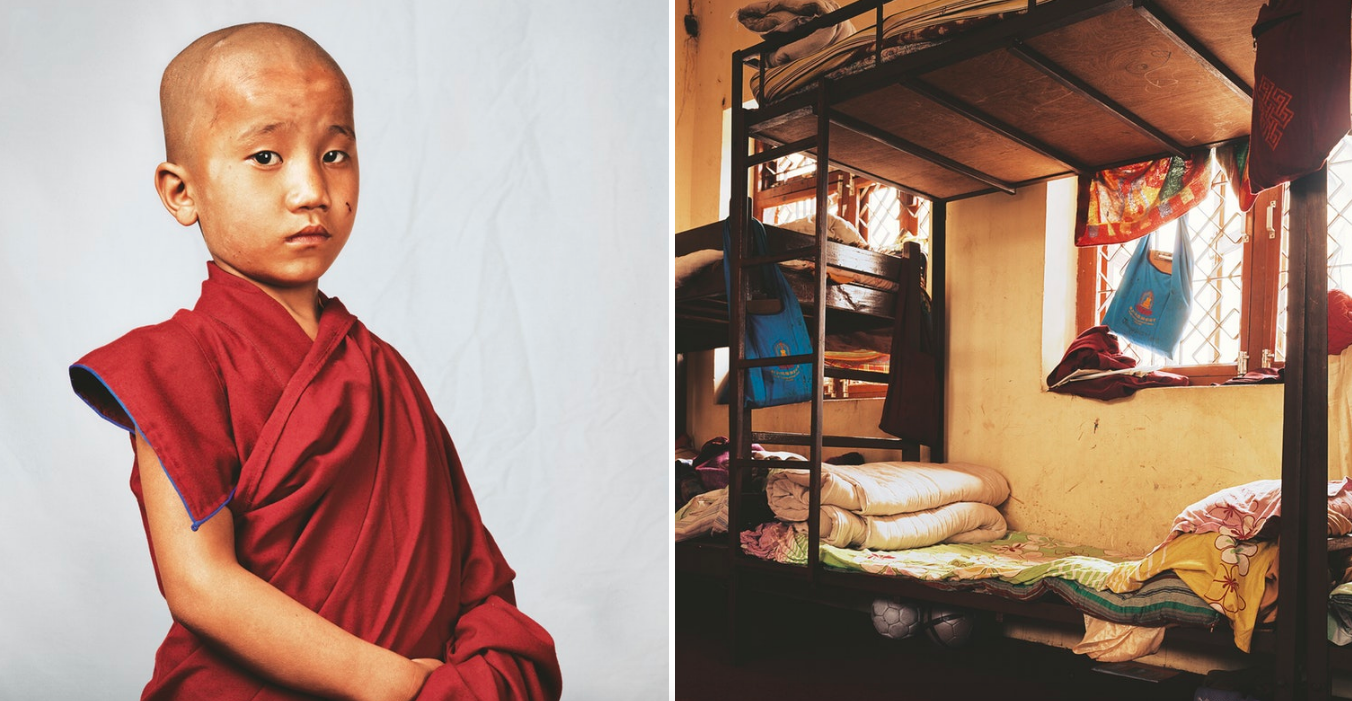
Sherap, 10 years old
Kathmandu, Nepal
—
Sherap is ten years old. He lives in a beautiful Tibetan monastery in Kathmandu, Nepal, and shares a room with seventy-nine other boys training to be monks. The boys all sleep in bunk beds and have very few personal possessions.
Sherap’s parents sent him here because it is believed that good luck comes to families who offer a son to the monastery. It also means they have one less mouth to feed.
Sherap has a long day. He gets up at 5.30 am to study, and finishes the day with an hour of chanting at 9 pm. He usually eats dhal bhat (rice and lentil soup), thukpa (noodle soup) and roti (flat bread). He admires his teacher and would like to be a kempo martial arts teacher one day, but first he must finish school and then study privately for three years and two months.
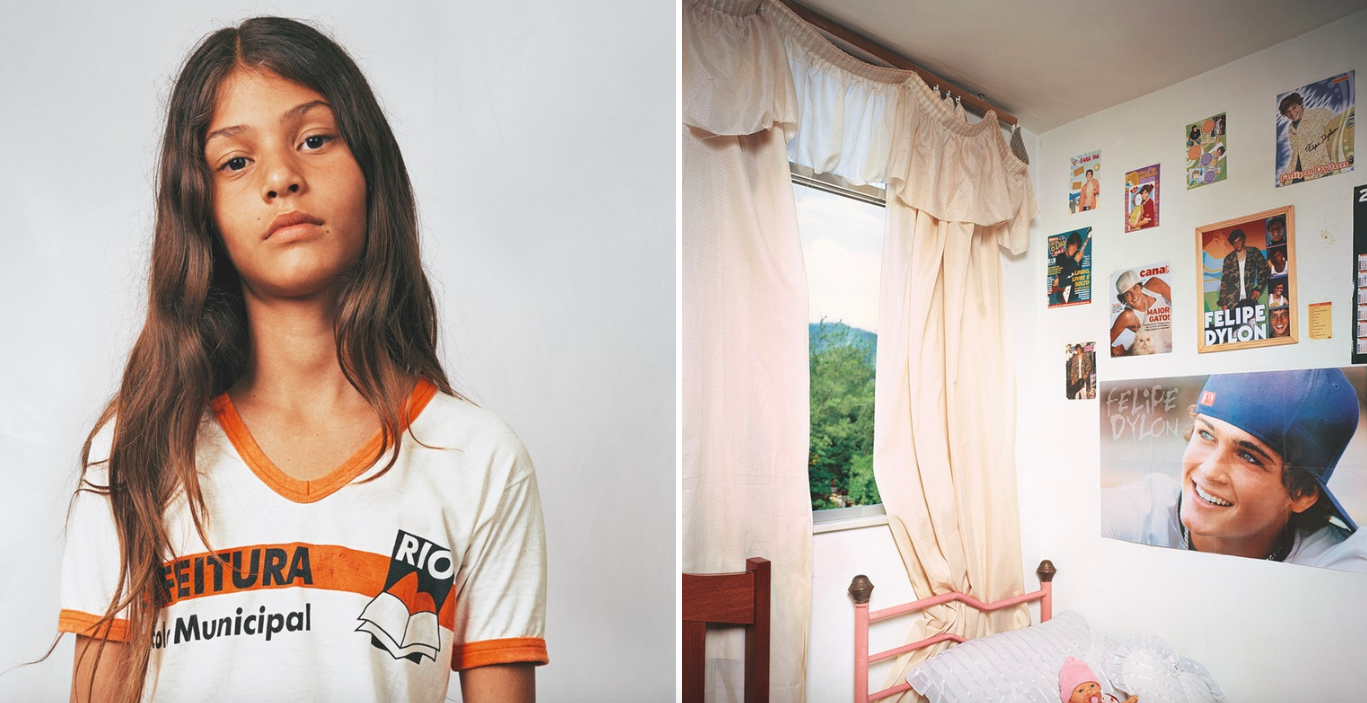
Thais, 11 years old
Rio de Janeiro, Brazil
—
Thais is eleven years old and lives with her parents and sister on the third floor of a block of flats in Rio de Janeiro, Brazil. There are two bedrooms in the flat, so Thais has to share her room with her sister.
They live in the Cidade de Deus (‘City of God’) neighborhood in the western zone of Rio de Janeiro. It used to be a poverty-stricken, crime-ridden area, dominated by gang rivalry and drug abuse, but the 2002 film City of God, which was set in the neighborhood, inspired major improvements. It is now a much safer place to live.
Thais’s parents are not well off but are able to support their family reasonably well. Thais is a great fan of Felipe Dylon, a Brazilian pop singer. She has his posters all over her bedroom wall. She also admires the Brazilian model and actress, Gisele Bündchen, who is thought to be the highest paid model in the world. Thais would like to be a model when she grows up or, alternatively, a pediatrician.
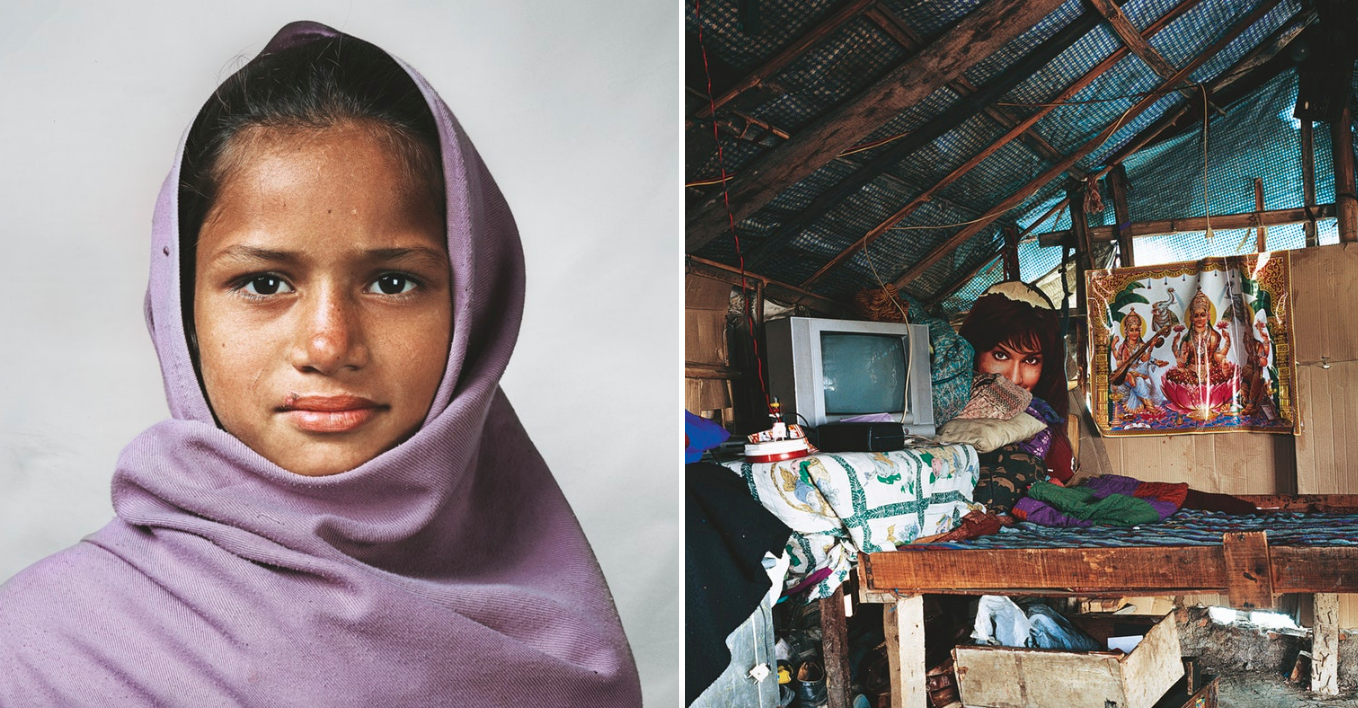
Netu, 11 years old
Kathmandu, Nepal
—
Netu lives in Kathmandu, Nepal, in an area known as ‘Beggars’ City’. She used to live in India with her parents, four sisters and brother. Her parents were unable to support the family and there was not enough food to survive, so they had to send Netu, the eldest, away to live with her aunt. They had hoped for better prospects for their daughter. They spent one week’s salary on the bus fare for Netu to travel to Kathmandu. The journey took three days.
Netu is eleven years old and now has to beg for money on the city’s streets. It is only the tourists who are willing to donate anything and often she goes home with nothing.
Her home is a plastic sheeted shack. The room measures four meters by six meters and contains two beds. Four people sleep in one bed, three in the other, and four people sleep on the floor.
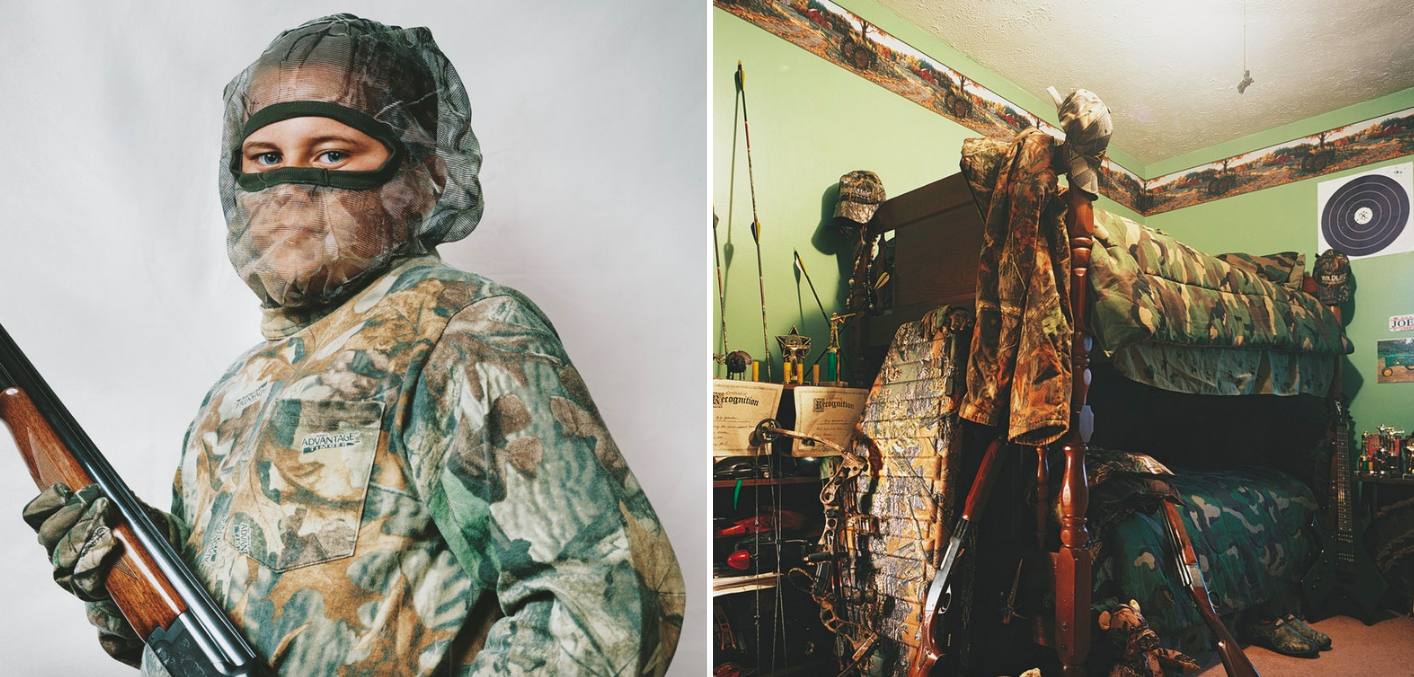
Joey, 11 years old
Kentucky, USA
—
Joey lives in Kentucky, USA, with his parents and older sister. He is eleven years old. He regularly accompanies his father on hunts. He owns two shotguns and a crossbow and made his first kill — a deer — at the age of seven. He is hoping to use his crossbow during the next hunting season as he has become tired of using a gun.
He loves the outdoor life and hopes to continue hunting into adulthood. His family always cook and eat the meat from the animal they have shot. Joey does not agree that an animal should be killed just for sport. When he is not out hunting, Joey attends school and enjoys watching television with his pet bearded dragon lizard, Lily.
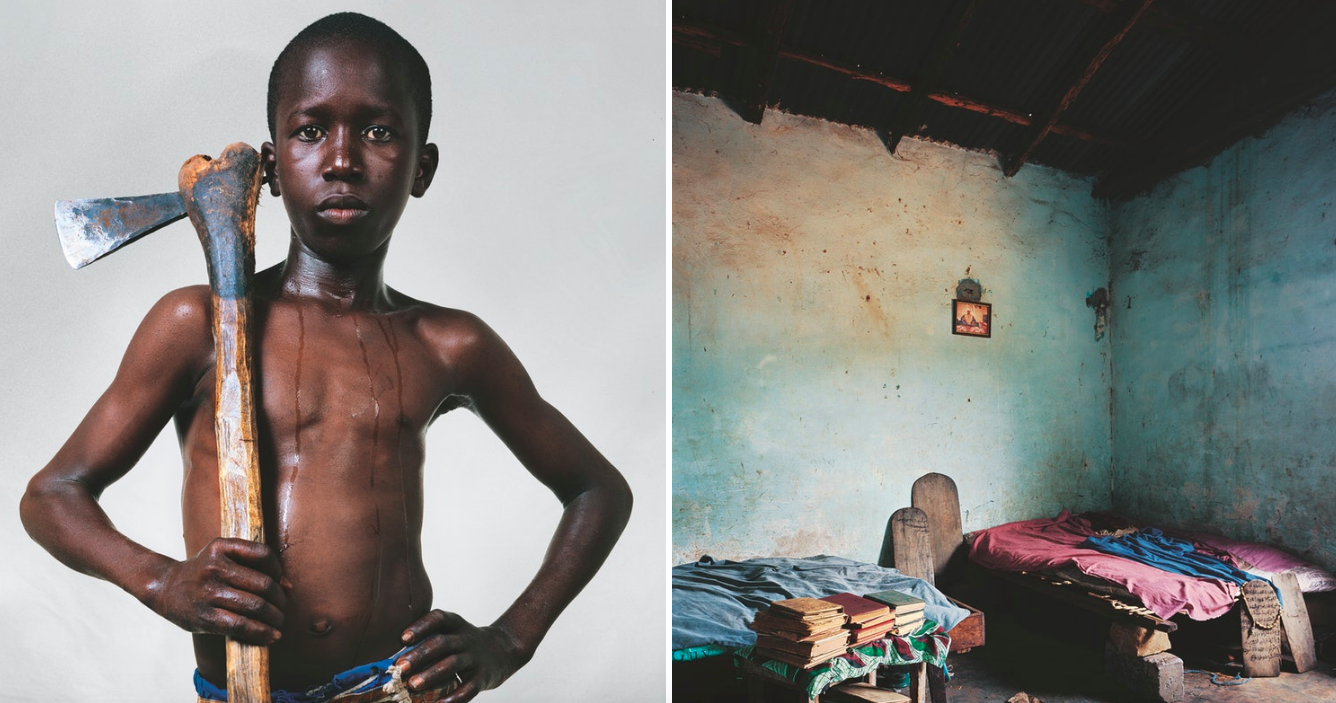
Lamine, 12 years old
Senegal
—
Lamine is twelve years old and lives in a village in Senegal, western Africa. He is a pupil at the village Koranic school, where no girls are allowed. He shares a room with several other boys from the school.
The beds are very basic and uncomfortable, some supported by bricks for legs. At six o’clock every morning, the boys begin work on the school farm. Depending on the season of the year, they are taught digging, harvesting maize or how to plough the fields using donkeys. In the afternoon, they study the Koran, the holy book from which Islam is derived, learning to recite its verses from wooden tablets. They have the same teacher for all their lessons.
Lamine enjoys school but finds the farming lessons hard work and very hot. In his free time, he likes to play football with his friends. When Lamine grows up he would like to be a teacher.
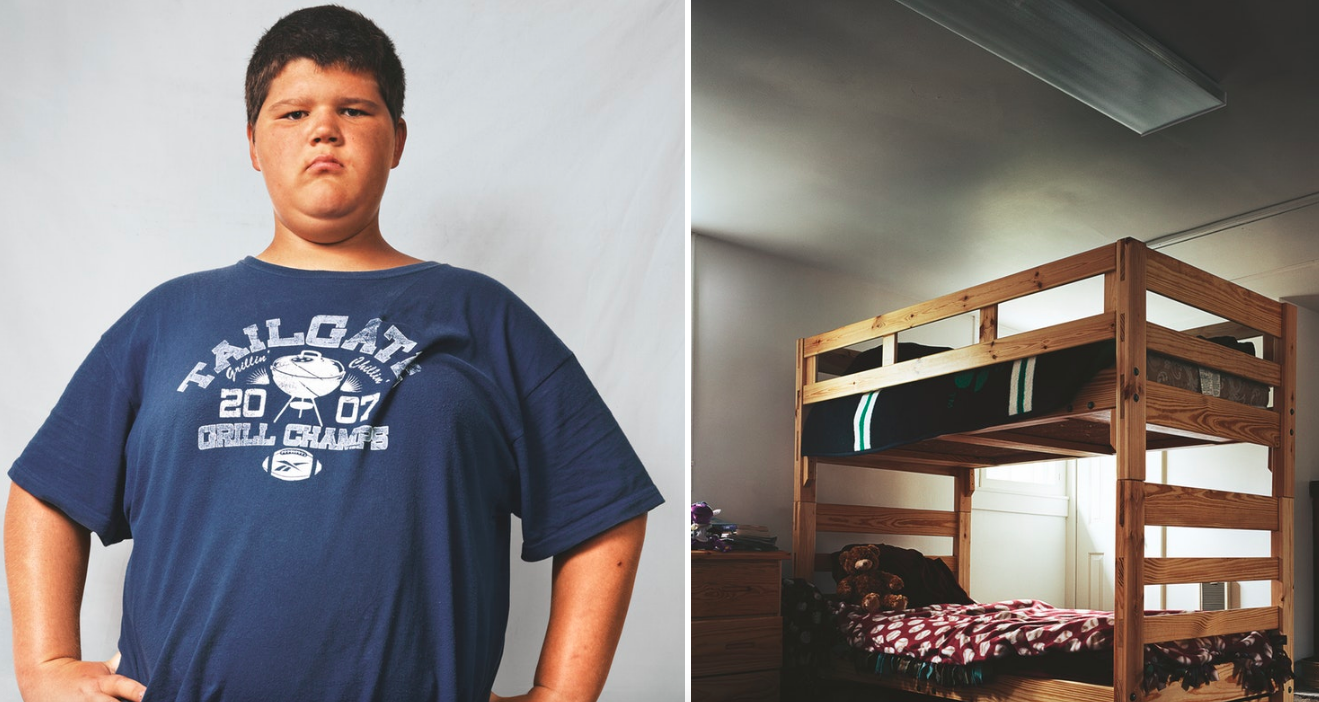
Ryan, 13 years old
Pennsylvania, USA
—
Ryan normally lives with his parents and two sisters in Pennsylvania, USA, but is currently staying at a school for obese children aged eleven to sixteen. Ryan is thirteen years old.
When he was nine, he was found to have a brain tumour. As a result, he now suffers from ‘Prader-Willi Syndrome’, an inherited condition that causes Ryan to have an insatiable appetite. This led Ryan to gain a lot of weight, but since attending the school, he has lost nine kilos. He is determined to lose as much weight as possible so that he can play baseball with his friends again.
Meal times are becoming easier for him because the school provides healthy versions of pizza and spaghetti alongside unlimited amounts of low-calorie foods such as soup, fruit and vegetables. This means he is not always as hungry as he used to be at home. All students have to take ten thousand steps per day.
Ryan would like to be a doctor when he grows up, in gratitude to the medical profession for helping him through his illnesses.
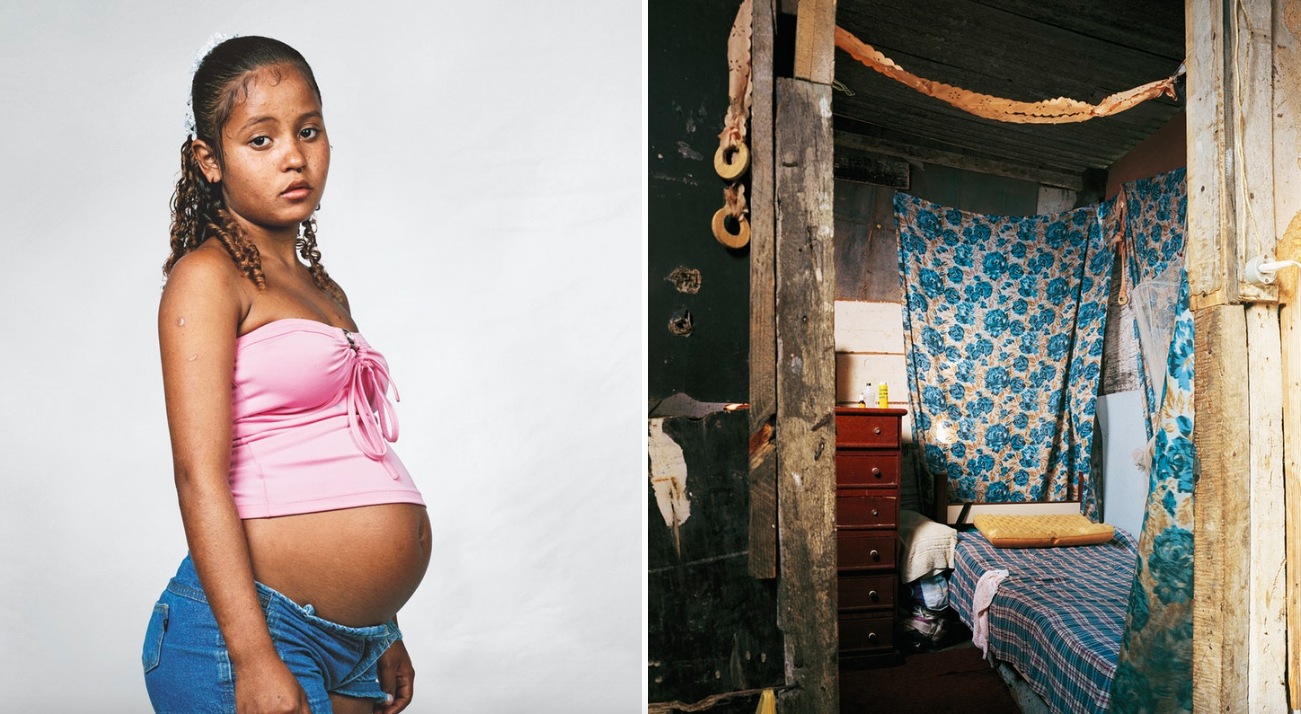
Erlen, 14 years old
Rio de Janeiro, Brazil
—
Erlen is fourteen years old and is pregnant for the third time. She lives in a favela (slum) in Rio de Janeiro, Brazil. Her home is a small shack. She usually sleeps on the floor, but now that she is in the later stages of her pregnancy, her mother has swapped places and allowed her to sleep in the bed. Erlen was twelve when she first became pregnant, but her baby was stillborn. A year later, she lost a second baby soon after its birth. If her new baby survives, Erlen is unlikely to return to school as she will need to stay at home to look after it. She will be a single parent.
The Brazilian government is concerned at the increase in teenage pregnancies despite its efforts to promote contraception. Abortion is illegal and can result in a three year prison sentence. It is also very dangerous — one in five women die while having abortions in illegal back-street clinics. Erlen would like to be a vet when she is older, and to live somewhere else.
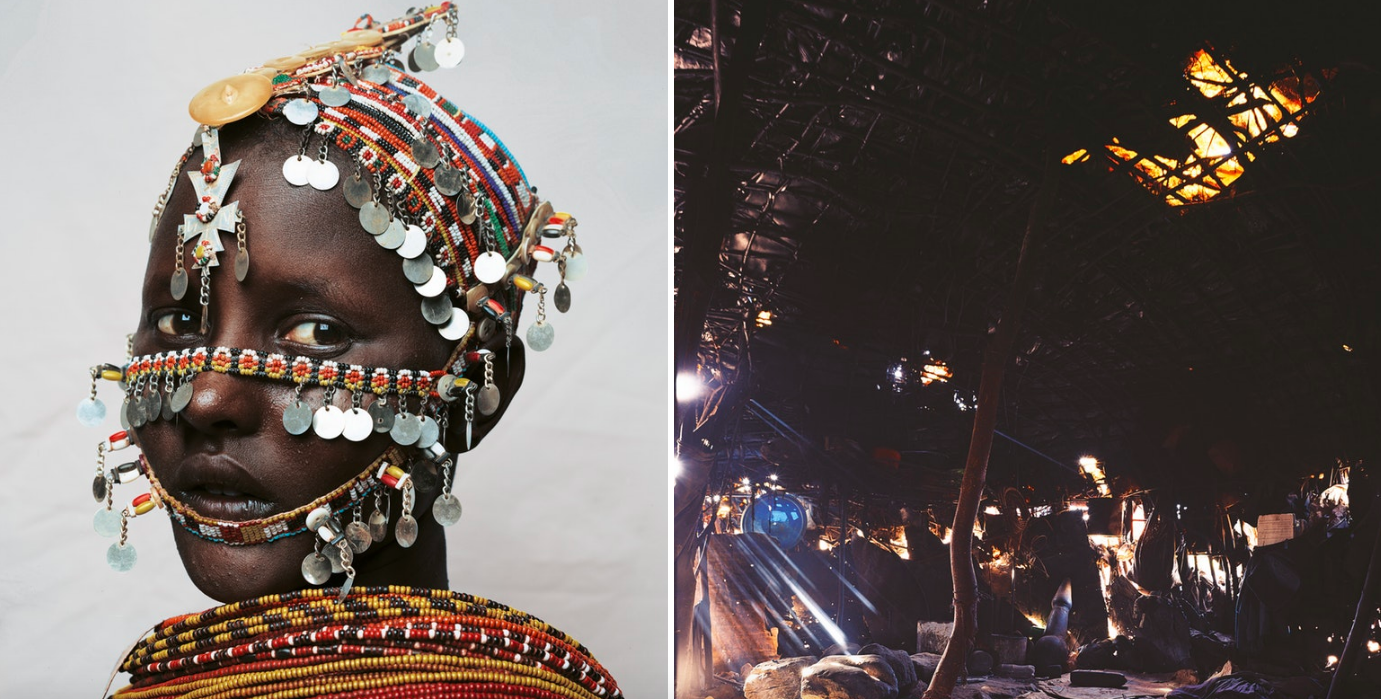
Nantio, 15 years old
Marsabit, Kenya
—
Nantio is fifteen years old and a member of the Rendille tribe in northern Kenya. She has two brothers and two sisters. Her home is a tent-like dome made from cattle hide and plastic, with little room to stand. There is a fire in the middle, around which the family sleep.
Nantio’s household chores include looking after the goats, chopping firewood and fetching water. She went to the village school for a few years but decided not to continue. Nantio is hoping a moran (warrior) will select her for marriage (she has a boyfriend now, but it is not unusual for a Rendille woman to have several boyfriends before marriage).
First, she will have to undergo circumcision, as is the custom. Nantio’s status in life can be seen by the number of necklaces she wears and whether she also wears a white band, indicating that she has a boyfriend or that her menstrual cycles have begun.
* * *
You can explore many other children’s stories and photographs, from all over the world, in my book Where Children Sleep.
THIS ARTICLE WAS ORIGINALLY PUBLISHED ON MAPTIA
JAMES MOLLISON
Kenyan-born, English-raised, Venice-based documentary photographer, jamesmollison.com