• Travel Features
  • Global Action
  • Find A Trip
  • Travel Guides
    • Podcast
    • Courses
    • Bookshop
  • About
  • Sign Up
Menu

CATALYST PLANET

  • Travel Features
  • Global Action
  • Find A Trip
  • Travel Guides
  • Discover
    • Podcast
    • Courses
    • Bookshop
  • About
  • Sign Up
No results found

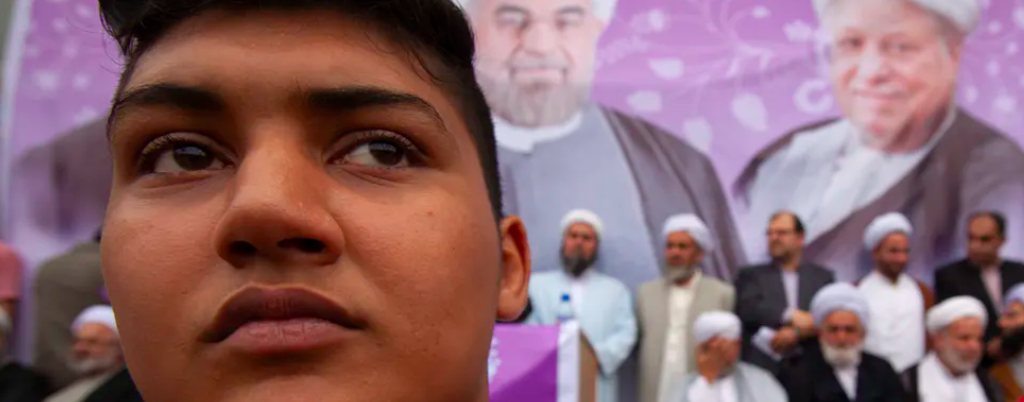
Sudanese people gathering in front of a mosque. Nina R. CC 2.0.

Sudan Separates Religion and State Following al-Bashir’s Ouster

September 23, 2020

The Northeast African nation of Sudan has made the decision to separate religion from the state, dissolving 30 years of governance by Islamic law. The country, which has been attempting to rebuild itself after long periods of colonial rule and political strife, came to this decision in an attempt to quell current tensions between religious and military groups. 

Sudan was formerly under colonial rule by the United Kingdom, though the British did not make their presence in Sudan a physical one. They maintained control by partnering with Egypt through a dual colonial government known as the Anglo-Egyptian Condominium (1899–1956). This agreement separated the Muslim-dominated north from the majority-Christian south. As colonial presence grew stronger in the region, so did division along ethnic, socioeconomic, religious and linguistic lines. 

Sudan was able to gain independence in 1956, but the country is still overwhelmed with tensions as its citizens and government continue to reconcile with issues caused by colonization. They eventually led to the Second Sudanese Civil War (1983-2005) between the central government in Khartoum and the Sudan People’s Liberation Army, causing an eventual 2 million deaths and the creation of an independent South Sudan. This conflict was amplified when Omar al-Bashir took office by way of a military coup in 1989 in the middle of this 22-year-long civil war. He ruled for 30 years and did so through the suppression of political opponents as well as violence against the Sudanese people. During his presidency, multiple arrest warrants were issued to al-Bashir by the International Criminal Court on charges including war crimes and crimes against humanity, such as his attacks on citizens in Darfur.
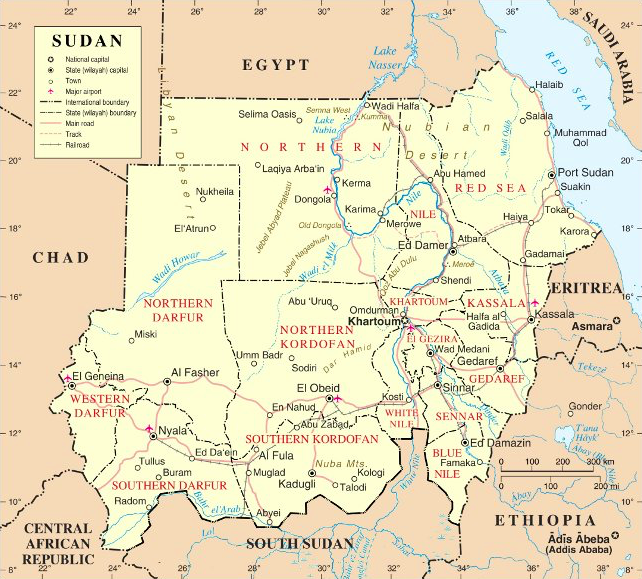
Map of Sudan. Muhammad Daffa Rambe. CC BY-SA 3.0.

Al-Bashir continued to hold his power until April 2019 when, after months of unrest, the Sudanese military toppled him. On Sept. 3, 2020, Sudan issued its declaration to sever ties between mosque and state, saying that, “For Sudan to become a democratic country where the rights of all citizens are enshrined, the constitution should be based on the principle of ‘separation of religion and state,’ in the absence of which the right to self-determination must be respected.”
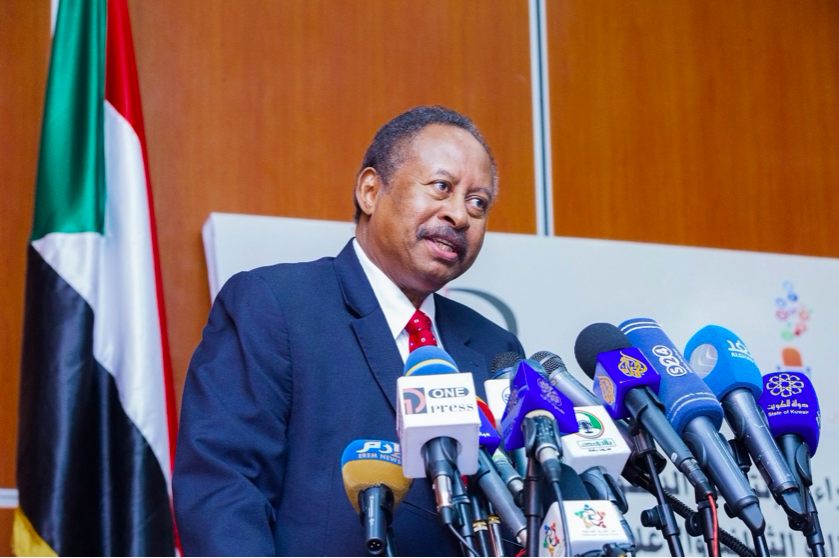
Prime Minister Abdalla Hamdok. Ola A .Alsheikh. CC BY-SA 4.0.

Prime Minister Abdalla Hamdok and Abdelaziz al-Hilu, leader of the Sudan People’s Liberation Movement-North rebel group, signed this document together. Additionally, the document emphasizes its effort toward unity with the statement, “Sudan is a multiracial, multiethnic, multireligious and multicultural society. Full recognition and accommodation of these diversities must be affirmed.” More than simply separating church and state, the declaration gives the country momentum in its push toward unification.   


Renee Richardson

Renee is currently an English student at The University of Georgia. She lives in Ellijay, Georgia, a small mountain town in the middle of Appalachia. A passionate writer, she is inspired often by her hikes along the Appalachian trail and her efforts to fight for equality across all spectrums. She hopes to further her passion as a writer into a flourishing career that positively impacts others.
In News and Social Action, Africa, Sudan, Global Politics Tags Sudan, religion, Islamic law, colonialism, Omar al-Bashir, military, Egypt, Muslim, People's Liberation Army, rebel, rebellion, diversity, religious freedom, War and Conflict, Africa
Comment

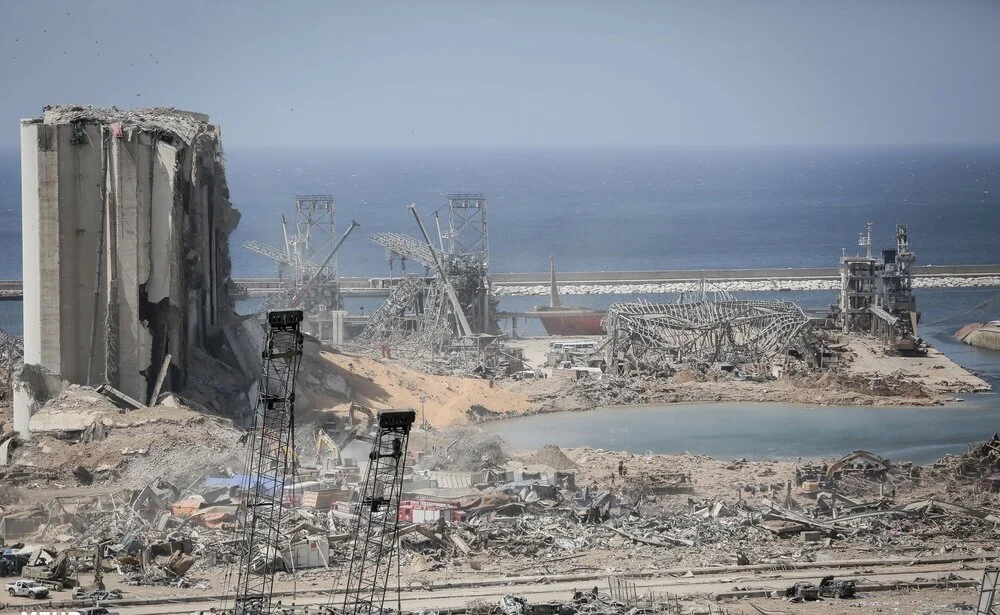
The port of Beirut after the blast. Mahdi Shojaeian. CC BY 4.0.

Following the Blast in Beirut, How Ready is Lebanon for Visitors?

September 9, 2020

The Aug. 4 blast in Beirut’s port devastated the city but also affected the entire country. Shock waves reverberated throughout the region, being felt as far away as Cyprus and Jordan. The cause was obscene negligence in the storage of ammonium nitrate, a component of many explosives, and the effect is 300,000 people left homeless, up to 220 dead, and parts of the city center in ruins. The scene harkens back to Lebanon’s tumultuous history of war and civil strife and effectively takes Beirut off the map in terms of international tourism.

This is all the more saddening given Lebanon’s storied history, vibrant culture and natural beauty. Lebanon has earned an unfortunate reputation as an unsafe travel destination due to its fraught political history and geographical proximity to war-torn nations such as Syria. Though a history of war still lives in the nation’s collective memory, most people view it as a piece of the past. Before the blast, Lebanon reported a record number of visitors, with just under 2 million travelers passing through in 2018 alone.

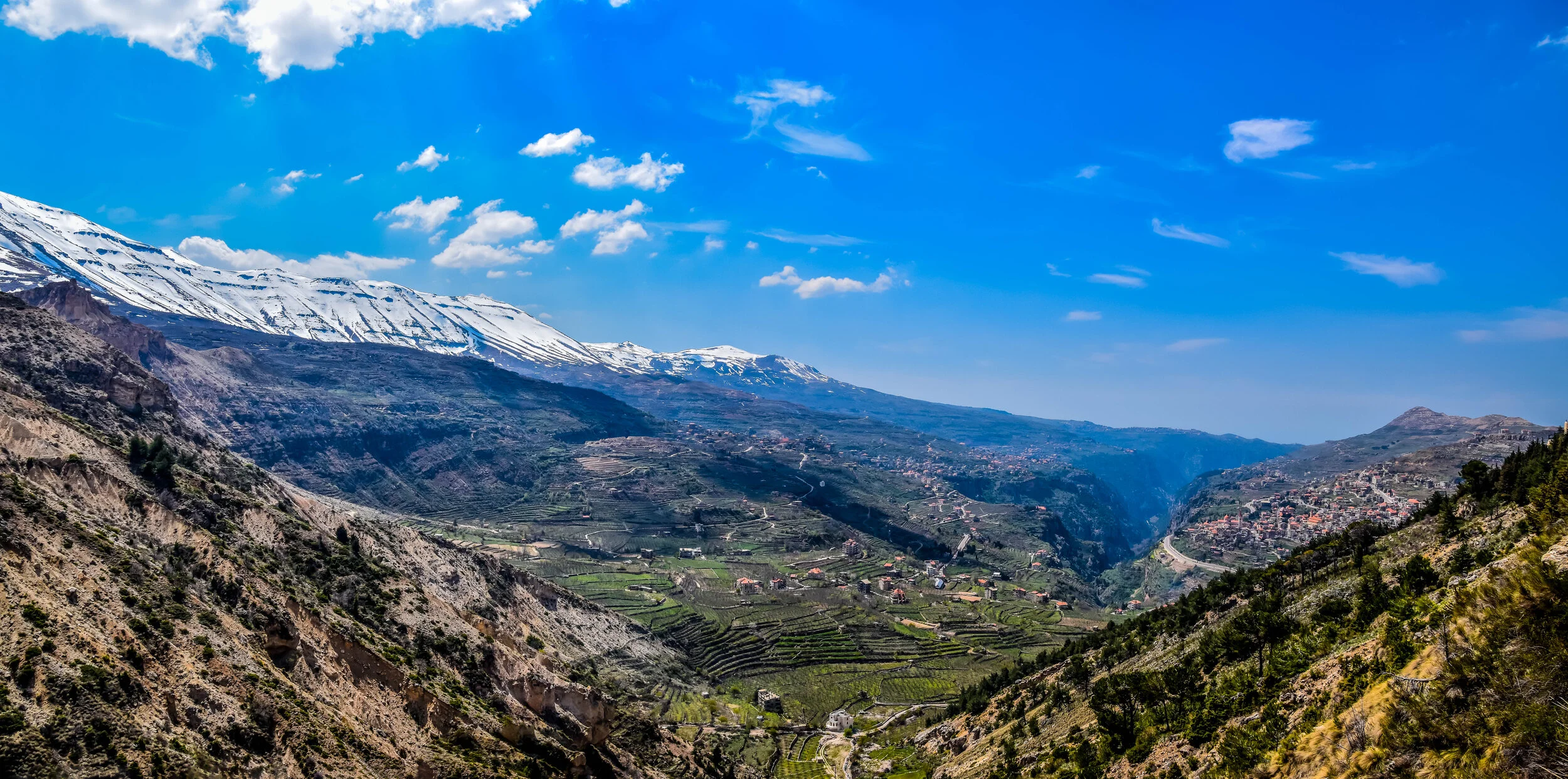
A cursory glance at the country reveals why. Though small, Lebanon’s landscape is astonishingly diverse. Its coastline holds balmy beaches and resorts, many started in the 1950s during the country’s first tourism boom. Farther inland, the Lebanon Mountains offer slopes for skiers of every skill level for a fraction of the cost compared to the Swiss Alps.

Hasroun, a village in northern Lebanon. Paul Saad. CC BY-NC-ND 2.0

Natural beauty is not the only wonder found in Lebanon. The Temple of Bacchus, one of the best preserved Roman ruins in the world, displays the full glory of Lebanon’s past, demonstrating the variety of influences it enjoyed due to its historical role as a Mediterranean trade hub. Arts events like the Cedars International Festival have drawn artists from around the world, including Shakira and Andrea Bocelli, with massive crowds in tow. Beirut’s nightlife alone was enough to draw thousands to its late-night parties with strobe lights, pulsing music and freely flowing liquor.

A concert in Byblos. Hisham Assaad. CC BY-NC-ND 2.0.

No longer. The blast damaged 2,000 venues in Beirut, many of them deciding not to rebuild. Months prior to the blast, the COVID-19 pandemic decimated the service industry, and a prolonged economic crisis which has endangered the lower and middle classes strained the balance sheets of nightclub owners. The explosion further compounds their plight. 

Equally bleak are the prospects for recovery. Rebuilding the city is estimated to cost $15 billion, a quarter of Lebanon’s GDP in 2019, and talks with the International Monetary Fund for a $10 billion bailout have led nowhere. The prime minister, along with most of his cabinet, resigned shortly after the explosion, leaving Lebanon in both physical and economic ruin with no leadership. The Lebanese dollar has lost 80% of its value while inflation has reached 112%. This has left thousands of people struggling or unable to buy food. The situation, by any metric, is abysmal. 

Lebanon’s tourism prospects are about as dire as those for its economy. Clearly, it is unwise to travel in the midst of a global pandemic to a country whose hospitals are already full. While tourism would pump much-needed dollars into the economy, it would be difficult to find food and lodging in a country not far removed from famine. Before travelers begin to think of visiting Lebanon, the country must rebuild. Only time will tell how long that process will take.


Michael McCarthy

Michael is an undergraduate student at Haverford College, dodging the pandemic by taking a gap year. He writes in a variety of genres, and his time in high school debate renders political writing an inevitable fascination. Writing at CATALYST and the Bi-Co News, a student-run newspaper, provides an outlet for this passion. In the future, he intends to keep writing in mediums both informative and creative.

In News and Social Action, Asia, Lebanon, Beirut, Global Politics Tags Lebanon, Beirut, explosion, tourism, history, landscape, Swiss Alps, nature, trade, nightlife, middle class, GDP, economics, Arts and Culture, War and Conflict, Travel, Asia
Comment

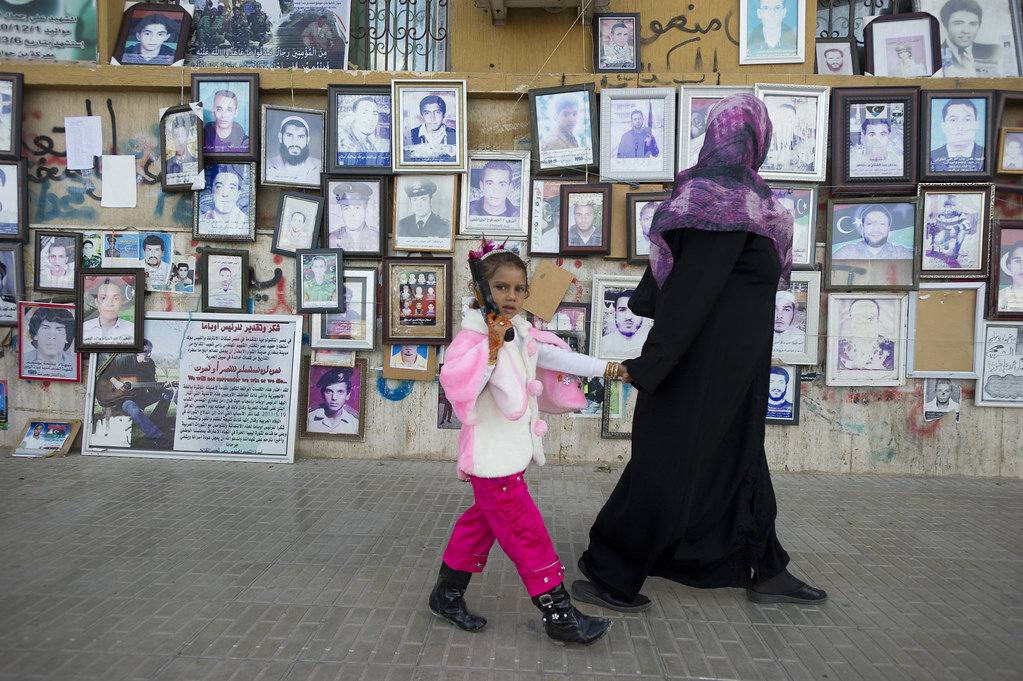
While playing with a toy gun, a child passes a memorial for civilians killed in the Libyan civil war. Teutloff Museum. CC BY-ND 2.0

Nearly a Decade of Strife in Libya

June 26, 2020

After the overthrow of then-leader Moammar Gadhafi in 2011, Libya has been in a constant state of political unrest. Since 2014, the Government of National Accord (GNA) and the Libyan National Army (LNA)  have sought control over the country, sparking a destructive civil war. Based in the Libyan capital, Tripoli, the GNA is recognized by the United Nations. Allied with General Khalifa Hifter, the Benghazi-based LNA receives aid from Russia, France and the United Arab Emirates. 

Libyan civilians have endured chaos, including shelling near the front lines, injuries from explosive devices and abductions for ransom. The United Nations High Commissioner for Refugees estimates that 1.3 million Libyans require urgent humanitarian assistance.

Armed Conflict and War Crimes 

Weapons proliferation has been a major security concern in Libya, as allied countries provide the GNA and LNA with advanced military equipment. State-provided arms transfers make Libya a volatile battleground. Currently, the country has the world's largest uncontrolled ammunition supply, with an estimated 150,000 to 200,000 metric tons of uncontrolled munitions. Yacoub El Hillo, the U.N.’s resident and humanitarian coordinator in Libya, announced, “The increasing use of explosive weapons has resulted in unnecessary loss of life, displacement, destruction and damage to vital civilian infrastructure.” The Islamic State group has also used the country as a hub to coordinate broader regional violence, further complicating efforts to create a united government. 

In April 2019, Khalifa Hifter’s forces attacked Tripoli, resulting in over 1,000 fatalities. As General Hifter continues his campaigns, the International Criminal Court (ICC) warns of potential war crimes, including mass murder, desecration of corpses and kidnappings. In a statement to the U.N. Security Council, chief prosecutor Fatou Bensouda accused the LNA of targeting innocent civilians: "Of particular concern to my Office are the high numbers of civilian casualties, largely reported to be resulting from airstrikes and shelling operations. Intentionally directing attacks against the civilian population or against individual civilians not taking direct part in hostilities is a war crime under the Rome Statute. Likewise, the Rome Statute prohibits the intentional directing of attacks against hospitals and other buildings protected under international law, such as those dedicated to religion or education, when they are not military objectives." 

Civilian Victims and Internal Displacement 

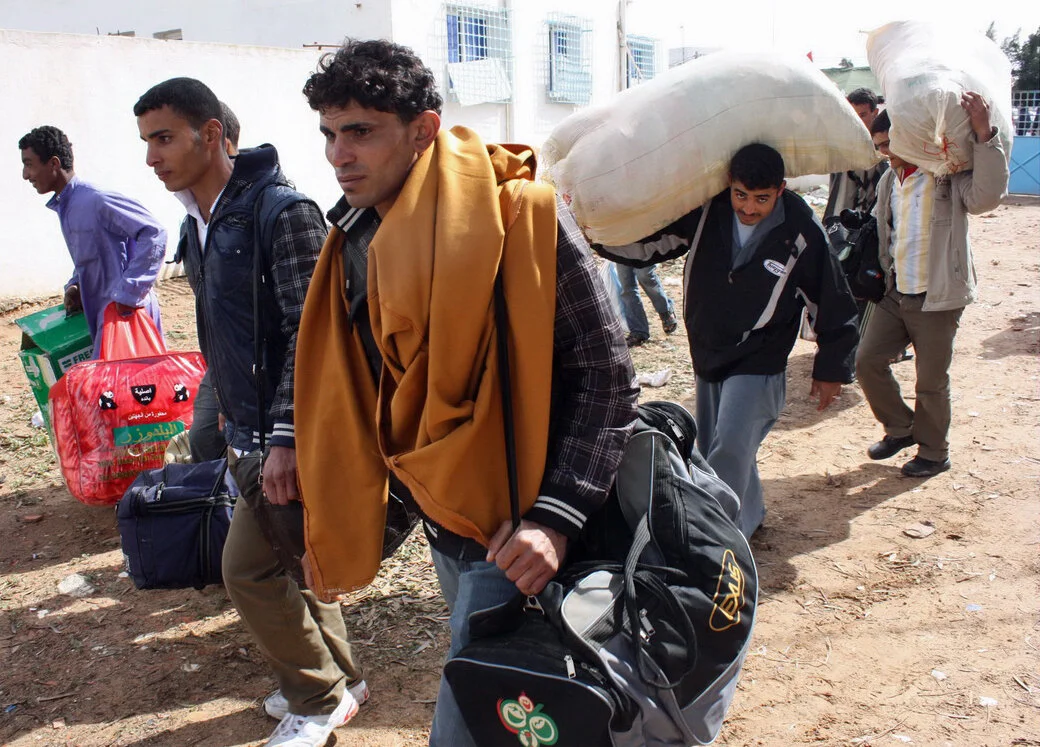
Displaced civilians flee their homes in Libya. Magharebia. CC BY 2.0

Due to ongoing conflict, nearly 400,000 Libyans have been forced to flee their homes and are now internally displaced. According to UNICEF, Libyan hospitals and schools serve as shelters for thousands of displaced civilians around Tripoli. Yet, with military forces continually targeting these makeshift shelters, Libyans face inadequate access to health care, essential medicines, food, safe drinking water and education. School has been suspended indefinitely for nearly 200,000 children, leaving them susceptible to abuse, human trafficking and violence.

Given the lack of eyewitnesses and credible reports, experts can only estimate the total number of fatalities since 2011. Small Arms Survey, a research-based organization, suspects that approximately 27,000 people have perished in the nine-year-long dispute. 

Migrants, Refugees and Asylum-Seekers 

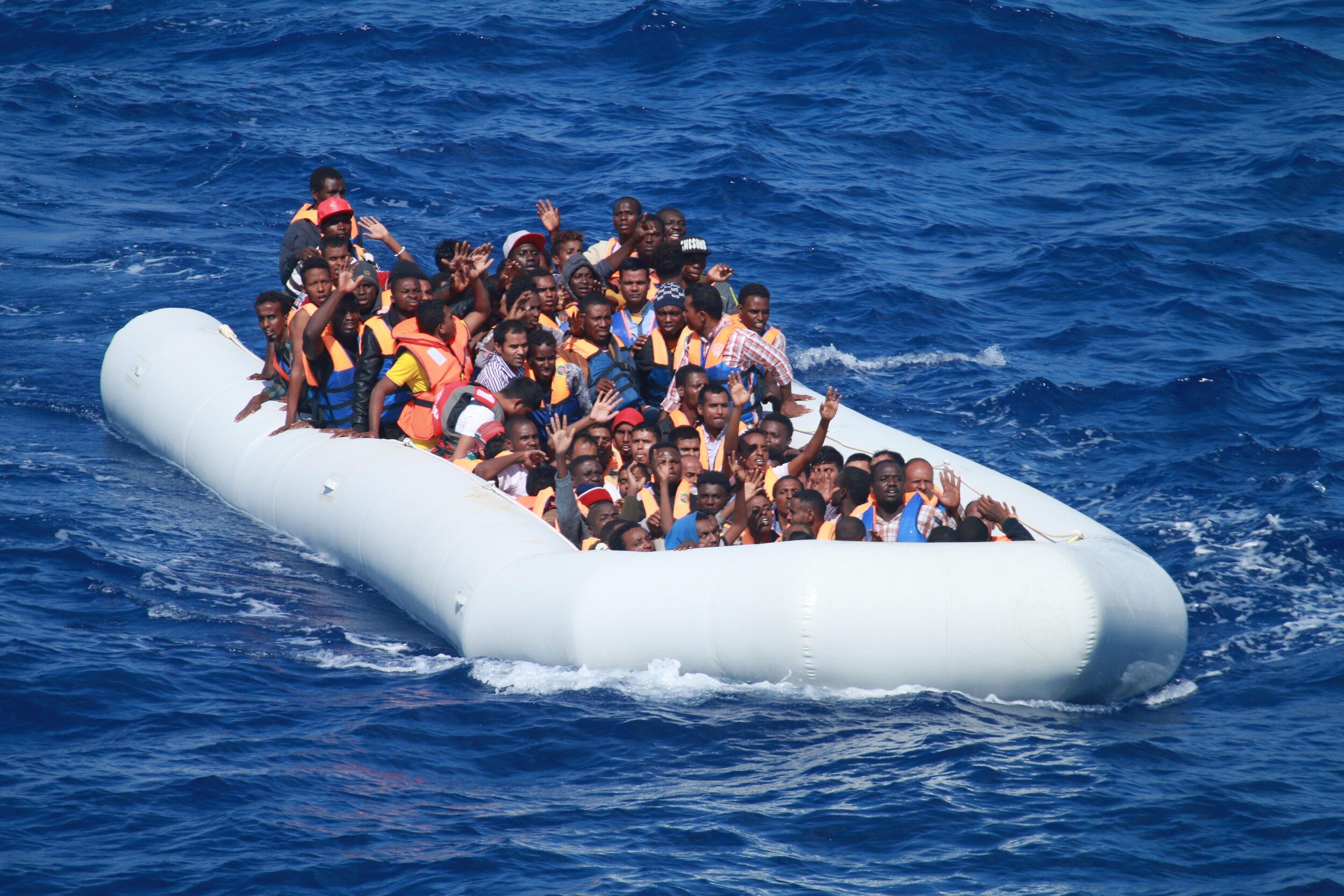
Migrants aboard an inflatable vessel in the Mediterranean Sea. Commander, U.S. Naval Forces Europe-Africa/U.S. 6th Fleet. Public Domain.

Within this war-torn nation, there are currently 654,000 migrants, refugees and asylum-seekers, mainly from sub-Saharan Africa. Approximately 90% of people crossing the Mediterranean Sea to Europe depart from Libya. Migrants and asylum-seekers who are captured at sea and returned to Libyan territory are detained in centers run by the GNA’s Interior Ministry, where many suffer inhumane conditions including sexual violence, extortion and forced labor. While the GNA manages formal migrant detention centers, smugglers and traffickers run numerous informal facilities. “Those interned there, mainly refugees, keep dying of diseases and hunger. They are victims of violence, rape and arbitrary treatment at the hands of militias,” said Julien Raickmann, Doctors Without Borders (MSF) chief in Libya. Since January, more than 4,000 migrants have been intercepted at sea and returned to Libya, while hundreds have disappeared altogether. Despite threats of detention, migrants and asylum-seekers still venture to Libya, hoping to reach Europe. 

Humanitarian Relief 

After nine years of instability, thousands of Libyan civilians and migrants face displacement, malnutrition and violence. The U.N. Office for the Coordination of Humanitarian Affairs (OCHA) launched the 2020 Humanitarian Response Plan, which pledges $115 million in relief efforts. Protection is at the core of this plan, as well as the provision of food, shelter, health care, water and sanitation. The U.N.’s refugee agency, UNHCR, will also work at 12 disembarkation points in Libya to aid and protect migrants, refugees and asylum-seekers. At detention centers, they will provide humanitarian assistance and mitigate maltreatment. These organizations seek durable solutions to prevent another decade of turmoil.


Shannon Moran

Shannon is a Journalism major at the University of Georgia, minoring in English and Spanish. As a fluent Spanish speaker, she is passionate about languages, cultural immersion, and human rights activism. She has visited seven countries and thirty states and hopes to continue traveling the world in pursuit of compelling stories.

In News and Social Action, Africa, Libya, Global Politics Tags Libya, migrants, immigration, displacement, UNICEF, asylum-seeker, asylum, humanitarian crisis, War and Conflict, Refugees, Africa
Comment

Within Iran’s lower classes, there is a highly conformist youth culture. Farzin Mahmoudzadeh, Author provided

How Iran’s Millennials Are Grappling With Crippling US Sanctions

February 23, 2020

In early January, after tensions between Iran and the United States escalated to the brink of war, President Donald Trump announced a detente of sorts, stating, “The United States is ready to embrace peace with all who seek it.”

It may have sounded like a conciliatory gesture, but the Trump administration went on to levy additional economic sanctions against the country only two days later.

As someone who has studied the lives of Iran’s working classes, I know just how damaging economic warfare has been. It’s hit young Iranians, who comprise a large portion of the population, particularly hard. High rates of inflation – on the order of 38.6% over the past 12 months – and a youth unemployment rate of 28.6% have drastically reduced their ability to purchase basic goods and feel any semblance of financial security.

Over the past 12 years, I’ve studied various groups of lower-class young people and their families in their homes, neighborhoods and workplaces, in shops, and in parks. I’ve also interviewed 44 youth between the ages of 15 and 29 who have been sidelined to the socioeconomic margins.

I wanted to know how they cope with prolonged insecurity and the constant threat of crisis.

Interestingly – and despite what you might see on the news – many don’t react by rebelling against authority or by regularly taking to the streets.

A central observation from my research and forthcoming book has been that, when faced with conditions of uncertainty, the young people I spoke with simply sought respect, acceptance and support from their communities. Life becomes a quest not for revolution, riches or vengeance, but for dignity.

A highly conformist culture

The desire for status and dignity is an integral part of Iranian society.

Most of the poor, younger city dwellers I studied try to achieve this through both their conduct and their dress. They want to be seen as classy, diligent and moral. In communities that value prestige and look down on poverty, this becomes their ticket to a better life.

So in an attempt to conceal their poverty, they’ll spend their limited income on the latest trends so they can attain a “modern” appearance, from having the latest smartphones to wearing brand-name shoes and shirts – or at least knockoffs.

In order to avoid being seen as lazy or delinquent, the young people I interviewed work diligently and avoid being associated with petty criminals, like drug dealers. Even though there’s rarely enough work to go around, they get creative. They work in the informal economy as shop apprentices, street vendors and seamstresses. Those who can’t find work take up unpaid work babysitting for family members or helping with a family business in an effort to appear hardworking. By doing this, they can assume a moral high ground – regardless of how little money they’re actually making.

As one local, middle-aged woman told me, “There’s something wrong with a kid who doesn’t work.”

These young men and women are adhering to a set of values prized by their communities and promoted by society through billboards, national television and official speeches.

The result is a relatively stable social order – and a youth culture that’s highly conformist.

This might come as a surprise to some, since some Western media outlets sometimes fixate on acts of rebellion.

In reality, deviance – especially among the lower classes – is rare. Many simply can’t afford the consequences of being shunned by those around them.

Rewards don’t need to be material

The quest for dignity is only part of the story. Like many young people around the world, most youth in Iran have dreams of a better future. But for those dealing with daily economic hardship, there’s a chasm between their goals and what’s possible.

“I wanted to get my bachelor’s degree and have a job where I sat behind a desk,” said Babak, a street vendor, “but I had to drop out of ninth grade in order to meet my family’s expenses.”

That gap may never be fully breached. But many young Iranians I met still feel as if it’s possible to – in the words of a mechanic’s apprentice – “bring themselves up.”

The young people I interviewed do this not by trying to game the system, but by following the rules: diligence, self-sufficiency, a smart appearance, and moral and sexual cleanliness. For this, communities reward them with jobs, small promotions, or even just more deference. The material benefits might be minimal, but people nonetheless feel validated and included in the broader fabric of the nation.

In other contexts, researchers have found that “looking the part” – performing what’s deemed to be attractive to society – matters to people’s life prospects. The youth I knew in Iran do the same. They might not fully escape poverty, but they can escape stigma.

To them, that matters.

The limits of virtue

Of course, not everyone in Iran can maintain an appearance of industry, class and virtue.

There are young people who are desperately poor, who can’t even scrape together enough money for a new pair of shoes. There are drug addicts. There are young women who have been outed as prostitutes.

Focused on only helping those they deem “deserving,” communities do little to lift up people who have fallen through the cracks. Friends and acquaintances are unwilling to recommend them for jobs, neighbors avoid connecting with them, families view them with shame.

It can all seem a bit Darwinian, with those deemed unfit becoming social pariahs.

And yet, there are many youth who persevere, who believe that living by the rules, day in and day out, is the right way to live. As Ibrahim, a laborer, emphasized, “I try to live in a good way. If people remember you as good, this is reason to be proud.” To youth like Ibrahim, living a worthy life means not simply accumulating material goods, but staying true to a moral code.

In the face of rising prices, dwindling jobs, and few prospects for socioeconomic change, the routines of daily life create space for those who have suffered most under the weight of suffocating sanctions to breathe – and, in many cases, grow.


Manata Hashemi is a Farzaneh Family Assistant Professor of Iranian Studies, University of Oklahoma.

THIS ARTICLE WAS ORIGINALLY PUBLISHED ON THE CONVERSATION

In News and Social Action, Global Politics Tags Iran, sanction, Donald Trump, Darwinian, conformist, millenial, CheckOut, USA, International Affairs
Comment

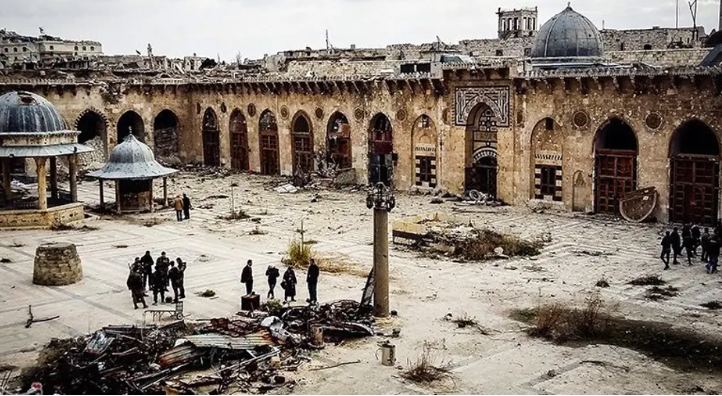
The Great Mosque of Aleppo, Syria, was destroyed in December 2016. Fathi Nezam /Tasnim News Agency, CC BY-NC-SA

Destroying Cultural Heritage Is an Attack on Humanity’s Past and Present – It Must Be Prevented

January 25, 2020

Since Sun Tzu wrote The Art of War in China in the sixth century BC, military writers have argued that to destroy the cultural heritage of your enemy is bad military practice. Many international agreements since have banned the destruction of cultural heritage in war. That is why there was a horrified reaction to President Trump’s recent threat to Iran’s cultural heritage following the assassination of General Soleimani.

Read More
In News and Social Action, Global Politics Tags UNESCO, Donald Trump, China, heritage, U.S., Iran, Arts and Culture, International Affairs
Comment
← Newer Posts

Also check out...

Featured
Vietnam’s Floating Markets Are Disappearing
The Supernatural Role of Masks in Nigeria’s Yoruba Tribal Culture
Opening the World to Deaf Travelers with Lily Yu

Featured trips

Featured
Travel From Phnom Penh to Bangkok
See the Best of Uganda and Its Mountain Gorillas
Experience Life as a Mongolian Nomad

Sign up for the CATALYST newsletter

Sign up for our newsletter to get the scoop on international travel, global social impact insights, our latest podcast releases, and more from around the world, all delivered right to your inbox!

We respect your privacy.

Thank you!
Newsletter Sign Up | Advertise | Careers + Internships | Privacy Policy | Submissions | Contact Us

Copyright © 2025, MISSION MEDIA LLC. All rights reserved.