Students Across Europe Protest in Hopes of a Greener Future

After years of political gridlock surrounding climate change legislation, students emerge as a force for change.
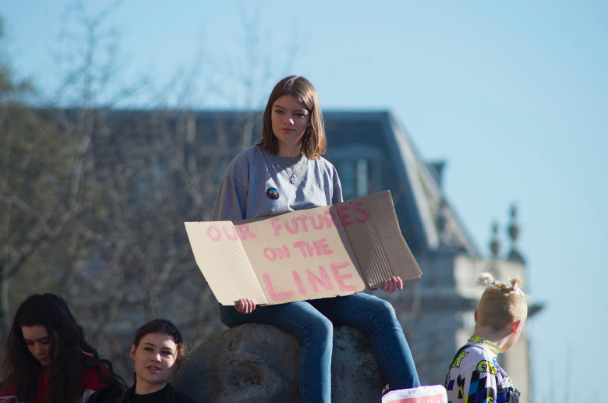
Photo of a student protester. By Josh Barwick on Unsplash.

Thousands of students across Europe left school on Friday, February 15 to protest the lack of action on climate issues in their countries. In what the New York Times called a “coordinated walk out for action on climate issues,” elementary, middle, high school, and undergraduate students came together to demand a greener future. In London, protestors held signs reading “The ocean is rising and so are we” and “Act now or swim later.”

The student-led movement for climate action that is currently taking Europe by storm began with 16-year-old Swedish activist Greta Thunberg. In September, Thunberg started skipping class to stage sit-ins at the Swedish parliament, demanding that her government seriously address climate change. Thunberg’s action inspired teens worldwide, some of whom created the global movement Youth Strike 4 Climate and began organizing protests and walkouts, using social media to coordinate efforts. According to the New York Times, demonstrations have been held in Belgium, Britain, France, Germany, Ireland, Sweden, and Switzerland, among others.

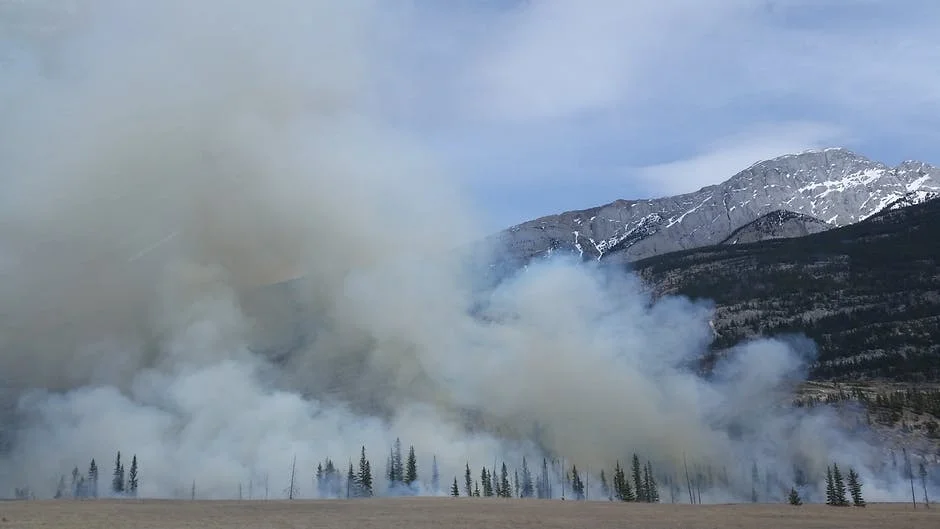
The New York Times writes that the new organization gained even more energy in October of 2018 when a report from the UN’s Intergovernmental Panel on Climate Change disclosed that the world has only twelve years to change its climate policy before the consequences of inaction such as food shortages, rising sea levels, floods and forest fires manifest themselves.

Thunberg remains a notable voice in the movement she inspired, and went on to speak at the global climate-change conference in Poland last December. “You say you love your children above all else — and yet you are stealing their future in front of their very eyes,” she told politicians at the conference. “Until you start focusing on what needs to be done rather than what is politically possible, there is no hope. We cannot solve a crisis without treating it as a crisis.”

In British schools, protesters received mixed reactions from teachers and staff. While some encouraged students, others threatened to punish them for skipping class. “My school was not supportive at the start. They said I would get detention for unauthorized absence,” Anna Taylor, the seventeen-year-old co-founder of the UK Student Climate Network told the New York Times.

Sixteen-year-old Bonnie Morely, who was attending the strike with friends from school, told the New York Times that a head teacher had taken down posters advertising the strike in her school’s common areas. “They’re treating us like we are doing something really wrong,” Morley said. “The future of our planet is looking really bleak, and all the politicians are asleep at the wheel. We have to wake them up, and I think thousands of kids on the streets will do just that.”

Like the teachers, European politicians displayed mixed reactions, with some supporting the students and others going so far as to suggest that the strikes were the product of a secret governmental organization.

According to the New York Times, a spokesperson for British Prime Minister Theresa May said that, “everybody wants young people to be engaged in the issues that affect them most so that we can build a brighter future for all of us. But it is important to emphasize that disruption increases teachers’ workloads and wastes lesson time that teachers have carefully prepared for.”

Thunberg tweeted in response: “British PM says that the children on school strike are ‘wasting lesson time.’ That may well be the case, but then again, political leaders have wasted 30 years of inaction. And that is slightly worse.”

“We don’t miss school because we’re lazy or because we don’t want to go to school,” Jakob Blasel, a high school student who assisted with the organization of an earlier protest in Berlin told the Washington Post. “We can’t go to school, because we have to strike. We have to deliver an uncomfortable message to our leaders that it can’t go on this way.”

Youth for climate is currently planning another round of protests and another global youth strike for March 15. The movement is growing and more students from nations across the world are expected to join.


Emma Bruce

Emma Bruce is an undergraduate student studying English and marketing at Emerson College in Boston. While not writing she explores the nearest museums, reads poetry, and takes classes at her local dance studio. She is passionate about sustainable travel and can't wait to see where life will take her. 

An Island Disappears off the Coast of Japan

It remained unnoticed until local fishermen investigated.

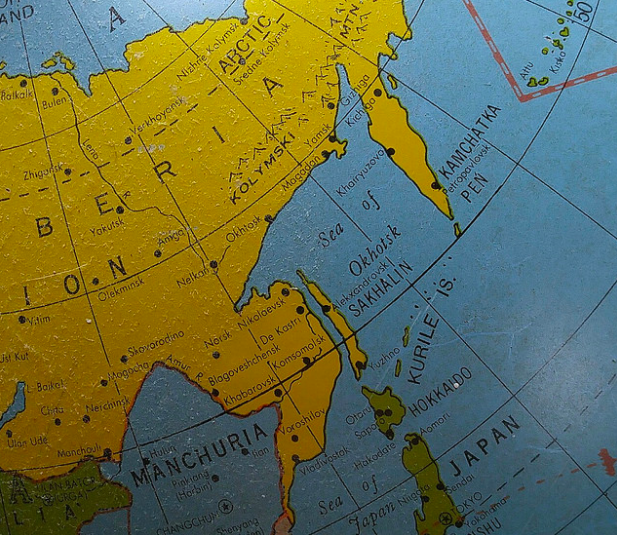
Vintage globe depicting the Sea of Okhotsk. Robin Ottawa. CC BY-SA 2.0

This fall, Esanbe Hamakita Kojima, a tiny island off the northeast coast of Japan dropped out of sight. The island’s disappearance went unnoticed by inhabitants of the nearby village of Sarufutsu, situated on the northern tip of Hokkaido island only 1,640 feet away.

It wasn’t until September, when author Hiroshi Shimizu traveled to Sarufutsu to gather inspiration for his picture book on Japan’s islands, that authorities were notified of the island’s disappearance. Shimizu had been looking for the island but couldn’t locate it. He informed local fisherman who went out to investigate and finally noted that Esanbe was missing.

When Japan’s Coast Guard last surveyed the island in 1987, it was only 4.5 feet above sea level. Authorities could not confirm how large the island had been before the sea rose around it.

Esanbe is west of Japan’s Northern Territories and part of a set of islands that has been long-contested between Japan and Russia. The islands, called the Kurils by Russia, were taken by the Soviets shortly after World War II, but ownership today remains unclear. According to CNN, Esanbe functions as a marker of Japanese ownership in contested waters. But the strategy of claiming islands to maintain the maritime space around them is not exclusive to Esanbe. In fact, according to the Washington Post, Japan owns 158 uninhabited islands that the country named in 2014 so that the sea surrounding them could remain in Japanese control.

Thus, the disappearance of the island may have a slight effect on Japan’s territorial waters, as according to international law, countries can only claim ownership of the sea around an island if that island is visible at high tide. Coast Guard officials in Japan confirmed that Esanbe’s loss, “may affect Japan's territorial waters a tiny bit.” With the island underwater, Japan will have lost approximately 1,640 feet of territorial water.

The island’s disappearance was likely due to erosion by the wind and drift ice common in the Sea of Okhotsk each winter. According to coast guard official Tomoo Fujii, “There is a possibility that the islet has been eroded by wind and snow and, as a result, disappeared,” Asahi Shimbun of the Japanese Daily reported.

According to the Smithsonian, disappearances of land masses in this area of Japan are not unlikely. The good news for Japan’s border, however, is that this phenomenon can occur in reverse. Five years ago, a 1000-foot long island rose out of the sea, prompted by a landslide.


EMMA BRUCE is an undergraduate student studying English and marketing at Emerson College in Boston. While not writing she explores the nearest museums, reads poetry, and takes classes at her local dance studio. She is passionate about sustainable travel and can't wait to see where life will take her. 

Tides of Change : Japan to Resume Commercial Whaling

For more than thirty years, the island nation of Japan has fought to expand its commercial whaling operations. That fight has mostly been a losing one, with its efforts often being blocked by anti-whaling countries around the world and condemned by the International Whaling Commission, an organization whose members include Japan itself. However, Japan’s recently proposed exit from the commission will allow the country to reclaim one of its most time-honored traditions, and the move is drawing international criticism.

Two Minke Whales being loaded onto the Nisshin Maru. The ship has facilities on board which allow it to freeze and process whales while at sea. Australian Customs and Border Protection Service. CC BY-SA 3.0

In 1982 the International Whaling Commission, or IWC, imposed a global moratorium on all commercial whaling, save for subsistence whaling by Aboriginal communities. The moratorium went into effect in 1985 and was met with opposition from Iceland, Norway, and Japan, countries with strong whaling traditions. In Japan, whale meat generally served the same purpose that beef or lamb served in Western societies and this was especially true during hard times. In the 1940s as the country was recovering from World War 2, whale meat was the single most consumed meat among Japanese people, and it remained so through the 1960s. After the announcement of the IWC’s whaling ban, Japan petitioned for the right to continue whaling in the Antarctic for “scientific purposes” though the specific nature of its research remained unclear. Whale activists claimed that this “research whaling” was in fact, commercial whaling in disguise, and vessels like the Nisshin Maru, Japan’s largest whaling vessel and the world's only factory whaling ship, became a frequent target of animals rights groups, with some going so far as to board vessels of their own and try to disrupt the Maru’s whaling expeditions by obstructing its path. Earlier this year, Japan expressed a desire to develop new ships, fast enough to outrun those of the activists, but the plan appears to have been scrapped, as the Japanese government announced in late December that it will formally withdraw from the IWC, discontinue its operations in the Antarctic and resume commercial whaling operations in its own coastal waters. Though the demand for whale meat has diminished somewhat in Japan, the practice of whale fishing is still considered by many to be intrinsic to the country’s cultural identity.


Environmental conservation hinges on the idea that some of the Earth’s resources are non-renewable. Humans can hunt an animal to extinction, and that extinction creates an imbalance in the ecosystem that the animal once belonged to. The effects of that imbalance can, in turn, come back to haunt humans, either directly or indirectly. These are, however, relatively young ideas, and pitting them against hundreds of years of tradition is sure to be a test for all parties involved.


JONATHAN ROBINSON is an intern at CATALYST. He is a travel enthusiast always adding new people, places, experiences to his story. He hopes to use writing as a means to connect with others like himself. 


France Banned Food Waste in Supermarkets

Millions more meals can reach those who need them.

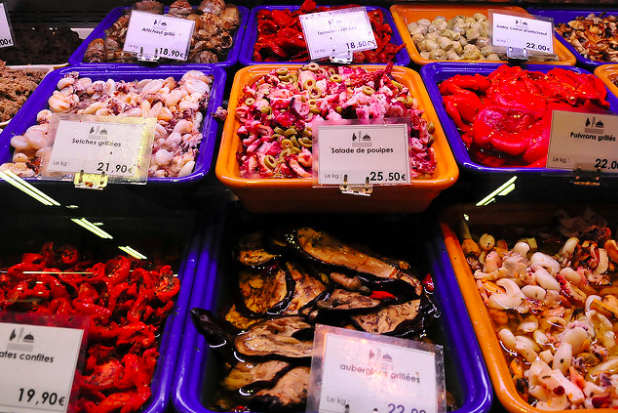
Produce at a market in Nice, France. M-Louis. CC BY-SA 2.0.

In 2016, France banned supermarkets from destroying or discarding unsold food products, requiring them to donate instead to food banks or local charities.

The law was written by Parliamentarian and former food industry minister Guillaume Garot, who believes that food waste is a national health and safety issue, akin to wearing a seatbelt. The campaign itself was the product of a grassroots movement by anti-poverty and food waste activists which eventually became a petition, lead by local councillor Arash Derambarsh.


Now that food waste has been outlawed in French supermarkets, Derambarsh has set his sights on European and ultimately global policy revisions around the issue. “Food is the basis of life, it is an elementary factor in our existence,” he told the Guardian.

While Derambarsh became a councillor to help people, he reports being called “naive and idealistic” because of the policy he hoped to implement surrounding food waste. “Perhaps it is naive to be concerned about other human beings, but I know what it is like to be hungry,” he said.

“When I was a law student living on about €400 a month after I’d paid my rent, I used to have one proper meal a day around 5pm. I’d eat pasta, or potatoes, but it’s hard to study or work if you are hungry and always thinking about where the next meal will come from.”

Now, grocery store managers in France with a 400 sq meter or larger footprint must sign contracts with local charities and food banks promising their edible expired items, or face a €3,750 ($4,500) fine per infringement.

According to Jacques Bailey, head of Banques Alimentaires, a network of french food banks, 5,000 charities rely on food banks, who in turn, receive almost half their donations from grocery stores. Under the law, these food banks are receiving larger amounts of better quality food products, enabling them to better reach the the people they serve. According to Bailey, an increase as small as 15% in donations from supermarkets will result in 10 million more meals served every year.


And yet, required donations are not the only way that France is fighting food waste. In 2014, Intermarche, one of the country’s supermarkets began selling produce that was deemed too “ugly” to sell at other markets. These “ugly” or misshapen produce are perfectly safe to eat, but have blemishes make them less marketable to consumers, resulting in their disposal before even seeing the grocery store isles. This initiative is particularly effective, as fresh fruits and vegetables are the most difficult items for charities and food banks to come by, and are necessary to a healthy diet. Intermarche’s initiative reached 13 million people after only one month of being implemented.


About a third of food produced is wasted worldwide. France has narrowed the food it wastes to 66 pounds per person every year. In comparison, Americans waste 200 billion pounds of food per year - 40% of all food produced in the country. The waste problem in America is partly due to the lack of regulation surrounding expiration dates, which are often selected at random and do not always reflect when items are safe to consume.


The rest of the world has a lot to learn from France’s policy. NPR writes that communities and governments worldwide are now reaching out to Garot, hoping for information that would help them reproduce France’s law in their own countries. Ultimately this change needs to be made, because, as Garot emphasized, supermarkets are not just businesses, they are places where humanity must be respected.


EMMA BRUCE is an undergraduate student studying English and marketing at Emerson College in Boston. While not writing she explores the nearest museums, reads poetry, and takes classes at her local dance studio. She is passionate about sustainable travel and can't wait to see where life will take her. 


Mask off: How Beijing is Managing its Smog Problem

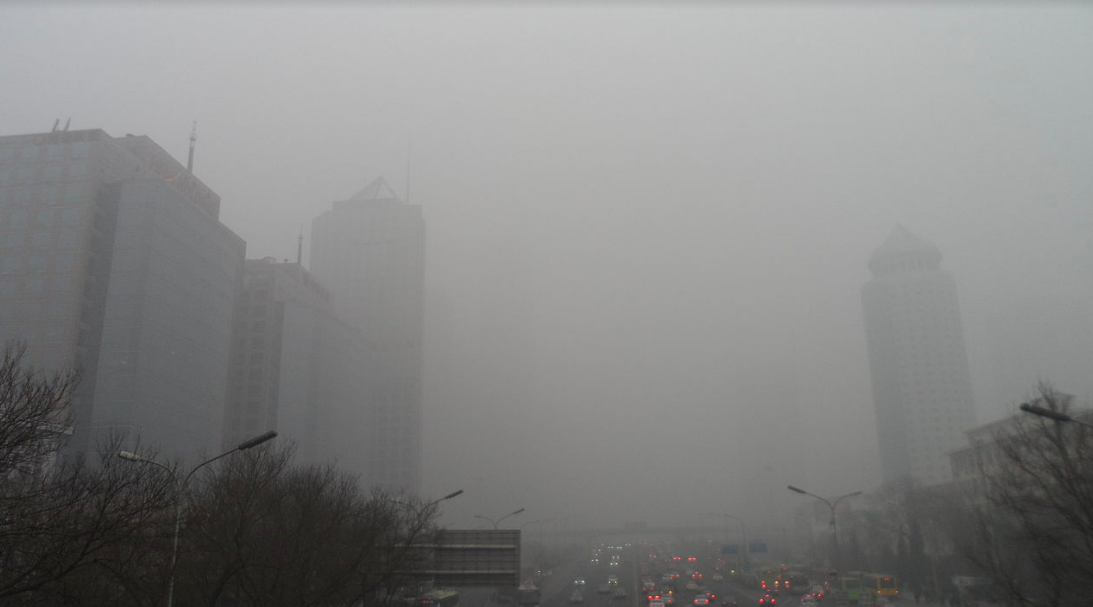
Earlier this month, California made national headlines when the worst wildfire in the state’s history covered parts of it in smoke, creating yet another worry for citizens already vexed by the high cost of living and rising homelessness. Some news stations, hoping to illustrate the seriousness of the matter, stressed that the air quality in California was “worse than Beijing’s,” an announcement that prompted many locals to don the air masks that one often sees in images of the Chinese capital. In media, locally, and abroad, Beijing has become synonymous with bad air. The internet is peppered with images of skyscrapers draped in brown or grey fog. But recent efforts by the government have made some headway in the battle with Beijing’s notorious smog and could give us insight into how to battle this problem at home.

A smoggy day in Beijing. By 螺钉 - Own work, CC BY-SA 3.0, https://commons.wikimedia.org/w/index.php?curid=24944427

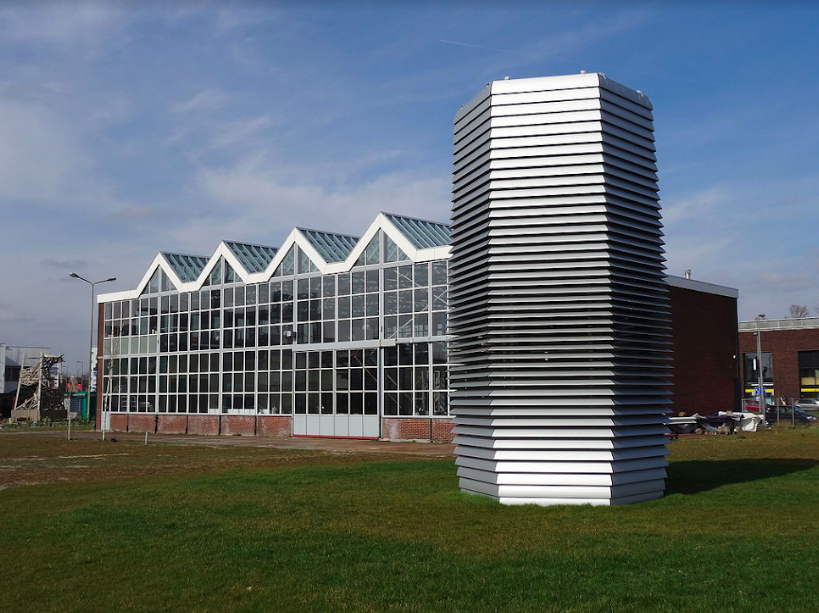
Those who have been to Beijing know that air quality is but one of many dangers; crossing an intersection can be like an action movie at times and drinking water out of the tap is generally a bad idea. Smog, however, is the issue most often associated with Beijing in the media. Fortunately, Beijing is aware of its reputation and has taken steps over the last few years to improve its air quality. The city has pledged to shut down 1000 manufacturing factories by 2020 to help reduce smog. It is also experimenting with new technology. Early last year Beijing employed the use a solar-powered air vacuum to help clean up the city’s air. Developed by Dutch designer Daan Roosegaarde, the Smog Free Tower sucks up 30,000 cubic meters of polluted air per hour. The air is then cleaned at a nano level and released back into the city. In a particularly bold move, Beijing's government is investigating the possibility of switching from coal to natural gas as the primary source of heating for millions of households. This shift will be implemented gradually, as concern for the well-being of Beijingers during the winter months supersedes the need for cleaner air.

Dan Roosegaardes's Smog Free Tower. By Bic - Own work, CC BY-SA 4.0, https://commons.wikimedia.org/w/index.php?curid=47801218

People can change, and ideally, their reputations will change as well. Beijing’s efforts to clean its air shows an environmental consciousness that contradicts its reputation as a dirty industrialized city. As smog becomes a more recurrent issue in cities and courtiers around the world, communities that once judged China for its smog may get to learn a thing or two about how to fight it.


JONATHAN ROBINSON is an intern at CATALYST. He is a travel enthusiast always adding new people, places, experiences to his story. He hopes to use writing as a means to connect with others like himself. 

The Cape Town Water Crisis: Delaying Day Zero

In the Broadway musical Urinetown, people line up to use the toilet because a 20 year old drought has made private toilets a thing of the past. And when the protagonist rises up finally and allows unrestricted toilet use, the water supply completely evaporates. The final scenes ominously hint at more worrisome issues for the citizens, who, once concerned only with toilet use, most grapple with dying of thirst among other problems.

Although Urinetown is a satire, residents of Cape Town might see it as a scary prediction of their future if Day Zero arrives. As apocalyptical as it sounds, it does accurately embody the looming doomsday scenario: Day Zero is when the taps run dry. How? An unexpected three year drought, starting in 2014, drastically depleted the six dams that serve Cape Town. Whereas 20 years ago water management in Cape Town could rely on seasonal rainfall patterns and small conservation measures, it is now relying on unreliable rain and big changes.

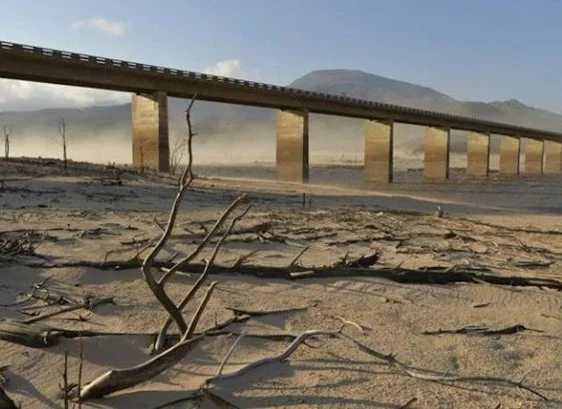
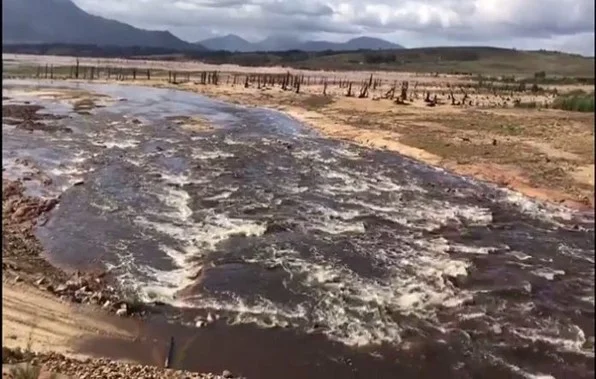
Since Day Zero has been first predicted in early 2018, it has been continuously delayed. Projections now suggest Day Zero will occur in 2019. And in recent weeks, many are rejoicing in water returning to the dry dams. In the words of Anton Bedell, minister of Local Government, Environmental Affairs, and Development Planning:  “It’s…good to see Clanwilliam dam at 20.4%. A few weeks ago the dam was below 6%.” The other dams have reflected similar increases, but the relief is only temporary as the dams await more rain—if it will come.

Theewaterskloof dam in February 2018 (source: 2oceanvibes)

Waters return in early June (source: Storm Report)

The biggest assistance in delaying Day Zero is restrictions implemented on February 1st. The main restriction was the allowance of 50 liters, a little more than 13 gallons, of water per person. Comparatively, the average individual in the United States uses 80-100 gallons of water a day and the average family over 300 gallons a day.  The question of how Americans end up using so much illustrates just how little 13 gallons is for a Capetonian. For example, imagine the average bathroom break. A toilet flush requires at least 1.6 gallons with water efficient models, but if it is an older model it will need up to 4 gallons. Then you will wash your hands with about 3 gallons of water. Considering most people take at least four bathrooms breaks a day, that’s already 18.4 gallons used in one day (on a water efficient toilet): more than what one Capetonian is allowed in a single day.

So it is no wonder people are following the “if it’s yellow, let it mellow” rule and putting reminders in bathroom stalls around Cape Town. Even restaurant and bar washroom taps are shut off. But it is not just in the bathroom that changes are being made. Any use of municipal drinking water for irrigation, watering, hosing down paved surfaces, washing vehicles, or filling a private pool is not allowed. Agricultural users have to decrease water usage by 60% and commercial places by 45% compared to their pre-drought usage in 2015. And for residential units that use too much, you’ll face a fine or have to install water management devices.

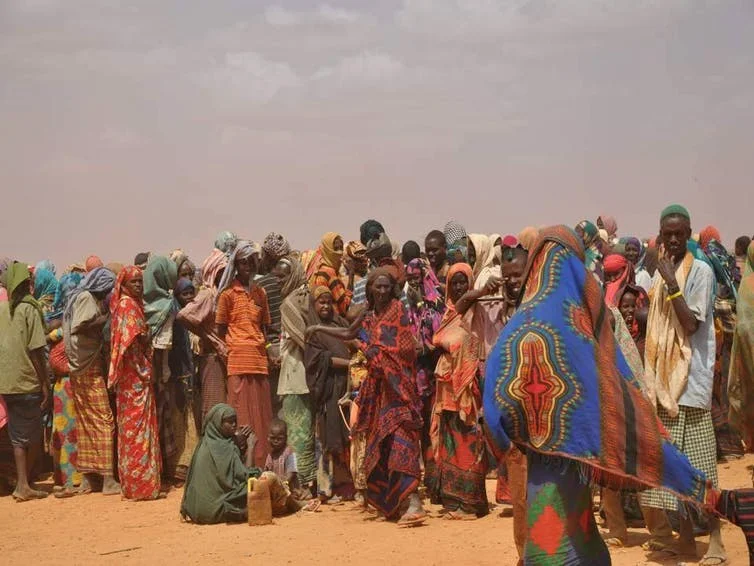
And globally, Cape Town is a sign of the future. As population increases, especially in urban centers, water resources are straining to accommodate.  This is against a backdrop of climate changes that favor extreme weather events like frequent droughts. What might have worked in the past, is not necessarily the solution for the future.  California, Beijing, Sao Paulo, Jakarta, Mexico City are just some cities that may be the next unwilling host of Day Zero. And water shortages lead to other problems such as famine and violence. The International Panel on Climate Change predicts the Middle East and North Africa will face the most severe water shortage problems. And already, many Somalis have become climate change refugees—leaving their rural farms for the capital, Mogadishu, in hope of different sources of income with farming no longer possible. Millions more are projected in the years to come as climate change makes itself even more apparent.

It is a bleak picture, but subtle changes are happening as global leaders are becoming more aware of the looming water crisis. But we can also start at home with our own water usage. Maybe you don’t need to take a long bath after a hard day and use 36 gallons of water simply to unwind. Instead, take a quick shower and find something else to help you relax. The small changes might sound silly but it is the little things that matter as Capetonians will tell you.


TERESA NOWALK is a student at the University of Virginia studying anthropology and history. In her free time she loves traveling, volunteering in the Charlottesville community, and listening to other people’s stories. She does not know where her studies will take her, but is certain writing will be a part of whatever the future has in store.

The Meaning of Travel: A New Guide For Millennials

In today’s highly connected and accessible world, to go anywhere is easy.
But to be a true traveler? That’s the daunting task.

Many of us have taken planes, and have gone to exotic places outside of where we grew up and live. Be it a backpacking trip to India, a short weekend holiday spent in Bali, or a work-related trip to Johannesburg, the act of going somewhere outside of our personal zone of familiarity and comfort is often seen as an opportunity offering some form of inner transformation.

Indeed, the act of exposing ourselves to the foreign and unknown can evoke a plethora of new feelings in us. Sometimes, this experience leads us to new perspective, or even new decisions about ourselves and our lives.

Don’t be mistaken though, not all journeys that we take will lead us to a new self at the end of the road.

More often than not, we return home as the same person as we were before, just with a few more stories to tell and a few more memories to reminisce about during our mundane 9-to-5 job.

So, you may ask, what differentiates a trip that leaves us unchanged, from a travel experience that can potentially transform us from the inside out? How can I make my travels mean more? How do I get more out of them?

Well, there is no one way to achieve it, that’s for sure. We are all different individuals, from different backgrounds and with our own interpretation of the world.

Having said so, we are all similar in so many ways too. A genuine smile, a simple greeting, or an act of kindness may be all it takes for two persons separated by their backgrounds and languages to relate and connect with each other.
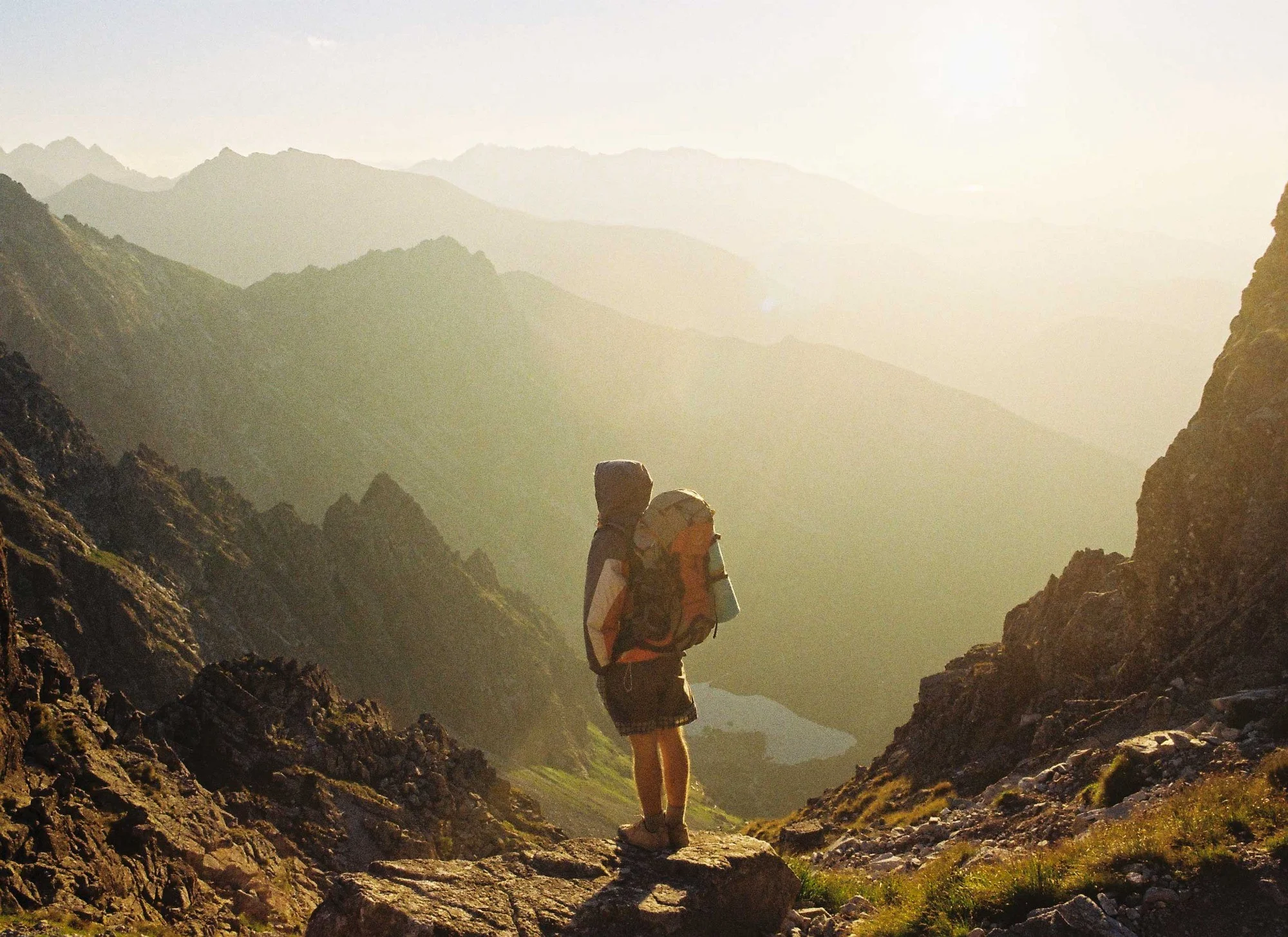
Photo by Laura Grier

Hear someone out. Listen to their story.

To travel is not just to see and to experience, but also to listen. I think many people missed out on that, and therefore, on a great learning opportunity. To listen is to try to empathise, to put yourself in the other person’s shoes.

By listening to the stories of the strangers we meet on the roads, about their lives, about their view of what’s happening in the world, about their dreams for the future, we gained not just the knowledge and viewpoint of another human being, but also learn of the value and validity of our own pre-existing views and beliefs.

“Perhaps travel cannot prevent bigotry, but by demonstrating that all peoples cry, laugh, eat, worry, and die, it can introduce the idea that if we try and understand each other, we may even become friends.”
Maya Angelou

That’s how we gain human perspective I think — not by looking at the endless Himalayan mountain range, or the ebb and flow of the sea by the beach. You’ll never know, sometimes it’s the most unexpected persons who impart us with the most valuable lessons in life.

Photo by Prashant Ashoka

Also, tell your story.

I often hear people say that they travel to feel free again. They explained that traveling helps them escape temporarily from the realities back at home — their old problems, burdens and responsibilities.

True enough, being in a foreign land where nobody knows anything about you does have its unique liberating quality. You can be anybody, and you can be nobody. There, I think, is where you find your most authentic self, and then be it.

“… sometimes one feels freer speaking to a stranger than to people one knows. Why is that? Probably because a stranger sees us the way we are, not as he wishes to think we are.”
Carlos Ruiz Zafón

Photo by Laura Grier

How do you start? Well, relax. Don’t overthink it. Instead, try to enjoy the process of letting go of your insecurities, your fears and inhibitions. What better ways to get things off your chest than to confide in a stranger whom you know you’ll never meet again? There! You just save yourself a costly trip to a therapist.

Jokes aside, it does take time and a few tries before you learn to open yourself up, not just to strangers, but to the world as a whole. But trust me, once you’ve reached that point, you will begin to see the world in a more fearless and unprejudiced manner.

Last but not least, leave your mark.

Make your travel different and more meaningful by contributing to the local cause. And no, I’m not talking about volunteering here. Neither am I talking about donating old clothes, books and stuff that people might not really need.

By contributing, I mean helping locals who want to help themselves. By aiding them in creating a positive outcome that is both tangible and sustainable. That’s what I think a real positive impact entails. That’s how we truly help.

Some local businesses may be starting up or in the process of renovation and need some funding. One easy way to get in touch with these people — the entrepreneurs, designers or small business owners living/working in the area you’re traveling to — is through online crowdfunding platforms like Kickstarter and Indiegogo, which have thousands of projects coming in from all across the globe.

To skip the hassle of searching through the tons of projects which may not be relevant to your needs, you can also try TravelStartera travel-specific crowdfunding platform with a growing array of travel and tourism business projects from different parts of the world.

Want to help a Croatian instructor rebuild his sailing boat and be rewarded with a sailing course? Or help a New Zealander living in the Philippines rebuild his Con-Fusion Cafe after typhoon Yolanda destroyed the restaurant? Or are you headed down to San Diego anytime soon? Help a new B&B at Pacific Beach in their funding raising efforts to refurnish the hostel. For a contribution of $80, you will be rewarded with a two-night stay, a three-hour whale watching tour and also a brewery tour!

Photo by San Diego Whales And Dolphins

With the help of platforms like TravelStarter, travelers are encouraged and enabled to engage in more locally instigated experiences.

That’s not only a good way to help somebody, it’s probably the best way to make a local friend too. Definitely an experience that’s worth more than what you fork out of your pocket.

Photo by Ivon Domingo

At the end of the day,

Or at the end of your life, you will realise that it’s not the places you have seen, the crazy adventures you have gone through, or the pictures that you have taken that matters the most.

It’s the people that you have met along the way — those whom you have helped, those whom you have loved, those whose lives you have touched — that really mean the most. They are what made you a true traveler of life.

Lastly, always remember:

“A journey is best measured in friends, rather than miles.”
— Tim Cahill

The world’s waiting for you. Now GO!


THIS ARTICLE WAS ORIGINALLY PUBLISHED ON THE COFFEELICIOUS.


KEAY NIGEL

Keay Nigel is an independent writer/designer currently based in San Francisco. He has lived in the Hongkong, China, India and various parts of the United States. Travel is his passion and he's been documenting his overseas adventures through YouTube videos. Check out more of his writings here.